BusiNEss AD sAlEs it’s more than money it’s real-world skills
tEcH tRENDs the hottest tools for today’s staffer
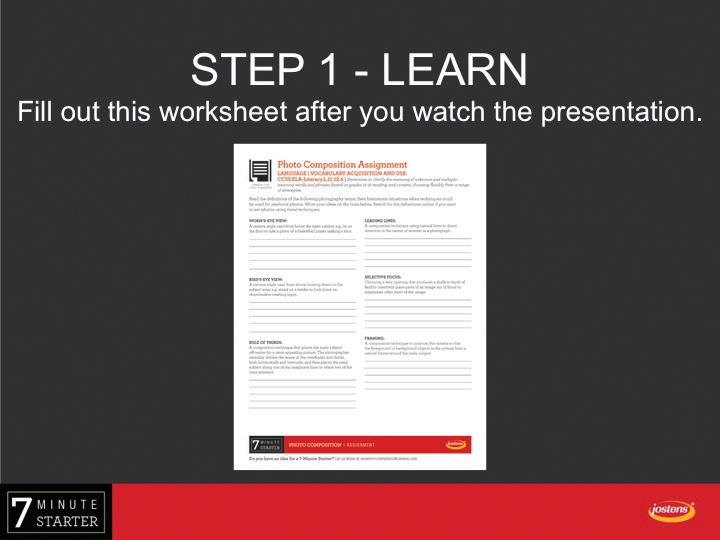
minute StarterS
“Jostens 7-Minute Starters are life-savers for busy yearbook advisers. They integrate the Common Core English Standards and provide ready-to-go lesson plans. Advisers can cross that time-consuming task off the list!”
Teach Common Core Standards Build 21st Century Skills
[All in seven minutes]
Introducing Jostens exclusive 7-Minute Starters: lesson plans aligned to teach Common Core State Standards and build 21st Century Skills.
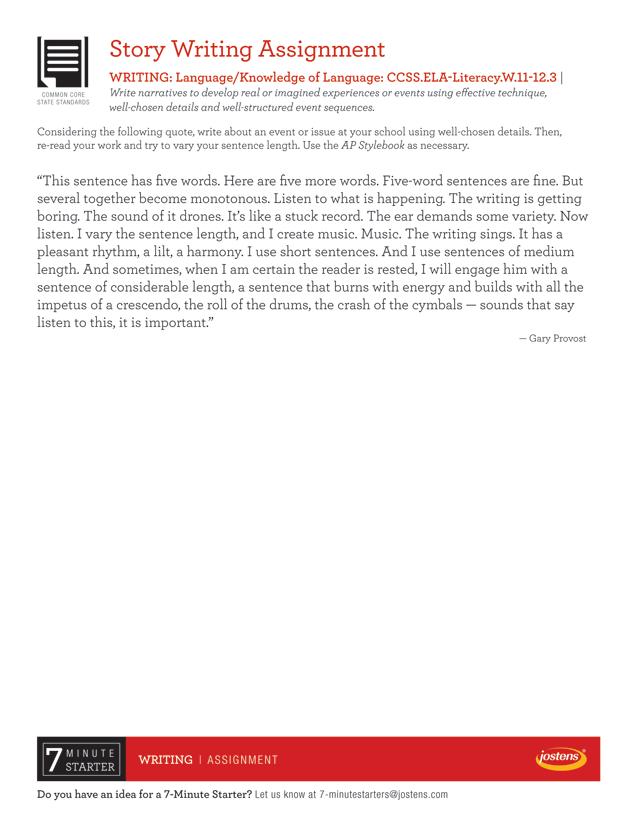
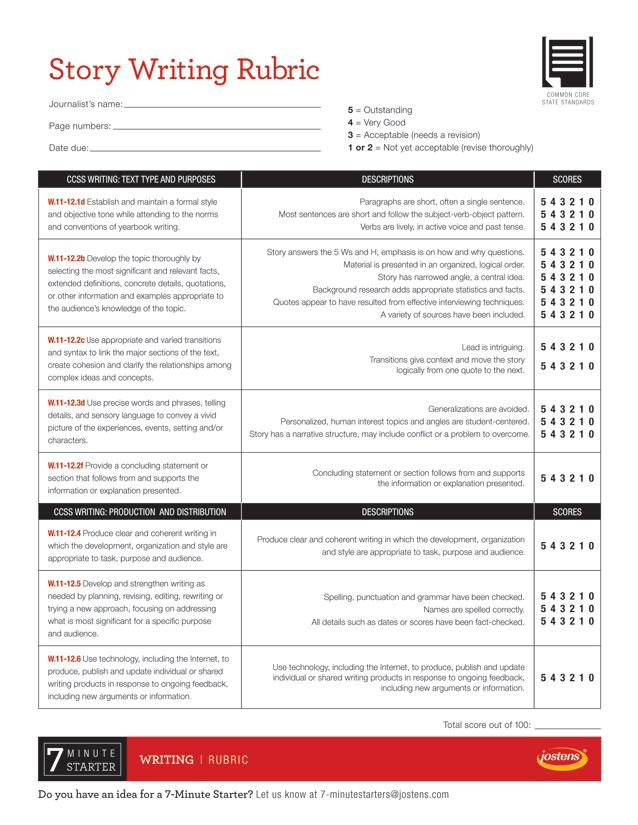
Yearbook is a production-based class and time is limited, so each 7-Minute Starter is quick and easy, and ties directly into yearbook production. every 7-Minute Starter includes a lesson plan and supplemental materials such as assessments, worksheets, handouts, videos, PowerPoint presentations or group activities to keep learning fun and fresh.
topics range from writing, design, photography, technology and marketing to leadership and team building. Free and exclusive to Jostens yearbook customers. See samples at yearbooklove.com
Welcome to Jostens Adviser & Staff magazine — the largest-circulation magazine in the world devoted entirely to creating and marketing yearbooks. Your subscription is provided compliments of your local Jostens representative.
Ads
Editor in Chief: Linda Berry
Managing Editor: Mary Saracino
Art Director: Chris Koshiol
Production Artist:
Kit Neville
Contributors: Robin Bilinski
Angela Carter
Tina Cleavelin
John Cutsinger
Mitch Eden
Monica Edwards
Lori Kirk
Gary Lundgren
Rita Mortenson
DeAnn Nivens
Amanda Pomeroy
Renee Scott
Cindy Todd
Bradley Wallace
Shannon Williams
14 2 6
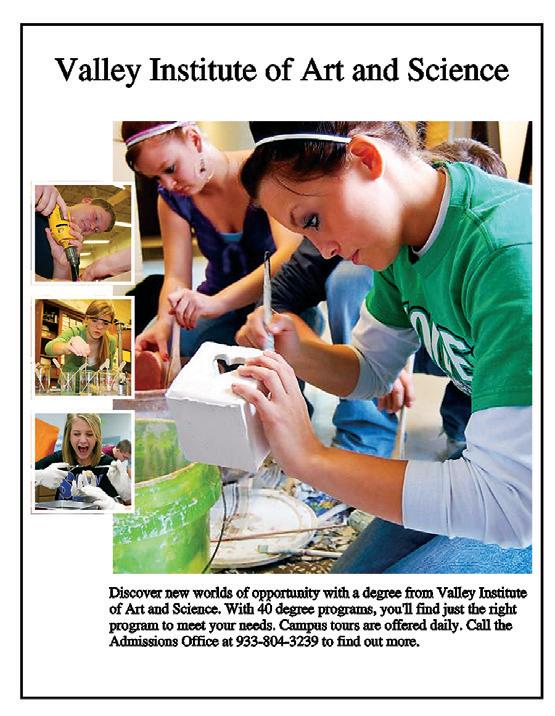
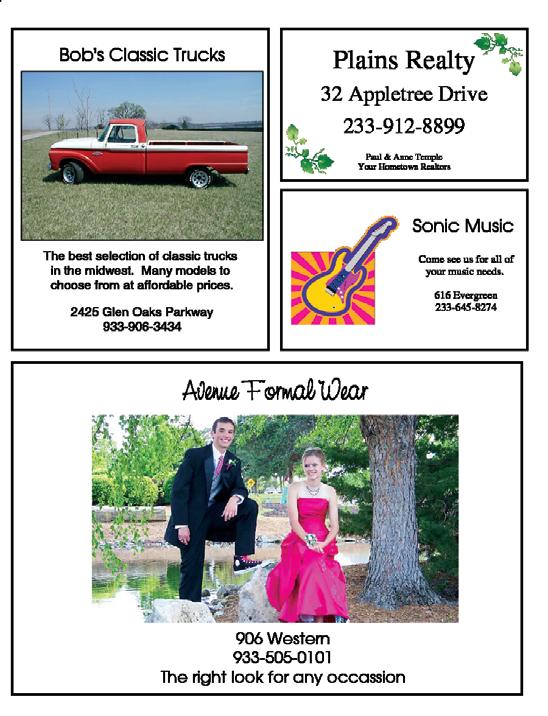
CovEr Story: Selling business ads has long been a fundraiser for yearbook staffs, but advisers say it is much more than that. Students are trained to develop a marketing strategy, make presentations to business leaders and overcome objections before closing the sale. These activities inspire student confidence plus correlate with many of the Common Core English and Math Standards so important in today’s educational system.
2 It’s time to celebrate!
If you haven’t planned your yearbook distribution event, there is still time. Your staff has worked hard to create the story of the year. Give the arrival of the yearbook the fanfare it deserves. We’ve got easy-to-implement tips from three advisers who know how to throw a party.
trending technology — the hottest tools for today’s staffer
Reporters’ notebooks are giving way to powerful apps that record interviews, bookmark interesting sound bites, help writers check facts and more. Find out why mobile reporting tools are quickly becoming a welcome addition to the yearbook world.
Make plans now to attend a summer workshop
If you’ve never been to a yearbook workshop, you’ll be convinced it’s worth your time after reading the reviews from three first-time attendees. Plus Jostens own yearbook guru, John Cutsinger, gives the lowdown on what to bring and what you’ll take away from the experience. 20 16 Gallery
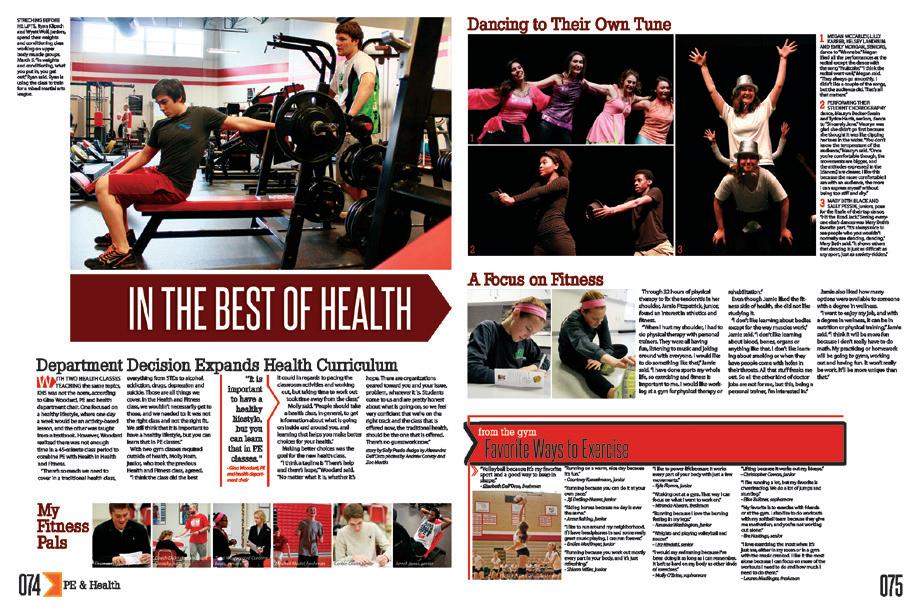
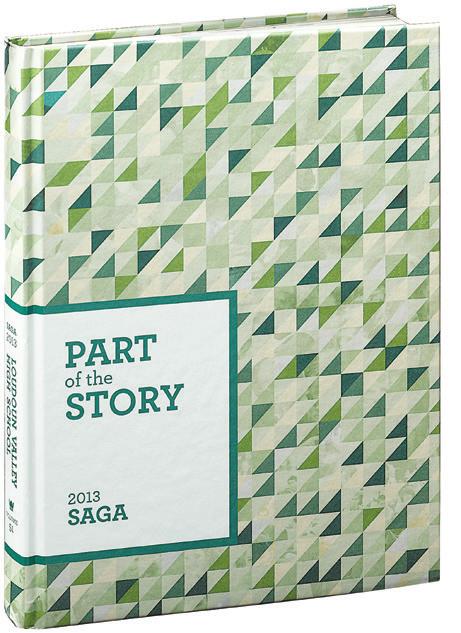
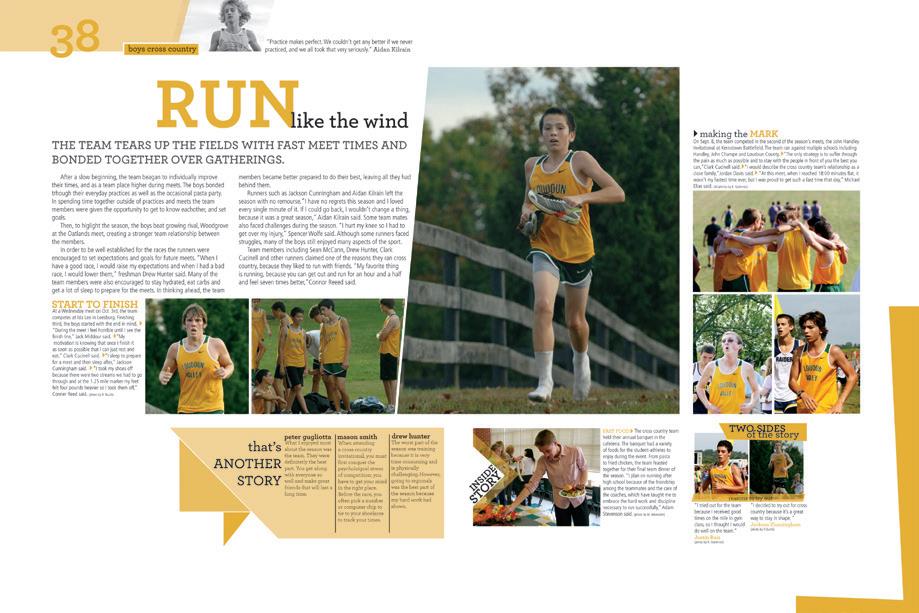
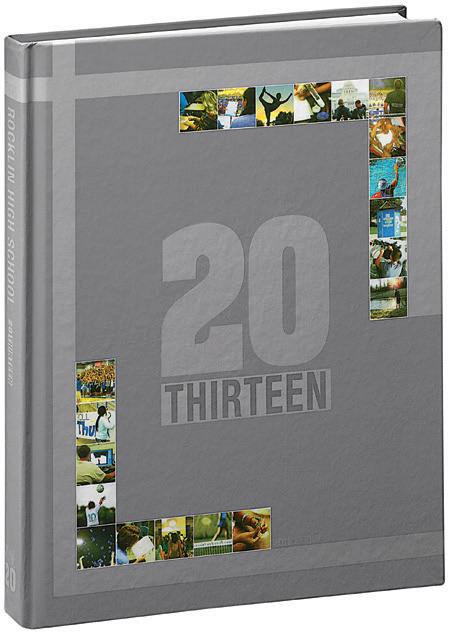
We couldn’t be prouder to work with so many talented yearbook staffs. The two national press associations recently announced the yearbook finalists in their journalism competitions. The Columbia Scholastic Press Association [CSPA] Gold Crown and the National Scholastic Press Association [NSPA] Pacemaker are considered top national journalism awards for student publications. 16 24
The Creative Account Managers, Jostens traveling yearbook gurus, share rapid-fire information on the latest in yearbooking in one-minute workshops rounding out this issue.
Start Small and build
Although Renee Scott, yearbook adviser, Niles North High School [IL], and her yearbook program have been holding a yearbook distribution party for about 12 years, they began to ramp up their efforts about three years ago.
At that time they added the Saga Early Distribution Party and Showcase to their event.
“This is basically a minivariety show, featuring all kinds of student performers: singers, dancers, rappers, slam poets, etc.,” Scott said. “We realized that this could be a great way to build awareness and excitement for the release of the yearbook, and, if we provided food and music, and charged $5.00 at the door, it could be a great fundraiser as well.”
The event is held from 3:30-6:00 p.m. in the school’s Student Commons and it’s open to all students whether or not they have pre-ordered a yearbook.
For the price of an admission ticket, students get to buy/pick up their book one week before the general school distribution, which Scott said really appeals to graduating seniors.
They also get to enjoy food from local vendors, a DJ and
r enee s cott’s TOP 3 D i stribution event tips
1BE PATIENT. You know the old saying, “It takes three years to build a program.” Well, it’s true. It takes time for your event to really become part of the school calendar/student expectations. Start small and build from there.
the Showcase performances. Everyone on staff contributes to making the event a success. Months before the Distribution Party, students break up into committees, including food, entertainment, PR and setup/teardown.
The Food Committee is responsible for contacting local vendors to solicit food donations.
The Entertainment Committee is responsible for running the Saga Showcase auditions, selecting the acts, and organizing, designing and printing the program for the event.
The PR Committee is responsible for publicizing the event by creating a commercial, an online social media campaign and posters that are displayed around the school.
“We try to have at least one commercial, as well as a social media presence and campaign via Facebook and Twitter,” she noted. “We also use more traditional methods like posters, handbills and locker postcards. We get added publicity through word-ofmouth, because the Showcase performers tell all their friends to attend.”
The Setup/Teardown Committee is responsible for
2
START EARLY. Form your committees early in the second semester and have clearly defined roles, expectations and deadlines. Schedule regular committee meetings, just like you would for editors’ meetings.
3
ENJOY ThE FRuITS OF YOuR LABOR . In the frenzy of a big event, sometimes it’s important to remind your staff (and yourself) to look around at all of the students enjoying the book that you have worked so hard to create.
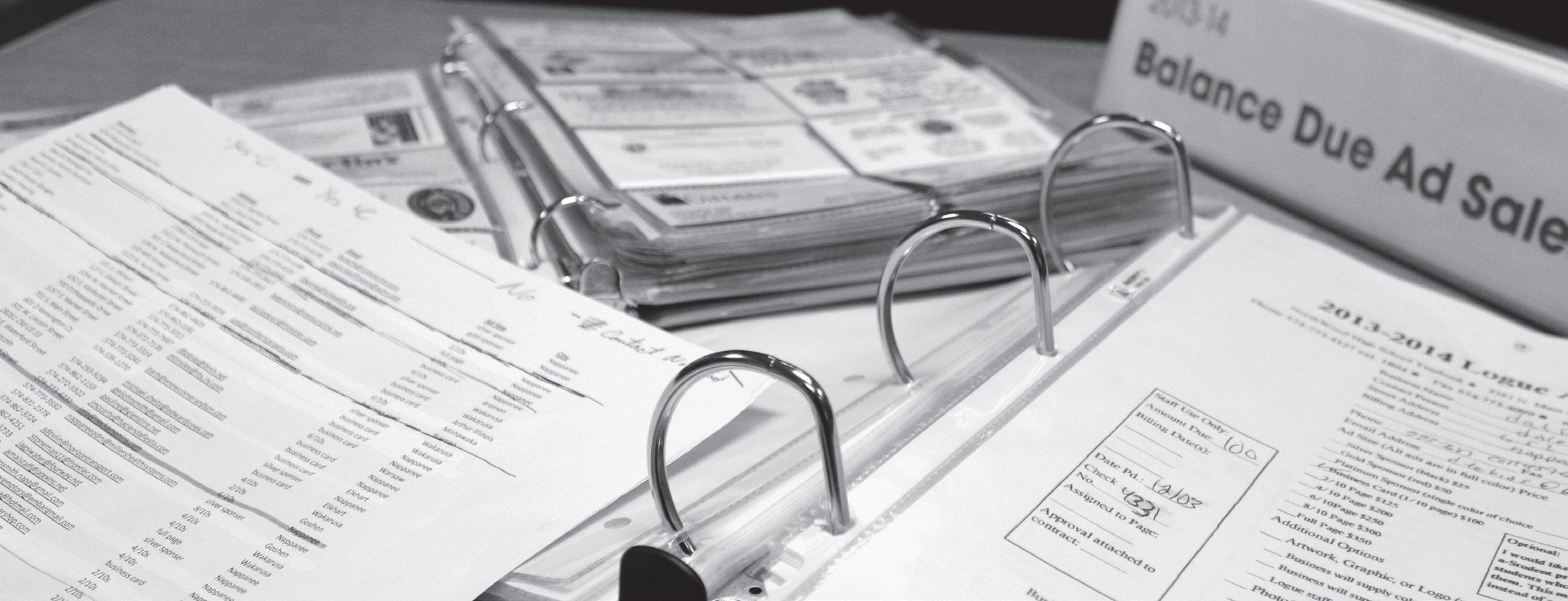
Food is always popular at distribution events. Niles North high School adviser Renee Scott says quantity and selection are important.
making sure that everything is set up properly on the day of the event.
The response from the student body has been very positive.
“Last year’s event really took it to the next level,” Scott said. “After the Showcase was complete, our DJ (also a student), took over with a great set. We dimmed the lights a bit and it basically turned into an impromptu dance battle. one of my editors turned to me and said with a grin, ‘Ms. Scott, our party just blew up!’ Sure enough, it was all over social media that night!”
By all accounts, last year’s distribution event was a huge success.
“It was the best ever,” Scott said, “because my staff worked really hard to ensure its success. We had a record number of attendees due to our outstanding performers and food selection. Seeing their peers perform creates a real feeling of community amongst the student body and is a great way to cap off the year. It’s also a time for the yearbook staff to really see the impact of the book that they have worked so hard to create.”
maK E it K id FriEndlY
Monica eD war Ds ’ TOP 3
D i stribution event tips
1Choose food that kids will like. Granola bars don’t sell; neither does juice. Buy enough donuts; don’t worry about making it a fundraiser; just sell them at cost. Offering free donuts for the first 50 people or raffling off a donated item makes it really fun.
Monica Edwards, yearbook adviser, Madrona School [WA], and her yearbook staff have been holding a yearbook distribution event for about five years.
While they initially decided that such an event would be a way to honor and recognize the yearbook staff’s hard work and to sell the books that they had ordered but not presold, the event turned into a fun annual celebration.
The event is open to all students at the school and is held in the courtyard outside of the school building before the school day begins.
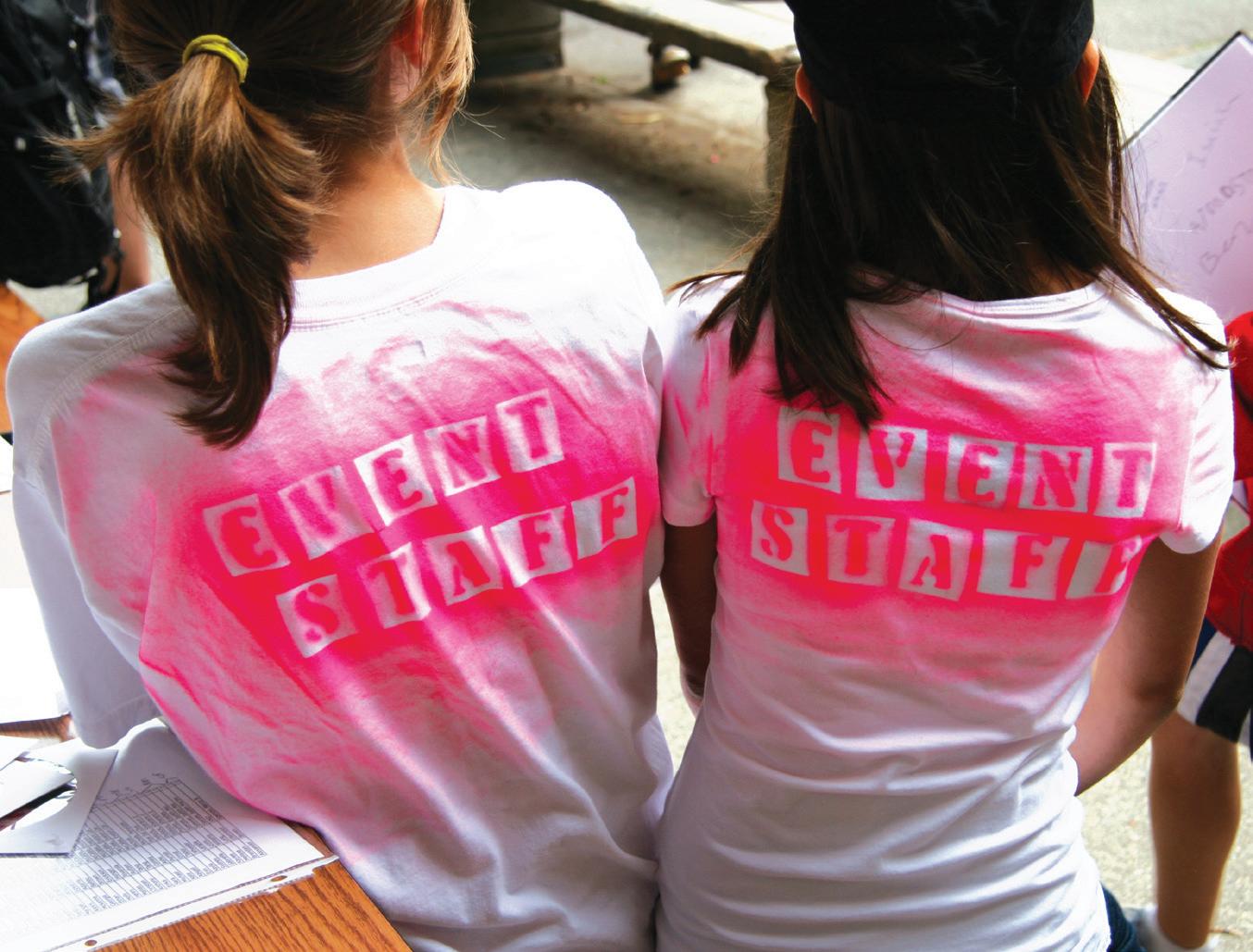
The staff designs custom “Yearbook Event Staff” T-shirts for the big day and while they sometimes have the shirts printed, Edwards noted that the “kids usually have more fun when we stencil or spray paint a similar colored shirt.”
At the event, students enjoy live music played by the school’s jazz band as well as popular music that the staff plays on a portable sound system. The staff sells donuts and, for $2, students can also buy a custom signing
2
Consider what type of signing pens to use. Sharpies are popular, but they bleed through the pages. Gel pens smear.
3
Live music is a great addition.
pen imprinted with the school’s name and logo.
To promote the event, the yearbook staff creates and posts signs, sets up big sandwich boards in the parent/student drop-off area, sends out emails, posts information on the school’s website, and relies on word-of-mouth advertisement. Parents are also invited to attend the party.
“The event is now a tradition,” Edwards said. “So it’s easy.”
organizing and holding the event gets easier with an established routine. Edwards and her staff make sure that the books are already presorted by homeroom and the students also pick them up by homeroom.
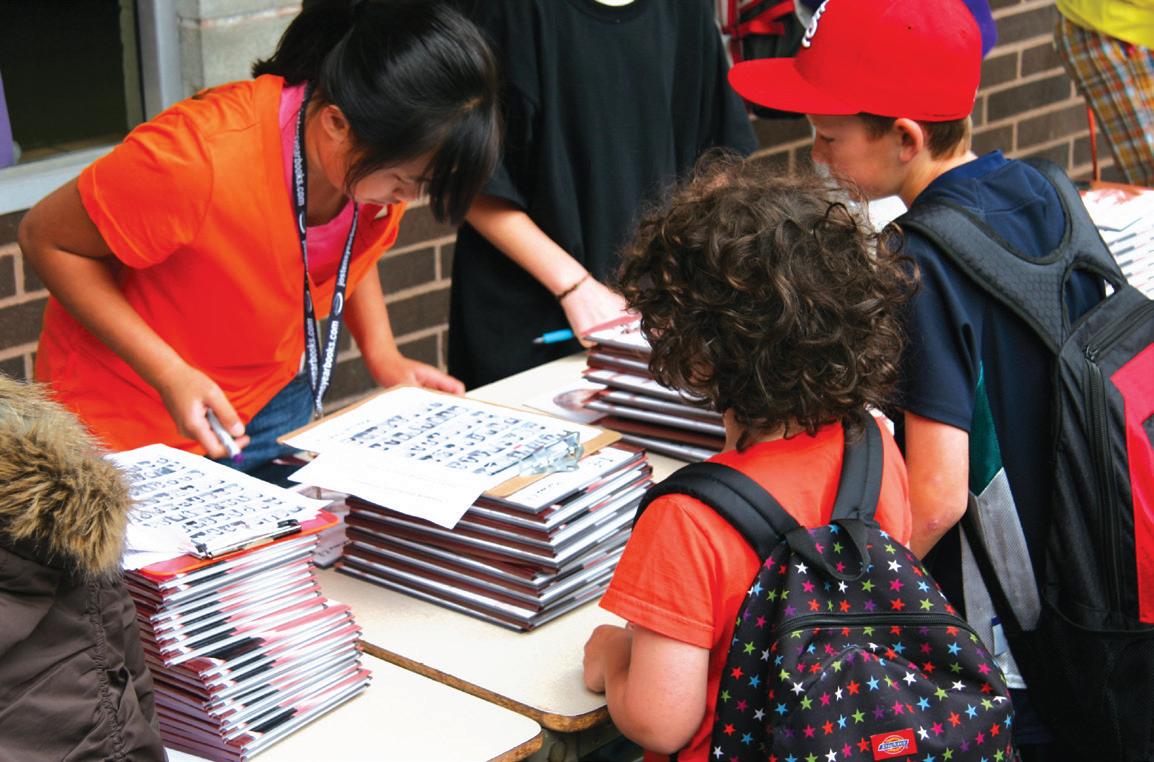
The staff members use a classroom sheet that’s printed for each class, so they can match the student’s mug shot with the student picking up the book to make sure that it gets to the right person.
After the party, the yearbook staff delivers the prepaid unclaimed books to the 1st period classes so students who aren’t able to attend the event can get their books.
The most beneficial aspect of holding a yearbook distribution event is to give the staff a sense of accomplishment.
As Edwards noted, they have the opportunity to “celebrate their work and see 400–500 kids holding the book they published.”
Custom-designed
“Yearbook Event Staff” T-shirts add to the festivities at Madrona School.
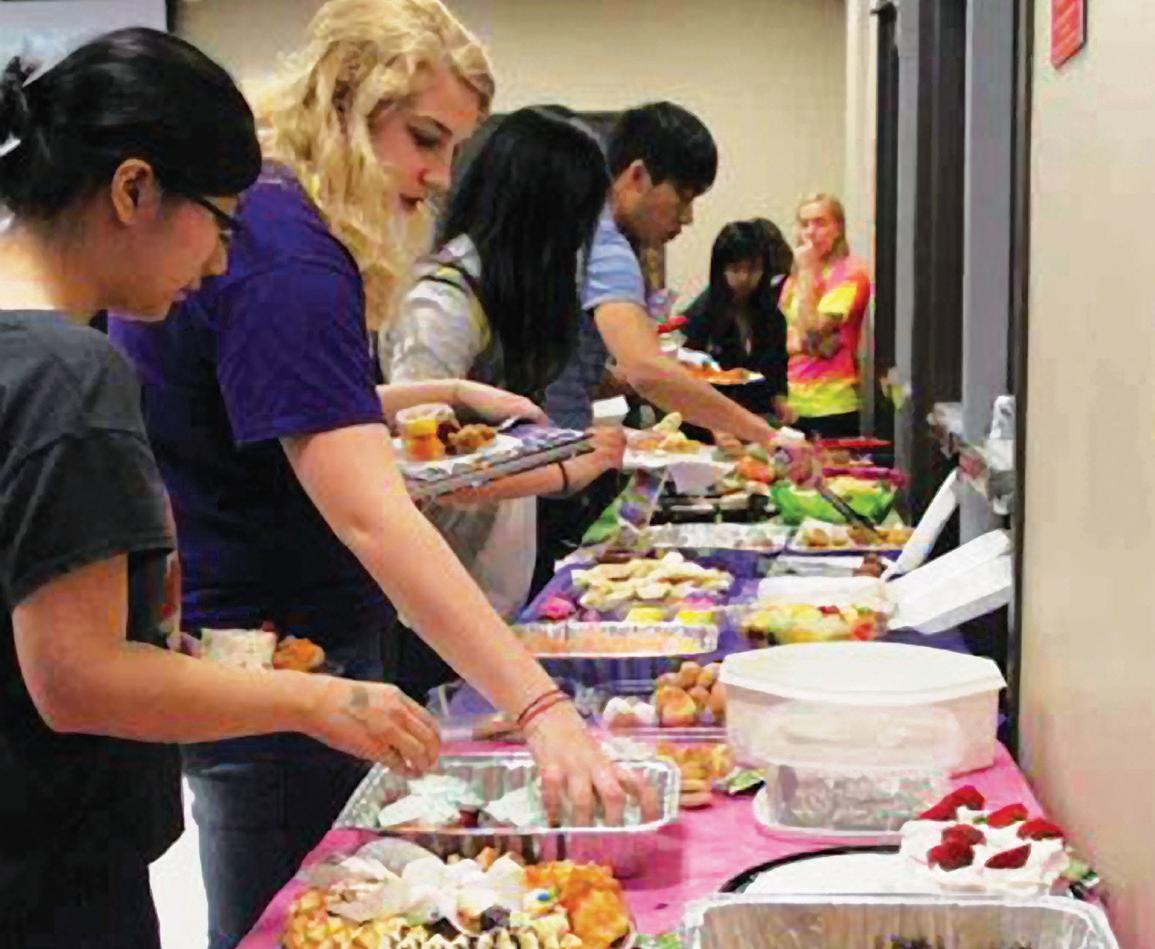
Madrona School staff members cross-check portrait photos at distribution to make sure they are distributing books to the correct students.
a dvancE Planning PaYS oFF
Rita Mortenson, yearbook adviser, verona High School [WI], and her yearbook staff hold a yearbook distribution event every year.
“We think that the distribution of yearbooks should definitely be a celebration, not only for all the hard work that the students put into making the book, but also all the cool events and things that happened throughout the year.”
They hold their event in the school’s main commons area on the last hour of the school day on the Friday before Memorial Day weekend. They make sure they log the date in the calendar at the start of the school year, so all the staff knows about it.
“We have it down to a science,” Mortenson said, “and depending upon some variables, we can pretty much distribute books to every class — freshmen, sophomores, juniors and seniors — within 10 minutes for each class. It is crazy fun!”
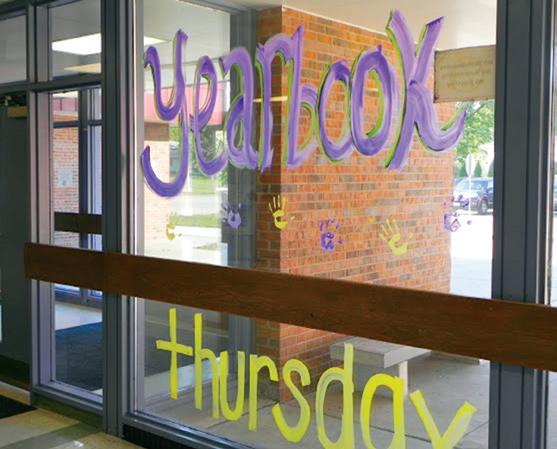
To promote the event, Mortenson and her staff post banners throughout the school, paint the school’s front windows, chalk the sidewalk, run a video segment on the school’s Tv channel and display some of the yearbook pages around the school.
The yearbook staff also makes several music CDs and, during the week preceding the
event, they set an anticipatory tone by playing the music during the school lunch hours.
“Everyone starts asking themselves, ‘What is so special about this week?’ and then it dawns on them — yearbook distribution is on Friday! — that’s what’s so special.”
on the day of the event, to help ensure that everything is organized and ready to go, all the yearbook staff members join Mortenson around 1:30 p.m., about two hours before the school day ends at 3:35 p.m.
“We organize things ahead of time and have the custodians help with some movement of the books, so this works slick,” she said. “Everyone loves it. We have special T-shirts made up and everyone wears them for the day.”
Three years ago, Mortenson mounted speakers in the main commons area so the yearbook staff has a DvD player, a projector and a speaker system all set to go, and they play music during the distribution event.
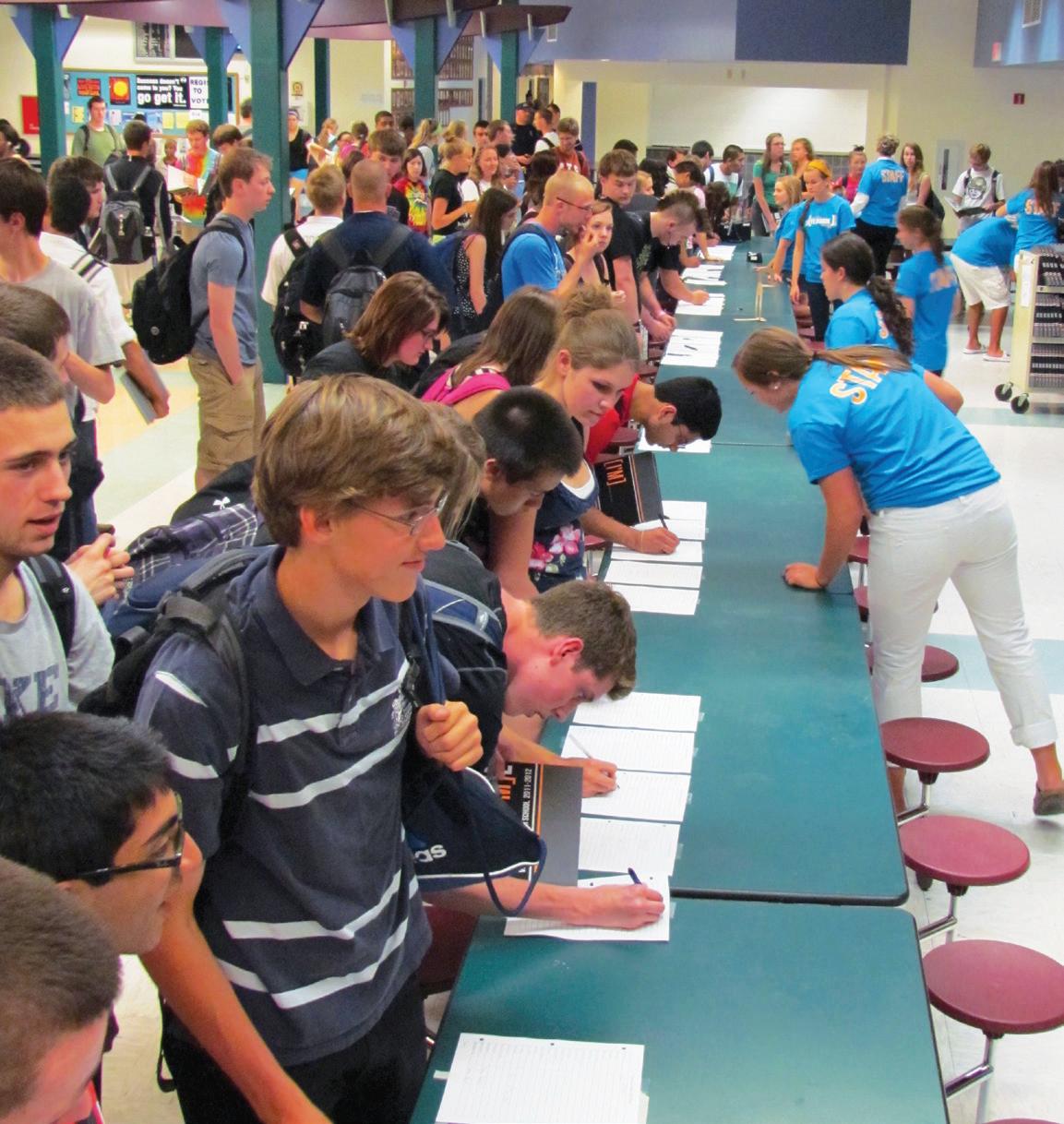
The festivities begin at 3:00 p.m., when the seniors are dismissed from their classes. They’re followed by juniors at 3:10 p.m., sophomores at 3:20 p.m., and freshmen at 3:30 p.m.
“The kids are so excited, they go running to the tables,” Mortenson noted.
one of the most beneficial
things about holding a distribution event is the sense of community it creates.
“The event and the success and the accolades are not just about our yearbook staff,” Mortenson said. “They are about celebrating the success that we have had as a school, a student body, a community.”
The challenges she and her staff have encountered in planning and implementing the event have been minimal.
“To be really honest, this is so
much fun organizing and not a lot of work. The kids sometimes have these really neat/crazy promotional ideas.”
She also noted that her principal is very supportive of the school’s yearbook distribution event.
“This is no different than students missing class for an assembly or homecoming. I think everyone sees the value in celebrating success.”
r ita Mortenson’s TOP 3 D i stribution event tips
1Talk with your principal and have a nice simple plan in place.
2 Work with things to your advantage. For example, since I knew that many seniors had 7th hour off, I let the principal know that it would impact each class for only about 10 minutes.
3 Make it fun and something that the school really can’t say no to if they value a community of learners and want to celebrate success!
At Verona high School, book distribution stations are organized alphabetically to save time. Students sign for their books upon receipt.
Taking care of business Adsales
Business ads can be a lucrative form of revenue generation for any yearbook program. In addition, students benefit from the real-world sales experience.
While teenage yearbook staff members might be a bit reluctant to approach businesses to solicit ad sales for the yearbook, with the right preparation and training, they’ll learn how to close the deal.
To get the most out of your business ad sales efforts, it’s important to train your staff, implement best practices and use time-tested ideas that work. Ultimately, the yearbook staff will gain real-world work skills and the program will enjoy an influx of cash flow.
If you haven’t sold business ads before, the prospect may seem a little daunting. We asked a few advisers who run successful ad programs to share their best practices.
robin Bilinski’s toP 3 Business
Ad Sales tips
1
Dedicate one week to full-time ad sales in the summer if you can swing it. You’ll get the bulk of the work out of the way, and then a few select staffers can finish the job.
2 Train your students to take on a professional approach when dealing with businesses. You’re asking them for money. They will want to know it’s in good hands.
3
Be persistent. If they haven’t said no, it could still be a yes!
Ad sales are a big part of the yearbook budget for Robin Bilinski, yearbook adviser, NorthWood High School [IN], and her yearbook staff.
In fact, their yearbook program typically generates $13,000 a year in ad sales revenue.
To get the proverbial ball rolling, she firmly believes that everyone on staff should be involved in selling ads during the initial ad sales drive in the summer. once that first week is done, they choose some of the best salespeople to finish the job.
“I encourage the staff to ask business people if they are interested in ‘supporting our student publications program by placing an ad in our yearbook,’” she said. “Many businesses are watching their pennies these days and they want the most for their money. In our community, they often view that as
advertising in athletic programs or on the monitors at sporting events, but yearbook advertising is still a good value for the buck — and no one throws their yearbook away.”
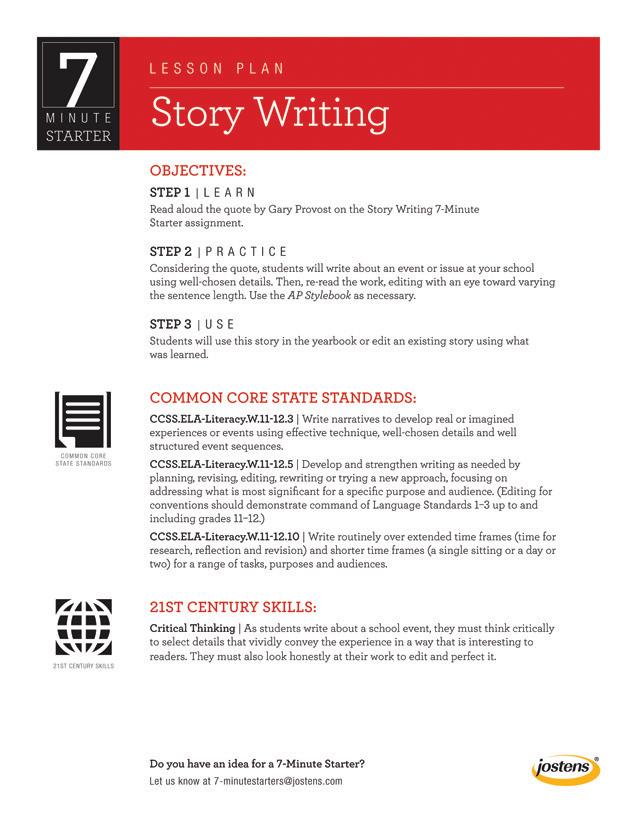
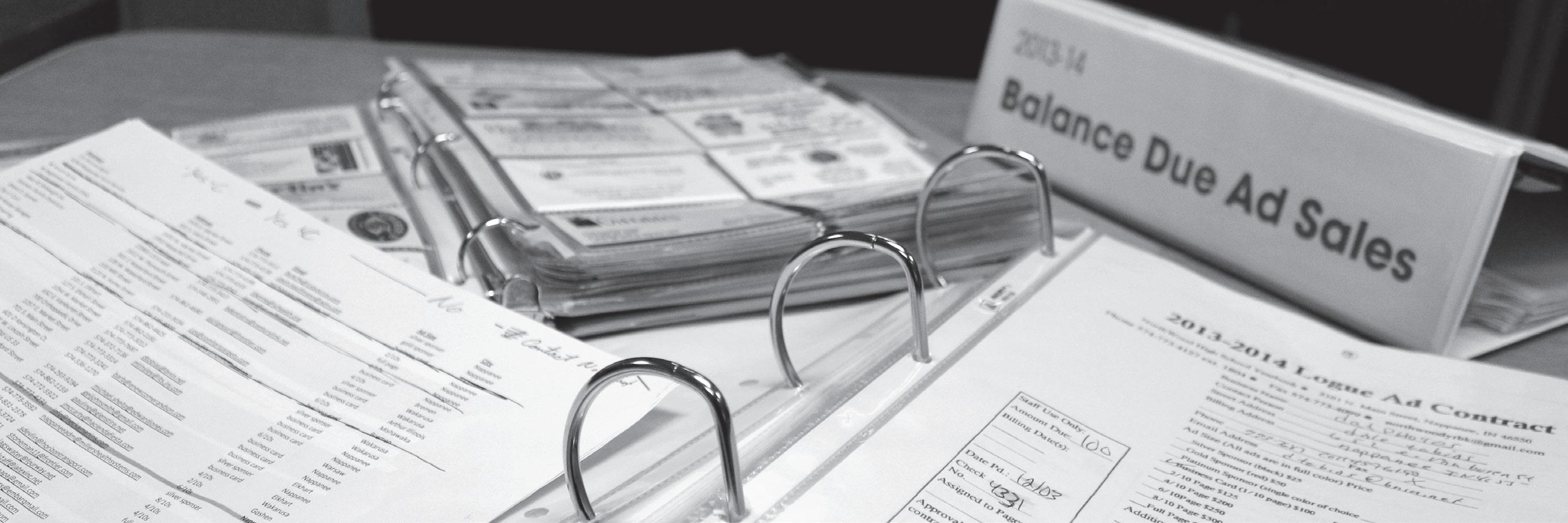
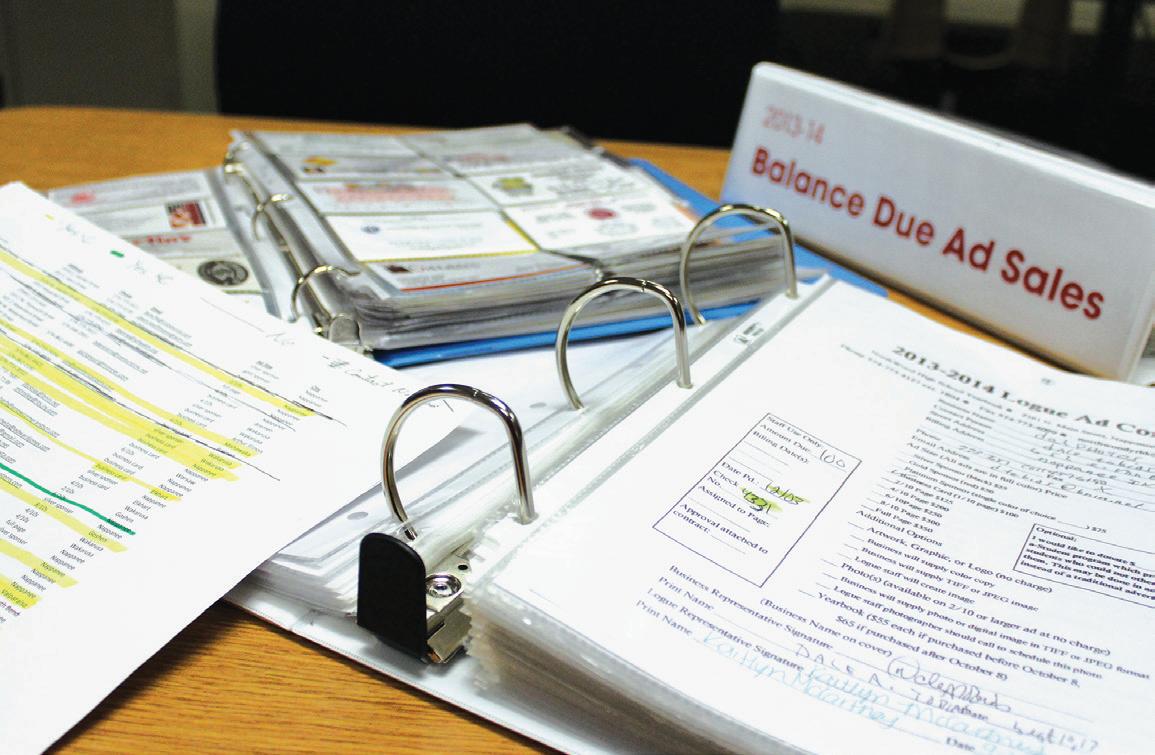
To prepare her yearbook staff to sell business ads, each staff member receives an ad sales binder that includes contracts, ad size grids, maps of the community and sleeves for business cards.
“For training we go through each component of the contracts and through the binders,” Bilinski said. “In addition, we role play, with the returning staffers taking the lead. They always do a bad example, a good example and a ‘tough sale’ example. We also practice firm handshakes.”
While Bilinski’s staff uses ad sales to help fund their book, she noted that the ad sales
As they prepare to make sales calls, NorthWood high School yearbook staff members Krysta McFarland and Isabella Filbert consult Google Maps for business addresses and directions.
they generate also help defray the cost of the staff’s own books, too.
“That’s part of their incentive,” she explained. “The more we sell, the more upgrades we can do — cover applications, special inserts, added pages, etc.”
one of the biggest benefits to selling ads is the real-life experience that staffers gain from the process.
“It really helps them gain confidence in speaking with adults and approaching business people with professionalism,” Bilinski said. “My students wear dress pants, shirts and ties or modest skirts or dresses when they go out for sales. They learn to use logic in promoting sales, they learn to problem solve when necessary, and they learn the importance of perseverance and follow-ups.”
Staff members at NorthWood high School receive a sales binder that includes contracts, ad size grids, maps of the community and sleeves for business cards.
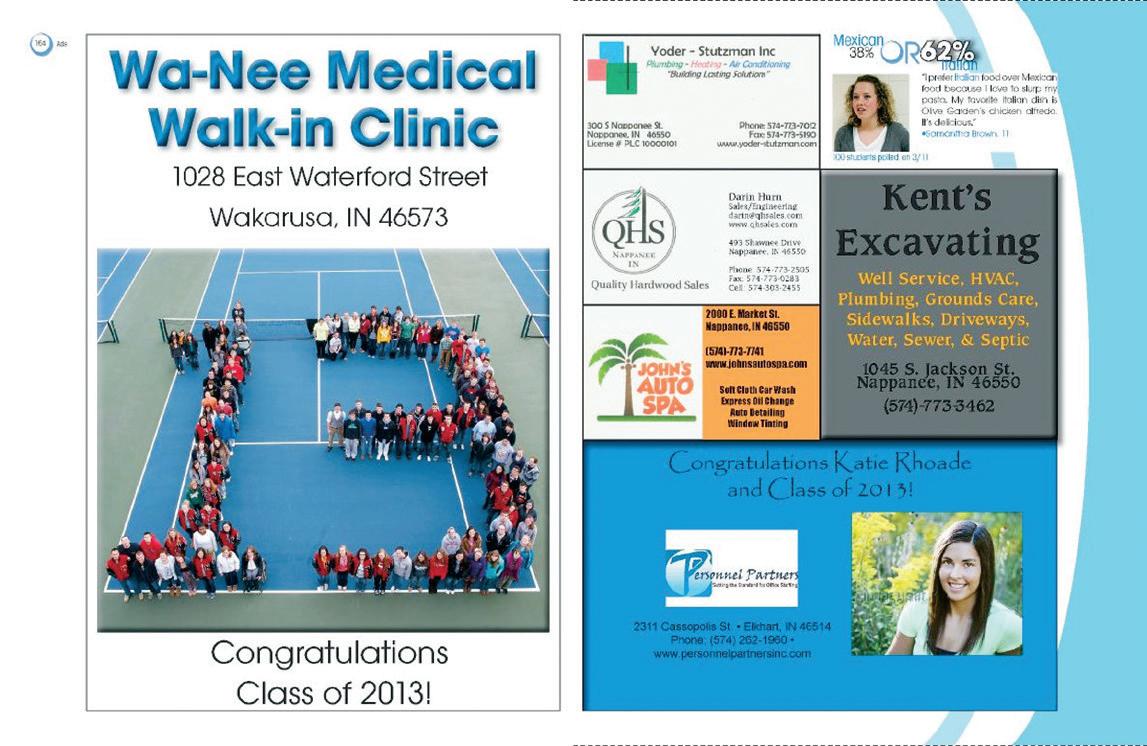
using student photos in business ads is a common practice that draws the attention of readers, increasing the promotional value and effectiveness. | NorthWood high School [IN]
anytime, anywhere!’”
Motivation is the key to success.
Carter’s students earn grades for their ad sales efforts. Every staff member is given between 12 and 15 businesses. A student’s grade is based on getting an answer from the business (not the sale). If a business says yes, the student has the ad contract to prove that he/she completed the sale.
“If they get rejected, the business is asked to sign a rejection sheet for ‘proof’ that the student talked to them,” Carter said. “Therefore they get their points either way.”
To reinforce the importance of selling ads, Carter has also instituted a sales incentive program for her students.
“I take our total goal (this year $21,000) and divide that by how many students I have and that is their individual goal (this year $750).”
If students make their individual goals, then Carter rewards them by giving them 10% of their total sales back in cash.
“Most choose to use this money to go toward their national convention trip if they are going,” she said. “But others get the money to use as they like.”
In a typical year, Carter’s yearbook program generates between $18,000 and
$20,000 in business ad sales. That’s pretty impressive for a school located in a town of 12,000 people.
Ad sales revenue helps cover the cost to produce the book and makes it more affordable for buyers.
“We get no funding from our school,” Carter said, “so if we didn’t sell ads, the books would cost approximately $75 instead of the $45 that we charge now.”
Carter noted that, in years when there’s extra money, she and her staff sometimes are able to allocate it for their trip to the national convention.
Ultimately, selling ads benefits students in tangible ways.
“This is my 13th year advising and every year I have at least one student thank me for making them sell ads,” Carter said. “Some are thankful because they were shy and it helped them overcome that and some are thankful because they make business contacts during ad sales for a job. This is pretty ‘real-life’ for high school kids. They get to be a part of the business world and experience all that comes with trying to sell a product (rejections, rude people, nice people, people putting them off, etc.).”
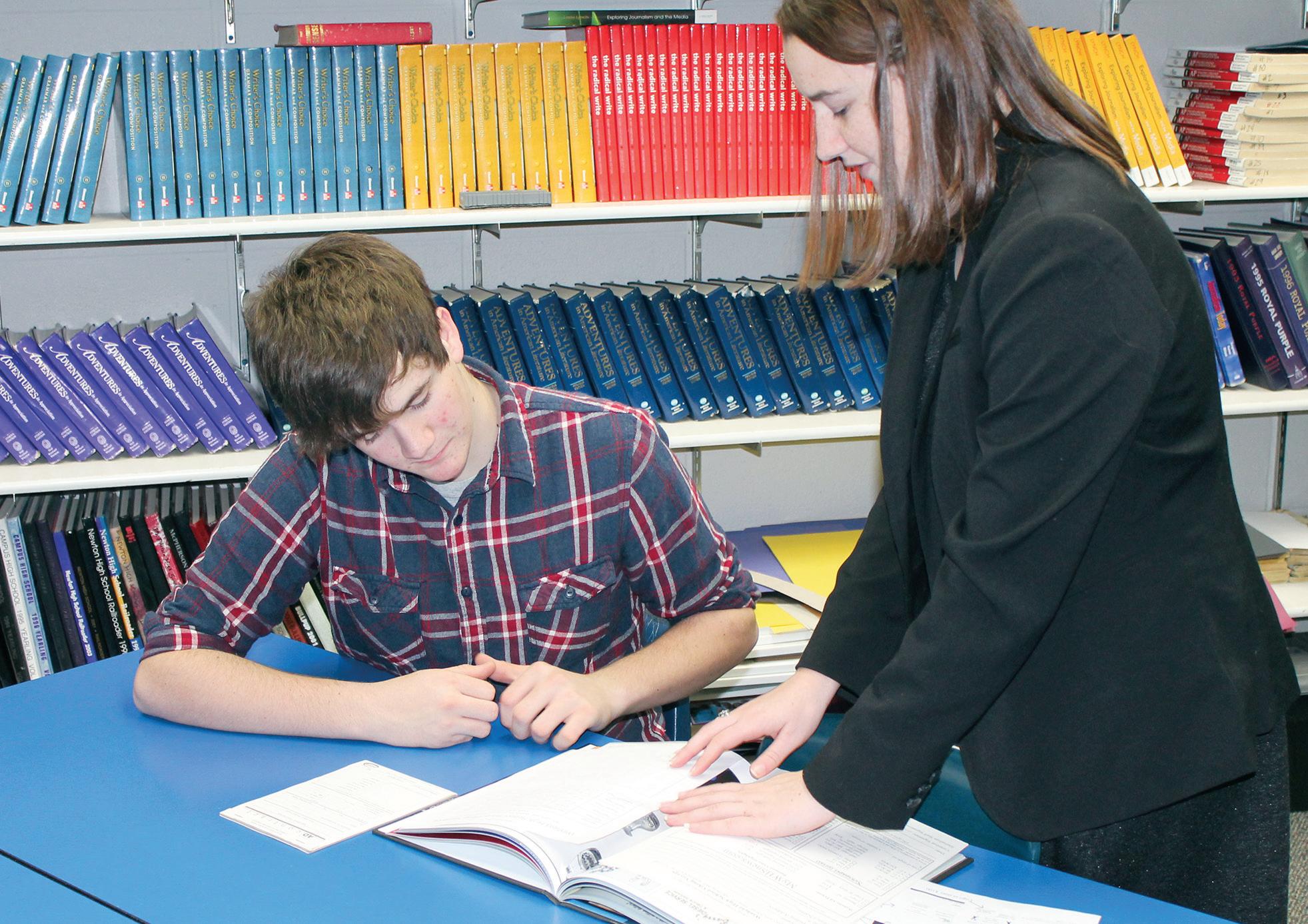
Winfield high School yearbook staff member Sydney Fox practices her ad sales presentation on fellow student Scott Olny during a classroom role-play session.
“It’s really a bargain when you consider how many people are going to be seeing this and it’s never going away.”
CINDY TODD, Westlake high School, [TX]
Todd also recommends that staffers visit the businesses in pairs. “You should put an older student and a younger student together so that you have that maturity level and also kids tend not to be so shy when they have someone with them. I think that helps a lot.”
S E ll th E v A lu E
once you get your foot in the door, you have to provide the business owner or manager with a compelling reason to buy an ad and be able to overcome objections. Here are a few ideas Todd promotes in her workshops:
Survey the student body.
“You can come up with some sort of a flyer or handout to leave with the business, with some survey results like how often the kids eat out, what they spend their disposable income on, where they hang out on weekends,” Todd said. If 85% of the students say they eat three burgers a week, or that they get breakfast tacos four days a week, or spend $20 a week on coffee, and you’re armed with that kind of knowledge, it could prompt business owners to want students to spend some of that money with them.”
Bring along a spec ad.
It’s more difficult for a business owner to turn a staffer down if they’ve gone to the effort of putting a spec ad together.
“Not only is it worth the time to design a spec ad, it’s also a great practice for the kids,” Todd said. “It teaches them about ad design. That it’s more than just putting in the name of the
business and their slogan or address and phone number. You’ve got to actually come up with a benefit for that business, for that service.”
For extra impact, consider using a photo of students at that business in your spec ad.
“If it’s a hamburger joint, have them eating a hamburger at that restaurant and put them in the ad. Then go in and say, ‘This would be a great ad, a great representation and I can promise you that people are going to look at this ad because our students are in the ad,” Todd said.
Another plus is that the spec ad may increase the size of the ad purchased. “If you had a ¼-page ad or a ½-page ad they’d be less inclined to hand you a business card and say, ‘Here, just put this in,’” Todd said.
Assure business owners their ad will be seen.
“Tell them what kind of coverage you’re going to do in the ad section,” Todd explained. “You should be doing secondary coverage in your ad section no matter what kind of coverage you do — maybe you’re doing stories or results of polls, some sort of survey or sidebar coverage — you should have something. Tell them you’re mixing in some senior ads — people love senior ads — that’s always a good way to do it.”
Show that yearbook ads are a good buy.
“Some businesses operate under the assumption that it costs too much to advertise in the yearbook. The kids actually need to know how much it would cost to do the same size ad in the local newspaper,” Todd said. “They can do that research and that would be a really good fact for them to cite. You could also say the yellow page ads are really expensive, web ads are really expensive compared to what we do.”
Support for the school.
While business owners know that people don’t reach for the yearbook if they need a plumber or some other service, they also know that if their business supports the publication by advertising in it, the students’ parents are going to know that.
“And those parents are a lot more likely to go to businesses that support the schools,” Todd said. “I truly believe that.”
A positive, ongoing source of advertisement.
Students should be able to articulate the longevity of the ad. “This is going to be in 1,000 homes, so many more people are going to see this ad than what you might think. It’s really a bargain when you consider how many people are going to be seeing this and it’s never going away. People never throw their yearbooks away; they throw their newspapers away; they don’t look at the yellow pages, but their yearbooks are going to be there forever.”
Spec ads are a tangible way to help advertisers envision what their ad in the yearbook might look like.
Adsales BUSINESS
Amanda Pomeroy’s toP 3 replayIt
Ad widget tips
1Before teaching students how to sell business ads, work out how you want ReplayIt ads to be marketed. If you have clear directions for your staff to use, it will be better received by businesses.
2 upload two copies of each ad. Place one in a business ad folder for use in the print book and drop the second in the ReplayIt ads folder. I have found that you can move from one to the other, but you can’t have it in both places unless you upload twice.
3 have a sample print screen shot to take to businesses so that they know what they will be getting if they purchase a ReplayIt ad.
DoUBLE EXPoSURE
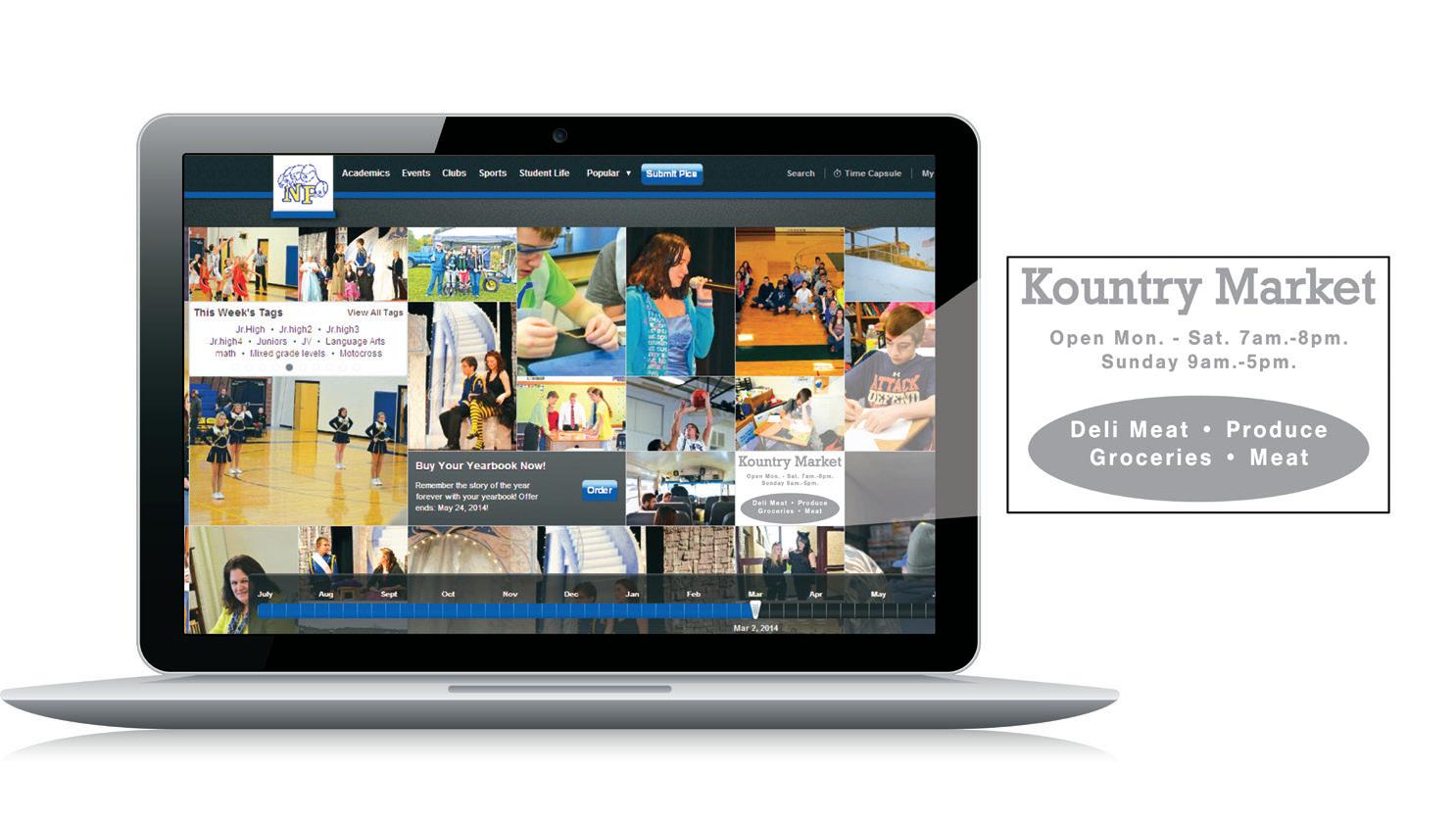
Advertisers get the best of both worlds when traditional print advertising is offered with an online option using the new ReplayIt Ad Widget.
Business owners are always looking for ways to get the most from their advertising dollars. The Jostens ReplayIt Ad Widget provides a new way to bundle print and online ads or offer the option of online packages. The ad widget works with the ReplayIt photo sharing website.
When Amanda Pomeroy, yearbook adviser, Northern Potter Jr. Sr. High School [PA], and her yearbook staff started using the ReplayIt business ad widget, they opted to offer ReplayIt ads at no charge to introduce their advertisers to the new service.
To build interest in and awareness of the ReplayIt ad option during this introductory period, they simply mentioned the ReplayIt ads to potential business ad buyers.
“We didn’t ask whether or not they wanted it,” Pomeroy said. “We just charged for the print ad, and told them that along with their print ad we might possibly put it on ReplayIt.”
She noted that one of the key benefits of using ReplayIt to post ads is that the “ads are seen all year, not just when the books come out.”
Next year, Pomeroy has set her sights on more fully integrating the ReplayIt ad option into her staff’s business sales ad efforts. While she and her staff haven’t decided exactly how to best bundle the option next year, she does see the potential to offer an alternative to nonbuyers.
“I think that if a business declines a business ad in the print book, we will offer them a ReplayIt-only ad for a reduced cost,” said Pomeroy.
ReplayIt ads will also become part of her classroom training.
“I give my students training on selling business ads,” she said, “and I have a plan to add a page on ReplayIt ads to my training packet.”
To help staffs get started with online ads, a Quick Start Guide is available in the Digital Classroom on Yearbook Avenue. To help in the sales process, a ReplayIt ad contract and promotional flyers are also available on Yearbook Avenue.
common core state standards
Y E ar BOO k a d Sal ES Sk I ll S and the Common Core
As students market and sell yearbook ads, they will touch on many of the following Common Core Standards, depending on where the teacher focuses instruction.
E = Common Core English Standards
Compare yearbook ad sales from two consecutive years.
E - Analyze Content RI.11-12.2-9, SL.9-12.2-3
M - Interpreting Categorical and Quantitative Data S-ID.A.2
M - Making Inferences and Justifying Conclusions S-IC.B.6
Determine the percentage of local businesses that buy yearbook ads.
E - Report Findings SL.9-12.4-6
M - Quantities N-Q.A2
Create marketing pieces like announcements, rate cards, contracts.
E - Study and Apply Grammar L.9-12.1-3, SL.9-12.6
E - Write Informative Text W.9-12.2
Conduct surveys to determine the consumer spending habits of students.
E - Report Findings SL.9-12.4-6
M - Math Modeling
Use results from surveys and focus groups to create a marketing strategy.
E - Report Findings SL.9-12.4-6
E - Conduct Research W.9-12.7
M - understand Statistics IC.A.1
M - Consistency of Statistics IC.A.2
M - Math Modeling
Set quarterly sales goals and track success.
E - Conduct Discussions SL.9-12.1
E - Report Findings SL.9-12.4-6
M - Math Modeling
M - Quantities N-Q.A2
organize a marketing strategy by studying last year’s ad sales data.
E - Conduct Discussions SL.9-12.1
M - understand Statistics IC.A.1
M - Consistency of Results IC.A.2
Read about marketing strategies and predict what will work in your community.
E - Cite Textual Evidence RI.9-12.1
E - Determine Meanings of Words RI.11-12.4
E - Conduct Discussions SL.9-12.1
E - Report Findings SL.9-12.4-6
M = Common Core Math Standards
Apply known marketing strategies to your yearbook ad sales campaign.
E - Cite Evidence SL.9-12.4
E - Conduct Discussions SL.9-12.1-3
E - Analyze Content RI.9-12.2-6, SL.9-12.2-3
E - Write Informative Text W.9-12.2
E - Conduct Research W.9-12.7
Explain reasoning behind the marketing strategy used.
E - Conduct Discussions SL.9-12.1-3
E - Cite Evidence SL.9-12.4
E - Convey Ideas W.9-12.2
Through one-on-one discussions, convincingly explain to business owners the value of buying a yearbook ad.
E - Study and Apply Grammar L.9-12.1-3
E - Study and Apply Vocabulary L.9-12.4-6
E - Conduct Discussions SL.9-12.1
E - Report Findings SL.9-12.4-6
Track results of marketing by recording how many businesses buy an ad during each marketing campaign.
E - Cite Evidence SL.9-12.4
E - Analyze Content SL.9-12.2-3
Use information to continue with or change course in marketing campaigns.
E - Cite Evidence SL.9-12.4
E - Analyze Content SL.9-12.2-3
M - understand Statistics IC.A.1
M - Consistency of Results IC.A.2
M - Probability CP.A.3
Explain how marketing and selling ads to support the yearbook is like running a business.
E - Study and Apply Grammar L.9-12.1-3, SL.9-12.6
E - Study and Apply Vocabulary L.9-12.4-6
E - Cite Evidence SL.11-12.4
E - Report Findings SL.9-12.4-6
E - Write Informative Text W.9-12.2
E - Conduct Research W.9-12.7
organize yearbook ad sales data from each sales drive.
E - Study and Apply Grammar L.9-12.1-3, SL.9-12.6
E - Study and Apply Vocabulary L.9-12.4-6
E - Conduct Discussions SL.9-12.1
EDMonD SAntA FE
hIGh SChool
Edmond, OK Archives
Paige White, adviser [Silver Crown]
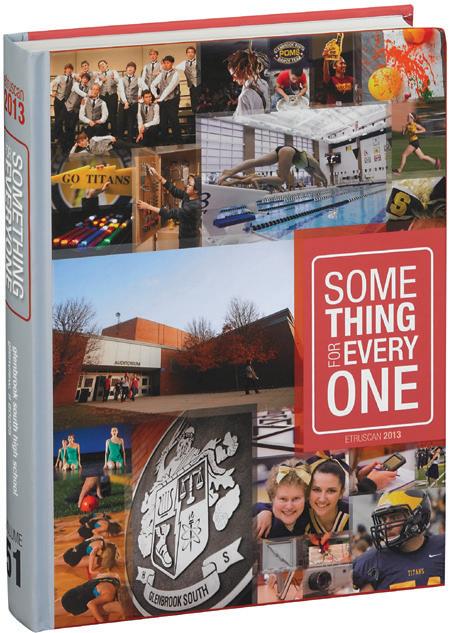
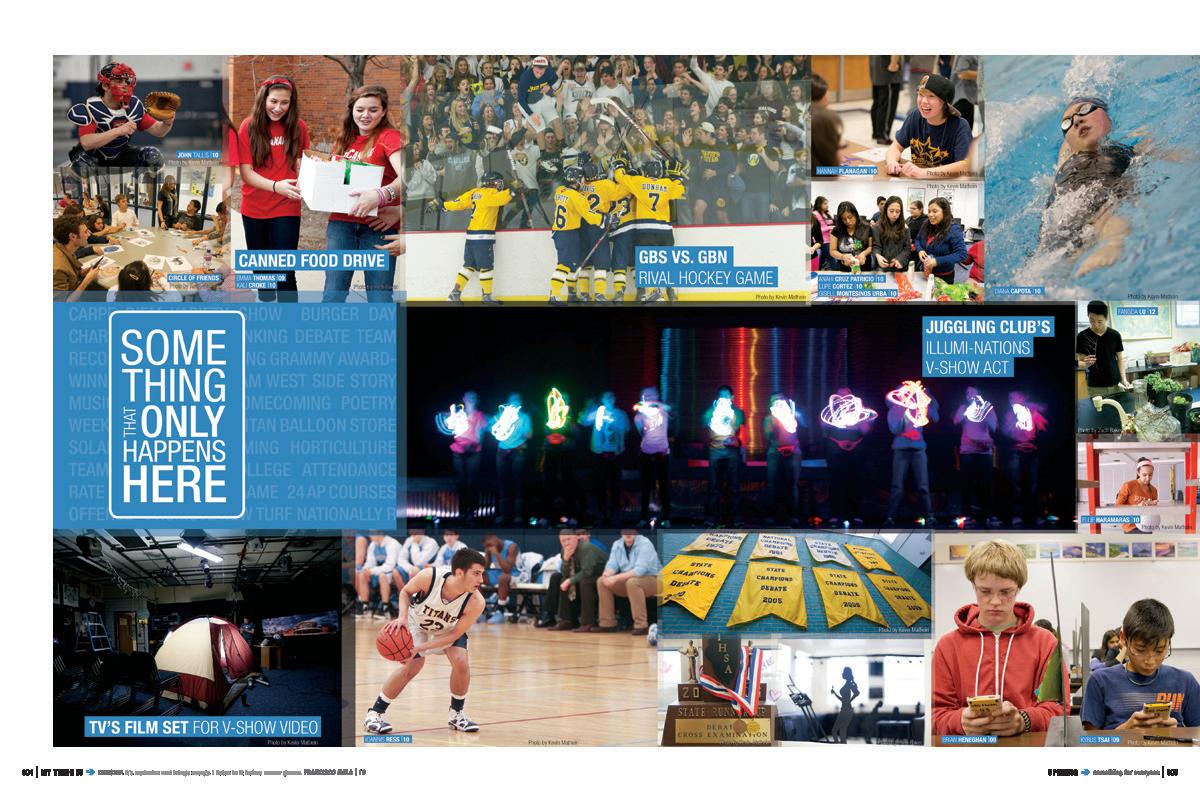
GlEnBrooK South hIGh SChool
Glenview, IL
Etruscan
Brenda Field, adviser [Gold Crown and Pacemaker Finalist]
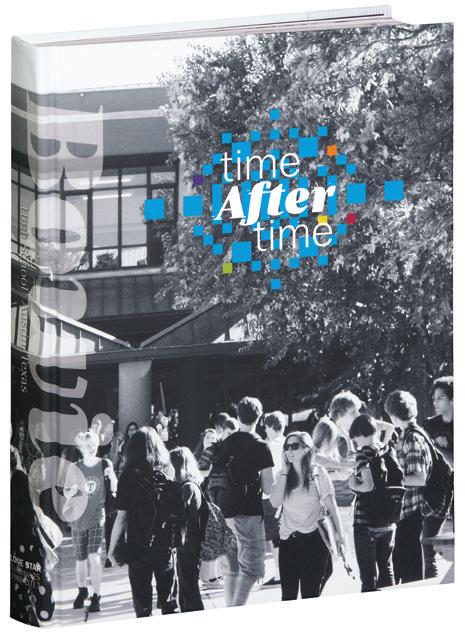
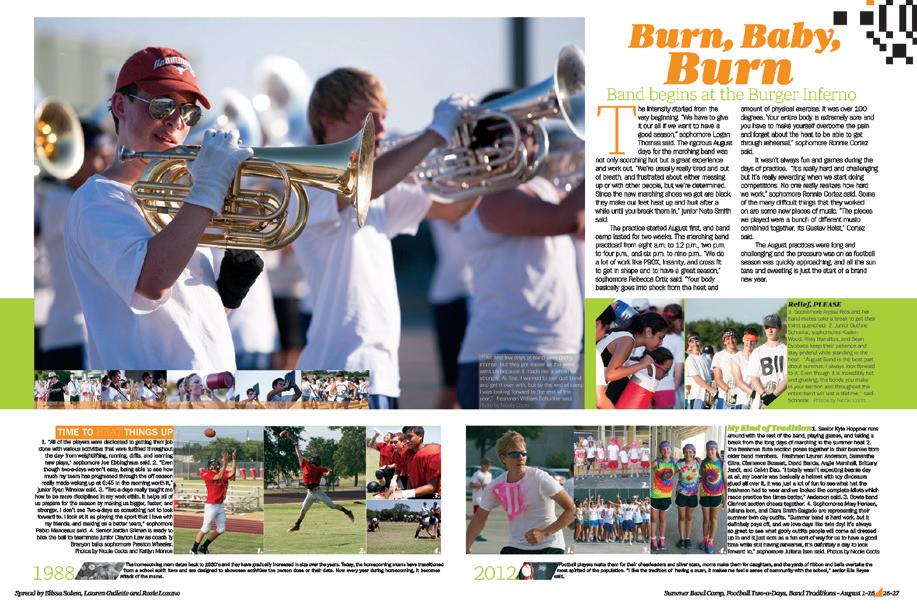
JAMES BowIE
hIGh SChool
Austin, TX
Lone Star
Deanna Dellana, adviser [Silver Crown]
KIrKwooD hIGh SChool
Kirkwood, MO Pioneer
Mitch Eden, adviser [Silver Crown and Pacemaker Finalist]
louDoun vAllEy hIGh SChool Purcellville, VA Saga
Martha Akers, adviser [Silver Crown and Pacemaker Finalist]
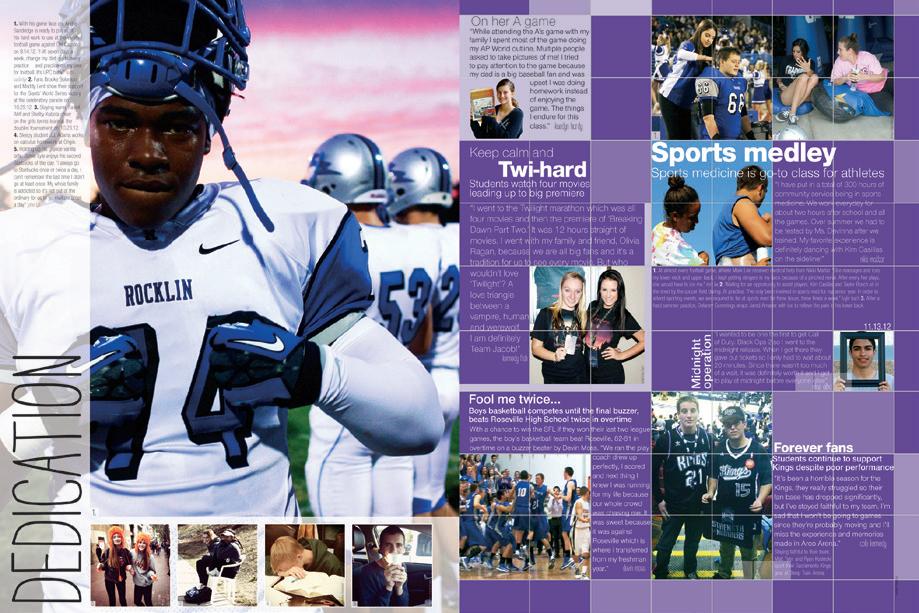
roCKlIn hIGh SChool Rocklin, CA Tonitrus
Casey Nichols, adviser [Pacemaker Finalist]
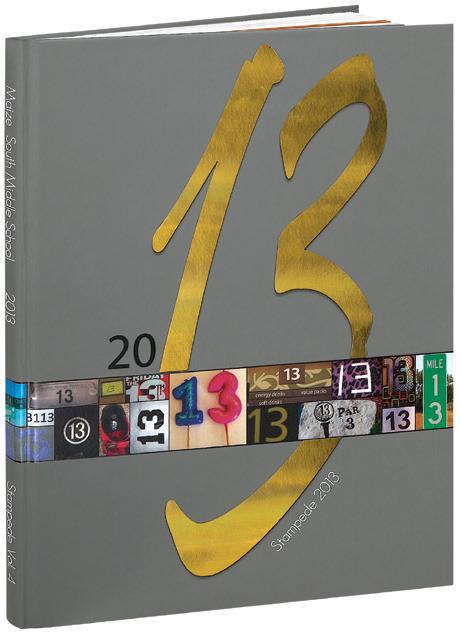
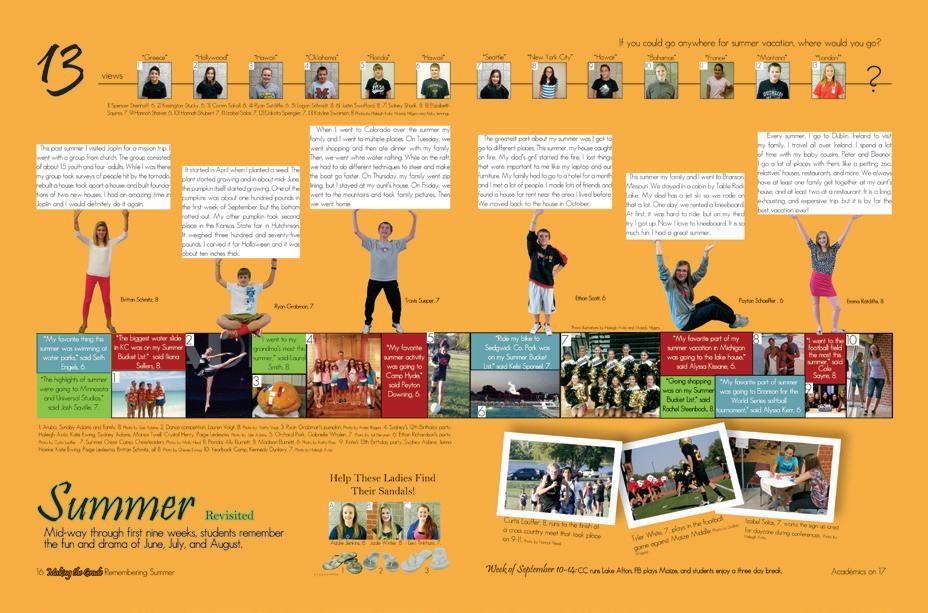
MAIZE South MIDDlE SChool Wichita, KS Stampede
Mary Patrick, adviser [Gold Crown]
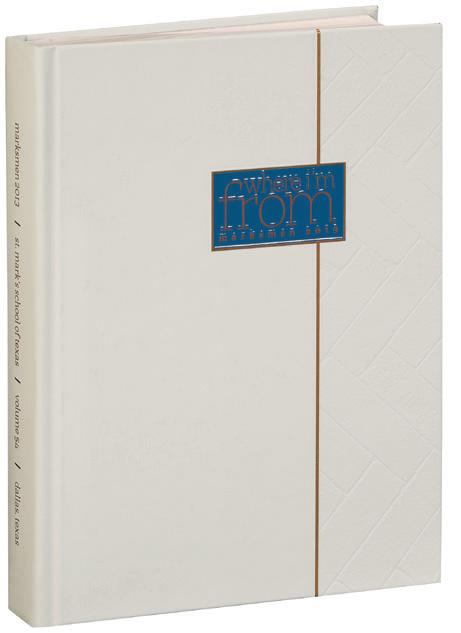
St. MArK’S SChool oF tEXAS Dallas, TX Marksmen
Ray Westbrook, adviser [Gold Crown and Pacemaker Finalist]
“The workshop has made all the difference in helping me get off to a good start.”
b ra D ley wallace s avannah a rts a cademy [ ga ]
Worth the trip
FiRSt-tiMe wORKShOp AttenDeeS discover a fun place to share ideas, learn new techniques and network with colleagues.
In 2013, Bradley Wallace, yearbook adviser, Savannah Arts Academy [GA], took on the role of shepherding the school’s yearbook program.
With the support of his principal and his yearbook rep, Wallace also attended his first-ever yearbook workshop.
“The workshop has made all the difference in helping me get off to a good start,” he said.
As a self-described “newbie” who’d never attended a yearbook workshop or produced a yearbook, he didn’t know what to expect.
“I didn’t have enough prior knowledge to even know where to begin,” he noted. “Looking back, I don’t think it was detrimental because the workshop helped me begin where I was. My two returning editors, although they had worked on the yearbook before, started at a new beginning with me. I think the workshop helped us build a relationship and establish a vision for our yearbook.”
He’d hoped to leave the workshop having acquired some basic knowledge about yearbook so that he could begin to develop some confidence that he would be able to advise his students in producing a quality yearbook.
“My expectations were exceeded,” he said.
The co-editors who accompanied him to the workshop were the only two yearbook staff members who had also worked on the book the previous year.
“They too were excited and ready to change our yearbook format and reputation,” Wallace noted. “At the workshop, one of them commented: ‘I just found out that everything we did last year in the yearbook is wrong;
this year’s yearbook is going to be so much better!’”
While oftentimes advisers and staffs arrive at workshops equipped with the yearbook-related materials they intend to work on, Wallace and his co-editors didn’t. But, that didn’t matter.
“The workshop provided all of the materials we needed to make our time productive and useful. We left the workshop with a wealth of ideas as well as materials that we brought back and have since used.”
Ultimately, Wallace realized the goal he had set for himself, which was to return to the yearbook room with the confidence to effectively apply the practices he’d learned so that he and his staff could begin to build a successful book.
“We left knowing that our previous yearbooks were scrapbooks and now we are producing a yearbook,” he said. “I and my editors and staff are proud of what we are producing. We have successfully changed a culture here at the school.”
As a new adviser, Lori Kirk, yearbook adviser at Forest Lake Christian School [CA], was frankly honest in admitting: “I needed all of the help I could get.”
She decided to attend a yearbook workshop. And, she’s glad she did.
“I always like to learn as much as possible before starting a new adventure,” she said.
Although none of her yearbook staff accompanied her to the workshop, she didn’t arrive empty-handed. She brought along the graphic for the yearbook cover, yearbooks from previous years, notebooks, paper, pencils and her camera. Fully equipped, she was ready
to get down to business.
“I took away great ideas on classroom management, photography tips, an understanding of how to teach students and keep them engaged, and the resources available to advisers through JEA.”
She also deepened her understanding of the potential challenges she could encounter in working with students.
She found the hands-on experience to be extremely helpful, including gaining a working knowledge of Yearbook Avenue.
“one of the most important benefits was getting to sit with the artist and have our cover 90% complete before school started!”
She returned to the yearbook room brimming with confidence.
“The most important takeaway was ‘I can do this!’”
While DeAnn Nivens, yearbook adviser, Alvord High School [TX], takes professional development classes every summer, last year her co-adviser retired and she decided to attend a yearbook workshop because she wanted to take a class that would benefit her students.
“I needed new ideas and inspiration,” she said.
Although Nivens has a yearbook staff of 17 students, she attended the workshop by herself.
“I did not know who was going to be on my staff,” she explained. “We had a new counselor and this year’s schedule was not set. Being in a small school makes it hard to request and get the students you need.”
Nivens had attended a fall and spring workshop the preceeding year, so she had some sense of what to expect.
Armed with her iPad and a willing spirit, she dove in.
“I had limited expectations so I can say they were definitely met,” she said. “our instructor had great ideas and presentations that were easy to follow. We even got to take them home with us to share.”
Nivens noted that one of the biggest benefits of attending was the collegial exchange of ideas among the advisers — ideas that worked, and perhaps more importantly, ones that didn’t.
“I took lots of notes. My head hurt after three days because there was so much information to take in.”
Nivens’ staff uses Photoshop in their yearbook and she gleaned some interesting tips that she was able to take back to her students.
“My instructor worked in a large school and some of her ideas did not translate as well to small schools, but she would discuss some options we would have in a smaller school.”
Nivens was able to use funds from the yearbook account to cover the costs of attending the workshop.
“one thing I did last year was to take over the bookkeeping and I made the yearbook solvent again.”
In addition to that solvency, she also implemented other cost-saving measures that enabled them to reduce the cost of producing their full-color book.
As a result, Nivens has been able to share some of the savings with her students. She’s setting her sights on attending another yearbook workshop this year. And this time, she isn’t going alone.
“This year, I plan to take one or two students with me.”
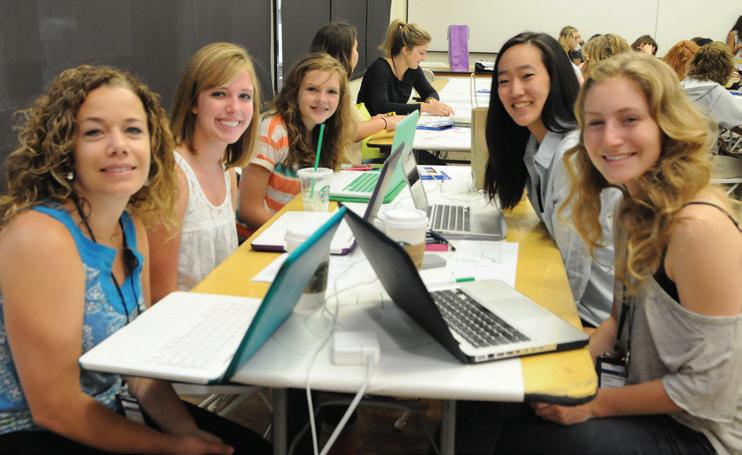
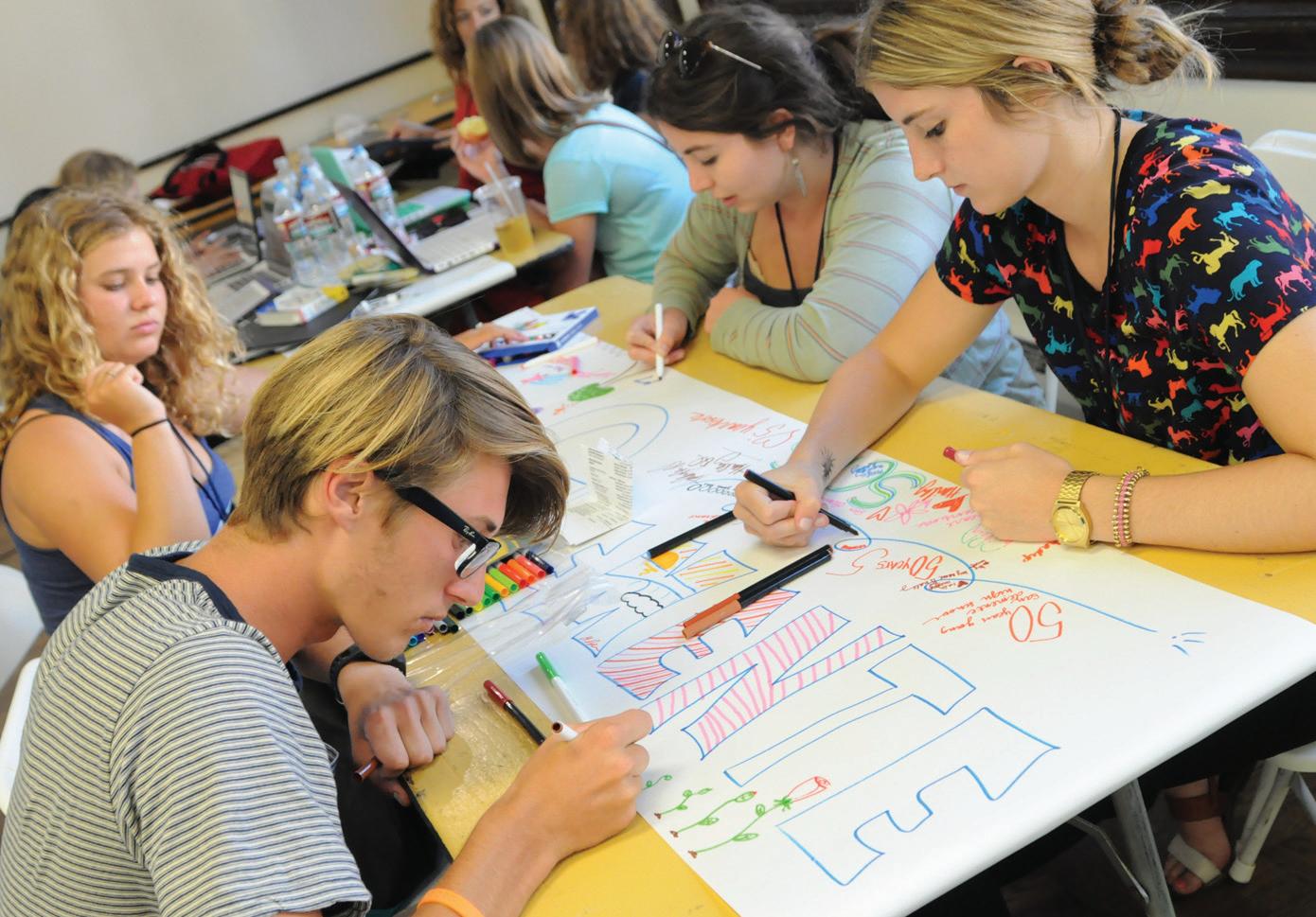
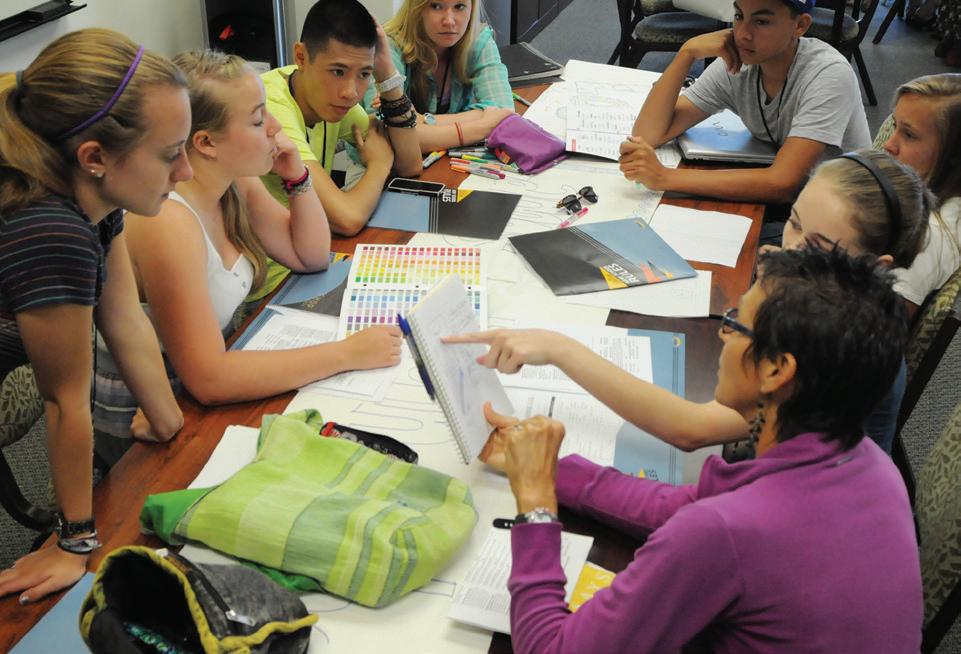
At Jostens San Diego National Workshop, advisers and students learn from expert instructors and have an opportunity to get a head start on planning and designing their yearbooks.
“The most important takeaway was ‘I can do this!’”
l ori Kir K Forest l ake c hristian s chool [ ca ]
“I needed new ideas and inspiration.”
Deann nivens alvord high school [ tX]
An award-winning former adviser and recipient of numerous scholastic journalism awards, John Cutsinger speaks at workshops and conventions nationwide sharing ideas with thousands of advisers and staffs.
Getting the most out of your yearbook workshop experience
Every year, yearbook advisers and staffs gain practical, hands-on experience from attending yearbook workshops where they are inspired by the fun and informative exchange of ideas in a supportive, collegial setting.
A&S: why should advisers consider attending a yearbook workshop?
John: It is amazing how far ahead attending a workshop can put an adviser and staff. Workshops with hands-on experience will motivate staffs to create the theme and develop the ladder as well as begin working on design templates for the entire book. For advisers personally, a workshop gives them the ability to network with other advisers whose best practices will empower them to be more effective in the classroom.
A&S: what can advisers expect their staffs to take away from a workshop?
John: The old adage — you get out of it what you put into it — could not be more appropriate when determining how much work can be accomplished in the workshop setting. In most workshops, the schedule allows for hands-on time so the staff can create actual work for the yearbook. Advisers can expect to brainstorm and develop a theme concept most often accompanied with a cover design session. Ladder planning and story ideas are often completed. In most workshops,
Whether you’re a veteran adviser or just starting off, yearbook workshops are an excellent place to recharge your energy, get jazzed about next year’s yearbook, and collaborate with your staff and other like-minded yearbook aficionados. John Cutsinger, Jostens Creative Accounts Manager, has been a key creative guru and presenter at countless yearbook workshops and at Jostens Adviser University. Here, he shares his insights about what advisers and staffs can expect to accomplish at a yearbook workshop and what they need to do ahead of time to get the most out of that experience.
design is covered and staff members can design and refine templates for sections of the book. When a staff leaves the workshop, they can hit the ground covering the daily activities and events without the worry of planning the foundation of the book.
A&S: what’s the best way for an adviser to prepare in advance to attend a workshop?
John: Don’t procrastinate. Plan the logistics early. As soon as you get the information about the workshop, promote it with your staff. Some advisers only require that major editors attend; however, the more staff members that can attend, the more work will be accomplished. A workshop is a great way for editors to take a leadership role with a lower risk of bad outcomes. District permission (if required) should be obtained. once that’s secured, you can make travel and lodging arrangements. I think it is wise to incentivize staff members with some yearbook financial assistance, but I also feel that staff members, including editors, should pay a portion of the fees so their investment will motivate a return with well-laid plans, the result of industrious work.
“The more students that are able to go, the better trained the staff will be.”
JOhN CuTSINGER, Jostens
A&S: what should advisers be sure to take to a workshop?
John: To make the planning and pre-production move smoothly, a complete supplies kit should be taken to camp. Include font cards, color swatches, yearbooks from the past two-to-three years, pencils, pens, notebooks, colored pencils/markers, forms specific to your publication, snacks or change for vending machines, team-building activity supplies, howto booklets, computer laptops (extension cords) with any software your staff uses, and photos to use in mock-ups.
A&S: what are some of the key benefits of attending a workshop?
John: A yearbook workshop will give advisers and staffs a greater sense of control when school starts when the staff cannot be focused solely on the yearbook. Yearbooks that are planned at workshops most often have better coverage because when school starts, the staff can direct all their attention on coverage because all the basics have already been done.
A&S: what are some options for paying for a workshop if the budget is tight?
John: Some staffs wisely build workshop assistance into the budget. others use fundraisers, such as garage sales or Saturday odd-jobs days to raise funds. My motto has always been: “Where there’s a will, there’s a way.” I also think it’s important for staff members to contribute some of their own funds, so they can invest in the experience. If they help pay, they will take it more seriously.
A&S: how many staff members should attend?
John: The more students that are able to go, the better trained the staff will be. Editors for sure should go to a workshop to lead the staff and to give direction to the real planning of the book. I always encouraged every staff member to go and I would assign rookies to the advanced and editorial leaders to promote inclusiveness and ownership. Back at school, any staff member or editor who didn’t attend the workshop forfeited their right to make decisions regarding the book since the workshop was where those activities took place.
Mak E P la NS NOW TO aTTEN d a J OSTENS SUMME r WO rk S h OP
Jostens Adviser university
Jostens Adviser university (JAu ) is a high-energy professional development opportunity designed for educators who serve as advisers to yearbooks, newspapers and magazines. This teachers-only conference is designed to help you focus on adviser strategy and methodology. This is your time to grow and network with fellow high school, middle school, junior high and K-12 educators.
Now in its eighth year, JAu has earned a reputation as a highly acclaimed, high-energy and intense professional development opportunity that is geared to both beginning and experienced advisers.
JAu 2014 will be held from July 18 to 21, 2014, in Scottsdale, AZ. For more information or to register, visit: jostens.com/events.
Jostens San Diego national workshop
Yearbook enthusiasts from throughout the nation converge on San Diego each summer for the Jostens San Diego National Workshop. This unique workshop features a renowned awardwinning faculty, specialty tracks and staff planning sessions designed to meet your individual staff needs as well as artist and technology one-on-one sessions designed to give your publication that special touch.
This year’s national workshop is being held at the university of San Diego, San Diego, CA, from July 29 to August 1, 2014.
• Day One provides a day full of Yearbook 101 training for rookie staffers and expertise training for advanced staffers (writing, advanced design, editorial leadership, basic and advanced photojournalism, advising 101 and 202, newspaper).
• Days Two, Three and Four include ample staff planning time as well as breakout sessions focused on trends and specialized topics.
• Basic and Advanced Photojournalism, Newspaper and Advanced Design tracks will continue on Days Two and Three.
For more information or to register, visit: jostens.com/events.
Jostens regional workshops
Locally, Jostens Yearbook representatives host one-day seminars during the academic year and multiday workshops during the summer, offering staff training and yearbook planning sessions. Check out the Jostens workshop directory for an educational opportunity in your area, http://www.jostens.com/ yearbooks/ybk_cp_workshop_directory.html.
one-minute workshops
Jostens c reative a ccounts Managers share the latest in yearboo K ing
It’s not a party until editors are sashed
In the yearbook world, praise for the enormous amount of work the staff does occurs once the book is distributed. To generate excitement and exposure in advance, staffs develop unique traditions to announce the incoming editors.
The saying, “Everything’s bigger in Texas” rings true for the James E. Bowie High School (Austin, Texas) yearbook staff. To announce next year’s editors, the current editors create colorful sashes decorated with everything from glitter to ribbon. At the end of each class period, they sash an incoming editor. After being sashed, the new editor’s name is added to a large, handmade scroll next to the yearbook room door.
Adviser Deanna Dellana said yearbook and non-yearbook students check out the scroll to see whose name is added. The tradition sets the yearbook program apart from other groups and the recognition is priceless.
Consider this: In a popular area of school, create a large poster with incoming editors’ names and photos. Cover the poster with oversized sticky notes and number each sticky note. Let students vote for numbered sticky notes to be removed. Throughout the day, remove the sticky notes in order of popularity until all new editors are revealed. other ideas include reveals at yearbook end-of-the-year banquets, academic assemblies and sporting events. The ideas are endless.
John Cutsinger
Throwback yearbook — what worked and what didn’t
“If you do the same thing and expect different results, you are only fooling yourself” has a direct application to yearbook planning and production.
There is no better time than now to start your venture on the 2015 yearbook; however, put theme, coverage and design to the side and focus first on staff processes.
Your seniors are your best references for what does and doesn’t work in the overall yearbook experience as well as the individual tasks that lead to collective success.
Top editors should compile a list of successes that should be repeated and failures that should be avoided as well as those mid-range activities that could be fine-tuned for greater success.
Use this list as the catalyst for a staff discussion of a mission statement for the 2015 book. Then expand that into goals and measurable tasks for each aspect of creation.
Choose two or three areas of the yearbook that you want to improve and list one change in behavior that will best guarantee your success.
Include revised processes in a staff manual that becomes the staff’s guide to all things yearbook.
The time you invest in growth and development will empower the editorial leadership and staff to have more focus and direction in creating the best book ever.
Shannon williams
Easing into next year’s book
Most advisers and staff members breathe a sigh of relief once the book has been “put to bed.” While some staffs dive right into creating theme packets for next year, others look to an 8-week vacation before thinking about yearbook again. The challenge is to find a happy medium — where the staff can relax and still accomplish something productive.
HErE’S an idEa:
Write each topic below on a notecard and have staff members draw a card.
Staff members will:
1. Go to the Digital Classroom on Yearbook Avenue to find resources on their topics.
2. Download two supporting pieces plus find one additional resource. This could be a YouTube video or slideshare.net presentation.
3. Present a short lesson using the materials.
videotape the presentations and compile all the materials for next year’s staff.
Creating the cover
Verbal theme concept
Visual theme concept
Writing theme copy
Verbal cool tools and trademarks
Visual cool tools and trademarks
Basic design
Quickreads
Interviewing
Copy editing using color
Choosing fonts using story starters
Photo dos and don’ts
ye A rbook & newspA per A dvisers:
inspire educ A te cre A te
M A rk your c A lendA r! JAU is a highly acclaimed professional development workshop for middle and high school yearbook and newspaper advisers.
w Hen : Friday, July 18 to Monday, July 21, 2014
w Here : the Westin Kierland resort and Spa, Scottsdale, aZ
“it was, hands down, one of the best professional conferences i have
attended!”
– michele peetz, burlington, wi
Jostens Adviser u niversity an unparalleled continuing education opportunity for beginning and experienced advisers, now in its eighth year. With a focus on teaching and advising strategies, advisers will find the curriculum relevant to their everyday teaching experience. this year, JaU is enhancing its popular curriculum by adding several courses developed specific A lly for M iddle sc H ool te A c H ers, courses for teachers with converged J ourn A lis M cl A ssroo M s and for teachers who are concerned about c o MM on c ore A nd 21st c entury s kills.
w orks H op fA culty respected experts in scholastic journalism, including textbook authors and recipients of the prestigious National Yearbook adviser of the Year honor from the Journalism education association.
vA riety a range of course offerings make JaU valuable for both new and experienced advisers, JaU freshmen and alumni.
p opul A r loc Ation the workshop returns this year to the Westin Kierland in Scottsdale. the Westin is family-friendly, with a water park and lazy river. there are shops and restaurants across the street.
r egistr Ation fee $425 early bird and $450 standard pricing covers all sessions, conference materials and six meals.