Welcome to Yearbook Love magazine — the largest-circulation magazine in the world devoted entirely to creating and marketing yearbooks. Your subscription is provided compliments of your local Jostens representative.
LETTER FROM THE EDITOR
I’ve always loved Independence Day fireworks. There is something about the way they light up the sky that is both exciting and inspirational. This past 4th of July, as I took in the sights and sounds of the night, I thought about how a school’s yearbook can excite and inspire a community. Both fireworks and yearbooks have the ability to shine bright.
Maybe your book is celebrating an anniversary this year. Or perhaps you are looking for ways to beef up your classroom curriculum. Some of you might just be looking for that special Adobe ® Photoshop® effect to really make your book pop. Whatever the case, this issue has the information you need to make your yearbook shine bright.
–Josh Linville
Front cover photo: Elena Kirsteins Page High School, NC
Inside cover photo: Emily Galberd Northview High School, GA
Send correspondence, change of
SHINE BRIGHT
ANNIVERSARY
Adviser Laurie Hansen gives an overview of characteristics of fantastic anniversary books.
TREASURES
Creative ways to get what you need for your program.
FALL SOLUTIONS
Implement these yearbooking-for-success strategies.
Jostens releases helpful new books on Adobe® InDesign,® photography, marketing and advising.
Apply a modern glitch effect in just a few steps.
22 Designs That Shine Bright. Take a look at the grand prize and first place winners of Jostens 2018 Design Contests.
26 Love this! Jostens Creative Accounts Managers share what caught their eye this past spring.
Editors-in-Chief: Joshua Linville
Sara Sausker
Art Director: Chris Koshiol
Production Artist: Kit Neville
Contributors: Tina Cleavelin
Sally Denkert
Spencer Fraye
Katie Frazier
Shirley Gollhofer
Derek Gower
Laurie Hansen
Matt LaPorte
Mandy Mahan
Donna Magana
Brian
Mike McLean
Jeff Moffitt
Amy
Mary Saracino
Margaret Sorrows
Liz Walsh
ANNIVER SARY
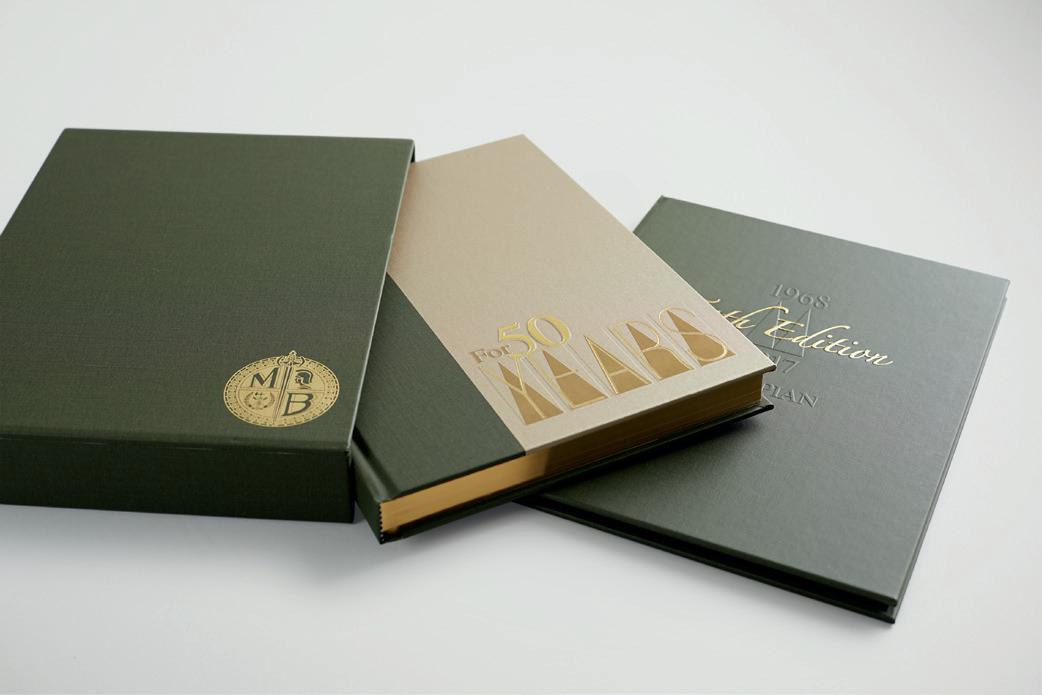
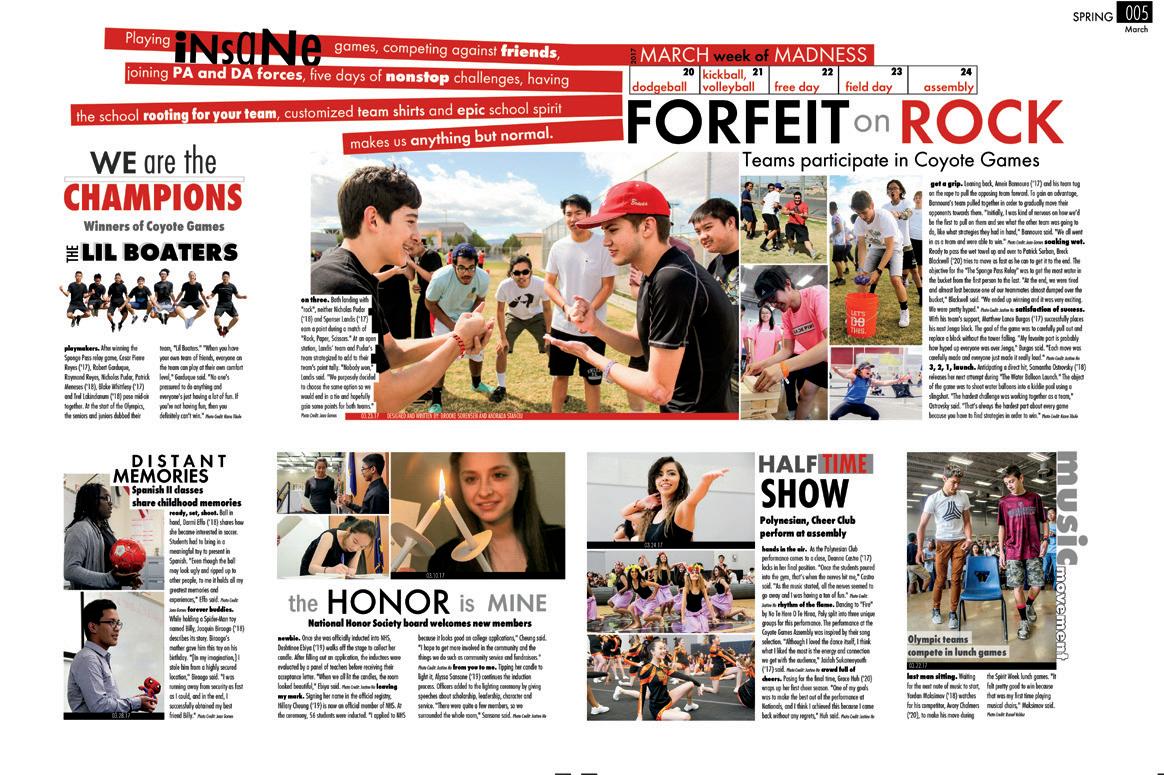
MOUNTAIN BROOK HIGH SCHOOL [AL] The Olympian staff was able to thoroughly cover school history by connecting with the community through interviews and joining a Facebook group of former students.
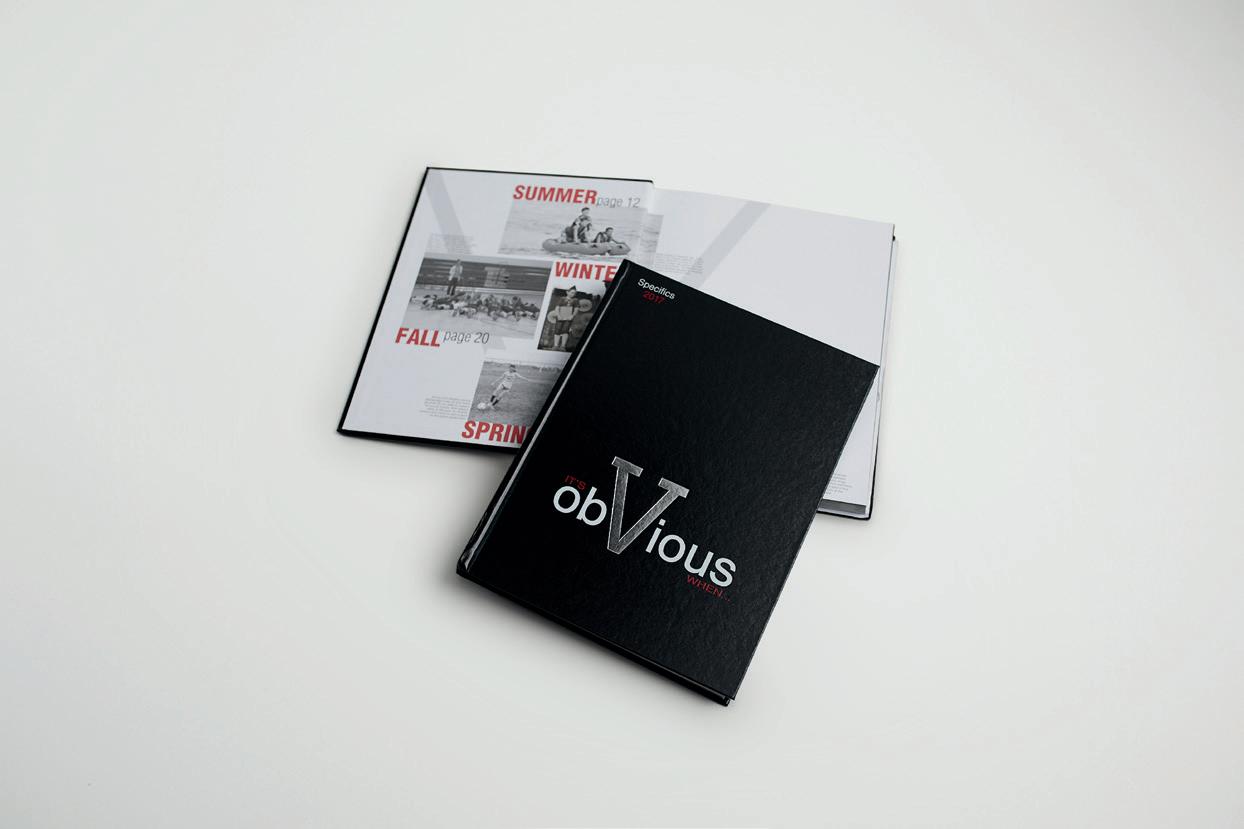
SEVEN LAKES JUNIOR HIGH SCHOOL [TX] With spins off of the word “obvious” and the number “five,” the Specifics staff was playful with their anniversary yearbook.
OR DON’T [ ]
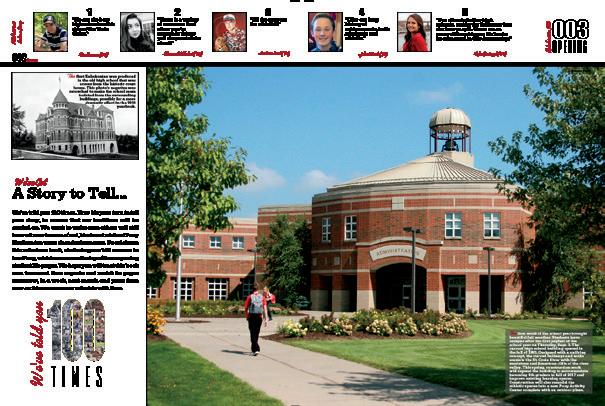
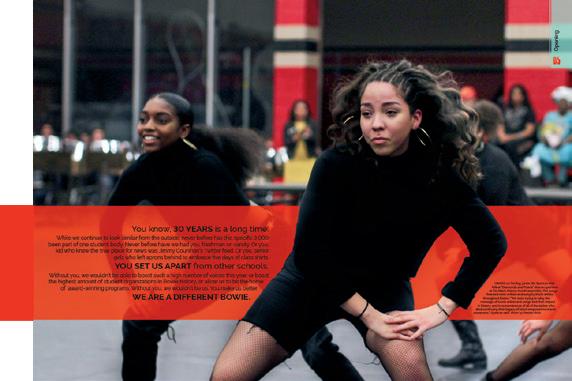
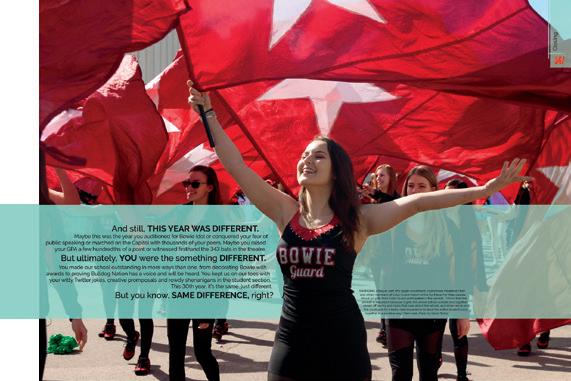
The 2018 Lone Star staff of James Bowie High School [TX] chose not to put heavy emphasis on the school’s 30th anniversary. Instead, they focused on how much their school community has changed in the past 30 years, while still acknowledging traditions and events that were similar. Their theme, “Same Difference,” allowed for fun comparisons of different years in the school’s history.
The opening spread takes time to describe how the school is rooted in tradition and the similarity between years. At the same time, copy is devoted to acknowledging how this school year is different from any other. The closing spread proclaims, “This year was different…This 30th year, it’s the same, just different. But you know, same difference, right?”
Specialty spreads highlight the cyclical nature of fashion or
FOCUS ON THE ANNIVERSARY
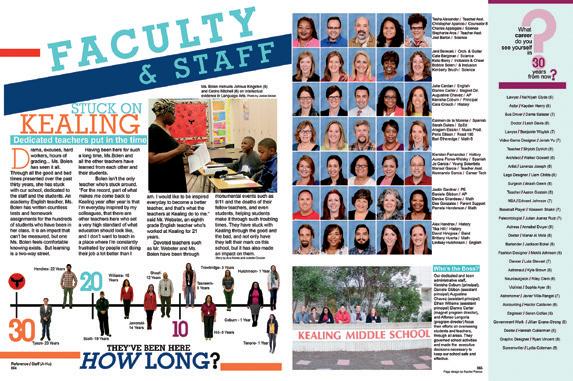
spotlight teachers who’ve been at the school all 30 years, asking them what has changed and what’s remained the same. A spread in the reference section gave a nod to the book’s oxymoronic theme and allowed each editor to share a favorite oxymoron of their own: definitely maybe, clearly confused, original copy and working holiday were a few of the choices.
Mills High School [CA] selected the theme, “Strength in Numbers” for the Asgard yearbook’s 60th anniversary. Instead of focusing on the anniversary itself, they took a different approach by intentionally focusing on numbers. The publication, advised by Akiko Soda, included a wide variety of numerically-driven headlines: 75 days of summer, 8 fashion trends, 28 days of February.
JAMES BOWIE HIGH SCHOOL [CA] A theme of “Same Difference” allowed the Lone Star staff to highlight things like the cyclical nature of fashion and to spotlight both what has changed and what has remained the same over the course of 30 years.
HISTORICAL FUN
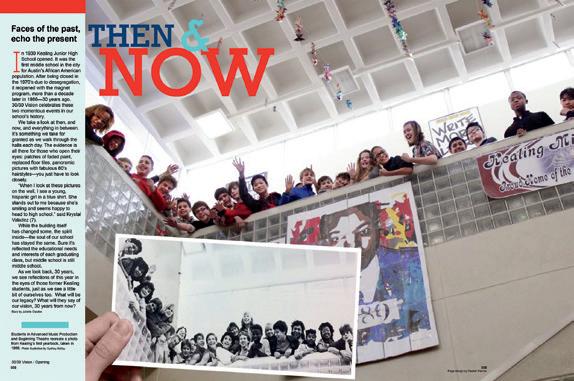
Have some historical fun while still making the pages enjoyable for students. If the school has recognizable features such as an entryway or stadium, use these to feature past-present photography.
At Kealing Middle School [TX], The Vespa, advised by Kristin Scott, used this trend for their opening and closing spreads for their 30th anniversary book. The dominant photograph for the opening is a current picture of the school interior with students standing on a balcony. The dominant also shows a hand holding up a historical picture of the same scene. The closing spread uses this same design technique with a photo of students on a bus. These past-present photo overlays make a yearbook even more of a valued time capsule.
The Bengal yearbook staff at Rosman Middle/High School [NC], advised by Tammy Hall, chose the theme “Remember the 100th” to celebrate the district’s centennial. The staff found black-and-white photos from the past that they used and then re-created them in color for the present. The divider pages mirror each other with one side being the past photo and the other being present.
Hall said, “The most satisfying aspect of producing our anniversary book was the excitement of the whole school planning and participating in activities to celebrate the 100th year. My staff had a great time putting it all together, and it gave us a greater appreciation of how far we’ve come over the past 100 years.”
The Kabekonian staffers took advantage of their historic lumber town to use iconic locations for a fashion spread. One photo has two students meeting at the riverfront gazebo, built in the 1920s, where the town’s famous lift bridge is clearly seen in the background. To add the historical touch, editors included a photo of the gazebo with fashionable ladies from the 1920s having a picnic on the lawn in front. The current photos are the focal point, but the historic photos add a touch of local history on the spread.
One of the most enjoyable days the editors had was taking two students downtown to photograph them in front of Leo’s
Grill & Malt Shop, and one of the students fit into a vintage 1940s letterman’s sweater that was donated to the athletic department.
Given enough time, it would have been fun to find school outfits from several decades and devote a spread on the clothing of the time periods. In hindsight, several ideas come to mind: finding old sports uniforms, band uniforms, cheerleading outfits, etc., could be looked at through the years. It might work to advertise in the community to see if people have these old items of clothing, such as vintage letter jackets, and then a module could be created about the progression of the letter jackets.
GIVE STUDENTS THEIR “RIGHTFUL” BOOK
Focus on the current students and keep the historical aspects of the school subtle. Blend in the history, but don’t allow it to overpower. Wayne Brasler, retired journalism teacher and publications adviser for the University of Chicago Laboratory Schools [IL], said this holds true even in yearbooks of the past. In his collection, he owns several anniversary yearbooks, including the Proviso East High School [IL] yearbook.
The book, from 1950, blends in the theme rather than letting it take over. Brasler said, “What is noteworthy is the anniversary theme does not overwhelm the book. It is more the cherry on top of the ice cream sundae.”
Brasler said the adviser did not want to deprive the class of 1950 their rightful book. This is not to say the historical highlights of a school’s or yearbook’s past should be ignored, but find a way to meld past and present so the book is more interesting to students.
Students should not have to wade through 25 pages of pictures of founders from the 1800s before they get to pictures of current students. When including historical material, the challenge for the yearbook staff is how to include it in a clever, engaging method that is both respectful of the past and entertaining to read.
KEALING MIDDLE SCHOOL [TX] The Vespa staff used pictures of the past overlaid on photos of the present as a way to include history while covering current students.
[ ] INVOLVED GETTING THE COMMUNITY
PARENTAL/ALUMNI INVOLVEMENT
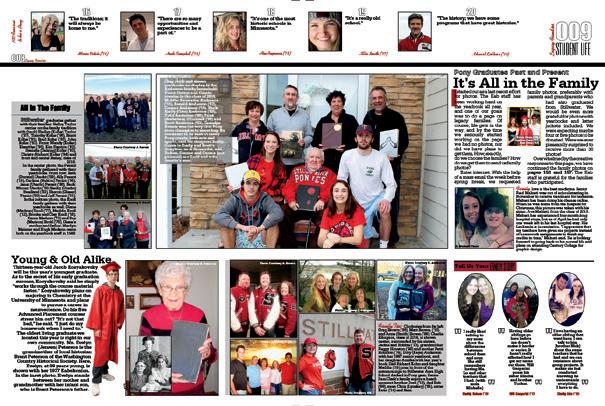
Include the school community as much as possible without taking away from the student focus of the book. Community engagement can include parents, teachers, coaches and business owners. Kabekonian’s success story with getting parents involved started with an email to the senior class parents asking them to send photos of their graduate and past graduates from the family.
The staff received 48 different photos, so many that the editors decided to cut an extra academic spread and make room for the overflow of family photos. Some parents pleaded for the staff to wait until spring break when the whole family was together so they could take a photo with the family of graduates.
Several families gathered for multi-generational photos, some with letter jackets, and most holding onto yearbooks from their graduation years. Yes, the photos were posed, but the effort put forth by the community was pleasantly surprising.
Lakeland High School’s yearbook staff in Lakeland, Florida, also engaged the school community in the 2014 100th volume of the Highlander. Adviser Janell Marmon said, “The editor came up with the idea of gathering 100 stories, and numbering them throughout the book. It included stories from teachers who had gone to the same school, athletes, academics, club members, a custodian, etc. The format of the story was a past, present, future setup.”
To get past athletes involved, find graduates who set records while in school or had outstanding sports achievements and then research updates on these athletes.
Brenda Field’s staff for their 50th anniversary of the 2012 Etruscan at Glenbrook South High School [IL] featured staff members who are GBS alums and also athletes. Field said, “We paired them up with the student who was currently wearing the same number and compared stories of why that number was chosen.”
The staff also included a recurring module connecting graduates
to current students. Field said the staff found connections that were less obvious than parents and their kids. They interviewed the graduate about his or her experience and compared it to that of the current student.
The Tiger staff from Orem High School [UT] included a module on sports pages called “Where are they now” for the 2006 50th anniversary book. The module includes a past action photo of the athlete and an update. Chad Lewis, an OHS graduate from 1989, played professional football for the Philadelphia Eagles and St. Louis Rams. Finding alumni who went on to be well-known is an ideal situation for an anniversary book.
TEACHER ENGAGEMENT/GRADUATES
Covering teachers who graduated from the school is another way to involve the school community and entertain students by showcasing old senior pictures of their teachers. This type of module could take many creative forms, from asking teachers what they originally majored in before they decided to become teachers, or having a Q & A with events they were involved in when in high school. If a staff wants interactive copy, this is a suitable idea for a quiz infographic.
To involve students, get pictures of students currently interacting with the teacher and use a past photo of the teacher to show the contrast of the years. It could be entertaining to have them re-create old photos too, and place them side-by-side in a then-and-now fashion. Orem High School’s Tiger yearbook treated their teacher graduates to some special treatment—they swapped the teachers’ official portraits and published their original senior photos instead.
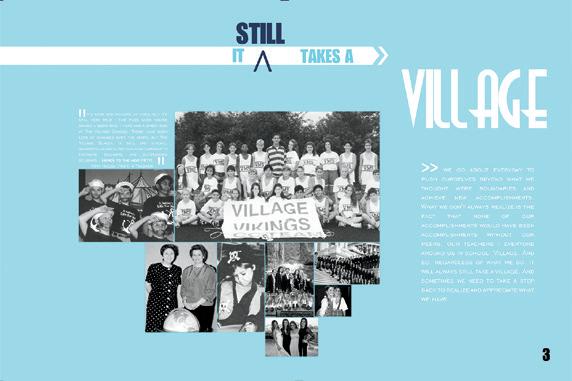
The staff of The Viking from The Village School [TX], advised by Alicia Merrifield, integrated many archived photos into their 50th anniversary book “It Still Takes a Village.” Merrifield said she enjoyed watching her staff reach out to past/present teachers asking for archived photos of the school.
Merrifield said, “Being that we are pre-K through seniors, some of my staff has been at this campus since they were four. It was so fun to watch them relive some of their favorite activities that they had not remembered until seeing the photos. It was hilarious to watch them react to how their teachers and friends looked so long ago.”
FINAL CONSIDERATIONS
Will the staff need to add pages to adequately fit the historical elements they plan to include? If interviews with past graduates are planned, start early reaching out to them. Do editors plan to do a special technique such as HP Reveal videos, a dust cover, special insert, paper type, UV coating, thermal ink or any other technique that might be effective but will incur extra time or cost? Start planning for that well ahead of the anniversary book. Above all, have fun and enjoy the process of making a milestone yearbook.
THE VILLAGE SCHOOL [TX] Students on The Viking staff reached out to teachers to ask for archived photos of the school for use on special spreads.
BY MANDY MAHAN*
HIDDEN TREASURES
Finding additional equipment or funds for your yearbook program isn’t always a black-and-white process.
Some schools are fortunate to have the luxury of an open-ended budget, while others need to get creative. Sometimes the best way to acquire resources is not to fundraise, but to utilize the school and outlying communities or to improve the ways in which resources flow into your program.
THINK OUTSIDE THE BOX
Undoubtedly, the most common equipment that advisers and staffs need to hunt down is cameras or lenses, computers, software, or all of those items combined.
One way Diamond High School [MO] adviser Shirley Gollhofer scored new cameras for her staff was by adjusting her teaching schedule. When her administration wanted to add more elective options for students, she suggested adding a digital photography
class and volunteered to teach it under one condition: that the school purchase the cameras she needed to effectively do her job.
“I knew it added an extra class to my schedule, but it was worth it in order to get the equipment that we needed,” Gollhofer said.
USE YOUR ALLIES
To drive the point home when volleying for the equipment they needed, Gollhofer enlisted the help of an interesting ally — a staff member’s mother who also worked at the county office.
“Because her daughter was in my class, she had firsthand knowledge of exactly what we needed and how hard it was for the staff members to do their jobs without it. She was able to help the board understand just how much of a burden it was to try to function
*Mandy Mahan was the publications adviser and foreign language department head at d’Iberville High School [MS].
Demonstrating that their expensive purchase had twice the function emphasized that the cameras were a solid investment for the school.
Harrison Central High School [MS] adviser Amy Nguyen also acquired cameras thanks to staff creativity. Several of the yearbook staff members were also on Student Council. They spoke up while the council’s seniors were deciding what to purchase as their senior
was like a weight had been lifted off my shoulders!”
She and the staff were presented with the cameras at graduation that year, in front of thousands of guests, earning the staff a bit of unexpected recognition in the community.
SHARE THE FUNDS
Because Nguyen teaches journalism as a class, she is able to use her state Educational Enhancement Fund money, a budget to be used for classroom supplies only, to purchase any equipment or supplies that will be used in the class. It’s a delicate balance, though, because the funds are limited; she also teaches history, and she needs to use her funds for those classes too.
“I allocate about 80% of those funds to my history classes, some of which are state tested, so that leaves about 20% that can be spent on yearbook supplies,” Nguyen said.
MAKE A PLAN
Nguyen also pointed out the importance of reviewing your budget from the previous year to form your current year’s budget.
Gollhofer took a look at her budget a few years ago and made some long-needed adjustments. After comparing rates with other advisers at a summer conference, she realized her staff was charging below market-value for both their books and their ads. The first step was to increase the starting price of their book to account for inflation. Next, they adjusted their ad prices.
“We increased the price of an ad by the amount of a book so that every ad we sold would have a drastic impact on our income,” Gollhofer said.
Finally, the staff worked to increase book sales using a two-part structure. The initial phase of the plan was to increase their event coverage. They made sure to attend
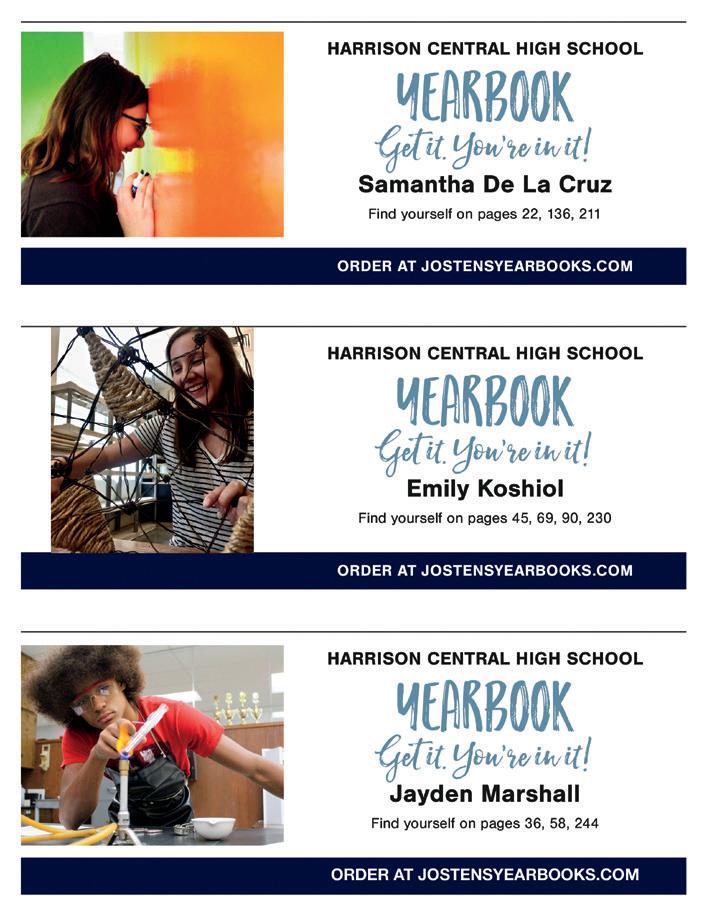
more events and were more organized with uploading and tagging photos in the computer. The second phase of the plan was to utilize the “In the Book” flyers that were available on Yearbook Avenue. The free-of-charge flyers showcase students who are tagged in photos throughout the yearbook but who have not purchased a yearbook yet. They handed the flyers out to those students so they could actually see the pictures of them that would appear in the book, which motivated more people to buy, increasing their overall income.
BUILD A COMMUNITY
Nguyen also advises reaching out to community businesses or allies who have already established a supportive role with the school or district. These businesses may be able to help in ways other than just purchasing an ad to go in the back of the book. Harrison Central has a close working relationship with beverage producer Coca-Cola and local fast-food restaurant Raising Cane’s. She plans to approach them this coming year to strike up a deal that will help them acquire a new laptop for the classroom or lenses to enhance the performance of their cameras.
Finally, don’t forget the power of a network. Make connections at conferences or workshops, start a listserv thread with your local Scholastic Press Association, or scour Digital Classroom for Journalism Educator’s Association (JEA) website for more ideas that may fit your unique situation. Whatever it is that you need, somebody out there knows how to get it!
REVIEW THE BUDGET
INCREASE COVERAGE
“IN THE BOOK” FLYERS
FALL SOLUTIONS
Make your life easier by implementing these yearbooking-for-success strategies.
BY MANDY MAHAN
Yearbook is unlike any other experience in a school.
Because of the unique project-based learning atmosphere, yearbook advisers need to think differently about how they approach the school year. Of course, every school is unique, but there are some strategies that are proven winners.
ASSESS YOUR NEEDS
Every successful team receives training, but sometimes the biggest challenge is figuring out where to start. Every year, Sally Denkert, adviser at Lake Country Lutheran High School [WI], decides how to train her staff by reflecting on the previous year’s performance and the resulting publication. Once she’s done that, she targets their biggest opportunities for growth.
“One of the biggest problems we had last year was getting good, quality photos. We found that we were cropping a ton of large group photos to get individual shots. This was mostly because we were missing a lot of events,” Denkert said.
In order to combat this major issue, she and her editor came up with the idea to have a classroom desk calendar on which they wrote every activity going on at the school. Staff members were asked to sign up to attend and photograph a minimum number of activities. This led to a much larger variety of photos from which to choose throughout the year. Her busy and small staff still needed more photos, though.
representation of every sport in our book,” she said.
The result was comprehensive coverage of all sports that had been lacking in previous years. More coverage meant more people in the book, which meant more sales.
While all staffs may not have an issue collecting an adequate amount of photos, the key lesson to be learned from Denkert and her staff is to identify what your staff has struggled with in prior years and target it for improvement at the beginning of the next year. Try to focus on at least one issue (but not more than three), and emphasize how to handle it (or them) while training your staff. If the solutions become second nature to your staff, challenges will be minimized in the future.
Identify what your staff has struggled with in prior years and target it for improvement at the beginning of the next year.
“I also spoke to our school’s contracted photographer. He agreed to attend at least one JV and one varsity game for both genders of every sport that we have throughout the year, so if my staff members were too busy participating, we knew that we would have at least minimal
MAKE IT FUN
Mayde Creek High School [TX] adviser Katie Frazier, CJE, tasks her editors with making sure everyone feels included. One strategy: appointing a “Director of Fun.” The Director of Fun plans social events and birthday celebrations. It’s a big job.
“We do a lot of staff dinners and outings, especially at the beginning of the year as the new staff is getting to know each other. We do a dinner about once a week and a social event, like movies, roller skating, or bowling, every couple of weeks,” she said.
Frazier notes that the staff dials
back the socializing once they get into heavy deadline time. They are able to work effectively because of the strong collaborative and trusting dynamic that they create early in the year by participating in so many team-building activities.
USE YOUR REP
One resource that both Denkert and Frazier agree is essential is a strong relationship with their sales rep, especially when it comes to training and motivating their staff members.
Denkert’s staff always attends a fall workshop sponsored by their rep, Joanna Stasczeczka. They find it beneficial because most staff members can attend and implement their new skills. They can finalize details for the current publication, and they can bond outside of the school environment. She follows up by inviting Stasczeczka to visit them at the school any time she feels her staff needs inspiration.
“She will do various things when she visits us. Sometimes she’ll do a mini-lesson that she teaches to the entire staff; other times, she’ll sit down with staff members one-on-one to answer individual questions they have that pertain to assignments they might be struggling with,” Denkert said.
work from the business side of yearbook. She sometimes feels like students are more likely to implement an idea or strategy presented by Magana than by a teacher or district employee.
“She has firsthand knowledge of what happens behind the scenes and is able to get the kids to see past their own noses and understand, for instance, that if we miss a deadline, that could impact someone who works at the plant,” Frazier said.
Find at least one solution that includes a procedure that is easy to institute and introduce it early in the semester.
Reps are also often used to motivate staff. Frazier recalls a time when Magana was able to get a student to complete an overdue spread. She took the time to sit down with him and pointed out that she remembered where he was when she had been there two weeks ago, and things didn’t seem much different. According to Frazier, the student had the spread done two days later and she attributes that solely to her detail-oriented and tactful rep.
Likewise, Frazier’s staff has a close relationship with their sales rep, Donna Magana. While the students enjoy the fact that Magana brings them goodies when she visits, Frazier’s favorite part is the perspective that Magana gives her new staff members, particularly about how things
“I think when Donna said something to this student, he kind of realized this isn’t just about an assignment or his grade; this is bigger than that, and he needed to kick it up a notch to get his stuff done so that he wasn’t negatively affecting other people in some way,” Frazier said.
While individual staff needs vary, there are some common solutions advisers can take to address most of them. Stay positive, have fun and use your network. No year is perfect, yet every year can yield growth.
Schools that attend workshops and do team building tend to have more success in general. The relationships formed between the members of your staff, as well as with your rep, are priceless when challenges arise.
REPRESENTATIVE
Develop a strong relationship with your rep through some of the following activities:
Attend or help organize a rep-sponsored
Plan regular visits. Work together ahead of time to choose topics of discussion so your rep can be prepared to give your
Empower your editors to call your rep
Ask your rep to attend a staff dinner
Invite your rep to be present at your end-of-year distribution event, potentially even speaking to the student body.
• Advertise in advance and have your rep work with your staff members before school or during lunch for book sales sessions. Students will often buy because somebody “official” is on campus.
• Send your rep a thank you card or staff photo for display so you are never far from his thoughts.
• Overall, make your rep a part of your yearbook family. The more your rep knows your staff, the more personalized help she can provide!
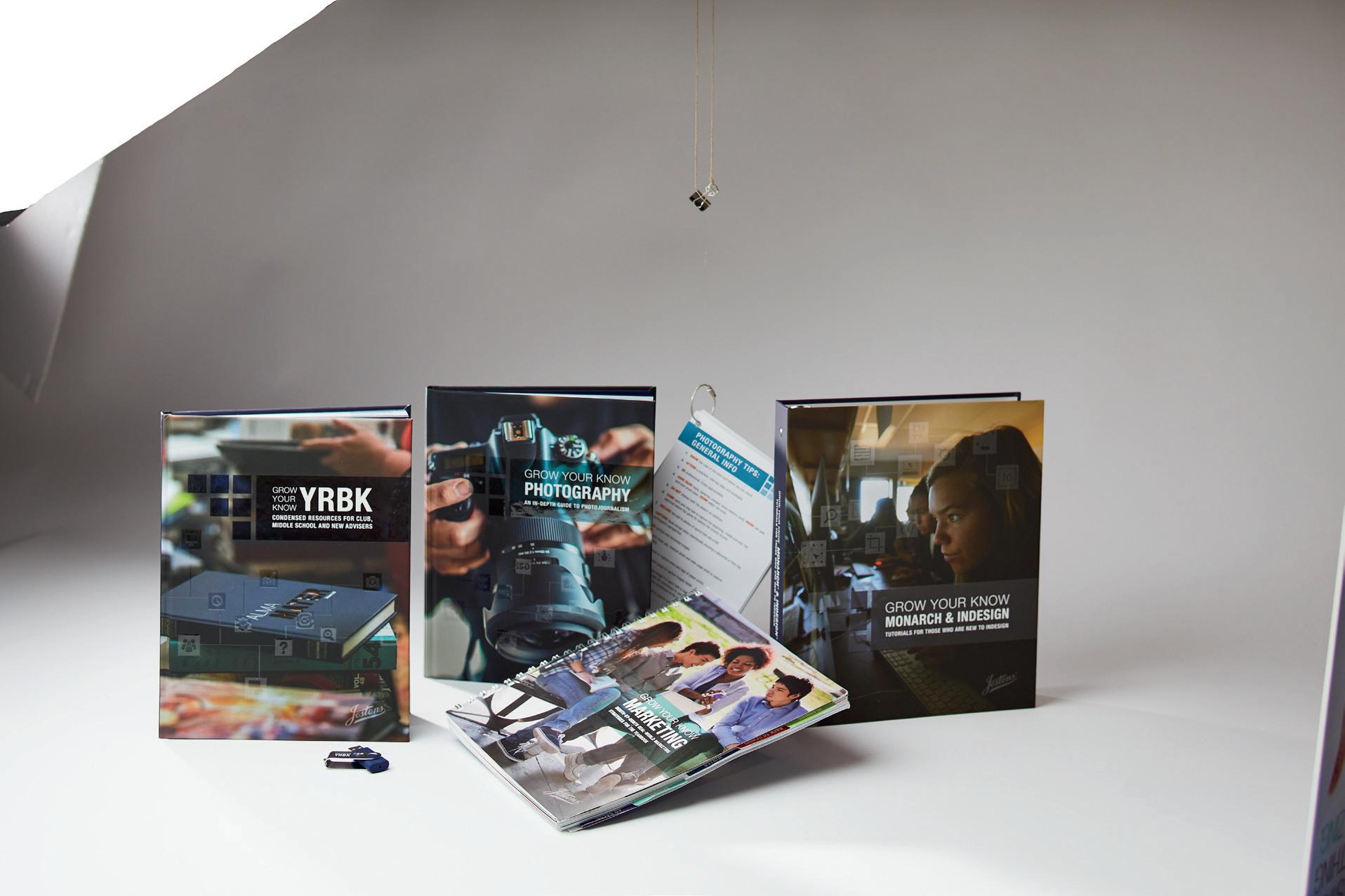
GROW YOUR KNOW Curriculum launches four new books
Jostens is pleased to announce the release of four new books as part of its Grow Your Know yearbook curriculum project: the YRBK Adviser Guide, a Photography Curriculum, a Marketing Manager Guide and a Monarch & InDesign Tutorial Guide.
YRBK CLUB & MIDDLE SCHOOL ADVISER GUIDE
Built especially for advisers with limited time but unlimited goals for greatness, the YRBK Adviser Guide for New, Club and Middle School Advisers condenses information and tips, and also provides downloadable handouts to be used for explaining concepts to students and running a stress-free classroom.
The guide was authored by Kristen Scott, adviser to the Vespa yearbook, Inkblot literary magazine and the KBTV broadcast news team at Kealing Middle School [TX].
“Areas like organization, management and meeting deadlines are addressed with options and ideas for advisers to consider,” she said. “For example, in the photo chapter there are tips for checking out and maintaining camera equipment, procedures for rating and reviewing photos, and a process for uploading and saving image files.”
PHOTOGRAPHY CURRICULUM
The Photography Curriculum is the curriculum for any classroom that wants to improve the quality of photography taken by students. It includes tips for composition, guides for DSLR camera settings, and information on smartphone photography.
It was developed by a team of authors: Margaret Sorrows, Jostens Ambassador and former yearbook adviser at Bryant High School [AR], Deanne Brown, photojournalism instructor and adviser of the Featherduster newsmagazine at Westlake High School [TX], plus Mike McLean and Derek Gower, freelance photographers and photojournalists from the Dallas-Fort Worth area. All of the instructors teach photojournalism at high school workshops and conferences across the country.
Gower noted, “We designed the Photography Curriculum to be accessible to students, whether they’re new students just picking up a camera and learning about exposure and composition for the first time, or
Our hope is that any student can use this curriculum to improve their photography skills and, by extension, their publications.”
PHOTO TIP CARDS
The Photography Curriculum authors also developed Photo Tip Cards that every photographer will find useful. A set of 16 laminated cardstock cards designed for a camera bag, they contain the general and technical information a photographer needs in the field.
Gower said, “We created quick reference cards for the most common school sports so any student with a basic understanding of their camera can go to an event, consult the appropriate card, and know that they are using the right settings, placement, and techniques to come back with better images.”
MARKETING MANAGER GUIDE
Matthew LaPorte, yearbook adviser at Southwest Career and Technical Academy [NV], is author of the Marketing Manager Guide. The guide provides month-by-month, real-world marketing strategies and activities. It encourages pre-planning, goal tracking and process reflection so staffs can sell more yearbooks more effectively.
LaPorte wrote with the understanding that most advisers don’t have a background in marketing.
in their marketing strategies.
“The chronological structure of the book should help students find at least one or two specific marketing ideas per month,” LaPorte said. “The manual includes a reflection and calendar portion with ideas to help students move to the next level.”
MONARCH & INDESIGN TUTORIAL GUIDE
This book of tutorials combines Monarch® by Jostens® and Adobe® InDesign® for yearbook and newspaper designers that have minimal InDesign experience. Each chapter contains step-by-step guidelines for features that every yearbook or newspaper designer needs to know.
Brian Martinez, Jostens Monarch Specialist, is one of the authors of the manual.
“It’s not just a look at InDesign,” Martinez said. “We approached it so that students could learn the basics of InDesign and Monarch and work on their yearbooks at the same time.”
In partnership with Adobe, Monarch gives yearbook staffs access to InDesign and Photoshop in a browser, anywhere they have an internet connection.
“This means they can learn InDesign in the lab or at home, at a workshop or at a coffee shop,” Martinez said.
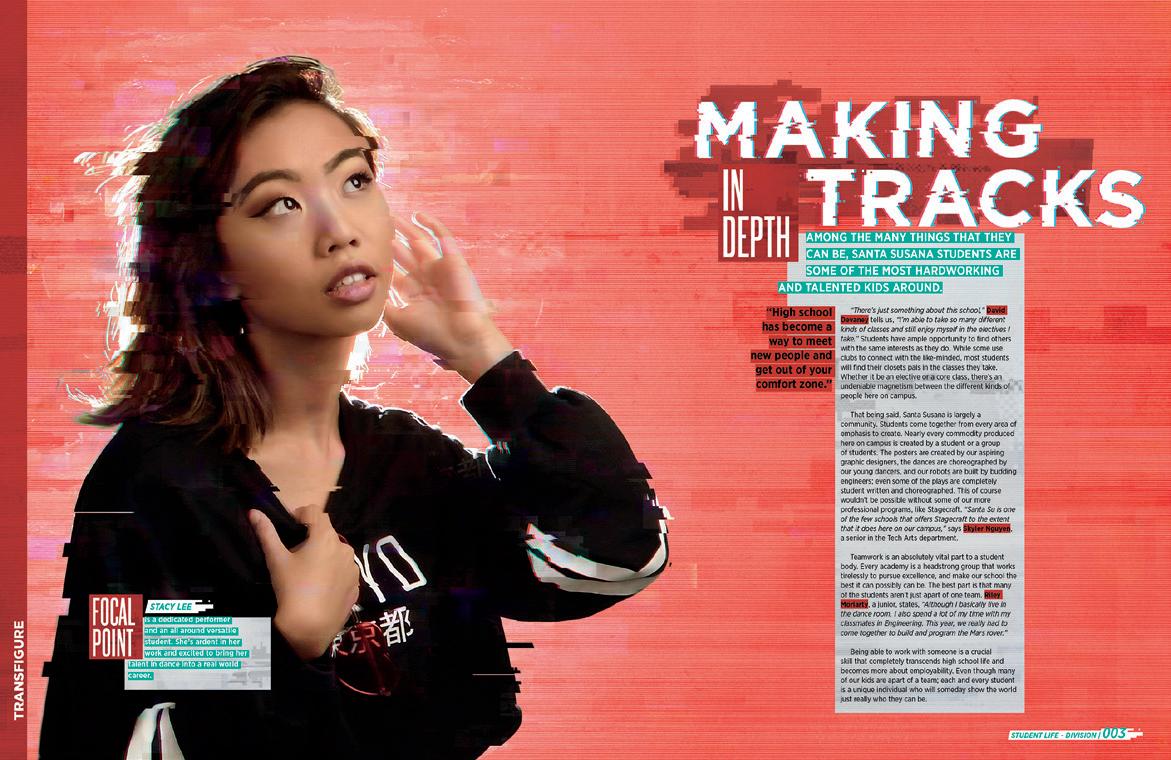
CREATING A GLITCH DISPLACEMENT EFFECT IN PHOTOSHOP
BY SPENCER FRAYE*
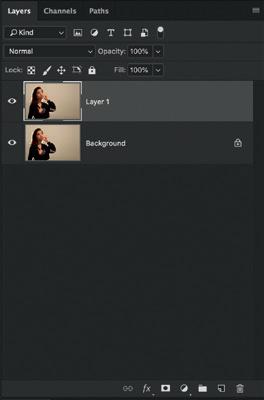
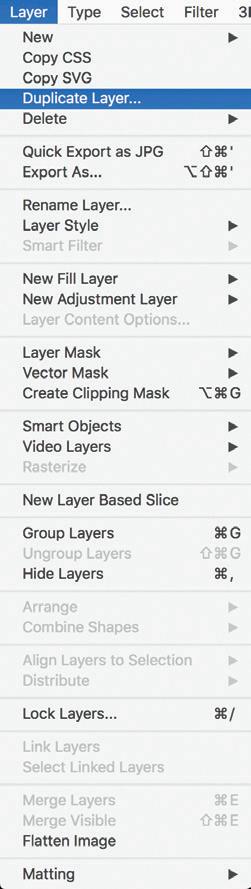
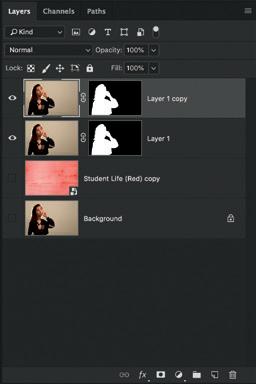
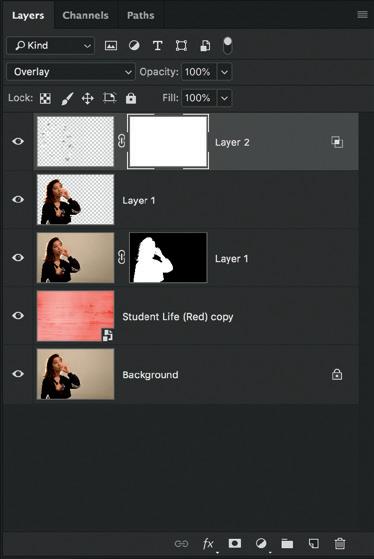
1Open the portrait image of choice in Adobe Photoshop CC and duplicate the layer by using Command + J (for Mac), Control + J (for Windows) or by using the menu options Layer > Duplicate Layer
2 Use the Magic Wand Tool (W), Lasso Tool (L), or Pen Tool (P) to outline the subject from the background.
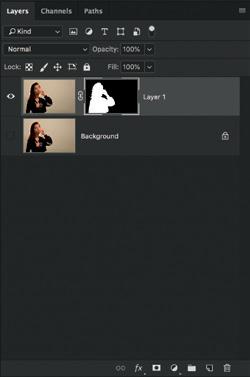
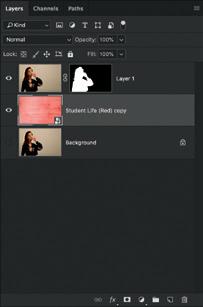
4 Hold the Option/Alt key on the keyboard and click the Add Layer Mask button on the bottom of the Layers panel to add a Layer Mask. Then click the visibility icon to the left of the Background layer to visualize the subject isolated on a transparent background.
3 Click Select and Mask to enter Refine Mask mode. Use the Refine Brush Tool (R) to refine the hairline as desired. Then click OK
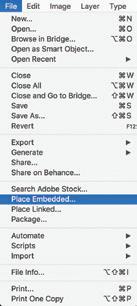
5 Import a new backdrop of your choice by going to the menu option File > Place Embedded… and once the file has been located, press Place. After the newly imported backdrop has been rescaled properly, press the Return/Enter key on the keyboard, and adjust the layer order so that the new backdrop lies above the original Background.
*Spencer Fraye is the design editor of Transfigure , Santa Susana Magnet High School’s [CA] award-winning yearbook.
6
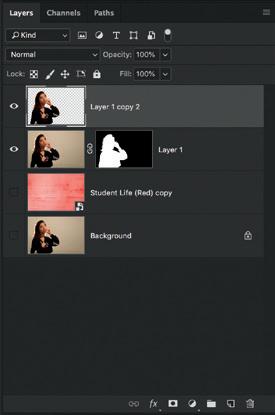
Duplicate the Isolated layer once again by first selecting the proper layer, and then by using the Command/Control + J or by using the menu options Layer > Duplicate Layer
7
8
9 Repeat step 8 continuously using a variety of varying sizes, proportions, and levels of intensity until satisfied.
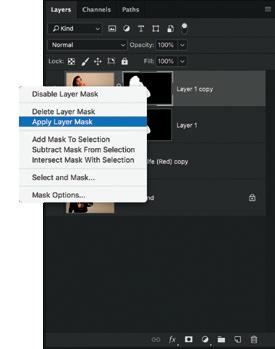
Right click the layer mask of the top-most layer and click Apply Layer Mask to condense it into a single layer.
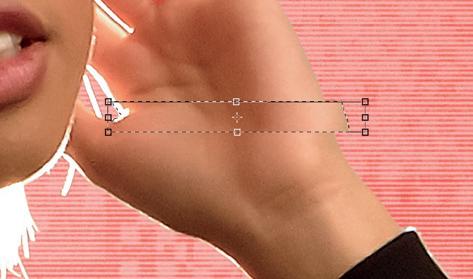
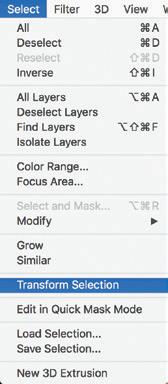
Use the Marquee Selection Tool to select a random area containing both opaque pixels and transparent pixels, typically on the edge of the isolated person, and transform the selection using Command/Control + T or by using the menu option Select > Transform Selection. Then drag the furthest transform handle in a direction opposing the subject to displace the chunk.
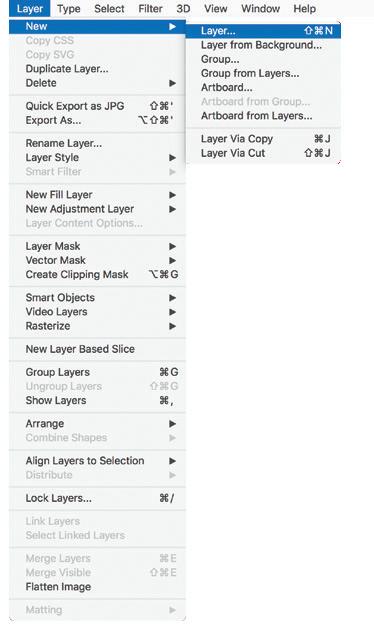
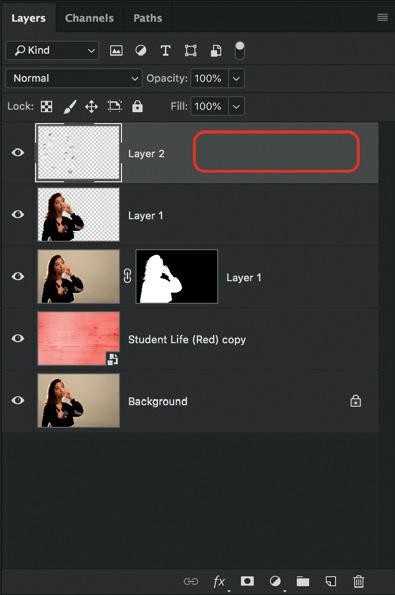
10 Create a new layer using Shift + Command/ Control + N or by using the menu option Layer > New > Layer…
11Use the Marquee Selection Tool (M) to create abstract rectangular shapes, and use the Option/Alt + Shift keys to add or subtract rectangles from these designs.
12 Click the Default Foreground-Background Colors to fill the selections with black or white using Command/ Control + Delete (white) or Option/Alt + Delete (black).
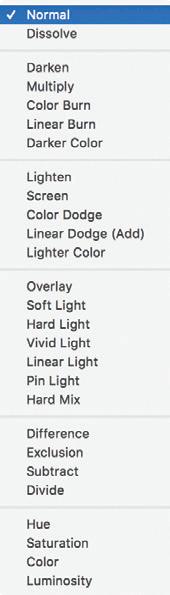
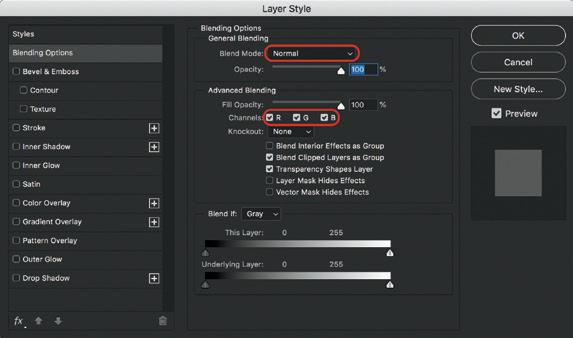
13
Mode of the layer within the Layer Style palette by double-clicking the right-hand side of the layer. The different combinations listed will all result in a unique effect.
14
Add a layer mask to this layer using the Add Layer Mask button on the bottom of the Layers panel to add a Layer Mask. Then click the layer mask to select it.
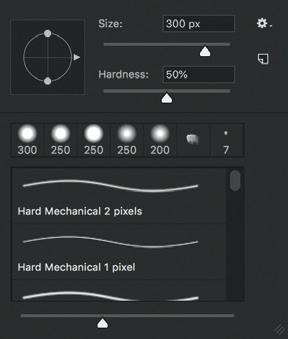
15 Use the soft-edged brush from the Brush Tool (B) and paint black onto the layer mask to lower the opacity of certain chunks, therefore reducing the intensity of the effect and adding unique fades to each chunk.
16 Repeat steps 10–15 continuously using various opacities, blending modes, RGB channel combinations, and fill colors to create interesting colorful flares to the composition, while using layer masks to refine each colorful effect layer to taste. This same process can be applied with heavy intensity to other imported photos to add other interest to the backdrop as well.
17 Add all other typography and design elements.
INDESIGN GRAND PRIZE
MILA TSVETANOVA
Plano East High School [TX]
Adviser: Abby Cole
DESIGNS THAT SHINE BRIGHT JOSTENS
DESIGN CONTESTS WINNERS
After a long day of looking at yearbook spreads, the judges of the 2018 Jostens Design Contests finally came to a consensus. In selecting the grand prize winners, the judges marveled at the stunning photography and technical difficulty of a number of finalists.
Four prizes (grand prize, first, second and third) were awarded in each contest. The Jostens/Adobe InDesign Contest, in its 14th year of existence, is open to all students creating their yearbook using InDesign software. The Jostens YearTech Online Design Contest, in its 10th year, is open to yearbook staffs using Jostens Page Designer software to create their yearbook.
All the winning designs can be viewed at https://issuu.com/jostens
“This design screams sophistication. Dominant photo is clear, crisp and beautiful. The center justified text, which deserves praise, is accentuated by the oversized quotation marks. The play on words in the headline also adds to the spread’s allure.”
YTO GRAND PRIZE
JULIA TREVORROW
Roxbury High School [NJ]
Adviser: Scott Schilling
“Stunning photo. Geometric shapes are trendy and the use of spot color is a nice touch. Leading lines guide the reader’s eye.”
INDESIGN FIRST PLACE
BRITNEY FLINT
Whitney High School [CA]
Adviser: Sarah Nichols
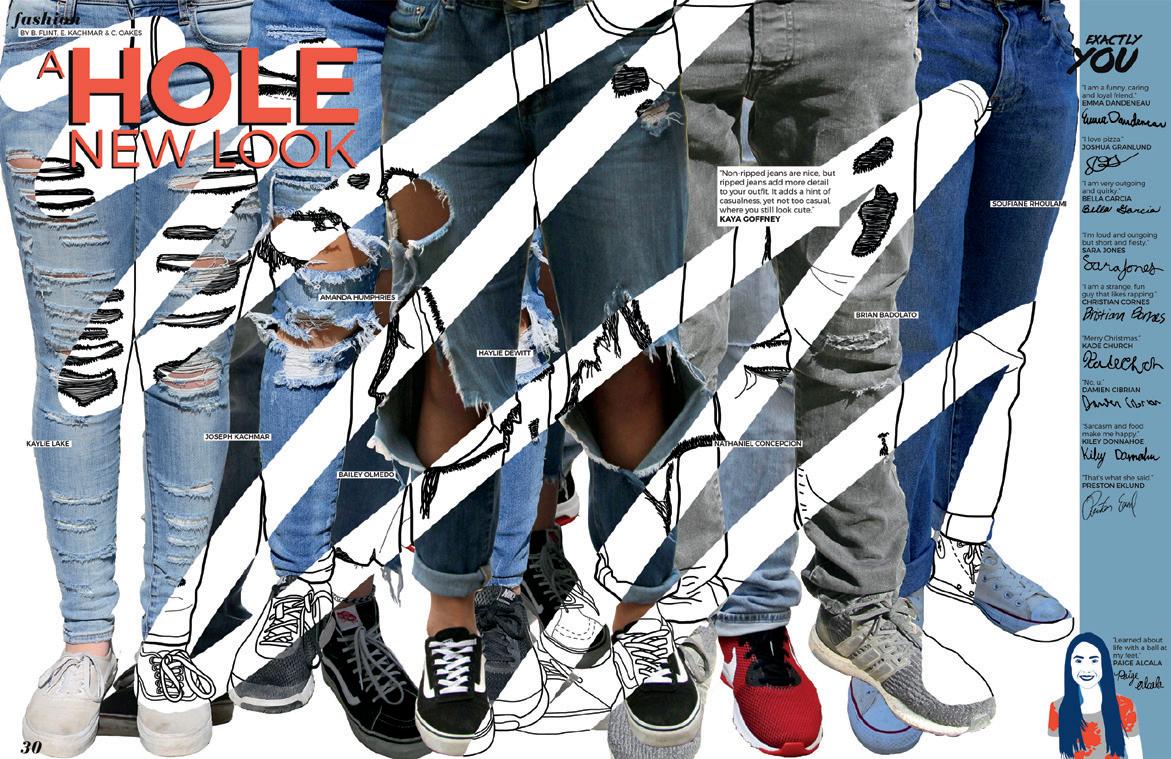
“Love the coverage in this photo. The folio is fun in its own right, and it is amazing this effect is carried throughout the whole book. Photoshop magic makes this spread.”
DESIGN CONTEST JUDGES
SARAH COLE is the adviser of the Spartan yearbook at Orono High School [MN] where she has taught Photojournalism for fifteen years. She has served as a judge for CSPA and NSPA, evaluating middle and high school level books. Her yearbooks have earned state awards as well as Gold and Silver Crowns from CSPA and First and Second Class Ratings from NSPA. Her students’ work has further been consistently recognized in the Jostens Look Book
YTO FIRST PLACE
BROOKE SORENSEN AND ANDRADA STANCIU
Southwest Career and Technical Academy [NV]
Adviser: Matt LaPorte
“A prime example of a strong dominant photo supported by good modular design. Lots of headlines with visual/ verbal connections. So fun that most photos incorporate the font color.”
MAUREEN FARRY, CJE, teaches journalism and British Literature and advises the Zephyr yearbook at West Forsyth High School [GA]. She is a member of the Georgia Scholastic Press Association Advisory Board and most recently served on the committee to rewrite the Georgia state journalism standards. Farry is an Adobe Certified Associate in InDesign and Illustrator.
JEN GHASTIN, CJE, advises the award-winning yearbook Valhalla at North Salinas High School [CA] and the student magazine, The Voice. Her publications have won Gold medals from CSPA and received First Class distinction from NSPA. She has taught workshops at Jostens Adviser University, Bay Area Yearbook Seminar, and Northern California’s Journalism Education Association. She also serves as the yearbook chair on the JEANC board. Before her yearbook career, she advised the newspaper The Cardinal Tribune at Mount Pleasant High School in San Jose [CA]. Her journalism career began at UC Santa Cruz where she was editor in chief of the literary magazine Chinquapin and co-founded the liberal paper, The Project
< love this >
MAKE IT PERSONAL
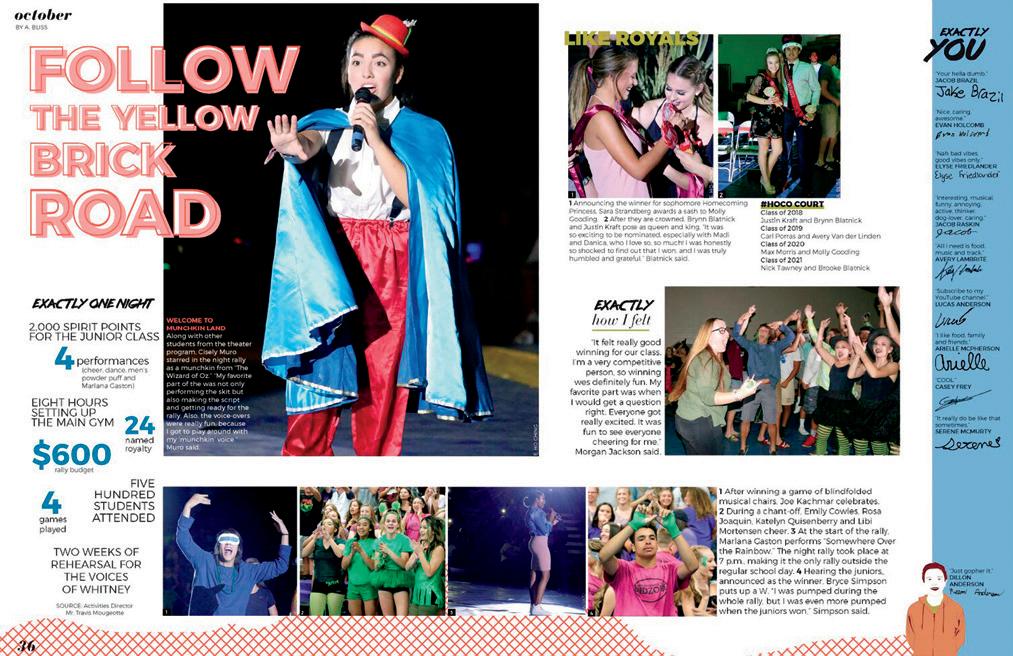
After choosing community-featured themes for several years, the Whitney editors decided to focus on the individuals that make up their community. With their “Exactly You” theme in mind, the editors designed a content module that included short student descriptions as well as each student’s signature.
To echo the Photoshop treatment from the cover, the team featured one student per module using the same graphic effect. The whole-book link allowed the staff to include 1,600 students using a small area of spread real estate.
Whitney High School [CA] | Adviser: Sarah Nichols
TINA CLEAVELIN
JOSTENS
CREATIVE
ACCOUNT MANAGERS SHARE WHAT CAUGHT THEIR EYE
JEFF MOFFITT
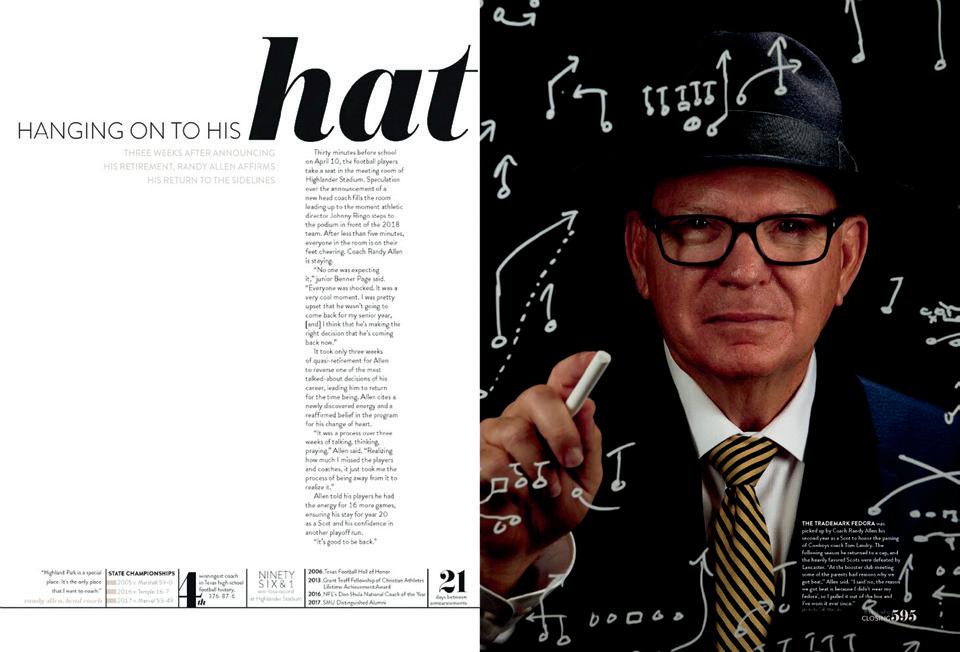
HATS OFF
When the head football coach announces his retirement after 19 years, it’s a big deal. The Highlander yearbook staff at Highland Park High School knew it was an important part of the school’s history they needed to capture. They spent weeks planning the coverage. Inspired by a Sports Illustrated photo of Bear Bryant, they created an environmental portrait image that captures coach Allen and the iconic fedora he wears at every game. The staff researched, collected facts, figures and feelings. All the background work helped them tell his story beautifully on one of the last spreads of the book. But then everything changed. Three weeks later, he decided NOT to retire. So in a last minute Hail Mary, they regrouped and told coach Allen’s updated story.
Highland Park High School [TX] | Adviser: Margie Raper
< love this > AUTHENTIC VOICE
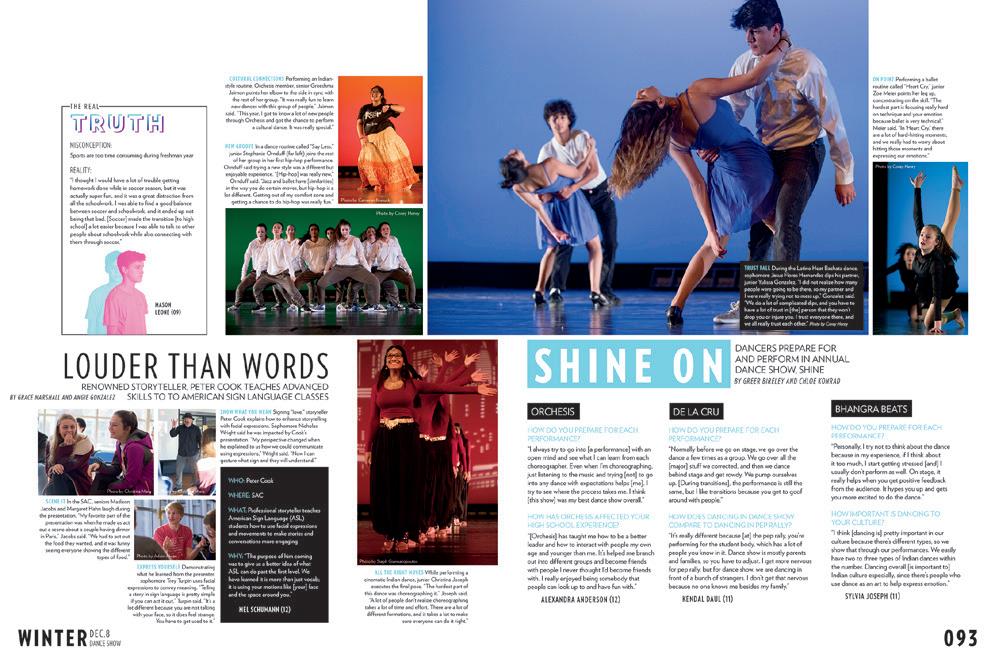
It took a team effort from Etruscan staff to create this engaging spread. In all three modules, each created by different teams of reporters, a strong element calls for attention, so readers have choices about where to go next.
Adviser Brenda Field said this variety of coverage comes from the staff using a beat system, and “… during the course of their coverage, [staffers] write a big, a medium, and a small story. That has created more buy-in, so it has increased the authenticity of their work and their voice.” Staffers and editors also made deliberate photo choices: Not only do readers see vibrant colors, making the spread feel exciting, but they also see varying head sizes and numbers of subjects. It’s important to note that designers did not force the dominant module design into a rectangle, and that also moves readers around the spread.
Glenbrook South High School [IL] | Adviser: Brenda Field
LIZABETH WALSH
RECOGNIZING EXCELLENCE
SEPTEMBER 2018
KIM BOWSER
Port Allegany High School [PA]
Rep: Scott Geesey
SEPTEMBER 2018
of th e month STUDENT
Rep: Aaron Lyons of th e month ADVISER
JAIME GAMEZ
Kearns High School [UT]
Adviser: Amanda Hurd
Kim is one of only a handful of advisers to be a seven-time winner of the Jostens Yearbook Program of Excellence Award. She is extremely organized, sells yearbooks to more than 70% of students in her rural school, gets the most out of her kids, and never misses a deadline.
HER TIPS FOR SUCCESS:
“I explain to the staff at the beginning of the school year that they are responsible for a product that people pay for and people don’t want to waste their money.
Strict timelines, accountability, and reliable leaders on my staff are keys to making deadlines. I set page deadlines approximately one month before Jostens submission deadlines. During that month, the entire staff proofs pages individually, then a group uses the individual proofs to edit the pages and then the individual staff members proof one more time before submission. This has proven effective and our errors are few.
I would not be able to do what I do without the guidance and support from my sales rep, Scott Geesey. If I have a question, concern, or a problem, he is on it right away. If he doesn’t have the answer, he will steer me to the people that can help me. He is also very passionate about his work and that passion is contagious.”
GRIT AND CREATIVITY
Jaime joined the yearbook staff his freshman year because of the unique opportunity to use his creativity to put a book together with a diverse set of peers. He loves the fact that the people who buy a yearbook will look at it
According to Jaime’s adviser, he exemplifies the leadership qualities often seen in yearbook staffers: hard work, dependability and an ability to solve problems
Despite a cancer diagnosis, Jaime demonstrated his grit by attending a yearbook meeting just 10 days after a major surgery. He showed up ready to work and has adeptly used his creativity and a variety of computer software to bring his graphic designs to life. His hard work in class, and his willingness to search out answers, has been an inspiration to other staffers.
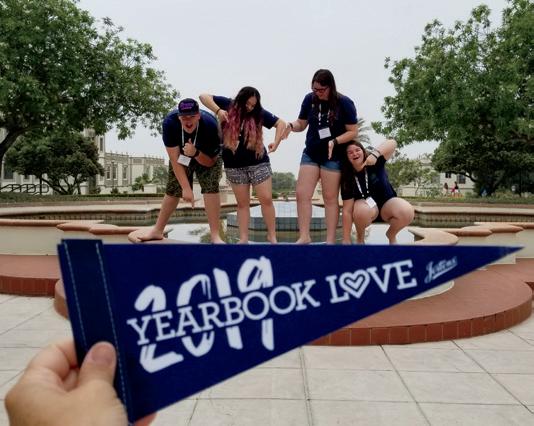
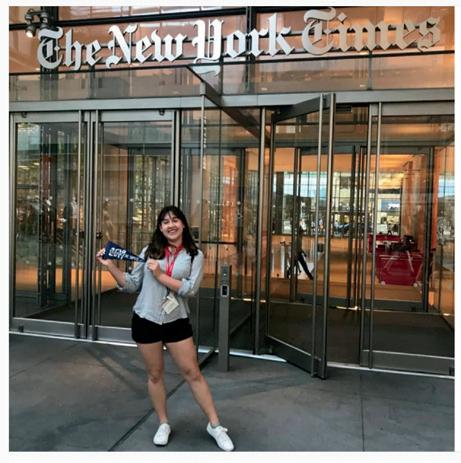
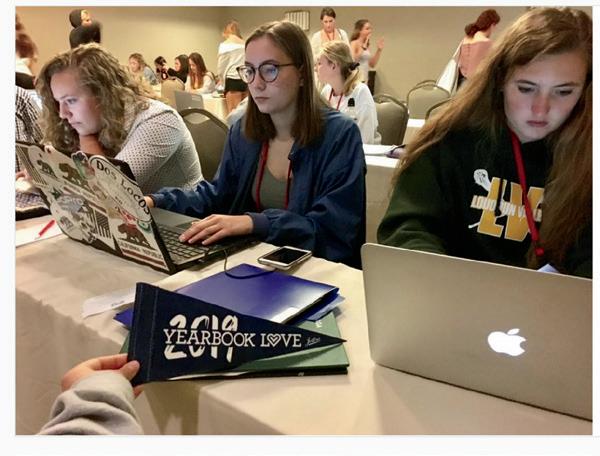
Take this pennant out to eat, on trips, to workshops and other adventures this year. Post with #YearbookLove and you’ll be entered into sweepstakes for fun prizes.