Semantic SEO: A Complete Guide to Modern Search Optimization
Semantic SEO marks a fundamental transformation in search engine optimization, shifting focus from isolated keyword targeting to understanding meaning, context, and user intent. As search engines have evolved beyond simple keyword matching, this approach has become essential for achieving sustainable search visibility and engagement.

The Evolution of Search Technology
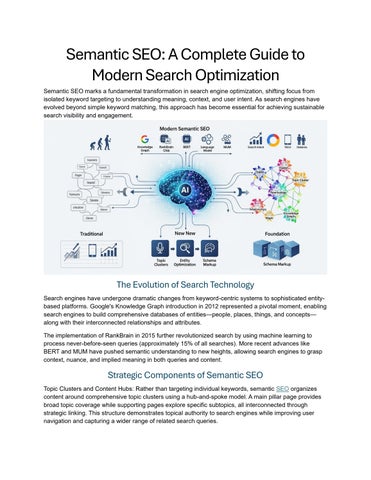
Search engines have undergone dramatic changes from keyword-centric systems to sophisticated entitybased platforms. Google's Knowledge Graph introduction in 2012 represented a pivotal moment, enabling search engines to build comprehensive databases of entities people, places, things, and concepts along with their interconnected relationships and attributes.
The implementation of RankBrain in 2015 further revolutionized search by using machine learning to process never-before-seen queries (approximately 15% of all searches). More recent advances like BERT and MUM have pushed semantic understanding to new heights, allowing search engines to grasp context, nuance, and implied meaning in both queries and content.
Strategic Components of Semantic SEO
Topic Clusters and Content Hubs: Rather than targeting individual keywords, semantic SEO organizes content around comprehensive topic clusters using a hub-and-spoke model. A main pillar page provides broad topic coverage while supporting pages explore specific subtopics, all interconnected through strategic linking. This structure demonstrates topical authority to search engines while improving user navigation and capturing a wider range of related search queries.
Entity Optimization: Understanding entities distinct concepts that search engines catalog in knowledge graphs is crucial for semantic success. This involves clearly identifying and defining primary entities (people, organizations, locations, products, concepts) in your content and providing clear context about their relationships. Consistent entity usage across your website establishes topical authority and signals expertise to search engines.
Schema Markup Implementation: Structured data serves as the critical bridge between content and search engine comprehension. JSON-LD format is preferred for implementing advanced schema strategies, including entity-specific markup for persons, organizations, events, and FAQs. Beyond basic schemas, breadcrumb and sitelinks markup helps search engines understand site architecture and content relationships, supporting your overall topic cluster strategy.
Semantic Keyword Research: Modern keyword research emphasizes user intent, question patterns, and natural language variations rather than just search volume. Tools like Google's "People Also Ask" and related searches reveal semantic relationships and how users think about topics. Intent mapping categorizes searches by user goals (informational, navigational, transactional), enabling content creation that specifically addresses each intent type with appropriate depth and format.
Implementation Best Practices
Content Structure: Logical organization and natural language usage are essential for semantic optimization. Headers should reflect natural question patterns and topic progression, making content more likely to appear in featured snippets and enhanced search results. FAQ sections and questionanswer formats align perfectly with semantic search patterns, mirroring how people naturally seek information.
Natural Language Optimization: Instead of keyword stuffing, focus on naturally incorporating semantic variations and related terms using conversational tone. This approach makes content more accessible to both search engines and human readers while supporting voice search and conversational AI optimization.

Performance Measurement and Analytics
Semantic SEO success requires looking beyond traditional metrics like individual keyword rankings. Topic visibility tracking monitors rankings across entire semantic clusters, providing a more accurate picture of overall search performance and topical authority. User engagement metrics time on page, pages per session, bounce rates indicate whether content successfully matches user intent and provides value.
Advanced analytics should track the complete customer journey, understanding how different semantic content pieces contribute to conversions. Google Search Console offers valuable insights through query analysis and performance reporting, while heat mapping and user behavior analysis reveal how visitors interact with semantically optimized content.
Future Trends and Preparation
The continued advancement of AI and machine learning will further emphasize semantic SEO's importance. Voice search and conversational AI rely heavily on natural language understanding, making
semantic optimization essential for future success. Emerging trends like visual search and multimodal search experiences will benefit from comprehensive semantic strategies as search engines learn to understand images, videos, and other media in relation to textual content.
Long-term Success Strategy
Building comprehensive topic authority remains the primary focus for sustainable semantic SEO success. This requires consistently creating high-quality, semantically rich content that addresses user needs and establishes expertise in specific subject areas. Investing in technical infrastructure advanced schema markup, Core Web Vitals optimization, multi-device accessibility becomes increasingly critical.
Conclusion
Semantic SEO represents more than just a tactical shift; it's a strategic evolution that aligns with the broader goal of creating valuable, user-focused content. Organizations embracing semantic optimization now position themselves advantageously for future search evolution and changing user behaviors. While the transition may seem complex, the benefits improved search visibility, enhanced user engagement, and sustainable organic growth make semantic SEO fundamental to digital marketing success. Success requires patience, strategic thinking, and continuous optimization, but the long-term rewards justify this essential investment in modern search optimization.