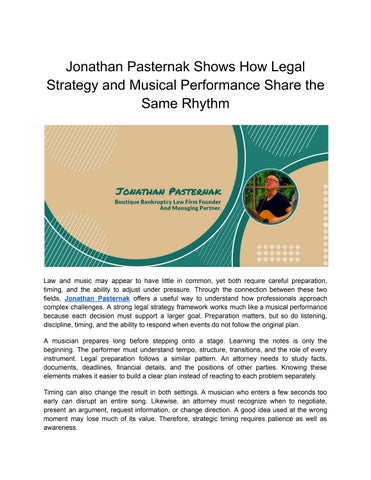
Jonathan Pasternak Shows How Legal Strategy and Musical Performance Share the Same Rhythm
Law and music may appear to have little in common, yet both require careful preparation, timing, and the ability to adjust under pressure. Through the connection between these two fields, Jonathan Pasternak offers a useful way to understand how professionals approach complex challenges. A strong legal strategy framework works much like a musical performance because each decision must support a larger goal. Preparation matters, but so do listening, discipline, timing, and the ability to respond when events do not follow the original plan. A musician prepares long before stepping onto a stage. Learning the notes is only the beginning. The performer must understand tempo, structure, transitions, and the role of every instrument. Legal preparation follows a similar pattern. An attorney needs to study facts, documents, deadlines, financial details, and the positions of other parties. Knowing these elements makes it easier to build a clear plan instead of reacting to each problem separately. Timing can also change the result in both settings. A musician who enters a few seconds too early can disrupt an entire song. Likewise, an attorney must recognize when to negotiate, present an argument, request information, or change direction. A good idea used at the wrong moment may lose much of its value. Therefore, strategic timing requires patience as well as awareness.
Listening is another skill that connects music with legal work. Musicians cannot perform well if they hear only themselves. They need to follow the rhythm and notice what other performers are doing. Attorneys also need to listen closely. Clients may reveal important concerns during ordinary conversations, while creditors, opposing parties, or advisors may provide information that changes the direction of a matter. Careful listening can uncover details that written records alone may not show. Discipline gives both professions a strong foundation. Musicians spend many hours practicing sections that audiences may hear for only a few minutes. Attorneys also perform a great deal of work before an important meeting, negotiation, or court appearance. They organize records, review possible outcomes, study legal issues, and prepare responses. Much of this effort happens away from public view, but it can shape the final performance. Another shared lesson involves adapting to unexpected events. Live music rarely offers perfect conditions. Equipment can fail, a performer can miss a cue, or the audience can respond differently than expected. Legal matters can change just as quickly. New facts may appear, negotiations may stall, or another party may take an unexpected position. A strong professional does not panic when the plan changes. Instead, the person evaluates what happened and chooses the next useful move. Confidence also grows from preparation rather than guesswork. Musicians who know their material can recover more easily when something goes wrong. Attorneys gain similar confidence when they understand the facts and possible risks. Preparation does not guarantee a perfect result. However, it creates a stronger base for making decisions when pressure increases. There is also value in knowing when not to act. Music depends on silence as much as sound. A pause can create tension, give another performer space, or prepare listeners for what comes next. Legal strategy can benefit from the same restraint. Not every disagreement requires an immediate response. Sometimes gathering more information, allowing negotiations to develop, or waiting for the right moment can produce a clearer path forward. Teamwork adds another connection. A successful band depends on people who understand their individual roles while supporting the entire group. Complex legal matters may also involve attorneys, clients, accountants, consultants, and other professionals. Each person brings different knowledge. Clear communication helps these individuals work toward the same objective instead of creating conflicting approaches. Strategic legal planning becomes more effective when preparation, timing, listening, restraint, and adaptability work together. Musical performance shows why technical knowledge alone does not create a strong result. People must also understand how and when to use what they know. Whether someone is working through a difficult legal matter or performing before a live audience, disciplined preparation and thoughtful responses can turn complexity into a more controlled performance.