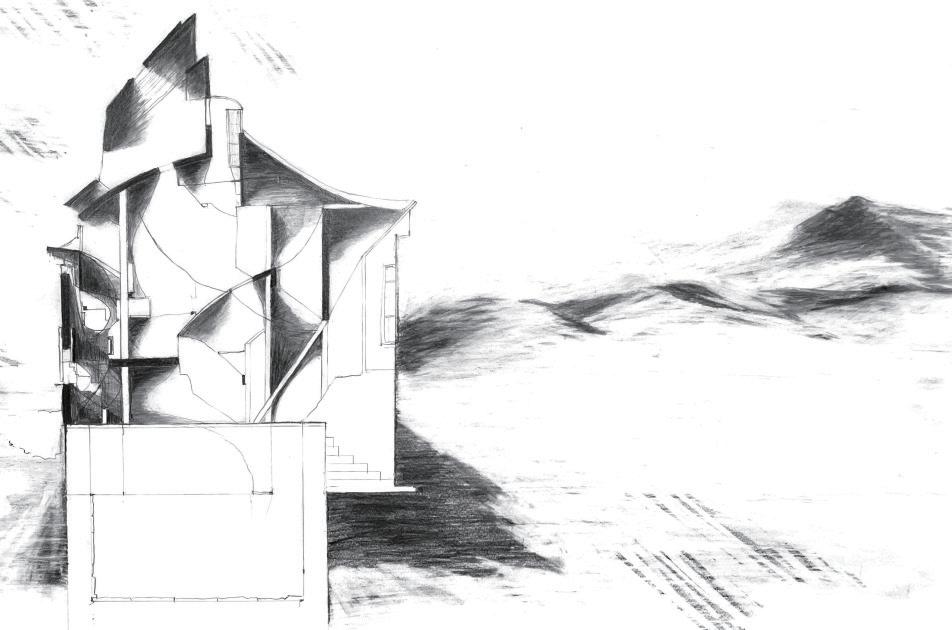
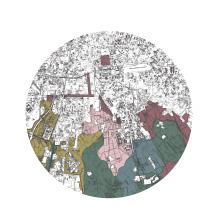
Reconstruction of Spacial Perception Through the History of Perspectival Projection
Renovation of Torre Treves
Ontological agency between new and existing structures within the systemic logics of the built environment
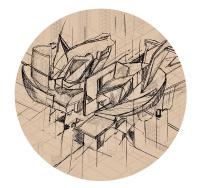
The Abstract Land
Translating Futurist Concepts of Becoming into a Epigenetic Landscape
Type: Independent Project Time: Autumn 2025
School: Shih Chien University, Taiwan
Advisor: Jr Gang Chi
Email: jrgangchi@gmail.com
Type: Independent Project Time: Spring 2024
School: Domus Academy, Milano
Instructor: Giacomo Ardesio, with HouseEurope!
Email: ardesio@arch.ethz.ch
Type: Independent Project Time: Fall 2023
School: Domus Academy, Milano
Instructor: Elisa Cattaneo
Email: elisa.cattaneo@polimi.it
Pavilion
of Reclaimed Materials
A Study and Making of Vernacular Tectonic
Type: Independent Project Time: Fall 2020
School: Shih Chien University, Taiwan
Instructor: Chung Han Yao
Email: yao.chunghan@gmail.com
2025 IEAGD
Exhibited an Awarded at the 2025 International Exhibition of Architecture Graduation Design
Type: Competition\Exhibition Time: AUG 2025
Exhibition: Taipei, Taiwan
Type: Independent Project Time: JUL-AUG 2023
School: Personal Project
A DISSECTED PLACE
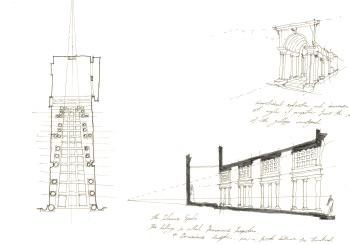
-Reconstructing spatial perception through Renaissance perspectival research, linking Taiwan’s sacred spatiality with the Western dialectic of the eternal and the transitory.
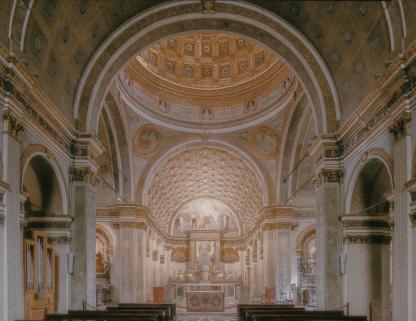
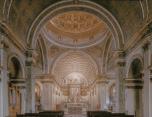
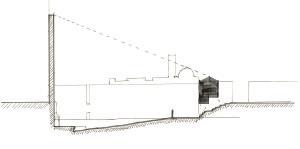
I once looked into a church that seemed to stretch into infinity—its deep apse, just a two-meter wall. The arch trembled, then detached. A poetic illusion of perspective revealed a space both false and deeply real.
That was five hundred years ago.
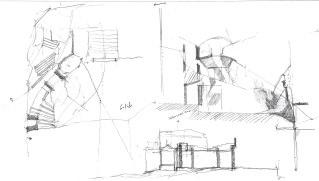
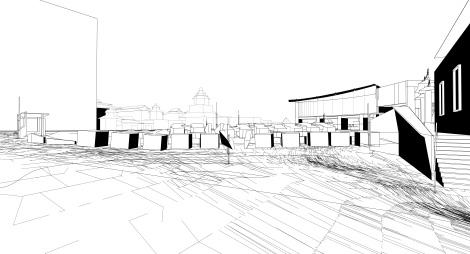
Now, through the perspective machine and my movement in Siena, I map fleeting moments where depth projects invisible structures—where reality and imagination overlap. At Hsinchu’s Tiangong Temple plaza, sloped ground, tilted axes, and fragmented architecture shape a new spatial language. The forgotten stage returns; the colonnade reconnects with life. This is a reflection on linear perspective— a reconsideration of Western spatial vision and the shifting fabric of Taiwanese urbanism, in search of the emotion I once felt in Siena.
PART 1
PERSPECTIVE MACHINE
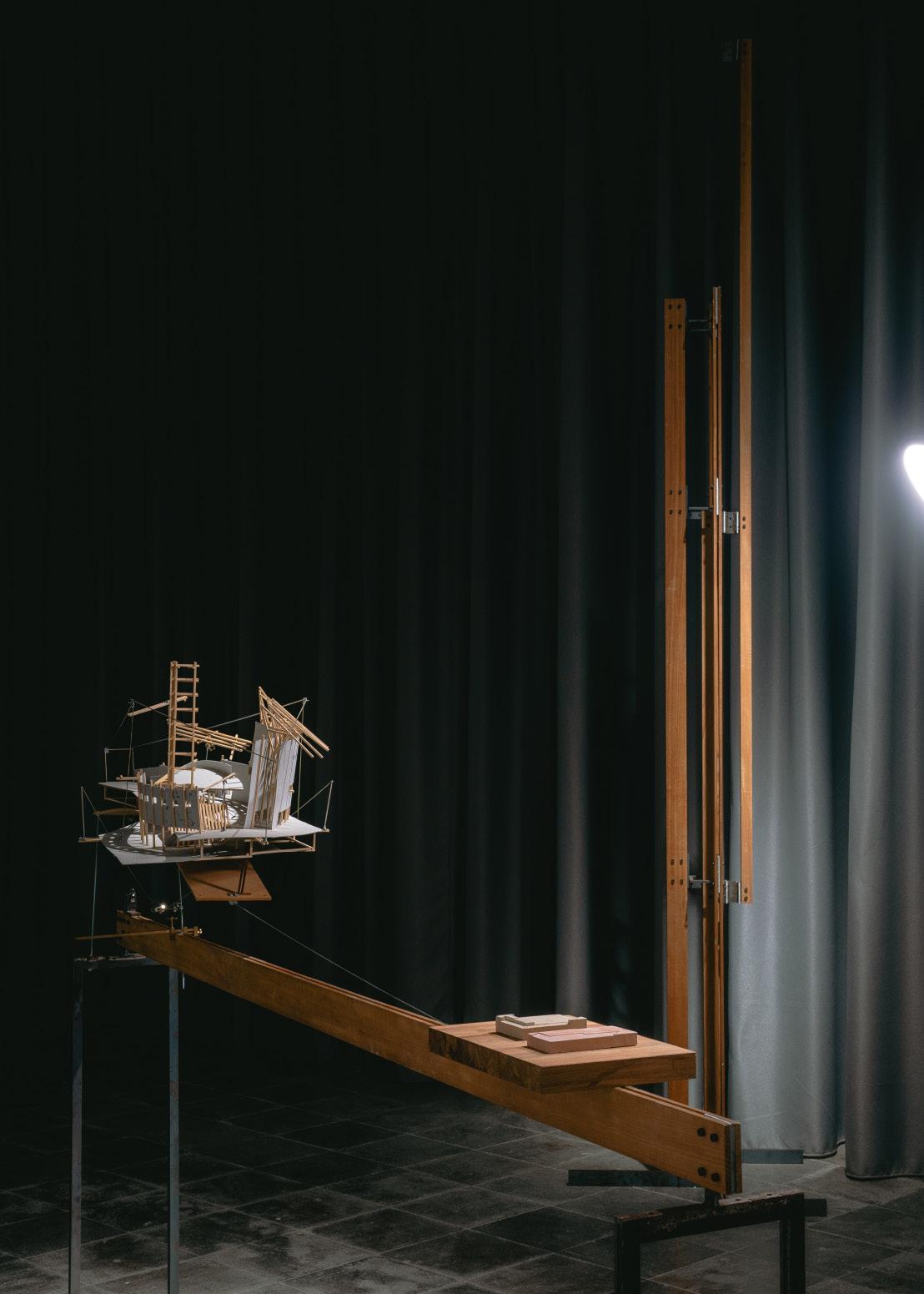
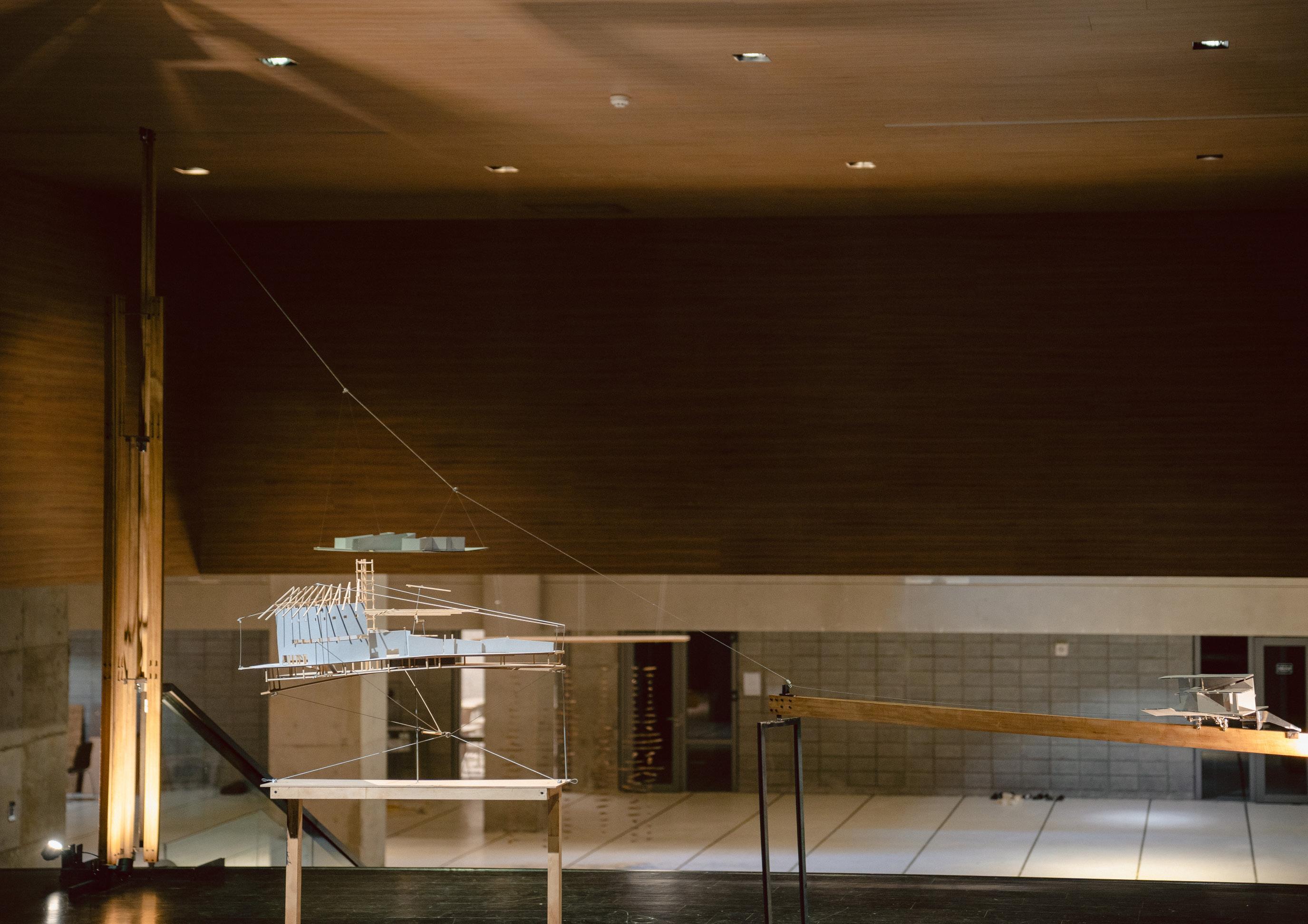
The Perspective Machine's internal components can be adjusted in depth and orientation, allowing various architectural elements to be projected from their own three-dimensional positions onto a wide, framed view.
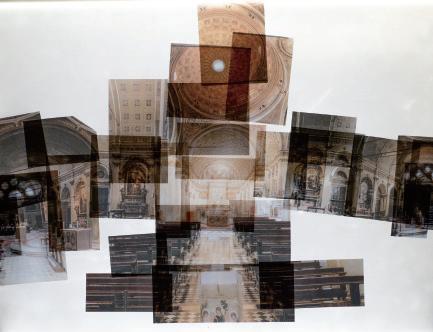
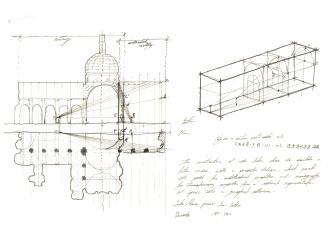
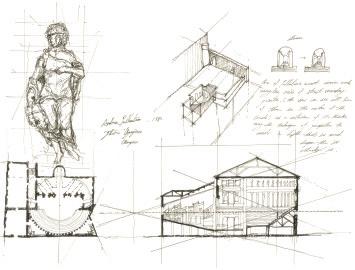
San Satiro, Bramante. Photography and Collage. 80cm x 60cm
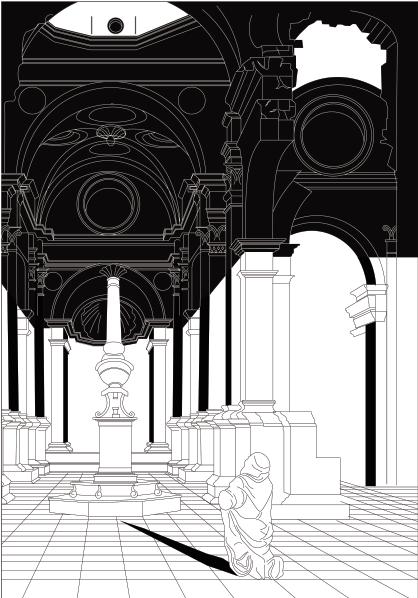
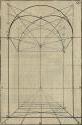
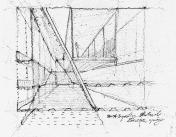
San Satiro, Bramante. Ink on Paper. 42cm x 30cm
The overall and detailed design of the perspective machine serves to position the viewpoint and construct the projection lines. In contrast to the logic of classical architecture—which compresses information into a single plane in pursuit of an illusory depth—I seek to discover an abstract plane by unfolding its various elements into a spatial composition with real depth.
The relationship between this device and the previously mentioned shifts in spatial perception lies in how it transforms the viewer’s experience: when a person stands at the end of the axis and looks through the rectangular frame, they see a continuous and unified plane.
BODILY VISION AND THE GEOMETRY OF LIGHT
(Optical / Phenomenological Geometry)
Multiple viewpoints
Movement, temporality, embodied perception
A RESISTANCE TO THE IDEALIZED GEOMETRY OF RENAISSANCE PERSPECTIVE
San Satiro, Bramante opposing logic the genuine perception of space
the pursuit of eternity
PART 2 SIENA MAPPING
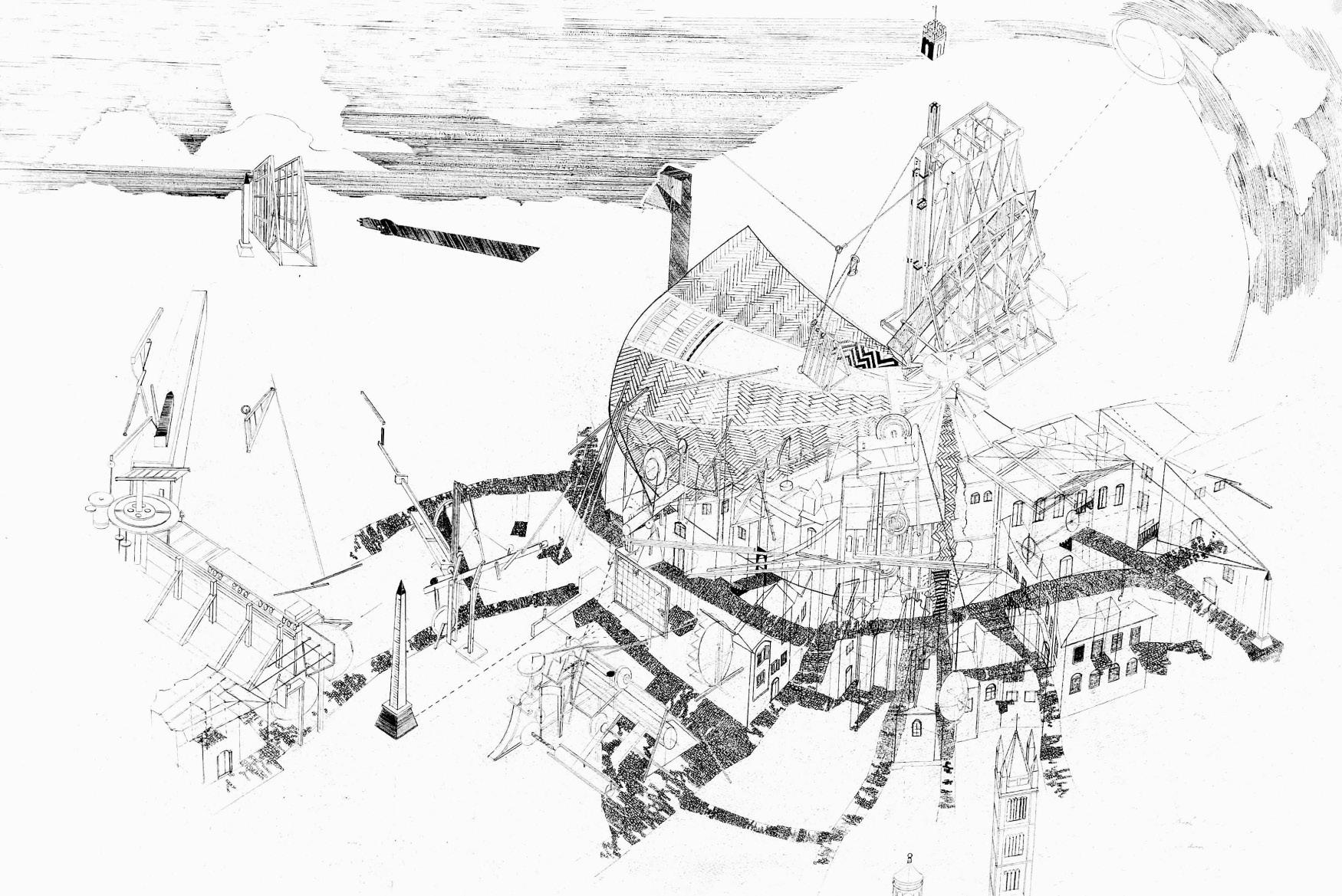
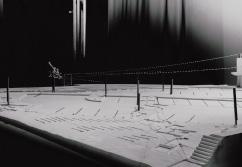
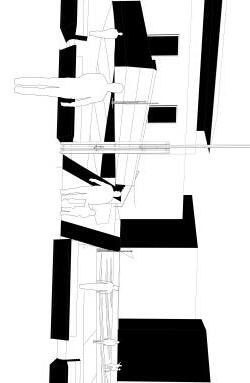
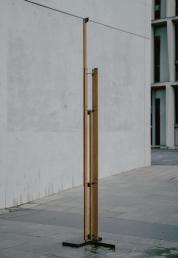
Siena Mapping documents one hour of bodily movement and shifting spatial perspectives in Siena. The moving obelisks mark changing viewpoints and record a fragmented whole shaped by sightlines, building proportions, and the sloped piazza—suggesting a space on the verge of emerging.
In Dürer’s perspective machine, the obelisk used to locate the height of the eye is, in this drawing, transformed into a metaphor—a viewpoint where perception and events occur.
On the Piazza del Campo, the subtle inclination of the terrain and the minute variations in the paving generate a centripetal force that induces an unstable mode of movement.
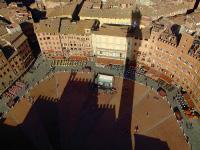
As one emerges from the enclosed tower to its summit, the viewpoint is suddenly released, revealing the tower’s immense shadow cast across the plaza’s scale-like paving, where the subtle continuity of the ground becomes perceptible.
Graphite on paper\ 78.7 x 109.2cm
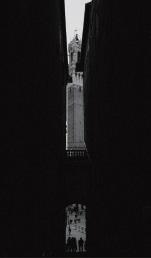
Dematerialized streets envelop the clock tower at the end of the axis, where the passage of time becomes imperceptible and spatial information is compressed into a single plane.
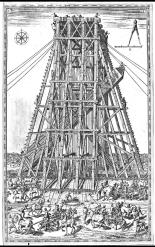
To transport the obelisk in front of St. Peter’s Basilica, a device was used to slowly lower it from its upright position, through a process that combined mechanical means with collective human force—an operation imbued with a sense of the sacred.
Viewed from afar, overlooking the Siena hill-town plaza, the viewpoint is placed at infinity—marking the beginning of the temporal axis and the point of origin of this drawing.
RECONSTRUCTING HISTORICAL SPACES IN HSINCHU, TAIWAN
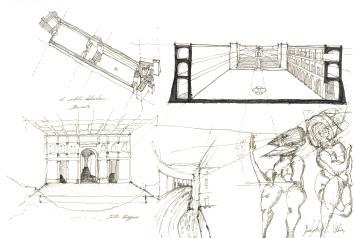
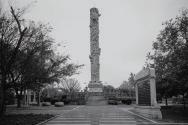
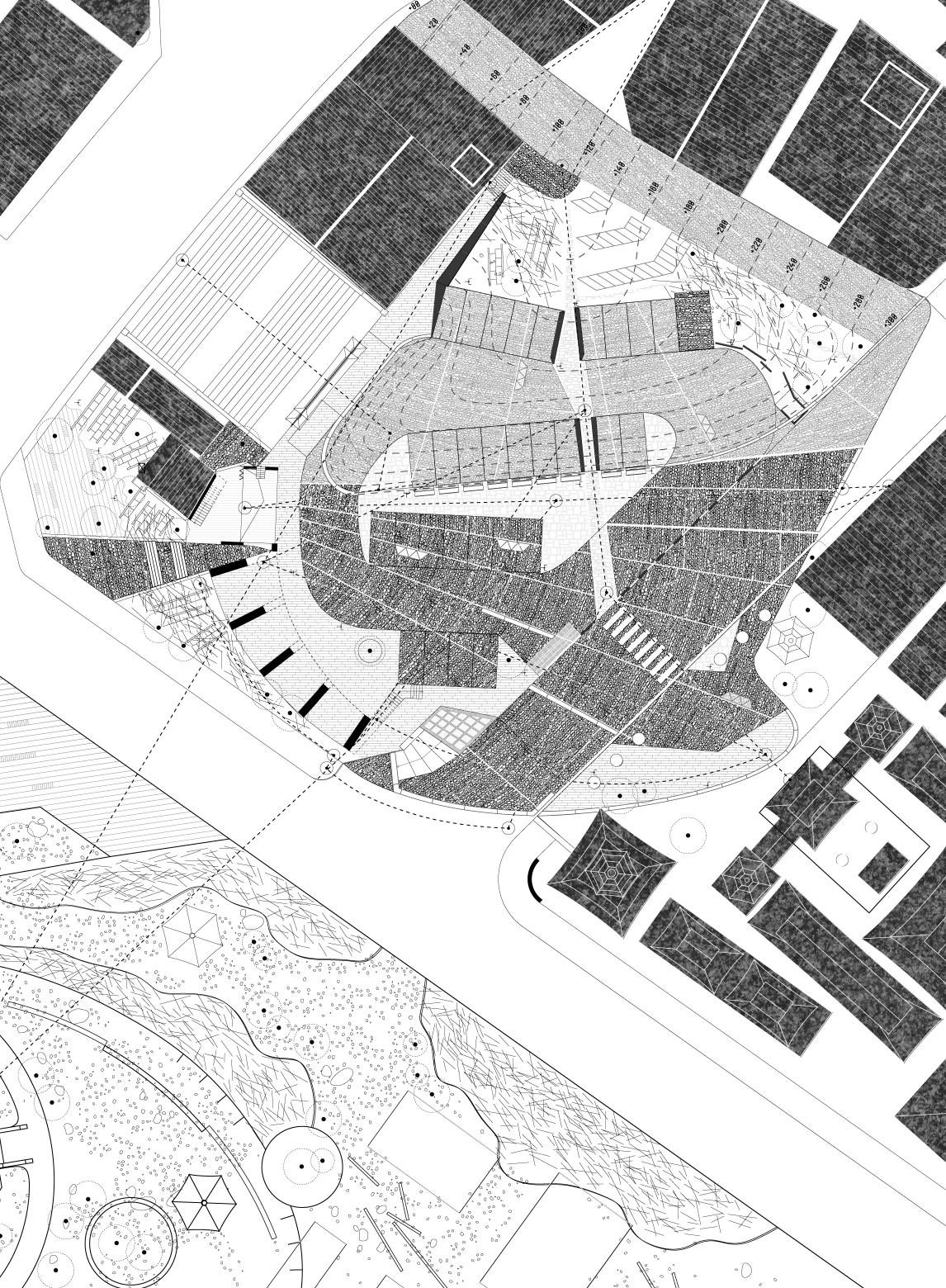
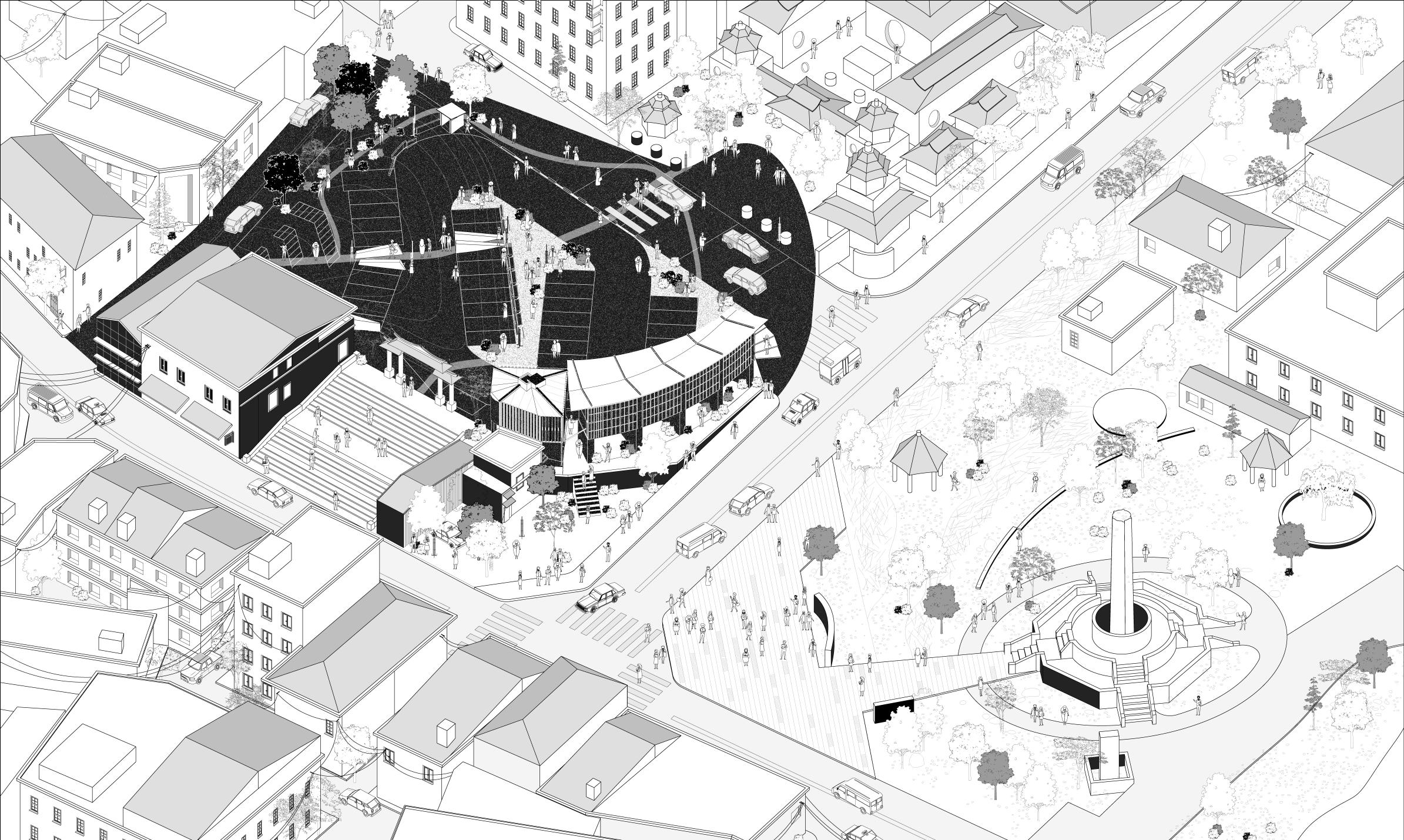
In the seemingly chaotic everyday urban spaces of Taiwan, there also appears to be a certain connection to the idea of spatial perceptual shifts. In front of the Tiangong Temple in Hsinchu, there is a plaza, an outdoor stage, abandoned arcades, a parking lot, and stone dragon columns from a nearby park... As we move from the classical perspectival spaces to the complex urban fabric of Taiwan, a fundamental difference emerges. Beginning with the Pantheon, the Romans—through their construction methods— created a sublime dome that emphasized the monumentality of the architectural interior.
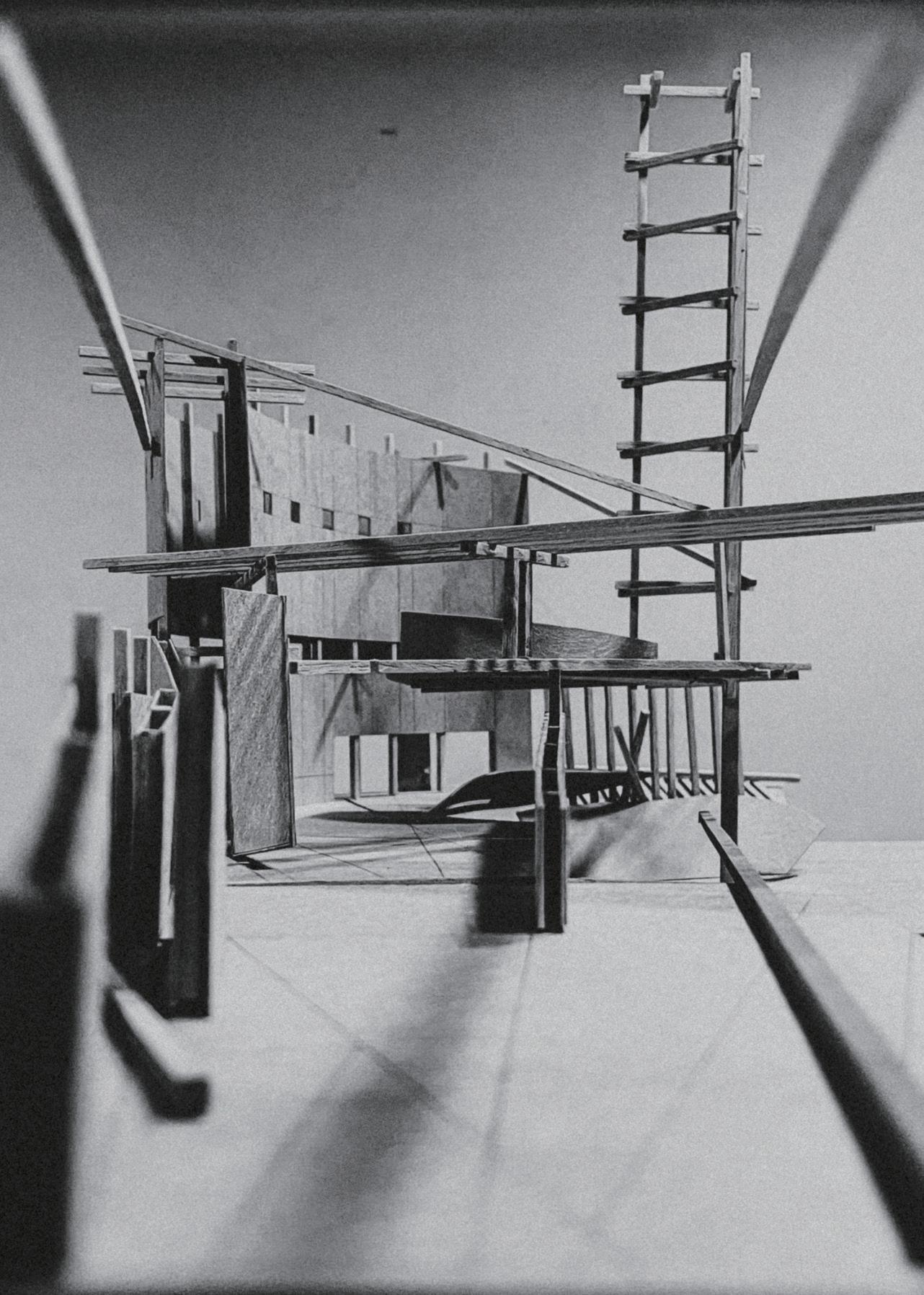
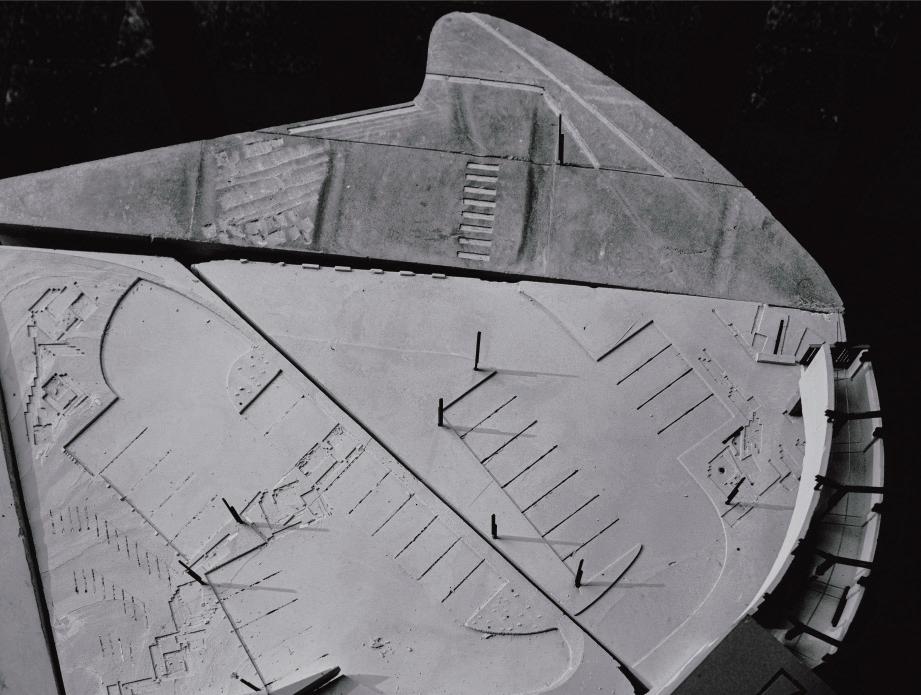
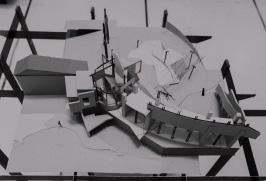
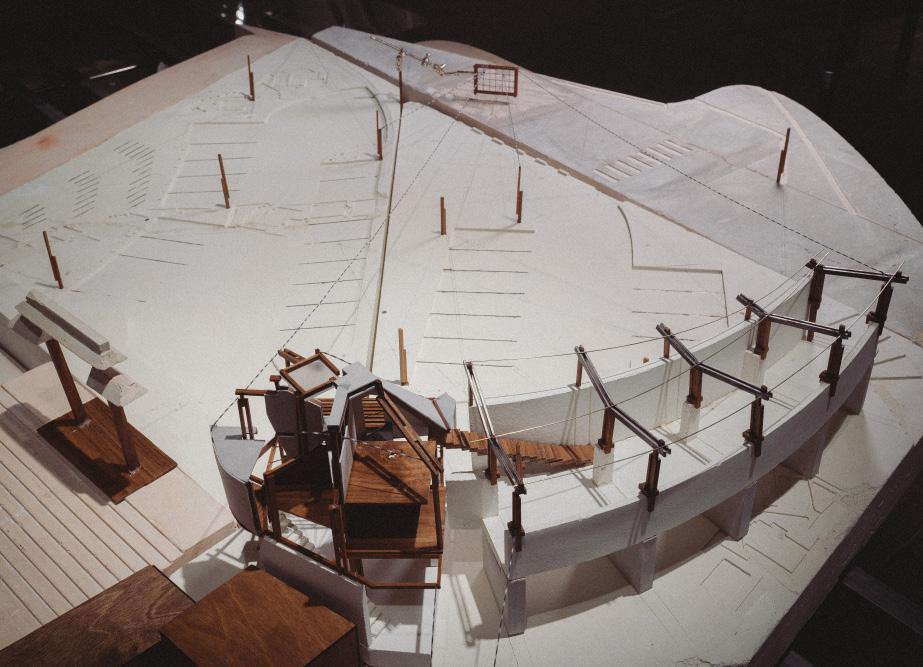
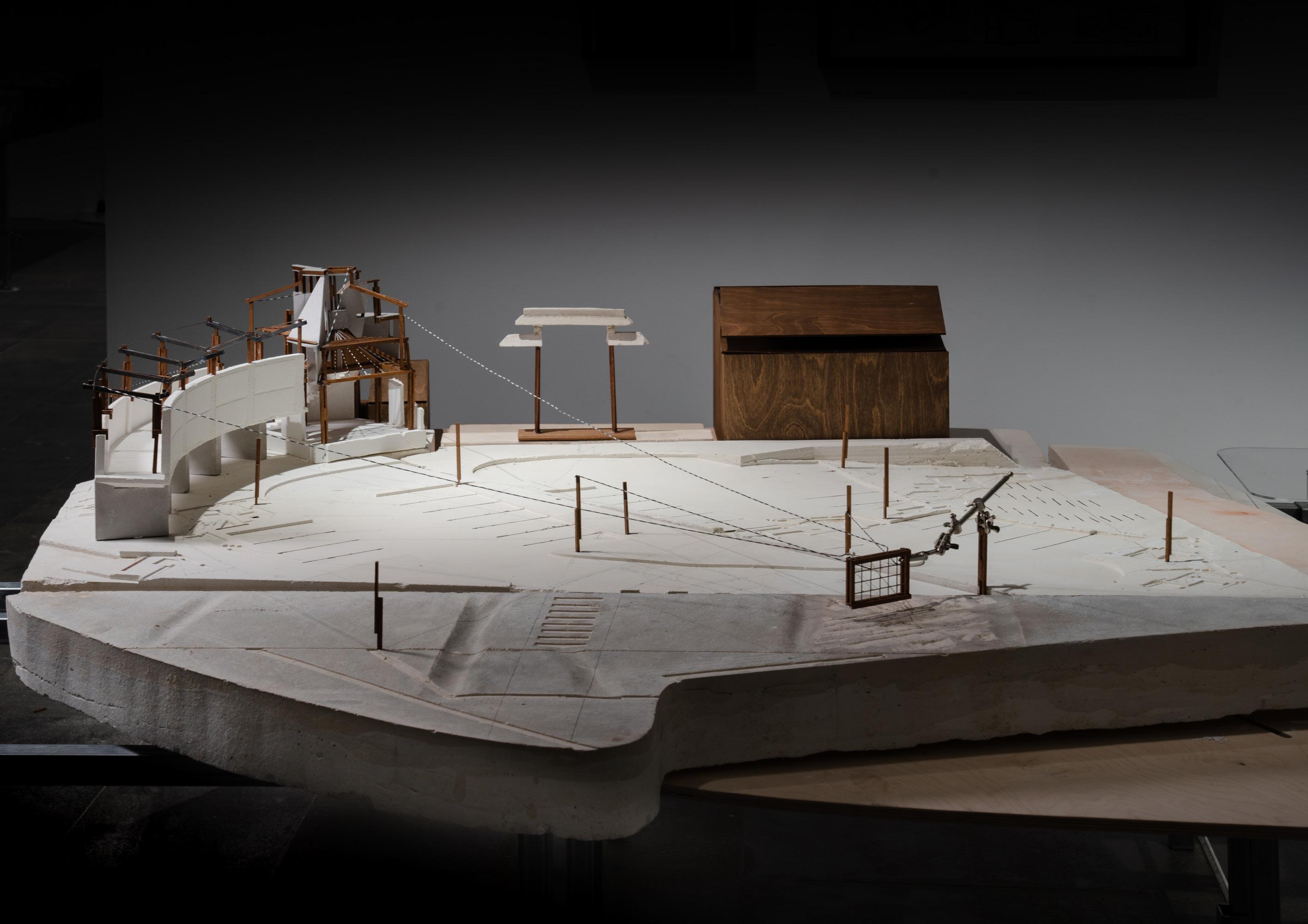
Concrete Model \ 150 x 150 cm
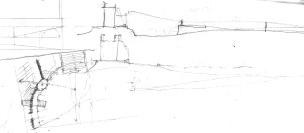
The curved architectural form marks the location of the old stage and arcade. This interface is the first threshold encountered after the topography of the Keya River drops—serving as a boundary between the urban core of Hsinchu and the surrounding countryside, as well as the edge enclosing an internal religious space.
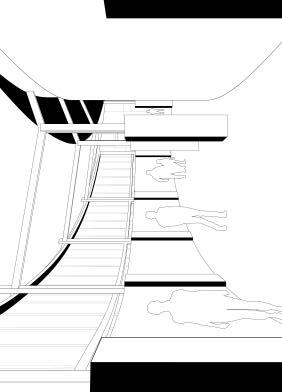
I inserted new volumes onto the existing structure and transformed the previously enclosed ground level into a more transparent space, allowing the continuous spatial experience of park users to be compressed and released before entering the inner plaza.
RECLAIMING THE SUPPRESSED MONUMENTALITY OF THE RELIGIOUS PLAZA.
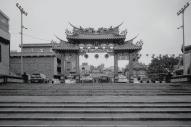
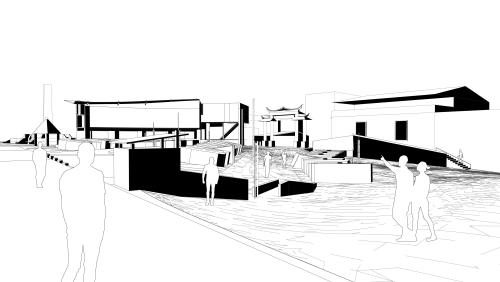
At the same time, the temple forecourt is extended outward, enabling it to accommodate larger religious rituals, political gatherings, and layered visual perspectives These spatial interventions dissolve the original singular axis from the traditional gateway (pailou) to the temple, generating a more complex set of spatial and perceptual relationships.
In the plaza in front of the Tiangong Temple in Hsinchu, I reconfigured the orientation of parking spaces and adjusted the slope of the landscape.
By misaligning the spaces between parked cars with the site’s contour lines,
movement a long multiple spatial axes allows visitors to reexperience the suppressed monumentality of the old stage.
I also cr eated a line of passage throu gh the gap between the existing stage and arcade structur es , stitching together
fragmented spatial elements. Additionally, an eccentrically curved walkway was added to the existing arcade structure, gently lifting the pedestrian path and generating new perceptual alignments with the guiding lines of the plaza.
Traditionally, temple stages used for ritual performances are oriented directly toward the temple.
However, at Tiangong Temple, the presence of both a ceremonial gate (pailou) and a permanent stage forced the stage to be shifted to the side, suppressing its symbolic importance.
By reorienting the stage toward a new axis aligned with the reconfigured parking layout, visitors are
subtly pulled away from the original central axis. This spatial displacement allows them to perceive the presence of a new axis—thereby restoring the stage’s commemorative significance within the site. At the center of the site, I extended a spatial element from the edge of a wheel stop, deliberately increasing the distance to the next parked car. This stretched gap becomes a walkable passage for people, marking the edge where the sentimental landscape begins to slope downward. The new axis ultimately leads toward the stage.
STRUCTURAL MODEL
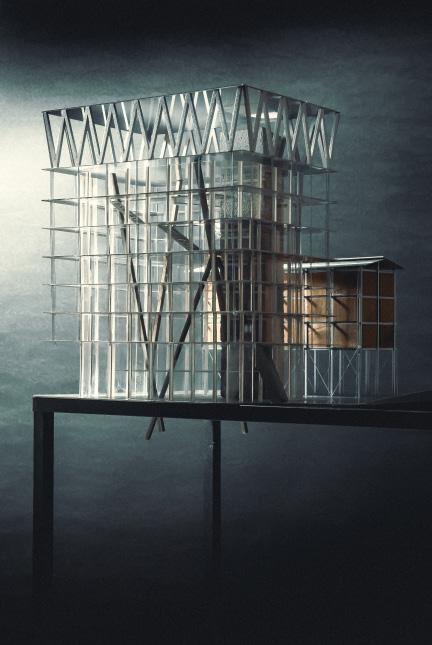
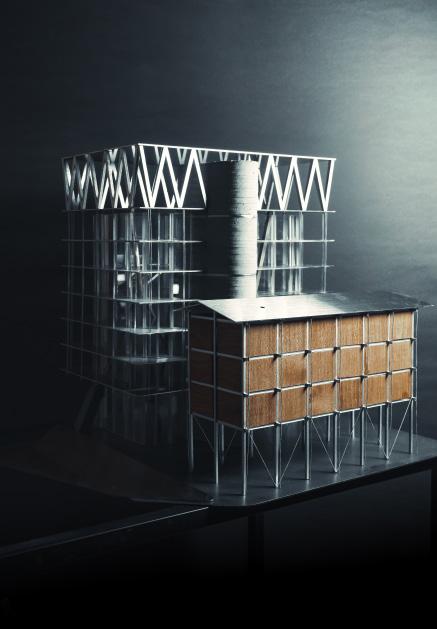
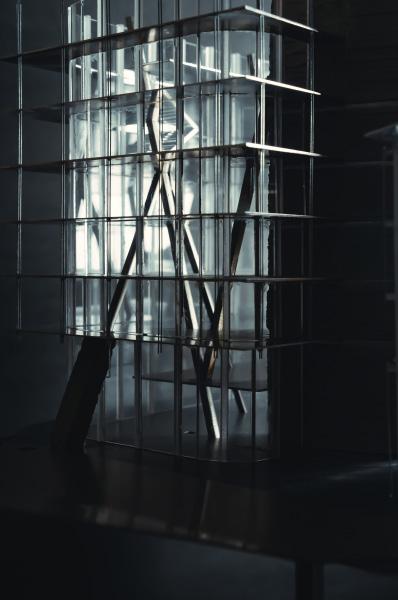
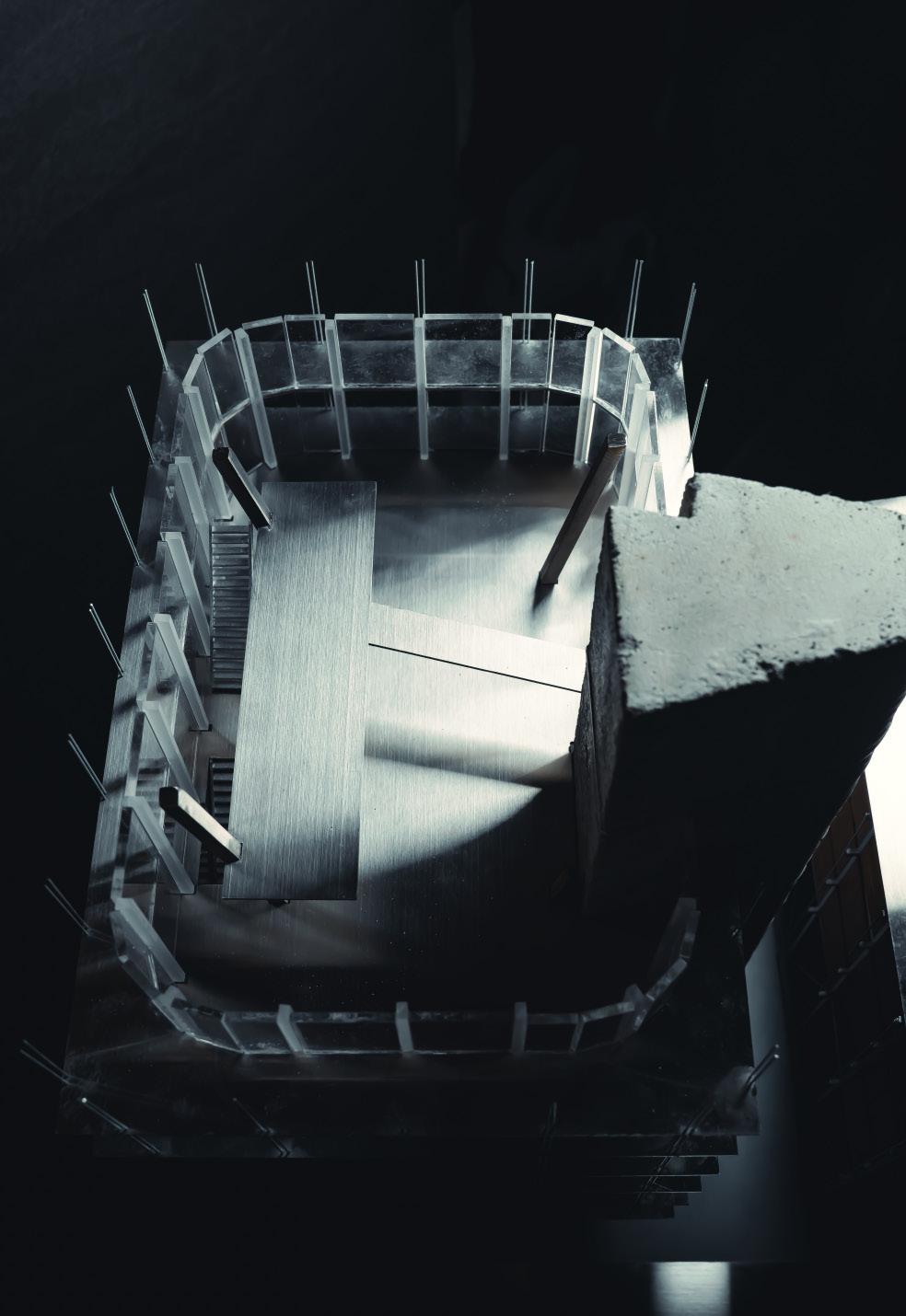
The structural model explores renewal within an existing concrete framework. A minimal insertion of steel columns reconfigures the fragmented structure, challenging architectural wholeness as an ontological premise while enabling spatial liberation.
RENOVATION OF TORRE TREVES
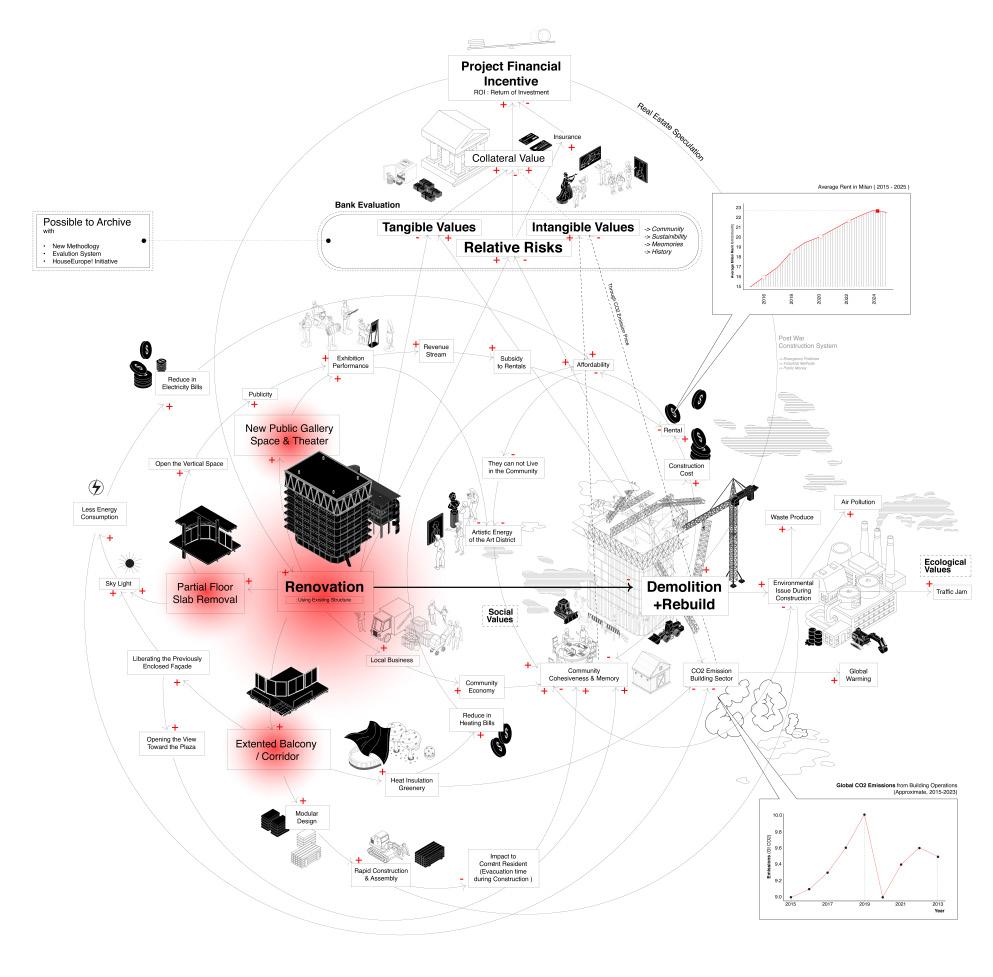
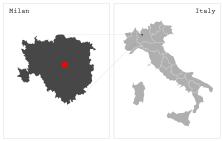
-Renovation of Torre Treves in Collaboration with HouseEurope! : ontological agency between new and existing structures within the systemic logics of the built environment
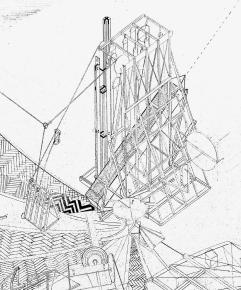
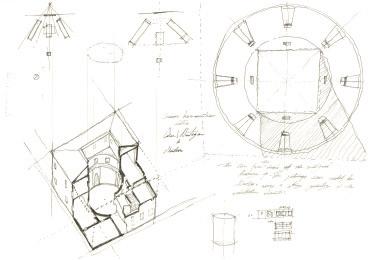
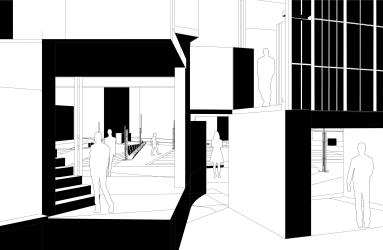
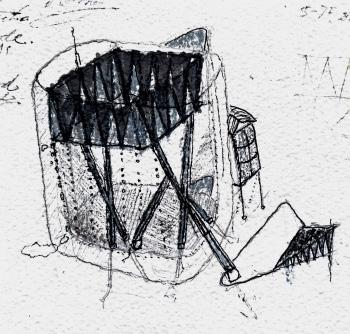
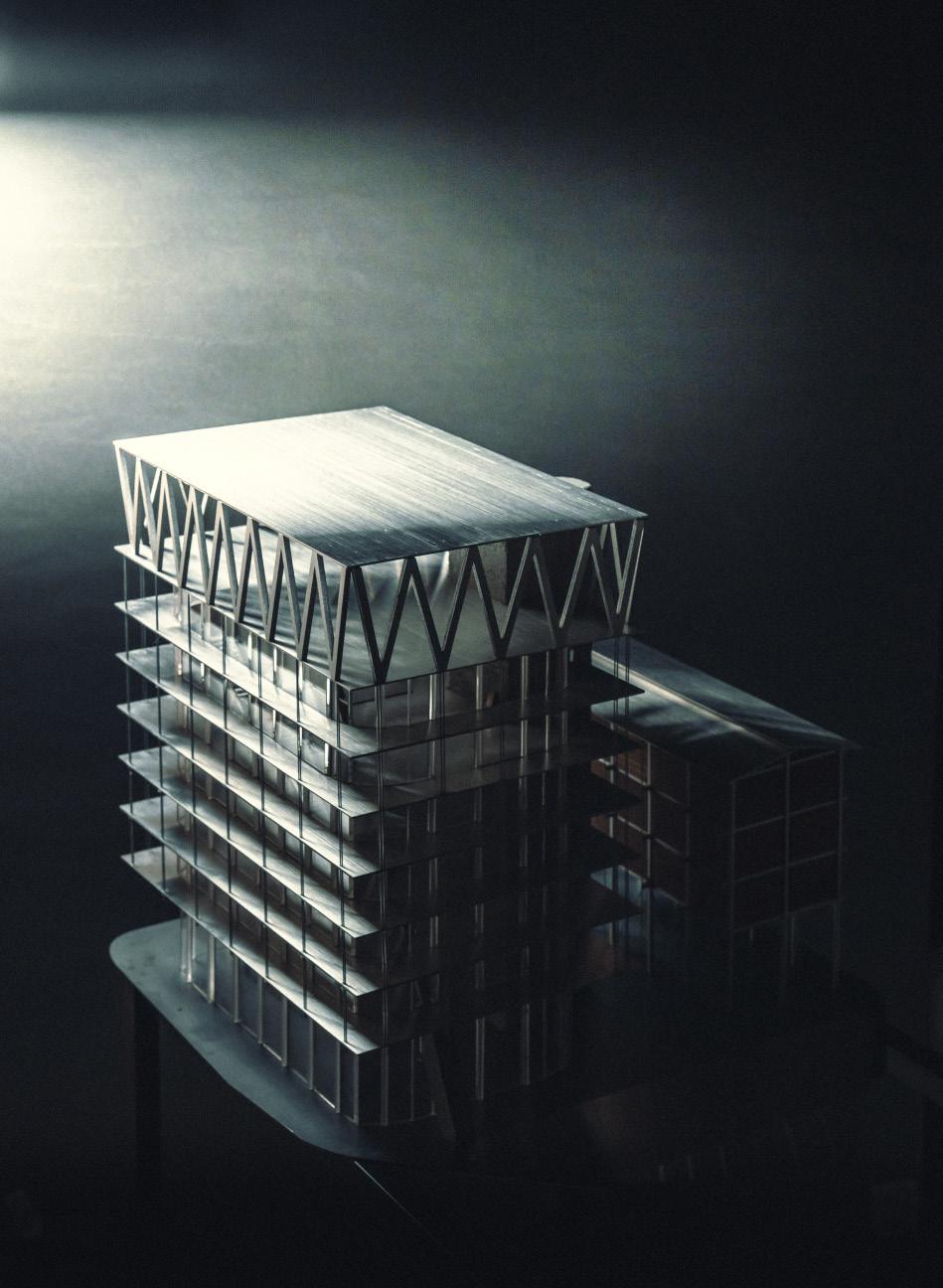
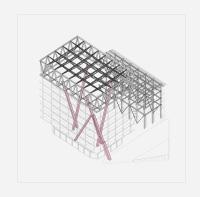
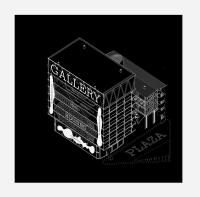
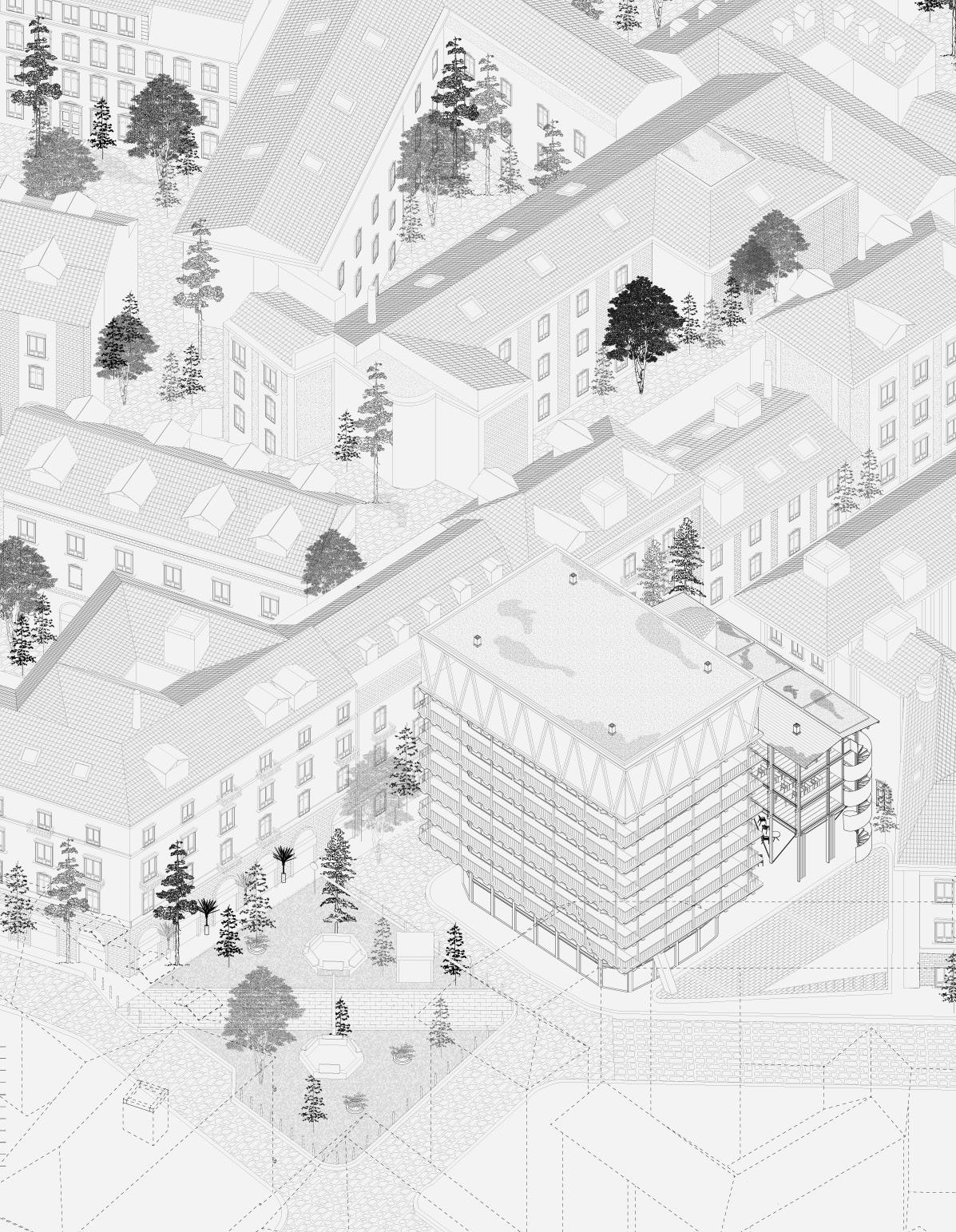
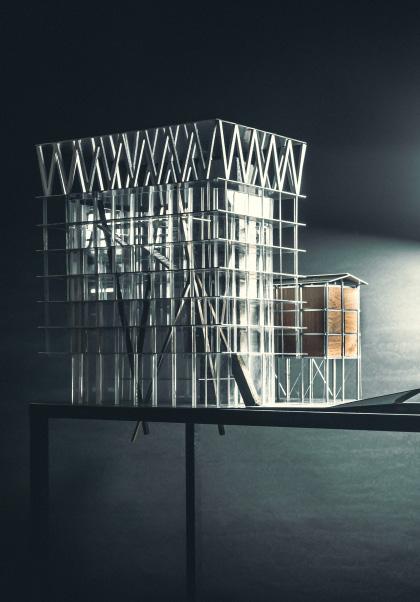
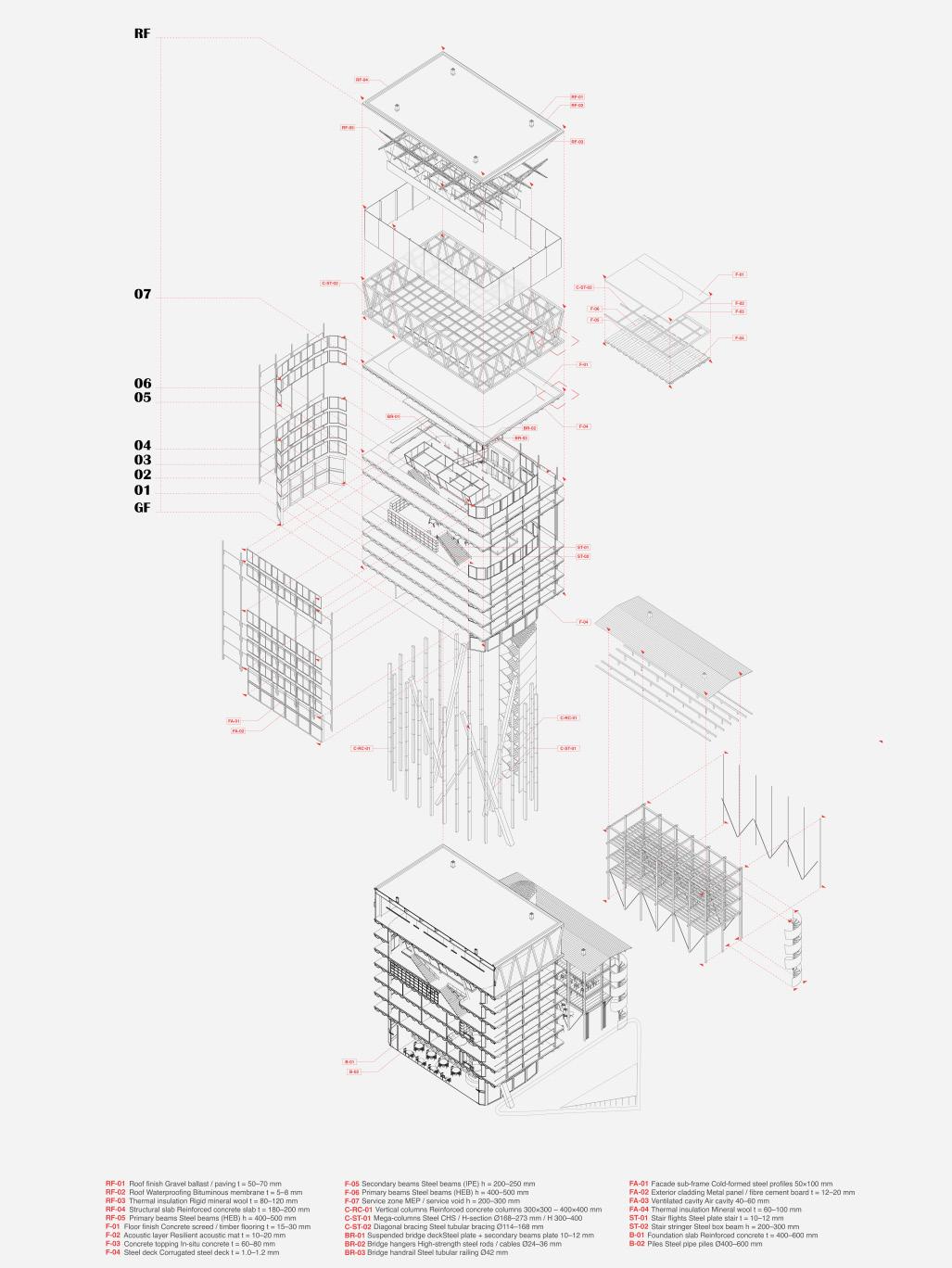
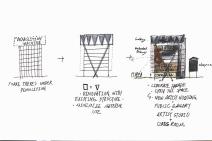
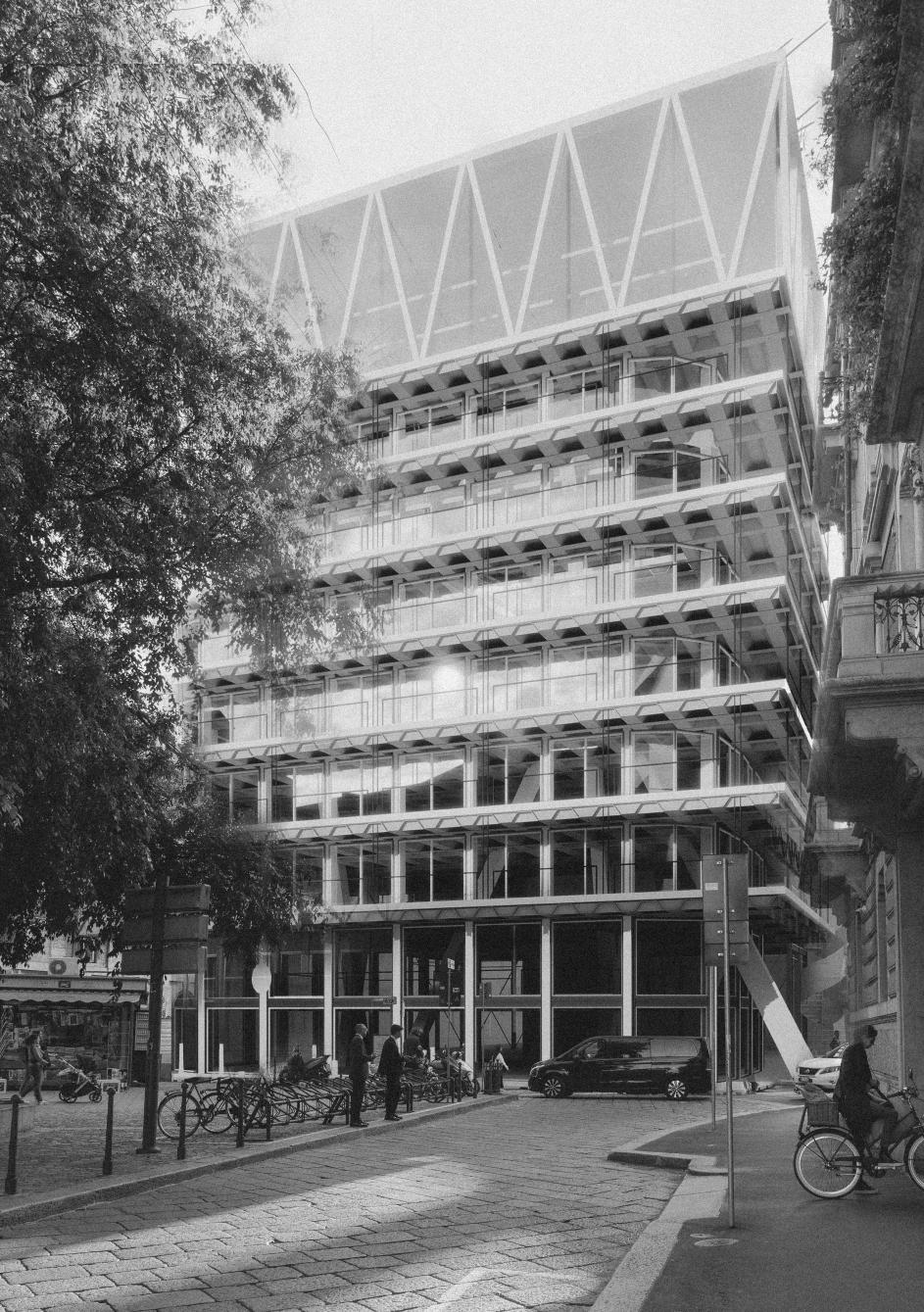
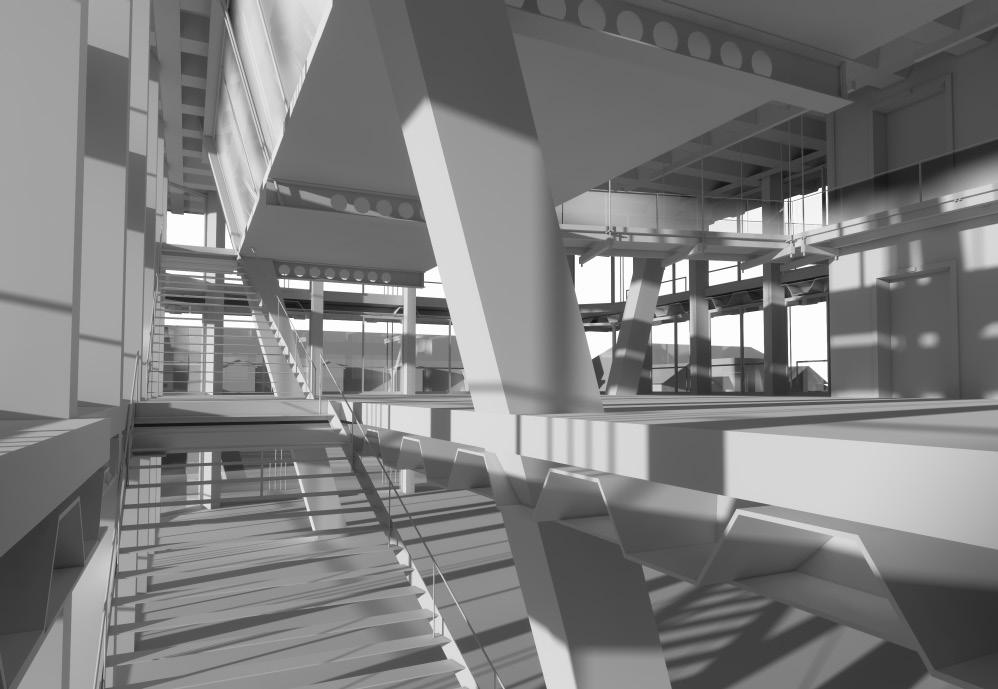
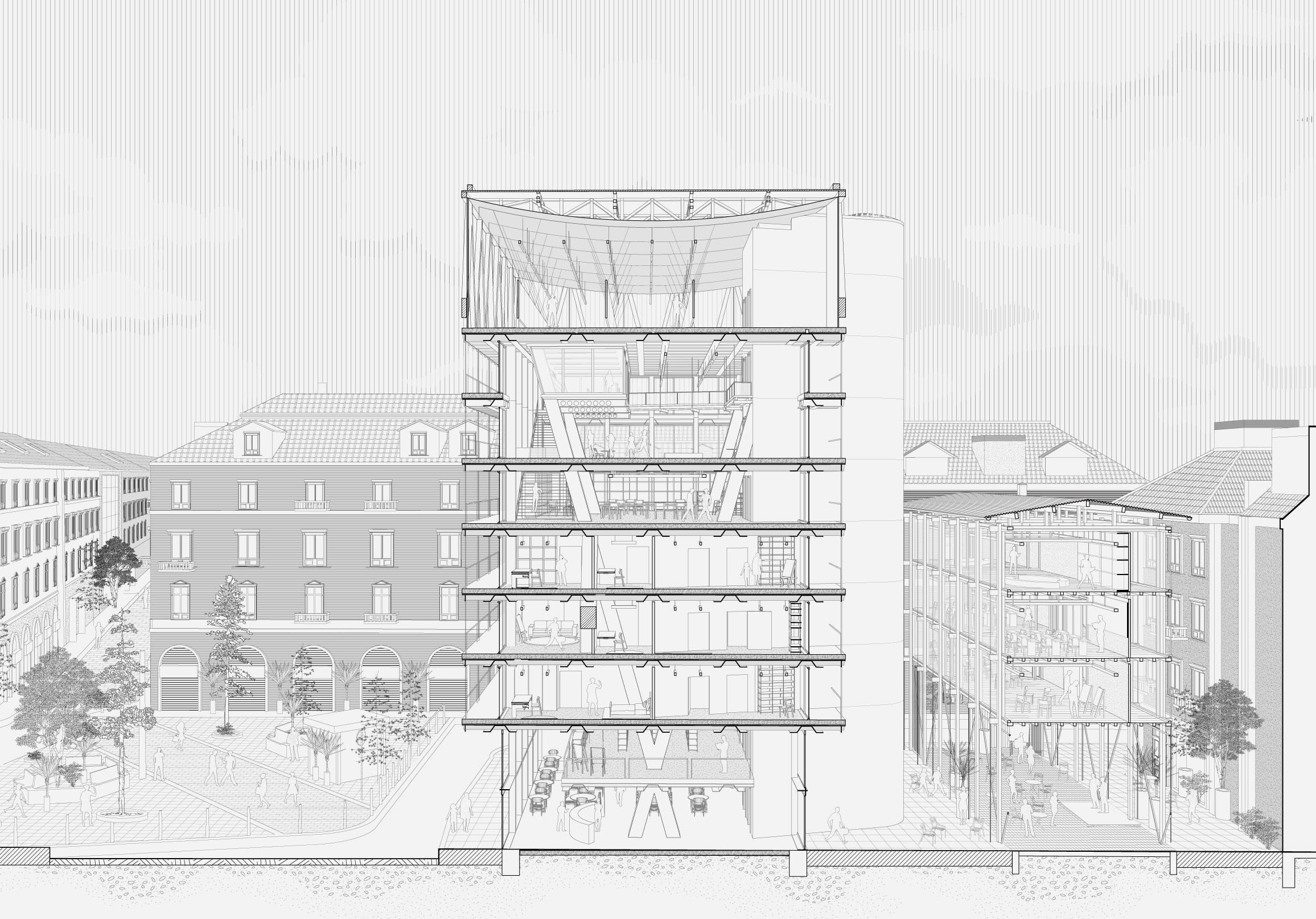
To prevent the demolition of Torre Treves, the project preserves the outer ring of the existing structure and renovates it through minimal yet strategic insertions. Through an approach of minimal material use and structural reduction, the intervention enables the emergence of a few inverted-triangular volumes from the center—geometries that appear unstable at first glance but become structurally feasible only through their integration with, and partial envelopment by, the retained framework.
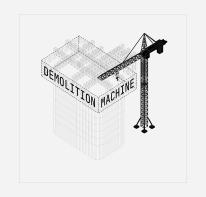
This strategy allows portions of the original slabs to be opened, liberating the interior space. At the top of the newly formed structural core sits a steel-frame structure—a volume equal in size to the machinery box once planned for dismantling the tower, now reimagined as a performance and exhibition space.
This added volume becomes a massive structural device itself, suspending a cantilevered balcony that extends outward. The balcony’s projection releases the formerly sealed façade, allowing the interior spaces to flow continuously toward the public plaza outside. This entire design maneuver becomes a renewed ontological reflection on the relationship between existing structures and new structures—using a seemingly surreal insertion to generate a deliberate spatial gap between them, thereby intensifying the contrast and dialogue across temporal and material boundaries.
Type: Independent Project Time: Spring 2024
School: Domus Academy, Milano Instructor: Giacomo Ardesio, with HouseEurope!
System dynamics diagram illustrate how renovation interrupts the vicious cycle generated by demolition, redirecting financial incentives toward adaptive reuse and thereby improving the long-term quality of the
built environment. Within this framework, a system dynamics diagram of Milan’s built environment reveals rising rents, limited student housing, and a dense artistic context.
With rising housing costs in Milan, students increasingly struggle to afford accommodation, while universities face classroom shortages. Responding to these urgent conditions—along with the area’s longstanding artistic character—the project proposes student housing combined with spaces for working, learning, and exhibition.
Concrete stair core with added volume for classroom extension.
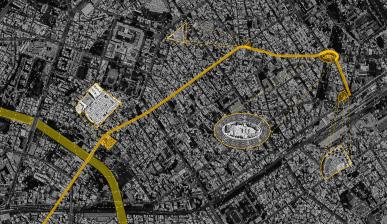
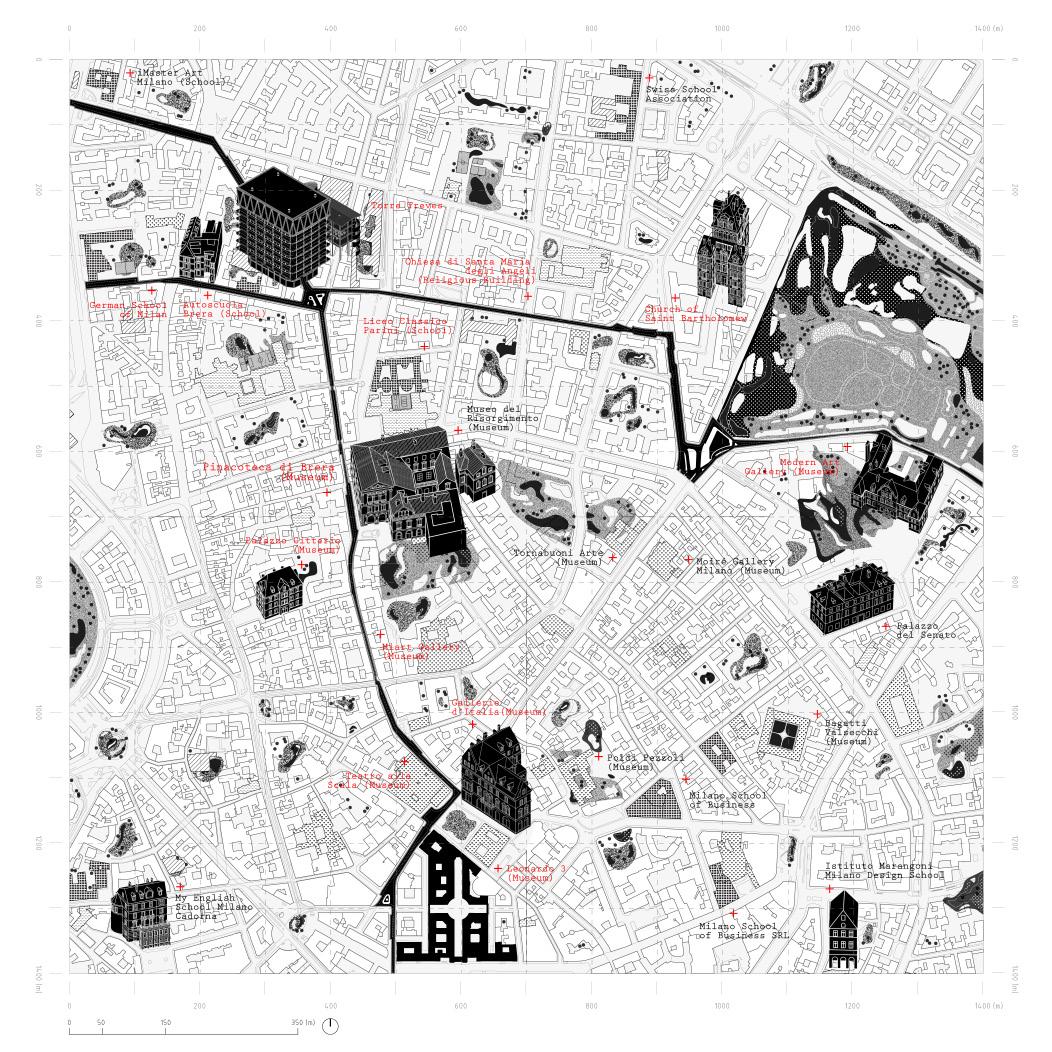
The map illustrates how the site is embedded within a dense network of art institutions and educational facilities , including the Brera Art Gallery and the Brera Academy of Fine Arts.
The site is positioned at the intersection of two major urban axes: one linking a sequence of museums to the Duomo di Milano , and the other connecting to the Indro Montanelli Public Gardens. This makes the area a natural convergence point for visitors, students, and the broader cultural public.
URBAN AXES FORMED BY ART INSTITUTIONS AND SCHOOLS
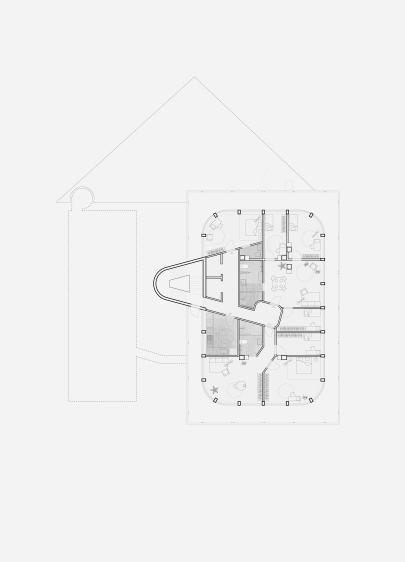
Housing and Studio Floor Plan
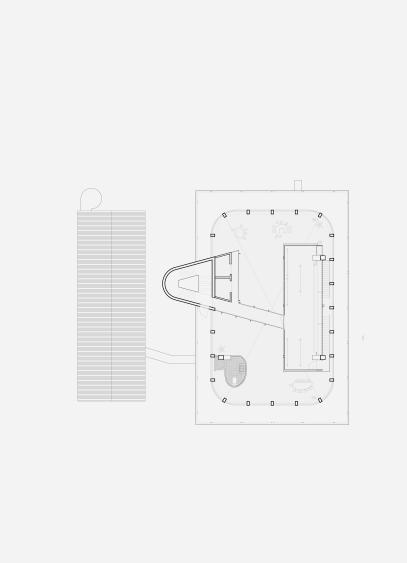
The inner ring retains the existing concrete columns, while the outer ring extends into suspended balconies.
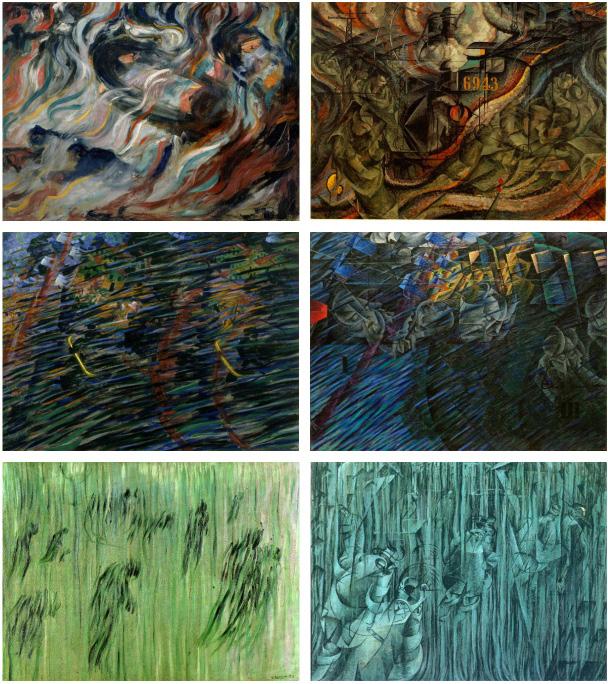
FORMATION OF FUTURIST PAINTINGSUMBERTO BOCCIONI
THE ABSTRACT LAND
-Landscape emerges through a catastrophic interruption of continuity, where Futurist painting functions as an operative device within an epigenetic field of possibilities.
Type: Independent Project Time: Fall 2023
School: Domus Academy, Milano
Instructor: Elisa Cattaneo
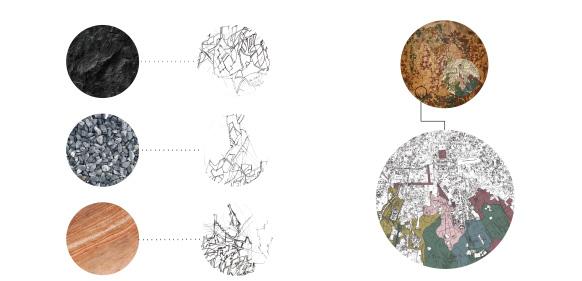
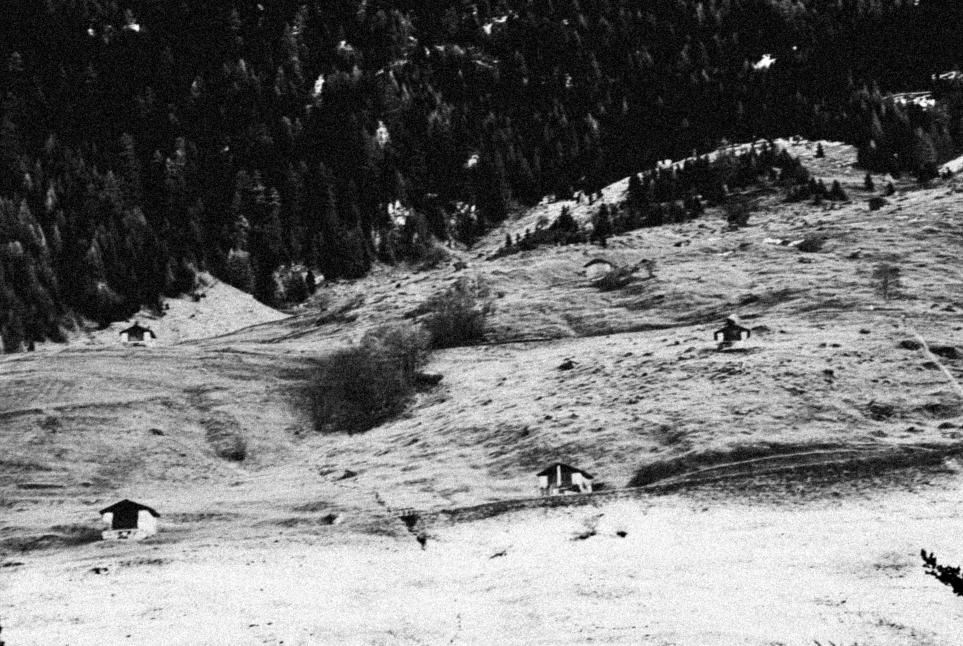
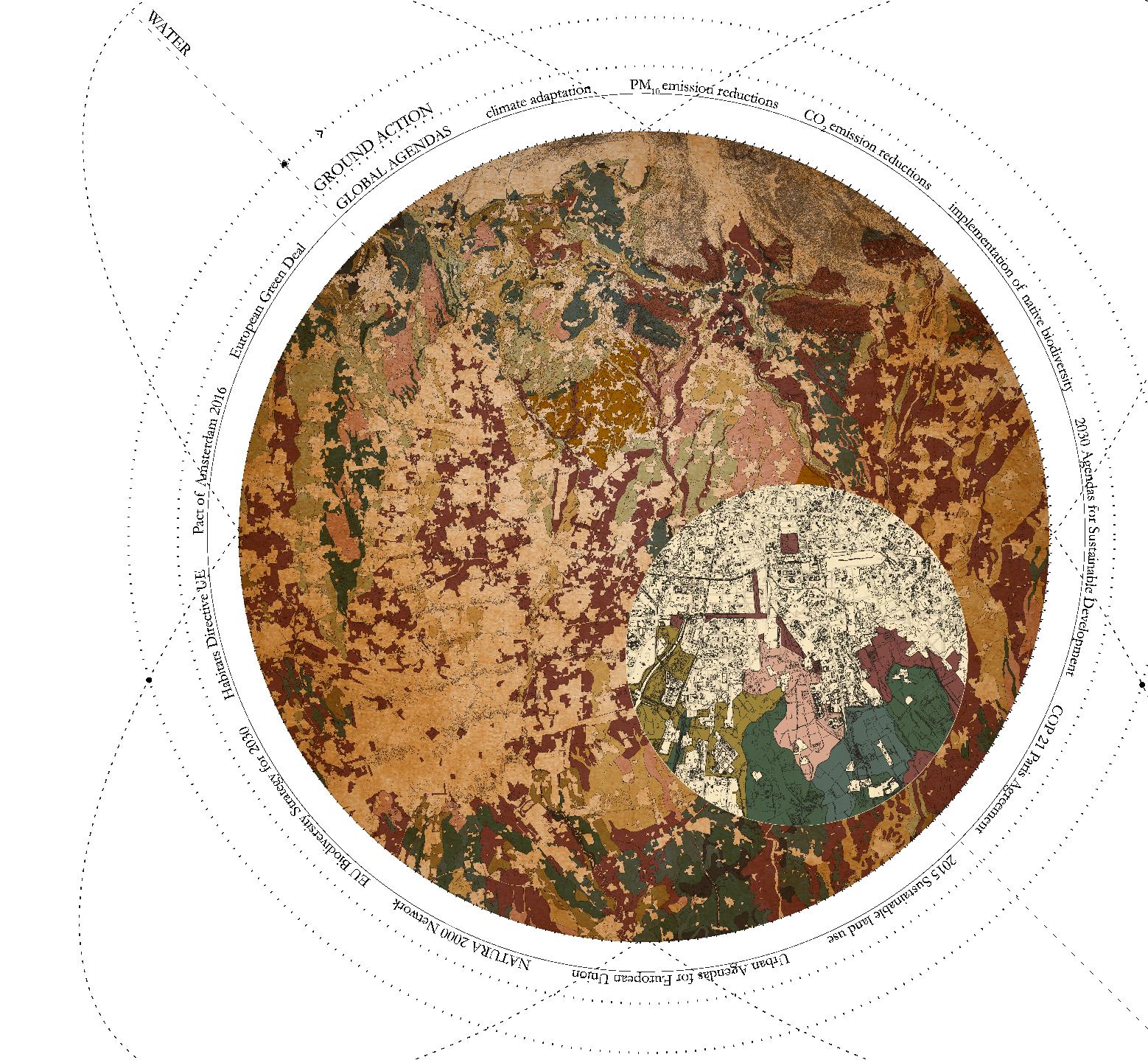
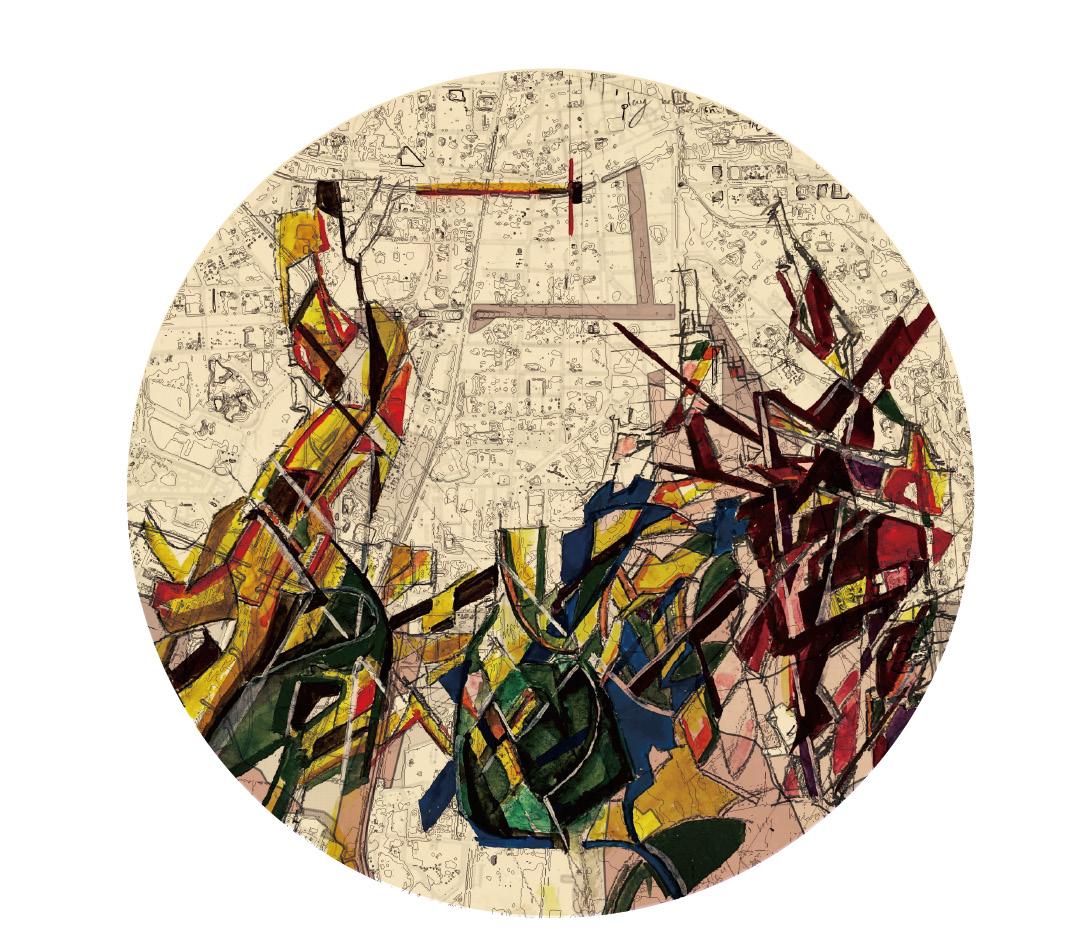
Inspired by futurist painting—its fascination with movement, fields, and the continuous transformation of form—this project begins with a mapping of lithology and ecological information, treating the epigenetic landscape as a field of latent possibilities rather than a fixed terrain. The landart that follows visualizes a suspended moment within this field: a movement between the many forms the landscape could become, generated through variations in rock hardness, density, and water absorption. Like Boccioni’s topological sculptures—where the underlying structure remains constant while the form continuously evolves— these drawings retain their ecological “properties” even as the landscape shifts through time. Rather than predicting geological behavior, the work uses ecological data as a conceptual engine to explore becoming, transformation, and the dynamic potentials embedded in the site north of Milan.
Landscape
LANDSCAPE
CATASTROPHE Catastrophe
EPIGENETIC LANDSCAPE
The
ECOLOGY
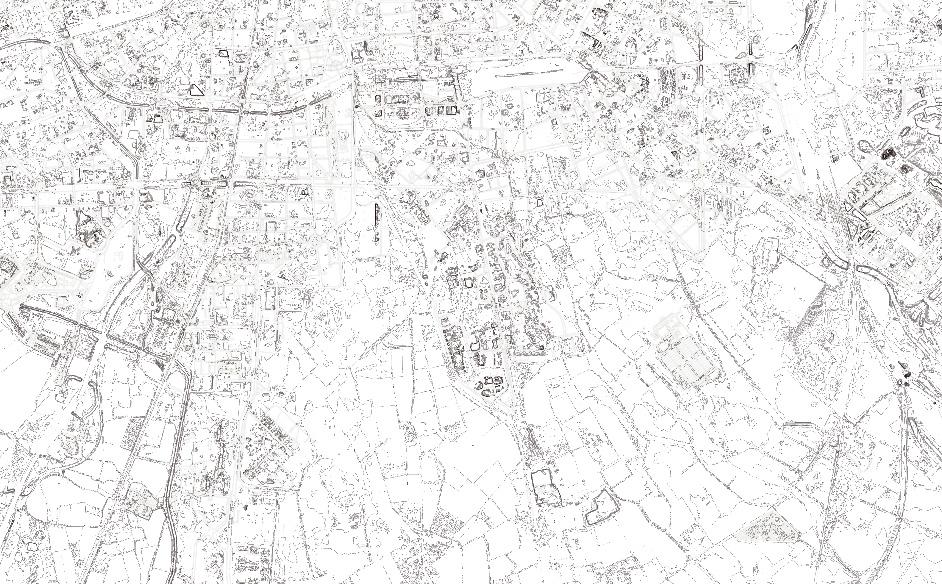
EPIGENETIC FIELDMAPPING OF LITHOLOGY IN LOMBARDIA, ITALY
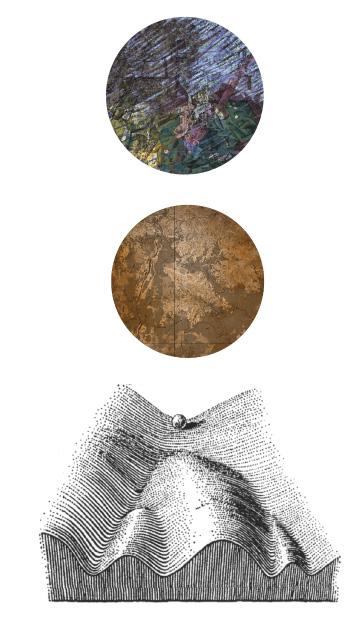
The Epigenetic Landscape is conceived as a field saturated with information rather than a fixed form. Grounded in lithology , topography, and water behavior, it remains continuously in flux, holding multiple landscape possibilities within the same material structure. Lithology stays invariant, while form mutates through bifurcations of ground and water across time. The project thus frames landscape as a suspended condition between information and manifestation—a temporary stabilization within a dynamic field of becoming.
EPIGENETIC FIELD:
LANDSCAPE:
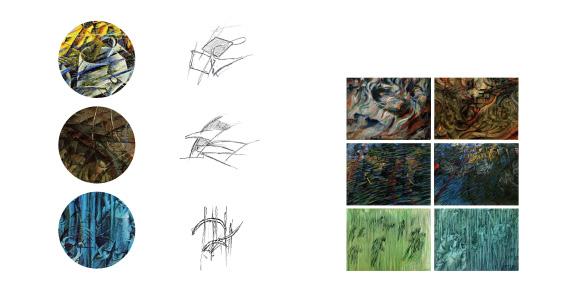
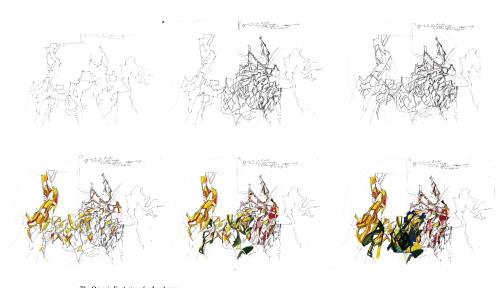
From left to right, each pair traces a transformation of the same field—from turbulent continuity, through bifurcation, to temporary stabilization—demonstrating how form emerges through changes in temporal organization rather than through changes in material substance.
THE ORGANIC FORMATION OF LANDSCAPE
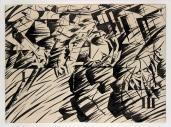
Working in the field of landscape means working with propagation, vectors, and continuous movements— systems defined not as fixed objects but as temporal fields. Everything in the world is related to time: energy is time, light is time, and landscapes themselves unfold through time. Moving from an idea of object to an idea of field is therefore essential. In this shift, rock types or landforms are no longer treated as stable substances, but as conditions that continuously change within a dynamic field. This anti-substantialist approach resonates strongly with Boccioni’s Stati d’animo, where the three moments of farewell—embracing, departing, and staying—are expressed not as static scenes but as temporal flows of lines, fragments, and forces. The original structure of the scene remains, but everything is transformed into new movements and new forms.
I see the epigenetic landscape operating in a similar way: it carries the logic, structure, and information of what came before, yet it constantly transforms into new possibilities. A landscape is therefore not a finished object but a field in continuous becoming. The shell is a perfect example of this logic—its form contains its growth pattern, movement, and structure, yet it changes itself continuously over time.
The mapping of water streams, terrain, and lithology reveals a sudden, non-linear bifurcation that fractures continuity.
PAVILION OF RECLAIMED MATERIALS
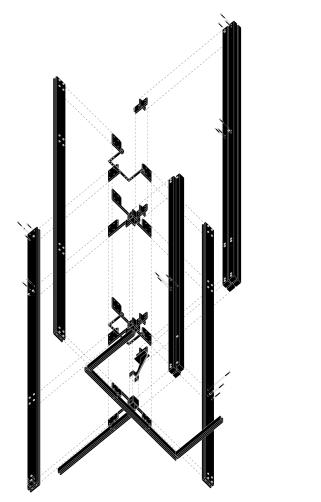
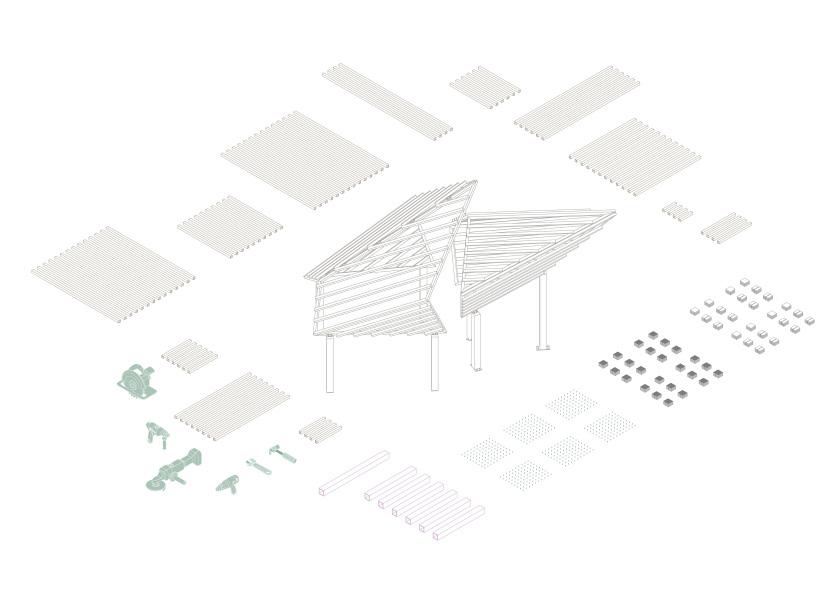
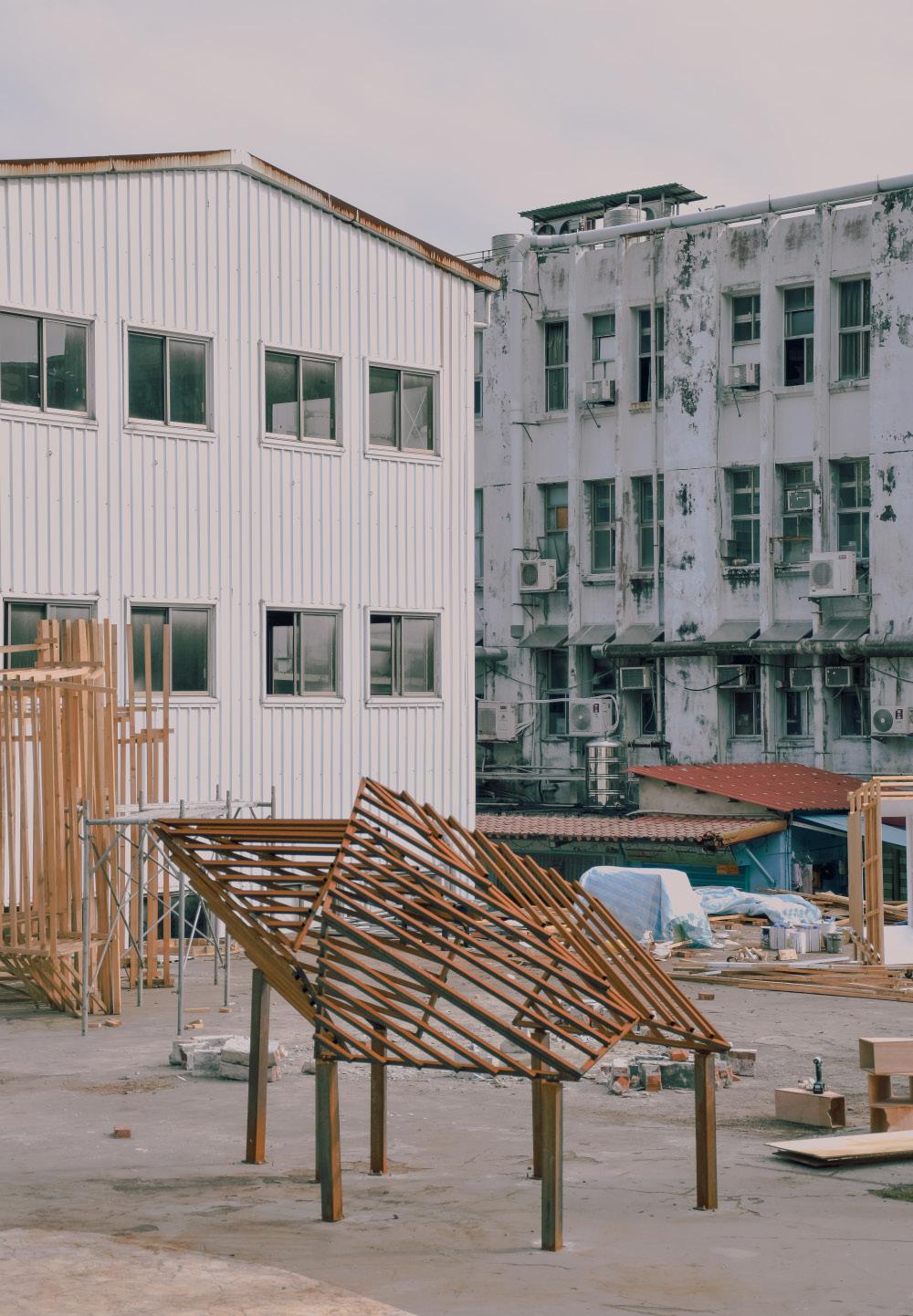
-〉A vernacular pavilion built entirely from reclaimed scrap steel, using handcrafted joints shaped from leftover materials. The entire structure was constructed solely by myself.
Conceived as a small pavilion built directly within a construction environment, the project investigates how repurposed metal components and low-tech tectonic strategies can produce an efficient and adaptive structure. The joints were developed from leftover metal plates thin enough to be bent manually and perforated with minimal electrical tools, enabling assembly under the limited resources typical of onsite conditions. The overall form derives from the irregular lengths and dimensions of the reclaimed materials, allowing the pavilion’s geometry to emerge
Type: Independent Project
Time: Fall 2020
School: Shih Chien University, Taiwan
Instructor: Chung Han Yao
through material-driven constraints rather than predetermined formal intent. While the upper portion provides necessary enclosure and shelter, the lower portion remains open to encourage natural airflow and maintain clear visibility across the site. The configuration is further calibrated to prevailing wind patterns and solar angles, ensuring that the structure responds effectively to environmental forces while remaining materially economical and constructionfriendly.