


Photo by Boynayel Mota

By Jonathan D. Cohen
(Opinion) On Friday, state police released an arrest warrant affidavit for former New Haven Police Chief Karl Jacobson. Over the course of 2024 and 2025, Jacobson is alleged to have misappropriated $85,500 of police funds; a continued investigation will assess the possibility that his malfeasance may date back to 2019.
It may be easy to see Jacobson as another public official caught with his hand in the till. The affidavit, though, makes clear that his alleged theft was to feed a gambling habit. While Jacobson did not explicitly say he was addicted to gambling, he did reportedly confess to colleagues that he “spent too much on gambling” and that he has “sought help” related to his betting. Whether he was technically addicted or not, Jacobson’s case is reflective of the dynamics of problem gambling and a symptom of the costs of Connecticut’s all-in bet on legalized betting.
Addiction has always accompanied gambling. Sports betting is no exception. Athletes and fans are attracted to the competitive aspect of gambling, convinced they can leverage their knowledge of sports into easy cash. When—not if— they start to lose, these same gamblers insist a few more bets will let them win it all back.
Americans were already getting addicted to gambling when it was confined to Las Vegas, tribal casinos, corner bookies, and odd corners of the internet. Then came a 2018 Supreme Court ruling that allowed states to legalize sports betting.
As Karl Jacobson learned firsthand, gambling today is fully mobile. When an assistant chief told Jacobson that he had never seen Jacobson gambling, Jacobson tapped his cellphone and said, “It’s on the app.”
The version of sports gambling available on cellphones in Connecticut and 31 other states is more dangerous than any version of gambling available in the past. These are sleek apps with an endless menu of betting options, a slew of push notifications and promo offers, and basically no limits on how much someone can wager from the comfort of their couch, or their office at police headquarters.
This complicates the simple story of a corrupt public official. Sports betting today is designed to be enticing and is easy to become addictive. No wonder that, over the course of 2025 alone, Jacobson made over 1,300 deposits into gambling accounts, betting $3.1 million on FanDuel (net loss: $158,000) and $1.3 million on DraftKings (net loss: $55,500).
It is understandable why someone might withhold any sympathy for Jacobson. He allegedly misappropriated city funds! The chief law enforcement officer! The person in charge of arresting people for stealing was … stealing! How hard can it be to just not gamble?
Jacobson at some point made the choice to gamble. He downloaded the FanDuel and DraftKings apps on his phone and he began to bet, likely with his own money. We do not yet know when he began misappropriating funds and how that aligns with the nature of his trouble with gambling.

But, assuming it was only after he developed some sort of gambling problem that Jacobson began betting with money that was not his, then he was not choosing to gamble anymore than someone addicted to drugs is choosing to get high. This is not to excuse his behavior or downplay his alleged crimes. But the American Psychiatric Association places gambling in the same category as tobacco and alcohol when it comes to addiction. Gambling can rewire bettors’ brain chemistry to the extent that they cannot stop, and will not until they get treatment, get caught, or until
the money is all gone.
Based on the affidavit, Jacobson may have been particularly vulnerable for a gambling problem. “I fix my alcohol problem. I turned to gambling,” he told the city’s three assistant police chiefs. He is hardly alone in this respect. Someone recovering from another addiction, like alcohol, or living with a mental health disorder, such as PTSD or bi-polar, is at heightened risk for problem gambling. Jacobson’s experience also speaks to what makes gambling a uniquely insidious addiction. Someone with a drinking
problem cannot reasonably convince themselves that their next shot is going to cure them of their alcoholism. But someone with a gambling problem can hold out hope that if they hit their next parlay they can wipe out all their debt from gambling and start fresh. So, the deeper a gambler falls into the hole, the more likely they are to just keep digging.
As one of just seven states to legalize both online sports betting and online casino games, Connecticut is at the forefront of legalized gambling in America. But the rush for state revenue five years ago overlooked how uniquely dangerous this version of gambling is. The state—and the nation—is just beginning to reckon with the consequences, from athletes getting caught trying to bet on their own performance to teenagers exposed to gambling advertising.
I have written elsewhere about the kinds of reforms states should make to their sports betting framework to reduce potential harm. One proposal that would have helped Jacobson is an affordability constraint, a measure to flag if someone is betting beyond their means, for example if a police chief with a salary of approximately $180,000 is gambling $4.4 million over the course of a single year. Where gambling goes, gambling addiction follows. People with addictions will do anything to feed their dependence on betting. Locally, Karl Jacobson may be the first prominent Connecticut official who commits financial crimes because of online sports gambling. But he won’t be the last.
by Viktoria Sundqvist
WINDSOR, CT — The Windsor Town Council this week voted 8-1 to temporarily pause the use of the town’s 16 automatic license plate readers after many residents raised privacy concerns with the devices at several recent meetings.
The town is hoping to review and renegotiate its contract with Flock Safety, the company behind the cameras, when it comes up for renewal in May. For now, the cameras will be turned off.
Flock Safety is one of several companies providing ALPRs to Connecticut police departments, and the most widely used. Rollout of the cameras has happened slowly and gradually, with no state regulation or oversight. Since there is no state oversight, it is unclear how many ALPRs are currently in use in the state, but officials have said at least 40 local police departments are using them.
Windsor officials last month adopted a policy guiding the use of cameras, which limits how they can be used and is meant to protect “the privacy, dignity, civil rights, and personal information of all residents.”
“The current contract does not meet the town policy that we have passed recent-

ly, and we recognize that there are some serious concerns with Flock as a company,” Councilor Ojana Naeem said this week. “But I believe that there are tools and solutions for our police department that we need to look at and have in place to support their ability to not only solve crimes but also stop crimes from happening.”
The cameras take photos of the rear license plate of each vehicle that passes by. Supporters – particularly in law enforcement – say the cameras have been very helpful in solving and preventing crimes and have helped locate missing people. Opponents worry about departments across the country and federal agencies and immigration officials tapping into that data.
“What troubles me most is that the data gathered here in Windsor does not stay here. That is not local safety,” Deacon Art Miller, Windsor’s 2021 Citizen of the Year, told the council during public comment. “Behind every (license) plate is a human story.”
Windsor resident Jeremy Halek encouraged the council to keep the cameras on, saying cameras are already everywhere
and the ALPRs have been very helpful for police.
“We should be doing everything we can to support our local, state and federal police in doing their job,” Halek said.
When Windsor first signed its contract with Flock in 2022, officials automatically gave access to agencies across the country to the data without anyone being notified. That setting was later turned off, Police Chief Donald Melanson has said.
The American Civil Liberties Union of Connecticut last year called for a statewide moratorium on their use until the state passes legislation to prevent the misuse, sharing, and selling of driver-location data. The cameras put residents at risk, the ACLU said, including immigrants, LGBTQ+ people, and those seeking reproductive or gender-affirming care out of state.
State Rep. Maryam Khan, D-Windsor, told the council that the legislature is reviewing the use of ALPRs but that no specific bill language has been drafted yet. “Our residents deserve clarity and confidence that surveillance technology is governed by strong data privacy protections,” Khan said. “I thank you for ensuring that that is the case here in Windsor.”
by Lisa Reisman
Toward the end of a criminal justice reform panel at Yale on Tuesday evening, Freeway Ricky Ross shared his take on redesigning the criminal justice system. A former drug lord best known for the $900 million empire he established in Los Angeles in the 1980s, Ross, now an author and activist, threw out a quote from Rev. Jesse Jackson. “When there’s no hope, there’s dope,” he said, drawing applause from the sold-out audience of 400 at Sheffield-Sterling-Strathcona Hall. That was among the topics in a spirited and wide-ranging discussion that delved into the impact of drugs on Black youth, the hell of incarceration and perils of re-entry, and the untapped potential of Black entrepreneurship, on a night that coincided with the 84-year-old civil rights leader’s death earlier that day.
The occasion, in celebration of Black History Month, was hosted by Gaylord Salters’ Double GI LLC and the Afro-American Cultural Center at Yale and moderated by historian Elizabeth Hinton, also a professor at the law school. Billed “Rewriting Justice,” it featured a panel of four men who have transformed their experience of wrongful conviction and lengthy incarcerations to become advocates for change.
Ross said that he was writing his first book while serving a life sentence when he first questioned how he came to be where he was. “I kind of feel the system, and the school system as well, cheated me out of just basic knowledge, knowledge to know even what school was for,” said Ross, who taught himself to read at 28 while incarcerated. “I was asking myself why am I at school wasting my time when I could be out on the street where the homies were, where I could make life better for my mother who was struggling.”
He decried a system that, while costing taxpayers at least $48,000 a year for housing, offers “no rehabilitation, no

training, so it’s really a situation perpetuating itself, recycling the same people over and over again,” he said.
“We’re here today to allow you to understand how terrible our stories are, not how great they are,” said panelist Andre Brown, a youth advocate whose conviction was overturned in 2022 after he served 23 years in prison. He detailed the brown water used for drinking and bathing; the thin, hard mattresses; the hopeless feeling of gradually sinking into quicksand. “Our stories here today are tragedies. They are celebrated because we made it.”
Brown said that, while in prison, he watched young men getting beaten up, starving, and then joining gangs to survive. “That’s when I started telling these young people to get into the law library, you can get two days off your time, and
I started working in the law library,” he said. “I said, ‘You don’t need them, come over here, I got you.’ They were only gravitating to those people because they were hungry, they were scared, they lacked knowledge.”
He drew a picture of an individual who parks at a store in his shiny BMW, then runs in to pick up milk and ice cream. “He comes out, his car is gone, he didn’t know the neighborhood,” he said. “That’s what it’s like for the youth in prison when you don’t know the law because they never teach us these things. You get lost.”
Hocus 45th, a hip-hop artist and community leader, spoke of “the wall of resentment, the loss of connection between you and your loved ones” he experienced during the four years he served at Rikers Island. At the same time, “I became a vegan, I read a whole bunch of books, my
whole thought process changed,” he said. When acquitted in 2012, “I had it in my mind that I’m going to keep the kids from going down the same path.” Among other initiatives, he founded the #DropMyFlagChallenge which inspires individuals to leave gang life behind.
For Gaylord “L.O.R.D.” Salters, author of “Momma Bear,” Fabric Over Fish Scales streetwear collection co-founder, and youth advocate, the message on re-entry was simple. “Have a plan, have a brainchild,” he said, using the example of Ray Boyd who started Next Level Empowerment re-entry program on his release, having already founded two re-entry programs while incarcerated. “Don’t expect help from anybody. You have to do it yourself.” That’s where Double G.I. LLC, or Go Get It, the name of his publishing company, comes from, he said.
An audience member asked for the panelists’ take on what is happening with ICE.
“We been dealing with that for a long time with machine guns pointed at our face,” said Ross. He said the first time he was handcuffed, he had never committed a crime. “I was a young tennis player but I was driving in South Central with two of my friends and they automatically thought we were gang members.” The only difference, Salters said, “is the support that’s been coming out for the other race which we never got.” For Brown, it was simple. “A human is dying, a life is being taken,” he said.
Then Allen Myers, 21, founder of New Haven’s Snucks Clothing, took the stage, appealing for the passage of emerging adult legislation which focuses on extending juvenile justice protections for young adults in recognition of their formative developmental stage. “This bill reflects what science already tell us, that young people are different, and the law should recognize that,” he said. He mentioned his recent appointment as a “Momma Bear” entrepreneurial mentor where, he said, “I’ll be teaching our youth how to source, design, and promote clothing for financial gain.”
It’s time, Andre Brown told the audience in closing. “Let’s change the mindset that Black people are no good, that Black and brown people are just the entertainment, coming through the side doors instead of the front doors, that we’re not educated, that we come to create violence, that we have no hope,” he said. “Let’s teach our youth that we are great men and women and let’s celebrate one another and celebrate Black excellence.”
Ross put it another way. “It’s like what Jesse Jackson told us,” he said, calling him the original freedom fighter. “When we give our kids hope, we ain’t gotta worry about nothing else.”
by Kenneth Reed
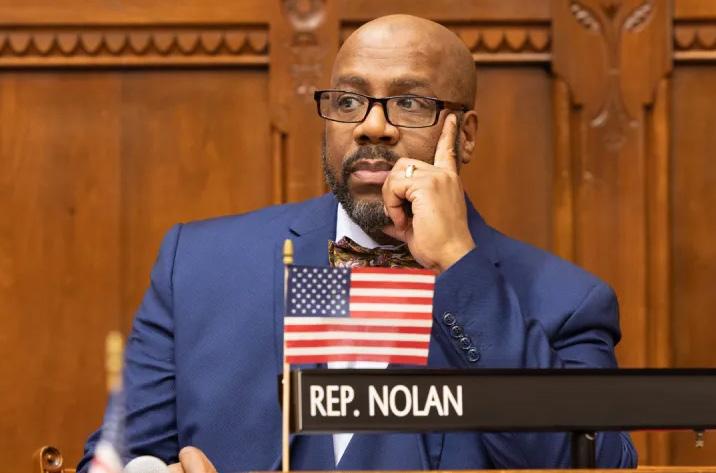
HARTFORD, CT— Is it fair to tax a person raising three children at the same rate as someone supporting only themselves? State Rep. Anthony Nolan, D-New London, doesn’t think it is.
““The truth is with Connecticut being one of the only states with personal income tax that does not account for family size, we tax parents raising three children the same as someone supporting only themselves, that’s not fair,” Nolan said Wednesday morning at a media briefing on a proposed child tax credit.
Elected officials joined representatives of United Way of CT and a group of parents at the Legislative Office Building to advocate for a state child tax credit that supporters said would benefit about 75% of families in the state. The proposal,
House Bill 5134, has about 70 cosponsors.
According to United Way of CT President and CEO Lisa Tepper Bates, the proposal would provide $600 per child, up to three children to families earning under $100,000 for single filers and under $200,000 for joint filers, That would be a big financial relief, she said.
“So many other states have already created or even now expanding their state level child tax credits,” she said. She noted that New York’s credit is $1,000.
“Not having this benefit for families makes Connecticut less competitive in attracting and keeping our state working families,” she said.
Emily Hoaglan, from the American Academy of Pediatrics, said a tax credit would benefit children too.
“One in four low income families have resorted to watering down formula or restricting how much formula they feed infants due to limited resources, a dangerous practice that can cause devastating health consequences,” Hoaglan said.
“Increasing family income through the child tax credit is associated with healthier birth rates, lower rates of maternal depression, improved nutrition, stronger early brain development, better school readiness, and ultimately higher long term educational attainment.”
For state Rep. Kate Farrar, D-West Hartford, the issue is simple.
““Every single child in our state of Connecticut deserves to thrive,” she said.
“We will continue to make clear that our families and our kids can no longer wait, this has to be the year for a permanent, refundable child tax credit.”
by Dereen Shirnekhi
New kitchens, bathrooms, and windows are en route to Eastview Terrace, as the city’s housing authority prepares to upgrade the east-side affordable housing complex that was last rehabilitated nearly 20 years ago.
Those new amenities, among others, will be coming to 102 apartments at the Fair Haven Heights complex, as part of the Housing Authority of New Haven’s (HANH) plan to once again rehab Eastview Terrace, located at 185 Eastern St, at an estimated total development cost of $41.2 million.
For Maria Matos, who has been living in her Eastview Terrace apartment for three years, she’s not too worried about the condition of her unit. She’s just sad she has to leave for three months while it’s being renovated. “A makeover would be nice,” she said about her apartment on Wednesday. Still, “I hate moving.”
Eastview Terrace is a 127-unit apartment complex. The Glendower Group redeveloped the same 102 of those units in 2008 as part of a major rehab of the complex, which had once been known as Eastern Circle and been marked by disrepair and drug activity. The rehabilitation plan modernized old units and built new ones. “It’s in need of a lot of work, as any housing unit would be” after 17 years, said LaChance to the housing authority’s Board of Commissioners on Tuesday at their latest monthly meeting at 360 Orange St. LaChance is the vice president of development for the Glendower Group, the housing authority’s nonprofit development arm.
The remaining 25 units were completed in 2015. They won’t be rehabbed any time soon, as they don’t require major work, according to LaChance.
LaChance described the upcoming renovations to Eastview Terrace as a “very substantial rehab.”
LaChance said that funds are lined up for the project and Glendower expects to reach closing in late April and begin construction around a month later. “We’re working through the final pieces,” he said. Construction will take 20 months to complete.
Construction will consist of five phases, about 20 apartments per phase. Those apartments’ tenants will be temporarily relocated and will return when their apartments are ready. Then the next 20 units will be rehabbed.
“New kitchens, new baths, new windows, new roofs, new decks, new flooring, painting,” LaChance said. (LaChance said they would not be replacing doors, furnaces, or some site work.)
Ysela Torres, who lives with her mom, is part of the first group of tenants to have their apartments renovated. She said on Wednesday that she’s excited for a new bathroom, which she said is needed, and for a new kitchen, which she hopes might be a little bigger than the one she has now. “I love it,” she said of Eastview Terrace. Torres has been living in her unit for four years. “I like this area, it’s comfortable.”
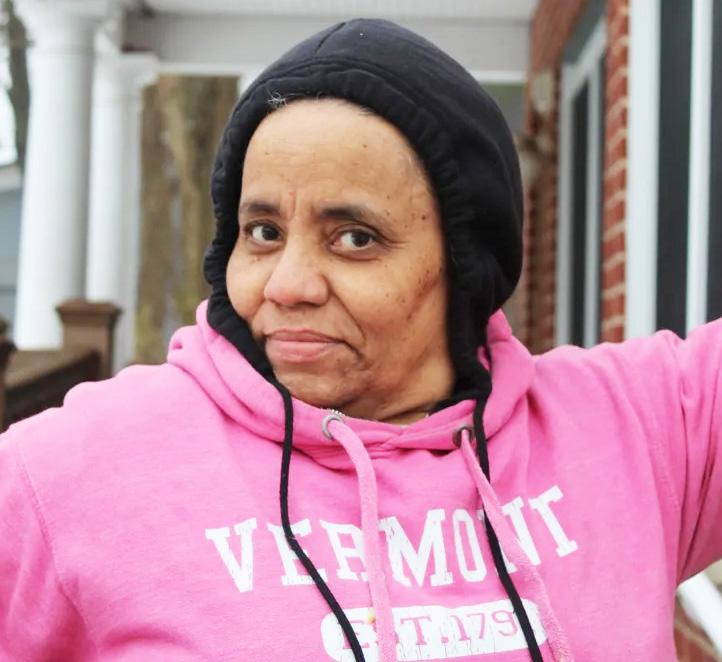

Torres isn’t looking forward to being relocated, which she’s expecting to happen in late March or early April. Right now, the plan is for her to move to Wayfarer Street, on the other side of town. “It’s too far,” she said. “I don’t have a car, I have a lot of appointments.” Right now, she gets a ride to her appointments from someone who lives nearby in Bella Vista. Torres also goes to church nearby on Ferry Street, where services are at night.
So Torres is applying for a different place. She still has to do an interview for the process. In the meantime, she’s packing up her apartment at Eastview. “I have boxes, containers,” she said.
She plans to come back when her unit is ready. The only problem with Eastview Terrace, she said, is that it can be a little hard to get around as a cane user. When a winter storm brought a foot of snow to New Haven in January, she said that she was stuck in her apartment for 15 days.
Matos, who is also part of the first phase of tenants whose units will be renovated, said that the renovations are a “very good” idea. Still, she said that learning she would have to be relocated had made
different health issues, she said. She recently had a big surgery and is preparing for another. (She’s on the lookout for a donated small electronic chair and an electronic bed.) She doesn’t know where she’ll be relocated to, but since she doesn’t drive, she’s hoping for a place that’s close to her doctors, to the bus line, to the store — like Eastview is.
“We create a community between us. Doesn’t matter what color you are, what language you speak. This is a safe place to be,” she said. She checks on her neighbors, asks if they need anything, translates for the ones who only speak Spanish. She wishes that they could all be relocated to the same place until they come back.
The 102 units to be rehabbed are all restricted to tenants whose incomes average below 60 percent of the Area Median Income (AMI), or $54,600 for a two-person household. They are all Project Based Voucher (PBV) units, meaning that the housing authority subsidizes rents and tenants pay a third of their income.
In 2008, those 102 units had been rehabbed as part of the Low Income Housing Tax Credit (LIHTC) program. LIHTC has a mandatory compliance period of 15 years. When that period ended in December 2023, the housing authority decided to use its option of rehabbing Eastview Terrace and getting new credits based on how much it spends on acquisition and rehabilitation. Glendower bought out Eastview’s other investor interests in 2024. Now, Glendower is selling Eastview from one Glendower-controlled LLC to another.

John P. Thomas Publisher / CEO
Babz Rawls Ivy Editor-in-Chief Liaison, Corporate Affairs Babz@penfieldcomm.com
her cry. “I love it, I love the community,” Matos said. She said that she feels taken care of by the housing authority and the staff, who she said show concern for residents and are responsible. She likes the view, the amount of outdoor space that she has, the fact that her grandkids can play freely.
It’s not the first time that Matos has been relocated from Eastview Terrace because of construction. She had moved into another unit at Eastview, when it was still Eastern Circle, back in the ’90s — a unit that can still be seen from the front porch she has now. Matos estimated that she had lived there for more than a decade before she was relocated to a place on Valley Street during the first renovation at Eastview.
Matos stayed at Valley Street for a while, until a few years ago, when a corner unit opened up for her at Eastview. (“I love my corner,” she said.) When she was asked if she wanted to come back, she joked that her bags were already packed and ready. “I said, ‘Hell yeah!'”
Matos lives in her unit with her son, who has epilepsy. She herself has many
LaChance said that the total construction cost is estimated at $20.5 million and the total development cost — including of that construction cost — is estimated at $41.2 million. “The [total development cost] appears high because $8.75MM of that amount is a loan from the new LLC to the old LLC. It’s a way to generate Low Income Housing Tax Credits while assuring that [Elm City Communities, also known as the housing authority] retains final control of the property,” LaChance said in an email statement.
At Tuesday’s board meeting, LaChance presented a resolution to authorize the issuance of no more than $25 million in Multifamily Housing Revenue Bonds and the making of a loan to finance part of the project.
Housing authorities are able to issue bonds to finance affordable housing.
A lender will buy the bonds and give funds back to the housing authority as necessary. The bond proceeds will fund a loan for a Glendower-controlled LLC. LaChance said that this is what’s required to meet the “bond test” for 4 percent Low Income Housing Tax Credit financing.
Board chair William Kilpatrick and commissioners Danya Keene and Kevin Alvarez all voted unanimously in support of the resolution.
The Eastview Terrace rehab comes at the same time that the housing authority is also preparing to overhaul another decades-old complex, the 109-unit George Crawford Manor on Park Street.
Advertising/Sales Team
Keith Jackson Delores Alleyne John Thomas, III
Editorial Team
Staff Writers
Christian Lewis/Current Affairs
Anthony Scott/Sports Arlene Davis-Rudd/Politics
David Asbery / Tanisha Asbery
Jerry Craft / Cartoons / Barbara Fair Dr. Tamiko Jackson-McArthur Michelle Turner / Smita Shrestha William Spivey / Kam Williams Rev. Samuel T. Ross-Lee
Contributors At-Large
Christine Stuart www.CTNewsJunkie.com Paul Bass www.newhavenindependent.org
National Association of Black Journalist
National Newspapers Publishers Association
Greater New Haven Chamber of Commerce
Greater New Haven Business & Professional Greater New England Minority Supplier Development Council, Inc.
The Inner-City Newspaper is published weekly by Penfield Communications, Inc. from offices located at 50 Fitch Street, 2nd Floor, New Haven, CT 06515. 203-3870354 phone; 203-387-2684 fax. Subscriptions:$260 per year (does not include sales tax for the in State subscriptions). Send name, address, zip code with payment. Postmaster, send address changes to 50 Fitch Street, New Haven, CT 06515. Display ad deadline Friday prior to insertion date at 5:00pm Advertisers are responsible for checking ads for error in publication. Penfield Communications, Inc d.b.a., “The Inner-City Newspaper” , shall not be liable for failure to publish an ad or for typographical errors or errors in publication, except to the extent of the cost of the space in which actual error appeared in the first insertion. The Publisher reserves the right to refuse advertising for any reason and to alter advertising copy or graphics deemed unacceptable for publication. The entire contents of The Inner-City Newspaper are copyright 2012, Penfield Communications, Inc. and no portion may be reproduced by any means without the written permission of the publisher. 10
“Faith Matters” is a column that features pieces written by local religious figures.
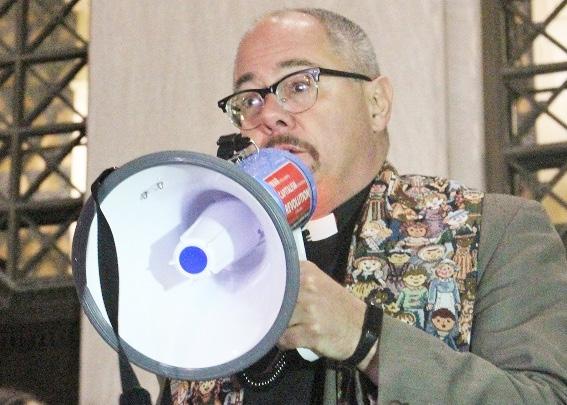
By Rev. Paul FlecK
My name is Rev. Paul Fleck. I am trained as a lawyer (though I no longer practice law) and am an ordained minister in The United Methodist Church. My service to the Church is as executive director of Immigration Law & Justice New York, a United Methodist immigration legal services ministry. Immigration Law & Justice New York welcomes immigrants into our communities with compassion, dignity, and love by providing free, high-quality immigration legal services to low income and vulnerable immigrants, providing education to communities of faith and the public about the immigration system, and advocacy for immigrant rights.
It’s that last piece of my organization’s mission that I write about today: Advocacy for immigrant rights. There are some folks who will tell you the Church and faith communities should not be allowed to seek to exert influence with legislators in the political sphere around immigration. The most common arguments for their position is 1) it violates the Constitution’s First Amendment proscriptions separating Church and State; and 2) it’s not an appropriate expression of faith. I would like to examine both of these arguments, in turn.
The First Amendment of the Constitution reads: “Congress shall make no law respecting an establishment of religion, or prohibiting the free exercise thereof; or abridging the freedom of speech, or of the press; or the right of the people peaceably to assemble, and to petition the Government for a redress of grievances.” Congress cannot establish a state religion. However, nowhere does the Constitution say that faith communities cannot try to influence legislators around immigration—or any other issue. In fact, I would take it one step further: My particular faith as a United Methodist compels me to be involved in the public square and political sphere. My baptismal vows encourage me to “resist evil, injustice, and oppression in whatever forms they present themselves.” When I turn to the scriptures of the Hebrew and Christian Testaments, that encouragement is even clearer.
The Hebrew Bible is a story of migrants and migra-
tion. Abraham and Sarah migrated, as did Jacob/Israel and his family. Joseph brought his family to Egypt to escape famine. The greatest migration story ever told is of Moses bringing his people out of Egypt. It is not surprising, then, that Leviticus 19:33-34 (NRSV) reads: “When an alien resides with you in your land, you shall not oppress the alien. The alien who resides with you shall be to you as the citizen among you; you shall love the alien as yourself, for you were aliens in the land of Egypt: I am the LORD your God.”
In the Christian scriptures, the Gospel of Matthew begins with a migration story: Joseph flees Herod’s murderous persecution by migrating with Mary and Jesus to Egypt. Later, in adulthood during his ministry, Jesus reminds us in Matthew 25 (known as “The Judgment of the Nations”) that when you welcome the stranger, you welcome him.
That ethos of welcome is why I—and over 1,200 United Methodists—will be traveling to Washington, D.C. on Feb. 25 to make our voices heard. We are concerned about the present broken state of immigration policy in this country. We are concerned about draconian and violent enforcement measures presently undertaken by Immigration & Customs Enforcement and Customs & Border Patrol without due process. We engage in advocacy not as an expression of mere ideology: This is a part of our story as a Judeo-Christian faith and as United Methodists. Our faith, if it is to mean anything, should be a lived faith. Rev. Paul Fleck, Executive Director of Immigration Law & Justice New York, is an ordained Elder in The New York Annual Conference of The United Methodist Church and a former litigation attorney. Prior to coming to Immigration Law & Justice New York, Rev. Fleck served as Pastor of New Milford United Methodist and Hamden Plains United Methodist Churches in Connecticut. While at Hamden Plains UMC, Rev. Fleck helped co-found New Sanctuary CT, a coalition of eleven faith communities throughout Connecticut committed to providing physical sanctuary to immigrants facing deportation. Rev. Fleck has his Master’s of Divinity from Yale Divinity School and J.D. from The University of Texas School of Law.

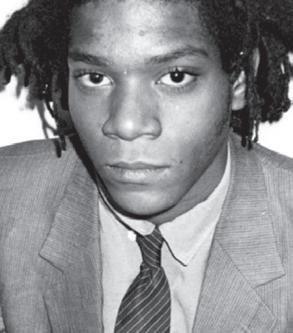

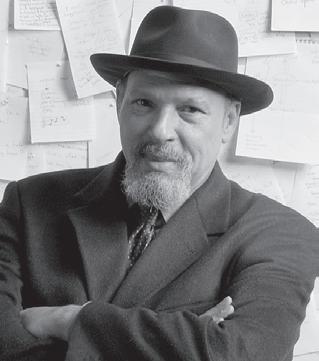
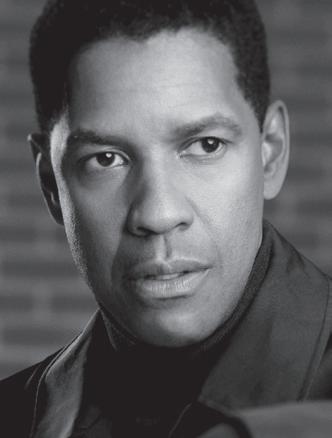




We appreciate Muddy Waters’ blues music, which set the foundation for rock and roll; Beyoncé, one of pop music’s most celebrated artists; Ella Fitzgerald, the Queen of Jazz; Octavia E. Butler, a trailblazer in science fiction; August Wilson, “theater’s poet of Black America”; Jean-Michel Basquiat, a boundary-breaking artist; Dorothy Dandridge, who lit up the silver screen; and Denzel Washington, who continues to light it up today. Boscov’s salutes these Black artists for their contributions to the arts, their influence on pop culture, and their positive impact to our society.


Lucy Gellman
Before Mackenzie Robinson steps onstage Saturday, she knows she’ll have to take a moment to push away the pre-performance jitters and still her mind. Just beyond the curtain, the stage will be waiting for her like an old friend. As soon as the music starts and she begins to move, she’ll soar. She always does. In between, she’ll take a breath, look around, and remember she’s with family.
Robinson, a freshman at Amity Regional High School, is one of 250 young dancers at Tia Russell Arts Center (TRAC), which next month marks a year in its new home on Dixwell Avenue in Hamden. Saturday afternoon, she’ll take the stage as part of “Chosen,” the studio’s annual winter showcase, at the John Lyman Center for the Performing Arts at Southern Connecticut State University (SCSU).
As she and her peers prepare for the performance, owners James and Tia Russell Brockington are working with their dancers to summon joy in a time that can feel increasingly uncertain. The two, who are partners in both life and work, are both quick to say that it has taken a village: the studio has 30 instructors, including more senior students, over 200 families, and a mighty reserve of dance moms who help make the show happen behind the scenes.
“I just wanted to make sure that we had a positive message,” said Russell Brockington at a tech rehearsal Wednesday, the first of two evenings she planned to spend working with dancers to perfect every detail of the performance. “It’s a reminder that life here on this earth is purposeful, and while we are here, we are here to spread love, spread joy, and spread unity.”
It’s a mission that she’s been trying to practice since she opened her studio’s doors in Woodbridge in 2013 (TRAC moved to a space in Hamden last March, but has been open for over a decade). But it feels particularly important right now, when “the cost of living is a lot,” and turning on the news can feel exhausting. When she looks around, she can see how much stress many of the dancers are under, and tries to create an environment where all of that melts away as soon as they walk trough the studio's doors.
As she built out the show with nearly three dozen staff members, that vision took shape in song, dance, and voiceovers that she wrote, recorded and stitched artfully between movements, making sure to create a through line that returned to the idea of maintaining and spreading joy. In addition to upbeat musical numbers, she wove in dazzling costumes with tuxes, voluminous tutus, and hundreds of gem-toned leotards.
“It’s a great representation of just feeling good—the power of uplifting,” Brockington added Wednesday, as he dismissed the studio’s younger students, and welcomed the older ones. “We want our students, we want our families to understand that we are all chosen for a purpose in this life. So all of the music is uplifting, all of the layers matter to us. We want everyone to know that they are special. That they have a purpose here.”
“We need our community,” he added. “We need one another. It’s all about coming together to showcase light, because there’s so much darkness in this world.”
In a tech rehearsal Wednesday afternoon, that vision was on full display as music floated through the Lyman Center’s large auditorium, and young dancers gathered among the rows of chairs, the pink of their leotards a sharp, welcome contrast to the slate gray sky outside. On stage, some of the studio’s youngest dancers jogged on to Shakira’s “Try Everything,” and within seconds, Russell Brockington was beaming and counting along.
“Yes!” she exclaimed as pint-sized dancers lifted their arms above their heads, pointed and tapped their feet, and lengthened their carriages, flanked by teachers the whole time in case they needed to check a move. As numbers unfolded one by one, several of the youngest dancers returned excitedly, ready to show off what they’d learned across genres like jazz, tap, African, and ballet.
In the audience, mom Michelle DeJesus cheered on her daughter, four-yearold Callie Barnes, as she made her way through four different dances over an hour. It’s a commitment to movement that has made the studio into her second home.
“I just love it,” DeJesus said. Two years ago, she signed Callie up for TRAC’s “Dance With Me” classes, which Jocelyn Freeman teaches with the warmth and ebullience of ten Abby Cadabbys (it does not hurt that Freeman is both a dancer and a kindergarten teacher at Barnard Environmental Science and Technology School; in the interest of full disclosure, she also teaches this reporter's child). “I just love to see her confidence grow.”
Already, it feels like family, she added: many of Callie’s current classmates have been learning with her from the jump. If they stay with it, as she and Callie plan to, “they’ll be growing up together.”
“It makes me happy!” a bright-eyed Callie added as DeJesus slipped a shirt and pants back over her leotard, ready to head into the drizzle that had started outside. “Sometimes I cry a little bit, because I don’t want to go to dance,” but then she remembers how much fun she has with her classmates.



“And I’m grateful,” she said. DeJesus explained that the lessons have taught her, literally and figuratively, about what gratitude is: last year, the class practiced a number set to the “Thankful Song” from the popular television show Gracie’s Corner.
Nearby, three-year-old Layla Rose and four-year-old Amore Sessions ran excitedly up and down the theater’s long aisles, laughter rising from the duo as they became temporary blurs of pink in their dance-ready outfits.
From where they sat in Row K, adoring moms Kenyena Amiker and Rhythm-Salyiah Sessions marvelled at the sight—their youngest daughters growing up together, just as their older kids did several years ago. Amiker, who was a majorette dancer at James Hillhouse High School herself, said she loves watching Layla grow through movement, and find her people at TRAC along the way.
“I love being a part of something that’s so family oriented,” Amiker said, pointing to opportunities like tutoring, homework help, and “Girl Chat” affinity spaces for pre-teens and teenagers (TRAC also offers “Sister to Sister,” a space for moms and guardians to be in community, and a “Deliverance Through Dance” class for adults). “They’re not just trying to better themselves. They’re trying to better the community.”
Sessions, who also has two daughters who have danced through the studio, agreed. Until she was eight years old, Sessions’ eldest danced faithfully at TRAC. A hearing impairment never stopped her from feeling like she belonged each time she walked through the studio’s doors.
“She can’t always keep up with conversations, but she can feel the rhythm,” Sessions said. “She found her community here.”
As younger students made their way back into the dreary afternoon, a cold, damp night starting to fall outside, older students snuck in homework assignments and caught up in the mezzanine seats. Zena Baker, a freshman studying theater at Cooperative Arts & Humanities High School, soaked it all in. Even though she’s been dancing since early childhood, it never gets old.
“Honestly I love dance so much,” she said. For her, the medium is both grounding and full of liberation: it helps her sharpen her focus, and express herself in a way that is also totally unique. When she’s performing or rehearsing, the weight of everything else in her school—including a freshman year that can feel fraught and hard to navigate— drifts away.
“It’s like a family,” she said. “My dance friends, they’re like my sisters.”

Jamil Ragland
James Alton as James Baldwin in Citizen James: Or the Young Man Without a Country Citizen James: Or The Young Man Without a Country Austin Arts Center Trinity College Hartford Feb. 20, 2026
If you look carefully at my profile picture, you’ll see that I’m standing in front of a painting of James Baldwin. This picture is old. I keep it because of the regard I hold Baldwin in. I hope that I’ve been able to tap into even a small amount of his talent as a writer.
I was excited to see Citizen James, a one-man play about Baldwin staged by Hartbeat Ensemble in collaboration with Trinity College. The play has a simple setup: A bench sits in the middle of the stage. A projector displays various backgrounds as the performance proceeds. Baldwin is at La Guardia airport in 1948, ready to leave the United States for France.
Baldwin is played by James Alton, who takes on Baldwin’s mannerisms and defining style of speech well. The play itself holds back Alton, as it gives him little more to do than read of a litany of racial grievances driving Baldwin out of
America. At one point, this becomes literally true.
Towards the end of the play, a list of names is projected on the background. Baldwin names 23 African Americans who were lynched in 1948. He has the audience repeat their names. Then he describes the circumstances of their murders. This goes on for about ten minutes of the production’s one hour runtime. I get what the play was going for in this section, but it shrinks Baldwin down to a mouthpiece about injustice instead of a person still living a life despite it.
Any person from any era could have read a list of people murdered by racial violence. As if to drive that exact point home, in the next scene the projected background changes to a list of contemporary victims of racial and police violence, and the audience is invited to read the names of anyone they recognize. This scene reveals nothing about who James Baldwin was.
What was Baldwin’s favorite color? Was he a drunk? Did he sleep around? Who did he love? Did he enjoy Paris? Who was his favorite author? What brand of cigarettes did he smoke? What music did he listen to? These are things I want to know about him. It feels like this play engag-

es with none of the elements that make Baldwin a man; even his relationship with his parents is told through the lens of race, namely his father’s relationship to White people. Yes he was an activist. But more than that, he was a human being.
The insidious nature of racism is that it denies the uniqueness of the individual and reduces human beings down to harmful stereotypes. What do we call it when well-meaning people do the same thing, turning someone into a one-dimensional champion for a cause, however worthy it may be? Other Civil Rights era luminaries, most notably Dr. Martin Luther King, Jr., have been similarly flattened.
There’s a fascinating conversation between Baldwin and Nikki Giovanni from 1971, in which they discuss love and relationships between Black men and women. That conversation gave us one of the most searing exchanges about truth and love ever put to film:
Where is this Baldwin in our current imagination? The man who gets told off by another brilliant mind when he needs to be? Who has opinions to critique, and rough texture that may rub us the wrong way? I would have liked to see more of this Baldwin on the stage.
by Lisa Reisman
Asked for a definition of capacity, the man paused. “Limits,” he said. “To hell with that,” said another. “It’s what you have in you to be what you’re meant to be.”
The scene was a men’s group, called HIMpact, at a local shelter on Saturday afternoon. (The shelter’s operators requested that the shelter not be named and that no photos or names be included in this story.)
The topic of the session: ingredients for a comeback. The group’s leader, Marcus Harvin, an associate minister at Pitts Chapel and first-year student at Western New England School of Law, offered an acronym: TAC, short for tenacity, audacity, and capacity.
Harvin created the group following impromptu conversations with the shelter’s clients while he and his team were delivering food as part of Fresh Starts. The nonprofit, which he founded in early 2024, uses excess meals from area universities and local restaurants to ensure no one goes hungry.
The 12 men in Saturday’s group are among the one in every 1,000 Connecticut residents experiencing homelessness, according to the Connecticut Coalition to End Homelessness. Due to federal cuts in

funding for homelessness services, it’s a number that’s expected to rise.
Harvin led a similar men’s group while incarcerated at McDougall-Walker Correctional Institution with Babatunde Akinjobi, who now acts as facilitator. “Men don’t like to open up about themselves, but give them something that means
something to them, and they will,” he said. “It may take a little time, but they will, and when they do, it can be life-changing in helping people overcome depression, addiction, incarceration.”
The weekly group, which had been on hiatus since November, has addressed topics that range from personal destiny to
the power of faith to legacy. Harvin and Akinjobi have distributed copies of “The Alchemist,” “To Kill a Mockingbird” and Steve Jobs’ autobiography, challenging the men to plumb the deeper meanings.
Harvin began the meeting by sharing the news of his recent appointment as chair of the city’s Homeless Advisory Commission.
“Y’all don’t know, but I’m probably your biggest advocate right now,” he told the men seated in rows behind rectangular tables. “I got the power to share your voices, to learn about the resources you need so I can bring it to the people that claim to care. Every time I see y’all, I’m gonna ask, ‘what’s up?’ and you can tell me.”
To kick off the discussion of comebacks, he detailed the early days of his nonprofit.
“The original concept was to have a dining room for underserved individuals,” he said. The first night, he said, “we had baskets of bread on the tables, flowers, hot sauce. We had everything. It was beautiful.” By the second day of operation, they got word from the New Haven Health Department. It was closing its doors for lack of a food-service license.
“So what did we do?” he asked. “We pivoted. We had a whole bunch of food, and if we couldn’t serve it where we had planned, we were going to bring it to the people who needed it.” He and his team
got in their cars and delivered the meals to homeless shelters, warming centers, homes for disabled veterans, and domestic violence refuges. “We pivoted, and we’ve been doing it now for two years. Ingredients for a comeback. Pivot.”
“Change direction, realign,” said a man, nodding. “You got it,” said Akinjobi. “Pivot,” Harvin said. “That’s one. Then there’s TAC, which is short for tenacity, audacity, and capacity. What do those mean to you?”
“Audacity,” said a man in the back row.
“That’s nerve.”
“Say more,” said Akinjobi.
“It’s digging deep and finding it in yourself,” he said after a pause. “That’s what I want to do.”
“Okay, so that’s amazing,” Akinjobi said. “That means you know the next step.” Harvin quoted the late 18th century German poet Goethe. “Whatever you can do, or dream you can, begin it,” he said. “That’s my message to you today.”
Someone was scribbling the quote on a piece of paper. “The best time to start is now,” Harvin said to the group. “You ain’t got nothing. You ain’t got nowhere to go. You ain’t got nobody expecting nothing from you. You have everybody doubting you. So you can be who you want to be. And it’s all inside you. It’s all ready to go.”
by Dollita Okine, Face2FaceAfrica
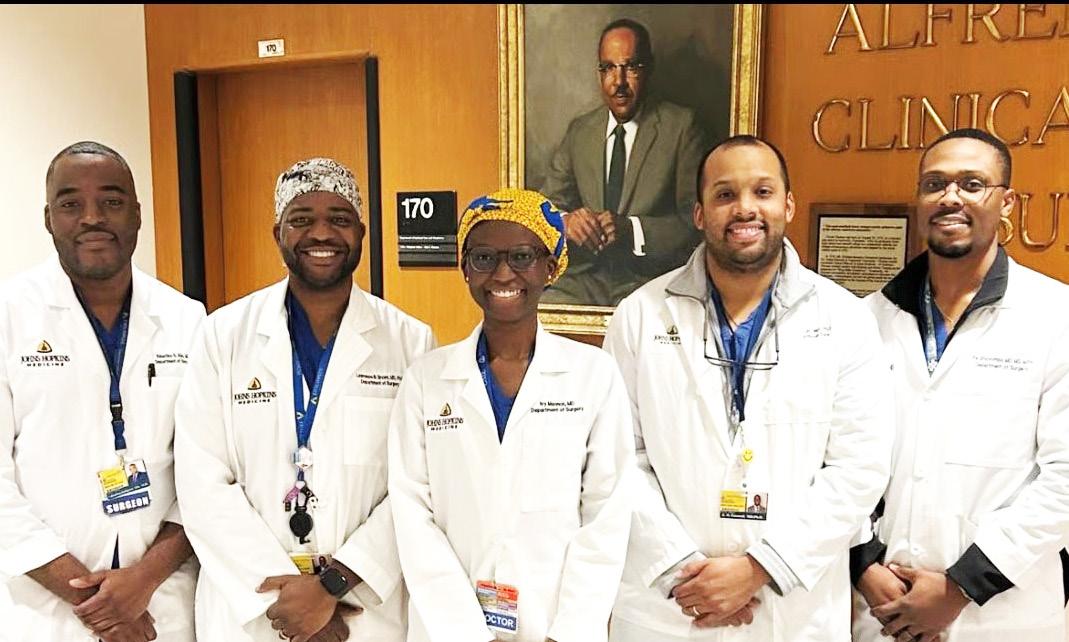
Photo: Courtesy of Hopkins Surgery
In a historic first for Johns Hopkins University and the medical field at large, the trauma and acute care surgery service at the Baltimore hospital is currently led by an entirely Black team of five residents and fellows, as reported by ABC News.
This achievement at the prestigious institution is a significant moment for a profession where Black surgeons are markedly underrepresented, making up only 5.6% of surgeons in training, despite Black individuals comprising 13.4% of the U.S. population.
The Johns Hopkins Hospital’s Halsted service (trauma and acute care service) is currently led by Dr. Valentine S. Alia (a second-year resident), Dr. Ivy Mannoh (a third-year resident), Dr. Ifeoluwa “Ife” Shoyombo, M.D., M.P.H., M.S. (a third-year resident), Dr. Lawrence B. Brown, Ph.D., M.P.H. (a seventh-year resident), and Dr. Zachary Obinna Enumah, Ph.D., M.A. (a ninth-year and critical care fellow). Notably, Dr. Mannoh is the only woman among the five surgeons.
by Jisu Sheen
All the world may be a stage, but some worlds are more conducive to theatrics than others. Like the highs, lows, fights, truces, and existential crises of the American high school.
On Thursday night, the New Haven Academy (NHA) gymnasium featured a portal to another school’s drama: that of Westerburg High, 1989, setting of NHA’s latest production, Heathers: The Musical (High School Edition). The show runs through this weekend.
The show was tight, punchy, and packed with non-stop action. Dancers did the worm (Anthony Pellino) and the splits (Janiyah Correa). The orchestra pit was so rock ‘n’ roll it was like its own concert. Lexi Kochanowicz, as Heather Chandler, belted out a riff in “Candy Store” that brought the house down.
When Veronica Sawyer (played by Olivia Tapia Ko) introduced Chandler as a “mythic bitch,” I laughed and thought, This is so high school.



by Thomas Breen
The command staff in charge of managing the police department’s confidential-informant (CI) fund will no longer also have the responsibility of auditing how that money is spent.
That’s one of the changes included in a new temporary “special order” that Acting Police Chief David Zannelli signed Wednesday to tighten up the policy governing a fund that former Police Chief Karl Jacobson allegedly stole $10,000 from before quitting and becoming the subject of a state investigation.
In addition to having the Assistant Chief of Professional Standards take over audit responsibilities for a program that will still be overseen by the Assistant Chief of Investigative Services, other provisions of the new policy include monthly instead of annual audits, the securing of the fund’s cash reserves in a safe in a room with digital access control and video monitoring, and monthly instead of annual replenishments of the fund — as overseen and signed off on by the Chief Administrative Officer.
Zannelli, Mayor Justin Elicker, and police commission Chair Evelise Ribeiro described those new CI-fund rules Thursday during a press conference held on the third floor of police headquarters at 1 Union Ave.
The presser took place more than a month and a half after Jacobson abruptly retired after the city’s three assistant chiefs — including Zannelli — confronted him about stealing money from a cash fund that police use to pay confidential informants who help cops solve crimes. Jacobson allegedly admitted to stealing that money before quitting.
Zannelli, who was the assistant chief
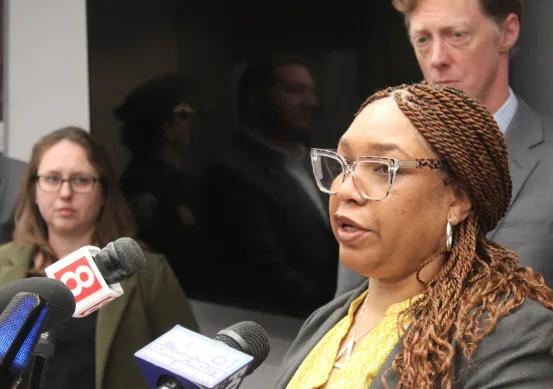
that was supposed to be in charge of the fund for the year prior to Jacobson’s resignation, has said that he and his colleagues repeatedly asked Jacobson for control of the CI fund, but that Jacobson consistently declined. Asked if Jacobson’s repeated deferrals were a red flag for him, Zannelli declined to comment. “Training was requested,” Zannelli said. “He [Jacobson] had maintained it as an expert for several years, but that’s as far as I can go.”
State police and the New Britain state’s attorney’s office are still investigating what went wrong.
On Thursday, Zannelli, Elicker, and Ribeiro unveiled a new temporary special order that, as of Wednesday, replaced the department’s previous CI general order — which was written in 2008 and last updated in 2016 with the goal of preventing the type of misuse that Jacobson allegedly committed.
Elicker said that the city is on the brink of hiring the independent Police Executive Research Forum (PERF), which also wrote the city’s last CI policy. He said the city plans to pay PERF $87,000 to spend the next roughly six months interviewing relevant city cops, monitoring how the city operates the CI program, and reviewing best practices for such programs before issuing a report that will inform the development of a new permanent CI
general order.
Zannelli said that it’s best practice to review and update general orders every couple years, as opposed to the decade-plus that has elapsed since the CI policy was last changed.
Asked if Jacobson’s alleged theft was more a result of the former policy not being followed instead of problems with the policy itself, Elicker replied, “The policy was clearly not followed by the chief, but there [were] also not enough controls to ensure there was additional oversight.”
Another core difference between the past and new policy, he emphasized, is that “the group within the police department that is responsible for implementing the program is not the same group that is auditing the program.” Assistant Chief Manmeet Bhagtana will now be responsible for audits, as opposed to the Assistant Chief of Investigative Services — a role that Zannelli is still in even as he serves as Acting Chief.
Elicker, Zannelli, and Ribeiro said this newly signed special order should allow the CI program to resume after being paused for the past six weeks.
All three stressed how important the CI program is for cops’ work solving crimes. Elicker said that the CI program should be able to resume operations in roughly two weeks as the department gets up to speed on the new temporary policy.
Zannelli said on Thursday that, while the special order keeps the Assistant Chief of Investigative Services in charge of the CI program and fund, it also allows that assistant chief to designate the dayto-day management responsibilities to an Officer in Charge.
Zannelli said that he has tapped Capt. Brendan Borer to manage the CI program and fund’s day-to-day operations.
by Donald Eng
The Supreme Court’s Friday decision striking down some of President Donald Trump’s tariffs that were enacted as emergency measures has seemingly brought more questions than answers, according to state business leaders and economists.
In a 6-3 ruling, the justices struck down about half of Trump’s tariffs, ruling that the law that he based them on does not grant the right to implement them. But what does that mean for Connecticut businesses and residents?
Dustin Nord is the director of the Connecticut Business and Industry Association Foundation for Economic Growth and Opportunity. He said the tariffs had a wide-ranging effect on Connecticut businesses, although most CBIA members reported negative consequences.
“Either with supply or making their products more expensive,” Nord said.
Some foreign companies, though, have been looking at relocating to Connecticut to avoid the tariffs, Nord said, but the overall effect has been negative, as reported by CBIA members, he said.

So the Supreme Court striking down the tariffs could be seen as a positive for state businesses. But, Nord said, shortly after the Supreme Court decision, Trump announced global tariffs. So within the span of a day or two, businesses went from having to deal with the tariffs, to not having at least some tariffs, to having to plan for new and different tariffs.
“While the sentiment had been against the tariffs, businesses had settled into it (the current business climate),” he said. Now, he said, there would need to be a new adjustment after businesses had spent time adjusting to the rules the Supreme Court just struck down.
Don Klepper-Smith, chief economist at DataCore Partners, LLC said the tariffs had been bad policy from the beginning. But he agreed the decision created uncertainty that made it unclear how it would affect U.S. consumers and businesses.
One uncertainty, he said, was what happens to the estimated $175 billion the tariffs have cost Americans.
“While the Administration has claimed that foreigners have paid the bulk of tariffs, non-partisan research has shown otherwise,” he said. “According to a recent
report from the Federal Reserve Bank of New York, it was found that the over 90% of the cost of increased tariffs, which Trump imposed on goods from Mexico, China, Canada and the European Union, was paid for by domestic entities. According to DataCore, the tariffs have had a significant inflationary effect on Americans.
“The official CPI-U (Consumer Price Index – Urban) data shows a … increase of just 2.7% as of December, but anyone buying groceries, homeowners insurance, or healthcare knows that’s not what the average American is seeing in terms of checkbook inflation,” he said. “The average U.S. household is paying roughly an extra $1,300-$1,800 annually due to these tariffs.”
But even their repeal doesn’t mean the inflationary pressure will ease anytime soon, he said. And with potential replacements for the nullified tariffs already announced, it’s anyone’s guess what happens next.
“The pending repeal now creates even greater uncertainty,” he said. “From a macro standpoint, only time will tell how this will shake out for US consumers and businesses.”









• Cremation (Choose to be cremated at Evergreen.)
• Columbarium in the Most Beautiful Cremation Garden
• Reserve your Niche in a secure location pre-need.

• Reserve a Niche for family and friends or purchase at-need to safely place your Loved One in the Columbarium.
• Burial Lots (infant, single, two-grave, or four-grave)
• Monuments & Markers (black, gray, or pink granite)
• Flower placement (single or multiple placement)
• All orders can be placed at the Evergreen office or the website.

by Lisa Reisman
A Newhall meeting saw neighbors, Hamden town officials, and project consultants come together to define the path forward in the decades-long struggle to address their crumbling home foundations and effect the demolition of a long-abandoned middle school.
The meeting, held last Thursday at Breakthrough Church, was organized by the Hamden Newhall Neighborhood Association (HNNA), a group formed in early 2024 with a mission to fight for funds sufficient to repair the crumbling homes caused by years of New Haven manufacturers dumping industrial waste—and a cleanup effort that didn’t leave the job done.
A lot has changed recently. After a year that saw HNNA leaders and their allies waiting until the wee hours to share their testimony at legislative council meetings, holding community meetings under blizzard conditions, and hosting sidewalk tours for state legislators, the group rode their unofficial guiding principle—“it ends with us”—to a budget of approximately $18 million in federal, state, and local funding to repair their foundations.
There’s also a new mayor, Adam Sendroff, who proclaimed his commitment to seeing the projects through—“not just getting them started, but making sure they’re done right,” he told the roughly 60 neighbors and members of the legislative council, as well as representatives from the engineering consulting firm Haley & Aldrich, 7 Summits Construction Company, and BL Companies.
Carol Hazen, Grants and Capital Projects Director and project manager of the Newhall Foundations Repair Fund Project, put it plainly: “We want you to leave tonight with a clear picture of what to expect for both projects,” Hazen told the Newhall residents, referring to the foundation repair and the middle school demolition.
by Donald Eng
HARTFORD, CT — Access to reproductive care and sustainable for those who need it topped the list of legislative priorities for the Reproductive Rights Caucus in the 2026 legislative session.
State Rep. Jillian Gilchrest, D-West Hartford, said the four-year-old caucus — which now numbers about 60 members — formed because members were concerned that reproductive health care was coming under attack. On Wednesday, Gilchrest said that remained true.
“The federal government has cut significantly from reproductive funding, in particular to Planned Parenthood, who they continue to demonize when

HNNA president Tina Jennings-Harriott had a similar message. “We’re trying to give you enough information to empower you to know what’s happening and to know who to contact if you have questions,” she said. “Then you can educate your neighbors about it too.”
The plans, shared by the project consultants, are as follows. Of the 305 properties in the consent boundary area, 75 are eligible for remediation, and 23 are part of the first round of repairs. The next step is to put the plans out for bid. Then work will begin. There will be safeguards in place for air quality and dust, noise, pests, vibrations, after-hours security, and removal of hazardous materials, among other measures for environmental impacts.
Regarding the middle-school demolition, the plans are 95 percent complete.
After those plans are out for bid, there will be removal of hazardous materials from the buildings, upon which that project will start. The demo project will run concurrently with the foundations repair project.
Then, with Jennings-Harriott facilitating, came questions from community members.
“The school has been abandoned for 25-plus years,” one asked. “What will it take to have a project completed in a timely manner?”
“We are on that path,” said Sam Haydock, a licensed environmental professional with BL Companies. “The intent is to go out and select a contractor. The funding is in place. So, barring some
unforeseen issues, we see the project moving forward this year.”
There were questions about the possibility of transforming the middle school into condos (none; too far gone); about noise monitoring for drilling and jack-hammering in homes (will be in full compliance with OSHA regulations); about the role of community members in decision-making around the two projects.
“The oversight committee will include resident representatives from the neighborhood to make sure your voices are part of this process at every stage,” said Hazen; the residents on the oversight committee have already been elected, according to Jennings-Harriott. “The committee will meet monthly to review invoices, consider any problems that come up, any
decisions that have to be made.”
Someone else asked who would vet the contractors. The last time contractors were in her house, she had a window issue that needed to be addressed. Wastefill contaminating her land had caused the foundations to shift, and her windows with it. “There was cheap workmanship, they did half the job,” she said. “The new window wasn’t functional.”
Seven Summits’ project manager Tim Barry cited the specific requirements for contractors on the bid documents. “They need to have the appropriate state licenses, they need to be able to represent that they have no instances of not completing work under contract, and no OSHA violations.”
He discussed the strict quality control included in the plans and specifications for the project, as well as his background as a carpenter. “If the work is not meeting specifications, that work will be stopped,” he said. “If it has to be replaced, it will be replaced.”
To a question about why the town of Hamden, and by extension the taxpayers, have to cover the repair costs — Sendroff clarified that state and federal funds were also supporting the projects — councilwoman Rhonda Caldwell, whose district includes Newhall, spoke up.
“The building’s been sitting there for 25 years,” said Caldwell, who’s been outspoken about the red-lining on which the Newhall community was built. “The foundations have been crumbling for 50. People are suffering. This is all way past due. We can talk all day about where the money’s coming from, but let’s just keep working to make it happen.”
After the meeting, HNNA member Danielle Campbell, a fourth-generation Hamden resident whose home was built on contaminated land, sounded a similar refrain. “We appreciate all this for sure, but we’ll start to believe [when] there’s a definitive start date.”
Planned Parenthood is the leading provider of family planning services in this country, and in the State of Connecticut,” Gilchrest said.
She also highlighted access to gender-affirming care as an extension of reproductive care.
“In the State of Connecticut, we are saying that gender-affirming care, reproductive care is health care, and everyone should have access to that care when they need it,” she said.
Other priorities, Gilchrest said, involved supporting other caucuses with their goals as they intersect with reproductive rights. For example, pushing for greater support for doulas, for child tax credit and for diaper access programs.
State Rep. Matt Blumenthal,
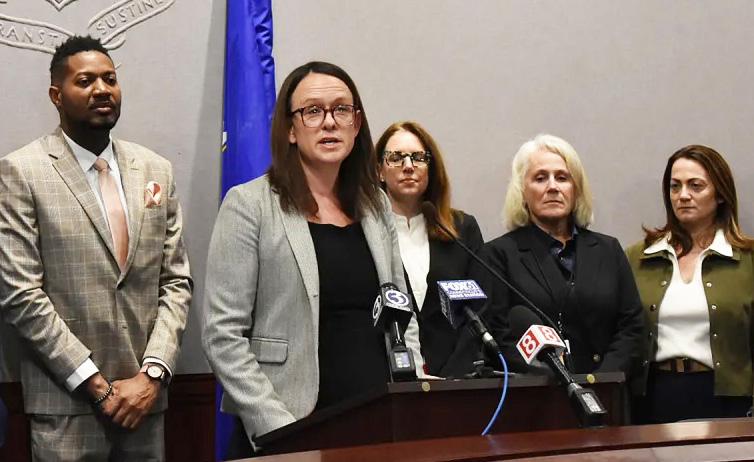
D-Stamford, said actions at the federal level have had a real impact on people in Connecticut.
“So we will be pursuing an agenda this session to ensure that every person in Connecticut can access, affordably, legally, reliably, the full spectrum of reproductive health care that they need and deserve,” he said.
Part of that effort includes strengthening the shield law, which protects patients from other states and Connecticut doctors from prosecution if that patient comes to Connecticut for an abortion. Connecticut passed a shield law in 2022, and at least 16 other states have followed suit. The proposed expansion would cover telehealth, Blumenthal said.
by Mona Mahadevan
Members of the Sunset Ridge Tenants Union and an attorney from New Haven Legal Assistance Association (NHLAA) began the process of suing a New Yorkbased landlord on Wednesday, after a union leader was reportedly threatened with eviction for door knocking.
The lawsuit was announced during a press conference in front of the courthouse at 121 Elm St. Mayor Justin Elicker, Dwight Alder Frank Douglass, and members of U.S. Rep. Rosa DeLauro’s office also attended the presser.
“It is illegal for landlords to retaliate against tenants for lawfully pursuing their rights to form tenants unions and to make complaints to [the Livable City Initiative],” said attorney Amy Eppler-Epstein. “The purpose of this lawsuit today is to try to stop that retaliation.”
The announcement marks an escalation of organizing efforts at Sunset Ridge, a 312-unit, low-income apartment complex in Quinnipiac Meadows. The property is owned by the Capital Realty Group, which is facing unionization efforts across its portfolio.
For more than a year, Sunset Ridge residents have spoken publicly about their experiences with mold, mice, untreated water leaks, and faulty heating at the complex. While the Livable City Initiative (LCI) has inspected the property multiple times, the agency has not levied any fines on Sunset Ridge, LCI Executive Director Liam Brennan told the Independent.
In June 2025, residents turned to the Connecticut Tenants Union (CTTU) for help improving their living conditions. Some residents say that working with CTTU has brought about harassment and retaliation from affiliates of Capital Realty. According to union leaders, property managers have towed their cars, heckled their press conferences, and threatened to call Immigration and Customs Enforcement (ICE) on tenants. They also claim that management has


created a fake union to stall organizing efforts.
Capital Realty did not respond to requests for comment. For a previous article, Yoana Avilas, a property manager at Sunset Ridge, said the complex has no complaints related to heat, hot water, or mold. She also accused the CTTU-backed union of harassing tenants.
Sebastian Gomez, the president of a different tenants union at Sunset Ridge, has repeatedly said his group is not backed by management.
Capital Realty’s alleged retaliation crescendoed with a pre-termination notice, which was delivered to Cynthia Vega-Vieyra on Jan. 29.
Vega-Vieyra, a union leader, has lived in Sunset Ridge for seven years. She told the Independent that her apartment is still infested with mold and mice, even after multiple maintenance calls.
Last month, she began the process of contesting a rent hike through the Fair Rent Commission.
On Wednesday, Eppler-Epstein said the notice to Vega-Vieyra threatens to begin eviction proceedings unless she stops canvassing.
“They’re claiming that her door knocking activity has been harassing other tenants,” said Eppler-Epstein. Not only does Vega-Vieyra’s behavior not constitute harassment, she argued, but the notice also violates the Connecticut Unfair Trade Practices Act by intimidating tenants who want to organize.
“Even if they don’t bring the eviction, just sending the notice” will “scare people away from joining a union,” said Eppler-Epstein.
The application for an injunction lists the plaintiffs as Vega-Vieyra and the Sunset Ridge chapter of CTTU. In addition to contesting the pre-termination notice, the document alleges other forms of retaliation, such as management serving “no trespass” notices and calling the police on organizers.
At CTTU rallies, “people would arrive to heckle and harass the attendees, with the goal of intimidating them and
discouraging their organizing activity,” reads the document. “The harassment took the form of blaring loud music through loudspeakers and shouting through megaphones.” Eppler-Epstein, who signed the application, told the Independent that a property manager participated in the heckling at least once.
The document also alleges that someone posted pictures of a CTTU organizer throughout the complex and asked residents to call the police if they were spotted.
In addition to seeking damages, Eppler-Epstein is pushing for an injunction to stop Vega-Vieyra’s eviction and Capital Realty’s alleged harassment.
The suit comes two years after Eppler-Epstein successfully sued Ocean Management for filing notices to quit against 16 members of the Blake Street Tenants Union, arguing that the eviction efforts were a form of retaliation. The notices were quickly rescinded.
In the Sunset Ridge case, the next step is for a judge to schedule a show-cause hearing, said Eppler-Epstein.
CTTU Vice President Luke Melonakos stressed that the union would be willing to drop the lawsuit if Mosche Eichler — the principal of Capital Realty — stopped retaliating against organizers and agreed to negotiate with the union. Meanwhile, Vega-Vieyra is not letting the notice scare her away from organizing. “[Mosche Eichler] is just doing silly things because he’s afraid of losing,” she told the Independent.
During the press, she called on her fellow tenants to defend their right to organize and continue pushing for better living conditions.
“Instead of our homes being a place of rest and a place where we build our dreams and the lives of many generations to come, landlords use all of our money to turn our lives into a living hell, using tactics of terror and extreme harassment, including illegal evictions,” said Vega-Vieyra. “If you are being harassed, bullied, intimidated, threatened — you all absolutely have rights.”

by Nick Douglas, Face2FaceAfrica.com
American history has often been written with a focus on the wrong heroes. Nowhere is that more apparent than in the history of race and slavery in America. We endlessly highlight Thomas Jefferson’s life, for example, but do not laud real heroes like John Brown. So it goes with the Second Underground Railroad.
The first Underground Railroad was run by such well-known heroines as Harriet Tubman, but we rarely hear about the Second Underground Railroad, created by the heroes who helped slaves escape by sea.
Years ago, I wrote a three-part article for AFROPUNK about slave revolts. One section was about slave revolts that took place on the high seas or before slaves left African harbors. The article — know your black history: part ii slave revolts by sea: relentless determination and the end of the myth of the Amistad — concentrated on telling the story of successful slave revolts at sea. This series also provides the context of how, at every level and every stage of the slave trade, enslaved people fought furiously against enslavement.
Before that, I had written an article investigating the contributions of black sailors to the development of the U.S. economy: Op-Ed: Black Sailors were essential to the development of the early U.S. It is only recently that I have been able to make the connection between black sailors and the Second Underground Railroad: the system of escaping slavery by sea. Many people know of the heroism of Robert Smalls, disguised as a Southern ship captain to commandeer a Confederate warship through enemy lines to free his family and other slaves from South Carolina. It is one of the most exciting and moving stories in American history. But many do not know the large number of slaves who escaped via Southern ports, travelling by sea to Northern ports and freedom.
As with the Underground Railroad, the Second Underground Railroad comprised secret communities and networks of anti-slavery activists and anti-slavery organizations. Sailors, both black and white, and ships were coordinated to free large numbers of enslaved people. Only recently have some of the secret records kept by abolitionists and anti-slavery organizations come to light. The stories are fascinating and heroic; the numbers are substantial.
First, let’s paint a different picture of slavery in the South.
The prevalence of escaping slavery by sea was acknowledged by laws passed against it as early as 1705 ( in the Virginia legislature) and 1710, in South Carolina. On a federal level, laws written into the Constitution show that the 40% of the signers who were slaveholders were obsessively terrified of enslaved people escaping.



The 1787 U.S. Constitution Article IV section 2 states “Anyone held in Service or Labour” would be returned to their enslaver by law. In 1793, Congress strengthened the law empowering magistrates and federal officials in all states to arrest fugitives and return them to their enslavers. The law also imposed fines of $500 ($15,000 in 2024 dollars) on anyone helping fugitives.
Slaveholders were equally afraid of free people of color, and especially black sailors helping or encouraging slaves to escape and revolt. Between 1822 and 1848, every Southern state implemented a Negro Seaman’s Act, basically “quarantining or arresting” free negro seamen during their ship’s time in port. One-third of all legislation in the U.S. after 1830 concerned slaves and free people of color. The most well-known was the Fugitive Slave Act of 1850, which required citizens to assist in returning enslaved runaways and increased penalties on those helping runaways.
All this legislation wasn’t created in a vacuum. Legislation was created because the successful escape of slaves was such a constant problem. It became a critical problem when the Southern cotton market’s growth became the economic engine of the Industrial Revolution in the U.S. and Europe, and increased international trade. Ninety percent of this trade was the transport of Southern goods by rivers and sea to Northern ports, the jumping-off point for shipping Southern products to the world.
None of the legislation worked to stem the tide of enslaved people escaping by sea.
The extensive number of enslaved people who escaped by sea is hard to calculate precisely. Some estimates have been suggested by author Marcus Rediker in his fabulous book Freedom Ship: The Uncharted History of Escaping Slavery by Sea. The Library of Congress estimates that enslavers placed 200,000 ads in newspapers for runaways between 1730 and 1865. This is just a fraction of the actual runaways during this period. There were two types of runaways: petit marronage and gran marronage. Petit marronage was enslaved people who intended to leave for a short time to visit relatives, or to escape punishment. They could have been hunted down or returned on their own. Gran marronage was enslaved people who intended to escape slavery for good. For both of these types of escapes, brutal punishment was applied on their return. No matter what the punishment, tens of thousands of slaves escaped each year, with the large majority escaping after 1830.
Estimates range from 50,000 to 100,000, in numbering those who escaped by sea. Researcher Timothy D. Walker found that of 103 slave narratives about escaping, “more than 70 percent recount the use of ocean-going vessels as a means of fleeing slavery.” Because escaping slavery was
were helped by maritime societies to join the terrestrial Underground Railroad in Northern port cities to flee to freedom in Canada.
Philadelphia was one place that drew runaways from the South. Its Quaker population established the country’s first anti-slavery organization in 1775: The Society for the Relief of Free Negroes Unlawfully Held in Bondage. In 1776, they outlawed slavery within their congregations and then advocated for the Gradual Abolition Act of 1780. Famous Philadelphian James Forten, who served as a sailor in the Revolutionary War, helped to establish the American Anti-Slavery Society in 1833, and was an important funder of William Lloyd Garrison’s anti-slavery newspaper The Liberator.
so secretive, it would be common sense to assume that the reported numbers provide a very low estimate of the actual number of people who escaped.
Runaways were assisted by a complicated and secret communication network of sailors, dockworkers, maritime associations and societies, communities, and anti-slavery organizations. Some of these organizations included: the Vigilance Committees of Philadelphia and Boston, Stewards and Cooks Marine Benevolent Society, New York Committee of Vigilance, and the American Anti-Slavery Society, just to name a few.
But what helped to increase escape by sea was capitalism itself. As trade of Southern cotton increased beginning in the early 1800s, packet ships that linked Southern ports to Northern ports began to have regular schedules. Regularly scheduled shipping from Southern ports to Northern ports actually made planning and escaping by sea more predictable for enslaved people.
Once runaways reached Northern ports, they still faced the danger of capture by slave catchers who prowled port cities like New York and Philadelphia. This is where coordination with vigilance and anti-slavery groups and churches helped to assist and hide escaped slaves. These groups stepped in after escapees arrived in Northern ports, hiding them, providing protection from authorities and slave catchers or helping them find ocean-going to the UK and Europe, where slavery had been abolished. Many runaways
Two churches were important in making Philadelphia a mecca for people escaping slavery in the South. There are numerous stories of their congregation members providing aid and shelter to runaways who arrived in Philadelphia seeking freedom. The Mother Bethel African Methodist Church was established by Richard Allen in 1794. Allen had purchased his own freedom in 1780. The African Episcopal Church of St. Thomas was founded in 1792 by Absalom Jones. He was the first African American to be ordained as a priest in the Episcopal Church of the United States. He is listed on the Episcopal calendar of saints. Johnathan Walker became famous as a maritime abolitionist when the government of Florida branded his hand with “S.S.” for “slave stealer” after he was captured at sea trying to sail seven enslaved men to freedom. A Quaker from a poor family, he went to sea at 18 and traveled the world, a coworker to multiethnic sailors. The heroic Walker, when confronted both in court and by a lynch mob in Florida, never wavered. Walker proudly testified not only that he had tried to free slaves but that he would continue to do so as long as slavery continued. The terror he described as his punishment during his imprisonment, and that he continued to say he would do it all again, puts him, in my opinion, at the pinnacle of American heroism. He lectured later in life after slavery was abolished, and acknowledged that the ordeals he survived were commonly experienced by thousands of enslaved people, making their survival all the more incredible and heroic.
Can this compare to some of the other Americans we call heroes?
Maybe, as critical consumers of history, and especially during Black History Month, instead of those we choose to call “American Heroes”, we need to consider a whole new group of people. These sailors, free people of color, churches, anti-slavery organizations and white people of goodwill — who risked fines, prison and their physical safety to help enslaved runaways escape and help undermine the genocidal institution of slavery — definitely should be put in that category.

At Access Health CT, we’re proud to help people enroll in health and dental coverage and make the most of their coverage. Every time we do, it’s a step toward reducing the impact of health inequities and elevating everyone’s ability to live their healthiest life.





by Kweli I. Wright, BlackDoctor.org
Let’s be real — the voices we trust matter. Especially when it comes to our health, our wellness, and how we show up for ourselves every single day. Over the last few years, many of us felt like something was…quiet. Like that grown folks, sister-friend guidance we leaned on wasn’t showing up on our screens or in our feeds the way it used to. If you felt that, you weren’t imagining it. Well, 2026 is proving to be the year those voices return, stronger and sharper than ever.
Two of the most influential Black women in the wellness and spiritual space — Iyanla Vanzant and Oprah Winfrey — are stepping back into the cultural moment with new work that’s all about you: your body, your mind, your spirit, and your growth.
And, honestly, we’re glad they’re back.
Both media mavens have new books out, and Iyanla is also returning to television with a show that reminds us why people sought her wisdom in the first place. This isn’t nostalgia, it’s relevance with purpose.
It’s the kind of guidance we can use right now.
For decades, Oprah and Iyanla helped normalize conversations about mental health, emotional accountability, spiritual care, and personal growth, long before those topics were trendy or hashtag-friendly moments on social media.
They didn’t just host conversations; they showed us transformation. They asked hard questions, honored lived experience, and reminded us that healing is a layered process—physical, emotional, mental, and spiritual.
Their absence left a real gap, especially for Black audiences seeking guidance that feels culturally connected and emotionally honest. Very often, our wellness spaces fail to reflect the realities or histories that are part of our bodies and spirits. These two women do.
Now, each of them is coming back to share fresh lessons with clarity and credibility.
And in a moment where burnout, anxiety, and health disparities continue to impact Black communities disproportionately, Oprah and Iyanla’s voices deliver renewed relevance.
Iyanla Vanzant: Spiritual Hygiene and the Work of the Inner Life
Long beloved for her no nonsense, heartfelt guidance, Iyanla is stepping back into the spotlight in a big way.
The six-time #1 New York Times bestselling author and spiritual teacher’s lat-

est book, Spiritual Hygiene: A Practical Path for Clean Living, Inner Authority, and Divine Freedom, teaches that just as we care for our bodies, we need to care for our inner world — mentally, emotionally, and spiritually. Iyanla reminds readers that healing isn’t a one and done event, but a daily practice of clearing out the emotional clutter that holds us back.
“So many of us are stuck, since Covid, with all of the changes that are going on in the world, many of us are frozen,” Iyanla told Tamron Hall on her show during a January 2026 interview. “We’re stuck, some of us are congested, some of us are constipated, some of us are contaminated, and so…clean it up.”
“Spiritual hygiene, the reason I think it’s so important right now is because everything is changing so quick,” Iyanla continued. “If you think your intellect, your education, your bank account is going to get you through the changes that are happening, you’re in trouble.
Spiritual hygiene is about cleaning up your inner landscape so your outer experience will be more in alignment with who you are and who you desire.”
This is her first full-length book in nine years, and her first major work since the passing of her daughter Nisa Vanzant in

2023. Iyanla admits that her own poor spiritual hygiene influenced Nisa. “Spiritual hygiene is about what’s going on on the inside because that is really the root of what you experience out here. What was going on inside of me, when I was carrying Nisa, she brought to life, in her own physical experience, because children bring to life the subconscious issues of the parents.”
And on television? She’s returned to Oprah’s OWN Network with a new series called Iyanla: The Inside Fix, which premiered January 17. The show revisits some of her most impactful moments while offering deeper reflections and tools for healing in today’s world. It’s not just a look back, it’s a reframing of what real emotional work looks like now. What this means for you: Iyanla is never about sugar coating the work you have to do, but she’s inviting you to do the work with clarity, courage, and a sense of purpose.
Oprah’s influence on conversations about wellness is — let’s just say — legendary. In her latest book, Enough: Your Health, Your Weight, and What It’s Like to Be Free, she explores health from a deeply personal and human angle. Co
“I’m out here in these streets because I want you all to not continue to waste the time,” said Oprah. And I want people to understand: it’s not your fault. You cannot solve this with willpower because the truth is, if you could have solved it with willpower, those of us with willpower would have done it.”
What this means for you: This is the kind of book that doesn’t guilt you, it informs you — and that’s a rare thing in wellness circles.
1. Healing is daily work
Both Iyanla and Oprah remind us that growth isn’t a destination — it’s a practice. Whether you’re clearing emotional noise, setting boundaries, or caring for your body, it’s about consistency, not perfection. Even small, daily actions like journaling for five minutes, drinking more water, or taking a short walk can add up to meaningful change over time.
These little habits are the building blocks of real wellness, and both women emphasize starting where you are rather than waiting for the “perfect moment.”
2. You don’t have to do it alone
Their return signals something bigger: you can seek help, lean on community, and embrace expert insight without shame. From therapy to group wellness programs, finding support is not a weakness. It’s a smart choice, and it makes self-care sustainable.
written with Yale endocrinologist Dr. Ania M. Jastreboff, the book reframes obesity as a chronic neurometabolic disease — not a personal failure — and offers science based, compassion centered approaches to managing it.
What’s refreshing about Oprah’s message is her vulnerability in the book. She talks openly about her own lifelong struggle with weight, how modern treatments (like GLP-1 medications) shifted her relationship with her body, and why self compassion matters more than perfection.
Just a few weeks shy of her 72nd birthday, Oprah said her recent weight loss decision to use obesity medicine has set her free. “[That freedom] looks like I’m not waking up, and the first thing I’m thinking about is, ‘How much do I weigh?’,”
Oprah explained on TODAY with Jenna & Shenielle, in an early January 2026 interview.
“The new freedom is understanding that all those years that I suffered and was on the tabloids every week and was made fun of and was the butt of everybody’s jokes, I thought it was because of my lack of willpower,” Oprah shared. “‘What is wrong with me that I can be successful in so many ways, and I can’t conquer this thing?’ Now I know that it has nothing to do with willpower; it has everything to do with your biology.”
Iyanla and Oprah remind us that asking for guidance is part of the growth process and that leaning on trusted voices only strengthens your journey.
3. Compassion matters more than control
Especially with weight, emotional health, and relationships, the conversations we’re having now are about kindness, not punishment. Both women emphasize self-acceptance and understanding your body and mind before trying to “fix” them. Real change grows from awareness and gentle action, not guilt or pressure.
Their Return Isn’t Just a Comeback — It’s a Reminder
We’re living in a time that’s noisy, fast, and emotionally demanding. And if the last few years taught us anything, it’s this: wisdom matters.
Not just information — trusted, compassionate wisdom. That’s what Oprah and Iyanla each bring back into our lives in 2026.
Their voices aren’t here to entertain you — they’re here to stand with you. And that’s the kind of guidance that can make a real difference in how you move through your health, your healing, and your whole life this year.










By Claudette Perry
Co-Founder and Board Member, Diaspora African Forum Diplomatic Mission Accra, Ghana— “Reverend Jackson’s legacy, his spirit, belonged to the world,” said Kofi Okyere Darko, Director of the Diaspora Affairs Office of the President, during a ceremony honoring the life of Reverend Jesse L. Jackson. The tribute was arranged by the Diaspora African Forum Diplomatic Mission (DAF), the only diaspora diplomatic mission of its kind in the world. DAF was founded in 2007 by Ambassador Erieka Bennett, with Reverend Jesse Jackson among the co-founders. Jackson was a frequent visitor to Accra and had met every Ghanaian president since Jerry John Rawlings (president, 1979–2001). His ties to the continent deepened in 2007, when the DAF mission opened in conjunction with the African Union’s annual summit, a landmark gathering at which African diaspora representatives were invited for the very first time to sit on the summit floor to observe the proceedings with continental African regional representatives. Reverend Jackson was then invited into a private session with the Heads of State, an honor without precedent in the history of the African Union. The delegation that accompanied him included Dr. Ambassador Erieka Bennett, Head of Mission, DAF cofounder and board member Claudette Perry, Ambassador Andrew Young, Rabbi Nathaniel Kohain, jazz musician

Herbie Hancock, Minister Akbar Muhammad, London fashion designer Ozwald Boateng, the late Dr. Al Munsour, and former Chairman of the People’s Democratic Party Dr. Bamanga Tukur of Nigeria. In Reverend Jackson’s own words, the Black American struggle and the African
struggle were one and the same. It was a conviction he lived by. Central to his mission (and to that of the DAF) was the work of building bridges between Africans on the continent and those of the diaspora. That work was never abstract. Reverend Jackson was a major force in the interna-
News of his passing reverberated around the world. In keeping with Ghanaian custom, the Head of the DAF Mission assembled a delegation to formally call on the Diaspora Affairs Office of the President and announce the death of Reverend Jackson, a man Ghana had long claimed as one of its own. The delegation was received by Deputy Director Nana Kyere Agyemang and Director Darko. Remarks were offered, photographs taken, and the ceremonial condolence book was signed by both officials. Once the President and Vice President have added their signatures and written their condolences, the book will be delivered to Mrs. Jackson, with whom the DAF remains in direct contact—a final, formal expression of a bond that stretched across decades and oceans.
By the end of the day, everyone’s heart was full. Ambassador Erieka Bennett, Head of Mission, reflected on what had been lost and what endures: “Reverend Jackson’s civil and human rights contributions to the world were endless. His name will always be associated with Hope, and Hope is still alive.” Long live the voice of hope.
tional campaign to end apartheid in South Africa, garnering support from the presidents of eight neighboring nations that had won their own independence from colonial rule. He pressed the Reagan administration to impose economic sanctions on the South African government and stood before South African crowds in the wake of Stephen Biko’s murder. From Russia to the Middle East, there were moments when Reverend Jackson appeared to be the only figure capable of opening a door, including negotiating the release of Americans held captive abroad.
ATLANTA, Feb. 24, 2026 /PRNewswire/ -- Morehouse College has received a prestigious grant from the National Science Foundation (NSF) to participate in a $457 million project to build one of the most powerful academic supercomputers in the southeast. This historic investment in higher education cyberinfrastructure will elevate Morehouse's ability to provide unprecedented access to world-class computational resources for its students, faculty, and HBCUs nationwide.
The Morehouse Center for Broadening Participation in Computing has received an initial $5 million portion of the NSF grant to start construction on a site that will house the cutting-edge supercomputer, Horizon, part of the NSF's Leadership-Class Computing Facility (LCCF). More funds will be disbursed to support ongoing operations. The supercomputer will push the boundaries of artificial intelligence, providing greater access to areas such as climate modeling, machine learning, and biomedical research.
The computing project is being led by the Texas Advanced Computing Center at the University of Texas at Austin. As a primary partner in the LCCF project, Morehouse will play a pivotal role in
the deployment of Horizon. In addition to housing the system, Morehouse will serve as a national epicenter for programmatic support, leading free initiatives such as a summer enrichment program for middle and high school boys, a postbaccalaureate program in artificial intelligence, and three weeklong faculty accelerators in Punta Cana, Dominican Republic, focused on research, teaching, and grant proposal writing.

"Morehouse College is honored to partner with the NSF and the University of Texas at Austin on this transformative project," said Dr. F. DuBois Bowman, 13th President of Morehouse College.
"By hosting one of the Southeast's most powerful academic supercomputers, we are providing HBCUs with unprecedented computational power to explore bold ideas, accelerate discovery, and unleash new frontiers of creativity and innova-
tion. This investment positions our students and faculty to help shape the future of science, technology, and global problem-solving."
"This contribution cements Morehouse's place as the undisputed HBCU leader in artificial intelligence," says Dr. Kinnis Gosha, Principal Investigator of the grant and Hortinius I. Chenault Endowed Professor and Chair of Computer Science. "As a national resource provid-
er, we will empower other HBCUs and non-research-intensive institutions to contribute to growing their research capacity and enhancing student learning."
The NSF partnership underscores Morehouse College's commitment to academic rigor and its growing influence as a leader in global STEM research. It reinforces the College's position as a champion for equity in the technological landscape, a field with a workforce that is still lacking diversity. According to national labor statistics, some 62 percent of tech jobs are held by White Americans. Morehouse will share its research and project progress at the Integrating Supercomputing-Powered Instruction, Research, and Entrepreneurship (InSPIRE) Workshop, which is held annually in Austin, Texas. The conference offers support to faculty and students using AI research in teaching and entrepreneurial endeavors.
For more information on Morehouse's role in the NSF Leadership-Class Computing Facility or other AI initiatives offered by the Morehouse Center for Broadening Participation in Computing, please visit https://morehouse.edu/academics/centers-and-institutes/cbpc/.
According to (24 CFR 960.253(b) Notice PIH 2022-33 (HA), and Section 6 III (D) - Flat Rent of ECC/HANH’s Admissions & Continued Occupancy Policy (ACOP) ECC/HANH must establish a schedule of flat rents annually and give families a choice of flat rent or income-based rent and provide families with information on how to choose the rent.
The thirty (30) days comment period begins on Sunday, February 1, 2026, and ends on Monday, March 2, 2026.
Copies of the Flat Rent schedule 2026 will be made available on the agency website www.elmcitycommunities.org or via Facebook www.facebook.com/ElmCityCommunities and all LIPH Property Management offices.
You are invited to provide written comments to: ECC/ HANH Flat Rent Schedule 2026, Attn: Tim Regan, 360 Orange Street, New Haven, CT 06511 or via email to: tregan@elmcitycommunities.org.
A public hearing where public comments will also be accepted and recorded is scheduled for Tuesday, February 26, 2026, at 2:00 PM via Teams
Microsoft Teams meeting Join: https://teams.microsoft.com/ meet/29279097163113?p=BXcmU1DGnV1Rh6B6JR Meeting ID: 292 790 971 631 13 Passcode: mz7Fk2Y4
Dial in by phone 1-872-240-4495
Phone conference ID: 596 313 821#
Anyone who requires a reasonable accommodation to participate in the hearing may call the Resident Compliance and Support Manager at (203) 498-8800 ext. 3170 or TDD (203) 497-8434.
The Town of Wallingford is accepting applications for Firefighter/ Paramedic. Wages: $1,273.03 to $1,627.96 weekly. For additional information and to apply online by the March 17, 2026 closing date please visit: www.wallingfordct.gov/government/departments/human-resources/. Applications are also available at the Department of Human Resources located in Room #301 of the Town Hall, 45 South Main Street, Wallingford, CT 06492. Phone: (203) 294-2080; Fax: (203) 294-2084. EOE
The Glendower Group, Inc is seeking bids from qualified contractors for General Contractor at The Heights at Westrock. A complete copy of the requirement may be obtained from Elm City’s Vendor Collaboration Portal https://newhavenhousing.cobblestonesystems.com/gateway beginning on Wednesday, January 21, 2026, at 3:00PM.

The State of Connecticut, Office of Policy and Management is recruiting for an Agency Labor Relations Specialist Trainee (Leadership

Location: Galasso Materials LLC, East Granby, CT
Employment Type: Full-Time
Industry: Asphalt Paving & Aggregate Materials


We are seeking an experienced and motivated Construction Sales Manager to lead and grow our asphalt paving and aggregate materials sales operations. This role requires a strong blend of construction knowledge, sales expertise, estimating skills, and project coordination. The ideal candidate will understand paving operations, build strong customer relationships, and work collaboratively with internal teams to deliver successful projects from bid through completion.
• Develop and manage sales for asphalt, aggregate, and paving services across commercial, municipal, and private-sector clients
• Build and maintain long-term relationships with customers, contractors, municipalities, and developers
• Prepare and review job estimates, bids, and proposals, including quantity take-offs and pricing
• Collaborate closely with operations, plant staff, and project managers to ensure accurate scope, scheduling, and execution
• Provide outstanding customer service throughout the sales and project lifecycle
• Support project management efforts, including job start-up coordination, scope clarification, job cost tracking, billing and change management
• Track market conditions, competitor pricing, and sales opportunities
• Meet or exceed established sales and revenue goals
• Communicate with Accounts Receivable staff to ensure invoices are paid to Galasso
• Proven management experience in asphalt paving, aggregate materials, or heavy civil construction
• Strong background in construction sales, estimating, or project management
• Solid understanding of paving methods, materials, and construction sequencing
• Ability to read plans, perform quantity take-offs, and develop competitive bids
• Excellent communication, negotiation, and relationship-building skills
• Strong teamwork mindset with the ability to collaborate across departments
• Highly organized with the ability to manage multiple projects and deadlines
• Proficiency with estimating software, spreadsheets, and CRM tools preferred
• Competitive salary with performance-based incentives
• Company vehicle or vehicle allowance (if applicable)
• Health, dental, and retirement benefits
• Stable, well-established company with growth opportunities
• Collaborative team environment with hands-on leadership
Please submit your resume and a brief cover letter outlining your experience in construction sales, paving, or materials supply.
To Apply: Please send your resume and a brief cover letter to KLamontagne@galassomaterials.com
Galasso Materials LLC is committed to creating an inclusive environment for all employees and encourages applications from all qualified individuals. We are an affirmative action equal-opportunity employer.
The Town of Wallingford is accepting applications for Attendant II. Wages: $32.34 to $38.04 hourly. For additional information and to apply online by the February 17, 2026 closing date please visit: www.wallingfordct.gov/government/departments/human-resources/. Applications are also available at the Department of Human Resources located in Room #301 of the Town Hall, 45 South Main Street, Wallingford, CT 06492. Phone: (203) 294-2080; Fax: (203) 294-2084. EOE
Full Time Class B driver for a fast-paced petroleum company for nights and weekends. Previous experience required. Competitive wage, 401(k) and benefits. Send resume to: HR Manager, P. O. Box 388, Guilford, CT 06437 or email HRDept@eastriverenergy. com
*****An Affirmative Action/Equal Opportunity Employer including Disabled and Veterans*****
Opening for a Class A full time driver for petroleum/asphalt/like products deliveries for nights and weekends. Previous experience required. Competitive wage, 401 (k) and benefits. Send resume to: HR Manager, P. O. Box 388, Guilford, CT 06437 or email: hrdept@eastriverenergy.com
***An Affirmative Action/Equal Opportunity Employer, Including Disabled & Veterans***

The State of Connecticut, Office of Policy and Management is recruiting for a Planning Analyst and a GIS Analyst (Research Analyst) in the Intergovernmental Policy and Planning and the Data and Policy Analytics divisions. Further information regarding the duties, eligibility requirements and application instructions are available at: https://www.jobapscloud.com/CT/sup/ bulpreview.asp?b=&R1=260108&R2=6297AR&R3=001 and https://www.jobapscloud.com/CT/sup/ bulpreview.asp?b=&R1=260108&R2=6855AR&R3=001
The State of Connecticut is an equal opportunity/affirmative action employer and strongly encourages the applications of women, minorities, and persons with disabilities.
241 Quinnipiac Avenue, New Haven which are two bedrooms and rent from $1,950-$2,000 and include heat, hot water and cooking gas, private entrance, off street parking and onsite laundry. I have a couple with washer/dryer which are $2,000. Please bill 241 Quinnipiac Avenue, LLC, 111 Roberts Street, Suite G1, East Hartford, CT 06108.
Also, I have a 3 bedroom unit at 254 Fairmont Avenue, New Haven. They rent for $2,050 and the tenant pays all the utilities. Off street parking and private entrance. Section 8 welcomed.
Also, I have a 2 bedroom at 248 Fairmont Avenue, New Haven. They rent for $1,950.00 and the tenant pays all the utilities. Off street parking and private entrance. Section 8 welcomed.
Please bill the Fairmont Avenue to 258 Fairmont Avenue, LLC at the same billing address as 241 Quinnipiac Avenue. I will be the contact person for them to call at 860-231-8080, ext. 161.

The Town of Wallingford is accepting applications for Attendant II. Wages: $70,852 to $89,755 annually. For additional information and to apply online by the March 22, 2026 closing date please visit: www. wallingfordct.gov/government/departments/human-resources/. Applications are also available at the Department of Human Resources located in Room #301 of the Town Hall, 45 South Main Street, Wallingford, CT 06492. Phone: (203) 294-2080; Fax: (203) 294-2084. EOE
360 Management Group is currently seeking bids from qualified contractors to perform Elevator services. A complete copy of the requirement may be obtained from Elm City’s Vendor Collaboration Portal https://newhavenhousing.cobblestonesystems.com/ gateway beginning on
De acuerdo con (24 CFR 960.253(b), Aviso PIH 2022-33 (HA) y la Sección 6 III (D) - Alquiler Fijo de la Política de Admisión y Ocupación Continua (ACOP) de ECC/HANH, ECC/HANH debe establecer una tabla de alquileres fijos anualmente y ofrecer a las familias la opción de elegir entre alquiler fijo o alquiler basado en los ingresos, además de proporcionarles información sobre cómo elegir el alquiler.
El período de treinta (30) días para comentarios comienza el Domingo 1 de Febrero de 2026 y finaliza el Lunes 2 de Marzo de 2026.
Las copias de la tabla de alquileres fijos de 2026 estarán disponibles en el sitio web de la agencia www.elmcitycommunities.org o a través de Facebook www.facebook.com/ElmCityCommunities y en todas las oficinas de administración de propiedades de LIPH.
Se les invita a enviar sus comentarios por escrito a: ECC/ HANH Flat Rent Schedule 2026, Attn: Tim Regan, 360 Orange Street, New Haven, CT 06511 o por correo electrónico a: tregan@elmcitycommunities.org.
Se ha programado una audiencia pública, donde también se aceptarán y registrarán los comentarios del público, para el martes 26 de febrero de 2026 a las 2:00 p.m. a través de Teams.
Reunión de Microsoft Teams
Unirse: https://teams.microsoft.com/meet/29279097163113?p=BXcmU1DGnV1Rh6B6JR
ID de la reunión: 292 790 971 631 13
Código de acceso: mz7Fk2Y4
Llamar por teléfono 1-872-240-4495
ID de la conferencia telefónica: 596 313 821#
Cualquier persona que requiera una adaptación razonable para participar en la audiencia puede llamar al Gerente de Cumplimiento y Apoyo para Residentes al (203) 498-8800 ext. 3170 o al TDD. (203) 497-8434.
Location: Galasso Materials LLC, East Granby, CT
Employment Type: Full-Time
Industry: Asphalt Paving & Trucking Operations
Position Summary
We are seeking a detail-oriented and experienced Paving / Trucking Project Manager to oversee paving operations and trucking logistics. This role is critical to maximizing production eficiency, managing trucking resources, controlling job costs, and maintaining a strong safety culture. The ideal candidate has hands-on paving and trucking experience and thrives in a fast-paced, team-driven construction environment.
Paving & Production Management
• Track and analyze paving eficiencies, including crew production rates, equipment utilization, and daily output
• Work closely with paving superintendents and foremen to identify opportunities for improved productivity
• Support planning and execution of paving operations to meet schedule and quality goals
Trucking & Logistics Management
• Track and analyze trucking eficiencies, including cycle times, haul distances, and truck utilization
• Schedule and manage subcontracted trucking, ensuring adequate coverage and compliance with project needs
• Coordinate daily trucking plans with plants, paving crews, and project stakeholders
Permits & Compliance
• Obtain and manage overweight and special haul permits as required for trucking operations
• Ensure compliance with state and local transportation regulations
• Maintain proper documentation related to trucking operations and permits
Job Cost & Financial Management
• Monitor job costs related to paving and trucking operations
• Compare production and trucking performance against budgets and estimates
• Identify cost overruns early and work with management to implement corrective actions
Safety Management
• Promote and enforce trucking safety policies and procedures
• Coordinate with drivers and subcontractors to ensure compliance with company and DOT safety requirements
• Support safety meetings, incident investigations, and corrective action implementation
Qualifications
• Experience in asphalt paving operations and/or construction trucking management
• Strong understanding of paving production, trucking logistics, and haul operations
• Familiarity with DOT regulations, overweight permitting, and trucking safety standards
• Proven ability to track eficiencies and manage production data
• Strong organizational, communication, and problem-solving skills
• Ability to work collaboratively with operations, dispatch, and management teams
• Proficiency with spreadsheets, production tracking tools, and construction management software preferred
What We Ofer
• Competitive salary based on experience
• Company vehicle for work use and travel to/from home
• Health, dental, and retirement benefits
• Stable, well-established company with long-term growth opportunities
• Hands-on role with direct impact on operational performance
Please submit your resume and a brief cover letter outlining your experience in paving, trucking operations, or construction project management
To Apply: Please send your resume and a brief cover letter to KLamontagne@galassomaterials.com
creating an

The State of Connecticut, Office of Policy and Management is recruiting for an Open Data Analyst (Research Analyst) in the Data and Policy Analytics division. Further information regarding the duties, eligibility requirements and application instructions are available at: https://www.jobapscloud.com/CT/ sup/bulpreview.asp?b=&R1= 251222&R2=6855AR&R3=001
The State of Connecticut is an equal opportunity/ affirmative action employer and strongly encourages the applications of women, minorities & persons with disabilities.

$78,813/yr. Required testing,

Invitation to Bid: Haynes has been awarded:
129 Whalley Ave
New Haven, CT
Demolition of existing 1-story building New Construction of One 5-Story Mixed Use Bldg | 49 Units
Project Documents include but not limited to: Structural demolition, site-work, asbestos roofing removal, lead abatement, concrete, gypsum cement underlayment, masonry, structural steel, misc. metals, wood trusses, rough & finish carpentry labor and material, EPDM, waterproofing, insulation, composite material wall panels, firestopping, doors, frames and hardware, vinyl windows, glazing, storefronts, gypsum board, acoustical ceilings; flooring, painting, signage, toilet & bath accessories, postal specialties, residential appliances, window blinds, casework and countertops, bicycle racks, entrance floor mats and frames, elevators, facility chutes, fire suppression, plumbing, HVAC, electrical, paving, landscaping, fencing, final cleaning and sanitary facilities
This contract is subject to state set-aside and contract compliance requirements, as well as, LCP Tracker, HUD Section 3 Reporting, City of New Haven Hiring Requirements (CEO/ SBA), CHFA Reporting and Section 3 Self Certification and 12 ½ % & 12 ¼ % City of New Haven Ordinances.
State law requires a minimum of twenty-five (25%) percent of the state-funded portion of the contract awarded to subcontractors holding current certification from the Connecticut Depart of Administrative Services (“DAS”) under the provisions of CONN. GEN. STAT § 4a-60g
(25% of the work with DAS certified Small and Minority owned businesses and 25% of that work with DAS certified Minority, Women and/or Disabled owned businesses) The contractor must demonstrate food faith effort to meet the 25% set aside goals.
We are looking for additional pricing to include MWBE and Section 3 subcontractor participation.
Bid Due Date: 2-20-2026 @ 3pm to Jordan Fredericks jfredericks@haynesct.com 203-888-8111
Tax Exempt Project. Prevailing Wage Rate Project: Compliance with the Higher State Prevailing Wage or Davis Bacon Wages will apply.
If you have not already received the ITB, please contact Taylor Els tels@haynesct.com 203-888-8139 and she will send you the ITB with easy access to plans and specifications.
HCC encourages the participation of all Veteran, S/W/MBE & Section 3 Certified Businesses
Haynes Construction Company, 32 Progress Ave, Seymour, CT 06483 AA/EEO EMPLOYER
a quarry and paving contractor, has positions open for the upcoming construction season. We are seeking candidates for a variety of positions, including: Scalehouse Dispatcher/ Equipment Operators and Laborers. NO PHONE CALLS. Please mail resume and cover letter to “Hiring Manager”, Galasso Materials LLC, PO Box 1776, East Granby CT 06026.
Galasso Materials is an Affirmative Action/Equal Opportunity Employer. All applicants will be considered for employment without attention to race, color, religion, sex, orientation, gender identity, national origin, veteran or disability status.
and
The Town of Wallingford is accepting applications for Attendant III. Wages: $36.32 to $41.08 hourly. For additional information and to apply online by the January 27, 2026 closing date please visit: www.wallingfordct.gov/government/departments/human-resources/. Applications are also available at the Department of Human Resources located in Room #301 of the Town Hall, 45 South Main Street, Wallingford, CT 06492. Phone: (203) 294-2080; Fax: (203) 294-2084. EOE
by Francis Akhalbey, Face2faceAfrica.com
Tourette Syndrome campaigner John Davidson shouted the N-word as Sinners co-actors Michael B. Jordan and Delroy Lindo took the stage at the BAFTAs on Sunday night to present an award.
Per Variety, BAFTA Film Awards host Alan Cumming expressed gratitude to the audience for their “understanding” after Davidson shouted swear words and the racial slur during the show. The BAFTA-nominated movie, I Swear, is centered on Davidson’s life and his Tourette’s diagnosis.
Davidson was 12 years old when his Tourette’s symptoms started, and he was ultimately diagnosed with the motor disorder at the age of 25. Davidson’s symptoms include tics and involuntary outbursts. Most of those outbursts include swear words.
As BAFTA chair Sara Putt was giving an introductory speech, an outburst was reportedly heard. That was “shut the f*ck up.” The comment, “f*ck you,” was also shouted while the directors of Boong took

:
the stage to accept the BAFTA award for best children’s and family film.
Davidson was additionally heard shouting the N-word as Michael B. Jordan and Delroy Lindo took the stage to announce

Fire and Ash as the winner of the best visual effects category.
“You may have noticed some strong language in the background. This can be part of how Tourette’s syndrome shows

up for some people as the film explores that experience,” Cumming told the audience. “Thanks for your understanding and helping create a respectful space for everyone.”
Cumming additionally shared further details about Tourette’s during the event. “Tourette’s Syndrome is a disability and the tics you’ve heard tonight are involuntary, which means the person who has Tourette’s Syndrome has no control over their language. We apologize if you are offended tonight,” Cumming explained. Davidson later decided to leave the event area, Variety reported, adding that BAFTA did not ask him to excuse himself.
Per Mayo Clinic, Tourette Syndrome is a “disorder that involves repetitive movements or unwanted sounds (tics) that can’t be easily controlled.”
Mayo Clinic adds: “Tics typically show up between ages 2 and 15, with the average being around 6 years of age. Males are about three to four times more likely than females to develop Tourette syndrome.
Although there’s no cure for Tourette syndrome, treatments are available. Many people with Tourette syndrome don’t need treatment when symptoms aren’t troublesome. Tics often lessen or become controlled after the teen years.”
by Mildred Taylor Europa, Face2FaceAfrica.com
Ryan Coogler has won the BAFTA for original screenplay for “Sinners”, making him the first Black person to win in that category.
“I didn’t expect that,” Coogler said as he took the stage. “This is nerve-wracking.”
“I come from a community that loves me. They made me believe that I could do this, that I could be a writer,” Coogler continued. “And it was amazing to be accepted into the community of film actors, the community of Los Angeles.
“For all the writers out there, when y’all look at that blank page, think of who you love, think of anybody who you’ve seen in pain that you identify with and wish they felt better and let that love motivate you. I’ll be forever grateful for this, thank you all.”
Coogler beat tough competition from “I Swear” by Kirk Jones, “Marty Supreme” by Ronald Bronstein and Josh Safdie, “The Secret Agent” by Kleber Mendonça
Filho, and “Sentimental Value” by Eskil Vogt and Joachim Trier.
This is good news for the filmmaker as he looks to beat two of his BAFTA competitors again — “Marty Supreme” and “Sentimental Value” — along with “Blue Moon” (Robert Kaplow) and “It Was Just an Accident” (Mehdi Mahmoudian, Jafar Panahi, Shadmehr Rastin and Nader Saivar) for original screenplay at the Oscars.
Only one Black screenwriter has won for that category — Jordan Peele for “Get Out” (2017).
Coogler’s “Sinners” initially made history as this year’s second-most nominated film at BAFTA with 13 nominations. This is the most nominations a film directed by a Black filmmaker has received. The historical horror also broke the all-time Oscars nominations record with 16.
Many have already hailed Coogler for the feat he has achieved in terms of the revenue and profit he generates with the budget Marvel Cinematic Universe provides for his films. In his first film,


“Fruitvale Station,” Coogler was given a $900,000 budget, and he made over $16 million. For “Creed”, Marvel gave him a $40 million budget, and Coogler made


about $173 million.
With Black Panther, he was given a $200 million budget, the most ever to be given to an African-American director, and he


did wonders with it. The 2018 Marvel film made $1.3 billion in box office revenue, making him one of the highest-grossing Black filmmakers ever and the youngest director to lead a billion-dollar movie.
Now, Coogler’s new film “Sinners” could change his life just 10 years after he was deep in debt. A deal he made with Warner Bros. in relation to “Sinners” could pay him for the rest of his life. According to Vulture, the deal includes a provision that will give Coogler the rights to the movie after 25 years. For the rest of his life, he could receive royalties from streaming services and TV broadcasts of the film that would usually go to a production studio.
He could also earn money from merchandise and receive lump-sum payments from licensees seeking rights to the film for a set period.
Coogler’s “Sinners” deal is rare because directors hardly get ownership of their films, even decades after their cinematic release.