



DECEMBER 13, 2025–JUNE 21, 2026
Photo by Boynayel Mota
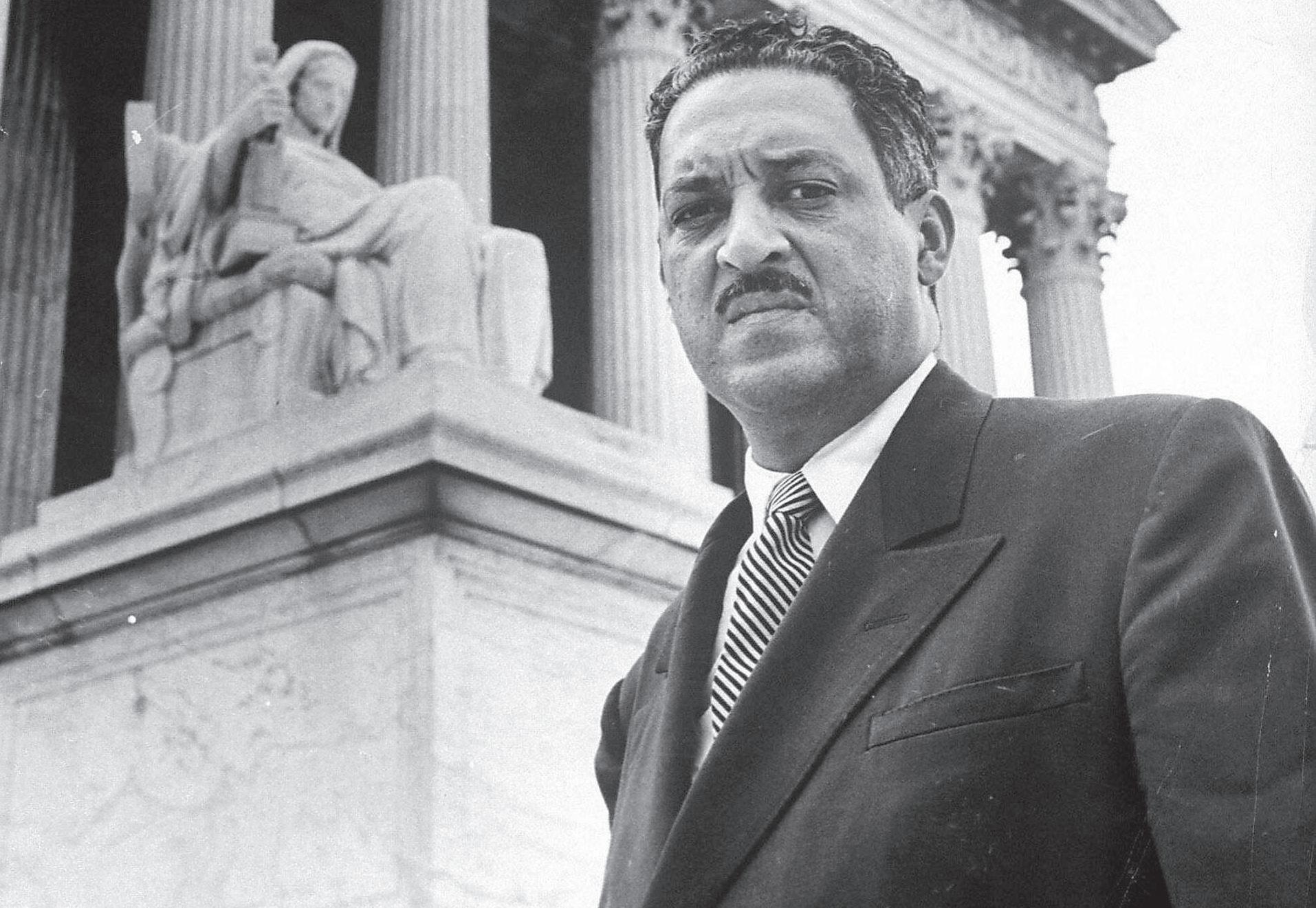
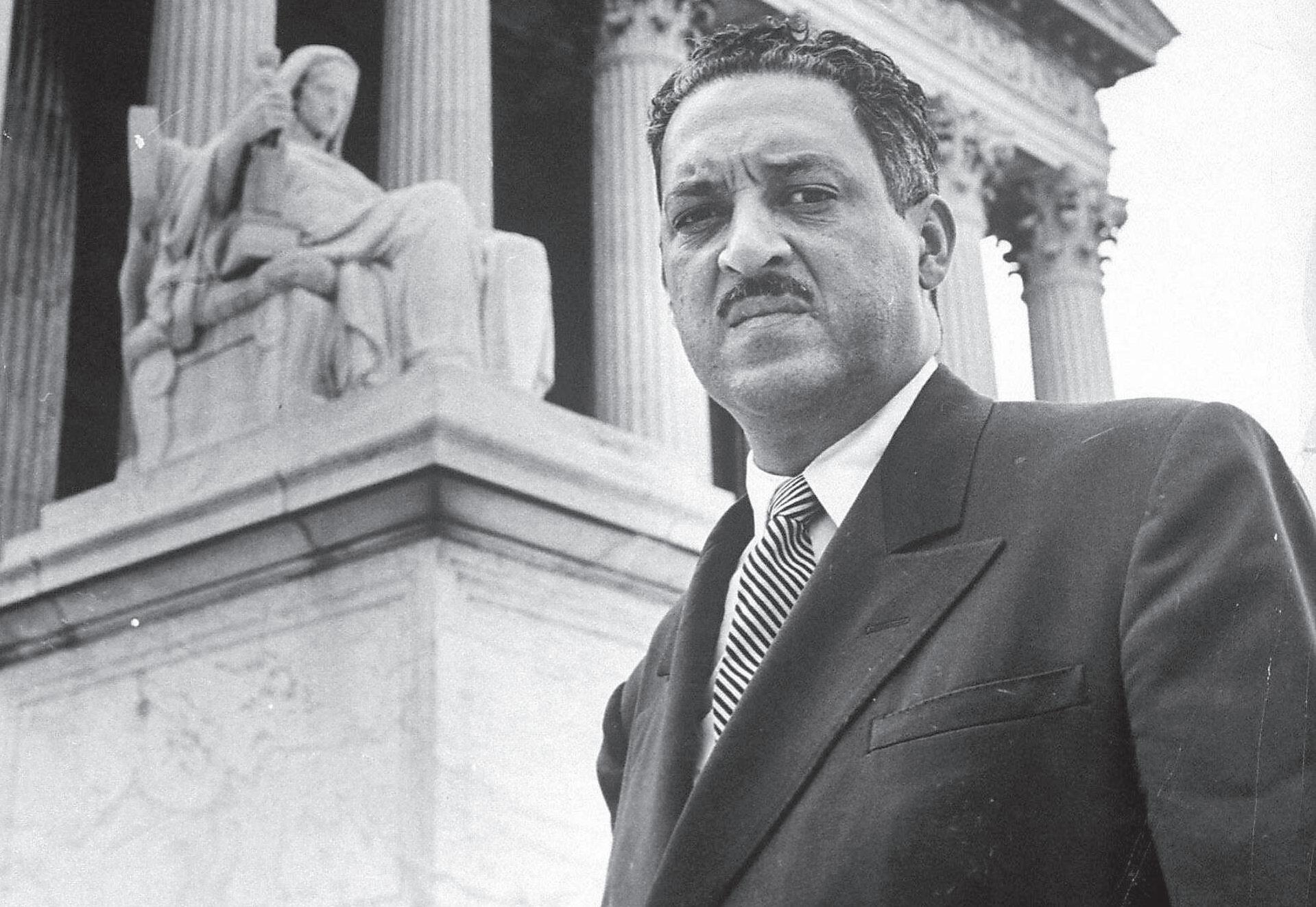
Thurgood Marshall

DECEMBER 13, 2025–JUNE 21, 2026
by AFL-CIO President Liz Shuler and AFL-CIO Secretary-Treasurer Fred Redmond
America’s unions mourn the passing of the Rev. Jesse Jackson, a towering moral force whose lifelong commitment to justice reshaped both the labor and civil rights movements and left a lasting mark on the nation.
Jackson was a full-time organizer for the Southern Christian Leadership Conference before being appointed national director of Operation Breadbasket by his mentor Dr. Martin Luther King Jr. In this role, Jackson led boycotts and campaigns that secured thousands of new jobs for Black workers. His two presidential campaigns would break barriers and expand the political imagination of our country. Through Operation PUSH and the National Rainbow Coalition—later united as Rainbow PUSH Coalition—he brought communities together with a simple, powerful truth: economic justice and civil rights are inseparable.
Throughout his life, Rev. Jackson fought tirelessly for workers, both at
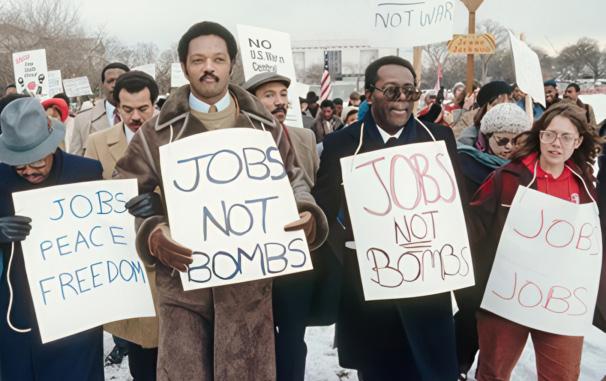
home and around the world. He upheld the labor movement’s highest ideals— walking picket lines, supporting workers at the bargaining table, and insisting that women and people of color be fully included in union protections. He stood with the AFL-CIO at major mobilizations and worker rallies, from the coalfields to campaigns for janitors and public-sector workers. In 2002, he joined the AFL-CIO and local unions in organizing laid-off Enron workers to secure fair severance pay. On the international stage, he confronted global corporations to defend the dignity and rights of workers across supply chains. At every turn, he reminded us that the fight for good jobs, living wages, and union rights is inseparable from the fight for justice and equality.
As we honor the Rev. Jackson’s memory, we reaffirm his belief that “the American worker is not asking for welfare, he’s asking for a fair share—not for charity but for parity.”
Our hearts are with the Jackson family, his loved ones and all those who are mourning this immeasurable loss. May he rest in power.
by Dereen Shirnekhi
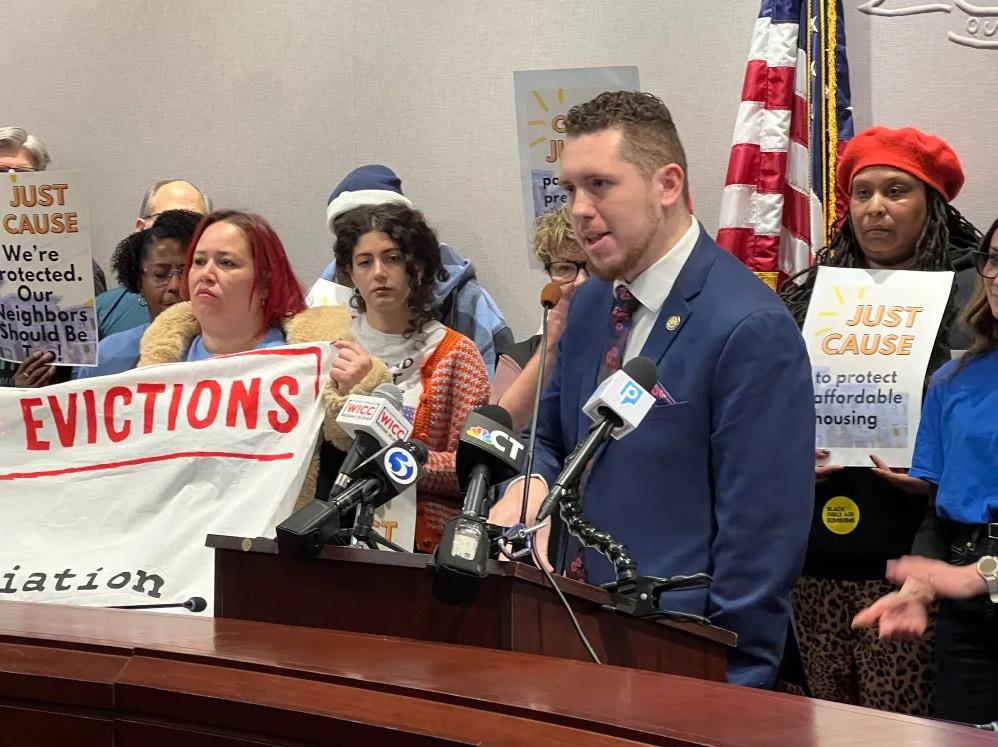
HARTFORD — Housing advocates and state legislators on Tuesday kicked off another state-level fight to prohibit some landlords from kicking out tenants without “just cause” when their leases are up. That legislative move was announced at the Legislative Office Building in Hartford during a Tuesday morning press conference. Dozens of activists, renters, and advocacy groups joined Bridgeport State Rep. Antonio Felipe and New London State Sen. Martha Marx — both Democrats and co-chairs of the Housing Committee — to launch the campaign.
“Tenants are not treated as people. We are treated as removable objects. That is not housing; that is extraction. That is violence dressed up in legal language,” said Sun Queen, a New Haven housing activist, tenant, organizer, and poet who spoke up at Tuesday’s presser.
Queen said that, after 14 years of “building a life inside the same apartment, I received a notice to quit,” a pre-eviction legal notice. “Fourteen years of memories, stability, community, reduced to a piece of paper telling me to disappear. Not because I destroyed the property, not because I stopped paying rent, not because I endangered anyone. But because the system says a landlord can erase a life with paperwork.”
Queen described housing as being treated like “stock portfolios rather than human survival.” As someone who works with unhoused people, Queen said that she sees what happens after eviction. “People do not just find somewhere to go. There is nowhere to go. Where then shall we go? Shelters are full. Affordable hous-
ing isn’t affordable. People end up in cars, motels, couch-surfing, or outside.”
Just-cause eviction protections, Queen said, would require landlords to have a “real reason to remove someone from their home” — rather than profit, speculation, or because “someone with more money has appeared.”
This is the fourth year in a row that state legislators are trying to pass just-cause eviction legislation. In 2025, the bill died before reaching the House for a vote.
A bill has not yet been introduced this legislative session. CT Tenants Union Vice President Luke Melonakos told the Independent that they are expecting a bill number, providing some language and a tracking process, later on Tuesday or Wednesday. Melonakos said that as of Tuesday, he had learned it would be a Senate bill this year.
Melonakos said that this session’s bill will be no different from last session’s bill. Read last session’s bill here.
On Feb. 10, members of the Housing Committee voted 13-6 for the concept to be raised. Read more about that later in this article.
Currently, landlords in Connecticut are able to choose not to renew most tenants’ leases for any reason. They can then sue to evict a tenant for staying in an apartment after their lease has expired. This is considered a no-fault or lapse-of-time eviction.
If passed, the protections that housing advocates are pushing for this legislative session would mean that a landlord can’t evict a tenant without “just cause.” Just cause includes nonpayment of rent, lease violations, being a nuisance to other tenants, and the tenant not agreeing to a fair
rent increase.
Just-cause eviction protections are already in place for tenants who are 62 and over or who are disabled and live in complexes with five or more units.
The bill introduced in 2025 would have extended these protections to tenants who have rented a home for at least 13 months and live in a building or complex with at least five units. The bill also proposed that, under certain grounds, a landlord would be able to evict a tenant if the landlord or a family member would use the unit as their own principal residence.
“Despite fearmongering, Just Cause does not impact other for-cause grounds for eviction including, for example, nonpayment of rent, lease violations, or nui-
sance,” the CT Tenants Union wrote in a Friday press release. “Just Cause would also protect tenants from landlords who use no-fault evictions to gentrify complexes — thereby eroding existing affordable housing at a faster rate than new housing can be built — or to intimidate, retaliate, or discriminate against tenants.
“It is a cost-free, effective policy solution that will help create safe, stable, and affordable housing by preventing displacement and housing insecurity.”
Opponents of the bill have argued that lapse-of-time evictions allow landlords to remove disruptive tenants, maintain better control of their own property, and sell or renovate their property freely.
At a Feb. 10 meeting of the Housing
Committee, a week before Tuesday’s press conference, members voted on item numbers as concepts to raise. Votes do not necessarily represent how a legislator will officially vote on bills later in the session. Felipe described just-cause eviction legislation — An Act Concerning Evictions For Cause — as the “main event.”
“We’ve been doing this for the last few years,” Felipe said in his introduction of the concept at that meeting. “This is the most conservative version of this bill we’ve ever had.”
Republican State Sen. Rob Sampson of Wolcott said that he would have a hard time getting to a “yes” vote on just-cause eviction legislation. “I find this very far from anything that could be considered conservative in any way,” he said. “It’s a direct violation of property rights.”
Sampson also said that he believed the legislation wouldn’t achieve its stated goal. “When you put more requirements on landlords,” he said, you “create, or worsen, exacerbate a housing shortage.”
Democratic State Rep. Minnie Gonzalez of Hartford, who said she was once a landlord, said that she had to deal with many problems because of tenants who damaged her property and received no help from the court. She was concerned because she said it is already hard to evict tenants. “I will vote for this bill now here in committee to see if we can fix it,” she said, “but I’m not saying I will vote for this bill on the floor.”
In the end, the committee voted 13-6 to raise the concept.
He lived the hope that Reconstruction is possible and showed us the power of "we the people"
By WILLIAM J. BARBER, II ourmoralmoment@substack.com
Rev. Jesse Louis Jackson died this morning at his home in Chicago, Illinois. He was 84 years-old. I prayed this morning with his children who have taken shifts by his beside to care for him for weeks. His son told me that when their father died, their mother said, “A mighty lion has fallen.”
This loss hits me hard and deep. I worked in Rev. Jackson’s youth work in North Carolina when he ran for president, and he has been supportive for over 40 years - a constant and reassuring presence throughout my public ministry.
I was Student Government President at North Carolina Central University when Jesse ran for President in 1984. As students, we saw in his campaign the issues that mattered and the energy that was needed to bring new voters into politics. It wasn’t about Democrats or Republicans. We weren’t even thinking about that. We were thinking about how people could have enough to survive and thrive in this society.
Most of us had come from poor Eastern North Carolina. We knew what it was like for people not to have living wages and health insurance. And here this figure comes, rising to really start back up the ending of the Second Reconstruction and maybe even bring us toward the promise of a Third Reconstruction. Jesse showed us how moral leadership can rally a fusion coalition that isn’t possible when we do politics as usual. We’ve built Repairers of the Breach to train moral leaders to build rainbow coalitions in every place - and Jesse has been right there supporting us all the way.
We just finished a march across Eastern North Carolina to rally a coalition to overcome the gerrymander that’s trying to steal a Congressional seat. We are doing what Jesse showed us how to do back then. He said, like little David in the biblical story, we have gather up the smooth stones of unregistered and inactive voters to bring down Goliaths who abuse power. He was right then, and it’s still true today.
I’m grateful Abby Phillip was able to capture much of Jesse’s vision and contribution to politics in her recent book, A Dream Deferred. We talked with her about the book and Jackson’s legacy here on Our Moral Moment this past November.
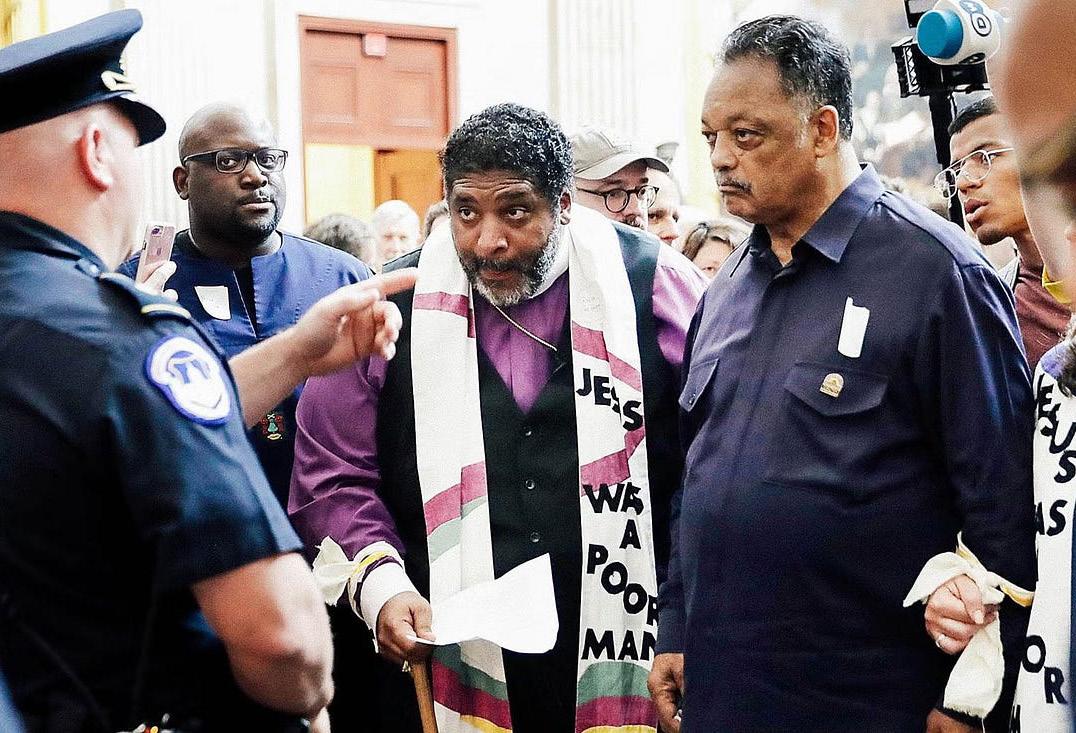
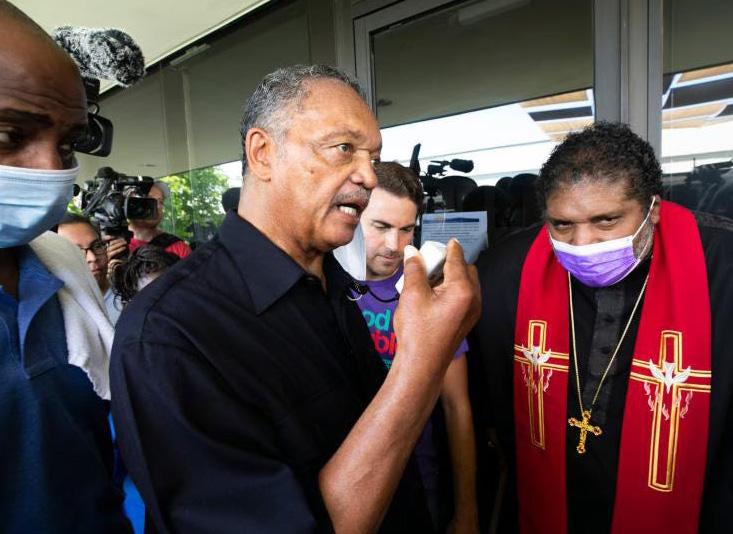
I remember once, when I was volunteering for his Presidential campaign, Jesse made me so angry. We had been organizing and we missed some points in our presentation. He made two of us stay up all night researching the points. He said, “You don’t get second chances in this, and people are counting on you to have your stuff together.” This was after we had done five stops with hardly any money - five of us sleeping in one room, and all of volunteers. The first time Jesse ran for president in 1984, he didn’t hardly have any money for secu-
rity or staff. We all volunteered, and yet when it was over we had registered millions of new voters. Everywhere he went when he ran for President, Jesse would take more time registering voters than he would giving a speech. He registered new voters of
Five years ago, when Repairers of the Breach worked with moral leaders in Texas to build a fusion coalition to challenge gerrymandering there, Jesse came and marched with us. I tried to tell him, “No, you don’t have to do this.” His disease was already advanced then. But at 80 years old, he was on that asphalt in the Texas summer heat. He met us in Arizona to petition Senator Sinema to break the filibuster to protect voting rights, and again in Washington, DC to challenge Senator Manchin on the same issue. To the very end, he showed up in every way he could. He had demanded it of me when I was young because he knew that the gospel demanded it of him.
Jesse’s mantra was “Keep hope alive,” but he knew hope was not just wishful thinking. Real hope isn’t passive. It comes from deep faith and moral commitment, when people can no longer accept the way things are and set out to change them. That’s when hope is born, nurtured, and grown. And that’s where Jesse chose to be his whole life long. I remember one day when we were with Jesse on the campaign, he took us to this restaurant. And the lady there said, “It’s Reverend Jackson. Let me give you a free meal.”
He said, “No, no.” And he pointed to a guy outside. He said, “If you want to give a free meal, give it to him.”
That’s the kind of leader he was. From the way he called forth a rainbow coalition of people to challenge economic and social inequality to his historic presidential run to the way he dared to keep hope alive whenever the nation struggled with being who she says she is and yet ought to be, Jesse embodied the hope that we can still become the best of what we’ve claimed to be. He put the people first, and he knew that “we the people” have the most important power in the world - the power of love to transform this nation.
every race, creed, and color. We didn’t have a precinct on our college campus, but after Reverend Jackson came through in 1984, we decided we had to fight for a precinct on that campus. We marched 2,000 students to the polls, fought for our own precinct, and got it.
Now Jesse rests with the angels and ancestors. His name in Hebrew means a gift from God because God exists. Indeed, Jesse was a gift from God and a witness that God exists in the ways he cared for and lifted all people, the way he called forth a rainbow coalition of people to challenge economic and social inequality, the way he transformed politics thru a historic presidential run, the way he dared to keep hope alive whenever the nation struggled with being who she says she is and yet ought to be.
Now his eternal hope is realized as he takes his place among the ancestors in the presence of God. May we all take up his hope for the America that has never yet been but nevertheless must be.
By Lucy Gellman
Before last Friday, high school junior Nia Jackson had hit a writer’s block on her musical, One For The Beginning, Two For The End. Then she listened to author Angie Thomas take the stage and tell her story—which didn’t feel so far away from New Haven at all—and something clicked back into place. She got ready to pick the script back up, and finish the show.
Jackson is a junior at Cooperative Arts & Humanities High School (Co-Op), where she is studying visual arts and writes in her free time. Thomas is an award-winning author, whose gift for truth-telling in her 2017 novel, The Hate U Give, has also made her one of the most frequently banned authors in recent history. Last Friday, their worlds collided joyfully at Co-Op, where Thomas delivered a master class in storytelling, sticktoitiveness, and the necessity of optimism when the world feels completely upside down.
She spoke again Saturday at Yale’s annual Black Solidarity Conference, alongside speakers and scholars including Ibram X. Kendi, Serena Page, and Michele Ghee. But it was her time at the College Street high school, and later in a smaller group session in Trenity Webber’s second-floor creative writing classroom, that may have left the most profound impact on New Haven.
The visit was made possible by Nelba Márquez-Greene, a community scholar within the Yale School of Public Health’s (YPH) Firearm Injury Prevention (FIP) project, and FIP team members who spoke briefly about their own research at the top of the assembly. In 2012, Márquez-Greene lost her daughter, sixyear-old Ana Grace Márquez-Greene, in the shooting at Sandy Hook Elementary School. Her son, Isaiah Márquez-Greene, is a survivor of the same attack.
In the years since her daughter’s death, Márquez-Greene has kept Ana Grace’s vibrant legacy alive through deeply human storytelling and through the arts, of which she is a steadfast champion and outspoken advocate. So it makes sense, perhaps, that her world would include Thomas’ profound gift for narrative, in which the author names and explores the trauma of gun violence not just on a single victim, but on the survivors, including family, friends, and community members who are left with unimaginable grief and handfuls of questions.
“I’ve been all over the world because I took a chance and told a story,” Thomas said to students gathered in the school’s auditorium, many of them wide-eyed and beaming as she spoke. “The world, it does not make sense right now. And I still have hope.”
In many ways, it was Thomas’ story of how she summons and maintains that hope that pulled so many students, and left them still floating on the words long after she had left. Born and raised in Jackson, Miss., Thomas grew up in a part of the city called Georgetown, a historically Black neighborhood that is known “for all


the wrong reasons,” she said. In part, that came from the fact that gun violence was an all-too-frequent and unwelcome presence in the neighborhood. Thomas was used to hearing gunshots multiple times in a single evening, she told students. But it also taught her that people were not monoliths: the same drug dealers behind those gunshots might be outside the next day, buying ice cream for the community’s kids.
“I grew up knowing that a place like that is complicated,” she said. As she spoke, a few nods of recognition rippled through the room. “I grew up knowing that people are complicated.”
Initially, Thomas gravitated toward music, rather than books (although her mother Julia Thomas, a former school teacher who Friday sat in the front row, has made literature a part of Thomas’ life since before she could talk). As a young adult, she was moved by the music and poetry of Tupac Shakur, with a kind of soaring lyricism in which Thomas could see herself. While she also devoured popular YA books like Twilight and The Hunger
to be an entirely different person,” she remembered. More nods of recognition across the room, as she described code switching every time she walked onto campus. Even in a city steeped in Black history, Thomas was still the only Black student in her creative writing program, and later the first Black person to graduate from that major.
Somewhere in the audience, sophomore Jael Phillips remembered what it felt like to step into a predominately white middle school, and have to code switch in and outside of her classes. “It’s almost something that each Black girl has to go through,” she later said to Thomas. “I definitely liked how you made it real.”
Back at Belhaven, Thomas was acutely aware that she was existing between worlds, and sometimes struggled to reconcile the two. Her sophomore year, she could feel that contrast bubble to the surface when, not even a full day into 2009, Bay Area Rapid Transit police officers assaulted, handcuffed and then shot and killed 22-year-old Oscar Grant, an unarmed Black man who was headed home after ringing in the New Year with his friends.
Back in Mississippi, Thomas heard two different stories of Grant’s death. At home, he could have been a neighbor or friend, relatable for a past punctuated by the carceral system and a life that he was working to get back on track, including a fiancée and a sweet, six-year-old daughter named Tatiana.

John P. Thomas Publisher / CEO
Babz Rawls Ivy Editor-in-Chief Liaison, Corporate Affairs Babz@penfieldcomm.com
Games, none of the characters looked like her.
At some point, “it started to send the message that this is not for me,” she said. Instead, she used Tupac’s lyrics as a springboard to explore her own experiences (she can still jump into his verses extemporaneously, and did so to cheers, applause and a few yesssses from students last week). She could feel, as the music flowed through her, an interest in that same kind of writing, and flirted with the idea of becoming a rapper. She also started writing fanfiction based on the books that she was reading. It led her to Belhaven University, a small, liberal arts college in Jackson where she could study creative writing.
This, maybe, is one of the places where Thomas’ story feels like could take place in New Haven, which sometimes seems like a tale of two (or three, or four, or five) cities squeezed into 18.7 square miles. Home to a few thousand undergraduate students, Belhaven was just a 10-minute drive from Thomas’ home in Georgetown. For many people growing up there, however, it felt totally inaccessible.
“In those 10 minutes I felt like I had
At Belhaven, Thomas’ peers and professors pointed to his time in prison and the fact that he was on parole, as if it somehow justified his execution on a subway platform in the middle of the afternoon. At some point, Thomas sat down at her keyboard, and pounded out a short story about a young girl named Starr, and the police shooting of her best friend, an unarmed Black man who was just headed home.
At the time, “I foolishly hoped that after Oscar Grant, things would change,” Thomas remembered. More nods and hums of recognition in the auditorium, this time from stage left, where history teacher Zania Collier sat on an aisle. Then, just a year after Thomas graduated, Trayvon Martin was shot and killed on his way home from a convenience store, by a neighbor who saw a Black kid in a hoodie as a threat. He was 17 and still baby-faced, with soft eyes like a doe’s. Then there was Michael Brown. Then Sandra Bland. The grief of the moment, and the clarity with which Thomas could see the racism that propelled it, felt unbearable.
Around her, the Black Lives Matter movement was just coming into focus.
“And I thought to myself, what do I have the power to do?” she remembered aloud. That short story, which by her senior year had become a longer story, became a book. In 2015, Thomas tweeted a literary agent during an “Ask Me Anything,” wondering if books with controversial
Advertising/Sales Team
Keith Jackson Delores Alleyne John Thomas, III
Editorial Team
Staff Writers
Christian Lewis/Current Affairs
Anthony Scott/Sports Arlene Davis-Rudd/Politics
David Asbery / Tanisha Asbery
Jerry Craft / Cartoons / Barbara Fair Dr. Tamiko Jackson-McArthur Michelle Turner / Smita Shrestha William Spivey / Kam Williams Rev. Samuel T. Ross-Lee
Contributors At-Large
Christine Stuart www.CTNewsJunkie.com
Paul Bass www.newhavenindependent.org
National Association of Black Journalist
National Newspapers Publishers Association
Greater New Haven Chamber of Commerce
Greater New Haven Business & Professional Greater New England Minority Supplier Development Council, Inc.
The Inner-City Newspaper is published weekly by Penfield Communications, Inc. from offices located at 50 Fitch Street, 2nd Floor, New Haven, CT 06515. 203-3870354 phone; 203-387-2684 fax. Subscriptions:$260 per year (does not include sales tax for the in State subscriptions). Send name, address, zip code with payment. Postmaster, send address changes to 50 Fitch Street, New Haven, CT 06515. Display ad deadline Friday prior to insertion date at 5:00pm Advertisers are responsible for checking ads for error in publication. Penfield Communications, Inc d.b.a., “The Inner-City Newspaper” , shall not be liable for failure to publish an ad or for typographical errors or errors in publication, except to the extent of the cost of the space in which actual error appeared in the first insertion. The Publisher reserves the right to refuse advertising for any reason and to alter advertising copy or graphics deemed unacceptable for publication. The entire contents of The Inner-City Newspaper are copyright 2012, Penfield Communications, Inc. and no portion may be reproduced by any means without the written permission of the publisher. 10
By Pastor Jason GoubournFebruary
My 5-year-old son is at the stage where he wants to know the why behind everything around him. “Why are leaves green?” “Why is the sun so bright?” “Why do referees wear striped shirts?” He is asking these questions because he is developing the desire to understand the world around him. Of course, after I answer all of his questions, regardless of how well I answer them, he inevitably responds with yet another “why?” Sometimes he’s being a silly 5-year-old, but many times he is sincere in his questioning because he has discovered that continuously asking “why” invites the opportunity for deeper levels of understanding with every inquiry.
This is the very process that scientists engage in as they launch into another phase of research. Asking “why” frames the research question, guides the development of a testable hypothesis, and helps distinguish fact from opinion by grounding the study in evidence. The reality is, whether it’s ground breaking scientific research or the curiosity of a 5-year-old child, there is great benefit and power in asking questions.
Interestingly enough, all throughout the scriptures, you will find several moments where God, despite His omniscience, asks mankind various questions.
In Genesis 3:9, He asks Adam, “Where are you?”
In Exodus 4:2, He asks Moses, “What’s that in your hand?” In Ezekiel 37, He asks,“Can these bones live?” In my relationship with God and my study of the scriptures, I have found that God never asks questions because He is uninformed. The truth is, God is not like you and me. Each question that God asks is for our benefit and is typically meant to help us discover and understand something about ourselves, our situation and the world around us. They also give us an opportunity to receive revelation, and to reflect, repent, respond and recognize the importance of having reverence for Him.
There are multitudinous purposes for God’s questions. They help us connect concepts and explore topics on a deeper level while simultaneously helping us to analyze, evaluate, and synthesize information, which is valuable in problem-solving. For example, when God asked Moses what’s in his hand, God was directing Moses’s attention to the staff he held, which God would utilize as a symbol of His faithfulness and power. In 1 Kings 19:9, when God asked Elijah, “What are you doing here?”, as he sat in a depressed state at the foot of Mount Sinai, God already knew
the answer. The question really was meant to cause Elijah to reflect on his current emotional condition and evaluate where he had truly placed his trust. God’s questions are meant to cause us to recognize His power, love and grace. They provide a moment for us to examine our hearts, actions, and spiritual state. In some instances, they create an opportunity for us to recognize our error, confess our sins and seek reconciliation. They can also serve as a starting point for intimate and sincere times of prayer, while sometimes coming in the form of rhetorical questions that are meant to realign you with the reverence of God, as highlighted Job 38:25:“Who created a channel for the torrents of rain? Who laid out the path for the lightning?”. We’ll all have challenging moments in our lives where we are desperate for answers from God. During those times, if you feel God keeps responding by leading you to more questions, it could be that the best response to those challenges doesn’t come in the form of an answer. It comes in the form of a question.
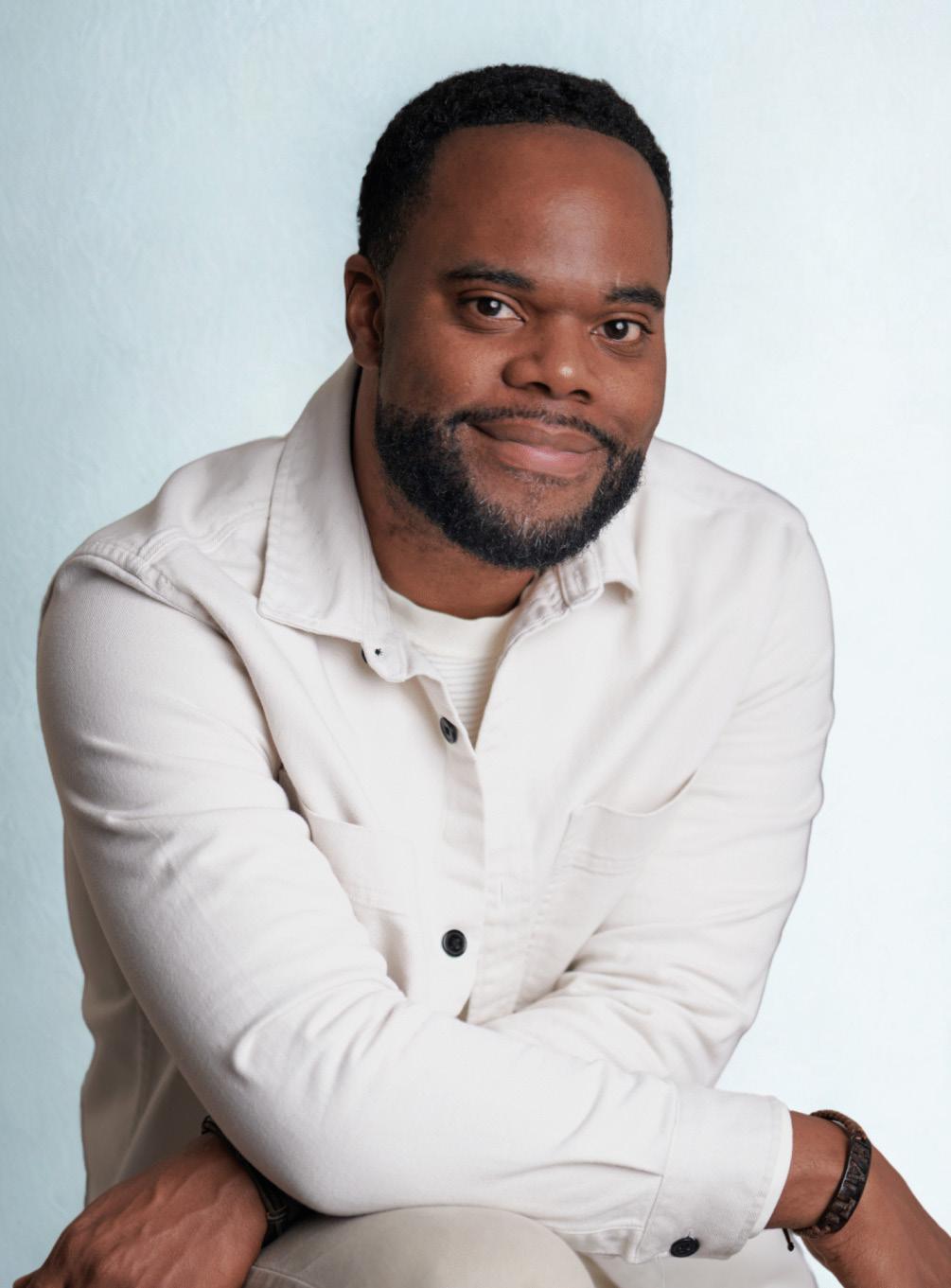
Jason Goubourn is the Lead Pastor of Church on the Rock New Haven and President of Church on the Rock Global.
Previous “Faith Matters” columns:

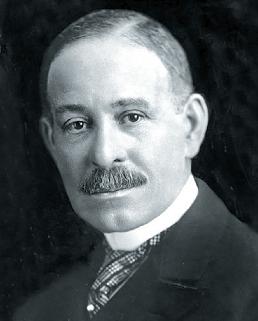
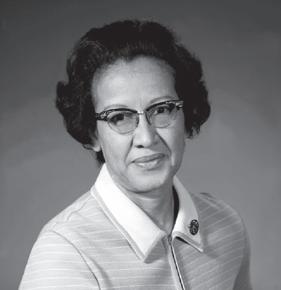


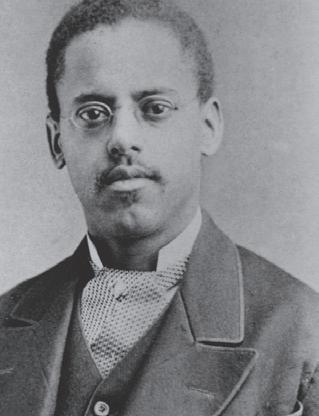
Today, we can thank leaders like inventor Lewis Howard Latimer, astrophysicist Neil deGrasse Tyson, chemist Marie M. Daly, heart surgeon Daniel Hale Williams, doctor and astronaut Mae C. Jemison, and mathematician Katherine G. Johnson for their contributions to advancing science and medicine. Boscov’s celebrates Black innovators who set the standard and pushed boundaries in their fields of science, technology, and beyond.


by Laura Glesby
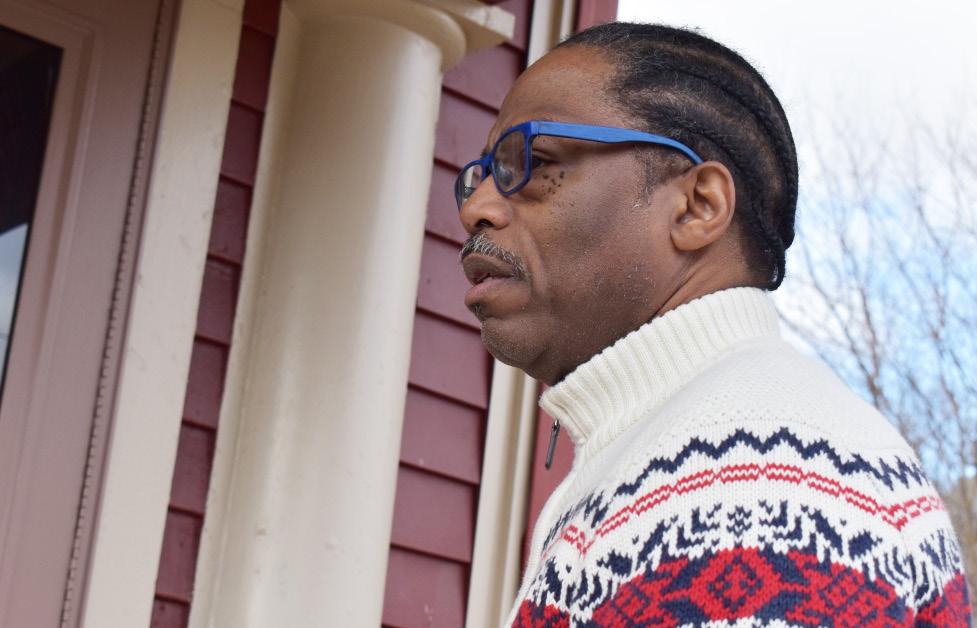
The state’s claims commissioner has found that Connecticut should pay Dixwell/Newhallville Alder Maceo “Troy”
Streater more than $5.75 million as compensation for the 23 years he spent incarcerated for a murder he has always said he didn’t commit.
Robert Shea, Jr. issued that decision on Tuesday, Feb. 10 — a finding with broader implications for the role of the pardon process in the state’s reckoning with police and prosecutorial misconduct.
The state senate’s Judiciary Committee is now slated to review the commissioner’s finding at a March public hearing before voting on whether to approve the award.
“That meant something to me,” Streater said of the commissioner’s decision. “I stayed the course and I maintained my innocence, and stayed on the journey of getting my name cleared. It’s been a long time.”
The decision states that Streater’s compensation award should total $5,752,798 and should come from the State Comptroller’s Adjudicated Claims Fund.
Streater received a pardon in 2022 for the 1990 murder of Terrance Gamble. The pardon came nearly three decades after his conviction and about five years after he was released from prison.
The meaning of that pardon — and whether it should be interpreted as an official finding of innocence — was a topic of heated debate nearly a year ago, when Streater first appeared before Claims Commissioner Shea.
At that March 2025 hearing, Assistant Attorney General Matthew Beizer advocated against compensating Streater, arguing that Streater’s pardon should not be interpreted as an exoneration.
Beizer stated to the commissioner that even though Streater received a pardon, “There has been no court, no prosecuting
authority, no tribunal, no one ever has cast any doubt on the fact that he’s guilty.”
Ultimately, Commissioner Shea disagreed.
In his decision, he delved into the particulars of the state statute (Section 54102uu) that details the system through which individuals can receive state compensation for wrongful convictions.
As Shea noted, a portion of that statute establishes a two-year window for individuals to file for wrongful-conviction compensation after receiving a pardon. Streater filed his claim within that twoyear window, initially seeking $12 million.
Shea also cited language in the statute that describes eligibility for wrong-
ful-conviction compensation. One pathway to eligibility, as established in the statute, is when a conviction is “vacated or reversed” based on “grounds of innocence or grounds consistent with innocence.”
Shea quoted from the statute: “’grounds consistent with innocence’ includes, but is not limited to, a situation in which a conviction was vacated or reversed and there is substantial evidence of innocence, whether such evidence was available at the time of the investigation or trial or is newly discovered.”
The commissioner argued that “a situation where the Board [of Pardons and Paroles] accepted Mr. Streater’s assertions of his innocence, giving rise to Mr.
Streater’s pardon,” should be considered “grounds consistent with innocence.”
While the Board of Pardons and Paroles did not explain its decision to pardon Streater, Shea wrote that the board granted Streater’s pardon “by accepting – and not challenging – Mr. Streater’s assertions of his innocence.”
In other words, Shea determined that Streater’s professed innocence was integral to the pardon he ultimately received — and, therefore, a legitimate basis for state compensation.
While this finding may have broader implications for how the state interprets pardons in relation to claims of wrongful conviction, Shea noted that lately — starting at some point after Streater’s hearing
took place — the Board of Pardons and Paroles explicitly states that “the granting of a pardon is not an indication that an applicant has been wrongfully convicted.” “Now,” Shea wrote — after Streater’s pardon took effect — “this seems to mean that an applicant applying for a pardon should not expect that he/she could receive a pardon from the Board on grounds consistent with innocence.”
Streater’s attorney, Alex Taubes, said he felt “honored” by the commissioner’s finding.
“No physical evidence has ever tied Troy Streater to the May 8, 1990, murder because Troy is innocent. History has proven him innocent,” Taubes said. “Look at what he has done, despite everything that was done to him…. Imagine what Troy could have done if he had not been incarcerated wrongly for 8,394 days.”
“Nothing Can Give You Back The Time”
Streater was convicted of the 1990 murder of Terrance Gamble, who was shot to death in Newhallville at the age of 19. Both Streater’s brother and Rev. Boise Kimber testified that Streater, who was 23 at the time, had been in church at the time of the shooting. Prosecutors relied on four witnesses to tie Streater to the crime, all of whom recanted.
“I was convicted without a scintilla of physical evidence,” Streater noted. After an initial criminal trial resulted in a hung jury, Streater was convicted in a second trial in 1993.
Two of the detectives responsible for his conviction, Joseph Greene and Anthony DiLullo, have been implicated in other convictions that have since been overturned due to police and prosecutorial misconduct.
Streater served 23 years of his 35-year sentence, maintaining all the while that he
Con’t on page 14
by Mona Mahadevan
More than 12 years after a woman was sexually assaulted in New Haven, police made an arrest by using DNA evidence from a separate case in Waterbury. The development was announced by Capt. Brendan Borer on Wednesday during a press conference at police headquarters.
In July 2013, a woman filed a police report after being sexually assaulted in New Haven. “Despite extensive investigative efforts at the time in 2013, the case eventually became inactive and remained unsolved,” said Borer.
The case was reopened in 2025, he continued, after the New Haven Police Department was notified by a national database matching DNA evidence from the 2013 case to evidence from a different crime in Waterbury.
The Waterbury incident took place on Aug. 27, 2021, according to online court records. In December 2022, the Waterbury Police Department arrested a 36-year-old man in connection to the case on the charge of sexual assault in the first degree. The man, who is from Waterbury, has pleaded not guilty.
After combining the DNA evidence with the victim’s statements and medical records, the New Haven Police Department arrested the same Waterbury man on Jan. 30 of this year, said Borer. The man’s charges from the 2013 incident are listed as aggravated sexual assault in the first degree and unlawful restraint in the first degree.
Borer said the man is currently in custody, and his bail is set at $750,000. When asked about the three-year gap between the Waterbury arrest and New Haven arrest, Sgt. Cherelle Carr, the su-
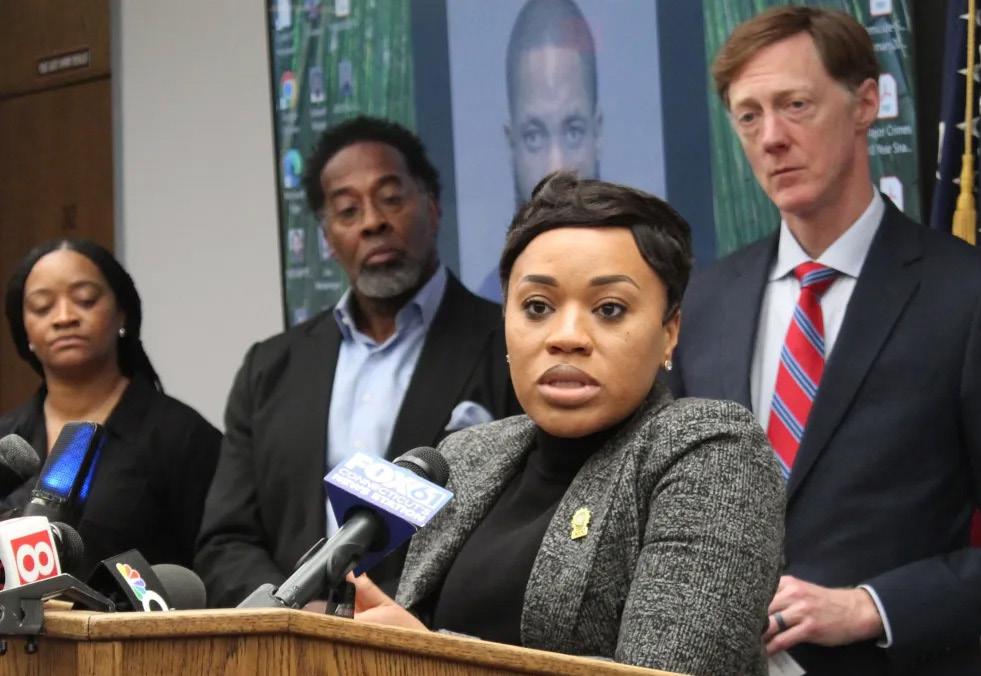
pervisor of New Haven’s Special Victims Unit, said, “First of all, as you guys know, it takes time for investigations to happen.” Through the work from Waterbury police, she continued, New Haven police were notified of the DNA match and immediately restarted their investigation. “It’s not something that happens overnight,” said Carr.
Mayor Justin Elicker, meanwhile, stressed how new technology is helping the department solve crimes.
“I think that these examples make clear that if you engage in illegal activity in the city of New Haven, we will hold you accountable, whether it is in the last year or whether it’s over 12 years ago,” he said. “And the tools that we have, more and more, are helping us solve these crimes, particularly with the commitment of the officers and detectives to follow up” with new evidence.









• Cremation (Choose to be cremated at Evergreen.)
• Columbarium in the Most Beautiful Cremation Garden
• Reserve your Niche in a secure location pre-need.

• Reserve a Niche for family and friends or purchase at-need to safely place your Loved One in the Columbarium.
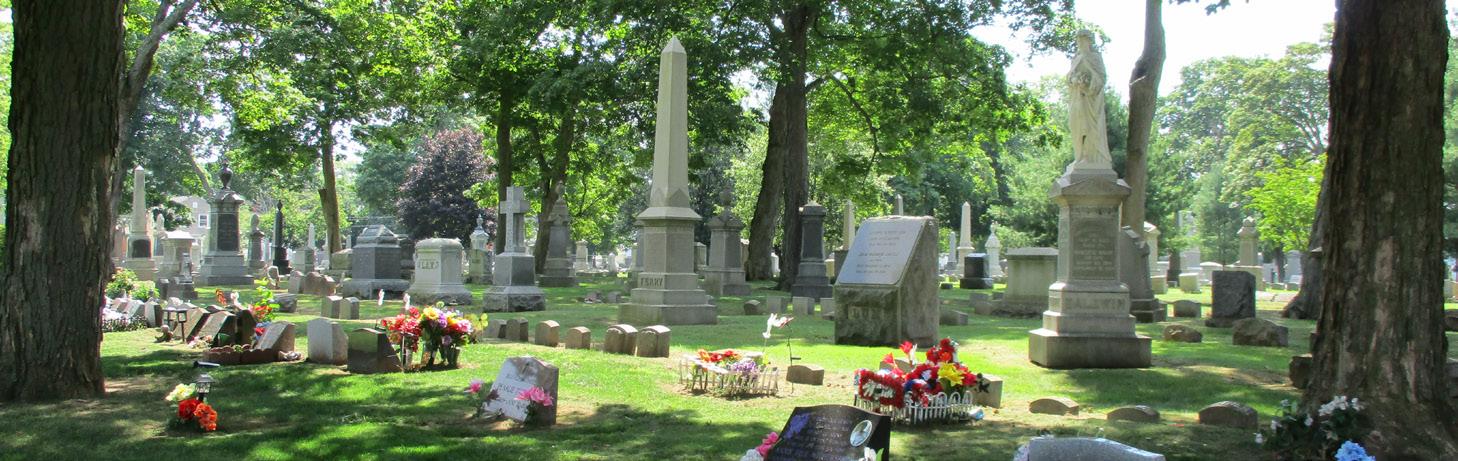
• Burial Lots (infant, single, two-grave, or four-grave)
• Monuments & Markers (black, gray, or pink granite)
• Flower placement (single or multiple placement)
• All orders
be placed at the Evergreen office or the website.
by Staff
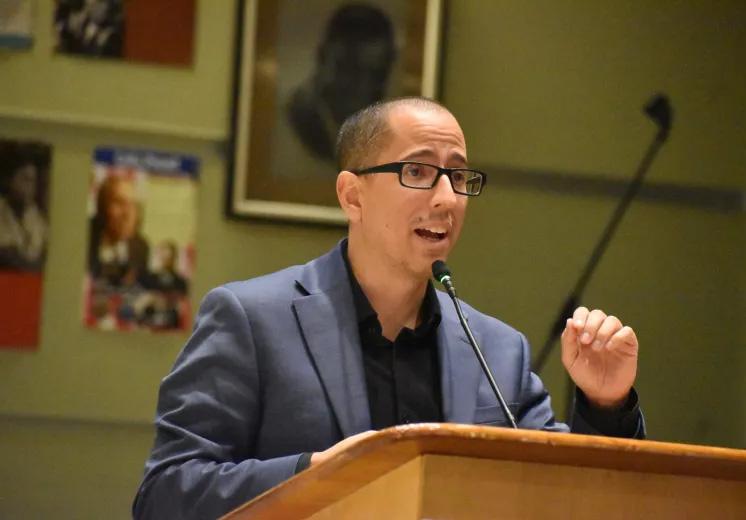
The district published this list after hosting six budget forums at schools across New Haven as it works on putting together a new proposed budget for next fiscal year.
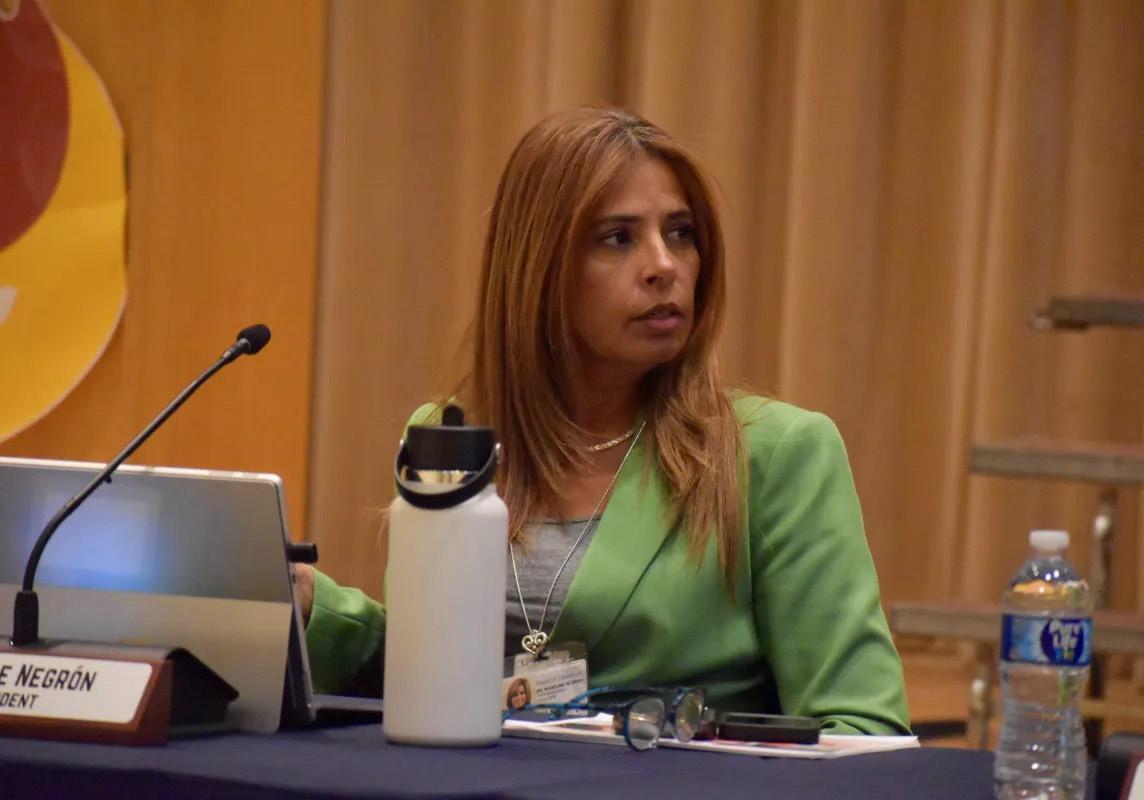
Supt. Madline Negrón said that district leaders will host a budget workshop for Board of Education members at their next full board meeting. Then, on March 23, the district plans to put forward a final recommended budget for the fiscal year that starts July 1.
How is the overall district budget built, and what values or priorities guide those decisions?
The budget process is a structured timeline that begins in early November with a process overview to the Board of Education (BOE) and continues through preliminary budget submissions by schools and departments in late November and a first draft proposed in mid-January. It concludes with a Board of Alders (BOA) hearing in early spring and final BOE adoption. Decisions are guided by the “Path to Excellence” Strategic Operating Plan (2024-2029), which prioritizes equitable opportunities, high expectations, collaboration, continuous improvement, and systemic accountability. The central goal is to create a budget that achieves equity across all schools through a transparent process informed by diverse perspectives. A critical component of the process is to look at student needs such as special education requirements and English language support.
How does the district ensure funding is distributed equitably across schools and neighborhoods?
NHPS uses the October 1st student enrollment data to distribute general funds proportionately among schools. Starting in 2026, NHPS also uses a weighted funding methodology for students enrolled in special education and multilingual learners programs, so that resources follow students based on their specific needs. The district has realigned Title I and Perkins grants to ensure neighborhood schools have access to the same resources as magnet programs. What constraints most shape the budget (state funding formulas, fixed costs, contracts, etc.)?
The most significant constraint is the state Education Cost Sharing (ECS) formula, which has used a stagnant foundation of $11,525 per student since 2013. Additionally, the budget is heavily shaped by fixed costs, particularly staffing, which accounts for roughly 90% or more of some school budgets (e.g., 93% at Wilbur Cross). External contracts such as transportation include built-in increases, further constraining available funds.
How do current budget decisions direct-
ly affect classroom learning and student outcomes?
Budget decisions determine the number of teachers, social workers, and counselors available to support student needs. Due to deficits, the district has had to implement mitigation strategies, such as freezing positions or restructuring departments, which can impact the quality of services. Budget decisions can affect how much funding is available to pay for new books, updated technology, and programs such as sports and the arts that keep students engaged and excited to learn.
What does the SPED and ML budget line mean?
“SPED” stands for Special Education. “ML” stands for Multilingual Learners (students learning English). These lines pay for specialized teachers, translators, and materials specifically for these students.
How are special education, English learner, and mental health services protected in the budget?
These services are mandated by federal and state law. Even if the budget is tight, we must provide these services. They are the last items that would ever be cut.
Additionally, starting with FY27, the district has introduced funding weights specifically for multilingual learners and special education. A pool of $200,000 was set aside specifically for these cohorts on top of baseline school allotments. This approach ensures they receive higher levels of resource allocation to help address the higher cost of their programs. What goes under the tuition budget line?
This line item covers costs for special education outplacements, the Educational Center for the Arts (ECA), and ACES Wintergreen. This is money NHPS pays to other schools and programs. For example, if a New Haven student needs a highly specialized program that NHPS doesn’t have, or if they attend a magnet school operated by the Area Cooperative Education Center (ACES), we must pay “tuition” to that school for resident student attendance.
How are the encumbrances determined?
Do these costs even out?
Encumbrances represent funds committed for existing contracts and budgeted items (such as transportation, utilities, legal services, staff salaries, among other expenses) that have not yet been paid out but are expected to be spent by the end of the fiscal year.
An encumbrance is like a pending charge. If we order 1,000 chairs in October, we “encumber” (save) that money so we don’t inadvertently spend it on something else while we wait for the chairs to be delivered. By the end of the year, these accounts are reconciled as the bills are paid.
Is ECS based on population or on enrollment?
The state Education Cost Sharing (ECS) formula is primarily based on resident student enrollment, using a complex formula that factors in various student weights (multilingual learners, students who are economically disadvantaged, students living in concentrated poverty). The formula also accounts for the town’s wealth (median income and taxable property).
Are there guidelines on spending with grants?
Yes. All grants, such as Title I and Perkins, come with government spending parameters and specifications that the district must strictly follow. If we don’t use the funding exactly as the grant says, we have to give the money back.
Why doesn’t NHPS get money for students who attend our schools from out of district?
The general ECS grant is specifically for resident students. However, for inter-dis-
allotments from the city, as the current funding is not enough to make needed repairs to all roofs, HVAC systems, and playgrounds. We currently spend $1.70 per square foot a year on building maintenance and repair, when $3.50 to $4.50 is considered an effective investment in building sustainability.
Are the capital funds a standard amount or do they increase/decrease?
They are not standard; they are requested on a biennial basis and vary depending on what the City of New Haven can afford to borrow and what the city approves for infrastructure priorities.
What is the difference between the capital budget and regular maintenance?
The capital budget is for major infrastructure (HVAC, roofs, information technology) and is funded biennially. Maintenance funds are part of the regular general fund for daily operations, and are used for cleaning supplies, minor repairs, and custodial staff. Think of it like a car: Maintenance is an oil change or a new wiper blade (small, everyday fixes). Capital is replacing the entire engine (a big, expensive, long-term project). We currently spend $1.70 per square foot a year on building maintenance and repair, when $3.50 to $4.50 is considered an effective investment in building sustainability.
What advocacy is the district doing at the state level to secure more funding?
trict magnet schools, NHPS does receive separate inter-district magnet funding for non-resident students. We also receive some special education reimbursement, though it usually doesn’t cover the full cost of teaching these students. Who covers transportation for out-of-district students?
Usually, the town where the student lives is responsible for getting them to school, or the state provides a specific grant to help cover the cost of transportation. As a magnet operator, NHPS transports all resident and non-resident students enrolled in an inter-district magnet school program. The NHPS budget includes a line item specifically for Inter-District Transportation to cover these costs, which are largely supported by the State of Connecticut Interdistrict Transportation Grant.
Are there any bonds that the district is looking at to support facilities work? How can the public support?
Separate from the operating budget, the district utilizes a two-year capital budget provided by the city, currently about $21 million, for infrastructure. Public support could mean advocating for larger capital
The district is lobbying for a change in the ECS formula and an increase in the foundational per-pupil amount. Leadership is monitoring the state legislative docket to advocate for bills that would update these numbers and use the state’s “rainy day” fund to support education.
How can families and community members support budget advocacy efforts? Families can participate by submitting written testimony, testifying virtually on Zoom, or testifying in-person at the State Capitol.
The district provides an Advocacy Interest Form (via QR code) to organize lobbying days and provide templates for legislative testimony.
When parents call their state representative or city alder to say, “My child needs a library,” it has a significant impact. You can also participate in the city’s budget hearings to speak in favor of school funding.
How does the district report back to the community on how budgeted funds were actually spent?
The district presents detailed monthly financial reports to the Finance and Operations (F&O) Committee of the Board of Education on the third Monday of every month. These reports include actual yearto-date spending and encumbrances compared to the original budget.
See below for a recording of last Monday’s full Board of Education meeting, at which district leaders discussed this FAQ and other budget considerations.
by Laura Glesby and Thomas Breen
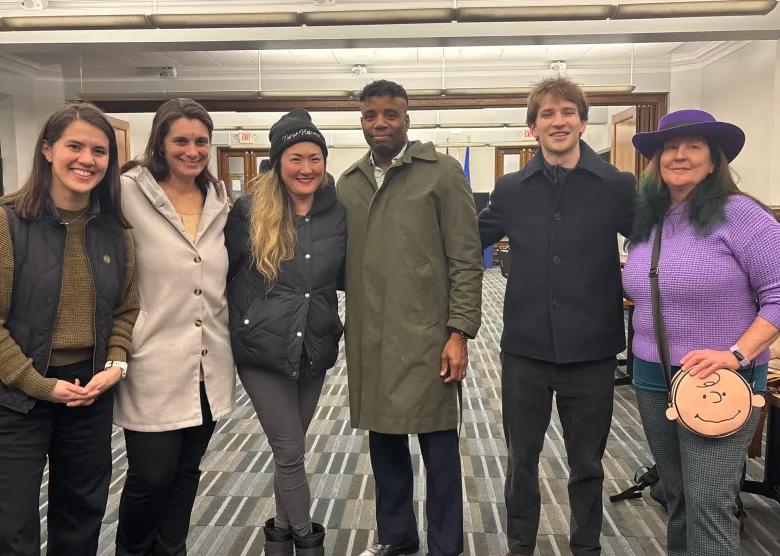
Christine Kim will be the next alder for Ward 7 after handily winning a low-turnout special election Tuesday to fill a seat vacated by fellow Democrat Eli Sabin. Kim beat Republican candidate Kyle Ross 166 to 31.
Since there are 2,860 registered voters in the ward, that means turnout for the special election was just under 7 percent. “I’m feeling tired but very grateful and excited,” Kim said after the polls at 200 Orange St. closed at 8 p.m. “I’m excited to do this work. I have a lot to learn.”
Kim is a longtime New Havener, mother of two young children, board chair of the local farmers market nonprofit CitySeed, and a founder of AAPI New Haven. She’s currently finishing up her latest two-year stint as Ward 7 Democratic co-chair. She was joined at the polls Tuesday evening by one of her successors as Democratic co-chair, Lisa Siedlarz. (The ward’s other incoming Democratic co-chair is Kevin McCarthy).
While Tuesday’s election was technically contested, only Kim’s name appeared on the ballot. That’s because Ross — a financial advisor and first-time candidate — and the local Republican Party did not submit the complete paperwork required for his name to appear on the ballot, leav-
ing him to run as a write-in.
The Ward 7 alder seat has been empty since Jan. 1, when Sabin resigned minutes before he was set to be sworn in to a new two-year term. Sabin subsequently moved to Westville, and is now running in a three-way race for state representative against Democratic incumbent Pat Dillon and fellow Democratic challenger Justin Farmer.
Kim’s victory Tuesday means that she’ll finish out Sabin’s two-year term, which ends Dec. 31, 2027.
Kim’s vote total consisted of 109 votes at the machines on Election Day, 54 early votes, and 3 absentee-ballot votes. Ross earned 19 votes at the machines on Tuesday, 12 early votes, and 0 absentee-ballot votes.
by Paul Bass
Connecticut doesn’t have to stand by watching federal immigration agents terrorize communities. It can take action.
So argues State Sen. Jorge Cabrera, who said he’s working with colleagues at the legislature this term to pass laws to hold Immigration and Customs Enforcement (ICE) agents accountable for their actions. Cabrera, a Democrat, represents the 17th State Senate District. That includes parts of Hamden, where he and other officials responded to help families affected by an ICE raid at a car wash.
“They said we’re going to go after the worst of the worst, the criminals, the cartel leaders. Clearly, you’re not finding these kind of folks at Home Depot parking lots and on farms” or the car wash, Cabrera observed during a conversation Thursday on WNHH FM’s “Dateline New Haven. “There’s rogue agents all over the place. It’s not working. It’s hurting business. It’s hurting our communities.”
He said he supports efforts this legislative session to bar agents from schools and houses of worship, require them to use body cameras, and ban them from wearing masks.
“We’re seeing state violence on a level that I have not seen in my lifetime. We should know who these people are. It should be clearly identifiable,” Cabrera argued.
He said that acocuntability should extend to enabling state residents to sue agents for civil rights violations.
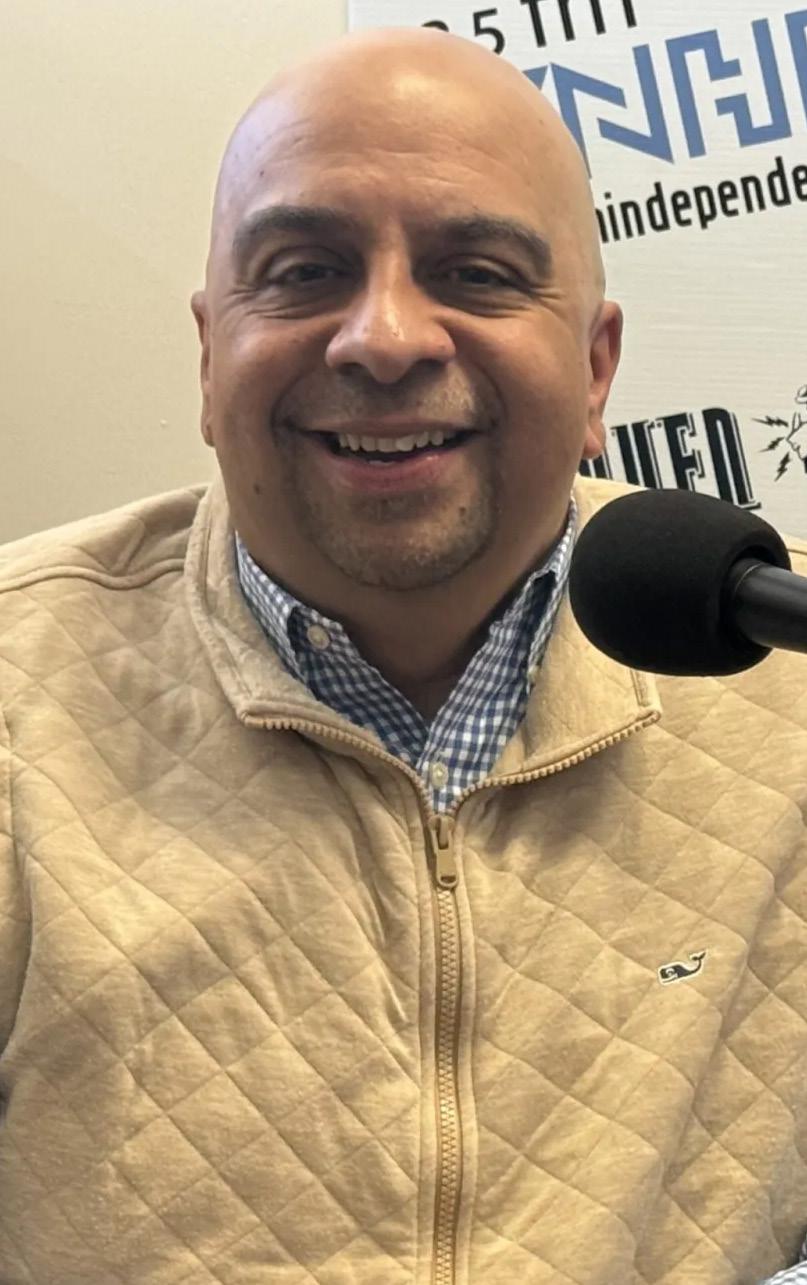
Cabrera casts those ICE-related proposals as part of a broader goal this session to respond to actions by the Trump administration.
He spoke of the $71 million in emergency money set aside to help people no longer able to afford Obamacare because of the expiration of federal subsidies. More money will be needed to cover the families affected, Cabrera said. Meanwhile, in his role as co-chair of the Insurance and Real Estate Committee, he plans to work with colleagues to explore longer-term fixes to bring down health care costs and prevent double-digit annual insurance hikes. He said he didn’t currently subscribe to any specific plan. The committee will dive into proposals such as one to create a “public option” that enables more businesses and individuals to buy into state group plans that can negotiate lower rates.
The challenge of responding to budget cuts and policy dictates from Washington helped inspire his decision to seek a fourth two-year term this year, Cabrera said.
The Trump administration has argued that the Constitution’s Supremacy Clause prevents states from allowing people to sue federal agents.
Asked about that, Cabrera responded, “We’re at a point where we have to take action and not think so much about whether it will be upheld in a federal court of law, because we’re at a point where we have to protect our communities.”
During the “Dateline” conversation,
“We’re living in the Trump era, where so many things are being eroded that we took for granted. Mores, laws are being violated. I think we need to be united as possible to fight back all over society against this fascist attempt to take over our country,” he said. “We’re living in exciting times, challenging times. They’re scary times at times. But we’re living in times of lots of motion and lots of change, and I want to be a part of that change.”

By Lucy Gellman
It was easy to miss it if you weren’t looking, even as you listened.
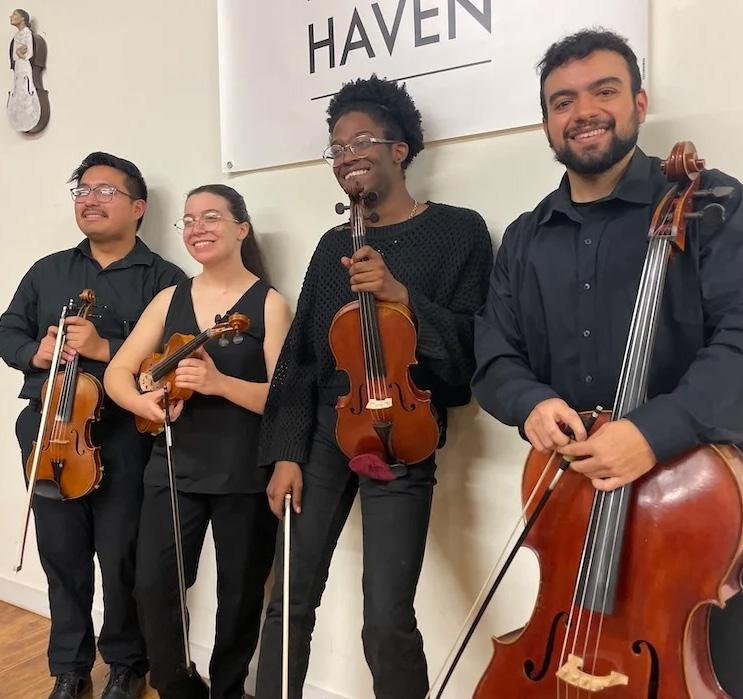
The viola and the violin were having a heated conversation, just as they had been on and off for over a decade. On the left, violin chattered and wound upward, crisp and regimented as if it were trying out a box step. Beside it, the viola answered with a deep, almost rumbling voice, the sound coming from somewhere in the instrument’s wooden chest. Beside each other, musicians Cris Zunun and Dio Matthews pressed their feet into the floorboards and locked eyes.
Then, for just a split second, they smiled—a familiar smile, like they were kids all over again.
Matthews and Zunun, one half of the Legacy String Quartet CT, have been playing music together since at least 2014, when both of them were newly-minted teenagers at the arts incubator Music Haven. Thursday night, the two returned to the organization to give back to the place that became their artistic launchpad. The concert raised a total of $830.
For both of them, it was about more than the money: it was about artistic family. Both now live and work in greater New Haven, where their stories began over 10 years ago. Zunun, who graduated from Cooperative Arts & Humanities High School and headed to UConn in 2019, is now an assistant teacher at Cold Spring School. Matthews, who studied computer science and music performance at Western Connecticut State University, does IT for the Stratford Public Schools. “It feels super important and appropriate at this time [to come back and make music together],” said Matthews, a violist who graduated from Music Haven and headed to college in 2018. “Things are not looking great right now, but all throughout history, there have been musicians. There’s still hope. There’s still music.”
And there was, for nearly two hours that brought together Ludwig Van Beethoven and Aleksandr Borodin, Joe Hisaishi and Michael Jackson. In its current iteration, the Legacy String Quartet includes cellist Dylan Costa, who is a doctoral student in mathematics at the University of Connecticut; violist Matthews; and violinists Zunun and Christina Sack, the latter of whom directs choir and orchestra at Platt High School in Meriden. The four met in a variety of ways: through shared mentors, shared schools, and similar musical circles.
As they made their way to the front of the room, waves of applause suggested that it was going to be a good night. As musicians sat, the room felt like a homecoming, the sound of tuning so natural to the space that the concert would have seemed incomplete without it. Behind them, two wire sculptures from the artist Susan Clinard showed teachers reaching down to their students in profile, instruments in hand. Sandwiched between her
the second row, Music Haven alumna Isabel Melchinger cheered the group on, and for a moment, it felt closer to 2016 than 2026.
But when the quartet started with Hisaishi’s "Path of the Wind,” best known as the theme of Hayao Miyazaki’s My Neighbor Totoro, the time that had passed—and the care and discipline that musicians have continued to build—became clear. As the violins played in the viola and cello, they kept a brisk pace, dipping in and out of each other. Across from them, Costa joined in, a few spare, plucked notes becoming the deep, full hum of the instrument. From her chair, Sack laid down the melody, a sweet and warbling ribbon of sound.
“We decided to play things that made us happy,” Matthews had said beforehand, and it was easy to see why. As “Path of the Wind” gave way to “Departure,” the theme from Miyazaki’s 1989 film Kiki’s Delivery Service, a sense of lightness floated through the room, strong enough to forget how hard the past year has been, on both Music Haven and many of the families that it serves. As the song unfolded from the center of the room, a tangle of strings came apart, the parts singing to each other as the cello rumbled, and viola
and violin called back longingly.
It never meant that the group shied away from talking about a darkness that can feel more immediate, more proximate these days. Before Borodin’s String Quartet No. 2, first composed and performed in the 1880s, Costa paused to point out the moments of friction, rigidness and solemnity in the piece, which takes a listener on a journey through four movements.
“When it comes out, it’s a beautiful thing,” he said. Evening had fallen outside, leaving thick, layered streaks of old precipitation visible on the windows. “But sometimes it comes out of the darkest moments.”
During the Allegro, which opens the piece at a slow, polite kind of clip, Matthews and Sack looked right into each other’s eyes, strings swirling around each other as the first violin picked up the pace and the three other voices followed. By the second movement, a Scherzo, the instruments peeled away from each other in a rich, luscious call-and-response, all the urgency of the first movement opening up to a kind of detente, a short-lived mellowness.
It didn’t last, and soon strings had started that frantic chatter once again, at once furious and wistful. By the third
symphony at Woolsey Hall.
In another, they were playing the concerts—what felt like dozens, although it was only two or three a year—that turned into graduation ceremonies, raucous celebrations, and full-fledged performance parties as they traveled from Southern Connecticut State University to John C. Daniels School to the new Dixwell Community Q House, which wasn’t even finished until both Matthews and Zunun were in college.
In another still, both were college graduates hanging out in West Haven, watching one of their former teachers perform in a new string quartet. As a string arrangement of “La Llorona” swirled around them, they chatted about the Legacy Quartet, then in its infancy in Danbury. The years fell away, just as they always do. That’s part of the bond forged as teenagers, Zunun said: the two have never lost touch. It’s been one long, winding conversation, through which music is a continuous, glistening thread.
“Music Haven gave me a chosen family,” Matthews said, making sure to credit both peers like Zunun and Melchinger, and cheerleaders like former director Mandi Jackson, who beamed from the second row beside her youngest son, Eli. “I could flourish here. If not for Music Haven, I would have never gone to college. I would still be in my little apartment, despairing. It [the concert] sort of feels like the culmination of my entire time here.”
movement, a Nocturne, Borodin was all but there, still pulling new tricks from his bottomless musical bag. From just left of center, Matthews’ viola began to vibrate and roil beneath the violins, as if it had transformed into a didgeridoo, or bent time and space and music history to bring Tuvan throat singing into the string section like it was no big deal.
“This is why we do what we do,” Executive Director Milda Torres McClain had said before the concert, and the words echoed as the quartet barreled towards the fourth and final movement before intermission. While McClain became the executive director in 2022, she’s worked at Music Haven since 2014, when she joined the organization as its director of operations. It means she watched Matthews and Zunun grow up. “This is the point of our program.”
And it was. At moments, it was possible to catch glimpses of Matthews and Zunun as their younger selves, still-awkward high schoolers who were just starting to figure things out. In one snapshot, brought to life in Borodin’s String Quartet, they were adjusting their posture and chatting over cheesy, fragrant slices at the now-shuttered Wall Street Pizza (rest in peace) before many a field trip to hear the
That was clear as the group closed out the evening with Beethoven’s String Quartet No. 4 in C Minor, one of six that the composer wrote during his lifetime. The piece, composed at the turn of the nineteenth century, introduces in four movements a kind of sweeping drama to any room in which it is played, the kind of music that paints a picture of the composer with knitted brows and a pinched, pensive face over a desk, quill in hand.
In other words, “It’s moody, it’s brooding, and it’s restless,” Sack said with a big smile. Just minutes later, she had captured that in motion, as a string snapped from her violin during the quiet, understated urgency of the first movement, and she whisked it away, the music around her beginning to boil, while playing all the while.
In the audience, only a few people seemed to register the moment, smiling back as she and the others pressed on. When the third movement, which knits together a minuet and a trio, gave way to a full, lush build of strings in the finale, it felt like the only conclusion the night could have.
“I was just in awe,” McClain said in a phone call afterwards. “Tears of joy … I’m so glad that I was able to experience it. You know, you never know, because the students go in so many different directions after they graduate. My dream was always to see our students playing out in the community.”
To have them back at Music Haven




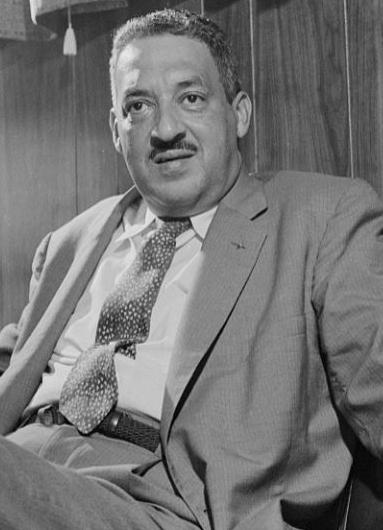
Thurgood Marshall had a fresh, passionate voice and became a champion of civil rights, both on the bench and through almost 30 Supreme Court victories before his appointment, during times of severe racial strains. Marshall was born in Baltimore, Maryland, on July 2, 1908, to Norma Arica and William Canfield Marshall. Marshall’s mother was a kindergarten teacher and his father was an amateur writer who worked as a dining-car waiter on a railroad, later becoming a chief steward at a ritzy club. When Marshall’s father had a day off, he would occasionally take his sons to court so they could watch the legal procedure and arguments presented. Afterwards, the three would debate legal issues and current events together. Marshall’s father would challenge his sons on the points they made, constantly encouraging them to prove their case.
Growing up in Baltimore, Marshall experienced the racial discrimination that shaped his passion for civil rights early on. The city had a death rate for African-Americans that was twice that of Caucasians, and due to school segregation, Marshall was forced to go to an allblack grade school. Once, he was unable to use the bathroom because all public restrooms were reserved for whites. Despite the times, Marshall’s parents tried to shelter him from the reality of racism. They earned enough money to live in a nice area, and he was able to attend a first-rate high school. He was often mis-
chievous and sent out of class to read the Constitution for misbehavior. When Marshall graduated high school in 1925, he knew the Constitution backwards and forwards. Marshall was accepted to Lincoln University in Oxford, Pennsylvania, from where his brother had just graduated. It was known as the black counterpart to Princeton, and one of his classmates was the famous writer Langston Hughes. Marshall chose to focus more on the social life of college. Because of his intelligence, he was able to get through with little effort, but after getting suspended for hazing with his fraternity, he began to focus on academics. Marshall joined the debate club, which helped him realize his passion for becoming a lawyer. He also became more involved with civil rights and helped desegregate a movie theater, which he later described as one of the happiest moments in his life. Marshall met his wife, Vivian Burey, while taking a weekend trip with his friends to Philadelphia. They soon married on September 4, 1929, before Marshall started his last semester. He graduated college in 1930 as a top-notch student.
After being denied by his first choice, the University of Maryland Law School, due to the color of his skin, Marshall decided to go to Howard University. He and his wife moved in with his parents, and his mother sold her wedding ring to help pay for his law school. There he learned about civil rights law and began to think of the Constitution as a living document.
His mentors introduced him to the world of the NAACP, often bringing him to attend meetings and watch lawyers discuss key issues. One of the mentors who made the biggest impression upon Marshall was Charles Houston, who taught him to defeat racial discrimination through the use of existing laws. Marshall graduated as valedictorian of his class in 1933 and moved back to Baltimore.
Marshall denied a postgraduate scholarship to Harvard in order to start his own practice and opened an office in east Baltimore. A few people did come to him for help, though unable to pay. Marshall turned none of them away. He began to develop his style as he took cases dealing with police brutality, evictions and harsh landlords. Marshall was respectful but forceful in presenting his case. As his name began to gain notice, he earned big clients such as labor organizations, building associations, and corporations. Marshall started to volunteer with the NAACP and eventually became one of their attorneys, joining his mentor Houston to argue cases together. He won his first case arguing that the University of Maryland Law School should allow an African-American admission. In 1935, Houston got Marshall appointed as Assistant Special Counsel for New York in the organization. From then on, the two began planning on how to have the Supreme Court overrule the separate but equal doctrine. After Houston resigned and Marshall took over as Special Coun-
sel in 1938, he traveled to dangerous areas in the South in order to investigate lynching, the denial of voting rights, jury service, and fair trials to African-Americans. The face of the NAACP had soon become that of Marshall’s. In 1940, the NAACP set up a legal activist organization known as Fund, Inc., of which Marshall was hired to be special counsel. He was able to work toward his goal of challenging segregation in education. He won his first Supreme Court case dealing with forced confession; and after President Truman rejected the separate but equal doctrine in relation to the G.I. Bill, Marshall was ready to bring the education issue into full light. Marshall finally got the case he had been hoping for, and in 1952 argued Brown v. Board of Education. The case was reargued in 1953, and after 5 months of waiting, the Supreme Court delivered its opinion that invalidated the separate but equal doctrine. In 1961, President Kennedy appointed Marshall as federal judge to the Second Circuit Court of Appeals in New York City. Marshall spent four years on the court, and none of his opinions were reversed on appeal to the Supreme Court. In 1965, President Johnson called upon Marshall to be the country’s next Solicitor General. Marshall was sworn into office, but only spent two years in the position. In 1967, the President appointed him as the first African-American to be an Associate Justice on the U.S. Supreme Court. Marshall’s voice was a liberal one which
held great influence early on in his term. As a proponent of judicial activism, he believed that the United States had a moral imperative to move progressively forward. He staunchly supported upholding individual rights, expanding civil rights, and limiting the scope of criminal punishment. Justice William Brennan shared many of Marshall’s opinions and they usually voted in the same bloc. In Furman v. Georgia, these justices argued the death penalty was unconstitutional in all circumstances, and dissented from the subsequent overruling opinion, Gregg v. Georgia, a few years later. He also made separate contributions to labor law (Teamsters v. Terry), securities law (TSC Industries, Inc. v. Northway, Inc.), and tax law (Cottage Savings Ass’n v. Commissioner of Internal Revenue). He had strong views on affirmative action and contributed greatly to opinions on constitutional law. Marshall maintained a down-to-earth style and would often joke with Chief Justice Burger as they passed in the hallways by asking “What’s shakin’, Chief baby?” As the court made a shift towards conservatism, however, Marshall became frustrated and his influence weakened. Despite the change of currents, Marshall’s voice remained strong until his retirement, when he was succeeded by Associate Justice Clarence Thomas. Marshall died on January 24, 1993 of heart failure in Bethesda, Maryland.
Thurgood Marshall was a lawyer and civil rights activist who served as Associate Justice of the Supreme Court of the United States from October 1967 until October 1991. Marshall was the Court's first African American justice. Prior to his judicial service, he successfully argued several cases before the Supreme Court, including Brown v. Board of Education (1954).
One of the most powerful leaders to emerge during the early days of the U.S. civil rights movement, Thurgood Marshall was at the forefront of many legal battles for racial equality including the landmark Supreme Court case, Brown v. Board of Education, and influential in key moments during the Little Rock desegregation crisis.
Born in 1908 in Baltimore, Marshall pursued his undergraduate studies at Lincoln University in Pennsylvania alongside Cab Calloway and Langston Hughes. Hughes later said that Marshall was “rough and ready, loud and wrong.” Barred by a segregated admissions policy from attending the University of Maryland Law School, Marshall instead attended Howard University Law School and was the valedictorian of his graduating class. While at Howard, his views on discrimination were heavily influenced by the Dean of the Law School and his mentor, Charles Hamilton Houston.
Following graduation, Marshall opened his own private law practice in Baltimore. In 1936, he became a staff lawyer alongside Houston for the National Association for the Advancement of Colored People (NAACP). Two years later, Marshall became the lead chair in the legal office of the NAACP; by 1940, he was the head of the NAACP Legal Defense and Educational Fund (LDF). While Marshall would argue many critical lawsuits on behalf of the NAACP LDF (Smith v. Allwright, Shelley v. Kramer, Sweatt v. Painter, and McLaurin v. Oklahoma State Regents), his most significant victory would come with the Brown v. Board of Education decision in 1954.
Brown argued that the Supreme Court decision, Plessy v. Ferguson (1896), could not be applied toward public schools because “separate educational facilities” were “inherently unequal.” His involvement in this case would eventually bring Marshall to Little Rock in 1957 after Governor Orval Faubus attempted to defy federal law by prohibiting integration of Central High School.
On September 20, 1957, Marshall and attorney Wiley Branton appeared in Little Rock before US District Judge Ronald Davies requesting an injunction against Governor Faubus' use of troops to prevent integration. The injunction was granted - three days later, the Little Rock Nine would make a second attempt to integrate Central High School.
In 1958, the Little Rock School Board requested permission to delay their original plan of gradual integration by 30 months and asked to be relieved of the burden of desegregation until the U.S. Supreme Court better defines "all deliberate speed,"




as specified in Brown v. Board of Education II (1955). In response, Marshall represented the families of Little Rock seeking a stay of this delay in this case, Cooper v. Aaron. In a rare decision, the US Supreme Court issued a joint opinion authored by all nine justices. The Court stated that while they felt the Little Rock School Board had acted in good faith, the problems in the state of Arkansas had stemmed from the state government. The Court ultimately ruled it was unconstitutional to allow the delay under the Equal Protection Clause. Ultimately, Governor Faubus - buoyed by the results of a local vote to determine integration's immediate future - closed the four public high schools in the city of Little Rock; this one-year cessation of education is known now as the Lost Year.
Further, the court ruled that since the Supremacy Clause of Article VI of the Constitution and the 1803 decision Marbury v. Madison meant that the Supreme Court was the final interpreter of the Constitution, then that meant the earlier Brown decision was the supreme law of the land and thus was binding in all states, despite state laws that may exist to contradict the ruling. This subsequently led to the court rejecting the doctrines of nullification and interposition.
In 1961, President John F. Kennedy appointed Marshall to the United States Court of Appeals for the Second Circuit; four years later, President Lyndon B. Johnson named Marshall as Solicitor General – making him at the time that the highest ranking African American government official in the US. Perhaps the most significant moment of Marshall’s career and contribution to US history occurred in 1967; in a 69-11 vote, Thurgood Marshall became the 96th justice appointed to the United States Supreme Court and the first African American to serve in this capacity.
Thurgood Marshall served on the Supreme Court for 24 years. In 1987, he famously generated controversy during the bicentennial celebration of the US Constitution with these statements:
“The government they devised was defective from the start, requiring several amendments, a civil war and momentous social transformation to attain the system of constitutional government and its respect for the individual freedoms and human rights we hold as fundamental today.”
“Some may more quietly commemorate the suffering, struggle and sacrifice that has triumphed over much of what was wrong with the original document and observe the anniversary with hopes not realized and promises not fulfilled. I plan to celebrate the bicentennial of the Constitution as a living document, including the Bill of Rights and other amendments protecting individual freedoms and human rights.”
Citing poor health, Marshall retired from the US Supreme Court in 1991. He died in 1993 at age 84 in Bethesda, Maryland. Thurgood Marshall – “Mr. Civil Rights”was laid to rest in Arlington National Cemetery and was survived by his second wife Cecilia and their two sons.
rights
By NY Carib News
During a recent gathering on Capitol Hill, lawmakers and advocacy leaders sharply criticized a series of policy decisions implemented since Trump’s return to the White House, as well as the president’s rhetoric and governing approach. While participants outlined broad areas of concern, they provided limited specifics regarding immediate tactical responses.
Representative Yvette Clarke of New York, chair of the CBC, accused the administration of pursuing policies that undermine civil rights protections, restrict voting access, weaken social safety programs, and concentrate economic and political power among elite interests at the expense of marginalized communities.
Throughout a series of strategy sessions, activists and legislators coordinated outreach plans and policy priorities spanning education, historical curriculum standards, healthcare access, immigration enforcement, and anti-discrimination protections. Participants described the discussions as both sobering and motivating, emphasizing the urgency of collective action ahead of upcoming elections.
Several meetings focused on safeguarding voter access during the midterm elections, amid growing concerns among activists following a federal law enforcement raid at an elections facility in the Atlanta metropolitan area. Lawmakers also examined potential legislative and legal responses to an anticipated Supreme Court ruling that could weaken a key provision of the Voting Rights Act of 1965.
House Minority Leader Hakeem Jeffries signaled that a wide range of responses remains under consideration, including public demonstrations, organized boycotts, and expanded legal challenges.
“It’s an all-hands-on-deck moment, and every tool available to the leadership collectively has got to be deployed to get this

thing turned around,” Jeffries said following a press conference.
The renewed mobilization comes as the administration continues efforts to curtail diversity, equity, and inclusion (DEI) initiatives across federal agencies, higher education institutions, and segments of the private sector. Early in his second term, Trump signed executive orders prohibiting what his administration described as “illegal DEI” programs within government entities and organizations receiving federal support, alongside threats to withhold funding from institutions that fail to comply.
Administration officials have also advanced initiatives aimed at reshaping how American history and national culture are presented in schools, museums, and public institutions. Concurrently, federal agencies have increased scrutiny of civil rights complaints alleging discrimination
against white individuals.
In response, civil rights groups and Democratic lawmakers have launched numerous lawsuits challenging anti-DEI measures. Recent legal developments included the administration’s decision to abandon an appeal of a federal court ruling that blocked attempts to deny funding to educational institutions over DEI-related policies.
With Democrats currently lacking majority control in either chamber of Congress, oversight options remain limited, prompting advocacy groups to focus on litigation, state-level action, and grassroots organizing ahead of the midterm elections. Many leaders acknowledged that the rapid pace of policy changes over the past year has forced civil rights organizations into a period of strategic recalibration.
Maya Wiley, president and CEO of
the Leadership Conference on Civil and Human Rights, argued that the administration’s agenda repurposes legal frameworks originally designed to advance equality. “This is about how this administration is using the tools we built as a Black community to ensure that all of our people are protected,” she said.
Parallel efforts are emerging at the state level, where a coalition of civil rights organizations and Democratic attorneys general from fourteen states and the District of Columbia has launched a legal initiative to defend DEI and accessibility policies. Illinois Attorney General Kwame Raoul said the campaign aims to ensure that fundamental civil rights protections remain enforceable through coordinated legal action.
The effort unfolds amid an evolving judicial landscape. Federal courts remain divided over race-conscious policies in
Church officials say Vernon is the last remaining Black-owned structure still standing in the area after it was rebuilt in 1925. “Vernon absorbed the trauma, the terror, the smoke and the fear and stood as a witness. Now, the church that absorbed trauma will teach truth,” Kristi Williams, a member and massacre descendant, said Thursday.
By Shaunicy Muhammad The Oklahoma Eagle
More than a century after the 1921 Tulsa Race Massacre, members of Greenwood’s Vernon AME Church are determined to tell their own stories.
Archivists, archeologists and elected officials lined the pews of the church Thursday for the unveiling of The Vernon Witness, a multi-year project to preserve the church’s basement and turn it into a museum and cultural center.
Survivors found refuge by hiding in the basement as the upper floors of the church were destroyed.
Church officials say Vernon is the last remaining Black-owned structure still standing in the area after it was rebuilt in 1925.
“Vernon absorbed the trauma, the terror, the smoke and the fear and stood as a witness. Now, the church that absorbed
trauma will teach truth,” Kristi Williams, a member and massacre descendant, said Thursday.
Williams, who founded community education program Black History Saturdays, spearheaded the preservation initiative. She sees the space as “not just history but inheritance.”
The initial phase of the preservation project is expected to take about 18 months. It is made possible, in part, due to $1.5 million in funding from The Mellon Foundation.
Kristi Williams speaks during The Vernon Witness interpretive center groundbreaking at Vernon AME on Feb. 12, 2026.
Alicia Odewale, a Tulsa native and one of the archeologists working on the project, said at its completion, visitors will see over 5,000 artifacts from the church and Greenwood.
“Everything our ancestors left behind to
tell that story will be restored,” Odewale continued.
Odewale was teaching college courses in Texas when she first got the call from Williams to work on the project. She told The Eagle she believes it was God’s divine timing to bring her back home to join the team. She sees the preservation of the church as a call “to bring our artifacts home and bring our people home.” Odewale and others on the team of preservationists said one of their primary concerns is ensuring artifacts are properly preserved — something they say has not always happened in the past.
“I was angry about how some artifacts were, frankly, thrown away,” Odewale told The Eagle following the ceremony. “It’s crazy how our history keeps being literally thrown away because we don’t have a place to store our artifacts, we don’t have a place to display them and keep them from being thrown away. These are the things that our
hiring and workplace protections, while the Supreme Court’s conservative majority has already curtailed the use of race in college admissions and signaled skepticism toward race-based considerations in public policy.
Despite acknowledging the scale of the challenge, civil rights leaders framed the moment as a defining political and legal struggle. Marc Morial, president of the National Urban League, underscored the movement’s resolve, declaring: “We commit today to fight and fight and fight until hell freezes over, and then, I can assure you, we will fight on the ice.”
was innocent.
Initially, Streater recalled, “I was baffled. I was younger. I was angry. And I said, ‘Why me?’”
But he learned that “bitterness, it doesn’t help you. It just consumes you.” Over time, he turned to his Christian faith to maintain hope. “You have to stand with belief in something. I knew that I was innocent and I did feel that one day I would be vindicated,” he said.
Streater was eventually released from prison in 2017.
On April 6, 2022, he appeared before the Board of Pardons and Paroles, seeking out a pardon.
“I want to extend my condolences to the victim’s family for this senseless tragedy, and also state again as I did at my two trials that I did not commit this crime,” Streater told the board. “Although I am innocent of that crime, I take full responsibility for all other crimes and other convictions that I have.”
The board voted to grant him an absolute pardon.
Within two years, Streater was elected to the Board of Alders, representing Dixwell, Newhallville, and Prospect Hill as the alder for Ward 21.
ancestors left behind for us.”
The museum space will also illustrate the church’s founding, highlight members of the congregation and tell the story of how they rebuilt.
A scene from The Vernon Witness interpretive center groundbreaking at Vernon AME on Feb. 12, 2026.
Williams envisions an exhibit where visitors will hear some of the sounds people heard during the massacre as they hid from the violence. “I want people to really feel it,” she said.
Ultimately, Williams wants Tulsans young and old to embrace where they come from.
“Our history is being taken from us. It’s being deleted as we speak,” Williams said.
“Knowing your history, there’s a power in that. It helps with identity and knowing who you are.”
He also became one of 20 people convicted in New Haven County to be listed on the National Registry of Exonerations. In addition to seeking compensation from the state, Streater has since filed a lawsuit against the city of New Haven for the New Haven Police Department’s culpability in his conviction, a civil case that is currently in the pre-trial discovery stage. Meanwhile, as he awaits a final decision from the Judiciary Committee, Streater said that claims commissioner’s decision felt validating.
“Of course it’s good to be recognized and compensated, but nothing takes the place of the time” spent behind bars, Streater reflected. “No matter what you receive, nothing can give you back the time that you missed with your family: the funerals that you missed, the weddings and different family functions.” He added, “I’m not the only one that has been falsely accused and did time for something he didn’t do.”

At Access Health CT, we’re proud to help people enroll in health and dental coverage and make the most of their coverage. Every time we do, it’s a step toward reducing the impact of health inequities and elevating everyone’s ability to live their healthiest life.


By HBCUNEWS.com
The United Negro College Fund (UNCF) has expanded its Project ACCLAIM to help more HBCUs get into asset management.
The UNCF announced the news on Feb. 3, as students from Morgan State and Florida A&M University can now enter its talent pipeline for this lucrative industry. Project ACCLAIM, which stands for Accelerating Learning in Asset Investment Management, has fostered a network of HBCU students to explore careers in this sector.
Established last year with Morehouse College and Howard University, the sponsor-backed initiative has supported HBCU scholars with financial knowledge and professional resources to thrive in their postgraduate careers. Following the initial $10 million gift from Adage Capital Management and Elizabeth and Phill Gross to launch the project, the philanthropists have donated another $10 million to the UNCF venture.
With this latest boost of financial support, students from these newest member institutions will manage $4 million in investment capital, garnering hands-on experience in asset management. Beyond professional readiness, Project
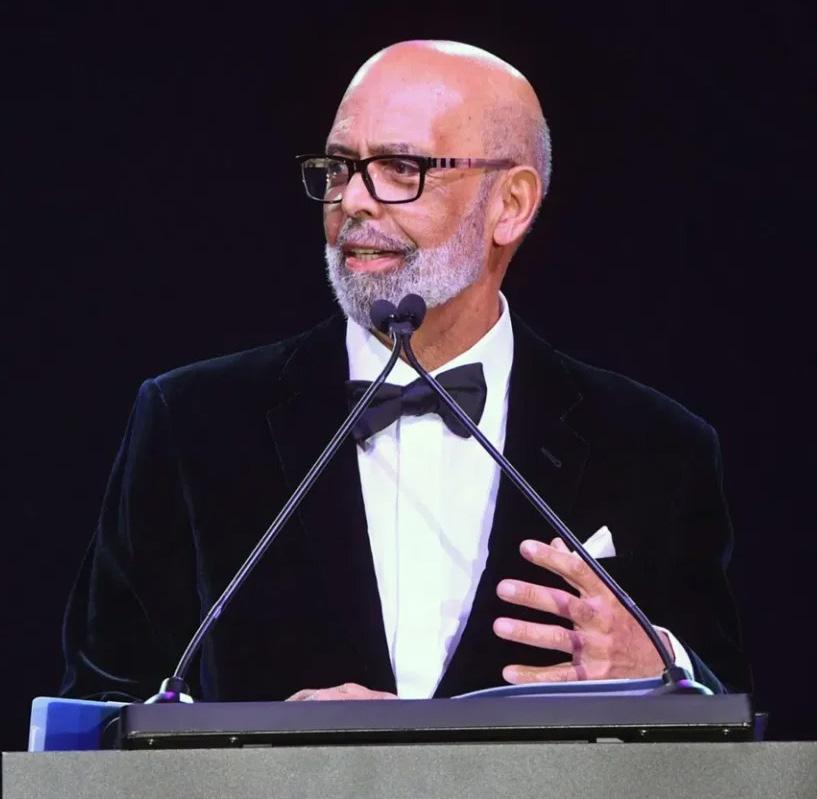
Wealth Management by Informa, Black certified personal financial advisors account for 1.9% of all CFP professionals.
As for diverse leadership in the private equity space, Black people only held 8% of managing director roles that year, as detailed by Institutional Investor.
Now, this talent pipeline aims to course-correct these numbers, making HBCU scholars interested in finance, business, and asset management more competitive candidates for this field.
“This expansion marks a significant milestone for Project ACCLAIM and is especially meaningful as we celebrate 100 years of Black History and remember Dr. King’s vision for economic empowerment,” said Dr. Shawn Thomas, director of Investment Leadership Programs and Lead for Project ACCLAIM, in a press release shared with BLACK ENTERPRISE. “Morgan State and Florida A&M both bring exceptional talent and leadership to the HBCU community and they both bring exceptional talent and leadership to the HBCU community and their participation strengthens our shared commitment to preparing students for high impact careers.”
As for Project ACCLAIM’s latest cohort, officials at both FAMU and Morgan State celebrated the news, which brings
more lucrative opportunities to their students.
“We claimed it! Members across the entire FAMUly – students, faculty, President Johnson, other administrators, external stakeholders – helped to bring this opportunity home to FAMU. We’re all excited to work together to realize the potential of superlative tools and resources in the hands of our eager and talented FAMU students,” said Program Director Inger Daniels-Hollar, Ph.D., assistant professor, FAMU School of Business and Industry. As the UNCF prepares to introduce more investment skills across the HBCU network, scholars are getting ready to break new ceilings in asset management.
“Project ACCLAIM creates an extraordinary learning environment where theory meets real responsibility,” said George Micheni, director of the Earl G. Graves School of Business and Management’s Capital Markets Lab and advisor to the Morgan State University Investment Club. “Working alongside faculty, industry mentors and an investment advisory board, they will gain the discipline, judgment and confidence required to manage real capital while developing skills that translate directly into their post-graduation careers.”
By Matt Brown, HBCUNEWS.com
The press gallery overlooking the U.S. House chamber has been renamed after the abolitionist, writer and presidential adviser Frederick Douglass in a bipartisan move brokered by Black lawmakers. The renaming of the press gallery, spearheaded by Rep. Byron Donalds, R-Fla., was conceived over the last year after the congressman said he brainstormed with his staff on ways to commemorate the history of prominent Americans, including Black Americans, across the Capitol.
“When we talk about Frederick Douglass, we are talking about a man who possessed a profound and unshakable faith in Americans, in America’s family,” Donalds said in remarks celebrating the dedication.
Douglass wrote about congressional proceedings from the chamber during the Civil War. His public speeches and letters to President Abraham Lincoln and northern Republican congressmen helped galvanize support among lawmakers and the public for the abolition of slavery.
“It’s an important thing for us to give honor where honor is due. That’s a biblical admonition,” House Speaker Mike Johnson said during the unveiling of a plaque that now overlooks the entrance to the gallery. “Frederick Douglass is certainly deserving of that honor.”
A bipartisan celebration in a divided Washington
Prominent Black conservatives, including activists, faith leaders and senior Trump administration officials, mingled with lawmakers at a ceremony inside the U.S. Capitol. Staffers from the Library of
Congress displayed artifacts from Douglass’ life.
The celebration, which came during Black History Month and the 100th anniversary of the earliest national observance of Black history, coincided with intense debate over how race, history and democracy are understood in the U.S.
President Donald Trump signed an executive order last year targeting the teaching of history in the Smithsonian Institution, which the order claimed had “come under the influence of a divisive, race-centered ideology” that “promoted narratives that portray American and Western values as inherently harmful and oppressive.”
Another order signed by the president claimed that in U.S. K-12 schools, “innocent children are compelled to adopt identities as either victims or oppressors.”
Trump ordered federal agencies to develop a comprehensive strategy to end “indoctrination” by teachers who may promote “anti-American, subversive, harmful, and false ideologies on our nation’s children.”
Critics argued that the orders, with the removal of some public displays by the National Park Service related to race and identity, and the White House’s ongoing efforts to end diversity, equity and inclusion programs, represented a whitewashing of history that could ultimately fuel discrimination against minority communities.
But the administration’s allies argue that the policies are a corrective to an overly critical narrative about America’s past. Black conservatives, in particular, have defended the moves and argued that more
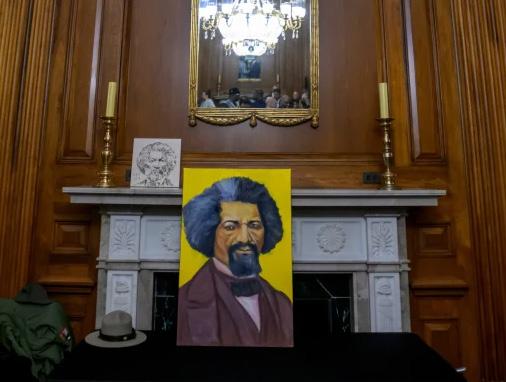
positive stories of individual triumph, like Douglass’ life story, need to be more widely told.
“This is what we did when I was growing up. We knew about our Black heroes,” said Rep. Burgess Owens, a Utah Republican who is Black and attended the dedication. “When we stop telling the good, then people start thinking that we’re not the country that is the promise that we gave. So we need to talk about our history, our success.”
Rep. Steve Horsford, a Nevada Democrat who worked with Donalds on the renaming, said it was important to find bipartisan agreement where possible. “I wouldn’t be here if it were not for the
desire to want to work across the aisle, to not just recognize our history and culture, but to solve our problems that people face today,” Horsford said.
Born in Maryland, Douglass escaped slavery by fleeing to New York as a young man. He become one of the most influential activists for abolition and later moved to Capitol Hill in Washington, where he advocated for civil rights.
An estate he bought after emancipation in the Anacostia neighborhood of Wash-
ington is now a national park.
Douglass, who taught himself to read and write, fiercely condemned the dehumanization of people of African descent and delivered numerous influential speeches throughout his life. His 1852 speech “What to the Slave Is the Fourth of July?” denounced the contradictions of the country’s founding ideals with its embrace of slavery.
In an 1867 essay, Douglass urged Congress to allow Black men to vote and called for more aggressive Reconstruction efforts in the South to guarantee multiracial democracy.
“What, then, is the work before Congress? It is to save the people of the South from themselves,” Douglass wrote. “It must enfranchise the negro, and by means of the loyal negroes and the loyal white men of the South build till a national party there, and in time bridge the chasm between North and South, so that our country may have a common liberty and a common civilization.”
Douglass, who did not know the day he was born because records were rarely kept about enslaved people’s lives, celebrated his birthday on Valentine’s Day because his mother called him her “little Valentine” before he was separated from her as a child.
Donalds praised Douglass for his ability to “love this country enough to tell the truth about it.”
“His life story, from the field, from the slavery fields to the world stage, is one of the greatest narratives of perseverance in U.S. history,” Donalds said.
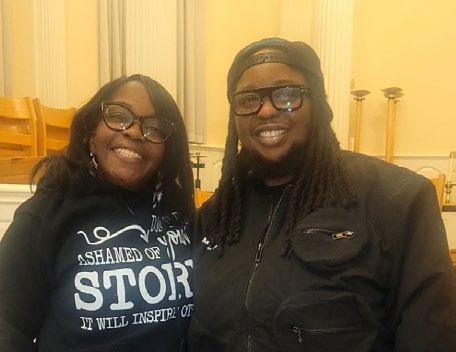









by Daryl R. Thomas Jr.
The Smithsonian’s National Museum of African American History and Culture (NMAAHC) opened a new exhibition highlighting the history, culture and archival preservation of historically Black colleges and universities (HBCUs).
The exhibit, titled “At the Vanguard: Making and Saving History at HBCUs,” features collections from five universities: Clark Atlanta University, Florida A&M University, Jackson State University, Texas Southern University and Tuskegee University, and opened to the public on Jan. 16th.
NMAAHC curators, Joanne Hyppolite, assistant director of culture, Tulani Salahu-Din, curator of language and literature and Jeanelle Hope, caterpillar curator of innovation & entrepreneurship, brought the exhibit to life and came together to describe the intentionality behind the display. They said it was created to showcase the Smithsonian’s expertise in collections stewardship.
As a product of two HBCUs—Coppin State University and Howard University —Salahu-Din said her experiences helped guide the artwork’s curation for two of the featured universities.
“As an international studies minor at Coppin, I studied in North Africa during the entire summer of 1980 and took courses in comparative cultures and African history…This knowledge helped guide my selection of artwork from the Clark Atlanta University Art Museum and the University Museum at Texas Southern University,” Salahu-Din said.

Taking roughly four years to create the exhibit, the curators spoke about the process and inspiration behind the display as they worked with the five selected universities. In hopes of underscoring the historical and present-day role of HBCUs, they titled the exhibit ‘At The Vanguard’ to outline how HBCUs were pioneers in
collecting and displaying the material culture of African Americans and people of African descent.
Through reading archival papers, examining artworks and surveying objects, their exploration of these materials revealed themes of academic growth and change, vibrant visual arts and student
activism and innovation.
After the 2003 Congressional legislation mandated that the federally funded institution provide various forms of support to HBCUs, the exhibition was developed in collaboration with the HBCU History and Culture Access Consortium, a five-year project launched in March of
2021 that works to strengthen HBCU archives and their roles in American history. Sean Newby-Lowery, a member of the museum’s ticketing team, said the featured universities weren’t chosen out of partiality.
“They were a part of a collection. This museum… and those five HBCUs had an agreement regarding their inventory. The select universities helped to build the exhibition,” Newby-Lowery said.
The display incorporates bold colors, soulful music and abstract artwork. Visual elements of historically Black Greek letter organizations were displayed on the walls, alongside unique designs, and a sea of colorful HBCU banners hung from the ceiling toward the exit.
The collection features over 100 objects from the partnering HBCUs’ archives. Along with curated artifacts, albums and more, these depictions explore themes of the preservation of student activism, black scholarship and the sustaining of the arts. Murals, soundscapes, videos and more help showcase the cultural vibrancy and rigor of HBCUs.
Kuwilileni Hauwanga, a creative and photographer, visited the exhibit as a museum lover and for work purposes. Her mother, who is from Jamaica, attended Tuskegee University, one of the featured schools. Hauwanga said that being immersed in the exhibit gave her a sense of relief and inspiration, and she believes in the importance of Black educational spaces.
“We’re in a time where a lot of our history is being purposefully eroded and
Read more at www.the innercitynews.com
by Dominique Lambright, BlackDoctors.com
A great deal of our modern knowledge of the universe may be traced back to the astronomical discoveries and advancements achieved by ancient African civilizations. Many of them are cornerstones upon which our modern civilization rests, and the discovery process of some of these is incomprehensible because of how far ahead of its time it was.
These accomplishments show that sophisticated societies in sub-Saharan Africa existed long before ancient Egypt. Recognizing the brilliance of these early African civilizations in influencing our view of the cosmos is crucial, yet much of this history is still underappreciated.
Egyptians
The ancient Egyptians kept exact records of the sun’s, constellations’, and moon’s planetary movements. They created a calendar system with twelve months and thirty-five days. They also used sundial-like clocks and clocks that ran on running water.
African Stonehenge
An ancient monument called the African Stonehenge was built in what is now Kenya in 300 B.C. In addition to displaying sophisticated astronomical information,

this extraordinary site also functioned as an accurate calendar. Located on the western side of Lake Turkana in Kenya, about 50 meters off the Lodwar-Kalokol road, is the outstanding ancient site of Namoratunga, also called Namoratunga II or the Kalokol Pillar site. Around
Namoratunga’s 19 pillars are more than 20,000 stones. These pillars are made of magnetic basalt. For a while, experts have debated whether Namoratunga may be an archaeological site similar to Stonehenge in Europe. The mysterious structure is so mysterious that it has been called the “Af-
rican Stonehenge.”.
The Dogon people of Mali used the moon’s phases as a basis for their calendar. Their intricate knowledge of astronomical patterns was reflected in their cultural astronomy, which included mathematical
components. Although the Dogon society is deeply rooted in ceremonial history based on several cosmic occurrences, some contemporary historians attribute their sophisticated findings to extraterrestrials or unidentified European explorers. The Dogon were well-versed in astronomical concepts, including planetary orbits, planetary rings, moons of Jupiter, the Milky Way’s spiral structure, and the Sirius star system. Using this approach, scientists precisely predicted orbits up to 1990, hundreds of years ago. They were aware that this system had a main star and a companion star, which is now known as Sirius B, that were very dense and could not be seen with the human eye.
Nabta Playa
Nabta Playa, a tiny megalithic site in the Sahara, is further evidence of the ancient Africans’ mastery of the stars. Nabta Playa, the world’s oldest stone circle, is located 700 miles south of Egypt’s Great Pyramid of Giza. Constructed almost seven thousand years ago, it may be the oldest astronomical observatory on the planet. This historic location is thousands of years older than Stonehenge and the Great Pyramids of Giza. This site proves their superior expertise, even if the particular method of finding is still a mystery.
According to (24 CFR 960.253(b) Notice PIH 2022-33 (HA), and Section 6 III (D) - Flat Rent of ECC/HANH’s Admissions & Continued Occupancy Policy (ACOP) ECC/HANH must establish a schedule of flat rents annually and give families a choice of flat rent or income-based rent and provide families with information on how to choose the rent.
The thirty (30) days comment period begins on Sunday, February 1, 2026, and ends on Monday, March 2, 2026.
Copies of the Flat Rent schedule 2026 will be made available on the agency website www.elmcitycommunities.org or via Facebook www.facebook.com/ElmCityCommunities and all LIPH Property Management offices.
You are invited to provide written comments to: ECC/ HANH Flat Rent Schedule 2026, Attn: Tim Regan, 360 Orange Street, New Haven, CT 06511 or via email to: tregan@elmcitycommunities.org.
A public hearing where public comments will also be accepted and recorded is scheduled for Tuesday, February 26, 2026, at 2:00 PM via Teams
Microsoft Teams meeting Join: https://teams.microsoft.com/ meet/29279097163113?p=BXcmU1DGnV1Rh6B6JR Meeting ID: 292 790 971 631 13 Passcode: mz7Fk2Y4
Dial in by phone 1-872-240-4495
Phone conference ID: 596 313 821#
Anyone who requires a reasonable accommodation to participate in the hearing may call the Resident Compliance and Support Manager at (203) 498-8800 ext. 3170 or TDD (203) 497-8434.
The Town of Wallingford is accepting applications for Maintainer II (Watershed). Wages: $28.65 to $34.43 hourly. For additional information and to apply online by the March 10, 2026 closing date, please visit: www.wallingfordct.gov/government/departments/human-resources/. Applications are also available at the Department of Human Resources located in Room #301 of the Town Hall, 45 South Main Street, Wallingford, CT 06492. Phone: (203) 294-2080; Fax: (203) 294-2084. EOE
The Glendower Group, Inc is seeking bids from qualified contractors for General Contractor at The Heights at Westrock. A complete copy of the requirement may be obtained from Elm City’s Vendor Collaboration Portal https://newhavenhousing.cobblestonesystems.com/gateway beginning on Wednesday, January 21, 2026, at 3:00PM.

The State of Connecticut, Office of Policy and Management is recruiting for an Agency Labor Relations Specialist Trainee (Leadership
DE VIVIENDA DE NEW HAVEN (ECC/HANH) TABLA DE ALQUILERES FIJOS 2026
De acuerdo con (24 CFR 960.253(b), Aviso PIH 2022-33 (HA) y la Sección 6 III (D) - Alquiler Fijo de la Política de Admisión y Ocupación Continua (ACOP) de ECC/HANH, ECC/HANH debe establecer una tabla de alquileres fijos anualmente y ofrecer a las familias la opción de elegir entre alquiler fijo o alquiler basado en los ingresos, además de proporcionarles información sobre cómo elegir el alquiler.


El período de treinta (30) días para comentarios comienza el Domingo 1 de Febrero de 2026 y finaliza el Lunes 2 de Marzo de 2026.
Las copias de la tabla de alquileres fijos de 2026 estarán disponibles en el sitio web de la agencia www.elmcitycommunities.org o a través de Facebook www.facebook.com/ElmCityCommunities y en todas las oficinas de administración de propiedades de LIPH.
Se les invita a enviar sus comentarios por escrito a: ECC/ HANH Flat Rent Schedule 2026, Attn: Tim Regan, 360 Orange Street, New Haven, CT 06511 o por correo electrónico a: tregan@elmcitycommunities.org.
Se ha programado una audiencia pública, donde también se aceptarán y registrarán los comentarios del público, para el martes 26 de febrero de 2026 a las 2:00 p.m. a través de Teams.
Reunión de Microsoft Teams
Unirse: https://teams.microsoft.com/meet/29279097163113?p=BXcmU1DGnV1Rh6B6JR
ID de la reunión: 292 790 971 631 13
Código de acceso: mz7Fk2Y4
Llamar por teléfono 1-872-240-4495
ID de la conferencia telefónica: 596 313 821#
Cualquier persona que requiera una adaptación razonable para participar en la audiencia puede llamar al Gerente de Cumplimiento y Apoyo para Residentes al (203) 498-8800 ext. 3170 o al TDD. (203) 497-8434.
PROPOSALS
The Housing Authority of the City of New Britain is soliciting proposals from qualified vendors to complete lead-based paint (LBP) inspections & testing the public housing developments, with additional services will be utilized on an as needed basis.
The intent of this proposal is to establish a relationship with a Firm that can provide the full spectrum of services required to perform an LBP inspection and testing at our properties in New Britain.
Specification for this proposal may be downloaded from the Housing Authority’s website at www.nbhact.org. Walk-thru can be scheduled February 9-13, 2026, by appointment only.
The Town of Wallingford is accepting applications for Attendant II. Wages: $32.34 to $38.04 hourly. For additional information and to apply online by the February 17, 2026 closing date please visit: www.wallingfordct.gov/government/departments/human-resources/. Applications are also available at the Department of Human Resources located in Room #301 of the Town Hall, 45 South Main Street, Wallingford, CT 06492. Phone: (203) 294-2080; Fax: (203) 294-2084. EOE
Full Time Class B driver for a fast-paced petroleum company for nights and weekends. Previous experience required. Competitive wage, 401(k) and benefits. Send resume to: HR Manager, P. O. Box 388, Guilford, CT 06437 or email HRDept@eastriverenergy. com
*****An Affirmative Action/Equal Opportunity Employer including Disabled and Veterans*****
Opening for a Class A full time driver for petroleum/asphalt/like products deliveries for nights and weekends. Previous experience required. Competitive wage, 401 (k) and benefits. Send resume to: HR Manager, P. O. Box 388, Guilford, CT 06437 or email: hrdept@eastriverenergy.com
***An Affirmative Action/Equal Opportunity Employer, Including Disabled & Veterans***

The State of Connecticut, Office of Policy and Management is recruiting for a Planning Analyst and a GIS Analyst (Research Analyst) in the Intergovernmental Policy and Planning and the Data and Policy Analytics divisions. Further information regarding the duties, eligibility requirements and application instructions are available at:
https://www.jobapscloud.com/CT/sup/ bulpreview.asp?b=&R1=260108&R2=6297AR&R3=001 and https://www.jobapscloud.com/CT/sup/ bulpreview.asp?b=&R1=260108&R2=6855AR&R3=001
The State of Connecticut is an equal opportunity/affirmative action employer and strongly encourages the applications of women, minorities, and persons with disabilities.
241 Quinnipiac Avenue, New Haven which are two bedrooms and rent from $1,950-$2,000 and include heat, hot water and cooking gas, private entrance, off street parking and onsite laundry. I have a couple with washer/dryer which are $2,000. Please bill 241 Quinnipiac Avenue, LLC, 111 Roberts Street, Suite G1, East Hartford, CT 06108.
Also, I have a 3 bedroom unit at 254 Fairmont Avenue, New Haven. They rent for $2,050 and the tenant pays all the utilities. Off street parking and private entrance. Section 8 welcomed.
Also, I have a 2 bedroom at 248 Fairmont Avenue, New Haven. They rent for $1,950.00 and the tenant pays all the utilities. Off street parking and private entrance. Section 8 welcomed.
Please bill the Fairmont Avenue to 258 Fairmont Avenue, LLC at the same billing address as 241 Quinnipiac Avenue. I will be the contact person for them to call at 860-231-8080, ext. 161.

360 Management Group is currently seeking bids from qualified contractors to perform on demand roof repair services and annual roof inspections. A complete copy of the requirement may be obtained from Elm City’s Vendor Collaboration Portal https://newhavenhousing.cobblestonesystems.com/gateway beginning on
January 21, 2026, at 3:00PM.
Invitation for Bids
360 Management Group is currently seeking bids from qualified contractors to perform Elevator services. A complete copy of the requirement may be obtained from Elm City’s Vendor Collaboration Portal https://newhavenhousing.cobblestonesystems.com/ gateway beginning on
Wednesday February 3, 2026, at 3:00PM.
Invitation for Bids
Agency Wide Driveway- Repair-Sealing
360 Management Group is currently seeking bids from qualified contractors to perform Driveway Repair-Sealing services. A complete copy of the requirement may be obtained from Elm City’s Vendor Collaboration Portal https://newhavenhousing.cobblestonesystems.com/gateway beginning on
Wednesday January 7, 2026, at 3:00PM.
The Town of Wallingford is accepting applications for Mechanic III. Wages: $35.42 to $43.00 hourly. For additional information and to apply online by the February 13, 2026 closing date please visit: www.wallingfordct.gov/government/departments/human-resources/. Applications are also available at the Department of Human Resources located in Room #301 of the Town Hall, 45 South Main Street, Wallingford, CT 06492. Phone: (203) 294-2080; Fax: (203) 294-2084. EOE
The Glendower Group is currently seeking proposals from qualified firms for Architectural & Engineering Services for the Redevelopment of Scattered Sites & Essex Townhomes. A complete copy of the requirement may be obtained from Elm City’s Vendor Collaboration Portal https://newhavenhousing.cobblestonesystems.com/gateway beginning on
Wednesday, January 7, 2026, at 3:00PM.

Location: Galasso Materials LLC, East Granby, CT
Employment Type: Full-Time
Industry: Asphalt Paving & Trucking Operations
Position Summary
We are seeking a detail-oriented and experienced Paving / Trucking Project Manager to oversee paving operations and trucking logistics. This role is critical to maximizing production eficiency, managing trucking resources, controlling job costs, and maintaining a strong safety culture. The ideal candidate has hands-on paving and trucking experience and thrives in a fast-paced, team-driven construction environment.
Paving & Production Management
• Track and analyze paving eficiencies, including crew production rates, equipment utilization, and daily output
• Work closely with paving superintendents and foremen to identify opportunities for improved productivity
• Support planning and execution of paving operations to meet schedule and quality goals
Trucking & Logistics Management
• Track and analyze trucking eficiencies, including cycle times, haul distances, and truck utilization
• Schedule and manage subcontracted trucking, ensuring adequate coverage and compliance with project needs
• Coordinate daily trucking plans with plants, paving crews, and project stakeholders
Permits & Compliance
• Obtain and manage overweight and special haul permits as required for trucking operations
• Ensure compliance with state and local transportation regulations
• Maintain proper documentation related to trucking operations and permits
Job Cost & Financial Management
• Monitor job costs related to paving and trucking operations
• Compare production and trucking performance against budgets and estimates
• Identify cost overruns early and work with management to implement corrective actions
Safety Management
• Promote and enforce trucking safety policies and procedures
• Coordinate with drivers and subcontractors to ensure compliance with company and DOT safety requirements
• Support safety meetings, incident investigations, and corrective action implementation
Qualifications
• Experience in asphalt paving operations and/or construction trucking management
• Strong understanding of paving production, trucking logistics, and haul operations
• Familiarity with DOT regulations, overweight permitting, and trucking safety standards
• Proven ability to track eficiencies and manage production data
• Strong organizational, communication, and problem-solving skills
• Ability to work collaboratively with operations, dispatch, and management teams
• Proficiency with spreadsheets, production tracking tools, and construction management software preferred
What We Ofer
• Competitive salary based on experience
• Company vehicle for work use and travel to/from home
• Health, dental, and retirement benefits
• Stable, well-established company with long-term growth opportunities
• Hands-on role with direct impact on operational performance
Please submit your resume and a brief cover letter outlining your experience in paving, trucking operations, or construction project management
To Apply: Please send your resume and a brief cover letter to KLamontagne@galassomaterials.com
creating an

The State of Connecticut, Office of Policy and Management is recruiting for an Open Data Analyst (Research Analyst) in the Data and Policy Analytics division. Further information regarding the duties, eligibility requirements and application instructions are available at: https://www.jobapscloud.com/CT/ sup/bulpreview.asp?b=&R1= 251222&R2=6855AR&R3=001
The State of Connecticut is an equal opportunity/ affirmative action employer and strongly encourages the applications of women, minorities & persons with disabilities.

$78,813/yr. Required testing,

Invitation to Bid: Haynes has been awarded:
129 Whalley Ave
New Haven, CT
Demolition of existing 1-story building New Construction of One 5-Story Mixed Use Bldg | 49 Units
Project Documents include but not limited to: Structural demolition, site-work, asbestos roofing removal, lead abatement, concrete, gypsum cement underlayment, masonry, structural steel, misc. metals, wood trusses, rough & finish carpentry labor and material, EPDM, waterproofing, insulation, composite material wall panels, firestopping, doors, frames and hardware, vinyl windows, glazing, storefronts, gypsum board, acoustical ceilings; flooring, painting, signage, toilet & bath accessories, postal specialties, residential appliances, window blinds, casework and countertops, bicycle racks, entrance floor mats and frames, elevators, facility chutes, fire suppression, plumbing, HVAC, electrical, paving, landscaping, fencing, final cleaning and sanitary facilities
This contract is subject to state set-aside and contract compliance requirements, as well as, LCP Tracker, HUD Section 3 Reporting, City of New Haven Hiring Requirements (CEO/ SBA), CHFA Reporting and Section 3 Self Certification and 12 ½ % & 12 ¼ % City of New Haven Ordinances.
State law requires a minimum of twenty-five (25%) percent of the state-funded portion of the contract awarded to subcontractors holding current certification from the Connecticut Depart of Administrative Services (“DAS”) under the provisions of CONN. GEN. STAT § 4a-60g
(25% of the work with DAS certified Small and Minority owned businesses and 25% of that work with DAS certified Minority, Women and/or Disabled owned businesses) The contractor must demonstrate food faith effort to meet the 25% set aside goals.
We are looking for additional pricing to include MWBE and Section 3 subcontractor participation.
Bid Due Date: 2-20-2026 @ 3pm to Jordan Fredericks jfredericks@haynesct.com 203-888-8111
Tax Exempt Project. Prevailing Wage Rate Project: Compliance with the Higher State Prevailing Wage or Davis Bacon Wages will apply.
If you have not already received the ITB, please contact Taylor Els tels@haynesct.com 203-888-8139 and she will send you the ITB with easy access to plans and specifications.
HCC encourages the participation of all Veteran, S/W/MBE & Section 3 Certified Businesses
Haynes Construction Company, 32 Progress Ave, Seymour, CT 06483 AA/EEO EMPLOYER
a quarry and paving contractor, has positions open for the upcoming construction season. We are seeking candidates for a variety of positions, including: Scalehouse Dispatcher/ Equipment Operators and Laborers. NO PHONE CALLS. Please mail resume and cover letter to “Hiring Manager”, Galasso Materials LLC, PO Box 1776, East Granby CT 06026.
Galasso Materials is an Affirmative Action/Equal Opportunity Employer. All applicants will be considered for employment without attention to race, color, religion, sex, orientation, gender identity, national origin, veteran or disability status.
and
The Town of Wallingford is accepting applications for Attendant III. Wages: $36.32 to $41.08 hourly. For additional information and to apply online by the January 27, 2026 closing date please visit: www.wallingfordct.gov/government/departments/human-resources/. Applications are also available at the Department of Human Resources located in Room #301 of the Town Hall, 45 South Main Street, Wallingford, CT 06492. Phone: (203) 294-2080; Fax: (203) 294-2084. EOE
By HBCUNEWS.com
I remember being on the edge of 17, eagerly waiting to turn 18, not only to legally be an adult but also to exercise my voting rights, which I was so ecstatic to do. To me, someone who’s been an advocate for a large portion of her life, voting was a right I was eager to claim and not something I took for granted. Voting has always meant more than just checking a box for me. It represents voice, power, and the ability to shape the world around me. Because of this, I feel a strong responsibility to help my peers understand the power of their vote, what appears on the ballot, who is making decisions, and most importantly, how to access the ballot. At a time when voting access is being challenged rather than protected, that responsibility feels more urgent than ever.
A Campus Built on Civic Power
To me, as an Aggie, attending North Carolina Agricultural & Technical State University means walking on a campus rooted in civic engagement and so much history. The legacy of the A&T Four and February 1 serves as a reminder that progress has always come from students who were willing to show opposition to the system that purposefully excludes them. The legacy of those four pivotal men pushes many students to ask themselves: what would they have done if they were in our shoes, facing the adversity that we’re currently facing? History isn’t just something that’s drilled into us; it’s something we’re expected to live up to. But honoring the legacy that’s been laid out for us is difficult to follow when the systems that we’re taught to participate and engage in make it all the more difficult for us to participate.
When The Polls, Leave So Does Access Recently, polling sites that we’re once at my university, N.C. A&T was taken away by the Greensboro City Council, making it significantly harder for students to vote. For many students, access to a nearby polling site isn’t a convenience. It’s the difference between voting and not voting at all. Students like myself juggle classes, work, clubs, and limited transportation, especially since not all have vehicles or access to one, and some don’t have flexible schedules at all. When access disappears, the participation rate follows. Shia

Rozier, an organizer, fellow Aggie, and advocate in the Greensboro area, emphasized the importance of student voting power.
“I would tell students that if their vote didn’t matter, people in power wouldn’t work so hard to try and take it away,” Rozier said. “Just think how much easier and less pushback these officials would have if they had given us a polling site. But they aren’t because your vote is powerful.”
Rozier is a strong advocate for voting representation, and she pushes for students to understand the importance of their one vote.


“In Guilford County, in the municipal election, it’s only a little more than 52,000 people. Now imagine if all 15,000 A&T students voted along with our faculty and staff. We would have the power to dominate the elections and the political atmosphere.”
This is exactly why access and representation matter, and also why it’s so challenged.
The Barrier Isn’t Apathy, It’s Connection As minorities navigating systems that were neither made for us nor built by us, it’s not unusual to feel disconnected from politics or believe that your vote doesn’t


matter. Many people look at their lives and feel that the government hasn’t done anything for them, and that feeling is valid. But that reality makes participation in voting even more critical. Voting is how we elect people who reflect our needs as a community and how we hold them accountable when they fail to do so. Disengagement only benefits those who already hold power. Shia notes that many students feel disconnected because the political system wasn’t built for them.
“It’s easy to feel like the government hasn’t done anything for you,” she says. But that makes participation even more urgent. Voting is how students elect peo-



ple who reflect their needs and hold them accountable when they don’t. While voting alone won’t save us, not voting only benefits those already in power.
Over the past three years, Shia has attended Board of Elections meetings in protest multiple times. She explains that organizing, mobilizing, and fighting for basic voting access is exhausting but necessary.
“Protests are the voices of the unheard,” she says. “When public comment isn’t allowed, and open dialogue isn’t prioritized, we are forced to raise our voices in other ways.”
Despite being treated as adversaries, Shia emphasizes that students are really constituents; elected officials are supposed to represent them fairly and equitably. She hopes that in the future, officials will see students not as opposition, but as neighbors whose voices matter just as much as anyone else in Guilford County and across North Carolina.
This work has never been done alone. Alongside fellow organizers Olu Rouse and Khadijah Barry, Shia has mobilized students to demand accessible voting options. She believes that student organizing fills the gaps left by institutions and reminds everyone that change comes from persistence, community, and collective action. Instead of letting these barriers discourage students, Shia and the team are turning them into a call to action. On February 12, they will host a March to the Polls, encouraging students to show up, mobilize, and exercise the power that so many before them fought to secure. As Shia notes, this is about more than one election; it’s about protecting students’ voices and honoring the legacy of civic engagement at HBCUs, which is being so strongly tried to be taken away. HBCU students have always been at the forefront of democracy, challenging injustice, expanding access, and redefining what civic engagement looks like. The legacy of A&T lives on through every student who refuses to be silenced.
The question now is not whether our votes matter.
It’s whether we’ll use them.