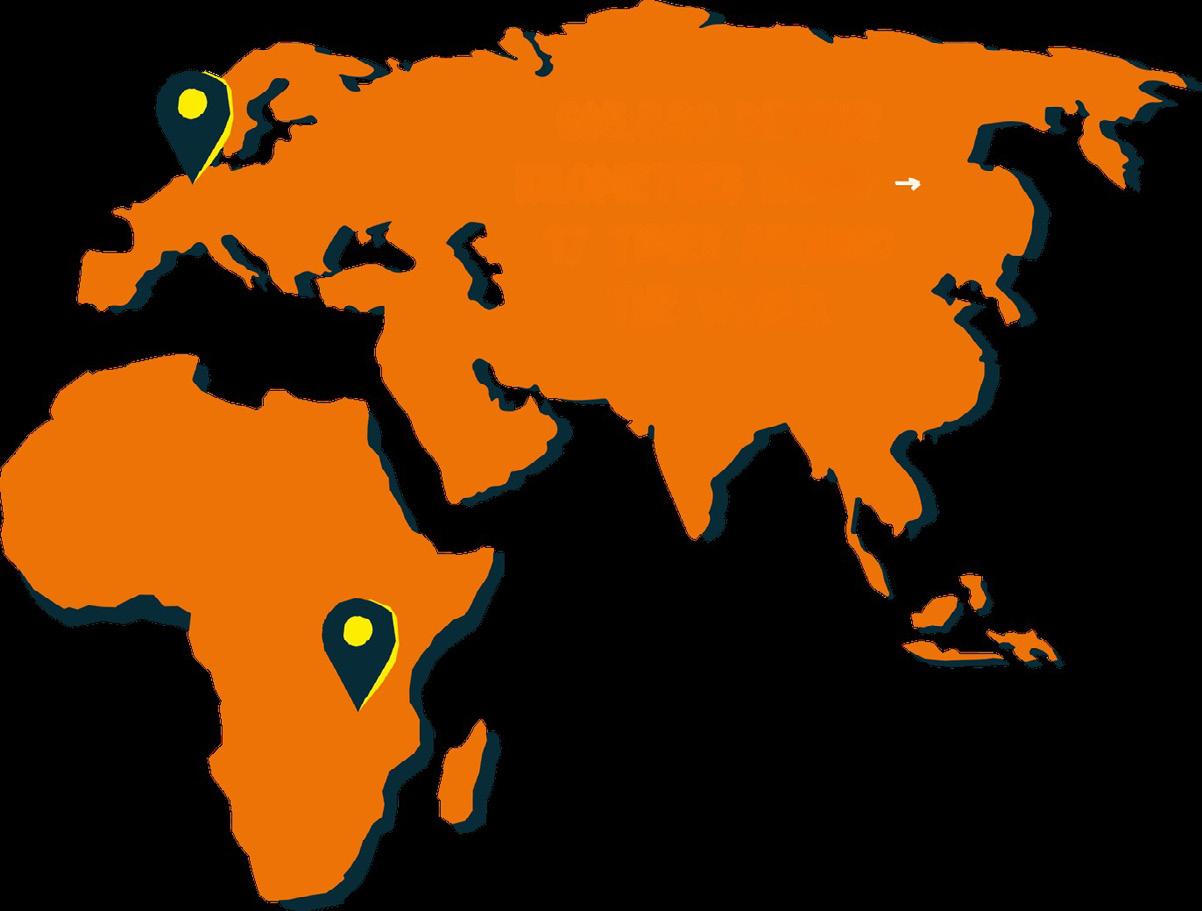
2025: 834.452 detour kilometres saved → 20,8 times around the world.
total impact: 2.642.559 detour kilometres saved → 66,1 times around the world.
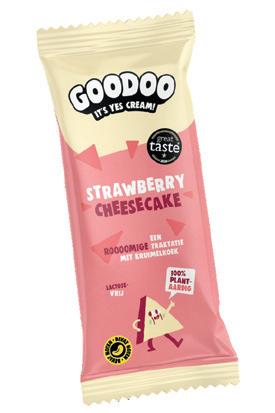
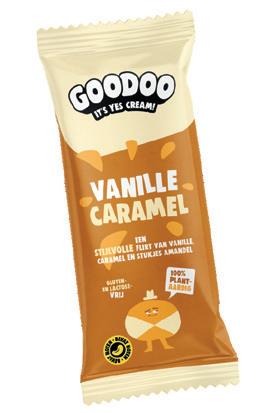
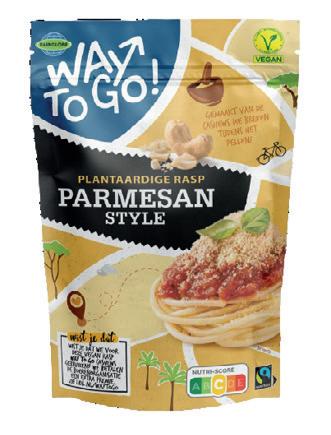
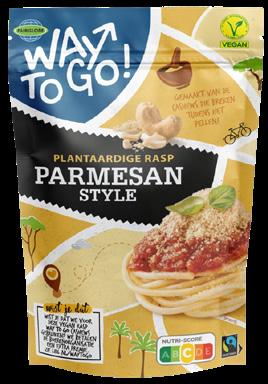
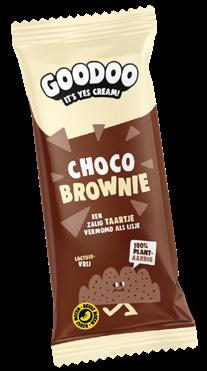
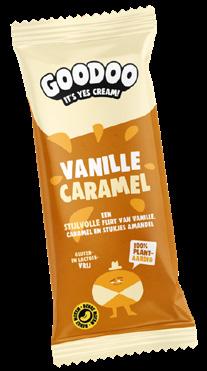
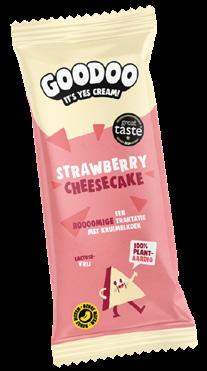
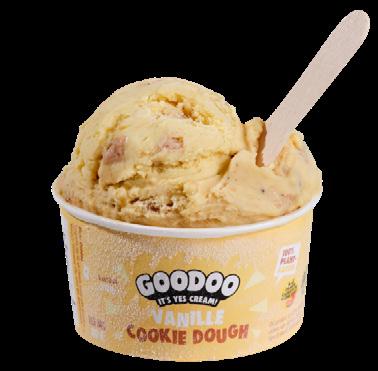
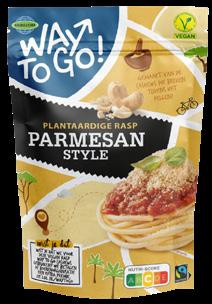
2 New Product Introductions with Johnny’s Inside: Lidl’s Way To Go Vegan Parmesan Cheese and GOODOO.
Strong Future
Invested phase 1 of RVO's Social Sustainability Fund (total 500K) to improve farmer productivity, train factory workers in reading, writing and business skills.
By skipping the detour we saved 498.430 KG CO2, which is the same as planting 5,200 trees in the Netherlands.
We bought 12.000 kg bits for a fair price. → $12.805 additional value compared to market price
Now, let's get into how we got here…
johnny CASHEW
are and this is our story
Where we’ve been, and where we’re going
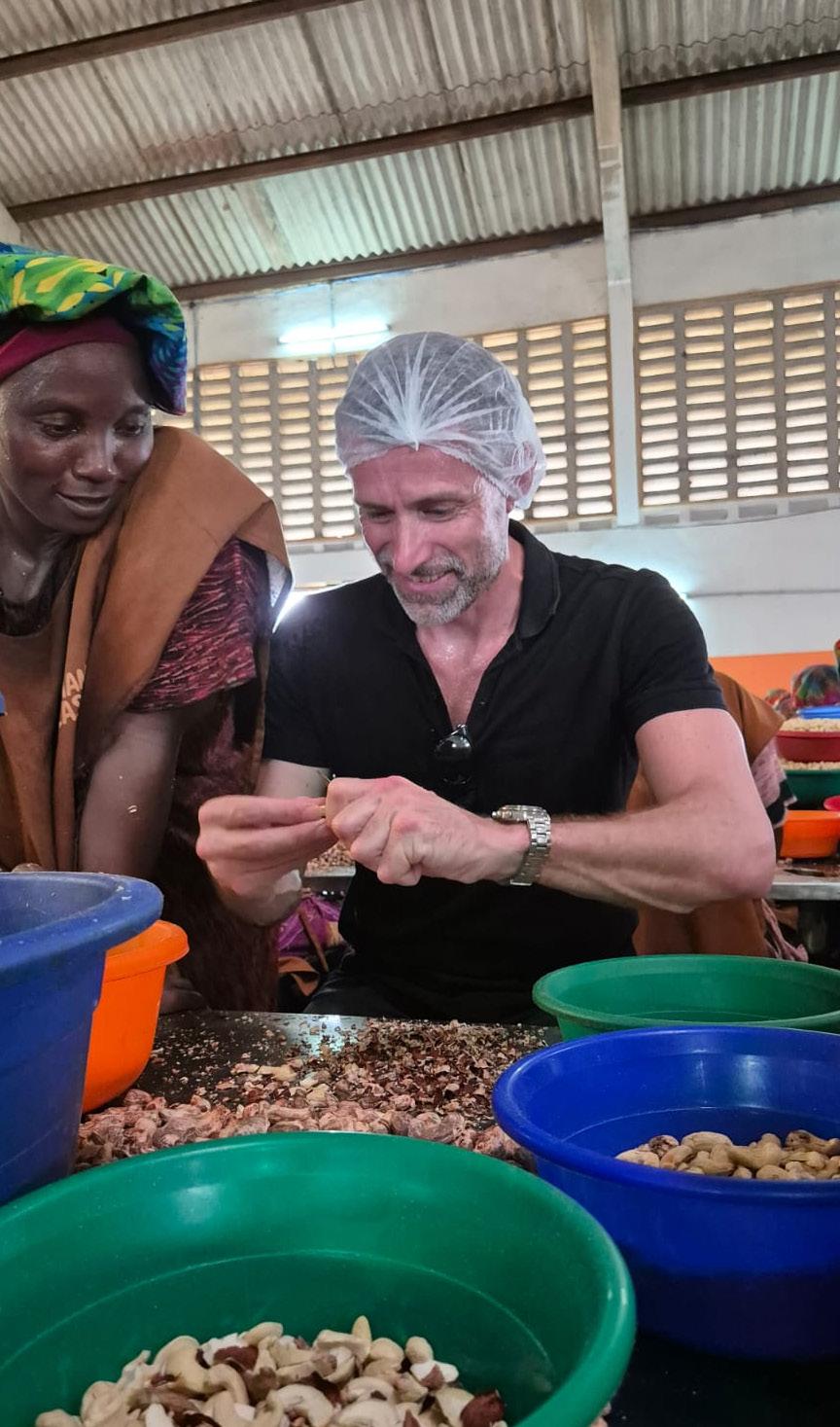
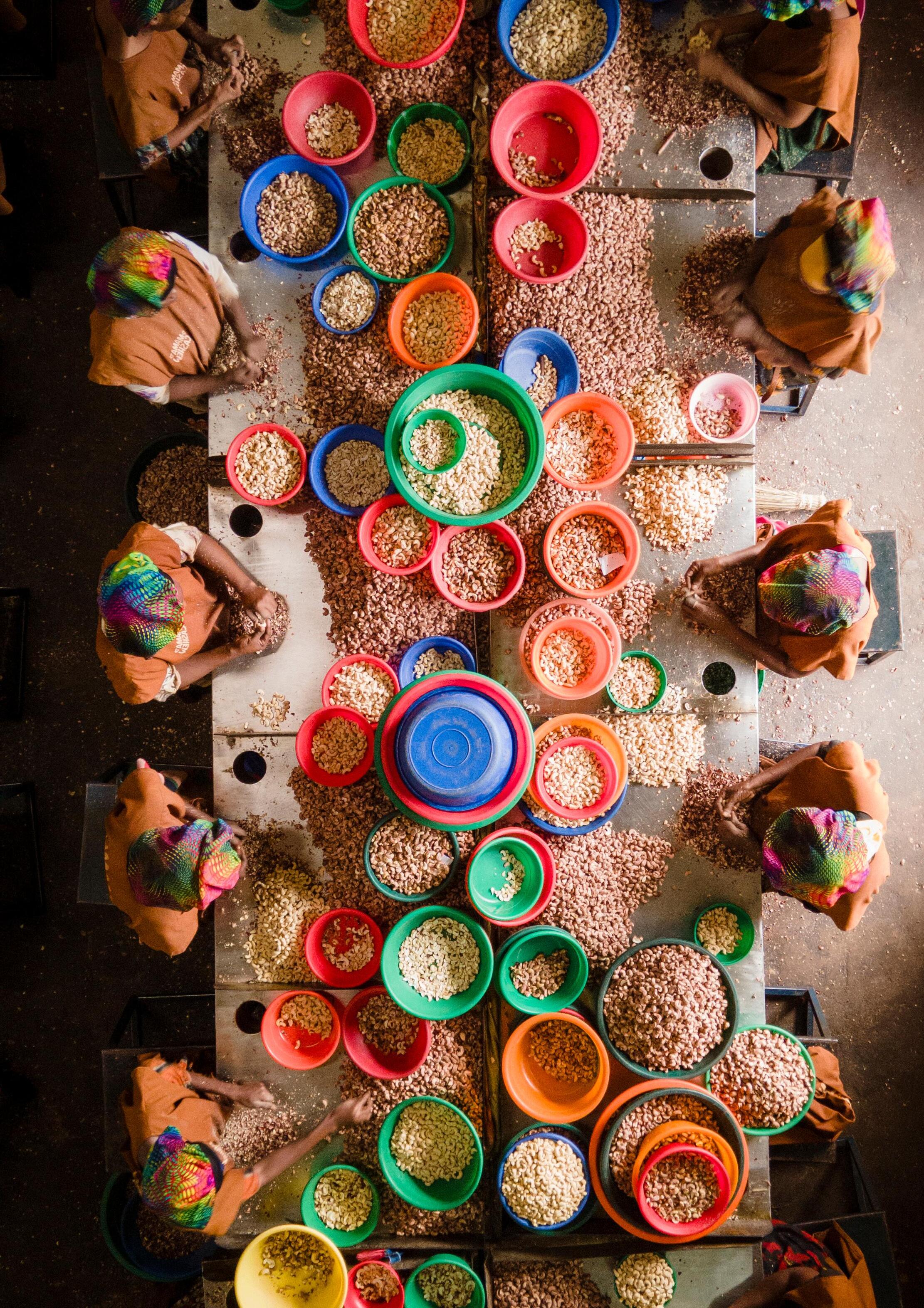
strengthening both our impact, our resilience and output capacity. We saved 163,000 kilograms of carbon by peeling our Tanzanian cashews in Tanzania, providing 600 jobs primarily to local women. We paid 1,250 farmers a living wage and added more than €100,000 in premiums they wouldn’t get from other purchasers. We bought 18,000 kilograms worth of broken bits and cashew dust for a fair price that nobody else would buy, and turned it into vegan cheese and ice cream. We’ve secured new financing facilities with Rabobank and Invest International. And through the Social Sustainability Fund granted to us by the Dutch government, we invested over €500,000 in programmes in Tanzania that train farmers in business, financial, and writing skills.
There are also some clear signals that we’re ready to fly. We started supplying KLM with our 25 gram packs in business class, literally putting our nuts in the air. In Q2 2026 we’ll have nuts in the UK and Germany as
foreword
‘From our cashew captain’
2025 felt like the year before take-off. Not the glamorous bit in the air, but the important part on the ground. Checking the tires. Hiring the right pilots and stewards. Selling the tickets. Taxiing, slowly and deliberately, to the runway. By the end of the year the engines were rumbling, seatbelts were fastened, and it feels like we are finally cleared for take-off in 2026.
That groundwork matters, because Johnny Cashew only succeeds in its mission if it succeeds as a business.
This year we put some big things into place to move from a scrappy bunch of nuts to a serious European brand. And by “serious” of course I mean a “cheeky disruptive upstart out to transform an industry.”
In 2025 we celebrated our 5-year anniversary! What a nutty journey it was so far. We kept on rockin’ this year as well. We launched The Coated Club in cooperation with Tony’s Open Chain, expanding our assortment in a way that brings new people into the brand without losing what makes Johnny Johnny. We’ve set up a second, Rainforest Alliance-certified supply chain from Ivory Coast by certifying 800 farmers (and counting) and onboarding a large processor,
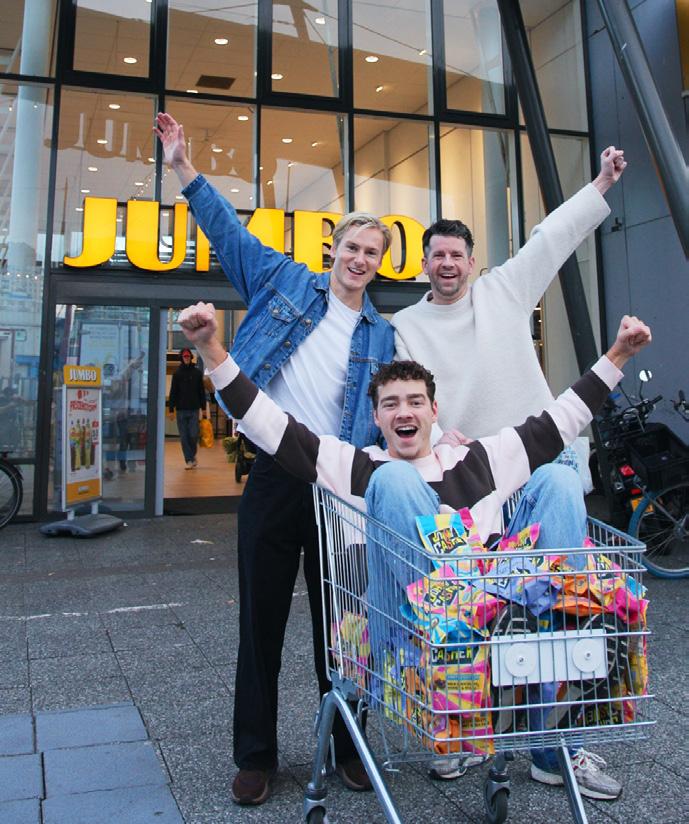
powerhouse supermarkets Waitrose (UK) and REWE (Germany) put Johnny on their shelves. We also expanded internationally with Danish variety store Normal in eight European countries and Planet Foods in Belgium. Closer to home, in the Netherlands we put proper nuts in Jumbo, Hoogvliet, Boon, Dirk, and Spar.
Of course, not everything went according to plan. We had an entire truckload of cashews just vanish off the face of the earth for months, as if the Bermuda triangle had moved to Tanzania. And we delivered a full batch of salted cashews to KLM… but forgot the salt.
But those are the setbacks you expect as a startup that’s learning to fly. They were bumps on the runway, but the plane is sound, the crew is ready, and the direction is clear.
Let’s go up from here!
Freek Wessels Cashew Captain
our mission the cashew revolution
A few thousand years ago or more, an enterprising capuchin monkey in the Amazon rainforest picked up a cashew, put it on a rock, and smashed it with another rock. That wasn’t something that had been done before, and it led to the discovery of the edible seed that we call the cashew.
A monkey using a rock as a tool? That’s kind of insane, in a good way. What we call “proper nuts!” And it was exactly the kind of crazy, out-of-the-box thinking that the situation called for.
That monkey is our role model and mentor. The monkey saw a problem - unlike a banana, a cashew couldn’t be peeled. The monkey cracked it. With contagious ingenuity that soon spread not only to the other monkeys in the forest, but to the humans as well. It was a transformation.
So at Johnny Cashew, when we see problems – like a cashew that makes a 12,000 kilometer detour to get peeled –our inner monkey thinks “that’s proper nuts!” and we partner up with a local peeling factory. When we see farmers being paid a pittance, and processing factories denied a fair price for 25% of their nuts because they’re a bit broken, we think “that’s proper nuts!”, and we pay for the whole crop, and at a fair price. When we see farmers setting an example to others by certifying their farms as Rainforest-Friendly, we make them part of our supply chain. All that adds up to one thing: Proper Nuts!
But like the contagious ingenuity of that lone monkey, what we’re looking for is something bigger than making our own supply chain future friendly, farmer friendly, and earth friendly. We’re looking to transform the cashew industry, and inspiring a growing troop of crazy friends who are excited to be part of that transformation. And while there may be those who think a fair, transparent supply chain that treats farmers and the planet with respect seems impossible, we say this: Be More Monkey. There is no nut that’s too hard to crack.
So this is our impact report, an account of all the monkey mischief we’ve been up to in 2025 and all the change we’re making in the world together with our customers, our partners, our farmer friends and peeling pals and everyone in the industry who is nuts enough to believe they can change the world. If you bought a bag of our cashews in 2025, you’re one of Johnny’s Nuts. If you’ve shared our story, you’re one of Johnny’s Nuts. If you’re trying to find a way to make your business kinder or fairer or gentler on the planet, you’re one of Johnny’s Nuts. And Johnny’s nuts aren’t any old nuts. They’re Proper Nuts.
WHEN THE CASHEW WORLD WENT
The tale of the cashew tree
How did we get to a point where the world needs Johnny Cashew? Let’s go back to the very beginning…
The cashew tree is native to Brazil, where clever monkeys and observant humans grew to love their delicious nuts – which, technically (pushing nerdy glasses up nose) are actually seeds. When Portuguese explorers (cough colonisers cough) arrived in the 16th century, they took this tasty tree along with them as they explored (cough invaded cough) the world. Thanks to their similar climates, the cashew tree soon took root in parts of Africa and India.
Fast-forward to the 20th century: the global appetite for cashews has skyrocketed, shifting their cultivation into high gear. Precious rainforest and mixed forests in Mozambique, Madagascar, Indonesia and West Africa were cleared to make room for a new cash crop.
During this initial boom, cashews were processed in the same countries where they were planted – Mozambique, for example, was the world’s top cashew producer by the 1970s, and processed most of its own crop.
Enter the ‘Big Cashew’ Era
Cashews’ popularity grew even more, and as a result, more and more monocrop cashew plantations sprang up to replace rich and biologically diverse forest lands that were valuable carbon stores. In the 1980s, Asian demand for cashews surged. Thanks to expanding economies and booming populations, Asian countries like Vietnam seized the lead in cashew processing. They developed cutting-edge processing technology, provided skilled labour forces, and built supply chains focussed on economic efficiency (and nothing else) to handle global demand.
That’s how the “future-unfriendly” cashew was born: grown in one country, processed in another, munched on worldwide, and chewing through forests that the planet desperately needed to slow down the climate crisis.
tanzania
For countries like Tanzania, however, the cashew boom actually resulted in a slowdown in cashew processing – a real blow to their local industry. The Tanzanian government tried to cope by prioritising unshelled cashew exports through tax breaks, which brought in foreign currency quickly. These cashews faced little to no export taxes, while shelled nuts were slapped with extra levies or missed out on subsidies. This discouraged local businesses from developing processing facilities, making it tough for Tanzanian nuts to compete internationally.
The Cashew Board of Tanzania, a government body overseeing the cashew industry, played a key role in pricing and exports. With its monopoly, the Board often restricted farmers from selling directly to local processors. Instead, farmers were required to auction their crops, which meant a large chunk of raw cashews went to foreign buyers supplying Asian processors. These auctions favoured big exporters who could outbid local processors who lacked the same financial muscle or distribution networks.
Turning the tide: The Cashew Industry Act of 2021
By 2021, Tanzania knew it was time to shake things up. The Cashew Industry Act of 2021 passed a series of reforms aimed at boosting the local cashew industry, including:
• Putting export duties on raw cashews (up to 20% in some cases) to encourage local processing.
• Offering incentives for setting up processing plants, like lower taxes on machinery and access to financing through local banks.
• Reserving a portion of the harvest for domestic processors, so they’re not outbid at auctions.
Tanzania is making moves to ensure that local communities can more fully benefit from cashew farming, and Johnny Cashew is proud to be part of this inspired, evolving ecosystem.
Côte d’Ivoire
In Côte d’Ivoire, cashew production started small in the late 1950s but grew explosively from the 1990s onward, transforming the country into the world’s largest producer and exporter of raw cashew nuts. Between 1990 and the late 2000s, production jumped from a few thousand tonnes a year to hundreds of thousands, driven by global demand and the spread of cashew cultivation across the country.
In much of West Africa, cashew farms sit right up against precious rainforest, and in a few places cashews have even slashed and burned their way into protected forests. That’s not okay. Since 2022, the Rainforest Alliance has been working with farmers in Côte d’Ivoire and Benin to flip the story: helping farmers grow cashews without cutting into the lungs of the planet. They won’t certify any cashews grown on land cleared after 2014, and they use GPS mapping, satellites and serious on-the-ground checking to make sure forests stay forests. On top of that, they train farmers to protect nature, ditch slash-and-burn, and build better incomes so nobody feels forced to cut new land to survive.
For many years, most Ivorian cashews were exported as raw nuts to processing centres in Asia – primarily Vietnam and India – where the economic value of cashews was captured upstream, leaving Côte d’Ivoire farmers with relatively little benefit despite their dominant output.
Recognising this value gap, public and private actors in Côte d’Ivoire began pushing to build domestic processing capacity. Government policy, investment incentives, and industry cooperatives helped spur the growth of local factories, and the number of processing plants has expanded significantly in recent years.
The idea is simple: keep the cashews, keep the livelihoods, keep the rainforest. That’s fairer. That’s smarter. That’s proper nuts.
the problem IN A NUTSHELL
Big Cashew needs to change Big Cashew needs to change THE reason THE Reason our mission our mission fair future for farm and factory. how? how? Johnny’s 5 chain principles
THE WAY NUTS ARE HARVESTED, SHELLED AND SHIPPED IS TOTALLY UNFAIR.
Processing factories lose 25% of their nuts because they’re a bit broken
African cashews detour 12,00067,000 kilometres to get shelled a continent away.
BIG CASHEW HAS THE POWER TO SET PRICES
DETOUR CASHEW CAUSES LOSS OF VALUE AND JOBS Cashew farmers live in poverty .
When cashews are grown the wrong way, rainforests are cleared, biodiversity is lost, and the communities who depend on them are left worse off.
Responsible rainforest care takes patience and restraint, which Big Cashew doesn’t have
a manifesto
It’s about an end to business as usual; about making the world fairer and more sustainable. That conversation must invite everyone to speak, from academics and policymakers to entrepreneurs and farmers in the fields. We all need to examine how we impact the world. And when we look at the world of cashews, here’s what we see:
The way nuts are harvested, shelled, and shipped is totally unfair. Farmers live in poverty. When cashews are not peeled where they’re planted, local communities are robbed of jobs, social benefits, and community spending. When the aesthetic value of a whole, unbroken nut is worth more than the nutritional value of still-tasty broken cashews, communities are robbed of the full value of their crop.
Why are things this way? Because of Big Cashew, the giant corporations that buy most of the world’s crop and make most of the profit. Big Cashew doesn’t care about farmers or fairness, about waste, or where their nuts are grown. Big Cashew only cares about how much money Big Cashew can make. They’re big enough to make the rules and set the prices. Big enough to convince us that fairness is a nut too hard to crack.
We don’t buy that. And Johnny’s Nuts don’t buy that. Johnny’s Nuts—and that’s everyone else who is crazy about good nuts, from our staff to our customers to our supply chain partners to the farmers and pickers and peelers and everyone we work with—are on a mission to prove that’s proper nuts!
we
believe...
in a fair future for farmers and factory workers; a fair future for everyone who plants, picks, peels and packages our cashews.
that a farmer’s contributions to locking up carbon, feeding the world, and sustaining the soil are valuable and should be rewarded.
every producer of consumer goods should know where every aspect of their product comes from, and the ways in which ingredients are created, transported, and how they impact the communities and the individuals they touch.
that every purchase of a product is a vote for that product, and for the values that product represents.
in a fair future for farmers and factory workers; when given a real choice, people choose fairness.
We not only believe these things, we live these beliefs. And we invite everyone who believes the same to join in the chewy challenge of making these principles a new kind of business-as-usual. We’re out to transform Big Cashew into Fair Cashew. To turn a simple snack food into a revolutionary reinvention of the way the world should work.
JOHNNY’S CHAIN PRINCIPLES
Sharing the secret of proper nuts
JOHNNY’S CHAIN PRINCIPLES
Sharing the secret of proper nuts
Johnny Cashew took a long, hard look at the global cashew supply chain, and there was no way to avoid the tough truth: it’s proper nuts! We knew that for our three-rock mission method to crack open such deeply entrenched nutjobbery, we’d need strong principles to guide us towards a fairer, greener—and ultimately, shorter—supply chain:
1. Fair Price
Johnny Cashew defines a fair price as covering the costs of a decent living. That’s why we pay farmers a premium to meet what we call the Living Income Reference Price (LIRP), which Fairtrade International helped us develop. The LIRP calculates how much a harvest must sell for to ensure that an average household can enjoy a sustainable economic existence. Johnny Cashew is currently the only cashew buyer in the world that pays this fair price!
With the LIRP, our farmers have been able to make a significant step towards economic sustainability. Through the extra premium, we can work towards a better existence for every household. By being totally transparent about our pricing process, we’re showing other producers that paying a fair price for fair labour is good for everyone.
We pay per kilogram of unshelled nuts. For a kilo of edible cashews, you need 4.5 to 5 kilograms of unshelled nuts (those shells are heavy!). Through the extra Johnny Cashew premium, the LIRP is paid to our partner farming cooperatives, and each farmer gets an additional USD$0.87 per kilogram of cashews.
2. Traceability
How can you be sure that cashew in your lunch box hasn’t taken an unnecessary, carbon-costly trip around the world? Or that the price you pay is fairly distributed amongst the people who got those nuts to you? How do you know if you’re crunching on pure Tanzanian cashew, or a mix from who-knowswhere? The answer lies in a transparent, traceable supply chain, able to track the product from tree to table.
Our cashews are 100% physically traceable. Our Fairtrade certification guarantees this. From farmer to transport to storage to processing, every step of the supply chain can be physically followed. We do this to make sure we pay farmers and factories fairly, and are aware of all potential influences on our supply chain. It also means we’re already compliant with the EU’s new Corporate Sustainability Due Diligence Directive, and pioneers of a better path for the cashew industry!
4. Whole Harvest
Up to a quarter of the cashew harvest can crack during the shelling process, but most buyers refuse anything but whole nuts. That’s proper nuts, considering broken nuts are just as tasty, and smaller leftovers can be used for delicious cheese or delightful ice cream! That’s why we buy the whole harvest at a fair price, ensuring that processing factories earn full value for their product.
3. no detour
Peel it where you plant it! That’s what the cashew industry needs to do. By skipping the unnecessary detours to foreign factories and instead, shelling cashews locally, we can add value in the country of origin and create jobs at processing plants.
In our case, ditching the 12,000 kilometer detour for our Europe-destined cashews reduces our carbon emissions by 57%. Whatever we cannot reduce, we compensate, which makes our cashew completely carbon neutral!
5. Strong Future
We work to enable farmers and our factory to be independent and self-sufficient, even without Johnny Cashew’s premiums. We look for long-term partners, striving to provide them with economic security so they can invest in the longevity and sustainability of their operations, and develop additional income sources to supplement their seasonal cashew earnings.
Our favourite part of these principles? Anyone in the food sector can apply them to their own work! Honestly, being one of Johnny’s Nuts requires some stamina (so fuel up!): our principles aren’t yet convenient and they challenge the long-established status quo. But we’re committed to upholding our principles—within our own supply chain and the wider industry. We encourage our peers to be more monkey; think outside the box to ensure mutual benefit and respect throughout the chain, and to enjoy taking part in making the world a little better. Now that’s proper nuts!
Johnny Cashew was founded on the idea that we can make cashews fairer for farmers, for the planet, and for everyone who loves proper nuts. As the brand has grown, that ambition has grown with it. Being fair isn’t just about good intentions; it’s about building a supply chain that’s resilient, transparent, and being brave enough to blaze a trail that others can follow.
And in 2025 we took a big leap forward on that trail. We secured a second cashew supply chain from Côte d’Ivoire that is fully segregated and Rainforest Alliance–certified.
Segregation matters because it makes sustainability real. A fully segregated chain means these cashews are kept physically separate from farm to factory to your fist. Not blended, averaged, or diluted along the way. Every nut can be traced back to Rainforest Alliance–certified farms that meet strict standards for forest protection, biodiversity, and farmer livelihoods. No shortcuts. No greenwashing.
For Johnny Cashew, this isn’t only about impact, it’s also smart business. A second certified supply chain strengthens resilience, reduces risk, and creates flexibility as demand grows. For the wider industry, it’s a signal: meaningful sustainability requires commitment all the way through the chain, not just at the label.
We set up 2 supply chains
Rainforest who?
Rainforest Alliance certification focuses on protecting forests and biodiversity, improving farm management, and strengthening farmer livelihoods through sustainable practices. Its standards cover environmental protection, social conditions, and economic resilience — and require buyers to pay an additional premium above market price to certified farmers.
Why Côte d’Ivoire?
Côte d’Ivoire is the world’s largest cashew producer, making it a critical place to drive large-scale environmental impact. RFA certification there helps prevent deforestation, protect sensitive ecosystems, and support farmers at scale. Importantly, these cashews follow Johnny Cashew’s “peel it where you plant it” principle: they’re processed locally, avoiding unnecessary transport emissions.
Financing the Ivorian cashew flow
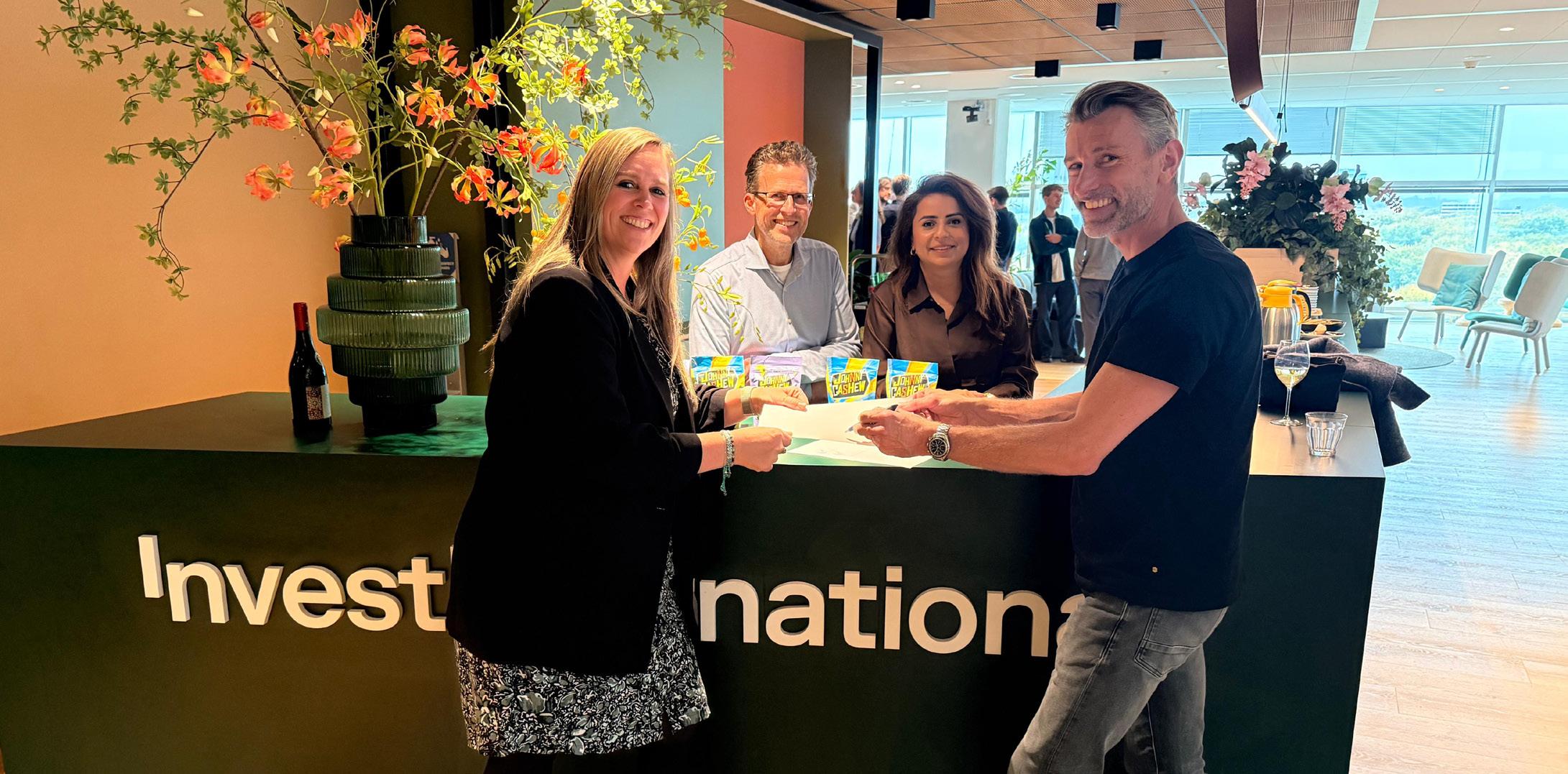
The development of this supply chain was supported by financing from Invest International, helping unlock capital for a traceable, segregated RFA-certified cashew stream. This investment strengthens farmer access to markets while giving Johnny Cashew a more diversified and resilient sourcing base — reducing risk while increasing impact.
about investment international
Invest International is a Dutch state-owned investment fund that supports impact-driven companies in realizing their international ambitions. As the implementing partner of the Dutch Good Growth Fund (DGGF), Invest International provides accessible and development-focused financing on behalf of the Dutch Ministry of Foreign Affairs. Through DGGF, Dutch entrepreneurs operating in developing countries and emerging markets can access tailored funding that enables them to contribute directly to economic progress, stronger local value chains and improved living standards.
quote peri bakr, investment manager
“We’re proud to support Johnny Cashew in its mission to rebuild the cashew supply chain in a way that generates meaningful impact for both local communities and the environment. Through our Scale-up Import Funding (SIF), we’re helping them establish a new Rainforest Alliance-certified cashew supply chain in Côte d’Ivoire, strengthening their ability to source and process cashews where they are grown. By showing that local growing, processing, and value creation is possible, Johnny Cashew has created fair jobs, supported local economies, and avoided the unnecessary global detours that increase emissions. Their work proves how a clear idea, backed by strong local partnerships, can create lasting impact and illustrates the contribution Dutch entrepreneurship can make in emerging markets.”
Whole harvest: new products in 2025 new products in 2025
From what’s left to what’s loved
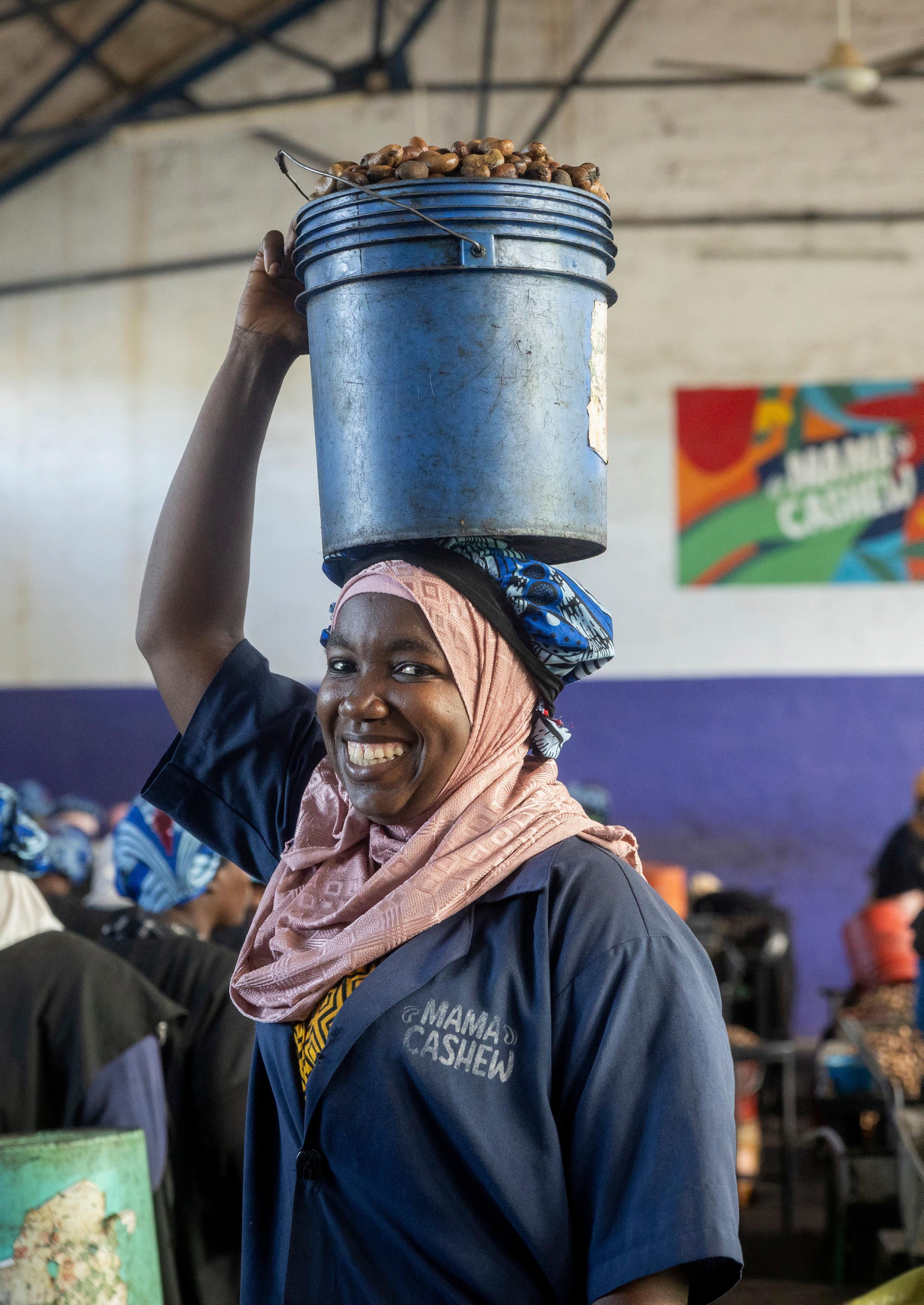
We don’t know anybody else in the cashew world who loves misfit cashews as much as we do. Most cashew buyers take a “you break it, you bought it” attitude with their processors, meaning as much as a quarter of all the nuts that get shelled, peeled, and handled end up as worthless waste. All because they don’t look perfect. We took a big risk and told Mama Cashew we’d buy everything, even before we knew for sure what we were going to do with tonnes of broken nuts. But we were certain good things could be made of those baby bits, and oh baby, we were right!
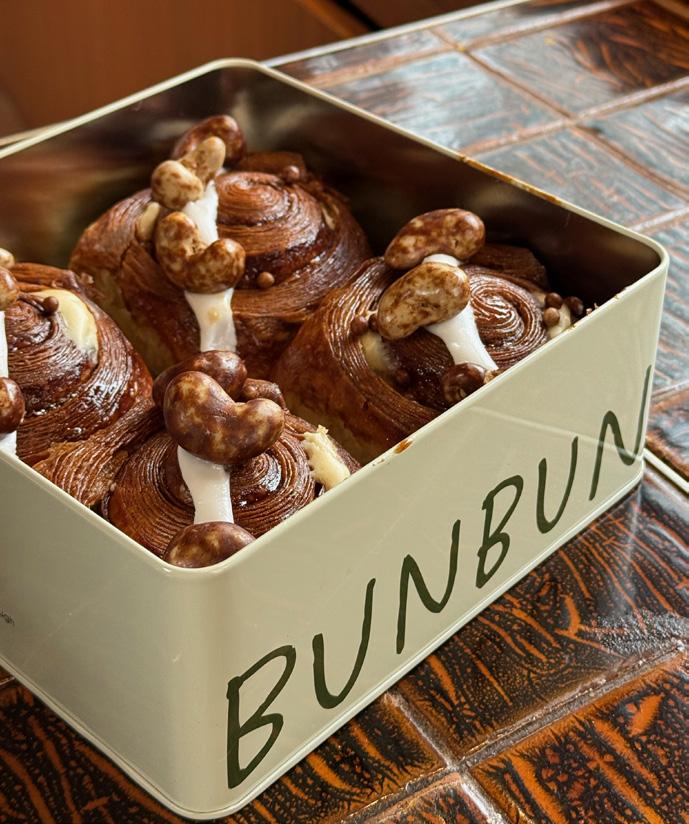
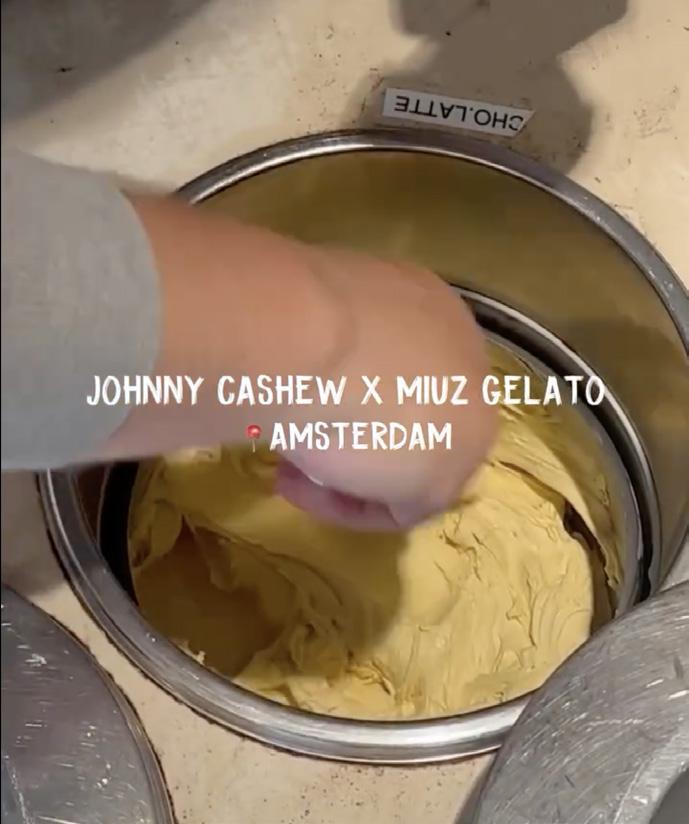
In 2025, those unwanted cashew leftovers got upcycled into everything from Lidl’s Way To Go Vegan ParmesanStyle Cheese to ice cream and gelato from Montgomery, GOODOO, Miuz, and Ijscuypje. We sold buckets (literally) of cashew paste to catering firms and restaurants. BunBun Amsterdam even made a special cinnamon bun with our Cinnamon Bun cashews on top and rich cashew cream inside.
Buying the whole harvest means we make it easier for farmers and processors alike to make a decent living from all their hard work. It means less waste, more value for Africa, and more vegan treats for all of us. And when cashew paste, cream, and butter take the place of dairy products produced from methane-belching cows fed on soy beans grown in the Amazon, that means less carbon in the planet’s atmosphere too.
When we buy the whole harvest, the whole Earth benefits.
Portfolio: More Flavours, More Choice
Our Cashew Product Portfolio Diversifies
The Johnny Cashew range got wider and wilder in 2025, with bold new flavours and lots of new nutty concoctions popping up.
Our collaboration with Lidl continued to march forward. We launched four new Johnny Cashew products with Lidl: a 175 gram Hot Chilli snack pack, along with 200 gram packages of salted and unsalted roast nuts, and a new Parmesan-style flavour. One change we’re especially proud of is that Lidl replaced the existing Alesto 200g packages with cashews from our “Johnny’s Inside” branded line. It’s a small but telling shift that shows Lidl putting more weight behind sustainably-sourced ranges, and backing brands that are serious about how nuts are grown, traded, and enjoyed.
We also refreshed the spicy end of the Johnny Cashew range this year, replacing Hot Chilli with Thai Sweet Chilli. Same warmth, more balance, and a little extra joy in every handful.
You can’t keep a good nut down
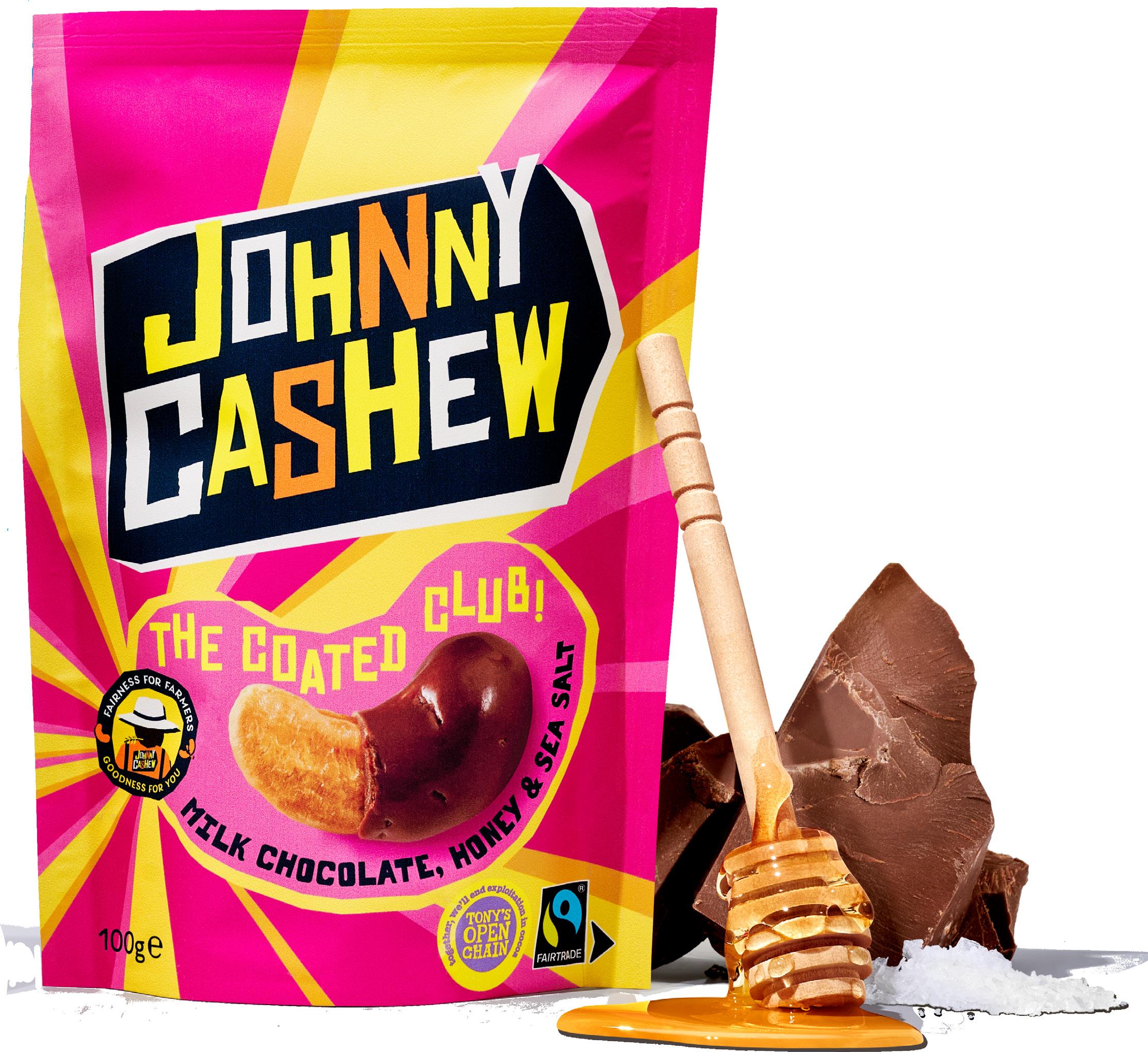
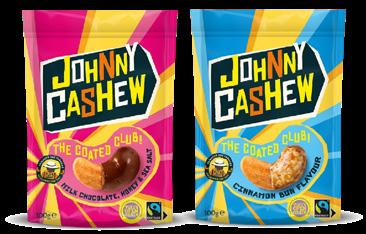
The Choco Honey Sea Salt cashews were originally planned as a limited edition, but those cheeky little nuts had other plans. Sales were strong, repeat purchases were even stronger, and the message from fans was unmistakable. So instead of saying goodbye, we gave them a permanent place in a brand-new range called The Coated Club. New packaging, same great taste, and one simple rule: no naked nuts allowed.
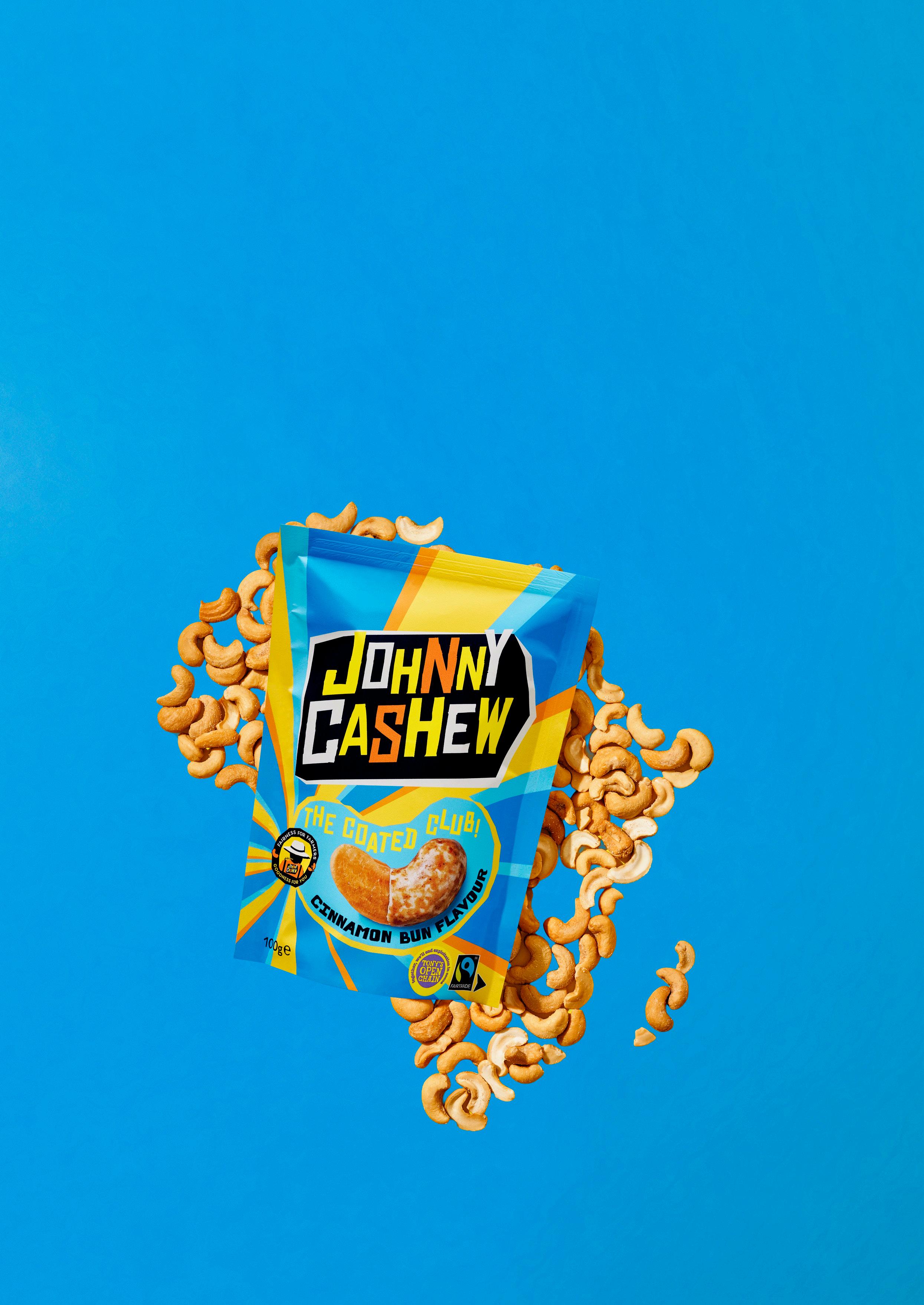
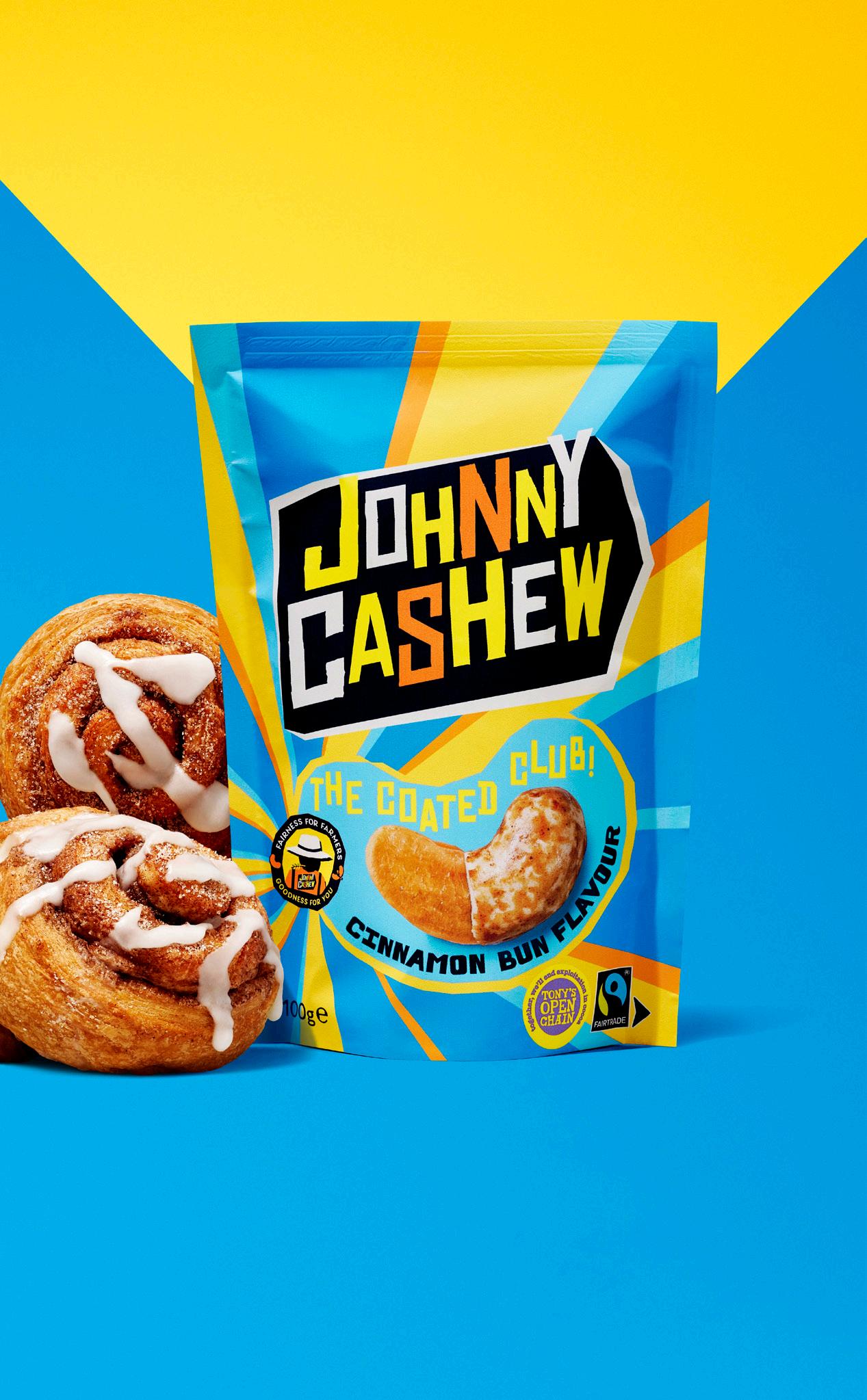
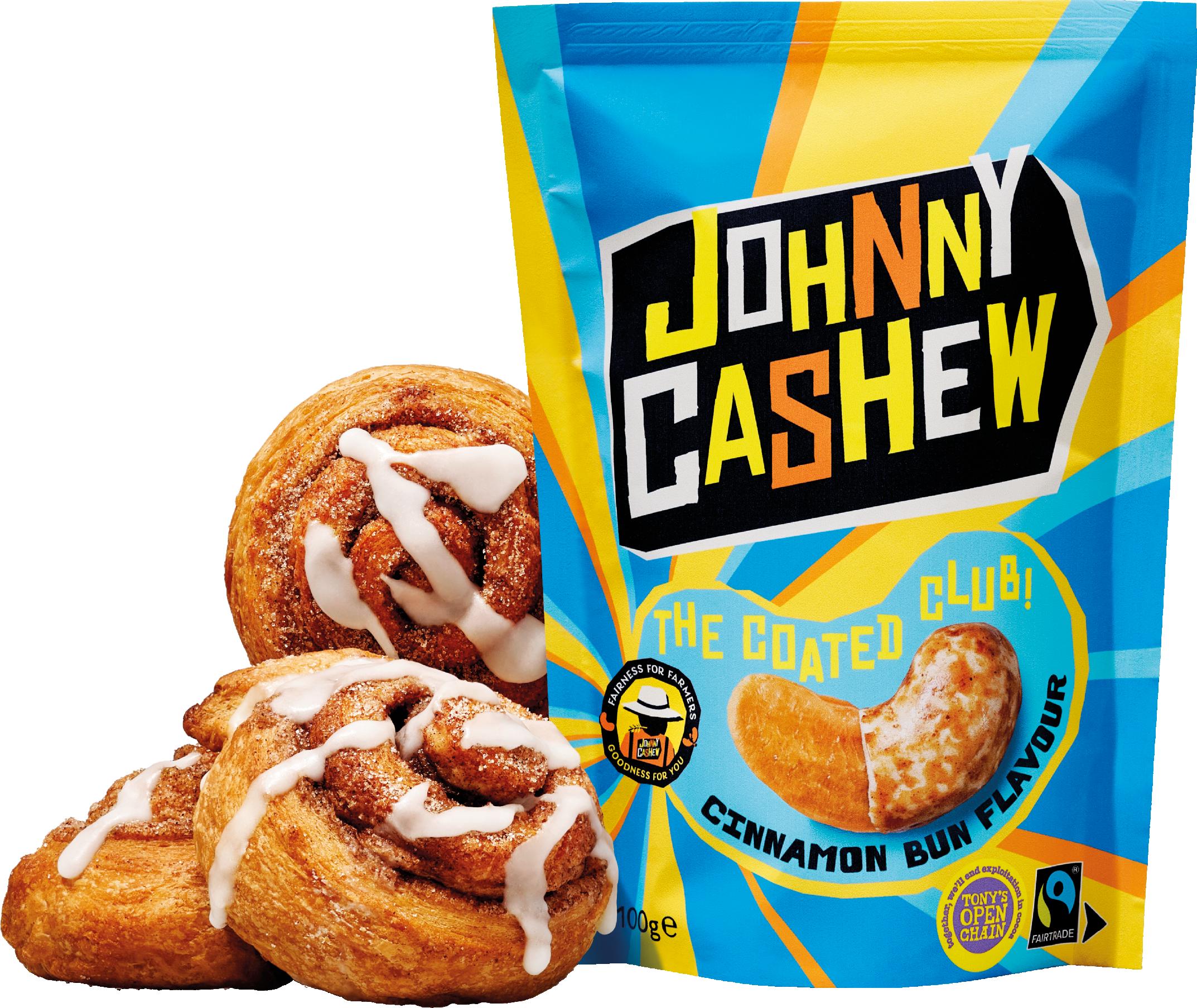
The launch of The Coated Club created some digital whirlwinds. The announcement of Choco Honey Sea Salt and its companion flavour, Cinnamon Bun, took off across TikTok and Instagram, driven by genuine enthusiasm. Who knew cinnamon buns have a fan club? To mark the Cinnamon Bun launch, we teamed up with BunBun Amsterdam on a one-off Johnny Cashew special: a cinnamon bun with a creamy vanilla and cashew cream filling, finished with our Cinnamon Bun cashews on top. The queue outside the bakery confirmed: we were right to bet big on fun flavours.
Mixing it up
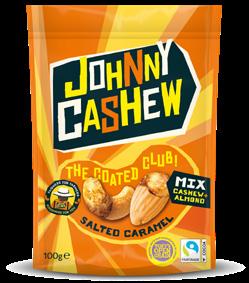
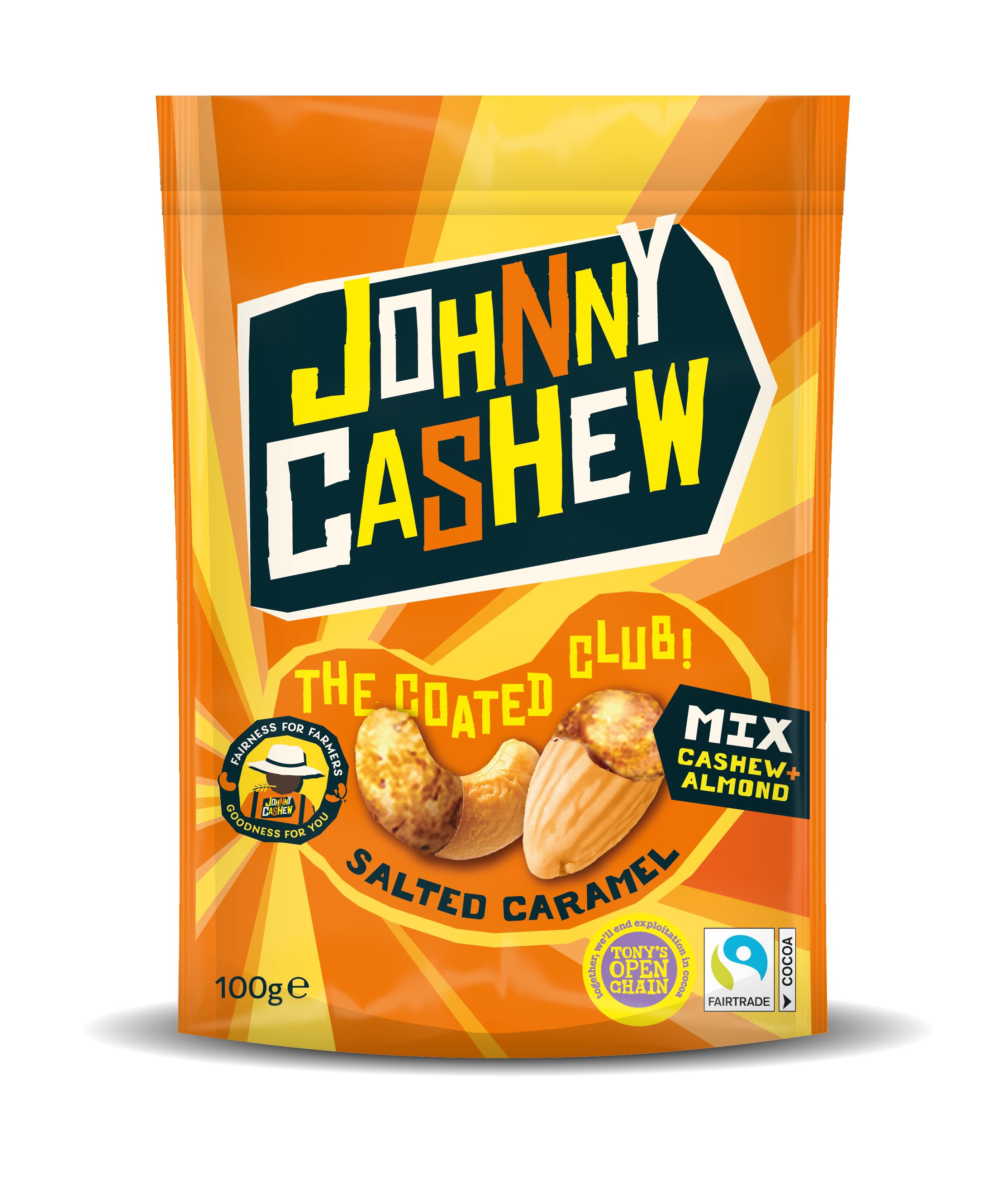
So watch out for Salted Caramel in 2026. It’s our first-ever nut mix, combining roasted cashews and almonds with a salted caramel coating. We expect it’s another flavour combo that will shout from the shelves.
And, pssst… speaking of mixes, we can also let you in on a little secret. There’ll be a new combo splashing out that we call “Nutflix and Chill.” Think good thoughts about nuts, chocolate, and pretzels.
All chocolate used in The Coated Club is sourced via Tony’s Open Chain. That’s Tony Chocolonely’s invitation to brands to join its mission to end exploitation in cocoa by working with fully traceable supply chains. By sourcing our cocoa this way, we extend our commitment to fairness beyond cashews and into cocoa-growing communities in West Africa.
Distribution: Our growth is nuts!
Getting Bigger and Being Better
Johnny Cashew’s growth in 2025 wasn’t just about selling more nuts. It was about showing Big Cashew that a brand built on fairness can scale across customers, sectors, countries, and products.
More partners, more places
We now work with 48 customers across a growing mix of sectors, from supermarkets to aviation, wholesalers, and sustainability-focussed business clubs. In the Netherlands, the Johnny Cashew brand expanded its retail footprint with new listings at Jumbo, Hoogvliet, Spar, and Boon. In Belgium, we entered the market through a new partnership with Planet Foods. Internationally, we were on the shelves in Danish variety store Normal in more than 900 locations across nine countries, bringing Johnny Cashew to a wider everyday audience.
Growing across sectors
While retail remains our largest channel, growth is increasingly diversified. The mix now includes supermarkets, travel and aviation, wholesalers, and values-driven organisations. This spread matters. It reduces dependence on any single route to market and shows that responsibly sourced products can work in very different commercial settings.
Johnny Inside and Out
Both the Johnny Cashew brand and our private label business continued to grow strongly in 2025. Branded revenue growth is supported by new packages and new products at existing retailers, new retail partners in countries like Germany and the UK, and collaborations that extend the brand into new formats and audiences. At the same time, we’ve sold lots of Fairtrade-certified nuts under private label as ‘Way-to-Go cashew’ across Europe. As of next year we’ll also be introducing Rainforest Alliance-certified cashews at Lidl.
The range goes roving
Growth is also coming from our forays into fun flavours. From classic roasted cashews to flavoured, coated, and mixes, the portfolio is expanding in ways that invite more people into the mission. Some products drive volume, others spark conversation: together they strengthen our resilience and our impact.
Taken as a whole, the picture is simple. Johnny Cashew is growing not by chasing scale at any cost, but by building partnerships, markets, and products that make fairness easier to choose. We’re showing Big Cashew there’s a better way. Inviting more people in with inventiveness and fun. That’s the kind of growth Johnny loves to see in his nuts.
Johnny’s core values the seeds of our team culture
Crystal clear
We say it like it is We are honest, transparent, and straight-to-the-point. Just like our supply chain. Even when things go wrong. We say what we feel or mean, without detours or unnecessary fluff. What we aim to achieve is crystal-clear, and we don’t deviate from it.
colorful
We approach things on a positive and colorful note
Our mission is serious business, but we don’t take ourselves too seriously. In our cheerful brand, optimism takes centre stage. We choose the rainbow over black or white, and we’re open to new perspectives. Everyone is equal and everyone is welcome, inside and outside the chain.
Pioneering
We look ahead with courage
No nut – small or large – is too hard to crack. We started this business as bold entrepreneurs, and we remain bold entrepreneurs. We set the bar high for ourselves and for others. We are forward-thinking and always looking for new ways to make the chain fairer and more sustainable.
ownership
We take ownership
We take responsibility one step further: from ‘we did our part’ to ‘we help others to do their part too’. Responsibility is a task assigned to you. Ownership is taken, chosen, and comes from within. It is proactive and focussed on outcomes instead of efforts. We go beyond responsibility. We do it for the farmers, the chain, and the planet. We take charge of what we do and don’t give up until it’s accomplished. We value independent work and critical thinking, but we never forget that the chain can only be cracked together. It’s a different mindset: Johnny isn’t compliance-driven; we’re outcome-driven.
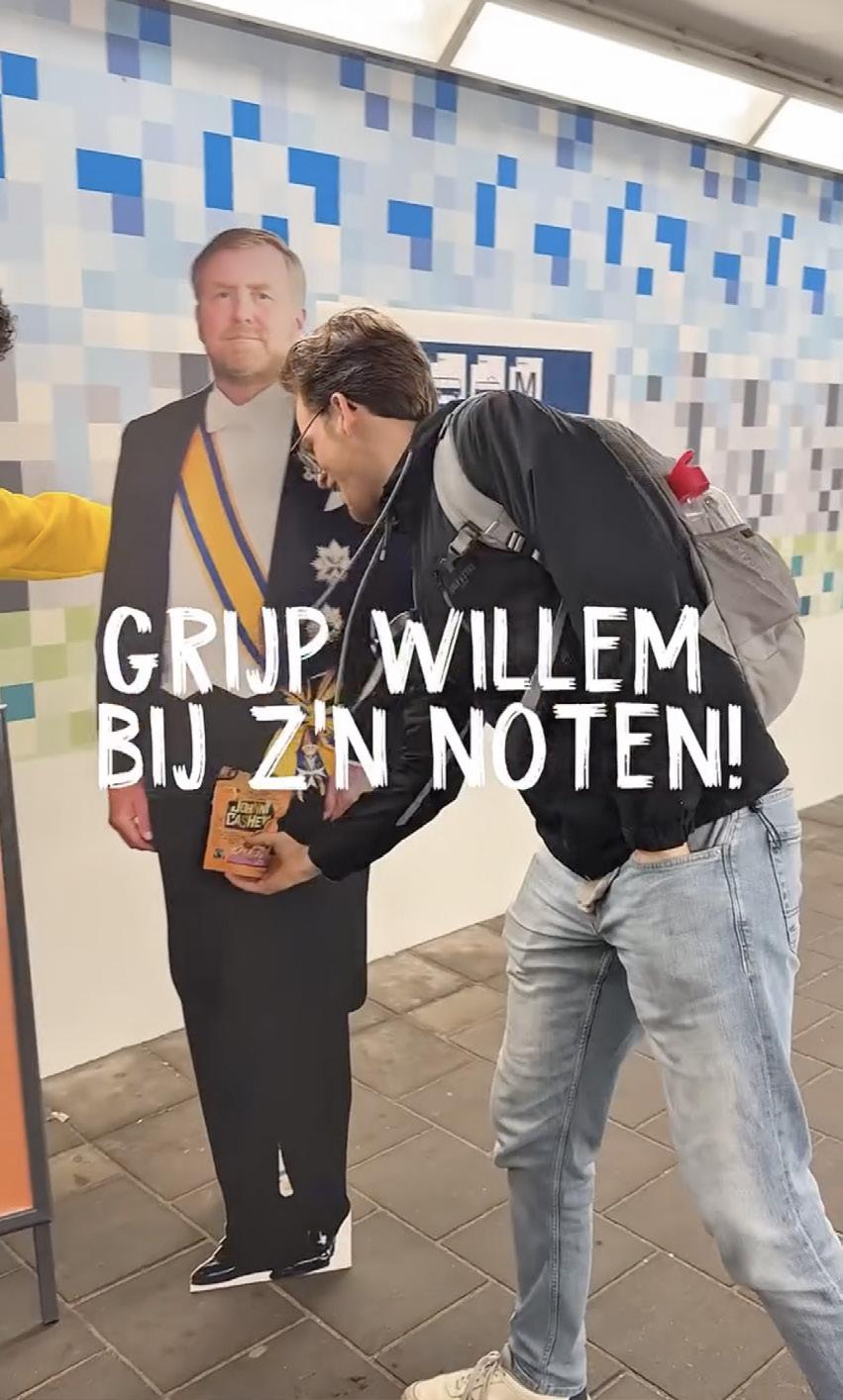
How did we live up to those values in 2025? We were colourful and pioneering: we launched a new flavour range of coated cashews including an audacious Cinnamon Bun flavour. We teased the Dutch King on King’s Day and mock-launched “Wally’s Walnuts” on April Fools Day. We rocked on Instagram. We were so clear about our mission we were nominated for a sustainability award. And beyond paying farmers a better wage, slashing the carbon footprint of our nuts, and creating peeling jobs in Tanzania, we shouldered new responsibility for ensuring healthy rainforests with a new Rainforest Alliance-certified supplier.
“Central station Amsterdam at Kingsday . Grab King Willem Alexander at his ‘nuts’. A naughty joke but with a serious message to make people aware of the broken cashew industry. People laughed, hesitated and then went for it. Every body left with a smile, an impact message and ofcourse a bag of Johnny Cashew. That’s Proper Nuts.”
King’s Day: “Grab Willem by the nuts!”
johnny’s core values
coolest brands awards
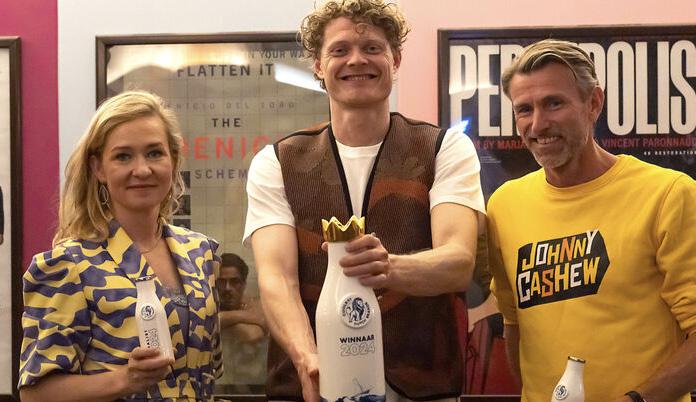
In March we were named one of three finalists for the Dutch Coolest Brands award of 2025! The jury considered everything from sustainability to what makes us unique to marketing muscle. “The Coolest Dutch Brands nominees have proven in recent years that they are not only pioneers but also fast-growing,” according to FONK magazine. And while we didn’t take the prize this year, we’re pleased that another industry challenger, BYBORRE, was recognised for not only redesigning textiles, but for their ambition to redesign the entire textile chain to be more “transparent, on-demand and with an eye for sustainability.”
As our co-founder Freek said at our nomination: “We want to go beyond just cracking our own supply chain. Our goal is to change the system from within, so that not only are our cashews ‘proper nuts,’ but all cashews worldwide are planted, picked, shelled, and transported sustainably and fairly. So, the next time you find yourself in front of the nut aisle (or any other aisle, for that matter), remember that every purchase you make and every decision you make is a vote for the world you want to live in. Big impact often comes from small, everyday actions.”
The three finalists were Drs Leenarts Skincare, BYBORRE, and Johnny Cashew
Q3 2021
start 1st full production mama cashew
Q2 2022
Q2 2020 The Start
Q3 2022
Implementation erp system and edi connection (ordering/invoicing)
Q4 2022
launch johnny cashew brand
Q2 2023
Roll out to 8 additional european countries (3.000 stores at lidl)
Q2 2023 1st impact report
Q2 2023
Q3 2023
launch at albert heijn
Q1 2024
new investors: people planet profit, goeie grutten & bill kelly