Can’t

Prepared by The Luxury Collective UK and Richard Northey,
Managing Director, The
Education Consultancy

WHITE PAPER


Can’t
Prepared by The Luxury Collective UK and Richard Northey,
Managing Director, The
Education Consultancy
Buy Your
Prepared by The Luxury Collective UK and Richard Northey, Managing Director, The Education Consultancy



Americans are relocating to the United Kingdom in numbers not seen for decades, and education is increasingly the anchor of that decision. Recent data from the Universities and Colleges Admissions Service (UCAS) show record numbers of applications from US students to British universities, underscoring both a broader migration trend and a growing appetite for UK educational pathways.[1] For globally mobile families, the question is no longer whether the UK is on the radar, but whether they understand a system that does not bend to influence or last-minute strategy.
The British education system operates according to fundamentally different principles from its American counterpart. It is formal, child-centered, timeline-driven, and remarkably insulated from the “influence premium” that
American parents often expect to leverage. Age-based cohorts and defined assessment points determine entry, not parental credentials or philanthropic contributions. For families accustomed to navigating US private schools through relationships, legacy, and strategic involvement, this represents a structural shift in planning.
This white paper, prepared in collaboration with education consultant Richard Northey, Managing Director, The Education Consultancy, outlines the mechanics of the British system, corrects persistent misconceptions, and provides American families with a practical roadmap for navigating it successfully.

DIRECTOR, THE LUXURY COLLECTIVE UK
John Eric is a Californian by birth, a Washingtonian by choice, and a Londoner at heart. With early roots in publishing and politics—including work on a presidential campaign and within an administration—he brings a diplomat’s discretion and a strategist’s insight to every client relationship. After a successful career in national media, he transitioned into real estate, where for more than two decades he has advised high-profile clients across Washington, DC, and internationally. A founding agent and Executive Vice President at Compass, John is known for white-glove service, confidentiality, and mastery of complex negotiations.
As Director of The Luxury Collective UK, John bridges U.S. and U.K. property markets, guiding global buyers with a distinctly American fiduciary approach. He also publishes John Eric Home & Lifestyle magazine and hosts The Property Diplomat podcast, exploring real estate, politics, and culture. His expertise has been featured in The Washington Post, The New York Times, and The Financial Times. Active in global real estate networks, John speaks regularly at industry events and advises family offices and wealth managers on cross-border investment. Outside of work, he enjoys family time, tennis, travel, good food, and supporting pet adoption.

Yon DIRECTOR, THE LUXURY COLLECTIVE UK
Anna-Louisa Yon is a lifelong Washingtonian whose career bridges entrepreneurship, design, and real estate. She launched a design-focused business during the 2009 downturn, selling to leading galleries and boutiques across the United States and honing her strengths in negotiation and relationshipbuilding. Transitioning into real estate, she quickly emerged as a trusted advisor, earning recognition among the top 1.5% of realtors in the United States by The Wall Street Journal and ranking as the 8th highest individual agent in the DMV region for Compass in 2020. A Capitol Hill resident, she brings deep local insight and a highly connected, client-first approach.
As a Director of The Luxury Collective UK, Anna-Louisa supports clients with international and transatlantic real estate needs. Working with the firm’s London-based team, she guides U.S. buyers through the UK market with cultural fluency and strategic perspective, delivering seamless cross-border representation on both sides of the Atlantic.

DIRECTOR,

Richard Northey is the Managing Director of The Education Consultancy, one of the UK’s leading education consultancies working with both private and corporate clients. The Education Consultancy has grown through personal recommendations and reputation and established a trusted name within the UK and abroad for assisting UHNW clients of private banks, clients of trust companies, family offices, and clients of legal advisors, as well as even recommendations from British schools themselves. Clients have included many British and international HNW and UHNW families seeking nurseries, day, and boarding schools in the UK.
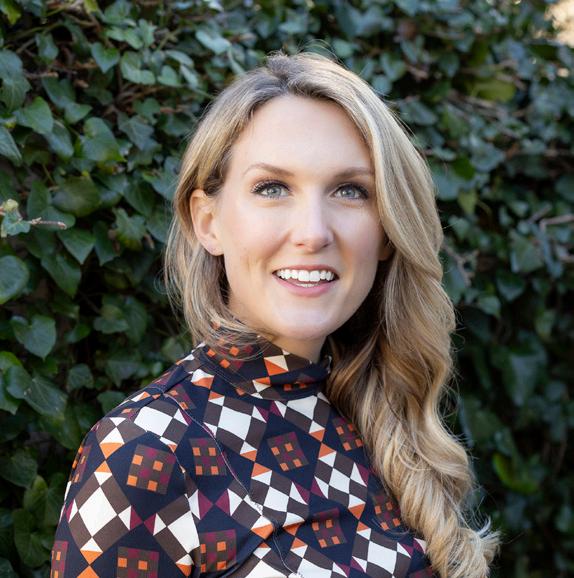
MANAGING DIRECTOR, THE LUXURY COLLECTIVE UK
Ailsa von Dobeneck is a dual American-British business professional whose career spans Westminster and Capitol Hill. Beginning in Singapore in communications for a global shipping company, she advanced into U.S. government relations, leading advocacy initiatives, securing infrastructure grants, and managing tax credit programs. Now Managing Director of The Luxury Collective, she draws on her cross-cultural expertise to guide clients through U.S. and U.K. property decisions. Ailsa holds degrees in International Affairs and German from the University of Georgia and a master’s in International Relations from King’s College London, and she’s also a passionate historic cook with a published recipe series in The Daily Beast and several television appearances.

The starting point is structural. British children typically enter formal school at age four, a full year earlier than in the United States, and progress through a nationally understood sequence: primary and prep years, a two-year GCSE cycle, and a two-year A-level or equivalent pathway.[2] Placement is determined strictly by age, using a 1 September cut-off, and requests to hold a child back in a younger year group are rarely accommodated, which can surprise families accustomed to more flexible grade placement in the US.[3]
Admissions themselves follow defined entry points, most commonly 4+, 7+, 11+, 13+, and 16+, each tied to assessments, interviews, or pre-tests, with registration for competitive schools often
occurring years in advance.[4] For flagship day and boarding schools, registration for 13+ entry is frequently expected by around Year 5 (age 9–10), with pre-testing in Year 6. As education consultant Richard Northey explains, “Americans are always surprised by how early the application process starts for a top school. Registration often happens during Year 5, with testing in Year 6.”
Missing these timelines is not about adding an extra recommendation or donation. It often means accepting a different pathway for several years. Schools maintain a firm separation between money and entry. As Northey notes, “Donations in return for school places are frowned upon.”

Age/Entry
7+ or 8+
11+
13+
14+
Prep School
First year of Senior School
Traditional Senior School starts
Senior School (late entry)

Register at Reception or earlier
Earliest entry; check for prep vs. all-through options
Prepare 18 months in advance Increasingly popular; testing and interviews required
Prepare 2+ years prior; some 3 to 4 years ahead
Contact schools quickly
15+ GCSE/Pre-Alevel Program Inquire directly
Main entry point; pre-testing in Year 6
Less common; often for special circumstances
Short programs; mostly for new arrivals
16+
Sixth Form (A-levels/IB)
Table 1: UK School Entry Points and Application Timelines
Apply 18 months before entry
High movement; good entry point for school change

In the UK, choosing a school is fundamentally different from the American approach. It is not about chasing the most prestigious name but identifying a place where a child’s temperament, academic readiness, and personality fit. This reframing is essential for American families to understand.
As Northey puts it, “One major mistake I see from Americans is that they do not always realise that the schools in the UK are focused upon the child rather than the parents.” This distinction shapes everything from admissions criteria to day-to-day school involvement. British schools prioritize teacher autonomy and clear boundaries between institutional authority and parental input. Schools expect parents to be engaged but not omnipresent. The day-to-day visibility American parents often have in US private schools is far less common in the UK.
Northey describes the dynamic this way: “There is more of a case of allowing schools to play their role, and parents being slightly at arm’s length during the school day.”
For American families used to a more fluid, relationship-driven system, succeeding in the UK requires a new playbook: earlier planning, sharper understanding of structure and entry points, and recognition that money cannot buy a shortcut into the most competitive schools.


The British curriculum follows a nationally understood structure that differs significantly from the American system. Northey explains, “Prep schools finish at either the age of eleven or thirteen, then all children move on to a two-year examination block for GCSEs, followed by another two-year block for A levels.”
This structure is rigid and uniform across the system. There is no flexibility for early advancement, curriculum customization at the secondary level, or the elective-driven model standard in American high schools. Students follow prescribed pathways, take formal exams at defined intervals, and progress in age-based cohorts. For American students arriving mid-cycle, this can mean either joining a cohort partway through a two-year examination block or waiting until a natural entry point.


Many Americans first encountered British boarding schools through popular culture: grand houses, centuries-old traditions, house systems fostering community, and tight-knit residential life. While these portrayals are partly fictional, they reflect genuine features of a system that has existed in Britain for centuries. The real boarding experience, built on community, independence, structure, and belonging, remains central to British educational culture today.
Boarding in Britain is fundamentally a lifestyle, not simply a choice of schooling. Facilities are extensive, with theatres, sports grounds, music studios, and spaces designed to support the child’s complete development. As Northey explains, “Boarding offers a pupil an encompassing lifestyle. These schools have facilities many city schools could only dream of.”
The house system, central to boarding culture, provides pastoral support and fosters a sense of
community within a large school. “Harry Potter has been extremely useful in explaining the house system,” Northey notes. “It splits a large school into smaller communities where pupils feel comfortable and supported.”
However, boarding is not suitable for every child. Success requires independence, adaptability, and a genuine desire to engage fully with the environment. As Northey cautions, “Boarding is not just one night away. It can be weeks away from home. Pupils must throw themselves into the environment and make the most of the school’s offering.”
Entry points for boarding mirror the dayschool system, most commonly at 13+ and 16+. Competitive boarding schools require years of preparation, following the exact rigorous timelines and assessment protocols as day schools.
With so many moving parts, American families increasingly turn to education consultants. But here again, the British system differs significantly from the American one. A consultant is not a power broker. They cannot guarantee a place, submit applications on a family’s behalf, or influence admissions committees behind the scenes.
As Northey emphasizes, “Any consultant who promises places should be treated with caution. Only the schools themselves can offer places.”
The value of a strong consultant lies in providing clarity and strategic guidance and in helping families avoid common, preventable mistakes. A skilled consultant helps a family understand timelines, match a child to the right schools, prepare for assessments, and avoid wasting time on unrealistic options. They understand the nuances of the system: curriculum differences, cultural expectations, application windows, and the pathways from nursery through prep school to senior school to university.
Most importantly, a good consultant helps families look beyond prestige and focus instead on environments where a child will thrive. As Northey explains, “A consultant listens, guides, challenges assumptions, and introduces options families never knew existed. For those new to the UK, this saves time, money, and stress.”
For American families, the British education system can feel like an entirely different universe. But with early planning, realistic expectations, and expert support, it becomes not a maze but a map. The UK offers extraordinary educational opportunities through academic depth, cultural richness, strong pastoral care, and schools that truly focus on the whole child.
What it does not offer is a shortcut. Money cannot buy your way in. Influence cannot bypass an assessment. And the sooner families understand that, the more confidently they can choose a path that is right for their child.


References
[1] UCAS. (2025). Record numbers of US students apply to UK universities. https://www.ucas.com/ [2] UK Education Guide. (2025). Education system structure: Ages 4–18. https://ukeducationguide.com/education-system-structure-ages-5-18/
[3] MoveHub. (2024). The British school system and UK school grades explained. https://www.movehub.com/us/ international-moving/united-kingdom/school-system/ [4] Talk Education. (2024). The UK independent school system explained. https://www.talkeducation.com/news/ the-uk-independent-school-system-explained
The Luxury Collective UK John Eric, Director* Anna-Louisa Yon, Director
+44 20 4614 1927 Berkeley Square House, Berkeley Square 2nd Floor, London W1J 6BD www.theluxurycollectiveuk.co.uk
The Education Consultancy Richard Northey Managing Director
Tel: +44 (0)1525 630207 Mob: +44 (0)7794 045931 10 Kings Arms Yard, Ampthill Bedfordshire MK45 2PJ www.theeducationconsultancy.com