The American Buyer’s Guide to Purchasing Property in the Cotswolds
WHITE PAPER
Prepared by The Luxury Collective Global Advisory and Boodle Hatfield LLP



Prepared by The Luxury Collective Global Advisory and Boodle Hatfield LLP
Prepared by The Luxury Collective Global Advisory and Boodle Hatfield LLP



The Cotswolds has become one of the UK’s most sought after destinations for American buyers seeking a second home, family base or longterm investment. While its appeal is rooted in its exceptional landscape, historic villages and quality of life, purchasing property in rural England involves legal, practical and tax considerations that often differ significantly from both the US market and Prime Central London.
This White Paper has been prepared by The Luxury Collective Global Advisory and Boodle Hatfield LLP to help American buyers understand those differences before they commit to a purchase. Drawing on experience advising international clients, it explains how the English conveyancing process works, how ownership structures should be approached, and why careful due diligence is particularly important when acquiring historic rural property.
The guide explores the distinctive characteristics of the Cotswolds property market, including the implications of listed buildings, planning controls, rights affecting land, rural infrastructure and estate ownership. It also
examines the practical issues that arise before, during and after a transaction, from surveys and searches to renovation, negotiation strategy, tax planning and long-term ownership.
Throughout, the emphasis is on informed decision-making rather than complexity for its own sake. Many of the legal protections available to buyers in England arise precisely because the period before exchange of contracts allows a property to be investigated in detail.
Understanding that process – and assembling the right professional advisers at an early stage – can help buyers identify risks, plan effectively and proceed with confidence.
For American families, purchasing a home in the Cotswolds is often about much more than acquiring real estate. It is an investment in a particular way of life, with the potential to create a lasting base for future generations. By understanding the legal framework and practical realities that underpin ownership, buyers can ensure that the property they choose supports those ambitions for years to come.

DIRECTOR, THE LUXURY COLLECTIVE GLOBAL ADVISORY
John Eric is a Californian by birth, a Washingtonian by choice, and a Londoner at heart. With early roots in publishing and politics—including work on a presidential campaign and within an administration—he brings a diplomat’s discretion and a strategist’s insight to every client relationship. After a successful career in national media, he transitioned into real estate, where for more than two decades he has advised high-profile clients across Washington, DC, and internationally. A founding agent and Executive Vice President at Compass, John is known for white-glove service, confidentiality, and mastery of complex negotiations.
As Managing Director of The Luxury Collective Global Advisory, John bridges U.S. and U.K. property markets, guiding global buyers with a distinctly American fiduciary approach. He also publishes John Eric Home & Lifestyle magazine and hosts The Property Diplomat podcast, exploring real estate, politics, and culture. His expertise has been featured in The Washington Post, The New York Times, and The Financial Times. Active in global real estate networks, John speaks regularly at industry events and advises family offices and wealth managers on cross-border investment. Outside of work, he enjoys family time, tennis, travel, good food, and supporting pet adoption.

Yon DIRECTOR, THE LUXURY COLLECTIVE GLOBAL ADVISORY
Anna-Louisa Yon is a lifelong Washingtonian whose career bridges entrepreneurship, design, and real estate. She launched a design-focused business during the 2009 downturn, selling to leading galleries and boutiques across the United States and honing her strengths in negotiation and relationshipbuilding. Transitioning into real estate, she quickly emerged as a trusted advisor, earning recognition among the top 1.5% of realtors in the United States by The Wall Street Journal and ranking as the 8th highest individual agent in the DMV region for Compass in 2020. A Capitol Hill resident, she brings deep local insight and a highly connected, client-first approach.
As a Director of The Luxury Collective Global Advisory, Anna-Louisa supports clients with international and transatlantic real estate needs. Working with the firm’s London-based team, she guides U.S. buyers through the UK market with cultural fluency and strategic perspective, delivering seamless cross-border representation on both sides of the Atlantic.


Saskia Arthur is a Partner at Boodle Hatfield, a leading London law firm advising domestic and international high net worth individuals and investors on their UK property interests. She heads the firm’s Residential Property team and has a broad practice spanning prime residential, rural and landed estate matters.
Saskia has a diverse client base for whom she acts on the acquisition, financing, development, ownership and management of high value residential property, landed estates and rural assets. Working closely with the firm’s tax, private wealth, construction, corporate and commercial teams, she helps clients navigate the often complex legal, tax and structuring issues that accompany significant property transactions.
With a number of urban and country estate clients, along with property investors and private clients, Saskia acts on all major property matters including sales and purchases of high value residential property, landed estates and commercial farming operations, overage arrangements, landlord and tenant issues, easements, first registrations, sporting and telecommunications, together with the ongoing day to day management advice on a myriad of issues. She regularly acts on transactions for the most expensive land, farms and residential properties and estates in England.

MANAGING DIRECTOR, UK DIVISION THE LUXURY COLLECTIVE GLOBAL ADVISORY
Ailsa von Dobeneck is a dual American-British business professional whose career spans Westminster and Capitol Hill. Beginning in Singapore in communications for a global shipping company, she advanced into U.S. government relations, leading advocacy initiatives, securing infrastructure grants, and managing tax credit programs. Now Managing Director of The Luxury Collective Global Advisory, she draws on her cross-cultural expertise to guide clients through U.S. and U.K. property decisions. Ailsa holds degrees in International Affairs and German from the University of Georgia and a master’s in International Relations from King’s College London, and she’s also a passionate historic cook with a published recipe series in The Daily Beast and several television appearances.

Asked to picture the English countryside, most people would likely imagine something like the Cotswolds. This area spanning 800 square miles in the heart of southern England is famous for its honey-toned properties, exquisite villages featuring traditional pubs and cricket greens, and substantial Areas of Outstanding Natural Beauty.
Built on the medieval wool trade, the area’s historic wealth allowed the construction of grand manor houses and notable churches. More recently, English buyers have seen it as the location for an idyllic country lifestyle or a bolthole away from Central London, with celebrated walking trails, sporting opportunities and the lure of desirable private members clubs and facilities. In recent years, they have been joined by a growing number of Americans.
For many American buyers, the Cotswolds offers something fundamentally different from prime Central London. While London provides access – business, culture, education, transport,
and global connectivity – the Cotswolds offers another kind of appeal altogether: space, privacy, heritage, landscape, and the possibility of creating a family base beyond the city. For buyers accustomed to larger homes and more expansive plots in the US, the Cotswolds can feel both familiar and unmistakably English.
Demand is being shaped by a range of personal and strategic factors. Some buyers are drawn by education, security, and the ability to spend time in different places, especially as flexible working patterns become the norm. Others are looking for a counterweight to geopolitical uncertainty, climate concerns, or the sense of concentration that can come with holding too much wealth, property, or family life in one jurisdiction. For internationally mobile families, a Cotswolds house can sit alongside homes in London, New York, California, or elsewhere as part of a broader pattern of residence, lifestyle, and wealth planning. This is increasingly true as members of the same

circles begin to invest in particular villages, offering a social life that is already in place within the area.
Yet the qualities that make the Cotswolds so attractive are often the same qualities that make buying there more complex. Historic houses, estate land, listed buildings, outbuildings, private drainage, shared access, rights of way, agricultural restrictions, and planning controls can all affect what a buyer is acquiring and how the property may be used. A house that appears to offer privacy may be crossed by public rights of way. A cottage that looks ideal for guests may be restricted to ancillary use. A barn that seems perfect for conversion may have no lawful residential status. A listed building may be beautiful precisely because the law constrains how it can be altered.
For American buyers, this can require a shift in mindset, because the process is markedly different from a US real estate transaction. An accepted offer does not create the same legal certainty many US buyers expect. Freehold ownership does not necessarily mean freedom from restrictions. Survey, title review, searches, planning analysis, and ownership structuring all play an important role in determining whether the property can support the buyer’s intended use over time.
This should not be viewed as a deterrent. Properly understood, the English process gives
buyers the opportunity to test assumptions before becoming legally committed. It allows them to understand the condition of the property, the legal rights and obligations attached to it, the planning framework that governs future change, and the tax and succession implications of ownership. In cases where a purchase represents long-held family dreams and ambitions, that discipline is particularly valuable.
This White Paper is designed to help American buyers to approach the Cotswolds with both enthusiasm and clarity. It explains how the region differs from London and from many US property markets; how the English conveyancing process works; why ownership structure should be considered early; what surveys, searches, and due diligence are intended to reveal; and how planning, renovation, and negotiation strategy should be approached before contracts are exchanged.
The central point is not that buying in the Cotswolds is unusually difficult. It is that making it work over time requires a proper understanding of the asset. The most successful purchasers are those who define their objectives early, take advice at the right stage, and align the romance of English country living with the legal and practical realities of ownership.

For many American buyers, the Cotswolds represents an enduring vision of the English countryside: stone houses, rolling hills, historic villages, and ready access to London. Beyond the enchanting landscape, though, rural property in England comes with layers of history, rights, obligations, and constraints that may test initial assumptions and hopes.
Rural English property has often evolved over centuries, shaped by changing ownership, estate structures, agricultural use, and informal arrangements that later become legally significant. Most country houses in the Cotswolds are sold on a freehold basis, broadly equivalent to owning both the building and the land on which it stands. That said, freehold should not be mistaken for complete freedom.
A property’s title may contain restrictive covenants limiting how land or buildings can be used. These might restrict alterations, extensions, short-term letting, or the use of certain land for anything other than agriculture. One of the more surprising features of English property law is that planning permission does not override these private rights. A proposal may receive planning consent while still being prohibited by a covenant on the title.
Positive covenants may also require owners to contribute toward shared roads, accessways, or estate infrastructure. Overage provisions can require a future owner to pay a share of uplift in value if planning permission is obtained for development. Tenancies may affect houses, cottages, commercial buildings, or agricultural land, and vacant possession cannot always be assumed simply because a property is being sold.
Historic rights can also produce unexpected consequences. Easements may give third parties rights to cross the land, run services through it, or maintain infrastructure. Rights in relation to sporting, fishing, timber, mineral, and manorial may have been reserved to others, sometimes many years before the current sale. In practical terms, a buyer may acquire the land without owning every right associated with it.
None of this necessarily makes a property unattractive, but it does underline the need for a thorough due diligence process (see page 16).
In any country, the charms and privacy of an older rural property come along with certain logistical considerations that need thinking through.
Assessing the condition of a building in a detailed survey is crucial to uncover any issues in relation to damp, drainage, structural movement or roof condition.
It is common for country homes to rely on oil or Liquid Petroleum Gas (‘LPG’) heating, with solar panels or ground source heat pumps increasingly common. There may be private drainage systems, boreholes or wells to think about. These systems may work well, but will also carry maintenance responsibilities, regulatory obligations, and arrangements for shared use that should be understood before purchase.
Access is another area for careful review, as private drives may be shared with neighbouring properties, and maintenance obligations may be informal, unclear, or split between several owners. Public or private rights of way may cross land or run close to the main house, with implications for privacy and security. Title plans can also be general rather than definitive, meaning boundaries on the ground do not always correspond precisely with the legal documentation.
For buyers who are used to clearer subdivision, inspection, and service arrangements, this can be one of the more significant mindset shifts. The property is not only the house, but the land, rights, systems, restrictions, and obligations that allow it to function.
The land and buildings surrounding a country house are often central to its appeal. When viewing a property, the prospective buyer may see barns, annexes, cottages, stables, and other

outbuildings as obvious opportunities for guest accommodation, home offices, leisure space, or future development; while agricultural land seems to promise scope for landscaping, recreation, or diversification.
Unfortunately, appearance can be misleading. In England, land may be affected by agricultural covenants, rights of way, environmental protections, or development restrictions that limit how it can be used. A cottage may be restricted to ancillary use with the main house, while planning constraints mean that a barn may remain an agricultural building with no lawful residential use. Even an outbuilding that is currently in residential use may have been converted without the necessary planning permission or listed building consent.
While this can be disappointing, it is vital information if the buyer’s plans depend on the ability to convert buildings, create independent accommodation, let cottages, or host commercial activity. Fortunately, the conveyancing process offers an opportunity to assess whether the asset truly delivers the lifestyle it appears to promise.

Agreeing a price on a country home is an exciting moment, but American buyers are sometimes surprised to discover that an accepted offer does not create the legal certainty they expect. In England, the period between offer acceptance and exchange of contracts is commercially significant but not legally final. During this period, either party may generally walk away, seek to renegotiate, or be affected by the wider chain of transactions.
This can be a shock for buyers used to a system in which agreement on price carries a stronger sense of commitment. However, the conveyancing process that occurs in between allows buyers and their advisers to investigate the property thoroughly before being bound to proceed – an especially important safeguard when purchasing a Cotswolds home, where issues such as listed status, rights of way, agricultural use, and historic land ownership can make transactions considerably more complex than their urban counterparts.
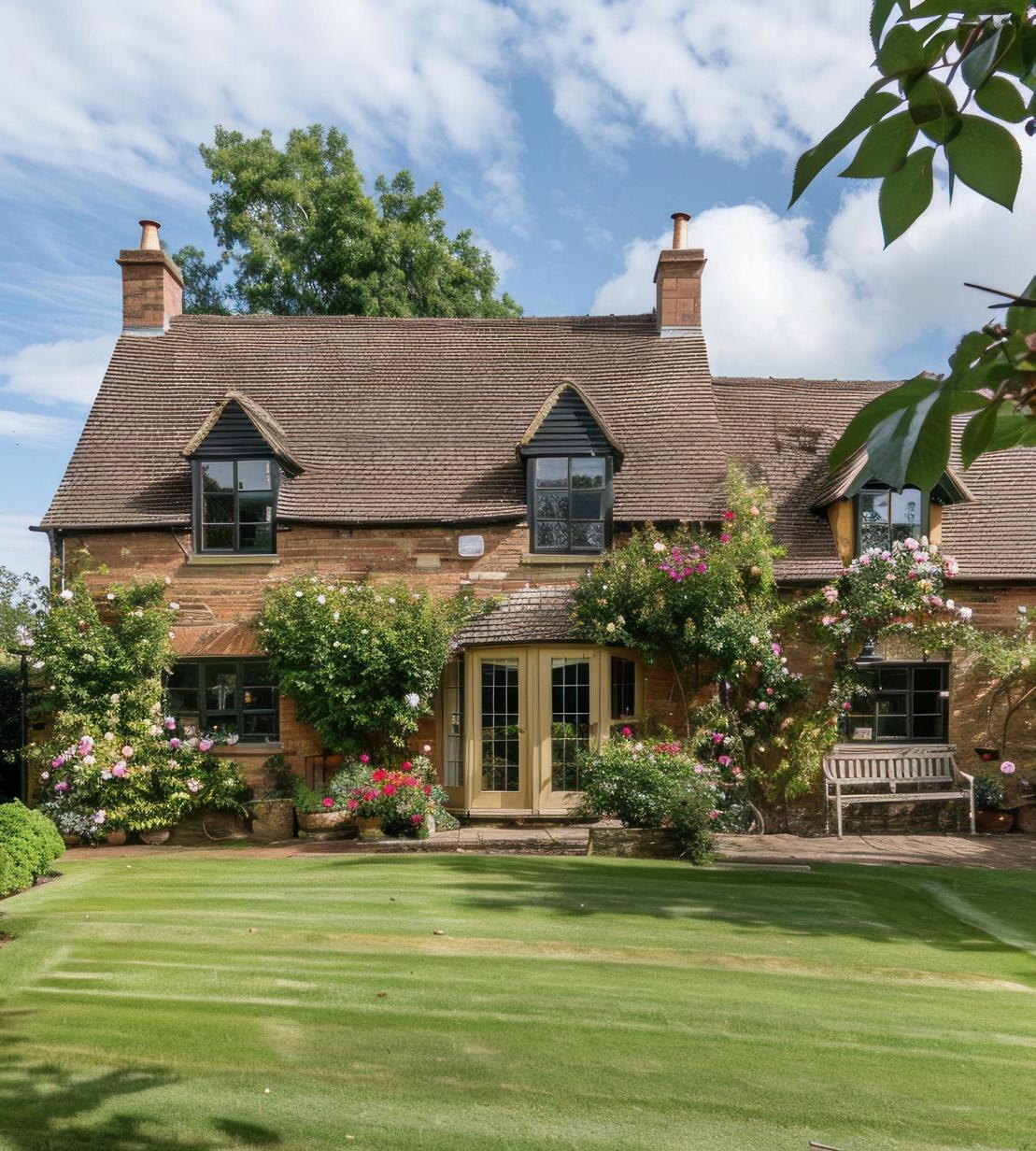
Once a price has been agreed through the estate agent, heads of terms (also known as the memorandum of sale) are circulated to both parties’ solicitors. This summary records the agreed purchase price, the identities of the parties, and any specific conditions that have been negotiated. While commercially important, it remains nonbinding and the agreed terms may still change before exchange.
One of the first practical steps is agreeing precisely what is included within the sale. While this may sound straightforward, it can become particularly significant when purchasing a country property. Fixtures, fittings, contents, farm equipment, machinery, or bespoke installations may all form part of the negotiations. Agreeing these points early, helps avoid misunderstandings later in the transaction.
Both parties will then formally instruct solicitors. For buyers, early instruction is a way to maintain momentum and demonstrate credibility to the seller. The solicitor will coordinate the legal process from this point onwards, working alongside surveyors, lenders, tax advisers, and other specialists where appropriate. Their core role is to investigate the property’s legal title, commission the necessary searches, review the survey findings, raise enquiries with the seller’s solicitor, and negotiate both the sale contract and the Transfer - the legal document that ultimately transfers ownership.
Meanwhile, the buyer’s funding arrangements, ownership structure, and source of funds requirements are finalised. For international buyers, UK anti money laundering requirements are rigorous and evidence of funding will usually be scrutinised carefully.
Exchange of contracts is the pivotal legal moment in the transaction. Once contracts have been signed and formally exchanged by the solicitors, the agreed completion date is fixed, with the buyer normally paying a 10% deposit, and the transaction becomes legally binding.
American buyers should also be aware that responsibility for the property generally passes when contracts are exchanged, rather than at completion. Building insurance should therefore be in place from this point, as any physical damage
occurring before completion will ordinarily remain the buyer’s responsibility, even though legal title has not yet transferred.
Completion follows on the agreed date. This is when the balance of the 90% is paid via the buyer’s solicitor to the seller’s solicitor, together with payment for any additionally agreed items such as furniture. At this point, legal title passes to the buyer, who takes possession of the property.
If a buyer fails to complete after exchange, the consequences can be significant. Interest may become payable under the contract and the seller may serve a notice to complete, giving the buyer a limited period, typically 10 days, to complete the purchase. If completion still does not take place, the seller may be entitled to terminate the contract and retain the deposit.
Following completion, the buyer’s solicitor will register the transfer of ownership at HM Land Registry and submit the Stamp Duty Land Tax (‘SDLT’) return. SDLT must be paid within the prescribed timeframe following completion, otherwise penalties may apply.
The period before exchange can be uneasy, because it combines genuine commercial commitment with relatively limited legal certainty. This creates scope for the buyer to lose their chosen property through gazumping, whereby a seller accepts a higher offer before exchange. Alternatively, the buyer may attempt to renegotiate the price immediately before exchange, a practice known as gazundering.
The best way to avoid uncertainty on all sides is through preparation. Buyers who have funding in place, instruct solicitors early, respond promptly to enquiries and communicate clearly are best placed to maintain momentum, while ensuring that any issues are identified before they become legally committed. See page 16 for more details on the surveys and due diligence process.

It is worth considering how to acquire a property before having a specific Cotswolds home in mind. The way ownership is structured can affect not only tax exposure, but also privacy, succession planning, financing, long-term family use, reporting obligations, and future resale strategy.
For US citizens purchasing property in England, seeking advice in both the UK and US is particularly important. Buyers can find themselves exposed to both tax systems simultaneously, often in ways that are unfamiliar or counterintuitive. Decisions that appear straightforward from a US perspective may produce unintended UK consequences, and vice versa. The legal and tax position should therefore be considered early, particularly where a purchase forms part of a broader relocation, investment, or family wealth planning strategy.
One of the first surprises for many American investors is the relative lack of privacy surrounding
UK property ownership. In the US, high net worth individuals frequently acquire residential property through LLCs or similar entities, partly for liability protection and partly to keep personal ownership details out of public view. In England, however, residential property ownership is substantially more transparent. Properties must be registered at HM Land Registry, and ownership information is generally publicly searchable.
For that reason, American buyers will often ask whether a UK property should be acquired through a company or trust structure. In most cases, where a property is intended primarily for personal or family use, the answer is likely to be no. While corporate ownership may appear attractive from a privacy perspective, it rarely achieves the level of anonymity US buyers expect and can create significant additional tax and administrative exposure.
Corporate or trust ownership of UK residential property can increase acquisition costs through higher rates of SDLT and may also trigger ongoing
reporting obligations and annual charges, including the Annual Tax on Enveloped Dwellings (‘ATED’). Household staff will also generally be employed personally, as opposed to through a corporate entity; although there are circumstances where a corporate entity may be used for liability or privacy reasons. In practice, many buyers discover that the perceived advantages of corporate ownership are outweighed by the tax and compliance burden.
That said, there are circumstances in which a corporate structure may still be appropriate. Buyers assembling a portfolio of investment properties, for example, may benefit from a more structured ownership approach, particularly where rental activity forms part of a long-term strategy. Finding the right structure will depend heavily on the buyer’s wider circumstances – including their residence status, intended use of the property, financing arrangements, succession planning objectives, and the interaction between UK and US tax rules.
For those considering joint ownership, this requires careful consideration. Under English law, property can generally be held by “joint tenants” or as “tenants in common”, with important implications for succession planning and family wealth transfer.
Joint tenants own the property together equally, with the surviving owner automatically inheriting the other’s interest on death rather than through a will – a principle known as “survivorship”. By contrast, tenants in common each hold a separate share, allowing that share to pass under a will rather than automatically to the co-owner. For married couples purchasing a family property, joint tenancy is often the simpler structure, particularly as it may avoid the need for English probate on the first death. In other situations, however, holding unequal shares or retaining flexibility over succession arrangements may make a tenancy in common structure more appropriate.
The ownership structure itself is only part of the equation. As a purchase progresses, the tax implications can begin to reshape the conversation, often in ways that surprise American buyers. SDLT, the transaction tax payable on English property purchases, is charged on a progressive basis, with a top rate of 12%. However,

international buyers may also become subject to additional surcharges, including a 2% non-resident surcharge and a 5% surcharge for additional properties. The position can become complex quickly, particularly where multiple properties, trusts, or cross-border ownership arrangements are involved, and tailored advice should be taken early in the process.
Another area of marked divergence is inheritance tax (‘IHT’) exposure. UK IHT, like US estate tax, is charged at 40% and applies to estates and certain lifetime gifts. The similarity in headline rates can initially appear reassuring to American buyers. In practice, however, the exempt amount in the UK is materially lower than in the US: £325,000 compared with $15 million in the US in 2026. Becoming exposed to UK IHT, whether through the acquisition of UK property and assets or through becoming classified as a long-term UK resident, can therefore have a significant impact on worldwide estate planning.
The interaction between the UK and US systems introduces further complexity. The US-UK estate tax treaty may provide valuable protections in certain circumstances, particularly in relation

to assets held outside the UK and the mitigation of double taxation, but those protections are nuanced and should not be assumed to apply automatically. Some may also cease to apply if a US individual becomes a UK citizen, meaning decisions around long-term residence or citizenship should be considered carefully from an estate planning perspective.
The financial considerations do not end once the purchase has completed. Alongside maintenance, staffing, insurance, and estate management costs, buyers should also account for ongoing property taxation. Council tax applies throughout the ownership period regardless of ownership structure, and some local authorities have introduced significant premiums for second homes and long-term empty properties. The UK Government has also signalled its intention to introduce additional annual charges for high value residential property, a form of “mansion tax”. The amount of the charge will depend upon the value of the property, ranging from £2,500 (for properties worth between £2 million and £2.5
million) to £7,500 (for properties worth more than £5 million), although at the time of publication, details including potential reliefs and exemptions are still being refined.
When it comes to selling, capital gains tax (‘CGT’) (currently 24%) may apply on any gain realised on the disposal of UK property, including certain gifts. Where the property qualifies as a main residence, though, a 100% relief is available. There is no cap on the amount of this relief, unlike in the US where only the first $250,000 of any gain is exempt from US tax. This means that for a UK based couple with one US partner and one non-US partner, it will likely be more efficient for the nonUS partner to be the sole owner.
Buyers intending to spend meaningful time in England are advised to review their residence status carefully before relocating. The UK offers an attractive regime for some internationally mobile individuals, but the implications of becoming a UK resident should be assessed with input from a legal expert – particularly where existing trusts, investment structures, or cross-border estate planning arrangements are involved.
It is also generally advisable for owners of UK real estate to put an English will in place alongside their US estate planning documents. This can simplify the probate process and help avoid unintended conflicts between UK and US succession arrangements. We would , however, generally recommend that a US person does not hold UK property in their US revocable trust.
While it is always tempting to focus on the physical structure of an idyllic Cotswolds home, the technical ownership structure cannot be treated as an afterthought. Establishing arrangements early, before a purchase becomes advanced, helps ensure that effective solutions are in place before practical, personal, or timing pressures begin to narrow the available options.


Few successful investors in the business world would be willing to sign a deal before completing robust due diligence. While the process of purchasing property in England can feel lengthy to international buyers, it serves much the same purpose.
This matters because English property transactions operate on the principle of “caveat emptor” (buyer beware). Sellers are not required to provide the same level of disclosure as they are in many parts of the US, meaning responsibility for investigating a property’s legal and physical condition rests primarily with the buyer and their advisers.
Due diligence should therefore be viewed as one of the most important protections available to buyers. Rather than treating it as an obstacle to overcome, sophisticated purchasers see it as an opportunity to develop a complete understanding of the property prior to any legal obligation to proceed.
A basic survey is rarely sufficient for a Cotswolds property. The region’s housing stock is dominated by period homes, listed buildings, and rural estates, many of which have evolved over centuries. Understanding their condition requires
considerably more than a brief inspection.
A Royal Institution of Chartered Surveyors (‘RICS’) Level 3 Building Survey is recommended for valuable properties and essential for older or substantially altered buildings. It identifies structural movement, timber decay, damp, roofing defects, and evidence of alterations that may have been carried out without the necessary planning permission, listed building consent, or building regulation approval.
The initial surveyor may then recommend more specialist investigations. Depending on the property, these could include timber and damp reports, structural engineering advice, drainage surveys, roofing assessments – particularly for thatched properties – or inspections of heating systems, wells, boreholes, and other private services.
Homes with swimming pools or more sophisticated infrastructure often benefit from dedicated mechanical and electrical (M&E) surveys to assess whether those systems are functioning as intended. Where a listed building has undergone significant alteration, specialist heritage advice may also be appropriate to assess historic works and the likelihood of securing retrospective consents or future planning approvals.
Energy efficiency should also form part of the due diligence process, particularly where a buyer is considering letting the property in the future. Every property is sold with an Energy Performance Certificate (EPC), which measures its energy efficiency and identifies opportunities for improvement. While those recommendations are not compulsory for owner occupiers, minimum energy efficiency standards apply to many rental properties and are expected to become more demanding over time. Improving the EPC rating of an older Cotswolds home can present practical and planning challenges, particularly if the property is listed.
For country properties, due diligence extends well beyond the building itself. A buyer’s solicitor will investigate the property’s legal title, while a programme of searches helps uncover issues that would rarely be apparent during a viewing. Together, they establish how the property functions in practice and whether there are legal or practical constraints that may affect its future use.
Local Authority searches confirm planning permissions, listed building consents, building regulation approvals, enforcement notices, road adoption status, and proposals that could affect the property or its surroundings. They may also reveal whether the property lies within protected landscapes or is affected by planning or environmental designations.
Drainage and water searches establish whether the property is connected to mains services or instead relies on private infrastructure such as boreholes or septic systems. For rural properties, these arrangements can have significant practical and financial implications, particularly where systems are shared with neighbouring landowners or require upgrading to meet current regulations.
Environmental searches assess matters such as flood risk, historic land use, contamination, landfill, and ground stability, while development searches identify whether there are any major planning applications nearby that will have a significant impact on future enjoyment of the property.
Highway searches can also help to head off future issues, by establishing whether the plans provided show that the title abuts the highway. It is common to find small gaps between title boundaries in the highway, in which case your
solicitor can check whether there are legal rights of way over the gap and put protections in place. It is also advisable to identify historic liabilities such as chancel repair, which although rare, would oblige the owner to contribute towards the repair of a local parish church.
Alongside these searches, the seller’s solicitor provides detailed replies to legal enquiries. For country houses and estates, these often extend beyond the standard forms used in urban transactions, covering agricultural land, tenancy arrangements, rights of way, shared infrastructure, and other matters unique to rural ownership.
Due diligence should not be viewed as a search for reasons to abandon a transaction. More often, it provides the information needed to make better decisions.
Survey findings or search results may justify renegotiating the purchase price, agreeing contractual protections, planning future works, arranging appropriate insurance, or adjusting the ownership strategy before contracts are exchanged. In many cases, they simply provide reassurance that apparent risks are well understood and manageable.
The right questions will also depend on how the property is intended to be used. A weekend home, a long-term family base, and a property with rental or hospitality potential will each require a different emphasis. In each case, due diligence should answer not only what the property is, but how it will function for this particular owner over time.
For buyers unfamiliar with the English market, the process can initially feel exhaustive, but it is best viewed as providing extremely useful information on their potential investment. A comprehensive programme of surveys, searches, and legal enquiries allows buyers to understand the likely cost of maintenance, the extent of future investment that may be required, and whether the practical realities of ownership align with their expectations and long-term plans.

One of the pleasures of buying a country house is imagining what it could become. The larger plots of land in the countryside, which may include quirks such as barns and stables, offer a chance to create a home that reflects the buyer’s own taste and lifestyle. The vision may include opening up interiors, introducing contemporary kitchens and bathrooms, adding wellness facilities, converting outbuildings into guest accommodation, or enhancing the surrounding landscape.
Before becoming attached to those plans, however, it is important to understand that the English planning system operates very differently from that in many parts of the US. What appears to be a straightforward renovation may, in practice, require multiple permissions, specialist advice, and extended timescales. The most successful projects begin not with architectural drawings, but with a realistic understanding of what is likely to be permitted.

A significant proportion of the Cotswolds’ most desirable homes are listed buildings, many of them Grade II or above. Listing is intended to protect a property’s architectural and historic significance, and the controls extend well beyond preventing demolition.
Works that affect the character of a listed building generally require Listed Building Consent – whether they involve external alterations, internal layouts, windows, fireplaces, staircases, decorative plasterwork, or the installation of modern services. Importantly, protection can also extend to structures and features within the property’s curtilage (its functional boundary), even where they are not individually listed. Buyers should therefore establish that any previous works received the necessary consents and recognise that future alterations may also require approval.
Unlike planning permission, Listed Building Consent is assessed primarily against the impact on the building’s historic significance. Approval should never be assumed, even where proposed works appear modest or reversible.
Alongside listed building controls, many projects will also require planning permission from the local authority. Extensions, new structures, swimming pools, tennis courts, changes to land use, and the conversion of outbuildings may all require formal approval.
For many buyers, this can represent a significant shift in expectation. English planning policy, particularly in protected rural areas, is generally intended to conserve historic buildings and landscapes rather than maximise development potential.
The planning context becomes even more important in the Cotswolds, because much of the region lies within a designated Area of Outstanding Natural Beauty (now formally National Landscapes). This introduces an additional layer of policy intended to protect the area’s distinctive character.
Local planning authorities will apply heightened scrutiny to the scale, design, materials, and visual impact of proposed works, together with their effect on the wider landscape setting. Traditional construction methods and sympathetic design are often expected, particularly where
historic buildings are involved.
Planning is only one part of the picture. Buyers may also encounter conservation area controls, agricultural occupancy restrictions, restrictive covenants, overage provisions, rights of way, environmental protections, or limitations affecting access and infrastructure. Each of these has the potential to influence how a property can evolve over time.
Many buyers see the property’s potential extending beyond the principal house. Barns, coach houses, and other ancillary buildings may appear ideal candidates for guest accommodation, home offices, leisure facilities, or other modern uses. Similarly, agricultural land may be capable of accommodating new buildings or alternative activities.
These ambitions, however, often trigger planning and change of use considerations that require careful assessment. Proposals involving independent accommodation, commercial activity, short-term letting, wellness retreats, or event use may all require specific permissions and may not align with local planning policy. Likewise, the introduction of contemporary features such as swimming pools, fitness buildings, or estate infrastructure may be resisted where they would alter the agricultural or historic character of the site.
This does not mean that ambitious projects are impossible, but feasibility should be tested before assumptions become plans.
International buyers are often taken aback by the planning framework and the time it can take to navigate.
A straightforward planning application may be determined within eight to twelve weeks, but more complex proposals, particularly those involving listed buildings, frequently require heritage reports, technical drawings, specialist consultants, and extended dialogue with the local authority. Preapplication discussions are often worthwhile, but they cannot guarantee a favourable outcome and may not fit comfortably within the timetable of a property transaction.
Works carried out to a listed building without the appropriate consent should also be treated

seriously. They can give rise to enforcement action and, in some circumstances, constitute a criminal offence. As part of the acquisition process, buyers should therefore establish not only what they hope to build, but whether previous owners obtained the necessary approvals for works already undertaken.
One of the most common mistakes is to assume that renovation potential can be assessed after completion. In practice, it should form part of the due diligence process before contracts are exchanged.
For buyers planning significant alterations, that may include reviewing the planning history of the property, commissioning planning and heritage appraisals, or engaging architects or planning consultants to test initial proposals. Where timing permits, seeking pre-application advice from the local planning authority can also help to identify both opportunities and constraints before a purchase becomes legally binding.
In some cases, buyers may conclude that a property with existing planning consent offers a more straightforward route to achieving their objectives than one requiring multiple future applications. In others, the planning position may simply influence the purchase price, budget, or programme of works.
The key question is whether a particular property can realistically become the home the buyer has imagined. The most successful acquisitions are usually those where the architecture, planning context, and lifestyle ambitions are already closely aligned, requiring thoughtful refinement rather than wholesale transformation.
Renovation potential should therefore be verified, not assumed. The most compelling country house is not always the right acquisition if the changes that define its appeal are unlikely to secure consent, or would require disproportionate time and investment.


The current market in the Cotswolds is such that there is competition for the most desirable properties. Understandably, this can leave buyers feeling pressure to move a transaction forward. Preparedness and decisiveness matter, but not at the expense of considering legal, financial, and practical risks. The aim is to move quickly where speed matters, but carefully where judgment is required.
This is particularly true in a market where many properties are sold discreetly, off-market, or through longstanding relationships. Sellers and agents are often looking not only for the highest offer, but for a credible buyer who is properly advised, financially ready, and unlikely to create unnecessary uncertainty during the transaction.
Those who have funding in place, understand their objectives, and have appointed the right advisers early are therefore in a strong position. Most critically, they can act decisively without overcommitting before key risks have been understood.
A successful strategy often begins before a formal offer is made. In a relationship driven market, agents and sellers will want to know that a buyer is serious, qualified, and capable of proceeding. That does not simply mean being able to fund the purchase. It also means having a clear brief, a realistic understanding of the market, and advisers who can move promptly once terms are agreed.
For American buyers, this early preparation can be particularly important. Proof of funds, ownership structure, tax considerations, and source of funds requirements may all need to be addressed before the transaction gathers pace. A buyer who has already considered these points with advisors will usually appear more credible than one who is still assembling the pieces after an offer has been accepted.
This preparation also helps reduce the risk of moving too quickly for the wrong reasons. Country house purchases can become charged,
particularly where a property appears to fulfil a vision of English country life cherished for a long time. The role of good advice is not to remove that emotion, but to ensure it is balanced by a clear view of process, risk, and value.
Once the transaction begins, legal due diligence should not sit apart from the negotiation strategy. Title review, searches, survey findings, and planning analysis can all affect the risk profile of the property and, in some cases, its economic value.
Some findings may be relatively straightforward to address. A survey may identify repair costs that can be quantified. A title issue may be capable of being covered by indemnity insurance. A missing consent may be capable of being regularised or addressed through contractual protection. Other findings require a more nuanced assessment, particularly where they affect future use, insurability, financing, or the buyer’s intended plans for the property.
The key is to distinguish between issues that can be managed and issues that genuinely alter the basis on which the buyer is prepared to proceed. Not every imperfection justifies a price reduction. Rights of way, heritage restrictions, agricultural surroundings, or planning constraints may simply be part of the nature of owning a rural or historic property. In other cases, an issue may justify revised terms because it creates a cost, delay, or limitation that was not apparent when the offer was made.
An effective negotiation is usually grounded in evidence. Survey reports, legal analysis, planning advice, or contractor estimates provide a more credible basis for discussion than generalised concern.
Where issues are identified, the response does not always need to be a simple price reduction. Depending on the nature of the risk, the parties may agree contractual protections, seller obligations, retentions, delayed completion arrangements, or insurance solutions. These mechanisms can allow a transaction to continue while allocating risk more carefully between buyer and seller.
For example, a seller may agree to remedy a particular issue before completion, or funds may

be retained pending the resolution of a specified matter. Indemnity insurance may also be available for certain title or planning defects, although the position can be more sensitive where listed buildings are involved.
The tone of negotiation matters as much as the substance. Overly aggressive negotiation, particularly late in the process, can damage trust and jeopardise the transaction. Sellers in the Cotswolds often value certainty, discretion, and buyer credibility. A measured approach, supported by clear evidence and legal analysis, is usually more effective than attempting to reopen every point.
Very few issues that arise during a country property transaction are truly impossible to manage. In many cases, the right legal and professional advice will identify a way forward, whether through insurance, contractual protection, pricing, or revised expectations.
The more difficult question is sometimes not whether a solution exists, but whether the solution remains consistent with the buyer’s goals. A constraint that is manageable for one buyer may be unacceptable for another. A planning risk that
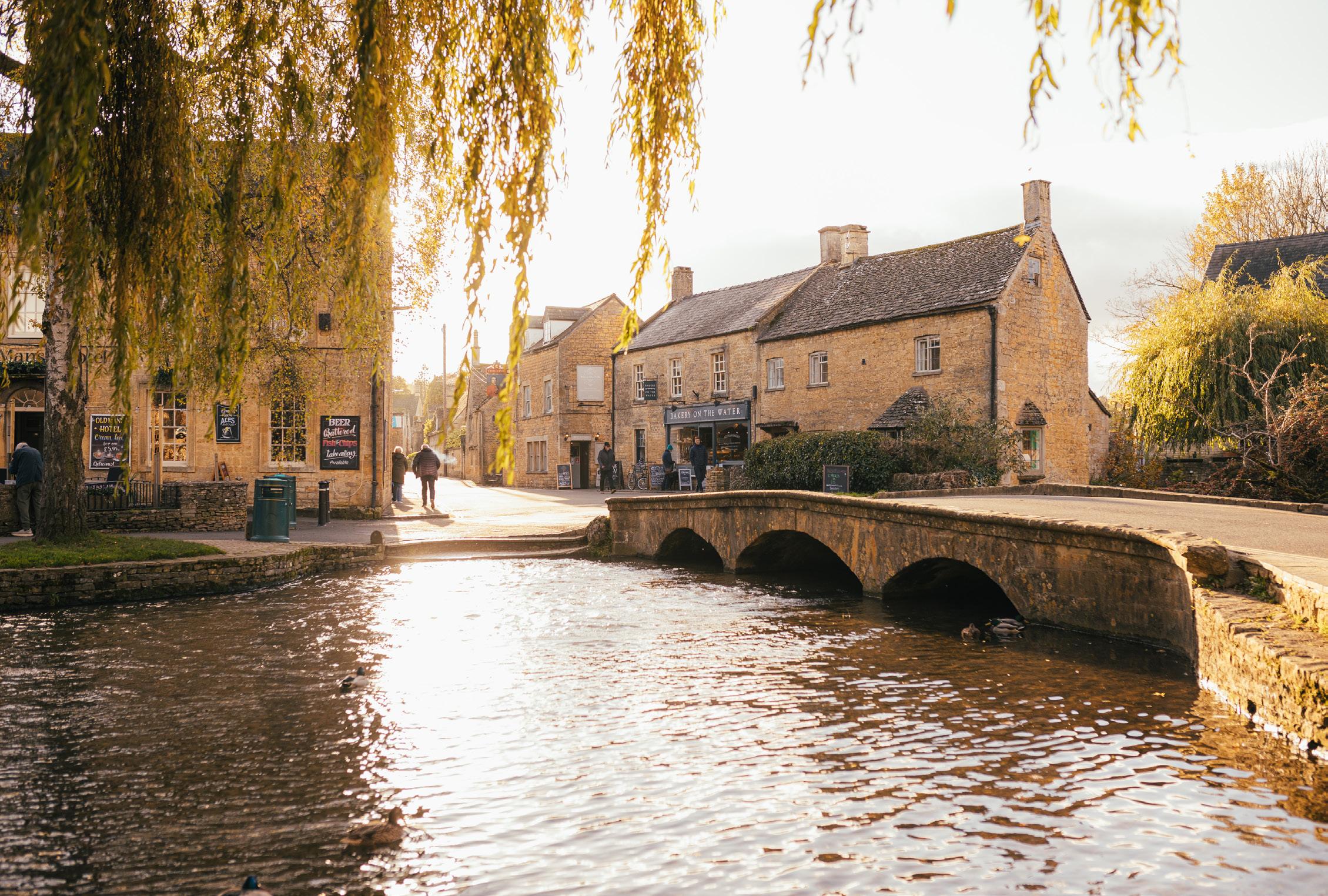
has limited impact on a weekend retreat may be far more significant if the buyer’s plans depend on converting outbuildings or creating commercial use.
This is why negotiation strategy should always be tied back to the buyer’s intended use of the property. The point is not to win concessions for their own sake, but to ensure that the terms of the purchase reflect the property that is actually being acquired, rather than the property the buyer first imagined.
The reality, of course, is that country house purchases are rarely purely rational. Buyers may be drawn to a particular setting, architectural detail, or vision of family life that makes the property feel difficult to replace. That emotional connection is part of the appeal of the Cotswolds, but it can also make it harder to absorb unwelcome findings during due diligence.
Common risks include underestimating the cost of works, dismissing legal constraints as technicalities, or pressing ahead despite findings that materially affect future plans. Effective advice
helps buyers keep those risks in perspective. It allows them to distinguish between manageable imperfections and issues that should change the commercial conversation.
Maintaining optionality is part of the same discipline. Until exchange of contracts, a buyer is generally able to walk away. In practice, withdrawal is rare, and most issues can be resolved. However, preserving the ability to make that decision, rather than feeling committed regardless of what emerges, is an important part of buying well.
The most effective buyers combine preparation with patience. They move quickly enough to be credible, but carefully enough to understand what they are buying. In a market as competitive and relationship led as the Cotswolds, that balance is often what allows a buyer to secure the right property, on the right terms, without losing sight of the long-term purpose of the acquisition.


Even experienced buyers can make assumptions that do not translate easily to the English property market. Among the most common are:
1 Treating England like a US state
The legal process, terminology, transaction norms, and professional roles are different.
2 Assuming the Cotswolds works like London Country property can introduce legal and practical issues around land, access, drainage, outbuildings, planning, listed status, and boundaries that may be less central in a London transaction.
3 Assuming an accepted offer is binding
Legal commitment generally comes at exchange, not offer acceptance.
4 Underestimating rural complexity
Historic title, private drainage, shared access, listed status, and planning issues may materially affect use and value.
5 Relying on informal assurances
Verbal comfort from a seller, agent, or prior owner is not a substitute for legal review.
6 Leaving structure until too late
Ownership, tax, estate planning, and privacy considerations should be addressed before the transaction is advanced.
7 Skipping deeper surveys
Historic and rural housing stock requires careful physical investigation.
8 Assuming renovation freedom
Listed building, planning, and conservation restrictions can limit what is possible.
9 Ignoring exit planning
A long-term purchase should still be evaluated with future resale, succession, and liquidity in mind.

Buying a property in the Cotswolds is rarely just a real estate transaction. For many buyers, purchasing a home here is about creating options for the future: a European base, a place where children and grandchildren will spend time together, or a long-term investment in a different way of life.
While the legal, tax, and planning considerations in England may be challenging at times, they are also what preserve the character that makes the Cotswolds so distinctive. Historic houses have survived for centuries because they exist within a framework of legal protections, planning controls, and established rights.
Throughout this White Paper, one theme has emerged consistently: the importance of thinking ahead. Before beginning a search, American buyers should define whether the purchase is primarily for lifestyle use, relocation, investment preservation, family legacy, or some combination of these goals. The answer will influence the style of property they choose and its location, as well as the ownership structure and whether they choose to renovate, for example.
Bringing together the right advisers from the outset is vital to developing an effective strategy.
The buyer’s adviser helps to define the brief, identify suitable opportunities, interpret market behaviour, manage expectations, and coordinate strategy. The solicitor investigates title, handles legal due diligence, negotiates contract terms, and guides the transaction through exchange and completion. The surveyor evaluates the physical property. Planning consultants, architects, tax advisers, insurance advisers, financing specialists, and US counsel may also be required depending on the property and the buyer. For American buyers, the Cotswolds offers a chance to acquire not simply a house, but a home within one of England’s most enduring landscapes. With the right planning and coordinated advice, that investment can become something more valuable than a successful property transaction: a home that serves generations to come.
The Luxury Collective Global Advisory and Boodle Hatfield LLP are well positioned to help American buyers understand both sides of the decision: the emotional and strategic appeal of the Cotswolds, and the legal and practical realities of purchasing there.
UNITED KINGDOM
Ailsa von Dobeneck, Managing Director
Anthony Mackle, Private Client Advisor
+44 20 4614 1927
Berkeley Square House
Berkeley Square 2nd Floor, London W1J 6BD www.theluxurycollectiveuk.co.uk
John Eric, Managing Director
9454 Wilshire Blvd, 4th Floor
Beverly Hills, California 90212 www.theluxeus.com
WASHINGTON DC
John Eric, Co-Managing Partner
Anna-Louisa Yon, Co-Managing Partner
+1 703 822 7400
3001 Washington Blvd. Suite 400 Arlington, Virginia, 22201 www.theluxeus.com
NEW YORK | CONNECTICUT
John Eric, Managing Director
110 Fifth Avenue, 3rd Floor
New York NY 10011 www.theluxeus.com