
MOUNT SINAI
MOUNT SINAI SCIENCE & MEDICINE
PRESIDENT AND CHIEF EXECUTIVE OFFICER
MOUNT SINAI HEALTH SYSTEM
Kenneth L. Davis, MD
ANNE AND JOEL EHRENKRANZ DEAN, ICAHN SCHOOL OF MEDICINE AT MOUNT SINAI
PRESIDENT FOR ACADEMIC AFFAIRS, MOUNT SINAI HEALTH SYSTEM
Dennis S. Charney, MD
CHIEF DEVELOPMENT OFFICER
SENIOR VICE PRESIDENT FOR DEVELOPMENT
MOUNT SINAI HEALTH SYSTEM
Mark Kostegan, FAHP
SENIOR DIRECTOR FOR DEVELOPMENT
COMMUNICATIONS
MOUNT SINAI HEALTH SYSTEM
Elaine Lawson
GUEST SUPPORTING EDITOR
Christopher Hann
MANAGING EDITOR
Elaine Lawson
ASSOCIATE EDITOR
Anna Horton
PRODUCTION ASSOCIATES
Laura Fiorelli
Vincent Lofton
CONTRIBUTORS
Joni Aveni
Barbara Brody
Robert Caplan
Catherine E. Clarke
Alison Dalton
Susan McCormick
Alexander Morrison
Claudia Paul
Sima Rabinowitz
Carolyn Sayre
Patrick Schnell
Jeremy Shatan
DESIGN
Taylor Design
Mount Sinai Science & Medicine is published by the Office of Development, Mount Sinai Health System, for an audience of alumni and friends. We welcome your comments; please email us at magazine@mountsinai.org, call us at (212) 659-8500, or visit us at giving.mountsinai.org.
If you wish to be removed from our mailing list for communications and solicitations, please email us at PhilanthropyOptOut@mountsinai.org or call (212) 659-8500.
13
A Moment of Heroism and Heart
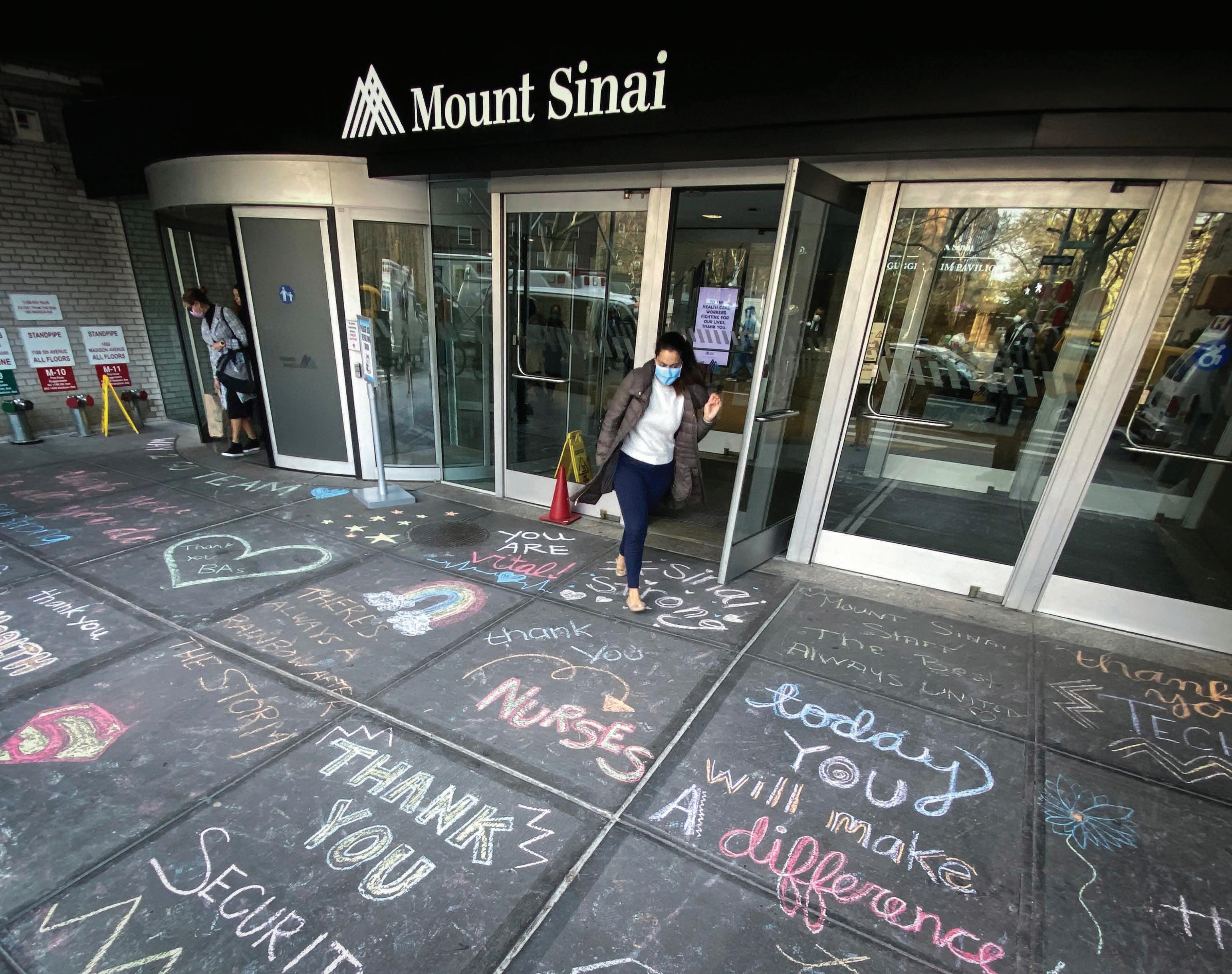
During the height of the COVID-19 pandemic in New York City, the Mount Sinai Health System demonstrated incredible resilience to overcome extraordinary obstacles during a time of great uncertainty and personal sacrifice. The spring of 2020 was a period of incomparable demand on our institution’s resources as our health care staff struggled to keep up with the overwhelming volume of critically ill and near-critically ill patients. However, during this time we displayed our heroism and our heart.
COVID-19 shined a light on the strength and perseverance of our health care staff across our hospitals. It also showcased the tremendous collaboration between our clinicians and scientists across our eight hospitals and the Icahn School of Medicine at Mount Sinai to deliver real-time, life-saving treatments for patients impacted by this disease.
In this issue, we highlight the doctors, nurses, and health care staff on the front lines of the crisis. We also explore the exemplary work of our immensely talented scientists, who delivered important advances to treat and understand COVID-19. These advances extend not only to treating patients in our own back yard and on a global scale, but also to treating our staff due to the devastating psychological toll the virus has had on them as they risked their lives to serve and protect us all.
For Mount Sinai, the COVID-19 crisis was a time like no other. This issue stands as a testament to that time.
02 Message from the CEO & the Dean
04 In the Eye of the Hurricane Surmounting the COVID-19 crisis.
03 Message from the Co-Chairmen of the Boards of Trustees 20 Reflecting on Our COVID-19 Journey A timeline. 24 Pushing the Limits
09 Heroes Work Here
A tribute to our health care workers on the front lines of COVID-19.
The Mount Sinai Health System is comprised of eight hospitals and the Icahn School of Medicine
at Mount Sinai:
+ Mount Sinai Beth Israel
+ Mount Sinai Brooklyn
+ The Mount Sinai Hospital
+ Mount Sinai Morningside
+ Mount Sinai Queens
13 Responding to the Pandemic of Our Lifetime
As New York became the epicenter of the COVID-19 outbreak, Mount Sinai conducted groundbreaking research in real time.
18 Diving Deep
New Institute and Centers created to further examine the impact of COVID-19. MESSAGES
+ Mount Sinai South Nassau
+ Mount Sinai West
+ New York Eye and Ear Infirmary of Mount Sinai
Innovative solutions from Mount Sinai helped patients and staff members impacted by COVID-19. 28 Fundraising in a Crisis
How the Mount Sinai Health System raised more than $70 million for COVID-19 relief. 31 A Commitment to Inclusion in the Face of Deeply Rooted Societal Injustice
At Mount Sinai, diversity among faculty, staff, and students is “the first lens we look through.”
MESSAGES
Message from THE CEO THE DEAN &
Whether
caring for patients suffering from COVID-19 infection or fast-tracking vital COVID-19 scientific discovery, never before have we seen the immense unity and collaboration across our institution. This period will always remain a defining moment in history.
The COVID-19 pandemic exposed to the world the heart and soul of the Mount Sinai Health System: a best-in-class institution focused on compassionate care, coupled with realworld science and innovation, to eliminate the causes and impact of disease. It demonstrates why, for five years in a row, The Mount Sinai Hospital has been listed on the “Honor Roll” in the U.S. News & World Report “Best Hospitals” rankings.
During the height of COVID-19 in March and April 2020, New York City became the epicenter of the national crisis. Consequently, Mount Sinai became the epicenter of the COVID-19 crisis in New York City. However, we did not buckle or waver under the tremendous strain placed upon our Health System. Instead we rose to this unparalleled challenge. Whether caring for patients suffering from COVID-19 infection or fast-tracking vital COVID-19 scientific discovery, never before have we seen the immense unity and collaboration across our institution. This period will always remain a defining moment in history.
We are incredibly grateful for the hard work and dedication of our entire Health System to come together during the COVID-19 crisis, which isn’t in our rear-view mirror. It’s also important that we remember and honor the members of our community whom we have lost to this disease. The magnitude of the stress, grief, and trauma associated with COVID-19 upon our staff cannot be understated, and it was paramount that we establish the Center for Stress, Resilience, and Personal Growth—a first-of-its-kind initiative designed to address the psychosocial impact of COVID-19 on the mental health of our frontline health care providers—to ensure we take care of our own.
The COVID-19 pandemic also illustrated the nimbleness of our brilliant researchers at the Icahn School of Medicine, who were able to change the course of science through new therapeutics. Mount Sinai’s virologists were the first in the nation to screen for viral antibodies by creating a novel blood test to pinpoint antibody levels for SARS-CoV-2. Mount Sinai launched the nation’s first convalescent plasma program for COVID-19 patients, allowing us to collect the antibody-rich plasma of recently recovered patients and to potentially transfer their antibodies to treat at-risk and adversely affected COVID-19 patients. In partnership with Renalytix AI, we formed Kantaro Biosciences to scale the development and distribution of an antibody test kit for use in clinical laboratories around the world. We have adopted new clinical guidelines for anticoagulant treatment—the early use of blood thinners—as we noticed the increased rate of strokes, heart attacks, and pulmonary embolisms in some COVID-19 patients. We were also granted early access to the antiviral drug remdesivir, giving us the ability to institute clinical trials to evaluate its efficacy on COVID-19 patients. These scientific advancements illustrate how Mount Sinai is resolute in the fight against COVID-19. We are so proud of our leadership around the science of COVID-19, and we are encouraged by our continued innovative trajectory in the ongoing battle against this devastating disease.
The Mount Sinai Health System serves one of the most socioeconomically, demographically, and culturally diverse patient populations in the world. It cannot go unrecognized that communities of color have been disproportionately weathering the impacts of COVID-19 in terms of the rates of infection and survival. The realities of COVID-19 are reminding us, yet again, of the disparities that have always existed in medicine and health for underserved populations.
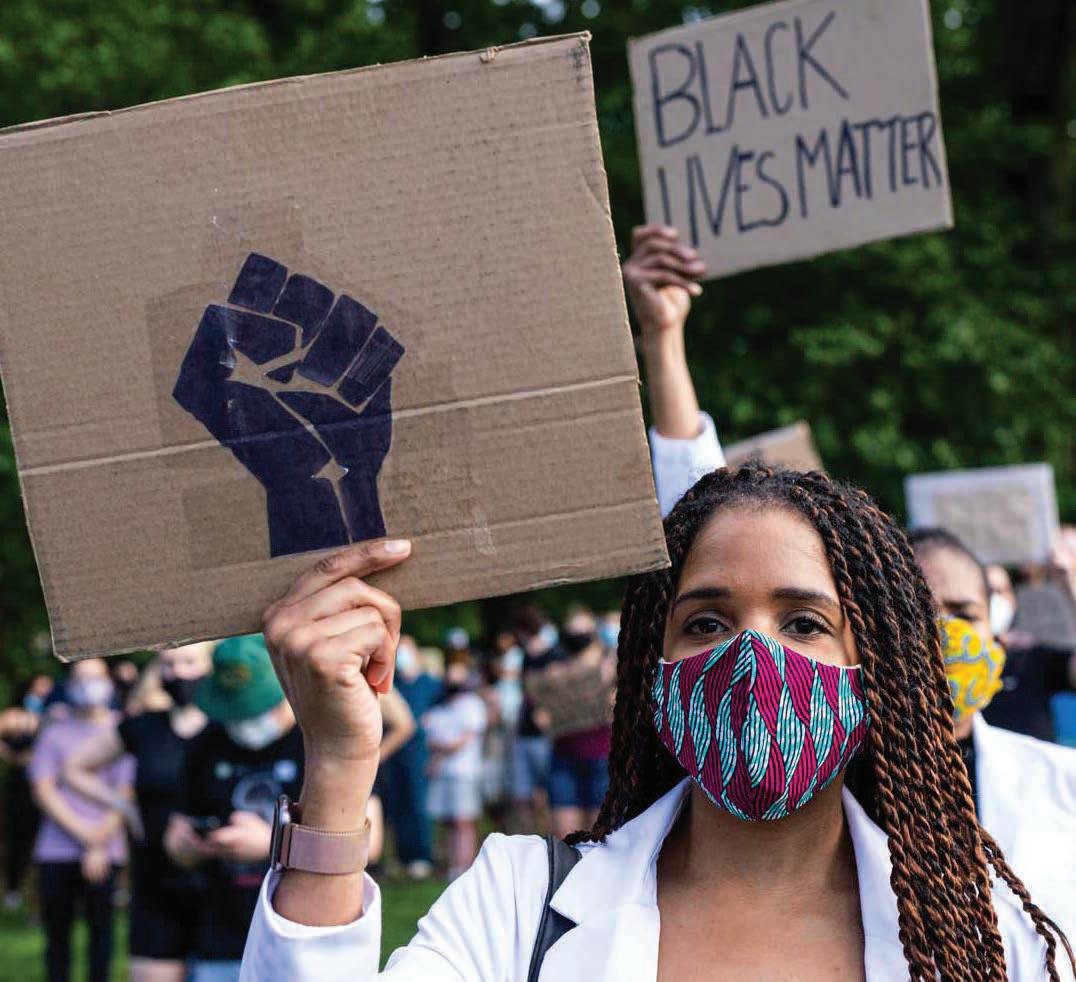
As COVID-19 shined a light on the harsh realities of the disparities in health care, it has also intersected with the reignition of a nationwide movement for social justice and equality for people of color in 2020. We are now witnessing a transformational revolution as protests against bigotry, brutality, and racism span the country in reaction to the continued senseless murders of Black Americans. As a leader in health care, we firmly acknowledge that Black Lives Matter. We will continue to call out racism and bias as well as to close the gaps on the inequalities in health care. Establishing the Institute for Health Equity Research showcases our deep commitment to addressing and eliminating disparities in health care, and our monumental work has just begun.
At Mount Sinai, we are proud of how far we’ve come in the face of unimaginable obstacles. We also hold firm in our belief in our ability to redefine what is possible in the practice of modern medicine and science. Together we can continue to challenge traditional convention, and we are committed to making our great institution even better for every man, woman, and child.
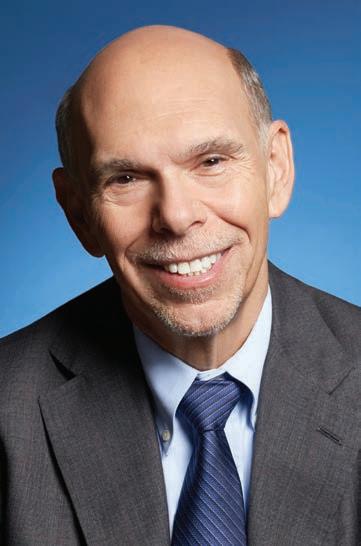
Kenneth L. Davis, MD
President and Chief Executive Officer
Mount
Sinai Health System
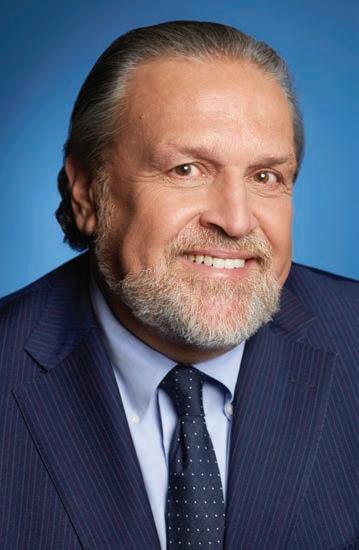
Dennis S. Charney, MD
Anne and Joel Ehrenkranz Dean, Icahn School of Medicine at Mount Sinai President for Academic Affairs, Mount Sinai Health System
Message from BOARDS OF TRUSTEES CO-CHAIRMEN
RICHARD A. FRIEDMAN AND JAMES S. TISCH
In the summer of 2019, we stepped into our new roles as Co-Chairmen of the Boards of Trustees at the Mount Sinai Health System. Having served as Trustees at Mount Sinai for a combined 50+ years under the transformational leadership of Peter W. May, we witnessed firsthand the resilience of our institution: Mount Sinai had evolved from two hospitals and a medical school mired in financial crisis into one of the leading health systems in the world. Never could we have imagined that less than a year into our new roles as co-chairs, Mount Sinai would face yet another formidable challenge in the COVID-19 pandemic.
COVID-19 has been the humanitarian crisis of our lifetime, impacting medical institutions, businesses, and daily life for millions of people around the world. In the spring of 2020, we saw the number of COVID-19 patients in our hospitals continue to rise as our fearless nurses, physicians, and other health care staff raced to treat them. We also proudly observed the groundbreaking work of our scientists to deliver treatments and possibly a vaccine to combat this disease. However, the resources required to support Mount Sinai’s COVID-19 research and response efforts exacted a financial toll on our institution, which could only be addressed through philanthropy.
We are proud to say that every single one of our Trustees answered our call to provide the funding needed to deliver personal protective equipment and other resources to our Health System. As Mount Sinai commanded the headlines in local and national news media during the height of the COVID-19 crisis, our current donors stepped up to the plate. Moreover, the general public took notice and thousands of first-time donors also gave generously. This outpouring of support was an enormous achievement that we will never forget. We are thankful to our Trustees, our existing donors, and our new donors whose gifts served as a much-needed lifeline during a crucial moment for our institution.
However, our work is not done. We are just three years into our capital campaign to raise $2 billion for Mount Sinai by 2024. Philanthropy is the only way we can continue to propel breakthroughs in innovative scientific research, to advance our mission of delivering best-in-class patient care for the communities we serve, and to educate the next generation of leaders in medicine. The support we have received thus far has been phenomenal. However, we must continue to build upon the momentum that we are experiencing now. The best is yet to come—and with your continued support, there are no limits to what we can achieve together.
Richard A. Friedman James S. Tisch Co-Chairman, Boards of Trustees Co-Chairman, Boards of Trustees Mount Sinai Health System Mount Sinai Health System
James S. Tisch
Richard A. Friedman
IN THE EYE OF THE HURRICANE
BY CAROLYN SAYRE
Surmounting the COVID-19 Crisis.
Underneath the masks and the face shields, all you could see were their eyes. But their eyes told the whole story.
A critical care physician in the 16th hour of a double shift treating an overflowing floor of patients, all struggling to breathe. A nurse staying overtime to hold a dying patient’s hand and set up one last FaceTime call with his family. A medical student, graduating early to join the front lines, reciting her Hippocratic Oath via Zoom.
Throughout the spring of 2020, practically every hospital in the Mount Sinai Health System resembled a war zone. On the battlefield, resiliency, innovation, and compassion were at odds with exhaustion, capacity, and uncertainty. Yet all the while, throughout the Health System, those eyes held the same steely determination: How many lives can we save today?
March came in like a lion at Mount Sinai. But together, 42,000+ courageous employees—spread across the hospitals, the Icahn School of Medicine at Mount
Sinai, and more than 400 ambulatory facilities—banded together on the front lines to answer the call and help New York during the nation’s most deadly pandemic in a century. For months, they put their own lives and families in danger to fight a virus no one understood. From securing personal protective equipment (PPE) to creating makeshift ICU beds and identifying new therapies, Mount Sinai’s leadership, Trustees, and staff mounted an extraordinary response to the COVID-19 crisis that saved thousands of lives.
“By coming together and staying ahead of the curve, our Health System has been instrumental in changing the course of care for people with COVID-19,” says David L. Reich, MD, President of The Mount Sinai Hospital and Mount Sinai Queens. “From our health care heroes facing the ultimate challenge of their careers and our extraordinary group of Trustees and partners who made the impossible possible, to our fully integrated medical school, it was clear across the city that what was happening at Mount
Sinai was different than anywhere else.”
The numbers tell that extraordinary tale of courage and perseverance. It was a cold Saturday in March when the first COVID-19 patient, Rodrigo Saval (see sidebar story), was admitted into the emergency room. Two weeks later, hospital admissions were doubling daily and New York City was at the epicenter of the pandemic. When the virus reached “peak week” in early April, Mount Sinai was treating more than 2,000 COVID-19 patients—one-third of them requiring critical care and half needing some form of respiratory support.
At Mount Sinai Brooklyn, the demand for oxygen was so high that a tanker was deployed. “This was not just a tsunami,” says Scott Lorin, MD, MBA, President of Mount Sinai Brooklyn, “but waves and waves of tsunamis, and six months later the water still remains elevated.” He recalls a sad day in April when 35 patients suffered cardiac arrests in the hospital, compared to the usual two. “The only way to organize the chaos and manage the rapidly evolving crisis was to bring in specialized staff,
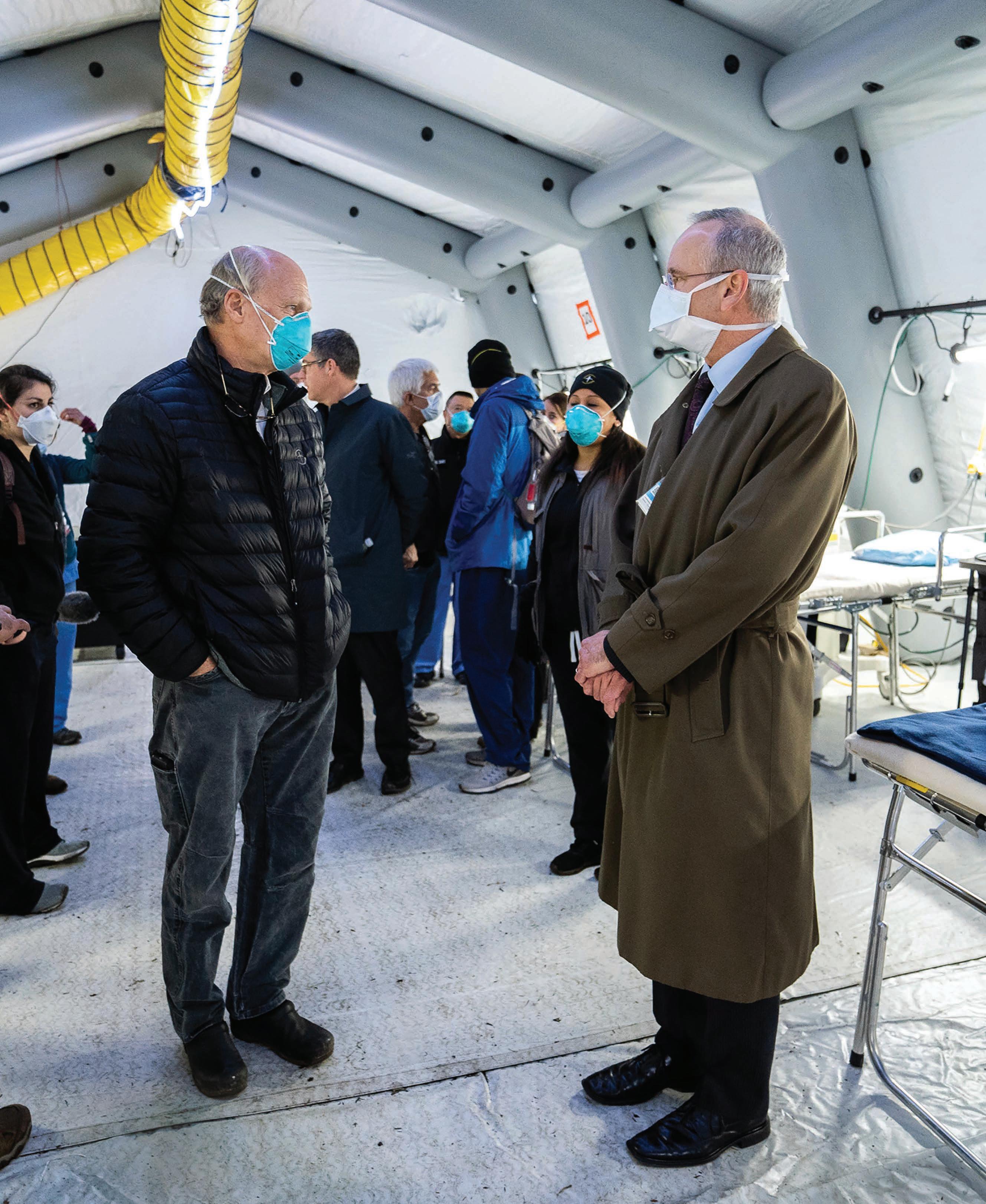
The Mount Sinai Hospital David L. Reich, MD (far right), with Ken Isaacs, Vice President of Programs and Government Relations for Samaritan’s Purse, inside a field hospital
Central Park.
rapidly create clinical protocols, and transfer patients to member hospitals within the Mount Sinai Health System.”
And that is exactly what Mount Sinai did. There were two sides to managing the crisis, explains Brendan Carr, MD, System Chair of Emergency Medicine, and a Mount Sinai Professor in Emergency Medicine: the human side battling on the front lines and the logistical side needed to manage shortages of equipment, staffing, and space.
PREPARING FOR THE SURGE
As the number of COVID-19 cases grew more staggering, Mount Sinai had to come up with creative solutions to manage the spike in hospitalizations—and fast. Fortunately, The Institute for Critical Care Medicine, created five years ago, had a firm infrastructure for expansion already in place, explains Director Roopa Kohli-Seth, MD. With elective procedures placed on hold due to safety concerns and many medical emergencies at an all-time low with stay-at-home orders, the staff swiftly deployed measures to convert hundreds of beds across the Health System into ICUs and negative pressure rooms that could safely isolate COVID-19 patients.
But as one patient left, countless more came in. “It was an intensity level I have never experienced before,” says Jessica Montanaro, RN, a critical care nurse at Mount Sinai Morningside, who said most of her patients were on a ventilator and required one-to-one nursing care just to stay alive. “Patients would be stable and then, out of the blue, decompensate very quickly.”
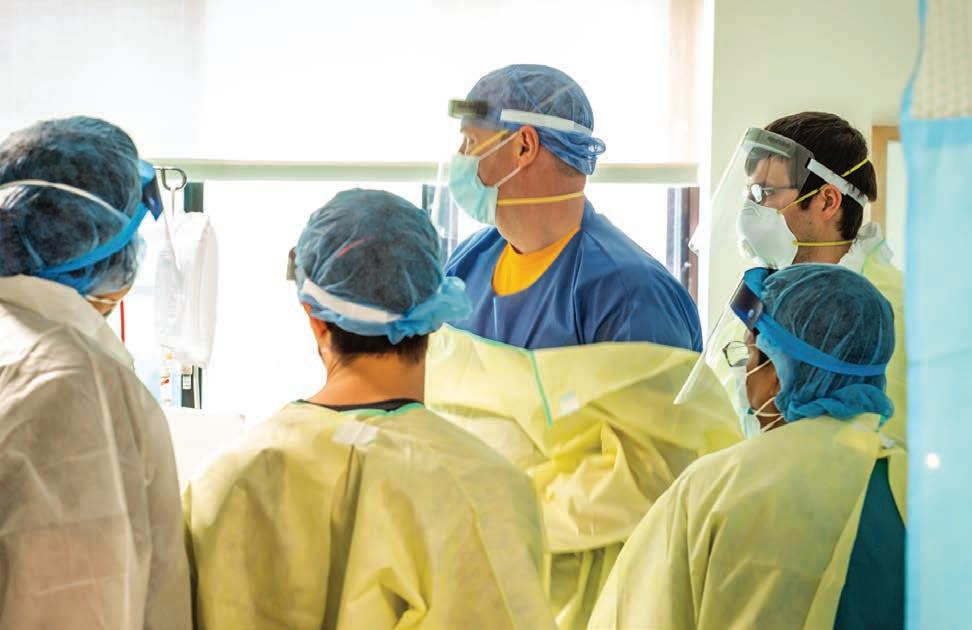
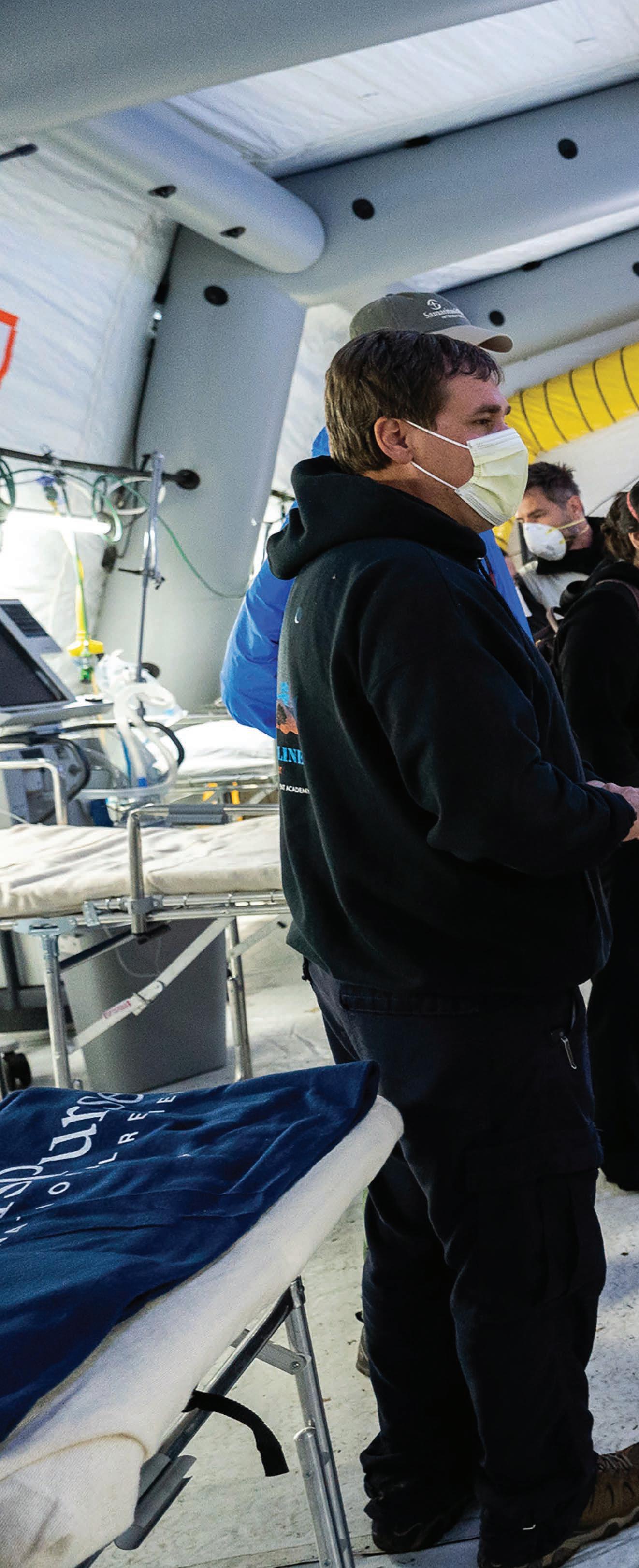
Public spaces, such as the soaring atrium lobby of The Mount Sinai Hospital campus on the Upper East Side, were also converted into temporary patient pods. Mount Sinai Beth Israel repurposed inactive wards to triple its bed space while Mount Sinai’s Brooklyn, Queens, Morningside, and South Nassau campuses set up triage tents to alleviate the overburdened emergency rooms. In partnership with Samaritan’s Purse, a humanitarian aid organization, a 68-bed field hospital was set up in Central Park in just two days, and subsequently treated 315 COVID-19 patients.
FUELING OUR FRONTLINE STAFF
Infrastructure, however, was only a solution if there was staff to manage the overflow. Emergency rooms were dealing with about 50 percent more capacity at a time when nearly 20 percent of the doctors, nurses, and techs were out sick.
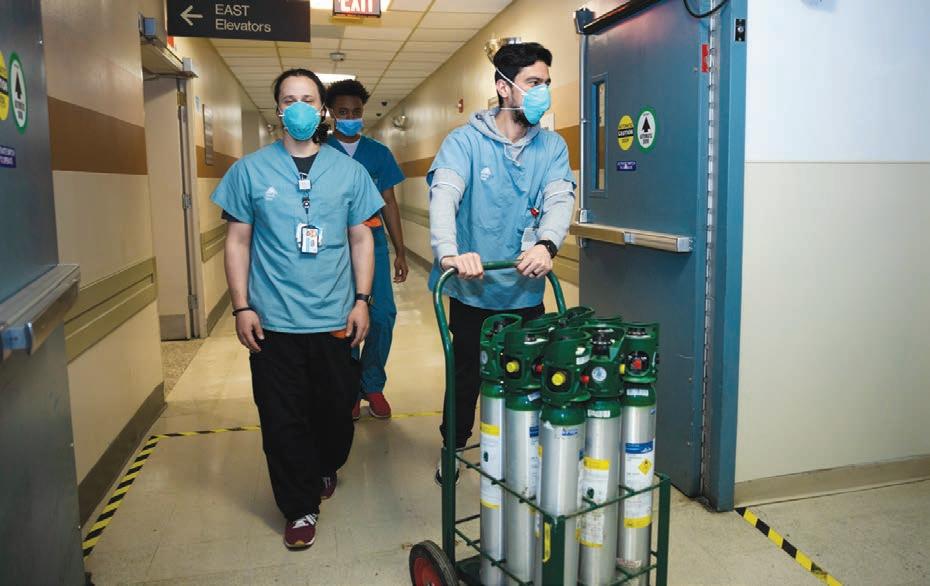
Thousands of employees from specialties like plastic surgery, geriatrics, and the New York Eye and Ear Infirmary volunteered to be deployed to COVID-19 units throughout the Health System. In April, Mount Sinai Brooklyn—which serves five of the 20 hardest-hit ZIP codes in the city—brought in an additional 200 nurses and physicians, most of whom were not performing their usual roles. In the trenches, cardiologists rolled gurneys, plastic surgeons swapped out oxygen tanks, and neurosurgeons emptied bedpans. At Mount Sinai West, neurologists and orthopedists used the simulation room to brush up on critical care skills they had not used since residency.
“I remember looking around at our staff all covered in PPE who were assembling to take care of the sheer volume of patients, and I saw in their eyes uncertainty and fear,” says Arthur Gianelli, President of Mount Sinai Morningside and Chief Transformation Officer of the Mount Sinai Health System. “For the first time in my career, I felt like a general in the army ordering soldiers to go to war.”
Medical students were also instrumental in helping Mount Sinai survive the storm.
“ BY COMING TOGETHER AND STAYING AHEAD OF THE CURVE, OUR HEALTH SYSTEM HAS BEEN INSTRUMENTAL IN CHANGING THE COURSE OF CARE FOR PEOPLE WITH COVID-19.”
– David L. Reich, MD
In mid-April, 77 students at the Icahn School of Medicine graduated early, 19 of whom were matched to Sinai for their residencies and went right to work with the Mount Sinai Medical Corps, providing between 300 and 400 hours of their time to help as needed. Other students volunteered with the Sinai Student Workforce, contributing more than 20,000 hours of service across a wide range of areas, including sourcing, acquiring, and assembling PPE; serving as temporary pharmacy technicians; triaging and coordinating telehealth visits; supporting clinical trials; and boosting morale among student volunteers and the greater Mount Sinai community. Ninety visiting staff from around the country also came to help, and today, equipped with knowledge learned at Mount Sinai, they are fighting the virus back in their communities.
GOING THE EXTRA MILE
Day after day, Mount Sinai’s front lines found calm in chaos. The nurses’ hands bled from the excessive washing, the transportation staff’s shoulders slumped from moving an unprecedented number of bodies, and the faces of emergency medical staff were bruised from wearing tight-fitting N95 masks on a record number of prehospital 911 calls. Yet many still volunteered to stay after hours to sit with patients at the end of their lives. COVID-19 is a lonely disease, and perhaps the hardest part to witness, says Yvette Calderon, MD, the Site Chair of the Department of Emergency Medicine at Mount Sinai Beth Israel and an emergency room
by Patrick Schnell
Mount Sinai Brooklyn
Photo
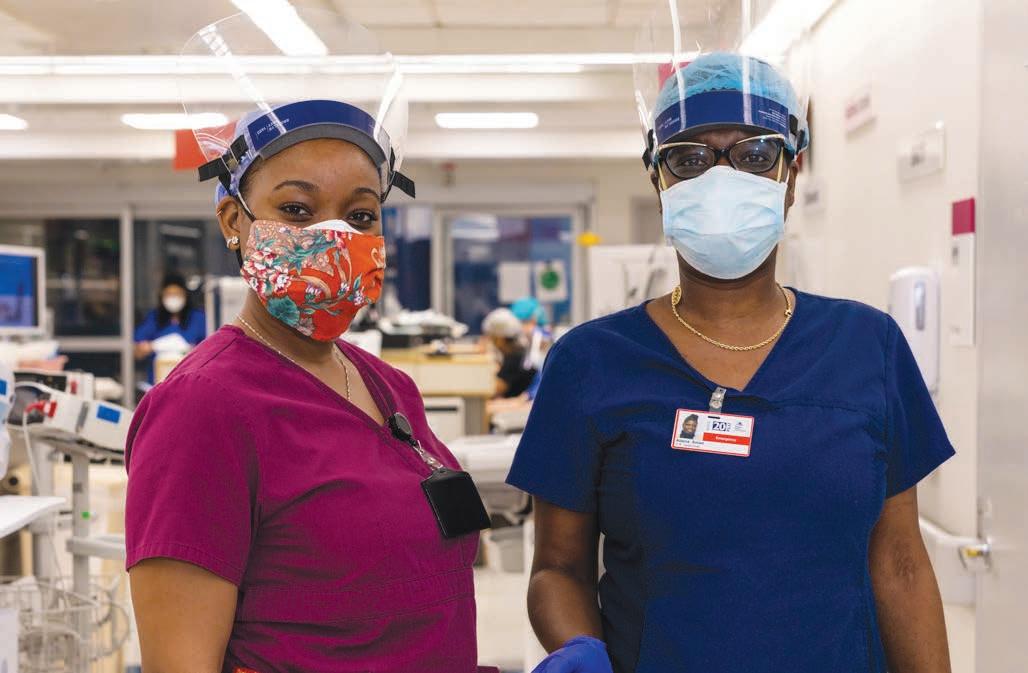
physician. Calderon was seeing patients who had to endure the isolation, though she could not be with her own father when he succumbed to the virus.
Evan Flatow, MD, President of Mount Sinai West, recalls a remarkable story of a physician assistant who went the extra mile to care for a dying patient after learning from the family that the patient loved jazz music. This effort grew from the End of Life Companion Program, which was initiated and staffed by the orthopedic and medicine physician assistant teams as well as the physical and occupational therapy teams. Participating staff volunteered to make themselves available 24/7 to be bedside with our patients, who could not have visitors, to ensure they did not die alone. “She literally played jazz music while holding this patient’s hand during her final days,” Dr. Flatow says. “What was even more poignant was that after this patient passed, the family reached out to this physician assistant to thank her for all she did for their mother.”
Since it was not safe to have visitors in the hospital, Mount Sinai staff stepped in as surrogate families. Two retired octogenarian physicians volunteered to become family liaisons while frontline chaplains comforted patients and counseled staff members in need. From playing a patient’s favorite jazz song to writing uplifting messages on the glass partitions of the ICUs and using a donated iPad to
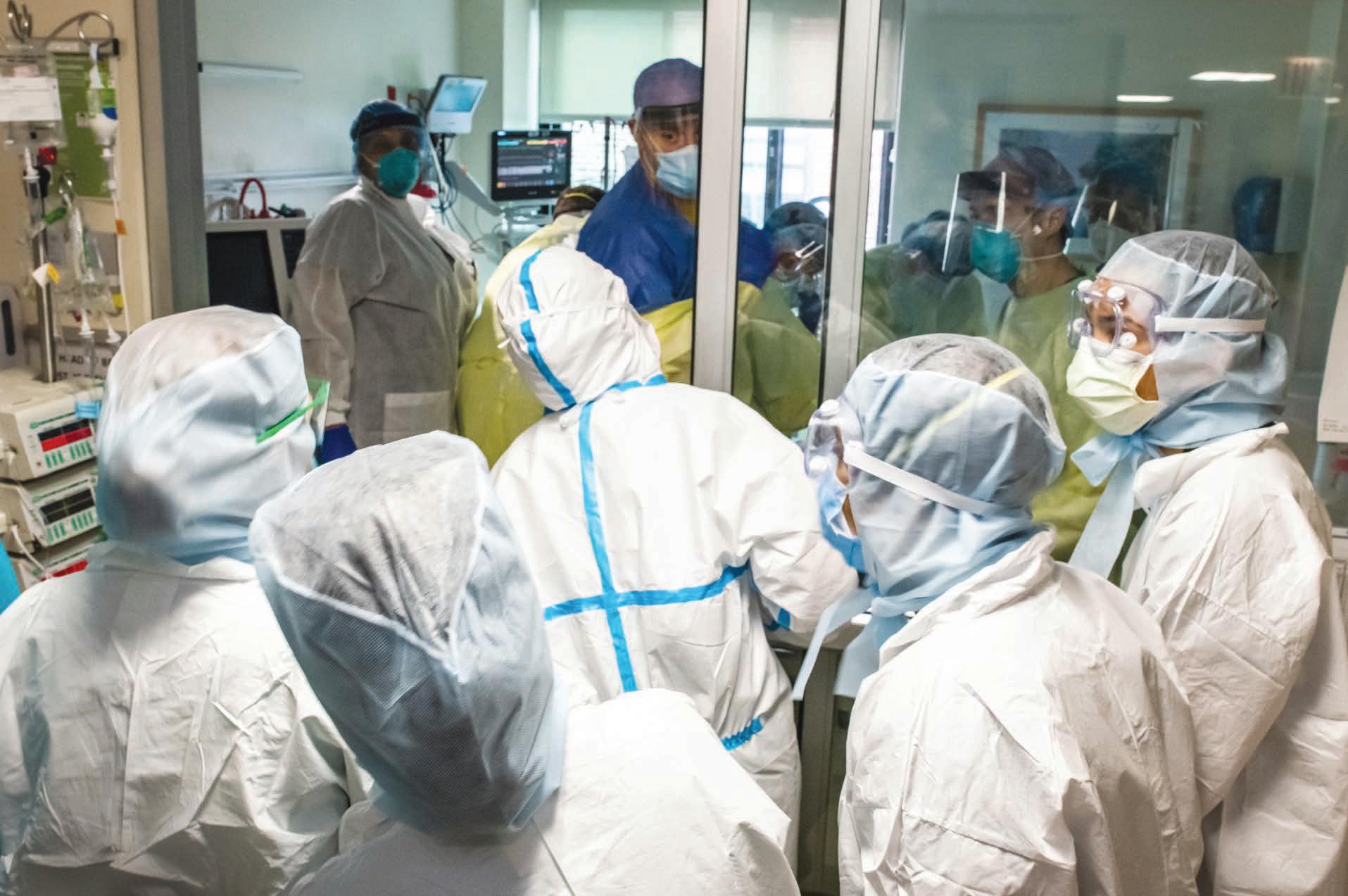
allow a Russian patient to hear his family speak in his native tongue one last time, stories of compassion and kindness echoed throughout the halls.
A HEALTH SYSTEM UNDER SIEGE
Keeping those health care heroes safe was priority one for Mount Sinai’s leadership. Before the first case was even confirmed in the United States, planning and preparing for the pandemic had already begun.
By mid-March, New York hospitals were desperately searching for personal protective equipment. To deal with these shortages, Mount Sinai drew upon its resources by leveraging corporate partnerships, support from the Boards of Trustees, and innovative ideas from the staff. In addition, first-time donors and the general public showed overwhelming support, stepping up to help provide PPE and other in-kind donations.
There were also shortages of ventilators. With the help of the Trustees and industry partnerships, the Health System was able to quadruple its supply of ventilators in only four weeks. Medical students and other volunteers turned an entire floor of the Levy Library into a ventilator assembly and distribution center for the eight member hospitals. Meanwhile, anesthesiologists and sleep specialists worked to create a fleet of over 1,000 additional back-ups and develop protocols to split machines if needed.
DELIVERING ON BENCH-TO-BEDSIDE
While still knee deep in the crisis, clinicians at Mount Sinai and scientists at the Icahn School of Medicine worked together to identify patterns that could improve outcomes for COVID-19 patients. It was these discoveries, and the Health System’s ability to implement clinical care protocols in real time as patients were battling the virus, that led to several key advancements in how COVID-19 patients are treated today.
“Our research labs have never been closer to patients’ lives than during these last months of the COVID-19 crisis,” says Dennis Charney, MD, Anne and Joel Ehrenkranz Dean of the Icahn School of Medicine at Mount Sinai. “The pandemic has truly tested Mount Sinai’s commitment to unifying research and clinical efforts. We have clearly shown why clinicians and scientists must collaborate to save lives, improve patient outcomes, and protect public health.”
For example, Mount Sinai was a global leader in both antibody testing and treatment by establishing the nation’s first convalescent plasma program. In late March, the first COVID-19 patient was infused with high levels of antibodies— taken from another person who had recovered from the virus—to help boost the patient’s immune system. Says Dr. Reich, the Horace W. Goldsmith Professor of Anesthesiology: “Not only did we save
Mount Sinai Brooklyn
Respiratory Team
The Mount Sinai Hospital
Mount Sinai Morningside ED
Photos by Claudia Paul (left) and Patrick Schnell (right)
the lives of patients at Mount Sinai, but we also identified many donors who were sent to metropolitan area blood collection sites and helped supply a large portion of the nation with convalescent plasma.”
In addition, physicians were involved in early studies testing the antiviral medication remdesivir, a drug that was developed in response to the Ebola crisis, which the Food and Drug Administration authorized on May 1 for emergency use in the treatment of COVID-19. Early on, Mount Sinai physicians observed excessive blood clotting among COVID-19 patients, and their findings led to blood thinner protocols that are now being investigated nationwide.
“We would not have survived this as a stand-alone institute,” says Richard J. Murphy, President and CEO of Mount Sinai South Nassau, the most distant site that relied on the clinical expertise of the Health System and the innovation of the Icahn School of Medicine. He recalls a young new mother of twins who was in critical condition and not responding to any treatments. Mount Sinai was able to save her life by working in partnership with both researchers and clinicians, and eventually transferring her to the Upper East Side campus.
THE PATH FORWARD
By peak week in April, with more than 2,000 COVID-19 inpatients, Mount Sinai had instituted protocols and procedures that usually take years to implement. One month later, the number of COVID-19 inpatients had dropped to several hundred, and by the
fall more than 8,500 inpatients had been successfully treated throughout the Health System. Each time a recovered patient left Mount Sinai Morningside, the staff would play the Beatles’ classic “Here Comes the Sun” over the hospital’s public address system. The song became a familiar mantra.
Every discharge brought great triumph, but also great uncertainty about the road to recovery. Recognizing the need for expert follow-up and monitoring, a comprehensive multispecialty Center for Post-COVID Care was created at Mount Sinai-Union Square to help patients recovering from the virus. Mount Sinai also established the Center for Stress, Resilience, and Personal Growth to help frontline staff recover from the mental health impacts of the virus.
While the storm has subsided, the tide is still strong and changing every day. At Mount Sinai, preparations for another potential surge continue. Safety protocols are in place to ensure the well-being of both patients and employees across the Health System, supplies are piled high, and the muscle memory of the first wave has left a blueprint for rapid expansion and management of the most critical patients.
“If a second wave comes, we will continue to do what we do best,” says Jeremy Boal, MD, President of Mount Sinai Downtown and Executive Vice President and Chief Clinical Officer of the Mount Sinai Health System. “We will relentlessly experiment and innovate our way forward and will do whatever it takes to protect and care for our workforce, our patients, and our communities. No matter what, we will find our way through.”
THE FACE OF HOPE: HERE COMES THE SUN
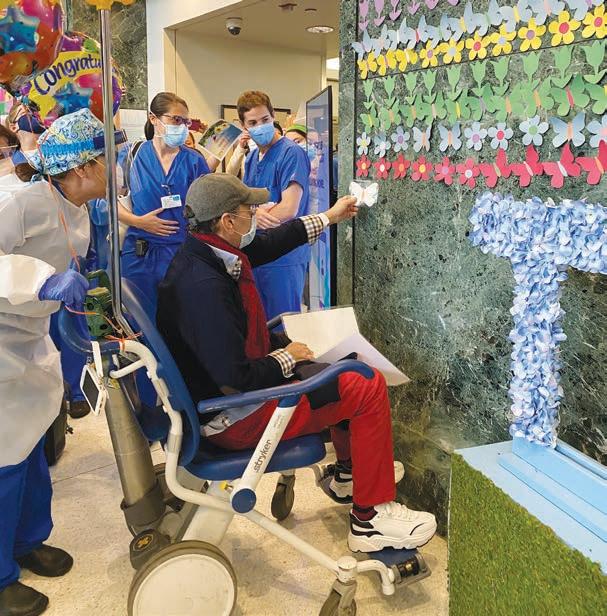
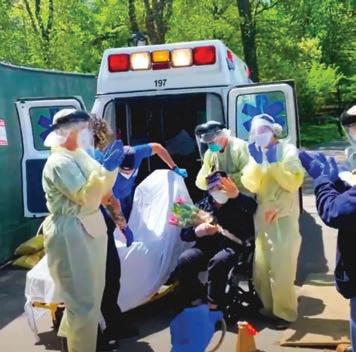
The sun shone brightly down on Rodrigo Saval as he was released from Mount Sinai West. Staff members lined the hallways and street— cheering, clapping, and crying. As he reached out to elbow bump a physician in gratitude, a calming breeze blew the congratulatory balloons nurses used to decorate his wheelchair.
On March 7, Mr. Saval became the first COVID-19 patient to be admitted at Mount Sinai. For 54 days, the marathon runner from Chile fought tirelessly for his life. The outlook was bleak—half of Mr. Saval’s stay was spent on a ventilator—but the critical care team never gave up. “I could have been hospitalized anywhere in the world, but I am so happy it happened here,” says Mr. Saval.
Mr. Saval was one of the first patients at Mount Sinai put on the antiviral medicine remdesivir. He was also treated with an anti-inflammatory medication, normally used to treat rheumatoid arthritis, that doctors are evaluating for severely ill COVID-19 patients.
Mr. Saval held a special place in the staff’s hearts. “We needed this win,” says Jennie Drexler, RN, a nurse manager in the ICU. “It is such a blessing to see him outside—he’s our personal mascot!”
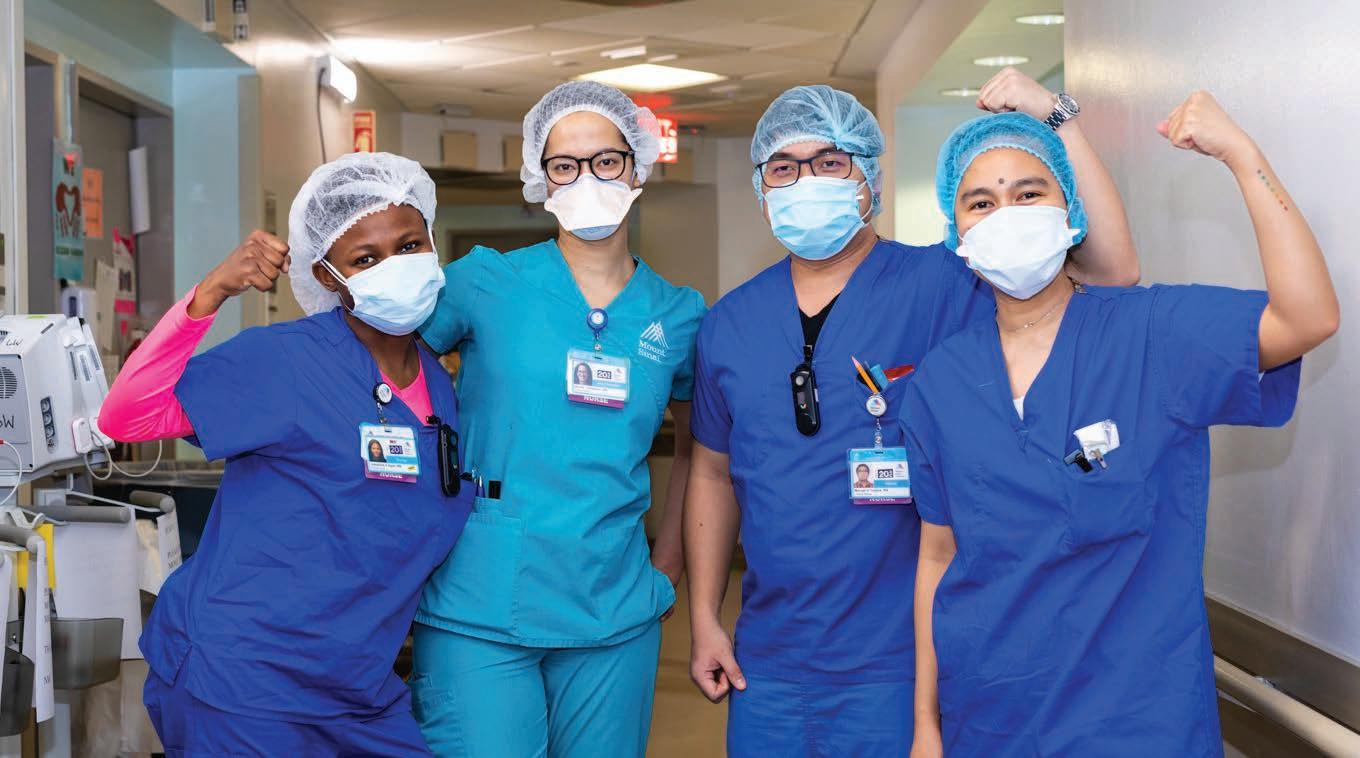
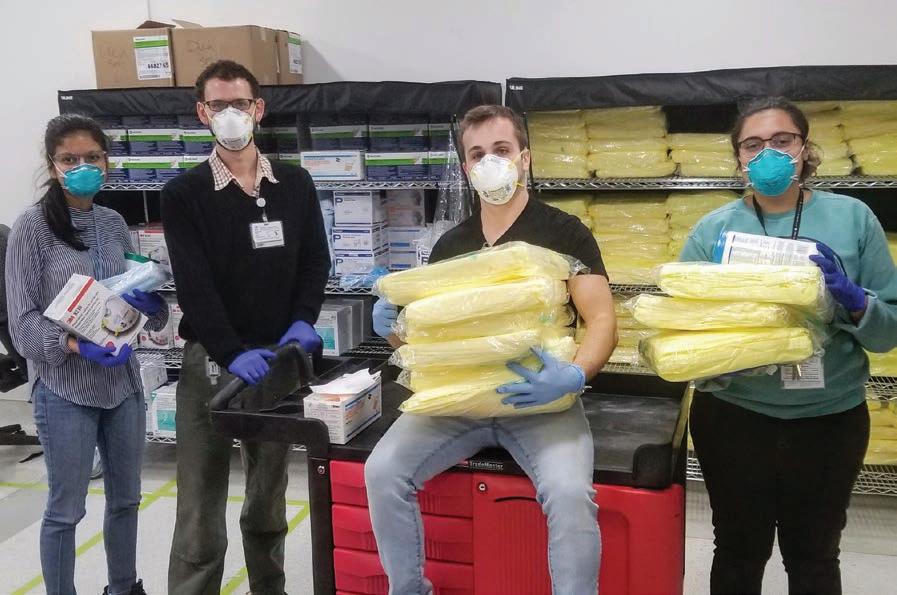
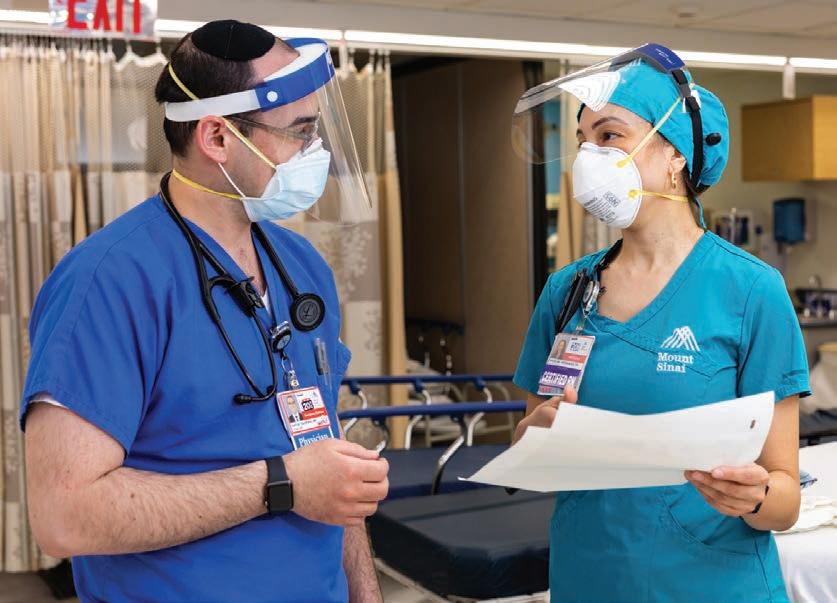
Pictured on left: Medical students and postdoctoral fellows volunteer their time. Pictured on right: A heartfelt exchange at Mount Sinai Morningside. Photo by Claudia Paul.
HEROES WORK HERE
A Tribute to Our Health Care Workers on the Front Lines of COVID-19
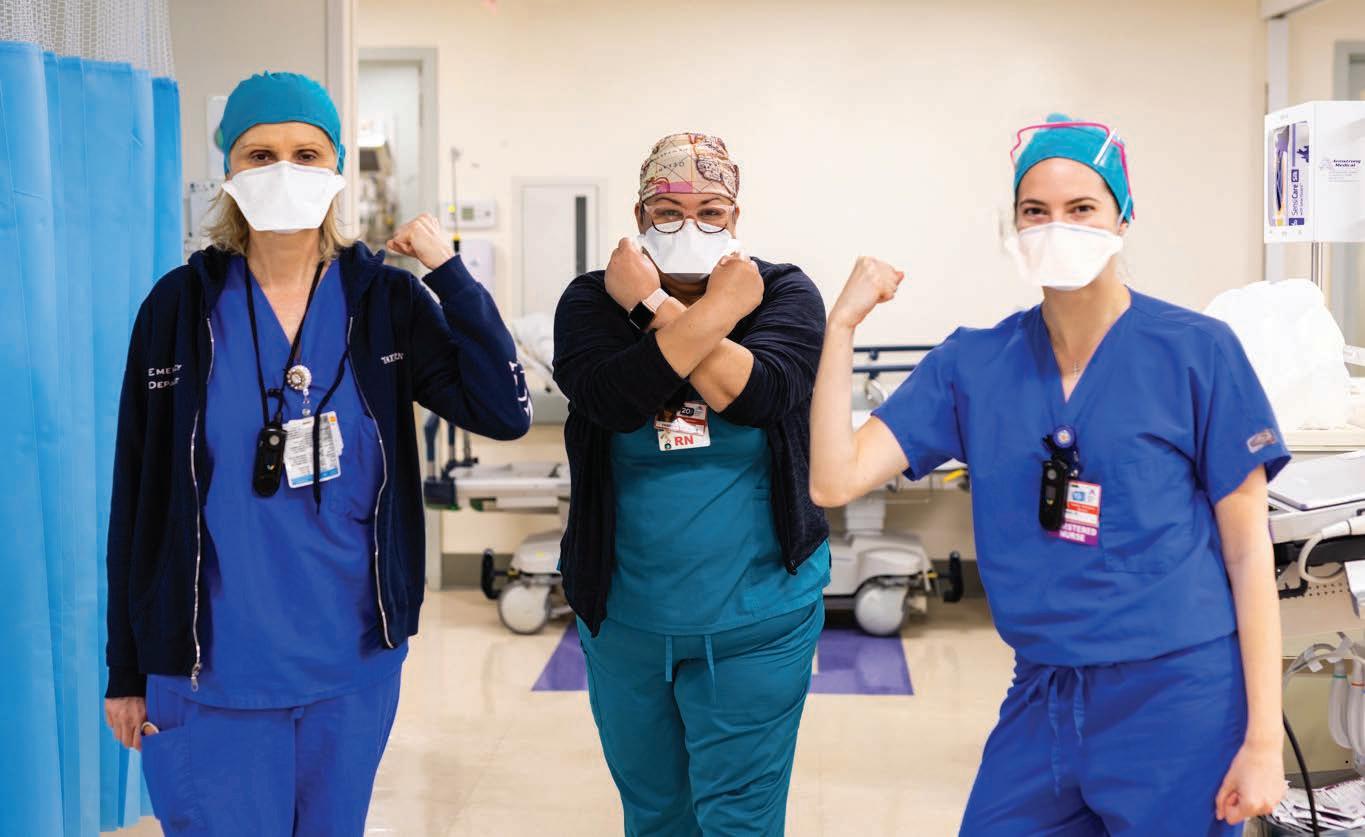
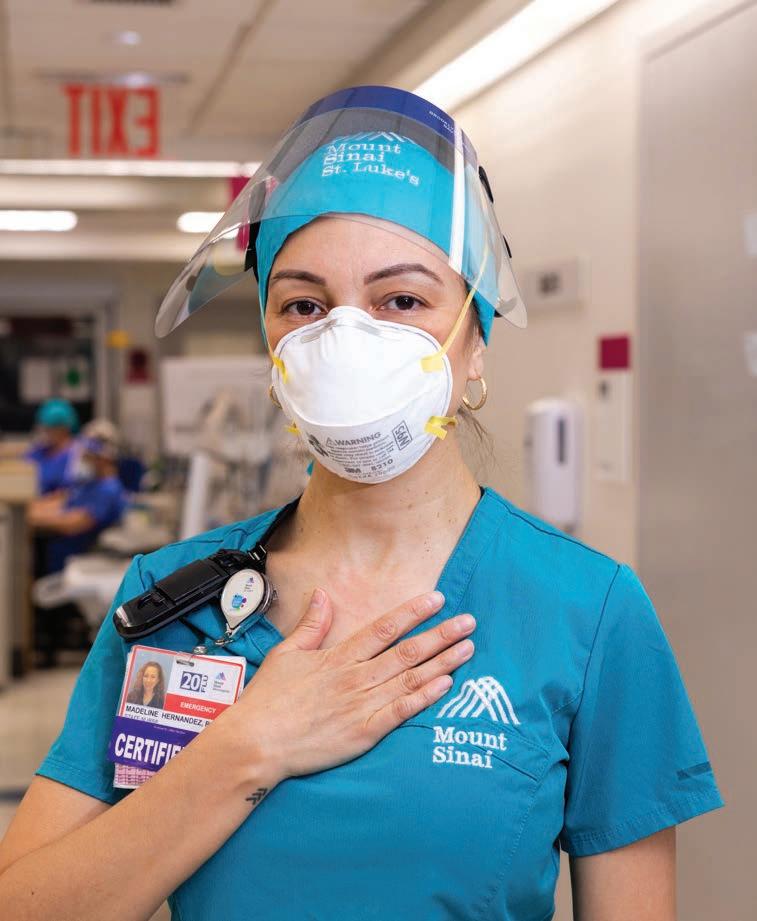
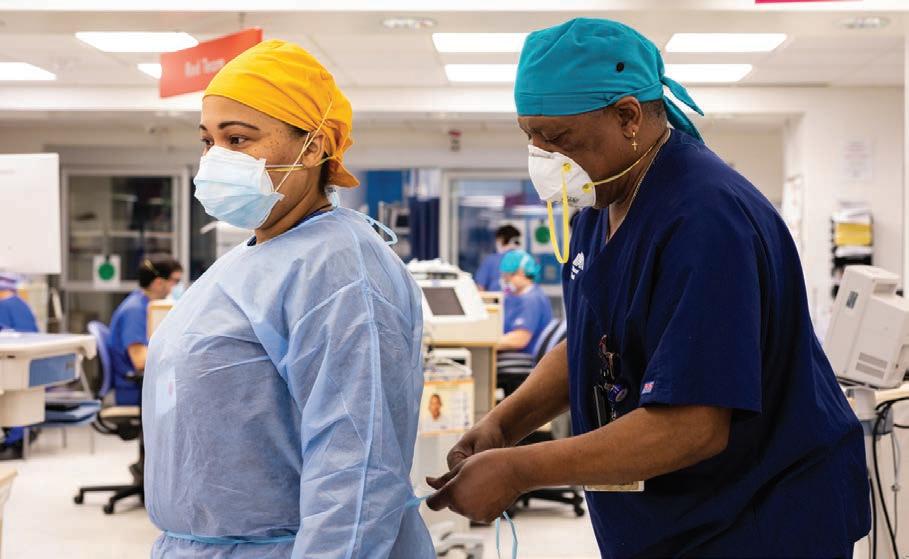
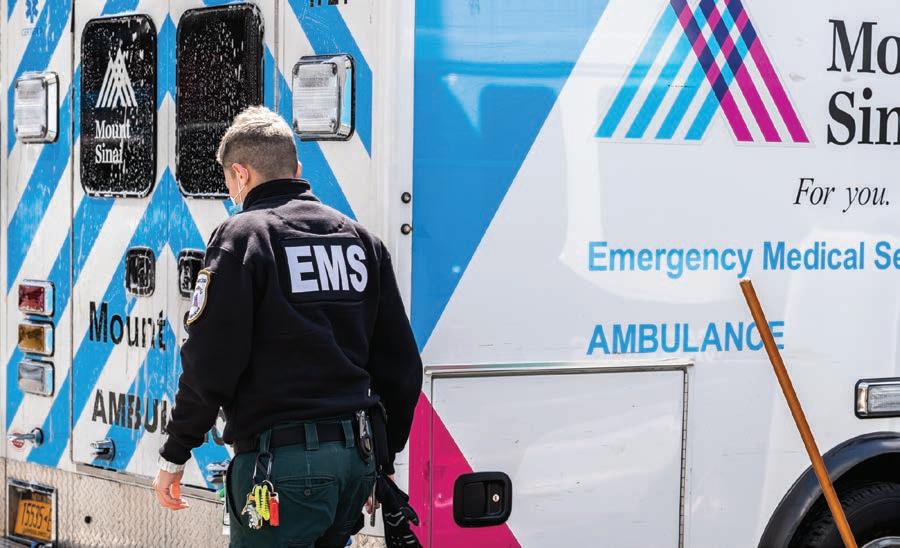
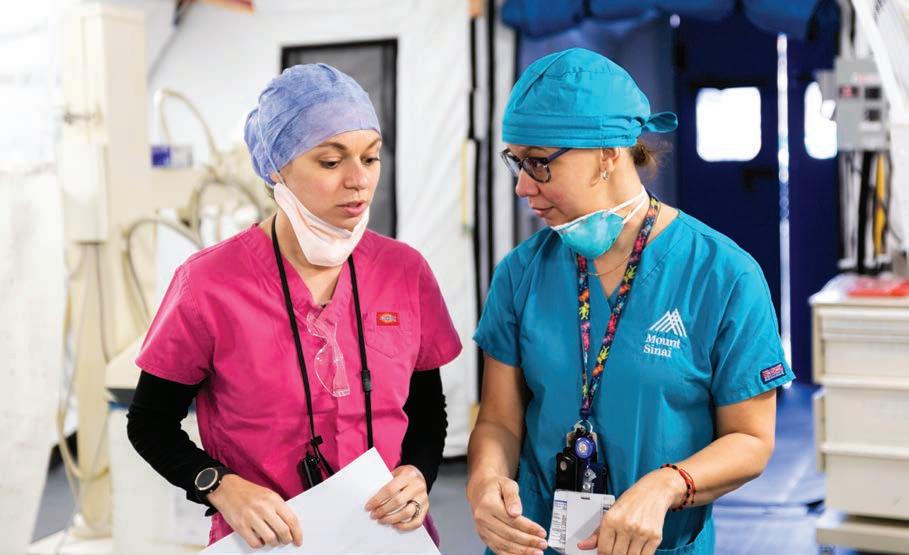
PICTURED IN THIS TRIBUTE ARE OUR AMAZING STAFF ACROSS OUR HEALTH SYSTEM.
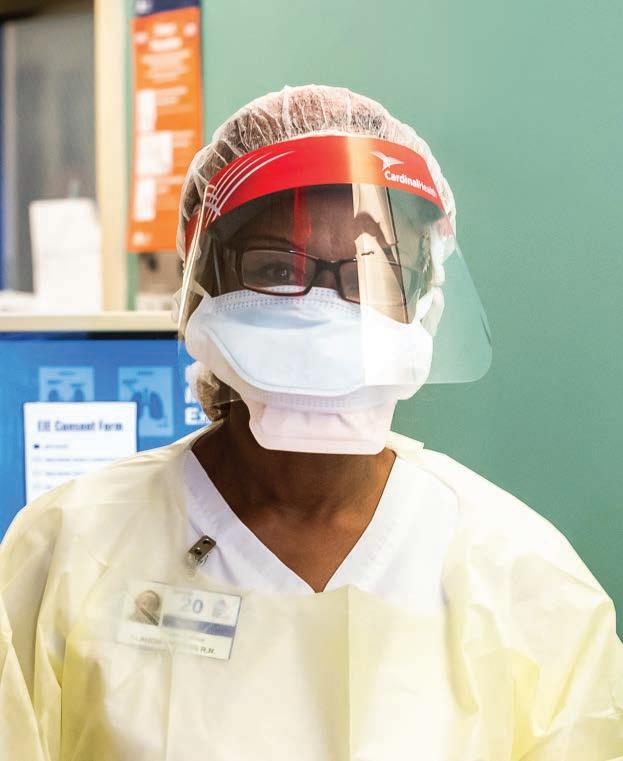
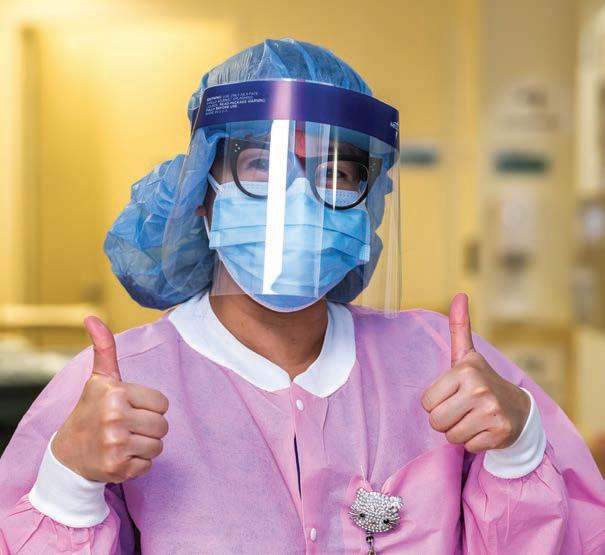
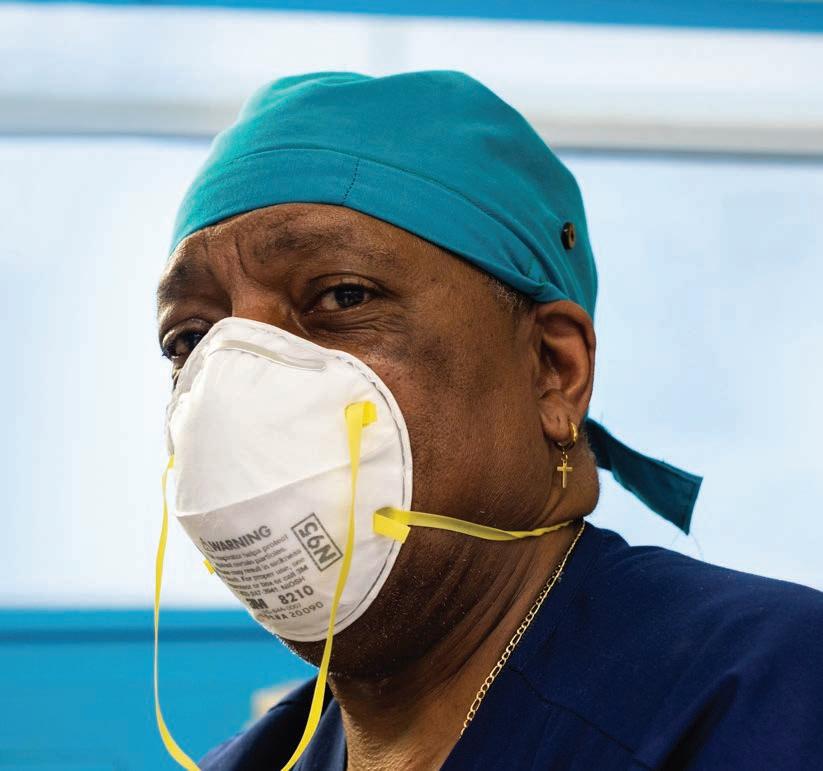
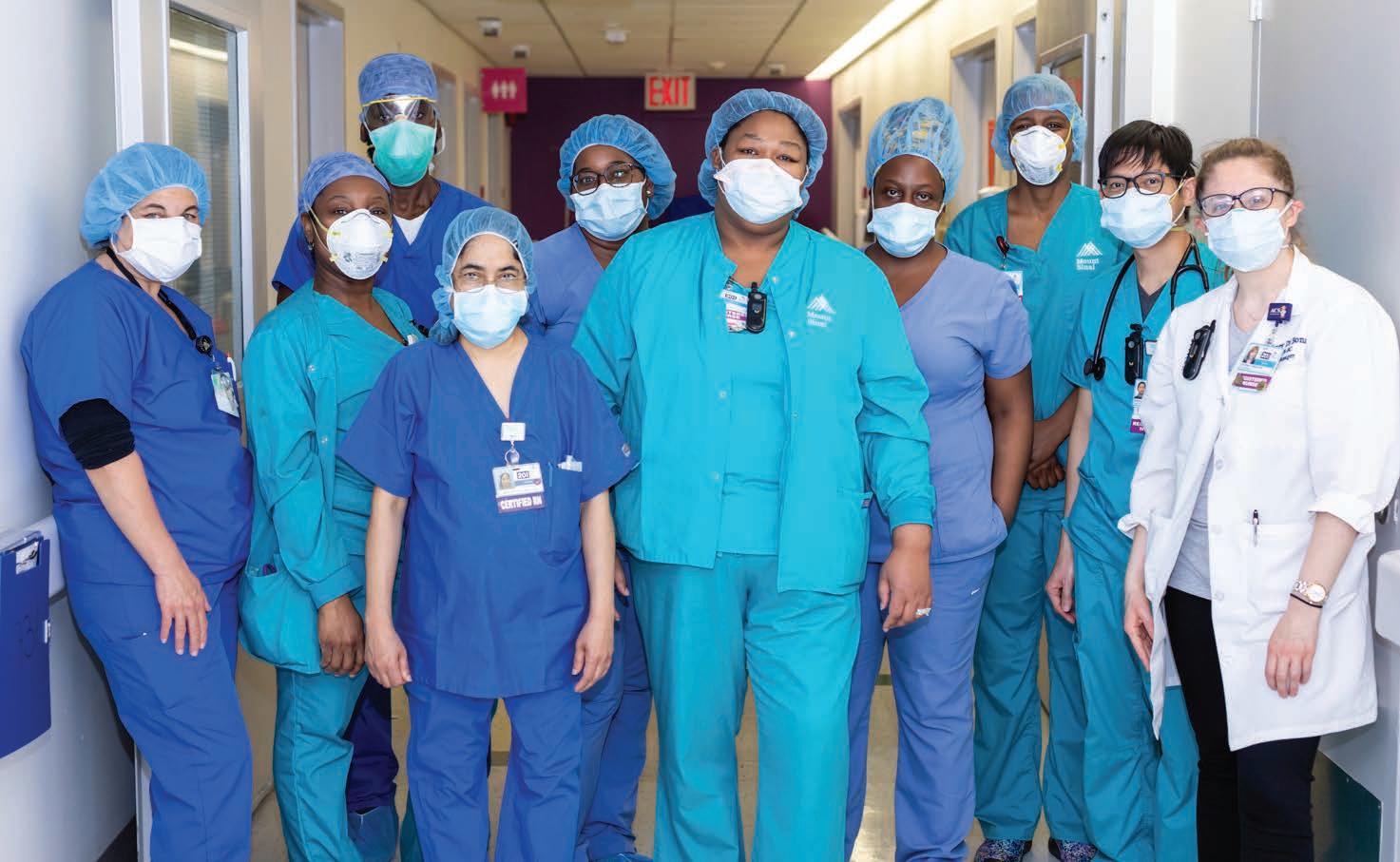
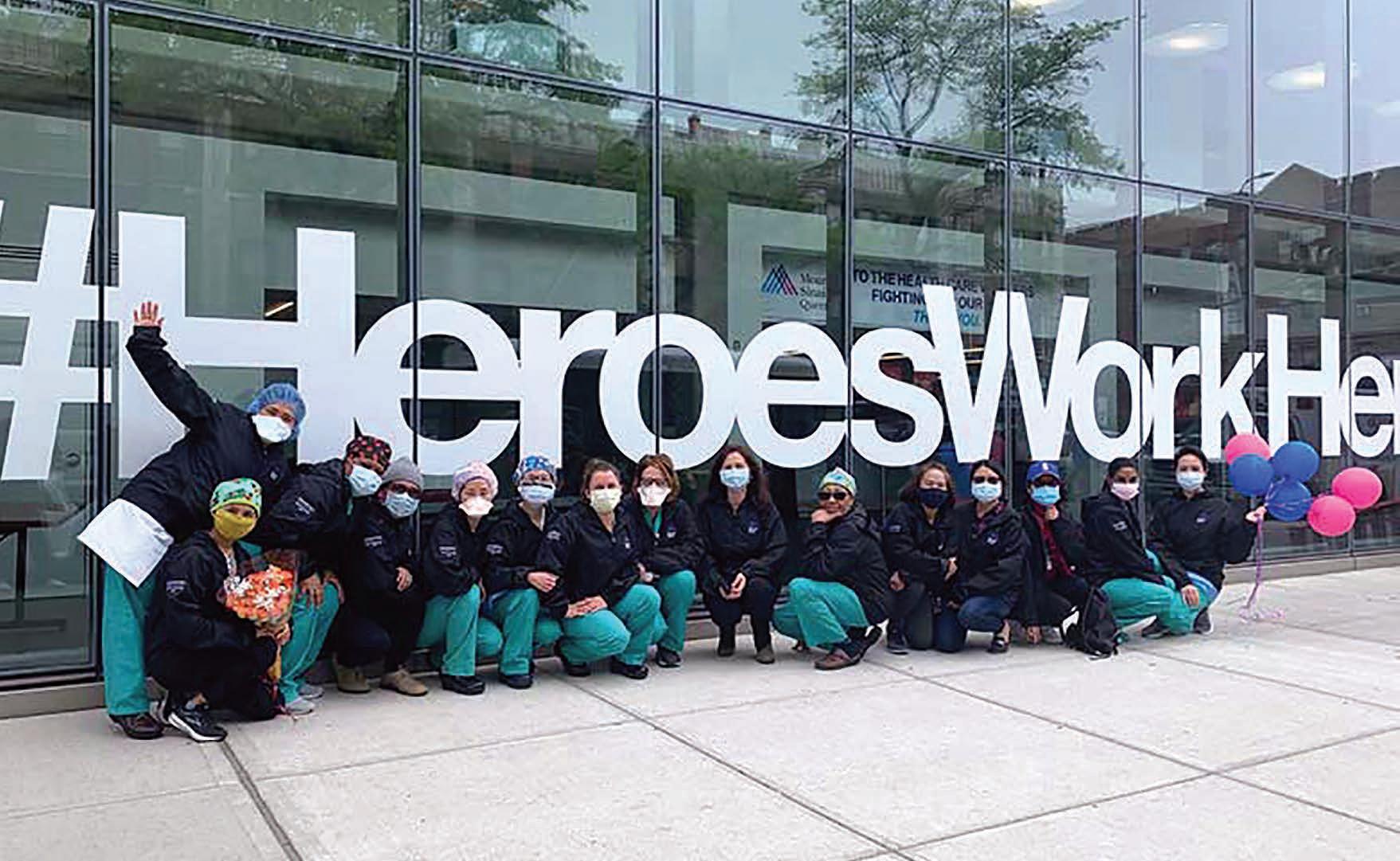
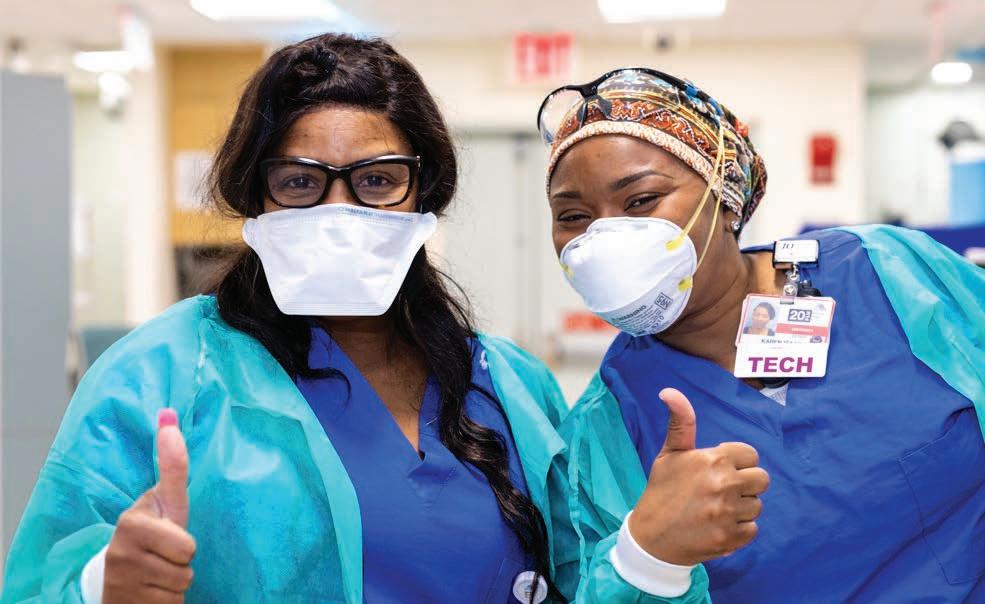
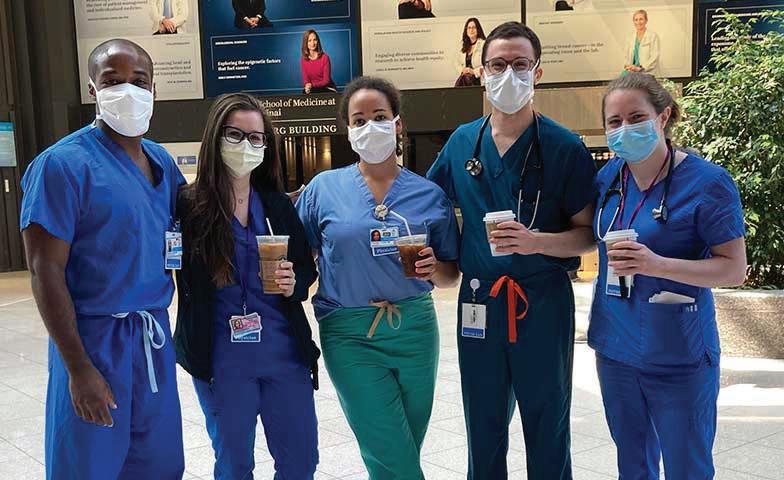
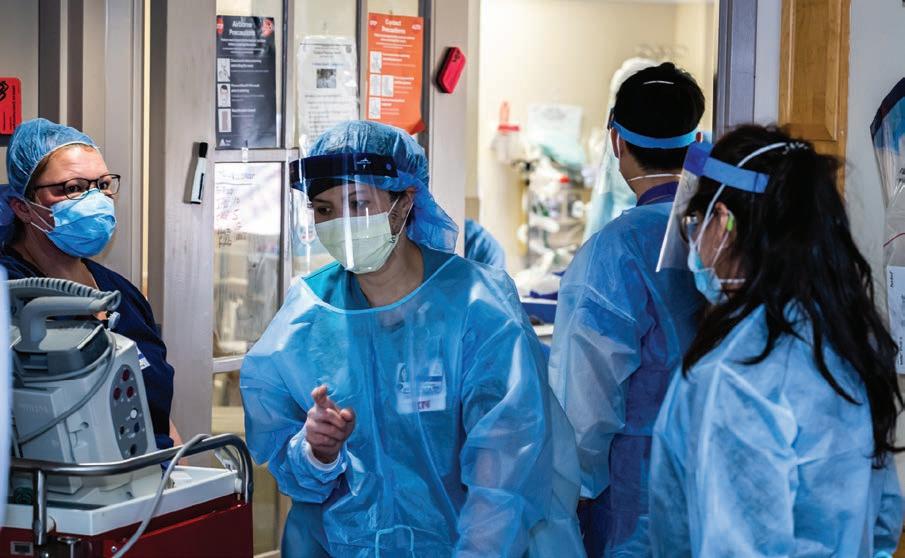
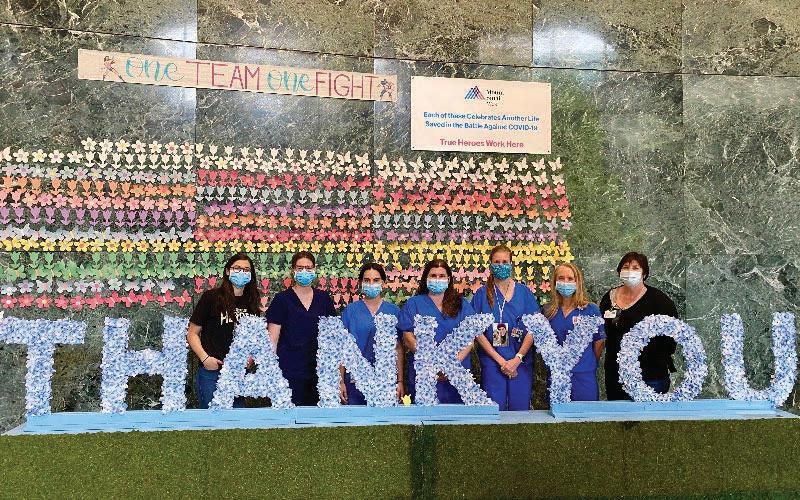
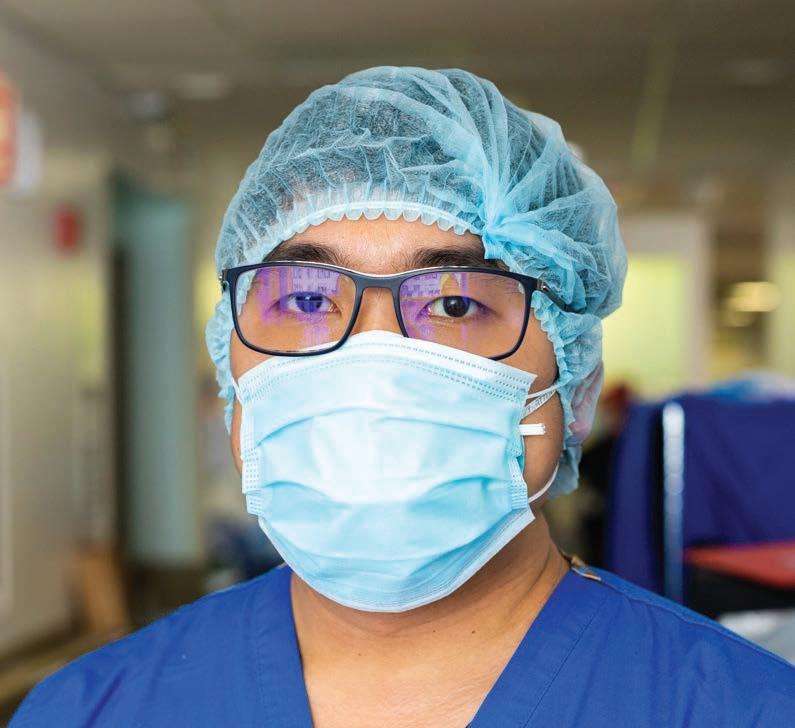
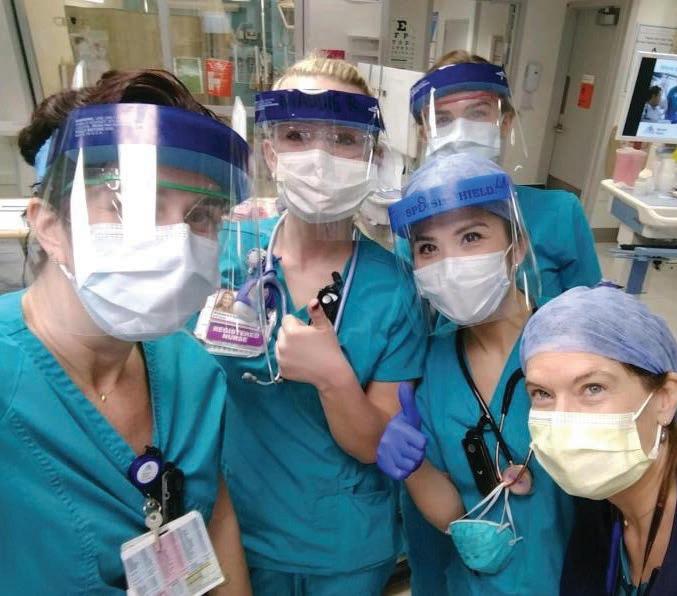
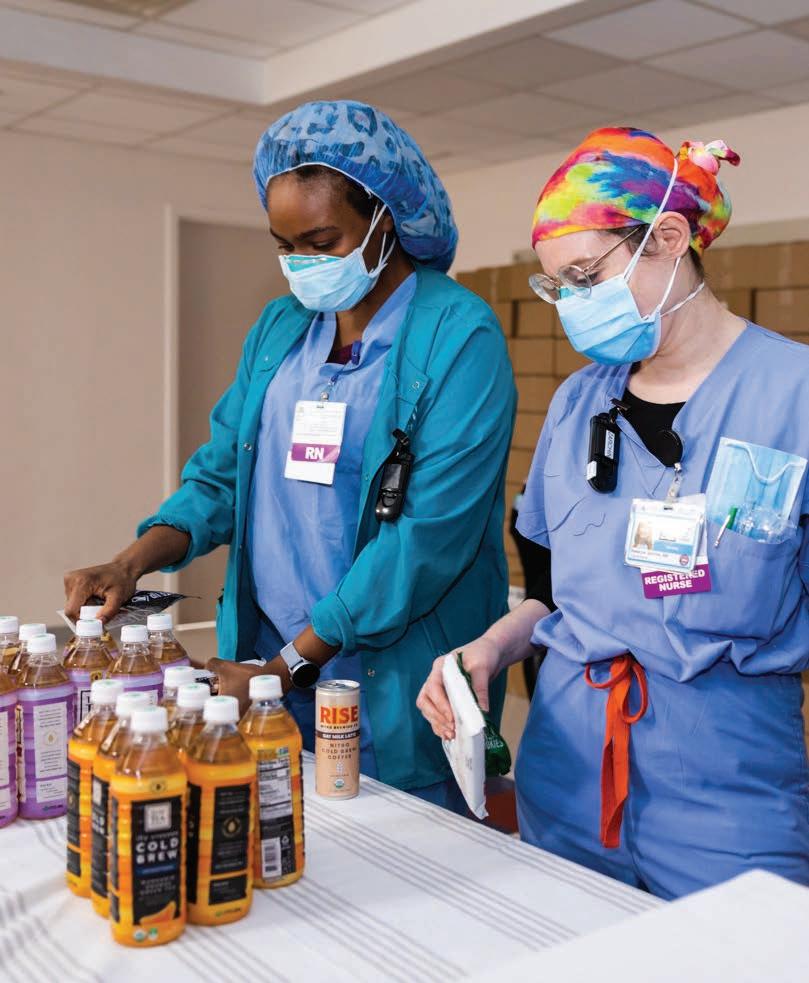
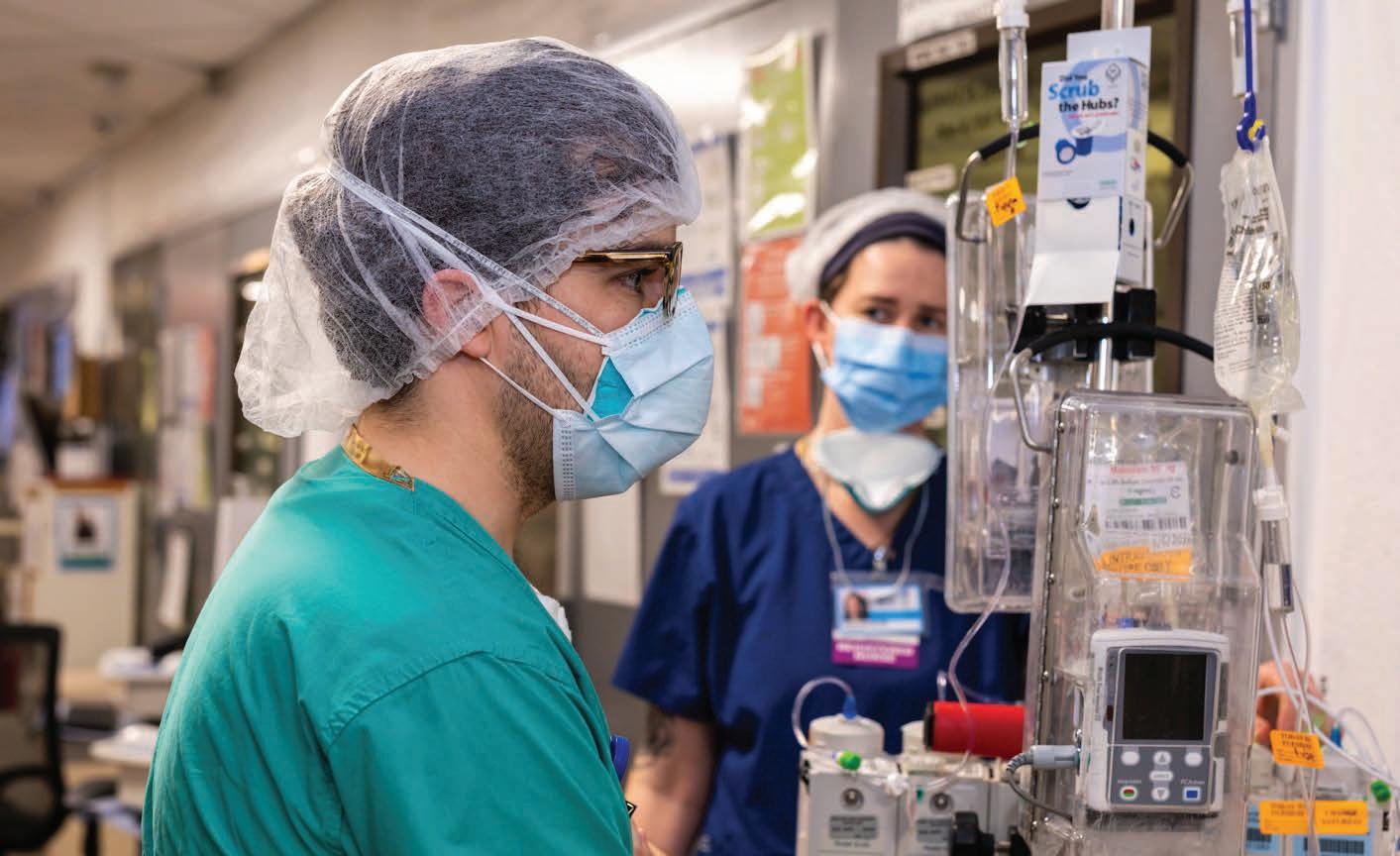
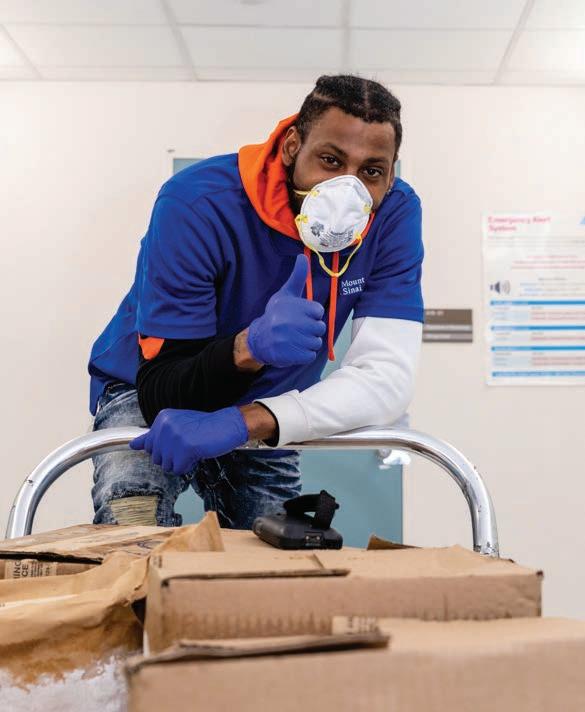
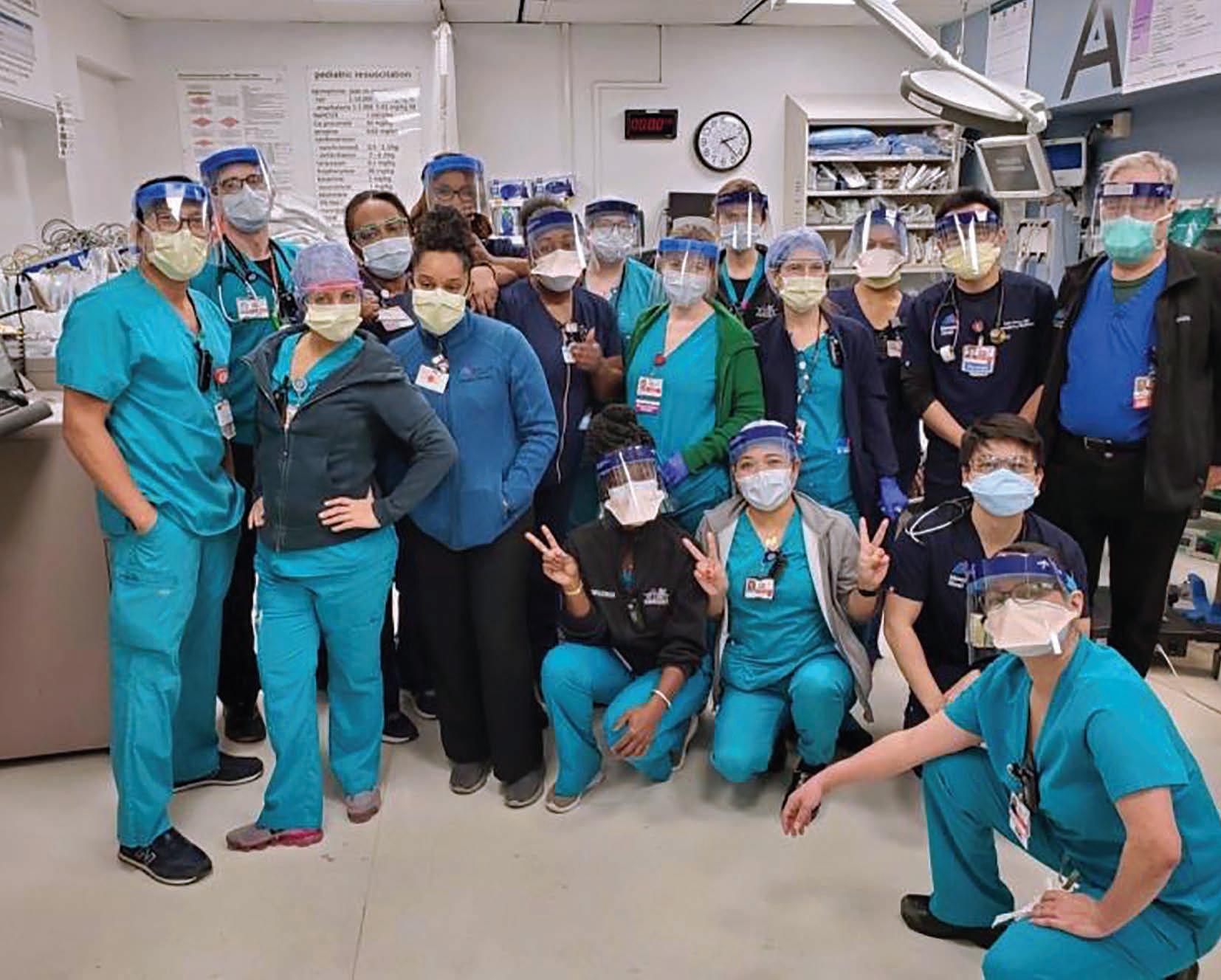
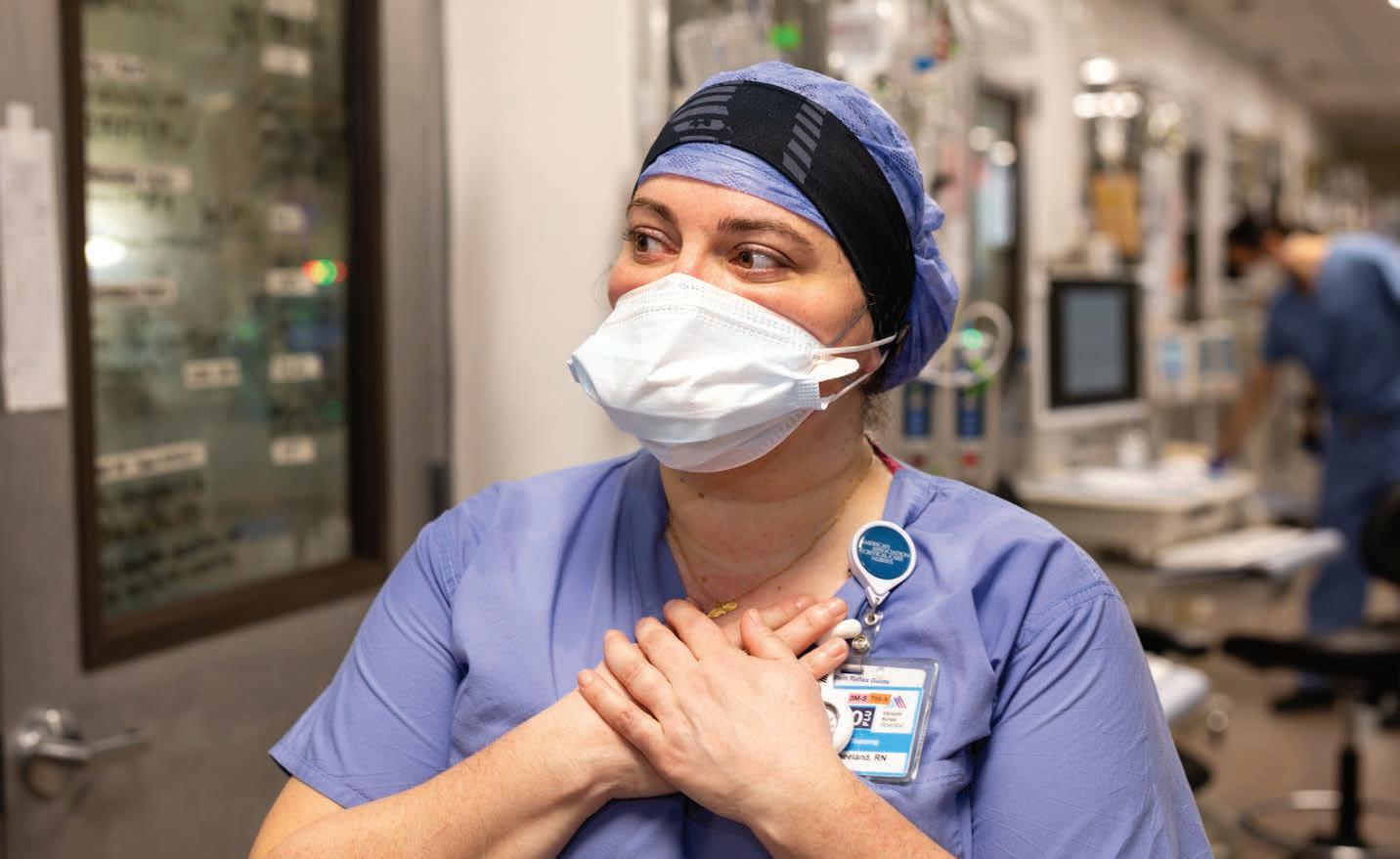
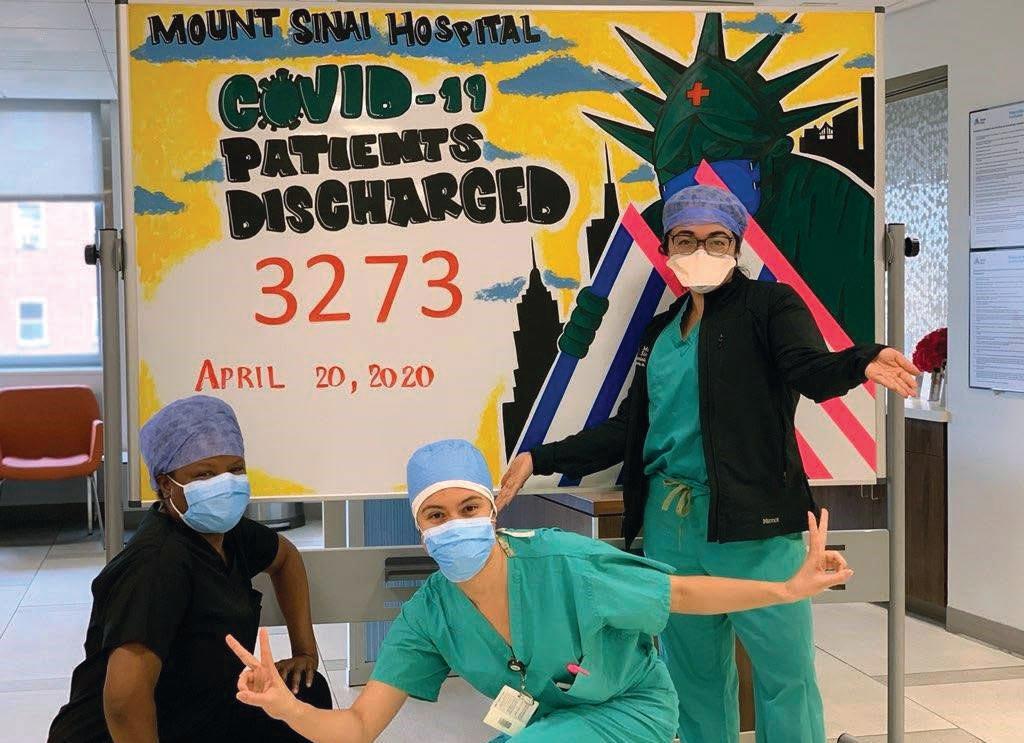
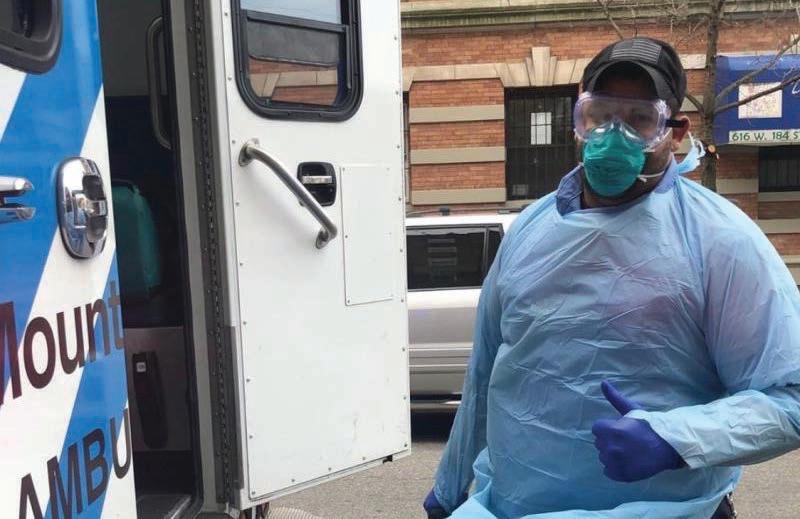
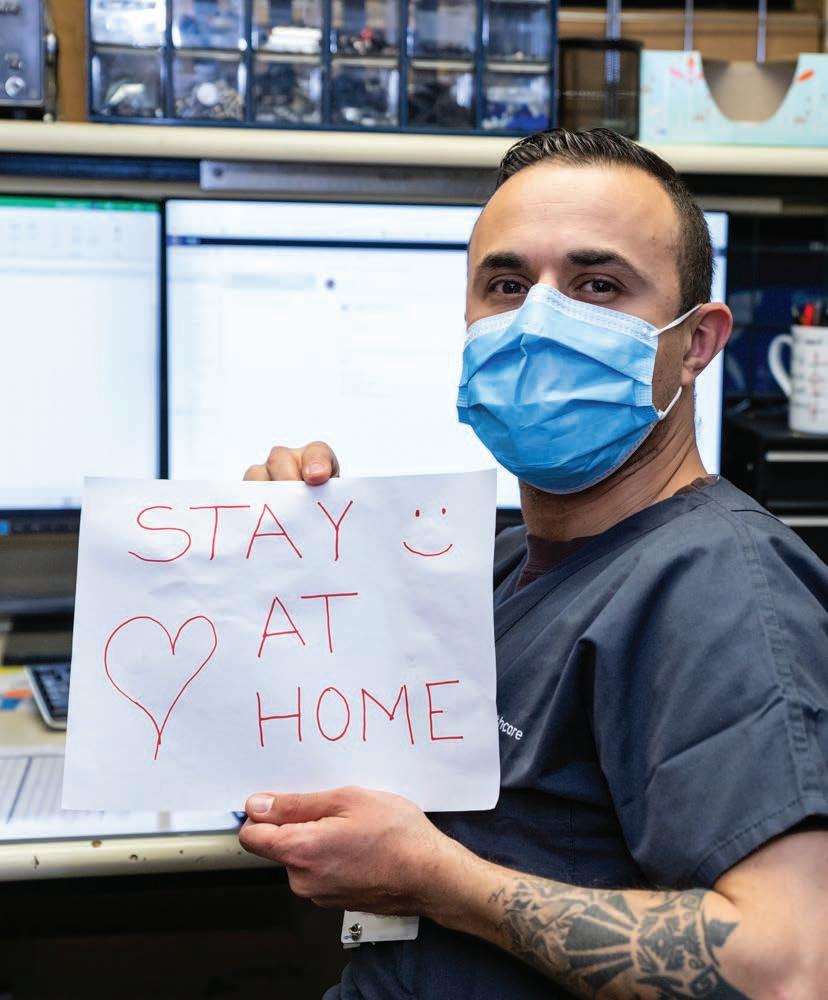
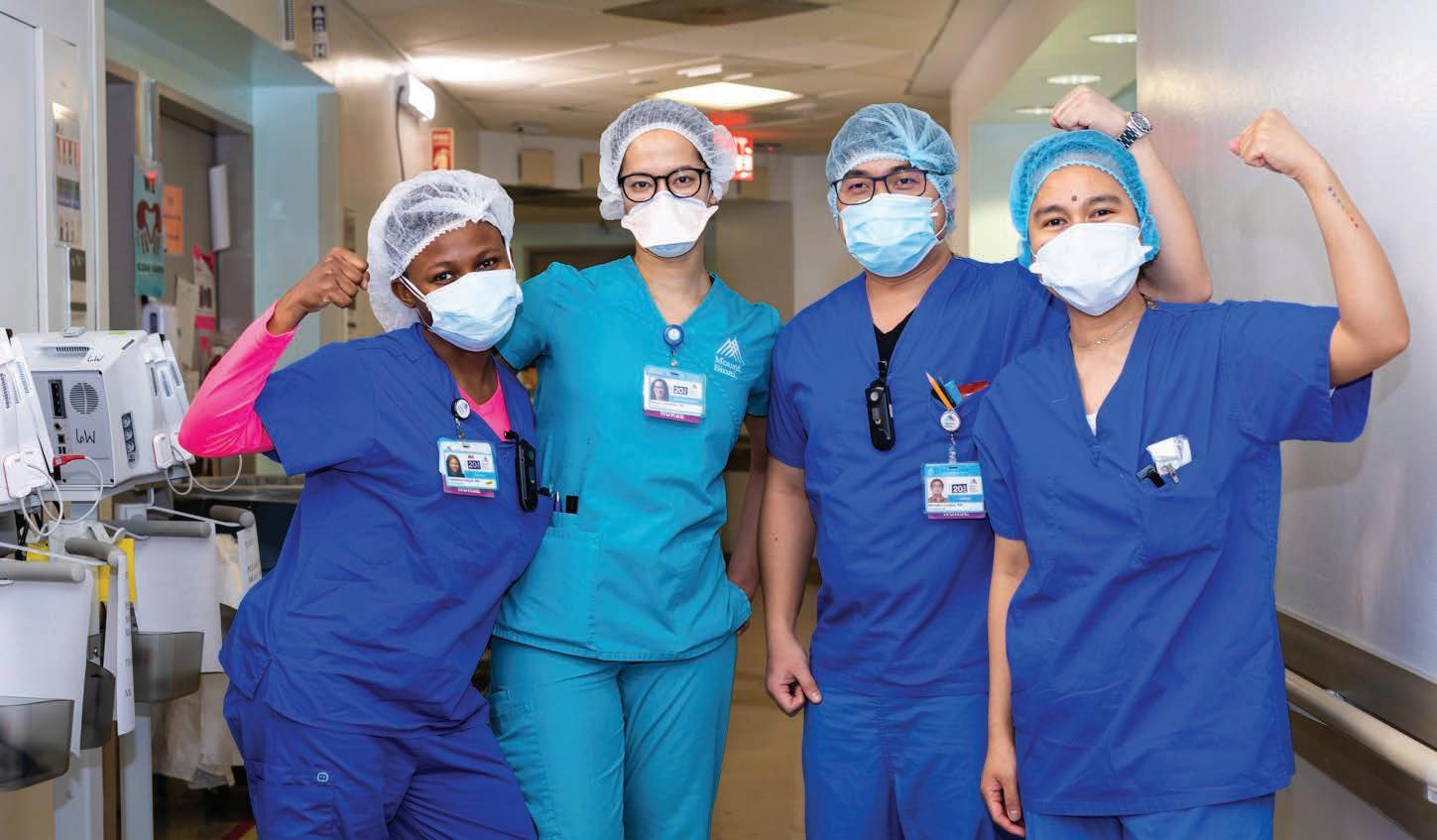
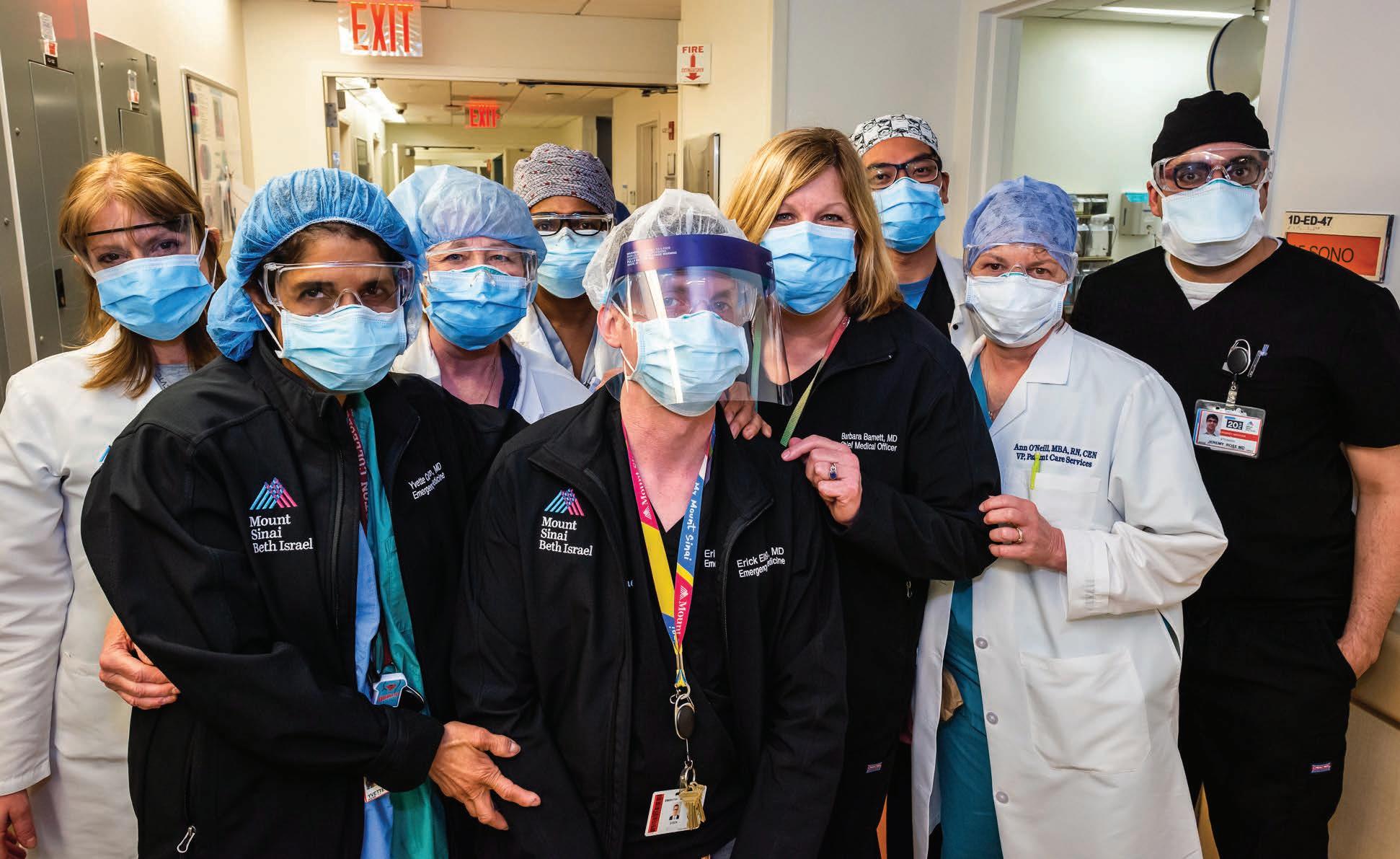
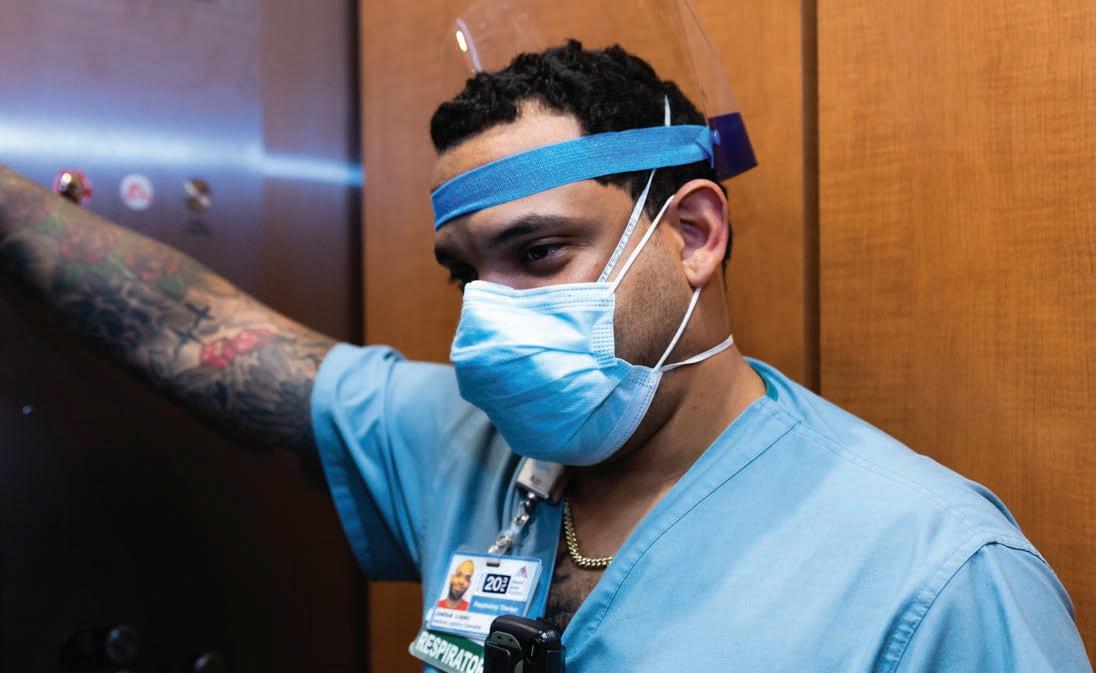
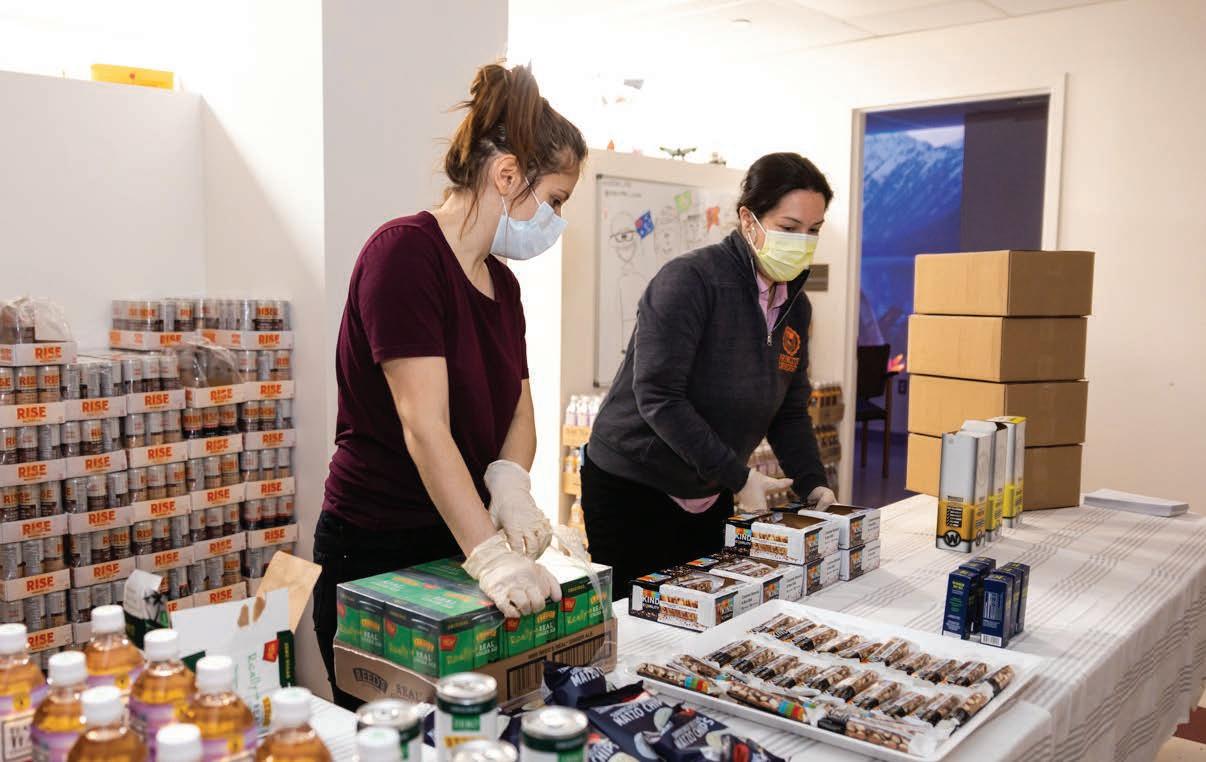
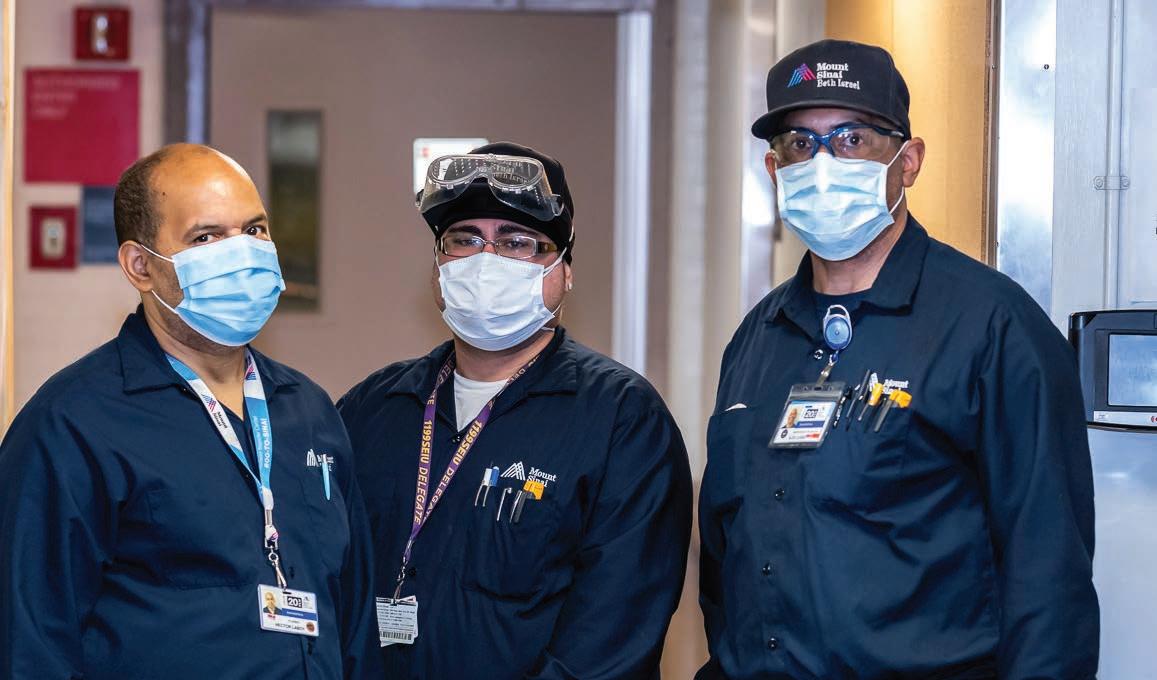
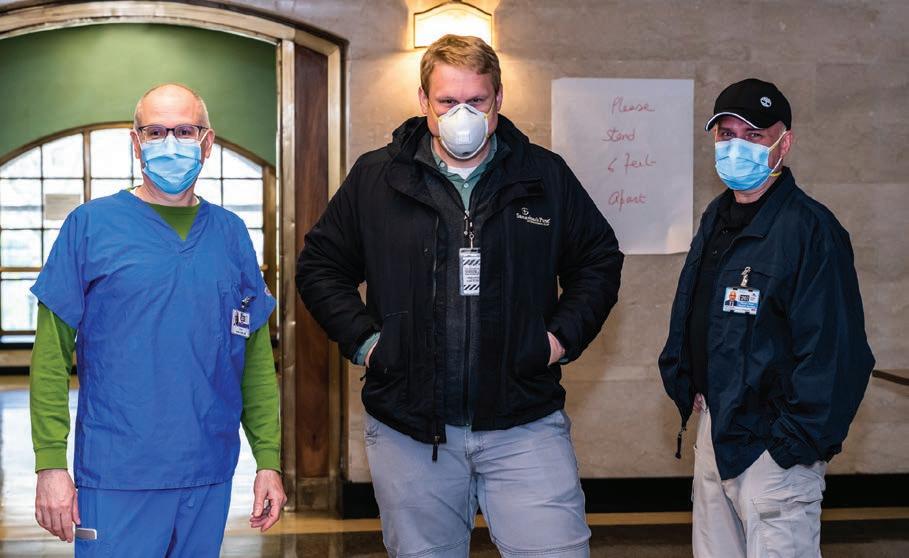
The COVID-19 pandemic highlighted the Mount Sinai Health System’s common humanity during the height of the crisis in the spring and early summer of 2020. The first responders, the physicians, the nurses, and all of the staff at Mount Sinai on the front lines of this crisis demonstrated unparalleled courage and resolve in providing exemplary care to patients impacted by this disease in the face of daunting circumstances. The Health System is deeply grateful for their tireless work, which is admired and recognized by our institution, our colleagues, and the communities we serve.
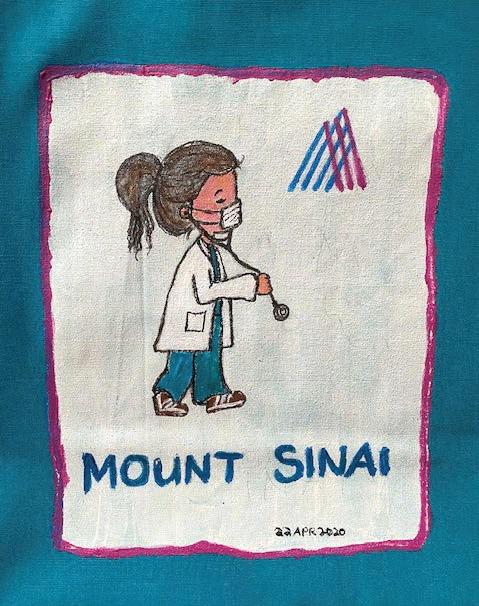
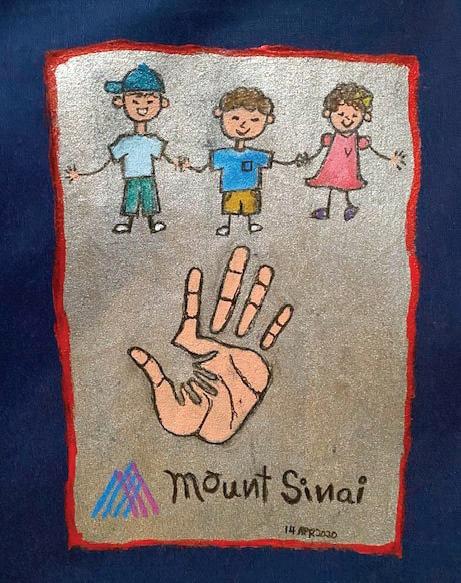
“ Art calms my mind and quiets my soul. It speaks when words cannot be expressed. I created these special paintings on my scrubs to help me manage my stress during the height of the COVID-19 crisis. I wanted to show how resilient we all were in the fight against this disease and we were in it together.”
E.
— Maria
Sevillano, Wound Care Specialist at The Mount Sinai Hospital
WE REMEMBER
The Mount Sinai family mourns the members of our community whom we lost to COVID-19. They were our colleagues and our friends. We are grateful for their dedication to Mount Sinai and for all the ways they touched our lives. We strive to honor their memories in our daily work.
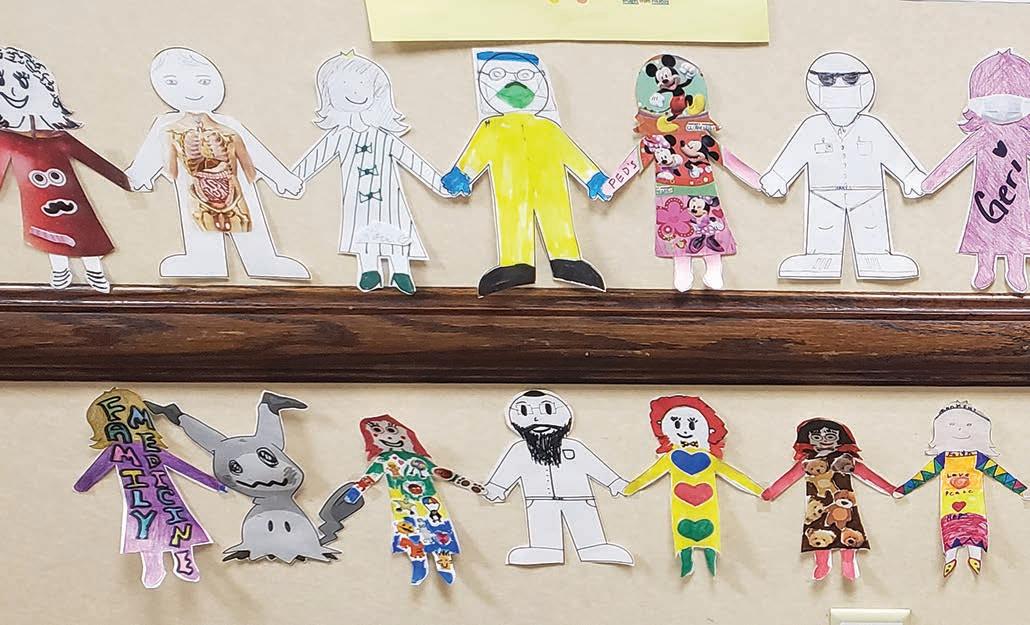
“ Our team created these paper cut-outs to represent our nurses, residents, faculty physicians, and other staff to show solidarity and camaraderie. We posted them in the hallways for everyone to see. It was a creative way to lift our spirits during a really dark time.”
— Joyce F. Robert, MD – Mount Sinai South Nassau
OF OUR PANDEMIC RESPONDING TO THE
LIFETIME
As New York Became the Epicenter of the COVID-19 Outbreak, Mount Sinai Conducted Groundbreaking Research in Real Time.
BY SIMA RABINOWITZ
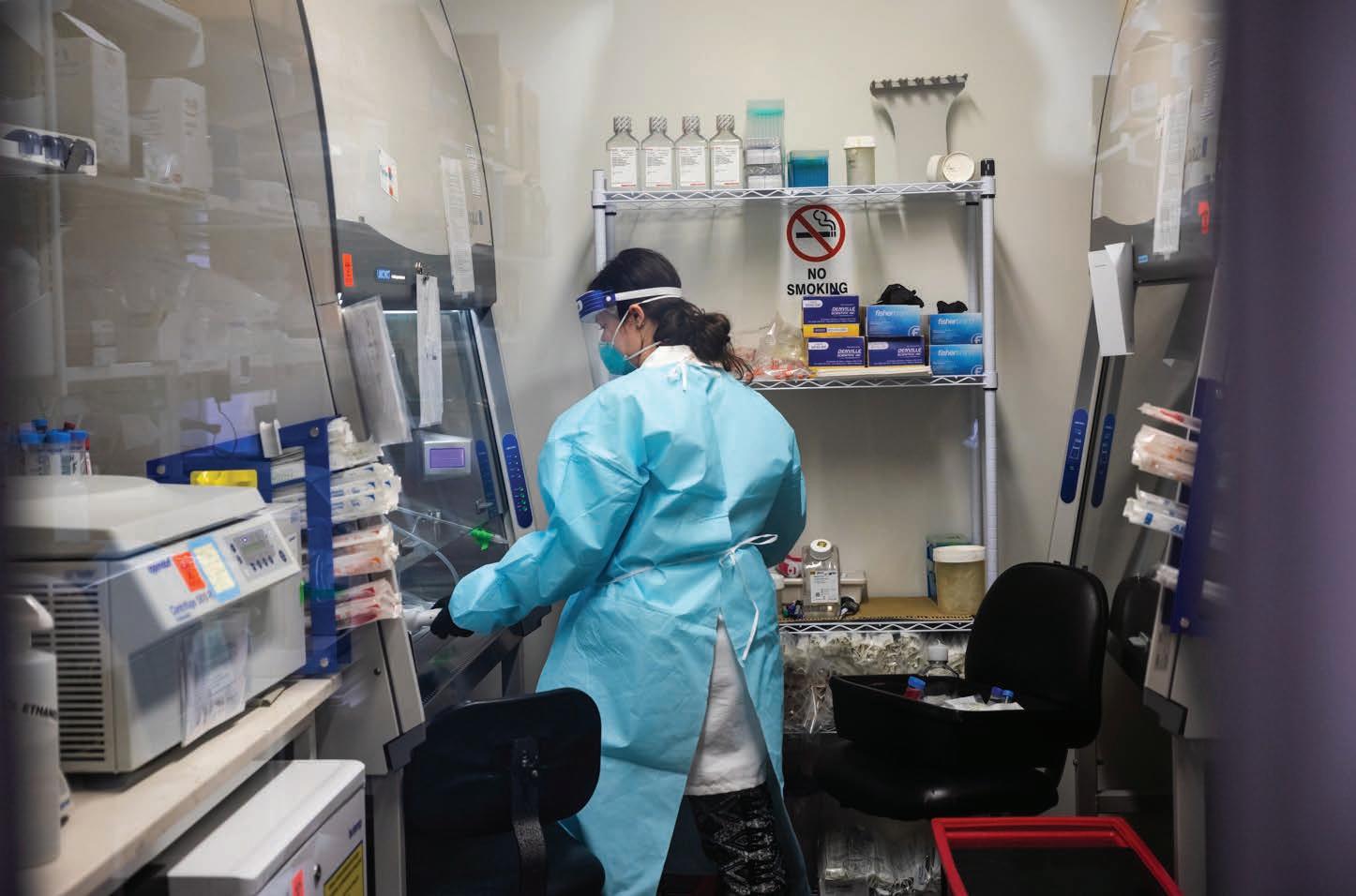
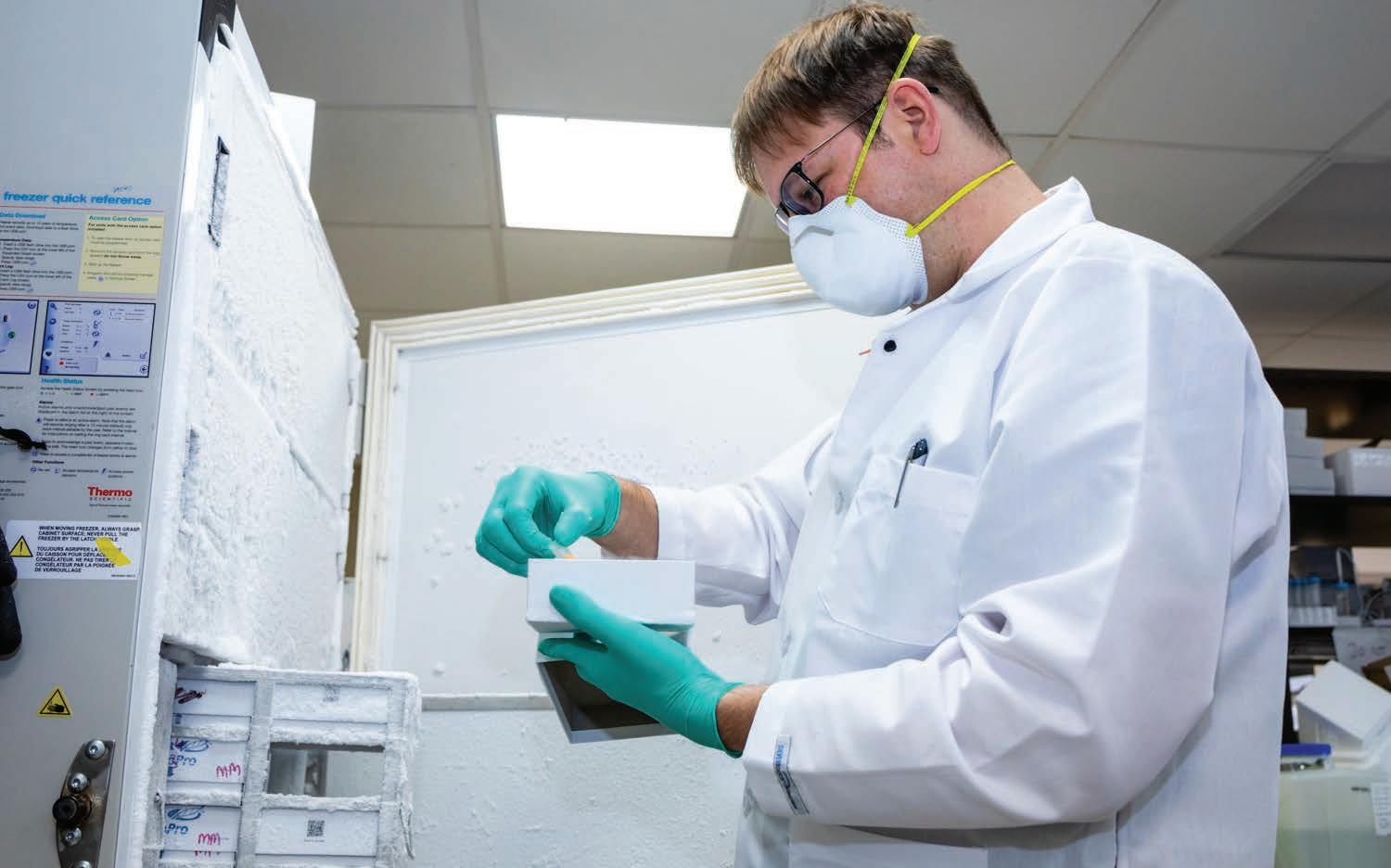
It’s 5 am on a chilly morning in mid-March. The dark city streets surrounding The Mount Sinai Hospital are deserted except for a small team of women and men outfitted in masks, gowns, and gloves transporting COVID-19 patient samples swiftly from the Hospital to Icahn School of Medicine at Mount Sinai (ISMMS) research labs for analysis. These samples will become part of a unique COVID-19 Biobank—the largest of its kind in the country, perhaps in the world—to help scientists learn why some patients become much sicker than others and how underlying health conditions create greater risk for disease. “Our work was done in a fog-of-war environment,” says Alexander Charney, MD, PhD, Co-Director of the new Mount Sinai COVID Informatics Center, and Assistant Professor of Genetic and Genomic Sciences, who organized the Biobank initiative within days of the COVID-19 outbreak in New York City.
These early-morning teams were among thousands of researchers, clinicians, trainees, students, and staff across Mount Sinai working together around the clock, day after day, to learn about and work to treat an entirely new disease. A rapid and coordinated effort across the Mount Sinai Health System engaged Icahn scientists in nearly every aspect of COVID-19 research, from investigating the biology of SARSCoV-2, the virus responsible for the disease, to assessing the chronic health conditions that create greater risk for disease severity. They began immediately to research a novel vaccine, implement clinical trials on potential treatments, and study the impact of COVID-19 as related to health disparities across New York City. Working together, Mount Sinai research and clinical teams
developed the first FDA-approved SARSCoV-2 antibody test, began some of the earliest investigations of COVID-19 in children, and implemented the largest convalescent plasma program in the country.
The pandemic created an unprecedented atmosphere of urgency and an overwhelming sense of responsibility to save patients’ lives and to support scientists and clinicians around the world by sharing their data, creating access to biological resources, and collaborating on novel studies.
COVID-19 BIOBANKING INITIATIVE
“You cannot treat a disease you do not understand,” says Miriam Merad, MD, PhD, Director of ISMMS’s Precision Immunology Institute and of Mount Sinai’s Human
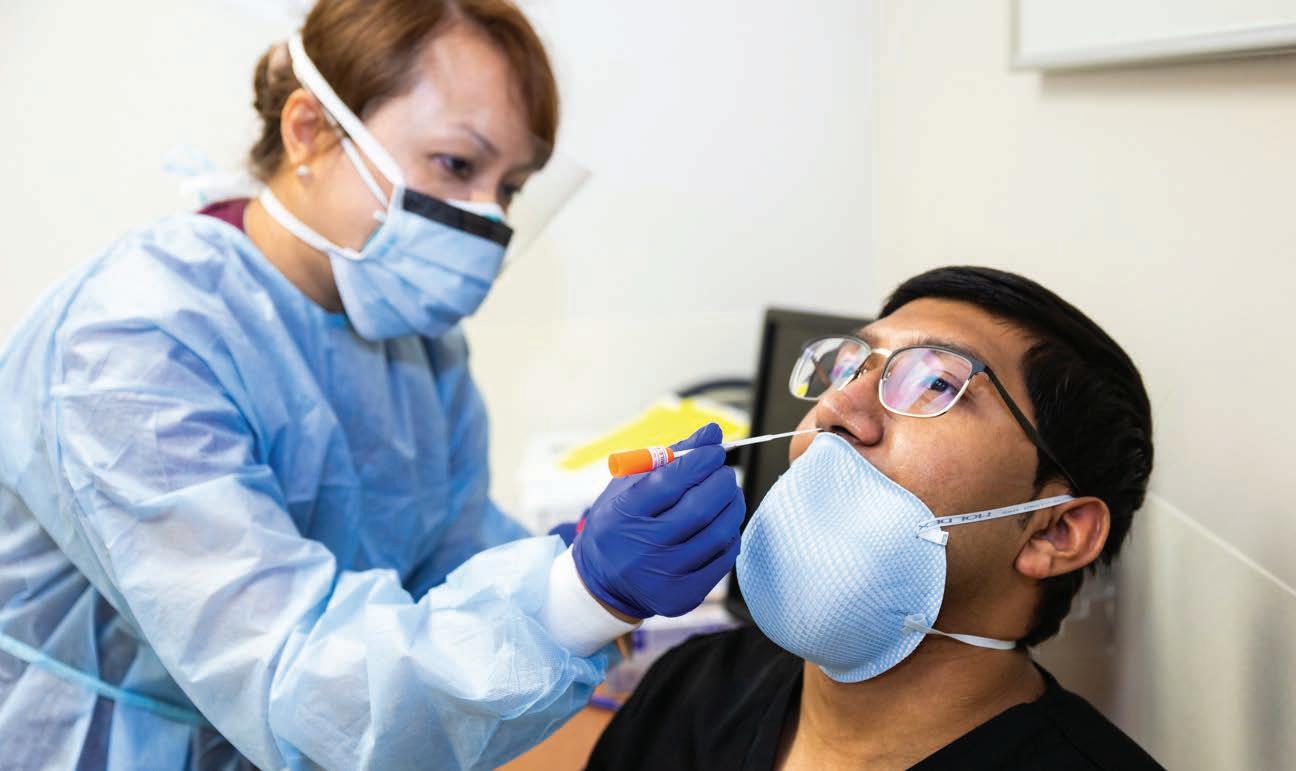
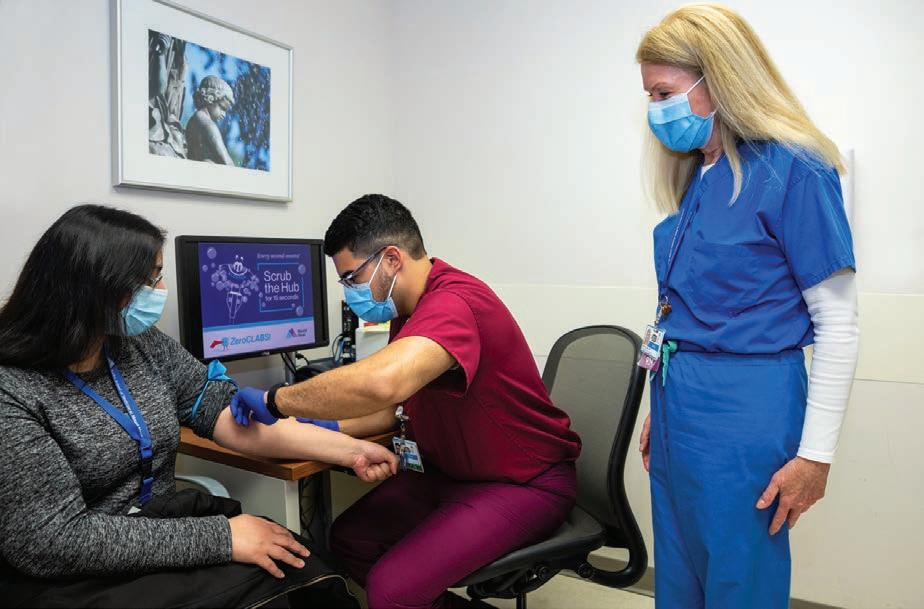
Immune Monitoring Center. In the midst of the dramatic need for care, it was imperative to study the disease course longitudinally to learn why COVID-19 was causing a hyperinflammatory response in some patients but not in others. “People were dying because their own immune systems were going into overdrive,” says Dr. Merad, a Mount Sinai Professor in Cancer Immunology.
In less than two weeks, Drs. Charney and Merad assembled a volunteer army, as they called it, of faculty, trainees, and staff who were redeployed from 16 centers, programs, and departments across Mount Sinai. “Our mandate was to develop a sample-collection
“PEOPLE WERE DYING BECAUSE THEIR OWN IMMUNE SYSTEMS WERE GOING INTO OVERDRIVE.”
– MIRIAM MERAD, MD, PHD
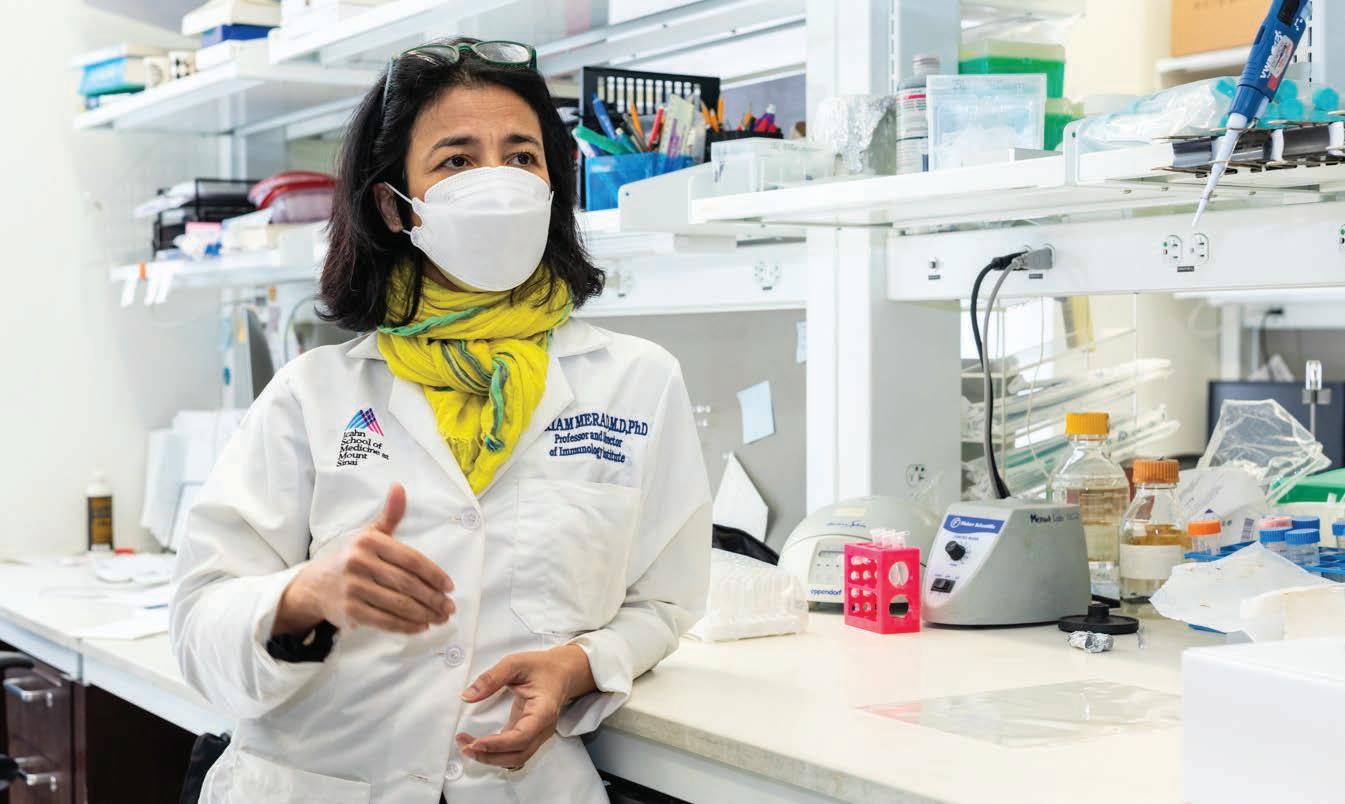
by Claudia Paul
Photos
protocol to serve as a backbone for COVID-19 research,” explains Dr. Charney. Over 49 days, the group collected more than 10,000 vacutainers (test tubes) filled with 50,000 samples from 700 patients. Drs. Charney, Merad, and COVID-19 Biobank Program Manager Nicole Simons and their 97 team members have published a “live and learn memoir” in a recent issue of Nature Medicine to share their experience with “like-minded colleagues in future hot spots.”
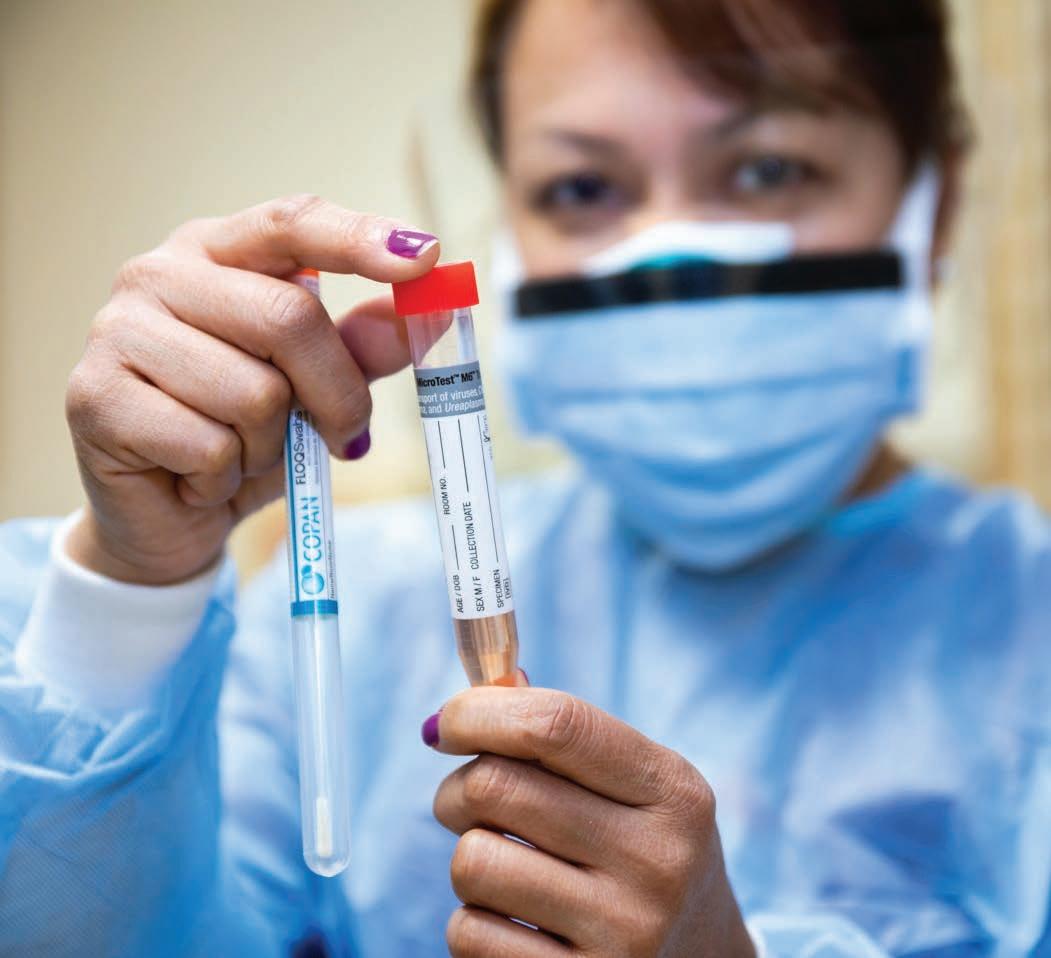
The COVID-19 Biobank samples are being analyzed in the Human Immune Monitoring Center and the Mount Sinai COVID-19 Informatics Center with the goal of identifying biomarkers and therapeutic targets. Employing the Center’s sophisticated technologies, scientists can identify genetic and immune pathways that may indicate susceptibility or protection from severe COVID-19 outcomes. This work builds on the Precision Immunology Institute’s ongoing studies in cancer immunology, studying hyper-inflammatory responses (the so-called “cytokine storm”) that result from certain immunotherapies. Dr. Merad’s team has developed a rapid turnaround test to measure and predict this
“BUILDING ON OUR STRONG CLINICAL TRIALS INFRASTRUCTURE, AND WITH A LOT OF SUPPORT ACROSS THE HEALTH SYSTEM, WE WERE ABLE TO OPEN UP TRIALS IMMEDIATELY.”
– JUDITH ABERG, MD
response in patients, which will be used to study the efficacy of potential therapeutics as a possible treatment for COVID-19 in collaboration with Adolfo García-Sastre’s lab.
THE SEARCH FOR A VACCINE
An ideal COVID-19 vaccine would be administered in a single shot, provide longlasting protection, and be effective in both younger and older people. Nonetheless, even a vaccine that protects only for the short term, later requiring booster shots, would be of great help, explains García-Sastre, PhD, Director of the Global Health and Emerging Pathogens Institute at the Icahn School of Medicine. Dr. García-Sastre; Florian Krammer, PhD, Professor of Microbiology at ISMMS and a Mount Sinai Professor in Vaccinology; and Peter Palese, PhD, Horace W. Goldsmith Professor and Chair of the Department of Microbiology—three of the world’s most influential research leaders in infectious disease—began to work on a COVID-19 vaccine even before New York City became the epicenter of the pandemic. The three investigators have designed and patented a new vaccine construct that
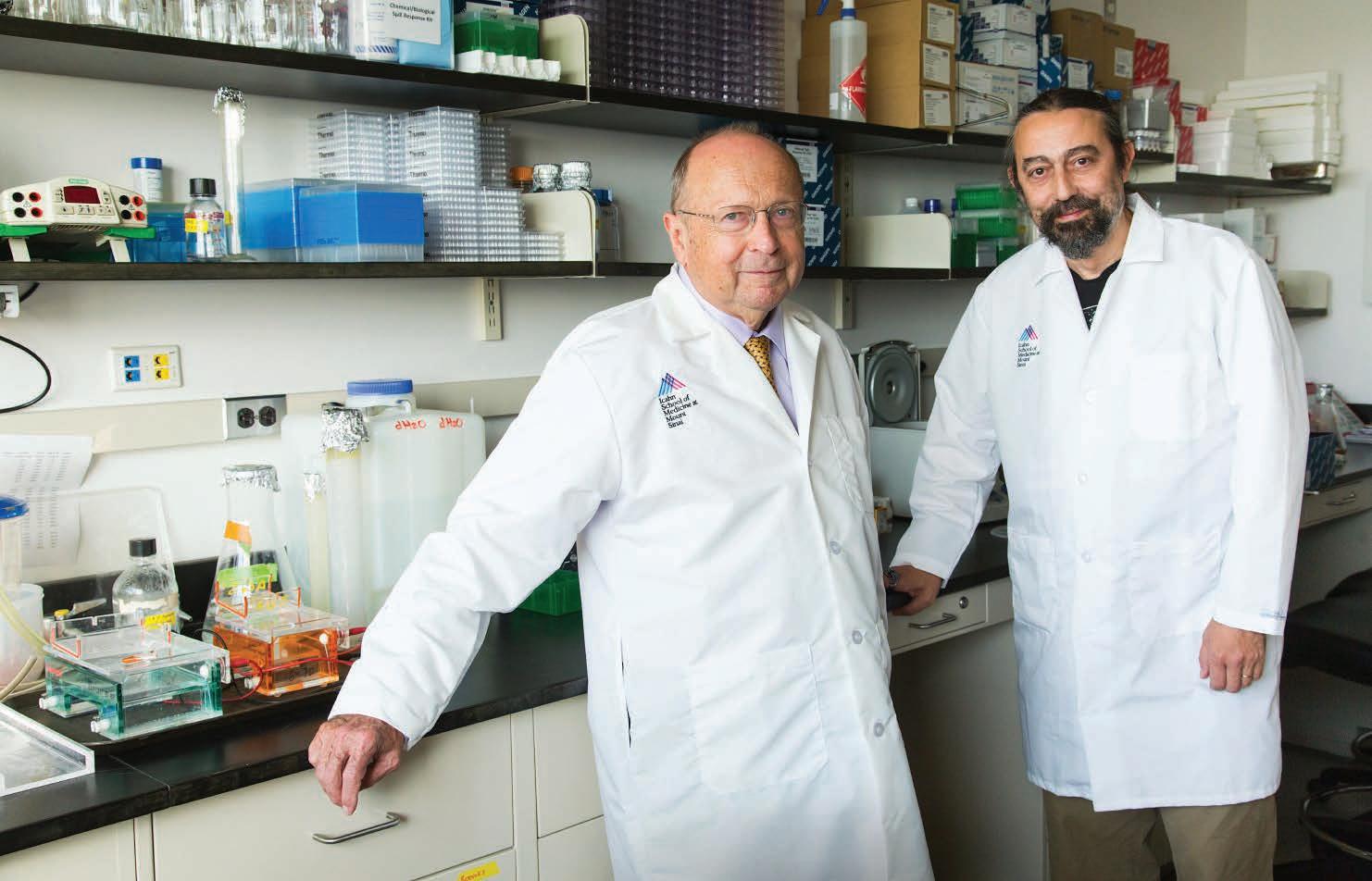
expresses the “spiky” proteins surrounding SARS-CoV-2 (the proteins that allow the virus to enter human cells) and have begun testing the protective immune response of this vaccine in animals. As work on a vaccine continues, Dr. García-Sastre’s lab is also intensely exploring antiviral drugs to treat the disease. “Until there is a safe, effective vaccine, we will need to continue to work rigorously and collaboratively to repurpose existing drugs or combinations of drugs in order to treat the infection,” says Dr. GarcíaSastre, the Irene and Dr. Arthur M. Fishberg Professor of Medicine. The team has tested more than 400 different compounds with potential antiviral effect, and preclinical studies using the most promising compounds in animal models are already underway to support clinical trials. “Only because of the great dedication and hard work of all members of my group, as well as the help of many different collaborators within Mount Sinai and at other institutions, has it been possible to generate evidence needed for the rapid advancement of some of these compounds into clinical trials,” emphasizes Dr. García-Sastre.
FAST-TRACKING CLINICAL TRIALS
“Our first COVID-19 patient was admitted to Mount Sinai West on March 7. By March 9, we had received emergency Investigational New Drug (eIND) authorization from the FDA for the antiviral drug remdesivir,” says Judith Aberg, MD, FIDSA, FACP, Chief of Infectious Disease for the Mount Sinai Health System and Professor of Medicine. “This was an extremely challenging time, as there were no known therapies,” says Dr. Aberg, the Dr. George Baehr Professor of Clinical Medicine. “Building on our strong clinical trials infrastructure, and with a lot of support across the Health System, we were able to open up trials immediately.” Just a week after the first COVID-19 hospital admission, Mount Sinai launched one of the first randomized clinical trials
Peter Palese, PhD, and Adolfo García-Sastre, PhD
for sarilumab, an anti-inflammatory drug used to treat rheumatoid arthritis. Shortly thereafter Mount Sinai opened trials evaluating the use of remdesivir for treatment of moderate and severe COVID-19. Relying on information from Asia and Europe, observational data across Mount Sinai Health System hospitals, and results from these fast-track trials, Dr. Aberg and colleagues drafted and continuously updated COVID-19 clinical treatment guidelines. She also serves on a panel of 30 national experts to develop treatment guidelines posted onsite at the National Institutes of Health (NIH) to inform clinicians how to care for patients with COVID-19.
Circumstances were overwhelming for everyone, Dr. Aberg explains, patients and their families, the community, and frontline health care workers. Yet, bringing together evidence from clinical pathology, the expert opinion of clinicians at Mount Sinai hospitals, and new trial data as it became available, patients were able to receive the highest quality of care. “It is amazing that we were able to roll out these trials so quickly,” Dr. Aberg says. “We came together with a great sense of camaraderie, and we’ll be prepared if we do have a second wave.”
THE POWER OF ANTIBODIES
A pivotal moment in the early weeks of the COVID-19 crisis was the development of the first SARS-CoV-2 antibody test in the nation, an effort led by Dr. Krammer. Antibodies are protective proteins produced by white blood cells as part of the body’s immune response to disease-causing organisms, such as viruses, and their presence in the blood indicates that an individual has had the disease, even if he or she has had no signs or symptoms. The ability to confirm who has contracted the virus helps researchers learn important information about the percent of the population that has been exposed in order to track and trace the disease. “We began to study the genomic sequence of the virus early in January,” says Dr. Krammer. “We were facing an entirely unique situation, and we realized it would be critical to translate our findings in the lab as quickly as possible to strategies for testing and treatments.”
Mount Sinai’s COVID-19 antibody test received emergency FDA approval in April. While other antibody tests have since been developed, Mount Sinai’s is the only assay that can determine the quantity of antibodies in the blood—not just whether antibodies are found—which will be critical
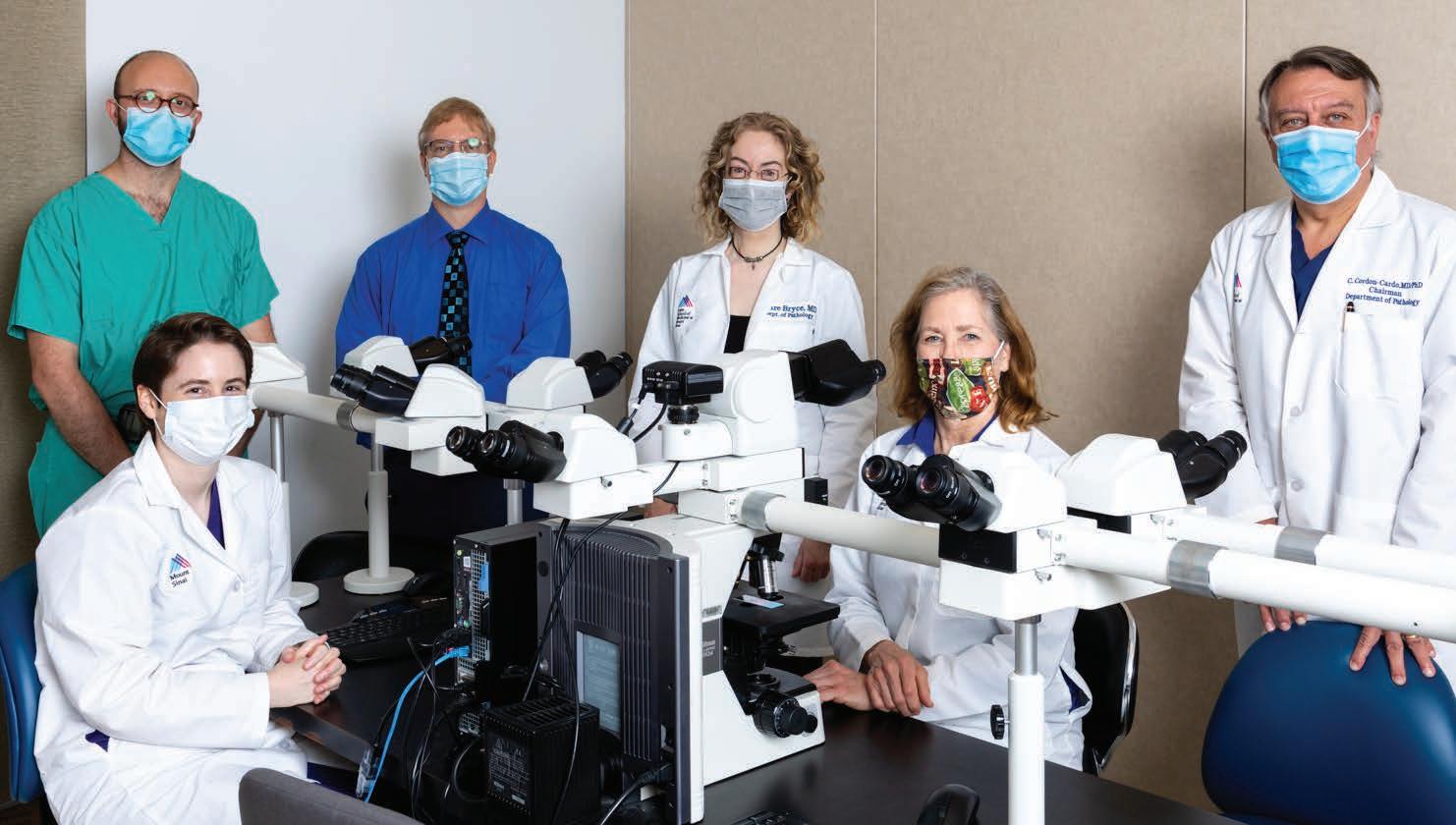
Carlos Cordon-Cardo, MD, PhD (far right), and his research team
for vaccine development. Validation of the antibody test, which is produced at Mount Sinai’s Center for Clinical Laboratories, was overseen by Carlos Cordon-Cardo, MD, PhD, Professor and System-Chair of Pathology, Molecular and Cell-Based Medicine, who has worked tirelessly to translate findings in the pathology lab to potential treatments. “Nature has given us an enemy, but nature has also given us a tool to fight the enemy,” says Dr. Cordon-Cardo, the Irene Heinz Given and John LaPorte Given Professor of Pathology. As of mid-August, the test had been performed in more than 60,000 individuals and had identified upwards of 20,000 donors for clinical trials.
Dr. Krammer’s lab has shared its antibody testing toolkit with more than 200 research laboratories worldwide. The test served as the basis for the country’s first convalescent plasma program, a therapy that involves the transfusion of plasma containing antibodies from patients (volunteers) who have recovered from COVID-19 into critically ill patients with the disease. “We have transfused more than 550 COVID-19 patients with convalescent plasma, one of the largest cohorts treated in a single health system,” says Nicole Bouvier, MD, Associate Professor of Infectious Disease, who helped lead the study. Although definitive data from randomized controlled trials is still lacking, convalescent plasma recipients appear to demonstrate improved survival. “We are optimistic about the ability of this therapy to help patients when no other treatments exist, but there is much still to learn,” says Dr. Bouvier.
In July, Mount Sinai opened the Convalescent Plasma Collection Center in partnership with ImmunoTek and Emergent BioSolutions in order to conduct
“NATURE HAS GIVEN US AN ENEMY, BUT NATURE HAS ALSO GIVEN US A TOOL TO FIGHT THE ENEMY.”
– CARLOS CORDON-CARDO, MD, PHD
Photo
“ COVID-19 MUST NOT BE OUR ONLY FOCUS. WE’RE PREPARING NOW FOR THE NEXT WAVE OF THE VIRUS AND OTHER EMERGING PATHOGENS.”
– FLORIAN KRAMMER, PHD
clinical trials to evaluate hyperimmune globulin for both the treatment and prevention of COVID-19. Hyperimmune globulin is derived from pooled bloodplasma donations from individuals with high levels of antibodies to COVID-19, rather than from just one donor per recipient.
The $36.4 million project is being funded by the U.S. Department of Defense.
COVID AND CARDIOLOGY
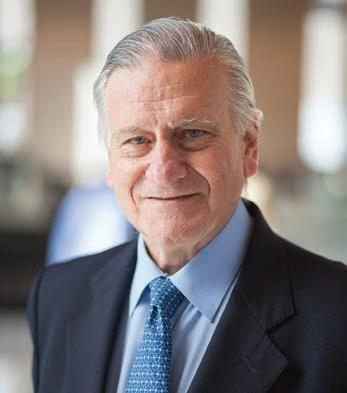
In consultations with colleagues in Spain and Italy at the outset of the pandemic in Europe, Valentín Fuster, MD, PhD, Director of Mount Sinai Heart and Physician-in-Chief of The Mount Sinai Hospital, learned that COVID-19 patients were developing blood clots, putting them at risk for stroke, heart attack, and pulmonary embolism. He quickly gathered a team of researchers and clinicians at Mount Sinai to study this phenomenon in patients across our hospitals. They discovered that the virus was causing a specific kind of damage to cells that leads to clotting, but that severely ill patients responded well to anticoagulation treatment. Using data from Mount Sinai’s COVID Informatics Center, Dr. Fuster conducted a study of 4,389 hospitalized COVID-19 patients and found that those receiving anticoagulants had significantly lower rates of in-hospital mortality.
“Armed with our global colleagues’ clinical observations and our scientists’ discoveries, we implemented a Health System-wide policy of administering anticoagulants to
all COVID-19 patients,” says Dr. Fuster, the Richard Gorlin, MD/Heart Research Foundation Professor. This study will serve as the basis for a new international clinical trial on anticoagulation therapy. Dr. Fuster and other physician-scientists at Mount Sinai Heart, including Anuradha Lala, MD, Director of Heart Failure Research, were deeply concerned, as well, about the impact of COVID-19 on the heart. Data collected from more than 2,700 patients across the Health System found that more than one-third of the patients who were admitted to the Emergency Department with COVID-19 had some level of heart damage. While myocardial injury was often mild, heart damage can significantly impact future health, and the study has set the stage for longitudinal studies on COVIDrelated cardiovascular disease.
LEARNING FROM THE YOUNG
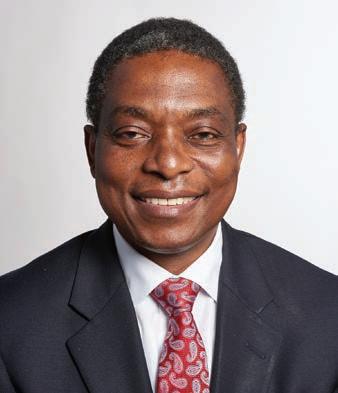
During the first few months of the pandemic in New York, pediatric patients with COVID-19 who were seen in the Emergency Department at Mount Sinai’s Kravis Children’s Hospital had respiratory problems—typically, a cough or difficulty breathing—much like those seen in adults. Quite suddenly in May, a number of severely ill young patients were admitted to the hospital with a rare combination of symptoms, including abdominal pain and myocarditis (inflammation of the heart muscle). All of them harbored antibodies
against SARS-CoV-2, suggesting they had been infected with the virus. George Ofori-Amanfo, MD, Chief of the Division of Pediatric Critical Care at Mount Sinai, and a team of specialists in pediatrics, immunology, hematology, infectious diseases, and basic science research came together to study and treat the condition now known as Multisystem Inflammatory Syndrome in Children (MIS-C). “We are researching both the genetics of MIS-C and the immune response that may cause the disease,” says Dusan Bogunovic, PhD, Associate Professor of Microbiology and Pediatrics and Director of Mount Sinai’s new Center for Inborn Errors of Immunity. “Rapid mapping of systemic inflammation and antibody responses enabled us to treat patients and normalize inflammatory markers. We are continuing to study the illness and are especially interested in learning to what extent genetics may impact the development of MIS-C. For example, are some populations of children more susceptible than others?”
Since the earliest cases seen at Kravis Hospital, hundreds of cases of MIS-C have been seen across New York State, and it will be critical to continue research efforts.
Meanwhile, a unified effort to conduct COVID-19 research continues across Mount Sinai. Researchers are exploring the impact of COVID-19 on pregnant women and their babies, the effects of the disease on many cancers, and the incidence of stroke in young adults with COVID-19, among other studies. Nonetheless, Dr. Krammer warns, “COVID-19 must not be our only focus. We’re preparing now for the next wave of the virus and other emerging pathogens.”
Florian Krammer, PhD
George Ofori-Amanfo, MD
Valentín Fuster, MD, PhD
New Institute and Centers Created to Further Examine the Impact of COVID-19. DIVING DEEP
BY ELAINE LAWSON & JEREMY SHATAN
INSTITUTE FOR HEALTH EQUITY RESEARCH
We know that ending health disparities is just one part of the fight for a more just nation. We also know the disproportionate impact of COVID-19 on at-risk communities—including non-white, low-income, immigrant, uninsured, and LGBTQ+—has exposed systemic inequities that have been prevalent for generations. Responding urgently, Mount Sinai formed the Institute for Health Equity Research (IHER).
Co-directed by Carol Horowitz, MD, MPH, and Lynne Richardson, MD, the Institute will identify the origins and magnitude of disparities across all ages, abilities, and genders, devising innovative solutions to address these disparities. Taking concrete action, IHER will facilitate access to life-changing resources and bring communities together.
CENTER FOR STRESS, RESILIENCE, AND PERSONAL GROWTH
“We Take Care of Our Own” is the motto of the Center for Stress, Resilience, and Personal Growth, created by Mount Sinai after witnessing the psychosocial impact of the COVID-19 pandemic on frontline health care workers, including increased cases of PTSD, depression, and anxiety.
Led by Deborah B. Marin, MD, the Blumenthal Professor of Psychiatry, and harnessing our expertise in mood and anxiety disorders as well as post-disaster interventions and services, the Center will offer support groups, psychoeducation, resilience training, and more—all free of charge. The first such initiative in North America, the Center will also conduct extensive research, strengthening our response to future crises.
COVID INFORMATICS CENTER
Our team of researchers and doctors knows firsthand how data, information, and technology can be used to prevent, mitigate, and recover from public health emergencies such as COVID-19. The Mount Sinai COVID Informatics Center will provide our researchers and physicians with data-driven answers to better combat the current threat and ensure we are battle-ready for future crises.
The Center brings together Mount Sinai’s top experts in data science, clinical medicine, omics, predictive modeling, and decision support, providing a hub of innovation and creating an engine of discovery where new ideas are rapidly translated into life-saving therapies.
There may be no greater example of the collaborative and innovative might of the Mount Sinai Health System and the Icahn School of Medicine at Mount Sinai than the new Institute and Centers that Mount Sinai created even as the System’s eight site hospitals were treating thousands of COVID-19 patients.
Each one—the Institute for Health Equity Research; the Center for Stress, Resilience, and Personal Growth; the COVID Informatics Center; the Center for Viral Pandemic Response; the Center for Post-COVID Care; and the Center for COVID Clinical Trials—is a groundbreaking enterprise without equal at any other institution. Each one will cast
crucial light on vital aspects of the pandemic, including the genetic underpinnings of SARS-CoV-2, the health inequities exposed by the pandemic, and the life-changing impact on health care workers facing an unknown disease in unprecedented numbers.
Led by renowned leaders in their fields, each new initiative will lead to breakthroughs that will not only help us understand COVID-19 but will have broad impact beyond this one disease and our entire Health System.
All eyes of the world will be on the new benchmarks of research and care radiating from each of these pioneering efforts.
CENTER FOR VIRAL PANDEMIC RESPONSE
From the start of the COVID-19 pandemic, Mount Sinai mounted a comprehensive and nimble research response to fight this new virus. The Center for Viral Pandemic Response will build on all we have learned and continue to learn from treating thousands of COVID-19 patients.
Led by revered microbiologists Peter Palese, PhD, and Adolfo GarcíaSastre, PhD, this interdisciplinary Center assembles world-renowned leaders in virology, microbiology, immunology, pathology, genomics, imaging, and bioinformatics, addressing COVID-19 and other infectious diseases from multiple angles. Mount Sinai’s wealth of knowledge about COVID-19 uniquely positions the Center to significantly impact international pandemic responses in the future.
CENTER FOR POST-COVID CARE
Although Mount Sinai successfully discharged more than 8,000 COVID-19 patients, recovery has proved to be a long process. With so much still unknown about the disease, the need for expert follow-up, monitoring, and resources is vital. To address these concerns, Mount Sinai launched the Center for Post-COVID Care, a destination for those recovering from COVID-19. The Center will serve patients from across our Health System and beyond, regardless of disease state or socioeconomic circumstances.
The Center will both deliver multispecialty care and personalized treatment plans and create a COVID-19 registry of data, designed to inform important research into the disease and improved treatment options.
CENTER FOR COVID CLINICAL TRIALS
In the wake of the COVID-19 pandemic, the Mount Sinai Health System launched the Center for COVID Clinical Trials unit. This Center offers a diverse range of inpatient and outpatient therapeutic and prophylactic treatments against COVID-19. Highlighted among these exciting options is a variety of COVID-19 vaccine candidates, as well as hyperimmune globulin therapy, a blood product containing concentrated and standardized levels of antibodies derived from antibody-rich COVID-19 convalescent plasma.
Mount Sinai is committed to expanding these efforts throughout the Health System to assure and treat the communities we serve until effective therapies and vaccines are available to all.
A TIMELINE
MARCH
7
Mount Sinai West admits the first COVID-19 positive patient within the Health System.
COVID-19 JOURNEY REFLECTING ON OUR MARCH
Even before the first COVID-19 patient was admitted to Mount Sinai in March, the Health System stood at the forefront of patient care and scientific discovery, leading efforts to unravel the complexities of this deadly disease. This timeline highlights Mount Sinai’s clinical and research efforts over the past seven months.
MARCH
17
In-house COVID-19 testing begins at The Mount Sinai Hospital.
Mount Sinai begins converting various hospital units into COVID-19 isolation units.
MARCH
23
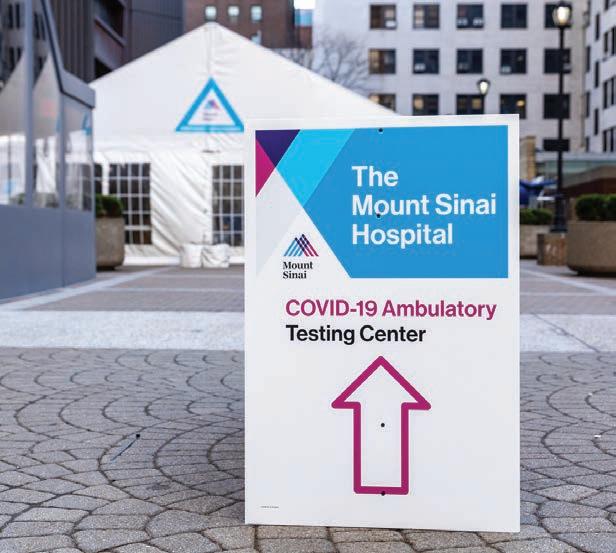
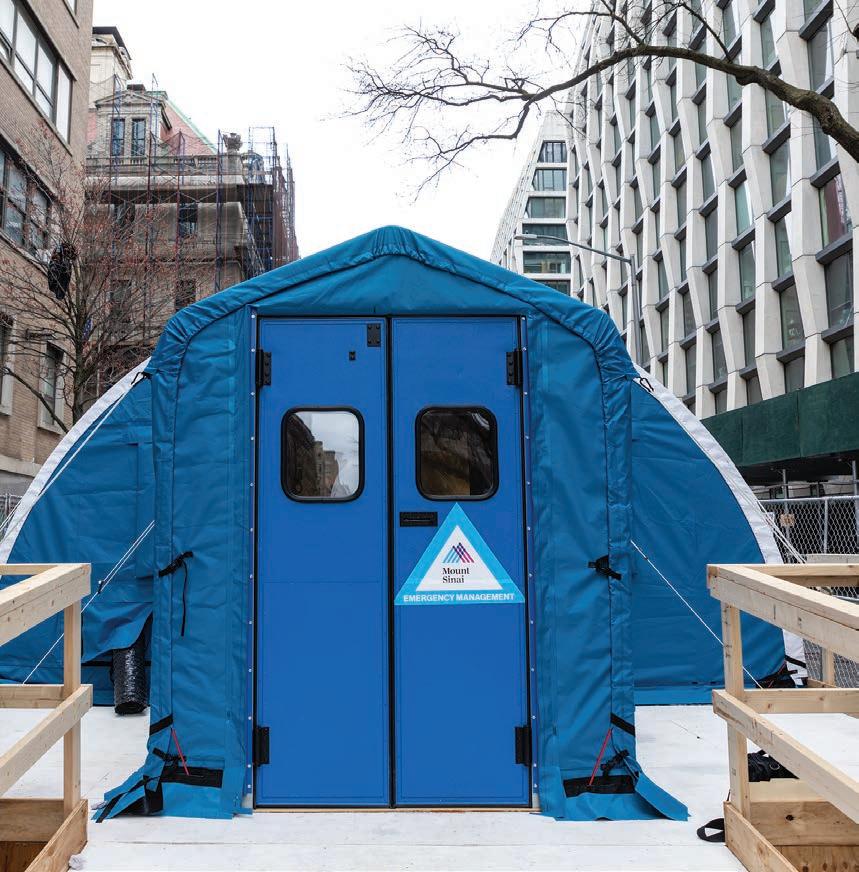
Mount Sinai begins building tents outside all eight hospitals to create a safe environment to triage potential COVID-19 patients and reduce emergency room crowding.
MARCH
19
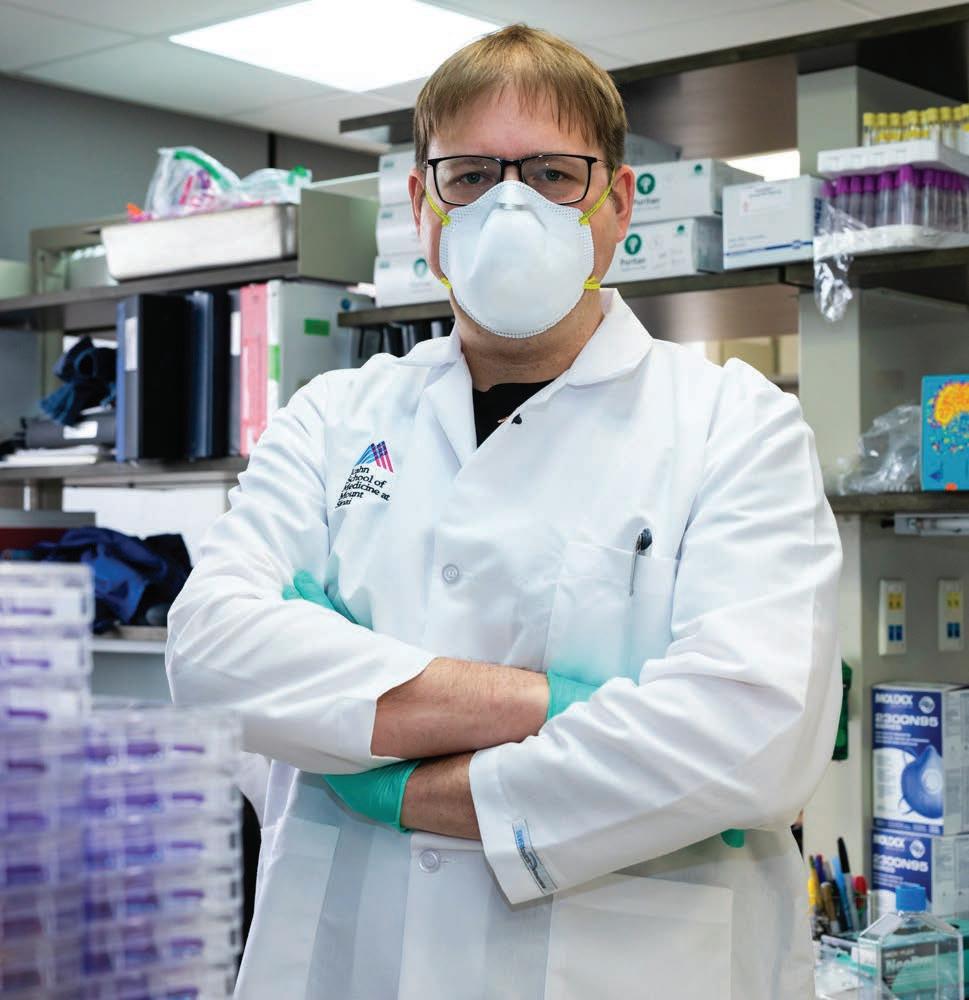
Mount Sinai announces that virologist Dr. Florian Krammer and his team have developed the first-ever antibody blood test for SARS-CoV-2 and shared directions for replicating it. The test becomes the gold standard worldwide.
MARCH
24
Mount Sinai announces one of the nation’s first convalescent plasma programs, harnessing the antibody-rich blood of recently recovered COVID-19 patients, which can then be transfused into very sick COVID-19 patients across the Health System.
MARCH
26
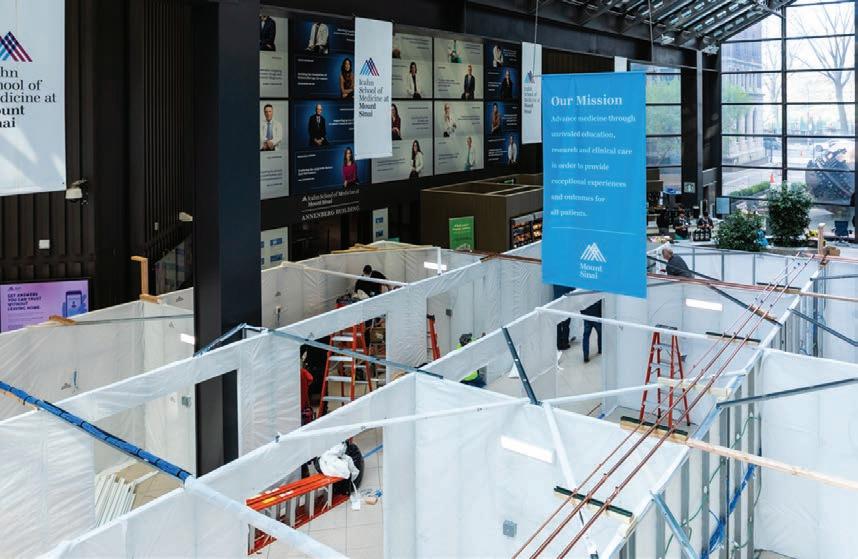
Patient pods are erected in public areas of The Mount Sinai Hospital in preparation for the increased volume of COVID-19 patients.
MARCH
27
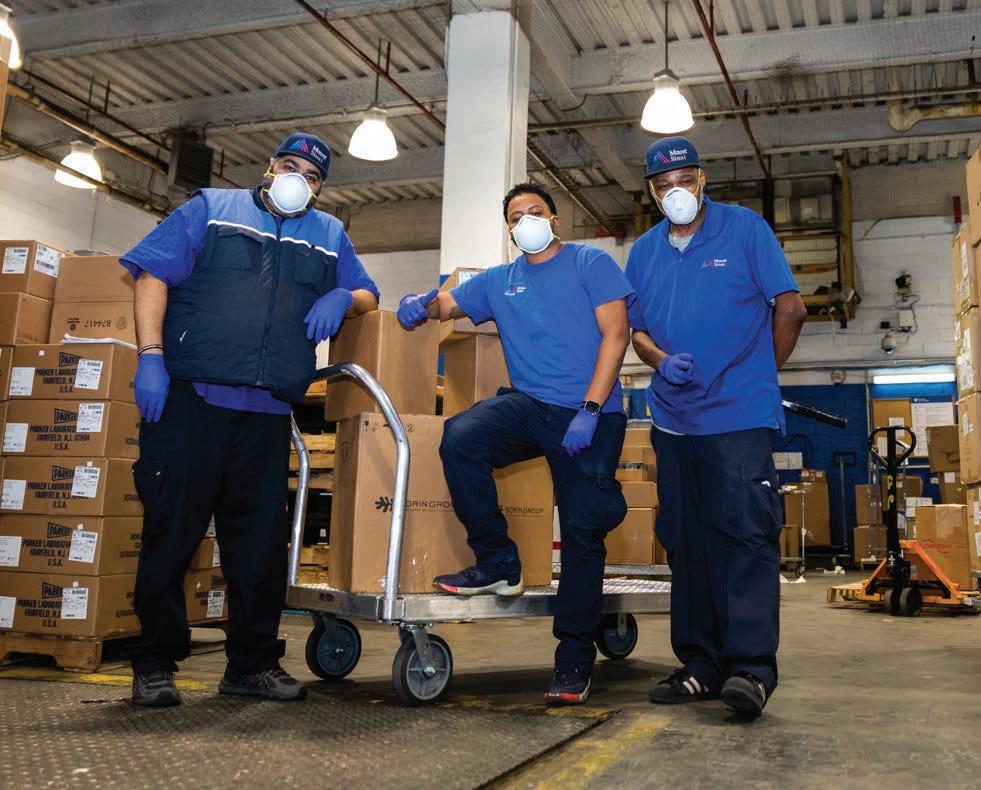
With PPE supplies running low, Mount Sinai calls on help from Trustees, who assist by chartering airplanes to bring 130,000 N95 respirator masks from China. An additional 350,000 N95 masks arrive within days, along with 1.2 million surgical masks.
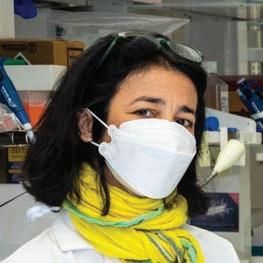
Mount Sinai announces that Dr. Miriam Merad and her team have created a quick test that monitors a patient’s inflammatory response to COVID-19 and launches a clinical trial using the drug sarilumab, manufactured by Regeneron Pharmaceuticals Inc.
APRIL
1
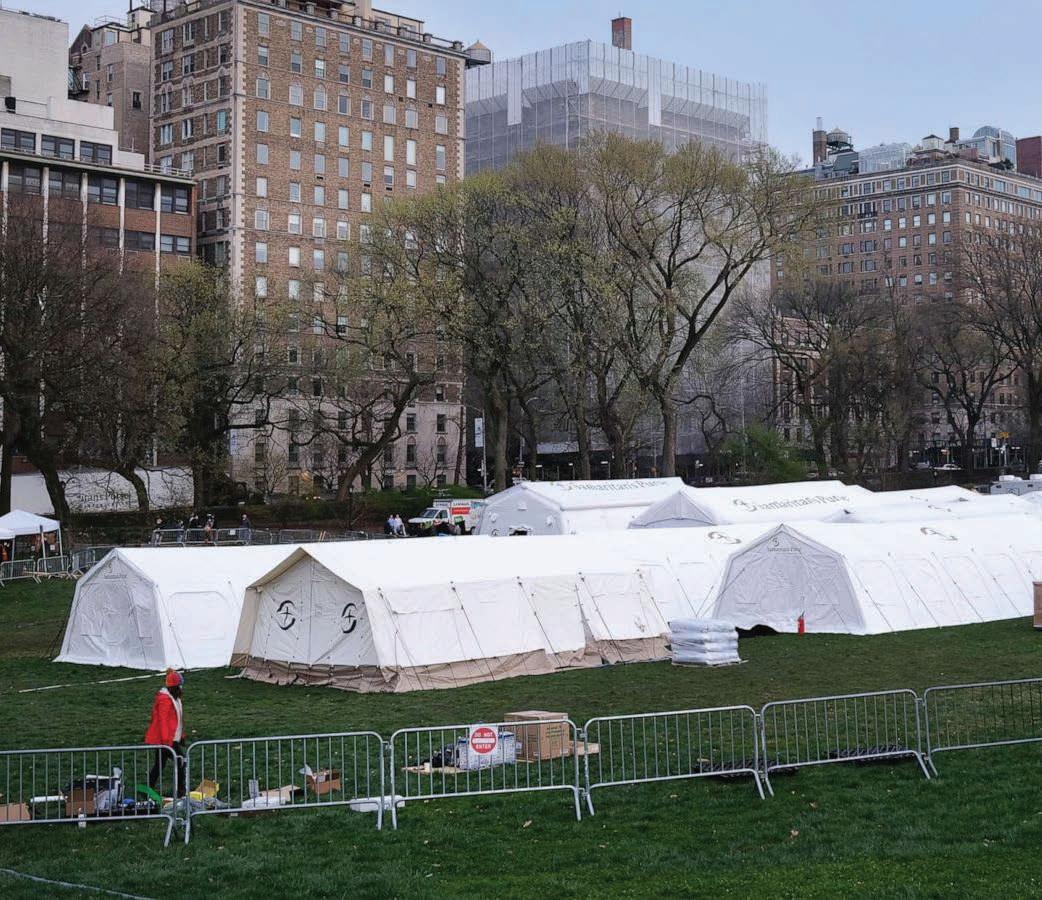
With the Health System’s hospitals overflowing with patients, Mount Sinai partners with a humanitarian aid organization to build and staff an emergency field hospital in Central Park.
Mount Sinai launches STOP COVID-19 app to track virus across NYC.
APRIL
MARCH 28
Mount Sinai treats first patient with convalescent plasma.
MARCH
30
Tesla donates 200 sleep apnea machines to Mount Sinai.
MARCH 31
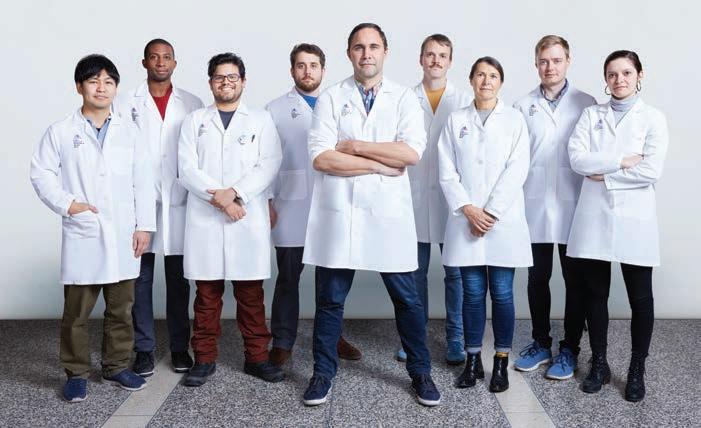
Based on a study by Benjamin tenOever, PhD, early lab tests explain the unique cellular response of SARS-CoV-2 virus within human and animal cell lines.
APRIL
2
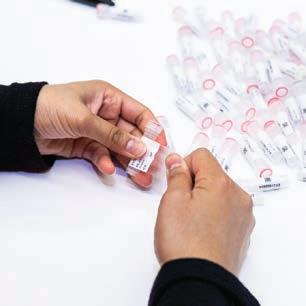
Mount Sinai launches COVID-19 bio specimen effort, collecting blood samples for research from hundreds of admitted COVID-19 patients.
APRIL 3
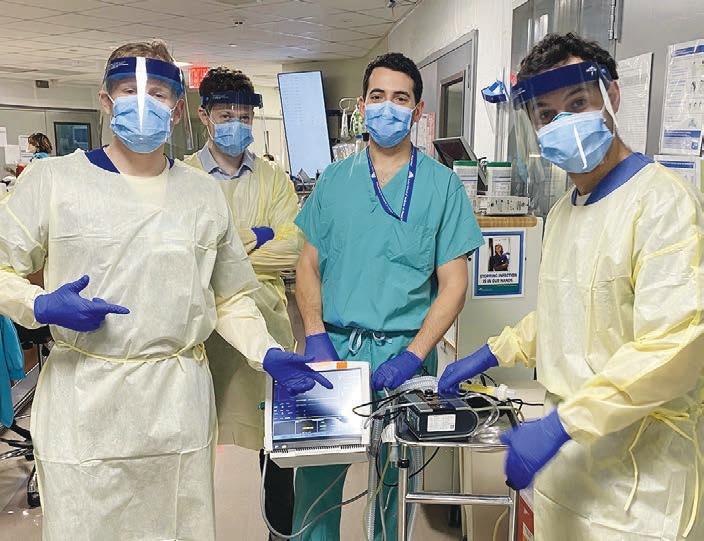
Mount Sinai turns hundreds of sleep apnea machines into ventilators and shares instructions worldwide.
APRIL 9
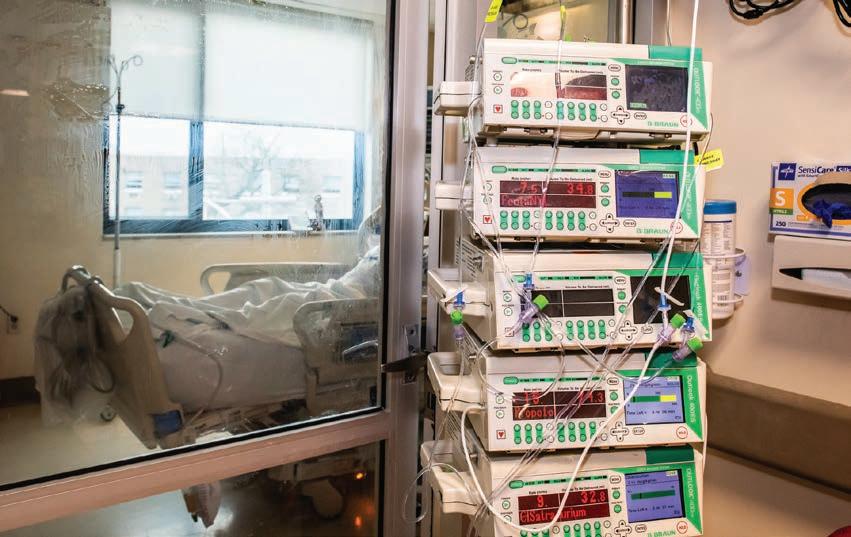
The caseload of COVID-19 patients and suspected patients being treated within the Mount Sinai Health System peaks at 2,200.
APRIL 10
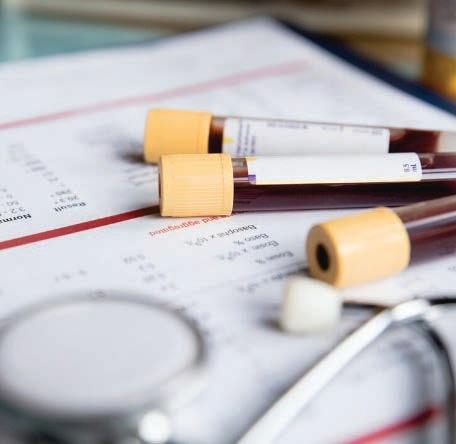
Based on observations of blood clots in COVID-19 patients, Mount Sinai clinicians implement anticoagulation protocol.
APRIL 13
More than 400 beds are reopened at Mount Sinai Beth Israel to treat COVID-19 patients, thanks to Jeff T. Blau, Mount Sinai Trustee and CEO of Related Companies.
APRIL 15
The FDA grants Mount Sinai’s antibody test Emergency Use Authorization.
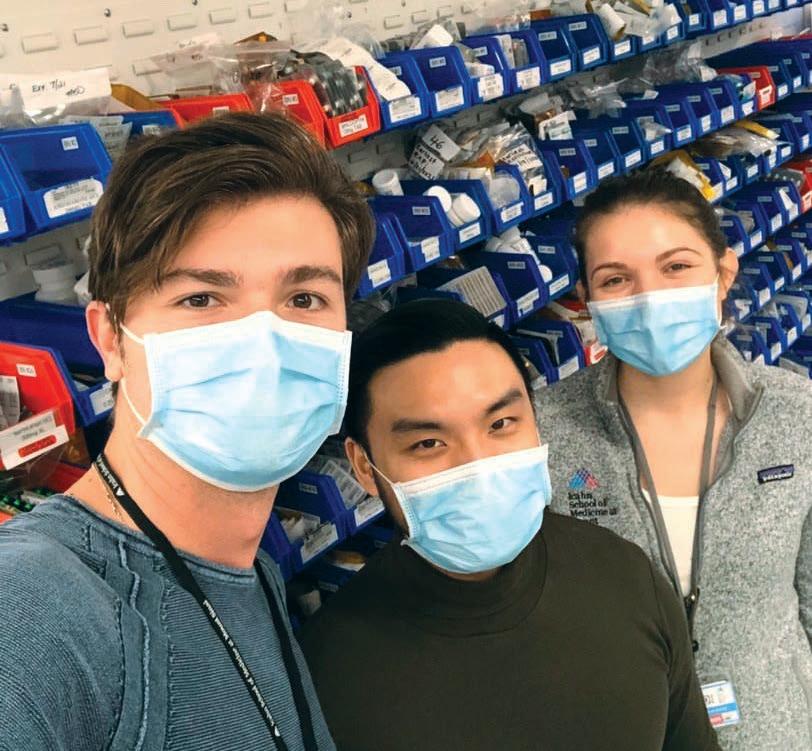
77 medical students graduate early; 19 join the Mount Sinai Medical Corps; Sinai Student Workforce volunteers contribute 20,000+ hours of service.
APRIL
23
Mount Sinai partners with NASA engineers to develop a novel ventilator prototype.
APRIL
24
Mount Sinai South Nassau celebrates the discharge of its 600th COVID-19 patient.
APRIL 28
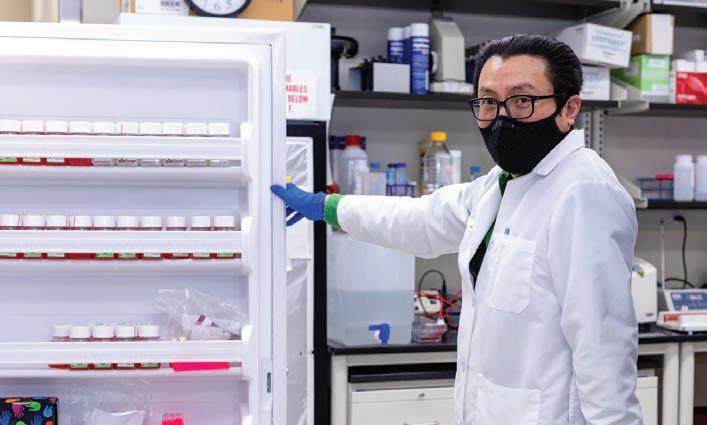
Microbiologist Benhur Lee, MD, PhD, creates “pseudo virus” to assist with antibody testing and creating a vaccine platform.
APRIL
APRIL 29
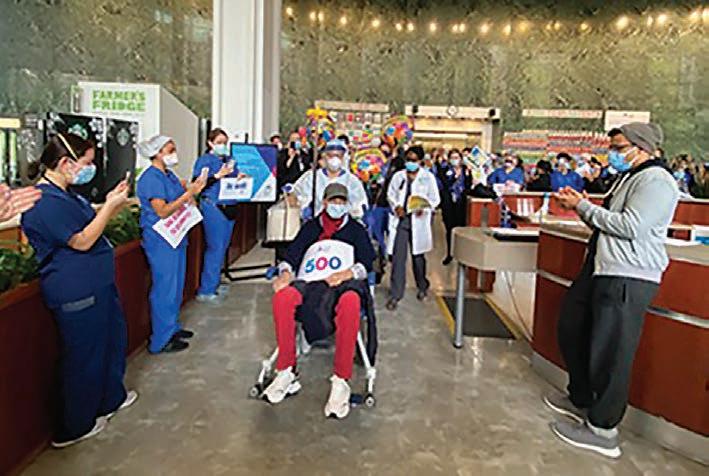
Rodrigo Saval, a marathon runner from Chile and the first COVID-19 patient admitted within the Health System, is released after 54 days and becomes the 500th patient discharged from Mount Sinai West.
APRIL 30
Mount Sinai announces the creation of the Center for Stress, Resilience, and Personal Growth.
MAY
1
Mount Sinai launches the Institute for Health Equity Research.
MAY 5
Mount Sinai participates in #GivingTuesdayNow, a global day of giving and unity created as an emergency response to the unprecedented need caused by COVID-19.
The Central Park field hospital discharges its last patient.
MAY
MAY
Mount Sinai announces the creation of the COVID Informatics Center.
MAY 12
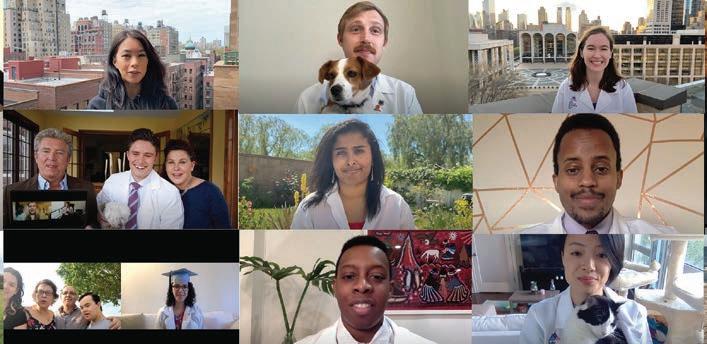
A virtual Achievement Ceremony is held for the Icahn School of Medicine. Congratulations to the Class of 2020!
MAY 13
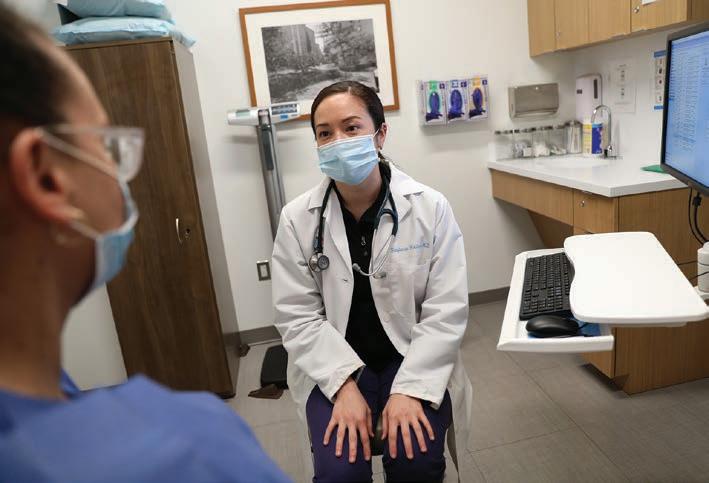
Mount Sinai launches the Center for Post-COVID Care.
MAY 15
A virtual MD, PhD, and Dual Degree commencement ceremony is held at the Icahn School of Medicine. Congratulations to the Class of 2020!
MAY 19
Mount Sinai researchers become the first in the United States to create an AI model for COVID-19.
Mount Sinai announces formation of Kantaro Biosciences, a venture in partnership with Renalytix AI, to scale antibody tests with the goal of producing more than ten million patient tests per month.
MAY 26
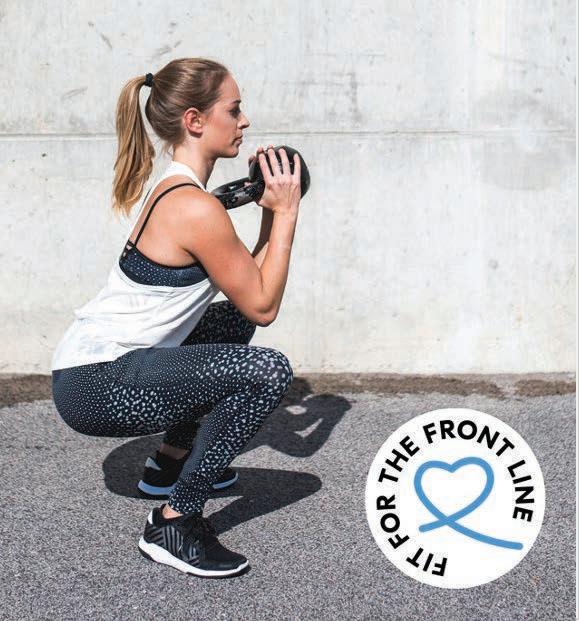
Launch of #FitForTheFrontLine, a three-week social media campaign to raise money and awareness for the Center for Stress, Resilience, and Personal Growth.
JUNE
1
Mount Sinai launches the Center for COVID Clinical Trials.
100 DAYS
JUNE
15
100th day since the first COVID-19 positive patient was admitted to Mount Sinai.
JUNE
JUNE 25
Under a $16 million, multi-institutional umbrella grant from the U.S. Defense Advanced Research Projects Agency, Mount Sinai microbiologist Dr. Benjamin tenOever receives $6.3 million to identify U.S. FDA-approved drugs that can be repurposed to prevent or treat COVID-19.
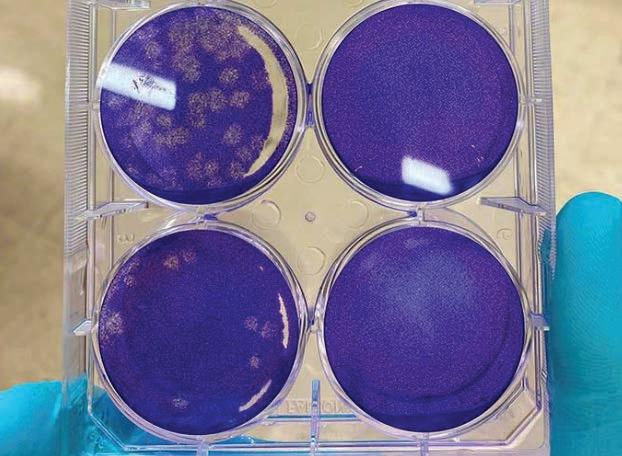
JULY
8
In collaboration with Emergent BioSolutions and ImmunoTek Bio Centers, Mount Sinai opens a Plasma Collection Center at The Mount Sinai Hospital to begin collecting high levels of blood-based antibodies from people who have recovered from COVID-19. The Center is part of a $34.6 million clinical trial to create and test a hyperimmune globulin drug for treating early COVID-19 disease and to prevent specific at-risk populations—including frontline medical workers and military personnel—from developing the disease.
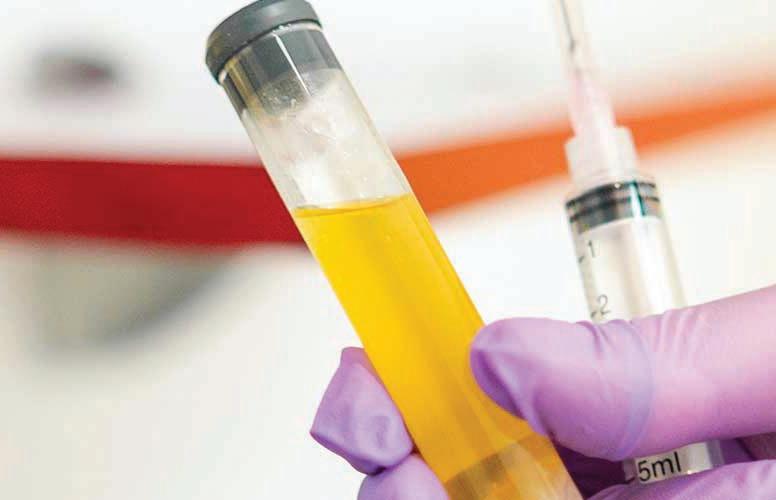
JULY
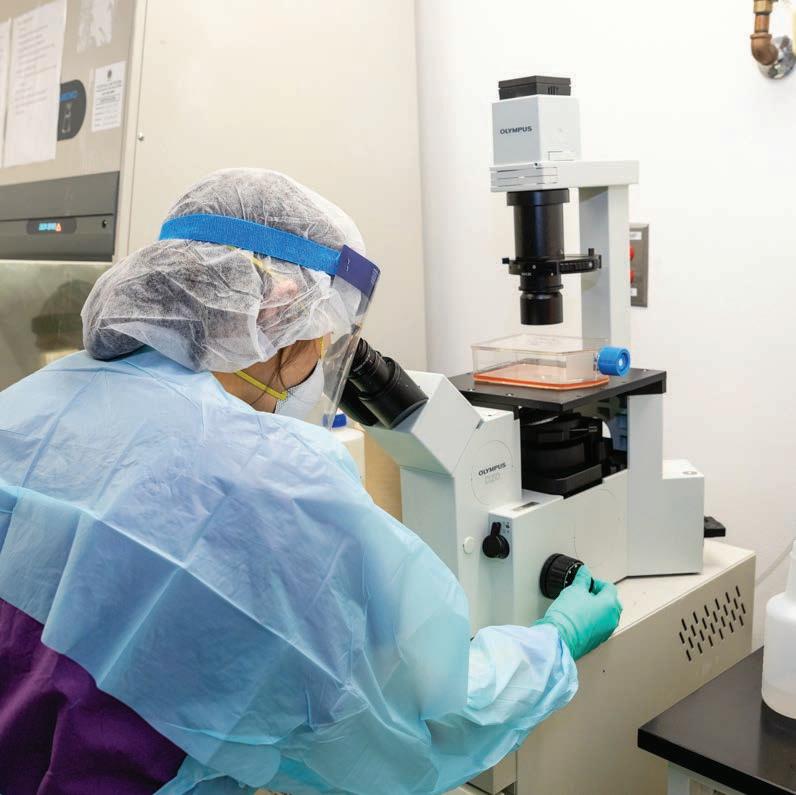
JULY
14
Researchers at the Icahn School of Medicine and Israel’s Hebrew University of Jerusalem find the FDA-approved drug Fenofibrate (Tricor) could reduce SARS-CoV-2’s ability to reproduce or even make it disappear.
JULY
28
As part of the healing process and to honor members of our Mount Sinai community who were lost to COVID-19, a non-denominational virtual memorial service is held.
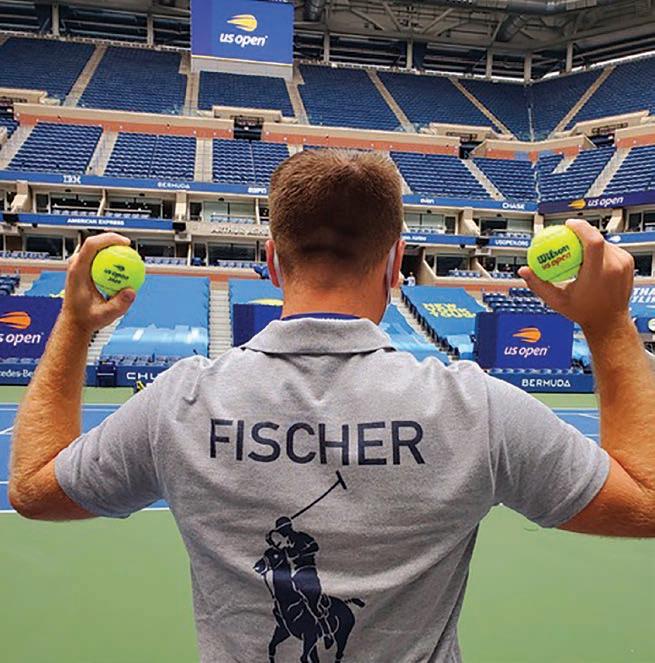
AUG 31-SEPT 13
Mount Sinai is the official medical services provider for the U.S. Open Tennis Championship, a role it’s filled since 2013. In a tribute to health care workers, U.S. Tennis Association and other affiliated sponsors show their gratitude in creative ways during the tournament, which was held without fans.
AUG–SEPT
8,500+
Patients discharged as of publication
Innovative Solutions From Mount Sinai Helped Patients and Staff Members Impacted by COVID-19.
PUSHING THE LIMITS
BY BARBARA BRODY
Ambulances wailed incessantly and emergency rooms were overflowing. ICU beds were filling up fast, yet no good tests or treatments were available. It was March, and New York City was in trouble.
While no one could have predicted just how rapidly COVID-19 would spread, Mount Sinai experts were hardly unprepared when the first patient was admitted on March 7. Two months earlier, members of the BioMedical Engineering and Imaging Institute (BMEII) had received a huge amount of data from colleagues in China. The BMEII team, led by Zahi Fayad, PhD, who holds the Lucy G. Moses Professorship in Medical Imaging and Bioengineering, was in the midst of processing that data and using it to construct a model designed to diagnose COVID-19 when, Dr. Fayad recalls, “Things started to get really bad.”
In an effort to mobilize quickly, Dr. Fayad’s group joined forces with experts from the Department of Genetics and Genomic Sciences, the Hasso Plattner Institute for Digital Health, The Mount Sinai Hospital
Clinical Data Science Center, and others. Their alliance evolved into the Mount Sinai COVID Informatics Center (MSCIC), thanks to the help of generous donations and a grant from Microsoft. “The beautiful thing about having a close connection between researchers and clinicians is that it allows for rapid deployment,” Dr. Fayad says. “Very few health centers can actually do something like this.”
From the earliest days of the pandemic, patients have seen firsthand how Mount Sinai has embraced technology and pursued innovation. Transitioning to telehealth, for instance, went far beyond virtual visits: COVID-19 patients not ill enough to be hospitalized were given access to the Precision Recovery Platform, an app-based interface initially built by Mount Sinai for stroke patients, so they could video chat with a doctor on demand. At the same time, those who were critically ill in the hospital were continuously monitored with the help of Google Nest, which enabled staff to keep close tabs on patients without having to enter their rooms as often; remote monitoring
also helped limit usage of scarce personal protective equipment (PPE).
While such creative approaches were certainly noteworthy, a series of higher-level innovations were developing behind the scenes. These exceptional projects, many of which are continuing, have great potential to save lives as the virus rages on elsewhere and New York braces for a possible second wave.
PREPARING FOR VENTILATOR SHORTAGES
What happens when you run out of ventilators? The question continues to haunt doctors on the front lines around the world, and it’s forced them to make grueling decisions about who gets the chance to live.
To prepare for a possible shortage, Matthew Levin, MD, Associate Professor of Anesthesiology, Preoperative, and Pain Medicine and Co-Director of the Clinical Data Science Team for the Mount Sinai Health System, developed a split ventilation system that allows two critically ill patients to use the same ventilator simultaneously. “We designed a flow control valve that attaches
to separate breathing circuits and allows you to dial in the amount of air going to each patient,” Dr. Levin says. The dual-user device was tested in the Simulation Center on two high-fidelity mannequins—“they breathe, blink, have a heart rate, consume oxygen, and expire carbon dioxide,” Dr. Levin explains—then on two pairs of patients. After demonstrating the effectiveness of the split ventilation system, Mount Sinai was granted emergency use authorization by the U.S. Food and Drug Administration (FDA).
Dr. Levin’s team also learned how to reconfigure anesthesia machines—which breathe for patients during surgery, in addition to providing anesthetizing gas and monitoring vitals—so they could be used as ventilators for critically ill patients. “They’re meant to be used for a few hours; they’re not meant to be used for 10 days continuously,” Dr. Levin says. “There was a rapid learning curve.”
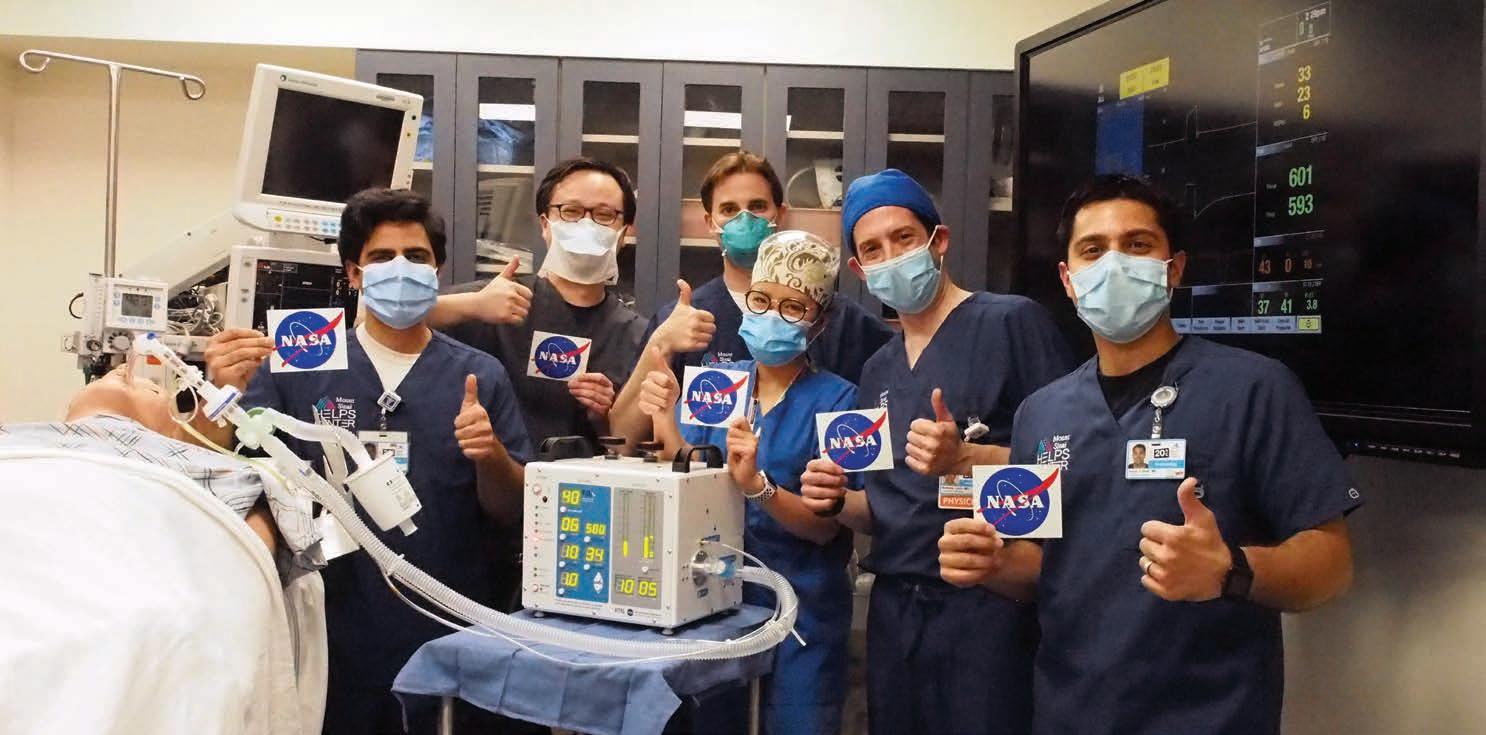
developed a prototype for a full-featured ventilator, which could be manufactured with readily available domestic parts for a fraction of the usual cost, and sent the ventilator to Mount Sinai’s Simulation Center for testing. After making changes based on feedback from the Center, NASA obtained emergency use authorization from the FDA.
“THE BEAUTIFUL THING ABOUT HAVING A CLOSE CONNECTION BETWEEN RESEARCHERS AND CLINICIANS IS THAT IT ALLOWS FOR RAPID DEPLOYMENT. VERY FEW HEALTH CENTERS CAN ACTUALLY DO SOMETHING LIKE THIS.”
– ZAHI FAYAD, PHD
Elsewhere at Mount Sinai, Charles Powell, MD, a pulmonary, critical care, and sleep medicine specialist and the Director of Mount SinaiNational Jewish Health Respiratory Institute, was trying to figure out what to do with a donation of BiPAP machines from Tesla. These devices normally provide breathing support for sleep apnea patients. Could they be converted to ventilators for critically ill patients? Scientists at the Center for Sleep Medicine assured Dr. Powell it was possible.
it to the bedside of a patient in the ICU who was stable but required ventilatory support.”
Dr. Powell then spearheaded an assembly line of medical students who connected the circuits and followed specific protocols so that additional BiPAP machines could be converted to ICU-ready ventilators. “We made the protocols available globally,” he says. “In Honduras they are now using a few hundred of these devices.”
BIG DATA TO THE RESCUE
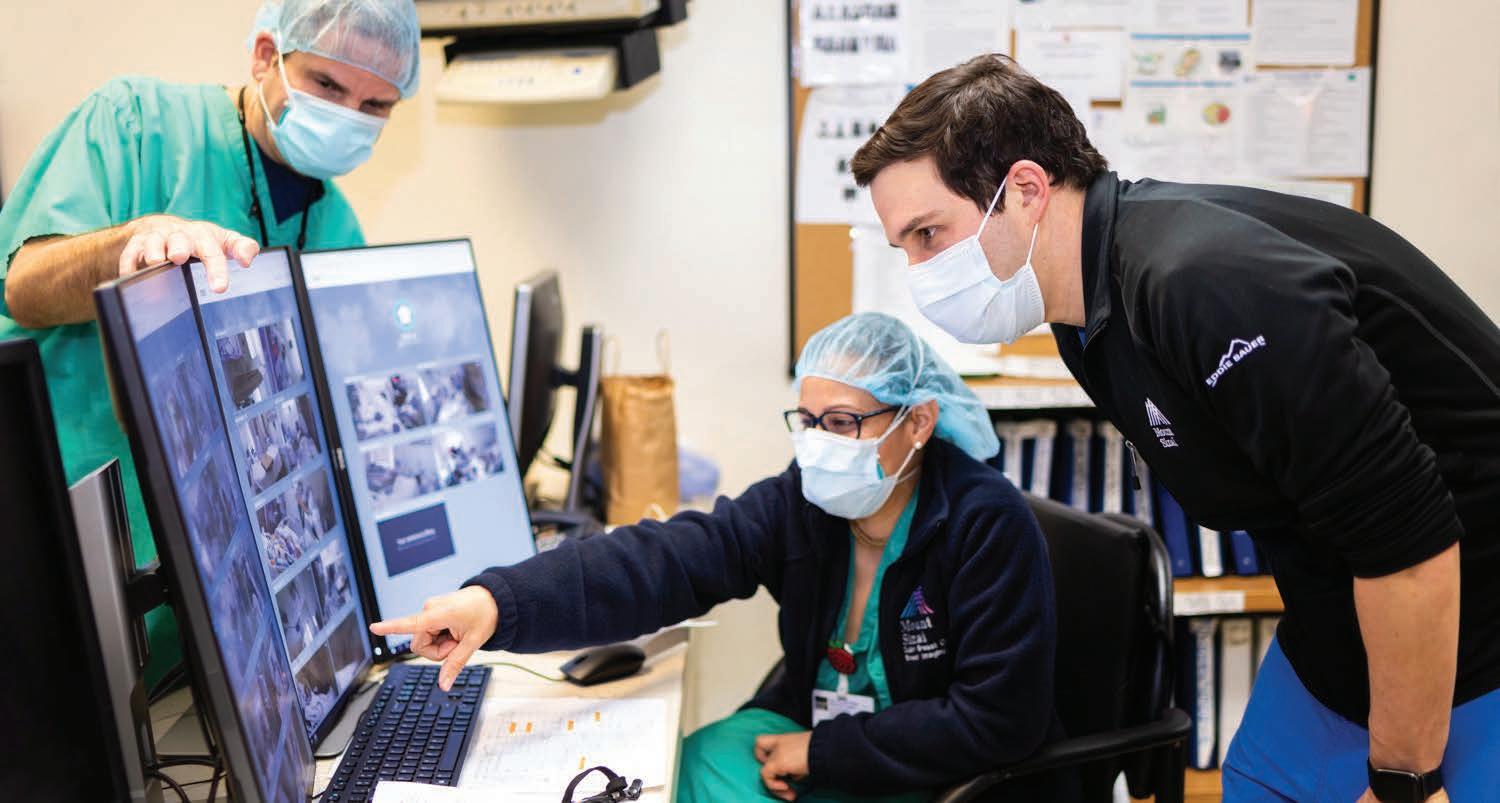
In the spring, COVID-19 tests were in short supply, took days to yield results, and were often inaccurate. Yet correctly identifying coronavirus has always been key to stemming contagion and matching patients to the best available treatments. Before the pandemic even hit New York, Mount Sinai experts in biomedical engineering and radiology had begun partnering with Chinabased radiologists. They created artificial intelligence (AI) algorithms designed to quickly and accurately diagnose patients by factoring in clinical symptoms, exposure history, lab tests, and chest CTs.
But it was worth it. When the ICU exceeded maximum capacity, 18 patients were moved into a telemetry unit and put on the tweaked anesthesia machines.
Dr. Levin also led a partnership with NASA’s Jet Propulsion Laboratory. NASA
“In a single day they drafted a diagram of the various components,” says Dr. Powell, who holds the Janice and Coleman Rabin Professorship in Pulmonary Medicine. “We then leveraged the resources of the Simulation Center run by Dr. Levin. Our team tested the device in the Center, changed the order and pieces around, and then brought
The group published preliminary findings in the journal Nature Medicine in May 2020, but their work is far from over. “Doing quick diagnosis is important, but the eventual goal is to have actionable information that guides patient care,” Dr. Fayad says. “What drugs and devices should they be on? Who’s at high risk for kidney damage? Who can we safely discharge? We’re building several different AI models to find out.”
In the beginning, Dr. Fayad and his colleagues were solely using data from COVID-19 patients who were treated at hospitals in China. Since then, they’ve added information on the more than 8,500+ COVID-19 patients who have been treated at Mount Sinai.
Meanwhile, COVID-related data that researchers throughout the health care system can access continues to expand thanks to a Mount Sinai-developed app called STOP COVID NYC that tracks the outbreak throughout New York City. Information coming in through the app—which measures demographics, exposure, and symptom progression—is already providing insights about how the virus impacts people
Doctors at the Icahn School of Medicine at Mount Sinai give a thumbs up after testing a ventilator prototype developed by NASA.
from diverse backgrounds. Researchers seeking new recruits for studies and clinical trials can also access the app.
The most impressive data set housed at Mount Sinai is the BioMe Biobank, a vast library of thousands of de-identified biologic samples, medical records data, and genotype and exome-chip data. BioMe was created long before anyone had heard of SARS-CoV-2, and it continues to be used to research conditions ranging from asthma and gestational diabetes to inflammatory bowel disease and cancer. At the moment, BioMe Co-Director Judy Cho, MD, Dean of Translational Genetics and Director of the Charles Bronfman Institute for Personalized Medicine, is turning her attention to the immunology and precision genomics of COVID-19.
Dr. Cho, the Ward-Coleman Chair in Translational Genetics, working in conjunction with cancer immunologist Miriam Merad, MD, PhD, a Mount Sinai Professor in Cancer Immunology, and neuropsychiatrist Alexander Charney, MD, aims to identify unique genetic variants that explain why people of non-European ancestry have significantly higher rates of severe coronavirus complications.
“There are millions of potential markers, so we’re running the whole genome and trying to figure out which regions are associated with increased susceptibility,” Dr. Cho explains. Once this discovery effort is complete, the group hopes to determine
which subsets of cells, such as epithelial cells, are driving bad outcomes. Their findings could pave the way for the development of new targeted therapies.
HEALING HEALTH CARE WORKERS
There’s nothing easy about working on the front lines of a health crisis, especially when information about how to best treat a novel virus is still emerging. In April 2020, with no time for traditional training courses, Mount Sinai partnered with Sana Labs to launch Project Florence, a personalized, adaptive learning tool that uses artificial intelligence to rapidly assess a nurse’s knowledge base and refer the nurse to relevant content designed to quickly get him or her up to speed on best practices for caring for critically ill patients.
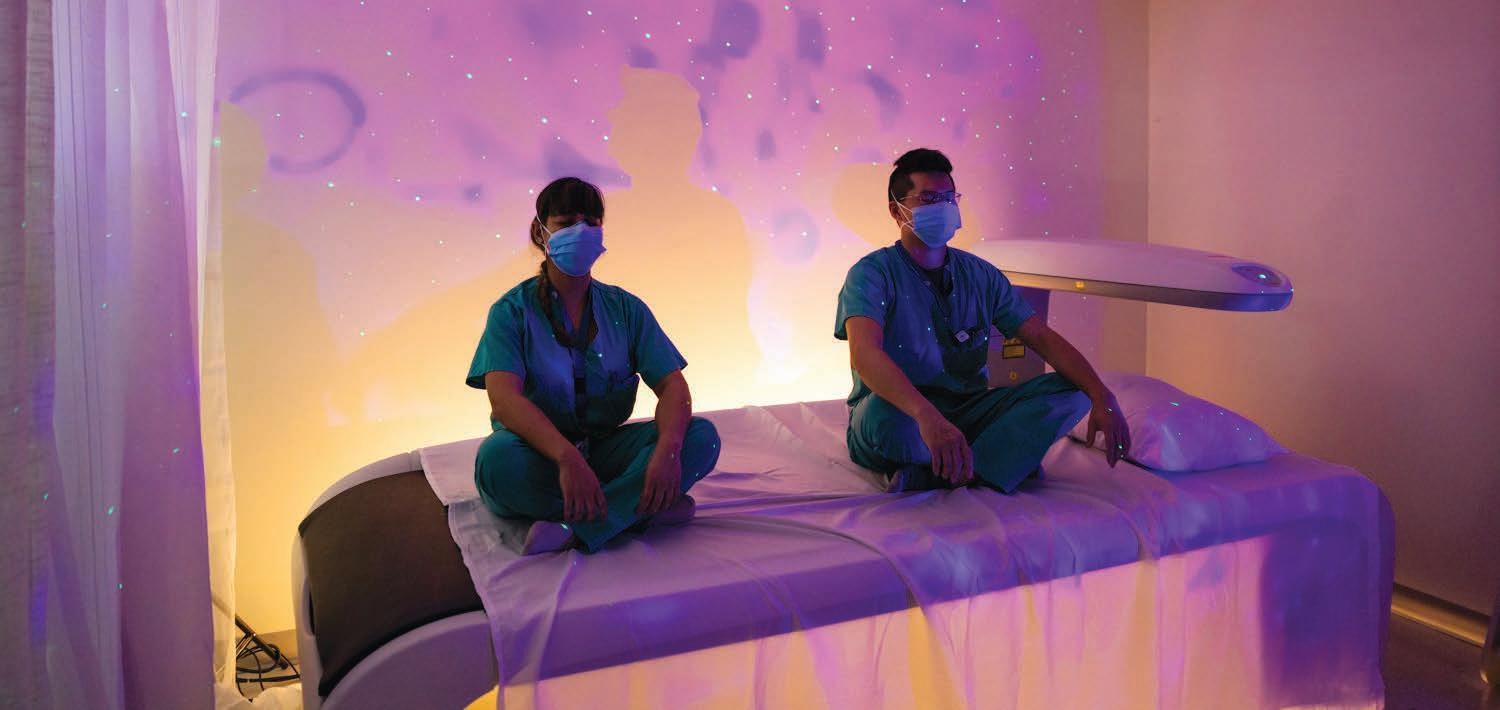
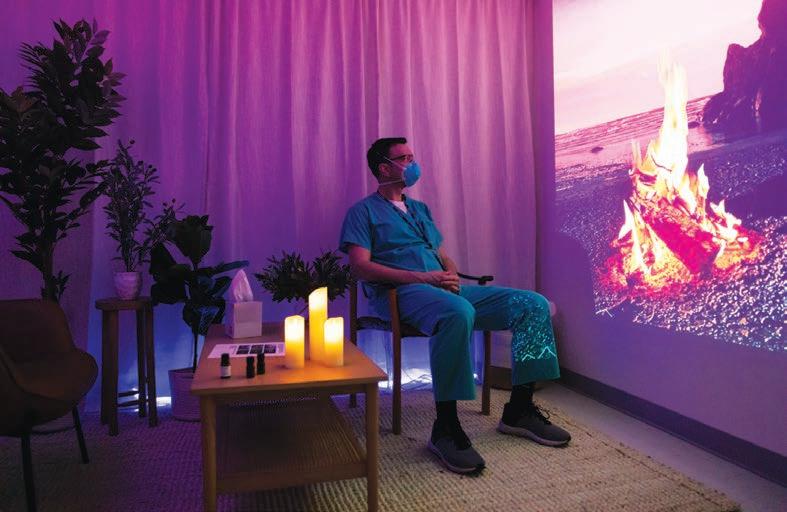
Later in the spring, David Putrino, PhD, Director of Rehabilitation Innovation, converted his lab into “recharge rooms” for all essential employees who were working at The Mount Sinai Hospital during the COVID-19 surge. The goal: to create a fully immersive, calming experience designed to replicate the sights, sounds, and smells of the forest (or another immersive experience; there were several to choose from). In just 15 minutes, participants reported their stress level decreased by an average of 65 percent, according to anonymous surveys.
Perhaps Mount Sinai’s biggest effort focusing on health care workers, however,
has been the launch of the Warrior Watch study. Under the MSCIC, Drs. Fayad and Robert P. Hirten are actively recruiting Mount Sinai health care workers into the study, which aims to identify COVID-19 infections before symptoms develop and better understand the ramifications of pandemic-related stress. Warrior Watch participants wear an Apple Watch, which is used in conjunction with a Sinai-developed app and AI methodologies to acquire and analyze data.
Dr. Fayad hopes the findings will yield insights that can be applied to ease anxiety and build resiliency, in part by referring vulnerable participants to the newly created Center for Stress, Resilience, and Personal Growth.
This summer, as infection rates remained low in New York, many in the region enjoyed a well-deserved respite. Yet Mount Sinai scientists haven’t slowed down: Not only are infections continuing to soar elsewhere in the country, but it seems unlikely that any vaccine in the works will eliminate the dangers of this virus in one fell swoop.
“We’re all waiting with bated breath for a vaccine, and the data I’ve seen looks very good,” Dr. Cho says. “But it’s unclear how long the protection will last and whether older people—who are particularly susceptible to complications—will respond equally well. Eradicating this virus is going to be a tall order. We’re in this for the long haul.”
Robbie Freeman, MSN, RN, Vice President of Clinical Innovations at The Mount Sinai Hospital (far right) and team monitor COVID-19 patients with Google Nest.
Inside the Mount Sinai Recharge Room.
HOW THE MOUNT SINAI HEALTH SYSTEM RAISED MORE THAN $70 MILLION FOR COVID-19 RELIEF.
FUNDRAISING IN A CRISIS
BY ALEXANDER MORRISON
Early in March, before the pandemic took hold, the Mount Sinai Health System was three years into a comprehensive seven-year campaign, having raised more than $740 million with four years left on a $2 billion goal. With significant fundraising efforts centered on strategic priorities in key areas such as cancer, neuroscience, cardiovascular disease, and medical education, the path forward seemed clear, dotted with familiar milestones like Convocation and the annual Crystal Party. Then, almost overnight, COVID-19 tore through New York City and shook our institution to its very core. Everything changed at once.
Recognizing the extraordinary severity of the situation, Mount Sinai wasted no time in launching a concentrated response
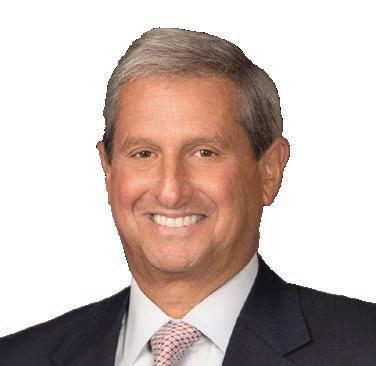
“It was an immediate call to arms that began with our core leadership, and every single one of our Trustees answered that call.”
– Richard A. Friedman
to combat the COVID-19 crisis. With the entire Health System now focused solely on fighting the pandemic, the Office of Development paused its capital campaign and transitioned rapidly to crisis
fundraising. In this challenging time, when our ICUs were overflowing with patients and it seemed the onslaught of the virus would never end, donors recognized Mount Sinai’s great need and stepped up to support our community like never before.
“The costs of COVID-19 were immense, and, combined with the necessary prohibition of virtually all non-emergency surgeries, this had significant adverse fiscal consequences to our Health System,” says Kenneth L. Davis, MD, President and CEO of Mount Sinai Health System. “However, thanks in part to our donors’ support, we had the funds and flexibility to continue our life-saving work, secure the necessary supplies and manpower, and drive promising research to make key advancements during the pandemic.”
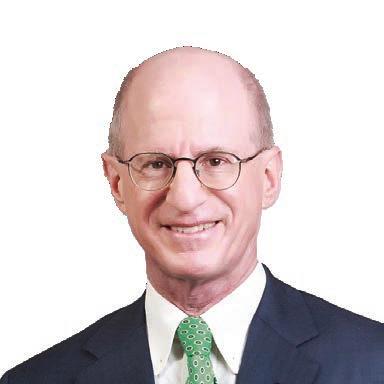
“COVID-19 was truly a defining moment for our institution. It was pivotal that we unify and rise to the challenge during one of the most unprecedented pandemics of our lifetime.”
– James S. Tisch
Mount Sinai dominated the headlines in local and national media during the height of the crisis, not only because of the courageous work of its staff to care for patients impacted by COVID-19, but also because of the Health System’s agility in conducting groundbreaking research to fight the virus. The increased media attention heightened Mount Sinai’s profile and helped cast a wide net to engage current and new donors like never before. As a result, from March through August, Mount Sinai was able to raise more than $70 million for COVID-19 relief, more than almost any other academic medical institution in the nation during that time. In fact, Mount Sinai received more gifts than we have in any fiscal year in the Health System’s history, over half of them from new donors.
Central to these fundraising efforts was the tremendous commitment of our Boards of Trustees, whose generosity and resourcefulness helped steer Mount Sinai through this difficult time. Led by Co-Chairmen Richard A. Friedman and James S. Tisch, our Trustees mobilized a swift response and collectively gave more than $25 million, providing essential funds that allowed the Health System to fulfill its most pressing needs.
“Of course,” Mr. Friedman says, “many companies and institutions launched relief campaigns. But Mount Sinai acted quickly, which was absolutely critical. It was an immediate call to arms that began with our core leadership, and every single one of our Trustees answered that call.”
“COVID-19 was truly a defining moment for our institution,” says Mr. Tisch.
“It was pivotal that we unify and rise to the challenge during one of the most unprecedented pandemics of our lifetime.”
Beyond donating funds to bolster our response efforts, Mount Sinai Trustees activated their extensive networks to provide invaluable resources in support of our frontline staff. This was never more evident than early on in the crisis, when hospitals across the country were in dire need of personal protective equipment (PPE).
In March, with New York hospitals facing a shortage of PPE and coronavirus cases declining in China, Taikang Nanjing International Medical Center reached out to hard-hit Mount Sinai to donate 500,000 N95 respirators and 1.2 million surgical masks. Yet the shipment seemed in jeopardy when, due to travel restrictions, no cargo jet could be secured out of China. With these vital supplies at risk, and knowing our pressing need to ensure the safety of our frontline workers, Mr. Friedman solicited help from Berkshire Hathaway Chairman and CEO Warren Buffett and NetJets, which sent two 13-seat jets from Alaska to China to bring home the essential equipment.
In addition to going to such great lengths to support the Mount Sinai community, our Trustees organized creative, digital fundraising events, such as the All-In for Mount Sinai virtual celebrity poker tournament. The event, which was planned by Trustee and Discovery Inc. CEO David M. Zaslav, raised more than $1.2 million and attracted almost 180,000 unique viewers. Donor events, too, had to move into the digital space; instead of coming together for
OVER $70 MILLION RAISED FOR COVID-19
In-Kind Donations
$12
Million+ Value
Local businesses and individuals provided meals, haircuts, hotel rooms, hand-sewn masks, sneakers, even full hazmat suits.
All-In
for Mount Sinai
$1.2 Million+ Raised
The virtual celebrity poker tournament that was livestreamed also attracted nearly 180,000 unique viewers.

8,000+
New Donors
A partnership with dtx company’s Flowcode technology enabled donors to contribute directly to Mount Sinai COVID-19 relief and share their support on social media.
30 Million+ Impressions
#FitForTheFrontLine, a social media campaign that encouraged all Americans to exercise, raised money and awareness for Mount Sinai’s Center for Stress, Resilience, and Personal Growth.
“The response to COVID-19 points to our agility and innovation as an institution, but also to the deep emotional connection felt by so many people. People were really able to connect through empathy.”
– Mark Kostegan
galas, individuals gathered over the safety of Zoom to hear firsthand from Mount Sinai researchers and clinicians about the latest COVID-19 advancements.
Just as important as six- and seven-figure gifts from Trustees and virtual events was our commitment to highly visible, grassroots fundraising. Partnering with Tim Armstrong, CEO of the dtx company, Mount Sinai utilized Flowcode technology to drive international awareness and donations in support of staff on the front lines of the pandemic. The dtx company’s Flowcode works just like a QR code, which can be easily scanned using a smartphone camera to allow donors to contribute directly to Mount Sinai COVID-19 relief and share their support on social media. Thanks in large part to this innovative technology—a new digital initiative for Mount Sinai—we received donations from more than 8,000 first-time donors, representing almost every state in the nation as well as nine countries.
COVID-19 significantly elevated the Health System’s presence nationally regarding its overall relief and response efforts. One young donor, a 14-year-old from Rochester, Minnesota, was so moved by a segment on the Today show featuring Mount Sinai that she sent $33 cash and a handwritten letter of support to the Office of Development. From the youngest donor to countless celebrities on social media, the entire nation seemed to be rallying around Mount Sinai.
“The response to COVID-19 points to our agility and innovation as an institution,” says Mark Kostegan, Chief Development
Officer and Senior Vice President of Development for the Mount Sinai Health System, “but also to the deep emotional connection felt by so many people. People were really able to connect through empathy. Buying a mask for a doctor for $5; $20 to cover a nurse’s Uber ride home; $50 for three boxes of gloves. All of these gifts contributed to saving lives.”
Apart from monetary gifts, countless local businesses and individuals donated services, such as meals, haircuts, and hotel rooms, as well as other gifts-in-kind—from hand-sewn masks to sneakers to full hazmat suits—which came in at a record pace. These gifts-in-kind served as a crucial lifeline to staff across the Health System and represented a total value of over $12 million.
Finally, our campaign for COVID-19 relief funds culminated in #FitForTheFrontLine, a social media challenge that encouraged Americans young and old to move, exercise, and get fit to increase awareness and raise money for our nation’s health care heroes. #FitForTheFrontLine ran from May 25 to June 15 and brought together peer medical institutions from across the country, with all donations to Mount Sinai going directly to the Center for Stress, Resilience, and Personal Growth. The initiative, spearheaded by Mr. Friedman, garnered more than 30 million impressions on social media.
Having weathered the immense challenges COVID-19 presented in the spring, the great work of the physicians and scientists across the Mount Sinai Health System moves forward with enhanced
knowledge and experience gained from the crisis. The fundraising campaign, too, pushes onward. Lessons learned during the pandemic will inform future, meaningful conversations with donors as we work to propel Mount Sinai’s bold commitment to excellence while advancing our vision and building upon the future of science and medicine.

SHOW YOUR SUPPORT FOR MOUNT SINAI
Mount Sinai is continuing its efforts to train and inspire the future leaders in medicine while tackling the biggest challenges in health care today, including COVID-19. Your support allows us to continue our life-saving work to treat and care for the communities we serve.
To make a gift, open the camera on your phone and scan the Flowcode above.
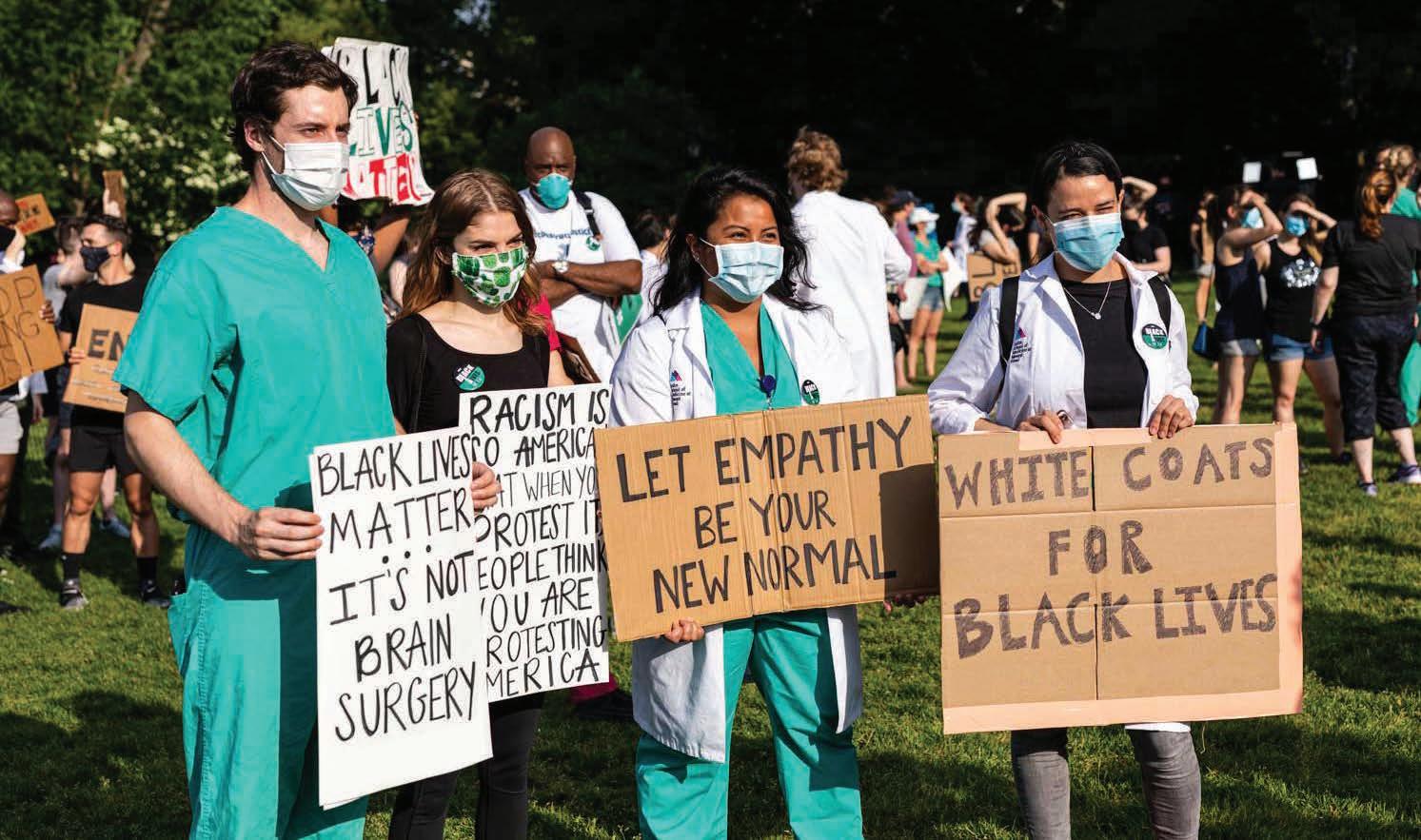
A COMM I TMENT TO I NCLUS I ON
IN THE FACE OF DEEPLY ROOTED SOCIETAL INJUSTICE
AT MOUNT SINAI, DIVERSITY AMONG FACULTY, STAFF, AND STUDENTS IS “THE FIRST LENS WE LOOK THROUGH.”
The late civil rights leader and U.S. Representative John Lewis once said: “Nothing can stop the power of a committed and determined people to make a difference in our society.” At Mount Sinai, Lewis’ words recall our dedication to an inclusive and unbiased medical school and Health System.
Two defining events of 2020—the COVID-19 pandemic and the horrific killing of George Floyd while in police custody in Minneapolis, which sparked protests nationwide and reignited the Black Lives Matter movement—set into sharp relief the health disparities and social injustice that people of color face in the United States.
BY ALISON DALTON
Mount Sinai was founded in 1852 as a hospital meant to serve indigent immigrants who had been mistreated for centuries. Today, the Health System remains committed to eliminating racial bias and health disparities and helping to create a more just society for the communities we serve.
In recent years Mount Sinai’s commitment to diversity and inclusion has earned it the No. 1 ranking among health systems by both DiversityInc and Forbes. However, says Gary C. Butts, MD, Executive Vice President for Diversity, Equity, and Inclusion, Chief Diversity and Inclusion Officer, and Dean for Diversity Programs, Policy, and Community Affairs, “We know that the work cannot stop, and that to achieve genuine equity, we have to constantly build on our successes and improve our efforts.”
ELIMINATING BIAS
Led by Dr. Butts, the Icahn School of Medicine at Mount Sinai launched its Office for Diversity and Inclusion (ODI) in 2014.
The following year the School of Medicine established the Racism and Bias Initiative, headed by Leona Hess, PhD, Education Program Director for Strategy and Equity Programs, an important partnership to address racism and bias in medical education.
This year the School built on that initiative by conducting School-wide listening tours, engaging students, trainees, and faculty.
Even for those with good intentions, unconscious racial biases can negatively affect interactions with others.
Pamela Abner, MPA, Vice President and Chief Administrative Officer for the ODI, notes that such biases can be especially harmful in
Photo by Claudia Paul
Mount Sinai united in support of “White Coats for Black Lives.”
Pamela Abner, MPA and Gary C. Butts, MD
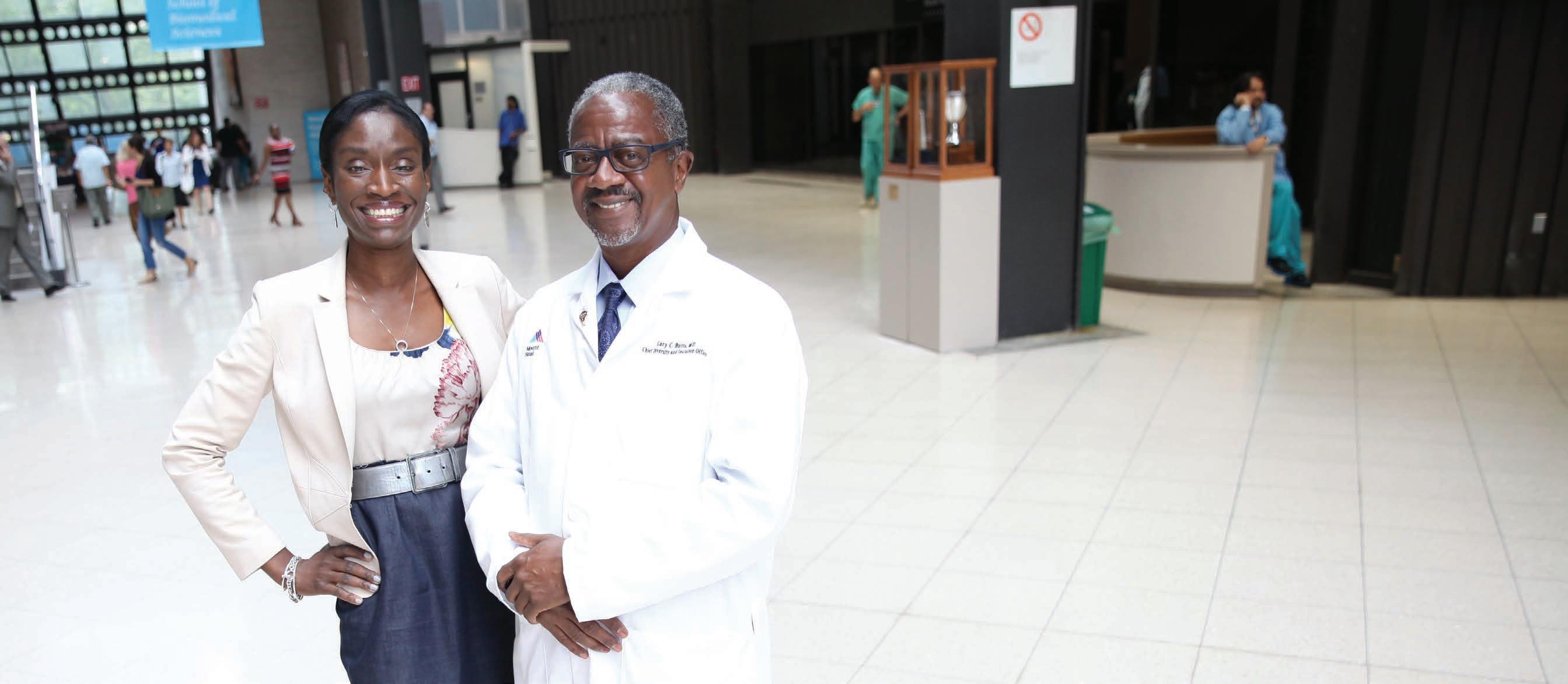
health care. “They can lead to unintentional discrimination that can cause caregivers and clinicians to make poor decisions regarding the care of their patients,” Abner says.
To counteract unconscious bias, the ODI has developed training sessions and other tools to educate leadership and staff. The initiative began with a survey of all 42,000+ employees to gauge their perceptions of patient experience, diversity, equity, and inclusion within the Health System. One outcome of this work is a four-hour foundational training session designed to show how diversity, equity, and inclusion enhance the patient experience while unconscious bias can detract from it.
United in Solidarity, another ODI initiative to support anti-racism efforts, provides a virtual nexus for the exchange of views, information on events and Black history, and resources such as books, podcasts, and ways to support Black-owned businesses.
HEALTH EQUITY IN THE COVID-19 ERA
Black and Latino Americans have borne the brunt of the COVID-19 pandemic and are at higher risk of becoming sick and dying of the virus. Health care, or lack of it, is one factor: Minorities are more likely to be uninsured and lack access to health care. In addition, underserved people might not have the option to stay at home and thus may be more likely to become exposed to the virus in the workplace and subsequently bring it back to their families.
While Mount Sinai has been working for decades to address these issues of structural bias, the COVID-19 pandemic has created an opportunity to establish an institute around this work. The new Institute for Health Equity Research (IHER) is led by CoDirectors Lynne Richardson, MD, a Professor of Emergency Medicine and Population Health Science and Policy and Vice Chair for Academic, Research, and Community Programs at the Icahn School of Medicine; and Carol Horowitz, MD, MPH, Dean for
“COVID-19 HAS UNCOVERED IN A VERY PUBLIC WAY JUST HOW DEEP-ROOTED INEQUITIES ARE IN OUR SOCIETY.”
“WE KNOW THAT THE WORK CANNOT STOP, AND THAT TO ACHIEVE GENUINE EQUITY, WE HAVE TO CONSTANTLY BUILD ON OUR SUCCESSES AND IMPROVE OUR EFFORTS.”
GARY C. BUTTS, MD
Gender Equity in Science and Medicine and a Professor of Population Health Science and Policy. The Institute brings together a multidisciplinary team of experts who work closely with the community to shed light on health-related problems that disproportionately impact at-risk groups across disease areas, while factoring in issues such as race, ethnicity, age, sexual orientation, gender identity, disability, poverty, and residential segregation. Its task force of academics and finance and business leaders, including NBA icon Magic Johnson, seeks to identify inequities and generate lasting solutions.
“COVID-19 was the spark,” Dr. Richardson says. “This pandemic has been layered on top of long-standing inequities in health and health care that have plagued vulnerable populations for a very long time. COVID-19 has uncovered in a very public way just how deep-rooted inequities are in our society.”
Among the Institute’s goals are improving health care for disadvantaged populations, engaging community-research partnerships, and diversifying the Mount Sinai workforce. Drs. Richardson and Horowitz are already actively engaged with more than 100 community partners.
“We are building an anti-racist research agenda,” Dr. Horowitz says. “We need to acknowledge that racism exists and that we all have a part to play in both the problem and the solution. Mount Sinai is the best place for this type of work to happen. We must, we can, and we will make a difference.”
LYNNE RICHARDSON, MD
“WE NEED TO ACKNOWLEDGE THAT RACISM EXISTS AND THAT WE ALL HAVE A PART TO PLAY IN BOTH THE PROBLEM AND THE SOLUTION.”
RECOGNIZING HEALTH CARE DISPARITIES
For many different types of disease, there are significant differences in rates and outcomes for minority and white populations. Cancer is a prominent example. Blacks have higher rates of prostate cancer, triple negative breast cancer (the most aggressive form), and multiple myeloma, and their cancer death rate is higher.
Emily Gallagher, MD, Assistant Professor of Medicine, Endocrinology, Diabetes, and Bone Disease at the Icahn School of Medicine, says many factors can cause these disparities. For example, health experts increasingly recognize diabetes and obesity as risk factors for a number of cancers, including breast cancer. And Black women are more likely to have these conditions.
Low income, predatory fast-food marketing, and the presence of food deserts can increase the risk of obesity and diabetes. Clinical practices can also be a factor: Providers may not screen for diabetes because it is not commonly understood that normal-weight Black women are more likely to have diabetes than normalweight white women.
“Mortality from triple negative breast cancer is particularly high among Black women in both the United States and Africa,” says Hanna Irie, MD, Assistant Professor of Medicine and Oncological Sciences at the Tisch Cancer Institute at Mount Sinai. Dr. Irie notes the higher incidence of breast cancer is due to intrinsic tumor biology, socioeconomic factors, and underlying genetic risk factors.
WORKFORCE AND STUDENT DIVERSITY
Diversity among faculty, staff, and students is a top priority at the School of Medicine. “We are very deeply committed to diversity, inclusion, and equity among our faculty, staff, and students, especially when recruiting teachers, advisors, mentors, and members of the committees that make up our governance structure,” says David Muller, MD, Dean for Medical Education, Professor and Marietta and Charles C. Morchand Chair in Medical Education and Professor of Medicine. “It’s the first lens we look through when we try to figure out who we’re going to bring onto the team to educate the next generation of physicians.”
Marta Filizola, PhD, Dean of the Icahn School of Medicine’s Graduate School of Biomedical Sciences, echoes this determination. “We are fully committed to diversity, inclusion, and equity through the entire pipeline,” Dr. Filizola says, “from high school outreach activities to college, from our post-baccalaureate research education program to our graduate school programs and our postdoc recruitments.” To that end, the School is conducting research aimed at developing evidence-based strategies based on vigorous analysis of admission data over the past years to address racism and bias in student recruitment.
AN ANTI-RACIST CURRICULUM
The Icahn School of Medicine regularly performs thorough content review to identify racism and bias in the curriculum. “We are very concerned about what we teach, how we teach it, and who is doing the teaching,” Dr. Muller says, “as we view our curriculum through the lens of anti-racism.”
Professors spend a considerable amount of time in the first and second years of medical school teaching students about the East Harlem community and the surrounding communities in New York City served by the Health System. They discuss the culture and history of each community and give considerable weight to the social determinants of health that drive outcomes and access to care for residents of those communities.
The many initiatives being undertaken across the Mount Sinai Health System are important steps toward creating an equitable society for everyone. Real progress, though, begins with an individual’s willingness to change. As Dr. Muller says, “The most important lessons we’ve learned are the importance of listening, believing, and trusting what we hear from our students, our staff, and our faculty about their experiences of racism in their everyday lives and in their lives at our institution. They have the courage to be vulnerable, and we have an obligation to do something about it.”
ACCESSIBLE MEDICAL EDUCATION FOR ALL
Mount Sinai is dedicated to bringing students of diverse experiences and interests into medicine, regardless of their financial status. COVID-19 presented not only an unprecedented health crisis, but also an economic one for many aspiring medical students and their families. It is well established that even the prospect of debt serves as a major deterrent to students who are underrepresented in medicine and those from lower-income families.
Our health care system simply cannot afford the shortage of doctors that many have forecast for the coming years. To combat this, the Icahn School of Medicine last year launched the Enhanced Scholarship Initiative to enable students with demonstrated need to graduate with a maximum debt of $75,000 over four years. This is significantly lower than the median loan debt of $192,000 per graduate across all U.S. medical schools in 2018.
The Enhanced Scholarship Initiative serves as a catalyst to move Mount Sinai a step closer to achieving equity in providing opportunities in medical education to low-income students who have historically been prevented from pursuing careers in medicine.
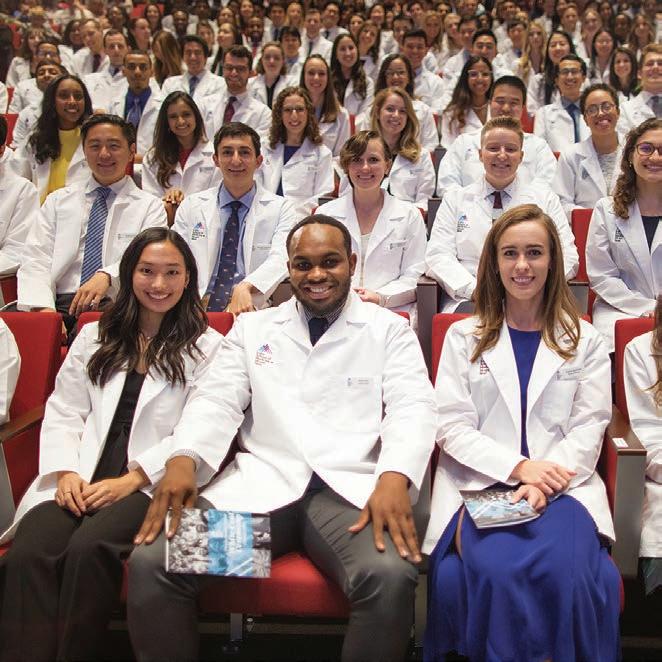
CAROL HOROWITZ, MD, MPH
Photo by Robert Caplan

Thanking Our Heroes
Thank you notes written in chalk line the sidewalks outside The Mount Sinai Hospital to honor those on the front lines of COVID-19.