Your heart is a muscle that pumps blood continuously through your body Blood circulates to provide nutrients and oxygen to the entire body
The heart has four chambers: the right atrium, right ventricle, left atrium, and left ventricle .
Blood travels from the body to the right side of the heart and then to the lungs, where it picks up oxygen This oxygen-rich blood enters the left side of the heart where it is then sent to the rest of the body, delivering oxygen .
Heart failure is a syndrome that develops when the heart can’t function as well as it should . This may happen when the heart muscle becomes weak or stiff As a result, it doesn’t deliver enough blood to the rest of the body When the body doesn’t get enough blood, it doesn’t get enough oxygen and nutrients
If the heart muscle becomes weaker and enlarged, it is known as heart failure with a reduced ejection fraction (EF), otherwise known as systolic heart failure . The heart muscle cannot contract or pump blood well
If the heart muscle becomes stiffer, it is known as heart failure with preserved ejection fraction (diastolic heart failure) . The stiff muscle has difficulty relaxing to help the ventricles fill with enough blood
System J Gregory
Thick/sti heart muscle
Enlarged/ weaker heart muscle
Enlarged heart
What Is Heart Failure?
(continued)
What Causes Heart Failure?
A number of conditions can cause heart failure, including:
• A heart attack
• Certain infections
• High blood pressure
• Problems with heart valves
• Irregular heart rate or rhythm
• Severe lung problems
• Drug use
• Diabetes
• Chemotherapy
• Thyroid problems
• Pregnancy
• Congenital heart disease
• Sometimes the cause of heart failure is unknown (idiopathic)
What Are the Signs and Symptoms of Heart Failure?
Because blood flow is abnormal, people with heart failure can experience some of these symptoms:
• Shortness of breath
• Fatigue or a decrease in your ability to do your usual activities
• Swelling of legs, feet, hands, or abdomen
• Persistent cough or chest congestion
• Weight gain of two or more pounds in one day, or five or more pounds in one week
• Difficulty sleeping and restlessness
• Loss of appetite or nausea
How Is Heart Failure Diagnosed?
There are many ways that your healthcare team can find out if you have heart failure:
• History and physical exam
• Blood tests
• Other tests
– Echocardiogram: (also called an echo) Is a sonogram of your heart . It can show how well the heart is functioning and look at the heart muscle, valves and arteries
– MRI: Is an advanced test that takes pictures of the heart and surrounding structures . It looks at your heart function, heart muscle and can help to identify a cause of heart failure
– PET Scan: Is an advanced test that creates 3D images of your heart that can help identify heart damage, infection and coronary artery disease .
– Cardiac Catheterization: a test that examines the arteries of the heart and pressures in the different parts of the heart
Ejection fraction is an important part of these exams Ejection fraction measures how much blood is ejected from the left side of the heart with each beat . In a normal heart, the ejection fraction is equal to or greater than 50% . This percentage is called the ejection fraction, or “EF . ”
An ejection fraction below 50% may show some weakness in the strength of your heart .
What Can I Do About Heart Failure?
Education is an important part of your heart failure self-management, so you are informed on how you can improve your heart health:
• Making sure to attend all appointments
• Taking all medications as prescribed and make sure you have refills
• Controlling blood pressure and blood sugar (if you have diabetes)
• Eating a heart-healthy diet, including controlling sodium
• Recognizing small warning signs in your body, such as swelling or weight gain
• Participating in moderate exercise
• Getting enough sleep
• Losing weight if advised
• Quitting smoking
• Avoiding alcohol
What Is Heart Failure? (continued)
Weigh Yourself Daily
Weighing yourself every day is an easy way to monitor your health and prevent worsening symptoms Follow these easy steps:
• Weigh yourself first thing in the morning before you eat or drink anything and after you urinate
• Keep a daily weight log and bring it to all medical visits .
• Call your health care provider if you experience a weight gain of two or more pounds in one day or five pounds in one week This may be a sign of your body holding onto too much water
Be sure to weigh yourself and record your weight every day. (See sample health tracker on page 21)
Other Heart Health Changes To Look For
Monitor yourself for any changes that may be due to your heart condition Check yourself daily, and contact your health care provider if you notice any major changes in how you feel Look for:
• More swelling in your feet, legs, or stomach
• A lack of energy or feelings of tiredness
• Sweating
• Difficulty sleeping, especially due to breathing problems
• Increased urination at night
• Confusion or impaired memory
• Decreased appetite
• Other changes that you are concerned about
It is best to contact your health care provider as soon as you notice changes because it is easier to correct them early.
Healthy Lifestyle for Heart Failure Patients
Diet
Making healthy food choices and eating a wellbalanced diet can make you feel better . Sodium (salt) makes the body hold on to water, and can
Making Better Choices
It is important to lower salt/sodium in your diet . About one-half of our salt intake comes from processed foods Limiting processed foods, as much as you can, is helpful
Foods to limit:
• Processed meats (hot dogs and cold cuts)
• Frozen prepared meals
• Canned soups and vegetables
• Canned fish in oil or fried fish
• Cheeses and cheese spreads
• Pickles, olives, and sauerkraut
• Canned tomato sauce and vegetable juices
• Fast food
• Condiments: soy sauce, Worcestershire sauce, ketchup, and mustard
• Processed nut butters
• Spices that contain salt in their name, such as garlic salt, onion salt, or celery salt
• Ham, bacon, and sausage
• Snack foods that are salted: chips, pretzels and crackers
worsen your symptoms of shortness of breath or fatigue, can raise your blood pressure and cause fluid to build up within your body
Healthier choices include:
• Fresh meat or fish
• Fresh or frozen vegetables
• Spices that do not have salt in their ingredients
• Snack foods, such as nuts (unsalted), fresh fruit, raisins, and unsalted pretzels
When dining out, request low salt and low fat meals . Order dressing and sauces on the side and only use a little bit . Limit eating fast food and dinning at fast food restaurants Try to prepare most meals at home Talk to your provider if it is difficult for you or your caretaker to prepare your meals
Healthy Lifestyle for Heart Failure Patients (continued)
Cooking at Home
When preparing food at home, use cooking methods that require little or no fat, such as boiling, broiling, baking, roasting, poaching, steaming, stir-frying, or using the microwave
Low Salt: Try These
• Basil • Nutmeg
• Bay leaves
• Mrs . Dash ®
• Dill
• Parsley
• Lemon juice
• Ginger
• Dry mustard
• Cocoa powder
High Salt: Avoid These
• Fish sauce
• Lite/regular soy sauce
• BBQ sauce
• MSG
• Celery salt
Potassium
Water pills may lower your body’s potassium level
Speak you your healthcare provider if you need to increase potassium rich foods in your diet .
• Stir-fry sauce
• Pickle relish
• Teriyaki sauce
• Worcestershire sauce
• Taco seasoning
Foods that are high in potassium include:
• Bananas
• Oranges
• Orange juice
• Prune juice
• Prunes or dates
• Nectarines
• Dried apricots
• Melons
• Raisins
• Figs
• Baked or boiled potatoes
• Tomatoes
• Winter squash
• Spinach
• Sweet potatoes
• Baked beans
Alcohol
Alcohol can weaken your heart, cause irregular heart rhythms and worsen your heart condition It also interacts with medications that you may be taking . Speak with your healthcare provider about alcohol intake and any further question you may have
Smoking
Smoking is never advised . Cigarettes contain toxic chemicals that increase your blood pressure and damage your blood vessels Ask your healthcare provider about ways to quit smoking
Drinking
You may feel thirsty because of your heart condition If you are thirsty, try sucking on a small amount of sugarless hard candy or chew gum to help relieve a dry mouth . Limit increased fluid intake Keep your home well humidified and rinsing your mouth with mouthwash may also help . Talk to your healthcare provider if not improved with these steps
All fluids should be taken in small amounts:
• Water
• Juice
• Soda pop
• Coffee
• Tea
• Milk
• Soup
• Pudding
• Jell-O ®
• Ice cream
• Yogurt
• Popsicles
• Ice cubes
Healthy Lifestyle for Heart Failure Patients (continued)
Exercise
Movement is important to your heart health . Your doctor may refer you to a cardiac rehabilitation program or to a physical therapist
• Exercise can reduce stress, depression, and anxiety
• Short walks are a good way to begin exercise .
• Avoid any exercise that causes discomfort, chest pain, shortness of breath, dizziness, or lightheadedness Listen to your body
• Avoid exercising when it’s too hot, cold, or humid .
• Avoid heavy lifting Light weight training is good for your heart . Talk to your health care provider about recommendations .
• Stick with it If you exercise regularly, it will soon become a part of your lifestyle
• Rest is as important as activity Balance your activity with rest .
Cardiac Rehabilitation
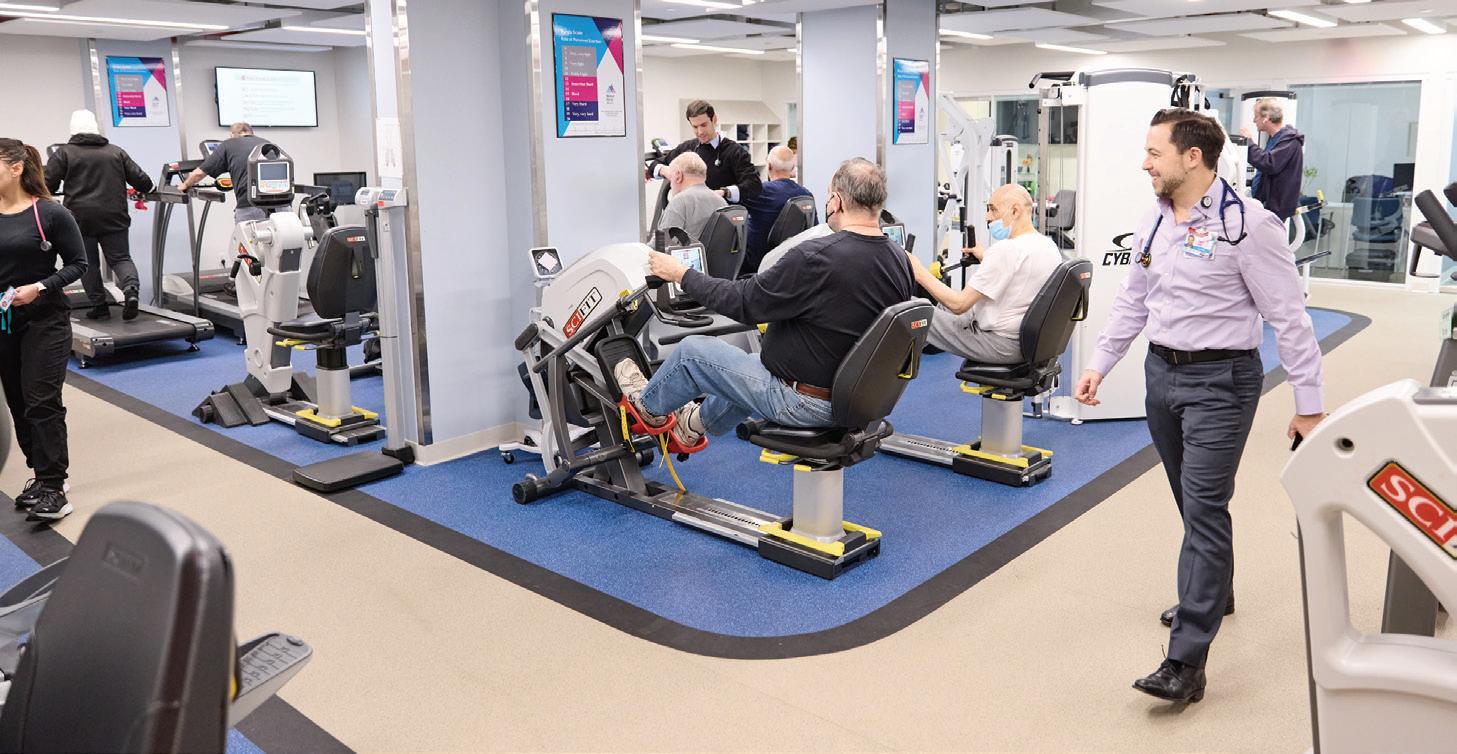
Cardiac rehabilitation is a comprehensive, medically supervised and individualized program that focuses on exercise, diet education, counseling, and emotional support . The team, which includes cardiologists, advanced practice nurses, an exercise physiologist, and other health professionals, works closely with your referring physician to develop a 6-12 week program to meet your needs
There are many benefits to participating in a cardiac rehabilitation program, including:
• Exercise training program
• Education on managing your risk factors
• Education and counseling to reduce stress
Prevention
Cardiac rehab also focuses on prevention. If you are at risk for heart problems—or even if you aren’t—you can work with our clinicians to increase your activity level. This can help decrease your risk of:
• High blood pressure
• High/low blood sugar
• High/low body fat
• Low muscle mass
• High cholesterol
Supervised exercise can also help with other issues. It can make it easier to quit tobacco or moderate how much alcohol you drink. It can help you address any issues you may have with your eating habits. And it can decrease stress.
Medical Fitness
Medical Fitness (MedFit) is a personalized, self-pay program where you work one-onone with a certified exercise physiologist or a board certified cardiac physical therapist. We tailor an exercise program based on your specific diagnosis, needs, and goals. We can also help you improve your strength, activity level, safety, and functional ability to exercise and perform daily activities. For instance, we can help you lower your body mass and improve your strength and endurance. With MedFit, you use a combination of weights, bands, and other machines. You also have access to our optional patient services.
Optional Services
While you participate in Phase II, Phase III, or MedFit, a team of nutritionists, endocrinologists, functional clinicians, and exercise specialists are available to you. These experts can help you improve your health and activity.
• Help with promoting healthy living in order to return to a high-functioning life
Cardiac Rehabilitation Program
The Marie-Josée and Henry R. Kravis
Rehabilitation and Comprehensive Health Center
The Marie-Josée and Henry R. Kravis
Sexual Activity and Heart Failure
Sexual health is an important part of well-being
Many people with heart failure, as well as their partners, are not sure if they should or could have sex because of their heart condition This uncertainty may leave you and your partner feeling embarrassed or uncomfortable asking questions or speaking with your health care provider The good news is that most people with heart failure can continue to enjoy a healthy sex life .
People with heart failure may have challenges with sexual activity . Some medications that are prescribed to manage heart failure may cause these problems . Never stop medications without speaking with your health care provider about any concerns or issues you have
As with any physical activity, it is important to listen to your body and avoid any activity that doesn’t feel comfortable .
Medications
Medications are very important for treating your heart failure . They help maintain health, improve symptoms, and prolong life It is important to take them as instructed by your health care provider Avoid missing a dose of your medications
It is very important that your health care provider is aware of all the medications that you are taking . This includes over-the-counter medications, vitamins, home remedies, and herbal medicines
Tips for Taking Your Medications
• Always carry a list of your medications in your wallet, purse or electronic device Write down the dose of each drug and the time of day that you take them .
• There are many apps to help you keep track of your medications . Ask your health care provider for recommendations
• Learn what each medication does and what it looks like .
• Don’t be afraid to call your health care provider or pharmacist if you have any questions . They are there to help you
• Make sure you have enough medications . Plan ahead so you don’t run out .
• Take all of your medications as prescribed . If you think you may be experiencing a side effect from medicine, call your health care provider right away
• Keep all medications in their original labeled container Do not mix different medications into the same container for storage, unless you are using a pill organizer to help you manage your medications
• Do not double up on medications . If you miss a dose, call your health care provider
• If you get sick and can’t take your medications, call your health care provider .
• Write down any questions you may have about your medications and bring them to your health care provider appointments and pharmacy visits
• When traveling, keep your medications in their original containers and do not pack them in your luggage Always carry them with you
Medications (continued)
Heart Failure Medications
There are several types of medications that are commonly used to treat heart failure . Used together or separately, they improve the functioning of your heart because they:
1. Help to make your heart pump stronger
2. Control heart rhythm and heart rate
3. Relax blood vessels
4. Control fluid
5. Slow progression of the disease
A standard medication regimen for people with heart failure includes:
• Blocks the body from holding on to sodium (salt) and water
• Needs careful monitoring of potassium levels
• Helps prevent further damage to the heart
• Relaxes blood vessels so that blood can flow more easily and effectively to the rest of the body
• Decreases harmful stress hormones (similar to ACE inhibitors)
• Helps heart muscle work more efficiently
• May help improve symptoms and extend your life
• Relaxes blood vessels so that blood can flow more easily and effectively to the rest of the body
Aldosterone antagonist
Spironolactone (Aldactone®
Eplerenone (Inspra®)
Diuretics (Water pills)
Vasodilators
Bumetanide (Bumex®)
Furosemide (Lasix®)
Torsemide (Demadex®)
Metolazone (Zaroxolyn®)
Hydralazine/nitrates (BiDiL®)
Isosorbide dinitrate (Isordil®)
Isosorbide mononitrate (Imdur®)
• Decreases the pressure under which the heart fills and decreases the resistance against which the heart pumps by reducing reabsorption of filtered glucose and sodium, leading to increased urinary excretion of glucose
• Blocks the body from holding on to sodium (salt) and water
• Needs careful monitoring of potassium levels
• Helps prevent further damage to the heart
• Improves your symptoms by getting rid of excess water in your body
• Relaxes blood vessels and increases blood and oxygen to the heart
Ivabradine (Corlanor®)
Calcium channel blockers
Amlodipine (Norvasc®)
Blood thinners (Anticoagulants)
Warfarin (Coumadin®)*
Dabigatran (Pradaxa®)
Apixaban (Eliquis®)
Rivaroxaban (Xarelto®)
Aspirin
Clopidogrel (Plavix®)
Ticlopidine (Ticlid®)
* Needs blood checked regularly
• Helps the heart muscle not to have to work so hard
• Helps the heart pump better (by lowering the heart rate)
• Blocks harmful stress hormones that make heart failure worse
• Can help you feel better, live longer, and keep you out of the hospital
• Relaxes blood vessels and increases blood and oxygen to the heart
• Lowers blood pressure
• Can reduce symptoms
• Prevents and reduces blood clots
• Reduces chance of heart attack and stroke
Caution With Medications
Be sure to talk to your health care provider before you use any over-the-counter medications, especially antacids, laxatives, cough medicines, and pain medications
Because a few of your heart failure medications can lower your blood pressure, spacing them out at different times throughout the day may help prevent dizziness
Additional Medications
Cholesterol-lowering drugs: High cholesterol increases your risk of heart attacks and strokes, and heart failure patients are often prescribed drugs to lower cholesterol
There are a variety of cholesterol medications available, each with special instructions for use Speak to your health care provider or pharmacist about any cholesterol drugs you may be taking
Avoid nonsteroidal anti-inflammatory medications (NSAIDs) These include ibuprofen (Advil®, Motrin®), naproxen (Aleve®), Celebrex®, and Mobic® It is OK to take acetaminophen (Tylenol®)
Please inform your health care provider if you are having problems with getting your medications .
Devices
Devices may be recommended to monitor your heart, help your heart or assist your heart’s function
These devices include:
Implantable cardiac defibrillator (ICD)
An ICD is a small device that is placed under the skin in the upper chest area . It has wires that go into the right side of your heart and act as a pacemaker and can monitor your heart’s electrical rhythm
This device is similar to an ICD, but it has an extra wire that goes to the left side of the heart This extra wire helps to “synchronize” (keep time with) the pumping of the right and left sides of your heart . These devices have been shown to help improve heart function and save lives and help patients feel better
Your health care provider will discuss whether these devices are an option for you .
Advanced Therapies
If your symptoms are not controlled by medication and devices, advanced therapies may be an option Your health care provider will discuss whether advanced therapies are an option for you
Three options that your heart failure provider may suggest are:
Left Ventricular Assist Devices (LVAD) –
a machine implanted into your abdomen that takes over the pumping needs of the left side of the heart
Total Artificial Heart (TAH) –replaces the heart with a mechanical device until a heart transplant becomes available .
Heart Transplantation –replacing your heart with a donor heart .
Palliative and Supportive Care
What Is Palliative Care?
Palliative care is specialized care for patients and families with chronic serious conditions like heart failure It provides extra support by providing relief from bothersome symptoms and assists in decision making to ensure your treatments are consistent with your healthcare goals The overall goal is to help to improve quality of life for both the patient and family/caregiver
Palliative care is appropriate at any age and at any stage of a chronic serious condition and can be provided at the same time as standard medical treatment
Improves Quality of Life
Palliative care focuses on symptoms such as shortness of breath, fatigue, pain, constipation, nausea, loss of appetite, difficulty sleeping, and depression . The goal is to improve your quality of daily living so you can feel the best that you possibly can as you live with advancing heart failure .
A Partnership Between Patient, Specialists, and Family
Palliative care is a team approach to care . The core team includes doctors, nurses, and social work palliative care specialists Massage therapists, pharmacists, nutritionists, chaplains, and others may also be part of the team .
The team becomes a partner with you, your family, and your other doctors They support you and your family every step of the way, not only by controlling your symptoms, but also by helping you to understand your treatment options and goals .
Preparing Goals of Care
Many patients and families find it helpful to talk about goals of care Some topics that your team may be helpful in discussing with you and your family include: health care proxy, living will, and a do-not-resuscitate (DNR) order for treatment at end of life
It is important to express your wishes and needs, so that your family and caregivers understand what’s important to you .
What Are Advance Directives?
Advance directives are legal documents that let people share their wishes regarding the treatment to be followed if they are too sick or unable to make decisions about their own medical care
Advance directives include:
• Health care proxy
• Living will
• Do Not Resuscitate (DNR) Order
For more information, talk to your healthcare provider and visit https://www.health.ny.gov/ publications/1430.pdf
My Heart Health Tracker
Every Day
• Weigh yourself first thing in the morning, before you eat, and write down your weight in this chart .
• Take your medications as prescribed
• Check your feet, ankles, and legs for swelling
Green Zone
Everything is good if:
• You aren’t short of breath
• You have no swelling
• You haven’t gained weight
Yellow Zone
Call your doctor if:
• You have weight gain of 3 lbs . or more in a day
• You have weight gain of 5 lbs or more in 3 days
• You have weight gain of 5 lbs . above your discharge weight at any time .