Research in FBI Labs Breakthrough Finding Assay Developed to Support Chemistry
Addiction
Alzheimer ’s disease
Parkinson’s disease
Schizophrenia
Research yields new insights into brain disorders
Design assay for new targets to support chemistry
Medicinal Chemistry In
Chemistry to design new drug that acts at target
Confirm that new drug is potent and selective
Confirm that new drug acts to modify the target in animals
Establish that the new drug is safe to test in humans
disorder over the past five years, including those impacted by neurodegenerative conditions such as Alzheimer’s and Parkinson’s diseases; psychiatric disorders, such as schizophrenia, depression, or drug addiction; and neurodevelopmental disorders, such as autism; among many others.
Still, there are no therapies currently available that effectively slow the progression of neurodegenerative disorders, lessen the debilitating cognitive deficits in schizophrenia, prevent relapse in drug-addicted individuals, or alleviate the core symptoms of autism. Compounding matters is the fact that virtually all major pharmaceutical companies have drastically reduced their investment in research and development for brain disorders because of their poor success rates in finding new effective therapies over the past several decades.
If not from pharmaceutical companies, from where will desperately needed new treatments for brain diseases come? Stepping into this vacuum are a new breed of translationally focused academic scientists who seek to take disease-relevant findings from their laboratories and advance them to human clinical trials. These scientists are supported

The Drug Discovery Institute (DDI) at Mount Sinai, directed by Paul Kenny, PhD, is a prime example of this new model of medications development by academic medical centers that has emerged over the past decade as pharmaceutical company investment in brain diseases has receded. Friedman Brain Institute (FBI) scientists supported by the DDI are working to develop new therapies for a number of brain diseases, using as a springboard their own innovative brain research that often yields new fundamental insights into the molecular, cellular, and systems-levels mechanisms of brain disease—research that has already received robust support from numerous pharmaceutical and biotechnology companies.
The goal is to take advantage of new biological insights into disease mechanisms coming from FBI laboratories and partner with pharmaceutical or biotechnology companies to screen small molecules, known as “biologic therapies,” such as antibodies, RNAs, and viral-gene transfer, to attack these illnesses in unique ways, becoming an in-house catalyst for a new ecosystem of innovative, brain-focused translational science.
2020 FALL
Vitro Studies
Studies to Enable Clinical Trials
Vivo Studies
Safety
In
Autism Depression
Epilepsy Obesity
HO HO O H H N CH
Illustration by Danny Roldan
Eric J. Nestler, MD, PhD

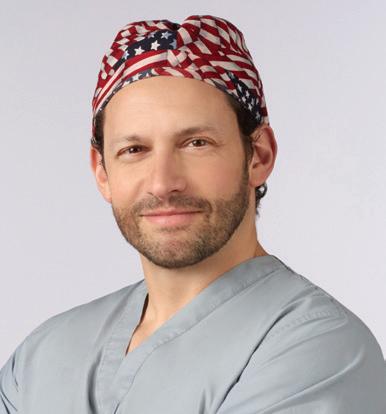
 Nash Family Professor of Neuroscience; Director, The Friedman Brain Institute; Dean for Academic and Scientific Affairs, Icahn School of Medicine at Mount Sinai
As we were finalizing the Spring 2020 newsletter, we had no idea that the biomedical research enterprise of our nation would be shut down almost completely with the sole exception being research focused on COVID-19 itself. Yet, here we are six months later, and we are once again back to the business of doing research into the causes and treatments of brain illnesses, which now includes newly discovered neurological and psychiatric sequelae of COVID-19 infections and the aftermath of dealing with the loss and stress of living during a once-in-a-century pandemic.
We are inspired by the work that our physicians and scientists—and several hundred medical and graduate students and trainees—undertook at the height of the pandemic, and heartened that Mount Sinai led the way in reopening basic and clinical research laboratories while ensuring the safety of our faculty, trainees, and staff. I am proud of the manner in which the Mount Sinai community—including The Friedman Brain Institute (FBI)—continues to respond during these unprecedented times.
This newsletter focuses on efforts to leverage our outstanding advances in neuroscience research and clinical care to uncover new therapeutics by working with Mount Sinai’s Drug Discovery Institute, for example, to create imaginative approaches to tackling many of the leading causes of disability. We also highlight a very innovative program, the Living Brain Project, that allows us to push new boundaries in how we study the human brain in the laboratory.
Finally, I am excited to note that the first FBI newsletter was published in fall 2010, making this our 10-year anniversary in celebrating the neuroscience research, clinical care, and education carried out under the auspices of the FBI.
mountsinai.org/fbi
http://labs.neuroscience.mssm.edu/project/nestler-lab/

Understanding the Inner Workings of the Living Human Brain Through Unique Research Study of 500 Men and Women

To understand the human brain, scientists use clinical observation, neuropharmacology, neuroimaging, neurophysiology, neuromodulation, and molecularcellular neuroscience. While applications of molecular-cellular neuroscience traditionally have been limited to postmortem specimens or cultured neural cells, the other approaches require interactive living subjects. As a result, it is rare that a single cohort is studied using the full humansubject neuroscience toolkit. The biological foundations of neuropsychiatric traits, therefore, remain largely unknown, and our understanding of the inner workings of the human brain continues to be one of the greatest scientific challenges.
The Living Brain Project is a multiscale, data-driven investigation of the human brain wherein a single living population is being studied using all of the tools available for human-subject neuroscience. Led by Alexander Charney, MD, PhD, and Brian Kopell, MD, this study is enrolling 500 men and women from young to old age receiving deep brain stimulation (DBS) as a treatment for movement disorders (for example, Parkinson’s disease) or selected psychiatric syndromes over a 10-year period. This is an
extraordinary research project. Batteries of neuropsychological testing will survey all domains of cognition and mental health, and electronic medical records will be used to create a high-resolution digital record of the health of each participant. Brain structure and function will be recorded through multimodal neuroimaging, and during each of two DBS electrode implantation surgeries (one per hemisphere) specimens will be obtained from the participant’s brain, skin, and blood for multiomic analyses. This ability to obtain neurophysiological measures, as well as transcriptomic mapping from living human brain tissue, holds vast potential.
The Living Brain Project is funded by grants from the Michael J. Fox Foundation and the National Institutes of Health with one primary aim: to help researchers discover, through this unique living cohort, how certain interactions among the various levels of neurobiology, neurophysiology, and neuroanatomy give rise not only to the chronic traits that have been probed in postmortem studies (for example, depression and dementia), but also to acute states that can only be assessed in a living cohort (for example, sadness and working memory).
MESSAGE FROM THE DIRECTOR
@EricJNestler
Brian Kopell, MD, Professor of Neurosurgery, Neuroscience, Neurology, and Psychiatry
2
Alexander Charney, MD, PhD, Assistant Professor, Genetics and Genomic Sciences, Psychiatry, Neurosurgery, and Neuroscience
X-ray demonstrates a bilateral DBS implant in the subthalamic nucleus for a patient with medically refractory Parkinson’s disease.
How Mount Sinai Researchers Are Working To Uncover Therapies for Opioid Addiction
By now, we are all far too familiar with the devastating consequences of opioids in America. More than 99 percent of the world’s supply of the powerful opioid drug hydrocodone— the active ingredient in Vicodin and other prescription pain relievers—is consumed in the United States. This extraordinary level of opioid use has given rise to an epidemic of addiction that has gripped the United States for more than a decade.
Between 1999 and 2018, more than 750,000 people died from a drug overdose, with prescription opioids being responsible for the majority of these deaths. The steady drumbeat of opioidrelated deaths in the news media has been overshadowed recently by the COVID-19 pandemic, but the pandemic has only served to exacerbate the addiction crisis. March through May of this year saw a sharp increase in opioid-related overdose deaths, which coincided with state-implemented stay-at-home orders. In parallel, alcohol sales increased by more than 25 percent, compared over the same time last year, and numbers of individuals testing positive for cocaine and methamphetamine also increased dramatically. It is still too early to fully evaluate the long-term impact of COVID-19 on rates of addiction, but the prognosis is concerning. Undoubtedly, opioid addiction is one of the foremost public health crises of our times, yet available medications are only modestly effective.
The vast majority of treatment-seeking opioid-addicted individuals remain at considerable risk of relapse and overdose death despite being treated with the most effective medications currently available, including methadone, buprenorphine, or naltrexone. We must do better, we can do better, and scientists at The Friedman Brain Institute are leading the way. Four of our scientists are recipients of highly competitive HEAL (Helping to End Addiction Long-term℠) grants from the National Institutes of Health. The HEAL initiative was launched in 2019 with funding from Congress to provide scientific solutions to the opioid addiction crisis.
• Yasmin Hurd, PhD, Director of the Addiction Institute of Mount Sinai, was awarded funding for an innovative project seeking to determine whether cannabidiol, a nonintoxicating, nonaddicting component of marijuana, may be an effective treatment for opioid use disorder.
• Veerle Bergink, MD, PhD, Director of Mount Sinai’s Women’s Mental Health Program, received funding to investigate the long-term impact of in utero exposure to opioids on childhood brain development and function.
Yasmin Hurd, PhD, Ward-Coleman Chair of Translational Neuroscience, and

Development of a new compound that inhibits GPR151, a receptor expressed in the habenula region of the brain, that is intended to block the addictive-related actions of morphine and other opioids. Mount Sinai’s drug discovery program is supported by a HEAL (Helping to End Addiction Long-term℠) grant from the National Institutes of Health.

• Jessica Robinson-Papp, MD, MS, Director of Mount Sinai’s NeuroAIDS Program, whose research program focuses on understanding AIDS-related neuropathies, received a HEAL award to establish the clinical trials infrastructure at Mount Sinai necessary to identify novel nonopioid pain relievers.
• Paul Kenny, PhD, Ward-Coleman Professor and Chair of the Nash Family Department of Neuroscience and Director of Mount Sinai’s Drug Discovery Institute (see Page 1), received a HEAL grant to support the development of a novel medication for treatment of opioid use disorder that builds upon basic research into the molecular and circuit basis of addiction underway in his laboratory (see figure).
The success of FBI scientists in securing these prestigious awards reflects the strength and depth of the drug addiction-focused research program at Mount Sinai, with the ultimate goal of helping to discover new and more effective treatments for opioid addiction—and saving and improving the lives of millions of patients.
Professor
of Pharmacological Sciences, Neuroscience, and Psychiatry
Veerle Bergink, MD, PhD, Professor of Psychiatry, and Obstetrics, Gynecology and Reproductive
 Science
Jessica Robinson-Papp, MD, MS, Associate Professor of Neurology
Science
Jessica Robinson-Papp, MD, MS, Associate Professor of Neurology
 Paul Kenny, PhD, Ward-Coleman Professor and Chair, Nash Family Department of Neuroscience

3
Illustration by Danny Roldan
Expanding Diversity Through the Mount Sinai Laureates Program
Diversity increases the range of experiences, perspectives, and scholarly interests among faculty and trainees. The longstanding paucity of Black/AfricanAmerican and Latinx/Hispanic faculty at Mount Sinai and nationwide is no longer acceptable because of the missed opportunities to enhance the breadth, depth, and quality of our research and teaching enterprise.
The Mount Sinai Laureates Program is part of our institutional response. Each year, over the next five years, Mount Sinai will use dedicated funds to recruit one basic science researcher and one clinical science researcher to our faculty from the Black/African-American or Latinx/ Hispanic research community. In addition, we will recruit two Junior Laureates each
year who are at the interface of completing their graduate work and starting a postdoctoral fellowship, giving them the opportunity to build an independent basic or clinical research program and transition to a Mount Sinai Laureates position.
This unique and robust investment— 20 new Black/African-American or Latinx/Hispanic faculty over the next five years—ensures we will achieve our stated goal of increasing research faculty diversity at Mount Sinai. Such progress will also provide a critical mass of role models and mentors to foster the recruitment and retention of students, fellows, and other junior investigators from these underrepresented groups, planting the seeds for further diversity in future years.
Thank You, Bonnie and Tom Strauss!
Philanthropists and activists in the field of movement disorders for decades, Bonnie and Tom Strauss provided the founding gift in 2020 that established the Bonnie and Tom Strauss Movement Disorders Center. Bonnie and her father, Louis Bachmann, founded the Bachmann-Strauss Dystonia and Parkinson Foundation in 1995, funding 235 research grants totaling $35 million, sponsoring biennial think tanks and establishing four Dystonia Centers of Excellence. The Bonnie and Tom Strauss Movement Disorders Center at the Icahn School of Medicine at Mount Sinai is focused on transforming the conventional research and care paradigm for movement disorders by aiming for precision cures and prevention. The Strauss Center is now the dynamic hub of translational research and clinical treatment for movement disorders within the Mount Sinai Health System. We are proud and humbled that the BachmannStrauss legacy lives on here at Mount Sinai.
Drug, the Target, and Their Environment at Atomic Resolution
Microglia in the Adult Female Zebrafish Brain
Nucleus of all cells are stained with Sytox® (yellow), and microglia and macrophages are stained with anti-Y14 (4c4) antibody (pink). The image was created, without sectioning, from the entire intact brain of an adult zebrafish (typically about 4mm long, 1.5mm thick, and 2mm wide).

Credit: Paloma Bravo, MS, Department of Cell, Developmental and Regenerative Biology (from the Florence Marlow, PhD, lab)
The Friedman Brain Institute
One Gustave L. Levy Place, Box 1065
New York, NY 10029-6574
mountsinai.org/fbi
©2020 Icahn School of Medicine at Mount Sinai | Marketing & Communication
A snapshot from computer simulations capturing the binding of an opioid molecule (orange) to its protein target (pink), which is bound to G protein (green) and embedded in the cell membrane (grey, blue, and yellow).
Credit: Davide Provasi, PhD, Associate Professor, Pharmacological Sciences (from the Marta Filizola, PhD, lab)

more about this effort here
Read
PHOTO E SSAY S
The
