Arnhold_Insitute_ImpactReport_2025

Page 1


Thank You

to the Arnhold family and all our supporters who make our work possible. Your generous contributions support our efforts to improve the health and well-being of people around the world.

© 2026

Dear Friends and Colleagues,

The year 2025 was marked by significant challenges for global health as well as new opportunities for impact. Across the world, the global health landscape shifted rapidly. Yet even amid these challenges, our partnerships proved resilient, grew stronger, and advanced health for communities in New York City and around the world through the remarkable accomplishments we achieved together.

In 2025, we succeeded in continuing to provide vital care and services for HIV-positive youth in Kenya following sudden cuts in funding for essential programs. With our AMPATH Nepal partners, we launched the first dedicated adolescent health clinic at Dhulikhel Hospital, creating a safe and accessible space for young people to receive essential, age-appropriate care. The clinic not only provides critical health services, but also empowers young people with knowledge, dignity, and the confidence to access care that meets their unique needs. In Ghana, we advanced initiatives to screen and treat people for high blood pressure and diabetes.

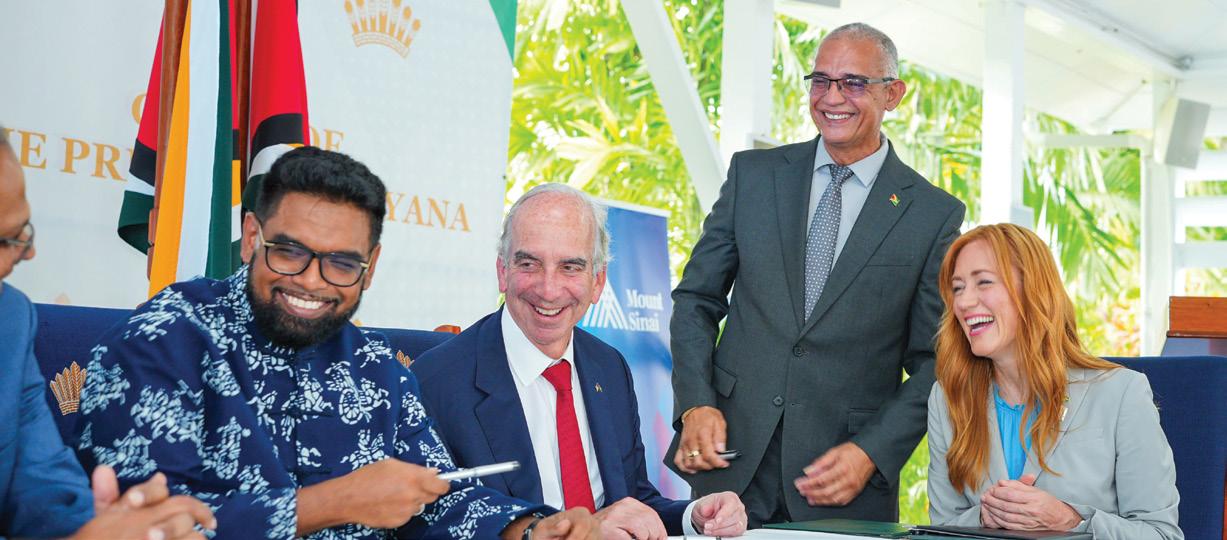
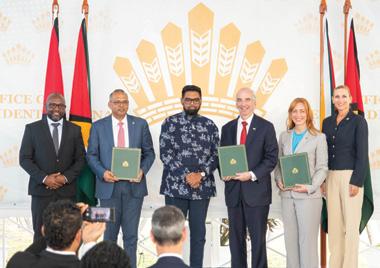
Mount Sinai also launched the next five-year phase of our engagement in Guyana, advancing our shared vision with the Government of Guyana to build a world-class health system so everyone in Guyana can live healthier, more productive lives.

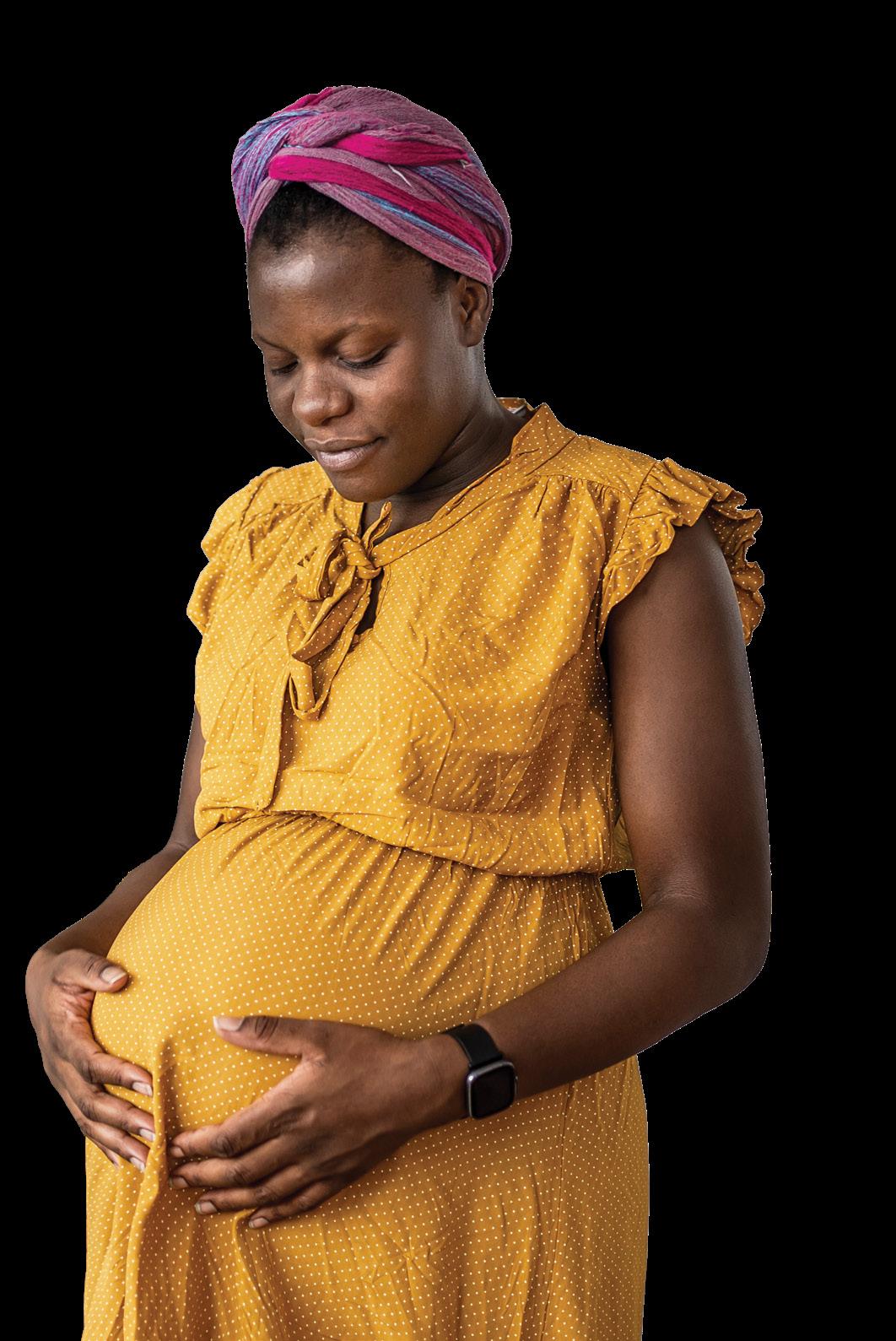
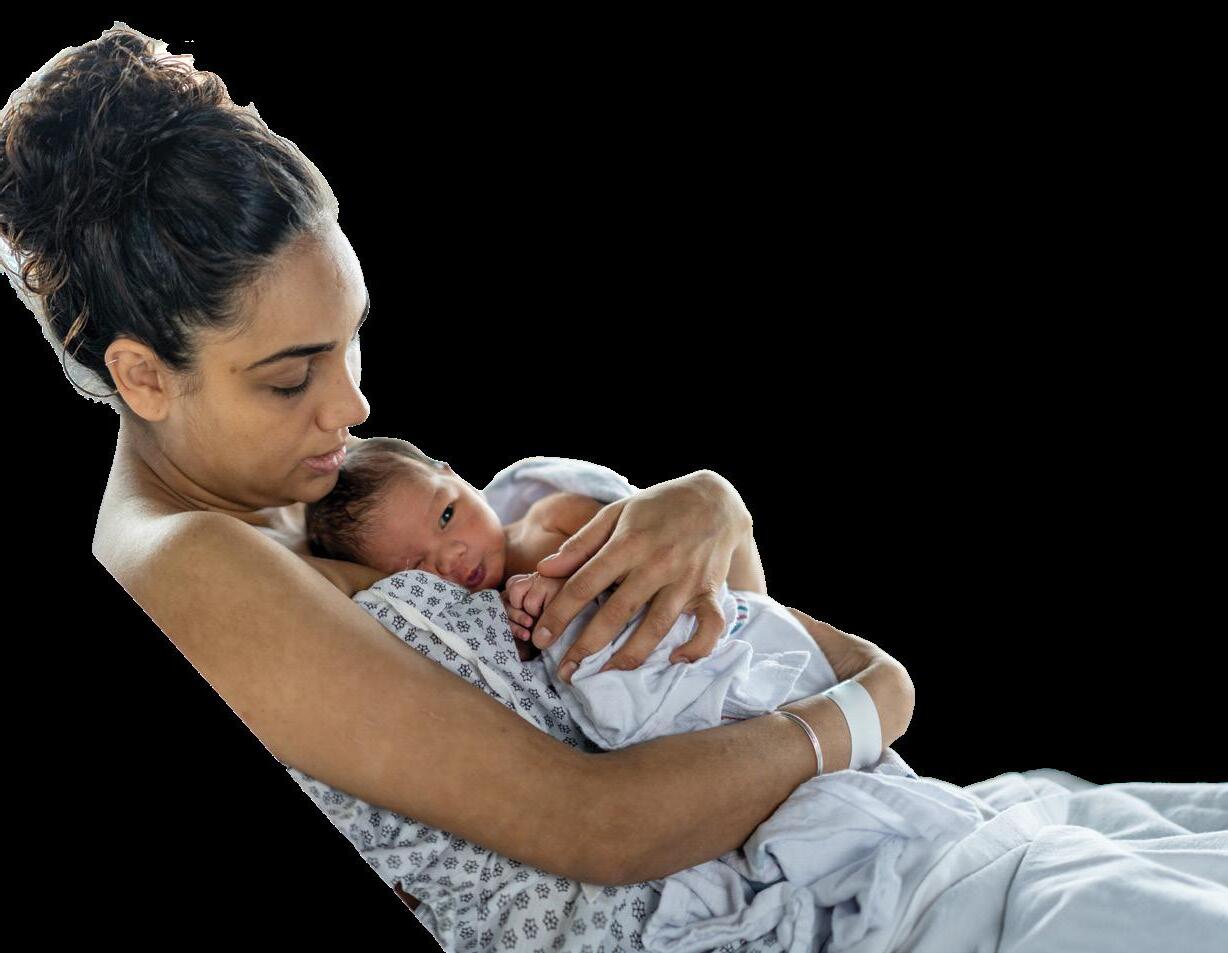
Closer to home, our HOPE (Helping Promote Birth-Equity Through CommunityBased Doula Care) and Growing HOPE doula programs in New York City provided compassionate support to more than 300 patients, including people who are incarcerated or living in temporary housing, ensuring culturally responsive, affirming care throughout pregnancy, birth, and the postpartum period.

Across our partnerships, we made meaningful progress in expanding access to lifesaving services, training a new generation of global health leaders, and generating research to improve care and inform health policy around the world.

As you explore this year’s annual report, I hope you are inspired by the breadth of impact made possible through deep collaboration and shared commitment. Thank you for being part of our global health community.

With gratitude,

At the Arnhold Institute for Global Health at Mount Sinai, we strengthen health systems, educate the next generation of global health leaders, and generate research that improves policy, practice, and care.

OUR VISION

We believe in a world where people in every community have access to high-quality health care.

OUR MISSION

We build enduring global partnerships to improve health.

OUR VALUES

2025 ACCOMPLISHMENTS

CARE

15,000+

adolescents receive care from youth-friendly clinics in Kenya

300+ patients have received doula care in New York City

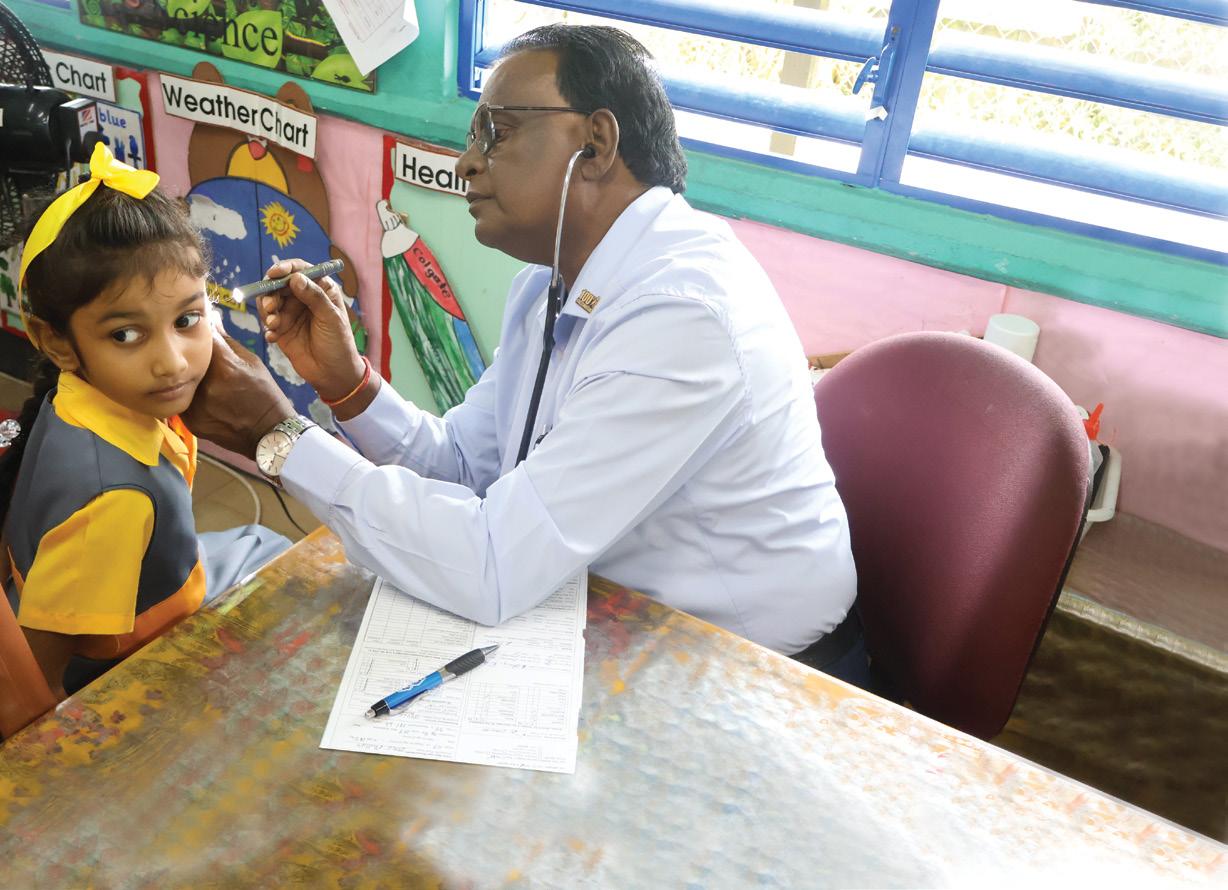
79,000 children have received school-based health screenings in Guyana

EDUCATION

200+

trainees reached through global training and exchange initiatives 70+ educational exchanges across global partnerships

RESEARCH

50+

active research studies from primary and secondary faculty

70+ publications in peer-reviewed journals

34M+ people impacted through our global partnerships

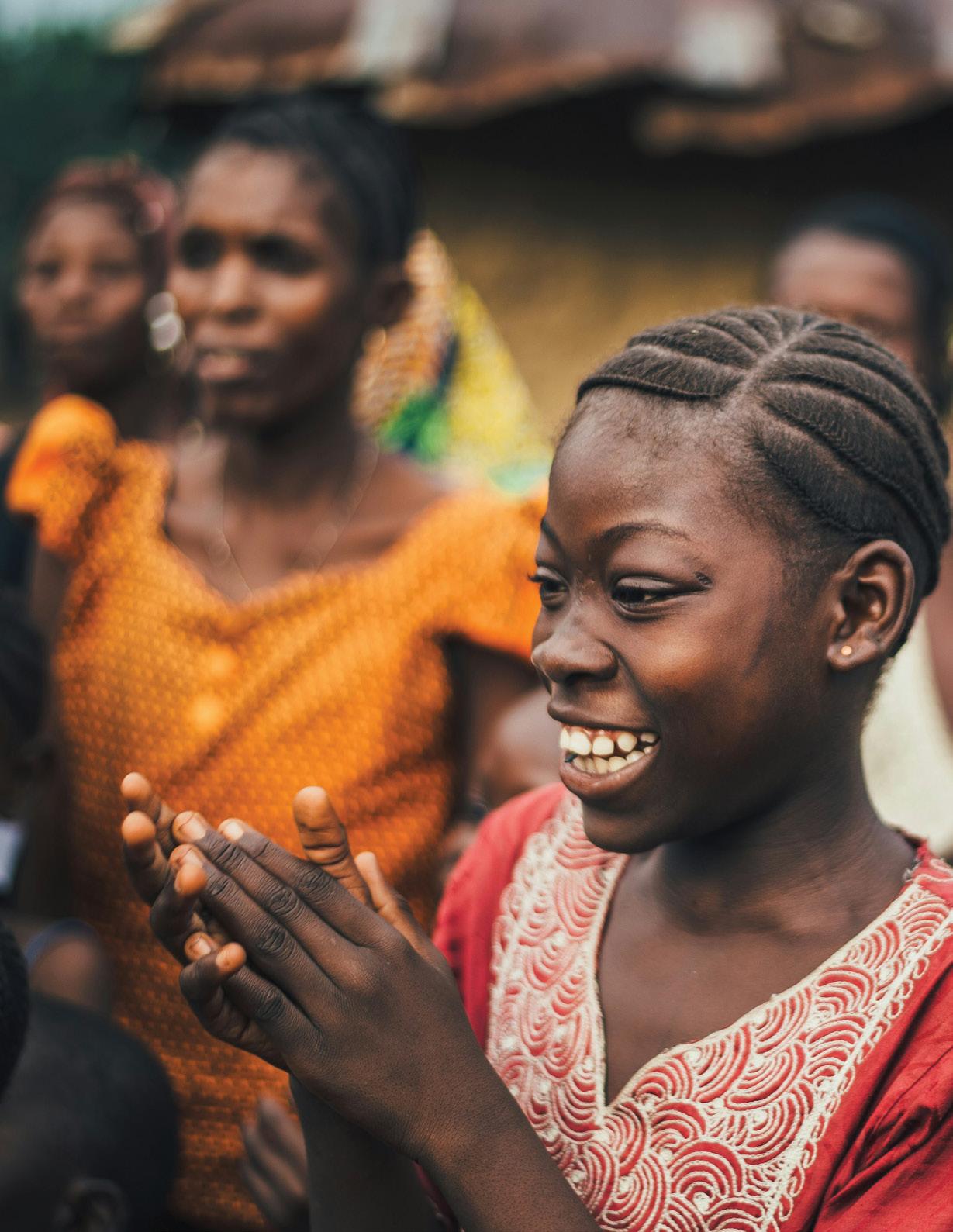
Photo by Annie Spratt on Unsplash

Key Highlights

In 2025, the Arnhold Institute for Global Health and the Department of Global Health and Health System Design at the Icahn School of Medicine at Mount Sinai advanced high-impact partnerships in Ghana, Kenya, Nepal, and New York, while strengthening Mount Sinai’s support for the Government of Guyana to build a world-class health system.

Broadened Support for Our Global Programs on the World Stage

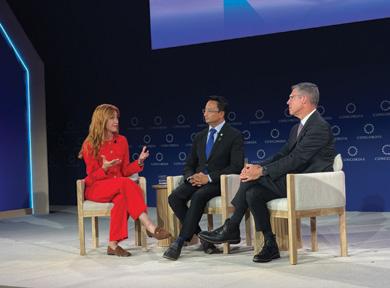
The Arnhold Institute elevated its international profile at high-level forums during the United Nations General Assembly (UNGA) week, including the Concordia Annual Summit—the premier global convening held alongside UNGA that brings together heads of state and global leaders—the UN High-Level Meeting on Noncommunicable Diseases, the Clinton Global Initiative, and The New York Times Climate Forward.

Launched the First Adolescent Health Clinic in Dhulikhel, Nepal

The Arnhold Institute supported the opening of Dhulikhel Hospital’s first adolescent health clinic, providing comprehensive, age-appropriate care for young people ages 10-19 and expanding access to youth-friendly care in surrounding rural communities.

Expanded Innovative Global Education Exchange Program

More than 70 learners participated in exchanges across Ghana, Kenya, Nepal, and New York, including exchanges between partnerships. The Arnhold Institute also welcomed its first research scholar from Ghana to Mount Sinai.

Started the Next Phase of Guyana’s National Health Care Initiative

In 2025, the Government of Guyana advanced the next five-year phase of its national health care initiative—in collaboration with Mount Sinai and Hess Corporation—to transform the country’s public health system through six priority pillars: community-centered care, digital health, national hospital quality improvement, world-class cancer care, capacity building, and women’s and children’s health.

Launched AMPATH Nepal’s First Research Day

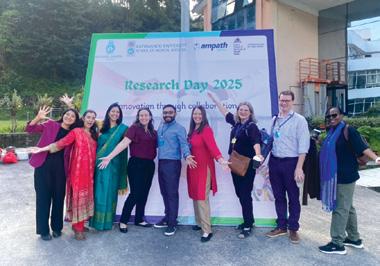
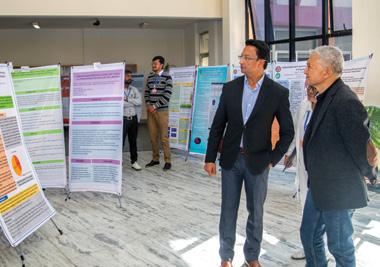
Our AMPATH Nepal partnership hosted its inaugural Research Day at Dhulikhel Hospital, bringing together more than 100 researchers, students, and institutional leaders. With more than 35 oral and 60 poster presentations, the event highlighted research accomplishments and fostered collaboration and knowledge exchange across Nepal’s academic and clinical institutions.

Launched Successful Campaign to Save Critical Youth Services in Kenya

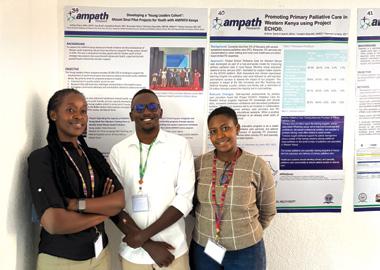
The Arnhold Institute mobilized a rapid emergency fundraising campaign in response to U.S. government funding shifts to sustain essential youth health services in Kenya, including lifesaving medications and peer navigator support.

Our programs support our mission to build enduring global health partnerships, improving health through education, impactful research, and better care for youth. From New York City’s most diverse communities to the mountains of Nepal, our program work spans the globe and extends across our five strategic partnerships.

EDUCATION

We are training the next generation of global health leaders

GLOBAL

YOUTH HEALTH

We are expanding access to youthfriendly care for all

RESEARCH

We are shaping global health policy and practice

EDUCATION PROGRAM: Training the Next Generation of Global Health Leaders

The Arnhold Institute’s education programs provide opportunities for mutual learning and exchange with our global partners. Our collaborative approach to learning fosters the growth of strong global health leaders, the reciprocal exchange of knowledge, and more effective capacity to meet the world’s biggest health challenges.

PROGRAM HIGHLIGHTS

70+ learners participated in exchanges across Ghana, Kenya, Nepal, and New York— not only with Mount Sinai but also across global partnerships—for world-class training opportunities.

$100,000+ provided in funding to support reciprocal exchanges, including the first exchange of research staff from our Ghana Partnership to New York and first medical student exchanges between Kenya and Nepal.

200+ health care workers trained, including adolescent health training for clinical providers in Nepal and Kenya and simulation training for faculty in Nepal.

Continued sponsorship of a medical student-led series focused on current events, global health equity, and the future of global health engagement.

Growing Simulation Excellence in Nepal

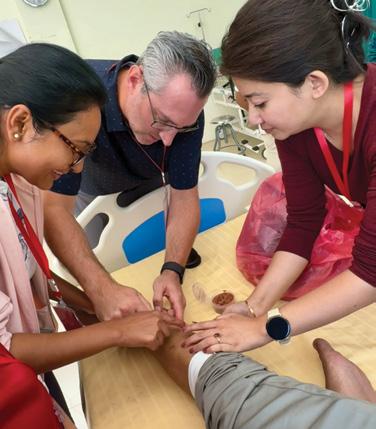
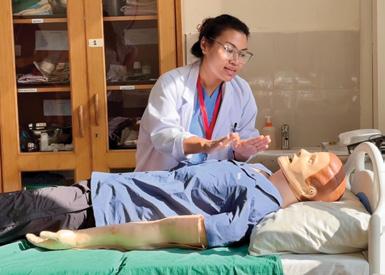
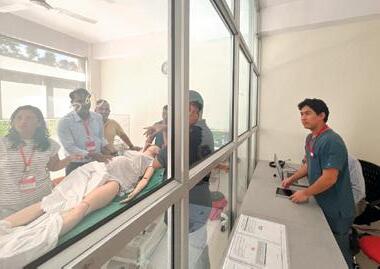
Makeup, moulage, and two-way mirrors set the stage for an enhanced approach to clinical education in 2025 at Dhulikhel Hospital in Nepal. The first LEAD Nepal (Leadership, Education, and Advanced Debriefing) workshop marked a major milestone in strengthening simulation-based medical education and clinical education leadership.

Traditional medical education often relies on lectures and bedside observation. But in high-stakes situations—such as emergency response or trauma care—health care teams rarely have opportunities to practice real-time decision-making. Simulation-based learning fills this gap by recreating realistic clinical scenarios in a controlled environment, allowing teams to safely test skills, reflect, and improve.

Through LEAD Nepal, more than 40 faculty members across clinical departments at Dhulikhel Hospital were trained to design, implement, and evaluate simulation-based education. Participants learned to used “moulage” to create realistic wounds such as burns and snakebites, and technologically advanced mannequins and digital tools to simulate scenarios ranging from childbirth complications to cardiac arrest.

Supported with pilot funding from the Arnhold Institute to advance engagement with our AMPATH Nepal Partnership, the workshop was led by Jared Kutzin, PhD, DNP, MPH, RN, Senior Director, Mount Sinai Simulation Teaching and Research (STAR) Center, and Professor, Emergency Medicine, and Medical Education, Icahn School of Medicine at Mount Sinai. Implemented in collaboration with the Arnhold Institute’s Global Health Education Program, the training emphasized evidence-informed methods for strengthening leadership in simulation-based education. Faculty practiced scenario design, facilitation, and advanced debriefing techniques that promote psychological safety, team learning, and reflection.

Offered twice as an intensive three-day workshop, the inaugural LEAD Nepal training strengthened Dhulikhel Hospital’s educational leadership—advancing safer, more effective care well beyond 2025.

“This work goes beyond building technical skills. By investing in local educators and building a sustained learning partnership, LEAD Nepal laid the foundation for long-term impact on clinical training and patient care.”
– Diana Lee, MD, Director of Global Health Education, Arnhold Institute, and Associate Professor, Pediatrics, and Global Health, Icahn School of Medicine

Top picture: Participants are taught moulage and makeup techniques to add realism to their scenarios. Middle picture: A participant engages in a practice simulation. Bottom picture: From behind a two-way mirror, participants facilitate their selfdesigned simulation as colleagues carry out the scenario.

GLOBAL YOUTH HEALTH PROGRAM: Expanding Access to Youth-Friendly Care for All

The Arnhold Institute for Global Health is committed to advancing the health and well-being of all youth, no matter where they live. We expand access to high-quality, youth-friendly care with a focus on meeting the needs of underserved communities. Our work centers the wisdom of young people and their communities to produce health solutions that work.

PROGRAM HIGHLIGHTS

Launched the Global Youth Health Program to improve adolescent health care across the Arnhold Institute’s five global partnerships.

Provided hands-on, skills-based training in youth-friendly health care to more than 140 clinical providers across our global partnerships.

Supported the opening of Dhulikhel Hospital’s first Adolescent Health Clinic, providing comprehensive care for young people ages 10-19.

Published 19 peer-reviewed articles and led or collaborated on 12 ongoing research studies exploring needs and best practices in global youth health.

Developed a comprehensive adolescent health handbook and supported training for clinicians across Guyana, providing important tools for improving quality care for Guyanese adolescents.

Dhulikhel Hospital’s First Adolescent Health Clinic Launched

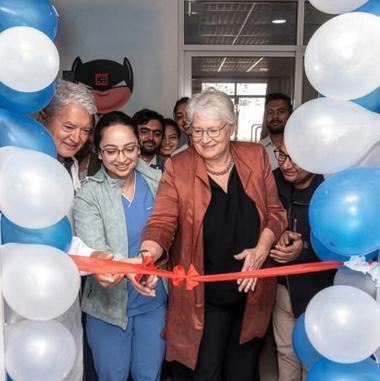
Dhulikhel Hospital launched its first comprehensive adolescent health clinic in April 2025, filling a critical need identified by clinicians in Dhulikhel, Nepal. This ambitious project brought together Dhulikhel Hospital faculty and staff, the Arnhold Institute for Global Health’s Global Youth Health Program, and our AMPATH Nepal Partnership to design an integrated care model for Nepali youth ages 10-19.

Momentum for the clinic grew as Nepali clinicians saw a need for services that catered specifically to the needs of youth. Schoolbased and community providers were uncertain where to refer adolescents seeking services for mental health or other sensitive topics. Pediatricians at Dhulikhel Hospital further identified a need for specialized support for youth with chronic illness navigating the transition to adult providers, and gynecologists saw a need for adolescent-centered management of menstrual disorders and other reproductive health issues.

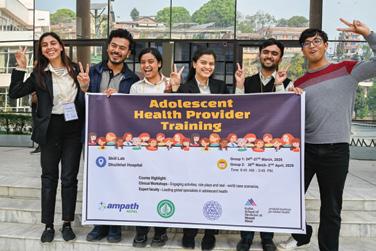
Prior to the opening, youth health experts from the Arnhold Institute traveled to Nepal to conduct a multi-day training for providers and staff at Dhulikhel Hospital on how to deliver empowering, youthcentered care. The Arnhold Institute team trained students from the Kathmandu University School for Medical Sciences to be “standardized patients,” preparing them to play the role of adolescent patients that participants could interview, using hands-on scenarios that allowed participants to receive real-time expert feedback on their skills in interviewing and counseling youth.

Now, every Thursday adolescents receive care at the clinic, spanning mental health, chronic disease management, and reproductive health, including support for the transition to adult care.

The team in Nepal also continues to provide training for school health nurses and other community clinical providers, seeking to improve care for adolescents throughout the region.

“We hope to build on young people’s strengths and capacities and involve young people themselves in creating new and innovative solutions,” says Mary A. Ott, MD, MA, Associate Director, Global Youth Health Programs, Arnhold Institute for Global Health, and Professor, Global Health, and Pediatrics, Icahn School of Medicine. “The clinic represents a shift in how Dhulikhel Hospital sees adolescents—not as a big risk but as a huge opportunity.”

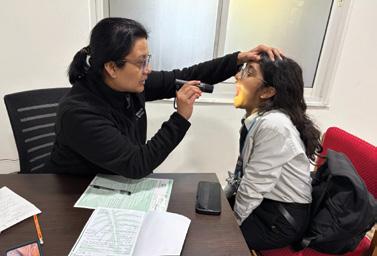
Top picture: Dr. Mary A. Ott and Dhulikhel Hospital leadership at the Adolescent Health Clinic ribbon cutting in Dhulikhel. Middle picture: Medical students who role-played as adolescent patients at a provider training. Bottom picture: Prithuja Poudyal, MD, pediatric neurologist at Dhulikhel Hospital in the Adolescent Health Clinic, conducts a check-up with an adolescent patient.

RESEARCH PROGRAM: Shaping Global Health Policy and Practice

The Arnhold Institute’s Research Program supports global health research to strengthen policy and practice within our communities and on a global scale. We use research to tackle the world’s biggest health challenges with the goal of implementing evidence-based solutions that will improve access to high-quality care and better health for everyone. Our researchers aim to improve health across the lifespan, strengthen health systems, and bring care to some of the hardest-toreach populations in the world.

PROGRAM HIGHLIGHTS

Published 70+ articles in high-impact, peer-reviewed journals in 2025.

Supported AMPATH Nepal’s first Research Day, bringing together 100+ researchers and students from AMPATH Nepal, Dhulikhel Hospital, and Kathmandu University School of Medical Sciences to share research achievements.

Informed major global policy guidance in pediatric HIV care and contraception for adolescents through our faculty’s research.

Developed a plan and tools to strengthen research ethics review capacity in Ghana, helping to keep Ghanaian research participants safe.

Conducted trainings in research writing for 50+ researchers in Kenya and Nepal, increasing local capacity and equity in our collaborative research.

Launched a Faculty Peer Writing Group to support success in grant writing and article publication, increasing the reach and impact of our growing research program.

AMPATH Nepal’s Inaugural Research Day

Our AMPATH Nepal Partnership held “Innovation Through Collaboration: Research Day 2025” in November, bringing together more than 100 faculty, staff, students, and leaders from Dhulikhel Hospital, Kathmandu University School of Medical Sciences, and AMPATH partnership institutions in the United States, Kenya, and Mexico. They shared new findings, celebrated accomplishments, and promoted AMPATH Nepal’s research. There were more than 35 oral and 60 poster presentations.

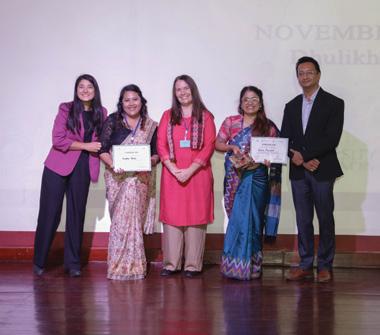
In addition to the research presentations, Tim Mercer, MD, MPH, from AMPATH/MAPAS México and Namita Ghimire, PhD, from the Nepal Health Research Council, gave keynote addresses. Both speakers described their experience with collaborative research and highlighted successes within their programs. The day was rounded out with awards acknowledging outstanding projects and investigators and performances showcasing Nepal’s rich musical and dance culture.

“The most important aspect of Research Day was how it created a shared platform that brought together the siloed research projects within our institution,” says Archana Shrestha, PhD, MPH, Co-Director, AMPATH Nepal, and Associate Professor of Public Health at Kathmandu University School of Medical Sciences.

“It ignited conversations to move forward collectively, building new teams and refreshing energy among faculty and fellow researchers.”

We plan to make this an annual event. The Research Program team, with AMPATH Nepal, has already started planning ahead with hopes of expanding the audience, making it a multi-day event, and including research-related trainings.

100+ participants attended 35 oral presentations

60 research posters

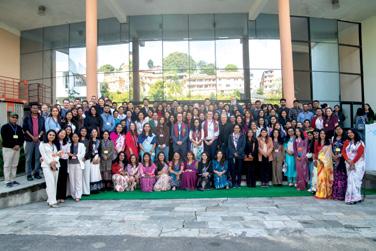
Top picture: Attendees of AMPATH Nepal’s inaugural Research Day. Middle picture: Biraj Karmacharya, MD, PhD, MPH (left), and Ram KM Shrestha, MD (right), view the poster presentations at AMPATH Nepal’s first Research Day. Bottom picture: Research Day award recipients receive their certificates from AMPATH Nepal leadership.

Vice Chair for Research and Faculty Affairs

Arnhold Institute for Global Health

Associate Professor of Medicine

(Pulmonary, Critical Care and Sleep Medicine); Global Health; and Pediatrics

Icahn School of Medicine at Mount Sinai

A Vision for Research With Impact Across Communities and Countries

In 2025, the Arnhold Institute for Global Health welcomed Alison G. Lee, MD, MS, as Vice Chair for Research and Faculty Affairs. With expertise in global environmental health research, her goals for her new position emphasize the importance of improving public health through policy-relevant research.

An internationally known expert in air pollution and lung disease, Dr. Lee’s global health journey began as an undergraduate, when she was introduced to the study of health disparities on a global scale. After working in a health clinic in the Democratic Republic of Congo and for an HIV program in Zambia, she completed medical training in internal medicine, with a fellowship in pulmonology and critical care medicine. She also completed an NIH-funded research fellowship in Argentina. There, she began to explore the relationship between air pollution and lung health, research that has defined her career and led to a longstanding research collaboration in Ghana.

She and her Ghanaian collaborators recently expanded their research beyond air pollution, looking at how shifting weather patterns due to climate change affect people’s health. True to her message that research must help people, she notes that, “Initial findings demonstrate an impact of heat on death rates and on pregnancy outcomes like birth weight. We’re also working with community leaders, policymakers, and other key partners to think about public health interventions to help people adapt to changes in the climate, especially in settings where, for example, households don’t have electricity for air conditioning.”

“It’s important to identify sustainable ways communities can adapt to climate change, especially in places where adaptation has not been fully explored,” she says. “I’ve met many people interested in similar work across our partnerships, which offers an exciting opportunity to consider multi-country approaches.”

“By expanding and enhancing the research that’s happening at the Arnhold Institute, we can think about policy approaches to have a broad impact across communities, and across countries.”

3

Improving Health Through Partnerships

We work across five global strategic partnerships in Ghana, Guyana, Kenya, Nepal, and New York City. By partnering with health systems, governments, academic institutions, private sector companies, and leading community-based organizations, we maximize impact and help communities become healthier and stronger.

Our partnerships are lasting, equitable, and mutually beneficial. Together, we:

Expand access to primary care, maternal and child health, and chronic disease care for underserved communities.

Deliver comprehensive youth-centered care for adolescents where they live and go to school.

Strengthen health systems to deliver high-quality care for people who need it most.

GLOBAL STRATEGIC PARTNERSHIPS

New York City Advancing Community Health

Guyana Vision 2030: A Healthier Guyana

Ghana Delivering Better Health to People’s Doorsteps

Kenya Improving Holistic Youth Health

Nepal

Strengthening Access to Quality Health Care for All

PARTNERSHIP

Delivering Better Health to People’s Doorsteps in Ghana

Our Ghana Partnership conducts collaborative research to improve health and strengthen health systems that serve some of the hardest-to-reach communities in rural Ghana. We generate community-based research in Ghana that informs national and global health policy, expands access to quality care for underserved populations, and prepares future global health leaders to apply research to improve health for all.

GHANA PARTNERS

PARTNERSHIP HIGHLIGHTS

Launched the Ghana Partnership’s first joint fiveyear strategic plan in collaboration with the Ghana Health Service (GHS), establishing a shared vision and key priority areas to achieve health for all Ghanaians.

Launched and funded seven collaborative working groups in noncommunicable diseases, adolescent health, infectious disease, environmental health, policy and care delivery, research capacity, and education.

Started an exchange program to bring Ghana Health Service scholars to Mount Sinai and Mount Sinai trainees to three GHS partner research sites.

Secured more than $11 million in support of our vision to translate research into policy and policy into primary care at the doorsteps of all Ghanaians.

Kintampo
Navrongo
Dodowa
GHANA

Transforming Hypertension and Diabetes Care in Ghana

The government of Ghana aims to achieve health for all Ghanaians by 2030, but high blood pressure, diabetes, and other noncommunicable diseases pose a major threat.

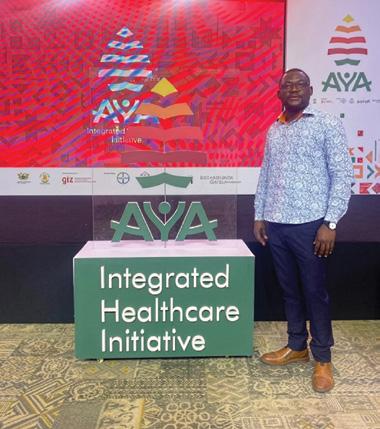
To address this challenge, our partnership between Mount Sinai and the Ghana Health Service (GHS) is working with a German development agency—Deutsche Gesellschaft für Internationale Zusammenarbeit, or GIZ—to build, launch, and evaluate a bold new care model for hypertension and diabetes care: the AYA Integrated Healthcare Initiative. AYA—which means “fern” in Twi, a Ghanaian dialect, and symbolizes resilience—uses an innovative community-based care model developed with input from Mount Sinai researchers and physicians to bring health care to the doorsteps of thousands of Ghanaians.

In 2025, we launched the AYA program and finalized its care plan. Our Ghana Partnership will play the crucial role of evaluating the effectiveness of the intervention and advising on its implementation.

Ultimately, AYA will screen tens of thousands of people for hypertension and diabetes across eight districts of the Ashanti Region.

This project aims to treat 80 percent of people who screen positive for hypertension and diabetes, with disease controlled for 50 percent of those individuals. It will also generate important knowledge to help policymakers scale the model nationwide.

The project also builds on the legacy of Engelbert Nonterah, MD, PhD, a researcher at GHS’s Navrongo Health Research Centre and longtime Mount Sinai partner who passed away in 2025. Dr. Nonterah was a driving force behind our innovative, communitybased care model, and we honor his memory as a clinician, scholar, and advocate for health for all Ghanaians.

The AYA Integrated Healthcare Initiative, an international collaboration to improve care for noncommunicable diseases in Ghana, will screen 48,000 people for high blood pressure and 34,000 people for diabetes.

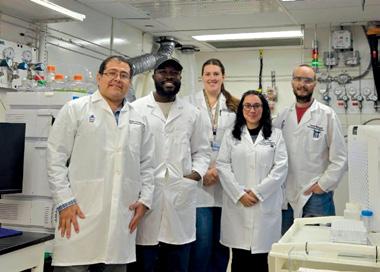
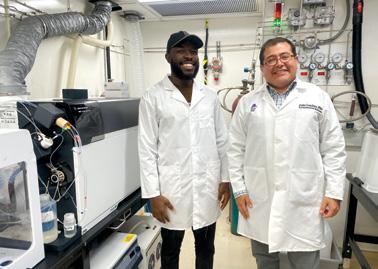
Top picture: Dr. Engelbert Nonterah (1984-2025) at the AYA project launch in 2024. Middle picture: Robert Johnson, MPhil, an environmental scientist from Ghana, with chemist Julio Landero, PhD, at Mount Sinai.

Bottom picture: Arnhold Institute Director Rachel Vreeman, MD, MS, and Ghana Minister of Health, Hon. Kwabena Mintah Akandoh, in Ghana.

PARTNERSHIP

Vision 2030: A Healthier Guyana

Since 2022, Mount Sinai has partnered with Guyana’s Ministry of Health and Hess Corporation to support a bold vision for improving access to high-quality care nationwide. Together, we seek to transform Guyana’s public health system to deliver world-class health care for all and ensure everyone in Guyana can live healthier, more productive lives.

GUYANA PARTNERS

Georgetown

GUYANA

PARTNERSHIP HIGHLIGHTS

Extended the initiative through 2030 and launched Vision 2030: A Healthier Guyana, Mount Sinai’s framework aligned with the Government of Guyana’s national strategy to expand access to high-quality care for Guyana’s 800,000 residents.

Launched Guyana’s first Digital Health Training Institute to build an expert digital health workforce, with 250 professionals to be trained in the first three years.

Expanded child health screenings nationwide— from nursery schools to primary and secondary schools—with nearly 79,000 students screened.

Trained, equipped, and empowered more than 100 health workers in urban and remote areas to provide comprehensive diabetes care directly in their communities.

Improved patient safety and quality of care at Georgetown Public Hospital Corporation, Guyana’s largest hospital, through enhancing patient identification, safer medication practices, and clinical trainings—including newborn and maternity care and emergency resuscitation.

Healing the Hinterland: A 19-Year-Old’s Journey to Providing Nursing Care in Guyana’s Interior

Growing up in the small village of Fyrish in rural Berbice, Crystal Skeete was raised close to medical facilities and noticed challenges families faced accessing quality health care in remote areas. Inspired by her sister, a nurse who spoke passionately about leadership, compassion, and clinical skills,

Crystal set her sights on serving remote regions and improving care for the people who need it most.

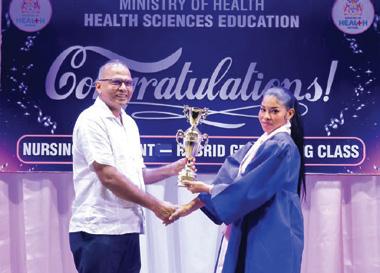
Crystal’s journey began at 19 years old, when she enrolled in the hybrid Nursing Assistant Training Program offered through the Health Sciences Education Department within the Guyana Ministry of Health and supported by Mount Sinai. Her initial foray into online learning was overwhelming, as she was accustomed to a traditional classroom environment. As she grew more comfortable, she learned that she could control the pace of learning, balance family responsibilities, and gradually gain fluency in the coursework. She still remembers her anatomy and physiology instructor reminding the class, “These are people’s lives we are dealing with,” a message that deeply resonated.

The training challenged Crystal to grow professionally and personally. She overcame her fear of needles and learned to communicate effectively with patients. After becoming a nursing assistant, she now works at Mabaruma Regional Hospital, where the smiles of recovering patients remind her why she chose this path. Hearing patients say, “Nursey, you helped me feel better,” is her favorite part of the job.

As her career progresses, Crystal hopes to continue her training to become a registered nurse or registered nurse midwife. The future is in her hands as she builds her skills to deliver high-quality health care for people living in Guyana’s hardest-to-reach communities.

1,200+ students graduated from the hybrid Nursing Assistant Training Program , strengthening Guyana’s health workforce and addressing the national nursing shortage.

Top picture: Minister of Health, Hon. Frank Anthony, MD, MPH, congratulates Crystal Skeete at her April 2025 graduation in Georgetown, Guyana. Middle picture: Graduating class of 2025. Bottom picture: Crystal Skeete snaps a pre-work selfie before her shift at Mabaruma Regional Hospital in Region 1.

PARTNERSHIP

Improving Holistic Youth Health in Kenya

Our AMPATH (Academic Model Providing Access to Healthcare) Kenya Partnership envisions a world where all youth can access the preventive care and treatment services they need to live healthy, fulfilling lives. We focus on growing holistic and youth-friendly care in western Kenya through innovative health care services, research, and training.

PARTNERSHIP HIGHLIGHTS

Raised more than $350,000 to support essential care for youth disrupted by the 2025 U.S. funding shifts, including crucial medications and peer navigator services.

Strengthened adolescent health care by training more than 100 health care workers , including nurses, physicians, and pediatric and psychiatry trainees.

Launched a quality improvement project to increase use of minimally invasive gynecologic surgery Moi Teaching and Referral Hospital, focusing on ectopic pregnancies.

Held 11 reproductive health telementoring sessions to improve knowledge of health care providers in western Kenya, each with more than 100 attendees.

Built research collaborations in preeclampsia, cervical cancer screening, and obstetric point-of-care ultrasound to improve women’s health care.

Eldoret
KENYA

Bringing Adolescent and Youth-Friendly Services to Kitale

In 2025, we expanded the reach of youth-friendly services in western Kenya by supporting a new adolescent health clinic at Kitale County Referral Hospital. As the first adolescent health clinic in Kitale, Kenya, it will build access to youth-specific services that improve health into adulthood.

Youth have the best health outcomes when they receive care in a judgment-free environment tailored to their stage of life, as they learn to manage their own health and lives. Kitale County Referral Hospital serves more than 3,000 children and young adults annually, but its only adolescent-specific service is a clinic for youth living with HIV, held Thursdays and one Saturday a month. In 2025, that began to change as the hospital developed its first dedicated adolescent clinic with support from the Mount Sinai AMPATH Kenya Partnership.

In January 2025, clinicians from Kitale attended an adolescent health training hosted by Mount Sinai. In one workshop, participants drew their ideal, youth-friendly clinic. Inspired by the activity, our partners in Kitale used the drawings to design their new adolescent health clinic.

The Mount Sinai AMPATH Kenya Partnership raised funds to support the effort, purchasing equipment and supplies to transform an unused hospital ward into a space where young people—not only those living with HIV—can access comprehensive health services. Services will include sexual and reproductive health care, infectious disease screening, mental health support, and chronic disease management. It will also have its own pharmacy and lab, ensuring a private, youth-friendly space for adolescents to seek care. The clinic is expected to open in early 2026.

Brittany McCoy, MD, Mount Sinai faculty lead for the AMPATH Kenya Partnership, notes,

“The new center in Kitale represents a powerful step toward ensuring young people are seen, heard, and supported with care that truly reflects their needs.”

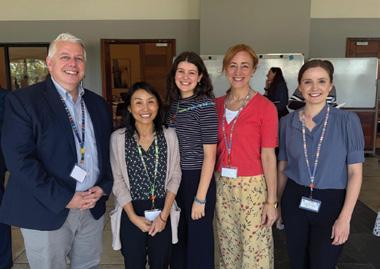
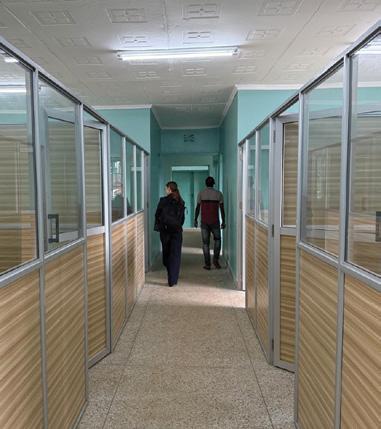
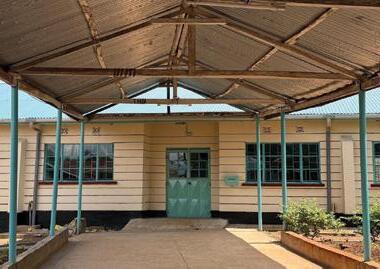
Top picture: Arnhold Institute leadership and AMPATH Kenya team members in Kenya in November 2025. Middle picture: Six individual treatment rooms in the new adolescent health clinic at Kitale County Referral Hospital. Bottom picture: The entrance to the new health clinic.

PARTNERSHIP

Strengthening Access to Quality Health Care for All in Nepal

Our AMPATH (Academic Model Providing Access to Healthcare) Nepal Partnership strengthens access to high-quality health care, from the hospital to people’s doorsteps in Nepal. We do this by improving clinical services and specialty care, providing medical education exchanges, and building research capacity.

NEPAL

PROGRAM HIGHLIGHTS

160+ adolescents received care and 110 providers participated in adolescent health provider trainings at the newly launched Adolescent Health Clinic.

Heightened global visibility through a United Nations General Assembly week Concordia Annual Summit panel titled Powerful Partnerships: Lessons from Nepal, and a convocation address at Kathmandu University delivered by Brendan G. Carr, MD, MA, MS, Chief Executive Officer, and the Kenneth L. Davis, MD, Distinguished Chair, Mount Sinai Health System.

60+ paramedics and first responders received pre-hospital care training.

16,000+ patients screened for cervical and breast cancer and chronic diseases.

17 active research projects and five publications in peer-reviewed journals.

Dhulikhel

Bringing Lifesaving Cancer and Chronic Disease Screenings to Communities in Nepal

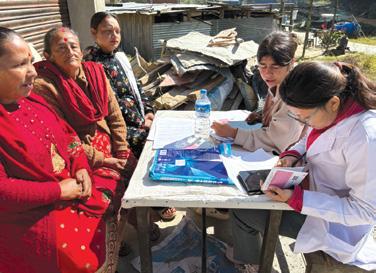
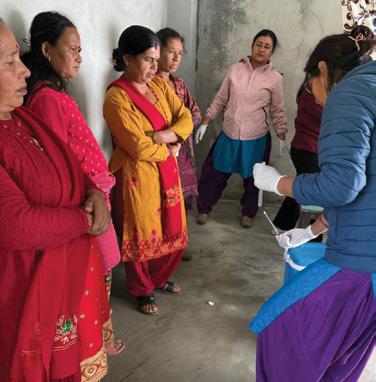
AMPATH Nepal brings lifesaving health screenings directly to communities—strengthening awareness, building trust, and empowering families. To date, the AMPATH Nepal Partnership has screened thousands of patients for cervical and breast cancer, the most prevalent cancers among women in Nepal, and two major chronic diseases: diabetes and hypertension. Screenings serve as powerful tools to detect disease early and increase the chances of effective treatment through linkage to care—especially in rural communities and resource-limited settings.

Community members and health workers share their experiences from these screening programs below:

CERVICAL AND BREAST CANCER

Screening participants

“This camp is about cervical and breast cancer screening, and I felt very good attending it. Earlier, we had to travel long distances and pay bus fares to reach a health facility, but this time you came to our own community. We are very happy and grateful.”

“I really liked this camp because many people are not aware of breast and cervical cancer symptoms. They usually don’t seek health services until the symptoms become severe, and that is one of the reasons many women develop cancer—they simply don’t have the knowledge. When you come to the community and run these camps, women are able to make time and get screened.”

– Residents of Panchkhal-8, Hokse

HYPERTENSION AND DIABETES

Screening

health worker

“When we went to different places to conduct the screening camps, the people got health education. They got knowledge regarding diet and exercise. People have become more health conscious than before. People have started coming to measure their blood pressure and blood sugar [regularly].”

– Sumitra Bal (pictured right), Health Post In-charge, Panauti-7

Top picture: Registration at a women’s health screening in rural Nepal. Middle picture: A nurse explains how to collect a self-sample at a cervical cancer screening.
Neha Limaye, MD, MPH

Assistant Director, AMPATH Nepal Partnership Arnhold Institute for Global Health

Assistant Professor of Medicine (Hospital Medicine), Pediatrics, and Global Health Icahn School of Medicine at Mount Sinai

Building Local Expertise Through Partnership

As Assistant Director of the Arnhold Institute for Global Health’s AMPATH Nepal Partnership, Neha Limaye, MD, MPH, leads and strengthens collaborations between partners in Nepal and at Mount Sinai to improve care and build local capacity, particularly in her clinical areas of internal medicine and pediatrics.

A key highlight this year was the launch of Dhulikhel Hospital’s first Adolescent Health Clinic. “It was inspiring,” she says, “to see the trajectory of growth in adolescent care. We went from holding the first trainings for Dhulikhel providers in April, to launching the clinic, to now witnessing those providers train others on adolescent-friendly care and counseling. The latest trainings were held completely in the Nepali language and led by Nepali providers.”

Dr. Limaye credits her parents—a pathologist and a physicist—for sparking her interest in science. She later found her focus in global health while in college. “In my first two years at Duke University, I attended a lecture by global health leader Paul Farmer, traveled on my own in India for the first time, and worked on a community health project in rural Uganda,” she says. “I began to understand the extent of global health inequities, and I knew I wanted to help tackle them. I created my own major in global health and have been following that path ever since.”

In Dr. Limaye’s research, she works with Nepali colleagues to understand needs related to adolescent and adult chronic disease care using a “co-design” approach. She explains, “Through workshops, teams of community members, health workers, researchers, and others share ideas and plan interventions together. We’ve navigated age, gender, and other social barriers to ensure all voices are heard. I’ve left each workshop so inspired by the collective power of communities designing research and interventions for themselves.”

“Amplifying local voices is the only way to build successful global health interventions.”

PARTNERSHIP

Advancing Community Health in New York City

Our New York City (NYC) Partnership seeks to improve health outcomes and access to care in underserved communities in the borough of Queens. We apply lessons from our global partnerships to create innovative health programs that connect hospital and community-based systems of care to ensure access to high-quality health care.

NEW YORK CITY PARTNERS

PARTNERSHIP HIGHLIGHTS

300+ patients served through the Helping Promote Birth-Equity through Community-Based Doula Care (HOPE) and Growing HOPE doula programs.

200+ participants enrolled in the Migrant Access to Primary Care and Social Support (MAPS) program to address the health and social needs of new arrivals to NYC.

Strengthened education initiatives in community health, including embedding medical residents in community-based organizations and launching the Dr. Joseph Masci Community and Global Health Seminar Series.

75+ mothers and 45+ infants enrolled in the Community and Household Infant-Maternal Exposure Study (CHIMES) to examine the impact of environmental exposures on maternal and child health.

Five Pilot Project Award recipients selected to support innovative research, care improvement, and training projects that address the needs of those served by NYC Health+Hospitals/Elmhurst and NYC Health+Hospitals/Queens.

Born Inside: Amplifying Incarcerated Mothers’ Voices to Improve Pregnancy Care

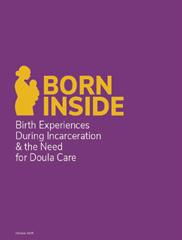
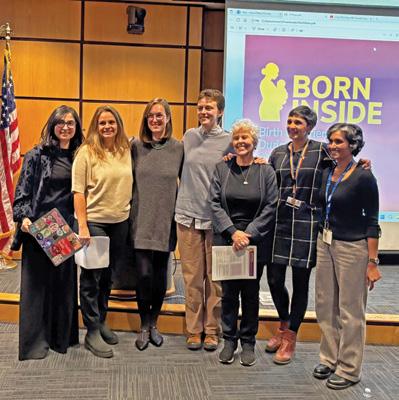
In 2025, the NYC Partnership and collaborators launched Born Inside: Birth Experiences During Incarceration & the Need for Doula Care, a report that documents the conditions faced by pregnant people in New York’s prisons and jails and highlights the critical role of doulas in providing care during pregnancy and childbirth.

Grounded in lived experience, the report directly informed the NYC Partnership’s Growing HOPE program, which provides comprehensive doula support for justice-involved and housinginsecure birthing people. To date, the program has served more than 100 patients. Doulas meet with pregnant people at the Rikers Island jail complex during pregnancy and postpartum and provide support during labor and delivery at the hospital.

The report was developed by the Birth Support Working Group— a collaboration that includes Mount Sinai, NYC Health+Hospitals/ Elmhurst, the Women & Justice Project, Hour Children, individuals who experienced pregnancy during incarceration, and professionals who care for incarcerated people. Over 18 months, the group held in-depth conversations with people who gave birth while incarcerated on how to best support pregnant people in custody.

Participants described significant barriers to care, including inadequate physical conditions, limited information, and inconsistent medical care. At the same time, they emphasized the powerful role of peer support networks, self-advocacy, and doulas in improving their sense of dignity, safety, and control during pregnancy and childbirth.

“Participants consistently shared that doulas could play a vital role in improving pregnancy experiences during incarceration,” says Sheela Maru, MD, MPH, Director of the NYC Partnership, and Associate Professor of Global Health, and Obstetrics, Gynecology and Reproductive Science, Icahn School of Medicine at Mount Sinai.

“Having a trusted person present during labor and delivery makes an enormously positive difference.”

The report concludes with actionable recommendations for hospitals, health care providers, and policymakers to strengthen care for incarcerated pregnant people.

Top picture: Members of the Birth Support Working Group at the launch of the Born Inside Report at NYC H+H/Elmhurst. Middle and bottom picture: Mural in East Harlem, NYC that was designed by mothers incarcerated at Rikers Island and painted by their children. Credit: If Walls Could Talk, 2013 by Katie Yamasaki

In 2025, the Arnhold Institute for Global Health continued to strengthen its financial foundation amid a challenging global funding environment. Total annual revenue reached $15 million, supported by consulting services, philanthropy, a growing endowment, and grant funding.

Consulting remained the Arnhold Institute’s largest revenue stream, enabling continued progress in improving access to high-quality health care. Together, these resources allow us to sustain and expand our partnerships, advancing impact for millions of people globally.

$15M

In 2025, the Arnhold Institute for Global Health awarded small grants of $20,000-$25,000 to 10 diverse projects spanning care, research, and education. These grants are awarded to collaborative teams from our partnership institutions using a rigorous review process modeled on the National Institutes of Health. They represent a key way that the Arnhold Institute fosters innovation, collaboration, and early-stage research.

AMPATH NEPAL PILOT GRANTS

Project Title

Bridging the Access Gap: Integrated Care, Capacity Building, and Research for Hemodialysis

Vascular Access for Chronic Kidney Disease Patients in Nepal

Establishing a Comprehensive Pulmonary Unit in Dhulikhel

ASHA: An Adolescent SchoolBased Mental Health Initiative

Improving Early Detection of Breast Cancer in Rural Nepal: Implementation and Evaluation of a Nurse-Led Clinical Breast Exam and Point-of-Care Ultrasound Pilot

Establishing a Multidisciplinary Cancer Registry to Improve Oncology Care at Dhulikhel Hospital in Nepal

Robin Man Karmacharya, MBBS, MS

Dhulikhel Hospital and Kathmandu University School of Medical Sciences

Nirish Vaidya, MBBS, MD, MRCP

Dhulikhel Hospital and Kathmandu University School of Medical Sciences

Rebecca Makaju Shrestha, MClinPsy

Dhulikhel Hospital and Kathmandu University School of Medical Sciences

Nisha Gupta, MBBS, MD

Dhulikhel Hospital and Kathmandu University School of Medical Sciences

Lili Chan, MD

Icahn School of Medicine at Mount Sinai

Kathryn Dubowski, MD

Icahn School of Medicine at Mount Sinai

Ramesh Makaju, MBBS, MD, MRCP

Dhulikhel Hospital and Kathmandu University School of Medical Sciences

Mary A. Ott, MD, MA

Icahn School of Medicine at Mount Sinai

Wan-Ju Wu, MD, MPH

Icahn School of Medicine at Mount Sinai and NYC Health + Hospitals/Elmhurst

Adriana Malone, MD

Icahn School of Medicine at Mount Sinai

Nepali Principal Investigator
Global Principal Investigator

NEW YORK CITY PARTNERSHIP PILOT GRANTS

Project Title

They Don’t Believe Us: Changing the Narrative for Patients with Sickle Cell Disease with an Acute Painful Episode Presenting to the Emergency Department Through the Implementation and Evaluation of a Standardized Pain Protocol

Hope Bodega: An Equity-Centered Resiliency Research Project and Intervention

Postpartum Transitions in Healthcare (PATH)

Harnessing Optimism and Perseverance in the Face of Long COVID~Español (HOPE-LC~Español)

Principal Investigators

Dave A. Holson, MD, MPH

NYC Health + Hospitals/Queens and Icahn School of Medicine at Mount Sinai

Impact on Healthcare Utilization and Care Experience after Medicaid Expansion Among Older Immigrant Adults in New York State

Devin Madden, PhD, MPH Icahn School of Medicine at Mount Sinai

Sarah Nowlin, PhD, MSN, RN Icahn School of Medicine at Mount Sinai

Eric Watson, PhD Icahn School of Medicine at Mount Sinai

Amelia Hicks, PhD (co-principal investigator) Icahn School of Medicine at Mount Sinai

Ellerie Weber, PhD, MBA Icahn School of Medicine at Mount Sinai

Mehak Paul, MBBS, MPH (co-principal investigator)

NYC Health + Hospitals/Elmhurst

AMPATH KENYA PILOT GRANTS AND YOUTH LEADER GRANTS

Due to a changing funding landscape for ongoing, lifesaving AMPATH Kenya programs, funding for pilot grants was redirected into the Mount Sinai Youth Fund , which has been used to provide essential medicines to existing clients of AMPATH Kenya programs, fund peer support initiatives, invest in startup costs for a new adolescent health clinic in Kitale, Kenya, and fund other critical needs across the partnership.

In 2025, Arnhold Institute faculty published more than 70 scholarly peer-reviewed journal articles. This essential literature informs policy and practice, contributing to better care, health, and well-being for underserved people around the world.

Choudhury N, Wu WJ, Khatri R, Tiwari A, Thapa A, Adhikari S, Basnett I, Bhandari V, Bhatta A, Bogati B, Bhatt LD, Citrin D, Halliday S, Khadka S, Ksetri YKB, Kunwar LB, Magar KR, Marasini N, Maru D, Nirola I, Paudel R, Rai B, Schwarz R, Saud S, Sharma D, Niraula GD, Shrestha R, Thapa P, Rayamazi HJ, Maru S, Sapkota S. “Now that they come to our doorsteps to teach us these things…” - Postpartum contraception outcomes from a pre-post effectiveness-implementation study of an integrated community health worker intervention in rural Nepal. Reprod Health. 2025 Dec 22;22(1):258.

Poor HD, Eisenberg E, Saini S, HannahClark S, Zhang J, Lee AG, Serrao G, Powell C, Ventetuolo CE, Padilla M. Sotatercept Is Associated with Improved Lung Function in Sarcoidosis-Associated Pulmonary Hypertension. Chest. 2025 Dec 16:S0012-3692(25)05844-1. Epub ahead of print.

O’Donovan J, Baskin C, Katzen LS, Jiménez A, Iberico M, Kok M, Cook J, Ballard M, Ishimwe AB, Martin L, Kawooya P, Aranda Z, Mantus M, Kumar MB, Finnegan KE, Mudhune SA, Dennis M, Palazuelos D, Mbewe D, Nshimayesu M, Vaughan K. Costs and cost-effectiveness of community health worker programmes focussed on noncommunicable diseases in low- and middle-income countries (2015-2024): A scoping literature review. BMJ Glob Health. 2025 Dec 10;10(12):e018035.

Niu L, Liu S, Chen R, Wang Y, Zhang J, Lin S, Li Y, Pagán JA, Moran AE, Diaz A. Association of childhood maltreatment with hypertension outcomes in adulthood: A systematic review and meta-analysis. Child Abuse Negl. 2025 Dec 10;172:107840. Epub ahead of print.

Stansert Katzen L, Miyares M, Vaughan K, Baskin C, Ballard M, Kok M, Jimenez A, Iberico M, Cook J, Bienvenue Ishimwe A, Martin L, Kawooya P, Aranda Z, Mantus M, Bruce Kumar M, Finnegan KE, Mudhune S, Dennis M, Palazuelos D, Mbewe D, Nshimayesu M, Revill P, O’Donovan J. Economic evaluations of community health worker programs focussed on neglected tropical diseases in low- and middle-income countries (2015-2024): A scoping literature review. PLOS Glob Public Health. 2025 Dec 5;5(12):e0005551.

Nowlin SY, Boychuk N, Essein N, Glazer K, Howell FM, Burdick M, Oshewa O, Monterroso M, Rodriguez A, Cabrera C, Maru S, Lewey J, Howell EA, Levine L, Janevic T. Engagement with a Text-Based, Bilingual Blood Pressure Monitoring Program during Postpartum among a Multiethnic Population. MCN Am J Matern Child Nurs. 2026 Jan-Feb 01;51(1):20-28. doi: 10.1097/ NMC.0000000000001156. Epub 2025 Dec 3. PMID: 40960287; PMCID: PMC12672030.

Brewer NT, Tomar A, Perkins R, DarvilleSanders G, Fisher-Borne M, Footman A, Naavaal S, Oliver K, Saslow D, Brandt HM. Identifying HPV vaccination research priorities for the US. Hum Vaccin Immunother. 2025 Dec;21(1):2590263. Epub 2025 Dec 2.

Hauschildt KE, Thornton JD, Brown C, Hope AA, Jain S, Valley TS, Aslakson RA, Carlton EF, Iwashyna TJ, Mikkelsen M, Boen C, Dzeng E, Falvey J, George N, Hotchkin D, Khandelwal N, Khatri UG, McPeake J, Nadig NR, Oyesanya TO, Amiri I, Ashana DC. A Research Agenda to Mitigate Racial and Ethnic Disparities in U.S. Critical Care Medicine: An Official American Thoracic Society Research Statement. Am J Respir Crit Care Med. 2025 Dec;211(12):2268-2288.

Davis KP, Rudd T, Wilkinson TA, Ott MA, Meredith AH. Assessing Healthcare Utilization Postpharmacist Contraception Prescribing Among College-Aged Students. J Pediatr Adolesc Gynecol. 2025 Dec;38(6):735738. Epub 2025 May 15.

Schödel MM, Zimet GD, Cheng ER, Ott MA. Philadelphia’s Adolescent Vaccine Self-Consent Regulation: Provider Perspectives, Implementation Barriers, and Implications for Practice. J Adolesc Health. 2025 Nov 20. Epub ahead of print.

Reuveni I, Katz CL, Tene O, DeLisi LE. From 9/11/2001 to October 7, 2023The PreAct conference, NYC, June 2025: Preparing for mental health response to mass trauma. Psychiatry Res. 2025 Nov 20:116855. Epub ahead of print.

Wahl B, Menon GI, Nyhan K, Ren Y, Coria AL, Mukherjee B. Global health data precarity: Safeguarding the Demographic and Health Survey program as a global public good. Sci Data. 2025 Nov 19;12(1):1827.

Chory A, Kiptui R, Kirwa S, Genberg B, Embleton L. Perceptions about the use of direct cash-transfers to increase housing stability and HIV services utilization among street-connected young women in Western Kenya. Discover Public Health. 2025 Nov 18;22(1):705.

McCuskee S, Kowalski R, Mei C, Zebrowski A, Patel A, Zajac L, Zikry H, Ayyash A, DeFelice N. Concurrent Viral Transmission and Wildfire Smoke Events Following COVID-19 Pandemic School Closures in New York City: Associations of a Large Natural Experiment With Acute Care for Pediatric Asthma, 20182023. J Am Coll Emerg Physicians Open. 2025 Nov 17;7(1):100273.

Solan MJ, Calcano GA, Fernandez XMM, de Anderson XRFS, de Alonso MCP, Fallar R, Aloysi AS, Katz CL, Gupta DR. Assessing the Utility of Mental Health Training of Primary Care Professionals and Psychologists in the Dominican Republic. Psychiatr Q. 2025 Nov 15. Epub ahead of print.

Curtis SA, Jhawar R, Bellis J, McCuskee S, Devine L, Roberts JD. A pilot study of dronabinol for the treatment of pain in sickle cell disease. Pilot Feasibility Stud. 2025 Nov 12;11(1):139.

McHenry MS, Masese ER, Kinyanjui D, Were E, Carlucci JG, Humphrey JM, Wahome E, Munyoro D, White G, Nafiseh A, Cunningham K, Cory M, Nyalumbe M, Ombitsa RA, Ott MA, Halverson C. Ethical considerations for research involving pregnant women with HIV and their children. AIDS. 2025 Nov 1;39(13):18661877. Epub 2025 Sep 25.

Poor HD, Zhang J, Hannah-Clark S, Saini S, Eisenberg E, Wang J, Lee AG, Serrao G, Schotland H, Rogers L, Smith BM, Beasley MB, Li M, Powell CA, Ventetuolo CE, Padilla M. Sotatercept Improves Small Airway Disease and Hyperinflation in Patients with Pulmonary Hypertension. medRxiv [Preprint]. 2025 Oct 9:2025.

Titus AR, Kanchi R, Adhikari S, Thorpe LE, Lee DC, Baum A, Schwartz MD. Timevarying associations between diabetes and mortality following COVID-19: Evidence from a U.S. Veteran population. PLoS One. 2025 Oct 8;20(10):e0333052.

Vreeman RC, Yiannoutsos CT, Edmonds A, Leroy V, Fatti G, Kosalaraksa P, Pinto J, Musick B, Nyandiko W, Twizere C, Amorissani-Folquet M, Mbewe S, Mejia F, Scanlon ML, Martin R, Wools-Kaloustian K; IeDEA. Rates of adherence, adherence measurement, and support services for children and adolescents living with HIV followed in global sites of the International Epidemiology Databases to Evaluate AIDS (IeDEA). BMC Pediatr. 2025 Oct 2;25(1):706.

Jacobs-McFarlane C, Liu A, McCrary B, McCuskee S, Wexler MG, Stidham E, Zhang B, Glassberg J, Curtis S. Buprenorphine Is Associated With Lower Home Opioid Use and Acute Care Utilization in Sickle Cell Disease. Pain Manag Nurs. 2025 Oct;26(5):585-591. Epub 2025 May 29.

Kaali S, Michelle L, Mujtaba MN, Tsotetsi K, Yussif T, Colicino E, Osei M, Awuni S, Probst-Hensch N, Chillrud S, Jack D, Asante KP, Röösli M, Lee AG. Early Life Cookstove Interventions and Children’s Blood Pressure: Evidence from the Ghana Randomized Air Pollution and Health Study. Environ Res. 2025 Sep 30:122994. Epub ahead of print.

Boyce D, Katz CL. A keynote in two parts: The intersection of emergency management and disaster mental health, and a vision of disaster mental health that emerges from its challenges. Psychiatry Res. 2025 Sep 28;353:116750. Epub ahead of print.

Ciemins EL, Rooney A, Yaun JA, Saxena K, Schmier JK, Dempsey AF, Oliver K. Initiating Human Papillomavirus Vaccination at Age 9: Strategies for Success From 5 US Health Systems. Acad Pediatr. 2025 Sep-Oct;25(7):102869. Epub 2025 Jun 7.

Dangal RK, Barun K, Thapa D, Anderson K MA, Shrestha R, House DR. Enhancing Emergency Medicine Services at Rural Outreach Centers: A Comprehensive Needs Assessment for Project ECHO Education Program. Kathmandu Univ Med J (KUMJ). 2025 Sep;23(91):55-60.

Sampath V, Payne-Sturges D, Slopen N, Harnett N, Lee AG, Nadeau K, Taylor NK, Burghardt L. Call to action: recognize and prevent the effects of extreme heat on early childhood development and health. Front Public Health. 2025 Aug 25;13:1654097.

Gennings C, Midya V, Renzetti S, DeFelice N. Weighted quantile sum (WQS) mixedeffects model. MethodsX. 2025 Aug 22;15:103580.

Olasehinde O, Wuraola F, Di Bernardo M, Knapp G, Aderounmu A, Omisore A, Oladele A, Awe MO, Mohammed T, Romanoff A, Kingham TP, Mango V, Adisa A, Alatise O. Breast Cancer-Related Lymphedema: A Common Challenge among Nigerian Breast Cancer Survivors. Breast Care (Basel). 2025 Aug 21. Epub ahead of print.

Juarez R, Phankitnirundorn K, Ozorio Dutra SV, Bond-Smith D, Lee AG, Maunakea AK. Health and Social Support in the Aftermath of the Maui Wildfires. JAMA Netw Open. 2025 Aug 1;8(8):e2525430.

Lopez-Perez PE, Portillo EN, Silver M, Coria A. Inequities in Length of Stay for Pediatric Patient Families Using Languages Other Than English for Care. Hosp Pediatr. 2025 Aug 1;15(8):645-651.

Baldwin MK, Bell AJ, Hoopes AJ, Narasimhan S, Ott MA. Society of Family Planning Research Practice Support: Researcher and institutional review board considerations for sexual and reproductive health research with minor adolescents. Contraception. 2025 Aug;148:110935.

Squeri B, Huang J, Chavez S, Nowlin S. Getting the Full Picture: Nurses Use Video Visits to Enhance Telephone Triage for Homebound Patients. Home Healthc Now. 2025 Jul-Aug 01;43(4):206-212.

O’Donovan J, Kumar MB, Ballard M, Mchenga M, Martin L, Dennis M, Mantus M, Jiménez A, Sirmareza T, Cook J, Kawooya P, Aranda Z, Ishimwe AB, Praha RD, Finnegan KE, Ruffing K, Kok M, Iberico M, Palazuelos D, Witter S, Rao M, Dhillon RS, Napier HG, Nkenfack M, Katzen LS, Makhupula L, Odera M, Nshimayesu M, Vaughan K. Costs and cost-effectiveness of integrated horizontal community health worker programmes in low- and middleincome countries (2015-2024): A scoping literature review. BMJ Glob Health. 2025 Jul 22;10(7):e017852.

Baskin C, Westgate CC, Shellaby L, Ballard M, Rogers A, Hofmann R, Raghavan M, Palazuelos D, Lindsay S, Keronyai PP, French M, Ganjian N, Rapp S, Tiedt S, López Castañeda C, Nsubuga DN, Aidam J, Razafinjato B, O’Donovan J. Essential aid made fully visible: understanding the proCHW financing landscape analysing accessible donor data sources. BMJ Glob Health. 2025 Jul 15;10(7):e017453.

Bowling M, Langer S, Saracino C, Shrestha R, Joshi A, Kutzin J, Strother C, House DR. Developing a pediatric emergency medicine simulation-based learning curriculum in Nepal. Int J Emerg Med. 2025 Jul 1;18(1):116.

Grubner A, Fisher P, Suozzo D, Bowling M. Bilious Emesis and Back Pain in an 11-Year-Old Girl. Pediatr Rev. 2025 Jul 1;46(7):391-394.

Ott MA, Hoopes AJ, Sucato GS, LeroyMelamed M; Committee on Adolescence. Contraception for Adolescents: Policy Statement. Pediatrics. 2025 Jul 1;156(1):e2025072217.

Ott MA, Sucato GS, Leroy-Melamed M, Hoopes AJ; Committee on Adolescence. Contraceptive Counseling and Methods for Adolescents: Clinical Report. Pediatrics. 2025 Jul 1;156(1):e2025072218.

Opel DJ, Diekema DS; Committee on Bioethics. New and Evolving Dimensions in the Pediatrician-Family-Patient Relationship: Maintaining and Managing Boundaries: Clinical Report. Pediatrics. 2025 Jul 1;156(1):e2025072215.

Singh M, Nyandiko W, Delong A, Ashimosi C, Munyoro D, Lidweye J, Nyagaya J, Biegon W, Aluoch J, Chory A, Sang E, Jepkemboi E, Orido M, Novitsky V, Hogan JW, Vreeman R, Kantor R. Challenges Faced by Perinatally-Infected Kenyan Adolescents and Youth Living with HIV During the COVID-19 Pandemic. AIDS Behav. 2025 Jul;29(7):2249-2257. Epub 2025 Mar 20.

Ballard M. Q&A with Madeleine Ballard. Med. 2025 Jun 13;6(6):100745.

Gigase FAJ, Suleri A, Isaevska E, Rommel AS, Boekhorst MGBM, Dmitrichenko O, El Marroun H, Steegers EAP, Hillegers MHJ, Muetzel RL, Lieb W, Cecil CAM, Pop VJM, Breen M, Bergink V, de Witte LD. Inflammatory markers in pregnancy - identifying drivers in four large cohorts. Front Immunol. 2025 Jun 9;16:1561798.

Saxena K, Ai L, Martino A, Mohamed AFS, Wang D, Zheng Y, Oliver K. Human papillomavirus vaccine administration opportunities at well visits in adolescents. BMC Public Health. 2025 Jun 4;25(1):2084.

Khatri UG, Lopez C, Yen YT, Ling EJ, Richardson LD, Ngai KM. Receipt of Buprenorphine and Naltrexone for Opioid Use Disorder by Race and Ethnicity and Insurance Type. JAMA Netw Open. 2025 Jun 2;8(6):e2518493.

Khatri UG, Hakes JK, Buckler D, Zebrowski A, Winkelman T. Individualand Area-Level Incarceration and Mortality. JAMA Netw Open. 2025 Jun 2;8(6):e2513537.

Mezzich JE, Rodriguez-Bores L, Camarena-Robles E. Patterns and innovations in the unfolding of Latin American psychiatry and mental health. World Psychiatry. 2025 Jun;24(2):285286.

Baron S, Cuervo I, Wilets I, Cruz J, Gonzalez A, Flores D, Harari H. A Qualitative Study of the Ethics of Community Scientists’ Role in Environmental Health Research from the Perspective of Community Scientists and Institutional Review Board Staff. Environ Health Perspect. 2025 May;133(5):57019. Epub 2025 May 23.

Walker A, Bowling M, Thamburaj R, Akhtar R. Persistent Sore Throat and Dysphagia in a Teenager. Pediatr Rev. 2025 Jun 1;46(6):341-344.

Coritsidis A, Arniella G, Berhane T, Madden D, Ruiz J, Vangeepuram N, Oliver K. Sustaining Communities and Community Health Workers: Lessons Learned From Community Health Workers’ Experience During the COVID-19 Pandemic. J Ambul Care Manage. 2025 Jul-Sep 01;48(3):159-168.

O’Donovan J, Baskin C, Stansert Katzen L, Ballard M, Kok M, Jimenez A, Iberico M, Cook J, Bienvenue Ishimwe A, Martin L, Kawooya P, Aranda Z, Mantus M, Bruce Kumar M, Finnegan KE, Mudhune S, Dennis M, Palazuelos D, Mbewe D, Nshimayesu M, Vaughan K. Costs and cost-effectiveness of community health worker programs focussed on HIV, TB and malaria infectious diseases in lowand middle-income countries (20152024): A scoping literature review. PLOS Glob Public Health. 2025 May 9;5(5):e0004596.

Zhou S, Kagoya EK, Coria A, Beck A, Evert J, Haque M, Lamb MM, Rule AR, Umphrey L. Income-Based Disparities in Perceived Benefits and Challenges of Virtual Global Health Activities

During the COVID-19 Pandemic: Mixed Methods Analysis. J Med Internet Res. 2025 May 7.

MacMurdo MG, Bayram H, Brigham E, Croft D, Goobie G, Lee AG, Myers LC, Nassikas N, Radbel J. Letting Cooler Heads Prevail: The Necessity of Occupational Regulation of Heat and Smoke Exposure. Am J Respir Crit Care Med. 2025 May 2. Epub ahead of print.

Gillette E, Nyandiko W, Chory A, Scanlon M, Aluoch J, Koros H, Ashimosi C, Biegon W, Munyoro D, Lidweye J, Nyagaya J, DeLong A, Kantor R, Vreeman R, Naanyu V. Risks and benefits of engaging youth living with HIV in research: Perspectives from Kenyan youth, caregivers, and subject matter experts. BMC Med Ethics. 2025 May 16;26(1):63.

Janevic T, Birnie L, Belfon K, Glenn L, Maru S, Reynolds S, Eniola F, Kim H, Howell FM, Fox A, Weber E. Immigrant Inequities in Uninsurance and Postpartum Medicaid Extension: A Quasi-Experimental Study in New York City, 2016-2021. Am J Public Health. 2025 May;115(5):732-735. Epub 2025 Feb 27.

Coria AL, Wahl B, Thacker N, Vreeman R, Zühlke L. USAID’s Role in Saving Children’s Lives: Past Legacy and Future Directions. Pediatrics. 2025 Apr 24. Epub ahead of print.

Harp RD, Holcomb KM, Retkute R, Prusokiene A, Prusokas A, Ertem Z, Ajelli M, Kummer AG, Litvinova M, Merler S, Piontti APY, Poletti P, Vespignani A, Wilke ABB, Zardini A, Smith KH, Armstrong P, DeFelice N, Keyel A, Shepard J, Smith R, Tyre A, Humphreys J, Cohnstaedt LW, Hosseini S, Scoglio C, Gorris ME, Barnard M, Moser SK, Spencer JA, McCarter MSJ, Lee C, Nolan MS, Barker CM, Staples JE, Nett RJ, Johansson MA. Evaluation of the 2022 West Nile virus forecasting challenge, USA. Parasit Vectors. 2025 Apr 23;18(1):152.

Embleton L, Sudjaritruk T, Machado DM, Chihota B, Musabyimana F, Jesson J, Apondi E, Puthanakit T, Luque MT, van Dongen NE, Murenzi G, Amorissani-Folquet M, Kwena Z, Perreras N, Rouzier V, Lyamuya R, Anderson K, Elul B, Leroy V, Enane LA, Martin R, Lancaster K, Parcesepe AM, Vreeman R; IeDEA. Characterizing adolescent and youth-friendly HIV services: A cross-sectional assessment across 16 global sites. J Int AIDS Soc. 2025 Apr;28(4):e26437.

House DR, Amatya Y, Nti BK, Russell FM. Clinical Prediction Models for Pneumonia in Children Presenting to an Emergency Department in a Resource-Limited Setting Using Lung Ultrasound Diagnosis as the Gold Standard. Cureus. 2025 Mar 28;17(3): 1.

Tosi M, Winkler M, Zubizaretta N, Nisenholtz M, Spangenberg M, Tappenden KA, Iyer K. Chronic intestinal failure knowledge among a cohort of ASPEN registered dietitians: Response to a membership survey. Nutr Clin Pract. 2025 Mar 11. Epub ahead of print.

Cid ME, Yang Z, Glassberg J, McCuskee S, Hua M. Epidemiology of Intensive Care Use for Patients With Sickle Cell Disease in New York State. Chest. 2025 Mar 10. Epub ahead of print.

Khatri UG, Sondheim SE. Unmasking Racial and Ethnic Disparities in Prehospital Sedation and Restraint Practices-Beyond the Straps. JAMA Netw Open. 2025 Mar 3.

Mills AN, Dubois B, Lesseur C, Rommel AS, Tubassum R, Kaplowitz E, Boychuk N, Stern T, Chen J, Lieb W, Janevic T, Jessel RH. Impact of antenatal SARS-CoV-2 infection on development of hypertensive disorders of pregnancy in a large, diverse cohort. Pregnancy Hypertens. 2025 Feb 25;39. Epub ahead of print.

Liu A, Jacobs-McFarlane C, Sebastiani P, Glassberg J, McCuskee S, Curtis S. Plasma-free hemoglobin is associated with LDH, AST, total bilirubin, reticulocyte count, and the hemolysis score in patients with sickle cell anemia. Ann Hematol. 2025 Feb 19. Epub ahead of print.

Maru S, Porchia-Albert C, Lockworth K, Hall C, Boychuk N, Calliste N, Cooke C, Gebara S, Haq K, Harishankar K, James R, Janevic T, Mathurin K, Nowlin S, Rivera A, Rodriguez A, Schwartz R, St Clair V, Whaley S, Whitney A. Building HOPE: Integrating communitybased doula care in public hospitals in New York City. Health Aff Sch. 2025 Feb 14;3.

Draucker CB, Carrión A, Ott MA, Hicks AI, Knopf A. A 4-Site Public Deliberation Project on the Acceptability of Youth SelfConsent in Biomedical HIV Prevention Trials: Assessment of Facilitator Fidelity to Key Principles. JMIR Form Res. 2025 Feb 13.

Jaguga F, Aalsma MC, Enane LA, Turissini M, Kwobah EK, Apondi E, Barasa J, Kosgei G, Olando Y, Ott MA. A qualitative pilot study exploring the acceptability of a peer provider delivered substance use brief intervention from the perspective of youth in Kenya. Subst Abuse Treat Prev Policy. 2025 Feb 11;20(1):6.

Hodgins S, Lehmann U, Perry H, Leydon N, Scott K, Agarwal S, Marcus H, Ved R, Olivas E, Ballard M, Mbewe D, Odera M, Petit Homme S, Otieno B, Wutete P, Chikumba A, Muyingo P, Kyakuha J, Harcourt E, Chowdhury M, Musoke D, Niyoyitungira T, Olaniran A, Williams JK, E Méllo LMBD, Dos Santos RC, Pinto ICM, Shrestha R, Sadruddin S, Morrow M, Sarriot E, Kok M, Pratap B. Comparing apples with apples: A proposed taxonomy for “Community Health Workers” and other front-line health workers for international comparisons. PLOS Glob Public Health. 2025 Feb 6;5(2):e0004156.

Romanoff A, Olasehinde O, Lynch K, Folorunso S, Omoyiola O, Omolade B, Omisore A, Okereke CE, Agodirin O, Muhammad AB, Ali N, Irowa O, Nweke NS, Nwokwu UE, Aderounmu A, Wuraola F, Kalvin HL, Kahn R, Fitzgerald G, Olcese C, Iasonos A, Mango VL, Ostroff JS, Vreeman R, Anderson BO, Kingham TP, Alatise OI. Health Care Professional Adherence to Breast Cancer Management Guidelines in Nigeria. JAMA Netw Open. 2025 Feb 3.

Wylie BJ, Kaali S, Duttweiler L, Ae-Ngibise KA, Mujtaba M, Tawiah C, Gibson E, Calafat AM, Ospina M, Jack DJ, Agyei O, Lee AG, Roberts DJ, Boamah-Kaali EA, FactorLitvak P, Modest AM, Hauser R, Coull BA, Asante KP. Evaluation of gestational nonpersistent pesticide exposure with newborn size and gestational length in rural Ghana using a novel time-varying extension of multiple informant models. Environ Int. 2025 Feb;196:109292. Epub 2025 Jan 28.

Janevic T, Howell FM, Burdick M, Nowlin S, Maru S, Boychuk N, Oshewa O, Monterroso M, McCarthy K, Gundersen DA, Rodriguez A, Katzenstein C, Longley R, Whilby KW, Lee A, Cabrera C, Lewey J, Howell EA, Levine LD. Racism and Postpartum Blood Pressure in a Multiethnic Prospective Cohort. Hypertension. 2025 Feb;82(2):206-215. Epub 2025 Jan 9.

Reuveni I, Tene O, Katz CL. The personal and the national: Lessons learned in the aftermath of the October 7 attacks in Israel. Psychiatry Res. 2025 Feb.

McCuskee S, Chiu YM, McCann M, Wright RJ, Glassberg JA. Exposure to public housing reverses the association between neighborhood disadvantage and eosinophilic inflammation in patients with sickle cell disease. medRxiv [Preprint]. 2025 Jan.

Huynh B, Ott MA, Tarvin SE. Experiences of sexual and reproductive health screening and counseling in the clinical setting among adolescents and young adults with rheumatic disease. Pediatr Rheumatol Online J. 2025 Jan 20;23(1):5.

Otero-Marquez O, Haq A, Muncharaz Duran L, Bellis J, McCuskee S, Ahsanuddin S, Rosen RB, Glassberg J, Chui TYP. Preferential Sites of Retinal Capillary Occlusion in Sickle Cell Disease. Invest Ophthalmol Vis Sci. 2025 Jan 2;66(1):57.

We invite you to join us in making a global impact.

Make a donation at https://bit.ly/aighdonate or scan the QR code below.
Turn static files into dynamic content formats.
Create a flipbook