The world’s ‘poor’ sick have started coming to India in thousands, but where will India’s poor sick go?
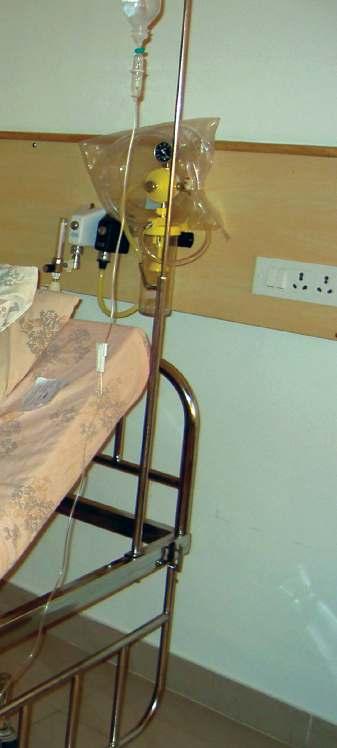

The world’s ‘poor’ sick have started coming to India in thousands, but where will India’s poor sick go?
For an individual, falling sick is a deep personal concern. Whether she is in Mumbai or New York.
But for the private healthcare industry, people falling sick is an enormous opportunity. Global healthcare is estimated to grow to a $4 trillion opportunity by 2015. Just to put this figure into perspective, it is equivalent to 27% of USA’s GDP. And what is India’s role in it? Just like it happened with 80s’ manufacturing outsourcing to Japan & China, and 90s’ IT outsourcing to India, the developed world is once again poised to outsource – this time it’s healthcare needs – to countries like India.
• GlobalHealthcareisgrowingtoa$4 trillion opportunity
• India,Phillipines,&Thailandtopmedical tourismdestinations
• CIIbringstogether40privatehospitals forcombinedpromotion
• Indianhealthcarecostsonlyone-tenth toone-fifthofUShealthcare
• HSBCputshealthcareasapreferred waytocapitalizeinIndia
• Singapore&Thailandhospitalsenter Indianmedicaltourismsector
• Indiatowitness$45billionworth healthcareinfrastructurespend
• Indiatobeadestinationforoldage homesforEuropeans
Indian healthcare services are nothing new to the West. While Indian pharma majors like Ranbaxy, Cipla, Wockhardt, & Dr. Reddy’s Labs, have made their presence felt in North America & Europe, Indian technology firms like Tata Consultancy Services (TCS) handle research for global pharma majors like GlaxoSmithKline & Roche. And India is home to some of the best Contract Research Organizations (CRO) and Contract Manufacturing (CRAM) companies in the world. The country is also fast becoming the destination of choice for Clinical Research. Even medical tourism – which is actual clinical care – is nothing new to India. It is the momentum that has changed.
A recent international survey reveals that in 2007 the top destinations for American medical tourists were India, Philippines, & Thailand.
The recent months have seen hectic activity on India’s medical tourism front. Until now promotion of medical tourism has largely been on an isolated scale, being done by individual hospital groups like Apollo Hospitals, Fortis Healthcare, Max Healthcare, Wockhardt Hospitals, MIOT Hospitals, Frontier Lifeline, Narayana Hrudayalaya, Manipal Hospital etc. But recently Confederation of Indian Industries (CII) has succeeded in bringing together 40 leading private hospitals to jointly present India’s case before the world community.
And it is a compelling case indeed.
A coronary bypass surgery costs around $6000 and a joint replacement around $6500 in India – figures that are one-tenth to one-fifth of what it costs in US or UK.
Says Vishal Bali, CEO of Wockhardt Hospitals, “People in West are getting desperate for good, cheap and reliable medical care. That is why actual clinical care is now being outsourced to India.”
Global investment bank, HSBC, recently put healthcare as one of the best ways to capitalize in India. The opportunity is so huge that it is no more the ‘Made in India’ hospitals that are in the fray. While some of the largest medical tourism hospitals in Asia are about to start operations in India, other major hospital groups from the continent are coming to India to make their start in the medical tourism industry. Even old-age homes & hospices exclusively for foreigners are starting to appear in India.
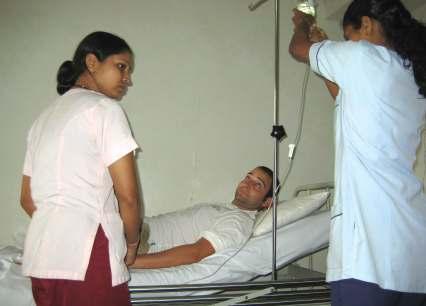
India is clearly the emerging favourite among medical tourism destinations.
How is India going to capitalize on the opportunity? Within the next 5 years, India will witness a spending of $45 billion in healthcare infrastructure, and by 2012 the industry size is expected to touch $80 billion.
Singapore Government has become the first to recognize India’s growth potential in this field, and has recently exhorted its industry to utilize this boom. Singapore healthcare majors like Parkway Holdings and Pacific Healthcare have already entered the Indian market with one hospital each, and Singapore’s largest cord-blood bank, Cordlife, is setting up multiple centres across the country.
Dr. Philip Augustine, Managing Director of Cochinbased Lakeshore Hospital informs that one of the world’s foremost medical tourism hospitals from Thailand will soon tie up with Lakeshore to jointly promote medical tourism in India. Dr. Philip has been working closely with CII to create new initiatives for the medical tourism industry, one of which is the new national accreditation program for hospitals embarking
Dr.PrathapCReddy ledApolloHospitals, arguablythelargest healthcaregroupin Asia,hastheunique distinctionofhaving threeoftheir hospitals accredited underJCI–thegold standard in medical tourism.
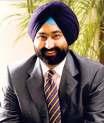
promotedHealthcare, by Ranbaxy, and led by MohanMalvinder Singh, is one of India’s fastest growing hospital chains with a sharp focus on tourism.medical
on medical tourism. Until now, only international accreditations like the JCI were available, but which only a handful of corporate hospitals like Wockhardt & Apollo could afford.
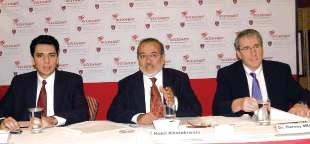
Frontier Lifeline, the Chennai based major in Medical Tourism, founded by the renowned cardiac surgeon Dr. KM Cherian, vows by India’s strengths. Going beyond the price advantages in routine clinical care, Dr. Cherian - a champion of indigenous research - is directing Frontier Lifeline & Frontier Tissueline to regularly develop tissue-engineered products that cost only one-tenth of similar products from West.
Wockhardt Hospitals
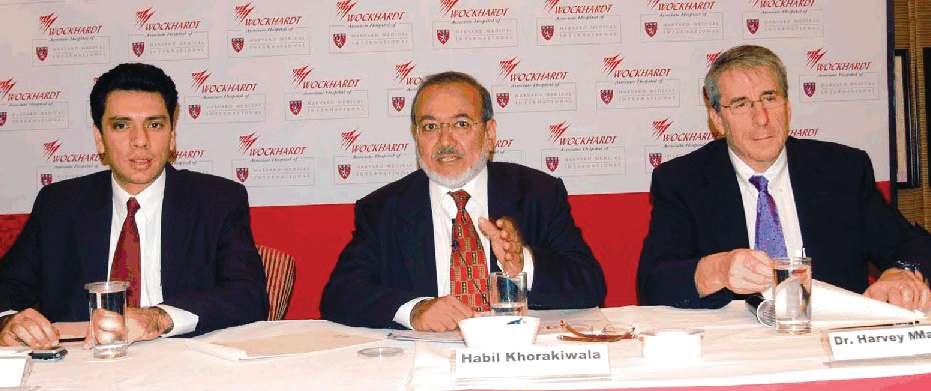
Chairman Habil Khorakiwala and CEO Vishal Bali have made their hospitals ready for medical tourism, complete with JCI accreditation and international tie-ups.
Dr. Cherian is now in the process of setting up a new 1000-bedded Bio-Hospital in Chennai.
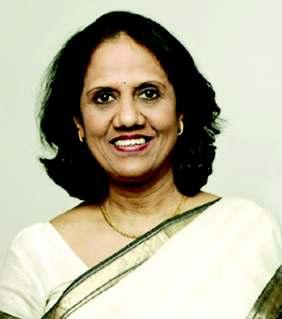
Another early mover in medical tourism is Chennaibased MIOT Hospitals, thanks to their pioneering work in hip & joint replacement. Says MIOT Chairman Mrs. Mallika Mohandas, “Now we are successfully
replicating this success in pinhole & keyhole surgeries.” MIOT has recently started assisting a hospital in Nigeria with a medical team and technical know-how. Though not explicitly intended to boost medical tourism, it might be a side-effect of this arrangement, and shows that the inflow of medical tourists can come from even Africa & Middle East.
However, India’s primary clientele in this sector remains the European and American patients. Patients from countries like UK are dejected with the long wait periods in NHS, while American patients nowadays have more than one reason to opt for Indian healthcare.
In America, where an employer or an insurance company is more likely to bear the cost of treating people, the initiative to opt for medical tourism is coming from the payers themselves.
To offset the rising healthcare costs, American employers have started making deals with Indian hospitals to get theiremployeestreatedhere.
To coax their employees to opt for India, some companies are going all out with incentives – the employee can take a companion with him, and all their expenses like travel, accommodation, food etc will be paid for.
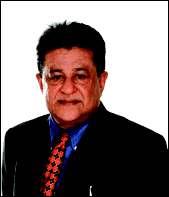
Chennai based Frontier Lifeline and Frontier Tissueline, led by the renowned cardiac surgeon Dr. KM Cherian, is now promoting a new 1000-bed Bio Hospital and indigenously tissue-engineereddevelopedproducts, to contribute to their medical tourism initiative.
It is a package indeed fit to be called medical tourism. Some US companies are going even beyond, and paying their employees 25% of the savings obtained by opting for Indian healthcare! Industry analysts feel that even then it is an advantageous deal for the employer as Indian healthcare services cost only 10-20% of American services. In any case, the interest shown by American companies is a development that can take medical tourism numbers from thousands to lakhs.
Leading American health insurance companies like Blue Cross, Blue Shield, Cigna, Aetna, Star Health and many others are also prime movers behind the emerging surge in medical tourists. Some of them have started presenting two kinds of premium before their clients –the regular premium for getting treated in USA, and a 40% discounted premium for getting treated in India. Their primary target is the 20% of US population who still can’t afford health insurance. The fact that this 20% amounts to over 70 million people, should signal the growth potential for Indian medical tourism sector.
But will this tremendous growth potential do anything at all for the poor sick in India? Not likely at all, unless the Government comes up with innovative measures to couple this growth potential with providing healthcare for the poor.
A recent international study puts India’s rural healthcare standards even below our poor neighbour, Bangladesh. Meeting emergency medical costs is the second most important reason why Indian families take loans from money lenders, shows another recent study. And probably, the most important reason why such families fall into endless financial turmoil. Still another national survey shows that healthcare cost is the third most important worry for even urban Indians.
Why are Indians unable to afford basic healthcare even after 60 years of planning? The reason is simple enough. Says India’s health minister Dr. Anbumani Ramadoss,
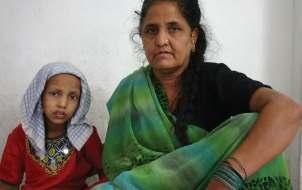
himself a medical doctor, “75% of health services in India are now provided by the private sector.” But the average Indian is finding it hard to afford those services. He brings home only Rs. 80 a day. Again, while 70% of India lives in her villages, over 75% of Indian doctors are working in urban areas.
In a nation like India, where there is no social security system in place, healthcare should have been managed by either free public healthcare services or health insurance. But both are in pathetic states in the country. For the last 30 years, public spending on health remains at a dismal low of 0.9% of GDP. And a recent McKinsey report finds that even by 2015, barely 25% of Indian population will be covered by health insurance. The reason is, again, simple enough – no affordable health insurance products are there in the market.
Chennai-based MIOT Hospitals, an early mover in medical tourism due to their expertise in hip & joint replacement, is fast replicating their success in pinhole & keyhole surgeries, says Chairman Mrs. Mallika Mohandas.
The recently constituted National Rural Health Mission (NRHM) may be the only initiative from the Government in recent years that runs against this slide in healthcare standards. An ambitious 5-year / Rs. 40,000 crore project, NRHM will once again try to ensure the state’s direct responsibility in providing healthcare, plus kick-starting the long awaited Public Private Partnership (PPP) model.
As the first stage of this project, six AIIMS grade medical college hospitals are being set up in Bhopal, Bhubaneswar, Jodhpur, Patna, Raipur, & Rishikesh, each at a cost of Rs. 1,500 crores. These 800-bed monster hospitals will be completed by 2009, and will be followed up by super-speciality hospitals in 11 states, and upgradation of 700 rural hospitals across the country. NRHM will also need to focus on telemedicine to bridge the urban-rural gap in doctors. ISRO is already providing telemedicine support to some hospitals like Narayana Hrudayalaya.
But the thrust of NRHM remains free healthcare. Is it a viable model in the long run? Recently, the move to introduce a new private ward with pay clinics at All India Institute of Medical Sciences (AIIMS), New Delhi, was met with stiff resistance from a section of the senior faculty, on idealistic grounds.
Today, India’s booming medical tourism industry takes pride in treating even patients rejected by systems like UK’s free National Health Services (NHS). Skill-wise that might be something, but it throws some interesting questions –
Bangalore based Manipal Hospital, perhaps the bestknownfacility from Manipal Health Systems led byDr.RamdasPai, isastrongplayer in medical tourism.
will a completely free system work? Can we succeed where countries like UK have failed?
The lessons from USA are also tough. America spends $2,548 per person on healthcare. Still Americans are coming here to get treatment. So where will India end up, spending barely $7 per person?
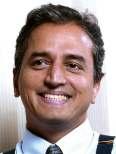
There are many answers to this riddle, one of which comes from an Erode-based physician, Dr. Jeevanantham. He sets up small hospitals ranging in investment from Rs. 70 lakh to Rs. 3 crore on a noprofit no-loss basis. The hospitals are run as cooperative organizations with over 70 people contributing through 3-year interest free loans. Since there is no profit motive for the investors, treatment charges can be kept at a bare minimum – often only 30% of what private hospitals charge.
But it is a tough business. To make maximum utilization of funds, Dr. Jeevanantham has to carefully source his medical equipments – one of the biggest cost worries in hospital management. He goes in for Russian
Dr.DeviShettyled Narayana BangaloreHrudayalayaofisoneof thefewhospitalsin medicalattemptingthecountryboth tourism and healthcareaffordableforthe ruralpoor.
or Chinese equipment, instead of the more popular American or German ones. They are equally good, but have to be tested extensively before deployment as they are rare in India, he says.
One of their hospitals was funded by Indian Medical Council doctors and the public, and inaugurated by Dr. APJ Abdul Kalam last year.
But can experiments like Dr. Jeevanantham’s be replicated fast enough across the country? Highly unlikely,asitrequiressociallycommittedpeoplelikehim, in thousands, for that to happen. Besides, the cooperative model is not a free model.
Other visionaries conversant with India’s healthcare challenge swear by easily affordable health insurance products.SeveralNGOsandafewstategovernmentshave come up with such schemes. Probably the best known among them is the Yashasvini scheme designed by Dr. Devi Shetty and implemented by the Karnataka Government in cooperation with hundreds of private hospitals in the state.
The renowned paediatric cardiac surgeon who founded Narayana Hrudayalaya in Bangalore, designed Yashasvini as the world’s cheapest comprehensive health insurance scheme at just Rs. 5 per month per person. Yeshasvini has been a big hit among Karnataka’s farmers with over 2 million enrolments until now, making it the largest self-funded healthcare scheme in the world. The cashless and comprehensive nature of the treatment (it covers over 1600 defined surgeries), are its greatest attractions.
Yeshasvini has won admiration from the world over, with Harvard University and International Labour Organization (ILO) studying it in-depth, and Rockfeller Foundation planning to replicate it in African countries.
But are schemes like Yeshasvini the ultimate answer? While the world studies its success, what India should
Cochin based Lakeshore Hospital willsoontieupwith foremostoneofworld’smedical tourism hospitals fromThailandto jointly promote medical tourism in India,saysDr.Philip Augustine,Director.Managing
study is why Yeshasvini hasn’t become the gigantic success it could have been by this time. Also to be studied is what prevents other state governments from launching similar schemes.
WORSENINGDOMESTICHEALTHCARE
• IndialagsevenBangladeshinrural healthcarestandards
• 75%ofIndianhealthservicesare providedbyprivatesector
• AverageIndiansfindittoughtoafford privatehealthcare
• AveragedailyincomeisstillonlyRs. 80
• Indiaspends$7perpersonon healthcare,against$2548inUS
• Healthcare3rd mostimportantworry forevenurbanIndians
• Noaffordablehealthinsurance productsinthemarket
• PublicPrivatePartnership(PPP) modellacking
In any case, the only way out is making India’s mighty private healthcare system contribute to the country’s public healthcare needs. The emerging boom in medical tourism will provide the funds for kickstarting such a major initiative. Provided, our leaders recognize this need and opportunity.
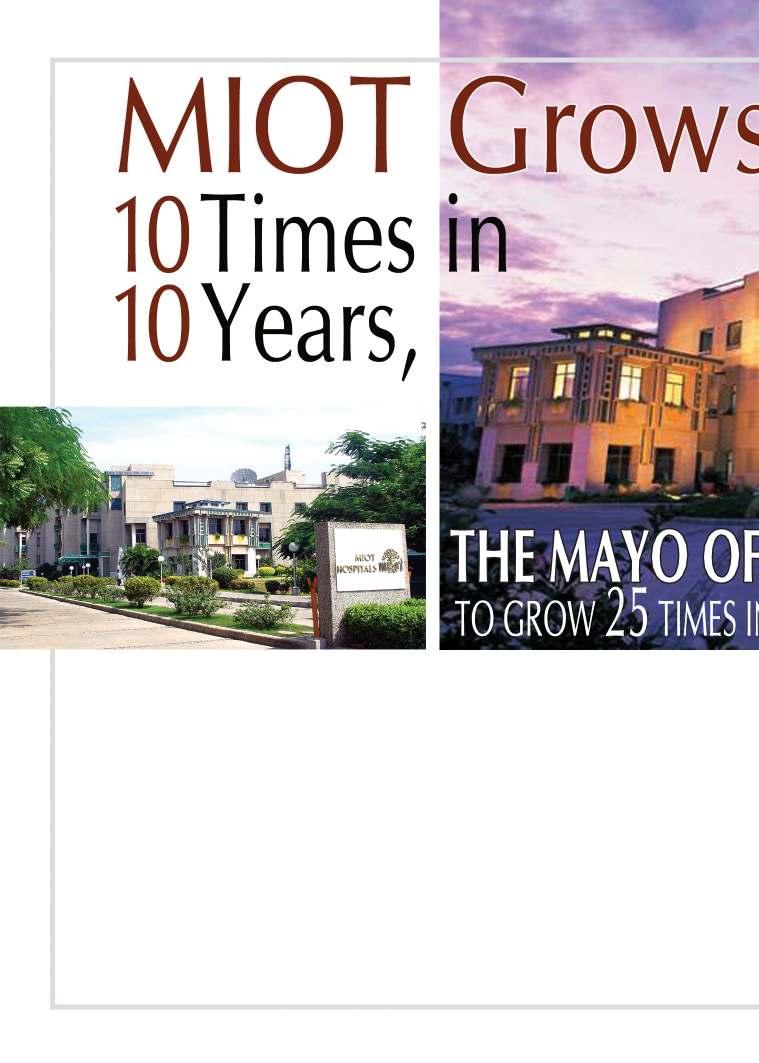
PadmasriDr.PVAMohandasledMIOTHospitalsofChennaiis celebrating its 10th anniversary in style. From 40 beds to 400 beds, and from a single speciality to a multi super speciality, MIOThasgrownunbelievablyfastinitsfirst10years.Thefurther vision of Dr. Mohandas and Chairman Mrs. Mallika Mohandas is even more challenging – to grow 25 times by the 12th anniversary by starting MIOT International, a new hospitalinside-hospital with 600 rooms and 15 operation theatres.
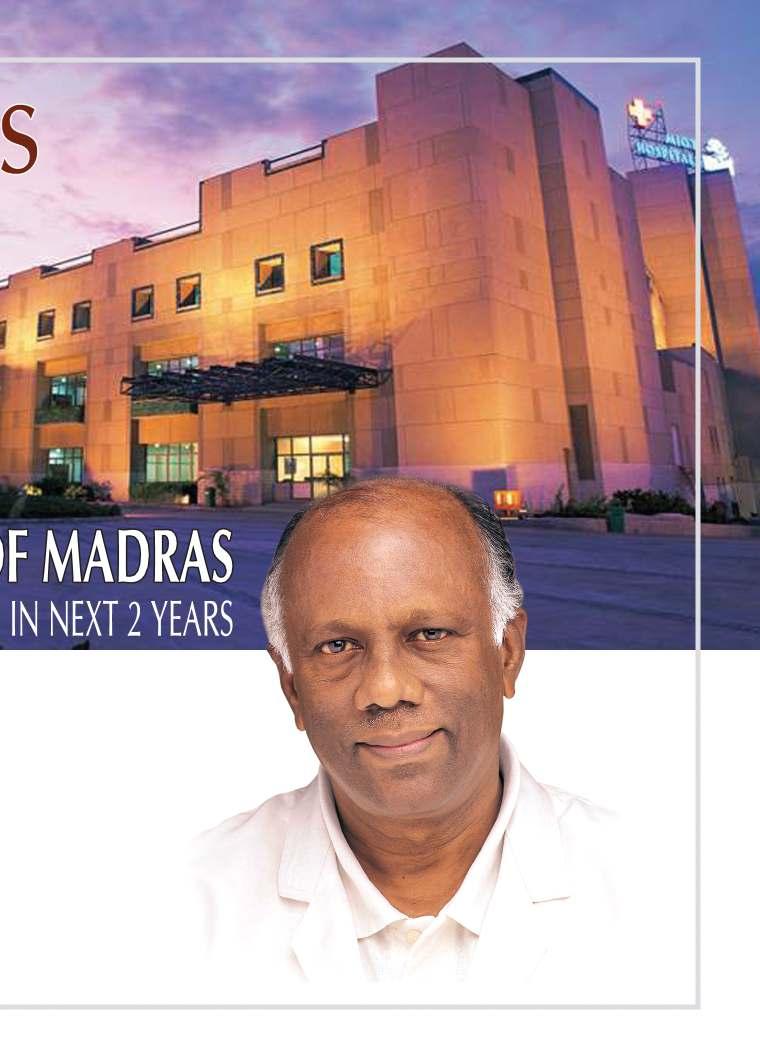
Already a major player in medical tourism, MIOT Hospitals, however, is taking the vision to new levels. ‘MIOT International’ will consolidate the group’s initiatives till date into a standalone hospital within MIOT’s premises. There is nothing small in Dr. Mohandas’ vision. While Seasonal Magazine had first unravelled MIOT’s uncanny resemblance with the famed Mayo Clinic – in its redefinition of medical practice, familial origins, and mission statements –throughourcoverstory‘TheMayoofMadras’(October 2008), Dr. Mohandas himself had recently stated in a press interview that he wants MIOT to be a Mayo of India in the years to come.
However, he is not pinning all his hopes on the 600 bed / 15 OT MIOT International. He plans to establish MIOTHospitalscummedicaluniversitiesinSriLanka, WestIndies,Burma,Vietnam,&Cambodia.Hisvision seems to be perfect in that, currently medical tourists at MIOT are made up mainly from Africa & Middle East. While the Chennai facility will continue to cater to these regions, the new planned hospitals will take the MIOT service to the Americas, and trans-Asia.
MIOT remains at the cutting edge of orthopaedic practice–itsoriginalspeciality–alsobycollaborating extensively with the Indo German Orthopaedic Foundation (IGOF). September and October 2008 witnessed two such events. A 2-day international seminar on Hip & Knee Arthroplasty, attended by 400 delegatesfromtheworldoverwasconductedbyIGOF atMIOTHospitalsduringSeptember.AndinOctober, MIOT played host to the first IGOF course on Minimally Invasive Spine Surgery. This event was attended by 200 delegates from across the globe.
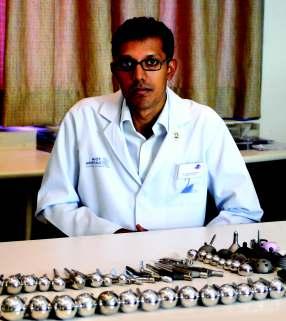
The aim of IGOF is to promote friendship, comradeship and collaboration between Indian and German Orthopaedic Surgeons. IGOF over the years has conducted several courses, symposia and seminars on varioussubjectsconnectedwithTrauma,SpinalSurgery and Joint Replacement Surgeries all over India. These courses are conducted twice a year in some part of the country.SofarIGOFhasconducted20coursesinIndia. The Foundation has awarded 62 Fellowships to Indian
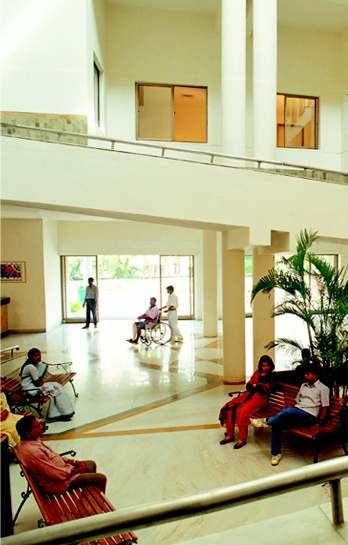
SurgeonstovisitOrthopaedicCentresinGermany.IGOF has really contributed to improving the knowledge and skills of young Indian Surgeons. This year too IGOF is awarding 12 Fellowships to young Indian surgeons to visit Germany for 4 to 6 weeks.
IGOF is the brainchild of Dr. PVA Mohandas and Prof. Siegfried Weller, a German orthopaedic specialist who has contributed much to the Indian orthopaedic scene, as well as in the design of MIOT Hospitals.
MIOT is not just another swanky multi-super-speciality hospital,butinvolvedinredefininghowmedicalpractice should be. MIOT Institute of Nephrology, MIOT Endovascular Centre for Aortic Aneurysm (METAA), MIOTGlobalCentreforIdealJoints,andMIOTInstitute ofResearch(MIR)areonlythelatestinaseriesofworldclass initiatives by this South Indian healthcare major. Earlier, MIOT had become one of the first movers in keyholesurgeries,pinholesurgeries,computernavigated
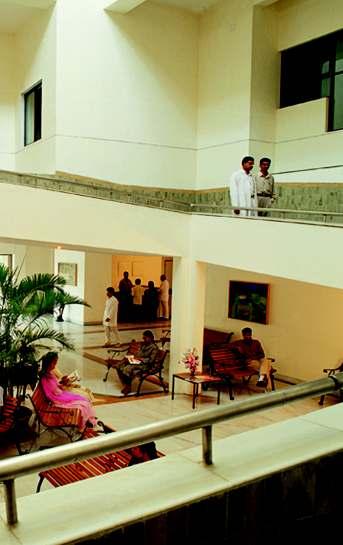
joint replacement, and medical tourism. MIOT also excels in healthcare philanthropy – the best example is, of course, CHIME, the free or subsidized heart surgery program for needy children by the MIOT Centre for Children’sCardiacCare.Andthereareothersimilarities too. MIOT has a visionary family at its nucleus, but is run in an internationally professional style. MIOT’s has global tie-ups – with a German hospital for training and a Swiss hospital for stem cell research.
Ever since Dr. Prithvi Mohandas joined MIOT Hospital as Consultant Hip Surgeon and Director of Hip

Arthroplasty, the long string of innovations for which this Chennai based multi-super-speciality hospital is famed for, has only gathered further momentum. Dr. Prithvihasearlierbeenanotedhipreplacementsurgeon in London. MIOT Centre for Ideal Joints, a first of its kind centre in India if not the Asia-Pacific, has been formed under his leadership.
MIOT is also strengthening its position in the nonorthopaedic segment, with some powerful initiatives like MIOT Institute of Nephrology.
Everwonderedwhykidneytransplantsaretough?And often riddled with ethical abuse?
The best source – and often the only source - for a replacementkidneyisanearrelativelikespouse,parent, sibling,offspringetc.Nobodyelsewouldsacrificesuch a vital organ for the patient. But this option is unavailableifthereisabloodgroupmismatchbetween the donor and the recipient. Thus enter the kidney donors, the traffickers, and all the unethical stuff.
All that is history now for Chennaiites, and those who are willing to travel to Chennai from anywhere in the world. Because MIOT Institute of Nephrology has successfully pioneered in India a technology for ‘mismatched transplants’. The donor and recipient
blood groups need not be the same anymore! It is as simple as that!
Thenwhydidn’tanyoneelseimplementitearlier?Well, it is not as simple as that, from a hospital’s angle. The procedure requires administration of high-tech drugs that remove antibodies across three of four sessions.
MIOT has attracted Dr. Rajan Ravichandran, one of themostwell-accomplishednephrologistsintheworld to head MIOT Institute of Nephrology as its Director.
The technology transfer comes from Japan, one of the few nations with this priceless know-how. MIOT Hospitals has invested Rs. 10 crore just to start this Institute of Nephrology, which features a 100 bed facility. Dr. Kazunari Tanabe, head of Renal TransplantationatTokyoWomen’sMedicalUniversity, who assisted MIOT in this technology transfer, was himself present in Chennai during the inauguration.
Mismatched transplants is the latest in a series of initiativesfromMIOTHospitalsthat“redefinemedical practice” - a phrase that often crops up in the talks of Padmasri Dr. PVA Mohandas, Founder and Managing Director of MIOT Hospitals. This visionary claim is generally seen used by only a handful of the world’s finest hospitals, like the Mayo Clinic.
At MIOT, this redefining draws strength also from multiple technologies that MIOT has mastered earlier. Forexample,mismatchedtransplantsandlaparoscopic nephrectomy are coupled together to achieve some unbelievable results. Nephrectomy is the surgical removal of a (donor) kidney, and laparoscopic nephrectomy is the same procedure done through a pinhole! The donating relative doesn’t have to bother aboutalargeincision,significantpain,oralonghospital
stay! Even the grafting of the organ to the recipient can be done through pinhole surgery.
Explains MIOT Chairman Mrs. Mallika Mohandas, “MIOT has been a pioneer in minimally invasive surgeries, first introducing keyhole surgeries and later their pinhole versions.”
Today, medical innovations like these happen on a daily basis, but only at the world’s best hospitals. We wanted to know MIOT’s take on whether all such innovations need to be adapted to the Indian scenario.
It was Dr. Prithvi Mohandas, who is also the son of this Chairman-MD couple who answered our query. “Yes, what you indicate is true. As a cutting-edge hospital, we always have to take a choice when a new technology is available. There is a danger of simply going down the path of novelty only for the sake of progress. On the other hand, there is a fear of not providing newer and better alternatives to the patients. So the acid test before us is this – is it significantly better for the patient? If so, we go for it.”
“That is how we acted on most of our recent initiatives including mismatched transplants and ideal joints. Dr. Prithvi will explain to you the idea behind these new joints,” adds Mrs. Mallika.
“The beauty of Ideal Joints is that it is not about embracingthelatestandgreatesttechnologyfromWest; but rather, inventing something uniquely for India,” Dr. Prithvi starts explaining.
MIOT Centre for Ideal Joints will – for the first time in India – design artificial joints specifically for the Indian
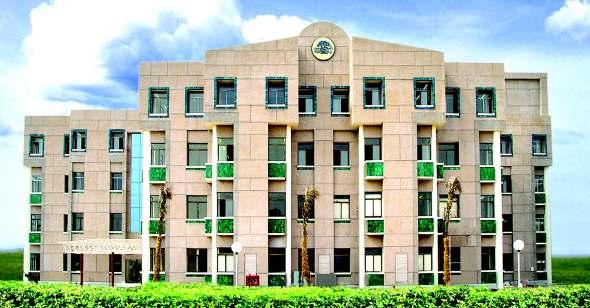
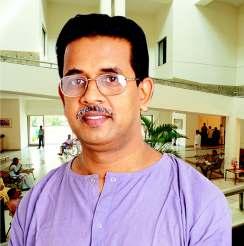
hip & joint peculiarities. Earlier, Indian patients had to ‘suffer’jointsmadeforWesternorJapanesepopulations. Centre for Ideal Joints is also planning to produce these Indian joints at one-tenth the cost of an imported joint, which is often upwards of Rs. 1.5 lakhs.
This new MIOT Centre will also serve as a Centre of ExcellenceandReferenceCentreforJointReplacement Surgery & Revision Surgery in the Asia Pacific. Says Dr.PVAMohandas,“ThiscomesnaturallytoMIOT,as we have the unparalleled achievement of over 15,000 hip replacements and over 6000 knee replacements to our credit.
Dr.PVAMohandashasbeenthepioneeringorthopaedic surgeon who introduced joint replacement in India in 1973, barely three years after this revolutionary technology’s international debut. He has worked hard to popularize it all over the country, as also some other orthopaedic techniques, which finally earned him the top national honour of Padmasri.
The familial roots of MIOT are, however, no hindrance for the hospital to attract and maintain one of the finest and most comprehensive team of doctors & surgeons, allofthemworkingonlyforMIOT.Itincludes‘best-intheir-class’ surgeons like Dr. VV Bashi and Dr. Barry D’ Rosario.
Better than explaining their roles at MIOT would be to illustrate some of their recent exploits.
24-yearoldUmiwanaChrisineofRwandawasinapretty bad shape when she was flown in to MIOT by the RwandanGovernment.Testsrevealedthatshehadsevere leaks in two heart valves, many leaks in four segments of the aorta, and only one functioning kidney. What her condition called for was something rarely attempted in

cardiac practice, but under the masterful direction of Dr.VVBashi,ateamofcardiacsurgeons,interventional cardiologists, cardiologists, & interventional radiologists went for it – a three-stage hybrid surgery involvingthreemodesviz.openheartsurgery,keyhole surgery, and finally pinhole surgery! The complex procedure was noted also for its inter-departmental coordinationandinnovationonthefly.Inthefinalstage, the interventional radiologist (the pinhole surgeon) deployed a heart-specific implant outside the heart as suggested by Dr. Bashi. It has never been attempted before anywhere in the world. But it worked perfectly andChrisinestartedsmilingwithreliefforthefirsttime in her life!
Dr. VV Bashi, one of the best-known cardiac surgeons inIndiaandabroad,istheChairmanandChiefSurgeon of the MIOT Cardiac Care Unit. He is credited with performingthefirstextensivethoracicaorticaneurysm surgery in India, and was a pioneer in Beating Heart Surgery in the country. Like only the finest cardiac surgeonsinthewholeworld,Dr.Bashiisaspecialistin correcting congenital cardiac problems, valve repairs, and replacements. He has many complex surgeries to his credit in these difficult areas, and also does a huge volume of regular work that includes vascular & pulmonary operations and more than 5000 coronary bypasssurgeriesuntilnow.Hehasperformedover1500 beating heart bypass surgeries with a success rate of 99.5%, which is exceptional even by world standards. This is especially so, given his passion for performing complex operations on patients who have multiple complications and as such rejected by most hospitals.
Putting to good use the expertise of doctors like Dr. Bashi, MIOT has started a new initiative – MIOT Endovascular Centre for Aortic Aneurysm (METAA) – which transforms complex and risky aneurysm surgeries into neat and safe keyhole surgeries. Endovascular Stenting, which is METAA’s main
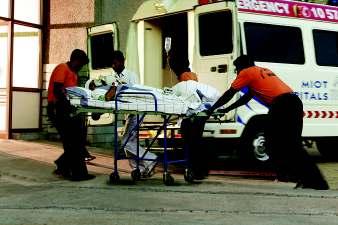
procedure, is done only in a handful of centres in the world, owing to the kind of equipments and expertise needed for it. METAA has been set up with an investment of Rs. 22 crore.
Numerous other departments also excel at MIOT. In fact,Dr.Mohandas’principalvisionforMIOTHospitals is for it to be a group of Centres of Excellence.
Dr. Barry D’ Rosario has always been a strength for MIOT, who together with Dr. PVA Mohandas, has contributedmuchtoMIOT’soriginalstatusasaCentre ofExcellenceinOrthopaedics.Dr.BarryistheDirector, MIOT Centre for Joint Replacement Surgery.
Under their guidance, MIOT has already arrived at the goldstandard–computer-navigatedminimallyinvasive joint replacement, being the world’s 3rd hospital and Asia-Pacific’s 1st to start it.
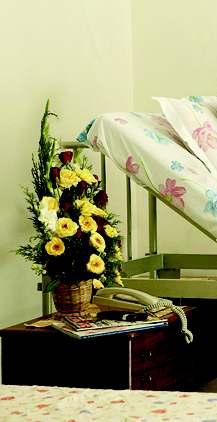
Other initiatives from the Group include MIOT Retreat and MIOT College of Nursing. With Retreat, the hospital is implementing the concept of extended care forpatientswhorequirelongerstays.Theycanstaywith theirfamiliesinamorecost-effectivefashion.Thegreen campus of MIOT which did away with stock hospital symbolslike“emergency”,“casualty”etcistheperfect setting for MIOT Retreat too.
Yet, for all its laidback serenity, the MIOT design can rise up to any demanding occasion with clinical precision and efficiency. This is largely due to the role a team of doctors, including Dr. Mohandas, had played inco-designingeachfloor,connection,elevator,lobby, facility, operation theatre, and room. Features include separate entrances and corridors for emergency outpatients, inpatients, public, and service personnel, so that there is no crowding at any point even in case of multiple emergency cases being brought in simultaneously. As a hospital that also specializes in trauma,anyemergencytrauma,accident,stroke,orheart attackpatientscanbeefficientlybroughtin,resuscitated, attended to, or taken for emergency surgery, without wasting precious seconds. In fact, MIOT is perhaps the onlyTraumaCentrecomparabletoUSLevel1Trauma Centres. Even many healthcare professionals will be surprisedtoknowthatatMIOT,the‘DoortoCTTime’ including preliminary resuscitation, for head injury cases,islessthan7minutes,aspeedwhichisevenbetter than in many US hospitals!
MIOT has collaboration with Klinikum Hospital, Stuttgart,Germany,forexchangeofspecialists,training of nurses, and treatment of patients. The core domains
of collaboration include orthopaedics, trauma management, cardiology, & cardiothoracic surgery. The German Government-run Klinikum Hospital and MIOT had been working together for some time now. MIOT also sends surgeons and nurses to get world-class training from this German hospital.
Thehospitalhasbeenquiteactiveinresearch,andhasentered the super-specialised research area of stem cells nearly one year back. MIOT Institute of Research (MIR) is in collaborationwithUniversityHospital,Zurich,Switzerland, and is headed by Dr. Omana Trentz a veteran in this hightech field. Unlike many such initiatives that work on the theoreticalfront,thefocusofMIRisactualstemcelltherapy and specializes in culturing stem cells from the same individual for his or her own use!
Today,MIOThasover45full-fledgeddepartmentsincluding Orthopaedics, Diabetology, Oral & Maxillo-Facial Surgery, ENT,Head,&NeckSurgery,PulmonaryMedicine&Critical Care, Dermatology, General Surgery, Radiology & Imaging Sciences, Spinal Surgery, Ophthalmology, Obstetrics & Gynaecology, Neurosurgery, Cardiology, Nephrology, GastroenterologySurgery&MinimallyInvasiveGISurgery, Preventive Health Care, Neurology & Neurosciences, Joint Replacement Surgery, Weight Loss Surgery (Bariatric Surgery), Accident & Trauma Care, Trauma Surgery, Paediatric Orthopaedics, Orthopaedic Oncology, MicroVascular & Plastic Surgery, Thoracic & Cardio Vascular
Care,Rheumatology,Urology,Paediatrics,GeneralMedicine & Geriatric Care, Physiotherapy & Rehabilitation, Endocrinology, Dental, Master Health Check & Special Check, Microbiology, Transfusion Medicine, Ultrasound, Pathology & Clinical Laboratory, Knee Surgery & Sports Medicine, Anaesthesia, Department of External Fixation (Limb Equalization), Diseases of the Hip & Hip Surgery, Back School (for Back Pain), Physiotherapy, and International Patient Care.
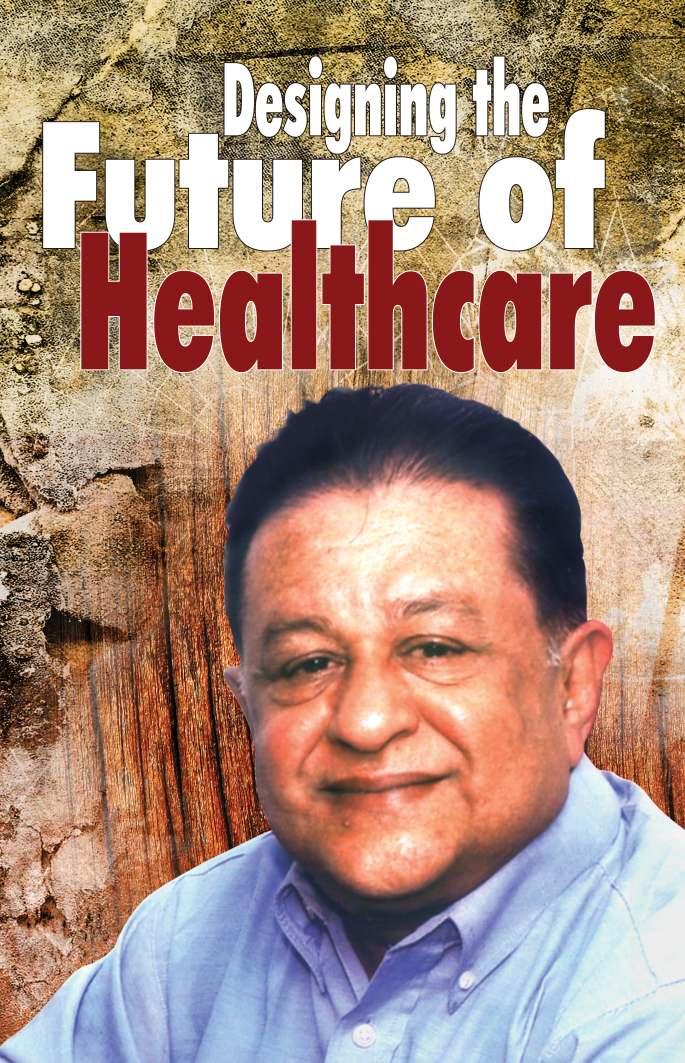
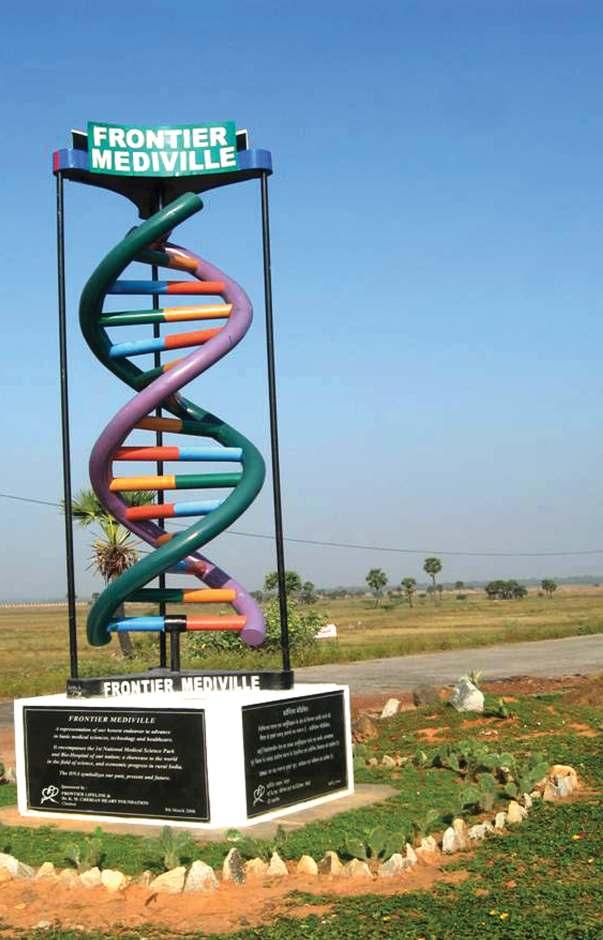
ThefutureofhealthcareisnothappeninginUS.Butinahithertonondescript villagecalledElavur,45kmfromChennai,SouthIndia’sbiggestmetropolis.India’s firstmedicalSEZishappeninghereon365acresofland,andrefreshinglyitisnotby realestategiantsorcorporatehospitals.Andsurprisingly,notnamedamedi-citytoo. FrontierMedivilleisthebrainchildofDr.KMCherian,oneoftheworld’smost accomplishedcardiacsurgeons.Amedicalentrepreneurwhoisbuildingoneofthe largestmedicalfacilitiesintheworld,butwhostillpreferstobeasurgeontohis patientsfromover21countries.Medivillehasnorolemodelintheworld,notwith componentslikeaNationalMedicalScienceParkandaBioHospital.Instead,Mediville willbetherolemodelforthefuture.

ymiddle-age,mostsuccessfuldoctorswanttostart ahospitalontheirown.Butbythetimehereached middle-age,Dr.KMCherianhadstartedorhelped start four hospitals, including a medical college. Andnotforhisowncause,onewaseveninthepublicsector
That Dr. KM Cherian thinks differently from most medical entrepreneurs,neednotbesaidanymore.Buthowdifferently, one would be awed, when hearing about the upcoming FrontierMediville.
Oneamongtheworld’smostaccomplishedcardiacsurgeons, Dr. KM Cherian wants nothing short of redefining medical practicethroughhisbrainchild,FrontierMediville.Thescope ofthisintegratedmedicalvillagegoesbeyondevenmedicine.
BeingplannedatacostofRs.1500crores,FrontierMediville will span nearly 400 acres near Chennai, and will be built overthenext10years,startingnow
PeoplewhoknowDr.Cherianup-closeandpersonalknow thatheisnotthatmegalomaniacalkindouttobuildthatnext money-spinning, fame-spinning project. In fact, as Dr Cherianhimselfsays,heisattemptingjustthereverse.Sharing thecreditaswellasresponsibilityforthisprojectwithother giants–fromworldwideaswellasfromIndia’spublicsector – Dr. Cherian is designing and building Frontier Mediville onhislongstandingbeliefandpracticethat,“Healthcaremight beanindustry,butcaringforthesickisnotanindustry.”
The larger-than-life scale of the project is evident from the PPP/SEZ nature of the project, the collaborations with Australian, Japanese, & Korean research organizations, the equipmentgrantsfromDepartmentofScience&Technology, TIDCO’s involvement, the agreement with Railways for ‘adopting’ a local railway station, and, of course, CM Karunanidhi’spersonalparticipationinthelaunch.
Thatitisnotjustamoney-spinnerprojectisevidentfromthe factthatMediville’sfirstphaseisgoingtobeauniqueNational MedicalSciencePark.ItwillbefollowedupbyaBioHospital, anAyurvedic&AlternativeMedicineCentre,aHerbarium,
aMedicalUniversity,aResearch&TrainingCentre,anda SterileBiomedicalCorridor
On the treatment side, the project will address the entire spectrum of patients – from the economically challenged tothemedicaltourists.
Also being built as a major tourist cum hospitality cum residential centre, non-medical attractions in Frontier Medivilleincludeastarhotel,shoppingmall,seniorcitizens’ enclave, residential quarters, an 18-hole golf course, and manysuchpremiumamenities.FrontierLifelineisinvesting Rs.150croretofundthefirstphaseoftheprojectwhichis tobecompletedwithintwoyears.
What prompted you for this larger-than-life scale and scope that we see in Mediville’s plans?
Nothingornobodypromptedme,assuch.Imean,nothing human. It just came to me. And I realized that it is an enormousopportunity.ButIamnotabusinessman.Iwon’t go around asking investors to take shares, like how these corporatehospitalsdo.AndIamnotarichman,orbornto a rich father. But my real father is rich, richer than Bill Gates. It is He who prompts me. My job is to listen and carryitout.
Youhavebeenacriticofbusinessgroupswithnon-medical background coming into medical townships. Can you explain why?
IamacriticbecauseIbelievethatthoughhealthcaremight beanindustry,caringforthesickshouldnotbeanindustry. Caringforthesickisaboutempathyandexpertise.Iaman expertcardiacsurgeon.Complicatedcasescometomefrom alloverIndiaandabroad.Istilloperateontwocasesdaily, andmypatientsincludeneonatestooldpeople.Forgetdoing suchcomplexfeats,howmanydoctor-turned-entrepreneurs cancarryonwitheventheirsimplepractice?Itisnoteasy, becausetheyarebusinessmenfirst.Theylosetheirempathy, their expertise. Imagine the situation then when business groups with no background in medicine enter this field. That is why I don’t feel great about what CII and all are trying to do in this sector They are industrialists, not practisingdoctors.
Can you explain the concept of a Bio Hospital? How will Mediville fare in this sector?
It is a complex subject. I will put it in a different way for you.Therearenobiohospitalsintheworldasofnow.But there will be 18 bio hospitals in the world by 2015. US, Japan,&SouthKoreawilldominatethissector.Apartfrom theJapaneseandtheKoreanhospitals,ourswillbetheonly biohospitalinAsia.Thisnovelconceptcametome,thanks to my interactions with some international giants in healthcare. A bio hospital basically combines allopathic clinicalmedicinewithayushandbiotechnology.Byayush ImeanalternativepracticeslikeAyurveda,Siddha,&Unani, andunderbiotechnologyIrefertotechnologiesliketissue engineering, nanotechnology, & biotechnology. Now nobody has as much as heard of bio hospitals, but I guess
nowmanywillstartspeakingaboutit.
We have been hearing about regenerative medicine. What is it all about?
Thefocusofabiohospitalisregenerativemedicine.Asmall examplewouldhelpyouunderstand.Whenthelivergrows old, it sends signals. Today there is technology to interpret from which portion of the liver these distress signals are coming.And in ayush, we have the regenerative medicines for liver. Combine it with a high-tech delivery system, and there you see regenerative medicine in action. The concept ofabiohospitaliscomprehensiveandholistic.Itiswayapart from the usual gimmick of a corporate hospital buying the nextversionofimportedequipmentandtryingtomakebig moneyoutofit.
You seem very confident about undertaking a mega project like Frontier Mediville. What is behind this confidence?
Frontier Lifeline is not a big hospital. Just one speciality –heart. Do you know of any hospital that survives on one specialitythesedays?Wearenotonlysurviving,butgrowing at a furious pace. How can we do it? Simply because, our technologyandexpertiseincardiaccarearesuperior.Patients come looking for us, or they get referred to us from across India, and over 21 countries. This is what is behind our confidence.Medivilleisnotaboutmycleverness.Itisabout somebodypromptingyoutodoit.IfIamordainedtodoit, whocanstopitfromhappening?
Can you provide us with some instances of this superior expertise in action?
Yes,ofcourse.Beitcutting-edgesurgeriesororiginalR&D, FrontierLifelineiswayaheadoftherestofthepack.Today, many hospitals claim to do heart transplants. We don’t go around claiming anything, but it is we who do a heart transplantalmosteveryweek.Suchcasessimplycometous. Donatingaheartisaseriousdecision,andthespouse,parent, orsibling,ofthedonorwantstheirdearone’shearttosurvive. That is why they come to Frontier. Similar is the case with our R&D. We have developed our own heart valves from pigs,andvalvedconduitsfrombuffalojugularveins–which only a global giant, Medtronic, has done before. We have
startedapplyingstemcelltherapyforheartdisease,which isthefirstsuchinitiativeinIndia.Wearedoingthekindof worksthatotherswilltakeyearstojustfigureout. Your expertise is well acknowledged in the field. But what about teamwork?
Nobody can do this alone. We succeed because we are a greatteam.Wehavetherightpeople,andtheyareprovided withtherightenvironment,andtherightmotivation.Frontier isallaboutcollectivenessandteamspirit.Thatiswhymany corporate hospitals find it pretty difficult to compete with us. Their doctors are just not interested in building the institution.Forthemitisjustajob,tomakesomemoney But here everyone is motivated, as collectiveness is promoted.ThatiswhyIalwaystellmyteamthatweneed notberichatall.Thisteamspiritisthebiggestwealth.
Many medi-cities have been proposed or launched. How will be your project different?
First of all, ours is not being called a medi-city We have purposely named it Mediville to contrast. The reason is simple.Itwasfromvillagesthatweallstarted.Andweare notbuildingthenextmegamulti-super-specialityhospital. Eventhebiohospitalwon’tbethefirstprojectinMediville. FirstwearegoingtobuildaNationalMedicalSciencePark, whichwillbethefirstofitskindinIndia.
That sounds interesting. Can you explain this Medical Science Park?
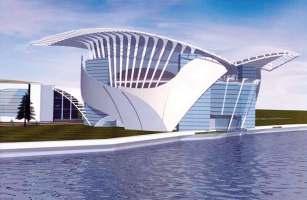
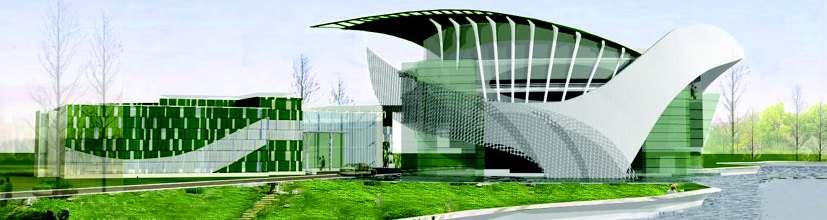
People,andevensomedoctors,mistakenlythinkthatitis high-tech equipment and money that Indian healthcare lacks.Ourrealproblemislackofresearchinbasicsciences, thesupportingsciencesofmedicine.Onlywhenweaddress this issue can we dream of being a healthcare major Mediville’s National Medical Science Park will be an ambitious project to address this gap. The Park will have fourcomponents–anAnimalHousenamedBose’sProof ofConcept,aResearchBlocknamedDaVinci’sSynthesis ofScience,aTrainingCentrenamedPlato’sAcademy,and a Convention Centre named Flamingo. By this we are honouring giants of science and teaching like Plato, Da Vinci,&JagadishChandraBose.Theconventioncentreis named Flamingo because it’s architecture is like that of a giant flamingo in the Pulighat Lake where flocks of flamingoscomeeveryyear
How did you arrange the land and basic infrastructure for Mediville?
Wehaveacquiredaround400acresofland,whichcontains a111acrelake.Sincenobodyhassuchvastlandsthere,we acquired it from the state government as well as many farmers. Part of the land is marked for a medical SEZ. Frontier is a small group, but we were the first to get a medical SEZ approved in the whole country. For the National Medical Science
Park, we will get a Rs. 11 crore grant from Department of Science&Technology.AsItoldyouearlier,weneednothave allthemoneywithus,aslongasourpurposeishonestandwe arewillingtoworkhardforit.
Are you planning to bring in some PE funds?
No,notatall.Somebignamesinprivateequitycametome.I politelyrefused.Theydon’tknowmyhistory.Ihadforsakena 68,000 dollars job in US to take a 742 rupee job with Indian Railways. So, why should I bother about money? I can take anyrisk.Cananybodytakezerofromzero?Eveniftheycan, zero will remain. I am confident of doing this without bigticket funds, because there is a purpose beyond me in this project.
Do you have a role model for Mediville in any part of the world?
No.We can’t find one. Instead, we will be the role model for others to emulate. We are doing so many innovations in this project. We have planted 7500 sandalwood saplings, which willgrowtoasandalwoodforest.Howmanyofushaveever walkedinasandalwoodforest?Wehavealsoplanted27trees forthe27starsigns.Itissaidthatifyoumeditateunderyour starsigntree,yougatherphysicalandmentalwell-being.Also beingplantedareArjunatreesandanextensivegardenofherbal trees. The herbarium will be a joint project withAsia Pacific BioResourcesConsortium,aleaderinthissegment.Andwe are collaborating with the South Korean scientists through KRIBB, who are world leaders in genetic engineering and cloning.
Will Mediville have a major medical tourism initiative?
You will be surprised to know that more than 30 years back, even before the term ‘medical tourism’ was coined, I was attendingtopatientsfrommanyneighbouringcountries.Today, atasmallhospitallikeFrontierLifeline,weoperateonpatients from21countries.Soyoucanimaginewhatwillbethescope forMediville.Butwedon’tliketobragaboutthesethings.If youaregood,patientswillcomefromeverywhere.Youdon’t havetopromoteitasmedicaltourism.
What will be the employment generation potential of Mediville?
Already150localpeoplehavebeenemployedintheproject.
Around1.5yearsback,wetook6girlsfrompoorbackground and trained them in stem cells, tissue engineering, nanotechnology etc. You will be surprised to know of their formaleducation–SSLC,passorfail.Nowtheyaregainfully employedwithus.Weprovedthatfancydegrees,PGs,&PhDs arenotnecessaryformanytasksinthissector Thisshowsour farsightedness.When it is complete, Mediville is expected to provide3000villagerswithdirectjobs.
How do you plan to address the healthcare needs of the economically challenged patients?
We have always been a socially responsible hospital. We are notheretoexploitanybody.Duringthe5yearsofourexistence, we have forsaken over Rs. 6 crores as free or subsidized treatment to deserving patients. And we cooperate with all governmentinitiatives.Wealsodomanyfreecampsregularly. At Mediville too, this culture will continue. But at the same time, we won’t allow anybody to exploit our generosity We havehadaninstancewhereagirlwasflowninonachartered flightfromNorthIndia,butonsuccessfuldischarge,herrelatives wantedabigconcession!Nobodyisgivingusfundstorunthis asacharity Westilldocharitybecausewefeelthatunfortunate peopleshouldbehelped.Weareabletodocharitybecausewe are not answerable to a huge shareholder community. People should realize this.Atailor can forsake his stitching charges, but can he buy cloth for a poor man and stitch? I don’t think mindlesscharitywouldworkoutinthelongrun.
What do you want your team to learn from you?
Not much. They are all professionals in their own right, and withmuchyoungerenergythanme.ButonethingIalwaystell myteam.Godgivesyounuts,butHedoesn’tcrackitforyou too.Crackingandeatingareuptoyou.Samewithopportunities. Itisuptoustoutilizeopportunities.Butthebiggestproblemis thatpeopledon’trealizeopportunitiesforwhattheyare. What do you want to leave as a legacy?
Peoplewillberememberedfortheiractions.ThatiswhyMother Theresa, Gandhi, & Martin Luther King are loved and rememberedbymillions.Andwhy,arichmanlikeRockfeller isnotpopularorremembered.Itoowanttoberememberedfor myactions.Iamacardiacsurgeon.Iwillcontinuetodosurgeries aslongasIamfittodoit.ThenmaybeIwillretireandoversee Mediville.
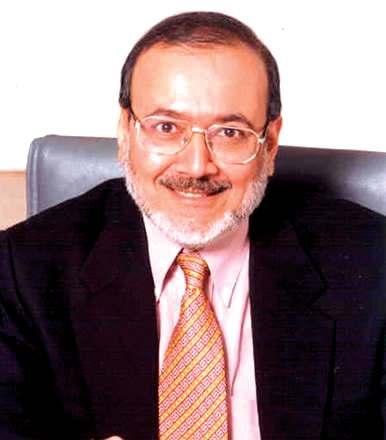
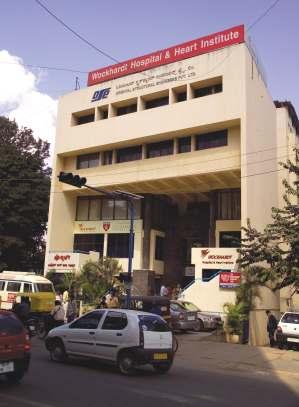
Habil Khorakiwala answered Dr. APJ Abdul Kalam’s call to build a Developed India during his inaugural speech for the 3 lakh sq. ft Wockhardt Biotechnology Park, with these simple words, “His Excellency, this is Wockhardt’s contribution to building a new India where people are proud of being Indians.” As the Founder and Chairman of Wockhardt, the Purdue & HarvardeducatedHabilhaspersonallyoverseenhisvisionofaworldclassIndianhealthcare organization blossom from a start-up pharma company in the 1960s to a US$ 1.3 billion diversified,research-drivenpharma,biotech,&hospitalconglomeratewithoperationsacross the globe, including formidable markets like UK, Germany, & US, and employing 4000 professionals. The group’s flagship project in hospitals, the internationally renowned Wockhardt Hospital & Heart Institute at Bangalore, has always set standards in cardiac care intheAustralasiaregion,withpioneeringheartsurgeonslikeDr.VivekJawali,theassociation withHarvardMedicalInternational(HMI),andpassionateleaderslikeHospitalsVice-President Vishal Bali. With the coveted international JCI accreditation under its belt for the Mumbai Hospital – the first time in South Asia – Bali’s words “India is a Developed Nation Here, at Wokhardt”, ceases to be a tall claim.
The name Wockhardt brings different images to different minds.
ForaBangalorean,thecutting-edgeserviceincardiaccare at Cunningham Road, comes up.
For a Mumbaiite, the cluster of six Speciality Hospitals at Mulund – SouthAsia’s first JCI certified facility - comes up.
For a Kolkotan, it brings to mind the renowned Kidney Institute at Rash BehariAvenue.
For a Nagpurian, the premium Heart Hospital at Corporation Colony, comes up.
ForaHyderabadian,theimagesoftheSpecialityHospital atAbdis,ortheHeartCentreatKamineniHospitals,come up.
country’s4thlargestpharmacompany,whichisalsoUK’s second largest generics supplier to hospitals.
ThenameWockhardtbringsotherimagestoo.Fordifferent segments of India.
Fordiabetics,itbringstomindWosulin,thefirstRecombinant InsulintobemadeoutsideUS&Europe,whichbroughtdown insulinpricesby40%.
For Kidney and Cancer patients, it brings to mindWepox, thebrandthatbroughtdownErythropoietinpricesby60%.
Forthosemillionslivinginhigh-riskatMumbai’sinfamous red-light districts, the name is synonymous with the 4000 health volunteers trained by WHARF (Wockhardt HMI HIV/AIDS Education & Research Foundation), who patiently teach them how to live risk-free.
For an Aurangabadian, the name is something to be immenselyproudof,associatedwiththe3lakhsq.ft.stateof-the-artBiotechPark,whichcanmeet15%oftheworld’s biopharmaceuticalsrequirement.
ForemployeesofbluechipsrangingfromICICItoStandard Chartered, Wipro to TCS,Accenture to IBM, the name is associated with company sponsored world-class hospital treatmentandpreventivehealthcareprogramslikeMaster Health Check, Executive Health Check, Well Woman Check etc.
For someone even remotely associated with India’s pharmaceutical sector, Wockhardt brings to mind the
For the villagers of Baniari, in Gujarat, the name is equivalent to new life; for their earthquake devastated village was rebuilt from scratch by this company and its employees–includingapanchayathouse,school,primary health centre, community centre, cattle shed, and playground.
However, many of the tsunami victims may not recall the name Wockhardt. Because, Wockhardt’s and it’s employees’ 1-day salary contribution of Rs. 50 lakhs in cash was provided indirectly, through the trusted Prime Minister’sNationalReliefFund.Still,manyofthetsunami affectedillmusthavetakenWockhardtmedicines;because the company had rushed Rs. 10 lakh worth of life-saving medicines free to the tsunami victims.
Dr. Prof. Vivek Jawali seems addicted to bettering cardiac surgical techniques – otherwise how can thisChiefCardiacSurgeonatWockhardtBangalore, pioneer so many innovations, some of them for the first time in the world? His answer – “It is a Dream Team at Wockhardt.”
In 1994, Dr. Vivek Jawali pioneered Beating Heart CoronaryBypassSurgeryintheentireAustralasiaregion. For the medically less enlightened, here is a layman explanation – the heart is not stopped as in conventional surgery, while the surgeon’s scalpel operates on the heart, butkeepsonbeating…tick…tick…tick.Frightened?Don’t be. Dr. Vivek and his team at Wockhardt have been routinelydoingBeatingHeartSurgeriessince1997.Many patientsrequireonlyBeatingHeartSurgery,anditissafer
And,therearemorefittingthingsinDr Vivek’sarsenalto bein awe at.
In2002,Dr.Vivekandhisteampioneeredsomethingcalled AwakeHeartSurgeryinIndia.Youguessedit–thepatient stays wide awake while his heart is operated upon, of course, with his heart beating! Terrified? Don’t be. Since 2002,Dr Vivekandhisteamhaveperformed more than 300 Awake Beating Heart Coronary Bypass Surgeries, and more than 100AwakeOn-pumpOpenHeartSurgeries. Theseproceduresareideallysuitedforthose patients who can’t be given general anaesthesiaduetovariouscomplications.To eliminatepain,theywillbeadministeredhigh thoracicepiduralanalgesia,ahigh-precision procedure.
And,thereareevenmorecomplicatedthings that Dr Vivek and his team has pioneered.
But, his patients are not scared. Because, Dr. Vivek has done15,000cardiacsurgeriesinhiscareer,andtheyknow that he and his team wouldn’t spare even the most challenging of techniques to bring them back to safety Says, Dr Vivek, “The techniques that we pioneered at Wockhardtbringsnewhopeandlifetopatientswhorequire heartsurgerybutareroutinelyclassifiedasinoperabledue tomultiplecomplicationslikelungsandkidneydiseases.”
Reflecting their world-class work, Dr Vivek’s and his team’s achievements have enjoyed 26 publications in the leading medical journals of the world!
The Interventional Cardiology team headed by Dr. Ranganath Nayak undertakes the whole range of interventionalcardiologyprocedures,someofthemrarely attemptedelsewhereinIndia.Eachyeartheteamperforms
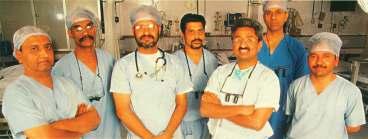
Their latest achievement is not an India’s First or even an Australasia’s First. It is a World’s First. The first Awake Beating Twin Surgery – i.e. a Coronary Bypass Surgery and an Open Heart Surgery to replace the diseasedAortic Valve,donesimultaneouslyonapatient–withoutgeneral anaesthesia or ventilator! Scared Stiff? We can’t blame you!
more than 500 angioplasties and over 2500 cardiac interventions including paediatric catheterizations.
Apart from Dr. Prof. Vivek Jawali and Dr. Ranganath Nayak,othercardiacteammembersatWockhardtinclude Dr.KNSrinivasasConsultantCardiovascular&Thoracic Surgeon,Dr.SubashChandraasConsultantInterventional Cardiologist, Dr. Murali Chakravarthy as Chief Cardiac Anaesthesiologist, and Dr. VS Prakash and Dr. S. Jayprakash as Consultant Cardiac Electrophysiologists.
The 1st single speciality corporate heart hospital in India was also the country’s 1st heart hospital to achieve ISO 9002 certification. Also, the 1st hospital in the entire Australasia region to perform ‘minimally invasive beating heart coronary artery bypass surgery’. But Wockhardt’s history of firsts doesn’t end there – in fact, to list all of them here, will require more than this page! But, as Vice-President Vishal Bali says, “Even more important is the infrastructure that helped develop this Wockhardt culture of innovation and pioneering achievements – that also gave us a head-start in attracting foreign patients.”
Gordon Bates, a former power-lifting champion from Sussex,UK,hadaseverecardiacarrestandwasflownina very critical condition toWockhardt Bangalore. Dr.Vivek Jawaliandhisteamperformedanemergencybeatingheart bypass surgery with five grafts on Bates.After the highly successful surgery it took only 10 days for Bates to leave the Wockhardt ICU and fly back to UK.
Ian Stanley Brown, a businessman from Yorkshire, UK, was diagnosed with a critical single vessel block, and needed a coronary angioplasty. But if he had to do it in UK, Brown faced a 3-month wait, due to the huge waiting
listsinthatcountry.BrownflewovertoBangalore,andgot admittedatWockhardt,whereChiefConsultantCardiologist Dr. PRanganath Nayak performed a coronary angioplasty using a drug eluting stent. Fully satisfied with the result, Brown was discharged on the 3rd day after the procedure.
Patients like Gordon Bates and Ian Stanley Brown are just two of the numerous patients from Europe and USA, who arrive every month atWockhardt Bangalore. Before many other hospitals even started planning for medical tourism, WockhardtBangalorehasbeeninthethickofthings–maybe thefinestexampleformedicaltourisminthewholeofIndia.
How is this possible? Of course, Wockhardt’s global alliances with Harvard Medical International (HMI), and Western health insurance giants help a lot, but even more important is Wockhardt’s cutting-edge infrastructure that hasenabledspecialistslikeDr VivekandDr.Ranganathto pioneer advanced procedures in India, that international patients like Gordon Bates and Ian Stanley Brown are looking for.
Forexample,thesurgerydoneonBates–thebeatingheart bypasssurgery–waspioneeredinthewholeofAustralasia byDr VivekatWockhardt,whileforthecardiacprocedure done on Brown – angioplasty with drug eluting stents –Wockhardt is one of the leading hospitals in the Asian subcontinent.
Today, Wockhardt infrastructure is at the cutting-edge in the whole range of cardiology and cardiac surgery procedures including, coronary bypass graft surgery, conscious off pump coronary bypass surgery, open heart surgeries, valve replacements & repairs, coronary angiography, coronary angioplasty with stenting, electrophysiology & pacing, heart failure devices, combinationdevices&ICDimplantations,amplatzdevice closures,balloonvalvuloplasties,noncoronaryinterventions etc.
Doctors at Wockhardt Bangalore are in constant interaction with the clinical teams at such legendary US hospitals like Massachusetts General Hospital, Beth Israel Hospital, and Boston Medical Centre, thanks to its exclusive affiliation with Harvard Medical International (HMI).
HarvardUniversityneedsnointroduction.TheIvyLeague University’s Medical School also needs no introduction; it is the research capital of modern medicine.
HMI – Harvard Medical International – is a subsidiary of thisrenownedmedicalschoolwhichaimstobringtogether the expertise of healthcare professionals from around the world–ithaspresencein5continents-forimprovingthe delivery of healthcare.
ThevisionofHMIisthateverycitizenoftheworldshould have access to quality healthcare in their own country HMIworksbyaffiliatinghospitalsintoitsprogram,butis very selective in choosing, which is evident from the fact
that until now only 18 countries in the world has HMI affiliated hospitals.
For example, in South Asia, there is no other HMI affiliated hospital apart from Wockhardt Bangalore. It speaks volumes about the high regard in which Wockhardt’s achievements have been considered by cutting-edge agencies in the West.
HMI extends Harvard Medical School’s as well as the affiliated hospitals’ vast knowledgebase in clinical medicine, biomedical research, & medical education, to Wockhardt,whichinturnisthusbetterequippedtobring to its patients the global standards in clinical expertise
and technology, related to the management of cardiac disorders.
Thanks to this alliance, the Wockhardt clinical team constantlyinteractsandlearnsfromthelegendaryclinical teams at HMI affiliated hospitals in the US, like MassachusettsGeneralHospital,BethIsraelHospital,and Boston Medical Centre.
DoctorsatWockhardtcanbenefitfromsuchhigh-profile, high-energy interactions, because, most Wockhardt surgeonsandcardiologistshavebeeneducatedortrained at some of the best teaching hospitals in the world like MayoClinic,TexasHeartInstitute,ClevelandClinic,and Massachusetts General Hospital.
Wockhardt is also associated with a string of Western medical insurance giants – a fact that has enabled WockhardttoemergetotheforefrontofMedicalTourism inIndia.Manyoftheseareexclusivearrangements,which again speak about the high regard in whichWockhardt is considered in the West. For example, Wockhardt is the first and only hospital in SouthAsia to be recognised by BlueCross&BlueShieldAssociation,whichisthelargest health insurance company in the USA. Other insurance giants in USA, Europe, & Asia, which has recognised Wockhardt include BUPA (UK), AEA International (Singapore),GlobalEmergencyServices(USA),Medex (USA), Global Medical Management (USA), Assist America (USA), and GESAAssistance (Singapore).
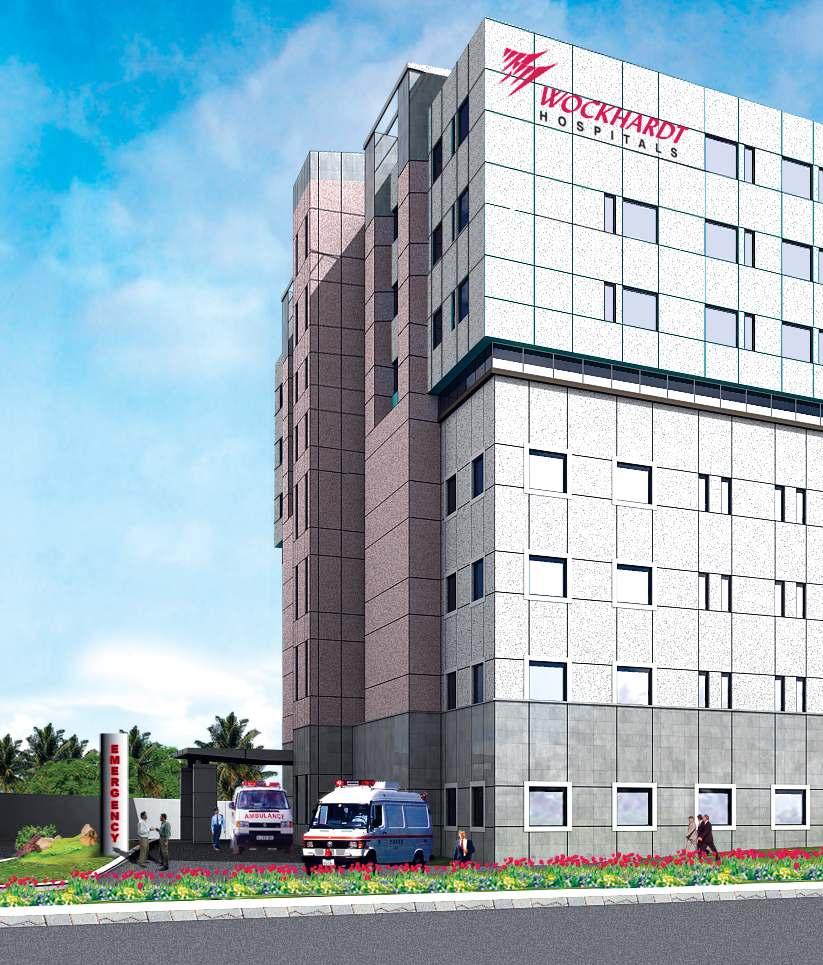
Habil Khorakiwala’s dream of a world-class Indian healthcare company, which began materializing in the early1960s,crosseditsmost important milestone when Wockhardt Hospital & Heart Institute was started at Bangalore in 1990. Since then, several important milestones have been crossed including superspeciality hospitals at multiplecities,recognitionas a superbrand, the biotechnology park, and recently the prestigious JCI certification for the Mumbai hospital. But something bigger is coming, and it is happening at Bangalore.
WockhardtHospital&HeartInstituteisnotjust15years old; it is also 15,000 heart surgeries old. This flagship hospitalofWockhardt,atBangalore,stillperformsmore than 1200 cardiac surgeries and 2500 cardiac interventions each year, with amazing success rates that match the best in the world. But it is time to move on, for the Bangalore team, to bigger things. And, it is coming.
Because, since 1990, things have moved at a rapid pace for Wockhardt, outside of Bangalore.
The cluster of six super-speciality hospitals at Mumbai, for instance. Spanning 6 specialities, the 222-bed group of hospitals at Mulund including, Wockhardt Heart
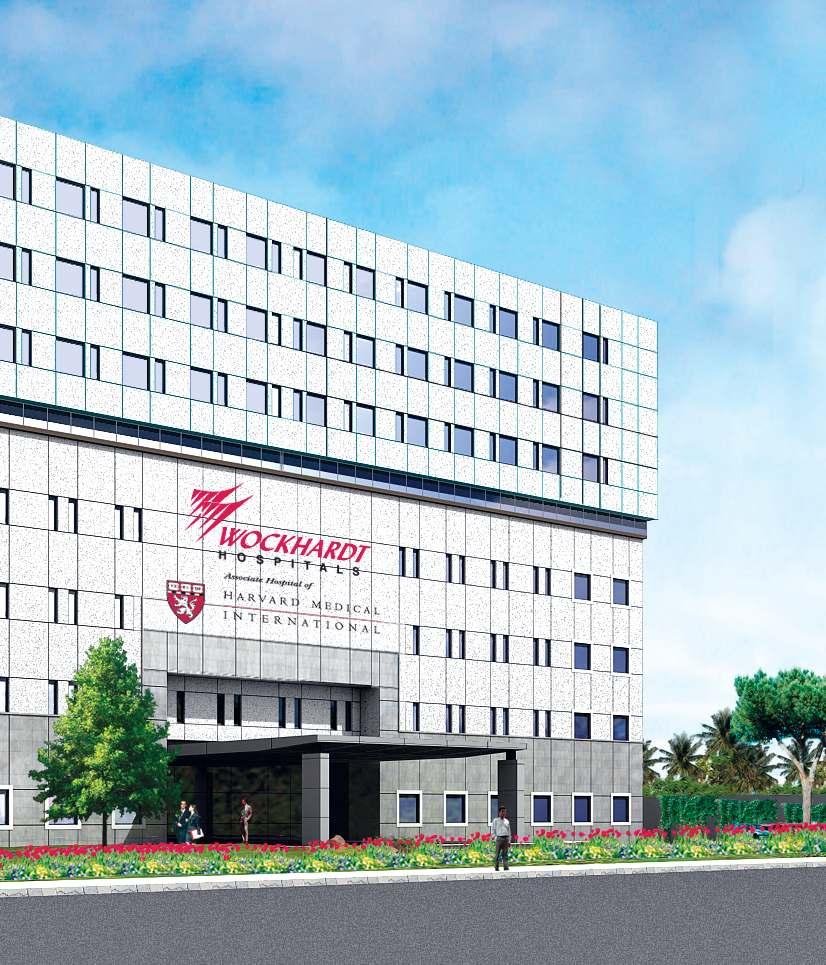
Hospital,WockhardtBrain&SpineHospital,Wockhardt Bone & Joint Hospital, Wockhardt Eye Hospital, Wockhardt Minimal Access Surgery Hospital, and Wockhardt Diabetes Clinic, have brought acclaim to the group by being the first JCI certified facility in South Asia.
But fresh energy will once again be Wockhardt Bangalore’s when the new state-of-the-art 350-bedded multi-super-speciality Wockhardt Hospital opens soon inSouthBangalore,oppositeIIMinBannerghattaRoad. It will have the super specialities of cardiology / cardiac surgery, orthopaedics, neurology / neurosurgery, & women’s health.
We asked Vishal Bali and Vijayarathna Venkatraman of Wockhardt about the unique vision behind the new hospital. Their replies were almost unanimous –“Wockhardt Hospitals is about bringing healthcare as foundinthedevelopednations,toIndia.Ournewhospital at Bangalore will bring such world-class healthcare to more patients.”
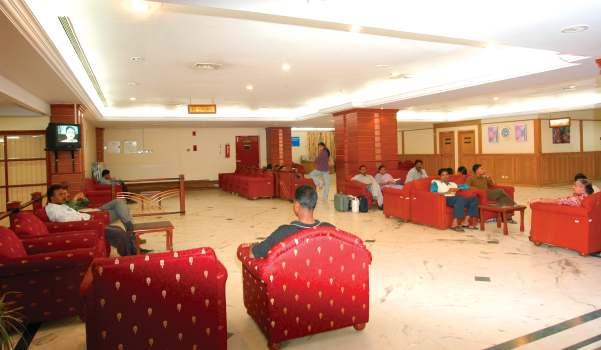
Manipal Hospital, the first multi-super-speciality tertiary care facility in Bangalore is designed to overwhelm. Its scale of operation is rare, its mastery of skills, unique, and the comfort that it offers, world-class. At 650 beds, 275 doctors, 1700 support staff, 43 specialities, and 8 Centres of Excellence, like the renowned Manipal Heart Foundation,competitiononscaleisindeedrare.Withsecond-to-noneexpertiseinsuper-specialistdepartments likeCardiology&CardiacSurgery,Neurology&NeuroSurgery,Nephrology&Urology,Oncology,andstate-ofthe-art Diagnostics, competition based on skills is also uncommon. And with a centrally air-conditioned environment and world-class facilities that satisfy even the most demanding of medical tourists, competition on comfortisalmostnon-existent.Perhaps,theonlyorganizationthatcandwarfthishospitalisitsparent,Manipal Health Systems, which is Asia’s largest hospital management group, which owns 11 hospitals with 7500 beds, and manages 14 medical colleges with 9000 students! Manipal Health Systems treats a whopping 10.30 lakh peopleasoutpatientsand1.80lakhasinpatients,everyyear!Still,ManipalHospitalatBangaloreistheGroup’s poster-boy – India’s first tertiary care hospital that is ISO certified for clinical protocols, nursing, diagnostics, & alliedservices.
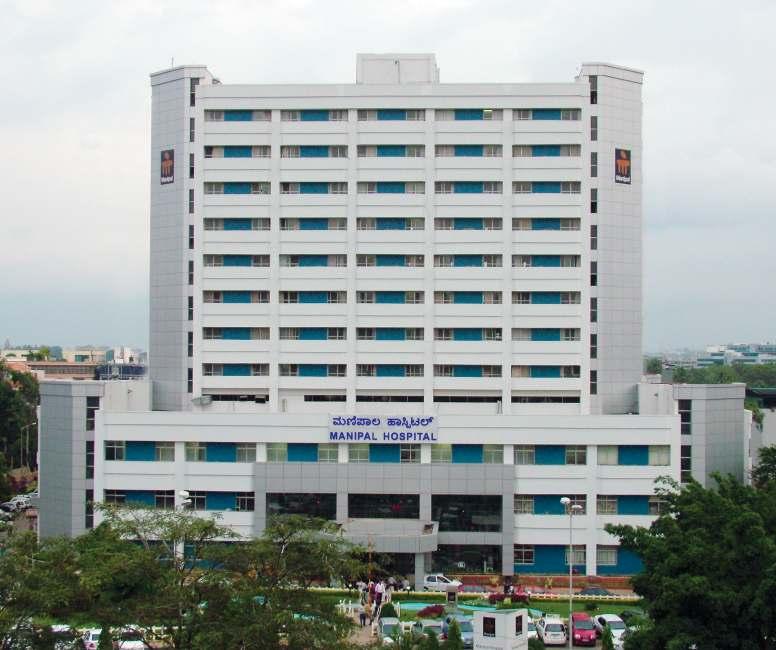
Imagine a town becoming a brand. Maybe, Oxford comes to your mind. Now,imagineanunknownIndiantown becoming a national & international brand. That is just one of the miracles Dr.TMAPai did, during his inimitable life.
Today,ManipalisreferredtoasIndia’s University Town. Starting with Kasturba Medical College at Manipal in 1953, Dr. TMA Pai systematically built up the Manipal Group, which is today India’s largest private education initiative, with 100 Institutes & 500 centres spread all over India, and an intake of 80,000 students every year! The Group has also spread beyond India, with significant presence in the Middle East, Nepal, Sri Lanka, & Malaysia.
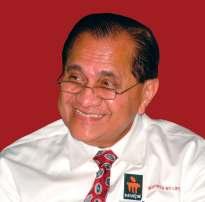
Manipal Health Systems, the largest component of the Group, is today Asia’slargesthospitalmanagementgroup!Unbelievable?Neednotbe. Structured around 6 Healthcare Systems at 6 Hubs viz. Bangalore, Manipal, Mangalore, Gangtok (Sikkim), Pokhara (Nepal), & Melaka (Malaysia),thegroupruns11hospitalsandmanages14medicalcolleges. Having 7500 beds, & 1250 doctors, Manipal Health Systems provides treatmentto10.30lakhpeopleasoutpatients,and1.80lakhasinpatients, everyyear!Andwith275facultystaff,the14medicalcollegesmanaged
byManipalHealthSystemsteachnearly 9000 students, for their MBBS, paramedical courses, & various postgraduations.
The achievements of Manipal Health Systems in community service are also unparalleled. In full synergy with the vision of its philanthropic founder, Dr TMA Pai, the group runs 55 Community Development Projects, 19 PrimaryHealthcareCentres,&7Feeder Hospitals.
No doubt, Manipal Hospital at Bangalore too has imbibed much from this rich legacy in healthcare & healthcare education. But, more accurate would be to state that Manipal Hospital has grown to be the pinnacle of achievement for the entire Manipal Health Systems.
Startedin1990byDr TRamdasPai,thedistinguishedsonofDr TMA Pai, Manipal Hospital was the first tertiary level multi-super-speciality referralhospitalinBangalore.Andeversinceitsstart,ManipalHospital has been the benchmark to beat in the scale of operation, mastery of skills, & the level of service, not only in Bangalore, but the whole of India. As proof to their competence is the fact that Manipal Hospital was India’s first tertiary care hospital to get ISO certified for 4 critical systems – clinical protocols, nursing, diagnostics, & allied services.
The achievements of the scale of Manipal Hospital, don’t comeovernightorwithoutmassivestrategicplanning.The hospital is guided by a group of leaders with unparalleled exposure–Dr.T.RamdasPai,Dr.RanjanPai,Mr.R.Basil, & Dr. Nagendra Swamy.
The hospital comes under the strategic overview of Dr T. RamdasPai,ManipalGroup Chairman and President & Chancellor of Manipal Academy of Higher Education (MAHE), India’s firstdeemeduniversityinthe private sector. Son of Manipal Founder Dr TMA Pai, it has been more than thirtyyearssinceDr.Ramdas Pai took over leadership of Manipal Group from his illustrious father A medical doctor from Kasturba Medical College, Manipal, andpostgraduateinHospital Administration, he was also trained at theAlbert Einstein Medical Center in Philadelphia. It was under Dr. Ramdas PaithatManipalGroupobtainedinternationalacclaim,and deemed university status. More than a Group Chairman, Dr. Ramdas Pai is also a nationally acknowledged expert inmedical&highereducation,provenbyhisparticipation ingovernmentpolicy-makingbodieslikeMedicalCouncil of India, National Assessment & Accreditation Council, andthesix-memberadvisorycommitteetoMinistryofHRD on higher education.
Manipal Hospital also gains immensely from the young ener gy
brought to the group by Dr. Ranjan Pai, son of Dr.Ramdas Pai,andcurrentlytheCEOoftheentireManipalEducation & Medical Group. Dr. Ranjan Pai has significant international exposure behind him, and has held posts like the CEO of Melaka-Manipal Medical College in Malaysia.
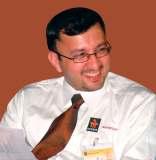
R. Basil holds the strategic position of CEO of both Manipal Hospital and the entire Manipal Health Systems. A young go-getter, Basil is a postgraduate engineer, and was formerly VicePresidentatWipro.Basil’sdifferentbackground has provided fresh insights into the strategic planning at Manipal Hospital.
Manipal Hospital also has an illustrious leader, Dr. Nagendra Swamy, who is the DirectorMedical Services & Postgraduate Studies. Dr Swamy was earlier Regional Director (Asia) for Amcare International, an affiliate of America’s John Hopkins International, Executive Director of Welcare Hospital,Dubai,andCEOofCanadianSpecialistHospital, Dubai.Heisa‘veteran’withManipalGroup,havingstudied his MBBS & MD (Hospital Administration), from the prestigiousKasturbaMedicalCollege(KMC),Manipal.Dr Swamy’slongyearsofexposuretoManipalGroup,aswell ashisworkexperiencespanningleadinghospitalsinIndia, SouthEastAsia,&MiddleEast,hasaddedvaluetoManipal Hospital.
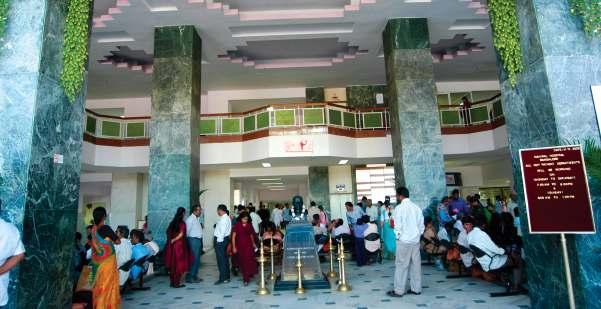
ManipalHospitalhaspioneeredmanyproceduresinKarnataka,aswell as the whole of India, while it’s specific Centres of Excellence & Departments maintain leadership positions across the country
Structured as 43 speciality departments, and 8 CentresofExcellence,the650-beddedhospital presents Karnataka with a scale of operation unseen in the state, and rare in the whole of India. The Centres of Excellence are Manipal HeartFoundation(MHF),ManipalInstituteof Neurological Disorders (MIND), Manipal Institute of Nephrology & Urology (MINU), Manipal Comprehensive Cancer Centre, ManipalHospitalDiagnosticServices,Manipal International Institute of Dental Medicine, ManipalPathology&Lab,andManipalSchool of Nursing.
It goes without saying that the 43 speciality departmentsatManipalHospitalincludeevery speciality & super-speciality found at other hospitals. What distinguishes Manipal Hospital is that it also includes raredepartmentslikePaediatricEndocrinology,PlasticSurgery,Nuclear Medicine, & Rheumatology.
Manyofthe275specialistdoctorsatManipalHospitalareUSAorUK board-certified, and have brought pioneering acclaim to the hospital
across its various Centres of Excellence and Departments. Manipal Institute of Neurological Disorders (MIND) was the first centre to perform Neuroendoscopy in Karnataka, while Manipal Institute of Nephrology&Urology(MINU)wasthefirstto perform Cadaver Kidney Transplant & Lithotripsy in the state. And The Paediatric Department at Manipal was the first to use Surfactant Therapy for treatment of Neonatal Respiratory Distress Syndrome. Manipal Hospital still continues to pioneer, the latest innovationcomingfromtheManipalBloodBank – which is Karnataka’s largest – which introduced Nucleic Acid Testing for donated blood, for the first time in India, a procedure that ensures safety
Manipal Hospital also has special leadership positionalloverIndia,acrossvariousdisciplines like Cardiology & Cardiac Surgery, Organ Transplants, Bone Marrow Transplants, Joint Replacements, Paediatrics, Neonatology, & Reconstructive Plastic Surgeries.
Manipal Hospital is also one of the rare hospitals in India, which has startedafull-fledgedStemCellResearchCentre,afurtherproofforthe cutting-edge it maintains in the healthcare research field.
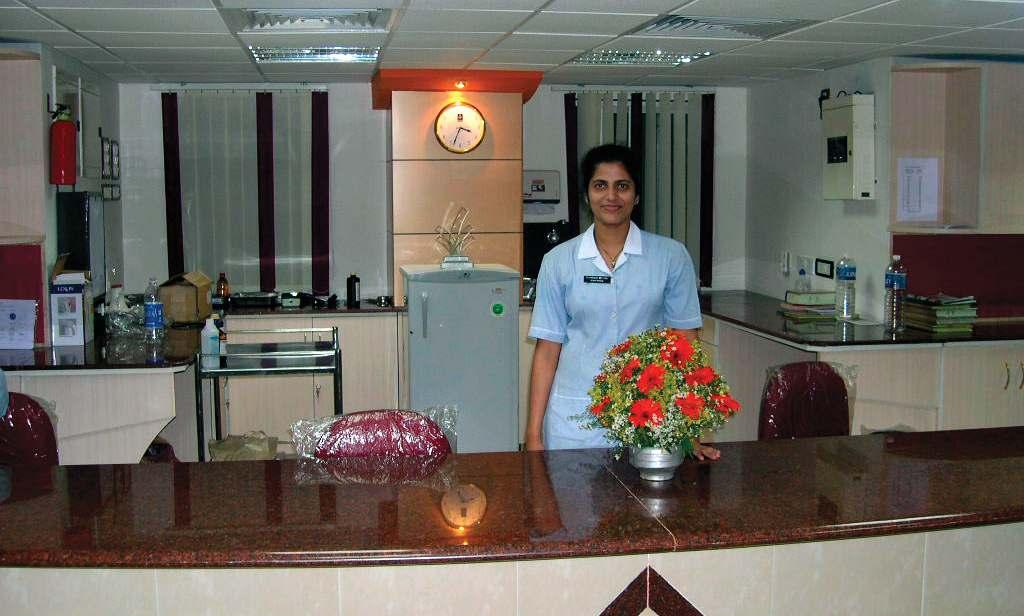
M
anipalHeartFoundation(MHF)atManipalHospitalbest exemplifies the value added by structuring the institution around several Centres of Excellence. The Foundation is one of the largest comprehensive heart carecentresinIndia.Withatrackrecord ofover8500cardiacsurgeriesandover 17,000 cardiac procedures, within the last 7 years itself, Manipal Heart Foundation outperforms even some of the dedicated heart hospitals, in capacity Anditisstillmovingaheadat an amazing pace – up to 15 heart surgeries and 30 cardiac procedures, everyday! But it is not size alone that differentiates MHF. For one, the Foundationhasanamazingsuccessrate of 98%, in tune with the best hospitals intheWest.Ofequalimportanceisalso thefactthat,MHFofferstheentirerangeoftreatmentsfor cardiacdiseases,bothforadults&children.Itisoneamong the handful of institutions in the whole world, which can stake such a claim – spanning cardiac surgeries, invasive cardiacprocedures,cardiacelectrophysiologyservices,& non-invasive cardiac tests.
Incardiacsurgeries,MHFdoeseverythingthatthebestof hospitals in the West can do. Bypass Surgeries, Beating Heart Surgeries, & Valve Replacements are routine at the Foundation,whileithasaproventrack record in rare, congenital, & redo surgeries – the kind not attempted at many cardiac surgery departments. Some of the challenging cases undertaken at MHF include Triple Valve Replacements, Left Ventricular Aneurysm Reconstruction, Bentall Procedure,RossProcedure,&Surgery for Aortic Dissection. MHF has also successfullyundertakencomplexopen heartsurgeriesunderTotalCirculatory Arrest. In Paediatric Cardiac Surgery, MHFtakesupchallengingassignments like Arterial Switch, Double Switch, Repair of Uni-ventricular Hearts, & Rastelli Surgeries –again, something only a handful of hospitals in the world cando.TheteamledbyDr.N.S.Devanandaisspecialised in Open Heart Surgeries for neonates with congenital conditions like TGA; the complex surgeries often undertaken within hours of birth!
The superb team at MHF led by Cardiologist Dr. Subash Chandra, Cardiac Surgeon Dr. Ganesh Krishnan Iyer, and Cardiac Anaesthesia Head Dr. M. Nagaraja Gowda, ensures that MHF has one of the best cardiac expertise in the world. The deployment of multiple state-of-the-art Operation Theatres, advanced equipment like the GE InnovaCatheterisationLab,amodernIntensiveCoronary CareUnit(ICCU),&perhapsthecountry’smostadvanced Electro-Physiology Lab, has enabled MHF surgeons & specialists to take any cardiac challenge head on.
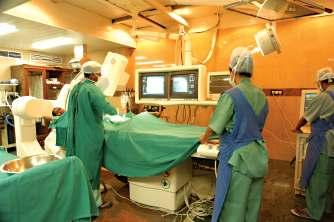
The non-invasive cardiac procedures undertaken at MHF are also comprehensive, with all standard procedures like Angioplasty,Valvuloplasty,DeviceClosureofASD/VSD etc undertaken.Anotable achievement of the department is the large number of patients it has successfully treated in rheumatic valvular disease and various congenital diseases. The Centre excels in peripheral vascular interventionslikeperipheralangioplastywithstenting,and percutaneoustreatmentswithcoveredstents&stentgrafts. Cardiac Electrophysiology services include diagnostics, treatment of arrhythmias using radio frequency ablation, &permanentpacemakerimplantation.Anditgoes withoutsayingthattheentirerangeofnon-invasive cardiac tests like electrocardiography, echocardiography, stress testing, Holter studies etc., are available at the Foundation.
But the real excellence of Manipal Heart Foundation is that all these non-surgical and surgical procedures in cardiology are provided to patients at very affordable costs, without compromising on quality even a bit.
Manipal Hospital is doing the unimaginably complex act of balancingtwoideals–maintainingthehospitalatastandard fitenoughformedicaltourism,andatthesametimeensuring thattheirmedicalexpertisecanreacheventheeconomically challengedsectionsoftheIndianpopulation.
InternationalpatientstoManipalHospitalcomefromallover theworld,includingUSA,UK,Europe,MiddleEast,Africa, &India’sneighbouringcountries,makingitoneofthemost happening places for MedicalTourism in the country. More than200corporatecompanieshavetied-upwiththehospital to offer health insurance to their employees through TPAs. Andnearly,50%oftheManipalHospitalpatientsarecovered by medical insurance. Attracting patients from such upperclassbackgroundscomesnaturallytoManipalHospital,with its size, expertise, & comfort levels.
However,italsoattractsalotofmiddleclasspatientswithit’s around225bedsinGeneralRooms,andtheaffordablerates for specialist procedures & surgeries. But going even one step forward is Manipal Hospital in bringing its medical expertise to all sections of the society. Through its affiliate program, Manipal Hospital, provides it professional, technical, & clinical expertise to around 10 secondary hospitals in Bangalore like Gayathri Hospital, Mediscope Hospital,AcuraHospital,Healthcare&WellnessFoundation Limited, Acura Speciality, Seventh Day Adventist Medical Centre, Mediscope, Desai Hospital, Chinmaya Mission Hospital(NeurologyDepartment),&CSIHospital.Toreach out to hospitals outside Bangalore, Manipal Hospital has
commissionedastate-of-the-arttele-medicinenetworkwith the server in the hospital and hubs spread across Goa, Gurgaon,Mangalore,Manipal,aswellasBangaloresuburbs likeTumkur&Hosur Andforpatientswhocan’taffordmajor treatmentsduetoeconomicchallenges,thehospital’sSocial WorkDepartmenttriestoarrangetreatmentbyco-ordinating withcorporates,individuals,&charitableorganizations.Such finebalancingactsbetweenclinicalexcellencethatsatisfies evenmedicaltourists andsocialcommitmenttowardsIndia’s lesser privileged, has become the hallmark of Manipal Hospital.
New patient-friendly measures get introduced at Manipal Hospitalatanalmostdailybasis.Tofacilitateworkingpeople, outpatient consultation has been extended to 8 PM on weekdays, while it is available from 9 to 5 on Sundays & holidays.SpecialityClinicsforshoulder,rheumatoidarthritis, laserhairremoval,podiatric(diabetesfootproblem),&sports medicinehavebeenintroduced.
Manipal Hospital is also reaching out in full swing. By expanding the tele-medicine network, getting more primary & secondary care centres affiliated, and building a chain of modern pharmacies branded, ‘The Manipal Medicine’.
The giant is also planning to move up from a tertiary care hospitaltoaquaternarycarespecialitycentre.ButtheManipal touchofsensitivecareisonlygettingbetter.Freeconsultation for children with heart diseases, has been introduced.
“
willMaintainLeadershipinBothDomestic Healthcare&MedicalTourism ”
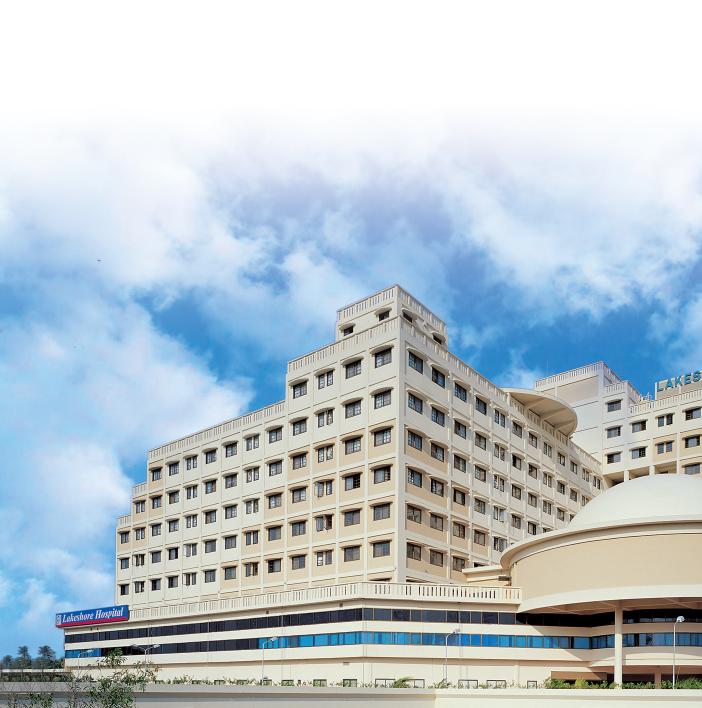
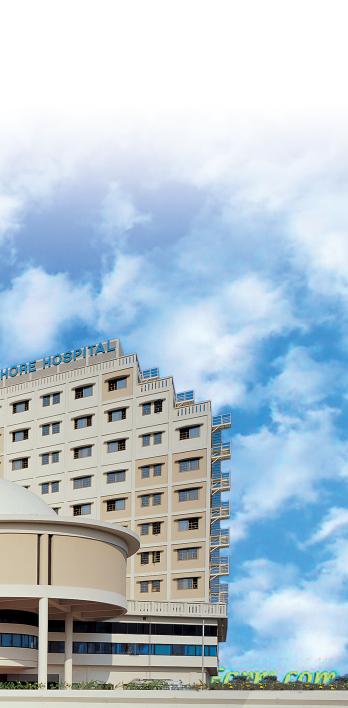
There is nothing small in MA Yousaf Ali’s vision. That is why this Dubai-based Non-Resident Keralite has backed projects like Cochin International Airport Ltd (CIAL) and Cochin’s Lakeshore Hospital. Similarly, there is nothing short-sighted in Dr. Philip Augustine’s dream. In the late 90s he dreamt of a world-class tertiary hospital for Kerala. By 2003 it was a reality. Complete with a fine team of medical talent, world-class technological infrastructure, and a pristine ambience. In 2007, Dr. Philip is again dreaming – to take Lakeshore Hospital to the dizzying heights of international medical tourism.
Path-breaking projects are all about paradigm shifts. Kerala is not especially fond of paradigm shifts, but is still home to a couple of such projects. The country’s first airport in the Public Private Partnership (PPP) model, the Cochin International Airport Ltd (CIAL), is one such project. NRI investors like MA Yousaf Ali have been instrumental in CIAL becoming a reality.
Cochin’s Lakeshore Hospital & Research Centre has been another project that germinated from a paradigm shift. Is it a mere coincidence that MA Yousaf Ali is the key investor behind Lakeshore too?
Anyway, until then, even the best of private healthcare in the state were about overcrowded corridors, smelly rooms, and endless queues. No wonder, when Lakeshore started in January 2003, it quickly won bouquets, and some brickbats too. Lakeshore was appreciated for its pristine cleanliness and quality medical care, but was criticised for its ‘star hospital’ status.
But 4 years later, things have changed. At least two new hospitals have come up in the state, roughly modelled around Lakeshore. Existing hospitals have upgraded themselves in a do-or-die attitude. Even some private medicalcollegesarevyingforaLakeshorelikeambience.
The writing on the wall is clear: Lakeshore is how hospitals should be. The paradigm has changed, forever.
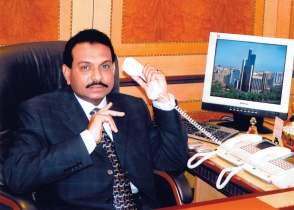
MA YousafAli,Chairman
But Dr. Philip Augustine, the Founder Promoter, Managing Director, & CEO of Lakeshore Hospital is not somebody who rests on his laurels. While other hospitals are doing the catching-up act, Dr. Philip is taking Lakeshore to truly dizzying heights. This tertiary care super-speciality hospital is today home to the whois-who of Kerala’s medical talent. Almost every superspeciality department here has it’s claim to fame.
And like all world-class hospitals, Lakeshore today has a keen focus on research & higher education. Hepatology specialist and noted researcher Dr. Abraham Koshy heads their research initiatives. On the higher education front, the hospital currently runs four DNB courses, and will soon start seven more courses. Surprisingly, this ‘star hospital’ has also put in a class act on the affordability front. There are 5 slabs of rates to choose from, starting from Rs. 70 for a bed. Lakeshore has also started a massive initiative for charitable healthcare with significant contributions from pharmaceutical giants like Dr. Reddy’s Labs & Torrent.
The market is also abuzz about an impending investment into Lakeshore from overseas, which will take their medical tourism initiatives to a new level.
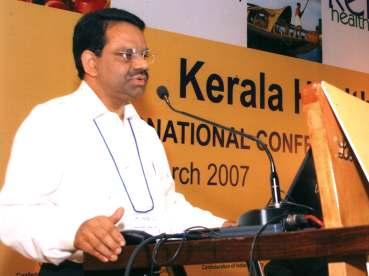
There is a buzz around that Lakeshore is in for a major expansion. Is this true?
There are three things – one is that we badly need an expansion. Most of the days we have no beds to spare. Secondly, we can afford this expansion now as we have turned in a profit since the last two years. Third is that we were actively considering various expansion strategies, that is, how to fund it. Whether it should be an IPO, a loan, or a JV.
And what exactly is your expansion plan?
Currently, we have 300 beds. Our projection is that we need 250 beds more to meet the emerging demand. Then there are the associated facilities and upgradations required. Altogether an expansion to the tune of Rs. 100 crores is called for.
From a struggling ‘star hospital’ in 2003 to a bustling hospital in 2007, how do you explain Lakeshore’s acceptance among Keralites?
Yes, today we can’t offer rooms or beds to all in need. It is true that we had a ‘star hospital’ image. But that was because of a lack of awareness regarding how hospitals should be. Today, Lakeshore is the benchmark. The competition’s efforts are to do something better than Lakeshore. But we will make sure that it won’t be easy. We are moving that fast with the cutting-edge in medicine.

Dr. Johny J Kannampilly MD, D. Ortho, D. Diab, is a uniquely experienced diabetes specialist. He obtained his training in diabetes from the WHO Centre in Zagreb, Croatia, Europe. Currently, he heads the Diabetes Centre at Lakeshore. It was
Dr. Johny who installed the first insulin pump in South India, and still Lakeshore leads in the maximum number of installed insulin pumps. The department has meticulously designed packages for comprehensive care of diabetes patients. Dr. Johny has also been trained at the renowned Kings College of London under Prof. Mike Edmonds, an international authority in diabetic foot care. Such exposures make him the first doctor from Kerala to be trained in diabetic foot. Under his leadership, Lakeshore has also started a Diabetes LEAPCentre, the L.E.A.P standing for Lower Extremity Amputation Prevention. The department also runs a Juvenile Diabetic Foundation for the special needs of children with diabetes.
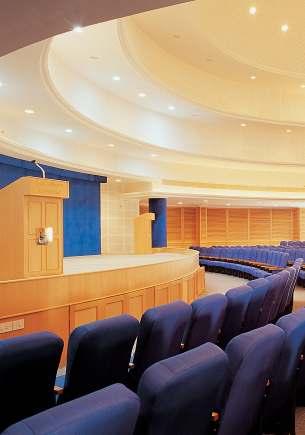
But how come this widespread acceptance now?
You see, we always had beds for Rs. 70, even when we were branded as a ‘star hospital’. Then, there is the matter of vision, that is, pioneering vision. Our vision was straightforward – we wanted to pioneer tertiary level care in Kerala. And that is what we did. We foresaw that it was in tertiary care that Kerala was far behind; primary and secondary care were quite good here, even in 2000.
And how did you implement this vision?
We understood the importance of attracting the finest doctors in each speciality. We did that. We understood the importance of equipping our doctors with finest technology,sothattheycandeliverthebestservicetoour patients. We did that. And thirdly, we understood the importance of providing our patients and their families withcleanfacilitiesandahealingambience.Andallthese three aspects are ongoing processes in Lakeshore.
So, how is the expansion going to be?
Well,asthingsstandnow,itisgoingtobeajoint-venture. Thepartnerisfromoverseasandwillbringinconsiderable investment as well as expertise to Lakeshore.
Have you reached a stage where you can name the partner, and what kind of expertise are they bringing in?
At the moment I can say that our prospective partner is a hospital from Thailand, the Mecca of medical tourism. They are one of the largest medical tourism providers on an international scale.
So, the expertise that you mentioned is about medical tourism, right?
The expertise is about providing world-class healthcare, and yes, medical tourism in particular. They are at the cutting-edge, running JCI accredited hospitals and all.
How did this JV come about? If they are a leader in medical tourism as you mentioned, the process would have been challenging… Yes, quite challenging. They were literally shopping in India for suitable partnerships. Finally they zeroed in on two hospitals – one in North and one in South. I am happy to note that Lakeshore was the only hospital from South that they actively considered.
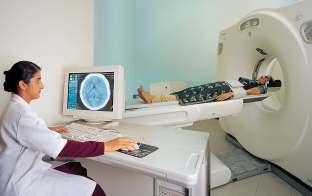
To what do you attribute this selection?
They put it very simply – “We have heard about Lakeshore’s medical tourism initiatives before.”
When another South Indian hospital - which is nearly twice our size and metro based - approached them for partnership, the answer was similar – “We haven’t heard about your medical tourism initiatives till now.”
So, you mean to say the selection was solely based on your past performance in medical tourism…
In a way, yes. But, of course, both parties are putting in the due diligence. Their team from Bangkok has visited Lakeshore, and later our team including myself toured Thailand to see their facilities. The trip and the discussions were very fruitful. Our Chairman MA Yousaf Ali’s profile also impressed them very much. They know him as the head of EMKE Group, since they have a hospital in UAE too.
How do you assess the medical tourism facilities in Thailand, and your partner’s facilities in particular?
It is mind-boggling. The Thai Government is doing everything in their capacity to promote medical tourism. Our partner hospital is exceptionally good, complete with even a visa office! No efforts have been spared to bring in medical tourists, including going for the coveted JCI certification. Thanks to this trip, we finally understood why medical tourists in Thailand are numbered in millions, and not thousands.
How do you compare it with the support you receive from our Governments?
Well, there is nothing much to compare. Our Governments are only waking up to the prospect of medical tourism now. There, in Thailand, they have a 10 or 15 year head-start. The only agency that is doing something in India to promote medical tourism is Confederation of Indian Industries (CII). We, at Lakeshore share their enthusiasm. I am the Chairman of the Kerala Chapter of CII’s Healthcare
Dr. JI Chacko, MDS, has 30 yearsofexperienceindental & maxillofacial procedures behindhim.Heisapioneerin orthognathic surgery, dental implantology, & procedures using resorbable mini-plates & screw. Currently,Dr.ChackoheadstheDepartmentofDental Sciences&FaciomaxillarySurgeryatLakeshore.Under his expert guidance, the department undertakes treatment for maxillofacial trauma, corrective proceduresforjawdeformities,oralcancers,tumours ofthejaws,TMjointarthroscopicprocedures,dental implants, surgical removal of impacted tooth, single sitting root canal treatment, correction of gummy scale, dentofacial orthopaedics, orthodontics, & maxillofacialprosthetics.Thedepartmentisacentre ofexcellenceandakeyplayerinLakeshore’smedical tourism initiatives.
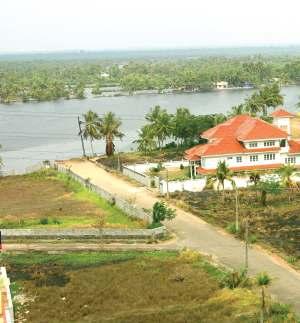
Subcommittee. A group of Kerala hospitals including Lakeshore has been conducting Kerala Health Tourism (KHT) an annual medical tourism seminar, with CII’s help.
How effective have been the CII initiatives?
Well, CII has succeeded in bringing together 40 Indian hospitals in the private sector to jointly promote medical tourism. I think that is a big
achievement. Secondly, CII has been successful in lobbying with the Central Government to come up with a national level accreditation program for hospitals interested in medical tourism. The certification from the National Accreditation Board for Hospitals & Healthcare Providers (NABH) is a cost-effective alternative to international programs like JCI. Lakeshore will soon be accredited under this.
How do you assess the support from the State Government?
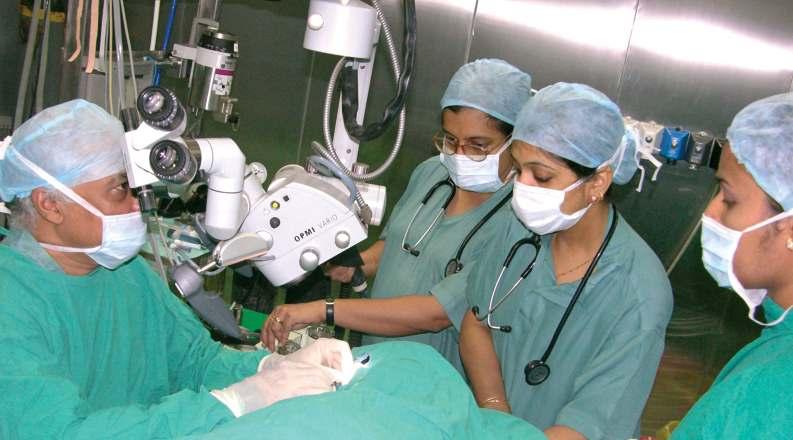
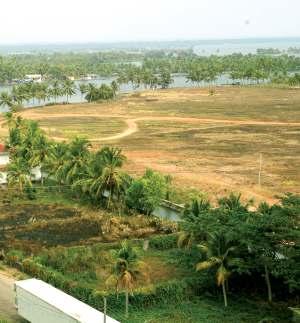
Well, the present Tourism Minister Kodiyeri Balakrishnan and the current Health Minister PK Sreemathi both have sympathetic ears towards our cause. But the same can’t be said about the top officials, especially in the tourism department. They keep on discussing about meaningless things like the semantics of the phrase ‘medical tourism’ and so on. But things weren’t like this. We had excellent bureaucrats like Mr. Amitabh Kant and Mr. Suman who were proactive leaders.
CARDIOLOGY
Dr.KAChacko-MD,DM
CARDIOTHORACIC& VASCULARSURGERY
Dr.MadhavNaikFRCS,MS,FAMS,FECS
INTERVENTIONALCARDIOLOGY
DrAnandKumarVMD,DM
Dr.CibyIssacMD,DM,DNB
GASTROENTEROLOGY
Dr.PhilipAugustine-MD,DMManagingDirector
DrAbrahamKoshiMD,DM
DirectorofHepatology&Research
GASTROINTESTINALSURGERY
Dr.H.Ramesh-MS,MCh,FACS
MEDICAL&PAEDIATRICONCOLOGY
Dr.V.PGanghadharanMD,MD,DM
PLASTICSURGERY
Dr.JoseTharayil-MS,FRCS
SURGICALONCOLOGY
Dr ThomasVarughese-MS,FICS,FACS
Dr. Jacob Varghese heads Lakeshore’s hip & joint replacement initiatives. The department is at the cutting edge of joint replacement, using technologies like computer navigation, third generation cementation, & pulse lavage. Services provided include total knee & hip replacement surgeries, joint resurfacing, revision joint replacement, shoulder joint replacement, & arthroscopic surgery of shoulder, elbow, wrist, hip, knee, & ankle. Lakeshore’s joint replacement expertise has been recognised internationally, and even patients from USA come here for treatment. The joint replacement unit works in tandem with Lakeshore’s Department of Orthopaedics, Traumatology, & Spine Surgery. The department is headed by noted orthopaedic surgeon Dr. Lazar P Chandy, MS, D.Ortho, and includes eminent spine surgeon Dr. Suresh S, D. Ortho, MS, DNB. Lakeshore also runs a dedicated Spine Clinic which has undertaken many complex procedures like correcting deformities.
NEPHROLOGY
Dr.GeorgyK.NinanMD,DM,DNB
DrAbiAbrahamMMD,DM,DNB NEUROLOGY
Dr.GigyKuruttukulam MD,DM NEUROSURGERY
Dr.P.SaiSudarsanMS,MCh,DNB,MNAMS RADIOLOGY&IMAGING
Dr.GeorgeJoseph-MD,DMRD UROLOGY
Dr.GeorgePAbraham-MS,MCh ORTHOPAEDIC
Dr.JacobVargheseD.Ortho,MS.Ortho
Dr.LazarJ.ChandyMS,D.Ortho
ENDOCRINOLOGY
Prof.N.KochupillaiMD,FAMS,FNA
DIABETOLOGY
Dr.JohnyJ.KannampillyMD, D.Ortho,D.Diab.
There are only a few hospitals in Bangalore where charity goes hand in hand with corporate settings. Vydehi Institute of Medical Sciences & Research Centre - a DK Audikesavulu initiative at Whitefield is prominent among them. Lying close to the International Tech Park Bangalore (ITPB) and the well known Sri Sathya Sai Hospital, Vydehi can’t be anything else, but a mixture of high-minded philanthropy and cuttingedge quality. Adding further momentum to the institution’s pursuit for exceptional excellence, the first MBBS batch of Vydehi has stood out first in Rajiv Gandhi University of Health Sciences with a 91% success in the final MBBS exams. The latest news from Vydehi is the commissioning of a Rs. 14 crore worth IGRT (Image Guided Radiation Therapy) system from Varian (Germany) for cancer treatment. The only hospital in South Asia to have such advanced facilities, Vydehi is offering the facilities at an unbelievably low price. “That’s what we always work for - the most modern care for the least privileged at minimal or no cost,” says Director DA Kalpaja, about this noble vision.
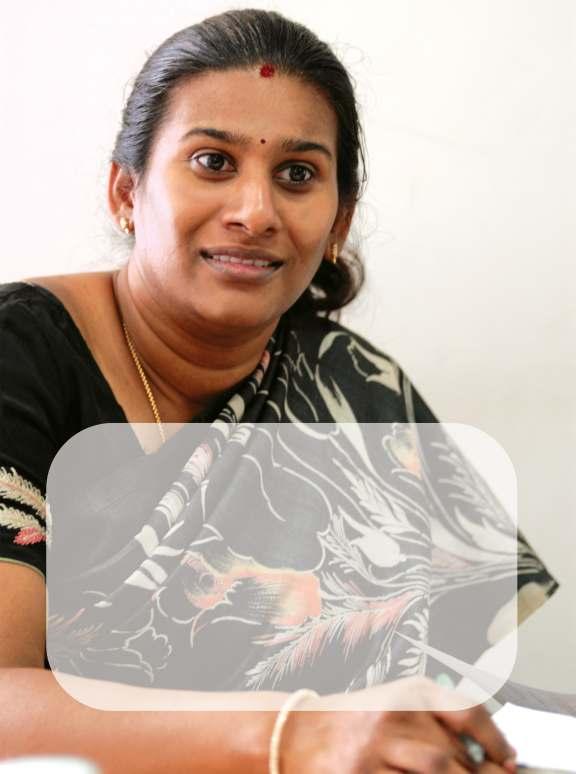
We are the only hospital in South Asia to have such systems,” sitting at her spacious and elegant chamber, DA Kalpaja, Director, Vydehi Institute of Medical Sciences & Research Centre says about the latest path-breaking initiative in the frontier areas of advanced medical care. She is referring to the recently acquired equipments for Image Guided Radiation Therapy (IGRT). “One of our goals is to be a specialized cancer center with means and motives to bring the advanced cancer treatment facilities within the reach of common man. With treatment tariffs kept at bare minimum levels to achieve this goal, I think we are on the right path,” Kalpaja notes. Vydehi sees itself, in times to come, as a major player amongst the cancer centers of the country. “The main focus is to help and treat poorest of the poor with the latest technology,” says Audikesavalu, Chairman of Vydehi.
The developments in cancer treatment are in line with the creation of a 300-bedded Oncology Institute, as part of the Vydehi Institute of Medical Sciences & Research
Lively during interactions, DA Kalpaja, Director of Vydehi, is full of enthusiasm, energy and abiding conviction when it comes to her institute. She explains the mission and vision that fires Vydehi, with her trade mark vivacity.

Your hospital follows a different model. The fact is well known that it caters to the less fortunate sections of the society. At the, same time you have corporate clients also. How viable and sustainable is the model?
True, we have set apart a good number of beds - nearly 300 - for free treatment.Almost 35% of our facilities are for poor patients.We see healthcare as a matter of service.With the help of our Chairman, we have been able to do it successfully so far We strongly believe that there shouldn’t be any discrimination between the poor and rich in terms of the treatment they receive. At Vydehi, we do everything possible to ensure it. Coming backtoyourquestion,themodelistoughtofollow.Butourprinciplesandvisionmotivate us to carry on. It is not the ‘rich few’ we want to serve. It is the ‘poor many’, we love to cater And the very volume of it lends a case for the economy of our operation. Is it easy to identify the poor? Won’t there be cases where the undeserving will corner the benefits?
the Vydehi Institute of Medical Sciences & Research Centre. The dedicated center is housing all the important specialties of Oncology namely, Radiation, Surgical, Medical and Palliative oncology.
It may happen. But we have social workers. They do analyse each case and see the merit. I agree that complaints do emerge. But we have good mechanisms to minimise it, if not eliminate.
Since you are offering free treatment to the needy, does the treatment cost more for those who pay for the services? Any kind of cross-subsidy is involved?
Absolutely no. Let me clear this misconception. No question of cross-subsidy arises. Our charges are least compared to other hospitals. Mind you, this is even after giving 30% beds for free.
So how competitive are your paid services?
Can you show a hospital where one can have a bypass surgery for Rs 60,000 including all expenses including food?You can have a dialysis for Rs 600 here. It goes up to Rs 900 if kits are provided by the hospital.Vydehi is such an institution where service and affordable healthcare with high quality is the motto and reality You can have a word with the patients if you want.
What are the new areas, the hospital is venturing into?
In terms of patient care, the advanced features in the radiation machine provide highly conformal treatment with improved patient safety, Kalpaja says. Better tumor delivery of radiation rays and superior real time monitoring of the treatment plan can also be ensured. All these result in improved cure rates and better treatment tolerance. “The Center is well supported by the full-fledged multi-specialty Medical college hospital,” observes Administrator Major General (Ret’d) Anju Manchanda who is recipient of Visisht Seva Medal, one of the top honours in the Indian Army. Today, Vydehi Group of Institutions at EPIP Area in Whitefield consists of four individual academic It is not
We will be concentrating on plastic surgery and stem cell research, in future. Stem cells, as we know is the future wave.
And what about the developments in oncology department?
Well, we have bought the machinery for IGRT (image guided radiation therapy) worth Rs 14 crores from Varian of Germany We are the only hospital in SouthAsia to have it. We are interested in extending this facility to the poorest of the society The information about this is spreading through word of mouth. We have patients from far away places likeWestBengal.ItcostsonlyRs. 50,000forthosewhoneedtopayfortheservices,for others it is free as usual. Actually the cost can go much higher than that, given the investment. But we want to price it least and bring benefits to maximum people. It is known that you have Ayurveda and Allopathy under the same roof…
Yes,inourrehabilitationcentre,AyurvedaandAllopathyarecombinedforbetterresults. We are unique in that respect. I suppose we are the only institution in the world in this category
Your first batch in MBBS has come out. How’s the performance?
Ourfirstbatchof100studentsstandsfirstinBangalorethisyear.Ourstudentsrecorded 91% success in final examination. The BDS batch has a success percentage of 85%. Biotechnology students also have produced great results. I will attribute that success todiscipline.Disciplineisthekeyinlife.Goodintentionsalonewon’tfetchtheresults.
Centre. The dedicated center is housing all the important specialties of Oncology namely, Radiation, Surgical, Medical and Palliative Oncology.
In terms of patient care, the advanced features of the radiation machine provide highly conformal treatment with improved patient safety, Kalpaja says. Better tumor delivery of radiation rays and superior real time monitoringofthetreatmentplancanalsobeensured.All these result in improved cure rates and better treatment tolerance.“TheCentreiswellsupportedbythefull-fledged multi-specialty Medical College Hospital,” says Vydehi Administrator Major General (Ret’d) Dr. Anju ManchandawhoisrecipientofVisishtSevaMedal(VSM), one of the top honours in the Indian Army.
Today, Vydehi Group of Institutions at EPIP Area in Whitefield consists of four individual academic institutions - Vydehi Institute of Medical Sciences & Research Centre, Vydehi Institute of Dental Sciences, Vydehi Institute of Nursing Sciences, and Vydehi Institute of Biotech Sciences, as well as two specialised treatment centres – Vydehi Institute of Rehabilitation, and Vydehi AyurvedaGram. All these six institutions share the 65-acres Vydehi Campus. What is noteworthy is that only 10% of the campus is covered with concrete structures, and the rest 90% is landscaped with gardens, lush greenery, and vast play areas. Facilities exist for such sports like Cricket, Basketball, Volleyball etc, and the indoor recreational infrastructure includes swimming pool, multigym, badminton courts etc.
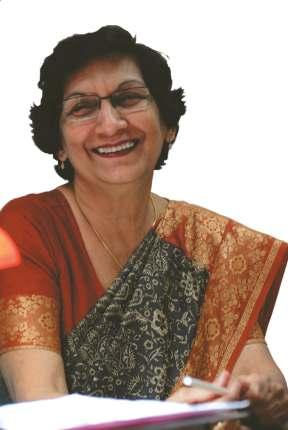
Oncology, Nephrology, Urology, Pulmonology, General Medicine, General Surgery, Ophthalmology, ENT, Dermatology, Orthopaedics, Psychiatry, Paediatrics, Obstetrics & Gynaecology, Dental Science, and several Speciality Clinics. No doubt the Vydehi MBBS students gainfromthesewidespecialities,aswellasfromthehightech equipments & facilities like Cardiac Cathlab, MRI, Spiral CT, Cardiac Echo Machine, Ultrasound, Linear Accelerator etc. “ Yes our students are benefited from the facilities. It is borne out by the final year MBBS results this year,” remarks Kalpaja on Vydehi students coming top in recently announced MBBS examination results. Discipline, high values, and concern for poor are inculcated in the value system of students during their stay at Vydehi, she informs.
It is not that Vydehi is a hospital for the poor and downtrodden only. Vydehi offers medical solutions to clients with varying socio-economic profiles. The hospital is at an enviable neighborhood in Whitefield; neighbors include International Tech Park Bangalore (ITPB), healthcare organizations like Sri Satya Sai Super Speciality Hospital, and high-profile technology companies like IBM, Dell, SAP, GE, GE Medical Systems, Intel etc. – some of them Vydehi’s corporate clients too. Vydehi has everything that corporate clients are looking for. For example, special suites at Vydehi
While most young medical colleges go for the bare minimum departments, and equipment, the 1000bedded Vydehi Hospital has speciality departments like Cardiology,
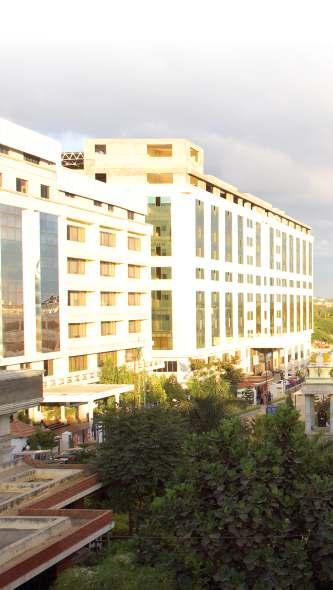
include facilities like Cable TV, Room Service, Hot Water, & Multi-cuisine Diet.
Apart from the medical college, the other teaching institutions in the Vydehi Campus are Vydehi Institute of Dental Sciences, Vydehi Institute of Nursing Sciences, & Vydehi Institute of Biotech Sciences. Vydehi Institute of Dental Sciences is approved by the Dental Council of India, and is affiliated to Rajiv Gandhi University of Health Sciences for the BDS course. The dental college is noted for its curricular stress on compulsory rotational internship at the hospital as well as the outreach programs to neighbouring rural communities – thus providing Vydehi BDS students with an unmatched scope for experiencing diverse dental cases.
Vydehi Institute of Nursing Sciences offers both BSc Nursing and General Nursing & Midwifery Course. The former is affiliated to Rajiv Gandhi University of Health Sciences, and the latter to the Karnataka Nursing Board. Learning Biotechnology at Vydehi Institute of Biotechnology might be an experience of a lifetime –for Vydehi has gone all out to build an exotic Medicinal Plants Park and a world-class Tissue Culture Laboratory. The Medical College is also the venue where various paramedical courses are conducted. These include BSc programs in 4 subjects – Operation Theatre Technology, Radiology, Renal Dialysis Technology, & Anaesthesia Technology.
The two specialised treatment centres at the Vydehi Campus – the Vydehi Institute of Rehabilitation and Vydehi AyurvedaGram speak about the passion with which the management regards these offbeat yet holistic
areas of help to the patient population. One of the most sought after centres of its kind in the country, Vydehi Institute of Rehabilitation offers an array of treatments ranging from those addressing the most difficult of the disabilities to early intervention programs. The marvellous infrastructure for rehabilitating children and adults, use therapies like Occupational Therapy, Speech and Auditory Training, Vision Therapy, Sensory Integrative Therapy, Music Therapy, Aquatic Therapy, Early Therapy, and Biofeedback. Vydehi is associated with California State University at Los Angeles (CSULA) to bring the latest of Rehabilitation Therapies to the Institute. Vydehi stays at the world’s cutting-edge in clinical competence and research; partnerships with California State University at Los Angeles (CSULA) for Rehabilitation, and University of Georgia for Biotechnology, are just two examples.
Vydehi’s AyurvedaGram uses the ancient principles of Ayurveda to discover the underlying nature (Prakriti), to create tailor-made treatments designed to bring relief from various diseases & conditions. The Centre offers Panchakarma, Rejuvenation, Slimming, Stress Management etc. Vydehi is the only such medical campus in the country to offer both modern medicine and Ayurveda.
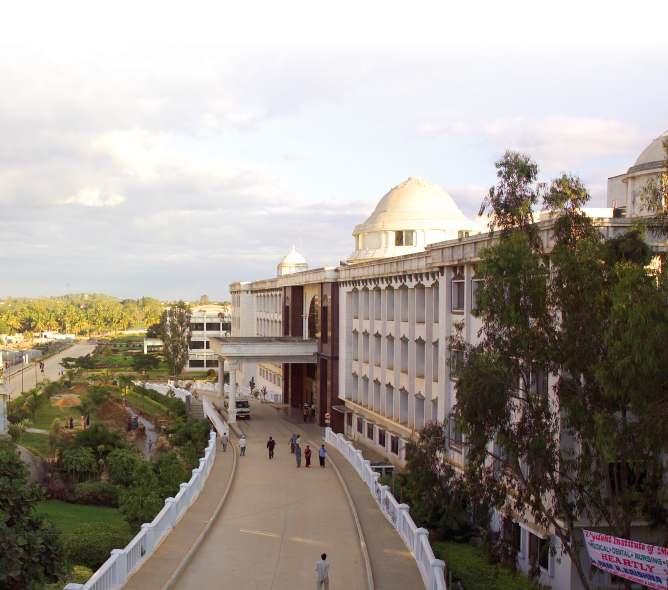
Vasan Eye Care Hospital, Cochin, part of India’s largest and fastest growing eye hospital chain, has introduced the latest Zyoptix XP technology in the city. Zyoptix XP is a modern and better technology than Lasik, and is the latest in rectifying refractiveerrorslikeshortsight,long sight, astigmatism etc, says PAUnni, Director, Vasan Eye Care Hospital. Refractive Surgeon Dr. Kala B Thottam explains it further, “Zyoptix XP delivers sharper unaided vision thanLasik,asthetechnologyprovides more corneal tissue for laser ablation to help correct higher dioptre of
power.”Howdoesittranslateasbetter valueforthepatient?“Apartfromthe sharper vision, other benefits include lesser time for the procedure and faster return to normal life. The procedure can be finished as quick as 10minutes,andthepatientcanresume normal activity within 6 hours,” says Dr. Kala. Of course, patients get adequate vision without the use of glasses or contacts. The procedure costs Rs. 25,000 for both eyes. Vasan Eye Care Hospitals was foundedbyDr.AMArunin2002.The first Vasan Eye Care Hospital started
at Trichy Within just 4 years, the chain
had established hospitals in South Indian cities like Salem, Kozhikode, Hubli, & Cochin. All these hospitals became runaway successes, prompting Dr Arun and his professional team to continually expand the chain to other cities in South India. Today, Vasan Eye Care is also available at Erode in Tamilnadu, Belgaum in Karnataka, and Kannur in Kerala, and is soon expanding to another ten cities. The Cochin hospital of Vasan Group is a 4-storeyed,20,000sqft,state-of-thearthospitalthatisfitenoughforeven medical tourism. Still, the hospital aims to be one of the most affordable eyecarehospitals.SaysChairmanDr AM Arun, “Our technological infrastructureandoursuper-specialist doctors are all world-class, but our rates are very affordable. We also offereverythingineyecare–cataract service, refractive surgery (Zyoptix), cornea service, occuloplasty, paediatricophthalmology,glaucoma, vitreo retinal surgery, anterior segment surgery – all under one roof. Ourvisionistobetheworld’s largest chain of eye care hospitals, in every sense.”
“With Our Multi-Super-Speciality Hospital, We Have Put Mysore, On India’s Health Map”
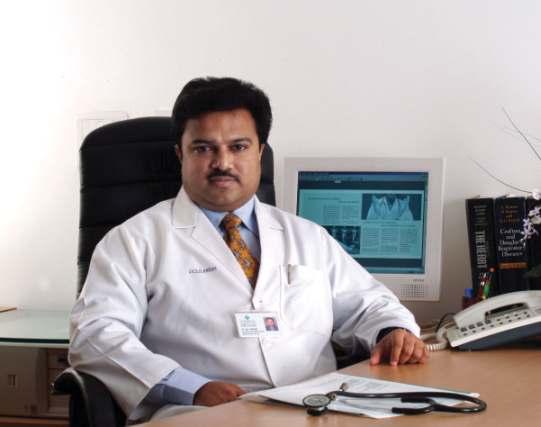
Mysore’sfirstmulti-super-specialityhospitalhadtwooptionsbeforeit–one,keeponleveragingthe fact that it is the first in Mysore; two, move ahead from that label and start competing with the best hospitalsinneighbouringBangalore,orforthatmatter,anywhereinIndia.ManagingDirectorDr.SB Vikram,MD,decidedonthesecondcourse.Theresultsspeakforthemselves.VikramHospital&Heart Care has many professional firsts in super-specialist departments like cardiology, cardiovascular surgery,gastroenterology,&urology,notonlyinKarnatakaorSouthIndia,buteveninthewholeofIndia! Co-promoted by NRI medical professionals from USA & France, this centrally air-conditioned and environmentallysealedhealthcarefacility,isfitenoughformedicaltourism,butmaintainsaremarkable levelofaffordabilityforall.Thehospitalalsoattractedaremarkableteamofworldrenownedspecialists &surgeonsincludingCardiologistDr ArunSrinivasandCardiothoracicSurgeonDr.NagendraPrakash. Thetechnologicalinfrastructureistrulystate-of-the-art–Vikramfeaturesthemillion-dollarSomatom SensationCardiacSystemfromSiemens(firstinstallationinSouthIndia)whichhasrevolutionized diagnosticsincardiology&otherdepartments,andtheHarmonicScalpel(firstinKarnataka),whichhas revolutionizedsurgeries.
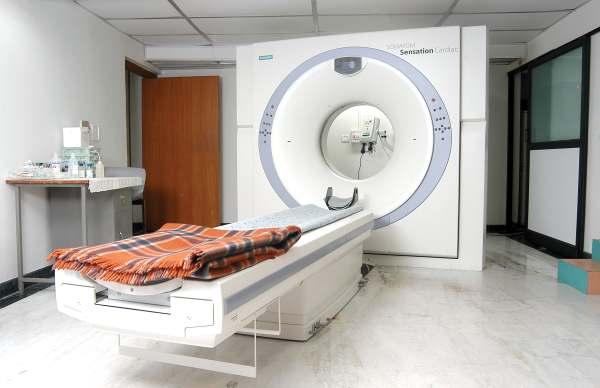
SOMATOM
SENSATIONCARDIACSYSTEMISUNIQUEINTHAT
ITCANOBTAINTHERESULTSPOSSIBLEFROMCORONARY ANGIOGRAM,BUTINAQUICK,NON-INVASIVEFASHION-IN LESSTHAN20SECONDS,WITHOUTHOSPITALIZATION, PAINFULCATHETERS,ORINCISIONINTHEGROIN!
Once upon a time Mysore was more important than Bangalore.
ThencameIndianindependence,Karnataka’sstatehood,Nehru’s strategic vision for Bangalore, and lastly, the IT revolution that transformed Bangalore into India’s Silicon Valley.
In this transformation, while Bangalore took the centre-stage, Mysore became the satellite.
Bangalore’s de facto supremacy is also quite visible in the healthcarefield.AtleasthalfadozenofIndia’smightiestmultisuper-speciality hospitals in the private sector are Bangalore based, not to speak about the numerous single-super-speciality andmulti-specialityhospitalsthathavestartedinthecityduring the last few decades.
So, what does a young medical entrepreneur in Karnataka, who startsoutafewyearsback,plan?FindaniceplaceinBangalore, set up a super-speciality hospital, and ride the wave – the wave called Bangalore, where 3.5 lakh highly paid IT professionals and their families ensure that super-speciality hospitals are always at peak occupancy
But not Dr. SB Vikram, MD. He sets up Vikram Hospital & Heart Care in Mysore – the first and only such facility here.
Because, his priorities are different. He didn’t postgraduate in medicine to be in the cosiest doctor’s chair available, maybe available halfway across the globe. He didn’t decide to be a medical entrepreneur to amass a fortune by wooing corporate clients and tapping their fat insurance packages.
Hewenttostudymedicine,inspiredbythelifeofhisgrandfather, Dr. S Narayana Setty. A qualified Chest Physician who was practisinginUK,Dr.NarayanaSettyforsakethatlucrativecareer andreturnedtoMysoretotakechargeofaChest&Tuberculosis Hospital,andthusservethecommunity This was almost half a century back.
Dr.NarayanaSetty’sunconditionalloveforhispatientsandhis professional excellence, made him known all over Mysore and beyond. A doctor with a missionary zeal, he also inspired his sons to take up medicine. And he worked with them – Dr. S Bhaskar & Dr. SN Rajeshwar – for more than four decades, to set up a good outpatient service with all diagnostic facilities, in Mysore.
But it was his grandson, the young Dr. Vikram ,who took the initiativetocreateDr.NarayanaSetty’sultimatedream–atruly world-class hospital in Mysore that will specialize in cardiothoracic surgery
Dr Vikram is one person who believes that Mysore can even gradually upstage Bangalore in many fields including healthcare.SaysDr Vikram,“Mysoreisblessedwithsalubrious climatewithtemperaturesrangingfrom17–25degreesforover 10monthsinayear.Havingalotofgreeneryandnon-polluting industries, clean, fresh air is everywhere. This makes the city an ideal destination for health tourism. Connectivity by 4-lane expresswaysandfasttrainslikeShatabdiExpressfromChennai, nowmakeitpossibleforpatientstocometoMysorefrommany cities - even for day care surgeries.”
Let not the location, Mysore, fool you into any hasty conclusions.True,asuper-specialityhospitalinMysoreismore likelytobeaminisuper-specialityhospital,whichwillreferto more full-fledged super-speciality hospitals in Bangalore, as the need arises.
ButnotVikramHospital&HeartCare.Dr.Vikramhasequipped this hospital to be as good, if not better than the finest superspeciality hospitals in Bangalore!
Surprised? Need not be.
Vikram Hospital’s Cardiology Department has to its credit, Karnataka’s first implantation of a drug-coated stent!
Vikram’s Urology Department was the first in Karnataka to do bilateral simultaneous PCNLandTwinTrack PCNLfor largestaghorn kidney stones!
Vikram’s Gastroenterology Department was the first in Karnataka & Tamilnadu to perform extraluminal endoscopy (endoscopic ultrasound)!
TheGastroenterologyDepartmenthasalsoanotherimpressivefirst to its credit – it is India’s only hospital where cancers causing jaundice(cholangiocarcinoma)aretreatedwithendoscopicdelivery of radiation inside the cancer!
Impressed? Indeed, Dr. SB Vikram is running no one-man-show here.Assisting him in setting up and maintaining this world-class hospitalareco-promotersandNRIDirectorslikeFrance-basedKC Mohan Rao, MS; and US-based professionals, Sudhir Setty, MS; Kowdle Prasad, MS; & Ganesh Prasad, MS.
Vikram Hospital & Heart Care is today a multi-super-speciality hospital with 100 beds. A world-class, state-of-the-art healthcare facility, Vikram Hospital is centrally air-conditioned and environmentally sealed. The multiple operation theatres have stainless steel walls and fibreglass flooring. Built to satisfy even themostdiscerningofmedicaltourists,VikramHospital,however, takes special care to keep its charges affordable for all.
For creating a world-class hospital in the 21st century, both men and machines are important. Vikram Hospital isn’t compromising on either
Perhaps,thebestexampleforthefinestininternationaltechnology thatVikramhasgoneforisthemillion-dollarSomatomSensation Cardiac system from Siemens. Somatom Sensation is unique in that it can obtain the results possible from coronary angiogram, butinaquick,non-invasivefashion!Thatis,ascreeningcoronary angiograminlessthan20seconds,withouthospitalization,painful catheters,orincisioninthegroin!Thisnext-generationCTScanner isthecostliestintheworldandisrevolutionizingcardiactreatment in the finest hospitals around the world. Even more surprisingly, Vikram Hospital is the first hospital in South India to install Somatom Sensation!
Somatom Sensation also enables doctors at Vikram Hospital to perform a whole body scan in which they can view all the blood vessels–inheart,kidney,brainetc–andobtain3Dimagesofany internalpartinthebody.Surely,itenablesfasterandmoreaccurate diagnosis.
Vikram Hospital also features another first in equipments –HarmonicScalpel,awonderfulinstrumentwhichisultrasonically activated, and helps surgeons for a bloodless field of surgery, minimal scarring, and quicker recovery Vikram Hospital is the first hospital in Karnataka to have Harmonic Scalpel.
Under the leadership of CMD Dr. S Bhaskar, and MD Dr. SB Vikram, the hospital has successfully created a team of worldrenowned specialists,
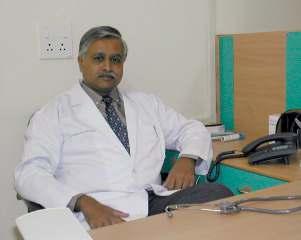
WITHMORETHAN10,000ADULT CARDIACSURGERIES.
surgeons,&physicians.BothDr.BhaskarandDrVikram also practice as Physicians here.
Dr.Arun Srinivas, MD, DM, who heads the Cardiology Department as Consultant Cardiologist, is a distinguished doctor with enviable academic and professional achievements to his credit. He was Consultant Cardiologist at Wockhardt Hospital, Bangalore&MallyaHospital,Bangalore,andAssistant Professor of Cardiology at St. John’s Medical College Hospital, Bangalore. Dr. Arun also holds three prestigious fellowships – in Paediatric Cardiology at Royal Children’s Hospital, Melbourne, Australia; in Coronary Intervention at Royal Melbourne Hospital, Australia; and in Peripheral Vascular Intervention at Miami Vascular Institute and Arizona Heart Institute, USA.
Dr. Nagendra Prakash, MS, FRACS, who heads the Department of Cardiovascular Surgery, as Chief Cardiothoracic Surgeon, is a nationally and internationallyexperienceddoctorassociatedwithmore than 10,000 adult cardiac surgeries. He was Consultant Cardiothoracic Surgeon and Chief Cardiac Surgeon at Mallya Hospital, Bangalore, Senior Registrar (Cardiothoracic Surgery) at Royal Prince Alfred Hospital, Sydney, Australia, and Registrar (Cardiothoracic Surgery) at Apollo Hospital, Chennai. Dr.NagendraunderwenthisfellowshiptrainingatRoyal PrinceAlfred Hospital.
Dr. K Krishna Rao, MS, FRACS, an internationally experienced surgeon, headsVikram’s Urology Department as ChiefUrologist,whilenotedGastroenterologistDr.Rajkumar Wadhwa heads the Department of Gastroenterology
Other specialists, surgeons, & doctors at Vikram Hospital & Heart Care include Dr. R Manjunath, MD, Dr. SN Rajeshwar, DMRD, Dr. M Mohan, MD, FCCP, Dr. Seethalakshmi, DA, MD, Dr. Madhuri Wadhwa, MD, Dr Anjali Arun, MD, Dr Nandakumar, MD, PDCCA, Dr. Krishna Kumari, MCP, Dr KPRaichurkar,DMRD,DNB,Dr.BMMahesh,DMRD,DNB, Dr. RG Srinivasa, DMRD, Dr. Sanmathi N, MS, Dr. Guru Prasad,MD,DM,DNB,Dr.Keshavamurthy,MD,DM,DNB, Dr.UpendraShenoy,MS,MCh,Dr.NarendraGNishanimath, MS, Dr. KM Srinivasmurthy, MS, Dr. MS Ranganath, MS, Dr.Raghavendran,MS,MCh,andDr.KCGurudev,MD,DNB.
Under the guidance of this formidable team,Vikram Hospital & Heart Care is fast crossing several milestones.
In Cardiology, it has become the first hospital in Karnataka to performover200trans-radialcoronaryangiogramprocedures, the advantage of which is that patients can walk home after 3 hours of the angiogram!Vikram Hospital has performed over 5500 coronary angiogram procedures and 1000 coronary angioplasties & stents.
TheDepartmentofCardiovascularSurgeryhasperformedover 1000 Open Heart Surgeries with 99% success rate!
InGastroenterology,VikramisSouthIndia’sonlyhospitalwith more than 75 examinations of small intestine using double balloon enteroscope. And it has become the first hospital in Mysoretotreatpancreaticstoneswithoutoperation,usingextra corporeal shockwave lithotripsy
In Urology, Vikram Hospital is Karnataka’s pioneer in Percutaneous Nephrolithotomy (PCNL), and is the only hospital in Mysore to offer all modalities of treatment for kidney stones under one roof. Vikram also has a remarkable 100%successrateinrenaltransplant,andlikeallit’sservices, offers this at an affordable rate.
With a string of such achievements,Vikram Hospital is in the bigleagueofKarnataka’s,SouthIndia’s,andeventhecountry’s noted multi-super-speciality hospitals. However, Dr. SB Vikram has never been a leader to rest on his laurels. Future plans include Vikram Healthcity, at Mysore, which will be a massive and comprehensive healthcare facility planned along international lines, with possible international collaboration.
On the research front, Vikram Hospital & Heart Care is soon gettingintostemcellimplantationforcongestiveheartfailure patients, in association with leading institutions in Singapore & Malaysia.
Vikramisalsoofferingitscardiacsuper-specialistconsultations in Bangalore through Vital Medi-healthcare in Indiranagar, Bangalore, between 10AM & 2 PM on Sundays.
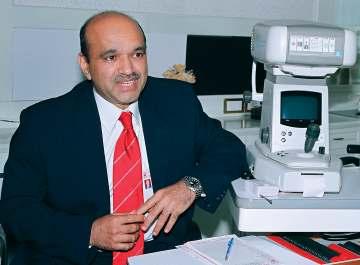
Dr.K.BhujangShetty
“Remember,ourinnerintelligencehasgreaterknowledge than all the doctors in the world put together, for doctors can only treat, whereas healing is from within” – so starts the small book ‘The Power of Love’. Reading this, all of us would assume that the book must be written by a religious thinker or philosopher. Somebody, who doesn’t regard the medical profession in high respect. But, strangely enough, the book is by an eye surgeon who has done more than one lakh eye surgeries in his career
Welcome to the world of Dr. K. Bhujang Shetty.
When you roam around the 30,000 sq. ft. of the high-tech Narayana Nethralaya, spanning six-floors, - the first eye hospital in Karnataka to be ISO certified - the things you notice might not be the six state-of-the-art operation theatres,orthemulti-croreworthultra-modernequipments like Lasik, Lasers, GDX, OCT, Field Analysers, or even thefamilyDeitiesinstalledwithutmostrespectatthemost prime spot.
What catches your attention is the satisfaction of patients coming out of Dr. Shetty’s consulting room, and the confidence of patients waiting for their turn to meet this friendly doctor We were prompt to point this out, and Dr Shetty’s answer was typical of him, “I am happy that you noticed it, but we have to constantly work on it, and over and above, it is His Grace. By the way, did you notice the chanting?”
Home is usually where we welcome Guests. But here, it is always full of Guests. No one is considered as just ‘another patient’. And Indian spirituality teaches that aGuestisGod.AndthatwhereGoddwellsisaTemple. ThatishowNarayanaNethralayasuccessivelybecomes a Home, a Temple, and an Eye Hospital. In that order. Much like its founder Dr. K Bhujang Shetty is first a Humanitarian, then a Thinker, then a Surgeon. That hewasabletooperateon1lakh“precious”eyesinhis career, is due to this different priority, and not despite this, feels this one-of-his-kind surgeon, for whom the phrase‘WorkisWorship’ceasestobeacliché.
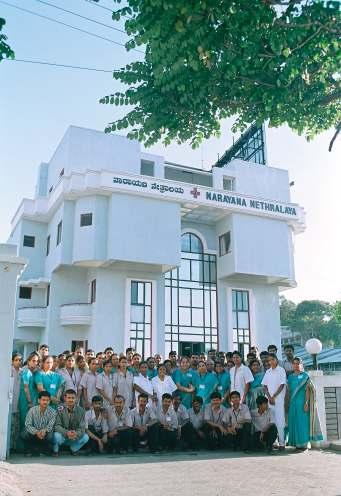
Chanting?Where?Wewereabouttoask,whenDr.Shetty put a finger to his lips, and indicated us to remain silent, and listen. And there it was, the almost silent Sanskrit chanting seemingly coming out of nowhere but everywhere – soulful and spiritual, like a gentle brook in the valley. “It is played at low volume, but is non-stop and everywhere – in my room, the lifts, and even the operation theatres. You can hear it if you would stop talking, close your eyes, and listen.”
Wewereready Therewasmuchtolearnfromthishuman being opposite us. We started off our questions for Dr Shetty:
g As soon as we came to know that you had written a book, we wanted to ask you this – what is ‘The Power of Love’ all about?
“Nobodyoutsideisresponsibleforoursituation.Blessed is the man who finds fault with himself and not with others.” This appears in Chapter 3 of the book. I think it prettymuchexplainsthebook’sphilosophy.“Ifweareto havebettersurroundings,wehavetogettothecause,and thecauseiswithinus,i.e.ourthoughtsandbeliefs.Change them and the outer world will change automatically” –again, I have quoted from Chapter 3.
g About the hospital, we know that you stress a lot on patientsatisfaction.IsthisNarayanaNethralaya’sreal uniqueness?
Yes, absolutely yes. Because, as you know, there are hundredsofeyehospitals,andthousandsofeyespecialists.
Onlyafewamongthemarereallybad!Atallotherplaces you can expect reasonable treatment. Maybe, we have an edge in high-end work due to our state-of-the-art equipment, but we wanted to be much more unique than this.What we concentrate on is genuine all-round help.A patient coming here is coming with his or her health worries – and nothing is considered more precious than eyesightanditscomfort.Wecounselhimorherasaguest, friend, God. I believe that it is more important to help, than to treat. We even might not be able to treat a certain person, but we should be able to help, with sound advice.
g But a happy patient is also the best spokesman for a doctor…
Yes, very much, but here we do it without that intention. That word-of-mouth publicity happens is only a sideeffect. Because, I think it is very important to have our intentions pure. I put it down in the 5th Chapter of ‘The PowerofLove’–“Motiveiseverything,forourobjectives determineouroutcomes”.Butgoodthingsaresuretofollow goodintentionsandgooddeeds.“Theeasiestwaytoreceive anythingiswishitforsomeonewhoneedsit”–againfrom Chapter 5.
g Apart from the medical care & advice that you and your doctors provide, how is this patient satisfaction achieved?
Good question.The medical side is only one spoke of the wheel. The care should start from the security personnel keeping the gate,
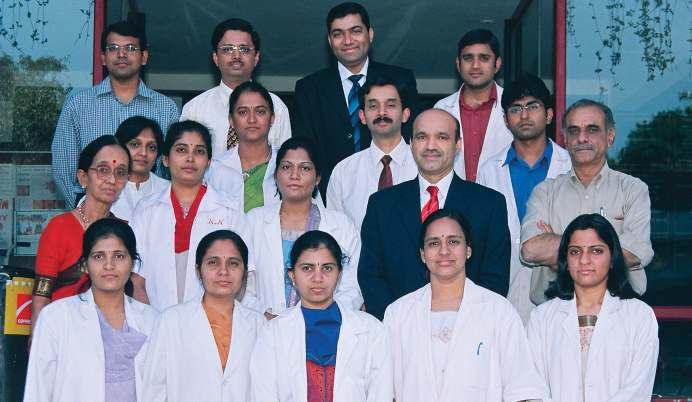
andcontinuethroughthewordsanddeedsofeachandevery staff. Our administrator Mrs. Premila Rao’s eyes reach everywhere,toensurethiswarmth.Youwillbesurprisedto know that we have inpatient assistants here – who are not nurses or ward boys – just to frequently enquire after the comfort of our patients, and more importantly to talk with them.Then there are those subtle things, like the chanting.
g How does it help?
Traditionally, background chanting has always been used to soothe and alleviate worries and fears. It works by constantly reminding us of the Higher Power behind us, whichistherealsourceofhelpforall.Forusdoctors,nurses, and other medical professionals, it works by negating our ego that says that we are the ones in control. Ego is something to be destroyed in everyone in this world, for true peace to arrive.
gSofaryouexplainedaboutthehumaneside. Now, can you explain the medical side of Narayana Nethralaya?
Well, we are a super-speciality hospital for the eye i.e. we have separate departments, medical expertise,andhigh-techequipmentsdedicatedfor differentkindsofeyeproblems.Forexample,we have departments like Vitreo-Retinal, Cornea & Lasik, Paediatric Ophthalmology & Squint, Glaucoma, Uvea, Ocular Oncology & Oculoplasty, Speciality Macular Clinic, and OcularGenetics&GeneticCounselling–inshort, everything for the eye. Two things we are especially focussing on are diabetic problems of the eye like retinopathy, and the latest Lasik treatments for permanent removal of glasses & contact lenses. However, as in every other eye hospital,thebulkofoursurgeries–nearly80%areforcataractswithimplantationofintraocular lens (IOL). We really differ in the other 20%, in which we do all kinds of specialised and rare procedures, many of them not done in smaller eye hospitals.
own eye hospital, the name was automatic – Narayana Nethralaya. I was not his son, yet he had helped me more than a father. My uncle has been a huge influence in our family,andDr.DeviShetty’sNarayanaHrudayalayaisalso named after him. Dr. Devi is his son-in-law. Earlier, NarayanaNethralayawasatasmallpremises,butweshifted herearound12yearsback.Thereweren’tmanyeyehospitals of this scale in those days, but the need was huge. I knew thatmyowntwohandswon’tbeenough,andsoonenrolled other specialist hands to work with me. Now, we are 25 consultants,here.
g How well-equipped is the hospital?
In hospital service, we often joke that if you stop running, you go backward. And acquiring high-tech equipment is somethinglikecycling.Themomentyoustopupdating,you fall down! But jokes apart, we want the best equipment for
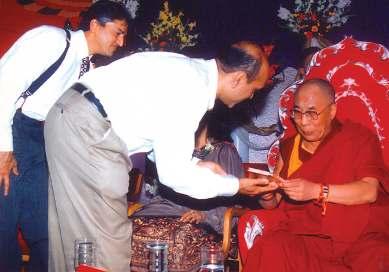
gAhospitallikethisdoesn’thappenovernight.Canyou tell us something about your background and vision?
Yes, it doesn’t happen overnight. I had a very humble beginning,beingborninavillage,withoutmuchscopefor education. But my uncle – my father’s elder brother –NarayanaShetty,thoughtthatweshouldn’twasteourlives, and brought us to Bangalore as kids, and enrolled me in BaldwinBoysHighSchool.Fromthatmomentlifestarted for me. I went on to study at Bangalore Medical College for MBBS, and later for MS, there itself. Looking back, I wouldn’t have got the opportunity to pass even the 10th grade, but for my uncle. I would have surely missed the bus. So, after my MS, when I decided that I don’t want to go for government service, or abroad, but should start my
ourpatients.Thekeyobjectivesarefasterdiagnosis,better safety, and enhanced comfort. For example, very early detection of Glaucoma is now possible here, thanks to our GDXequipment.Similarly,OpticalCoherenceTomography (OCT) has vastly increased the depth of our diagnosis in retinaldiseases.BeforeOCT,weonlyhada2Dpicturefrom which to diagnose, now with OCT we can have live 3D slicesoftheretina.Intreatmenttoo,theimpactishuge.We have installed the latest 4th generation Excimer Laser for Lasik Zyoptix-100 surgeries, which is the world’s best systemtodayforcorrectinglongsight&shortsightwithout glassesorcontacts.TheMillenniumMicroSurgicalSystem from Bausch & Lomb that we have acquired has revolutionised Cataract Surgery through a process called phacoemulsification that eliminates the need for stitches. Our other high-end equipment include Argon, Diode, &
YAGLasers,UltrasoundB-Scan,Topography&Orbscan, Field Analysers, Fundus Camera, ERG, A-B Scan, Laser Indirect Ophthalmoscope, Photo DynamicTherapy etc.
g You mentioned your stress on eyes problems due to diabetes and the various Lasik treatments. Can you elaborate?
Diabeteshasbothgeneticreasonsaswellaslifestylereasons like overeating, lack of exercise, and stress.Astudy done inIndia,showedthatwhileonly4%oftheruralpopulation has diabetes, a whopping 12.5% of the urban population suffers from it! And as you might know already, with 40 millioncases,Indiaistheworld’sdiabetescapital.Butyou won’tbeknowingthatdiabetespatientsare25timesmore pronetoblindness!Asacutting-edgeeyehospital,wecan’t ignorethisproblem.Diabetescanaccelerateconditionslike
attending on diabetic related eye problems. Thirdly, we have sophisticated laser procedures needed for diabetic eye problems.
g And what about Lasik?
As I told you earlier, we have the world’s most advanced LasikZyoptixmachinetocorrectrefractiveproblemslike short sight, long sight etc without glasses or contacts. But morethanthat,wehaveathoroughbredprofessionalwho headsourRefractiveSurgeryDepartment,Dr.RohitShetty, who underwent training and fellowship in Germany and USAonrefractivesurgery.Hehaspresentedmanyresearch papers, and conducted training sessions on this subject at international conferences. Under his guidance, our Departmenthassuccessfullyconductedmorethan10,000 Lasik surgeries. Dr. Rohit himself will talk to you more about this subject.
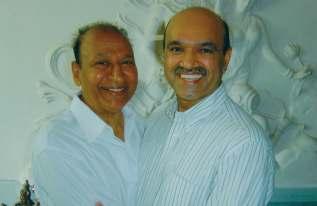
cataract and glaucoma, and more importantly result in diabeticretinopathy.Ifthisconditionisleftuntreated,retina canbleed,bloodcangetintotheeyeball,andfinallycause blindness.
g What are your strategies for combating diabetes relatedproblems?
Well, developing proper awareness is the single-most important step against diabetes. You will be surprised to know that, even in developed countries, diabetes is the biggest cause for blindness. Why does this happen? Because, most diabetes patients just don’t know that their eyesneedtobecheckedevery6months.Hence,ourstrategy toostartsbycreatingawareness.Everypatientwhoregisters here, whether he or she has diabetes or not, gets a small diabetesliterature.Theideaisthatevenifheorshedoesn’t havethedisease,itwillbeusefulforsomefriendorrelative. This literature contains the precautions to be taken by diabetes patients. Secondly, we are one of the rare eye hospitals in India, where 4 surgeons are dedicated for
g12yearsintooperation,howfar has your vision changed? What are the plans for the future?
Our vision has not changed much, butsomegroundrealitieshave.The greatest change is that due to technological advances, most eye surgeries have become outpatient procedures. Only a few procedures stillrequireinpatientcare.Mirroring this change, some years back itself, we stopped expanding room-wise, and started expanding theatre-wise. Now, we have six state-of-the-art operation theatres, which is a rare infrastructure. Today, we can undertake 100 surgeries a day We also have full-fledged facilities for 50 inpatients. Regarding future plans, we are building an eye hospital twice the size of this one at Narayana Hrudayalaya Health City There the stress will be on training and community services, apart from treatment.
gWhatareyourcharitableandcommunityinitiatives? First of all, our policy is that no patient would be turned backsolelyduetolackoffunds,ifhisorhersisadeserving case.Ifourhelpwouldcurethem,nothingwillpreventus from giving them help. Our rates also reflect this – we have graded rates, from the actual cost of the surgery, through various subsidised grades, to a fully free option. Youcanthinkitofasa20-to-0scale.Onlythemedicallyinsured or affluent patients are charged the actual cost i.e. atgrade-20,andalldeservingcasesgetasubsidyaccording to their need. We are part of the Yeshaswini Scheme promotedbyNarayanaHrudayalayaandtheGovernment of Karnataka, under which farmers get free eye care. To doourpartinhelpingIndia’s3millioncornea-blindpeople, long back itself we had started an eye bank with the blessingsofDr.Rajkumar.WenameditDr.RajkumarEye Bank, and he has also pledged his eyes with us. We also
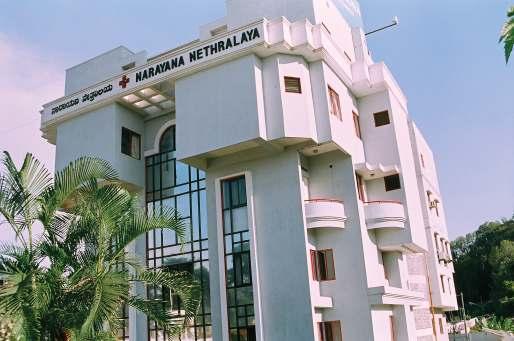
thatmuchmorecouldbedone.Forexample,today,inIndia,10 millionpeoplesufferfromavoidableblindness,mainlydueto cataract.AcataractsurgerywithanIOLtransplantwouldfully curethem.Still,outofpoverty,theyarenotabletodothis.At ournewhospitalcomingupinNarayanaHrudayalayaHealth City,wewanttogoafterthisbacklog.Crackitopen,byoffering 200freecataractsurgeriesaday
You mentioned training. What are your educational initiatives?
OurhospitalisrecognizedforDNBcoursebyTheNationalBoard ofExaminations,andwehavebeenrunningthecourseforsome timenow.WearealsoaninstitutionalmemberoftheFederation ofOphthalmicResearchEducationCentre-India(FOREC)and haveobtainedpermissiontostartBSc(Hons)inOphthalmic TechniquesinassociationwithIGNOU.AndasItoldyouearlier, wewanttofocusontrainingatournewhospitalcomingupin the Health City. We are investing so much in high-tech equipmentandspecialists.Itshouldalsobeusedfortraining thenextgenerationofeyesurgeons.
Finally,somethingaboutyourfamily…
Well,theyhavealwaysbeentheinspirationbehindallthese. Especiallymywife,whoisapillarofstrength.Mydaughter NainaShettyisourCo-ordinatorfortheDepartmentofOcular Genetics & Genetic Counselling. It is a very rare field that studiesfamilyinheritedeyediseasesandgivesforewarnings likenottogoinforconsanguineousmarriagesthatcancause eye diseases at birth. Naina has graduated in Biotech with specializationinGenetics.SheismarriedtoDr.RohitShetty,
whoheadsourRefractiveSurgeryDepartment.Myyoungerson isstudyingatMedicalCollege.Weallhopethathejoinsus!
Dr. Shetty is a thorough family man, a caring husband, and affectionatefather.Weweresurprisedtoknowthatforadoctor whohasachievedmuch,Dr.Shettyworksonly9to5.“Igetupat 4,read,meditate,introspect,pray,andstartworkby9,which goes on till 5. After that I make it a point to come home, be availableformyfamily,andalsomeditateaboutthedayandits happenings,withgratitude,andacknowledgeshowGodshapes ourlives,eachoneofusatthehospitalandthefamily.”
Dr.BhujangShettymightseemablessedman,blessedwith everything.Butashehimselfsays,“Itisnotonlywithme.Each oneofusisamagnificent,outstanding,remarkablebeingGod hascreated.Therealblessingisanawarenessofthis.Wehave tolookaround,lookinside,andintrospect,sothatweseethe Divinehelpingus.IlookbackandseeGodhelpingmethrough myUncle.IlookbackandseeGod’shandinOphthalmology beingmysubject.Ontheconverse,allunfortunatehappenings toomustbetakeninourstride.Thereisnopointincomplaining againstanything,anyone.AsIputitdownin‘ThePowerofLove’, “Everytimewecomplain,wecomplainagainstHim.Everytime weareunhappy,weareunhappywithHim.”
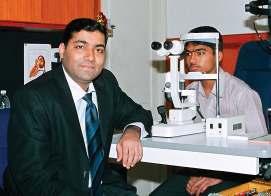
Dr.RohitShetty
g What is behind this ‘noise’about Lasik?
Yes, ‘noise’ is the correct word. So much commotion is made about this technology. Even in developed countries, this is the situation.When you land in a US city, and get out of the airport, the first hoarding you see is of Lasik, next to McDonalds! The reason is obvious – Lasik can correct long-sight and short-sight, withoutrequiringglassesorcontacts.So,itisahugemarket.But we think it is unfortunate that Lasik is being promoted as a cosmeticsurgery,andprescribedforanyonewithglasses.Nobody looksintotheequipmentused,thesurgicalteam’sexpertise,and whether Lasik is suitable for an individual case or not.
gWhatallpointsshouldapatientenquirebeforeconsidering Lasik?
First is whether your case is suitable for Lasik or not. In our experience, around 60 to 65% of the total patients approaching us for Lasik, are suitable for the procedure. The rest have to be turned back, and we advise them to continue with glasses or contacts. But at many eye hospitals and Lasik centres, everyone is treated, and even worse, these centres keep on advertising, luring more and more unsuspecting people. This is the number one reason why Lasik has got a bad name now. Secondly, one should enquire what is the expertise and what are the protocols followedbythesurgeryteam,aswellashowmanyLasiksurgeries have been done there. We follow the world’s best protocols for Lasik, and our department has a track record of 10,000 Lasik surgeries.Thirdly,oneshouldenquirewhatistheequipmentused. Here,weusetheLasikZyoptix100machine,whichistheworld’s best, as of today. Only around 25 institutions in the world have thismachine.Itimprovesthesafety,precision,andpredictability of the outcome.
g You mentioned protocols. Why are they important?
Protocols define the precise steps with which an institute does a procedure or surgery, be it Lasik or any other We follow the world’s best protocols i.e. the protocols used by the world’sbest
Heisthenew,youngfaceofNarayanaNethralaya. Trained in US & Germany, Dr. Rohit Shetty, is spearheading the hospital’s foray into Research and Medical Tourism, apart from his core area of RefractiveSurgeryandLasik.Here,hespeaksabout themisunderstandingsaboutLasik,theimportance of Research in Ophthalmology, and his plans for the boom in Medical Tourism:
MedicalUniversities.AsmalleyehospitalorLasikcentrenormally doesn’t go for such perfection. Why we take this extra effort is two-fold – firstly, we want the best results for our patients, and secondly, we want our work to be of research quality, fit to be published in the world’s best medical journals.
gWhichbringsustoournextquestion–whydoyoustressso much on research?
Well,whenweworkday-to-dayinahospital,andhavesufficient practice,wetendtothinkthateverythingwillbefine.Butitisnot so.Wedon’tknowwhatotherhospitalsworldwidearedoing.My experienceinUS&Germanyconvincedmeabouttheimportance of being at the cutting-edge, always. How do we go about it?We havetoparticipateinnationalandinternationalseminars,present our own papers, learn from the papers of other doctors, and so forth.Ishouldsayweareluckytohaveasufficientlyyoungteam of specialists here, who are as enthusiastic as me in presenting theirownpapersininternationalseminars.Presentingpapersisa verycostlyaffair,anditisalsonoteasyforapapertobeaccepted ininternationalforums.Still,Icanproudlysaythateventhemost demanding of forums, theAmericanAcademy, has accepted our papers.Andmostimportantly,wewanttobefutureready–when stem cell or gene therapy starts within 5 to 10 years from now
gMedicalTourismisanotherofyourfocusareas.Howwellis Narayana Nethralaya performing on this front?
Ishouldsaywehavemadeagoodstart.Wehavepatientscoming infromtheUS,Ireland,andvariousAfricancountries.Somecome after prior discussions through email, while some just walk-in during their visit to Bangalore. Currently, we have 100 to 150 foreign patients getting treated here, every year. I see a huge potential on this front, not necessarily due to the cost benefits or the waiting-lists in developed countries, but due to the familial care that Indian doctors and nurses can provide. Having worked in America & Europe, I know that this is something missing in the West.
15 years back, the idea for The Bangalore Hospitalwasnovel.Because,itwasthefirst independentmulti-super-specialityhospitalin Bangalore. 15 years later, The Bangalore Hospitalisstilluniquebecauseitremainsthe only multi-super-speciality hospital in Bangalore, owned by a community of committed doctors, rather than a business grouporindustrialist.Thisaspect–theissue ofownership–providesthecrucialadvantage to patients, feels Dr. C. Munichoodappa, ManagingDirector.
“Wearenotheretobuildanempire.Ifthatwerethecase,each one of us could have built our own empires,” says Dr. C. Munichoodappa,referringtothe40specialistdoctorsincluding him,whojointlyownsTheBangaloreHospital.Whenwecame toknowabouttheirbackgrounds,itwasclearthatthiswasno tallclaim.
MostofthemwereenjoyingenviablepracticesateitherUSA, UK, or Bangalore. For example, Dr. Munichoodappa was the first to start the speciality of Diabetology in Karnataka. “But Bangalorewasafrustratingplaceforspecialistdoctorstobe,25 yearsback.Thefacilitieswerepoor.”ThatishowDr.KSShekar, Dr. Munichoodappa, Dr. DG Benkappa, and Dr. MN Subramanya took the initiative as founder promoters to bring together as many committed specialist doctors as they can to buildBangalore’sfirstindependentsuper-specialityhospital.
The story of The Bangalore Hospitalisfascinatinginthatthis ishowhospitalsshouldbebuilt–by doctors, for all patients; and not by businessmen with black moneyforonlyrichpatients.Dr. Munichoodappa speaks to Seasonal Magazine about the struggle behind The Bangalore Hospital, his unique team of doctor-promoters, the ethics of
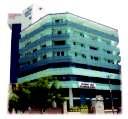
modern healthcare, and how this institution always puts its patientsfirst:
gTheBangaloreHospitalisanunlikelyexperiment.What ledtothis?
25yearsback,Bangaloredidn’thavemuchmedicalfacilities. Themedicalexpertisei.e.thespecialistdoctorswerethere,but nottheinfrastructureorhigh-techfacilities.Wewerefedupof understanding the patient’s problem perfectly but having to refer toVellore or Mumbai. Some of us were in government serviceandmedicalcolleges,andalsofedupwiththepathetic conditionsthere.Atthesametime,wewereinconstanttouch withourfriendswhowerepracticinginUSA&UK,andsensed an interest in many of them to come back to Karnataka and serve the state. That is how Dr. KS Shekar, myself, Dr. DG Benkappa,andDr.MNSubramanyagottogetheranddecided thattheonlysolutionwouldbeestablishingasuper-speciality hospital.Thatwasintheearly1980s.
gHowdifficultwasittoarrangethefunds?
Very difficult. It was so tough that, although the idea was conceivedinearly1980s,wecouldstarttheconstructiononly by 1987, and had to wait until 1991 to complete it and commenceoperation!Themoneyproblemwastwo-fold–first, noneofuswerebusinessmenorindustrialistsplayingwithother people’smoney,andsecondly,thiswasthepre-liberalization periodwhenloansfromfinancialinstitutionswereveryvery difficult to come by. Working with the various government agencies to get the necessary clearances, was also a time-
consumingprocess.Theonlygoodthinghappeningoverthose longyearswasthatwekeptonattractingmoreandmorespecialist doctors into our project. But, many of them had long-term commitments to keep with foreign hospitals and universities where they were working, and also required considerable specialistequipmentonoursidebeforetheycouldmovein.
gHowdidyoufinallymanagetostart?
Finally,itwasevidentthatatleastsomeofuswouldhavetoput ineverythingwehadintotheproject.Andthatishowithappened -5or6ofuspledgedeverysinglepennyandassetwehad,and secured a loan from IDBI for Rs. 4 crores.Iftheprojecthadn’tworked out,wewouldhavebeenintheroad! Theriskwasthathuge.
gItmusthavetakengreatcourage todothis…
Yes, but we were confident of our team.Ifcommittedspecialistdoctors likeuswhoputpatientwelfarebefore money, could build a hospital, we were sure patients would prefer us. You will be surprised to know that, to this day, we have relied only on word-of-mouth publicity throughourpatientsandtheirrelatives,andnotblatantadslike howmostcorporatehospitalsofoursizedo.
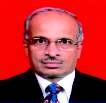
g You mentioned the team. Apart from the four founder promotersincludingyou,howisthisteamspecial? Oh,well,eachandeveryoneofourspecialistdoctorsarehighly accomplished in their professional fields. Many of them are pioneers too in their respective disciplines. For example, Dr TalwalkarwasthefirsttostartdialysisinKarnataka.Dr Vivek Kadambi was the first to start Lasik in the state, and perhaps eveninIndia.Incidentally,Iwasthefirsttostartdiabetologyin Karnataka.Itwasinthe1970s,andpeoplethoughtIwasoutof mymind,then!Andwehavesomanyspecialistsandsurgeons of international repute – for example Dr Aswath N Rao, is a renownedcardiologistandangioplastyspecialist,whohastwo decades of experience in USA behind him. He remains a US citizen, and so are another three of our specialist doctors. Dr. Subba Rao is another world-renowned cardiac surgeon, who hasvastexperienceinIndiaandabroad.Priortostartingpractice here,hewaswithEscorts,Delhi.ButIshouldstopmentioning somenamesrandomly,asmostofourspecialistdoctorsareeither pioneersorveryrenownedintheirfields.
gAreallthepromotingdoctorsalsopracticinghere? Most of them. But around 6 doctors are still in the US or UK. Theywouldbejoiningusinthecomingfewyears,wehope.
gStartingfrom1991,whatwerethemajormilestones? Well,oneuniqueaspectofthisinstitutionwasthatwehadallthe basic facilities for a general hospital from day one onwards,
including the ICU. Within six months, we also commissioned the Cardiac Cathlab for undertaking major cardiac surgeries. Kidney Transplantfollowedsoonafter,andaround2yearsbackwealsoadded theNeonatalICU.Togetherwithallourotherdepartments-thatwere there from the beginning - that pretty much completed the entire requirementsforacomprehensivemulti-super-specialityhospital.
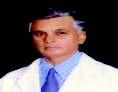
gIsthereanythingthatTheBangaloreHospitalcan’tdotoday? No,notatall. Thereisnospecialityornospecialprocedurethatwe can’tdo.Theonlydifferenceisthatwedon’tbragthatwecandothis procedure or that technique. For example, we have many patients fromPakistan,Bangladesh,&SriLanka, coming here for kidney transplant or bypass surgery. But we don’t sensationalize such issues to grab attention. Many so-called ‘special procedures’ at other city hospitals, are routineworkhere.Wedon’thavetorefer ourpatientstoanyotherhospital.Maybe the only thing we lack now is the MRI scan, which we are still debating on whether to acquire or not. But that discussionisonatotallydifferentground, somethingtodowithourethics.
gThatsoundsinteresting.Canyouexplainitfurther?
WehaveneighbouringfacilitiesforMRI.Andasyouknow,itcostsa fewcrorerupeestogetone.Asofnow,wearenotgoingforitbecause we fear that it will dilute our principles. Because, you know, once a hospitalacquiresamachinerythatcostsabomb,thepressurewillbe theretoutilizeitsomehow,andthusmakereturnsontheinvestment. Wearenotinthatbusiness.Youwon’tfindahospitalthatbehaveslike thistoday.Ifanequipmentisaffordable,andbigmoneycanbemade out of it, most hospitals wouldn’t blink an eye before acquiring it. And,therearenopersonalincentivesforanyofustogetanMRIfor thehospital–becausewedon’tacceptcommissions,cuts,bribes,and thelike.Currently,werelyonMRIfacilitiesnearby.Butthereisno hard and fast rule regarding anything. We will go for it if there is a genuineneed.Butnotdefinitelyforbusinessreasons.
gAreyouareferralhospitaltoo?
Yes,weare.Asignificantpercentageofourpatientsarereferredtous bysmallerhospitalsaswellasindividualdoctors. Andnoneofthem refertousbecausewepaycommissionsorbribes.Wedon’thaveany suchunethicalarrangements.Andwealsohaveasignificantpercentage ofourpatientscomingheredirectly,thankstoourrenownedteamof specialists.
gCanyouexplaintheeconomicanddemographicprofileofyour patients?
We attract patients mainly from Bangalore, and also from various partsofthestate,aswellasneighbouringstateslikeTamilnaduand
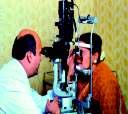
Andhra Pradesh. Most of them are from Bangalore, South Karnataka, Chittoor, Dharmapuri, Krishnagiri, Salem etc. They mainly belong to theupper-middle-classtoupper-classsegments,butarenotnecessarily elite. We also admit poor patients.
g How do you tackle the issue of rising healthcare costs? Healthcare costs are rising because almost all the necessary high-tech equipment needed for specialist care are imported from developed countries,andpricedaccordingtotheirstandards.Thereisnoequipment
whichdoesn’trunintoafewlakhs,ifnotcrossingthe1 crore barrier. Government doesn’t provide any kind of assistance to acquire these equipments, and they don’t even write off the customs duty. Earlier such an arrangement was there, but the Government tied it up withimpracticalconditionslike40%patientsshouldbe treatedfreeandall.Nowtheydon’thelpaniota,butwe are at least grateful that they don’t interfere!
g Do you have corporate clients, like IT companies?
And what percentage of your patients comes with medical insurance?
We do have such arrangements, especially with some public sector undertakings for treating their employees at reduced rates, but nowadays most corporates like IT and new-generation companies route their employees through the insurance companies. We lead in this segment, with over 60% of our patients having some kind of medical insurance. A recent unhealthy development is that insurance companies and TPAs are trying to force hospitals to charge less for their clients.We think it is not fair that those without insurance pay high and those with insurance pay less!
g As a hospital, do you have any charitable initiatives here? Yes, as I told you, we do admit poor patients, and provide them with partially-free to free healthcare, as their individual case warrants. Because,webelievethatnobodyshouldbedeniedurgenttreatmentjust
Dr.C.Munichoodappaisatrueleader–weknewitthemoment he asked us not to confine our interviews and data collection to just him. “Meet as many of our specialist team members as you can. That will give you a better picture of the work we do.” Nothing could have been truer What emerged after meeting just 8 specialists was a wider picture – of professionalism, dedication, and caring.
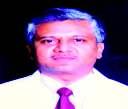
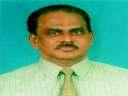
Dr. M. Udaya Kumar Maiya, Oncologist, explained to us the importance of early diagnosis in Cancer treatment. Breast cancer,hesaid,wasontherise,andavoidanceofbreastfeeding was one risk factor. Interestingly, Dr. Maiya stressed the need for better awareness among general practitioners and family physicians,sothatthepatientisbroughtbeforespecialistslike him without losing precious time. Palliative care, to ease pain,
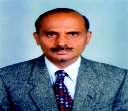
was another serious issue to be attended, he added. Dr. M. Madaiah, Urologist, explained the latest techniques his department is employing like, Endoscopic Urology, Surgical Urology, Laparoscopic Urology, Colour Doppler etc to diagnose and correct urologic problems. Apart from routine treatmentslikestone removal, the department is also fully equipped to treat tumours and malignancies. Dr. S. Hemachandra Shetty, Orthopaedic Sur geon, enlightened us on the now booming field of hip and joint replacement. Patients afflicted with arthritis need not be depressed anymore – problematic joints like the knees and even the hip are artificially made available these days, and can be successfully replaced, thus regaining motility and ending pain. The Orthopaedic Department also undertakes routine cases due to trauma like bone and joint surgery, and even complicated spinal surgeries.
becausetheycan’taffordit.Butoverandabovethis, all our rates are kept very reasonable so that all our patients,whethermiddleclassorpoor,getaffordable treatment, and at the same time we are enabled to runthehospitalonourown.Itisveryverydifficult, you see, to run a hospital of this size and expertise, without the backing of any government agency, religiousgroup,orbusinessmen.Butweprovedthat wecandoit.Wedon’treceiveanycharity,butmake sure that we provide charity to the needy, as much as we can.
g Standing where you are now – completing 15 years of operation – how far has your vision changed? What are your plans for the future? Our original vision has not changed a bit. Our concern is our patient. We are not here to exploit our patient in anyway. I agree with you that there arelotsofmarketpressurestodilutethisvision.But, wewon’t.Regardingthefuture,wehavesomanyplans.Toformalize ourqualityconcerns,wearegoinginfortheISOcertification.Weare also deeply concerned about the poor quality treatment meted out to Karnataka’s rural population. As a part of addressing this issue, we had taken over a hospital in rural Bannerghata, and it is now running effectivelyasKVGBangaloreHospital.AnotherplanisonforHubli, where we will help local doctors become part of the new hospital we areplanningthere.WemightalsostartanewhospitalatHosur.Allof
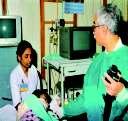
Dr.NareshBhatt
these might take longer than expected, much like how it was for this hospital, because we are caring doctors and not businessmen!
When we returned from The Bangalore Hospital after meeting Dr. Munichoodappa and several of his specialist doctors, one thing was prime in our mind. That the hospital’s vision – ‘a corporate hospital with co-operative spirit’ – and its mission – ‘compassion unlimited’ –were no hollow claims.
Dr. AS Ram Manohar, Pulmonologist, also stressed on the need for early intervention, in various respiratory diseases. Lifestyle conditions like pollution and smoking are the main culprits behind various allergies, he explained. Living in Bangalore was especially likely to increase the gravity of respiratory allergies, asthma, bronchitis etc due to the high pollen density in the air, he added. Dr Vivek Kadambi, Eye and Lasik Specialist, educated us on a variety of topics like the advantages of the latest Lasik treatment, cataract surgery, eyedonationetc.Hewasoftheviewthatthecosmeticbenefit of Lasik was nowadays given too much stress. The real advantagesofmoderneyetreatmentswerebettersafety,better qualityofvision,betterdepthoffocus,andbetterpredictability of the outcome. Dr. Kadambi has international achievements tohiscredit,andspecializesintreatingpresbyopiausinglaser Dr. Naresh Bhatt, Gastroenterologist, is a pioneer in the field and has contributed much to making the Gastroenterology Departmentahigh-endreferralcentreinthefield.Dr.Lorence Peter, Gastroenterologist, specializes in GI Motility, and has contributedmuchtotheDepartmentbeingheldinhigh-esteem.
ThespecialitydepartmentsatTheBangaloreHospitalinclude, Diabetology, Pulmonology, Cardiology, Cardiac Cathlab, Gastroenterology,Nephrology,Psychiatry,Neurology,Neuro
Surgery, Oncology, Haematology, Obstetrics & Gynaecology, Paediatrics & Neonatology, General Surgery, Paediatric Surgery,Urology,CardioThoracic&VascularSurgery,Plastic & Reconstructive Surgery, Orthopaedic Surgery, ENT, Ophthalmology, Endocrinology & Infertility, Dentistry, Pathology, Radio Diagnosis etc, and the hospital has 6 ultra modern surgical theatres.
Dr. C. Munichoodappa also spoke in detail about his specialization.Here,heprovides10tipstomanagethedisease.
1) If a patient is disciplined, one can lead an almost normal life and expect near normal longevity. 2) It is important to diagnosediabetesearlyenough.3)Foreverypersondiagnosed with diabetes, there are two persons who don’t know. 4) The greatest danger is undetected or untreated diabetes. 5) By the time such patients arrive for help, serious complications like kidney failure or neuropathy might have occurred. 6) Chronic stress–asinthemodernworkplace–canincreaseyourchances of diabetes. 7) Too much food and too little exercise can also increase your chances. 8) Potbelly is an early indicator / risk factor for diabetes. 9) Diabetes has genetic (inherited from family) as well as lifestyle reasons. 10) India leads in the occurrence of diabetes due to a genetic predisposition.
“We Operate at
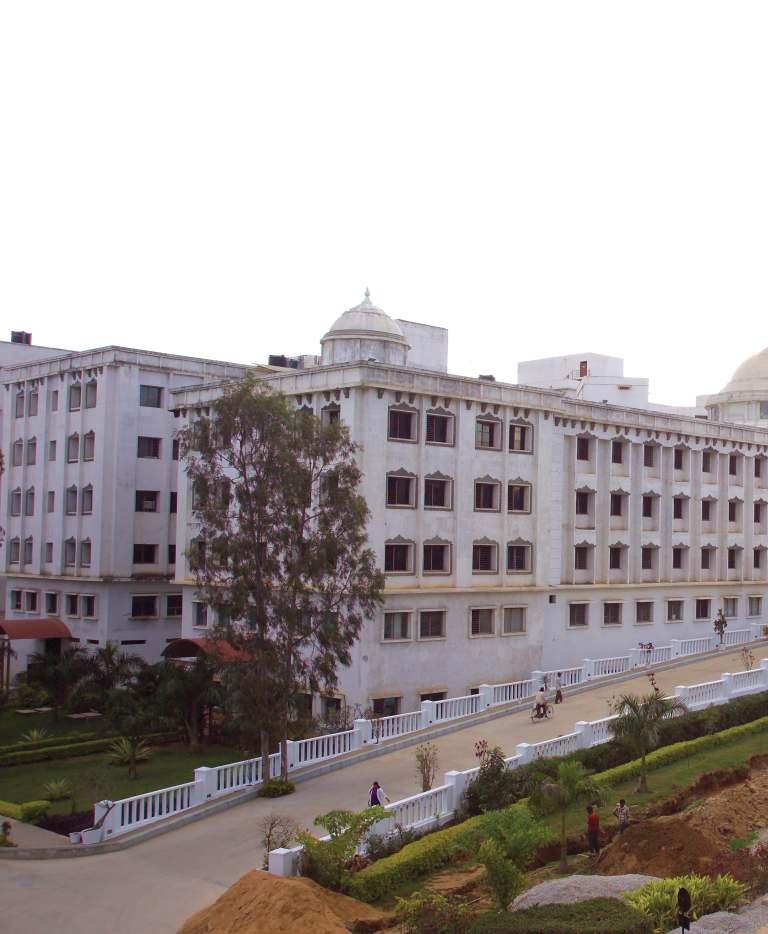
EverythingaboutVydehiInstituteofMedicalSciences&ResearchCentreatWhitefield,Bangalore,islargerthan life.ItstartsfromitsChairmanD.K.Audikesavulu,whoisaleaderofthemasses,socialworker,notedSatyaSaidevotee, and the visionary behind such groundbreaking projects like the 144-acres Shantiniketan Township in Whitefield. It extends to key leaders who manage this state-of-the-art Medical College like its Director D.A. Kalpaja,itsAdvisorDr.S.KanthawhowasthefirstVice-ChancellorofRajivGandhiUniversityofHealthSciences, and its Administrator Major General (Ret’d) Anju Manchanda, recipient of Visisht Seva Medal, one of the top honours in the Indian Army. With 65 acres of beautiful campus, a 1000-bedded multi-super-speciality hospital, unique treatment centres in Rehabilitation & Ayurveda, and separate teaching institutes for Biotech, Dental, & Nursing, Vydehi can upset most Medical College in sheer physical size. “But even bigger is our commitment to our students and the local community,” says Maj. Gen. Anju Manchanda.
Youmusthaveheardofhospitalsprovidingfreetreatment to the needy They exist, though rare. But you probably won’t have heard of hospitals also providing free medicines.Becausetheyaresorare.Andinanycase,you will never have heard of a hospital providing free treatment, free medicines, and even free food! Because, such a hospital doesn’t exist.
Except at EPIPArea,Whitefield, Bangalore. Welcome to Vydehi Institute of Medical Sciences & Research Centre. Where 30% of the 1000-bedded multi-super-speciality facility ispermanentlysetasideforcompletelyfreetreatment totheneedy,i.e.completelyfreefromentrytoexit!
And Vydehi is an enthusiastic partner in the Karnataka Governmentsponsoredscheme,YeshaswiniFarmer’sCooperativeHealthInsurance,thepath-breakingprojectthat brought almost-free healthcare to millions of farmers.
But let these not give you an impression that Vydehi is somesortofacharitablesetup,wheresocialconcernstake fullprecedenceoverqualityconcerns.Vydehistaysatthe world’scutting-edgeinclinicalcompetenceandresearch; partnerships with California State University at Los Angeles (CSULA) for Rehabilitation, and University of Georgia for Biotechnology, are just two examples.
Vydehi is at an enviable neighbourhood in Whitefield; neighbours include International Tech Park Ltd (ITPL),
healthcare organizations like GE MedicalSystems&SriSatyaSai Super Speciality Hospital, and high-profile IT companies like IBM, Dell, SAP, GE, Intel etc. –some of themVydehi’s corporate clientstoo.Vydehihaseverything that corporate clients are looking for.Forexample,specialsuitesat Vydehi include facilities like Cable TV, Room Service, Hot Water, & Multi-cuisine Diet.
Chairman D.K. Audikesavalu is neverknowntothinksmall.Beit his social work, or be it his commercial projects. For example, the umbrella organization for his varied initiatives, the Srinivasa Trust, has done unimaginably complex projects like providing drinking water to over 1000 villages in Andhra Pradesh and is a leading facilitator of free education in different parts of the country.Whenitcomestocommercialprojectstoo,very few leaders think in the scale that he thinks. The best example, of course, is Shantiniketan, the pristinelyplanned 144-acres township coming up at Whitefield, which includes business complexes, residential complexes, schools, hospitals, shopping malls, clubs, recreation centres, convention centres, star hotels – in short, everything!
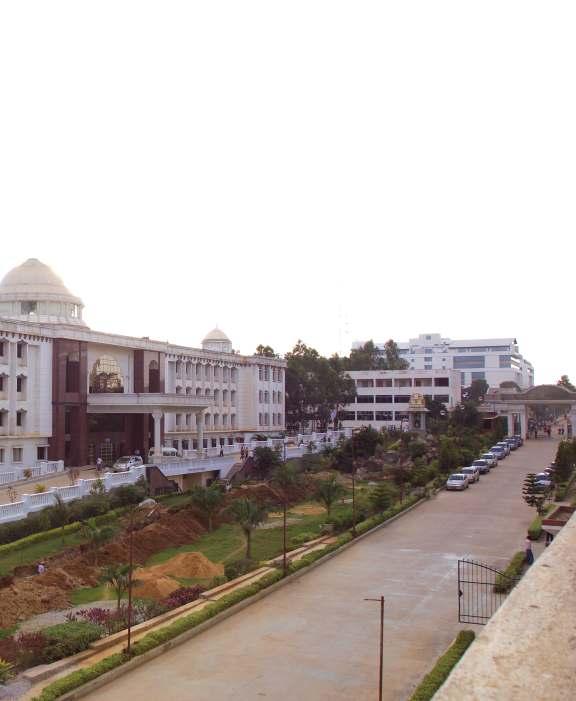
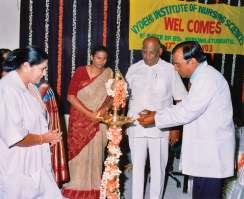
AndD.K.Audikesavaluisnonewcomertothehealthcare field.HisearlierprojectinhealthcareisinBangaloreCity, therenownedMallyaHospital.At250-bedsandspanning multiplesuper-specialities,Mallyaisknownforitscuttingedge technology infrastructure, the latest addition to its arsenal being the Mallya-Asha Biofeedback Centre for assisting children & adults with physical disabilities due to various reasons.
Today, Vydehi Group of Institutions at EPIP Area in Whitefield consists of four individual academic institutions - Vydehi Institute of Medical Sciences & Research Centre, Vydehi Institute of Dental Sciences, Vydehi Institute of Nursing Sciences, & Vydehi Institute ofBiotechSciences,andtwospecialisedtreatmentcentres
– Vydehi Institute of Rehabilitation, & Vydehi AyurvedaGram.
All these six institutions share the 65-acres Vydehi Campus,butletthisnotfoolyouintobelievingthatVydehi Campus is a concrete jungle. Only 10% of the campus is covered with concrete structures, and the rest 90% is landscaped with gardens, lush greenery, and vast play areas. Facilities exist for such sports like Cricket, Basketball, Volleyball etc, and the indoor recreational infrastructure includes swimming pool, multi-gym, badminton courts etc.
What is surprising is that the 10% concrete includes a whopping 1.75 lakh sq. ft. area for student hostels, and another 1.09 lakh sq. ft. space for staff quarters! Separate hostels are there for boys and girls with facilities like independenthostellibraries,andoptionsliketwinortriple occupancy. Staff quarters have single, twin, or triple occupancy options. Common amenities include 24-hour security,maintenance,watersupply,&children’splayarea. No wonder Vydehi is a predominantly residential setup; the majority of the students and staff reside in this welldesigned campus.
Courses like MBBS and DNB are offered by Vydehi Institute of Medical Sciences & Research Centre. The MBBS is approved by the Medical Council of India, and affiliated to Rajiv Gandhi University
ofHealthSciences.DNBcoursesareofferedinallclinical disciplines.
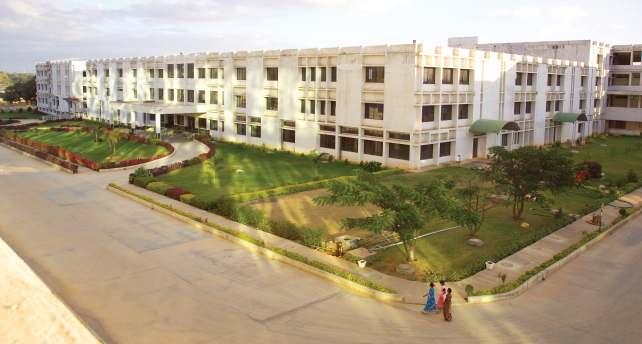
The MBBS at Vydehi is noted for various unique approaches including a mentoring system, systematic hospital service, and rigorous library-centric learning. Underthementoringsystem,eachstudentisassignedtoa physician at the hospital, who will mentor his student as a teacher, friend, confidant, & advocate. Through regular visitstothementor’sconsultingroom,thestudentwillget to directly observe the practical application of their classroom learning.
The stress given to hospital service in the MBBS course at Vydehi is evident from the fact that it is a year-round programallthroughthefive&halfyearsofmedicalschool. Hospital service includes such components as patient advocacy, medical care, interdisciplinary clinical experience, community health services, seminars etc.
Library-centriclearningisfacilitatedbythe50,000strong collection of books, manuals, journals, and case studies. Spanning an impressive 30,000 sq. ft. area, the Vydehi Libraryalsohasavastaudio-visualcollectionoftheworks ofeminentsurgeons,bywayoftheirpresentations,lectures, operationsetc.ThepassionwithwhichtheLibraryisused by the students and the faculty is something remarkable. They are also in constant touch with the latest happening across the globe, thanks to Vydehi’s high-speed Internet connectivity
Vydehi has gained a lot from the vision brought to the institutionby Dr.S.Kantha,andtheadministrativecalibreofMaj.Gen. Anju Manchanda.
As a person with vast experience in the field of medical education – she was the first Vice-Chancellor of Rajiv Gandhi University of Health Sciences, Bangalore - Dr Kantha was instrumental in adopting a strategy that gives equal weightage to the breadth of liberal learning and the depthofprofessionalpreparation–twoobjectivesthatare usually at loggerheads. Says Dr. Kantha, “Our students donothavetochoosebetweenthesetwoaspects.Weknow that the truly
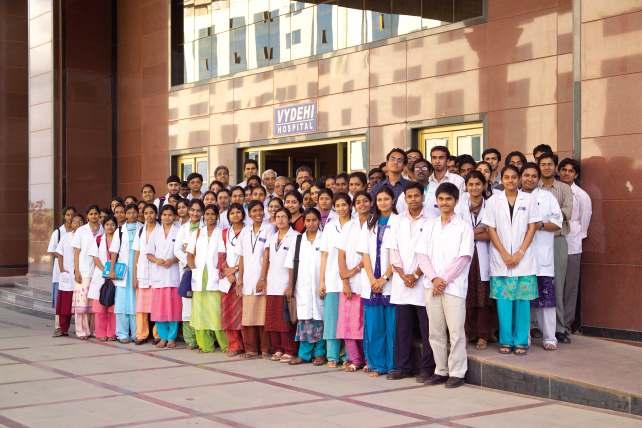
educated professional needs both. Our curriculum brings togetherthesetwoindispensableelementsforacompletecollege education in medicine.”
Maj. Gen. Anju Manchanda, a medical professional, brings to the institution something very unique – the power-packed yet tactful management seen at military hospitals that ensures that everything works smoothly even under situations of extreme crisis. Maj. Gen.Anju was the Commanding Officer of Military Hospital, Rajouri, and later of Military Hospital, Shimla. Both beingriskproneareas,thesehospitalshadtoaccommodatelarge numbers of casualties at short notice. Even the very existence of these hospitals was under threat. Once the Shimla hospital caught fire in a bad way, and it was to Maj. Gen. Anju’s credit that she acted quickly to restore order, and shift the hospital safely to a temporary location. No wonder, she was awarded the Visisht Seva Medal (VSM), one of the top honours of the Indian Army. Later, as a Brigadier in Delhi, she was in charge of admissions to the prestigiousArmed Forces Medical College (AFMC), where she undertook her work with remarkable fairness, bending before no pressure.
Listen to her recounting her experiences, even for 5 minutes, and you will realize that her life is fit enough for an autobiography Already, she is writing one. While most young medical colleges go for the bare minimum departments, and equipment, the 1000-bedded Vydehi Hospital has speciality departments like Cardiology, Oncology, Nephrology, Urology, Pulmonology, General Medicine, General Surgery, Ophthalmology, ENT, Dermatology, Orthopaedics, Psychiatry, Paediatrics, Obstetrics & Gynaecology, Dental Science, and several Speciality Clinics.
No doubt the Vydehi MBBS students gain from these wide specialities, as well as from the high-tech equipments & facilities like Cardiac Cathlab, MRI, Spiral CT, Cardiac Echo Machine, Ultrasound, LinearAccelerator etc.
This massive infrastructure has also enabled Vydehi Hospital to offer various Health Check-up Programs.
The other teaching institutions in the Vydehi Campus, viz. Vydehi Institute of Dental Sciences, Vydehi Institute of Nursing Sciences,&VydehiInstituteofBiotechSciences,allhavegained great momentum being situated aside a medical college.
Vydehi Institute of Dental Sciences is approved by the Dental Council of India, and is affiliated to Rajiv Gandhi University of Health Sciences for the BDS course. The dental college is noted for its curricular stress on compulsory rotational internship at the hospital as well as the outreach programs to neighbouring rural communities–thusprovidingVydehiBDSstudentswithanunmatched scope for experiencing diverse dental cases.
Vydehi Institute of Nursing Sciences offers both BSc Nursing and General Nursing & Midwifery Course. The former is affiliated to Rajiv Gandhi University of Health Sciences, and the latter to the Karnataka Nursing Board.Apart from preparing candidates for professional nursing roles, a strong emphasis is there to develop a foundation for further studies in a specialized areaofnursingpractice,aswouldberequiredinfuturehealthcare delivery systems.
Learning Biotechnology at Vydehi Institute of Biotechnology might be an experience of a lifetime – for Vydehi has gone all out to build an exotic Medicinal Plants Park and a world-class TissueCultureLaboratory.CoupledwithextensiveIT&Internet facilities, and Biotech professionals like Dr. KV Devaraj, who is the Director, Vydehi presents compelling reasons as to why it shouldbethefirstchoiceforBSc,MSc,andShortTermCourses in this sunrise subject. The Institute is also associated with the University of Georgia, to bring the latest developments in this subject, to the campus.
The Medical College is also the venue where various paramedicalcoursesareconducted.TheseincludeBScprograms in 4 subjects – Operation Theatre Technology, Radiology, Renal Dialysis Technology, & Anaesthesia Technology.
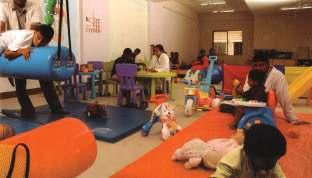
The two specialised treatment centres at the Vydehi Campus–theVydehiInstituteofRehabilitationandVydehi AyurvedaGram speak about the passion with which the managementregardstheseoffbeatyetholisticareasofhelp to the patient population.
One of the most sought after centres of its kind in the country, Vydehi Institute of Rehabilitation offers an array of treatments ranging from those addressing the most difficult of the disabilities to early intervention programs.
The marvellous infrastructure for rehabilitating children and adults, use therapies like Occupational Therapy, Speech and AuditoryTraining, VisionTherapy, Sensory Integrative Therapy, Music Therapy, Aquatic Therapy, Early Therapy, and Biofeedback. Vydehi is associated with California State University at Los Angeles (CSULA) to bring the latest of Rehabilitation Therapies to the Institute. Teams from CSULA have visited Vydehi for interaction with the staff. However, the real point of excellence at the Institute is its unique approach of providing physically & mentally challenged children with a playschool like ambience for rehabilitation treatment.
Vydehi AyurvedaGram uses the ancient principles of Ayurveda to discover your underlying nature (Prakriti), to create tailormade treatments designed to bring relief from various diseases & conditions. The Centre offers Panchakarma, Rejuvenation, Slimming, Stress Management etc. Vydehi is the only such medical campus in the country to offer both modern medicine and Ayurveda.
Managing all these six institutions, which include 4 teaching
institutions, 2 specialised treatment centres, and of course the 1000-bedded super-speciality hospital, with clockwork precision is Maj. Gen. Anju Manchanda and her team. Says Maj. Gen. Anju, “It is challenging, but we have an honourable vision to live up to – a vision set by our Chairman D.K.Audikesavalu & our Director D.A. Kalpaja – to be of supreme value to our
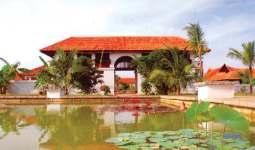
students, as well as our patients coming from diverse backgrounds. You will be surprised to know that we are equally at ease providing treatment to poor patients who utilize our completely free service, and to our corporate clients – executives from bluechips like GE, Wipro-GE, AOL, Kodak, FHPLetc.”
So, will her upcoming autobiography have a page on her experience atVydehi?Probably,evenmorethanapage.Because,D.K. Audikesavalu’s vision has given the campus an unmatched size and momentum.
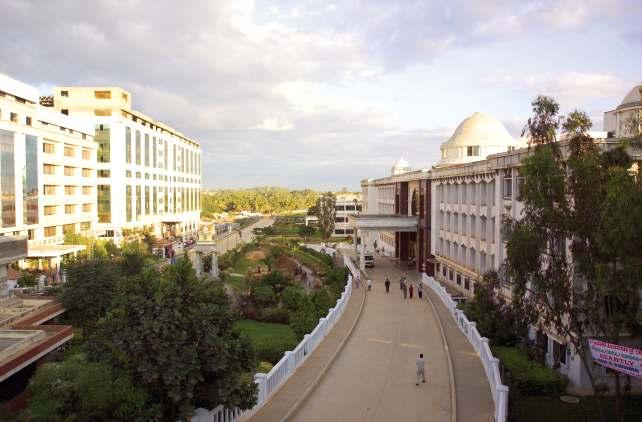
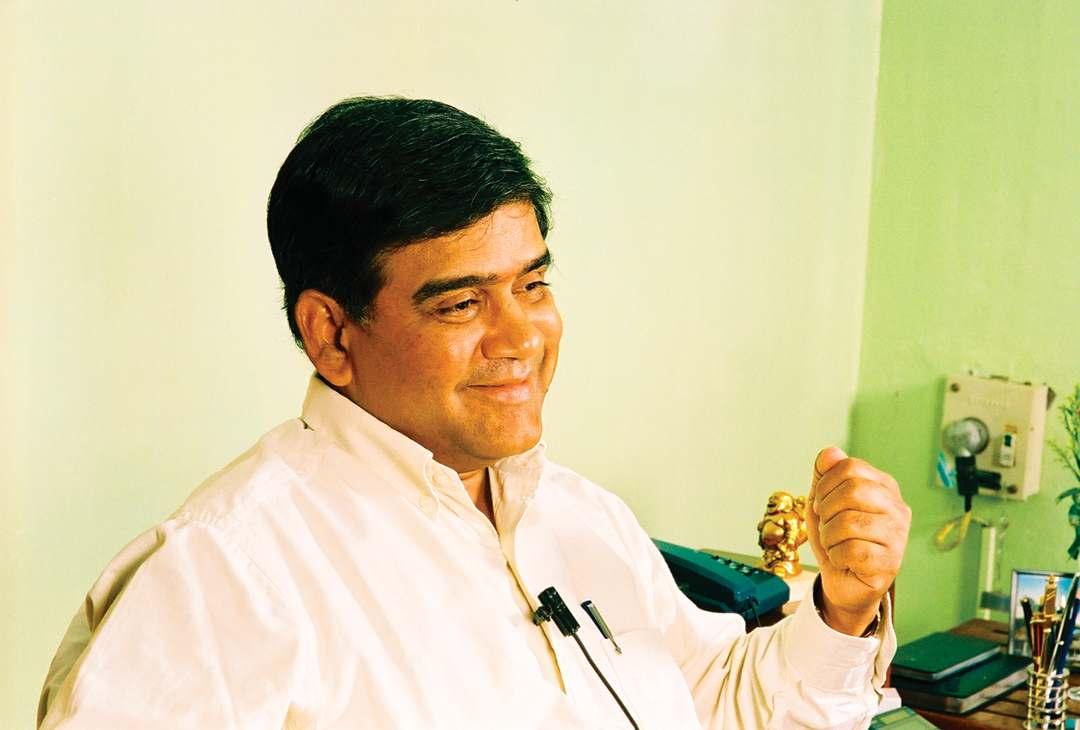
“We Will Utilize Medical Tourism & Education to Expand Our Affordable Care in Super-specialities”
WhenDr.C.BharathChandranstartedSreeUthradomThirunalHospitalin Thiruvananthapuram,waybackin1987,ithadcreatedanewbenchmarkforprivatesector hospitalstofollow,becausethisUKreturnedCardiologistputtogetherthebestofbothworlds -thehigh-techmedicalworldoftheWest,withKerala’straditionalworldofcompassionate medicalcare.Overtheseyears,SUTperfectedtheiract,withunbelievableprecisionand successinmajorsurgeries,andacharitable&affordablehealthcareinitiativethatwonacclaim fromallquarters.18yearslateralso,SouthKeralaisyettoproduceanotherhospitalinthe privatesectorthatbalancesthesetwovalues–high-technologyandaffordability-thiswell. ButDr.Bharathandhisteamofcommittedspecialistdoctorsandnursesarenotwaitingfor thecompetitiontocatchup;insteadtheyareshiftingtooverdrivewithastate-of-the-art MedicalCollegeandwell-plannedinitiativesintoMedicalTourism–but,again,tofurther SUT’scorevisionofcompassionate,affordablecareinsuper-specialities.
I
n all SUT literature and also in Dr. C Bharath Chandran’s conversations,thereisonephrasethatimmediatelyfollows “ourteamofspecialistdoctors”.Itis“…andcaringnurses.”In ourlongitineraryacrossSouthIndia,toassesssuper-speciality hospitals, rarely did we come across a Medical Director, let aloneaManagingDirector,utterthesephrasesinthesame breath.Mostoften,nurseswerenevermentionedatall.
ItisnotonlythatDr.Bharathisacaringleader,sensitiveenough togivecreditwhereitisdue.Heisverymuchthat,butmorethan that it shows the stress he is placing on what he calls “yesteryears’tenderlovingcare”,inSUT’sfunctioning.
Ontheotherside,itgoeswithoutsayingthatSuperSpeciality SUTHospital–asitiscallednowadays-shouldbecreditedfor introducingtheconceptofhigh-techsuper-specialitycareto Kerala,especiallyintheprivatesector.Indeed,SUThasseveral firststoitscredit.SUThasthelongestexperienceinKeralawith suchadvancedprocedureslikecardiacsurgery,angioplasty, valvuloplasty,dialysis,andoutpatientcataractsurgerywithIOL implant,-medicallandmarksthatwereuntilthenunknownin Kerala,oravailableonlywithagovernmentpromotedinstitution likeSreeChitraInstituteofMedicalSciences.
But Dr. Bharath rarely takes credit for such initiatives. “My experience in the UK enabled us to be first movers in these technologies,whichweretomorrow’stechnologieswhenwe wentforthem,butmoreimportantisthesheerpassionwebring toourwork.Because,technologycanbegraduallyadoptedby any hospital with money – especially by profit-oriented hospitals-butourpassionateworkcan’tbeimitated.”
SUT HAS THE LONGEST EXPERIENCE IN KERALA,INTHEPRIVATESECTOR,WITHSUCH ADVANCED PROCEDURES LIKE CARDIAC SURGERY,ANGIOPLASTY,VALVULOPLASTY, DIALYSIS, AND OUTPATIENT CATARACT SURGERYWITHIOLIMPLANT.
Thereseemstobemuchtruthinhisstatement.Thereindeed issomeelementof“sheerpassion”.Otherwise,howcanSUT’s mortality rate for elective open heart surgery (including coronary bypass surgery) be almost zero for the last eight years?EvenintheUSA,amortalityrateof3%isacceptedas normal!Or,howcanSUTdothefullspectrumofcardiaccathlab interventions like angioplasty, stenting, resynchronisation, device closure for ASD etc, and still maintain a mortality / complications rate of less than 0.5%, much better than internationalstandards?
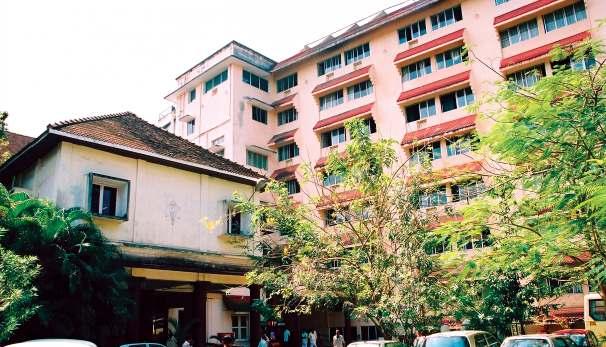
CORONARYBYPASSSURGERY)ISALMOST ZEROFORTHELASTEIGHTYEARS.EVEN INTHEUSA,AMORTALITYRATEOF3%IS ACCEPTEDASNORMAL!
Of course, much credit for this goes to the personal expertise of cardiothoracic surgeons like Dr. S.K. Prabhu, & Dr. Usha Parvathy, Cardiologists like Dr. Bharat himself, Dr A.C. Rao, Dr. Rajalekshmy, & Dr. Deepak Davidson, and a Vascular Interventional Radiologist like Dr. M. Balakrishnan. But more credit goes to the SUT culture of team spirit which holds this team of illustrious surgeons and physicians together in their tireless efforts of putting their patient’s interest first, always.
But, ironically, Dr. Bharath doesn’t like SUT to be known as a ‘Heart Hospital’. “We just strive to do these procedures well, muchbetterthanevendedicatedHeartHospitals.Butitisunfair to think of us as a Heart Hospital. There are so many other departments, where we really excel.”
Indeed,SUTisnotrestrictedtoCardiologyandCardiothoracic Surgery, but a true multidisciplinary super-speciality hospital with departments including Gastroenterology, Invasive
Radiology, Neonatology, Neurology & Neuro Surgery, Nephrology, Obstetrics & Gynaecology, Orthopaedics, Ophthalmology, Paediatrics & Paediatric Surgery, Urology, Dermatology,DentalSurgery,ENT,GeneralMedicine,General Surgery, Physiotherapy, Respiratory Medicine,Audiology Lab etc, and support departments like Trauma Care, Accident & Emergency, &Anaesthesia.
Andallthesedepartmentsareatthecutting-edgewiththelatest equipments, and renowned specialists – much in tune with Dr Bharath’svisionofalwaysoptingfor“tomorrow’stechnologies”. The latest Mammography equipment from Siemens for the earliest detection of breast cancer and a state-of-the-art Spiral CT Scan are only just two examples of the latest technologies that SUT has adopted.
However, “tomorrow’s technologies” and “yesteryears’tender loving care” are not the only unlikely partners that Dr. Bharath has successfully married together. Believe it or not, here is a doctor who is moving ahead in reaching affordable (almost, charitable) healthcare to the poor rural population, and at the same time, attracting affluent foreign patients through medical tourism – both at the same pace!
Dr. Bharat had surprised everyone with his plans to start his second hospital – the SUT Rural General Hospital - at a remote rural place called Vattappara, in Thiruvananthapuram District. Because,therewasnobigmoneytobemadefromsuchaproject. ButmoneywasneverthefirstmotivationinanyofDr.Bharath’s
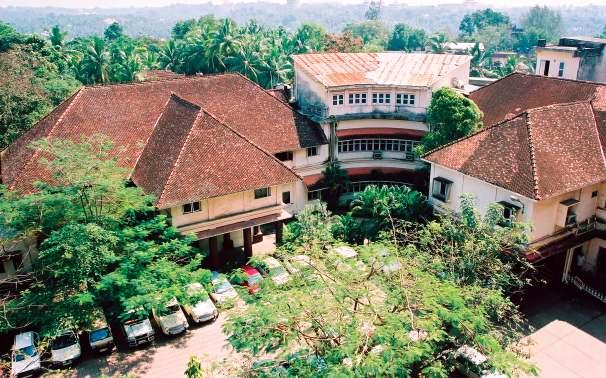
activities. Today, SUT Rural General Hospital is a 300-bedded institutionfullyequippedtoprovideuptosecondarycare,atthe most affordable costs to the poor villagers in Thiruvananthapuram and Kollam Districts. Set amidst a serene 25-acres campus, the hospital is also noted for its rainwater storage facility of 20 lakh litres – one of the largest in the state!
But more surprises were to follow, on the affordability front. In November 2004, Dr. Bharath started five Speciality OP Clinics at the SUT Rural General Hospital, which started providing speciality consultations free of charge! Spanning much-in-demand specialities like General Medicine, General Surgery, Cardiology, Gynaecology, & Paediatrics, these OP Clinics charged only a nominal registration fee of Rs. 10 for one full month of specialist consultation!
Ask Dr. Bharath about these charitable initiatives, and he has the perfect way of explaining it away, “On quality we are competingwithprivatehospitals,butonrates,wearecompeting with government hospitals!”
SUT’sexpertiseinprovidingaffordablehealthcareissomething theGovernmentitselfhasacknowledged.ThroughSUTInstitute of Oncology - which stands alongside SUT Rural General Hospital - Dr. Bharath has pioneered a free and massive Cancer Awareness Campaign, which is endorsed and promoted by the StateGovernmentthroughitsLocalAdministrationDepartment. Under this scheme, 2 to 5 volunteers from each Panchayat are trained by SUT to visit each home in their village to spread
“OurinterestatSUT,inmedicaltourism, is that medical tourism will finally give usameanstotechnicallyupdateasoften as we like and still charge our local patients as low as we like.”
awarenessaboutthesymptomsandsusceptibilitytovariouskinds ofcancer TeamsofSUTdoctorsthenvisiteachvillagetoconduct FreeCancerDetectionClinics.Thispioneeringschemehaswon wide support and acclaim for SUT from all quarters.
Dr. Bharat had brought in none other than Padmasree Dr. M. Krishnan Nair, the renowned Cancer Specialist and Founder DirectorofRegionalCancerCentre(RCC)toheadSUTInstitute of Oncology. Equipped with advanced oncology equipments, the Institute is prepared to take head-on challenges in the field like radiation oncology, surgical oncology, chemotherapy, palliative care etc. Free Cancer Detection Clinic for the poor is also regularly being conducted at the Institute.
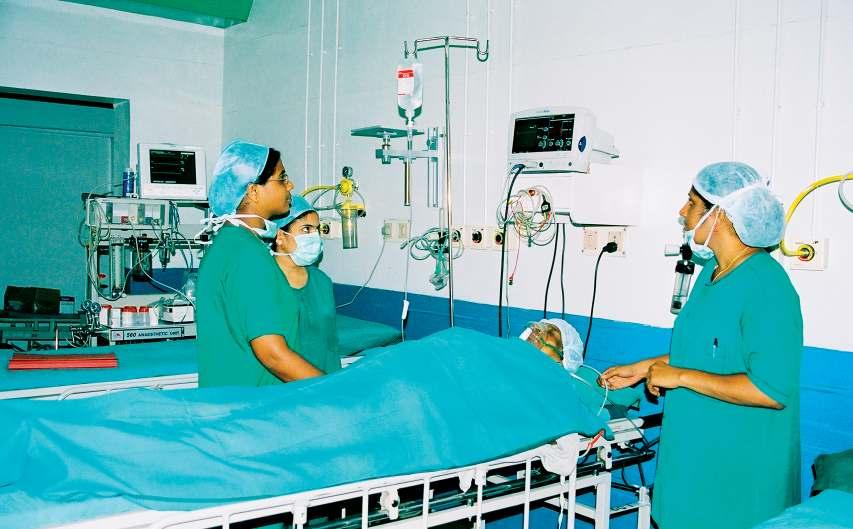
Foradoctorsoimmersedinaffordabilityconcerns,Dr.Bharath, remarkably,alsofindstimetomaketheSuperSpecialitySUT Hospital–theoriginalhospitalinthecity–readyformedical tourism.SUTwastheonlyhospitalfromKeralathatparticipated in the medical-tourism oriented Arab Medical Festival at Bahrainthatshowcasednearly50cutting-edgehospitalsfrom acrosstheworld,includingtheEuropeanUnion.
AsadoctorexperiencedintheWest,Dr.Bharathunderstands thescopeformedicaltourism,perhapsmorethananyoneelse. But,youshouldlistentohisuniquelogicforembracingmedical tourism,tobetterunderstandtheperson.
“Iagreethatwithnearly10to15timesourcharges,andmonths orevenyearsofwaitinglists,WesterncountriesliketheUKwill havetooutsourcetreatmentstocountrieslikeIndia,sooneror later.ButourinterestatSUT,inmedicaltourism,isthatmedical tourismwillfinallygiveusameanstotechnicallyupdateas oftenaswelikeandstillchargeourlocalpatientsaslowaswe like.Because,yousee,balancingthesetwoaspectsislike walkingatightrope,fromwhichwewoulddefinitelyappreciate abreather Almostallthehigh-techequipmentsusedbysuper specialityhospitalsareimportedandpricedaccordingtoUS orEUstandards,underthefalseconceptionthathospitalshere arechargingpatientsaccordingtoWesternstandards.Medical tourism holds the potential to charge patients according to those standards, for the first time. It will go a long way in addressingtheaffordabilityconcernsofourlocalpatients.”
SUTISSTARTINGITSMEDICALCOLLEGE, HAVINGACQUIREDALLNECESSARY CLEARANCESFORTHESAME.THESUT RURALGENERALHOSPITALISGOINGTO BETHEMEDICALCOLLEGEHOSPITAL, WHILEPADMASREEDR.M.KRISHNAN NAIRWOULDBEITSPRINCIPAL.
Withsuchavision,cananythinggowrongwithSUT?Notlikely. Thefuturelooksbright,notonlyfortheSUTTeam,butforallthe familiesinKerala,forwhomSUTisthefamilyhospital.Things canonlyimprove.SUTisstartingitsMedicalCollege,having acquiredallnecessaryclearancesforthesame.TheSUTRural GeneralHospitalisgoingtobetheMedicalCollegeHospital, whilePadmasreeDr.M.KrishnanNairwouldbeitsPrincipal.“We wanttobuildupastrongteachingandresearchfoundation,like thebesthospitalprojectsintheworld,”explainsDr.Bharath abouttheneedfortheMedicalCollege.
AndregardingthequalityoftheMedicalCollege,needwesay anything?Maybeonlythis-itisgoingtobeathoroughSUT product.
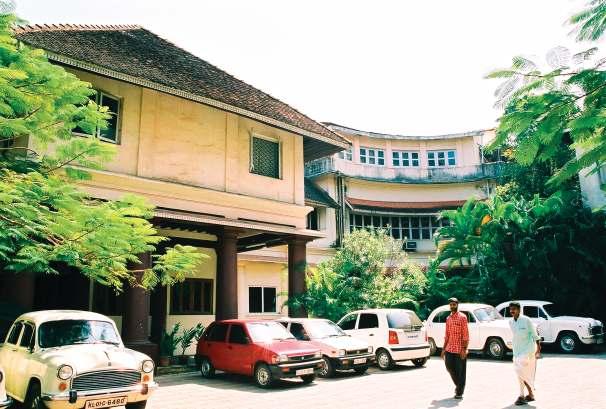
“With 30 Departments & 100 Specialists,
Dr. Bharath Chandran has reasons to be proud of his specialists – spanning over 30 departments, SUT’s team ofnearly100specialistshavemadeanameforthehospital by taking even high-risk cases head on.
Neurosurgeon Dr. Satish Krishnan is sad that it still takes unjustifiable time in bringing head injury patients to the hospital. “Because with timely action, there is much that a well-equipped and well-trained team of neurosurgeons, as in SUT, can do; the success rate can be so good.” Still Dr. Satish and his team of neurosurgeons do their best to save patients brought in due to serious accidents, as well as those developing conditions like stroke, and bleeding in the brain. The department works 24 hours, and has a dedicatedNeuroICU.Weaskedhimwhatallcanbedone to minimize the risks for serious neurological conditions. “A good lifestyle with moderate food habits, regular exercise, adequate rest, and no-smoking is the best insurance against all serious occurrences like stroke. If oneishavingageneticsusceptibilitytostrokeorsuffering fromconditionslikehypertension,oneshouldhaveregular check-ups too.” A surgeon who loves to educate people, he gave us a shock by explaining the risks of eating unwashedvegetablesandleafyvegetables.“Eatingwithout proper washing can cause collections of tapeworm larvae toreachthestomach,fromwhereitwillmultiplyandreach manyplacesinthebody,especiallythebrain.Peoplethink eatingporkorbeefismoreriskywithregardtotapeworm, but eating unwashed vegetables is the real risk, as meat will contain only tapeworms, whereas unwashed vegetables contaminated with the faeces of farm animals can contain huge collections of tapeworm larvae.”
Dr. M. Balakrishnan of the Interventional Radiology Departmentexplainedtousthecutting-edgeworkhisteam is doing in areas like peripheral angioplasty, renal artery angioplasty, tumour embolisation etc. His department is renownedforthemostexcellentresultsintheseareas,among
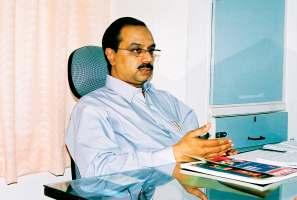
the hospitals in Kerala. The department also
hasthelatestequipmentsincludingMRIandSpiralCTScan. InJune2001,Dr.BharathstartedSUTMother&BabyHospital byhivingoffitsObstetrics&GynaecologyandNeonatology Departmentsintoanewbuildinginthesamecampus.Forthe expectant mother it provides state-of-the-art facilities like comprehensiveoutpatientservices,fullyair-conditionedlabour rooms, relaxation therapy for delivery, full range of gynaec surgeriesetc.Forthenewborn,SUTistheperfectplacetobe, especially if he or she is suffering from complications like criticalillnessesorbeingunderweight.TheSUTNeonatalICU isnotedforitsachievements–ithascaredforbabiesassmall as450gmstobabiesasbigas5500gms,atotalofmorethan 2000 babies requiring ICU care. The Department takes care of both in-born and out-born babies; the fact that SUT’soutbornneonatalICUisalwaysfullspeaksmuchaboutthecareit provides vis-à-vis other hospitals. The Neonatology Department is headed by Dr. Leela Sudhakaran Kammath, whobringshervastexperienceinUSA&Canada,toSUT
Other speciality departments at SUT include Cardiology, CardiacSurgery,VascularThoracicSurgery,Gastroenterology, Oncology, Nephrology, Orthopaedics, Ophthalmology, Paediatrics,PaediatricSurgery,Urology,Dermatology,Dental Surgery, ENT, General Medicine, General Surgery, Physiotherapy, Respiratory Medicine, Audiology Lab, Psychiatry, Rheumatology, Trauma Care, Accident & Emergency,Anaesthesia,LaboratoryMedicine,andPathology Lab.
Amidst all these high-tech achievements too, Dr. Bharath is notlosinghisfocusofprovidinghelpwhereitisneeded.Under the aegis of Dr. KN Pai Heart Foundation, SUT offers expensiveproceduresatconsiderablyreducedchargestopoor patients.SuchmeasureshaveensuredthatSUThasnotonly grown from the Pattom Palace where it started to the neighbouringeight-storeybuilding.Ithasalsogrowninstature asacaringinstitutionintheheartsofitspatients.
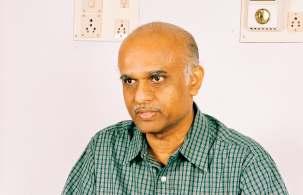
“We
THEORTHOPAEDICSDEPARTMENTATSUPERSPECIALITYSUTHOSPITAL, HEADEDBYTHERENOWNEDORTHOSURGEONDR.KCGOPALAKRISHNAN HASTHEUNIQUEACHIEVEMENTOFDOINGLIMBSALVAGESURGERYFOR BONECANCERPATIENTS–PERHAPSTHEONLYDEPARTMENTINKERALA DOINGTHIS–ASWELLASEXCELLENTRESULTSINJOINTREPLACEMENTS FORRHEUMATOIDARTHRITISPATIENTSOFALLAGES.
Akbar Shah, a 20-year old boy, had not walked for the last four years. Stricken with an autoimmune disorder called JuvenileRheumatoidArthritis,Akbarwaswheelchair-bound duringthesefouryears,unabletoevenearnaliving.Hearing abouttheservicesofDr.KCGopalakrishnanandhisteamat SuperSpecialtySUTHospital,Akbarapproachedthem.After careful analysis, the SUT team did a ‘bilateral uncemented total hip replacement’ for Akbar Today, the youngster is walkingwithoutanyaidandearnshislivelihoodbyrunning a shop!The achievement is notable in that it used the latest techniques in joint replacement, which are better suited for young people, compared with the conventional joint replacementdoneonolderpatients.Dr.KCGopalakrishnan MS(Orth),D.Orth,MCh,Orth(UK)whoheadedthissurgery at SUT, has more than 30 years of teaching, practice, & research experience in Government Medical Colleges of Kerala,beforewhichhewasintheUnitedKingdomforhis trainingandpractice.Dr.GopalakrishnanspeakstoSeasonal Magazine about the SUT Orthopaedics Department and its unique achievements in Joint Replacements and Limb SalvageSurgery
g What are the range of procedures and surgeries undertakenhere?
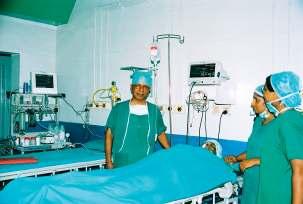
Well,weundertakeallconventionalOrthoproceduresoccurring
due to trauma, as well as the latest Ortho techniques like Joint Replacements. But, more important is our work in LimbSalvageSurgeryforbonecancerpatients.IthinkSUT is the only hospital doing this in Kerala.
g Can you explain what is Limb Salvage Surgery?
Manyyearsback–whileIwasastudentandyoungteacher attheMedicalCollege–weusedtothinkthatnothingcould be done for bone cancer, except amputating the affected limb i.e. hand or leg. But recent technological advances have presented a new protocol of operating the cancerous bone,removingtheaffectedbonematter,reconstructingthe bone using implants, and stopping further spread of the cancer using chemotherapy This new protocol is what we callLimbSalvageSurgery.Theadvantageisthatthepatient gets a functional as well as cosmetically acceptable limb. We are perhaps the only department doing this in Kerala. We get patients from even RCC andAmrita.
g What is the success rate of Limb Salvage Surgery at SUT?
Earlier,ifthepatientgotapost-operativedisease-freeperiod of 5 years, we considered it a success. But at SUT we are seeing much better results, because we do it according to theUS&Europeanstandardsfortheprocedure.Ieven havepatientslivingdisease-freeafter10years,andone person surviving healthily for 18 years now!
g What would be the cost involved?
We can confidently say that SUT offers the most affordable package in India, in the private sector, for Limb Salvage Surgery The SUT package consists of eightdayshospitalstayinadecentroomwithtelephone, all procedure charges, all implant charges, all professionalcharges,allestablishmentcharges,andall medicinesincludingcostlyantibiotics–thatmakesours an all inclusive option. This costs only Rs. 40,000. In
contrast, when people used to go to Chennai earlier, it was costing over Rs. 2 lakhs.And if it is Chennai, you have to havetwoorthreepeoplewiththepatient,furtherincreasing the costs.
gAretheimplantsforthisprocedureavailableinIndia? Yes,nowadaysimplantsareavailableinIndia,comparable inqualitytoimportedones,whichhavehelpedustoreduce costs.
gTheSUTOrthoTeamhasanimpressivetrack-record in Joint Replacements. Can you explain the achievements?
Well, we were pioneers in Joint Replacement. But, more thanthat,nearly50%ofthejointreplacementsdoneatSUT arereworks–thatiscorrectingandperfectingwhathasbeen doneimperfectlyatmanyotherhospitals.Wehavebecome famous for this – we are a sort of last resort in joint replacement! Another advantage with SUT is that we embrace the latest technologies in joint replacements, making us perhaps the first hospital to be considered if someone is planning joint replacement.
g What are these latest technologies in joint replacement?
You see, joint replacement consists of mainly knee replacements, then hip replacements, and rarely elbow replacements. The natural joint which has become painful or less mobile, is replaced with an artificial joint, which will work smoothly for 10 years, after which a revision surgery would be needed. Conventionally, it used to be prescribed for those with old-age-related rheumatoid arthritis, mainly in the age group of 60-plus. The idea was to utilize their natural joint to the maximum possible time, thenreplaceitwithanartificialjointintheiradvancedyears, sothatarevisionsurgerywon’tbenecessaryinmostofthe cases. Because, results of the revision surgery can’t be as goodasthefirstone.However,technologicaladvanceshave madejointreplacementslastmuchmorethan10years.For example,Ihavepatientswhohavepassed15yearsandeven 20 years after a joint replacement. This has enabled us to considerjointreplacementinmuchyoungerpatients,maybe in their 50s and 40s. But, more exciting is the new technologies that help patients in their 30s, 20s, or even teenage!
gHowareyoungpatientshelpedbythenewtechnology?
Conventionaljointreplacementisa‘cemented’technology
Theusageof‘cement’requiresremovalofsignificantbone matter, and the cement while setting causes bone necrosis, contributing to further bone loss. The problem with this method is that a further revision becomes difficult or less effective – the reason why young people were never good
“WE CAN CONFIDENTLY SAY THATSUTOFFERSTHEMOST AFFORDABLE PACKAGE IN INDIA,INTHEPRIVATESECTOR, FORLIMBSALVAGESURGERY.”
candidates for conventional joint replacement. The new uncemented technology, which requires no cement, does away with all these complications. Young patients can confidentlygoinforthisnewprocedurewiththeknowledge that further revisions are very much possible.Another new technique – called surface replacement – suitable for youngsters, involves replacing only the bearing as against the whole joint, which conserves the bone for a later conventional joint replacement, if needed.
gWhatisthesuccessrateforjointreplacementsinSUT?
Weenjoya100%successrate,evenbetterthanintheWest. Also, we have a 0% infection rate, which speaks about the high standards SUTis maintaining in surgical care.
g How much would joint replacements cost?
At SUT, we provide the most affordable rates for all joint replacements. Nearly 65% of the joint replacements we do arekneereplacements,theremaining30%hipreplacements, and maybe a few elbow replacements. Hip replacement is the most costly of these procedures, amounting to around Rs. 1.5 lakhs. But, we have also done joint replacements at our SUT Rural General Hospital at charitable rates. In contrast, in a developed country like the UK, a hip replacement at a private hospital can cost not less than 15,000 pounds i.e. nearly Rs. 12 lakhs, which is about 10 timeswhatwecharge!
g So, there seems to be immense scope for medical tourism in orthopaedics…
Yes,ofcourse.SUTismovingaheadfullsteaminthisregard. The waiting list in England is so horrible that even if it is a backache that you want to show to a specialist, you will have to wait 3 or 4 months!And with the kinds of rates we charge, we can even bundle a holiday package for the medical tourists, and still be competitive in rates. Foreign patients are very concerned about protection of their legal rights if at all anything unexpected happens, but with our kind of exposure, and a little bit of liaisoning, I think SUT willbefaraheadwhenmedicaltourismactuallyhappensin volumes.
“Like
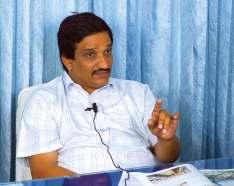
H
eretherearenooutpatientcharges.Noinpatientcharges. No bed charges. No surgery charges. And within the 3 yearssinceitsinception,MESMedicalCollegehasdone over 10,000 surgeries for free. And it is still doing free surgeries everyday You will almost think that you are at a Christian Missionary Hospital of the last century. But, you are at a sprawling modern hospital of today, albeit locatedatPerinthalmanna,aremoteplaceinMalappuram, one of Kerala’s underdeveloped districts.
Let not the free service also dupe you into believing that MES Medical College is a small general hospital. The impressive500-beddedhospitalofferssuper-specialities likeNephrology,Oncology,Neurology,Gastroenterology, Endocrinology,&Cardiology,aswellasspecialitieslike Orthopaedics, Physiotherapy, Ophthalmology, ENT, Dermatology, Obstetrics & Gynaecology, TB & Chest Diseases,Dental,Paediatrics,Psychiatry,&Community Medicine.Theinfrastructuretooismassive,with8major
Dr. P.A. Fazal Ghafoor, noted Neurologist and General SecretaryofMuslimEducationalSociety(MES),isfollowing a different vision to take the young MES Medical College to a healthcare institution of national repute. His vision might seem old-fashioned for the cutthroat competition prevailing among today’s corporate hospitals, but there is no dispute that this vision is how great hospitals used to be built – by providing free healthcare to all, by employing committeddoctors,andbyfocussingonmedicaleducation. That Dr. Fazal’s foresight is working out is evident from two facts – the backing of a high-profile leader like M.A. Yousaf Ali, and how the MES students have turned the tablesoverstudentsfromolder,well-establishedcolleges.
operation theatres, 2 minor operation theatres, 3 ICUsmedical, surgical, & neonatal, a dialysis unit with 3 beds, a 24-hours blood bank, and a modern multi-disciplinary central lab!
But like all new self-financing institutions, MES Medical CollegetoomighthavetofacethemoralattackbyKerala’s self-appointed ‘intellectuals’, for bringing out allegedly ‘inferiormedicalgraduates’.ButDr.Fazal’sstudentsshut suchcritics’mouthsbyoutperformingstudentsfromwellestablished institutions like Kozhikode Medical College and Thrissur Medical College in the University Examinations for 1st Year MBBS!
That is the care with which Dr. Fazal and his team is nurturingMES Medical College and its students. Dr. P.A. Fazal Ghafoor, MD, DM (Neurology), is the son of the legendary doctor &leaderDr.P.K.AbdulGhafoor,whoco-foundedMuslim
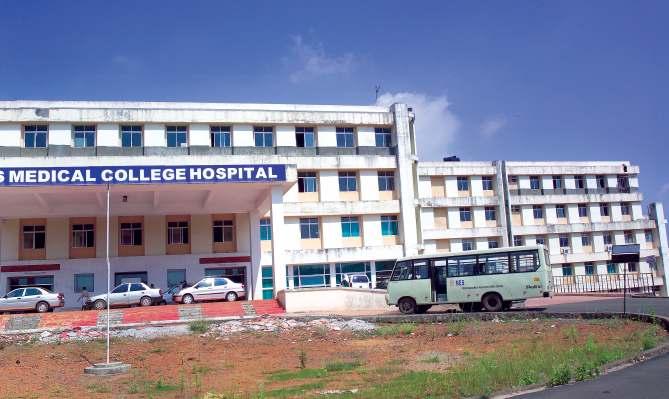
EducationalSociety(MES)in1964,withagroupofhighly educated and socially committed Muslim leaders from various walks of life. Today, MES is the largest Muslim charitable organization in the country running numerous schools, colleges, vocational training centres, hospitals, hostels, orphanages etc. The group is credited with numerous firsts, like the first CBSE School in the State (MESRajaResidentialSchool)andthefirstself-financing engineering college in the State (MES College of Engineering).
MES Medical College got a shot in its arm when Dr Fazal got the support of high-profile NRI investor M.A.YousafAli,founderof the EMKE Group based in the Middle East. EMKE operates in numerous countries spanning Africa, MiddleEast,SouthAsia,& the Far East, and employs 12,000peoplecomprisingof27differentnationalities,out of which over 8000 are Indians. YousafAli distinguishes himselffromotherinvestors,duetohisprovencommitment toKerala’sdevelopmentconcerns–apassionthathasseen him placed in the Director Boards of prestigious public sector organizations like, CIAL, KSIDC, KITCO, NRK AffairsCommittee,RootsNRKDevelopmentInitiativeetc. “His expertise in giving the right vision to cutting-edge institutions is well-known, and MES Medical College is proud to have him as our Chairman,” says Dr. Fazal.
Dr. Fazal is today the General Secretary of MES, and the DirectorofMESMedicalCollege,activitiesthattakemuch of his time.Yet he found time amidst his busy schedule of teaching,practicing,andmanaging,toanswerourqueries onMESMedicalCollege,andthehealthcare&healthcare education scenarios in the country, especially Kerala. A warm yet outspoken person, Dr. Fazal minces no words regardingthehypocrisiesofthevariousinfluential sections of the Kerala society, especially the political left & right, that is preventing true development.
g Why did MES start this medical college, and why was Perinthalmanna selected?
In 2001, when the then AK Antony Government decidedtoallowself-financingcolleges,therewere many takers for medical colleges from the Christian and Hindu Communities, but not from theMuslimCommunity.AtMES,wethoughtthis
asbadbecausebeingabackwardcommunity,atleastone minority Muslim medical college was necessary. That is howMESdecidedtotakeupthechallenge.ThoughMES was already running a few hospitals, according to the Indian Medical Council (IMC) specifications, a new medicalcollegeneeded300bedsand25acresofcampus. It meant that we should start a new hospital, and Perinthalmannabeinganespeciallyremoteandbackward area without any medical facilities, was selected.
g But, that is not how most medical colleges selected their location… Very true.All are in cities, or at least reasonable towns. But, they didn’t have much option too.All of them were running big hospitals for decades, whentheygotthesanction for a medical college. We had to first build a 300bedded hospital in 25 acres, before we could start a medical college. But, it also presented us options – we could either build it in any city or in some remote place like this. MES being a non profit making body working for social upliftment of backward communities, we decidedtodedicatethehospitaltoasuitableremoteplace which didn’t have such a big hospital. We also had the option of going in for the bare minimum setup or use this challenge to lay the proper foundation for something world-class. That is how we decided to go for 500 beds, all the specialities, and 6 major super-specialities.
g Why is the hospital entirely free?
We at MES believe that a hospital should first serve its immediate community, i.e. the community around it. No financial considerations
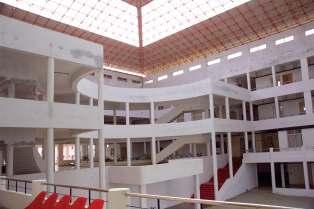
should affect its service, because healthcare is such a thing – the only real emergency help a human needs. And that is how all great hospitals used to be built. Around us, what we found was a financially weak community,manyofthemlivingeven below the poverty line. So, we thought, well, why don’t we run the hospital for free?
gBut,howissuchathing–running a hospital for free - possible?
A general hospital maybe not, but a self-financing medical college hospital definitely can be run this way. But one shouldn’t have any profit motive at all. Here, at MES, none of us have to take a profit home. If you have adequate capital, and not planning to compensate your capital with the studentfees,youcanprovidethisfreeservicetothepublic. Here, we don’t charge for outpatient, inpatient, bed, surgery, nothing. Only the medicines and consumables if any should be paid by the patient.
g But isn’t that bad economics?Aren’t you losing out on profit?
Wearelosingoutonprofit,butthisisnotnecessarilybad economics. Anyway, we have to have 300 beds in the generalwarditself,andnotinthepay-wardsorrooms,as per the IMC specifications.Again, for a project our size – Rs. 100 to Rs. 150 crores investment – what profit is there to be gained from providing basic healthcare? But to the needy patient, a Rs. 5000 surgery or a Rs. 2000 deliveryiseverything.Youwillbesurprisedtoknowthat just within these 3 years of our inception, we have done more than 10,000 surgeries for free. Each one of it could have fetched us Rs. 5000 or Rs. 3000. Can you imagine the scale of our free service?
g Yes, this is something very remarkable. But what about the time when you go in for a predominantly multi-super-speciality referral kind of setup in a big way?
Thatistrue-allthebigmoneyisinthesuper-specialities. Asofnow,wehaveallthespecialitiesneededforamedical college, and six major super-specialities. We will try to moveintoaprimarilymulti-super-specialityreferralmode by keeping the free service. But, if it proves to be
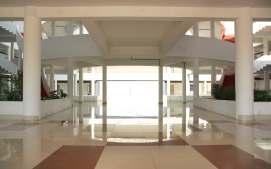
impractical, we might also start charging,butonlyforsuchspecialist work.Muchwilldependonwhether IMC will allow us to triple our MBBS seats, from the current 50, to 150. It will also allow us to reduce the MBBS fee from the current Rs. 4 lakhs.
g How is it possible? What is the connection?
A medical college has many fixed costs. For example, our salary bill is Rs.4crores!Itisveryimportantthat a project like this utilize its spend in the mot productive way.That is why we consider that the current allowed intake of 50 students is so low. We have the facilities to take in 150 students a year. And like all great medical colleges, we have 100% additional staff. The current fee stays at Rs. 4 lakhs per year only because IMCallowsonly50seats.Ifjustthedouble,100seatsare allowed, this fee per student can be brought down to half i.e. Rs. 2 lakhs per year!
gButsomeintellectualsareadvisingagainstincreasing seats in the state’s medical colleges… Whoaretheseintellectuals?Communists,basically.How can we listen to their theories when they are so wedded to specificideologiesorisms?Theyhavemuchtogainfrom promotingtheirideology,whilewehaveonlyourworkto show.Isn’titfunnythatCommunistRussiaandCommunist China were running after our students for their expensive medicalcolleges,alltheseyears,whileourcomradeshere were preventing self-financing colleges from appearing due to their ‘commitment to Communist ideals’? Even funnier was to know that children of top Marxist leaders in Kerala are studying in self-financing colleges outside the state.
gThat is hypocrisy, but the allegation is that Kerala is surplus in doctors…
If Kerala is surplus in doctors, why are all our medical colleges overflowing with students, and still more opting to study outside or even abroad? For the simple reason that the world is the stage for Keralite doctors. Is there any rule like a Keralite doctor should only practice in Kerala?Tens of thousands of them have made successful careers in the Middle East, Europe, and North America, and contributed to the flow of money to Kerala. It is hypocrisyofthefirstordertoenjoylivinginthis‘Demand Draft Economy’ of Kerala with its GDP’s 60% reliance onGulfmoney,andpointaccusingfingersatself-financing medical colleges.
g Another allegation is that self-financing medical colleges would bring down the standard of medical education?
It is again made by some Communist intellectuals who had long dictated terms regarding the medical education
in the state. We have only one thing to say to them – you can’t have monopoly over merit, and if you continue like this,weseestrainsofHitlerianEugenicsinyou!Selection doesn’t start at the race level, and according to most progressivethinkers,notevenatthemeritlevel.Meritcan besucharelativething.Wehaveseriousreservationsabout the Medical Entrance itself, which favours the rich and the repeaters. You cannot say a particular student can’t study Medicine just because he or she didn’t score as well assomeothersinaparticularexam.Andonwhatscientific basiswasthenumberofseatsfixedinourmedicalcolleges, all these years?
g Can you explain it further?
Yes. In 1971, there were 600 seats in all the four medical colleges taken together. During the next 30 years, only 200 seats were added to this pool! And all these years, those who couldn’t qualify for these 800 seats, were consideredas‘poorstudents’,whereasinrealitytheywere excellent students! What justification exists for such idiocies? And all these three decades, students and huge money kept flowing out of the state, making Karnataka and Tamilnadu richer. Our successive State Governments stoodparalysed, expressingtheirinabilitytofundfurther medical colleges. That is understandable, but what justificationwastheretovehementlyopposeself-financing medical colleges, until 2001? That the standards would go down? That is absurd. We proved it.
g That is interesting…
Yes. In the 1st year MBBS exam, our students bagged all the three ranks – the 1st, 2nd, & 3rd. And out of the 14 distinctions, 7 were taken by our students. I am speaking about a University exam in which our students competed with students of ‘higher-merit’ from reputed institutions like Kozhikode Medical College and Thrissur Medical College.Andover80%ofourstudentsbelongtobackward communities! So, this idea that self-financing medical collegescan’tproducequalitymedicalgraduatesisabsurd. 50% of our seats are occupied by merit candidates, and the majority of the remaining 50% of candidates are also of reasonable calibre who can be systematically educated to become top-notch doctors. As a postgraduate medical doctor and neurologist, I can vouch for it.
g What are your plans for the future?
WehavealreadystartedaNursingCollege andNursingSchool.Thiscomingyear,we will start the Dental and Pharmacy Colleges.All of them will be in this same campus. By the next 4 to 5 years, we plan tohavealltheparamedicalcoursesstarted. AfterthatwewillgoinforPostgraduation inMedicine.Thehospitalwillalsoreflect correspondingchanges,tobecomeahightech multi-super-speciality referral hospital of national repute. Already, 100 private ward beds are coming up.
Dr. Fazal has brought together a big team of committed specialistdoctorstoMES.Mostofthemhaveconsiderable experience outside Kerala, many of them coming from reputed institutions in North India, and even abroad.The MES Principal, Dr. C. Sadasivan Pillai [MD, DPH, PGDIM, PGDHRM], is a former Principal of Kozhikode MedicalCollegeandaformerMedicalEducationDirector. He brings with him extensive experience from one of the biggest of medical education setups in Kerala. Deputy Medical Superintendent Dr. N.M. Mujeeb Rahman [MS]
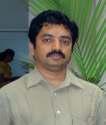
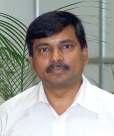
brings young energy & enthusiasm to the college & hospital. The Hospital Chief Administrator Vijayanand [MBA, MS, MPhil (HHSM), PGDMLE] was formerly workingwithChristianMedicalCollege,Vellore,andhas been handpicked by Dr. Fazal to help him administer the hospital according to exacting standards.
“We are putting our best efforts, time, and money into thisproject.Wewillbuildituprapidlybutsystematically, like how all great hospitals are built – by offering free healthcare, by attracting committed doctors, by focusing on medical education, and all such genuine strategies.”
And you can believe Dr. Fazal when he says this. MES has until now invested a whopping Rs. 1000 crores in Kerala.And to make even the sceptics believe, Dr. Fazal has chosen MES Medical College for his son’s MBBS course!
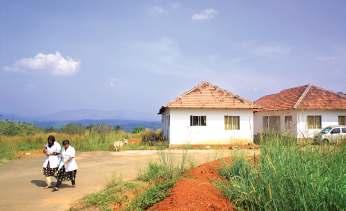
Starting 1998, the hospital scenario in Kerala changedforever Thosewhoweregiantstillthen, begantogetdwarfed,whilethosewhoattempted to put up a semblance of competition still, had a new benchmark to meet. Because, Amrita Institute of Medical Sciences (AIMS) with its plans for 9 lakh sq. ft. floor area & 800 beds, was beginning to redefine private sector healthcareservicesinKeralawithitssheerscale ofoperationanditsabilitytodeliverworld-class expertise across its 50 departments and specialities.Itwasanaccomplishmentpractically no non-governmental organization in India, let aloneKerala,couldattempt.Indeed,itwasafeat fit for only Mata Amritanandamayi - spiritual leader, social reformer, & philanthropist extraordinaire - the Amma who has physically embraced & consoled 24 million people in her unbelievable life!
Hospitalsoftenspeakabouttheirnumberofdoctors,nurses,&support staff. ButAmrita Institute of Medical Sciences (AIMS) can also speak about something else – its number of volunteers. Like all institutions managed by Mata Amritanandamayi Math, AIMS too has the rock-solid supportofAmma’sfollowers.Morethan 500 such volunteers work atAIMS!
Now,thosewhoarenotveryfamiliarwith Mata Amritanandamayi Math and its activities,willstartwonderingwhatkind ofaleadercaninspirepeopletoworkfor free? But those who are very familiar withAmma will find no miracle in these 500 volunteers working at AIMS. Because,theyhaveseenbiggermiracles.
UnderAmma’svision,theMath’sAmrita Kuteeram Project has constructed more than 25,000 houses for India’s poor people in states like Kerala, Tamilnadu, Karnataka, Andhra Pradesh, Maharashtra, Gujarat, Uttar Pradesh, & West Bengal – often in response to invitations from the respective state governments! And Amma has pledged another 1 lakh free houses for the poor across India. Amrita Nidhi, the Math’s revolutionary free pension scheme for 50,000 widows & destitute women is active across the country. Amritapuri, Amma’s main Ashram at Kollam in Kerala, and its various branch centres across the nation provide free food to morethan50,000peopleeverymonth.AndifyouthinkAmmainspires India alone, consider this – volunteers in USA provide 40,000 meals a yearforthehomelessthroughaprogramcalledMother’sKitchen.When
AIMSISORGANIZEDAROUND4
DEDICATEDCENTRESFOR4CORE
SUPER-SPECIALITIES–CANCER
INSTITUTE,DIGESTIVEDISEASES
INSTITUTE, NEUROSCIENCES
INSTITUTE,&HEARTINSTITUTE, WITH THE REST OF THE SPECIALITIES & SUPERSPECIALITIES ORGANIZED AS SEPARATEDEPARTMENTS.
theTsunamistruck,Amma’sAshrampledgedawhoppingRs.100crores fortherebuilding&rehabilitationwork,eclipsingsmallercontributions from bigger organizations! Even more importantly, within the first 3 monthsoftheTsunami,morethan20,000 volunteers from Amma’s various institutions, includingWestern groups & AIMS, had chipped in with personal work!
Truly,Amma operates at a scale & pace thatmanygovernmentswillfinddifficult to follow, a fact that has brought her international acclaim from none other than United Nations’ Forums and the Parliament of World’s Religions.
ThoughAmma is a spiritual leader first, sheisknowntohandpickleadersofhigh calibre and devotion to head the Math’s various initiatives, and AIMS is no exception.Thisselectionhasstartedlong back from such devoted disciples like Swami Amritaswaroopananda Puri who has brought immense professionalism & enthusiasmintotheMath’sactivities,and is currently the Chairman ofAmritapuri and the President ofAIMS. It extendstokeyprofessionalslikeDr.PremNair,who,inspiredbyAmma, forsake his highly successful career as a specialist medical doctor of repute in USA, to head AIMS as its Medical Director. Dr. Prem Nair wasearlierProfessorofMedicineandGastroenterologySpecialistwith University of California, at LosAngeles. Mr. Ron Gottsegen,
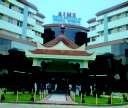
AdministrativeDirectoratAIMShascontributedmuchto the professionalism seen throughout the AIMS campus. Mr. Sudhakar Jayaram, General Manager–Administration,atAIMS, wasformerlywithInfosys,andlefta successfulcareerinSanFranciscoto joinAmma’sactivities.Mr.Sudhakar Jayaram is also heading Amrita TV, agroupinitiative.Othernotedleaders at AIMS include Dean Dr. D.M. Vasudevan and Dr A.K.K. Unni, Chairman of its Research Division.
When many other hospitals speak about charity, they almost always meanprovidingsomesortofdiscount to people with no money for their procedures. But AIMS is also speaking about Outreach Programs that have seen teams of AIMS physicians,surgeons,nurses,support staff,&volunteers,crisscrossingthe country when disaster struck in the form of Gujarat Earthquake and the Tsunami.
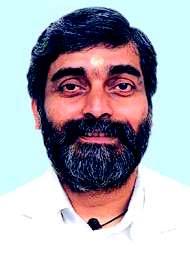
Only an extraordinarily equipped hospital in terms of infrastructure,manpower,vision,&teamspiritcandeliver such services on an ad hoc basis. TheAIMS of today is a massive80-acrescampus,includingan800-beddedmultisuper-speciality hospital, a Medical College, and a 400-
AMMAISKNOWNTOHANDPICK LEADERSOFHIGHCALIBREAND DEVOTIONTOHEADTHEMATH’S VARIOUSINITIATIVES,ANDAIMS ISNOEXCEPTION.AMRITAPURI
CHAIRMAN SWAMI AMRITASWAROOPANANDAPURI ISTHEPRESIDENTOFAIMS,DR. PREM NAIR ITS MEDICAL DIRECTOR,MR.RONGOTTSEGEN ITSADMINISTRATIVEDIRECTOR, AND MR. SUDHAKAR JAYARAM ITS GENERAL MANAGER –ADMINISTRATION.
beddedTeachingHospitalComplex.Afullycomputerised and networked Hospital Information System ensures that the level of overall service is truly world-class.
Thehospitalisorganizedaround4dedicatedcentresfor4 core super-specialities – Cancer Institute, Digestive Diseases Institute, Neurosciences Institute, & Heart Institute, with the rest of the specialities & superspecialities organized as separate Departments.
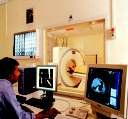
The Cancer Institute atAIMS is perhaps the most advanced in the state. The Digestive Diseases Institute includes super-specialities like Gastroenterology / Hepatology and GastroIntestinal Surgery. The Neurosciences Institute includes Neurology and Neurosurgery,whiletheHeart Institute includes superspecialities like Adult Cardiology, Paediatric Cardiology, Adult Cardiovascular Surgery, and Paediatric CV Surgery Without doubt, these 4 dedicated centres have brought the greatest acclaim forAIMS.
The other super-speciality departments atAIMS include areas of rare competence like Organ Transplantation, Toxicology, Vascular Surgery, Endocrinology, Metabolic Disorders, Nuclear Medicine, Head & Neck Surgery, Infectious Diseases, Pain & Palliative Care, Pharmacovigilance, Radiology, Geriatrics, Paediatric Surgery, Neonatology etc.
All the more common specialities like Dermatology, ENT, Nephrology, Urology, Internal Medicine, Ophthalmology, Orthopaedics, Paediatrics, Pulmonary Medicine etc are also functioning at AIMS. SupportDepartmentsincludeAnaesthesiology,Molecular Biology, & Laboratory Medicine.
THEOUTREACHPROGRAMSOFAIMS HAVE SEEN TEAMS OF AIMS PHYSICIANS,SURGEONS,NURSES, SUPPORTSTAFF,&VOLUNTEERS, CRISSCROSSINGTHECOUNTRYWHEN DISASTERSTRUCKINTHEFORMOF GUJARATEARTHQUAKEANDTHE TSUNAMI.
The infrastructure for the departments of radiology and laboratoryrequirespecialmentionsincetheircutting-edge facilitieshavemadethemreferralcentresofrepute,across thestate.WhiletheClinicalLaboratoryisstate-of-the-art, the Department of Radiology has a fully digital infrastructure.
ThestressAIMSisplacingonhigh-techareaslikeresearch andtelemedicineisevidentfromtheformationofseparate departments for them – Department of Telemedicine and Department of Research Co-ordination.
AIMS is perhaps the only such hospital in Kerala with a dedicated Department of Information Technology. The networksupports900computersthroughwhichAIMShas computerisednearlyeveryaspectofpatient-careincluding allpatientinformation,labtesting,&radiologicalimaging – like how the best hospitals in the West do.
AIMS is also renowned for their Medical Education infrastructure that includes a School of Medicine, School ofNursing,SchoolofDentistry,andaSchoolofPharmacy AIMS also conducts CME Programmes. Amrita Nano Biomedical Engineering Centre is also another AIMS initiative in education.
Manning the whole show is the dedicated AIMS team which comprises of 340 faculty, 100 administrators, 2500 support staff, and of course, the 500 volunteers!
“World-class Specialists, Facilities, & Cleanliness, For a World-class Experience”
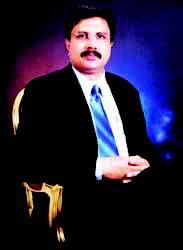
Malabar Institute of Medical Sciences (MIMS), at Kozhikode, Kerala, was set up to bring international quality healthcare to the state, at affordable costs. The vision of a group of dedicated persons led by Middle East’s noted medical facilitator, Dr. Azad Moopen, and
Malabar’s famous physician, Dr. Abdulla Cherayakkat, MIMS has however emerged as a preferred health destination not only for Keralites, but to people from neighbouring states and NRIs, with its over 300 beds, nearly 35 specialities, and over 100 fulltime specialist doctors.
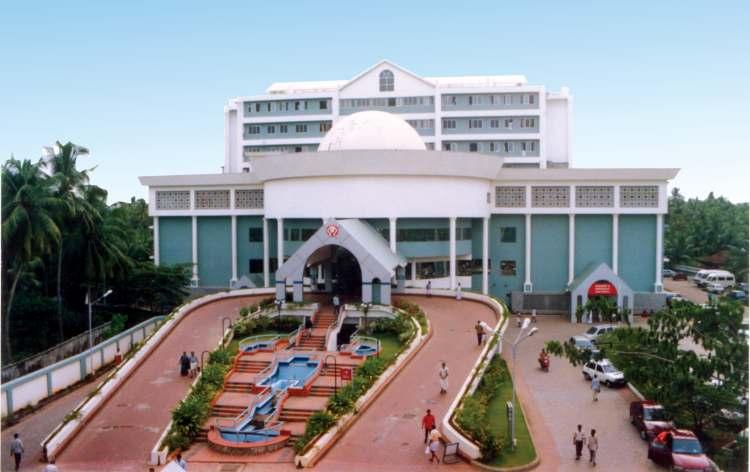
Establishing a chain of hospitals and clinics in the Middle EastisnosmallachievementforaKeralitedoctor.But,Dr AzadMoopen,hasalwaysbeenawinner.AGoldMedallist in Medicine from the Kozhikode Medical College, Dr. Moopenwasalsoanefficientorganizerfromhisyouthdays onwards,afactevidentfromhisleadershipamongMedical College Students of Kerala, as its association’s State Convener during 1976. Dr. Moopen went on to establish a thrivingpracticeinUAE,andlaterforayedintosettingupa string of highly acclaimed hospitals & clinics, spread over the Emirates. No wonder then, when he started MIMS in 2002,hecouldbringtogetheralargefraternityofspecialists around him – some his peers, some even his teachers!
Today, MIMS is one of the largest multi-super-speciality hospitalsinthecorporatesectorinKerala.Dr AzadMoopen is the Chairman, and Dr. Abdulla Cherayakkat is the Managing Director of this ISO 9002 certified tertiary care hospital.While starting MIMS, the group led by these two visionaries had three objectives. First, to provide international quality healthcare at affordable costs. Secondly,toreversethebraindrainthathasbeenhappening in Kerala’s healthcare sector for decades. MIMS was designed as a centre where eminent Keralite doctors practicing in the West and the Middle East could return. Finally, being a public limited company and corporate hospital, providing a decent return to investors so that the project is economically feasible, was the third objective.
The mission statement of MIMS is “ACaring Mission,A Global Vision”. It is practised in the entire organization spanning 35 specialities and 300 beds. It will also be the guidepost when MIMS completes its second phase of another 200 beds by about a year.
MIMShas86bedsdedicatedforitsfullyequippedIntensive Care Units, with its Neonatal Intensive Care Unit having 11 beds. The speciality and super-speciality departments at MIMS include General Medicine, Critical Care, Cardiology, Cardiovascular & Thoracic Surgery, Cardiac Anaesthesiology,Neurology,Neurosurgery,Endocrinology & Diabetics, Nephrology, Pulmonology & Asthma, Gastroenterology, General Surgery, Orthopaedic Surgery, Urology, ENT, Dermatology/Cosmetology/Hair Clinic, Ophthalmology, Gastro Intestinal Surgery, Plastic/ Reconstructive/Micro-vascular Surgery, Rheumatology, Gynaecology&InfertilityClinic,Paediatrics,Neonatology, Paediatric Surgery, Dental Surgery, Radiology & Imaging Sciences, Nuclear Medicine, Anaesthesiology, Physical Medicine & Rehabilitation, Psychiatry, and Pathology
ButtherealspecialityatMIMSisthatthereisahigh-level of interaction and integration between the various departments, thus being capable of putting the welfare of patientsfirst,always.
For example, the Nuclear Medicine Department at MIMS provides
integrated support to other departments like Cardiology, Gastroenterology, & Orthopaedics.
Nuclear Medicine is a new medical speciality that uses safe, painless and cost-effective techniques to image the functions of various organs and thus treat diseases effectively. Nuclear medicine imaging is unique in that it demonstrates organ functionandstructureatthesametime,incontrasttodiagnostic radiology, which is based upon structural anatomy. Nuclear medicine imaging procedures help to identify abnormalities very early in the progression of the disease, long before some medical problems are apparent with conventional diagnostic tests. This is based on the fact that the functional changes appear much before the structural changes in the evolution of organ dysfunction. The Nuclear Medicine Department at MIMS provides state-of-the-art radio isotope procedures with high quality control. The latest equipments at the department include sophisticated gamma camera with HD4 total digital detectors for superior quality images and advanced E-Soft software. The Department also runs a modern Thyroid Clinic equipped with Digital Thyroid Uptake System for diagnosis andtreatmentofvariousthyroiddisorders,whicharenowadays very common.
The Departments of Cardiology, Cardiovascular & Thoracic Surgery, & Cardiac Anaesthesiology are grouped and
structured under an integrated centre – The MIMS Institute of Cardiac Sciences. This is one of the few centres inAsia where CoronaryArtery Bypass Surgery is performed on beating heart, without Heart Lung Machine, with less than 0.5% mortality! Within a short span of 40 months, the Centre has undertaken 1000 Open Heart Surgeries, with a success rate that is even better than the international standards.
The MIMS Institute of Cardiac Sciences is today a tertiary carecentrethathasallspecialiseddivisionslikenon-invasivecardiology, invasive cardiology, cardiothoracic & vascular surgery, cardiac anaesthesiology, intensive care, cardiac rehabilitation, and perfusion technology
TheCentreisoneofthefewcentresinNorthKeralaperforming Primary Angioplasty (for acute heart attack), and Rescue Angioplasty (for failed thrombolysis), round-the-clock. Cardiology services on offer include non-invasive investigations like trans-thoracic & trans-esophageal echocardiography, and treadmill testing, routine diagnostic invasive procedures like angiography and catheterization studies, coronary & peripheral angioplasty with stenting, and balloon valvuloplasty. Device and coil closure of PDA and device closure of ASD are being performed on patients of all ages. The Electrophysiological Department at the Centre performs routine Electro Physiology (EP) studies, Radio
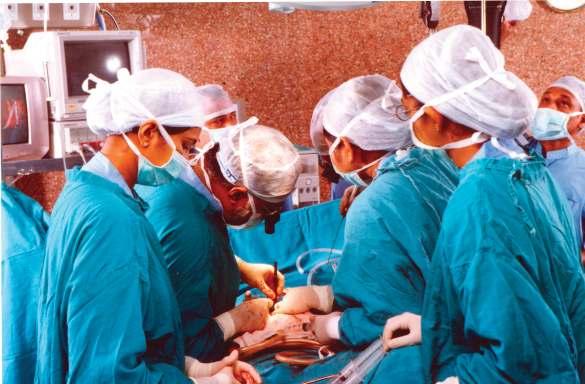
Frequency Ablation (RFA), & Head Up Tilt Testing (HUTT). Implants and Pacing Therapies include Automatic Implantable Cardioverter Defibrillator (AICD) implantation for the prevention of cardiac arrest, Biventricular Pacing Therapy for heart failure, and routine temporary and permanent pacemaker implantation.
The MIMS Institute of Cardiac Sciences is also fully equipped to
undertake the full range of Cardiothoracic & Vascular Surgeries. Apart from the routine or emergency Coronary Artery Bypass Surgery (CABG), special procedures like valve replacement surgeries, combined valve & bypass surgery, surgeries for congenital heart defects, like ASD, VSD, & TOF are also undertaken here. Thoracic surgeries done here include lung and mediastinal surgeries, while vascular surgeries include aortobifemoral bypass, femoro-femoral bypass, femoro-popliteal bypass, and vascular surgery combined with CABG are performed with excellent results. The Centre is also starting Paediatric Cardiac Surgeries from the next month onwards.
The MIMS Institute of Cardiac Sciences owes its amazing success to the vision of its founders which brought together the best of equipment and the best of expertise.
The Centre has a state-of-the-art Digital Cardiac Catheterization Lab, advanced Gamma Camera, support by the MIMS Nuclear
Medicine Department, two fully equipped Cardiac Operation Theatres with even videoconferencing facilities, and instruments including the latest Intra Aortic Balloon Pump (IABP). The Cardiac Surgery ICU is 15 bedded, and has 8 channel monitors including continuous cardiac output monitoring and ventilator facilities.
Human expertise is also equally important in this field, and MIMS Institute of Cardiac Sciences score big with their strong team of highly experienced and fulltime Senior Cardiac Surgeons, Cardiac Anaesthesiologists, Senior Interventional Cardiologists, Perfusionists, and Cardiac Rehabilitation staff.
The Department of Orthopaedic Surgery excels in Joint Replacements like Knee & Hip Replacements, thanks to its orthopaedic surgeons of international repute and usage of the highest quality imported implants. MIMS being a tertiary trauma-care centre, the Department of Orthopaedic Surgery is also fully equipped to undertake advanced fracture instrumentations. Also undertaken are rare procedures like spine surgery, arthroscopy & reconstructive surgery, anterior transabdominal & transthoracic procedures, paediatric orthopaedics, hand surgery, & comprehensive care for arthritis. Spine Surgery at MIMS includes such high-tech procedures like Pedicle Screw Fixation and Interbody Fusion.Aregular Backache Clinic is also functioning at MIMS.
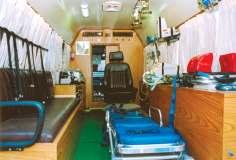
The Department of Radiology and Imaging Sciences provides comprehensive radiology services including diagnostic as well as interventional procedures. Equipped with Sub Second Helical CT Scanner with advanced image processing capabilities, procedures like CT Angiography, Virtual Endoscopy, & 3D Volume Rendering
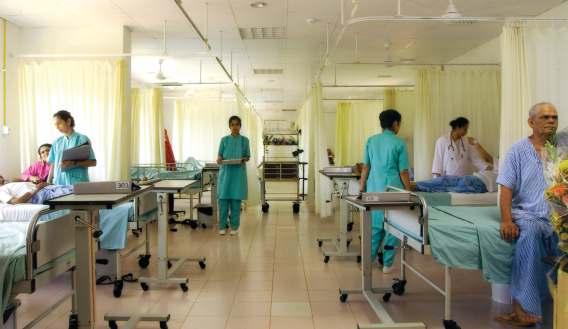
arepossibleatMIMS.InterventionalRadiologyDivisionoffers the full range of procedures including the newer minimally invasive treatments. Soon to be added facilities include Open MRI, Mammography, & 4D Ultrasonography
The Gastroenterology Department at MIMS has won acclaim as one of the best centres for evaluation and management of Gastrointestinal bleeds. The dedicated team of endoscopists, gastrointestinalsurgeons,&interventionalradiologistsprovide round-the-clock service to patients. Endoscopic management of bile duct stones and pancreatic diseases like Chronic Pancreatitis and Pseudocysts are routinely undertaken. Malignancies of pancreas by stent replacement and palliative treatment of esophageal cancers are also offered. The Department is also active in gastroenterology research with significant efforts being taken to better understand andmanage UlcerBleeds,RecurrentPyogenicCholangitis,&Crohn’sDisease.
MIMS also has a comprehensive Gynaecology & Infertility Department that offers Laparoscopic Surgeries, Pain Reduced Labour, and an Infertility Clinic in association with the Centre for Research in Assisted Reproduction & Foetal Therapy (CRAFT). All diagnostic & operative endoscopic procedures like Hysteroscopy & Laparoscopy procedures are done here, while Laparoscopic Hysterectomy is offered at an affordable cost. The option of Epidural Injection to reduce labour pain is offered, at safety standards as prevalent in the West.
TheMIMSManagementunderstandstheimportanceofcreating a strong academic base to take the hospital to greater heights, and the establishment of the MIMSAcademy is proof for their
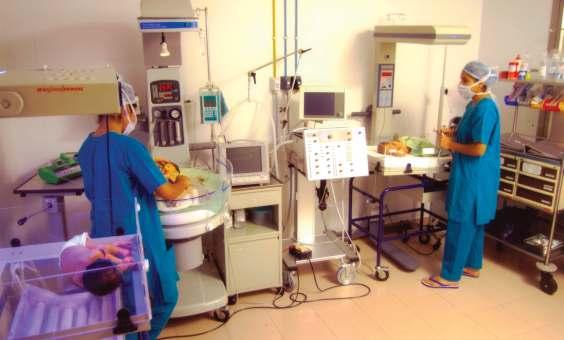
vision. Headed by the renowned surgeon and medical teacher parexcellenceProf.(Dr.)K.K.Varma,astheDirector,andhaving a Governing Council consisting of eminent healthcare professionals&academicians,theMIMSAcademyhasamedical education vision that includes various research activities and eventuallyamedicalcollege.TheAcademyhasacquired33acres of land near Kozhikode and the work of setting up a modern academic campus is underway Already, the MIMS Academy conducts many medical & paramedical courses like DNB, BSc Nursing, General Nursing & Midwifery, and Diploma in Laboratory Technology. TheAcademy is also actively engaged in various research activities.
From its very beginning onwards, MIMS has been trying to merge two diverse worlds – the world of high-tech healthcare, and Kerala’s, especially Malabar’s, ground realities. That they have succeeded in both, is evident from just two developments – its growing list of corporate clients, and its remarkable penetrationintolowermiddleclassandevenpoorpatients.Today, ithasover25notedcorporateclients–belongingtobothprivate & public sector – most of them bluechips like HDFC,Air India, & Tata Motors, and arrangements with 6 leading TPAs for treating medically insured patients.At the same time, under the aegis of MIMS Charitable Trust, the group has pledged more than Rs. 50 lakhs for helping poor patients, a figure which is stillexpectedtogrow,takingintoconsiderationthestressMIMS is placing on its programs like ‘Sponsor a Heart’.
And between these two extremes – medically insured corporate citizens to the poorest of the poor – lies the real clientele of MIMS. The middleclass to upper-middleclass patients who can avail of the graded rates offered by MIMS according to their needs for comfort and budget. Of course, it goes without saying that the remaining segment of the population – the upperclass –finds the superior features of MIMS as naturally attractive.
MALABAR INSTITUTE OF MEDICAL SCIENCES