


Managing Editor
Jason D Pavorattikaran
Editor
John Antony Director (Finance)
Ceena
Associate Editor
Carl Jaison
Senior Editorial Coordinator
Jacob Deva
Senior Correspondent
Bina Menon
Creative Visualizer
Bijohns Varghese
Photographer
Anish Aloysious Office Assistant
Alby CG Correspondents
Bombay: Rashmi Prakash
Delhi: Anurag Dixit Director (Technical)
John Antony
Publisher
Jason D Pavorattikaran
Editorial & Business Office
Cochin: 36/1924 E, Kaloor-Kadavanthra Road, Near IGNOU, Kaloor, Cochin-17. Ph:0484- 2345876, 2534377, 2340080 Mob. 09947141362
Delhi: H.No: P-108, Uppal Southend, Sector 48, Sohna Road, Gurgaon, Haryana – 122018 Ph: 9891771857|099471 41362
Mumbai: 202, Woodland Heights Building, St. Martins Road, Bandra West, Mumbai400 050 Mob: 919947141362
Bangalore: House No: 493, Block 3 3 rd Main, HBR Layout, Bangalore-4209731984836, Email:skmagazine@gmail.com www.seasonalmagazine.com
UK Office: “CRONAN”, Boundaries Road Feltham, Middlesex, UK TW13 5DR Ph: 020 8890 0045, Mob: 00447947181950 Email: petecarlsons@gmail.com
Reg No: KERENG/2002/6803
Printed & Published by Jaison D on behalf of PeteCarlson Solutions Pvt. Ltd. at Cochin. Printed at Rathna Offset Printers, Chennai-14. All Rights Reserved by PeteCarlson Solutions Pvt. Ltd. No part of this publication may be reproduced by any means, including electronic, without the prior written permission of the publisher.


The scorched landscapes of the Middle East have become yet another proof for the futility of modern warfare. What began as an ill-conceived surgical strike has spiraled into a multi-front conflagration that has drained treasuries, leveled cities, and shattered the illusion of decisive military success. And a deeper look at the balance sheets reveals a sobering truth: every major player has suffered losses that will take a generation to recoup.
Israel had entered 2026 facing its most grueling economic landscape in decades. According to recent Bank of Israel reports, the country had lost over $57 billion between 2023 and 2025 - a staggering 8.6% of its annual GDP. The 2026 budget has already been revised to add an additional $13 billion for the ongoing military operations, as the nation grapples with a massive deficit and a fractured labor market.
Beyond the capital, the social fabric is strained by the prolonged mobilization of reservists, and a tourism sector that has effectively evaporated. Israel may point to the tactical degradation of its enemies’ leadership as a supposed gain, but this so-called achievement is dwarfed by the long-term erosion of its economic stability, military security and

international standing.
For the United States, the regional crisis has been a relentless drain on both its soft and hard power. Conservative estimates from the Costs of War Project indicate that the US spending on Israeli & Saudi military aid and regional operations - including countering Houthi threats - had exceeded $22.7 billion in just the first year of the conflict itself. By 2026, this figure has swelled, involving massive deployments of Carrier Strike Groups and advanced missile defense systems like the THAAD.
Diplomatically, Washington’s leverage has plummeted as it struggles to balance domestic dissent with its regional commitments. The US can claim the arguable gain of demonstrating its reliability as an ally to the oil-rich GCC countries, yet this rings hollow against the backdrop of a multibillion dollar war bill and a significantly diminished ability to influence global peace, going forward.
Iran’s strategy of regional dominance via proxies like the Hamas, Hezbollah & Houthis has resulted in its own domestic ruin and near total loss of its leadership. Following direct strikes on

its infrastructure, Iran’s economy is projected to shrink by 10% this year alone. Critical assets, including the Mobarakeh Steel plant and over 66% of its missile and drone production sites, have been severely damaged. It has also lost much of its nuclear program.
Its strikes on GCC neighbours and closure of the Strait of Hormuz have backfired, isolating Iran in the world community, with even neutral countries like the EU, India & China strongly opposing such aggressive and unilateral steps. Tehran may tout the gain of proving that it can strike deep into enemy territory, but the near-total destruction of its naval fleet, the crippling of its industrial base, and the loss of its second-largest trading partner UAE, make this a hollow victory.
In Lebanon, the human and structural toll are catastrophic. Over 1.2 million people - nearly one-fifth of the population - remain displaced. The World Bank estimates that 100,000 houses have been partially or fully destroyed, particularly in the south - a heavy price for striking Israel, to protect Iranian interests.


Hezbollah has lost a significant portion of its founding leadership, along with over 1,400 fighters. The group continues to project an image of resistance as its supposed gain, yet this provides no solace to a Lebanese nation whose infrastructure is in rubble and whose economy has been set back by decades.
The Gulf Cooperation Council (GCC) nations, once considered the stable anchors of the region, are now feeling the heat. The closure of the Strait of Hormuz triggered a direct hit to their oil led economies. There is also a grocery supply emergency in some of these states as they rely on the Strait for 80% of their caloric intake.
Food prices have surged between 40% and 120%, and the UNDP warns that the war could reduce regional growth by up to $194 billion. The dream of Vision 2030 and the region’s image as a safe destination for FDI are under threat. These nations might find a supposed gain in their aerial defence systems that proved partially reliable, but this prestige is a poor substitute for the loss of their hard-earned status as global hubs for tourism and investment.
Amidst this widespread ruin, only one sector is thriving: the worldwide arms industry. While nations bleed, the defense export market is projected to reach $542 billion in 2026, growing at a record pace. Global military spending has hit an all-time high of $2.44 trillion recently.
Arms giants like Lockheed Martin & Raytheon of the US, and their

international counterparts like Dassault & Thales of France, Rostec of Russia, Rheinmetall of Germany, AVIC of China and many such firms are seeing unprecedented demand for the very munitions leveling Middle Eastern cities.
For these corporations, the war is not a tragedy but a growth driver, a morbid reality where profit is directly indexed to the destruction of human populations. Most of these are listed private firms, with the only exceptions being the Russian & Chinese corporations which are fully state owned.
The metrics are clear: military solutions have reached a point of not diminishing returns, but serious losses for all the warring nations. There is no total victory in a region so interconnected with the world and so intensely volatile. The only path toward lasting prosperity and peace lies in continuous, multilateral dialogue and the restoration of diplomatic channels.
If all these nations are to recoup their losses and ensure a future for the next generation, they must move past the aggressive rhetoric and destructive actions, and move towards collaborative and constructive steps, acknowledging that true security is built on economic interdependence and mutual recognition, not the exchange of ballistic missiles.
John Antony


Bengaluru-based real estate developer Puravankara Limited has had several firsts to its credit since its inception in 1975. Starting with their first-ever multi-storey project in Bengaluru, Founder and

The ICFAI Group of Universities has established itself as a transformative force in Indian higher education, characterized by a philosophy that balances intellectual curiosity with industrial pragmatism. Rooted in the legacy of its late founder, NJ Yasaswy - a scholar who

The landscape of Indian higher education, especially in humanities, underwent a notable shift in 2009 with the establishment of OP Jindal Global University (JGU) in Sonipat, Haryana. Founded as a non-profit, multidisciplinary, and research-oriented institution, JGU was born from the philanthropic vision of its Founding Chancellor, Naveen
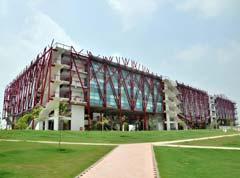
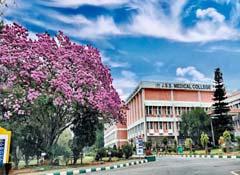
By weaving a vibrant tapestry of international conclaves, groundbreaking medical research, and global expansion, JSS Academy of Higher Education and Research has transformed into a living A
One financial lesson they should teach in school is that most of the things we buy have to be paid for twice.

In the landscape of private higher education, few names command as much respect and aspiration as the Vellore Institute of Technology (VIT). From its humble beginnings in 1984 as an engineering college,
Why Iran’s control of Hormuz may not be the end of the petrodollar, as it still controls 80% of global oil trade.


A growing body of research breaks down the connection.
Leadership isn’t about mastering a fixed set of skills, but creating the meaningful, human-centered experiences that inspire others.

On the receding shorelines of low-lying Vypin Island off India's western coast, T. P. Murukesan fixed his eyes on the white paint peeling off the damp walls of his raised home and recounted the most recent floods.

The human being is an enjoyment-seeking creature. There’s a reason people are always trying to restrain themselves from excessive eating, drinking, scrolling, and shopping. It’s perfectly normal to pursue these and other pleasures even to the point of serious problems and early death.

How can you change your life for the better today? Learn not just to appreciate happiness –but to anticipate it.


Many of us turn to Sudoku, Wordle or brain-training apps to sharpen our minds. But research is increasingly showing one of the best ways to boost memory, focus and brain health is exercise.
Implementing what a doctor calls the three Ps of pooping may cut down your time in the bathroom.
Once symbolic of the power and wealth of the Nattukottai Chettiar community, thousands of gigantic and glamourous mansions in Tamil Nadu now lie in ruins.


Before I discovered Stoic principles, I went through life without a clear purpose. Without any idea of how to live a good life.
I’ve been thinking a lot about habits lately. The students in my Foundations course are getting started with their daily fitness habit, and this has given me a lot of insights into the real barriers people have in creating habits that last.

Indian entrepreneurial spirit is constantly in search of second homes across the world. Western Australia, the largest state in Australia and home to its fourth most populous city, Perth, probably caught the attention of Indian entrepreneurial explorers

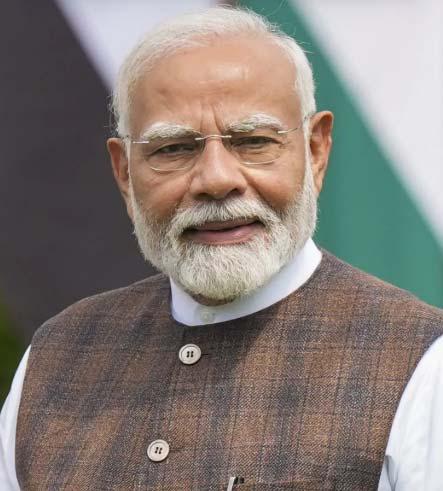
sanctions on Iran and Russia have reduced the dollar’s chokehold on oil trade, but Gulf states are unlikely to ditch it
Keeping control of the Strait of Hormuz will be easier for Iran than unseating the dollar’s dominance of the global oil trade, despite Tehran’s efforts to dent the greenback’s hegemony, experts say.
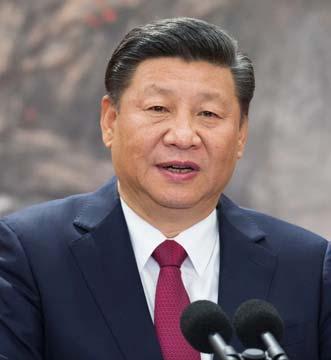
Iran’s control of the crucial strait has become the focal point of the war, with US President Donald Trump threatening Iran with total annihilation unless it cedes control of the “Fuckin’ Strait”.
Because roughly 20 percent of the world’s energy passes through the Strait of Hormuz, some experts have said that Iran’s control jeopardises the petrodollar system - in which oil is priced and sold in the dollar by Arab energy producers.
Iran has established an elaborate “toll system” to control which vessels it allows to pass through the waterway, like those of Pakistan and China, Middle East Eye previously reported. Its move to price toll payments in Chinese yuan has fuelled speculation that there could be a shift away from oil priced in dollars.
“Iran has a huge interest in trying to

break the dollar’s dominance in the oil trade,” Djavad Salehi-Isfahani, an expert on Iran’s economy at Virginia Tech, told MEE. “It has suffered because the US has a veto on bank accounts across the world in dollars.”
However, Saudi Arabia, Kuwait, Iraq, Bahrain, Qatar, and the UAE are unlikely to shift away from the petrodollar, despite the fact that Tehran will continue to exercise control over Hormuz, Steve Hanke, a professor at Johns Hopkins University and an expert on the dollar, told MEE.
The moneylenders moneylenders
“The Strait of Hormuz was a freeway, and it’s going to become a toll road. The Iranians will control it, but king dollar is still king dollar,” Hanke told MEE.
To understand the US dollar’s grip on oil sales, you have to go back to 1974, when US Secretary of State Henry Kissinger cut a deal with Saudi Arabia to price its oil in the greenback and invest the surpluses in American assets - predominantly US Treasury bonds.
That deal had two key impacts: it led
to the eurodollar boom of the late 1970s and helped shore up the dollar after its position as the world’s dominant currency was threatened by President Richard Nixon.
Eurodollars are effectively US dollars deposited in foreign, mainly European banks, which are available for global lending. That banking boom has faded from memory, but was famously covered by the journalist Anthony Sampson in his 1981 book, The Money Lenders: Bankers and a World in Turmoil.
Just as consequential, Saudi Arabia’s decision helped the US keep the dollar dominant as it underwent a sweeping devaluation following Nixon’s 1971 decision to end the greenback’s convertibility into gold.
After WWII, the Bretton Woods system was established, pegging all major currencies to the dollar. Underwriting this system was the ability of foreign governments to redeem dollars for gold at a fixed rate of $35 per ounce.
Saudi Arabia’s decision led the way for other Gulf states to adopt the petrodollar. By the mid-1970s, the Gulf was the largest source of new US lending via treasuries.
David M Wight, author of Oil Money: Middle East Petrodollars and the

Transformation of US Empire, told MEE that the petrodollar has been “remarkably resilient” over the last half-century.
While it’s sometimes framed as the US exploiting the Gulf, Wight said that both sides had an interest in the deal. “It was more wooing and less strongarming.”
Ties between Saudi Arabia and the US were tested by the 1973 Arab-Israeli war and Arab oil embargo, which the kingdom pursued in support for the Palestinians. This contributed to the inflationary crisis roiling the US after Nixon’s “gold shock”.
“Coming out of 1973, the Saudis and other Arabs were worried the US would

take punitive actions against them,” Wight said. “They wanted assurance of US security guarantees.”
The security component of the petrodollar story is one reason many experts have said that Iran’s control of the Strait of Hormuz could upend the system.
Petro-equities Petro-equities
President Trump has vacillated between destroying Iran’s “civilisation” or simply walking away from the war and letting Iran control the Strait of Hormuz. “Go get your own oil!” Trump told US allies last week.
Gulf states still peg their currencies to the US dollar, unlike the euro, which floats freely, and they hold a sizable portion of US debt. By the end of 2025, the Gulf held $315bn in US Treasuries.
But times have changed since the 1970s.
The US has become more addicted to debt, diluting the Gulf’s overall importance, while the Gulf has become a more mature investor.
As Jess Hoversen, a former economist at the CIA now at Column Bank, wrote, Gulf holdings in Treasuries account for just two percent of US deficit spending now, compared to 10 percent during the Reagan administration.
US spending has ballooned, but the bigger shift is the fact that Gulf states have less cash to invest in treasuries. Instead, they are buying assets like US
SEASONAL MAGAZINE


stocks, European football teams, and more recently, investing at home.
Saudi Arabia is running budget deficits as it looks to invest in domestic industries to reduce its reliance on oil. The Saudi kingdom issued $82bn of its own debt in 2025.
“Defining the petrodollar today has changed from decades ago,” Brad Setser, a former US Treasury economist who is now at the Council on Foreign Relations, told MEE. “The Gulf states are borrowers now and not as big buyers of treasuries”.
To be clear, Saudi Arabia still has sizable holdings of US debt, and if it decided to sell, it would hurt the US.
In January 2026, its holdings stood at $134bn.
The US’s vulnerabilities have been revealed in recent weeks. The Financial Times reported that some central banks have sold treasuries as a result of the US-Israeli war on Iran.
The selling has contributed to surging 10-year US Treasury yields, which have climbed from 3.9 percent before the war to around 4.4 percent. Higher yields make mortgages and other loans more expensive for Americans and increase the cost of borrowing money for the US government.
The rising yields are unusual, experts say, because countries normally stock up on US Treasuries during times of crisis, as they are viewed as a safehaven asset. Bond yields rise when prices fall. The latter is a sign of weak demand.


‘Long-term negative for’ dollar
‘Long-term negative for’ dollar
But the very fact that US Treasuries are so liquid, meaning they can be bought and sold quickly, helps explain why Gulf states are unlikely to shift away from selling oil in the greenback.
“All these things that the US is doing geopolitically are long-term negative for the king dollar. Sanctions, wars, and tariffs make it easier for challengers to the dollar,” Hanke, at Johns Hopkins University, told MEE.
“But the US is the biggest capital market in the world and the most liquid. That’s why oil will continue to be priced in dollars,” he added.
The dollar’s dominance has been dented. For example, Russia is now selling its oil and gas to China in yuan as a result of sanctions imposed after its 2022 invasion of Ukraine. Iran, which is under crippling US sanctions, also sells to China in yuan.
This bifurcation of the oil market means the dollar and US debt are not receiving the boost they normally would during times of war. The Gulf states are blocked from exporting oil through the Strait of Hormuz and are not reaping the rewards of higher prices.
“We have a meaningful rise in the price of oil, but Gulf countries are not benefiting from it. So who are the big beneficiaries? One is Russia, which won’t save in dollars,” Setser said.
Despite some analysts downplaying the importance of the petrodollar to the
US, Wight, the author of Oil Money, said that the system remains critical enough that the Gulf states would face pressure from the US if they decided to sell their oil, in say, euros or yuan.
“I think there is pressure from the US to keep these transactions in dollars, and thus far, the Gulf states have been happy to go along with it,” he said.
‘Challenges at the margins’
Because the dollar is the medium of exchange for the world’s top commodity, it is embedded in global trade, which means countries across the globe have a demand for the dollar. This keeps the dollar’s price high compared to other countries, experts say.
China, which relies on exports, is helped by a weaker currency, as are European exporters and southern European holiday hubs.
Wight said Beijing and Brussels may not want to see the end of the petrodollar.
“There are some advantages to being a reserve currency, but also drawbacks, one of which is that it makes it harder for you to promote your own exports,” he said.
This mix of inertia, conflicting interests, and liquidity could keep the Gulf states using the petrodollar.
“There are these challenges at the margins, but it’s hard to unseat the king,” Hanke said.
(Sean Mathews for Middle East Eye)

There’s the first price, usually paid in dollars, just to gain possession of the desired thing, whatever it is: a book, a budgeting app, a unicycle, a bundle of kale.
But then, in order to make use of the thing, you must also pay a second price. This is the effort and initiative required to gain its benefits, and it can be much higher than the first price.
A new novel, for example, might require twenty dollars for its first price—and ten hours of dedicated reading time for its second. Only once the second price is being paid do you see any return on the first one. Paying only the first price is about the same as throwing money in the garbage.
Likewise, after buying the budgeting app, you have to set it all up, and learn to use it habitually before it actually improves your financial life. With the unicycle, you have to endure the presumably painful beginner phase before you can cruise down the street. The kale must be deveined, chopped, steamed, and chewed before it gives you any nourishment.
If you look around your home, you might notice many possessions for which you’ve paid the first price but not the second. Unused memberships, unread books, unplayed games, unknitted yarns.
I can’t know for sure, but I have the sense that in pre-consumer societies, there was less emphasis on paying first prices (i.e. getting things into your possession) and much more on paying second prices— doing the work necessary to use what you have, and becoming someone who always does. Imagine a plow, purchased for its features, but which never gets pulled

through the earth.
The miracle of industrialization has reduced many first prices tremendously, but has also given us many more of them to consider paying. With all the wonderful toys on offer, almost nobody feels like they have quite enough money, enough acquisition power. When a person receives a windfall, they immediately think of more first prices they can now pay.
But no matter how many cool things you acquire, you don’t gain any more time or energy with which to pay their second prices—to use the gym membership, to read the unabridged classics, to make the ukulele sound good—and so their rewards remain unredeemed.
I believe this is one reason our modern lifestyles can feel a little self-defeating sometimes. In our search for fulfillment, we keep paying first prices, creating a correspondingly enormous debt of unpaid second prices. Yet the rewards of any purchase – the reason we buy it at all — stay locked up until both prices are paid.
For example, you can pick up Moby-Dick for a dollar at a garage sale, but it’s a wasted dollar if you don’t subsequently pay a significant second price: sixteen hours of attending closely to long Victorian commentaries on whales and the men who hunt them. And you’ve got many
more debts competing for those same sixteen hours — the more first prices you’ve paid alongside this garage sale dollar, the less you feel like you’ll ever have time to properly experience the legend of Captain Ahab, or do any other elective activities that require effort and initiative.
This scarcity feeling creates one of the major side-effects of our insurmountable second-price debt: we reflexively overindulge in entertainment and other low-second-price pleasures –- phone apps, streaming services, and processed food — even though their rewards are often only marginally better than doing nothing. This stuff is attractive because it takes little effort (and we’re tired from working to pay for so many first prices) but it can eat up a ton of time, depleting the second-price budget even further.
The only solution I can think of is to consciously throw the switch the other way: avoid paying any more needless first prices, and set your lifestyle around paying certain second prices, so you can finally enjoy the long-promised prizes waiting in your bookshelf, storage room, and hard drive. Designate a whole year in which you stop acquiring more ways to do cool things, and start doing the pending cool things which you already paid for in earnest.
(David Cain for Raptitude)
One of the joys of adulthood is being able to go to bed whenever you want. But new research is making the case for viewing a consistent bedtime as non-negotiable for your health as getting in seven-plus hours.
The study, which was published in the journal BMC Cardiovascular Disorders, found that keeping irregular bedtimes dramatically raises the risk of major adverse cardiovascular events like heart attack and stroke.
There’s no need to panic if you stay up late here and there to catch up with friends or your Netflix list. But doctors say this is important information to take into account if your bedtime is consistently all over the map. Here’s why.
from 3,321 people from a long-term study in Finland. The participants wore accelerometers (movement trackers) starting from 2012 to 2014 up to 2023.
The researchers looked at the participants’ sleep timing, bedtime consistency, and when they woke up, among other things.
The researchers discovered that 4% of the study participants experienced a major adverse cardiovascular event (MACE) like heart attack, stroke, hospitalization for heart failure, or death from a cardiovascular reason during the study period. In people who slept less than the median amount of the group, which was nearly eight hours, having an irregular bedtime was linked to double the risk of a major cardiovascular event.
the study’s conclusion. “These findings highlight the importance of consistent sleep behavior, particularly regular bedtimes, as a potential target for health promotion.”
Research suggests that about 40% of American adults don’t even get the recommended seven-plus hours of sleep a night, making this information plenty of people can use. A recent Gallup poll suggests that only 26% of Americans get eight or more hours of sleep each night.
The study found an important link
The study an important between irregular bedtimes and between irregular bedtimes serious heart health issues. serious heart health issues. For the study, researchers analyzed data
“Among the participants with sleep durations under eight hours, irregular sleep timing was a significant risk factor for MACEs,” the researchers wrote in
A growing body of research has research A growing body of research has research focused on sleep irregularity. focused on irregularity. irregularity. For years, researchers have zeroed in on how much sleep people consistently get at night. But there’s been a rise in research that finds variation between how much sleep you get from night to night matters too. One 2025 study published in the

Journal of the American Heart Association linked inconsistent sleep patterns with “consistently higher risks” for major cardiovascular disease events like heart attack and stroke.
On the flip side, a 2023 study published in the journal Sleep linked consistent bedtimes and wake times with a 48% lower risk of dying from any cause during the nearly eight-year study period. “Sleep regularity may be a simple, effective target for improving general health and survival,” the researchers wrote in the conclusion.
Beth Malow, MD, a neurologist and chief of the Division of Sleep Disorders at Vanderbilt Health, agrees. “When circadian rhythms are affected, it can lead to inflammation, increases in stress hormones, and changes in metabolism, like weight gain,” she tells SELF. “All of that can affect the heart in a negative way.”
medicine physician with Charlottesville Neurology and Sleep Medicine, tells SELF.
Having an irregular bedtime and sleep schedule can also throw off a range of elements linked to good heart health, Dr. Winter says. “Irregular sleep timing is closely tied with irregular exercise, irregular eating, etc., and that inconsistency can wildly disrupt metabolism, cognitive abilities, mood, endocrine functioning, neurological processing, and yes, cardiovascular health,” he says.
Ultimately, “it’s not just about how long you sleep, but how consistent your sleep timing is in a very real, physiologic way,” Dr. Sobti says. “Your circadian rhythm doesn’t need perfection; it needs consistency,” she adds.
How to set (and stick to) a How set stick to) a bedtime. bedtime. bedtime. bedtime.
Everyone’s ideal bedtime is slightly different, which is why Dr. Malow recommends listening to your body when it comes to figuring out the perfect bedtime for you. “Go to bed when you are feeling tired,” she says. “If you try to go to bed too early, your body may be too alert.” And, of course, if you go to bed too late, you’ll end up shortchanging your sleep.
There are likely a few things
There are likely a few things
There are a few things
There are a few things
There are likely a few things behind this. behind this. behind this. behind this. behind this.
The study didn’t dive into why there’s an association between irregular bedtimes and a higher risk of cardiovascular events—it just found a link. Still, doctors have a few theories.
One is that this could mess with “sleep pressure,” or the body’s natural drive to sleep, Sarathi Bhattacharyya, MD, medical director of MemorialCare Sleep Disorders Center at Long Beach Medical Center in Long Beach, California, tells SELF.
“The human circadian rhythm works on a timed cycle, and if sleep pressure accumulates but is ignored—i.e., staying up late—then the body’s period for recovery and hormone signaling gets disrupted,” Dr. Bhattacharyya explains.
Over time, this can lead to fluctuating blood pressure and heart rate, which is linked to long-term cardiovascular risk, Navjot Sobti, MD, interventional cardiologist at Northwell’s Northern Westchester Hospital and women’s health expert at Katz Institute for Women’s Health, tells SELF.
Also, when you’re chronically sleep deprived, regardless of when you go to bed, it can increase stress hormones in your body and increase the risk of cardiovascular issues, Dr. Bhattacharyya says. “In clinical practice, sleep doctors will often recommend a consistent wake time to help align the circadian rhythm to the day/night cycle of the Earth,” he says. “But promoting a consistent bedtime is important so that adequate sleep time can be achieved.”
Consistent sleep also encourages your cardiovascular system to “downregulate” and reset at night, which ultimately supports good cardiovascular health, W. Christopher Winter, MD, a neurologist and sleep
You can also start with a standard wake time and work your way backward, if your schedule allows, Dr. Winter says. “Make that consistent,” he says. “Working back seven to eight hours from there is probably a good place to start in terms of a bedtime.”
While you’re at it, Dr. Malow recommends being careful of having caffeine or alcohol in the evening, or using screens too close to bedtime— all of those can throw your sleep out of whack.
Ultimately, Dr. Malow suggests just making it a point to create and stick with a bedtime that works for you. “Do your best to choose a consistent bedtime, even if you have to deviate from it some nights,” she says. Dr. Winter agrees. “It’s not about being perfect, but rather being better than you were before,” he says.
(Korin Miller for SELF)
IMPLEMENTING WHAT A DOCTOR CALLS THE THREE PS OF POOPING MAY CUT DOWN YOUR TIME IN THE BATHROOM.
When did you last discuss how to poop or how digestion works? Dr. Trisha Pasricha wants to know, because if you’re like pretty much anyone who has ever walked into her clinic, that moment was probably when your parents were potty training you.
While pooping in the toilet as a toddler is an openly celebrated feat, as we age, this basic bodily function becomes shrouded in disgust, embarrassment and secrecy — no wonder understanding our physiology or seeking help can be difficult for many of the 40% of Americans who say their daily lives are disrupted by their bowel health.
“Even I, as a gastroenterologist, still see this every day,” said Pasricha, a physician scientist at Beth Israel Deaconess Medical Center and assistant professor of medicine at Harvard Medical School in Boston. “Patients come to my clinic, and they’re so mortified to put words to their problem.”
These issues can include bloating or pain after eating, constipation, pain during bowel movements, diarrhea and more. And one of the ways Pasricha helps her patients is by informing them of what she calls the three critical Ps of pooping: propulsion, pliability and pelvic floor. The concept is one of many subjects in her new book, “You’ve Been Pooping All Wrong: How to Make Your Bowel Movements a Joy,” released Tuesday.
Pasricha developed the three Ps concept after realizing many people didn’t have a good one for understanding how their bodies worked, she said. Many factors are involved in the process of food going from stomach to toilet, which is why adding fiber may fix your friend’s poop problem but not yours, Pasricha said.
With this information, you can more
easily and systematically assess which of these three issues explain your problem and whether you have implemented all three simultaneously, she explained. “To have a good bowel movement, you need all three Ps to be aligned.”
Subpar bowel health has also been linked with issues such as hemorrhoids, cognitive decline, dementia, chronic kidney disease and Parkinson’s disease. So, familiarize yourself with the three Ps and how to optimize them all.
Propulsion refers to the internal, voluntary pressure and the involuntary or induced contractions that push stool forward into the rectum — the last segment of the colon — and outward, Pasricha said.
That voluntary pressure is the “Valsalva maneuver” we all do after sitting on the toilet, she explained — wherein you exhale against a closed mouth and bear down or strain, for ideally just a moment. “This raises the pressure in our chest and abdominal cavity, which then has nowhere else to go but
downward,” Pasricha wrote in her book.
Several times daily, the colon has strong high amplitude propagated contractions, or HAPCs, which are the most important contractions for bowel movements, she added. These contractions cause the urge to poop, and sometimes they’re spontaneous. But a few classic triggers are eating, exercising and drinking coffee.
Because our colon operates on a circadian rhythm, some of the greatest contractions of the day occur in first hour or so after waking.
Doing the Valsalva maneuver during these contractions is how you optimize the propulsion factor, Pasricha said. Ignoring urges and doing the maneuver at other times means more straining, which can be painful, time-consuming and consequential in terms of hemorrhoids and damage to the muscles involved in pooping.
Pasricha knows anxiety around pooping at work or a friend’s house, in public, or while traveling often prevents honoring the call.
Her patients feel more comfortable pooping in these environments when there is toilet spray or air freshener available, she said. People can carry their own, and hosts should stock their bathrooms with those products. Reading or using headphones to listen to music can block out the external world — but don’t use your smartphone on the toilet beyond that purpose, since that may keep you sitting and straining longer, Pasricha said.
Some people cough or play music aloud to cover any sounds of their bowel movements or find a more private bathroom in their office.
But at the end of the day, Pasricha said,
normalizing people doing human things in our homes without judgment and overcoming this embarrassment are important. Poop procrastination hurts you more than whoever you’re worried about offending, she added, as they’re not the one who will be constipated later. If you need to poop on a schedule for whatever reason, such as work or school, following a regular routine for your day can help your colon contractions get accustomed to that timing.
Pliability refers to stool softness, which influences how easily it can move through your body, Pasricha said.
When your small bowel absorbs all the nutrients it can from food, poop is what remains. One of the colon’s main jobs is to pull water from your stool and into your bloodstream to keep you hydrated, Pasricha explained. But stool also needs hydration in order to properly travel from your colon to your rectum, hence fiber’s importance. It won’t be broken down in your small bowel, so it will travel into the colon and retain water and thus be softer and easier to pass.
The National Academy of Medicine recommends women consume 2.7 liters (91 ounces) of fluids daily, and that men have 3.7 liters (125 ounces) daily. This recommendation includes all fluids and water-rich foods such as fruits, vegetables and soups. Since the average water intake ratio of fluids to foods is around 80:20, that equates to a daily amount of 9 cups for women and 12 ½ cups for men.
For fiber, the Dietary Guidelines for Americans historically have recommended that adults consume 22 to 34 grams daily generally dependent on age and gender. You can get that from various fruits, whole grains, nuts and seeds, and vegetables. Gradually increasing your fiber intake is best since your body needs to adjust.
If getting enough dietary fiber isn’t possible, try a psyllium husk fiber supplement, Pasricha recommended.
The biggest mistake you can make with pliability is consuming lots of water and fiber but still holding poop in, Pasricha said. The longer you do that, the more water gets sucked back into your bloodstream and the harder the stool gets, making passing it more difficult — so the advice for navigating timing and embarrassment is again relevant here.
Imagine trying to squeeze toothpaste out of its tube, but you don’t take the cap off, Pasricha said.
That cap is the pelvic floor, the set of muscles that stretches from the pubic bone to the tailbone, holds all of your insides together, and assists with functions involved in pooping, peeing and sex. Problems in this area can lead to issues such as incontinence, pelvic organ prolapse or pain during sex.
Your colon exits through the pelvic floor, Pasricha said. When you’re doing the Valsalva maneuver that generates pressure, your sphincter relaxes. But the more you strain, the more the muscles contract rather than loosen up — and if this is a regular occurrence, that tightening can become a long-term issue, causing chronic constipation.
A few things can strengthen your pelvic floor, Pasricha said. One is raising your knees above your waist while on the toilet, via a device designed for that purpose or a stack of books, a trash can or a stool.
This position allows the puborectalis muscle, which is responsible for keeping your poop inside, to fully relax. Whether you have a problem or not, everyone will poop better this way, Pasricha said — because the typical position of sitting at a 90-degree angle makes that muscle partially choke off your colon. This is why people in eastern countries, like India, historically squatted to poop in ceramic holes in the ground, she added.
If you can’t get your knees high enough for a squat-like position, just leaning forward and widening your legs can
also help, Pasricha suggested. In cases of chronic constipation due to pelvic floor dysfunction, just eight to 10 weeks of a type of physical therapy called biofeedback can retrain the muscles, she said.
Biofeedback gives “real-time physiological feedback that trains them to shift behaviors,” Pasricha wrote. “A therapist may use electrodes on the skin outside the anal sphincters to measure muscle contractions. As you watch the recordings, you can see exactly how what you’re doing — such as where you direct force while bearing down — is helping or hurting.”
If you understand the influences on your gastrointestinal health, you can adapt without seeing a gastroenterologist or starting medication, Pasricha said. “I’m very pro medication … but there’s so much more that’s within your power than you realize at first.”
If you’re still not seeing improvement after more than two to three months of working on integrating the three Ps of pooping on your own, Pasricha advised seeing a doctor — which you should do right away if you’re experiencing pain or bleeding. And you don’t have to wait for a crisis to get a doctor involved, because while you may think you just need more fiber, for example, your colon may not be doing those critical contractions — a problem only detectable by a professional with testing.
You can ask your general physician for a referral for a gastroenterologist or a neurogastroenterologist for more complicated issues, Pasricha said. Knowing your body can be “incredibly empowering,” she added. “What I want for everybody is to just live a life where their bowel habits are not in any way hijacking their social calendar, not stopping them from doing the things they love.”
(Kristen Rogers for CNN)
THE HUMAN BEING IS AN ENJOYMENT-SEEKING CREATURE. THERE’S A REASON PEOPLE ARE ALWAYS TRYING TO RESTRAIN THEMSELVES FROM EXCESSIVE EATING, DRINKING, SCROLLING, AND SHOPPING. IT’S PERFECTLY NORMAL TO PURSUE THESE AND OTHER PLEASURES EVEN TO THE POINT OF SERIOUS PROBLEMS AND EARLY DEATH.

Even though we are born enjoyment-mongers, we tend to overlook the greatest and most reliable source of enjoyment, which is our ability to consciously enjoy the stuff that happens anyway. We barely even talk about it.
For example, you probably sit down in a chair or on a couch ten or fifteen times a day. You can easily enjoy each of these instances of sitting down, if you make a point of it. It can feel great to relax into any decent chair. But how many times do you sit down without relishing it even a bit?
The pleasure of relaxing into a chair isn’t as intense as the pleasure of chocolate-coated hazelnuts or rapid-fire video memes. But it’s still more than worthwhile, and it’s free. You don’t
have to go out of your way to access this source of pleasure, and it doesn’t gradually kill you or make you depressed. (I suspect it does the opposite.)
As far as I can tell, virtually every moment offers many such sources of enjoyment, if you can learn to enjoy things consciously and voluntarily. You can, if you intend to, enjoy the dappled light on the breakfast table, the gentle hug of your socks on your feet, or your smoothly-running vehicle — any aspect of the moment you recognize as welcome, helpful, pleasant, or beautiful.
Indulging in these pleasures does not require a special sentimental mood, or the conditions of your life to feel favorable in general. They only require a moment of voluntary appreciation for
a single good thing.
You already know how to do this: you know how to enjoy a good stretch, to bask in the sun, to savor the smell of fresh bread. But we don’t make great use of this talent, for some reason. I think there’s something about our modern consumer-brains that regards pleasure as a thing to be acquired and consumed, often in such concentrated doses that conscious intention isn’t needed. Chocolate cookies, social media notifications, and Scotch whisky are so intensely dopaminergic that they dominate your attention the moment they enter your experience. The pleasures offered by the other 99% of life – the gleaming sky, the softness of your mattress, the hug of your scarf –have to be attended to on purpose or they usually don’t register.
Sometimes life’s more subtle pleasures do force your attention this way, because of the circumstances of the moment. If you come in from the cold, and someone offers you a steaming cup of tea, it’s hard not to notice how great it is. Everything about it seems wonderful: the rich color, the scent of bergamot, the bloom of steam that warms your face when you take a sip. A cup of tea always offers these same pleasures, but in most circumstances they won’t grab you by the lapels like that. In such a case, it only takes a small but conscious intention to look for its rich color and feel for the bloom of warmth rising up your face. The tea’s gifts are there already, awaiting your attention.

This sort of latent enjoyability often gets revealed whenever you slow down your consumption speed. I’ve remarked before on how elastic the enjoyability of food is, for example: if you eat at half the speed and pay more attention, you get far more enjoyment out of the same amount of food.
Enjoyment always requires attention. It’s just that some pleasures force your attention to them, and most don’t. Depending on these attention-forcing sources of pleasure leads to a preoccupation with the more intense ones, which tend to be sugary, intoxicating, mind-rotting, or costly in some other way.
Every moment offers pleasures Every pleasures Every moment offers pleasures Every pleasures Every pleasures When you learn to cultivate enjoyment voluntarily, you don’t need to depend so much on those intense and costly pleasure sources. That’s because literally every moment offers many sources of enjoyment, if you’re looking for them.
Bare sense pleasures are a more obvious kind – the warmth in the room, the caress of clothing, the bright sky, the heat of fresh coffee. But you can also appreciate more subtle aspects of the moment in the same way: the presence of a person you trust, the great selection of books on your shelves, the full water bottle you have with you, your ability to read and write, your back being free of pain today. Even though they are subtle, they are concrete experiences
SEASONAL MAGAZINE
that can be noticed and enjoyed, and they are abundant at all times.
How to enjoy things all day long to things all day long
Here’s one reliable way to practice voluntary enjoyment.
At any moment you can ask yourself: what is happening here and now that’s pleasant, beautiful, or helpful?
Don’t just identify it. Find the experience itself — the actual sight, sound or feeling, and consciously enjoy it.
This might sound like another dull gratitude exercise, but it’s not. You’re not just identifying a “positive” thing and telling yourself you’re lucky to have that. You’re locating the good feeling on offer in the present, and enjoying it on purpose.
Again, you already know how to do this. You know how to let the sunlight massage your skin. You know how to relish the feeling of pulling a blanket around your shoulders. You know how to appreciate the presence of a loved one.
You can do the same thing with ten thousand other things: your ability to stand up without pain, the multimonitor setup that makes work so much easier, the walls keeping out the cold, the Zenlike presence of your cat, the incredible gang of smart colleagues in your Rolodex, a deep breath, a photograph on your wall, a window in
your line of sight, and countless other gifts.
I reiterate that identifying these gifts is not enough. After you recognize one, you then consciously experience and enjoy it. You really can enjoy that you have a cup of water next to you. You can enjoy having clothes on your body. You can enjoy that you could text Jim any time and he’d try to help you.
Notice that your ability to appreciate these gifts does not depend on mood, or on any other condition being favorable in your life. You are always surrounded by countless favorable conditions that can be relished and enjoyed, regardless of the presence of unfavorable ones.
When you do this exercise, don’t try to appreciate every single favorable thing (not that you ever could). Just enjoy one or two of them and move on. It takes seconds.
But do it frequently. Become this more skillful kind of pleasure seeker, an enjoyer of the stuff that happens anyway. Never go to bed without properly basking in the glorious pleasure of lying in a bed under the covers. Everything is like that, all day long.
(David Cain for Raptitude)
You might think that the best leaders possess a long list of competencies. Perhaps you’ve read books detailing these competencies, or perhaps your company measures its leaders against some required list, using 360-degree surveys or performance ratings.
No matter how specific these lists are, or how tightly the ratings are tied to specific behaviors, the overwhelming body of data-based evidence reveals that all of these lists lack validity: We have no reliable way of measuring leader competencies, and so no valid way of proving that the best leaders possess more of them than average leaders.
The fact is, the best leaders do not have much in common at all. They do not
all possess the same list of competencies. Nor do these leaders get better by identifying and then trying to acquire the competencies on the list that they lack.
Yes, it might be desirable for a leader to possess strategic thinking or executive presence or emotional intelligence, but the data shows that all of these skills are simply nice-tohaves. For every leader who excels at strategic thinking, you find a different excellent leader whose influence comes from their ability to build consensus. Another leads through salesmanship. Another is an empath. Another executes with predictability and precision.
All truly influential leaders are different. For every Steve Jobs, there’s a Warren Buffett. For every Barack Obama,
there’s a Margaret Thatcher. For every Elon Musk, there’s a Greta Thunberg. Think of the very best leaders you know. Line them up in your mind. Visualize how they led, the moves they made, their tone of voice, their passions, their concerns, the level of their intensity, their intelligence, their creativity. They were all so different, weren’t they? Virtually nothing in common at all.
Look closely at excellent leaders and you realize that, in the real world, they all shared only one thing: followers. Though each possessed their own style and was animated by different missions and goals, they all excelled at getting others to follow them. These leaders all did some specific things that touched the hearts of other people —


so much so that these people became followers, and were prepared to go through hell-and-high-water to help the leader make real their vision of a better world.
And these “things” are, simply put, experiences. Leaders make experiences for their followers, and these experiences drive behaviors that drive outcomes. These leaders are not strategists, or analysts, or planners, or team builders, or salespeople. Well, they may be all of these things. They may even excel at some of these. But a person can excel at all of them and still struggle as a leader.
The only surefire way to excel as a leader is to excel as a maker of experiences for your people. Create extreme positive experiences for your people, and you will create extreme positive behaviors: You will get all their “discretionary effort,” you will see them at their very best. Ignore your role as an experience-maker and you’ll get the minimum behaviors, the phone-itin behaviors, the ROAD warrior behaviors (Retired while On Active Duty.)
Experience-making. It’s your fundamental job as a leader.
Of course, this is not to say that you
can’t lead people using power from other sources. You can get power from your position or your title or your ability to control budgets or timelines or permissions. And using this power, you can coerce people into behaving in a certain way. But this sort of coercion, while it can affect people’s behavior and sometimes be mistaken for leadership, never leads to sustained excellence.
To achieve sustained excellence requires that your people, your followers, are themselves choosing to behave in certain ways. Giving their maximum is a choice. And the only way for you to get this from your people is to design for them the kinds of experiences that they want to step into. Your true power as a leader comes from your ability to create [feelings of control, harmony, significance, warmth, and growth in others].
whether you are doing so deliberately. We now know that the kind of experiences that lead people to perform at their best are genuinely loving experiences, with this as our definition of loving: the deep and unwavering commitment to the flourishing of a human.
In theory this can seem like a heavy lift: Who has the time to be deep and unwavering about anything?! But in practice, this feeling of love-in-myheart for my leader, or love-in-my-heart for my team, grows over time. It doesn’t require an outlandish display of altruism or self-sacrifice on the part of you, the leader. All it requires is the intelligent design of daily and weekly experiences.
How to lead your team with love to lead your with love
How to lead your team with love to lead your with love
Since leadership, at its core, is about making experiences, every time you walk into a room, speak in a meeting, or respond to an email, you add one more touchpoint to the experience you’re making, whether by design or by default. The question is not whether you are making experiences, but
You don’t need anyone else’s permission to make these experiences for your people. You can use the five feelings as a channel for your own power, and find your way of helping your team feel them.
And in doing so, you can lead with love.
(Credit: Big Think - By Marcus Buckingham, author of the the New York Times bestselling book ‘Design Love In - How to Unleash the Most Powerful Force in Business’)
THE CERAMIC BOWL WITH AN UNEVEN GLAZE. THE TEACUP MENDED WITH GOLD LACQUER.

The images are calming and attractive.
They are said to reflect wabisabi – a Japanese aesthetic often summarised in the West as valuing imperfection, impermanence and incompleteness.
And wabi-sabi is having a moment on social media. It’s linked to everything from interior design to makeup trends and happiness.
So can wabi-sabi improve your wellbeing? Here’s what the psychological evidence says.
But the ideas behind wabi-sabi reflect several well-established principles in psychology – responding kindly to imperfection, accepting change, and loosening rigid perfectionism.
Imperfection and self-compassion and self-compassion Imperfection and self-compassion and self-compassion and Wabi-sabi begins with imperfection. Instead of disguising cracks, it incorporates them. The flaw becomes part of the object’s character, not proof it is worthless.
develop this skill, their mental health often improves.
Like the repaired bowl, the person is not defined by the crack. The crack is acknowledged and becomes part of their story.
Impermanence and acceptance Impermanence and acceptance Impermanence and acceptance Impermanence and acceptance
Wabi-sabi also reminds us nothing lasts. Everything changes.
What is wabi-sabi? What is wabi-sabi? What is wabi-sabi? What is wabi-sabi?
What
At its core, wabi-sabi, as it is commonly understood in the West, rests on three simple ideas: things are flawed, things change, and things are never fully finished.
There isn’t much scientific research on wabi-sabi itself. You won’t find clinical trials testing the effects of “becoming wabi-sabi”.
In psychological terms, this resembles self-compassion – responding to your own mistakes or shortcomings with warmth and care, rather than harsh selfcriticism.
Self-compassion does not pretend errors do not exist. It changes how we relate to them.
Research consistently shows people who are more self-compassionate report lower anxiety and depression and greater wellbeing.
When interventions help people
Some of our distress comes not only from change itself, but from insisting things should not change. We want relationships to stay the same. We want our bodies not to age. We want plans to unfold exactly as expected.
When reality shifts and we resist it, the struggle intensifies.
In psychology, acceptance means allowing thoughts, emotions and changes to occur without constantly trying to push them away or control them.
Modern therapies, such as “acceptance and commitment therapy”, teach this

skill because resisting unavoidable experiences often intensifies distress.
Mindfulness – paying attention to what is happening right now without immediately judging or trying to fix it – is one way people practise acceptance.
Seen this way, wabi-sabi’s focus on impermanence is not passive resignation. It reflects a practical insight. When change is unavoidable, reducing the fight against it can reduce suffering.
Incompleteness and perfectionism Incompleteness and perfectionism and
The third idea in wabi-sabi is incompleteness. Nothing is ever fully finished.
This runs counter to a form of perfectionism psychologists call clinical perfectionism. This is not simply wanting to do well. It occurs when people base their self-worth on meeting extremely high standards and respond to falling short with harsh selfcriticism.
Research links this form of perfectionism with anxiety and depression.
Self-compassion may offer a similar shift in perspective. When people respond to setbacks with understanding rather than harsh self-criticism, the
psychological cost of imperfection is reduced.
Wabi-sabi does not reject effort or aspiration. It questions the belief that you must be flawless before you are acceptable.
Imperfection and meaning and meaning I recently wrote that meaning does not emerge from perfectly executed life plans. It grows from repeated, worthwhile action, often messy, unfinished and imperfect. Wabi-sabi echoes this.
If we wait for flawless conditions before acting, we may wait indefinitely. The project will never feel polished enough. The timing will never seem quite right.
But wellbeing is strongly shaped by what we do repeatedly, especially when those actions align with our values. From this perspective, imperfection is not an obstacle to meaning. It is often the setting in which meaning develops.
The repaired bowl is still used.
The musician keeps playing after a broken string.
The parent apologises and tries again. Imperfection and connection and connection Imperfection and connection and connection Imperfection and connection There is also a social dimension.
Research shows vulnerability can strengthen relationships. In other words, when people acknowledge mistakes or limitations, they are often seen as more relatable and trustworthy. Presenting as flawless can create distance. Allowing cracks to be visible can create connection.
Wabi-sabi offers a simple image for this. The crack is not hidden. It becomes part of the story.
Wabi-sabi has its limits Wabi-sabi has its limits
It is important not to overstate what wabi-sabi offers.
There is no evidence adopting it as a named philosophy guarantees happiness. It is not a treatment for depression. And acceptance does not mean tolerating injustice or giving up on improvement.
But at its heart, wabi-sabi questions whether our expectations have become too polished.
It asks whether some of our expectations – of our bodies, our productivity, our relationships – have become so polished they leave no room for being human.
How can I use it? How I use it? How can I use it? How I use it?
Wabi-sabi may not offer something entirely new. But it captures, in a single image, several psychological skills research suggests can help people live well.
It invites us to: invites us to: It invites us to: invites us to: respond to our flaws with kindness accept that change is normal loosen rigid standards act in line with our values despite imperfection connect with others by showing our humanity.
Wabi-sabi is not a shortcut to happiness. But as both an image and a practice, it reflects a grounded psychological idea.
Wellbeing is less about erasing the cracks, and more about continuing to live, act and connect with them visible.
(Credit: Trevor Mazzucchelli, Associate Professor of Clinical Psychology, Curtin University, for The Conversation)
BEFORE I DISCOVERED STOIC PRINCIPLES, I WENT THROUGH LIFE WITHOUT A CLEAR PURPOSE. WITHOUT ANY IDEA OF HOW TO LIVE A GOOD LIFE.
Isimply imitated the actions and behavior of those around me. But the truth is that most people are unhappy and aimless.
I seriously started practicing Stoicism when I was 28. That’s when things started to change in my life. That was in 2015. Since then, I’ve become happier every year.
9 years after I started living as a Stoic, I can wholeheartedly say that happiness is a muscle that gets stronger the more you train it.
Let me share 5 of the most useful Stoic principles with you. I hope they will improve your happiness as much as
they improved mine.
“He who fears death will never do anything to help the living. But he who knows that this was decreed the moment he was conceived will live by principle and at the same time will ensure, using the same power of mind, that nothing of what happens to him comes as a surprise.” — Seneca Look, we’re all going to die. I guarantee you this.
All the things that make you unhappy today will seem meaningless on your deathbed:
You got a bad grade. It’s always bad
weather in your town. No one likes your social media posts. Someone didn’t invite you to their birthday party. Other people seem happy and you feel alone.
Get over it. Go through life fearlessly. Do the things you always wanted to do.
“Our master is anyone who has the power to implement or prevent the things that we want or don’t want.” — Epictetus This might hurt, but needs to be said: Too many of us are slaves to external validation.


We crave likes on Instagram, promotions at work, and admiration from our peers. But guess what? All these things are beyond your control. You can’t force someone to like your post, promote you, or admire you. So why waste your energy and peace of mind longing for them?
Instead, focus on what you can control. Your actions, thoughts, and response to adversity. These are the things that truly matter and form the backbone of a fulfilling life.
Try to avoid chasing after things you don’t control. Do that and you’ll reclaim your freedom
“Withdraw into yourself as far as you can, and associate with those who will make you better. Invite those whom you can make better. This benefits both sides, and men learn while they are teaching.” — Seneca
It’s often easy to lose sight of the fact that the only person you can truly rely on is yourself. Friends come and go, circumstances change, jobs are lost, and even family can let you down.
That’s not to say you should isolate yourself or shun relationships. On the
contrary, surround yourself with people who enrich your life and whom you, in turn, can uplift.
But in the end, you are your own best friend and worst enemy.
The choices you make, the habits you cultivate, and the mindset you adopt will determine your happiness and success.
“Something happens to you. Good. It was meant for you by nature, woven into the pattern from the beginning.”
— Marcus Aurelius
Life is unpredictable. It’s filled with unexpected twists and turns that can either break us or make us stronger. Trusting nature, as the philosopher king Marcus Aurelius said, is about embracing this unpredictability. When you do that, you gain the understanding that every event, good or bad, is part of your journey in life.
Got laid off? Maybe it’s an opportunity to pursue a passion project or start your own business. Went through a painful breakup? See it as a chance to rediscover yourself and grow as an individual. The economy is down? Take this opportunity to invest.
Instead of resisting change or dwelling on misfortune, embrace the unknown. Trust that every experience, no matter how challenging, is a step forward on your path.
“Don’t expect to tell others what they should do when they know that you do what you shouldn’t.” — Musonius Rufus
Finally, and perhaps most importantly, practice what you preach.
It’s easy to spout wisdom, give advice, and criticize others. But living by your principles? That’s where the real challenge is.
Don’t be a hypocrite. Don’t lecture others about honesty if you lie. Don’t preach about hard work if you’re lazy. If you want respect, admiration, or influence, earn it. Show up, do the work, and lead by example.
It’s a cliche but it’s true: Actions do speak louder than words. So do what you truly want and believe in.
Do what you say not because you want the world to notice you. But because YOU notice it.
(Darius Foroux)
MANY OF US TURN TO SUDOKU, WORDLE OR BRAIN-TRAINING APPS TO SHARPEN OUR MINDS. BUT RESEARCH IS INCREASINGLY SHOWING ONE OF THE BEST WAYS TO BOOST MEMORY, FOCUS AND BRAIN HEALTH IS EXERCISE.

ur new research reviewed data from more than 250,000 participants across 2,700 studies. We found exercise helps boost brain function –whether it’s walking, cycling, yoga, dancing, or even playing active video games such as Pokémon GO.
Moving your body improves how we think, make decisions, remember things and stay focused – no matter your age.
What the science says What the science says
Our review adds to a growing body of research that shows regular physical activity improves three key areas of brain function:
cognition, which is your overall ability to think clearly, learn and make decisions
memory, especially short-term memory and the ability to remember personal experiences executive function, which includes focus, planning, problem-solving and managing emotions.
We conducted an umbrella review, which means we looked at the results of more than 130 high-quality research reviews that had already combined findings from many exercise studies. These studies usually involved people starting a new, structured exercise program, not just tracking the exercise
they were already doing.
To assess the effects on cognition, memory and executive function, the original studies used a range of brain function tests. These included things like remembering word lists, solving puzzles, or quickly switching between tasks – simple activities designed to reliably measure how well the brain is working.
The improvements were small to moderate. On average, exercise led to a noticeable boost in cognition, with slightly smaller but still meaningful gains in memory and executive function.
The benefits showed up across all age

groups, though children and teens saw major gains in memory.
People with attention-deficit hyperactivity disorder (ADHD) showed greater improvements in executive function after physical activity than other population groups.
The brain started responding fairly quickly – many people experienced improvements after just 12 weeks of starting regular exercise.
Generally, the greatest benefits were seen in those doing at least 30 minutes of exercise on most days of the week, aiming for a total of about 150 minutes per week.
The world’s population is ageing. By 2030, one in six of people will be aged over 60. With that comes a rising risk of dementia, Alzheimer’s disease and cognitive decline.
At the same time, many adults aren’t moving enough. One in three adults aren’t meeting the recommended levels of physical activity.
Adults should aim for at least 150 of moderate exercise – such as brisk walking – each week, or at least 75 minutes of more vigorous activity, like running.
Importantly, these forms of movement are inclusive. They can be done at home, outdoors, or with friends, making them a great option for people of all fitness levels or those with limited mobility.
Although you may already be doing a lot through daily life – like walking instead of driving or carrying shopping bags home – it’s still important to find time for structured exercise, such as lifting weights at the gym or doing a regular yoga class, to get the full benefits for your brain and body.
Real-life applications Real-life applications Real-life applications Real-life applications
If you’re a grandparent, consider playing Wii Sports virtual tennis or bowling with your grandchild. If you’re a teenager with signs of ADHD, try a dance class, and see if it impacts your concentration in class. If you’re a busy parent, you might be more clear-headed if you can squeeze a 20-minute yoga video session between meetings.
In each of these cases, you’re not just being active, you’re giving your brain a valuable tune-up. And unlike most brain-training apps or supplements, exercise delivers far reaching benefits, including improved sleep and mental health.
Activities such as walking or cycling can increase the size of the hippocampus, the part of the brain responsible for memory and learning.
In one study, older adults who did aerobic exercise for a year grew their hippocampus by 2%, effectively reversing one to two years of age-related brain shrinkage.
More intense workouts, such as running or high-intensity interval training, can further boost neuroplasticity – the brain’s ability to adapt and rewire itself. This helps you learn more quickly, think more clearly and stay mentally sharp with age.
It’s also important to incorporate muscle-strengthening exercises, such as lifting weights, into workouts at least twice a week.
You don’t need to run marathons or lift heavy weights to benefit. Our study showed lower-intensity activities such as yoga, tai chi and “exergames” (active video games) can be just as effective –sometimes even more so.
These activities engage both the brain and body. Tai chi, for instance, requires focus, coordination and memorising sequences.
Exergames often include real-time decision-making and rapid response to cues. This trains attention and memory.
Workplaces and schools are starting to take note. Short movement breaks are being introduced during the workday to improve employee focus.
Schools that incorporate physical activity into the classroom are seeing improvements in students’ attention and academic performance.
Exercise is one of the most powerful and accessible tools we have for supporting brain health. Best of all, it’s free, widely available and it’s never too late to start.
(Credit: Ben Singh, Research Fellow and Ashleigh E. Smith, Associate Professor, University of South Australia, for The Conversation)
I’VE BEEN THINKING A LOT ABOUT HABITS LATELY. THE STUDENTS IN MY FOUNDATIONS COURSE ARE GETTING STARTED WITH THEIR DAILY FITNESS HABIT, AND THIS HAS GIVEN ME A LOT OF INSIGHTS INTO THE REAL BARRIERS PEOPLE HAVE IN CREATING HABITS THAT LAST.

The simple way of thinking about habits is as a cue, followed by a response. So, if you’re trying to start exercising, you might think of a habit as:
CUE: I finish work for the day ’!
RESPONSE: I go to the gym. CUE: I wake up in the morning ’! RESPONSE: I go for a run. CUE: I finish putting the kids to bed ’! RESPONSE: I do a home workout.
Over time, these cue-response relationships strengthen. This makes deciding to exercise more automatic and effortless over time. If you always work out right when you wake up, it may feel weird at first, but after three months, it feels totally normal.
This is the principle of classical conditioning, first discovered when Ivan Pavlov realized his dogs would salivate when hearing the dinner bell, even before the food the bell predicted showed up. Classical conditioning is
ubiquitous in the animal world—even sea squirts do it—thus, it is as close to a universal principle of psychology as one can get.
At the same time, anyone who has actually started a new habit, such as exercise, knows that real life isn’t so simple.
The cue-response relationship is a good primitive mental model of habit formation. But real life is a lot more complicated.
For one, a lot of our “habits” aren’t consistent cue-response relationships. Even something as simple as daily exercise has an enormous amount of complexity:
What do you do when you’re on vacation?
How do you handle work overrunning into your workout slot?
What about when the gym is closed for repairs? Your car breaks down? Your running shoes wear out and you need to buy new ones?
What about when you’re sore from one workout and need to do another one?
And this is for a relatively “simple” habit like exercise. Most foundations we want to improve involve much more complicated habits.
Healthy eating, for instance, is much more complicated than fitness. Instead of a simple cue-response, eating well relies on building myriad habits: What do you eat for breakfast? Sack lunch or eating out? How do you handle holiday treats? What about office happy hour?
Despite these complexities, many people manage to form effective, lifelong behavioral improvements in these areas. It’s probably not through simply strengthening a cue-response association, so what’s really going on?

Psychology has another mental model we can look at for behavior change: the science of problem solving and the acquisition of expertise.
Problem solving is all about dealing with unique circumstances in appropriate ways. Is the way forward a dead end? Find a detour. Did something interfere with your plan? Throw it out and draft a new one. Unlike classical conditioning, problem solving is a capacity unique to more complex organisms, reaching its highest expression in humans. With it, we don’t learn only through cue and response, but can form plans, strategies, intentions and alternatives.
As we continue to solve problems, we acquire expertise. Expertise is, in many ways, an elaboration of the cueresponse associations possessed by simpler organisms. As we repeatedly encounter a variety of different scenarios, we develop well-worn solutions.
But expertise is more than just a collection of habits. We also have ideas and mental models that guide our actions. Seeing the car in front of you
brake suddenly and slamming on your car’s brakes is a habit. Recognizing that you’re driving at highway speeds and giving the car ahead of you more room in case you need to brake is expertise.
What does this somewhat altered perspective say about the habits we want to form to sustain our lives? I think it suggests that something more sophisticated is going on when we “condition” a new habit. Yes, we do form cue-response associations, but we also do more than that.
First, we set goals and intentions. We choose to set higher standards to hold ourselves accountable. Problem solving is goal-directed—we decide a kind of behavior we want to have in our daily routine, and we hold that intention in mind as we try to find ways to solve it in each set of unique daily circumstances.
Second, we create strategies. Strategies are more than just cue-response associations. For one, they’re conscious. “I’ll wake up in the morning to exercise” does establish a cueresponse, but it also encourages you to be mindful of your previous intention when you wake up.
Third, we learn to deal with specific problems. As our “conditioning” progresses, we deal with unique challenges and figure out custom solutions. What do you do when you’re tired? Sore? Sick? On vacation? When the gym is closed or the weather is bad? There are no “right” answers, but if you solve these subproblems successfully, you’ll improve your ability to stick to the intention you set and the strategies you articulated.
The cue-response framework is helpful, but sometimes it can enforce an overly rigid perception of what is going on when we successfully implement behavior change. The reality is that making a new behavior part of your life is fundamentally a learning challenge—a process of successive problem solving until you have found ways to resolve most of the issues you face in your daily life.
The result is not one habit, but many. Not a cue-response relationship, but a collection of flexible strategies that deal with most scenarios reality throws at you. When you’ve done that, you’re acquired a kind of expertise— not of a subject, but of yourself.
(Scott H Young)


THE ICFAI GROUP OF UNIVERSITIES HAS ESTABLISHED ITSELF AS A TRANSFORMATIVE FORCE IN INDIAN HIGHER EDUCATION, CHARACTERIZED BY A PHILOSOPHY THAT BALANCES INTELLECTUAL CURIOSITY WITH INDUSTRIAL PRAGMATISM. ROOTED IN THE LEGACY OF ITS LATE FOUNDER, NJ YASASWY - A SCHOLAR WHO PRIORITIZED THE “WHY” OVER THE “WHAT” - THE INSTITUTION HAS CULTIVATED A UNIQUE LEADERSHIP BANDWIDTH THAT DRIVES ITS DIVERSE SCHOOLS TOWARD GLOBAL EXCELLENCE. THE GROUP’S GROWTH TRAJECTORY, INCLUDING ITS FLAGSHIP, THE ICFAI FOUNDATION FOR HIGHER EDUCATION (IFHE) HYDERABAD, AND ITS CONSTITUENT UNITS LIKE ICFAI BUSINESS SCHOOL (IBS), ICFAITECH, AND THE ICFAI LAW SCHOOL, ARE NOTHING SHORT OF OUTSTANDING. ICFAI’S PIONEERING AI INITIATIVES BACKED BY SIGNIFICANT INVESTMENTS IN GPUS, ITS GLOBALLY RECOGNIZED CASE-STUDY PEDAGOGY, AND A ROBUST CULTURE OF MULTI-TIERED MENTORSHIP ARE NOW TAKING THE GROUP TO A HIGHER ORBIT. RECENT HIGH-LEVEL CONFERENCES IN FINANCE, TECHNOLOGY, AND LAW, ALONGSIDE STELLAR PLACEMENT RECORDS AND INTERNATIONAL ACCREDITATIONS, REVEAL AN INSTITUTION NOT JUST KEEPING PACE WITH CHANGE, BUT ACTIVELY NAVIGATING THE KNOWLEDGE ECONOMY OF TOMORROW.
ICFAI Group is today a sprawling higher education group that includes 11 independent universities across 11 Indian states, 9 b-schools, 9 law schools & 7 tech schools. The enduring nature of an institution is built upon a clear purpose, a foundation of credibility, and a culture that transcends generations.
At the ICFAI Group and especially IFHE, this culture is propelled by a leadership team of extraordinary depth, including renowned economist and Chancellor Dr. C Rangarajan, Vice Chancellor Prof. T Koti Reddy, IBS Director Prof. Venu Gopal Rao KS, and IcfaiTech Director Prof. KL Narayana. This leadership has ensured that the group’s flagship deemed university, the ICFAI
Foundation for Higher Education (IFHE) in Hyderabad, continues to march forward as a Category-1 Autonomous Institution with a prestigious NAAC ‘A++’ grade and an impressive CGPA of 3.59.
A critical differentiator for the group is its proactive stance on the Artificial Intelligence front.
Recognizing that winners in the modern era will be fast adopters, ICFAI has transitioned from mere AI literacy to true AI fluency. This is exemplified by a significant investment in a Rs 3.5 crore AI Lab equipped with a large array of GPUs, spearheaded by IcfaiTech. Unlike institutions that simply provide access to public AI tools, ICFAI’s commitment to in-house GPU
infrastructure and software development marks a game-changing shift in technical education, ensuring students are prepared for a world where AI elevates academic and research prowess. ICFAI thus aspires to be miles ahead of most other Indian universities in this regard.
The ICFAI Business School (IBS) Hyderabad remains a standout leader within the group, holding the gold standard AACSB accreditation and the prestigious SAQS accreditation. A cornerstone of the IBS success story is its 100% case-based approach. The institution is not merely a consumer of business cases but a global leader in generating them. Even after the loss of ace case author Dr. Debapratim Purkayastha, the

momentum of its case research center has remained intact, with its studies frequently winning accolades ahead of top global peers like Harvard and INSEAD. This culture of deep inquiry stems directly from the founder’s ethos of constant curiosity and analytical rigor.
Beyond management, ICFAI is redefining engineering education, under the aegis of IcfaiTech, by hosting international conferences that address the intersection of technology and society. Recent summits on “Emerging Technologies, Analytics and Operations” (ICETAO-2026) have focused on how Generative AI can be leveraged to transform India into a developed nation by 2047. These initiatives emphasize that sustainability is not just about saving the planet, but about reinventing business models for a technologydriven future.
The ICFAI Law School has similarly
expanded its horizons, recently organizing the “Global Education Connect” to provide students with international academic pathways. By hosting directors from prominent universities in the USA and UK, the school highlighted how international collaborations and cross-border learning equip legal professionals with the competitive skills necessary for the global market. This interdisciplinary exposure is vital for shaping character and sharpening intellect in a globalized world. Institutional initiatives also extend to the financial sector, where the Department of Finance and Accounting recently conducted the Academicians & Practitioners Summit on Banking and Finance. Inaugurated by Dr. C. Rangarajan, the summit explored structural changes in India’s banking system and the necessity of balancing growth with prudent risk management. A key highlight was the
introduction of the “Mule Hunter AI” by the RBI Innovation Hub, showcasing the practical application of technology in strengthening cyberfinancial defense systems.
Central to the student experience at ICFAI is a humane approach to education that prioritizes student welfare over unnecessary academic toughness. The group has fostered a multi-tiered mentorship culture involving faculty, alumni, and corporate partners. Every student is assigned a dedicated faculty mentor to monitor their well-being and academic progress, ensuring that the pressure of premier-level education is balanced with personalized guidance. This focus on emotional intelligence (EQ) and stress management has resulted in a supportive campus environment that stands in contrast to the high-pressure atmospheres often found in other elite technical institutions.

The success of this approach is reflected in the group’s placement outcomes and industry reputation. IBS Hyderabad consistently ranks among the top 10 B-schools in India, with its graduates being highly sought after for their practical “doer” mindset. The group’s podcast series, “WiseViews Leadership Conversations,” which has completed over 226 episodes, further bridges the gap between students and industry game-changers, offering real-world lessons that complement classroom learning.
The Group’s academic rigor, combined with its cutting-edge research and a commitment to human values, ensures that ICFAI remains a knowledge navigator of the highest degree. By focusing on impact, character, and judgment in a human-plus-AI world, the institution is shaping a society where technology serves as a tool for inclusive, sustainable growth.

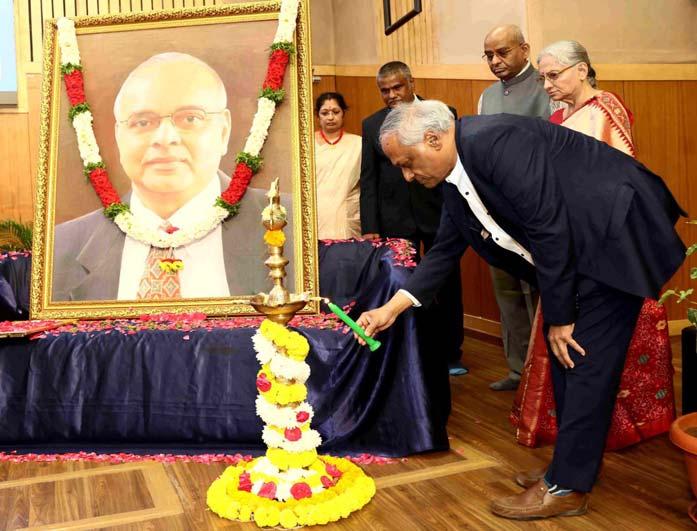
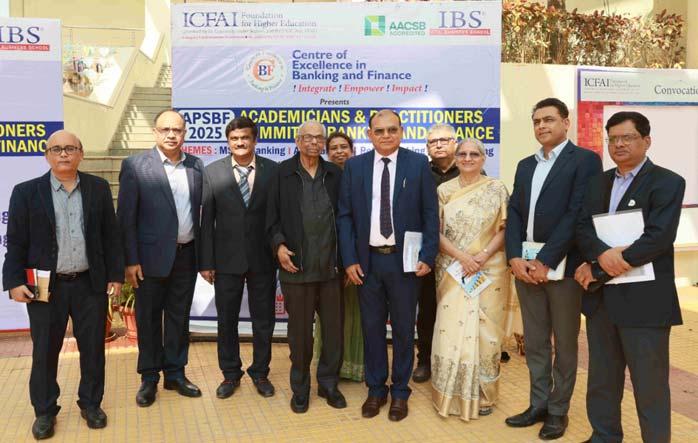



MANY WOULD LOVE TO AWARD NITA AMBANI, THE CHAIRPERSON OF RELIANCE FOUNDATION FOR HER HUMANITARIAN WORK, BUT SHE WOULDN’T ACCEPT IT FROM MANY. IT TAKES A REAL HUMANITARIAN TO AWARD HER, AND THAT IS WHY SHE ACCEPTED THE PRESTIGIOUS 2025 KISS HUMANITARIAN AWARD ON CAMPUS IN THE PRESENCE OF KIIT & KISS FOUNDER DR. ACHYUTA SAMANTA. BACKED BY NAAC A++ AND NBA ACCREDITATIONS, KIIT’S STELLAR ASCENT IS HIGHLIGHTED BY ITS IMPRESSIVE 27TH RANK IN 2025 NIRF RANKINGS, AND 9TH RANK AMONG INDIAN PRIVATE UNIVERSITIES IN THE QS RANKING. BACKED BY OVER 350 GLOBAL ACADEMIC PARTNERSHIPS AND CUTTING-EDGE INDUSTRIAL TIE-UPS, KIIT ENSURES STELLAR PLACEMENTS FOR ITS STUDENTS TOO. MOST UNIQUELY, KIIT AND ITS SISTER INSTITUTION, KISS, CHAMPION COMPLETELY FREE EDUCATION FOR TRIBAL YOUTH, UNDER DR. ACHYUTA SAMANTA’S PIONEERING VISION.

The arrival of Nita Ambani at the sprawling Bhubaneswar campus in March 2026 to receive the KISS Humanitarian Award was more than a ceremonial exchange; it was a meeting of two philanthropic giants. Addressing a sea of nearly 40,000 tribal students, she remarked that while she often receives accolades, accepting this particular honor from Dr. Achyuta Samanta felt like a homecoming of shared values.
The event, marked by traditional tribal performances, underscored KIIT’s unique position as an institution that commands respect from global leaders while remaining deeply rooted in the soil of social upliftment. This recognition is a testament to how KIIT and KISS have moved beyond traditional education to become a global model for sustainable development and inclusive growth.
This spirit of excellence is mirrored in the university’s rapid climb through national and international academic rankings. In the 2025 NIRF rankings, KIIT solidified its status as a premier Indian institution by securing the 27th rank overall, while the QS World University Rankings placed it 9th among all private universities in India.
These numbers are backed by rigorous standards, as evidenced by the institution’s NAAC A++ accreditation and the specialized NBA certifications for its technical programs. For students, these rankings translate into tangible quality, ensuring that a degree from KIIT carries weight whether in a local boardroom or a global research lab.
The university’s academic machinery is powered by a network of over 350 global partnerships that span continents from North America to East Asia.


These collaborations are not merely signatures on paper but active pipelines for semester exchanges, dual-degree programs, and joint research initiatives with institutions like the University of Cambridge and various IITs.
By integrating international perspectives into its curriculum, KIIT prepares its graduates for a borderless job market, ensuring they are as comfortable in a multinational tech hub as they are in a local startup ecosystem. On the placement front, the 2025-2026 cycle has seen unprecedented success despite a fluctuating global economy.
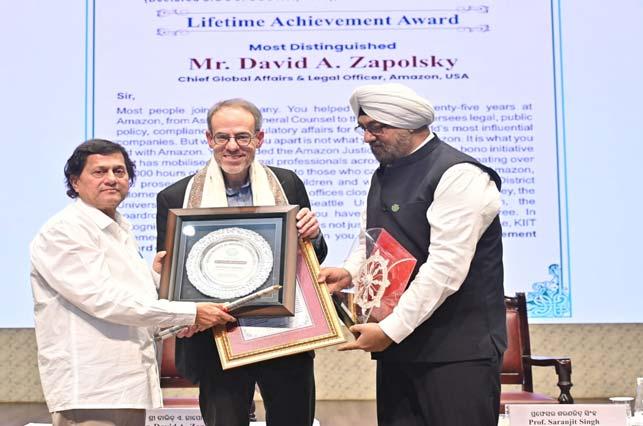

Leading the charge, the KIIT School of Technology recently reported a conversion rate exceeding 90 percent for the graduating batch, with tech titans like Microsoft and NVIDIA offering packages touching even Rs 50 LPA. The current 2026 placement season is already off to a flying start, with over 3,000 offers already on the table from 175 companies, including Dream Offers from firms like Cisco and PayPal.
This industrial synergy is further strengthened by on-campus centers of excellence established in collaboration with giants like SAP and IBM, providing students with hands-on training in artificial intelligence and data science.

Perhaps the most defining characteristic of the KIIT ecosystem is its symbiotic relationship with the Kalinga Institute of Social Sciences. Under Dr. Samanta’s pioneering vision, the surplus generated by the university is funneled into providing completely free, residential education to tens of thousands of indigenous children.
This self-sustaining model ensures that while one arm of the institution produces world-class engineers and lawyers, the other is methodically dismantling the barriers of poverty and illiteracy for the most marginalized communities. As the KIITEE 2026 entrance examinations begin this April, the university continues to prove that academic brilliance and social equity are not mutually exclusive, but are rather the two pillars upon which its legacy is built.

The landscape of Indian higher education, especially in humanities, underwent a notable shift in 2009 with the establishment of OP Jindal Global University (JGU) in Sonipat, Haryana. Founded as a non-profit, multidisciplinary, and research-oriented institution, JGU was born from the philanthropic vision of its Founding Chancellor, Naveen Jindal, in memory of his father. The lofty vision for an Oxford-on-Yamuna was executed with finesse by its Founding Vice-Chancellor, Professor (Dr.) C. Raj Kumar. JGU’s commitment to public service remains the university’s North Star, moving it away from the traditional profit-driven models of private education and toward a global outlook philosophy that prioritizes nation-building through intellectual excellence.

The university’s rapid ascent is largely credited to the unique partnership between Naveen Jindal and the Founding Vice-Chancellor, Professor (Dr.) C. Raj Kumar. A Rhodes Scholar with an academic pedigree spanning Oxford and Harvard, Dr. Kumar brought a cosmopolitan blueprint to the Indian landscape.
His leadership is defined by a relentless drive for academic freedom and a faculty-recruitment strategy that has brought scholars from over 50 countries to a single campus. This leadership has not only fostered a diverse student body representing 100 nations but has also secured JGU’s status as an “Institution of Eminence” (IoE)the highest recognition for academic excellence granted by the Government of India.
JGU’s reputation is anchored by the formidable Jindal Global Law School (JGLS), which has consistently rewritten the record books. In the most recent QS World

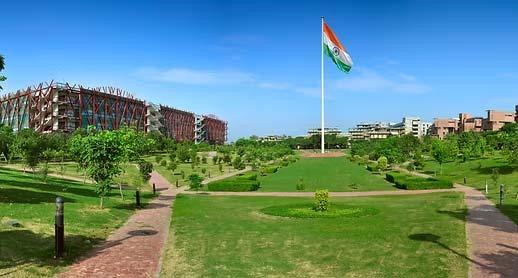
University Rankings by Subject 2025, JGLS maintained its position as the number one law school in India and South Asia for the sixth consecutive year, and it remains the only Indian law school ranked in the global Top 100.
This dominance extends into public governance and international relations, where JGU is now ranked as the leading private university in India for Politics and International Studies, largely driven by its specialized schools that shape global policy discourse and diplomacy.
A unique and often overlooked facet of JGU’s contribution is its leadership in executive training for the defense sector. Through the Jindal Institute of Leadership Development and Executive Education (JILDEE), the university has become a vital partner for the Indian Armed Forces.
The institute provides high-level

training to senior officers, bridging the gap between traditional military strategy and contemporary global geopolitics, cybersecurity, and strategic management. This synergy between academia and national security infrastructure highlights JGU’s broader mission of contributing to the state’s intellectual and strategic capacity.
The university’s standing in global rankings continues to reach new milestones in 2026. Beyond its QS accolades, JGU made a historic debut in the Times Higher Education (THE) World University Rankings by Subject 2026, where it secured the top spot in India for Law and a remarkable second place in India for Psychology.
Furthermore, the university had also achieved an overall 5-Star Excellent Rating in the QS Stars Ratings, an honor reserved for institutions demonstrating elite performance across teaching, employability, and
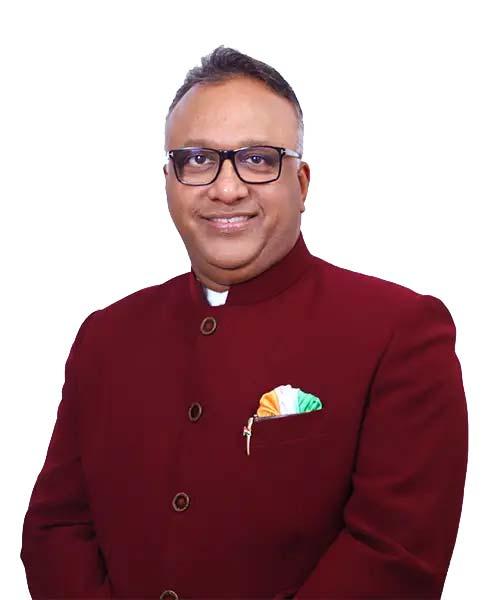
environmental impact. Nationally, it consistently features as a topranked institution in the NIRF, particularly within the Law and University categories, and holds an ‘A’ Grade accreditation from NAAC.
Academic and industrial partnerships form the connective tissue of JGU’s global ecosystem. With over 575 collaborations in 80 countries, the university offers an unprecedented range of dual-degree and short-term study abroad programs. Most recently, in late 2025, JGU announced a major expansion of its India-Japan ties, launching five new study programs with top Japanese institutions like the University of Tokyo and Chuo University.
These academic bridges are complemented by industrial tie-ups with global consulting giants and law firms, ensuring that the curriculum evolves at the speed of the market. This focus on industry alignment has translated into a stellar placement record, with graduates joining top-tier firms like Cyril Amarchand Mangaldas and multinational corporations like Google and Thomson Reuters.
Despite its global outlook, JGU remains deeply rooted in social impact and community engagement. Its legal aid clinics provide pro-bono services to local communities, while its sustainability initiatives have earned it a global 5-Star rating for Environmental Impact. The campus itself is a model of modern, sustainable living, designed to nurture socially responsible leaders.
By integrating rigorous research with grassroots level social work, JGU ensures that its students graduate not just as professionals, but as global citizens equipped to handle the complexities of the 21st century.
Imagine a world-class educational group handholding your child from kindergarten to funded research to startup incubation. That is Manav Rachna Educational Institutions (MREI) for you. While ‘Manav Rachna’ translates to human formation, its core philosophy of Vidyanatariksha means sky of knowledge. Spanning two universities - one deemed and one private - in its sprawling mega campus in Faridabad, MREI also includes 8 Manav Rachna International Schools in NCR and Punjab. Under the visionary leadership of its
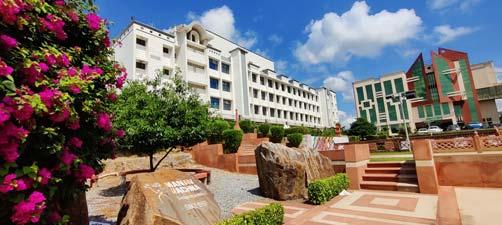

President Dr. Prashant Bhalla, the group has pioneered a holistic ecosystem, from the NAAC A++ accredited Manav Rachna International Institute Of Research And Studies (MRIIRS) - the first private sector university in Delhi-NCR to achieve this distinction - to the innovationcentric Manav Rachna University (MRU). Boasting top-tier NIRF rankings, including 96th nationally for University and 33rd for Dental studies, MREI has forged 600+ strategic tie-ups and a robust placement network involving 500+ corporates, apart from leadership in research and startup incubation.


BY WEAVING A VIBRANT TAPESTRY OF INTERNATIONAL CONCLAVES, GROUNDBREAKING MEDICAL RESEARCH, AND GLOBAL EXPANSION, JSS ACADEMY OF HIGHER EDUCATION AND RESEARCH HAS TRANSFORMED INTO A LIVING LABORATORY. JSS AHER FUNCTIONS SEAMLESSLY DUE TO A COHESIVE LEADERSHIP TEAM GUIDED BY THE SPIRITUAL BENEVOLENCE OF THE CHANCELLOR, HIS HOLINESS JAGADGURU SRI SHIVARATHRI DESHIKENDRA MAHASWAMIJI. WHILE DR. CG BETSURMATH, THE EXECUTIVE SECRETARY OF JSS MAHAVIDYAPEETHA, CONTINUES TO BE THE ADMINISTRATIVE BEDROCK, PRO CHANCELLOR DR. B SURESH CHARTS THE GLOBAL EXPANSION PLANS AS WELL AS THE FUTURISTIC OUTLOOK THAT DIFFERENTIATES THIS DEEMED UNIVERSITY, AND VICE-CHANCELLOR DR. H BASAVANA GOWDAPPA GUIDES THE ACADEMIC PULSE OF THE INSTITUTION. HERE IS WHY THE MYSURU-BASED INSTITUTION IS EMERGING AS AN ULTIMATE DESTINATION FOR NURTURING THE NEXT GENERATION OF HEALTH SCIENTISTS.


His Holiness Jagadguru Sri Shivarathri Deshikendra Mahaswamiji, Chancellor

In the rapidly evolving landscape of healthcare education, the difference between a good institution and a great one often lies in the distance between the classroom and the cutting edge. At JSS Academy of Higher Education and Research (JSS AHER), Mysuru, that distance has been effectively bridged. Walking through its campus in late 2025 and early 2026, one does not merely encounter students with textbooks; one encounters a dynamic ecosystem where Nobel-winning concepts are debated in real-time, where Artificial Intelligence is actively being decoded for neurochemistry, and where the Vice-President of India challenges graduates to define the nation’s future.
For the aspiring doctor, pharmacist, or researcher, the value proposition of JSS AHER has shifted from purely academic excellence to active industry immersion. It is no longer just about securing high ranksthough, with a 21st rank in the NIRF University category and a 56th global rank in THE Impact Rankings, the
institution is winning such benchmarks, too. The new allure of JSS AHER lies in its status as a “hands-on” campus. It is a place where a student might spend the morning learning about liver cancer therapeutics from the very scientists discovering them, and the afternoon attending a global bioimaging summit featuring the directors of CSIR-CFTRI.
This is a story of how a university, rooted in the spiritual wisdom of Mysuru, has aggressively pivoted to become a global node of innovation. By curating a calendar packed with high-level conferences, securing international campus approvals, and pioneering digital well-being clinics, JSS AHER is telling prospective students one thing: Don’t just learn history; come here and make it.
The most defining headline of late 2025 for JSS AHER was not local, but transcontinental. In a move that fundamentally alters the institution’s geographical footprint, JSS AHER received formal approval to establish the JSS School of Medicine in Vacoas, Mauritius.

This is not merely an administrative win; it is a strategic masterstroke that places JSS AHER on the map as an exporter of high-quality medical education. The approval from the Higher Education Commission of Mauritius to start an MBBS program marks the realization of a long-held vision. Admissions for the first batch happened in November 2025, with the curriculum designed to align with the National Medical Commission (NMC) of India.
The significance for a student in Mysuru is profound. It signals that they are part of a system with international mobility and global recognition. The JSS Medical College in Mysuru will serve as the academic backbone for this venture, meaning the expertise cultivated here is now the benchmark for the Indian Ocean region. This expansion was celebrated at a press meet at Suttur Mutt, where the leadership outlined a vision of serving the healthcare needs of Africa and Asia, effectively transforming JSS from a national leader to a global education hub.
While the success of JSS AHER is a symphony of many dedicated leaders, the conductor of this expanding global orchestra is undoubtedly its
Chancellor, His Holiness Jagadguru Sri Shivarathri Deshikendra Mahaswamiji. He is ably assisted in this daunting endeavour by Dr. CG Betsurmath, the Executive Secretary of JSS Mahavidyapeetha, and Pro Chancellor Dr. B Suresh, whose fingerprints are visible on every major strategic leap the university has taken during more than a decade.
Dr. Suresh has long been a towering figure in pharmaceutical sciences, but his role has evolved into that of a visionary statesman for higher education. It was Dr. Suresh who articulated the significance of the Mauritius expansion, framing it not just as a new college, but as the fulfillment of a mission to take quality education beyond Indian shores.
His leadership style is characterized by a relentless push for “nextgeneration” relevance. Whether it is signing a Memorandum of Understanding (MoU) with VIT Chennai to foster collaborative research in October 2025, or championing the integration of AI in healthcare, Dr. Suresh ensures that the university never rests on its laurels.
He has been the driving force behind the “Varuna Global Campus” - an ambitious 100-acre project designed to be a futuristic hub for digital health and biomedical engineering. Under his stewardship, the university has successfully balanced its spiritual roots with a highly aggressive, modern academic stance. Dr. Suresh’s insistence on international accreditations and industry-linked research ensures that a degree from JSS AHER carries weight in hospitals,



labs & boardrooms worldwide.
Why should a student choose JSS AHER over other top-tier universities? The answer lies in the sheer density of intellectual exchange that occurred in the last quarter of 2025. The campus has transformed into a perpetual convention of minds, offering students access to networks that usually take decades to build.
In November 2025, the Department of Pharmacology hosted the International Conference on Sustainable Brain Health. This wasn’t a standard lecture series; it was a deep dive into “AI in Neurochemistry.” Students witnessed the launch of a Centre of Excellence in Brain, Behaviour, and Cognitive Neurosciences, supported by global heavyweights like IUPHAR (USA). For a student, the opportunity to interact with experts from the University of Nebraska, Cambridge, and the NIH (USA) right on their own campus is invaluable. It bridges the gap between abstract theory and the frontier of what is possible in neuroscience.
Just a month prior, in October, JSS Medical College hosted the 2nd
International Conference on the Genetics and Epigenetics of Cancer. With a focused theme on AI-based diagnostics, this event addressed the frightening projection of cancer cases in India reaching 15.7 lakh. By bringing together molecular biologists and bioinformaticians, the university created a sandbox where students could see how machine learning is being used to predict treatment responses.
Furthermore, in December 2025, the National Meet on BioImaging was held under the aegis of the India Bioimaging Annual Meet. The announcement of a High-Resolution Cryo-EM installation by CSIR-CFTRI Director Dr. Giridhar Parvatam during the event was a game-changer for structural biology research in the region.
For a prospective student, this “Conference Campus” model means their education is not static. They are not just reading about scientific consensus; they are in the room where it is being formed.
The intellectual energy at JSS AHER is grounded in tangible, life-saving research. The university’s narrative is

one of “Science for Society,” and recent breakthroughs have reinforced this. In October 2025, a team led by Prof. Prasanna K. Santhekadur from the Department of Biochemistry made headlines for exploring the therapeutic potential of Sodium Butyrate against Hepatocellular Carcinoma (liver cancer). Published in the prestigious Biochemical and Biophysical Research Communications, this study is a classic example of JSS AHER’s research ethos: sophisticated yet accessible.
The research connects the dots between Nobel Prize-winning discoveries (RNA interference and telomerase) and a simple, short-chain fatty acid found in fiber-rich diets. For students, this signals a research environment that encourages innovative thinking - looking for accessible cures in the complex crosstalk of molecular machinery.
This culture of inquiry is supported by a robust infrastructure. The university continues to leverage its partnerships with Google and the Bangalore Bioinnovation Centre to drive AI-driven healthcare initiatives. The environment is one where a student’s thesis has the potential to become a peer-reviewed solution to a
public health crisis.
The JSS Hospital remains the beating heart of the university’s educational model. It is here that the technology discussed in conferences is applied to human healing. A significant milestone was achieved in late 2025 when the orthopaedics department successfully performed a Reverse Total Shoulder Arthroplasty (RTSA) using Virtual Implant Positioning (VIP) technology. Interestingly, this surgery was led by a team including the Vice-Chancellor, the Principal and the Director, and showcased the hospital’s capability to handle complex, high-tech surgeries that provide mobility to patients with severe shoulder dysfunction.
But clinical excellence at JSS is not limited to physical ailments. Responding to the “silent pandemic” of the digital age, the hospital launched a Special Clinic for Digital Wellbeing in July 2025. This forward-thinking initiative addresses behavioral addictions - gaming, mobile phone dependency, and cyberbullying. By integrating clinical psychology, pediatrics, and psychiatry, JSS AHER is acknowledging that modern health challenges require modern solutions.
Furthermore, in January 2026, the Department of Psychiatry launched a “Psychological First Aid” program in Kannada, ensuring that mental health
care is linguistically accessible to the local population.
The immense machinery of JSS AHER functions seamlessly due to a cohesive leadership team guided by the spiritual benevolence of the Chancellor, His Holiness Jagadguru Sri Shivarathri Deshikendra Mahaswamiji. His Holiness ensures that despite the influx of AI and robotics, the institution remains anchored in the values of compassion and service.
Dr. C.G. Betsurmath, the Executive Secretary of JSS Mahavidyapeetha, continues to be the administrative bedrock. His ability to manage the vast network of JSS institutions ensures that the university’s rapid growth is sustainable and structurally sound.

Vice-Chancellor Dr. H. Basavana Gowdappa remains the academic soul of the institution. His leadership is best characterized by resilience. In a retrospective reflection published recently, JSS AHER’s handling of the COVID-19 crisis was highlighted by the VC as a template for crisis management. JSS AHER transformed the unknown into a structured response, setting up Karnataka’s first private COVID testing lab and treating over 15,000 patients. Today, he brings that same spirit of innovation to the university’s academic governance, pushing for interdisciplinary learning and agility.
Supporting this dynamic structure is


Registrar Dr. B. Manjunatha, whose stewardship ensures that the university’s compliance, examinations, and day-to-day operations meet the rigorous standards of national and international ranking agencies.
JSS AHER recognizes that a health professional in 2026 needs more than just clinical skills; they need vitality and a vision for the nation. This was evident in November 2025, when the Department of Nutrition and Dietetics hosted the Sports Nutrition Innovation Exhibit. Titled “The Athlete’s Cycle,” this event wasn’t

just for textbooks - it was a 360degree exploration of fueling and recovery, spearheaded by postgraduate students. It highlights a campus culture that values fitness, nutrition, and the practical application of science.
The scale of the university’s ambition was on full display during the 16th Convocation in November 2025. The event was graced by the VicePresident of India, Shri CP Radhakrishnan. Addressing nearly 3,000 graduates, the Vice-President urged them to contribute to Viksit Bharat 2047, linking their personal success to the nation’s development.
He commended the university’s adoption of the National Education Policy and its focus on interdisciplinary learning. For the students receiving their degreesincluding 16 gold medalists - it was a reminder that they are graduating from an institution that is central to India’s growth story.
JSS Academy of Higher Education and Research has successfully navigated the transition from a traditional university to a modern, researchintensive conglomerate. The
foundational strengths remain the 21st NIRF ranking, the high standing of its Pharmacy colleges (4th in Ooty, 7th in Mysuru), and the premier status of its Dental and Medical colleges. The infrastructure, such as the KINEVO 900 robotic microscope, remains state-of-the-art.
However, the events of the last few months have added a new layer to this legacy. The expansion into Mauritius, the embrace of AI in neurochemistry and cancer research, the pioneering work in digital wellbeing, and the relentless calendar of high-profile scientific conclaves have created a unique value proposition.
For the student seeking a future in health sciences, JSS AHER offers a compelling promise: You will not just be a student of medicine or pharmacy; you will be an active participant in a global scientific dialogue. You will be trained by leaders like Dr. B Suresh and Dr. H. Basavana Gowdappa who are shaping the industry, and you will study on a campus that treats innovation as a daily routine. In the heart of Mysuru, JSS AHER is not only teaching the future of healthcare; it is actively participating in creating this future.
UNIVERSITIES PERFORMING WELL IN THE AI AGE SEASONAL MAGAZINE

IN THE LANDSCAPE OF PRIVATE HIGHER EDUCATION, FEW NAMES COMMAND AS MUCH RESPECT AND ASPIRATION AS THE VELLORE INSTITUTE OF TECHNOLOGY (VIT). FROM ITS HUMBLE BEGINNINGS IN 1984 AS AN ENGINEERING COLLEGE, VIT HAS TRANSFORMED INTO A MULTI-CAMPUS POWERHOUSE THAT CONSISTENTLY CHALLENGES THE DOMINANCE OF OLDER PUBLIC INSTITUTIONS. TODAY, IT STANDS AS A PREMIER GROUP OF DEEMED AND PRIVATE UNIVERSITIES, NOT JUST BY THE SHEER VOLUME OF ITS STUDENT BODY, BUT THROUGH ITS RELENTLESS PURSUIT OF GLOBAL STANDARDS, ITS PIONEERING FULLY FLEXIBLE CREDIT SYSTEM (FFCS), AND AN UNWAVERING FOCUS ON INDUSTRY-READY SKILLS. AS IT FORGES AHEAD, THE VIT GROUP OF UNIVERSITIES CONTINUES TO REDEFINE THE PARADIGM OF ACADEMIC EXCELLENCE, POSITIONING ITSELF AT THE VERY FOREFRONT OF THE ARTIFICIAL INTELLIGENCE REVOLUTION WHILE MAINTAINING A PLACEMENT RECORD THAT REMAINS THE ENVY OF THE NATION.
The story of VIT is inextricably linked to the vision of its Founder and Chancellor, Dr. G. Viswanathan. A former parliamentarian and a student leader whose life journey from a remote village to the corridors of globally renowned elite institutions, serves as a blueprint for the aspiring youth, Dr. GV - as he is affectionately knownremains the driving force behind the university’s mission. The Group now includes VIT Vellore (main campus), VIT Chennai, VIT-AP (Amaravati), and VIT Bhopal.
His leadership is supported by a dynamic executive team, including Vice Presidents Mr. Sankar Viswanathan, Dr. Sekar Viswanathan, and Mr. G. V. Selvam, each of whom brings a specialized focus to administration,
international relations, and campus development. Under the stewardship of Vice Chancellor Dr. V. S. Kanchana Bhaaskaran, a distinguished researcher with nearly four decades of experience in VLSI design and microprocessors, the university has successfully bridged the gap between traditional engineering and the demands of the fourth industrial revolution.
VIT’s unique positioning in India is validated by its consistent performance in the most prestigious ranking frameworks. In the National Institutional Ranking Framework (NIRF) 2025, VIT Vellore secured the 16th rank in Engineering and 21st overall, maintaining its status as one of the top private research
universities in the country.
On the global stage, the progress is even more remarkable; the QS World University Rankings 2026 placed VIT at 691st in the world and 156th in Asia, while the Times Higher Education (THE) 2026 rankings placed it within the 601-800 band globally. These accolades are not mere numbers; they reflect a rigorous commitment to citations, research output, and an international faculty ratio that is among the highest in the private sector.
The core strengths of VIT lie in its vast academic diversity and its ability to adapt curricula at the speed of technology. The university offers a sprawling array of programs through


its major schools, including the School of Computer Science and Engineering (SCOPE), the School of Electronics Engineering (SENSE), and the School of Mechanical Engineering (SMEC), alongside specialized centers for biotechnology, architecture, and business.
In recent years, the academic catalog has seen a significant shift toward emerging technologies. New-age courses such as the BTech in CSE with specializations in Artificial Intelligence and Machine Learning, Data Science, and AI & Robotics are now the most sought-after streams. The university has even integrated AI into its core quality assurance processes, as seen in the recent “Quality Week” workshop titled “The AI Renaissance: Redefining Quality in Education, Research & Innovation.”
In the National Institutional Ranking Framework (NIRF) 2025, VIT Vellore secured the 16th rank in Engineering and 21st overall, maintaining its status as one of the top private research universities in the country.
Research at VIT is not confined to the laboratory; it is an active, collaborative enterprise. The university has achieved significant milestones in IPR and technology transfer, with a staggering number of Scopus-indexed publications and patents. Recent initiatives have focused on the ethical responsibilities of AI-augmented learning and the development of Large Language Model (LLM) based systems.
This research-heavy environment is bolstered by faculty members who are not only teachers but also consultants for global tech firms. With a faculty strength that includes
SEASONAL MAGAZINE

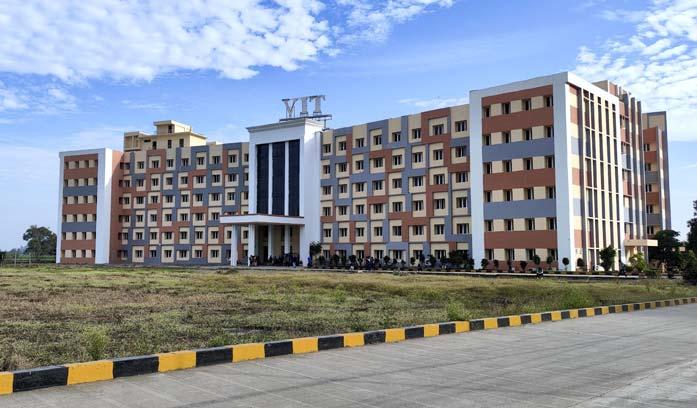
hundreds of Ph.D. holders, the mentorship provided to students ensures they are participants in the creation of knowledge, rather than just consumers of it.
Global outreach remains a cornerstone of the VIT experience. The university has established hundreds of international tie-ups, including a strategic partnership with the prestigious Zhengzhou University in China to advance academic exchange and joint research. Furthermore, the 2+2 BBA collaborative degree program with Binghamton University in the USA allows students to spend two years in India and two years abroad, graduating with a degree from a top-ranked American public university.
These partnerships are matched by deep-rooted industry connections. Companies like Microsoft, Amazon, and PayPal do not just recruit from VIT; they engage in curriculum design and provide high-value internships that often lead to “Super Dream” offers before students even graduate.
NEW-AGE COURSES SUCH AS THE BTECH IN CSE WITH SPECIALIZATIONS IN ARTIFICIAL INTELLIGENCE AND MACHINE LEARNING, DATA SCIENCE, AND
The placement season for the 2025 batch was nothing short of historic. VIT recorded a 99.2% placement rate for eligible candidates, with a total of 14,044 offers. The highest package reached a record-breaking 1 Crore per annum, a proof to the global competitiveness of its graduates. The recruitment drive saw participation from 868 companies, including marquee names like DE Shaw, Qualcomm, Adobe, and Nvidia.
Beyond the numbers, the “Marquee” and “Super Dream” categoriesdefined by packages exceeding 20 LPA and 10 LPA respectively - saw unprecedented growth, ensuring that VITians are among the highest-paid fresh graduates in India.
Admission to this ecosystem is governed by the VIT Engineering Entrance Examination (VITEEE), which continues to be one of the most competitive tests in the country. For the 2026-27 academic session, the VITEEE is scheduled to be held tentatively between April 28 and May 3, 2026.
The previous year’s admission performance saw nearly two lakh applicants vying for a few thousand seats, highlighting the brand’s immense pull. To maintain high standards, the university employs a proctored, computer-based testing
system across centers in India and abroad, followed by a transparent, rank-based online counseling process.
VIT’s calendar is perpetually filled with high-impact events that foster innovation. In the last six months alone, the university has hosted a series of major conferences, including “STAAAR 2025,” which focused on sustainable technologies in automation and robotics, and the “BioSummit 2025,” exploring the impact of AI in biotechnology industries.
The campuses are also hubs for student-led initiatives like the Health Hackathon 2026, held at VIT Bhopal in collaboration with John Hopkins, and the legendary cultural festival “Riviera,” which recently saw its 2026 edition draw thousands of participants from across the globe.
RECENT RESEARCH INITIATIVES HAVE FOCUSED ON THE ETHICAL RESPONSIBILITIES OF AIAUGMENTED LEARNING AND THE DEVELOPMENT OF LARGE LANGUAGE MODEL (LLM) BASED SYSTEMS.
From CEOs of startups in Silicon Valley to research scientists at NASA, the alumni presence is a living testimony to the university’s motto: “A place to learn, a chance to grow.” As VIT continues to expand its footprint with newer campuses and specialized AI initiatives, it remains a beacon of what private higher education in India can achieve when vision is matched with execution.
The alumni network, organized under the VIT Alumni Association (VITAA), provides a global safety net for graduates. With over 15 years of legacy in campuses like Chennai, the university recently celebrated its “Crystal Connexions 2025” alumni meet, which included lateral hiring drives specifically for experienced graduates.
Whether it is through the deployment of AI-assisted decision-making in its pedagogy or its commitment to social responsibility through scholarships for underprivileged rural students, VIT is more than just a university; it is an engine of social and economic mobility. As the 2026-27 academic year unfolds, the institution stands ready to meet the challenges of an automated world, ensuring its students are not just ready for the jobs of today, but are the architects of the world of tomorrow.



In the bustling tech corridor of North Bengaluru, Reva University has transitioned to a global powerhouse of 15,000+ learners. Under the visionary leadership of Chancellor Dr. P. Shyama Raju, the university recently launched its ‘Educate to Enterprise’ roadmap. This strategic pivot moves beyond traditional rote learning to instill an entrepreneurial mindset, preparing graduates to be job creators in an AI-driven global economy. The 2025–2026 academic year stands as proof to this growth. Reva maintained its credentials with a NAAC A+ grade and secured a prominent spot in the NIRF 2025 rankings (151–200 band for Universities). Internationally, it is gaining ground, appearing in the Times Higher Education (THE) World University Rankings 2026, and ranking 292nd in Southern Asia by QS. These accolades are mirrored by a robust placement season where 4,482 offers were made by 621 companies, including giants like Amazon and IBM, featuring a highest CTC of 40 LPA. Innovation is the Reva campus’ true pulse. Recent milestones include the launch of TerraDT (a digital twin for sustainable destinations) and the Reva Rise initiative for rural merit. With over 100 international tieups and a research ecosystem boasting 1,000+ filed patents, Reva is bridging the gap between classroom theory and industrial application. By fostering 82+ startups through its Reva Nest incubator, the university is actively rewriting the future of Indian higher education.

WHY WESTERN AUSTRALIA IS LIKE NO OTHER FOR INDIAN BUSINESSES WHY WESTERN AUSTRALIA IS LIKE NO OTHER FOR INDIAN BUSINESSES

Indian entrepreneurial spirit is constantly in search of second homes across the world. Western Australia, the largest state in Australia and home to its fourth most populous city, Perth, probably caught the attention of Indian entrepreneurial explorers and pioneers due to that feeling when just an ocean separates these two giant regions, even though the Chennai-Perth aerial distance is over 6000 kms. But in recent decades, the cultural and economic friendship and partnership between these two regions have grown beyond such geographic considerations. Organizations like the Australia India Business Council and the Invest & Trade WA Mission to India also provide valuable support and insights to Indian companies for successfully setting up shop in Western Australia. Here are 6 sectoral advantages that demonstrate why Western Australia is like no other opportunity for Indian businesses.
Itwill be an understatement to begin by saying that there are countless opportunities awaiting Indian businesses in Western Australia. Firstly, there is a mutual and perfect match between these two regions as on one side there is the vibrant and fast growing economy of India, and on the other side the resource-rich lands of Western Australia.
Secondly, the whole world is pivoting towards the Asia-Pacific region in search of growth, and this presents a geographical advantage for Indian businesses as they are among the best positioned to contribute to and benefit from the opportunities presented by this world’s second largest state, second only to Russia’s Sakha Republic, and at around 77% of the land area of India.
Thirdly, there is an often overlooked demographic synergy between India and Western Australia. Despite being similar sized in land areas, India’s population is nearly 500 times that of WA, which gives rise to unique high value trade opportunities for both regions. For instance, the number of dollar millionaires in India is around 800,000, which amounts to around 28% of the population of WA. This Australian state has been utilizing this Indian demographics to increase high value exports targeting Indian HNIs like premium seafood.
Last but not least, there is a strong cultural connection that goes beyond just economics, which has emerged into a socio-economic synergy between India and Western Australia. The vibrant Indian diaspora including immigrants, people of Indian origin, and students is one of the largest in Perth and other cities and is a testament to the strong ties that bind the two regions. This cultural connection eases the path for Indian businesses, providing a familiar environment for their ventures to thrive.
For Indian entrepreneurs, the time is ripe to explore the golden opportunities that WA offers,
by building bridges of commerce and friendship that span oceans and continents, especially by leveraging those sectors that are ripe for growth and the cultural ties that facilitate this international partnership. It will then be a narrative of mutual benefit and shared success, painting a picture of a future where the Indian entrepreneurial spirit finds a second home in the vastness of Western Australia.
Western Australia (WA), best known for its vast mineral resources, has traditionally been the bedrock of Australia’s export-driven economy. However, in recent years, the WA state government has been actively seeking to diversify its economic portfolio. This strategic shift has opened a plethora of opportunities for Indian businesses in sectors such as tourism, education, agriculture, and technology.
So, here are six established as well as emerging sectoral opportunities for Indian businesses in Western Australia, as well as examples of Indian businesses that are already pioneers in WA in these sectors.



India’s robust and thriving manufacturing sector, forever hungry for raw materials, can find a matching partner in WA’s mining industry. With the state’s abundant reserves of iron ore, lithium (more than half of world’s supply), and other critical minerals, Indian companies can secure a reliable supply chain that fuels their domestic growth while contributing to WA’s export earnings. Indian investments are now a key target of WA’s minerals reforms, with a focus on projects that support decarbonization and sustainable practices. As India commits to renewable energy on a massive scale, WA’s expertise in solar and wind power becomes increasingly valuable. Collaborations in green technology can help India meet its energy goals while promoting sustainable practices in WA, creating a win-win scenario for the environment and the economy. In the energy transition sector of Western Australia, some key Indian companies are already making significant strides. Examples include Reliance Industries which is exploring green hydrogen investments in Western Australia, which aligns with the state’s focus on renewable energy and sustainability, and The Green Billions Ltd which is investing in sustainable energy projects in Western Australia, including in green hydrogen.

The untapped potential of WA’s tourism sector is an attractive canvas for Indian hospitality firms. With its pristine beaches, unique wildlife, and the enigmatic Outback, WA is a destination waiting to be discovered by the Indian middle class, eager for new travel experiences. Already, the flow of Indian tourists to Western Australia has rebounded and is reaching almost to pre-Covid levels now. Several Indian companies have already established themselves in the

tourism, hospitality and food sectors in Western Australia, especially in Perth. For example, Ganesh Foods is one of Perth’s largest retailers and wholesalers, and offers a wide range of Indian groceries, fresh sweets, spices, clothes, cosmetics, herbal products etc, thus catering to the Indian diaspora, tourists and beyond. In the food sector, Twin Flame Bayswater is a restaurant in Perth, known for its authentic vegetarian Indian cuisine, offering a variety of dishes and a special unlimited thali.


The geographic vastness of the two regions of India and Western Australia, as well as their perceived nearness on both sides of the Indian ocean as well as the real distance of over 6000 kms give rise to numerous challenges as well as opportunities in various industries including shipping, logistics and supply chains. This has become all the more important for global companies with operations in both India and Western Australia, as they embrace India as a China Plus One strategy in ensuring seamless global supply chains for their manufacturing and transportation needs. Indian companies can become a vital part of the supply chain for renewable energy projects in WA, providing components, services, or technology. Western Australia has also been pushing for more flights, and more direct flights between the two regions for furthering the logistics for WA based exporters that deal in timesensitive goods like seafoods. One example of a well established Indian company operating in these sectors is Indian Ocean Shipping Agencies, operating in Western Australia since 1990, which specializes in providing logistical services for importers, exporters, ship owners, vessel operators, and charterers.



WA’s expansive farmlands and advanced agricultural technologies offer Indian agribusinesses a chance to invest in food security. Joint ventures in agri-tech can lead to innovations that benefit both countries’ food production capabilities, ensuring a stable food supply while tapping into the growing demand for quality produce in India. Wine production and honey production is another area of promise, as Western Australia is renowned for both its red and white wines as well its huge and high quality collection of honeys. WA based wine companies like Jacob’s Creek have been successfully exporting to India since the last several years. Beyond such well known brands, there are also relatively lesser known companies of Indian origin that have made a mark in the non-food agribusiness sector of Western Australia. For example, TFS Corporation Ltd is engaged in the management of Indian sandalwood plantations in the east Kimberley region of Western Australia.

The educational sector in WA presents another lucrative avenue. Indian students are the second-largest group of international students in Australia, and WA’s universities are keen to welcome more. This influx not only enriches the local academic environment but also opens doors for Indian educational institutions to establish campuses, fostering a vibrant exchange of knowledge and culture. Numerous Indian private universities and Australian universities have tied up with each other to facilitate the easy movement of students and twinning programs.




Western Australia’s push towards becoming a global hub for innovation aligns perfectly with India’s ongoing digital revolution. Indian tech firms can leverage WA’s innovationfriendly policies to set up research and development centers, tapping into the state’s skilled workforce and fostering technological advancements. Western Australia has various organizations, infrastructural facilities and programs, which Indian startups can leverage to set shop successfully in WA for access to a global audience. These include the India Australia Rapid Innovation and Startup Expansion (RISE) Accelerator program, Invest and Trade WA Mission to India, university level partnerships, WA government grants and funding to startups & SMEs, networking events, innovation hubs including WA Data Science and Innovation Hub and Innovation Central Perth, and extensive facilities like Spacecubed which requires a special mention of its own.

Companies and investors looking to set shop in Western Australia, will be most interested to know about the unique services of Spacecubed, one of the first startup accelerators and co-working space providers in the state. Over the eleven years of its existence, Spacecubed has helped 6638 business entities that include entrepreneurs, SMEs & corporates. The socioeconomic and environmental impact that Spacecubed has delivered to Western Australia has been estimated at $4 billion. Also, a startup investor in its own capacity, this accelerator had invested $1.5 million in WA based startups, which went on to generate $12 million in follow-on investments from other institutional investors. Spacecubed has five facilities now, which are Riff, Flux, Fern & CORE Innovation Hub, all at Perth, and Western Sydney Startup Hub at Paramatta, in Greater Western Sydney area of NSW. Spacecubed’s Perth Landing Pad is headed by its General Manager Chandra Sundareswaran, and his own experience as a founder and chief executive of startups is helping the Perth Landing Pad understand the needs of early and growth stage startups and SMEs in a better way. The Perth Landing Pad is also actively supported by the Department of Jobs, Tourism, Science & Innovation, of the Government of Western Australia. The Spacecubed facilities differentiate themselves as their various services are suitable for all kinds of companies ranging from startups to Fortune 500 firms.


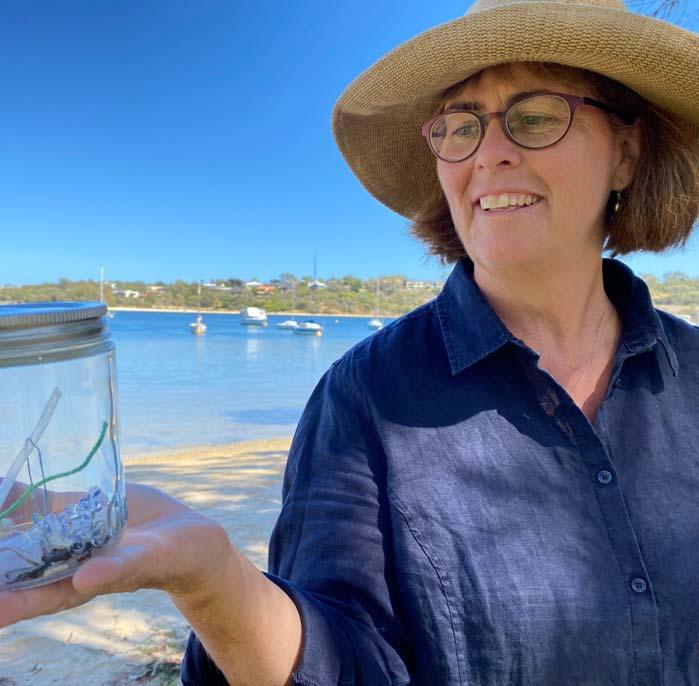

While the opportunities are abundant, Indian businesses must navigate the challenges of setting up shop in a foreign land. Understanding local regulations, building networks, and adapting to cultural nuances are essential steps in this journey. Western Australia is fostering collaboration with Indian innovation ecosystems, as well as Indian entrepreneurs particularly in areas like digital economy, health and medical life sciences, space technology, energy transition, agriculture and agri-food etc. The Invest & Trade WA Mission to India can help Indian businesses discover opportunities for Joint Ventures and Partnerships, Investment in Local Projects, Research and Development Collaboration, Government and Industry Body Engagement, Technology Transfer, Skill Sharing and Training, and any other critical need an Indian business might face in Western Australia. With the promise of such allround support, it is only natural that discerning Indian businesses are already making a beeline for Western Australia.

Seasonal Magazine in conversation with Nashid Chowdhury, Trade & Investment Commissioner, Govt of Western Australia
Western Australia offers attractive, unique and exciting investment and trade opportunities, with a safe and secure environment in which to do business, along with world - leading innovation across a range of thriving industries. The Western Australia Government’s network of global investment and trade offices provide support and information for investors and buyers worldwide. In July 2022, the government announced the establishment of a new investment and trade office in Chennai to strengthen business and people-to-people ties. The Chennai office provides a vital trade link between the State and South India, supporting Western Australian businesses pursuing opportunities within the region. The set up and operations of the Chennai office is being overseen by Nashid Chowdhury, Investment and Trade Commissioner for the India-Gulf region. In this exclusive interview with Seasonal Magazine, Nashid talks about the key sectors where Western Australia has exhibited unique advantages & provided opportunities for commercialisation.
Seasonal Magazine (SM)
Seasonal Magazine (SM) : Western Australia is endowed with an abundance of critical minerals. The state has some of the most significant mineral deposits in the world and is a leading supplier of lithium, nickel, cobalt, manganese and rare earths. How does mining play a critical role in Western Australia’s economy?
Nashid Chowdhury (NC)
Nashid Chowdhury (NC)
Nashid Chowdhury (NC)
Nashid Chowdhury (NC) (NC) : Mining has been the backbone of our economy. Western Australia is known as the number one state when it comes to

mining & investment in mining. The reason is because we are home to 50 different critical minerals and rare earths, as well as 53% of the world’s lithium reserves. This creates a massive opportunity. Secondly, the state is geographically large, the largest state in Australia that is about 1/3 rd of the area. We also already export a lot of iron ore across the globe. We also have a huge abundance of LNG and that’s been a really big part of what has grown our economy as well. All of these
critical minerals are essential for developing future batteries used in EVs and other technologies. We have the opportunity to not only provide the raw materials for this purpose, but also to build the technology behind it. We are also home to the Future Battery Industries CRC, a federally funded initiative. And through that we are seeing a huge growth of different technologies that’s currently being found and being scaled as well.
SM SM SM: How has Western Australia

positioned itself as a leading tourism destination, especially for Indians?
NC NC NC NC NC: India has been one of Western Australia’s fastest recovering markets. In terms of visitor numbers, it is now back to 94% of pre-COVID levels. In 2023, for instance, WA welcomed 90,000 visitors from India, including those for international education. It continues to be a high priority market. The key focus is to tap into the visiting friends and relatives market and encourage travellers from India to stay longer and explore more of the state. India is the third largest migrant community in WA and that’s growing quite exponentially. If we combine those who are Indian born/Indian ancestry, there’s about 160,000 to 170,000 people who are linked with the Indian diaspora community. Opening up a direct flight connection between Perth and an Indian city has been one of the key milestones for our government. It would not only unlock tourism opportunities but opportunities for our international education, trade and investment as well.
SM: SM: SM: Coming to the education sector, according to a report by StudyPerth Australia, Indians accounted for 18% of the international students who enrolled in a program at a Western Australian university between 2020 and 2021. How do you see the higher education opportunities taking off in the future?
NC: NC: NC: NC: NC: If you look at the flow effect, since international students are longer term visitors who are in the market, they have the potential to become future ambassadors for WA or who may choose to stay in WA. The Premier’s University Scholarship Program, which is valued at $50,000, was given out last year, and I think there were 3 successful applicants from India. Further, the University of Western Australia, for
instance, has launched a Global MBA program in partnership with the Indian Institute of Management, Kozhikode, one of the prestigious business schools in the country. There are other collaborations between Western Australian & Indian universities, particularly in skilling and education in the field of mining and geology. We have been able to partner with the Odisha government to get five funded scholars from the tribal communities to come out to WA and study. I think there’s a lot of merit in those relationships because it’s intergenerational change. It’s incredibly important to have those kinds of relationships and grow a global mining talent pipeline because in WA we have a number of skills demands. Since mining is our key industry, we are in need of geologists, surveyors, engineers etc.
SM: SM: SM: SM: SM: Western Australia has several statefunded Innovation Hubs that offer collaborative facilities, shared spaces and use of technologies to bring together innovators and entrepreneurs across the state and beyond. Could you share some examples and what is the larger purpose of these hubs?
NC: The purpose of these hubs is to almost act like a connector which are anchored or aligned to a particular university. But they’re also then working very closely with industry to understand what are the needs of that industry, the entire innovation cycle and challenges, opportunities, career growth options among others. A good example of this is the CyberWest, the cybersecurity Innovation Hub, that aims to improve WA’s cybersecurity posture,
create employment in the cybersecurity sector, and diversify the economy. I was heavily involved in the CyberWest security hub, which started out with around 5 to 6 careers. By the time I moved on to setting up other innovation hubs, there were about 40 different careers in cybersecurity.
Other initiatives, like the Perth Landing Pad, are designed to cater to international startups at different points in their business journey. Government of Western Australia has also supported the funding of the Perth landing pad, which is an initiative for entrepreneurs, especially connecting into Indian startup ecosystem, to be able to scale ups, particularly who are looking at a new market. So we are able to connect them into the Perth landing pad and this becomes an opportunity for them to connect into WA ecosystem.
Companies from across the globe, are invited to apply for the program, including established companies, SMEs, and scaleups. Those who will get the most out of this program are high growth companies looking to expand into APAC, ease of doing business and SMEs wanting to sell in the Australian market and connecting them to talent opportunities.
SM: SM: Western Australia has been endowed with some natural advantages in terms of geography & environmental conditions that are conducive for space tracking, communications & launch activities. What are the initiatives being mooted by the WA government to harness these natural advantages in the space sector?
NC: NC: NC: NC: NC: That’s right. We have great capabilities in remote operations. We are also one of the key radio silent zones in in the world. Space companies or startup doing launches benefit from the
economic zones that are part of the south of WA. Australia has played a pioneering role in supporting space launch activities for India through its Australian Space Agency. India’s recent Chandrayaan-3 lunar mission was a roaring success. A little known part, played by WA, was in tracking the lander on its descent.
We also have a platform called WA investments, which has funded a green spaceport which is identified as a project where they’re looking at partners and investors looking to establish a space super corridor.
SM: SM: SM: One of the highlights of the interim free trade agreement – ECTA –was the removal of the 30% import tariff on live Australian lobster into India and other produce. What are some of the opportunities for WA businesses in this space?
NC: NC: NC: NC: NC: Although the India market for WA’s seafood produce is relatively small, the proportion of individuals with a high net worth is quite high in India, especially in comparison with the West Australian population. With live lobsters, there is a tariff reduction. So far we’ve had about somewhere between 500 to 600 kilos come into market, but they are mainly frozen. So again, this is the reason why we probably need more direct flights to be able to help us in that time span to get live lobsters and, on the other side, have the supply chain to be able to support it. There is a big opportunity for us to leverage on but there are already lobsters coming to market and they have a successful distributorship.
When it comes to wine, India imports more wine from Australia than any other country. The biggest player is well-known Barossa Valley company Jacobs Creek, which made the move
into the Indian market 21 years ago. Wine currently accounts for just 1% of alcohol sales in India, with spirits and beer dominating the market. With its huge population and preference for red wine, we are hoping that major Australian producers can help fill that gap. Being able to work with the state governments in India that we have a relationship with and grow that exponentially would be something that we’d like to see over the coming years.
Finally, we have had about 16,000 avocados coming to market via the first sea freight. We’ve also had an air freight come in. It’s been incredibly popular. Western Australia makes up I think 40% of Australia’s market share for avocados, so it’s a great opportunity for us to benefit through the interim free trade agreement.
SM: SM: SM: Lastly, could you talk about the recent health mission from Western Australia to India and what were some of the initiatives planned?
NC: NC: NC: As part of the health mission, Health Minister Amber-Jade Sandersonis was here on a 10-day mission to recruit Indian healthcare staff. The visit to Chennai, Hyderabad, Nashik and Trivandrum to meet healthcare representatives will help to bolster the capacity of additional 5000 healthcare workers in WA over the next decade. The aim is to build up these connections between our hospital service providers, education provider, service providers, key government agencies, major hospital groups on better connectivity & mobility programs. We are constantly looking at identifying the areas where we can have more exchange but also where there are areas of skill demands in the health skilling space for talent growth and pipeline with the full free trade agreement.
HOW CAN YOU CHANGE YOUR LIFE FOR THE BETTER TODAY? LEARN NOT JUST TO APPRECIATE HAPPINESS – BUT TO ANTICIPATE IT.
Have you heard about vorfreude? I recently came across this lovely word, which my German-speaking friend translated as “the anticipation of joy”. It struck me as such a hopeful concept – surely we could all do more vorfreude. So what exactly is anticipatory joy, how do we cultivate it and will it make us happier?
“The idea is to find joy in the lead-up to an event,” says Dr Sophie Mort, a clinical psychologist and mental health expert at the meditation and mindfulness app Headspace. “For example, we often feel joy and excitement when planning a trip, thinking about going on a date or anticipating a special meal.” It’s easy

to look forward to holidays and special occasions, but a joy-filled life is also about everyday occurrences. Rory Platt, a writer at the personal development company The School of Life, says: “The trick lies in filling our calendar with lots of little moments to look forward to – like tiny baubles that, when seen from a distance, combine to make a more glittering future.”
But vorfreude is not about wishing your life away and thinking you will be happy in an imagined future. “Looking forward to something can trigger joy in the present moment,” says Karen Neil, a health coach and the founder of Mindful Medicine. This can boost your mood, reduce your stress levels and

help to avoid burnout. A 2017 study published in Frontiers of Psychology found that anticipating positive events activated the brain’s medial prefrontal cortex, which is associated with a higher level of wellbeing.
Doesn’t getting your hopes up risk disappointment? Perhaps it’s safer to keep expectations low. Emma Mills, a mindfulness expert and the author of Inhale Exhale Repeat, begs to differ. “There is a saying: ‘If you worry, you suffer twice.’ Anticipatory joy is the opposite of that.” Even if an anticipated event turns out to be a letdown, vorfreude helps people bounce back. “Optimists have improved coping abilities when dealing with unplanned distress and they tend to recover far faster,” says Tania Taylor, a psychotherapist and vorfreude advocate.
If you are going through a tough time and feel as though you have nothing to look forward to, don’t beat yourself up. “It’s important that positive psychology doesn’t get confused with toxic positivity,” says Taylor. “When I was going through cancer treatment, I spent most days binge watching television. It’s OK to sit tight when everything feels overwhelming without feeling guilt that you are not looking for joy.” If feelings of hopelessness persist, she stresses, it’s important to seek help from a GP, a therapist or charities.
If, however, you are ready for vorfreude, it shouldn’t feel like a chore. “Mostly, it will involve exploring what you already have in your life that you look forward to,” says Taylor. Willem Kuyken, a professor of mindfulness at the University of Oxford, has researched the benefits of cultivating joy. In his book Mindfulness for Life, he writes: “It takes only a small step out of habit and into awareness to enjoy the people we love around us, to savour food or to dance to music in our kitchen while cooking. These moments are available to us all the time.”
With that in mind, here are 30 simple ways to get more vorfreude in your life.
If the concept of vorfreude is completely alien to you, take baby steps. “Try to notice one joyful thing each day,” says Neil. You could frame this as a photo challenge: spend a little time every day looking for one beautiful flower, interesting sight or cute dog to photograph.
“Plan a morning affirmation or positive statement and look forward to starting your day with it in your mind,” says Taylor. “Some people create a screensaver with it on their phone so it’s the first thing they see.” An example she gives is: “Today I will look for good moments and remember them.” Mort suggests: “May I be open to joy and have many moments of joy ahead.”
“A very small thing that I get vorfreude from is anticipating my first coffee of the day,” says Mort. “When I wake up, it’s the first thing I think about: how it will smell, how it will taste and how I will feel while drinking it. It’s a ritual that I love and I really allow myself to focus on it.”
“At the end of my evening meditation classes, I suggest people consider three things they are looking forward to tomorrow,” says Mills. “It could be their morning walk in the park or listening to a podcast on their commute; maybe sitting down to enjoy their packed lunch at work or looking forward to having a bath at the end of the day.”
“Perhaps you have a hobby such as gardening, or a pet to spend time with,” says Karen Atkinson, the CEO of MindfulnessUK. “Coming out of
autopilot and consciously looking forward to these moments is an achievable way for anyone to experience vorfreude.”
“To change your mindset to become more joyful, you must first become familiar with your own negative thought patterns,” says Atkinson. These “mind traps” include catastrophising and discounting the positive. “For example, instead of thinking: ‘I’m only going away for one night – it’s hardly a holiday,’ say to yourself: ‘What a treat – a night away, going out to dinner and meeting friends. How lovely.’” The “shoulds” are another trap. “You may think: ‘I should have a more thriving social life, like everyone else.’ Instead, recognise that Fomo [fear of missing out] can add stress. Remember how fortunate you are to go out and have fun once in a while – really cherish the opportunity.”
“There is a small moment just before you eat your pastry, or the movie begins, or as you get in your bubble bath,” says Mills. “In that moment, the pastry hasn’t been eaten yet – it’s a joy about to be enjoyed. Savour the moment and think how lucky you are.”
She likes a Kurt Vonnegut quote: “And I urge you to please notice when you are happy, and exclaim or murmur or think at some point: ‘If this isn’t nice, I don’t know what is.’”
“Schedule brief excursions and small indulgences,” says Platt. “Perhaps aim to finish work an hour early on Fridays to get dinner with a friend, visit an art gallery or take yourself on a solo cinema trip.” Don’t feel guilty about it. The team at The Mindfulness Project says: “Giving yourself permission to look forward to these pleasures can prepare you to enjoy them.”

One of the exercises in I Am Here Now, a book by The Mindfulness Project, is getting into the habit of writing down plans. The authors suggest rating your anticipation levels, but even the simple act of putting pen to paper can make plans feel more real and increase excitement.
“Joy is individual,” says Neil. “There are common themes – we can all appreciate a happy child playing – but it’s about finding what brings you joy.” She advises people to keep a joy journal, noting down what has made you happy that day, week or month. That way, you can plan more of it in the future.
“I’ll plan 10 minutes of gentle stretching or book an activity session such as a yoga, pilates or a sound bath class,” says Taylor. If that sounds more like punishment than pleasure, remember exercise is individual, too –so find something you enjoy.
“Creating a meal plan for the week means you can look forward to what you are going to eat,” says Taylor. She suggests using a slow cooker if you are pushed for time: “This week, I’m looking forward to making rice pudding in mine.”
Kareen Griffiths, a mindful change consultant, likes to plan a big night out. “I relish the moments in the buildup: putting on my outfit, the train journey, the feeling of excitement,” she says. Taylor gets just as much vorfreude out of arranging for a friend to come over to watch a film. The important thing is making time to meet up with someone you care about.
“The other day, I saw a social media post about a cheap mini-break to Rome. It had me getting excited about a variety of really affordable getaways – even though my passport has expired,” says Taylor. “I must get around to renewing it, but it doesn’t stop me from getting enjoyment out of the anticipation of what might be.”
“Some research shows that planning and anticipating a holiday can make you happier than the holiday itself,” says Mort. “This switched me from being a spontaneous ‘Oh, I’ll leave it till the last minute and book just before I go away’ person to being someone who takes time to mull over where I want to go, why I want to go there and how it might be when I get there.”
(Credit: Rachel Dixon for The Guardian)

MURUKESAN FIXED HIS EYES ON THE WHITE PAINT PEELING OFF THE DAMP WALLS OF HIS RAISED HOME AND RECOUNTED THE MOST RECENT FLOODS.

The floods are occurring more frequently and lasting longer," he said. The last flood was chest-height for his young grandson. "Every flood brings waters this high, we just deal with it."
Sea level rise and severe tidal floods have forced many families in Murukesan's neighborhood to relocate to higher grounds over the years. But the retired fisherman has almost singlehandedly been buffering the impacts of the rising waters on his home and in his community.
Known locally as "Mangrove Man,"
Murukesan has turned to planting the trees along the shores of Vypin and the surrounding areas in the Kochi region of Kerala state to counter the impacts of rising waters on his home.
Tidal flooding occurs when sea level rise combines with local factors to push water levels above the normal levels. Mangroves can provide natural coastal defenses against sea level rise, tides and storm surges, but over the course of his life forest cover in the state has dwindled.
Murukesan said he grew up surrounded
by beautiful, abundant mangroves that separated islands from the sea. Now, only fragmented patches of mangroves can be seen in Kochi, the state's financial capital.
"They protected our houses against floods, sea erosion, and storms, used to be an inseparable part of our life, our ecosystem," he said. "Only these can save us."
Murukesan said he has planted over 100,000 mangroves. He plants saplings on alternate days and does most of the work himself. Some help comes in the form of saplings from the M S Swaminathan Research Foundation, a non-government organization based in Chennai, India.
His efforts come up against a strong trend in the opposite direction.
Ernakulam district, which includes Kochi, has lost nearly 42% of its mangrove ecosystems, including major decreases in the southern Puthuvypeen area in Vypin, according to a study released last year by the Indian Space Research Organization and the Kerala University of Fisheries and Ocean Studies.
Mangrove cover in the state has reduced from 700 square kilometers (435 square miles) to just 24 square kilometers (15 square miles) since 1975, according to the Kerala Forest department.
"The construction of coastal roads and highways has severely damaged mangrove ecosystems in the state," said K K Ramachandran, former member secretary of the Kerala Coastal Zone Management Authority, a government body mandated to protect the coastal environment. "There should be an incentive for people who are making efforts to protect them."
Murukesan's dedication to the cause has won him praise, awards and the audience of senior politicians but not incentives beyond the immediate benefits to his home.
He said the mangroves he planted in and around the area in 2014 have grown into a dense thicket and are helping
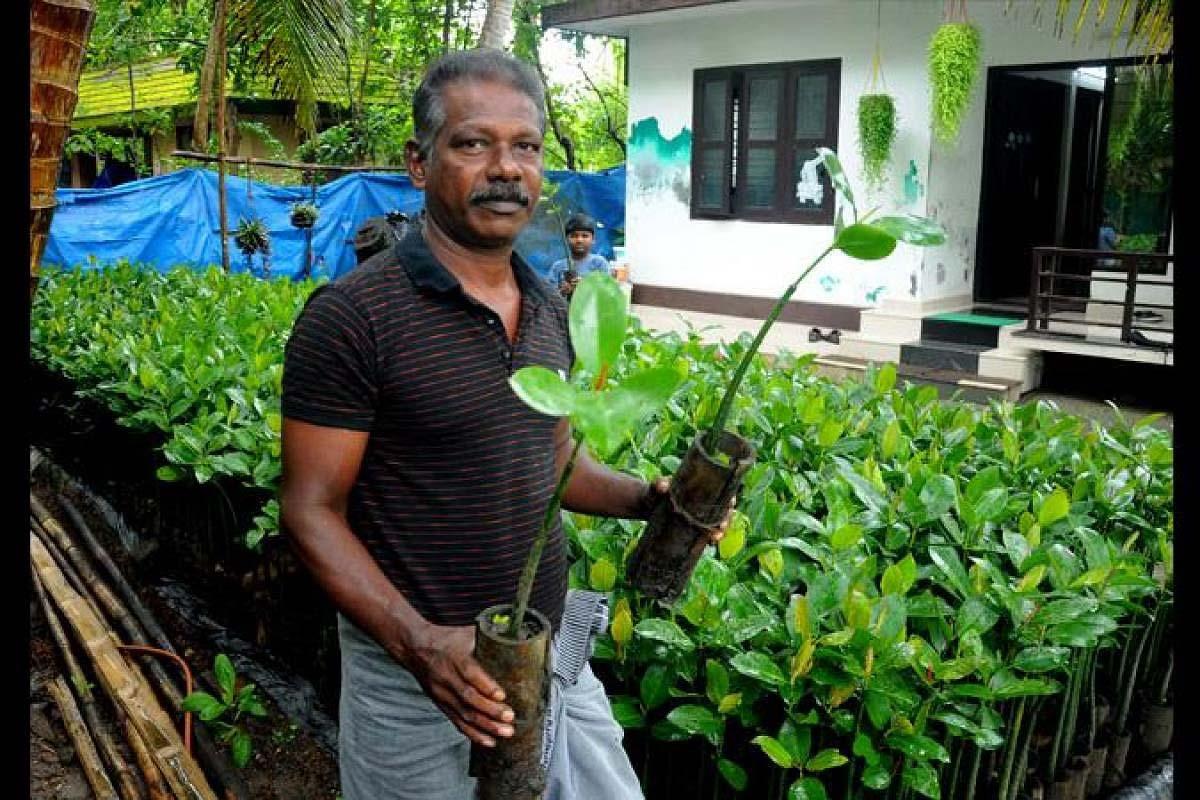
reduce the intensity of tidal flooding, but he's nevertheless continuing his efforts.
Despite the thousands of new mangrove trees, other factors like climate change mean tidal floods have become more frequent and severe, sometimes keeping children from going to school and people from getting to work. It's all mentally exhausting, Murukesan and his wife, Geetha, said.
"I have to travel a lot to collect seeds. My wife helps me in the nursery as much as she can. I am tired but I cannot stop," he said.
Geetha said they do the tough work "for our children," preserving the forest for decades to come.
"It keeps us going," she said.
Vypin is at high-risk for tidal flooding, said Abhilash S, director of the Advanced Centre for Atmospheric Radar Research at the Cochin University of Science and Technology.
"The sea level has risen and has damaged
freshwater supplies. Sea erosion and spring tides have worsened. Coastal flooding is a common occurrence now," he said. "The carrying capacity of the backwaters has reduced due to sediment deposition and encroachment, and the rainwater enters residential areas during the monsoon season."
Backwaters in the state of Kerala are networks of canals, lagoons and lakes parallel to coastal areas, unique ecosystems that help provide a buffer to rising sea levels.
According to the World Meteorological Organization, global mean sea level rose by 4.5 millimeters per year between 2013 and 2022. It's a major threat for countries like India, China, the Netherlands and Bangladesh, which comprise large coastal populations.
NASA projections show that Kochi might experience a sea level rise of 0.22 meters (8.7 inches) by 2050, and over half a meter (nearly 20 inches) by 2100 in a middle-of-the-road climate warming scenario.
"Many families have left," Murukesan said.
Fishing families living within 50 meters (55 yards) of the shore get a financial assistance of 10 lakh rupees ($12,000) through a rehabilitation scheme run by the Kerala government. Only few of those not covered under it have means to relocate to safer places.
Some fishing families shift to government shelters in the monsoon season and return after it ends. A few have built stilt houses that stand on columns to fight tidal floods.
Murukesan knows the sea is rising, but it's the backwaters that make him more anxious. The backwaters have become shallow due to the silt deposited by heavy floods. During heavy rain events, the water inundates the island.
"We are caught between the sea and the backwaters. They are likely to swallow the island in some years, but I am not going anywhere," he said. "I was born here, and I will die here."
(Credt: VOA / AP)


Bengaluru-based real estate developer Puravankara Limited has had several firsts to its credit since its inception in 1975. Starting with their first-ever multi-storey project in Bengaluru, Founder and Chairman Ravi Puravankara led the group to become the first developer to initiate theme-based projects. Puravankara then went on to become the first developer to secure Foreign Direct Investment (FDI) and the first to launch an affordable housing brand, Provident Housing. Then came the tumultuous years for the realty sector in the country, starting from the 2009 global financial crisis. Along with its peers, Puravankara, too, witnessed a slowdown in growth. But all through these years, brand Purva’s focus on quality and calibrated expansion remained under the leadership of Chairman Ravi and Managing Director Ashish Puravankara. The results of all this hard work during the past several years has been showing up in the latest numbers from Puravankara Ltd., and its majestic presence in over 80 projects across 9 cities.

here were several positive indicators in Puravankara Ltd.’s latest operational update for Q4 and FY’23, which was released recently. The biggest highlight being that Puravankara achieved its highest ever annual and quarterly sales since inception, with Q4 sales coming in at Rs 1,007 crores, and FY’23 sales recording a high of Rs 3,107 crores.
In percentage terms also, the sales growth was robust, indicating that Puravankara is shifting to a higher gear. At the same time, quarterly sales in Q4 rose by over 21% compared with the corresponding quarter of last fiscal and annual sales jumped by over 29% compared with the previous fiscal.
Quarterly sales growth was from Rs. 831 crore during Q4 FY’ 22 to Rs 1,007 crore this Q4 FY’ 23, while annual sales growth was from Rs. 2,407 crore recorded during FY’ 22 to Rs. 3,107 crore achieved in FY’ 23.
Q4 FY’ 23 volumes rose to 1.21 million sq ft from 1.19 million sq ft in the previous Q4 FY’22. FY’ 23 volumes rose to 4 million sq ft from 3.52 msf last fiscal.
The next highlight was the significant growth in realisation per square feet. Puravankara posted an over 19% rise in realisations in Q4 at Rs 8,321/sq ft as against Rs 6,981/sq ft during the same quarter last year. And on an annual basis, average realisation increased by nearly 14% to reach Rs 7,768 / sq ft from Rs 6,838/sq ft during the end of the previous fiscal. The higher spike in realisation in Q4 signals that brand Purva is increasingly in demand in its territories.
Yet another positive trend from Puravankara in the recent update is an impressive increase in customer collections from its real estate business. Collections increased to Rs. 2,258 Crore in FY’ 23 in comparison to the customer collections of Rs. 1,440 Crore in FY '22, which is a stunning rise of 57%.
SEASONAL MAGAZINE

RAVI PURAVANKARA Founder & Chairman
Puravankara Ltd is professionally led by a strong leadership team comprising of Chairman Ravi Puravankara, Managing Director Ashish Puravankara, Vice Chairman Nani R Choksey, Executive Director of Provident Housing Amanda Joy Puravankara, and Executive Director and Chief Executive Officer of Puravankara Ltd, Abhishek Kapoor.
Managing Director Ashish Puravankara, indicated that Puravankara Ltd is expecting the pre-sales growth momentum to continue, driven by a healthy pipeline of new launches amounting to 14 million sq ft in the coming quarters.
While both the branded real estate sector and the company are enjoying strong tailwinds by way of the structural resurgence in demand as the pandemicrelated slowdown gets corrected rapidly, there is also a favourable lull in the headwinds affecting the sector, as the RBI has recently paused the hikes in the repo rate. Puravankara has indicated its view that the unchanged repo rates will further support the existing growth momentum.
Close on heels of the operational update announcement, investors were quick to cheer the listed Puravankara stock, taking it up by nearly 4% on a single day. The stock, which had suffered significant correction along with the rest of the realty sector and the market in recent months, has been recovering during the past several days in anticipation of good numbers, which has now proven more than true. The stock also enjoys an exceptional dividend yield. In the quarter ending June 2022, Puravankara Ltd has declared a dividend of Rs 5 - translating to a dividend yield of 6.13%.
Driving Puravankara’s growth in FY’ 23 was its launch of nine new projects across Bengaluru, Chennai & Coimbatore. Among these, seven launches were in its home turf of Bengaluru, including the Zentech Business Park, Purva Meraki, Purva Park Hill, Purva Celestial, Purva Orient Grand, Purva Blubelle & Purva

ASHISH PURAVANKARA Managing Director
Oakshire.
These ranged from the largest Bengaluru project from Purva this past fiscal, Park Hill at 0.83 million sq ft, to the smallest one, Purva Meraki, which is still huge at 0.12 million sq ft as its per-home cost is upward of Rs. 3.5 crores for palatial 3 & 4-BHK ultra luxury apartments. All the new launches in FY’23, taken together, amounted to 6.04 million square feet.
However, the largest project from Puravankara this past fiscal was in Chennai, the Purva Lakevista, which is enormous at 2.16 million square feet. It is a new project in the sprawling Purva Windermere campus, and features 1,2 & 3 bedroom homes ranging from Rs. 46 lakhs to Rs. 1.15 crores.
Earlier, Puravankara had stated that it plans to develop 20 million sq ft of real estate with a potential revenue of Rs 15,000 crore by the end of FY’ 24. Of these, around 6 million sq ft now stands completed by the end of FY’ 23.
Puravankara has definitive plans to add the rest 14 million sq ft in FY’ 24 across Chennai, Bengaluru, Coimbatore, Kochi, Pune and Mumbai, at an average realization of Rs. 7,500 sq ft or higher.
The latest launched projects from Puravankara include two new plotted development projects and one residential project in Bengaluru and one
plotted development project in Chennai. The Group has a dedicated brand, Purva Land, for plotted development.
Among the new launches planned by Puravankara, about 45% will be in Bengaluru, 25% will be in Chennai, 16% will be in Kochi and the rest across the other cities it operates in. This will translate to seven launches in Bengaluru, two in Kochi, three in Chennai, and one in Coimbatore and Pune.
In India’s economic capital of Mumbai, where Puravankara is carving out a unique presence, it is planning several redevelopment projects, including brownfield projects. The groundwork will start within a few months after the identified projects have been confirmed. However, its home turf of Bengaluru continues to hold the maximum revenue potential for Purva projects. The company has already acquired the lands needed for its new Bengaluru projects to construct about 7 million sq ft.
Of this 7 msf, about 1 msf will be under the Puravankara brand, 3.5 msf in Provident Housing, and about 2.5 msf will be under Purva Land, its plotted development brand.
Due to its nearly 50 years of experience in the Bengaluru market, Puravankara has unique insights and expertise in
SEASONAL MAGAZINE
identifying and acquiring lands for these segments.
While brand Purva enjoyed the limelight in FY’ 23, more action is expected in Provident Housing in FY’ 24, between the Rs. 40 to Rs. 80 lakh segment. This is partly because of the higher interest burden that makes customers prefer more affordable projects.
Established in 2008 as a wholly owned subsidiary of Puravankara Ltd, Provident Housing Ltd is a large-scale community developer, offering the greatest value for money within the residential segment. The company caters to the diverse residential needs of buyers, with a focus on aspirational home ownership. It has massive projects across Bengaluru, Chennai, Mumbai,
Pune, Coimbatore, Kochi, Mangaluru, Hyderabad and Goa.
Like its parent, Provident has several firsts to its credit, including one of the first backward integrations in the affordable segment through Starworth Infrastructure and the first use of precast construction technology in a residential project. Provident Sunworth is the largest community living project in Bengaluru, and the company had partnered with the World Bank arm International Finance Corporation (IFC) for their projects.
The most preferred kind of development that Puravankara is planning to prioritize in FY’ 24 will be in the size of around 1 million sq ft, which can generate revenues of about Rs 1,200-1,750 crore, and is a highly profitable and rapidly
executable model for the company.
Puravankara is increasingly becoming a name to reckon with in the commercial segment, and the company currently has 3 million sq ft under construction, which will be completed over the next 30 months in Bengaluru. Of these, 0.85 million sq ft will be in the Kanakapura Road area and about 2.1 msf will be near the Airport Road.
Around one year back, in March 2022, Purva Asset Management, a subsidiary of Puravankara, had launched a Rs 750 crore Alternative Investment Fund (AIF) to invest in affordable housing projects and plotted developments across its projects in Bengaluru, Pune, Chennai, Hyderabad and the Mumbai Metropolitan Region.

This had come in handy for acquiring land in Chennai at a cost of Rs. 93 crore for plotted development with a potential of 1.3 msf. The company plans to invest Rs. 100 crore from this fund for further acquisitions in Bengaluru. Puravankara also has plans to raise around Rs. 1000 crore in capital during FY’ 24 to pare debt and shore up growth capital.
Even in the challenging sector of selling plots, Puravankara continues to demonstrate its skill and dominance in key markets like Bengaluru & Chennai. A recent example of this flair was in the sales of Purva Oakshire which saw sales of over Rs. 105 crore over the launch weekend.
The Purva Oakshire offers plots ranging between 1,000 and 4,500 sq. ft. and


Executive Director, Provident Housing Ltd
the project is located on Avalahalli Road, in Rampura, Bengaluru North. The launch event itself recorded 250+ walk-ins and 100+ Expressions of Interest, demonstrating the project’s exceptional value, as well as customer trust in brand Puravankara.
Spread across 35 acres, this Londoninspired plotted development is categorized into three prestigious neighbourhoods: Mayfair, Kensington, and Paddington, and has more than 6 acres of open green spaces. There is also an elegant resort here, which offers more than 30 amenities, and the houses will be surrounded by a dazzling array of flora and fauna.
The design objective has been to weave in the regal ambience of Greater London into the contours of North Bengaluru. Customers made a beeline for Oakshire as it offered them a unique living experience that combines luxury,
comfort, and convenience in a tranquil environment. Puravankara is committed to delivering a world-class development here that will stand the test of time and become a true landmark in community living.
The company also recently announced the launch of another plotted development project, Purva Raagam, in Chennai. This uniquely themed development offers spacious and open residential plots. The project has been developed, keeping music as its central theme. Purva Raagam puts forth a musical theme in its development spread across 33 acres of project area, the clubhouse, and more than 15 lifestyle amenities.
With launches progressing smoothly and strong financials, the company seems set to continue its growth path over the next financial year as well.
ONCE SYMBOLIC OF THE POWER AND WEALTH OF THE NATTUKOTTAI CHETTIAR COMMUNITY, THOUSANDS OF GIGANTIC AND GLAMOUROUS MANSIONS IN TAMIL NADU NOW LIE IN RUINS.

vening had fallen by the time I alighted from my train in Karaikudi, a town in the Chettinad region in the South Indian state of Tamil Nadu, and there was a light drizzle. As my taxi made its way through the damp streets into the sleepy surrounding hamlets, I noticed hundreds of huge crumbling villas flanking the narrow village lanes. Silhouetted against the dark orange sky, the Chettinad mansions, as they are known, looked exquisitely beautiful but desolately empty.
More than 10,000 lavish mansions dot the Chettinad region, many of them spanning tens of thousands of square feet. These gigantic, often glamorous, houses were built by the rich merchant families of the Nattukottai Chettiar community, who amassed great wealth by trading precious stones in Southeast Asia.





They rose to the peak of their economic power in the late 19th and early 20th Centuries, when most mansions were built.
When World War Two began in 1939, however, overseas trading took a hit and the wealth of the Chettiars quickly declined. It turned out to be the darkest period in their history, forcing the Chettiars to seek employment outside Chettinad, with many migrating out of India and abandoning their abodes.
Today, Chettinad is famous for its fiery chicken Chettinad dish and the much sought-after antiques from Karaikudi, but most travellers remain unaware of these luxurious mansions spread over the remaining 73 villages in the region. Although most of them lie in ruins, a handful have been converted into heritage hotels and museums by enthusiastic owners who are working to keep the Chettiar legacy alive.
Before long, I arrived in the village of Kanadukathan, 15km from Karaikudi, and checked into Chettinadu Mansion, a 100-year-old mansion-turned-hotel that was to be my home for the next two days. A Chandramouli, the elderly owner, greeted me with a smile and told me that reviving the mansion has been his favourite retirement project.
"My grandfather built Chettinadu Mansion between 1902-1912. Four generations including me and my family have lived in this house. I feel proud of my heritage and that's why it's my responsibility to preserve it," he said.
As I toured the enormous rooms and multiple courtyards of the 43,000sq ft home, I was taken aback by the sheer opulence of each and every component. The mansion had an expansive white facade adorned with beautiful stained-glass windows, while its grand foyer featured an embellished gold ceiling, crystal chandeliers and heirloom furniture. My gaze was soon drawn to the magnificent courtyard flanked by lofty pillars in cerulean blue. A narrow, wooden staircase led me to a breezy corridor where fancy guestrooms had white, iron lace balustrades for balconies.
"The timber came from Burma, mirrors and chandeliers were brought from Belgium and the marble for the floor was procured from Italy," noted Chandramouli. "The black granite columns that you see in the large hall were from Spain, whereas the blue cast-iron pillars in the central courtyard came all the way from Birmingham in England."
I gazed at the furnishings in wonder and entered my own room to discover
SEASONAL MAGAZINE
a private terrace and walls painted in the illusive trompe l'oeil technique.
Mansion building was serious business for the Chettiars, who poured all their money and heart into constructing their dream homes. They were inspired by European architecture and commissioned local architects to work with raw materials from all over the world. Consequently, Gothic facades, marble floors, stained glass windows and tiles from the Far East became a regular feature in every house. But distinct components of vernacular Tamil architecture, such as wide, open courtyards, raised verandas, richly carved wooden frames and stucco reliefs depicting Hindu deities, were also highlighted.
"Chettinad's buildings offer visitors a glimpse of how local architecture can be inspired by outside influences and still reflect the culture from which it springs. That's what makes them so special," said Dr Seetha Rajivkumar, head of the department of architecture at Adhiyamaan College of Engineering in Tamil Nadu. Rajivkumar's research focuses on analysing the value of built heritage in India, with a special focus on Chettinad.
The opulent mansions often take up an entire street, with enough room for joint families to live together (Credit: Soumya Gayatri)
The opulent mansions often take up an entire street, with enough room for joint families to live together (Credit: Soumya Gayatri)
On average, every mansion has more than 50 rooms and three to four courtyards. Most span more than an acre, covering an entire street, which is why locals refer to them as periya veedu or "big houses".
"Our forefathers built big houses for joint families to live together. Since the men were always away for business, it was important for the women and children to stay together
MAGAZINE

to feel safe," Chandramouli explained. In their heydays, more than 70-80 family members lived in these houses at the same time.
Over the next two days, I charted out a mansion trail through Kanadukathan, Athangudi and Karaikudi, hiring a tuktuk and visiting a dozen villas in varying states of disrepair, each with a unique history and character.
My first stop was a luxurious mansion in the little-known village of Athangudi. Known as the Athangudi Palace, this sumptuous mansionturned-museum took my breath away. As I stepped into its grandiose reception hall, I stood dumbstruck by the sight that surrounded me: an enormous chequered floor in Italian marble, Spanish granite columns topped with sculpted lion heads for capitals, vaulted windows with Belgian stained glass, a wrought-iron balcony supporting delicately frescoed
Mughal arches and an exquisitely ornamented ceiling fitted with floral tiles from Japan. The house was fit for a king.
Athangudi Palace's reception hall features an enormous chequered floor in Italian marble (Credit: Soumya Gayatri)
Athangudi Palace's reception hall features an enormous chequered floor in Italian marble (Credit: Soumya Gayatri)
Next, I headed to the Bangala, Chettinad's first heritage hotel located in the heart of Karaikudi. I was here to attend an exclusive Chettinad cooking class but ended up fascinated by the mansion's history. Bangala has an interesting past; it was never a family home like the other mansions, rather it was a party venue owned by the affluent family of Mr MSMM Chocalingam Chettiar, also called the MSMM family. The men of the family


used it to host and entertain their male friends. Women were not permitted at the Bangala.
Ironically, the Bangala is now managed by the energetic Meenakshi Meyyappan, granddaughter-in-law of the MSMM family. "I see to all aspects of housekeeping and curate all menus myself," said Meyyappan, now 89, who loves hosting guests from all over the world. A great cook herself, Meyyappan has co-authored The Bangala Table: Flavors and Recipes from Chettinad, a book that celebrates not just the local cuisine but also the rich culture and history of the region.
On my tour, I was also invited into some private houses by friendly owners who still lived in them. A few, including the majestic Chettinad Palace in Kanadukathan, were chained shut from outside. Several others lay abandoned due to unending legal
battles over ownership and prohibitive restoration costs.
Although some of the mansions are lived in, others lie abandoned and in a state of disrepair (Credit: Soumya Gayatri)
"Renovation expenses of Chettinad's homes can run into thousands of dollars. And, this is not a one-time cost, these buildings require regular upkeep and repair," Rajivkumar explained. "Add to that a lack of interest among multiple owners, and conservation becomes a herculean task."
But both Meyyappan and Chandramouli are optimistic. "Only 10% of Chettinad's mansions have received tourist makeovers so far, whereas 30% have been completely destroyed. It is our job to resuscitate the remaining 60% by working together as a community," Chandramouli said.
Meyyappan, who has recently kick-started the annual Chettinad Heritage and Cultural Festival, aims to breathe new life into the ruined mansions by reviving interest in Chettinad's history and culture. "Awareness is crucial for our conservation efforts and this festival, which will be held in August-September every year, is our first step towards achieving it," she told me.
Although Chettinad remains relatively unknown even in India, its forgotten mansions are seeing a slow revival thanks to the efforts of local champions. With one simple goal – preservation of the Chettiar legacy – on their minds, and lots of grit and determination, the likes of Meyyappan and Chandramouli are not giving up.
(By Soumya Gayatri for BBC)