

Managing Editor
Jason D Pavorattikaran
Editor
John Antony Director (Finance)
Ceena
Associate Editor
Carl Jaison
Senior Editorial Coordinator
Jacob Deva
Senior Correspondent
Bina Menon
Creative Visualizer
Bijohns Varghese
Photographer
Anish Aloysious Office Assistant
Alby CG Correspondents
Bombay: Rashmi Prakash
Delhi: Anurag Dixit Director (Technical)
John Antony
Publisher
Jason D Pavorattikaran
Editorial & Business Office
Cochin: 36/1924 E, Kaloor-Kadavanthra Road, Near IGNOU, Kaloor, Cochin-17. Ph:0484- 2345876, 2534377, 2340080 Mob. 09947141362
Delhi: H.No: P-108, Uppal Southend, Sector 48, Sohna Road, Gurgaon, Haryana – 122018 Ph: 9891771857|099471 41362
Mumbai: 202, Woodland Heights Building, St. Martins Road, Bandra West, Mumbai400 050 Mob: 919947141362
Bangalore: House No: 493, Block 3 3 rd Main, HBR Layout, Bangalore-4209731984836, Email:skmagazine@gmail.com www.seasonalmagazine.com
UK Office: “CRONAN”, Boundaries Road Feltham, Middlesex, UK TW13 5DR Ph: 020 8890 0045, Mob: 00447947181950 Email: petecarlsons@gmail.com
Reg No: KERENG/2002/6803
Printed & Published by Jaison D on behalf of PeteCarlson Solutions Pvt. Ltd. at Cochin. Printed at Rathna Offset Printers, Chennai-14. All Rights Reserved by PeteCarlson Solutions Pvt. Ltd. No part of this publication may be reproduced by any means, including electronic, without the prior written permission of the publisher.


Not too long back, a trillion Indian rupees was a big amount difficult to imagine. And a trillion US dollars was unthinkably massive. Then came the global economic crisis of 2009, which governments managed by printing truckloads of dollars, pounds, yens & rupees. And right when governments were finally thinking of restricting money supply to saner levels, came the unprecedented Covid crisis. And the world governments responded again with a totally loose money supply.
But if anyone thought the massive new money supply would reduce inequities between the rich and the poor, nobody could have been more wrong. It not only resulted in the rich becoming richer, the debts and GDPs of heavyweights like US, China, India and others going to multi-trillion levels, but it also resulted in the world witnessing its first 1 trillion dollar market cap company - Apple Inc. And many said Apple is an exception not the norm.
Wrong again. Other trillion dollar companies followed soon - Microsoft, Nvidia, Amazon & Google (Alphabet Inc.). But this is all history now. This week, Google’s parent firm created history by becoming the fourth ever company to surpass the 3 trillion dollar mark. Even this is going obsolete soon, as Nvidia is set to become the globe’s first 5 trillion dollar firm, once a realm only achieved by countries like the US & China. India is expected to reach the $5 trillion GDP mark by 2027 or 2028.
Forget countries and companies, one person recently demanded a $1 trillion dollar salary for his leadership prowess. He is already the world’s richest guy by a huge margin, and that too for a few years now, but Elon Musk is not satisfied. His pet peeve is that his flagship, the electric automaker Tesla is huge at a $1.5 trillion market cap, but nowhere near the

digital tech majors. His other ace, SpaceX, too is massive at $400 billion and the world’s most valuable startup, but he is not listing it as he wants to pursue his moonshots like colonizing mars without investors breathing down his neck.
But there is a huge difference between the performance and valuations of digital tech titans and Tesla. Google is trading at a TTM P/E of just 27, both Apple & Microsoft at 37, and only Nvidia is at a slightly expensive P/E of 57. In contrast, Tesla’s TTM P/E is 260, which is said to be a reflection of its immense future promise! It is another story that this promise has been dented seriously by Trump axing the huge subsidies so far enjoyed by Tesla, and with the Chinese EV giant BYD overtaking it in global EV sales.
All this was said, however, to shine some much needed light on certain Indian companies trying to hyper inflate their IPO valuations. Recently, Lenskart concluded its IPO at an unbelievable Tesla-like P/E of 235. An even more indigestible valuation is coming next week when fintech firm Pine IPO at an unbelievable Tesla-like P/E of 235. An even more indigestible valuation is
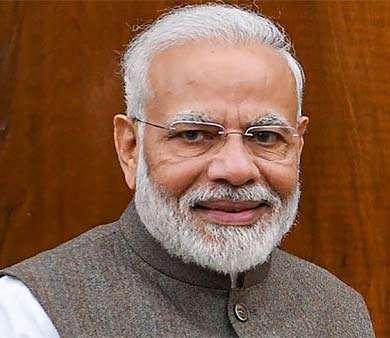
coming next week when fintech firm Pine Labs goes for its IPO at a never before seen P/E of 1200 times its annualized Q1FY26 earnings! While Prime Minister Narendra Modi and Commerce Minister Piyush Goyal and their team are working hard for a trade deal with the US and other major nations, these kinds of
issues should not escape the attention of its regulators.
India seemingly faces stiff trade barriers from the United States, but in reality, these challenges are not as worrying as they might seem. India’s exports to the US, just about $78 billion a year, are tiny compared to its huge $4 trillion GDPless than 2 percent. This means that even if US policies make selling to America harder, India’s economy won’t be badly hurt, since it mostly depends on its own people and growing trade with other countries.
The US often blames India for putting high tariffs or taxes on things like cars and electronics. For example, India has very high duties - sometimes up to 100 percent - on imported cars. But even if India cut these tariffs, American cars would still struggle to sell in India because they are far more expensive than cars from India, China, Korea, or even Japan. Indian customers want value for money, and local or Asian brands already meet these expectations at much lower prices. Removing tariffs would not suddenly open the floodgates for expensive US brands.
Trade talks now are caught in a web of
international politics, especially because of the Russia-Ukraine war. Some in the US claim India’s oil purchases from Russia help fund the Russian war effort. But in truth, it is the US that has benefited hugely from the Russia-Ukraine conflict, selling over $68 billion worth of weapons to Ukraine since the war began. American companies, especially arms manufacturers, have made big profits while the war continues. Accusing India is more about politics than fact.
US decisions aren’t just about policy, they are influenced by business interests. Former President Biden’s government strongly backed Ukraine, partly because of his family’s connections to businesses there, and this has been well reported in the American press. The current President Trump is more selective, while arms sales continue, deeper US support for Ukraine has faded. Reports link some of Trump family’s business interests in Moscow, which could explain America’s cooler approach to supporting Ukraine these days.
India has options. A zero-tariff trade deal with the US, where both sides drop taxes on many or even most products, could actually help India more, and not hurt it. With Indian exports like textiles, chemicals, IT services, and medicines, India could get more access to American buyers. Since US goods are expensive and not highly competitive in India, the risk of India’s market being swamped by US goods is low. Instead, Indian exporters could grow, learning from global standards and succeeding abroad.
But security remains a worry. The US keeps making overtures to Pakistan’s top military, especially welcoming their army chief with honors. This signals that Washington may still view Pakistan as a valuable partner, despite its poor track record on regional peace. This is quite ironic too, given the military animosity the US has with China, and how close China and Pakistan are. Trump family’s business interests in Pakistan have also come under scrutiny recently. India must speak up in diplomacy, making it clear that stability in South Asia is non-
negotiable. There have been more pressure tactics. US officials recently raised the H1B visa fees, needed by Indian tech talent hoping to work in America, by almost 40 times. This is meant to push India diplomatically. But it could backfire, with the US tech industry relying on Indian engineers, and hurting them will cause problems for American firms, especially when local talent is in short supply.
India should not get distracted with all these. Instead, it should focus on building better ties with many countries, not just America. India is strengthening relations with the EU, UAE, ASEAN, and Latin American countries, opening up more trade channels.
India can also act quickly when needed. When US tariffs started rising, the Indian government recently responded by slashing GST rates on popular items just before the festive season, giving families more spending power and businesses a boost. Creative steps like tax cuts are a response to tough times and show India’s ability to adapt and thrive.
India’s biggest strength is indeed its booming home market. There are over 300 million middle-class consumers in India, and retail sales during Diwali 2024 alone had hit Rs 2 lakh crore - a sign of powerful domestic demand. By supporting small businesses, startups, and local supply chains, India can weather global storms. In the past year, Indian startups attracted $15 billion in new investment, proving India’s growing confidence.
In the end, the US trade barriers are not an existential crisis for India. Since Indian exports to the US are very small compared to India’s total economic size, and because US goods are not a big threat in the Indian market even without tariffs, India can confidently pursue fairer trade deals. By resisting political pressure, calling out misdirection, and pursuing reforms at home, India can turn challenges into stepping stones toward greater growth and global leadership.
John Antony

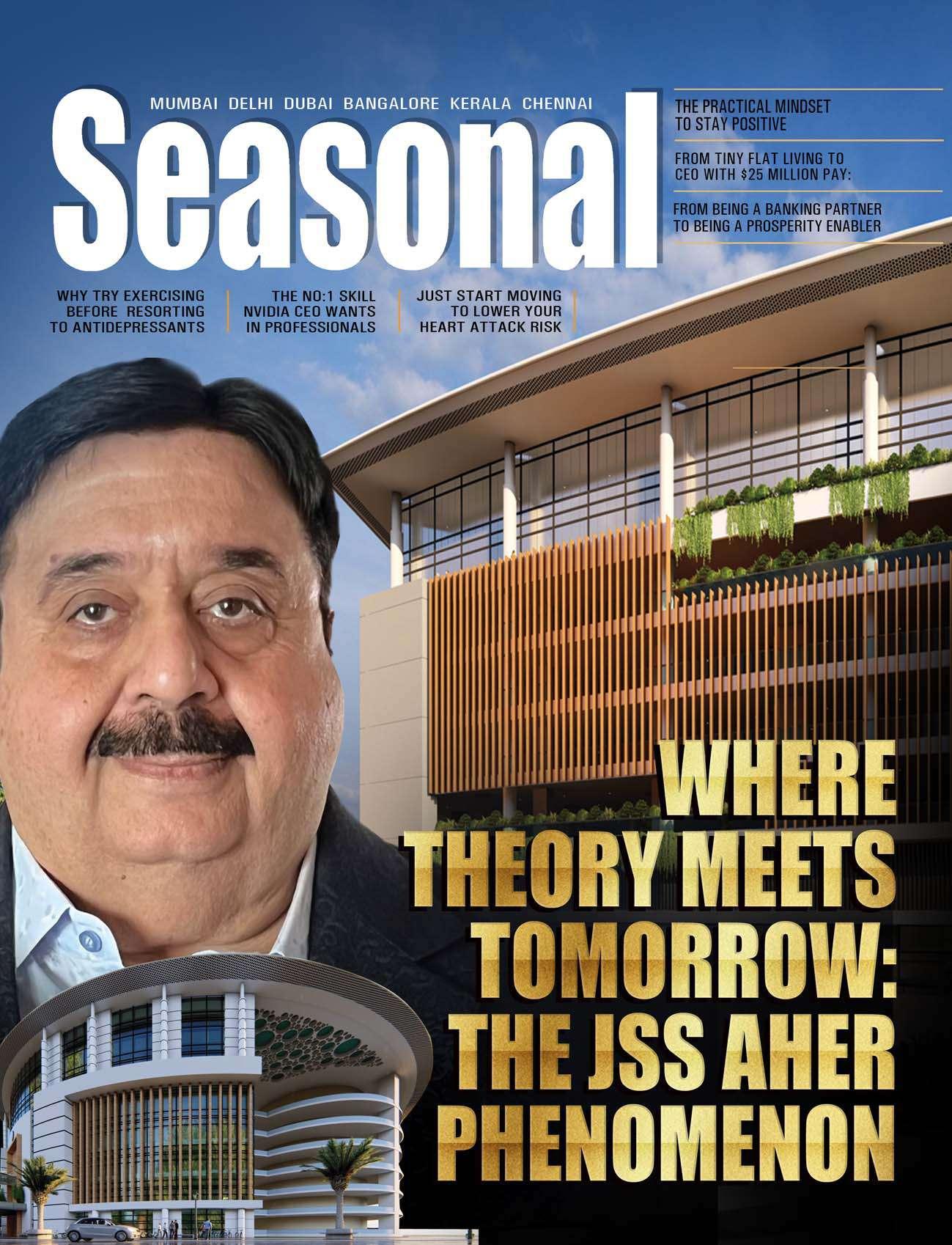
By weaving a vibrant tapestry of international conclaves, groundbreaking medical research, and global expansion, JSS Academy of Higher Education and Research has transformed into a living laboratory. JSS AHER functions seamlessly due to a cohesive leadership team guided by the spiritual benevolence of the Chancellor, His Holiness Jagadguru Sri Shivarathri Deshikendra Mahaswamiji. While Dr. CG Betsurmath, the Executive Secretary of JSS Mahavidyapeetha, continues to be the administrative bedrock, Pro Chancellor Dr. B Suresh charts the global expansion plans as well as the futuristic outlook that differentiates this deemed university, and Vice-Chancellor Dr. H Basavana Gowdappa guides the academic pulse of the institution.
People who use drugs like GLP-1 agonists to lose weight regain it more quickly than those who use a conventional approach of diet and exercise, according to a new study.

A recent study has found that everyday conversations can delay eye movements, which are critical for safe driving. While it is widely acknowledged that talking while driving serves as a significant distraction, researchers have now identified how such interactions interfere with the earliest stages of visual processing. The findings suggest that engaging in conversation may disrupt foundational gaze processes, which occur before physical reactions like braking or steering.

2025 was a year of realisation. It has shown us what is moving forward and what is being left behind. The pace of change has been hard to ignore. AI tools can now create art, write content, and generate ideas in seconds. Skills that people spent years mastering can now be replicated in moments. For many, that feels unsettling because it challenges something deeply personal, something they worked hard to build.

The Indian Navy’s handstitched wooden sailing vessel INSV Kaundinya arrived in Oman on Wednesday to a water salute after completing 17 days at sea.

Financial strain and food insecurity play a greater role in accelerating heart aging than many traditional medical risk factors, according to a new study published in Mayo Clinic Proceedings.

Women carry a higher genetic risk of depression, a new study has found. Claiming to be the largest genetic study to date on sex differences in major depression, the research published on Wednesday in Nature Communications has found 16 genetic variants linked to depression in women and eight in men. 1

Many of us experience a moodboost after exercise, and now an updated review has revealed just how powerful it can be. Even light exercise, like walking or gardening, may ease the symptoms of depression as effectively as talking therapies or antidepressants.

The recent local government elections in Kerala have delivered a decisive verdict, one that has shaken the ruling Left Democratic Front (LDF) to its very foundations. With the Congress-led United Democratic Front (UDF)

NITTE UNIVERSITY IS STRONGER THAN EVER WITH FIVE MORE PREMIER
In an era where higher education demands vision, innovation, inclusivity, and excellence, Nitte Deemed-to-be University stands tall as one of India’s leading

Jensen Huang, CEO of Nvidia, has sparked debate in the software industry after saying he wants engineers to spend “zero percent” of their time writing code. Instead, Huang wants

With Rs 5.75 lakh crore in investment pledges, Telangana has impressively taken off, under CM Revanth Reddy’s command. Now comes the long haul challenge of delivering on these promises.

Positive psychology forms the backbone of wellbeing programmes around the world. Many people aiming to improve their mental health and live a good life are told to follow a programme of activities that focus on making an intentional effort to improve their wellbeing.

Despite her multi million dollar salary, Yamini Rangan works to
With an ambition to become a Top-5 private sector lender, Federal Bank is making all the right moves under the visionary leadership of its MD & CEO KVS Manian - including a Rs 6,200 crore stake sale to global PE giant Blackstone, continued operational excellence, a pivot to safe yet high-yield assets, widening of its geographic footprint, and a unique rebranding initiative ‘Fortuna Wave’ to signal a deeper partnership with clients.

Ischaemic heart disease remains the leading cause of death worldwide, with myocardial infarction accounting for a substantial proportion of this

While obesity is a known risk factor for heart disease, a new study showed that the ratio of a person’s waist measurement compared to their height is more

Jensen Huang, CEO of Nvidia, has sparked debate in the software industry after saying he wants engineers to spend “zero percent” of their time writing code. Instead, Huang wants them to focus on identifying and solving problems that have not yet been addressed, while artificial intelligence handles most of the coding work.
The remarks were made during recent interviews and public discussions where Huang outlined how AI tools are changing the nature of engineering work at Nvidia.
According to Huang, coding itself is a task, not the end goal. The real purpose of engineering, he argues, is problem discovery and problem-solving. Nvidia engineers now use AI coding assistants extensively, allowing them to offload syntax-heavy work to machines. This, Huang believes, frees human engineers to think more deeply about system design, algorithms, and unsolved challenges.
He has described this approach as “purpose versus task,” where AI handles repetitive execution while humans focus on intent and direction. In Huang’s view, this shift improves productivity and leads to more meaningful innovation rather than simply faster code output.
To explain his thinking, Huang often points to the field of radiology. Years ago, experts predicted that AI would replace radiologists by reading scans faster and more accurately.

Instead, the number of radiologists has increased. The reason, Huang says, is that image reading was only one task within a broader purpose: diagnosing disease and improving patient outcomes.
By removing routine work, AI expanded what professionals could do. Huang believes software engineering will follow a similar path, with AI-written code enabling engineers to tackle more complex and higherlevel problems.
Not everyone agrees with Huang’s outlook. Some AI tool builders and developers warn that relying too heavily on AI-generated code without proper review can introduce technical debt and reliability issues. Studies have also suggested that AI coding assistants do not always improve productivity for experienced developers.
These concerns highlight a gap between AI’s promise and its current limitations, especially for large, complex systems.
Huang’s vision does not eliminate engineers, but it does redefine their role. If AI continues to improve, engineers may spend less time typing code and more time setting goals, validating results, and making critical decisions. Whether this shift benefits the wider developer workforce remains an open question, but it signals a clear direction for how Nvidia sees the future of engineering work.
(Shaurya
Shubham for Moneycontrol)


THE INDIAN NAVY’S HAND-STITCHED WOODEN SAILING VESSEL INSV
KAUNDINYA ARRIVED IN OMAN ON WEDNESDAY TO A WATER SALUTE AFTER COMPLETING 17 DAYS AT SEA.
The ship began sailing from Porbandar on India’s west coast on 29 December and arrived in Muscat, retracing the ancient maritime route that connected India with the rest of the world for millennia.
Named after a fabled Indian mariner who sailed across the ocean to South East Asia, the ship was built using traditional techniques. Wooden planks were stitched together with coir rope made from coconut fibre and sealed with natural resin. The ship does not have an engine and moves under square sails, helped by favourable winds.
INSV Kaundinya was built without nails or metal fastenings - methods once common across the Indian Ocean
region. Its design is inspired by a 5th Century vessel depicted in a painting at the Ajanta caves in western Indiabelieved to be one of the few visual records of early Indian seafaring.
With no surviving blueprints from the period, naval architects relied on iconography and historical references to make out the ship’s form. The newly inducted vessel incorporates several culturally significant features.
“Her sails display motifs of the Gandabherunda [a mythical twoheaded bird, representing the form of the Hindu god Vishnu] and the sun, her bow bears a sculpted Simha Yali [mythical creature from South Indian lore], and a symbolic Harappan style
stone anchor adorns her deck, each element evoking the rich maritime traditions of ancient India,” according to the Indian Navy’s website.
The ship’s construction began in September 2023 and it was launched in February 2025 in Goa state. Sanjeev Sanyal, a member of Prime Minister Narendra Modi’s economic advisory council was a crew member and shared regular updates from the voyage on social media. One such picture posted by him showed the ship sailing through the sea as heavy rains lashed the deck.
Speaking to reporters in Oman, the officer-in-charge of the ship, Commander Hemant Kumar, described the journey as “exhilarating” and “adventurous”. He said that the 17 days at sea came with challenges. There were no proper beds, no air conditioning in the heat, and bouts of sea-sickness. The crew were glad to be back on land, he said. It is not yet clear when the ship and its crew will begin their return journey to India.
(Nikita Yadav for BBC)


2025 2025 2025 was a year of realisation. It has shown us what is moving forward and what is being left behind. The pace of change has been hard to ignore. AI tools can now create art, write content, and generate ideas in seconds. Skills that people spent years mastering can now be replicated in moments. For many, that feels unsettling because it challenges something deeply personal, something they worked hard to build.
But this moment is not new. History has seen it before. The printing press replaced scribes. Machines reshaped factories. Editing software transformed media. Even the typewriter was once seen as a threat. Every wave of innovation disrupted work, forced people to adapt, and quietly created new opportunities.
Sonal Kapoor, Global Chief Business Officer at Prodigy Finance, says it is natural for people to worry about job losses or fear that AI might replace human talent. But one thing remains true: AI still needs people. Behind every smart system are humans who build it, guide it, and decide how it should be used. The real change is not the technology itself, but how people choose to use it. Those who stay
curious, keep learning, and adapt will always have the advantage.
For students planning to study abroad in 2026 or 2027, here are the top five courses shaping the future. Based on global demand and long-term return on investment, these programmes continue to open doors to strong careers and steady growth.
Machine learning and AI skills are in huge demand because they help people work faster and smarter in a world overflowing with data. Professionals in this field can detect fraud, personalise services, and automate repetitive tasks. This means fewer errors, quicker decisions, and more time for creative, human-led work.
Every modern business, from start-ups to large corporations, runs on data. Data scientists and analysts turn numbers into insights that drive better decisions. Whether it is finance, retail, healthcare, or technology, organisations
everywhere depend on data experts to predict trends, understand consumers, and grow faster.
As more of our lives and businesses move online, the need for cybersecurity professionals has never been greater. Companies are willing to invest heavily in experts who can prevent threats before they happen. This field continues to grow as protecting systems and trust becomes one of the world’s biggest priorities.
Sustainability is no longer just a passion; it is now a business priority. As technology evolves, companies need people who can balance progress with responsibility. Climate goals, ESG commitments, and renewable energy targets are now directly tied to business growth and reputation. Graduates in this field are leading conversations that connect science, ethics, and the economy.
Tech-focused MBAs are increasingly popular because companies need leaders who understand both business strategy and technical innovation. These professionals bridge the gap between management and engineering, ensuring ideas turn into real outcomes. They keep teams aligned, manage budgets, and drive innovation, making them some of the most valuable hires today.
(Sonal Kapoor for Moneycontrol)
SEASONAL MAGAZINE
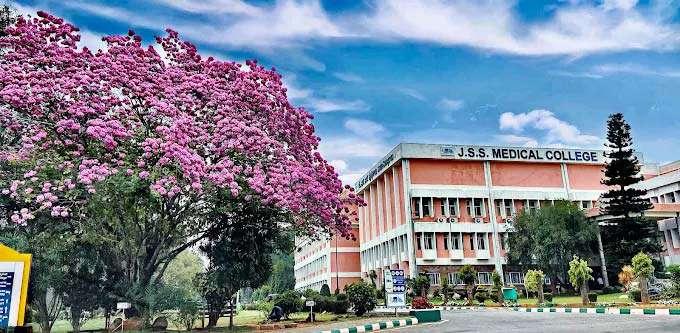
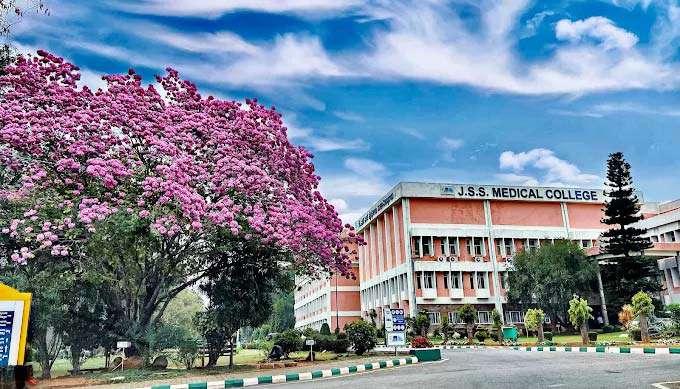
BY WEAVING A VIBRANT TAPESTRY OF INTERNATIONAL CONCLAVES, GROUNDBREAKING MEDICAL RESEARCH, AND GLOBAL EXPANSION, JSS ACADEMY OF HIGHER EDUCATION AND RESEARCH HAS TRANSFORMED INTO A LIVING LABORATORY. JSS AHER FUNCTIONS SEAMLESSLY DUE TO A COHESIVE LEADERSHIP TEAM GUIDED BY THE SPIRITUAL BENEVOLENCE OF THE CHANCELLOR, HIS HOLINESS JAGADGURU SRI SHIVARATHRI DESHIKENDRA MAHASWAMIJI. WHILE DR. CG BETSURMATH, THE EXECUTIVE SECRETARY OF JSS MAHAVIDYAPEETHA, CONTINUES TO BE THE ADMINISTRATIVE BEDROCK, PRO CHANCELLOR DR. B SURESH CHARTS THE GLOBAL EXPANSION PLANS AS WELL AS THE FUTURISTIC OUTLOOK THAT DIFFERENTIATES THIS DEEMED UNIVERSITY, AND VICE-CHANCELLOR DR. H BASAVANA GOWDAPPA GUIDES THE ACADEMIC PULSE OF THE INSTITUTION. HERE IS WHY THE MYSURU-BASED INSTITUTION IS EMERGING AS AN ULTIMATE DESTINATION FOR NURTURING THE NEXT GENERATION OF HEALTH SCIENTISTS.

His Holiness Jagadguru Sri Shivarathri Deshikendra Mahaswamiji, Chancellor

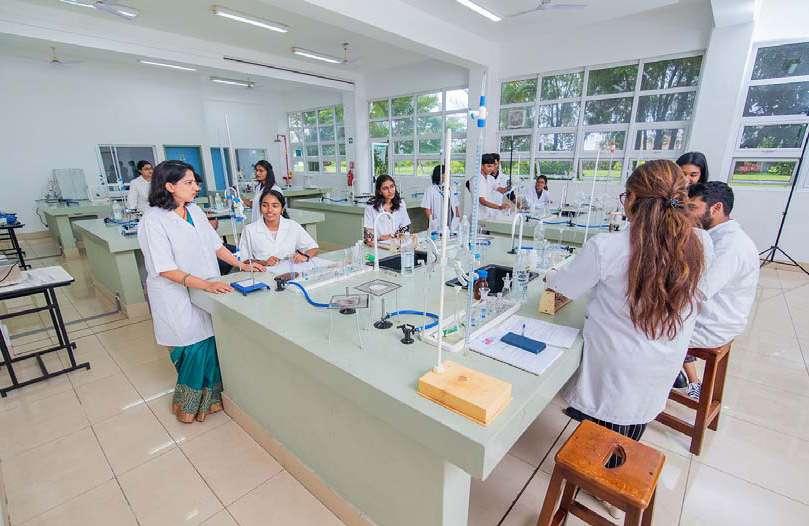
In the rapidly evolving landscape of healthcare education, the difference between a good institution and a great one often lies in the distance between the classroom and the cutting edge. At JSS Academy of Higher Education and Research (JSS AHER), Mysuru, that distance has been effectively bridged. Walking through its campus in late 2025 and early 2026, one does not merely encounter students with textbooks; one encounters a dynamic ecosystem where Nobel-winning concepts are debated in real-time, where Artificial Intelligence is actively being decoded for neurochemistry, and where the Vice-President of India challenges graduates to define the nation’s future.
For the aspiring doctor, pharmacist, or researcher, the value proposition of JSS AHER has shifted from purely academic excellence to active industry immersion. It is no longer just about securing high ranksthough, with a 21st rank in the NIRF University category and a 56th global rank in THE Impact Rankings, the
institution is winning such benchmarks, too. The new allure of JSS AHER lies in its status as a “hands-on” campus. It is a place where a student might spend the morning learning about liver cancer therapeutics from the very scientists discovering them, and the afternoon attending a global bioimaging summit featuring the directors of CSIR-CFTRI.
This is a story of how a university, rooted in the spiritual wisdom of Mysuru, has aggressively pivoted to become a global node of innovation. By curating a calendar packed with high-level conferences, securing international campus approvals, and pioneering digital well-being clinics, JSS AHER is telling prospective students one thing: Don’t just learn history; come here and make it.
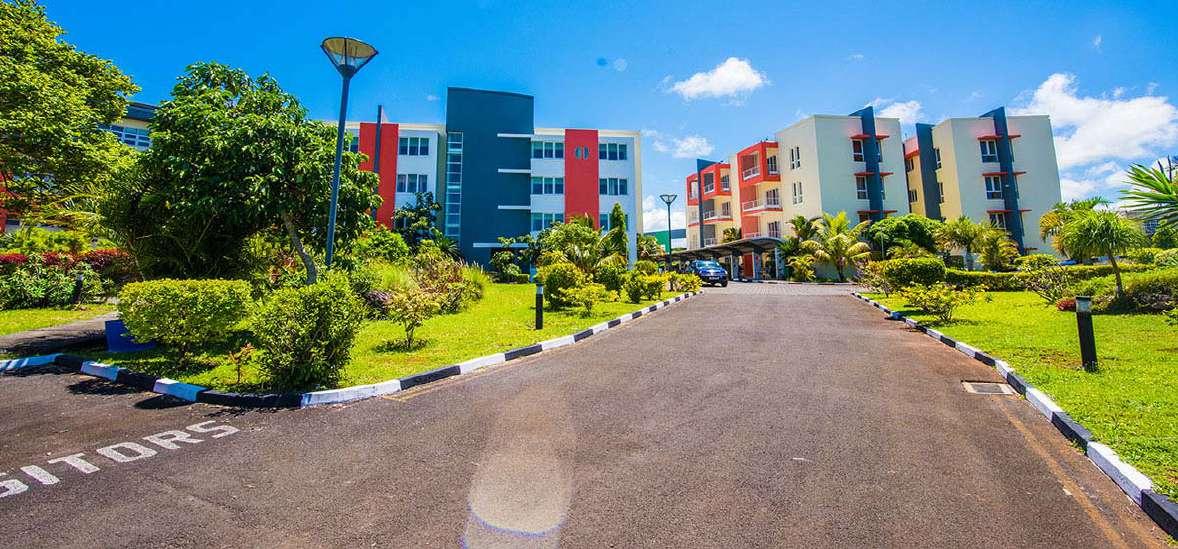
The most defining headline of late 2025 for JSS AHER was not local, but transcontinental. In a move that fundamentally alters the institution’s geographical footprint, JSS AHER received formal approval to establish the JSS School of Medicine in Vacoas, Mauritius.

This is not merely an administrative win; it is a strategic masterstroke that places JSS AHER on the map as an exporter of high-quality medical education. The approval from the Higher Education Commission of Mauritius to start an MBBS program marks the realization of a long-held vision. Admissions for the first batch happened in November 2025, with the curriculum designed to align with the National Medical Commission (NMC) of India.
The significance for a student in Mysuru is profound. It signals that they are part of a system with international mobility and global recognition. The JSS Medical College in Mysuru will serve as the academic backbone for this venture, meaning the expertise cultivated here is now the benchmark for the Indian Ocean region. This expansion was celebrated at a press meet at Suttur Mutt, where the leadership outlined a vision of serving the healthcare needs of Africa and Asia, effectively transforming JSS from a national leader to a global education hub.
While the success of JSS AHER is a symphony of many dedicated leaders, the conductor of this expanding global orchestra is undoubtedly its
Chancellor, His Holiness Jagadguru Sri Shivarathri Deshikendra Mahaswamiji. He is ably assisted in this daunting endeavour by Dr. CG Betsurmath, the Executive Secretary of JSS Mahavidyapeetha, and Pro Chancellor Dr. B Suresh, whose fingerprints are visible on every major strategic leap the university has taken during more than a decade.
Dr. Suresh has long been a towering figure in pharmaceutical sciences, but his role has evolved into that of a visionary statesman for higher education. It was Dr. Suresh who articulated the significance of the Mauritius expansion, framing it not just as a new college, but as the fulfillment of a mission to take quality education beyond Indian shores.
His leadership style is characterized by a relentless push for “nextgeneration” relevance. Whether it is signing a Memorandum of Understanding (MoU) with VIT Chennai to foster collaborative research in October 2025, or championing the integration of AI in healthcare, Dr. Suresh ensures that the university never rests on its laurels.
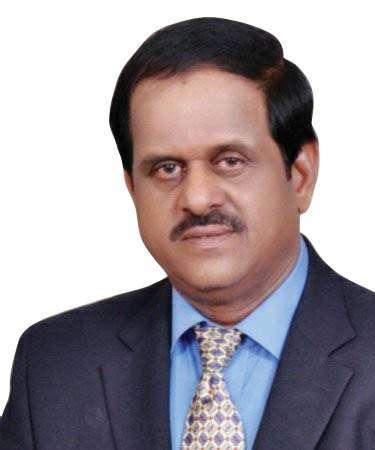
He has been the driving force behind the “Varuna Global Campus” - an ambitious 100-acre project designed to be a futuristic hub for digital health and biomedical engineering. Under his stewardship, the university has successfully balanced its spiritual roots with a highly aggressive, modern academic stance. Dr. Suresh’s insistence on international accreditations and industry-linked research ensures that a degree from JSS AHER carries weight in hospitals,


labs & boardrooms worldwide.
Why should a student choose JSS AHER over other top-tier universities? The answer lies in the sheer density of intellectual exchange that occurred in the last quarter of 2025. The campus has transformed into a perpetual convention of minds, offering students access to networks that usually take decades to build.
In November 2025, the Department of Pharmacology hosted the International Conference on Sustainable Brain Health. This wasn’t a standard lecture series; it was a deep dive into “AI in Neurochemistry.” Students witnessed the launch of a Centre of Excellence in Brain, Behaviour, and Cognitive Neurosciences, supported by global heavyweights like IUPHAR (USA). For a student, the opportunity to interact with experts from the University of Nebraska, Cambridge, and the NIH (USA) right on their own campus is invaluable. It bridges the gap between abstract theory and the frontier of what is possible in neuroscience.
Just a month prior, in October, JSS Medical College hosted the 2nd
International Conference on the Genetics and Epigenetics of Cancer. With a focused theme on AI-based diagnostics, this event addressed the frightening projection of cancer cases in India reaching 15.7 lakh. By bringing together molecular biologists and bioinformaticians, the university created a sandbox where students could see how machine learning is being used to predict treatment responses.
Furthermore, in December 2025, the National Meet on BioImaging was held under the aegis of the India Bioimaging Annual Meet. The announcement of a High-Resolution Cryo-EM installation by CSIR-CFTRI Director Dr. Giridhar Parvatam during the event was a game-changer for structural biology research in the region.
For a prospective student, this “Conference Campus” model means their education is not static. They are not just reading about scientific consensus; they are in the room where it is being formed.
The intellectual energy at JSS AHER is grounded in tangible, life-saving research. The university’s narrative is


one of “Science for Society,” and recent breakthroughs have reinforced this. In October 2025, a team led by Prof. Prasanna K. Santhekadur from the Department of Biochemistry made headlines for exploring the therapeutic potential of Sodium Butyrate against Hepatocellular Carcinoma (liver cancer). Published in the prestigious Biochemical and Biophysical Research Communications, this study is a classic example of JSS AHER’s research ethos: sophisticated yet accessible.
The research connects the dots between Nobel Prize-winning discoveries (RNA interference and telomerase) and a simple, short-chain fatty acid found in fiber-rich diets. For students, this signals a research environment that encourages innovative thinking - looking for accessible cures in the complex crosstalk of molecular machinery.
This culture of inquiry is supported by a robust infrastructure. The university continues to leverage its partnerships with Google and the Bangalore Bioinnovation Centre to drive AI-driven healthcare initiatives. The environment is one where a student’s thesis has the potential to become a peer-reviewed solution to a
public health crisis.
The JSS Hospital remains the beating heart of the university’s educational model. It is here that the technology discussed in conferences is applied to human healing. A significant milestone was achieved in late 2025 when the orthopaedics department successfully performed a Reverse Total Shoulder Arthroplasty (RTSA) using Virtual Implant Positioning (VIP) technology. Interestingly, this surgery was led by a team including the Vice-Chancellor, the Principal and the Director, and showcased the hospital’s capability to handle complex, high-tech surgeries that provide mobility to patients with severe shoulder dysfunction.
But clinical excellence at JSS is not limited to physical ailments. Responding to the “silent pandemic” of the digital age, the hospital launched a Special Clinic for Digital Wellbeing in July 2025. This forward-thinking initiative addresses behavioral addictions - gaming, mobile phone dependency, and cyberbullying. By integrating clinical psychology, pediatrics, and psychiatry, JSS AHER is acknowledging that modern health challenges require modern solutions.
Furthermore, in January 2026, the Department of Psychiatry launched a “Psychological First Aid” program in Kannada, ensuring that mental health
care is linguistically accessible to the local population.
The immense machinery of JSS AHER functions seamlessly due to a cohesive leadership team guided by the spiritual benevolence of the Chancellor, His Holiness Jagadguru Sri Shivarathri Deshikendra Mahaswamiji. His Holiness ensures that despite the influx of AI and robotics, the institution remains anchored in the values of compassion and service.
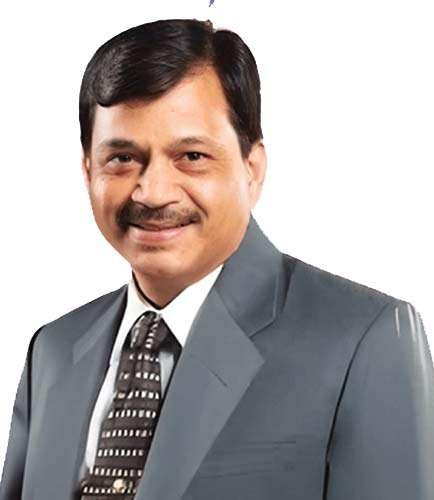
Dr. C.G. Betsurmath, the Executive Secretary of JSS Mahavidyapeetha, continues to be the administrative bedrock. His ability to manage the vast network of JSS institutions ensures that the university’s rapid growth is sustainable and structurally sound.
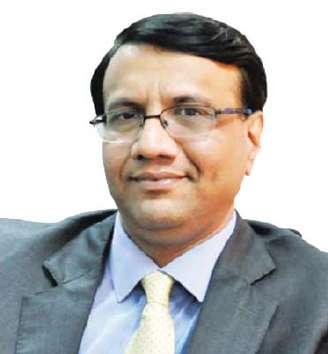
Vice-Chancellor Dr. H. Basavana Gowdappa remains the academic soul of the institution. His leadership is best characterized by resilience. In a retrospective reflection published recently, JSS AHER’s handling of the COVID-19 crisis was highlighted by the VC as a template for crisis management. JSS AHER transformed the unknown into a structured response, setting up Karnataka’s first private COVID testing lab and treating over 15,000 patients. Today, he brings that same spirit of innovation to the university’s academic governance, pushing for interdisciplinary learning and agility.
Supporting this dynamic structure is


Registrar Dr. B. Manjunatha, whose stewardship ensures that the university’s compliance, examinations, and day-to-day operations meet the rigorous standards of national and international ranking agencies.
JSS AHER recognizes that a health professional in 2026 needs more than just clinical skills; they need vitality and a vision for the nation. This was evident in November 2025, when the Department of Nutrition and Dietetics hosted the Sports Nutrition Innovation Exhibit. Titled “The Athlete’s Cycle,” this event wasn’t

just for textbooks - it was a 360degree exploration of fueling and recovery, spearheaded by postgraduate students. It highlights a campus culture that values fitness, nutrition, and the practical application of science.
The scale of the university’s ambition was on full display during the 16th Convocation in November 2025. The event was graced by the VicePresident of India, Shri CP Radhakrishnan. Addressing nearly 3,000 graduates, the Vice-President urged them to contribute to Viksit Bharat 2047, linking their personal success to the nation’s development.
He commended the university’s adoption of the National Education Policy and its focus on interdisciplinary learning. For the students receiving their degreesincluding 16 gold medalists - it was a reminder that they are graduating from an institution that is central to India’s growth story.
JSS Academy of Higher Education and Research has successfully navigated the transition from a traditional university to a modern, researchintensive conglomerate. The
foundational strengths remain the 21st NIRF ranking, the high standing of its Pharmacy colleges (4th in Ooty, 7th in Mysuru), and the premier status of its Dental and Medical colleges. The infrastructure, such as the KINEVO 900 robotic microscope, remains state-of-the-art.
However, the events of the last few months have added a new layer to this legacy. The expansion into Mauritius, the embrace of AI in neurochemistry and cancer research, the pioneering work in digital wellbeing, and the relentless calendar of high-profile scientific conclaves have created a unique value proposition.
For the student seeking a future in health sciences, JSS AHER offers a compelling promise: You will not just be a student of medicine or pharmacy; you will be an active participant in a global scientific dialogue. You will be trained by leaders like Dr. B Suresh and Dr. H. Basavana Gowdappa who are shaping the industry, and you will study on a campus that treats innovation as a daily routine. In the heart of Mysuru, JSS AHER is not only teaching the future of healthcare; it is actively participating in creating this future.
WOMEN CARRY A HIGHER GENETIC RISK OF DEPRESSION, A NEW STUDY HAS FOUND. CLAIMING TO BE THE LARGEST GENETIC STUDY TO DATE ON SEX DIFFERENCES IN MAJOR DEPRESSION, THE RESEARCH PUBLISHED ON WEDNESDAY IN NATURE COMMUNICATIONS HAS FOUND 16 GENETIC VARIANTS LINKED TO DEPRESSION IN WOMEN AND EIGHT IN MEN.1

The study, led by Australia’s QIMR Berghofer Medical Research Institute, showed a large proportion of the variants associated with depression were shared between sexes, but there was a “higher burden of genetic risk in females which could be due to female-specific variants”.2
Dr Brittany Mitchell, a senior researcher at QIMR Berghofer’s genetic epidemiology lab, said “we already know that females are twice as likely to suffer from depression in their lifetime than males”.3
“And we also know that depression looks very different from one person to
another. Until now, there hasn’t been much consistent research to explain why depression affects females and males differently, including the possible role of genetics.”
The study acknowledged explanations have been put forward spanning behavioural, environmental and biological domains, including men being less likely to seek help leading to under-diagnosis, and environmental exposures such as women being more frequently exposed to sexual abuse and interpersonal violence.
The study stated that together these factors highlight the need for a “multifaceted approach” to understanding the underlying mechanisms of depression but proposed that a “key component of the biological mechanisms underlying these disparities could be differences in genetics”.4
The researchers analysed the DNA from five international cohorts – Australia, the Netherlands, United States and two from the United Kingdom – with a final sample size of 130,471 women and 64,805 men with major depression, and 159,521 women and 132,185 men without the diagnosis.
They also found stronger genetic correlations in women between depression and metabolic traits (such body mass index and metabolic syndrome) than in men with the same traits. 5
Dr Jodi Thomas, the lead researcher, said these genetic differences “may help explain why females with depression more often experience metabolic symptoms, such as weight changes or altered energy levels”.6
The authors acknowledged the study included roughly twice as many women with depression as men, and performed additional analyses to ensure
their findings were not due to the difference in sample sizes. They also acknowledged limitations that their analyses were restricted to Europeans only, limiting the applicability of the findings to other populations.
Prof Philip Mitchell, from the School of Clinical Medicine at the University of New South Wales, said “there has been longstanding debate about the reasons for the consistent finding around the world that depression is more common in females than males, with most studies reporting that women have two to three times the risk of depression compared to men”.
“The most dominant theories have been related to social and psychological factors, for example the impact of the female role in caring for families compared to the income earning role of males, or personality vulnerabilities in women,” said Mitchell, who was not involved in the study.
“This very interesting novel genetic study in a very large global study provides strong evidence that these differences in rates of depression may in fact be due to genetic factors, with the statistically significant finding of more depression risk regions in the genome in females compared to males, and little overlap in these regions between males and females.7
“As well as strengthening the evidence that the differences in depression rates between men and women may be largely due to biological factors, it also points to the future possibility of different pharmacological treatments for depression in women and men, as the biological systems coded for by these genetic regions become better understood.”
(Natasha May for The Guardian) (Natasha May for The Guardian) (Natasha May for The Guardian) (Natasha May for The Guardian) The
1.3 LAKH CR INVESTMENT IN DATA CENTRES
Lodha Developers has doubled down on digital infrastructure by committing a total of ? 1.3 lakh crore to India’s largest planned 2.5 GW data centre park in Maharashtra. Early validation from Amazon and STT Global, strong state policy support, and an assetlight developer model position the project as a stable, annuity-style growth engine beyond real estate cycles.

According to a research, led by scientists at University of Bristol and coauthored by US nutritional experts, people eating a completely unprocessed, wholefood diet consumed over 50% more food by weight yet ate around 330 fewer calories daily. Researchers said this reflects "nutritional intelligence", helping people meet vitamin needs while avoiding excess calories, unlike ultra-processed foods. read more at Bristol University Moderna gains after strong fiveyear melano

MANY OF US EXPERIENCE A MOOD-BOOST AFTER EXERCISE, AND NOW AN UPDATED REVIEW HAS REVEALED JUST HOW POWERFUL IT CAN BE. EVEN LIGHT EXERCISE, LIKE WALKING OR GARDENING, MAY EASE THE SYMPTOMS OF DEPRESSION AS EFFECTIVELY AS TALKING THERAPIES OR ANTIDEPRESSANTS.
really reiterates that exercise provides an option for people who have depressive symptoms, and confirms that exercise may be as effective as psychotherapy and antidepressants,” says Andrew Clegg at the University of Lancashire in the UK.
Prior studies, including a key review published by the Cochrane Library in 2013, have found that exercise may ease symptoms of depression as effectively as standard therapies, including antidepressants and cognitive behavioural therapy (CBT), where a therapist helps people change their thoughts, feelings and behaviour.
This has prompted healthcare organisations to recommend regular exercise for managing depression. For instance, the UK’s National Institute for Health and Care Excellence (NICE)
recommends weekly aerobic exercise, such as jogging, for 10 weeks – usually in combination with other therapies, which, on their own, don’t benefit everyone.
But since the 2013 review, dozens more trials have been conducted, so the Cochrane Library is now publishing an updated review. “This latest review [almost] doubles the evidence base that was in the previous one,” says Clegg, one of the review authors.
Clegg and his colleagues analysed results from 69 randomised controlled trials involving nearly 5000 adults who were either clinically diagnosed with mild, moderate or severe depression, or who register a score on a depression symptom scale that is generally considered indicative of the condition. First, the researchers focused on 57 of the trials in which participants were randomly assigned either to a group that exercised regularly or to a control group that was offered no treatment or that was placed on a waiting list for treatment.

The trials varied in design, but they usually involved asking participants to exercise on a weekly basis for a few weeks to months, with the style of exercise ranging from low- or moderate-intensity activities such as gardening and brisk walking, respectively, to vigorous activities such as sprinting or playing football. Trials involving yoga or stretching weren’t included as these often involve meditation and breathwork, and the team wanted to focus more on the effects of physical activity alone, says Clegg.
The team found that exercise seems to moderately reduce the severity of depressive symptoms, such as often feeling sad, or losing interest in other people.
“They found a clinically meaningful change – people will feel the difference from that,” says Brendon Stubbs at King’s College London, who wasn’t involved in the review.
Next, the team focused on 10 trials among the 59 that compared exercise to CBT,
and five trials in which some participants took antidepressants but there was no exercise component at all. This revealed that, on average, regular exercise worked as well as the two other therapies. “There wasn’t a difference between them,” says Emily Hird at University College London, who wasn’t involved in the study.
By taking a closer look, the team found that light and moderate exercise seem to be more effective than vigorous kinds, which may simply be because they are easier to stick with, says Stubbs. “If you start going hard, then people drop out and stop exercising, and that could be why you don’t see the same effects [as with less strenuous activity],” he says.
How exactly exercise brings its benefits is unclear, but it probably works in several ways, says Stubbs. Group exercise, for instance, can boost people’s social wellbeing, while learning a new skill can improve self-esteem, both of which can help people to make positive changes in their lives, he says.

Studies have also shown that, during exercise, chemicals released from muscles, called myokines, help to mop up inflammation that is thought to contribute to depressive symptoms, says Stubbs. One particular myokine, called brain-derived neurotrophic factor, also spurs the growth of new brain cells, which could help the brain to rewire itself and break free of negative thought patterns, says Stubbs. In line with this idea, Clegg and his colleagues found that resistance training – which leads to a greater release of myokines versus other forms of exercise – was more effective than aerobic exercise alone, says Stubbs.
Together, the findings support guidelines that recommend exercise for treating depression. However, in all the studies reviewed, participants knew whether they were in a treatment group or control group. This raises the possibility that at least some of the exercise-related improvements could be down to the placebo effect, where people’s expectations lead to an improvement in symptoms, says Hird. What’s more, most of the studies involved relatively small numbers of participants, which makes their conclusions less reliable, she says. Larger studies are needed to better understand which types of exercise –including those not included in the review – are most beneficial, for whom, and why that is, says Hird. “We don’t really understand who is going to benefit from what at the moment,” she says. For instance, people with more severe kinds of depression may find it harder to get out and exercise, so they may benefit from CBT or antidepressants – both of which the review confirms are as effective as exercise for treating depression. It’s also possible that someone who is in a position to exercise may benefit more from a specific kind of exercise over another depending on the underlying cause of their depression, she says.
Still, the evidence to date consistently shows that exercise brings both mental and physical health benefits, says Stubbs. “Whether it be running, gym, pilates, yoga, these all have various beneficial effects – the most important thing is empowering people to do something they enjoy,” he says.
(Carissa Wong for New Scientist) SEASONAL MAGAZINE
The genetic analysis demonstrated an inverse association between physical activity and myocardial infarction risk. Individuals genetically predisposed to higher levels of physical activity had a substantially lower risk of myocardial infarction, with an odds ratio of 0.17. This finding supports the hypothesis that physical activity itself, rather than confounding lifestyle factors, plays a

schaemic heart disease remains the leading cause of death worldwide, with myocardial infarction accounting for a substantial proportion of this burden. Although physical activity is widely promoted as a cornerstone of cardiovascular prevention, the scale of heart disease mortality attributable to low physical activity at a global level has been less clearly defined. A new study combining Global Burden of Disease (GBD) data with genetic analysis now offers a comprehensive view of how inactivity contributes to myocardial infarction risk worldwide.
Using data spanning more than three decades, the researchers examined trends in ischaemic heart disease mortality attributable to low physical activity between 1990 and 2021, alongside a Mendelian randomization analysis to explore whether physical activity has a causal effect on myocardial infarction risk.
Analysis of GBD 2021 data revealed a concerning upward trend in the global
age-standardized death rate for ischaemic heart disease linked to low physical activity. Between 1990 and 2021, mortality attributable to insufficient activity increased steadily, with an estimated annual percentage change of 0.70%. This suggests that, despite growing awareness of the benefits of exercise, physical inactivity continues to make a significant and increasing contribution to cardiovascular mortality worldwide.
These findings highlight the persistent gap between public health recommendations and real-world behaviour, particularly in the context of ageing populations, urbanisation, and increasingly sedentary lifestyles.
To strengthen causal inference, the researchers complemented epidemiological trends with Mendelian randomization analysis using genomewide association study data. Physical activity was defined broadly, encompassing exercise undertaken in the preceding four weeks, such as swimming, cycling, fitness activities, and recreational sports.
protective role in reducing heart attack risk.
However, the authors noted significant heterogeneity among the genetic instruments used, suggesting some instability in the effect estimates. This underscores the complexity of capturing physical activity through genetic proxies and the need for more refined tools in future research.
Together, these findings reinforce physical inactivity as a major and growing contributor to the global burden of ischaemic heart disease. At the same time, genetic evidence lends support to the protective role of physical activity against myocardial infarction. The authors conclude that strengthening global strategies to promote physical activity remains essential, while calling for larger genetic studies to further clarify the causal relationship and inform more targeted prevention efforts.
(Staff Reporter for Interventional Cardiology)

Arecent study has found that everyday conversations can delay eye movements, which are critical for safe driving. While it is widely acknowledged that talking while driving serves as a significant distraction, researchers have now identified how such interactions interfere with the earliest stages of visual processing. The findings suggest that engaging in conversation may disrupt foundational gaze processes, which occur before physical reactions like braking or steering.
Previous studies have established that
cognitive distractions can slow reaction times and reduce situational awareness behind the wheel. However, this new research highlights a more fundamental impact on visual attention. Eye movements play a key role in gathering information from the environment to make driving decisions. Delays in these movements could potentially impair drivers’ ability to respond quickly to hazards on the road. The study provides further insight into how conversational distractions affect not just decision-making but also the initial stages of perceiving and processing visual stimuli while driving.
(GOAI)s
POSITIVE PSYCHOLOGY FORMS THE BACKBONE OF WELLBEING PROGRAMMES AROUND THE WORLD. MANY PEOPLE AIMING TO IMPROVE THEIR MENTAL HEALTH AND LIVE A GOOD LIFE ARE TOLD TO FOLLOW A PROGRAMME OF ACTIVITIES THAT FOCUS ON MAKING AN INTENTIONAL EFFORT TO IMPROVE THEIR WELLBEING.
But recent research I conducted with colleagues shows that while wellbeing experts often recommend these activities to others, in real life they rarely practice them themselves. This discrepancy may tell us something important about what truly sustains wellbeing over time.
I interviewed 22 experts and practitioners in positive psychology –some with more than a decade of experience. All of them regularly recommended wellbeing activities to clients, friends and family members and told me they would tailor each activity according to an individual’s needs.
But when I asked them about their own application of positive psychology practices, it became apparent that they didn’t engage in these activities regularly. They only tended to use them during difficult periods, when they felt a need for a wellbeing boost.
Positive psychology programmes often recommend patients activities like “gratitude journaling” (writing down the things one is grateful for) daily, or undertaking three acts of kindness each week. The key emphasis with these programmes is to make an intentional, concerted effort to be more positive.
But our study showed that experts don’t
use wellbeing the way many positive psychology programmes teach it. Instead of following a schedule of activities, their wellbeing came from having a flexible, wellbeing-oriented mindset, which we termed a “meliotropic wellbeing mindset”.
The term is derived from the Latin “melior” (better) and Greek “tropism” (movement towards). It’s about moving toward what makes life worth living. This way of thinking meant that experts didn’t treat wellbeing as a set of tasks they needed to complete – but rather merely as part of everyday life.
It also meant that none of the experts actively “chased” happiness or positivity. When they had a bad day, they just let it be – accepting that life sometimes comes with difficulty.
Our participants did not make the kind of drastic, intentional changes in their lives that they’d recommend patients make to improve wellbeing. They already regularly did things in their day to day that made their lives feel more meaningful – for example making time to read a book daily, volunteering for a local charity, cooking a favourite meal or even practising yoga.
While these kinds of activities may be recommended as part of a positive
psychology programme, the difference here is that the experts did these activities because they were part of their identity or because it helped them feel balanced, instead of only doing them because they’d been advised to.
They were also in tune with their bodies, caring for them as attentively as they cared for their minds by prioritising sleep, nourishing food and regular movement. And because they were highly attuned to how their physical and social


environment affected them, they weren’t afraid to take proactive steps to protect their wellbeing.
For instance, if their work made them unhappy, or if someone in their social circle was consistently draining, they didn’t hesitate to seek alternatives or to limit contact.
In addition, they were open to opportunities that allowed them to embrace life. One participant described waiting outside the school to pick up her child. The weather was so beautiful that she slipped off her shoes and walked barefoot across a patch of grass
– a simple act that boosted her mood.
Another one had a really bad day but when she finally got into bed that night, she was struck by a feeling of gratitude for the warmth and safety of her home, compared to all the people who have been displaced by war. Their understanding of positive psychology helped them notice these regular opportunities to boost wellbeing.
Every year, new wellbeing apps appear, schools incorporate wellbeing into their curricula and organisations invest heavily in workplace wellbeing programmes. Yet the impact of these initiatives remains modest. And, some reports suggest that wellbeing programmes may even have a negative effect.
Our study’s findings may help explain why the impact of these programmes is so varied – and shows these positive activities may not be as effective for people who have applied wellbeing practices extensively in their lives. The study also highlights an urgent need for positive psychology researchers and experts to rethink their priorities.
Rather than creating ever-longer
wellbeing programmes or promoting the pursuit of happiness, which evidence shows is not necessarily beneficial, we should focus on understanding the longer-term impact of wellbeing practices.
For anyone trying to improve their wellbeing, our findings are an important reminder that you don’t have to constantly “work on yourself” or pursue happiness. Experts in wellbeing rarely rely on dramatic life changes or wellbeing programmes.
Instead, they quietly cultivate a mindset that helps orient themselves toward what really matters. It’s not about chasing happiness or forcing ourselves to think positively on a bad day. It’s about gently moving toward the things that make life feel more worthwhile, in ways that fit who you are. That shift in mindset is something that all of us can adopt.

(Jolanta Burke for The Conversation)

WITH $25 MILLION PAY:
DESPITE HER MULTI MILLION DOLLAR SALARY, YAMINI RANGAN WORKS TO KEEP HER TWO TEENAGE SONS CONNECTED TO THEIR ROOTS. SHE TAKES THEM TO INDIA EVERY FEW YEARS TO SHOW WHERE SHE AND HER HUSBAND, WHO IS A MANAGING DIRECTOR AT GOLDMAN SACHS, GREW UP.

HubSpot CEO Yamini Rangan has built one of the most striking career trajectories in the global tech industry — rising from a 350 sq ft home in South India to earning nearly $26 million a year as one of the highest paid Indian origin CEOs in the United States. Sharing her story on The Grit podcast, Rangan revealed that she owes her success to discipline, ambition, as well as some unconventional routines.
Growing up in a tiny apartment with her parents and older sister shaped her ambition and values, Fortune quoted her as saying. She credited her mother for inspiring her to imagine a bigger life — urging her to become a pioneer in whichever field she chose, whether law, engineering, or medicine. She wanted Rangan to “do something really cool”. This early environment, Rangan said, instilled resilience and resourcefulness long before she entered the corporate world.
After studying computer engineering at Bharathiar University, she moved to the
US at 21 to pursue an MBA from UC Berkeley’s Haas School of Business — the pivot that launched her into Silicon Valley’s high velocity tech ecosystem. Today, Rangan leads HubSpot, a $20 billion software company whose revenue surged during the pandemic driven digitalisation wave. She earns close to $26 million annually, placing her alongside Indian origin corporate heavyweights such as Palo Alto Networks CEO Nikesh Arora.
But her success comes with a gruelling routine. Rangan begins her weekdays
TODAY, RANGAN LEADS HUBSPOT, A $20 BILLION SOFTWARE COMPANY WHOSE REVENUE SURGED DURING THE PANDEMIC DRIVEN DIGITALISATION WAVE. SHE EARNS CLOSE TO $26 MILLION ANNUALLY, PLACING HER ALONGSIDE INDIAN ORIGIN CORPORATE HEAVYWEIGHTS SUCH AS PALO ALTO NETWORKS CEO NIKESH ARORA.
at 6 am, is on calls by 7 am, and often works until 11 pm. She avoids burnout by strictly keeping Saturdays work free, spending the day with her husband Kash (a Goldman Sachs managing director), walking, doing yoga, meditating and reading.
But, Sundays — dreaded by most workers — are her personal workday. She spends the day planning, writing and scheduling emails that land in inboxes early Monday morning. “I enjoy it because it’s my time,” she said, explaining that the structure helps her enter the week fully prepared.
Despite her multi million dollar salary, Rangan works to keep her two teenage sons connected to their roots. She takes them to India every few years to show where she and her husband grew up and brings them to visit a local orphanage they support. “It is to figure out how you can actually have a broader impact,” she said.
(Ankita Sengupta for Moneycontrol)
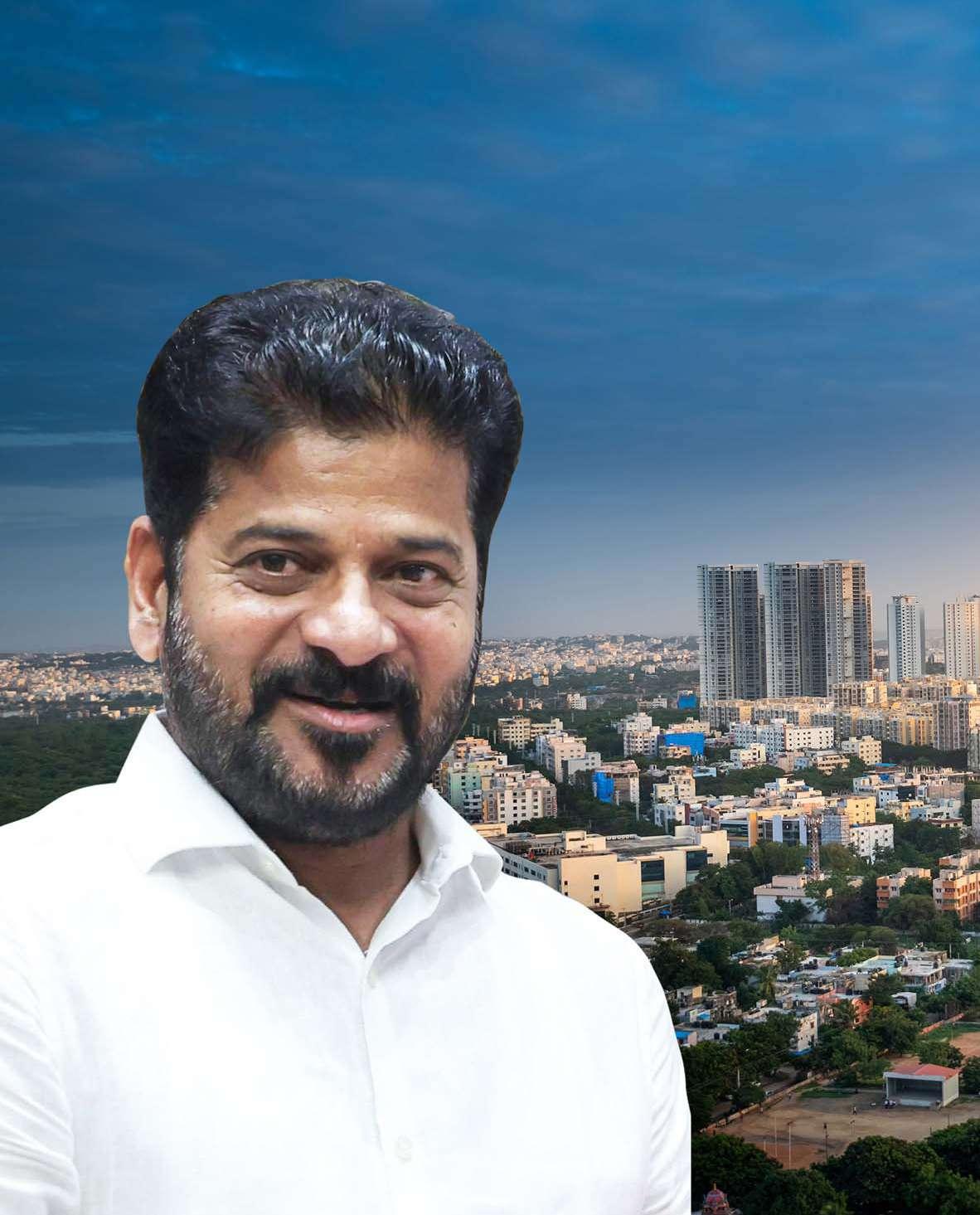

WITH RS 5.75 LAKH CRORE IN INVESTMENT PLEDGES, TELANGANA HAS IMPRESSIVELY TAKEN OFF, UNDER CM REVANTH REDDY’S COMMAND. NOW COMES THE LONG HAUL CHALLENGE OF DELIVERING ON THESE PROMISES.

The recently concluded Telangana Rising Global Summit 2025 was less of a conference and more of a declaration of intent. Held at the ambitious Bharat Future City, the summit didn’t just discuss the future, it found concrete ways to fund it. Over two high-octane days, the state garnered a staggering Rs 5.75 lakh crore (approx. $69 billion) in investment pledges, signalling that India’s youngest state is ready to play in the big leagues. At the heart of this success was Chief Minister A Revanth Reddy, who proved himself less as a politician and more as the CEO of Telangana Inc. His vision was crystal clear and ambitious: Telangana is no longer competing with other Indian states. “We are competing with the world,” Reddy declared, citing the Guangdong model of China as his template for rapid industrialization. His leadership was defined by the unveiling of the ‘Telangana Rising 2047’ vision document, which sets moonshot goals of

transforming the state into a $1 trillion economy by 20234, and a $3 trillion economy by the centenary of India’s independence. Unlike typical corporate gatherings, this summit was designed with a distinct people-centric DNA that set it apart from standard business conclaves. In a unique move, the administration opened the venue’s doors to the public after the business sessions concluded, allowing citizens to witness firsthand the technologies and investments shaping their future. The choice of the venue itself - the net-zero Bharat Future City spanning 13,500 acres - served as a live demonstration of the state’s ambition, while the strategic unveiling of the CURE, PURE, and RARE economic zones - a novel idea to divide the whole state into urban, semi-urban & rural economic zones - signaled a nuanced shift toward decentralized growth that extends well beyond Hyderabad’s city limits. The roster of investors betting on this vision reads like a global Who’s Who. The headline-grabbing declaration came from the Trump Media & Technology Group, which expressed an intent to invest Rs 1 lakh crore in a mixed-use development within the Bharat Future City. This was bolstered by massive commitments from the Brookfield-Axis Ventures consortium and Vietnam’s Vin Group, alongside domestic heavyweights like Adani, Reliance, and Apollo Hospitals. With a focus ranging from Quantum Computing, AI, Deep Tech and Aerospace to Life Sciences, the message as the dust settles is undeniable: Telangana isn’t just rising; it is soaring, fueled by a leadership that dares to dream in trillions. Now comes the long haul flight - the challenge of delivering on these promises by 2034 and 2047.
FINANCIAL STRAIN AND FOOD INSECURITY PLAY A GREATER ROLE IN ACCELERATING HEART AGING THAN MANY TRADITIONAL MEDICAL RISK FACTORS, ACCORDING TO A NEW STUDY PUBLISHED IN MAYO CLINIC PROCEEDINGS.

The analysis examined data from more than 280,000 adult patients treated at the Mayo Clinic between 2018 and 2023. Using an AI-enabled electrocardiogram, researchers estimated cardiac age and identified a “cardiac age gap,” a marker indicating when the heart is biologically older than a person’s chronological age.
The study found that social determinants of health outweighed conventional clinical risks in shaping cardiac aging and mortality. Among nine social factors assessed, financial strain and food insecurity had the
strongest impact across both men and women. Housing instability and physical inactivity were also linked to higher mortality, in some cases rivaling established cardiovascular risk factors.
“Traditional risk factors do not fully explain cardiovascular disease,” said lead investigator Amir Lerman, MD, of the Mayo Clinic. “There are social factors
THE STUDY FOUND THAT SOCIAL DETERMINANTS OF HEALTH OUTWEIGHED CONVENTIONAL CLINICAL RISKS IN SHAPING CARDIAC AGING AND MORTALITY.
we often do not ask about that may significantly influence biological aging.”
Researchers note that routine ECGs combined with AI tools could help physicians detect hidden social risks earlier and tailor preventive, patient-centered care. They caution, however, that the results may not apply equally to all populations, as the study sample was largely non-Hispanic White.
The findings underscore that economic stress and access to basic needs are not just social issues, but critical drivers of heart health and longevity.
(Qazinform)

FEDERAL BANK:
WITH AN AMBITION TO BECOME A TOP-5 PRIVATE SECTOR LENDER, FEDERAL BANK IS MAKING ALL THE RIGHT MOVES UNDER THE VISIONARY LEADERSHIP OF ITS MD & CEO KVS MANIAN -
INCLUDING A RS 6,200 CRORE STAKE SALE TO GLOBAL PE GIANT BLACKSTONE, CONTINUED OPERATIONAL EXCELLENCE, A PIVOT TO SAFE YET HIGH-YIELD ASSETS, WIDENING OF ITS GEOGRAPHIC FOOTPRINT, AND A UNIQUE REBRANDING INITIATIVE ‘FORTUNA WAVE’ TO SIGNAL A DEEPER PARTNERSHIP WITH CLIENTS.
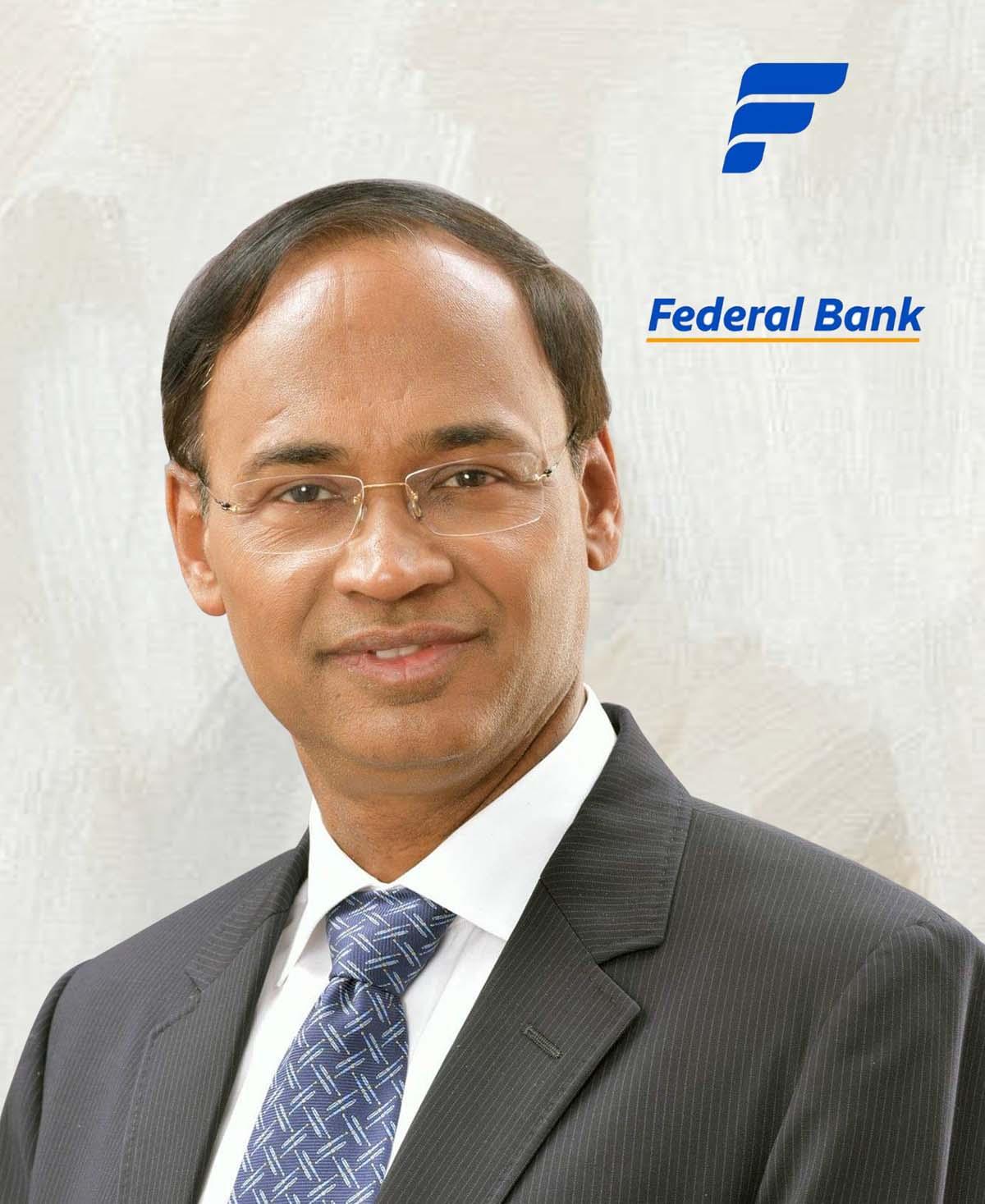
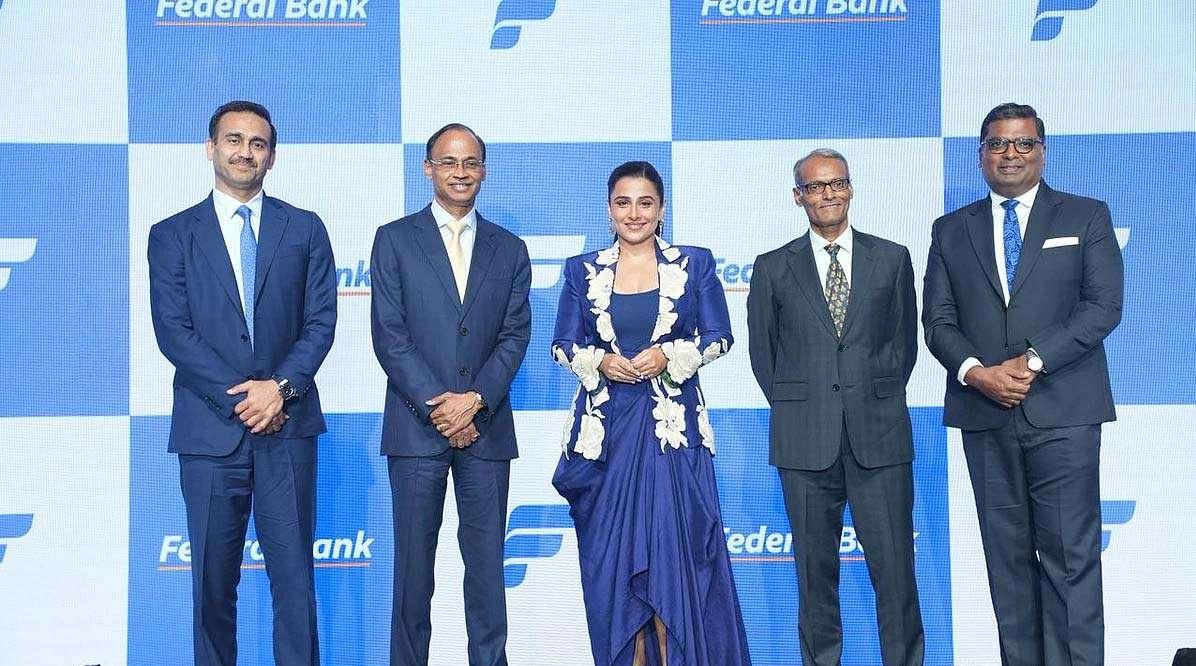
The start of 2026 has marked a definitive shift in the history of Federal Bank, an institution long revered for its quiet stability and Kerala roots. On a crisp January evening in Mumbai, amidst the flashbulbs and the presence of its brand ambassador Vidya Balan, the bank unveiled its new identity - the “Fortuna Wave.” This rebranding was not merely a cosmetic exercise; it was a declaration of intent.
For decades, Federal Bank has been the dependable partner, promoting a relationship that goes beyond routine banking operations. Now, under the fresh and dynamic leadership of MD & CEO KVS Manian, the bank is signaling that it is ready to move beyond its regional roots and claim a spot among India’s top five private lenders. This is, incidentally, one of Federal Bank’s longstanding ambitions, reiterated by CEO KVS Manian.

The new Federal Bank logo, with its fluid, rounded typography and the new triple wave insignia representing authenticity, togetherness, and prosperity, captures this transition perfectly: a legacy institution evolving into a digital-first, pan-India powerhouse. This visual transformation arrives at a pivotal moment, coinciding with a period of intense strategic recalibration.
Since taking the reins in late 2024, CEO KVS Manian has wasted no time in steering the ship toward higher growth waters. His tenure so far has been defined by an ambitious, albeit pragmatic, roadmap: to scale the bank’s
balance sheet, improve return ratios, and aggressively expand into high-yield lending segments. The market too has taken note, taking the stock from Rs 170 levels to Rs 270 levels during this period.
The bank’s strategic maneuver to bring on board global investment giant Blackstone, approved in the third quarter of this fiscal, stands as the most important initiative in this new direction. The preferential issue, valued at nearly Rs 6,200 crore, is not just a capital injection; it is a massive vote of confidence from one of the world’s smartest money managers in CEO KVS Manian’s vision.
This war chest - of which 25% has already come inis expected to fuel the bank’s organic growth and potentially support inorganic opportunities, ensuring that Federal Bank is well-capitalized to navigate the credit cycles ahead. Financially, the fiscal year 2026 has been a year of strengthening the core, even as headline numbers show the inevitable impacts of transition.
The results for the second quarter of the fiscal year painted a picture of underlying operational robustness balancing out a temporary profit dip. While net profit saw a year-on-year moderation to Rs 1019 crore - largely due to prudent provisioning and one-offs - the engine room of the bank was firing on all cylinders, with Net Interest Income (NII) hitting a record high.
The bank’s orientation towards more diversified and service-based revenue was also evident, with fee income soaring to an all-time high. These metrics are the true north for any banking analyst, indicating that the bank’s core lending and fee-generating franchises are healthier than ever. The bank has also successfully maintained its asset quality, a hallmark of its conservative lending culture.
Gross NPAs held steady below the 2% mark, a feat that continues to distinguish it from many of its mid-tier peers. Investors have largely bought into this long-term growth story, despite the stock witnessing some consolidation in early 2026. Trading around Rs 250 levels in January, the stock has delivered a healthy return of over 25% in the last one year, outperforming several sectoral peers.
The narrative driving this valuation is the “Federal 2.0” strategy. CEO KVS Manian has been vocal about shifting the loan mix towards higher-yielding assets like commercial vehicles, credit cards, and microfinance, moving away from the lower margins of corporate lending. This pivot is essential for expanding the Net Interest Margin (NIM), which has historically been a pressure point for the bank.
Federal 2.0 is a strategic transformation plan aimed at becoming one of India’s top five private sector banks, centered on a philosophy of being “Digital at the fore, human at the core”. The strategy focuses on significant digital augmentation, nationwide physical expansion, and a customer-centric approach to achieve sustainable, profitable growth. The recent

rebranding is the consumer-facing side of this strategy.
It aims to attract a younger, more aspirational demographic that aligns with the bank’s sleek digital interfaces like the award-winning “Feddy” AI assistant and its neobanking partnerships. The just completed third quarter of this fiscal has been particularly buzzing with activity beyond just financials, at Federal Bank. The Blackstone deal outcome and the rebranding campaign have kept the bank in the headlines.
Business updates for Q3 too suggest a continued momentum in deposit mobilization, a critical challenge for the entire banking sector now. Federal Bank’s distinct advantage here remains its dominance in the NRI remittance market, where it commands a staggering share of inflows into Kerala, one of India’s key remittance destinations, and Federal’s home state.
Leveraging this sticky deposit base for chasing high-growth domestic retail assets is the balancing act that the leadership team under CEO KVS Manian is currently performing. The “Fortuna Wave” isn’t just a logo; it symbolizes this balance - fluid enough to adapt to digital banking trends, yet grounded in the solid trust that millions of Indian families & NRIs have placed in the bank for generations.
Looking ahead, the path for the remainder of the fiscal year is clear. The bank is expected to double down on its branch expansion, with plans to add dozens of new touchpoints in nonsouthern markets like Maharashtra and Gujarat. This geographic diversification is the final piece of the puzzle to shed the “South” tag, along with a fortified capital base, and a refreshed brand identity that resonates with modernity.
The top leadership team led by MD & CEO KVS Manian combines the dynamic momentum of new-age banking with the prudence of old-world finance, to transform Federal Bank to be an institution in motion. As the “Fortuna Wave” begins to appear on branches and apps across the country, it is signalling prospective clients that this 90-year-old institution is not just surviving the fintech era, but intends to lead it.
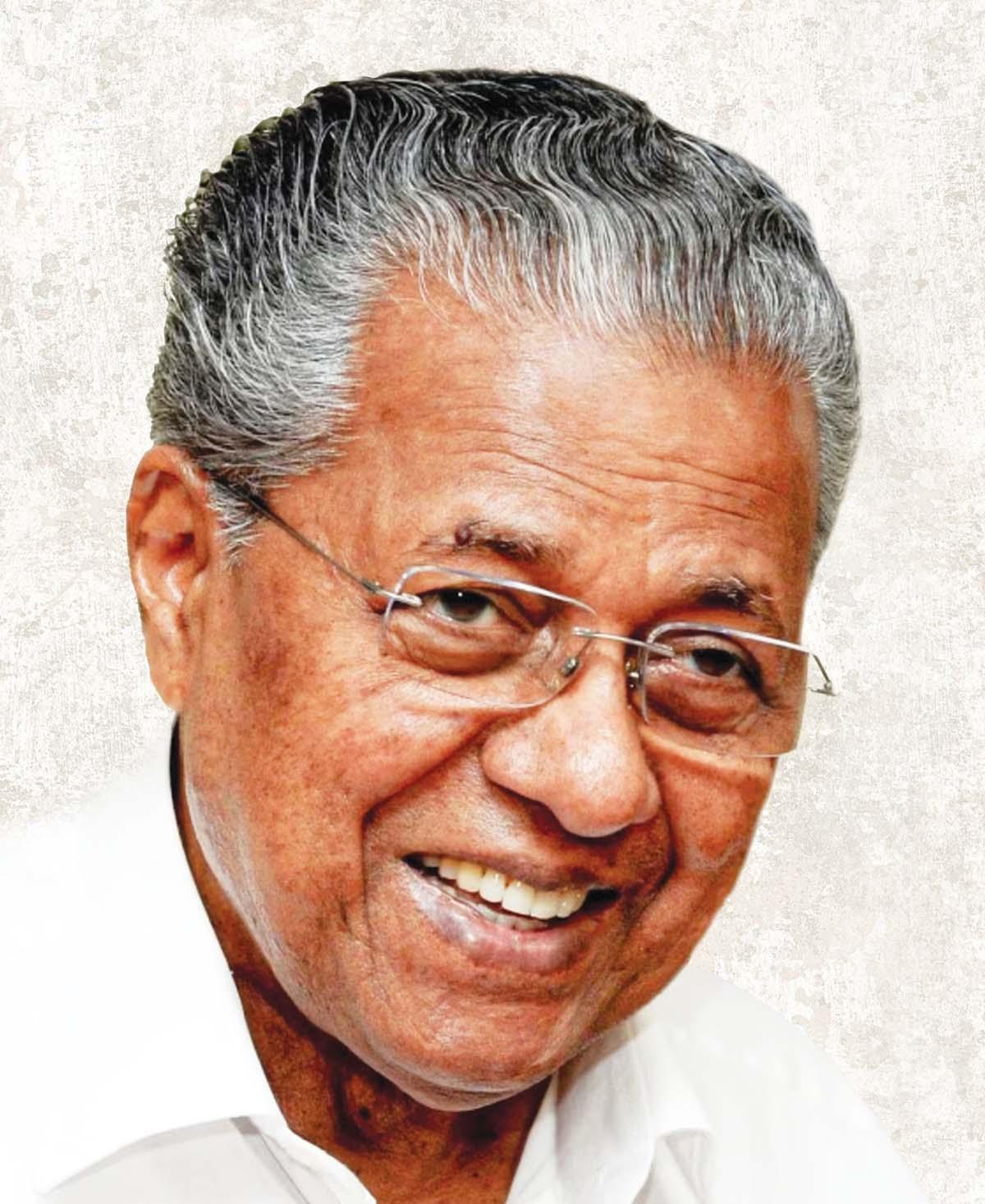

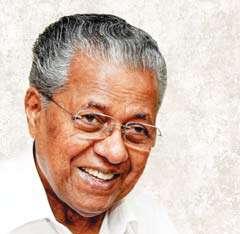
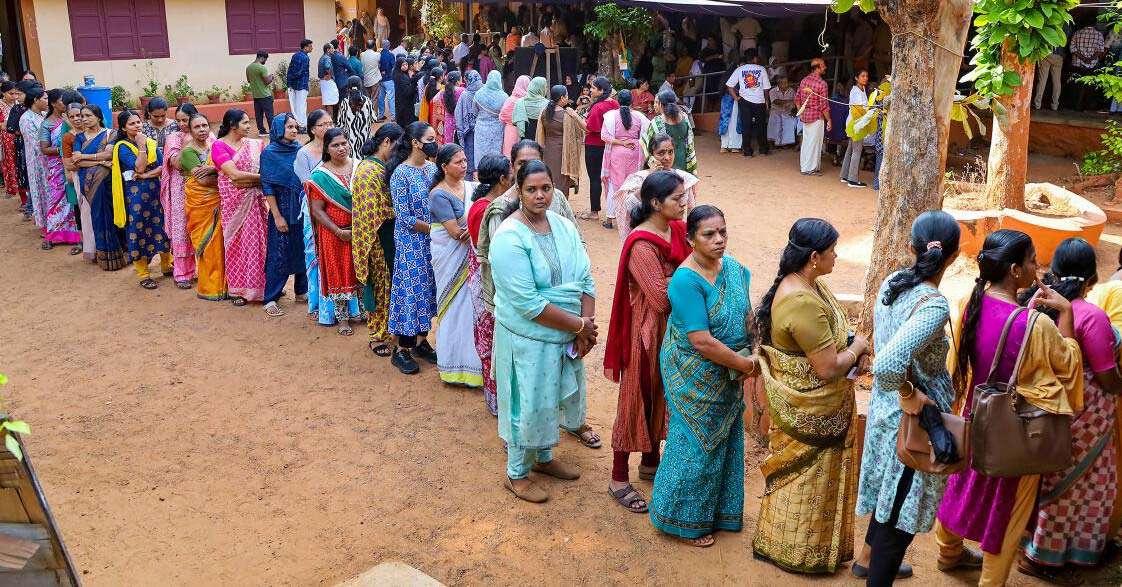
The recent local government elections in Kerala have delivered a decisive verdict, one that has shaken the ruling
Left Democratic Front (LDF) to its very foundations. With the Congress-led United Democratic Front (UDF) securing an emphatic victory and the BJP making surprising inroads though in expected pockets, the writing on the wall is stark for Chief Minister Pinarayi Vijayan led LDF Government. The electorate has signaled a growing restlessness, driven by anti-incumbency sentiments and lingering discontent over the handling of sensitive issues like Sabarimala. Can CM and LDF show resilience against this impact and craft a sharp rebound by April-May 2026?
For the LDF government led by Chief Minister Pinarayi Vijayan, this electoral drubbing serves as a harsh reality check rather than just a midterm stumble. With hardly five months remaining before the assembly elections, likely scheduled for April-May 2026, the administration finds itself staring at a difficult scorecard. It is a report card where perceived failures are currently outweighing achievements, a sentiment now validated by the ballot box. The government’s narrative is struggling to hold ground against visible voter frustration.
While the administration continues to project a strong face, citing achievements like the declaration of extreme poverty eradication, these claims have run into serious headwinds. The critique is no longer coming just from the opposition; traditionally left-wing social scientists are now disputing the depth of these successes. The
disconnect between government claims and ground reality was a key theme in the recent polls, suggesting that the electorate is demanding more than just statistical assurances of welfare.
Central to this discontent is the issue of off-budget financing, which has emerged as one of Kerala’s most worrying fiscal trends. Institutions like the Kerala Infrastructure Investment Fund Board (KIIFB) and Kerala Social Security Pension Ltd (KSSPL) were originally conceived to fund infrastructure and welfare without burdening the annual budget. However, the sheer scale of debt accumulation in these entities is now threatening the state’s longterm financial stability and fueling voter anxiety about the future.
Despite the Kerala Government’s claims of massive investments through KIIFB - specifically Rs 21,624 crore for roads and bridges,
Rs 16,527 crore for industrial parks, and thousands of crores for health, power, and water projects - the ground reality tells a different story. The electorate appears to have penalized the ruling front for the gap between these headline-grabbing figures and the actual progress visible in their daily lives, particularly in infrastructure and utilities.
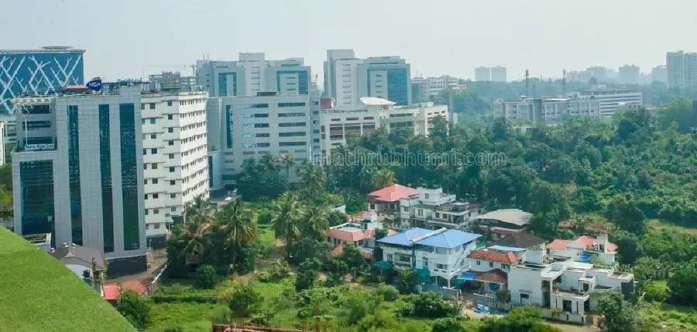
The discontent is tangible in the infrastructure sector, where many road and bridge projects remain incomplete or poorly executed. Cost overruns and delays are draining public funds, while industrial parks have struggled to attract serious investors, leaving expensive infrastructure underutilized. Furthermore, NHAI land acquisitions have sparked disputes and compensation controversies, slowing national highway expansion. The dramatic road collapse due to faulty land acquisition and construction became a potent

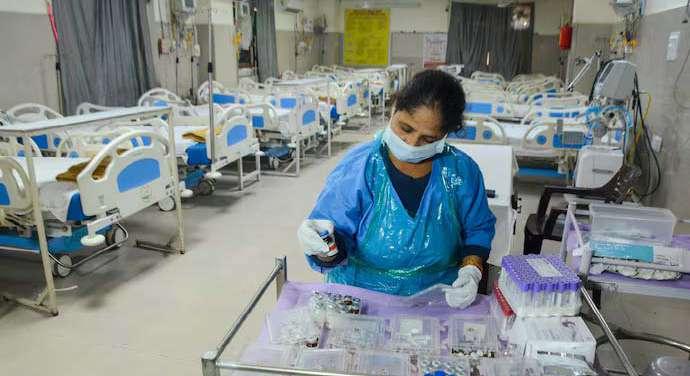
symbol of inefficiency during the local election campaign. Social sectors have not fared much better in public perception. Health and Ayush initiatives, despite heavy funding promises, have delivered little visible impact in primary care, even as hospitals battle shortages. Water supply and power distribution projects have failed to ensure consistent coverage or reduce outages. Together, these shortfalls expose how high-decibel announcements often mask inefficiency, lack of accountability, and mounting debt, raising concerns that KIIFB’s spending spree has yielded more paper progress than real development.
This gap between promise and delivery is compounded by the warnings repeatedly flagged by the CAG. These off-budget borrowings have grown into a hidden mountain of debt that bypasses traditional fiscal scrutiny. By pushing repayments and liabilities into the future, such mechanisms create an illusion of fiscal discipline today, even while mortgaging tomorrow’s revenues. The mounting debt obligations of KIIFB and KSSPL risk eroding Kerala’s borrowing capacity, a fear that clearly resonated with the fiscally conscious sections of the voting populace.
To stage a comeback by April 2026, the government must urgently pivot from defensive posturing to transparent action. The first broad step is to stop dismissing the CAG’s findings as mere political attacks. Acknowledging the fiscal strain and presenting a clear, honest roadmap for debt management could restore some credibility with the middle class. The government must move beyond the “facts-based campaign” it recently mounted and instead
focus on visible, tangible completion of stalled projects.
Secondly, the administration needs to address the emotional and cultural disconnect highlighted by the Sabarimala issue. The election results suggest that the wounds have not fully healed. A conciliatory approach that respects devotee sentiments without compromising progressive values is essential to win back the trust of alienated community groups. The LDF needs to show it is listening, not just lecturing, if it hopes to stem the flow of votes to the UDF and the BJP.
Finally, the government must prioritize immediate grievance redressal measures over announcing grand new schemes. With only five months left, there is no time for long-gestation projects. The focus
must shift to ensuring that pensions are paid on time, water taps run dry less often, and potholes are filled. The administration’s early wins in people-centric governance need to be revived and forcefully implemented to counter the narratives of nepotism and administrative opacity.
The road ahead is clearly uneven, and the clock is ticking louder than ever. Yet, the situation is not without hope. The LDF has a history of resilience and a formidable organizational machine. If the leadership can interpret this electoral setback as a constructive jolt rather than a terminal verdict, they still possess the potential to reclaim their pioneering promise of inclusive progress. The next five months will determine if they can turn the tide or if the local election was merely the dress rehearsal for a larger exit.
SEASONAL MAGAZINE
PEOPLE WHO USE DRUGS LIKE GLP-1 AGONISTS TO LOSE WEIGHT REGAIN IT MORE QUICKLY THAN THOSE WHO USE A CONVENTIONAL APPROACH OF DIET AND EXERCISE, ACCORDING TO A NEW STUDY.

The finding comes from an observational meta-analysis, published in the British Medical Journal, which evaluated 37 studies including more than 9,000 adults to assess how quickly weight is put back on after stopping obesity drugs.
It looked at older therapies like orlistat, which prevent fat from being absorbed from the diet, as well as massively popular GLP-1 agonists, Novo Nordisk’s Wegovy (semaglutide) and Eli Lilly’s Mounjaro/Zepbound (tirzepatide), which suppress hunger.
Overall, it found that patients could lose up to a fifth of their body weight
using the injectable GLP-1s, but put it back on at a rate of 0.8 kg a month after the treatment stopped, which means that they should return to their former weight in as little as 18 months.
For all medicines, the average regain rate was 0.4 kg per month, according to the authors, and it happened up to four times faster compared to people who shed weight using behavioural weight management programmes, where the rebound occurred at around 0.1 kg a month and took an average of around four years.
Secondary benefits of the drug treatment, such as blood pressure and
cholesterol levels, also returned to pretreatment levels within 1.4 years.
“In summary, what we’ve shown in this particular piece of analysis is that weight regain after medication is common and is rapid,” said Dr Susan Jebb of Oxford University, one of the study investigators. “The cardiometabolic benefits essentially parallel weight – and so, as weight is regained, the cardiometabolic benefits are lost,” she added.
One factor behind the rapid regain is that GLP-1s allow people to lose so much weight in the first place, they added, whilst also pointing to a high discontinuation rate with the drugs. They also suggested that behavioural methods encourage lifestyle changes that continue to be adhered to even as their weight starts to return.
Experts said the findings lend data to the intuitive idea that relying on drugs alone, without lifestyle changes, is inadequate for long-term results.
“Artificially providing GLP-1 levels several times higher than normal over a long period may cause you to produce less of your own natural GLP-1, and may also make you less sensitive to its effects,” commented Dr Adam Collins, a nutrition expert at the University of Surrey, who was not involved in the study.
“As soon as you withdraw this GLP-1 ‘fix’, appetite is no longer kept in check, and overeating is far more likely,” he added. “This is further exacerbated if the individual in question has relied solely on GLP-1 to do the heavy lifting during weight loss. The key message this paper supports is that weight-loss drugs […] have arguably made weight loss very easy, but maintaining the weight loss is now a bigger challenge than ever.”
Prof Naveed Sattar from Glasgow University pointed out that the study cannot evaluate whether short-term use offers lasting benefits, but said it is “plausible that being lighter for even two to three years due to short-term use of the medicines could help slow damage to joints or hearts and kidneys.” (Pharmaphorum) (Pharmaphorum)
While obesity is a known risk factor for heart disease, a new study showed that the ratio of a person’s waist measurement compared to their height is more reliable than body mass index (BMI) at predicting the risk.
The finding, published in The Lancet Regional HealthAmericas, could reshape how clinicians and the public assess cardiovascular risk, especially for people who don’t meet the classic definition of obesity.
“Higher BMI, waist circumference, and waist-to-height ratio at baseline were all associated with higher risk of developing future cardiovascular disease - until we adjusted for other classic risk factors, such as age, sex, smoking, exercise, diabetes, hypertension, and cholesterol,” said lead author Thiago Bosco Mendes, from the University of Pittsburgh, US.
“When we did that, only waist-to-height ratio held as a predictor,” Mendes said.
“HIGHER BMI, WAIST CIRCUMFERENCE, AND WAIST-TOHEIGHT RATIO AT BASELINE WERE ALL ASSOCIATED WITH HIGHER RISK OF DEVELOPING FUTURE
CARDIOVASCULAR DISEASE - UNTIL WE ADJUSTED FOR OTHER CLASSIC RISK FACTORS, SUCH AS AGE, SEX, SMOKING, EXERCISE, DIABETES, HYPERTENSION, AND CHOLESTEROL,”

Researchers analysed data from 2,721 adults who had no cardiovascular disease at baseline and were followed for more than five years.
Much of that predictive power is concentrated among individuals with a BMI under 30, which is below the classic threshold for obesity, who may
not realise they are at risk for cardiovascular disease.
BMI doesn’t account for fat distribution or distinguish between harmful, visceral fat and protective, subcutaneous fat.
By contrast, waist-to-height ratio (WHtR), calculated by dividing waist circumference by height, directly reflects central obesity, which is more closely linked to heart disease.
That means that people with a BMI lower than 30, but a WHtR over 0.5, may be at higher risk of future coronary artery calcification, a key marker of cardiovascular disease, even in the absence of other risk factors, the study showed.
“Using waist-to-height ratio as a cardiovascular screening tool could lead to earlier identification and intervention for at-risk patients who might otherwise be missed,” said senior author Marcio Bittencourt, Associate Professor of Medicine at Pitt.
“It’s a simple and powerful way to spot heart disease risk early, even if a patient’s weight, cholesterol, and blood pressure all seem normal,” Bittencourt added.
(Credit: IANS)
NOBODY DISAGREES THAT ALL SECTORS OF THE INDIAN EDUCATION SECTOR NEED URGENT UPGRADES. BUT WHERE TO START THIS DAUNTING TASK? A LEADING VOICE IN EDUCATIONAL REFORM, DR. MADHUKAR G ANGUR, HAS LONG ADVOCATED A PIVOT TOWARDS EXCELLENCE IN HIGHER EDUCATION. DR. ANGUR, FOUNDER CHANCELLOR OF ALLIANCE UNIVERSITY IN BENGALURU, COMBINES THE RIGOR OF A PHD FROM THE UNIVERSITY OF TEXAS AT ARLINGTON WITH AN MBA FROM IIM AHMEDABAD AND A B.TECH FROM NIT. AFTER AN ILLUSTRIOUS CAREER AT TOP UNIVERSITIES IN THE UNITED STATES, DR. ANGUR RETURNED TO INDIA, DETERMINED TO INFUSE ITS EDUCATION SYSTEM WITH GLOBAL BEST PRACTICES, INNOVATION, AND A PASSION FOR QUALITY. THROUGH INVESTMENTS IN INSTITUTION BUILDING AND EDTECH STARTUPS, HE HAS CHAMPIONED THE CASE FOR A MODERN, HOLISTIC UNDERGRADUATE EXPERIENCE THAT CAN BRIDGE INDIA’S ASPIRATIONS AND REALITIES.

India India India India stands at a pivotal moment in its education journey. While landmark reforms and expanded access have brought millions into classrooms, the system’s true test lies ahead: delivering robust, future-ready undergraduate education to fuel national progress. Despite impressive growth in institutions and enrollment, persistent gaps in quality, skills alignment, and research orientation continue to hold back India’s vast undergraduate base. The most urgent imperative now is a sweeping, quality-focused upgrade at the undergraduate degree level - the very core that feeds India’s innovation, workforce, and global aspirations.
For India, progress at the school level has been propelled by the Right to Education Act, which sought to democratize access by ensuring that a school was available for every child. However, while the construction of schools mushroomed, what occurs within their walls remains deeply concerning. Teachers are often undertrained, classrooms overcrowded, and outmoded methods of learning prevail. This has led to alarmingly low learning outcomes. Children routinely advance through grades with minimal comprehension or critical thinking, resulting in an education system that appears functional on the surface but is hollow at its core.
Reflecting the diminishing trust in public education, especially among urban and affluent families, there’s been a rapid shift towards elite private and international-curriculum schools. Schools offering IB and IGCSE programs are replacing traditional CBSE and ICSE paths, promising better infrastructure, experiential learning, and global exposure. The burgeoning popularity of these institutions signals eroding confidence in India’s public
education system and deepens the divide between educational haves and have-nots.
This polarization is equally mirrored at the undergraduate level, where opportunities have expanded but excellence remains elusive. Over the last decade, India’s higher education institutions have grown nearly 37%, with especially rapid proliferation among medical colleges and elite institutions like IITs and IIMs. University and college numbers are at record highs and enrollment figures have surged. From 2014-15 to 202425, the number of higher education institutions increased from 51,534 to 70,683, and total enrollment climbed
by more than 30% to 4.46 crore. The government targets a Gross Enrollment Ratio (GER) of 50% by 2035, up from the current 28.4%. On the surface, these figures paint a picture of thriving expansion.
But beneath the numbers, a troubling reality persists. Apart from a few elite outliers, the vast majority of undergraduate programs in tier-2 and tier-3 colleges suffer from inadequate infrastructure, a lack of competent faculty, and minimal research orientation. Laboratories are outdated, libraries cannot keep pace, and curricula often bear little resemblance to the rapidly evolving needs of the global workforce. Students with means increasingly turn to well-funded private universities offering contemporary campuses, industry tieups, and global exchange programs, thereby
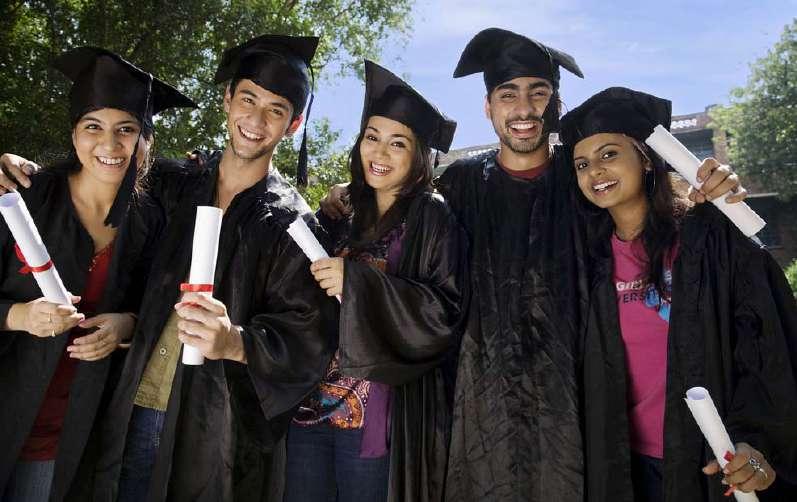


Nestled in the bustling hub of Greater Noida, Uttar Pradesh, Galgotias University stands as proof of the transformative power of higher education. Under the visionary leadership of its CEO, Dr. Dhruv Galgotia, the institution has evolved from a promising private university into a global powerhouse, redefining higher education in India. With a dynamic blend of cutting-edge infrastructure, industryaligned programs, and a relentless focus on innovation, Galgotias is shaping the next generation of leaders, entrepreneurs, and changemakers. From hosting international conferences to fostering startups, achieving global rankings, and celebrating student victories on the world stage, the university’s journey is nothing short of inspiring.
At the heart of Galgotias University’s meteoric rise is Dr. Dhruv Galgotia, its young leader whose forward-thinking approach has propelled the institution to new heights. With a keen understanding of the evolving needs of today’s youth, like their need for speed, Dr. Galgotia has spearheaded initiatives that bridge the gap between traditional academia and the demands of a rapidly changing world.
“At Galgotias University, we are committed to shaping the future by empowering students to reach their fullest potential,” he says, a mantra that echoes through every facet of the institution.
Under his stewardship, the university has embraced a student-centric model, integrating technology, active learning, and real-world relevance into its DNA. His emphasis on innovation is evident in the university’s top-tier rankings for patent filings - No. 1 in Uttar Pradesh and among the Top 3 in India - as well as its robust incubation ecosystem, which has nurtured over 135 startups till now.
Dr. Galgotia’s vision extends beyond academics; he sees education as a movement, a catalyst for sustainability, creativity, and global impact. “Creativity dies in stagnation. Change is essential,” he asserts, a philosophy that has driven Galgotias to pioneer India’s first Active Learning Space and forge strategic partnerships with global leaders like Nanyang Technological University (NTU), Singapore.
Founded with a mission to provide quality education, Galgotias University has grown exponentially since its inception in 2011. Today, it boasts over 40,000 students across 20 schools and 30 departments, offering more than 200 programs ranging from polytechnic diplomas to PhDs.
Says Chancellor Suneel Galgotia, “We remain committed to realizing Prime Minister Narendra Modi’s vision of making India a developed nation and a global leader and Vishwa Guru, and to Uttar Pradesh Chief Minister Yogi Adityanath’s dream of establishing UP as a global knowledge superpower.”
Galgotias University has strong departments and courses spanning
Engineering, Law, Business, Media, Pharmacy, Liberal Arts, Hotel Management, Science, Arts, Commerce and more.
Spread across a sprawling, green 52acre campus, Galgotias University boasts infrastructure that rivals top international institutions. The latest addition - a futuristic academic block with smart classrooms, AI labs, innovation spaces, and collaborative work zones - is proof of the university’s investment in next-gen education.
With an A+ accreditation from the National Assessment and Accreditation Council (NAAC), the university is a hub of academic rigor and excellence. Its faculty, numbering over 1,500, includes industry experts, researchers, and educators dedicated to fostering a culture of inquiry and innovation.
At the core of Galgotias’ rise is its world-class faculty. They include PhDs from IITs, IIMs, and global institutions, ensuring that students learn from the best. Faculty members are encouraged to pursue patents, publish in international journals, and lead research projects, many of which


receive government and private grants. Over 100 patents have been filed in recent years, underscoring the university’s commitment to original research.
The university’s alumni network, exceeding 80,000 in strength, is a testament to its impact. Graduates have excelled globally, from corporate boardrooms to international sports arenas, carrying forward the Galgotias legacy.

The university’s Alumni Connect Program organizes global reunions, mentorship programs, and networking summits that help current students access career opportunities and guidance from seasoned professionals. With an annual intake of over 12,000 new students - as seen during the Orientation 2024 - the campus buzzes with energy, supported by one of India’s largest Student Councils, overseeing 50+ active clubs that nurture leadership and collaboration.
Galgotias University is not just a place of learning; it’s a platform for groundbreaking events that connect students with industry and innovation. The 10th edition of the Electric Solar Vehicle Championship-3000 (ESVC3000), held recently, in collaboration with ISIEINDIA, showcased the ingenuity of young engineers.
Teams from across India competed in categories like the SIEP E-Bike Challenge and the Solar Vehicle Championship, testing their designs for endurance, efficiency, and sustainability. With 20 teams clearing rigorous technical inspections and a Red Bull vehicle exhibition adding flair, the event underscored Galgotias’ commitment to green mobility.
Similarly, the Smart India Hackathon (SIH) 2024, hosted on December 13, 2024, brought together innovators to
solve real-world problems. The Ministry of Education’s Innovation Cell praised the students’ dedication, engaging with projects like an IoT-based smart irrigation system aimed at tackling water scarcity. These events highlight Galgotias’ role as a catalyst for practical, industry-relevant solutions.
Entrepreneurship is a cornerstone of Galgotias University’s ethos, embodied by the Galgotias Incubation Centre for Research, Innovation, Startups & Entrepreneurs (GIC RISE). Since its inception, GIC RISE has supported over 135 startups, with 35 still active and more than 30 generating stable revenue - three surpassing INR 1 crore annually.
Vineet Mittal, a medical biotechnology graduate, exemplifies this success with Biopractify, a startup transforming biotech education through skill development and virtual labs, crediting GIC RISE for turning his dream into reality. The incubator offers a robust ecosystem, including a co-working space, FAB Lab, EV lab, 3D printing facilities, and centers of excellence in AI law and intellectual property. With over 120 events, 10 startup challenges, 35 mentors, and 10 investor partners, GIC RISE empowers students to innovate
without chasing funds.
“If they build a product that attracts customers, funding will follow naturally,” Dr. Galgotia emphasizes, a philosophy that has birthed solutions like Sakhi, an app addressing menstrual health, and others aiding the visually and hearing impaired.
The university is also a proud member of the Atal Innovation Mission and houses NITI Aayog’s Atal Incubation Centre, one of the few in India selected for high-impact incubation activities.
Galgotias University’s commitment to modern education is reflected in its state-of-the-art infrastructure. On November 19, 2024, it unveiled India’s first Active Learning Space, a revolutionary building designed to foster collaboration and critical thinking.
Developed in consultancy with NTU Singapore, this facility aligns with the National Education Policy (NEP), featuring cluster seating, multiple boards, and touch-panel TVs for interactive learning. “This is not just an infrastructural upgrade; it’s an overhaul of the educational experience,” Dr. Galgotia notes.
In February 2025, the university launched its AI, Data Science Block and library, a hub integrating traditional learning with AI, ML, and Big Data. With specialized labs, a reading lounge, and digital resources, it caters to diverse disciplines, preparing students for a tech-driven world. These facilities, backed by a INR 300 crore investment, underscore Galgotias’ ambition to lead in technological education.
Galgotias students are making waves on the global stage, most notably with their victory at Apple’s Swift Student Challenge 2025. Eleven students from the iOS Development Centre, established with Apple and Infosys, were among the 350 winners worldwide, selected from thousands of entries.
Their projects - ranging from Tide Explorer, visualizing lunar gravitational effects, to Svaraa, gamifying reproductive health education -

demonstrate technical prowess and social impact. “This global recognition is a testimony to our emphasis on innovation,” Dr. Galgotia beams, noting the mentorship from faculty and industry experts that fueled this success. Galgotias University has gone beyond borders in its quest for academic excellence. The institution has forged strategic partnerships with worldrenowned universities like Purdue University, Georgia Tech, and Goethe University. These collaborations are not just ceremonial - they have resulted in exchange programs, collaborative research projects, and joint curriculum development.
While Galgotias University’s studentto-faculty ratio, allows for personalized attention and mentorship, the university’s academic framework aligns closely with the National Education Policy (NEP), promoting interdisciplinary learning, skill development, and research. From engineering and law to management, media, design, and pharmacy, the range of programs offered are updated regularly to meet the demands of Industry 4.0.
Galgotias University’s academic excellence has earned it prestigious accolades. In the QS World University Rankings: Asia 2025, it ranked 187th
in South Asia and 621-640 in Asia, a feat felicitated by Uttar Pradesh Governor Smt. Anandiben Patel at Raj Bhavan in the presence of Dr. Dhruv Galgotia.
The Times Higher Education (THE) World University Rankings 2025 placed it 45th among Indian universities and in the 1001-1200 band globally, while the Times B-School Survey 2025 ranked it 5th among private universities in India.
With a QS 5-star rating in Teaching, Academic Development, Innovation,
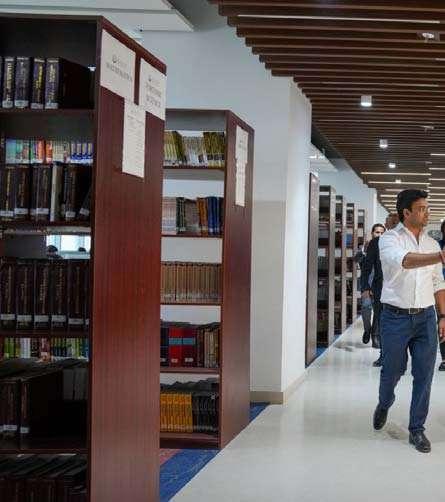
Employability, and Facilities, Galgotias is steadily climbing toward Dr. Galgotia’s goal of being among the world’s top 100 universities.
Galgotias University is ranked among the Top 200 universities in NIRF (National Institutional Ranking Framework) and holds various certifications and accreditations from bodies like NBA, AICTE, BCI, PCI, and UGC.
Its School of Law has been recognized by the Bar Council of India, while the School of Pharmacy is approved by the Pharmacy Council of India. The university is also a member of the Association of Indian Universities (AIU), further cementing its standing among academic peers.
Galgotias University is also a renowned campus for the sporting domain. Its athletes have consistently brought home medals in national and international tournaments. Among them are recipients of the prestigious Arjuna Award, India’s highest sporting honor.
Three students - Rakesh Kumar, Preeti Pal, and Simran Sharma - recently received the Arjuna Award from the Indian President Droupadi Murmu, for their bronze medals at the 2024 Paralympics in Paris. Rakesh, a BA student, shone in archery, while Preeti (MBA) and Simran (MA) triumphed in

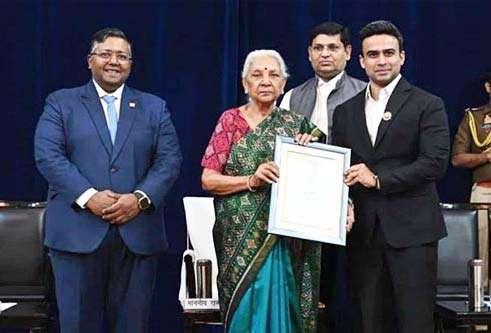
sprinting.
Their resilience, supported by the university’s sports ecosystem, has inspired millions. “These achievements bring glory to the nation and Galgotias,” Dr. Galgotia says, praising the athletes’ families and their coaches.
Galgotias University’s sporting facilities include a fully-equipped sports complex, Olympic-sized swimming pool, synthetic tracks, and indoor arenas. Galgotias students have represented India in sports ranging from boxing and wrestling to badminton and basketball.
Galgotias University is also a hub for
intellectual exchange, as seen in the International Conference on Recent Trends in Intelligent Computing and Communication (ICRTICC - 2025) recently, at Galgotias College. Sponsored by CRC Press and indexed in SCOPUS, it attracted 900 research papers, with 285 accepted, featuring luminaries like Dr. Dev Prakash Vidyarthi from JNU Delhi.
Earlier, conference with NTU Singapore delegates further solidified its global stature, focusing on reshaping teaching paradigms with insights from Prof. Gan Chee Lip and others.
Collaboration is key to Galgotias’ success. Its partnership with NTU
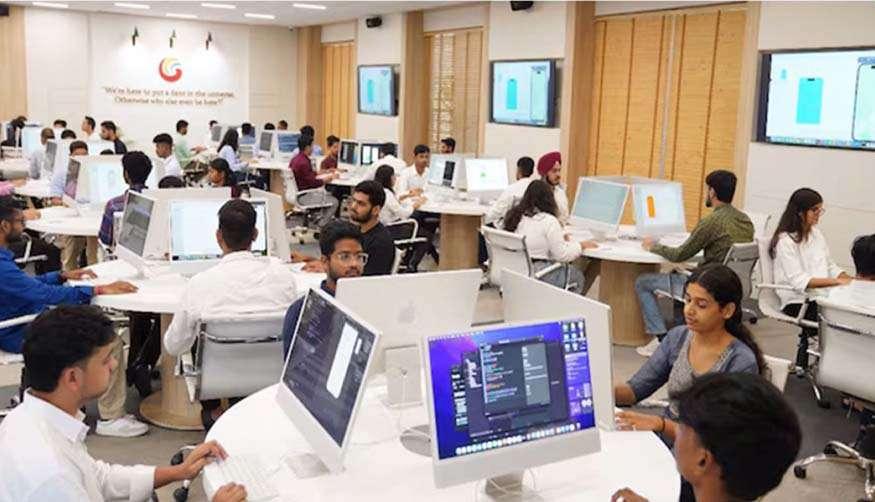
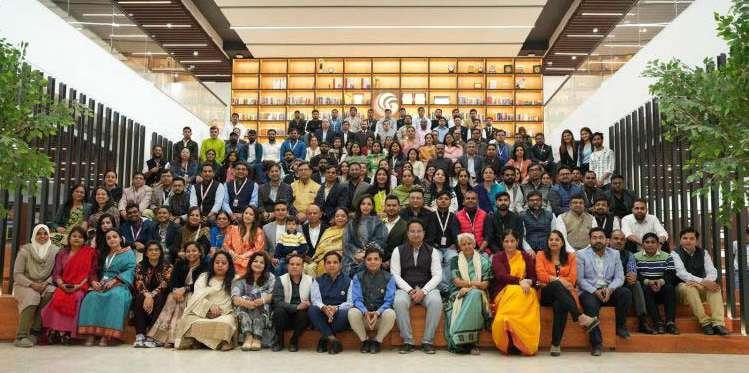
Singapore has brought active learning expertise, with faculty training under NTU’s InsPIRE program.
Industrial tie-ups with JSW MG Motor India and Kansai Nerolac Paints Ltd. enhance student exposure to automotive and construction fields, offering hands-on training and placement opportunities. The MoU with Zell Education integrates the ACCA certification into the BBA program, preparing students for global finance careers.
With over 300 national and international awards, Galgotias University blends academic rigor with extracurricular vibrancy. Its School of Hospitality & Tourism ranks among the world’s top 50 institutions as per CEO World.
Placements remain stellar, with industry giants like Microsoft, Amazon, Cognizant, Infosys, Capgemini, Wipro,
Samsung, and Intel tapping its talent pool. The university’s INR 600 crore roadmap includes a medical college and K-12 school, ensuring sustained growth without compromising quality.
Beyond academics, Galgotias is a vibrant hub of student life. Its annual tech-fest, G-Quasar, attracts thousands from across India, blending innovation with entertainment. Cultural fests, music gigs, TEDx events, and international cuisine days make campus life electric. More than 50 student clubs, ranging from robotics and coding to theatre and entrepreneurship, ensure that every student finds their niche.
Apart from becoming one of the top 100 universities globally, Dr. Dhruv Galgotia’s plans include building Asia’s largest Innovation Park and launching global dual-degree programs. Under his vision, Galgotias University also wants to be a net-zero, sustainable campus.
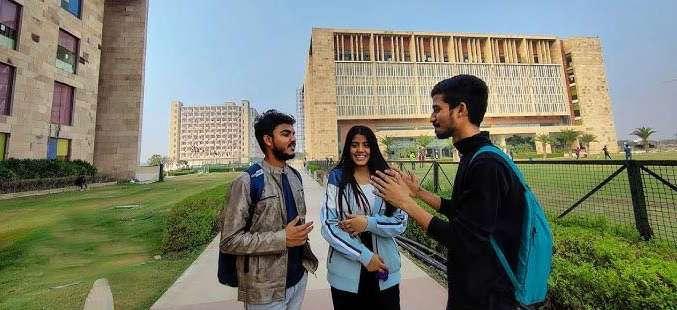
He is also focusing more on strengthening the University’s pioneering courses in AI, Blockchain, and Green Tech.
Galgotias University, under Dr. Dhruv Galgotia’s leadership, is proving to be more than a private institution, and is fighting and overcoming public universities in many facets. By fostering innovation, embracing global partnerships, and celebrating student achievements, it’s carving a path toward becoming a world-class university. As it continues to break barriers and inspire, Galgotias stands as a model for what education can achieve when vision meets action.
With a deep commitment to quality, innovation, and inclusiveness, Dr. Dhruv Galgotia has positioned the university at the intersection of industry, academia, startup incubation and cutting-edge research.
“At Galgotias, we don’t just prepare students for jobs,” Dr. Dhruv asserts. “We prepare them to be leaders, entrepreneurs, and changemakers.”
His leadership has ignited a movement that’s much bigger than any one institution. It’s a reimagination of what Indian higher education can bevibrant, inclusive, innovative, and globally respected.

In an era where higher education demands vision, innovation, inclusivity, and excellence, Nitte Deemed-to-be University stands tall as one of India’s leading multidisciplinary academic powerhouses, especially so now, with it including five more premier institutions in its fold. Headquartered in Mangaluru, Karnataka, and led by its Chancellor Nitte Vinaya Hegde, the university is experiencing an era of transformative growth, remarkable internationalisation, and academic vibrancy. Under the dynamic stewardship of its Pro Chancellor (Administration) Vishal Hegde, Pro Chancellor Prof. (Dr.) M. Shantharam Shetty, and Vice Chancellor Prof. (Dr.) M.S. Moodithaya, the university has carved a unique place in India’s higher education landscape.
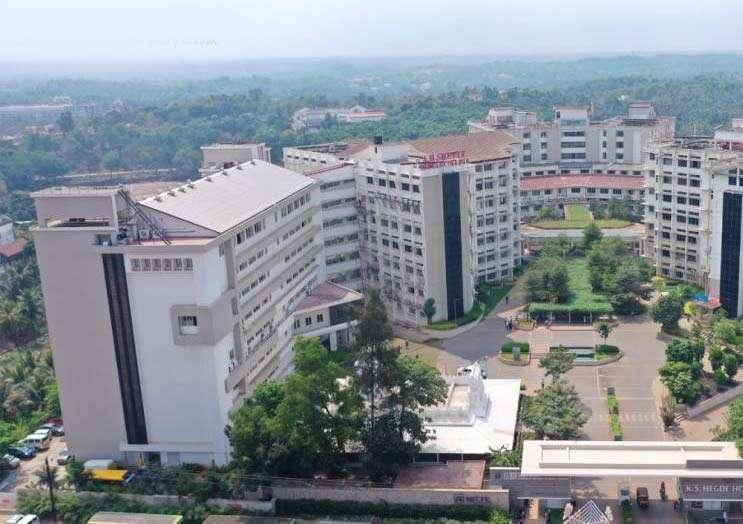
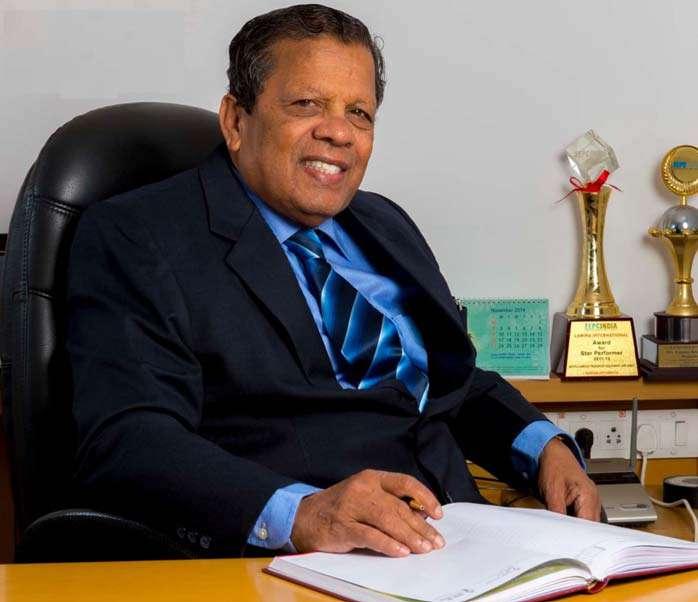
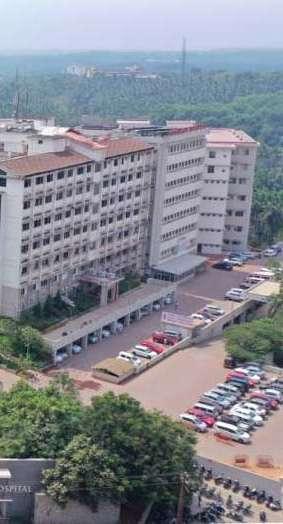
With the recent inclusion of five premier Bengalurubased institutions - the Nitte Meenakshi Institute of Technology, the Nitte College of Pharmaceutical Sciences, the Nitte School of Architecture, Planning and Design, the Nitte School of Fashion Technology and Interior Design, and the Nitte Dr. Shankara Adyanthaya Memorial First Grade College - Nitte University has evolved into a robust entity comprising 19 colleges spread across three campuses.
This 36% expansion represents a decisive leap towards becoming a truly multidisciplinary and multilocational institution. Offering over 160 programs across diverse fields - Medicine, Dentistry, Engineering, Architecture, Fashion Design, Management, Hospitality, and more - the university serves over 27,000 students, guided by a faculty strength exceeding 5,500. Nitte University has received wide acclaim both nationally and
internationally. It ranks 66th in the NIRF 2024 and has an A+ Grade accreditation from NAAC. Globally, it has secured a position in the Top 600 of the QS Asia University Rankings 2025 and ranks among the Top 400 in the Times Higher Education Impact Rankings 2024. It is also placed at 252 in the UI GreenMetric World University Rankings for sustainability, underlining its deep commitment to environmental goals and campus development.
At the heart of Nitte’s pedagogy is academic excellence without sacrificing student wellbeing. A testimony to this is NMAM Institute of Technology (NMAMIT), which was recognised as the Best COPE College of the Year 2023-24 by the Aditya Birla Education Trust for its mental health support systems. The university promotes not just academic rigour but also emotional wellness, safety, and inclusivity, providing an ecosystem where students thrive both intellectually and personally.
Reinforcing a culture of innovation, NMAMIT students also developed a pioneering digital platform to manage

college fests, which includes realtime participant tracking and AIdriven scheduling. This project reflects the university’s emphasis on application-based learning and its commitment to grooming futureready technologists.
The recent techno-cultural festival ‘Anaadyanta 2025’, hosted by Nitte Meenakshi Institute of Technology in Bengaluru, brought together engineering students from across India. With events like CodeWars, Ideathon, and street plays, the fest became a melting pot of creativity and technology. Guests like Ponni Krishnamoorthy of Nokia and actress Lakshmi Gopalaswamy praised the event for cultivating innovation and emotional intelligence.
Marking World Environment Day 2025, Nitte University inaugurated a Miyawaki Forest on campus. Spread across 6,534 sq. ft., this green patch features native species and reflects the university’s commitment to the UN Sustainable Development Goals. Simultaneously, its Centre for Indian Knowledge Systems, inaugurated in February 2025, focuses on research and public awareness around India’s traditional sciences, philosophies, and ecological wisdom.
Nitte’s global outlook is not limited to its rankings. Four MPH students were recently selected for an Erasmus+ funded exchange program with Sweden’s Sahlgrenska Academy. Similarly, over 130 NMAMIT graduates have secured placements in Japanese firms over the past four years, a testament to the university’s strong industry ties and international outreach.
In May 2024, Nitte launched two international dual-degree programs
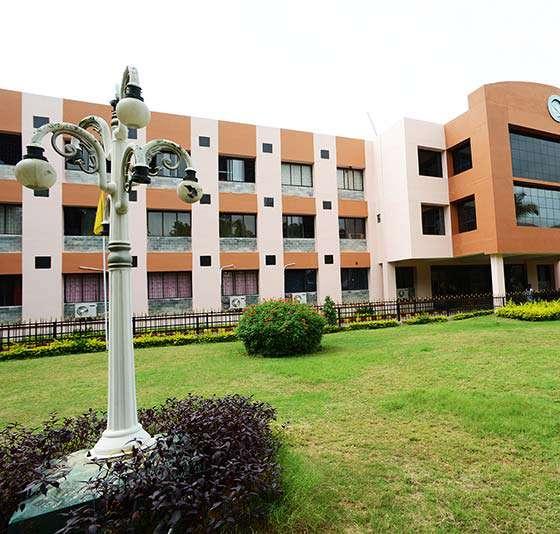

in Computer Science and Engineering with Penn State University, USA, and University of Wollongong, Australia. These 2+2 programs reflect the university’s growing academic diplomacy and commitment to offering global career pathways.
The Nitte Institute of Architecture (NIA) in Mangaluru exemplifies how the university blends design with sustainability. Offering a five-year BArch program, NIA stands out for its student-centric teaching, experiential learning, and focus on urban resilience.
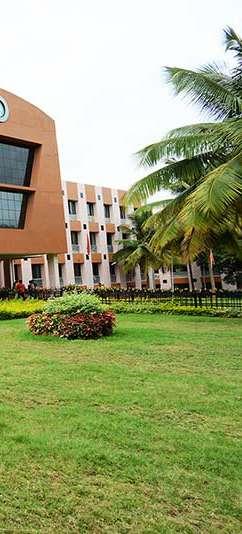
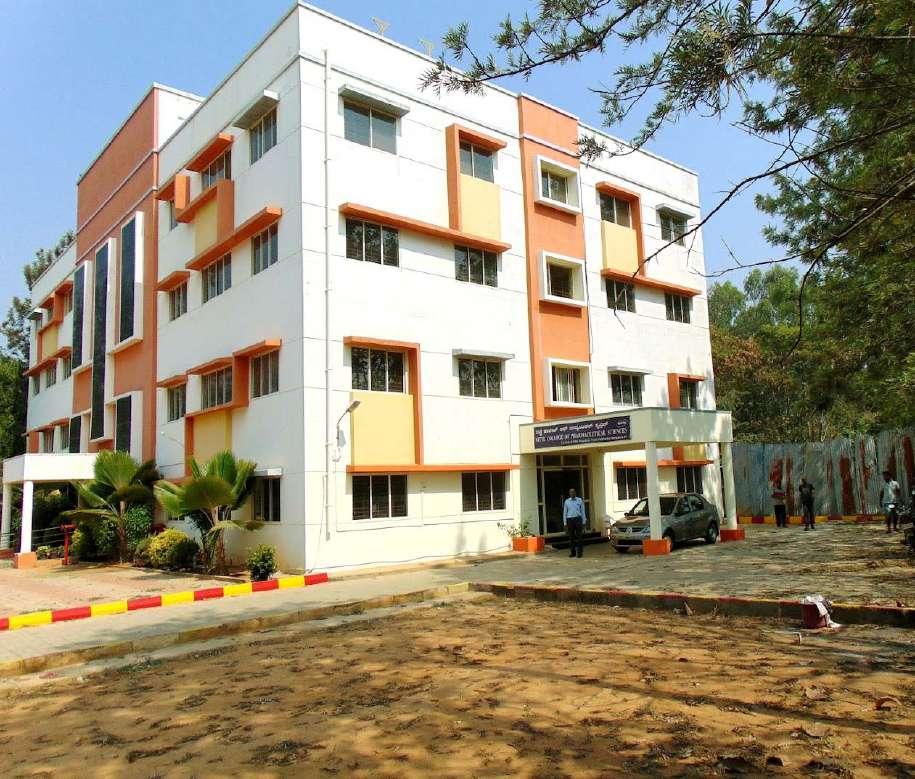
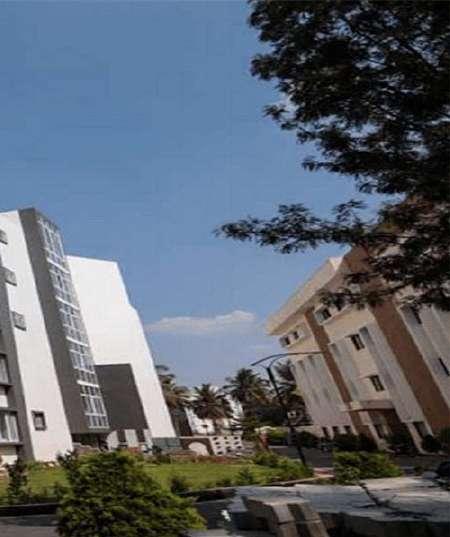
Equally notable is the Nitte University Centre for Science Education & Research (NUCSER), which promotes innovation across biomedical sciences, food technology, and marine biotechnology. With over 50% of academic time devoted to lab work,
the centre fosters a hands-on research culture.
The Justice K S Hegde Institute of Management (JKSHIM), another gem in Nitte’s crown, has established itself as a premier Bschool, offering AICTE-approved MBA programs, and holds accreditation from ACBSP, USA. With Bloomberg-powered labs, Harvard Business Cases, and simulation exercises, it grooms leaders of tomorrow through a blend of theory and real-world application.
In 2024, Nitte University introduced Karnataka’s first BSc (Hons) programs in Civil Aviationwith Pilot Training and Flight Dispatching - through a partnership with Aerodynamiks Academy. These are aligned with EASA standards and underscore the university’s responsiveness to emerging industry demands.
The Nitte Institute of Hospitality Services (NIHS), celebrating its 33rd
anniversary, continues to be a benchmark in hotel and culinary education. With internships across Taj, Marriott, and Oberoi hotels, and partnerships like the one with Sheraton Grand Bengaluru, the institute boasts industry-relevant curriculum, skill-centric pedagogy, and a placement record that spans sectors including airlines and cruise liners.
In the pharma domain, Nitte College of Pharmaceutical Sciences recently held its first graduation ceremony, a milestone in its young journey towards shaping future healthcare professionals.
In a historic achievement last year, Nitte also became India’s first medical college to adopt the Velys Robotic Knee Replacement Technology at its KS Hegde Hospital. This integration of cuttingedge surgical tools reinforces Nitte’s leadership in medical education and patient care. The hospital, a cornerstone of clinical training, is
rapidly becoming a reference point for technology-driven healthcare delivery.
Nitte’s MPH students have turned community engagement into a learning process. Through visits to centres like Spandana Rehabilitation, they’ve promoted inclusivity and awareness for the intellectually challenged. Their participation in SDG-oriented programs, such as the Public Health Winter School, speaks volumes of the university’s ethos of “education with empathy.”
Physiotherapists from Nitte were recently acknowledged by Indian cricketer Vidwath Kaverappa for their crucial role in sports recovery during the Physio Premier League 2025. The event, blending sports and medical sciences, highlighted Nitte’s dedication to interdisciplinary collaboration and physical wellness.
Nitte’s Atal Incubation Centre has mentored farmer collectives like Suphala FPC to create value-added jackfruit products such as vacuumfried chips and halwa. This initiative not only tackles rural wastage but promotes agripreneurship and sustainable value chains.
Additionally, the university regularly organises executive development programs (EDPs) like
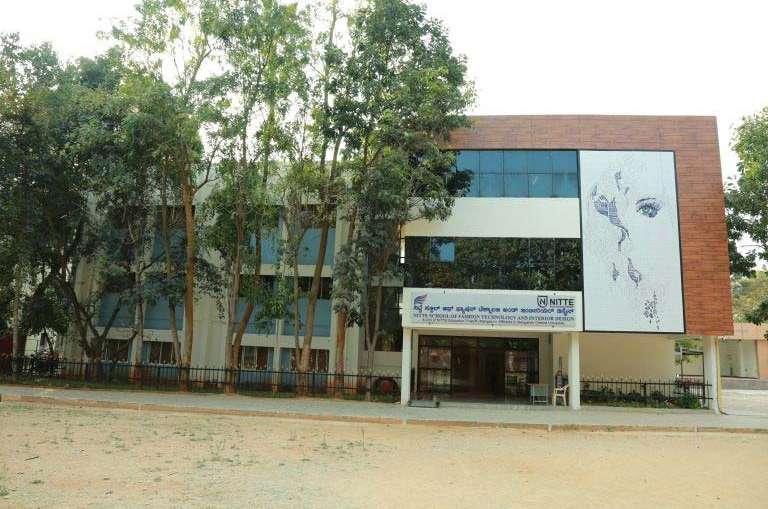
the recent session on AI tools for research communication, underscoring its role in continuous faculty and professional development.
At its 14th Convocation held in November 2024, Nitte had awarded degrees to over 1,000 graduates across fields. Addressing the ceremony, Surgeon Vice Admiral Dr. Arti Sarin urged students to use education as a tool for societal advancement. Gold medals and merit certificates acknowledged the brilliance of outstanding achievers, reinforcing Nitte’s unwavering commitment to excellence.
At the heart of this institution’s visionary progress stands its Chancellor, Nitte Vinaya Hegde, a revered entrepreneur and

educationist. Described in a recent biographical tribute as a “man of impeccable qualities,” Hegde’s ethos of teamwork, compassion, and nation-building is deeply embedded in the university’s DNA.
Supporting him is Pro Chancellor Vishal Hegde, who brings business acumen and strategic foresight, while Prof. (Dr.) Shantharam Shetty, Pro Chancellor (Hospital Management), combines medical excellence with administrative wisdom. Vice Chancellor Prof. (Dr.) M.S. Moodithaya serves as the academic leader, integrating global standards, research culture, and social impact.
Nitte University has thus become a crucible of transformation, a global citizen with local roots. From robotic surgeries to studentled software innovations, from value added products to Swedish scholarships, and from architectural excellence to pilot training - Nitte weaves a unique narrative that blends science, soul, and sustainability. As it continues to expand horizons and push boundaries, it stands as a luminous example of how Indian universities can lead globally while serving locally.

Despite a string of election defeats at the Centre and most key states, nobody can overlook the fact that India’s grand old party is still governing large states like Karnataka, Telangana & Himachal Pradesh. It has recently won a decisive victory in the local government election in Kerala too. Still nobody gives the Indian National Congress a fighting chance in retaining its ruling states and usurping any of the lost states, let alone making a comeback at the Centre. This is despite the spirited leadership and hard work delivered by Rahul & Priyanka. What are the hurdles before INC to make a rebound? Is it a case of too decent central leadership? Is it a lack of charismatic state level leaders? Is it a case of too little democracy as its rivals claim or is it too much democracy as several Congress voices have opined? Or is it an irreversible change in Indian politics which is now dominated by key state-level parties except for the BJP? Or is it a too politically savvy BJP leadership and too organized RSS cadres which are no match for the Congress leadership and machinery? Maybe all these causes are there in varying degrees, and more such reasons. Here is a detailed look at how the Congress can be revived, but first to act as a viable opposition, then to win key states and then maybe to stake a claim at the Centre.

SATHYABAMA INSTITUTE OF SCIENCE AND TECHNOLOGY (SIST) IN CHENNAI, RENOWNED FOR ACADEMIC ACHIEVEMENTS AND INDUSTRY PARTNERSHIPS, IS RAPIDLY MOVING TOWARD REGIONAL PROMINENCE UNDER THE LEADERSHIP OF CHANCELLOR DR. MARIAZEENA JOHNSON. ITS CELEBRATED CONVOCATION CEREMONIES AND IMPRESSIVE PLACEMENT RATES HAVE EARNED WIDESPREAD ADMIRATION AMONG STUDENTS, PARENTS, AND RECRUITERS. YET, LIKE ALL AMBITIOUS INSTITUTIONS, SATHYABAMA’S JOURNEY IS NOT WITHOUT ITS SHARE OF CHALLENGES. CONCERNS REMAIN OVER AVERAGE STUDENT INTAKE QUALITY, CRITICISM OF THE RIGIDITY AND INTENSITY OF THE ACADEMIC EXPERIENCE, AND CALLS FOR GREATER DIVERSITY AND INTERNATIONALIZATION ON CAMPUS. THE UNIVERSITY HAS ALSO FACED ENVIRONMENTAL, ADMINISTRATIVE, AND RESEARCH-RELATED CHALLENGES THAT HAVE SPARKED DEBATE AMONG STAKEHOLDERS. AS SATHYABAMA PURSUES GROWTH IN PLACEMENTS, RESEARCH, AND GLOBAL REPUTATION, ONGOING SCRUTINY FROM ALUMNI, FACULTY, AND THE ACADEMIC COMMUNITY ENSURES THAT THE NARRATIVE IS DYNAMIC, REFLECTING BOTH PROGRESS AND THE IMPERATIVE FOR MEANINGFUL, STUDENT-CENTERED REFORM.
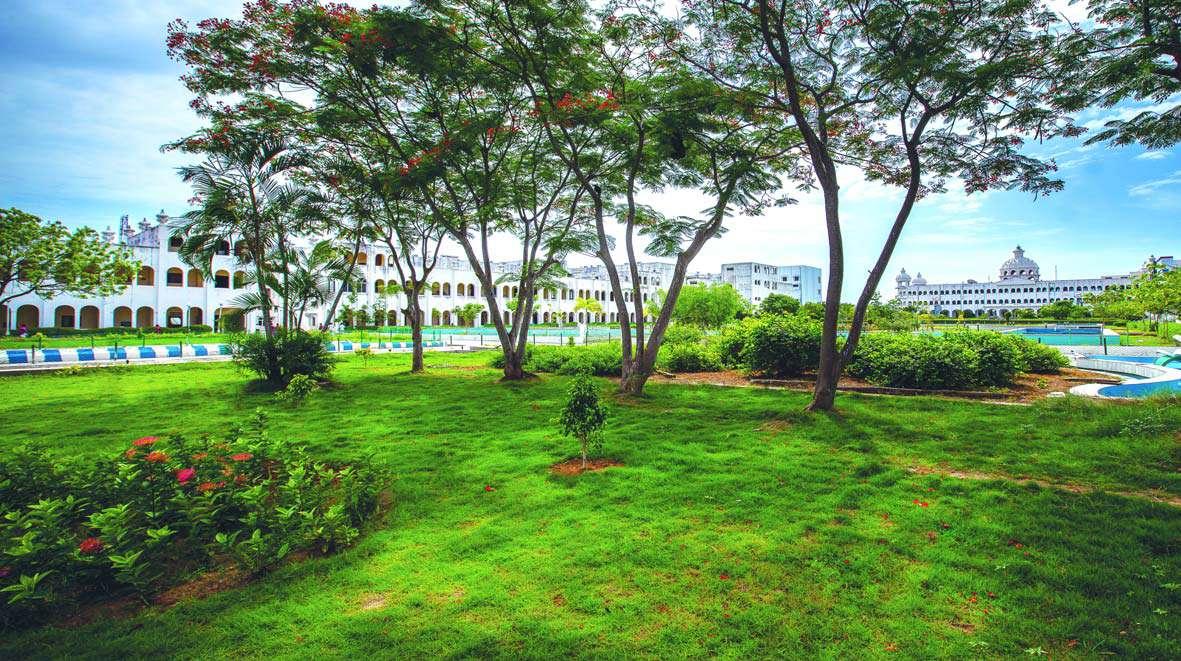


In the heart of Chennai’s bustling academic corridor stands a deemed university of progressive learning and transformational education, the Sathyabama Institute of Science and Technology (SIST). A name that has become synonymous with academic rigor, innovative research, and industry integration, Sathyabama has in recent years accelerated its ascent to regional prominence. Much of this transformation has been driven by the visionary leadership of Dr. Mariazeena Johnson, its dynamic Chancellor, whose commitment to excellence continues to steer the institution into the future.
However, as the university gains national attention, some voices have questioned whether the average quality of students admitted each year - as judged by public entrance and board exam marks - has kept pace with its rising ambitions. There is growing interest in seeing public data on whether this metric is on an upward trajectory, supporting the institution’s brand of academic excellence.
Recently, Sathyabama had opened its arms to celebration as it hosted its 34th Convocation Ceremony. Over 5,000 graduates proudly walked across the stage, receiving their degrees in a grand event held at the Institution Auditorium. The ceremony was an emotional and inspirational milestone, not just for the graduates but also for their teachers and families.
Among the attendees were Sathyabama’s top leadership, including Chancellor Dr. Mariazeena Johnson, President Dr. Marie Johnson, and the Vice Presidents J Arul Selvan, Maria Bernadette Tamilarasi, and Maria Catherine Jayapriya. The event was also graced by the presence of Indian filmmaker Atlee Kumar, a former Sathyabama student, who received an Honorary Doctorate for his remarkable contributions to Indian cinema.
Atlee Kumar’s emotional speech reminiscing about his early dreams and journey from the campus corridors to film sets struck a chord with the audience and added a touch of heartfelt pride to the ceremony.
Underlining the institution’s commitment to high standards, 54 Sathyabama students were conferred with gold medals for academic excellence, setting the stage for another generation of achievers to lead with both intellect and integrity.
And just two months earlier, Sathyabama’s sprawling campus was vibrant with pride and celebration as it hosted Excellence Day 2025. This annual event, which has become a tradition of institutional pride, was presided over by Dr. Mariazeena Johnson, alongside President Dr. Marie Johnson and the three young Vice Presidents.
What marked this year’s event as particularly special was the staggering 91.87% placement rate recorded for the final-year students. A total of 3120 job offers were extended by 303 companies, which is proof of Sathyabama’s deep-rooted industry partnerships and the consistent quality of its graduates.
Yet, a closer look at placement data raises pertinent questions among students and recruiters. While the overall numbers are high, there have been persistent concerns that many placement offers originate from lower-profile firms with below-average pay scales. Stakeholders are watching keenly to see what strategic steps management is taking to attract more premium recruiters and boost the quality of employment opportunities in line with peer institutions.
The campus placement drive saw the highest annual package touch Rs 41.2 LPA, but with the average package standing at a modest Rs 5.45 LPA. Among the recruiters were top-tier corporates such as Amazon, IBM, Oracle, Capgemini, Accenture, JP Morgan,
Cognizant, and TCS, placing Sathyabama among the elite engineering campuses in India.
But only around 40% of the offers were categorized as Dream, Super Dream, or Elite, a benchmark that reflects both the caliber of students and the evolving opportunities in the modern workplace.
Beyond India Inc., the global footprint of Sathyabama students was evident in the 216 students who secured admissions into leading universities abroad, aided by the Advisory Bureau for Higher Studies. Scholarships from prestigious institutions in the United States, Germany, the UK, Australia, Ireland, and France reflect the growing acceptance of Sathyabama’s academic programs.
Sathyabama’s consistent record in student employability is no accident. It is the result of an integrated academic and training ecosystem. The institute’s Centre of Excellence model, powered by collaborations with industry leaders such as Cognizant, HCL, Capgemini, PwC, and LTIMindtree, enables students to upskill in emerging technologies even before they graduate.
A dedicated Training and Placement Cell ensures that students are continuously groomed through workshops, mock interviews, coding marathons, and industry seminars.
students a competitive edge, both domestically and globally.
The campus of Sathyabama is a city in itself. Located along the Old Mahabalipuram Road (OMR) in Chennai, it is well connected and easily accessible by road, rail, and air. Inside the gates, students find a self-contained academic ecosystem complete with state-of-the-art facilities.
Sathyabama’s consistent record in student employability is no accident. It is the result of an integrated academic and training ecosystem. The institute’s Centre of Excellence model, powered by collaborations with industry leaders such as Cognizant, HCL, Capgemini, PwC, and LTIMindtree, enables students to upskill in emerging technologies
While the emphasis on employability is clear, feedback from some alumni and current students has drawn attention to academic pressures and the limited flexibility in the curriculum. As the educational landscape shifts, there are calls for greater reforms to ensure learning is both holistic and less rigid, enabling students to discover their full potential in and out of the classroom.
Over 380 companies visited the campus in the 2024–2025 academic year, with placements cutting across sectors like Information Technology, Core Engineering, Finance, Consulting, Analytics, and Research. This breadth and diversity in the recruiter base is what gives Sathyabama
Yet the very location that offers vibrancy also poses risks, as highlighted by the severe campus flooding of 2023. This event underscored the urgent need for robust infrastructure planning and disaster preparedness. Many now look for evidence of concrete steps being taken by the university to mitigate and prevent such disruptions in the future, ensuring safety and continuity for all.
The central library, with over 5 lakh books and 16,000+ digital publications, remains the intellectual heartbeat of the campus. From a 100bed hospital offering 24x7 medical care, to fully equipped sports complexes with basketball courts, kabaddi grounds, cricket fields, yoga halls, and indoor arenas, the institute’s commitment to holistic development is clear.
Hostel facilities for both men and women, high-speed internet connectivity, auditoriums, and seminar halls further support a vibrant campus life. For working professionals, the university’s approach to part-time and flexible learning has occasionally come under scrutiny. The invalidation of Sathyabama’s parttime MTech degrees in 2019 drew criticism, with many awaiting transparent updates on whether these programs have since been reinstated or replaced at undergraduate and postgraduate levels to serve adult learners effectively. Academically, Sathyabama offers more than 100 courses across undergraduate, postgraduate, and doctoral levels, spanning disciplines like Engineering, Science, Humanities, Law, Dental Sciences, Pharmacy,
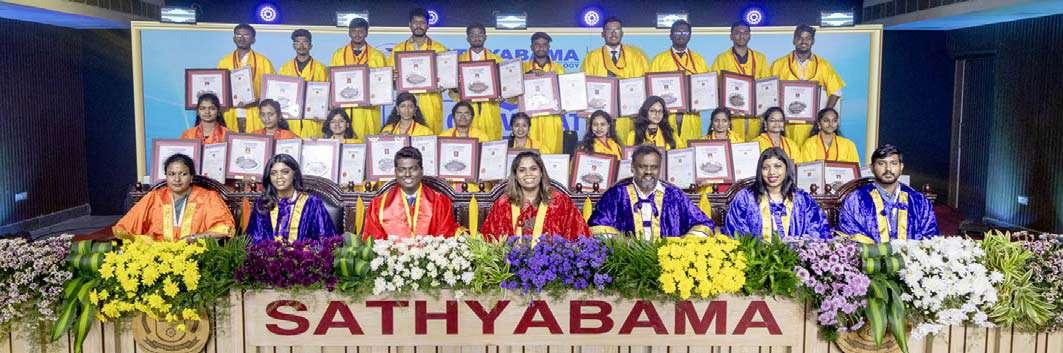
Management, Nursing, and Allied Health Sciences. Admission into core programs like BTech is conducted through its own entrance exam, the Sathyabama All India Entrance Examination (SAEEE). For postgraduate programs like MBA and MCA, scores from Sathyabama’s own entrance test too are considered.
While academics span a broad landscape, some external observers note that the student body’s geographical and cultural diversity - especially from non-Southern states and overseas - remains relatively limited. Aspiring for regional leadership will likely require more outreach and initiatives to attract a greater mix of students to Chennai’s vibrant campus.
Sathyabama is recognized by the UGC, accredited at A++ grade by NAAC, and holding ISO 9001:2008 certification, Sathyabama is also listed as a Category-I University under UGC autonomy regulations. It is ranked 85th in the NIRF 2024 Overall category, and within the Top 1200-1400 globally as per QS World University Rankings 2026.
Sathyabama has actively forged academic MoUs with institutions across the world, including University of Western Australia, UNINT (Italy), and Taylor’s University (Malaysia). These collaborations have opened new avenues for joint research, student exchange, and dual-degree programs.
Still, there are critics within academia who believe that research at India’s private deemed universities is often measured by quantity rather than realworld impact. For Sathyabama, the challenge lies in ensuring that its expanding research ecosystem is underpinned by meaningful, worldrelevant outcomes rather than just impressive metrics. Research and innovation are also front and center of Sathyabama’s mission. With multiple research centers and patents filed annually, students are encouraged to dive deep into problem-solving and inquiryled learning.
only expanded the academic footprint of Sathyabama but has also been instrumental in building partnerships that serve students’ aspirations.
Alongside her are President Dr. Marie Johnson, a driving force behind administration, internationalization, and digital transformation; Vice Chancellor Dr. T. Sasipraba, who leads academic affairs; and the trio of Vice Presidents - Maria Bernadette Tamilarasi, J Arul Selvan, and Maria Catherine Jayapriya - who lend strength to the institute’s strategic and operational leadership with their youthful energy. Together, this leadership team ensures that Sathyabama continues to adapt, evolve, and lead.
Sathyabama has a knack for blending culture and education. Some months back, cricketer Jasprit Bumrah had visited the campus for Fresher’s Day, interacting with new students and inspiring them with words of encouragement. His presence added star power to the event and showed the university’s commitment to giving students experiences that go beyond academics.
Sathyabama is recognized by the UGC, accredited at A++ grade by NAAC, and holding ISO 9001:2008 certification, Sathyabama is also listed as a Category-I University under UGC autonomy regulations. It is ranked 85th in the NIRF 2024 Overall category, and within the Top 1200-1400 globally as per QS World University Rankings 2026.
Leadership also faces questions about whether surging enrolments and program expansions are stretching faculty and support structures too thin. The need for careful management of faculty workload, the preservation of teaching quality, and the provision of more personalized student engagement is something that will define the next phase of Sathyabama’s growth story.
At the helm of Sathyabama’s extraordinary growth story is Chancellor Dr. Mariazeena Johnson, an academician, leader, and visionary. Her ability to balance institutional tradition with contemporary relevance has made her a respected name in higher education circles. She has not
Sathyabama had also tied up with the Chennai Super Champs, a team in the World Pickleball League (WPBL), as a principal partner. The team is owned by actress Samantha Ruth Prabhu, who launched the team jersey on campus in a highenergy event that celebrated youth and sportsmanship.
This partnership reflects Sathyabama’s willingness to venture into new domains like emerging sports, leveraging its reach to foster engagement, excitement, and excellence among students.
As the world of higher education becomes more dynamic, competitive, and global, institutions that marry tradition with innovation will continue to thrive. Sathyabama Institute of Science and Technology is already on that path, with world-class facilities, visionary leadership, strong industry and alumni networks, and a growing international reputation.
Whether it’s through record-breaking placements, global university admissions, impactful research, or fostering community through sports and culture, Sathyabama is charting a bold and ambitious future. And at the center of it all remains a promise - to empower young minds to rewrite, re-dream, and rethink - just as Chancellor Dr. Mariazeena Johnson so eloquently urged during the convocation.
As students, parents, and recruiters look to Sathyabama with growing respect and anticipation, one thing is clear: the journey of excellence, though promising, will be most sustainable when challenges are openly addressed and reforms earnestly pursued.
By Sudhakar Rao, Director, ICFAI Group
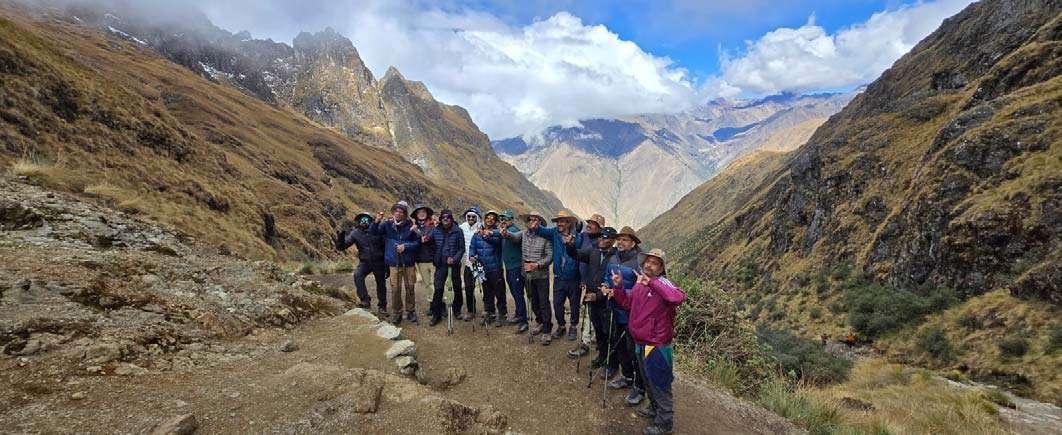
ASPECTACULAR TREK THROUGH THE ANDES RECENTLY REUNITED FIFTEEN CHILDHOOD FRIENDS ON A JOURNEY BOTH ACROSS CONTINENTS AND THROUGH TIME. LED BY SUDHAKAR RAO, DIRECTOR AT ICFAI GROUP, THE GROUP - NOW PROFESSIONALS SPANNING MEDICINE, TECHNOLOGY, LAW, AND EDUCATION - EMBARKED ON THE CLASSIC INCA TRAIL TO MACHU PICCHU. WINDING THROUGH CLOUD FORESTS, RUGGED PASSES, AND ANCIENT RUINS, THIS FOUR-DAY ADVENTURE BECAME MUCH MORE THAN A TEST OF ENDURANCE. IT TRANSFORMED INTO A PROFOUND REDISCOVERY OF CAMARADERIE, SHARED LEADERSHIP, AND INNER RESILIENCE. AS THE TRAVELERS OVERCAME HIGH-ALTITUDE CHALLENGES AND SHIFTING CLIMATES, THEY NOT ONLY WITNESSED THE MYSTICAL MAJESTY OF MACHU PICCHU BUT ALSO REKINDLED THE LESSONS OF TRUST AND TEAMWORK. HERE IS A GLIMPSE INTO A JOURNEY WHERE FRIENDSHIP SOARED, AND LEADERSHIP FOUND ITS TRUE RHYTHM AMIDST HISTORY AND NATURE.
September 7–11, 2025
By Sudhakar Rao, Hyderabad- By Rao, By Rao, based Brand Strategist, Author, based Brand Strategist, Author, and Education Leader and Education Education
Our recently completed journey through these mystical ruins of Machu Picchu in Peru was as inward as it was outward. This legendary Inca Trail involved 43 kilometers of high-altitude trekking through the sacred spine of the Andes.
The team had Doctors from Hyderabad:
Dr Praveen Mereddy, Dr Shashi Kanth Godey, Dr Nikhil S Ghadiyalpatil; a Doctor from Nalgonda: Dr Gummi Sreekanth; a Doctor from Dubai: Dr Sri Sailesh Vittala; a Doctor from UK: Dr Sanjay Rajpara; IT Professionals from Bengaluru: Vijay Bhaskar & Siva Sankar; a Contractor from Nalgonda: Prudhveedhar; IT Professionals from the UK: Purshotham & Krishna Mohan; an IT Professional from Hyderabad: Prasanna Kumar; an IT Professional from US: Ravi Medishetty; a Lawyer from Hyderabad: Ramesh Vishwanathula; and Education Leader from Hyderabad: Sudhakar Rao.

THE CLASSIC INCA TRAIL: A Living Museum
The Inca Trail is more than a trek - it’s a time-traveling corridor winding through cloud forests, alpine tundra, and ancient stone pathways etched by the Incas over 500 years ago. The trail leads to the crown jewel of Incan civilization: Machu Picchu, perched 2,400 meters above sea level. The journey began at Km 82 near

Piscacucho, with the group collecting their gear and spirits. Over four days, the trail unfolded like a storybook, each chapter marked by ruins, panoramic vistas, and rising breathlessness. Four Days. 43 Kilometers. One Four Days. 43 One Four Days. 43 Kilometers. One Four Days. 43 One Days. Unforgettable Experience. Unforgettable Experience.

Day 1: Day 1: Day 1: Day 1: Day KM 82 to Wayllabamba
Distance: ~12 km | Distance: km | Distance: ~12 km | Distance: km | Distance: Duration: 4-6 hours Duration: 4-6 hours Duration:
The group eased into the trek with scenic riverside trails, and camped under Andean stars at Wayllabamba (3,000m). Spirits were high and expectations even higher.
Day 2: Day 2: Day 2: The Killer Climb to Dead Woman’s Pass
Distance: ~16 km | Duration: Distance: ~16 km |

The most grueling day involved climbing to Warmiwañusca (Dead Woman’s Pass) at 4,215 meters. Oxygen was thin, but the sense of accomplishment was overwhelming.
Day 3: Day 3: Day 3: Day 3: Day 3: Into the Cloud Forests
Distance: ~16 km | Duration: km | Duration: Distance: ~16 km | Duration: km | Duration: Distance: ~16 km | Duration: 8-10 hours hours 8-10 hours hours hours
Passing Runkurakay, Sayacmarca, Phuyupatamarca, and Winaywaynaarchaeological jewels still whispering ancient wisdom - the group camped at the edge of civilization and history.
Day 4: Day Day 4: Day The Final Descent to the Sun Gate
Distance: ~6 km | Duration: 3- ~6 km | 3- | 4 hours
Pre-dawn, everyone set out for Intipunku (Sun Gate) at sunrise, where Machu Picchu appeared, wrapped in mist and silence, leaving all speechless.
Sleeping in tents for three nights, the group braved temperatures dipping to 4–6°C at night and 10–16°C during the day. Each step required fitness, mental stamina, and careful acclimatization. Two days stretched to 10+ hours of trekking, paused only for lunch breaks and moments of shared laughter.
The trail humbled everyone, highlighting the power of friendship and resilience of ancient engineering, and underscoring the importance of preserving natural heritage. For fifteen former classmates, this journey was a new classroom - carved in stone, cloud, and time.
In nature, birds travel in v-formations to save energy and ensure collective progress. The lead bird rotates, with others stepping forward as needed. Inspired by this, Team SAMBA 20D rotated leadership daily, choosing trek leaders based on fitness and spirit. This approach fostered shared responsibility, visible support, and spontaneous moments of compassion - proof that true leadership emerges through mutual trust and cooperation.
Machu Picchu is more than a UNESCO site or a photo backdrop; it symbolizes balance - between nature and architecture, past and present, effort and enlightenment. Walking the Inca Trail is a step into history, with sore calves and full hearts. To trek as SAMBA 20D was to soar, for a brief time, in v-formation across the sky of memory.
SEASONAL MAGAZINE
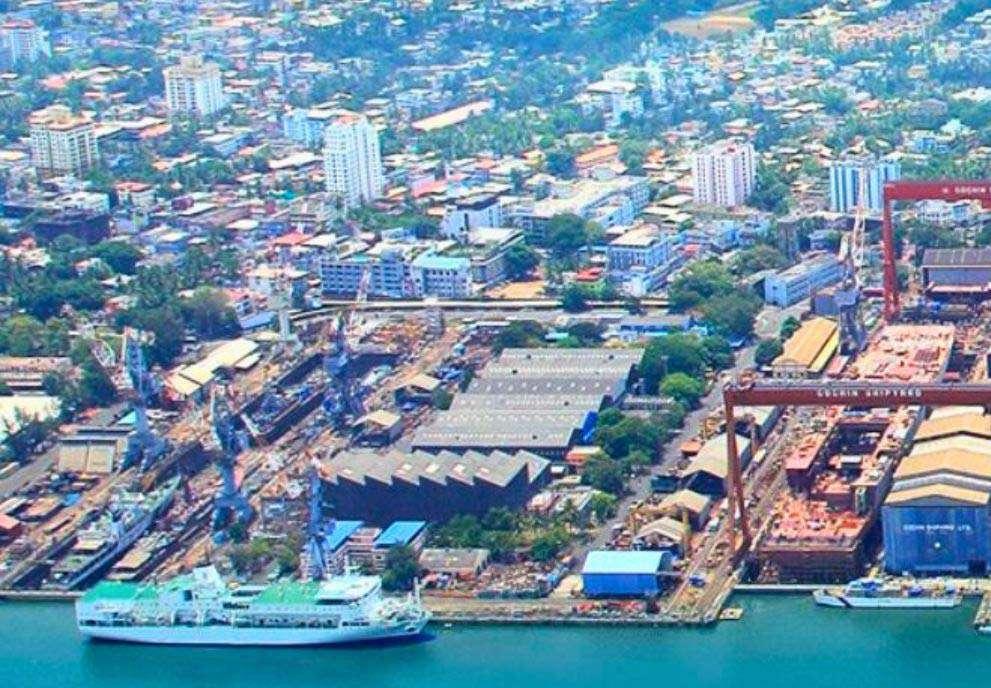
As India aspires to become a major maritime hub, Cochin Shipyard Limited (CSL) stands at the center of that ambition. A PSU under the Ministry of Ports, Shipping, and Waterways, CSL is India’s largest shipbuilding and ship-repair facility. But as with any large public-sector enterprise navigating high-growth waters, the journey of CSL is anything but a straight sail. However, Cochin Shipyard is overcoming all its challenges, one by one, under the visionary leadership of its Chairman & Managing Director Madhu S Nair, one among India’s most qualified and most experienced ship building engineers.
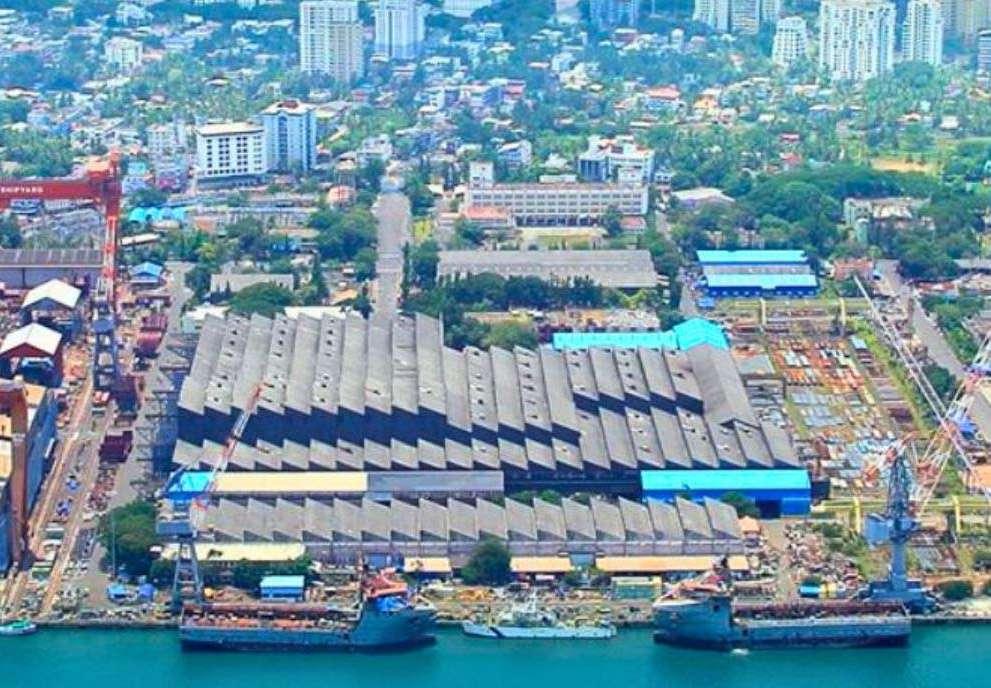
Director
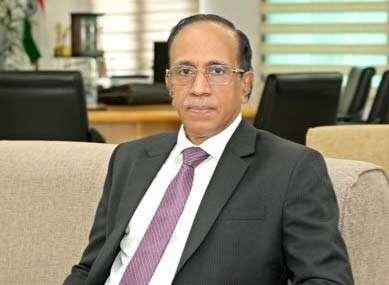
CSL’s recent performance and strategic tie-ups reveal a complex picture of promise, pressure, and potential challenges. With strong topline growth, high-profile international collaborations, and a robust order book, the fundamentals are impressive. However, profitability stress, valuation concerns, and an overdependence on geopolitical uncertainty for outperformance pose challenges on the horizon.
Cochin Shipyard Limited (CSL), under the dynamic leadership of Chairman & Managing Director Madhu S. Nair, kicked off FY26 with a standout Q1 performance, further cementing its stature as India’s premier shipbuilding and ship-repair enterprise. Revenue for the quarter surged 38.5% year-on-year to Rs 1,068 crore, powered by robust execution of shipbuilding and ship repair contracts as well as deliveries of technologically advanced vessels.
Operating efficiency continued, reflected in a healthy EBITDA performance.The EBITDA for June 2025 quarter was Rs. 296 crores and EBIDTA margin was 28%.
EBITDA for the June 2024 quarter was 261 crores and EBITDA Margin was 34%.
forays, and operational excellence. With a robust order book and projects in the pipelinee, CSL has secured revenue visibility for years ahead. This includes defence mega-projects like next-generation corvettes, frigates, and civilian orders like bollard pull tugs and luxury cruise ships for the Brahmaputra River. The newly signed order with Polestar Maritime for two highpowered tugs alone is worth Rs 250 crore. Earlier, for the full fiscal of FY25, Cochin Shipyard’s revenue had climbed 26% to Rs 4,820 crore. This is a significant jump for a capitalintensive business and reaffirms CSL’s execution capability amidst a
Korea’s HD Korea Shipbuilding & Offshore Engineering (KSOE), a Hyundai group company. This partnership includes joint shipbuilding initiatives, technology transfer, workforce upskilling, and infrastructure upgrades, which make this a strategic collaboration that could dramatically elevate CSL’s global competitiveness. Although CSL has aggressive expansion plans, execution remains key. PSU enterprises often grapple with slower decision-making, labour issues, and tender-based bureaucracies that can delay project timelines.
CSL’s R&D investments are forwardlooking, from battery-electric “green tugs” to hydrogen-fuel-cell ferries and autonomous surface vessels. The company has also floated a tender for connecting a 500 kWp solar plant to support sustainable operations. In an era where ESG compliance matters, these initiatives bolster CSL’s positioning as a modern, responsible shipbuilder.

recovering global maritime ecosystem.
Net profit for Q1 stood at Rs 188 crore, up a modest 8% year-on-year despite the cost escalations, showing margin restraint but resilient bottom-line delivery. Segmental revenues detail strong contributions from ship repairs at Rs 630 crore and shipbuilding at Rs 439 crore, highlighting the benefits of a diversified business model.
CSL’s balance sheet remains robust with low net debt, and its order book stands at an impressive Rs 21,100 crore, backed by a forward pipeline nearing Rs 2.85 lakh crore. Strategic partnerships inked this quarter with global industry leaders, capacity upgrades at dry dock and repair facilities, and expansion into advanced ship types are expected to unlock new growth horizons. Madhu S. Nair’s strageic leadership continues driving technology upgrades, international
Cochin Shipyard, which shot into limelight by building India’s first indigenous aircraft carrier INS Vikrant, continues to pursue such unique projects. Around 40% work is complete on what is billed to be India’s largest and most advanced dredger, being built in collaboration with the Netherlandsbased Royal IHC.
However, CSL is part of the broader defence index, which can be volatile especially in face of geopolitical deescalation. Defence stocks, including CSL, tend to rally in times of global conflict or rising tensions and correct sharply when peace prospects emerge. This dependency creates a cyclical narrative, where investor sentiment is often influenced more by global news headlines.
Perhaps the biggest feather in CSL’s cap is its July 2025 MoU with South
The shipyard has also entered into multiple MoUs, notably with Dubai’s Drydocks World, to build world-class ship repair and fabrication hubs. These moves are expected to enhance CSL’s topline and diversify its clientele beyond Indian defence forces.
For long-term investors betting on India’s maritime rise, CSL offers a compelling narrative, with strong government support, world-class collaborations, and a diversified order book. Its past work on India’s first aircraft carrier INS Vikrant lends it credibility in complex defence builds.
Cochin Shipyard is going through a pivotal phase. It has the orders, partners, and political support to become a global force in shipbuilding. Under CMD Madhu S Nair’s guidance, CSL is turning this promise into performance, step by step, by tightening margins, executing better, and broadening its vision beyond defence. If the global growth momentum remains in its favor, CSL and its investors are destined to reach greater shores.