THE INTERNATIONAL SCHOOL, BANGALORE (TISB)


When it comes to international schools, the proof of the pudding is in the college placements. The International School, Bangalore (TISB), continues to excel on this front, with this year’s top placements featuring Harvard, UPenn, Stanford, & LSE.
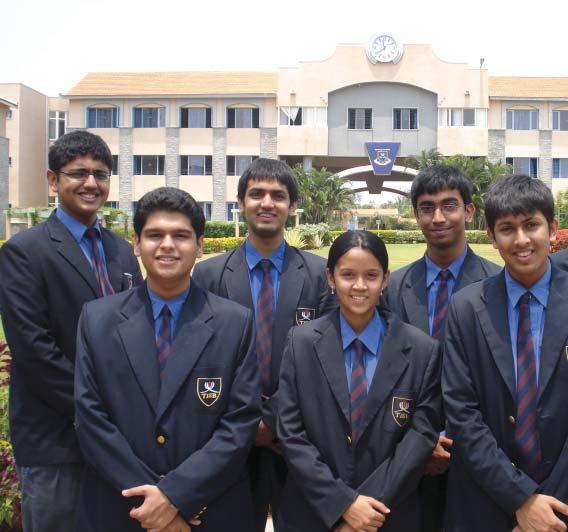
Dreaming of London School of Economics? Gaurav Soman, Abhishek Shah, Sayan Palchowdhury, & Ankush Bhutra have just made their LSE dreams a reality. All four boys have secured admissions to the prestigious LSE this year, and there is only one more thing common between them – all are students of The International School, Bangalore (TISB).
Other TISB students who have secured admissions to top international universities this year include, Shyam Vichare (Harvard University), Pooja Vijayendra (University of Pennsylvania), & Eshan Vasudeva (Stanford).
TISB stands apart from most international schools in many respects. Belonging to the prestigious family of National Public Schools (NPS) in Bangalore, Chennai, & Singapore, TISB is one of the largest international schools in India with students from over 33 countries, and the largest and the most successful team of IB Diploma students in the entire Asia-Pacific region, year after year. No wonder, former TISB students are found at some of the world’s finest Universities and colleges, including Harvard, MIT, Oxford, Cambridge, Stanford, Purdue, University of Pennsylvania, Carnegie Mellon, & LSE, apart from the various IITs.
For an international school to be truly international, many acid tests have to be passed –international curricula, international staff, international placements, and of course, international students. ‘The International School Bangalore’ (TISB), the brainchild of noted educationalist Dr. KP Gopalkrishna, is one among a few institutions in Bangalore that have come out in flying colours on all these fronts. Offering the best of international curricula – IGCSE at Grade X and IB Diploma at Grade XII, TISB is staffed by an international team of experienced teachers – from the Asia, Americas, & Europe – and led by its Oxford educated British Principal, Dr. Mathew Sullivan. The Director of the School is Dr. Bindu Hari and its Dean is Mrs. Santha Gopalkrishna.
For admissions, TISB follows a structured procedure. Since the academic year at TISB is from August to June, admissions start as early as January. TISB is on the lookout for two qualities in students – good academic ability and good character. To assess the former, there will be entrance tests and interviews, especially in the middle and senior schools. To verify the latter, the school asks for references. All admissions follow a typical procedure – submission of registration form, subsequent test & interview, short-listing for admission, and the actual admission. The application form for admission is available at www.tisb.org. Since TISB offers boarding facilities, submission of a detailed medical form is also essential. It is also available at the website. For quick and effective communications regarding admissions, TISB advises parents to use email. For admission to KGI, the student must have attained 4 years age by August. Boarding facilities are available from Grade IV only. Admission to IB Diploma course is available at Grade XI, and passing the entrance test is a must. Since waiting lists for admissions are common, parents should seek admission as early as possible.
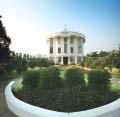


With 825 students from 28 countries, imaginative co-curricular programs, and excellent performance in international exams, Bangalore’s Indus International School is surging ahead in its mission to create better leaders for tomorrow.





magine study tours to Leh & Ladakh. Climbing atop battle tanks, and river rafting in the Indus River. Or imagine assisting less-privileged students in other schools, with camps and training. Or imagine writing science articles for an in-house Science Magazine, Aquila. These are just samples of the kind of ‘beyond the classroom’ education being followed at Indus International School, Bangalore.
But it doesn’t mean that classroom performance suffers even a bit. When the 2007 IGCSE results were out, Indus had produced an unbelievably improved performance over the previous year with 16 Distinctions, 28 Merits, 54 A*s, & 99 As. An Indus student, Ha Young Song, also became the Indian topper in IGCSE Mathematics.
The School has also started collaborating with Singapore International Foundation (SIF) on various initiatives. The Indus Graduation Day 2008 had as its Chief Guest, PK Mishra, the ‘Lead India’ winner.
This international school which is home to 825 students from 28 countries is a full-spectrum IB School. The Principal of Indus, Mrs. Sarojini Rao, is a University Gold Medalist and a double postgraduate in Education & Economics. She is trained in all the three IB Programmes (PYP, MYP, & DP).
The Indus Trust operates on a powerful idea - those who are aspiring to groom future leaders should be exceptional leaders themselves. Indus International School embodies

this towering vision in promoters like high-flying Silicon Valley technocrat Kumar Malavalli, noted industrialists HB Jairaj & Sushil Mantri, and a CEO like soldierscholar-author-speaker Lt. General Arjun Ray. While Malavalli was the first Indian to be inducted into the celebrated ‘Silicon Valley Engineering Hall of Fame’, a select club of 48 outstanding engineers; Lt. Gen. Ray, a recipient of Param Vishist Seva Medal (PVSM), the highest award in Indian Armed Forces, has an exceptional academic & military track record behind him. Together with an equally illustrious group of Trustees & Executive Team, they created an exceptional school in every sense – ranging from outstanding values to sheer architectural beauty. The school accepts both boarders and day scholars. Following the resounding success of their first school at Sarjapur, Bangalore, The Indus Trust has started another school at Pune.
Admissions to the Indus International School for grades 6 and above is based on written aptitude tests of the student. Indus believes that all children possess specific intelligences in which they are strong. Consequently, admissions will be based on the proclivity of the student especially mental organization, creativity and critical thinking skills. This concept is based on the idea of multiple intelligences. Indus has developed ‘assessment yardsticks’ which will be applied to determine the proclivity of each child.
International schools are mushrooming, but Ooty’s Hebron School still find no trouble attracting thrice the applicants it needs! Is it due to its heritage that dates back to 1899? Or is it the delightful location, overlooking Botanical Gardens? Or is it the strong emphasis on drama & sports? Or is it leadership in affordable international education? Ask Principal Alastair Reid about this, and you get a different answer – “All these, and more to do with parents’ trust in our unique century-old systems like small Dorm-houses & caring Dorm-parents, that ensure values-based upbringing.”
January 26th 2001. A day Gujarat wouldn’t forget. A day when earth ripped open, and left only death & devastation to remember. An incident that left even mighty aid organizations frozen in inaction, due to the sheer scale of damage. But soon, the ‘1st Gujarat Party’ would leave from an international school in Ooty, to Kutch, to do their part – help in clearing rubble & reconstruction, create makeshift classrooms, & teach local students temporarily, in at least one shattered village. The team members? This international school’s Principal, Staff, & Students. They slept in tents, did hard physical labour, menial tasks, & won the hearts of the poor villagers. Unbelievable?
Hebron School would repeat a similar unbelievable act in Orissa, during the June of 2004, when a 26-member team including the Principal, VicePrincipal, Staff, & Students, reconstructed a cyclone-destroyed mudand-thatch primary school with a brand new brick-and-steel structure.
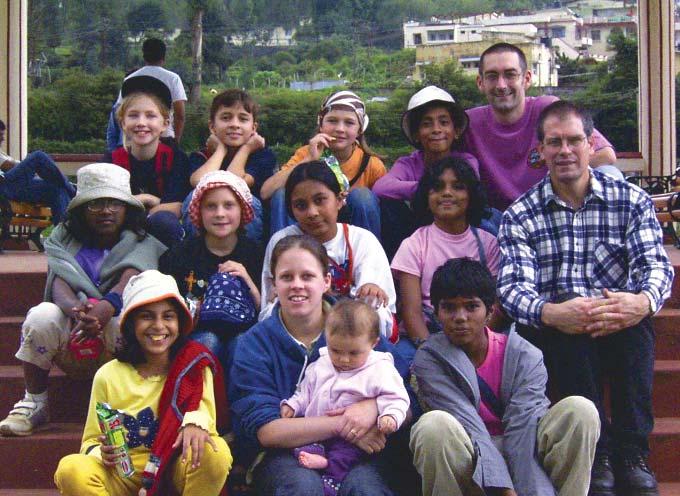
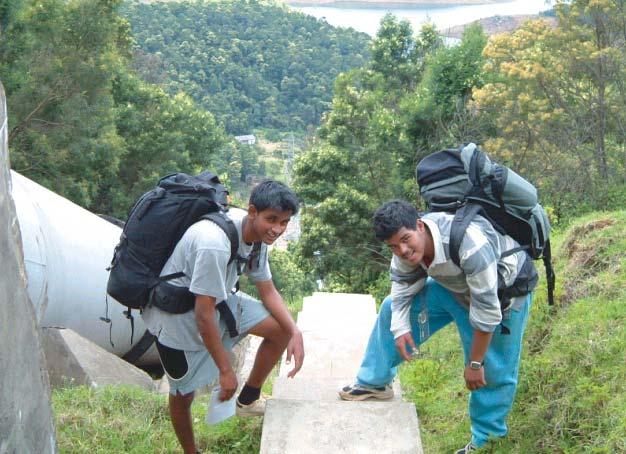
The project, done in association with ACTS (again, an Orissa NGO run by a Hebron parent-couple!), was funded by student collections (spanning 5 months!) as well as the worldwide Hebron Alumni, while the labour component like carrying heavy bricks, masonry, & rubble in-fill for flooring, was entirely done by the 26-member Hebron team, with staff & students at equal footing!
Imagine attempting anything like that with the staff & students of any decent school, let alone a high-profile international school. That is what sets apart Hebron.
In a secular 21st century, where even mentioning one’s religion is unfashionable, Alastair Reid finds no difficulty affirming Hebron’s Christian roots. Maybe because, Hebron is not a 21st century upstart. Not even a 20th century sprout for that matter. Founded in the last year of 19th century, by the Hebron Schools’ Association, the present coeducational Hebron School was formed by the 1974 merger of the original Hebron Girls High School in Coonoor, and the Lushington Boys School in Ooty, the latter having strong links with Ooty’s Breeks Memorial School, the institution at which the legendary Lord Macaulay formed the syllabus for the Indian educational system, which is followed even to this day! “Our Christian foundation is something we are proud
of, because it is precisely that which has enabled us to focus on valuesbased upbringing of children, and parents from all religions & communities appreciate that. Besides, there are no religious compulsions of any kind at Hebron,” says Alastair Reid.
All great international schools have a character of their own. At some schools, this character is dominated by the location, at some others by the infrastructure, at some others by the curriculum, and at still others, by the high profile of the students. Surprisingly, at Hebron, this character is not something as tangible as that. Of course, Hebron enjoys solid advantages like, being at Ooty, the heritage-class buildings, state-ofthe-art educational infrastructure, the unique 11+2 curriculum, and an international mix of students. But the real Hebron character goes beyond all this. Explains Principal Reid, “It is the unique systems that we follow, that has given us our distinct character.” To unravel these systems, Seasonal Magazine quizzed in detail this thorough gentleman with no airs:
Hebron is known for its values-based education. What are the mechanisms for that?
At the heart of values-based education, is the issue of values-based upbringing. In a family, children are brought up by their parents
buildings, state-of-the-art educational infrastructure, the unique 11+2 curriculum, and an international mix of students. But the real Hebron character goes beyond all this. Explains Principal Reid, “It is the unique systems that we follow, that has given us our distinct character.” To unravel these systems, Seasonal Magazine quizzed in detail this thorough gentleman with no airs:
Hebron is known for its values-based education. What are the mechanisms for that?
At the heart of values-based education, is the issue of values-based upbringing. In a family, children are brought up by their parents according to their own value-system. In an international school like Hebron, where most students are in boarding, there should be a valuesystem, as well as the mechanisms to implement it. Hebron’s sense of socially-acceptable behaviour provides the value-system, while our mechanisms like small Dorm-houses, caring Dorm-parents etc. provide the system for values-based upbringing.
Can you explain the concept of small Dorm-houses?
accommodating only around 25 students. Also, to discourage unwanted permissive grooming, the boys & girls Dorms are distributed at two campuses – Lushington & Selborne.
And what is the role for Dorm-parents?
Each such small Dorm-house is managed by Dorm-parents, who are one or two teachers who stay with the Dorm inmates, and care for them much like their parents. The Dorm parents will be in total charge of the students’ welfare, and interface with the students’ own parents. Dormparents will be in charge of ensuring a balanced diet, healthcare, and even aspects like the students’ pocket money.
That sounds very interesting… Yes, and it is a very important part of bringing up students in moderation & discipline. At Hebron, money should not be directly sent by parents to students. Here, it is Dorm-parents who issue pocket money to each student, on the parents account, at a weekly rate set by the school and appropriate to the student’s age.
How do parents view this system?
With great appreciation. This system is flexible enough to accommodate the special purchases the students might need, but again, only after communication between the student’s parents & his Dorm-parents. Also, in Senior Dorms (Grade 10 & 11), and A Level Dorms (Grades 12 & 13), there is better flexibility, because, instead of the School, Parents can set the pocket money rate for their child. Our aim is not strict regimentation, but prevention of unaccounted ‘black money’ in students’ possession. Even unspent travel money with students, should be handed over to Dorm-parents who would credit it to their parents’ accounts, or hold it for their return journey. It can’t be automatically counted as pocket money.
You lay great stress on communication between the parents & Dorm-parents…
Yes. As you might already know, at 340 students, we are a manageable school where I or any of our staff can know all the students. Many schools our size would have done with one or two big boardings. But our approach has always been different. To ensure a family-kind of individual attention to each student, we have 13 Dorms, each HEBRON SCHOOL, OOTY

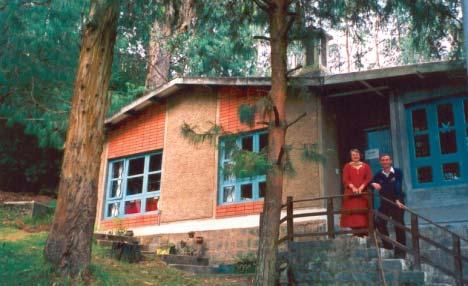
Not only that. We lay great stress on communication between students & their parents. You will be surprised to know that at Hebron, all students must write weekly letters to their parents. Senior & A Level students can use e-mail for this. We also encourage parents to communicate as much as possible with their students. Because, even with all the care Dorm-parents provide, we are realistic enough to realize that they can never substitute fully for parental care. That is one reason why we don’t allow students to be at the campus for Winter Holidays, Summer Holidays, and even for the two short Half-Term Breaks. For the two long holidays, lasting 7 weeks each, students generally go home, and for the two short breaks, lasting 9 days each, we encourage parents to come here for holidays. We have also timed the two Parents’ Weeks in a year with these short breaks, so that there is great enjoyment for them!
Can you tell us about the unique 13-years academic curriculum followed at Hebron?
Hebron follows the UK National Curriculum, where education up to Higher Secondary Level spans 13 years, i.e. 11+2, instead of the 10+2 system generally followed in India. Under this system, IGCSE is sat at the end of Grade 11, AS Level at the end of 12th year, and A Level at the end of Std 13. One advantage at Hebron is that we provide a wide range of subjects for IGCSE, AS, & A Levels, so that higher studies & career options are kept open. Coursework projects are assessed in the school, while final written examinations are marked in the UK. The advantage of this Cambridge Curriculum is that students are welcome at most prestigious international Universities at USA, UK, & Australia.
Another unique aspect of Hebron is its background in Drama. Can you explain this tradition?
Yes, there is a very strong drama tradition at Hebron. Apart from its artistic value, Drama helps students to become smart – by developing body language, communication skills, & personal charisma. All our students are given the chance to participate in Drama, and throughout the year there are several avenues to come up with different dramatic forms, which culminate in the Hebron’s Annual Drama Festival, which is a noted event. Music & instrumental music are also given great emphasis.
Hebron teams are much respected in Nilgiris for inter-school sports too…
Maybe because, at Hebron, sports is timetabled, instead of being optional. All students should compulsorily participate in three itemscross-country race, swimming, & athletics. Our experience is that this approach promotes fitness, and leads to inter-school excellence not only in these three, but non-timetabled events like badminton, basketball, cricket, gymnastics, hockey, soccer, softball, squash, tennis, volleyball etc, for which there are full-fledged facilities in the school.
India’s largest fully-residential international school didn’t happen overnight. Nor did it take one hundred years. For Dr. PC Thomas’ vision and diligence, it took only less than 30 years to attract international students from 39 countries spanning 6 continents, to his Good Shepherd International School, Ooty. That is why, it rings true, when he speaks about the school’s future objective – “to be the best in Asia in the next 5 years, to be the best among the world in 10 years.” We saw this vision in action at the campus, where no efforts or expenses are spared to bring the very best to students.
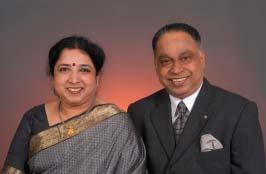
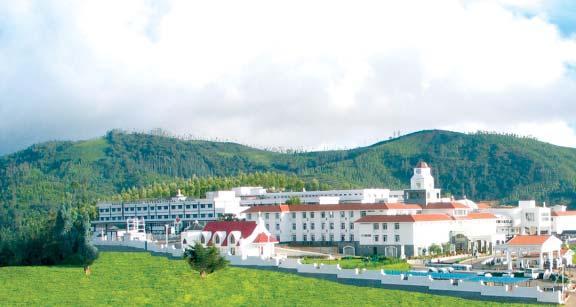
One of the proudest moments for Good Shepherd came when Truman State University, USA, recognized the positive influence of the school on the life of a student who went on to study there.
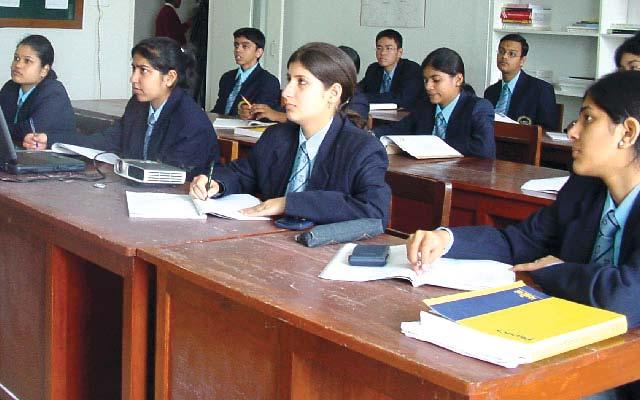
“We ask parents of prospective students to look at other schools too, before choosing Good Shepherd. We think it is important for them. But our experience is that they invariably come back,” says Dr. PC Thomas, noted educationalist and Founder Principal & Managing Trustee of Good Shepherd International School.
For an international school less than three decades old, Ooty’s Good Shepherd, has several unique achievements to its credit. Students of Indian & foreign origin, from more than 39 countries, spanning the continents of Europe, North America, South America, Australia, Asia, & Africa, study here. It was the first school in India to offer all the 3 preuniversity systems desirable for undergraduate studies abroad – the IB Diploma, IGCSE/ AICE, & ICSE/ISC. Good Shepherd coaching & guidance has seen ‘Shepherdians’ reaching academic heights like higher studies or research at world’s best Universities like Massachusetts Institute of Technology (MIT), London School of Economics, Boston University, Chicago Institute of
“WE COULD ATTRACT STUDENTS FROM 39 COUNTRIES, WITHIN 28 YEARS.”
Technology, King’s College, Imperial College, Manchester Institute of Science & Technology, and the various Indian Institutes of Technology (IITs). Good Shepherd also offers a wide range of extra-curricular activities, that is finely enriched by its geographic advantage of being at the Queen of Indian Hill Stations – Ootacamund, popularly called Ooty. At Good Shepherd’s two sprawling, scenic campuses in Ooty – Fernhill and Palada – students get trained in exotic skills for a lifetime, like, mountaineering, trekking, rowing, swimming, horse riding, rifle shooting, golf etc.
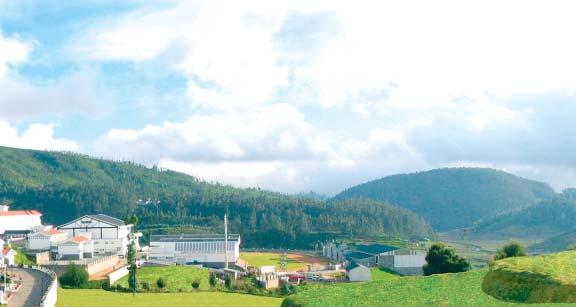
No wonder then, Good Shepherd has emerged to be the largest fully residential international school in the country, within a short span of less than 3-decades. Says Mrs. Elsamma Thomas, Senior Vice-Principal, and key-mover behind Good Shepherd, “Our greatest satisfaction is seeing our alumni bringing back their children for admission. They have seen the world, and still think that Good Shepherd is the wise choice for their children.”
Academic quality, the backbone of any school, should ideally start from the Principal and percolate to each and every teacher. At Good Shepherd, there is a good start in Dr. PC Thomas, who is a good teacher above anything else. After years of experience in teaching English, he went on to become an Education Manager, with a PhD in Education Management. He understands the importance of highly qualified teachers who are kept abreast of the latest developments in the field. Says, Dr. Thomas, “We insist that most staff members attend International Baccalaureate (IB) Workshops or University of Cambridge Distance Learning Programs. Because our students should get the best.” This philosophy of putting students’ interests first has translated into several innovations at Good Shepherd. The different sections like Junior School, Middle School, High School, & Higher Secondary School, have different Headmasters or Headmistresses, and even separate Counsellors! The teacher-pupil ratio is an unbelievable 1:6, with no class having more than 20 students. According to Senior VicePrincipal Mrs. Elsamma Thomas, “the small class-strength gives each of our classes an almost family-like feeling & bonding.” Good Shepherd is known to encourage high-calibre teacher couples in its residential campus, providing them with accommodation & amenities, so that they are better enabled to focus on their students. Feedback from students & parents are regularly taken to finely calibrate teaching standards. Being an English Literature Teacher originally, Dr. Thomas has
taken special care to provide the best options in language teaching. NRI students looking to master their own mothertongue won’t be disappointed at Good Shepherd. Because, all Indian Languages are taught here! Even French & Thai students would be delighted, because the school has accommodated their languages too. Also, Separate Language Labs exist for English & French.
“WE ARE FULLY EQUIPPED, FROM IB & CAMBRIDGE TRAINED TEACHERS TO BBC VIDEOPAEDIA.”
Next to teaching standards, comes the academic infrastructure like Library, Labs, & Computer / Internet Facilities – an area where Good Shepherd has created enviable facilities. The Good Shepherd Library is massive at 50,000 books & over 100 periodicals, yet slick enough to use, being fully computerized. The science labs conform to Cambridge Exams/IB standards, with ample equipment so that students don’t have to share equipment but can carry on independent investigation. The computer facilities, spread over 6 computer labs, are truly multi-platform with Windows, Linux, & Macintosh. Unlimited but monitored access is provided to students to these multimedia labs, their professional-class software collection, & broadband Internet. Constantly in search for more & more effective teaching methods, Good Shepherd has acquired the best encyclopaedia on video, the BBC Videopaedia, which is used by students through multimedia projectors. “It has the potential to revolutionise education,” says Dr. Thomas.
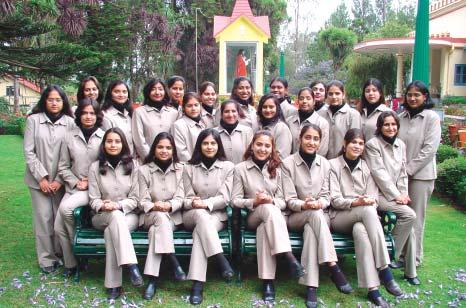
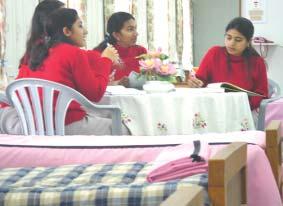
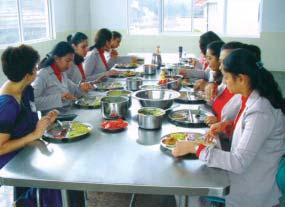
“It would be an understatement if we say that Good Shepherd is a home away from home. Because, we strive to do even better than that,” says Dr. Thomas. How does Good Shepherd achieve this? “By following the world-class practices in residential schooling, starting from boarding, through cuisine, housekeeping, medical care, & tutorial help.” The Good Shepherd Boarding boasts of spacious, elegantly designed, & well-appointed rooms & dormitories, which are also constantly kept in a pristine & hygienic condition by the housekeeping department. The food provided is well-balanced, wholesome, & nutritious, prepared according to international hygienic standards using 5-star class Steam Cooking Unit & Integrated Cold Storage. Multi-cuisine at Good Shepherd includes South Indian, North Indian, Gujarati, European, & Thai. Separate facilities are available for Vegetarian & Non-Vegetarian Food. Going one step more, Good Shepherd has also taken special efforts to provide pure vegetarian Jain cuisine. But the real highlight of the Good Shepherd food service is that the dietary needs of weak or convalescing kids are met by customized diets.
bed campus hospitals with Intensive Care Units (ICU) and Isolation Wards. Each hospital is headed by a Resident Medical Officer (RMO), who is helped by a team of trained staff nurses. The School Ambulances are kept ever ready to cater to any emergency. Students are examined at the beginning of each term by the School Doctors & the School Dentist, and parents are updated with diagnosis, if any.
“WE FOLLOW THE WORLD-CLASS PRACTICES IN RESIDENTIAL SCHOOLING.”
“Individual tutorial help is also available at the boarding, so that the residential nature of the school is fully utilized. The culture here is truly residential, with many teacher-couples staying at the campus and their children also being boarders, much like the world’s best residential schools,” says Dr. Thomas.
The kind of medical care given to Good Shepherd students is truly world-class. Both campuses have their own 40-

Residential Education at a Hill Station like Ooty should leverage its geographic advantages. And that is exactly what Good Shepherd has done. Says Dr. Thomas, “Ooty is a place where if properly trained, one can achieve physical skills for a lifetime like Mountaineering, Trekking, Horse Riding, Rowing, Swimming, Rifle Shooting, Golf, Adventure Sports etc. We train students in these skills because we believe that sports should go beyond sports, and be life-skills.” He takes the instance of Mountaineering. “As a skill, it not only teaches climbing mountains; it develops perseverance & prudence, while facing life-challenging situations.” The Good Shepherd Mountaineering Institute was set up in the campus, with instructors coming from the Nehru Institute of Mountaineering, Uttarkashi. All Good Shepherd students, from Class IV to Class XII, are provided training in mountaineering. “Similarly, Golf is today not only a sport, but a ‘corporate skill’,” says Dr. Thomas. Students get to train at the School’s Mini Golf Course, as well as the full-size Ooty Gymkhana Club Golf Course. Good Shepherd Students trek to Mudumalai Wild Life Sanctuary, and Mukuruti National Park, as part of the

Duke of Edinburgh Award Scheme, and learn rowing & boat pulling, as part of the Sea Cadet Corps program. Horse Riding & Equestrian skills are imparted to students through the School Riding Club, which has 18 thoroughbred riding horses, practice rings, jump show facilities, & riding instructors. The training given is of international competition class. The school has two centrally heated swimming pools – one for each campus – with the Palada Pool conforming to international standards. 90 minutes of swimming training per week is compulsory for all Good Shepherd Students. Students are trained in Rifle Shooting, through the school’s Shooting Club, which is equipped with two rifle ranges and standard air weapons. Students are trained in this emergency skill by qualified instructors.
And if you thought that students are only trained in Hill Station Sports, you are in for a surprise. The school boasts of an Olympic-size Sports Field with 8-lane / 400-metre track, full-size football field, and facilities for all track & field events. It is the only facility of its kind in the Nilgiris. Other sports infrastructure at Good Shepherd include, two indoor sports-complexes, and two fully-equipped multi-gyms. The repertoire of outdoor & indoor sports available is also amazingly broad.
“HERE IT IS LIFE-SKILLS, BEYOND SPORTS; LIFELONG PASSIONS,
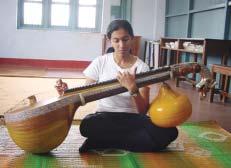
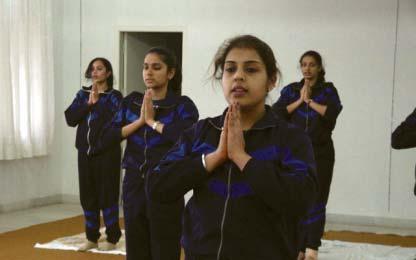
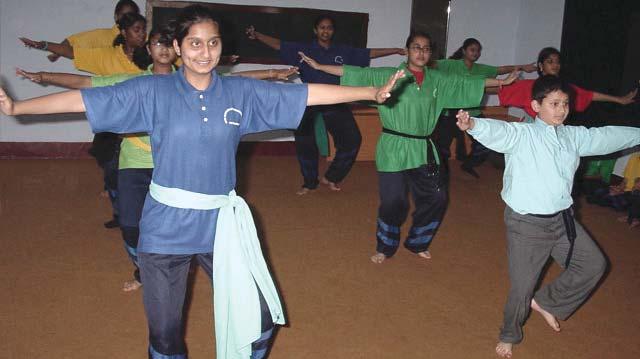
When it comes to Arts & other ExtraCurricular Activities too, Good Shepherd shines due to the wide range it offers –Classical Dance, Western Symphony Band, Pipe Band, Brass Band, Quiz Club, Arts Club, Photography Club, Kennel Club, Philately Club, Literary Club, Crafts Club, Nature Club, Computer Graphics Club, Current Affairs Club, … the list is almost endless! “Infrastructure-wise, we provide everything in sports, arts, & extra-curricular activities. But, more important is how we find latent talents in each student, and encourage him or her to excel,” says Dr. Thomas. The way Good Shepherd has found for this is compulsory participation in at least one sport & art form.
T he acid test for evaluating the performance of an international school is whether its students are successful in getting admission to the world’s best Universities & Colleges like Massachusetts Institute of Technology (MIT) or London School of Economics (LSE). Good Shepherd comes out in flying colours in this too. Says, Dr. Thomas, “So far, our students have been successful in getting admission to MIT, LSE, Boston University, Chicago Institute of Technology, King’s College, Imperial College, and Manchester Institute of Science & Technology. Definitely, more breakthroughs will happen in the coming years.”
“OUR STUDENTS ARE ABLE TO GET INTO THE BEST INTERNATIONAL UNIVERSITIES.”
for higher education at the best Universities. “We give intensive training for our students to excel at relevant international entrance exams like SAT-1 / SAT-II, and TOEFL / IELTS. Once they get high scores in these, their Cambridge/ IB background gives them a preference at top-notch Universities.” A dedicated Counselling Centre counsels students and liaisons with international agencies like UCAS and foreign universities in US, UK, & Australia for ensuring academic placements.
His confidence stems from the fact that Good Shepherd is placing great stress on maximising the students’ potential
For students planning to pursue their Bachelors in India itself, Good Shepherd provides expert coaching for India’s toughest entrances, especially IIT/ JRE. “Many of our students have been successful in cracking IIT entrance,” says Dr. Thomas, and adds that Medical/Engg Entrance Coaching is also given.
Good Shepherd Finishing School, a sister-concern of Good Shepherd International School, aims at grooming the girls of today into the ladies of tomorrow, by teaching them numerous fine skills for the home, society, & workplace, which a lady should know.
One will be surprised to know that Good Shepherd has been successful in inculcating values & social sensitivity into kids coming from all backgrounds and regions of the world. Dr. Thomas, himself an illustrious Rotarian, has inspired his students to numerous community welfare activities. The main way Good Shepherd students help the underprivileged is by contributing liberally by way of money, gifts, & service, to welfare institutions for deaf & dumb students, mentally & physically challenged people, abandoned & destitute etc.
“WE BRING UP CHILDREN WITH SOCIAL SENSITIVITY &
The Interact & Rotaract Clubs of the school take leadership in these activities. Students even spend part of their vacation to raise money for these Homes.
Though a Christian institution by birth, Good Shepherd has a secular culture that respects all religions. Quoran classes are held regularly for Muslim students, while Hindu students are given lectures by Swamis & Swaminis of Brahmakumari Ashram, and Christian students attend Chapel Service & Sunday Catechism.
A unique feature of Good Shepherd is the Shepherd’s Farm, a facility where fruits & vegetables for the school are grown, and chicken, cows, & goats are bred. Situated at Gudalur, about 60 kms from the School, the Shepherd’s Farm has a formidable stock of 45,000 chicken, 150 cows, & 200 goats!
Says Dr. Thomas, “Speaking about developing self-sufficiency is not enough. Students learn better when we prove it to them. Shepherd’s Farm is a living testimony that even a big institution like this can be self-sufficient.”
the-clock, to produce amazing feats like washing & pressing 7000 garments a day!
“WE DEMONSTRATE SELF-SUFFICIENCY THROUGH THE SHEPHERD’S FARM.”
The fully automatic Good Shepherd Laundry works silently & efficiently at the Farm, round-
The students routinely visit the farm during their mountaineering & trekking expeditions.
An ardent believer in self-sufficiency, Dr. Thomas has pioneered a dedicated IATA approved travel department for the safe travel of his students, as well as an in-house modern offset print house! With this kind of macro & micro vision, we all will believe when he says of his dream, “to be the best in Asia in the next 5 years, to be the best among the world in 10 years.”
Good Shepherd’s Olympic size athletic field has an 8-lane / 400metres track, a full-size football field, and facilities for all field events. It is the only such facility in the Nilgiris.

“Grooming
Those who are aspiring to groom future leaders should be exceptional leaders themselves. Indus International School embodies this towering vision in promoters like high-flying Silicon Valley technocrat Kumar Malavalli, noted industrialists HB Jairaj & Sushil Mantri, and a CEO like soldier-scholar-author-speaker Lt. General Arjun Ray. While Malavalli was the first Indian to be inducted into the celebrated ‘Silicon Valley Engineering Hall of Fame’, a select club of 48 outstanding engineers; Lt. Gen. Ray, a recipient of Param Vishist Seva Medal (PVSM), the highest award in Indian Armed Forces, has an exceptional academic & military track record behind him. Together with an equally illustrious group of Trustees & Executive Team, they have created an exceptional school in every sense – ranging from outstanding values to sheer architectural beauty.
John Antony


H eard about Gordon E. Moore & Robert N. Noyce? Probably not, unless you are an IT buff. Or a quiz enthusiast. Heard about Steve G. Wozniak? Again, probably not. But anyone can surely figure out who William R. Hewlett and David Packard are, by reading their family names together – Hewlett-Packard! To break the suspense fully, Moore & Noyce founded chip-giant Intel, while Wozniak was the brain who designed the Apple Macintosh Hardware!
But, what have they got to do with Indus International School, Bangalore? Nothing, except that they all belong to the celebrated ‘Silicon Valley Engineering Hall of Fame’ –a select club of 48 outstanding engineers in America’s Silicon Valley, to which Indus Promoter Kumar Malavalli has been inducted in 2003. Surprised? You will be more surprised to know that this distinguished recognition is awarded, giving 50% weightage to professional achievement, 30% for service to profession, & 20% for service to community -meaning that the recipients would have to be not only exceptional engineers, but all-round leaders of significant contribution. Kumar Malavalli, who co-founded industry-leader Brocade Communications, is now Chairman & CEO of InMage, a super-specialist data management technology company, headquartered in Los Angeles. Malavalli was inducted into the Silicon Valley Engineering Hall of Fame for his contributions to Storage Area Networks (SAN). He brings to Indus International School his vast knowledge in Information Technology, and is contributing significantly towards enhancing the IT curriculum of the school.
The other two key promoters of Indus International School are HB Jairaj and Sushil Mantri, two well-known industrialists of Karnataka. Jairaj, who took his MBA (Finance) from Case Western Reserve University, USA, is one of the biggest investors in Bangalore. He is the Chairman of HRB Group. Jairaj handles the strategic & financial planning of Indus.
Sushil Mantri, one of the largest & most respected builders in India, and especially in Bangalore, has been responsible for the property & infrastructure development of Indus. His company, Mantri Developers, was India’s first construction company to be certified ISO 9001, and has over 5.6 million sq. ft. of built-up area to its credit, most of it spectacular buildings in Bangalore. Indus benefits, among other things, from Sushil’s expertise in infrastructure management.
ACHIEVERS LIKE KUMAR MALAVALLI, H.B. JAIRAJ, & SUSHIL MANTRI, PROVIDES AN OUTSTANDING VISION TO INDUS INTERNATIONAL SCHOOL, BEING ITS KEY PROMOTERS.
Capt.
Ms. SAROJINI

The Indus Trust is managed by its Managing Trustees, Captain Unni Krishnan and TP Vasanth, apart from CEO Lt. Gen. Arjun Ray.
Capt. Unni Krishnan’s list of achievements in the Army, ever since his training days, can make the weak-hearted faint –Sword of Honour, Gold Medal for Merit, Best in Tactics Medal, Best Young Officer Medal…it goes on! A postgraduate in HR & Personnel Management, Capt. Unni Krishnan is in the charge of administration, and is the key player at Indus who infuses leadership & goal orientation for both staff & students.
TP Vasanth, the other Managing Trustee of Indus, is a wellknown Marketing & Communications Specialist. A winner of several awards in advertising, he also conducts a comprehensive course in advertising with advanced communications techniques, as part of his ad agency. An all
round sportsman, voracious reader, & knowledge buff, Vasanth also leads the school’s literary & creativity clubs.
Other Indus Trustees are acclaimed educationalist Prof. Shivaram Malavalli, and noted media technology professional S Suryanarayanan. While Prof. Malavalli directs the curriculum innovations at Indus, Suryanarayanan inculcates a scientific spirit of enquiry among the students.
To co-ordinate all these visionary input into a school’s curriculum requires an academician of exceptional calibre as the Principal. Ms. Sarojini Rao nicely fits into this role at Indus. One of her effective techniques at Indus has been inspiring her teachers into role-playing & mentoring.

“REMOVE
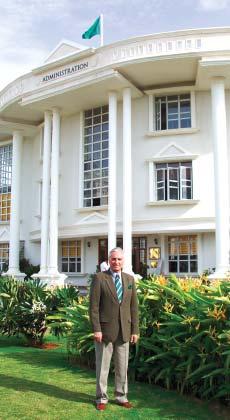
His room is awesome, exquisitely decorated with some of India’s finest military honours, a bullet-ridden sheet of metal from his armoured vehicle, service photographs showing him commandeering in Ladakh, & other military memorabilia. His physical presence too is overwhelming, the aristocratic face dominated by a pair of steely commander’s eyes, and a voice that is sure to have terrorized terror, not too long back. Yet, when Lt. General Arjun Ray is asked about his school’s most distinguishing feature, he says, “Well, here at Indus, we have removed the fear factor from our students’ hearts.”
For a second, we are baffled. Then we remember an equally baffling sight on the way to his office - the students lying on the paved walkway & the lawns, under the 4 PM sun, drawing & painting to their hearts’ content, seemingly oblivious of their surroundings. While we were about to walk past one boy lying on the grass-and-concrete walkway, he had looked up, his 10-year old eyes warmly offering our 30-plus faces the option of moving himself, if we wanted. When we sidestepped not to disturb him, a prompt & warm “Hi, thanks” followed. General Ray completes our understanding by adding, “Because, when fear is there, learning remains incomplete.”
No wonder then, the illustrious Indus Trust selected him as CEO, when he voluntarily retired from the army after Operation Sadbhavana. INDUS INTERNATIONAL SCHOOL, BANGALORE
He should know. Removing fear happened to be the highpoint of General Ray’s career. It was he who conceived & implemented Operation Sadbhavana (Goodwill), a unique civilian welfare project by the army that successfully forestalled militancy from spilling over to the Ladakh region of Kashmir, by winning back the confidence of alienated communities, by providing community development projects. Under Operation Sadbhavana, Ray started 13 Sadbhavana Schools, 11 Women’s Empowerment Centres, & 60 Adult Education Centres for Non-Literate Women – all along the LoC in Ladakh. The beauty of the project was that Corporate and Civilian Support was garnered for the project from all over India. Companies like Infosys chipped in, and thousands of working professionals from different fields volunteered. Such achievements come second nature to this soldier, who has always been an exceptional achiever. He was awarded the ‘Delta’ ranking in the Junior Command Course – which was the highest ever in 34 years, and was the topper at the Staff College Course at United Kingdom. His list of recognitions finally culminated in Param Vishist Seva Medal, the highest award in the Indian Armed Forces for distinguished services.
“STUDENTS FROM 19 COUNTRIES, INCLUDING USA, FRANCE, SOUTH KOREA, PHILIPINES, & INDIA, STUDY AT INDUS. 83% OF THEM ARE INDIANS BY ETHNICITY, THE MAJORITY OF THEM BELONGING TO THE INDIAN DIASPORA IN THE USA.”
Indus CEO Lt. Gen. Arjun Ray speaks with Seasonal Magazine, regarding the uniqueness of Indus International School:
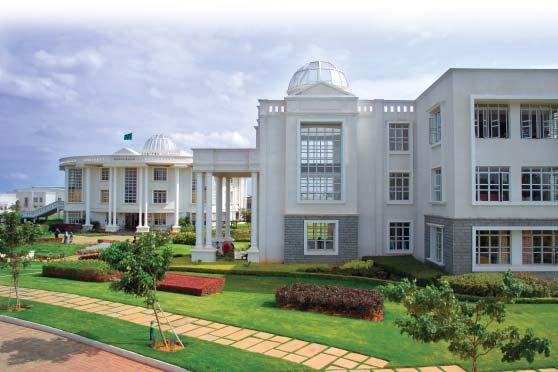
g Let us begin with the first thing that strikes any visitor to Indus – the splendid, larger-than-life architecture. What is the inspiration behind this?
It follows the ancient Greco-Roman style. We deliberately chose it because it was in the ancient Greece & Rome, that empowering of citizens first happened. The magnificent structures & expansive landscapes of those days provided large spaces, and opened up the human spirit to its real potential, and that is our prime objective too in selecting this architecture for our 40 acres campus – creating empowered citizens of tomorrow.
g Can you tell us briefly about the history of the school?
Around 5 years back, a need was felt in the education sector of India, to catch up with the developed world. If India were to progress further in the coming decades, the country needed not just local leaders, but leaders of international stature. A group of visionaries like Kumar Malavalli, HB Jairaj, & Sushil Mantri got together to bridge this gap, by forming the Rs. 30 crore Indus Trust which would create a chain of exceptional Indus International Schools. We are sitting now in the first of these, at Sarjapur in Bangalore, which took only 2-years to complete. After that we commenced operation, and are now entering our 3 rd academic year. Two more Indus International Schools are
coming up in Bangalore, another two in Pune, and a couple of others in locations that are yet to be decided.
g How did you come to take charge of this school?
Well, I am really the CEO of the Indus Trust, and not just the Bangalore school. My office just happens to be here, in this campus. Answering your question, well, after the successful completion of Operation Sadbhavana, I felt that there weren’t enough challenges left in the Army for me. Life needed more meaning, not just the next promotion or making money. Besides, I had always wanted to work in moulding young people into leaders, as leadership training was one field in which I always excelled in the Army.
g What is the strength & profile of the student community at Indus?
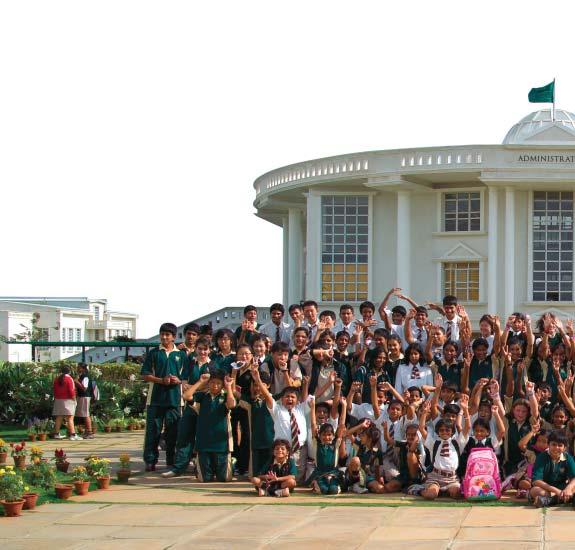
We are nearing a strength of 550 students, which is, as you would know, a feat for a young international school. Currently, 50% of the student strength is residential, and by the next academic session we expect it to reach 60%. Students from 19 countries have enrolled into Indus, the bulk of whom - around 83% - are Indians by ethnicity. The majority of the Indian students belong to the Indian diaspora in the USA. The remaining 17% students are from a wide range of countries including France, South Korea, & Philipines.
g Curriculum-wise, is Indus School unique in anyway?
Yes. We follow the full International Baccalaureate (IB) Program – right from pre-school to plus-two. We are the only such IB World School in Bangalore, and one among the few such institutions in the country. IB is the best-researched learning system in the world, the proof coming from the preference given by the world’s best Universities to IB students. We also provide the Cambridge Syllabus, but over here, more parents & students prefer IB.
g Do you adhere to any special teaching-learning methodologies?
Generally, we follow the IB Best Teaching Practices. Now, we have tied up with an Australian University, which has the world’s largest database of Best Teaching Practices. I am only just back from Australia, after making this alliance. But apart from this, we follow the world’s best emerging theories in learning & teaching like Dr. Howard Gardner’s Multiple Intelligences. One of our Trustees, Prof. Shivaram Malavalli, is an educationalist of great expertise and aids our faculty & students in understanding teaching architectures.
g Can you elaborate on these teaching architectures?
There are five teaching architectures that leverage five different ways of learning. They are simulation-based learning, incidental learning, learning by reflection, case-based technique, & learning by exploring. Following one of Prof. Shivaram’s keynote addresses on this subject for our faculty, parents, & students, we are emphasizing these in our curriculum.
“INDUS USES Dr. GARDNER’S MULTIPLE-INTELLIGENCES THEORY. USING MIDAS TEST, EACH STUDENT’S REAL STRENGTH – HIS DOMINANT TYPE OF INTELLIGENCE, IS DETERMINED FOR DRAWING OUT A CUSTOMIZED STUDY PLAN.”
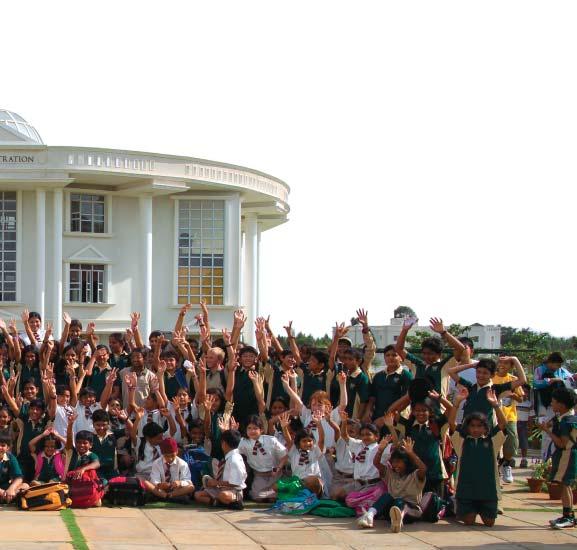
g Your mentioned Dr. Gardner’s Multiple Intelligences. Can you elaborate it for our readers?
Around 1983, Dr Gardner redefined intelligence from its then unitary status into eight types - Linguistic, Logical-mathematical, Spatial, Bodilykinaesthetic, Musical, Interpersonal, Intrapersonal, & Naturalist – based on collating a wide-body of research. Ever since then, this concept has been gradually revolutionising the field of education. Because, Dr. Gardner could prove why some students excel in some fields & not others, and why it is important to know the student’s real strength – his dominant type of intelligence.
g How does Indus leverage Dr. Gardner’s Multiple-Intelligences Theory?
Well, it starts from the Multiple Intelligence Inventory that is to be completed by the parent at the time of admission. Then follows the Interviews, Observations, & Psychological Tests conducted by the School Counsellors. Ongoing evaluation by different subject teachers also tries to identify the dominant intelligences in each student, so that an individual study plan can be drawn out. We have also started taking MIDAS Tests of students to bring out their Multiple Intelligence Profile.
g How are teachers selected at Indus?
The majority of our teachers are highly experienced, and have an international education background. But we do recruit exceptionally talented freshers, and even do campus recruitments to hunt for teaching-talent. Because, we believe that talent & attitude makes the difference in teaching. For example, one of our best teachers was earlier working for a 7-star hotel! Based on my experience in army, I have designed & implemented a Continuous Improvement Programme for the faculty members. They also attend relevant workshops like those conducted by IB.
g How do you provide students with values-based education?
The Indus core values are Love, Discipline, & Empathy. We believe that values can’t be taught in the class. For example, love can’t be taught; you have to fall in love! Similarly, truth can’t be taught; truth has to be experienced. What is important is how we – the Trustees, Management, Principal, Faculty, & even the Parents – behave. We have to adhere to values in all our decisions. We do it consistently,
and students unconsciously learn from it.
g As an example, can you explain how you demonstrate Empathy?
Definitely. As you might be aware, Community Service is compulsory in IB Curriculum. But, at Indus, we have gone one step forward, and have a Track-2 Community Service, under which our Teachers & Parents contribute by way of service & assistance to some neighbouring villages.
g And what is your concept of discipline at Indus? Discipline is not something to be imposed. It is not a behaviour that you follow only because somebody is watching you. Discipline is about self-management i.e. how you manage your own contradictions & inner dilemmas, how you reconcile & harmonize your opposites. This selfawareness is what we develop in our students. The end result of our style of discipline is that they grow into accountable citizens in their community.
“WE TEACH STUDENTS THAT DISCIPLINE IS NOT ABOUT REGIMENTATION, BUT ABOUT SELF-MANAGEMENT i.e. HOW YOU MANAGE YOUR OWN CONTRADICTIONS & INNER DILEMMAS, HOW YOU RECONCILE & HARMONIZE YOUR OPPOSITES.”
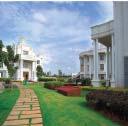
g Indus International School is also known for its educational & residential facilities. Can you elaborate the unique initiatives in this direction?
Classrooms are equipped with Internet connected laptops for students, projection facilities, & lockers. Apart from the well-stocked Central Library, digital hook-ups with Internet-based & other online libraries are provided. Computer facilities are also available at hostels. Apart from facilities for all the regular team & individual sports, special facilities include that for Golf, Horse Riding, Swimming, Squash, & Gymnastics. There is an international-class 400 metre / 8-track athletic stadium, two swimming pools, and a state-of-the-art Indoor Sports Complex. The residential facilities follow the House concept, each House under the close supervision of an experienced Housemaster / Housemistress. Each student module is based on semiindependent cabins with assured individual privacy. The central dining hall can seat 500 persons, the food provided is multi-cuisine, and vegetarian & non-vegetarian food are prepared in separate kitchens & are served separately. For performing arts, the school has a full-fledged amphitheatre.
g What are the Student Exchange & Teacher Exchange Programs?
Our Principal, Faculty, & Students often participate in such Exchanges. We have tied up with various Schools for this, one notable among them being the tie-up with a consortium of IB Schools in Australia. Shortly, 30 of our students are leaving for various Exchange Programs.
g How are students admitted to Indus? Can you briefly explain the admission procedure?
From Grade VI onwards, there is an admission test. Last year’s cut-off mark for this test was 60%, but we expect it to go up to 65% to 70% by the next academic year. We insist on a Transfer Certificate (TC) from the last school, as well as a Letter of Recommendation.
g Bangalore being a city of corporate excellence, how is Indus leveraging this advantage?
Until now Corporates have been collaborating only with Universities. Indus is pioneering a change in that by actively forging Industry partnerships. For example, under a proposed plan, international chemicals major BASF will teach our students on how to make learning chemistry more interesting. They also have a worldwide plan to teach students how to prevent corruption in the society.
g Where do you see Indus students many years from now? Will they be in Public Administration, Private Enterprises, Universities, or in Business?
I think they would go in for the private sector in a big way, because the role of governments is shrinking worldwide, with private sector managing 43% of the
BANGALORE
world’s capital. Well, whatever they choose to do, I believe that they will be leaders in their respective fields. Such is the leadership training that we provide them. We are also introducing merit scholarships so that financially lesser privileged students can also take advantage of the Indus expertise. Because, when we talk of leadership, we can’t talk of exclusivity. The Indus vision is crystal clear – create global leaders for tomorrow who are, as our motto states, ‘In Omnia Paratus’ – Prepared for All Challenges.
“THE VISION IS TO CREATE GLOBAL LEADERS FOR TOMORROW WHO ARE ‘IN OMNIA PARATUS’ –PREPARED FOR ALL CHALLENGES.”
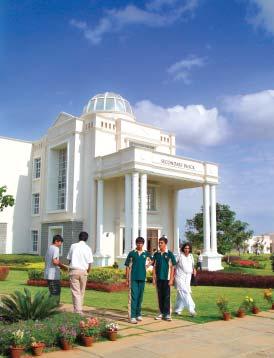
An old guard in the genre of values-based education,
St. Joseph’s Boys’ Anglo-Indian Higher Secondary School, Coonoor, strides successfully ahead, adapting to the demands of the emerging trends in education and needs of a fast changing world.
One hundred and twenty seven years of functioning sounds like a long innings and Bro. (Dr.) A. Stanislaus, the Principal, is quite nostalgic to recount the legacy. “All throughout, our stress has been on enabling a child to live, to love, to learn and to imbibe a legacy. The thrust has always been to make our students exemplary in all aspects from behaviour to learning.”
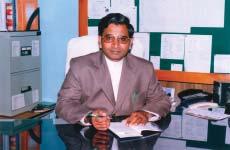
“A good school caters to the all round development of the students and we can emphatically state that the institution has always strived to meet this objective. As a result the students are well behaved, respectful and are eager to learn and gain knowledge. With an emphasis to inculcate truly Indian values, the teachers here bear the luminous torch of eternal, universal and Gospel principles,” adds Bro. Stanislaus.
Founded in the year 1888 by the Brothers of St. Patrick (Patrician Brothers), the school stands at six thousand feet
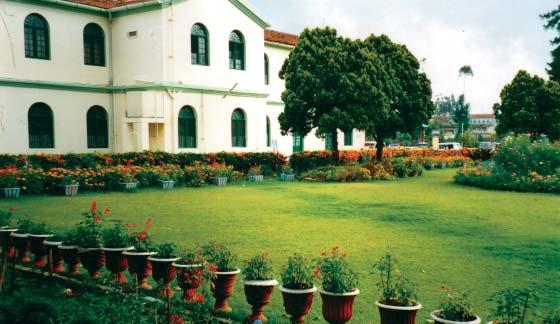
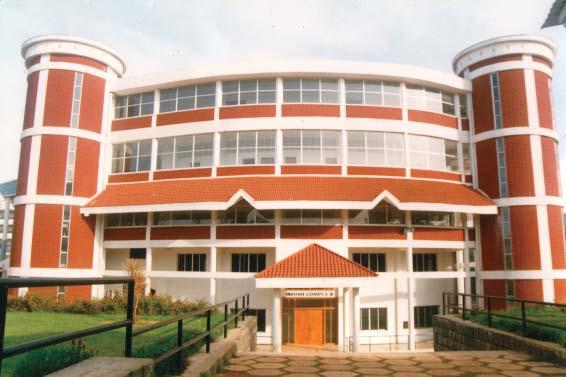
above sea level on the crest of a hill quite close to Coonoor and Wellington Railway stations, set amongst a scenic background quite salubrious and sylvan. The discipline seen here in children from all corners of India and abroad, reflects the spirit of the institution. A Residential cum Day school for boys, this institution is dedicated to provide education that encompasses all aspects of a child’s mental, physical, ethical, social and psychological development. As a proof, the school has been consistently producing cent percent results in tenth and twelfth board exams. The school excels in district and regional level co-curricular activities and the students have done well in the state and national level sports championships.
Seasonal Magazine spent time at the sprawling campus, marvelling at the gardens and the total ambience quite resplendent of an international residential school. Bro. (Dr.)
A. Stanislaus answers our queries on St. Joseph’s School:
How does the school fulfil its vision of all round development of children?
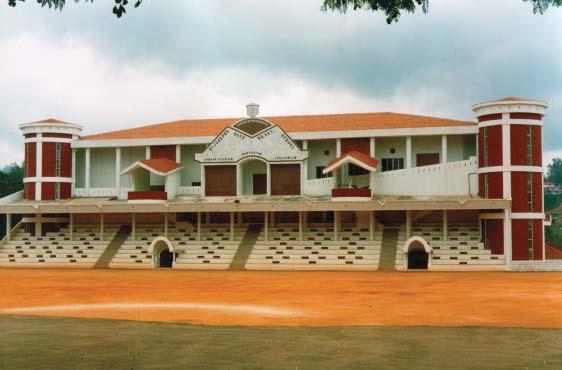
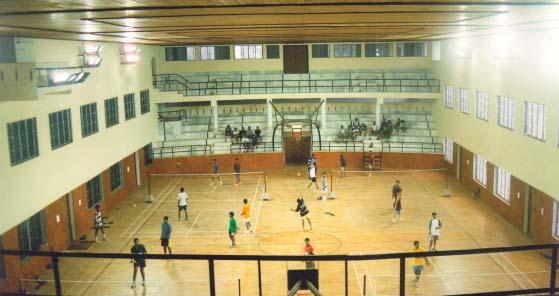
Our legacy has been to always walk the talk. Academics have always been only a major part of learning at the campus, and there has been a thrust on other aspects like sports and other co curricular activities. Participation in co-curricular activities is compulsory. Fifteen playfields and a large indoor recreational centre with Basketball,
Volleyball, Badminton and Squash courts, is the evidence of the holistic approach to learning at our campus. We have thus created a tradition of excellence in football, cricket and athletics. We also have a 35mm theatre. The library is well stocked with the latest editions of journals, encyclopaedias, newspapers and magazines, apart from subject references. Under the auspices of the literary and debating clubs, students are actively encouraged to regularly participate in in-house debates, dramatics and quiz competitions. Apart from this, music, singing, and dance lessons are provided.
“A RESIDENTIAL CUM DAY SCHOOL FOR BOYS, WE CURRENTLY HAVE 450 BOARDERS AND 850 DAY SCHOLARS.”
“THE INSTITUTION IS DEDICATED TO PROVIDE EDUCATION THAT ENCOMPASSES ALL ASPECTS OF A CHILD’S MENTAL, PHYSICAL, ETHICAL, SOCIAL AND PSYCHOLOGICAL DEVELOPMENT. IN ACADEMICS, THE SCHOOL HAS BEEN CONSISTENTLY PRODUCING CENT PERCENT RESULTS IN TENTH AND TWELFTH BOARD EXAMS. “
ST. JOESPH’S BOYS SCHOOL, COONOOR
playfields and a large indoor recreational centre with Basketball, Volleyball, Badminton and Squash courts, is the evidence of the holistic approach to learning at our campus. We have thus created a tradition of excellence in football, cricket and athletics. We also have a 35mm theatre. The library is well stocked with the latest editions of journals, encyclopaedias, newspapers and magazines, apart from subject references. Under the auspices of the literary and debating clubs, students are actively encouraged to regularly participate in in-house debates, dramatics and quiz competitions. Apart from this, music, singing, and dance lessons are provided. Our teams have won many trophies at district, state and national level competitions.
g How has your school adapted to the changing phases of information technology?
If the institution has to survive the fast pace of technology, it has to adapt and innovate. Taking this into account, we have a state-of-the-art computer lab with sixty-five networked computers and the latest software. We have gone one step ahead by also providing an on-line personalised career guidance service.
g What is the curriculum followed at the institution? The academic year of the school starts in June and ends in April. The school is affiliated to the Tamilnadu AngloIndian School Leaving Certificate examination for class ten. For the plus two exams, we are affiliated to the Tamilnadu Higher Secondary Examination. Our wellqualified and experienced teachers take a lot of individual
care both inside and outside the classroom. Remedial classes are organised for weaker students.
g Can students make a choice of subjects in order to branch out for specialisation for higher studies?
Till tenth standard the students are offered choices in only the second language where they can choose Tamil, Malayalam, Hindi or French. At the higher secondary level there is a choice of three streams- Engineering & Technology, Medical & Paramedical and Commerce & Business.
g What amenities does your school provide to residents? In the late 1920’s we had begun to grow in strength and stature and thus we had to go in for an increase in the facilities for boarding, as more and more students started coming in from far and near. In 1929, we built additional buildings and facilities for accommodation. Now there is ample space for dormitories, dining rooms, study halls and bathrooms. The school presently accommodates 450 boarders and 850 day scholars. We are again renovating and expanding to accommodate the rush. There is also a full-fledged gymnasium, indoor basketball court, four badminton courts and many table tennis courts. A full-fledged post office and a bank functions inside the school campus.
g These days, there is a lot of concern on the nutrition & fitness of the students by the parents. Have you taken any steps to cater to this concern?
Right from the beginning, our institution carried the responsibility of being concerned about the nutrition and wellness aspect of our children, be it in classroom or at the dining table. All our classrooms, you would have noticed, are quite spacious and airy. Hygiene has always been a primary focus and we keenly adhere to hygienic practices in the campus. Fresh food, both vegetarian and non-
“THE THRUST ON ASPECTS LIKE SPORTS AND COCURRICULAR ACTIVITIES IS EVIDENT FROM THE FIFTEEN PLAYFIELDS AND A LARGE INDOOR RECREATIONAL CENTRE WITH BASKETBALL, VOLLEYBALL, BADMINTON AND SQUASH COURTS. WE ALSO HAVE A 35MM THEATRE.”
With a CBSE syllabus, he put his students in NASA. With something as explosive as a custom-designed IGCSE/ IB combo, where will his students end up? Mars, maybe? “Anyway, some of them have passed out from MIT, Harvard, LSE, Oxford, & Cambridge,” answers Dr. KP Gopalkrishna, education-entrepreneur extraordinaire, and the man behind the state-of-theart The International School Bangalore (TISB), as well as National Public Schools, a chain of prestigious CBSE schools in Bangalore & Chennai. For TISB, Dr. Gopalkrishna has a simple success mantra – “provide the best, demand the best, & thus aim to be the very best.”
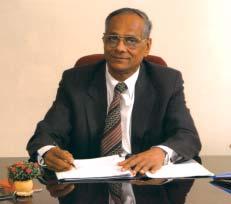
“We Provide the Best, We Demand the Best, and Thus Aim to be the Very Best International School”
It would be an understatement to call TISB Chairman Dr. Gopalkrishna an educationalist. Because, he is more. Unlike most educationalists, he is driven by projects, by a visionary entrepreneurial spirit. But to call him an entrepreneur would be insulting the intelligence of many entrepreneurs who seek his guidance. Because, entrepreneurs usually don’t help other entrepreneurs, especially in the same field. But Dr. Gopalkrishna does help, and the number of schools under his guidance – apart from TISB & National Public Schools – is a whopping 150, in Karnataka! When we first heard this piece of interesting information, it was unbelievable. Your unbelief too will pass when you read on this excerpt from the interview Seasonal Magazine carried out with this unique educationalist-entrepreneur-consultant:
That edge is about stimulating the thinking process. International school curricula like IB, Cambridge, Oxford, & those followed by American Schools, have an original approach that focuses on developing the thinking process.
g And which international syllabus does TISB prefer?
Dr. GOPALKRISHNA: Until Class X, we follow the Cambridge Syllabus i.e. the IGCSE. As the final syllabus, i.e. at XI and XII, we follow the International Baccalaureate (IB), as the IB Diploma is what every major international University prefers. In our own experience, there is a significant change in the thinking acumen of students studying for the IB Diploma.
“OUR EDGE IS STIMULATING THE THINKING PROCESS.”
g What is the need for an international curriculum?
Dr. GOPALKRISHNA: As you already know, I have long years of experience with India’s National Curriculum, the CBSE. Our chain of National Public Schools at Bangalore & Chennai has created 14,000 students who have been very successful internationally, with everything from legendary software companies to NASA. But times are changing. Though the CBSE syllabus is broad enough, today, for global leadership, something more is necessary.
g Apart from syllabus, what all are important for an international school like TISB?
Dr. GOPALKRISHNA: Educational excellence, especially in international schools, is broadly dependent on five factors – curriculum, infrastructure, faculty, students, & exchanges with other fine schools. Our philosophy for excellence at TISB is simple – we provide the best curriculum, the best infrastructure, and the best facilities to faculty & students. In return, we demand the best efforts from our faculty & students.
g How far has this strategy of ‘offering the best and demanding the best’ helped in creating & maintaining a cutting-edge faculty?
Dr. GOPALKRISHNA: You would be surprised to know that our teachers are much sought-after throughout India to conduct IGCSE & IB Workshops. This is because, we keep them updated with constant training from Cambridge, IBO, and the Headmasters / Headmistresses Conference (HMC). Also, guest lecturers from fine institutions like King’s College, London, come here as guest lecturers to conduct Professional Weeks for our faculty, two times a year. The point I make is that we not only provide our faculty excellent pay packages; we actively provide opportunities for their professional development. The outcome is that we can demand the best from them, and they enthusiastically put in their best efforts.
g You mentioned exchanges with other fine schools. How important it is to maintain excellence?
“40
Dr. GOPALKRISHNA: Again, you would be surprised to know that International Admission Directors from over 40 International Universities & Colleges come to TISB every year to address the students and welcome them to their renowned institutions. And these include representatives from some of the finest Universities in the world like London School of Economics, & America’s Ivy League Universities. About 90% of TISB students opt for studying abroad. This year, our first batch of students has graduated from Harvard, MIT, Purdue, LSE, Oxford, & Cambridge, apart from various IITs.
INTERNATIONAL UNIVERSITIES & COLLEGES APPROACH US FOR
Dr. GOPALKRISHNA: Well, it always helps to be in the company of great! Lots of innovations are being attempted at the world’s ultra-fine schools, much like we do our own innovations at TISB. Through Exchange Programs, such innovations and expertise can be shared. We have formulated a number of Exchange Programs with celebrated International & Indian schools like Westminster School London, Sevenoaks School Kent, Merchiston Castle & Kilgraston of Scotland, a Lycee in Paris, and Doon School & Mayo College in India.
g The acid test for any international school is academic placements i.e. admissions to top international Universities. How does TISB fare in this regard?
g You are a pioneer in India, when it comes to both National Curriculum Schools, and International Curriculum Schools. Do you think the government as well as the education-entrepreneurs are doing enough to suit the global scenario?
Dr. GOPALKRISHNA: No. We remain hopelessly unaware of our strengths in the education sector. Our IITs, IIMs, & many Medical Schools are highly regarded all over the world, but we have never been able to exploit their strengths to transform India into a global educational destination. Recently, Singapore has invited all the pioneering Universities in the West like Harvard, MIT, & Wharton to set up an extension of their campuses in Singapore. Similar is the case with Dubai Knowledge Village, where they are inviting all the famous Universities to set up campuses. This trend is yet to catch up in schooling. India can pioneer it. If population-wise & geographically tiny countries like Singapore & Dubai can do it, India can definitely do even better, by leveraging country’s best institutions as well as inviting the world’s best institutions.
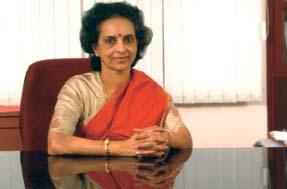
S cotsman Hector S MacDonald is feeling at home in Bangalore. The reason? His boss, Dr. Gopalkrishna, who has handpicked this scholar – a scientist by profession, and a teacher by passion, - to be the Principal of The International School Bangalore (TISB). “Indian values, and Western expertise; TISB has been a great project to lead,” says MacDonald.
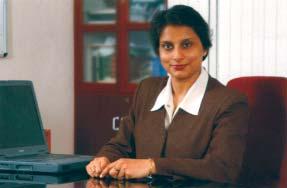
The same goes for the TISB Dean Ms. M. Santa Gopalkrishna, and TISB Director Dr. G Bindu Hari. But for them, Bangalore is home-town, and TISB is home itself. The worthy wife & worthy daughter of Dr. Gopalkrishna, sometimes even they find it tough to follow the sheer energy of this man, who started his first school while he was just 22-years of age! Incidentally, Santa Gopalkrishna also heads the prestigious National Public School at Rajajinagar, which is one among the only
two autonomous schools in South India.
“WE ARE A CULTURALLY RICH SALAD BOWL OF NATIONALITIES
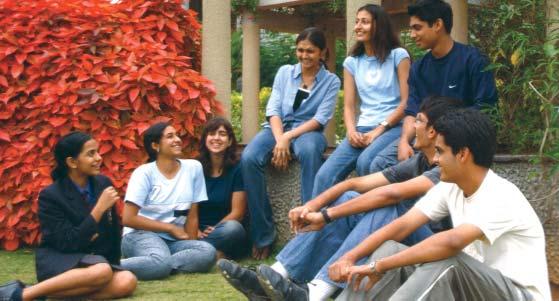
About the unique value proposition of TISB, Director Dr. Bindu Hari says, “As a home to students from over 30 countries, TISB is a culturally rich salad bowl of nationalities and communities co-existing harmoniously in a wholesome and secure environment that fosters healthy respect and understanding for people from all cultures.”
Dean Santa Gopalkrishna adds, “The international nature of the syllabus, faculty, & students is only one half of the value we provide; at TISB we also take efforts to be in sync with the latest developments in education at other fine schools in the West as well as in India. We achieve this by way of international tours & exchange programs with such institutions.”
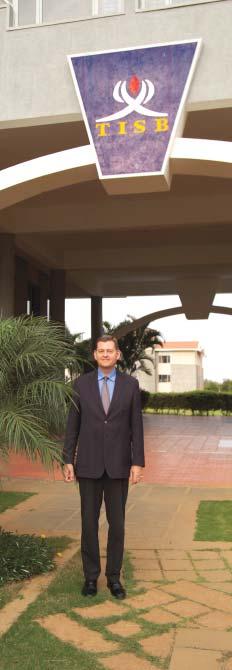
Hector S. MacDonald
“You belong to a great country,” was Hector S. MacDonald’s opening line. Warm & genial, the Scholar-Scientist Principal of TISB, is with his wife India-fans, due to more reasons than one. He spoke in detail with Seasonal Magazine regarding a wide-range of topics, including the importance of Indian values and TISB’s unique mix of IB & Cambridge Curricula:
g How does it feel to be in India?
Mr. MACDONALD: Absolutely great. This is great culture, what we see around. The people are so friendly, so helpful. Maybe I can value it more since I come from the West, where relationships have been losing meaning for some time now. In India, it is so easy to start a conversation and begin a friendship, even while travelling!
g How does it feel to be working at TISB?
“INDIAN VALUES & WESTERN EXPERTISE IS OUR STRENGTH”
Mr. MACDONALD: Fantastic, in one word. This is a great project, where we see a delightful mix of Indian Values and Western Expertise. And most delightfully, the beneficiaries – the students – come from all parts of the world!
g Why are Indian values so important?
Mr. MACDONALD: You come from Kerala, right? And you will go back to Kerala, maybe after a few days, or in any case not more than a week. Why? Because you treasure your family, and your family treasures you, and you have to be back where you really belong – your family. That sort of importance you attach to family has always been central to human civilization’s sustenance. Without it, civilization starts to wither away. This is what is happening in the West. If we are to put an end to it, we have to go back to our values. That is why values are so important.
g What all constitute the Western Expertise in Education?
Mr. MACDONALD: Flexibility is one. You might be surprised to know that it was Medical School which I attended. But halfway through, I decided that I don’t want to be a Doctor, but a scientist. So, I turned to research at the same institution itself, and made a successful career as a research scientist. Again, after some years as a scientist, I wanted to get into teaching, and this switch was also easily possible. I think such flexibility is not there in Indian education system. Another advantage of Western Education is the superior curricula available, especially in schooling.
g Can you explain it further?
Mr. MACDONALD: Yes. Programs like Cambridge’s IGCSE and International Baccalaureate Organization’s IB Diploma are gold standards in schooling. They are wellresearched & well-documented learning systems that are globally delivered with exacting standards. For example, Cambridge IGCSE is used in over 157 countries, and over 1 million students take the examinations, each year. Worldwide, IGCSE is seen as a robust proof for competency & students’ ability to perform well in their further education. Similarly, the IB Diploma is regarded as the ‘gold card’ for admission in the world’s finest Universities & Colleges like Oxford, Cambridge, LSE & USA’s Ivy League Universities.
g How are these two curricula used at TISB?
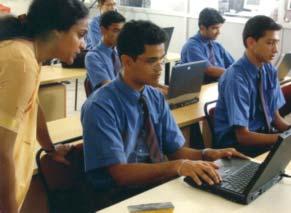
Mr. MACDONALD: Good question. A unique aspect of TISB is how we have superbly integrated the strengths of IB, Cambridge, & UK National Curricula. Broadly speaking, TISB selectively uses the strengths of each of these curricula in various sections like Pre-KG to Grade V, VI to VIII, IX to X, & XI to XII.
focus on providing a pre-IGCSE program, which is noted for its ability to develop some of the skills needed for IGCSE, earlier itself.
g So that in Grades IX & X, the students will find IGCSE easy?
Mr. MACDONALD: Exactly. Then, while pursuing IGCSE, we have two objectives at TISB. One is to excel in the Grade IX and X Exams. But more important than that, is our objective of laying a broad foundation in Maths and Sciences that keeps the choices open for our students when they make their IB Diploma course selection and career. We also provide career counselling from Grade IX onwards.
“WE LEVERAGE THE BEST OF IB & CAMBRIDGE CURRICULA”
g Which all curricula are used in Pre-KG to V, and VI to VIII?
Mr. MACDONALD: TISB’s Primary Years Programme i.e. from Pre-KG to V, uses a mix of 60% UK National Curriculum and 40% IBO’s Primary Years Programme (PYP). The advantage is that TISB can leverage the strengths of UK National Curriculum in English & Mathematics, as well as the strengths of IBO PYP in other subjects using Enquiry Process Based Learning. In Grades VI to VIII, we
g And finally your curriculum culminates in the IB Diploma during Grades XI & XII?
Mr. MACDONALD: Yes, because as I mentioned earlier, IB Diploma is the qualification of choice at the world’s finest Universities & Colleges. This is because, IB Curriculum innovations like Theory of Knowledge (TOK) Essay, Extended Essay, & the 150-hours long Creativity, Action, Service (CAS) component is effective in stimulating the thinking process. While pursuing the IB Diploma, TISB also provides training to students for taking the Preliminary Scholastic Aptitude Test (PSAT).
g What is TISB’s single most contribution to its students?
Mr. MACDONALD: Those who graduate from TISB will not be of one pattern. They will be diverse in interests and versatility of thought. The only thing common would be an energetic approach to life and good habits for a lifetime.

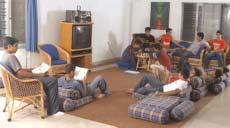
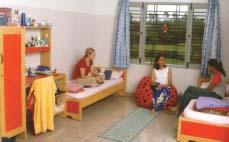
Boarding life is at the heart of any international school, and is another area where TISB puts in superb performance. The separate boarding houses for boys & girls – Boys International House (BIH) & Girls International House (GIH) accommodate students 7-18 years old. Purpose built in 2000, they provide state-of-the-art amenities that include well-appointed bedrooms, superb bath & shower facilities, recreational facilities, library, & quiet area. Bedroom options include two, three, or four student accommodation.
Can parents leave the campus with total peace-of-mind? “Absolutely,” says Dr. Gopalkrishna. “The teachers reside on the campus, and the system of caring is very much based on a family approach where a student’s every need is attended with promptness & prudence.” The TISB Medical Centre looks after the specific needs of ill students, or those who may need periodic attention.
“OUR BOARDING PROVIDES SOUND PASTORAL CARE”
But more than the facilities, what seems to matter more at TISB is the care. Says, Superintendent of Boarding Mrs. Susan MacDonald, “Sound pastoral care. That is our edge. We provide the shared sense of support & family, where traditional values are maintained. Sound pastoral care ensures the development of the whole child, a desire for truth, respect for others, and to help students set goals and develop a plan of life that will prepare them for life beyond TISB.”
The system of care designed at TISB is impressive, indeed. Mrs. Susan MacDonald is supported by qualified & skilled residential staff including Housemasters, Housemistresses, Assistant Housemasters/ Mistresses, House Mothers, House Staff, & Support Staff.
All this hierarchy doesn’t mean that there is no fun either for TISB boarders. Apart from the widest varieties of sports & arts, boarders are regularly taken for formal dinners with guest speakers, overnight trips, trekking, plays, theatre etc.


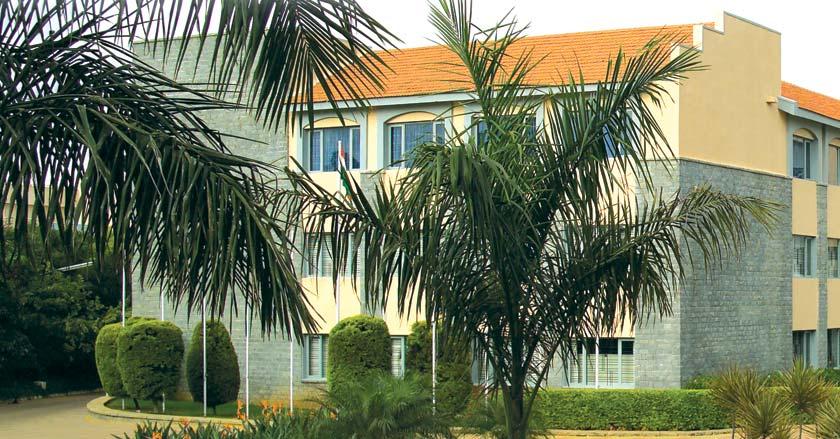
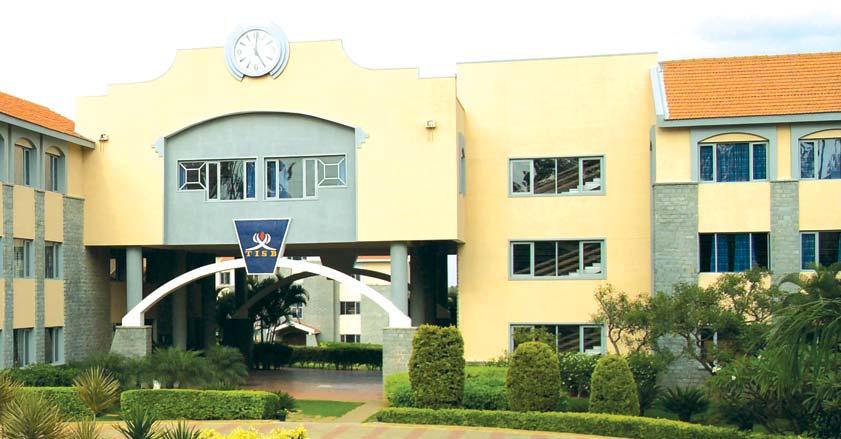
Spread over the lush 125-acres TISB Campus are not only massive libraries, state-of-the-art computer centres, & world-class science laboratories. It is equally deployed with theatres, music rooms, auditoriums, audio-visual rooms, and even a full-fledged art studio with ceramic, textile, & photographic facilities!
Says Dr. Gopalkrishna, “The arts & sports facilities are such that each student’s talents will be unravelled & nourished.” Indeed, the facilities for sports might exhaust even the most die-hard sports enthusiast! Cricket, Soccer, Basketball, Volleyball, Hockey, Badminton, Tennis, Squash, Swimming, Table Tennis, Snooker, Billiards, Weight Training…the list is endless. And there are 8 full-time coaches & instructors, with additional specialists routinely brought in. Special facilities include a 400-metre athletic track, a bicycle track, a roller blade rink, and a horse-riding track. Cricket is a major focus area at TISB, with none other than Indian Cricketer Venkatesh Prasad, as the Master-in-Charge, chipping in with his professional guidance to budding TISB cricketers. The school also enjoys the patronage of many present & former Indian Cricket Team Members. Healthy competitive spirit is nurtured at TISB by in-house socio-cultural events that include debates, quizzes, arts contests, craft shows, cooking
contests, fashion shows, socials, camping etc. as well as inter-school events in arts, sports, co-curricular & academics.
“EACH STUDENT’S TALENTS WILL BE UNRAVELLED & NOURISHED”
Apart from arts & sports, TISB has helped constitute Student Clubs, Associations, & Groups in over 30 co-curricular activities. The Clubs include those for Chess, Computer, Drama, Environment, Film, Music, Photography, Quiz & Science. The Societies are for Astronomy, Classical Dance, Classical Music, Equestrian, Language, Literature & Mathematics. The Groups include Business@School, Duke of Edinburgh, Year Book, Junior Choir, Senior Choir, Model United Nations, Oxbridge, Speech & Debate, Taikwando, Web Designing, & Yoga.
This kind of care that goes into developing academic & co-curricular infrastructure can mean only one thing. That TISB is being provided to students as an experience to remember for a lifetime. Summing up, Director Dr. Bindu Hari, says about TISB, “The school motto says it all –‘Vita Eadem Studia’, a Latin expression which means Life is for Learning or Learning is for Life. Our motto’s Sanskrit translation is even more visionary, which means Life & Learning are One.”
New leaders like educationalist Christopher Edmunds and management expert Shweta Sastri are taking Bangalore’s CanadianInternationalSchool(CIS)tonewheights,fulfilling the unique vision of noted developer and school founder Ramani Sastri. Today CIS is truly international – with 2 international curricula (IB & Ontario), teachers from 7 countries, students from 28 nationalities, and college placementstomorethan50prestigiousUniversitiesinUSA, UK, Canada, Australia, Germany, France, Switzerland, New Zealand, Korea, Singapore, and India!
“I invite you to hold us all accountable to our commitment to quality. I invite you to contact me personally if you feel we are falling short of our commitment in any way,” says Christopher Edmunds, the new Head of School at Bangalore’s Canadian International School (CIS).
He continues, “I say this because the degree of quality at an international school like CIS is dependent on six levels of responsibility –School Board, Head of School, K-12 Principal,
Teachers, Parents, and the Students themselves.”
This new Principal who took charge from July 2008, is a veteran educationalist to whom international schooling comes naturally. He has headed international schools in three continents – Europe, Africa, & Asia, and has taught in more than 6 countries. The schools where he was Principal includes Germany’s Frankfurt International School; China’s Beijing City International School; and Botswana’s Westwood International School. Edmunds did his degree and postgraduation from University of Warwick, UK, and is also a musician trained at Trinity College of Music, London. He is a British citizen born in Germany.

Shweta Sastri, Executive Director
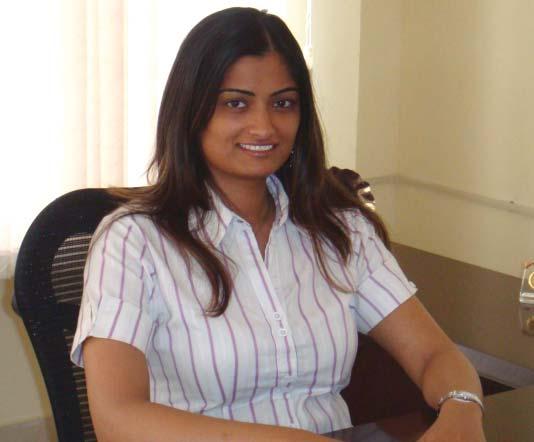
Since December 2006, Canadian International School also has a new Executive Director, Shweta Sastri, who looks after the management of the school on a daily basis. Like Edmunds, she is also open to discussions with parents, teachers, and students at her Office of Administration at CIS.
Shweta Sastri holds an MSc in Investment Banking and has handled mightier challenges like IPO execution, private equity, and corporate finance, earlier.

Canadian International School is the brainchild of Ramani Sastri, one of the oldest and well-respected developers of Bangalore. As the Chairman and Managing Director of Sterling Developers Pvt. Ltd, and the Past President of national and state level industry bodies like CREDAI & KOAPA, Ramani Sastri’s has been a voice
to reckon with in the industry. Sastri is the main promoter of Canadian International School.
Canada has a robust, technologically advanced schooling system that features computers in all schools and Internet connectivity in 98% of schools. With such technological infrastructure and the responsibility for school education handled directly by the Canadian Provinces, it is no wonder that Canada features a literacy rate of 99%. Ontario, the largest province by population, is especially noted for its unique initiatives in elementary and secondary education.
Canadian International School (CIS), Bangalore, draws its inspiration from this schooling system. Reflecting its name, CIS is authorized by the Ministry of Education in Ontario to grant secondary school credits and
the Ontario Secondary School Diploma. However, Canadian International School is also an IB World School, offering the prestigious International Baccalaureate (IB) Diploma.
CIS is an overseas inspected school. Every year an Education Officer from the Ministry of Education, Ontario, conducts a weeklong evaluation to ensure that CIS is complying with standards set in Canada. It is a thorough evaluation, with some of the aspects inspected being courses of study, assessment practices, examinations, and student work.
curricula, teachers from 7 countries, and students from 28 nationalities!
Canadian International School has a rigorous academic focus which is reflected in CIS students getting admitted to more than 50 prestigious Universities in USA, UK, Canada, Australia, Germany, France, Switzerland, New Zealand, Korea, Singapore, and, of course, to many prestigious colleges and Universities in India.
Some of the world’s finest institutions for higher education like USA’s Columbia University, University of Pennsylvania, and Purdue University; UK’s London School of Economics; Canada’s McGill University and University of Toronto; and Australia’s University of Melbourne, all have accepted students from CIS.
Such achievements are befitting this truly international school – with 2 international
Principal Christopher Edmunds leads a team that is dominated by Ontario-trained teachers, with other equally qualified teachers coming from countries like USA, Britain, France, Belgium, Czech Republic, and India.
While all Ontario-trained teachers are required to complete a series of professional practices programs regularly to maintain their license, most of the other CIS staff also participate in professional development programs to stay updated on the cutting-edge of educational practices.
On the Admission, Development, and Administration fronts also, CIS is dominated by highly experienced and committed professionals. Dr. Penelope Abraham, Director of Admissions & Development is one leader at CIS who best exemplifies this.
Canadian International School now works from its new 15-acre campus at Machenahalli, Yelahanka, which features purpose designed structures, attendant facilities on par with international standards, multimedia centres, indoor sports facilities, multi-purpose halls, auditoriums, separate dormitories, open-plan kitchen and cafeteria, full sized football ground, basketball courts, tennis courts, volleyball courts, swimming pools, gymnasium etc.
What happens when your child gets to quiz Dr. Kalam? What happens when your kid’s study tours are to Singapore, Malaysia, & Sri Lanka? What happens when a prospect of visiting NASA looms in your child’s horizon? Many things happen, but most importantly his or her vision expands to take in the world and beyond. He or she takes those crucial steps to be a tomorrow’s leader. Sharada Residential School, Udupi, belonging to the Manipal Group, is in that mentoring mode these days.
Academic feats for most schools like 100% results are a way of living at Sharada Residential School (SRS), Udupi. Because they have been registering 100% results continuously in ICSE for 17 years now. Says Principal Vidyavantha Acharya, “In fact, during most of these years we also managed 100% distinction.”
On the extra-curricular front too, SRS is a regular performer. During this academic year, they have already won two accolades. The SRS team performed well in a national level debate competition, while in sports the SRS football team has been placed runner-up on the state level.
The school which already boasts of excellent infrastructure, is building a brand new swimming pool at a cost of Rs. 50 lakhs. “We already have access to two swimming pools in the
Manipal campus. But the new pool will give us an exclusive swimming facility,” says Acharya. SRS is also expanding its campus with new hostels to house NRI students.
With such outstanding overall performance, the school wants to do extraordinary things. Last November, 20 students from SRS had their study tour in countries like Singapore, Malaysia, & Sri Lanka. Even a year back, a team of SRS students led by Vidyavantha Acharya had held an interaction
with Dr. APJ Abdul Kalam at Rashtrapati Bhavan. “It was a lifetime achievement for SRS,” says Acharya.
But the urge to do more challenging things is getting stronger. This year’s plan is a shocker. Visiting NASA with some 20 students! The modalities are being worked out, informed this hardworking Principal.
Today, it might seem that anyone enthusiastic can start a residential school. But, even to this day, great residential schools are never built that way. It requires vision, it requires wisdom, and it requires diligence. Sharada Residential School (SRS) is the vision of Dr. TMA Pai, founder of the University Town of Manipal and the banking giant Syndicate Bank, as well as the educationalist credited with establishing the maximum number of educational institutions during a lifetime, anywhere in the world! And SRS is the wisdom of Dr. Ramdas Pai, the Chancellor of Manipal Academy of Higher Education (MAHE), India’s first Deemed University in the private sector, and Mr. KK Pai, former Chairman & Managing Director of Syndicate Bank. And SRS is the diligence of a Governing Council of eminent educationalists and administrators including its Principal & Secretary Vidyavantha Acharya. With illustrious cousins like Kasturba Medical College, Manipal Institute of Technology, Dr. TA Pai Management Institute, & Manipal Hospital, this residential school has to live up to a heritage – something which it does consistently, with 100% results
in ICSE, nearly 100% distinctions, membership in the prestigious Indian Public Schools’ Conference (IPSC), and some of the finest practices in residential schooling that can be emulated by aspiring residential schools.
As a parent what all will you look for in a residential school? Excellent academics? Weekly letters from your child? Immediate and expert medical care? Life-skills like debate, public speaking etc? Well-developed social skills? A secular culture where all religions are equally respected? A bit of self-defence training like karate? Exposure to international extra-curricular activities like UNESCO Club and Duke of Edinburgh’s Scheme? Tons of fun activities?
Well, all these are standard features at Sharada Residential School. Says Secretary & Principal Vidyavantha Acharya, “Our motto encapsulates all these features in three simple ideas –acquisition of knowledge, moulding of character, development of self-control.”
‘What the human mind can perceive, is possible.’ Though most of us have heard this adage, it is difficult for us to believe it, let alone practice it! But, sometimes there comes along a person who just believes it, and goes about fulfilling it. Later, we call them visionaries.
In 1953, most people looking at Manipal, saw only a barren hilltop. But a visionary by name of Dr. TMA Pai saw something different. It was a possibility. Why should this barren hilltop remain barren? Why can’t it be transformed into a bustling city of international repute, by creating world-class institutions in every field? Such truly out-of-this-world possibility thinking is what we later call miracles.
Being a medical doctor himself, he started off by establishing a medical college, the now renowned Kasturba Medical Colleges (KMC).
2003 was the year when Dr. TMA Pai’s vision completed 50 years. What has happened to that barren hilltop? Today, Manipal is known around the world as India’s International University Town. Home to numerous educational institutions in every field, hospitals, research centres, banks, and India’s first Deemed University in the private sector, the Manipal Academy of Higher Education (MAHE). The Dr. TMA Pai Foundation and the
Manipal Education & Medical Group India Pvt. Ltd., oversee the nearly 100 institutions belonging to the group, not only in Manipal, Mangalore & neighbouring areas, but in Bangalore, Sikkim, Middle East, Nepal, Sri Lanka & Malaysia!
Sharada Residential School (SRS), hailing from this lineage, has had a head-start, says Vidyavantha Acharya, Secretary & Principal of this world-class residential school. Dr. Ramdas Pai, the distinguished son of Dr. TMA Pai, and the Chancellor of Manipal Academy of Higher Education (MAHE) is one of the Trustees of SRS. Started in 1988, the school gets it’s name from the inspiring Smt. Sharada Madhava Pai, wife of Dr. TMA Pai, who provided rock-solid support to her visionary husband all through his life. Today, SRS is in the safe hands of a Governing Council consisting of leaders like KK Pai, HV Kamath, Vasanthi R Pai, Sandhya Pai, Dr. PLN Rao, Prof. H Krishna Bhatt, and Vidyavantha Acharya.
The school follows ICSE syllabus from Grade VI to X, and is affiliated to the Board of Pre-University Education, Karnataka, for PUC. In 1993, SRS received membership in the prestigious Indian Public Schools’ Conference (IPSC).
But more than the sheer clout of the Manipal Group, the way in which the lineage has helped SRS is by inspiring & equipping the school to pioneer the best practices in residential schooling.
For example, the innovative best practices followed by SRS are many. The school doesn’t believe in residential schooling of children below 11 years of age, and hence offers education from only Grade VI to XII. But parents can register their children for admission at SRS, as early as 5 years of age, and many parents do this! Principal Acharya explains this innovation, “Residential schooling is a different way of growing up. Discipline, self-help, co-operation, concern for others etc are all intrinsic elements of a boarding life. Though all these are desirable qualities that will decide future success, for a day scholar habituated to homely pampering, entering boarding school for the first time can be a real shock! To avoid this, we provide this early registration scheme whereby parents get sufficient time to train their children in sleeping habits, food habits, hygiene habits, studying habits etc.”
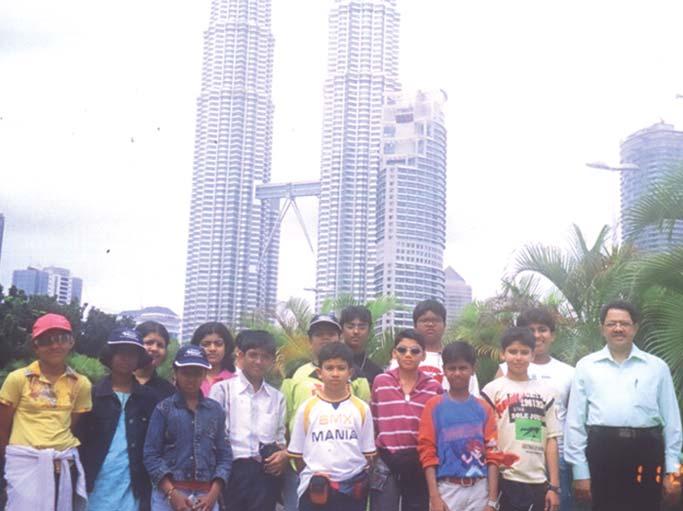
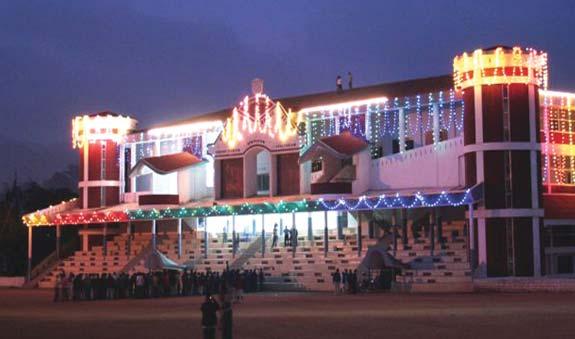
magine a school consecutively winning the district athletic championships for the last 20 years. Tough, isn’t it? What if their district is the cradle of residential schooling in India – the one and only Nilgiris? Did we hear you utter “impossible”? Now imagine this school achieving 100% results in Class X & XII public exams consistently, with around 98% being placed in First Division, and a few becoming toppers at regional, state, & national levels. That is what anyone would classify as allround achievement, isn’t it?
St. Joseph’s traces its lineage to Ireland, the land of Robert Boyle, Jonathan Swift, Oscar Wilde, William Butler Yeats, & George Bernard Shaw. The land famed for its love for literacy –where even poor shepherds knew Latin and cattle-markets operated in Greek, as far back as 17th century!
The School was founded in 1888 by the Catholic missionary group, Brothers of Saint Patrick, and was led and staffed by Irish priests until the last 30 to 40 years. The current Principal is Brother Damien, very much Indian, but
cherishing that great Irish heritage in education. The institution was thrice adjudged as the ‘Best School in Nilgiris District’ – first in 2004-05, then in 2006-07, and again in 2007-08!
Josephites’ performance is befitting their sylvan campus on the mountains, 6000 feet above sealevel; and enabled by a salubrious climate of 18.3 degrees mean temperature.
The School has one of the most feared sporting contingents in entire Tamilnadu - be it popular sports like Football, Basketball, Volleyball, & Athletics, or niche ones like Shooting. And it is not uncommon for Josephites to outplay teams from some of the most reputed Sporting Schools in the state.


It is tough to create academic winners. Even tougher to form sporting champs. What if a school coolly does both? And that too, consistently, over the years – sorry – decades? Anyone would agree that such a school deserves a second look. Welcome to St. Joseph’s Boys’ Higher Secondary School, Coonoor. Most features of this heritage international school with Irish roots are extraordinary – like its 6000 ft altitude, its 120 years history, and of course its penchant for creating allrounders.
The secret is simple. Participation in sports is compulsory. And the sporting infrastructure is formidable - fifteen playfields and a large indoor recreational centre with Basketball, Volleyball, Badminton and Squash courts.
On the IT front, St. Joseph’s is updated and has a state-of-the-art computer lab with sixty-five networked computers and the latest software. An online personalised career guidance service is also available. The academic year of the school starts in June and ends in April. The school is affiliated to the Tamilnadu Anglo-Indian Board for Class X. For plus-two, St Joseph’s is affiliated to the Tamilnadu Higher Secondary Board.
Till tenth standard the students are offered choices in only the second language where they can choose Tamil, Malayalam, Hindi or French. At the higher secondary level there is a choice




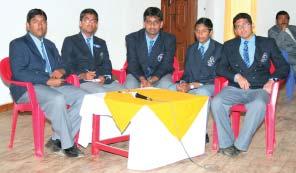
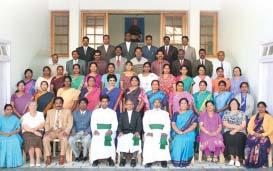
of three streams - Engineering & Technology, Medical & Para-medical and Commerce & Business.
One secret behind the overall academic excellence is that remedial classes are systematically organised for students weak in certain subjects.
Apart from sports, the School also excels in artistic co-curricular activities. A 35mm theatre and a library well-stocked with the latest editions of journals, encyclopaedias, newspapers and magazines, apart from subject references, are available. Under the auspices of the literary and debating clubs, students are actively encouraged to regularly participate in in-house debates, dramatics and quiz competitions. Apart from this, music, singing, and dance lessons are provided. Josephites have won many trophies at district, state and national level competitions in most of these domains.
Principal Brother Damien informs that the School selects only the best of teachers who are
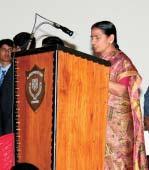
in tune with the vision and mission. The team is dedicated and are experts in their respective subjects. They regularly send their teachers to workshops to enhance their subject skill as well as their pedagogy skills in order to make them the best team of facilitators.
The school presently accommodates more than 450 boarders and 850 day scholars. New facilities include a full-fledged gymnasium, indoor basketball court, four badminton courts and many table tennis courts. A full-fledged post office and a bank functions inside the school campus.
Fresh food, both vegetarian and non-vegetarian, is provided from the St. Joseph’s kitchen and utmost care is taken to ensure its quality and neatness. High-tech features like a solar plant with steam cooking has been operational for the last 13 years. A well-qualified and experienced resident nurse and a doctor-on-call complete the residential care accorded to Josephites.

adhya Pradesh & Chhattisgarh – constituting Central India –was never a stronghold for international schooling. To correct this, it called for an international organization of repute. Preferably with local roots. Enter Choithram Group. Probably the largest and most reputed NRI Group hailing from MP. With 65 years
of international track-record and operating in 26 countries. Under family scion Satish P Motiani’s able leadership the T Choithram Foundation started their first international school – Choithram International – in 2004 at Indore, Central India’s economic capital and their beloved hometown. The first IB & IGCSE affiliated international school in Central India, Choithram International draws on the international expertise of the Group as well as the Foundation’s long experience in public schooling. In the 5th year of its operation, Choithram International has produced 5 national-level subject toppers at the A-Levels. Though sparing no expense to come up with a full-facility campus, complete with a brand new indoor stadium, Choithram International is an undisputed leader in affordable international schooling – with fee coming up to only one-fourth of comparable international schools. It is a legacy imbibed from Group Founder Late Thakurdas Pagarani who was not only a globe-trotting entrepreneur but an exceptional philanthropist who started enduring institutions that provides healthcare and education to the poor.
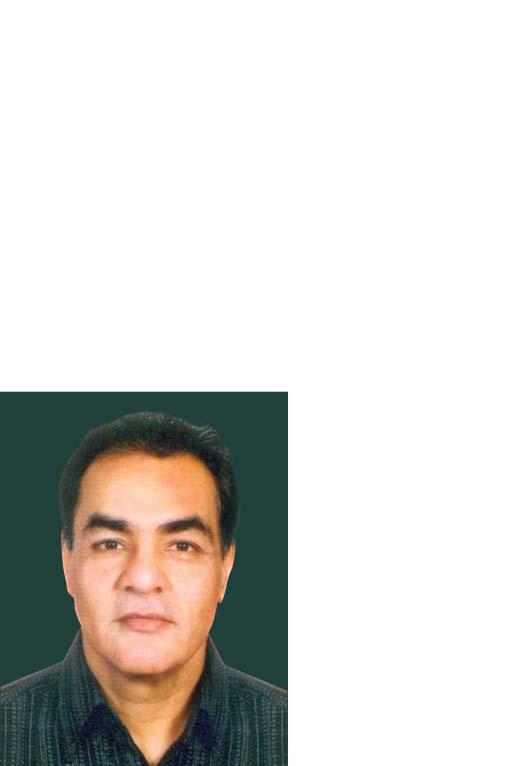
Satish P Motiani, Managing Trustee, T Choithram Foundation
Indore has an IIM since the last 10 years. And in the next six months, IIT-Indore is slated to take up its first batch. Thus making the ‘heart of the heartland’ of India, the first city to have both an IIM & IIT.
Since the last 5 years, the city also has another feather in its educational crown – Madhya Pradesh’s first international school offering both IGCSE & IB – Choithram International.
The multibillion Choithram Group has operations in 26 countries including North America, Europe, Africa, Far East, South Asia, and their stronghold of Middle East – where they run one of the largest supermarket chains.
Hailing from Indore, Choithram Group gets its name from Late Choithram Pagarani whose son Late Thakurdas Pagarani founded the Group in 1944. An avid traveller and exceptional entrepreneur, Thakurdas was all of 30 years when he started his first retail enterprise – a grocery cum confectionery store – no, not here in India, but at Freetown, Africa’s largest natural harbour at Sierra Leone on the West Coast. Thakurdas then took his fledgling enterprise to London, Dubai, Liberia, Hong Kong, Japan, Taiwan, USA, Spain, and where not, thus making it a global retail and trading empire.
True to his name - Thakurdas or ‘Servant of God’ – this entrepreneur was also a compassionate and creative philanthropist, who focused on providing medical care and schooling – both in India and Sierra Leone - a place that he credited for his success and considered his second home.
Dubai based family scion LT Pagarani currently heads the Group as its Chairman, while it’s Trusts in India are headed by Satish P Motiani, son-in-law of Thakurdas Pagarani, as the Managing Trustee.
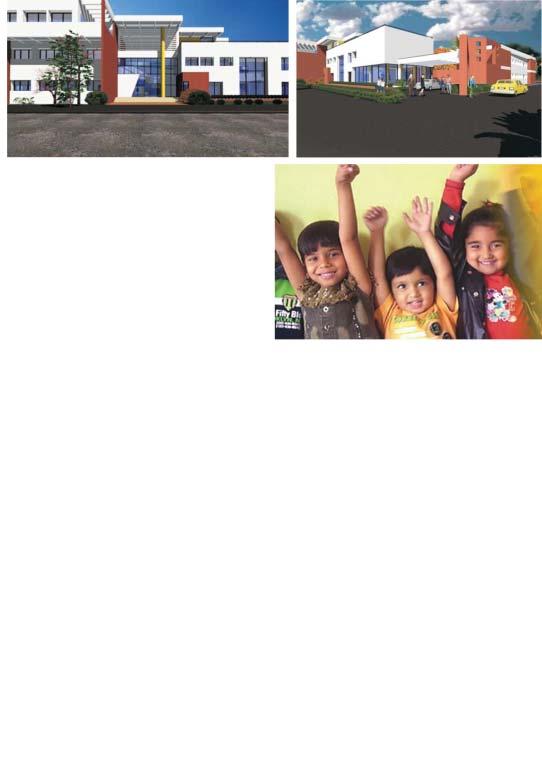
In their home-turf of Indore, Choithram Group has been running a hospital and a few schools, for the last 36 years.
The Choithram Hospital & Research Centre (CHRC) has been the city’s leading hospital, complete with state-of-the-art critical care facilities. The hospital is noted for its significant free services to the poor, even while being one of MP’s most modern hospitals.
The original Choithram School at Indore has two campuses – the North Campus is at Nipania and the South Campus at Manik Bagh.
MP’s first school to have permanent CBSE affiliation, Choithram School has over 2500 students on its rolls.
In education too, the Group has a significant charitable initiative – Tirath Bai Kalachand School at Palsikar Colony of the city, which offers subsidized or free education and has a formidable strength of 1000 students.
However, it is in the formation of Choithram International – the Group’s first international school – that a perfect synergy has been struck with the Group’s international stature and its local expertise.
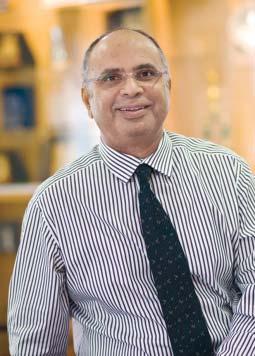
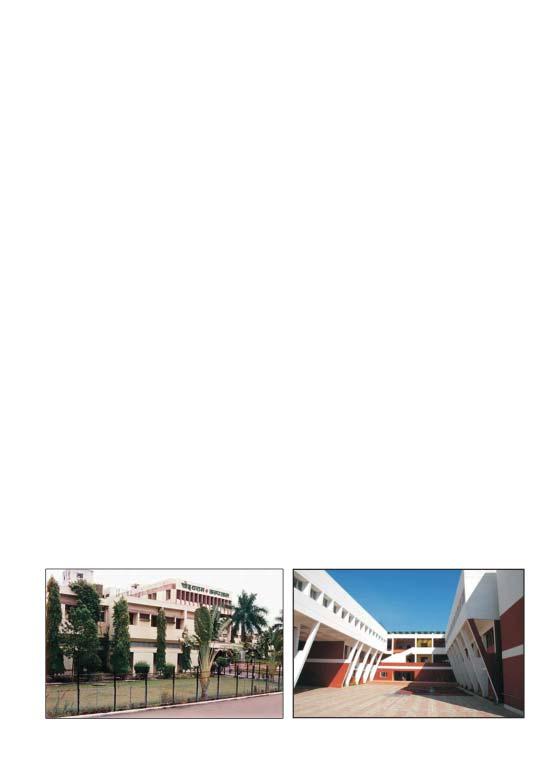
Choithram International is currently headed by its Principal Mr. Vasu who was earlier with reputed international schools in North & East India. Here are excerpts from the interview we had with him on the unique aspects of Choithram International:
Choithram International is now nearly 5 years old. How would you rate the academic performance?
Our academic track record has always been good, but this past year it turned exceptional. We produced five A-Level subject toppers on the national scene. It was no ordinary feat, especially when you consider the kind of
international schools in Mumbai, Bangalore and elsewhere that we were competing with. It showed that our teachers, facilities, and training were superior to some of the most expensive schools in the country.
Is Choithram International significantly inexpensive when compared to others?
Yes, definitely. Even our highest fee – that is now in the 11 th Grade – comes to only around Rs. 70,000 per annum. And in the lower classes, it is significantly less. As you know, there are international schools that charge 10 lakhs per annum or even more. But our low fee doesn’t mean we compromise even a bit on the facilities and training being provided. Our fee structure enables even middleclass parents to send their kids for international education.
What is the current strength of the school and what is the percentage of boarders and day scholars?
Well, we have 257 kids on our rolls. Around 60% are day scholars and the rest boarders.
What is Choithram International’s unique strength?
We are the first and only international school in Madhya Pradesh & Chhattisgarh affiliated to both International Baccalaureate Organization (IBO) based at Geneva, and University of Cambridge International Examinations of UK. Our promoter, the T Choithram Foundation, is one of the most experienced educational foundations in Central India.
Does Choithram Group’s international reach help the school in its operations?
Of course. Choithram has immense brand recall among NRIs in Middle East & Africa, and it is reflected in our student enrolments.
Which are the courses that Choithram International offers?
We provide both the Primary Years Program (PYP) and Middle Years Program (MYP) of IBO. In fact we are only the 6 th school in India to run both these programs and the only one in Madhya Pradesh. In grades 9 & 10, we offer IGCSE and in grade 11 it is A-Level. From 2009 onwards we will be offering IB Diploma in grade 12.
What would be your teacher to students ratio and average class strengths?
We follow the finest international practices in this regard. Our overall teacher to students ratio is at an unbelievable 1:6, while no class has more than 20 students.
What are the strengths of your physical campus?
We are part of a 100 acres Choithram Campus, with fully developed infrastructure and custom-built buildings for curricular and extra-curricular activities. We are shortly commissioning our new indoor stadium. In short, no facilities are missing from this campus.
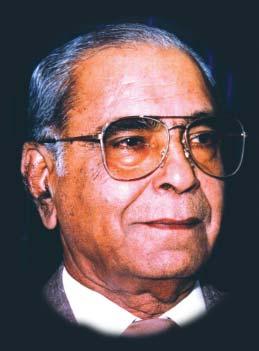
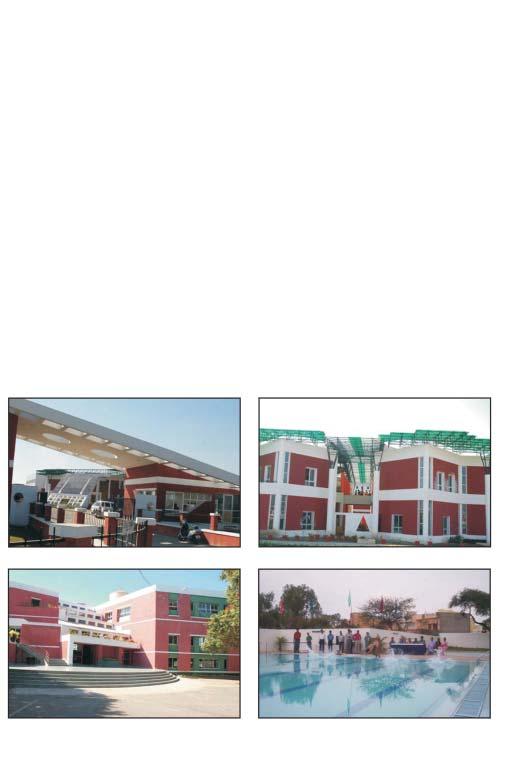
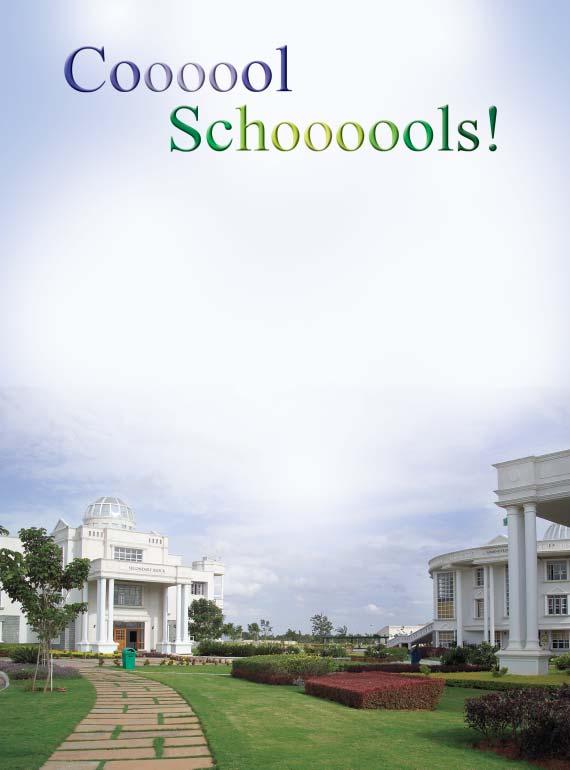
Following the resounding success of their first ‘Indus International School’ at Sarjapur, Bangalore, ‘The Indus Trust’ is starting new schools at North Bangalore, Pune, & Kerala. The Indus Trust operates on a powerful ideathose who are aspiring to groom future leaders should be exceptional leaders themselves. Indus International School, Bangalore, embodies this towering vision in promoters like high-flying Silicon Valley technocrat Kumar Malavalli, noted industrialists HB Jairaj & Sushil Mantri, and a CEO like soldierWhatisinandwhatisout,whenitcomestocoolschooling?InternationalsyllabilikeIB & IGSCE are definitely in, but national syllabi like CBSE & ICSE are also in demand. On the infrastructure front, there are modern schools loaded with facilities, and older schools powered more by proven systems rather than luxuries. On the question of whethertogofullyresidentialornot,thejuryisstillout–someschoolsareturningfully residential even while some fully residential schools are starting to accommodate day scholars. Parents differ on the level of amenities they demand for their kids – from a decent library and a modern computer lab at the low-end, to personal laptops, golf course, and bowling alley at the top-end!
scholar-author-speaker Lt. General Arjun Ray. While Malavalli was the first Indian to be inducted into the celebrated ‘Silicon Valley Engineering Hall of Fame’, a select club of 48 outstanding engineers; Lt. Gen. Ray, a recipient of Param Vishist Seva Medal (PVSM), the highest award in Indian Armed Forces, has an exceptional academic & military track record behind him. Together with an equally illustrious group of Trustees & Executive Team, they created an exceptional school in every sense – ranging from outstanding values to sheer architectural beauty. Today, the Bangalore school has an enrolment of over 750 students from various countries, and accepts both boarders and day scholars.
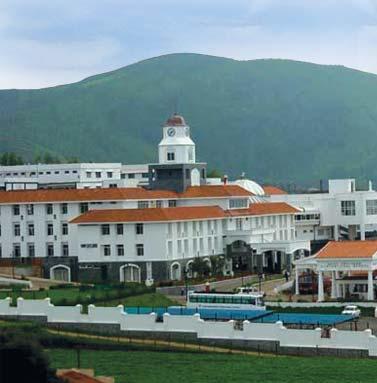
What goes into making an international school? International curricula, international facilities, international faculty, international students, & international placements – right? Not if, you know Dr. Augustine F Pinto and Madam Grace Pinto. For them, being international is also about exposing their students to awe-inspiring experiences – how about shooting some questions at President Kalam in Rashtrapati Bhavan? Or being invited to White House and felicitated by US State Department? Or participating in the Presidential Classroom at Washington DC, as the sole participant from India? Or a visit to AC Milan to hone their soccer skills? Or participating in hardcore relief and rehabilitation work in earthquake-shattered Gujarat and cyclone-hit Orissa? Or being India’s first school-chain to start an in-house television channel and movie-making studio, entirely by students? Or getting invited to Tokyo Film Festival for their short film? Or travelling to countries far and near, like USA, Russia, France, Thailand, Indonesia, Srilanka, & Pakistan? Or pioneering Quality Control Education in India, and winning international awards at USA, Singapore, & Mauritius? This list can go on and on – the list of awe-inspiring experiences for students of Ryan International Schools. But the biggest of them all is a neat statistic – Ryanites are 2,00,000 in number, mentored by 10,000 teachers, and studying at 105 institutions in 15 states, across the length and breadth of India! Still, Ryanites have lots more to aspire for; because they have role models in Dr. Pinto and Madam Grace – leaders whose educational and philanthropic achievements made them breakfast with US President George Bush, and getting awarded by India’s President & Prime Minister!

Good Shepherd International School (GSIS) is an awesome experience – measuring nearly 160 acres and spread over two campuses – at Fernhill (20 acres) and Palada (70 acres) – and two unique facilities - Shepherd’s Farm (60 acres) and Good Shepherd Gardens (15 acres). GSIS is arguably India’s largest fully-residential international school, but attained this status rapidly. For Dr. PC Thomas’ vision and diligence, it took only less than 30 years to attract international students from 39 countries spanning 6 continents, to his Good Shepherd International School, Ooty. That is why, it rings true, when he speaks about the school’s future objective – “to be the best in Asia in the next 5 years, to be the best among the world in 10 years.” We saw this vision in action at the campus, where no efforts or expenses are spared to bring the very best to students.
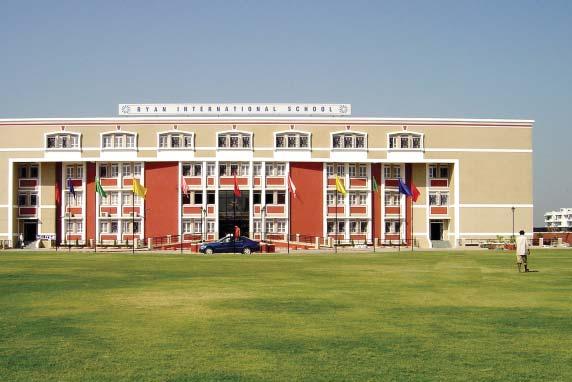
Schools a few years old, harp about infrastructure. Schools a decade old, tout experience. But what will a 119-year old institution say about themselves? “We are a high performance school,” says Rev. Bro. Dr. A Stanislaus, Principal of St. Joseph’s Boys’ Higher Secondary School, Coonoor, founded in 1888. “We have updated our infrastructure regularly, and we have unparalleled experience, but we don’t hide behind such claims. Our boys go all out and compete with their peers in other schools in Nilgiris, Tamilnadu, & across India. And they come out with flying colours – be it academics, sports, or arts. That is why I say that we are a high performance school. Our focus is performance; not just by encouraging the highly-talented students, but by helping every student to bring out high performance.” It is indeed a performance befitting their sylvan campus on the mountains, 6000 feet above sea-level; and enabled by a salubrious climate of 18.3 degrees mean temperature.
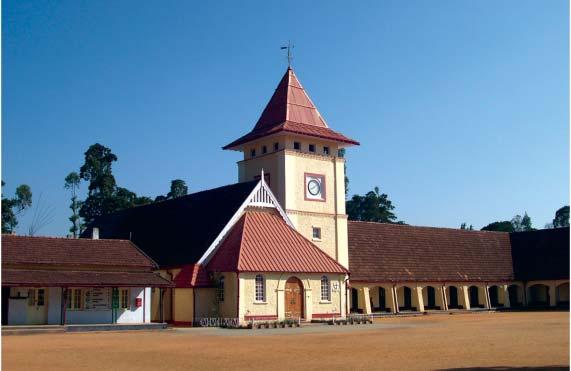

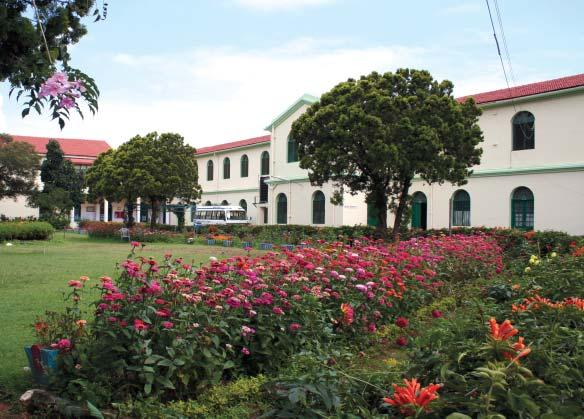
There are two kinds of international residential schools – the modern, high-tech ones in the city, and the mature, heritage schools like the Nilgiri’s Laidlaw Memorial School & Junior College. Which type each parent prefers, depends on what they expect from an international residential school. If you value the heritage of a school – like its roots, origin, founders, alumni, pedagogy, co-curricular culture, and time-proven systems for pastoral care, you should make a trip to Ketti, a beautiful valley in the Blue Mountains, home to Laidlaw Memorial School. With a legacy dating back to the British Raj, Laidlaw Memorial features an expansive 300 acres sylvan campus between Ooty & Coonoor, a right mix of comfort and disciplined living, a concern for the underprivileged, and a strong culture of public speaking, debate, drama, arts, & sports. No wonder then, that Laidlaw Memorial still ranks top in the minds of discerning parents – whether they are NRIs, or from India. Laidlaw students won’t miss the target, even if the only thing that they would learn is the stories of their Founders, Benefactors, & Principals – a string of legends like Rev. J Breeden, Sir Robert Laidlaw, Dr. A Francis, David Todd, EA Hammick, and TD Walsh; not to mention the successive Governors of the erstwhile Madras State who were the Presidents of St. Georges Homes, the Society which runs Laidlaw Memorial. Since 1981, this heritage school is under the stable leadership of WR Gardner, whose simple words tell the whole story – “Laidlaw is how great schools used to be.”
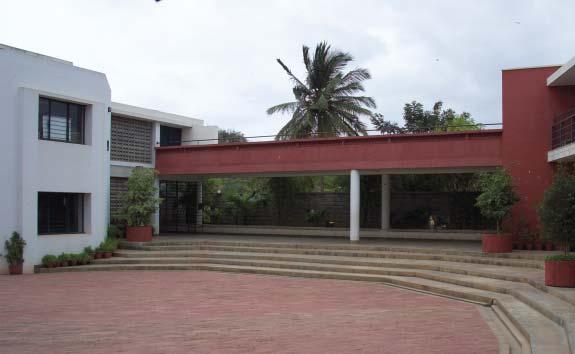
Today, it might seem that anyone enthusiastic can start a residential school. But, even to this day, great residential schools are never built that way. It requires vision, it requires wisdom, and it requires diligence. Sharada Residential School (SRS) is the vision of Dr. TMA Pai, founder of the University Town of Manipal and the banking giant Syndicate Bank, as well as the educationalist credited with establishing the maximum number of educational institutions during a lifetime, anywhere in the world! And SRS is the wisdom of Dr. Ramdas Pai, the Chancellor of Manipal Academy of Higher Education (MAHE), India’s first Deemed University in the private sector, and Mr. KK Pai, former Chairman & Managing Director of Syndicate Bank. And SRS is the diligence of a Governing Council of eminent educationalists and administrators including its Principal & Secretary Vidyavantha Acharya. With illustrious cousins like Kasturba Medical College, Manipal Institute of Technology, Dr. TA Pai Management Institute, & Manipal Hospital, this residential school has to live up to a heritage – something which it does consistently, with 100% results in ICSE, nearly 100% distinctions, membership in the prestigious Indian Public Schools’ Conference (IPSC), and some of the finest practices in residential schooling that can be emulated by aspiring residential schools.

How did this international school of Bangalore get the best name possible –‘Bangalore International School’? Simple - they were the first to start an international school in this city! Yes, in 1969, decades before most other international schools; and even predating Bangalore’s IT boom by a good 15 to 20 years! And the interesting thing is that this choice name was assumed only in 1980, before which the school was called ‘The American Community School’! In other words, even in 1980, no competition had appeared even on the horizon. But that is only one among the several aces up its sleeve. BIS is owned and managed by the parent community, which is a unique feature compared with all other international schools in Bangalore. Still, Principal Anuradha Monga and her professional team can rarely be caught complacent. They keep on embracing all the newer developments in international schooling, as fast as they happen, thereby maintaining a sharp competitive edge with newer, swankier international schools that have hit the city within the last 10 years. Originally an IGCSE school, BIS is now also an IB World School, and is accredited with the Council of International Schools (CIS), and is regularly audited by this international body. BIS has also introduced an innovative Advance Placement (AP) Programme for their high school students. And as ever, BIS continues to create and nurture winning teams in several arts and sports items, in inter-school meets.
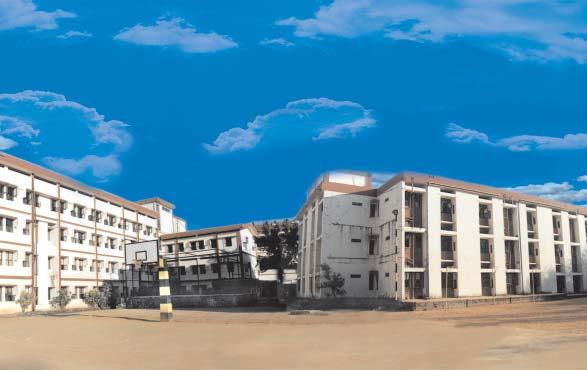
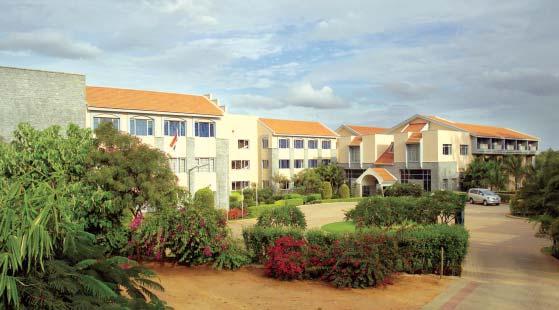
Many promised, and most haven’t delivered - that would seem the current state of Bangalore’s international schools. To call any swanky school an international school requires just nerve, not vision. But for an international school to be truly international, many acid tests have to be passed – international curricula, international staff, international placements, and of course, international students. ‘The International School Bangalore’ (TISB), the brainchild of noted educationalist Dr. KP Gopalkrishna, is one among a few institutions in Bangalore that have come out in flying colours on all these fronts. Offering the best of international curricula – IGCSE at Grade X and IB Diploma at Grade XII, TISB is staffed by an international team of experienced teachers – from the Asia, Americas, & Europe – and led by its Oxford educated British Principal, Dr. Mathew Sullivan. TISB is one of the largest international schools in India with 700 students from 33 countries, and the largest and the most successful team of IB Diploma students in the entire Asia-Pacific region, year after year. No wonder, TISB students are found at some of the world’s finest Universities and colleges, including Harvard, MIT, Oxford, Cambridge, Stanford, Purdue, University of Pennsylvania, Carnegie Mellon, & LSE, apart from the various IITs.
Hebron School should be a top preference if parents appreciate valuesbased upbringing for their children. But be prepared to face some tough competition to enter this unique school which accommodates only 360 students at a time. International schools might be mushrooming, but Hebron School still find no trouble attracting thrice the applicants it needs! Is it due to its heritage that dates back to 1899? Or is it the delightful location, overlooking Botanical Gardens? Or is it the strong emphasis on drama & sports? Or is it leadership in affordable international education? Ask Principal Alastair Reid about this, and you get a different answer – “All these, and more to do with parents’ trust in our unique century-old systems like small Dorm-houses & caring Dorm-parents, that ensure values-based upbringing.”
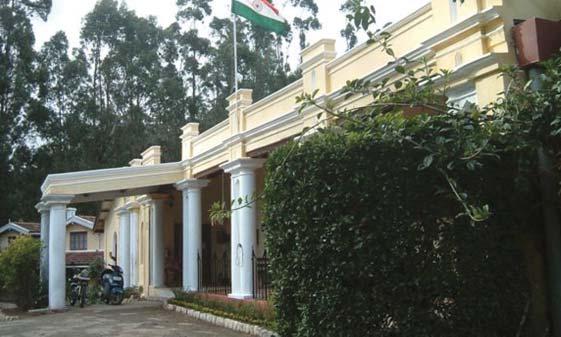
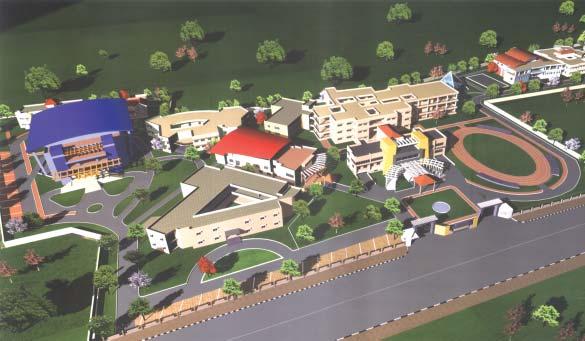
Canadian International School (CIS), Bangalore, has moved to their new state-of-the-art, purposebuilt facility on a 15-acre suburban campus at Manchenahalli, Yelahanka, in North Bangalore. Offering two international curricula - The Ontario Secondary School program from Kindergarten through Grade-10, and the International Baccalaureate (IB) Diploma program for Grades-11 & 12 - CIS has a student body of 365 children from over 25 countries. With an incredible studentteacher ratio of 7:1, the faculty is drawn from Canada, UK, USA, Europe and Australia, as well as from India, thus branding CIS as the true, international experience. The CIS method of instruction is student centered and our teachers provide an atmosphere that is conducive to active learning. Although the textbooks used are approved by the Ministry of Education, Ontario, Canada, and the International Baccalaureate Organization, Geneva Switzerland, the courses are neither Canada-centric nor text determined.
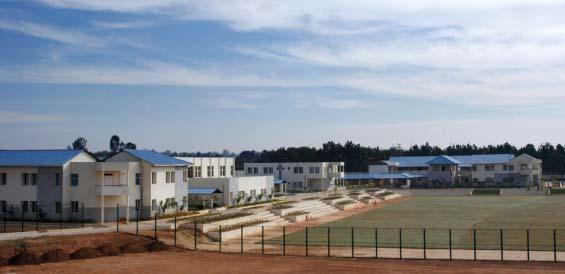

Due to the proliferation of international schools in Bangalore, and the hefty expenses associated with them, many international schools in the city are finding it increasingly difficult to attract students in sufficient numbers. But, since its launch a few months back, Ebenezer International School, Bangalore, (EISB) has received overwhelming enquiries for admissions to its first academic year that starts in 2007. The secret? Dr. Abraham Ebenezer, the visionary behind the school. Most Bangaloreans recognise him as the long-serving Principal of Bishop Cotton Boys’ School who transformed the heritage-class school into a state-of-the-art institution. But Dr. Abraham is much more than a power-packed Principal. A multifaceted personality, Dr. Abraham is a scholar, historian, bureaucrat, writer, organizer, social worker, and some more. A speciality of Dr. Abraham is that he succeeds in raising the bar in environments already considered exceptional. That is what he did at Bishop Cotton’s, and that is what he is doing now with his brainchild, EISB. Dr. Abraham firmly believes that though there are many highflying international schools in Bangalore, EISB can deliver much more, thanks to his unique credentials and experience. For academic excellence EISB will center learning around its extensive library and research-quality labs; for co-curricular & extra-curricular activities, dedicated facilities are being set up; exceptional care is being taken in creating a passionate faculty; and an outstanding all-round infrastructure is being created in the 12.5 acres campus. EISB will offer two curricula – IB & ICSE – and the fee structure has
Who said international schools are for the ultra-rich? That is the general impression anyway, as Bangalore had been lacking an affordable international school, where the city’s professional couples could send their children. India International School (IIS) has been designed from the ground up to meet this demand. Yet, surprisingly, IIS doesn’t compromise on any front, and offers excellent infrastructure, a unique pedagogy, and exceptionally competent leaders and faculty. IIS Advisory Board is headed by noted leader J Alexander, IAS, as Chairman, and includes renowned experts from diverse fields like industry, law, movies, & sports. IIS is promoted by Abhyudaya Educational Trust, and led from the front by
its Secretary D Nandakumar and Principal Usha Mohan, who is a distinguished educator with over 17 years of experience in India and abroad. Started in 2002, the school follows the ICSE syllabus. IIS is now also in a brand new campus, spanning 30 acres, on Sarjapur Road – one of the most happening places in the city. The hightech educational infrastructure featuring a Wi-Fi campus, personal laptops for students, imported language labs, and the IIT-designed K-yan system, as well as the fullfledged sporting facilities that include a bowling alley and a golf course, are all designed with one thing in mind – exceed your expectations. For parents, these are pleasant surprises, as IIS remains a cost leader among international schools in Bangalore.
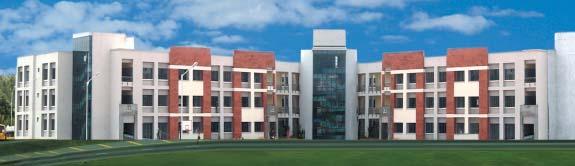
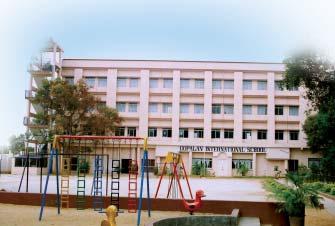
Gopalan International School (GIS), near ITPL, Bangalore, which currently offers pre-primary and primary classes, utilizes Montessori and Play Way systems extensively. Now an ICSE curriculum school, GIS is planning to be an International Baccalaureate (IB) school soon. GIS is promoted by Bangalore’s Gopalan Group, which has an ISO 9001 certified branded building company with MNC clients, as well as international operations in organic farming and herbal products. GIS Director Ar. C Prabhakar is sparing no expenses and
efforts to bring up the school as Bangalore’s finest international school. Dr. Prasad Sundararajan (PhD from IIM-A) is the Project Head of GIS. The school is ably led by its Principal Madhu Narayan and Headmistress Deepti Singh – both of them highly experienced professionals. GIS differentiates itself from other international schools, by providing a fun-filled environment that is best captured by their motto – ‘Joy of Learning’. A new sprawling, stateof-the-art campus is getting ready for GIS, very near to the present campus, which will take excellence in international schooling to new levels.
Royale Concorde International School is all about bringing back fun into the growing up years. With an outstanding infrastructure, and revolutionary concepts like BaglessBurdenless-Examless education, this first international school on Bangalore’s busiest artery – the Outer Ring Road – has been registering phenomenal growth. The brainchild of noted leader and former BDA Chairman L.R. Shivarame Gowda, Royale Concorde has renowned professionals like Leema MJ Swamy as its Principal, and ace athlete and Arjuna Awardee Ashwini Nachappa as the Director & Advisor for Sports.
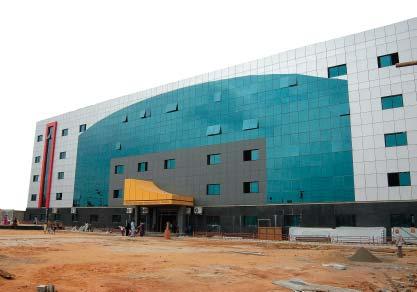
For a school to be unique, it should have a unique vision, a unique patronage, a unique pedagogy, and a unique management. Surprisingly, you can still find such a school in the hillstationofKodaikanal,7000ftabovesea-level!BharatiyaVidyaBhavan’sGandhiVidyashram, a residential school at Kodaikanal, was fortunate enough to have some of India’s finest minds working for it. The School which follows the ‘Gurukula’ and ‘Purna Purusha’ concepts, is the vision of Swamy Chidbhavananda, the virtuous South Indian Sage who focussed on valuesbased education. Swamy’s vision was realised by Bharat Ratna C Subramaniam – freedom fighterandoneofIndia’smostaccomplishedstatesmen.TheSchoolwascraftedandledfrom thefrontlinebyPadmabushanProf.TSSadasivan,therenownedscientistandeducationalist, whowasalsothePresidentoftheprestigiousIndianAcademyofSciences.Andaboveall,the School belongs to the Bharatiya Vidya Bhavan family – arguably India’s largest independent chain of schools and educational institutions - founded by educationalist-environmentalistlitterateur Kulapati Dr. KM Munshi. Complementing the efforts of such legendary visionaries, are Gandhi Vidyashram’s leaders of today like School Chairman PR Ramasubrahmaneya Rajha, the noted industrialist; Executive Vice-Chairman Dr. BK Krishnaraj Vanavarayar; and Principal N Madhusudan. Visit Bhavan’s Gandhi Vidyashram at Kodaikanal, and it will simply blow your mind – not with luxury amenities or larger-than-life infrastructure, but by its unique philosophicalmooringslikeGurukula,Ashram,PurnaPurusha,VedicEducation,Slokas,Yoga, &Meditation;byitsadoptionofdevelopedworld’sskills-basededucation;andofcourse,byits breathtaking sylvan campus on the hills.
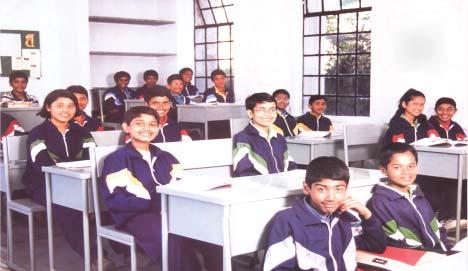
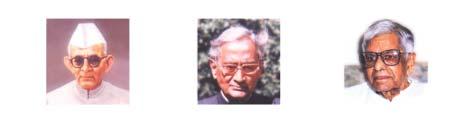
Kulapati Dr. K.M.MunshiPadma Bhushan
Prof. T.S. Sadasivan
Dr. MS Swaminathan is the scientist regarded as the Father of India’s Green Revolution. Similarly, Dr. Verghese Kurien is the management specialist credited as Father of India’s White Revolution. But both these specialists had a political visionary behind them - the one and only C Subramaniam, ‘CS’ to fellow freedom-fighters, and Cabinet Minister in Nehru’s, Sastri’s, & Indira Gandhi’s ministries. Bharat Ratna C Subramaniam was also the founding patron of Bhavan’s Gandhi Vidyashram! Founded in 1983, Gandhi Vidyashram is, today, a unique co-educational residential school modelled around the Gurukula concept, of around 250 students, ranging from Grades V to XII. Located 7000 ft above sea level at the famed hill station of Kodaikanal, lies the expansive campus spanning 30 acres. The curriculum followed is CBSE, but the outlook is truly international. To understand the value of Gandhi Vidyashram fully, one must understand the minds and visions behind it. C Subramaniam’s is one key vision behind it, and there are several other visions too –some at par with him, some above him, and some visions enriching it later. Above the initiative of CS, was the vision of Swami Chidbhavananda, the vision of Bhavan’s founder Kulapati Dr. KM Munshi, and some core lessons from Mahatma Gandhi on whom the school is named. At par with CS’s vision are the ideas and initiatives of the school’s Founder Chairman Padma Bhushan Prof. TS Sadasivan, the renowned scientist and innovative educationalist. And keeping the torch of excellence ignited are leaders of today like the School Chairman and renowned industrialist PR Ramasubrahmaneya Rajha; Executive Vice-Chairman Dr. BK Krishnaraj Vanavarayar; Principal N Madhusudan;
Bharat Ratna C. Subramaniam
Senior Teacher and Editor Leela Madhusudan, the around thirty highly committed teachers; and some noted alumni like Dr. Ananda Balayogi Bhavanani.
School’s Founder Chairman Prof. TS Sadasivan was always a down-to-earth person, though a high achiever born into an affluent family. Prof. Sadasivan donated a substantial portion of his estate in Kodaikanal to house Gandhi Vidyashram under the aegis of Bhavan’s. And even more importantly, he led the school from the frontline in its challenging initial decades. To understand that it was a rare gesture from a great mind, one should know Prof. Sadasivan’s earlier assignments – a microbiologist who took his doctorate from University of London, Prof. Sadasivan was the head of the Indian Government’s Centre of Advanced Study in Botany at Madras University, Chairman of NCERT’s Biology Study Group, and President of the Indian Academy of Sciences – where he succeeded none other than Nobel laureate Sir CV Raman!The main credit for the unique educational system found at Gandhi Vidyashram goes to Prof. Sadasivan.A path-breaking educationalist himself, Prof. Sadasivan initiated at Gandhi Vidyashram the concept of skills-based education, as against rote-learning.This was a concept he adapted from the developed world. The prime methods used for developing skills were library-centric learning and regular presentations by students using multimedia –audio, video, essays, & talks. Even today, educational innovations form a core thrust area of the institution. Under the guidance of school Chairman PR Ramasubrahmaneya Rajha, and the leadership of Principal N Madhusudan and
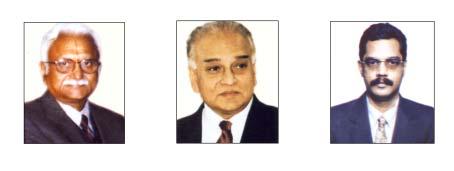
& Editor Leela Madhusudan, the faculty of Vidyashram recently undertook a unique program titled, ‘Teaching Methodology Exchange’. Supervised by four external subject experts, teachers of Vidyashram made individual presentations regarding innovations that each of them have brought into their respective subject classrooms, and robust discussions about their effectiveness followed. Finally, all effective innovations were documented as a book, for more regular and distributed use in Vidyashram, as well as in any school in the Bhavan’s network, and even beyond. The book covers innovative teaching methods in almost all subjects like English, Mathematics, Science, Biology, Physics, Chemistry, History, Economics, Geography, Commerce, Computer Science, Sanskrit, French, Tamil etc., and needless to say, is a useful resource for any school teacher in upper primary, high school, and higher secondary. While developing ‘Teaching Methodology Exchange’ School Chairman PR Ramasubrahmaneya Rajha, who is also the Chairman of the noted business house Ramco Group, exhorted the teachers, “The challenges that you face as teachers are greater at this time, because the careers your students will work in may not yet have been invented. So the best preparation you can give your students is to give them the ability to learn how to learn.” Principal N Madhusudan says about the program, “Teaching Methodology Exchange was all about how to take both

teachers and students to the next level in the teachinglearning process. The need of the hour is to develop thinking skills in students. For that the legacy of rotelearning should be broken, and the only ways we can hope to achieve this are by giving students hands-on activities which are either linked to real life or imaginative in nature. If thinking skills are not cultivated in students they may become educated in some aspects, but fail miserably in life. Now, how can we teachers prevent this? The profession of teaching is such that, experience need not make a teacher better and better. In fact, the reverse can happen – with the passing of years, complacency can set in, which make experienced teachers semi-skilled in the long run. Teaching Methodology Exchange was a
BHAVAN’S GANDHI VIDYASHRAM,KODAIKANAL
step that Vidyashram took to prevent this and take the teaching-learning process to the next level.”
To scientifically assess the skills of its students, Vidyashram opted for the well-known test, ‘Assessment of Scholastic Skills through Educational Testing’ (ASSET). The test was taken by all students, and most of them could do it fairly well. Senior Teacher and Editor Leela Madhusudan explains the school’s focus on skills – “While rote-learning will help them only for the next exam, skills are for life. It is pretty much like the contrast between pleasure and discipline – rote-learning might seem important at the moment, but developing skills are important forever. So much like we instruct them to choose discipline over immediate gratification in their daily life, we guide them to choose things that are important forever, in learning too.”
The school’s unique educational system, however, is only one of the things that make it unique. The kind of holistic grooming that students get here is based on the Gurukula method, the Ashram way of life, the Purna Purusha philosophy, wholesome fitness through Yoga & Meditation, and learning Vedic Heritage and values through Slokas, stories, sermons etc. In fact, this mainly residential school is run as an Ashram and the staff and students are thought of as Ashramites. That is why, ultimately, Gandhi Vidyashram can be regarded as the vision of Swami Chidbhavananda, one of South India’s best known Hindu saints. Swami Chidbhavananda started the Ramakrishna Tapovanam on the banks of Cauvery in Tiruchi District, and is highly respected for his commentary on Bhagavad Gita. Unlike many of his contemporary saints, he didn’t build many temples or ashrams, but focussed on education, and has started or inspired to start many colleges and schools, especially in Tamilnadu. Gandhi Vidyashram was Swamy’s dream, and C Subramaniam – for whom Swamy was also a paternal uncle – thought that the best way to realize the dream would be through Bharatiya Vidya Bhavan. CS was the International President of Bhavan for many years. So, what exactly was Swamy Chidbhavananda’s dream for Vidyashram? In ancient India, especially among the educated class, the upbringing of children largely depended on the Gurukula system. The prime value of Gurukula was that it provided the ideal setting for
continuous interaction between students and their teacher, and between students themselves, so that they grow into wholesome human beings or ‘Purna Purushas’. Life skills like leadership, cooperation, respect, responsibility, individuality, decision-making etc are inculcated in the Gurukula students, who are living far away from their homes. Swamy’s vision for Vidyashram centred around these time-tested Gurukula and Purna Purusha concepts. With such illustrious minds having worked hard to make the dream a reality, Gandhi Vidyashram has a reputation that shouldn’t be compromised in any way. Says, School Executive Vice-Chairman Dr. BK Krishnaraj Vanavarayar, “Care should be taken to ensure the standard in everything we do; it should be befitting the stature of Vidyashram as well as the Bhavan.” Dr. Vanavarayar is also the Chairman of Bharatiya Vidya Bhavan, Coimbatore.

In more ways than one, the decision to start the school under the aegis of Bhavan’s, was the best thing that could have happened to Swamy’s dream. Because, no other organization was as qualified as Bhavan’s to start an international class residential school firmly rooted in Indian traditions. Bharatiya Vidya Bhavan was started long before Independence, in 1938, by Kulapati Dr. KM Munshi with the blessings of Mahatma Gandhi. Bhavan also had the support of Dr. Munshi’s fellow freedom-fighters and political stalwarts like Jawaharlal Nehru, Sardar Patel, Rajagopalachari, & Dr. Rajendra Prasad. Today, Bhavan is a unique organization, even in the whole world, with 283 institutions spread across the country! The institutions are administered by 112 centres across India, and the overseas institutions are governed by the 7 centres abroad. Bhavan has a student strength of over 3,00,000 and employs more than 8000 personnel! The ideology of Bhavan finds its roots in two philosophies – the ideals of Gandhiji and ‘Sanatana Dharma’, which denotes the noblest and best in Indian culture. At Bhavan’s Gandhi Vidyashram, such traditional values blend seamlessly with modern world-class practices in schooling. For example, the school enjoys a teachers-to-students ratio of 1:10, which is as goods as in the developed world. For fostering
healthy competition, the students are divided into houses – as is the international practice – but with a distinctive South Indian touch. ‘Sangam’s replace houses, and the four sangams couldn’t be better named – Chera, Chola, Pandya, & Pallava.
The school has good facilities for various sports, and intersangam competitions are held for most sports items. Such a competitive environment has seen Vidyashram students excelling in both team and individual performances in inter-school competitions held at various levels. The school has a great team in Yoga, which almost always comes first of co-curricular and extra-curricular activities. Bhavan’s Gandhi Vidyashram has also taken customer service to new levels. In an age when most CBSE schools shy away from having a PTA, or just have a namesake one, Vidyashram has a robust PTA, which provides the perfect forum for parents to interact with teachers, and voice their concerns for the improvement of the institution. Apart from that, any parent can call or mail Principal N Madhusudan directly, for discussing specific problems of their son or daughter. This is especially useful, as many parents are NRIs, and can’t attend every PTA meeting. Parents are often surprised by the responsiveness of the Vidyashram staff. Says Senior Teacher Leela Madhusudan, “Growing up is a challenging phase. Individual students will have their own problems. We assure them that they can fall down seven times, but just make sure that they stand up eight times. That way, we remove the fear of failure from their minds.”
The school has a well-functioning dormitory system, complete with dorm parents who provide holistic care. There are six well-furnished dormitories in the campus –‘Sabari’ for girls, and for boys, ‘Chaitanya’, ‘Kambar’, ‘Valmiki’, ‘Dhruva’, & ‘Vyasa’. Cuisine is often a major source of conflict in residential schools, but Vidyashram has found a novel way to address it. A Food Committee has been constituted, where students are the main members. The committee meets every month to assess feedback and recommend menu changes for the next month. The school serves nutritious vegetarian food. Expect excellent hygiene and optimum comfort from the school’s residential facilities, but not star-hotel like luxury as found in some modern international schools. Because, Vidyashram believes in bringing up children as not spoilt, but very much in touch with the real world around them. The school is also surprisingly affordable for a residential school with an international outlook. Though the school promotes learning Vedic Heritage and Slokas, secularism is always upheld. All festivals and national days are celebrated. The school also has an active alumni association.
“We Will Raise the Bar of Excellence in International Schooling, And Will Take It to More Families”
Due to the proliferation of international schools in Bangalore, and the hefty expenses associated with them, many international schools in the city are finding it increasingly difficult to attract students in sufficient numbers. But, since its launch a few months back, Ebenezer International School, Bangalore, (EISB) has received overwhelming enquiries for admissions to its first academic year that starts in 2007. The secret? Dr. Abraham Ebenezer, the visionary behind the school. Most Bangaloreans recognise him as the long-serving Principal of Bishop Cotton Boys’ School who transformed the heritage-class school into a state-of-the-art institution. But Dr. Abraham is much more than a power-packed Principal. A multifaceted personality, Dr. Abraham is a scholar, historian, bureaucrat, writer, organizer, social worker, and some more.
A speciality of Dr. Abraham is that he succeeds in raising the bar in environments already

considered exceptional. That is what he did at Bishop Cotton’s, and that is what he is doing now with his brainchild, EISB. Dr. Abraham firmly believes that though there are many highflying international schools in Bangalore, EISB can deliver much better, thanks to his unique credentials and experience. For academic excellence EISB will center learning around an extensive library and research quality labs; for co-curricular & extracurricular activities, dedicated facilities are being set up; exceptional care is being taken in creating a passionate faculty; and an outstanding all-round infrastructure is being created in the 12.5 acres campus. EISB will offer two curricula – IB & ICSE – and the fee structure has been kept low so that Bangalore’s middleclass and uppermiddleclass parents can opt for international schooling for their children.
nce a boy studying at Bangalore’s prestigious Bishop Cotton Boys’ School was diagnosed with a tumour. The alarmed parents decided to follow their doctor’s advice, which was to start a serious course of medicines immediately. But the boy wouldn’t have anything of it. His parents, the doctor, and the nurses attending on him - all were exasperated. After much coaxing the boy proposed a solution, “My Principal is also a Doctor, and that too a good Doctor. If he tells, I will take the medicine.”
“That is how I was called upon to ‘attend’ to the boy!” recalls Dr. Abraham Ebenezer, sitting in Ebenezer International School’s corporate office in Residency Road – just a stone’s throw from Bishop Cotton’s, where he was at the helm for a long 13 years. “Like many kids his age, he mistook a PhD holder for a medical
doctor. Anyway, we met, chatted for a while, and I could convince him of the need for starting medicines immediately. He agreed but on one condition – his Principal Doctor should give him the medicine! I agreed, gave him the first dose, and then on he calmed down and became obedient to his parents and doctor!”
Like anyone hearing the episode, we were impressed, but Dr. Abraham shrugs it off, “It was no big deal. I narrated it to explain just how much kids will trust us, if we make it a habit to take them into confidence always, and treat them with warmth and discipline, as against terror and regimentation.”
There are some people who are born teachers. Dr. Abraham is one among them. Try offering them better options, but one day they will


invariably come back to working with kids. A multitalented and hardworking person, Dr. Abraham has donned several other roles in his 33 year old career – historian, bureaucrat, writer, organizer, social worker, and some more – all with élan. But in a mysterious way, he always realised that his true calling was to work with students and that is what prompted him to leave a better position and turn to the academic field – not once, but twice! The first happened way back in 1973, when he quit his post of Sub Registrar with the Revenue Department to teach History at the Ramnarayan Chellaram College, Bangalore. The second switch happened in 1993, when he quit the formidable post of the Deputy Director of Collegiate
INTERNATIONAL SCHOOL, BANGALORE
Education, to take up the responsibility of being the Principal of Bishop Cotton Boys’ School, which was offered to him. Explains Dr. Abraham, “My other jobs were professions, whereas teaching, mentoring, and working with students form a vocation.”
As we all know, vocations bring out passion, passion creates excellence, and nobody could dispute the excellence that Dr. Abraham created in whatever he attempted. “I like to raise the bar in environments already considered exceptional,” says Dr. Abraham in his typical, articulate style.
DR. ABRAHAM EBENEZER, THE EDUCATIONALIST BEHIND EISB, IS CREDITED WITH TRANSFORMING THE HERITAGE CLASS BISHOP COTTON BOYS’ SCHOOL, BANGALORE, INTO A STATE-OF-THE-ART INSTITUTION.
That is what he did at Bishop Cotton’s. And that is what he is doing now with his brainchild, the new Ebenezer International School, Bangalore (EISB). “At a place like Bangalore, there are people who wonder what more can a new international school deliver. But that is where I differ. Bangalore might




have several highflying international schools, but we can prove that we can do much better.”
People familiar with the schooling scenario in Bangalore, will realise that this is no hollow claim. Because, there were many who believed that nothing more could be done with a prestigious, heritage-class school like Bishop Cotton. But during his 13 year long tenure, Dr. Abraham proved that even the fine could be made exceptionally fine. During his stint, the school came to be ranked as the best in India, bagged President’s Excellence Award for schools, and made consistently excellent results in academics, co-curricular, and extracurricular activities.
But even more importantly, Dr. Abraham enabled Bishop Cotton - started in 1865 - to compete in the modern age, by attending to its Achilles heel – the outdated and grossly
insufficient infrastructure. Within 13 years, he directed the creation of 15 new buildings that changed Bishop Cotton from a heritage school to a heritage school with state-of-the-art facilities. One of these buildings was a 1400-seater auditorium that is one of India’s finest in its class. Also, silencing the critics who ‘feared’ for the school’s heritage architecture, Dr. Abraham led the efforts to renovate five historic structures of the institution, including splendid ones like St. Peter’s Chapel and the Tower Block.
Dr. Abraham’s capabilities have been internationally recognized, with the Delhi Public School International in Singapore, inviting him to be the Principal, a position which he still holds.
His track record being this, many discerning parents of Bangalore know that his new venture Ebenezer International School, is going to take excellence to new levels. Seasonal Magazine interviewed Dr. Abraham Ebenezer regarding the unique initiatives that he is planning for his school:
As most parents will be anticipating, the unique value proposition of EISB is going to be the fact that an educationalist is behind this international school. How important is this fact?
Yes, that is our most distinguishing factor. If you look at the international schools in Bangalore today, one thing is evident – most of them are promoted by industrialists, businessmen, or political leaders. Many of these schools are doing well also. One reason is that they hire people like me – educationalists – to be at the academic helm. However, in my long years of experience as a teacher, educationalist, and educational administrator, one thing was always evident – there is a limit to which such businessmen promoters can dedicate attention to their schools. Because, their vision and priorities are different. It is like a huge banyan tree – for them the school is only one of the several thousand aerial roots. Instead, if a qualified and experienced educationalist with a great vision can start a school, that school will be vastly superior. Because, my sole focus is delivering outstanding, all-round education for my students – to prepare them for an exceptional future.
Have you always wanted to do this – start a different school of your own?

ACADEMIC LEADERSHIP WILL BE ENSURED BY GIVING CENTRAL ROLES TO THE EXHAUSTIVE 200SEATER LIBRARY, AND THE RESEARCH QUALITY LABS. THE CURRICULA OFFERED ARE IB AND ICSE.

Dr.(Ms.) Selvi Das


Yes, but it remained only a desire for long. I got the first inkling that I can actually start this school when my brother Issac Abraham donated this land to me five years back. An agriculturist by profession, he is a social activist who works for the downtrodden. He was confident that with my experience I could put his gift to good use. So, since the last five years, this dream had a potential to be realised. But I was fully dedicated to Bishop Cotton Boys’ School, where I had many important projects and initiatives to be completed. So I waited till my last day at Bishop Cotton’s, and on that same day announced this school! Because, this was a desire that had occupied my heart for so long. No more could it wait!
But EISB is coming up in a city teeming with such institutions. Can a new international school be bullish about Bangalore? Well, in one way you can say that Bangalore is teeming with international schools. But, if you keep watch of the city’s developments, you can easily realise that the potential that Bangalore still holds out for further growth in education, is enormous. Today, the city employs not less than 3.5 lakh IT professionals, which is 35% of India’s IT employee pool. Many of them want their children to get international education. The sectors that employ these professionals - software & IT – today provide Bangalore with exports of products & services worth Rs. 38,000 crores. By 2010, these sectors, along with the other booming sectors like biotech, aerospace, & garments, are expected to take Bangalore’s exports past the Rs. 1,00,000 crore mark! So for a new international

CO-CURRICULAR ACTIVITIES WILL INCLUDE A DEDICATED FACILITY FOR FURTHERING SPEECH & DRAMA, AND IS HANDLED BY AN AUSTRALIAN TEAM.
school like EISB, Bangalore is of course the best place in India, if not the whole world. UNDP ranks Bangalore along with international majors like San Francisco, Austin, & Taipei.
Has this strength of Bangalore given you actual feedback since the launch of EISB?
Of course. The feedback has been enormous, much more than what we expected it to be. Because, for our first year, we were planning to accommodate 600 students. But, already, more than 800 enquiries have come in since our launch. As I told you, my credentials as an educationalist has played a major role in this surprising feedback. Parents appreciate that change.
Apart from the personal value that you bring to the institution, as an educationalist, how is EISB going to be different?
That is a good question. EISB is going to be different in many ways. Let me point out at least some of them. Firstly, I am looking for different priorities in our teachers. More than qualifications or experience, what will count in their selection is whether they have the humane, compassionate approach towards our students. Secondly, we plan to ensure discipline not through strict regimentation, but through an openminded approach that takes the students into confidence. Thirdly, we won’t teach them just how to excel in entrance exams, foreign


Rajiv Runcie Ebenezer


Indrani Harriet

spheres who lead meaningful lives with lasting contributions to the society. Then on the co-curricular and extra-curricular fronts, we have some very different plans.
You mentioned the different criteria for teacher selection. Can you explain it further?
Yes. A class is composed of students with different capabilities. Some students may be weak in some subjects and capable in others. The greatest skill of a teacher is effectively satisfying each and every student - bringing up the weak, while satisfying the bright. For that, subject knowledge is not enough. I call it the human touch. As we give priority to that, the faculty here is going to be a judicious mix of highly experienced and relatively fresh hands – but all of them duly qualified.
How do you plan to take the students into confidence for ensuring discipline?
See, at Bishop Cotton’s, I was managing 5500 students. I always had a smile for each and every one of them. They also never failed in smiling back. It might seem a simple thing, but only when you practise it consistently, you start to realise its potential for building trust. I was always available and approachable. I also allowed them a surprising
level of freedom – they often used to comment on my tie or cufflinks! But the lines that shouldn’t be crossed were also clearly drawn. The same system will be followed here at EISB. But, as I will have more freedom here, we plan to tweak it further.
What are your different plans for co-curricular and extra-curricular activities?
We are establishing an Academy of Fine Arts, in a building and infrastructure of its own, inside the campus. This will be a first ever for a Bangalore school. The Academy will be headed by the noted artist and scholar, Tripti Bhupen. She is an accomplished teacher, performer, & choreographer, who did her PG from Kalakshetra, College of Fine Arts, Chennai. The Academy will impart education in all spheres of art including music, painting, sculpture, carpentry, and all dance forms like Bharatanatyam, Kuchipudi etc. As another first time practice, the Academy will also be open to students studying at other schools and even adults. We are also setting up a dedicated facility for furthering Speech & Drama, which will be handled by an Australian team. These are some of our different initiatives.
You mentioned the importance of all-round development. But can any school keep academic excellence as a second priority? No, not at all. Academic excellence will be ensured. In fact, we plan to take academic excellence to new levels through two initiatives. One is authentic library-centric learning, and the other is starting research initiatives from the high-school level itself. For the first, we are setting up an exhaustive library that will be the real soul of this institution. For

Which brings us to the important topic – how affordable will be EISB?


encouraging research, we are setting up exceptional labs for high school and plus two, so that research can start at these levels. You will be surprised at the ingenuity of the students of this generation. As you might probably know, at Bishop Cotton’s, two of our students even designed a rocket on their own, which was appreciated by President Kalam and ISRO Chief Madhavan Nair. I was all encouragement for that project. That spirit will continue here. We will ensure that we live up to our motto - “Possibilities Unlimited”.
THE 12.5
Nice question. That is another speciality of EISB. Unlike most other international schools, we will cater to middleclass and upper-middleclass families, and not necessarily to the rich segment alone. Roughly speaking, we can say that our fee structure will be only one-third of other IB schools in Bangalore. For the ICSE stream, it will be much lower than that, approximately only the double of what is charged in a school like Bishop Cotton’s. We have kept the fees lower so that international education can be attempted by the children of Bangalore’s professional couples, who are employed in segments like IT.
Being a school promoted by an educationalist, many would expect EISB to be sober on infrastructure. But, indications are that EISB is going to be feature-rich as far as infrastructure is concerned. What is behind this vision?
We can’t be sober on infrastructure. Of course, there was a time in Bangalore, when public schools were run in apartments and professional colleges in cowsheds! I know about this more than anyone else, as I was Karnataka Government’s Deputy Director for Collegiate Education, in charge of over 400 colleges. But such institutions have crumbled. I believe that a modern school should have all necessary amenities –spacious classrooms, state-of-the-art labs, extensive library, high-tech networked computer labs, high-speed Internet, multimedia instruction, all sporting facilities, auditoriums, facilities for performing arts etc. And no facility should be planned in an ad-hoc manner. Facilities are not just about facilities alone; it has also a lot to do with creating enabling ambiences and pristine cleanliness. Because, our students will be competing with the world’s best who have grown up with such facilities.
EISB is going to provide curriculum options – ICSE and IB. What is behind this approach? What percentage of students do you expect for each stream?
This is one aspect into which we had initially itself put considerable thought. ICSE was selected for its international pedigree, worldwide acceptance, systematic updating, and huge popularity among students and parents. International Baccalaureate (IB), on the other hand was selected for its truly international approach, worldwide compatibility, systematic teacher training, deep respect for national values & languages, and, of course, its emergence as the gold standard in international schooling, especially as regarded by foreigners & NRIs. We expect more students for the ICSE stream as it is easier and less expensive than IB.
HAS PURPOSE-BUILT BUILDINGS FOR EACH ACTIVITY INCLUDING EXTENSIVE SPORTING FACILITIES, AUDITORIUMS, HOSTELS, AND SEPARATE ACADEMIC BLOCKS FOR KINDERGARTEN, JUNIOR, &


But isn’t this a too much stress on infrastructure? Aren’t other things also important?
I understand the philosophy you are talking about. I faced it when I took over Bishop Cotton. In one way, it was a school which had everything – pedigree, heritage, pedagogy, illustrious alumni, and all such things. But I could instantly recognize what was wrong –insufficient infrastructure. It had to be corrected before the school could even dream of continuing its leadership into the modern age. And that is what I did during my 13 year long stint there – as one of my major responsibilities. I directed the creation of new aesthetically designed buildings, state-of-the-art laboratories, fully-equipped resource centres, networked computer labs, and an auditorium that is one of the finest in India. Thankfully, two things worked to my advantage – one, I had accepted this job on invitation, and as such, had considerable free hand; two, I could raise the huge funds for these developments through donations from Bishop Cotton’s numerous well-wishers.
2006

M. Purushotham Naidu Campus Builder
Paresh Lamba Uniform Designer


Allen Mendonca Chairman, Editorial Board
Ar. Davis M. Moses Architect

Looking back, anyone will agree that this massive infrastructure upgradation, has enhanced the value of Bishop Cotton’s, more than anything else. We even bagged an award for the best infrastructure, among all schools!
You mentioned the need for modern computer labs and multimedia based learning. What all will be EISB’s initiatives on this front? We will have state-of-the-art computer labs, complete with networking, multimedia, and high speed Internet access. But more than the physical infrastructure, will be the attempt to put it to effective use. I am especially passionate about starting computer-based multimedia instruction from lower classes onwards. With the right software and instructional material, this can be one of the most enabling things we can gift our primary students. All renowned educational authorities agree on this. And, personally, I know how much I missed out due to not getting into computers earlier. Once, the President of India wanted to interact with me, and here I was, unable to send even an email! Enough
Tripti Bhupen Director, Academy of Fine Arts

was enough! I called my person and told him that if he doesn’t teach me computer basics and email within 1 week, he will be fired! That is how I learnt computers.
The expansive 12.5 acres EISB campus at Singena Agrahar, in Huskur, on Hosur Road, is near to Electronics City. Numerous purpose-built buildings - ergonomically and aesthetically designed – populate the campus, with enough free space left as both landscapes and wilderness areas. The facilities and buildings for kindergarten, junior, & senior classes are kept separate and designed with the unique requirements of these age groups in mind. A speciality of the campus is its environment friendly design, complete with solar power and rainwater harvesting.
For its first academic year – 2007 – the school plans to take in 600 students – 400 as residential students and 200 as day boarders. There will be residential facilities for 200 boys and 200 girls. Admissions started from July 2006, and has since seen steady demand.
The timing of the school has been kept from 8 AM to 2:30 PM to avoid traffic problems. A fleet of buses and mini-buses – all air-conditioned –will transport students from most parts of the city.
EISB is building one of the most extensive sporting infrastructures ever seen in an international school. Also, two auditoriums – with 800 seats and 300 seats – are getting ready. A dedicated meditation centre titled ‘The Quiet Room’ will always be open for quiet prayers and contemplation.
A social worker who proved his commitment through numerous forums like Rotary, NSS, and in his earlier assignments, Dr. Abraham is also making elaborate plans for his students to participate in community benefit activities.
The Abraham Memorial Trust which runs EISB and Chetana Montessori School, also runs The Ebenezer Foundation which brings education and some healthcare services to the poorest of the poor. Abraham Memorial

DR. ABRAHAM EBENEZER’S DECORATIONS INCLUDE PRESIDENT’S EXCELLENCE AWARD FOR SCHOOLS; KARNATAKA’S HIGHEST AWARD, THE RAJYOTSAVA AWARD, FOR EXCELLENCE IN EDUCATION; ROTARY’S PAUL HARRIS AWARD, MAN OF THE YEAR AWARD BY AMERICAN BIOGRAPHICAL INSTITUTE, AND SOME MORE. DR. ABRAHAM IS ALSO THE PRINCIPAL OF DELHI PUBLIC SCHOOL INTERNATIONAL IN SINGAPORE.

Who said international schools are for the ultra-rich? That is the general impression anyway, as Bangalore had been lacking an affordable international school, where the city’s professional couples could send their children. India International School (IIS) has been designed from the ground up to meet this demand. Yet, surprisingly, IIS doesn’t compromise on any front, and is a truly international school in all core aspects of international education like an international curriculum, a world-class infrastructure, a visionary pedagogy, and exceptionally competent leaders and faculty. IIS Board of Governors is headed by noted leader J Alexander, IAS, as Chairman, and includes renowned experts from IISc, IIM, Defence, Sports, and other backgrounds. Trustee and CEO D Nandakumar has also handpicked multifaceted leaders like soldier-author-educationalist-management-expert Wg. Cdr. (Retd.) RK Mandal, and renowned educationalist Dr. Stella Samuel to head the institution.
IIS, which started in 2002 as an ICSE school, is today offering the most coveted of international curricula –from the International Baccalaureate Organization (IBO). IIS is now also in a brand new campus, spanning 30 acres, on Sarjapur Road – one of the most happening places in the city. The high-tech educational infrastructure featuring a Wi-Fi campus, personal laptops for students, imported language labs, and the IIT-designed K-yan system, as well as the full-fledged sporting facilities that include a bowling alley and a golf course, are all designed with one thing in mind – exceed your expectations. For parents, these are pleasant surprises, as IIS remains a cost leader among international schools in Bangalore.
ducation should free the mind, and not clutter it with information, or even worse, stifle it with fears. The reason why, at Bangalore’s India International School (IIS), all children learn dance, music, and drama, till Grade V. Because, nothing delights the young minds like the arts. And, of course, there are no formal examinations too, up to Grade V.
Yet, the primary class students at IIS will also learn an amazingly broad subject range. Or more precisely put, learn how to learn a wide variety of subjects in the coming years. Because, they are fortunate enough to be following, what is perhaps the best designed primary curriculum in the world – the Primary Years Programme (PYP) of the International Baccalaureate Organization (IBO).

Many of us have been lucky enough to study in a vast college campus, but unlikely to have grown up in an expansive school campus. Many of our unpleasant childhood memories are, indeed, about swarming playgrounds and stuffy classrooms. Children growing up in IIS would never have such stifling memories. Spread out before them is a 30-acres green campus, that they can explore and enjoy at leisure. Only 10 acres are reserved for buildings, and the rest is free space – for well-maintained playgrounds, wellmanicured gardens, a golf course (coming up soon), and other facilities for various recreational activities.
IIS IS A Wi-Fi CAMPUS, WITH LAPTOPS FOR STUDENTS, AND IMPORTED LANGUAGE LABS.
Anyone visiting the IIS campus at Sarjapur Road, just 8 kms from Koramangala 1st Block, will be sure to ask about the minds behind the school. IIS is the brainchild of noted businessman D Nanda Kumar and postgraduate engineer Karthik Krishna, who function as the Life Trustees of Abhyudaya Educational Trust, which owns and runs the school.
The IIS Governing Board is illustrious, with members including a former judge, a former Vice Chief of Air Staff, a former bureaucrat, reputed educationalists, noted
businessmen, and women leaders. The Chairman of the Board is J Alexander, IAS, former Chief Secretary & Minister of Karnataka. Backgrounds of other Board Members include IISc, IIM, Defence, Sports, and Business.
The Principal of IIS, Wing Commander RK Mandal MA, MEd, retired from Indian Air Force, has significant experience in teaching and school administration behind him, spanning almost all levels, including leadership roles at individual schools like the Bhuvaneshwar Sainik School, and as the Joint Director of Air Force Schools was in charge of over 200 schools spread across the country. Before joining Air Force in 1980, Mandal taught English Literature in College, and during his Air Force career, has trained both staff as well as fresh recruits including engineers, in various subjects. Wg. Cdr. Mandal is also an accomplished author and editor. This former Secretary of Air Force Command Sports Control Board is also a mountaineering, skiing, riverrafting, and sailing enthusiast, and these experiences enable Wg. Cdr. Mandal to promote a unique blend of adventure, sports, arts, & craft, with academics, much to the delight of IIS students. More than a Principal, he is a Mentor and Guide to the students. And his experience in the Services, brings the much-needed discipline into the school campus.
Dr. Stella Samuel MA, MEd, PhD, needs no introduction in Bangalore, and even in the schooling sector of the country. This former Principal of the renowned Bishop Cotton Girls’ School, Bangalore, which has witnessed the turn of two centuries, is handling the responsibility of Educational Consultant, at IIS. She also brings to IIS a wealth of experience, in identifying, nurturing, and retaining teaching talents – something critical for an IB school.
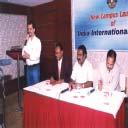
Seasonal Magazine met and spoke with Wg. Cdr. Mandal to get the complete value proposition that IIS offers. A fast and articulate person, IIS
students have more than enough to learn from their Principal. Basically from West Bengal, he is a Karnataka veteran, having spent much of his Air Force service in Karnataka. Incidentally, his wife, an experienced teacher and public relations specialist, is the PRO of IIS.
Here, Wg. Cdr. Mandal answers our queries:
Bangalore is teeming with international schools. What is the unique value proposition of IIS?
We are the most affordable international school for the IB curriculum. Our fee structure is such that, we are multi-times less costly than other IB curriculum schools in Bangalore, if not in the whole of India. IIS is taking IB education to the middleclass segment of Bangalore, that is, to the city’s professional couples, whereas until now IB education was only affordable to NRIs and big business families. And the beauty of it is that, we are doing this without compromising a bit on the facilities and infrastructure part. In fact, we aim to be better than the best in all-round facilities.

That is interesting. Can you explain this infrastructure edge?
INCLUDE A BOWLING ALLEY AND A GOLF COURSE.
Yes. The management has spared no expenses to bring to our students, a world-class infrastructure. We have a Wi-Fi campus, our students are equipped with laptops, our language labs are imported, we have the IIT-designed K-yan system for effective computer aided classes, and we are in the last stage of completing one of the best sporting infrastructures among all international schools in Bangalore.
IIS started as an ICSE school, and now you are switching to IB completely. What prompted the school for such an initiative?
Well, we are very comfortable with the ICSE syllabus, and our first batch at ICSE 10th Board Exam has come out in flying colours with 100% results. Reflecting our international outlook, however, we wanted to offer our students even more. That is why we made a thorough study of various curricula. Finally we decided to make it a pure IB school – now, starting from the primary level. Academically, there are many advantages for such a move. And Bangalore being the high awareness place it is, parents demand is also for such a facility.
So, now you are offering the IB primary program only? What about Middle School and IB Diploma?
They start right next year. This June our first IB Primary Years Programme (PYP) batch starts, spanning classes from LKG to Grade V. Both the IB Middle Years Programme (MYP) spanning Grades VI to X, and the IB Diploma Programme (DP) for Grades XI & XII start from the academic year 2007-08.
IB programs are known to be very demanding of teachers. How is IIS addressing this aspect?
You are absolutely right. IB is a demanding program both from teachers and students, and we are having IB school teachers from Mumbai come and train our teachers. Besides this, we have a very technologically updated campus with Wi-Fi facility, laptops, projectors, and high speed Internet connectivity – which are also aspects on which our teachers are getting trained. We have also made use of the services of The Teacher Foundation of Wipro.
IIS is now also a residential school. How is your residential initiative going to be different? Yes, we have started residential facilities, which would be in full swing from the next year onwards. The design of the residential facilities is such that it allows close monitoring of the students’ activities, without infringing on their freedom and privacy. All the staff including, Principal, teachers, and

administrative staff, will eventually reside in the campus, paving the way for IIS being a big extended family. Our main objective for the residential section will be individual care for each student – which is
family residential facilities, as well as subsidized education for their children at IIS.
What are the IIS initiatives for students weak in particular subjects?
We have systems in place to monitor, help, and correct learning problems in specific subjects. Many of our students have shown a sharp improvement in Hindi, after we systematically addressed this problem area for many South Indian students. Moreover, apart from correcting drawbacks, I think it is equally important to focus on the positives in each student – their interests and strengths.
framework is very powerful for developing talent and creativity. Coming back to academics, what is the maximum class-strength at IIS?
Very interesting. Can you explain this concept further?
Yes. Many of us, elders, tend to focus only on their academics. But to really excel in academics, the child should have confidence that he or she can do something exceptionally well. For some students, this will be a specific subject itself. But most often, these will be creative pursuits like drawing, singing, dance, sports, hobbies, adventure activities etc. So it is very important that teachers work with parents to discover each student’s innate strengths and interests. This is precisely what we are doing at IIS. When their creativity is unleashed, their confidence level increases, and they can attempt anything in this world.
Do you have a framework for implementing this extra emphasis on co-curricular activities?
Yes, very much. We have a concept of clubs, for promoting each indoor and outdoor activity, each art and sport. All students have to select at least one indoor and one outdoor activity, from arts or sports, and be part of that club. Teachers and parents will provide the guidance for this. After making selections, a student will be expected to stick to them, for at least a period of six months. Because, in many cases, a bit of perseverance would be needed, for a talent to blossom. After six months, the child can decide whether he wants to stick with his co-curricular selections, or learn new skills. We have found out that this
We follow the best practices formulated by IB, that is, 20+2 students as a maximum, in each class. Our overall staff-to-students ratio is also excellent at 1:15. These exceptional figures enable us to provide individual attention to each student, whether he or she is a day-boarder or regular-boarder. And we will stick to these ratios, even when we grow to much higher student strengths. Our campus is designed to accommodate even up to 3000 students, comfortably.
How can parents interact with the school system?
We have a fully computerised enterprise-class information system that enables E-Monitoring of our students’ development by both teachers and parents, from inside and outside the campus. Parents also have a definitive role to play in major policy decisions, with the School Management Committee (SMC) having two representatives from parents.
Who all are the other members of the Committee? Is SMC a part of the school administration hierarchy?
Well, other members of SMC include the CEO, the Principal, two representatives from teachers, Total Quality Management (TQM) experts, and eminent educationists. Besides the SMC, the school also has several Action Committees such as Academic Committee, Cocurricular Committee, Discipline Committee, and Maintenance Committee, under the Principal for effective administration of the school.
IIS is known for its ambitious plans for sports. Can you explain, and how exactly are these initiatives going to be different?
Yes, IIS has very ambitious plans for sports. We are using almost twothirds of our 30-acres campus for developing sporting infrastructure for all popular games like football, cricket, & basketball. Besides, a fullfledged
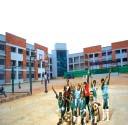




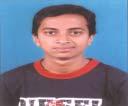
Sports Complex is soon getting completed. Reflecting our international focus, we are even providing for a Golf Course and a Bowling Alley. We have also tied up with the renowned SPT Sports Academy, which is just half a km from IIS. They will be developing and maintaining the Golf Course for us, and their expert coaches train our students in many items including football and basketball. Our students will also participate in their seasonal camps. We view the relationship with SPT as a great example of adding value by outsourcing.
Speaking about outsourcing, are there any other services that you outsource?
Yes, we like to outsource those activities which are non-core and which can be done better by specialised organizations. Sports infrastructure, as I said, is one example. On the services side, we outsource things like transport, housekeeping and food, to excellent service providers. This gives us better control on these aspects, even while freeing up our time and resources to advance in core areas like academics and co-
IIS IS ONE OF THE MOST AFFORDABLE IB CURRICULUM SCHOOLS IN BANGALORE.
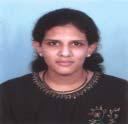
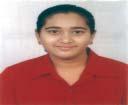
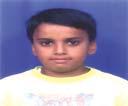
curricular activities. We have a fleet of school buses plying from most parts of the city, bringing in day-boarders.
Any discussion about vision should include the following question –where do we want to see IIS 5 years from now, 10 years from now? The management is very clear on this regard – we want IIS to be the best yet affordable international school in Bangalore, offering the entire IB curriculum, and bringing out well-rounded, responsible, and capable student-citizens who can take on the most challenging of international or national college curricula, and assume leadership across sectors like research, industry, public administration, management, sports, entertainment, and social service.