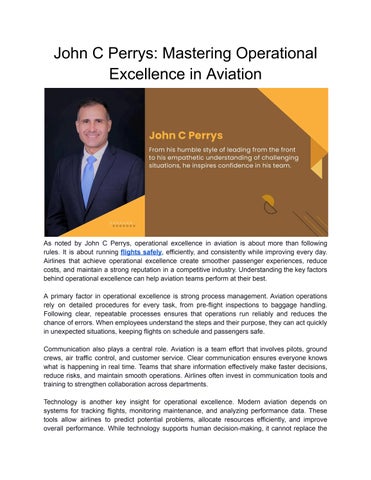
John C Perrys: Mastering Operational Excellence in Aviation

As noted by John C Perrys, operational excellence in aviation is about more than following rules It is about running flights safely, efficiently, and consistently while improving every day Airlines that achieve operational excellence create smoother passenger experiences, reduce costs, and maintain a strong reputation in a competitive industry Understanding the key factors behind operational excellence can help aviation teams perform at their best
A primary factor in operational excellence is strong process management Aviation operations rely on detailed procedures for every task, from pre-flight inspections to baggage handling. Following clear, repeatable processes ensures that operations run reliably and reduces the chance of errors When employees understand the steps and their purpose, they can act quickly in unexpected situations, keeping flights on schedule and passengers safe.
Communication also plays a central role Aviation is a team effort that involves pilots, ground crews, air traffic control, and customer service. Clear communication ensures everyone knows what is happening in real time Teams that share information effectively make faster decisions, reduce risks, and maintain smooth operations Airlines often invest in communication tools and training to strengthen collaboration across departments.
Technology is another key insight for operational excellence. Modern aviation depends on systems for tracking flights, monitoring maintenance, and analyzing performance data These tools allow airlines to predict potential problems, allocate resources efficiently, and improve overall performance. While technology supports human decision-making, it cannot replace the
experience and skill of trained staff Combining technology with expertise helps airlines achieve consistent results.
Employee training and development are essential. Pilots, engineers, and support staff need continuous education to stay current with regulations, safety procedures, and equipment updates Well-trained teams are more confident, make fewer mistakes, and can adapt quickly to new challenges. Airlines that prioritize professional growth create a culture of excellence where employees take pride in their work
Finally, measuring performance drives operational excellence. Airlines track key metrics such as on-time departures, maintenance completion, and customer satisfaction Reviewing this data allows teams to identify strengths and areas for improvement Incremental changes based on accurate metrics help maintain high standards and support long-term success.
Operational excellence in aviation comes from well-defined processes, strong communication, smart use of technology, continuous training, and careful performance tracking Airlines that focus on these areas improve safety, efficiency, and customer satisfaction Achieving operational excellence is not just a goal it is an ongoing commitment to doing things right, every day