PORTFOLIO
Joel Jansson Chalmers Technical University
Town House
Location: Mölndal, Gothenburg
Year: 2024
Course: The building as a system
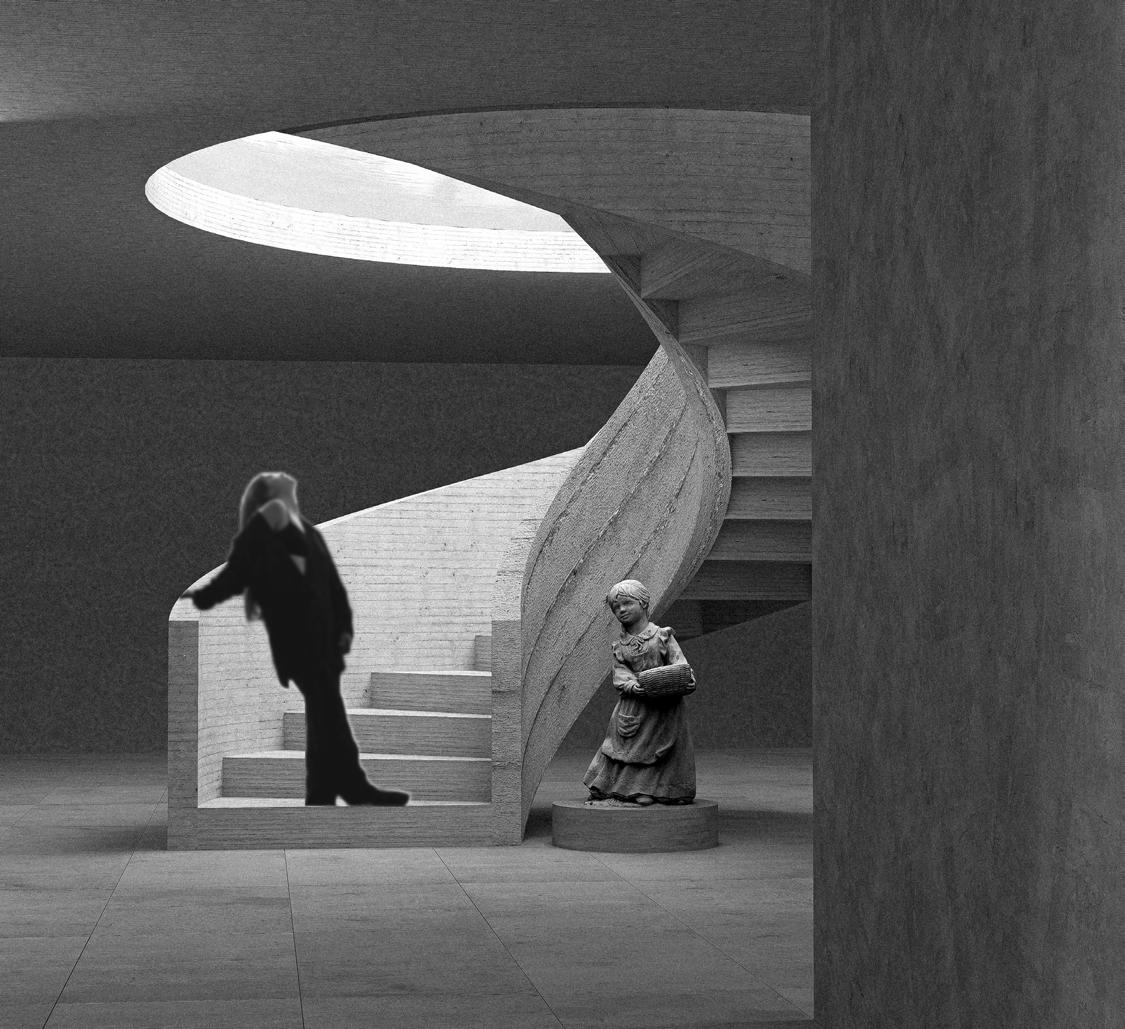
This project proposes a new building that complements the existing City Hall in Mölndal, designed to unite transparency, accessibility, and civic function. Organized around a central threestorey light court, the building creates a bright and welcoming interior atmosphere. A transparent ground floor with open exhibition spaces, inviting passersby to engage with the city’s activities. Clear orientation is achieved through two spiral staircases flanking the light court: one leading to citizen services and offices, and the other descending to a foyer and assembly hall with natural light.
Reflection: This project offered valuable insights into the design of civic architecture and the responsibility of shaping spaces that serve the public. A key reflection was the importance of expressing institutional presence and credibility through materiality, proportion, and spatial organization, while maintaining a sense of openness and accessibility. The process highlighted the challenge of creating a building that complements the existing Town Hall, responding to its character and the surrounding urban context without imitation.
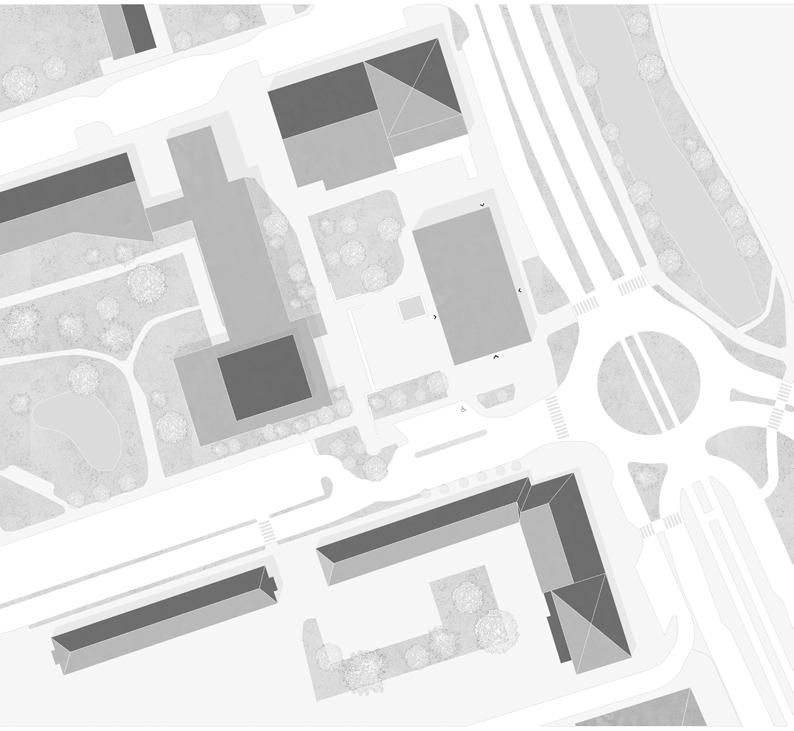
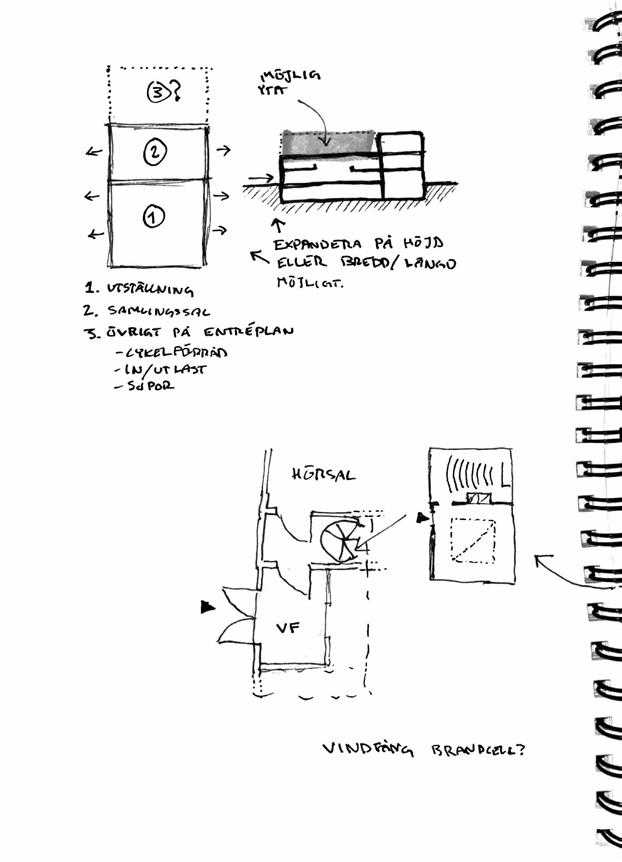
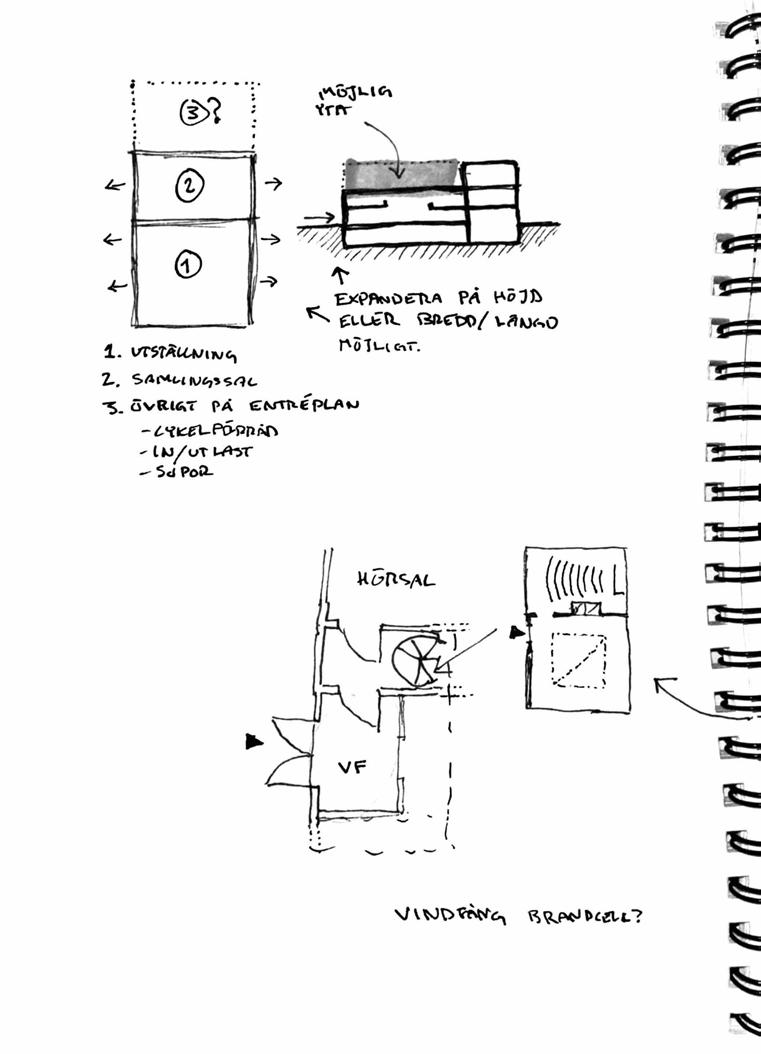
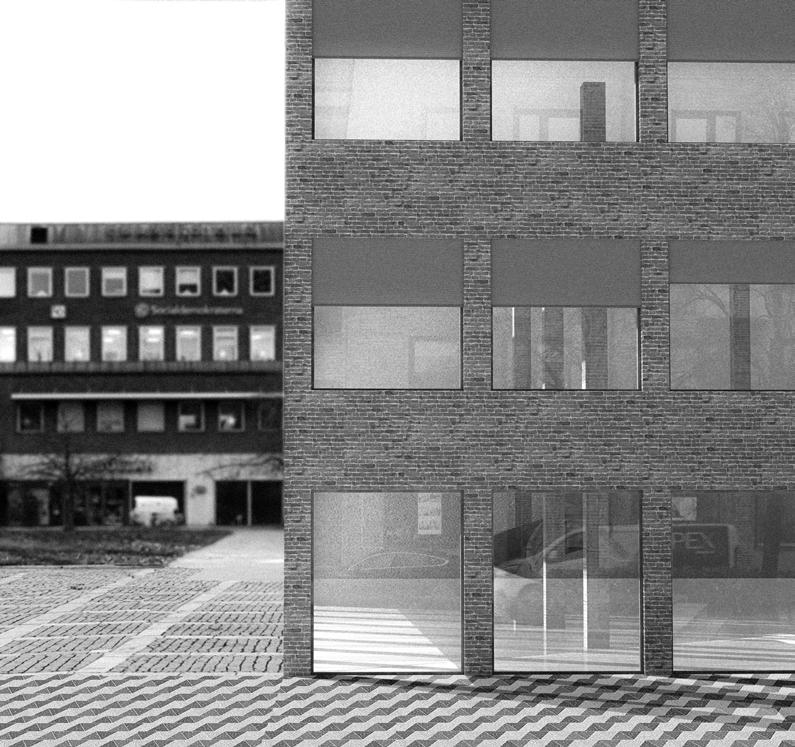
This project provided an opportunity to reflect on the architectural role and responsibility of public buildings. A key learning outcome was the importance of expressing civic authority and trust through architectural language, particularly in material choices, spatial clarity, and overall presence. The design process emphasized how a complementary building must both relate to and respectfully contrast the existing City Hall, balancing continuity with a contemporary identity. The project deepened my understanding of how public architecture should respond to its surrounding urban context while communicating stability, openness, and institutional character.
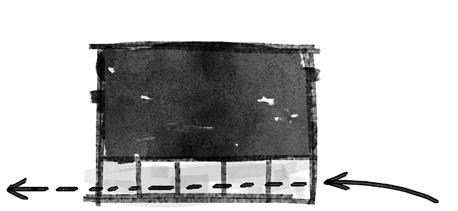
Entry floor
Basement floor
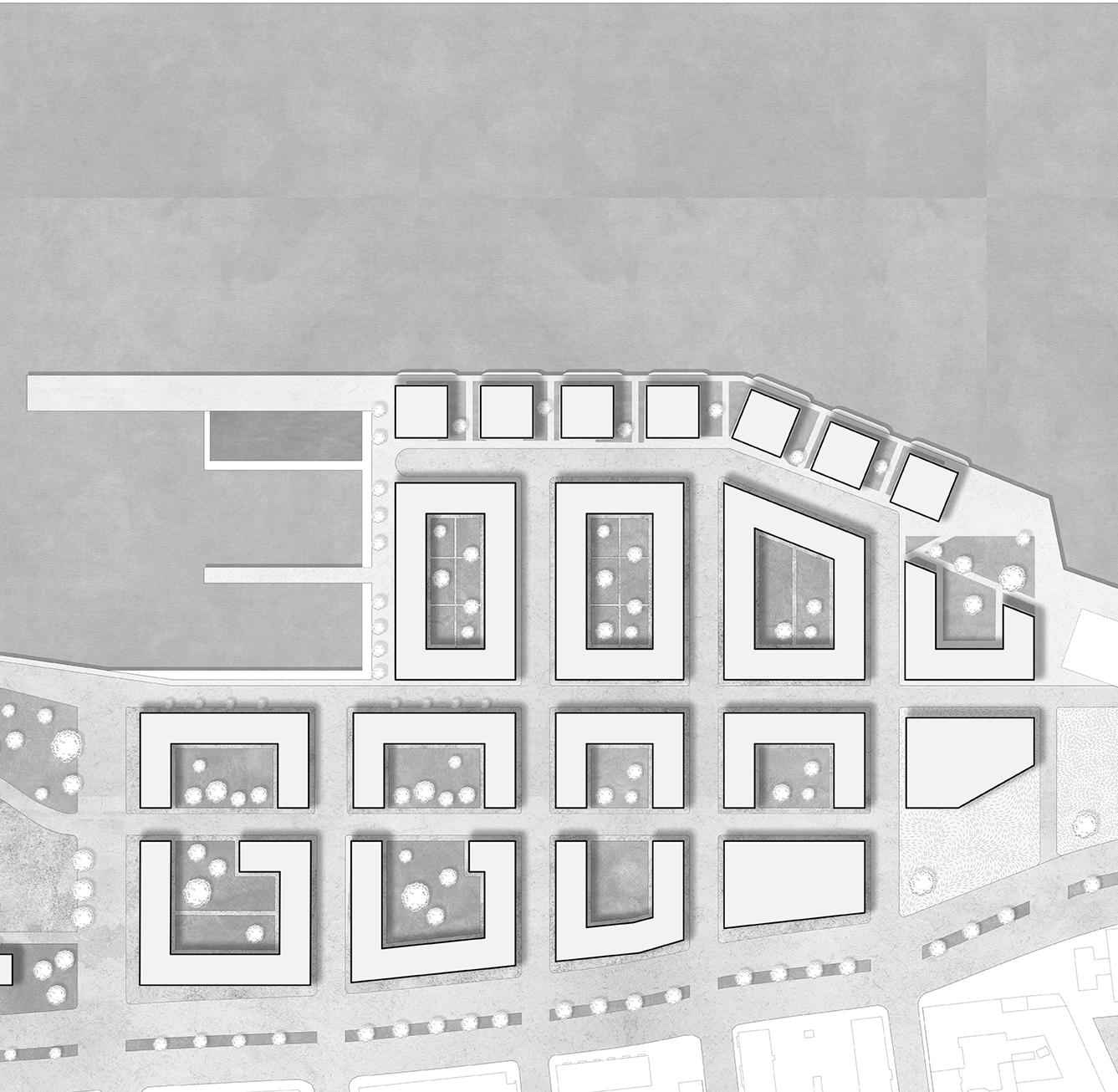
Reimagining Fiskhamnen
Location: Fiskhamnen, Gothenburg
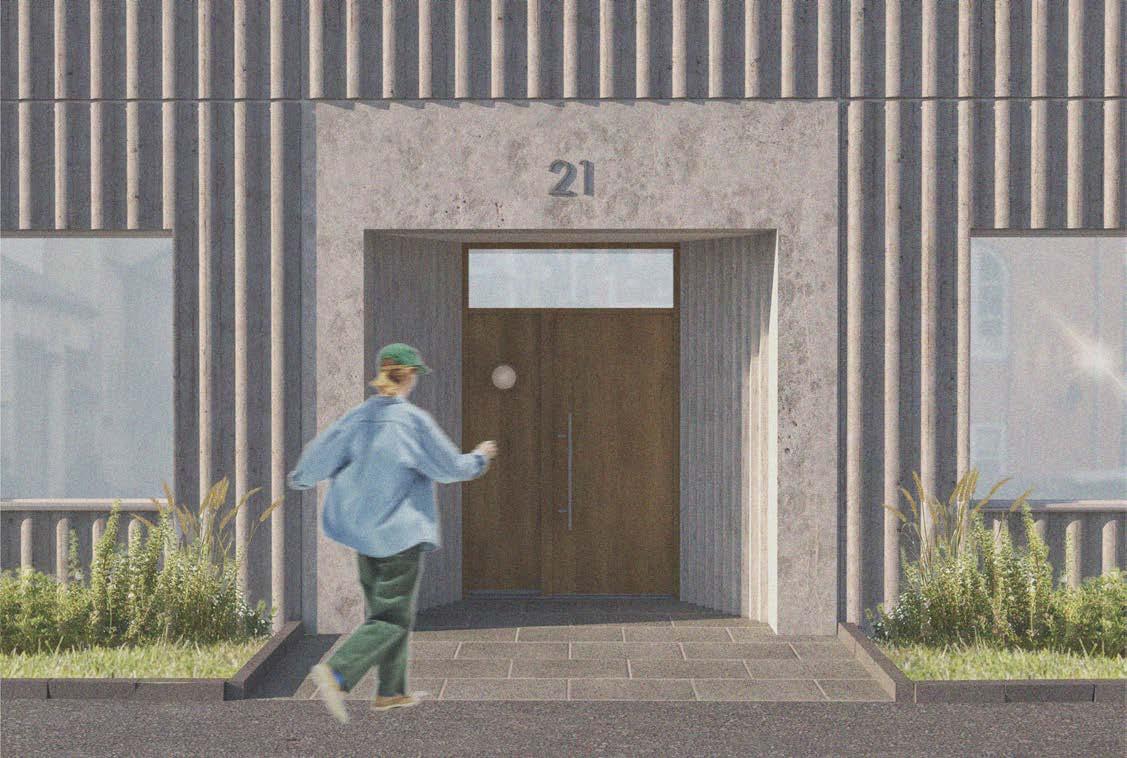
The project assignment focused on introducing a mixed-use urban structure of residential buildings and offices to activate and populate the port area. The goal was to extend the city centre towards the waterfront and create a continuous urban fabric, forming an overlapping seam across the future
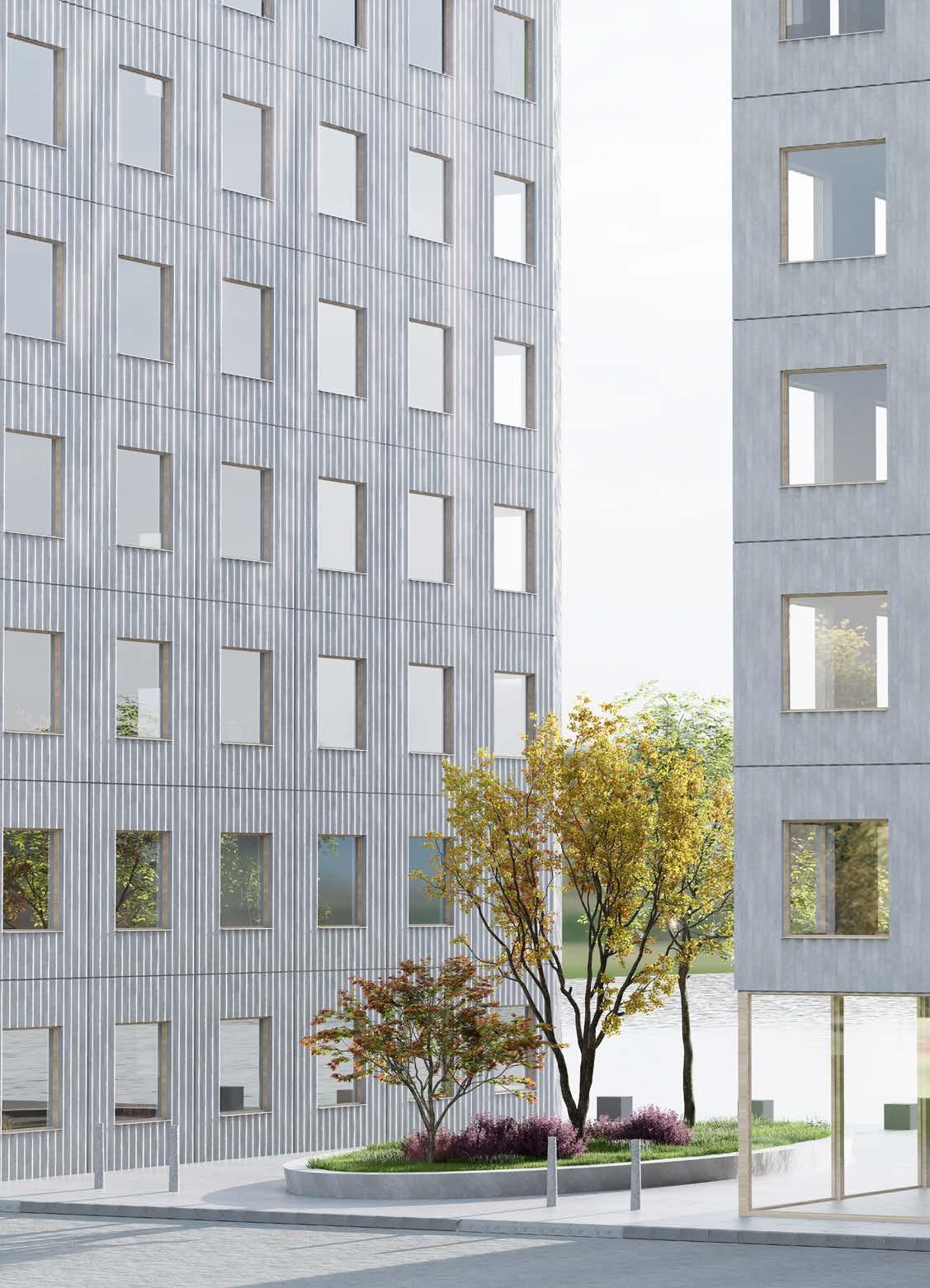
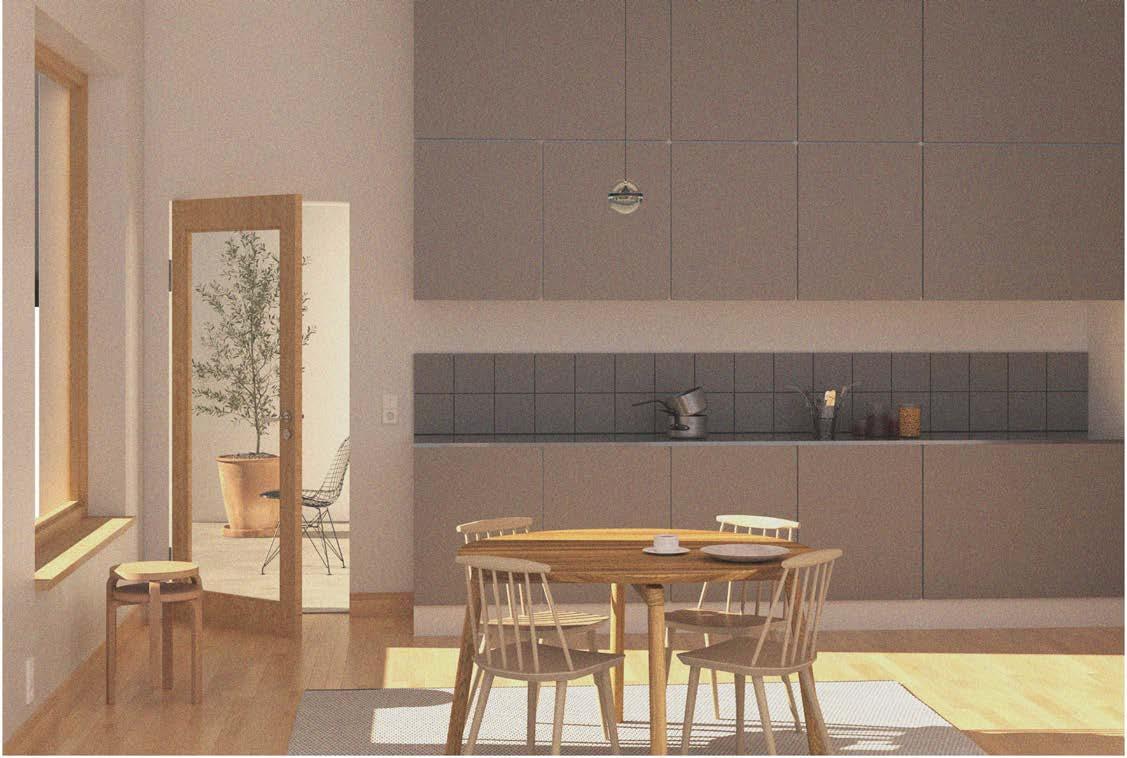
Dag Hammarskjöldsleden, as the existing highway is transformed into a city boulevard. One selected building was developed in greater detail as a seven storey point block, designed with flexibility to function initially as housing and, over time, adapt for office use.
Reflection: This bachelor thesis provided an opportunity to reflect on the complexities of transforming industrial waterfronts into integrated urban environments. A key learning outcome was understanding densification, mixed-use development, and new infrastructure. The work deepened my understanding of how urban design can balance long-term flexibility, contextual sensitivity, and the creation of a coherent city structure along the water.
Year: 2025
Course: Bachelor’s thesis in Architecture
100 Concrete - precasted sinus shaped
5 Wind protection
150 Insulation
2 Water barrier
150 Concrete
15 Seam
150 Insulation
5 Roofing felt
2 Water barrier
300 EPS insulation
200 Concrete
600 Suspended Ceiling
20 Wood flooring
200 Concrete
600 Suspended Ceiling
20 Wood flooring
200 Concrete
300 EPS insulation
300 Macadam
BO30 Masthuggskajen
Location: Masthuggskajen, Gothenburg
Year: 2025
Course: Architecture in the anthropocene
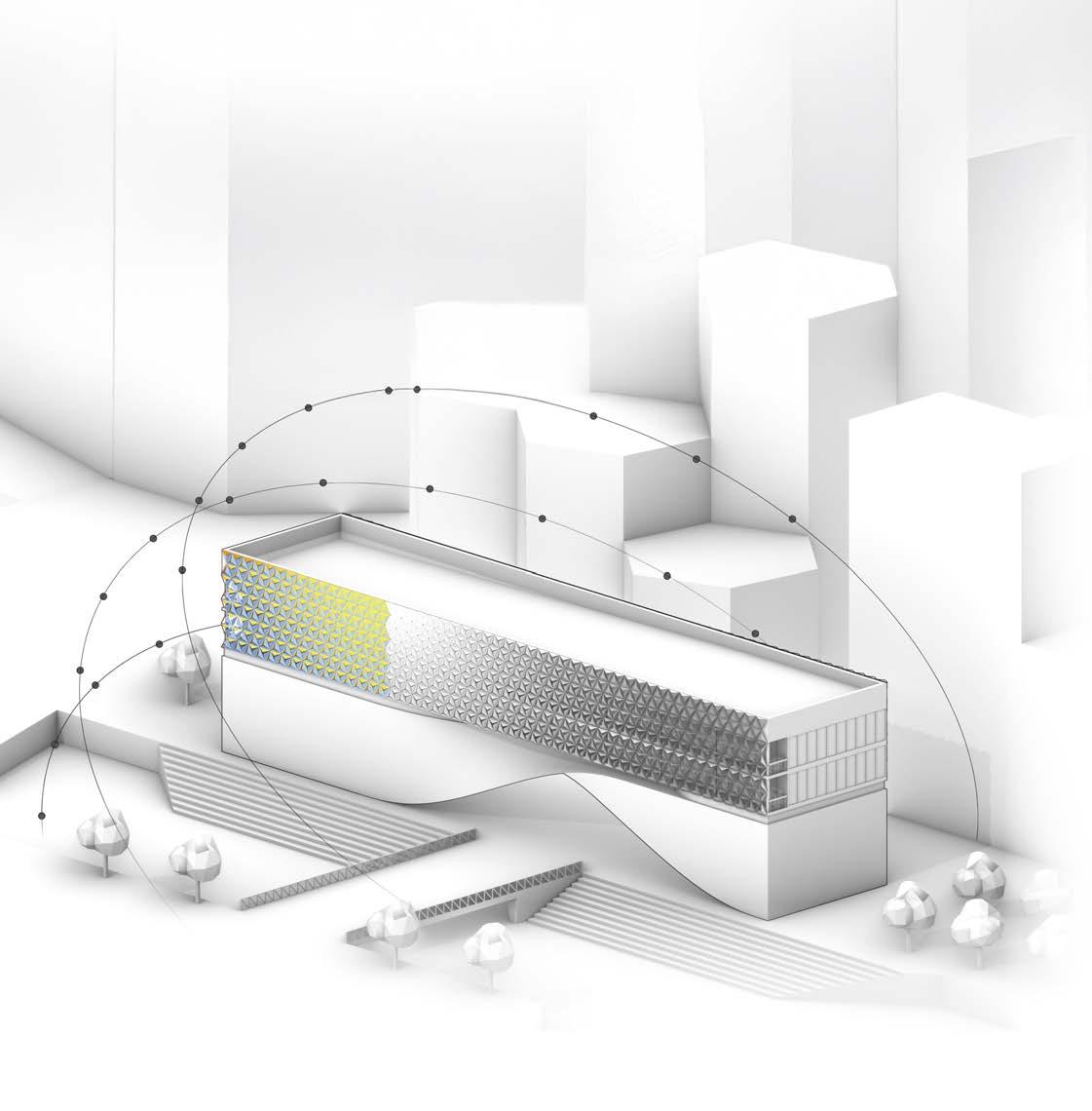
This project explores the design of a prototypical office building to be adaptable and deployable across diverse contexts, while responding to local enviromental conditions. Located at the edge of Masthuggskajen, the proposal engages with the area’s future plan to host a living exposition. The building features a facade system with adjustable panels that responds to solar exposure and incident radiation, ensuring a thermally comfortable working enviroment throughout the year. Energy strategies are integrated through river water cooling and heat recovery.
Reflection: This project strengthened my skills in parametric design using Grasshopper, where environmental data informed the development of a kinetic façade system that responds to solar exposure. A key learning outcome was understanding how computational tools can link performance requirements with architectural form, enabling adaptable and climate-responsive design solutions.
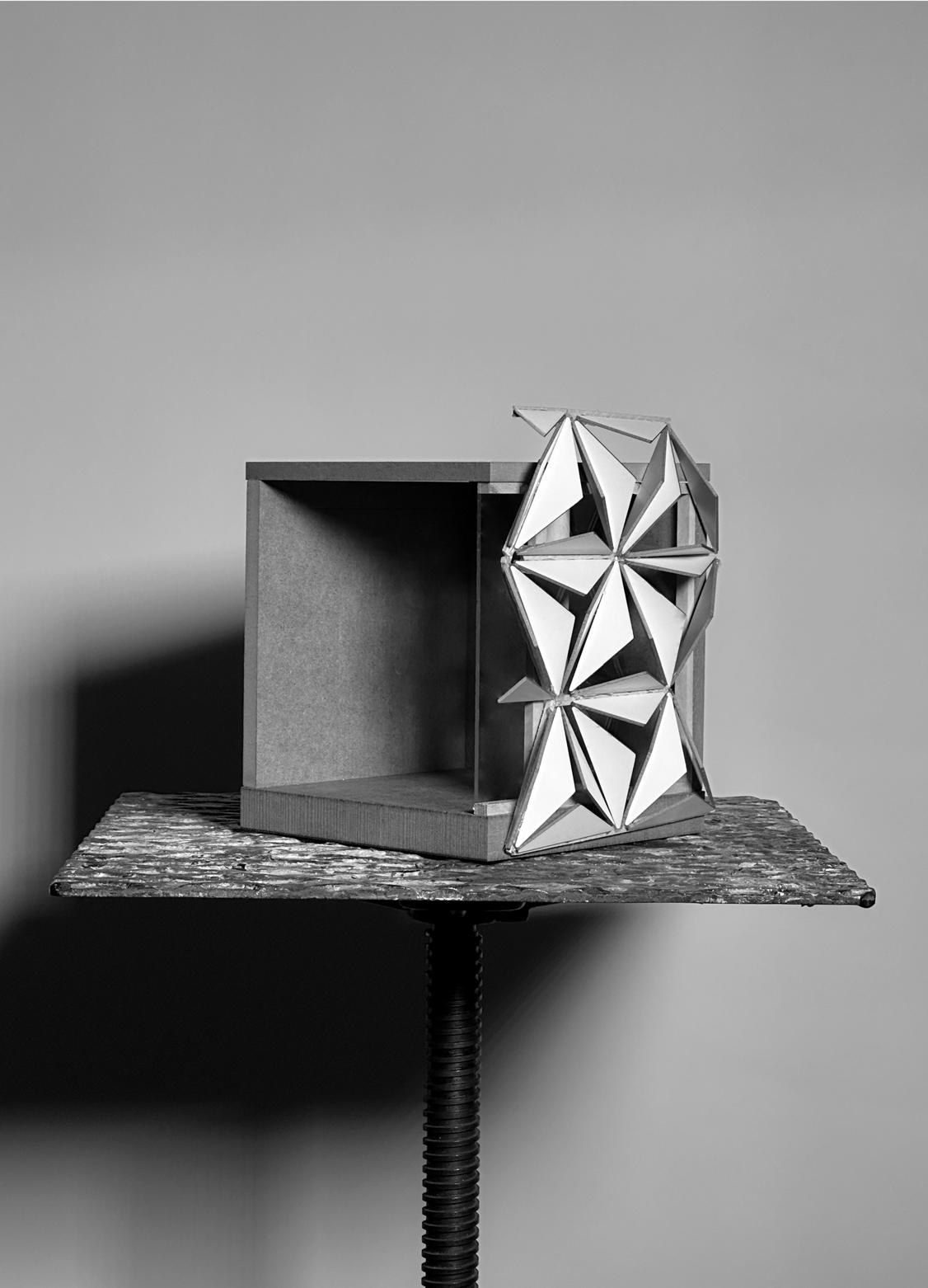


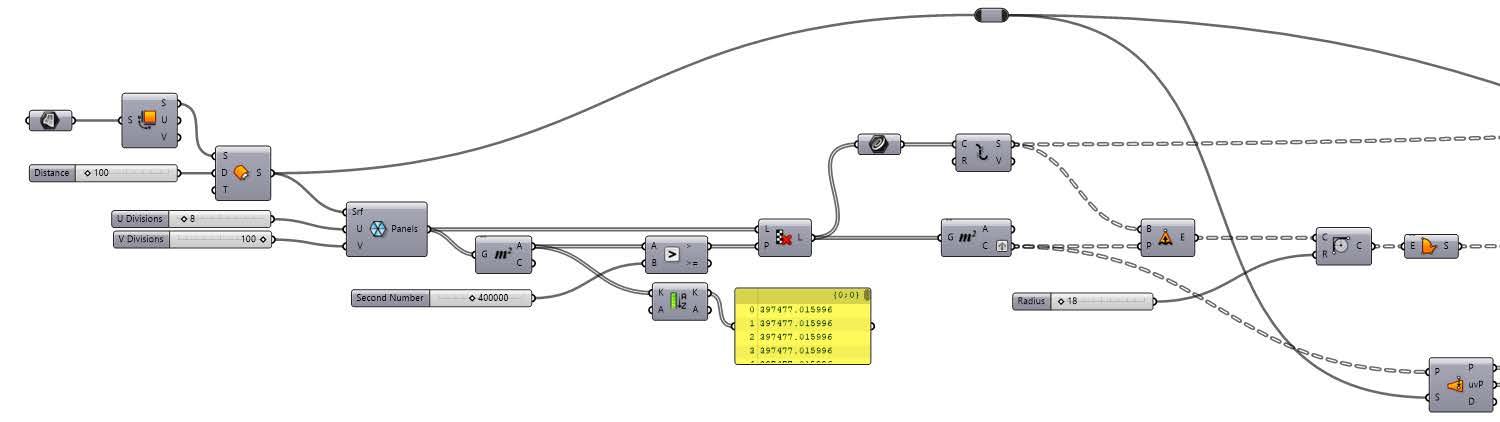
Through parametric designs in grasshopper, an integrated facade system was developed featuring kinetic solar panels mounted on a steel support skeleton. The panels dynamically adjust according to the solar path throughout the day, optimizing daylight levels while minimizing solar heat gain, thereby maintaining a stable and sustainable indoor climate. Behind the glazed curtain walls, floor-recessed convectors regulate local temperature in the open office landscape.
Rain Gallery
Location: Borås
Year: 2026
Course: Material and technique
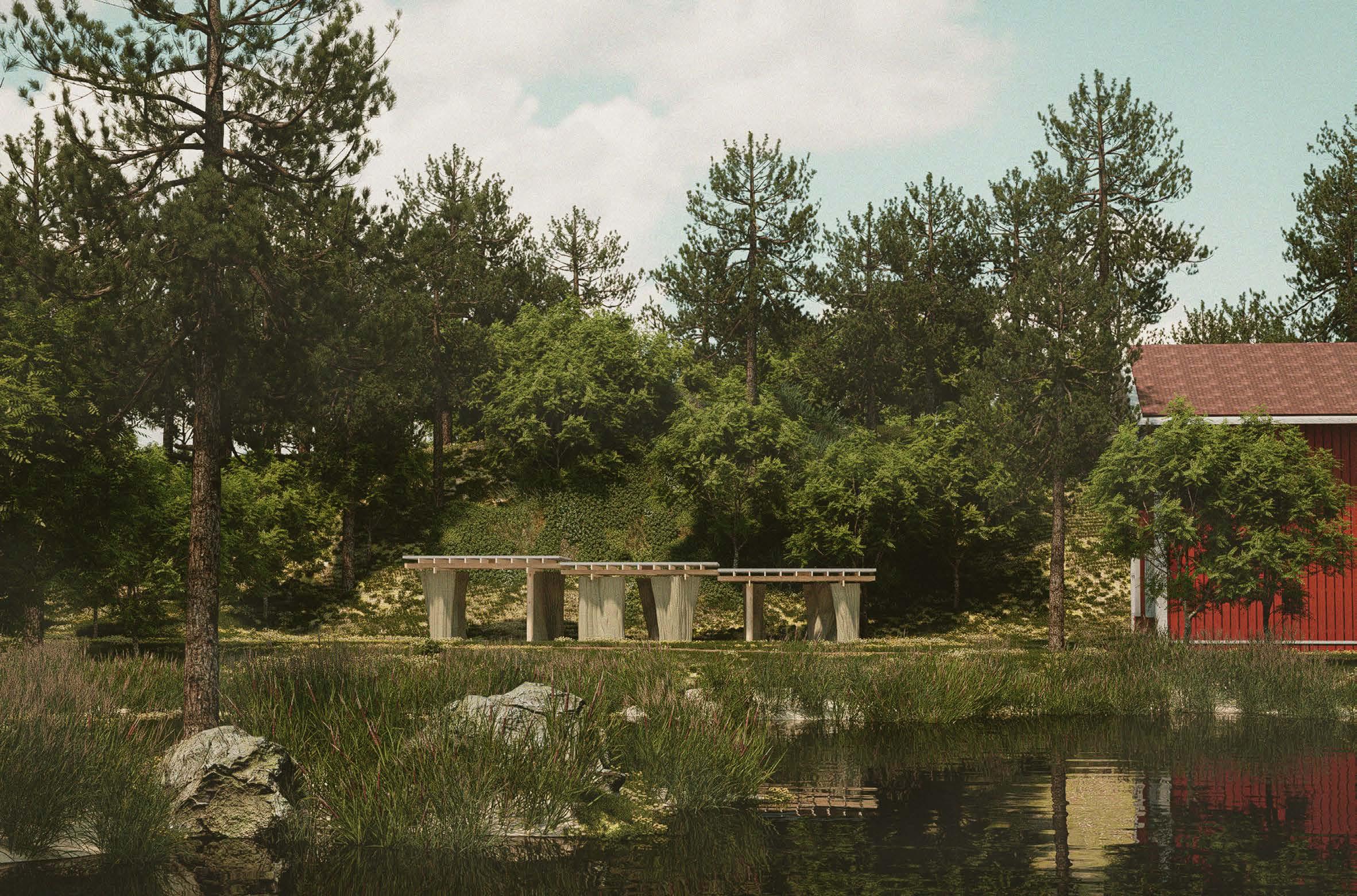
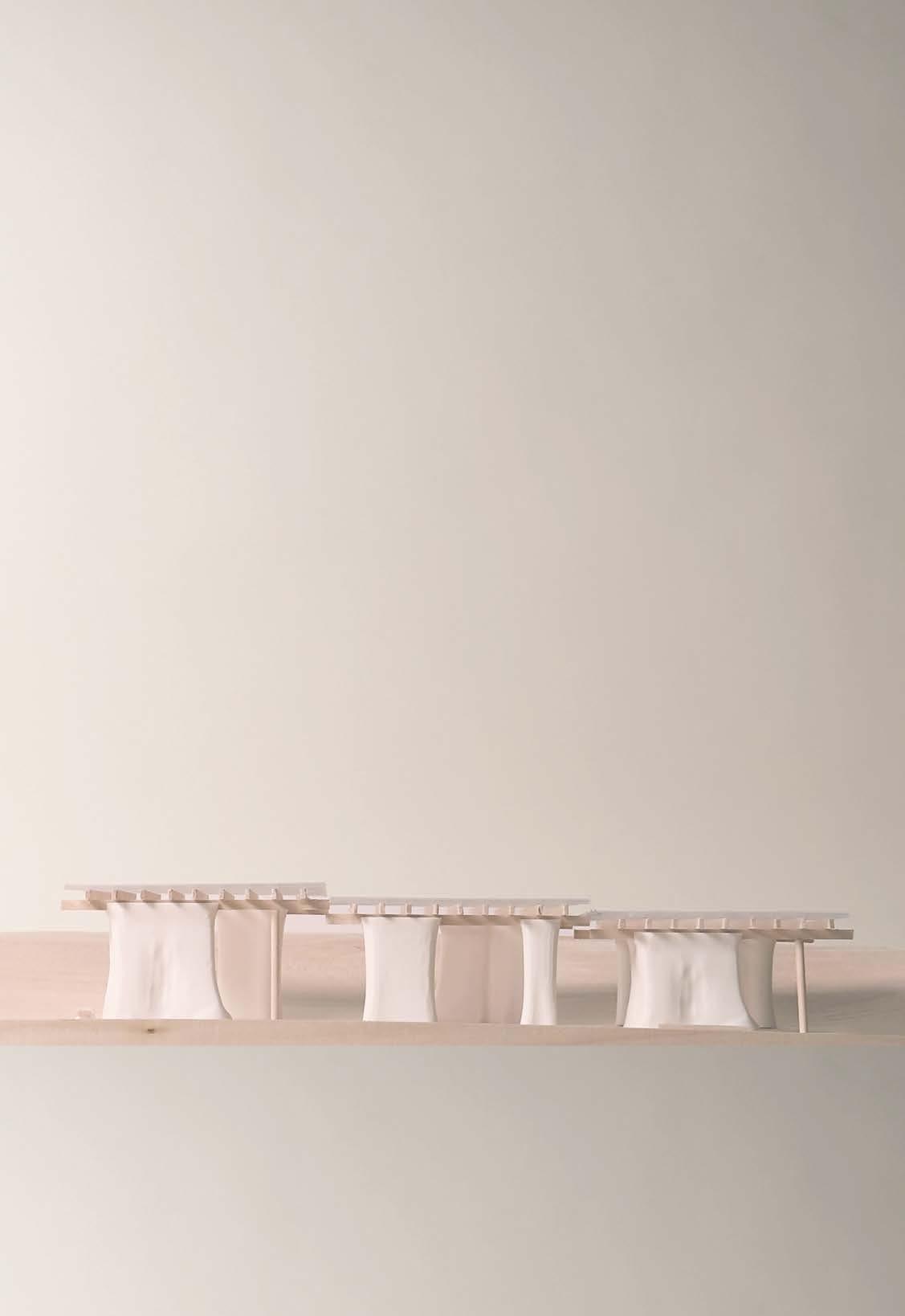
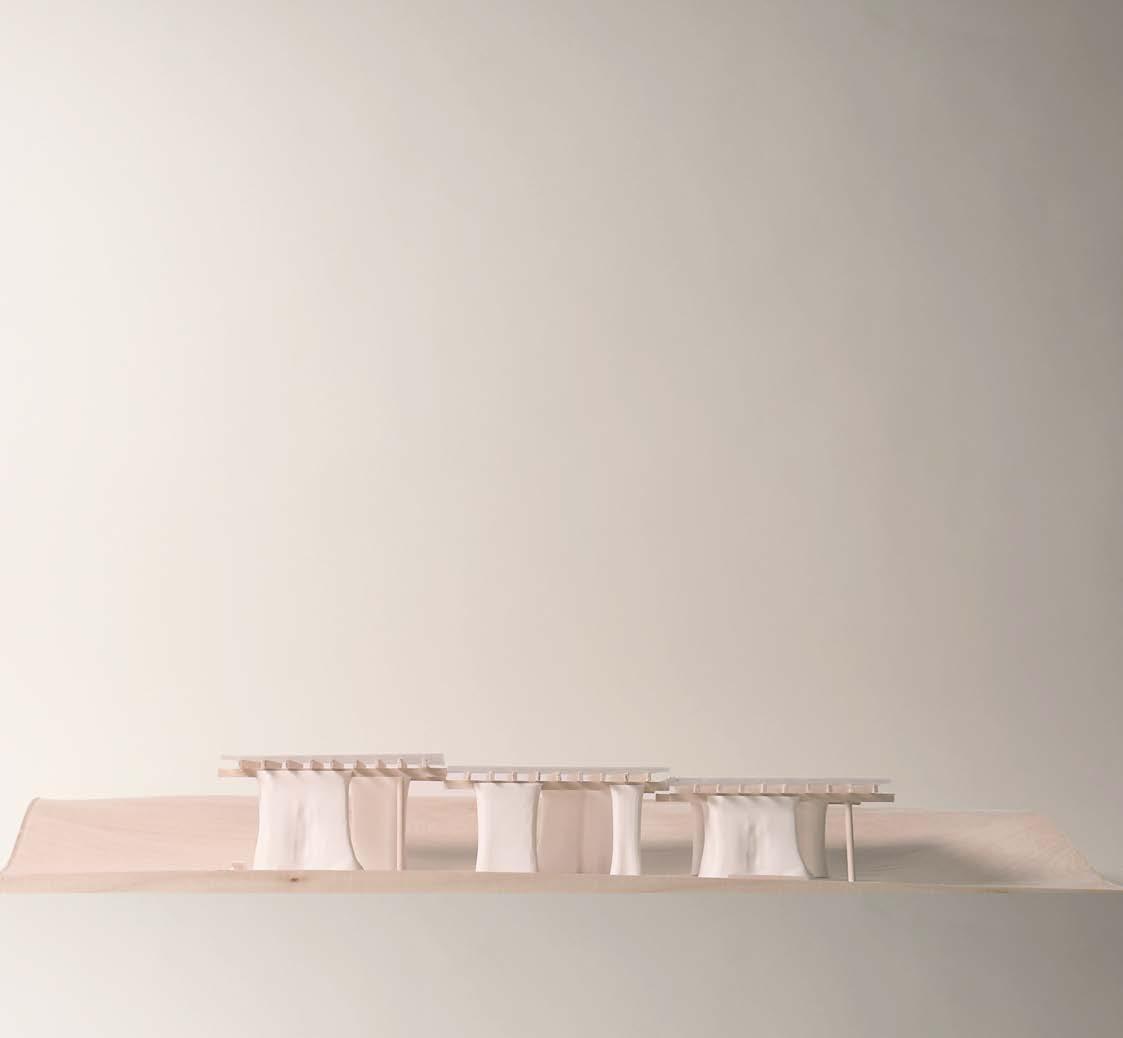
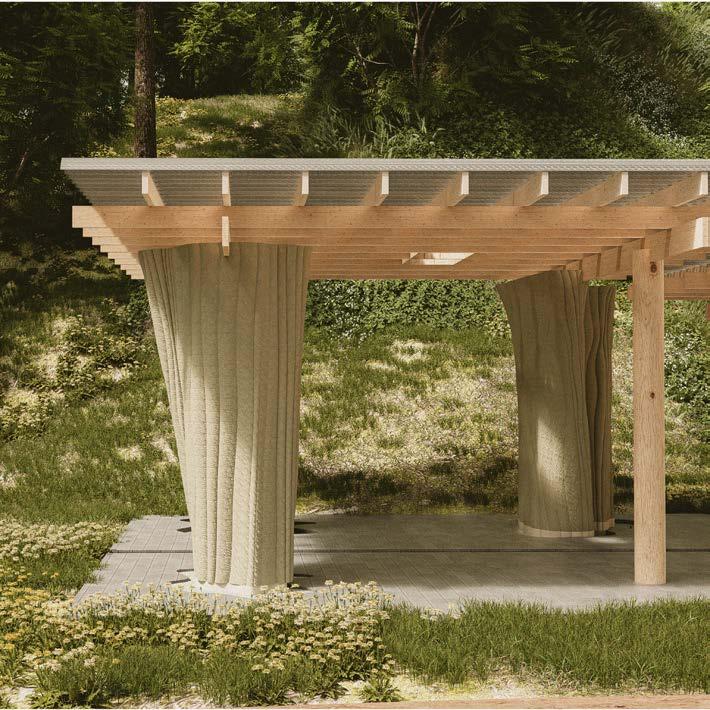
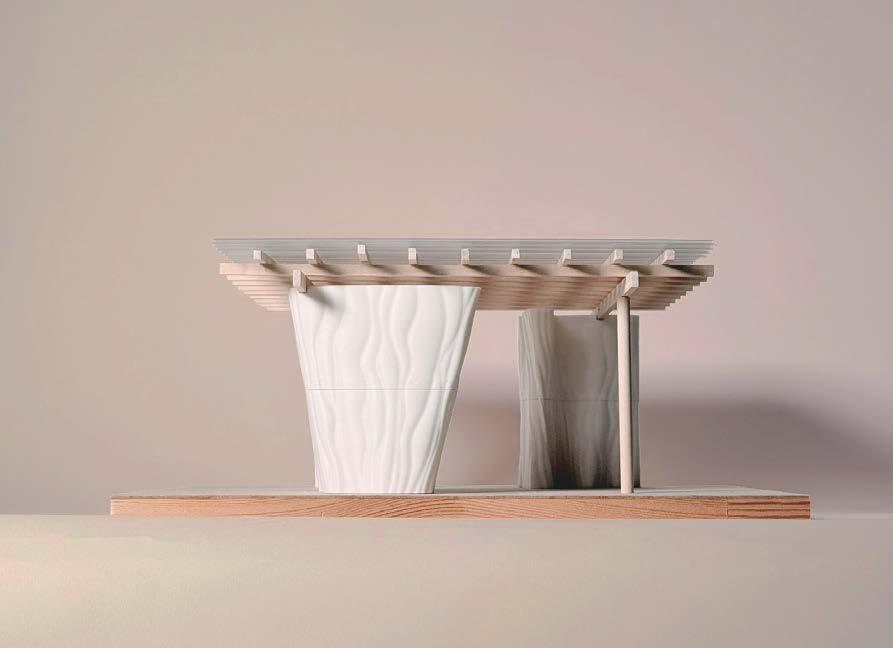
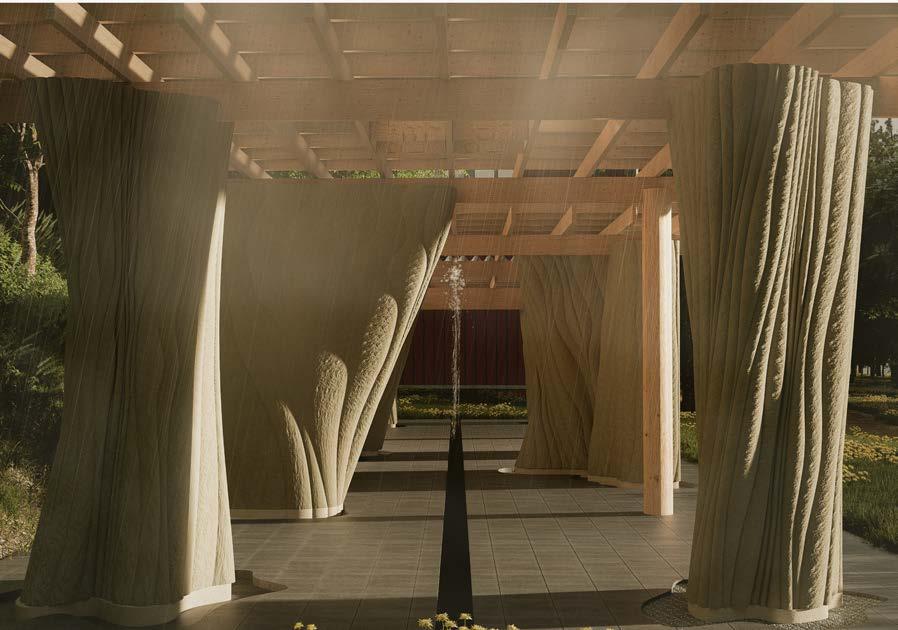
The rain Gallery pavillion was proposed as a part of a coopetition for Borås Municipality. The project consists of a 6x6 meter modular pavillion constructed from 3D-printed columns made of wood-based filament, supporting a timber lattice roof clas with translucent acrylic sheet roof. Designed as a permanent structure for art exhibitions, the pavillion is conceptually rooted in its location in Viskans Park, adjacent to an existing art gallery. The Rain Gallery invites visitors to experience art through the presence of rain, making rainfall an active component of the exhibition by engaging the sense audibly, visually, and physically.
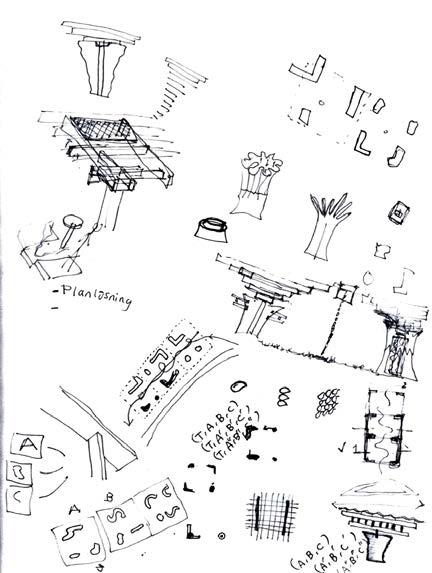
Reflection: This project provided an opportunity to explore the architectural potential of additive manufacturing at a small scale. A key learning outcome was understanding how material properties influence detailing and design decisions when working with 3D-printed components. The process also emphasized practical considerations such as modularity, assembly, transport, and disassembly, shaping the pavilion as an adaptable system. Working with parametric tools in Rhino and Grasshopper strengthened my ability to develop geometry through computational design into the architectural concept.

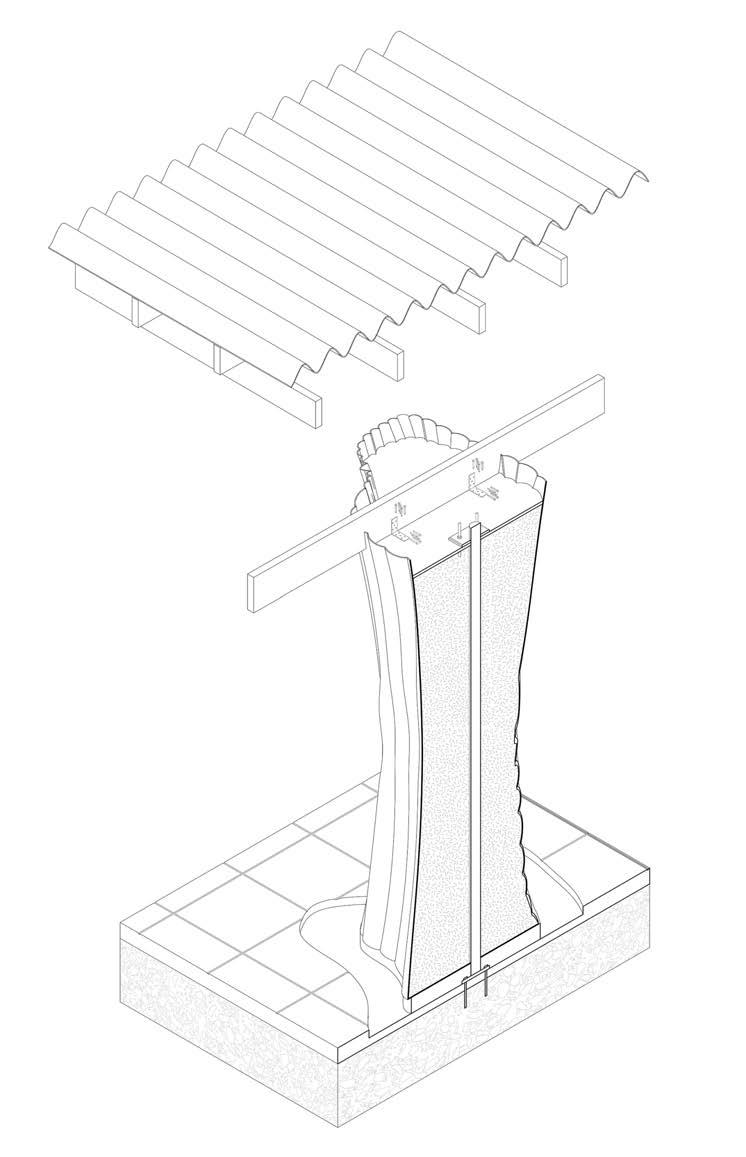
Polycarbonate sheet
45x220 Glulam beam
Granite stone slab
Wood-based filament shell
Sand-lime substrate
Steel tension rod