Louis Keddell, Operations Manager, Conservation Innovation Center
Elliott Kurtz, Geospatial Data Engineer
Patrick McCabe, Senior Geospatial Analyst
Joseph McCauley, Chesapeake Fellow
Frank Rohrer, Senior Restoration Project Advisor
Kathy Rohrer, Senior Restoration Project Advisor
David Saavedra, Senior Geospatial Technical Lead
Alicia Sabatino, GIS Web Developer/Cartographer
Helen Sieracki, Human Resources Manager
Lisa Spallitta, Director of Finance & IT
Logan Stenger, Senior Project Manager
Susan Stephenson, Director of Public Awards & Compliance
Shannon Thomas, Project Manager
Charlotte Weinstein, Senior Geospatial Analyst
Take the Detour
I spend more time in my car than I would like. Some days, I am heading to meetings or driving my kids to practices and events. The best time behind the wheel, though, is on a road trip or weekend adventure.
Last summer, while driving across New York with my older son and his friend, I realized we were a short distance from a beautiful waterfall near Ithaca. We were on a tight schedule, but I asked if they wanted to stop. They agreed. We parked, hurried down the path and took in Taughannock Falls State Park. The falls were breathtaking. Our time there was short, but we felt refreshed.
This spring, my son returned to that same spot with his dad and proudly showed him the falls, pointing out how different they looked in April compared to August, with so much more water flowing.
A few weeks later, my son and I were on the road again, driving home from Norfolk up the Eastern Shore. Our route took us through Seaford, Delaware. In 2018, Chesapeake Conservancy partnered with the city to acquire a small property along the Nanticoke River with a vision to create a waterfront park. I had seen photos of Oyster House Park, which opened in 2021, but had not experienced it in person.
I asked my son if we should make a quick detour, knowing it might make him late for school. He smiled and said, “Mom, last summer you told me whenever you can, take the detour. You will rarely regret it.”
So we turned off the road and headed into town. Just after sunrise, we saw people fishing and enjoying the park. Standing there, it meant so much to share a place I had helped bring to life. That work continues, with a recent park expansion (see page 5).
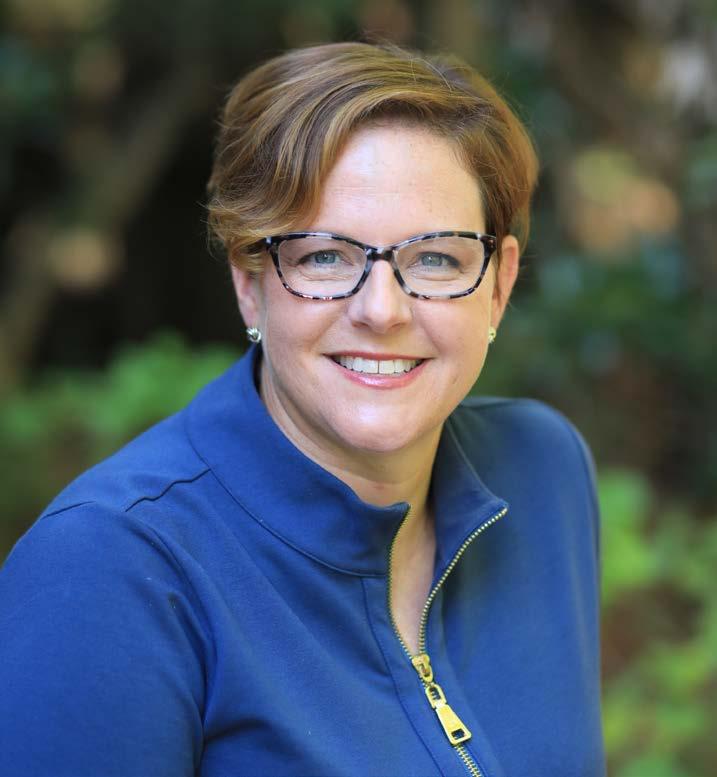
Susan Shingledecker
As a parent and as the leader of this organization, I often think about the lessons worth sharing. This one is simple: Take the detour. Make time for the walk. Visit a park you have never noticed before.
I am grateful every day for the Chesapeake Conservancy team and for the work we do together to protect and create these special places.
Inside this issue of Shorelines, I hope you will discover a few new places to explore. Have a wonderful summer, and please consider making a donation to help us protect more places for life’s special detours.
Susan Shingledecker chesapeake conservancy ceo
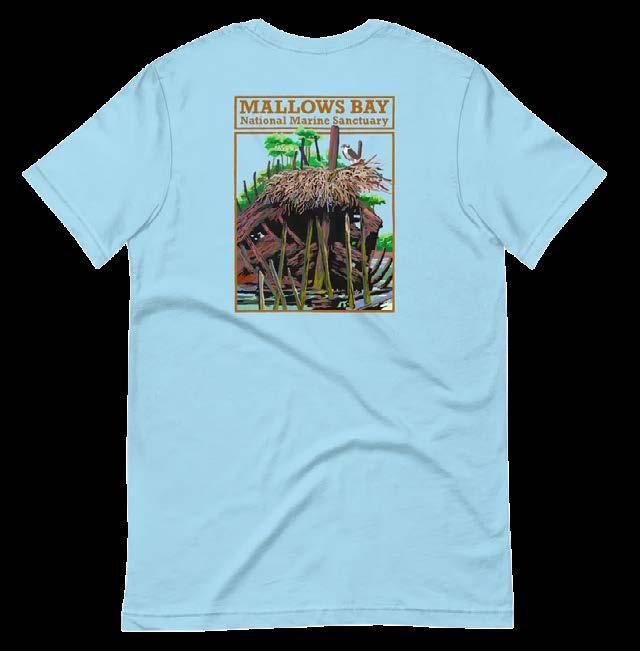
We’ve got you covered. Check out our online store at shopchesapeakeconservancy.org. shopchesapeakeconservancy.org
100,000 Live Stakes Planted to Restore Pennsylvania Streams
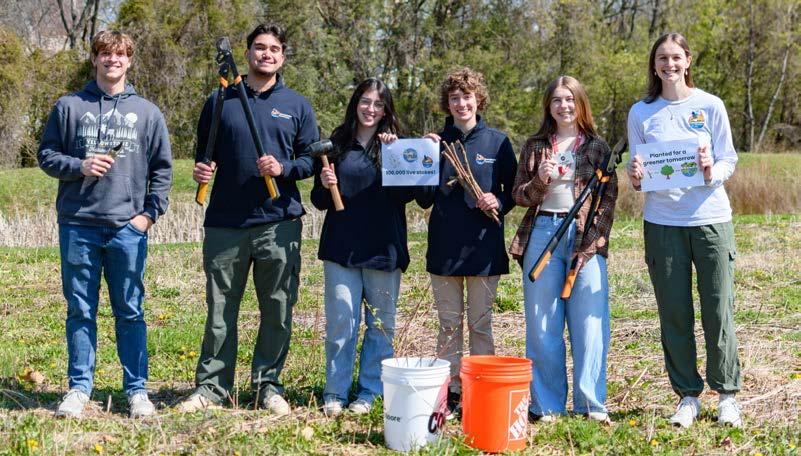
Along Pennsylvania’s streambanks, 100,000 live stakes are now in the ground, marking a major milestone in efforts to restore riparian buffers and improve water quality across the Chesapeake Bay watershed.
Live stakes are dormant cuttings from native wetland trees and shrubs planted directly into streambanks. Once established, they root and grow into living infrastructure that stabilizes soil, reduces erosion, filters nutrients and sediment, slows stormwater runoff and creates habitat for fish and wildlife. Over time, they transform degraded stream edges into resilient functioning buffers.
The 100K milestone reflects seven years of work through the Live Stake Collaborative, a partnership led by Chesapeake Conservancy, Susquehanna University, Pennsylvania Department of Conservation and Natural Resources, Merrill W. Linn Land and Waterways Conservancy and Bucknell University. Additional partners include Juniata College, Clearwater Conservancy, Huntingdon County Conservation District, Union County Conservation District,
CHESAPEAKE
Snyder County Conservation District and Penns Valley Conservation Association. Funding support has come from National Fish and Wildlife Foundation, Hamer Foundation, the 1994 Charles B. Degenstein Foundation, Foundation for Pennsylvania Watersheds and Pennsylvania Department of Conservation and Natural Resources.
Chesapeake Conservancy coordinates the effort with the help of a live stake coordinator, often filled by a CORE Susquehanna AmeriCorps member. Susquehanna University provides storage and engages students each semester in live stake collection, transport and planting, offering course credit and volunteer hours across disciplines.
More than 1,000 volunteers have contributed over 3,800 hours through 129 events. Across project sites, live stakes are helping establish expanding streamside buffers that strengthen stream health over time.
The model is also expanding into Maryland through Climate Crew Network, a partnership between Chesapeake Conservancy and Greater
CONSERVANCY PARTNERS
ON Data-Driven Restoration for Antietam Creek
Maryland’s Whole Watershed Program is changing how restoration gets done by focusing on entire watersheds instead of isolated projects. Signed into law in May 2024, this five-year pilot program will create a model to accelerate measurable improvements in wildlife habitat water quality across the Chesapeake Bay watershed.
Five watersheds were selected to receive initial state grant funding as part of the Whole Watershed Act: Antietam Creek in Washington County, Baltimore Harbor, Newport Bay near Ocean City, Severn River in Anne Arundel County and Upper Choptank River on Maryland’s Eastern Shore.
The legislation that established the program was inspired in part by work in Pennsylvania, where Chesapeake Conservancy and partners demonstrated that targeted, data-driven restoration can accelerate progress toward stream recovery and nutrient-reduction goals. In that model, local, state and federal partners used detailed hydrography data to prioritize restoration work across carefully selected stream segments, aligning conservation investments where they would have the greatest impact.
In the Antietam Creek watershed, Chesapeake
Conservancy works with Catoctin Land Trust and local partners to apply this framework through coordinated planning and GIS-based prioritization to advance riparian forest buffer restoration, upland tree plantings, habitat restoration and agricultural restoration projects, among others. Additional funding comes from National Fish and Wildlife Foundation.
“As implementation moves forward, we are focused on translating the Whole Watershed Program’s vision into on-the-ground outcomes that improve water quality, strengthen resilience and deliver lasting benefits for the Antietam Creek watershed and ultimately the Chesapeake Bay,” said Catoctin Land Trust Deputy Director Matt Fleischer.
“Success depends on aligning land conservation, restoration and agricultural best management practices within full watershed systems, rather than treating impairments in isolation. That approach is now being applied in Maryland through pilot efforts, including work in the Antietam Creek watershed, where we are proud to partner with the Catoctin Land Trust and other incredible partners,” said Chesapeake Conservancy CEO Susan Shingledecker.
Baltimore Wilderness Coalition that supports green workforce development and restoration training.
“The live stake program has a direct impact on local streams, surrounding communities and the Chesapeake Bay watershed,” said Michaela Rolecki, Chesapeake Conservancy volunteer coordinator and 2025 Susquehanna University graduate. “When you improve the health of a tributary, you’re also providing downstream benefits to everyone along the waterway.”
The collaborative is now working toward its next goal: 200,000 live stakes planted.
“The Whole Watershed Program represents a fundamental change in how we approach clean water and wildlife habitat,” said Chesapeake Conservancy’s Director of the Chesapeake Tributaries Initiative Carly Dean. “Our role is to help make innovative data accessible to local groups who know their watersheds best. The program demonstrates a real commitment from the Maryland Department of Natural Resources to advance watershed goals that are most important to communities.”
Legislation creating the Whole Watershed Program was championed in the Maryland General Assembly by then-State Senator Sarah Elfreth, now a member of the U.S. House of Representatives, along with Delegate Sara Love and other co-sponsors. Their leadership helped advance a model that brings together science, data and collaboration to scale restoration efforts statewide.
Goals of the program include pollution reduction, habitat creation, aquatic resource improvements, carbon sequestration, equitable public access, public health enhancements, outreach to overburdened and underserved communities and more.
Susquehanna University students and Chesapeake Conservancy staff celebrate the planting of 100,000 live stakes. photo by
More than 650 Acres Conserved in Dragon Run, One of Virginia’s Most Pristine Watersheds
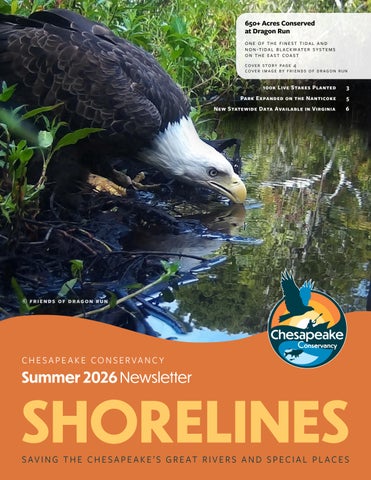
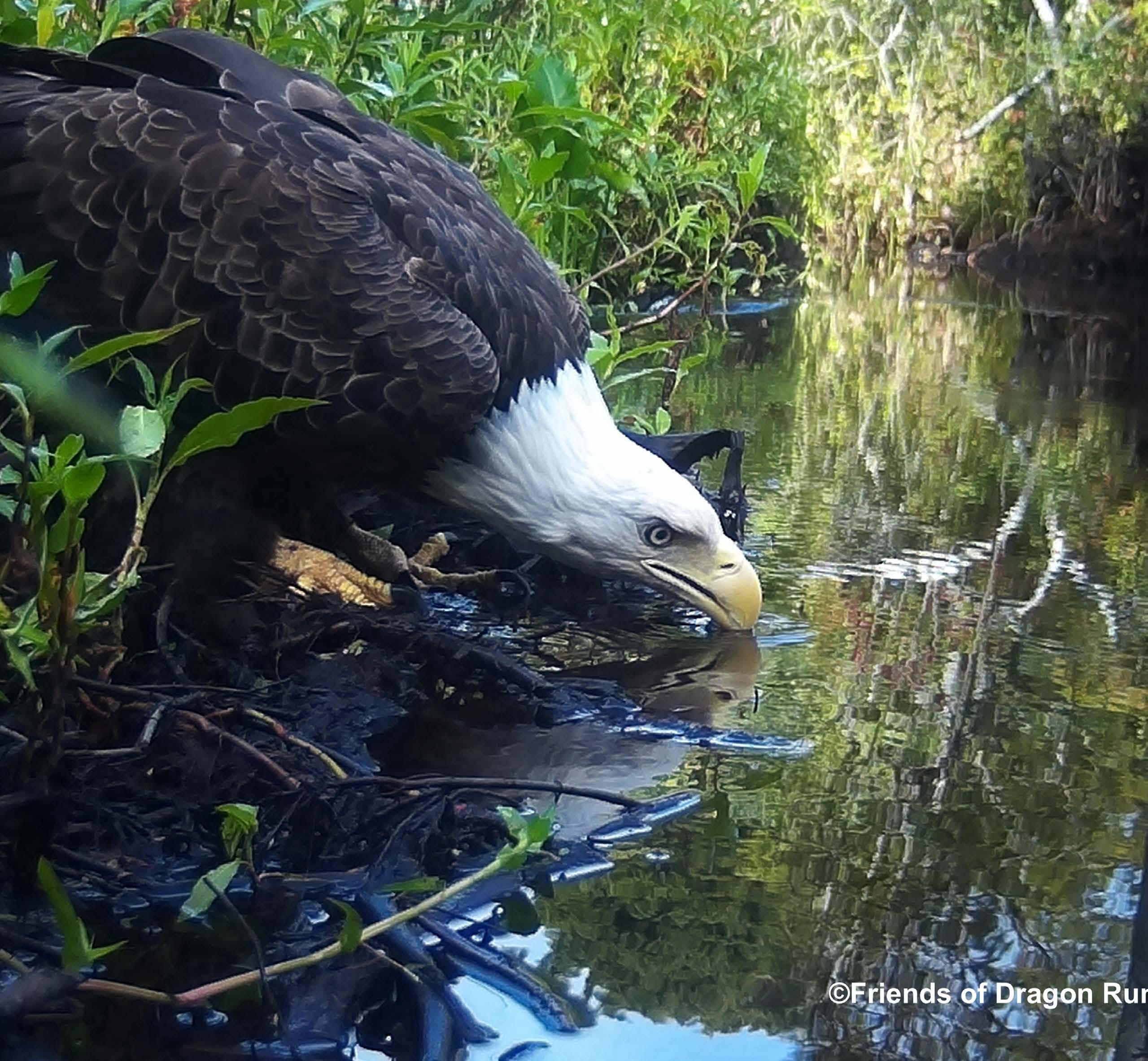
In February, Friends of Dragon Run (FODR) and Chesapeake Conservancy announced the permanent conservation of more than 650 acres of essential wildlife habitat along Dragon Run, a blackwater stream with associated swamps that flows into the Piankatank River and ultimately the Chesapeake Bay. This achievement marks a major milestone in decades of collaborative, landscape-scale conservation in one of the Chesapeake Bay watershed’s most ecologically intact landscapes.
The newly conserved land protects more than 2.5 miles of Dragon Run frontage and approximately 250 acres of bald cypress-tupelo swamp, closing a critical gap and extending a wildlife corridor within the 90,000-acre Dragon Run watershed. The watershed stretches 40 miles across Virginia’s Middle Peninsula and provides an ecological link, particularly for migratory species, to the Rappahannock River Valley National Wildlife Refuge and the James River National Wildlife Refuge. It is widely regarded as one of the finest remaining examples of non-tidal and tidal blackwater systems on the East Coast.
“We are incredibly grateful to our many donors, Chesapeake Conservancy, and our federal funding partner who made this remarkable achievement possible,” said Jeff Wright, immediate past president of FODR.
“This project builds on four decades of land conservation in Dragon Run initiated by the Friends of Dragon Run in the mid-1980s and strengthened by partners over the years, including The Nature Conservancy, the Middle
Peninsula Planning District Commission, the Virginia Department of Forestry, the Virginia Outdoors Foundation and the Chesapeake Bay Foundation. These collective efforts have ensured that more than 25,000 acres, over 25 percent of the Dragon Run watershed, are now protected for future generations,” continued Wright.
“Dragon Run is one of the Chesapeake Bay’s truly special places,” said Susan Shingledecker, CEO of Chesapeake Conservancy. “This partnership demonstrates what’s possible when organizations work together. By leveraging new funding and innovative tools, we are building on decades of conservation efforts to protect this remarkable landscape, rich in Indigenous history, while safeguarding critical wildlife habitat and expanding outdoor opportunities for the community.”
The Dragon Run watershed supports more than 2,200 species, including over 115 bird species and 55 fish species, and contains five
distinct natural communities. Its forests and wetlands are dominated by bald cypress, tupelo and mixed bottomland hardwoods that provide critical wildlife habitat, sequester carbon and help maintain exceptional water quality. Dragon Run is also within the summer range of the federally endangered northern long-eared bat and supports species such as alewife, American shad, spotted turtle, wood thrush, prothonotary warbler, monarch butterfly and American bumblebee.
Funding for the project included $500,000 in support from the National Fish and Wildlife Foundation (NFWF), the U.S. Fish and Wildlife Service Chesapeake Watershed Investments for Landscape Defense (Chesapeake WILD) program and the generous support of private donors.
The property, called the Rhodes Property after FODR’s longtime volunteer Davis Rhodes, is now part of FODR’s conservation land holdings and will be managed to preserve the natural, cultural and scenic values found on the property, as well as for outdoor experiences.
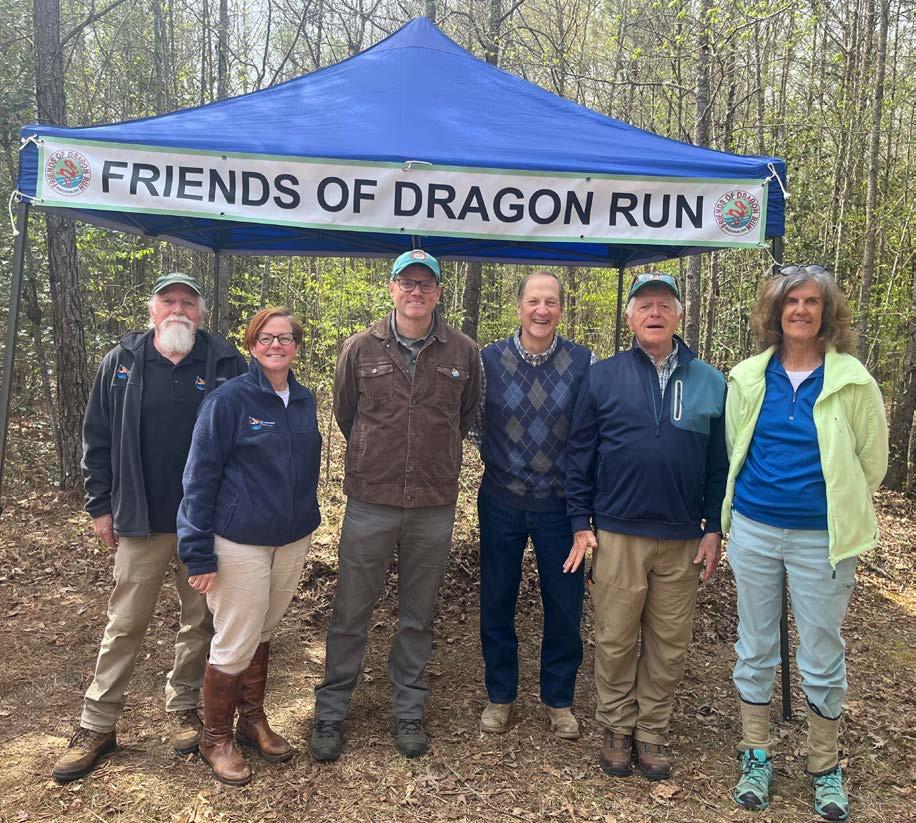
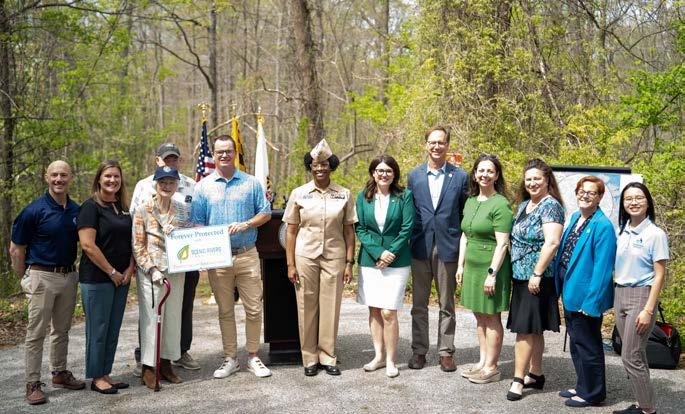
From left to right: Joe McCauley, Chesapeake Fellow, Chesapeake Conservancy; Susan Shingledecker, CEO, Chesapeake Conservancy; Andy Lacatell/Saltwater Consulting RVA, LLC; Davis Rhodes, longtime FODR volunteer; Jeff Wright, immediate past president, Friends of Dragon Run; Carol Kauffman, president, Friends of Dragon Run
photo by friends of dragon run
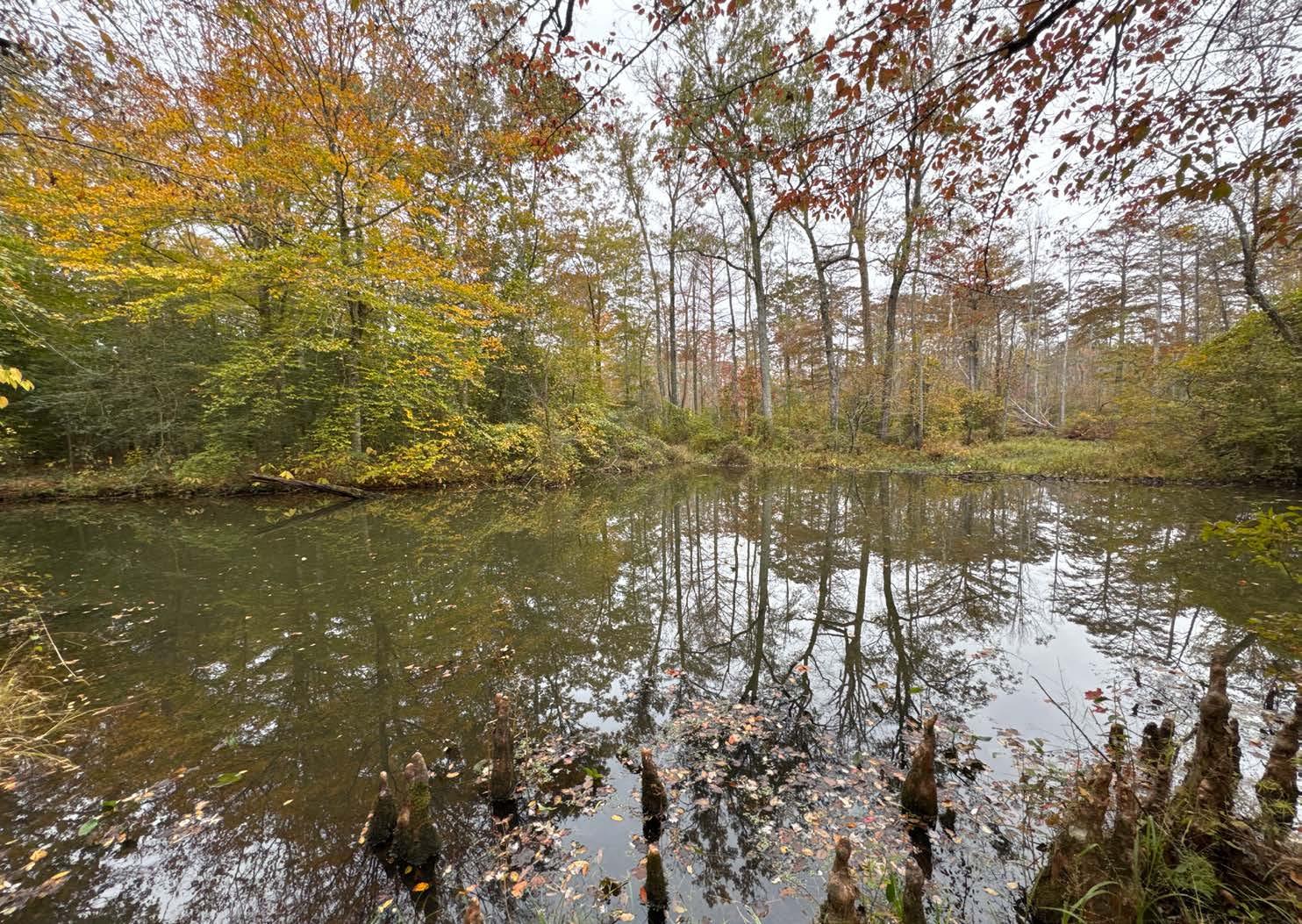
View of Dragon Run from the Rhodes Property photo by andy lacatell/saltwater consulting rva, llc
Indigenous History at Dragon Run
Dragon Run lies within the ancient homelands of the Pamunkey, Rappahannock and other Indigenous nations, holding deep historical significance for these communities as hunting and fishing grounds. The Dragon was also a battlefield site during Bacon’s Rebellion (1676), the first full-scale armed insurrection in English America.
According to the report Mapping the Dragon: An Indigenous History of Bacon’s Rebellion, prepared by Pamunkey Indian Tribe and Reservation, Rappahannock Tribe, FODR and St. Mary’s College of
Maryland with support from the National Park Service, Indigenous leaders, most notably Cockacoeske, the Pamunkey weroansqua (leader), drew upon generations of ecological knowledge of the Dragon’s blackwater swamps to draw Bacon’s forces away from their towns on the rivers.
Native people used the Dragon to delay, confuse and exhaust Bacon’s army. Their skill not only served Native goals, but it also bought time for the English government at Jamestown to regroup.
This year, 2026, marks the 350th anniversary of Bacon’s Rebellion, underscoring Dragon Run’s enduring role as a place of Indigenous resilience, cultural survival and historical importance.
Win-Win-Win for the Nanticoke River
A partnership among Nanticoke Watershed Alliance (NWA), Chesapeake Conservancy and the City of Seaford has secured a new office for NWA, expanded Oyster House Park in Seaford, Delaware, and will support critical infrastructure repairs along the Nanticoke River.
The three partners pooled resources in a strategic collaboration designed to benefit both the community and the river. When a property adjacent to Oyster House Park was listed for sale, each partner contributed roughly one-third of the purchase cost, with additional support from the Longwood Foundation.
“I’ve loved the Nanticoke River for as long as I can remember. Growing up just a few blocks from here, fishing with friends and watching life in Seaford revolve around the water were key parts of my childhood,” said Chesapeake Conservancy Board Director and Chair Emeritus Randall Larrimore. Larrimore personally funded a restricted trust at the Chesapeake Conservancy so funds would be available to help fulfill his dream for the Oyster House Park. “This project represents the very best of our
community: partnership, vision and a deep respect for the river. I’m proud that Nanticoke Watershed Alliance, Chesapeake Conservancy and City of Seaford partnered to create a permanent home for vital conservation work and expand the Oyster House Park. This will allow future generations to experience and cherish the Nanticoke just as I have.”
Maryland Day Open House at the Earl Conservation Center
Chesapeake Conservancy and the nonprofit organizations that share space at the Earl Conservation Center, including Blacks of the Chesapeake Foundation, Chesapeake Legal Alliance, Maryland Association for Environmental and Outdoor Education and National Parks Conservation Association, held an open house for the Annapolis community as part of the official Maryland Day celebrations in March.
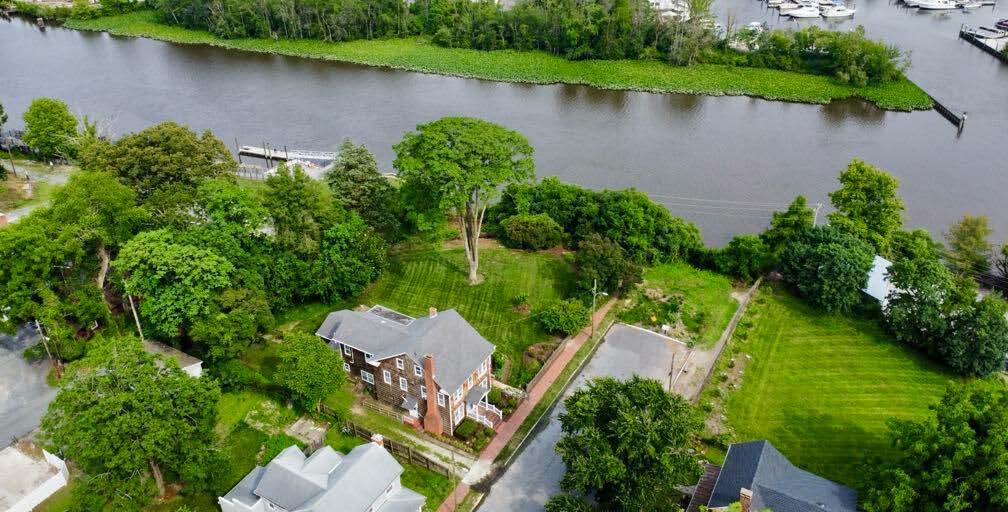
This former home on the Nanticoke River in Seaford, adjacent to Oyster House Park, is now the office for Nanticoke Watershed Alliance.
photo by nwa
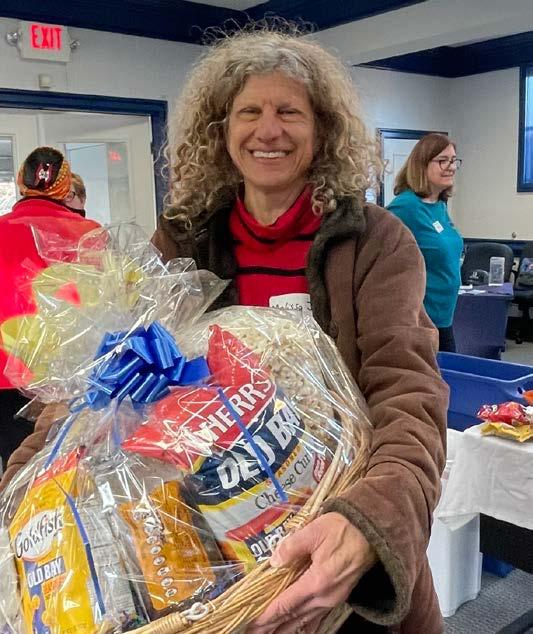
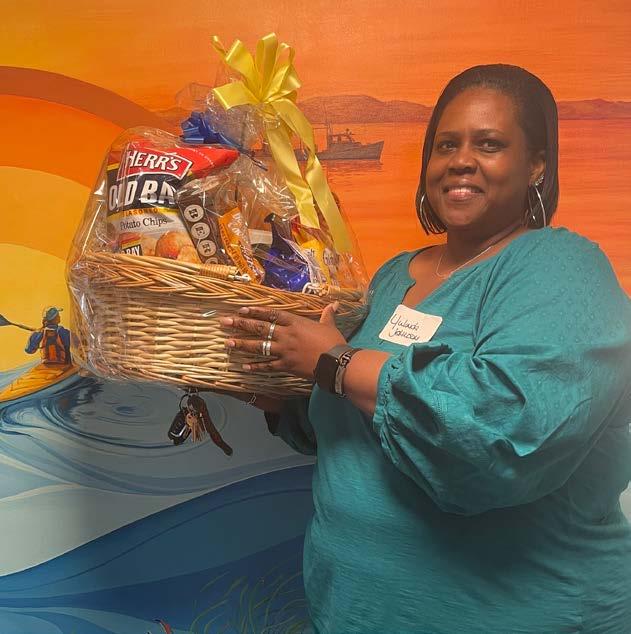
The lucky raffle winners of Maryland-themed baskets donated by Graul’s Market photo by jody couser
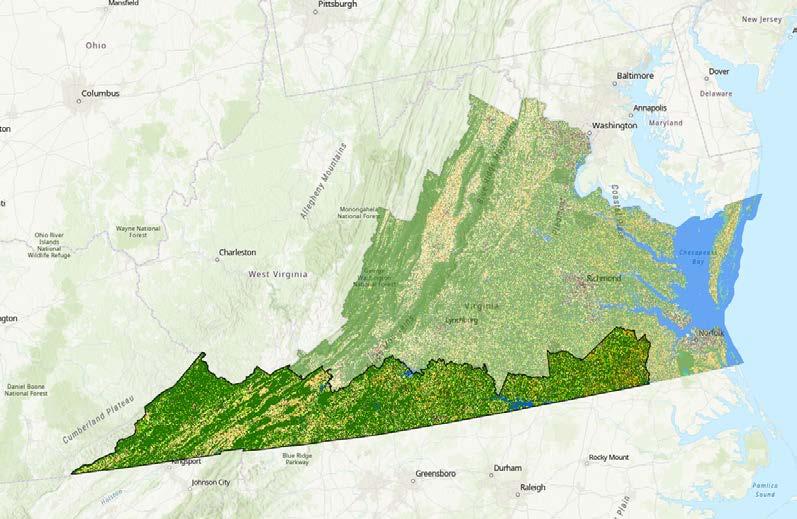
A Clearer Picture of Virginia Land Use and Land Cover
Newly updated high-resolution land use data is now available statewide for the entire Commonwealth of Virginia. Previously, this level of detail was only available for areas within the Chesapeake Bay watershed.
This enhanced dataset is the result of a collaborative effort among Virginia Department of Environmental Quality, Virginia Department of Conservation and Recreation, U.S.
Environmental Protection Agency, Chesapeake Conservancy, University of Vermont’s Spatial Analysis Laboratory and Hampton Roads Planning District Commission.
The Land Use/Land Cover dataset includes 56 distinct land use categories at a 1-meter resolution, derived from 2021 imagery. This update strengthens the ability of state and local governments to support planning, improve water quality and make more informed decisions. Data is available based on imagery from 2014, 2016, and 2021 and land use change
The latest groundbreaking high-resolution land use data for Virginia supports:
• Zoning and land use planning
• Flood risk and resilience modeling
• Infrastructure planning
• Environmental compliance
• Urban growth analysis
and change matrix summaries for 2014 to 2021.
“We’re really pleased to see this data live and available for all Virginia localities. The data produced through the Chesapeake Bay Program’s efforts is first-class and we were happy to facilitate these partnerships,” said Hampton Roads Planning District Commission Senior Water Resources Planner KC Filippino.
Virginia Geographic Information Network hosts the data, providing reliable, centralized access for users across the Commonwealth and beyond.
At 1-meter resolution, the dataset can help answer key questions such as:
• How much impervious surface has been added in the last five years?
• Where should tree planting or buffers be prioritized?
• What areas contribute the most to runoff?
47 Acres Permanently Conserved in Busy Corridor
Beside one of Anne Arundel County, Maryland’s busiest corridors, across from the Annapolis Mall, 47 acres of forest in the Saltworks Creek watershed are now permanently protected.
The newly conserved land sits within a key tributary of the Severn River and connects to a larger 277-acre area of protected forest. It will help filter stormwater, support wildlife habitat and provide more opportunities for people to experience nature.
“Working with the Chesapeake Bay Program, the U.S. Forest Service, and other partners, we developed high-resolution land cover data showing that the county lost a net of 1,467 acres of tree cover to developed lands between 2013 and 2021. This is a stark reminder of how quickly these natural assets can disappear without intentional action,” said Chesapeake Conservancy CEO Susan Shingledecker.
This property was also identified as a priority area in Maryland’s Habitat Connectivity Network—a partnership between Maryland Department of Natural Resources and Chesapeake Conservancy—to better understand where critical habitats exist, how they are connected and how they have changed over time.
“This relatively small parcel delivers an outsized impact, permanently protecting connected habitat so wildlife can move, ecosystems can function and nature has the space it needs to thrive,” continued Shingledecker.
The Maryland the Beautiful Act of 2023 established goals to conserve 30% of the state’s land by 2030 and 40% by 2040. In 2024, Maryland Governor Wes Moore announced that the state had met the 30% land conservation goal. Meeting the ambitious 40% by 2040 goal requires an additional 600,000 acres. Conservation successes like this help bring that goal within reach, acre by acre.
“The addition of these two parcels to our county network will provide critical environmental protections to our forests and local waterways and will offer new opportunities for residents to get outdoors and enjoy nature,” said County Executive Steuart Pittman.
Chesapeake Conservancy purchased 20 acres of land using private funds generously provided by the Earl family. The property was then placed under a permanent conservation easement held by Scenic Rivers Land Trust, supported by Anne Arundel County’s Forestry and Forested Land Protection Grant Program administered by the Chesapeake Bay Trust. The land was subsequently donated to the county and will be known as the Earl Family Preserve.
An adjacent 27-acre parcel was also protected through a combination of county, state and federal funding, including support from the federal Department of Defense Readiness and Environmental Protection Integration (REPI) Program. That parcel is now permanently protected under a conservation easement held by the U.S. Navy.
Congresswoman Sarah Elfreth helped elevate the need to conserve this vital wildlife habitat during her time in the Maryland Senate.
The Chesapeake Conservancy thanks Anne Arundel County, REPI, Scenic Rivers Land Trust, Chesapeake Bay Trust and the Earl family for making this conservation success story possible.
Elected officials, partners and the Earl family gather to celebrate the conservation of 47 acres near the busy Annapolis Mall corridor.
photo by anne arundel county
image by chesapeake conservancy conservation innovation center
Donor Spotlight
For Steve Schuler, conservation is rooted in a lifelong love of the natural world and a desire to make outdoor experiences more accessible to others. A Baltimore resident and founder and board chair of Wilderness Individual Leadership & Development (WILD), Steve has built much of his philanthropic work around helping more people experience the wonder and responsibility that come from spending time outdoors.
That passion also carries into his service as a board member and treasurer of the National Park Trust, which works to preserve national parklands and inspire the next generation of park stewards through outdoor education programs. His work with the Trust helped fuel his personal goal of visiting all 63 U.S. national parks. As of spring 2026, he has traveled to 53.
“My journey accelerated in the summer of 2019, when I spent four weeks traveling to nine national parks by camper van in seven states and covering 4,000 miles,” Steve shared.
Board and Staff News
Chesapeake Conservancy welcomes new officers to the board of directors: Chair Ed Hatcher, Vice Chair Rich Batiuk, Treasurer Ava Shivers and five new directors: experienced conservationists Jeff Corbin and Craig Obey of Virginia, Allyson Gibson and Marel King of Pennsylvania and Jason Waskey of Washington, D.C.
Stephanie Meeks, former chair, and Jeff Sabot, former treasurer, who were both
Steve first came to know Chesapeake Conservancy several years ago through shared conservation interests and a mutual commitment to protecting treasured landscapes in the Chesapeake Bay watershed. His commitment to conservation, public access and stewardship makes him a natural partner in Chesapeake Conservancy’s work to protect the Chesapeake Bay watershed, connect young people to the outdoors and ensure these special places endure for future generations.
Professionally, Steve serves as a senior wealth advisor for Focus Partners Wealth in Hunt Valley, Maryland.
We are grateful for Steve’s generous support and for the many ways he champions conservation, outdoor access and the lasting value of America’s natural places.
Check out our many accomplishments
in the FY 2025 Annual Report, now available at chesapeakeconservancy.org (see publications).
Thank you to our incredible donors who make our work possible!
term-limited, have concluded their board service. Hatcher thanked Meeks, saying she “navigated the organization brilliantly during a challenging period for environmental organizations everywhere.” He said of the new board members, they “bring new insight and decades of experience to the table.”
Board member Adam Gronski and his wife Marni hosted a reception at their home in Easton, Maryland, to introduce Chesapeake Conservancy
CEO Susan Shingledecker to community members. Their home is the historic Wilson Tylor House, built in 1888 for the editor of the Easton Gazette (1885-1912), a predecessor to today’s The Star Democrat.
Board member Pamela Marks and the environmental law firm Beveridge & Diamond, where she is a principal, hosted a reception at the firm’s Washington, D.C., office to introduce or reconnect Shingledecker with D.C.-area professionals and supporters of the Chesapeake Conservancy.
Chesapeake Conservancy welcomes the following new staff: Patty Allen as the vice president of operations, Molly Connors as vice president of development and strategic partnerships and Katie Gardner as project coordinator/ geospatial analyst.
In March, Mike Evans, Ph.D., David Saavedra and Charlotte Weinstein presented at the Pennsylvania Chapter of the American Fisheries Society conference on applying hydrographic data in conservation.
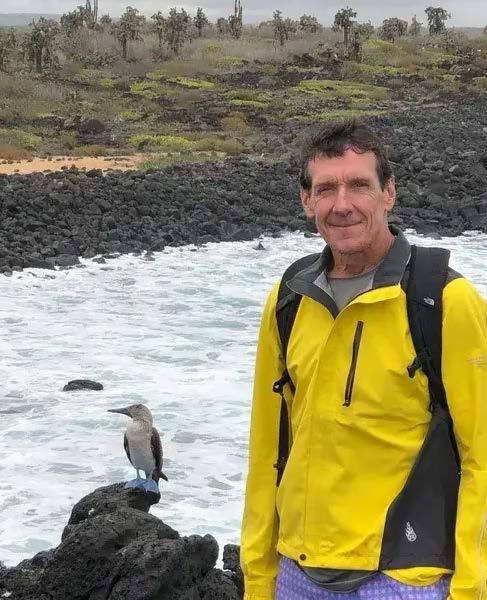
A blue-footed booby poses with Steve Schuler in the Galápagos Islands. courtesy photo
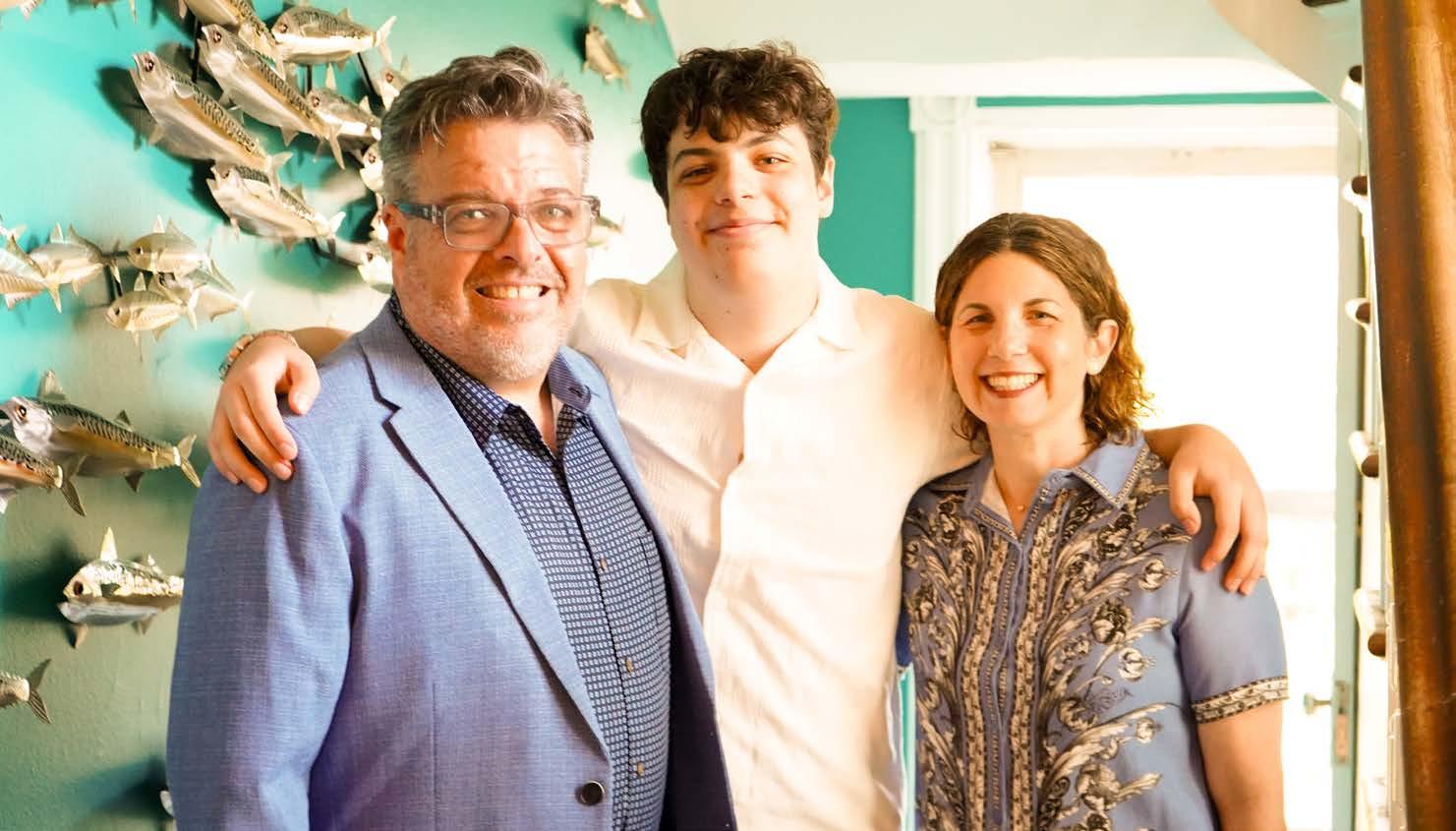
The Gronski Family (Adam, son Bennett, Marni) photo by tyler sears
chesapeake conservancy relies on our many friends to protect and conserve the chesapeake’s great rivers and special places. your tax-deductible contribution of any amount is truly appreciated. chesapeake conservancy has a 4-star rating from charity navigator. our tax id number is 26-2271377. our cfc id number is 27293.
THE CHESAPEAKE WE ALL SHARE Help Protect
The Chesapeake Bay watershed is home to 18 million people and countless wildlife across its streams, rivers, forests, farms and communities. Once the Chesapeake’s special places are lost, they may be gone forever. Your gift helps Chesapeake Conservancy protect them now— supporting stream restoration, land protection, public access, vital habitats and trails for generations to come.
linkedin.com/company/chesapeake-conservancy bsky.app/profile/chesconserv.bsky.social Make your gift today