
The Cash Flow Moat
Northland Fence: The Efficiency Engine Communication
The Signal and the Noise Team & Culture
The Retention Revolution
Future Outlook
The High-Value Horizon
Final Thoughts Contributors


The Cash Flow Moat
Northland Fence: The Efficiency Engine Communication
The Signal and the Noise Team & Culture
The Retention Revolution
Future Outlook
The High-Value Horizon
Final Thoughts Contributors

Making fencing contractors heroes
The fencing industry is full of hardworking pros, but hard work alone isn’t enough to guarantee top performance. The Peak Performance: 2026 Fencing Industry Benchmarks for Success report cuts through the noise to give you the missing piece: a clear, data-driven benchmark based on expert industry interviews and market research.
Our mission is to empower you to be a hero by providing the playbook to improve your operations, master your sales process, and drive higher profit margins. You’re already building the boundaries that keep communities safe and secure. We’re here to help you build a business that does the same for your future.
This report walks through every major part of a fencing business, from demographics and growth trends to operational details like supply chains, labor challenges, and material costs. We show you what top fencing professionals are doing, how they’re making money, and how they’re adapting to stay ahead. This data comes directly from realworld fencing businesses, homeowners, industry leaders, and market research firms.
The fencing industry is at a turning point. Material costs are changing, labor is in short supply, and competition is fierce. The fence professionals who win in 2026 are the ones who work smart and use data to nail their positioning. This report gives you the data to do the same.
The gap between average and best-in-class is a strategy guided by data. Understanding the standard average profit margin, typical customer acquisition cost, and most in-demand services moves you toward the top.
Use this report as your benchmark throughout 2026. Compare your metrics to the industry standard and commit to improvement. Fencing contractors become heroes one data-driven decision at a time.

Before we dive in, here are the five figures that define the fencing industry right now. These benchmarks set the stage for every strategy outlined in this report.
The U.S. fencing industry has grown to a massive $25 billion in annual revenue. Despite economic challenges, demand for privacy, security, and defining property lines remains strong. The market is huge, but it’s also crowded with over 330,000 fencing companies fighting for a share of the pie.
The average profit margin for fence professionals has settled at 9%, down from previous highs. This “profit squeeze” is the main challenge of 2026. Unpredictable material prices and higher labor costs are eating into profits, making efficiency a necessity rather than a choice.
3. 41% of Current Contractors Will Retire Within 5 Years
The workforce is getting older. By 2031, 41% of the current construction workforce is expected to retire. With the average worker age now at 42, finding and keeping skilled young workers is the number one obstacle for growth-minded business owners.
Metal fencing now leads the market, accounting for 56% of industry revenue. While wood remains a common choice for homes, the shift toward higher-value, durable materials like steel and aluminum offers a clear path to better margins and commercial contracts.
Despite the rise of digital marketing, 55% of all leads still come from referrals. In an era of paid ads and online searches, your reputation remains your most valuable asset. The fencing businesses winning in 2026 are earning leads through consistent five-star service.
The United States fencing market in 2026 is a $25 billion industry that supports over 330,000 businesses. However, the look of the typical fence professional is changing rapidly.
We’re witnessing a major shift where younger, tech-savvy pros are taking the lead, material costs are eroding traditional 9% profit margins, and the pace of business is changing who wins the job. Understanding who you’re competing against and where the market is heading is the first step to locking your place in it.
• Generational Shift: Leadership in the fencing industry is increasingly concentrated in the 26–35 age range. This cohort values speed, visibility, and modern systems, accelerating the shift toward digitally run businesses rather than experience-led, relationship-only operations.
• Experience Still Wins: Despite younger leadership trends, more than 70% of fencing contractors have 10+ years of field experience. Deep trade knowledge remains a competitive advantage, especially when it’s documented, systemized, and passed down rather than locked in one person’s head.

• The Digital Divide: The growing gap between field expertise and digital fluency is reshaping competition. Contractors who fail to bridge this divide risk losing jobs not because of craftsmanship, but because of slower response times and fragmented processes.
• Hybrid Advantage: The most resilient companies intentionally combine veteran judgment with digitalnative speed. These hybrid teams are better equipped to withstand labor shortages, protect margins, and operate effectively in increasingly competitive local markets.
The largest group of fence professionals (40%) is now between the ages of 26 and 35. This group grew up with the internet and naturally adopts digital tools. They don’t need training on how to use a smartphone for business because they already do it.
• Plan for a leadership transition as the 26–35 age group becomes the industry’s primary decision-makers.
• Pair younger operators with experienced veterans so speed doesn’t come at the cost of margin or quality.
• Structure roles around age-related strengths rather than seniority alone.
• Capture institutional knowledge now, before seasoned leaders retire or step back.
Younger contractors are winning with speed. The average lead response time for the 26–35 age group is 12 minutes, compared to 4 hours for the 36–50 age group. Since responding in under five minutes boosts contact rates by 100 times, experienced owners risk losing jobs simply because they are too slow to answer the phone.
0.02
Experience is still very important in this industry. Approximately 71% of contractors have been in the fencing industry for over 10 years. These veterans know how to find materials during shortages and handle tough jobs. But they often struggle with the digital tools that today’s homeowners want, creating a clear gap between field and digital skills.
• Treat experience as a strategic asset, not just tenure. Veteran knowledge is a competitive advantage.
• Translate field expertise into systems— document how seasoned contractors handle materials, grading, and edge cases so it scales beyond one person.
• Close the digital gap deliberately. Support experienced fencers with tools that simplify quoting, communication, and follow-up without changing how they work in the field.

The tools used in fencing work are changing. For decades, a fencing contractor’s reputation was based on their physical skill and installation accuracy. Today, another factor is just as important: speed.
In 2026, the fencing industry is not simply being passed down to a younger generation; new approaches to business management are reshaping it. The “Digital Fencer,” a fencing professional with digital expertise, is not defined by age but by how they think. They recognize that rising material costs and higher customer expectations require more than longer hours. Success now depends on efficiency, organization, and clear visibility into the business. Contractors winning larger projects are building operational systems that allow growth without operational strain.
Many contractors see administrative work as something to handle outside of regular job site hours. The Digital Fencer takes a different view. They understand that to modern homeowners, fast response times communicate professionalism and reliability. Among fencing owners under the age of 35, the average response time to a new lead is 12 minutes.
That response window often determines whether a contract is secured or lost. This speed is not just about urgency, but also about trust. By using automated text replies and mobile CRM platforms (software that tracks customers, manages leads, organizes jobs, and stores communication history in one central place),
these fencing contractors respond to customers before competitors have even reviewed the request. Communication is handled with the same priority as a visible structural issue: immediately.
A common misconception is that technology reduces the importance of skilled labor. In practice, it helps protect it. The Digital Fencer relies on software to manage repetitive, low-impact tasks such as scheduling, follow-ups, and invoice reminders. This automation allows more focus to remain on installation quality and job site execution.
Instead of spending hours manually calculating materials, they use estimation tools that produce accurate results quickly. This accuracy protects margins during a period when material costs have increased by 35–40%. Automating administrative work creates time to train crews, verify site conditions, and conduct thorough final inspections.
The most durable fencing companies in 2026 are intentionally building mixed-experience
teams. Rather than choosing between newer employees who are comfortable with technology and experienced workers with decades of field experience, they combine both.
The Digital Fencer understands that a younger employee may efficiently manage software systems but may lack experience in identifying subtle site challenges. Working together, these team members strengthen each other. Field knowledge is documented in digital checklists and notes, while practical lessons about soil, grading, and layout get passed on directly. This structure turns generational differences into a measurable operational advantage.
The Digital Fencer is not abandoning traditional skills or replacing people with software. They are adapting to customer expectations shaped by fast, transparent service experiences while still delivering physically demanding construction work. In a year defined by narrow margins and intense competition, combining established trade skills with efficient systems is no longer optional. It is the standard required to remain competitive.

Most fencing companies put their employees’ energy into building rather than selling. This gap creates a specific problem: companies are great at building but struggle to maintain a consistent pipeline.
• Create a defined sales function, even if it’s parttime or owner-led at first.
• Reassign responsibility for follow-up, quoting speed, and deal progression to a specific role.
• Document a simple, repeatable sales process so revenue doesn’t depend on memory or availability.
Age 26–35 40% of industry
Strengths
• Native CRM/software adoption
• Social media marketing fluency
• Digital payment comfort
• Fast tech implementation
• Efficient workflow automation
Growth Areas
• Limited margin protection experience
• Untested in economic downturns
• Thinner professional networks
Age 36–50 31% of industry
Strengths
• Margin management discipline
• Customer retention strategies
• Economic cycle experience
• Referral network depth
• Strategic pricing confidence
Growth Areas
• Slower technology adoption
• Resistant to process change
• Marketing knowledge gaps
The most successful fencing companies don’t choose between speed and experience. They intentionally combine younger, digitally fluent workers with seasoned veterans to create crews that move faster without sacrificing quality or margin.
• Build crews with complementary age strengths rather than uniform experience levels.
• Assign digital workflow and customer communication to younger team members, and pricing, quality control, and expectations to veterans.
• Standardize this pairing early to make it the default operating model.
• Use hybrid crews to accelerate digital adoption while preserving discipline as the business grows.
0.05
Fencing ownership remains overwhelmingly male, with women representing just 12% of owners. This concentration highlights a largely untapped leadership and labor pool that could help address workforce shortages and bring new perspectives into a traditional industry.
• Expand recruiting beyond traditional referral networks that tend to reinforce the same profiles.
• Actively develop leadership paths that appeal to a broader range of candidates, not just field veterans.
• Remove unnecessary barriers in hiring by focusing on capability and aptitude rather than background.
• Treat diversity as a growth lever, not a branding exercise, especially as labor constraints tighten.
While fencing businesses are more concentrated in large states, like California (12%) and Texas (9%), success in this industry is driven by local market mastery rather than geographic scale. Even in crowded regions, strong operators outperform competitors by knowing their territory better.
• Study your local market before copying national strategies that may not fit your region.
• Identify your top three local competitors and define how you win against each one.
• Lean into regional strengths such as climate, permitting rules, and material preferences.
• Build deep local relationships that are difficult for out-of-area competitors to replicate.

Contractors face a “profit squeeze” due to material costs that have increased by 35–40% since 2019. The market is split between residential (54%) and commercial work (17%). Relying on residential work exposes you to fluctuations in spending, while commercial work offers stability but requires stricter regulations.
Despite economic pressure, the main reasons for fencing remain strong. High property values encourage investment, while the “rot cycle”— fences built 15 years ago now failing—guarantees replacement work. Add to this the constant need for privacy, security for children, and keeping pets safe, and basic demand is secure.
The industry remains highly fragmented. The top 10 companies combined hold only 15–20% of the market share. This split is an advantage for local contractors. No national giant dominates the landscape, meaning you compete on a level playing field with your local peers.
The Digital Fencer understands that a younger employee may efficiently manage software systems but may lack experience in identifying subtle site challenges. Working together, these team members strengthen each other. Field knowledge is documented in digital checklists and notes, while practical lessons about soil, grading, and layout get passed on directly. This structure turns generational differences into a measurable operational advantage.

Test Your Speed: Call your own business number. If it takes more than 15 minutes to get a response, you are handing work to the competition.
Build a Hybrid Crew: Pair a tech-savvy rookie (to manage the CRM/photos) with a veteran (to handle grading/install) to bridge the skills gap.
Protect Your Income: Add price protection clauses to your contracts. With unstable material costs, you cannot afford to pay for the customer’s project.
Balance the Portfolio: If you are 100% residential, aim to shift 5–10% of your business to commercial projects this year to protect against economic drops.
HOMEOWNER PERSPECTIVE
Homeowners today are less impressed by a company’s age and more influenced by its digital presence and professional look. While a 30-year-old company suggests stability, a homeowner in 2026 often trusts the company with 100 recent five-star reviews over the older company with no online footprint. They see the digital fencer who sends text updates and digital contracts as more reliable and transparent than the contractor who relies on a handshake and a paper napkin estimate.
However, the physical reality still matters immensely. Homeowners believe what they see. The digital native might win the lead online, but you keep the job on the driveway. A homeowner’s perception of your demographic—whether you’re a young upstart or a seasoned veteran—is often overruled by the cleanliness of your truck and the politeness of your crew members. They want the modern convenience of the 26-year-old owner but the disciplined expertise of the 50-year-old veteran.
Artificial intelligence is not just a tool for writing emails. It is the great equalizer that allows veteran contractors to compete with younger pros on speed, and young contractors to compete with veterans on knowledge. By integrating AI, fencing businesses can bypass the limitations of their specific demographic. AI PERSPECTIVE

For the 36–50+ group struggling with 4-hour response times, AI agents can instantly engage leads via text 24/7. This technology bridges the speed gap, allowing an experienced owner to deliver the fiveminute response time modern consumers expect without being glued to their phones.
With 71% of the industry comprising owners with 10+ years of experience, they have a massive amount of knowledge locked in their heads. AI-driven knowledge bases can capture this wisdom—recording how a veteran handles a tricky grade or a specific material shortage—and turn it into a searchable training asset for the younger, less experienced crews.
The industry is suffering from a labor shortage and a lack of sales personnel (only 6%). AI recruiting tools can help balance your workforce by analyzing applicant data to find candidates who possess the “hybrid” traits needed: the grit for field work and the aptitude for digital CRM management.
To combat the “profit squeeze,” AI pricing tools can monitor material costs in real time. Instead of manually updating spreadsheets, these systems can automatically adjust your bid templates, ensuring that the 26–35 demographic’s speed doesn’t result in underbidding due to changing lumber prices.

AI analytics can evaluate local housing data to identify neighborhoods ripe for fence replacement (the “rot cycle”) versus new builds. This information allows contractors to shift their marketing focus dynamically between residential and commercial targets based on real-time economic indicators, rather than relying on gut feeling.
The demographics of the fencing industry are shifting toward a younger, digitally native leadership class that wins on speed and efficiency. However, the deep experience of the veteran generation remains the backbone of quality installation. The most successful fencing businesses in 2026 will not choose one side, but merge them—using digital tools to accelerate sales and veteran wisdom to protect margins, all while navigating a volatile $25 billion market.
As competition increases and margins tighten, fencing contractors are expanding the way they serve customers. Repairs, maintenance, and premium upgrades are no longer side work— they’re strategic tools for stabilizing cash flow, building trust, and protecting profitability. The most successful businesses think in terms of service mix, not just installation volume.
• Beyond Installation: The traditional install-only fencing model is becoming increasingly vulnerable to seasonality, pricing pressure, and economic swings. Companies offering a broader mix of services are poised to maintain steady work and revenue.
• Trust Entry Points: Repairs, maintenance, and small upgrades play an outsized role in growth. These lower-dollar services act as trust builders, converting first-time customers into long-term replacement and upgrade clients.
• Solutions Over Materials: Homeowners are buying outcomes like privacy, security, durability, and peace of mind. Fencers who position themselves as advisors consistently command higher margins.
• Clarity Drives Conversion: As service offerings expand, success favors fencing contractors who simplify decisions. Clear packaging and guided options outperform raw material lists and line-item overload.
Vinyl is still a favorite in residential fencing
Metal fencing now leads the market with a 14-billion-dollar share, reflecting demand for higher-value, durable solutions. Wood and vinyl remain common for residential projects. At the same time, the small “Other” category—primarily eco and composite materials—represents a fast-growing premium segment focused on low maintenance and long-term value.
• Stock and train for the materials that dominate demand while preparing for premium shifts.
• Use vinyl as an accessible residential option and metal as the durability upgrade.
• Introduce eco and composite materials selectively for customers willing to pay upfront for longevity.
• Frame material choices around lifecycle cost to avoid competing on price alone.
Most fencing companies are over-reliant on new installs (70%) for revenue, which leaves them vulnerable to seasonal dips and economic swings. Repair and maintenance (15%) accounts for a smaller share of revenue but plays an outsized role in stabilizing cash flow, building trust, and creating a pipeline for future replacements.
• Treat repairs as a pipeline strategy, not nuisance jobs, to build trust and long-term customers.
• Actively market small repair jobs to capture homeowners who aren’t ready for full replacements.
• Introduce higher-margin services, such as custom design or security work, to move beyond pricebased competition.
• Balance installation volume with repair and service work to smooth cash flow during slow seasons.
In the software world, a “full-stack” developer is someone who can build the whole app, front to back. In 2026, the most profitable fencing contractors are becoming “full-stack fencers.”
For decades, the business model was simple: Dig a hole, pour concrete, set the post, repeat. But as the market matures, the “install-only” model is showing its cracks. It is feast or famine. When the ground freezes or the economy dips, the phone stops ringing.
The most resilient companies have realized that relying on a single revenue stream is a gamble they can no longer afford. They are pivoting from being installers to being “outdoor living consultants.”
They aren’t just selling a privacy fence. They’re selling the repair service that keeps it standing, the automated gate that secures the driveway, and the staining package that protects the investment. By capturing the repair and maintenance market (15% of industry revenue), they keep their crews busy when new builds slow down.
The Trust Ladder
Service diversification is really about the “trust ladder.” A homeowner might be skeptical of a $15,000 quote from a stranger. But they are grateful to the pro who fixed their leaning gate for $300.
That minor repair is the first rung. It proves you show up. It proves you’re fair. When that fence finally rots out three years later, who do you think they call? They don’t bid it out. They call the fullstack pro who already has the gate code.
The full-stack fencer doesn’t overwhelm the customer with complexity. In fact, they simplify things. They use the “Good, Better, Best” pricing strategy to frame the decision.
• The Good Option: Standard pressure-treated pine. (The “Right Now” solution).
• The Better Option: Cedar or premium vinyl. (The “Smart Value” solution).
• The Best Option: Ornamental metal or composite. (The “Forever” solution).
By presenting these as distinct packages, they guide the homeowner away from the bottom dollar and toward the best value. They understand that 15% of buyers want to pay for the “Best,” but they’ll never buy it if you don’t offer it.
You can’t control the price of lumber, and you can’t control the housing market. But you can control how many ways you can say “yes” to a customer. The full-stack fencer never has to say, “We don’t do that.” And that is why they never run out of work.
Review Your Estimates: Are you offering a “Repair” option for leads that can’t afford a complete replacement? If not, you’re throwing away opportunities to build trust.
Simplify Your Bid Sheet: Do you offer “Good, Better, Best” options on every quote? Create a template today that forces you to offer an upsell (like a “Forever Fence” package) on every single job.
Check Your Vinyl Supply: Are you relying only on standard white vinyl? Order a sample of a “flex” or hybrid system to show customers who want something different.
Bundle the Backyard: Partner with a deck or pergola specialist. Fencing is part of the outdoor living trend, so don’t leave that money on the table.
HOMEOWNER PERSPECTIVE
Homeowners are often overwhelmed by choice. They don’t naturally know the difference between cedar and pine, or why one vinyl panel costs twice as much as the other. When you hand them a catalog with 50 options, they freeze.
They are looking for a guide, not a catalog. They want you to tell them: “Here is the affordable option for the dog (Good), the durable option for the wind (Better), and the show-stopper for the neighbors (Best).” When you package your services this way, you stop selling parts and start selling solutions. They aren’t buying a “cedar board;” they’re buying “less fence maintenance for the next 10 years.”
PERSPECTIVE
Artificial intelligence allows you to expand your service offerings without complicating your operations. It acts as the expert consultant for every niche you want to enter. AI

Selling “custom design” is hard if the customer can’t see it. AI image generators can take a photo of the customer’s current yard and overlay a complex horizontal slat fence or a mixed-material screen in seconds, selling the upgrade instantly.
AI can track the installation date and material type of every fence you build. Five years later, it can automatically trigger a maintenance check-in email to the homeowner, suggesting a staining service or a gate adjustment right when the hardware is likely to move.
For the “Good, Better, Best” pricing strategy, AI can instantly calculate the material lists for all three options simultaneously. It ensures you don’t misprice the “Best” option just because you rarely install it, protecting your margins on premium materials.
If you’re moving into flex fencing or automation, inventory is a risk. AI analyzes your bid acceptance rates to predict how much niche inventory you need to stock, preventing you from sitting on $10,000 of gate operators that won’t sell.

For automation services, AI chatbots can troubleshoot common gate opener issues (like sensor obstructions) via text with the homeowner, solving the problem without you having to roll a truck for an unpaid service call.
The era of the “one-trick pony” fence professional is ending. The market rewards contractors who can solve multiple problems—security, aesthetics, and maintenance—under one roof. By diversifying your services and simplifying how you present them, you protect your business from seasonality and turn one-time buyers into lifetime customers.
In today’s fencing market, who advertises the most doesn’t matter. Who’s trusted first does. Long before a homeowner fills out a form or makes a call, they’ve already formed an opinion based on reviews, photos, responsiveness, and reputation.
Marketing in 2026 is a system that turns operational discipline into demand. When communication is tight, follow-up is consistent, and the customer experience is professional, marketing stops feeling like a chase and starts working in your favor. The result is fewer price shoppers, stronger referrals, and leads that arrive already confident in your business.
• Marketplace Dependence: Online marketplaces like Angi remain widely used, reflecting the need for immediate demand. However, this convenience comes with trade-offs in margin, control, and long-term customer ownership.
• Owned Demand Wins: Top-performing fencing companies rely heavily on Google Business Profile to generate brand-driven, high-trust leads. These owned channels produce better close rates without the ongoing cost of purchased leads.

• Reputation Compounds: Reviews, responsiveness, and consistency now drive visibility and conversion more than advertising spend alone. Marketing success increasingly reflects operational discipline more than promotional volume.
• Referrals Lead the Pack: Referral-based leads remain the highest-quality source of new business. When trust is transferred before the first call, contractors compete less on price and more on value.
Affinity score measures how likely fencing contractors are to use or engage with a platform compared to the average business. Angi’s high affinity score shows it’s widely used across the industry, making online marketplaces a common source of demand, but at the cost of ownership and margin.
• Use online marketplaces to access demand quickly, not as a staple for your business.
• Track cost per lead and close rate closely to avoid sacrificing margin for winning volume.
• Treat marketplace jobs as an introduction, then move customers into direct relationships.
• Balance third-party platforms with owned marketing channels to protect long-term value.
While many compete on Angi, the top fence professionals are getting ahead on Google. Some companies even say that 70% of their business comes from their Google Business Profile. These leads are free, brand-driven, and come with significantly higher trust and close rates.
• Treat your Google Business Profile as a core revenue channel rather than a set-it-and-forget-it listing.
• Optimize for local discovery with accurate service areas, categories, and business details.
• Replace stock imagery with real job photos to build instant trust.
• Make it effortless to contact you by keeping your phone number and credentials highly visible.
Your online presence doesn’t have to be fancy. It just needs to do its job:
• Show your service area clearly.
• Display real photos of your work (no stock images).
• Put your phone number at the top.
• List your license and insurance status.
If homeowners can’t find you on Google, they won’t know you exist.
In 2026, reviews have become one of the strongest drivers of fencing demand. When homeowners search for “fence contractor near me,” they consistently choose companies with the highest ratings and most recent feedback. Five-star reviews are earned less through craftsmanship alone and more through reliable communication, followthrough, and professionalism.
• Build a repeatable review system that triggers a request shortly after job completion.
• Send a review request by text or email a few days after the job is complete, and include a direct link to make it effortless.
• Respond to every review, good or bad, to reinforce trust and signal professionalism.

Google Ads and Facebook Ads can generate fencing leads quickly, but they also expose operational weaknesses. When response times lag or labor is tight, paid ads often turn into wasted spend instead of profitable growth.
• Do not run Google or Facebook ads unless you can answer and follow up on leads quickly.
• Confirm staffing capacity before increasing ad budgets so demand doesn’t outpace execution.
• Start with small, controlled ad tests and scale only after you can prove out response time and close rates.
• Use paid ads to amplify a smooth operation, not to compensate for broken processes.
Marketing
used to be a megaphone. You bought an ad, shouted your name, and hoped someone listened. Today, marketing is a whisper network, amplified by technology.
In the fencing industry, the days of the “Yellow Pages” monopoly are dead. The modern homeowner doesn’t trust a billboard; they trust their neighbor, and if their neighbor isn’t around, they trust the stranger on the internet who left a five-star review. In 2026, your reputation isn’t just a vanity metric—it is your primary currency.
Before you ever step foot on a property to shake a hand, a digital handshake has already occurred. The homeowner has Googled you. They’ve looked at your photos, read your worst review, and checked if you’re licensed. This moment, dubbed the “Zero Moment of Truth” (zero because it occurs before you first meet), happens without you.



Your reputation engine is the system that ensures you win this moment. It’s the automated text that asks for a review when the client is happiest. It’s the clean truck that acts as a moving billboard. It’s the professional voicemail that proves you are a real business, not a fly-by-night operation. Contractors who ignore these touchpoints are losing leads and the ability to charge a premium.
Old-school marketing was about hunting: chasing down fresh leads every week to keep the crew busy. The new model is farming. It’s about cultivating a base of happy clients who become your sales force.
When you install a fence, you aren’t just closing a deal; you’re planting a seed in a neighborhood. The smart contractor waters that seed. They follow up. They ask for the referral. They leave a yard sign that actually looks good. By treating every customer as a potential megaphone, they transform a single job into a neighborhood takeover.

We often think of Google and Angi as cold algorithms, but they’re designed to mimic human trust. They reward responsiveness, consistency, and quality. When you feed the algorithm what it wants—quick replies, steady reviews, real photos—it rewards you with the most valuable commodity on earth: free leads.
This reliability isn’t “gaming the system.” It’s aligning your business with the way the modern world signals competence. The algorithm is simply a mirror. If your operations are messy, your reviews will be messy, and your ranking will tank. If your operations are tight, your digital footprint will shine.
You can buy leads, but you cannot buy trust. Trust must be earned, built, and maintained. In 2026, the roofing contractors who build their reputation engine won’t just survive the slow seasons, but own their markets, one five-star review at a time.
Claim Your Profile: Go to Google and ensure you own your Business Profile. Upload five recent photos of your best work.
Text Your Last 3 Clients: Send a personal text: “Hi [Name], glad you’re happy with the fence. Would you mind leaving us a quick review on Google? Here is the link.”
Check Your Voicemail: Call your business number. If the voicemail is full or generic, record a professional, personalized greeting.
Clean Your Trucks: The way your truck looks is the first impression you make.
Homeowners believe what they see more than what’s on your website. The way your job site looks is your best advertisement. When a neighbor sees a professional crew working next door— uniforms, a clean site, a polite crew—they come over and ask for your card.
Conversely, loud music, cigarette butts, and messy trucks act as a “do not hire” sign for the entire neighborhood. In the homeowner’s mind, a messy truck equates to a messy fence. Your physical presence is your billboard; ensure it tells the story of a professional who cares about details because that’s the only story that sells at a premium.
AI PERSPECTIVE
Marketing in 2026 eliminates the guesswork of what homeowners want by leveraging data to pinpoint precisely when they need it. AI transforms marketing from a shotgun approach to a sniper rifle, allowing fencing contractors to automate their reputation and target leads with precision.
Chasing reviews manually is a losing battle. AI tools can automatically send personalized review requests via text immediately after a project is marked “complete” in your CRM. More importantly, AI agents can draft professional responses to every review—good or bad—to ensure your Google profile remains active and responsive without taking up your evening.
Stop wasting money on “spray and pray” Facebook ads. AI-driven marketing platforms analyze local search trends and housing turnover data to predict exactly when demand will spike in your specific zip code. With AI, you can strategically increase your ad spend when the market is hot and decrease it when it cools, maximizing your ROI (return on investment).
Ranking for “fence contractor” on search engines is hard, but ranking for “cedar privacy fence in [specific neighborhood]” is easier. AI content tools can help you generate location-specific landing pages and blog posts that target the exact micromarkets you serve, helping you dominate local search results without hiring an expensive agency.
AI can analyze the language used in your reviews and customer emails to identify patterns you might miss. It can tell you if customers consistently mention “cleanliness” as a pro or “scheduling” as a con, giving you hard data on what part of your “marketing” (your operations) needs fixing.
The best lead is the one you already have. AI email marketing tools can automate a multi-year nurture sequence—sending fence care tips in the spring and staining reminders in the fall—keeping your brand top-of-mind for referrals without you ever having to hit “send.”
Marketing is no longer about who can shout the loudest. It’s about who can prove their value the fastest. By leveraging the trust built through referrals and the visibility gained through a pristine Google Business Profile, you make a marketing engine that runs itself. Stop hoping for calls and start building a system where your reputation does the heavy lifting, allowing you to focus on what you do best: building fences.
In fencing, sales is about structure. Profit grows in the space between a rough estimate and a clear, professional proposal. The contractors who win in 2026 are better guides than smoothtalkers. They remove uncertainty, present clear options, and make it easy for homeowners to move forward with confidence.
Today’s homeowners expect a buying experience that matches the rest of their digital life: clear choices, fast delivery, and simple payment options. When sales is a repeatable system instead of a one-off task, close rates rise, margins improve, and momentum is sustained from the first visit to the final signature.

What the data says
• Sales as a System: Job close rates correlate far more strongly with structured sales processes than with individual charisma or experience. Consistency outperforms instinct in modern fencing sales.
• Choice Reduces Resistance: Presenting multiple options reframes the homeowner’s decision from “Should I buy?” to “Which option fits me best?” This shift increases close rates and average ticket size.
• Friction Kills Deals: Lost momentum, not outright rejection, is the primary reason jobs don’t close. Delays, unclear proposals, and inconsistent follow-up create space for doubt and competitors.
• Confidence from Clarity: Visuals, transparent pricing, and predictable next steps reduce anxiety and accelerate decisions, protecting both margins and customer trust.
Homeowners rarely know exactly what they want until they see the price. Offering three distinct options (e.g., pine, cedar, composite) on every quote reframes the decision from “Yes or no?” to “Which one?” This multioption approach increases average sale size by 20%.
• Never send a quote with a single price. Always present three distinct options.
• Use material and durability differences to create meaningful contrast between tiers.
• Expect the middle option to convert most often and price it intentionally.
• Design options to guide decisions, not overwhelm homeowners with choices.
As fence prices rise, the upfront cost creates hesitation even when homeowners want the work done. Offering financing directly in the quote increases close rates by roughly 30% on projects over $5,000 by shifting the decision from total price to monthly payment.
• Present financing as a standard option, not a backup for price objections.
• Show monthly payments alongside the total price in every qualifying quote.
• Introduce financing early so it shapes the decision, not as a last resort.
• Train sales conversations around affordability, not discounting.
Homeowners hesitate when they can’t clearly picture the final result. Proposals that include photos or digital visuals increase acceptance rates by 26% by turning abstract descriptions into something tangible and real.
• Include photos or visual references in every proposal, not just premium jobs.
• Use visuals to show material differences, layout, and scale before pricing objections arise.
• Treat visuals as a trust-building tool, not a design extra.
• Replace text-heavy estimates with image-supported proposals whenever possible.
Nearly half of fencing contractors (48%) never follow up after sending a quote, even though 80% of sales happen after 5–12 touches. Silence usually signals delay or distraction, not disinterest.
• Treat follow-up as part of the sales process, not an optional courtesy.
• Set a minimum follow-up standard of at least five touches per quote.
• Space follow-ups intentionally to stay visible without becoming annoying.
• Automate reminders so persistence doesn’t depend on memory or availability.
Responding fast matters, but speed-to-quote seals the deal. Sending a digital quote within an hour of the site visit creates momentum. If you wait 24 hours, the homeowner will have time to meet with two other contractors.
• Build quotes during or immediately after a site visit whenever possible.
• Use mobile estimating tools to send proposals same-day.
• Set a one-hour target for delivering digital quotes after walkthroughs.
• Treat delayed quotes as lost leverage in closing a sale.
The hardest part of building a fence shouldn’t be buying it. In a world of one-click ordering, the fencing industry is realizing that hassle is the enemy of making money.
Imagine walking into a car dealership, picking out a truck, and then being told, “I’ll mail you the price in three days.” You would walk out. Yet, this is precisely how the fencing industry has operated for decades. The job site visit happens, the contractor measures, and then silence. The homeowner waits. The momentum dies.
The frictionless close is the cure to this old process. It’s a sales philosophy built on a single premise: Momentum doesn’t last.
The most successful salespeople in 2026 are finishing the deal before they leave the driveway. Armed with tablets and integrated software, they build the quote while walking the property line with the client. They show the photos, explain the warranty, and present the final number in person.
This process allows you to answer objections in real-time, like “Is that too expensive? Let’s look at the pine option,” or “Worried about the monthly cost? Here’s the financing plan.” By the time the contractor gets back in the truck, the digital signature is already captured.
We know that when you present someone with a single option, they compare it to buying nothing or to a competitor. When presented with three options, they compare the options to each other.
The frictionless close relies on the “Good, Better, Best” choice model. The “Best” option (perhaps a high-end composite with a lifetime warranty) acts as an anchor, making the “Better” option (cedar with steel posts) feel like a wise, value-driven choice. With “Good, Better, Best,” contractors aren’t selling a fence but curating a choice.
The final piece of a frictionless close is an automated safety net. We all know the reality: you send the quote, life gets busy, and you forget to follow up. The modern sales system doesn’t forget.
It sends a polite text 24 hours after the initial request, saying, “Did you have any questions about the gate placement?” It sends a financing reminder 48 hours later. It stays in the homeowner’s pocket, gently nudging them toward a decision. This persistence doesn’t annoy the serious buyer because it reassures them that you’re a professional who communicates.
Hassle—waiting, confusion, and silence—kills the sale. The fencing contractor who eliminates hassle wins the job and the customer’s respect. By modernizing your sales process, you’re proving you deserve their business.
Offer Three Tiers: Never send a price without details. Always provide a Budget, Standard, and Premium option to demonstrate value.
Enable Financing: Partner with a lender and display the monthly payment price alongside the total cost.
Automate the Follow-Up: Set up a three-step email/text sequence that goes out automatically if the quote isn’t signed within 48 hours.
Quote from the Driveway: Try to hit “send” on a proposal before you put the truck into drive.
To a homeowner, a fence is a big, scary purchase. They’re worried about being ripped off, the fence leaning in a year, or picking the wrong wood. When you give them an unclear estimate, you increase that anxiety.
When you hand them a professional, digital proposal with photos of the materials, clear warranty terms, and a breakdown of costs, you’re giving them peace of mind. While some are buying the cheapest fence, most are buying the proposal that makes them feel the safest. The sales experience is their preview of the construction experience. If the sales process is messy, they assume the job site will be too.
AI PERSPECTIVE
AI is transforming sales from a manual, labor-intensive task into an automated process. It allows the quiet fencing contractor to sell like a pro without changing their personality.
AI tools can now draft “Good, Better, Best” proposals automatically based on linear footage and your material costs. Instead of spending your evening calculating margins for cedar vs. vinyl, the AI generates all three options instantly, protecting your profit on every tier.
AI chatbots on your website can handle the initial “browsers.” They can answer questions about pricing, materials, and timelines at 10 PM on a Sunday, qualifying the lead before you ever wake up.
Advanced AI can analyze a customer’s email reply. If they sound hesitant about price, the AI can suggest a financing script. If they ask about timing, it can highlight your scheduling availability. This use of AI ensures your followup hits the exact objection holding them back.
AI-driven Augmented Reality (AR) tools enable you to show homeowners exactly what the fence will look like in their yard before they sign. Snapping a photo and overlaying the fence style closes the imagination gap, speeding up decision-making.
Salespeople often discount to get the deal, hurting bottom line. AI tools can set profit floors on every quote. If a rep tries to drop the price below a 10% net margin, the system automatically flags it or requires manager approval, ensuring volume never eats into profit.
Sales is the fuel of your business. You can have the best crews and the sharpest trucks, but if you can’t get the signature, you won’t survive. In 2026, winning the sale comes down to removing obstacles. Make proposals easy to understand, easy to finance, and easy to sign. The fencer who makes it easiest to say “yes” wins.
Running a business takes more than just knowing how to dig a post hole. Even if you build the best fence around, poor operations can still put you out of business. In this trade, revenue is vanity, and profit is essential. The gap between making money and going broke is razor-thin, leaving almost zero room for error. The fencing companies that succeed in 2026 will be the ones that establish systems to manage chaos before it hurts their profits.

• Tight Timelines: Most fencing projects must move from first contact to final invoice within a narrow 2- to 4-week window. Delays quickly cascade into scheduling, cash flow, and customer satisfaction issues.
• Small Crews: The typical fencing crew consists of just 3–5 people, leaving little margin for error. Productivity depends on coordination, role clarity, and preparation rather than brute force.
• Supply Dependence: Heavy reliance on retail and local suppliers increases exposure to logistics breakdowns. Production success increasingly hinges on proactive planning rather than reactive problem-solving.
Reliability/No-Shows
Labor reliability—not skill or wages—is the biggest constraint on fencing growth. Missed days, noshows, and inconsistent performance disrupt schedules, delay projects, and erode customer trust faster than any other production issue.
• When you build production schedules, assume occasional no-shows so one absence doesn’t derail the entire job.
• Overstaff critical production days slightly to protect timelines and customer commitments.
• Use performance-based pay to stabilize output and reduce missed days during peak season.
• Keep crews working year-round through repairs and training to avoid spring ramp-up delays.
Takeaway
Material price volatility has become a direct threat to profitability. When steel prices swing 10–20% between bid and install, contractors absorb the difference unless they actively protect against it.
• Lock in material pricing quarterly to prevent long lead times from eroding margins.
• Stock high-use materials (like cedar pickets) in advance to reduce exposure to sudden price spikes.
• Favor local suppliers when reliability matters more than lowest unit cost.
Many homeowners underestimate the true cost of building a fence themselves. They often see bids and think they can save $1,700 by doing the work themselves. They don’t realize the extra costs for rentals, permits, and 60 hours of hard labor.
• Reframe DIY comparisons around time, effort, and risk, not just dollar savings.
• Clearly communicate the difference between weekends of labor and a professionally completed job in days. For example, “You could spend three weekends digging 30 holes by hand to save $1,700. Or, for $3,500, we can have it done in two days while you’re at work, and it comes with a five-year warranty.”
• Emphasize warranty, reliability, and cleanup as part of the value, not add-ons.
• Standardize a simple DIY comparison explanation so crews and sales staff deliver the same message.
4.04
With crews typically limited to three to five people, fencing profitability is won or lost on production day. Clear role assignment and the right equipment determine whether a job runs smoothly or bleeds time and margin.
• Start every job with a short production huddle to assign roles before work begins.
• Use equipment to multiply output when labor is limited, rather than pushing crews harder.
• Standardize who handles tools, materials, and on-site homeowner communication.
• End each day with site cleanup and photo documentation to reduce callbacks and confusion.
Fencing production relies heavily on retail suppliers like Tractor Supply, which many contractors use for dayto-day materials. Because of this dependency, missed permits, unconfirmed deliveries, or poor coordination can quickly delay installs and stall cash flow.
• Automate pre-job checkpoints for permits, utility locates, and material availability.
• Confirm materials several days before the install to avoid delays on the day of.
• Use project management software to keep logistics visible and on schedule.
Production is where the rubber meets the road. It doesn’t matter how professional your proposal looked if the posts are crooked or the gate drags. This phase requires a shift from sales charisma to logistical planning.

Unlike a factory with a controlled environment, your “factory” changes every day. One day it’s a flat suburban lawn; the next, it’s a rocky hillside. Production is where you manufacture the product in the field, often under unpredictable conditions. It is the physical proof of your brand promise.
Successful contractors treat the job site with the same rigor as a manufacturing plant. They standardize morning huddles, ensuring that every crew member knows their role before getting to the job site. They invest in hydraulic drivers not just to save time, but to save their crew’s backs, knowing that a tired worker is more likely to make mistakes that cost money.
Delays often stem from material shortages or permit issues, but internal problems can also slow down the process. A complicated system can turn a two-day install into a four-day problem.
A well-oiled production machine runs on data, not diesel. It uses software to track every permit, utility locate, and material delivery. It triggers alerts when a timeline is at risk of being compromised. By streamlining these backend processes, you ensure that when your crew arrives, they can build.
Conclusion
You can market promises, but production proves them. A true production machine turns craftsmanship into a system—one that protects margins, reduces rework, and delivers consistency at scale. In 2026, the companies that invest in their production will reduce chaos, protect their crews, and turn quality installs into compounding trust. That’s how you survive slow seasons—and lead when demand returns.

Secure Your Pricing: Call your supplier and ask for a quarterly price lock on your three most critical items, like concrete, posts, and rails.
Winterize Your Crew: Review your crew and pick your top two workers. Make a plan now to keep them working and paid through next winter.
Create a “DIY Cheat Sheet”: Print a simple document showing the real cost of DIY (rentals, time, disposal) vs. your price to hand to homeowners on the fence.
Audit the Trailer: Check your equipment at the start of the day. Replace any broken or dull tools immediately.
Homeowners watch your crew closely. They want to feel confident that they chose the right company.
Behavior matters. The bad signs are obvious: leaving debris on the lawn or using profanity where kids can hear causes instant concern. The good signs are just as clear. A clean site and a polite crew show respect and prove you’re professionals.
Communication is key. Homeowners care about their schedule, not your staffing problems. If vinyl is on backorder, let them know before they sign the contract. If you say it will take three weeks and finish in two, you’re a hero. If you promise two weeks and take three, you lose their trust. Promise less and deliver more.
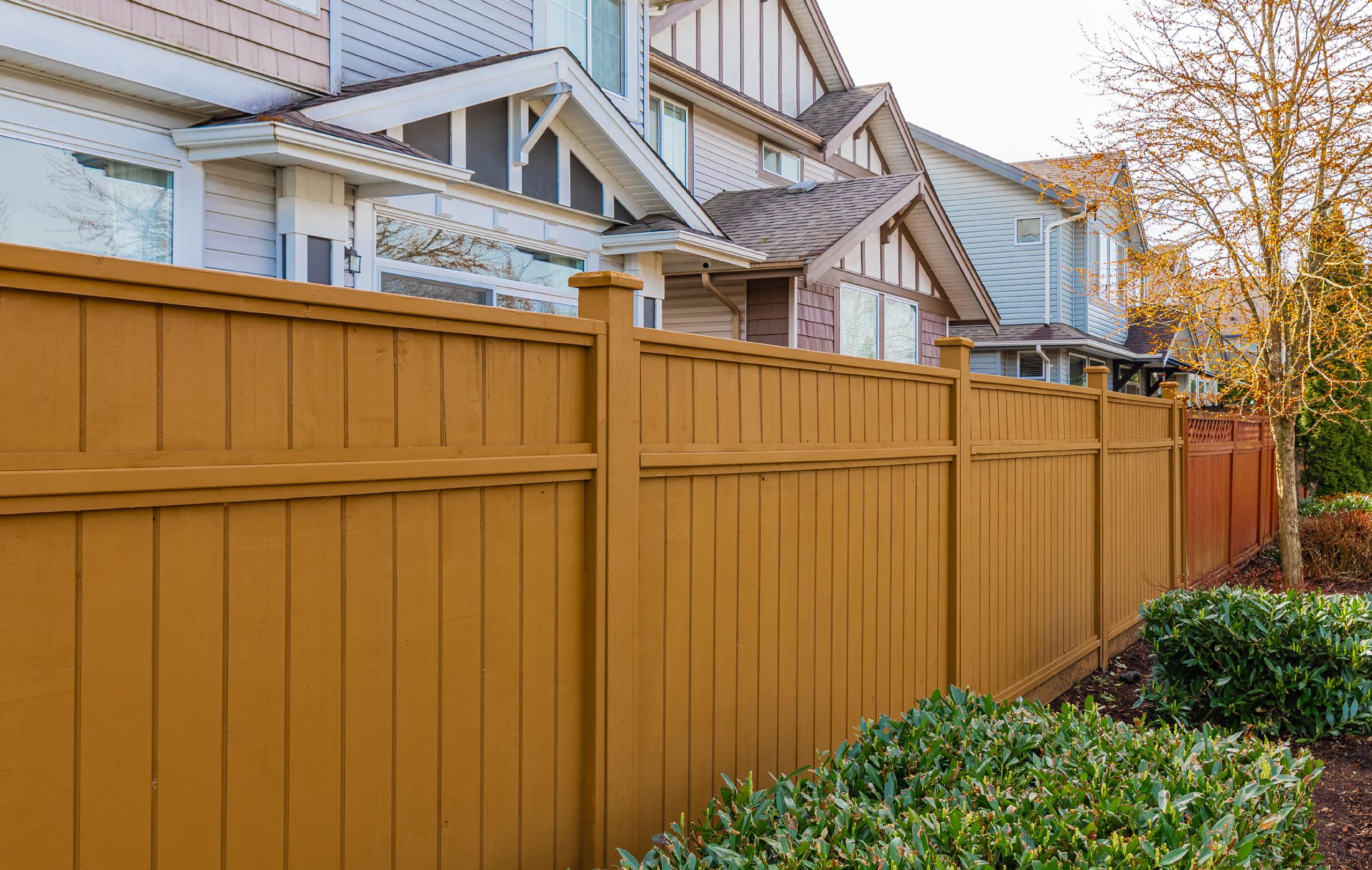
Artificial intelligence is rapidly moving from the office to the field, offering fencing businesses new ways to streamline the chaotic nature of production. While physical fences are built by hand, the decisions that guide those hands—scheduling, routing, and resourcing—are increasingly data-driven.
AI-powered GPS and fleet management tools do more than just show you a truck’s location. They analyze traffic patterns, job site locations, and crew availability to create the most efficient routes for the day. This optimization reduces fuel costs and ensures crews arrive on time, maximizing daylight hours for actual installation rather than drive time.

Running out of materials mid-job is a profitability killer. AI systems within modern inventory software can track usage rates and predict when you need to reorder specific SKUs based on your upcoming schedule. Instead of realizing you are out of 4x4 posts on the morning of a job, the system alerts you days in advance so you can order more.
Homeowners crave communication during production, but stopping work to text updates is inefficient. AI-driven CRMs can automatically send progress updates to clients based
on crew status changes. When a crew marks a job as “In Progress” or “Completed” in their app, the system can send a friendly update to the homeowner via text.
New AI vision tools allow fencers to estimate material needs by analyzing photos of the job site. These tools can identify terrain challenges, slope gradients, and existing obstructions that might require special equipment. This information helps production managers allocate the right tools before the crew ever leaves the shop.
AI can help maintain safety standards by analyzing job site photos for compliance with regulations. Some software can scan pictures to ensure safety cones were used, PPE was worn, or holes were covered. This type of unobtrusive monitoring provides business owners with peace of mind and reduces liability risk.
AI in fencing production doesn’t require robots or radical change. It shows up in better routes, fewer material shortages, more transparent communication, and safer job sites. In 2026, fencing contractors who use AI to orchestrate production behind the scenes will deliver a more professional customer experience. The result is fewer surprises, tighter timelines, and more profit kept where it belongs.
Cash flow is the difference between a business that looks successful and one that actually is. In fencing, revenue can be strong on paper while cash remains tight in reality. Materials must be purchased before a single post is set, crews must be paid weekly, and suppliers don’t wait for the customer’s final check to clear.
With average net profit margins hovering around 9%, fencing businesses operate with very little margin for error. A single pricing miss, a material spike, or a job site mistake can erase weeks of profit. Managing cash flow, then, controls risk, timing, and exposure in a business where money goes out long before it comes back in.
• Net Profit Margin: With average net profit hovering around 9%, fencing businesses operate with minimal room for mistakes. Small inefficiencies or unplanned costs can erase profitability quickly.
• Revenue Spent on Materials: Materials account for more than 40% of revenue spend, making price volatility the single largest financial risk for most fencing contractors.
• Material Price Increases: The potential rise in steel and other material prices could increase 10–20%, potentially wiping out profit margins if bids aren’t adjusted immediately.
Materials (42%) make up the largest share of fencing costs, while profit margins remain thin. With nearly 60% of total expenses exposed to price changes and labor efficiency, even small estimating or waste errors can eliminate profit entirely.
• Cut waste by even 1% to directly boost your profit.
• Update pricing immediately when supplier costs change instead of relying on last season’s numbers.
• Audit “other” costs regularly so fuel, permits, and equipment wear are fully priced into jobs.
• Measure job-level margins consistently to catch profit leaks before they compound.
A single unplanned material increase can erase most of a fencing job’s profit. A 20% material hike consumes over 80% of expected margin, turning a profitable project into near break-even work.
• Assume material prices will change between bid and install, and price accordingly.
• Build price protection into contracts so unexpected increases aren’t absorbed by your business.
• Shorten the time between quoting and installation to reduce exposure to cost swings.
Fencing is a seasonal business by nature. Revenue arrives in waves—spring and summer bring volume, while winter slows activity—but expenses don’t follow the same rhythm. Payroll, fuel, insurance, and material bills arrive every month, regardless of how many fences are being installed.
For many fencing contractors, the stress doesn’t come from a lack of work. It comes from the gap between when money is earned and when it actually lands in the bank. Managing that timing, not just total revenue, is one of the most important skills separating stable businesses from constantly stressed ones.
For years, many fencing companies accepted delayed payments as “just part of the job.” Northland Fence experienced this firsthand.
“Payments were always a problem,” said Kaya Quinn, CTO of Northland Fence. “We were driving to properties just to pick up checks.”
This manual process created multiple issues at once. Cash was delayed for weeks. Office staff spent time tracking down payments instead of supporting
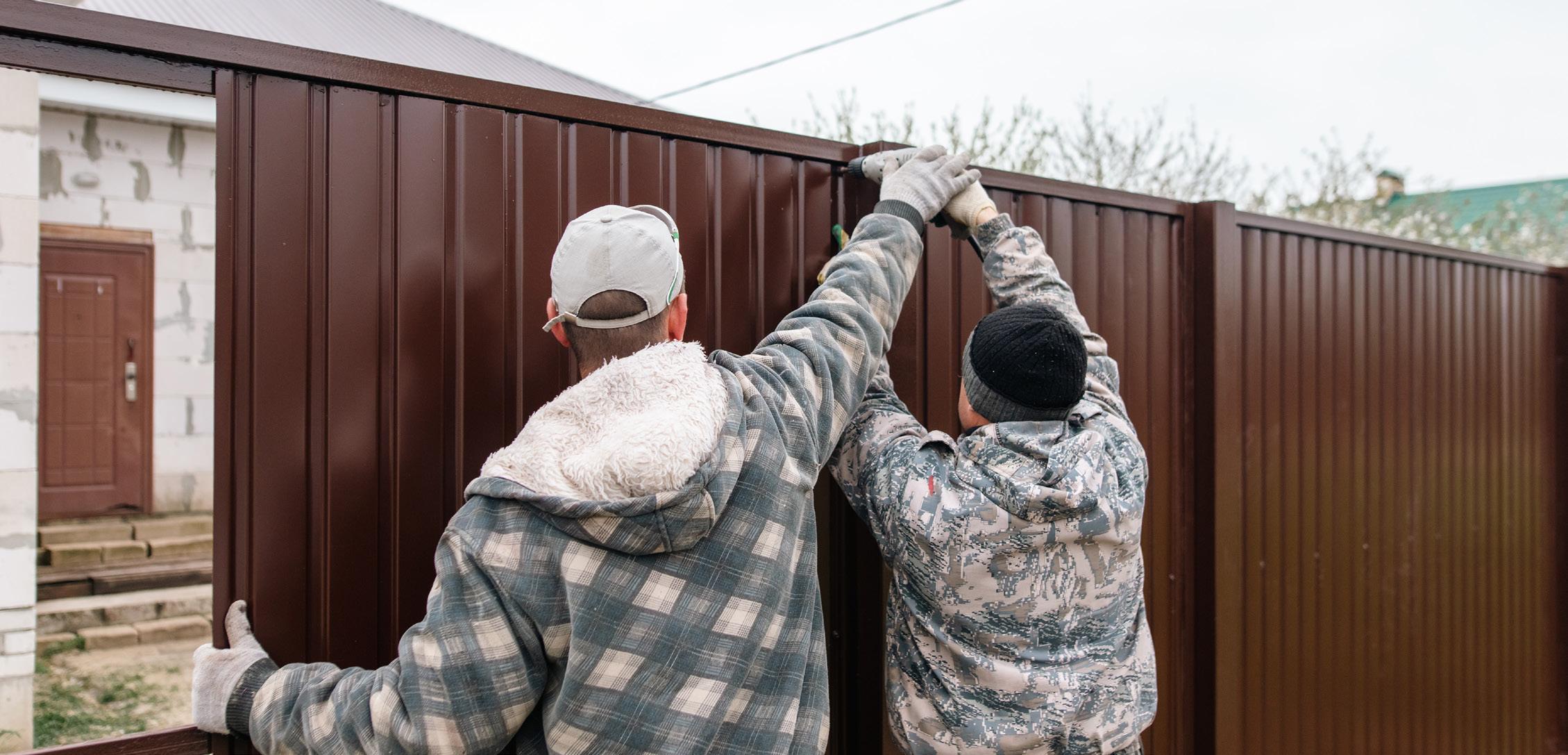

operations. And if a customer raised a dispute, the contractor had little leverage because they’d already paid for materials and labor out of pocket.
In a low-margin business, that delay compounds quickly. The longer cash stays outstanding, the more risk the contractor carries.
Northland Fence changed the equation by incorporating digital payments directly into their workflow.
They eliminated the need to chase checks entirely by switching to JobNimbus Payments and collecting payments upfront or immediately upon milestone completion.
“It’s all right there,” Quinn explained. “We can forecast and see where we stand.”
This shift did more than speed up collections. It improved visibility, reduced administrative work, and enabled leadership to make decisions based on real-time cash position instead of guesswork. Faster funding meant materials could be purchased without relying on credit, and projects could move forward without financial friction.
Some contractors take a different but equally strategic approach. All Over Fencing offers customers a 10% discount for paying upfront.
At first glance, this may seem counterintuitive. Why give up margin when margins are already tight?
The answer lies in risk and velocity. That 10% discount eliminates bad debt, removes administrative overhead, and puts cash in hand immediately. That cash can be used to purchase materials without tapping a line of credit or floating customer projects out of pocket.
Speed changes the economics of the job. When cash arrives early, the contractor controls the project timeline, supplier relationships, and purchasing power. The key caveat: this strategy only works if gross margins are strong enough to absorb the discount without turning profit negative.
Getting paid faster helps a business stop running like a bank. In a seasonal industry with thin margins, cash timing matters as much as pricing.
Fencing contractors who rely on delayed checks carry unnecessary risk. Those who move toward digital payments, upfront deposits, or incentivebased prepayment reduce stress, improve forecasting, and regain control over their operations.
Revenue may come in waves, but cash flow doesn’t have to.
Unexpected site conditions can wipe out an entire job’s profit when contracts don’t define boundaries and include contract protection clauses. Without clear change-order protections, contractors absorb costs and effectively work for free.
• Define what is and isn’t included in every proposal to prevent scope creep.
• Use clear change-order clauses for common risks like rock excavation or site prep.
• Require approval for additional work before crews proceed, even under pressure.
In the fencing business, you can be profitable on paper and bankrupt in the bank. The difference is the gap between when you pay for materials and when your customer pays you.
We’ve all seen the “busy” contractor. His trucks are everywhere, his phone never stops ringing, and he’s extremely stressed. Why? Because he’s paying for his customers’ projects. He pays for the lumber, fuel, and labor on Friday but doesn’t get paid until the job is done—or worse, 30 days later.
This “payment gap” is the silent killer of construction businesses. When you grow, this gap grows with you. If you double your sales, you double the amount of cash you need to spend first. Without a “cash flow moat”—a strategy to keep cash positive—growth can actually put you out of business.
Building the Moat
The most successful fence professionals in 2026 have changed the game. They don’t act like banks; they act like businesses. They require significant deposits— often 50% or more—to cover the cost of materials before digging a single post hole.
They also focus on change orders. In the past, if a crew hit rock, the owner might have paid for it himself to keep the customer happy. Today, successful fencers have a “rock clause” and a digital system to

approve extra charges instantly at the job site. They stop doing free work. They realize that “freebies” build debt more than loyalty.
Pricing is a combination of math and psychology. All Over Fencing’s strategy of offering a 10% discount for upfront payment is brilliant, not because it’s generous, but because it buys speed. It shifts the risk from the contractor to the homeowner, but rewards the homeowner for that risk.
When you control the cash, you control the project. You can buy materials in bulk when prices drop. You can pay your suppliers early for a discount. You can sleep at night.
Conclusion
You are in the business of building fences, not in the business of lending money. By tightening your payment terms, automating your collections, and charging for every ounce of value you provide, you build a fortress around your profit that no market change can break.
Review Your Pricing: Look at your last three material invoices. Did your supplier raise prices? If so, update your standard bid sheet right away.
Set Up Digital Payments: Don’t waste time driving to pick up checks. Set up a payment link this week.
Audit Your Invoices: Review your last five jobs. Did you charge for rock, brush clearing, or extra trash removal? If not, add a “Change Order” line to your contract template.
HOMEOWNER PERSPECTIVE
Homeowners can get nervous about paying large deposits because they worry you might take the money and not come back. You can help alleviate these concerns by being transparent with your billing.
Rather than writing a number on a scrap of paper, send a professional-looking digital invoice. Also, make paying as easy as possible. Customers want a faster, more reliable payment process, so send a text or email with a payment link so they can pay right away. When transactions are smooth and transparent, customers feel secure, and you get paid faster.

PERSPECTIVE
Managing fencing finances in 2026 doesn’t require you to be good at math as long as you use tools that do the math for you. AI is transforming financial management from a monthly headache into a real-time dashboard, allowing you to see problems before they drain your bank account.
Chasing down payments is uncomfortable and time-consuming. AI-integrated accounting tools can automatically send invoices the moment a job status changes to “Complete.” If a payment is late, AI agents can send polite, escalating reminders via text and email, helping you get paid faster without having to make a single awkward phone call.

Traditional accounting tells you what happened last month, whereas AI can tell you what will happen next month. By analyzing your historical job cycles and current pipeline, AI tools can predict cash flow gaps weeks in advance. AI’s predictions give you the foresight to adjust spending or push for deposits before a dry spell hits.

Material prices fluctuate, but your bids often don’t. AI estimation software can link directly to live supplier pricing indexes. When the price of steel posts spikes, your bid templates update automatically. Using dynamic pricing protects your margins in real-time, ensuring you never send a quote that is profitable today but a loss tomorrow.
Small leaks sink big ships. AI expense trackers can automatically categorize every swipe of your company card, identifying trends that bleed profit— like recurring subscriptions you don’t use or fuel inefficiencies in specific vehicles. It acts as a 24/7 auditor, flagging waste so you can cut it.
AI chatbots can handle payments directly within a conversation. Instead of redirecting a client to a portal, an AI agent can text, “Your balance is $500. Reply PAY to process this with the card on file.” Removing friction from the payment process speeds collection and improves the customer experience.
The fencing market is growing, but capturing that opportunity depends on financial control. By automating collections and using AI to predict cash flow, you stop reacting to bank balances and start engineering profit in a stable, high-demand market.
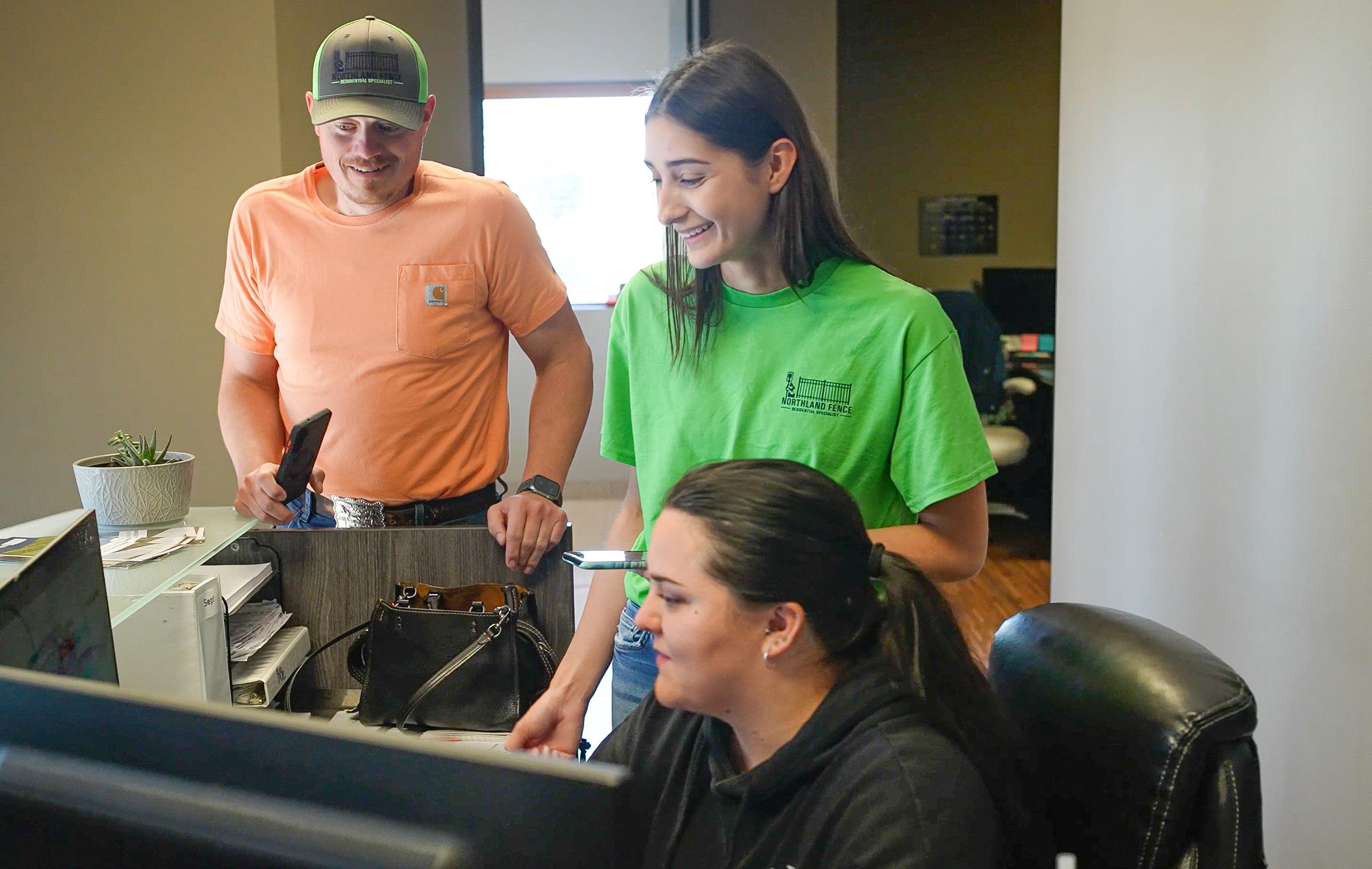

Growth is the goal for most fencing companies, but growth without the right systems can create chaos fast. As crews multiply and locations expand, processes that once worked begin to break down.
That’s exactly where Northland Fence found itself. With more than 100 employees across multiple locations in Minnesota, the residential fencing company wasn’t struggling to find work. They were struggling to keep up with it.
As Northland Fence scaled, one issue kept resurfacing: getting paid.
“Payments were always a problem,” said Kaya Quinn, CTO of Northland Fence. “Whether we weren’t hearing from the customer, or we had to go to their property to pick up the check.”
For a fencing contractor, that “check chase” wasn’t just inconvenient but expensive. Office staff time, fuel, vehicle wear, and delayed cash flow all added up.
Money that should have been available to fund the next job was sitting uncollected, slowing the entire operation.
Payments weren’t the only bottleneck. Internally, the team was juggling paperwork and bouncing between multiple apps just to keep jobs moving.
“Our old system was so convoluted,” Kaya explained. “We were dealing with a lot of paperwork, bouncing around in different apps or browsers.”
That fragmentation frustrated the office, field crews, and customers waiting for updates.
“It just was not efficient,” Kaya said. “We could not work very smoothly.”
Northland Fence knew they needed to stop stitching together tools and find a single system that could support their size and complexity. They implemented JobNimbus to centralize operations and remove friction across the business.
The JobNimbus Payments feature made an immediate impact. “One feature that was huge for our business was JobNimbus Payments,” Kaya said. “Not having to go into different applications to send the invoice, collect the payment. We could do it seamlessly through one area.”
By moving payments into the same system used to manage jobs, Northland Fence eliminated the need to drive to job sites to collect checks. Customers could pay digitally, and the team could track everything in one place. Next-day funding accelerated their cash flow, allowing jobs to close faster.
“Using JobNimbus Payments, next-day funding especially, we’re able to shave probably 10 minutes off of closing a job,” Kaya added.
Those time savings compounded across hundreds of jobs.
Centralizing payments, tasks, and communication not only sped things up but also gave leadership clearer insight into the business.
Because financial data tied directly to jobs, Northland Fence could finally see where they stood at any moment. The Insights reporting and forecasting tools helped leadership understand performance, plan ahead, and make decisions with confidence.
According to Kaya, Insights has allowed them to “forecast, make better decisions, and see where we’re standing.”
At the same time, automations reduced the day-today load on the team. Follow-ups, reminders, and internal handoffs happened without manual effort.
“We’ve been able to shred off hours of our day and week with the different processes and systems that it [JobNimbus] offers,” Kaya said.
The result was better efficiency, improved communication, stronger collaboration, and a healthier team culture.
Today, JobNimbus touches every part of Northland Fence’s operation.
“From start to finish, JobNimbus is incorporated throughout our business, and it’s been a gamechanger,” Kaya said.
By cutting paperwork, eliminating app overload, and modernizing payments, Northland Fence built an operation designed to scale without burning out their people or cash flow.
As the company continues to grow, they’re no longer slowed down by inefficiency. They’ve replaced the check chase with momentum.

In the fencing business, trust is built long before the first post is set.
Homeowners invite contractors onto their property to work around their homes, families, and pets. This level of vulnerability makes communication as important as craftsmanship.
Clear, consistent communication reduces uncertainty at every stage of the job. When homeowners know what’s happening, when it’s happening, and who to contact, confidence rises. When communication breaks down—whether through delays, silence, or mixed messages—trust erodes quickly, even if the work itself is solid.
• Speed Wins Attention: Your chance of reaching a lead is 100 times greater if you call within five minutes versus 30 minutes.
• Silence Erodes Trust: 30% of leads never get a call at all. Ghosting, often unintentional, remains one of the most common homeowner complaints. Disorganized communication systems create anxiety even when work is progressing.
• Timing Matters: Midweek, late-afternoon outreach consistently outperforms random calling patterns. Strategic timing increases
connection rates without increasing effort. The most effective days to reach homeowners are Wednesday and Thursday, specifically between 4:00 p.m. and 5:00 p.m.
• Systems Prevent Failure: Centralized communication systems reduce missed context, duplicated outreach, and accidental silence, preserving trust across the customer journey.
Lack of communication is one of the most common reasons homeowners lose trust in fencing contractors. In fact, most customer complaints stem from communication breakdowns, not from quality issues. This corporate ghosting generally isn’t intentional, but a result of disorganized systems that allow updates to slip through the cracks.
• Assume silence creates anxiety, even when no update is required.
• Send proactive status messages on a fixed cadence (e.g., once every Friday) to reassure homeowners that the work is progressing.
• Communicate delays before customers have to ask.
• Centralize communication so messages don’t get lost across tools or team members.
Response speed has a dramatic impact on whether homeowners engage with you at all. Contacting a lead within five minutes instead of 30 makes you 100x more likely to connect. Even waiting just 10 minutes reduces your chances by 5x. 6.02
• Set a hard standard to respond to all inbound leads within five minutes.
• Use automated texts or call routing when your salespeople can’t answer the phone.
• Measure response time consistently so delays are visible and correctable.
When customer communication is spread across texts, emails, and phone calls, businesses appear disorganized, even when good work is happening. Missed context and duplicated outreach erode trust faster than slow responses.
• Centralize all customer communication in one shared system so anyone on your team can see what’s being communicated.
• Require team members to log key conversations so nothing lives only in someone’s inbox.
• Make the job file the single source of truth for customer history.
• Change your mentality to “If it’s not in the system, it doesn’t exist.”
Persistence matters, but timing determines whether calls get answered. Midweek end-of-workday consistently outperforms random outreach, while calls during the workday are more likely to be ignored.
• Focus follow-up calls on Wednesdays and Thursdays when contact rates are highest.
• Avoid calling between 11 a.m. and 2 p.m., when most people are at work or having lunch.
• Prioritize late-afternoon outreach when people are wrapping up work for the day.
In the business world, silence is not golden. It’s suspicious. For the modern homeowner, lack of communication is the number one indicator of risk.
There’s a gap between the moment a homeowner signs a contract and the moment work starts on the job site. This anxiety gap might be two weeks for you, but for them, it’s 14 days of wondering if they made a mistake.
Top-tier contractors fill this gap with signals. They send a “welcome” email, a “material ordered” text, and a “utility locates scheduled” update. These signals convey information and competence. They tell the homeowner, “We haven’t forgotten you. The machine is working.”
We often think of listening as a personality trait, but in a business, listening is a system. If a customer tells a salesperson their dog is an escape artist, and the crew leaves the gate open, the company didn’t listen.
The most successful fencing companies have systematized listening. They use CRM fields not
just for addresses, but for critical care notes. They ensure that every promise made during the sale is visible to the person swinging the hammer. This transfer of information is the key difference between a good job and a great experience.
In 2026, speed is a proxy for quality. A contractor who takes three days to return a call is assumed to take three weeks to finish a two-day job. By automating your speed with AI responses and strict call blocks, you demonstrate to the market that you’re efficient, reliable, and professional before you ever dig a hole.
Homeowners don’t judge your business only by the day you install the fence—they judge it by every day before that. The contractors who dominate in 2026 are those who close the anxiety gap with clear signals, fast responses, and systems that listen. Communication doesn’t just support great work. It’s what makes great work visible.
Check the Notes: Review active jobs to ensure that crew notes include specific details, such as gate codes, dog names, or parking details—if they don’t, add them.
Set a Call Block: Schedule a recurring call block on your calendar for Wednesday and Thursday afternoons (4 p.m. – 5 p.m.) to handle follow-ups.
Automate the “Friday Update”: Set up your CRM to automatically send a text to every active client on Friday, even if there is no new news. A simple “Just checking in, still waiting on permits” proves you haven’t forgotten them and prevents the feeling of being ghosted.
Homeowners get very frustrated when they have to repeat themselves. Imagine this scenario: A homeowner specifically tells your salesperson, “Don’t park on the driveway. I just sealed it.” But when the crew arrives, they back the dump truck right onto the fresh asphalt. The homeowner is furious. Not just because of the vehicle, but because your team didn’t listen makes it feel personal.
To avoid this, use the notes field in your app. If the foreman sees “DO NOT PARK ON DRIVEWAY,” he will park on the street. When he tells the homeowner, “I saw the note about the driveway, so we parked out front,” it builds trust right away.
AI PERSPECTIVE
Communication in 2026 is no longer limited by how fast you can type. AI acts as an always-on communication layer that ensures every lead, client, and crew member gets the right information at the right time, without you needing to hit “send.”
The five-minute rule is now the zero-minute rule. AI receptionists can instantly answer calls, qualify leads, and book appointments 24/7. Unlike a standard voicemail, these AI agents can answer specific questions about your services (“Do you do vinyl?”) and sync the call details directly into your CRM.
Standard auto-replies feel robotic. New AI tools analyze the content of incoming emails or texts to draft context-aware responses. If a client texts, “When will the crew arrive?”, the AI checks the schedule and drafts a response: “Hi, Sarah, the crew is finishing up a job nearby and should be at your place by 2:30 p.m.” You just review and hit send.
Homeowners communicate across various channels, including text, email, Facebook Messenger, and phone. AI communication hubs unify these streams into a single timeline, which prevents the “Left Hand, Right Hand” problem. If a client texts the salesperson, the office manager sees that conversation in the project file instantly.
Before your crew arrives, AI can text the homeowner a pre-production briefing: “Hi! We’re coming tomorrow. Please unlock the gate and clear the perimeter.” This simple automation reduces day-of delays caused by locked gates or dog waste, keeping your production schedule tight.
AI can scan all your communications to gauge customer sentiment. If a client’s tone in emails shifts from friendly to frustrated, the system can flag the account as “At Risk,” alerting the owner to intervene personally before the situation escalates into a bad review.
AI protects human connection. By automating routine logistics, you free up your team to have meaningful conversations that actually build trust and close deals.

Your team is your business. Every interaction a homeowner has with your crew shapes their perception of your professionalism, reliability, and trustworthiness. A strong team reduces callbacks, protects margins, and delivers consistent results. A weak or unsupported team creates rework, delays, and reputational risk that no marketing or sales process can fix.
In fencing, this challenge is amplified by reality. Most companies operate with small teams where owners and crew members wear multiple hats. The work is physically demanding, the conditions are often harsh, and experienced labor is hard to replace. Building a winning fencing business means designing a culture that sustains people.
• Lean Teams: Most fencing companies operate with small crews where individuals wear multiple hats. This structure rewards flexibility but increases burnout risk without clear systems and expectations.
• Skill Expansion: Landscape design and customer-facing skills are becoming increasingly valuable, reflecting the industry’s shift toward higher-value, consultative work.
• Retention Pressure: The physical demands of fencing make retention the defining people challenge. Companies that invest in tools, training, and sustainable work conditions keep talent longer.
Retention in fencing is difficult because the work is physically demanding and performed in harsh conditions. The companies that keep good people longer don’t ignore this reality. They actively design their operations to reduce wear on their crews’ bodies.
• Invest in equipment that reduces physical strain instead of pushing crews to work harder.
• Use tools like hydraulic drivers and augers to extend crew longevity and consistency.
• Support crews through seasonal gear stipends that match working conditions.
• Experiment with schedules that allow recovery time without sacrificing productivity. Consider adopting a four-day, ten-hour schedule during peak season.
Giving crews more rest time leads to fewer travel days, and up to 20% fuel savings.
Takeaway
While installation remains foundational, landscape design now ranks as the most valuable skill in the fencing workforce. This shift reflects a broader change in the role of fencing professionals, who are increasingly expected to think critically about layout, materials, and customer experience, not just physical execution. 7.02
PERCENTAGE OF FENCERS
• Train crews to understand layout, flow, and aesthetics alongside installation fundamentals.
• Use onboarding to build confidence across multiple skill areas instead of siloing roles.
• Teach design and customer-facing skills to team members to better prepare them for leadership roles.
Owner-Dependent Culture w/o Supervision
Owner-Independent Culture w/o Supervision
Owner-Dependent Culture w/ Supervision
Owner-Independent Culture w/ Supervision
The biggest cultural divide in fencing businesses isn’t skill but dependence. In owner-dependent cultures, quality and follow-through rely on supervision. In owner-independent cultures, standards hold steady whether the owner is present or not.
• Build standards that don’t rely on the owner being on-site to enforce them.
• Make expectations for cleanliness, follow-through, and quality explicit and repeatable.
• Train crews to go beyond just owning tasks to owning outcomes.
• Measure consistency when the owner is absent from the job site.
The old saying goes, “Good help is hard to find.” In the fencing industry, the new reality is that good help is hard to keep.
Fencing is brutal work. It’s digging in frozen ground and carrying 80-pound bags of concrete in 90-degree heat. The fencing companies winning the talent war are those that acknowledge this reality and invest in mechanical empathy.
Mechanical empathy means buying the hydraulic driver not just for speed, but to save your foreman’s shoulder. It means using a skid steer instead of a wheelbarrow. When you invest in tools that reduce physical suffering, you tell your team, “I value your body and your long-term health.” This sentiment creates a loyalty that a slightly higher hourly wage cannot buy.
You cannot be on every job site. Your culture is the decision your crew makes when the homeowner isn’t looking and you aren’t there. Do they hide the cracked picket?
Successful owners build culture by empowering the field team. They give the foreman the authority to make decisions—to buy lunch for the crew on a hard day or to offer a minor free repair to a neighbor. When you treat your employees like business partners, they start acting like owners.
The number one reason young people leave the trades is a lack of a future. They see themselves digging holes at 25, but they can’t imagine doing it at 45.
The best companies build a visible ladder. They show a path from laborer to foreman to estimator to project manager. They prioritize training in skills like landscape design and customer service because they’re transferable and high-value. When an employee sees a future in your company, they stop looking for a job elsewhere.
If you take care of the people, the product takes care of itself. In 2026, the competitive advantage isn’t your truck or your tools, but the culture that keeps your best people at your company.
Check the Water: Invest in a high-quality water cooler for each truck. Keep them full. Hydration is a safety issue, not just a perk.
Order Uniforms: If your crew members are wearing their own torn shirts, order company t-shirts this week. It builds unity and trust.
Review the Schedule: Check if a four-day, 10-hour schedule works for the upcoming summer season. Check the math on fuel savings and crew morale.
Homeowners worry about strangers in their yard. They worry about open gates, loud noises, and rude workers. The fastest way to put those concerns to rest is with a clear, intentional presentation on day one. When a project lead introduces themselves immediately, they set expectations, establish accountability, and convey control and professionalism. Matching uniforms reinforce that
this is a coordinated team, not a random group of workers, while clear standards around noise and smoking show respect for the homeowner’s space.
These small, visible actions go a long way in making homeowners feel comfortable, confident, and cared for from the moment the job starts.
AI PERSPECTIVE
Building a great team in 2026 isn’t just about who you hire, but also about how you empower them. AI tools are helping small fencing crews do more with less by automating the office tasks that burn people out.
Finding labor is a numbers game. AI-driven recruiting tools can post jobs to dozens of boards instantly and screen incoming text applications 24/7. An AI chatbot can ask qualifying questions— ”Do you have a driver’s license? Can you lift 50 pounds?”—scheduling only the qualified candidates for an interview with you.
New hires are often thrown into the fire without proper training. AI-powered platforms can deliver safety modules and installation tutorials directly to a new hire’s phone. They can watch a five-minute video on safe auger operation and take a quiz before they ever step on a job site, reducing legal risks and injuries.
AI can track metrics such as the number of feet of fence installed per hour or the number of reviews generated. KPI (key performance indicator tracking) allows owners to create leaderboards and bonus structures based on real data. Making a game of the work builds friendly competition and rewards the high performers who drive your profitability.
Fencing crews are often diverse. AI translation apps now enable real-time, voice-to-voice communication between English and Spanish speakers (and other languages). This translation breaks down barriers, prevents expensive mistakes caused by miscommunication, and helps build a more cohesive culture.
Smart scheduling algorithms can analyze weather data and workload intensity to suggest rest days or lighter schedules during extreme heat waves. Proactively managing crew fatigue using data helps prevent burnout and reduces the likelihood of on-site accidents.
In 2026, the best fencing leaders will use AI to remove friction from hiring, training, and daily operations, so their crews can focus on doing great work safely and consistently. When technology reduces burnout, clarifies expectations, and rewards performance fairly, people stay longer, work better, and take pride in the fence they leave behind.
The fencing industry is entering a decisive transition. Forces like rising costs, changing homeowner expectations, and new technology have been building quietly for years and are now reshaping what it takes to compete. The old model of winning on speed and price alone is losing ground to one that rewards precision, professionalism, and differentiation.
In the years ahead, success will depend less on how many fences you install and more on how intentionally you design your business.
• Value Over Volume: Industry growth through 2030 is expected to come from higher-value projects rather than increased job volume. Revenue per foot is replacing total jobs as the key growth lever.
• Premium Shift: Homeowners are moving away from commodity materials toward differentiated, durable, and design-forward systems like flex fence.
• Digital Baseline: Digital estimates, communication, and payments are rapidly becoming baseline expectations. Fencing contractors who fail to meet these standards will increasingly struggle to compete.
Standard vinyl fencing has lost its premium signal as homeowners increasingly seek differentiated, designforward solutions. Hybrid systems like flex fence reflect a broader shift toward durability, aesthetics, and long-term value over commodity materials.
• Treat flex fence and hybrid systems as premium offerings, not custom edge cases.
• Lead with design differentiation rather than material lists when presenting options.
• Use mixed materials to escape price-based competition and protect margins.
• Prepare crews and sales teams to explain why hybrid systems outperform standard vinyl over time.
The fencing industry is projected to reach $27.4 billion by 2030, but future growth will depend less on volume and more on the value of each project. As demand stabilizes, fencing contractors who increase revenue per foot will outperform those who simply build more fences.
• Shift growth goals from total jobs completed to revenue generated per project.
• Prioritize premium installations that deliver higher margins without adding labor time.
• Train sales and production teams to confidently sell and deliver higher-value solutions.
• Build operations that support speed, complexity, and customization.
The biggest challenges facing fencing contractors over the next several years are structural, not temporary. Rising material costs, accelerating technology expectations, and persistent labor shortages will continue to pressure margins and operations for those who don’t adapt.
• Mitigate material volatility by prioritizing reliable suppliers and shorter, more predictable lead times.
• Choose technology that scales with your business and reduces friction as expectations rise.
• Address labor shortages by investing in equipment that lowers physical strain and extends crew longevity.
For years, the fencing game was simple: bid low, build fast, move on. Volume was the only metric that mattered. But as labor costs rise and white vinyl fencing becomes a commodity, the “volume trap” is closing. There is no profit in being the cheapest contractor in town when the cost of doing business is at an all-time high.
The data points to a different path: The $27 billion future is about building better fences, like the flex fence that commands a 40% higher margin. It’s about the automated gate that adds $5,000 to the ticket, requiring only 2 hours of extra labor.
Homeowners are tired of disposable culture. They’re asking for sustainability, ROI, and longevity. They want more than just a barrier. They want an architectural feature that adds to their home.
The fence professionals who win will be the ones who can speak this language. They’ll sell a 20-year asset, not just a fence. They will use hydraulic machines to ensure posts never heave and digital tools to prove value before the first check is written.
The most dangerous number in business is one: one material source, one lead source, one type of fence. The flex fence trend is really about optionality. Optionality gives you the ability to change plans when cedar prices spike or vinyl supply chains break. By diversifying your skills—learning automation, mastering mixed materials, and adopting software— you build a business that not only survives the next decade but also defines it.
The future favors the bold, but it rewards the prepared. The next five years of fencing will belong to contractors who move beyond volume and into value—those who sell longevity, optionality, and experience instead of linear feet. The question isn’t whether this shift is coming; it’s who’s ready to lead when it arrives.
Test a Material: Pitch flex fence or domestic steel on your next three quotes. Differentiate yourself from the “white vinyl” crowd.
Test a Revenue Stream: Offer an “annual gate adjustment” package to 50 of your past customers. Turn one-time buyers into recurring revenue.
Test a New Tool: Rent a hydraulic post driver or another new tool for a week. Track how much time you save, and if it helps, consider buying one to solve labor constraints.
HOMEOWNER PERSPECTIVE
Homeowners are already used to ordering dinner on their phones, and they expect to book a fence estimate just as easily.
Right now, offering digital estimates, text updates, and online payments is a powerful way to stand out from the competition. In the years to come, this will be the baseline. The future of the fencing industry is transitioning rapidly from pen-and-paper delays
to instant, Amazon-like experiences. Soon, if your business isn’t as easy to work with as an app, you’ll lose leads and fall behind.
In 2026, homeowners will have more challenging questions. Make sure you’re prepared to answer them. Here are some questions you’ll likely hear more of in the upcoming years.
AQ“Will this vinyl end up in a landfill?” What the customer is really asking about is sustainability. Homeowners are done with throwaway products. Be prepared to discuss your products’ lifecycle and the sustainability of your materials.
“Can
I open the gate with my phone?”
“What
is the actual return on investment for this fence?”
A A
Smart home technology is coming to the driveway. Work with an automation expert so you can say “Yes” and benefit from the added value.
Homeowners are already starting to see fences as an asset, not just a fix. Be ready to explain how your fence can boost property value and curb appeal over the next decade. Focus on lasting quality. Let them know this fence will still be there when their toddler heads to college.
As the industry turns to higher-value installations and digital standards, AI will become the unseen foreman, managing the complexity that comes with premium services.
As homeowners ask to open gates with their phones, AI tools will help fencers design integrated access control systems. Instead of needing an electrical engineering degree, fence contractors can use AI apps to scan the driveway layout and power sources, generating a wiring diagram and parts list for a compatible solar or low-voltage gate system.
AI supply chain tools will provide real-time sustainability scores for materials, enabling more informed decisions. You can include a badge on your digital quote that shows your flex fence system uses 95% recycled aluminum and sustainably harvested timber, providing the eco-conscious homeowner with a data-backed reason to choose you.
High-value fences require care. AI-driven CRMs will track the age and material type of every fence you install. Five years down the road, the system will automatically text the homeowner: “Your cedar pickets are due for a stain to maintain their warranty. Click here to schedule.” These alerts create a “forever” customer without you lifting a finger.
Selling a flex fence is hard if the customer has only seen white vinyl. Generative AI design tools will allow you to take a photo of their house and instantly overlay a photorealistic image of the new, premium design. Showing them exactly how the warm wood tones complement their brickwork closes the deal faster than a catalog ever could.
AI will help you sell value. By using AI to handle design, maintenance, and integration, you elevate your brand from being a “fence builder” to a “property enhancement specialist.”
The fencing industry is at a significant turning point. In 2026, the old rules of “bid low and build fast” are fading away. The data in this report paints a clear picture: the fence professionals who win tomorrow are those with the smartest systems.
Across every category, the same pattern emerged again and again. High-performing fencing companies excel across the entire operation. They run frictionless sales processes, treat production like a repeatable machine, protect margins through better pricing and upgrades, and build trust through consistent communication and professionalism. Craftsmanship still matters, but professionalism is now the multiplier.
The opportunity ahead is massive, with the fencing market projected to reach $27 billion by 2030. But that growth won’t be evenly shared. It will go to the fencers who use this data as a playbook, not just a snapshot. Measure yourself against the benchmarks, identify the systems that need strengthening, and invest where it counts. You already build fences that last. Now it’s time to build a business that does the same.


JobNimbus produced this report with the help of Green House Sales and Marketing. We would like to extend our thanks to the following individuals for their contributions to this first-ever fencing report.
The JobNimbus Team
• Briquelle Simpson, Marketing Project Manager
• Seth Neilson, Executive Creative Director
• Taylor Orton, Senior Graphic Designer
The Green House Sales & Marketing Team
• Aaron Willis, Research & Data Lead
• Adaline Ross, Writer
• Ana Chicuasuque, Project Manager
• Ashlyn Stucki, Writer
• Elyse Roberts, Writer
• Hailey Creer, Designer
• Jake Mortensen, Writer
• Jared Wright, Writer
• Jessica Leandro, Designer
• Jordan Brandon, Green House Director
• Kaia Uhlig, Project Manager
• Leesa Crump, Writer
• Sam Lindsey, Manager of Process and Systems
• Savannah Przbyla, Writer
• Stephanie Cortes, Writer
• Teagan McGee, Writer
The Peak Performance 2026: Fencing Industry Benchmarks for Success report combines self-reported insights from real fencing companies and homeowners with anonymized performance metrics from the JobNimbus platform. Additionally, we used IBISWorld’s July 2025 Fence Construction report, direct field research from Q4 2025, data from SparkToro, as well as other available industry reports, contractor survey data, industry research, and market analysis.
The information in this report is general and should not be considered legal, tax, accounting, consulting, or any other professional advice. In all cases, you should consult professional advisors familiar with your situation for advice on specific matters before making any decisions.
JobNimbus does not accept any liability for any loss or damage caused by any errors, omissions, or reliance on any information or views in this document. All trademarks and copyrights remain the sole ownership of their rightful owners/licensees.
Copyright © 2026 JobNimbus. All rights reserved. Reproducing, redistributing, or disseminating this document without written permission is completely forbidden.
Learn more at jobnimbus.com