I N S I DE
AUTUMN 2026
The magazine of the Royal College of Paediatrics and Child Health
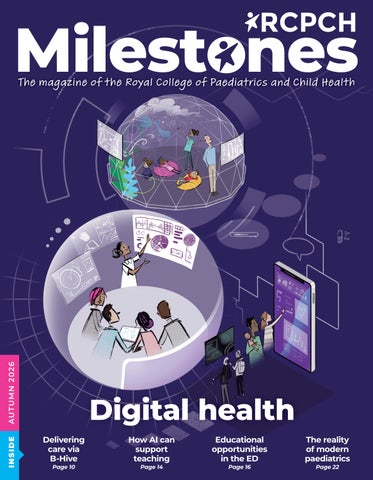
Digital health Delivering care via B-Hive Page 10
How AI can support teaching Page 14
Educational opportunities in the ED Page 16
The reality of modern paediatrics Page 22
Contact We’d love to hear from you – get in touch at
Contents
Autumn 2026
milestones@ rcpch.ac.uk
Editor’s pick
Welcome to the autumn edition of Milestones! This issue
14
explores how digital innovation is reshaping paediatrics, from learning to children’s experiences of healthcare. My first pick this issue is ‘Teaching in the age of AI’ (pages 14-15), which moves the conversation beyond whether clinicians and learners should use artificial intelligence and instead asks how we can use it well.
This issue
From generating alternative clinical scenarios and simulation materials to prompting richer discussion
18
9 My PICU Story
about uncertainty, bias and accountability, the article
An app providing support
offers practical ideas while reminding us that technology cannot replace professional judgement, compassion or the
24 Overseas training Notes from Ayati, Sri Lanka
10 B-Hive
educator’s role in helping learners interpret information.
Belfast’s highly immersive virtual environment
‘Creating a buzz’ (pages 10-12) brings our digital theme vividly to life. The B-Hive immersive environment in Belfast is being used not only for realistic multidisciplinary
25 Gaining a new perspective
13 Decolonising child health
simulation, but also to help children prepare for procedures, regulate anxiety and engage in therapy and
The need to address inequalities
enjoy moments of creativity and play. Beyond technology, this edition asks us to look more widely at equity and leadership. Dr Rebecca Rhodes to examine power, representation and partnership in
27 Shaping our future
An educator’s view
our everyday work, while Dr Mo Akindolie’s Harkness
Creating a conference
16 PED-TV
Fellowship story shows how stepping into a different
Every issue
Bringing learning to waiting rooms
health system can reveal new perspectives on inequity, purpose and change. Planning is already underway for next year’s RCPCH
4 Update
18 Harkness Fellowship
Conference, which will be held on 19-21 May 2027 at LEX Liverpool and online. The ‘science meets practice’ theme
News, views and events
Reflections on a year at Harvard
feels particularly relevant as a reminder that innovation makes its greatest difference when translated into better
20 Finding joy in work
everyday care for children and young people.
Enhancing our wellbeing
Dr Erva Nur Cinar
22 Not overdiagnosed, but underexposed
Paediatric Resident ST3 Homerton Healthcare NHS Foundation Trust
The challenges of modern paediatrics
Milestones Editorial Committee
26 LGBTQIA+ perinatal priorities Urgent unanswered questions
14 Teaching in the age of AI
reflects on decolonising child health, challenging us
The human realities of healthcare
8 RCPCH &Us Supporting CYP through change
28 Members Reviews, baking and more
30 Day in the life Dr Shilpa Shah talks to us
Copyright of the Royal College of Paediatrics and Child Health. All rights reserved; no part of this publication may be reproduced, stored in a retrieval system, or transmitted in any form by any means – electronic, mechanical, photocopying, recording, or otherwise – without prior permission of the publishers. The views, opinions and policies expressed in Milestones do not necessarily reflect those of the College. While all reasonable efforts have been made to ensure the accuracy of the contents of this publication, no responsibility can be accepted for any error, inconsistency or omission. Products and services advertised in Milestones are also not recommended or endorsed by the College. Readers should exercise their own discretion and, where necessary, obtain appropriate independent advice about their suitability. Royal College of Paediatrics and Child Health is incorporated by Royal Charter and registered as a Charity in England and Wales (1057744) and in Scotland (SCO38299). Registered Office: 5-11 Theobalds Road, London WC1X 8SH. Patron HRH The Princess Royal. Design Manager: Christina Richmond Senior Editor: Lizzie Hufton Publisher: James Houston. Milestones is published four times per year on behalf of the Royal College of Paediatrics and Child Health by James Pembroke Media, Ground Floor Riverside North, Walcot Yard, Bath BA1 5BG. T: 01225 337777. Advertising: advertising@rcpch.ac.uk
EDITORIAL Publishing coordinator: Helen Alexander Editorial Committee: Dr Seb Gray @VWilson_54 Dr Hannah Baynes
KEEP IN TOUCH
@HLB27 Dr Sharna Shanmugavadivel
@RCPCH
@RCPCH
@SebJGray Dr Victoria Wilson
@HeadSmartFellow Dr Erva Nur Cinar
@cinarervanur
milestones@rcpch.ac.uk
Milestones AUTUMN 2026 3
The latest news and views
President’s update I always like it when Milestones arrives. Not only is the content great, but it’s part of the reassuring cycle that spins along with other regular fixtures in your diary or marked on Professor Steve Turner your kitchen wall calendar, Consultant including birthdays, Paediatrician anniversaries, conferences Royal Aberdeen and school term times. But Children’s amid this familiarity, there Hospital RCPCH is always change afoot, President especially in paediatrics. How things have changed in the 30 years since our College
was formed! In 1996, few would have thought that a tablet would be used to effectively cure cystic fibrosis, we wouldn’t be intubating every prematurely born infant, and dietary interventions would treat seizures and flare-ups of Crohn’s disease. What were standard practices are now placed in the category of #whydidweeverthinktheyworked, eg SPAG treatment for bronchiolitis, croup tents and sodium cromoglycate as the first-line asthma preventer. Back then, something ‘digital’ was conventionally regarded as an appendage to a hand or foot. Fast-forward to 2026, and digital innovation is promising to drive change
further and faster. You may have seen that we have our second digital conference in Sheffield on 2-3 December, and there is a digital theme to this edition of Milestones. Data linkage has the potential to allow the service we provide to be truly patientcentred, and technology can help us deliver ever better care in the community as well as in the hospital. AI may ultimately be able to read body language, infer meaning from how things are said (not just what is said) and what is left unsaid, but clinical practice will still be founded on human characteristics, including kindness and empathy, which is very much the same as it was in 1996.
Policy updates Professor Andrew Rowland OBE Consultant Paediatrician, Manchester Local Care Organisation Lead Employer Medical Director, Mersey and West Lancashire Teaching Hospitals NHS Trust RCPCH Officer for Child Protection
Child protection policy can feel far removed
abuse. We unequivocally support ensuring that
from the clinic, but the strongest policy is
every disclosure of sexual abuse is taken seriously
grounded in what paediatricians see: children
and acted upon. One of our principal concerns,
moving through complex systems that do not
however, is that a duty limited to one category of
always communicate well.
abuse risks creating a hierarchy in which other forms
That’s why the Children’s Wellbeing and Schools Act
of abuse receive less attention, particularly when
has been a focus for the College. Its introduction of
children experience overlapping harms. This is not
Multi-Agency Child Protection Teams (MACPTs) brings
an argument for treating child sexual abuse less
health, social care, police and education around each
seriously; it’s an argument for an evidence-based,
child. Our work is behind the scenes, sharing clinical
properly resourced system that protects every child.
expertise with civil servants and partners, and helping
This work relies on members’ experience and
shape these teams. The challenge is implementation:
the policy team’s engagement. In our podcast, we
ensuring teams complement existing safeguarding
reflected on how clinical and policy expertise can
arrangements, have access to clinical expertise and
work together to influence
improve children’s experiences rather than adding
national legislation, and why
complexity. MACPTs could be advanced further
our role continues after an Act
through co-located, co-designed Children’s Health
is passed.
Equity and Advocacy Centres. We have continued to engage the government on the mandatory reporting duty for child sexual
4 AUTUMN 2026 Milestones
Listen to the podcast: rcpch.ac.uk/CWSA-podcast
Update
Staff spotlight
My most memorable project at the College remains the transition in exam delivery from Surpass to TestReach in 2024. Delivering a new
Joan Yun Head of Theory and Standards
assessment platform requires technical problem-solving, collaboration across multiple teams and careful change management. Working from planning
I’m currently working within the
involved in the production of
to implementation over the course
Education and Training division,
assessment content. The pilot aims
of a year was incredibly rewarding,
overseeing the development and
to build an agent that generates draft
and we’re continuing to build on that
delivery of RCPCH theory examinations
examination questions and clinical
foundation to further improve the
and clinical scenarios. These days,
scenarios aligned to RCPCH curricula
candidate experience.
my work revolves around exams,
and standards, allowing clinicians
assessment standards, technology and
to spend more time applying their
pursuing one hobby or another. I’m
the occasional AI pilot, but I didn’t start
judgement, expertise and experience.
a keen tennis player and golfer, and
in this field.
Looking ahead, the technology could
enjoy tinkering away at the piano and
also support any new assessment
painting watercolours. I haven’t quite
from a nursing background in inpatient
developments by helping us build high-
figured out how to do both at once,
trauma surgery as well as outpatient
quality content more efficiently.
although it would certainly save time!
I grew up in California and come
dermatology and primary care. While
Alongside innovation, I’m passionate
Outside work, you’ll usually find me
Neither pursuit is likely to threaten the
I love and value direct patient care,
about recruitment and succession
professionals anytime soon, but both are
one of the reasons I was drawn to this
planning within the exam community.
good fun.
area was the opportunity to make an
Our assessments rely on an incredible
For me, whether it’s technology,
impact further upstream. By shaping
network of examiners, question writers,
assessments or change management,
assessments and their standards, I
standard setters and committee
the most rewarding part of the role is
learned how knowledge, skills and
members, who generously contribute
working out how to make things a little
development can influence thousands
their expertise. As experienced clinical
better for the people who’ll be doing the
of healthcare professionals, ultimately
colleagues step down, we must continue
job long after we’ve all moved on.
improving outcomes for children and
to develop and maintain incentives to
young people at a much larger scale.
engage trainees and new consultants.
One of the most exciting projects I’m
Not only does this help maintain the
involved with is the development of AI-
quality and sustainability of our exams,
assisted question and scenario agents
it also gives clinicians the chance to
for the theory and clinical examinations.
influence paediatric training and build
The goal is to better support clinicians
valuable professional networks.
International Paediatric Sponsorship Scheme (IPSS) Through this scheme, RCPCH sponsors eligible doctors to enter the UK medical register and undertake a two-year development placement in the NHS. RCPCH quality assures all posts, provides independent support and awards a certificate on completion. Find out more using the QR codes, right. If you have any queries, please contact the team: ipss@rcpch.ac.uk
Get involved with theory exams: rcpch. ac.uk/volunteertheory-exams
For applicants, visit: rcpch.ac.uk/resources/ipssguidance-applicants
For NHS employers interested in hosting an IPSS doctor, visit: rcpch.ac.uk/ resources/ipss-guidancetrusts
Milestones AUTUMN 2026 5
Update
Journal: ADC update I’m fortunate enough to be an ‘acute paediatrician’ in its (indulge me here) ‘protean forms’. I’m even Nick Brown more privileged Archives of to have witnessed Disease in how ‘acuteness’ Childhood has evolved Editor-in-Chief @ADC_BMJ since those hazy days before (to name but a few) Haemophilus B. meningococcal and pneumococcal vaccinations. Each of these landmark milestones
changed the emergency department, inpatient and ICU landscapes (there wasn’t always a PICU in that era, with adult intensivists often helping out), and together, they’ve rewritten it. Though, of course, this was never going to be the end of the story. The rise of other infectious diseases, previously unrecognised encephalopathies and mental health emergencies, including new intoxication patterns, has made the recognition, certainly the handling of sick children in its new, challenging range of phenotypes, arguably now more difficult.
Archives has, I think I can say, kept a finger on the pulse of this story. Just take a quick look at the Online First section of the website, featuring papers on the near-edition horizon: the evolution of the inflammatory host response; acute intravenous fluid practice and evidence in both well and malnourished children; protective measures for acute mental health crises on a ward… The cliché goes ‘the world has changed’ – and, in some ways, maybe it has. But our principles, the reason we get out of bed in the mornings, I’m proud to say, haven’t.
Journal: BMJ Paediatrics Open update Gratifyingly, the latest Journal Impact Factor increased to 2.6 (up from 2.3). This ranks BMJPO 39th Shanti Raman of 190 journals BMJ Paediatrics indexed in the Open Editor-inChief Web of Science @BMJ_PO ‘Paediatrics’ category – appearing in Q1 for the first time. Our new Scopus CiteScore is now 2.8 (ranking 130 out of 351 journals in the Paediatrics, Perinatology and Child Health category). The number of published articles has increased this year: 197 in January-June 2026 compared with 142 for the same period last year, while the three most cited papers in 2025 were interestingly varied: Adenoid
hypertrophy in children: a narrative review of pathogenesis and clinical relevance; Prevalence of developmental dysplasia of the hip (DDH) in infants: a systematic review and meta-analysis; and Shared decision-making for children with medical complexity in community health services: a scoping review. As before, we acknowledge that the main driver of our growth in quality submissions comes from our specialised topic collections. Currently, we have three topic collections open for submission, all closing on 30 September 2026: Children in Conflict Settings; Paediatric and Child Healthcare in India: Opportunities and Challenges; and The Burden of Neurodevelopmental Disorders in Children in China. A new and positive initiative, which will help widen our reach
as well as train up the next generation of dynamic editors, is the recruitment of editorial interns (trainee associate editors), and we have 10 recruits joining us for a 12-month trial period. As editor-in-chief, I’ve just delivered a couple of workshops in Sri Lanka – on career development and research skills for practising clinicians and trainee paediatricians focusing on publishing evidence-based research and policy – one as part of the Asia Pacific Congress of Paediatrics in Colombo and another in Jaffna for the Jaffna Medical Association.
Sign up for e-alerts at bmjpaedsopen.bmj.com; members interested in reviewing should contact info.bmjpo@bmj.com
RCPCH Conference 2027 Next year’s three-day conference will feature keynote speakers, presentations and workshops on a wide range of child health topics. Make sure to save the date: 19-21 May 2027 at LEX Liverpool, England and online
6 AUTUMN 2026 Milestones
Update
problems (online) 1 February Safeguarding in the digital world (online)
Highlights Find out more at learning.rcpch.ac.uk
Courses 5 October How to manage: Diabetes (online) 12 October, 1 December 2026 and 26 January, 9 March, 4 May, 15 June 2027 Effective Educational Supervision (Liverpool/ online)
22 October How to manage: Nonmalignant haematology (online) 20 November How to manage: Paediatric sepsis (online) 24 November How to manage: CYP mental health (online) 15 December How to manage: Common cardiac
CPCH Grand R Round webinars 2026-27 Our fortnightly, free webinars replicate the ‘Grand Round’ that takes place in many hospitals and are designed to improve your practice and broaden your perspective. Register: rcpch. ac.uk/grand-round
Leading the Way Through open conversations with inspiring clinicians, healthcare professionals and thought leaders, we discuss the challenges, successes and key moments that shape their leadership in paediatrics and child health. The Paeds Round Real-world advice and guidance on how to manage a range of clinical topics and much more on education, training and working in paediatrics. learning.rcpch.ac.uk/ home/podcasts
RCPCH &US
Moving on Facing change alongside managing a health condition can make life even more stressful for children and young people. Here’s how you can support them…
S
eptember is a time of big change Nathaniel for many children Aged 15 and young people, so Joseph what can you do? Mostly, Aged 19 it’s about being aware that those changes are happening. Do you know what school year groups your patients have moved into this month? Checking they have what they need to prepare for that move can be a really supportive action to take. Felicity Aged 19
Moving to big school Moving to secondary school is daunting for everyone, but if you’re 11 with a long-term health condition, other factors cause additional worries. Children might be thinking about what to tell new friends about their condition, how they’re going to cope with taking medication in a new environment, or what they can and cannot do in terms of taking part in new sports or trying different clubs. Moving into exams The transition to exam years is a stressful time for 15- and 17-yearolds. There’s fear and anxiety about performing well, and it’s an introduction to harder parts of life, such as making compromises and planning in a way that
they haven’t had to do before. It’s also important to acknowledge the impact of these academic years on next steps (they might be excluded from what they want to do if they don’t do well enough). These are all areas that can raise anxiety levels in a young person. There may also be added stress around the organisation of exams. Do young people have what they require from you to ensure invigilators are aware of their needs (medications or extra allowances) before the exam season starts? Are they maintaining good physical and mental health, and strong relationships with friends? Talk about what’s happening to them during this period of change. Moving away When young people move to university, it’s important to ensure that they have the right support in place before they leave. This will help them cope with the transition to independent living. It could be worth providing patients with a letter that they can share with their university, detailing their condition. This will help with access arrangements for exams and also for accommodation. Encourage young people to find out about and register early with
their university GP to ensure that prescriptions are delivered without delay. The Disabled Students’ Allowance (DSA) is a vital support tool that funds items such as mini fridges for storing medication and accessible technology for learning. September means moving on for many children and young people. Will you take an extra couple of minutes to find out how this is affecting those coming into your waiting rooms, and to provide practical answers and reassurance at this time?
ABOUT RCPCH &Us: The Children and Young People’s Engagement Team delivers projects and programmes across the UK to support patients, siblings, families and under 25s, and gives them a voice in shaping services, health policy and practice. RCPCH &Us is a network of young voices who work with the College, providing information and advice on children’s rights and engagement.
KEEP IN TOUCH
8
AUTUMN 2026
Milestones
and_us@rcpch.ac.uk
rcpch.us
@RCPCHandUs
Feature
My PICU Story An app providing early support for parents of critically ill children
A
PICU patients through a process of semidmission “Parents can keep a structured interviews and questionnaires, of a child to journal, document their alongside doctors, nurses, psychologists a paediatric child’s journey and post and counsellors. Addenbrooke’s Charitable intensive care unit Trust and the digital media company (PICU) is one of the photographs” RJDM supported its development. most psychologically We are working with three other PICUs The app offers cognitive behavioural Dr Nazima Pathan distressing events Associate Professor a caregiver can and a parent group to improve personalised therapy-informed coping and sleep tools, and Honorary content in the app to better support along with exercises that help settle experience. PICUs Consultant in families, and will be rolling out testing of the nervous system during periods of are crowded, Paediatric the enhanced app over the coming year. acute stress. Parents can keep a journal, overstimulated and Intensive Care In a time of tight resources and staffing document their child’s journey and post noisy environments University of Cambridge challenges, I hope My PICU Story provides photographs and videos to a shared where alarms sound parents with a source of guidance and wall that allows them to keep in touch constantly, invasive support they can access at any time, at their with family. procedures are routine and a child’s own pace. It’s there to supplement but not The Q&A section tackles what condition can deteriorate rapidly. to replace the vital human interaction and families ask most in the first hours, such Exposure to high levels of threat and specialist skill needed by parents at one of as whether they can see or touch their uncertainty produces a well-recognised the worst times in their lives. child straight away, while a glossary trajectory of acute traumatic stress helps demystify the language of intensive symptoms that, for 30-50% of caregivers, Explore My PICU care that parents may hear at their consolidates into clinically significant Story at portal. child’s bedside. An illustrated story written post-traumatic stress disorder (PTSD) mypicustory.com/ by PICU senior sister Claire King helps alongside anxiety, depression, sleep support and find it siblings understand what is happening disturbance and intrusive memories that via the app store when a brother or sister is in intensive care. can persist for years. UK PICUs treat around 17,000 children each year, affecting roughly 34,000 parents and caregivers. Department of Health and Social Care (DHSC) figures estimate the societal cost of PTSD is about £14,000 per person annually, of which around £1,100 falls on direct healthcare through GP appointments and community mental health services. Working with the clinical team at Addenbrooke’s Hospital, we set out to ease this overwhelm with a simple, practical digital tool. My PICU Story brings together mental health resources, a journal, plainEnglish explanations of care and clear signposting to the support available while a child is in hospital. The app was co-designed over two years with parents and former The My PICU Story app is designed to offer support and guidance to parents and caregivers
Milestones
AUTUMN 2026
9
Feature
Creating a buzz At the Royal Belfast Hospital for Sick Children (RBHSC), a Highly Immersive Virtual Environment – or B-Hive – has transformed experiences for children, families and staff
T
he fi rst thing many people notice when they walk into B-Hive is the reaction from children. Some stop mid-sentence and stare. Some immediately begin interacting with the walls around them. Others, particularly anxious children arriving for preparatory work before a procedure, visibly relax. For staff, those moments have become increasingly familiar. Opened in June 2024 through charitable funding and developed in partnership with Gener8, B-Hive transformed a traditional teaching room into a 270-degree audiovisual environment using wraparound visuals, responsive sound and interactive content. Originally designed to support inter-professional simulation and training, the suite quickly
Staff are finding new ways to utilise the space
10 AUTUMN 2026 Milestones
sparked ideas across teams throughout the hospital. How could this help patients? Soon after its opening, Dr Mary-Beth we asked this simple Toner question. For many Paediatric ST6 children and young RBHSC people, hospital anxiety Simulation and Education stems from fear of the Fellow 2025-26 unknown. MRI scans are a good example. The thought of entering a noisy, unfamiliar environment can feel frightening long before the investigation begins. B-Hive allows children to experience the MRI journey in advance and familiarise themselves with the sights and sounds before arriving in the real environment, rather than relying solely on verbal explanations. This can make an enormous difference, helping children feel more confident and potentially reducing the need for general anaesthetics. As the project developed, the immersive environment created opportunities to support children psychologically and emotionally in ways the team had not fully anticipated. For some children, particularly those who are distressed, overwhelmed or living with additional sensory needs, the space provides an opportunity to regulate emotions before appointments or
Dr Geraldine Campbell Paediatric ST5 RBHSC Simulation and Education Fellow 2024-25
Kate Burns Simulation and Education Coordinator
procedures. Calming sensory experiences featuring gentle music, lanterns, fluid paint displays and immersive nature scenes can be tailored to individual needs and preferences. Other experiences encourage active engagement through bubble-pop games, interactive fireworks and other creative environments. This has proved especially valuable for those children with neurodiversity, communication challenges or previous healthcare trauma. Staff have found that the immersive environment can help children engage with healthcare experiences in a way that feels safer,
“The space provides an opportunity to regulate emotions before appointments or procedures”
Feature
With thanks to the wider SimEd team at the RBHSC
A teaching room has been transformed into a 270-degree audiovisual environment
calmer and more predictable. Occupational therapists and physiotherapists now use B-Hive’s dedicated OT Hub, a collection of immersive games and activities – like Snakes and Ladders – that allow children to simply enjoy playing while clinicians undertake valuable assessment and therapeutic work. While children are focused on having fun, therapists can assess cognition, upper limb function, visual perception and mobility in a more natural and engaging environment. We’ve also developed more inclusive ways for children to engage with the space. One example is our interactive storybook section, which features five digital stories that children can read and enjoy within B-Hive. These are currently available in four languages, helping more children and families access the content in a way that is welcoming and sensitive to their needs. We hope to build on this further over time as we continue to think about accessibility and how best to support the children and families who use the space. The psychology team has also developed bespoke interventions within the space. One example is a needle-phobia programme that gently guides children through procedures, helping them explore their feelings and practice coping strategies. By breaking down intimidating healthcare encounters into smaller, more understandable steps, children can build confidence and resilience in a supportive setting.
The experience can be tailored to reflect different situations
Meanwhile, B-Hive’s Artist Studio is also a place for creativity and escape, especially for children spending extended periods on wards, where they can draw, colour and make collages using digital tools and shapes. The opportunity to step away from clinical environments can provide a welcome sense of normality and help reduce stress and emotional overload. Collaborating across disciplines What began as a simulation initiative has become a genuinely multidisciplinary project shaped by clinicians, nurses, allied health professionals, psychologists, children, young people and families themselves. A key factor in this success has been the collaborative approach taken from the outset. Following the launch of B-Hive, teams from across the hospital were invited
to experience the space first-hand and explore how immersive technology might support their own areas of practice. These showcase events generated enthusiasm, curiosity and a growing stream of ideas from staff who could immediately see the potential for their patients and services. Where particular interest emerged, enthusiastic team members became local B-Hive champions, receiving additional training and acting as advocates within their own departments. This champion model helped spread knowledge of the technology across the hospital while creating a network of staff committed to exploring new ways of using immersive experiences in clinical care, education and rehabilitation. Teams were encouraged to think creatively about how our B-Hive could
Milestones
AUTUMN 2026
11
Feature Children enjoying an interactive storybook
The sensory experience includes gentle music, lanterns and fluid paint displays
support their work. Ideas were developed into storyboards and discussed with the SimEd team and our partners at Gener8. Together, concepts were refined into bespoke immersive experiences tailored to the needs of specific patient groups and clinical services. Following testing and feedback, the content was adapted and improved to ensure it delivered meaningful benefit for both patients and staff. Regular refresher sessions, demonstrations of new content and continued engagement events have ensured that awareness and use of the space continue to grow. As a result, B-Hive has become far more than a room. It’s become part of how teams think about care. Alongside patient-facing interventions, B-Hive continues to play a major role in simulation and staff development. Combined with high-fidelity manikins,
B-Hive can help children to engage with their experience
12 AUTUMN 2026 Milestones
“B-Hive has become far more than a room. It’s become part of how teams think about care” the immersive suite enhances realism during training scenarios by recreating busy emergency departments, wards and clinical environments. This allows staff to develop both technical and human factors skills within authentic and engaging settings. Extending the impact Since opening, the suite has logged more than 1,000 hours of use across simulation, staff education and patientfocused interventions. A vast array of staff members have completed tailored immersive training within the space, with overwhelmingly positive feedback regarding engagement, realism and learning experience. B-Hive’s reach goes beyond the RBHSC. The facility has hosted regional teaching programmes for emergency medicine and paediatric trainees, while organisations including the Northern Ireland Hospice, the Northern Ireland Specialist Transport and Retrieval Service, and neonatal education teams have all utilised the space. Interest continues to grow as healthcare professionals explore how immersive technology can enhance learning, communication and patient care.
The wider impact of the project has also been recognised across the Belfast Health and Social Care Trust. Earlier this year, the team received a Chairman’s Award for the Power of Technology and Innovation, recognising not only the originality of the project but its growing impact on patient experience, staff development and multidisciplinary collaboration. Perhaps some of the most memorable moments, however, have been the simplest. Over the past two years, B-Hive has been transformed into an immersive Santa’s Grotto, allowing children who may otherwise miss out on festive experiences to visit, sing, dance and play in a welcoming, non-intimidating environment. For many children and families, it has provided a chance to create happy memories during what can be an exceptionally difficult time. Plans for the future include developing new immersive content, increasing accessibility features, exploring further psychological and rehabilitation applications, and creating even more opportunities for co-design with children and young people. There is also growing interest in how immersive technology could support communication, staff wellbeing and multi-disciplinary education across the region. Explore B-Hive via videos, images and testimonials: sway.cloud. microsoft/ a9IHrZxdrBJHidCV
Feature
Decolonising child health: from reflection to action We must not only treat illness, but also confront the structures that influence children and young people’s health
P
aediatricians are increasingly aware of the impact of socioeconomic inequalities on Dr Rebecca children’s and young Rhodes people’s health. We Paediatric Resident know those born in in Neurodisability, areas with higher Nottingham University Hospitals socioeconomic deprivation are at NHS Trust Incoming Convenor increased risk of of the International premature birth, Child Health Group asthma, diabetes and (ICHG) poorer educational outcomes. We recognise our role and responsibility to listen, advocate and work together to break down barriers. But health inequalities are complex and multifactorial. I’ve been challenged – and would like to challenge us all – to consider how our society’s colonial history continues to drive these inequalities and, more importantly, what we can do about it. I write as a paediatric trainee and incoming convenor of the International Child Health Group (ICHG), while being aware of my position of privilege and the heritage of the country in which I was born and raised. I’m very grateful for my education, for opportunities to have served alongside dedicated clinicians in Bangladesh and for my position within the ICHG committee, which seeks to support health professionals from across the world as we strive to improve child health. As a committee, we’ve been on a journey of self-reflection over the past few years.
Previously called the British Paediatric Tropical Child Health Group, the first formal meeting, held in 1975, featured discussions ranging from cerebral malaria to nutritional rehabilitation. Attendees were from the Global North, keen to improve survival and health for children in the ‘developing world’. We are grateful for all the child health professionals whose hearts reflect our hope that all children everywhere might live, learn and thrive. At the same time, we must recognise that much of international child health development work grew from colonial-era models: knowledge flowing one way, from high-income countries to low- and middle-income countries, with partners considered dependent recipients. Funding, authorship, conferences and guideline development have often reflected the same imbalance of power. Individuals and institutions are becoming more aware of this, and there are now many excellent examples of culturally sensitive collaborations. Yet the impact is wider than our collective ‘work overseas’. It shapes our interactions in local communities, our social media, our research priorities and partnerships, our everyday clinical interactions and how we as members of RCPCH engage with colleagues across the globe who look after children and young people. What kind of pattern are we asking them to follow? Is the ‘right’ way of doing things ‘here’ applicable universally and cross-culturally? With looming crises of climate change, war and increasing mental health concerns, we as paediatricians need to seriously consider how we navigate this ever more complex situation.
To stimulate conversation, our ICHG team hosted a workshop – Changing the Story: Decolonising Child Health in the UK and Globally – at this year’s RCPCH Conference in collaboration with CHIVA (a charity that supports children and young people growing up with HIV in the UK and Ireland) and Annabel Sowemimo, author of Divided: Racism, Medicine and Why We Need to Decolonise Healthcare. Humbling and challenging reflections shared included the importance of actively calling out bias (aka racism), unlearning views that contribute to inequity, ensuring equitable representation in all discussions and engaging with politics to change the narrative. I share these reflections to stimulate action, not guilt. As paediatricians, we will struggle to advocate for every child if we ignore the power imbalances that shape their care. The work spans across our clinics, ward rounds and committees. Conducting our activities through a decolonising lens is key for the ICHG committee as we actively seek to share learning, research and advocacy opportunities with colleagues from across the world. We’ve certainly got more to learn and do – will you join us on the journey by taking one action from our resource pack into your day-to-day work? Access the Decolonising Child Health resource pack: bit.ly/decolonisingresource ICHG is a special interest group (SIG) of the RCPCH. SIGs are independent bodies that represent diverse interests.
Milestones
AUTUMN 2026
13
Feature
Teaching in the age of AI Reflections from a frontline educator
B
ack in 2023, after we had clerked a child presenting with seizures and were discussing the potential causes, a medical student asked whether Dr Charu Palta Specialty Doctor she could, out of curiosity, in Paediatrics also see what her and Medical favourite large language Education, model (LLM) generated. South This interaction made me Warwickshire University curious, too – about how Foundation NHS good the LLM’s output Trust was going to be and how SAS officer my own teaching practice Paediatric could and should change Educators’ Special Interest in response. Group (PEdSIG) Fast forward to 2026, and generative AI has become far more pervasive in our educational landscape. A recent study reported that 89% of medical students are using AI to support their learning. Google’s AI overview now appears in
14 AUTUMN 2026 Milestones
almost every search unless switched off, and it’s becoming increasingly common to hear phrases such as ‘Claude/ChatGPT/ Copilot said…’ from patients, colleagues and learners alike. These LLMs have become another readily available resource, sitting alongside internet searches, and are often consulted before the evidencebased literature or clinical guidelines we encourage learners to use. How do we respond as educators? … and what can we now bring to the learning relationship? These questions provoked a lively discussion at our winter meeting, ‘AI in Medical Education: Will Novelty Become Normality?’, and were the focus of research for my Master’s in Medical Education. I’ve gradually realised that the answer is probably not: more information. Our learners already have extraordinary access to information, whether stored in their own cerebral cortex or generated within seconds by these AI tools. One way I’ve started using AI is to make
teaching sessions more contextual. If we’re discussing an eight-year-old presenting with seizures, I’ll use an AI-powered medical search platform such as Medwise AI or Glass Health (sadly, OpenEvidence is no longer available in the UK) to play a quick game of what if: What if the child has a fever? What if they also have focal neurological signs? What if there is developmental regression? Within seconds, we’ve generated several variations of the same clinical problem, and the actual diagnosis becomes the less interesting part of the discussion. Instead, we explore what additional questions we should ask, which examination findings matter, what investigations would change our thinking, how management differs in each scenario and, perhaps most importantly, how we navigate the uncertainty. I’ve found these AI platforms
Feature Using the CARE framework to generate a draft for a simulation scenario C: Context You are a consultant paediatrician and simulation educator creating a multidisciplinary simulation for a general hospital. The learners are paediatric ST1-3 trainees, paediatric nurses and advanced nurse practitioners. The scenario should follow advanced paediatric life support (APLS) principles for managing prolonged convulsive seizures in children. A: Action Create a realistic simulation scenario involving an eight-year-old child presenting with prolonged tonic-clonic seizures. The seizure persists despite first-line management and, immediately following administration of the second dose of a benzodiazepine, the child develops respiratory depression requiring escalation of airway management.
particularly useful for generating alternative scenarios. It shifts teaching away from recalling facts and guidelines, and towards understanding why decisions change in different clinical contexts. Interacting with these tools also opens up the conversation with our learners. We discuss the relatively limited representation of paediatric data in many open-source models, how general-purpose language models are different from paediatric clinical decision-support tools, who is accountable for decisions made, and how hallucinations/ confabulations can still occur. It becomes a natural opportunity to talk about automation bias, cognitive offloading and deskilling, and the environmental impact of AI. It also offers a moment to reinforce that no patient-identifiable or personal information should ever be entered into a public AI platform. Beyond bedside teaching I’ve been pleasantly surprised by Gemini Notebook. Uploading learning objectives, my teaching notes and trusted open resources, such as National Institute for Health and Care Excellence (NICE) guidelines, allows it to generate podcasts or presentations that trainees can revisit after a teaching session. I’ve also used LLMs to create quizzes, mnemonics and images to reinforce key learning points. GenAI platforms are often used to generate drafts
Include the initial presentation, observations, examination findings, equipment available, team interactions, prompts for the simulation facilitator and information that should only be released if participants ask appropriate questions. R: Result Produce a facilitator guide, a learner briefing, a simulated parent’s script, and an expected management plan based on APLS principles. E: Evaluate/examples Ensure the scenario is suitable for a 25-minute simulation followed by a 35-minute debrief. Highlight the learning objectives and communication between team members. Attach an example of a simulation scenario that’s in the format you require.
for practice multiple-choice questions and simulation scenarios using structured prompting frameworks such as CARE (see above). I’ve used it to create custom GPTs (generative pre-trained transformers) that act as simulated parents/patients for rehearsing conversations before they happen in real life or to exercise clinical reasoning and prioritisation. What I’ve enjoyed most, though, isn’t just playing with this technology, but how it’s encouraged me to ask more interesting questions of my learners. Why do you think the AI suggested that? What information is missing? How would you explain that to the child’s family? These conversations make our sessions richer. Facts have always been available in textbooks, journals and online. These new tools have simply accelerated access to them. Teaching, however, has never been about transferring information alone. It’s about helping learners be able to collect it, interpret it and apply it thoughtfully to the child in front of them and communicate that with compassion. AI has not replaced that, at least not yet. Our learners may have unprecedented access to information, but our role has always been about helping them make sense of it. I suspect that’s where educators will continue to add the greatest value. More about PEdSIG: pedsig.co.uk
Glossary Automation bias The tendency to trust or accept recommendations from automated systems, even when they may be incorrect. Cognitive deskilling The gradual loss of knowledge or thinking skills through repeated reliance on technology instead of practising them ourselves. Cognitive offloading Using tech to perform mental tasks we would normally do ourselves, such as remembering, reasoning or problem-solving. Custom GPT Instead of entering a prompt every time you start a new conversation, responses are formed as a result of specific instructions and information. Generative artificial intelligence (GenAI) AI that creates new content, such as text, images, audio or code, in response to a user’s request. Large language models (LLMs) AI systems trained on vast amounts of text that can understand and generate human-like language, answer questions and hold conversations.
Milestones AUTUMN 2026 15
Feature
Making every minute count
Turning waiting time into learning time in the Paediatric Emergency Department
A
nyone who has brought their child to a Paediatric Emergency Department (PED) knows that waiting is Dr Noellie an unavoidable part Mottershead of the patient journey. Paediatric At Royal Manchester Emergency Children’s Hospital, Medicine we see over 50,000 Consultant children every year in Royal Manchester Children’s Hospital our PED, alongside at least as many parents, carers and family members. While our primary role is to assess and treat children who are unwell or injured, we began to Royal Manchester Children’s Hospital
16 AUTUMN 2026 Milestones
ask whether this waiting time could be used more effectively. This question led to PED-TV, a project designed to bring health and wellbeing education into the waiting room. We asked families what they wanted to learn about, and the response was overwhelmingly positive. Parents supported the idea of watching educational videos while they waited, and we created a list of topics that are often the cause of preventable injuries and PED attendance, including road safety, poisoning, choking, burns and scalds, safe sleeping for babies, water safety, dog safety and button battery injuries. Rather than creating new material, we used existing high-quality resources from trusted organisations. With support from our media team, we curated a bespoke playlist displayed on waiting room screens, running continuously. Because emergency department waiting rooms are often noisy environments, we chose to show videos without sound and instead used subtitles, and we prioritised content that could be understood visually, recognising that many of the families we serve speak languages other than English. We launched PED-TV during Child Safety Week 2024 and evaluated its impact through a follow-up survey. Results were encouraging: 94% of respondents supported its continuation,
and confidence in the featured topics increased after viewing. Playing an active role in prevention Inspiration came from a desire to move beyond simply treating illness and injury. Across the NHS, PED attendances continue to rise, and many conditions we see are potentially preventable or manageable at home with the right knowledge. We realised that while families were waiting to be seen, they represented a unique and often overlooked audience. Before launch, the average wait at our PED – from triage to seeing a clinician – was over an hour, and the average total time spent in the department exceeded three hours. That’s a significant amount of time that could potentially be used to support learning and build confidence. Research has shown that multimedia education is often more effective than written information alone. We knew that most parents probably weren’t going to read a leaflet while trying to comfort an
“Multimedia education is often more effective than written information alone”
Feature
unwell child, but a short, engaging video playing naturally in the environment might capture their attention. We were also conscious of the health inequalities in our community. We serve a diverse population, including many families experiencing poverty and disadvantage. Access to reliable health information is not always equal, and we wanted to create a resource that was freely available to everyone who came through our doors. Importantly, the project required minimal financial investment. We used existing screens and freely available content, demonstrating that meaningful public health impact can be achieved at low cost. Partnering with RCPCH Digital Following a successful pilot, PED-TV was expanded across other emergency departments and outpatient and ward waiting areas in our trust. After presenting the project at the RCPCH Conference, we partnered with RCPCH Digital to develop a
“By sharing resources, we can amplify the impact of work that is already being done” national platform for wider use. The platform provides a central library of carefully selected health promotion and injury prevention resources that can be displayed in paediatric waiting rooms and other healthcare settings where children, young people and families may benefit from them. Every resource hosted on the platform has been included with the permission and support of the charity, organisation or professional body that created it. This collaborative approach means that trusts can access high-quality content without having to source materials individually, making it easier to implement similar projects locally. We hope that this platform will help standardise health education messaging
across healthcare settings, ensuring that more families have access to reliable information on topics such as child safety, illness prevention and wellbeing. By sharing resources nationally, we can amplify the impact of work that is already being done so brilliantly by organisations dedicated to improving children’s health. This project has reinforced something we strongly believe: improving child health is a team effort. By bringing together healthcare professionals, charities, digital innovators and families, we can make every waiting room an opportunity for learning, prevention and empowerment. Find out more at pedtv.rcpch. tech and reach out to noellie. mottershead@ mft.nhs.uk if you encounter any problems accessing the material
The project used high-quality educational materials that had already been developed by a range of trusted organisations, such as CBT and Childline
Milestones
AUTUMN 2026
17
Feature
Distance reveals what proximity can conceal From paediatric practice in south London to health policy at Harvard, a year abroad revealed new perspectives on inequity, leadership and purpose
J
ames Baldwin’s profound summation – that distance reveals what proximity can conceal Dr Mo Akindolie – met me on arrival Consultant in at a photographic Ambulatory exhibition documenting Paediatrics the writer’s 10 years King’s College in Istanbul. The words Hospital NHS had me mesmerised as Foundation Trust Senior Harkness they resonated on so Fellow, 2024-25 many levels with my own life experience. From paediatric clinical practice in Camberwell to a gallery in Brooklyn, while undertaking health policy research at Harvard. So, how did I get here? In 2024, I was deeply privileged to be awarded a Commonwealth Fund Harkness Fellowship to undertake health policy research at the Harvard T.H. Chan School of Public Health. Now in its centenary year, the Harkness Fellowship is a year-long programme that places mid-career professionals committed to advancing health policy and practice in leading institutions across the US. One of the foundational principles is centred on promoting international learning and exchange. What matters most to you? This is the opening question I invite children, young people and their families to answer during every clinical encounter, whether this is in an outpatient clinic, on
18 AUTUMN 2026 Milestones
the ward or in the emergency department. But how often do we take the time to pose the very same question to ourselves as healthcare professionals? The years preceding my Harkness Fellowship, magnified by the experience of working throughout the COVID-19 pandemic, found me holding a mirror to myself and asking this question repeatedly. What matters most to me? The answer turned out to be equity, justice and integrity, and realising this shaped the trajectory of my professional life in a deeply profound way. These core values became the foundation of my research proposal. Months later, I faced what was perhaps the most formidable interview panel of my professional career. That same day, my phone rang. It was a New York number. “Thank you for your comprehensive research proposal. The panel has deliberated long and hard – as you know, this is a highly competitive process.” (At this stage, I was bracing myself for bad news.) Only to be followed by: “We’re very pleased to tell you that you have been successful.” Six months later, having packed up my entire life in London, I was on a plane to Boston and the next exciting chapter of my life. My mission was to understand the formal leadership development of paediatric health equity officers (PHEOs) across the US. Over the coming months, my research proposal slowly and steadily came to fruition. By means of lending context, the Joint Commission (the US’s national healthcare accrediting body)
Top: The 2024/25 Harkness Fellowship cohort at the Commonwealth Fund headquarters, New York. Above: The inaugural Harkness Fellowship cohort in 1925
had officially designated health equity as a significant patient safety issue. Health inequities currently account for $320bn in annual healthcare costs in the US. If left unaddressed, this figure is projected to exceed $1tn by 2040. The financial costs pale into insignificance when considering what this translates to in terms of the impact on humanity. In response, the Joint Commission implemented the Health Equity Standards in 2023, requiring every health system and hospital to designate a health equity officer (HEO), a leader with specific responsibility for ensuring equitable care across the entire organisation. Once in Boston, I engaged in hours of intellectually rigorous dialogue with my mentor, Dr David Williams, and worked in partnership with my co-mentor, Dr Valerie Ward, the director of the Fenwick Institute at Boston Children’s Hospital – an institute solely dedicated to improving the health outcomes for children. I had the privilege
Feature
Dr Mo Akindolie at Harvard Business School and (right) with her mentor Dr David Williams
of working alongside the most brilliant health equity researchers, nurse scientists, biostatisticians and research assistants. I interviewed PHEOs from across the US to better understand their leadership development journeys. November arrived, heralding a historic election whose ramifications continue to reverberate globally. Throughout my year-long sabbatical, the phenomenal international team at the Commonwealth Fund and our 11-strong cohort of Harkness Fellows became trusted confidantes. Together, we journeyed across the country, from the Commonwealth Fund in New York to Capitol Hill in Washington DC, from state health policy visits in Denver to healthcare conferences in Aspen.
The 2024/25 Harkness Fellowship cohort at the Nighthorse Campbell Native Health Building, University of Colorado
Gathering key insights Engaged in meaningful health policy dialogue, our individual and collective knowledge grew. Previously held, sometimes erroneous, assumptions were subjected to a healthy challenge, and our perspectives steadily evolved. I gained a wealth of insights from this incredible sabbatical year. Above all, three key highlights will remain with me: Team of rivals: It’s entirely possible to progress with meaningful work in partnership with those who are, in other respects, your rivals. Indeed, this may well be the most effective leadership approach to adopt during times of crisis. Indigenous wisdom: My medical education has, thus far, been alarmingly devoid of indigenous knowledge. Referring to patients as relatives and making decisions while considering the impact on our descendants seven generations in the future are principles that have profoundly reframed and reshaped my thinking with regard to health equity. Hope: Despite circumstances which may, at first glance, appear hopeless, there is always cause for maintaining a pragmatic, hopeful perspective. My year concluded with a once-in-alifetime road trip to Alabama, from Legacy Sites in Montgomery to the Edmund Pettus Bridge in Selma and the 16th Street Baptist Church in Birmingham. We traced the steps of Martin Luther King Jr, John
Lewis, Rosa Parks, Thurgood Marshall and other key protagonists of the Civil Rights Movement. I left each of these historic places with a dawning realisation that the arcs of history are inextricably connected to the inequities that persist in healthcare and wider society, and to the work that remains to be done. Since returning to the UK, I’ve shared my research findings with diverse audiences. From meetings in South Kensington and Camberwell to conferences in Birmingham and Johannesburg. There have been dissenting opinions expressed alongside words of encouragement. Overall, the dialogue has always remained rich, respectful and invigorating. Baldwin was right. Distance does reveal what proximity conceals. A year away from everything familiar has allowed me to return with a fresh perspective, both on the magnitude of what needs to change and on the extraordinary capacity of people across continents, disciplines and political divides to rise and meet the challenge. I return with some answers and even more questions, all accompanied by a clarity of purpose, a deepened resolve and the unwavering belief that the prioritisation and advancement of paediatric health equity is well within our gift to achieve. Applications for the 2027/28 cohort of Harkness Fellows are open: bit.ly/ commonwealthharkness
Milestones
AUTUMN 2026
19
Feature
Bringing joy to RCPCH26
Dr Anna Baverstock and Dr Seb Gray presenting the workshop at the RCPCH Conference
‘Joy in Work’ reveals how purpose, teamwork and practical system change can turn burnout into energy, connection and meaning
I Dr Anna Baverstock Consultant Community Paediatrician Somerset NHS Foundation Trust
t was an absolute pleasure to join forces and present our Joy in Work workshop (twice!) at the RCPCH Conference this year. Thank you to everyone who set their alarms to join us. Whether you were in the room or missed the session, we hope this summary inspires you to spark similar conversations in your own departments.
Burnout and the 20% rule Our session started by grounding ourselves in Dr Seb Gray the realities of modern Consultant practice and reviewing Paediatrician Salisbury District the Working lives: The future report, which is Hospital part of the Paediatrics 2040 project. It’s clear the paediatric workforce is under immense strain. However, we highlighted that when we spend just 20% of our working lives doing meaningful work, burnout risk drops significantly. To explore what makes work meaningful and increase the joy in our working lives, we introduced the Japanese concept of ikigai – the sweet spot where what we love, what the world needs, what we can be paid for and what we are good at all intersect. When organisations successfully foster an engaged workforce, the transformations are profound: The emotional exhaustion of burnout is replaced by high
20 AUTUMN 2026 Milestones
energy, vitality, enthusiasm and motivation. Disconnection, cynicism and dissociation are replaced by a state of absorption and connection with meaning and core values. A low sense of efficacy is replaced by a sense of accomplishment and higher purpose. As articulated in Dr Anna Baverstock and Dr Paul Molyneux’s BMJ Leader blog1, this requires a shift towards kindness in leadership, moving our collective dialogue away from pure productivity and back towards genuine human engagement. Creating tangible change We introduced the Institute for Healthcare Improvement (IHI) Framework for Improving Joy in Work, which revolves around four core steps: Ask staff: ‘What matters to you?’ Identify unique impediments to joy in work in the local context Commit to a systems approach to making joy in work a shared responsibility Use improvement science to test approaches Due to time constraints, we focused on the first two steps. Participants shared their thoughts via Mentimeter (interactive presentation software), which we then discussed in small groups, before coming back as a larger group for wider conversation. Using Microsoft’s AI-powered assistant Copilot, we’ve themed the collective feedback from both workshops.
What matters to you? Patient impact and connection Seeing the recovery of a sick child, making patients smile, telling parents their child is healthy and having the time to listen compassionately. Teamwork and belonging The simple joy of positive interactions with colleagues, collective pride, mutual kindness and having enough staff to sit, drink coffee and eat lunch together. Autonomy and growth Feeling confident in decisions, teaching students, seeing others learn and being individually recognised and valued.
Feature Shifting from ideas to actions We wrapped up the workshops by asking participants what practical ideas they would take away as actions from the session. Their responses fell into six clear areas:
“When we are empowered to make changes, we can enhance our wellbeing”
1. Joy is a necessity, not a luxury
What gets in the way? dministrative burden A Drowning in the ‘dross of admin’, duplicate tasks and bureaucracy that values tick-box productivity over quality.
ystem and IT failures S Slow IT systems that work against clinicians, a lack of administrative support and the relentless cognitive overload of being pulled in numerous directions at once. I nterpersonal and cultural strains Poor teamwork, friction from colleagues, defensive leadership and the psychological weight of an unexpected serious incident email or the anxiety of a missed diagnosis.
There was a fierce collective belief that joy directly impacts performance and clinical safety. Even small shifts to safeguard that good 20% of our day make a massive difference. 2. M indset and self-care Practising gratitude, self-awareness and intentional kindness are foundational pillars for lifting team morale. 3. Aligning with ikigai There is a strong appetite among paediatricians to actively align their day-to-day professional roles with their personal values and sense of purpose. 4. Fixing systems through QI
Participants recognised that we must move beyond individual resilience. By using established QI methodologies, we can alter the broken systems around us, whether that means setting up a breakfast club or redesigning a clinic pathway. 5. Micro-interaction counts Simple behaviours, such as smiling and positive communication, are remarkably powerful tools for shifting workplace culture.
6. A desire for conversation The
sheer energy in the room showed that healthcare professionals are deeply receptive to these workshops and eager to keep talking. Ultimately, the feedback we captured aligns beautifully with the Stanford Model of Occupational Wellbeing, which emphasises that true wellness requires a balance between a culture of wellness, workplace efficiency and individual factors. There is excellent evidence that when we are empowered to make changes at the work-unit/clinical team level, we can significantly enhance our wellbeing and protect ourselves against burnout. We found the experience of running these workshops incredibly joyful – so much so, we even got the t-shirts! We were really enthused by the energy created from both workshops and are planning to look at developing these ideas in our workplaces. We would love to hear how you get on when you have these conversations locally. To paraphrase Joy from the film Inside Out: Don’t let growing up make you feel less joy. Dr Anna Baverstock and Dr Paul Molyneux, Kindness in leadership: Moving the dialogue from productivity to engagement, BMJ Leader blog, bit.ly/bmj-kindness
1
Further reading ● Working lives: The future report paediatrics2040. rcpch.ac.uk/ourevidence/workinglives/future ● IHI Framework for Improving Joy in Work ihi.org/ library/white-papers/ ihi-frameworkimproving-joy-work
Milestones AUTUMN 2026 21
Feature
Not overdiagnosed, but overexposed Reflections on the reality of modern paediatrics and the kind of child health professional that the moment requires
I
’m often asked to see children and young people who arrive carrying labels: anxiety, school refusal, possible ADHD, Dr Guddi Singh possible autism, Consultant challenging behaviour, Paediatrician non-engagement. Co-founder & Sometimes those labels Director of WHAM are accurate and useful. But often, if you sit for long enough and listen carefully enough, another story emerges. A teenager who cannot get to school is living in temporary accommodation, sleeping badly, sharing a room with siblings and trying to revise without quiet, privacy or Wi-Fi. A child with worsening asthma is living with mould and damp. A parent described as ‘non-compliant’ is choosing between the bus fare to clinic and topping up the gas meter. A family said to be ‘hard to reach’ is already exhausted from spending every waking hour trying to survive. If that pattern sounds familiar, it’s because versions of it are turning up across paediatrics: in community clinics, emergency departments, mental health pathways, neurodisability services and general practice alike. Time to reframe This is why I’ve become interested in a simple but urgent reframing. In response to last year’s government review into rising demand for mental health, ADHD and autism services, and the accompanying media noise about whether children are being overdiagnosed, I argued in the BMJ1 that many of the
22 AUTUMN 2026 Milestones
children I see are not overdiagnosed so much as overexposed – to poverty, housing insecurity, racism, school systems that do not fit them and an online world that is relentless in its demands. Their distress is real. Their symptoms are real. But too often the story we tell about that distress is too small. Over the past few years, as a paediatrician, researcher and broadcaster, I’ve found myself returning to the same question in different forms: what is the role of child health professionals in a society where so much illness is socially produced? Like many colleagues, I trained in a model of medicine that is excellent at naming disease and often less good at naming the conditions that produce it. We are taught to be alert to symptoms, signs, patterns and risk factors, but less often to ask what it means for a child to grow up in overcrowding, in hunger, in fear, in exclusion or in a family carrying the daily humiliations of poverty. And yet these are as consequential for health as anything I can prescribe. Closing the gap This has shaped much of my work, and in clinic, it means trying to listen differently: treating what we are told not as background colour but as vital data about the conditions making children ill. It also means listening with enough care and openness to accept that I may not have all
“Some of the most important work for child health is happening outside hospitals”
the answers. If you ask, you will almost always hear about more than you can fix. In research, it has meant asking how we might reimagine medical professionalism for the 21st century, so that health professionals are better equipped to respond to the social determinants of health rather than quietly stepping around them. In broadcasting, through projects such as Three Ages of Child, it has meant travelling outside the hospital walls to meet the people and places where health is really made: schools, family hubs, community projects, youth workers, public health teams and young people themselves. I sometimes think of it as journalism with a stethoscope, and it has made me a better clinician: more alert to the textures of children’s lives, more nuanced in how I understand distress and more able to bring the outside world back into the consultation in ways our medical training rarely teaches us to do. Health is bigger than healthcare What ties all of this together is a conviction that health is bigger than
Feature
Keep the conversation going ● Listen: Three Ages of Child – my BBC Radio 4 series explores what’s shaping children’s health in Britain today. It’s a rare example of mainstream media taking the social determinants of health seriously, and I hope it will resonate with many of the questions we increasingly face in paediatrics. Available at bbc.co.uk/programmes/m002k385 ● Read: Subscribe to More than Medicine – my Substack where I write about child health, inequality, medicine and the wider systems shaping our lives: substack.com/@drguddisingh ● Act: WHAM – the Wellbeing and Health Action Movement – is a growing community for clinicians
Photo of Guddi: Anad Singh
and others who want to act on
conviction that health is bigger than healthcare. That should not be a radical statement, but in everyday medical culture it often still is. Many clinicians know, in their bones, that they are seeing the downstream effects of upstream injustice. They know that a prescription cannot fix mould, that a referral cannot abolish hunger, and that telling a teenager to exercise more means very little if there is nowhere safe to go and no money to join in. And yet many also feel stuck: emotionally, professionally, institutionally. They are told that these issues matter, but also that they are somebody else’s job. I know that feeling well. But I no longer think the answer is to abandon the profession to its limits. I think the answer is to widen our understanding of what good child health practice can be. For me, that starts with three shifts. First, we need to get better at seeing context, not just symptoms. That does not mean turning every paediatrician into a social worker, housing officer or politician. It means routinely asking better
questions and being more honest about the forces shaping the lives of the children in front of us. Second, we need to work more relationally and more humbly. Some of the most important work for child health is happening outside hospitals, often in underfunded community settings, led by people who may never be called experts, but who understand what families need. Child health teams need to be in dialogue with them, not operating as if the clinic were the centre of the universe. Third, we need to let children and young people teach us – they are often much clearer than adults about what is wrong with the system. They know where it shames them, where it excludes them, where it does not listen and what real care would look like instead. I remain hopeful. I meet many medical students, trainees and early-career clinicians who feel a disquiet similar to the one I once felt: the sense that the medicine they are inheriting is not enough for the world they are working in. To them I say that discomfort may be painful, but it is also valuable. It is
health inequalities. We share ideas and tools for people trying to build a fairer, more socially responsive kind of healthcare: whamproject.co.uk ● Connect: Find updates, reflections and work in progress via LinkedIn linkedin.com/in/guddi-singh; X @DrGuddiSingh; BlueSky @drguddisingh.bsky.social; Instagram @DrGudstagram
often the beginning of moral clarity. This is not about adding yet another burden to an already stretched workforce. It’s about naming more honestly the reality of child health work and equipping ourselves to meet it together. If we want children to thrive, we have to care not only for their diagnoses but for the conditions of their lives. That is not mission creep; that is the work.
Singh G. Blaming ‘overdiagnosis’ fails to confront the deeper causes of children’s distress.
1
Milestones
AUTUMN 2026
23
Feature
Overseas training Caring for children with neurodevelopmental disabilities in Sri Lanka
T
he opportunity to undertake overseas training* in 2006 paved the way not only for me Professor to achieve my career Samanmali P goal of becoming a Sumanasena paediatrician working Professor in with children with Paediatric neurodevelopmental Disabilities disorders, but – University of Kelaniya, Sri Lanka more importantly – to establish a neurodisability and child development training pathway within Sri Lanka’s community paediatric training programme. To meet the mandatory requirement for overseas postgraduate paediatric training, I worked as a Senior Clinical Fellow at the Royal Free Hospital in London, spending some time with a specialist occupational therapist in developmental paediatrics, and pursued a Master’s in Global Health at University College London. This decision grew from my commitment to strengthening health services for children with neurodevelopmental disabilities in low- and lower-middle-income countries. Together, these experiences shaped a life-changing pathway for me as both a clinician and a researcher and laid the foundation for advancing neurodevelopmental services in Sri Lanka. Most children with neurodevelopmental needs and childhood disabilities live in low- and lower-middle-income countries, and over the years, many initiatives have emerged to address their needs through collaborations between paediatricians and multidisciplinary teams worldwide. With my specialised training and academic qualifications, I went to the University of Kelaniya and, together with a like-minded group of professionals, philanthropists and academics, we established Ayati.
The purpose-built centre hosts community events for children and their families
Located north of Colombo, in the city of Ragama, Ayati is the first national centre in Sri Lanka providing care for children with neurodevelopmental needs using familycentred practices. It serves nearly 15,000 children and young people. This purpose-built facility provides in-house community paediatric and multidisciplinary services delivered by allied health specialists, including speech and language therapists, physiotherapists, occupational therapists, prosthetists and orthotists, audiologists, clinical psychologists and special education teachers. Specialist clinics in clinical genetics, child neurology, child psychiatry and clinical nutrition are run in partnership with medical experts from the North Colombo Teaching Hospital and the Faculty of Medicine, University of Kelaniya. Ayati works with families and local schools to support children’s participation and development. Targeted assessments and interventions include early intervention, gait analysis, feeding clinics, specialist psychology services, developmental assessments and supported employment programmes. It’s also a hub for research on childhood disabilities and
“Ayati is a hub for research on childhood disabilities and serves as a clinical training centre” serves as a clinical training centre for local medical undergraduates, community paediatric trainees and students in allied health disciplines, such as speech and language therapy, physiotherapy, occupational therapy and psychology. The centre regularly hosts engaging community events for children and families, often organised by student groups under clinical supervision. Ayati also offers elective programmes for local and overseas multidisciplinary trainees and doctors. Through training, research and familycentred care, Ayati demonstrates how locally driven innovation that’s supported by global knowledge and international teams can reshape systems of care. Learn more about Ayati: ayati. lk and enquire about electives by emailing electivesayati@kln.ac.lk
*International medical graduates can pursue a similar learning experience in the UK as Samanmali via the IPSS, see page 5
24 AUTUMN 2026 Milestones
Feature
Gaining a renewed perspective One medical student reflects on the human realities of healthcare and the global inequalities that shape it
A
s medical students, it can be easy to become consumed by deadlines, revision, busy schedules and assessments, and Meaghan Lloyd Year 4 Medical therefore lose sight Student of the wider purpose University of behind our studies Sunderland and the privilege of pursuing a medical education. I was fortunate enough to attend the RCPCH Conference as a medical student prize winner, an opportunity that I’m incredibly grateful for, and which has left me with a renewed perspective on medicine, my medical education and my future career as a doctor. One of the most memorable and moving sessions was delivered by Children Not Numbers, a charity that supports children who require healthcare in Gaza. Through a series of patient stories and firsthand accounts, the session highlighted both the devastating consequences of healthcare system collapse and the extraordinary dedication of those working in unimaginably difficult circumstances. We heard about an infant born with a ventricular septal defect that required urgent cardiac surgery. This particularly resonated with me as I was born with the same condition and was fortunate enough to receive treatment. Recognising the infant would not survive without prompt intervention, healthcare teams worked tirelessly to facilitate her medical evacuation out of Gaza, where she successfully underwent surgery before returning home to her family. Today, she continues to live without any significant long-term health consequences. It was a powerful example of what can be achieved through international collaboration, advocacy and determination.
However, alongside instances of hope came the stark reality faced by countless children in Gaza and other countries debilitated by conflict who require treatment or diagnostic services, despite the destruction of much of the healthcare infrastructure needed to provide such care. Listening to clinicians describe children dying from conditions that are routinely treated here in the UK was both sobering and a deeply challenging reality. Real-world constraints Throughout medical school, I’ve spent countless hours learning about conditions such as diabetic ketoacidosis, status epilepticus, asthma exacerbations and adrenal crises. We become so familiar with management algorithms and emergency guidelines, practising this repeatedly in simulation-based scenarios. In these environments, requesting insulin, salbutamol, hydrocortisone, intravenous fluids or anti-epileptic medication – or input from a senior clinician – becomes almost second nature. There’s an implicit assumption that these medications, investigations and resources will always be available when needed. In many ways, I’d become desensitised to the reality that the management plans we learn are entirely dependent on systems, supply chains, infrastructure and resources that many parts of the world simply do not have. We’re taught how to recognise and manage disease, but hearing firsthand accounts from Gaza forced me to confront a question that’s rarely raised within our education – what happens
“Medical education can easily become detached from the realities that exist beyond exam halls”
when the treatment needed is unavailable? The answer is heartbreaking and the conditions I’ve spent years studying suddenly feel very different. They are no longer diagnoses listed on lecture slides to memorise for an upcoming assessment; they are the reality facing children and families living without access to the most basic healthcare resources. The session prompted me to reflect on how easily medical education can become detached from the realities that exist beyond simulation suites and examination halls. Why medicine matters While our clinical knowledge remains fundamental, it’s equally important to remember the human context in which healthcare is delivered. Access to medications, specialist services and trained professionals is not universal. Listening to a doctor from Gaza describe these realities was a powerful educational experience. It challenged assumptions I had not realised I held and reinforced the importance of viewing medicine through a global lens. More than anything, it left me with an immense sense of gratitude – for the NHS, for the opportunities I’ve had during my medical education and for the privilege of training to join a profession that has the potential to make such a profound difference in people’s lives. The conference reminded me that medicine extends far beyond examinations, placements and classrooms. At its core, it’s about people, advocacy, compassion and the pursuit of equitable healthcare. At a time when it’s easy to be overwhelmed by revision, assessments and the pressures of training, this has reminded me exactly why I chose to study medicine in the first place. It’s a lesson I will carry with me throughout the remainder of my training and into my career.
Milestones
AUTUMN 2026
25
Feature
LGBTQIA+ perinatal priorities A priority setting partnership (PSP) brought together clinicians and LGBTQIA+ people to identify the most urgent unanswered questions for LGBTQIA+ parents or those wanting to become parents
P Dr Ilana Levene ST8 Neonatal Grid John Radcliffe Hospital
roject lead Ilana and steering group member Nat talk through the findings and their implications for clinicians: Ilana: Nat, you lead on health inequalities in your maternity unit, can you share why it was important to get involved in this project?
Nat: I had been involved in promoting the use of inclusive Nat Boxall language to ensure (they/she) LGBTQIA+ women Specialist Midwife and pregnant people for Infant Feeding Sherwood Forest are seen and feel safe Hospitals NHS during their midwifery Foundation Trust care. The priority setting partnership (PSP) sounded like an opportunity to learn more and connect with LGBTQIA+ parents and people who care about reducing inequalities for LGBTQIA+ parents. What was your motivation for getting involved? Ilana: I was doing my PhD in neonatal nutrition/lactation at the National Perinatal Epidemiology Unit, University of Oxford, and another group in the department was completing a perinatal PSP. By demonstrating the importance of your research to funders, PSPs are really important to leverage funding. Therefore, I decided to try to set up a PSP for perinatal care for LGBTQIA+ families. I was aware of the lack of research related to induced and shared lactation for the LGBTQIA+ families I look after in the neonatal unit, but I was quite clueless about all the other issues in
26 AUTUMN 2026 Milestones
LGBTQIA+ perinatal care. I saw my role as sourcing funding and supporting the real experts (particularly those with lived experience) to carry out the PSP, so I started by bringing together lots of wonderful people to form a steering group – including you, Nat! Can you tell us about the process? Nat: The steering group designed a survey for health professionals and LGBTQIA+ people so we could identify unanswered research questions in the area of perinatal care. We received over 1,000 questions, which we used to write 48 summary questions. We checked if any of them had already been answered by research, and removed the one that had. Ilana: This question was: ‘What are the long-term physical, emotional and developmental outcomes for children from LGBTQIA+ families?’ There have been many observational studies looking at psychosocial outcomes for children of LGBTQIA+ parents of different sexual orientations and gender identities, and so we could comprehensively say that children in LGBTQIA+ families have the same long-term outcomes as children in nonLGBTQIA+ families. Nat: A second survey asked people to choose their top 10 questions from the 47 summary options. The steering group used these to choose which questions to take forward to a collaborative two-day workshop where 20 LGBTQIA+ people and clinicians produced the final top-20 priority list. Ilana, as this is your clinical area, which of the final questions do you think are most important for paediatricians to know about? Ilana: I think the top-three priority unanswered research questions provide lots
“Breast/chest feeding is not just about nutrition, but about protection, comfort and bonding” of food for thought for paediatricians and neonatologists. The first question asks how intersectionality affects the experiences of LGBTQIA+ parents within the healthcare system. Intersectionality is when someone has multiple identities or conditions that individually may result in discrimination and marginalisation, but whose impact may multiply when they co-exist. The second question asks what inclusive care looks like for LGBTQIA+ families. The third question asks what training healthcare professionals need about how LGBTQIA+ people become parents (including family creation, perinatal care and infant feeding). Nat, you and I both work in the infant-feeding field. What basic things would you like paediatricians to know in relation to LGBTQIA+ families? Nat: I would like people to understand that both gestational and non-gestational parents/carers can provide human milk for their baby. Breast/chest feeding is not just about nutrition, but about protection, comfort and bonding for all parents/ carers and their baby/babies. Professionals supporting families need to consider how to maximise milk production and maintenance of breast/chestfeeding for those who are lactacting and refer to their local infant feeding lead, who can support with joined-up care. See the evidence that already exists on each topic: lgbtmummies. com/psp-evidence and read the full priority list and detailed wording: lgbtmummies.com/survey-questions
Feature
Shaping our future What started as a simple idea became a national student conference on prevention and early intervention in child health
A
t the start of med school, I could never have imagined organising a conference, let alone one with over 400 attendees. Shreyasi Kesarwani But after a small role St George’s in organising the Paediatric Society Joint London Medical President 2025/26 Schools Paediatric Conference 2025, I thought, why not organise our own? One of the reasons I’ve always been drawn to paediatrics is the sense that you can make a bigger, longer-term difference – what happens earlier can shape a child’s entire life trajectory. That’s how we decided on Getting In Early, Shaping Our Future: Prevention and Early Intervention in Paediatrics and Child Health. We wanted to go beyond the medical curriculum to explore factors that shape CYP outcomes, understand the bigger picture of child health as a whole and consider how we can make a difference, even as students. Another central theme was interdisciplinary learning. My school friend Abi, a child nursing student (who also graduated this year!) and online workshops lead, has taught me so much, yet we also realised how little the curriculum has taught us about each other’s roles, which is why we wanted to hear from a range of healthcare professionals and invite students from all healthcare backgrounds.
no reply) made it easier. Those emails became a programme we were proud of: four talks, a national poster competition, eight interactive workshops and space for charities and organisations to get involved. All the proceeds went to First Touch, the charity that supports the neonatal unit at St George’s Hospital. We advertised the hybrid conference on Instagram and WhatsApp, as well as our email chain, which had grown to several hundred thanks to earlier events. Our main success came from asking others (eg paediatric societies and universities) to share the opportunity so people from across the country could attend virtually – we had attendees from more than 30 universities. Behind-the-scenes challenges We embarked on six months of planning and sent hundreds of emails to organise sponsorships, speakers, workshops, advertising, equipment, merchandise, food, logistics… not to mention the sheer volume of admin required to meet the student union requirements. As with any event, things didn’t go exactly to plan. Some speakers and workshop leads dropped out at short notice, the lecture theatre Wi-Fi disappeared minutes before the introduction, and we had to deal with lost
“You don’t need to wait until you’re ‘qualified’ to create something meaningful” food deliveries and missing poster boards. What made the difference was having a reliable team that adapted quickly and supported each other, alongside the help of those we reached out to. We were really proud to receive an overall rating of 4.65/5 from 287 feedback form respondents. While it wasn’t the smoothest journey and there are things we’d do differently, it was a brilliant experience – we learnt a huge amount, improved skills that we wouldn’t necessarily develop on placement and gained confidence along the way. Most importantly, it reinforced the idea that maybe you don’t need to wait until you’re ‘qualified’ to create something meaningful. With the right support, you can just have a go! A massive thank you again to all those who supported us – it wouldn’t have been possible without your help. Read more about the conference: bit.ly/paediatric-societyconference-2026
Organising the conference We started with sub-themes and worked backwards, deciding topics and reaching out to speakers and workshop leads. Emailing people we didn’t know was scary, but reminding ourselves of the worst-case scenario (a polite “no”, or
Milestones
AUTUMN 2026
27
KEEP IN TOUCH We’d love to hear from you, get in touch through our channels
The ALSG Children and Young People: Acute Psychiatric and Psychosocial Emergencies (CYP APEx) course is a much-needed programme that brings Dr Damian together clinicians from Wood Consultant across disciplines to Paediatrician & develop confidence and Adolescent Health competence in managing Lead Nottingham complex and emotionally University Hospitals demanding presentations. NHS Trust It’s suited not only to paediatricians, but also to psychiatrists, emergency department doctors, nurses and allied health professionals. Anyone working with children and young people experiencing mental health problems or psychosocial distress will find it relevant. The opportunity to learn alongside colleagues from different professional backgrounds enriches discussion and reflects the reality of collaborative clinical practice. The course is grounded in ALSG principles, providing a clear and structured approach to emergencies and learning. It adapts the familiar ABCD framework into a modified approach that integrates physical and mental health assessment. This is supported by practical tools such as HEEADSSS1, the structured communication framework SBAR 2 and the ASCEPTIC3 mental state examination. Together, these
support a systematic assessment and risk evaluation of CYP presenting in crisis, ensuring physical safety and psychological needs are addressed concurrently. The real highlight of the course is the use of simulated patient actors. These scenarios are delivered with remarkable realism, capturing the intensity and unpredictability of real-world encounters. Working in small groups of six, participants are immersed in live scenarios where young people may be experiencing extreme distress. This format fosters teamwork, shared problem-solving and real-time clinical reasoning, supported by an experienced and highly skilled faculty.
Learning over assessment The workshops are entirely formative, providing a safe space to develop skills, test approaches and reflect openly without fear of judgement. The faculty encourages the use of ‘time out’, allowing participants to pause scenarios, seek guidance and rehearse communication strategies when needed. This approach is invaluable in helping clinicians find the right words and responses in challenging situations. The course also addresses key aspects of escalation and de-escalation, both physiological and psychological, equipping participants with practical strategies to manage crises safely. It does not shy away from complex topics, including the use of restraint, relevant legal frameworks and
CYP review: Zootropolis 2 Manu Aged 23
practical skills such as the safe use of ligature cutters. These elements are handled sensitively, within a supportive learning environment. Content coverage is broad and highly relevant, including eating disorders, autism, self-harm, drug-induced psychosis, anxiety, low mood and the impact of adverse childhood experiences. The lived experiences of young people are embedded throughout the course design, particularly those who attend emergency departments frequently or who are care-experienced, ensuring that teaching remains grounded in real-world needs. This course is exceptional. Having attended many ALSG and similar programmes over the years, I can confidently say that the learning will stay with me for a lifetime. Feedback from fellow participants was unanimous: it’s one of the most important and impactful courses they’ve attended. I would strongly recommend it to any paediatrician or clinician working with young people, particularly in emergency, adolescent health and mental health settings. My take-home message is that all behaviour is communication, with the children who need love the most often asking for it in the most unloving ways.
everything upside down, sending Judy and Nick to
The next CYP APEx course takes place in Manchester from 8-9 October 2026. To book, scan the code.
it so wonderful to watch! The film carries a beautiful
The sequel to Disney’s
unlikely duo, Officer Judy
uncover hidden truths and
message of doing what is
much-loved Zootropolis
Hopps (a determined bunny)
solve a twisting new mystery:
right and discovering that
does not disappoint! We return
and Officer Nick Wilde (a witty
why have reptiles been cast
our differences are actually
to the city of Zootropolis,
fox), are back on the case.
out from the city? Their
our greatest strengths. It’s
home to animals of all shapes
A mysterious snake named
friendship is tested like never
heartwarming and will make
and sizes, where our favourite
Gary arrives in town and turns
before, but that is what makes
you laugh your socks off.
28 AUTUMN 2026 Milestones
3
Review: CYP APEx course
1
The latest member news and views
A psychosocial assessment covering Home, Education, Eating, Activities, Drugs, Sexuality, Suicide and Safety. 2 Situation, Background, Assessment, Recommendation. Appearance, Speech, Cognition, Emotion, Perception, Thought, Insight, Capacity
Facebook @RCPCH Instagram @RCPCH milestones@rcpch.ac.uk
Members
Chocolatestuffed madeleines As a self-taught baker, I’ve always focused on flavour over presentation. An easy way to look fancy is to use mould trays. It does all the work for you Dr Ashish Patel with minimal effort. Consultant Paediatric Take madeleines, for Nephrologist example. Not only do Nottingham they taste great, but Children’s they also look very Hospital professional. You can stay classic or elevate them by adding a filling or glazing them with icing. I’ve elevated mine by instead using brown butter, which gives them a deep nutty flavour, and by stuffing them with hazelnut chocolate. Easy to prepare the batter the day before, store in the fridge and take out when you are ready to bake.
Makes 12 madeleines
Ingredients • 95g unsalted butter • 25g clear honey • 2 eggs • 80g golden caster sugar • 95g plain flour • 1tsp baking powder • 1 bar of hazelnut milk chocolate (optional, 80g is more than enough)
Instructions 1. In a pan, melt 75g of butter, then allow it to brown to a mahogany-like colour, with a nutty smell. Remove from the heat and add the remaining butter and the honey. Leave to cool for 10 minutes, stirring occasionally. 2. In another bowl, whisk together the eggs and sugar with an electric hand or stand mixer for 6-8 minutes until the mixture has doubled in volume and is light and airy. 3. Add the cooled brown butter mixture to
the egg/sugar mixture and whisk on high speed for 5 seconds to incorporate. 4. Sift in the flour and baking powder and use a balloon whisk to gently fold together (use a figure of eight motion to avoid knocking out too much air). Transfer to an airtight container and chill in the fridge overnight. 5. When ready to bake, remove the madeleine batter from the fridge. Preheat your oven to 180ºC (fan-assisted). Grease the madeleine tray with soft butter, making sure to get into all the nooks and crannies. Sift plain flour over each of the moulds and then tap in the sink to remove any excess flour. The moulds should be fully coated in a light layer of flour. 6. Give the batter a good stir, then dollop half a teaspoon into each mould (if not using chocolate, then 1 teaspoon in each mould). 7. To add the chocolate, break the bar into pound-coin-sized pieces and stack two into each mould, then cover with another half-teaspoon of batter. The chocolate must be completely covered; otherwise, your madeleine won’t be completely closed around the chocolate. 8. Bake for around 8-10 minutes until the madeleines have risen and turned goldenbrown colour. Watch them carefully and don’t open the oven before 8 minutes. Remove from the oven and allow to cool slightly. They should pop out of the tray easily.
History taking: A recipe for rehydration
years for oral rehydration solution (ORS) to become a
Let’s play a game.
fleeing the Bangladesh
help. Scrambling together
Hands up if you’ve
Liberation War, and refugee
readily available ingredients,
ever given a child
camps were overwhelmed.
he used his experience
rest of his career researching
Dioralyte? Has
Flooding triggered major
to produce a solution of
and treating infectious
anyone ever taken
outbreaks of cholera and
glucose, salt and baking
diarrhoea at the WHO. He
a beat to think
diarrhoea. Stocks of IV fluids
soda costing 1.5 cents a litre.
improved his recipe for ORS
where this comes
were running out. Of those
With this as the mainstay
and won numerous awards,
from? Those hands
infected, 30% died.
of therapy, his team cut the
including the Pollin Prize –
mortality rate tenfold. The
honouring major medical
an Indian paediatrician
WHO and UNICEF started
breakthroughs in children’s
who’d spent time at John
promoting this therapy
health, it’s referred to as the
border between
Hopkins researching
across their services. The
‘Nobel Prize in paediatrics’.
Bangladesh
diarrhoeal illnesses. He
reaction from the wider
and India, a problem was
travelled from his home in
community was more
2022, aged 87, having saved
brewing. Millions were
Kolkata to see how he could
sceptical; it took several
millions of lives.
Dr Richard Daniels Paediatric Registrar St Mary’s Hospital @DrRDaniels
went down pretty sheepishly, eh… In 1971, on the
Dilip Mahalanabis was
mainstay of practice. Mahlananbis spent the
Mahalanabis died in
Milestones AUTUMN 2026 29
A day in the life
“Complex patients give me a sense of purpose” Dr Shilpa Shah
Consultant Paediatrician, Southern Health & Social Care Trust My typical day begins at 05:00. As an early riser, more out of habit than necessity, I spend this precious hour checking in with myself and practising the art of mindful tea drinking. It doesn’t take any effort and sets me up for a busy day ahead. I have since realised there is more to tea than taste. That’s true for most things we eat or drink, but tea is always a good place to start! My wonderfully supportive husband has learned to accept my quirks and continues to snore through my morning routine! I wear a few different hats at work, including diabetes, general paediatrics, neonates, medical education, simulation and mentoring international medical graduates. Days are packed with activities that come thick and fast, and an early start makes lighter work of it. I try to steer clear of emails at this hour, of course, lest I get found out! My colleagues often take a jab at me, saying ‘I haven’t seen your 06:00 email recently!’ All in good humour. Wouldn’t change it for the world! The best part of my job is interacting with children and young people. I particularly enjoy following up my most complex patients who have a medical story that runs into books and a life story that runs into libraries. I sometimes wonder if I gain more from them than they do from me. I know that’s a touch philosophical, but I truly believe they enrich my life and give me a true sense
KEEP IN TOUCH
30 AUTUMN 2026 Milestones
Grow your own way
of purpose. My unsung heroes are the parents and carers of these children and young people. They inspire me to be a better doctor and person each day. The most challenging part of my job now is embracing artificial intelligence unconditionally. The pace at which it has arrived has somewhat caught me off guard. The sheer number of sites, resources and conveniences has me a tad cautious. I find colleagues and patients digging into the depths of these spaces without giving it a second thought. Where is the process and, dare I say, romance in diagnostic quests? Too handy and far too convenient in my book. Don’t get me wrong – I practise evidence-based medicine, but there is science and there is art and I for one am a strong believer that a lot of medicine is a beautiful blend of the two. I sound old!
@RCPCH |
@RCPCH |
The secret to being a happy gardener is loving your weeds – they are renamed wildflowers for that very purpose. Most are nectar-rich and encourage bees and butterflies; some have medicinal value and make excellent tea. At this time of the year, it’s all about apples. I’ve cared for my two trees through every season, but really, they nurture me. I’ve started my autumnal harvest routine in earnest. Gardening is satisfying and easy. Anyone can do it – there are no failures, just works in progress! Join me as I share seasonal tips in future issues of Milestones.
I spend my spare time socialising with friends, attending music festivals and taking short leisurely walks with my husband that mysteriously (read predictably) end up at our local pub! However, the bulk of my free moments belong in my garden. It’s a space I cherish. I love to grow fruits, vegetables, herbs and flowers. There are pots everywhere, all huddled together to keep in the moisture in summer and the frost out in winter. I constantly edit my borders and move pots around as plants pass their prime to allow other showstoppers to take centre stage. I call it my plant runway at my exclusive garden fashion show!
milestones@rcpch.ac.uk