Context
Context
The last two years have seen major changes in global policy and finance for health and development. Between 2023 and early 2026, over 40% of global development assistance for health was summarily frozen or cancelled – an effect spearheaded by new US administration policy and the shuttering of USAID.
The last two years have seen major changes in global policy and finance for health and development. Between 2023 and early 2026, over 40% of global development assistance for health was summarily frozen or cancelled – an effect spearheaded by new US administration policy and the shuttering of USAID.
With a projected 40-60% decline in overall Official Development Assistance (ODA) over the next five years, critical health systems in lowand middle-income countries (LMICs) are faced with a potent crisis of funding.1, 2, 3, 4, 5 In 2021, half of African countries relied on external finance for upwards of a third of their health budgets. If current ODA reductions become the ‘new norm’, we may see as many as 14 million additional deaths from diseases like HIV, malaria and diarrheal infection by 2030 – a third of them among children
With a projected 40-60% decline in overall Official Development Assistance (ODA) over the next five years, critical health systems in low- and middle-income countries (LMICs) are faced with a potent crisis of funding. 1 2 3 4 In 2021, half of African countries relied on external finance for upwards of a third of their health budgets. If current ODA reductions become the ‘new norm’, we may see as many as 14 million additional deaths from diseases like HIV, malaria and diarrheal infection by 2030 – a third of them among children. 5
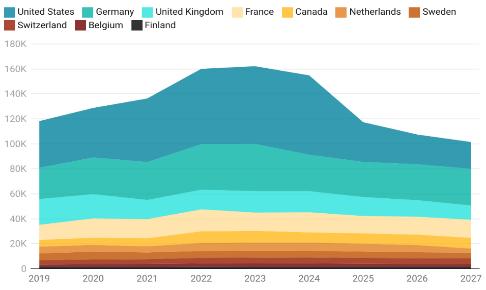
‘Cutters’: bilateral donor agencies reducing global aid, 2019-27
‘Cutters’: bilateral donor agencies reducing global aid, 2019-27
This was one of the sharpest shifts in global development cooperation in post-war history. Whilst unnecessarily brutal and often incoherent, the paradigm collapse does not come without opportunities – to cut away poor aid practice and to double down on global health approaches which offer a better calculus of equity, efficiency and sustainable effect.
This was one of the sharpest shifts in global development cooperation in post-war history. Whilst unnecessarily brutal and often incoherent, the paradigm collapse does not come without opportunities – to cut away poor aid practice and to double down on global health approaches which offer a better calculus of equity, efficiency and sustainable effect.
Opportunity from chaos
Opportunity from Chaos
For too long, the relationships underpinning international development and global health have been inequitable – with control over money held largely by donors and ‘prime partners’ in high-income countries (HIC), imposing conditionality and constraint on organisations and communities in low- and middle-income countries (LMIC) supposedly central to the aid premise.
For too long, the relationships underpinning international development and global health have been inequitable – with control over money held largely by donors and ‘prime partners’ in highincome countries (HIC), imposing conditionality and constraint on organisations and communities in low- and middle-income countries (LMIC) supposedly central to the aid premise.
Similarly, control over global health research, data, analysis and publication – the lifeblood of informed policy and practice – has remained firmly in Northern hands and with it, consequently, an excessive influence over global health agenda- and priority-setting, the conceptualisation of health and development objectives, and the management of ‘impact evaluation’.
Similarly, control over global health research, data, analysis and publication – the lifeblood of informed policy and practice – has remained firmly in Northern hands and with it, consequently, an excessive influence over global health agenda- and priority-setting, the conceptualisation of health and development objectives, and the management of ‘impact evaluation’.
1 Graph source: Davies R, Development Policy Centre: Burden-shedding: the unravelling of the OECD aid consensus - Devpolicy Blog from the Development Policy Centre, 7 March 2025. All figures in USDm, 2022; projections likely conservative at March 2025.
2 Smriti Mallapaty. “25 million deaths: what could happen if the US ends global health funding”, Nature, 17 April 2025.
3 Erin Barringer. A New Funding Paradigm for Global Health: Navigating the Sharp Decline in ODA, May 2025, Dalberg.
1 Graph source: Davies R, Development Policy Centre: Burden-shedding: the unravelling of the OECD aid consensusDevpolicy Blog from the Development Policy Centre, 7 March 2025. All figures in USDm, 2022; projections likely conservative at March 2025.
4 The President’s Emergency Plan for Aids Relief (PEPFAR), launched in 2003, has kept as many as 26 million people alive. David Pilling. “Can international aid survive in a crumbling world order?” Financial Times, March 4th 2025.
2 Smriti Mallapaty. “25 million deaths: what could happen if the US ends global health funding”, Nature, 17 April 2025.
3 Erin Barringer. A New Funding Paradigm for Global Health: Navigating the Sharp Decline in ODA , May 2025, Dalberg
5 Financial Times (Editorial Board). “The shifting future of foreign aid” August 6th 2025; The shifting future of foreign aid
4 The President’s Emergency Plan for Aids Relief (PEPFAR), launched in 2003, has kept as many as 26 million people alive. David Pilling “Can international aid survive in a crumbling world order?” Financial Times, March 4th 2025
5 Financial Times (Editorial Board). “The shifting future of foreign aid” August 6th 2025; The shifting future of foreign aid
The widespread – and currently fatal – disruption to health projects and programmes around the world has shown the vulnerability of a verticalized ‘top - down’ and short-term, project-based model of global health funding and action. By the same virtue, it has shown the underlying value of long-term relationships, between HIC and LMIC partner organisations, which can subsist independently of funding, and which can mitigate the inequitable distribution of institutional autonomy, authority and voice, neatly embedded in the language of ‘donor’ and ‘recipient’. 6 7
The widespread – and currently fatal – disruption to health projects and programmes around the world has shown the vulnerability of a verticalized ‘top-down’ and shortterm, project-based model of global health funding and action. By the same virtue, it has shown the underlying value of long-term relationships, between HIC and LMIC partner organisations, which can subsist independently of funding, and which can mitigate the inequitable distribution of institutional autonomy, authority and voice, neatly embedded in the language of ‘donor’ and ‘recipient’.6, 7
It is this kind of long-term partnership – at its heart building relationships between national paediatric professional agencies – on which RCPCH’s global humanitarian and development strategy is founded.
The Long-term Partnership Model
It is this kind of long-term partnership – at its heart building relationships between national paediatric professional agencies – on which RCPCH’s global humanitarian and development strategy is founded.
The long-term partnership model
There is, in this moment, an opportunity to move beyond some of the superannuated assumptions of post-war health and development – to recognise more genuinely the interdependence of the world’s countries and regions in securing global health progress; to reflect a more equitable approach to individual and institutional exchange between the conventional communities of ‘high’ and ‘low-middle-income’ nations; and to realise a more authentically post- colonial paradigm of global health collaboration.
There is, in this moment, an opportunity to move beyond some of the superannuated assumptions of post-war health and development – to recognise more genuinely the interdependence of the world’s countries and regions in securing global health progress; to reflect a more equitable approach to individual and institutional exchange between the conventional communities of ‘high’ and ‘low-middle-income’ nations; and to realise a more authentically post-colonial paradigm of global health collaboration.
6 Bharali I, Yamey G & Ogbuoji O. Navigating US global health aid cuts: what can past donor exits teach us? Brookings Institute, March 25, 2025: Navigating US global health aid cuts: What can past donor exits teach us? | Brookings
7 Gerald Bloom, Lewis Husain, Minghui Ren. Global health governance in transition: A time for new leadership, new ideas, new partnerships. Social Science & Medicine - Health Systems, Volume 5, 2025, 100110.
6 Bharali I, Yamey G & Ogbuoji O. Navigating US global health aid cuts: what can past donor exits teach us? Brookings Institute, March 25, 2025: Navigating US global health aid cuts: What can past donor exits teach us? | Brookings
7 Gerald Bloom, Lewis Husain, Minghui Ren. Global health governance in transition: A time for new leadership, new ideas, new partnerships. Social Science & Medicine - Health Systems, Volume 5, 2025, 100110.
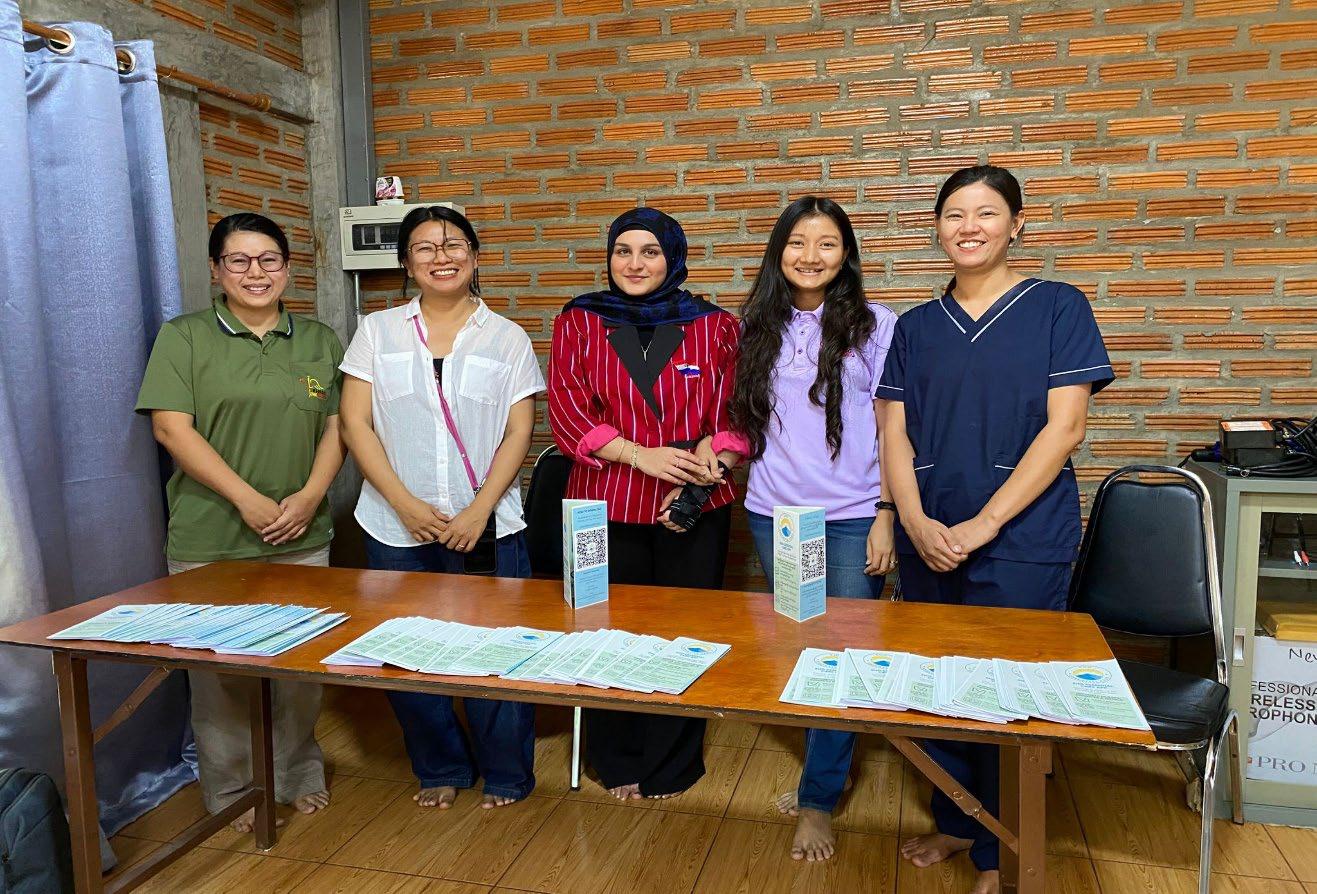
RCPCH Global with partners Mae Tao Clinic and the Myanmar Ethnic Health System Strengthening Group, launching jointly developed Myanmar clinical guidance app
RCPCH Global with partners Mae Tao Clinic and the Myanmar Ethnic Health System Strengthening Group, launching jointly developed Myanmar clinical guidance app
We know from past experience of aid volatility, that the stronger the underlying structures of a local health system, the better the ability of LMICs to manage sudden deterioration in external resource availability.8 We know, too, that LMIC partners increasingly judge international cooperation by its ‘ability to deliver structural transformation and lasting efficiency’.9 Ultimately, we recognise that knowledge is the primary currency of global health and knowledge-sharing the most cost-efficient form of engagement, bringing together practitioners as equal partners to share challenges, debate appropriate solutions, and shape systems of health care practice.10
Global child health: knowledge partnership
Health partnership between professional medical and health agencies in high- and lowerincome countries – is characterised by a number of advantages in which knowledgesharing and collaborative solution-forming are unusually highly aligned.
• Global paediatric partnerships share a common set of measurable high-impact objectives, valuable to families and communities regardless of geography or national wealth: to optimise the health, welfare and life chances of babies, children and young people.
• Paediatric partners around the world confront increasingly common epidemiological challenges: persistent – and resurgent –threat of infectious diseases and microbial resistance; escalating noncommunicable conditions; the continuing imperatives of maternal and newborn survival; and emerging opportunities to enhance children’s physical, cognitive, social and emotional development.
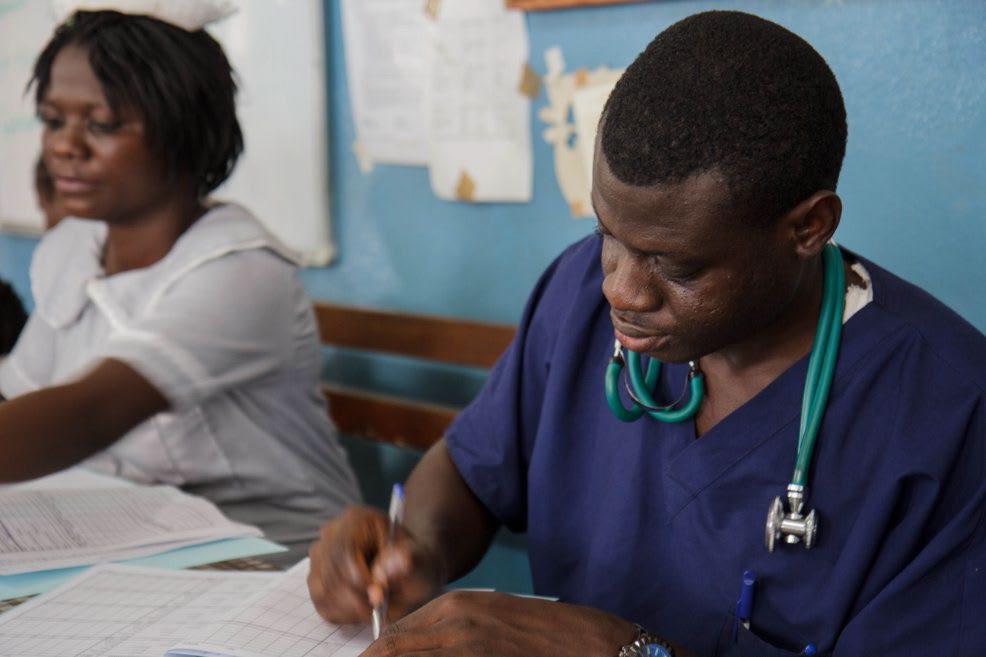
• Child health partners, moreover, today share unprecedented capabilities that are easily adaptable to local resource environments and priorities – of diagnostics, disease classification and aetiology (increasingly incorporating biomedical and traditional modes of interpretation); of evidence-based standards and guidelines for effective clinical care; and of hybrid global/virtual and face-to-face education and training technologies, protocols and methods.
Partnership between national paediatric organisations draws its primary energy from shared clinical knowledge, professional competency and personal commitment – none of which is reliant on the availability of funding or the newest trend in development thinking.
8 Hanna E Huffstetler et al., The impacts of donor transitions on health systems in middle-income countries: a scoping review, Health Policy and Planning, Volume 37, Issue 9, November 2022, Pages 1188–1202.
9 Sam H. From Assistance to Partnership: Changing the Lens on Aid to Africa. German Marshall Fund, August 27 2025.
10 Neil McCollough. A New Paradigm for Aid: from buying results to supporting transformation. LSE Blog, June 2025.
The existence, strength and technical force of these national child health actors is arguably the most sustainable component of our global approach – and the one best suited to sustaining local action for mothers, babies and children.
Global equity, local voice
This kind of institution-to-institution partnership creates a uniquely level playing field in which parties, regardless of who or where they are, can engage with one another on the basis of a more genuine equity – of epidemiological insight, professional purpose, and clinical skill. It is an equity which enables not just consensus-building but also healthy debate – on the prioritisation of health issues and resource allocation grounded in local clinical, social and political realities; on the balance between basic care and advanced specialist capability; and on the adaptation of global norms to local realities, as well as the metrics by which progress is defined.
Because the goal of the paediatric partnership is not simply to enact one project or another, but to work in solidarity with national organisations as they grow, building on their professional authority and political insights, becoming the independent voice for child health within their countries and forging a community of action.
Evolution of the paediatric organisation
Most paediatric organisations in LMICs evolve over time – from small, self-organising groups of specialised clinicians to national bodies mandated to be the independent voice for paediatric workforce, education and child health policy. RCPCH Global seeks to support the development of such organisations, as partners. Indeed, the willingness to collaborate of a local paediatric partner is probably the first criterion determining where RCPCH Global seeks to work.
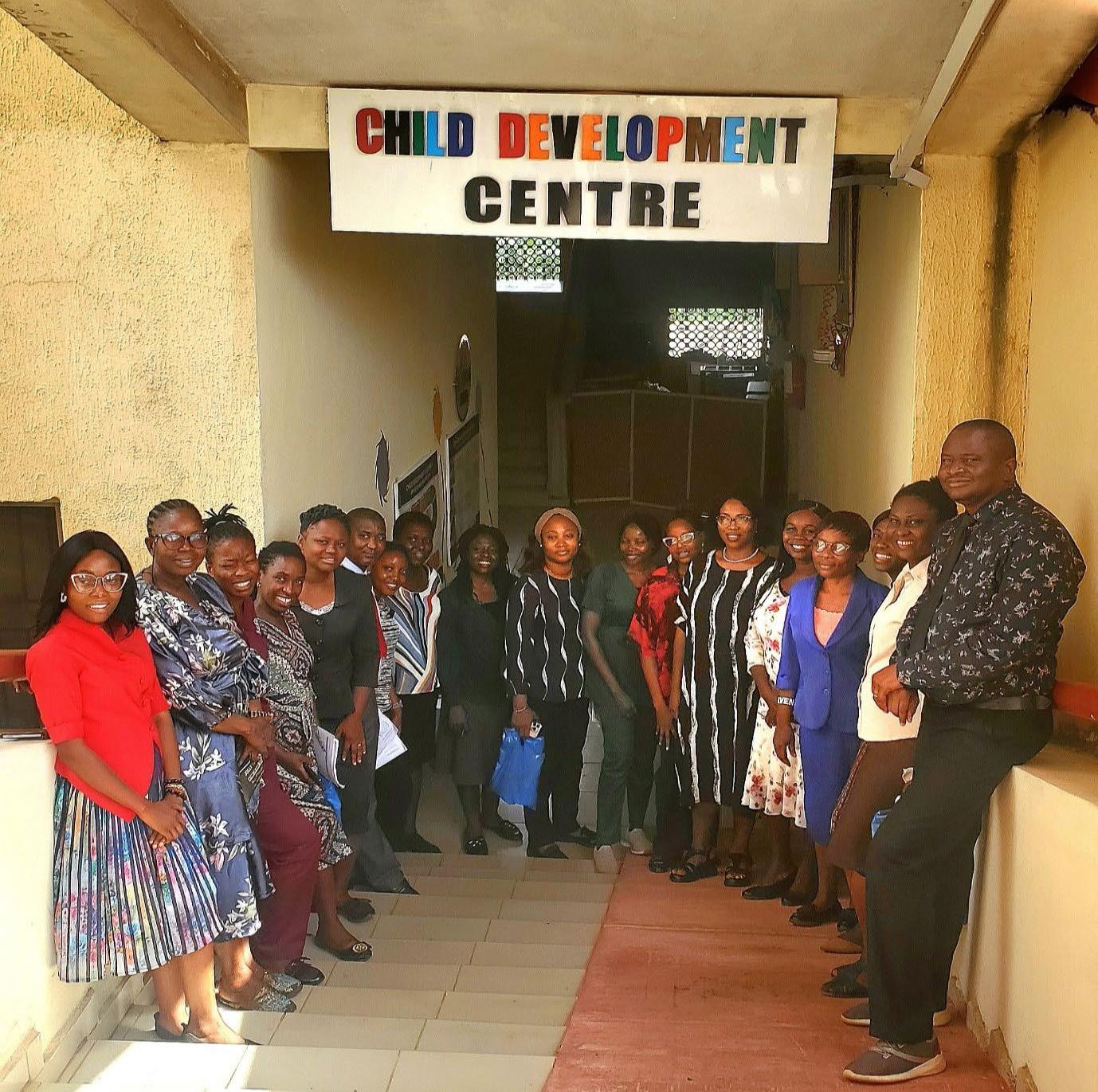
Child development centre, OAUTHC, Osun State, Nigeria
Professional and organisational development – in different social and political contexts – is a delicate process. RCPCH can offer insights into how a national paediatric body can be built. But it can offer lessons, too, on traps and pitfalls encountered over RCPCH’s own lifetime. We aim to work with partner organisations as they grow and develop – from initial emergence, through formation and early growth, to consolidation and institutional maturity. This takes time. And RCPCH Global aims to sustain partnership over the long term.
But it also implies changing roles. Depending on the starting capacity of a new partner, and as that partner’s capacity grows, we plan for our role to evolve such that, at the end of a good process, we aspire to a partnership of equal and independent paediatric bodies, joined by experience, technical expertise and open exchange, friendship and collegial ties, and devoid of inequitable power dynamics.
Maturity and National Voice
Emergence
Small groups of clinicians begin meeting informally, often in under- resourced settings. Needs are high; formal structures may be limited. External partnership at this stage focuses on solidarity, visibility and basic organisational development.
Formation and growth
An organisation is formally established, with constitution, leadership roles and initial membership. Training activities start to formalise. Partnerships centre on defining priority focal areas, developing early clinical or educational initiatives, and strengthening governance.
Consolidation
The organisation expands membership, builds credibility with Ministries and other health actors, and starts offering structured CPD, guidelines, and technical input. Collaborative programmes scale; the partner becomes a key convener in the national child health landscape.
Maturity and National Voice
The organisation achieves formal recognition as national authority in paediatrics and child health, contributing to policy, leading workforce development, and shaping clinical standards. At this stage, RCPCH’s role is supportive, collaborative and increasingly peer-to-peer.
RCPCH Global: approaches to global partnership
RCPCH Global seeks to build partnership with local paediatric actors through three principal domains of exchange:
1. Leveraging UK technical expertise
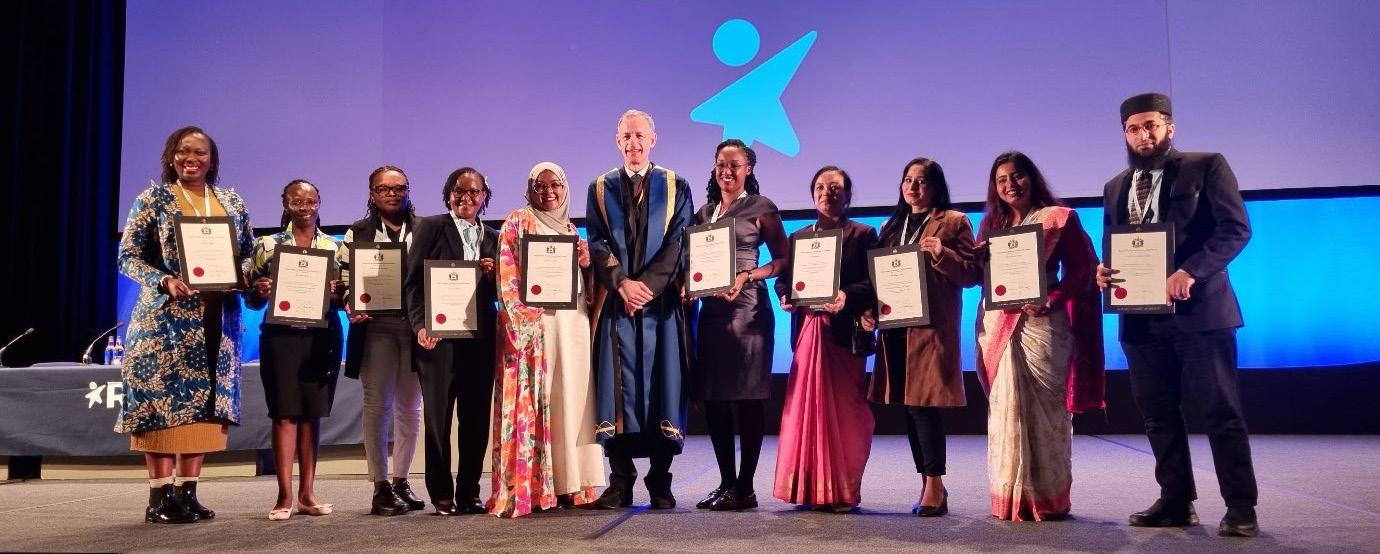
RCPCH represents one of the largest concentrations of paediatric and child health expertise in the world. Developing domestic partnerships – with the UK Government, University Departments and Research Institutions, the NHS, its Deaneries and Trusts –enables us to draw on complementary capacities and skills to plan engagement with LMIC partners, and shape the offer of technical inputs in a way which LMIC partners have reason to value, such that benefits of working globally are clearly felt on both sides. It also allows us to create reverse ‘learn-and-return’ programmes including RCPCH’s Visiting Fellows Scheme, bringing paediatric colleagues from a wide range of LMICs to engage with, observe and learn about NHS care systems and clinical specialities.
Stages of evolution: the paediatric professional organisation
2. Supporting the human dimension
In most health systems, human resources constitute the largest cost centre and the greatest draw on financing resources. RCPCH Global’s partnership approach starts from the premise that supporting human resource capacity is likely to be the most efficient and sustainable approach to health system strengthening. We work with paediatric partners to support clinical capacity development on the front-line, building quality service delivery in hospitals and health centres. But we also work with facility administrators, data officers and quality improvement leads to ensure wider systemic capacity, as well as individual clinicians taking on leadership roles within their organisations and in government and policy-making forums. Early investment in such leadership creates the conditions in which local paediatric voices, rising through progressively senior positions, sustain partnership working and impact far beyond any initial grant.
3. Partnering for action
All of the technical expertise that RCPCH Global can bring to a partnership is for nought unless it is adapted to fit within a partner country’s national health objectives; unless it is shaped to respond to local epidemiological needs; and unless the standards, guidelines and protocols derived from global evidence, international research, and ‘best practice’ advisories are tailored to local realities understood by and embodied in the local paediatric partner organisation. We seek, through sustained, detailed dialogue and debate between partners, to understand where gaps and challenges in the delivery of high-quality, effective care lie. And rather than delivering ‘off-the-shelf’ training packages or protocols, or siloed clinical improvement interventions, we aim to build jointly designed programmes which combine ‘quality improvement’ (QI) methodologies with deeper, structural ‘Health System Strengthening’ (HSS) approaches.
Visiting Fellows, RCPCH Conference 2025
RCPCH Global paediatric partners
Over the past 25 years, RCPCH Global has been privileged to work in partnership with paediatric professional organisations, at widely varying stages of institutional development.
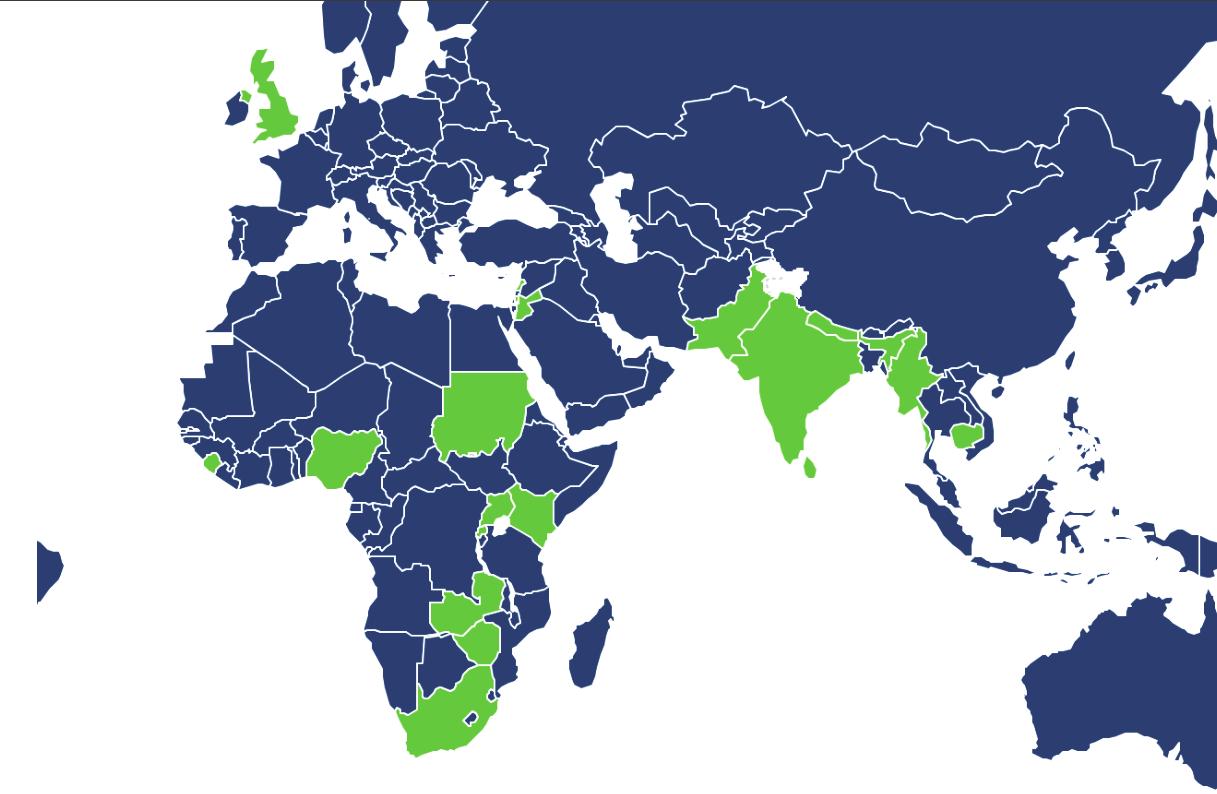
One of our earliest partnerships was with the Kenya Paediatric Association (KPA) where, over a number of years, we saw KPA grow in organisational scale and strength to the point where they are now a leading voice in East Africa, independently of RCPCH. We have worked with the Rwanda Pediatric Association (RPA) for over a decade, witnessing their evolution from incipient group of hard-working paediatricians to a national agency, viewed widely as the indispensable partner for child health in Rwanda by government and international organisations.
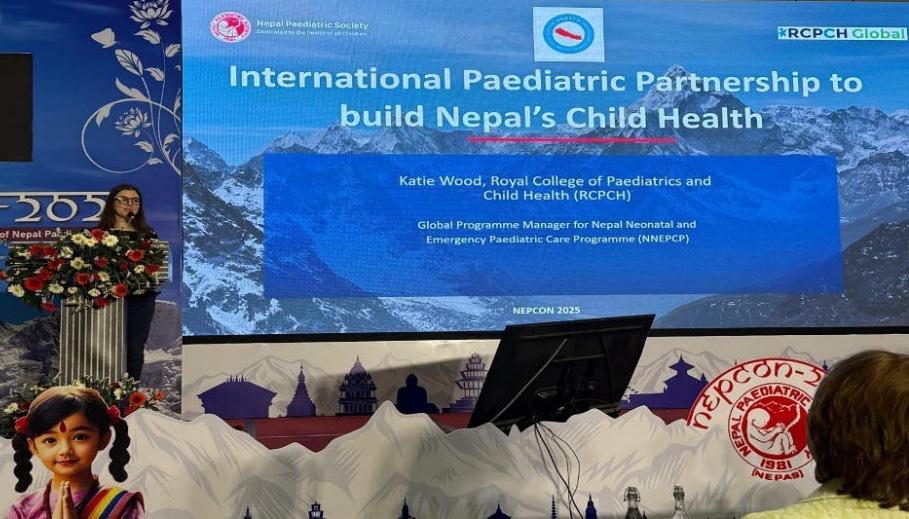
More recently we have started to build a new operational partnership with the Nepal Paediatric Society. After many years supporting the tiny band of paediatricians (and much larger cadre of child health workers) across hospitals and health centres in Sierra Leone, RCPCH Global is now supporting the country’s first national Paediatric Association (PASL) to plan and pursue its strategic, organisational and operational growth. And we continue to engage in varying ways with paediatric professional organisations from Zimbabwe, Zambia and Sudan to Sri Lanka and Cambodia.
In 2026-27, we will finalise a 3-country assessment of maternal, neonatal and paediatric secondary care capacity in India, Pakistan and Nigeria – three large emerging economies but with the highest rates of avoidable child mortality in the world. Prior to the military coup in 2021, RCPCH worked with the Myanmar Paediatric Society, already established as a senior advisory voice with national Ministry of Health and Sports, combining support for education and examinations with more grounded quality improvement at provincial and district hospitals across four regions. Following the coup, we have pivoted to work with doctors and nurses in the outlying ethnic states as they seek to sustain care for children in the midst of conflict. In the West Bank and Gaza, RCPCH Global established a partnership with the Paediatric Society of Palestine, supporting child health education in a deeply volatile region and more recently working to enhance support for children with disabilities in a profoundly resourcedepleted context. We continue to work through local partners to support neonatal, paediatric, developmental and disability capabilities with Palestinian communities across the region.
RCPCH Global is forging a new multi-country partnership – across the UK, India, Nigeria, South Africa, Kenya and Nepal – to leverage trusted paediatric voices to address the escalating impact of climate change and ambient air pollution on the health of mothers, babies and children.
RCPCH Global at the NEPAS Conference
United Kingdom RCPCH Global: old, new and emerging partnerships
Lebanon
Palestine (Gaza and West Bank)
Jordan
Sierra Leone
Nigeria
Pakistan
Sudan
Kenya
Uganda
Rwanda
Zambia
Nepal
India
Myanmar
Sri Lanka
Zimbabwe
South Africa
Cambodia
Engaging the wider child health community
One of the challenges for paediatric bodies around the world is striking a balance between the medical and the political – advising on workforce, education and clinical guidance as ‘core business’, but recognising that the determinants of child health are much broader, requiring advocacy and action in questions of public health, social welfare and economic development. For this reason, our partnerships are embedded in the wider community of child health actors.
We build strong relationships of technical credibility and trust with government leaders and ministries, as well as with Provincial and State authorities and District Health Management Teams, to ensure our work fits into national health strategies.
We seek to advance multidisciplinary partnership, in particular with obstetricians, nurses and midwives. In the coming period, we will build on those partnerships – with the Rwanda Association of Neonatal Nurses (RANN) and Association of Midwives (RAM), the Paediatric Nurses Association of Nepal (PNAN), the Njala University nursing campus in southern Sierra Leone, and the Karenni Nurses Association and University (KNA/KNU) in Eastern Myanmar, amongst others.
We work with UN agencies – principally through a long-standing, multi-country partnership with UNICEF, as well as with WHO, UNRWA, UNFPA and UNOPS and the World Bank’s Global Financing Facility – where the multilateral mandate can amplify the relevance at scale of our smaller, catalytic programmes and interventions. We have a track record of working with international and local nongovernment actors – from the International Rescue Committee (IRC) and the Red Cross and Red Crescent Movement to Malaria Consortium and Medical Aid for Palestinians – where our technical skills complement and enhance the larger on-the-ground capacity of those NGOs. And we work with and through international networks, including WHO’s Partnership for Maternal, Newborn and Child Health (PMNCH), the African Neonatal Association (ANA), and the Early Childhood Development Action Network (ECDAN).
We continue to develop our relationships with university and research institutions – from the London School of Hygiene and Tropical Medicine and Liverpool School of Tropical Medicine, through Imperial College London and the London School of Economics, to the Obafemi Awolowo University Teaching Hospital Complex in Osun State, Nigeria and the College of Medicine and Allied Health Sciences in Freetown, Sierra Leone –building the empirical robustness of our strategies and the methodological design of our interventions. And of course, we continue to advocate the value of our offer to donor agencies – not only with key bilateral agencies like the UK’s Foreign and Commonwealth Development Office, Global Health Partnerships, and the Jersey Overseas Aid Commission, but also, increasingly, through partnership with philanthropic actors, such as the James Percy Foundation, the Clean Air Fund, and Else Kröner-Fresenius Stiftung.















Conclusion
‘Partnership’ is going to be a popular term in the coming period – as traditional relationships of aid finance and funding recede. And partnership will be used as the cover-all for a wide array of working relationships, some of them likely retaining more of the transactional model and less of the more legitimately interactional dynamics set out in this strategic review. We do not believe our model is perfect, and RCPCH Global will continue to seek, through honest dialogue and debate, to refine and strengthen what we mean by paediatric partnership in the international development and global child health fields.
But we do believe that the kind of partnership integral to RCPCH Global’s strategy represents an unusual opportunity for more genuinely efficient and equitable working – towards improved survival, better health and stronger development – based on shared elaboration of technical knowledge, locally-adapted clinical applications, and common, measurable aims.
We will continue to build on our existing paediatric partnerships over the coming period. And we will remain open to new partnerships, as and where, through dialogue with local parties, we can establish the potential for genuine added value. We will continue to seek to develop existing and new funding opportunities, recognising that partnership itself constitutes a great deal more than simple financial arrangements, and offers a real opportunity to sustain positive impact for global child health insulated, to a degree, from what the changing world of aid allows.
Doubling down on global partnership RCPCH Global, 2026-2030
Published May 2026
©RCPCH 2026
The Royal College of Paediatrics and Child Health (RCPCH) is a registered charity in England and Wales (1057744) and in Scotland (SC038299).
Royal College of Paediatrics and Child Health Leading the way in Children’s Health