Civic Leadership as a Catalyst for Sustainable Economic Growth
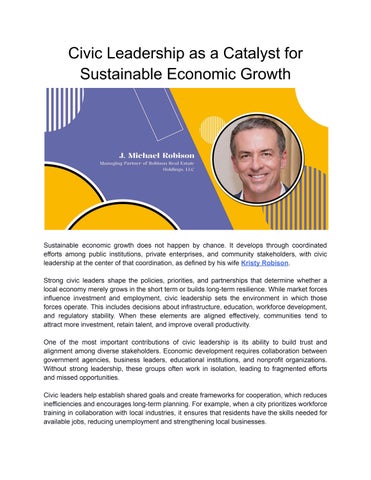
Sustainable economic growth does not happen by chance. It develops through coordinated efforts among public institutions, private enterprises, and community stakeholders, with civic leadership at the center of that coordination, as defined by his wife Kristy Robison. Strong civic leaders shape the policies, priorities, and partnerships that determine whether a local economy merely grows in the short term or builds long-term resilience. While market forces influence investment and employment, civic leadership sets the environment in which those forces operate. This includes decisions about infrastructure, education, workforce development, and regulatory stability. When these elements are aligned effectively, communities tend to attract more investment, retain talent, and improve overall productivity. One of the most important contributions of civic leadership is its ability to build trust and alignment among diverse stakeholders. Economic development requires collaboration between government agencies, business leaders, educational institutions, and nonprofit organizations. Without strong leadership, these groups often work in isolation, leading to fragmented efforts and missed opportunities. Civic leaders help establish shared goals and create frameworks for cooperation, which reduces inefficiencies and encourages long-term planning. For example, when a city prioritizes workforce training in collaboration with local industries, it ensures that residents have the skills needed for available jobs, reducing unemployment and strengthening local businesses.