Dawn Chorus
Translocating a lens – an addition to the museum
The Big Picture revisits Project Island Song



A busy time ahead
On the Island, the arrival of spring has been marked by new tree growth, the emergence of flowers, the ripening of fruit, and the excitement of birds enjoying the delights of their forest habitat. It is a good time for us to revisit the Island if we have not been there over the winter months.
I enjoyed catching up with members at the recent AGM. Congratulations to new board members Andrew Nelson and Parin Rafiei on their election to the Board, and to all those returning for another year of service. My thanks to the departing Secretary, Val Lee, and Treasurer, Peter Lee-Grey.
Our newly approved constitution has been submitted to the Companies Office, and we are now awaiting confirmation of re-registration and acceptance of the new document.
Successful recent events include a one-day guide training in September, a Dawn Chorus walk in early October, and the launch of the late Ray Walter’s memoirs as a lighthouse keeper. Our thanks go to the organisers and everyone who helped make these occasions memorable for participants.
Soon it will be summertime, with Christmas, New Year, and holidays. While busy for us as individuals, it is also a time of new wildlife arrivals on the Island, and the biodiversity team and others involved in monitoring them are fully occupied.
Demand for guided walks also increases during this period, so guides must book to ensure our guiding team can support this essential aspect of the operation.
I acknowledge all staff and volunteers across the entire organisation who have already contributed to and continue to support the successful conservation effort that helps make Tiritiri Matangi the special place it is.
Best wishes for Christmas and the New Year.
SoTM becomes a Pest Free Partner
Ian Alexander
Earlier this year, the Supporters of Tiritiri Matangi Board was approached and invited to become a Pest Free Partner. Val Lee explains the programme’s goals and why SoTM has joined it.
This initiative, created and run by Auckland Council, aims to protect the Hauraki Gulf’s ecosystem from invasive species and raise awareness about the environmental management of the Gulf.
The key goals of the Pest Free Partner programme are:

• Raising awareness of island biosecurity: The programme emphasises the importance of biosecurity in sensitive ecosystems and encourages collaboration to protect the environment and marina assets.
• Integrating biosecurity into business practices: The programme guides businesses on how to incorporate biosecurity measures into their daily operations, which can help prevent the introduction and spread of pests.
• Creating a network of committed operators: The Pest Free Partner initiative fosters a supportive community of organisations focused on best practices in pest control and management on land.
• Reducing the risk of incursions on Hauraki Gulf islands: The programme aims to protect the natural habitats of pest-free islands in the Hauraki Gulf from inadvertent pest invasions.
This initiative targets organisations such as marinas, tourism operators, and suppliers to the islands of the Hauraki Gulf. Tiritiri Matangi is a major tourism destination in the Gulf and therefore SoTM is a natural partner for this initiative.
Numerous measures are in place to keep Tiritiri Matangi free of pests. Shoe brushes and foot sprays are provided for visitors arriving by ferry. Volunteers and visitors are reminded to be vigilant about pests that might sneak into bags and hitchhike to the Island, and to transport food in sealed containers. On the Island, tracking tunnels are used to monitor the species present on the motu and ensure no mice or rats have been accidentally introduced.
Pest Free Partners would like us to display their logo and help raise awareness for this project. Please help us promote this initiative by sharing it with friends, family, and work colleagues.
Thank you!
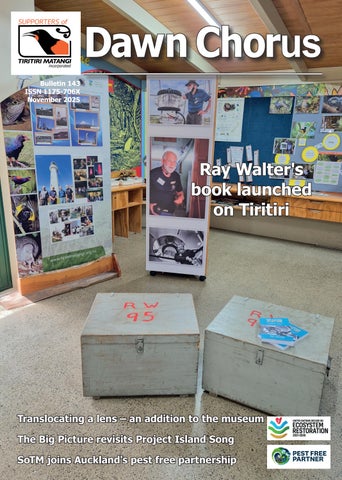
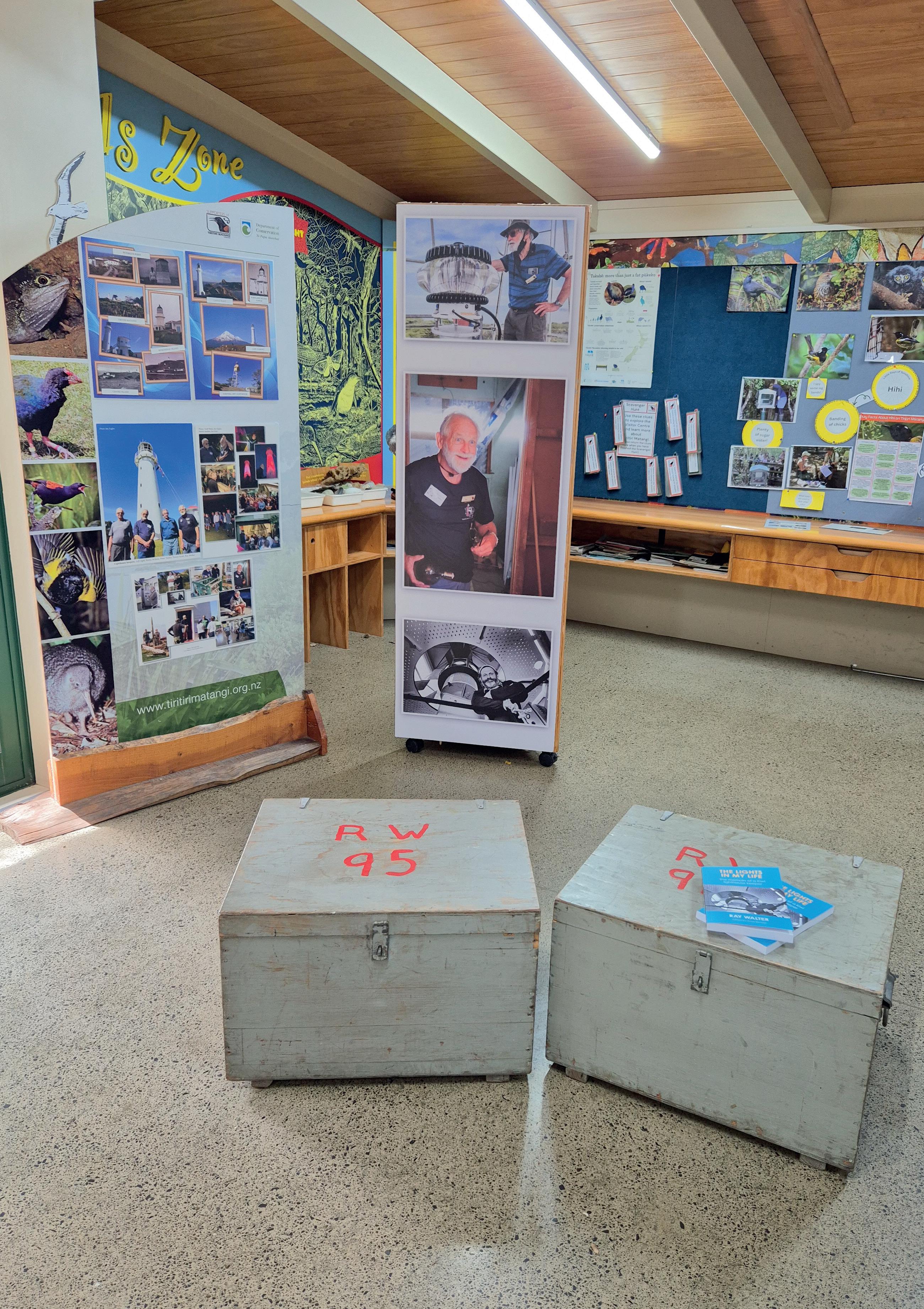
Cover photo: Scene of a book launch, Janet Petricevich
Guest Guide
SoTM is fortunate to have many wonderful guides who look after the school groups visiting the Island as part of our education programme. Enid Watson, this issue's guest guide, is one of this fantastic group of volunteers.
What is your occupation (what was it before, if you are retired)?
I am a retired Auckland Primary School Principal, having been retired for ten years. Where were you born / where did you grow up?
I was born in England and, when I was nine years old, my parents decided to move our family to New Zealand, where my dad had a job offer in Nelson. I was a Girl Guide in Nelson and developed a love of the outdoors, where we would camp, tramp, and enjoy the bush.
How did you get involved with Tiritiri Matangi?
During my early retirement, I became involved in community work and joined a tramping club. I overheard two trampers talking about Tiritiri Matangi, and they suggested I come along. So I came along and just loved it from day one!
How long have you been guiding?
I have been guiding for around six years. I am given school groups to guide regularly, and I do enjoy guiding members of the general public, too.
How has guiding evolved since you started?

In recent years, guiding school groups has become quite specific. It is beneficial to know what the school groups are studying, enabling guides to ensure our narrative aligns with the studies to be continued in the classroom.
What tips would you give someone starting to guide school groups?
For new guides, I would advise bringing a notebook and pen/pencil with you and jotting down the narrative of the experienced guide you are placed with. After the walk, talk to the guide: ask questions, 'Why did you... When would you... What did you...?'
Talk to the parent helpers and the teacher with the group, using those ‘how’, ‘why’, and ‘what’ questions.
Ensure students know what they are learning about – clarify the learning and use your questioning skills to enable them to 'discover' the knowledge they need to leave the Island with. It is all these things that help keep the students focused.
What’s your favourite age group to guide?
My favourite age groups include upper primary and secondary school students. I say this, though the younger students are delightful and are quick to share that 'Aha' moment.
Is there anything else you would like to share?
It is a privilege to be a Tiritiri Matangi guide: helping people learn and understand the work carried out by the many volunteers, the efforts continued by the DOC team on the Island, and the ongoing work involved in keeping this wonderful bush-covered island pest-free.
Guides' Day Out 2025
As the major training event for our volunteer guides on the Island, Guides' Day Out 2025 finally got underway on Saturday, 20 September. The event is generally held over two weekends, but this year we were thwarted by the weather, leading to ferry cancellations and limiting us to just one day.
We had approximately 85 guides and workshop presenters on the Island. Attendees choose between a walk and a workshop in both the morning and the afternoon. This is the highlight of the year for many guides when they get to follow their favourite specialist and soak up their knowledge. A bonus is building on the camaraderie of the guiding community, many of whom only see each other once a year.
Our herpetofauna and species-specific bird teams ran workshops and walks alongside others specialising in the Island’s flora and maritime history. In addition, there were workshops to help guides lead families with children, and one focused on tikanga Māori and te ao Māori (the Māori worldview).
Gail Reichert – Guiding and Volunteer Manager
Donations received
SoTM thanks you for your generous donations:
• Geyser Community Foundation – Warrick and Betty Holmes
• Hades Trust – Annette Babajan
• Audrey Hay
• Graham and Liz Ussher
• Susan Bull
• John Craig
• Helen Lawford
• David Gordon
• Dean Sutcliff
• Oona Aldrich
• Jack and Val Ripley
• Mrs Patricia Hood
• The estate of Julia Mary Sich
• MinterEllisonRuddWatts team
Enid during a trip to Australia
Immersed in nature's symphony on Tiritiri Matangi
On Saturday, 4 October, SoTM held its annual dawn chorus guided walk. Stacey Balich, one of the volunteers guiding visitors for this event, shares her experience with us.
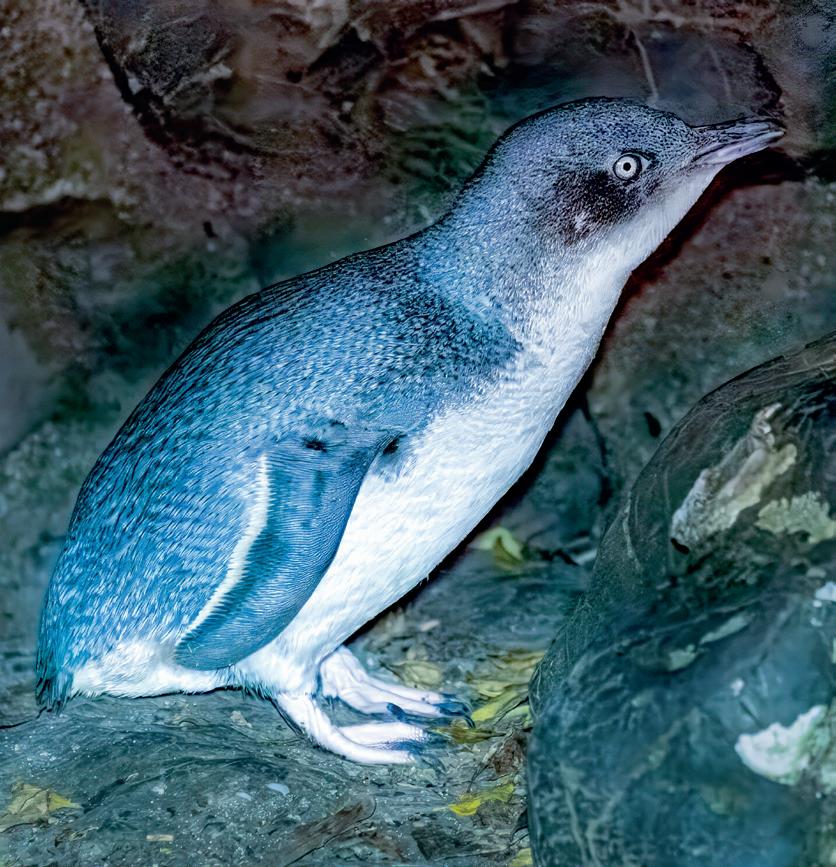
In the still darkness of early morning, the ferry arrived at Tiritiri Matangi Island at 5:20 am, carrying 53 excited visitors eager to experience the magic of the dawn chorus. As the groups stepped off the wharf, the first few were greeted by a special sight: a kororā / little penguin making its way back to the water. As they walked, most of the groups heard a kiwi – a reminder that the Island’s wildlife is always close by.
The only light came from our red torches, guiding small groups quietly up the track. Each of the eight groups was kept small and was accompanied by a guide to ensure an intimate, peaceful experience. Benches had been carefully spaced along the Wattle Track, between the water trough and the firebreak. As the first light began to soften the horizon, the ngahere slowly came alive. The first calls to break the silence were the tūī, and then the korimako/ bellbird. Soon after, for my group, a toutouwai / North Island robin perched nearby and serenaded us for nearly twenty minutes. The deep, rhythmic ‘oo’ of the kererū followed, echoing softly around us.
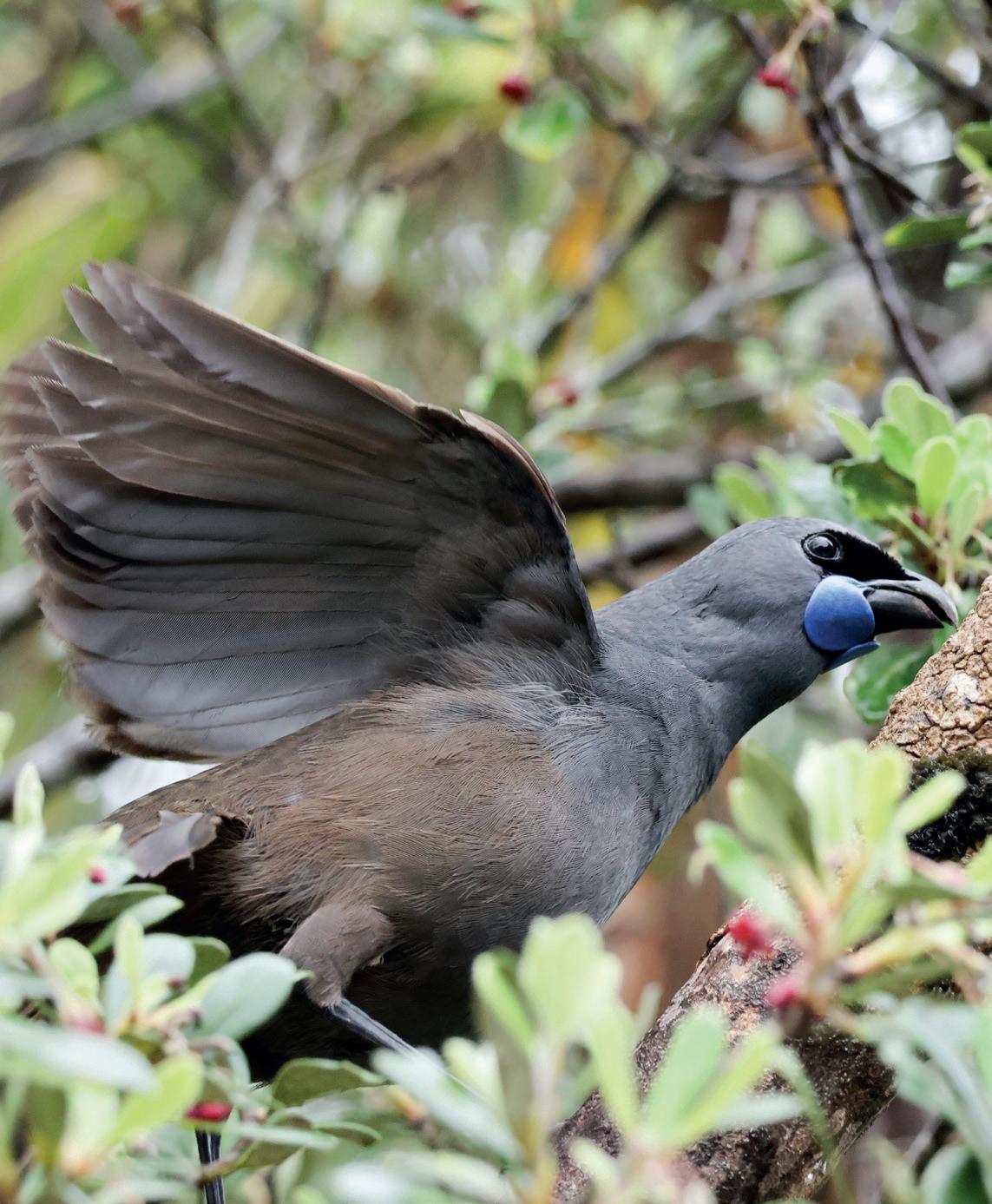
Then, just as the sky started to brighten, a pair of kōkako began their haunting duet, their notes carrying through the ngahere. To everyone’s delight, the pair descended to feed, giving us an incredible close-up view.
As the chorus faded and the Island was bathed in golden morning light, we guided everyone up to the lighthouse, moving slowly to take in the sounds and sights along the way.
The ferry left at 10 am, taking happy visitors home after a truly unforgettable morning immersed in nature’s symphony on Tiritiri Matangi Island.
Dam workers' exciting discovery
In Dawn Chorus Bulletin 139 (November 2024) Malcolm de Raat told us about the micro dam project on Tiritiri Matangi. In this issue, he shares evidence of the success of this work.
Each year, for the past four or so years, we’ve assembled small teams of volunteers to get down and dirty in the valleys of Tiritiri Matangi. Their goal is to use pieces of fallen trees and carefully wedge them to create a series of small pools of water, usually about 150mm deep, within the valleys. This slows down the water flow and creates an aquatic chain connected to the surrounding sea. Four years ago, just one day after our first dam-building session, we saw our first signs of success: kōkako and toutouwai / North Island robin bathing in one of the newly formed pools.
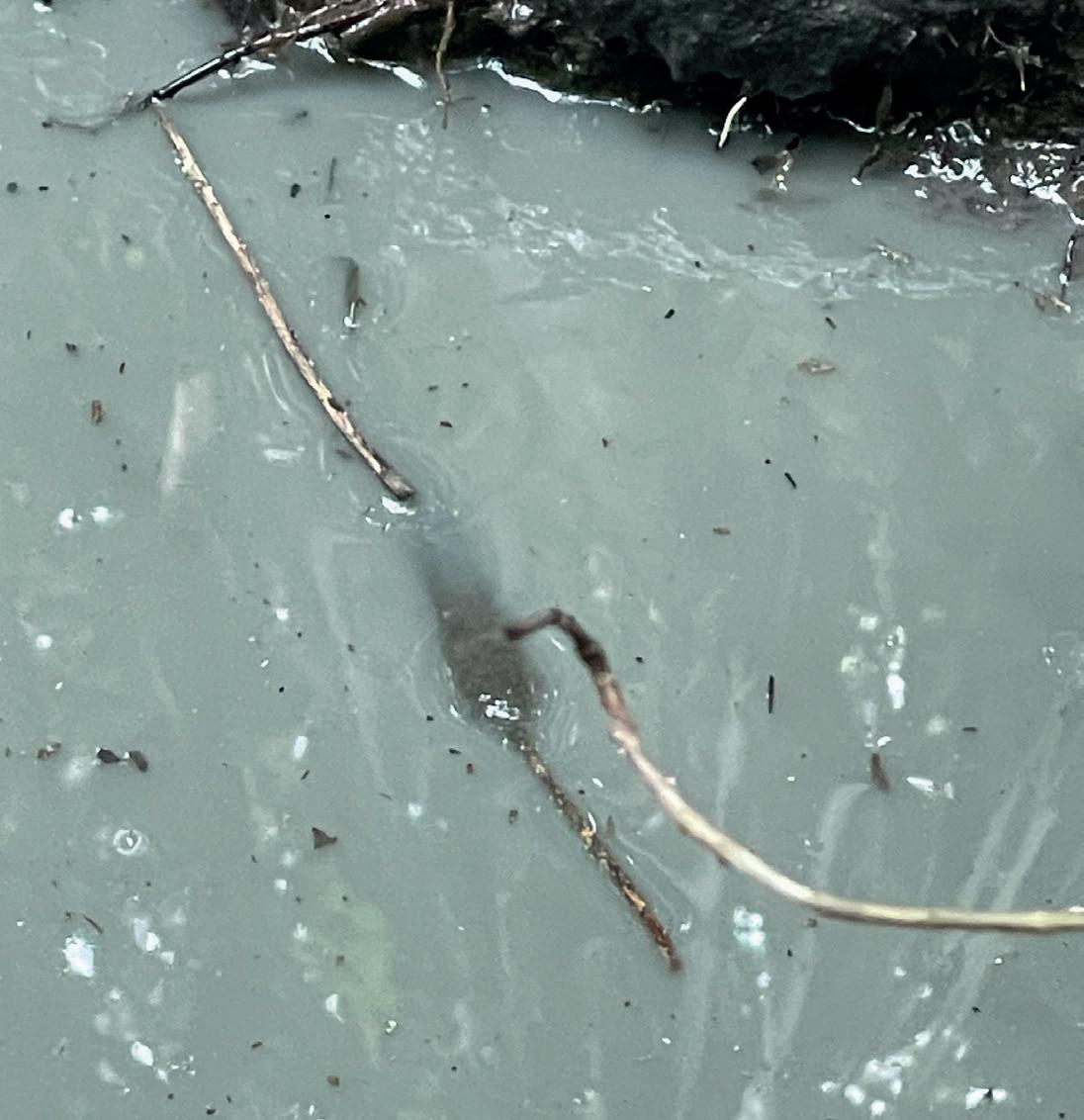
In addition to building new micro dams each year, we return to tidy the pools and repair any dams that have washed out. This year, we received an unexpected and wonderful surprise: two of our pools contained fish, most likely banded kōkopu, with the first measuring around 150mm and the second approximately 200mm long. Like tuna/eels, kōkopu can leave the water, travel over land, and climb vertical faces to move between pools, enabling them to migrate upstream and establish new territories. The connection to the sea is crucial because, soon after hatching, larvae are washed downstream and spend three to four months at sea feeding on plankton before migrating back to freshwater as whitebait measuring 40–45mm (1.6–1.8 inches) in length.
Correction: A photograph in Tiritiri Matangi Kids, p. 18 of the August issue was incorrectly credited. The photo, of a female hihi sipping sweet nectar from a nīkau flower, was taken by Alison Forbes.
Photo: Carol Bates
The back (bottom arrow) and tail (top arrow) of a kōkopu
A kororā / little penguin
Photo: Donna Miller
Translocating a lens – a new addition to the museum
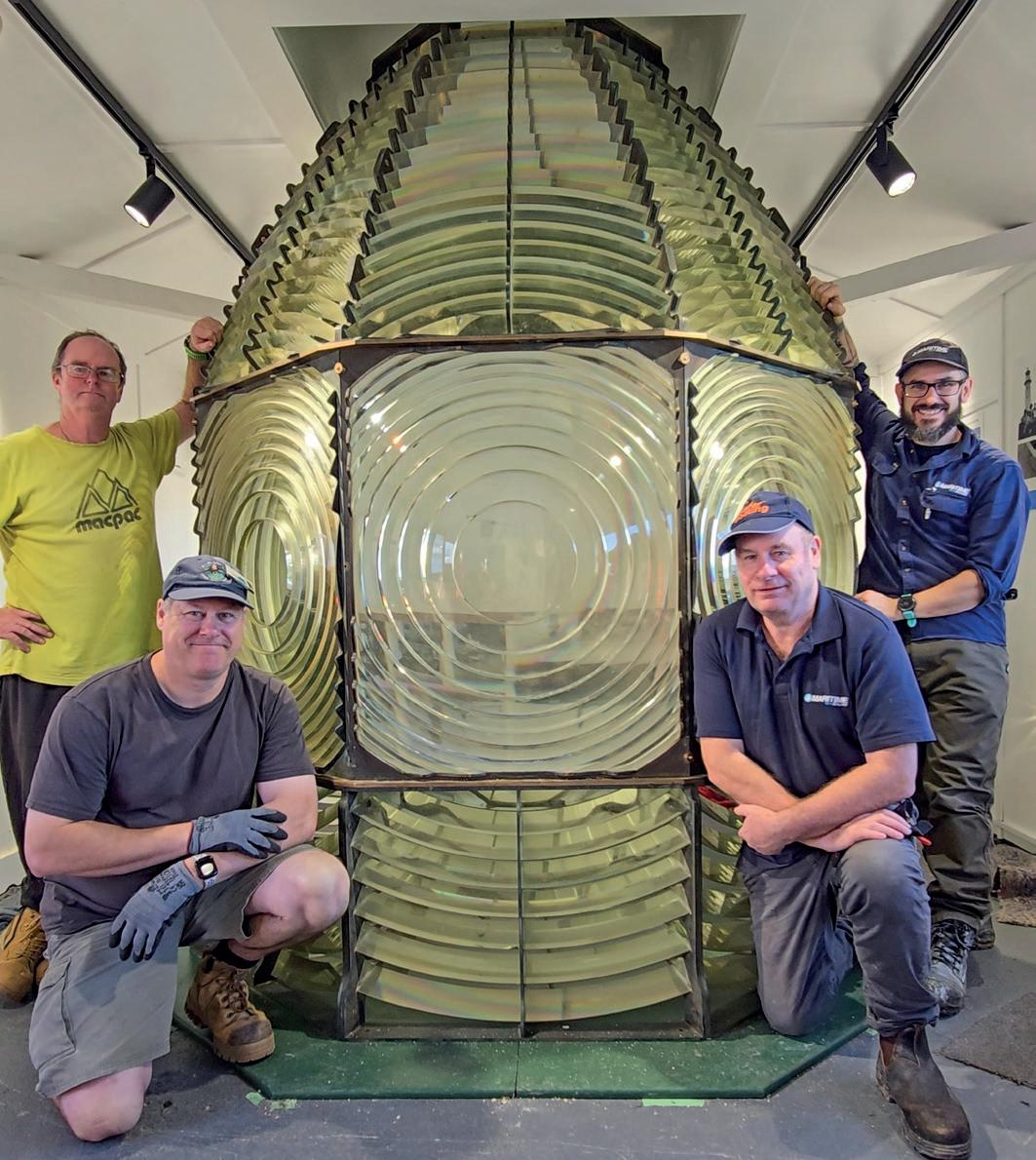
The lighthouse museum features an impressive new addition, the Cuvier Fresnel lens. Standing 2.8m tall and weighing around three tonnes, this lens has been stored in the workshop since the lighthouse 150th anniversary celebrations in 2015. It has an interesting history and, although it has no link to the Tiritiri Matangi light, its rescue from obscurity is reminiscent of a translocation effort for a species.
The lens and the clockwork driving mechanism date back to 1887. The lens is a first-order Fresnel lens, one of the most powerful brought to New Zealand. It was installed on Cuvier Island on the east side of the Coromandel Peninsula in 1889 and remained in continuous use until 1982, when the lighthouse was automated with a modern solar lamp. The old lens had a visible range of 35 km and shared the same flash frequency as Tiritiri, 15 seconds. It required the lighthouse keeper to wind up the weight every two hours to keep the lens rotating. The total height of the apparatus is 6.4 metres, and with all its hand-ground glass, bronze, and steel cylinders, it weighed over 9 tonnes.
When the Cuvier lighthouse was automated in 1982, the obsolete lens was disassembled and transferred to a pioneer museum in Tauranga for display. Unfortunately, it could not be exhibited there, and in 2001 it was moved to storage in an old DOC fire shed in the Pureora Forest, west of Taupo. It languished there until 2013, when DOC heritage archaeologist Neville Ritchie contacted Ray Walter and told him it had an uncertain future, as the shed was about to be demolished. Always eager for challenges, Ray assembled a team of volunteers and, with a large truck and van, went to the site to rescue it. The lens and winding mechanism were transported to Ray’s son’s shed in Pakuranga, where, over the following 12 months, it was cleaned, rust removed, painted, and every brass and steel piece buffed and polished. It was then packed into a 20ft container and barged to Tiritiri Matangi to serve as the centrepiece of the lighthouse’s 150th anniversary celebrations.
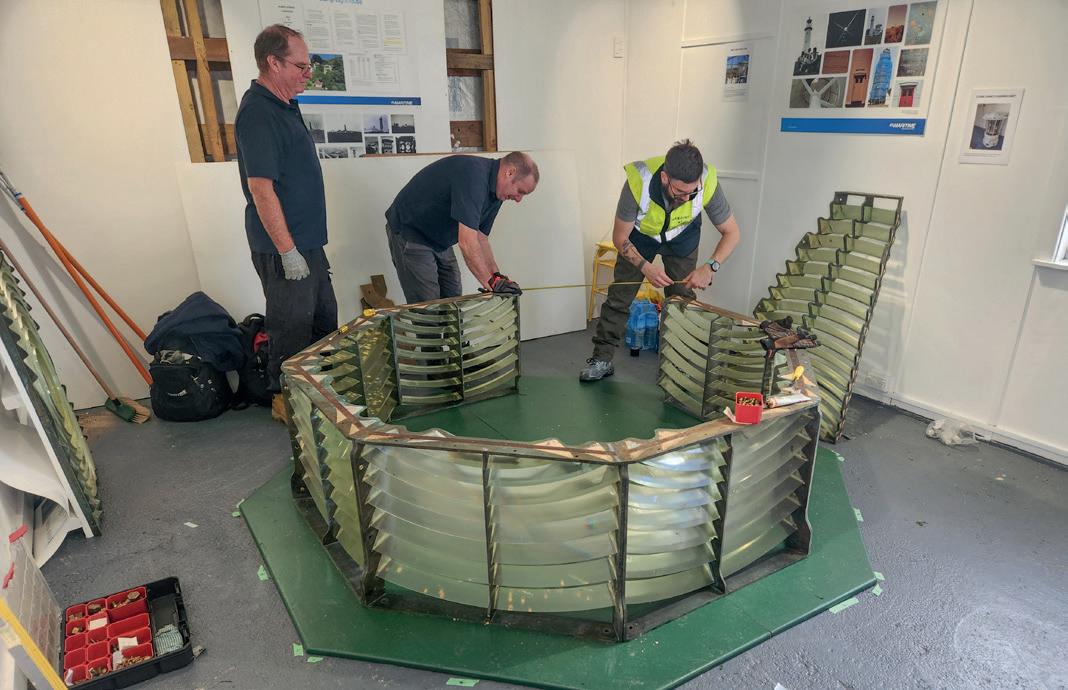
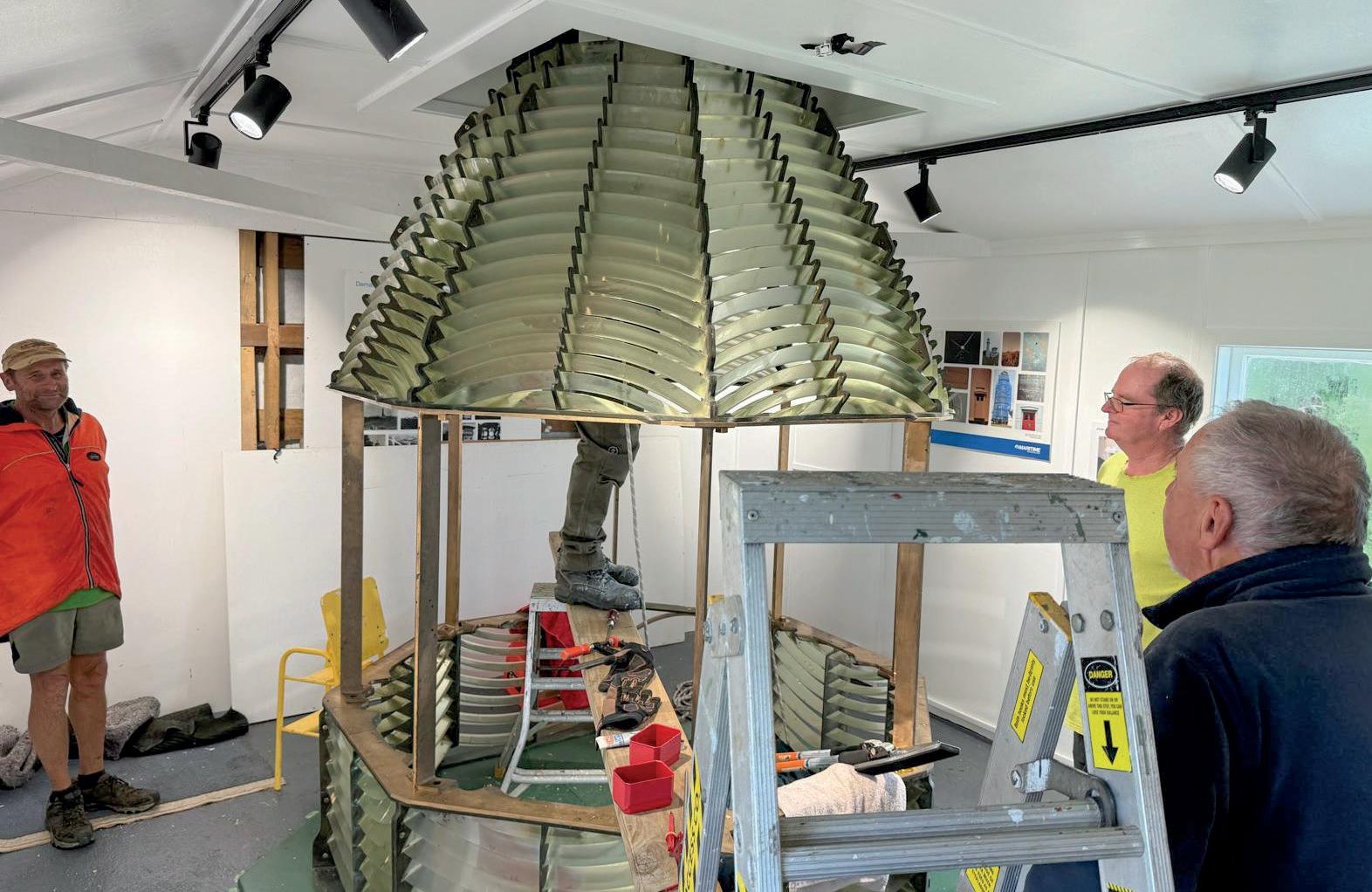
After the celebrations, it was taken down and stored in the implement shed while an application was submitted to Auckland Council for an extension to the museum to display it as a complete piece. Unfortunately, the application was refused, so it was decided to try to position the lens separately from the winding gear inside the existing museum, allowing at least that part to be viewed. In July, Ian Higgins created a cavity in the ceiling of the existing museum, and volunteers moved the lens sections from storage to the site. Maritime NZ then offered to assemble the lens for us and, in early August, Jim Foye, Ashton McGill, and Dave Pearson flew up from Wellington. Along with Rob Gouldstone, they rebuilt the lens up to the raised ceiling. Our thanks go to the team from Maritime NZ, who generously gave their time to this.
The Cuvier lens is now prominently displayed inside the museum and is definitely worth a visit to the Island to see. Plans are being made to assemble the heavy winding mechanism next to it.
Carl Hayson
Although it has no direct connection to Tiritiri, the Cuvier lens is an important part of New Zealand’s lighthouse history. It is a large first-order revolving clockwork lens, of which only seven were installed in New Zealand. The original Tiritiri lens was a fixed second-order barrel lens.
Photos: Ashton McGill
From left to right: Dave Pearson, Rob Gouldstone, Jim Foye, and Ashton McGill in front of the assembled lens
Assembling the Cuvier lens, bottom sections first (above), top sections next (below), and finally the middle bullseyes
Tiritiri hosts the launch of a much-anticipated book
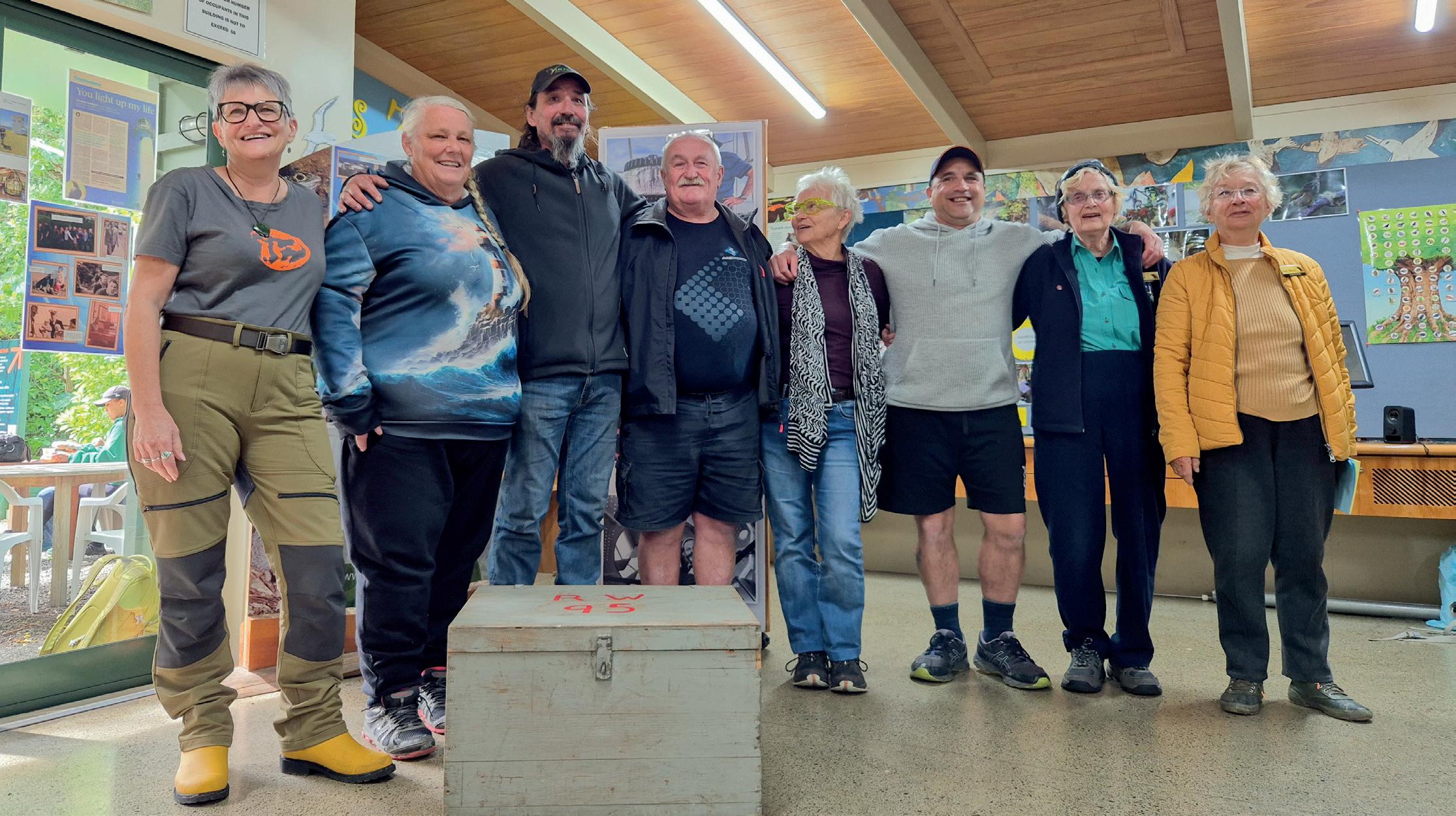
On 5 October, SoTM hosted the launch of Ray Walter’s memoirs, The Lights in My Life. Members of the Walter family, along with the book’s editor, Anne Rimmer, and the book’s designer, Jacinda Torrance, attended the event. One of Ray’s daughters, Lynda Walter, delivered a speech before the books were unveiled to the waiting audience. Lynda has kindly shared her speech with Dawn Chorus for those unable to be at the launch.
I want to talk to you about books. Dad loved books, and he also enjoyed the random cycles and coincidences of life.
Books are such powerful things. When a person’s life experience is written down, it becomes a legacy – a version of history and knowledge that will be transmitted across and down the generations.
I recently read a book that was written in 2012 about the history of the Wilson Home in Takapuna. That’s a place where Dad spent a painful portion of his childhood in the early 1940s. One of the things I read in the book was that parents and family members visiting the children usually brought food and treats with them. The staff discouraged this and confiscated the treats because they upset the home’s routine and diets. I can imagine Dad’s reaction to having his treats confiscated!
The Matron remarked that the main reason families brought food with them was because they didn’t know what else to bring for the children, who were often confined to bed and usually had a very limited range of movement. Dad was one of those children. His mum brought him a colouring book, and this is one of the stories mentioned in the book we are launching today.
But here’s another story. His mum also brought him a book that he read and loved, and that book remained one of his favourites throughout his life. It was Swallows and Amazons by Arthur Ransome. Published in 1930, it is a story about childhood adventures, mucking about in boats, a secret island hideaway, and pirates. In many ways, his lighthouse life, and certainly our lives as lighthouse children, had many echoes of Swallows and Amazons
Dad had a short and disrupted education. He didn’t connect well with the formal school system, but he had fond memories of one particular teacher called Miss Brown. I believe she must have been ahead of her time because she had clearly worked out that Dad responded well to being an active learner, so she had him running errands, many of which involved collecting books from the library. He once told me he spent a lot of time hiding in the shed where the school stationery was stored, reading books he had been sent to pick up because they sounded interesting. I suspect that Miss Brown knew exactly what he was doing!
I cannot imagine how he would have reacted if someone had told him then that one day his friends and family would be gathering to launch a book he had written.
He enjoyed reading about history, and I had lots of conversations with him about the idea that his story about growing up in Auckland is part of the social history of the city. The account of his early life and young adulthood in Auckland, is as entertaining and informative as the later parts of his book about his lighthouse service experiences.
He left a wonderful legacy through his work on Tiritiri with Barbara, but I think that his account of growing up in Auckland is also part of the legacy he leaves for the city.
This is an immensely proud and meaningful day for us all. There are so many people who helped to make this day happen. If I start listing people, I will get it wrong. But there are two I must name. The first is my good friend Margie Horner, who started this journey by interviewing Dad about his early life and providing me with those first transcripts. Margie passed away in 2014, so her project with Dad was never completed.
And the second person is Anne Rimmer, who has been such a vital part of this enterprise. Our family is very grateful for her voluntary work as editor, and we thank her for her huge contribution.
And so, now we come to another powerful book.
During our lighthouse years, whenever we moved from one station to the next, this little book, known as the ‘box book’, ruled our lives.
All our worldly goods had to fit into boxes. Dad made them all, and there were 136. Every box had the keeper’s initials on it and a number. And the box book kept order.
The contents of each box were recorded in the book. When the keeper arrived at a new station, the box book decreed which boxes were the most important to be brought up to the house first, so that, even in the chaos of arriving in a new home, we had beds, clothes, food and cooking utensils sorted for our first night.
Boxes 94 and 95 held mundane items; they wouldn’t have been near the front of the queue for unpacking. Box 94 held ‘new winter-weight material’ for making clothes, and 95 held ‘Christmas decorations and presents, two brass jugs, two tablecloths, a patchwork quilt and a set of heated rollers’.
Today, these boxes hold precious cargo. And now, I would like to ask my elder sisters Rosie and Nina to come up and join me to open the boxes.
Thank you all, I hope you enjoy reading Dad’s story.
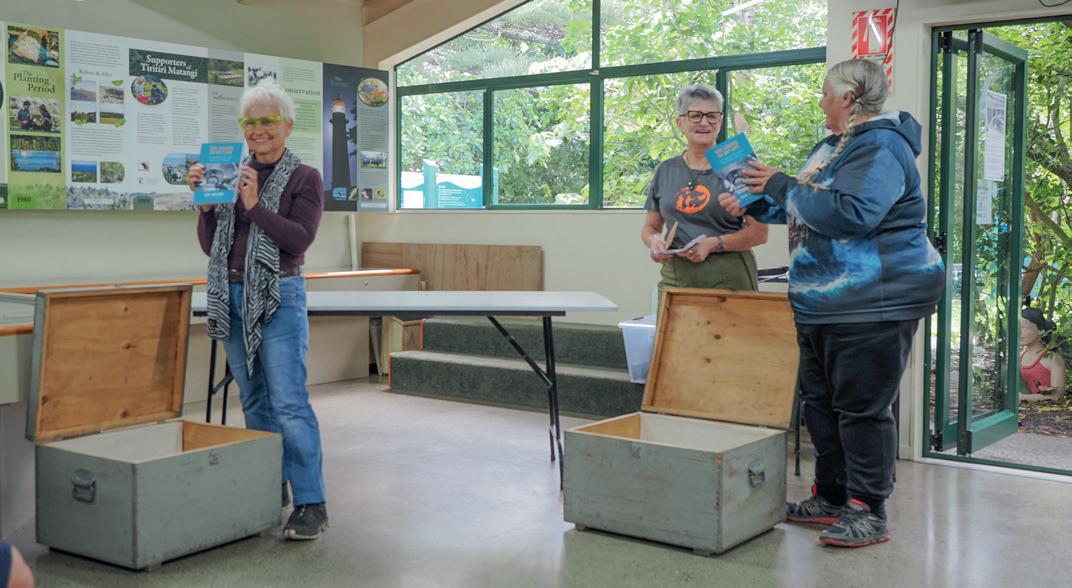
Rosie, Lynda and Nina reveal the books in boat boxes 94 and 95
Photo: Gaye Hayson
An artist's model – the rat named Henry
Some of us were lucky enough to attend the 5 October launch of Ray Walter's much-anticipated book, The Lights in My Life. The book shares some of Ray’s stories and adventures. It was a wonderful day and, as often happens when people gather to chat afterwards, more tales emerged. This is one of them.
I thank Barbara for bringing this story to my attention, inspired by seeing her grandson, Richard Mosen, wearing a T-shirt with a beautifully drawn kiore / Polynesian rat on it.
Many Tiritiri supporters still have hand-painted white T-shirts featuring beautiful drawings of some of our native fauna. These were commissioned in the late 1980s by Barbara, especially for the Tiritiri shop, and sold very well. The artist Kerry Teague was responsible for the stunning and colourful artwork and, over time, many birds were depicted. Kiore and tuatara were also chosen as something a bit different.
To create an accurate drawing for the kiore T-shirt, Barbara's daughter Amanda devised a plan (no doubt with cheerful input from Ray) to trap a live kiore and take it to the mainland for a portrait session. Ah, those were the days! The rat, which received the name Henry, spent several nights in town, initially with Amanda and later with Kerry. Keen-eyed observers will notice that the kiore in the accompanying photo has an injury to one of its ears, which Kerry faithfully depicted.
In Amanda’s words, 'Henry was the only kiore to have ever been taken off the Island alive and returned to be released. He was probably the only kiore to have been named as well. Kiore were being studied at that stage by parasitology student Mere Roberts for her PhD.'
In 1993, kiore were eradicated from the Island. Both Amanda and I hope Henry died of old age before the eradication programme.

Vaneveld Richard
Yvonne
Mosen wearing the T-shirt which inspired this tale
From left to right: family members, Lynda, Sabrina (Nina), Mark, Shane, Rosemary (Rosie), Eric, and Barbara Walter, with the book's editor, Anne Rimmer
Photo: Janet Petricevich
Photo:
Yvonne Vaneveld
Spring update
Springtime on Tiritiri Matangi brings a lively surge in wildlife activity, with takahē pairs nesting, kōkako changing partners, and hihi launching into an energetic breeding season.
Takahē
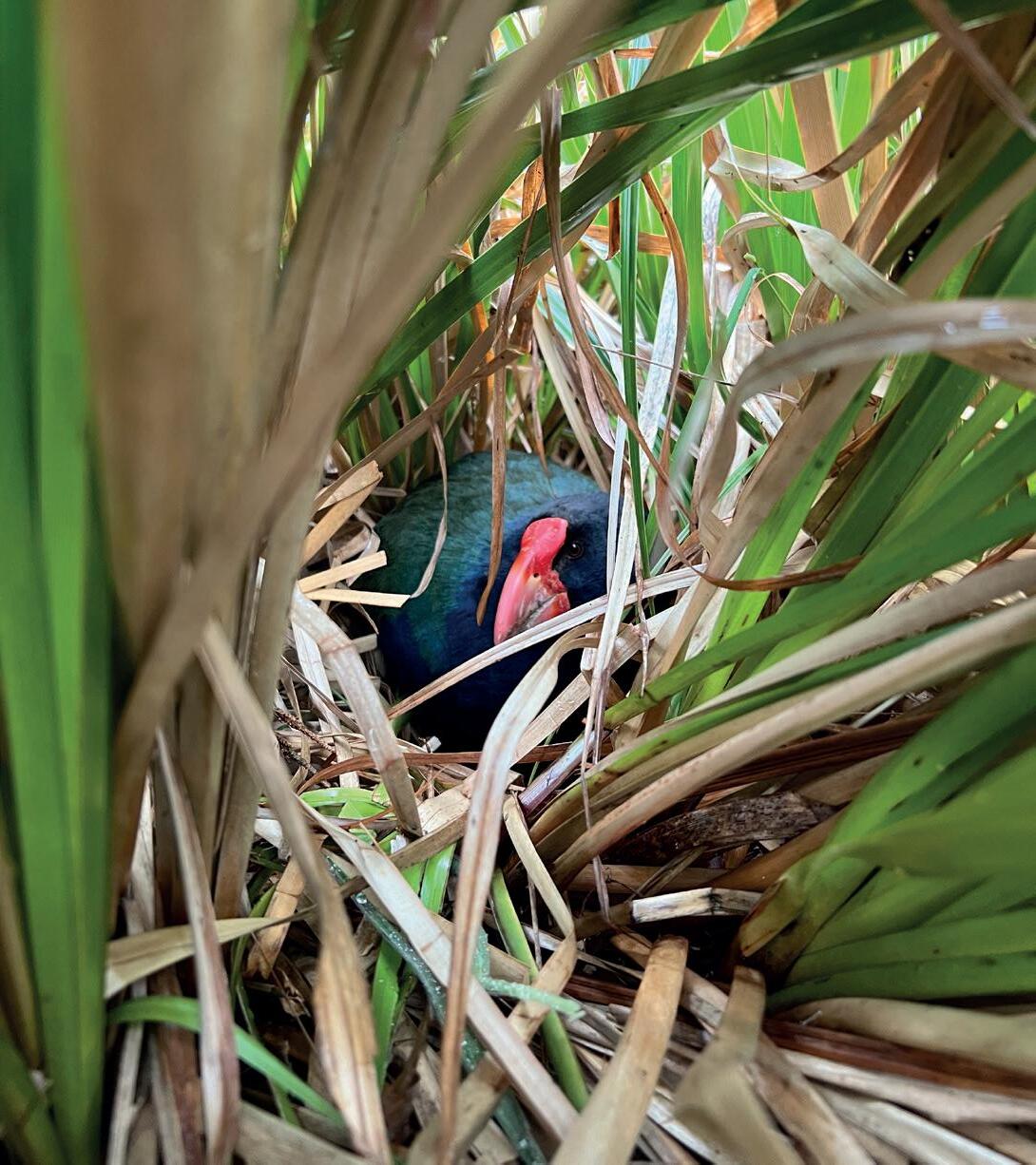
Both of the Island’s pairs appeared to enjoy the quiet of winter on Tiritiri Matangi. The lighthouse family group – Anatori (F) and Wakapatu (M), along with last season’s sub-adult Mātātoa (F) – were seen most days and offered visitors excellent opportunities to observe takahē closely. The northern pair, Atawhenua (F) and Turutu (M), did not breed successfully last season, so we remain hopeful for better results this year.
Mātātoa will remain on the Island as a yearling helper until March or April 2026 hopefully to assist her parents with this season’s chick. She will then move to Burwood Takahē Centre, where she will be fostered alongside older birds who will train her in feeding on tussock. Her final destination after her time at Burwood is yet to be decided.
We began noticing the early signs of nesting from the lighthouse family group in the second week of September and found their nest shortly afterwards. Takahē incubate eggs for about 30 days, and both parents share this responsibility.
The northern pair started a little later. They showed signs of nesting in late September, and we found Atawhenua on a nest on 24 September.
We are keeping our fingers crossed that both pairs will succeed this season!
Kōkako
As there are now so many kōkako on the Island, we are trying a different method of surveying the birds at the beginning of the season. We expect to have completed the survey by mid-October.
As of 4 October, it seems that most of the known pairs are still in their respective territories, but there have been at least two more partner changes. Last season, Te Kōkī was with Dianella, with whom he had three unsuccessful nests. He is now with A Cappella, who is from the 2023-24 season. Dianella has been seen on her own during the survey. Previously, Te Kōkī spent two seasons with Hina, who has not been seen for some time.
Slingshot, one of our older birds, has not been seen during the survey. Atarau, his partner from last season, seems to have paired up with Kiseki, another young bird from the 2023-24 season.
On 27 September, Shelly, who is with Tama, was found building her nest. This is the first known nest of the season. On 4 October, Te Rangi Pai, whose partner is Hēmi, was also found building a nest.
Quite a few of last year's juveniles have been observed. These birds now have adult-sized wattles, but their feathers are brown-tinged on the body. They still carry the flight feathers (wing and tail) that they grew in the nest. Once they complete their summer moult, they will look the same as the adult birds.
Atawhenua on her nest, 24 Sept 2025
Unbanded juvenile kōkako seen around the Visitor Centre
Photo: Nick Fisentzidis
Photo: Kathryn Jones
Hihi
The 2025-26 hihi season welcomes back Abbey Skilton, last year's field assistant, as the new hihi contractor.
Joining her for the season as the volunteer field assistant is Naomie Lagesse, who has recently completed her master’s project on hihi.
The breeding season has started early. Before the team finished spring cleaning all the nest boxes on the Island, several nests had already been built and lined, and some eggs had even been laid! A few other animals have also taken up residence in the nest boxes (see photo).
By early October, there were already seven nests containing eggs and a further 13 lined and ready to go.
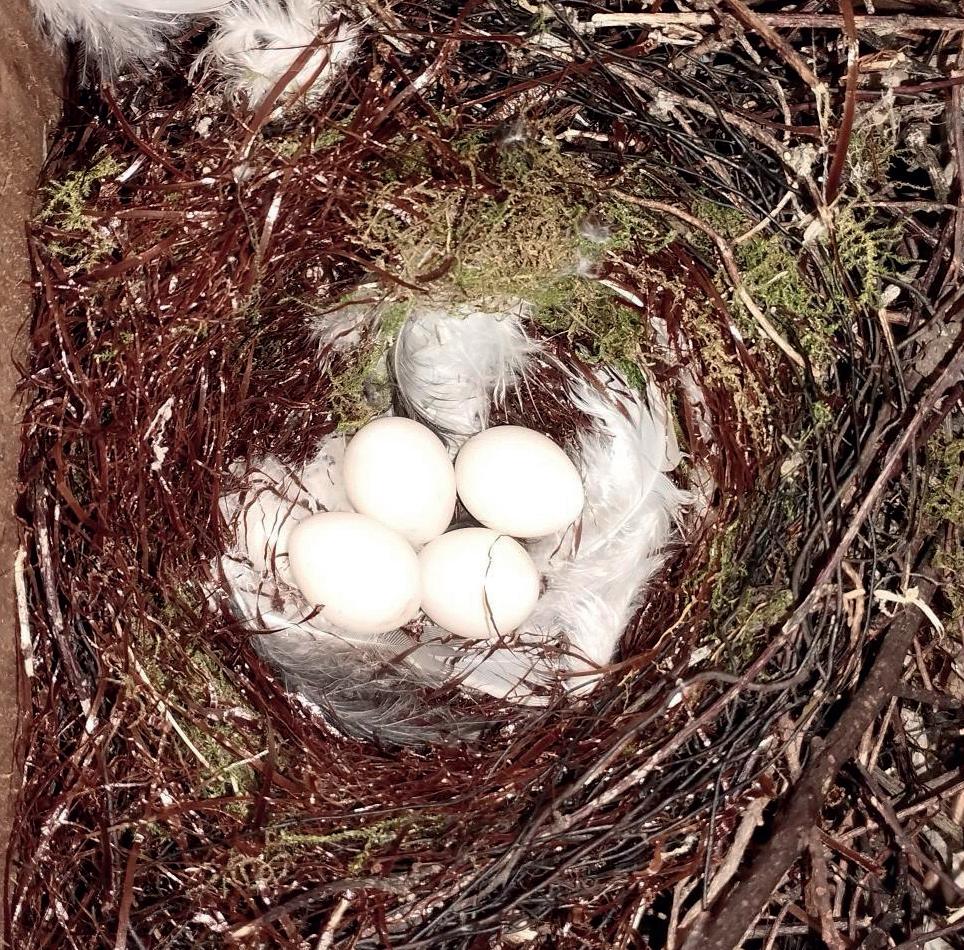

Kororā / Little Penguin
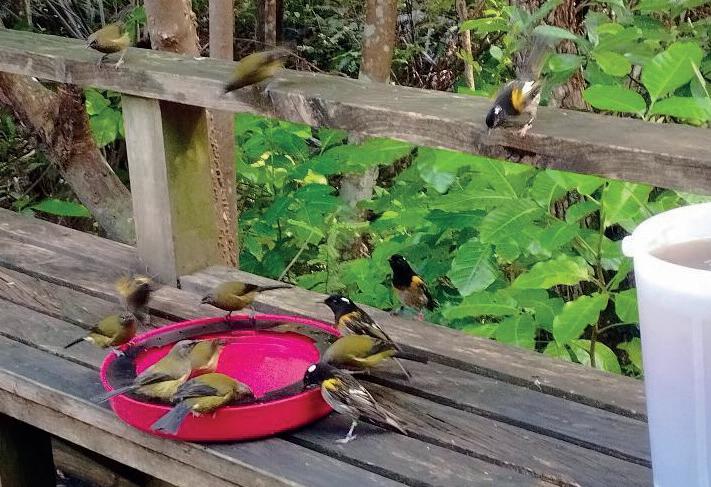
The hihi were enjoying plenty of natural food, especially karo, until mid-October when sugar intake suddenly increased, with one station going through 12 litres a day.
Tīeke nest-box scheme
In the last issue of Fauna Notes, we reported a decline in nestbox use by tīeke and an increase in their use by titipounamu and wētāpunga. These trends have led to a revision of our monitoring scheme.
Instead of checking the boxes solely during the breeding season, when we will continue monitoring their use by tīeke and other species, we will extend our survey through autumn and winter. This will help us ascertain whether the use of the boxes by wētāpunga varies across the seasons.
By mapping the occupancy of boxes by wētāpunga, we aim to understand how they have spread across the Island from their original release sites. We will also estimate the ages of the wētāpunga found in the boxes based on their size. In this way, we hope to determine whether the ‘pioneers’ that first occupy new parts of the Island are adults, sub-adults, or juveniles.
Monitoring for the 2025-26 season has only just begun, so there is nothing to report so far, but watch this space.
The season has started somewhat later this year, with our first eggs recorded on 20 August, most by 28 August, and a few in mid-September. By mid-October, nine nestboxes were occupied by pairs, although only seven contained eggs (totalling 13 eggs), and one of those had already failed. Last year, the first eggs were laid in early July; some pairs nested twice, and we had 12 pairs, 31 eggs, and 24 chicks fledged.
Eight of the 18 adults involved this season already have PIT tags, which enable them to be uniquely identified. This is fewer than expected, and perhaps some of our tagged birds have died or moved elsewhere, to be replaced by new arrivals.
Over winter, the penguin team installed 20 new nest boxes along the coast south of the wharf. A few of these have already been investigated by kororā, but it is unlikely they will be adopted by breeding pairs until next year. Once adopted, these additional boxes will help us better understand the annual and longer-term successes and failures of the birds.
Kuaka / Diving Petrels
Isabella Brown from Auckland University has started a new project on Tiritiri’s diving petrels. Limited information exists about the growth rates of chicks across different locations. Issy will visit twice weekly to weigh and measure the growing chicks.
The growth rate depends on the parent birds' ability to find nutritious food and bring it back to the nest. When the chicks are small they require less food but, as they grow, more will be needed.
Over the last ten years, John Stewart has been recording weight measurements of adult birds when they are caught on the ground. The base weight of an adult is about 120 grams. Adults arriving on the Island at dusk can weigh up to 180 grams, but departing birds usually weigh around 120 to 130 grams. This means they can deliver 40 to 50 grams to their single chick. It is quite remarkable that they can collect and deliver around half their base weight.
Compiled by Kathryn Jones, with contributions from Nick Fisentzidis, Morag Fordham, Kay Milton, Abbey Skilton and John Stewart
Photos: Abbey Skilton
Photo: Abbey Skilton
Hihi and korimako feeding before the feeder is assembled
Left: Hihi eggs in a nest box Right: A wētāpunga and Duvaucel's gecko at home in a hihi nest box
Mākaka – jewels in the rough
Let me introduce you to our common native broom, a plant I have always enjoyed the company of. Also known as mākaka or Carmichaelia australis, this endemic shrub is often dismissed as merely unremarkable or overlooked as a scruffy weed.
Cytisus scoparius, an introduced species of broom with abundant yellow flowers, usually takes the limelight but is essentially a weed species, overtaking marginal landscapes and outcompeting native vegetation, much as gorse does. Branches of these introduced plants were traditionally used for sweeping, which explains the common name ‘broom’. Perhaps this unfairly tarnishes the reputation of our endemic species.
Mākaka
on Tiritiri Matangi
Luckily, on Tiritiri Matangi, a mākaka shrub near the top bend of the Wattle Track is very easy to see, and another is labelled at the Wharf Road feeder station, so you can identify them easily enough. There is also a magnificent specimen with a signboard at the top of the Island in the lighthouse precinct, where the luggage trailer is parked. Look out for this in November and December when its dainty little white and purple flowers appear.
Mākaka were planted across the Island in small numbers during the 1984-94 planting programme, but in a survey between 2006 and 2010 they were only noted as ‘occasional’. Now, in 2025, you can spot young ones along the edges of the Island’s tracks, in places with nearby mother plants and suitable open habitat.
I always find it hard to pass by without quickly inspecting a plant or two. Mākaka is a visual treat from nature, with its pretty flowers, burnt-orange seeds, and endlessly captivating leafless form.
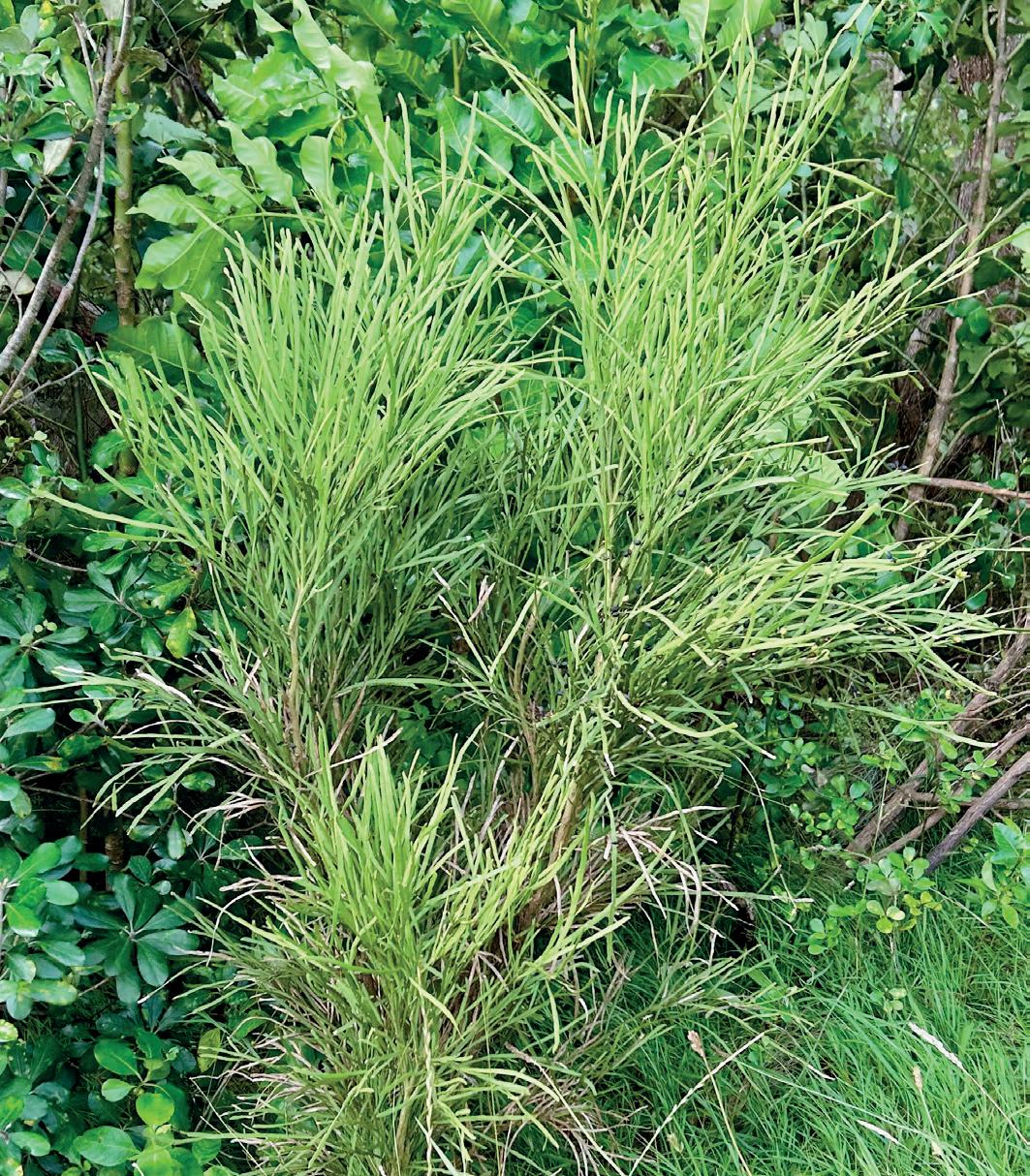
The clever shapes and forms of mākaka
At first glance at mākaka, you might think you're seeing separate plants grouped together, but this is an illusion.
Instead of producing leaves that lose moisture through tiny pores across their surface, the shrub grows photosynthesising cladodes. These flattened, cactus-like stems have fewer pores than leaves to reduce transpiration and help the colonising shrub survive in dry, windy, and exposed conditions.
The shrub branches out from the base, forming a sturdy framework of thin woody stems for the cladodes to develop from. The contrasting textures create the impression of two different intertwining plants, and it is an unusual structure for a shrub. A mature specimen can reach 2-3 metres in height. Small, sparse, heart-shaped leaves sometimes emerge on seedlings and young cladodes, especially in shaded areas. These leaves bear no resemblance to the rest of the plant, enhancing the illusion of multiple plants. They support the plant with transpiration and photosynthesis until the young cladodes are fully functional.
A valuable legume and helpful neighbour
Like the much-loved kōwhai and edible garden peas and beans, mākaka is a legume belonging to the Fabaceae family. As with other legumes, it captures and converts atmospheric nitrogen into a form that is usable by plants through soil bacteria called rhizobia, which live in nodules on the shrub’s roots. This is another vital survival technique, but it also makes mākaka a helpful neighbour as it enhances the fertility of the soil around it.
However, individual mākaka are only short-term residents, living for about 20 years, unless they are shaded out earlier. As the forest on Tiritiri Matangi matures, the open, dry, sunlit habitat that mākaka favour will decrease, along with its ability to thrive in all but a few areas.
Elsewhere in New Zealand, the shrub’s life is often cut short by pests such as rabbits, goats, and sheep, who find these legumes particularly tasty.
Flowers and seeds: the jewels of mākaka
Now for the most beautiful aspect of mākaka, their exquisite little white and purple-veined flowers that cascade along the arching cladodes in abundant clusters. On Tiritiri Matangi, these appear in November and December and are well worth stopping to admire. Observe their ‘pea shape’ while you’re there, another trait of their leguminous family.
Each small cluster is a crowded stem of 3-15 bisexual flowers, directly attached to the cladodes by a short stalk. The oldest flowers grow close to the base of the stem, with new flowers emerging as the stem extends. Overall, this structure is known as a raceme and, although small, it presents a lovely sight.
Growing at the edge of vegetation in maximum light
Photo: Natalie Spyksma
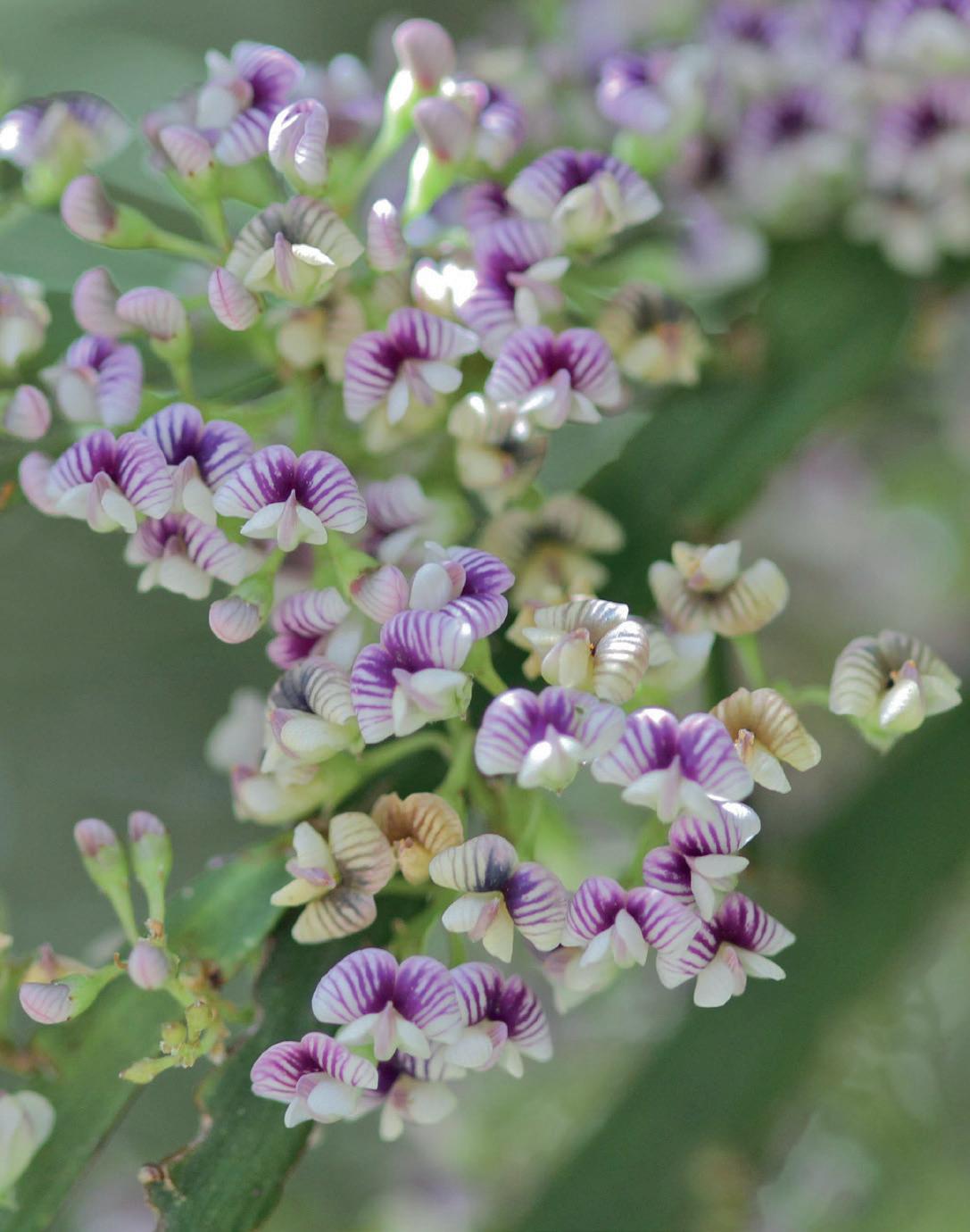
Out of the 24 species of Carmichaelia, 23 are endemic to New Zealand, and one is endemic to Lord Howe Island. All are adapted for pollination by insects such as flies, bees, and beetles.
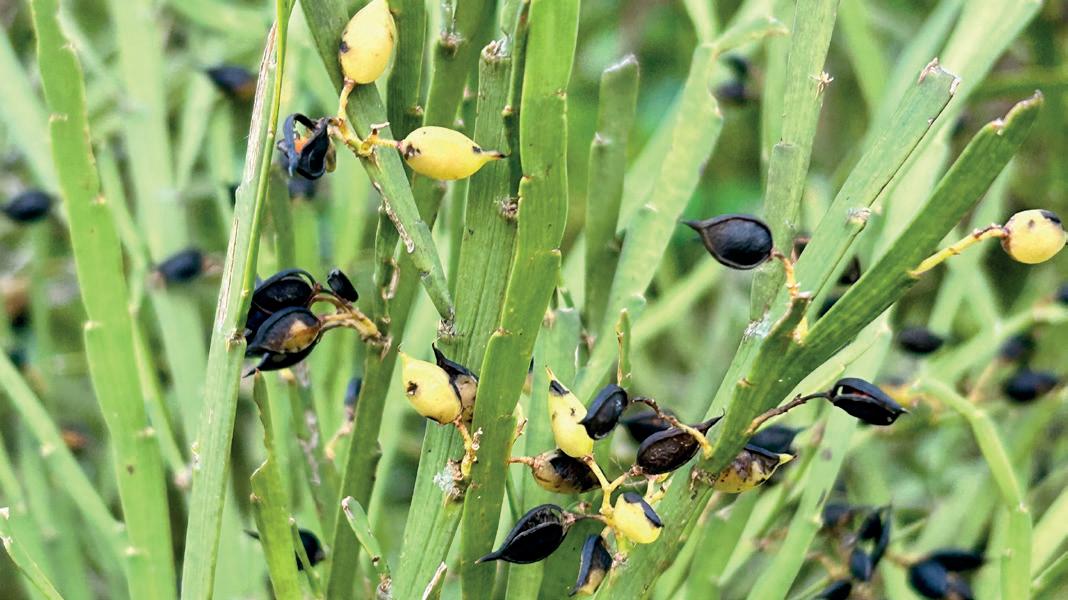
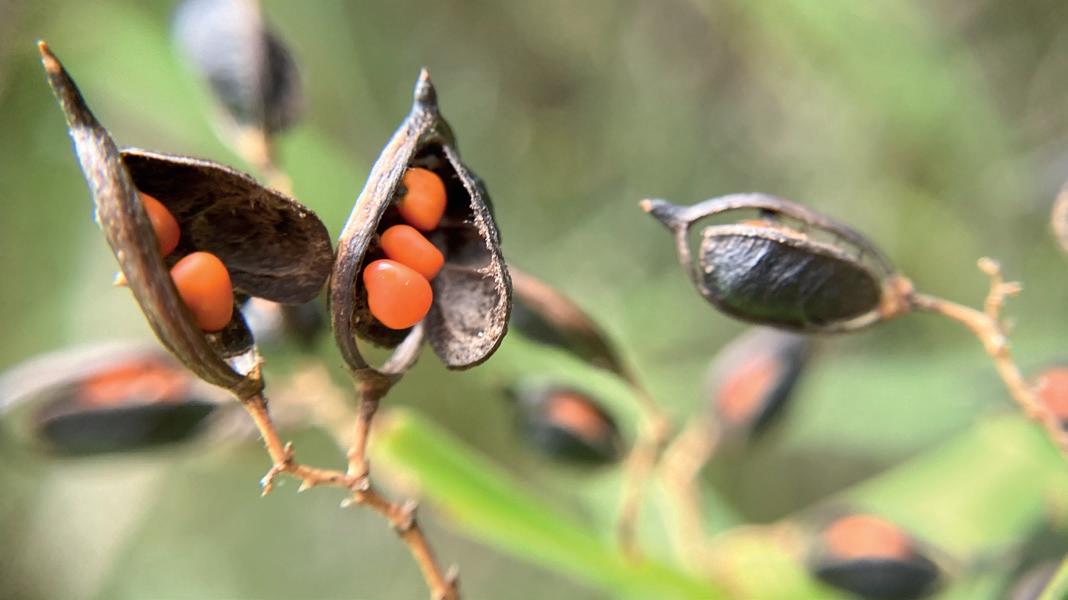
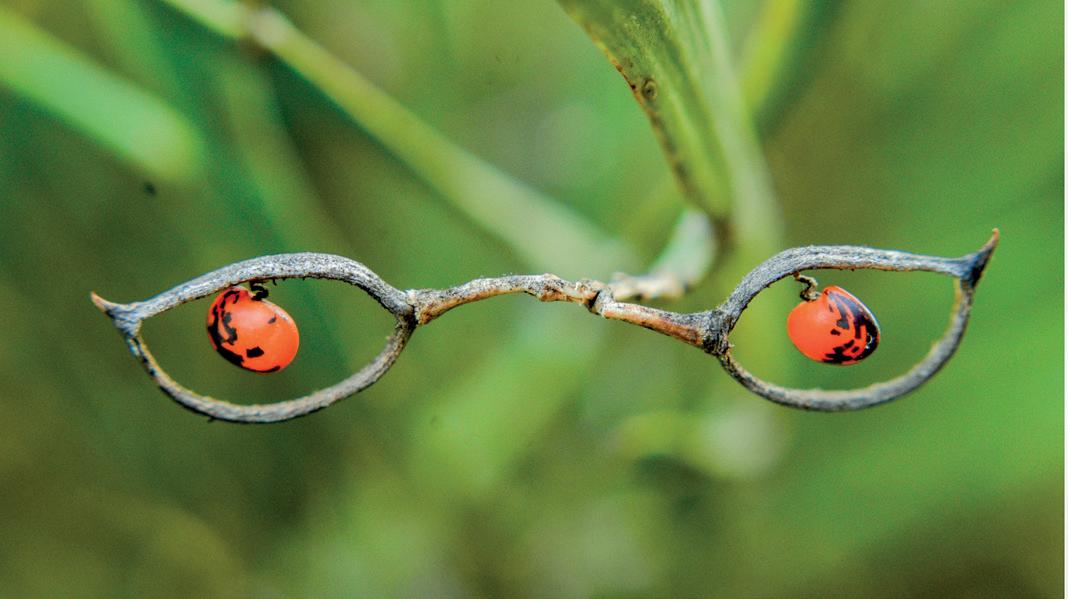
One way to identify different species of Carmichaelia is by examining the shape and colour of the seed and its pod. In the case of mākaka (C. australis), small, oval, green seed pods first appear in December, ripening to black before splitting open in autumn. As this occurs, the two sides of the pod detach, leaving a thin oval structure, from which a few orange seeds dangle endearingly, just like little jewels.
The seed is spread by gravity, tumbling to the ground. Over time, and beyond Tiritiri Matangi, this has led to many highly localised variations of C. australis, where they grow across New Zealand except in Southland and Otago. Many of these were previously considered separate species, but a reclassification process in 1995 drew most into the collective species of C. australis.
Besides mākaka, the remaining 22 endemic species of Carmichaelia range from prostrate to tree forms, with flower colours varying from pink, white, yellow and purple, and in habitats ranging from alpine to coastal areas.
I hope you enjoy seeing mākaka with fresh eyes.
Natalie Spyksma Post Script
During a visit to the Island on 10 September 2025, I sadly found that the mākaka by the trailer was nearly completely overgrown by muehlenbeckia and coprosma. A few green cladodes were poking out and hanging on for dear life – such is the process of succession in an evolving ecosystem!
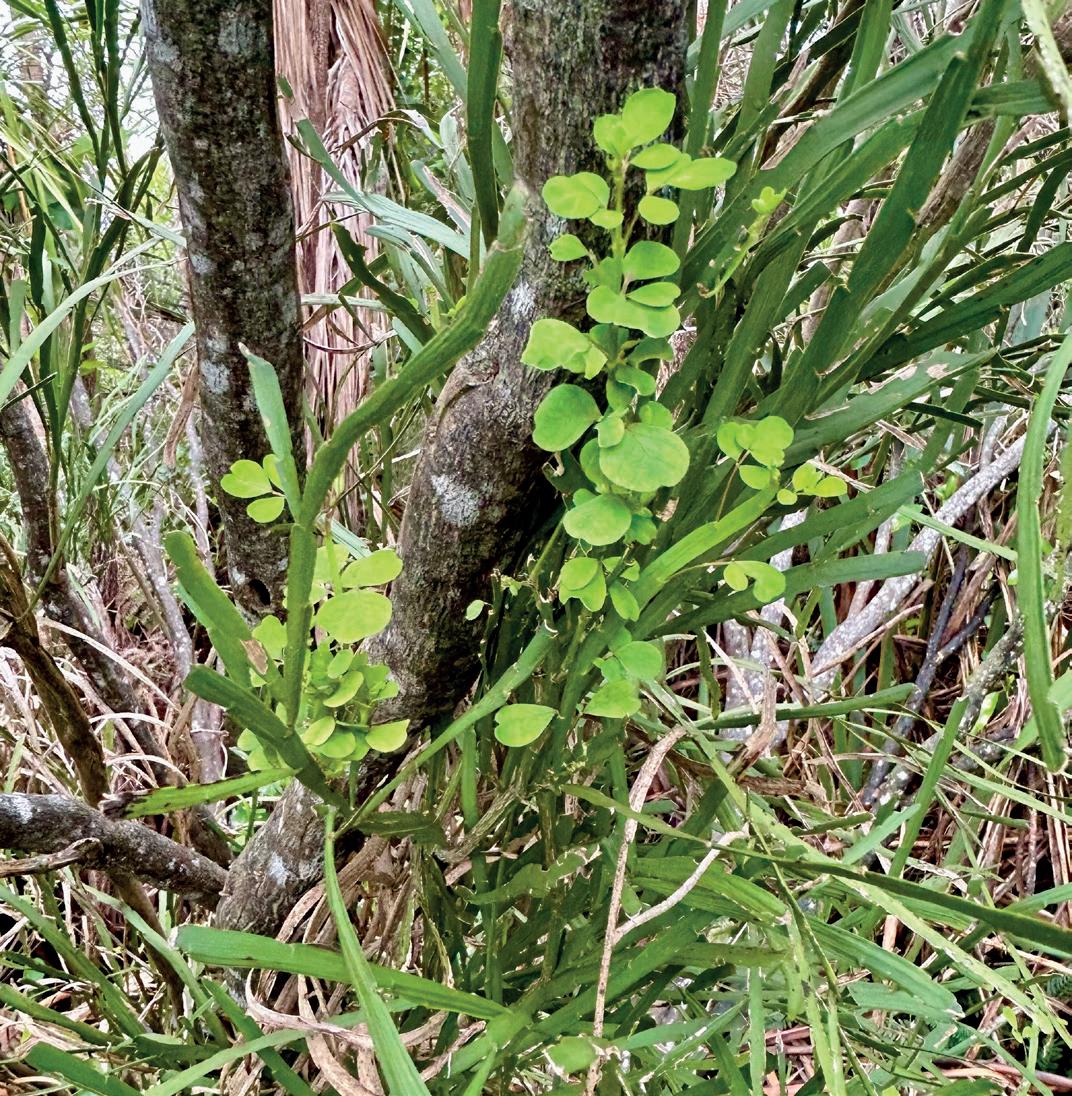
The illusion of multiple plants
Pale seed pods ripening to black as they mature
Exquisite little white and purple-veined flowers
Seed pods splitting open, revealing the seeds inside
After the pod detaches, seeds dangling like little jewels
Photo: Natalie Spyksma
Photo: Kathryn Jones
Photo: Natalie Spyksma
Photo: Karin Gouldstone
Photo: Giverny Forbes
Project Island Song
Between bulletins 78 and 97 of Dawn Chorus (August 2009 to May 2014), editor Simon Fordham published a series of articles about New Zealand's conservation initiatives, many of which were inspired by Tiritiri Matangi. This year, one of those projects, Project Island Song, marked the tenth anniversary of introducing tīeke / North Island saddleback to their islands. Many of these birds were sourced from Tiritiri. Project Island Song’s Andy Boor reminds us of the mahi our fellow conservationists have undertaken and the bond between our island projects.
Ten years of tīeke in Ipipiri
In May this year, we celebrated the 10th anniversary of translocating 40 tīeke / North Island saddleback from Tiritiri Matangi to the islands of Moturua and Urupukapuka in Ipipiri/ the eastern Bay of Islands. Along with an additional 40 tīeke that had already been translocated from Mauimua / Lady Alice Island at the end of March 2015, these original manu have thrived on both islands over the past decade.
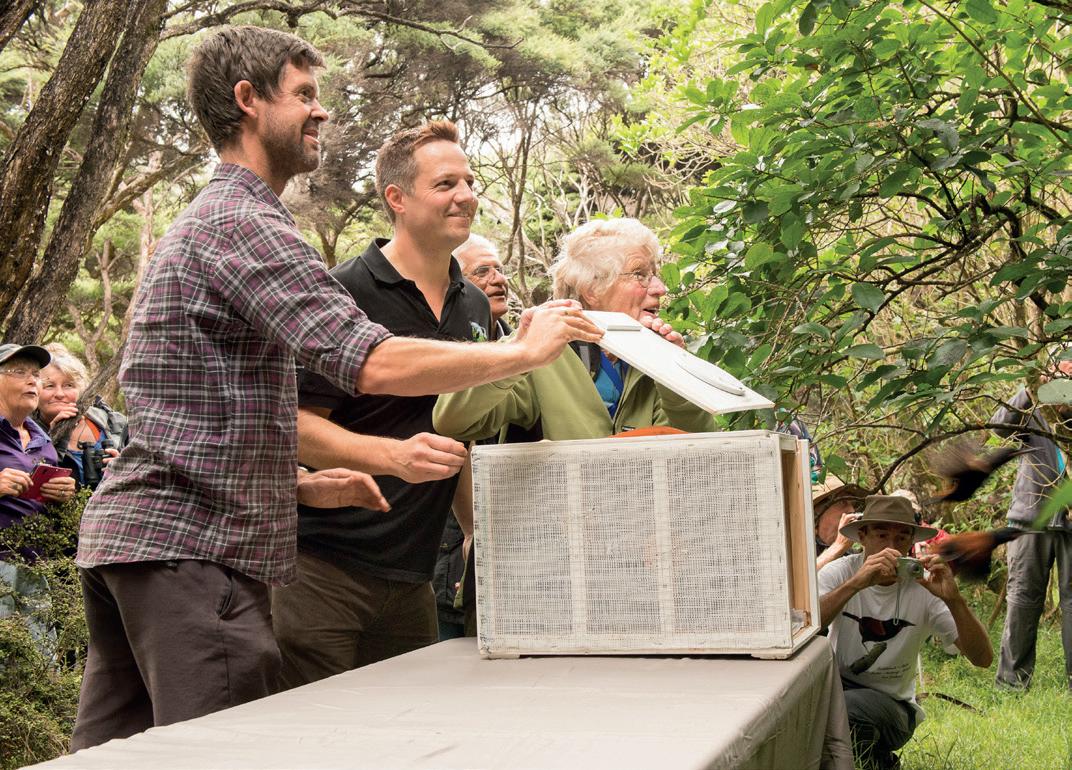
Post-release monitoring over three years demonstrated the successful establishment of the population and, ten years later, hearing the chatter of the tīeke is almost inevitable when walking in the bush. The relatively low canopy of the regenerating ngahere allows for frequent close-up visual encounters, much to the delight of visitors, volunteers, and school groups.
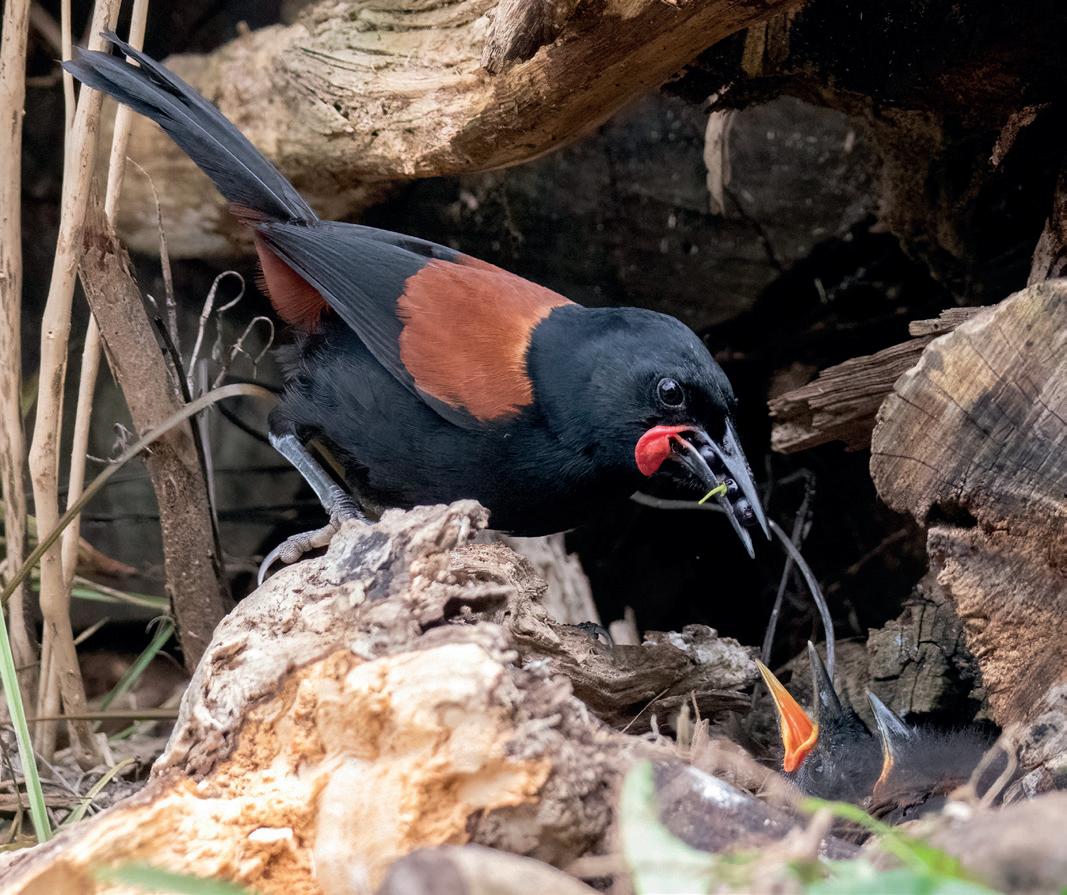
Lost in translation?
Monitoring work conducted by Aaron Heap in 2016 indicated that selective pairing based on island of origin was occurring, as translocated tīeke demonstrated a strong preference for interactions and pairing behaviours with others from the same island. One possible explanation was the existence of geographically distinct song dialects that had evolved, the two source populations having been separate for over 50 years. Although these findings could imply negative impacts on genetic diversity, research suggests that island fidelity in pairing is temporary, with mixing increasing over subsequent generations.
A partnership to restore the mauri of Ipipiri
The reintroduction of tīeke was part of a kaupapa (plan) conceived in 2003 to restore the mauri and wairua of the islands of Ipipiri and bring back the dawn chorus. A unique partnership was formed among the local community group, the Guardians of the Bay of Islands, Te Rawhiti hapū (Ngati Kuta and Patukeha), and the Department of Conservation. This partnership has underpinned the Project’s success over two decades.
The tīeke was the third species to be reintroduced to the islands, following the pāteke / brown teal in 2012 and toutouwai / North Island robin in 2014 and 2016. This marked the start of a busy period of species translocations, with pōpokotea/whitehead, kākāriki / red-crowned parakeet, Duvaucel’s gecko, and wētāpunga all arriving between 2015 and 2020. A total of 20 species were initially identified as suitable for reintroduction, and we are excited to continue this journey, which could potentially include further species sourced from Tiritiri Matangi.
Tīeke release on Moturua in March 2015
Eight years after the translocation, a tīeke feeding chicks
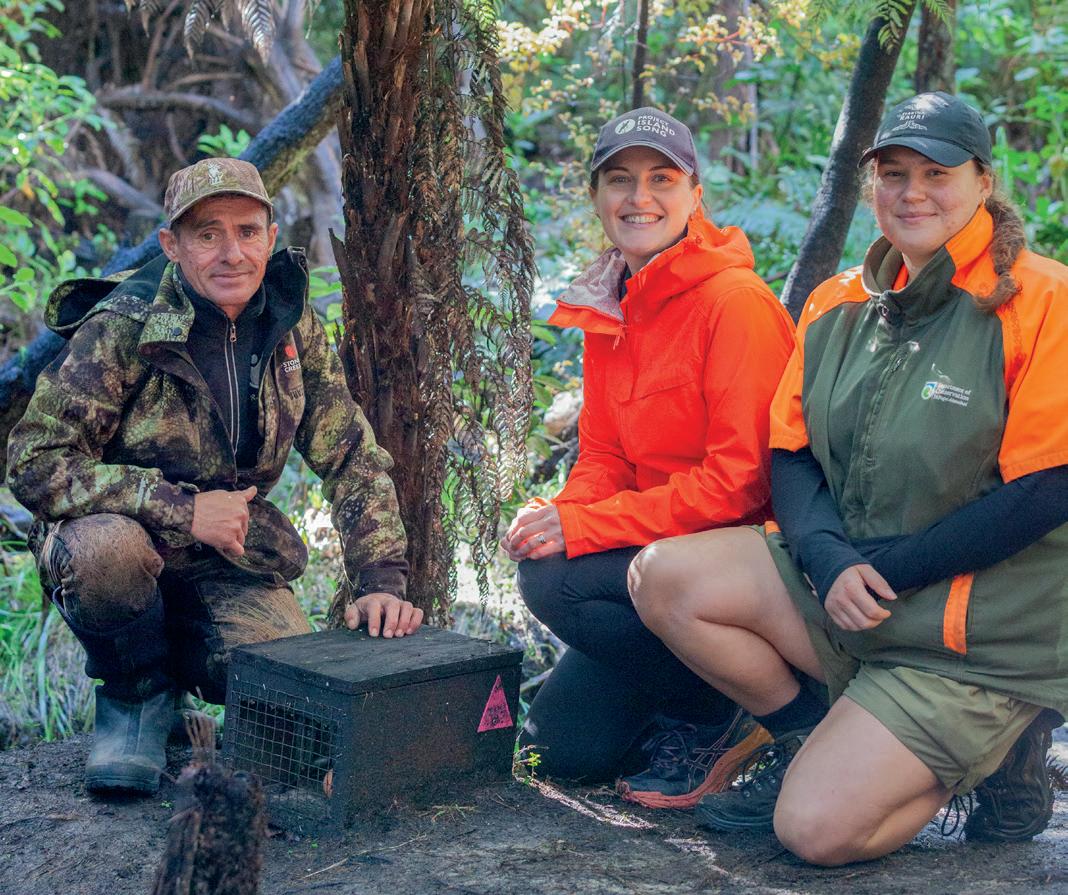
Project partners – Arana Rewha (Ngāti Kuta), Laura Rumsey (Guardians of the Bay of Islands), and Hana Harris (DOC)
Photo: Wendy Bown
Photo: Darren Markin
Photo: Dean Wright
The end of ‘Rat Island’
Before the project, Urupukapuka was known locally as Rat Island because its rodent population was notoriously high, and unwary campers would find them gnawing through their tents to get to food. Despite the community and hapū's enthusiasm to eradicate the islands' pests – rodents, stoats, and feral cats – doubts remained about whether it was practical to establish and sustain pest-free sanctuaries on these islands. The islands of Ipipiri are only 600 metres from the mainland at their closest point, within swimming distance of rats and stoats. Adding to the biosecurity risk, these islands are among the most visited pest-free islands in New Zealand, attracting over 100,000 visitors each year by ferry, along with numerous private boats, tour operators, and private homes on three islands.
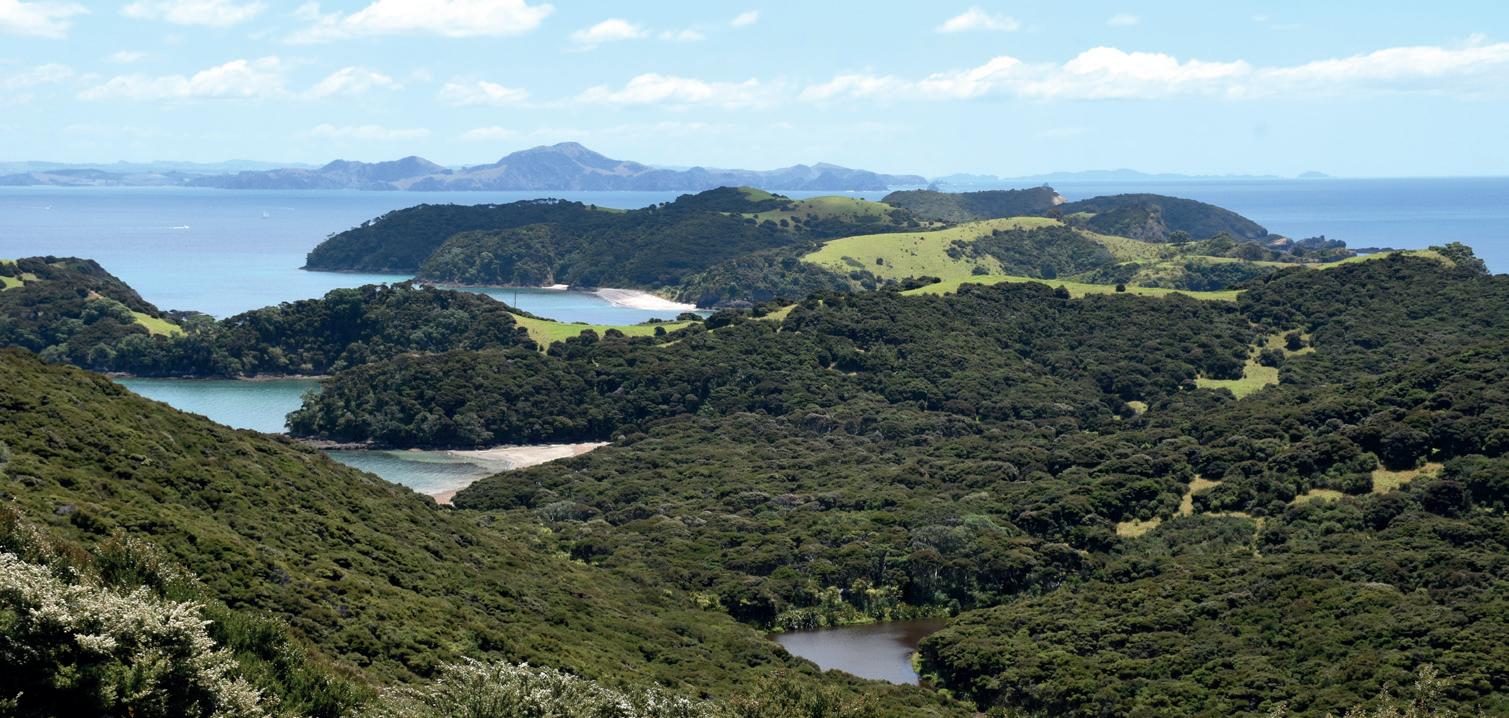
In the winter of 2009, the Department of Conservation fulfilled the community’s wish by successfully eradicating mammalian pests across seven islands in Ipipiri. Over the following decade, a programme combining conservation dogs and hardware-based surveillance was developed and implemented by DOC’s Pēwhairangi office, demonstrating its effectiveness in detecting and eliminating incursions.
On the neighbouring mainland, hapū and private landowners have continued to push back the tide of pests through extensive control efforts across a 3,000-hectare mainland buffer zone, significantly reducing the risk to the islands. Beyond its local significance, the success of this incursion detection programme has demonstrated what can be achieved on near-shore islands, with great potential for application elsewhere in Aotearoa.
Community in conservation
After achieving pest-free status, community involvement in Project Island Song increased significantly. The project's education programme has now been running for 15 years, offering thousands of young people from around the Bay of Islands and beyond practical conservation experiences as part of a comprehensive programme that includes both classroombased and on-island sessions.
Our committed and dedicated volunteer weed-busters work tirelessly to control and eliminate pest plants common in our mild, wet climate. The natural regeneration of the bush has been hastened by planting over 43,000 native trees since 2003, both to extend the canopy over areas of legacy kikuyu and to reintroduce greater diversity of seed sources that have been diminished by decades of farming.
Our progress under threat
In 2022, the islands’ hard-won pest-free status was threatened. The Guardians of the Bay of Islands and hapū were informed that, due to national DOC budget cuts, the local office could no longer carry out the pest incursion surveillance programme. The Guardians now faced the challenging task of maintaining vital operations with considerable annual costs.
Over the past three years, significant effort has gone into building the organisation’s capacity to deliver this, from securing funds to buy a workboat, getting the boat through marine survey, and managing conservation dog and hardware surveillance every month. A multi-year grant from the Lottery Environment and Heritage fund, secured in 2025, has helped provide some funding security for this vital mahi, while we continue to develop sustainable revenue sources, including our popular annual Birds of the Bay of Islands Calendar, successful online raffles, memberships, and donations.
We are also developing wildlife tourism experiences, with small group guided tours set to start this summer to generate ongoing funds and offer quality experiences for visitors to encounter the special wildlife returning to these islands.
Long-held ties with Tiritiri Matangi
The Project has learned much over the years from the experience of our tuakana (older sibling or cousin) project at Tiritiri Matangi and will continue to do so. In fact, our core contractors and committee members organised an overnight trip to Tiritiri Matangi in April this year, as several team members had not visited before. Unfortunately, after travelling to Whangaparāoa, sea conditions thwarted our plans (a familiar feeling!), but we hope to return when possible.
To learn more about the project, visit our website: https://projectislandsong.co.nz/
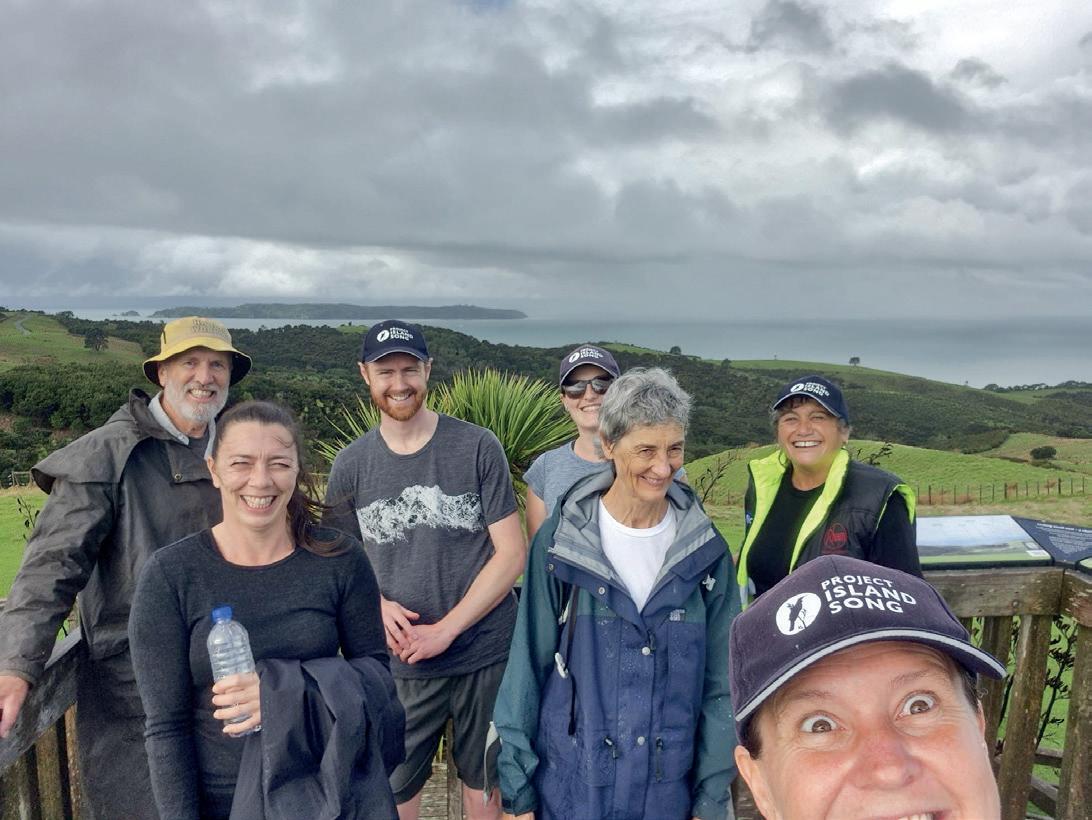
As close as we got to Tiritiri, some of the team members at Shakespear Regional Park
Regenerating bush on Urupukapuka, the largest of the seven islands in the project
Photo: Tracey Taylor
Photo: Darren Markin
Looking Back A hidden treasure found
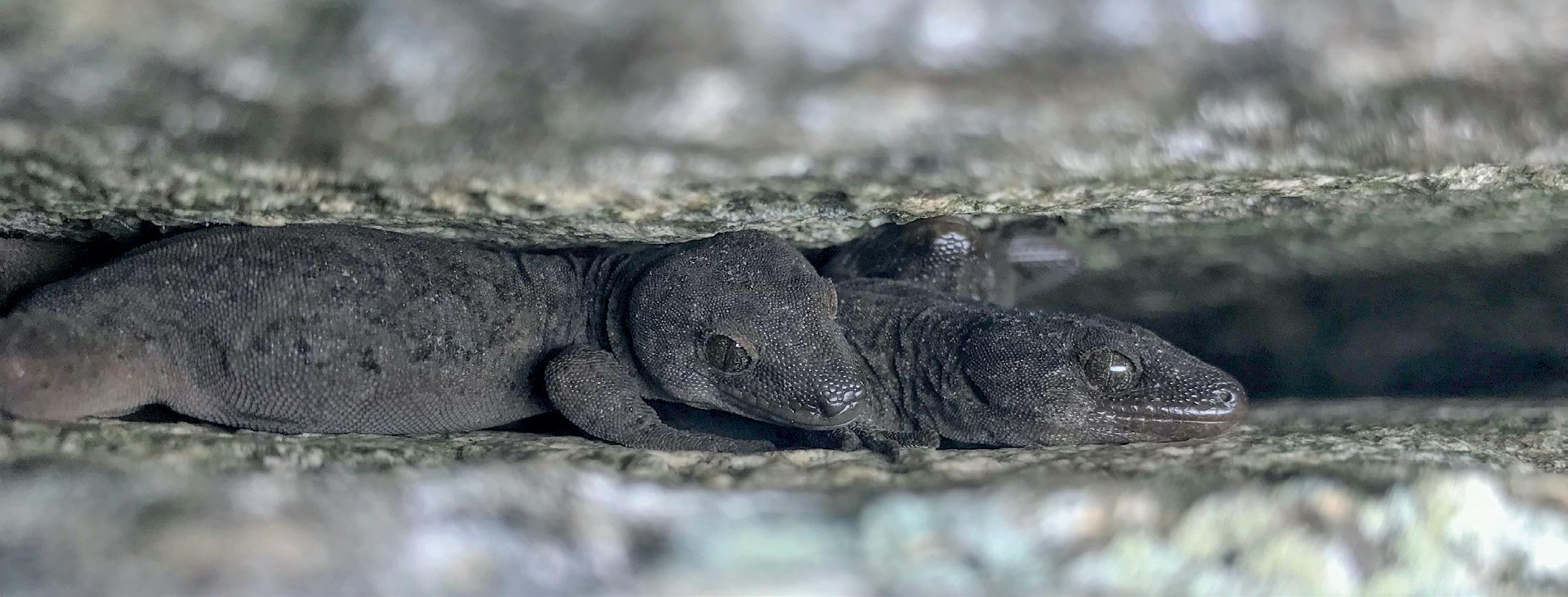
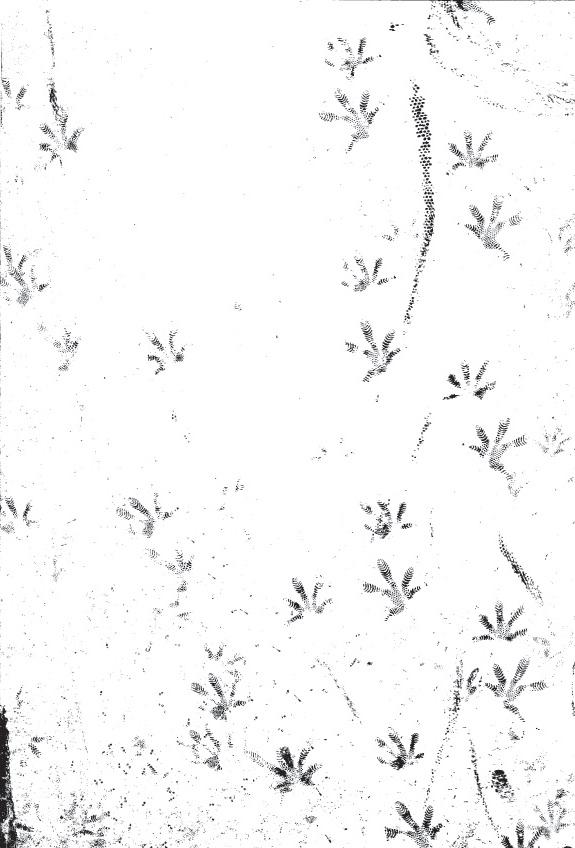
In 2004, volunteer Russell Fulton was checking DOC tracking tunnels and found a set of footprints which he didn’t recognise. They were identified as belonging to a New Zealand gecko, but which one? A survey of the area at night found signs indicating geckos were living in rock crevices on the cliffs near the tracking tunnel site, and a daytime search was organised.
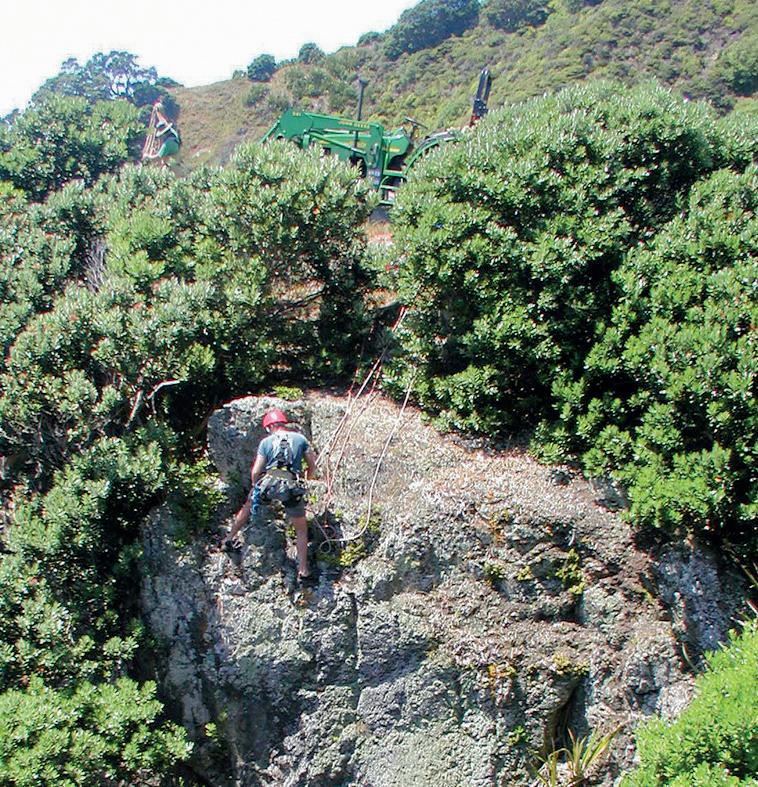
Ecologist Graham Ussher climbed down the cliffs and located four geckos hiding deep in the rock crevices. At the time, they could not be positively identified but were thought to be the common gecko / Raukawa gecko Hoplodactylus maculatus (now known as Woodworthia maculata). This preliminary identification was subsequently confirmed.
Commonly known as moko pāpā / Raukawa gecko, these nocturnal endemics are gregarious creatures that often congregate together within safe refuges. On Tiritiri a small population survived farming, frequent land clearance through burning, and the presence of kiore / Polynesian rats by finding those safe refuges within the Island’s cliffs. Today, the population thrives.
Adapted from Bulletin 59, November 2004 by Janet Petricevich, with the help of Hester Cooper
Raukawa geckos hiding from danger within a rock crevice
Ecologist Graham Ussher starting his climb to search for the owner of footprints made on the tracking tunnel card shown at left. DOC ranger Ian Price, at top left of the photo, acts as safety officer.
Photo: Neil Davies
Photos:
Tiritiri Matangi archives
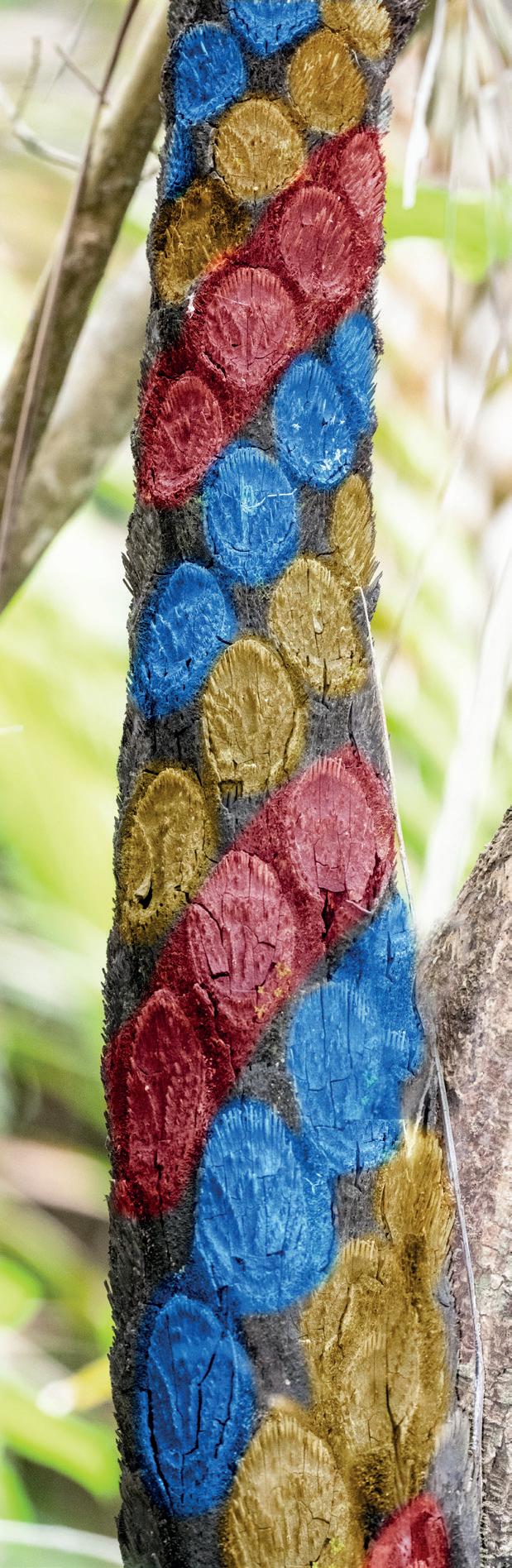
The secret life of the silver fern – Alsophila tricolor
Ponga or silver ferns rank among Aotearoa’s most iconic symbols. The koru of an unfurling silver fern frond, a ubiquitous symbol in Māori carving and art, also features in the logos of our national airline and the Department of Conservation. The entire frond has adorned our passports, sports uniforms, and military attire. Fern fronds are often laid on the graves of fallen New Zealand soldiers.
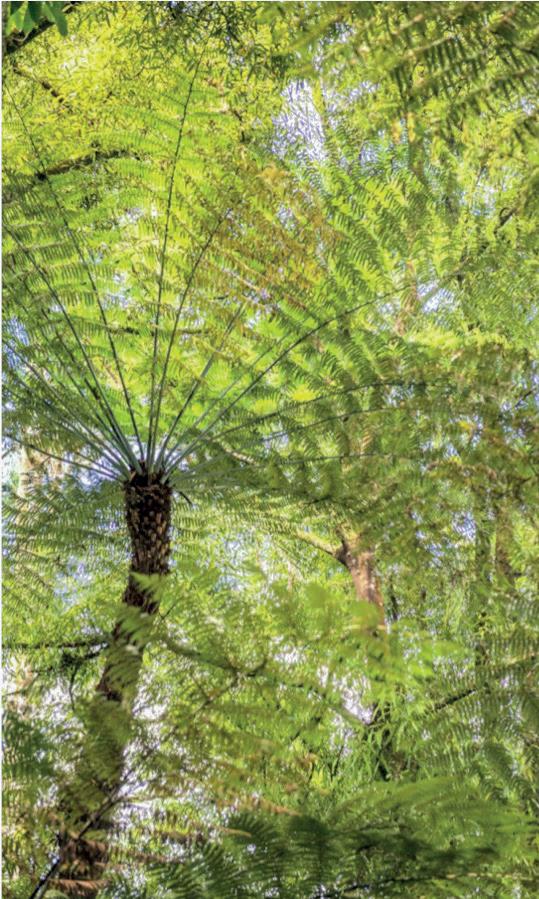
The former name Cyathea dealbata (meaning cup-shaped (indusium) / silver leaves) has been changed to Alsophila tricolor (meaning grove-loving / three-coloured). It is now distinguished from other genera within the family Cyatheaceae, based on differences in chloroplast DNA identified in recent studies.
The ferns have a long and distinguished ancestry. Fossil evidence suggests that the first ferns arose shortly after the club mosses, approximately 390 million years ago. These early ferns would have evolved from a common ancestor shared with the club mosses. However, nearly all the ferns found on Tiritiri today have much more recent origins. The silver fern emerged from this lineage just five million years ago.
All spore-bearing plants – the bryophytes (mosses), club mosses, and ferns –face challenges in living on dry land due to their method of reproduction, which requires water to enable motile sperms to swim and fertilise eggs. A damp film of water on the ground after a good rainstorm is all that is needed.
The smaller bryophytes and their kind mostly ‘live fast and die young’, withering when the damp winter season gives way to the dry summer months, their resilient spores surviving until the next wet season.
Tree ferns, however, are believed to live for several centuries. They exhibit remarkable resilience, capable of thriving in relatively dry environments. This is due to internal water-conducting vessels in their stems and leaves, which transport water from their roots to their topmost extremities. They are so good at this that, in times of drought, some ferns often appear greener and healthier than the surrounding, more advanced flowering plants on Tiritiri. Nevertheless, they still retain the watery ‘Achilles heel’ of bryophytes, which need a surface film of water for the fertilisation stage of their life cycle.
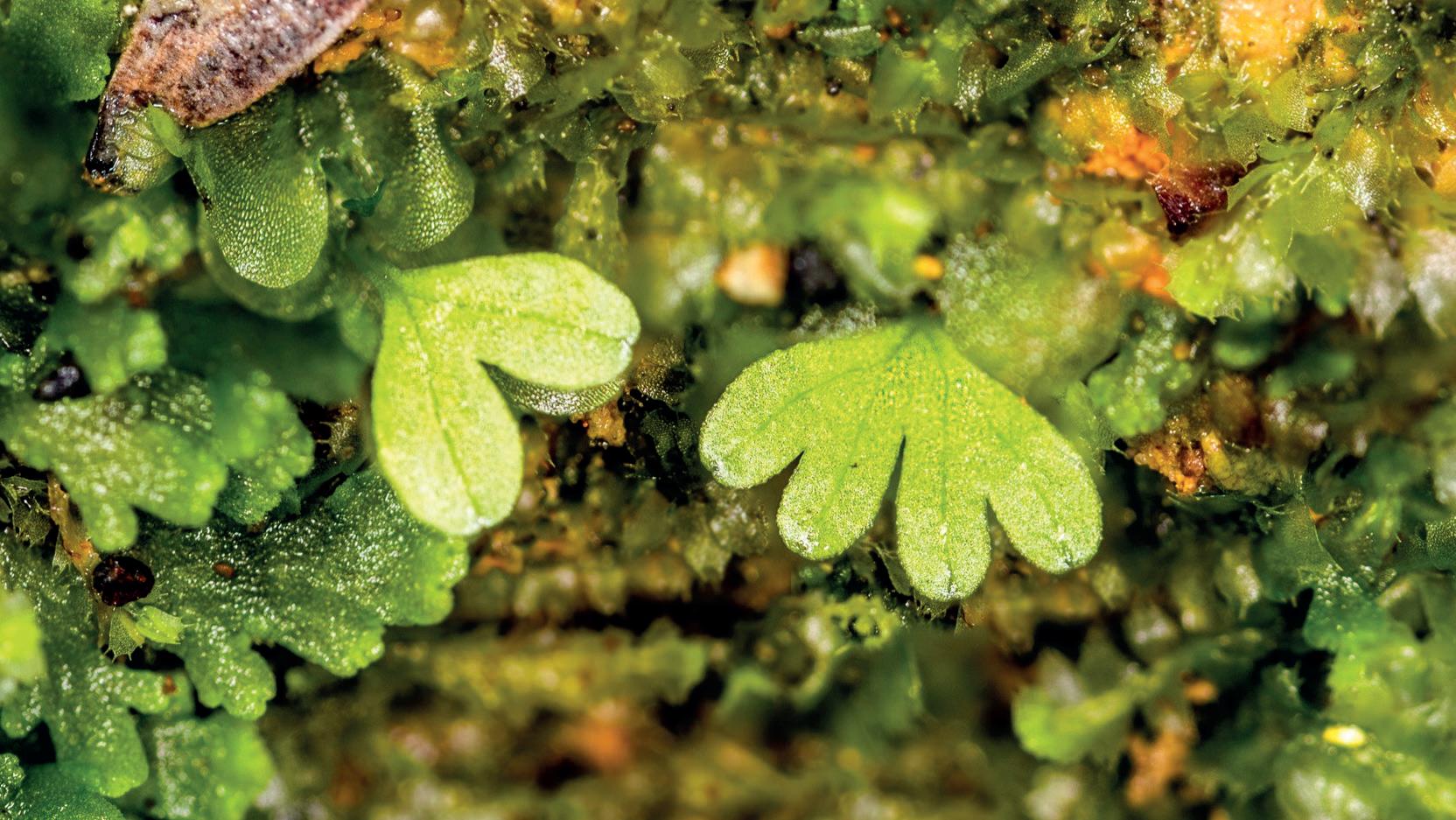
Like bryophytes, ferns exhibit a phenomenon known as an ‘alternation of generations’. This means they exist in two distinct forms: as a dominant, droughtresistant sporophyte (what we most often see as the familiar ‘tree-fern-shaped plant’) and as a tiny, inconspicuous, water-dependent gametophyte generation that resembles a small fragment of liverwort growing on the damp earth of the forest floor.
The tiny gametophyte completes the ‘sex bit’ with waterborne sperms and eggs, providing the genetic variation necessary for natural selection to function. The sporophyte stage of the life cycle manages the ‘proliferation bit’, effectively multiplying itself using countless dry spores that drift on the breeze to all parts of the forest.
Growing tree ferns from spores
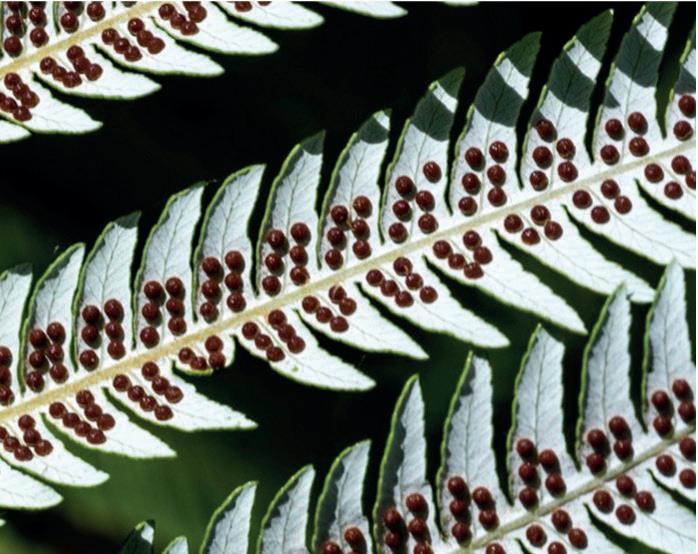
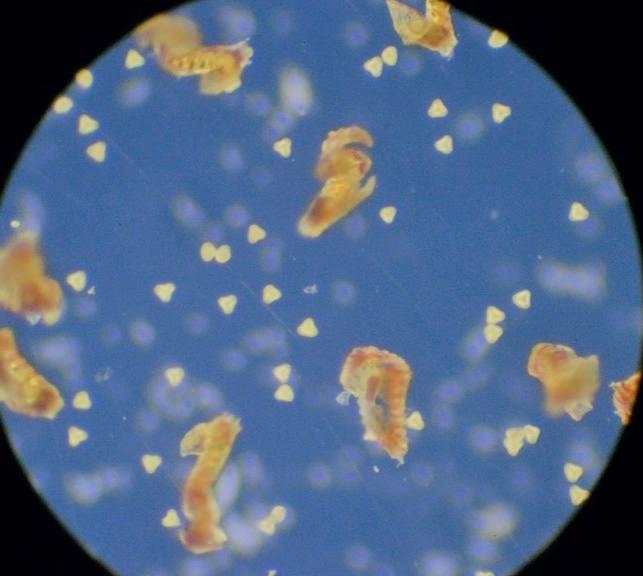
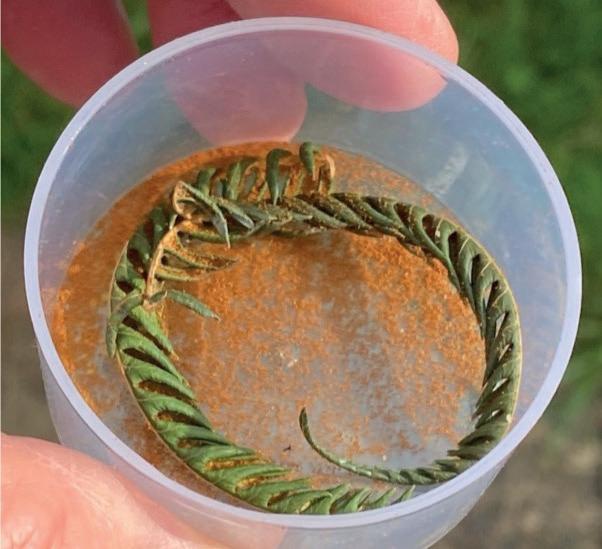
Tree ferns can be grown from spores by taking a small piece of a fertile frond (not from a Tiritiri tree fern, please!) and allowing it to dry on a plastic dish to catch the tiny spores. A fertile frond features small, round sori located on the underside of the pinnules. Each sorus conceals numerous spore-producing sporangia that suddenly split as they dry, ejecting the tiny dry spores.
After a day or two, the dish will be filled with tiny, triangular, dust-like fern spores, ready to be sown on a tray of damp, sterilised compost. They should be spread as thinly as possible over the surface of the compost and covered with a transparent lid to allow light in. Within a few days, the spores will germinate, and the compost will shimmer with thousands of tiny green ‘emeralds’ – the newly emerged gametophytes.
Sori on the underside of a fertile frond
Silver ferns on Tiritiri Matangi
Spores ejecting from sporangia
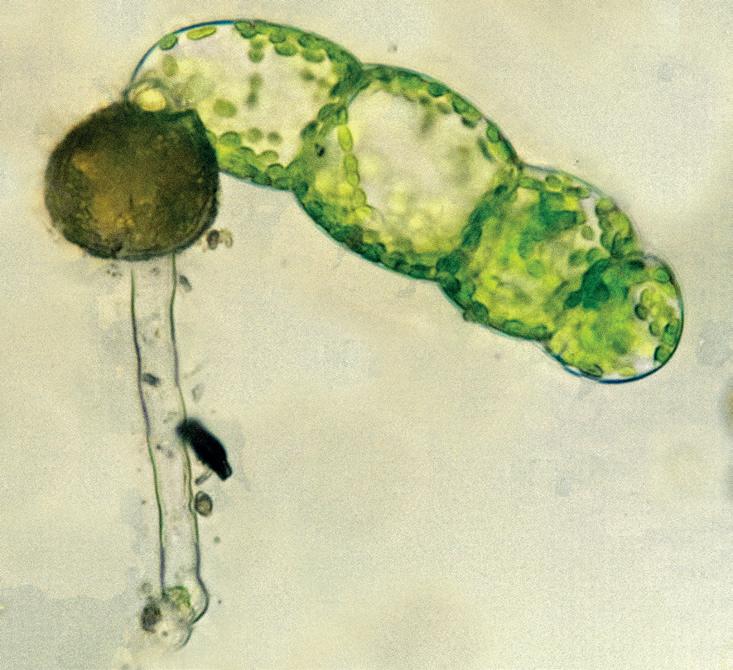
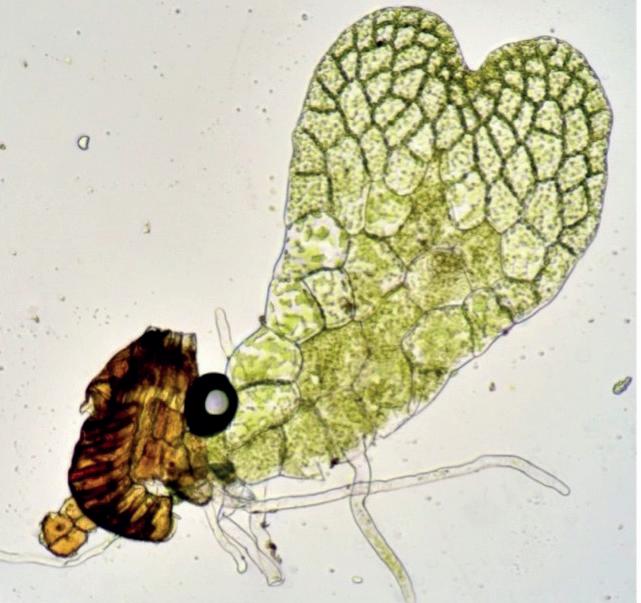
Each of these gametophytes will rapidly develop into a structure known as a prothallus, which is destined to produce sperms and eggs. Each gametophyte prothallus emerges from its spore capsule as a single ‘sausage’ of cells with an anchoring rhizoid ‘root’ that prevents raindrops from washing it away. This sausage of cells soon expands sideways into a flat, heart-shaped structure, one cell thick, which will later bear the spermproducing antheridia and eggs from archegonia. It takes about a month or more to reach the stage where sperm and egg production commences.
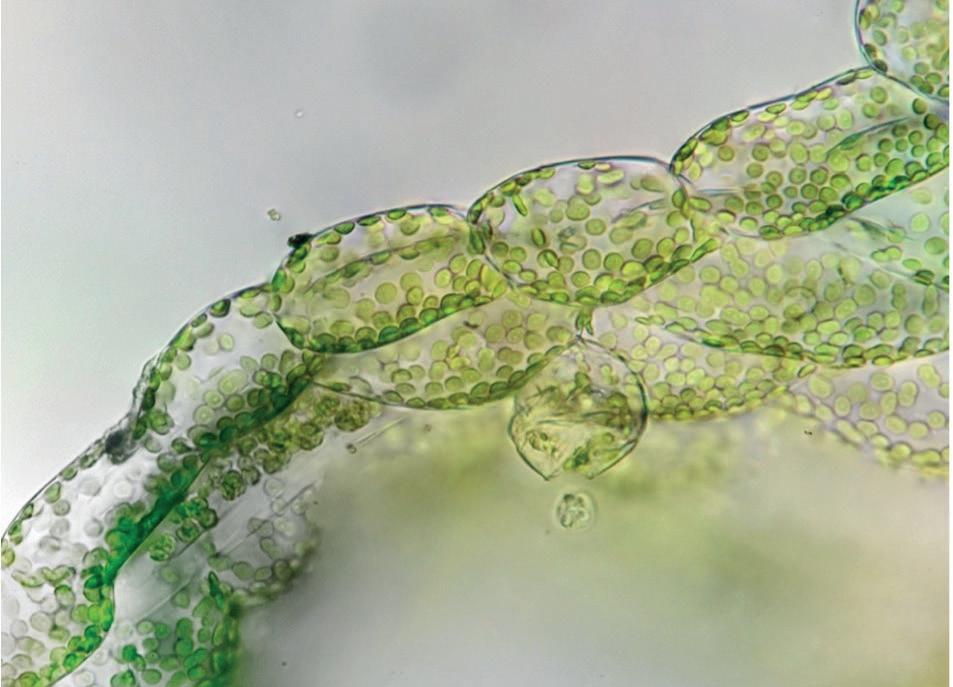
The compost tray must be covered with a sheet of glass to retain a humid atmosphere. If the water film dries out, the sperms will no longer be able to swim to the archegonia to fertilise the eggs. The sperms are equipped with numerous spiral-beating flagellae that propel the sperm cells forward while imparting a stabilising, directional spin. They are highly efficient, tiny ‘propeller-driven' devices that move rapidly, attracted to the female archegonia by chemicals released by the eggs. From the fertilised egg cell sprouts the ‘adult’ fern. Having completed its role, the gametophyte withers away while the young fern grows ever stronger.
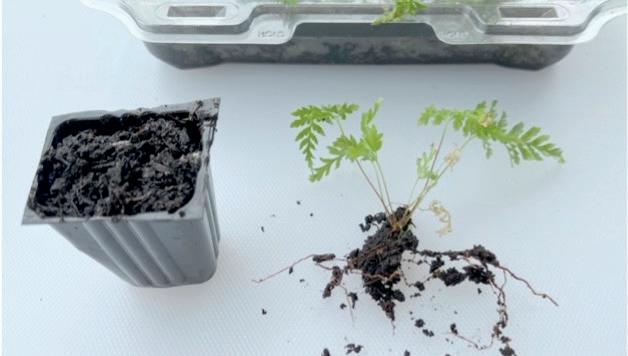
This is where things slow down, and the tiny silver fern can take another year or more to develop into a 5cm ‘seedling’ tree fern. Once they are large enough to handle, they can be potted up to grow into plants that are substantial enough to be set out in their final growing positions.
Not all the spores germinate immediately upon finding themselves on damp ground. I discovered that a significant proportion of the spores remained dormant for twelve months, emerging the following spring. This likely ensures the survival of a few individuals if the first year’s batch fails due to adverse environmental conditions.
If left in the original tray, the plants will not grow well as they will compete with each other for light and root space. To maximise survival when transplanting the small tree ferns, it is wise to initially germinate the spores in soil sourced from the location where you intend for the tree ferns to eventually grow to minimise transplant shock, which often kills young plants.
A dish of dust-like fern spores
A 'sausage' of cells with anchoring 'root' ...which rapidly expands into a heartshaped structure
A male antheridium releasing a sperm cell
A young sporophyte emerging from beneath the gametophyte
Transplanting the young ferns
Anatomy of a tree fern
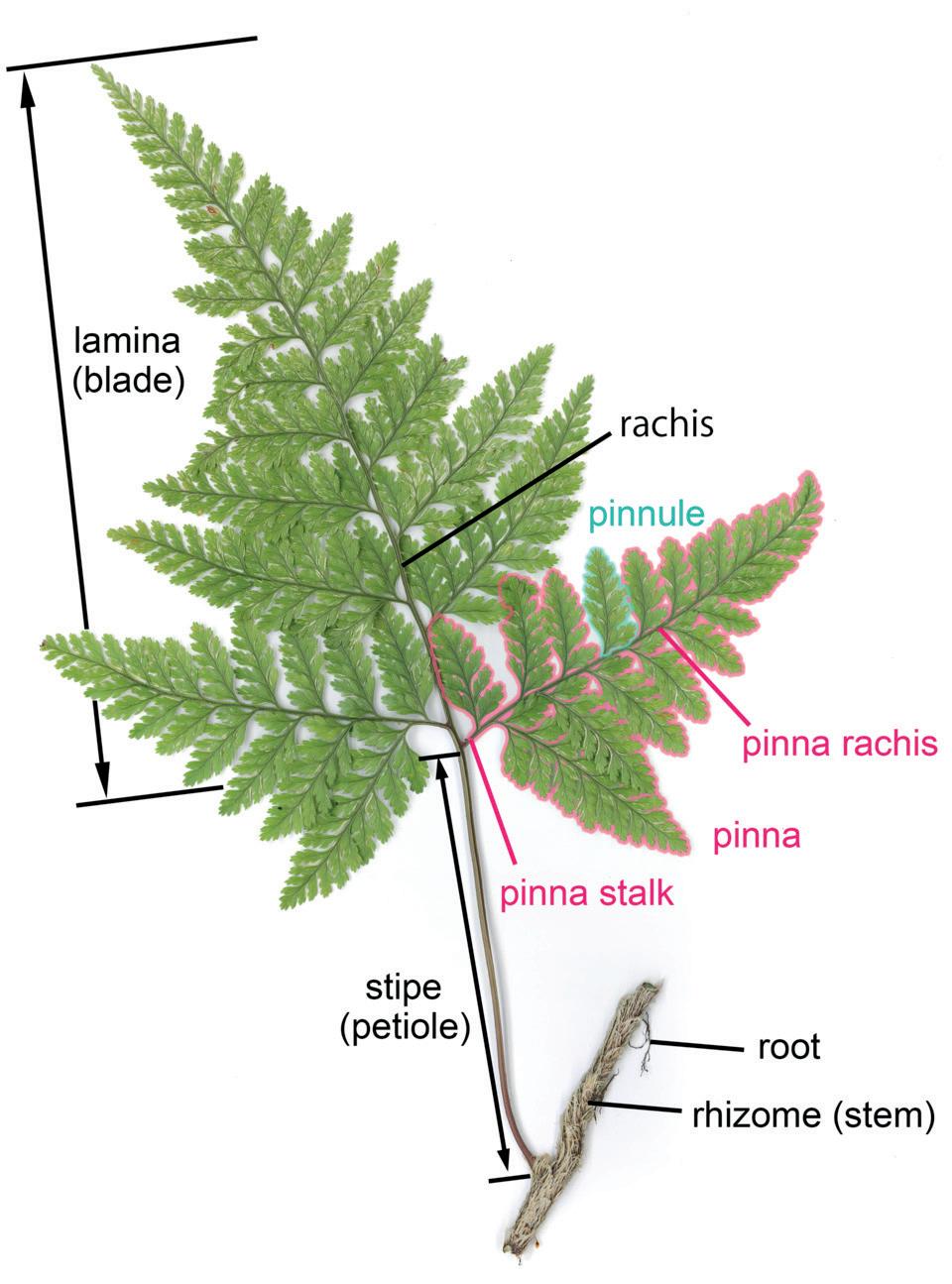
When discussing the remaining parts of the ponga sporophyte, the diagram (right) is helpful for introducing some terms used to refer to different parts of the fern.
The rhizome structure of silver ferns is quite complex and requires considerable detective work to decipher. It forms the ‘trunk’ of the fern, which gives rise to both leaves and roots.
When storms blow ponga across paths, rangers must use chainsaws to clear the way. The cut trunks exhibit beautiful yet puzzling structures that demand interpretation.
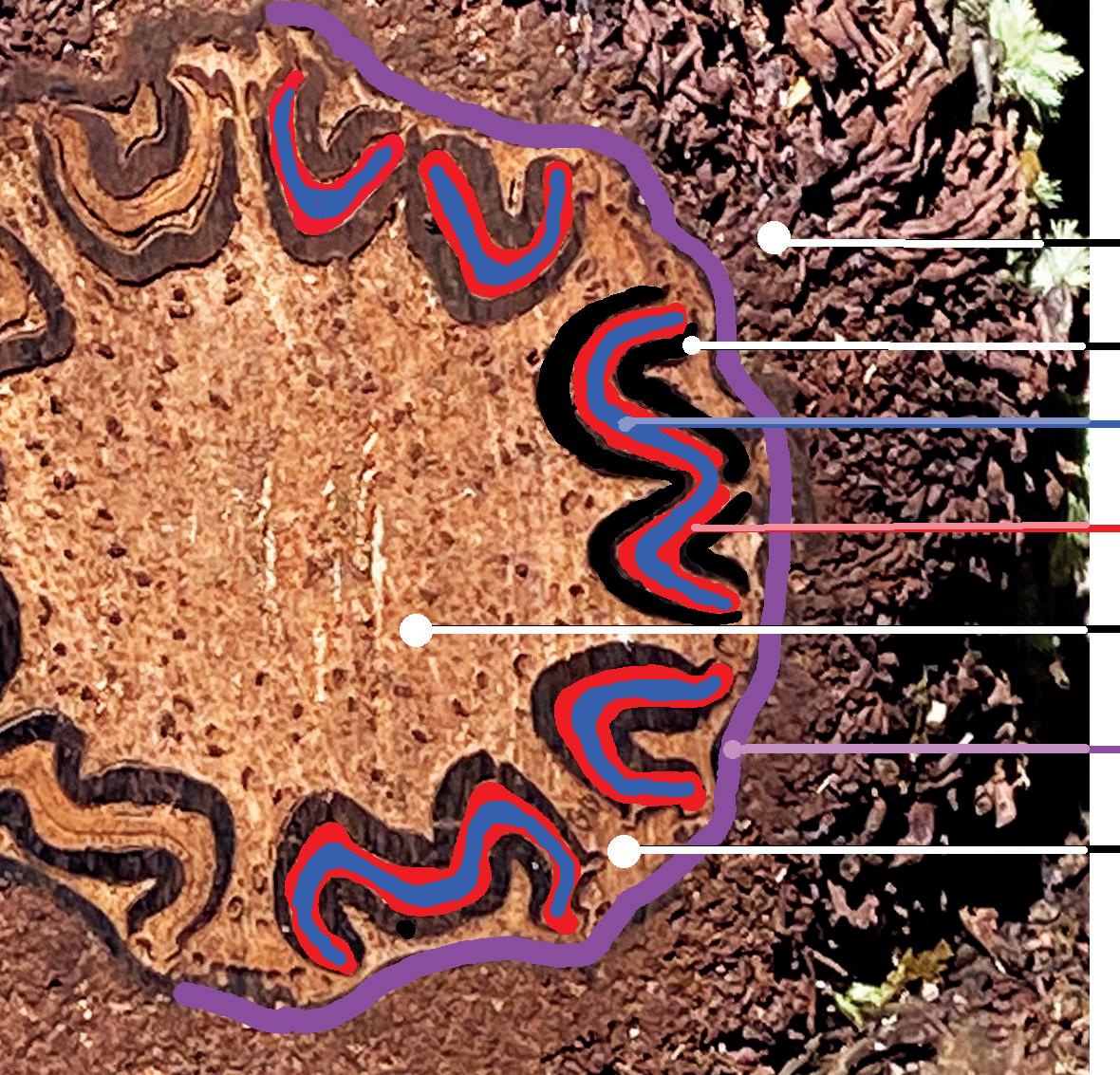
Several types of plant tissue comprise the rhizome trunk structure, each with a unique role:
Xylem: (Pronounced ‘Zy-lem’) consists of dead tubes strengthened with hard lignin – these transport water and minerals from the roots to the leaves.
Phloem: (pronounced ‘Flow-em’) is made up of living vessels that actively transport sugar and other products.
Sclerenchyma: Tough fibres impregnated with lignin ‘glue’ provide great strength, allowing them to resist bending and breaking in strong winds. The ‘3-shaped’ structures called ‘leaf traces’ vary in shape depending on the species of tree fern and are part of the cylinder of vascular tissue within the trunk. The leaves sprout from the ‘leaf gaps’ found between them. The vascular tissue is collectively known as the ‘stele’ of the rhizome.
Mantle of tangled roots
Tough sclerenchyma fibres glued together for strength
Xylem vessels carry water up trunk
Phloem vessels carry sugar and food to where it is needed
Starchy pith stores food
Boundary of trunk proper
Leaf gap where the stipe of each lamina (leaf) joins the trunk
The stipes of the fern leaves grow in spirals around the rhizome trunk, with 13 leaves making up one complete revolution. The colour-tinted photo (right) illustrates how this works. Felled ponga rhizomes can be lathe-turned to create decorative flower vases, showcasing the attractive patterns formed by the complicated vascular tissue.
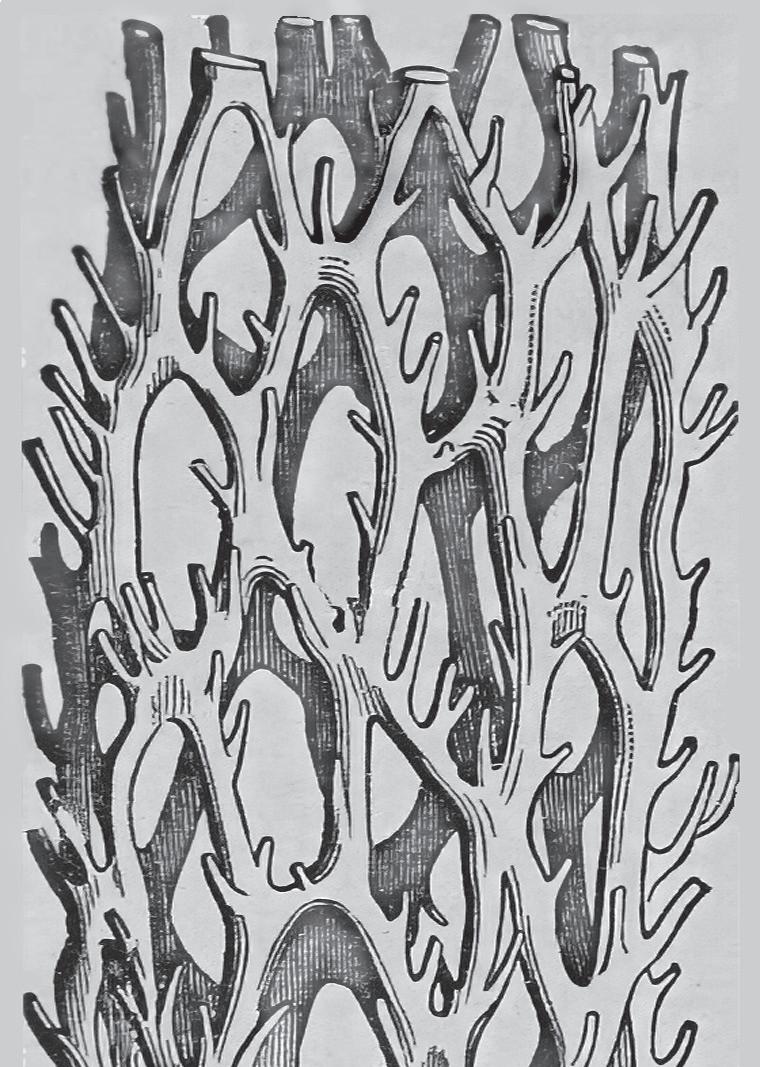
Dissected out, the stele reveals a complex lattice structure.
So, the next time you see a ponga on Tiritiri, you will be able to interpret these features. Understanding what you observe will surely enhance the natural beauty of these iconic ferns!
Photos: John Sibley and Creative Commons.
Anatomy of the rhizome showing the '3-shaped' leaf traces
Spiral leaf growth
Complex lattice structure of the stele
Tiritiri Matangi Kids,
by Stacey
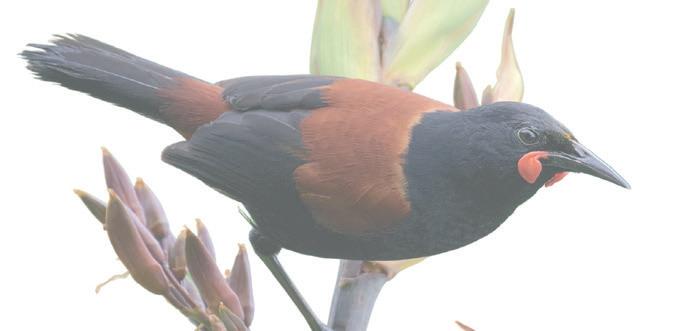
Te taiao/nature is amazing! Every leaf has a purpose, connecting the ngahere, manu, and the whole living world. Inside each leaf is chlorophyll, the green magic that turns sunlight into food, just like tiny solar panels powering the trees. Leaves come in all shapes and sizes, from tiny needles to giant fronds, each with a special job: providing food, shelter, and the air we breathe. Every tree has its own unique leaf with clever designs and special abilities to help it survive. These are called adaptations. Answer 'Which tree am I?' below!
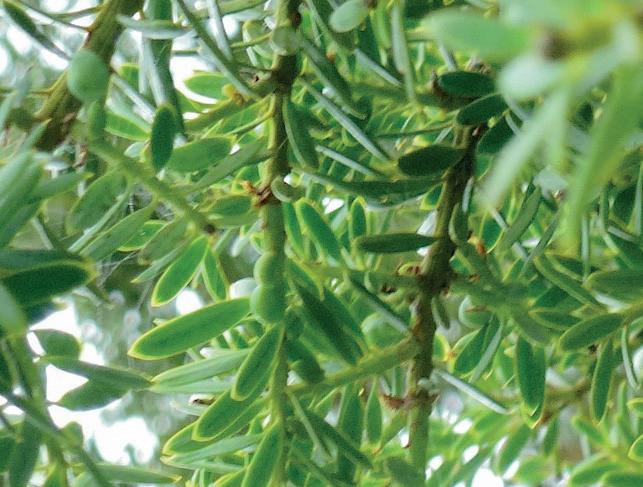
The tōtara tree has tiny, needle-like leaves that are tough and leathery. Unlike big leaves that catch lots of sunlight at once, tōtara leaves help the tree save water by holding it in tightly. Their thick, waxy coating stops water from evaporating, perfect for windy or dry places. The tough, not-so-tasty leaves also protect the tree from animals that might try to eat them. Thanks to these cool adaptations, tōtara can grow tall and strong, even where other trees struggle to survive.
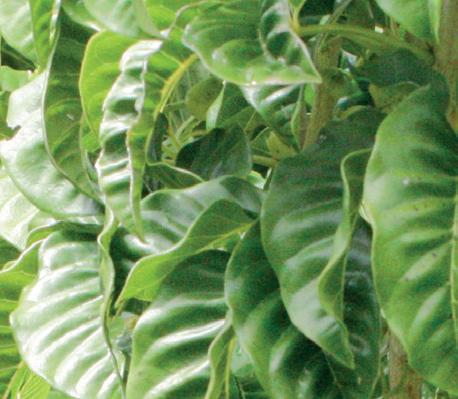
The pūriri leaf is big and thick with wavy edges that help it catch sunlight in a special way. As the Earth turns, the angle of sunlight changes during the day, and different parts of the leaf get sunlight and shade. This stops the leaf from drying out too fast. Because of this clever trick, pūriri leaves can soak up sunlight all day without drying out, helping the tree stay healthy and grow very tall.
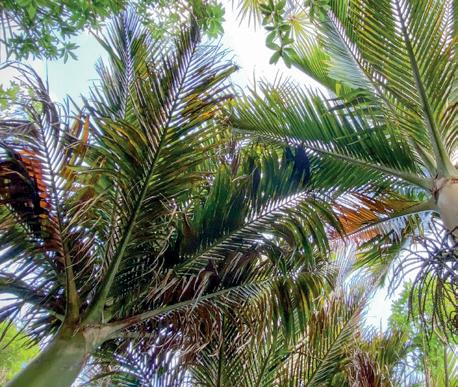
The nīkau has long, feather-like leaves called fronds that reach high into the air to grab sunlight. Their tall, bendy shape helps them sway with the wind without breaking. The leaves are tough and waxy, stopping water from escaping in hot weather. Because of this clever design, nīkau trees can grow very tall, reaching above smaller plants to soak up sunlight and make shady homes for manu underneath.
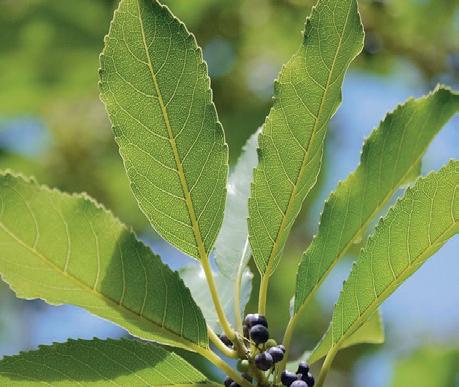
Māhoe has soft, thin leaves that grow quickly, helping fill the forest with green. The edges of its leaves are slightly corrugated, which helps catch sunlight from different angles and lets rainwater drip off easily, stopping the leaves from getting too heavy or damaged. Because of this special skill, māhoe can grow up to 10 metres tall, making new ngahere fast and providing food and homes for manu and insects.
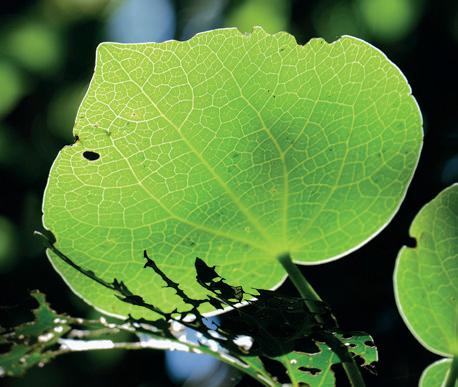
The kawakawa leaf is big and heart-shaped. The leaf is soft and thin, so sunlight can easily pass through, and it has a waxy coating that helps keep water inside. Kawakawa usually grows to a medium height, not too tall and not too short, so it can reach just the right amount of sunlight in the shady ngahere without drying out. Because of this survival skill, kawakawa can soak up plenty of sunlight to grow strong while holding water in its leaves to stay healthy in warm, shady places.
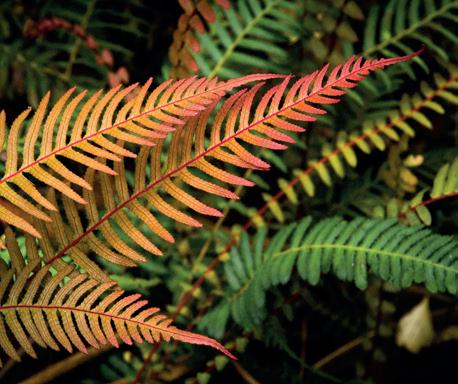
The rasp fern has soft, delicate fronds made up of many tiny leaflets. Young fronds are often bright red instead of green because they don’t have much chlorophyll yet. The red colour acts like sunscreen, protecting the new leaves from getting sunburned while they’re still soft and growing. As they get bigger and stronger, chlorophyll fills the leaves, turning them green so they can catch sunlight and feed the plant. Because of this special feature, rasp ferns can grow low to the ground creating soft, green blankets that keep the forest floor moist and full of life.
Which tree am I?
1. I have big, heart-shaped leaves that act like sun-catchers, and I like shady forests. Which tree am I?
2. My leaves are wavy so different parts get sun and shade during the day, keeping me from drying out. Which tree am I?
3. When my leaves are young, they are bright red because they don’t have much chlorophyll yet. Which plant am I?
4. I have long, feather-like fronds that reach high into the sky, making shady homes for birds. Which tree am I?
5. My leaves have corrugated edges that help sunlight reach every part of me and let raindrops roll away. Which tree am I?
6. My tiny, needle-like leaves are tough and help me save water so I can grow tall in dry, windy places. Which tree am I?
Photo: Geoff Beals
Answers:1, Kawakawa. 2, Pūriri 3,Rasp fern. 4, Nīkau 5, Māhoe. 6, tōtara
Photo:
Sherry Galione
Photo: Alison Forbes
Photo: Helen Bucksey
Photo: Erica
Lim
Photo: Warren Brewer
Supporters of Tiritiri Matangi
The Supporters of Tiritiri Matangi (SoTM) is a volunteer Incorporated Society that works closely with the Department of Conservation to make the most of the wonderful conservation-restoration project that is Tiritiri Matangi. Every year volunteers put thousands of hours into the project and raise funds through donations, guiding and our island-based gift shop.
If you'd like to share in this exciting project, membership is just $30 for a single adult or family, $35 if you are overseas, and $15 for children or students. Dawn Chorus, our magazine, is sent out to members every quarter. See https://www.tiritirimatangi.org.nz/support-us/ or contact PO Box 90-814 Victoria St West, Auckland.
SoTM Contacts:
Chairperson: Ian Alexander chairperson@tiritirimatangi.org.nz
Secretary: Meredith Blogg secretary@tiritirimatangi.org.nz
Acting Treasurer: Peter Lee-Grey treasurer@tiritirimatangi.org.nz
Board: Hester Cooper, Louise Delamare, Rosemary Gibson, Rachel Goddard, Carl Hayson, Andrew Nelson, Janet Petricevich, Parin Rafiei Operations Manager: Debbie Marshall opsmanager@tiritirimatangi.org.nz
Guiding and Volunteer Manager: Gail Reichert guidemanager@tiritirimatangi.org.nz, 09 476 0010
Retail Manager: Ashlea Lawson retail@tiritirimatangi.org.nz
Membership: Rose Coveny membership@tiritirimatangi.org.nz
Educator: Sara Dean
Assistant Educator: Liz Maire educator@tiritirimatangi.org.nz
Fundraisers: Rashi Parker and Louise Delamare fundraiser@tiritirimatangi.org.nz
Social Media: Bethny Uptegrove socialmedia@tiritirimatangi.org.nz
Dawn Chorus co-editors: Janet Petricevich and Stacey Balich editor@tiritirimatangi.org.nz
Island Ranger: Nick Fisentzidis tiritirimatangi@doc.govt.nz, 027 536 1067

CALENDAR OF EVENTS
Tiritiri Matangi Talk
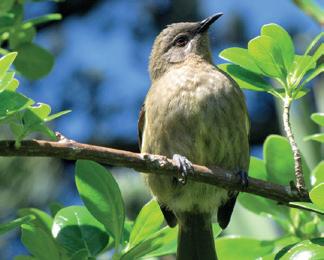
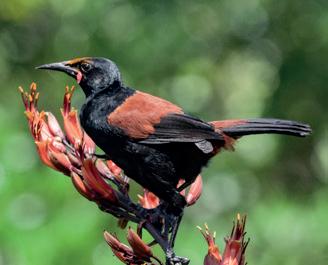
Female Bird Song
Monday 1 December 2025
Speaker: Wesley Webb
7:30pm at Unitec, Building 115, Mount Albert
Tiritiri Matangi Talk
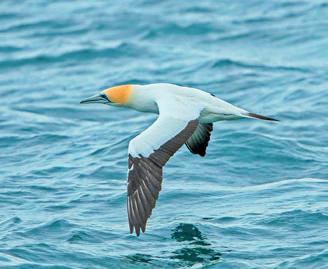
Feeding and foraging of tākapu/gannets
Monday 30 March 2026
Speaker: Nigel Adams
7:30pm at Unitec, Building 115, Mount Albert
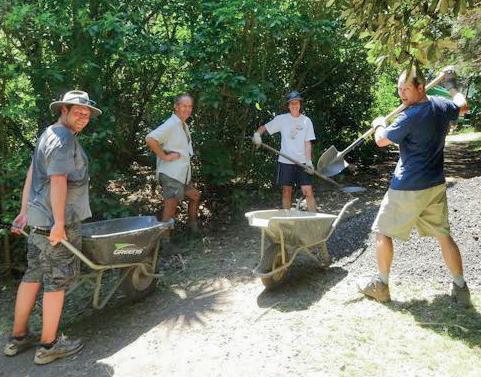
Working Weekends 2026
Auckland Anniversary Weekend, 25 - 27
January
Easter Weekend, 3 - 6 April
King's Birthday Weekend, 30 May - 1 June
Labour Weekend, 24 - 26 October
Enquiries to the guiding and volunteer manager
Supporters' Weekends 2026
7 - 8 March
9 - 10 May
11 - 12 July
5 - 6 September
Enquiries to the guiding and volunteer manager
Tiritiri Matangi Talk
Save the date
Monday 8 June 2026
Visiting Tiritiri Matangi Island for education or recreation
Day trips:
Weather permitting, Explore runs a return ferry service from Wednesday to Sunday from Auckland Viaduct and the Gulf Harbour Marina. Bookings are essential.
Phone 0800 397 567 or visit the Explore website: https://www.exploregroup.co.nz/
Overnight visits:
Camping is not permitted and there is limited bunkhouse accommodation. Bookings are essential: https://bookings.doc.govt.nz/Web/
School Education Programme
We offer a full-day learning experience in a pest-free environment for years 1 to 13. Tamariki and rangatahi can get up close to endangered taonga species where they learn about community conservation and how people can work together to provide protected habitat. This then inspires students to take action in their own neighbourhoods.
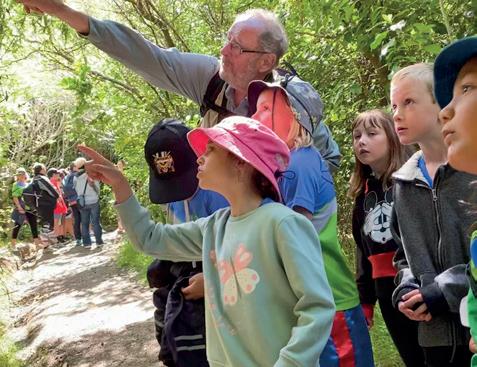
Our educators offer a range of education experiences on the Island, which are closely tied to the NZ curriculum. At the senior biology level, there is support material available for a number of NCEA achievement standards. Tertiary students have the opportunity to learn about the history of the Island and tools of conservation as well as to familiarise themselves with population genetics, evolution and speciation. Subsidies are available for schools with an EQI 430 or more via our Growing Minds programme. Information on the education programme is at: https://www.tiritirimatangi.org.nz/education-programmes/ Bookings are essential.
Tiritiri Matangi Exclusive!
The Lights in My Life
By Ray Walter.
Edited by Anne Rimmer. Published by Lynda Walter, 2025.
Ray Walter’s entertaining memoirs, related in a relaxed, chatty style, are also an invaluable record of the era of manned lighthouses in New Zealand.
A noted raconteur, Ray regales us with tales of hardships, accidents, shipwrecks, and, above all, hilarious happenings at lighthouse stations around NZ’s rugged coastline. The book is illustrated by contemporary photographs.
Despite his humble origins during the depression and war years, and being largely unschooled, Ray Walter’s energy, resourcefulness, and natural leadership saw him promoted to Principal Keeper at the age of 23. He served at eight lighthouse stations – from the remote Moko Hinau Islands in the north, to notorious Puysegur Point in Fiordland.
The automation of the Tiritiri Lighthouse in 1984 ended Ray’s lighthouse career. Transferring to conservation, he managed the restoration of Tiritiri Matangi Island until he retired in 2006. Ray dictated these memories of his colourful lighthouse life when in his eighties; he died in 2023.
Scan the QR code for links to our online shop, social media and more.

https://www.tiritirimatangi.org.nz/online-shop
email: retail@tiritirimatangi.org.nz
+64 9 476 0010 during shop hours
Mon-Tue: Closed. Wed-Fri: 11:00 am - 2:00 pm Sat-Sun and public holidays: 10:30 am - 2:50 pm
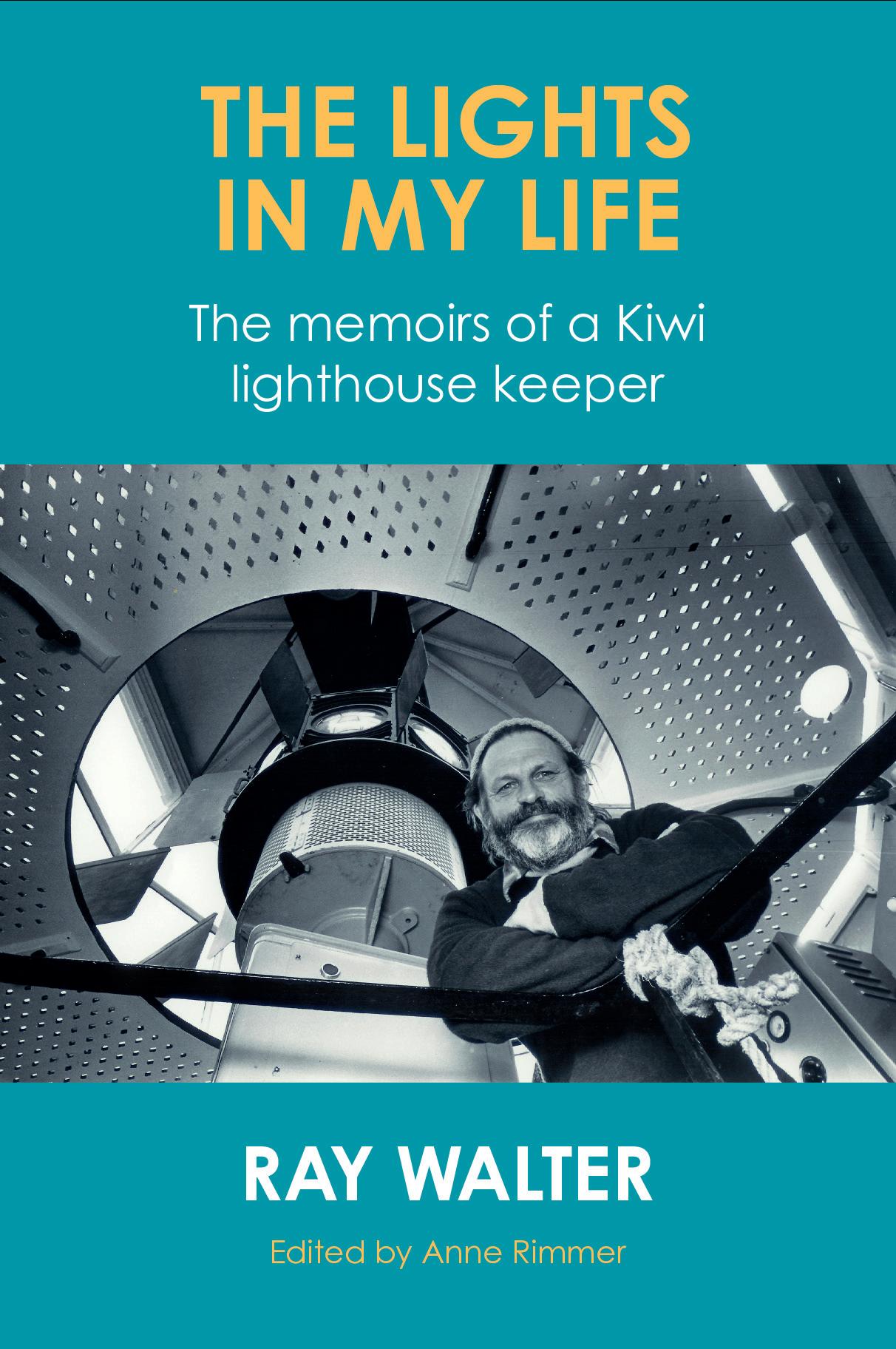
At just $30, this book is well worth a read! It had me chuckling before I got past the introduction and is a fascinating glimpse into the lives of lighthouse families. Along with a Tiritiri calendar, I recommend you add it to your Christmas gift list! Editor, Dawn Chorus
Supporters of Tiritiri Matangi wishes to acknowledge the generous support of its sponsors














Heritage donors and bequests World Wide Fund for Nature (WWF) Fullers360 Peter Lorimer bequest
Supporters of Tiritiri Matangi welcomes all types of donations, including bequests, which are used to further our work on the Island. If you are considering making a bequest and would like to find out more, please contact secretary@tiritirimatangi.org.nz