
Facts and Froth
Jill Lowe
Dinner Party Seating Plans: You are seated at……..
We’ve all been at various disastrous dinner parties when guests stray from the guidelines of avoiding the topics of religion, politics, sex and finances.We can remember mysogynistic or off -color jokes or those who decide at your dinner party to tell some truths!
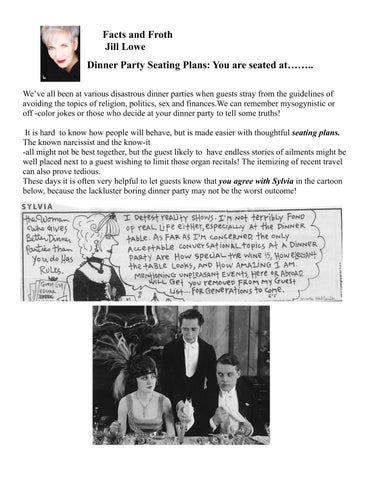
It is hard to know how people will behave, but is made easier with thoughtful seating plans. The known narcissist and the know-it -all might not be best together, but the guest likely to have endless stories of ailments might be well placed next to a guest wishing to limit those organ recitals! The itemizing of recent travel can also prove tedious. These days it is often very helpful to let guests know that you agree with Sylvia in the cartoon below, because the lackluster boring dinner party may not be the worst outcome!

If arriving at a fancy dinner party in London or any city with embassies or consulates, it is often observed that staff greeting one may indicate by means of perhaps a small hand held chalkboard, the actual seating plan of the dinner. What this does is to prevent one pouring one’s best witticisms or “bon mots’ to someone over aperitifs, only to find one is seated beside the individual at dinner. This chalkboard idea is so very sensible and considerate of guests. Of note the discussion here is not IF there is to be seating plans but considerations in establishing the plan, because a “pull your name out of a hat”, or “plonk yourselves anywhere”, usually plays out less well.

Particulars of seating plans
Armed with many the available historic guidelines for seating eg host and hostess at ends of table, important man on hostess’s right and so forth, and the desire to alternate genders, one realizes that some guidelines have to be abandoned. For example only for rectangular tables of 6 or 10 can one have alternating genders with host and hostess at head and foot of table. Tables of 8 or 12 must abandon at least one of the guidelines. And so adapting the guidelines for the situation and guest constellation is the usual result.
Indeed, there is good reasons to abandon all the traditional guidelines and focus more on the suitability of actual people being seated together.
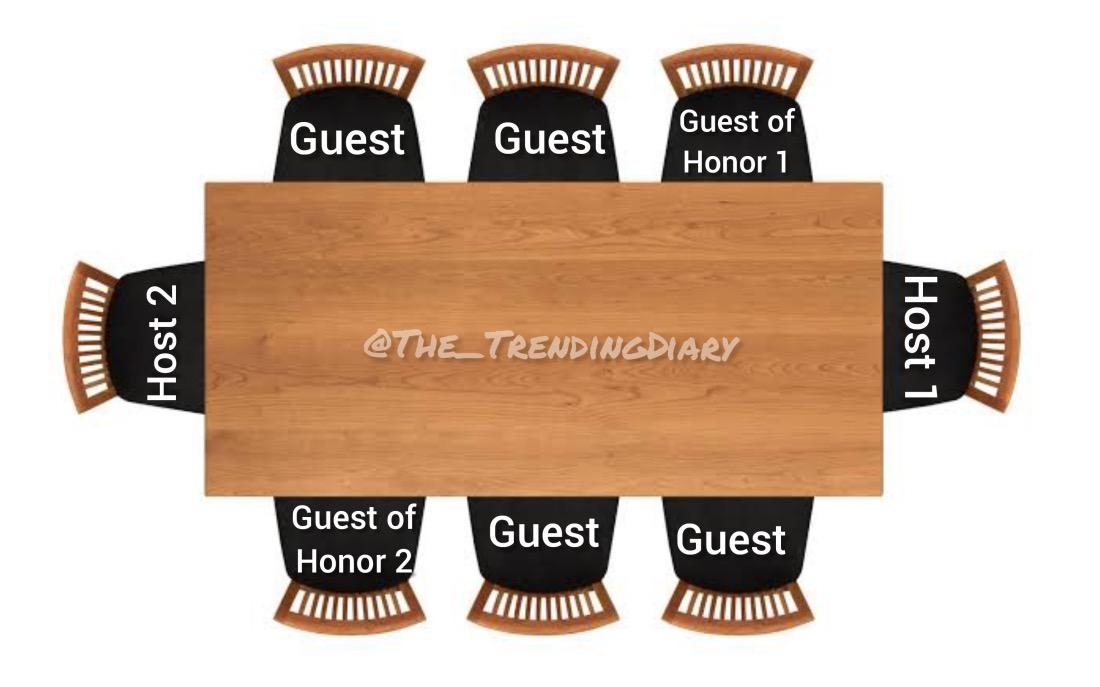
In today’s world, with guests of all ages, marital status, partnerships and from all walks of life, the seating arrangements invariably mean some men being seated together with some women seated together.
It is quite good to form the plan imagining guests conversing with one another on either side as well as across the table.
At royal banquets it is a common practice to converse with the person seated on one’s right for the first course atfter which the person on ones left is drawn in for the main course. (For royal banquets though, conversation is confined to the 2 people beside and not across the table.)
Seat Partners together?
This question evokes strong responses for and against.Whilst not a scientific study, it seems that in Europe, Britain, Australia and Canada, overwhelmingly couples are separated. Since it assumed that couples do talk when not at the dinner party, seating couples together cuts down 50% of available people with whom to talk. (unless of course the couple is to compile the grocery list.) With plenty of exceptions to the admonition that in the USA couples prefer to be seated together, nevertheless that notion is borne out in practice.
More common in many cultures is the sometimes exclusion in dinner parties of the single woman, to the extent that is not seen for single men. Oh dear!

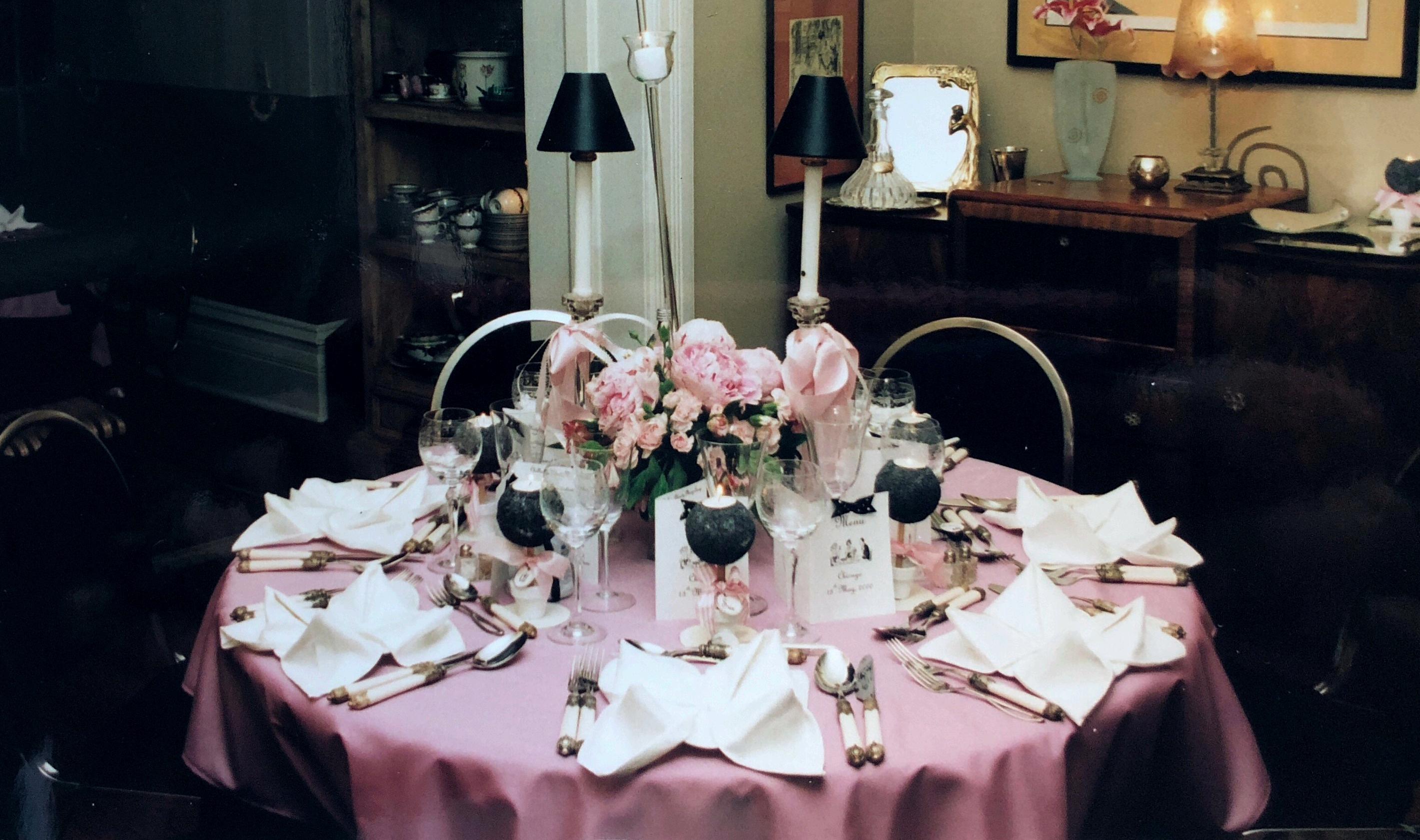
Any shaped table benefits from a seating plan.
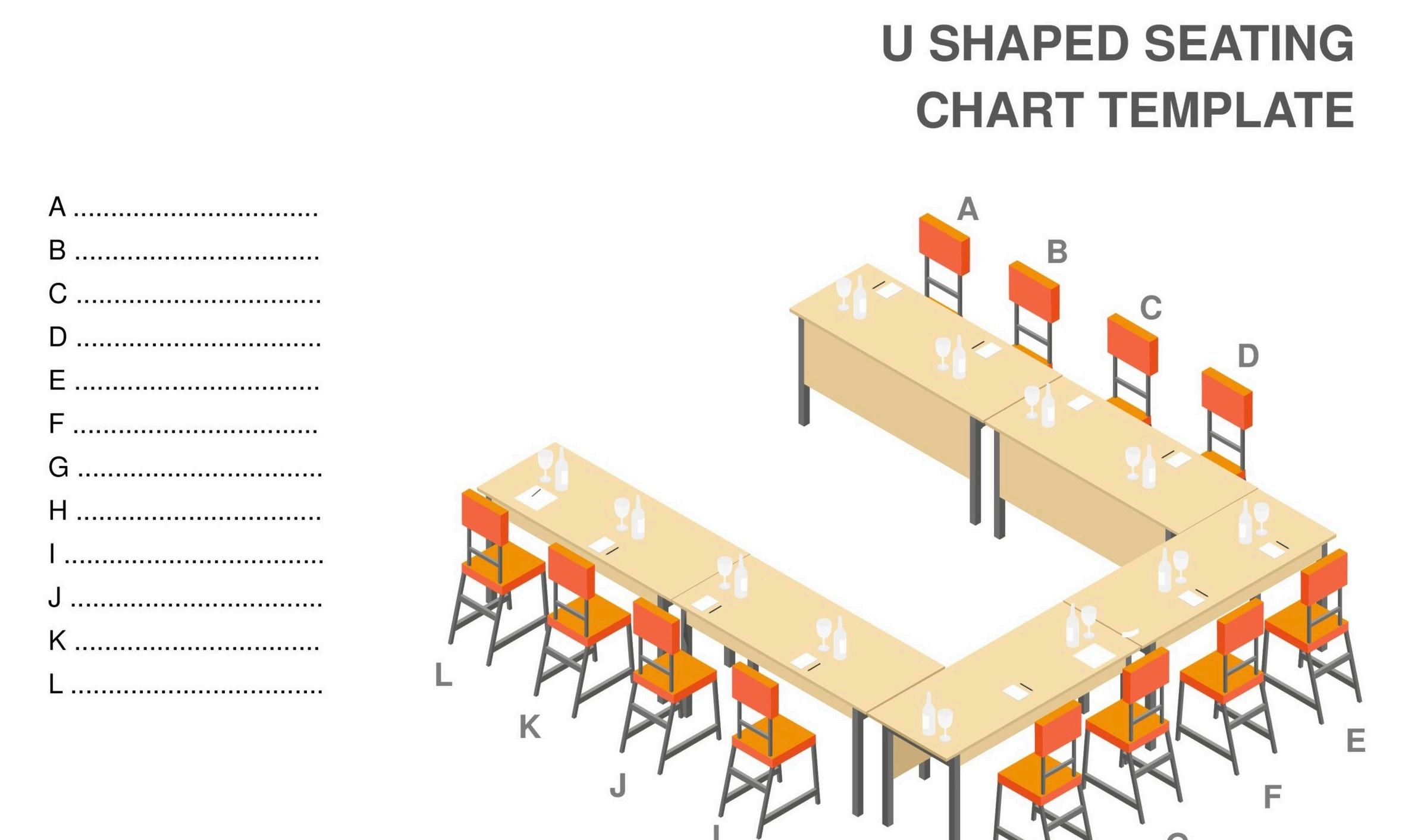
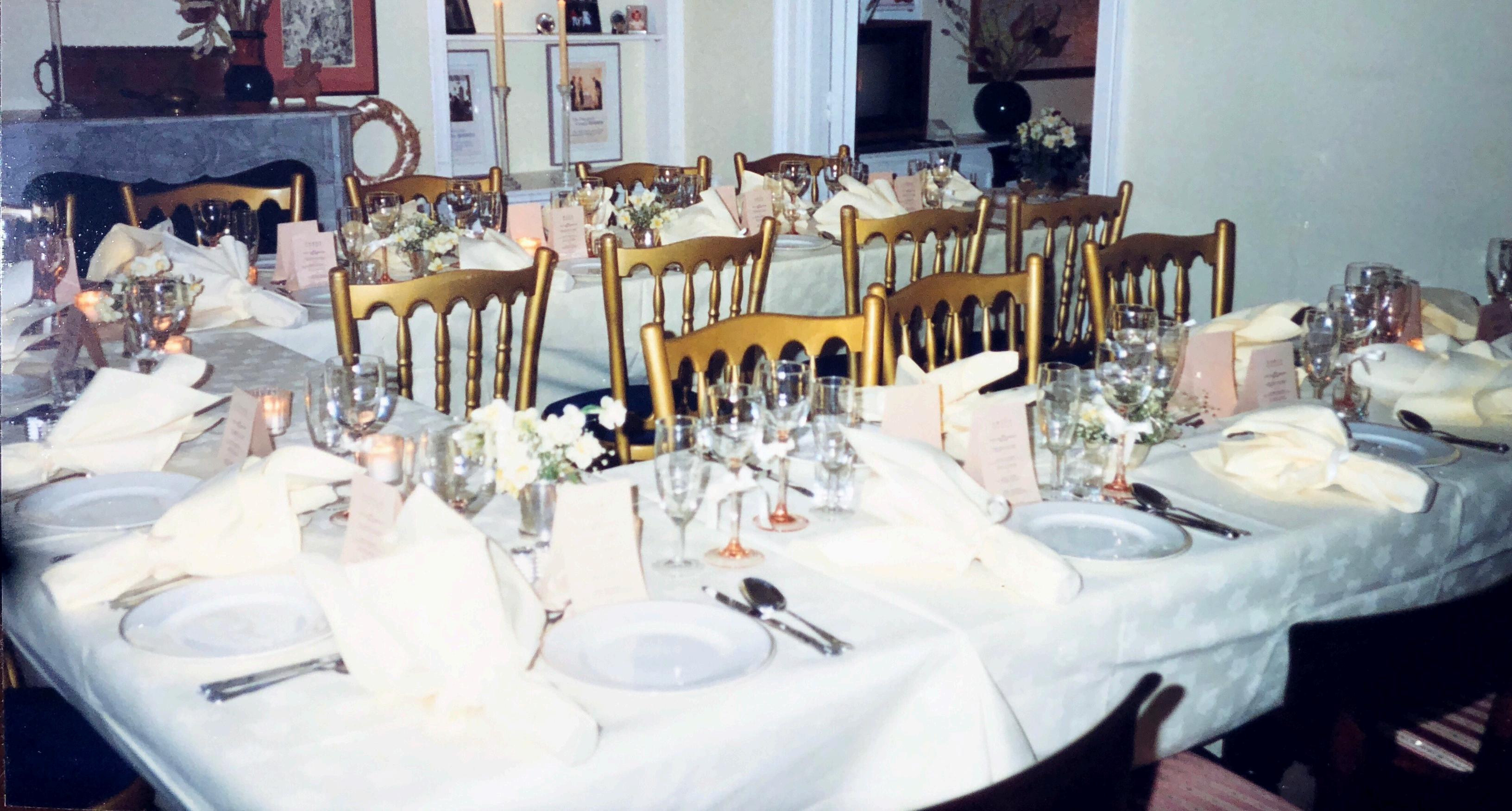
Especially important to have a plan is the the horseshoe with seating in the inner section
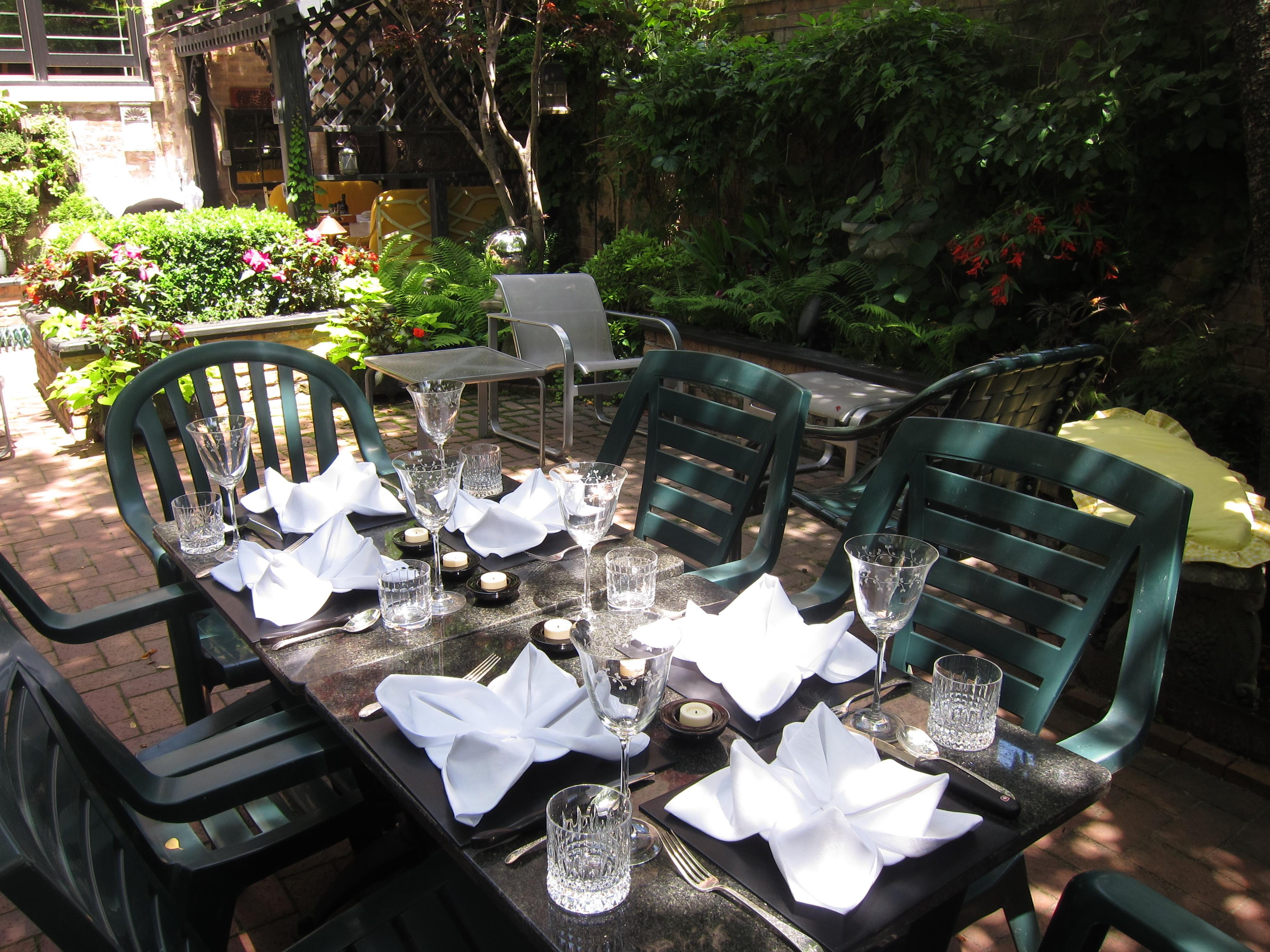
Even a simple back yard supper benefits from a plan
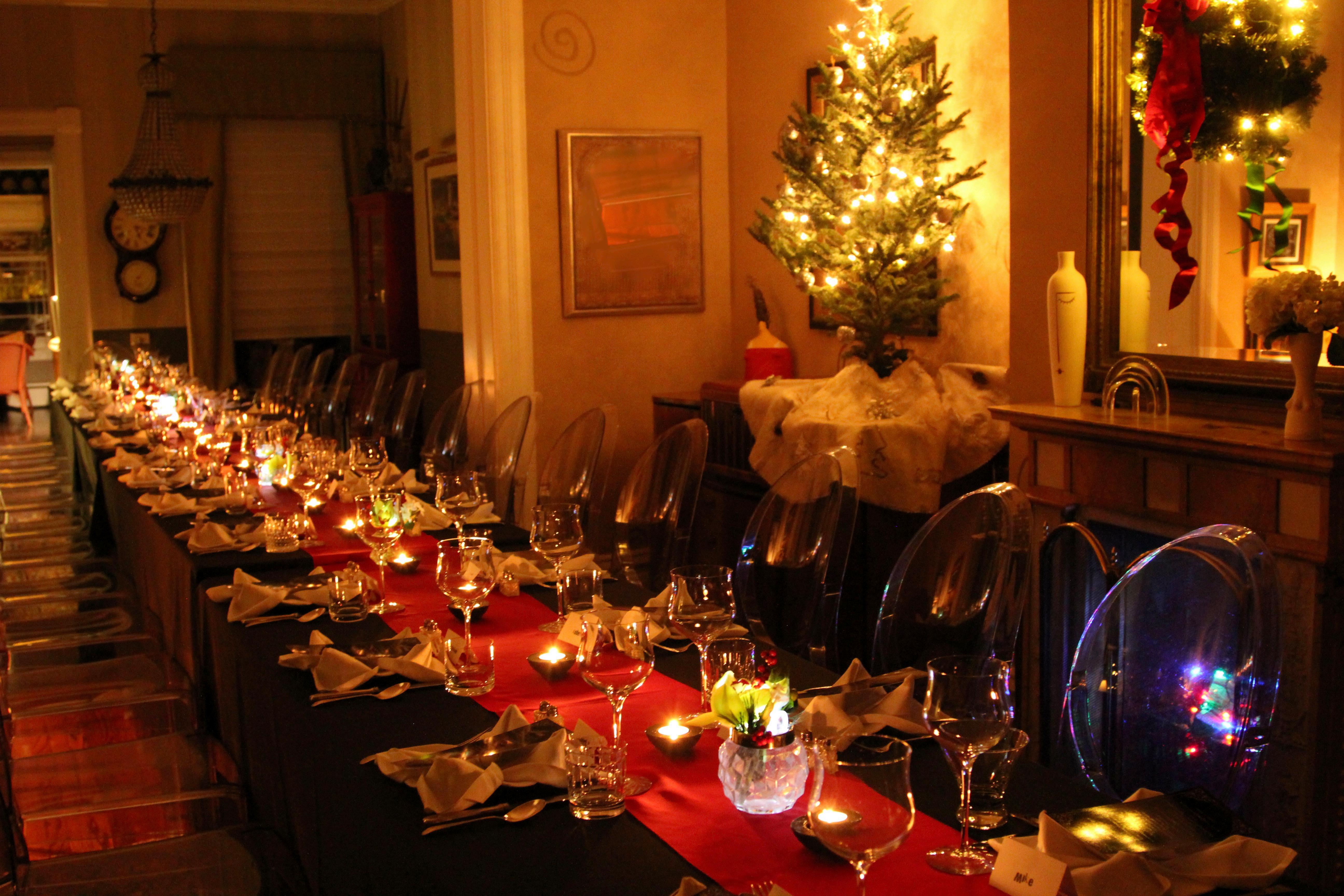
Of all tables, the elongated banquet table demands a seating plan.
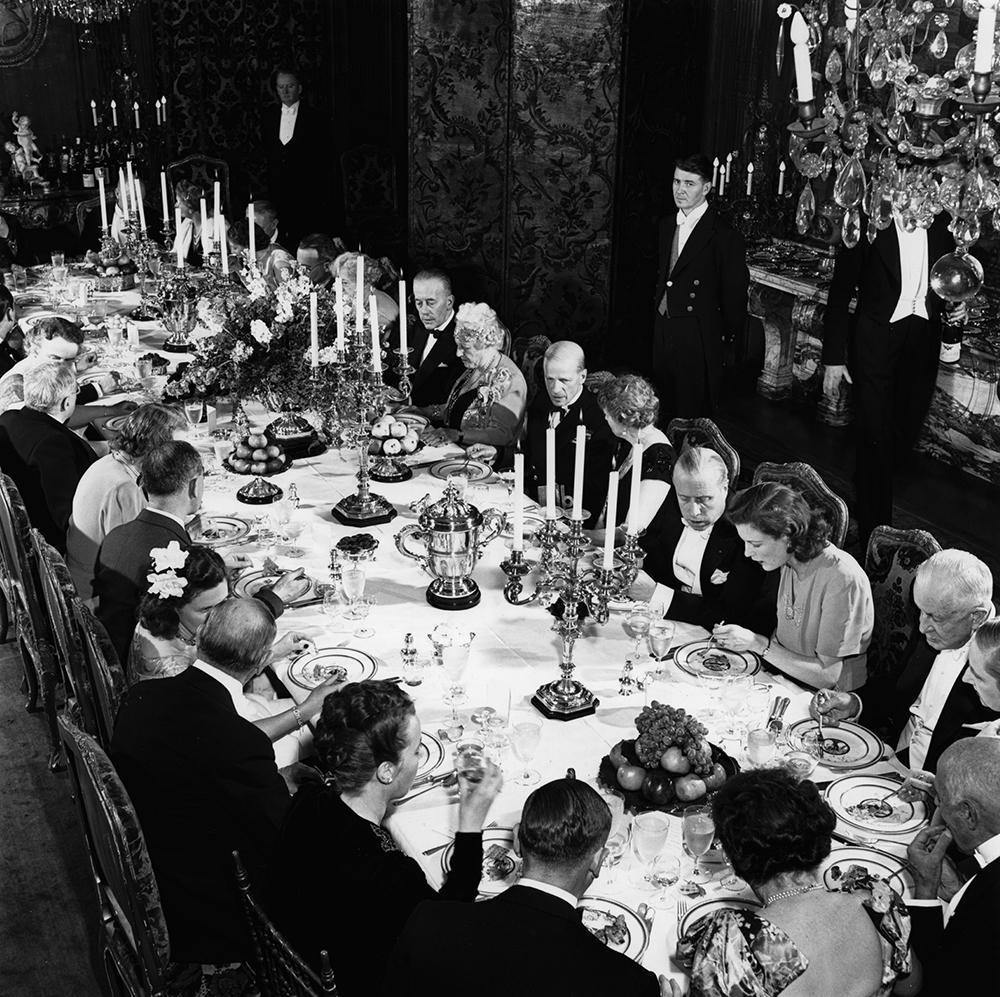
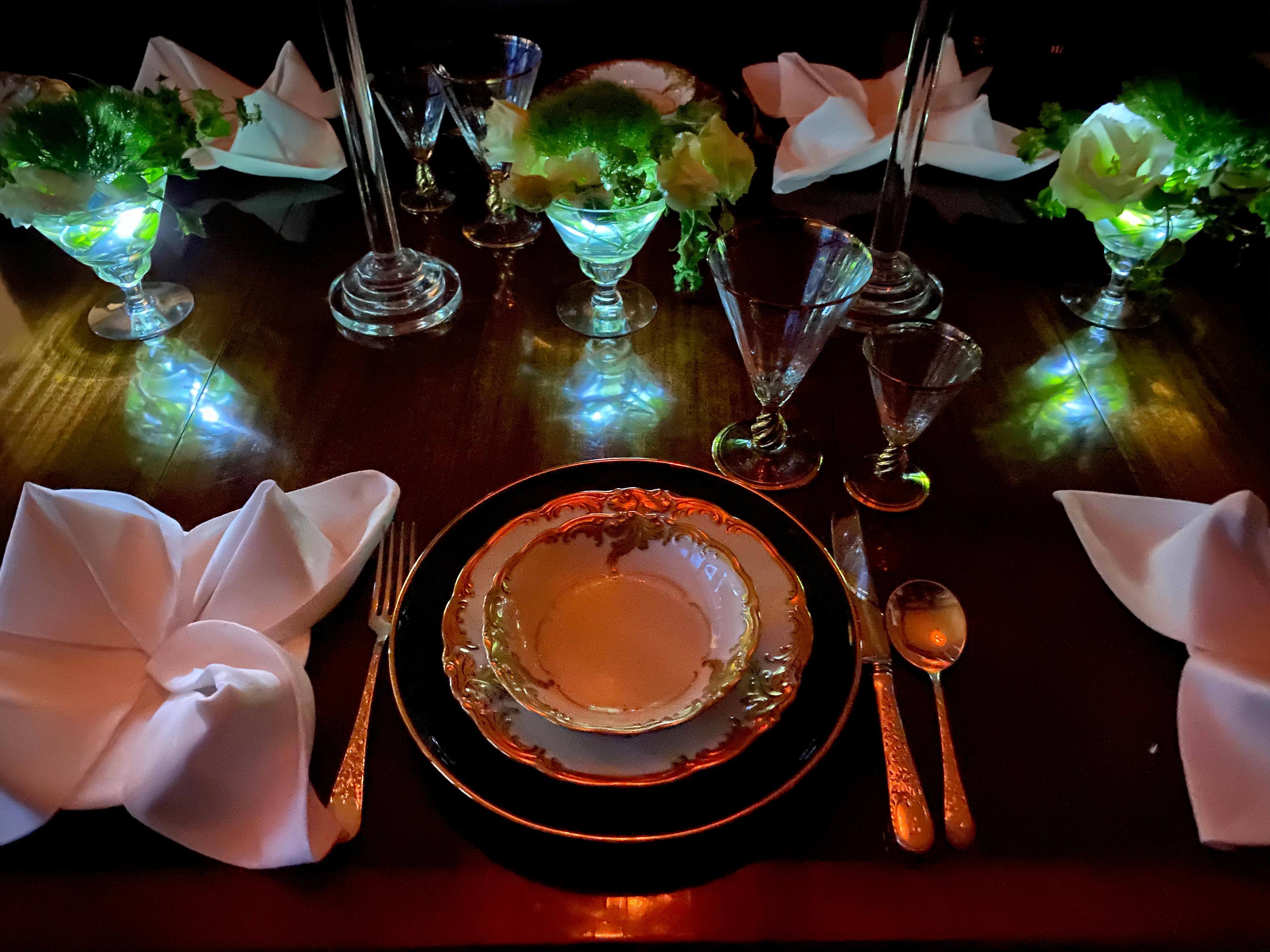
Guests feel valued if expected and planned for.
Place Cards
Place cards can be hand written, or written on erasable items.Tented cards can be printed on computer. It is helpful if large type is used and it is very thoughtful to print front and back so that guests can read place cards from opposite.
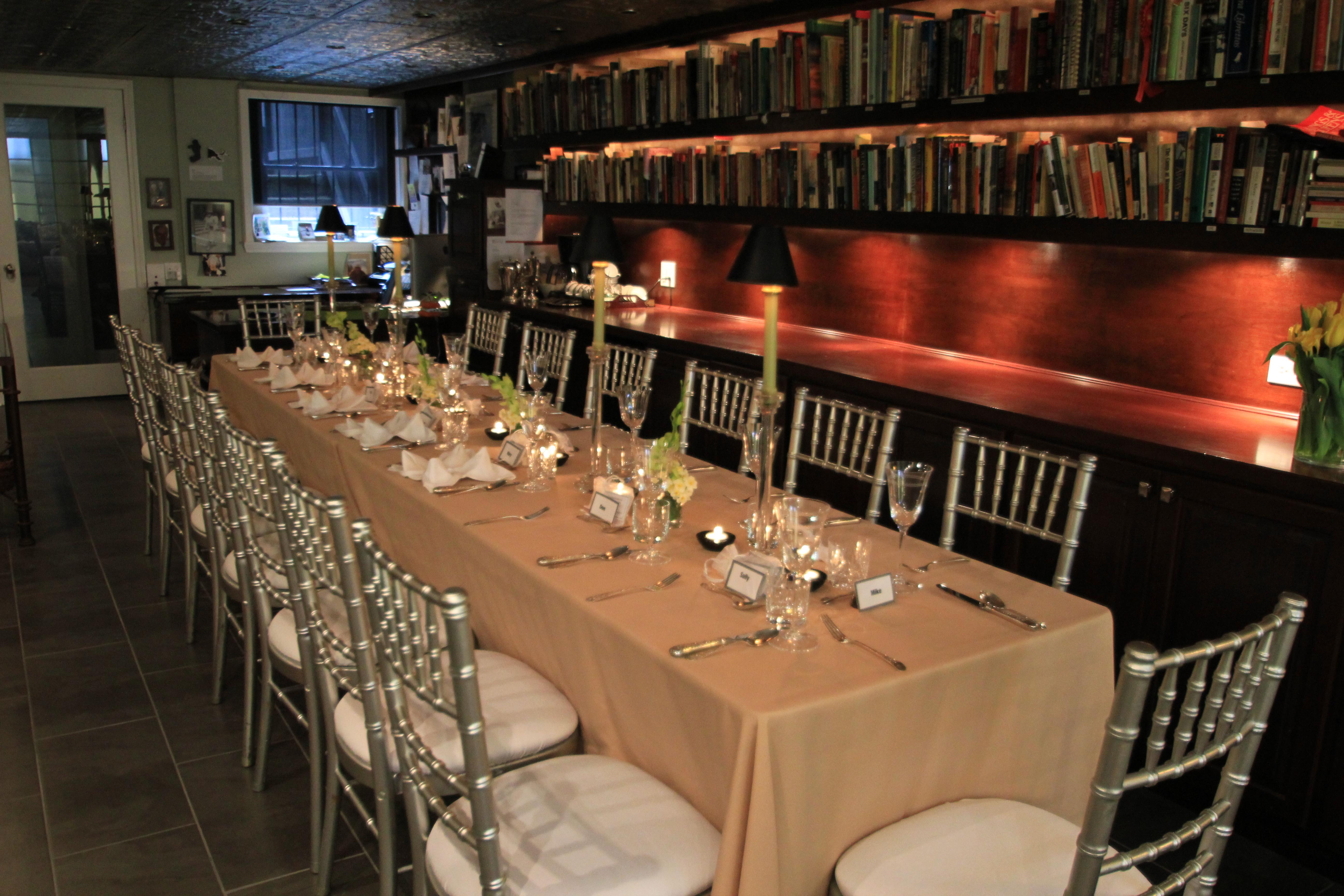
For the success of the dinner party to be spirited and not merely convivial, it seems prudent to evaluate the guests for listening ability, boldness, the interviewer type, the “ Oh my goodness I’ve been talking about me all the time, now why don’t you talk about me?”
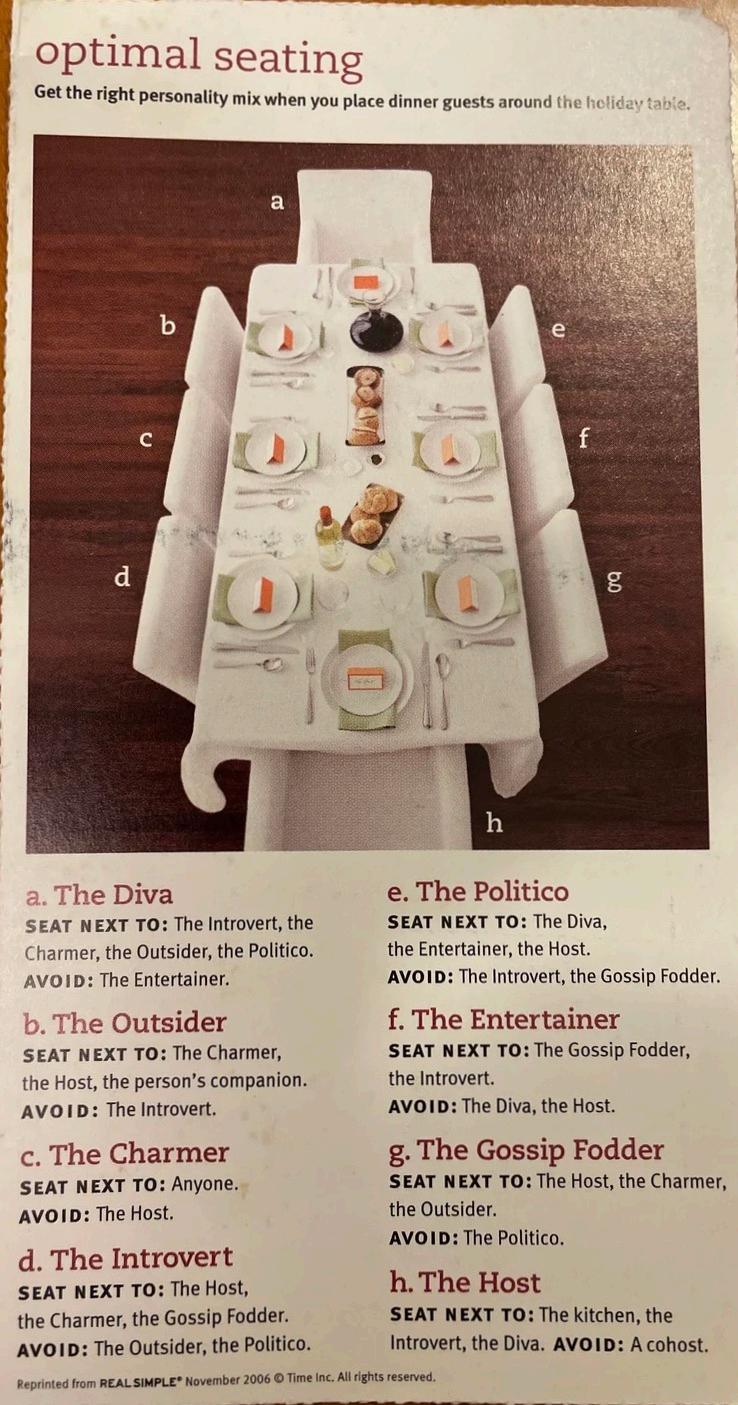
With tongue in cheek this below chart proves to be as true as it is funny. Best of course to be the guest who can be placed anywhere, by being interested and interesting.
Photo of Jill by Joe Mazza, Bravelux inc.
copyright ©2026 Jill Lowe. All