

What I wish I knew during freshman year, with a coffee on the side
Your guide to getting involved
How to survive Hopkins as an international student
A not-so-helpful guide to balancing it all (sort of)
How to carry home when you miss it
Date ideas in Baltimore (and nearby)
Reflections to my first-year roommate
Some Hopkins words
My freshman year food guide: five Baltimore restaurants worth visiting
How to cook without a kitchen: easy dorm recipes
Beyond the quad: essentials near the Homewood campus
“Jimmy” and friends: navigating transit from Homewood
From “E” to you: 3 pieces of advice to overcome the struggles of Hopkins coursework
From fantasy to foundation: a rising Junior’s mental health journey at Hopkins
Letters to my firsts
Find your second greatest love (for students who are not sure who they want to be)
Course registration at Hop: a freshman’s guide
Making Homewood Campus your home
Making friends as a freshman
Steel, struggle and Baltimore’s history
The beauty of Baltimore
Being miserable and successful aren't a package deal
To those feeling lonely in their first year
Neurons, narratives and new beginnings
Why we joined The News-Letter and why you should, too!
Puzzles
Meet the Editors
Interested in joining The
Dear new Blue Jays,
Huge congratulations on what you have achieved, and welcome to Hopkins! Whether you ’ re arriving from across the globe or just down the road, stepping onto the Homewood campus for the first time is beyond exciting.
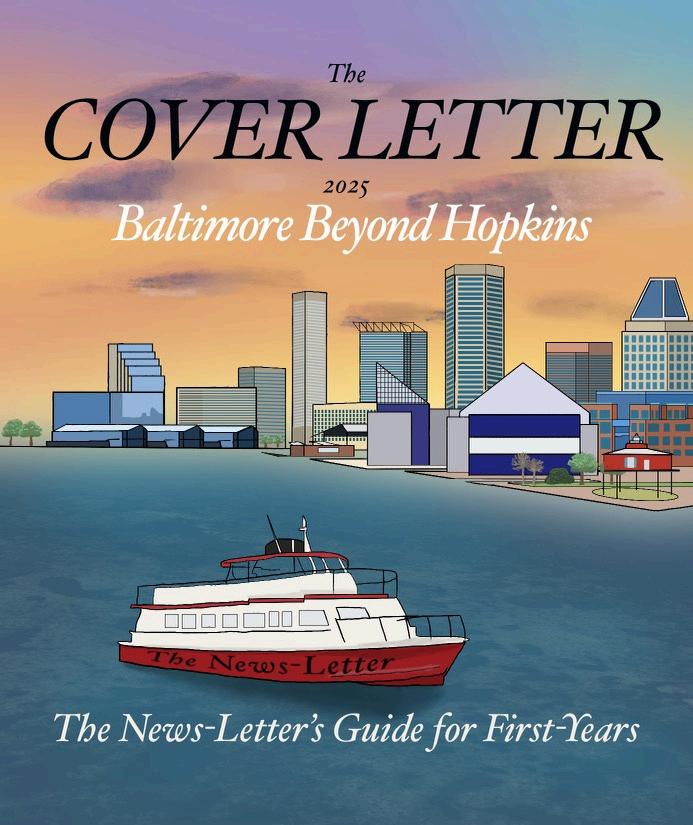
The Cover Letter is a 101 guide assembled by The Johns Hopkins News-Letter to answer some of the questions you might have about Hopkins, Baltimore and beyond. Our editors and writers revisit their past selves the rough patches, the awkward moments and the cherished memories to present you with their tips and insights. From balancing academics and social life to making the most of campus resources and Baltimore, we ' re confident that this year ' s edition of The Cover Letter will inspire and motivate you throughout the year Our contributors have definitely been through a lot, and they are sharing these experiences with you Think of this as a friendly roadmap doodled by students who like to pretend they are wise but have stood exactly where you stand now.
The News-Letter crew seasoned their advice with their own experiences: the late-night study sessions, moments of homesickness, unexpected friendships and the little victories that made it all worth it. These are the things we wish we had known as freshmen, but, as you’ll see, we ’ ve come to love this campus and city, even though they kept surprising us along the way.
This isn’t meant to be all-encompassing; college life is full of surprises and uncertainties, but those twists and turns are also what make this journey exciting and memorable for years to come No matter what awaits, we know you have the bravery, wisdom and resilience to ride the waves This is where your unique story begins
As you start finding your path at Hopkins, we hope this magazine will be a helpful guide Let it reassure you that you ’ re not alone all Blue Jays have navigated this winding road in their own way, and now, it’s your turn. We believe in you and can’t wait to see where your journey takes you.
Here’s a toast to you, dear first-year. Welcome home (and welcome to The Nest)!
Linda Huang and Yuyu Huang Magazine Editors 2025–26
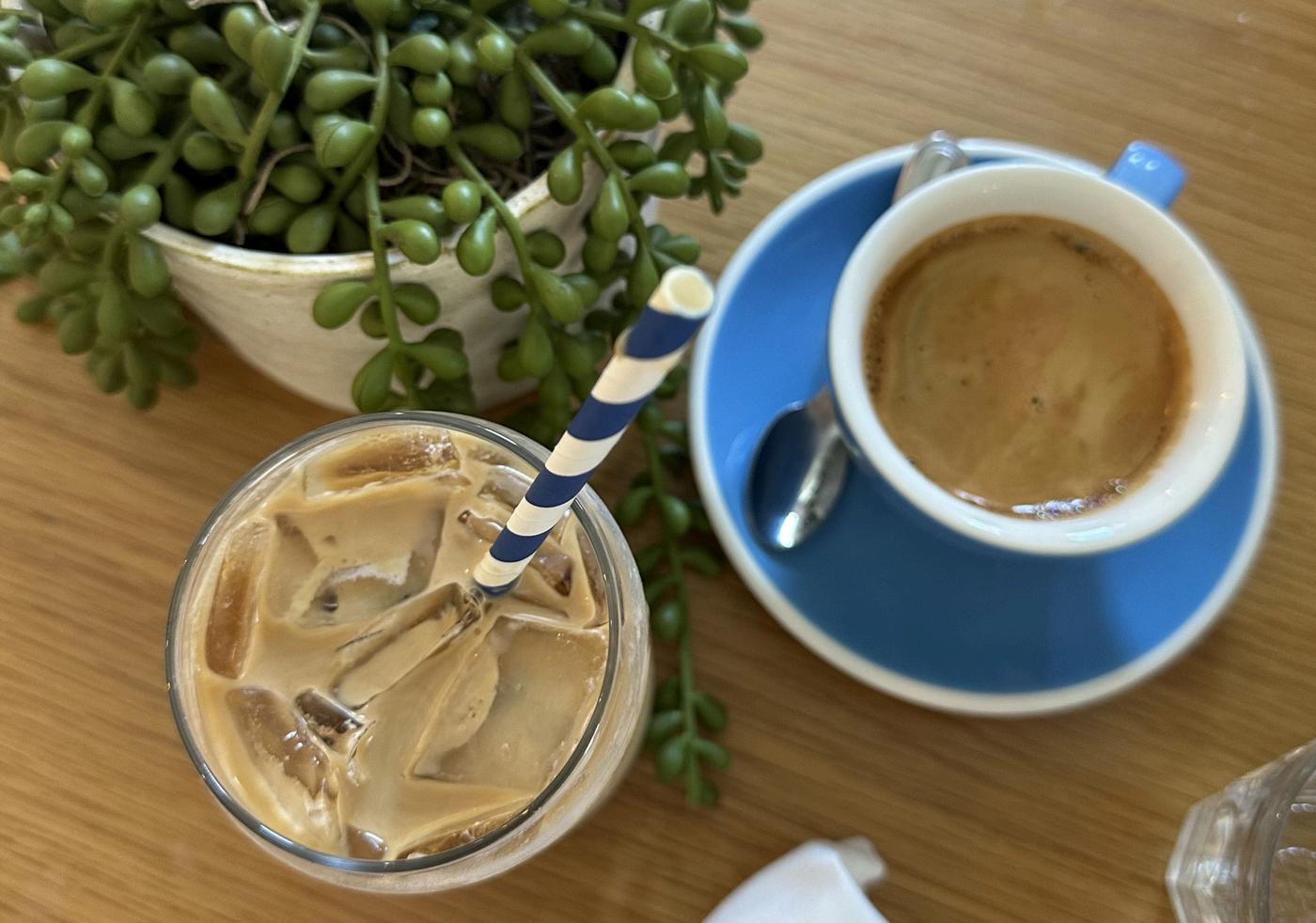
I really enjoy coffee Having a good debrief session with my friends over a coffee or drinking one at the start of the day is one of the best things about it It’s slightly bitter but also sweet. Some of the best, smoothest coffees have just the right level of aftertaste, tasting clean enough to sip throughout the day but interesting enough to come back for more
A year from now (if not sooner or already), many of you readers will probably hold a similar sentiment Quite frankly, any form of caffeine works for the needs of a typical college student, but I’ve settled on convincing myself that coffee is probably one of the lesser evils when pitted against Celsius or Red Bull I enjoy coffee to the point where I am wholly convinced that I can write about the freshman year experience at Hopkins in the context of the simple drink So here it is: what I know about freshman year, paired with a nice iced coffee.
One thing about ordering coffee is that, a lot of times, you never really know what’s going on Growing up, my impression of coffee was the bitter black coffee that my parents drank almost religiously before work It smelled nice, but that was about it So when I came across the words latte, mocha, long black, americano, cappuccino, London fog, espresso tonic, flat white, macchiato, and cortado, needless to say, I was not at all convinced they were actually any different
Freshman year at Hopkins is kind of like that You’ll register for classes, sign up for clubs and do so many new things that you think you have some sort of impression about, and more times than not, it’s not what you expected. You will enjoy some more than others, and through this, you’ll make your freshman year entirely yours
I remember the first time I ordered a matcha latte with espresso*, solely because I felt like it. Some impulse that day whispered to me to order a matcha with an espresso shot And I did, despite the slightly confused looks of the Brody cashier I didn’t even know if I was going to like it, but I ended up enjoying it So, at least think about following that little voice in your head. Probably not when that voice might lead you to a bad situation, but trying something new for the experience is one of the best philosophies that I wish I had followed more
Over time, I have tried many different types of coffee, but I’ve landed on one single drink that never fails me: a plain
iced latte Sometimes a mocha is too sweet, or some other types are too bitter. Coffee itself for me is like a little routine. Branching out and trying on different lifestyles is one of the hallmarks of the college experience, but it is just as important to hold on to your core inner values Your actual goals, dreams and plans may and probably will change over the year, but what drives you and guides you are the beliefs you hold close to your heart Whether these are small daily rituals or larger moral compasses, it’s good to have an inner foundation to guide you through this new life path
So, as I finish up my final words here and pass the ink over to the next author in the magazine, some of you may be thinking: so what? That is particularly the thing: to keep asking questions So many students me included come to Hopkins with a very specific vision of who they want to be or what they want to do And having goals is a great thing. It pushes us to be better people.
But one of the biggest things of this first year that you’ll have to learn to embrace is change I have tried so many different orders from Brody Cafe, and I have learned what I like and dislike about coffee through the process Now, each coffee I get (for the most part) is better than the last, and it wouldn’t be this way if I didn’t come across a really gross coffee order here and there
Some things will be hard, but nothing good comes without a challenge. Freshman year is the same: you will fly, fall, trip over thin air and come out of it all with such a different view on life and yourself And, hey, if I’m wrong about that, then I guess I owe you a coffee
*Pro tip: trust this humble writer and please do try the dirty matcha (you can order it with lavender syrup if you ’ re a fan). It’s better than you might think.
Ayden Min is a junior majoring in International Studies from Los Angeles, Calif She is the Opinions Editor for The NewsLetter
fair, the floor will be divided into sections, and you can explore the service area to see what each club has to offer Signing up isn’t binding; there’s no pressure to attend the general body meetings of these clubs, just put your name on the list, and a new door has opened for you to step through if you decide I still get emails from countless clubs I either never attended meetings for or attended one and decided it wasn't right for me Sometimes the first info meetings are useful, so I would recommend attending before you close the entryway fully
When you ’ re at SIF, keep an open mind If something sounds interesting but doesn’t fit your current schedule, ask yourself if you will be able to try and attend in future semesters or if there is a different way to get involved. Don’t be afraid to reach out to the officers; they’re there to help the club thrive and will be eager to talk if you show interest.
Another great resource is HopkinsGroups. This website provided by the school is the main forum where all clubs list their events, and you can see what’s going around on campus each day
And remember, there’s no lifelong commitment to any of these organizations If you decide one day you want to change your extracurricular trajectory, that’s okay. As I mentioned, college is a process of trial and error The most crucial part is allowing yourself the ability to explore
Talia Lehrer is a senior majoring in Neuroscience from Merion, Pa. She is a Sports Editor for The News-Letter.

Nishad Okutoyi
It hits in the quiet
Not always on the first day Sometimes not even in the first week. But one day, you’ll sit in a room with people laughing like they’ve known each other forever, and you’ll feel it: I miss home at least that’s how I felt homesick
Homesickness doesn’t just disappear But you can work through it. You can move past it not by pretending it’s not there, but by doing small, meaningful things that help you build a new kind of familiarity. A new kind of home.
Here are nine things I learned that helped me not just survive homesickness but slowly leave it behind
1. Call, but not to escape. Sometimes, calling home brings comfort Other times, it leaves you aching more than before. With time, you’ll learn when it soothes and when it stings Call your family, your old friends, your person back home, but don’t call just to avoid being where you are Keep the connection, but don’t let it keep you stuck You’re allowed to and I think you should move forward
2. Find small home rituals that belong to your new life. Homesickness is rarely about one person It’s about rhythm. Routines, scents, voices in the background. So, create new ones! Brew tea every night the way your dad used to but now it’s your own mug, your own dorm stove or kettle, your own soundtrack Walk the same block at 6 p m because it’s quiet and golden Pick a table, a café, a stairwell. Repeat until it’s yours.
3. Let people in.
Homesickness thrives in isolation You might think no one here gets you, but have you let anyone try? Start with something small Share a story from your childhood Talk about the music you grew up on Show someone the weird way you eat your cereal Little by little, you’ll let people see the version of you that existed before Hopkins And soon, you’ll stop feeling so alone.
4. Say what hurts, then remind yourself why you came. It’s okay to admit it: “I miss home ” That’s not weakness That’s honesty. But don’t stop there! Say it, and then say this too: “I chose to be here ” Reclaim that choice Revisit what you hoped for when you applied Let the version of you that dared to dream remind the current you what you ’ re working toward
5. Use memory as a tool, not a trap. You don’t have to let go of home. You just must stop standing outside its door, hoping it opens again Instead, bring it with you, piece by piece. If a spice reminds you of your mom ’ s cooking, buy it If a time of day reminds you of your old routine, do something steady at that hour here Recreate texture Layer memory into your new life until it starts to feel rooted
6. Outgrow the homesick version of you with grace. The homesick version of you tries. Cries more, maybe. Scrolls through old texts Stays quiet when it wants to speak. Be gentle but also be firm. Let it grieve, but don’t let it take the wheel Keep walking One day, without fanfare, you’ll realize that version of you isn’t steering anymore. You are.
7. Say yes to things you almost said no to. This one ’ s real: some of your best memories will begin on days when you didn’t feel like leaving your room. A random lecture might open your world A hallmate’s invite might lead to laughter and a best friendship you weren’t expecting Go! Even if it’s just to sit in a different space Let life have the chance to prove you wrong.
8. Make yourself belong. Belonging doesn’t always come to you; you must step toward it. Join a club, go to office hours, sit in the same spot often enough that someone recognizes your face The trick to feeling at home isn’t waiting to be noticed It’s choosing to stay long enough to be known.
9. Remember: this place will miss you one day, too. One day, you’ll graduate and leave this place and something will ache. You’ll miss the walk to class, the smell of your favorite food spot, the way your roommate’s bed creaked when they got up too fast And you’ll realize: The homesickness faded It didn’t vanish all at once It softened, shifted, made space for joy And by then, you’ll have a new kind of home to carry forward.
My parting shot? Homesickness means you loved where you were But growth doesn’t betray that Root yourself here, at Hopkins, in Baltimore. One day, you’ll stop aching and start belonging
Nishad Okutoyi is a sophomore majoring in Neuroscience from Nairobi, Kenya
Is Baltimore romantic? Perhaps not in the same way Paris is, but there are still soft, rosy moments that can make your heart skip a beat.
Perhaps it’s catching sight of the skyline from atop the World Trade Center building, the golden leaves carpeting Mount Vernon’s streets or the glistening swirl of a cocktail in a cozy neighborhood bar
Whether you ’ re planning a first date or welcoming your partner to Baltimore, I’ve put together my personal guide to the best places in the city and a few gems in neighboring towns for eating, shopping or simply enjoying time together.
Eating
I’ve always believed that food is one of the best ways to explore each other’s personalities: Are you a steadfast fan of savory dishes or do you live for desserts? Can you handle fiery spice or does even mild salsa make you break a sweat? You’ll learn a lot over a meal
But for a first date, sometimes you want a bit of safety a place that caters to different dietary needs and tastes while still keeping a touch of panache Two spots instantly pop into my mind: Rusty Scupper and La Cuchara.
Rusty Scupper exudes the vibe of an old gentleman, steeped in Old Bay flavor. It serves Baltimore classics like crab dip and crab cakes in a nautical-themed space adorned with model boats, as well as sweeping views of the Inner Harbor that make you feel as though you ’ re dining aboard a ship
For a cozier, more whimsical vibe, try La Cuchara. This Basque-style restaurant brings a slice of southern France and northern Spain’s culinary arts to Baltimore. Inside, the restaurant is a glowing wooden cabin lit with soft, orange-sanguine hues Everything on the menu is like a tiny jewel, from creative pintxos to exquisite cocktails crafted to mirror the changing seasons And, conveniently, parking is plentiful nearby
If you ’ re looking for more date-night eateries, take a peek at some of my earlier pieces on great spots to enjoy as a duo
Shopping dates have a unique kind of fun these days
Feeling the textures of fabrics and stumbling upon quirky finds brings back a long-missed sense of relaxation in a world where our lives have become so digital and fast-paced.
For a traditional shopping date, two malls are worth mentioning: White Marsh Mall and Towson Town Center White Marsh feels spacious and airy, with high ceilings so you don’t feel boxed in while exploring its vast layout It’s also home to one of the largest AMC theaters nearby Before leaving the mall after your shopping trip, consider stopping by to unwind with a movie and some delicious popcorn
What I like about Towson Town Center isn’t just the mall itself, but the versatile area around it Right on the same street, you’ll find Ebisu Mini Japan, stocked with cute school supplies and cosmetics that instantly spark dopamine bubbles And for couples who love a shared grocery run, there’s a Trader Joe’s close by I can never resist their snacks.
If you ’ re feeling more outdoorsy, Baltimore’s walkable neighborhoods are perfect for a chill, chatty stroll. Meander through Hampden, Fells Point or the historic stretch of Ellicott City’s Main Street You’ll find boutique shops, delicious gelato and ice cream at spots like Pitango and The Charmery, and gems like The Sound Garden, a record store that’s been spinning tunes for decades
Sometimes you’ll want something beyond strolling, talking or dining an activity to help build special moments.
Maryland’s seasons give you endless opportunities In the fall, there’s pumpkin or apple picking. In May, strawberry fields burst with plump, juicy fruit to be gathered In winter, ice rinks pop up everywhere, from campus tennis courts turned skating rinks to the Inner Harbor I know, getting muddy under the open sky or taking a spill on the ice it all feels straight out of a rom-com. For seasonless activities, movie theaters always make for a cozy escape Near campus, the Warehouse Cinemas in Rotunda offers plush recliner seats and special couples’ seating.
For more events, look out for local calendars curated by Baltimore Magazine, The Baltimore Sun and other regional publications that keep you posted on real-time happenings like Baltimore Comic-Con, Halloween lantern parades and the spirited German Christmas Village.
Ultimately, planning a date doesn’t require the precision of an academic schedule. The best dates, I believe, are the ones you invent together As you discover each other’s hobbies, quirks and traditions, new ideas will spark organically
Yuyu Huang is a senior majoring in Mathematics and Economics from Fuzhou, China She is a Magazine Editor for The News-Letter.
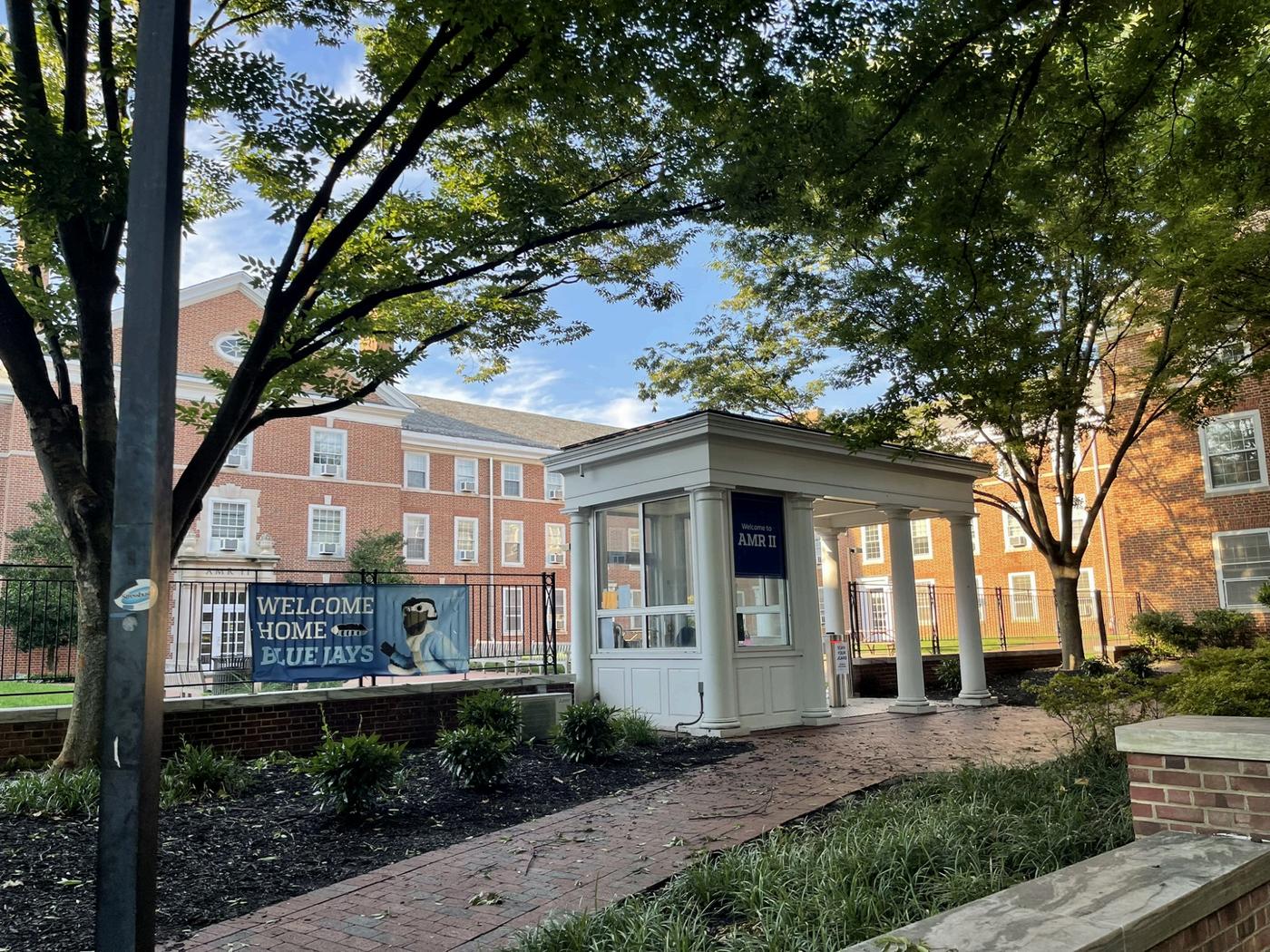
Even though I meet the basic requirement to give roommate advice by having lived with a roommate myself (second floor, AMR II), I hesitate to provide a numbered list on how to be a good one There are generalized tips to follow that are abundantly provided on the internet, and living with roommates is a dynamic setting that requires adjusting. Having one roommate requires different behavior than having two, albeit with some common themes. So to reach the universal, I’ll try to offer my particular Take whatever lesson or detail that feels appealing. And since I love the epistolary format:
To Jennifer –
One of our first recognized similarities was being from towns near big cities Other than your name, major and schedule (all of which are different from mine), and other brief interactions exchanged through Instagram, I didn't know what to expect Even prior to getting a room number and a name, I didn’t think that much about who I would be rooming with
The first time we sat in our respective beds and took the time to talk, the conversation was clunky. I tried to express how impressed I was at your dedication to tennis while I abstractly, probably pretentiously, explained why I brought the four books I did I remember thinking at the end of our conversation, “Oh well, I tried,” and fully expected a distant year because of our dissimilar hobbies and academic focuses
However, the existence of a first impression generally implies the existence of a second, and a third and the impression you get after seeing each other’s reading week lows
A part of me is grateful that we didn’t immediately become friends and went through orientation week largely without interacting outside our room That meant I had the space to focus on being a good roommate and establishing boundaries As I tried to communicate when I wanted to turn off the lights and other details that revealed their rough nature as we sandpapered an understanding between the two of us (looking back, that roommate agreement mandated by our Resident Advisor served no relevance at all), the friendship gradually appeared. Logically, life is easier if there is no awkwardness between roommates
A bit more tangibly, life is better when something happens to you and, in that moment, you know you’ll tell your roommate what happened when you get back
But, of course, our friendship was not built without effort There were many things we expected that eventually fell through, such as our untouched Pinterest board Simultaneously, the unexpected phases (microwavable popcorn, Single’s Inferno and holiday balloons) popped up and through every single one, I had such fun with you. It’s also been an honor being part of your Hopkins experience
And how perfectly complementary it was when you finished your spring finals first and removed your fake vines and pinboard, since you were the first to settle in our room in August
Can’t wait for next year I do feel like there is a certain rightness that you have the earliest morning class between the two of us now You always woke up earlier than I did, even though I had that cursed 8 AM physics section. Most excitingly, we finally have an activity in common; I think you’ll do amazing with your new position on The News-Letter.
See you soon, Grace
Grace Oh is a sophomore majoring in Molecular and Cellular Biology from McLean, Va She is a Science & Technology Editor for The News-Letter.
Adwita Sinha
When I first moved to Baltimore, I didn’t know where anything was, let alone where to eat Slowly, through a mix of recommendations, trial and error, and postmidterm cravings, I found a few spots that stuck. Although these might not make up a definitive guide to the city, they've been places I’ve personally enjoyed and keep going back to
Ekiben
No Baltimore food list feels complete without Ekiben The Neighborhood Bird bun gets all the attention and it deserves it It is crispy, juicy, a little spicy and somehow still light enough that I convince myself I could eat another It is hard to go wrong here I could probably close my eyes, point at the menu and still end up with something great And as someone who considers pickles a food group, I have to say theirs are especially delicious
They show up at Spring Fair every year, which feels like a reward for surviving midterms. Although they have a location in Fells Point, the Hampden location is my usual stop. It is close enough to walk and just far enough to justify dessert at The Charmery afterward
Miss Shirley’s Café
I went to Miss Shirley’s for my roommate’s birthday and now it is my go-to for anything that feels a little special. When my family visited the following semester, I brought them too. The menu is long, the portions are big and everything I’ve tried has been both comforting and a bit over the top
The coconut cream stuffed French toast is popular for a reason, but I usually go for something savory The chicken and waffles are always crispy and the egg dishes never miss The Inner Harbor location makes it feel like a destination. Sometimes I walk around after eating, and sometimes I just sit by the harbor and let the meal sink in
Kong Pocha
Kong Pocha is one of those places I keep returning to. It is close enough to campus that you can easily go here with a Blue Jay Shuttle Whether I am catching up with friends or just tired of the dining hall, this is where I go. The Kimchi Fried Rice is my usual It is spicy, filling and always hits the spot. When I want something lighter, the Curry Chicken Cup-Bap does the trick The food comes out fast, and the portions are generous. The restaurant is casual and always buzzing There’s music in the background, full tables and the kind of energy that makes a regular dinner feel like more
KPOT Korean BBQ and Hot Pot
KPOT is not just a meal It is the plan I usually go after a trip to the Towson Mall when everyone is tired and ready to eat a lot. You cook everything at your table, which makes it more fun than a usual dinner
You can grill meats, simmer vegetables in broth and switch between barbecue and hot pot depending on your mood I always leave full and a little dazed It isn’t right next to campus, but the Collegetown Shuttle, which you can catch right in front of Scott-Bates Commons, makes it manageable I wouldn’t go when I’m in a rush, but with time and an appetite, KPOT always delivers.
Bodhi Corner
Bodhi Corner is my quiet comfort spot It is tucked into a calm stretch of Hampden and has the kind of relaxed atmosphere that makes it easy to unwind I almost always order the drunken noodles They’re chewy, slightly spicy and packed with vegetables. When I want something different, I try one of the fried rice dishes or a curry The food is consistent and flavorful. I've gone here with friends, yet there have also been days where I’ve ordered food by myself after a long week. Either way, it’s a place I trust to get it right.
Honorable Mentions
Some places aren’t in my regular rotation but still deserve a mention
Indochine Vietnamese is what I reach for when I’m sick Their pho is warm, simple and exactly what I want when nothing else sounds good Phillips Seafood is near the aquarium in the Inner Harbor I went there with my roommate and her family when they visited The crab cakes were exactly what we were looking for, and walking around the harbor afterward made it feel like a full outing.
These are the places that helped me get to know Baltimore beyond the Hopkins bubble. Some became favorites right away Others earned their place after late takeout runs and quiet dinners
If you ’ re new here, I hope one of them becomes part of your own story too. And if you ’ re looking for more places to explore, the Leisure section is always a good place to start
Adwita Sinha is a junior majoring in Chemical and Biomolecular Engineering from San Mateo, Calif She is the Leisure Editor for The News-Letter
Kaitlin Tan
An often overlooked yet essential part of the college transition is meal prep. In a new environment with new ingredients and equipment, cooking can feel daunting. Here are some easy dorm recipes to get you started
Important note: With empathy for those in more basic dorms, and as someone who lived in AMR I without a kitchenette, I’ve started with breakfast items that need minimal equipment For those with stovetops, I’ve included heartier meals too
Breakfast
Toast might be the most versatile breakfast item Top it with seasoned avocado or a fried egg if you have a stove, or try a simple nut butter spread for quick protein On nights when you have more time, prep one of these overnight bowls:
Chia seed pudding (adapted and modified from Foolproof Living)
Equipment: refrigerator
Ingredients
1/2 cup plain yogurt
1/2 cup milk
1/8 cup chia seeds
1/2 teaspoon vanilla extract
Instructions
1 In a small bowl, stir together all ingredients except chia seeds
2 Add chia seeds, let sit for five minutes Mix, cover, refrigerate overnight
Meals
If you find yourself hanging around CharMar for no particular purpose (which you will, I promise), consider leaving with a box of pasta and a jar of pasta sauce. Pasta is such a quick and easy one-pot meal. If you have room in your budget, consider buying some ravioli or other stuffed pasta having a protein- and vegetable-packed pasta is great to make sure you ’ re getting all the nutrients you need. I think it also goes without saying that instant noodles are a very dependable go-to
Frozen dumplings, from CharMar or anywhere else, are also a quick and easy meal Top it off with a bottle of dumpling sauce in your fridge and you ’ ve got a winning dorm dish
Peruse the whole frozen aisle on your next supermarket run to see if there’s anything else that might be prepared easily I know, for one, that I stumbled upon my favorite Korean cabbage pancakes on an odd grocery run and they quickly became a freezer staple If you can handle a little spice, pick up a jar of kimchi from CharMar Kimchi is a great dish to have ready to go. Perfect for kimchi fried rice, with some furikake and a runny fried egg.
With some experience in the kitchen, you can go right along and cook an easy salmon recipe over the stovetop. My freshman year favorite was a honey garlic salmon, which I paired with seaweed rice balls.
Honey-garlic glazed salmon (adapted and modified from Delish)
Equipment: stovetop
Ingredients
¼ cup honey
⅛ cup soy sauce
1 tablespoon lemon juice Drizzle of olive oil
1-2 salmon fillets
Salt and pepper
1 garlic clove, minced
Instructions
1 Mix honey, soy sauce and lemon juice in a small bowl
2 Season salmon with salt and pepper (if frozen, pat dry with a paper towel first).
3.Drizzle oil onto pan. Once hot, add salmon skin-side down; leave until just cooked, then flip skin side down. As it finishes cooking, add garlic and honey-lemon mixture, basting until reduced.
When looking for recipes, stick to foods you know will comfort and nourish you rather than scrolling endlessly online To that end, here’s my mom ’ s recipe for a classic Filipino dish that always reminds me of home:
Chicken adobo
Equipment: stovetop
Ingredients
1 cup of Filipino cane vinegar or white vinegar (which is slightly sharper, so adjust it to your taste with some brown sugar)
½ teaspoon black pepper
1 tablespoon salt
2-4 tablespoons soy sauce
4-5 chicken thighs
1-2 potatoes, cut into rough two-inch cubes
1 ½ cup water
Instructions
1 Combine vinegar, garlic, black pepper, salt and soy sauce in a saucepan Add chicken
2 Add water, and simmer uncovered for about 20 minutes When the chicken is almost tender, add the cubed potatoes and cook for another 7-10 minutes
3 Serve with rice (or garlic fried rice, if you ’ re feeling fancy)
Be well and eat well, freshmen Your mind will be so much better off if you take care of your body
The article is abridged in print and the full version can be found online.
Kaitlin Tan is a senior majoring in Writing Seminars and Cognitive Science from Manila, Philippines. She is the Voices Editor for The News-Letter.
Shaan Udani
Transitioning to college and beginning that “ new college chapter” can seem daunting, especially for those unfamiliar with the University’s surrounding areas Hopkins is nestled between Charles Village and Hampden, two bustling and charming Baltimore neighborhoods. With such a convenient and lively atmosphere comes an assortment of essentials to ensure your Hopkins experience is safe and worthwhile
The Hopkins experience isn’t complete without routine trips to University Market and Deli, more commonly known as UniMini. Picture your typical convenience store, with aisles of snacks and drinks for your late-night cravings or quick bites in between classes The highlights are from the deli, which offers made-to-order items from chicken parmesan subs to mozzarella sticks to cheesesteaks With such a perfect location down 33rd street and diagonal to Scott-Bates Commons and the bookstore I promise you will become a regular there by the end of Orientation week.
Staying on St Paul Street, you’ll find other quintessential fast-food style restaurants Chipotle sits on the corner of St Paul and 32nd Street Walk north from there and you’ll run into Potbelly, Starbucks, &pizza, and THB Bagels, which are easily the best bagels I’ve had in Baltimore. For more dine-in style restaurants, there is Kajiken on 33rd Street, which serves great ramen A Chinese restaurant next door, Lao Sze Chuan, opened last spring
There is also a CVS on that block, an excellent location for plenty of necessities. For example, picking up medication, grabbing a case of water for your dorm room, or even buying soap for when you finish CVS has everything you need, right in your backyard Located just two blocks south of campus is Medstar Hospital, in case of any urgent medical needs
When you need to do grocery shopping, there are several options The first is limited but quick: buying from Charles Street Market, the Hopkins-affiliated convenience store A second option is Streets Market, which is just a five minute walk from campus The other option is going to Giant, a 20 minute walk or 10 minute drive from the center of campus. If you ’ re feeling extra adventurous, you can trek to the Farmers Market on 32nd Street
These locations define the east side of campus; Hampden, a quaint neighborhood with a cute downtown, sits on the West side. Lots of the eateries are around 20 to 25 minutes walking distance, but with the Blue Jay shuttle, getting to Hampden takes under five minutes There are plenty of restaurants to try here, from burger joints to Thai cuisine to a very student-famous Mexican dive bar Hampden also offers various shopping outlets, barber shops, salons and famous dessert places.
And, when you ’ re in the mood for a much-needed break, there are even hiking trails behind Homewood Field that lead straight to Hampden The route takes you through the woods and onto a bridge over Stony Run Creek When the weather’s nice, it’s an excellent pastime.
Your four years on Homewood campus will, in large part, be defined by on-campus events and hours behind the computer in Brody’s Reading Room However, going beyond the campus gates and exploring the areas near Homewood, specifically Charles Village and Hampden, will be crucial in making the most of your Hopkins experience. Luckily, you can always rest assured that these areas have plenty of worthwhile offerings
Shaan Udani is a sophomore majoring in Public Health Studies and Writing Seminars from Morris Plains, N J He is a News & Features Editor for The News-Letter.
Chances are, unless you ’ re from a major city, you ’ re not very familiar with public transportation America is famously car-centric, with limited infrastructure to support or expand alternative transit options. Growing up in lovely New Jersey, I too had minimal experience with public transportation, but after moving to Baltimore, I’ve learned to navigate and appreciate it. Whether you ’ re heading out of Homewood to pursue advanced work, or to let loose and have fun in the city, we Hopkins students are afforded a breadth of opportunities and access to a vast network of buses and trains
The easiest and most reliable bus available from campus is popularly known as the JHMI shuttle (a k a, the “Jimmy”) It makes an “L”-shaped route from Homewood, then Baltimore Penn Station, Peabody and, lastly, the hospital The JHMI stops at the old Barnes & Noble (now the Johns Hopkins Bookstore) every 30 minutes and more frequently during peak hours While most students use it to commute to the hospital for classes and research, it’s also a great way to reach Mount Vernon a neighborhood home to some of the best restaurants and cafés in Baltimore Paired with TransLoc, the bus-tracking app, you can easily anticipate the JHMI at any stop, making the JHMI a reliable way to move between Hopkins campuses
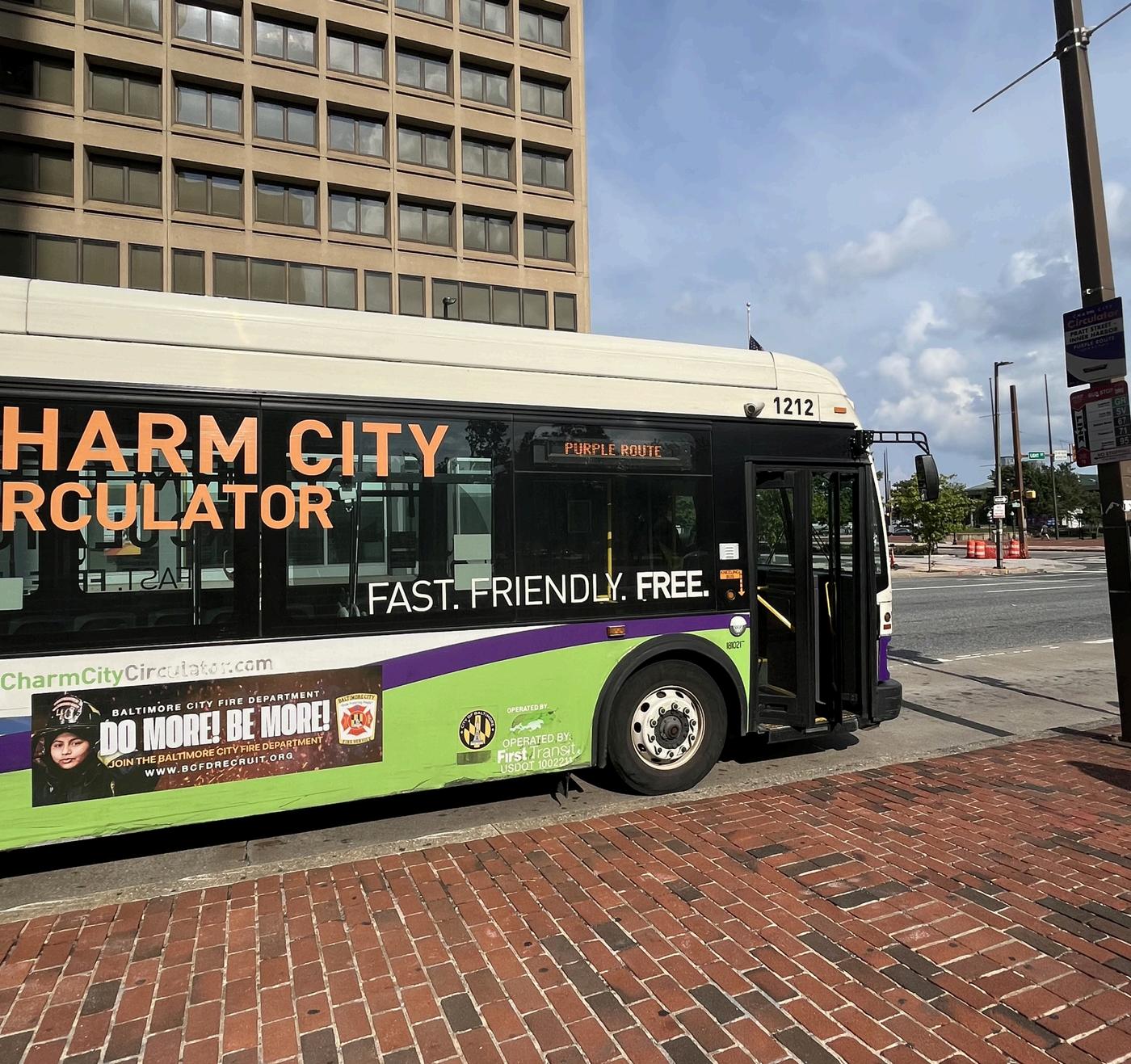
Besides the JHMI, you’ll want to familiarize yourself with public city buses, which also stop close to campus The Charm City Circulator is a free service that connects you to popular downtown locations, such as Inner Harbor, Federal Hill and Fells Point The CityLink bus routes can take you to a greater number of places outside of the downtown area but incur a $2 fare, which you can purchase using the CharmPass app Both services have online trackers, although in my opinion, the city buses are more susceptible to delays and less predictable
A key stop on these bus routes is Baltimore Penn Station. From here, you unlock potential to visit other cities along the Eastern seaboard, such as Philadelphia, New York City, Boston to the north and DC to the south. If you ’ re tenacious, you could even take the 24+ hour trip to Miami on Amtrak’s Silver Meteor line For me, the value of comfy passenger trains lies in the ability to make a monthly trek back home, watching the passing scenery or K-dramas instead of getting carsick But for other purposes and for East Coast nonnatives, the MARC train to DC requires just $9 and a whim to see the dinosaur exhibit at the Smithsonian National Museum of Natural History
Don’t stay out too late though inter-city transit options drop off quickly past dark After a Laufey concert at The Anthem in D.C. last year, one of my best friends and I were trying to make our way back to Baltimore However, both Amtrak and MARC services ended before the concert was over and did not restart until the morning. Anticipating that we might be stranded, I booked us tickets for a Greyhound While we eventually made it back to our dorms, we didn’t feel particularly safe at the Union Station bus station or on the bus itself, especially as girls traveling alone at night. Rideshare services like Lyft and Uber are an option, but the chances that a driver would want to go all the way to Baltimore and back at such a late hour are slim The bestcase scenario? Carpool with a friend
Of course, this isn’t a comprehensive guide to public transportation in Baltimore. For one, I have not yet braved Baltimore’s Light Rail system, which has a mixed reputation (check out the video, "Light Rail Doesn't Work in Baltimore" by Phriendly Photog on this topic if you ’ re interested in learning more) Another honorable mention is the colored Blue Jay shuttle routes that circulate Remington, Hampden and Waverly, whose services will hopefully grow more robust with greater demand.
For now, I urge you all to capitalize on your time in Baltimore a city with a rich history and vibrant culture, brimming with potential Catch a bus to Peabody, or a train to a new city Get to know this place and its people outside of the “Hopkins bubble ” You will become more worldly and all the better for it.
Amy Xu is a junior majoring in Chemical and Biomolecular Engineering from West Windsor, N J
Eesha Bellad
Freshman year at Hopkins: something I’d dreamed of saying all throughout high school When it finally became real, I was thrilled: ready to dive into challenging classes, live in a dorm and experience college in the way I’d always imagined But after a tough first week, things didn’t get easier. Week after week, I found myself struggling, more than I ever expected
I’m not saying this to scare you, but to reassure you if your transition into Hopkins isn’t perfect, you ' re not alone This isn’t a “studying 101” manual, it’s a collection of honest reflections and tips to help you feel just a little more prepared for the journey ahead
1. Work efficiently.
One of the most jarring differences between high school and college is the depth and intensity of the coursework The first step is simply being aware of that shift. It’s easy to get caught off guard if you assume that the same study habits you ’ ve used for the past decade will carry you through For many of us, they don’t.
When the workload ramps up, your first instinct might be to just “study more. ” I fell into that trap, too. But it’s not always about how much time you spend studying Often, it’s about how you ’ re studying. Efficient, evidence-based methods like active recall and spaced repetition can help you learn more in less time and with deeper understanding For example, instead of rewriting your notes over and over, try blurting, where you write down everything you remember about a topic without looking, and then use your resources to notate the information you couldn’t recollect.
2. Be honest with yourself.
When you go to study with a big group of people, ask yourself: “Am I actually getting work done?” Sometimes the answer is yes! But other times not so much Realistically, it turns into mostly chatter. Or maybe they’re racing ahead in the material, and instead of focusing, you start spiraling and feeling behind
Ask yourself: Would I be more productive studying alone right now?
If the answer is yes, then great! There are plenty of spots around campus where you can focus without distractions. You’re isolating yourself; you ’ re being intentional with your time And sometimes the answer is no, and that’s okay too Maybe it's the end of a long day, your brain’s fried, and you ’ re not getting much done either way In that case,
it might be worth spending time with friends, doing lighter work and recharging a bit.
A helpful strategy? Check in with your friends ahead of time. Ask: “Is this a quiet focus session or more of a chill study hangout?” You don’t need them to change anything, just figure out if it’s the right fit for you that day
3. Get HELP.
One of the most valuable lessons I learned early on in college was how to ask for help One of my favorite things about Hopkins is how accessible support is I was in office hours almost every single day, and honestly, that’s where I learned most of my material I’m so grateful for that But beyond the direct help from professors and TAs, office hours also gave me the chance to meet other students who were struggling with the same things, or students who had already figured it out and were happy to explain.
Asking for help doesn’t just mean going to office hours either. It can look like talking to someone a year or two ahead of you, friends, mentors, even classmates They might share their notes, recommend (or warn you about) certain professors, or give you advice against specific course combinations Sometimes just hearing that a class was hard for them too can make you feel less alone.
The bottom line: There is no shame in asking for help In fact, it’s one of the smartest things you can do.
Every failure, every setback, is shaping you into someone tougher, wiser and more resilient That being said, know your limits It is completely okay to drop a class You are allowed to have a lighter course load. You are not weak for needing a break You are wise for recognizing what you need to succeed You’re not alone in struggling with schoolwork during your first year, even if it feels like everyone else has it all together The truth is, people don’t always show what they’re going through.
College is hard And freshman year classes, despite what anyone says, don’t exactly ease you in. Truthfully, the courses don’t get easier you get stronger You build better habits You learn how to study, how to manage your time, how to take care of yourself. You grow. And with each challenge, you become more capable than before
Eesha Bellad is a sophomore majoring in Neuroscience from Orange County, Calif She is a Copy Editor for The News-Letter.
John Cintron
When I first arrived at Hopkins, I was riding the high of graduating high school and coasting off an unforgettable summer. Like many others, I was thrilled honored even to be entering such a prestigious institution I felt that I had made it. That my past successes were enough to carry me forward That the hardest parts of life were behind me But reality set in quickly
Fall semester began and I was surrounded by new faces and unfamiliar routines. While I filled my time with events, hangouts and even the occasional party, the connections felt shallow. I had fun, sure, but it was fleeting. I missed the comfort and camaraderie of my high school friendships As the semester wore on, that nostalgic feeling deepened into something heavier
Still, I made it through the fall relatively unscathed. My classes, while new in format, weren’t drastically harder than high school and I coasted through on past habits. I ended the semester with solid grades, hardly having to tap into the discipline I assumed would be required at Hopkins.
Then came spring and everything changed
My courses became exponentially harder, not just in content but in the mental effort they demanded. I had joined several activities, taken on responsibilities I didn’t fully care about and spread myself thin in ways I didn’t even notice until I was drowning Suddenly, my brain felt foggy I lacked motivation, clarity and energy. I began to shut down emotionally, academically and socially My mental health hit an all-time low There were days I barely left my dorm I couldn’t recognize myself and worse, I didn’t understand why I was struggling so much
That spring was one of the hardest seasons of my life
But summer brought a turning point I had the opportunity to participate in a prestigious summer research program at the Broad Institute of Harvard & MIT, and for the first time in a while I felt like I was doing something that mattered to me I reconnected with my curiosity, my passion for biomedical science and, more importantly, with a version of myself I actually liked one that was humble, open to growth and genuinely inspired
That experience didn’t fix everything overnight, but it sparked a change I started asking myself the hard questions: What
do I care about? What kind of life do I want to build? What does success actually mean to me? I realized I had spent too much time focusing on appearing impressive and hadn’t stopped to think about what fulfillment meant.
Looking back, I now see that mental health in college isn’t a checklist or a straight line It’s a process And it’s okay normal even to lose your footing sometimes You will have moments of doubt You might feel lost, unmotivated or overwhelmed And that doesn’t mean you don’t belong here
What I wish someone had told me as a freshman is this: You are not supposed to have it all figured out, and, like me, you may start off or continue with too many interests The Hopkins journey is designed to challenge you intellectually, emotionally and physically It will stretch you It will break your rhythm And sometimes it might break your heart a little too But those moments aren’t signs of failure they’re signs of transformation
If you ’ re coming into the Nest with high hopes, hold onto them but be flexible. Dream big but don’t be afraid to change direction. Surround yourself with people who really see you Ask for help early and often Take advantage of the incredible resources here from the research labs to student organizations that can offer you meaning and community Most importantly, be gentle with yourself You’re not just here to succeed You’re here to grow
Hopkins isn’t just about prestige or GPA. It’s about discovering the kind of person you want to become and working toward that version day by day. Your freshman year may not be picture-perfect, but it can be powerful Let it be real Mental health struggles don’t disqualify you from greatness They’re often the very thing that shapes it
So step into your journey with curiosity Stay open to change Be honest with yourself And know that even if things feel hard now, you are not alone and you are already becoming someone incredible. Success will follow.
This article is abridged in print and the full version can be found online
John Cintron is a junior majoring in Chemical and Biomolecular Engineering with a minor in Applied Mathematics and Statistics from Fort Myers, Fla
In the end, every “first” I met at Hopkins person, place, moment taught me something about who I was and who I could become I didn’t expect a campus, a group of strangers, a pile of dirty laundry or a lost friendship to matter this much But they did And that’s the real secret of firsts: you don’t get to choose which ones last
To my first college best friend
I love you I don’t think either of us gets the chance to say it enough, but you helped me get through these first two years of college I love you for the elaborate birthday celebrations, the random doodles in the margin of my notes, the impeccably clean bathroom and the devastating case of food poisoning I caught from you (I’m not as thankful for that last one, but at least we had fun in the ER)
I love you for being my partner in crime, for the rants and giggles and tears over guys and classes, for being my new Costco wonton supplier, for living with me last year and for signing a lease for our first apartment together this year I can’t wait to make a hundred new memories in the next two years, and hopefully fewer of them will involve one of us ending up in a hospital :))
To the first org I joined on campus
It feels very meta to write a letter to The News-Letter in The News-Letter but I think it’s fitting you transformed my time at Hopkins more than I ever expected
I came to college not fully knowing what I enjoyed outside of medicine In a sea of Hopkins students who seemed to have everything figured out, I felt alone Everyone else had passions dance, rock climbing or just playing video games. I didn’t I was scared to try something that I’d end up just giving up on
But then I joined you At first, it was easy I was writing about silly little science events to hear people talk about their research. But everything changed as I met the people behind the paper I became enamored with the environment and yearned to transform it so everyone would love the paper like I did.
You gave me space to rediscover my love for writing and surrounded me with passionate, opinionated people who love immersing themselves in Hopkins and Baltimore. I’ve learned so much about this community simply by reading and editing your pieces, and I can’t wait to see how you change and evolve
To my first Hopkins “friend group ”
It’s crazy that I met my closest friends through what most would describe as the most nerdy, academicsheavy set of activities. As a shy freshman, I was terrified the first few times I met you all You seemed so motivated, so driven as though you had your whole lives planned out. Becoming so close with you all was the last thing I expected to happen in my BME design team.
For once, I could just enjoy the ride letting someone else plan the hangouts. D.C. trips, Six Flags, horror movies at Towson Cinemark, 3 a m testing at Clark Hall it was all worth it
Thank you for everything: the takeout orders when we forgot to eat, the notes and extra help, the course advice, the food and coffee recs. Thank you for becoming more than just friends to me Thank you for being my forever family
And finally... to the first friend I lost at Hopkins I’d always been an explorer and you were the first person I’d go to when I wanted to see something new.
But the moments I truly cherished were our quiet ones eating momos from Harbor Tandoor or mapo tofu from Orient Express, watching “Jeopardy!” in my living room
You brought joy to study sessions, late-night projects and shared Brody coffees that wrecked your stomach. Around you, my best traits and worst flaws surfaced I was fully myself.
You helped me understand what I loved and hated about myself; you helped me figure out the best way to take on the world and try new things
I’m eternally grateful to you for all of it. I don’t regret a second of our time together, and I will always wish we had more If anything, losing you, my closest friend, taught me to hold onto the rest of my life even tighter
So, thank you for your company while I had it. So long, and thanks for all the momos
Shreya Tiwari is a junior from Austin, Texas majoring in Biomedical Engineering She is a Managing Editor for The News-Letter
your second greatest love (for students who are not sure who they want to be)
Riley Strait
Telling people you major in Writing Seminars and English is kind of like confiding a shameful secret to a complete stranger, like introducing yourself by saying, “Hi, I park diagonally in the garage since my spouse left me. ” The other person isn’t convinced you ’ re making what they would consider a good life decision but they can’t express outright disapproval either
When the nurse at my last doctor’s appointment found herself in this position, all she said was, “Well, more power to you ”
They pray I become something respectable, like a college professor; I may be broke but at least I’m smart, pretentious and broke When I further confess that I’m not certain academia is for me a true train gone off the track by this point all civility has dissipated
Someone once told me, “It used to be that you had to know what you were doing with your life to get into a college like that ”
As Hopkins students, we ’ re familiar with the college admissions lingo that became our Bible, guiding us to the pearly gates of these ivory towers. All four years of high school, you need to develop your “spike,” which becomes your intended major Because colleges are money-making businesses that prepare you to do the same, your major should evolve into your career
But if your spike becomes your major, which then becomes your career, and if you need to develop your spike throughout high school, then in a nightmarish application of the transitive property many of us have been cornered into nailing down a career when we ’ re in middle school
Everything thereafter is one chase toward the light at the end of our tunnel visions, which often proves to be a train as we realize that a great deal of personal change has precipitated between middle school and adulthood We no longer want to be whatever we thought sounded cool at 13 When we overstay our welcome in the husk of our youth and are forced to grow up like a hermit crab upgrading its shell, how do we introduce our childlike desires to our adult needs? The answer demands a reckoning with the truth of our society
Take the familiar term “work/life balance” innocuous at first but loaded beneath the surface The word “life,” which we know as a catchall for biological functions like breathing o advanced mechanisms like contemplation, is truly
synonymous with something like “free time ” Everything else, particularly how we make money in order to fund the basic necessities of life, falls under work
It is also through this microscopic analysis of language that one may realize it is impossible for life’s purpose to be work because work and free time inherently contradict one another; if free time is defined as time spent not working, then the two may never intersect
We cannot live for our work So, to arrive at the work suitable to us, we must first understand what the purpose of our individual life is daunting, I know. What would you be happy doing with no external motivation? No pay, no praise only the thing that will keep you busy and happy by itself That is the meaning of your life
You may have heard the phrase, “If you love what you do, then you’ll never work a day in your life.” Repackaging the same idea as a counterargument for itself, like snake venom slipped in the antidote, I offer: If your work is what you love, then every day of your life will be work That is, if you want to live a happy life, which I assume you do This doesn’t mean that one must hate their work or be incapable of enjoying it. Rather, the call to “pick” work implies the ability to have both forms of fulfillment. However, if life should be too short and one must make a choice, which would you choose: work or life?
Has anyone who has led a happy life then died miserable because they weren’t 100 percent satisfied with their career, or is it more often that people die miserable but satisfied with their career because they realize too late that they never prioritized a happy life? This, to make a long story short, is how I came to be every parent’s worst nightmare: a child majoring in Writing Seminars and English with no concrete plan for his future At least I’m happy
Your work should be your second greatest love. Work/life balance is like a marriage If you barrel toward lifelong commitment with your “first love,” or what you think your first love is, without slowing to check yourself, then one day you will come home to find that your first love has vanished and you ’ re parking diagonally in the garage and telling a stranger about it. You’re home alone. Your first love is at work.
This article is abridged in print and the full version can be found online
Riley Strait is a sophomore majoring in Writing Seminars and English from Olathe, Kan. He is an Arts & Entertainment Editor for The News-Letter.
Joseph Rainbolt
Hello, and the warmest of welcomes to all incoming Hopkins students My name is Joseph Rainbolt, and I am a junior here at Hopkins from Jacksonville, Fla I am a pre-med Public Health Studies major with a Spanish for the Professions minor Congratulations on your acceptance to Hopkins! On behalf of the student body, we ' re thrilled to have you.
As a Hopkins student who has gone through five course registrations, I know this can be a complicated process to navigate, but you’ll get the hang of it Here are my very best tips for a smooth, painless course registration that leads to a great semester
Do your research
This is the most important tip I could give and supersedes everything else I will talk about in this article Have a wellresearched plan going into registration It only takes an hour to plan, and I promise it will make for a less hectic registration day and a better semester The following is a spelled-out list of what you need to know:
1.Which classes you need to take for your intended major or pre-professional track
2 Where you stand with any AP or transfer credits
3 How difficult each of your classes is (I would highly recommend looking up course evaluations and looking at the difficulty rating of each course)
4 How the classes you want to take are going to fill graduation requirements
5 When course registration is happening
Know yourself
It’s easy to get overly ambitious on registration day, but you should sign up for courses that align with your personal habits and needs If you are not a morning person, do not sign up for 9 a.m. classes. If you are someone who crashes and naps every day, don’t take classes in the late afternoon.
Make sure you think strategically about when you want to eat and whether you would prefer your classes to be clumped together or have breaks in between. Also, be conscious of lab classes. Labs are usually three- to four-hour classes that are draining Most of the time, you will be standing and actively coordinating with a lab partner on an experiment Be smart about where a lab fits in your schedule. I would recommend against Friday afternoon labs, if you can avoid them, because midterm weeks can be draining and having to focus for such a long period at the end of the week can be difficult
Student Information System (SIS) Strategy
The SIS registration website can be confusing As you add classes, they will be in order of importance and you can rearrange them based on the classes you want most You should, without a doubt, put classes that you need for your major or career track at the top of your registration ranking But also be aware of how many seats are available in the classes you are registering for and how many people will be trying to get into those classes For example, if a class has hundreds of seats open, it does not need to be as high on your registration ranking However, if a class is a common major or premed requirement it’s possible that lots of people are going to be trying to get into that class, so you should move it higher on your registration ranking. The website Semester ly can be great tool for strategizing all of this, as it allows you to estimate your likelihood of getting waitlisted in any class
It is also critically important that you are ready to submit your SIS registration exactly at 7 a m Registration occurs via an algorithm, and if you are late, others will get into classes ahead of you
A final note on SIS strategy is that you should have backups in your SIS cart Since classes are added in order of preference, adding second and third choices to the bottom of your cart is a smart backup plan
As an underclassman, you likely won’t get your ideal schedule right away You may find yourself in a section of a class you don’t love or be forced to add a second or third choice class to your schedule However, this is not the end of registration People are always moving between classes, so monitor and stay on the waitlist for sections and classes you want If it is imperative, for your major or otherwise, that you be in a specific class or a specific time block, do not be afraid to reach out to professors. You can send a polite email explaining your situation and asking to be let into a class That doesn’t necessarily mean you will get in, but it doesn’t hurt to ask
Registration won’t always go exactly as planned, but with preparation and flexibility, it will work out and you will have a great set of classes for your first semester Best of luck with your upcoming registration!
Joseph Rainbolt is a junior majoring in Public Health Studies from Jacksonville, Fla He is a Sports Editor for The News-Letter
You’ve just arrived at Hopkins, a place where you’ll likely be spending your next four (or five or eight or 12 ) years You’re meeting a lot of new people and getting bombarded with endless information from your First-Year Mentor, Resident Advisor and Ron Daniels. While all this may seem overwhelming at first, you’ll get into the swing of things eventually. Here are a few things that helped me and might help you settle in and make Homewood Campus your home.
Figure out where to eat
Hint: It’s not FFC I’ve lost count of how many times I’ve walked into the so-called “Fresh Food” Cafe (recently renamed Hopkins Cafe) with the hope that the food will be “better than last time,” only to leave as crushed as my entire hometown of Dallas after the Luka Dončić trade Instead of FFC, I’d strongly recommend the Build Your Own Bowl (BYOB) station at Nolan’s on 33rd or the Levering Taco Kitchen definitely my comfort dining hall food options
Off-campus, my food staples are the halal food trucks parked on Charles Street, Orient Express (undeniably better and more affordable than Lao Sze Chuan), Kajiken (although it’s always packed) and University Market & Deli (for late-night meals) I’d also recommend going to the 32nd Street Farmers Market on Saturday mornings as a change of pace
Find some new clubs and hobbies
This is probably common sense, but I can’t emphasize enough how many clubs and activities Hopkins offers from traditional intramural sports teams to fire spinning I recently got into bouldering, and that was all thanks to the discovery of the student-run bouldering cave in the Ralph S O’Connor Recreation Center Outside of simply being fun, the clubs and hobbies you pick up also help you meet new people and expand your communities
Find a good study spot
This has been quite hard without an actual library (how do we still not have a library ), but I’d say it’s manageable Brody really tricked me into thinking I’d be spending substantial time there by being quiet for the first two weeks of the semester, but then it promptly spiraled into chaos would not recommend. The Annex is practically miles away from on-campus housing, its thermostat is wildly unpredictable and it gets completely packed during finals season equally suboptimal I normally study in my lab in Levi Hall. It’s equipped with a whiteboard and comfy chairs and has kept me sane through soul-shattering physics topics, from “simple” harmonic motion to the Maxwell-Ampère Law
Remember, the most important thing to consider when choosing one (or multiple) study spot(s) is how productive you will ACTUALLY be there, not whether your friends will be there
Make friends outside of your year
If you ’ ve successfully completed “Find some new clubs and hobbies,“ you should be fine on this front. Upperclassmen and graduate students are usually more than happy to share their wisdom with you: what worked or didn’t work for them, what professors you should take or avoid In this process, you’ll start to figure out how you want to spend your years here and what opportunities you want to pursue, which makes decisions and life much easier
You’re going to cross paths with countless people, classes, clubs, research experiences, internships, projects and hobbies over the next few days, months and years, so be open to the opportunities that come your way, and you ’ re bound to end up making Hopkins your home before you know it.
If you ’ ve made it this far, I’d like to leave you with a bonus tip as a parting gift:
Join The News-Letter!
Being a small part of the University’s century long journalistic story has led me to discover so much about new research, developments and events at Hopkins and nationwide, and I’ve met so many great and supportive colleagues through this experience If you ’ re at all interested in writing, from news to opinions to science to personal narratives, consider joining us this fall!
Alex Pan is a sophomore majoring in Molecular and Cellular Biology from Dallas, Texas He is a Science & Technology Editor for The News-Letter
College is a transformative time in many people’s lives, and a major aspect of this experience is the people you meet and befriend However, making friends can seem intimidating when you first step on campus While there is no single “right” way to go about making friends, here are some things to keep in mind to help you as you begin this chapter of your life
Put yourself out there
For many people, when they arrive in the fall, Hopkins will be a completely new environment with countless strangers It is normal to be reserved when it comes to sharing details about yourself with people that you don’t know, especially if you are someone like me who is not very outgoing. Nonetheless, moving beyond the formalities of name, major and hometown to expressing something a little more personal such as a hobby or other interest is an essential part of forming friendships
This doesn’t mean you have to be very open right away, but learning to become more comfortable with talking about yourself, even if it is just a fact or two at first, can go a long way in fostering connections with others Remember that many of your peers are also adjusting to a drastic change in their lives and may be struggling with similar concerns, so don’t worry too much about being judged
It is also important to spend time in places where you can socialize, even if it may feel awkward at first Instead of always eating or studying in your room, consider spending time in the dining halls or study spaces around campus. College also offers a great opportunity to explore new things, so consider joining clubs or taking classes that interest you You may also find it easier to speak up and introduce yourself to someone in these settings, where there is likely a shared interest that can be a starting point for a deeper conversation
Another important thing to understand is that no matter how many people you meet or talk to, not everyone is going to become your friend, and that’s completely normal Maybe the two of you don’t have much in common, the vibe feels off or things just don’t materialize Don’t take things personally or let them discourage you from continuing to reach out to other people.
Random factors can play a role
Although friendships may be more likely to form under
certain circumstances, chance can also be a significant factor For example, I met two of my best friends because the three of us were the only people assigned to our table in Physics I, while other tables had eight I then found out that one of them was also majoring in Biomedical Engineering, and luckily, we had the same lecture after physics, as well as a suitable time in our respective schedules to eat lunch after that This offered a great opportunity to learn more about each other, and we discovered that we had many hobbies and academic interests in common
While there were factors under our control, who knows what might have happened if we weren’t assigned to the same table? Now, your experiences will likely be different from mine, but the key is not to stress over making friends a certain way. Keep an open mind and you may find that a friendship sprouts from an unexpected source, even if you don’t realize it at the time
Friendships can take time to form and develop Lastly, building friendships is a gradual process, and getting to know people takes time It is understandable to want to rush into a friendship that is something I have also been guilty of at times However, while the people you surround yourself with are a major part of your experience here, there are other aspects as well As the semester progresses, people will get busier, and classes will become more demanding. Although maintaining and developing friendships requires consistent effort from everyone involved, it’s okay if things feel a bit stagnant from time to time If you do have any concerns, make sure you communicate them.
It is also understandable to feel that you have to make friends quickly at the start of the semester or else you will be left all alone While it is true that making friends can be easier at the beginning of the semester, it is not the only time to do so As your experiences and the people that you interact with here shape you, new opportunities to make friends will arise Furthermore, the timing of when you meet someone does not fully dictate how close a friend they may become Hopkins will be the place you call home for the next four years, so it’s okay if friendships don’t materialize instantly You will have countless opportunities to find your people
Eric Zeng is a junior majoring in Biomedical Engineering from Tallahassee, Fla. He is a Puzzles Editor for The News-Letter
The Sparrows Point Steel Mill, once the largest in the world, was a Baltimore institution that shaped workers’ unions, housing and cultural dynamics in the city for more than 100 years, from 1887 until its final closing in 2012.
In a Library of Congress blog post, writer Stephen Winnick summarized the importance of the steel mill to the development of Baltimore as an industrial town and how its eventual downfall was a turning point for employment opportunities and economic development within the city.
“Created by the Pennsylvania Steel Company in 1887 and taken over by Bethlehem Steel in 1916, Sparrows Point became the world’s largest center for producing steel With more than 30,000 employees during its mid-20th century peak, it experienced a gradual decline in the decades that followed,” he wrote
During its many years of operation, the mill was host to significant cultural developments Black and Latino immigrants from the Caribbean, Jewish immigrants from Europe and eastward-bound Appalachian immigrants worked with native-born Baltimoreans of varied backgrounds, contributing to a thriving, diverse environment throughout the 20th century The citizens of Baltimore gave momentum to the Civil Rights Movement, the women ’ s rights movement and ongoing workers’ rights movements within the factory, impacting workplace dynamics across the country
Loretta Houstin Smith, a native-born Baltimorean, shared her experience at the mill beginning in 1974 During her time there, she assumed a foundational role in its women ’ s union. She shared her experience working as a crane operator in an interview with UMBC students for a project they conducted on the impact of the mill on individual workers within the Baltimore community
“I became a union official I was the chairperson for ‘Women of Steel ’ There was discrimination against women, and a lot of times I felt like I was discriminated against, and I was not a quiet person about it We talked about racism We fellowshipped a lot in the bathroom through tears, you know, to keep each other strong, and there were a lot of problems, but we would resolve them,” she said
Smith’s impact within the mill was not limited to her own experience Lettice Sims, also interviewed about her time at Sparrows Point, spoke about Smith’s legacy as a champion of African American and women ’ s rights.
“Loretta was a legend in her own right. ... [She] stood for us, to make it easier for us coming in the door because everything for me was already paved there,” she said
In his research paper “In the Shadow of Sparrows Point: Racialized Labor in the White and Black Working Classes,” Johns Hopkins Visiting Researcher
Andrew J. Cherlin discussed the complexities of the racial divide in Dundalk, where the mill was located
“Until the 1970s, the work rules at the plant favored white workers over black workers While black workers could theoretically transfer to better units, they would sacrifice all of the job benefits they had gained through seniority And they would also face the hostility of white workers in their new units,” he wrote
Then, a shift occurred
“In 1974, Bethlehem Steel and the steelworkers’ union entered into an agreement with the U.S. government in an employment discrimination action brought by the Equal Employment Opportunity Commission The consent decree, as it was called, ended the discriminatory transfer rules and opened up new positions to black workers,” he wrote.
However, this was not the end of racial discrimination at the mill and in the community, according to Cherlin He reports that by the time Sparrows Point closed its doors in 2012, Dundalk had changed completely
“Ten percent of the housing units were vacant, compared to 3 percent in 1960 The mean family income of $72,798, according to the 2013-17 ACS, was well below the national mean of $95,031,” he wrote
By 2012, Dundalk had been transformed into a community with less economic vitality. Even so, Sparrows Point lives on as a defining institution for the Baltimore community a symbol of both American industrialism and the inequalities that shaped it, a factory that defined the lives of tens of thousands of Baltimoreans
This article is abridged in print and the full version can be found online
Julia Schager is a sophomore majoring in International Studies from Stamford, Conn She is a News & Features Editor for The News-Letter.
When I first moved to Baltimore, I began to notice the city’s street art but initially reduced it to vandalism a trademark of crime I had become accustomed to in Chicago. I saw it for what it was: illegal spray paint. I never saw it for what it meant in the past or could mean in the future I never expected a symbol of crime to become a window to appreciate culture.
A run along Wyman Park Drive blurred the lines between the stigma and significance of street art. A tree stump bedazzled by a glass mosaic reflected the sun ’ s rays, inviting me to look closer The intentional, intricate arrangement of the carefully cut shards of glass atop the mediocre tree stump captivated me I kept running and found identical mosaics on multiple trees and even a nail with the same pattern etched into its head
From the steps of stores in downtown Hampden to the windows of Remington homes, I began noticing glass mosaics everywhere. How had I missed them before? And what did they mean? I jumped online and began to delve into Baltimore’s history of glass mosaics
I learned glass mosaics had a history of being installed in the homes of white, middle-class Catholic residents Installing these mosaics would raise their home value, which was speculated to further enforce housing discrimination for nonwhite, non-Catholic residents in the mid-1900s. As a result, these mosaics further developed ethnic, racial and religious segregation in Baltimore neighborhoods I was appalled that the beauty I had admired in these mosaics was manipulated to suppress people of color and non-Catholic citizens
However, it turned out that the mosaics’ power to beautify and inspire impoverished areas overpowered their ability to propagate discrimination. Lately, local artists have been beautifying struggling neighborhoods around Baltimore with their mosaics In turn, they have reclaimed the mosaics’ power for marginalized neighborhoods as they have raised home values and hopes in neglected parts of Baltimore
I was enthralled by the power art had to empower a community I dove deeper into the street art around me, and I felt as if I was seeing it for the first time. Sure, graffiti may be vandalism (except in Graffiti Alley), but its significance began to supersede the stigma of its illegality. Graffiti serves as the unspoken language of the city, transforming it into a gallery of voices for the voiceless
Likewise, the span of Baltimore murals is nearly impossible to ignore – they demand all the space walls have to offer After leaning into my curiosity, I learned that the Baltimore Uprising of spring 2015 catalyzed a surge of community-based street art, especially murals, that served to amplify culture, pride and grassroots activism. The uprising was fueled by Freddie Gray’s death under police custody, and the resulting art has proved to be a powerful form of advocacy
Now there are more than 250 murals around Baltimore that amplify underrepresented perspectives and foster a sense of community for locals while providing visitors with a window to the city’s culture Murals became such a powerful form of artistic and political expression that the city of Baltimore created the Baltimore Mural Program in 1975 to inspire more artistic expression now an integral part of the city.
It seemed that all along Baltimore was speaking to me, but it was in a language I could not even begin to comprehend I had cast graffiti aside, denouncing it as vandalism and ignoring underprivileged artists whose canvas was Baltimore. I had appreciated the formality of most murals but had overlooked their political and cultural significance
I could never have fathomed the power of glass mosaics how incredible it is for marginalized groups to harness the power of art that once undermined them. I implore you to treat the streets of Baltimore as a gallery, analyzing and appreciating the intention behind creations that challenge your perception of art and culture.
Madelyn Dryier is a sophomore majoring in Chemical and Biomolecular Engineering from Frankfort, Ill
It’s May 2026, and you ’ ve finished your first year at Hopkins with a perfect GPA, plus clinical experience and a research internship lined up
Many incoming Blue Jays might salivate at the thought One year ago, I did too To get closer to that goalpost, my mind became fixated solely on being the Hopkins student: excelling in my classes, diving into research and setting myself up for medical school.
By the end of my first semester, I had what I wanted. But instead of intense joy and satisfaction, I felt an ineffable emptiness When I finally paused to reflect, I realized that chasing academic success alone as a marker for personal fulfillment was unsustainable
So I decided to change: I let go of my all-work, no-play lifestyle that had left me burned out and instead began filling my days with small joys
After implementing these changes in the spring, I noticed not only that I was no longer filled with dread when I woke up, but also that it became easier to do well in my courses. Looking back, I wish I’d been given tips on how to succeed both academically and personally, which would have made my transition to Hopkins much smoother
1. Try anything and everything I’ve always loved boba and would reward myself every Saturday at the Kung Fu Tea near campus One day, my neighbor in Wolman saw me and asked to tag along the next time I went. Going out with others can sometimes feel like a chore, but since I hadn’t made many friends in the Nest yet, I decided to go with it. Our boba runs turned into studying at Starbucks or grabbing meals at Honeygrow all things I’d have missed without saying “ yes. ” That person ended up becoming my best (and only) friend here
College is not only a time to build the foundation of a long career but also an opportunity to figure out who you are Exposing yourself to situations that allow the real you to emerge Whether you find something you love or learn what to avoid, self-discovery brings clarity and growth.
2. Dedicate time to hobbies independent of Hopkins During Thanksgiving break, I felt lost, unsure how to spend free time after months consumed by assignments
Then a random TikTok of a screaming match between two cast members from The Real Housewives of Salt Lake City popped up on my feed Before I knew it, I’d purchased a
Peacock subscription because something about watching rich, middle-aged women fight made me cackle and feel better about myself.
Back at school, I’d wake up early to watch reality TV. It had nothing to do with becoming a physician, but it gave me a fun escape and something to look forward to each day So, no matter how random the venture seems, dedicate a portion of each day purely for joy it will provide immediate relaxation before long stretches of studying
3. Spice up your studying
There will be times at Hopkins when you have a lot to do and no motivation. While nurturing your personal life is important, nurturing your academics is also critical
For me, having a consistent study spot, drink or music genre helps me overcome the hump of procrastination For example, I’d often study at Starbucks or Barnes & Noble because bookstores always have a comfortable energy. I’d also order a fun drink, like a sugar-free matcha with almond milk, to make studying feel less like a chore.
4. Choose a major you’ll love
This one is key for pre-meds. It’s a lot easier to excel, and be happy personally, when you truly enjoy what you ’ re learning, especially since you’ll spend hours engaging with it daily
I was totally lost on what to major in during freshman year In the spring, I randomly took Genetics and fell in love with it I was always excited for the pre-class videos and readings, which made it easier to succeed when I focused less on achieving an A and more on interacting with the content for my own enjoyment. So, explore classes in different majors if you ’ re unsure But no matter what, choose what you believe will satisfy your inner academic sponge In my case, that was Molecular and Cellular Biology. After graduation, you don’t want to look back on your time at Hopkins and remember nothing but misery It can sometimes feel like we must choose between our happiness and our grades, as if the two are mutually exclusive But the reality is, we don’t and shouldn’t have to choose
So, once you step onto campus, give one, all or none of my tips a try to see what works for you. But no matter what, find that balance between inner joy and academic success it will make all the difference
Godson Nkanginieme is a sophomore majoring in Molecular and Cellular Biology from Canton, Ohio
Katie Truong
For a while during my first semester of college, I could not separate Mondays from Tuesdays, Tuesdays from Wednesdays, Wednesdays from Thursdays, and so on My days were a blur of class, some form of lunch from Charles Street Market, studying, dinner and then more studying until midnight at minimum.
For a while there, too, I felt proud of myself for the routine and discipline I imposed upon myself I repeatedly told myself that my parents sent me all the way to the States to study, so anything other than my academics and career was a second priority I deleted all my social media, customized a setting on my phone that would allow no notifications to come through and spent my nights in Brody, away from social events on campus, general body meetings or just getting to know new people
I wish I had a cliché line of something like: “Then, there came a life-changing turning point where I realized the value in making more time for friends, studying less, getting on dating apps, and so on and so on ” But the reality is, there is no true quick fix for feeling lonely, especially when all of us are still getting used to adulting and being away from home while balancing incredibly difficult courseloads. Most of my time is still, in fact, spent by myself
What truly separates me today from me a year ago is the realization that there is a difference between being alone and being lonely. It’s a difference I had to learn. When I first got to college, I didn’t know what worked for me No one knows what works for them when they first get to college: It’s a universal experience At such a rigorous school like Hopkins, it is only that much easier to feel lost and small.
My key to getting over loneliness during the day is love Not finding a significant other love, but spending my entire day doing what I love I find love in my research, so I never feel lonely when I have lab to look forward to every day. I find love in the kids I meet at the pediatric oncology clinic at the hospital or at summer camps. I find love in teaching, running through San Martin Drive chasing the sunset or writing articles When you fill your day with what you love, even when you are alone, the loneliness starts to go away
You will have to learn, at some point, how to be alone. Making time for your friends and your community is essential, but there comes a time when you will have to go to the library alone, you will have to sit alone at the dinner table and you might even spend a weekend by yourself. But there is value in finding a routine to settle into Surround yourself with the beauty of just being you and falling in love over and over again with whatever you do
Then, on weekends or on long nights when your love fails you, and you can’t seem to find meaning in your own company, surround yourself with those who love you Don’t be afraid to ask for love when you need it. There’s nothing wrong with having a big group of friends There’s also nothing wrong with having one friend. Spend your time with people who you know will give you the love and warmth you deserve trust me, you will need it one of these days.
One of the easiest ways for me to seek love and warmth in others is by being vulnerable By that I don’t mean traumadumping and oversharing vulnerable stories (although if it works, it works), I mean admitting to a classmate that you need their help, being comfortable with sharing your culture or faith at general body meetings and being proactive in finding people you truly want around you Don’t be afraid to make connections. Say what you feel. Be honest. And you will find the most beautiful souls at Hopkins: those who will hear you and love you, even when you cannot love, even when you cannot find meaning, even when you think you have failed yourself
Something I learned after a year of routine is you often find people within the routine just search for them. I found my closest friends by reaching out to them for help with classes When research gets difficult and I’m driven to my wits’ end, I find the strength to keep going in the people at my lab and the nice security lady at my building In afternoons when I feel as though I have no purpose, making children smile and laugh in the playroom reminds me why I’m here There are wonderful connections waiting to be made in every corner of your life they just need you as the catalyst
Do Mondays still blend into Tuesdays and so on? Yes, absolutely Most of my days still look the same But am I as lonely as I was last fall? Probably not, because in my routine, I have learned to love my own company as well as the people who inevitably come with the life I designed. These are people who decorate your life and make your day brighter with their love. When you intentionally look for them, every day is a different adventure, and you will feel that lonely feeling fade
I don’t think loneliness ever goes away it still clings to me from time to time. However, if you allow me to end with a cliché, my biggest advice against loneliness is that even when you think you are alone, you aren’t ever truly alone. Just love, search and turn the other way
Katie Truong is a sophomore majoring in Neuroscience from Saigon, Vietnam She is a Science & Technology Editor for The News-Letter
Nishad Okutoyi
I didn’t expect a classroom to feel like home not so early, not so suddenly
One of the first classes I took at Hopkins during the fall of my freshman year was called Foundations of Brain, Behavior and Cognition (FBBC). A mouthful, I know. But I remember the syllabus hitting my inbox and something inside me sparking like a firing neuron At first glance it was intimidating: five exams, one of them barely two weeks away The kind of course you brace yourself for But I didn’t know that buried under all the terminology and early assessments was a class I would end up loving Not for how it tested me but for how it made me think.
I walked into that lecture hall with quiet reverence. I was ready to learn, yes, but I wasn’t ready for how much it would mean I didn’t know that this class would turn the brain into a kind of poetry for me cells talking in voltage, systems synchronizing into meaning, behaviors mapped into neural loops and feedback. Week by week we peeled back the layers: neuroanatomy, neurophysiology, perception, motivation, memory. Not just what the brain does but why it matters Why the hypothalamus stirs hunger. Why the amygdala winces before the rest of you knows you ’ re afraid
It wasn’t just about knowledge it was about clarity. I wasn’t just learning neuroscience I was remembering that I belonged to it. That I wanted to spend my life listening to the whispers of neurons and trying to decode them FBBC didn’t just teach me to memorize brain structures. It gave me a framework for curiosity, a way to trace behavior back to biology It confirmed something I’ve always quietly known: that my heart beats a little faster in the presence of a good mystery, and the brain yours, mine is the most intimate mystery there is.
But the journey didn’t stop in the fall.
During the spring I took a Reintroduction to Writing class with a title as strange as it was magnetic: Forensics Between Fact and Fiction I chose it on instinct I didn’t know it would change the way I see the world or myself.
This class didn’t hand us grammar rules or five-paragraph structures It handed us a magnifying glass It asked us to slow down. Observe. Question. We weren’t just writing; we were investigating Ourselves, mostly The clues we leave behind in our own language The patterns that reveal what we believe without ever saying it Every week we built case files on characters, on strangers, on ourselves Sometimes I’d stare at a sentence I’d written and realize I didn’t know where it came from But it felt honest
In one of our assignments we had to write a personal narrative framed like a mystery That was the moment something clicked Writing, I realized, wasn’t just an academic skill. It was a kind of forensic tool. It let me trace the outlines of my own thoughts and inspect the quiet parts of my experience I had been overlooking.
That class made me fall in love with writing Not performative writing Not essay-for-a-grade writing But the kind that helps you figure out who you are when you ’ re not trying to be anyone. The kind that led me here to The News-Letter to tell stories that don’t always resolve but still matter
Looking back, I think FBBC and my writing class were mirror images of each other. One gave me the language of neurons; the other gave me the language of nuance One taught me how memories form; the other taught me how to examine them In different ways both asked me the same question: What are you made of?
I still don’t have a full answer But I know now that mine includes action potentials and metaphors. Cortices and case files Scientific precision and narrative ambiguity And somewhere in the middle, a quiet sense that I’m exactly where I need to be
If you ’ re a freshman reading this, unsure of what classes to take, I won’t pretend to give you a roadmap But I’ll say this: Choose one class that speaks to your intellect and one that speaks to your soul If you ’ re lucky, they might turn out to be the same. If you ’ re luckier still, they’ll make you someone you weren’t before
That’s what happened to me And it all started with a brain and a pen
Nishad Okutoyi is a sophomore majoring in Neuroscience from Nairobi, Kenya.
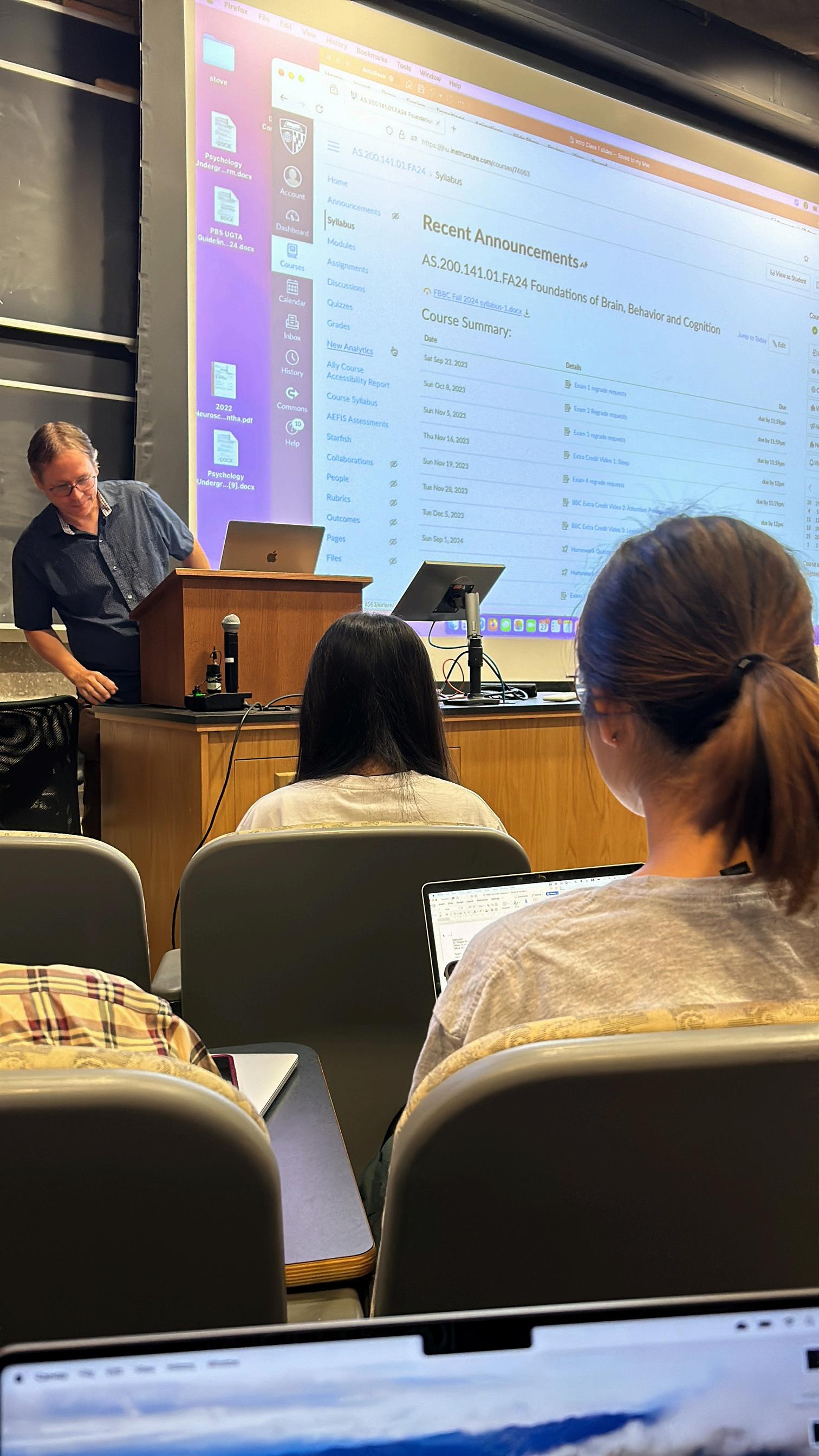
Buse:
Why we joined The News-Letter and why you should, too!
Buse Koldas & Lana Swindle
As a high school freshman, there was one fact I’d made peace with: I was not a good writer, and I didn’t need to be one.
Until the spring of my first year at high school, no one had ever complimented anything I wrote; in parallel, I had never made an attempt to write something further than a class assignment or private journal entry Then, for an English Language class that asked me to write a narrative essay using a couple of literary techniques, I was appalled I could write about anything
With my (looking back, quite poorly written) piece titled “Why I hate cigarettes,” I felt seen by someone through my writing for the first time ever. Once I got that first compliment, I couldn’t help but yearn for more. I joined our high school’s newspaper as an editor Nevertheless, it wasn’t until I came to Hopkins and started contributing to The News-Letter that journalism and writing became integral parts of who I am
When I felt lost as to how I could preserve and develop my identity as an international student in the United States, I observed my concerns were shared by my peers and decided to write my first Voices piece Eventually, I fell in love with the section I dedicated my column to reflecting on troubles that I knew were not unique to me, and hoped that those who read my articles saw that someone else had shared their struggles and that they were not alone.
Over the last two years, I can confidently say that I’ve been brave with journalism and did not limit myself to one section I’m incredibly grateful to be surrounded by our club’s community, to be a part of its history and now to serve as an Editor-in-Chief.
You might be thinking, “Writing is not for me, so why would I become a student journalist?” If that’s the case, remember that I said the same thing years ago Then, my path crossed with The News-Letter’ s, where I’ve grown to become a critical thinker and strong communicator. I don’t think any other experience could have gained me the same skillset or community.
This article is abridged in print and the full version can be found online
Buse Koldas is a junior majoring in Chemical and Biomolecular Engineering from Istanbul, Turkey. She is an Editor-in-Chief for The News-Letter
Lana:
I have wanted to be a writer for as long as I can remember. When my family asked me what I wanted to be when I grew up, I told them I wanted to be a writer, and they thought it was cute But as I got older, this question was frequently paired with another: Okay, but what will you really do? As a job?
The summer before my freshman year I started thinking about these questions seriously, turning over potential career plans. When I learned that my First-Year Mentor was the Editor-in-Chief of the school paper, I thought well, I like to write I should join The News-Letter
So I started out as a Copy Editor, while also writing for News and Voices. News became increasingly difficult for me, but I committed to it because I wanted to see if journalism specifically, news writing was for me
Though I have always been a writer, I have never been a very brave or social one So as a News writer, when I was expected to collect attendee interviews at Hopkins events, I wanted to back out immediately. I still remember my agony at the first event I ever attended alone, when I approached a student I’d seen in passing and asked him if he might like to be interviewed by The News-Letter
As a shy person, it is not easy to interview someone, but it is not impossible. And I was determined: I volunteered to cover an event every week, walking with interviewees to their next class so I wouldn’t take up too much of their time. By the end of the year, The News-Letter was no longer just a steppingstone for my backup career It was helping me become braver out of sheer necessity
In my sophomore year I became a News & Features Editor, coaching new writers in similar predicaments, and was even bold enough to ask more than 70 random students to fill out a survey about campus renovations As Editor-in-Chief this year, I can’t overstate how much The News-Letter has helped me grow This paper gives its writers many things a diverse portfolio, a wonderful community and, most importantly, the confidence to approach a random student at a Hopkins event and ask, “Could I interview you for The News-Letter?”
This article is abridged in print and the full version can be found online
Lana Swindle is a junior majoring in Writing Seminars and Philosophy from Princeton, N.J. She is an Editor-in-Chief for The News-Letter


ACROSS
1. Govt. code crackers
4 Capable of getting around, as a cell
7 Mosquito-bite disease
8. "Meals-in-a-Minute" location, familiarly
9 Having a constant slope
10. ID theft target
DOWN
1. BYOB location, familiarly
2 Gawks (at)
3. Charles Lindbergh, e.g.
4 Half a Hawaiian fish?
5. Fibber
6 Unit of corn
7 Inner knee bone connector, abr


PhotocourtesyofRithviRamoshan FoodcourtnearHomewoodCampustoenjoytrivia,salsa classesandadiversesetofcuisines
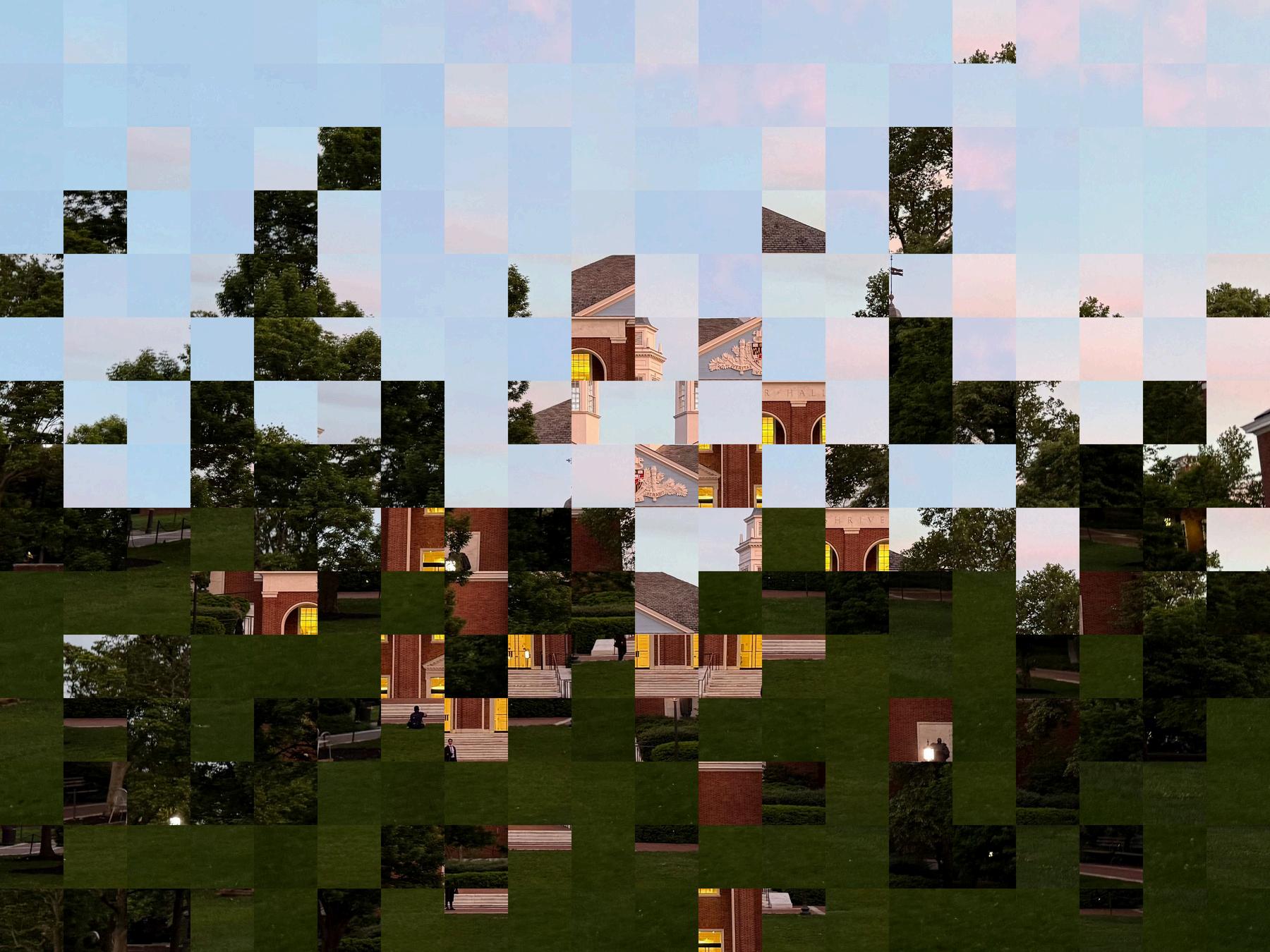
PhotocourtesyofJoshLonstein VenueonHomewoodCampusforperformanceshowcases andHopkinsSymphonyOrchestraconcerts
PhotocourtesyofKarthikRamanathan PlaceonHomewoodCampustoreserveroomsfor groupstudysessions

PhotocourtesyofEricZeng Homeofalocalprofessionalsportsteam