

To whoever is reading this note,
Have you ever felt that life is like an open-ended game? As players of this vast sandbox, we have so much to explore, experiment with and execute. While everything seems simple and fun at the beginning, things shift a little as we notice there are rewards for some achievements we make and some limitations we have to learn to cope with. The level of difficulty and sophistication of this game seems to scale as we grow.
However, this magazine is not here to tell you that life is hard. Instead, it invites you to reimagine the gamification of life as earthlings. Our writers share some of the experiences they have collected while unlocking branching paths of this considerably free game: how to visit a gallery, watch a sports game, start bouldering or write your first food review. They also look back on how they determine the side quests of their lives, where success is not always measured by external standards but often by oneself, and such self-defined success brings one an equal if not greater sense of self-actualization.
There is no unified way to define what a life should be like, and everyone has their own quest to fulfill. But as co-players of this huge and richly packed game, our paths sometimes intersect. As you read through this game strategy guide, authored by our writers for each fellow earth dweller, we hope you are able to find some inspiration for your next mission or adventure.
All the best, Linda Huang & Yuyu Huang Magazine Editors 2025–2026
Section 1: Starter Packs
How to visit an art museum
A rookie’s guide to Formula 1
How to write a restaurant review
The art of pretentious, circuitous writing: Meaning, metaphors and more for escaping writer’s block; or, hitting the word count
How to start reading (and enjoying!) classic literature
Section 2: Tutorials & Frameworks
The only thing to do was go: a defense of the American road trip
How to start rock climbing from scratch (no need to make the rocks) [DOUBLE]
How to dress well, affordably
How to buy and set up your first camera (without getting stung)
Paper to Pixels, a love letter to my planners
The making of a book
Section 3: My Side Quests
When your hobby becomes another job
From the classroom and beyond, my journey with CCSL
A simple journaling exercise that is building my life
Is this side quest really worth it?
Meditating on meditation
POV: your hobby has now become a career
How to regain your reading habit
My toxic situationship with crochet
What are your hobbies?
Grace Oh
As always, I do like to start any guide-like article with a pretty pretentious disclaimer: rather than listing a set of universal rules, I’ll try to follow the words of James Joyce and offer my particular.
I grew up within an hour drive from the dazzling array of Smithsonian National Museums, which meant my primary and secondary education was speckled with annual field trips that aligned with the current curriculum. Unfortunately, most of my time in the museums was filled with mandatory worksheets. Despite the boredom, I still understood the combination of high ceilings and intentional lighting, and art — a word abstractive yet so directive — yields a vast, almost sacred space. It is sometimes easy to forget that they are built to be interacted with and that they are for the general public.
Only recently have I grown interested in museums as a space and a concept. Part of this change is due to reading Patrick Bringley’s excellent memoir, All the Beauty in the World: The Metropolitan Museum of Art and Me, which recounts his experiences as a museum guard. There are many people whose work goes into the daily operations of a museum: guards, curators, educators, conservators, outreach...
The labor, along with the artwork itself, most of which aims to either capture or comment on a specific aspect of the human condition, characterizes an art museum to be in flux rather than a cold structure filled with delicate paintings and fragile frames. Although an anecdote with a sample size of one, if a museum is still so vibrant and ever-changing to an employee whose job is to keep an eye on it all day, then a one-day excursion cannot pass by without even a sliver of interest. Or at least I use that reasoning as an excuse to continue whenever entering a new, seemingly reserved art museum.
Even when examining art in genres I’m not particularly fond of, I am still able to cherish them due to another medium I adore: words. Artworks are not hung up by themselves. One form of education museums offer are the labels with the title and artist’s name that accompany each piece. When lucky, sentences explaining the historical context or artist’s intentions are included. I always enjoy interpreting the painting and noting its distinguishing features before turning to the label, especially when the label contains details that I’ve missed or, even better, completely flip my understanding on its head.
An especially wonderful museum I went to is the National Museum of Ancient Art at Corsini Palace. There, the labels completely elevated the experience by not being afraid to lean into abstractions and poetic language, directly engaging with the attendee by asking conceptual questions rather than simply being a compilation of relevant facts. And if the labels were so dynamic after it was translated to English, I can only imagine how intricate the nuances were in its original Italian.
Museums allow you to weave the past with the present: They might correct you or you might take what has been preserved and somehow twist it so it fits into your own life. But that isn’t to say that if you don’t, you’re going to a museum incorrectly. Whether your notebook is filled with references, events or figures by the end of the day or if you didn’t bring a notebook at all, whether you spend one minute or one hour in front of a piece, whether you read all the labels or skip over them, the museum will meet you where you are.
Grace Oh is a sophomore majoring in Molecular and Cellular Biology from McLean, Va. She is a Science & Technology Editor for The News-Letter

Saffron Hallett
Welcome to The Pinnacle of Motorsport! Since 1950, racing fans have tuned in to watch the fastest drivers in the world compete for the title of world champion. With races all around the world, ever-changing rules and regulations, up-and-coming talents beside returning veterans and, more recently, a box office hit, F1 is more popular than ever. But for those on the outside, it can seem daunting to get into. Let’s break it down!
This year, 22 drivers on 11 teams will compete in 24 races across 21 countries over nine months to determine who is the fastest driver (Drivers Championship) and which team has the fastest car (Constructors Championship) in the world.
A race weekend lasts three days, during which the teams have three free practice sessions (FP), which allows them to get a feel for the track, determine strategy and make last-minute adjustments to their cars.
This is followed by three qualifying sessions (Q1-Q3), where drivers are measured by their fastest lap of the circuit. These sessions determine the starting positions for all of the drivers for the race, and the driver with the fastest lap time earns the coveted “pole position.”
Finally, there is the Grand Prix itself and, in 2026, six of the race weekends will feature a

sprint race in addition. These shorter races do not require pit stops, and are often an all-out fight to the finish.
In a Grand Prix, the top 10 drivers score points with 25 from first, down to one for 10th. In sprint races, the top eight drivers score points, from eight down to one. Regardless of the type of race, the top three drivers stand on the podium, receive trophies and douse each other in champagne. At the end of the season, the driver with the most points is world champion. For the Constructors Championship, the points
accumulated by both drivers of a team are added together to determine the winner.
There is no shortage of teams to support! Ferrari carries historic prestige as the oldest team on the grid. McLaren won last year’s Drivers and Constructors championships. Red Bull and Mercedes are also strong contenders. Additionally, we have two new teams joining the grid this year: Audi and Cadillac.
Alternatively, many choose to support a driver (or even drivers). Some standouts are:
Lando Norris - current world champion, McLaren
Lewis Hamilton - seven-time world champion, Ferrari
Max Verstappen - four-time world champion, Red Bull
Ultimately, whether you choose to support a team or driver(s) is up to you. The easiest way to decide is to tune into the season as it kicks off on March 5 or watch previous seasons of Netflix's behind-the-scenes documentary Drive to Survive (returning with the 2025 season on Feb. 27). Look below for more information.
F1 kicks off at Melbourne's Albert Park Circuit in Australia, March 5–8! To enter the world of motorsport:
Follow F1 and teams on social media platforms to stay in the know!
Stream all races on Apple TV during the season as well as view exclusive content.
Watch F1: The Movie on Apple TV. Watch Drive to Survive on Netflix to get a behind-the-scenes look at the previous year’s racing season.
Check out the podcast “F1 Explains” on the F1 website, Spotify and Apple Music.
Sign up for a free F1 Unlocked fan membership for access to exclusive rewards and discounts.
Buy merch from your favorite team, driver or even just F1. These can be bought from the online F1 store and numerous retailers.
Go to a race! Buy tickets through Ticketmaster or splurge on various packages offered by F1. North American races include Montreal, Miami, Las Vegas, Austin and Mexico City. Or go abroad to places ranging from Monaco to Singapore!
Learn the lingo:
1.Box Box! - radio message: “come into the pits this lap!”
2.Parc Fermé - secure parking area where F1 cars are kept after qualifying so that no changes can be made before the race
3.Halo - safety feature above the driver’s head bolted to the chassis
4.Chassis - car structural body
With that, it’s lights out and away we go!
Saffron Hallett is a freshman majoring in Writing Seminars and Psychology from Shelton, Conn.
SYDNOR DUFFY / DESIGN & LAYOUT EDITOR
Nowadays, it’s rare to walk into a restaurant just because you’re passing by. Whether it’s a relaxed hangout with friends or a carefully curated date night, many people decide on the restaurant beforehand. Restaurant reviews on platforms such as Google, Yelp, Beli, Resy and more are crucial in guiding one’s choice of dining. A lot of people also choose to write a review of the restaurant after an experience there, helping other potential diners decide whether it’s the right atmosphere, food, service and convenience they are looking for. Here’s a guide from an amateur restaurant reviewer on how to write a restaurant review, with personal pet peeves included.
Do:
1. Research. Before you dine at a restaurant, read about the type of food it serves, the formality of the dining and even the history of the restaurant and the neighborhood. Context is important when considering an authentic review.
2. Be holistic. Yelp does a good job giving you a checklist of topics you should cover in a review, such as food, service and ambience. Just because the wait time is long in a restaurant doesn’t mean it deserves a one-star review. Likewise, one dish being out of stock doesn't mean the overall quality of the food is terrible. I see reviews with only one topic to comment on way too often. These reviews only show one side of the restaurant and are often quite hostile, steering readers in the direction the reviewer biases toward.
3. Pictures, pictures, pictures! People love pictures, especially when there is variety. In addition to food, take a picture of the seating area, the menu and other details people may overlook but find important in a review. Personally, I’d love to know how many seats there are and what the most recently updated menu is. It takes one second to help a lot of curious diners!
Don’t:
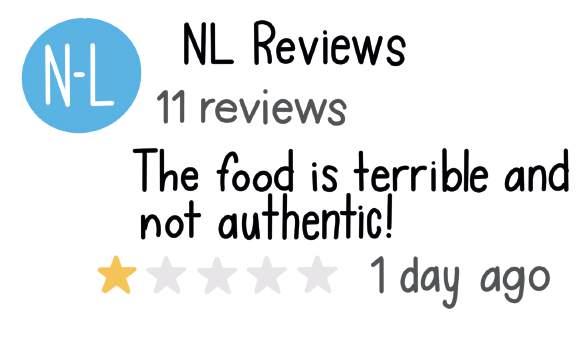
1. Let your bias lead the way. We all come from different cultures and backgrounds and may have a preference for certain cuisines, but don’t let that be a reason to shy away from unfamiliar cuisines. Even if it’s of a different culture, look at it with an objective lens instead of already being biased because it’s a Mediterranean restaurant instead of American, for example. And please know the ingredients before you criticize a dish — saying “The chicken in my stir-fry dish is full of tiny bone fragments, proving the chef was lazy,” when it’s actually a Chinese culinary tradition to keep the chicken bone in for better absorbance of flavor, makes you seem like a jerk and obscures the authentic side of things from you. Also, please avoid using the word “authentic” when you haven’t personally gone to the origin of the cuisine and tried the actual authentic food. Many reviewers throw in that word recklessly, even though it’s a meaning-rich word that requires experiential backing.
2. Give up on a cuisine just because it tasted bad once in a single restaurant. This phenomenon is very human and where microaggressions can stem from. The other day, I heard two comments about food adjacent to my culture from someone who’s not from Asia, and I was a little shocked.
“I hate boba. I tried boba once, and it was pink and tasted like Pepto Bismol. I’m never trying boba again.”
“I don’t like tofu. What even is it? Just a vegan substitution for meat?”
Variations of these statements are not uncommon to pop up in a restaurant review. I’d say the golden rule is to try at least three bites of a dish before deeming it distasteful, and to try a cuisine at least three times before never going back. Go to different restaurants of that cuisine. Go during lunch, dinner, weekend, weekday. Let that variety give you a better picture before you decide it’s not for you!
3. Write a good review just because there’s a deal for a free dish or merch. I know it’s tempting to follow those little blackboard prompts for “a free tote bag if you write us a 5-star Google review!” (cough cough, Paris Baguette). This behavior encourages false advertising and skews the overall rating. Many clothing stores flag incentivized reviews so readers can interpret them with context. Restaurant reviews, however, rely on an honor system with no labeling. At a minimum, please disclose incentivization before you submit them!
Goaheadandsubmityourfirstrestaurantreview!
Linda Huang is a sophomore from Rockville, Md. majoring in Biomedical Engineering. She is a Magazine Editor for The News-Letter
For a week now, I’ve thought there’s a metaphor hiding inside 35 millimeter slides. The square, flimsy cardboard ones — sometimes plastic or glass — that go in projectors to spew pictures on the wall. Some of the film goes green, red and even purple with age; sometimes, the film tears or collects dirt. I’m in something of a writer’s block, though sometimes I doubt my claim to that disease, wonder if instead I just have block. For now, I’ll call those 35-millimeter slides memories. It’s a lowhanging metaphor that will have to do.
There’s one way to fix both writer’s block and inability to come up with metaphors: just shut up. Easier said than done. But I’ve noticed, after giving it a spin, that shutting up can actually do wonderful things for your writing. Reticent narrators are read as irresistible, and poems with tight lips are just playing hard to get.
As humans, we read absence as desire. That person you love who doesn’t feel the same? Let me tell you a secret, but you didn’t hear it from me: Yes, they do. The quiet kid in your class is always the genius. Why do we never think they’re quiet simply because they’re as lost as you are?
So I wrote stories of narrators with secrets, to which I never knew the answers and in which it’s never really stated the narrator has a secret, and the story doesn’t hinge around that. Call it intuition. I
wrote poems, too, about one thing that was really another — but not in a metaphoric sense or triumph of Iceberg Theory that the reader is supposed to catch. I wrote poems about one thing which is really another, which in turn is really really something I didn’t even know I was writing about. You’re crazy if you say my poem is about that, which it was. The proof is in the pudding. Truth-tellers are always the craziest.
The thing about 35 millimeter slides is that they’re completely black until some light hits them. As soon as a lightbulb in the other room ricochets wavelengths like an eight ball going into the wrong socket, theseslidestellall.Isn’tthatthewayweare,too,withourmemories?
I did not know the way I do this was really because of that — that is, until the light hit, and now that’s all anyone can see, whether I want them to or not. The day of yours that was ruined three weeks ago because you got a busted dryer that left your clothes wet is showing in how you hold yourself right now. The thread we’re stitched with day to day stays unless we rip it out ourselves. You’re a 35 millimeter slide, so youmightaswellsurrenderyourselftothelight.
Noneofthisisabout35millimeterslides,andit’shardlyaboutwriting. I don’t know what it’s about, which is a lie packed inside a lie like a true Princess Bride poison-cup fiasco. In fact, I only watched the movie in elementary school and can’t remember now what the resolution to it was, so it’s truly a Schrödinger’s Cat, which I don’t know the physics behind, so... How many licks does it take to get to the center of a TootsiePop?
SYDNOR DUFFY / DESIGN & LAYOUT EDITOR
Letmeknowifyoufindout.Regardinganyofthethingsabove.
Call this article “The art of pretentious, circuitous writing: meaning, metaphors and more for escaping writer’s block.” Or,thesubtitle:“Hittingthewordcount.”
Riley Strait is a sophomore majoring in Writing Seminars and English from Olathe, Kan. He is an Arts & Entertainment Editor for The News-Letter
Myra Saeed
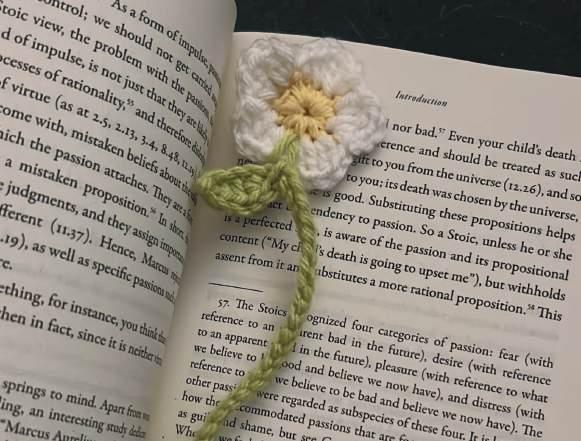
In my senior year of high school, I took Mr. Graham’s literature class out of a lack of decisiveness; I frankly don’t know what could fill the English gap in my schedule beyond the standard English Literature 101. Strangely, that small decision I made in my guidance counselor’s overstimulating office irrevocably changed my outlook on the world. Through this very rough and informal guide, I hope to open a new world to you as well, just like how a jabby and witty coffee-addicted English teacher did for me.
In my humbly conceited opinion, the books you read do matter. If you have thought to only pick up self-help, fantasy, romance, history, even propaganda books, I promise that you’ll find what you’re looking for in the stories that have stood the test of time. I think reading anything gives one focus, tranquility and the power to understand, but I’d like to argue that reading classic literature enriches the body and the soul — engaging an entirely different part of you. Classic literature digs at the human experience, grasping at the senses almost as if it’s reality and expressing the emotions within us too stuck to comprehend. If I sound completely insane, I don’t blame you, but I promise classic literature has the ability to make the mind think and feel almost as if you were transported into that same world.
Classic literature is raw, real and inexplicably human, and it will teach you far more about whatever genre you fancy. I understand if you can’t simply fathom that a boring book from your high school English class can make you feel this way, and, honestly, I agree! There are many books I simply could not push through, but likewise, there were equally as many books that put me in a bedridden state, drowning in theories and feelings. So, if you’re even the slightest bit interested, I’d like to present a guide on how I’d get into classic literature and how I’d actually start enjoying it.
There are many wonderful books that are simply way too complicated if you’re just starting to dip your feet into classic literature; simultaneously, there are incredible stories hidden among pages and pages and pages of context and description (War and Peace). There is also a very extensive range of books, plays and poems that can qualify as “classic literature,” so finding a starting book to read can be daunting. However, these are a few recommendations — incredible works on the smaller side — to start with! In any case, please pick a storyline you’re interested in to make the reading process actually enjoyable.
Little Women by Louisa May Alcott: a story following four sisters through adolescence — encompassing their love, dreams and womanhood.
The Picture of Dorian Gray by Oscar Wilde: a witty, tragically poetic narrative of uncovering one’s subconscious; it includes a descent into madness.
Frankenstein by Mary Shelley: a spiral of a scientist who tests the limits of his ambition by creating a living monster, only to abandon it in horror and live through its revenge.
The Stranger by Albert Camus: a very absurd account of an emotionally detached man processing (or rather, not processing) his mother’s death, a double murder and his own trial; it’s part of Camus’ philosophy on the absurdity of life.
In my experience, these books read faster than other classics and have incredible, hooking themes. Other notable mentions include Steinbeck’s Of Mice and Men, Orwell’s 1984 and Fitzgerald’s The Great Gatsby. I hesitate to recommend Dostoyevsky's Crime and Punishment because of its depth and length, but it’s an incredibly gripping book. If you choose a translated book, make sure to pay close attention to what critics and reviewers denote as a superior translation. It matters!
Remember, if you ever open a book you initially found interesting and find that it’s the epitome of boredom, there’s no shame in choosing another one!
Preparing to read (yes, this is necessary)
Many classics feature vocabulary, settings and innuendos foreign to our modern eye; as such, do your research on the chosen book! I really enjoy watching YouTube videos by Benjamin McEvoy (who runs a project called the Hardcore Literature Book Club). His videos contextualize a lot of notable works and highlight certain themes to look out for. However, there will be plenty of bookspecific articles and videos online to understand specific themes and the historical backdrop. Taking just 15 minutes to skim the book’s environment can make it a lot easier to understand what’s going on and why it’s so important.
Reading and annotating (yes, this is also necessary)
Finally, it is time to actually read your book! I’d start slow, just to make sure you’re comprehending what’s happening and you’re enjoying the process of reading. As such, think of taking on a classic more about enjoying the process rather than achieving a check mark; you’ll be doing yourself a service! Even if nothing is going on in the book, classic literature can dissect the human experience and emotion through magnificent prose, so it’s something of a simple pleasure to read the organization and sound of words.
Annotating is crucial, and it does not have to be painful. I highly recommend getting a paperback book and directly writing in it messily. If that irks you beyond measure, then use Post-it notes or even use a separate journal; the intention is to be simply engaging with the text. You don’t have to write incredibly sophisticated notes either; they can simply be reactions!
In fact, when I was reading Jane Austen’s Emma, 90% of my notes contained fancy ways of calling Emma a snooty snob, while the other 10% begged characters to just confess their love already. As long as you are engaging and reacting with the work, you are understanding and absorbing its richness.
Unfortunately, English teachers do have a point when they make us write long papers. Contemplating themes and arguing character traits makes one realize how truly complex classic works can be; you’ll often find that a character can be both good and bad, messy and organized, evil beyond measure and human at their core. I’m not suggesting anyone begin to write formal papers, but informally journaling about these observations and thoughts can reap great rewards. I’d highly recommend comparing characters and events to your own life to enhance your understanding.
Remember, all of this stuff is technically optional; I adored the books I read even when I didn’t annotate and script my thoughts, but I obtained significantly more appreciation when I did!
Now, many people feel as though movies do a disservice to these great works, and I agree most of the time. However, for someone who’s just beginning to gain a hobby out of literature, visualizing the book can be an amazing way to understand its content. Many works have spectacular films, and reading or watching in any order can build your attachment to the story’s world. Austen’s Pride and Prejudice has been a favorite of mine!
I once read somewhere that an old Russian writer can save you far more effectively than a modern self-help book. I promise, after being hopefully persuaded and well-guided by this very intentional guide, you’ll understand what they mean. Classic literature has a way to teach you that humans through centuries can be painfully and comfortingly similar and that life — always — continues to fight and emerge. So take the time to be comforted by a book.
Myra Saeed is a sophomore majoring in Chemistry and History from Queens, N.Y. She is a News & Features Editor for The News-Letter.
Thansi Garikipati
Your group chat is discussing spring break. Everyone is fixated on the mystical “Japan trip,” speaking in currency exchange rates and saved up frequent flyer miles.
One problem: Your current savings consist of $5 in your back pocket, the neon blue Jolly Rancher you got from the Student Involvement Fair and the cobwebs holding your wallet together. Are you doomed to a spring break filled with dormroom solitude?
No, and here lies my petition for the road trip. There’s nothing wrong with traveling to other countries, nor am I disparaging those who do. But when was the last time you did a road trip through the American interior? When was the last time you watched the landscape melt into a blur past your fingertips as you merged onto I-70?
Where to go
A road trip is about how the thin white lines slip past you at 70 mph and the way a conversation wavers into comfortable silence. Pick a national park, pick some random landmark in Delaware, pick some town whose name sounds funny.
The point of it all is not arrival but how you slowly remind yourself of scale. Remind yourself that there are cornfields that do not care about your LinkedIn or whether you’re “Open to Work.” Remind yourself that there are gas stations that make coffee so strong they affirm your faith in humanity and skies so wide your deadlines seem devoid of meaning.
Refamiliarize yourself with boredom. Between terrible cell service and dying batteries, somewhere between mile 83 and mile 212, jokes lose meaning and the psyche starts stretching. This is good.
Transportation
This is fairly simple; get a car. Yes, trains exist; buses are noble yet optimistic, but something freeing exists in choosing the exits you take and who gets aux.
Be practical with the car; choose something with enough space. Compact sedans are cute until mile 150 hits and someone’s foot is poking at your kidney. Conversely, please choose something with good gas mileage; do not fund an oil conglomerate’s yearly salary in the name of wanderlust.
Remember that driving is accountability. Try your best to not take wrong turns or miss exits. You’ll discover that the scenic route is scenic in theory. But none of this is tragic; it’s just another digit on the odometer.
Ifyouenjoybackproblems,carcampingisanoption;putondirections forareststop,pushtheseatsbackandfindamakeshiftpillow.Butif youlikeyourvertebraeintact,splitaHolidayInn.Puttorestyour concernsaboutbedbugsandfallasleeptothehumoficemachinesthat soundlikedistantthunderstorms.
Abandonyourpretensionsforfood.Eatatdinerswithlaminated menusanduniqueplaces;orderspecialsandtrynewdishes,especially whenthewaitresssaysthechiliisgood.Thefoodwillnotcarefor aestheticsoryourBeliaccount;today,therearefarmoreimportant things,likeWaffleHouse.
Itistemptingtocuratetheperfectroadtripplaylist,whetherthat’s FleetwoodMac,LosÁngelesAzulesormydad’s‘90sTollywoodmix.As frustratingasitistorelinquishtheaux,letitoscillatebetweengenres (andasongyourfriendinsistsis“niche”butisreallyjustRadiohead). Windowsaredown,volumeisup,someoneissingingoff-key.
Eventually,youwilldriveinsilenceasthetiressmoothintopercussion. Themusicisn’tabouttastebutinsteadaboutproclaimingtothedusty plainsaroundyou;youwerehere,youwereyoung,youweremoving.
NoneoftheplacesonyourphonelikeParisorShibuyaCrossingwill evaporate,butsomethingquietlyradicalexistsinchoosingtheinterior. Sobringthecashfortolls;bringwaterbottlesfordehydration;bring patienceforfriendsandfamily.Youmightargueaboutdirectionsonly toreconcileovercoldfries.Andasthesunsetsinaplacewhosename youcannotpronounce,wewillallbrieflyrememberthattheworldisn’t arrangedforourconsumptionbutinsteadforourpassage.
What can you optimize, post or prove? Kerouac said it best: “There was nothing to talk about anymore. The only thing to do was go.”
ThansiGarikipatiisafreshmanmajoringinBiophysicsfromEdmond,Okla.

(no need to make the rocks)
Talia Lehrer
1.Decideyouwanttohavethemostfunofyourlife.
2.Debateifyou’reactuallyscaredofheights (becauseyouknowyouwillbeperfectlysafe).
3.Nowhere’swherethingsgetshakenupintoa choose-your-own-adventure.Doyouwantto taketheHopkinsrouteortheprivategym route?AsheadroutesetterattheHopkins climbingwall,let’sfirstwinddownthat pathway.Continuereadingifyouwanttotake theschoolspiritroute(yes,Iknowit’sfreeand that’syouractualmotivator).Otherwise,skip tostep9.Don’tfret,youcanalwaysrewind backtohere.
4.OpentheHopkinsRecapportheclimbing wall’sInstagramtofindthehoursof operation.(Youdon’twanttowalk15minutes inthefreezingwintertoshowuptotheRec Centerandfindthewallclosedbecauseour hoursaredifferentfromthetypicalRec Centerhours.Trustme,Ihavedriven20 minutestoagymjusttofindithasclosed— it’sgut-wrenching.)
5.Showup(no,youcan’tjustwatchvideosof AlexHonnoldfreesoloingandgainforearm musclemiraculouslythroughthescreen).

6.Go to the equipment desk and get a pair of climbing shoes (please, for the love of everything, return your shoes after the session and save me from more unnecessary tears of frustration).
7.Do you want to boulder or rope climb? Pick your poison, but keep in mind that until you take a belay class and pass the test, you will only be able to climb on the two auto belays (and thus not be able to experience the true magic of our setting).
8.Skip to step 12.
9.Get to Movement Hampden (no, we’re not sponsored, but yes, we want to be — Movement, if you're seeing this, reach out). Either make a friend with a car, pay for an electric scooter, brace yourself for a long walk or call a Blue Jay Shuttle (and pray that it will drop you off first and not take you on a circuitous route, turning a 7minute drive into a 20-minute one).
10.Your first session is free, congrats! However, if you don’t have shoes, you may need to rent them.
11.Stare at the gym and feast your eyes on the color. Realize that this is your dream, not a candy store anymore.
12.Sign the necessary waivers.
13.Get a chalk bag from the desk — this is nonnegotiable! If your friends babble, “I don’t use chalk, I don’t like it,” just remember this is nonsense and chalk will not only help you stick better but will also help the climbing holds from getting greasy and ungrippable.
14.Find a VIntro or V0 if you’re bouldering and a 5.5 or 5.6 for ropes. Boulders are graded on a V scale, and ropes on a 5-point scale. Difficulty gets exponentially harder as the grades increase. Thus, lower numbers are easier (but for some reason ropes don’t start at 5.0 — if you learn why, let me know).
15.A few quick tips on technique: climb with straight arms, it will save muscle; keep your hips open and toward the wall, as this also helps keep the inside edge of your foot on the wall; use your toes, preferably your big toe, as this part of the shoe has the best support in the rubber and you have more control; tighten the waist of your harness first, then do your legs, as this will make sure it’s snug around your waist (for some reason, almost everyone puts their harness on in reverse and the waist band is never positioned correctly).
16.Some rules: for your finish to legally count as a send, start with two hands on the start hold and two feet off the ground before you make a move, and on the finish hold, have two hands in control. Don’t stand under someone who’s climbing! At Hopkins, never be on the mat when someone’s climbing. At Movement, go to the center of the mats and stay as far away as you can (unless you want to get fallen on, of course).
17.Level up!
Talia Lehrer is a senior majoring in Neuroscience from Merion, Pa. She is a Sports Editor for The News-Letter.

Unfortunately, dressing well in today’s economy can be worryingly expensive. Social media would have us believe that fits should cost hundreds of dollars in total. The good news is that it’s just not true — great clothing can be accessible and affordable if you just know what you’re looking for, and a great way to narrow down your vision is to build a capsule wardrobe!
Identify an Aesthetic
Central to any good wardrobe is a clear vision. Whether you’re going for a casual, streetwear look or a more dressed-up, business casual style, answering the question “How do I want to dress?” will always be instrumental in creating a cohesive wardrobe. For maximum compatibility between pieces, you might even want to land on a particular color palette with one or two accent hues.
A helpful exercise would be to go on Pinterest or the fashion side of any social media platform and try to expose yourself to as many different styles of dress you can. Fall down the rabbit holes and notice what stands out to you. What do you really like? What do you not like? What kind of fit do you like in your clothes? If you’re feeling really creative, you may even be able to mix and match styles, developing your own personal fashion language!
Make sure to keep in mind your own body type and personal preferences. What looks good on six-foot-tall Korean models may not (read: will not) look the same on you.
While exposing yourself to inspiration online, keep track of pieces that you’ve seen many times. Every style has its staples, and it's your job to find out what the common denominators are. You’re looking for genres of clothes, not specific pieces. In your search, you might occasionally come across pieces that speak to you so much that you go out and buy them retail, but for the most part, you’re looking for patterns and archetypes.
Take, for unfortunate example, the performative male aesthetic. Past the simple neutral-toned shirts and pants, the style also often calls for more “vintage” tops to layer on. Jorts, patterned buttonups, collared polos, and the occasional tie are all key to the look. In the same way, for your own personal aesthetic, look for the most important pillars of your outfits. These will be the pieces that define your looks. Make sure to also not neglect accessories. Keep an eye out for types of watches, jewelry and bags that call to you.
You may choose to keep a list of ideas in your phone’s notes app or written down somewhere, but it's more important that you know what you’re looking for when you eventually go shopping.
Go out and shop! (thrift)
Now it’s time to actually acquire the pieces. If you’re comfortable with thrifting and not going for a very formal look, then going to bins is by far the best (and cheapest) way to build your wardrobe. Go with friends and keep an eye out for all of the pieces that you’ve already decided you need. You might find more success buying essentials from retailers like Uniqlo or H&M, but you’d be surprised to see just how many cool pieces you can find from hitting up a local Goodwill. If you’re lucky, you might even find pay-by-the-pound shops like Houston’s Vntg Sply that filter out their sources to concentrate and sort great finds, unfortunately leaving the random Nerf guns out of the bins.
Keep growing
You are pretty much guaranteed not to find everything your first go around. After living with your wardrobe for a while, you might find yourself wanting a certain piece or looking for new statement pieces to incorporate into the rotation. Keep going back to the thrift, but don’t force yourself to buy anything you wouldn’t wear and make sure to prioritize compatibility!
Ifyoubuildatrulycohesivewardrobe,youshouldbeabletogetaway withputtingonanysensiblecombinationofclothesandstilllookgreat, andthat’sthebeautyofbuildingwardrobeswithavisioninmind.
Steve Wang is a freshman majoring in Biomedical Engineering from Sugar Land, Texas. He is an Arts & Entertainment Editor for The News-Letter.
Andrew Wu
I like to think that investing in a camera is like petting a jellyfish. Let’s say you want to delve into photography beyond your trusty phone camera but don’t know where to start. Similarly, you might be interested in finding out what a jellyfish feels like, but you don’t know how to approach the many dilemmas. What kinds of jellyfish are best to pet? Which parts of the jellyfish should you touch? How do you ensure you gain the most enlightening jellyfish-petting experience? You might find yourself asking similar questions as you explore potential cameras. Let’s break it down.
Before you pet the jellyfish, you should know what it costs to get near the tank. Let’s be real here. Cameras are expensive. Depending on the type of camera, you might even have to spend extra on both a body and a lens. So one of the first things to consider might be your budget. Aim for a specific range, perhaps $500-750, and your options will be much more manageable. Since old-school film photography is tedious and timeconsuming to work with, you might want to start with a digital camera. The four main types are point-and-shoot, bridge, Digital Single-Lens Reflex (DSLR) and mirrorless.
1 Point-and-shoot literally means point and shoot. These cameras are compact with built-in lenses that offer simple controls. Point the camera anywhere you want, press the button, and voila! A nice photo! Perfect for beginners!
2 Bridge cameras are just like point-and-shoots with significantly larger, built-in zoom lenses, like a bridge. They feature manual controls for photographers who want to take their time crafting each photo and also provide great zooming capabilities — 24x to over 125x!
3.Classic and mechanical. The workings behind DSLR cameras are honestly pretty cool. When you press the shutter, a small mirror flips up inside the camera and the image is captured. Unlike point-and-shoots or bridge cameras, DSLRs allow users to swap lenses depending on the situation. They’re bigger and heavier, yes, but that size allows for larger sensors, which generally means better image quality — especially in low light. Manual controls are also a yes here.
4.As the “modern standard,” mirrorless cameras take a different approach to DSLR. As the name suggests, there’s no mirror flipping up inside. Instead, light goes straight to the sensor, and what you see is a digital preview through an electronic viewfinder or the screen on the back. No moving mirror means fewer mechanical parts and usually a lighter, more compact body. They often match (or exceed) DSLR in the image quality and have handy manual and auto control. This is what you’ll often see pros carrying around nowadays, but don’t be afraid to try one out as a beginner!
Personally, the autofocus feature on my mirrorless Sony α7 III is a lifesaver when my motivation levels are too low to make manual adjustments, but I do wish I had a lens with greater zooming capabilities.
Once you’ve narrowed down the type of camera (and possibly lens) you want,it’s tempting to compare specs and chase after the“best” model,but don’t lunge immediately at the biggest jellyfish you see.
Asyoudoyourresearch,youmighthearanamalgamationoftechnical terms:aperture,shutterspeed,autofocus,framespersecond,focal length,sensorsizeandmore.Butknowthatthebestcameraisn’t alwaystheonewiththemostappealingspecs.It’stheonethatalways hasyourbackwhenyoujustwanttogooutandshoot.
That’s why I recommend physically trying out a camera before committing to it.Make sure it fits in your hand comfortably and isn’t too heavy to carry around.From my experience,Best Buy has a wideranging DSLR and mirrorless collection at each store,plus staff to ask questions.Even Walmart and Target often stock entry-level digital cameras and basic kits.
Now that you know which jellyfish to pet —I mean which camera you want,how do you set it up? Let’s break it down into straightforward steps for any beginner!
Unboxing:
1.Charge the battery
2.Insert the memory card
3.Attach the lens (line up the dots,twist until it clicks)
4 Practice taking off and putting back the lens cap Boot it up!
1.Set date,time and language
2.Adjust screen brightness to taste
3 Set image quality to JPEG Hooray for autofocus!
1.Turn on continuous autofocus
2.Enable face detection
3 Leave focus area on automatic Skip the hard parts (for now)
1.Set the mode dial to Aperture Priority,Program,or Auto
2.Turn on Auto ISO
3 Leave shutter speed and exposure compensation alone
Start simple,trust what feels right to you,and let experience guide you forward.Lastly,and perhaps the most important step...have fun!
AndrewWuisafreshmanmajoringinBiomedicalEngineeringfrom Northville,Mich.
Eesha Bellad
My planning system is quite literally the hallmark of my existence. Without it, I’m pretty sure I’d be a whirlwind of anxiety and “productive” panic. For as long as I can remember, I’ve felt the need to be everywhere, do everything and master every habit. If it isn’t written down, then it doesn’t exist, and if it isn't organized, my brain isn’t either. Over the years, I’ve realized that my obsession with layouts and trackers isn’t just about being “anal”; it’s a form of my meditation. It’s the one place where I have total, beautiful control.
The OG days
My journey started in 6th grade with a classic pink “Michael’s” dotted journal. I was 12 years old, watching Amanda Rach Lee on repeat and scouring Pinterest for the perfect “key” and bucket list. What started out as an innocent hobby turned into a fouryear high school ritual. Every year began with the satisfying crack of a new spine, labeling the inside “Property of: Eesha Bellad.” Before planning began, I’d map out my new year’s resolutions, favorite songs, book trackers and, of course, a dedicated “doodle page.” Each month had a theme: snowflakes for January, hearts for February, butterflies for June. Every spread was a coordinated dream of fonts, stickers and shades.
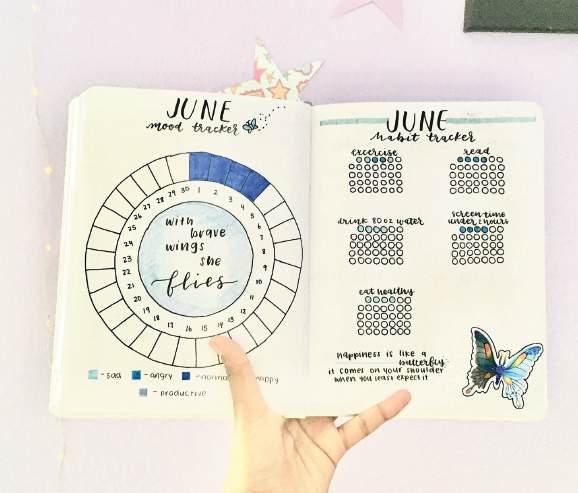
But more than anything, the best part of a Bujo is the personalization. I developed my own 4x2 column grid that turned into a mental sanctuary.
Mon–Fri: Individual boxes for my tasks.
The weekend box: a catch-all for tasks that didn’t have a specific home quite yet.
The deadline tracker: for the big projects that loomed in the distance.
A look ahead: An inch at the bottom of the page that peeked into the next week and what that had to entail.
Transitioning to college meant that my time was finally mine, but it also meant that I was constantly on the move. My system was evolving, so I eventually swapped my journal for my MacBook — while still keeping the cover pink of course!
Currently what keeps me sane:
Google Calendar: My master map. Every exam, class, coffee, meeting and deadline is color-coded in various shades of pink.
The “Admin” tab group: Here I house my Outlook, Google Calendar and planner open in a permanent living group so they are never more than a click away.
The living Google Doc: This is my modern day Bujo. It features an “Upcoming” header that stays at the top of the page so headlines can’t hide from me, followed by an 8-block grid for my daily tasks.
Finding your own peace
Whether it is a $30 notebook or a Google Document, the “best” system is the one that keeps you grounded. My highlighted unfinished tasks and my pink-coded calendars are a little window of my life that tells me everything is under control, even if it isn’t. So, when I pop open my pink laptop, it’s not just a silly document, or just another email — I’m creating peace and harmony in my world.
Eesha Bellad is a sophomore majoring in Neuroscience from Orange County, Calif. She is a Copy Editor for The News-Letter
Yuyu Huang
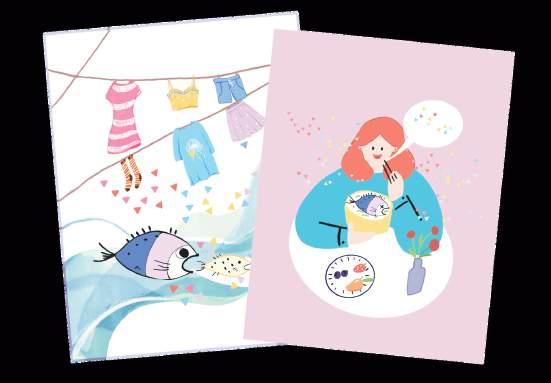
I often catch myself asking what I like, as the answers frequently change. Still, two things remain the constants of my life: drawing and writing. No matter how crowded life feels, they remain delightful retreats whenever I find a moment of leisure.
So when Dr. Benita Menezes, my Reintroduction to Writing professor, asked us to produce a “zine,” a self-published magazine that uses a collection of writing and graphics, to illustrate a theme we care about, I was excited: it was almost like creating a little book of my own. Dr. Menezes, who has created many books of her own, shared some experimental ways of designing a zine and conveying one’s thoughts that I found inspiring, and I hope to share a few of them with you.
Nonlinear brainstorming
In class, Dr. Menezes shared a very dynamic way to ideate, which is particularly useful when you already have an overarching concept for your project. You start by taking a piece of paper and folding it four times to create 16 rectangles (or however many feels feasible). Set a short timer — say, seven minutes — and try to fill the rectangles with as many doodles or stick figures as feel relevant to the theme. When time is up, you can draw lines to connect sketches that seem related; these connections may eventually surface as clusters or subtopics within your larger theme.
Sometimes I feel dulled when I run into a rut of old writing habits, and I’ve found that broadening the genres of my source materials is a good way to break the cycle. While researching for my zine, Dr Menezes asked us to draw on four categories: scientific journals, social science articles, news reporting, and personal narratives. We then selected two to three entries and wrote a brief abstract reflecting what we learned from each.
The freedom to use these “building blocks” is entirely in your hands — whether you choose to separate them into distinct sections or intertwine them like a collage. As you shift your points of view, or what Dr. Menezes dubs as different “vantage points,” you may discover new ways of portraying the same subject: seeing it through the lens of a scientist, an anthropologist or a storyteller. As you unlock different perspectives, you might find they piece together a more dimensional passage than any single viewpoint alone.
If you’ve picked up more than one language over the course of your life, this can be an interesting technique to explore. Instead of doggedly writing every article in the language of your audience (likely English, given where we are), you could choose to sneak in a few sentences — or even entire pieces — in different languages within your book.
You could, of course, provide faithful translations to your audience, making the content fully legible. But you could also leave certain meaningful messages untranslated, giving a mythic space for readers to fumble with — or intuit — what they might mean. Another approach is offering only a concise translation that conveys the central idea while deliberately reserving the nuanced facets within the veils of the other language.
Here, I don’t mean to trip up your audience with word games, but to leverage the sophistication of languages. Since cultures influence the way we speak and feel, we often find words whose meanings are rooted in their particular cultural inheritances and are not fully convertible to other languages. So when we present the same idea in parallel, such subtle mismatches create a wondrous, ambiguous space. Whether you choose to clarify that space by approaching the closest possible translations or to leave it concealed within an unresolved curtain of myth, both paths may bring unanticipated inspiration for you as a writer — and a uniquely flavored experience for your readers.
I understand that we live in a time where things can be rapidly mass-manufactured, so hand-making a book may look inefficient and even meaningless. Yet the experience of building something tangible brings me some moments to cherish when I feel that my time seems to be on fast forward and the world spins. If you ever feel a similar way and want to create a vessel that can safeguard your thoughts in this efficiency-hyped world, feel free to use these approaches to build a book of your own.
Yuyu Huang is a senior majoring in Mathematics and Economics from Fuzhou, China. She is a Magazine Editor for The News-Letter.
I started therapy a couple of weeks ago (sorry, I know that I have a tendency to overshare in these articles). At one of our first appointments, my therapist asked me what I do for “fun.” In response, I just stared at her — jaw slacked, and eyes glossed over,likeshejustaskedmetodocartwheelsacrosstheharbor.
“For fun?” I thought. Let’s see: I am a full-time student, I’m obsessed with research and I refresh my email like I’m collecting its rent. Honestly, “fun” seems more like going to the dentist than having hobbies without deadlines.
I wish that I could say that I hiked… or that I brew my own mead... or that I bake sourdough bread like that girl from Sidechat who started selling loaves for fun.
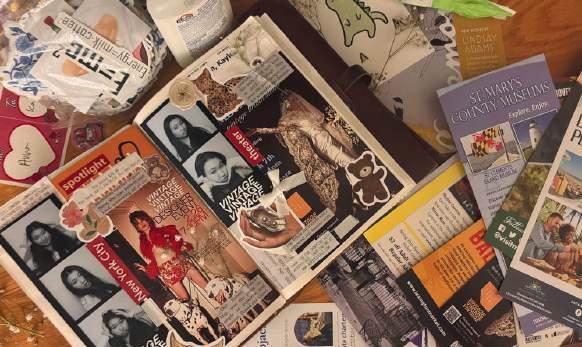
Say goodbye to Kaylee and hello to your favorite trash panda. I have an addiction to hoarding ticket stubs, CVS receipts, the cardboard sleeves from my Starbucks hot chocolate and wristbands from fraternity parties. I peel off every label and tape down such a ridiculous number of fortune cookie fortunes that I think I could write a novel of predictions with them.
My friends think I’m insane when I ask for their leftover cafe receipts and whip out my Polaroid at every given chance. I will physically chase someone down the hall for their ticket stubs that they were about to throw away and keep my eyes glued to the ground for hidden treasure because I refuse to let evidence that I am alive end up in a trashcan.
My favorite part about scrapbooking is being able to put parts of my life together in a way that I never would have thought could blend. From a ribbon found on the ground next to a gas pump back home to a lab safety sticker that I peeled off my goggles, my spreads have become prophecy, and my artistry has become a cross-examination.
In all honesty, it started because my brain loves to lie to me. Like my paper for my class on Margaret Atwood, it constantly edits out my efforts and spotlights my horrible mistakes. Depression has this really neat ability to delete my consciousness. It tells me that I didn’t do anything all day and that I didn’t try. It tells me that I’m unproductive and a burden to those around me because I couldn’t get out of bed to attend classes. Scrapbooking is thus my rebuttal.
Example 1: The receipt from the day that I bought groceries instead of skipping dinner.
Example 2: The photo booth strips from the day that I mustered up the strength to cover an event for The NewsLetter in D.C.
Example 3: My torn-up doctor’s note from when I went to treat my strep throat instead of pretending that the problem would disappear.
So when I began putting these puzzle pieces of my life together as a job to come to terms with my crippling depression, it stopped being about perfection. My boyfriend is definitely getting sick of my gluing when I FaceTime him nightly, but I still lay out everything on the Bradford floor as if solving a murder where the victims were stickers. With each piece, I ask myself: Did I go outside? Did I answer my emails? Did I try to be happy today? I’ve accepted that I glue my mood into cardstock, even if other people track theirs in spreadsheets.
For me, scrapbooking has become the most important job I have. It’s not about creating something aesthetic, but about distracting myself from the narrative that I’m useless. It’s work for my existence — as bleak as that may sound — and clocking in Sunday nights is how I prove that I am still here.
Kaylee Nguyen is a sophomore majoring in Medicine, Science and the Humanities and Writing Seminars from Pensacola, Fla. She is a News & Features Editor for The News-Letter.
Eesha Bellad
The energy in a middle school classroom is quite unpredictable. On any given afternoon, I might be greeted by a whirlwind of highenergy sixth graders or a group of exhausted students winding down after a long day. As a Head Mentor for the Charm City Stem League (CCSL), I’ve learned that my most important job isn’t just teaching science; it’s meeting students exactly where they are emotionally and turning that energy into a productive, inspired hour of discovery and curiosity.
CCSL is a Hopkins program driven by a singular vision: a future where every student in Baltimore City has the opportunity to explore STEM, build the confidence to excel in technical careers and form lasting bonds with mentors. Under the leadership of Amanda Valledor, our team of undergraduate and graduate students supports Maryland Science Olympiad across Divisions A, B and C. Some of our impacts are felt through tangible resources. We create custom kits, over 80 in total, that transform abstract concepts into hands-on fun. Whether that be “analyzing your own fingerprints” for Forensics or practicing “Crime Busters” techniques, these materials are designed to spark curiosity. But beyond the kits, CCSL is built on a sophisticated infrastructure of student leadership from Tournament and Curriculum Coordinators to Mentor Engagement leads, all working to ensure our volunteers are prepared to succeed.
This semester, my commitment as a Head Mentor involves leading a team of undergraduate volunteers to facilitate weekly sessions for students in grades 6–8. While I coordinate logistics and design activities for up to 23 Science Olympiad topics, the magical moments make themselves apparent in the small, quiet pockets of struggle and breakthrough.
Recently, during a session at my assigned school, I was working with three students on Experimental Design. We were playing “Statistical Squares,” a dice game designed to teach mean, median, mode and range. One student, overwhelmed by converting improper fractions into mixed numbers, began to pull back. He was defeated, ready to quit as his peers moved ahead. In that moment, I drew on the scenario-based training we focus on in our CCSL mentor meetings. I tried to avoid just giving him the answer and instead stepped in with a “pizza analogy” to simplify the fractions and even threw in some humor to lower the stakes.
By maintaining an empathetic tone and focusing on the process rather than the mistake, I saw his frustration melt into a soft engagement! This translational experience is what makes CCSL so valuable to me. It taught me that being a leader doesn't mean having all the answers; it meansbeingagoalpost,apresentandconstantsourceofsupport.
The head mentor role has fundamentally reshaped my understanding of leadership. Through our buddy system, where experienced mentors guide newcomers, I’ve participated in a beautiful exchange of knowledge. I’ve learned that effective communication isn’t limited to our session update forms or requesting kits on time; it’s about understanding the diverse backgrounds of the students we serve. My time volunteering at Baltimore middle schools has taught me that every student is genuinely special. Their unique perspectives are something to be celebrated,never discouraged.CCSL has given me the tools to be a better leader and a more empathetic person, but most importantly, it has allowed me to spread the joy of science to the next generation of Baltimore’s innovators. As I look toward the rest of the year, I am grateful for the Science Olympiad joy that innervates our community, something that I hope stays with my students long after thecompetitionsend.
Eesha Bellad is a sophomore majoring in Neuroscience from Orange County, Calif.SheisaCopyEditorforTheNews-Letter

Catherine Chan
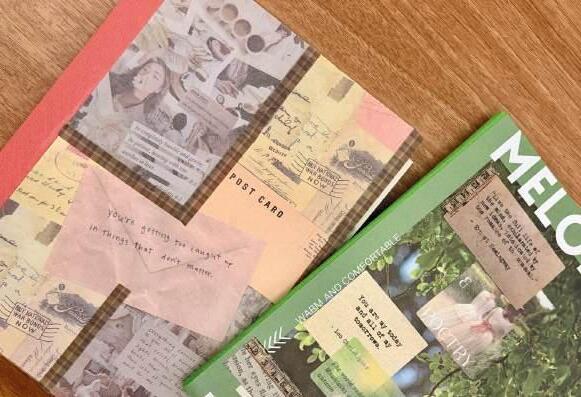
“Today I’m grateful for...oh wait,I have to remember to...I really want to make sourdough bread...”
Three pages of writing,whatever comes to mind.That’s all it is. I have always kept a journal but have never been consistent with writing in it. When I was a little kid, the pages were more or less filled with my frustration about situations like my sister eating the last popsicle. However, my entries have evolved, and I now have finally acquired a habit of journaling.
In search of a way to revamp my life with the new year approaching, I searched YouTube and came across many motivational personal growth videos, all with similar headlines along the lines of “Goal Setting in 2026” or “Maximizing Productivity.” While watching a myriad of these over breaks, I stumbled across one that recommended the simple exercise: just writing until three pages are full.
Previously, I had attempted to answer journaling prompts designed to make you think deeply about yourself regularly. I often found myself trying to craft the perfect, philosophical and insightful response — even when I didn’t always have that response within me.Those types of prompts can be beneficial for self-growth, but they do not feel sustainable to incorporate on a daily basis. It’s hard to be in the right headspace to think and write in such a way all the time, especially when getting further into the semester, where there is an exam to study for every week. In fact, rather than feeling like an opportunity to write freely and relieve stress, journaling had started to feel like writing for a neglected assignment due at 11:59 p.m. — failing to do so one day would ruin the continuity aesthetic of dates in my journal.
Contrary to having fixed prompts, this journaling exercise asks for only one thing: just start writing. Starting can often be the hardest part, but with this exercise, it’s surprisingly easy, as you can even begin with the line “I don’t know what to write,” which I have done many times. But naturally, I still manage to fill up all three pages with text. With this exercise, I no longer feel pressure to craft a coherent masterpiece that reveals something about my innermost self.
Looking through my entries, I see run-on sentences, fragments, and both unfinished and complete thoughts that somehow made sense in the moment, but I can’t make sense of them now. And that’s okay. These entries are simply a tangible piece of my stream of consciousness. Whether I write about the tasks I have for that day or lessons of the past and future, doing so helps me get the day going and gives me a soothing sensation of mental clarity.
Moreover, aside from serving as a resort where my thoughts can freely float and relax along a lazy river, my journal has witnessed some pondering thoughts spring into action.
I had seen countless social media posts of people enthusiastically involved with the sourdough making process, from them feeding their sourdough starters to the ASMR of cutting into a freshly baked, crunchy and airy loaf.
Baking bread has always been in the back of my head, and randomly mentioned in my journal entries, but a friend and I finally got our hands on a sourdough starter and successfully baked our first loaf.
Although purchasing bread may be more time-efficient, there is just something about making it from scratch that brings me this unmatched feeling of joy and fulfillment I wouldn’t get from just consuming store-bought bread. Stretching and folding the dough every 30 minutes and waiting for it to rise seems tedious and tests my patience —yet it is also a therapeutic and calming experience.
All in all, I can foresee a sourdough era coming ahead. It’s been interesting to witness how this habit of journaling has been helping with my work-life balance — both in a mental health sense and in a literal sense, as there is so much potential for the lingering thoughts I have written on these pages to manifest into side quests.
Catherine Chan is a freshman majoring in Public Health and Molecular and Cellular Biology from Potomac, Md. She is a Social Media Manager for The News-Letter.
Alex Pan
Humans, and especially college students, love the idea of “optimizing” their time. We’ve all heard variations of these statements: How do I put in the least amount of work to get my intended result? How many hours should I spend on this activity to get to a specific level? What’s the latest I can start studying to still pass this exam? Will joining this fun club prevent me from doing my work?
Being at a university so focused on pre-professional development and career placements provides constant positive reinforcement for this mindset.
But we also do things just because we find them fun and personally enriching. These are our side quests. True side quests should be done for the love of the game, independent of any career goal (see “Your Second Greatest Love”). But even though they are done out of love, these quests should be treated just as seriously and with equal standards as a “main” quest. Here’s an example from my own life.
It started with a few innocent trips to the Hopkins Bouldering Cave with my roommates. Then I visited Movement Hampden for the first time. I stared in awe at the climbers projecting impossible V7–9 climbs while barely being able to make my way up the beginner V2 climbs.Then summer break hit, and I found myself with many more free afternoons. What better way to spend it than to purchase the rights to scale brightly colored plastic holds drilled into a plastic wall?
I started off with no qualms. But then I realized: wow — this is an expensive hobby. Not only is the gym membership $80 per month, but I also need to buy $200 climbing shoes, “premium” magnesium carbonate climbing chalk and an aesthetic bag to carry the “premium” chalk.
And there were the physical downsides too: a constant web of bruises and cuts on all 4 limbs, completely ground-down finger skin, excruciating torn calluses (flappers), soreness lasting weeks.
And not only that, there was an entirely new language I had to learn. The climbing gym was filled with people speaking in tongues. Over time, I slowly started picking up terms until that primordial alphabet soup congealed into understandable sentences. “Ah, so that’s what an arete is.” “Ohhh, that’s what a bardoor is.”
Soon, I started speaking the language myself. It goes a little something like this: “Traverse right to the crimp, then dyno to that nice hold (it’s a jug). After that, reverse flag to reach that pinch and match. Then make sure to do a drop knee before making that committing move, and then top out.”
Don’t forget the fact that I needed to allocate three hours of my day to climbing, which basically made it a part-time job.
Through all this physical, financial and linguistic pain, I continued. Why did I stay with something that hurt me and drained my summer internship stipend?
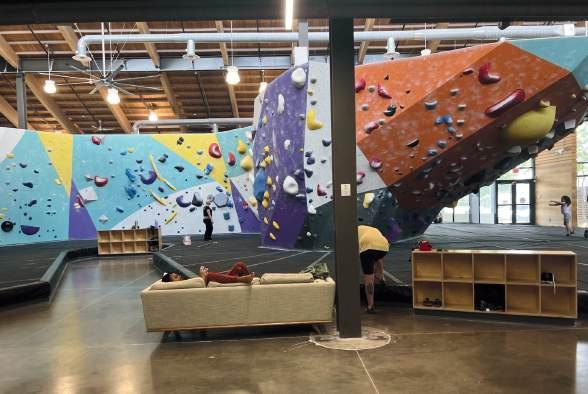
It’s that satisfaction I got from finally sending a hard climb or a hard move: slowly seeing the grades of my projects go up.It’s discovering the intricacies of balancing on slab climbs, making dynamic coordination moves and maintaining tension on overhang climbs. Though I don’t consider myself a “good” climber yet, I see myself getting stronger and climbing harder. And that constant visible improvement keeps me coming back.
I’ve learned that side quests shouldn’t be given up on a whim (unless I really hate it, then I guess I’ll give it up). Just because I failed to send any hard climbs today doesn’t mean I’ve lost my love for climbing itself. It feels good to improve at something, to get stronger at a set of skills you, sometimes arbitrarily, place value in. My climbing membership is $80 a month (please use my referral so I can get $25 off), but I still keep going because I believe the benefits I gain from climbing are worth that monetary value.
So even while pursuing side quests, you will fail. But these efforts are never wasted. They permeate your life and become a part of you. You find yourself growing passionate about your quests and sharing them with your friends. And though side quests may sometimes seem like irrational time sinks, if you truly love one, you will trust that it will continue to be rewarding even through all the failure and discomfort. Trust that it will make you a better person — a person with a couple more skills in their bag, more stories to tell and a new language to speak.
Everyone is just one person at the end of the day. We can only do so much with our time, so it seems tempting to put all our eggs in the career basket.But there’s so much more about life than just your career. So who knows, maybe your next chance encounter could turn into your lifelong side quest.
Alex Pan is a sophomore majoring in Molecular and Cellular Biology from Dallas, Texas. He is a Science & Technology Editor for The News-Letter.
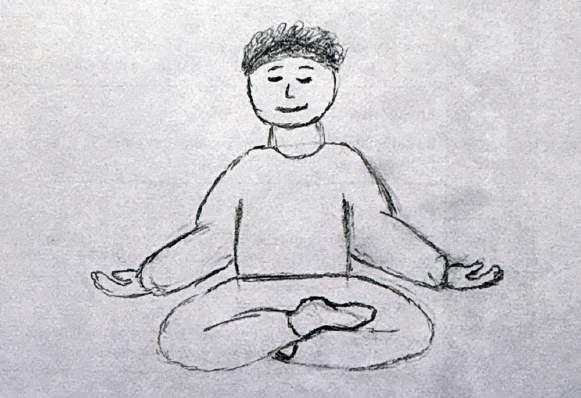
Recently I have taken up meditation. It is one of those things you turn to when you fall into a post-grad quarter-life crisis in your early twenties (you’ll know what I’m talking about when the time comes, trust me). I had hoped that always being told I am “mature for my age” would have saved me from such a fate, but alas, I succumbed to it alongside all of my friends once the summer after college graduation ended. Left with a choice between getting really into rock-climbing or trying to become an influencer, I decided to take the third option: turning to meditation and going on a quest to “find myself” instead. So starting this semester, I began a ritual of daily meditation, meditating for 15 minutes every day right after I wake up.
Surprisingly, my first attempt was easier than I thought. Concentrated on my breathing and determined to be mindful, the 15 minutes passed in the blink of an eye, the timer startling me as it went off unexpectedly soon. Yet counter-intuitively, it seemed to get harder with each passing day. After the novelty of the first time, familiarity with my newfound routine began to undermine me. With repetition, I found my brain drifting off more and more each day, now comfortable enough to switch into autopilot. My thoughts would wander, contemplating what I had to do for the day and planning out my schedule. Repeated attempts to gently guide it back to the task at hand only seemed to serve as a temporary solution before my mind wandered off once more. Even now, four weeks into my journey with meditation, I find it impossible to replicate the magic of that first time.
It seems ridiculous to me that meditating for a mere 15 minutes could prove to be so hard. After all, doing nothing should be the easiest task of all. But meditation isn’t just about passing the time. You can’t get anything out of it by simply investing the time; you have to be actively engaged in the practice. And while I’d like to think of myself as a disciplined person, meditation provided a different type of challenge. I couldn’t just brute force my way through sheer willpower like I could with running or working out, and I couldn’t outwork the problem or find special tricks like I could with school. All it asked of me was to be present.Yet somehow that seemed too much.
In an era that has conditioned our generation to expect constant stimulation, stillness feels impossible. In a society that idolizes efficiency, letting precious seconds drift by feels like a crime. Worst of all, sitting in my own chaotic and frightening head without distraction feels insurmountable.
But perhaps that is the whole point. As Marcus Aurelius points out in his conveniently titled work Meditations, “No retreat offers someone more quiet and relaxation than that into [your] own mind.” The sanctuary of our own thoughts is one we must occupy and coexist with for our entire lives. Thus, if we are able to turn it into a sanctuary, then we will have access to a retreat more precious and valuable than anything else. My hope is that through careful meditation, one day I can sort through the mess that comprises my inner landscape and turn it into a paradise into which I can retreat in my times of need.
Moreover, while time may be a valuable currency, time does not lend itself to being hoarded or micromanaged. Desperately clutching onto the seconds we have, white-knuckled, will do nothing to abate its flow through our fingers. It is the infinite paradox of life that we must realize our time is valuable, but we must not let that awareness drum us up into a panic, anxiously grasping at the fleeting sands of time, or else we shall lose the value of that time itself.
So while I have yet to attain an enlightenment to lift me out of my quarter-life crisis, I think I will keep at it in hopes of learning these lessons. And perhaps one day I can teach my brain to stop thinking about the future and the past and to simply exist in and appreciate the present.
Jason Chang is a first-year graduate student majoring in Chemical and Biomolecular Engineering from Woodbury, Minn.
I have been a dancer since I was three years old, following my older sister’s footsteps and proudly wearing her hand-medown tap shoes. So naturally, when I saw her start theater, I knew I’d inevitably follow her down that route as well (though I didn’t start until high school). Although initially I thought she was against the idea of sharing her hobby with me, she grew to love the moments we got to share on stage. It was such an honor getting to watch her senior year musical — not from the audience — but on the stage with her.
After we graduated high school, we diverged — she focused on dance, and I focused on theater. She got into a Modern Dance program, and I got into a BFA Acting Program, which put me at a roadblock. It was for a prestigious acting program, and I had received the scholarship to attend, but ultimately decided to come to Hopkins, agreeing with myself to pursue my theatrical interests as an extracurricular. At least, that was the plan.

I had done a gig before at a local professional theatre as a role in the ensemble my junior year of high school, and the next thing I knew, I was getting an invitation from the director to audition for a one-man show at this professional theatre. I had seen the casting call but didn’t think of auditioning, thinking I was too young, but apparently, that wasn’t the case. That was also the summer I booked my first contract as an assistant choreographer. It seemed as if the more theater I was doing, the more roles and contracts I was booking. That’s when it hit me — this wasn’t a hobby anymore, this was becoming a career.
Don’t get me wrong, I love theater. I mean, there is a reason why I still do it as much as I do. It’s how I met my friends, and spending such an immense amount of time delving into a character and their intentions is wonderful. However, having an extracurricular that is now a potential career path creates a complicated dynamic between the two. Sometimes, I feel a profound level of pressure to do another production, to take on another role, solely for the purpose of having another credit and skill set on my resume. Because of this, theater isn’t a source of relaxation for me anymore; it’s a source for networking and gaining new skillsets.
This year, I have made it a goal to limit the theater I do. It doesn’t mean auditioning less per se, but rather, auditioning with more intention. Sure, I could apply to countless casting calls, but frankly, that's tiring. I didn’t want to become one of the many artists who feel the need to chuck themselves into their next production, solely for the idea that if they don't, they’ll soon be forgotten. Instead, I’m making it a goal to audition for what shows or roles I truly love. I’ve already booked my third summer contract as assistant choreographer at my local theater, and frankly, coming into a season of shows I truly love with a dream-team production team, I couldn’t be more excited.
Finnigan Keane is a sophomore majoring in Archaeology and Environmental Studies from Margate City, N.J.
Buse Koldas
I constantly carry the guilt of not reading as much as I used to as a kid. I wonder where she is now (along with the red bendable book light my dad gifted me): the girl who would hide under her comforter so that she could binge-read the books of Ipek Ongun, Stefan Zweig, Resat Nuri Guntekin.
Obviously, this is not to say I haven’t read at all since my childhood; it just felt like I never read enough. The excitement of reading a book I like, being so captivated that it’s all I can think about, yapping about it to my friends and urging them to read it — these things never changed. I felt the same way about books at every age. In my experience, it even felt like a chain reaction: If I took the first step, simply opening the first page and reading the first sentence, the rest would follow, and my exhilaration would grow exponentially with every page I turned.
But somehow, as I grew older, taking that first step became more and more difficult, and I started reading less and less. When did reading start feeling like a chore rather than leisure? Was it when books started coming in the form of homework, something I was obligated to do? Or was it when the pressure of reading more “serious stuff” got more intense with every passing year?
Getting to the root of this problem took a reflection. I started comparing this phenomenon — which I named
“The Struggle of Taking the First Step” — to other areas of my life. In what other parts of my routine do I struggle to start,but once I begin,the rest feels like a downward slope?
Here’s one example. The News-Letter general meetings are held on Mondays at 7 p.m., and although I love our paper, editors and “Gatehome” with all my heart, sometimes I dread leaving the comfort of my home. Pushing myself into the sweet chaos of running a paper — discussing the coverage of serious topics and managing people — is difficult to convince myself to do. But whenever I walk in and take my usual position to host the editors’ meeting, I remember why I do it every week. The work we do is stressful, frequently exhausting and requires sacrifice, but I love the end result: achieving something this big and continuing such a tradition alongside so many people surrounding me.
Reading a book feels similar. I know that it will become my next obsession if I manage to sit down and read the first page of Jane Eyre, My Year of Rest and Relaxation or Lord of the Flies. But, quite frankly, reading a book is stressful (What if I don’t like it and can’t finish it, or worse, don’t understand it?), frequently exhausting (as it feels much easier to open Netflix after 12 hours of productivity sucks the life out of me) and requires sacrifice (Should I prepare my cheat sheet for the Kinetics midterm or read one more chapter?).
This past winter break, the first day I checked my to-do list and saw no pressing items, I made it my mission to regain my reading habit and make my inner child feel fulfilled once again. In one month, I actually made decent progress: I finished Wuthering Heights, The Pilgrimage and The Count of Monte Cristo; I even started reading Don Quixote and The Gambler, although my reading consistency had to decrease with the start of a busy semester. During this journey, I came up with three key rules that helped me feel less intimidated by reading (and, more importantly, remain consistent with it).
1.Force yourself to read the first page,but don’t pressure yourself into finishing it. There were multiple points in my life where the chain reaction never activated, although I made myself read through numerous chapters. Sometimes, a book is just not for you. Back in high school, Tolstoy’s War and Peace made me never want to read again. Although this means I might never get to read such a renowned classic, at least it didn’t make me sour on reading forever. Don’t traumatize yourself — follow what genuinely piques your interest!
2.Don’t compare your reading pace to others’. This is one of the reasons why I don’t use Goodreads. If you can read 20 books in one month, congrats! That will unfortunately never be me, and seeing others being better at reading will only make me feel bad about myself. So, I keep to myself and read in peace.
3.Understand that what you read is more important than how many pages you go through. When I look at my failed attempts at making reading a habit, I noticed it was mostly because I attempted to read hard-to-understand books. My pace would slow down as I’d spend more time than usual on each page to digest it well. It would eventually seem like I wasn’t making any progress, so I’d stop reading altogether. Now, when this happens, I remind myself that this is natural; as long as I like the book, it doesn’t matter whether I go through 10 or 100 pages in one day.
I hope that the three rules I came up with for myself will either help you regain your reading habit or inspire you to come up with your own. Don’t let Hopkins make you feel like your brain is too fried to read for fun. Today, convince yourself to pick a book and open the first page.
Buse Koldas is a junior from Istanbul, Turkey majoring in Chemical and Biomolecular Engineering. She is an Editor-inChief for The News-Letter.

Shreya Tiwari
One morning, I woke up to find my phone charger unceremoniously tugged to the floor, in the space between my bed and the window ledge where it was originally placed. And as I did the usual awkward reach into that crevice, I realized that the loss of my phone and the subsequent back pain for its retrieval were punishment. The skein of baby pink yarn on that same ledge, studded with my 0.7 mm crochet hook, was tangled with my charging cable. My toxic situationship wanted attention, and it had decided that aggressively strangling my phone was the best way to receive it.
Crochet is the hobby I return to every time my life becomes even slightly complicated. I caught the “yarn bug” in response to severe exhaustion after sophomore year and peer pressure from my best friend. The first project I completed was that summer: a slightly anemic, messy pink heart that probably fell apart in a few hours (though I can’t be sure of this since I have no idea where it went). But progression was faster than I’d expected. My first “successful” project, completed just a few months later, was far more beautiful — a bandanna with gold chains and strawberry beads dangling from the edge.
Crochet has been my rock through heartbreak, an enabler for my severe procrastination on schoolwork and above all, the bane of my existence — a complexity I am perpetually shocked by because I love crochet. I love working with my hands instead of picking at my fingers. I love watching a row of stitches materialize, especially when I’ve managed to make the “inter-stitch” spaces perfectly even. I love when, after four or five rows, my somewhat more complete product resembles the video tutorial at which I’ve been intently squinting for hours.
But at the same time, there are few moments when I am more frustrated than mid-crochet project. Anyone who has dabbled in the craft knows the frustration of a dropped stitch or uneven yarn tension. Both casualties yield final products that are studded with holes and bumps, a fate that has befallen many of my earlier projects.
But my first successful project taught me the worst part of crochet: counting. Counting stitches and rows is the root of my commitment issues with crochet. Especially as a beginner, uneven edges and stitches in wrong orientations almost had me reconsidering multiple monumental life decisions, including being
an engineering major. (Because how do I survive a field built on math if I can’t even tell the difference between the fifth and sixth stitch of the row?)
I am not beholden to or obligated to keep pursuing this somewhat torturous lover of mine. It indulges my unhealthiest tendencies. Crochet’s intricacies feed my anal-retentive perfectionism. It leaves marks on my skin in calluses and scars from working the yarn and the hook — a visible, painful,
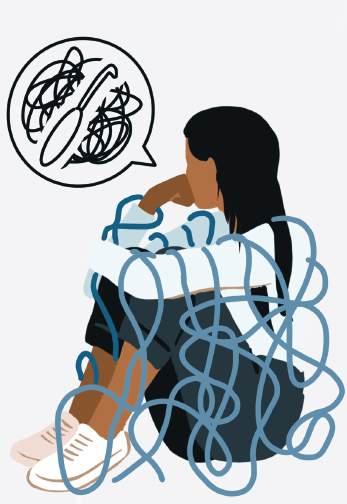
yet slightly discolored, sign of my hard work. It leaves a burning behind my eyes and blurs my vision; it leaves scars on my brain in the shape of the scraping of my metal hook against my fingernails.
Am I masochistic for it? Is it really so bad? To have scars and bruises that are not self-inflicted? To see evidence of my hard work within a few rows instead of on a midterm that is months later? To squint over stitches instead of books? Isn’t it worth it to have my brain hurt from piecing apart patterns instead of piecing apart a particularly frustrating problem set?
There is so much relief in putting all this effort into something that yields a product that feels so real, that leaves so much proof behind. So no matter how many times I reconsider my commitment, I will still return to my love. I’ll sit on the bed or in my living room and stitch and unstitch infinite swatches of yarn until black dots swim in my eyes. I’ll do the little awkward stretch to reach for my phone every time crochet rears its ugly head and feels abandoned for too long. We’re not breaking up quite yet.
Shreya Tiwari is a junior majoring in Biomedical Engineering from Austin, Texas. She is a Managing Editor for The News-Letter.
Shuwen Zheng
It's such a simple question. Deceptively simple, even. Whether it’s meeting your roommate for the first time or waiting awkwardly in line at Levering Kitchens, I’m sure many of us have encountered this staple of small talk. Answering this question should be easy — second nature by now. Yet it’s one I’ve always struggled to respond to.
My default has been “I like to read and write,” but recently, saying that has never felt more like a blatant lie. As the realities of university life sink in, the responsibilities, deadlines and pressure consume me. The time I have for writing slowly dwindled to nothing. How can I call myself a writer when I don’t write at all?
People often say if you truly enjoy something, you’ll always have time for it. But how easily writing was squeezed out of my schedule suggested otherwise. If it’s not the process of writing I am drawn to, then what is it about the role that is so appealing that makes it my instinctual answer when someone asks what I enjoy?
The answer is simple: I love stories. They are the fundamental methods I understand the world with. When the chaos of an indeterminate future and a dwindling pointless past overwhelms, the power of stories becomes so distinguishing as an arbiter of order. It is a way of explaining there is meaning in the ways the world functions — that this tiny, fleeting moment of existence is part of some timeless, endless celestial saga.
But all this grand talk of the power of stories has ultimately amounted to nothing prior to this year. I started telling people my favorite medium to write in is “unfinished plotlines” because it was the truth. I figured the image of a writer I had for myself is entirely fictional. I don’t have any sort of awards or portfolio or credentials that should qualify me for this role. I didn’t consume literary works or truly enjoy analyzing and dissecting stories to fit some sort of theme. My favorite author is Tolkien and my favorite series is The Lord of the Rings because I never had the time to develop more niche interests. I write when I feel like it, and most of the time, I don’t. When I do, it’s probably because I pre-set deadlines and responsibilities, so I force myself to follow through (thank you, magazine submission).
These and much more were facts I told myself. Only recently did I understand these affirmations inhibited me from actually writing: I told myself I was not ready, was not enough, that trying was futile, before I had ever tried. How could this end in anything but a waste of time? How could I dream of telling stories of the transition from isolation and despair to hope and love, when I had not even gone throughthattransformation?
Of course, the first step toward change is recognizing the problem. WhilewatchingaBrandonSandersoninterviewduringwinterbreak,I was captivated by what he said. He knew many who never published their first novels, but none who regretted writing them. There is no “correct” time to start writing, and life will never wait for me to be “ready”tostarttellingstories.
“Getting started” is what I have done. This year, I picked up a Writing Seminars minor and started really plotting and writing my first novel! Even if I am pursuing an engineering major, my love for stories shouldn’t be changed because of it. A creative mindset is a useful asset inanyfield,afterall.
I don’t feel ready to claim the role of a“writer”yet,but I know that I will getthereeventuallybecause,foronce,Iamactuallywriting.
Shuwen Zheng is a freshman majoring in Computer Engineering from San Jose, Calif.