Web Development Company: How to Choose the Right Partner for Your Business Growth
In today’s competitive digital landscape, your website is often the first interaction customers have with your business. And first impressions aren’t just important, they're decisive
That’s why choosing the right web development company is not just a technical decision, it’s a strategic one. The right partner can help you generate leads, improve user experience, and scale your business. The wrong one? It can cost you time, money, and opportunities
Let’s break down what actually matters
What Does a Web Development Company Really Do?
A professional web development company goes far beyond just “building a website.”
They typically handle:
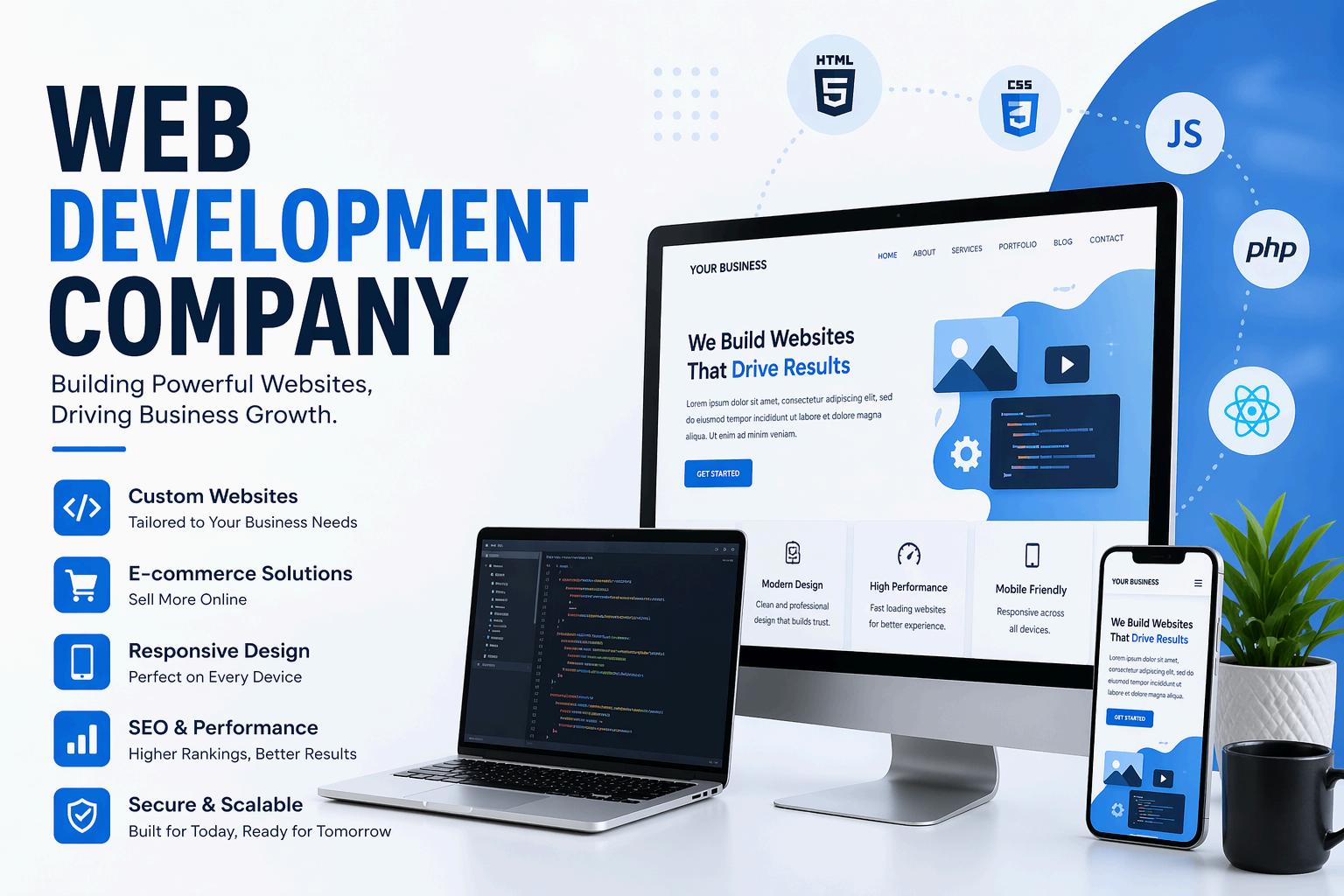
● Website design and development
● Frontend and backend development
● E-commerce solutions
● CMS-based websites (like WordPress)
● Website maintenance and support
● Performance optimization and security
In simple terms, they don’t just create websites—they build digital platforms that support your business goals.
Why Hiring a Web Development Company Is Better Than Freelancers
Freelancers can be a good option for small tasks, but when it comes to serious business websites, a company usually offers more stability.
Here’s why:
● Team expertise: Designers, developers, testers, all working together
● Structured process: Clear timelines and deliverables
● Scalability: Ability to handle complex projects
● Long-term support: Ongoing maintenance and upgrades
If your website is critical to your business, relying on a single person is a risk.
Key Factors to Consider Before Hiring
Not all web development companies are equal. Choosing based on price alone is one of the biggest mistakes businesses make.
Focus on these instead:
1. Portfolio & Experience
Look at their past work.
Do their websites look modern, fast, and user-friendly?
If their own work doesn’t impress you, they won’t impress your customers either.
2. Understanding of Business Goals
A good company won’t just ask “what do you want?” They’ll ask “why do you need it?”
They should understand:
● Your target audience
● Your industry
● Your conversion goals
Because a website without purpose is just decoration.
3. Technology Stack
Make sure they’re using modern and scalable technologies.
Depending on your needs, this could include:
● React, Angular (frontend)
● Node.js, PHP, Python (backend)
● Shopify, WooCommerce (e-commerce)
Outdated tech leads to future problems.
4. Communication & Transparency
If communication is unclear during the sales phase, it will only get worse during development.
You need:
● Regular updates
● Clear timelines
● Honest feedback
No surprises.
5. Post-Launch Support
Many companies disappear after delivery.
That’s a problem
Your website will need:
● Updates
● Bug fixes
● Security patches
Make sure support is part of the deal
Types of Websites a Web Development Company Can Build
Depending on your business, you may need:
● Business/Corporate Websites – For brand presence
● E-commerce Websites – For selling products online
● Custom Web Applications – For complex business processes
● Landing Pages – For marketing campaigns
Each requires a different level of expertise
Common Mistakes to Avoid
Most businesses don’t fail because of bad developers they fail because of poor decisions
Avoid these:
● Choosing based only on price
● Not defining clear requirements
● Ignoring mobile responsiveness
● Skipping SEO considerations
● Not planning for future scalability
A website is an investment, not an expense.
What Makes a Great Web Development Company?
A great company doesn’t just deliver a website they deliver results.
They focus on:
● User experience
● Performance and speed
● Conversion optimization
● Scalability
● Long-term partnership
They think beyond launch.
Final Thoughts
Choosing the right web development company can directly impact your business growth. It’s not about who builds the cheapest website it’s about who builds a website that actually works for your business
Take your time, ask the right questions, and choose a partner who understands both technology and business.
Because in the end, your website isn’t just a digital presence it’s a growth engine.