


thhiii
Dear Child survivors of the Holocaust, We trust you are all managing as well as possible in these difficult times. Please know that Lena and I are as determined as ever to make sure that the CSH group stays connected in the best way we know how; through inspiring and heartfelt stories that we hope are meaningful for Child survivors and your families. This edition of Connections has some wonderful news; our incredible and important CSH patchwork wall hanging has been restored to its former beauty and now hangs proudly at the Melbourne Holocaust Museum.! It is sad our much-loved CSH member, Eva Marks, who created the concept for the patchwork wall hanging, is no longer with us but our dearest Paulette Goldberg who stitched the squares for this irreplaceable work, is very much alive and well and living in Sydney. Paulette, we hope to see
you in Melbourne soon to visit your amazing handwork.


Dr Paul Valent, founding president of the CSH group in Melbourne, well over 30 years ago, has written a piece in answer to my request “to provide a much-needed reminder how important love and random acts of kindness are in the most distressing of times”. Paul ventures back to a childhood memory that still remains precious and comforting, eighty years on.
We welcome the new Melbourne Holocaust Museum CEO, Dr Steven Cooke and his first letter to Child Survivors.
CSH Peter Nash shares his incredible story. Wishing you all the very best in every way
Lena’s Desk: Hidden Child: how I survived the Holocaust
by Baroness Regina Sluszny
During the horror of World War II, many Jewish families in Belgium were forced to hide their children in the hopes that they would avoid detection by the Gestapo and ultimately survive the war. In Belgium alone, more than 5000 children survived the genocide via disguise and concealment from the world. This is the story of Baroness Regina Sluszny: one of Belgium’s remaining Holocaust survivors, and one of the Hidden Children.
entire Jewish population, to exterminate them. Even the children. Soon after the occupation began, they introduced new laws, specifically targeted towards the Jewish population. The first law, which came into effect in 1941, stated that all Jews had to be registered in the town hall on a separate list called the Joodselijst: the Jewish List. A copy of this list was given to the German officers in charge so that they could go and pick up all of the Jewish families and assemble them in Mechelen at the Kazerne Dossin – a detention and processing centre. From there, they were sent to the extermination camps in 27 trains between 1942 and 1944. More than 25,000 mothers, fathers, and children, including babies, were sent to be killed, and only around 1,200 came back.
Hiding in plain sight
My name is Regina Sluszny, and I was a little older than a year when the war started in Belgium. I lived in Antwerp with my mother Jenta, my father Jacob, and two brothers, Marcel and Eli; born into a Jewish family who emigrated from Poland in 1930. We lived quite peacefully in Antwerp until May of 1940, when German soldiers invaded Belgium. Their main goal was to eliminate the
In mid-1942 my parents realised it was too dangerous to stay in Antwerp with three small children. My father knew the daughter of a woman named Poldine from when he was working in the markets before the war. Poldine kept a pub and guesthouse with some rooms in Hemiksem - a small town some 15 minutes from Antwerp. She had two empty rooms at the guesthouse, which she offered to us,

and so we all moved to Hemiksem. We had to be very silent all day because downstairs in the pub, men would come to drink beer and make small talk, and they could hear the smallest noise we made. Poldine did not want anyone to know that people were hiding upstairs because it would put her at risk. I was lucky because I had blond hair and did not look Jewish, so I was allowed to go and play in the courtyard. I was only two and a half years old, and Poldine thought that no one would believe that I was a Jewish child.

They had no children but had two cats whom Anna loved very much, and she fed them freshly prepared food every day, the same food that she and her husband ate. One day, after she put the plate of food on the floor and before the cats arrived, I snuck through the hole and took the food because I was so hungry. I did not realise that Anna was standing behind the curtains from the kitchen window and could see me take the food. She realised immediately that if a small child, not even three years old, was taking the food from her cats, then that child must be desperate. This was my first encounter with Anna, who would become my war mother after my family was denounced to the Germans.
In Hemiksem, there was a camp with German soldiers who became informed that Jews were hiding in Poldine’s pub. We did not know who had found out that we and other Jewish families were living in secret on the first floor, but it did not matter. The mayor of Hemiksem was instructed to come and bring denounced Jews to Dossin, but we were lucky. Before coming, he sent his twelveyear-old son to Charel with a message to go to Poldine’s pub and inform us of his imminent arrival. When Charel came to my parents, he told them to take what they could carry, to take my brothers, and if they wanted, I could stay with him and Anna until my parents found a safe hiding place. My parents had no choice. They had to
decide immediately and were not sure where to go. So, in that moment, they agreed to leave me with Anna and Charel and to come back for me when it was safe. My stay with these beautiful people lasted until the end of the war.
War parents

Living with Anna and Charel was a dream. I was free to run around the house and shop whenever I pleased. I had my own bedroom - which was a luxury at that time - and most importantly, I had love. They gave me everything I needed and more. Only many years following the war would we find out that everyone in Hemiksem knew that I was Jewish, but I was never denounced. When the war was over and I turned six-years-old, it came time for me to go to primary school. The kindergarten teacher told Anna and Charel that it would be better for me to go to school in Antwerp, where the school curriculum was superior. So Anna and Charel sent a note to my parents asking them to come and take me home to Antwerp. After hiding in 15 different places over the preceding three-and-a-half years of wartime, my parents and brothers had returned to Antwerp. Charel knew this because, during the time that I stayed with him and Anna, he would bring food to my parents and brothers in all the different places they were hiding.
My parents agreed, but when my mother came to pick me up, I did not recognise her. Charel reassured me that this was my mother and that she would take me home. For me, this was very strange because in Hemiksem, I was at home. My mother asked Anna and Charel, “How can we ever repay you for saving not only our daughter but also our entire family? How can we thank you for bringing us food regularly for more than three years and risking yourselves by breaking curfew to smuggle supplies to

us?” My mother’s gratitude was immense. But Anna and Charel had no children of their own and loved me so much that they wanted only one thing: to maintain a relationship with me; to not have their ‘adopted’ child taken completely away from them. My mother gave them her word that I could come to them every Friday after school and be with them until Sunday evening. And that is how I lived for the rest of my youth, right up until I met my husband.
During the week, I lived with my Orthodox family and went to a Jewish school, and on the weekends, I lived with Anna and Charel like a non-Jewish child. Life was difficult for me in the beginning when I returned to living with my parents and brothers because they had experienced the war together, as a Jewish family, and I had lived it with non-Jewish people. During the week, I had to learn to be Jewish again, with all of the laws about food and behaviour, and on the weekend I did not have to think about any of it. With time, I regained my place in my family and faith, but still always held on to the other person I was able to be thanks to the two lives I lived.
Memory work

I was twenty years old when I married my husband, Georges; also a Hidden Child who had lost seven family members in the war. Anna and Charel welcomed him as part of our family. They came to our wedding and were present at the births of our two children who grew up knowing them as Aunt Anna and Uncle Charel. Throughout the rest of their lives, they considered me their daughter and I considered them a second set of parents; truly a part of my family.

Out of gratitude and remembrance, those who helped save Jews during the Holocaust are given the title of “Righteous among the Nations”, as decreed by Yad Vashem, the Holocaust Museum in Israel, and should be honoured by those whom they saved. On 13 July 2010, upon my request, Anna and Charel received a Certificate of Honour from Yad Vashem. For Anna and Charel and all of the other people who were Righteous, I continue to tell my story so that they and their courage are not forgotten. For more than 20 years, I have visited schools and workplaces to recount both my and Georges’ testimonies of the war. I have spoken to schoolchildren as young as 12, university students, and adults of all backgrounds and faiths across Belgium and even abroad on a few occasions. Our stories have also been written about in the book, Forgotten War Children by Paul De Keulenaer. For the most part, regardless of age, the young people whom I speak to are unaware of the atrocities of World War II. This is living proof that it is as important as ever to continue telling the stories of Hidden Children so that future generations do not go uneducated and let history repeat itself. For without memory of the past, there is no future.
Reprinted from the NATO Review
Boys With Rabbits by Dr Paul Valent
Almost eight decades later it still warms my heart. Here it is, just as it was then. A boy my age, cuddling three rabbits, two in a basket, one in his left arm. The boy wears a cap with a feather in it, and a scarf one end pointing to the sky. Obviously not a Jewish boy, probably a local peasant child, but very endearing and obviously he and the rabbits love each other.
A Russian soldier gave it to me. I have a sense of his figure and of a shy questioning of whether I would like his gift. I must have satisfied him, because I still feel a warm sense of gratitude to him as I glance at the figurine as I write.
I imagine that the Russian soldier’s gift was genuine. Perhaps he had a child my age at home.

I had just turned seven. A couple of weeks earlier I cried for a German soldier who was bleeding to death in our building’s air raid shelter. ‘We don’t cry for them,’ someone whispered to me. The Russian soldiers, on the other hand, were our friends, especially my father’s. He greeted the first Russian soldiers as they appeared Dr Paul Valent at age 9.
at the entrance to the air raid shelter. He told them in Slovak, that we were Jews, we were their friends and thank you for rescuing us. So, the Russians only demanded everyone’s watches. They didn’t rape and loot us, as I learned much later, they were given permission to do so freely for forty-eight hours.
A week or so later my father and I ventured out into the bombed-out town. We saw Russians escorting German prisoners-of-war in the streets. My father screamed and spat on them. With my father’s permission I did the same. Spitting at adults, how extraordinary, and not being punished for doing so!
Times changed. Within a few years Russia’s puppets took over Czechoslovakia and we escaped our former rescuers. The Russians turned against their own Jews, many of whom had been officers in the army that defeated the Germans. And Germany became home to Jewish refugees and friend of Israel!
I look at my Hummel boy with rabbits. The figurine, I just realised, is the only solid memento of the wartime years. A product of Germany, looted by a Russian from a
bombed out Hungarian home, from whose inhabitants we had to hide our Jewish identity. Not a valuable figurine even today, I learned, one that had flooded the market.
And yet my original love for that figurine is untarnished. The human intent of that gift remains. No matter how many decades later politicians and their countries keep changing their enemies and friends, that moment of human kindness by the soldier, symbolised in the love between the boy and his rabbits, remains as a symbol of hope that love cannot be vanquished even as hatred shoots its arrows hither and thither.

Child Survivors’ wall hanging keeps on weaving the stories in its new home
It is estimated that more than one million children were murdered during the Holocaust. Very few survived.
Some were hidden as very young children and retain no conscious memory of their lives during the Holocaust. Others were deported to ghettos and camps where they forced to navigate a world turned upside down. In the camps, children, were particularly vulnerable. Others survived in cramped conditions, forced to silence in physical hiding. Many were forced to assume a new identity, hiding in plain sight and living under constant fear of discovery. Children witnessed unspeakable horrors and endured abuse from Nazi perpetrators, but also from others.
Child survivors endured a diverse range of experiences that are still being understood and uncovered today. All child survivors were profoundly affected by the Holocaust. They were stripped of security, education, homes, food, and all basic rights. Many suffered from trauma and loss, struggling with life after the war.
The ‘Remembrance Tableaux’, a unique patchwork wall hanging was originally created in 2000 by child survivors and their families, as a form of art therapy, facilitated by child survivor and craft teacher Eva Marks with assistance from child survivor and seamstress Paulette Goldberg. A quilt was chosen as a symbol of stability, family, and shared history. We may interpret the softness of the
materials as a reference to the innocence and naivety of children, reclaiming its destruction during the Holocaust. A patchwork design, each depicting a different child survivor’s story, reminds us that each child was a distinct person with a name, a family, and dreams of their own. Conversely, each piece of the quilt reminds us that each child’s experience, no matter what it was, was profound and unique. The sewing of the pieces onto the larger fabric represents the tapestry of experiences, uniting and resting in one place.

Formerly housed in the Smorgon Auditorium of the former Jewish Holocaust Centre, this poignant wall hanging has now received major conservation treatment and has been framed with light wood, blending into the light wooden walls to show its close relationship with the building and all it represents. Restoration funding was generously arranged by Viv Parry on behalf of Danny
Lustig, Executor for the Estate of the Late, Leslie Klemke. The ‘Remembrance Tableaux’ has been placed on the Western wall of the second floor of the Melbourne Holocaust Museum, attracting the visitor who reaches the top of the stairs with its splendid colour and compelling imagery. It is no coincidence that the Hanging sits adjacent to the Hidden exhibition, the story of seven child
survivors. And just as the Hidden exhibition is dedicated to the children whose stories will never be told, it seems that this quilt of multi-colour is calling out to us to never forget the stories told so bravely by our child survivors.
Melbourne Holocaust Museum: Fiona Kelman, Sandy Saxon & Dr Anna Hirsch
Escape to and from Shanghai by Peter Nash

This is the story of my family’s escape from Germany to Shanghai - and later from Shanghai to Sydney.
My mother’s parents came from former Prussian towns with my grandfather coming from Hohenstein, now Olsztynek in Poland, and my grandmother from Danzig, now Gdansk, Poland.
My mother’s name was Ingeborg LEWIN and she was born in Berlin in 1910. My father was Herbert NACHEMSTEIN and he was born in 1905 in the former West Prussian town Gnesen, now Gniezno in Poland and which was then part of Germany. He came to Berlin in 1921 having been sent by his father to further his opportunities as a scrap metal merchant. A few years later my parents met and married in 1932 and I was born in 1935 - their only child. The rise of Hitler and Nazi tyranny in the 1930’s forced every Jew of the 500,000 strong German community to think hard if it was safe to stay not only in Germany, but also in Europe. Luckily many took the threat seriously already by the mid-1930’s, having obtained visas and emigrated to wherever they could. However, many others in Germany strongly believed that their “Fatherland” would never harm them and this also included the heads of my family - because, after all, they had fought for Germany in the First World War. So they believed strongly that this would surely be respected. They also believed that the Nazi reign would be short-lived. Thoughts of staying evaporated immediately after the devastating and infamous Night of Broken Glass - the Kristallnacht - which erupted throughout Germany on the 9th November 1938.
Escape to - where?
Some thought just getting into another neighbouring country would be the best first step, and so quite a number went to Belgium, Holland or France and some even went east to Czechoslovakia or Lithuania and
elsewhere. Meanwhile the waiting list for visas for most overseas countries was already well beyond stated intake quotas. Word had got around that the only place where no visa was required was Shanghai, China. Sephardi Jews originally from Baghdad and later Bombay, as well as Ashkenazi Russian Jews had settled there for decades past. Reaching Shanghai in the years 1938 to 1941 then became the goal for a total of about 18,000 German, Austrian, Czechoslovakian, Lithuanian and Polish refugees as well as about 2000 orthodox Polish Jews.
Together with my parents and maternal Grandparents we went by train from Berlin to Genoa, Italy, where we boarded a German ship the SS “Scharnhorst” and sailed through the Suez Canal, stopping off in Colombo, Manila and Hong Kong, and after about three weeks arrived in Shanghai on the 19th of May 1939. My mother’s father died one month later, having suffered from a heart attack when he picked up the boarding tickets on the eve of leaving Berlin.
Hongkew on the eastern side of Shanghai used to be a heavily populated Chinese district until it was partially destroyed by bombardments during the Japanese invasion of China in 1937. It became the only available area for the European refugees at prices they or the Jewish Relief Aid Committees could afford. Many of the new arrivals who came with very little were issued with the bare necessities and were soon queuing up in a ‘soup kitchen’. Life changed drastically for the refugees as most were still dressed in their best and fashionable European clothing, often all they had.
Those that could not afford to rent their own rooms were housed in Heime (Homes) which held up to 150 men, women and children. Morale sunk very low as
living conditions were depressing. In 1938 the trickle of refugees built up to about 1500 and the Relief Aid Committees could cope, but when the trickle became a flood in early to mid-1939, they could not cope anymore. That’s when urgent calls went out for relief funds from all over the world.
We rented one large single room in a three-storied terrace house in Hongkew which was divided up into a curtainedoff sleeping area, the kitchen - essentially sink, stove and table - and a living section which my father used as an office and storage area. My father soon met a former Berlin colleague and his friend suggested my father could also find work at his company which was in transportation - of all kinds of goods. Working hours were very long and physically very hard, and my mother helped my father. In 1942 he started his own transportation and customs broking business and it proved to be very successful. As we tried to settle into this new existence, my parents also had to focus on those of our immediate family who were left behind in Europe. My father’s parents remained in Gnesen in Poland and his only contact with them was by mail which took usually 5 to 6 weeks either way. After the War started in September 1939, the Nazis began the Final Solution for the systematic extermination of all Jews. They created concentration and work camps in the occupied countries - especially Poland. This tragedy became real again not so long ago, in fact in July 1997, when my wife and I visited the Jewish Historical Institute in Warsaw where we met Yale Reisner, a dedicated American archivist and researcher. He showed me deportation lists from Gnesen and neighbouring towns, with the devastating evidence that on the 13th December 1939 my grandparents Leo and Cacille NACHEMSTEIN were rounded up and deported from Gnesen to the Ghetto of Piotrkow Trybunalski together with others from my family. Letters from my grandparents stopped in February 1941. Not so long ago I found out that all the Jews held in Piotrkow were exterminated in the Treblinka death camps. Years later I found a note my father had from a family member, that his parents: Leopold and Cacilie Nachemstein died from ill-health in the ghetto they were in and where thousands of Jews were taken to Treblinka and desecrated. This was a “blessing” for me. The refugees in Shanghai mostly made the best possible of an unwanted and generally unhealthy situation. Gradually, grocery stores and delicatessens, sidewalk cafes and tailor shops opened. Against all odds, the demand for world news and cultural activities was constant. Several dozen periodicals were published by enterprising refugees. Literary and musical recitals, chamber concerts, plays, operettas and revues were

performed, often by former well-known artists from Berlin and Vienna.
Religious services for the refugees on High Holy Days were often conducted in rented premises. The Jewish community of Shanghai, old and new alike, was in no sense unified, and there was little social interaction between the various groups. Daily life however was strongly affected by the Japanese occupation of China after war was declared with the United States at the end of 1941. The Japanese gradually came more directly under Nazi influence and so reversed their previous proJewish policy, introducing special zones which required passes for entry, bringing the refugees under the direct influence of the Japanese commander of Hongkew, an erratic and neurotic small man, named Goya. However, survival in Shanghai was not endangered so much by the activities of war but rather by poor diet, bad sanitation, and low resistance to tropical diseases.
Schools and educational institutions were either long established, such as the Shanghai Jewish School or newly created, such as Shanghai Jewish Youth Association School and Professor Deman’s Gregg Business College. The world-renowned ORT had hundreds of students.
All kinds of sport flourished for the young and not so young. Soccer, table tennis, athletics and boxing were the most popular as was chess. Another favourite activity was Scouts and Guides and also Betar.
Normal war activities such as air-raids and battles were hardly experienced. However, the worst episode was on 17th July 1945 when 40 European refugees died from a US bombing raid on telecommunication targets which were close to the refugee ghetto area in Hongkew. Apart from the war casualties over 1600 refugees died from various causes between 1939 and 1945. The German language weekly paper Aufbau published a list in 1946 of
those refugees who died between 1940 and 1945. The end of the war in August 1945 also became a nervous and dreadful time as refugees tried to find out what had become of the rest of their families in Europe. But it was also the start of huge amounts of commercial activity. In fact, my father’s business in transportation and customs broking was booming, especially as many refugees began to leave at the end of 1945 for other countries, such as Palestine, United States, Australia and elsewhere. It was also quite euphoric, as now Shanghai was overrun with American armed forces who were in an ‘occupational transition mode’. Gradually an unease befell all the Western communities of China as civil war erupted between the Red Communists and the White Chinese Nationalists.
Escape - to where?
It was time to think about migrating again. But where to this time? The rules for quotas and visas had hardly changed since the 1930’s. The dispersion of the Jewish community of Shanghai as well as Harbin and Tientsin had commenced - and accelerated by the time the Communists took over in September 1949, thus creating the People’s Republic of China.
With the Communist threat my father racked his brain to find a New Haven. He tried hardest to get to Australia because the quota restrictions to the US were hopeless, as immigration was restricted in numbers which corresponded to the 1920 intake by nationality. Technically we were Stateless, but my father again came under the low Polish quota guideline. Also, the then Australian Labour government created many obstacles to entry by stateless Shanghai refugees. Without a sponsor there was virtually no chance to get visas for Australia. So, my father co-opted a former Berlin business colleague to be our sponsor, in fact, claiming that he was my father’s cousin and eventually in February 1949 the visas were granted, and on the 15th February 1949, we sailed on the SS Gen. Meigs from Shanghai stopping off first in Hong Kong. Then we boarded the 4000-ton SS Change and after 3 weeks we finally sailed into the very beautiful Sydney Harbour arriving on the 13th March 1949 - exactly on my father’s 44th birthday. And what a wonderful feeling that was. I finished my high school years at Randwick Boys making many new wonderful lifelong friends. Seven years after arriving in Sydney, I changed my name to NASH.
Greetings from the new CEO of the Melbourne Holocaust Museum

Dear Child Survivors of the Holocaust
It is a privilege to introduce myself to you as the new CEO of the Melbourne Holocaust Museum. I took over from Jayne Josem at the beginning of February this year and I want to first pay tribute to the work that Jayne, the Board and so many people did over many years to create our amazing new museum. I’m no stranger to the museum and have been involved in a variety of ways, including as part of the exhibition redevelopment committee.
We mark our 40th anniversary in March. Despite many changes over the decades, the voices of the survivors remain at the heart of everything we do. Many speak to school groups on a weekly basis, and others share their experiences through testimony in the exhibitions.
Child Survivors as the last eye-witnesses to the Holocaust have an increasingly important and valued part to play
and form the centrepiece of our permanent exhibition called ‘Hidden’. This highlights the experiences of seven Child Survivors of the Holocaust. Specifically designed for upper primary aged children, ‘Hidden’ is an ageappropriate way of introducing younger children to this important history in an engaging way. I look forward to learning more about your stories and lived experiences and would welcome your comments and feedback via museumceo@mhm.org.au
There are also many other ways to be involved with the MHM, including volunteering, attending our events, or encouraging your family members to volunteer. To find out more please contact Rae Silverstein or Anna Berhang on (03) 9528 1985 or MHM-Volunteer@mhm.org.au or complete our volunteer expression of interest survey https://tinyurl.com/9cbveekx
On behalf of the staff and Board of Melbourne Holocaust Museum we look forward to seeing you at our new museum soon.
With best wishes,
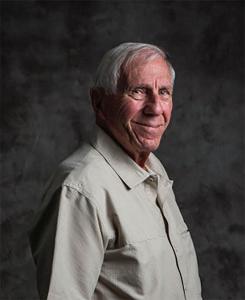
Dr Steven Cooke CEO, Melbourne Holocaust Museum