Dear Child Survivors, Welcome to this special edition of Connections celebrating the Child Survivors portrait exhibition TRIBUTE. We are grateful to Artist Jeffrey Kelson for creating paintings that reflect child survivors’ journey from childhood to adult. The short biography displayed alongside the artwork, gave insight to each child survivors’ personal story.
We were honoured to have as our special guest, Prof Hon Barry Jones, who spoke of his personal association with the Holocaust Centre’s early founders as well as sharing his thoughts about child survivors and the enormous challenges they faced during the Holocaust. Dr Paul Valent, much loved and admired founding president
of the CSH spoke first; his speech follows for all to share. It is no surprise his words truly reflect the essence of the child survivor experience.
A crowd of over 300 CSH their families and friends attended this special event, we thank all participants and guests for their support.
We thank the Holocaust Centre for facilitating the exhibition and in particular Curator, Jayne Josem for her tireless effort to create an inspired display.


Best Wishes:

We send our best wishes to child survivors who are unwell at this time, our thoughts are with you and we hope your recovery to good health is well on the way.
Viv Parry, Chairperson, CSH
Launch of Child Survivors of the Holocaust Portraits
2 April 2017 at the JHC - speech by Dr Paul Valent
Thank you very much for the privilege of speaking to you on this auspicious occasion of the launch of the Jeffrey Kelson series of portraits of child survivors of the Holocaust. We look at ourselves every day and make judgements of ourselves. Looking in the mirror, we might say, “I don’t like the look of myself today.” We might judge a photo as a flattering or uncomplimentary depiction of ourselves. In other words, we have an inner picture of ourselves, which may or may not be in harmony with the reality of our facial reflections.
We Child Survivors of the Holocaust are a strange assortment. We did not have clear inner images of ourselves because our parents’ eyes, the original mirrors, didn’t reflect, in fact they tried to hide as much as possible, our realities. And so for decades we didn’t even have an image of ourselves as child survivors.
For instance, I remember at the first international conference of child survivors, seeing two distressed women looking in my direction. I looked behind me to see what the matter was. But they pointed at me. I realised that the two women were in fact responding to my story, which I was narrating. It was only then that I realised deep
down how distressing my story actually was. We needed outsiders to discover us. They were two other women. We were lucky that we experienced both of them in our group. One of them was Sarah Moskovitz who wrote “Love Despite Hate; Child Survivors of the Holocaust and Their Adult Lives”. The other was Judith Kestenberg, a psychoanalyst, who wrote extensively on child survivors of the Holocaust. These were the original mothers who listened attentively to us, reflected us, and exhibited us to the world in their literature. Well, today we have Jeffrey Kelson. He is exhibiting us differently. He has offered to transmit our stories visually, as against verbal exposes, in the apparent immediacy of pictures.
I said apparent immediacy. In fact there is nothing immediate about a portrait. From the portraitist’s point of view, it requires years of practising skills and techniques to be able to portray the physical face and what lies behind its expressions.
The artist has to reveal an inner significance, an essence. This essence, unlike fleeting reflections in mirrors or photos, reveals character, moral quality, and a new perspective of
VOLUME 5 NO. 2 JUNE 2017
humanity that may make a worthwhile difference. From the subject’s point of view it requires maturity and courage to expose to scrutiny the most intimate and telling part of oneself, the face. The portraitist also exposes his inner motivation, vision, character, and skill. So here we are, at this unprecedented, unique and exhibition. Why do I use those adjectives?
First, because I believe that this is the first exhibition of its kind, namely a series of portraits of child survivors of the Holocaust.

Second, because of the portraits are more than current views of today’s survivors. They don’t shirk depiction of shattered early lives in circumstances, let me remind
you, where 90% of Jewish children were murdered. The portraits depict the past, the present, and they hint at the journeys of courage and determination that brought survivors to become successful, caring, loving adults. I have mentioned the subject and the artist. Of course there is a third person associated with each portrait: you, the viewer. This exhibition is for you. You are invited to be a participatory witness, to delve into the creative result of subject and artist.
Jeffrey Kelson and all the child survivors whose portraits you will see, hope that what they exhibit will reveal to you, as indeed it had for them, new and valuable aspects of humanity.


VOLUME 5 No. 2, JUNE 2017 CONNECTIONS 2
Artist Jeffrey Kelson with his portrait of Paulette Goldberg at the launch of the Child Survivors’ portrait exhibition TRIBUTE.
Two of the many portraits in the Child Survivors’ portrait exhibition TRIBUTE. Dr Paul Valent and Paulette Goldberg.
At the launch of the Child Survivors’ portrait exhibition TRIBUTE: Prof Hon Barry Jones, Jeffrey Kelson, Viv Parry and Dr Paul Valent.
At the launch of the Child Survivors’ portrait exhibition TRIBUTE: Prof Hon Barry Jones, Evelyn and Gary Fabian.


VOLUME 5 No. 2, JUNE 2017 CONNECTIONS 3
Julie Valent and Bernadette Gore.
Rysia Rozen and Viv Parry.
Artist Jeffrey Kelson. Two appreciative guests at the exhibition launch.
Some of the guests at the exhibition launch viewing the portraits.
Albert Roller. Louis Roller and Prof Hon Barry Jones. Eve Frenkel-Singh and Prof Hon Barry Jones.
JHC Calendar of Events
JHC Social Club
Barbara Kamler, Emeritus Professor, Deakin University
“Stories of Leaving and Relocating Lives”
Venue: Jewish Holocaust Centre
0404 224 498 or barbaras9@bigpond.com Office: 9528 1985 or admin@jhc.org.au
Thursday 15 June, 7.30pm
Cracow Memorial Committee of Melbourne & ASPJ
Guest Speaker: Dr Edyta Gawron
“Forget Me Not! Memory and Commemoration of Jewish History, Heritage and the Holocaust in contemporary Poland”
Venue: Jewish Holocaust Centre
Enquiries: Peter Schnall - 0403 800 734 Office: 9528 1985 or admin@jhc.org.au
Thursday 15 - Sunday 25 June
Co-presented by Kadimah and the JHC
“A Night to Remember: The Ghetto Cabaret”
Venue: The Kadimah Jewish Cultural Centre
7 Selwyn Street, Elsternwick
Bookings: http://www.trybooking.com/OVIB
$50 general, $40 Kadimah & JHC members/concession, $25 full-time students for matinees only Enquiries: kadimahreception@gmail.com
Tuesday 20 June, 7.00pm
The Jewish Holocaust Centre and B’nai B’rith Anti-Defamantion Commission present
“Honouring the Legacy of Elie Wiesel”


Smorgon Auditorium
Jewish Holocaust Centre
RSVP: Friday 9 June
Venue: Jewish Holocaust Centre
Email: edna.lipson@antidef.org.au
Office: 9528 1985 or admin@jhc.org.au
Sunday 25 June, 3.00pm
JHC Film Club
“The Nasty Girl (Das schreckliche Mädchen)”
1990 92 mins
Venue: Jewish Holocaust Centre
Office: 9528 1985 or admin@jhc.org.au

VOLUME 5 No. 2, JUNE 2017 CONNECTIONS 4
Some of the guests at the exhibition launch viewing the portraits.
Compensation details for Holocaust Survivors, Serbia
On February 12, 2016, following negotiations with the World Jewish Restitution Organization (WJRO) and the Federation of Jewish Communities in Serbia (SAVEZ), the Government of Serbia established a program of direct payments to Serbian Holocaust survivors, living in Serbia or abroad, but who lived in Serbia at the time of the Holocaust.
The Claims Conference has reviewed its files to identify potential applicants and has sent a personalized letter and application form to those who may be eligible for this compensation.
Please note: receiving the letter from Claims Conference is
not an indication of eligibility. SAVEZ will determine who is eligible for a payment. Personalised letters should not be photocopied or shared with another survivor who may not have received a letter directly from the Claims Conference. If a Serbian survivor is interested in applying for this compensation and did not receive a letter from the Claims Conference, he/she may complete the General Application Form, which can be found on WJRO website. Applications for this program must be submitted by July 31, 2017.
Please Phone Jewishcare 85175777 ask for Lana Khasin
Message from our fellow group CSH Sydney
Hi Viv,
You may be interested to view and circulate this video to the Melbourne membership, which is of 2 of our members and myself that was produced and shown by the NSW Jewish Board of Deputies Remembrance Committee at

the Yom Hashoah Commemorations here in Sydney. We are 3 out of 5 members who survived Bergen Belsen and were all on the same Train that was Liberated by US soldiers near Magdeburg in Germany.
https://www.facebook.com/NSWJBD/
VOLUME 5 No. 2, JUNE 2017 CONNECTIONS 5
JHC Social Club: Barbara Kamler, Emeritus Professor, Deakin University

Thursday 15 June, 12.30pm
Barbara Kamler
Emeritus Professor, Deakin University
“Stories of Leaving and Relocating Lives”
The experience of leaving one’s country and settling in a new place is traumatic— involving a complex process of dislocation and relocation, unsettling and resettling. Barbara Kamler was born in New Jersey and came to Australia in 1972. Through personal narrative she will share her thoughts about the tensions of moving between ‘here’ and ‘there’, between leaving your family and acquiring another, between what you imagine and what you experience.
JHC Film Club:"The Nasty Girl (Das schreckliche Mädchen)"
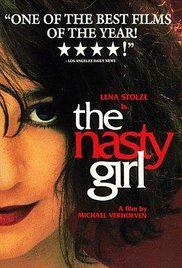
Sunday 25 June, 3.00pm
"The Nasty Girl (Das schreckliche Mädchen)" 1990 92 mins
Directed by Michael Verhoeven
Guest Speaker: Rabbi Shamir Caplan
Sonja, a young Bavarian woman whose submission to an essay contest explores her hometown's affiliation with the Third Reich; as she learns more and more of the truth, she is increasingly victimized by her fellow townspeople, who do not want the scars from their past ripped open anew.
Winner of BAFTA Award for Best Film not in the English Language, Berlin International Film Festival: Silver Bear for Best Director (Michael Verhoeven) and New York Film Critics Circle Awards for Best Foreign Language Film. Nominated for the Academy Award for Best Foreign Language Film, Golden Bear, Berlin Film Festival and Golden Globe Award for Best Foreign Language Film.
Film Launch: “Ties That Bind”
Sunday 2 July, 2.30pm
Film Launch: Ties That Bind - “From Auschwitz to Cummeragunja”
Directed by Viv Parry
Program includes: Moshe Fiszman & Uncle Boydie and Stan Yarramunua (Didgeridoo)
Holocaust inspired art by Galiamble Aboriginal men

VOLUME 5 No. 2, JUNE 2017 CONNECTIONS 6
