WALTJA: ONE FAMILY
PRESENTED BY JGM GALLERY
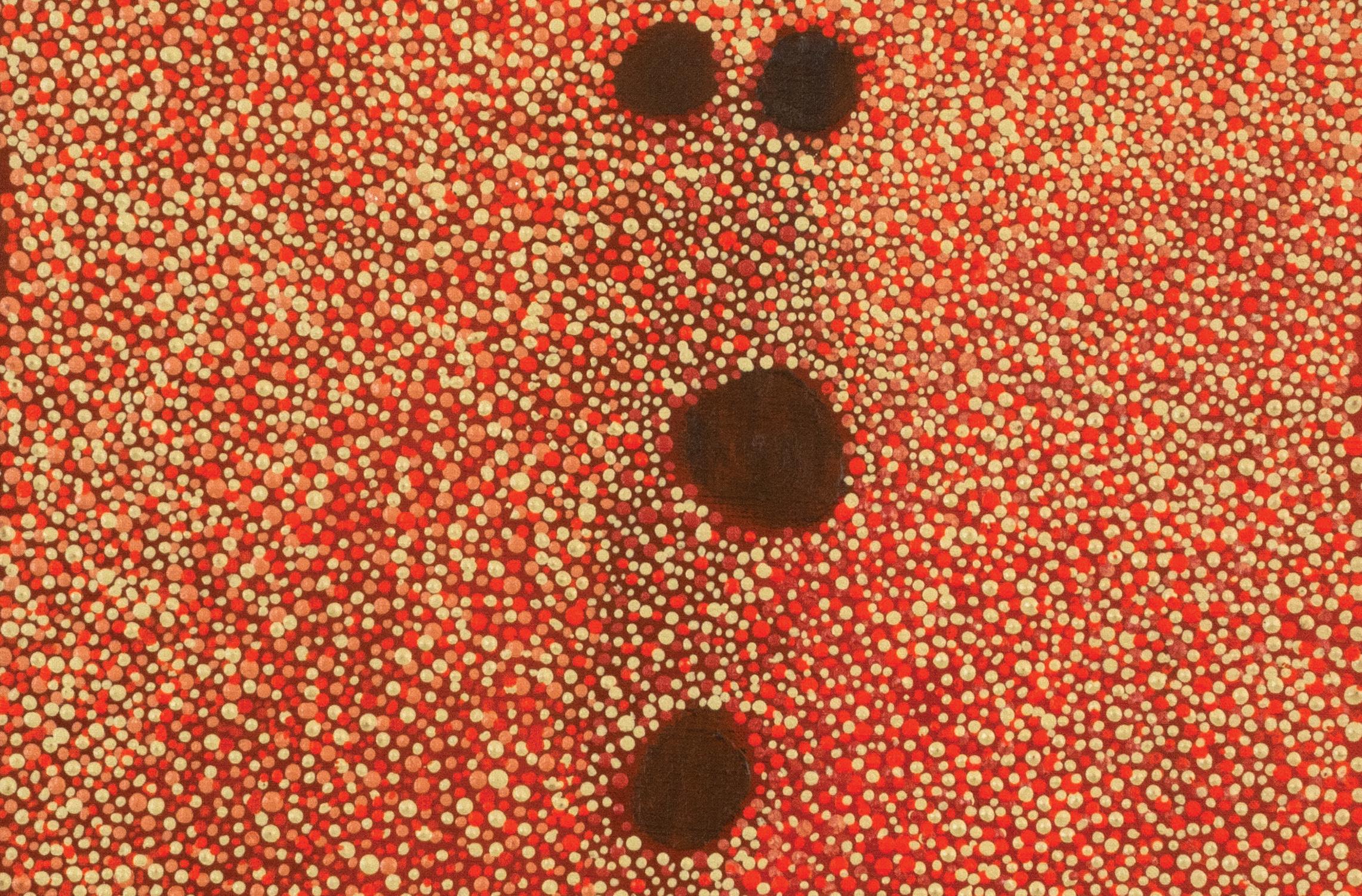
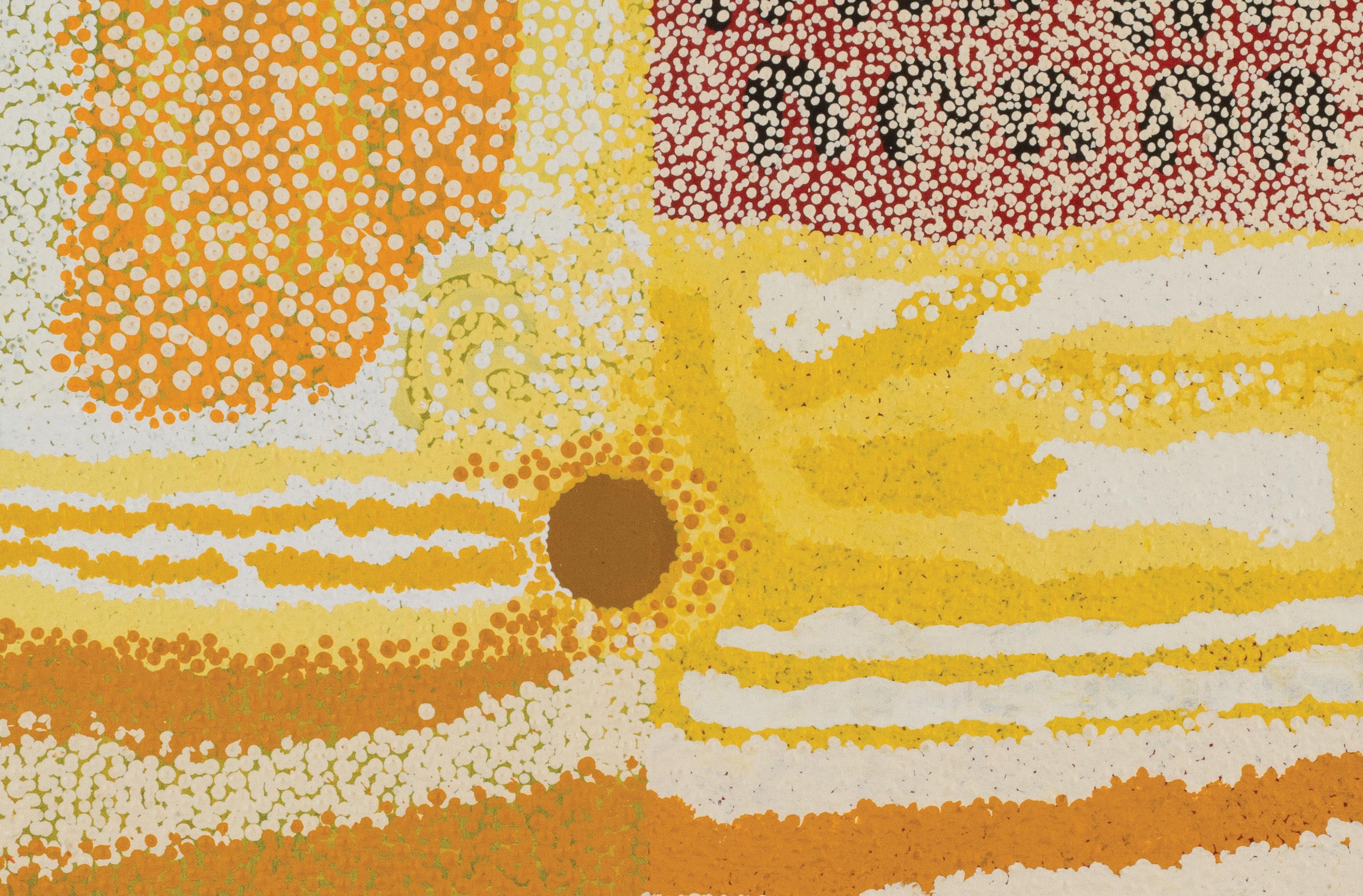
Imelda Gugaman Yukenbarri, Winpurpurla (Bushtucker) I (detail), 2024, acrylic on linen, 120cm x 40cm. Image courtesy of Sergey Novikov.
WALTJA: ONE FAMILY
JGM GALLERY LONDON
AN EXHIBITION OF WORKS BY FIVE FIRST NATIONS AUSTRALIAN ARTISTS
11 FEBRUARY - 20 MARCH 2026
J GM Gallery presents Waltja: One Family , an exhibition of paintings by five Kutjungka artists working from Wirrimanu (Balgo), in the north-east of Western Australia. Featured are works by the late Lucy Napanangka Yukenbarri (d. 2003) and her husband, Helicopter Tjungurrayi, one of Australia’s most seminal artistic partnerships, and those of their three children, Christine Yukenbarri, Carmel Yukenbarri and Imelda Gugaman Yukenbarri. With paintings dating from 2002 to 2025, this exhibition surveys change and continuity within the Tjungurrayi-Yukenbarri family’s collected artistic practices.
In Kutjungka culture, the exhibition’s title, Waltja , means ‘family’, ‘kin’ or ‘distinctive’. Indigenous concepts of kinship involve not only human and blood relations but a much wider relational and custodial system, connecting landscape topography, vegetal and animal life, elements, weather, the cosmos, and the stories of their creation. By using the concepts evoked by waltja as a lens to view the exhibiting artists’ practices, what emerges is an emphasis on the transmission of style and subject through the family’s work and what aesthetics are particular to them. From this focus on similarity within a family’s artistic practice, differences and departures also become apparent between the work of individuals, across generations and gender. We might also think of cultural property, for example, what stories each artist is permitted to share and what visual language they are able to convey them through. Waltja therefore expresses the closeness and importance of family in Kutjungka culture, in which an individual often has responsibility for, and lives in relation to, a collective framework. The exhibition’s concept may also remind us of the European tradition of painting workshops, where apprentices would develop their individual style and skill under the tutelage of a ‘master’, with an overarching aesthetic as their foundation.
Two
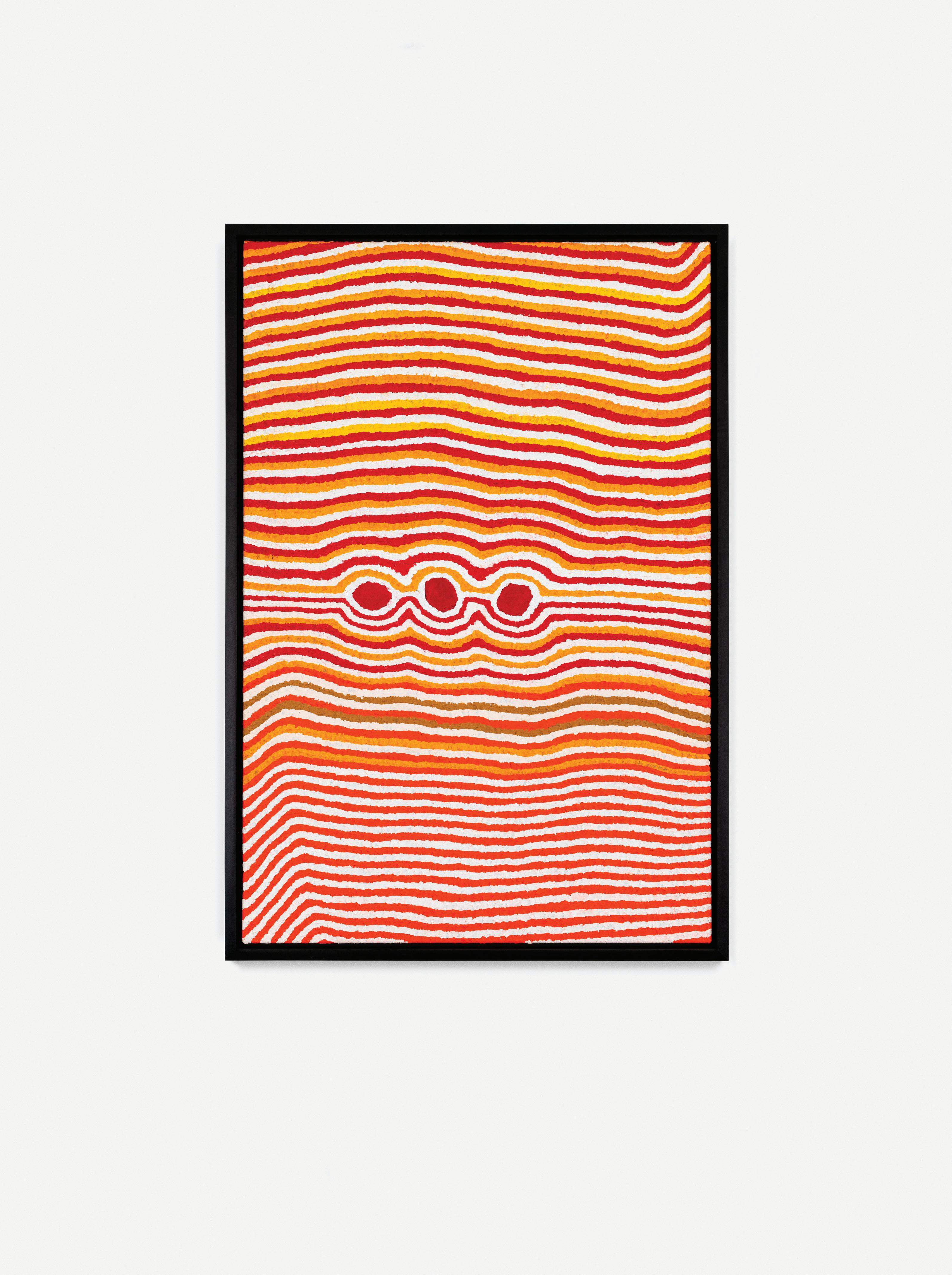
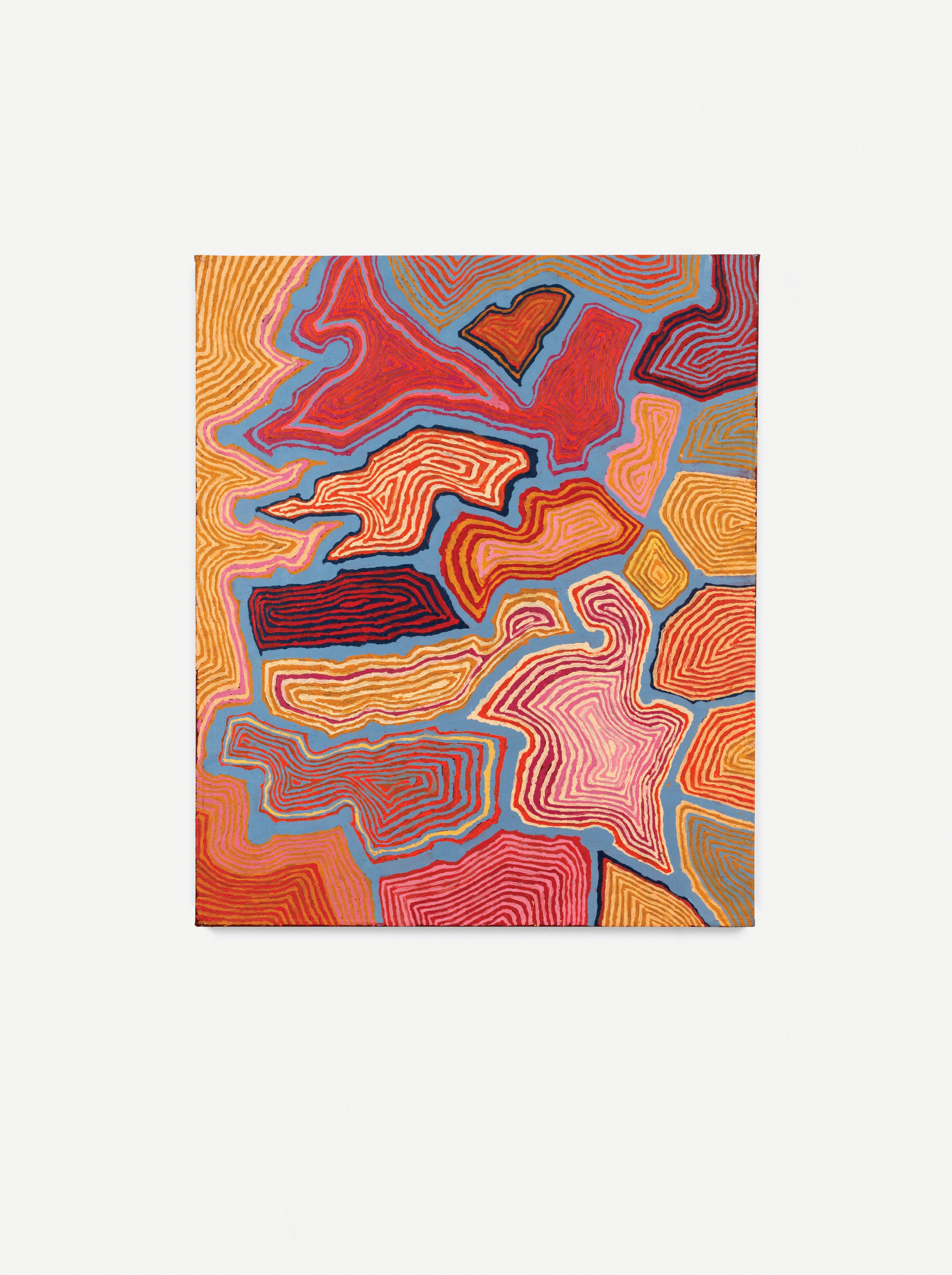
tali (sandhills) and tjurnu (soakwater), which he depicts topographically in a distinct linear style. In Wangkartu a representation of Tjungurrayi’s traditional Country, south-west of Wirrimanu in the Great Sandy Desert, sandhills painted in red, orange and pink sit within a light blue outline, representing the flow of water which, though sparse in this region, still nourishes the land, as well as Tjungurrayi’s kin and community. The effect of the concentric linework is twofold, both mimicking the undulating sandhills of Wangkartu and evoking a sense of pulsating life. The painting seems to embody the concept of Waltja expressing the interrelation of water, life and landscape and creating a potent metaphor for sustaining and enriching connections between places and people.
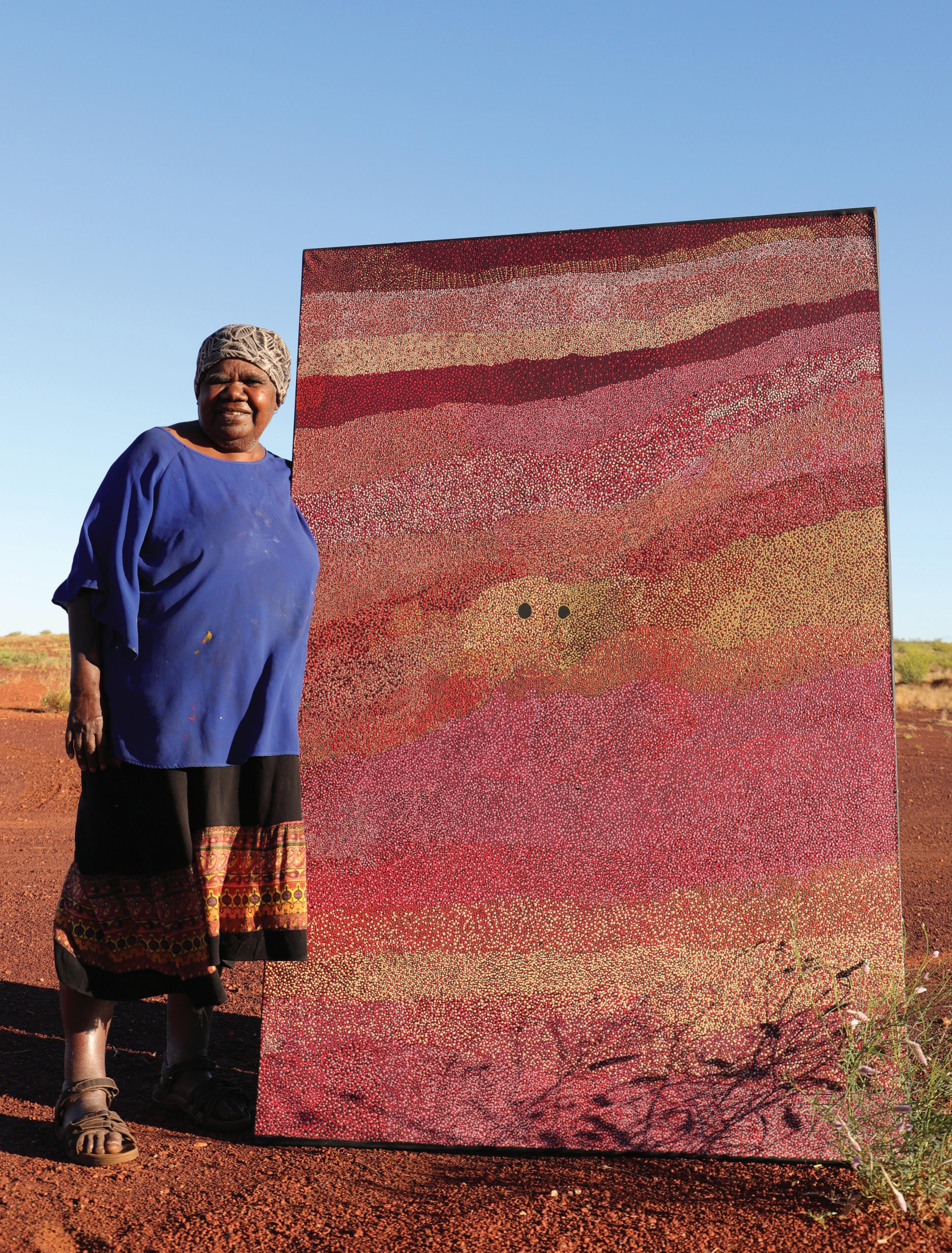
Water, particularly as a generative life force, is the central motif in almost all of the exhibiting artists’ work. In Winpurpurla I , Imelda Gugaman Yukenbarri depicts seven tjurnu as irregularly shaped circles. Through the use of pattern and its absence, she establishes these sources of water as points of origin for the surrounding abundance of bush foods, rendering them as unmodulated fields of colour, while articulating the land through a peppering of dots. It is an aesthetic approach informed by the artistic practices of her parents, specifically an even more dense dotting style pioneered by her mother, Lucy Napanangka Yukenbarri, coined kinti kinti (close close). Beyond its centrality in the life and work of the exhibiting artists, water is also a useful and resonant metaphor for understanding the conceptual focus of Waltja: One Family In the work of the exhibiting artists, it conveys ancestral stories and the flow of an aesthetic language between family members: a cultural and artistic inheritance, and its evolution.
Exhibiting artists: Lucy Napanangka Yukenbarri, Helicopter Tjungurrayi, Christine Yukenbarri, Imelda Gugaman Yukenbarri and Carmel Yukenbarri.
recurring subjects for Helicopter Tjungurrayi are
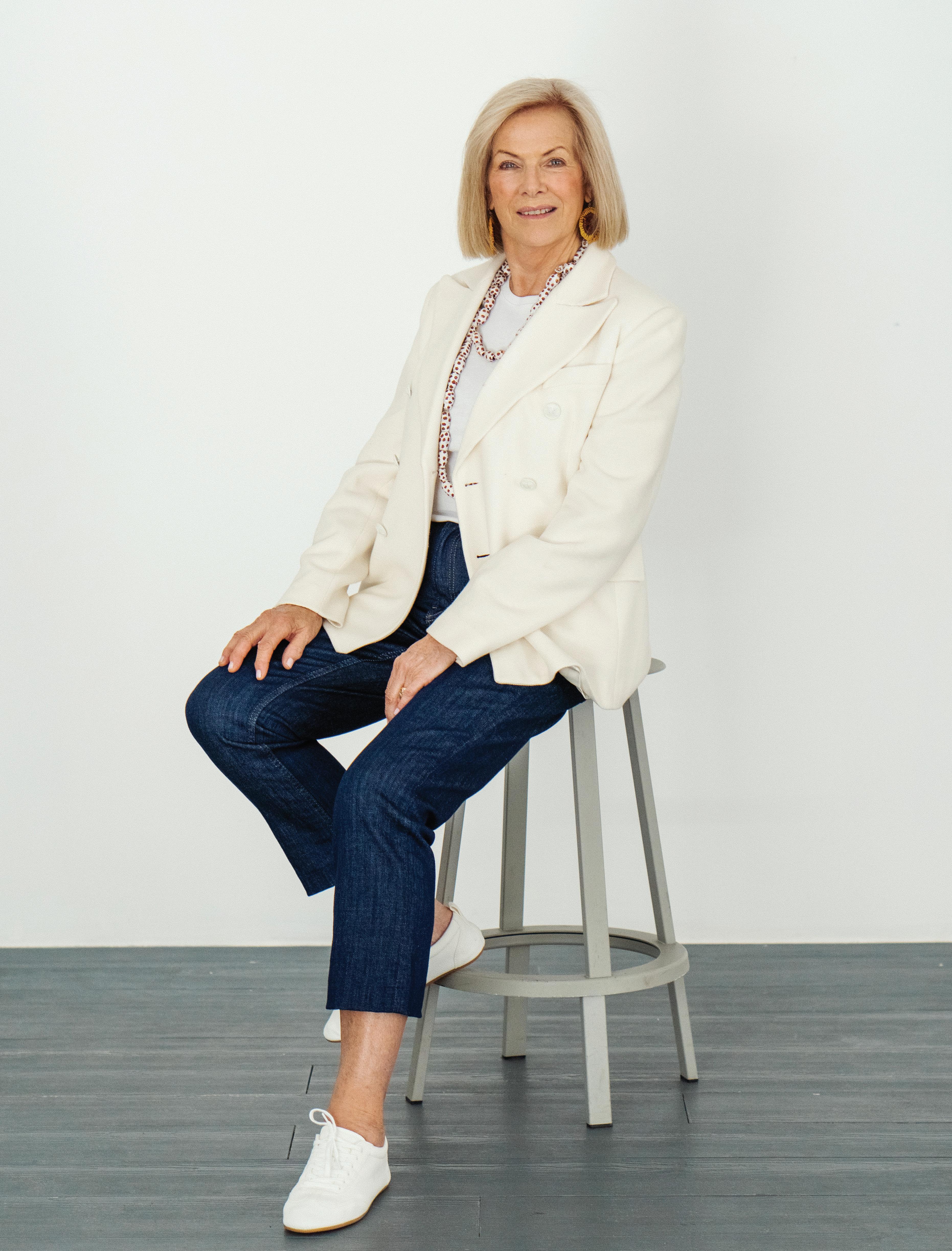
Imelda Gugaman Yukenbarri, 2019. Image courtesy of Warlayirti Artists.
Christine Yukenbarri, Winpurlpurla 05 (detail), 2008, acrylic on canvas, 150cm x 75cm. Image courtesy of Sergey Novikov.
FOREWORD
BY JENNIFER GUERRINI MARALDI
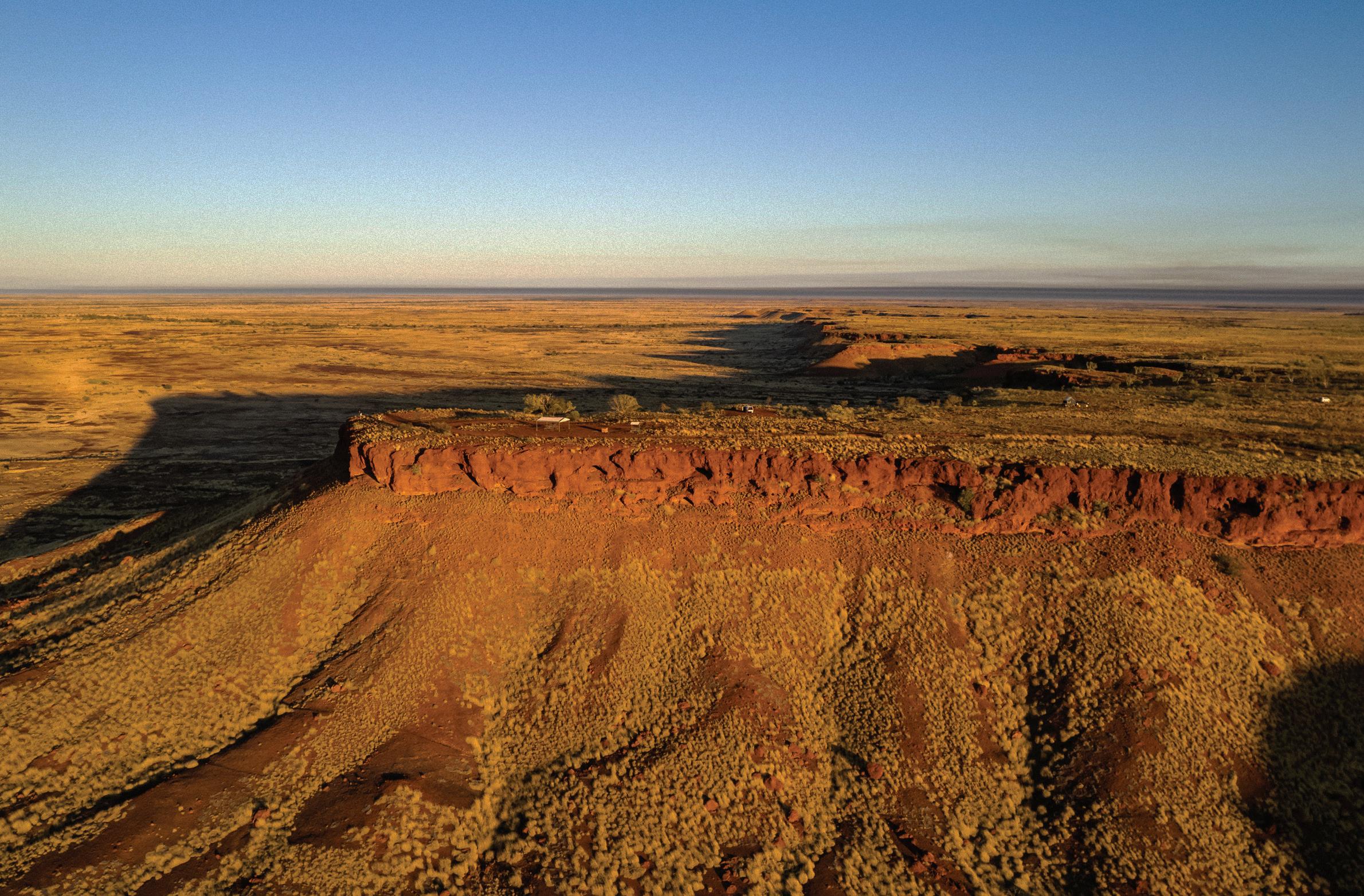
Adecade ago, I embarked on a remarkable journey with my dearest friend, the late Georgina Weir. We travelled in a sturdy Toyota Landcruiser, beginning our adventure in Kununurra and heading south on Highway 1 towards Halls Creek. Our final destination was Balgo (Wirrimanu), where we planned to visit the renowned Warlayirti artists. The route required us to traverse the Tanami Track, a remote and iconic stretch of outback road.
We made sure to come well-prepared for the challenges of remote travel. Our vehicle was loaded with spare tyres and a substantial supply of fresh water, essential for such an isolated route. We also packed a wooden ice box filled with basic food staples. Halls Creek served as our last opportunity to restock on vital supplies –fuel, food and water – before we tackled the red dirt track. The local butcher's steak and sausages proved to be a highlight, providing us with delicious fare for the road ahead.
Much of the 1,000 kilometre Tanami Track stretches across land belonging to the Warlpiri people. The track itself is unsealed, winding its way through the breathtaking scenery of the Western Desert. The journey was a testament to the raw beauty and remoteness of this part of Australia.
By evening, we had reached Lake Stretch, where we set up camp beneath lemonscented gum trees. The area is renowned for its abundant birdlife, making it an enchanting place to spend the night. We were also visited by wild brumbies, who startled us at dawn by surrounding our mosquito domes. Fortunately, the horses soon galloped away as we stirred, leaving us to marvel at this unique wilderness experience.
Our arrival at the art centre in Balgo, situated on the edge of the Western Desert, felt truly wondrous. That day, the artists – predominantly women – were gathered on the floor, painting together and chanting as they worked. The vibrant atmostphere and communal spirit made for an unforgettable welcome to this extraordinary community.
Now, ten years later, I am incredibly proud to present works by these artists in Waltja: One Family. I am confident that this exhibition in London will not only convey the magic of Wirrimanu that Georgina and I were so fortunate to experience, but also the ancestral wisdom and prowess of its artists.
THE YUKENBARRI EFFECT
BY ANTONIA CRICHTON-BROWN
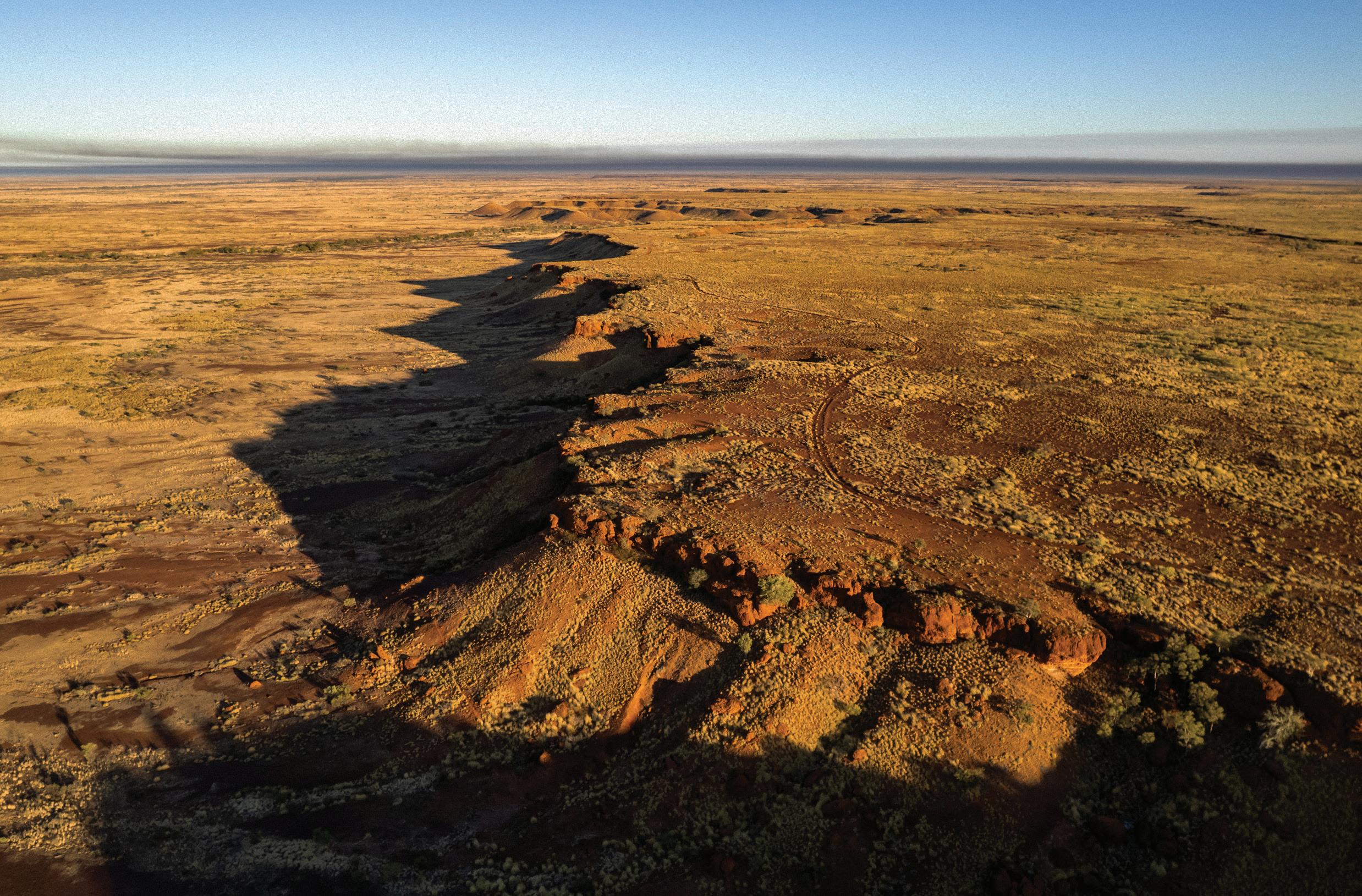
Balgo Hills. Image courtesy of Warlayirti Artists.
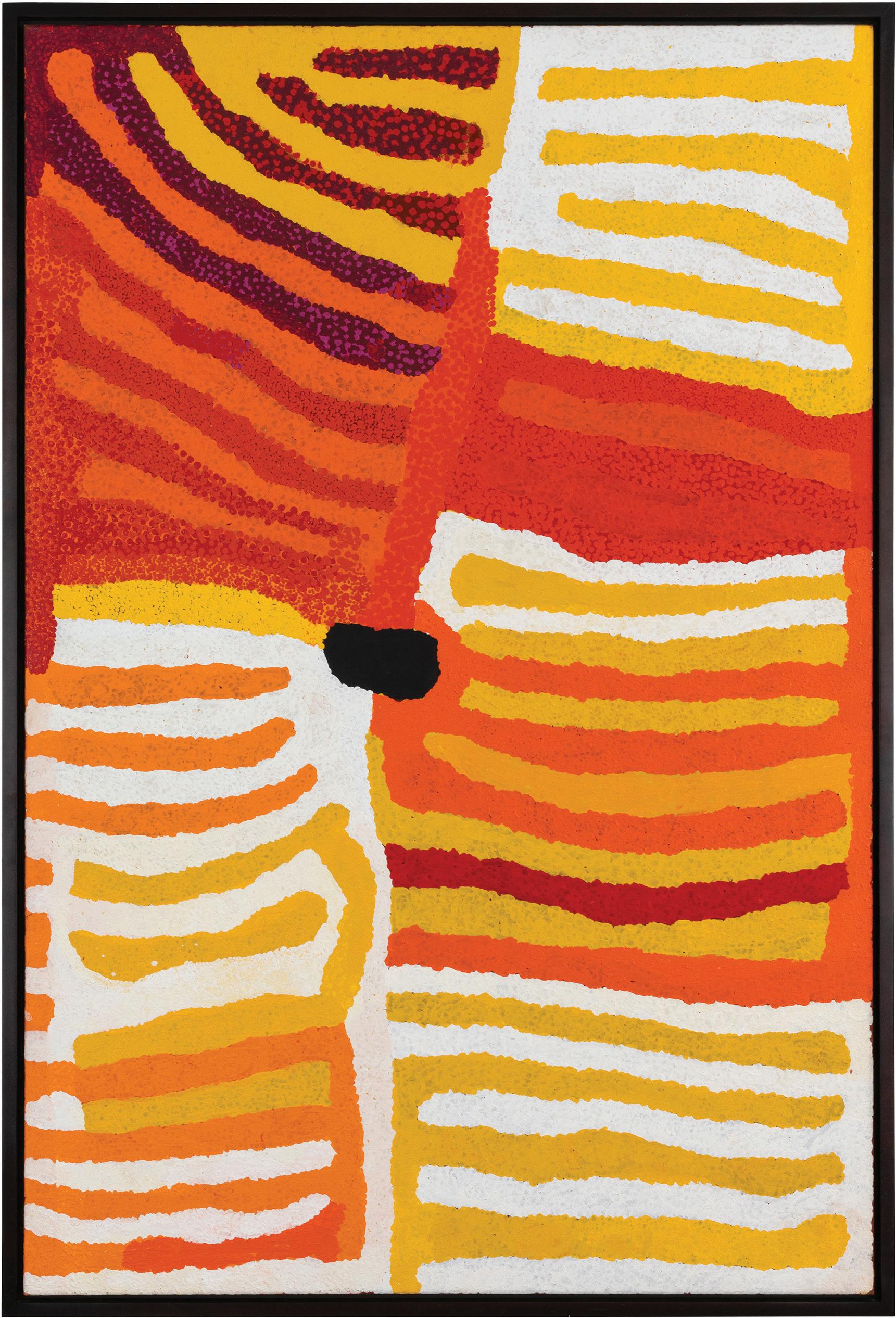
Following page: Lucy Napanangka Yukenbarri, Marpa 01 2002, acrylic on canvas, 179.5cm x 119.5cm. Image courtesy of Sergey Novikov.
- ANTONIA CRICHTON-BROWN
Wirrimanu/Balgo is the centre of a cosmopolitan and diasporic art history, being a community in which at least seven Indigenous language groups migrating from the southern Kimberley, Great Sandy and Tanami Desert regions of Australia have congregated. This migration came due to a variety of social and ecological factors: the Canning Stock Route, created between 1906 and 1910, intercepted major songlines; Catholic Pallottines set up a mission camp at Tjalyuwan in 1939 before establishing a permanent settlement in Balgo in 1965; and drought pressured desert families into travelling towards Wirrimanu over the course of the twentieth century. Among these groups were Kukatja, Ngardi, Jaru, Warlpiri, Walmajarri, Wankatjungka and Pintupi speakers, who called themselves collectively, Kutjungka, meaning “at one”. From this confluence of culturally and linguistically differentiated peoples erupted some of the most compelling visual language by Australian artists, for which Balgo is still known today.
The men’s paintings documented from the early 1980s sizzled with the energy of raw, bold colours and confident iconography. The artists were doing important political and cultural work for their community, as it was through these paintings that they asserted their identities, negotiated new ways of transmitting cultural knowledge and experimented with the aesthetic possibilities of the materials with which they were supplied. Balgo artists rarely worked in seclusion. A photograph from 1982 by Warwick Nieass, a mission cook who supported painting camps for local artists, shows a group of male artists seated in a circle outside working on their own boards. Another documents painter, Mick Gill, finishing one of his first works while surrounded by paintings by other artists Jimmy Njamme, Alan Winderoo and Sunfly Tjampitjin. These photographs give a sense that, while the artists worked individually, they did so always in relation to a greater whole. The context in Balgo for making art is not so different today. Britt Pfeiffer, currently the Assistant Manager of Warlayirti Artists, tells me that when Carmel Yukenbarri is in Balgo, she sits painting across from her father, Helicopter Tjungurrayi. Both are exhibiting artists in JGM Gallery’s Waltja: One Family
Later on in the 1980s, when young men and women were given more opportunities to paint, art became a way for senior family members to share their stories with their children. As younger men and women were sometimes prohibited from painting kuruwarri (iconography or designs) or certain stories, young artists innovated new forms, which senior artists would then set about feeding back into the Tjukurrpa (the Dreaming) so that they became a part of the grand narrative. This process of crossgenerational interpretation and dialogue, which often also contested cultural gender differences, in turn influenced the formal aspects of senior artists’ paintings. From the 80s to the 2000s, there was an overarching movement in Balgo art away from iconography towards their abstraction through dot, line and concentricity to convey story.
Among the painters who spearheaded this shift away from classical iconography was Kukatja speaker, Lucy Napanangka Yukenbarri (d. 2003). She and her husband Helicopter, who remains a prominent and stalwart figure at Warlayirti Artists, are two painters whose work gave Balgo its name. Lucy started painting her own canvases in 1989. Some of her first paintings employed the classical iconography animated by concentric dotting that is associated with ‘traditional’ Indigenous art. However, she quickly moved away from this manner of representation, finding her signature style in the compact arrangement of dots of a single colour in 1990. She overlapped these dots almost to the point of their homogenisation, creating compositions out of the interplay of both fields and tendrils of colour. She called this style kinti-kinti (close-close). Before
Helicopter started painting under his own name in 1995, he assisted on Lucy’s canvases between 1990 and 1995. Helicopter was therefore also a collaborator in the development of kinti-kinti. When he began painting under his own name, Helicopter used this style but adapted it for a strong linear emphasis in his work, rather than the more amorphous bodies of Lucy’s.
We see this difference in two paintings from Waltja: One Family: Lucy’s Marpa 01 (2002) and Helicopter’s Wangkartu 05 (2008). Both paintings are composed around a central node, a waterhole, and employ a similar palette comprised of orange, red, yellow and white acrylic. While in Lucy’s work, there is a sense of the central node, painted in black, pulling in what surrounds it, in Helicopter’s, guiding lines move the viewer’s eyes from one vertical side of the canvas to the other, over and through the painting’s central node. This difference in force and structure is a defining feature of Lucy and Helicopter’s individual practices at this point in the early 2000s. We can see Lucy practicing her dotting technique in a very physical way, using different strands of colour to carve out masses in Marpa 01 where, for example, in the upper right section of the painting, she layers white over yellow, red over yellow. The tugging and tucking of these ribbons of colour creates a dynamic composition of relief and recession, like a complex weave, or a skeletal or organ system. Helicopter also seems to have painted Wangkartu 05 sequentially, using one colour to form parallel lines before starting with another. His dotting technique conversely creates a general, unidirectional movement across the canvas and licks of paint indicate where he has lifted the paintbrush between each dot. The effect of this is not dissimilar to sand accumulating around vegetation and rock formations when winds carry it through the desert, which creates dunes and hills.
To conceptualise Lucy and Helicopter’s work in relation to bodies of water also speaks to the differences in the artists’ subject matter. Helicopter paints the tali (sand dunes) and tjurnu (soak water) of his mother and father’s Country, whereas Lucy’s focus were not only the waterholes but the bush foods of her grandparents’ Country. The grape-coloured pigment in the upper left section of Marpa 01, for example, is used for ripe kantilli (bush raisin). This understanding of Lucy’s subject suggests why the variegated colour fields in her work appear held together by the central black axis, conveying bush foods drawing on the nourishment of water for growth.
While both paintings are titled with the name of the waterhole at the centre, the difference in Helicopter and Lucy’s subjects can be described as that between a site and a path, versus a site and its surrounds.
In John Carty’s extensively researched monograph, Balgo: Creating Country, which I have referenced heavily in this essay, Carty develops a theory of the concept of ‘style’ in Balgo art. He suggests that, for artists living in Balgo, ‘style’ is not simply, in the European sense of the word, a unique visual language that makes a group of works distinct, but story itself. While Indigenous people in Balgo generally consider themselves to be part of a common cultural and social group, there is a tendency to distinguish between family and kinship groups, which is often expressed through a family’s artistic ‘style’. Like Country and its ancestral stories, ‘style’ is shared, learned and reproduced through many generations of artists. Because the Kutjungka people now have few opportunities to manage their land, painting is a way of maintaining this proprietorial relationship. ‘Style’ is the embodiment of Country, the artist’s identity and their rights, both to land and sustenance. It is malleable and evolves through adaptations made by those with whom it is shared, like stories are adjusted to include features with more contemporary relevance. The meaning is the same, but the manner has transformed.
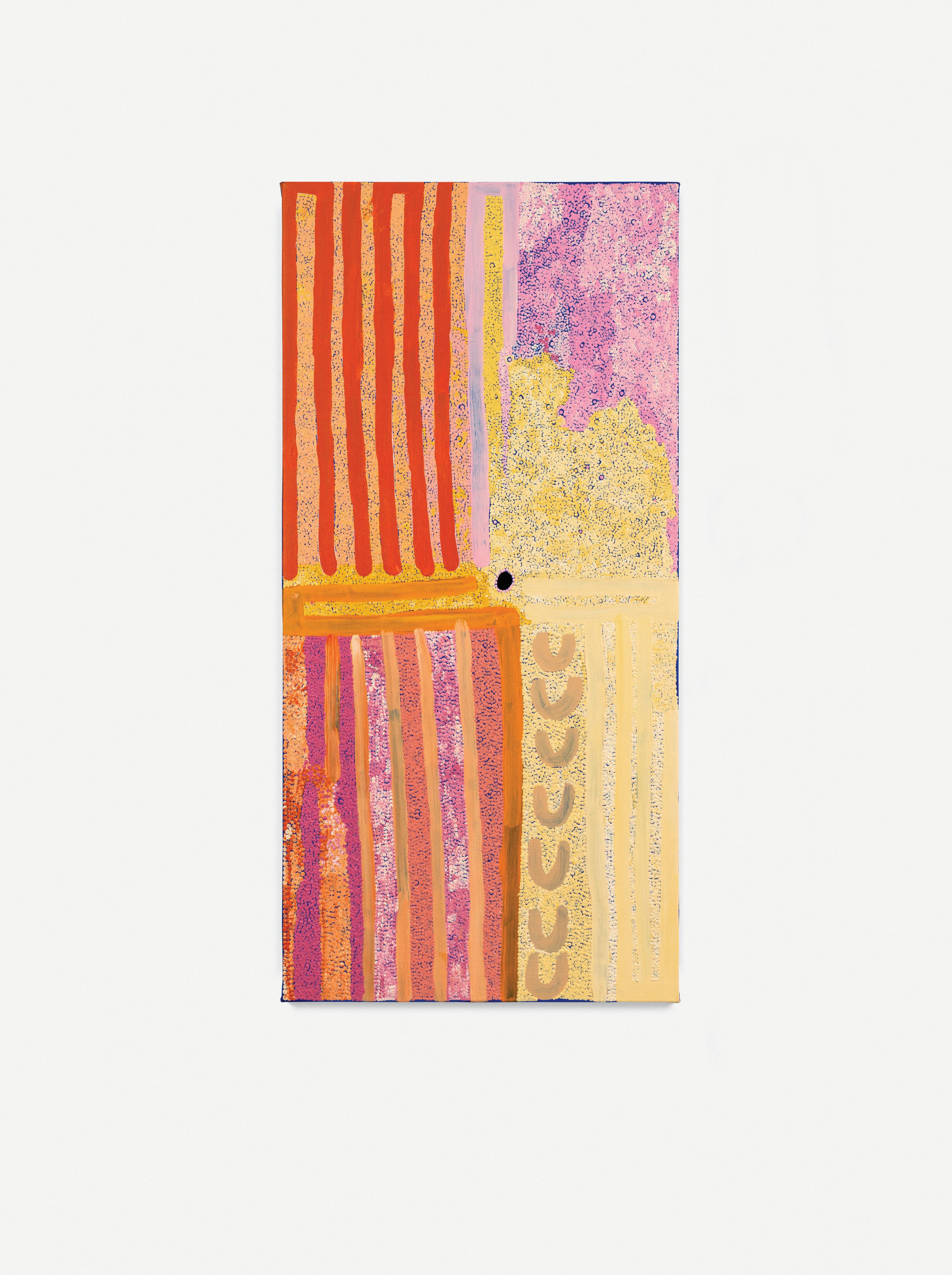
Christine Yukenbarri, Carmel Yukenbarri and Imelda Gugaman Yukenbarri all paint with aspects of their mother’s ‘style’. However, each have adopted different elements of this ‘style’ and have adapted it in various ways. Christine’s journey as a painter began in 1999, sitting beside her mother at the freshly constructed Warlayirti Art Centre, watching and learning to paint from her like an apprentice. She would collaborate on Lucy’s canvases, becoming familiar with and able to reproduce her mother’s technique and composition. Before Lucy’s death in 2003, Christine and Carmel both painted their Country around Balgo where they grew up. However, when their mother died, they started painting her Country, Winpurpurla, arguably as a means of maintaining connection to their family’s ancestral lands. The basic composition of Winpurpurla is a central circle surrounded by kinti-kinti dotting, which figures in every woman s painting comprising Waltja: One Family
her work we get, I think, the greatest sense of bush foods springing from the ground after it rains.
Beyond the Yukenbarri-Tjungurrayi family’s work, Balgo art is wonderfully diverse and there are a number of other families who continue working in and developing their painting ‘style’. There are many artists whose work is not represented here in this exhibition, including other members of the Yukenbarri-Tjungurrayi family who paint: Cathy Yukenbarri, her daughter Stephanie, Carmel’s son Adrian, and Richard Yukenbarri who paints with Papunya Tula Artists. An important theme which the curators of this exhibition, myself included, wished to highlight was a paradigm in which making art is not so individualised or done for personal gain, but a cooperative activity with shared cultural, as well as economic, benefits. Of course, within this aim, there is the nostalgia for scenarios in our own cultural past, where knowledge, history and skill were transferred holistically. In Balgo, to share your ‘style’ with someone means they are waltja (family or kin). If we were to take this perspective when looking at and making art, this would make an intriguing contrast to the ideas of individuality, originality and authenticity which have long permeated the European sphere of art.
FOOTNOTES:
Christine Watson, ‘Wirrimanu: Meeting Place’, in ed. Hetti Perkins and Margie West, One Sun One Moon: Aboriginal Art in Australia (Sydney: Art Gallery of New South Wales, 2007), 219.
John Carty, ‘Becoming art: Balgo before the market (1981-86)’, in Balgo: Creating Country (Crawley: UWA Publishing, 2021), 128.
Carty, ‘Becoming art’, Balgo, 126.
JGM Gallery was advised to use this spelling in November 2025 by Warlayirti Artists. Other spellings include walytja. See: Watson, ‘Wirrimanu: Meeting Place’, 220.
Carty, ‘Painting towards a public: the Adult Education Centre years (198286)’, in Balgo, 151.
Carty, ‘Western Desert abstraction’, in Balgo, 209.
Christine Watson, ‘Whole Lot Now: Colour Dynamics in Balgo Art’, in ed. Judith Ryan, Colour Power: Aboriginal Art Post 1984 (Melbourne: National Gallery of Victoria, 2004), 121.
Carty, ‘The social life of style’, in Balgo, 319.
Christine and Carmel’s most recent work seems to take influence from their father’s linear approach. Christine, in particular, has made significant adaptations to the kinti-kinti and linear styles of her parents, transforming dense passages of dotting into singular strokes of colour, as seen in Winpurpurla I and III. Imelda, on the other hand, has never painted like Helicopter, as he is not her biological father. However, the two painters still share a close relationship and, while Helicopter was in hospital in 2023 recovering from a broken hip, Imelda assumed his painting post, sitting in the chair where he usually works at the Art Centre. In contrast to the more linear accents of Christine and Carmel’s works, Imelda’s paintings swarm with colour. Like a murmuration, dots bloom in crescendo clusters and fall away in loose formations. Through
John Carty is the Head of Humanities at the South Australian Museum, and a Professor of Museum and Curatorial studies at the University of Adelaide. He has spent over 20 years living and working in Balgo.
Carty, ‘The social life of style’, Balgo, 299.
Carty, ‘The social life of style’, Balgo, 309.
Carty, ‘The social life of style’, Balgo, 328. 2
Britt Pfeiffer, Assistant Manager at Warlayirti Artists, in conversation with the author, 20 November 2025.
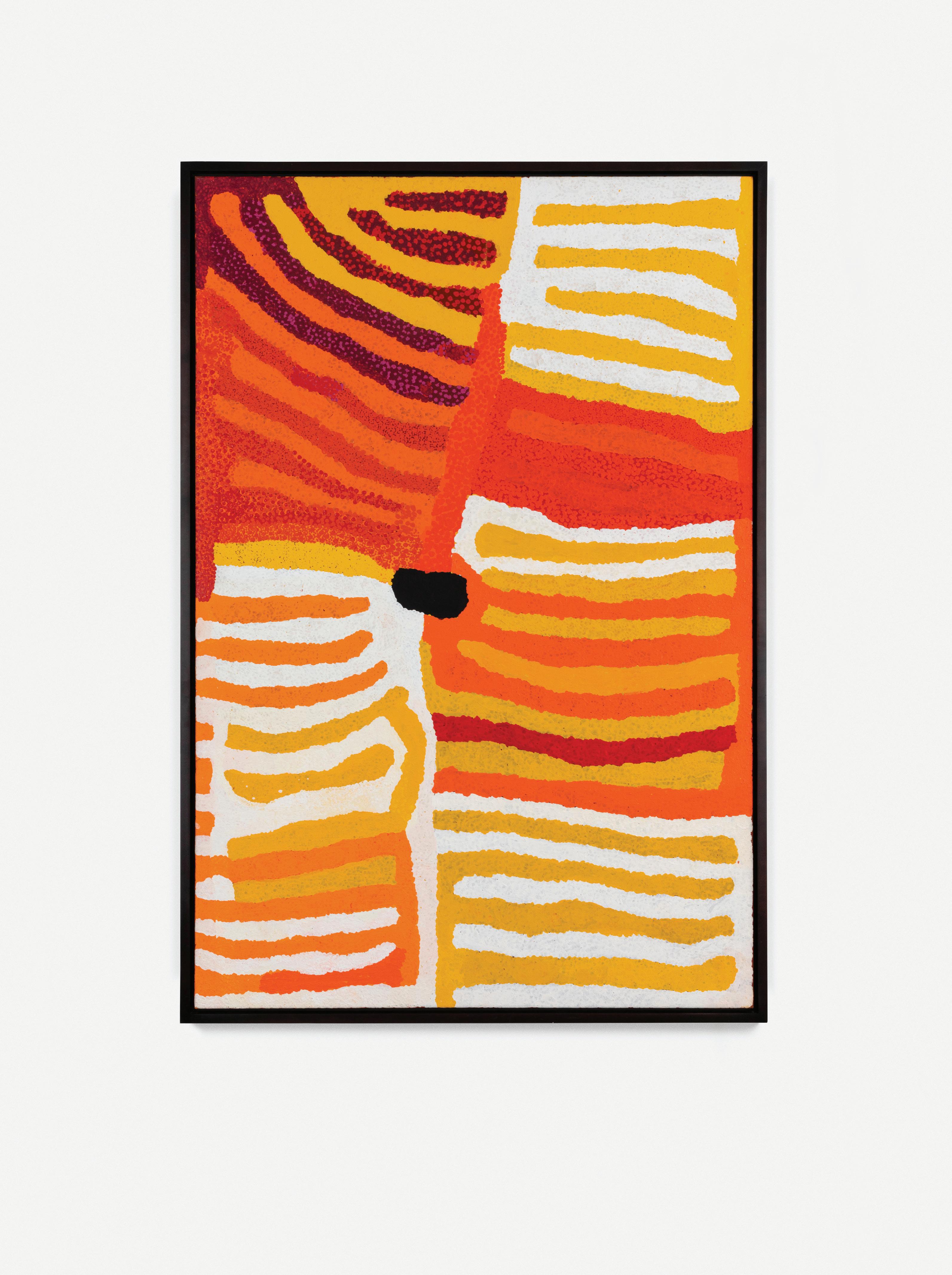
Lucy Napanangka Yukenbarri, Marpa 01, 2002, acrylic on canvas, 179.5cm x 119.5cm
Helicopter Tjungurrayi, Wangkartu 04 2007, acrylic on canvas, 120cm x 80cm
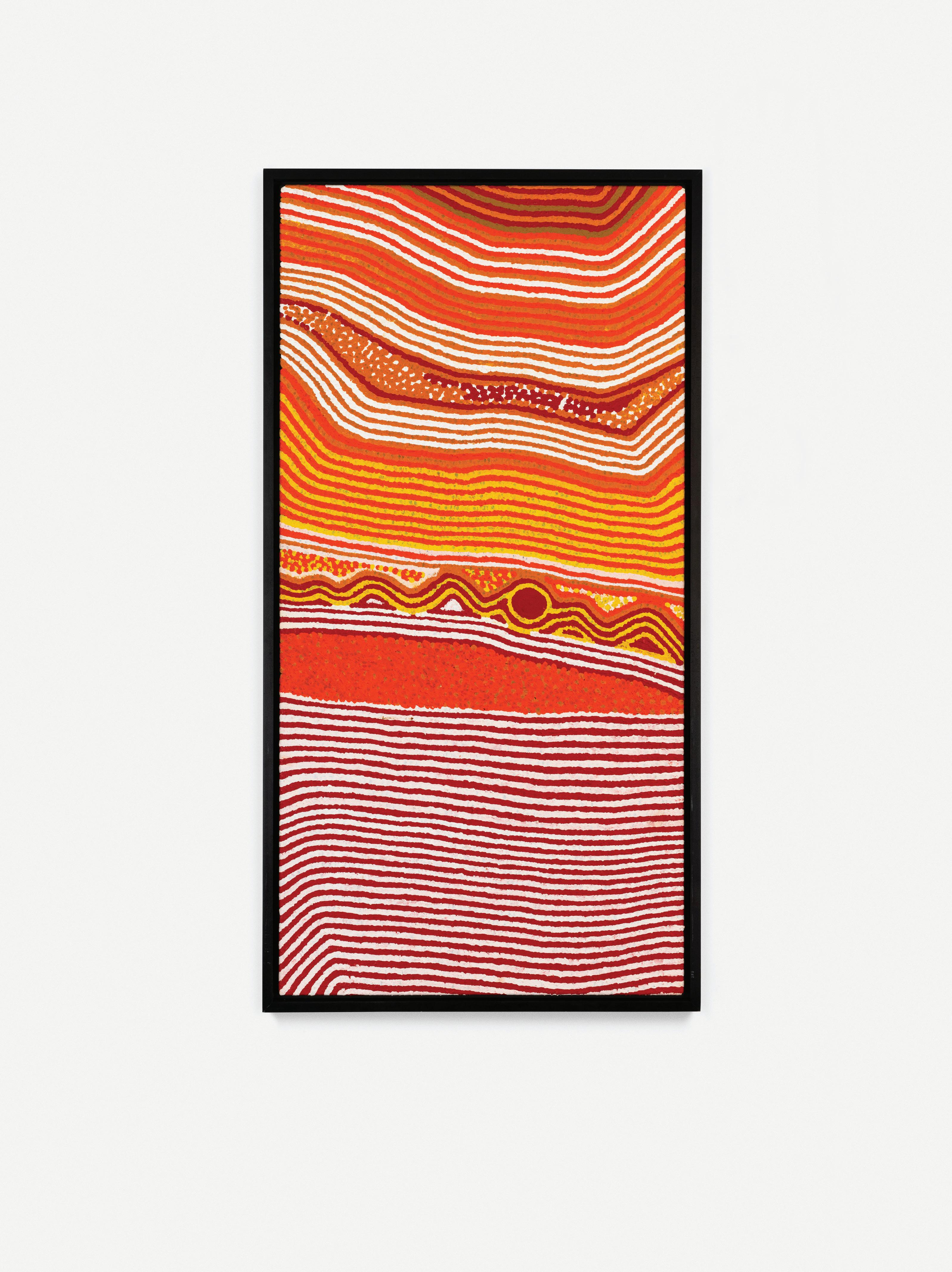
Helicopter Tjungurrayi, Wangkartu 05 2008, acrylic on canvas, 150cm x 75cm
Helicopter Tjungurrayi, Wangkartu, 2024, acrylic on canvas, 121.9cm x 101.6cm
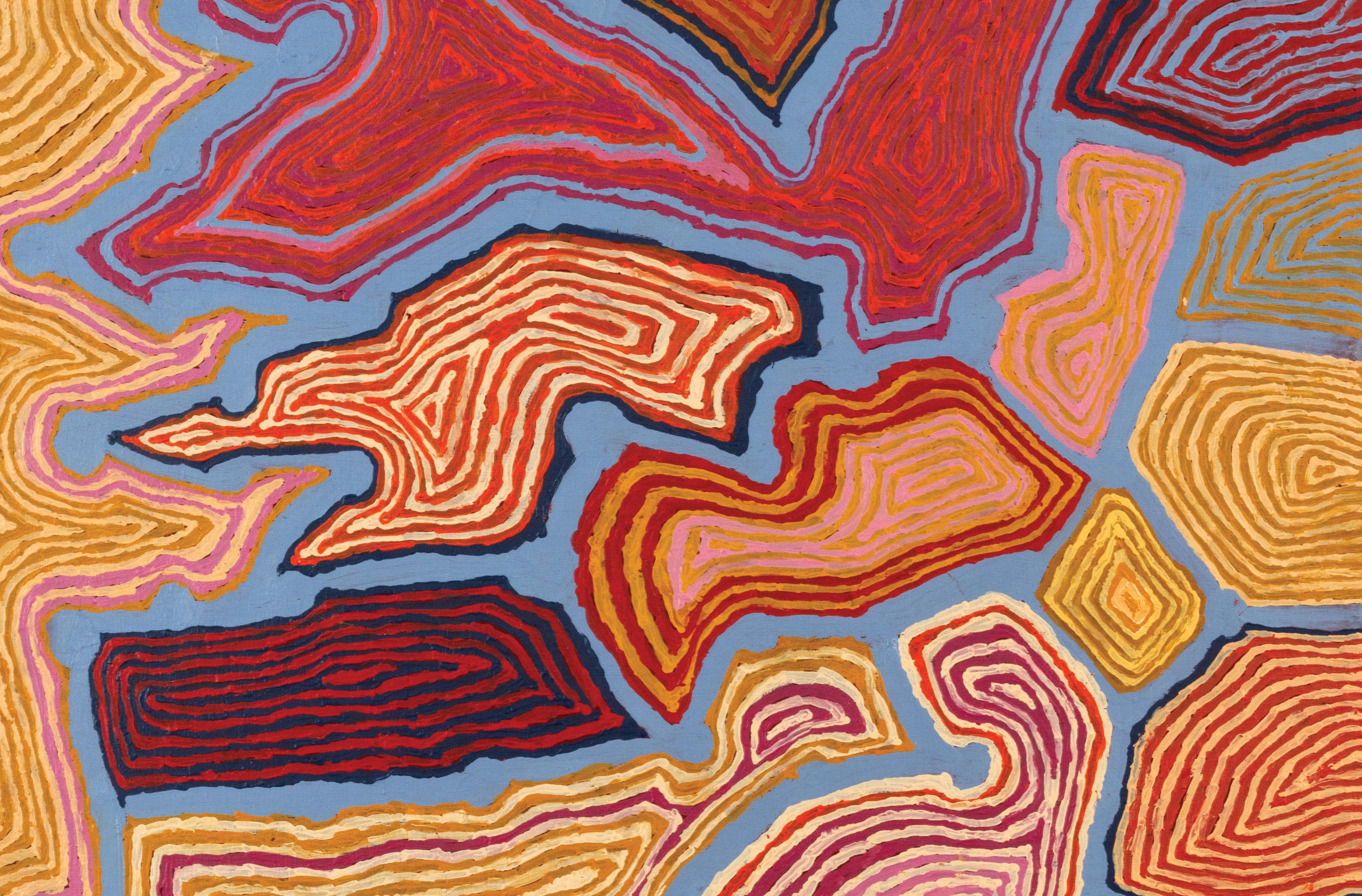
Helicopter Tjungurrayi, Wangkartu (detail), 2024, acrylic on linen, 121.9cm x 101.6cm. Image courtesy of Sergey Novikov.
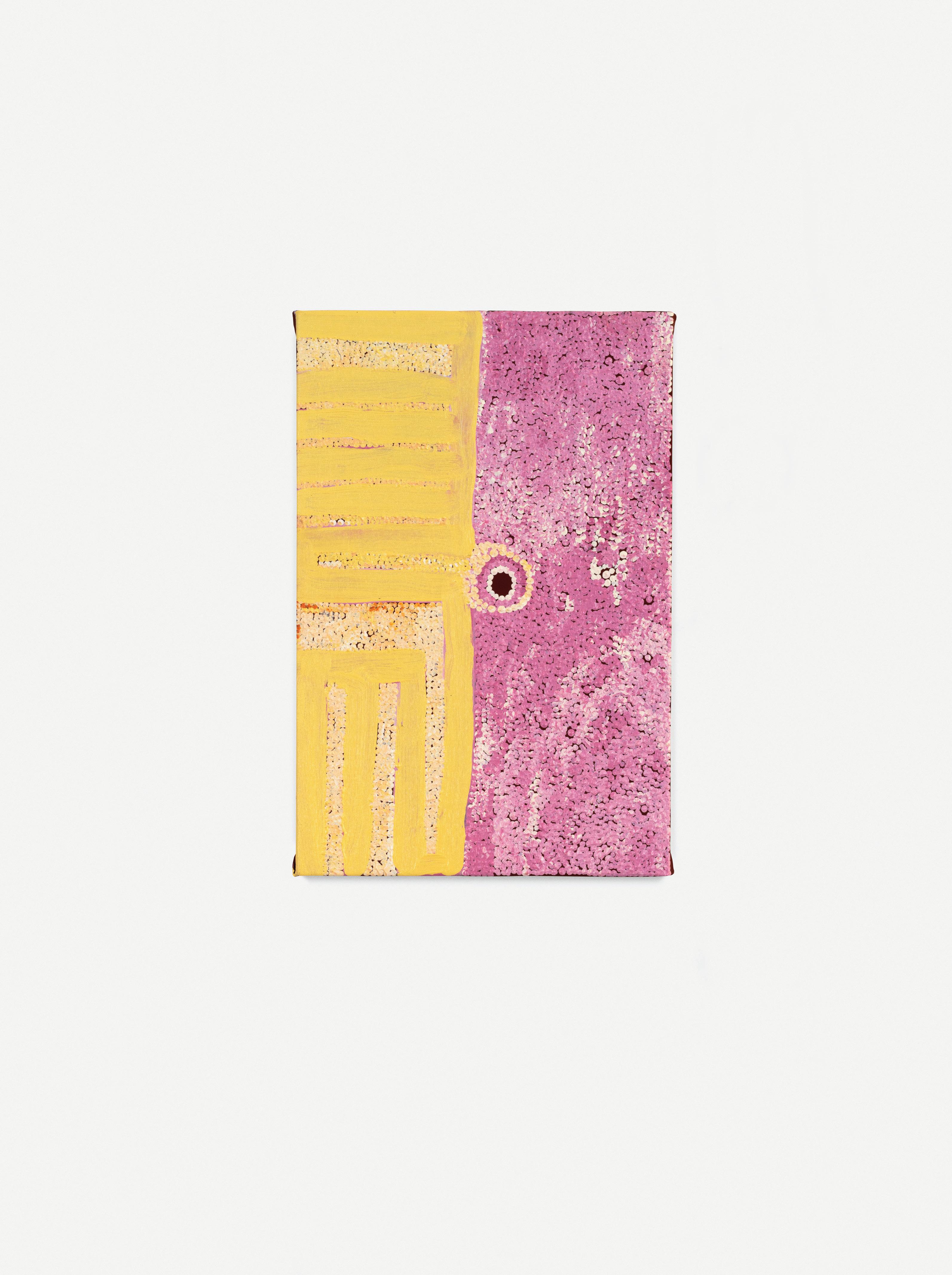
Christine Yukenbarri, Winpurlpurla I, 2025, acrylic on canvas, 45.7cm x 30.5cm
Christine Yukenbarri, Winpurpurla III 2025, acrylic on canvas, 121.9cm x 61cm
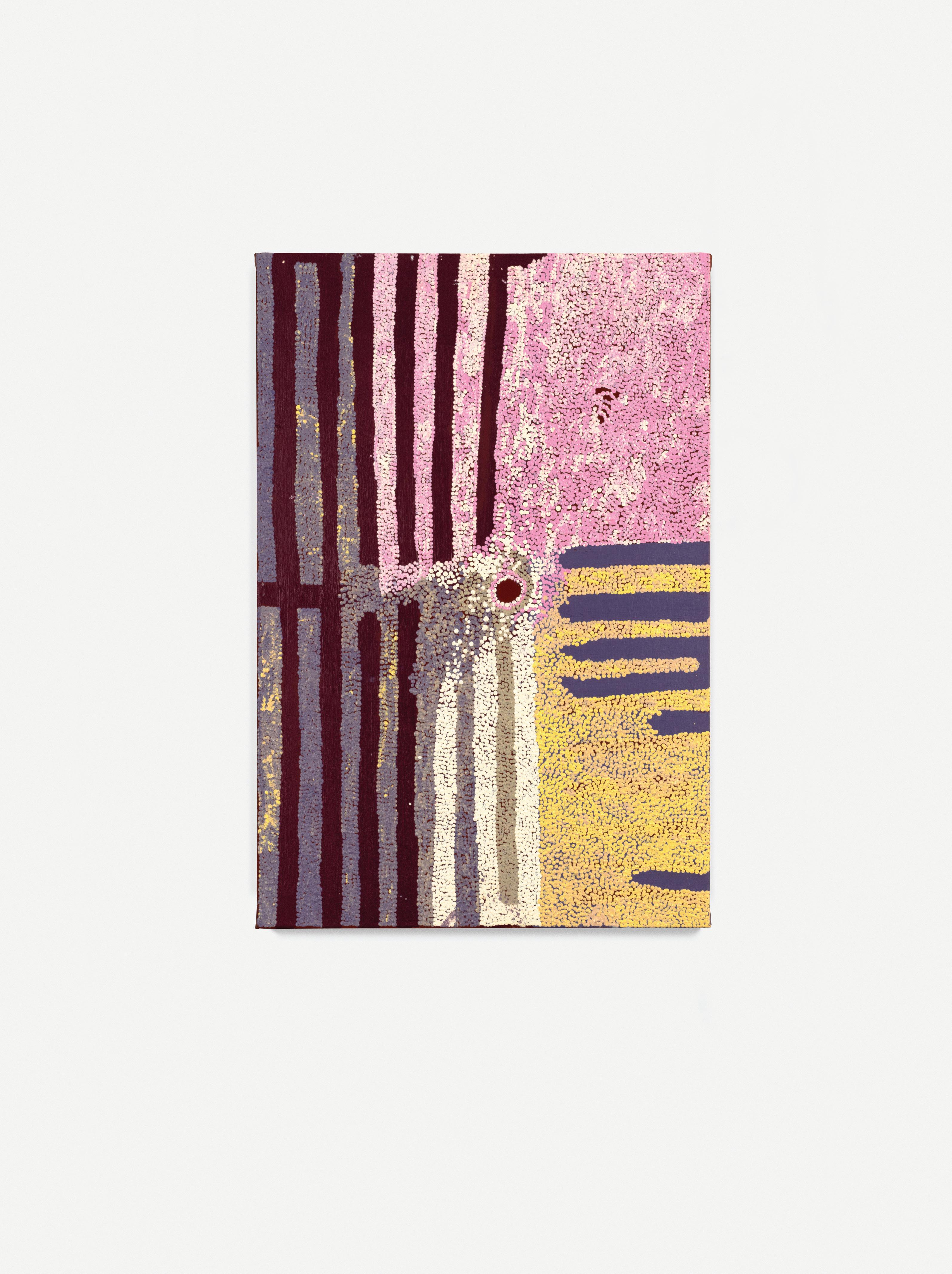
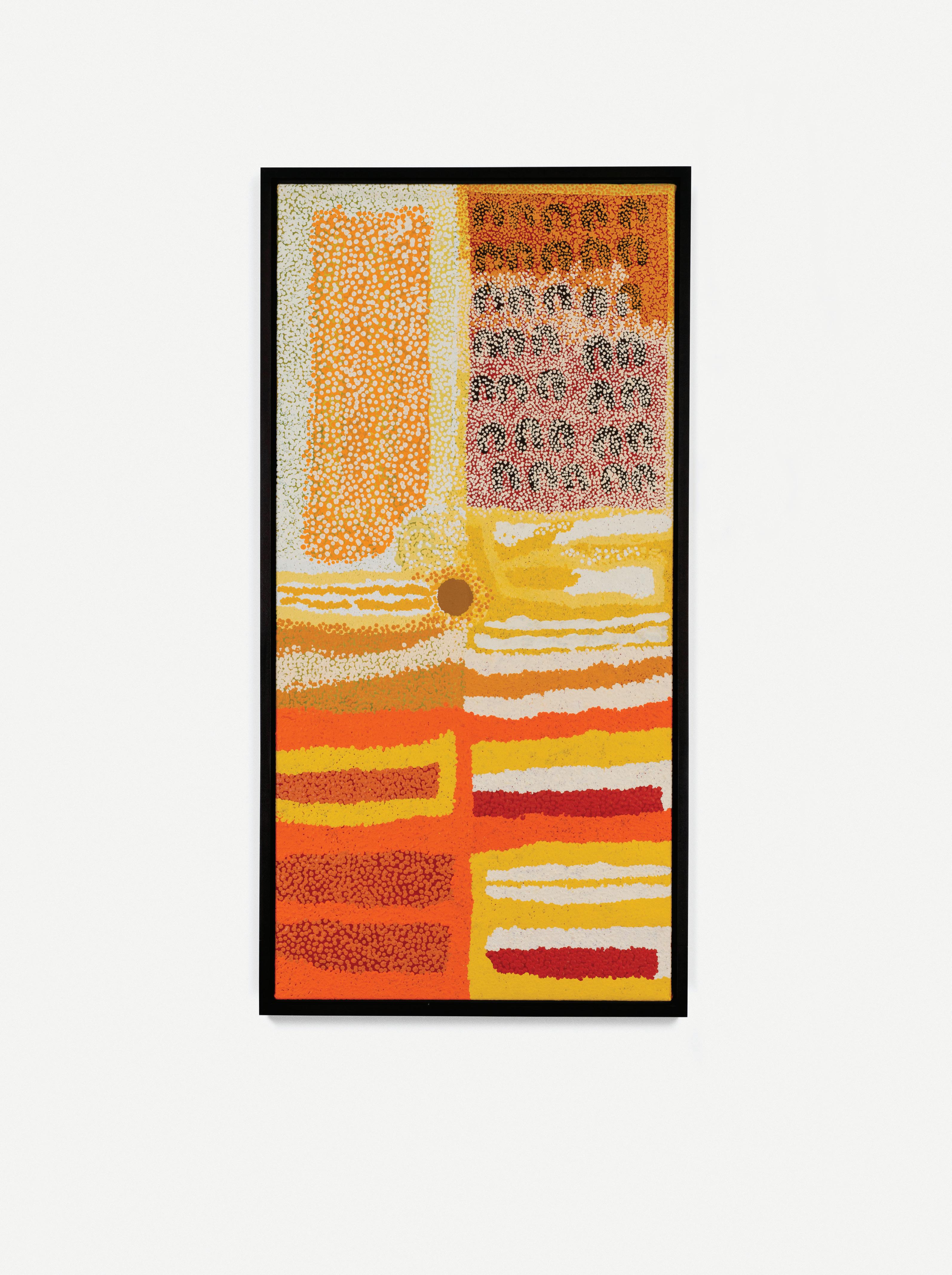
Christine Yukenbarri, Winpurpurla II, 2025, acrylic on canvas, 76.2cm x 50.8cm
Christine Yukenbarri, Winpurlpurla 05, 2008, acrylic on canvas, 150cm x 75cm
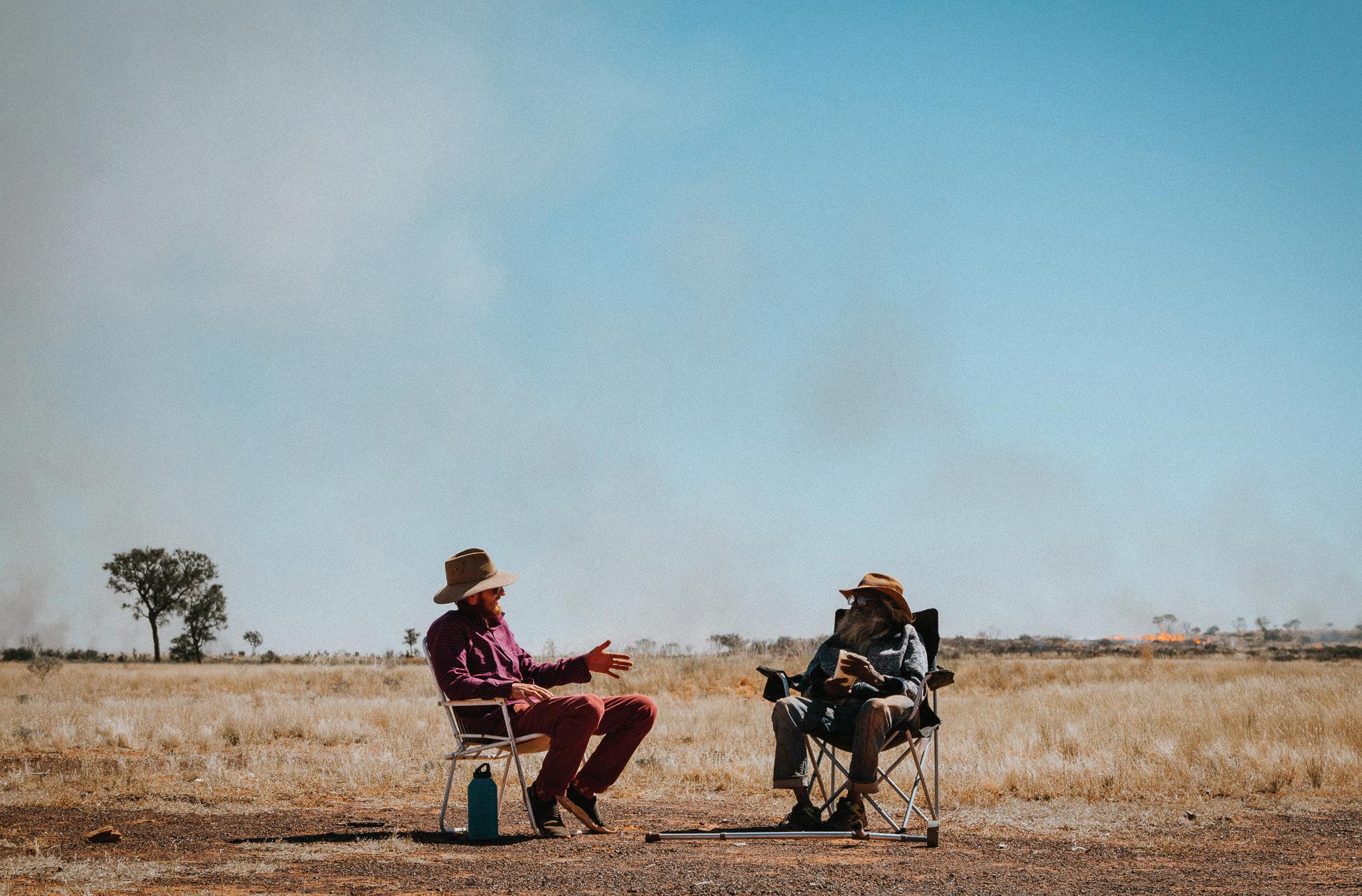
Tom Ennver and Helicopter Tjungurrayi.
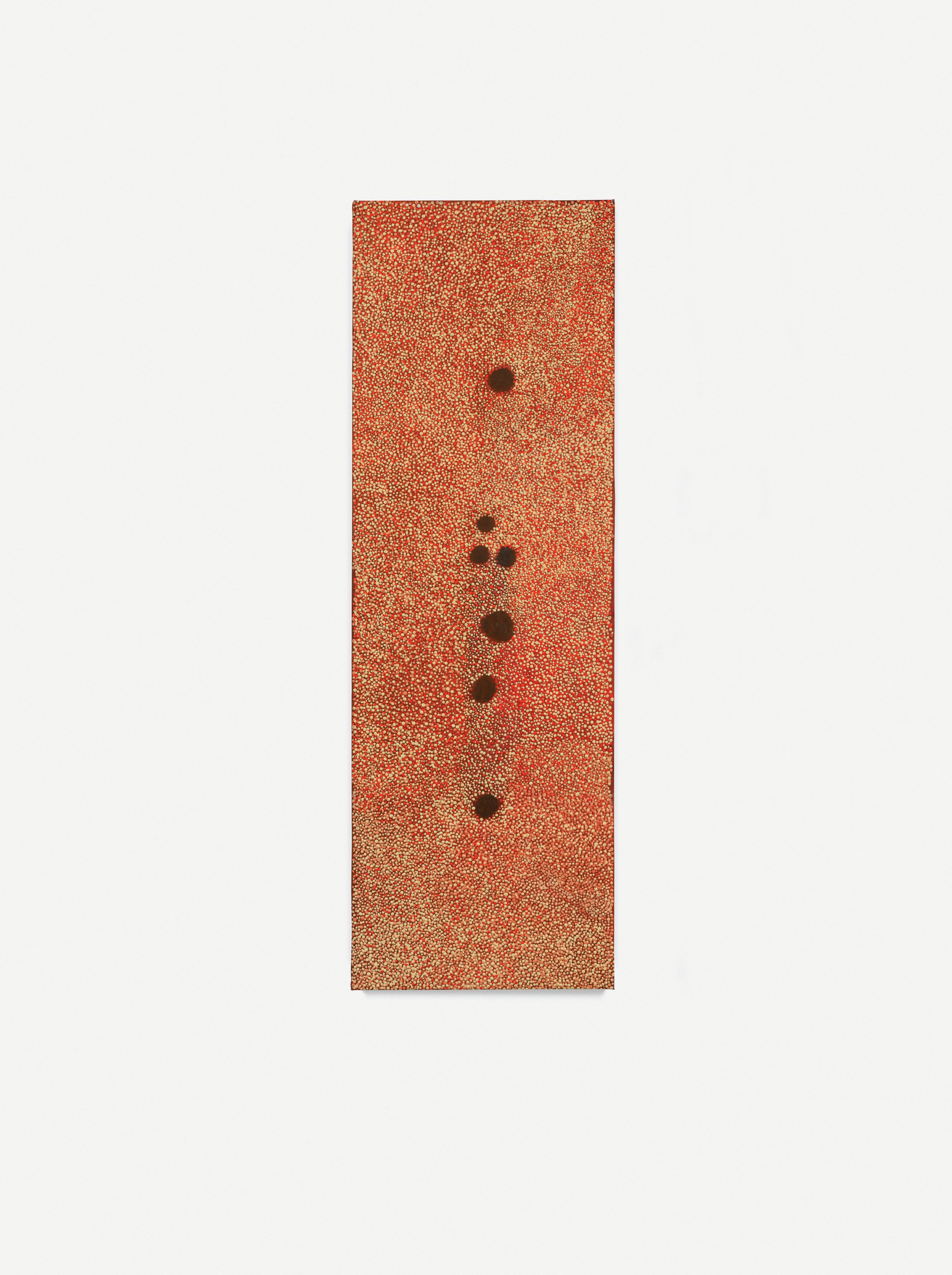
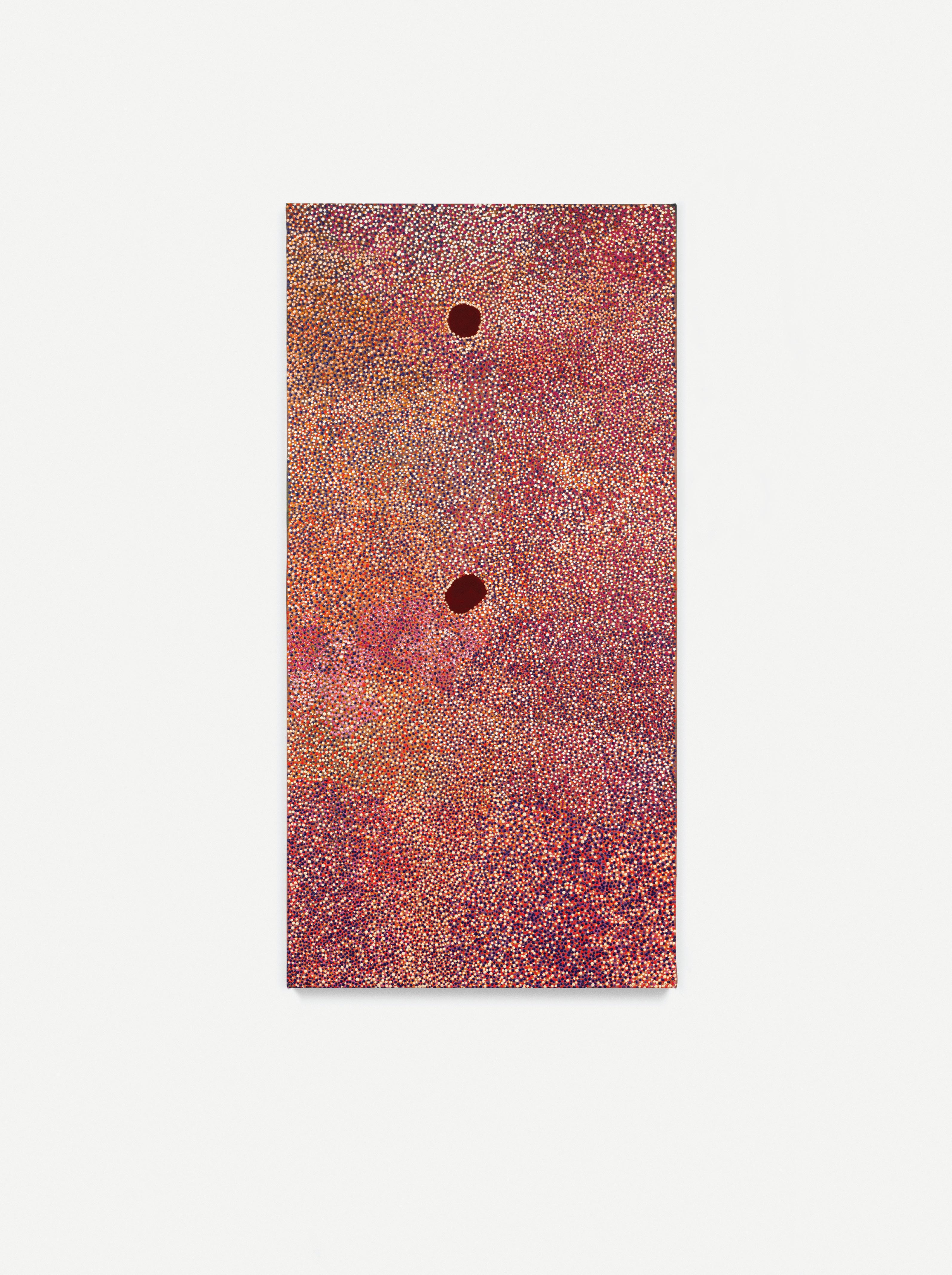
Imelda Gugaman Yukenbarri, Winpurpurla (Bushtucker) I, 2024, acrylic on linen, 121.9cm x 40.6cm
Imelda Gugaman Yukenbarri, Winpurpurla (Bushtucker) II, 2024, acrylic on canvas, 121.5cm x 60.5cm
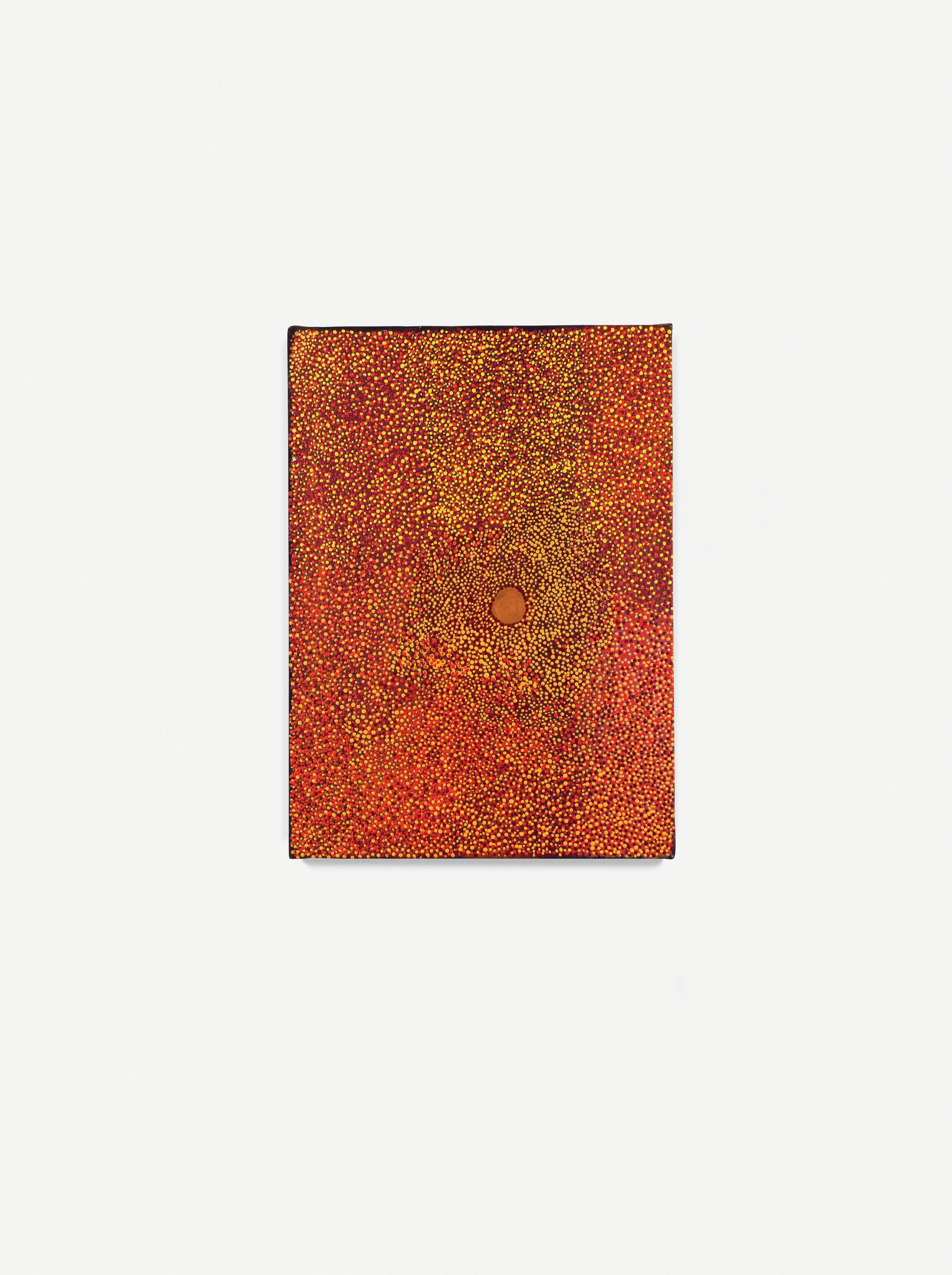
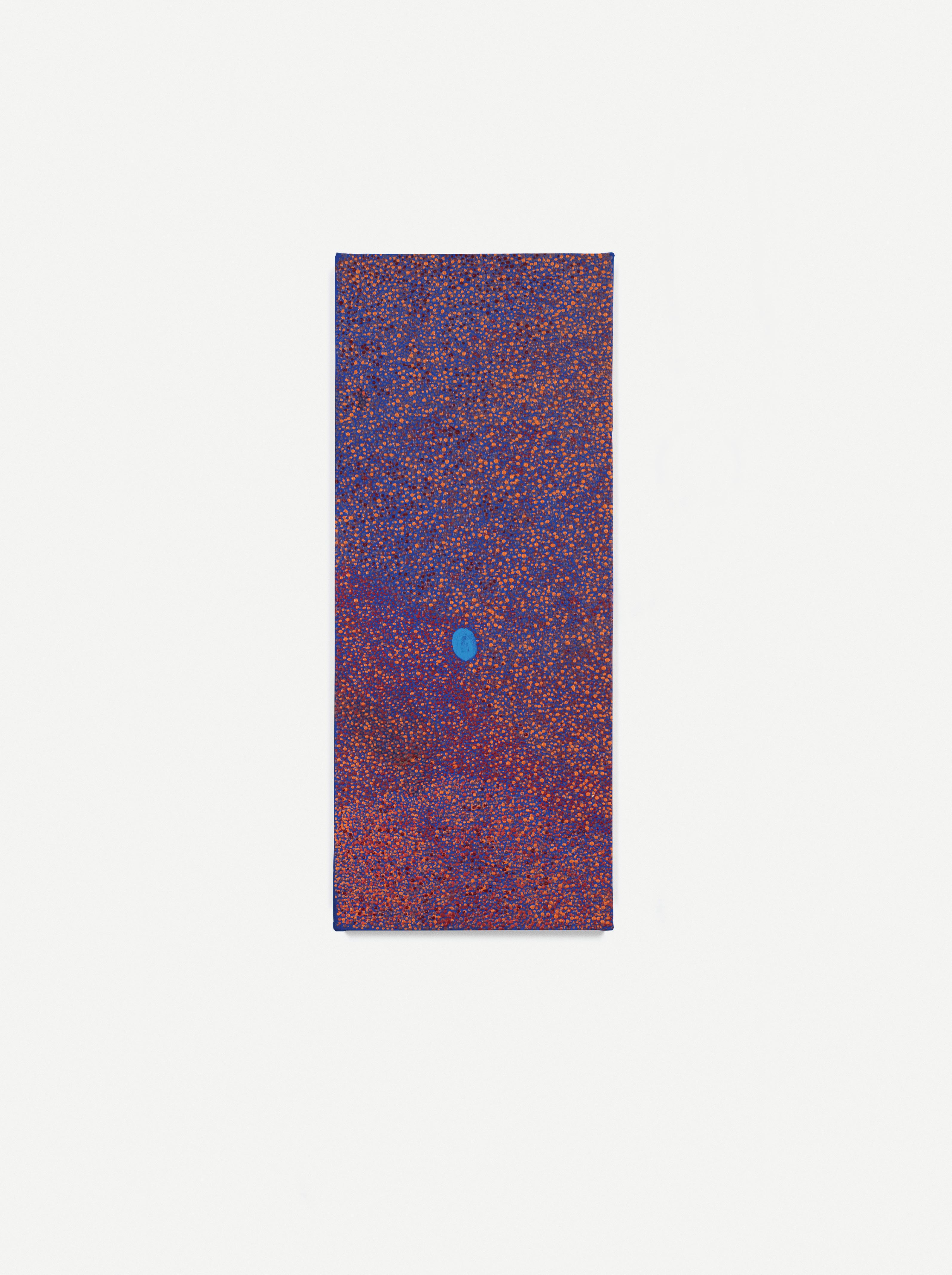
Imelda Gugaman Yukenbarri, Winpurpurla (Bushtucker) III, 2025, acrylic on canvas, 61cm x 45.7cm
Imelda Gugaman Yukenbarri, Winpurpurla (Bushtucker) IV, 2025, acrylic on canvas, 81cm x 30.5cm
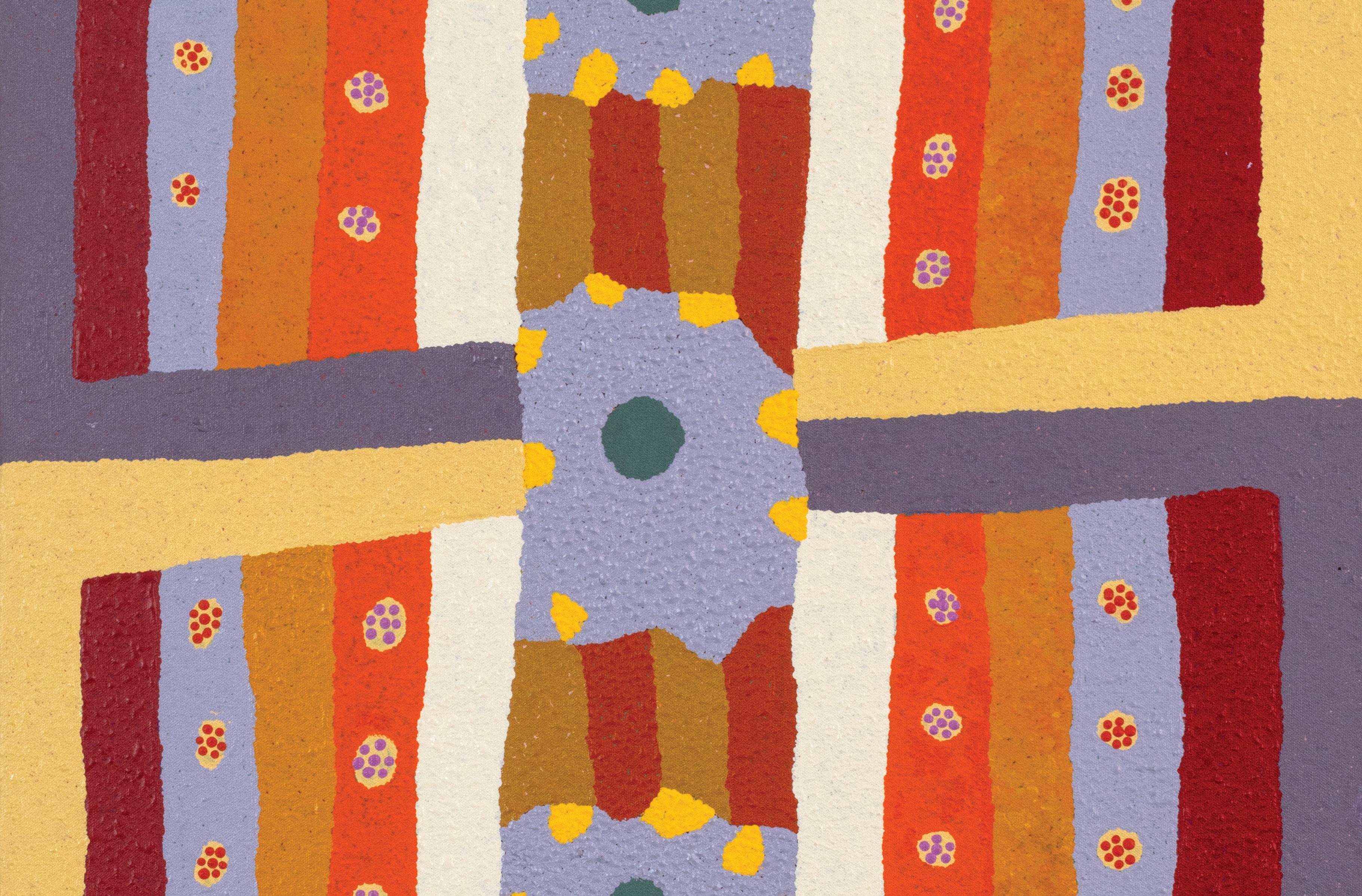
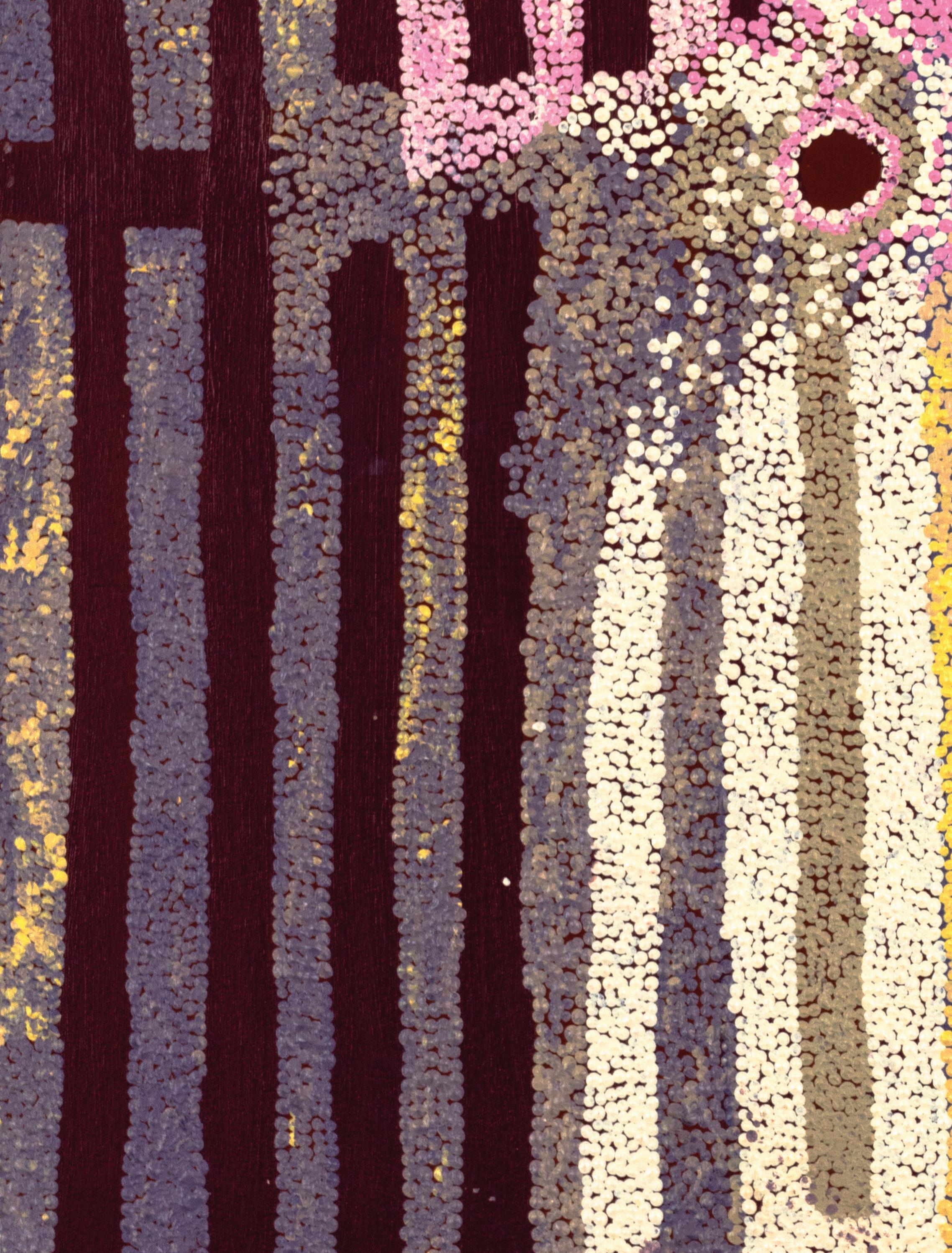
Carmel Yukenbarri, Winpurpurla (detail), 2025, acrylic on linen, 90cm x 60cm. Image courtesy of Sergey Novikov.
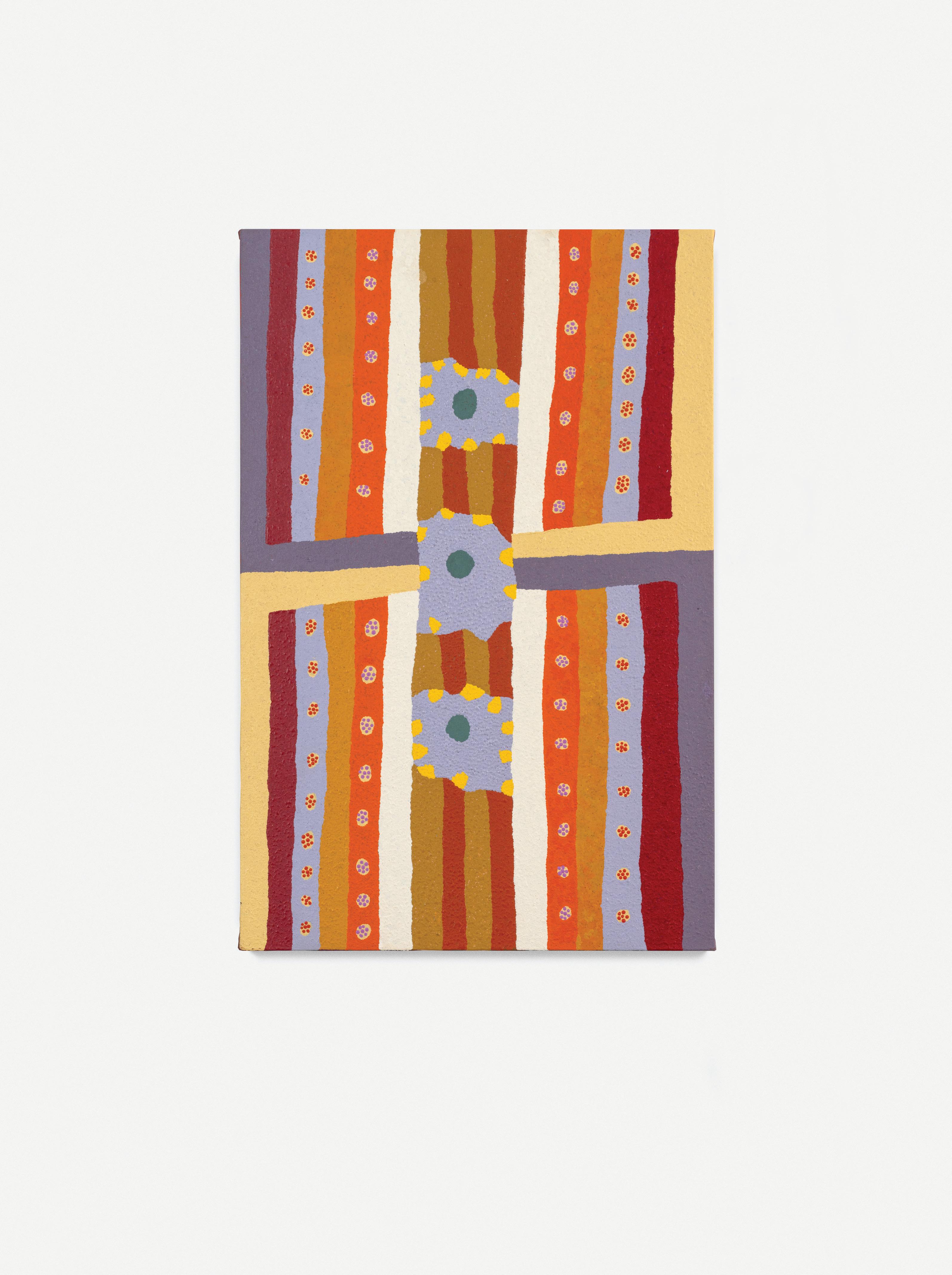
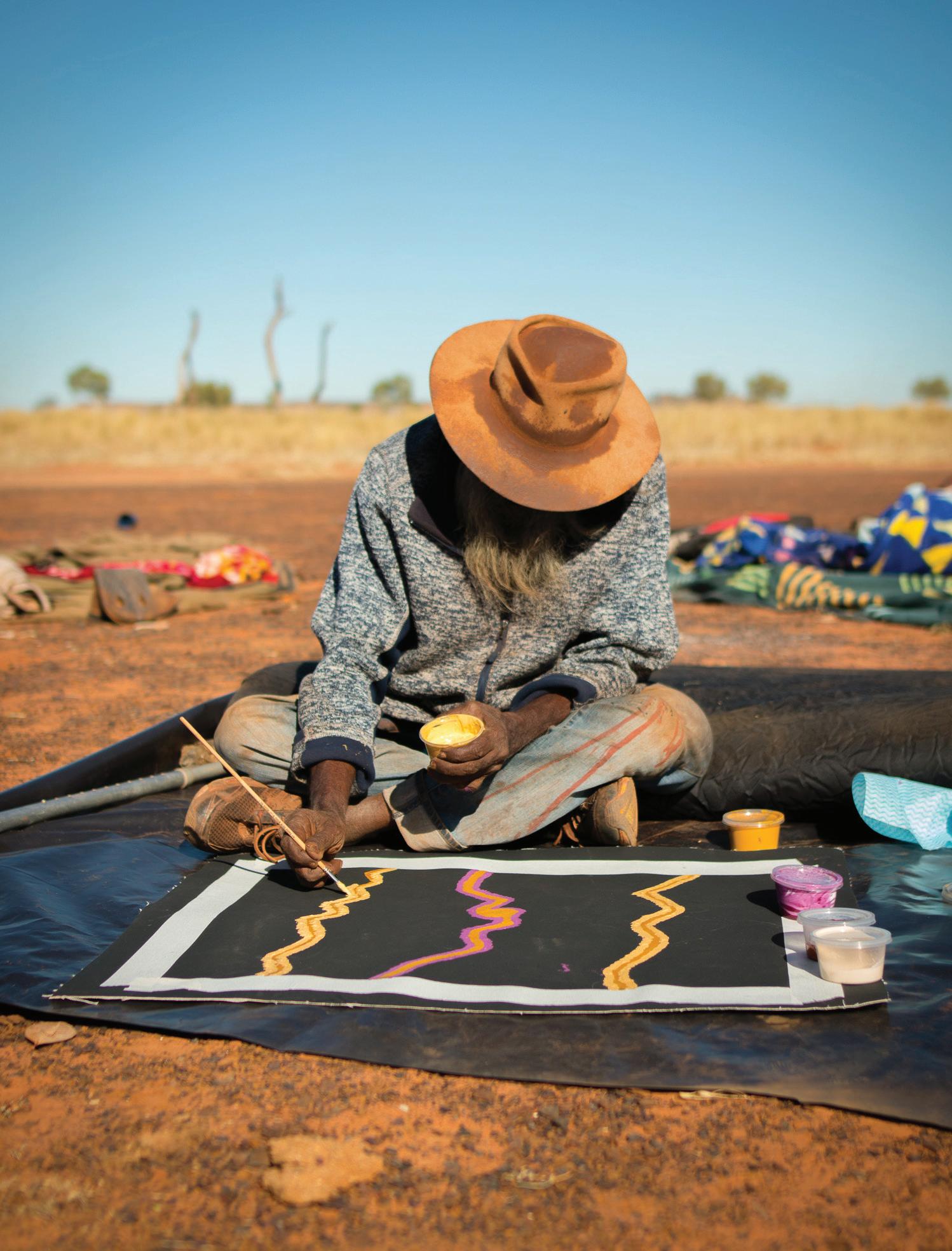
Carmel Yukenbarri, Winpurpurla, acrylic on canvas, 90cm x 60cm
Helicopter Tjungurrayi. Image courtesy of Warlayirti Artists.
JGM GALLERY EXTENDS ITS DEEPEST GRATITUDE TO
WARLAYIRTI ARTISTS FOR THEIR GENEROSITY AND INVALUABLE COLLABORATION.
THIS EXHIBITION WOULD NOT HAVE BEEN POSSIBLE WITHOUT THEIR SUPPORT.
Balgo Hills.
Image courtesy of Warlayirti Artists.
Editorial design: Julius
Photography: Julius Killerby & Warlayirti
Artwork Photography: Sergey Novikov. © 2026 JGM Gallery, Julius Killerby, Sergey Novikov and Warlayirti Artists. All rights reserved.
ISBN: 978-1-0682487-4-0
JGM Gallery 24 Howie Street London SW11 4AY info@jgmgallery.com
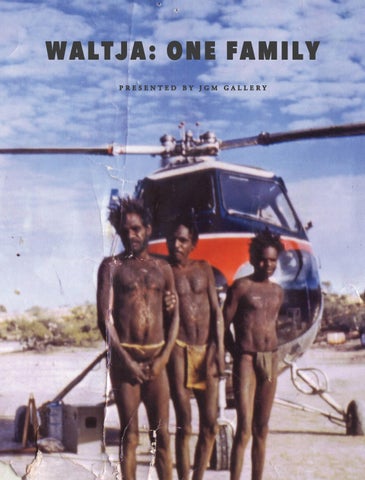
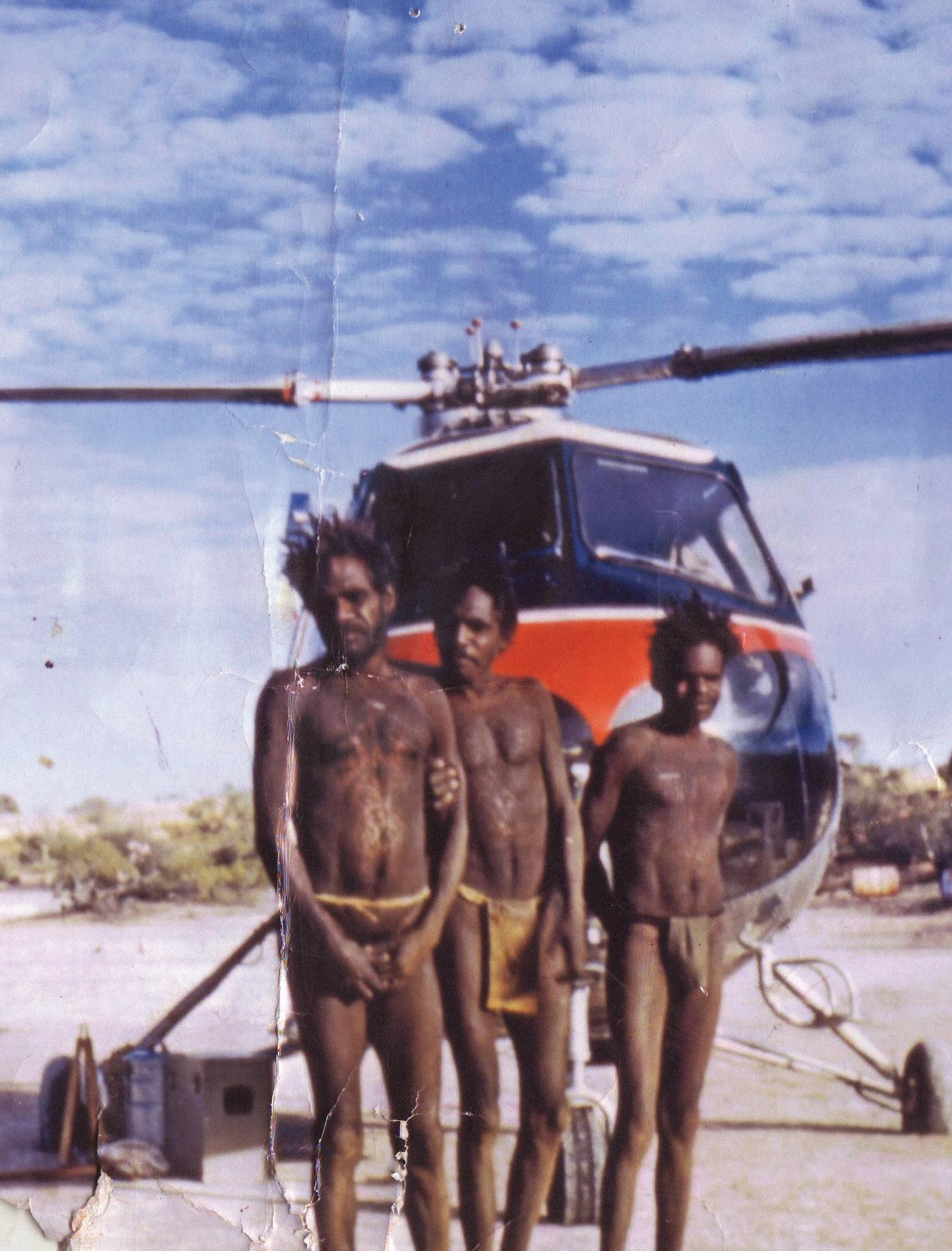
Front cover: The survey helicopter at Natawalu, 1957. Image courtesy of Warlayirti Artists. Back cover: Christine Yukenbarri, Winpurpurla II (detail), 2025, acrylic on canvas, 76.2cm x 50.8cm. Image courtesy of Sergey Novikov.
Killerby.
Artists.