
LYNN BATTEN
JFO Content Coordinator/Gallery Manager
The Jewish Federation of Omaha is pleased to announce that Elizabeth Brodkey and Asher Tipp are the recipients of the 2025 Robert and Ellen Gordman Jewish Teen Leadership Award. Each year, this award honors two local teens who have demonstrated exceptional commitment to the Jewish community. Nominees are evaluated based on active participation in youth organizations, demonstrated leadership ability, contributions to strengthening their organizations, and efforts to develop future leadership and community involvement.
Each recipient receives a $1,000 stipend to support participation in a conclave, convention, Jewish summer camp, or an Israel experience of their choice. Their names will also be added to a permanent display plaque at the Staenberg Omaha JCC.
ELIZABETH “LIZZY” BRODKEY
Elizabeth “Lizzy” Brodkey, daughter of Stacie Metz and Marc Brodkey, is a senior at Westside High School.
Lizzy is a dedicated Jewish teen leader whose commitment and character have made a meaningful impact across the community.
Her involvement in Jewish life is both extensive and multifaceted.
Over the past several years, Lizzy has become a role model, with her Jewish

identity playing a central role in her leadership journey. She has been an active participant and counselor at Camp Sabra, an engaged member of Beth El Synagogue, and a consistent presence in community volunteer efforts, school leadership programs, BBYO, and the performing arts.
Lizzy is widely admired for her ability to build trust, bring people together, and lead with integrity. She is especially passionate about empowering her peers and helping them to step confidently into leadership roles.
Jewish Federation of Omaha board member, Lisa Lucoff, noted that Lizzy’s involvement and drive have inspired greater participation among
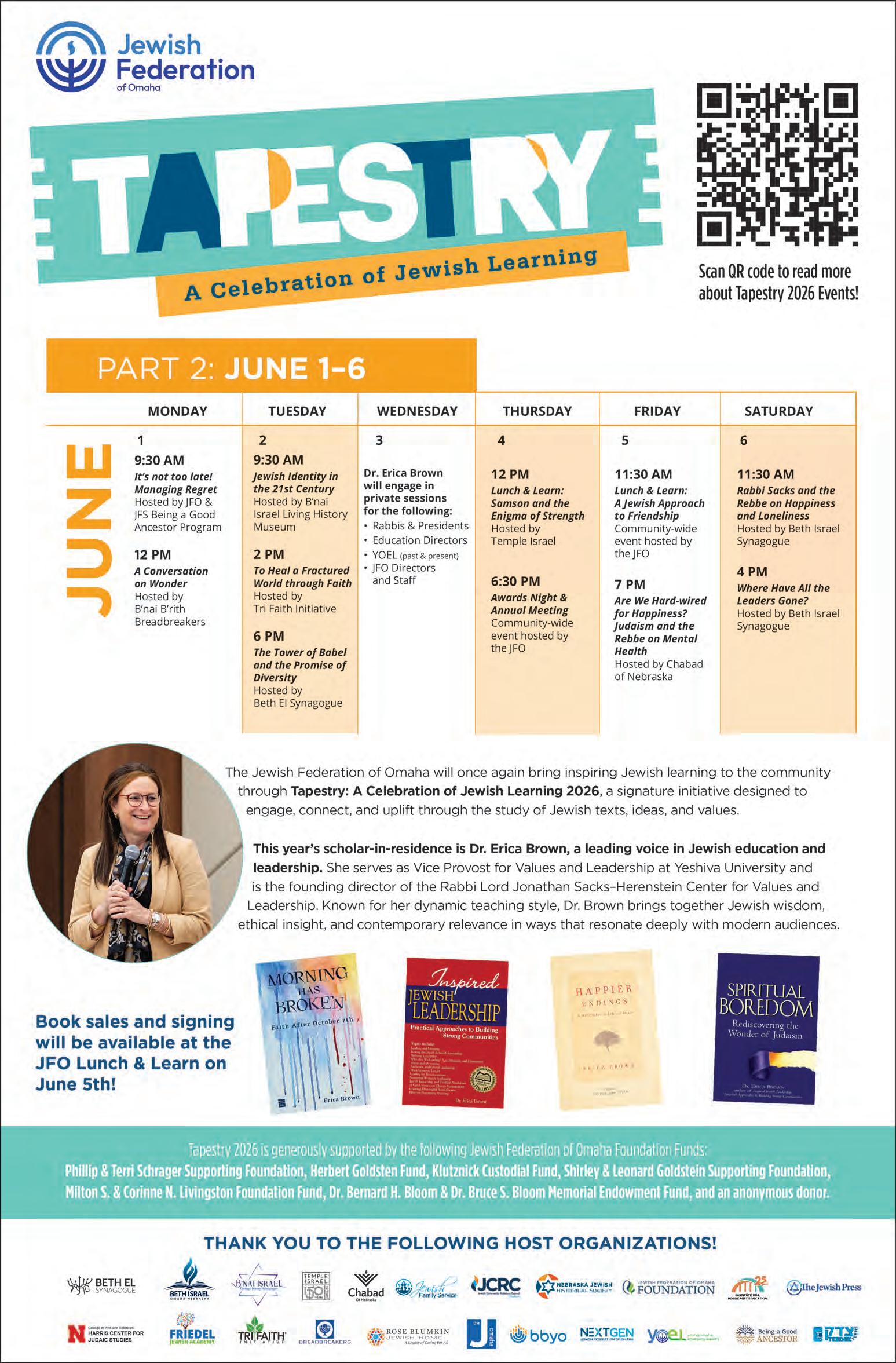
ERICA BROWN
On the plane home from close to a week in Jewish Omaha, I sat reflecting warmly on many wonderful memories. I got to teach agency executives, JCC directors, and JCRC members. I talked about leadership with students and faculty at the University of Nebraska, and led a writing workshop through the Federation. I got a tour of the magnificent JCC campus and saw beautiful artwork on the walls and beautiful four
year old ballerinas in the corridors.
I was able to see the inside of two of Omaha’s synagogues and facilitate a conversation with members and teens. I met so many kind people whose families, for generations, have called Omaha home. And I can’t wait to come back in June for Tapestry’s next events.
Yet one experience stands out for me that I want to share. After engaging in a rich conversation with the staff of the Friedel Jewish Academy, See Listening with our eyes page 3
Jewish youth, encouraging others to take an active role in the community.
“Lizzy has been a positive role model both at BBYO and Beth El,” she said. “She has recruited many girls to BBYO, encouraged their leadership and growth, and has served as a counselor at Camp Sabra, where she continues to inspire younger campers.”
As a longtime member of BBYO, Lizzy has served as president of the MZ Yoshanah Chapter and most recently as Omaha BBYO Council N’siah (President), the highest-ranking female teen leader in the council. In this role, she has demonstrated exceptional dedication while managing the full
scope of presidential responsibilities.
Idan Zaccai, BBYO & Teen Program Director, describes Lizzy as a leader with a strong work ethic, warmth, and vision.
“Elizabeth is a truly inspiring leader,” Zaccai said. “She has a unique ability to balance high-level vision with meaningful one-on-one connections. Her work alongside Asher as a lead organizer for Council programs at Fall Regional Convention (FRC) and Spring Regional Convention (SRC) showcased her commitment to excellence and inclusivity. She hasn't just led our programs; she has mentored the next generation of MZ See Teen Leadership Award page 3
STACIE METZ
Beth El Engagement Coordinator
Beth El Synagogue is honored to welcome Rachel Goldberg-Polin on Wednesday, June 10 at 6 p.m. for an evening of reflection, resilience, remembrance, and hope.
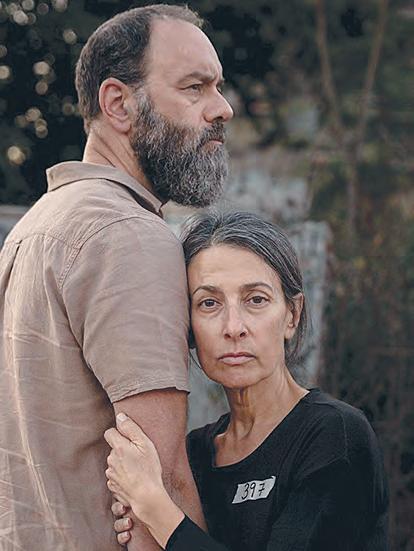
Since the Oct. 7 attacks in Israel, Goldberg-Polin has become one of the most recognized and compassionate voices advocating for the hostages and their families. Together with her husband, Jon Polin, she brought international attention to the plight of their son, Hersh Goldberg-Polin, who was kidnapped from the Nova music festival and later murdered in captivity. Through unimaginable grief, she has continued traveling throughout the country sharing a message centered on humanity, unity, faith, and perseverance.
Over the past several months, Jewish communities across the United States have welcomed Goldberg-Polin to synagogues, Jewish Federations, lecture series, and com-
munity programs. Her appearances this spring have included events in cities such as Baltimore, Los Angeles, Long Island, Washington, D.C., San Diego, and New York, where audiences have gathered to hear her deeply personal story and meaningful perspective on resilience in the face of tragedy.
“Thrilled to welcome Rachel See Rachel Polin page 2
LYNN
JFO
BATTEN
Content Coordinator/Gallery Manager
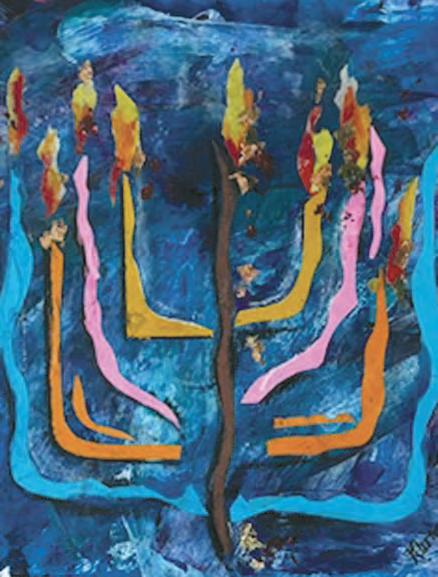
Former Omaha residents, Karen Anne Greenberg Carnow and Tom Rifkin will be in Omaha on Saturday, May 30 to celebrate their new exhibit in the Eisenberg Gallery at the Staenberg Omaha JCC. Their work will be on display from Saturday, May 30th through Friday, June 26th.
After graduating from Westside High School, Karen moved south to attend Arizona State University. She began her career as a special-needs art educator. She continued as an art teacher for 30 years. Karen’s work represents the many layers of her life. Her work is bold and bright, and crosses over many mediums influenced mainly by nature. She currently teaches classes in various facilities and loves to do commissioned projects.
Tom Rifkin is a self-described “late bloomer” to the art scene. His artistic talents did not surface until he retired from his professional career as a marketing executive. His work is inspired by his curious nature. He frequently experiments with new techniques and mediums.
Tom makes art ranging from eclectic, abstract, woodworking and Judaica.
The public is invited to attend their opening reception on Saturday, May 30 from 5-7:30 p.m. in the Eisenberg Gallery at the J. For more information about the gallery please visit jcc omaha.org/art-gallery/
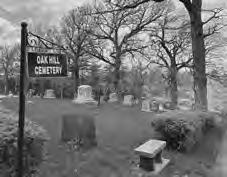
Memorial Day Service
Sunday, May 24 • 11 a.m.
Speaker: Marty Ricks
1350 East Pierce Street, Council Bluffs, Iowa
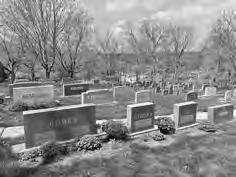

For directions, call Patty Lee Nogg, 402/578-7461 Cemetery Manager Steve O’Neill, 712/328-1579
Patty Nogg, President; Bob Kully,V.P.; Gail Krasne Kenkel, Secretary; Doug Krasne,Treasurer Beth Seldin Dotan, Mark Eveloff, Elyse Gallner, Michael Gallner, Larry Goldstrom, Jay Katelman, Joshua Katelman, Rick Katelman, Marti Nerenstone, Sissy Silber, and Marty Ricks

Continued from page 1 Goldberg-Polin into our synagogue is to welcome one of the most powerful Jewish voices of our time,” said Rabbi Steven Abraham. “Her words have carried the grief, courage, faith, and moral clarity of an entire people. In Rachel’s story, we hear not only the anguish of one mother, but the enduring call of Jewish responsibility: to remember, to bear witness, to refuse indifference, and to hold fast to hope even in the darkest of days. We are honored to gather as a community to listen, to learn, and to stand together.”
The June 10 program at Beth El Synagogue will offer the Omaha community an opportunity to hear directly from a woman whose courage, grace, and compassion have inspired people around the world. Attendees can expect an evening that is emotional, thoughtful, and profoundly meaningful.
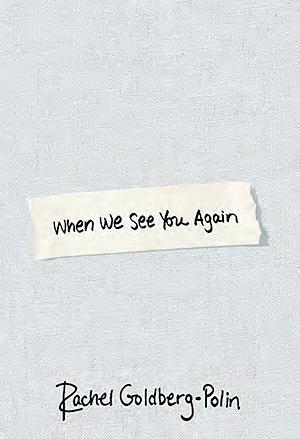
Copies of Goldberg-Polin’s book, When We See You Again, will be available for purchase for $18. Community members may also purchase books through Beth El prior to the event.
Please join us at 6 p.m. on Wednesday, June 10 at Beth El Synagogue for this meaningful evening of reflection, resilience, and hope. The community is warmly invited to come together to hear Rachel Goldberg-Polin’s powerful story and message.
For questions or to purchase books in advance, please contact Stacie Metz at smetz@bethel-omaha.org
Rachel Goldberg-Polin is a dual American-Israeli citizen and a leading voice in the global effort to secure the release of hostages taken by Hamas. On Oct. 7, 2023, her son, Hersh, was taken hostage after having his dominant forearm blown off. In the months that followed, Rachel, alongside her husband Jon Polin, became a full-time advocate— speaking worldwide about Hersh’s abduction and fighting for the release of all those who had been taken.
Almost a year later, on day 330, the IDF announced that Hersh had been murdered by Hamas in a tunnel in Gaza, along with five other young people with whom he was being held. Despite the devastating loss of their son, Rachel continued as a tireless global advocate, alongside Jon, maintaining their efforts until the last hostage was recovered on Jan. 26, 2026, Day 843.
HEIDI HEILBRUNN NEEDLEMAN
IHE Program and Education Manager
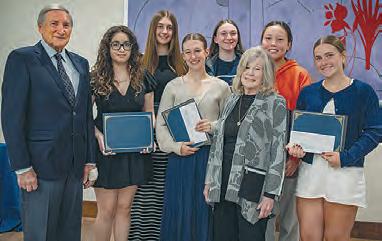
On Monday, April 27, the Institute for Holocaust Education celebrated the winners of The Tribute to the Rescuers Essay Contest! The students spent time learning and writing about moral courage during the Holocaust and other moments in history to see what it means to be brave and stand up for others. By learning about people who risked everything to do the right thing, they are finding ways to be leaders in their own schools and neighborhoods today. The contest is made possible by the Carl Frohm Memorial Foundation.
The winners are:
9–10th Grade Category: First Place: Lyons-Decatur Northeast; Second Place: Lyons-Decatur Northeast; Third Place: Bennington High School
11–12th Grade Category: First Place: Marian High School; Second Place: Marian High School; Third Place: Marian High School
Teacher Awards: First Place (tie): Lyons-Decatur Northeast; First Place (tie): Bennington High School; Second Place: Marian High School; Third Place: Mt. Michael Benedictine School


Continued from page 1
Yoshanah leaders, by ensuring every teen felt they had a seat at the table. Elizabeth’s leadership mark on Omaha BBYO is defined and will be remembered for years to come. She is widely admired for the thoughtful way she builds trust, encourages others, and brings people together through leadership. She approaches every responsibility with focus and integrity, helping ensure that programs and initiatives are purposeful and engaging. Her leadership will leave a lasting impact.”
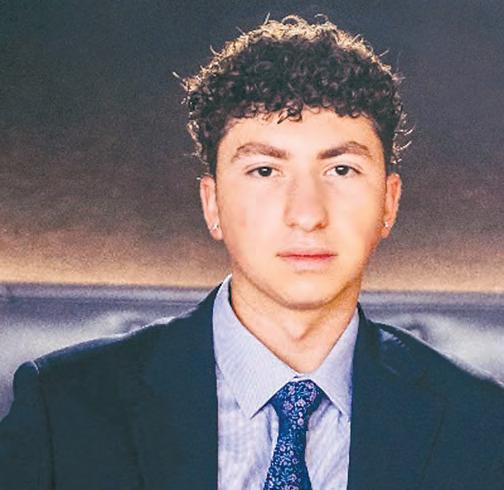
Asher Tipp, son of Sonia and Alan Tipp, is a senior at Elkhorn South High School. He is an outstanding Jewish teen leader whose dedication, integrity, and leadership have made a lasting impression on the Omaha Jewish community and beyond.
Asher is recognized for his clarity of purpose, strong sense of responsibility, and ability to lead with intention across a wide range of settings. He has been deeply involved in BBYO, held numerous leadership roles at his high school, and an active member at Temple Israel Synagogue.
A talented musician, Asher has contributed to the success of multiple groups, including the Elkhorn South marching band, show choirs, pep band, jazz band, For Others Greatness (FOG), and the Metro Area Youth Jazz Orchestra (MAYJO).
Asher has also served as a representative for the Jewish Community Relations Council’s Student to Student program, where he shared his Jewish experience with middle and high school students throughout Omaha. Through this work, he helped combat antisemitism by addressing misconceptions and fostering understanding and connection.
Julee Levine, Director of Education at Temple Israel, highlighted his thoughtful engagement and leadership.
“I was especially impressed by Asher’s role as the youth representative on the Temple Israel Education Director search committee,” she said. “He asked insightful questions and engaged in meaningful conversations about the future of education and the needs of our community. His work with Student to Student also demonstrated his ability to communicate authentically and thoughtfully with peers about Jewish identity.”
Asher’s involvement with BBYO has been a constant over the years. He has held several leadership roles, most recently serving as Omaha BBYO Council Godol (President). In this position, he has played a key role in programming, recruitment, Jewish learning, communications, and collaborative planning.
Idan Zaccai, BBYO & Teen Program Director, credits Asher with helping maintain a high level of programming and engagement within the organization.
“Asher is the definition of a leader,” Zaccai said. “His leadership is fueled by an infectious energy with deep pride in Mother Chapter. His inspiring work with Elizabeth on our Council programs and both Fall Regional Convention (FRC) and Spring Regional Convention (SRC), proved he is a true catalyst for growth, consistently pushing the boundaries of what our programming can achieve. Asher has a unique ability to translate big ideas into meaningful, shared experiences that resonate with his fellow Alephs. Whether he’s navigating complex planning or rallying a room, he leads with a tenacity and charisma that has left an indelible mark on our organization’s history.
Please join us in honoring Elizabeth and Asher on Thursday, June 4 at the Jewish Federation of Omaha Awards Night & Annual Meeting. The program will begin promptly at 6:30 p.m. and will be followed by a dessert reception. Those attending are asked to RSVP in advance at www.jewishomaha.org

Continued from page 1
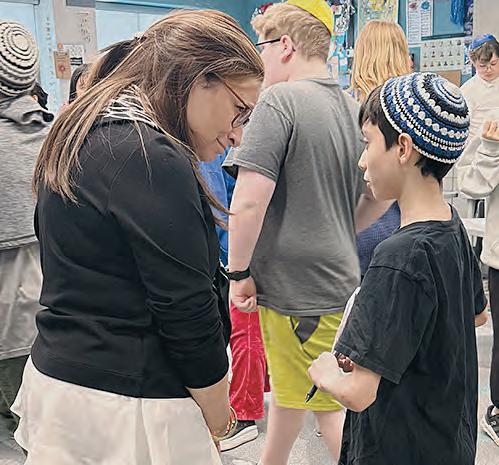
seeing its colorful classrooms, and hearing children’s voices fill a classroom with Hebrew prayer, I had the privilege of running a workshop for the middle school. Our topic was the skill of listening, a seminar I had only run with adults. I wasn’t sure it was going to work. Boy was I wrong. Those students taught me a lot about listening.
I opened with a question. Why is listening important? Sometimes I wonder if listening must not be very important or more people would be better at it. I don’t remember ever learning how to listen. Maybe we wrongly assume good listening comes with age or insight. One bright student piped up: “You need to listen to get knowledge or information.” How right she was. Sometimes when we aren’t focused, we miss critical instructions or the pain of a friend. I told students that eye contact helps. When we listen with our eyes, we hear more.
Then more students raised hands and shared that listening builds trust with other people. We had a whole conversation about our pets and how we wish people could listen as well as our dogs and cats. We even had one pig-owner in the room, but it wasn’t clear if the pig was a good listener.
We read some verses from Psalms about God as a patient listener and discussed the central prayer of Shema, where we are called upon to listen to God. We spoke about hard times when we’re not sure if we can tell anyone what hurts and hope that God is listening. Listening well is a real gift we can give to others that costs nothing. So we gave ourselves the challenge of becoming better listeners.
Our first volunteer was head of school Ms. Beth Cohen, and we role-played active listening. Active listening involves repeating the last words of what someone says or paraphrasing their words to show comprehension and understanding. Instead of putting the light back on ourselves, like ping pong players competing, we continue to shine it on another. One young lady said it seemed awkward. She’s right. We are so unused to doing this that it doesn’t sound natural except to the person we’re mimicking who finally feels heard. Then I practiced it with a student.
We also talked about accountable listening. Sometimes someone shares something with us that, if we’re good listeners, we come back to later. If we learn, for example, that someone had a disturbed sleep, a difficult conversation, or a bad cold, we might ask the next day how that person’s sleep, relationship, or cold is doing. That shows not only that we were listening at the moment but that we registered their difficulty and genuinely care enough to ask about it later.
We finished our workshop with students writing a sentence each about something they were thinking about or even troubled by. Then they paired themselves up with someone they don’t know as well and asked to listen for an uninterrupted minute, ask a probing question about what he or she heard, and then listen without interrupting for another whole minute. There was great energy and respect in the room.
Not only were these middle schoolers attentive and thoughtful, they asked very profound questions. They talked honestly about not always listening to parents, teachers, or siblings and some confessed that they weren’t always sure their parents were always listening to them, especially when cellphones were present. I made a special mental note of that.
Many people would love the superpower of becoming invisible at will. Let’s face it. That’s not likely to happen. But here’s a superpower we can all have: listening well so that others become more visible to us. I loved my conversation with these spectacular young people and their teachers, and I felt they were truly listening.









ANNETTE VAN DE KAMP-WRIGHT Jewish Press Editor
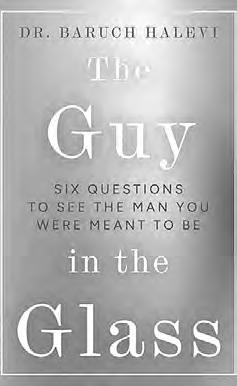
A man walks into a bar…and that man is you. Why are you here? What brought you to this place? It could have been another fight. Maybe it was with your boss—the one who’s been riding you harder lately, demanding more while giving less. You’ve been burning out for months, white-knuckling your way through work you no longer believe in. Today, you finally snapped. Words were exchanged, doors slammed, and as you walked out, he screamed after you, “Don’t come back until you figure your s**t out.
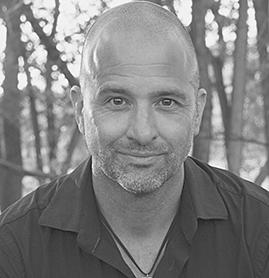
Baruch Halevi
So begins Dr. Baruch Halevi’s new book, The Guy in the Glass. In the foreword, he explains that in the United States, someone dies by suicide every 13 minutes. His aim: changing that number to 14. Baruch weaves stories about people just like us, his vast psychological expertise, as well as lessons he learned in his own life into a tapestry that is part guidebook, part confrontational parable.
“I watched my father achieve everything a man is supposed to want,” Baruch writes, “yet never feel whole. He chased success but never touched greatness. In the end, like his own mother, he chose to end his life. That was the breaking point.
“I refused to be the third generation lost to suicide. I made a vow to change my family's story — and to guide other men to do the same. This is why Viktor Frankl is my teacher. He survived the Holocaust and proved that a man with a strong enough WHY can bear any HOW.”
As human beings, we have a somewhat limited understanding of what life will be like when we grow up. Then, once we do, we often find our day-to-day life quite different from what we expected. Or perhaps, we followed society’s unwritten rules, are outward successful, only to find happiness eludes us. We are not who we think we should be, who we expected to be; when we look in the mirror, we don’t recognize who stares back at us. Or maybe we recognize them, but we don’t really like what we see.
“Real integrity,” Baruch writes, “is the courage to embrace all of yourself: the parts that don’t perform, don’t please, don’t polish up nicely for the world.”
How to get there? Where to start finding yourself, and embracing who that is?
“I have counseled many men who are doctors, lawyers, or businessmen,” Baruch writes, “and when I press them on why, they aren’t exactly sure. On the surface, yes, they chose their path. But dig a little deeper and the truth begins to show: most didn’t choose so much as inherit. They tell me things like, ‘My father was a businessman, and his before him, so this is what I became.’ Maybe it’s not the profession that’s the same-maybe it’s the hobbies, the politics, the religion, the way they love, the way they live. So much of a man’s life is simply the continuation of those who came before him. Sometimes for the good. Other times, to his detriment.”
But, as he points out, we often confuse making a living with making a life. Baruch asks his readers to look inward as he gives example after example of other men who lived life like a race, and then found they lost themselves along the way. His advice is to pause, step back, ask the tough questions-and then answer them, no matter how awkward that may feel. Centered around six major questions readers can ask themselves, the volume also comes with a complimentary workbook.
The Guy in the Glass is not a comfortable book; it is brutally honest, at times irreverent, and a great tool for doing the hard work of knowing yourself. With all that comes a heavy dose of empathy, because Baruch never claims to have all the answers-he just knows how to ask the questions. The rest is up to the reader.
Dr. Baruch HaLevi (“Dr. B”) is a counselor, ordained rabbi, and a Men’s Coach, leads Men’s Peer Groups, and immersive Men’s Peer Journeys, for men ready to face the mirror and choose the man they will be. He has over twenty-five years of experience helping men live with purpose, responsibility, and meaning. He is the founder of the 13-Minute Mission, named for the reality that every thirteen minutes a man dies by suicide – a truth that shaped his life’s work of guiding men toward connection before isolation takes hold. He is the author of Revolution of the Jewish Spirit and Spark Seekers. You can purchase The Guy in the Glass on Amazon, and wherever books are sold. For more information, please visit bhalevi.com
LORI FELDMAN
NJHS Board Member
When you think of mahjong, do you imagine the click, click of tiles?
“1 bam, 2 crack, red, north…”
Bernice Schimmell remembers hearing those calls, and for many of us, that sound brings back memories of time spent around the table with friends and family. Mahjong is more than a game. For many, it has been a way to connect, to laugh, and to build lifelong friendships.
Mahjong began in China, but by the early 1900s it made its way to the United States and quickly became popular.
In many Jewish communities, especially among women, it became a regular part of life. Weekly games brought people together at a time when many Jewish families were building new lives in suburban neighborhoods. It was a way to meet people, create community, and feel connected.
right here in Lincoln.
My own mahjong journey began around 1992 when Barbara Goldstein invited a group of ladies from Tifereth Israel Synagogue to her house for three weeks of lessons. Some of the teachers included Shirley Grant and Reba Kuklin, in addition to Barbara. From those early lessons, friendships were formed that have lasted for years.
Many of us have sets that were passed down from family members.
As Jewish families moved into those suburban neighborhoods in the mid-20th century, mahjong offered something simple but important. It created a regular place to gather. For many women, it became a way to build friendships, share support, and create community in a new environment. Over time, it spread from one circle to another, becoming part of the rhythm of Jewish life. Over time, mahjong became woven into the fabric of American Jewish life. It was passed down from generation to generation, often from mothers and grandmothers to daughters and friends. Organizations like the National Mah Jongg League helped standardize the game and created a shared way to play that connected Jewish communities across the country. That story is not just something from the past. It played out
Marcia Kominsky Wallen has sets from her grandmother and aunt from the late 1950s. Those sets carry stories along with them. Weekly groups of friends became the heart of the experience. One memory that still makes me smile is what we wore to mahjong nights. It was common to wear matching tracksuits with bright colors. Our group also had very important rules, and the main one was that snacks were a priority. Hot tamales, M&M’s, and Chex Mix were always on the table. We also kept little jade like Buddhas in our coin purses, which felt special at the time.
Of course, the game itself mattered, but it was never just about the tiles.
The weekly game mattered. It gave us a reason to gather, catch up, laugh, and support one another through all stages of life. There was always conversation around the table, and sometimes those conversations became the most important part of the evening. Over time, those weekly games became something people counted on.
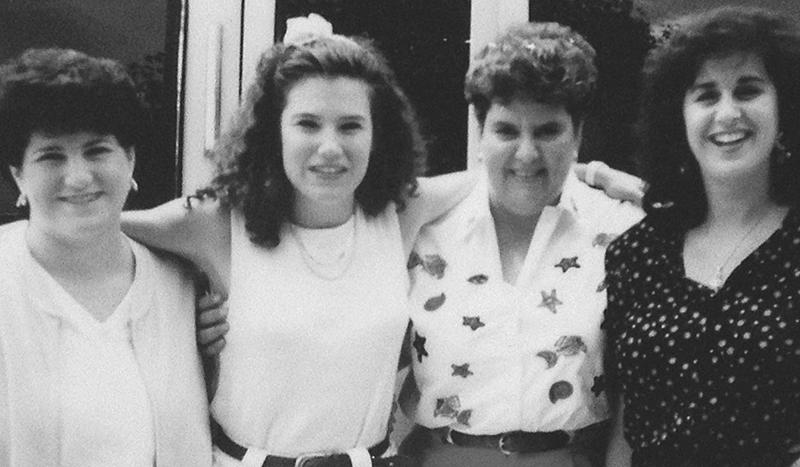
One photograph especially captures that feeling for me. It includes me, Karen Caulfield, Tamara Buie, and Julie See Mahjong page 7
Shalom!
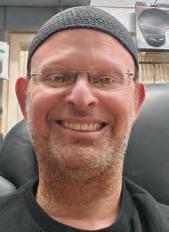
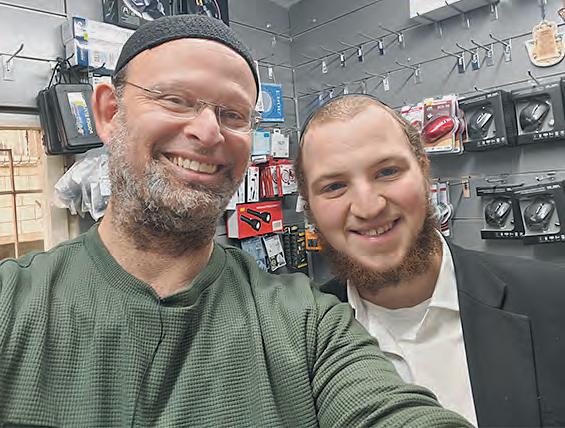
My name is Ezra Shapiro. Some readers may remember me as Bobby Shapiro. Omaha was home during my formative years, and I loved it! I frequently refer to Omaha as one of the best cities in the world. My life there revolved around the Jewish Community Center, and I experienced Jewish Omaha through youth groups and Hebrew school. I was free to strengthen my Jewish identity while growing up, and that eventually paved the road to me wanting to live in Israel. While I miss my family in Omaha dearly, I know my home is here in Israel.
For my first column, let’s talk about transportation. Most of Israel's neighborhoods are not made up of private homes. We live mostly in small apartment complexes. Larger complexes are becoming more and more common, as we build upwards instead of outwards. Israel already has the infrastructure for high density public transportation, but most families own one car. In outlying areas, like settlements, the cost of living is lower but there is less access to public transportation. There, it's more common to see private homes with two cars.
All that urban public transportation means that children can get from one end of the country to the other fully independently, as long as their Rav Kav (a rechargeable card used for payments on buses and trains) has enough credits, or if they have Moovit, a phone app that allows you to pay by scanning a barcode. This introduces an entire new aspect of what is "normal" for families: kids don't need their parents to shuttle them around. The new light rail in Jerusalem has quickly become one of the fastest ways to travel. Tel Aviv also has a light rail, and both cities are expanding. For about $2-3 you can ride up to 90 minutes, getting off and on again as much as you like, anywhere in the city by train or bus. Many times, this means you make
a round trip shopping errand without being charged twice. Depending on the distance you want to travel outside the city, around $20 will get you a day pass anywhere in the country. Public transportation means no parking hassles, no tickets, and no traffic jams.
For those who own a car, a costly annual checkup is in order. Insurance and gasoline are expensive-significantly more than in the US. A car affords the owner a bit more independence, but honestly, if someone were to gift me a car today, I'd likely never use it. I spend far less using trains, buses, and even cabs, and don't lack for ways to get around.
Electric vehicles are taking the financial strain off the gasoline and moving the strain to the electric grid, which is somehow keeping up wonderfully. Smaller vehicles are very common here; Vespa-style scooters and electric bikes give back a lot of independence without the financial strain, but it's hard to move a large family around on one of those!










Continued from page 4
Brockman. Years ago, we allplayedtogetherin Lincoln. Life eventually took some of us to different cities, but the friendships never faded. Today, I still playonline eachweekwithKaren in Houston and Tamara inSanDiego.Julieand I stillgathertoplay every Tuesday. Even after moves, busy schedules, and the passing of years, the game and the friendships continue.
Mahjong in Lincoln has also grown in interesting ways. You will find games not only in homes, but at places like the Asian Community Center, the Unitarian Church, Braeda Restaurant, the YMCA, and Savannah Pines Adult Living Community. The variety of locations shows how the game brings together people from different backgrounds.
Through the years, many things about mahjong have changed. Sets can now range from very basic to quite expensive, and there are even automatic tables that shuffle the tiles and set up the walls. There are also different cards and styles of play, including National Mah Jongg League rules and other variations that groups develop on their own.
But even with all of those changes, the reason people play has stayed much the same.
Mahjong has quietly become one of the most meaningful ways to bring people together. Around the table, titles and responsibilities fade away. What replaces them is conversation, storytelling, and laughter. It is a place where friendships grow and where people can feel supported.
In recent years, mahjong has begun to grow again. New players are learning the game, younger generations are joining tables, and gatherings are popping up in places far beyond the living room. While some are drawn to the colorful tiles and accessories, many stay because of the experience itself. In a world that feels increasingly busy and digital, mahjong offers something simple and real. It gives people a reason to sit down together.

No matter how it is played or where it is played, the game continues to bring people together.
We socialize, we laugh, and sometimes we get the emotional support we need.
And through it all, the tiles keep clicking.
Mahjong means something a little different to everyone. For some, it is a weekly game with friends. For others, it is a memory of a mother or grandmother, a set passed down, or the sound of tiles from another room.
Those stories are part of our community’s history.
The Nebraska Jewish Historical Society would love to hear your mahjong stories. Whether it is a favorite memory, a longstanding group, or a special set that has been in your family for years, your experiences help tell the larger story of Jewish life in our region.
If you have a story or a photograph of your mahjong group, please consider sharing it. Together, we can preserve these moments for future generations.
B’NAI B’RITH BREADBREAKERS
The award-winning B’NAI B’RITH BREADBREAKERS speaker program currently meets Wednesdays via Zoom from noon to 1 p.m. Please watch our email for specific information concerning its thought-provoking, informative list of speakers. To be placed on the email list, contact Breadbreakers chair at gary.javitch@gmail.com

Congratulations on your spectacular academic achievement during your four years at Burke High School. Your gift of music is a source of great pride throughout the family! We can't wait to cheer you on next year at the University of Nebraska at Lincoln.
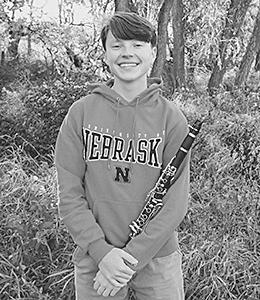
We are so proud of you and can’t wait to see what you accomplish!

Show Choir, Varsity Choir, Forensics, Yearbook photographer, USY Board, BBYO, Children’s Hospital volunteer, STS! Congratulations, Eli!
Eli Schuchman graduated from Elkhorn South with a perfect GPA and enters the university with Sophomore status, having earned over 30 college credit hours. He achieved this while working part-time throughout high school and actively volunteering in his community. This fall, he will attend the University of Nebraska–Lincoln as a member of the Nebraska Business Honors Academy on a Chancellor’s Scholarship. We are so proud of your hard work, character, and accomplishments, and we can’t wait to see what your future holds.
Love, Mom, Dad, Sadie, Nora, Grandma, Grandpa, and Jingles.

(Founded in 1920)
David Finkelstein
President
Annette van de Kamp-Wright
Editor
Will Fischer
Creative Director
Claire Endelman
Sales Director
Lori Kooper-Schwarz
Assistant Editor
Sam Kricsfeld
Digital support
Mary Bachteler
Accounting
Jewish Press Advisory Board
David Finkelstein, President; Margie Gutnik, Ex-Officio; Joseph Abrahams, Helen Epstein, Andrea Erlich, Dana Gonzales, Mary Sue Grossman, Hailey Krueger, Chuck Lucoff, Sara Rips, Stewart Winograd and Bob Yaffe.
The mission of the Jewish Federation of Omaha is to build and sustain a strong and vibrant Omaha Jewish Community and to support Jews in Israel and around the world.
Agencies of the JFO are:: Institute for Holocaust Education (IHE), Jewish Community Relations Council (JCRC), Nebraska Jewish Historical Society (NJHS), Jewish Press, Rose Blumkin Jewish Home (RBJH), Jewish Family Service (JFS), Staenberg Omaha Jewish Community Center (JCC).
Guidelines and highlights of the Jewish Press, including front page stories and announcements, can be found online at: www.jewishomaha.org; click on ‘Jewish Press.’
The Jewish Press is not responsible for the Kashrut of any product or establishment.
Editorial
E-mail editorial material and photos to: jpress@jewishomaha.org and avandekamp@jewishomaha.org ; send ads (in TIF or PDF format) to: wfischer@jewishomaha.org
Letters to the Editor Guidelines
The Jewish Press welcomes signed Letters to the Editor. They may be sent via regular mail to: The Jewish Press 333 So. 132 St., Omaha, NE 68154; via fax: 1.402.334.5422 or via e-mail to the Editor at: avandekamp@jewishomaha.org.
Letters should be no longer than 250 words and must be single-spaced typed, not hand-written. Published letters should be confined to opinions and comments on articles or events.
News items should not be submitted and printed as a “Letter to the Editor.”
The Editor may edit letters for content and space restrictions. Letters may be published without giving an opposing view. Information shall be verified before printing. All letters must be signed by the writer. The Jewish Press will not publish letters that appear to be part of an organized campaign, nor letters copied from the Internet. No letters should be published from candidates running for office, but others may write on their behalf.
Letters of thanks should be confined to commending an institution for a program, project or event, rather than personally thanking paid staff, unless the writer chooses to turn the “Letter to the Editor” into a paid personal ad or a news article about the event, project or program which the professional staff supervised. For information, contact Annette van de Kamp-Wright, Jewish Press Editor, 402.334.6450.
Postal
The Jewish Press (USPS 275620) is published weekly (except for the first week of January and July) on Friday for $40 per calendar year U.S.; $80 foreign, by the Jewish Federation of Omaha. Phone: 402.334.6448; FAX: 402.334.5422.
Periodical postage paid at Omaha, NE. POSTMASTER: Send address changes to: The Jewish Press, 333 So. 132 St., Omaha, NE 68154-2198 or email to: jpress@jewishomaha.org
Editorials express the view of the writer and are not necessarily representative of the views of the Jewish Press Advisory Board, the Jewish Federation of Omaha Board of Directors, or the Omaha Jewish community as a whole.
Truth, lies, and telling the difference
ANNETTE VAN DE KAMP-WRIGHT
Jewish Press Editor
Maybe it’s just me-but the following headline terrifies me. “AI Holocaust content is booming. Is it all ‘slop’ — or a solution for fading firsthand memory?”
Toby Axelrod, in discussing the pros and cons of using AI in Holocaust education, asks important questions: “Does it humanize dry facts and figures, or does it erase something at the heart of what makes us all human?”
On the surface, the answer is simple. It’s technology, which has no morals of its own, and thus can be used for good or for evil. A car can be used to drive you to the doctor, or it can hit and kill a pedestrian. It all depends on who’s at the wheel. The thing is, these days, when it comes to truth, the world is struggling a bit. Anyone, anywhere, can go online, and spread whatever they want. Anyone, anywhere, can go online and believe anything they want.
It is not only Holocaust education we have to worry about, and it’s not only Instagram or X or any other platform. It’s happening in newsrooms, from the smallest neighborhood publication to the New York Times. Lies are being spread, with very little accountability. The blood libel and the dogs-beingtrained-to-rape-prisoners story lines have been around for a while, sure, but for the recent NYT editorial to add weight is beyond dangerous. At this point, do we just assume there will be AI video “evidence” soon? What is next?
AI always changes the narrative. Can it make it better? Maybe, but we cannot put our trust in it.
AI-enhanced Holocaust education opens the door to Holocaust denial. AI makes it possible to create high-quality video that shows Jews doing bad things. There are many people in the world who benefit from making us look bad. It is that simple. And I don’t know for a fact how many people actually believe the dog story, but what concerns me more is that they want to believe it. Again, we have to ask who is at the wheel.
I remember a time when we made fun of all the crazy. We were accused of having Lizard DNA, being part-alien, causing tornadoes, scheduling the bris during the bar mitzvah. Some believe that Israel uses sharks to attack non-Jews and eagles to spy on other countries. In 1967, we gathered all the rats carrying the Bubonic plague in Norway, and released them in the Egyptian provinces near the Sinai. According to several Egyptian sources, these rats still exist in very large numbers. Yes, we control the animals.
people can control the banks, kill children to drink their blood, own the media, have Lizard DNA, cause 9/11, cause COVID-19, and so forth, is crazy. But believing all these things about the Jews? Sure, why not.

“Dude, I wish!!!” one Reddit user wrote. “Birds would poop on all the right people and my cat would throw up in the toilet instead of my carpet.”
But it stopped being funny a long time ago.
The world no longer asks if a story is true, or whether it makes sense. The only motivation to buy into the various falsehoods is the convenience. Does the story you are reading fit a preconceived narrative? If you hate the Jews, you are going to believe every bad story, no matter how crazy.
Taken out of context, thinking that any group of
Back to the original question: will AI help us educate? I can tell you it won’t. And that has little to do with how good our intentions are, and everything with what the antisemites out there want to hear.
Do we keep yelling into the void? Or do we accept that there is simply no educating the haters? I don’t know the answer to that, but I lean towards the latter. I’m tired of trying to convince anyone, and I don’t want to respond to lies.
Perhaps that’s where the answer lives: we’ll keep telling our truth, and don’t engage with anything less. Don’t push back; just push, period.
I won’t hide my Judaism to belong to the punk scene I love
This article was produced as part of JTA’s Teen Journalism Fellowship, a program that works with Jewish teens around the world to report on issues that affect their lives | JTA
Peering at the stage through cigarette smoke tinted purple by the overhead lights, I glimpsed a figure stepping forward. Behind him, across the wall, the words “FREE PALESTINE” clawed out of the chaos: white letters pressed over layers of paint, peeling stickers, and smears of green. The words rose out of the noise of the wall, insistent, impossible to look past.
Clutching a cloth garment, whose angular geometric patterns I immediately recognized, the figure announced, “This scarf means a lot to me, to us,” as he tied the keffiyeh around his neck. Movement ripples through the crowd — heads nodding, the collective exhale of people who feel, in this moment, unimpeachably righteous.
The keffiyeh itself was not what unsettled me. It was the assumption stitched into that word: us.
We are below street level in a New Jersey basement venue where people gather to sing, dance, and listen to visceral, outspoken punk music. The walls sweat. The floor shakes. It is, in every physical sense, a place built for the dispossessed. It promises radical inclusivity and liberation for the marginalized — a promise I want to believe. But my instinct knows better.
Raised on the mournful sway of klezmer and the raw dissonance of Russian post-punk, a culturally alternative Jew by upbringing and instinct, I have always been drawn to the creativity of counterculture. Growing up in a predominantly Christian community in suburban New Jersey, I found in the subculture a space for freedom and creative expression. Its defiance of authority, challenge to dominant narratives, and habit of building community at the margins naturally resonated with my life as a Jew in the Diaspora.
Jews and countercultural movements have historically recognized each other. In the early days of punk, Jewish producers, musicians, and creatives led the way. The Ramones — whose founding members Tommy and Joey were both Jewish — essentially invented the American punk template at CBGB, while Seymour Stein, the Jewish founder of
Sire Records, signed them alongside Talking Heads and the Pretenders, quietly building the backbone of the entire movement. Richard Hell, born Richard Meyers to a Jewish family, is widely credited with originating the torn-clothing aesthetic that became punk’s visual signature, and Lou Reed — raised Jewish in Brooklyn — laid the sonic and lyrical groundwork at the Velvet Underground.

The rawness of their emotions was not unfounded — their generation came of age in the shadow of the Shoah, inheriting not only unthinkable loss, but also the collapse of the ideals that were supposed to have prevented it. When humanity failed so profoundly, nihilism crept in. Punk gave that grief a body.
What the punk generation understood instinctively, and what Oct. 7 forced the world to confront, is that enlightenment is never permanent; it must be continually sought. When Jewish lives were endangered, the bastions of enlightenment did not rise to their side in solidarity.
The weight of that failure is difficult enough to carry in the abstract. It became much heavier for a 16-year-old, watching friends refuse to talk about Oct. 7 and hearing “Zionist” spat out like poison. What unsettled me most was how quickly grief could be turned into something socially inconvenient. Without my friends saying anything, I got the impression that my feelings about the war had no place here — they were too heavy, too out of step with the mood around me.
Punk taught me that silence is always a choice. Both Jews and punks know that silence well: the
kind of silence imposed by those who decide whose pain is permitted. It is that dynamic—the conditional welcome, the tolerance with an expiration date — that defines the experience of Jews in countercultural spaces today.
I encountered a silence that was harder to name: not indifference, but the silence of people who had already decided that my grief did not fit their narrative. My instinct was to research, read, and write with the same compulsion that had always driven me toward journalism. In a post-Oct. 7 world, writing became my way of refusing silence, of embodying something at once deeply Jewish and deeply punk.
E.L., a local Jewish punk, told me that at times he was concerned for his safety. “I am fairly sure that I have been in spaces where I would have been harmed if people knew that I am a Zionist,” he said.
He described being in venues surrounded by chants of “Death to Israel.” As a result, he has decided to “keep [his] Judaism away from punk.”
“While I think they’d go well together, due to safety reasons, I have to keep it out,” he added.
Jews have hidden their identities before — during the Inquisition, under Soviet repression, across centuries of exile in which visibility meant vulnerability. Punk, too, has its own tradition of coded language and camouflage. To conceal, in both worlds, has never been the ideal, but it has often been the only option.
The answer may lie not in abandonment but in reclamation: drawing on our own radical traditions, remaining at the center of these contested spaces, and recognizing that the punk spirit of questioning, resisting, and creating has always been part of our DNA.
Reporting this piece has brought me closer to both the scene and to my own Judaism — proof that turning toward something, rather than away from it, can be its own form of clarity. In the conversations I sought out, the shows I attended, and the stories I chose to follow, I found myself not just documenting a community but reckoning with my place in it.
So, what does the punk ethos offer Jews like me today? I believe it catalyzes innovation for exploring new ways of existing within those spaces as both a Jew and a punk.
The views and opinions expressed in this article are those of the author and do not necessarily reflect the views of JTA or its parent company, 70 Faces Media.
B’NAI ISRAEL SYNAGOGUE
618 Mynster Street Council Bluffs, IA 51503-0766
712.322.4705 www.cblhs.org
BETH EL SYNAGOGUE
Member of United Synagogues of Conservative Judaism 14506 California Street Omaha, NE 68154-1980
402.492.8550 bethel-omaha.org
BETH ISRAEL
SYNAGOGUE
Member of Union of Orthodox Jewish Congregations of America 12604 Pacific Street Omaha, NE. 68154
402.556.6288 BethIsrael@OrthodoxOmaha.org
CHABAD HOUSE
An Affiliate of Chabad-Lubavitch 1866 South 120 Street Omaha, NE 68144-1646
402.330.1800 OChabad.com email: chabad@aol.com
LINCOLN JEWISH COMMUNITY:
B’NAI JESHURUN
South Street Temple
Union for Reform Judaism
2061 South 20th Street Lincoln, NE 68502-2797
402.435.8004 www.southstreettemple.org
OFFUTT AIR
FORCE BASE
Capehart Chapel 2500 Capehart Road Offutt AFB, NE 68123
402.294.6244 email: oafbjsll@icloud.com
TEMPLE ISRAEL
Union for Reform Judaism (URJ) 13111 Sterling Ridge Drive Omaha, NE 68144-1206
402.556.6536 templeisraelomaha.com
LINCOLN JEWISH COMMUNITY:
TIFERETH ISRAEL
Member of United Synagogue of Conservative Judaism 3219 Sheridan Boulevard Lincoln, NE 68502-5236 402.423.8569 tiferethisraellincoln.org
Monthly Speaker Series Service, Friday, June 12, 7:30 p.m. with our guest speaker. Our service leader is Larry Blass. Everyone is always welcome at B’nai Israel!
For information about our historic synagogue, please visit our website at www.cblhs.org or contact any of our board members: David Alloy, Renee Corcoran, Rick Katelman, Gail Kenkel, Janie Kulakofsky, Howard Kutler, Ann Moshman, Mary-Beth Muskin, Debbie Salomon, Sissy Silber and Jenn Tompkins. Handicap Accessible.
Services conducted by Rabbi Steven Abraham and Hazzan Michael Krausman.
IN-PERSON AND ZOOM MINYAN SCHEDULE:
Mornings on Sundays, 9:30 a.m.; Mondays and Thursdays, 7 a.m.; Evenings on Sunday-Thursday, 5:30 p.m.
FRIDAY: Shavuot Morning Service, 10 a.m. followed by Dairy Lunch at Beth El and Live Stream; Kabbalat Shabbat, 6 p.m. at Beth El and Live Stream.
SATURDAY: Shavuot/Shabbat Morning Services with Yizkor, 10 a.m. at Beth El and Live Stream; Havdalah, 9:30 p.m. Zoom Only.
SUNDAY: Morning Minyan, 9 a.m. Zoom Only — Summer Schedule.
MONDAY: Beth El Office Closed; Morning Minyan, 9 a.m. Zoom Only — Memorial Day.
TUESDAY: Kamp Kef, 9 a.m.; Sefer HaMiddot, 10:30 a.m. with Rabbi Abraham.
WEDNESDAY: Kamp Kef, 9 a.m.; Exploring Torah, 6:30 p.m. with Rabbi Abi Taylor-Abt
THURSDAY: Kamp Kef, 9 a.m.; Mincha/Ma’ariv, 5:30 p.m. at Beth El & Zoom followed by Mahj & Margs.
FRIDAY-May 29: Kamp Kef, 9 a.m.; Kabbalat Shabbat, 6 p.m. at Beth El and Live Stream.
SATURDAY-May 30: Shabbat Morning Services and Bar Mitzvah of Aaron Sherman, 10 a.m. at Beth El and Live Stream; Havdalah, 9:35 p.m. Zoom Only. Please visit bethel-omaha.org for additional information and service links.
FRIDAY: Torah from Omaha, 6:45 a.m.; Shacharit, 7 a.m.; Mincha/Kabbalat Shabbat, 7 p.m.; Candlelighting, 8:25 p.m.
SATURDAY: Shabbos Café, 8:30 a.m.; Shacharit 9 a.m.; Tot Shabbat, 10:30 a.m.; Youth Class, 10:45 a.m.; Soulful Torah 7:25 p.m.; Mincha 8:10 p.m.; Kids Activity/Laws of Shabbos 8:40 p.m.; Havdalah, 9:33
p.m.
SUNDAY: Shacharit, 9 a.m.; Mincha/Ma’ariv 8:30 p.m.
MONDAY: Office Closed for Memorial Day; Torah from Omaha, 6:45 a.m.; Shacharit, 7 a.m.; Mincha/Ma’ariv, 8:30 p.m.
TUESDAY: Torah from Omaha, 6:45 a.m.; Shacharit, 7 a.m.; Mincha/Ma’ariv 8:30 p.m.
WEDNESDAY: Torah from Omaha, 6:45 a.m.; Shacharit, 7 a.m.; Character Development, 1:30 p.m.; Board of Directors Meeting, 6:30 p.m.; Mincha/ Ma’ariv 8:30 p.m.
THURSDAY: Torah from Omaha, 6:45 a.m.; Shacharit, 7 a.m.; Mincha/Ma’ariv 8:30 p.m.
FRIDAY-May 29: Shacharit, 9 a.m.; Mincha/Kabbalat Shabbat, 7 p.m.; Candlelighting, 8:31 p.m.
SATURDAY-May 30: Shabbos Café, 8:30 a.m.; Shacharit, 9 a.m.; Tot Shabbat, 10:30 a.m.; Youth Class, 10:45 a.m.; Soulful Torah, 7:35 p.m.; Mincha, 8:20 p.m.; Kids Activity/Laws of Shabbos 8:50 p.m.; Havdalah, 9:40 p.m.
Please visit orthodoxomaha.org for additional information and Zoom service links.
Join classes via Zoom. Go to ochabad.com/academy. For more information or to request help, please visit www.ochabad.com or call the office at 402.330.1800.
FRIDAY: Shacharit 10 a.m.; 10 Commandments Reading, 11 a.m. followed by Garden Party at Chabad, RSVP at ochabad.com/gardenparty; Light Shabbat/Holiday Candles, 8:25 p.m.
SATURDAY: Shacharit, 10 a.m. followed by Kiddush and Cholent; Yizkor, 11:30 a.m.; Shabbat/Holiday Ends, 9:32 p.m.
SUNDAY: Sunday Morning Wraps, 9 a.m.
MONDAY: Shacharit 8 a.m.; Personal Parsha 9:30 a.m. with Shani; Intermediate Biblical Hebrew Grammar, 10:30 a.m. with David Cohen; Parsha Reading, 6-8 p.m. with David Cohen.
TUESDAY: Shacharit, 8 a.m.; Aramaic Grammar, 10 a.m. with David Cohen; Intermediate Biblical Hebrew Grammar, 6 p.m. with David Cohen; Introductory Biblical Hebrew Grammar, 7 p.m. with David Cohen.
WEDNESDAY: Shacharit 8 a.m.; Introductory Biblical Hebrew Grammar, 10:30 a.m. with David Cohen; Parsha Reading, 11:30 a.m. with David Cohen.
THURSDAY: Shacharit, 8 a.m.; Introductory Biblical Hebrew Grammar, 10 a.m. with David Cohen; Advanced Biblical Hebrew Grammar, 11 a.m. with David Cohen; Talmud Study, noon; Introduction to Alphabet, Vowels & Reading Hebrew, 6 p.m. with David Cohen; Code of Jewish Law Class, 7 p.m.
FRIDAY-May 29: Shacharit, 8 a.m.; Lechayim, 5:30 p.m. go to ochabad.com/lechayim to join; Candlelighting, 8:31 p.m.
SATURDAY-May 30: Shacharit, 10 a.m. followed by Kiddush and Cholent; Shabbat, 9:39 p.m.
LINCOLN JEWISH COMMUNITY: B’NAI JESHURUN & TIFERETH ISRAEL
Services facilitated by Rabbi Alex Felch. All services offered in-person with live-stream or teleconferencing options.
FRIDAY: Offices Closed for Shavuot; Kabbalat Shabbat Service, 6:30-7:30 p.m. led by Rabbi Alex at SST followed by an Oneg; Shabbat Candlelighting,
ANNETTE VAN DE KAMP-WRIGHT
Jewish Press Editor
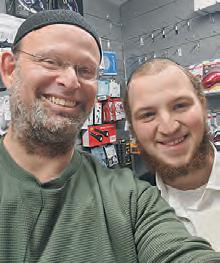
From time to time, the Jewish Press receives interesting and somewhat unique calls. This past week, we spoke with Pat Ivy from Columbus, NE, who lost her husband Dorsie in 2025.
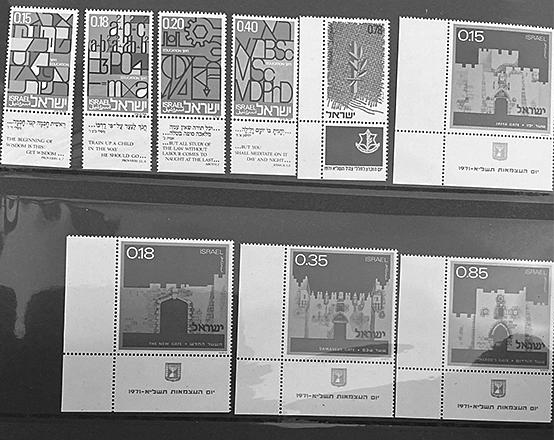
Dorsie, she told us, had been a pastor, and an avid stamp collector-leaving her with the task of finding that collection a new home. “I’m trying to downsize,” she said, “and I’m calling because quite a few of the stamps are from Israel.”
Israel began issuing postal stamps as early as May 16, 1948. The first stamps, known as the Doar Ivri series, featured images of ancient coins, rather than portraits or national symbols. They featured Hebrew, Arabic, and English.
1949-when the Modern State of Israel was brand new.
“I have approximately 400 Israeli stamps that I am looking to sell,” Ivy told us. “I Also have stamps from the United
8:26 p.m.
SATURDAY: Shabbat Morning Service, 9:30 a.m. led by Rabbi Alex at TI; Torah Study, 12:30 p.m. via Zoom; Havdalah, 9:33 p.m.
SUNDAY: Temple Gardening, 8:30-10 a.m. We need volunteers to help spruce up the flower beds; Men’s Bike/Coffee Group, 10:30 a.m. at Rock 'N' Joe Coffee, 5025 Lindberg St, Lincoln. For more information or questions please email Al Weiss at albertw801@gmail.com
WEDNESDAY: Men’s Lunch Group, 12:15 p.m. at Horisun Hospice, 8055 O St #300, Lincoln. We meet in the conference room. Bring your own lunch and beverage. For more information, contact Albert Weiss at albertw801@gmail.com; Ladies' Lunch, 12:30–1:30 p.m. at Ollie & Hobbes Craft Kitchen, 2940 Pine Lake Rd STE A, Lincoln; Locations are decided upon at each lunch for the following month. For more information, please email Barbara Barron at oohhmmm. barb@gmail.com
FRIDAY-May 29: Kabbalat Shabbat Service, 6:307:30 p.m. led by Rabbi Alex at SST followed by an Oneg; Shabbat Candlelighting, 8:31 p.m.
SATURDAY-May 30: Shabbat Morning Service, 9:30 a.m. led by Rabbi Alex at TI; Torah Study 12:30 p.m. on Parashat Nasso via Zoom; Havdalah, 9:40 p.m.
FRIDAYS: Virtual Shabbat Service, 7:30 p.m. every first and third of the month at Capehart Chapel. Contact TSgt Jason Rife at OAFBJSLL@icloud.com for more information.
In-person and virtual services conducted by Rabbi Benjamin Sharff, Rabbi Deana Sussman Berezin, and Cantor Joanna Alexander.
FRIDAY: Shavuot Service and Yizkor, 10:30 a.m. InPerson & Zoom; Shabbat B’yachad Service, 6 p.m. InPerson & Zoom.
SATURDAY: Torah Study, 9:15 a.m. In-Person & Zoom; Shabbat Morning Service, 10:30 a.m. In-Person & Zoom.
TUESDAY: An exploration of Mordechai Kaplan: A Learning Series, 11 a.m. with Rabbi Bienstock — InPerson & Zoom; Mah Jongg Made Easy 1:30 p.m. InPerson.
WEDNESDAY: Yarn It, 9 a.m.
THURSDAY: The Zohar: Thursday Morning Class 11 a.m. with Rabbi Sharff — In-Person & Zoom.
FRIDAY-May 29: Drop-In Mah Jongg, 9 a.m. In-Person; Village Walking Group, 10 a.m.; Rock. Shabbat Service, 6 p.m. In-Person & Zoom.
SATURDAY-May 30: Torah Study, 9:15 a.m. In-Person & Zoom; Shabbat Morning Service, 10:30 a.m. InPerson & Zoom; Young Family Fun Day, 3:30 p.m. Please visit templeisraelomaha.com for additional information and Zoom service links.
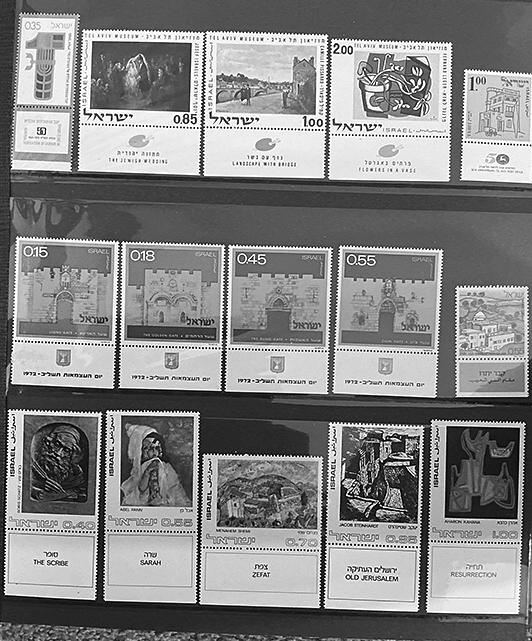
Dorsie began collecting when he was still in elementary school; Ivy said that was about
ROBERT EDWARD KRASNE
Robert Edward Krasne passed away peacefully at home on May 9, 2026 at age 89.
Bob is survived by his adored wife of nearly 68 years, Elaine; his children, Marcia Rubinett (Arthur), Dick Krasne (Robin), Alan Krasne (Rebecca) and Gail Plotkin (Alex); his grandchildren: Michael Rubinett (Jessica), Andrew Rubinett (Jackie), Seth Krasne, Jake Plotkin, Mollie Rubinett (Ethan Silver), Sara Leightman (Adam) and Zach Krasne; and his great-grandchildren, Nora Cooper Rubinett and Nell Sylvie Rubinett.
Bob was born in Council Bluffs, Iowa, on July 9, 1936, the son of Sara and Millard Krasne. A graduate of Central High School in Omaha and the University of Nebraska, he married the love of his life and classmate, Elaine Krantz. The arrival of their four children followed quickly and Bob became a rare-for-his-generation hands-on father who delighted in raising his children and celebrating their accomplishments.
For Bob, the three pillars of family, business and community stood as his life’s focus.
He was quick to build strong relationships and take risks. Uprooting his family from their extended Omaha community in 1976 to move to El Paso was Bob’s hugest leap of faith. His optimism and willingness to enter the unknown drove him to make this move to El Paso where his family flourished and where he, together with his sons, built Alamo Auto Supply into a thriving family business.
A man of profound gratitude for the bounties he felt had been bestowed upon him, Bob modeled a commitment to his Jewish community by supporting the organizations he felt passionate about, leading them with his trademark vision and wisdom. Temple Mount Sinai, El Paso Holocaust Museum, El Paso Jewish Community Foundation all benefited from his stewardship and commitment.
Our beloved husband, father, grandfather, great-grandfather and friend — and the kindest soul we knew — lived a long life defined by immense fortitude, eternal optimism and the deepest devotion to his family. We will carry the lessons learned and gifts imparted from him with us forever.
Memorials may be made to Temple Mount Sinai or the El Paso Holocaust Museum.
BAR MITZVAH
AARON SHERMAN
Aaron Sherman, son of Susan Long and David Sherman z'l of blessed memory, will celebrate his Bar Mitzvah on Saturday, May 30, 2026, at Beth El.
Aaron is a seventh-grade student at Friedel Jewish Academy and he received the Presidential Academic Award. He recently became a 2nd place winner of the Friedel Middle School speech contest.
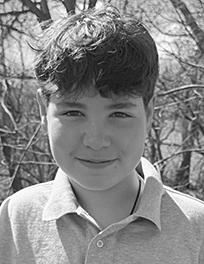
Aaron plays baseball. He loves all things planes, trains and classic cars.
Grandparents are Patty Sherman of Omaha and Mike Sherman z'l of blessed memory, Rae Lin of Omaha, and Robert and Karen Long of Lakeland, Florida.
If you experience antisemitism, there are ways to report an incident or hate crime:
CALL the JFO’s Safety and Security Team 402-334-6446
EMAIL JCRCreporting@jewishomaha.org SCAN the QR code below to fill out the Incident Reporting Form
IF THIS IS AN EMERGENCY, MOVE TO A SAFE AREA AND DIAL 9-1-1 We work directly with law enforcement, Secure Communities Network, and the Anti-Defamation League.
If you see something, say something.


ANNOUNCEMENT
ADVERTISE STATEWIDE for $225/25 word classified ad. Over 120 newspapers with circulation of more than 237,000. Contact the Jewish Press or call 1-800-369-2850.
HELLO NEBRASKA! Introducing www.nepublicnotices.com, a new public notice website presented as a public service by all Nebraska newspapers. Free access, fully searchable – because democracy depends upon open government and your right to know.
BANKRUPTCY RELIEF! Help stop Creditor Harassment, Collection Calls, Repossession and Legal Actions! Speak to a Professional Attorney and Get the Help You NEED! Call NOW 844-215-3629
AFFORDABLE PRESS Release service. Send your message to over 120 newspapers across Nebraska for one low price! Call 1800-369-2850 or www.nebpress.com for more details.
DENTAL INSURANCE from Physicians Mutual Insurance Company. Coverage for 350 plus procedures. Real dental insuranceNOT just a discount plan. Do not wait! Call now! Get your FREE Dental Information Kit with all the details! 1-855-490-4149 www.dental50plus.com/81 #6258
FOR
GET DISH Satellite TV + Internet! Free Install, Free HD-DVR Upgrade, 80,000 On-Demand Movies, Plus Limited Time Up To $600 In Gift Cards. Call Today! 1-877-688-4784
FOR SALE - UTILITIES
PREPARE FOR power outages today with a Generac Home Standby Generator. Act now to receive a FREE 5-Year warranty with qualifying purchase. Call 1-402-899-2584 today to schedule a free quote. It’s not just a generator. It’s a power move.
HELP WANTED
EARN MORE with a flexible schedule! Sell statewide advertising for Nebraska’s newspaper network. Independent contractor role. Contact Jerry: jerry@onepressne.com or (531) 249-1662.
HOME SERVICES
DOES YOUR basement or crawl space need some attention? Call Thrasher Foundation Repair! A permanent solution for waterproofing, failing foundations, sinking concrete and nasty crawl spaces. FREE Inspection & Same Day Estimate. $250 off ANY project with code GET250. Call 1-844-958-3431
TO BUY
BUY 8,000 cars a week.