

HEIDI HEILBRUNN
IHE Program & Communications Manager
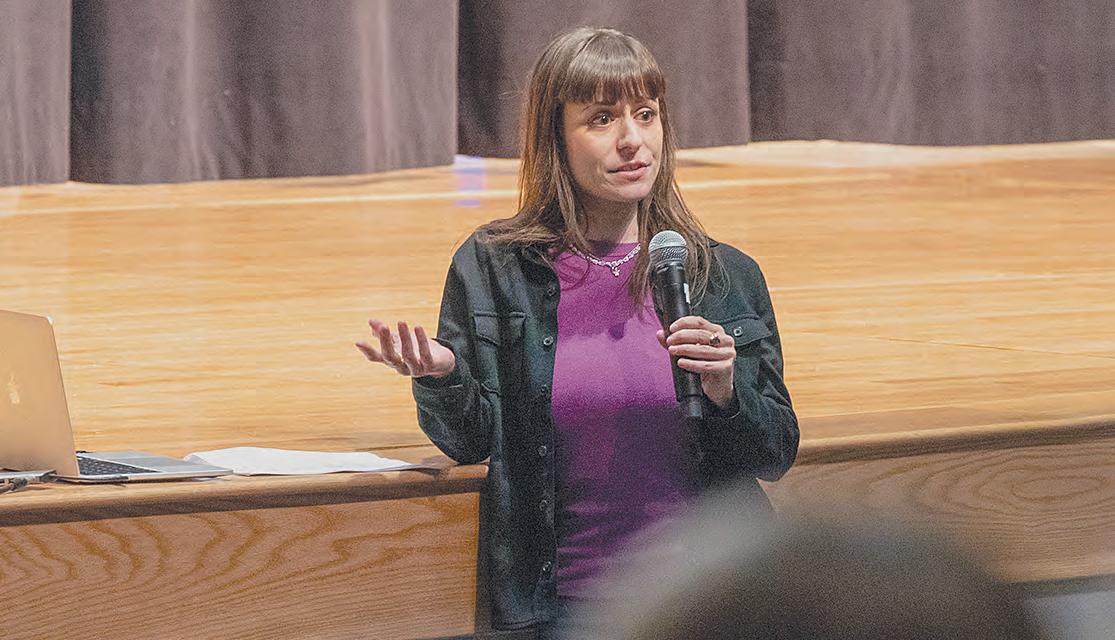
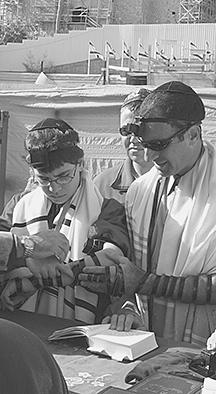
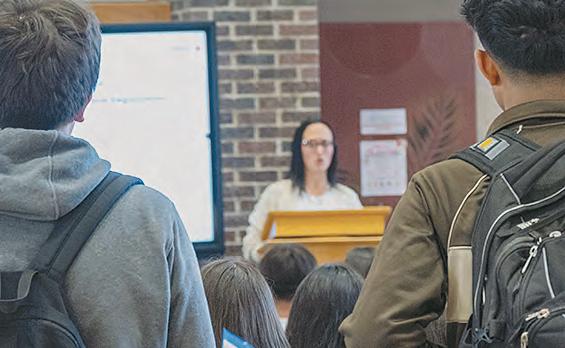
The Institute for Holocaust Education (IHE) is honored to present the 16th annual Week of Understanding March 23 through March 27. The Week of Understanding is an initiative to bring Holocaust survivor testimony into schools across the Omaha metro area, giving students the opportunity to hear from second and third-generation survivors.
This year’s Week of Understanding will also feature a pub-
lic event with speaker Steve Goldberg, who will present My Friend Abe on Wednesday, March 25, at 6:30 p.m. at The Durham Museum.
Each year, the IHE arranges more than 25 speaking engagements that will reach over 7,500 Nebraska students. Created by the IHE in partnership with Omaha Public Schools, the Week of Understanding is designed to deliver Holocaust survivor testimony to a maximum number of See Week of Understanding page 2
HEIDI HEILBRUNN
JCRC Program and Communications Manager
Voices from across Nebraska’s Jew-
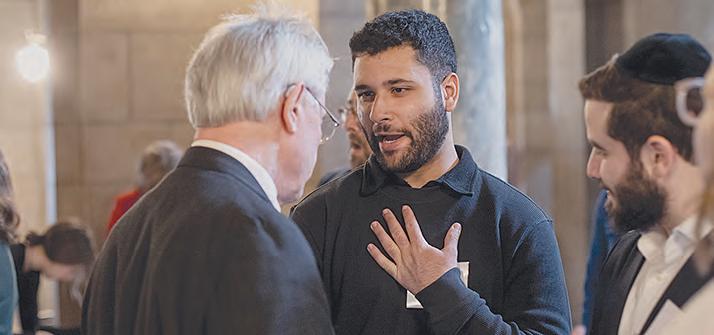
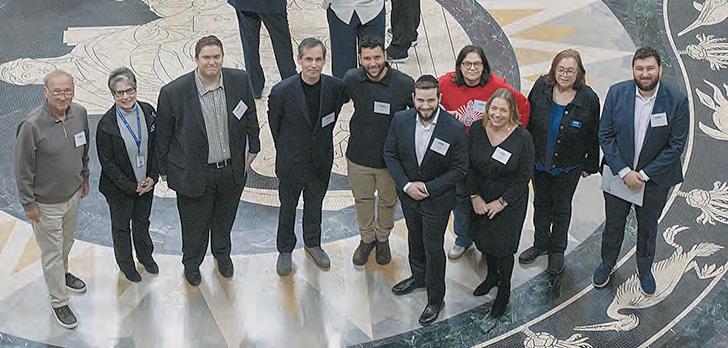
ish community echoed through the marble halls of the State Capitol on Thursday, February 19, 2026, as advocates gathered for the Fourth Annual Jewish Day of Action. Organized by the Jewish Community Relations Council, the day brought community members face-to-face with lawmakers to champion issues impacting Jewish Nebraskans and the broader community. Joined by representatives from the Anti-Defamation League (ADL) and Jewish Federations of North America (JFNA), the See Jewish Day of Action page 2
AMY BERNSTEIN SHIVVERS
JFO Foundation
Executive Director

The Jewish community is warmly invited to gather for a special afternoon honoring the life, legacy, and enduring impact of Alan J. Levine at the dedication of the Alan J. Levine Performing Arts Theater. The dedication will mark the fifth anniversary of Alan’s passing and will take place in partnership with The Circle Theater’s musical production of The Descendants on Sunday, March 29, beginning with a 2 p.m. performance, a dedication and dessert reception.
Born and raised in Omaha, Alan carried his hometown close to his heart, even after spending more than 60 years in California. He often
spoke fondly of his formative years here and the deep sense of connection he felt within the Jewish community.
“Going to Central High was fantastic. There were so many Jewish students and we all knew each other. There were countless ways to See Levine theater page 3

CALL the JFO’s Safety and Security Team 402-334-6446
EMAIL JCRCreporting@jewishomaha.org
SCAN the QR code below to fill out the Incident Reporting Form
Continued from page 1 students within a single school week.
“Through the stories of survival and perseverance of our Holocaust Survivors we can learn understanding, empathy and to act as an upstander,” said Scott Littky, Executive Director, Institute for Holocaust Education. “Further we can gain understanding into the Jewish value of Tikkun Olam and work to make our world a better place.”
Local speakers will include 2nd generation survivors Hazzan Michael Krausman, Dr. Steve Wees, Dana Knox and Eadie Tsabari as well as 3rd generation survivor Kelly Tichauer-Kirk. The Week of Understanding will also welcome the following out-of-town speakers, who will travel to Omaha to share their stories: Rochelle Brown-Rainey, Steve Goldberg, Cyd Gottlieb and Rose Viny. Discover more about each speaker below.
ROCHELLE BROWN-RAINEY
For many years, Rochelle’s mother Magda Brown would come to Omaha to speak during the Week of Understanding. Rochelle always accompanied her mother wherever she spoke. They traveled across the country and around the world, driven by a mission to share Magda’s harrowing story of surviving the Auschwitz-Birkenau and Buchenwald concentration camps and then building a new life in the United States. Magda embraced every opportunity to reach people, speaking to more than 100,000 people in person-and reaching many more online. Magda died in the summer of 2020 and now Rochelle is sharing her mother’s story and keeping her memory and message alive.
STEVE GOLDBERG
Steve Goldberg’s presentation is titled: My Friend Abe. Currently Steve is taking a break from his 20+ year career as a high school history teach to share the story of Abe Piasek, a Holocaust survivor from Poland. Mr. Goldberg met Abe in November of 2018 when he came and spoke at the school he was teaching at in Durham, NE. The two became friends. Abe passed away in 2020 at the age of 91. Three days before he died, Abe asked Steve to “keep telling my story.” To date, Steve has shared Abe’s story over 150 times to close to 9,000 people.
CYD GOTTLIEB
Although Cyd Gottlieb never personally met her Holocaust Survivor grandparents, as a child she gained a deep understanding of their respective journeys through various ghettos, concentration camps, displaced persons camps, and countries from a box of documents kept on the top shelf of a closet. Inside, she found authentic primary documents of different paper types, fonts, chronological stamps, seals, and languages.
By following patterns and details, she figured out how to understand what words could not describe.
In 2023, with this trove of information, Cyd completed 3GNY’s WEDU speaker training course to better learn how to distill her family narrative and contribute to public Holocaust education.
Cyd is a second-time participant in our Week of Understanding.
ROSE VINY
Rose was born and raised in Omaha and is the daughter of Holocaust survivors Bluma and Joe Polonski. Her father Joe who was one of only 700 survivors of Treblinka and one of only three survivors who escaped from the death camp. Rose will be showing the movie, Escape from Treblinka: The Joseph Polonski Story, at each of her talks and will be sharing her message of Never Again! The film chronicles the life of Joseph Polonski from his childhood in Silvaki, Poland, to the Jewish ghetto, and ultimately to Treblinka. His wit and luck allowed him to escape from Treblinka. After his escape, he served as an officer in the resistance, fighting Nazis until the liberation and eventually immigrated to the United States in 1949.
The community event at The Durham Museum promises to be especially powerful as Steve Goldberg shares his story of Holocaust survivor Abe Piasek. Goldberg most recently shared Piasek’s story during IHE’s Third Thursday’s Lunch and Learn on January 15.
To register for the Week of Understanding event at The Durham Museum, which is co-sponsored by the Durham Museum and the Institute for Holocaust Education, please visit the Durham Museum’s website at www.durhammuseum.org
The Week of Understanding has been made possible through the support of the Shirley & Leonard Goldstein Foundation, Omaha Public Schools Foundations and the Jewish Federation of Omaha.
Continued from page 1
delegation gathered in the rotunda of Lincoln’s iconic art deco “Tower of the Plains,” discussing their message and strategy before the start of the legislative session.
If you are currently a high schooler age 16 and up, or college student up to 24 years old, and want to become more involved in our community, this is your chance.
If you are interested, please send your resume and cover letter to avandekamp@jewishomaha.org.

Lt. Gov. Joe Kelly and senators from across the state took time to step off the legislative floor to meet directly with members of the Jewish community before the group was formally recognized from the balcony by the Legislature.
Eli Berne, JFNA State Director of Government Relations, traveled from Washington, D.C. to attend Nebraska's Jewish Day of Action. “The best part of my job is getting out into communities across the country and meeting with the people who are carrying this work forward every day,” Berne said. "In-person engagement at the state level is critical and effectively moves the needle at a time when Jewish communities in Nebraska and across the country are facing growing threats.”
Conversations centered on key issues currently under debate in state legislation, including community security, rising antisemitism and maintaining the Constitutional promise of the separation of religion and government - especially in schools.
"Jewish Day of Action is not about partisanship — it is about partnership. It is about showing up, listening, and engaging in good faith. These are values Nebraska was built on, and values the Jewish community has held for generations,” Sharon Brodkey, Executive Director of the JCRC said. "For our Governor and the Legislature, hearing constituent voices during such a critical moment can make a difference.”
The JCRC, which has been urging support for Sen. Sanders’
LB989 to restore funding to the Nebraska nonprofit security grant, testified along with The Catholic Conference in front of Sen. Clements and the Appropriations Committee in support of the bill just two days before the Jewish Day of Action.
“This is a question of prudent stewardship: whether lawmakers honor the intent of the state-based NSGP as it was passed and signed into law by Governor Pillen in 2024, or it becomes a piece of unfunded performative politics. Will Nebraska invest modestly and proactively in prevention, or absorb immeasurable costs and consequences after a crisis occurs. Restoring NSGP funding is a nonpartisan, responsible, preventative use of state dollars that benefits all Nebraskans,” Brodkey added.
The group also stressed that the Jewish community was disappointed that the Legislature missed the opportunity to pass LB538, a bill addressing antisemitism in schools. The citizen lobbyists emphasized the importance of codifying existing executive orders and proclamations by adopting the International Holocaust Remembrance Alliance (IHRA) definition of antisemitism into law, which would cover every aspect of antisemitism, not just schools and universities.
Building on the momentum of the morning, the Jewish Community Relations Council hosted a kosher luncheon for 31 attendees, including senators, their staff, and the lieutenant governor at nearby Peetz & Co. Rabbi Geiger of Beth Israel Synagogue offered the blessing before the meal. JCRC Executive Director Sharon Brodkey spoke about the ongoing importance of security for the Jewish community, expressed gratitude to legislators, staff and advocates before marking the moment by reciting the Shehecheyanu.
The luncheon provided an opportunity for lawmakers to connect personally with their Jewish constituents, an essential part of the day, particularly for those who do not have Jewish populations in their districts. Legislators left with gift bags decorated by Friedel Jewish Academy students that included hamantaschen and information on the upcoming holiday of Purim, along with information on the JCRC mission. Jewish Day of Action is funded by a Staenberg Family Anything Grant.
MARTY RICKS
NJHS Board Member
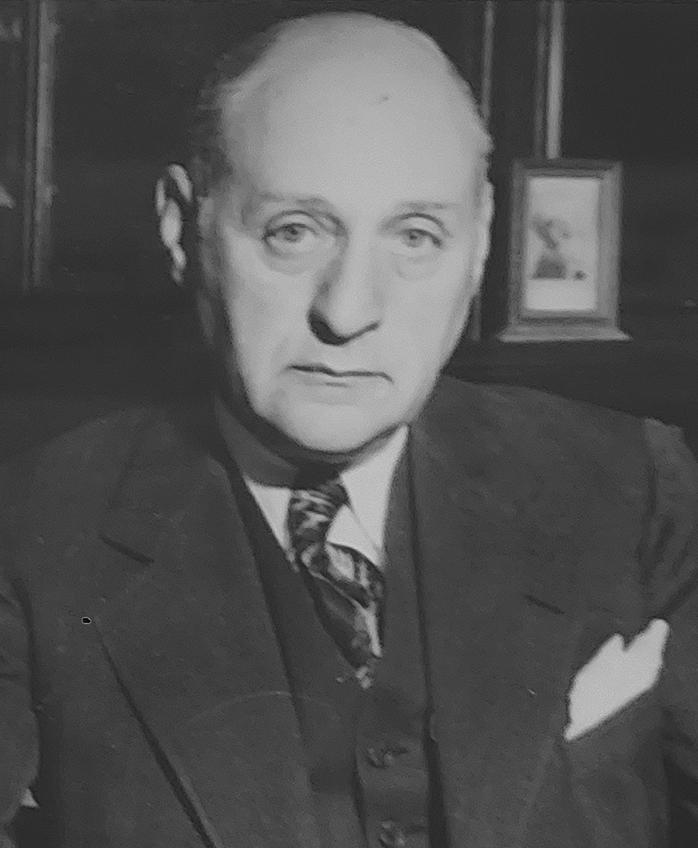
Milton S. Livingston died in 1969. More than half a century later, his name continues to shape Jewish Omaha.
The reason is not only memory. It is legacy. In 1948, while serving as president of the Jewish Federation of Omaha, Milton and his wife Corinne established the Milton S. and Corinne N. Livingston Foundation. Today, that foundation lives on as a component donor-advised fund within the Jewish Federation of Omaha Foundation. At a moment when Jewish communal life was adjusting to the postwar era, the Livingstons made a deliberate decision: their philanthropy would extend beyond their lifetimes.
Milton Livingston was born in Omaha in 1891 and lived there his entire life, apart from his service in the United States Army during World War I. He graduated from Omaha High School in 1909, later known as Omaha Central High School. After returning from military service, he began building what would become a successful business career, founding the Auto Equipment Company and reorganizing it in 1931 as the Major Appliance Company, an electrical appliance distributor.
the advisory board of Lutheran Hospital. He received the Brotherhood Award from the
Continued from page 1 come together and reasons to connect.” — Alan J. Levine (2020)
Those connections — and the joy they sparked—shaped the way Alan thought about giving back. Several years ago, he began reflecting on the legacy he hoped to leave. Above all, Alan wanted his philanthropy to touch as many people as possible and to do so in a way that brought happiness. “I came back to Omaha and met with some of the people involved in the campus renovation,” Alan shared. “I remember Marty Ricks was there and he asked: ‘What do you really want?’ That’s when it dawned on me: I want something that makes people happy. The theater fits the bill. It’s a living space — it’s vibrant — and it allows many different community members, young and old, to stand shoulder to shoulder and connect. In a theater, whether you are a performer or an audience member or otherwise involved with a production, you build relationships with people you might not otherwise meet.”
“I initially met Alan when I was Executive Director of the JFO Foundation,” Marty said. “Over the years, we developed a friendship, especially after I retired. Every time my wife Iris and I visited Los Angeles, we’d stop by and see Alan. The one thing Alan cared about deeply was the legacy he would leave in Omaha. Omaha remained his real home, always.”
Howard Epstein recalls, "Alan contemplated his gift for several decades. During my ten years as Executive Director of the JFO Foundation, Alan and I frequently talked about his love of Omaha's Jewish community and the many friends and memories he made during his formative years in Omaha. He wanted his gift to give maximum benefit to current and future generations of Jewish Omahans, and in funding the theater, the pickleball complex, and the rehabilitation wing of the Rose Blumkin Jewish Home, his goals have been met. Alan J. Levine has truly left a lasting legacy."
Before assuming the Federation presidency in 1947, following Morris Jacobs, Livingston had already chaired the Federation’s annual campaign and budget committee. He understood that a strong Jewish community required thoughtful planning and disciplined stewardship. Establishing a foundation while serving as president was a powerful expression of that belief.
His Jewish communal involvement extended well beyond his presidential term. He played leadership roles in Israel Bond campaigns and was deeply committed to strengthening Jewish life in Omaha for future generations. Much of what we know about his work comes from an article written for the Nebraska Jewish Historical Society by Mary Fellman, who described him as both determined and generous in advancing Jewish causes.
Milton had a lifelong connection to Temple Israel, where he received his early Jewish education in Sunday School and was confirmed by Rabbi Frederick J. Cohn, who later officiated at his marriage to Corinne Neu. He served as president of Temple and chaired its building committee. When an addition of a school wing was approved, Milton and Corinne offered matching funds to complete the fundraising. After Corinne died in 1961, Milton requested that a chapel be added in the name of Milton and Corinne, funding it entirely in her memory. His philanthropy was personal, thoughtful, and rooted in gratitude.
His leadership extended beyond the Jewish community. He served as president of the Board of Regents of Creighton University, was on the Board of Trustees of Children’s Hospital, served on the Omaha Planning Board, and was a member of

Omaha chapter of the National Conference of Christians and Jews for civic leadership in human relations. His commitments reflected a belief that Jewish responsibility and civic responsibility were not separate callings.
Milton Livingston died on June 7, 1969. At his funeral two days later, Rabbi Sydney H. Brooks of Temple Israel reflected on his character: “Anything that was constructive, humanitarian and yet sensible and planned, commanded his attention. For every worthwhile constructive cause in this community, Milton gave fully of his self, his immense knowledge, and the full soul of his devotion. Our community cherishes his gifts of hand and heart. Our children are his beneficiaries. Our city will long reflect his judgments and service.”
Milton and Corinne Livingston did more than give. They ensured that their giving would continue. Through the foundation they established in 1948, their commitment to Jewish life remains active to this day.
We stand on their shoulders, sustained not only by what they built in their time, but by what they set in motion for ours.
We thank the Nebraska Jewish Historical Society for preserving these stories and invite readers to share memories, photos, or family connections that can help us rediscover the lives of those who built our community. Standing on their shoulders, we continue their work.
The Jewish Federation of Omaha past presidents series is a collaboration between The Nebraska Jewish Historical Society (NJHS) and the Jewish Press. For questions and/or more information about the NJHS, please contact executive director Jane Rips at jrips@jewishomaha.org, or visit the website at nebraskajhs.com


Because of Alan’s generosity, our community now enjoys the Alan J. Levine Performing Arts Theater — a beautiful, dynamic space designed as a place where relationships are formed, creativity is celebrated, and community comes to life. To Alan, the true gift was never the bricks and mortar, but what happens within those walls.
Alan’s legacy reaches beyond the theater. His philanthropic vision also supported the recent renovations at the Rose Blumkin Jewish Home and the JCC pickleball courts, spaces now enjoyed by community members of all ages — further reflecting his belief in togetherness across generations.
Alan’s longtime partner, Monica Uballez, will be traveling from Oregon to be in Omaha for this meaningful anniversary, friends of Alan, and community members as we honor a life devoted to connection, joy, and shared experience.
We invite you to join us for this special afternoon of Disney musical theater, dedication, and dessert reception as we celebrate Alan’s life and say thank you for the legacy that continues to bring people together.
Tickets can be purchased through the QR code (right).
Thank you, Alan. The community applauds your generosity and vision!



ARNOLD GARSON
Solomon Greenstone faced numerous obstacles as he worked to build his pawnshop business in Lincoln – antisemitism, legal hassles, business challenges, and personal tragedies.










He immigrated from Poland as Schloime Zelig Grynstein in about 1884, changed his name, and overcame every obstacle he faced.
He was strong-willed and wily. He was relentless in pursuing a goal. He was competitive, smart, and worked hard.
The store, which moved several times, always was situated in a prime downtown location. He advertised more than his competitors.
One example of his relentlessness was his fight to obtain compensation from the City of Lincoln for a broken leg. Walking home for dinner one Sunday evening in 1897, he stepped on a weak board in a wooden sidewalk. His left leg went through. He broke his tibia and was in pain the rest of his life.
watches worked, offering to bet $5 he was right. Solomon knew watches and agreed to the bet, also to the man’s proposal that they both exit, each finding someone to help decide who was right. Solomon locked the door as they left. He returned about 10 minutes later. The man was standing in front of the store. When Solomon unlocked the door, he discovered that burglars had broken in through a rear window, stealing dozens of gold watches, diamond rings, and more. The customer, obviously an accomplice, ran. The perpetrators, three men, were captured within 24 hours.
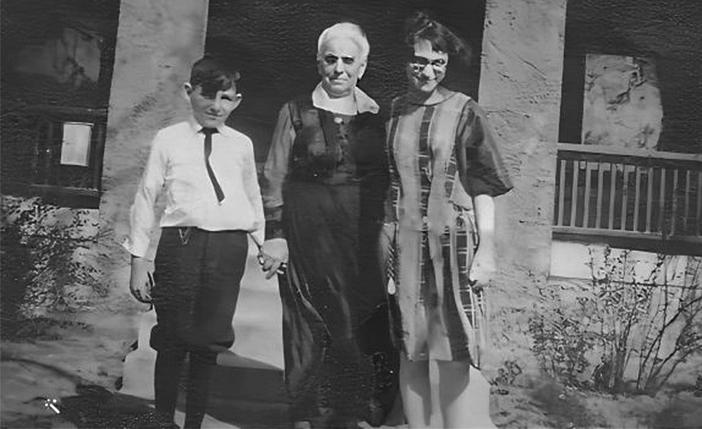
He asked the City Council for compensation, but “that body treated him as if he was not in existence,” a Lincoln newspaper reported. Angry at an antisemitic dismissal, Solomon sued. The case dragged through the courts for five years until the Nebraska Supreme Court ruled that property owners are responsible for maintaining their sidewalks. The settlement: $25,000 in today’s money. Solomon was arrested several times for failing to keep required records or not having a valid pawnshop license. He routinely paid the fines the next morning. But it seems plausible that these laws were intended, in part, to harass the city’s many Jewish pawn brokers.
In 1888, an overheated stove started a fire in Solomon’s pawnshop, destroying most of the stock. The $2,000 loss was insured. Fires in commercial buildings were common, however, and would happen again.
Another time, Solomon narrowly missed being shot in the gut by a customer. The customer carried a gun into Solomon’s store to pawn it. “Is it loaded?” Solomon asked in precaution. “Oh no,” the customer said, then snapped the hammer to make the point. Bang.
A newspaper account said the bullet missed hitting Solomon in the stomach by about two inches, and “the drunken simpleton ran for his life.” Solomon fell down behind the counter, but escaped injury.
In 1890, Solomon fell victim to a clever robbery he should have seen coming. A man entered to look at watches. He instigated an argument with Solomon about how one of the
DIANE WALKER
JFO Foundation Fund and Scholarship Administrator
The Bennett G. Hornstein Memorial Scholarship is available for the 2026-2027 academic year for law students.
The family of the late Bennett G. Hornstein established the Bennett G. Hornstein Endowment Fund in partnership with the Jewish Federation of Omaha Foundation in 2005. The endowment funds an annual scholarship, awarded to an aspiring law student to carry on Hornstein’s commitment to working for the poor and powerless and striving to make a difference in the Nebraska community. Since the first award in 2006, the fund has provided more than $60,000 in support to deserving law students.
Solomon’s wife, Lena, and their four children joined him in Lincoln in 1886. They soon had a fifth child.
Tragically, the two youngest, Carrie, 3, and Hymie, 6, died three days apart in early 1891, almost certainly from Russian flu, a worldwide pandemic that hit the upper Midwest hard that winter. They are buried together at Mt. Carmel Cemetery.
Solomon and Lena had one more child, a son, a year later. But tragedy had not yet run its course in their family. Rebecca, second-oldest of their six children and an accomplished pianist, died at age 19 at the family residence in March 1903. As the story was passed down among family, Rebecca drowned in a bath tub.
An incident of antisemitism at the family home one night stands out for leaving Lena seriously frightened. Two brothers, 9 and 13, were arrested for throwing rocks at the house. The boys taunted Solomon, yelling about a feature of his face they considered a Jewish physical characteristic. The reference was to “the abnormal dimension of his [Solomon’s] nasal organ,” a newspaper reported. Charges were dismissed the next day after a lecture from the judge.
Despite the obstacles, Solomon was successful and respected, and his family lived comfortably. An example: The wedding of his daughter, Eva, to Harry Garson on Dec.31, 1899, was attended by more than 300 invited guests. The dinner and dance following at Walsh’s Hall in downtown Lincoln included an “elegant repast that was in no way lacking,” a newspaper reported, with dancing accompanied by an orchestra. Many of the attendees were Solomon’s business acquaintances, both Jewish and Gentile.
In late 1908, Solomon was reported to have purchased “the handsome modern residence on South Tenth Street, near C Street.” He died of pneumonia two months later at age 57, however, before moving into their new house. Lena died on Dec. 31, 1923, from complications of diabetes.
demonstrating unwavering selflessness, empathy, and commitment to helping those who needed it most.
Hornstein’s daughter Jill Goldstein followed her father in the legal profession and has been an attorney with the Kutak Rock law firm in Omaha for 32 years. She said,

A 1958 graduate of Omaha Central High School, Bennett was the son of Joe and Adele Hornstein. After graduating from the University of Oklahoma, Bennett earned his law degree at the University of California Berkeley. He married Nancy Venger in 1963 at Beth El Synagogue in Omaha. They had three children: Jill, Beth, and Joe. Bennett spent a significant portion of his life and career helping people who were hated, who were detested, and whom nobody else would help. He fervently believed “that every defendant, no matter how poor, was entitled to a good lawyer.” And he carried out that promise, case by case in his over 20 years as an attorney, from Nebraska courtrooms all the way to the United States Supreme Court.
Hornstein lost an eight-year battle with cancer in March 1986 at the young age of 46, leaving behind a legacy of strong will, integrity, and a compassionate heart. During his life, he was an inspiration to his family, friends, and colleagues,
“Our family is grateful to honor our father’s legacy in public service and pro bono work by recognizing law students with a similar passion through the Bennett G. Hornstein Memorial Scholarship.”
Candidates should display a high standard of academic achievement, an adventurous spirit and a desire to take on an active role in service to the community. Applicants must also be attending law school at the University of Nebraska or Creighton University. Application deadline is April 1, 2026.
Applications are available on the Jewish Federation of Omaha webpage – Scholarships & Grants - Jewish Federation of Omaha. Choose the Additional Scholarship & Financial Opportunities banner. Please contact Diane Walker with questions at 402.334-6551 or dwalker@jewishomaha.org
The award-winning B’NAI B’RITH BREADBREAKERS speaker program currently meets Wednesdays via Zoom from noon to 1 p.m. Please watch our email for specific information concerning its thought-provoking, informative list of speakers. To be placed on the email list, contact Breadbreakers chair at gary.javitch@gmail.com





SETH SCHUCHMAN
When the Winter Olympics concluded, nearly 2,900 athletes had competed across ice rinks, mountain slopes and frozen tracks around the world. Among them were 20 Jewish competitors, less than one percent of the field. Eight of those 20 medaled, a 40 percent podium rate across hockey, speed skating, curling and snowboarding.
The numbers are striking, but they are not the whole story. These Games will ultimately be remembered for defining moments, and several of those moments belonged to Jewish athletes who delivered when the pressure was highest.
The most dramatic came in the men’s hockey final between the United States and Canada. The game went to overtime, the kind of stage where one decision, one shot, becomes permanent.
Jack Hughes did not hesitate.
Earlier in the game he had taken a high stick to the mouth and lost teeth, a reminder that Olympic glory rarely arrives clean. He returned anyway. In overtime he found space, attacked decisively and finished the opportunity in front of him. When the puck crossed the line, the United States secured its first Olympic men’s hockey gold since 1980.
Overtime winners in Olympic finals do not fade. They become part of Olympic lore. Hughes’ goal now sits there.
This was his first Olympic appearance, though hardly his first time representing the United States. He has worn the national sweater at multiple international levels, but this stage was different. He shared it with his brother Quinn, who carried heavy minutes on defense throughout the tournament. The two have spoken about what it meant to compete together at the Olympics, a rare opportunity to stand on the same bench in the sport’s biggest tournament.
Their Jewish identity is woven into that story. The Hughes brothers are Jewish through their mother, Ellen Weinberg Hughes, herself a former elite player. Hockey has not historically been a sport associated with visible Jewish stars. Seeing two Jewish brothers at the center of a gold medal breakthrough in one of the Olympics’ marquee events carries meaning beyond the box score.

The contrast is stark.
The women’s tournament delivered its own defining performance.
Aerin Frankel did not arrive at the Games as an unknown. She entered as one of the most accomplished goaltenders in the world, a former Patty Kazmaier Award winner at Northeastern University and a multiple time World Champion with Team USA. At these Olympics she elevated that résumé further, recording three shutouts and frustrating shooters with positioning and control that turned high danger chances into routine saves.
Olympic goaltending demands discipline. Track the puck. Control the rebound. Stay calm while momentum threatens to shift. Frankel did exactly that as the United States battled Canada for gold. When the final horn sounded, she had anchored another championship.
She is also the granddaughter of Holocaust survivors. That fact connects generations. From a Europe where Jewish families were hunted to a European arena where a Jewish granddaughter stood atop the podium as an Olympic champion.

Frankel has spoken about her Jewish background with pride. In Boston she has earned the nickname “Green Monster” for her ability to shut down opponents despite standing just five foot five. Off the ice she is known for a lighter side, including a popular project reviewing Caesar salads, but on the ice she is defined by precision and poise.
Jack Hughes delivered the flash. Aerin Frankel delivered the foundation. Both delivered gold. And both did so openly and confidently as Jewish athletes on the world’s largest stage.
Jewish medalists extended beyond hockey. Emery Lehman earned silver in speed skating, navigating a discipline defined by fractions of seconds and sustained endurance. Korey Dropkin captured silver in mixed doubles curling, where patience and execution determine outcomes. Scotty James secured silver for Australia in snowboarding. Kayle Osborne earned silver with Canada’s women’s hockey team, meaning Jewish athletes stood on both sides of one of the tournament’s fiercest rivalries.
Across multiple sports and nations, Jewish athletes left a measurable mark on these Games.
In a global competition decided by inches and split seconds, performance is what matters. This year, when the biggest moments arrived, Jewish athletes were in the middle of them.
We will be publishing our annual High School Graduation Class pages on May 22, 2026. To be included, fill out the form below or send us an email with the student’s name, parents names, high school they are attending, the college they will be attending and photo to: jpress@jewishomaha.org by May 12, 2026.


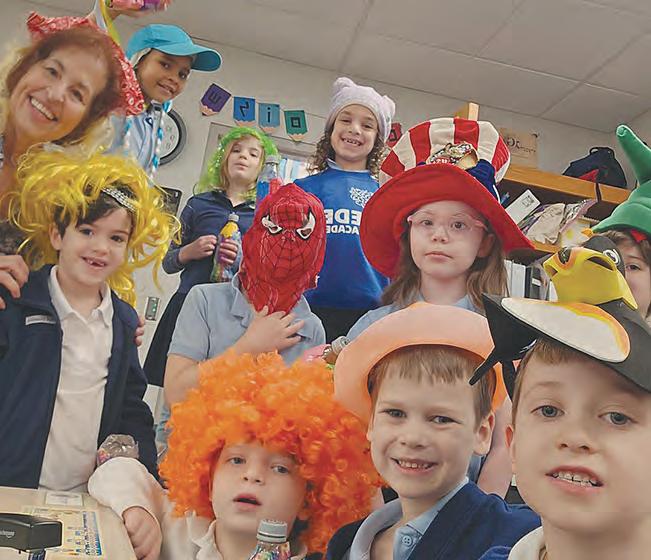
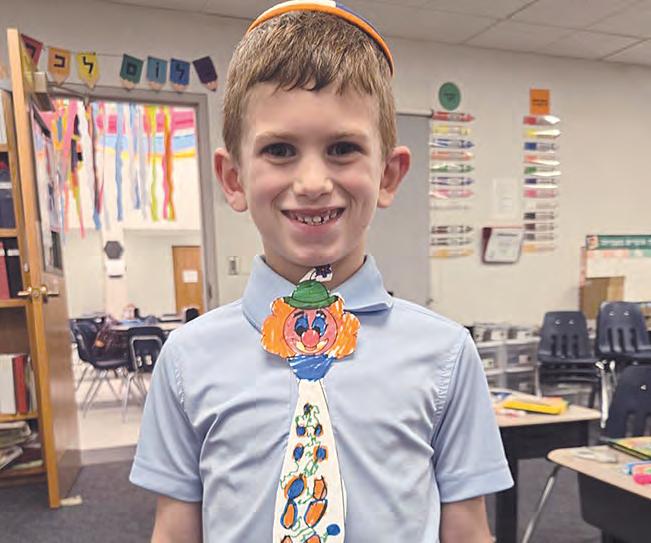
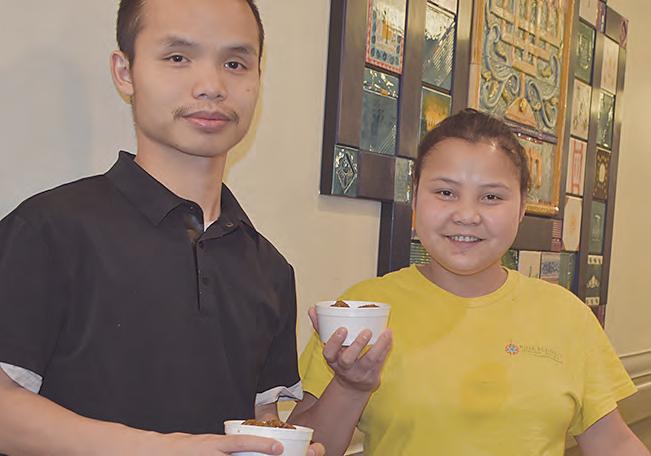
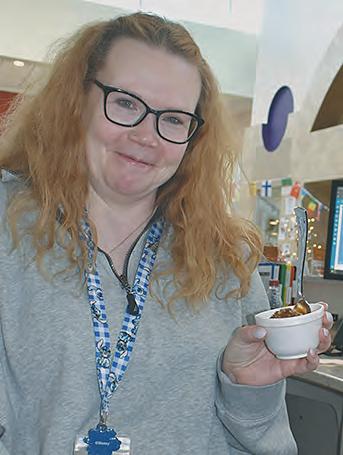
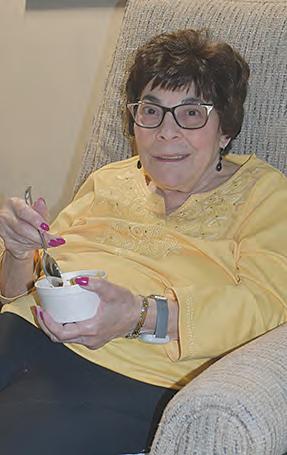
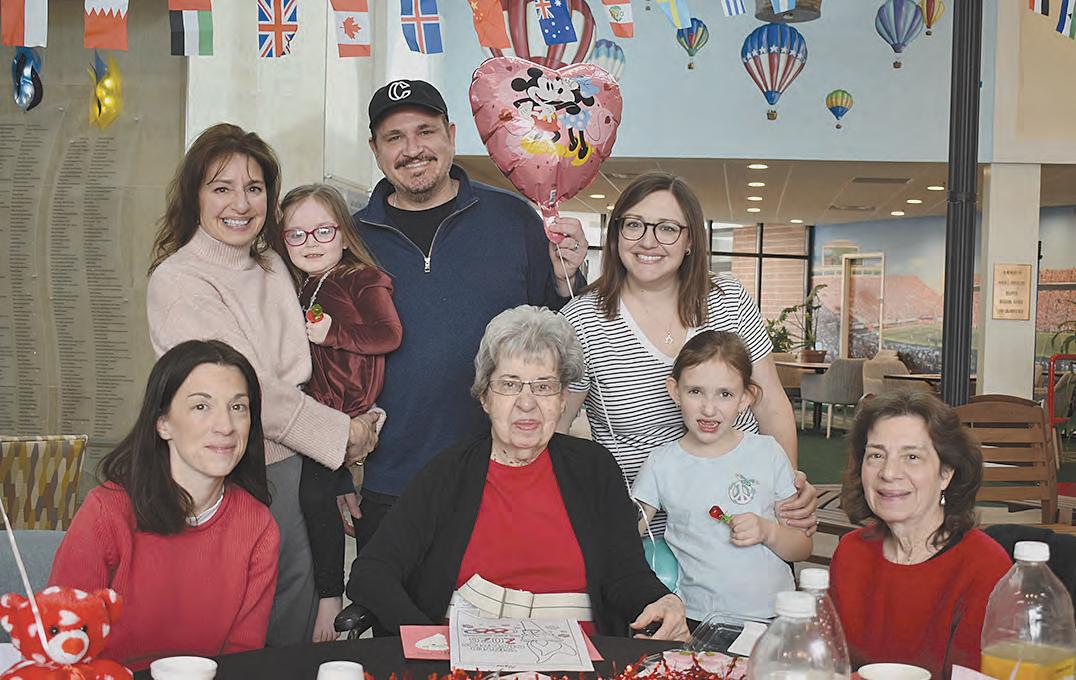
PHOTOS FROM RECENT JEWISH COMMUNITY EVENTS
SUBMIT A PHOTO: Have a photo of a recent Jewish Community event you would like to submit? Email the image and a suggested caption to: avandekamp@jewishomaha.org
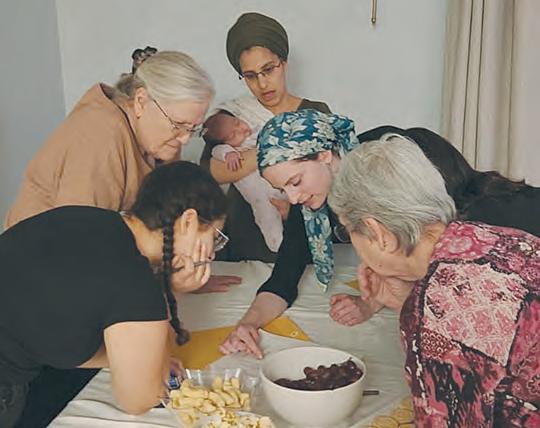
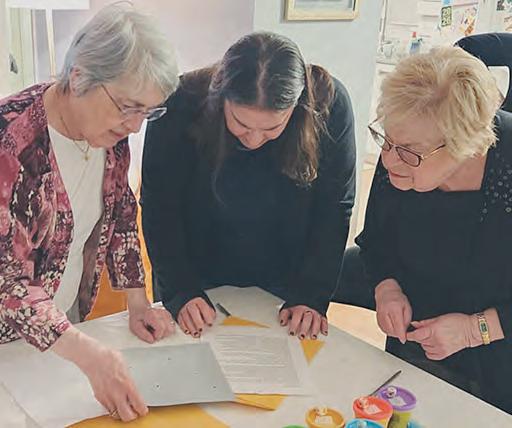
For Beth Israel’s
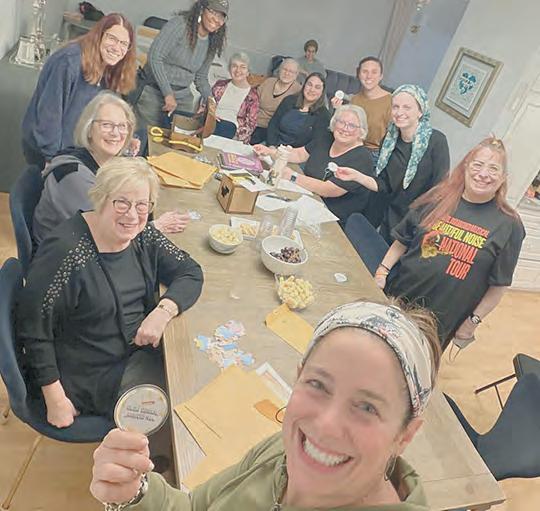
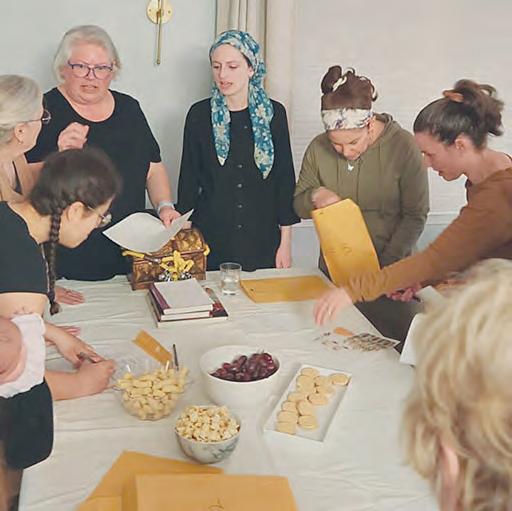
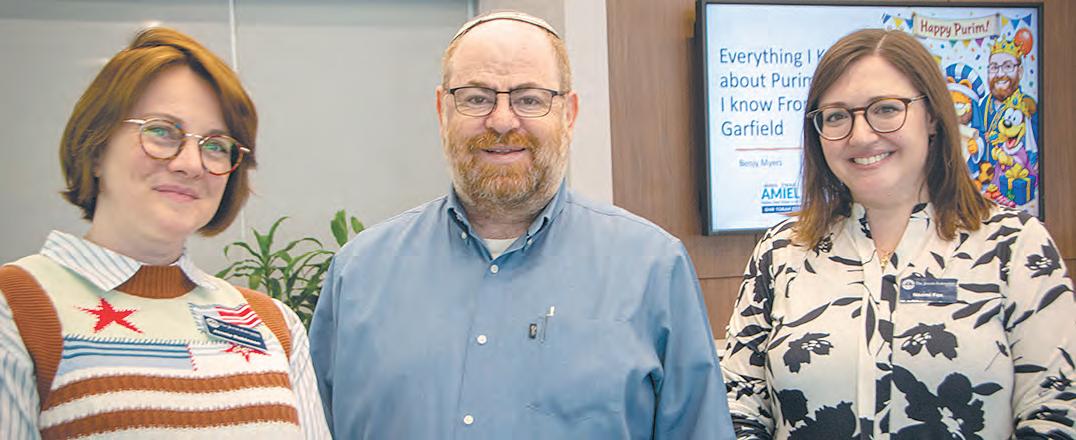
RABBI BENJAMIN SHARFF
Temple Israel Senior Rabbi
This is the fifth installment of daily updates from Rabbi Sharff as he traveled to Israel in January 2026.
As we are about to enter Shabbat, I wanted to spend just a few more moments of reflection on my time here. Soon I will be observing Shabbat with members of Reform congregations here. The words and melodies are often the same, but also different. And as I prepare for my only Shabbat here, I am filled with both trepidation and exaltation for all that I have seen, heard, and experienced.
This trip has been filled with unique voices and experiences. We heard from an Israeli poet to a book seller in East Jerusalem; from an Israeli Arab mayor in Jaljulya to the head of the Israeli Religious Action Center, who spoke to us inside Israel’s Supreme Court. We learned of ways we can partner and of words we can bring back to you.
We have navigated the crowds of Mahane Yehuda, and explored the back alleys of the Old City in Jerusalem. We have met with people just living their lives and others giving all of themselves to try to make Israel into the land promised and envisioned.
It will take me weeks to process everything I have heard and witnessed. In some ways, they are facing some of the same struggles, including a government desperate to consolidate its powers, undermining the heart of democracy.
In some ways, we are different as they are a nation now finally able to embrace the grief that they have been holding since the Simchat Torah massacre and the war, violence, and death that followed.
Through music, poetry, and art, there are so many giving of their creativity to provide hope out of the horror, loss, and anger. Art is about doing. Art is about responding.
Israel continues in all of its messiness and challenges. Yet in some ways, my time here has helped me understand just how much these past two-and-a-half years have profoundly changed me as a person and as a rabbi. And if there is one lesson I will bring home with me it is this: hope requires more than prayer; it requires action.
I am coming back soon, the same person, and also so very different. I will come back with words of despair, and I will return as well with words of hope. For both can be true at the same time.
Thank you for joining me on this journey, as I wish you a Shabbat Shalom from Jerusalem.


Beth El Engagement Coordinator
Beth El is thrilled to welcome Mandy Silverman, known to many as Mandylicious, for a joyful and flavor filled weekend from Friday, March 13 through Sunday, March 15.
Mandy Silverman, known as Mandylicious, is the creative force behind a challah and babka sensation that has inspired bakers around the world. Growing up in St. Louis, she developed a deep love for Jewish tradition and baking that continues to shape her work today. With her innovative take on traditional Jewish baking, she has created more than 550 unique recipes and is passionate about making challah and babka baking inclusive, accessible, and genuinely fun for people of all backgrounds and experience levels. Through her Instagram account, @mandyliciouschallah on Instagram, she inspires thousands with stunning braids, bold flavors, and contagious enthusiasm.
Friday will feature hands on baking experiences that promise to be as fun as they are flavorful. In the morning, participants will make brisket stuffed knot rolls and knishes. Later in the afternoon, Mandy will teach a baby babka baking class filled with practical techniques and sweet inspiration.

Mandy Silverman
have the opportunity to bake with Mandy, making challah dough cinnamon rolls and cookie bombs, bringing plenty of sweetness into their learning.
On Shabbat morning, Mandy will share the D’var Torah during services, offering reflections that weave together Torah, tradition, and the joy found in gathering around the table. Following services, the Kiddush luncheon and learning will feature the brisket stuffed knot rolls, knishes, and babkas prepared on Friday, allowing the entire community to enjoy the delicious results together. Our BEST students will also
Bakers of every skill level are warmly encouraged to join. Whether highly experienced in the kitchen or just beginning, everyone will create something wonderful. The weekend promises to be a spirited, delicious, and truly fun Shabbat. For full details and to register, please visit www.bethelomaha.org, and please call Stacie at Beth El Synagogue with any questions at 402.492.8550.
If you do business with any of our advertisers, please tell them you saw their ad in the Jewish Press It really helps us! JEWISH







Lookingforahistoric,elegantvenueforyournextcelebration?Whetherit’saBar/Bat Mitzvah,wedding,orfamilyevent,TheKimptonCottonwoodHoteloffersmodern luxurywithcateringandflexiblespacestocelebratewithfamilyandfriends.



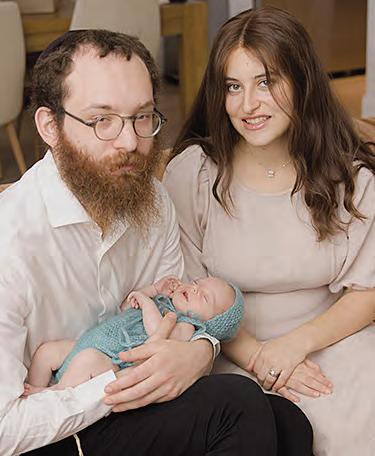
I'm Muky, the newest Katzman daughterin-law.
Zelig Katzman and I were married in Monsey, NY in November of 2024.
We made our home in Crown Heights, Brooklyn, close to lots of family and friends.
In addition to my current full-time calling as a mom to our adorable son, Dovber, I love to read, study, and create art.
During the school year, I run a club on Sunday afternoons for young girls where we explore baking and hands-on crafts. What I love most is to see how it helps them build both skills and confidence. And friendships.
This summer, I'm super excited to be joining the staff of Chabad's Camp Gan Israel as Program Director. June 22- July.
Camp has been a defining force in my life. I experienced its magic first as a camper, then as a junior counselor, counselor, and art director at various CGI camps around the world. Camp is a place where Jewish pride comes alive — where learning is joyful, friendships form naturally, and children feel deeply connected to who they are.
Over the past six years, I’ve had the privilege of helping run and direct CGI programs in Michigan, New Jersey, South Africa, and London. Across every location, I’ve seen the same thing: when children are immersed in an environment filled with warmth, creativity, and authentic Jewish inspiration, it leaves a lasting impression. Camp doesn’t just create summer memories — it strengthens identity, builds confidence, and fosters friendships that endure long after the season ends.
I am passionate about creating programming that is engaging, imaginative, and meaningful. Whether through art, hands-on activities, exciting trips, or dynamic Jewish learning, my goal is to ensure that every child feels included, inspired, and proud to be part of our community.
This summer, I look forward to bringing energy, creativity, and thoughtful planning to Camp Gan Israel. My hope is to help create an unforgettable experience — one infused with Jewish pride, learning, connection, and genuine joy.
I can’t wait to meet the families of Omaha and share an amazing summer together.
‘Write With Us,’ our small and intimate writing workshop (no need to be nervous) continues in the winter and early spring. Upcoming workshops are scheduled for the following Thursdays: March 26 and April 30 from 5-7 p.m. in the Noshery at the Staenberg Omaha JCC. Register by contacting Jessi at jtaylor@jewishomaha.org or Annette at avandekamp@jewishomaha.org. There is no cost to attend, although donations are always welcome.
If you have wanted to write your family’s story, that great American novel, or you have always wanted to try your hand at poetry, join us! Maybe you are already an accomplished writer, but you would benefit from being in a room with other writers. Perhaps you have convinced yourself you can’t write at all, but would love to try. Everyone, from absolute beginner to professional, is welcome to attend. We will provide the kosher snacks and the writing prompts.

We invite you to catch up on what's happening at the Goldstein Center. We have several events coming up this semester.
Rabbi David Segal will speak at UNO on March 26 from 6-7:30 p.m.
Rabbi David Segal of the Baptist Joint Committee for Religious Liberty (BJC) will speak at a faculty workshop and public lecture on religious freedom. In his public lecture that evening, Rabbi Segal will address issues of religious freedom in the public education system, including religious symbols in classrooms and debates over vouchers and other forms of public funding for private, often religiously-affiliated schools.
Dr. Yiwei Zhang, Grace Abbott School of Social Work is among our affiliated faculty.
Dr. Zhang's work focuses on advancing children's human rights and well-being. Her research centers on understanding children's experiences from their own perspectives, with
particular attention to children in immigrant families and children with Autism Spectrum Disorder. Grounded in a rights-based approach, Dr. Zhang examines how family, community, and social contexts shape children's well-being. She also brings her human rights commitment into the classroom through hands-on, community-engaged teaching.
With support from the GCHR, Dr. Zhang led a service-learning project last year that connected social work students with refugeeand immigrant-serving organizations, integrating program evaluation with hands-on learning about culturally responsive practice and human rights. You can learn more about Dr. Zhang's work and this project at Amplify Impact, an event from The Office of Engagement that highlights how partners are making meaningful difference in our community
To see our complete schedule and register for events, please visit unomaha.edu

(Founded in 1920)
David Finkelstein
President
Annette van de Kamp-Wright
Editor
Will Fischer
Creative Director
Claire Endelman
Sales Director
Lori Kooper-Schwarz
Assistant Editor
Sam Kricsfeld
Digital support
Mary Bachteler
Accounting
Jewish Press Advisory Board
David Finkelstein, President; Margie Gutnik, Ex-Officio; Joseph Abrahams, Helen Epstein, Andrea Erlich, Ally Freeman, Dana Gonzales, Mary Sue Grossman, Hailey Krueger, Chuck Lucoff, Sara Rips, Stewart Winograd and Bob Yaffe.
The mission of the Jewish Federation of Omaha is to build and sustain a strong and vibrant Omaha Jewish Community and to support Jews in Israel and around the world. Agencies of the JFO are: Institute for Holocaust Education, Jewish Community Relations Council, Jewish Community Center, Jewish Social Services, Nebraska Jewish Historical Society and the Jewish Press Guidelines and highlights of the Jewish Press, including front page stories and announcements, can be found online at: www.jewishomaha.org; click on ‘Jewish Press.’ Editorials express the view of the writer and are not necessarily representative of the views of the Jewish Press Board of Directors, the Jewish Federation of Omaha Board of Directors, or the Omaha Jewish community as a whole. The Jewish Press reserves the right to edit signed letters and articles for space and content. The Jewish Press is not responsible for the Kashrut of any product or establishment.
Editorial
The Jewish Press is an agency of the Jewish Federation of Omaha. Deadline for copy, ads and photos is: Thursday, 9 a.m., eight days prior to publication. E-mail editorial material and photos to: avandekamp@jewishomaha.org ; send ads (in TIF or PDF format) to: rbusse@jewishomaha.org
Letters to the Editor Guidelines
The Jewish Press welcomes Letters to the Editor. They may be sent via regular mail to: The Jewish Press, 333 So. 132 St., Omaha, NE 68154; via fax: 1.402.334.5422 or via e-mail to the Editor at: avandekamp@jewishomaha.org.
Letters should be no longer than 250 words and must be single-spaced typed, not hand-written. Published letters should be confined to opinions and comments on articles or events.
News items should not be submitted and printed as a “Letter to the Editor.”
The Editor may edit letters for content and space restrictions. Letters may be published without giving an opposing view. Information shall be verified before printing. All letters must be signed by the writer. The Jewish Press will not publish letters that appear to be part of an organized campaign, nor letters copied from the Internet. No letters should be published from candidates running for office, but others may write on their behalf.
Letters of thanks should be confined to commending an institution for a program, project or event, rather than personally thanking paid staff, unless the writer chooses to turn the “Letter to the Editor” into a paid personal ad or a news article about the event, project or program which the professional staff supervised. For information, contact Annette van de Kamp-Wright, Jewish Press Editor, 402.334.6450.
Postal The Jewish Press (USPS 275620) is published weekly (except for the first week of January and July) on Friday for $40 per calendar year U.S.; $80 foreign, by the Jewish Federation of Omaha. Phone: 402.334.6448; FAX: 402.334.5422.
Periodical postage paid at Omaha, NE. POSTMASTER: Send address changes to: The Jewish Press, 333 So. 132 St., Omaha, NE 68154-2198 or email to: jpress@jewishomaha.org
You’re invited
ANNETTE VAN DE KAMP-WRIGHT
Jewish Press Editor
Editorials express the view of the writer and are not necessarily representative of the views of the Jewish Press Advisory Board, the Jewish Federation of Omaha Board of Directors, or the Omaha Jewish community as a whole.
In addition to big sinkholes, there are other exciting things happening in Omaha (just for the record: we are happy nobody was hurt in that meshugana thing).
The Jewish Press invites you to come visit the Jewish Community Center’s Eisenberg Gallery, where during the month of March, we will share big versions of random Spotlight pages from the past seven years. Our official opening reception takes place March 10 from 4:30-6 p.m., and you are all invited. It’s close enough to Purim, so I have it on good authority there will be hamantaschen.
A rough estimate of the number of photos: about 500; most of those have more than one person in them, so we can’t begin to guess how many faces will welcome you when you come visit. Can’t make it to the official opening? You can see the exhibit any time during March. And, if you like what you see, or find a family member, the posters will be available for purchase through the gallery.
We will also include a survey that you can access via a QR code; if that’s not your thing, there will be post-it notes so you can write your comments and leave your mark. We’ll have all the Sharpies you could ever need.
Why do an exhibit? Aren’t we in the newspaper business?
The answer is very simple.
Our staff spends a lot of time away from you all, even though we attend events, come out into the hallway, and walk the parking lot. So much of what
we do is done behind closed doors-by the time you see the result of our work, we’ve moved on to the next thing. Sometimes that can feel like a one-way street, and exhibits allow us to come out into the world a little more.
When you come to our opening, or if you visit a different day (and by all means, come to the press office and knock on the door!) we get to interact with you. Not through Email, not through the US Post Office, but face-to-face in real time. You can tell us things; you can ask us questions. We can say hello, see your face and ask you how you are doing. We can shmooze and share a cookie and reconnect.
This community thrives on relationships, and we want to do our part in continuing to build those relationships.
face and name out there. It’s why you see fewer life cycle announcements; it’s why we skip the names with photos as much as we can. It’s a tricky place to live, and it is unfortunate, but in the current cli-
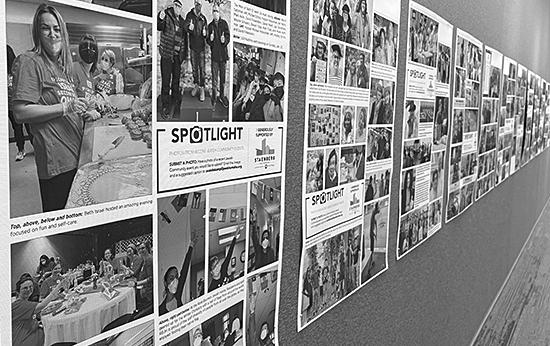
Furthermore, Jewish Omaha is a family. And families, they need a family album. It’s why we work hard to create the Spotlight page every week, and why we are forever asking you to submit your photos to us.
On that note, I want to clarify one thing. We often receive requests to identify more people on the Spotlight page. We usually don’t (unless it includes staff, and even then we sometimes skip it) and that is a very deliberate decision on our part. Especially, but not only for, children.
Our newspaper doesn’t just get printed, a digital version of it ends up online. Once it is online, it is there forever, and there are many people in our community who are not comfortable having their
mate it’s something we have to think about. Will this change in the near future? I doubt it, which also means we lose something in our records that future community members might wish for. But, safety is our top priority-and until we find a permanent solution, we will not include names if we can help it.
However, let’s not end this on a sad note: the Eisenberg Gallery is going to look amazing-I have the materials in my office as I’m writing, and by the time you read this they will be up. So come on down. We cannot wait to see you!
The Jewish Press Spotlight exhibit was made possible through the generosity of the Shirley and Leonard Goldstein Supporting Foundation, and we are grateful for their support.
What Purim teaches us about surviving — and even thriving — under authoritarianism
RABBI SHARON KLEINBAUM AND RABBI
MIKE MOSKOWITZ
JTA
Purim is not only a celebration of Jewish survival. It is a political handbook.
The Book of Esther reads less like ancient folklore and more like a case study in how to endure — and outmaneuver — authoritarian power. It is a story about fear, propaganda, strongman politics and the dangerous illusion that silence will keep us safe.
When Mordecai urges Queen Esther to confront the king, she hesitates. She understands the threat. She sees the injustice. But she is afraid. Speaking out could cost her status, safety — even her life. Silence feels safer. Familiar. Rational.
Mordecai’s reply cuts through the comfort of quiet compliance:
“If you keep silent in this crisis, relief and deliverance will come from another place — but you and your father’s house will perish. And who knows? Perhaps you have attained this royal position for just such a crisis.”
His message is bracing. Privilege is not protection. In an unjust system, no one is truly insulated. The question is not whether history will move. It is whether we will move it.
Haman, the regime’s xenophobe-in-chief, persuades King Ahasuerus to legalize genocide with a bribe and a narrative. He describes the Jews as “a certain people, scattered and dispersed.” Outsiders. A threat to stability. Different. Dangerous.
The decree is chillingly bureaucratic: destroy, massacre, exterminate — men, women, children — and plunder their property. Authoritarianism rarely begins with chaos; it begins with paperwork.
But Haman misreads what he sees. “Am echad” — he calls them one people, intending it as an accusation. Yet the phrase carries another meaning: a unified people. What he labels as vulnerability becomes a protective strength. What he frames as difference becomes a solidarity of holiness.
Esther’s answer to the decree is not despair. It is organization: “Go, gather everyone together.”
Autocracy depends on fragmentation. Resist-
ance begins with connection and grows by reinforcing them.
King Ahasuerus, meanwhile, embodies the fragility of the infallible strongman. When he regrets his decision, he refuses to revoke it. An edict sealed with the king’s signet ring, he insists, cannot be undone. Rather than admit error, he issues a second decree allowing Jews to defend themselves.

Credit: Victor Grigas/Wikimedia Commons
The result? Preventable bloodshed. Seventy-five thousand dead. Pride proves deadlier than policy.
Purim does not romanticize power. It exposes its absurdity — the gaudy displays of wealth, the drunken banquets, the performative masculinity. It reminds us that authoritarian pageantry is designed to inspire obedience and nationalist fervor, not moral clarity.
And then it does something radical. It commands joy.
We are instructed to celebrate, to send gifts to one another, and to give to the poor. These are not sentimental rituals. They are social strategies. Joy builds resilience. Generosity builds trust. Mutual aid builds networks that outlast regimes.
Where authoritarianism thrives on isolation and fear, Purim insists on community and courage.
The story’s lesson is neither naïve nor partisan. It is enduring: Silence does not save us. Unity does. Power rooted in cruelty collapses. Power rooted in collective responsibility endures.
Esther stepped forward not because she was fearless, but because she understood that fear could not be her master.
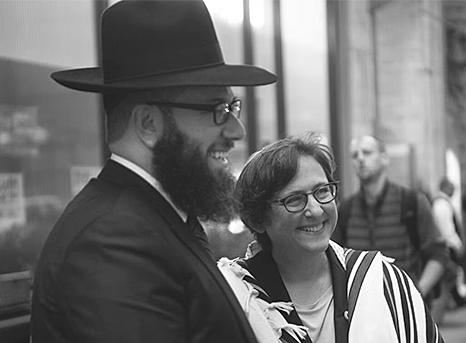
Perhaps that is the deepest teaching of Purim: We are alive in this moment for a reason. History has placed us here. The question is whether we will gather, speak, give, love — and choose joy — together.
Rabbi Sharon Kleinbaum is the senior rabbi emerita of Congregation Beit Simchat Torah in New York City and director of The Beacon.
Rabbi Mike Moskowitz is the director of multi-faith scholarship at The Beacon. The views and opinions expressed in this article are those of the author and do not necessarily reflect the views of JTA or its parent company, 70 Faces Media.
TO SUBMIT ANNOUNCEMENTS
Announcements may be e-mailed to the Press at jpress@jewishomaha.org; or mailed to 333 So. 132 St., Omaha, NE 68154. Readers can also submit announcements -- births, b’nai mitzvahs, engagements, marriages, commitment ceremonies or obituaries -- online at www.omahajewish press.com/site/forms/. Deadlines are normally nine days prior to publication, on Wednesdays, 9 a.m. Please check the Jewish Press, for notices of early deadlines.
B’NAI ISRAEL SYNAGOGUE
618 Mynster Street Council Bluffs, IA 51503-0766
712.322.4705 www.cblhs.org
BETH EL SYNAGOGUE
Member of United Synagogues of Conservative Judaism 14506 California Street Omaha, NE 68154-1980
402.492.8550 bethel-omaha.org
BETH ISRAEL
SYNAGOGUE
Member of Union of Orthodox Jewish Congregations of America 12604 Pacific Street Omaha, NE. 68154
402.556.6288 BethIsrael@OrthodoxOmaha.org
CHABAD HOUSE
An Affiliate of Chabad-Lubavitch 1866 South 120 Street Omaha, NE 68144-1646
402.330.1800 OChabad.com email: chabad@aol.com
LINCOLN JEWISH COMMUNITY:
B’NAI JESHURUN
South Street Temple
Union for Reform Judaism
2061 South 20th Street Lincoln, NE 68502-2797
402.435.8004 www.southstreettemple.org
OFFUTT AIR
FORCE BASE
Capehart Chapel 2500 Capehart Road Offutt AFB, NE 68123
402.294.6244 email: oafbjsll@icloud.com
TEMPLE ISRAEL
Union for Reform Judaism (URJ) 13111 Sterling Ridge Drive Omaha, NE 68144-1206
402.556.6536 templeisraelomaha.com
LINCOLN JEWISH COMMUNITY:
TIFERETH ISRAEL
Member of United Synagogue of Conservative Judaism 3219 Sheridan Boulevard Lincoln, NE 68502-5236 402.423.8569 tiferethisraellincoln.org
Monthly Speaker Series Service, Friday, Mar. 13, 7:30 p.m. with our guest speaker. Our service leader is Larry Blass. Everyone is always welcome at B’nai Israel!
For information about our historic synagogue, please visit our website at www.cblhs.org or contact any of our other board members: David Alloy, Renee Corcoran, Rick Katelman, Gail Kenkel, Janie Kulakofsky, Howard Kutler, Ann Moshman, Mary-Beth Muskin, Debbie Salomon and Sissy Silber. Handicap Accessible.
Services conducted by Rabbi Steven Abraham and Hazzan Michael Krausman.
IN-PERSON AND ZOOM MINYAN SCHEDULE:
Mornings on Sundays, 9:30 a.m.; Mondays and Thursdays, 7 a.m.; Evenings on Sunday-Thursday, 5:30 p.m.
FRIDAY: Tot Shabbat with Dinner, 6 p.m.; Kabbalat Shabbat, 6 p.m. at Beth El and Live Stream; Our Shabbat Tables in Homes
SATURDAY: Shabbat Morning Services, 10 a.m.; Jr. Congregation (Grades K-12), 10 a.m.; Mincha Bat Mitzvah of Lea Shapiro, 6 p.m.; Havdalah, 6:55 p.m. Zoom Only.
SUNDAY: BESTT (Grades K-7), 9:30 a.m.; Adult B’nai Mitzvah, 9:30 a.m. with Hazzan Krausman; Learning Session: Beth El Cemetery — Jewish Law & Cremation, 10:30 a.m.
TUESDAY: Sefer HaMiddot, 10:30 a.m. with Rabbi Abraham; Learning Session: Beth El Cemetery — Jewish Law & Cremation, 6 p.m.
WEDNESDAY: BESTT (Grades 3-7), 4 p.m.; Hebrew High (Grades 8-12), 6 p.m.
THURSDAY: Mincha/Ma’ariv, 5:30 p.m. Zoom Only; Gesher Lounge Night (Grades 5-8), 6 p.m.
FRIDAY-Mar. 13: Knish Making & Stuffed Brisket Challah Knots Class with Mandylicious, 10 a.m.; Baby Babka Baking Class with Mandylicious, 4 p.m.; Kabbalat Shabbat, 6 p.m. at Beth El and Live Stream.
SATURDAY-Mar. 14: Shabbat Morning Services, 10 a.m with D’var Torah by Mandylicious at Beth El and Live Stream; Jr. Congregation (Grades K-12) 10 a.m.; Lunch & Learn with Mandylicious following Services featuring Stuffed Brisket Challah Knots; Havdalah, 6:50 p.m. Zoom Only. Please visit bethel-omaha.org for additional information and service links.
FRIDAY: Torah from Omaha, 6:45 a.m.; Shacharit, 7 a.m.; Mincha/Kabbalat Shabbat/Candlelighting, 6:03 p.m.
SATURDAY: Shabbos Café, 8:30 a.m.; Shacharit, 9 a.m.; Tot Shabbat, 10:30 a.m.; Youth Class, 10:45 a.m.; Soulful Torah 5:05 p.m.; Mincha 5:50 p.m.; Kids Activity/ Laws of Shabbos, 6:20 p.m.; Havdalah, 7:03 p.m.
SUNDAY: Shacharit, 9 a.m.; Mincha/Ma’ariv 7:10 p.m.
MONDAY: Torah from Omaha, 6:45 a.m.; Shacharit,
7 a.m.; Monday Mind Builders 4 p.m.; Mincha/Ma’ariv 7:10 p.m.
TUESDAY: Torah from Omaha, 6:45 a.m.; Shacharit, 7 a.m.; Mincha/Ma’ariv 7:10 p.m.
WEDNESDAY: Torah from Omaha, 6:45 a.m.; Shacharit, 7 a.m.; Character Development 1:30 p.m.; Mincha/Ma’ariv 7:10 p.m.
THURSDAY: Torah from Omaha, 6:45 a.m.; Shacharit, 7 a.m.; Mincha/Ma’ariv 7:10 p.m.
FRIDAY-Mar. 13: Torah from Omaha, 6:45 a.m.; Shacharit, 7 a.m.; Mincha/Kabbalat Shabbat/Candlelighting, 7:11 p.m.
SATURDAY-Mar. 14: Shabbos Café, 8:30 a.m.; Shacharit 9 a.m.; Tot Shabbat 10:30 a.m.; Youth Class 10:45 a.m.; Soulful Torah 6:15 p.m.; Mincha 7 p.m.; Kids Activity/ Laws of Shabbos, 7:30 p.m.; Havdalah, 8:11 p.m.
Please visit orthodoxomaha.org for additional information and Zoom service links.
Join classes via Zoom. Go to ochabad.com/academy. For more information or to request help, please visit www.ochabad.com or call the office at 402.330.1800.
FRIDAY: Shacharit, 8 a.m.; Lechayim, 5 p.m., go to ochabad.com/lechayim to join; Candlelighting, 6:02 p.m.
SATURDAY: Shacharit 10 a.m. followed by Kiddush and Cholent; Shabbat Ends, 7:03 p.m.
SUNDAY: Sunday Morning Wraps, 9 a.m.
MONDAY: Shacharit 8 a.m.; Personal Parsha 9:30 a.m. with Shani; Intermediate Biblical Hebrew Grammar, 10:30 a.m. with David Cohen; Parsha Reading, 6 p.m. with David Cohen; Translating Words of Prayer, 7 p.m. with David Cohen.
TUESDAY: Shacharit 8 a.m.; Aramaic Grammar, 10 a.m. with David Cohen; Intermediate Biblical Hebrew Grammar, 6 p.m. with David Cohen; Introductory Biblical Hebrew Grammar, 7 p.m. with David Cohen
WEDNESDAY: Shacharit, 8 a.m.; Introductory Biblical Hebrew Grammar, 10:30 a.m. with David Cohen; Parsha Reading, 11:30 a.m. with David Cohen.
THURSDAY: Shacharit, 8 a.m.; Introductory Biblical Hebrew Grammar, 10 a.m. with David Cohen; Advanced Biblical Hebrew Grammar, 11 a.m. with David Cohen; Talmud Study, noon; Introduction to Alphabet, Vowels & Reading Hebrew, 6 p.m. with David Cohen; Code of Jewish Law Class, 7 p.m.; Chabad Challah Bake, 7 p.m. at JFO, register at ochabad.com/challahbake
FRIDAY-Mar. 13: Shacharit, 8 a.m.; Lechayim, 5 p.m., go to ochabad.com/lechayim to join; Candlelighting, 7:10 p.m.
SATURDAY-Mar. 14: Shacharit, 10 a.m. followed by Kiddush and Cholent; Shabbat Ends, 8:10 p.m.
FRIDAY: Benjamin Evenen Bar Mitzvah; Shabbat Candlelighting, 6:05 p.m.; Kabbalat Shabbat Service, 6:30-7:30 p.m. led by Rabbi Alex at SST.
SATURDAY: Benjamin Evenen Bar Mitzvah; Shabbat Morning Service, 9:30 a.m. led by Rabbi Alex at TI; Torah Study 12:30 p.m. on Parashat Ki Tisa via Zoom; Havdalah, 7:05 p.m.
SUNDAY: No LJCS Class this week — Spring Break; Men’s Bike/Coffee Group, 10:30 a.m. at Rock 'N' Joe Coffee, 5025 Lindberg St, Lincoln. For more information or questions please email Al Weiss at albertw 801@gmail.com; A Hamilton Spiel, 2 p.m. at SST. Hamentaschen Hero competition to follow.
WEDNESDAY: No LJCS Hebrew School this week — Spring Break.
FRIDAY-Mar. 13: Kabbalat Shabbat Service, 6:307:30 p.m. led by Rabbi Alex at SST; Shabbat Candlelighting, 7:13 p.m.
SATURDAY-Mar. 14: Shabbat Morning Service, 9:30 a.m. led by Rabbi Alex at TI; Torah Study 12:30 p.m. on Parashat Vayakhel-Pekudei via Zoom; Havdalah, 8:13 p.m.
LINCOLN JEWISH COMMUNITY: B’NAI JESHURUN & TIFERETH ISRAEL OFFUTT
Services facilitated by Rabbi Alex Felch. All services offered in-person with live-stream or teleconferencing options.
The following recipes are a preview from the Nebraska Jewish Historical Society and Jewish Press’ “Beyond Kugel” project. They come from the kitchen of Bob Goldberg’s mom, Leanne.
PASSOVER DOUGHNUTS
Ingredients:
2/3 cups water
1/3 cup oil
1 cup matzo meal
1 tablespoon sugar
3 eggs
1/4 teaspoon salt
Bring to a boil oil, water, sugar and salt. Stir in matzo meal, boil a second more, and remove from fire. Mix thoroughly and when cooled a little, beat in eggs one at a time. Grease hands and roll dough into balls of about 2 inches in diameter. Place them on greased sheet, then dip forefinger in water and press a hole in the center of each ball. Bake at 375400 degrees for about one hour.
PASSOVER ROLLS
Ingredients: 1 1/2 cup water
1/2 cup oil
2 teaspoons sugar
6 eggs
2 teaspoons salt
2 cups matzo meal
Mix water, oil, sugar and salt together and bring to rapid boil, then remove from heat. Add 2 cups of matzo meal very quickly and stir well. Cool. Add 6 eggs, one at a time. Mix well and let stand for 15 minutes. Run cold water on hands and make balls about the size of a golf ball. Bake on greased cookie sheet for 10 minutes at 450, then reduce to 350 for about 60 minutes longer. Making the balls the size of golf balls should make about 20 medium-sized rolls. If you only make 16, you will have very large
FRIDAYS: Virtual Shabbat Service, 7:30 p.m. every first and third of the month at Capehart Chapel. Contact TSgt Jason Rife at OAFBJSLL@icloud.com for more information.
In-person and virtual services conducted by Rabbi Benjamin Sharff, Rabbi Deana Sussman Berezin, and Cantor Joanna Alexander.
FRIDAY: Drop-In Mah Jongg, 9 a.m.; Shabbat Mishpacha, 5:45 p.m. RSVP Required; Shabbat b’Yachad Service, 6 p.m. In-Person & Zoom.
SATURDAY: Torah Study, 9:15 a.m. In-Person & Zoom; Shabbat Morning Service and Bat Mitzvah of Greta Feinstein 10:30 a.m. In-Person & Zoom.
SUNDAY: 2nd Sunday Breakfast Service, 9 a.m. InPerson; Grades PreK-7, 9:30 a.m. In-Person; Coffee & Conversations, 10 a.m. In-Person; Book Club, 10:30 a.m. In-Person & Zoom; Temple Tots, 10:45 a.m. InPerson.
TUESDAY: Exploring Rabbi Lord Jonathan Sacks, 11 a.m. with Rabbi Bienstock — In-Person & Zoom; Mah Jongg Made Easy 1:30 p.m. In-Person.
WEDNESDAY: Yarn It, 9 a.m. In-Person; Grades 36, 4:30 p.m. In-Person; Mah Jongg Made Easy, 5:45 p.m. In-Person; Hebrew CHAI: Grades 8-12, 6 p.m. InPerson.
THURSDAY: The Zohar: Thursday Morning Class 11 a.m. with Rabbi Sharff — In-Person & Zoom.
FRIDAY-Mar. 13: Drop-In Mah Jongg, 9 a.m.; Rock Shabbat Service, 6 p.m. In-Person & Zoom.
SATURDAY-Mar. 14: Torah Study, 9:15 a.m. In-Person & Zoom; Shabbat Morning Service, 10:30 a.m. InPerson & Zoom; Let’s Get Crafty with Atid, 6 p.m. In-Person
Please visit templeisraelomaha.com for additional information and Zoom service links.
rolls.
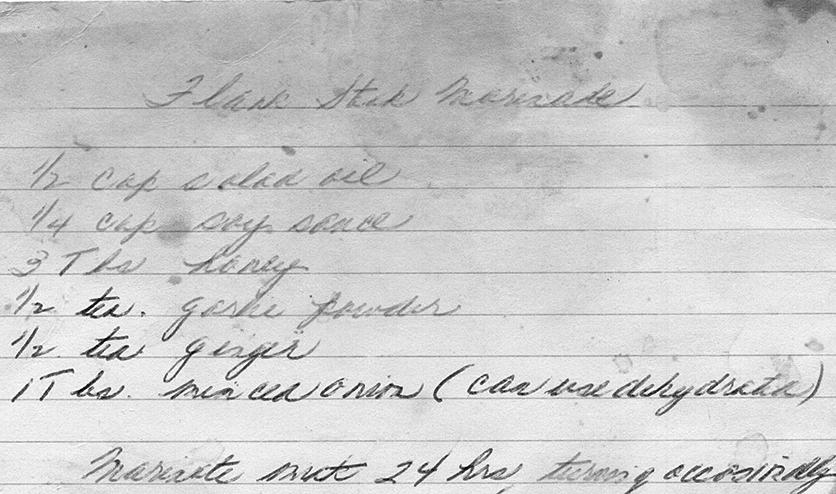
FLANK STEAK MARINADE
1/2 cup salad oil
1/4 cup soy sauce
3 tablespoons honey
1/2 teaspoon garlic powder
1/2 teaspoon ginger
1 tablespoon minced onion Marinate meat for 24 hours, turning occasionally.
Dear Editor,
The recently released motion picture “Nuremberg” explores issues of such profound and immediate importance that viewing it should be regarded as obligatory. Its release in these extremely perilous times emphasizes the necessity of taking action to preserve human civilization as we would want it to be.
In World War II, as European territory was liberated from German occupation, the sight of the destruction and its enormity was revealed. It was beyond anything in human experience. While millions suffered death and destruction, of particular note was the Holocaust, in which six million Jews, one-third of the world’s Jewish population, were murdered.
The principal allied powers of Britain, France, the United States, and Russia agreed to set up an international tribunal which would try the leadership of the Nazi party for crimes against humanity. Although there was no legal precedent for such a tribunal, nor for the charge of crimes against humanity, there was also no precedent for the living hell the Nazis created.
The Allies selected Nuremberg as the site for the trial. One of the reasons Nuremberg was selected as the venue was because it was a significant site for the party faithful's gatherings. A huge stadium was built for these large rallies. The hatred of others was their rallying cry.
The Allies selected Nuremberg for another symbolic reason: in 1943, the German government enacted laws to effectuate its core philosophy. Using pseudoscience, the Nazis proclaimed that the German people were of the “Aryan” race, which was superior to all other races. As for the Jews, they were not even considered human, but vermin infecting the blood of all others. The Nuremberg Laws stripped the Jews of citizenship, property, employment, and protection from violence.
The determination of who was Aryan and who was not was subject to the following formula: If a person’s ancestry was such that one great-grandparent was Jewish, then he was not Aryan.
(After explaining the Nuremberg Laws to his students, political science professor John P. Roach rhetorically asked: “If one-eighth Jewish blood could contaminate seven-eighths Aryan blood, which is the master race?”)
The Nuremberg tribunals sought to understand human behavior so that the evils experienced at the hands of the Nazi regime would never be repeated. How is it that the defendants, who appeared so seemingly ordinary, could nevertheless kill millions with a wave of their hand? The U.S. Army assigned psychiatrists to observe and interview the defendants. Was Nazi fascism the product of German culture, or is it the predictable result of any society that fails to maintain the norms of basic decency, humanity, and justice?
The timing of the film’s release is also unnerving. Respect for truth is necessary to maintain a democratic society. When a government keeps repeating a big lie, some may believe it. There are no “alternative facts” in honest government.
See this motion picture, and take action.
STEVEN J. RIEKES
JABENIS/HOWELL
Aliyah Jabenis and Matthew Howell of Omaha announce their engagement.

Aliyah is the daughter of Jon Jabenis, and Dacia and Mike Goldstein of Omaha. She graduated from the University of Nebraska-Omaha with a B.S. in biology, and masters in education from the University of Nebraska-Omaha. Aliyah is a teacher of biology at Millard West High School. She is the granddaughter of Daryl and Karen Silrum, and the late Elaine and Mace Jabenis.
Matthew Howell, is the son of Lori and Terry Howell of Council Bluffs. He is a data analyst with Rexel Corp.
A wedding is planned for April 12, 2026, at 5:30 p.m. at Joslyn Castle.
During Passover we avoid anything that contains grain that has risen or fermented—including breads, pastas, beers, liquors and more. In order for something to be kosher for Passover, even the minutest amount of chametz, is a problem. Dishes must be scoured and purged from any trace of non-Passover food before food that is kosher for Passover can be produced on them.
So, what’s the deal with kitnyot? Many Jewish communities avoid eating beans, rice and similar foods, which bear certain similarities to grain, on Passover. These foods may be owned on Passover, but should not be eaten, except by those Sephardic Jews whose ancestors never accepted this stringency.
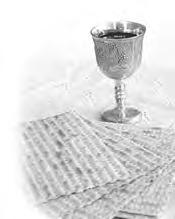
During the seder, you will need three whole matzahs per seder plate, and two whole matzahs per person at the table. You need at least one seder plate, but you can have more if you choose. And while it is customary to have a special, nicely decorated seder plate, you don’t need it; any plate will do-as long as it is big enough to hold all the items.
Some vegans and vegetarians replace the shank bone with a roasted beet, or even a banana. There are also people who replace the actual egg with a wooden, decorative egg. And did you know Moshe is mentioned only once in the entire Haggadah? It’s so the emphasis is not on him, but on G-d.

This year you can send your greetings through these very special ads that will run in our annual Passover issue. Each ad can be personalized with your name, the names of your children or your grandchildren. Just follow the QR code below to the Jewish Press Google form. But hurry; these ads will only be accepted through March 13, 2026

Prefer to call or email?
Contact Claire Endelman 402-334-6559 cendelman@jewishomaha.org




ANNOUNCEMENT
ADVERTISE STATEWIDE for $225/25 word classified ad. Over 120 newspapers with circulation of more than 237,000. Contact the Jewish Press or call 1-800-369-2850.
HELLO NEBRASKA! Introducing www.nepublicnotices.com, a new public notice website presented as a public service by all Nebraska newspapers. Free access, fully searchable – because democracy depends upon open government and your right to know.
BANKRUPTCY RELIEF! Help stop Creditor Harassment, Collection Calls, Repossession and Legal Actions! Speak to a Professional Attorney and Get the Help You NEED! Call NOW 844-215-3629
AFFORDABLE PRESS Release service. Send your message to over 120 newspapers across Nebraska for one low price! Call 1800-369-2850 or www.nebpress.com for more details.
FOR SALE – CELL PHONE
SWITCH AND save up to $250/year on your talk, text and data. No contract and no hidden fees. Unlimited talk and text with flexible data plans. Premium nationwide coverage. 100% U.S. based customer service. For more information, call 1-877-768-5892
FOR SALE - MEDICAL
PORTABLE OXYGEN Concentrator? May be covered by Medicare! Reclaim independence and mobility with the compact design and long-lasting battery of Inogen One. Free information kit! Call 855-385-3580.
FOR SALE – NEWSPAPER
1871 WEEKLY Newspaper For Sale. County-seat legal paper, strong profits, loyal readers. Prime digital upside. Owners retiring. beditor@gpcom.net | deditor@gpcom.net
JEFFERSON COMMUNITY Health & Life, Fairbury, Neb., seeking full-time behavioral health therapist for growing program. Requires mental health therapist or family and marriage therapist; 2 years experience; Master's degree preferred. Competitive salary and benefits. Apply online at https://www.jchealthandlife.org/careers/ For more information contact Sandy Bauer, HR, at 402-729-6850.
RADIOLOGIC TECHNOLOGIST for Jefferson Community Health & Life, Fairbury, Neb., inpatient and outpatient services. On call requires 30-minute response. Competitive salary, benefits. Apply online at https://www.jchealthandlife.org/careers/ For more information contact Sandy Bauer, HR, at 402-729-6850.
DOES YOUR basement or crawl space need some attention? Call Thrasher Foundation Repair! A permanent solution for waterproofing, failing foundations, sinking concrete and nasty crawl spaces. FREE Inspection & Same Day Estimate. $250 off ANY project with code GET250. Call 1-844-958-3431
THE BATHROOM of your dreams in as little as 1 day. Limited Time Offer - $1000 off or No Payments and No Interest for 18 months for customers who qualify. BCI Bath & Shower. Many options available. Quality materials & professional installation. Senior & Military Discounts Available. Call Today! 1-855-451-2244
TO
BUY 8,000 cars a week. Sell your old, busted or junk car with no hoops, haggles or headaches. Sell your car to Peddle.
JTA
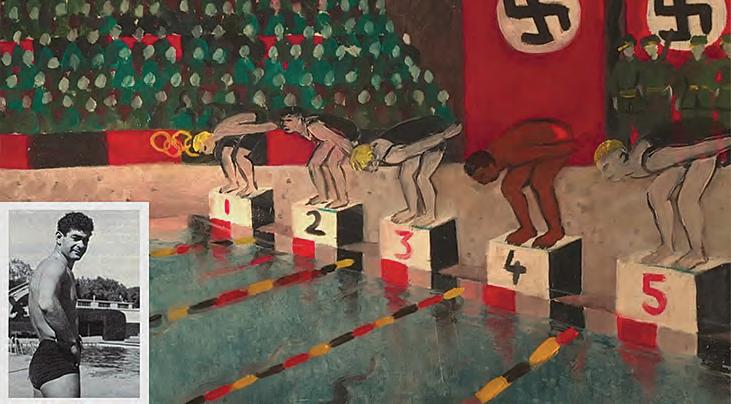
At first glance, “Papillon” (Butterfly), the 15minute Oscar-nominated animated short by veteran French filmmaker Florence Miailhe, may appear like a meditative journey through water and memory.
An elderly man swims in a hand-painted sea, flashing back to childhood memories of being bullied and a loving mother who makes it all right.
As he cuts through the water and moves through time, the fuller context emerges: The sun-soaked beaches appear to be North Africa, the boy becomes a champion swimmer, a swastika tells you that he is competing in the 1936 Berlin Olympics, and the soundtrack echoes with taunts of “Jew” and “kike.”
The film is based on the extraordinary real life of Alfred Nakache, a Jewish athlete whose story of resilience under Nazi persecution has previously been told in two French documentaries but is seldom remembered today.
Born in 1915 in French Algiers (his family immigrated from Iraq), Artem “Alfred” Nakache became one of France’s most celebrated swimmers in the 1930s, specializing in the butterfly stroke — a full-bodied lunge that looks like a bird, or butterfly, in flight. His success brought him to the 1936 Berlin Olympics, where he competed under the shadow of rising antisemitism in Nazi Germany (and was part of a freestyle relay team that didn’t medal, but finished ahead of the Germans).
Under Vichy, the Nazi puppet regime, Nakache was stripped of his French nationality and forced out of Paris. He joined the resistance underground while still competing for Vichy. On Nov. 20, 1943, Nakache and his wife and daughter were arrested by the Gestapo, and the family was separated at Auschwitz. Only Alfred survived. He later endured the death march to Buchenwald before liberation.
Despite these unimaginable losses, Nakache returned to swimming after the war, competing at the 1948 London Olympics. He, gymnast Agnes Keleti and weightlifter Ben Helfgott are the only known Jewish survivors to have competed in the Olympics after the war. Keleti, winner of ten Olympic medals, died in January 2025, at the age of 103-one week shy of her 104th birthday. Helfgott survived the Holocaust as a teenager, and went on to become a champion weightlifter and a champion of Holocaust education. The 5foot-5 Helfgott became Britain’s lightweight champion in 1955, 1956 and 1958. He represented the United Kingdom in the 1956 and 1960 Olympics, and he won gold medals at the Maccabiah Games in 1950, 1953 and 1957. He was knighted in 2018, and died in 2023. Nakache remained a swimmer the rest of his life, and died of a heart attack after a swim in the sea near the Spanish-French border in 1983.
Miailhe, a 70-year-old animator known for her labor-intensive oil and pastel on glass
We invite you to join us in the JCC Eisenberg Gallery for the opening of the Jewish Press Spotlight exhibit: Tuesday, March 10 4:30-6 p.m.
The Spotlight exhibit is made possible through the generosity of the Shirley and Leonard Goldstein Supporting Foundation. It will stay up during the month of March.
technique, has a personal connection to Nakache’s legacy. As a child, she took swim lessons with his younger brother Bernard and heard stories of his triumphs long before she understood their full historical weight. The end credits explain that her father also knew Alfred, whom he met in the resistance during the war.

“I hope people will be moved by Alfred Nakache’s story and rediscover it, because it’s not well-known in France,” Miailhe said in an interview with Deadline. “Also, we are living in some very troubled times in a world where racism and antisemitism are back.”
Produced by Oscar-winning animator Ron Dyens alongside Luc Camilli for Sacrebleu Productions and XBO Films, Papillon took roughly 100 days to animate — a testament to the craftsmanship that makes every frame an essay on the various qualities of water. The film has earned a César nomination (the
French Academy Award) and a nomination at the Annecy International Animation Film Festival, and won the International Competition for best animated film at the Grand Prix at Stuttgart.
Amid the horrors of the Holocaust, the animated short also depicts the camaraderie among the athletes who swam — and stood — by Nakache’s side before and after the war.
“Some people denounced the Nakache family [to the Gestapo], but others saved Alfred when he returned from the camps,” Dyen told Deadline. “The whole tragedy of human duality is ultimately reflected in Nakache’s story.”