INSIDE The Jewish Press
HEIDI HEILBRUNN
JCRC Communications and Program Manager
Jewish American Heritage Month is a time to celebrate Jewish achievements and contributions, foster pride within the Jewish community, and create opportunities for the public to learn about Jewish history and culture.
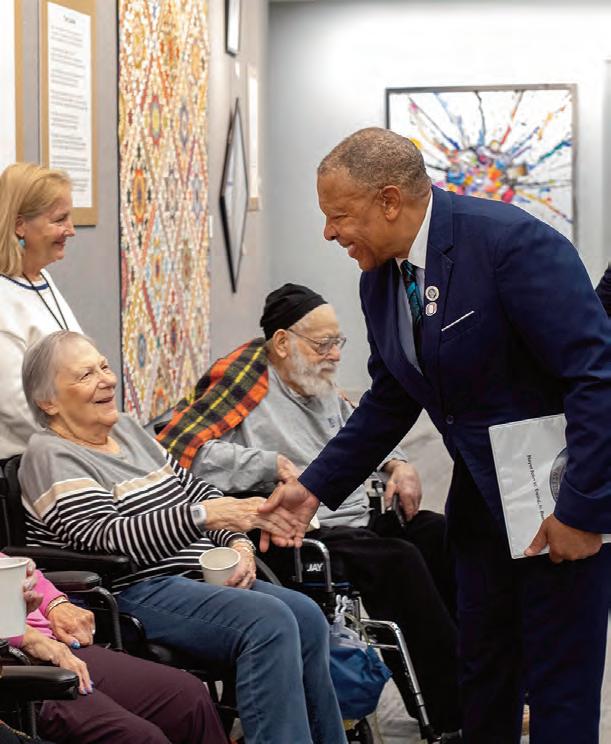
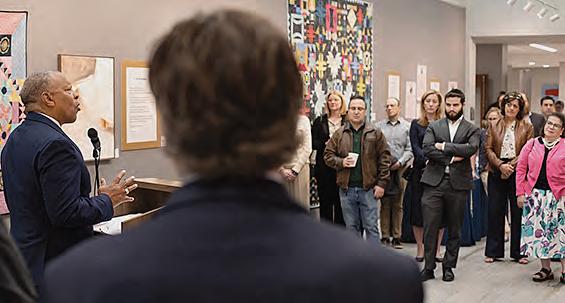
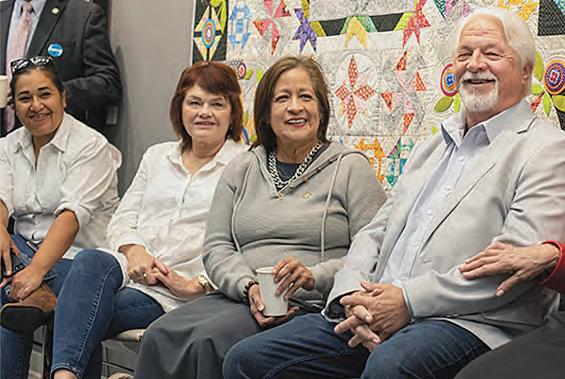
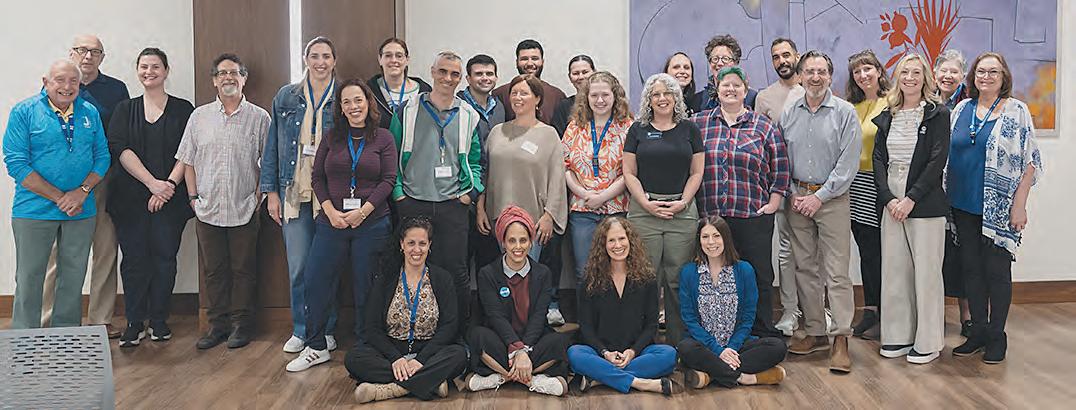
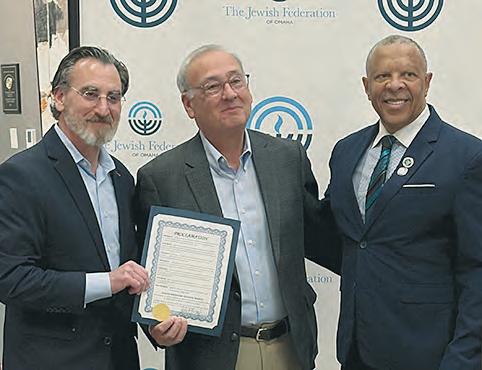
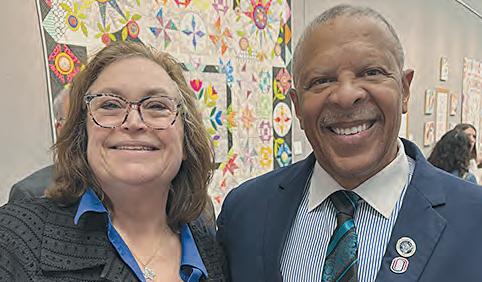
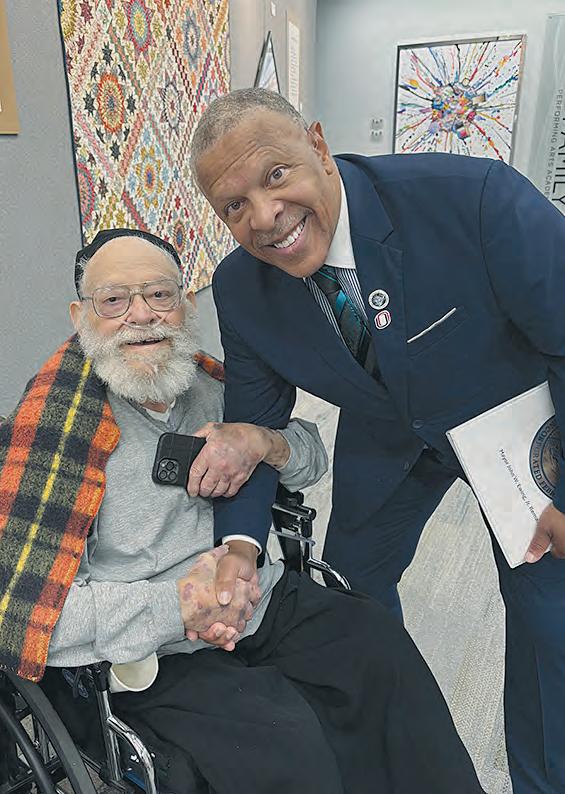
Those achievements were highlighted Tuesday, May 19, when Omaha Mayor John Ewing Jr. spoke at a reception recognizing Jewish American Heritage Month. The event was hosted by the Jewish Community Relations Council Omaha (JCRC), the Nebraska Jewish Historical Society, and the Jewish Federation of Omaha. More than 60 people attended, including senators, community leaders, and other dignitaries.
The JCRC said sharing these stories helps build understanding and strengthen the broader community; a message Mayor Ewing echoed during his remarks.
“We are one Omaha,” said Mayor See Jewish Heritage page 2
SCOTT SHINBARA Director of Theater, Special Events & Rentals
If you have ever attended a Circle Theatre Performance at the J (most recently Disney’s The Descendants) you have seen the amazing power of community partnerships coming together to create inclusive, adaptive opportunities for our community.
The Staenberg Omaha JCC is excited to announce what is simply called an “Inclusive Sports Afternoon” with new community partners The Violet Hour Foundation and Play it Forward. The event on June 14 will have various stations for participants age 8-19 to try out different sports like volleyball, basketball, soccer, and an obstacle course. The event is free, but space is limited! We know this is just the beginning of this programming, and hope you can see the size and scope of what we grow! Attendance is free, but registration is required. To register, visit jccomaha.org.
The Violet Foundation was started by Anna and Violet (for whom it is named) Palubecki
in 2025 to support teens and adults with autism. The best description comes from the organization itself:
The Violet Hour is the time of day when the sky turns into blues and purples marking transition from day to evening. It is a fleeting time of beauty seen in transition. In some cultures, it is seen as sacred and time for reflection and creativity. As high needs autistic children get older, their services, opportunities, and resources change or become not appropriate. So, with reflection and a whole lot of creativity we are looking to change that with my daughter, Violet, as our inspiration.
observed there were kids who were overwhelmed by the loud and sometimes chaotic nature of youth sports. They set out to include new programming where children with different needs can be full participants to great success. They also incorporate something they call
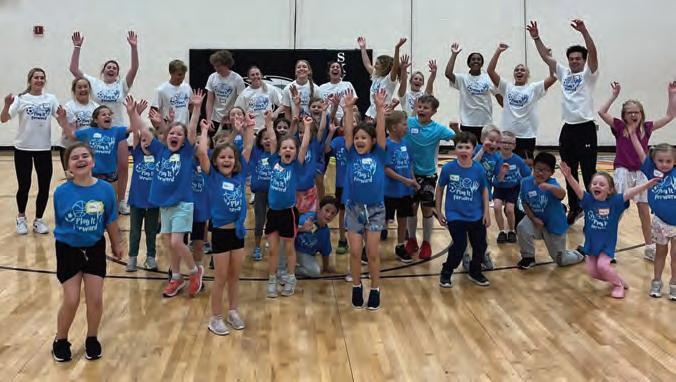
Play it Forward is a non-profit organization started in 2022 by Peter Walls, Kyle Jurgens, and Will Pope as a way for kids to come and try out different sports in a fun non-competitive environment. Part of its structure is to give high school athletes a chance to assume leadership roles and build better community.
After hosting several successful events, they
“be kind time,” where high school coaches take time away from the physicality of sports to talk about what it means to support one another and be kind to each other and themselves.
For more information on any of the community partners discussed above check out:
The Circle Theater – circletheateromaha.org
The Violet Hour Foundation – violethourfoundation. org
Play it Forward - playitforwardne.org
Continued from page 1 Ewing. “It’s critically important that we recognize we are all in this together.”
The reception was held in the Eisenberg Gallery at the Jewish Community Center. Remarks were also delivered by Bob Goldberg, CEO of the Jewish Federation of Omaha, and Ron Feldman, chair of the Board of Directors for the Jewish Federation of Omaha, before they in-
troduced the mayor to present the proclamation.
“Our Jewish community is grateful to Mayor Ewing for his steadfast leadership, his genuine friendship, and his absolute commitment to our safety and security,” Goldberg said. “It is an honor having our mayor again visit our campus and share time with us as we celebrate Jewish American Heritage Month and recommit to our partnership in working to make Omaha the best it can be.”
During the proclamation, Mayor Ewing read, “We recognize the Jewish Community Center as a cornerstone of our community, providing a space for connection, heritage, and the continued flourishing of Jewish culture.”
The mayor also briefly addressed the divisive atmosphere across the country and emphasized the importance of unity and inclusion.
“This month offers a vital opportunity to combat antisemitism, promote education, and foster greater understanding and appreciation of people of all backgrounds, ensuring that diversity is celebrated,” Ewing said while reading from the proclamation.
“One of the things I promised this community is that I would be the most inclusive mayor the city of Omaha has ever seen,” he added. “I believe what we need is more love and less hate, and that’s what we have to lead with in Omaha, Nebraska.”
To learn more about the Jewish community that helped shape Nebraska, visit the slideshow on our website: https://www.jewishomaha.org/inspire-chan ge-jcrc-jewish-american-heritage-month/
Ashley Belmudez-Frakes serves as a correctional chaplain with Good News Global, ministering across multiple county jail facilities in the Omaha Metro area.
She will be the speaker at B’nai Israel’s Friday night service, June 12 at 7:30 p.m.
The entire community is welcome to our monthly second Friday Shabbat service and oneg.
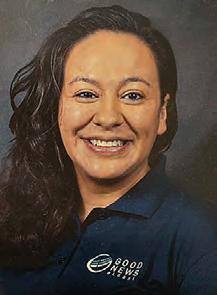
Since beginning her journey in chaplaincy in 2019, she has been committed to a ministry of presence, walking alongside women during some of their most difficult seasons. She has done so with compassion, truth, and hope.
Ashley holds a Master of Divinity and is currently pursuing a Doctor of Ministry in Chaplaincy. This equips her to lead with both theological depth and practical wisdom. She oversees and supports a growing team of volunteers, while also investing in the spiritual growth and restoration of the women she serves.
With a heart for discipleship and a passion to see lives transformed, Ashley brings a message rooted in resilience, surrender, and the faithfulness of G-d. She is also a wife, a. mother of four, and a woman who understands the power of G-d to meet us right where we are-and lead us forward.
The award-winning B’NAI B’RITH BREADBREAKERS speaker program currently meets Wednesdays via Zoom from noon to 1 p.m. Please watch our email for specific information concerning its thought-provoking, informative list of speakers. To be placed on the email list, contact Breadbreakers chair at gary.javitch@gmail.com
Discover Omaha senior living where you’re valued, welcomed, and celebrated for who you are. At Ovation Heartwood Preserve, we live by our core value: “a culture of respect, belonging, and celebration of diversity”
“I needed this oxygen of people. And I think I made the right choice because of the tremendous respect for individuality here and to who we are.” – Rabbi, Ovation Heartwood Preserve Resident





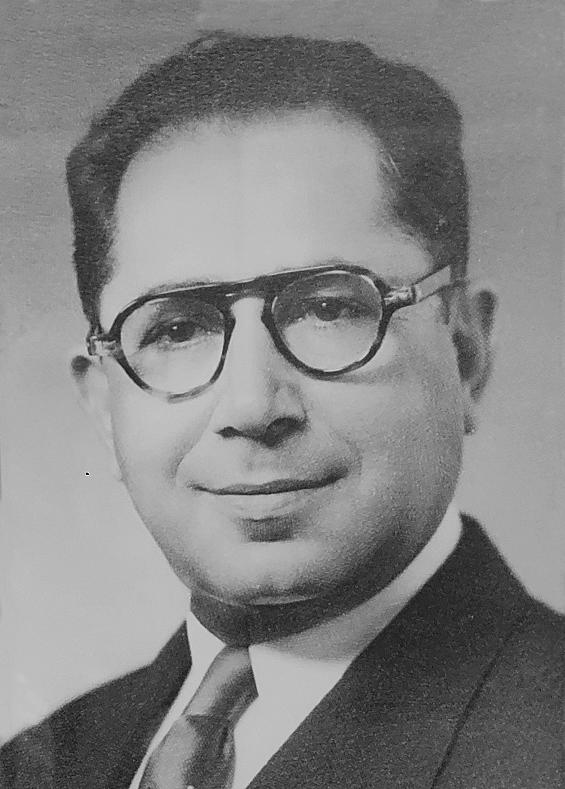
Some community leaders leave behind long public records, newspaper headlines, and carefully preserved archives. Others leave something different. Their legacy survives in the memories of the people who knew them, worked beside them, learned from them, and watched the example they set.
That is very much the story of Robert H. “Bob” Kooper and his wife, Dorothy.
In researching Federation president Bob Kooper, I found surprisingly little formal historical material. Much of what survives comes through a 1990 Nebraska Jewish Historical Society interview with Dorothy Kooper conducted by Scott Muskin, along with conversations and memories shared by people who knew the family well.
Yet sometimes those kinds of memories tell us something just as important. They reveal the character of the people who shaped Jewish Omaha during its years of growth and transformation.
Bob Kooper built a successful career at the H.A. Wolf Company, eventually rising to president. The company was involved in real estate management, finance, and insurance and was founded by Harry A. Wolf. According to Arnold Joffee, a close friend of Bob’s son Howard, Bob was highly respected professionally and deeply engaged in community life.
But business success was only part of the story.
Dorothy recalled that Bob was among the original group involved in forming the Jewish Community Center and was deeply active in the creation and early development of Beth El Synagogue. He later served not only as president of the Jewish Federation, but also as president of Beth El and Highland Country Club. As Dorothy described it, “Everything that went on in the city, he had a part in it.”
The Koopers belonged to a generation that helped shape modern Jewish Omaha. Their years of leadership came during a period when institutions were still being built, organized, funded, and sustained largely through volunteer labor and personal commitment.
Dorothy herself played a major role in that effort.
Born in Omaha in 1900, she graduated from Omaha Central High School and studied violin at the Bush Conservatory in Chicago before returning home to work in her father’s jewelry store. Even before her marriage to Bob in 1927, she had already become involved in Jewish communal work, including efforts to improve Fisher Farm Cemetery in Bellevue.
Much of that energy would later become focused on Beth El.
Dorothy recalled that when Beth El was organized around 1930, regular Shabbat services were initially held at the Jewish Community Center at 20th and Dodge, while High Holy Day services took place at the Knights of Columbus building at 2027 Dodge Street. For years, the congregation worked tirelessly to raise funds for a

permanent home on South 49th Avenue. Bob chaired the building committee during those formative years.
Dorothy described the work in simple, practical terms that probably captured the spirit of Jewish Omaha in that era better than any formal history could:
“We worked, we gave shows, we sold coffee and did whatever we could find for a project. If it was something we could raise money on, we did it.”
That spirit of volunteerism extended far beyond the synagogue walls. Dorothy volunteered for Federation philanthropies, participated in Brandeis University fundraising efforts, helped send tribute cards, worked in synagogue kitchens, and filled whatever role was needed.
The memories shared by those who knew the Koopers personally paint an equally vivid picture.
At the recommendation of Lori Kooper-Schwarz, assistant editor of the Jewish Press and granddaughter of Bob Kooper, I spoke with several men who had grown up alongside Howard Kooper.
Arnold Joffe remembered spending countless hours at the Kooper home and described Bob as a mentor figure during his teenage and college years. “Bob was a great mentor to me,” Arnold recalled. Both Joffe and Howard Kooper would later begin their post-college careers at H.A. Wolf, learning under Bob’s guidance. Joffe went on to a long and highly successful insurance career at Grace Mayer, while Howard later partnered with Tom Fellman to help build Broadmoor Development into one of the region’s major apartment development and management companies.
Bob Epstein, another close friend of Howard’s from Central High School, remembered Bob driving them to school and football games in Lincoln. As he reflected on those years, Epstein repeatedly described him simply as “a great guy.”
Mike Platt remembered the Kooper home as a gathering place for friends and spoke warmly about Bob’s kindness and generosity. He recalled how welcomed everyone felt in the Kooper home and the respect people throughout the community had for Bob and Dorothy.
Again and again, the same picture emerged. Bob Kooper was respected, approachable, generous with young people, and deeply committed to the Jewish community around him.
My final exchange was with Tom Fellman, Howard Kooper’s longtime business partner at Broadmoor Development. Tom never knew Bob personally, but after years of conversations with Howard, he came away with

a clear impression. As Tom put it, Bob “was an A plus guy, always cared about our community.”
That observation ultimately led me to the title of this article: Setting an Example.
Because that may have been the Koopers’ greatest contribution.
Not simply holding leadership titles, but modeling what Jewish communal responsibility looked like for the next generation.
Their son Howard would go on to become a major leader and philanthropist in Omaha Jewish life in his own right, serving as Federation president from 1995 to 1999 and playing an important role in supporting the Jewish Community Center campus and the Rose Blumkin Jewish Home campaigns. Those who knew both men often saw in Howard the same sense of responsibility and devotion to community that defined his parents.
In many ways, that continuation itself says something meaningful about Bob and Dorothy Kooper.
Bob died in 1961 at a relatively young age. Dorothy passed away in 1995. Yet their impact can still be seen in the institutions they helped build, the people they mentored, and the example they set for their family and community.
As we rediscover the early presidents of the Jewish Federation of Omaha, we are reminded that communities are not built only through speeches or titles. Often, they are built quietly, through decades of showing up, volunteering, mentoring, fundraising, organizing, and caring deeply about Jewish continuity.
The Koopers helped set that example for Omaha Jewish life, and generations since have continued to benefit from it.
Series Note: We thank the Nebraska Jewish Historical Society for preserving these stories and invite readers to share memories, photos, or family connections that can help us rediscover the lives of those who built our community. Standing on their shoulders, we continue their work.
The Jewish Federation of Omaha past presidents series is a collaboration between The Nebraska Jewish Historical Society (NJHS) and the Jewish Press. For questions and/or more information about the NJHS, please contact executive director Jane Rips at jrips@jewishomaha.org, or visit the website at neb raskajhs.com.




SETH SCHUCHMAN
In the course of studying Jewish history, I recently came across the story of Rabbi David Einhorn. It’s one that stays with you, not just for what he believed, but for what it cost him to say it out loud.
There are moments in history when the argument isn’t between belief and disbelief. It’s between people who share the same texts, the same tradition, and the same sense that they are being faithful—and yet arrive at very different conclusions.
In early 1861, as the United States moved toward civil war, that argument was unfolding in American synagogues. And Rabbi David Einhorn decided he could not stay quiet.
Einhorn did not come to that moment by accident. Born in Bavaria in 1809, he was trained in the classical rabbinic tradition, steeped in text and interpretation. But he was also shaped by a changing world, one in which Jews were beginning to ask how ancient teachings should speak to modern life. He became one of the early voices of Reform Judaism, arguing that the tradition carried not only laws, but a moral direction.
By the time he arrived in Baltimore to lead Congregation Har Sinai, he was already known as a serious and sometimes controversial thinker. America would test those ideas.
Just weeks before the outbreak of the Civil War, Rabbi Morris Jacob Raphall of New York delivered a widely circulated sermon, “The Bible View of Slavery.” Drawing on biblical passages, including the story of Noah, he argued that slavery existed within the framework of the Torah and could not simply be dismissed. The sermon spread quickly. It gave religious weight to a system already embedded in American life.
Einhorn read it and responded.
In a sermon delivered in Baltimore in 1861, later published and widely discussed, he rejected the argument outright. He warned against using isolated texts to defend injustice and insisted that such readings misunderstood the tradition itself. As he put it, “to sanction slavery, the Bible must be torn from its spirit.”
This was not a passing comment. It was a direct challenge, not only to one sermon, but to an entire way of reading the text.
For Einhorn, the issue was not whether the Torah contained references to slavery. It did. The question was what those references meant in his own time.
He believed Judaism was not static. It moved. It demanded more over time. Again and again, in his writing and sermons, he returned to the central story of Jewish identity, a people freed from bondage, and to the belief that every human being is created in the image of God.
Slavery, as it was practiced in America, could not be reconciled with that vision.
And he said so, clearly and publicly, from a pulpit in a slave state.
IDAN ZACCAI
BBYO Director
Shalom BBYO Family,
As the sun begins to set on another incredible school year, this is our final newsletter until our regular programming kicks off again this August.
The last week marked an important milestone for our Council and Chapters: our official installations. Our new board members have officially transitioned into their positions, ready to lead us into the future. I want to extend a heartfelt congratulations to our incoming leaders. We cannot wait to see your vision come to life!
The consequences followed quickly.
Baltimore in 1861 was a city on edge, divided in its loyalties and increasingly unstable. Einhorn’s words did not stay within the walls of his synagogue. They circulated,
were discussed, and drew anger.
A pro-slavery mob targeted him. The printing press that published his writings was attacked. The threat was no longer rhetorical.
His life was in danger.
Einhorn was forced to flee the city under protection, leaving behind his congregation and the position he had built. He would eventually continue his rabbinic work in the North, but the cost of that moment was real and immediate.
It is easy, with the benefit of hindsight, to see the outcome clearly.
It was not clear then.
What is clear is the role Einhorn chose to play. He did not step outside the tradition to make his case. He stepped deeper into it. He read the same texts, knew the same sources, and came to a different conclusion about what they demanded.
His voice did not end the argument. But it changed its direction.
It raised the standard of how those texts would be read, and what would be asked of them. It shifted the conversation from what could be justified to what should be.
History is not perfect. It is shaped in moments like this, when individuals are willing to wrestle with what they have inherited and, at times, move it forward.
Einhorn made that choice.
And in doing so, he helped ensure that the tradition he cared so deeply about would continue to grow toward the values it claimed to uphold.
The questions he faced did not end with him. They return in every generation, asking not only what our texts say, but what we are willing to stand for when it matters most.
Sources: President Street Station (Baltimore Civil War Museum); Jewish Journal; TheTorah.com; Accidental Talmudist; Jewish-history.com; Schiller Institute archive on Rabbi David Einhorn.
This article is part of a collaboration between the Nebraska Jewish Historical Society and the Jewish Press. For more information about the NJHS, please contact executive director Jane Rips at jrips@jewish omaha.org or visit nebraskajhs.com.
On a personal note, this milestone feels especially poignant, since it wraps up my very first year as the Director, and what a wonderful year it has been! Navigating this journey alongside such brilliant teens, supportive parents, and dedicated advisors has been an absolute privilege.

At the same time, we owe tremendous gratitude to our outgoing board. Thank you for your tireless dedication, your late-night planning sessions, and the unwavering passion you poured into making this year a success. You have left a beautiful legacy.
While we are pausing our weekly events for the summer, our mission doesn't stop. We are committed to reflecting on this past year, learning from our challenges, and continuing to get better. Our goal remains steadfast: to solidify BBYO as one of the absolute core pillars of our community-a safe, vibrant, and empowering space for Jewish teens to find their voice and their people.
Please keep an eye out in early August for details on our kickoff events and registration. Until then, I wish you all a safe, restful, and unforgettable summer. Thank you for an incredible first year.
RBJH Director of Activities and Volunteer Services
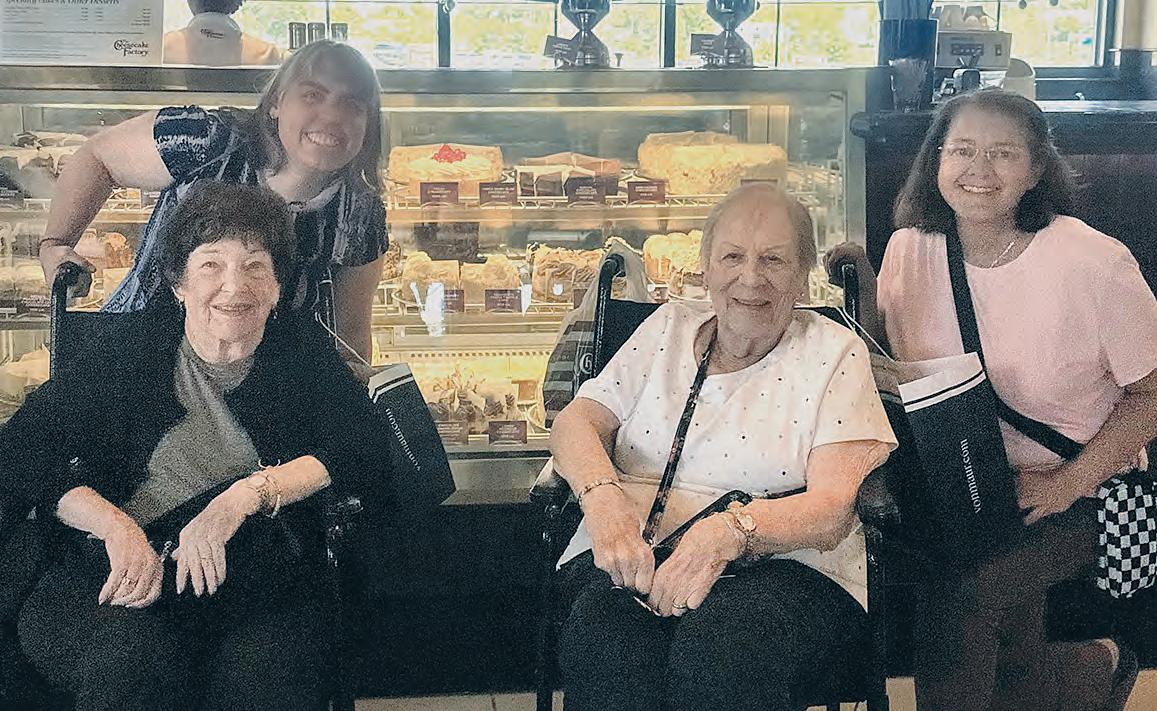
Nancy Epstein and Judy Kaiman from RBJH enjoyed a delightful day together shopping and browsing at Von Maur before savoring a delicious lunch at The Cheesecake Factory, and yes, cheesecake was definitely part of the fun! Nancy was selected for a Dreamweaver Foundation experience and invited her special friend Judy to share the day with her. Throughout the outing, Nancy kept saying, “Best day ever! I really needed this.” Together, the two enjoyed a truly perfect day filled with laughter, friendship, and wonderful memories.

A special thank you to Kelly Jacobs, Volunteer & Program Manager for Dreamweaver Foundation, for helping make this memorable outing possible. Dreamweaver Foundation is dedicated to creating meaningful moments for aging adults throughout Nebraska and Western Iowa. Another heartfelt thank you goes to Christina Caniglia, Assistant Activities Director, for nominating Nancy for a Dreamweaver Wish and helping create this joyful adventure for two very deserving friends.




















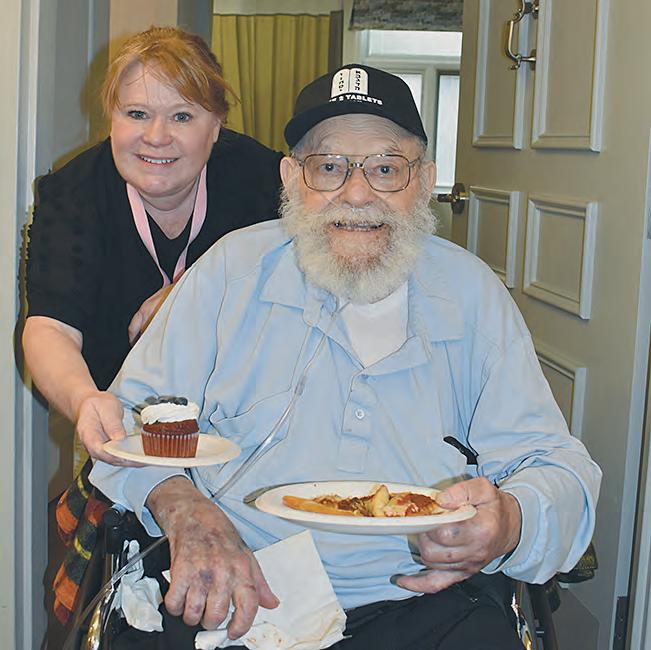
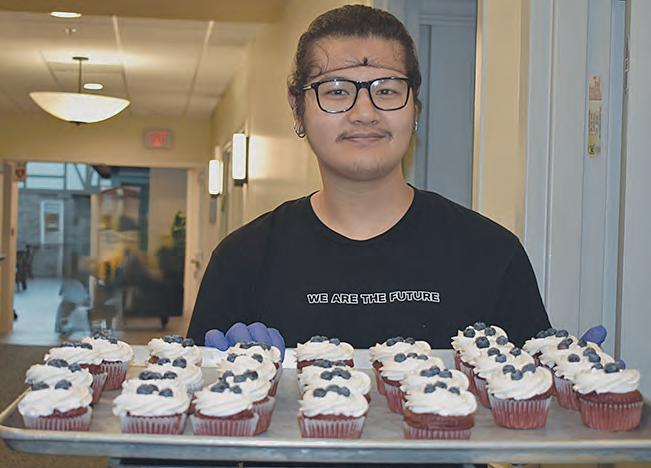
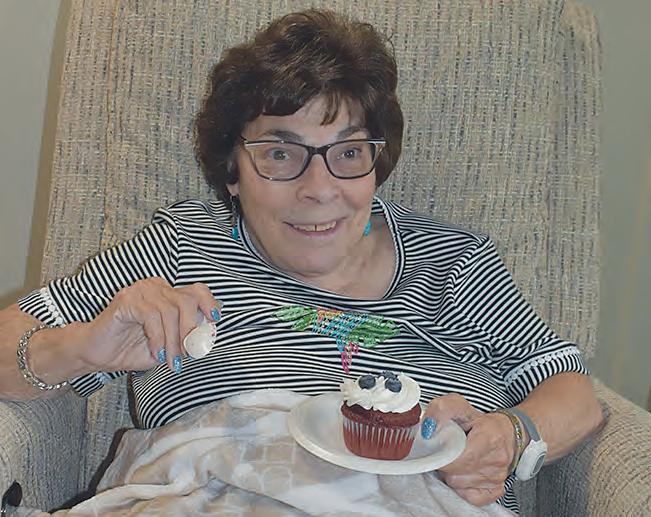
RBJH residents enjoyed Memorial Day treats featuring slices of pizza and red velvet cupcakes. A heartfelt thank you goes to League Offering Volunteers for the Elderly (LOVE) for their generosity.
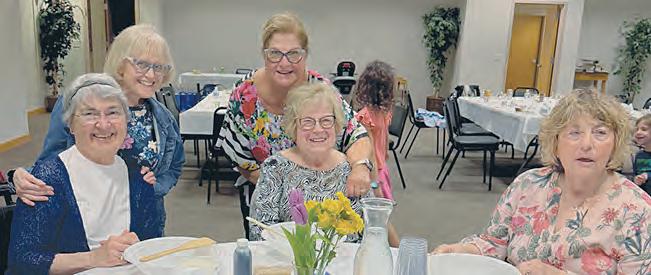
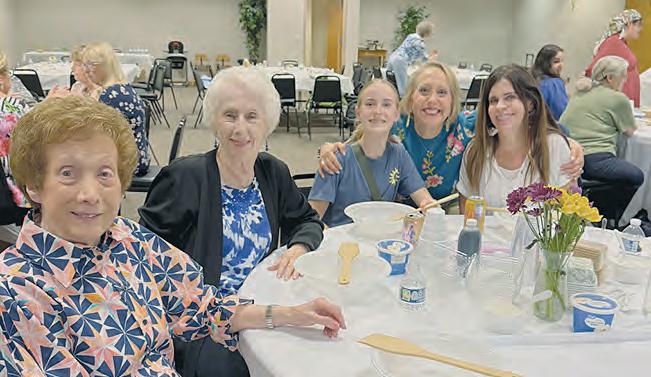
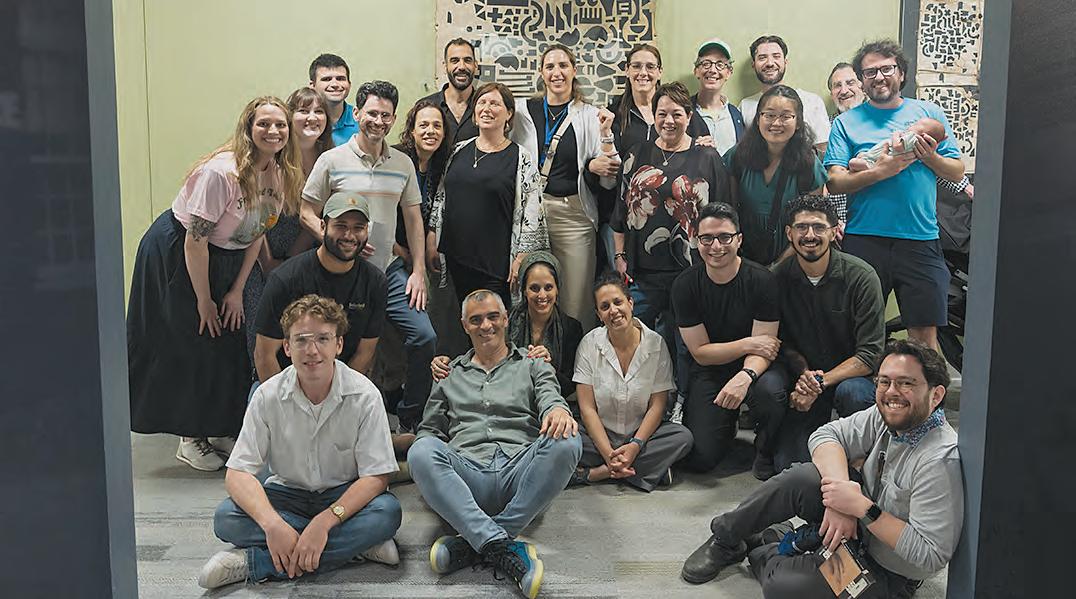

GENEROUSLY SUPPORTED BY PHOTOS FROM RECENT JEWISH COMMUNITY EVENTS
SUBMIT A PHOTO: Have a photo of a recent Jewish Community event you would like to submit? Email the image and a suggested caption to: avandekamp@jewishomaha.org
In a recent speech on nutrition, the nation’s top health official offered a perhaps surprising explanation for what is ailing Americans.
“We’re engaged right now in spiritual warfare and … the malevolent forces want to drive us apart and end our connection to each other,” Robert F. Kennedy Jr. said on March 5.
It’s not clear if Kennedy was speaking metaphorically, having frequently talked about his own spiritual crises over the years. But he was using language many thought was targeted at those who believe that modern science is no match for the unseen “malevolent forces” assailing Americans’ physical and mental well-being.
According to recent polling, 54% of Republicans and 37% of Democrats believe in the literal existence of demons. A Marist Poll found that the number of Americans who claimed to have actively been in the presence of a ghost or spirit doubled between the 1990s and the 2020s from roughly 24% to 30%.
TikTok is awash in tarot readers, crystal healers, astrology influencers and wellness gurus promising access to unseen forces. Influencers peddle alternative COVID cures and supernatural explanations for current events. Essayists and social sciences are attributing the popularity of the occult, the supernatural and conspiracyminded thinking to a rejection of institutional authority. In a period of profound economic and political instability, they suggest, people seek metaphysical answers when the official explanations feel insufficient.
But if this all feels very 2026, a new exhibit at YIVO Institute for Jewish Research suggests we’ve been here before.
“Jews Are Magic,” opening this month at YIVO’s Manhattan headquarters, explores the Jewish fascination with mysticism, fortune telling, amulets, psychics and occult practices. While the exhibit reaches back to the biblical and Talmudic periods, its main focus is on the mid-19th century to the early 20th century. In the face of increasing urbanization, oppression in Russia and the pull of assimilation, Jews in Eastern Europe and New
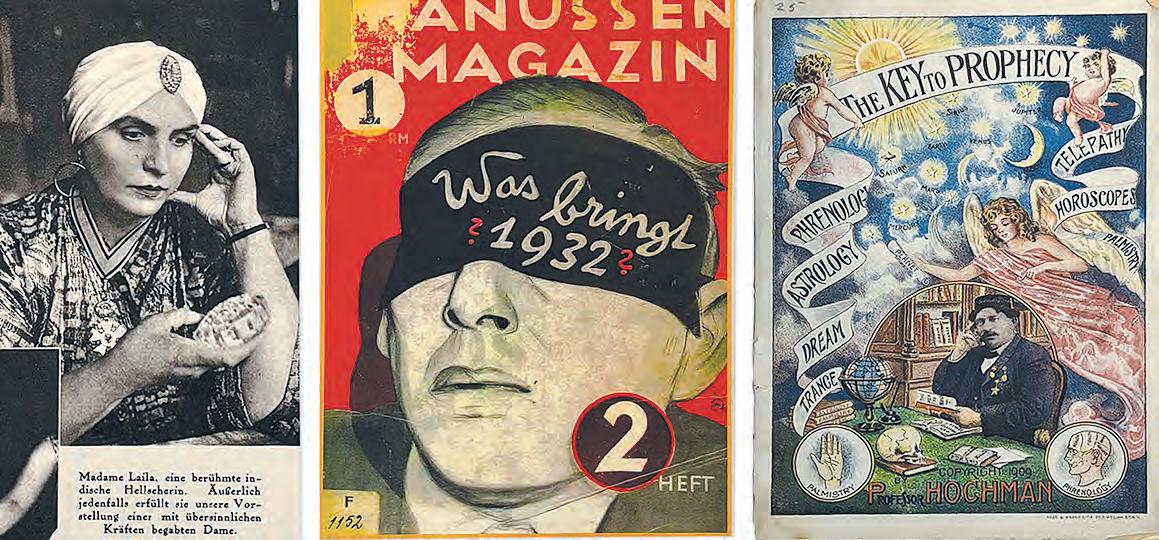
York’s Lower East, no less than their non-Jewish neighbors, found solace in the occult.
“In this time period, when people commonly think that sort of magic is getting left at the wayside and people are becoming more modern, they’re just as engaged with these unseen realities as they were beforehand,” said Samuel Glauber, a specialist on the Jewish occult and adviser to the exhibit.
And it wasn’t just the huddled masses. Writers, intellectuals and scientists were fascinated by the supernatural, adding a sheen of respectability to fortune-telling, seances and what Sigmund Freud called the “uncanny.”
The exhibit includes palm-reading manuals, amulets against the evil eye, fortune-telling guides and advertisements for Jewish psychics drawn from YIVO’s archives. They promise to help readers and clients find romance, settle lawsuits and cure illness. One display includes heavily used Yiddish divination books whose margins still contain penciled calculations from long-ago readers trying to conjure their futures.
At least in theory, Jewish tradition forbids such prac-
tices. The exhibit opens with an admonition in Deuteronomy against consulting with an “enchanter, or a witch, or a charmer, or a consulter with familiar spirits.”
Nevertheless, folk religion flouted these prohibitions, and many rabbis went along.
“Officially these kinds of materials are, at some level, considered unacceptable,” Eddy Portnoy, YIVO’s senior academic advisor and director of exhibitions, said on a tour of the exhibit Wednesday. “Yet a lot of rabbis participate in this.”
Some of the exhibit’s most poignant artifacts are drawn from a cache of roughly 5,000 kvitlekh, or handwritten petitions, sent to Rabbi Eliyahu Guttmacher, a 19th-century Polish rabbi and mystic known as the “Tzaddik of Grodzisk.” The letters were discovered in an attic in 1932 by YIVO collectors and offer an intimate archive of Jewish anxiety on the edge of modernity.
After Guttmacher reportedly cured a child believed to be possessed by a demon, Jews from across partitioned Poland began writing to him seeking help with illness, See Jewish Psychics page 8

Continued from page 1 infertility, poverty, bad luck and psychological torment. The letters blur the line between religion, folk healing and occult practice. Guttmacher’s responses haven’t survived, but a nearby display case includes various spells written by other rabbis, meant to ward off the evil eye and often invoking kabbalah, the Jewish mystical practice that offered rabbis an acceptable foothold in the esoteric.
The stars of “Jews Are Magic,” though, are the flamboyant hustlers, healers and self-invented mystics who turned Jewish occultism into performance art and entrepreneurial spectacle.
Among the most colorful is Naftali Herz Imber, best remembered today as the poet who wrote the words that became “Hatikvah,” Israel’s national anthem.
Long before that, however, Imber was touring America in flowing robes as a clairvoyant known as “The Mahatma” and “The Apostle of the Kabbalah and the Emissary of the 37 Masters.”
Imber’s career as a clairvoyant eventually collapsed into alcoholism, bar fights and arrests, but his wit apparently never deserted him. Thrown out of a Zionist congress for bad behavior, he reportedly shrugged and said: “They still have to sing my song.”
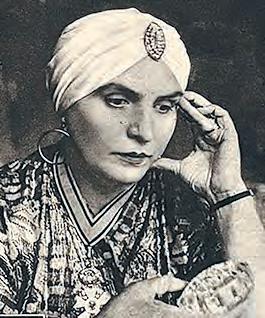
Another standout is Khayem-Mordkhe Shiller-Shkolnik, perhaps the closest thing prewar Poland had to a celebrity psychic.
Born in a shtetl near Lublin in 1874, Shiller-Shkolnik fused occultism with the language of modern science and self-improvement. He advertised expertise in hypnosis, telepathy, handwriting analysis, phrenology (skull-reading) and “psychophrenology,” a discipline of his own invention.
Glauber, the Miriam Barr Librarian for Jewish & Near Eastern Studies at Washington University, said practitioners like Shiller-Shkolnick took advantage of the burgeoning market for mass-market periodicals and books to become their era’s influencers.
“He was a master of press advertisement,” Glauber said. “The amount of coverage he was able to generate for himself was really incredible.”
On the Lower East Side, celebrity psychic Abraham Hochman operated out of 169 Rivington Street, where he dispensed prophecies, published manuals and built a small business empire that included custom wedding contracts, a wedding hall and a Catskills hotel.

Hochman specialized in finding runaway husbands — a genuine social crisis in immigrant Jewish New York.
In one celebrated case, Hochman told a woman exactly where and when she would find her missing husband: on the corner of Pitt and Grand Streets at 10 p.m. She arrived with a police officer and found the man leaning against a lamppost precisely where Hochman “predicted.”
Portnoy acknowledges that many such stories are almost certainly exaggerated or invented. But that, he says, misses the point.
“These people are having real problems, and they haven’t had solutions,” he said. “Having tried other things, they finally decide to approach these wonder workers who can work their magic.”
The exhibit’s most tragic figure may be Erik Jan Hanussen, born Herschel Steinschneider to a Jewish family in Vienna. Reinventing himself as a Danish aristocrat and celebrity clairvoyant, Hanussen became one of Europe’s most famous hypnotists during the Weimar years, hosting lavish séances and publishing a newspaper called The Clairvoyant News.
By the early 1930s he had insinuated himself into Nazi circles and allegedly befriended members of the SS. Communist
journalists exposed his Jewish origins, and Hanussen’s body was later found dumped by the roadside, apparently by the very movement he thought he could manipulate.
It is tempting to treat these stories as colorful relics of an immigrant past — quaint tales of gullible Jews and charismatic hucksters. But “Jews Are Magic” insists on something more unsettling: The allure of the occult never disappeared.
The Hasidic press continues to carry advertisements for spiritual healing, and Sephardic Jews in Israel have an ongoing tradition of seeking help and protection from wonder rabbis.
And both Glauber and Portnoy see a poignant similarity between the Yiddishspeaking amulet-makers and Jewish fortune-tellers and today’s wellness influencers and conspiracy mongers.
“Anytime people feel the pressure of the world, this is something they always turn to,” he said. “Because it’s entertaining, but it also provides a hopeful window into something else.”
Jews Are Magic: Occult Practices from Palmistry to Professional Psychics opens May 26 at the YIVO Institute for Jewish Research, located at the Center for Jewish History in New York City.

(Founded in 1920)
David Finkelstein
President
Annette van de Kamp-Wright
Editor
Will Fischer
Creative Director
Claire Endelman
Sales Director
Lori Kooper-Schwarz
Assistant Editor
Sam Kricsfeld
Digital support
Mary Bachteler
Accounting
Jewish Press Advisory Board
David Finkelstein, President; Margie Gutnik, Ex-Officio; Toby Dresdner, Andrea Erlich, Dana Gonzales, Mary Sue Grossman, Hailey Krueger, Avery Lubin, Sara Rips, Seth Schuchman, Stewart Winograd and Bob Yaffe.
The mission of the Jewish Federation of Omaha is to build and sustain a strong and vibrant Omaha Jewish Community and to support Jews in Israel and around the world.
Agencies of the JFO are:: Institute for Holocaust Education (IHE), Jewish Community Relations Council (JCRC), Nebraska Jewish Historical Society (NJHS), Jewish Press, Rose Blumkin Jewish Home (RBJH), Jewish Family Service (JFS), Staenberg Omaha Jewish Community Center (JCC).
Guidelines and highlights of the Jewish Press, including front page stories and announcements, can be found online at: www.jewishomaha.org; click on ‘Jewish Press.’
The Jewish Press is not responsible for the Kashrut of any product or establishment.
Editorial
E-mail editorial material and photos to: jpress@jewishomaha.org and avandekamp@jewishomaha.org ; send ads (in TIF or PDF format) to: wfischer@jewishomaha.org
Letters to the Editor Guidelines
The Jewish Press welcomes signed Letters to the Editor. They may be sent via regular mail to: The Jewish Press, 333 So. 132 St., Omaha, NE 68154; via fax: 1.402.334.5422 or via e-mail to the Editor at: avandekamp@jewishomaha.org.
Letters should be no longer than 250 words and must be single-spaced typed, not hand-written. Published letters should be confined to opinions and comments on articles or events.
News items should not be submitted and printed as a “Letter to the Editor.”
The Editor may edit letters for content and space restrictions. Letters may be published without giving an opposing view. Information shall be verified before printing. All letters must be signed by the writer. The Jewish Press will not publish letters that appear to be part of an organized campaign, nor letters copied from the Internet. No letters should be published from candidates running for office, but others may write on their behalf.
Letters of thanks should be confined to commending an institution for a program, project or event, rather than personally thanking paid staff, unless the writer chooses to turn the “Letter to the Editor” into a paid personal ad or a news article about the event, project or program which the professional staff supervised. For information, contact Annette van de Kamp-Wright, Jewish Press Editor, 402.334.6450.
Postal The Jewish Press (USPS 275620) is published weekly (except for the first week of January and July) on Friday for $40 per calendar year U.S.; $80 foreign, by the Jewish Federation of Omaha. Phone: 402.334.6448; FAX: 402.334.5422.
Periodical postage paid at Omaha, NE. POSTMASTER: Send address changes to: The Jewish Press, 333 So. 132 St., Omaha, NE 68154-2198 or email to: jpress@jewishomaha.org
ANNETTE VAN DE KAMP-WRIGHT Jewish Press Editor
“Two new polls of American voters,” Grace Gilson recently wrote for JTA, “have found declining public support for Israel and growing discontent among Republicans over President Donald Trump’s direction on Israel […] The poll adds to growing signals that Israel is becoming a fault line within the Republican Party as well as on the left, where it has been increasingly divisive for years.”
I am not sure we needed a poll to tell us that; it’s been more or less the status quo since October 7and had been brewing for quite a while before that day. How are we supposed to take news stories like these? More hand wringing, or should it spur us to new, more engaged action? I don’t know there is anything else we can do at this point. For years, I wondered, while listening to stories about “The War” (always pronounced with capital letters) what I would have done, had I been alive in the 1930s. I know, I know; comparing the current climate to 1930s Europe is another thing we are tired of. Because even though there are parallels, we don’t live in the same world, this is not a repeat of the past-and we should stop pretending it is.
Sometimes I’m afraid we are all just holding our breath until this goes away. Sometimes, I’m just afraid-without knowing what exactly I’m afraid of. And so I live my life the best way I know how, one day at a time, realizing I can’t solve this problem. Here is the thing: when you read too much news, as I am wont to do, you can end up thinking the light has left us. From the hourly updates Times of
Editorials express the view of the writer and are not necessarily representative of the views of the Jewish Press Advisory Board, the Jewish Federation of Omaha Board of Directors, or the Omaha Jewish community as a whole.
Israel sends to my phone, and literally every single Jewish news outlet to Jewish influencers on social media (I see you, Hen Mazzig), it’s hard to miss a single “bad-news-for-the-Jews” story.
Yet, we recently celebrated Shavuot, we have weekly Shabbat, we have each other. And if you feel like I have mentioned this before, and I’m kind of repeating myself, you’d be right, but it is important to tell ourselves this over and over again. To remember all that is good in the world, and that being Jewish is awesome.
I’m lucky; here at the J we are about to be reminded in a big way, because it’s time for J-Camp. That means long carlines, a full parking lot, and hundreds of kids all over campus. Those hundreds of kids are signed up by hundreds of families who know the value of this community. They will be loud, they will be messy, and they will be everywhere. In addition, the pool opened Memorial Day weekend, and that means even more traffic. It creates a vibrant, noisy, robust environment, which sometimes makes me feel like I am working in a theme park. The entire building just becomes more alive. It’s a fantastic reminder that feeling alive is our best weapon against hate.
worry about tomorrow, and if you asked them whether they want all Jews to disappear, they wouldn’t have an answer.
We, on the other hand, know the past, and we look at the future. We are part of the long story, we have lasted through the ages, and we are not going
anywhere. We have holidays to celebrate, we have mitzvot to complete, and even those among us who aren’t always sure about religion have chai necklaces to clasp on and candles to light.
And maybe the antisemites have no clear end goal in mind, maybe they don’t ask themselves what they hope will happen. Maybe they live in the moment, digging into hating Jews because it’s what’s trending right now. Perhaps they don’t
The long view is something that might not be unique to Judaism, but it is definitely a strength we can tap into during darker times. Our story continues. We just have to keep turning the pages, and remind ourselves there is always a next chapter. There is, after all, so much more to write.
‘Spiritually Israeli’ is the viral insult that teens can’t escape
This article was produced as part of JTA’s Teen Journalism Fellowship, a program that works with Jewish teens around the world to report on issues that affect their lives | JTA
Holding up her phone while tossing her hair over her shoulder, a young woman records a TikTok of herself. On the screen appears a list of “Things that are spiritually Israeli: Snapchat, Gracie Abrams, any kind of AI, League of Legends, Jeremiah Fisher, QR code menus, Sigmund Freud, the May 22nd Mustafa Daniel Caesar concert, men, and choice feminism.”
Her TikTok post received almost 80,000 likes.
Across a number of social media platforms, posters use “spiritually Israeli” to describe something they find suspicious or soulless, or to assert their dislike of a trend, person or idea. It doesn’t matter if the thing being described has any connection to Israel or Jews. “Israeli” has become its own kind of pejorative.
For Jewish teens encountering this trend online, it has raised some complicated feelings.
Melanie Gross, a Jewish high school student from Harrington Park, New Jersey, is deeply irritated at the rising popularity of the phrase.
“It makes me feel very annoyed, because people just tend to copy whatever they see,” Gross said. “They’re like, ‘oh, this trend is gaining a lot of attention, so it’s probably an accurate depiction of Israelis.’”
The site knowyourmeme.com says “spiritually Israeli” is used as an insult to call celebrities, trends, products and other things “vapid” or “culturally empty.” Examples are seen frequently on TikTok: “I hate when I get a matcha and it tastes spiritually Israeli”; “The way you played the victim felt spiritually Israeli,” and “I can’t explain it but girls who look down on other girls for wearing makeup everyday are spiritually Israeli” are just a few examples.
According to the American Jewish Committee, 73% of American Jews have experienced antisemitism online. As antisemitic language becomes more common across social media, Jewish teens have also been encountering it more frequently in their feeds. This exposure not only affects their comfortability online, but also their sense of safety in their everyday lives.
“Trends like this one make it hard to express my
Judaism,” said Gross. “Sometimes if I’m wearing a star of David necklace, there’s certain places where I’d tuck it beneath my shirt.”
As anti-Jewish harassment has risen not only online, but also in schools and public spaces, many Jewish teens are struggling to navigate a reality where online hostility is leaching into their daily lives.
Sixteen-year-old twins Sophie and Julia Ofeck, IsraeliAmerican high school students from Old Tappan, New Jersey, both said that this phrase feels like a personal attack.
“This trend gives people a negative perception of Israelis when they see the word ‘Israeli’ being used as a negative adjective,” said Sophie. She sometimes feels uncomfortable sharing her Israeli heritage with people she doesn’t know.
they are criticizing the Israeli government, the language is still dangerous because it is so vague, the Ofecks and other Jewish teens told JTA.
“People online need to draw a line between ‘dark humor’ and hate.” Sophie said, “People shouldn’t be talking about things they aren’t educated about. None of this is a joke, and it’s very hurtful to see.”

Meanwhile, some proud Israelis and Jews are responding by embracing the label as an ironic badge of honor.
“I’m scared of what they’ve seen on social media,” Sophie said.
Her twin sister, Julia, makes the distinction that “the term isn’t ‘spiritually Israeli government,’ it’s ‘spiritually Israeli.’ This difference is incredibly significant because it leads to widespread negative perceptions of Israeli people as this type of language becomes more common.”
More: Read a teen’s guide to the antisemitic memes flourishing on social media.
Some have defended the use of the phrase. Vocal Politics, an Independent media outlet covering the “Global South,” asserted in a TikTok video that the phrase is “a cultural response born from two years of witnessing Israel’s genocidal campaign in Gaza and wars across multiple fronts.”
Calling something “spiritually Israeli,” the video continued, “has become shorthand for corruption, deceit, colonial arrogance, or just criticising stuff they hate.”
And yet even if those using the phrase may think
On Reddit’s r/Israel community, a user recently suggested that Jews should “push back” and use the phrase “to describe odd quirks of Israeli culture that we love nonetheless.”
The suggestions poured in, from the Israeli love of cucumbers, to the average Israeli’s aversion to rain, to wearing shorts and a t-shirt to a wedding.
“They’ll get tired of using this phrase soon,” wrote a Redditor describing themselves as an “AmericanIsraeli.” “I don’t think it’s going to become mainstream and it’s better that we just ignore it in my opinion.”
Nevertheless, although she was raised to be proud of being an Israeli, New Jersey high school student Zoe Geallat said that trends like these leave her “often ashamed and embarrassed, even though that shouldn’t be the case.”
“It’s very upsetting when I see things being said about my heritage,” Geallat said. “People just believe whatever it is they see, and then the hate keeps rising.”
B’NAI ISRAEL SYNAGOGUE
618 Mynster Street Council Bluffs, IA 51503-0766
712.322.4705 www.cblhs.org
BETH EL SYNAGOGUE
Member of United Synagogues of Conservative Judaism 14506 California Street Omaha, NE 68154-1980
402.492.8550 bethel-omaha.org
BETH ISRAEL
SYNAGOGUE
Member of Union of Orthodox Jewish Congregations of America 12604 Pacific Street Omaha, NE. 68154
402.556.6288 BethIsrael@OrthodoxOmaha.org
CHABAD HOUSE
An Affiliate of Chabad-Lubavitch 1866 South 120 Street Omaha, NE 68144-1646
402.330.1800 OChabad.com email: chabad@aol.com
LINCOLN JEWISH COMMUNITY:
B’NAI JESHURUN
South Street Temple
Union for Reform Judaism
2061 South 20th Street Lincoln, NE 68502-2797
402.435.8004 www.southstreettemple.org
OFFUTT AIR
FORCE BASE
Capehart Chapel 2500 Capehart Road Offutt AFB, NE 68123
402.294.6244 email: oafbjsll@icloud.com
TEMPLE ISRAEL
Union for Reform Judaism (URJ) 13111 Sterling Ridge Drive Omaha, NE 68144-1206
402.556.6536 templeisraelomaha.com
LINCOLN JEWISH COMMUNITY:
TIFERETH ISRAEL
Member of United Synagogue of Conservative Judaism 3219 Sheridan Boulevard Lincoln, NE 68502-5236 402.423.8569 tiferethisraellincoln.org
Monthly Speaker Series Service, Friday, June 12, 7:30 p.m. with our guest speaker, Ashley BelmudezFrakes. Our service leader is Larry Blass. Everyone is always welcome at B’nai Israel!
For information about our historic synagogue, please visit our website at www.cblhs.org or contact any of our board members: David Alloy, Renee Corcoran, Rick Katelman, Gail Kenkel, Janie Kulakofsky, Howard Kutler, Ann Moshman, Mary-Beth Muskin, Debbie Salomon, Sissy Silber and Jenn Tompkins. Handicap Accessible.
Services conducted by Rabbi Steven Abraham and Hazzan Michael Krausman.
IN-PERSON AND ZOOM MINYAN SCHEDULE: Mornings on Sundays, 9:30 a.m.; Mondays and Thursdays, 7 a.m.; Evenings on Sunday-Thursday, 5:30 p.m.
FRIDAY: Kamp Kef, 9 a.m.; Kabbalat Shabbat, 6 p.m. at Beth El and Live Stream.
SATURDAY: Shabbat Morning Services, 10 a.m. at Beth El and Live Stream; Lunch & Learn with Stephanie Vieagas following Shabbat Morning Services
SUNDAY: Morning Minyan, 9 a.m. Zoom Only — Summer Schedule; Guided Conversations with Stephanie Vieagas noon
WEDNESDAY: Speaker Rachel Goldberg-Polin, 6 p.m.
FRIDAY-June 12: Kabbalat Shabbat, 6 p.m. at Beth El and Live Stream.
SATURDAY-June 13: Simcha Shabbat Services, 10 a.m. at Beth El and Live Stream. Please visit bethel-omaha.org for additional information and service links.
FRIDAY: Torah from Omaha, 6:45 a.m.; Shacharit, 7 a.m.; Mincha/Kabbalat Shabbat, 7 p.m.; Candlelighting, 8:36 p.m.
SATURDAY: Shabbos Café, 8:30 a.m.; Shacharit, 9 a.m.; Tot Shabbat 10:30 a.m.; Youth Class 10:45 a.m.; Dr Erica Brown - Rabbi Sacks and the Rebbe on Happiness & Loneliness 11:30 a.m.; Dr Erica BrownWhere have All the Leaders Gone? 7:35 p.m.; Mincha 8:20 p.m.; Kids Activity/Laws of Shabbos, 8:50 p.m.; Havdalah, 9:45 p.m.
SUNDAY: Shacharit, 9 a.m.; Tomer Devorah & Kabbalah, 3 p.m.; Mincha/Ma’ariv, 8:40 p.m.
MONDAY: Torah from Omaha, 6:45 a.m.; Shacharit, 7 a.m.; Mincha/Ma’ariv 8:40 p.m.
TUESDAY: Torah from Omaha, 6:45 a.m.; Shacharit, 7 a.m.; Smichat Chaver Men's Class, 8:40 p.m.; Mincha/Ma’ariv, 8:40 p.m.
WEDNESDAY: Torah from Omaha, 6:45 a.m.;
Shacharit, 7 a.m.; Character Development 1:30 p.m.; Mincha/Ma’ariv, 8:40 p.m.
THURSDAY: Torah from Omaha, 6:45 a.m.; Shacharit, 7 a.m.; Mincha/Ma’ariv 8:40 p.m.
FRIDAY-June 12: Torah from Omaha, 6:45 a.m.; Shacharit, 7 a.m.; Mincha/Kabbalat Shabbat, 7 p.m.; Candlelighting, 8:40 p.m.
SATURDAY-June 13: Shabbos Café, 8:30 a.m.; Shacharit 9 a.m.; Tot Shabbat 10:30 a.m.; Youth Class, 10:45 a.m.; Soulful Torah, 7:45 p.m.; Mincha, 8:30 p.m.; Kids Activity/Laws of Shabbos, 9 p.m.; Havdalah, 9:50 p.m.
Please visit orthodoxomaha.org for additional information and Zoom service links.
Join classes via Zoom. Go to ochabad.com/academy. For more information or to request help, please visit www.ochabad.com or call the office at 402.330.1800.
FRIDAY: Shacharit 8 a.m.; Lechayim, 5:30 p.m. go to ochabad.com/lechayim to join; Shabbat Dinner with Erica Brown, 7 p.m. RSVP at ochabad.com/dinner; Candlelighting, 8:36 p.m.
SATURDAY: Shacharit, 10 a.m. followed by Kiddush and Cholent; Shabbat Ends, 9:45 p.m.
SUNDAY: Sunday Morning Wraps, 9 a.m.
MONDAY: Shacharit, 8 a.m.; Personal Parsha, 9:30 a.m. with Shani; Intermediate Biblical Hebrew Grammar, 10:30 a.m. with David Cohen; Parsha Reading, 6-8 p.m. with David Cohen.
TUESDAY: Shacharit 8 a.m.; Aramaic Grammar, 10 a.m. with David Cohen; Intermediate Biblical Hebrew Grammar, 6 p.m. with David Cohen; Introductory Biblical Hebrew Grammar, 7 p.m. with David Cohen.
WEDNESDAY: Shacharit, 8 a.m.; Introductory Biblical Hebrew Grammar, 10:30 a.m. with David Cohen; Parsha Reading, 11:30 a.m. with David Cohen.
THURSDAY: Shacharit, 8 a.m.; Introductory Biblical Hebrew Grammar, 10 a.m. with David Cohen; Advanced Biblical Hebrew Grammar, 11 a.m. with David Cohen; Talmud Study, noon; Introduction to Alphabet, Vowels & Reading Hebrew, 6 p.m. with David Cohen; Code of Jewish Law Class, 7 p.m.
FRIDAY-June 12: Shacharit 8 a.m.; Lechayim, 5:30 p.m. go to ochabad.com/lechayim to join; Candlelighting, 8:40 p.m.
SATURDAY-June 13: Shacharit 10 a.m. followed by Kiddush and Cholent; Shabbat Ends, 9:49 p.m.
LINCOLN JEWISH COMMUNITY: B’NAI JESHURUN & TIFERETH ISRAEL
Services facilitated by Rabbi Alex Felch. All services offered in-person with live-stream or teleconferencing options.
FRIDAY: Kabbalat Shabbat Service, 6:30-7:30 p.m.
at SST followed by an Oneg; Shabbat Candlelighting, 8:36 p.m.
SATURDAY: Shabbat Morning Service, 9:30 a.m. at TI with a Kiddush Lunch following; Torah Study noon on Parashat Beha’alotcha via Zoom; Havdalah, 9:46 p.m.
SUNDAY: Men’s Bike/Coffee Group, 10:30 a.m. at Rock 'N' Joe Coffee, 5025 Lindberg St, Lincoln. For more information or questions please email Al Weiss at albertw801@gmail.com
WEDNESDAY: Men’s Lunch Group, 12:15 p.m. at Horisun Hospice, 8055 O St #300, Lincoln. We meet in the conference room. Bring your own lunch and beverage. For more information, contact Albert Weiss at albertw801@gmail.com
FRIDAY-June 12: Kabbalat Shabbat Service, 6:307:30 p.m. at SST followed by an Oneg; Shabbat Candlelighting, 8:40 p.m.
SATURDAY-June 13: Shabbat Morning Service, 9:30 a.m. at TI with a Kiddush Lunch following; Torah Study, noon on Parashat Sh’lach via Zoom; Havdalah, 9:50 p.m.
FRIDAYS: Virtual Shabbat Service, 7:30 p.m. every first and third of the month at Capehart Chapel. Contact TSgt Jason Rife at OAFBJSLL@icloud.com for more information.
In-person and virtual services conducted by Rabbi Benjamin Sharff, Rabbi Deana Sussman Berezin, and Cantor Joanna Alexander.
FRIDAY: Drop-In Mah Jongg, 9 a.m. In-Person; Village Walking Group, 10 a.m.; Shabbat B’yachad Service, 6 p.m. In-Person & Zoom.
SATURDAY: Torah Study, 9:15 a.m. In-Person & Zoom; Shabbat Morning Service, 10:30 a.m. In-Person & Zoom
SUNDAY: Annual Meeting, 10 a.m. In-Person.
TUESDAY: Mah Jongg Made Easy, 1:30 p.m. In-Person.
WEDNESDAY: Yarn It, 9 a.m.; Holy Smokes, 7 p.m. In-Person
FRIDAY-June 12: Drop-In Mah Jongg, 9 a.m. InPerson; Village Walking Group, 10 a.m.; Shabbat Shira Service, 6 p.m. In-Person & Zoom.
SATURDAY-June 13: Torah Study, 9:15 a.m. In-Person & Zoom; Shabbat Morning Service, 10:30 a.m. InPerson & Zoom Please visit templeisraelomaha.com for additional information and Zoom service links.
Wednesday June 17, from 12-1 pm, the final Beit Midrash session of the 25-26 season will take place at the Staenberg Omaha JCC. Our speaker that day is Temple Israel’s Cantor Joanna Alexander. As is our custom, a light Kosher lunch is served; there is no cost to attend, but we do ask you to register at jewishomaha.org, so we can provide the right amount of food. The link is posted on the front page of the Jewish Federation of Omaha website, that will also direct you to past sessions. Omaha is blessed with a Jewish community whose members have deep affection for each other and for their spiritual leaders, regardless of which congregation they happen to belong to. Embracing our desire to be together and learn together, this Beit Midrash (house of study) gives all of Jewish Omaha the opportunity to engage in spirited and challenging cross-denominational study with local rabbis and cantors. It fosters discussion and friendly debate, allowing students and teachers to share ideas and deepen their understanding of
Jewish teachings.Such a communal learning environment is essential for personal growth and the preservation of Jewish traditions. Beit Midrash will begin again in the fall of 2026 and continue through next early summer, on the third Wednesday of each month.
We currently also have a waiting list for future sessions of “Intro to Judaism,” a course brought to you by the Jewish Federation of Omaha. You can register for a future session next spring by visiting our website. Class size is limited, so don’t delay! Intro to Judaism is taught by Jill Idleman, a seasoned facilitator and leadership development trainer with over 25 years of invaluable experience in the Omaha Jewish Community.
multiple perspectives, and discover what is meaningful to you in Judaism. We’ll explore Jewish holidays and life-cycle ceremonies, beliefs, values, prayer, Jewish texts, Israel and the American Jewish experience.
Intro to Judaism includes opportunities to experience Jewish locations in Omaha, including synagogues and the Jewish Community Center. You can learn from professionals who deal with a variety of areas related to the religion.
This 11-session, sequential course is suited for interfaith couples, those raising Jewish children, individuals considering conversion, and anyone who wants to gain a deeper understanding of Jewish life, no matter faith tradition, cultural background or religious upbringing. You are encouraged to ask questions, interact with other learners, consider
The course will culminate with a panel discussion with the community’s rabbis and clergy who will each provide a perspective on Judaism through the lens of their respective congregations. The Intro to Judaism course is generously supported in memory of Michael Liddy. Updated information will be provided on the JFO website, The Jewish Press and JFO E-News. If you have questions, need help accessing the Jewish Press, or want to receive the JFO E-News, contact Naomi Fox at nfox@jewishomaha.org or Jonnie Robinson at jonnie.robinson@jewishomaha.org or you can call (402) 334-6475.
Arlene Hockenberg passed away on May 18, 2026, in Thousand Oaks, CA. Services were held on May 21, 2026, at El Camino Memorial Park in San Diego, CA, and were officiated by Rabbi Ian Adler.
She was preceded in death by her husband, Bernard Hockenberg; parents, Bess Bordy Swartz and John B Swartz; and daughter, Laurie Jane Rodin.
She is survived by daughter, Jennifer Rodin Seigner (Thomas), of Westlake Village, CA; sons, Irvin Elliot Rodin of Sioux City, IA, and Mark Joel Hockenberg (Miriam Mazel) of Sedalia, CO; grandson: Andrew Jay Seigner (Connie Chen) of San Francisco, CA; and nieces, nephews and cousins.
She is a life member of Hadassah and was a City of Hope volunteer.
Arlene celebrated her 100th birthday in March surrounded by all her family.
STUART WAYNE KUTLER
Stuart Wayne Kutler passed away on May 24, 2026. Services were held on May 26, 2026 and were officiated by Cantor Alexander.
He was preceded in death by parents, Marian and Phil Kutler of Omaha; and sister, Barbara Peck of St Louis, MO.
He is survived by wife, Sandy Kutler; daughters, Alison Kutler (Joe Matelis) and Traci (Lance) Kugler; and grandchildren: Lauren, Alex, Evan, Ryan and Megan Kugler.
Stuart was very philanthropic, especially to Jewish organizations, including the Early Learning Center at the JCC, Jewish Federation and BBYO.
Memorials may be made to the Stuart and Sandy Kutler BBYO Leadership Development and Programming Excellence Endowment Fund.
RICHARD HERBERT ROSENBLATT
Richard Herbert Rosenblatt age 96, passed away peacefully on April 29, 2026, after a long and remarkable life defined by devotion to family, service, and hard work. A memorial service was held on May 3, 2026 in Chicago, IL.
He is survived by his beloved wife Joan; children, Mark
(Lenora), Michael (Kathy), and Carolyn (Chip); seven grandchildren; one great-grandchild; and many family members and friends.
Richard was born on Aug. 31, 1929, in Omaha, Nebraska, He grew up during the Great Depression, an experience that shaped his resilience and determination. Richard attended Central High School and the University of Nebraska–Lincoln, where he studied business and remained a lifelong Cornhusker fan.
After graduating in 1951, Richard served as a second lieutenant in the United States Army during the Korean War. He was proud of his military service and later became active with Korean War veterans. Richard was an entrepreneur whose hard work and determination built a successful business career in Chicago. He took great pride in providing opportunities and security for his family. At age 27, Richard met the love of his life, Joan. They shared 67 devoted years of marriage and raised three children. Together they built a life filled with love, travel, friendship, and deep family bonds.
In retirement, Richard enjoyed golf, tennis, pottery, and time with those he loved. He also remained deeply connected to his Jewish heritage and supported charitable causes.
He will be remembered as a loving husband, devoted father and grandfather, proud veteran, and successful businessman who lived life fully.
Memorials may be made in Richard’s memory to the Jewish United Fund (www.juf.org) or the Wounded Warrior Project (www.woundedwarriorproject.org).
ANNE GREENHOUSE SIMON
Anne Greenhouse Simon passed away on May 24, 2026, in Dana Point, California. Services were held on May 27, 2026, at Pacific View Memorial Park and Mortuary and were officiated by Rabbi Gersh Zylberman of Temple Bat Yahm.
She was preceded in death by husband, Alan David Simon and son, Bruce Alan Simon.
She is survived by daughter, Janice Tecimer; daughter-in-law, Stacy Simon; grandchildren: Natalie Tecimer, Talia Goldman (Tyler Goldman) Chase Tecimer, Ellie Simon; and greatgrandaughter, Emmy Goldman.
Memorials may be made to Segerstrom Center for the Arts, Costa Mesa, California.
EVAN POULOS
CLASSIFIED ADVERTISING works! Place your 25 word ad into thousands of Nebraska homes for $225. Contact the Jewish Press or call 1-800-369-2850.
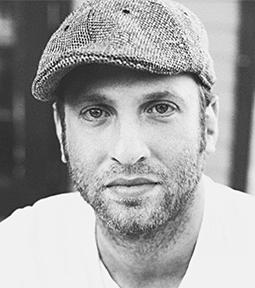
Tony Endelman was noted as one of the Most Influential Coaches to Watch in 2026 by MSN.com. “Tony Endelman's straightforward method,” Robert Wilson wrote, “designed specifically for men, stands out in a world full of generic self-help advice. An author and certified coach, Tony uses humor, honesty, and vulnerability to help men transform their lives from the inside out. Tony's bestselling book, The Big Stick: Collected & Applied Wisdom from the Teachings of Dr. Robert Glover, encapsulates the groundbreaking work of his friend and mentor, Dr. Robert Glover, a pioneer in men's self-improvement.”
SUBMIT OBITUARIES TO THE JEWISH PRESS: Email the Press at jpress@jewishomaha.org; mail to 333 So. 132 St., Omaha, NE 68154; or online at online at www.omahajewishpress.com/site/forms/
Evan Poulos, son of Marti and George Poulos, and Temple Israel member celebrated his Bar Mitzvah on Thursday, June 4, 2026, in Maui, Hawaii.
Evan recently completed seventhgrade at Westside Middle School.
Evan loves to golf, he participates in show choir and has special interests in AI technology.

For his mitzvah project, Evan has been volunteering at Temple Israel running the tech and livestreaming for services at Temple Israel for the past year.
He has a brother, Leo Poulos (age 16).
Grandparents are Lois and Joel Finkel of Omaha, and Dan and Kathy Poulos of Council Bluffs, Iowa.
If you do business with any of our advertisers, please tell them you saw their ad in the Jewish Press. It really helps us!

By becoming part of the past. This publication is available from ProQuest Information and Learning in one or more of the following ways: • Online, via the ProQuest® information service
Microform
CD-ROM
Via database licensing
For more information, call 1-800-521-0600, ext. 2888 (US) or 01-734-761-4700 (International) www.il.proquest.com
HELLO NEBRASKA! Introducing www.nepublicnotices.com, a new public notice website presented as a public service by all Nebraska newspapers. Free access, fully searchable – because democracy depends upon open government and your right to know.
BANKRUPTCY RELIEF! Help stop Creditor Harassment, Collection Calls, Repossession and Legal Actions! Speak to a Professional Attorney and Get the Help You NEED! Call NOW 844-215-3629
AFFORDABLE PRESS Release service. Send your message to over 120 newspapers across Nebraska for one low price! Call 1800-369-2850 or www.nebpress.com for more details.
DENTAL INSURANCE from Physicians Mutual Insurance Company. Coverage for 350 plus procedures. Real dental insuranceNOT just a discount plan. Do not wait! Call now! Get your FREE Dental Information Kit with all the details! 1-855-490-4149 www.dental50plus.com/81 #6258
FOR SALE - SATELLITE
GET DISH Satellite TV + Internet! Free Install, Free HD-DVR Upgrade, 80,000 On-Demand Movies, Plus Limited Time Up To $600 In Gift Cards. Call Today! 1-877-688-4784
FOR SALE - UTILITIES
PREPARE FOR power outages today with a Generac Home Standby Generator. Act now to receive a FREE 5-Year warranty with qualifying purchase. Call 1-402-899-2584 today to schedule a free quote. It’s not just a generator. It’s a power move.
GUN SHOW
GUN SHOW: June 12-14 2026, Westfair, Council Bluffs, IA Fri 49pm, Sat. 9am-5pm, Sun. 9am-3pm. $10 (under 12 FREE) . More info: 563-608-4401 www.marvkrauspromotions.net
HOME SERVICES
DOES YOUR basement or crawl space need some attention? Call Thrasher Foundation Repair! A permanent solution for waterproofing, failing foundations, sinking concrete and nasty crawl spaces. FREE Inspection & Same Day Estimate. $250 off ANY project with code GET250. Call 1-844-958-3431
ANNETTE VAN DE KAMP-WRIGHT
Jewish Press Editor
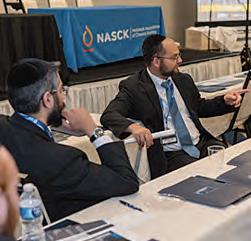
The sacred work of Chevros Kadisha is among the most humble and quietly performed mitzvos – carried out by individuals for whom this final act of kindness is its own reward. Recently, more than 100 men stepped out from behind the scenes and joined together for networking, and practical guidance at the Men’s Chevra Kadisha Leadership Conference.
Hosted by the Orthodox Union and NASCK (National Association of Chevra Kadisha), the conference brought together administrators and active tahara leaders from more than 50 cities across 17 U.S. states, as well as Canada. Representing Chasidish, Yeshivish, Chabad, Sefardi and Modern Orthodox communities, participants were united in their avodas hakodesh.
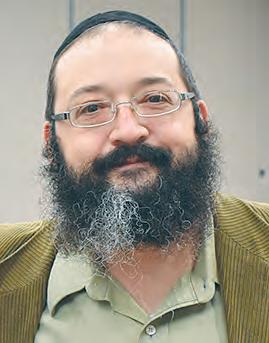
Among the participants was Yosef Seigel, representing Nebraska.
“Although conscious effort was made to group folks of similar-sized locales together,” he said, “the conference really brought together representatives from a spectrum of communities -- from large to small.”
While comparing Omaha with similarly-situated communities, he added, “I recognize specific challenges, but
also discover unique advantages. For instance, Omaha is fortunate to have our own Jewish Funeral Home while many communities don't, having to instead navigate informal relationships with independent proprietors. As much as I learned from others, I was also able to share, and by doing so better appreciate what we have.
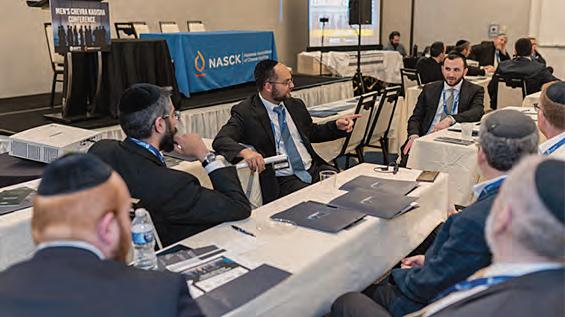
“The people who devote the most time and energy to serve Klal Yisrael often go unrecognized, by choice,” says OU Director of Torah and Halacha Initiatives Rabbi Ezra Sarna, who organized the conference together with NASCK Director of Chevra Relations Rabbi Shmuel Fromowitz. “They do their chesed quietly. Yet to be in a room with others who understand their expertise and who are similarly carrying Klal Yisrael on their shoulders gives them strength. The exchange of knowledge and experience, along with the relationships formed, significantly enhances their work and service.”
Yosef agreed:
“Being in a room with a hundred or so fellow practitioners,” he said, “as well as in smaller breakout group
sessions, allowed for a vibrant discussion of different perspectives. Often, a question or comment completely re-framed the conversation, and led to a lively debate on the subject. There is also something powerful and affirming about being surrounded by folks used to working in isolation, evoking a sense of shared mission and purpose.”
Throughout the day, participants attended sessions exploring both halacha and best practices, covering topics such as rechitzah, tahara, tachrichim, and complications that arise in the tahara room.
“The smaller format allowed every participant to contribute as well as learn,” says Rabbi Fromowitz. “Each discussion generated thoughtful exchanges about best practices, with insights shaped by the size and dynamics of different communities. We received amazing feedback on these sessions.” What also stood out most was how each Chevra navigates the unique regulations of its state while addressing the needs of its community.
“As to what I learned,” Yosef said, “as always in situations like this, there is a mix of things that look good in principle -- but which I know will be difficult or impossible to implement in practice, as well others that seem obvious in retrospect, but would never have occurred to me otherwise. The takeaway included general, practical tips, but more importantly, a renewed dedication to the principles of the holy work: honor & dignity for the body and soul of the deceased. Although many of the roundtable topics were never satisfactorily resolved, it's somehow comforting just to realize that others struggle with the same issues as well.”