The Jewish Press

JAY KATELMAN
ANNETTE VAN DE KAMPWRIGHT, Jewish Press Editor and JOE SILVER
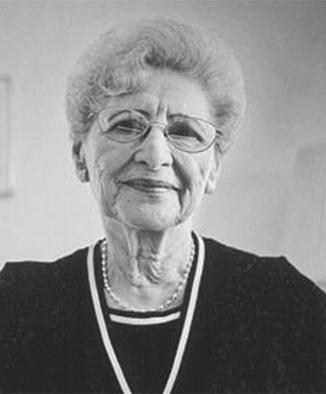
Esther Silver, who died April 11, was born in Będzin, Poland, on Sept. 20, 1924. She grew up with her parents and three younger brothers, Schmuelick, Alter and Herschel. They were close with their neighbors, and the synagogue was nearby.



JFO Director of Community Development
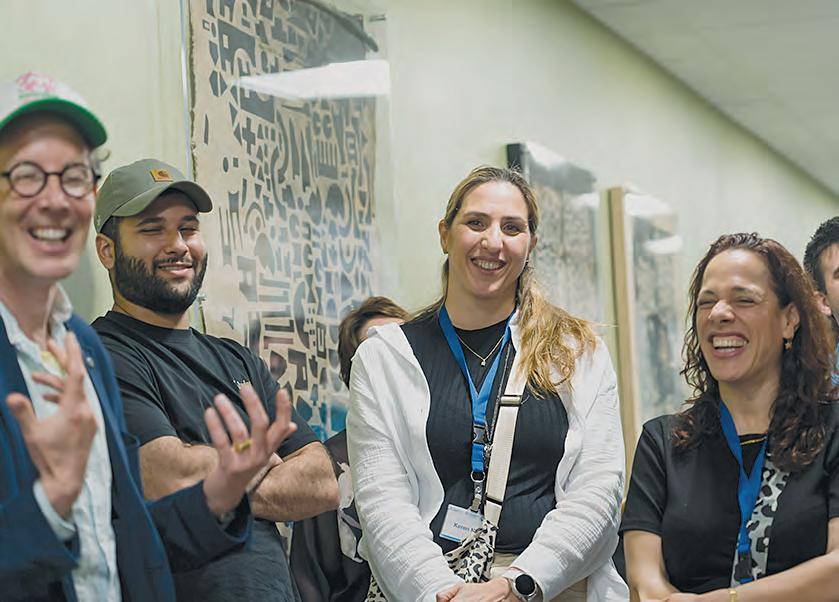
From May 17–19, Omaha had the privilege of hosting an Israeli and Hungarian Young Adult Delegation through Partnership2Gether. Following their participation in the Young Adults Shabbaton in Louisville, delegation leader Sivan Friedman Lavi, along
with Keren Meyer, Shlomi Cohen, Nahal Cohen, Lilach Agra, Lior Birak, Michal Cohen, Istvan Barsony, and Tal Beri Hatan, spent several days engaging with our community and experiencing all that Omaha has to offer.
The delegation arrived Sunday afternoon and started their stay by touring the Staenberg Kooper Fellman Campus. They were incredibly impressed by the See Partnership2Gether page 3
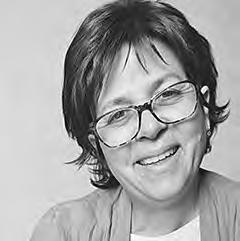
RACHEL KOLETTE WHEELER
Collective Lavo-B’tov Co-founding Director
It is hard to understand life on Israel’s northern border through headlines alone. Sometimes, we glimpse it through the life of someone finding his own way to live inside it.
“I’m popular today,” Natanel
joked when I reached him this week at his home in Metula. Everyone, it turned out, was checking in after an explosive drone struck a house not far from him in Israel’s northernmost town along the Lebanese border.
Before the war, Metula was the kind of place Israelis escaped to for quiet weekends - mountain air, small guesthouses, and quiet weekends away from city life. In winter, many visitors continued on to ski at nearby Mount Hermon.
For more than two years, life there has felt more like a battlefield than the picturesque town people once escaped to. Fruit orchards were destroyed, homes were shelled, and daily life unfolded under the constant presence of Hezbollah just across the border fence.
Officially, the current situation is described as a ceasefire. In the reality of northern Israel, the war is
still very much present.
Natanel, who was born and raised in Metula, is in his early forties and works as a translator, writer, lecturer, and digital music creator. He lives with CP and uses a wheelchair.
After Oct. 7, he spent more than a year living out of a small hotel room in Tiberias after residents of northern Israel were evacuated.
A hotel room feels very different when one is forced to live therethrough months of sirens, uncertainty, and the constant knowledge that back home, the war — and the damage — continue without you.
For Natanel, the situation was even more complicated. Because he uses a wheelchair, reaching the hotel shelter during missile attacks and interceptions was often unrealistic. There were evenings when he would call me from the rooftop while watching the skies See A Voice from Israel page 2
“My father and mother had a small business, and we made a living,” she told Ben Nachman in a 1996 interview for the Shoah Foundation. “We lived in a big apartment house and had a nice apartment. I had a lot of uncles and aunts and cousins, as well as friends. We used to go and visit on Shabbos and Saturday.” Back then, Esther also had two grandmothers, and one grandfather. She and her siblings spent summers with their grandparents in nearby Jarczówek. They would take a horse and wagon to get there when she was little.
School began when she was seven years old; surrounded by only Jewish students, she was instructed mainly in Polish, with religious studies being taught in Yiddish. Girls and boys each went to their separate Jewish schools. Esther attended two schools during the day, and another one in the evening, because her parents saw the importance of a well-rounded education.
“Especially Friday afternoon,” Esther remembered, “the preparing for Shabbat was so special. You had special clothes, special food. Oh, all week you worked hard. You toiled, you know, to make a living. But Friday afternoon when the Shabbat comes it was something special.” Her mother would bake See Esther Silver page 3


SUSHI | JAPANESE | CHINESE
WEST MAPLE | 3655 N. 129th St. | 402.933.0091
OLD MARKET | 1308 Jackson St. | 402.933.5168 MILLARD | 17664 Welch Pl. | 402.702.8800 OMAHA
LINCOLN
HAYMARKET LINCOLN | 601 R St. #100 | 402.261.9388
SOUTH LINCOLN | 5730 Hicote Dr. | 402.318.5188
www.Hiro88.com
If you experience antisemitism, there are ways to report an incident or hate crime:
IF THIS IS AN EMERGENCY, MOVE TO A SAFE AREA AND DIAL 9-1-1
CALL the JFO’s Safety and Security Team 402-334-6446
EMAIL JCRCreporting@jewishomaha.org
SCAN the QR code below to fill out the Incident Reporting Form
We work directly with law enforcement, Secure Communities Network, and the Anti-Defamation League.
If you see something, say something.

Fitness Services For Older Adults Since 2005
In-Home Personal Training
Hillary Petula
Certified Personal Trainer, Senior Fitness Specialist, BA Health Promotion 402-981-4168
struckbywellness@gmail.com







Continued from page 1 above northern Israel light up with interceptions. Somehow, the dark humor became part of the conversations. Truthfully, if anyone was panicking during those calls, it was usually me.

About a year later, Natanel returned home to Metula, like many residents who eventually decided to return despite the ongoing war.
“It’s insane here,” he told me after returning. “We’re basically living in a war zone.” Then came the dark humor again: at least now, he said, he could reach a shelter more easily - “if that even helps anymore.”
But beneath the irony was relief. His computer and digital music equipment had survived. And after more than a year apart during the evacuation, he was reunited with his dog.
Over time, life settled into an exhausting routine - interrupted sleep, shelling, music and writing projects, and attempts to stay sane and hold onto some sense of normal life. His mother had started collecting shell fragments and pieces of explosives near their house with a metal detector. Natanel turned some of the findings into a balcony exhibition he jokingly called: “Souvenirs. Not the kind you bring back from vacation.”
Then, a little over a month ago, one of Natanel’s nephews - “the artist” (as Natanel calls him) - sent him an AI-generated illustration of Natanel. He immediately got pulled into it.
And then, amid sleepless nights and shelling, my WhatsApp suddenly started filling with comics, strange characters, jokes, and imaginary worlds.
At one point, Natanel told me: “I got bored of being resilient.”
For years, creating comics had felt physically out of
reach for him because of his Cerebral Palsy. In one blog reflection he wrote for our website, he described the moment something shifted:
“I wish I could draw. I can’t. I’m not an illustrator. But I am a professional writer. So I asked myself: Can GPT draw?”
Night after night, while shelling continued outside, a whole new world started opening up.
“No night,” another blog entry read. “Just creation.”
“Not the center of the universe,” he wrote recently, “just another person trying to find his place in it.”
And later that same night, while shelling continued outside in Metula, another sentence arrived in my WhatsApp:
“The universe became oddly joyful. And I wanted in.”
Shared with Natanel Yermiyahu's permission. Rachel Kolette Wheeler is the Co-founder and Director of Collective Lavo B’tov, working with people with disabilities to build meaningful lives in all life areas. She brings over 35 years of experience in transformational work across individuals, relationships, and organizations. Based in the U.S.(Omaha), she visits Israel frequently and stays closely connected through her daily work online. In this column, Rachel brings forward voices and real stories from Israel. She can be reached at rachel@lavo-btov.org.
Continued from page 1
challah, make cakes and chicken soup. It was by all accounts an idyllic childhood. Yet, by 1933, rumors had started circulating about Hitler.
Then, in 1939, the Nazis invaded, and burned down the local synagogue as well as the neighborhood where Esther lived. The family lost everything, and was forced to move in with one of her mother’s sisters. By 1940, Esther and her family lived in the Kamionka ghetto, and in 1942, the Nazis took her away. She ended up in Sudetenland, where she was forced to work in a factory. And although she initially would receive heavily censured postcards from her mother, insisting they were “fine,” she would not see any of them again.
She survived, because she worked, she told Ben Nachman. On May 9, 1945, Esther’s camp was liberated by the Russians, and shortly thereafter, she made her way to a displaced persons camp in Landsburg, Germany. There, in 1946, she met and later married her husband, Norman Silver. They had their first son, Michael, in 1948. In 1949, Esther, Norman and Michael made their way to Omaha, NE. Norman had two aunts who sponsored their immigration and helped him find work.
Esther and Norman had a second son, Ed, in 1953. The Silvers settled in Omaha where Esther would live the rest of her life.
Esther devoted her life to her family and friends. She maintained a large social circle and was a connector between many people near and far. She enjoyed hosting and cooking for family and friends, especially around Jewish holidays. Her home baked cookies and cakes were family favorites. She loved her family dearly and never missed attending a milestone event. She especially enjoyed family visits in recent years with grandchildren and great grandchildren.
Esther also spent much of her time educating others on the horrors of the Holocaust. She volunteered with the Institute for Holocaust Education in Omaha, speaking in schools and at community events about her life story. She always spoke out against discrimination and

encouraged people to treat everyone with respect, regardless of their background or standing. She led by example, always greeting neighbors with a friendly hello and asking how they were doing.
“Since I was a little girl, I have known who Esther was,” Shelly Fox, Jewish Family Service Director of Community Outreach, remembers. “And when I began working at the Jewish Federation of Omaha around 2001, she became one of my first clients. I would often assist her with practical things, like finding rides for her.”
There was always a connection between their families: when Esther and Norman first came to Omaha, Norman worked for Rick Fox’s family.
“She was always very dear to me,” Shelly said. “She had this amazing resilience; always figured out a way to solve anything and was a whiz at finances. She balanced her money down to the very penny. She also never lost herself. The many friendships she built happened not out of obligation, but because she was genuinely interested in others. Compared to what she gave me, whatever things I did for her seemed miniscule.”
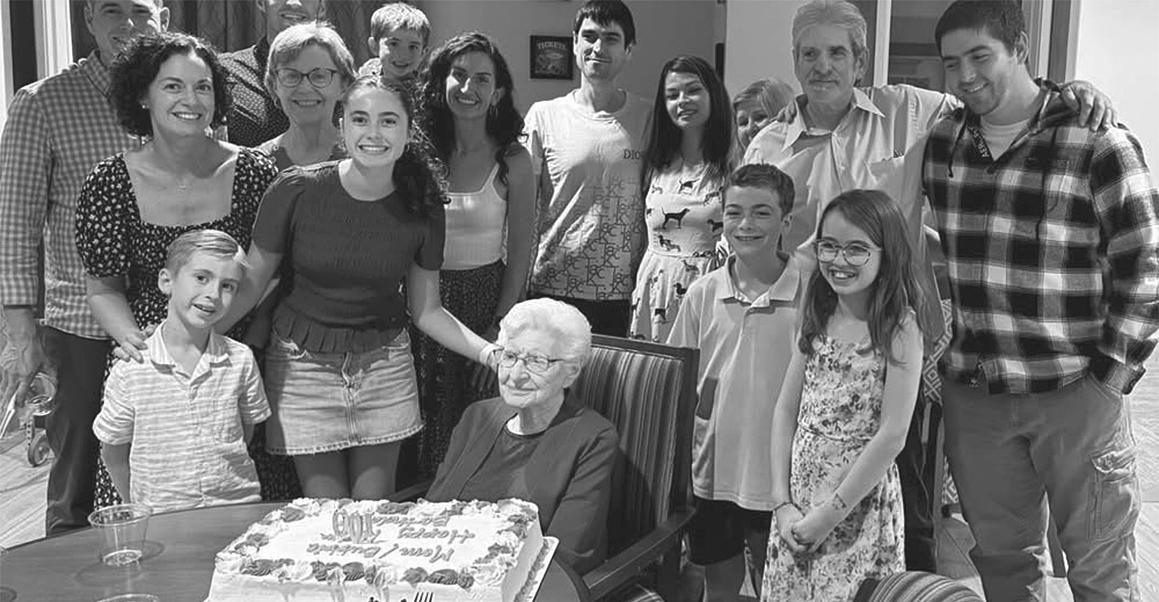
On her 100th birthday in 2024, Esther was interviewed by a local Omaha news station and said she was most proud of raising her two sons. She shared that her birthday wish was for people not to discriminate or hurt each other and simply just be as nice as they can to others.
Esther was preceded in death by husband, Norman Silver, and son, Michael Silver. She is survived by son, Edwin Silver (Dorothy); grandchildren, Sabina Shapiro (Evan), Joe (Meghan), Jay Silver, and Robin Silver; and great-grandchildren Gabby and Alec Shapiro and Sammy, Jonah, and Eli Silver. Services were held April 13, with burial at Golden Hill Cemetery. Donations may be sent to Beth Israel Synagogue, the Institute for Holocaust Education, or an organization of your choice.
May her memory be for a blessing.


Continued from page 1
breadth of programs, services, and opportunities available within a single campus, and especially captivated by the vibrant atmosphere created by the beautiful artwork displayed throughout the building.
That evening, we gathered in the Shirley and Leonard Goldstein Community Engagement Venue for a kosher community dinner. The event brought together members of our community for an evening of meaningful conversation and cultural exchange with our guests from Israel and Hungary. Discussions ranged from life in Israel during its ongoing recovery from war to the evolving political and social landscape in Hungary following recent elections, and everything in between. It was inspiring to see so many individuals connecting through open dialogue and shared experiences.
Of course, no Midwest visit would be complete without a little unexpected excitement. As dinner concluded, tornado sirens sounded across the area. Guests and community members moved their conversations into a secure space, where the evening continued with laughter, stories, and even the formation of a minyan— turning an unexpected moment into yet another memorable experience.
Monday morning began with a staff breakfast, offering Federation and campus staff an opportunity to meet the delegation, share breakfast, and continue the meaningful conversations started the night before.
While Partnership2Gether creates valuable experiences for the broader community, it is equally important for our staff to better understand the impact and purpose of this work and how it strengthens our mission.
Following breakfast, the delegation visited Omaha’s Old Market for an afternoon of exploration. They especially enjoyed visiting Hollywood Candy and even struck up conversations with Omaha Police mounted patrol officers. After exploring downtown, the group headed to Village Pointe for lunch and shopping before concluding the day with an evening at Smash Park. That night, Itay, our community Shaliach, helped bring together many members of Omaha’s young adult community for an evening of axe throwing, batting cages, food, drinks, and connection. The event created a relaxed and welcoming environment where friendships were formed and memories were made.
On Tuesday morning, May 19, we said goodbye to the delegation following a private breakfast—though not everyone departed exactly as planned, but that is a story for another time. Hosting this delegation was truly a pleasure, and we are deeply grateful for the time, energy, and spirit they shared with our community.
Experiences like these are a powerful reminder of the value of Partnership2Gether and the relationships it helps build across communities and cultures. The next time you hear that a Partnership2Gether delegation is coming to Omaha, I encourage you to get involved. You never know the connections, conversations, and memories that may come from it.


ANNE CONSTANTINO, M.ED., CFRE
Leadership Consultant and Emergenetics Associate
When Temple Israel created its new L'Dor V'Dor Award for Multigenerational Leadership, the congregation sought to recognize families whose commitment, leadership, and devotion have helped shape synagogue life across generations.
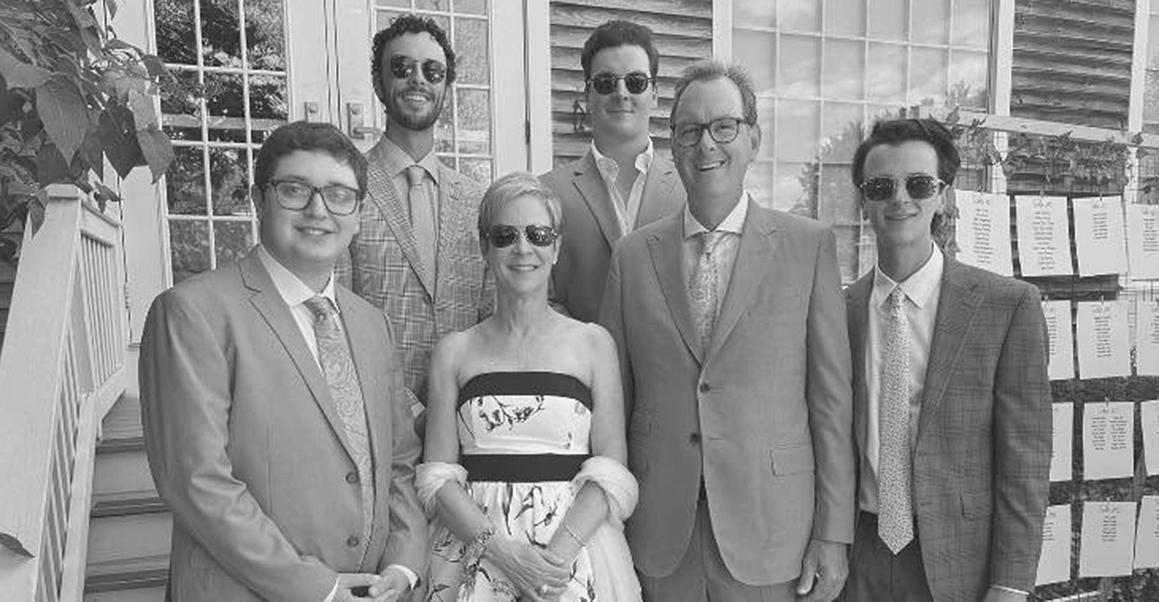
It is fitting that the inaugural honor will be bestowed upon the Dr. Larry and Silvia Roffman/Mike and Susie Norton family, whose connection to Temple Israel spans multiple generations and whose legacy of service continues today.
"My maternal grandparents Debby and Arthur Greene, and my maternal great-grandparents, Minnie and Harry Greene were Temple members," said Susie (Roffman) Norton. “I love being able to scan the Confirmation Wall and see photos of four generations of my family there.”
"My parents always lived by the adage, 'You pay it forward. You pay your community back for all the support you get along the way.'"
That philosophy became a guiding principle for the family.
Susie recalls growing up watching her parents devote countless hours to Temple Israel and the broader Jewish community. Her mother, Silvia Greene Roffman, served in leadership roles at Temple and within the Jewish Federation and JCC, while her father, Dr. Larry Roffman, became president of Temple Israel following his retirement from a distinguished medical career.
Susie and her husband Mike Norton, have both served as trustees on the Temple Israel Board of Trustees, and in other capacities at Temple.
"We were told it was important to be involved in your community," Norton said. "But they really didn't say, 'You should be leaders.' My sister, Julie, and I just watched them do it."
Her father's approach to leadership left a lasting impression on many who followed him.
"His motto in leadership was 'evolution, not revolution,'" she said. "He believed in taking time to reach consensus rather than making knee-jerk decisions."
The family's Temple story extends far beyond leadership positions. Temple Israel has been the setting for generations of lifecycle events, from baby namings/Brit Milot and confirmations to weddings and b'nai mitzvah celebrations, and family funerals.
"I love knowing that my baby naming took place at Temple Israel, and then all my life events have happened here," Norton said. "And then all my kids experienced those same milestones."
One of her most cherished memories is her mother's adult bat mitzvah in the late 1980s as part of one of Temple Israel's first adult B'nai Mitzvah classes.
"To see this group of women so proud of what they had accomplished was incredible," she recalled. "It made me realize this wasn't something my mother only wanted for me. She wanted it for herself, too."
See Temple Israel page 7



The Jewish Federation of Omaha Foundation is pleased to report the results of the spring meeting of the Shirley and Leonard Goldstein Supporting Foundation. The Goldstein Board approved funding for 25 applications, strengthening organizations and communities locally, nationally, and internationally.
“We love to partner with people and organizations that make a difference. It’s deeply personal for us to assist others, no matter where they may be,” said Don Goldstein, President of the Goldstein Board.
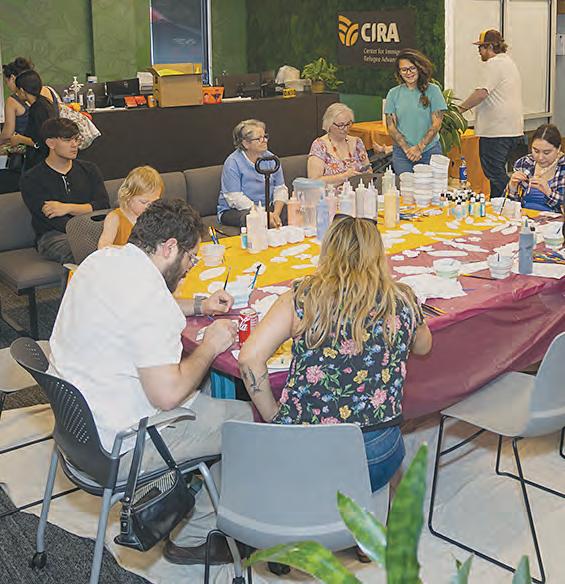
This spring, the Goldstein Foundation is proud to spotlight one of its grantees and the important work it is doing in the community. Justice for Our Neighbors-Nebraska, operating as the Center for Immigrant and Refugee Advancement (CIRA), is dedicated to helping Nebraska’s newest residents build stable and successful lives. Don compared the work of Rose Margrave, CIRA’s Director of Development, and the CIRA staff to the work of Shirley Goldstein in the resettlement of Soviet Jews in the 1970s and 1980s. CIRA’s mission centers on equipping refugees with the tools they need to thrive in their new communities. Through language instruction, cultural orientation, and guidance in navigating U.S. systems, refugees gain the confidence and skills necessary for their life here. The organization assists individuals with resume preparation, interview readiness, and job placement support. In addition, CIRA offers medical case management, health education, and wellness support groups to help families better understand health care services and improve their well-being. In 2025 alone, CIRA served 1,270 refugees in Omaha and Lincoln.
The impact of CIRA’s work is reflected in the story of a 21-year-old Karen refugee from Burma. He and his family were forced from their home country by civil war when he was just an infant. He spent nearly his entire life in a refugee camp in Thailand before resettling in Omaha. Blind and unable to speak English, he initially depended entirely on family members for support. After an unsuccessful eye surgery shortly after his arrival to the U.S., he understandably became withdrawn, as it was so difficult to find belonging.
Over time, he and his CIRA case manager built a trusting relationship. She helped him re-engage with the community, attend medical appointments, and establish a stable daily routine. CIRA’s legal team also assisted him in applying for lawful permanent residency. Today, he attends English classes, participates in community activities, and is forming meaningful friendships and connections.
Across all its programs, CIRA works to ensure temporary hardships do not become long-term crises for refugee families. The organization provides emergency financial assistance for essential needs such as housing, utilities, and transportation while guiding refugees in moving beyond survival to become active, engaged, and thriving members of the community.
“We may be in a moment where most formal resettlement pathways are paused, but the needs of refugees

haven’t stopped,” said CIRA Director of Refugee Services Der Yang. “We at CIRA focus on meeting people where they are, restoring a sense of stability, and reminding families they are not forgotten.”
To learn more about establishing a supporting foundation or exploring other charitable fund opportunities, contact Amy Bernstein Shivvers at the Jewish Federation of Omaha Foundation at 402-334-6466 or ashivvers@ jewishomaha.org

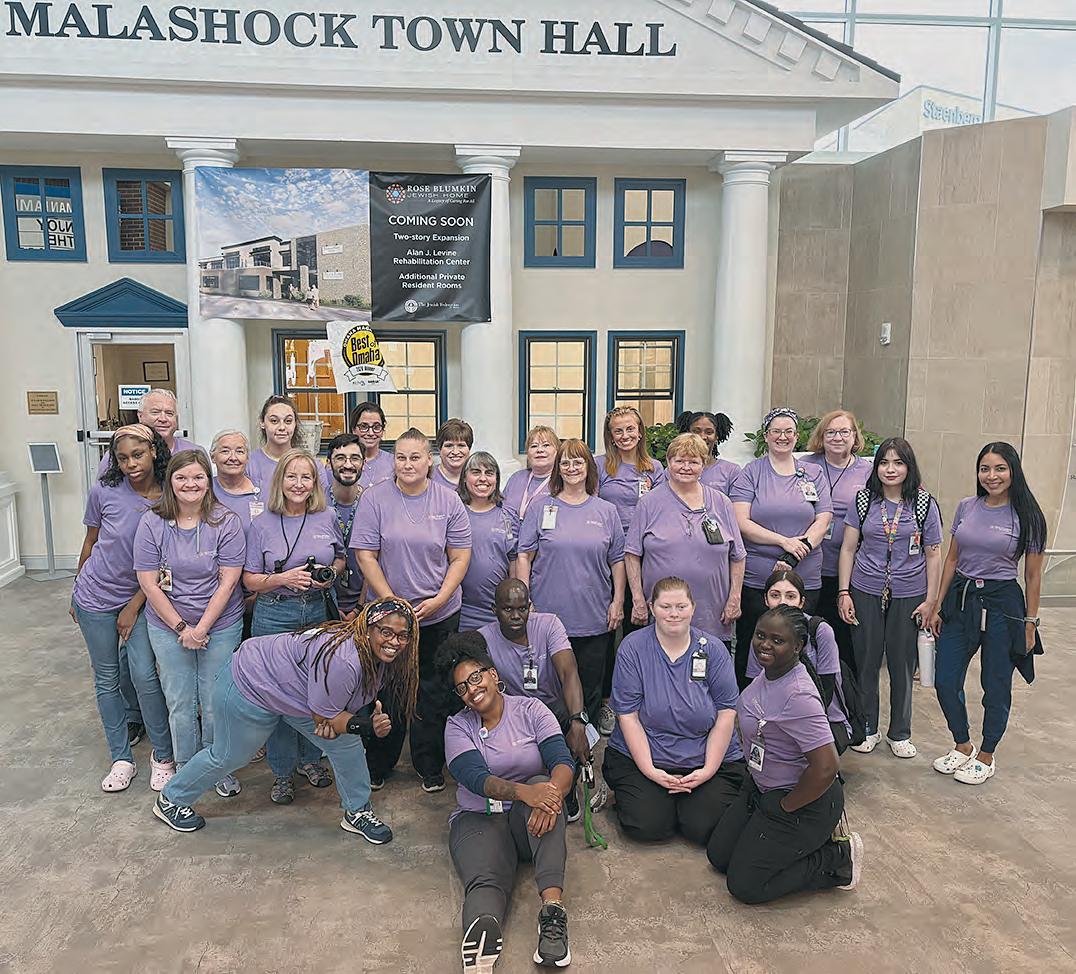
Part of the amazing RBJH staffduring National Nursing Home Week
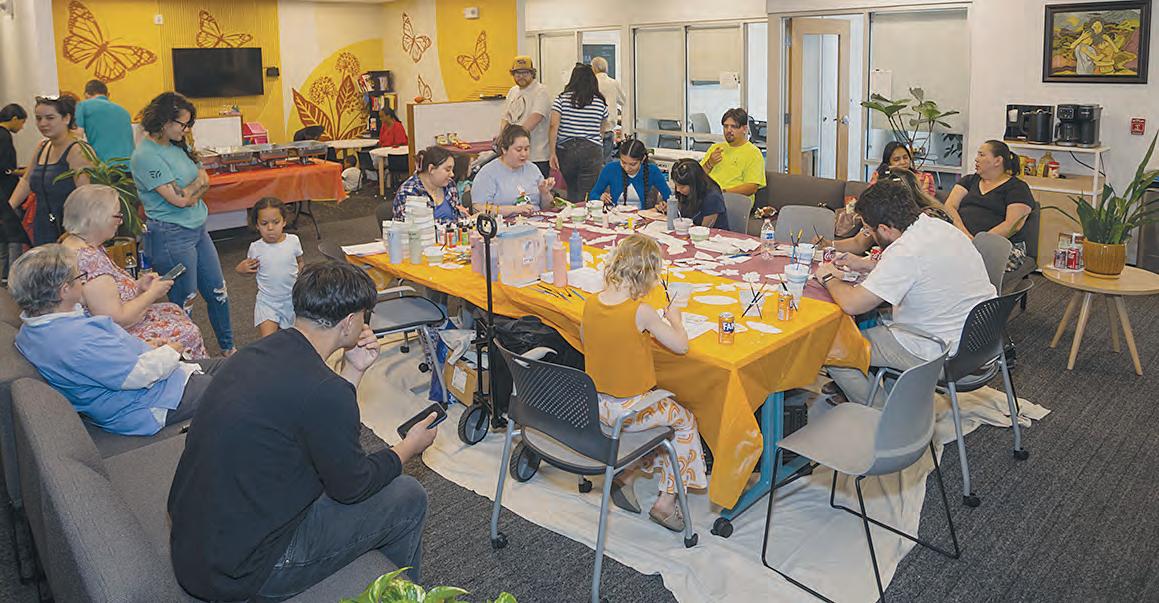
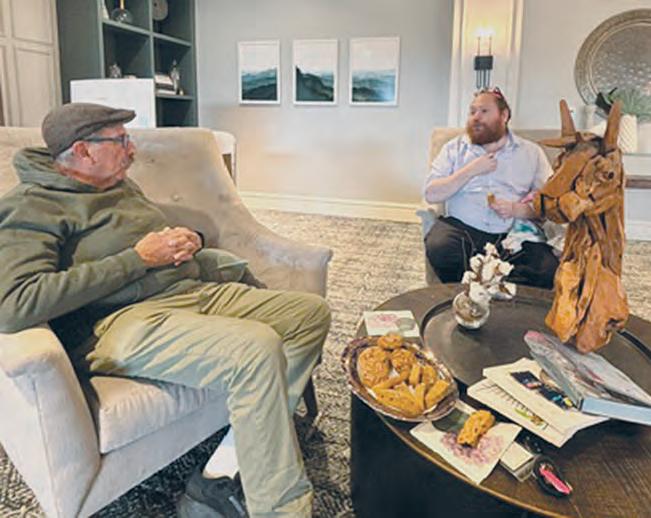
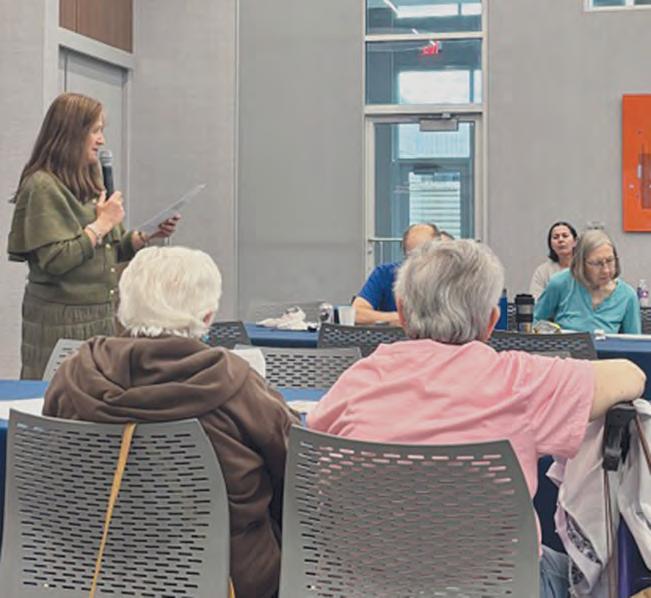
PHOTOS FROM RECENT JEWISH COMMUNITY EVENTS
SUBMIT A PHOTO: Have a photo of a recent Jewish Community event you would like to submit? Email the image and a suggested caption to: avandekamp@jewishomaha.org
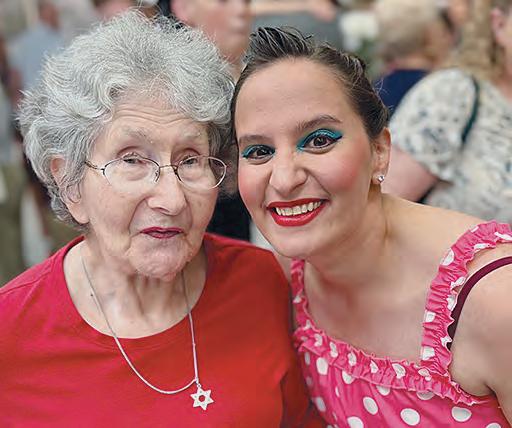
Making memories at the Alan J. Levine Performing Arts Theater

GENEROUSLY SUPPORTED BY


Continued from page 4
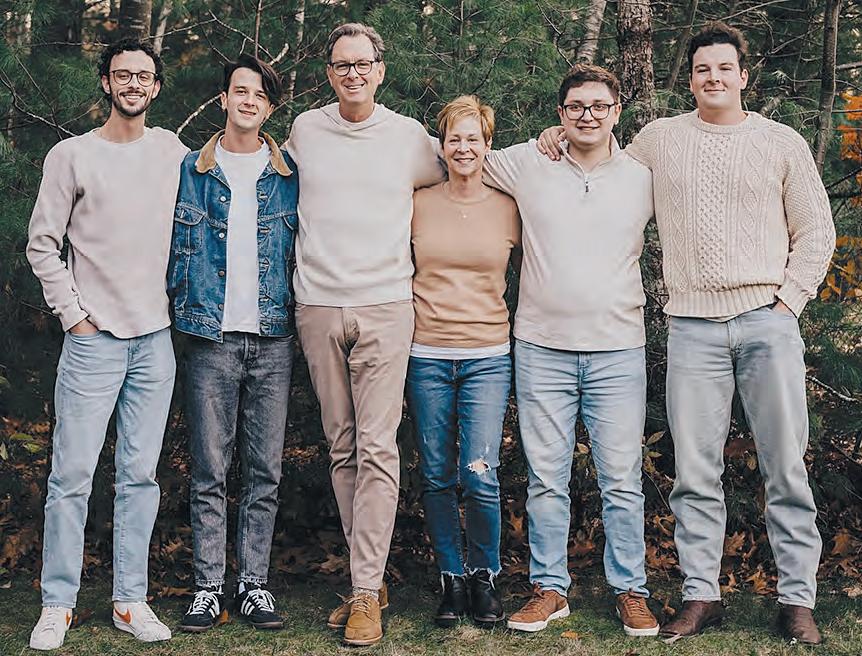
Today, the family's connection to Temple continues through the next generation. All four of Norton’s sons –Justin, Seth, Aaron and Leo--attended OSRUI
Jewish summer camps served as madrichim, volunteered at Temple Israel, and remain connected to Jewish life in different ways.
"It's fun to see the boys getting involved," she said. "I'm very proud of them."
One story, in particular, captures the depth of the Roffman/Norton family's connection to Temple Israel.
When the congregation prepared to leave its longtime home and move into its new building in 2013, Norton attended the final Shabbat service in the old sanctuary. Sitting in the back of the room, she found herself overwhelmed with emotion.
"I sat in the back of that building and I sobbed," she recalled.
Part of her grief stemmed from the recent loss of her father, who had toured the new building while it was under construction but passed away before seeing the completed facility. But there was something deeper at work as well.
"I felt that brick-and-mortar place held my relationship to Temple," she said. "I
didn't think I could ever love Temple Israel in a place that wasn't that building."
Yet only weeks after moving into the new facility, she realized she had been wrong.
"It was a seamless transition for me," she said. "It made me realize that if Temple is in a one-room schoolhouse somewhere, that's where I'm going to love it."
The experience reinforced what generations of the Roffman/Norton family have discovered:
Temple Israel is not defined by its walls, but by the people, relationships, traditions, and sense of belonging that have connected their family to the congregation for generations.
When Temple Israel leadership informed Norton that the Roffman/Norton family would be the first recipients of the L'Dor V'Dor Award, she was both surprised and humbled.
"I immediately thought of all the other families that are just as deserving," she said. "None of us gets involved for recognition."
For Norton the honor reflects not only her own family but also the many multigenerational families whose commitment has sustained Temple Israel throughout its history.

more
call 1-800-521-0600, ext. 2888 (US) or 01-734-761-4700 (International) www.il.proquest.com

"We are fortunate to have many multigenerational families at Temple, Israel" she said. "I'm looking forward to seeing this award bestowed on other wonderful, dedicated families in the years to come."
As she reflects on what she hopes future generations will remember, her answer is simple.
"I want them to know this was a place
their family loved," she said. "A place that was important to generations before them."
That sentiment embodies the spirit of l'dor v'dor, from generation to generation, and the legacy of the Roffman/Norton family: a legacy built on service, leadership, love of community, philanthropy, and an enduring commitment to Temple Israel.

NJHS Advisory Board Member
Some people build structures. Others build communities. Harry Trustin did both.
As the fifteenth president of the Jewish Federation of Omaha, Harry Trustin brought an engineer's eye for planning and a builder's commitment to long-term results. Throughout a remarkable career that spanned engineering, military service, civic leadership, and Jewish communal service, he helped shape both the physical landscape of Omaha and the institutions that continue to strengthen Jewish life today.
Trustin was born in Chicago on September 15, 1893, and moved with his family to Omaha in 1899. His path to becoming a civil engineer was anything but conventional. At a time when formal education was not always the route into a profession, Trustin began working for Union Pacific Railroad as a teenager. Starting as a blueprint boy, he learned the trade from the ground up, progressing into field engineering and gaining practical experience that would launch a distinguished career.
His early work took him far beyond Nebraska. From 1913 to 1916, he worked for an English engineering company in Brazil, assisting with development projects in the remote reaches of the Amazon River. During World War I, he served with an Army battalion that constructed railroads, bridges, and field works in France. Wounded and exposed to gas during the war, he spent eight months recovering in an Army hospital before returning home.
Back in Omaha, Trustin co-founded Porter-Trustin Company, Engineers, where he remained active until retiring in 1970 at the age of 77. Yet engineering was only one part of his life. He also devoted decades to public service, applying the same practical problem-solving skills to the challenges facing his city.
A proclamation issued on his 80th birthday by Omaha Mayor Edward Zorinsky described Trustin as the “Little Giant,” a fitting tribute to a man whose influence reached throughout the community. He first entered public office in 1933 as a city commissioner and was reelected five times. Later, he served on the City Charter Convention that helped shape Omaha's modern city government. He was a city councilman from 1956 to 1960 and president of the City Council from 1960 to 1964. Along the way, he also served as Omaha's City Engineer and Superintendent of Public Works.
Among his most significant contributions was his work protecting Omaha from the Missouri River. Trustin became nationally known for advocating flood-control projects throughout the Missouri River Basin. He worked alongside civic leaders and appeared before Congress in support of funding for dams and river-management projects that brought flood control, navigation, power generation, and irrigation benefits to the region. His vision helped shape Omaha's relationship with the river for generations.
Long after his passing, the city recognized that legacy. In 2009, a stretch of downtown riverfront roadway was renamed Harry A. Trustin Riverfront Drive in honor of the man whose foresight helped protect Omaha from the river's destructive potential.
Trustin's commitment to public service extended well beyond city government. He served on the boards of the YMCA, Boy Scouts, Chamber of Commerce, Omaha Community Playhouse, Urban League, and Nebraska League of Municipalities. He also served as a consultant to General Curtis LeMay during the selection of Omaha and Bellevue as the future home of Strategic Air Command, a decision that would have a profound impact on the region. His honors and awards were numerous, reflecting a lifetime of civic leadership.
Just as Harry Trustin helped engineer Omaha's physical future, he also helped build its Jewish future.
His service to the Jewish community stretched across local and national organizations. Beginning in 1941 and continuing through 1962, he served with the National Jewish Welfare Board and chaired its Armed Services Division during a period when the organization was expanding to meet the needs of Jewish servicemen and women during and after World War II. He was a past president of Henry Monsky Lodge B'nai B'rith and was deeply involved in efforts to support Jewish youth and leadership development.
One of the most fascinating discoveries in the Nebraska Jewish Historical Society archives is Trustin's presidential report summarizing his two-year Federation term. The report offers a snapshot of Jewish Omaha in the early 1960s and reveals both the breadth of Federation's work and Trustin's optimism about the future.
Discussing the annual campaign, Trustin echoed campaign chairman Sam Steinberg's description of Federation as Omaha Jewry's answer to the call to be "our brothers' keepers." He highlighted the expansion of the Dr. Sher Home and the decision to move forward with construction of the Esther K. Newman Camp. These, he wrote, were dramatic developments that opened new possibilities for serving the community.
He also reviewed the work of Federation's agencies and affiliates. Jewish education was a particular point of pride. Federation was providing substantial support to Omaha's three major synagogues, helping fund teaching staffs that served more than 1,200 students. Trustin noted that Omaha's per-capita investment in Jewish education ranked among the highest in the nation.
The Jewish Community Center was another focus. Trustin emphasized that the JCC served people of all ages and backgrounds while providing a vigorous physical education program that reflected the country's growing emphasis on fitness and wellness. Looking ahead, he even raised the possibility of relocating the JCC to a more central location within the city, demonstrating his habit of thinking strategically about the future.
His report also highlighted the work of Jewish Family Service, which had assisted more than 150 families and dozens of transients passing through Omaha during
1961. He reviewed the activities of the Anti-Defamation League Advisory Committee, the camping program, the Home for the Aged, the Jewish Press, and the Jewish library. He also acknowledged the important contributions of affiliated organizations and their leaders, including Lois Friedman and the Federation of Jewish Women's Clubs, as well as Jewish Youth Council co-presidents Stephen Guss and Howard Hahn. Harry's commitment to service was shared by his wife, Bess, who was active in fundraising efforts for both Jewish and secular causes. Together they raised two children, Yale and Barbara. Yale, known to family and friends as "Buzz," graduated from West Point and went on to a distinguished career in the United States Air Force, retiring as a colonel after service that included the Berlin Airlift and the Korean War. Like his parents, he became known for his community involvement and generosity of spirit. Both Yale and Barbara spent much of their lives in Omaha, reflecting the family's deep roots in the community. Harry died in March 1979 at age 85, and Bess passed away a year later, also at age 85.
At the conclusion of his report, Trustin paused to recognize two Federation leaders who had recently passed away: Robert H. Kooper and Moe A. Venger. The tribute reflected a quality that appears throughout his life and leadership: an appreciation for those who came before him and a commitment to ensuring that their work continued.
Looking back today, what stands out about Harry Trustin is not any single accomplishment. It is the sheer range of what he helped build. Some of those achievements can still be seen in Omaha's streets, riverfront, and public works. Others live on in the institutions, pro-
grams, and organizations that continue to serve Jewish Omaha more than sixty years later.
Engineers often measure success by what endures. By that standard, Harry Trustin's legacy remains firmly in place.
Series Note: We thank the Nebraska Jewish Historical Society for preserving these stories and invite readers to share memories, photographs, or family connections that can help us rediscover the lives of those who built our community. Standing on their shoulders, we continue their work.
The Jewish Federation of Omaha past presidents series is a collaboration between the Nebraska Jewish Historical Society and the Jewish Press. For questions or more information about the NJHS, please contact Executive Director Jane Rips at jrips@jewishomaha.org or visit nebraskajhs.com.
(Founded in 1920)
David Finkelstein
President
Annette van de Kamp-Wright
Editor
Will Fischer
Creative Director
Claire Endelman
Sales Director
Lori Kooper-Schwarz
Assistant Editor
Sam Kricsfeld
Digital support
Mary Bachteler
Accounting
Jewish Press Advisory Board
David Finkelstein, President; Margie Gutnik, Ex-Officio; Toby Dresdner, Andrea Erlich, Dana Gonzales, Mary Sue Grossman, Hailey Krueger, Avery Lubin, Sara Rips, Seth Schuchman, Stewart Winograd and Bob Yaffe.
The mission of the Jewish Federation of Omaha is to build and sustain a strong and vibrant Omaha Jewish Community and to support Jews in Israel and around the world.
Agencies of the JFO are:: Institute for Holocaust Education (IHE), Jewish Community Relations Council (JCRC), Nebraska Jewish Historical Society (NJHS), Jewish Press, Rose Blumkin Jewish Home (RBJH), Jewish Family Service (JFS), Staenberg Omaha Jewish Community Center (JCC).
Guidelines and highlights of the Jewish Press, including front page stories and announcements, can be found online at: www.jewishomaha.org; click on ‘Jewish Press.’
The Jewish Press is not responsible for the Kashrut of any product or establishment.
Editorial
E-mail editorial material and photos to: jpress@jewishomaha.org and avandekamp@jewishomaha.org ; send ads (in TIF or PDF format) to: wfischer@jewishomaha.org
Letters to the Editor Guidelines
The Jewish Press welcomes signed Letters to the Editor. They may be sent via regular mail to: The Jewish Press, 333 So. 132 St., Omaha, NE 68154; via fax: 1.402.334.5422 or via e-mail to the Editor at: avandekamp@jewishomaha.org.
Letters should be no longer than 250 words and must be single-spaced typed, not hand-written. Published letters should be confined to opinions and comments on articles or events.
News items should not be submitted and printed as a “Letter to the Editor.”
The Editor may edit letters for content and space restrictions. Letters may be published without giving an opposing view. Information shall be verified before printing. All letters must be signed by the writer. The Jewish Press will not publish letters that appear to be part of an organized campaign, nor letters copied from the Internet. No letters should be published from candidates running for office, but others may write on their behalf.
Letters of thanks should be confined to commending an institution for a program, project or event, rather than personally thanking paid staff, unless the writer chooses to turn the “Letter to the Editor” into a paid personal ad or a news article about the event, project or program which the professional staff supervised. For information, contact Annette van de Kamp-Wright, Jewish Press Editor, 402.334.6450.
Postal The Jewish Press (USPS 275620) is published weekly (except for the first week of January and July) on Friday for $40 per calendar year U.S.; $80 foreign, by the Jewish Federation of Omaha. Phone: 402.334.6448; FAX: 402.334.5422.
Periodical postage paid at Omaha, NE. POSTMASTER: Send address changes to: The Jewish Press, 333 So. 132 St., Omaha, NE 68154-2198 or email to: jpress@jewishomaha.org
ANNETTE VAN DE KAMP-WRIGHT Jewish Press Editor
In a recent JTA article, Kelly Hartog wrote: “Leading British Jewish groups are applauding the UK government’s decision to bar the influential anti-Israel streamer Hasan Piker from entering the country.”
Piker’s name keeps popping up, and I often wonder why he is famous in the first place. As is the case with so many “influencers,” I’m not clear why he has a platform at all, nor why so many people apparently care what he has to say about anything.
What does it mean, to be an “influencer?” It’s a funny concept, like a modern-day iteration of a prophet, someone who speaks with authority, but with somewhat ambiguous credentials. “A person who is able to generate interest in something (such as a consumer product) by posting about it on social media,” the Merriam-Webster dictionary states. “An influencer is an individual who has the capacity to shape the attitudes, behavior, or decisions of others through authority, knowledge, position, or the nature of the relationship with the audience,” was another definition I found. It’s that final part, the “relationship with the audience,” that’s pretty concerning. That relationship is, by nature, built on emptiness-it’s a one-way street; I can follow you on social media, like and comment, but overall, there is no actual reciprocity. Influencers come in various shapes and sizes: there are “social media influencers, podcasters, public speakers, religious influencers, writers, and newsletter writers,” according to the Pew Research Center. They often have little accountability. Being
Editorials express the view of the writer and are not necessarily representative of the views of the Jewish Press Advisory Board, the Jewish Federation of Omaha Board of Directors, or the Omaha Jewish community as a whole.
banned from a country, like Piker was, is an exception. It is also not always clear who benefits financially from what an influencer puts out to the public. If it’s a product, sure, but when it comes to ideas and misinformation? The field becomes automatically muddier.
Piker was born in New Jersey and grew up in Istanbul. He’s not dumb: In 2013, he graduated cum laude from Rutgers with a double major in political science and communication studies. Having worked on The Young Turks program (started by his uncle, also banned by the UK) as a host and producer, he eventually became a full-time streamer on the Twitch platform. He’s considered one of the strongest voices on the political Left.
In 2019, he said America deserved 9/11, comments he later had to walk back. He called Ultraorthodox Jews ‘inbred,’ has been accused of soft-pedaling the Brian Thompson killing, Hezbol-
This article was produced as part of JTA’s Teen Journalism Fellowship, a program that works with Jewish teens around the world to report on issues that affect their lives | JTA
After a slight dip last year, participation in gap year programs in Israel is on the rise, according to Masa Israel, an umbrella organization for the posthigh school programs.
More than 3,000 Jewish teens from around the world are beginning gap years this September. Last year, roughly 2,500 Jewish teens were enrolled in gap year programs.
Enrollment numbers match participation from before the Oct. 7 attacks in Israel, when in 20212022, over 3,000 Jewish teens were enrolled.
Masa credits the trend to teens’ shifting attitudes about the importance of visiting Israel in a postOct. 7 world, where students regularly encounter harsh criticism of Israel and even their Jewish identities.
Most notably, more teens who say they had an attenuated affiliation with Jewish life are opting into gap-year programs, said Masa Israel’s recruitment manager, Shira Rosen. Many were forced to come face-to-face with “an identity they might not have engaged with” following Oct. 7, she said.
Ary Hammerman, 18, didn’t specifically decide to go to Israel on the Shalom Hartman Institute’s Hevruta gap-year program because of Oct. 7. But the New Yorker finds that her gap year, which began this past summer, has been more impactful and important in the wake of the world-wide eruption of anti-Israel sentiment.
The temporary decline in participation seen last year is normal after major security concerns like those prompted by Oct. 7, said Rosen. But, Rosen finds, “these periods are typically followed by a rebound stronger than years prior, with increased interest and higher participation.”
These recent conflicts in Lebanon and Iran have not proven to be a barrier to gap-year participation, however.
Rozeta Mavashev, executive director of Masa Israel Journey, said that she has observed that teens coming to Israel now have a strong desire to give back to their people and have more “conviction” in
their reasons for coming.
It isn’t just the number of gap year participants that has changed in recent years, but also the type of teen interested in gap years, according to Mavashev.
Indeed, non-Orthodox gap-year programs, such as Aardvark Israel and Hevruta, are among the most popular today, according to Masa Israel.
Newly committed teens are the focus for several Israel programs that have partnered with Masa to “strategically engage the unengaged” throughout high school, Mavashev said. They include programs that bring high schoolers to Israel on short-term trips, including Root One, March of the Living, and Bnei Akiva.
lah, China’s political system, Houthis, Hamas; the more I read up on him, the less I feel we should pay attention at all. He is a loudmouth, riding a wave of popularity born from playing video games online and streaming fundraisers. What really makes Piker, and others like him, relevant? Is it charisma, or is it that they simply tap into what’s trending, namely anti-Israel sentiments and antisemitism? Is this cause, or is it effect?
The truth is, humanity has always had trouble figuring out who to listen to. But listen we must; how much more convenient is it to follow someone who tells us what to think, than to think for ourselves? Staying fully informed is hard work. It’s easier to passively consume pre-digested “truths,” whether it’s screamed at us from a beer hall, or through Instagram.
I do it, too. I follow all kinds of content creators on social media, who provide me with political commentary on the middle east, Europe, the US; they are all pro-Israel and outspoken, even the nonJewish ones. They mostly confirm what I already believe. I know it’s important to be aware of what the antisemites are saying, but I have to force myself. And then I have to cleanse my brain. I’m not saying it’s ideal
The UK is doing, effectively, what I’m tempted to do every day: keep out the lies. Don’t give it a platform. And where to draw that line between awareness and silencing the hate, I am not sure. The problem is, we are all influenced by what others say and think. Ultimately, we have to ask ourselves: do we listen to the right voices?
parents met on the gap-year program Nativ, which is now run by Aardvark Israel.
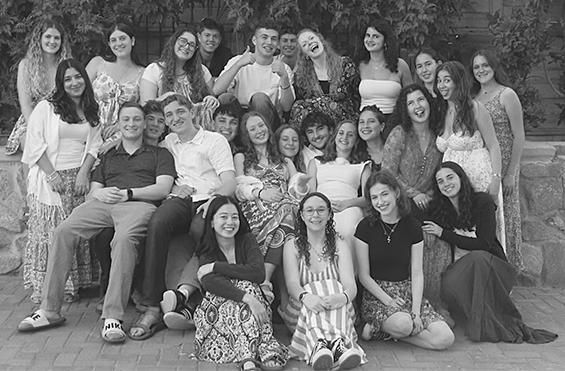
Strongly affiliated teens are also feeling the pull of gap-year programs. Esther Davis, a Modern Orthodox Jewish teen from London, decided to go on a gap year through Aardvark Israel after encountering antisemitism in school.
Davis switched from a Jewish school to a secular school in September of 2023, a month before Oct. 7. That first year, not many of her classmates knew she was Jewish. But the year after — her last year of high school — Davis decided to run her school’s Jewish Society after the previous leader “got a lot of hate” for being Jewish and stepped down.
After that, the whole school knew she was Jewish. “I got lots of weird comments and some deaththreat sort of things,” said Davis, who had an active Jewish life through the youth group Bnei Akiva throughout her childhood. “After that, I wanted to do it [a gap year to Israel] because I wanted that break from antisemitism.”
Davis now says that Israel gap years are important for all Jewish teens. “Coming to Israel on a gap year strengthens your connection with the land and the people, and it also allows you to understand your religious identity better,” she said.
In the Orthodox world, trends in gap-year attendance remain largely unchanged. For these communities, Mavashev said that spending a gap year to Israel is “very much in their lifecycle.”
Eli Benel, an Orthodox senior at Denver Jewish
Benel will go on the Kivunim program after he graduates in May. The program appeals to him because Kivunim takes its participants to 12 different countries, not just Israel. Benel is excited for the opportunity to “understand the world around me” and form meaningful relationships with likeminded Jewish teens.
Daphna Refaeli, director of World Bnei Akiva’s gap year programs, says that for many Orthodox teens, a gap year is “just the path you take.” World Bnei Akiva runs multiple year-long Israel gap-year programs, all of which are Orthodox. Accordingly, the number of applicants to their programs has remained fairly steady since Oct. 7, with one notable exception—their Mechina program, which prepares participants for service in the Israeli army. This program has seen a notable increase in interest in recent years.
These numbers still hold even during the current regional conflicts in Lebanon and Iran, which have seen travel in and out of Israel and a nationwide alert for missile attacks and other hostilities. This article was edited for length. Read more about Israel gap years (including links) on our website at www.omahajewishpress. com.
B’NAI ISRAEL SYNAGOGUE
618 Mynster Street Council Bluffs, IA 51503-0766
712.322.4705 www.cblhs.org
BETH EL SYNAGOGUE
Member of United Synagogues of Conservative Judaism 14506 California Street Omaha, NE 68154-1980
402.492.8550 bethel-omaha.org
BETH ISRAEL
SYNAGOGUE
Member of Union of Orthodox Jewish Congregations of America 12604 Pacific Street Omaha, NE. 68154
402.556.6288 BethIsrael@OrthodoxOmaha.org
CHABAD HOUSE
An Affiliate of Chabad-Lubavitch 1866 South 120 Street Omaha, NE 68144-1646
402.330.1800 OChabad.com email: chabad@aol.com
LINCOLN JEWISH COMMUNITY:
B’NAI JESHURUN
South Street Temple
Union for Reform Judaism
2061 South 20th Street Lincoln, NE 68502-2797
402.435.8004 www.southstreettemple.org
OFFUTT AIR
FORCE BASE
Capehart Chapel 2500 Capehart Road Offutt AFB, NE 68123
402.294.6244 email: oafbjsll@icloud.com
TEMPLE ISRAEL
Union for Reform Judaism (URJ) 13111 Sterling Ridge Drive Omaha, NE 68144-1206
402.556.6536 templeisraelomaha.com
LINCOLN JEWISH COMMUNITY:
TIFERETH ISRAEL
Member of United Synagogue of Conservative Judaism 3219 Sheridan Boulevard Lincoln, NE 68502-5236 402.423.8569 tiferethisraellincoln.org
Monthly Speaker Series Service, Friday, June 12, 7:30 p.m. with our guest speaker, Ashley BelmudezFrakes. Our service leader is Larry Blass. Everyone is always welcome at B’nai Israel! For information about our historic synagogue, please visit our website at www.cblhs.org or contact any of our board members: David Alloy, Renee Corcoran, Rick Katelman, Gail Kenkel, Janie Kulakofsky, Howard Kutler, Ann Moshman, Mary-Beth Muskin, Debbie Salomon, Sissy Silber and Jenn Tompkins. Handicap Accessible.
Services conducted by Rabbi Steven Abraham and Hazzan Michael Krausman.
IN-PERSON AND ZOOM MINYAN SCHEDULE: Mornings on Sundays, 9:30 a.m.; Mondays and Thursdays, 7 a.m.; Evenings on Sunday-Thursday, 5:30 p.m.
FRIDAY: Kabbalat Shabbat, 6 p.m. at Beth El and Live Stream.
SATURDAY: Simcha Shabbat Services, 10 a.m. at Beth El and Live Stream.
SUNDAY: Morning Minyan, 9 a.m. Zoom Only — Summer Schedule.
MONDAY: Mincha/Ma'ariv, 5:30 p.m. at Beth El and Zoom followed by Jennifer Beth Kay Memorial Speaker: Rabbi Geiger at Beth El, Live Stream and Zoom
FRIDAY-June 19: Kabbalat Shabbat, 6 p.m. at Beth El and Live Stream.
SATURDAY-June 20: Shabbat Morning Services, 10 a.m. at Beth El and Live Stream.
Please visit bethel-omaha.org for additional information and service links.
FRIDAY: Torah from Omaha, 6:45 a.m.; Shacharit, 7 a.m.; Mincha/Kabbalat Shabbat, 7 p.m.; Candlelighting, 8:40 p.m.
SATURDAY: Shabbos Café, 8:30 a.m.; Shacharit 9
a.m.; Tot Shabbat, 10:30 a.m.; Youth Class, 10:45 a.m.; Soulful Torah, 7:45 p.m.; Mincha 8:30 p.m.; Kids Activity/Laws of Shabbos 9 p.m.; Havdalah, 9:50 p.m.
SUNDAY: Shacharit, 9 a.m.; Mincha/Ma’ariv 8:40 p.m.
MONDAY: Torah from Omaha, 6:30 a.m.; Shacharit, 6:45 a.m.; Mincha/Ma’ariv 8:40 p.m.
TUESDAY: Torah from Omaha, 6:45 a.m.; Shacharit, 7 a.m.; Smichat Chaver Men's Class, 7:40 p.m.; Mincha/Ma’ariv 8:40 p.m.
WEDNESDAY: Torah from Omaha, 6:45 a.m.; Shacharit, 7 a.m.; Character Development 1:30 p.m.; Mincha/Ma’ariv, 8:40 p.m.
THURSDAY: Torah from Omaha, 6:45 a.m.; Shacharit, 7 a.m.; Mincha/Ma’ariv, 8:40 p.m.
FRIDAY-June 19: Torah from Omaha, 6:45 a.m.; Shacharit, 7 a.m.; Mincha/Kabbalat Shabbat, 7 p.m.; Candlelighting, 8:42 p.m.
SATURDAY-June 20: Shabbos Café, 8:30 a.m.; Shacharit 9 a.m.; Tot Shabbat 10:30 a.m.; Youth Class, 10:45 a.m.; Soulful Torah, 7:45 p.m.; Mincha, 8:30 p.m.; Kids Activity/Laws of Shabbos 9 p.m.; Havdalah, 9:52 p.m.
Please visit orthodoxomaha.org for additional information and Zoom service links.
Join classes via Zoom. Go to ochabad.com/academy. For more information or to request help, please visit www.ochabad.com or call the office at 402.330.1800.
FRIDAY: Shacharit 8 a.m.; Lechayim, 5:30 p.m. go to ochabad.com/lechayim to join; Candlelighting, 8:40 p.m.
SATURDAY: Shacharit 10 a.m. followed by Kiddush and Cholent; Shabbat Ends, 9:49 p.m.
SUNDAY: Sunday Morning Wraps, 9 a.m.
MONDAY: Shacharit, 8 a.m.; Personal Parsha, 9:30 a.m. with Shani; Intermediate Biblical Hebrew Grammar, 10:30 a.m. with David Cohen; Parsha Reading, 6-8 p.m. with David Cohen.
TUESDAY: Shacharit 8 a.m.; Aramaic Grammar, 10 a.m. with David Cohen; Intermediate Biblical Hebrew Grammar, 6 p.m. with David Cohen; Introductory Biblical Hebrew Grammar, 7 p.m. with David Cohen.
WEDNESDAY: Shacharit, 8 a.m.; Introductory Biblical Hebrew Grammar, 10:30 a.m. with David Cohen; Parsha Reading, 11:30 a.m. with David Cohen.
THURSDAY: Shacharit, 8 a.m.; Introductory Biblical Hebrew Grammar, 10 a.m. with David Cohen; Advanced Biblical Hebrew Grammar, 11 a.m. with David Cohen; Talmud Study, noon; Introduction to Alphabet, Vowels & Reading Hebrew, 6 p.m. with David Cohen; Code of Jewish Law Class, 7 p.m.
FRIDAY-June 19: Shacharit, 8 a.m.; Lechayim, 5:30 p.m. go to ochabad.com/lechayim to join; Candlelighting, 8:42 p.m.
SATURDAY-June 20: Shacharit 10 a.m. followed by Kiddush and Cholent; Shabbat Ends, 9:52 p.m.
LINCOLN JEWISH COMMUNITY: B’NAI JESHURUN & TIFERETH ISRAEL
Services facilitated by Rabbi Alex Felch. All services offered in-person with live-stream or teleconferencing options.
FRIDAY: Kabbalat Shabbat Service, 6:30-7:30 p.m. at SST followed by an Oneg; Shabbat Candlelighting, 8:40 p.m.
RABBI MENDEL KATZMAN
Chabad of Nebraska
On May 29, Chabad hosted community members for several Shavuos services, as well as a lunch-initially planned for outdoors, but moved indoors because of the weather.
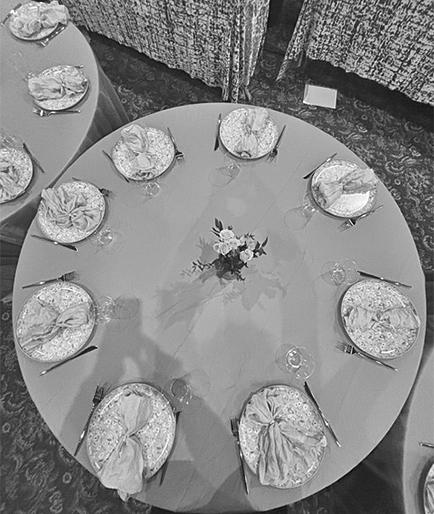
At some point during the luncheon, the children quietly claimed a table of their own. No parents. No grandparents. Just kids, together, reveling in each other's company and in the significance of the day.
Nearly one hour earlier, those same children had stood on the bimah for the reading of the Ten Commandments with a sense of importance and mission on their faces that was hard to miss.
This Shavuot at Chabad, something special was in the air.
At 11 in the morning, approximately 100 people gathered for the reading of the Ten Commandments, followed by an interactive
service that included the haftarah and the priestly blessing.
The children had their holiday program downstairs and came up to join for the reading.
Afterward, everyone moved to the party, a luncheon buffet with blintzes, cheesecake, and all the Shavuos delicacies, in a setting that matched the significance of the occasion.
During the meal, community members shared how Torah study has shaped their lives. The words were interesting and inspiring, and they made the message of the day tangible: Shavuos changes things. The more we learn, the better equipped we are in every area of life.
SATURDAY: Shabbat Morning Service, 9:30 a.m. at TI with a Kiddush Lunch following; Torah Study, noon on Parashat Sh’lach via Zoom; Havdalah, 9:50 p.m.
SUNDAY: Men’s Bike/Coffee Group, 10:30 a.m. at Rock 'N' Joe Coffee, 5025 Lindberg St, Lincoln. For more information or questions please email Al Weiss at albertw801@gmail.com
FRIDAY-June 19: Kabbalat Shabbat Service, 6:307:30 p.m. at SST followed by an Oneg; Shabbat Candlelighting, 8:43 p.m.
SATURDAY-June 20: Shabbat Morning Service, 9:30 a.m. led by the Kushner Family at TI with a Kiddush Lunch following sponsored by Marcia Kushner family; Torah Study noon on Parashat Korach via Zoom; Family Potluck and Game Night, 6 p.m. at SST. Bring a dish to share for the potluck beginning at 6 p.m. Games are available to play, but feel free to bring one of your favorites! Games begin at 7 p.m.; Havdalah, 9:52 p.m.
FRIDAYS: Virtual Shabbat Service, 7:30 p.m. every first and third of the month at Capehart Chapel. Contact TSgt Jason Rife at OAFBJSLL@icloud.com for more information.
In-person and virtual services conducted by Rabbi Benjamin Sharff, Rabbi Deana Sussman Berezin, and Cantor Joanna Alexander.
FRIDAY: Drop-In Mah Jongg, 9 a.m. In-Person; Village Walking Group, 10 a.m.; Shabbat Shira Service, 6 p.m. In-Person & Zoom.
SATURDAY: Torah Study, 9:15 a.m. In-Person & Zoom; Shabbat Morning Service, 10:30 a.m. In-Person & Zoom
SUNDAY: 2nd Sunday Breakfast — Stephen Center, 9 a.m. In-Person; Sparrow of Fortune Mah Jongg Fundraiser: Play Mah Jongg for ALZ, 1 p.m. RSVP required — In-Person.
TUESDAY: Mah Jongg Made Easy, 1:30 p.m. In-Person.
WEDNESDAY: Yarn It, 9 a.m.; Beit Midrash, noon at the JCC — In-Person
FRIDAY-June 19: Drop-In Mah Jongg, 9 a.m. InPerson; Village Walking Group, 10 a.m.; Pride Shabbat Service, 6 p.m. In-Person & Zoom.
SATURDAY-June 20: Torah Study, 9:15 a.m. In-Person & Zoom; Shabbat Morning Service, 10:30 a.m. InPerson & Zoom Please visit templeisraelomaha.com for additional information and Zoom service links.
couldn't make the morning service. A third said simply: "I love being at Chabad."
Towards evening, 25 young professionals gathered for a second reading of the Ten Commandments and a festive meal that carried on until Shabbat candlelighting. The night ended with the girls lighting Shabbat candles together with Mushka. Before the start of Shavuot, 50 Challahs from our Kitchen of Kindness were distributed to households across the community.
One guest said the build-up before the reading made her feel like she was actually standing at Sinai. Another reached out to say thank you for scheduling a second event later in the day, so she could participate even though she
People are looking for meaning. They are looking for authenticity. They are navigating a world where antisemitism shows up in places they never expected, in schools, on social media, among friends. And they are finding their way to Chabad, where we keep the door open, the table set and the candles lit.
LORRIE BERNSTEIN
Lorrie Bernstein passed away peacefully on May 25, 2026, two months after her 99th birthday. A private graveside funeral was held in Omaha on May 31, 2026.
She was preceded in death by her husband, Sheldon Bernstein. She is survived by her two daughters, Nikki Grosso and Sunni
Epstein of California where Lorrie and Sheldon lived for many years, after moving from Omaha; granddaughter; great-granddaughter; several nieces, great nieces and a great-nephew. Memorials may be made to the Sheldon A. and Lorrie Bernstein Endowment at the Jewish Federation of Omaha Foundation or the City of Hope.
PHILISSA CRANMER
JTA
The actor John Lithgow won his third Tony Award on Sunday for his depiction of the writer Roald Dahl as an antisemite.
Lithgow stars as Dahl in Giant which opened on Broadway in March. The play, which originated in London in 2024, depicts ultimately unsuccessful efforts to get Dahl to rein in antisemitic comments he made about the 1982 Israel-Lebanon war.
Lithgow’s award for best leading actor in a play recognized what he has said was an effort to portray Dahl as emotionally complex, a man who had suffered grave losses and was kind to those close to him yet baldly antisemitic in his criticisms of Israel.
Accepting the award, which made him, at 80, the oldest man to win a competitive Tony, Lithgow did not mention antisemitism or Dahl specifically but said, “It’s a play about cruelty in a cruel age.” He also shouted out the play’s Jewish author, Mark Rosenblatt.
Alden Ehrenreich, the Jewish actor whose big break came when Stephen Spielberg saw the video he made for a friend’s bar mitzvah in Los Angeles, won best performance for a featured actor for his role in Becky Shaw.

Meanwhile, multiple awards went to Jewish performers during the 79th Annual Tony Awards on Sunday, which was hosted at Radio City Music Hall in New York City by P!nk, the rock musician who has spoken publicly and with pride about her identity as a Jewish mother.
Caissie Levy won best performance for a leading actress for her appearance in Ragtime. Levy, who has gained renown for playing a number of Jewish roles, plays a non-Jewish character, Mother, in Ragtime, the revival of the musical based on E.L. Doctorow’s 1975 book portraying ties between a Black musician and Jewish immigrants in early-20th-century New York.
Shoshana Bean, who performed Sabbath Prayer from Fiddler on the Roof at last year’s record-setting Shabbat dinner in New York City, won best performance for a featured actress in The Lost Boys, about a family that gets enmeshed with vampires.
And Bess Wohl, who was not raised Jewish but is raising her children Jewish, won best play for Liberation, which portrays a women’s consciousness-raising group in the 1970s. The play includes a Jewish character whom Wohl has said was inspired by the many Jewish figures in the women’s liberation movement.
The ceremony also featured one pro-Palestinian demonstration, a recent hallmark of awards shows. Ali Louis Bourzgui, who won featured best actor in a musical for his performance in The Lost Boys, said the fantastical vampires in his show offer a lens to interpret real-life dynamics.
“Vampires represent those who have shunned their own humanity in order to achieve a non-existent sense of superiority,” he said, offering as an example: “The colonizers will never find fulfillment from the land and lives they steal.”
Bourzgui drew loud cheers as he included among the groups to which he dedicated the prize “the people of Palestine who deserve to live a fruitful life, a free life, a full life without occupation” and “Arab theatermakers and artists … so our humanity becomes undeniable, and our families can no longer be written off as merely collateral damage.” Bourzgui’s father is Moroccan.
Announcements may be e-mailed to the Press at jpress@jewishomaha.org; or mailed to 333 So. 132 St., Omaha, NE 68154. Readers can also submit announcements -- births, b’nai mitzvahs, engagements, marriages, commitment ceremonies or obituaries -- online at www.omahajewish press.com/site/forms/ . Deadlines are normally nine days prior to publication, on Wednesdays, 9 a.m. Please check the Jewish Press, for notices of early deadlines.




ANNOUNCEMENT
ADVERTISE STATEWIDE for $225/25 word classified ad. Over 120 newspapers with circulation of more than 237,000. Contact the Jewish Press or call 1-800-369-2850.
HELLO NEBRASKA! Introducing www.nepublicnotices.com, a new public notice website presented as a public service by all Nebraska newspapers. Free access, fully searchable – because democracy depends upon open government and your right to know.
BANKRUPTCY RELIEF! Help stop Creditor Harassment, Collection Calls, Repossession and Legal Actions! Speak to a Professional Attorney and Get the Help You NEED! Call NOW 844-215-3629
AFFORDABLE PRESS Release service. Send your message to over 120 newspapers across Nebraska for one low price! Call 1800-369-2850 or www.nebpress.com for more details.
FOR SALE – CELL PHONE
SWITCH AND save up to $250/year on your talk, text and data. No contract and no hidden fees. Unlimited talk and text with flexible data plans. Premium nationwide coverage. 100% U.S. based customer service. For more information, call 1-877-768-5892
FOR SALE - SENIORS
PORTABLE OXYGEN Concentrator? May be covered by Medicare! Reclaim independence and mobility with the compact design and long-lasting battery of Inogen One. Free information kit! Call 855-385-3580.
DOES YOUR basement or crawl space need some attention? Call Thrasher Foundation Repair! A permanent solution for waterproofing, failing foundations, sinking concrete and nasty crawl spaces. FREE Inspection & Same Day Estimate. $250 off ANY project with code GET250. Call 1-844-958-3431
THE BATHROOM of your dreams in as little as 1 day. Limited Time Offer - $1000 off or No Payments and No Interest for 18 months for customers who qualify. BCI Bath & Shower. Many options available. Quality materials & professional installation. Senior & Military Discounts Available. Call Today! 1-855-451-2244
WANTED TO BUY
WE BUY 8,000
Call 1-855-910-0760
JFO Library Specialist
Mark your calendars! On Thursday, June 18 at 1 p.m., the Dorothy Kaplan Book Discussion Group will gather for its monthly meeting at the Staenberg Omaha Jewish Community Center to review The Art Forger by B.A. Shapiro. The book offers an intriguing look at the fine line between reproduction copies and forgeries.
The group has previously discussed her novel The Collector’s Apprentice and heard about her latest novel The Lost Masterpiece when Shapiro joined us via Zoom for this year’s author event in March. Join us in person or tune in on Zoom — either way, you’re in for a thought-provoking discussion.
Shapiro’s narrative of her story blends Claire Roth in the present and three years earlier, and Isabelle Stewart Gardner in the late 1880’s to early 1900’s.
The Art Forger begs the question which has more consequence; the secrets we reveal or the secrets we hide? For Claire Roth, a gifted but disgraced promising young artist both are secrets that carry lifechanging consequences for her.
Claire created a painting which received wide acclaim but was exhibited as an Isaac Cullion original. When Claire tries to claim authorship of the painting, her claim is rejected, she becomes known as “The Great Pretender,” and lives off the money she earns working for an on-line art company painting reproductions of famous art works.
Along comes Aiden Markel, the powerful gallery
owner of Markel G who makes Claire an offer of “forging” the stolen Degas masterpiece After the Bath, which was one of 13 works stolen more than two decades earlier from the Isabella Stewart Gardner Museum. In return, he will pay her $50,000 and mount a solo art show of her works at his gallery. Is Claire about to make a deal with the devil? What secret is Aiden hiding from Claire and the art world about After the Bath?
We are also exposed to the world of Isabella Stewart Gardner and her obsession of collecting great works of art to eventually open an Art Museum to display them. The reader gets a look into her personal life through her letters to her niece Amelia to discover family secrets yet to be uncovered.
Please feel free to join us on June 18 at 1 p.m. in person or via Zoom when we discuss Shapiro’s interesting look into the art world’s obsession dealing with authenticity and provenance and how truth is defined in the art world.
The Dorothy Kaplan Book Discussion Group meets on the third Thursday of every month at 1 p.m. New members are always welcome.
The Group receives administrative support from the Community Engagement & Education arm of the Jewish Federation of Omaha. For information about the group and to join in the discussion, contact Shirly Banner at 402.334.6462 or sbanner@jewishomaha.org
“Meet Will, a farewell gift to Jewish Press creative director William Fischer from friends and classmates in Ireland. These days, Will guards the bookshelf in the Jewish Press offices and occasionally pops up in the paper when it’s time for a book review!”