

HAILEY KRUEGER
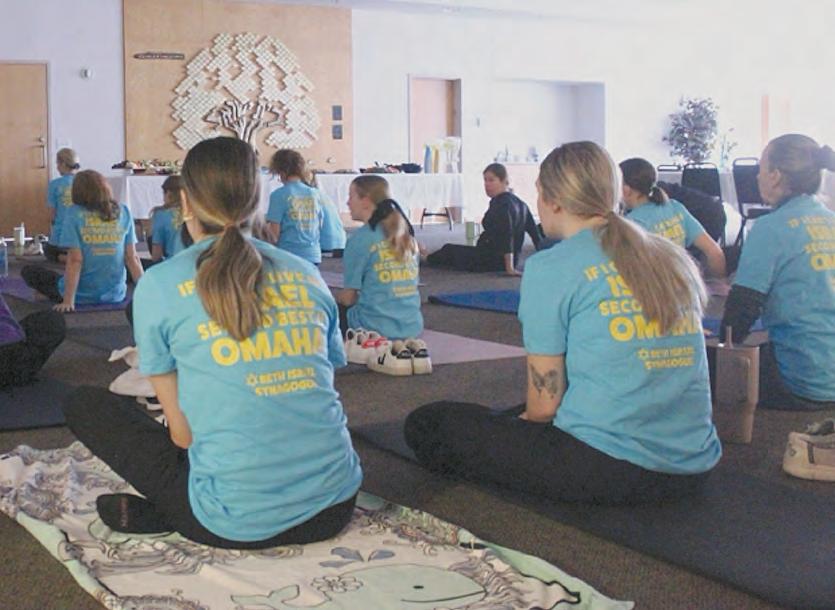
Enjoy a Sunday of self-care at Beth Israel’s annual women’s event, Mind.Body.Soul. The event will take place on Sunday, March 15, 2026 from 10:45 a.m. to 1 p.m. at Beth Israel Synagogue and a ticket costs $36. The 2026 theme will focus on faith in G-d, with an emphasis on recognizing the many ways He lovingly cares for each of us.
Select two fitness classes led by familiar faces from the JCC. Beth Staenberg will lead Tai Chi, Caryn Scheer will teach Jazzercise, and Jamie Eikmeier will host Pilates. Each of the classes are beginner-friendly and offer an opportunity to try something new.
After your workout, stay for a delicious
kosher brunch followed by a women-led workshop.
“I am so excited to be a facilitator in the table discussions we will have regarding our trust in G-d and all the small ways we experience him in our daily life,” says Sharon Kirschenbaum. “This aspect of the event is what truly makes it a Jewish women’s event.”
Encourage new friends to attend. If listed as a referral during registration, both women will receive a free raffle ticket for a grand prize. Be sure to register by March 1 to receive pilates socks!
Ayelet Geiger, Mind Body Soul organizer and wife to Rabbi Mordechai Geiger of Beth See Mind. Body. Soul page 2
now
Summer Internship,
a six-week, paid summer experience designed for high school seniors and college freshmen and sophomores. Made possible through an endowment established by Joanie and Richard Jacobson, the JLT Internship is a lasting legacy investment in the future of Jewish leadership. The program was created to attract, inspire, and prepare the next generation of Jewish professionals and lay leaders— strengthening Jewish communal life in Omaha and beyond.
MORE THAN AN INTERNSHIP Jacobson Leadership Tomorrow is a comprehensive, immersive program
SETH SCHUCHMAN
Lo Ta’amod appears in the Torah as a prohibition against standing idly by in the face of harm. Jewish tradition has long understood it as a warning about silence and delay, not only overt wrongdoing. Antisemitism has taken shape in laws, institutions, and in the everyday decisions that allow harm to endure. Jewish history also records moments when Jews and allies alike recognized what was at stake and chose to act, not because success was assured, but because remaining silent was not acceptable. This article is part of an ongoing series. I first encountered the story of Zakynthos when a family friend, Dr. Steven Schwartzbach, shared it on Facebook. The example of non-Jewish allyship under danger made it feel like the right story to share for this series, a story that is heroic, memorable, and searing.
In September 1943, after Italy surrendered to the Allies, German forces quickly seized control of former Italian-occupied territories. Among them were the Ionian Islands, including the Greek Island of Zakynthos.Under Italian control, antisemitic laws existed, but deportations had largely not occurred. German rule changed that immediately. Across occupied Europe, the Final Solution depended on speed and cooperation. Local authorities were ordered to provide lists of Jews so deportations could proceed.
Elsewhere in Greece, the outcome was devastating. In Thessaloniki, tens of thousands of Jews were deported and murdered. On islands such as Corfu and Rhodes, Jewish communities were destroyed. Survival was rare.
that offers participants a meaningful introduction to careers in Jewish agencies, service and programs. Interns gain hands-on experience, mentorship, and leadership development by working alongside Jewish professionals and lay leaders across the Jewish Federation of Omaha and its Agencies.
Through a six-week rotation, interns are exposed to multiple departments and agencies, allowing them to explore a wide range of roles and career paths within the Jewish nonprofit ecosystem.
WHY APPLY?
JLT is not just a summer job—it’s a See Internship Program page 3
Zakynthos had a small Jewish population, about 275 people, living among roughly 7,000 Christians. Soon after taking control, the German commander summoned Metropolitan Chrysostomos Dimitriou, the Greek Orthodox Metropolitan of Zakynthos, and Mayor Loukas Karrer, and ordered them to produce a list of all Jews on the island. This was standard procedure. German authorities relied on local officials to make deportation efficient. In most places, those officials complied, sometimes reluctantly, often convincing themselves that refusal would change nothing.
Chrysostomos and Karrer were not Jews. They were not subject to deportation. Compliance would likely have protected them personally. That is what made the decision before them so clear, and so dangerous. Nazi policy allowed for See Zakynthos page 2
Continued from page 1 severe punishment of officials who obstructed orders.








experience antisemitism, there are ways to report an incident or hate crime:
CALL the JFO’s Safety and Security Team 402-334-6446
EMAIL JCRCreporting@jewishomaha.org
SCAN the QR code below to fill out the Incident Reporting Form
Survivor testimony recalls a moment in which the bishop and mayor returned to the German commander with a sheet of paper listing only two names, their own. Historians debate the precise form of the exchange. What is not disputed is the outcome. They refused to provide the names of Jewish residents.
Refusal alone was not enough. Without names, deportation stalled, but the danger remained.
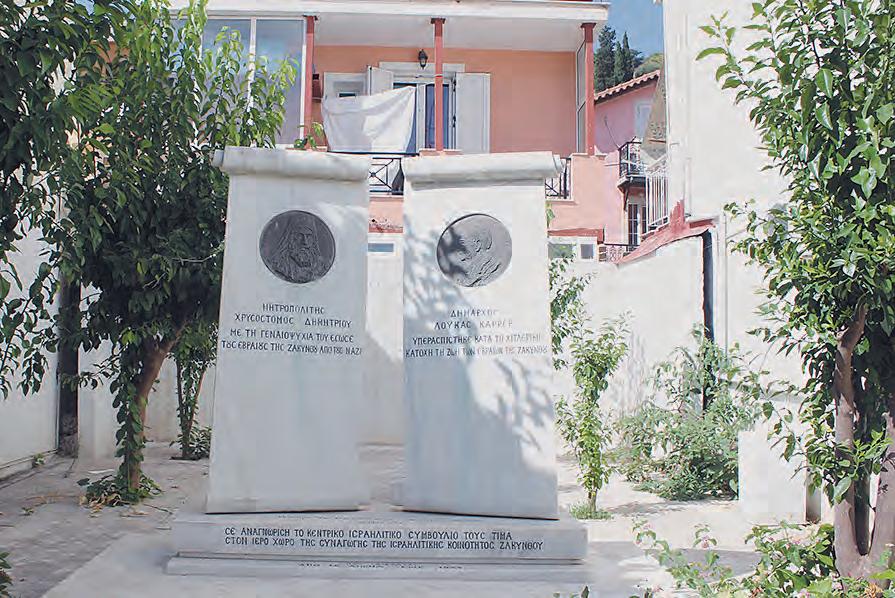
Chrysostomos and Karrer warned the Jewish community and alerted local residents. Jewish families were hidden across the island in homes, villages, and remote areas. Food was shared. Questions were deflected. The effort required coordination, silence, and endurance. German patrols searched. Hiding places shifted. The risk was constant.
From late 1943 until liberation in September 1944, the Jewish community of Zakynthos remained concealed. When German forces withdrew, all 275 Jews emerged alive. Not a single person had been deported or killed.
In the context of Nazi-occupied Greece, Zakynthos was a rare exception. Its survival was not accidental. It was the result of refusal by leaders who declined to cooperate and by a community willing to sustain that refusal over time.
In 1978, Yad Vashem recognized Chrysostomos and Karrer as Righteous Among the Nations. The following year, Israel planted the Zakynthos Forest in recognition of the rescue. These honors acknowledge individual leadership, but they also reflect a broader reality. Survival required allyship at scale.
Zakynthos reminds us that Lo Ta’amod is not limited by identity. The commandment does not ask whether harm threatens us personally. It asks whether we will assist it, tolerate it, or step aside. On this island, those whom the system expected to comply chose obstruction instead. Their refusal did not end the war. It did save lives.
The Lo Ta’amod series examines moments when silence was an option and refusal carried risk. These stories do not offer guarantees. They ask what responsibility looks like when harm is organized and delegated. Zakynthos offers no promise that resistance will succeed. It offers proof that refusal is possible, and that when it is shared, it can interrupt even the most
THE JEWISH PRESS IS LOOKING FOR A SUMMER INTERN.
If you are currently a high schooler age 16 and up, or college student up to 24 years old, and want to become more involved in our community, this is your chance.
If you are interested, please send your resume and cover letter to avandekamp@jewishomaha.org.

brutal systems.
As this series continues, we invite members of the community to share stories, documents, photographs, and artifacts that reflect how individuals confronted antisemitism or stood with others when it mattered. Preserving these histories helps ensure that future generations understand not only what our community faced, but how it responded.
This series is a collaboration between The Nebraska Jewish Historical Society (NJHS) and the Jewish Press. For questions and/or more information about the NJHS, please contact executive director Jane Rips at jrips@jewishomaha.org, or visit nebraskajhs.com
SOURCES AND FURTHER READING
• Yad Vashem, Righteous Among the Nations files for Metropolitan Chrysostomos Dimitriou and Mayor Loukas Karrer
• United States Holocaust Memorial Museum, materials on the Holocaust in Greece
• Yitzchak Kerem, scholarship on Jewish survival in Greece during the Holocaust
• Encyclopaedia Judaica, entries on Greek Jewry and World War II
• Jewish Museum of Greece, wartime archives and documentation
Some details of the initial confrontation between German authorities and local leaders are preserved through survivor testimony and later recollections. While historians differ on the precise form of that exchange, there is broad agreement on the central facts: local authorities refused to provide lists of Jewish residents, and the entire Jewish community of Zakynthos survived the German occupation
‘Write With Us,’ our small and intimate writing workshop (no need to be nervous) continues in the winter and early spring. Upcoming workshops are scheduled for the following Thursdays: March 26 and April 30 from 5-7 p.m. in the Noshery at the Staenberg Omaha JCC. Register by contacting Jessi at jtaylor@jewishomaha.org or Annette at avandekamp@jewishomaha.org. There is no cost to attend, although donations are always welcome.
If you have wanted to write your family’s story, that great American novel, or you have always wanted to try your hand at poetry, join us! Maybe you are already an accomplished writer, but you would benefit from being in a room with other writers. Perhaps you have convinced yourself you can’t write at all, but would love to try. Everyone, from absolute beginner to professional, is welcome to attend. We will provide the kosher snacks and the writing prompts.
Tuesday, March 10, 7 p.m., Wednesday, March 11, 10 a.m. and Friday, March 13, 7 p.m. the Old Avoca Schoolhouse in Avoca, Nebraska will be streaming three Ukrainian Tunes Workshops for violins, violas, cellos, basses, mandolins, soprano recorder, and alto recorder.
The workshop will explore tunes from our Ukrainian Tunes for Two. This captivating collection of 35 traditional Ukrainian tunes includes marches, patriotic songs, polkas, waltzes, etc. These melodies will make you cry, and make you dance.
Continued from page 1
Israel Synagogue, shares how special an experience this event is:
“This women’s event is something I’ve come to look forward to each year. It’s a unique opportunity to connect with others, and you walk away feeling connected, recharged, and of course, there’s that good burn from the accomplishing workouts. I especially love the meaningful discussions we’ve had over some great food!”
Mind Body Soul is open to all women, ages 12 and up. The
Different tunes will be played at each session. We will read, play, and discuss various survival skills for these tunes. There is limited enrollment, and pre-registration is required. The cost for each workshop is $15. The cost of each optional book is $15 (includes shipping if ordered with workshop registration).
For more information, and to register for the workshop: https://www.greenblattandseay.com/workshops_ukrainian_tunes_for_two_workshop.shtml
registration link can be found on Beth Israel’s website, www.orthodoxomaha.org, on their Facebook and Instagram pages, and their weekly email newsletter. Registration and inquiries can be made to executiveasst@orthodoxom aha.org or 402.556.6288. Attire is workout casual.
ARNOLD GARSON
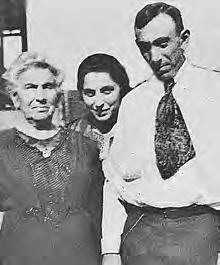
Solomon Greenstone arrived in Lincoln from Zdunska Wola, Poland, in late 1883 or early 1884, one of the city’s early Orthodox/Conservative Jewish immigrants from Russia or Poland.
The first wave of Jewish settlers in Lincoln had been Reformed Jews from Germany beginning in the late 1860s. The larger wave, from Poland and Russia, began arriving in 1882-83. Like thousands of other Eastern European Jews at this time, Solomon had left his family 5,000 miles behind in a place where conditions for Jews – poverty and persecution – were becoming intolerable. He would send for his family – his wife and three children, with a fourth on the way – when he could.
Lincoln was well-established in the 1880s – home of the state capitol and state university, and served by a railroad. With 13,000 residents in the 1880 census, it was Nebraska’s second-largest city. A decade of quadrupling growth lay ahead as the railroads began opening the cities of the Midwest to massive settlement. By the next census, Lincoln would have 55,000 residents – although still a small number of Jews.
Even at the turn of the century, 85 percent of Nebraska’s 3,800 Jews lived in Omaha, leaving only a couple of hundred Jews in Lincoln and scattered in a dozen or more smaller cities around the state.
Lincoln’s small Jewish population, however, would play an outsized role in the commercial life of the city. By the 1920s, the Jews of Lincoln operated department stores, large clothing stores, lucrative scrap metal dealerships, a major bank, and more. In the 1880s, the Jews of Lincoln scraped together a living. By the 1920s, many of them lived comfortably. In the 1880s, they worshipped in rented spaces or in one of their homes. By the 1920s, there would be a Reformed temple and a new Conservative synagogue.
clothing often could be obtained free from families of people who recently had died.
The business quickly transitioned, however, becoming a far more lucrative pawnshop. He loaned money on any kind of personal property, but specialized in jewelry. Solomon eventually described his pawnshop as a commercial loan business. During an era when there was no such thing as credit cards or small loans for ordinary people, pawnshops filled that gap.
A real example from 1889: Solomon gave a customer $3 in exchange for an overcoat. He charged 50 cents a month for what was, in effect, a $3 loan. That’s a 200 percent interest rate if annualized.
In 1891, Solomon Greenstone’s shop was among nine pawnshops in Lincoln; eight of them operated by Jews, a situation rooted in a time a few hundred years earlier when Jews were the only money lenders in the civilized world because the Catholic Church forbade moneylending, and Christians, generally, considered it a dirty business.
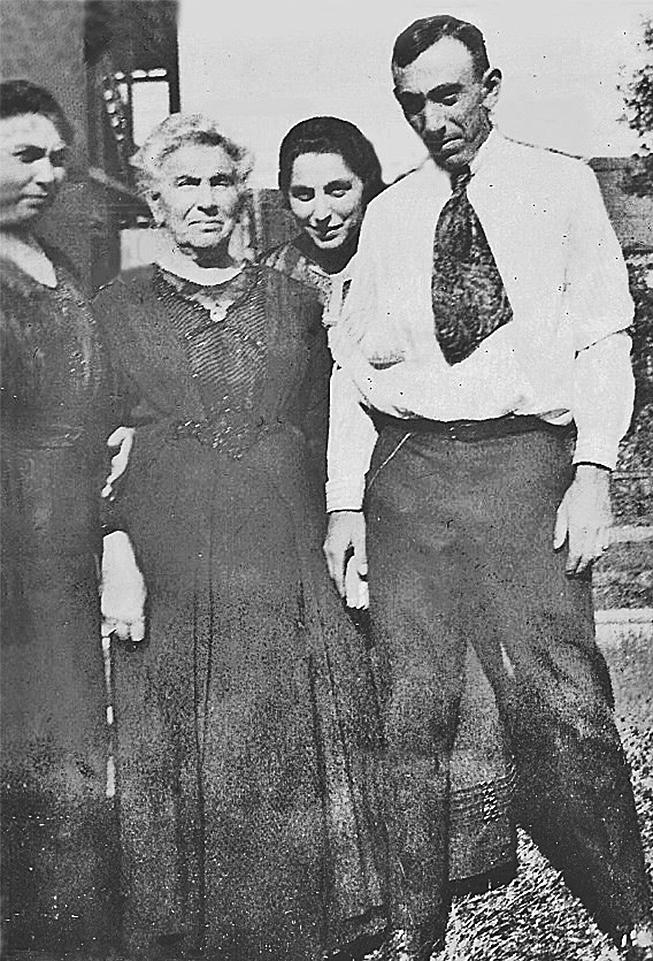
Solomon Greenstone’s father, Abraham Grynstein, was a tailor in Zdunska Wola, Poland. Solomon, 32, when he arrived in Lincoln, had tailoring skills, but bigger ideas.
He also became a player in the development of Jewish life. He was a charter member of the city’s B’nai B’rith chapter, a trustee of Mt. Carmel (Jewish) Cemetery, and an early member of one of the two Orthodox congregations that merged in 1910 to become Tifereth Israel.
His first business venture was a used clothing resale business. Such businesses were easy and inexpensive to start. Used

SETH SCHUCHMAN
Deni Avdija was selected to the 2026 NBA All-Star Game, becoming the first Israeli player ever named to the league’s midseason showcase.
Avdija, a forward for the Portland Trail Blazers, was chosen to the All-Star Team by NBA head coaches. The All-Star event, held Feb. 15 in Los Angeles, debuted a new USA vs. World minitournament format intended to create more competitive play.
Instead of one traditional 48-minute game, three teams competed in a series of shorter contests. Two American squads and one international team, Team World, played 12minute games in a round-robin format, with the top teams advancing to a final matchup. The structure shortened rotations and placed greater emphasis on defined roles.
Solomon initially took residence in Lincoln with another Jewish family, and soon realized that the quickest way to save enough money to bring his family to Lincoln would be to start his own business. He also realized that learning to read and write English would be advantageous as he worked to become a successful entrepreneur.
The City Library and Reading Room in Lincoln was at 1209 O Street, four blocks from Solomon’s pawnshop. The library was open from 2 p.m. to 10 p.m. six days a week, providing access to thousands of books, also newspapers from New York to New Orleans and from San Francisco to St. Louis, where Solomon also had family.
Family legend is that Solomon, his family still in Poland, went to the library regularly to teach himself reading and writing in English. Although he spoke with a heavy accent, he would be among the minority of Jews who emigrated from Eastern Europe as adults, but could answer “yes” when the census-taker asked if he could read and write in English.
In a fitting tribute to Solomon Greenstone, his great-grandson, Herb Friedman, a retired Lincoln lawyer and former president of the Lincoln Library Board, has made a contribution toward the construction of the new city library in downtown Lincoln. In recognition of Friedman’s contribution and in memory of his original ancestor in Lincoln, the new library will include the Solomon Greenstone Immigration Reading Room.

Avdija suited up for Team World, joining a roster of international standouts. He contributed across the stat sheet, finishing with five points, four assists, and one rebound. Team World did not advance to the final round, which was won by the USA Stars, but Avdija’s presence on the international roster marked a visible milestone.
The selection reflected a season in which Avdija had taken on a central role in Portland’s lineup. He entered the break averaging roughly 25 points, seven rebounds, and nearly seven assists per game while regularly drawing demanding defensive assignments. On a team still defining its long-term direction, he became one of its most reliable players.
Developed in Israel’s professional system and a standout at Maccabi Tel Aviv as a teenager, Avdija entered the NBA in 2020 as the ninth overall pick. His early seasons in Washington were marked by shifting roles and limited offensive responsibility. Production followed opportunity gradually. That changed after his move to Portland. With a clearer role and expanded minutes, Avdija’s responsibilities widened. He was asked to score, facilitate, and defend across positions, and his performance placed him firmly in the All-Star conversation.
For Israeli basketball, the milestone is clear. Israeli players have reached the NBA before, but none had previously been named an All-Star. Avdija’s selection set a new reference point, an Israeli player named an NBA All-Star based on performance and chosen by coaches. That alone made the moment worth noting.
Continued from page 1 deep dive into Jewish nonprofit service. Interns receive realworld experience, one-on-one access to seasoned Jewish professionals, and an inside look at how Jewish organizations collaborate to strengthen community.
Joanie Jacobson shared the vision behind the program:
“Jewish communities need to employ talented and capable Jewish professionals and attract strong community leaders in order to be effective. That was the impetus for what became the JLT Internship at The Foundation—and an exceptional experience, indeed. Last summer’s maiden voyage had a very happy ending!”
The impact of the program is already evident. Juliette Boehm Smith, the 2025 JLT intern, reflected:
“Programs like JLT give teens real experience and a chance to explore their interests while staying connected to the Jewish community. Going into different Federation agencies helped me figure out what I enjoy—and what I don’t. It’s a great way to grow both personally and professionally.”
APPLY NOW
If you are a young adult eager to gain valuable experience, build lasting connections, and help shape a vibrant Jewish future, the Jacobson Leadership Tomorrow Summer Internship is for you.
Applications are now open. Scan the QR code or visit, jccomaha.org/jlt-internship/
Join us in building tomorrow’s Jewish leadership—today.
Questions? Please email ashiv vers@jewishomaha.org

PHILISSA CRAMER
An American soldier who is credited with saving the lives of 200 Jewish comrades in a prisoner of war camp in Germany during World War II will receive the U.S. military’s highest decoration, the Medal of Honor.
The award to Roddie Edmonds, who died in 1985, was announced last week. It comes more than a decade after Israel’s Holocaust memorial, Yad Vashem, recognized him as a “Righteous Among the Nations” for his bravery and six years after President Donald Trump recounted his heroism during a Veterans Day parade.
Edmonds, a sergeant from Knoxville, Tennessee, was the highest-ranking soldier among a group taken prisoner during the Battle of the Bulge in January 2045 when the Nazis asked him to identify the Jews in the group. Understanding that anyone he identified would likely be killed, Edmonds made the decision to have all of the soldiers present themselves as Jews.
When a Nazi challenged him, he famously proclaimed: “We are all Jews here!”
The show of solidarity came to light only after Edmonds’ death, when a Jewish man who had been among the soldiers at the camp shared his recollection with the New York Times as part of an unrelated 2008 story about his decision to sell a New York City townhouse to Richard Nixon when Nixon was having trouble buying an apartment following his resignation as president.
When they found the article several years later, it was the first that Edmonds’ family, including his pastor son Christ Edmonds and his granddaughters, had heard about the incident. Soon they were traveling to Washington, D.C., and Israel for ceremonies honoring Edmonds, one of only five Americans to be credited as Righteous Among the Nations, an honor bestowed by Israel on non-Jews who aided Jews during the Holocaust.
As the family campaigned for a Medal of Honor, Edmonds was also the recipient of bipartisan praise from two American presidents.
“I cannot imagine a greater expression of Christianity than to say, I, too, am a Jew,” President Barack Obama said during remarks at the Israeli embassy in Washington, D.C., on International Holocaust Remembrance Day in 2016.
Three years later, President Donald Trump recounted the story at the New York City Veterans Day Parade. “That’s something,” he said. “Master Sergeant Edmonds saved 200 Jewish-Americans — soldiers that day.”
Last week, Trump called Chris Edmonds to invite him to the White House to receive the Medal of Honor on his father’s behalf, Chris Edmonds told local news outlets. The Medal of Honor ceremony is scheduled for March 2.

Temple Israel Senior Rabbi
This is the fourth installment of daily updates from Rabbi Sharff as he traveled to Israel in January 2026.
One of the reasons I wanted to come on this Rabbinic Mission was to be able to bear witness to the tragedies of Oct. 7, 2023. As we traveled to three of the memorial sites, an IDF Lookout Memorial, the police station in Sderot, and the Nova Music Festival, we were also learning of the news of the last and final hostage, Ran Gvili, coming home to be buried.
Just as we were grappling with our own emotions, the symbols of Hostage Square in Tel Aviv were coming to an end as they were being slowly taken down. The digital clock, which had been running for 843 days, 1,215,000 minutes, could finally be turned off as the last of the 250 hostages taken on Oct. 7, was home.
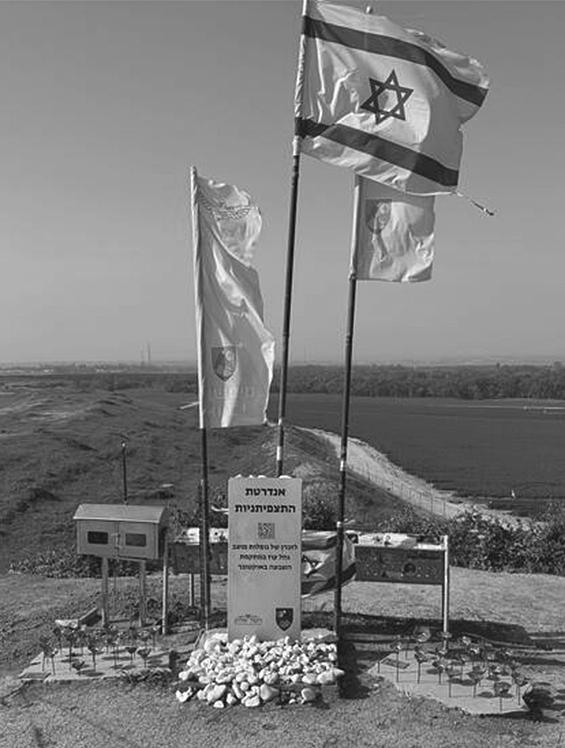
During this time, we stopped at a makeshift IDF memorial of a lookout over Gaza commemorating the 15 unarmed female field observers of IDF Unit 414, the majority of whom were burned to death while hiding in their command center. There are many questions that still linger today, but perhaps most importantly, why were their warnings about an infiltration ignored by their superiors? A question that can only be answered by a full inquiry, which has yet to take place.
We traveled to Sderot, a city of 36,000 located a mile from the Gaza border. On Oct. 7, terrorists stormed the main police station killing 20 police officers and then barricaded them-
selves inside. Eventually, the IDF bulldozed the police station and killed the remaining terrorists. All told, 72 people were killed in Sderot. A permanent memorial has been set up where the station once stood, with concrete pillars reaching towards the sky, mirroring the central tower that once formed the core of the station.
On our last stop as witnesses, we visited the site of the Nova Festival. One of many techno-music festivals that is held all over Israel, Nova was a festival for the young and young-atheart to come and celebrate music, creativity, and life. As the morning was getting underway, the sound of the music was interrupted by the alarms of rocket fire, which prompted festival goers to both begin to flee and to seek shelter. They had no idea of the horrors of the day that were about to unfold. As we learned, Hamas had no idea the festival was underway, and they only came upon it on accident. 378 people were killed. 44 were taken hostage, of whom the final 11 living hostages were released on Oct. 13, 2025.
Ran Gvili, who was just buried in Israel yesterday, when hearing of the invasion, threw on his uniform and sped off to Kibbutz Alumim, where he battled against Hamas for hours before he was killed and his body was taken into Gaza.
Nova is filled with makeshift memorials, many of which are placed where the individuals died that morning. They have posters with numerous pictures and stories that share not just how they died but also how they lived. Lives filled with love of adventure, music, animals, and most importantly, family. We saw countless stories not just of children, but also of parents. As one person told us, in Israel, there is a tradition of taking turns, meaning, for those serving, it is my turn to serve. And you go out and enjoy life, and then it will be your turn to serve. Tragedy is a part of what it means to serve, but it was never for the civilians to bear the brunt of violence. On October 7, it was mostly civilians who died, not those whose turn it was to put their lives on the line.
And yet, over and over again, we heard words of gratitude, including from an elderly couple at the Look Out memorial, thanking us for coming. We sang Od Yavo Shalom with a group of Jewish teens visiting from Argentina. And we learned how so many Israelis have not visited these sites because it is simply still too painful, still too raw.
When asked by our guide Lior to give one word to describe our feelings of the day, I said the only word on my mind, ‘anger.’ Yes, anger at those who perpetrated these atrocities. But also anger at those in positions of power who failed in their sacred responsibility to protect the citizens of Israel, who so far have not been held accountable. Yes, I was angry. But I was also deeply, deeply sad. As one colleague said, not just sad for the lives that were lost, but also for the lives that can never be. It is this feeling that seems to pervade everything we encounter. There is gratitude that Ran is finally home. No one is entirely sure what will come next. Life does continue. But the world has been forever changed. I have been forever changed.
Thank you for allowing me to bear witness.


NAOMI FOX
JFO
Director of Community Engagement and Education
The Youth Challah Bake on Sunday, Jan. 25, at Chabad of Nebraska, in partnership with PJ Library Omaha at the Jewish Federation of Omaha, brought together children and their families for a joyful afternoon of hands-on Jewish learning, creativity, and community connection.
The program began with a quick and engaging beeswax Shabbat candlemaking activity, giving children an early opportunity to create something meaningful with their hands. Families then gathered into three small groups at mixing stations, each led by a parent or our Community Shaliach, Itay. Children took turns measuring, pouring, and mixing ingredients for challah dough—an interactive format that worked wonderfully and kept everyone involved.
take home and bake, adding an extra layer of excitement and ownership.
The group then gathered around the Shabbos table, where Mushka Tennenbaum led a Shabbos reenactment, explaining each step of candle lighting and the blessings over challah and grape juice in a clear and engaging way. A hot chocolate bar with marshmallows, chocolate chips, sprinkles, and peppermint sticks was also served as a special “Shabbos treat.”

Next, children moved to a shaping and braiding station using pre-made dough, both traditional and blue colored for a little extra fun. Each child received three dough balls to braid into their own challah, brushed on egg wash, and decorated with toppings such as chocolate chips and sprinkles. Every participant placed their challah into a small personal pan to
After baking, crafting, learning, and plenty of snacking, Chabad's indoor bounce house was inflated, giving children space to burn off energy and continue the fun.
Throughout the afternoon, new friendships were formed and existing ones strengthened through shared learning and creation. Children who were new to the community felt welcomed, and families left with challah in hand and practical knowledge they could immediately bring into their homes.
By combining hands-on ritual practice with partnership across organizations, the Youth Challah Bake demonstrates how intentional programming can deepen Jewish identity, foster belonging, and strengthen the fabric of the Omaha Jewish community.

SHELLY FOX
Jewish Family Service
Finding the right moment to talk about serious topics with family members can feel difficult — but it doesn’t have to be uncomfortable.
How often have you wondered what you still need to know from your aging parents? Or what important information should you share with your own adult children? Many of us avoid conversations that feel heavy or uncomfortable, yet these are some of the most meaningful and important discussions we can have.
As we continue our Being a Good Ancestor series on March 19, Jewish Family Service professionals will help guide participants in preparing for these important conversations and approaching them with confidence, clarity, and compassion. Topics to be discussed with family include:
• Where would I want to live if I could no longer live independently?
• Who should make healthcare and financial decisions for
• Where are my important documents stored?
• What medical treatments would I want — or not want? …and so many more.
Taking time now to reflect on these questions and share your wishes helps ensure your voice is heard later. Avoiding these conversations doesn’t prevent health changes or unexpected life events, but having them can reduce stress, prevent confusion, and bring peace of mind. You may even find that your loved ones are relieved and grateful that someone started the conversation.
Expressing your wishes is a gift to your family, friends, and healthcare providers. It allows them to better understand your values and helps them honor and respect your choices if they ever need to make decisions on your behalf.
Please join us as we continue our Being a Good Ancestor series and take an important step toward open, meaningful family communication.
Thursday, March 19, 4–5:30 p.m. in the Wiesman Family Reception Room at the Jewish Federation of Omaha.
RSVP using the QR code or by calling: Shelly Fox at 402.334.6532 or Annie Rifkin at 402.334.6492.

Washington – Rep. Don Bacon (NE-02) today announced he was reappointed to the U.S. Holocaust Memorial Council. The Council serves as the board of trustees for the U.S. Holocaust Memorial Museum, the nation’s official memorial to those who died during the Holocaust.
The Museum is dedicated to the documentation, study, and interpretation of Holocaust history and to confronting genocide and antisemitism worldwide.
“It is an honor to continue serving on the U.S. Holocaust Memorial Council,” said Rep. Bacon. “The U.S. Holocaust Memorial Museum is a great institution that ensures we never forget the six million Jews who were murdered during the Holocaust and the millions who have suffered from antisemitism and continue to face it today. At a time when antisemitism is rising around the world, its mission is more important than ever. We must confront hatred wherever it appears and remain committed to the principle of ‘Never Again.’ I will continue to be a strong advocate and supporter of the Museum and its vital work.”
A living memorial to the Holocaust, the United States Holocaust Memorial Museum inspires citizens and leaders world-
wide to confront antisemitism and hatred, prevent genocide, and promote human dignity.
A nonpartisan, federal educational institution chartered by a unanimous Act of Congress in 1980, the Museum’s permanent place on the National Mall is guaranteed by federal support, and its far-reaching educational programs and global impact are made possible by generous donors.
Since its dedication in 1993, the Museum has welcomed some 50 million visitors, including over 100 heads of state and more than 11 million school-age children.
The Museum’s Holocaust Encyclopedia is the world’s leading online authority on the Holocaust, and has been made available in 20 languages. In 2024, this database was visited by more than 26.5 million people representing 243 countries and territories. With educational programs reaching all 50 states and nearly 3 million followers on social media, the Museum also has brought Holocaust history and its relevance far beyond Washington, DC. The Museum is free, and is open every day with the exception of Yom Kippur and Christmas Day.



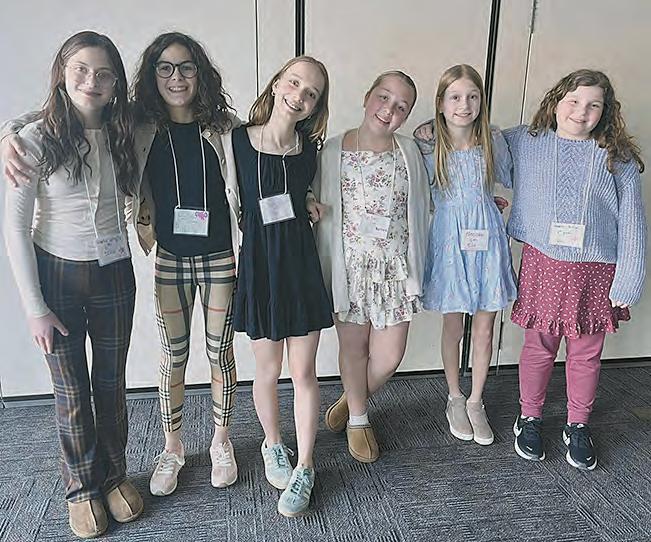

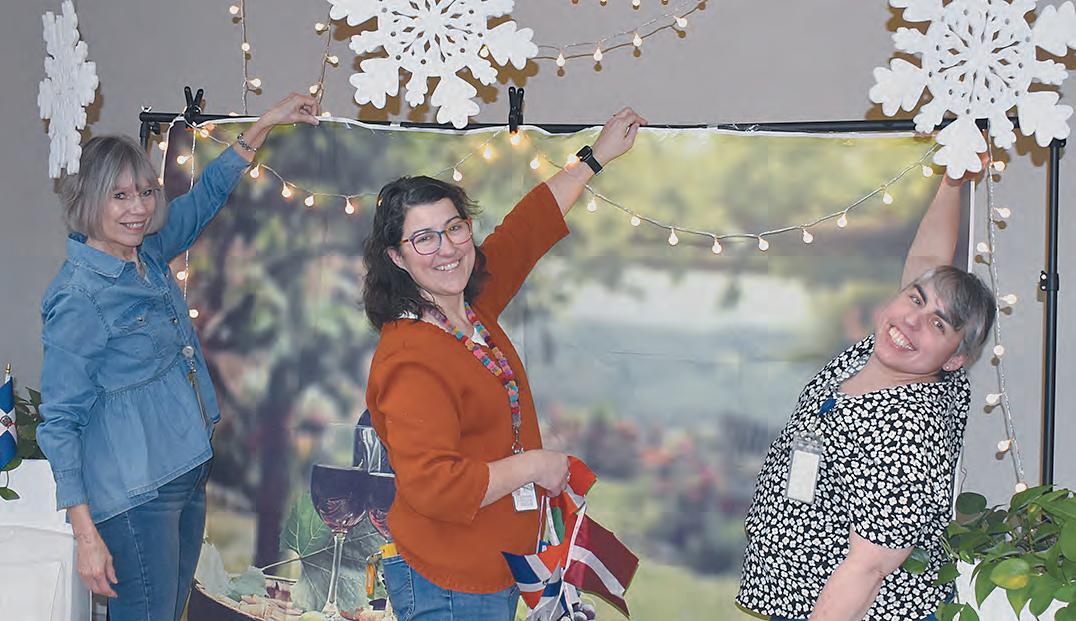
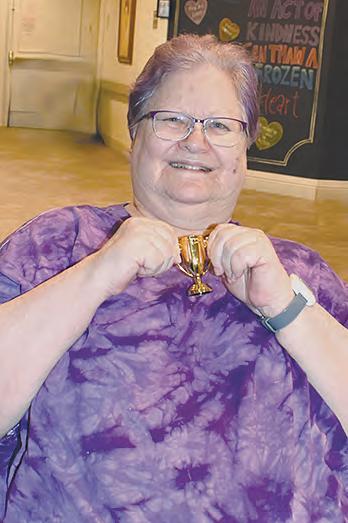
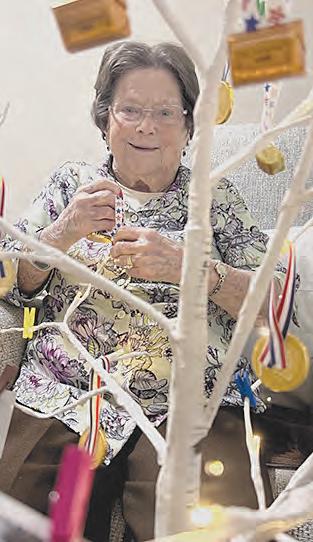
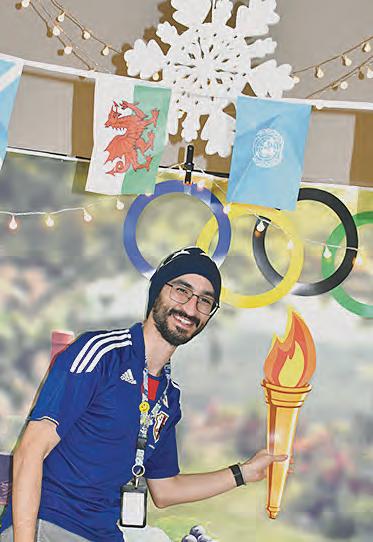
PHOTOS FROM RECENT JEWISH COMMUNITY EVENTS
SUBMIT A PHOTO: Have a photo of a recent Jewish Community event you would like to submit? Email the image and a suggested caption to: avandekamp@jewishomaha.org

We want to belatedly wish
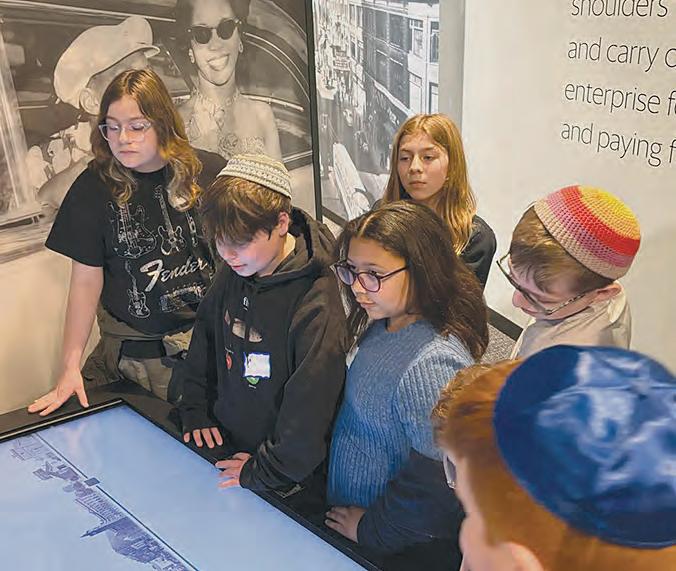
Friedel’s Middle

ANNETTE VAN DE KAMP-WRIGHT
Jewish Press editor
There’s trouble in River City, and it comes from Debbie Denenberg. Omaha native and daughter of Eunie and Norm (founders of the Firehouse and the Upstairs Dinner Theatres), Debbie has a robust resume when it comes to producing high-quality stage shows. She is currently an above-the-title producer of The Music Man, coming to Lincoln’s Lied Center for the Performing Arts March 5 through March 8
In 1990, Debbie went to work in New York City for Dodger Productions, rising Broadway producers of Big River and Into the Woods. She co-founded Big League Theatricals. This subsidiary began by taking the Dodger’s hit musicals and producing the national tour. “I was able to marry my Midwestern theatrical roots with the resources of my Broadway employers,” Debbie said. “By the way, even though we were 100% theatrical producers, our names were always inside-jokes on baseball. Dodger Productions, like the Los Angeles Dodgers, started out in Brooklyn.”
At the time, Broadway shows were seen on national tours in large cities only. People in smaller towns had to make the trip to Chicago or Denver to see New York theater talent live on stage. “Or, they had to fly to New York City,” Debbie said. “In medium and smaller-sized towns, theater was mainly produced locally, with local talent. Big League
Theatricals created national touring companies of new Broadway productions and top-notch revivals, smartly packaged them, and blanketed the vast number of American towns where people weren’t getting the chance to see New Yorkbased national touring companies.”
During the next nine years, she produced numerous amazing shows — for example, Into the Woods, Guys and Dolls, and The Who’s Tommy — and sent them on tour around the entire US. She then handed over the reins to current Executive Producer Dan Sher. After a show is a hit on Broadway, Big League takes it on tour.

the investors”.
Dan ultimately acquired the company from Dodger Productions (it is now called Big League Productions) and continues the work. Debbie is involved, “but in a less stressful way. Dan builds the show, and I bring in
We invite you to join us in the JCC Eisenberg Gallery for the opening of the Jewish Press Spotlight exhibit: Tuesday, March 10 4:30-6 p.m.
The Spotlight exhibit is made possible through the generosity of the Shirley and Leonard Goldstein Supporting Foundation. It will stay up during the month of March.

“A big reason why the company continues to be successful,” Debbie said, “is the relationships that Big League built along the way. We have 35-year relationships with the presenters who take the risk of buying our upcoming national tours, sight unseen. These presenters, like The Lied Center, must believe in us, as one show can cost hundreds of thousands of dollars. They must also trust that the show rolling into their theaters will be of the highest quality with breathtaking production values.
For example, The Music Man sports the actual Broadway costumes. Those trusted, personal relationships with Big League Productions are essential to our continued success.”
About the show: Meredith Willson’s sixtime Tony Award-winning musical comedy The Music Man follows fast-talking traveling salesman, Harold Hill, as he cons the people of River City, Iowa, into buying instruments and uniforms for a boys’ band that he vows to organize – this, despite the fact that he See Music Man page 8


B LITTMAN
B Littman is a senior at the University of Nebraska-Lincoln. They have served multiple roles in UNL Hillel, most recently serving as the Social Media Chair.
Over winter break, I had the opportunity to attend the Shalom Hartman Institute Ed Fein Winter Student Seminar. Bringing together over 100 Jewish college students from across North America, the seminar created a space for learning and engaging in deep conversation. Much of the discussion centered on the experience of being a Jewish college student, both our lived experiences and how the media portrays it.
Another elective I selected was Nationalism, Zionism, and Antizionism. Much of this elective focused on opposing viewpoints and how, even with polar opposite opinions, there are still shared goals. Through this session, I developed a more nuanced understanding of what nationalism is. Again, this session encouraged asking big questions and exploring different perspectives rather than encouraging everyone to form the same opinions.






So much of my formative years have been spent being “Jewish in a non-Jewish world”. That’s not inherently negative, as I deeply value the ability to engage in dialogue and educate others. However, spending a week surrounded by other Jewish students created a different kind of dialogue, allowing me to feel truly seen.
I have always been someone who seeks out learning opportunities, and attending the seminar was a perfect example of that. Rather than presenting one “correct” view or answer to the deep questions we were presented with, the seminar emphasized the importance of considering different perspectives and listening to what those around us have to say.
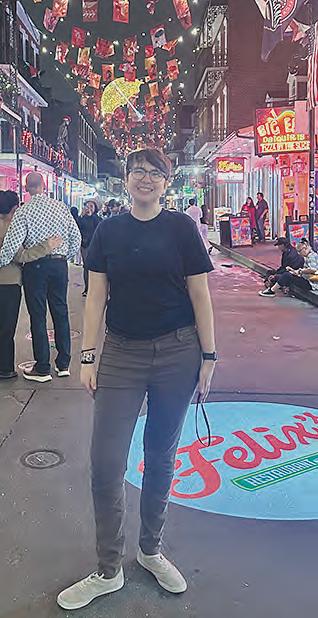
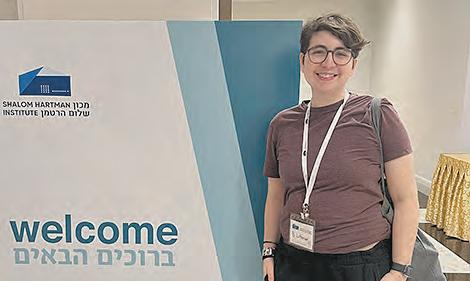
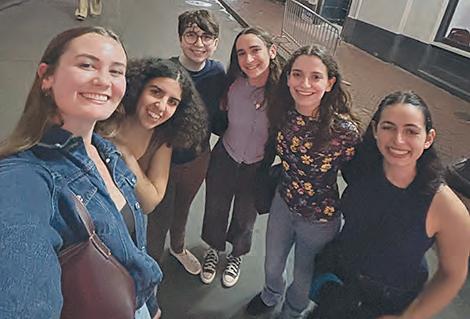
The week kicked off with a framing from Yehuda Kurtzer, introducing our exploration of how democracy intersects with Judaism. We examined the guiding concepts of values, institutions, and norms, and how different Jewish texts instill different views of each concept. We then moved on to a discussion of the intersectionality of Jewish identity and competing Jewish visions.
Our final Beit Midrash discussed Maintaining a Jewish Community after Oct. 7. Using the Babylonian Talmud as a core text, we discussed the importance of valuing both sides of a disagreement and seeing that each opinion has value. Connecting back to the conversation about nationalism, we explored identifying the commonalities and how the shared goal is a fundamental step in building cooperation. We also reflected on how media coverage has focused on a small number of universities, sharing a narrative that is not representative of the Jewish college student experience across the country. The only people who can truly speak about the Jewish college student experience is us, the Jewish college students who are living it out every day. As a young adult, I am constantly surrounded by opposing viewpoints and peers actively forming their perspective of the world. While I may not agree with everything, I believe it is far healthier to question why someone holds their views and opinions, rather than immediately becoming defensive or argumentative.
We


In my elective What Freedom of Speech Makes Possible, we discussed Menachem Mendel Schneerson’s “Letter to the Jewish Community of Teaneck”. That conversation reminded me of UNL Hillel building our campus Sukkah in a public place on campus. Constructing the sukkah in the center of campus created a sense of pride and provided education on Jewish rituals. We showed that we were not ashamed to show our Jewishness. There were risks of erecting a sukkah in a major throughfare on campus, but the benefits outweighed the risks. When I shared this example in the seminar, it sparked a broader conversation about what free speech makes possible in our society and raised the question of whether the American free-speech culture enhances Jewish identity.
During Alon Shalev’s Beit Midrash, “Who is a Democratic Jew?”, he presented a metaphor for our absorption of ideas as someone encountering coffee for the first time. A man orders coffee and is presented with 3 waiters, each saying that what they hold is the “true coffee”. Each commentary and perspective we encounter is a cup of coffee. Authors, commentators and institutions act as the waiters, telling us that what they hold is the truth. Using the Israeli Declaration of Independence as a core text, we explored what democracy looks like in Jewish spaces and what Jewish identity looks like within democratic spaces.
Continued from page 7 doesn’t know a trombone from a treble clef. His plans to skip town with the cash are foiled when he falls for Marian, the librarian, who transforms him into a respectable citizen by curtain’s fall. Featured songs are “Seventy-Six Trombones,” “Trouble,” “’Til There Was You,” “Pickalittle” and “Gary, Indiana.” The Music Man debuted in 1957 and remains a family-friendly story to be shared with every genera-
Post-October 7, I have felt simultaneously alone and amidst a strong community. I have constantly been weighing the value of speaking up or staying silent. Learning alongside other college students navigating a similar tension was refreshing and empowering. It allowed us to have healthy conversation while encouraging deeper questions and strengthening our individual viewpoints.
One of the most beautiful moments of the week was Wednesday evening. The program broke out into small groups to discuss topics that are important to us. One of the groups decided to engage in a Tisch, singing Jewish melodies together. The music spread throughout the entire floor, filling the space with an overwhelming sense of Jewish joy.
I also had the opportunity to connect with Jewish student leaders from across the country. The most valuable connection was with students on campuses with small Jewish populations. Having spent the past four years as a leader for a student-run Hillel, I was able to provide wisdom learned from my experiences while simultaneously getting ideas to bring back to Nebraska.
I am incredibly grateful that I had the opportunity to engage in the Ed Fein Winter Student Seminar. I extend my gratitude to the Shalom Hartman faculty for spending a week sharing their expertise with college students from across North America and to the Harris Center for Judaic Studies at the University of Nebraska-Lincoln for their support.
tion, “and one of the most joyous musicals,” Debbie said. “It’s an excellent show to bring your kids to because it is fun, and vibrant and happy. We can all use a dose of joy, and this is a great way to find it. Besides, it’s the month of Adar, when we are supposed to experience joy, so the timing is perfect!”
Between January and June, the current national tour, Directed by Matt Lenz, travels to 60 different cities across the U.S. The brand-new production is brought to life with striking, innovative new multimedia video design by Lisa Renkel. It offers breathtaking staging and remarkable choreography by Emmywinning, Broadway choreographer Joshua Bergasse, marrying small-town nostalgia with extravagant production numbers. Show dates and times are Thursday March 5 at 7:30 p.m., Friday March 6 at 7:30 p.m., Saturday March 7 at 2 p.m. and at 7:30 p.m., and Sunday March 8 at 1:30 p.m. Purchase tickets at liedcenter.org.
(Founded in 1920)
David Finkelstein
President
Annette van de Kamp-Wright
Editor
Will Fischer
Creative Director
Claire Endelman
Sales Director
Lori Kooper-Schwarz
Assistant Editor
Sam Kricsfeld
Digital support
Mary Bachteler
Accounting
Jewish Press Advisory Board
David Finkelstein, President; Margie Gutnik, Ex-Officio; Joseph Abrahams, Helen Epstein, Andrea Erlich, Ally Freeman, Dana Gonzales, Mary Sue Grossman, Hailey Krueger, Chuck Lucoff, Sara Rips, Stewart Winograd and Bob Yaffe.
The mission of the Jewish Federation of Omaha is to build and sustain a strong and vibrant Omaha Jewish Community and to support Jews in Israel and around the world. Agencies of the JFO are: Institute for Holocaust Education, Jewish Community Relations Council, Jewish Community Center, Jewish Social Services, Nebraska Jewish Historical Society and the Jewish Press Guidelines and highlights of the Jewish Press, including front page stories and announcements, can be found online at: www.jewishomaha.org; click on ‘Jewish Press.’ Editorials express the view of the writer and are not necessarily representative of the views of the Jewish Press Board of Directors, the Jewish Federation of Omaha Board of Directors, or the Omaha Jewish community as a whole. The Jewish Press reserves the right to edit signed letters and articles for space and content. The Jewish Press is not responsible for the Kashrut of any product or establishment.
Editorial
The Jewish Press is an agency of the Jewish Federation of Omaha. Deadline for copy, ads and photos is: Thursday, 9 a.m., eight days prior to publication. E-mail editorial material and photos to: avandekamp@jewishomaha.org ; send ads (in TIF or PDF format) to: rbusse@jewishomaha.org
Letters to the Editor Guidelines
The Jewish Press welcomes Letters to the Editor. They may be sent via regular mail to: The Jewish Press, 333 So. 132 St., Omaha, NE 68154; via fax: 1.402.334.5422 or via e-mail to the Editor at: avandekamp@jewishomaha.org.
Letters should be no longer than 250 words and must be single-spaced typed, not hand-written. Published letters should be confined to opinions and comments on articles or events.
News items should not be submitted and printed as a “Letter to the Editor.”
The Editor may edit letters for content and space restrictions. Letters may be published without giving an opposing view. Information shall be verified before printing. All letters must be signed by the writer. The Jewish Press will not publish letters that appear to be part of an organized campaign, nor letters copied from the Internet. No letters should be published from candidates running for office, but others may write on their behalf.
Letters of thanks should be confined to commending an institution for a program, project or event, rather than personally thanking paid staff, unless the writer chooses to turn the “Letter to the Editor” into a paid personal ad or a news article about the event, project or program which the professional staff supervised. For information, contact Annette van de Kamp-Wright, Jewish Press Editor, 402.334.6450.
Postal The Jewish Press (USPS 275620) is published weekly (except for the first week of January and July) on Friday for $40 per calendar year U.S.; $80 foreign, by the Jewish Federation of Omaha. Phone: 402.334.6448; FAX: 402.334.5422.
Periodical postage paid at Omaha, NE. POSTMASTER: Send address changes to: The Jewish Press, 333 So. 132 St., Omaha, NE 68154-2198 or email to: jpress@jewishomaha.org
Editorials express the view of the writer and are not necessarily representative of the views of the Jewish Press Advisory Board, the Jewish Federation of Omaha Board of Directors, or the Omaha Jewish community as a whole.
ANNETTE VAN DE KAMP-WRIGHT
Jewish Press Editor
“Artists should not be expected to comment on all broader debates about a festival’s previous or current practices over which they have no control,” wrote Berlin‘s international film festival director Tricia Tuttle. “Nor should they be expected to speak on every political issue raised to them unless they want to.” (Toby Axelrod, JTA)
The statement came after the festival’s jury director, Wim Wenders, refused to take a public position on the war in Gaza. Of course, that supposed “public position” would only be acceptable to his critics if Wenders would denounce Israel. They don’t actually want to hear what he really thinks. His assertion that art shouldn’t be political also didn’t go over well.
We live in a time when everyone has to have an opinion about everything. Whether you are an Instagram influencer, an actor, or showed up on America’s Got Talent, if you are in the public eye, people expect you have something to say. It’s how we ended up with random famous personalities sharing their thoughts on complex humanitarian issues. Who cares about learning real facts, if the guy who played the Hulk can tell us what to think? If political opinions were served like a McDonald’s Happy Meal, this is what it would look like. The next time I want to know what my opinion is, I’ll just check TikTok. Because thinking for myself, that takes effort.
The constant push and pull between commentators that occurs largely online is a symptom of
laziness. We want our news bite-sized and ready to digest. Maybe we can blame Twitter (sorry, ‘X’) and TikTok and Facebook and Tumbler and so forth, but ultimately, we should blame us.
We’ve forgotten how healthy it can be to admit we don’t know everything. Instead, when someone else asks us what we think about Russia, about Gaza, about the weather or the price of gas, we feel

a compulsion to answer. We’re afraid to admit we have no clue what’s happening in Iran (and honestly, who does?) and rather than feeling incompetent (or worse) we make something up. Or we base our opinion on what others say in a social media update. Because to be truly knowledgeable about anything, we would have to invest time, We have to research, read different viewpoints, monitor a variety of news outlets. Who has the time? And so distortion begets more distortion, until we hardly remember what the original issue was.
Let’s face it: we’ve landed in a quagmire of misinformation with no idea how to escape.
Of course, I do not have a solution either. I also, perhaps shockingly, don’t have a complete and solid opinion on Gaza-and what thoughts I do have I am not always willing to say out loud. In that respect, I have a lot of sympathy for Wim Wenders. Here’s why. The situation is complex, sure, but most of all, the situation is emotional. I have facts, I have opinions, but I also have feelings. And those feelings, they are messy. When talking about Gaza and Israel, I feel angry, tired, impatient. Sometimes when I see protesters, I feel disdain. I feel pride, I feel sadness. I also feel happy. I can, for all these reasons, not talk objectively about Israel, or anything in its orbit.
Imagine if I were famous, and I took all those thoughts and feelings and amplified them with a microphone. What do you think would come out of my mouth, and how reliable would my opinions be?
I don’t think every famous person has this many feelings about Israel. But they have feelings about something. Seeing a renowned filmmaker refuse to speak out on Gaza is, frankly, an enormous relief. For once, someone was handed a microphone and chose not to say anything stupid.
Don’t get me wrong; I still believe in true freedom of speech. I also think it should include the freedom to not speak. Words matter, and when we are unsure of whether our words are helpful, we should hold them until we get there.
HEN MAZZIG JTA
When Bad Bunny took the stage at the Super Bowl, the world didn’t just see a global superstar; we witnessed a masterclass in the psychology of belonging. As a member of the Jewish community — a group that has spent generations navigating the delicate dance of integration and identity — I realized that the Puerto Rican icon was demonstrating a lesson that every minority community in America desperately needs to relearn.
For far too long, the “minority experience” has been framed as a negotiation. Whether you are Latino, Black, Asian, or Jewish, the unspoken rule has often been the same: to belong, you must first prove that you are “safe.” You must demonstrate your utility, minimize your differences, and, above all, politely ask for a seat at the table. We have been conditioned to believe that acceptance is a gift granted by the majority in exchange for our docility or our trauma.
But look at how Bad Bunny occupied the Super Bowl stage — during a 13-minute celebration of Puerto Rican culture all in Spanish and featuring the island’s iconic sounds and dances and imagery that alluded to its colonial history, its vivid street culture and even its historic challenges (like its overtaxed electrical grid).
Bad Bunny didn’t ask for permission. He didn’t ask for pity. He didn’t frame his community as a project to be fixed, a political talking point to be debated, or a tragedy to be mourned. Instead, he led with culture. He led with language. He led with an unapologetic, infectious joy that didn’t pause to translate itself for those who didn’t understand. He performed as if he already belonged — not because he had been graciously invited, but because his presence was an objective, immovable fact.
Contrast that for a moment with Robert Kraft’s “Blue Square” ad against anti-Jewish hate that aired during the same Super Bowl. I am not here to join the chorus of critics who have picked apart its aesthetics or its reach. I am interested in the psychology behind it.
On one hand, you had a vibrant, loud celebration of contribution. On the other, a polite, minimalist request for the world to be afraid on our behalf. One was a refusal to cower; the other was a plea for protection.
One said, “Look at what we bring to the world,” while the other said, “Look at what the world is doing to us.”
This is precisely where we lose people.
Belonging is not a debt you pay or a favor you beg for. It is a reality you demonstrate. When any community — but particularly the Jewish community right now — builds its public identity around its fragility, it inadvertently reinforces the idea that we are perpetual outsiders looking in. When we lead with our victimhood, we are essentially asking for a shield. But when we lead with our confidence, we demand that the world meet us where we stand. There is a profound difference between advocacy that asks for tolerance and advocacy that asserts presence. Tolerance is passive; it’s a neighbor deciding not to complain about your music. Presence is active; it’s the music itself. Bad Bunny’s brilliance lies in his refusal to be a “victim” of the American mainstream. By refusing to be “palatable,” he became undeniable.
source, and it rarely translates into genuine respect. Respect is earned through the manifestation of

strength and the refusal to let others define the terms of your existence.
As Jews, we should pay close attention. Our history in this country — and indeed, the history of almost every immigrant group — is not a series of apologies or a list of grievances. It is a saga of immense, disproportionate contribution. We have built industries, shaped the legal landscape, and defined the American cultural imagination. We are not a “problem” to be solved or a vulnerability to be managed. We are a vital, structural thread in the fabric of this society.
I saw this dynamic firsthand while developing my YouTube show, “And They’re Jewish.” Over the course of interviewing dozens of Jewish celebrities and creators, a striking pattern emerged. Almost every time I reached out to book a guest, they would ask — almost reflexively — if we were going to talk about antisemitism. They were prepared for it; they had their talking points ready. But as the name of the show suggests, my goal was the exact opposite. I wanted to focus on their craft, their vision, and their brilliance. I wanted to remind the world of how much this community has contributed to the culture, rather than how much the culture has taken from us. When we focus our energy on showing the world how much we are suffering, we are playing a game of diminishing returns. Sympathy is a finite re-
In the fight for a truly inclusive world, we don’t win by highlighting our fragility. We don’t win by convincing people that we are weak enough to deserve their protection. We win by affirming our humanity and our power. We win when we show that we are here to stay– not because we were let in, but because we are part of the foundation.
This is the shift in advocacy we need right now: a move from the “Blue Square” of anxiety to the “Bad Bunny” of pride. It is an assertion that our right to occupy space is not contingent on the headlines of the day or the shifting winds of public opinion. Our identity is an inheritance, not a political stance, and it carries a dignity that requires no apology.
The lesson is simple, yet revolutionary for those of us used to fighting for crumbs of acceptance:
Stop asking for a seat. Own the room. Our presence is not a debate to be won; it is a reality to be lived.
When we lead with our humanity and our strength, we stop being a target for pity and start being a force for inspiration. If you want to see what the future of inclusion looks like, be a little more like Bad Bunny. Hen Mazzig is an Israeli author and the founder of TLVi.org, a non-profit dedicated to combating hate and misinformation online. The views and opinions expressed in this article are those of the author and do not necessarily reflect the views of JTA or its parent company, 70 Faces Media.
B’NAI ISRAEL SYNAGOGUE
618 Mynster Street Council Bluffs, IA 51503-0766
712.322.4705 www.cblhs.org
BETH EL SYNAGOGUE
Member of United Synagogues of Conservative Judaism 14506 California Street Omaha, NE 68154-1980 402.492.8550 bethel-omaha.org
BETH ISRAEL
SYNAGOGUE
Member of Union of Orthodox Jewish Congregations of America 12604 Pacific Street Omaha, NE. 68154
402.556.6288 BethIsrael@OrthodoxOmaha.org
CHABAD HOUSE
An Affiliate of Chabad-Lubavitch 1866 South 120 Street Omaha, NE 68144-1646
402.330.1800 OChabad.com email: chabad@aol.com
LINCOLN JEWISH COMMUNITY:
B’NAI JESHURUN
South Street Temple
Union for Reform Judaism
2061 South 20th Street Lincoln, NE 68502-2797
402.435.8004 www.southstreettemple.org
OFFUTT AIR
FORCE BASE
Capehart Chapel 2500 Capehart Road Offutt AFB, NE 68123
402.294.6244 email: oafbjsll@icloud.com
TEMPLE ISRAEL
Union for Reform Judaism (URJ) 13111 Sterling Ridge Drive Omaha, NE 68144-1206
402.556.6536 templeisraelomaha.com
LINCOLN JEWISH COMMUNITY:
TIFERETH ISRAEL
Member of United Synagogue of Conservative Judaism 3219 Sheridan Boulevard Lincoln, NE 68502-5236 402.423.8569 tiferethisraellincoln.org
Monthly Speaker Series Service, Friday, Mar. 13, 7:30 p.m. with our guest speaker. Our service leader is Larry Blass. Everyone is always welcome at B’nai Israel!
For information about our historic synagogue, please visit our website at www.cblhs.org or contact any of our other board members: David Alloy, Renee Corcoran, Rick Katelman, Gail Kenkel, Janie Kulakofsky, Howard Kutler, Ann Moshman, Mary-Beth Muskin, Debbie Salomon and Sissy Silber. Handicap Accessible.
Services conducted by Rabbi Steven Abraham and Hazzan Michael Krausman.
IN-PERSON AND ZOOM MINYAN SCHEDULE:
Mornings on Sundays, 9:30 a.m.; Mondays and Thursdays, 7 a.m.; Evenings on Sunday-Thursday, 5:30 p.m.
FRIDAY: Nebraska AIDS Project Lunch, 11:30 a.m.; Kabbalat Shabbat, 6 p.m. at Beth El and Live Stream.
SATURDAY: Shabbat Morning Services, 10 a.m.; Jr. Congregation (Grades K-12) 10 a.m.; Kiddush sponsored by the Athertons following services; Havdalah, 6:50 p.m. Zoom Only.
SUNDAY: BESTT (Grades K-7), 9:30 a.m. — Early Dismissal at 11 a.m.; Adult B’nai Mitzvah, 9:30 a.m. with Hazzan Krausman; Purim Carnival, 11 a.m.
MONDAY: Mincha/Ma’ariv, 5:30 p.m. at Beth El & Zoom followed by Megillah Reading and Reception.
TUESDAY: Sefer HaMiddot, 10:30 a.m. with Rabbi Abraham.
WEDNESDAY: BESTT (Grades 3-7), 4 p.m.; Hebrew High (Grades 8-12), 6 p.m. followed by USY Lounge Night
THURSDAY: Mincha/Ma’ariv, 5:30 p.m. Zoom Only.
FRIDAY-Mar. 6: Tot Shabbat with Dinner, 6 p.m.; Kabbalat Shabbat, 6 p.m. at Beth El and Live Stream; Our Shabbat Tables in Homes
SATURDAY-Mar. 7: Shabbat Morning Services, 10 a.m.; Jr. Congregation (Grades K-12), 10 a.m.; Mincha Bat Mitzvah of Lea Shapiro; Havdalah, 6:55 p.m. Zoom Only.
Please visit bethel-omaha.org for additional information and service links.
FRIDAY: Nach Yomi, 6:45 a.m.; Shacharit, 7 a.m.; Mincha/Kabbalat Shabbat/Candlelighting, 5:55 p.m.
SATURDAY: Shabbos Café, 8:30 a.m.; Shacharit, 9 a.m.; Tot Shabbat 10:30 a.m.; Youth Class 10:45 a.m.; Mincha 5:40 p.m.; Kids Activity/Laws of Shabbos, 6:10 p.m.; Havdalah, 6:56 p.m.
SUNDAY: Shacharit, 9 a.m.; Tomer Devorah & Kabbalah — Living the 13 Attributes of Mercy, 3 p.m. with Rabbi Geiger; Mincha/Ma’ariv, 6 p.m.
MONDAY: Nach Yomi, 6:45 a.m.; Shacharit, 7 a.m.; Monday Mind Builders, 4 p.m.; Mincha/Ma’ariv, 6 p.m.; Megilah Reading & Break Fast, 6:50 p.m.
TUESDAY: Nach Yomi, 6:45 a.m.; Shacharit, 7 a.m.; Purim Carnival, 4:30 p.m.; Second Megilah Reading,
5 p.m.; Mincha/Ma’ariv 6 p.m.
WEDNESDAY: Nach Yomi, 6:45 a.m.; Shacharit, 7 a.m.; Mincha/Ma’ariv, 6 p.m.
THURSDAY: Nach Yomi, 6:45 a.m.; Shacharit, 7 a.m.; Mincha/Ma’ariv, 6 p.m.; Smichat Chaver Men’s Class, 7:30 p.m.
FRIDAY-Mar. 6: Nach Yomi, 6:45 a.m.; Shacharit, 7 a.m.; Mincha/Kabbalat Shabbat/Candlelighting, 6:03 p.m.
SATURDAY-Mar. 7: Shabbos Café, 8:30 a.m.; Shacharit, 9 a.m.; Tot Shabbat, 10:30 a.m.; Youth Class 10:45 a.m.; Mincha 5:45 p.m.; Kids Activity/ Laws of Shabbos, 6:20 p.m.; Havdalah, 7:03 p.m. Please visit orthodoxomaha.org for additional information and Zoom service links.
Join classes via Zoom. Go to ochabad.com/academy. For more information or to request help, please visit www.ochabad.com or call the office at 402.330.1800.
FRIDAY: Shacharit 8 a.m.; Lechayim, 5 p.m., go to ochabad.com/lechayim to join; Candlelighting, 5:54 p.m.
SATURDAY: Shacharit, 10 a.m. followed by Kiddush and Cholent; Shabbat Ends, 6:55 p.m.
SUNDAY: Sunday Morning Wraps, 9 a.m.
MONDAY: Shacharit, 8 a.m.; Personal Parsha, 9:30 a.m. with Shani; Intermediate Biblical Hebrew Grammar, 10:30 a.m. with David Cohen; Parsha Reading, 6 p.m. with David Cohen; Translating Words of Prayer, 7 p.m. with David Cohen.
TUESDAY: Shacharit, 8 a.m.; Aramaic Grammar, 10 a.m. with David Cohen; Purim Resilience Luncheon, 11:30 a.m.-1:30 p.m. at Chabad, RSVP at ochabad. com/purimlunch; Purim Taco Tuesday for Young Professionals, 5:30 p.m., contact Mushka at mushka@ ochabad.com for more details; Intermediate Biblical Hebrew Grammar, 6 p.m. with David Cohen; Introductory Biblical Hebrew Grammar, 7 p.m. with David Cohen
WEDNESDAY: Shacharit, 8 a.m.; Introductory Biblical Hebrew Grammar, 10:30 a.m. with David Cohen; Parsha Reading, 11:30 a.m. with David Cohen.
THURSDAY: Shacharit, 8 a.m.; Introductory Biblical Hebrew Grammar, 10 a.m. with David Cohen; Advanced Biblical Hebrew Grammar, 11 a.m. with David Cohen; Talmud Study, noon; Introduction to Alphabet, Vowels & Reading Hebrew, 6 p.m. with David Cohen; Code of Jewish Law Class, 7 p.m.
FRIDAY-Mar. 6: Shacharit 8 a.m.; Lechayim, 5 p.m. go to ochabad.com/lechayim to join; Candlelighting, 6:02 p.m.
SATURDAY-Mar. 7: Shacharit 10 a.m. followed by Kiddush and Cholent; Shabbat Ends, 7:03 p.m.
LINCOLN JEWISH COMMUNITY: B’NAI JESHURUN & TIFERETH ISRAEL
Services facilitated by Rabbi Alex Felch. All services offered in-person with live-stream or teleconferencing options.
GRACE GILSON JTA
An annual festival in Andorra drew condemnation from the country’s small Jewish community after an effigy bearing the Israeli flag was staged in a mock trial and then hung and shot.
The incident was part of the traditional Catalan festival Carnestoltes, which occurs yearly before Lent, the 40-day period that precedes Easter. At the Feb. 16 festival in Andorra, where a mock king is typically tried and burned, organizers instead used an effigy wearing blue with the Israeli flag painted on its face.
During the festivities, the Israeli effigy was symbolically tried, hung, shot and burned, according to social media posts and a report in the Israeli outlet YNet.
The incident drew outcry from the microstate’s tiny Jewish community, which only just got its first fulltime rabbi, a Chabad emissary, in the last two years.
“This is a ritual they perform every year as part of carnival, where they mock many things,” Jewish Andorra resident Esther Pujol told YNet. “This time they dressed the effigy in the colors of the Israeli flag, with a Star of David on its face. They put it on trial, sentenced it to death and carried out the sen-
tence by shooting and burning it. It is completely unacceptable.”

Pujol told the outlet that it was the first time she had seen the festival include anti-Israel or antisemitic elements, and that she had contacted Andorran lawmakers to express her outrage. The mayor of Encamp, the city where the incident took place, and local politicians took part in the ceremony, according to YNet.
The European Jewish Congress also decried the display in a post on X, writing that the mock-execution was a “deeply disturbing act that risks normalizing antisemitism and incitement.”
“This incident requires unequivocal condemna-
FRIDAY: Shabbat Candlelighting, 5:57 p.m.; Kabbalat Shabbat Service, 6:30-7:30 p.m. led by Rabbi Alex at SST.
SATURDAY: Shabbat Morning Service, 9:30 a.m. led by Rabbi Alex at TI; Torah Study, 12:30 p.m. on Parashat Tetzaveh via Zoom; Havdalah, 6:58 p.m.
SUNDAY: Purim in Omaha, 10 a.m. at Temple Israel; Men’s Bike/Coffee Group, 10:30 a.m. at Rock 'N' Joe Coffee, 5025 Lindberg St, Lincoln. For more information or questions please email Al Weiss at albertw 801@gmail.com
WEDNESDAY: Men’s Lunch Group, 12:15 p.m. at Horisun Hospice, 8055 O St #300, Lincoln. We meet in the conference room. Bring your own lunch and beverage. For more information, contact Albert Weiss at albertw801@gmail.com; LJCS Hebrew School, 4:30-6 p.m.
FRIDAY-Mar. 6: Benjamin Evenen Bar Mitzvah; Shabbat Candlelighting, 6:05 p.m.; Kabbalat Shabbat Service, 6:30-7:30 p.m. led by Rabbi Alex at SST.
SATURDAY-Mar. 7: Benjamin Evenen Bar Mitzvah; Shabbat Morning Service, 9:30 a.m. led by Rabbi Alex at TI; Torah Study 12:30 p.m. on Parashat Ki Tisa via Zoom; Havdalah, 7:05 p.m.
FRIDAYS: Virtual Shabbat Service, 7:30 p.m. every first and third of the month at Capehart Chapel. Contact TSgt Jason Rife at OAFBJSLL@icloud.com for more information.
In-person and virtual services conducted by Rabbi Benjamin Sharff, Rabbi Deana Sussman Berezin, and Cantor Joanna Alexander.
FRIDAY: Drop-In Mah Jongg, 9 a.m.; Shabbat Shira Service, 6 p.m. In-Person & Zoom.
SATURDAY: Torah Study, 9:15 a.m. In-Person & Zoom; Shabbat Morning Service, 10:30 a.m. In-Person & Zoom.
SUNDAY: Purim Spiel, 9:30 a.m. In-Person; Purim Carnival, 10 a.m. In-Person.
MONDAY: Adult Game Night with Spielbound, 6 p.m. RSVP Required — In-Person.
TUESDAY: Exploring Rabbi Lord Jonathan Sacks, 11 a.m. with Rabbi Bienstock — In-Person & Zoom; Mah Jongg Made Easy 1:30 p.m. In-Person.
WEDNESDAY: Yarn It, 9 a.m. In-Person; Grades 36, 4:30 p.m. In-Person; Mah Jongg Made Easy, 5:45 p.m. In-Person; Hebrew CHAI: Grades 8-12, 6 p.m. InPerson.
THURSDAY: The Zohar: Thursday Morning Class 11 a.m. with Rabbi Sharff — In-Person & Zoom.
FRIDAY-Mar. 6: Drop-In Mah Jongg, 9 a.m.; Shabbat Mishpacha, 5:45 p.m. RSVP Required; Shabbat b’Yachad Service, 6 p.m. In-Person & Zoom.
SATURDAY-Mar. 7: Torah Study, 9:15 a.m. In-Person & Zoom; Shabbat Morning Service and Bat Mitzvah of Greta Feinstein, 10:30 a.m. In-Person & Zoom. Please visit templeisraelomaha.com for additional information and Zoom service links.
tion, full clarification of responsibilities and concrete measures to ensure that antisemitism is never tolerated in public celebrations or institutions in Andorra or anywhere in Europe,” the post continued. Other Lent festivities have also been the site of antisemitism in recent years, with Belgian celebrations in 2019 featuring antisemitic caricatures and a Spanish parade in 2020 featuring a Holocaustthemed display.
The incident marks a rare instance of open turmoil for Jews in Andorra, which is nestled between France and Spain in the Pyrenees mountains. While France and Spain have seen widespread pro-Palestinian protests and antisemitic incidents in recent years, Andorra has largely avoided similar tensions.
In September, Andorra formally announced its recognition of Palestinian statehood alongside a host of other European nations during the United Nations General Assembly in New York City.
But local Jews have also sought to remain under the radar, considering that Andorra officially prohibits non-Catholic houses of worship. The Jewish community calls their gathering place a community center rather than a synagogue. In 2023, Andorra’s parliament elected a Jewish lawmaker for the first time.
LEA SHAPIRO
Lea Shapiro, daughter of Melissa and Matt Shapiro, will celebrate her Bat Mitzvah on Saturday, March 7, 2026, at Beth El Synagogue.
Lea is a seventh-grade honors student at Westside Middle School.
Lea enjoys softball, playing drums, art, show choir and attending Herzl Camp.
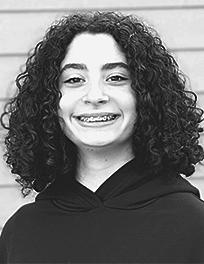
For her mitzvah project, Lea is collecting and donating pet supplies to Little White Dog Rescue, the wonderful rescue where the family adopted their two dogs Rocky and Rosie.
She has two brothers, Joshua and Evan.
Grandparents are Sherry and Larry Shapiro and Barb and Jeff Shapiro.
MARK S. LIBOV
Mark S. Libov passed away on July 22, 2025, in Omaha. Services were held July 25, 2025, at Beth El Cemetery in Omaha.
He was preceded in death by parents, Elka and Samuel Libov; brother, Yackov Libov; and wife, Margarita Libov.
He is survived by son and daughter-in-law, Dmitry and Marina Libov; daughter and son-in-law, Inessa and Vadim Pesetsky; and grandchildren: Jeffrey and Jennifer Libov, James, Julianna and Josephine Pesetsky.
‘Dear Editor,
In the January 2026 issue of Commentary Magazine there is an interesting article entitled 'The New American Jews-A manifesto for change, survival, and national flourishing,’ authored by Tal and Ella Fortgang. These authors offer several core principles to guide the American Jewish community going forward. One principle is entitled ‘Pioneer Spirit’. I quote: ‘Establishing flourishing communities in states with policies amenable to young families is crucial to grow Jewish communities…Many Jews are moving to Arizona, Florida, and Texas. More should also consider affordable, growing cities with small Jewish populations such as Omaha and Reno.’
The Omaha Jewish community should take pride in this positive recognition.
STEVEN J. WEES
SUBMIT OBITUARIES TO THE JEWISH PRESS:
Email the Press at jpress@jewishomaha.org; mail to 333 So. 132 St., Omaha, NE 68154; or online at online at www.omahajewishpress.com/site/forms/
Shabbat is a special day, but so is the day before! Shabbat is treated as an honored guest, and Friday (or even Thursday night) in a Jewish home is dedicated to preparing for her arrival.
Shabbat is the fourth of the 10 Commandments and repeated over and over again in the Torah, making it one of the most important elements of Judaism.
Torah gives us two reasons for Shabbat: In the Exodus version, we are told to keep Shabbat “for [in] six days the L-rd made the heaven and the earth, the sea and all that is in them, and He rested on the seventh day.” In Deuteronomy, we are told to commemorate that “you were a slave in the land of Egypt, and that the L-rd your G-d took you out from there with a strong hand and with an outstretched arm.”
The most significant point in Jewish history was the Revelation at Sinai, when G-d communicated the 10 Commandments and struck a covenant with the Jewish people after He took them out of Egypt. This moment, according to the sages of the Talmud, took place on Shabbat.
Visit us on facebook: www.facebook.com/ShalomahaPress


This year you can send your greetings through these very special ads that will run in our annual Passover issue. Each ad can be personalized with your name, the names of your children or your grandchildren. Just follow the QR code below to the Jewish Press Google form. But hurry; these ads will only be accepted through March 13, 2026

Prefer to call or email?
Contact Claire Endelman 402-334-6559 cendelman@jewishomaha.org



ATTENTION ADVERTISERS! For $225/25 word classified you can advertise in over 120 Nebraska newspapers. For more information contact the Jewish Press or call 1-800-369-2850.
HELLO NEBRASKA! Introducing www.nepublicnotices.com, a new public notice website presented as a public service by all Nebraska newspapers. Free access, fully searchable – because democracy depends upon open government and your right to know.
BANKRUPTCY RELIEF! Help stop Creditor Harassment, Collection Calls, Repossession and Legal Actions! Speak to a Professional Attorney and Get the Help You NEED! Call NOW 844-215-3629
AFFORDABLE PRESS Release service. Send your message to 155 newspapers across Nebraska for one low price! Call 1-800-3692850 or www.nebpress.com for more details.
DENTAL INSURANCE from Physicians Mutual Insurance Company. Coverage for 350 plus procedures. Real dental insuranceNOT just a discount plan. Do not wait! Call now! Get your FREE Dental Information Kit with all the details! 1-855-490-4149 www.dental50plus.com/81 #6258
GET DISH Satellite TV + Internet! Free Install, Free HD-DVR Upgrade, 80,000 On-Demand Movies, Plus Limited Time Up To $600 In Gift Cards. Call Today! 1-877-688-4784
HELP WANTED
JEFFERSON COMMUNITY Health & Life, Fairbury, Neb., seeking full-time behavioral health therapist for growing program. Requires mental health therapist or family and marriage therapist; 2 years experience; Master's degree preferred. Competitive salary and benefits. Apply online at https://www.jchealthandlife.org/careers/ For more information contact Sandy Bauer, HR, at 402-729-6850.
RADIOLOGIC TECHNOLOGIST for Jefferson Community Health & Life, Fairbury, Neb., inpatient and outpatient services. On call requires 30-minute response. Competitive salary, benefits. Apply online at https://www.jchealthandlife.org/careers/ For more information contact Sandy Bauer, HR, at 402-729-6850.
DOES YOUR basement or crawl space need some attention? Call Thrasher Foundation Repair! A permanent solution for waterproofing, failing foundations, sinking concrete and nasty crawl spaces. FREE Inspection & Same Day Estimate. $250 off ANY project with code GET250. Call 1-844-958-3431
PREPARE FOR power outages today with a Generac Home Standby Generator. Act now to receive a FREE 5-Year warranty with qualifying purchase. Call 1-402-899-2584 today to schedule a free quote. It’s not just a generator. It’s a power move.
SERVICES - PUBLISHING
BECOME A Published Author. We want to Read Your Book! Dorrance Publishing-Trusted by Authors Since 1920 Book manuscript submissions currently being reviewed. Comprehensive Services: Consultation, Production, Promotion and Distribution Call for Your Free Author`s Guide 1-877-858-2822 or visit dorranceinfo.com/Nebraska
WANTED TO BUY
WE BUY 8,000 cars a week. Sell your old, busted or junk car with no hoops, haggles or headaches. Sell your car to Peddle. Easy three step process. Instant offer. Free pickup. Fast payment. Call 1-855-910-0760
JFO Library Specialist
Juvenile:
Menorah in the Night Sky: A Miracle of Chanukah by Jacques Shore
A beautifully illustrated children's book, Menorah in the Night Sky by Jacques J.M Shore, draws on the miraculous events of Chanukah - the Festival of Lightsand tells the meaningful, yet simple story of two young boys, best friends in a lonely camp during the Holocaust, whose faith and hope brings them their own Chanukah miracle. Separated from their families and far from their homes, Zev and David look to the stars to provide the spark of light in place of the nightly Menorah candle. On the first night, they pin their hopes on a lone star, and wait eagerly for the next night, to see if their Chanukah miracle will come true. A story of friendship and light, full of warmth and hope, richly illustrated and vividly told, Menorah in the Night Sky brings Zev and David to life, and illuminates the value of hope and the miracle of faith, in a way that all children, and their parents too, will enjoy.
Adult:
The Women’s Orchestra of Auschwitz: A story of Survival by Anne Sebba
In 1943, German SS officers in charge of Auschwitz-Birkenau ordered that an orchestra be formed among the female prisoners. Almost fifty women and girls from eleven nations were drafted into a band that would play in all weathers marching music to other inmates, forced laborers who left each morning

Auschwitz, award-winning historian Anne Sebba traces these tangled questions of deep moral complexity with sensitivity and care.

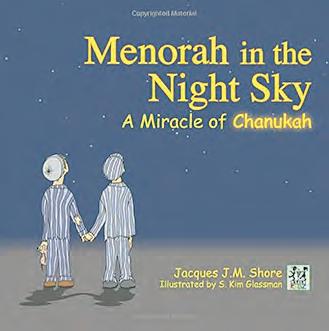


and returned, exhausted and often broken, at the end of the day. While still living amid the harshest of circumstances, with little more than a bowl of soup to eat, they were also made to give weekly concerts for Nazi officers, and individual members were sometimes summoned to give solo performances. For almost all of the mu-
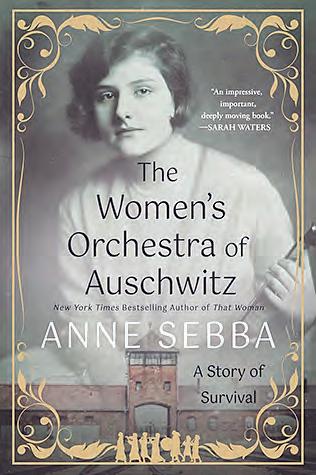

sicians chosen to take part, being in the orchestra saved their lives. But at what cost?
From Alma Rosé, the orchestra's main conductor, niece of Gustav Mahler and a formidable pre-war celebrity violinist, to Anita Lasker-Wallfisch, its teenage cellist and last surviving member, Sebba draws on meticulous archival research and exclusive first-hand accounts to tell the full and astonishing story of the orchestra, its members, and the response of other prisoners for the first time.
The Girls of the Glimmer Factory: A Novel by Jennifer Coburn




What role could music play in a death camp? What was the effect on those women who owed their survival to their participation in a Nazi propaganda project? And how did it feel to be forced to provide solace to the perpetrators of a genocide that claimed the lives of their family and friends? In The Women's Orchestra of
Hannah longs for the days when she used to be free, but now, she is a Jewish prisoner at Theresienstadt, a model ghetto where the Nazis plan to make a propaganda film to convince the world that the Jewish people are living well in the camps. But Hannah will do anything to show the world the truth. Along with other young resistance members, they vow to disrupt the filming and derail the increasingly frequent deportations to death camps in the east.
Hilde is a true believer in the Nazi cause, working in the Reich Ministry of Enlightenment and Propaganda. Though they're losing the war, Hilde hasn't lost faith. She can't stop the Allied bombings, but she can help the party create a documentary that will renew confidence in Hitler's plans for Jewish containment. When the filming of Hitler Gives a City to the Jews faces production problems due to resistance, Hilde finds herself in a position to finally make a name for herself. And when she recognizes Hannah, an old childhood friend, she knows she can use their friendship to get the film back on track.