ANNETTE VAN DE
KAMP-WRIGHT
Jewish Press Editor
Are “Good” and “Evil” merely human constructs, designed by the most powerful among us to keep humanity in line? Or is there a deeper truth?
For fifty years, Dennis Prager, renowned author, radio host and speaker, as well as one of the bestknown public intellectuals in the Western world, has explored the vital role Judeo-Christian values play in shaping individual lives and entire societies. He is the New York Times bestselling author of nine previous books, including The Rational Bible, Why the Jews (with Rabbi Joseph Telushkin), and The Rational Passover Haggadah
In his latest book, If There is no God…, Prager addresses the question of morality without divine revelation. In doing so, he takes on secularism, and all its implications.

Every day, we all see stories on the news about otherwise unremarkable people doing awful things. Just like Dennis Prager, we sometimes wonder to ourselves: Why? How? We cannot imagine how people could possibly justify the evil deeds they commit. But, it’s an uncomfortable question, and perhaps we’d rather not know the answer. Prager, on the other hand, does not look the other way.
Instead, he delves deeper into the notion of why humankind is capable of great evil.
Prager worked on the book with the assistance of close friend Joel Alperson, who says this “directly and powerfully addresses the most important issues of our time.”
“A little over 14 months ago,” Joel said, “Dennis suffered a catastrophic fall rendering him quadriplegic and tying him to a See Prager page 2
AMY BERNSTEIN SHIVVERS
JFO Foundation Executive Director
Legacy giving is often introduced through financial conversations—but it quickly becomes something much more personal. Families come to the Jewish Federation of Omaha Foundation with practical questions about funds and planning, and just as often with unspoken hopes, memories, and emotions. In this special Q&A, we share the questions we hear most frequently — both the ones’ people ask out loud, and the ones they carry qui- etly in their hearts.
What’s the difference between a donor-advised fund and an endowment?
At its simplest, both are tools to help people give thoughtfully and intentionally. One offers flexibility in the present; the other offers permanence for the future. What matters most isn’t the structure — it’s the clarity it provides. These vehicles help donors translate values into action, whether
AMY BERNSTEIN SHIVVERS JFO Foundation Executive Director
Where philanthropy meets the heart, legacy giving takes on its deepest meaning. For many families, fulfilling a parent or loved one’s wishes is not a financial transaction, but a profoundly personal act of remembrance. Rooted in gratitude and guided by shared values, these gifts reflect moments of care, survival, and devotion — transforming private loss into lasting communal impact. The Leo and Frances Rodick Memorial Fund
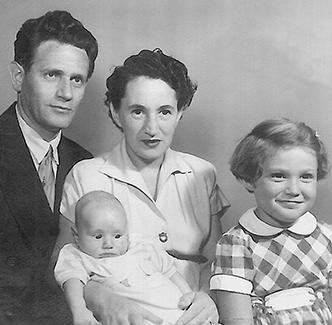
Frances Rubinstein and Leo Rodick, z”l, were among the thousands of Jews displaced by World War II. Frances, originally from Poland, survived the concentration camps of Bergen-Belsen, Auschwitz, and Majdanek. Leo, also from Poland, was conscripted into the Red Army after the Soviet Union annexed his hometown. Their lives—and survival—were shaped by extraordinary hardship.
In 1996, their children, Bennett Rodick and his wife, Gretchen Klein Rodick, together with Bennett’s sister and brother-in-law, Helen and Jack Rabinowitz, established the Leo and Frances Rodick Memorial Fund in their parents’ memory. The fund was created to assist Jewish immigrants to Omaha from the former Soviet Union and other troubled regions, helping with day-to-day living expenses and resettlement needs.
for today’s needs or for generations to come.
Why do people choose to give this way?
Most people don’t begin with a balance sheet. They begin with a story. A parent’s quiet generosity. A moment of care during illness. A community that showed up when it mattered most. Legacy giving becomes a way to say, This mattered. This still matters. See Ask the Foundation page 3
As immigration patterns shifted and fewer new arrivals required assistance, the family thoughtfully amended the fund. Bennett added, “Today, any unspent income may also be used by Jewish Family Service to provide general help and support to Jews in need throughout the Omaha community—ensuring our parents’ legacy of resilience and compassion continues to respond to real and evolving needs.”
The Alan & Annie Fleishman Scholarship Fund Alan and Annie Fleishman, z”l, See Philanthropy page 3

If you experience antisemitism, there are ways to report an incident or hate crime:
IF THIS IS AN EMERGENCY, MOVE TO A SAFE AREA AND DIAL 9-1-1
CALL the JFO’s Safety and Security Team 402-334-6446
EMAIL JCRCreporting@jewishomaha.org
SCAN the QR code below to fill out the Incident Reporting Form
We work directly with law enforcement, Secure Communities Network, and the Anti-Defamation League.
If you see something, say something.


champion, closing a life that spanned persecution, survival, and one of the most enduring legacies in Olympic history.


SETH SCHUCHMAN
In Part One of this essay, we explored how Jewish women first claimed space in organized athletics, from Senda Berenson Abbott’s institutional work in women’s basketball to Lillian Copeland’s Olympic success during the interwar years. By mid century, the landscape of women’s sports had expanded, but the pressures facing Jewish women had not disappeared. They had shifted.
The athletes who followed would confront a world shaped by genocide, geopolitical upheaval, and expanding but uneven opportunity. Their stories reveal not only how Jewish women survived and succeeded in sport, but how they used athletic achievement to claim authority, continuity, and moral voice.
AGNES KELETI
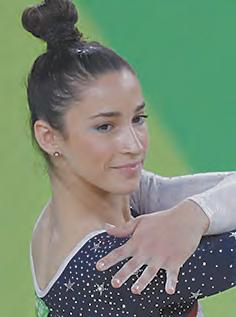
ALY RAISMAN By the time Aly Raisman emerged, the terrain had shifted again.

Born in 1994, Raisman began gymnastics as a toddler and grew up inspired by the 1996 Olympic team. She competed in an era of global media and professionalized women’s athletics, performing floor routines to Israeli music and speaking often about her Jewish identity. She has said that when she competed, she understood herself as representing both the United States and the Jewish community.
Raisman won two Olympic gold medals and became one of the most decorated American gymnasts in history. Her consequential leadership came after her competitive career. As one of the most prominent athletes to confront abuse within USA Gymnastics, she used the authority earned through excellence to challenge institutions that had long operated without accountability.
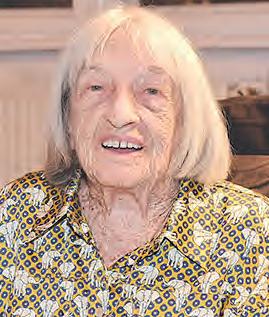
Agnes Keleti was born in Hungary in 1921 to a Jewish family and was already an elite gymnast when the Holocaust interrupted her life. As a Jew, she survived by living under a false identity, using forged papers, and hiding with non Jewish families. Her father and other relatives were murdered during the war, while her mother and sister survived with the help of protective papers arranged through rescuers and diplomats. Gymnastics disappeared from her life during those years, replaced by the daily work of survival. After the war, Keleti returned to competition and reached the height of her career not as a prodigy, but as a survivor. At the 1952 and 1956 Olympics, she won ten medals, including five golds, making her one of the most decorated Jewish Olympians in history. Her success came later than most gymnasts, shaped by interruption, loss, and endurance.
For Keleti, Jewish identity was the reason her life had been endangered and her career derailed. Her return to elite sport asserted control over a body that had been marked for destruction. Each competition affirmed competence and presence in a world that had attempted to erase her.
After the 1956 Olympics and the Soviet invasion of Hungary, Keleti settled in Israel, where she became a central figure in the country’s gymnastics program. As a coach and teacher, she helped establish training standards and shaped generations of athletes. Her influence extended well beyond medals, linking personal survival to national and communal rebuilding.
Agnes Keleti died in January 2025 at the age of 103, just weeks after being recognized as the oldest living Olympic
Continued from page 1 ventilator part-time. With the support of my wife Conny, I committed to his family that I would spend one week a month with him in his hospital room at a hospital in the southeast region. I've done this continually since the date of his injury.”
It was during those weeks that Joel helped him complete this book.
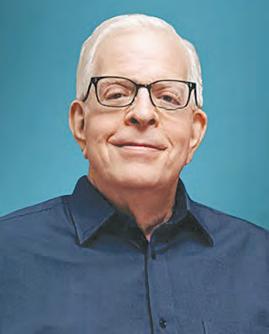
“Your beloved dog and a stranger are drowning. Who do you save first?” Every time Dennis Prager asked this question of the dog-owning members of his audience, one-third of the audience voted for the dog, one-third for the stranger, and one-third was not sure.
“We live in an era when people increasingly make moral judgments based on their emotions,” Prager writes. “But if feelings determine what is right and wrong, then whether murder, rape, and theft are wrong is no more than an opinion.”
He has been fascinated with and tried to answer the question of why people do evil for as long as he can remember. He offers the Nazi regime as an example, and asks: “How did the country that gave us Beethoven, Bach, Schiller, Thomas Mann and other
She has continued to advocate for athlete safety, abuse prevention, and institutional reform through writing, speaking, and public engagement. Her Jewish identity did not function as a symbol in this moment. It shaped her moral clarity. She has spoken about receiving messages from Holocaust survivors who found meaning in her performances, reinforcing her sense that visibility carries responsibility and that success can create obligations beyond the self.
Sports help reveal the pressures Jewish women faced over time. These lives show how Jewish women leveraged sport for broader leadership. Berenson reshaped structure. Copeland asserted excellence and institutional fluency. Keleti reclaimed authority after devastation. Raisman transformed achievement into moral leverage.
I came to this subject not as an outsider looking in, but as someone raised in a family shaped by strong Jewish women. My mother, Gerry Schuchman, was a community leader and a devoted sports fan who loved the Olympics and followed the Huskers with enthusiasm. She would have enjoyed the research behind this list and the stories it surfaced. In many ways, this article reflects the world I knew growing up, one where women’s public leadership was neither unusual nor symbolic, but simply expected.
We thank the Nebraska Jewish Historical Society for preserving and sharing the stories that make work like this possible. As always, we invite readers to share memories, photographs, or family stories that can help deepen our understanding of Jewish life and experience in Nebraska. In particular, we welcome stories about Jewish women athletes from Nebraska, whether their achievements were widely recognized or remembered primarily within families and communities. Many such stories remain undocumented, and preserving them is part of how we ensure they are not lost.
The Jewish history series is a collaboration between the Nebraska Jewish Historical Society and the Jewish Press. For questions or additional information about the NJHS, please contact Executive Director Jane Rips at jrips@jewishoma ha.org or visit nebraskajhs.com
unique figures in the sciences and arts also give us Auschwitz?”
“Do you ever sit down and wonder,” Prager writes, “how this happens? Why do you have to lock the doors to your house every night? Why do we need car alarms? Why are most women afraid of walking alone in virtually any of America’s big cities at night? These are the questions that preoccupy me.”
Prager explains that without objective morality, the world will descend into chaos, with every individual engaging in any behavior they feel is right. If There Is No God… engages in provocative and sometimes heated exchanges with questioners who offer some of the greatest challenges he has faced concerning how one determines good and evil and why one’s feelings can be life-enhancing yet morally unimportant.
Rabbi Joseph Telushkin wrote, “More than a century after Dostoevsky prophetically declared, ‘Where there is no God, all is permitted,’ Dennis Prager has revisited the most important questions humans face-those in the realm of God and morality. Indeed, without God, all is permitted. I can think of no more important book on God to appear in the last century.” Thought-provoking, important, and accessible for the devout and the skeptic, If There Is No God... is a guide for anyone seeking clarity in a morally troubled age. Publisher HarperCollins has already made plans to publish a Spanish-language edition. If There is no God… will publish on February 24, and can be pre-ordered through Amazon and wherever books are sold.
Continued from page 1 were both only children and had no children of their own, but their love for young people was unmistakable— and ultimately shaped their legacy.
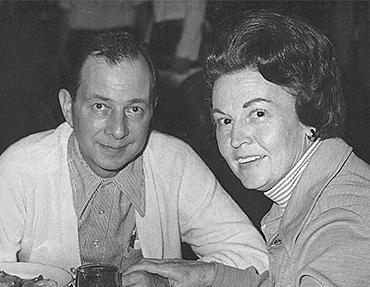
During Alan’s long illness, he and Annie spoke often about how they wanted their estate to reflect their values. Supporting education and opportunity for Jewish youth felt like a natural and meaningful choice.
In October 1994, nine years after Alan’s death, Annie established the Alan & Annie Fleishman Scholarship Fund. The endowment provides scholarships to Jewish students in the Omaha area who demonstrate financial need and are pursuing a college or university education of their choice. Annie further strengthened the fund’s future by naming the Jewish Federation of Omaha Foundation as the beneficiary of a life insurance policy designated for the scholarship.
For more than three decades, the fund has quietly transformed lives — opening doors to higher education and ensuring that the Fleishmans’ generosity continues to invest in future generations.
Ruth & Otmar Liebenstein Jewish Family Service Financial Assistance Endowment Fund
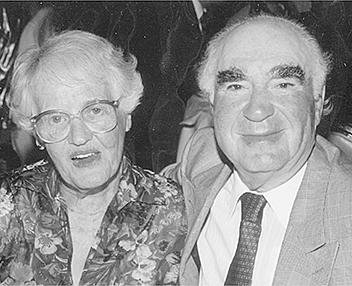
For Iris Ricks, honoring her parents, Ruth and Otmar Liebenstein, z”l, immigrants to America, meant extending the values they lived every day — quiet generosity, dignity, and care for those difficult moments.
Though Ruth and Otmar made their home in Skokie, Illinois, they often worried about having a roof over their head and food on the table. Their legacy now reaches families in the Omaha Jewish community who need support meeting life’s most basic necessities.
Through this endowment, Iris ensures that when individuals or families face moments of vulnerability — whether struggling with food, housing, medical care, or transportation, they are met not with judgment, but with compassion. The fund reflects a belief that no one should face hardship alone, and that providing stability in uncertain moments can restore both dignity and hope.
Iris shared, “I am who I am because of my parents. I’m grateful that I grew up in a house where I was loved and fortunate to have had all the basics, and my parents would want others to have that.”
In this way, Ruth and Otmar’s memory lives on not only in name, but in every life steadied by their daughter’s act of remembrance.
Ben E. Kaslow Scholarship Fund
For brothers Howard and Richard Kaslow, honoring their father meant investing in possibility. Created in memory of Ben E. Kaslow the scholarship fund reflects a belief that Jewish identity, leadership, and connection are nurtured through experience.
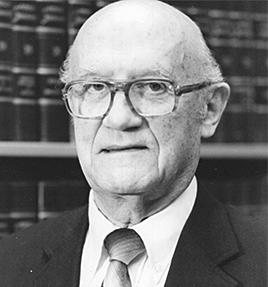
The fund opens doors for Jewish youth in the Omaha area to attend summer camp, travel to Israel, and participate in leadership development programs — often at formative moments when confidence, belonging, and values take root. The most recent distribution supported a student’s sleepaway camp experience, where friendships form, independence grows, and Jewish life feels vibrant and alive.
“Endowments are the future of our community; the Federation Annual Campaign funds can only go so far.” - Gloria and Howard Kaslow
Through this legacy, Ben Kaslow’s influence continues — not only through memory, but through the next generation discovering who they are and who they can become.
Rose & Harold Kaplan Rose Blumkin Jewish Home Endowment Fund
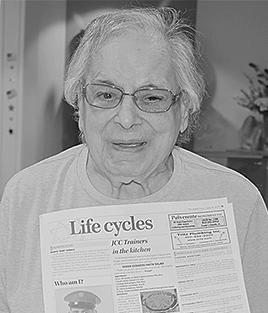
When Myron Kaplan and Sherry Bukstein chose to honor their parents, Rose and Harold Kaplan, z”l, they focused on joy, dignity, and daily moments of meaning. Their endowment will support resident activities and programming at the Rose Blumkin Jewish Home — the kinds of experiences that turn care into community.
“Our parents believed deeply in the importance of living fully at every stage of life,” shared Myron and Sherry. “Supporting activities and programming at the RBJH felt like the most natural way to honor who they were and the values they instilled in us.”
From celebrations and creative programming to opportunities for connection and engagement, the fund honors Rose and Harold not through monument, but through moments — shared laughter, meaningful interaction, and a sense of belonging.
Legacy giving is often the most intimate and emotional form of philanthropy. It is woven into grief, remembrance, and love — and while few people ever say that out loud in print, the truth resonates deeply. These stories remind us that fulfilling a parent’s wishes is not a transaction; it is an act of devotion, healing, and hope.
Legacy giving is often the most intimate and emotional form of philanthropy. It is woven into grief, remembrance, and love — and while few people ever say that out loud in print, the truth resonates deeply. These stories remind us that fulfilling a parent’s wishes is not a transaction; it is an act of devotion, healing, and hope. Please contact the Jewish Federation of Omaha Foundation to begin your family legacy.
Announcements may be e-mailed to the Press at jpress@jewishomaha.org; or mailed to 333 So. 132 St., Omaha, NE 68154. Readers can also submit announcements -- births, b’nai mitzvahs, engagements, marriages, commitment ceremonies or obituaries -- online at www.omahajewish press.com/site/forms/ . Deadlines are normally nine days prior to publication, on Wednesdays, 9 a.m. Please check the Jewish Press, for notices of early deadlines.

Continued from page 1
Do I need significant assets to leave a legacy?
Legacy isn’t about size — it’s about intention. Some of the most meaningful gifts begin with modest resources and a clear sense of purpose. What makes a legacy lasting is not the dollar amount, but the decision to carry values forward with care and thoughtfulness. A gift can be given during and/or after lifetime.
What do families say it feels like to fulfill a parent’s wishes?
Families often describe a sense of peace. Even amid grief, there is comfort in knowing they honored what their loved one believed in. It becomes a final act of love — one that feels grounding, right, deeply personal and for some celebratory.
How does the community decide where funds go?
The donor decides where the funds go. If the gift is permanent, through an endowment for a specific agency, cause and/or synagogue, the organization receiving the annual gift assess their critical needs which may evolve. The funds all have a common thread, the shared Jewish values — compassion, responsibility, and care for one another. Legacy funds are stewarded with respect for donor intent and an understanding that generosity must remain responsive to real life and real moments.
How does it feel to know your generosity may change the course of someone’s life?
Many donors are quietly moved by this realization. They don’t always see the impact firsthand — but they know it’s there. A student who can attend college. A senior who receives dignified care. A family who feels less alone. There is humility in knowing your gift becomes part of someone else’s turning point. This is why some donors look at philanthropy as a way to pay it forward.
What surprises people most once they begin legacy planning?
How emotional it becomes. People often expect a logistical process and are surprised by the reflection it invites — about family, values, and what they hope to be remembered for. The process often brings clarity not just about giving, but about life.
What do donors often say after they’ve made the decision?
Almost universally: “I wish we had done this sooner.” There is relief in naming intentions, comfort in having a plan, and gratitude in knowing that generosity will live beyond them. My Witness to Legacy
What does it feel like to watch people build their legacy?
It is a privilege I never take lightly. I see the quiet moments—when families pause and realize, we did the right thing. I watch generosity transform into peace of mind, and grief slowly soften into purpose.
Often, people come to us carrying uncertainty or hesitation. They leave with clarity, relief, and a sense of alignment between who they are and what they are leaving behind. In those moments, legacy planning isn’t about the future alone — it becomes a gift to the present.
I don’t see my role as transactional or even advisory. I see it as walking beside people, listening, asking for clarity as they write the final chapter of their values, or their loved one’s story—one shaped by love, intention, and care for our amazing community that shaped them.
If you have a question, please drop us a note at ashiv vers@jewishomaha.org or call 402-334-6466.







STEFANIE BAGUIAN
Temple Israel Director of Communications
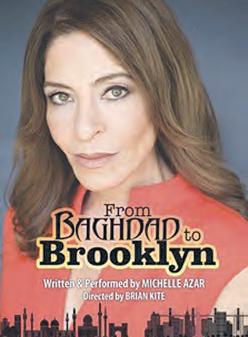
On Wednesday, Feb. 25 at 6:30 p.m., the sanctuary at Temple Israel will transform into a stage for memory, music, and meaning as actress and performer Michelle Azar brings segments of her acclaimed one-woman show, From Baghdad to Brooklyn, to the community. Blending humor, history, and heartfelt reflection, Azar’s performance invites audiences into a deeply personal exploration of ancestry, identity, and Jewish life across generations and geographies.
Drawing from her Sephardic Iraqi and Ashkenazi roots, Azar traces a journey that spans Baghdad, Brooklyn, Poland, and Israel. Through storytelling, character, and song, she weaves together family history with broader Jewish narratives, illuminating how heritage shapes not only who we are, but how we understand belonging, resilience, and faith.
“The stories we tell ourselves about how we came to America: the business or community our parents and grandparents built, impact our vision for the future of our Jewish community and the future of what America could and should be,” said Cantor Joanna Alexander. “As our students are farther from those immigration stories, being reminded of their impact can help keep these legacies alive, and shape our students dreams for the future as well. Remembering the diversity of these stories will help us better understand the diversity within our community and of the greater community of Omaha, and America.”
their parents, we know those particularly interested in storytelling, music and history will gain better understanding of how these interact together, and how their own story impacts their ideas about the world today,” added Cantor Alexander. “Whether your family came from Western Europe in the 19th Century, the Russian Empire, are Holocaust survivors, fled the USSR, or are recent immigrants from Mexico, I know you will learn something about the diversity of the Jewish experience, and its impact on Jewish life today.”
Azar’s appearance comes at a particularly vibrant moment in her career. An accomplished actress, singer, writer, and producer, she has performed on stages in both New York and Los Angeles, earning multiple awards and critical acclaim. She is widely recognized for creating the role of Ruth Bader Ginsburg in All Things Equal: The Life & Trials of Ruth Bader Ginsburg, now in its third season touring across the country.
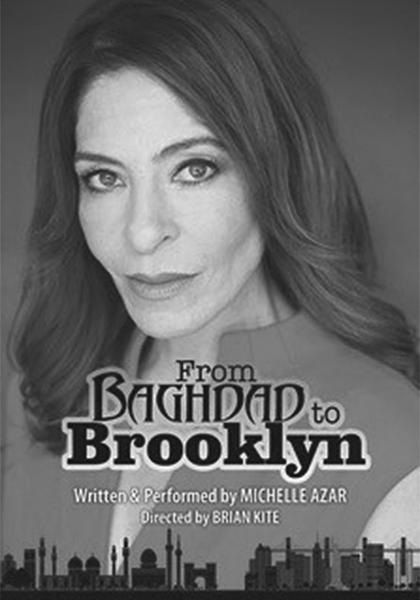
From Baghdad to Brooklyn is more than a performance. It is an invitation to listen closely to stories that are often underrepresented in mainstream American Jewish narratives. Azar’s work highlights the richness of Sephardic and Mizrahi history alongside Ashkenazi traditions, offering audiences a more expansive vision of Jewish identity. Her storytelling is intimate yet universal, personal yet historically grounded, reminding viewers that Jewish history is not a single story, but a tapestry of voices.
Following the performance, attendees will be invited to participate in an interactive workshop designed to deepen the evening’s themes. Through guided conversation and creative exploration, participants will reflect on their own ancestral identities, cultural influences, and modes of self-expression. Whether one is deeply rooted in Jewish communal life, passionate about music and the arts, or simply curious about how heritage shapes personal narrative, the workshop offers a meaningful space for connection and discovery.
While the target audience is our Hebrew Chai students and
TAMARA SCHUSTER
P2G
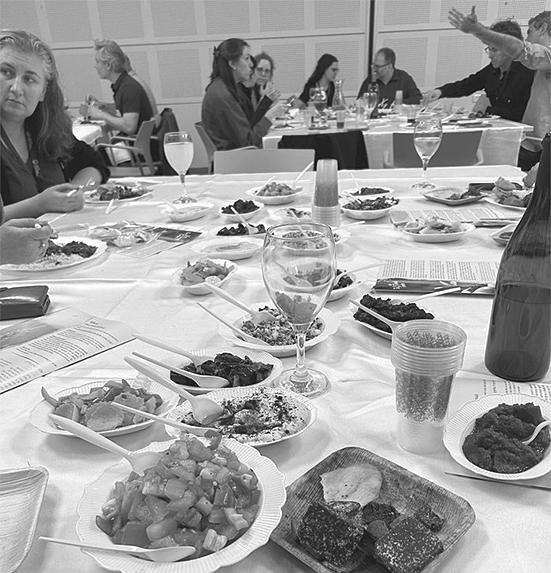
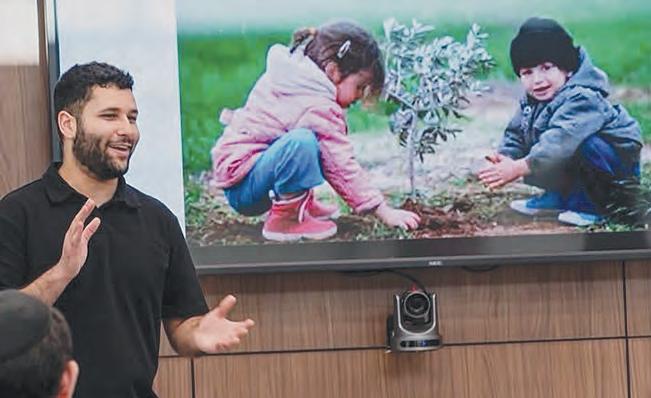
We hosted a Tu B’Shevat Celebration at our Partnership Center in Achziv. A festive and bountiful Tu B’Shevat Seder was enjoyed by a crowd on Sunday evening. Local volunteers and friends of our Partnership along with the Jewish Federation of Greater Indianapolis’ ATID Mission participants enjoyed the beautiful ceremony and delicious Tu B’Shevat spread.
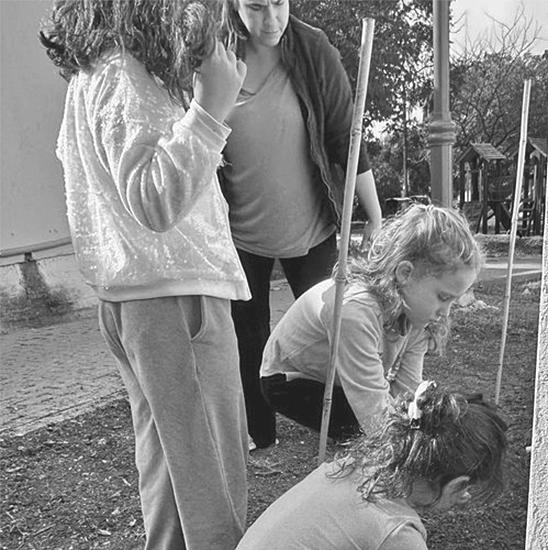
A Tu B’Shevat Garden was Planted by Children at the Bilingual Kindergarten at Kibbutz Evron:
Local audiences will have a unique opportunity to experience both sides of Azar’s artistry. In addition to From Baghdad to Brooklyn, she is scheduled to perform All Things Equal at the Orpheum Theater on Thursday, Feb. 26. Tickets for the Orpheum performance are available through the Orpheum website.
Beyond the stage, Azar’s creative work extends into Jewish family life and education. Together with her husband, Rabbi Jonathan Aaron, she cocreated a best-selling children’s CD, blending music and storytelling to engage young audiences in Jewish learning and imagination. Her artistic portfolio reflects a consistent commitment to exploring Jewish identity in ways that are accessible, nuanced, and emotionally resonant.
The Feb. 25 event is made possible by the Special Donor Advised Fund of the JFO Foundation, whose support underscores the importance of cultural programming that amplifies diverse Jewish voices and fosters meaningful communal dialogue.
As audiences gather to experience Azar’s performance, they will encounter not only a compelling theatrical work, but also a mirror reflecting the complexity of Jewish identity itself— shaped by migration, memory, tradition, and creativity. In a time when conversations about belonging and heritage feel especially urgent, From Baghdad to Brooklyn offers a powerful reminder: our stories, in all their diversity, are among our greatest sources of connection.
Please let us know if you plan to attend. We look forward to learning the impact of your stories as Michelle teaches us about the diversity of her families stories, too.
Those who visited the Western Galilee in October 2025 for the Pre-Summit in advance of HaTikva Summit will remember the meaningful visit to the bilingual (Hebrew-Arabic) kindergarten at Kibbutz Evron.
In a special event for Tu B’Shevat, the kindergarten’s children planted and tended a garden outside their brand-new safe room (shelter). They are learning that what is sown today with love and patience will grow and bloom tomorrow – for us all to enjoy together!
The construction of this essential safe room for the kindergarten was made possible thanks to the generous donation from the Jewish Federation of Louisville, Kentucky.
LYNN
BATTEN
JFO Content Coordinator/Gallery Manager
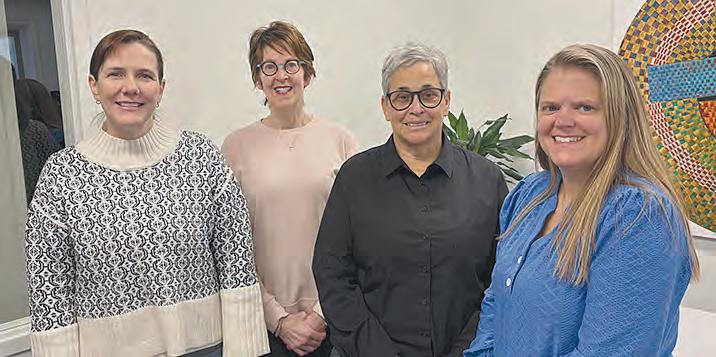
Rachel Ring will be leaving her post as JFO Director of Development on Monday, March 9th.
Rachel, who came to Omaha from Stamford, Connecticut, has served in this role for the past four years. During her time here, Rachel's dedicated work has helped the JFO carry out its mission of building and sustaining a strong Jewish community.
“Rachel spearheaded four successful Annual Campaigns which has strengthened us as an organization,” said Bob Goldberg, Chief Executive Officer of the Jewish Federation of Omaha. “We are thankful for all of the positive contributions she’s made, not only to the JFO, but to the entire community.”
In addition to the Annual Campaigns, Rachel led important Annual Women’s Events, Annual Men’s Events, Lion of Judah Events, and programs for NextGen and the Ben Gurion Society. No matter the size or scope, Rachel treated each gathering with a steadfast determination to make it the best it could be. Her ability to elevate events, cultivate meaningful relationships, and infuse projects with vision and enthusiasm were present in each project she took on.
Out of all these memorable programs, Rachel counts the Annual Campaign Kickoff as her favorite event.
"It’s our largest event of the year and a great opportunity to see our Omaha Jewish community come together in one place, at one time, with one purpose," she said.
This spirit of community is something that Rachel and her family have found here since day one.
"My husband and I appreciate how warm and welcoming the Omaha Jewish community has been to two east coast transplants!
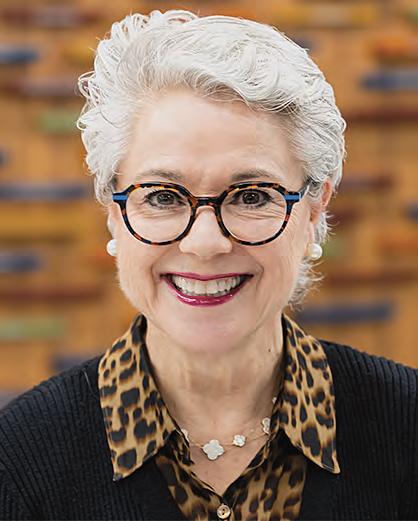
Even though we didn’t go to the ELC or graduate from Central High School, the people that did always made us feel welcomed and included. We felt like Omaha was home from the start."
While she will miss the people she works with every day, Rachel is excited for the future. She plans to remain in Omaha and start her own consulting business focused on fundraising, sales, and special events. Her goal is to not only do work in Omaha, but throughout the country. She and her husband, Larry, are also eager to have more time with their three children.
Everyone at the Jewish Federation of Omaha is deeply grateful for the energy, creativity, and heart that Rachel has poured into our community. Her dedication to strengthening Jewish Omaha—through her leadership and her unwavering commitment to bringing people together—has left a lasting impact. We thank her for all she brought to our campus and to our community.

The Jewish Federation of Omaha Foundation, in partnership with Boys Town, is pleased to announce the 15th Yale Richards Professional Education Seminar, a premier continuing education opportunity for professional advisors across the region.
Taking place on Friday, Nov. 13, 2026, from 7:30 a.m. to 12:30 p.m. at the Boys Town Conference Center, this highly regarded seminar brings together nationally known experts to explore timely topics at the intersection of philanthropy, financial planning, and professional practice.
Designed for attorneys, accountants, certified financial planners, insurance professionals, and CAP® participants, the Yale Richards Seminar offers valuable insights alongside the opportunity to earn continuing education credits. Over the course of the morning, participants will engage with thought leaders who combine academic rigor with real-world application.
This year’s featured speakers include Russell James III, PhD, J.D., CFP®, Professor and The CH Foundation Chair of Personal Financial Planning and Director of the Charitable Giving Program at Texas Tech University. A nationally recognized authority on charitable
behavior and financial decision-making.
Joining him is Tim Weidman, Information Technology Director at Frankel in Omaha, who will share practical insights on the evolving role of technology in professional advisory services.
Celebrating its 15th seminar, the Yale Richards Professional Education Seminar continues a strong tradition of excellence, offering meaningful education, professional connection, and forward-looking discussion for those who serve individuals, families, and philanthropic institutions.
Yale Richards, of blessed memory, was a senior partner at the firm of Marks, Clare and Richards, LLC for many years. He also served as counsel and Executive Director of the Milton S. and Corinne N. Livingston Foundation for 28 years. In 1998, in recognition of Mr. Richards' valuable service to the Jewish community of Omaha that encompassed over 50 years, the Livingston Foundation established the Yale Richards Professional Education Endowment Fund.
Please help us spread the word to your trusted advisor. Contact Diane Walker for more information, dwalker@jewishom aha.org


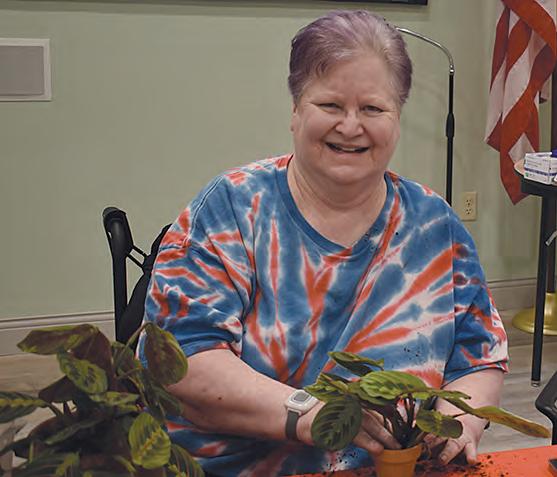
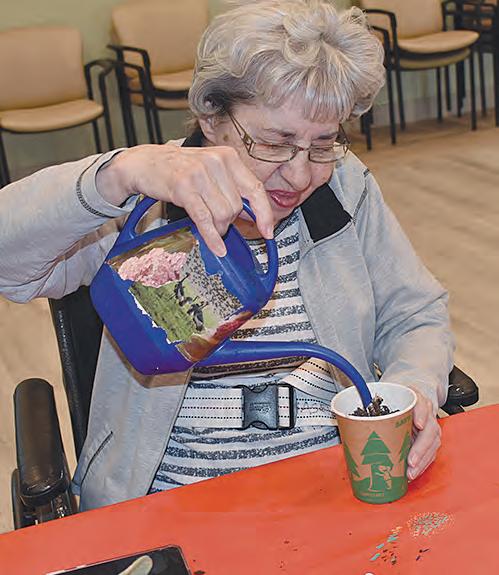

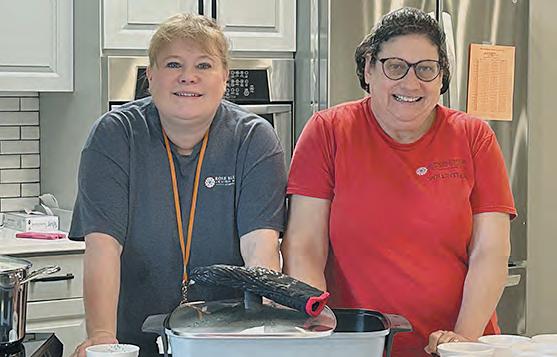
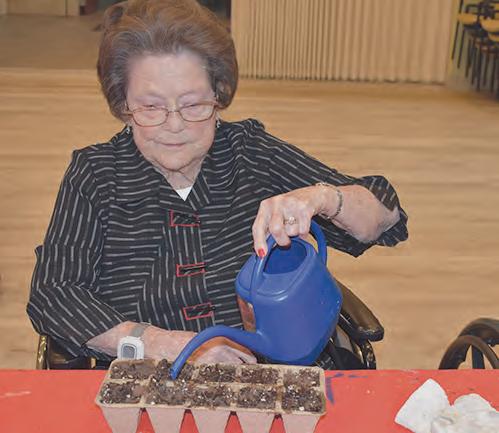
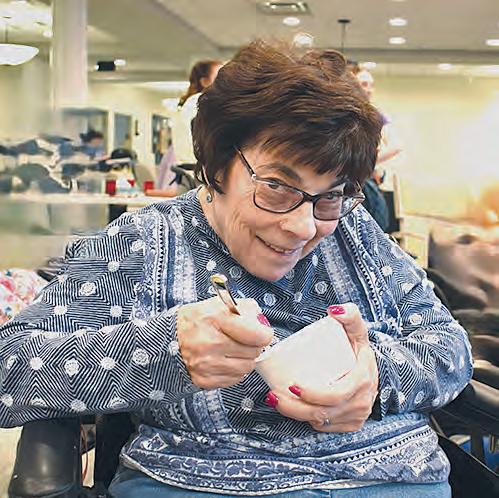
PHOTOS FROM RECENT JEWISH COMMUNITY EVENTS
SUBMIT A PHOTO: Have a photo of a recent Jewish Community event you would like to submit? Email the image and a suggested caption to: avandekamp@jewishomaha.org

Celebrating Tu B’Shevat!
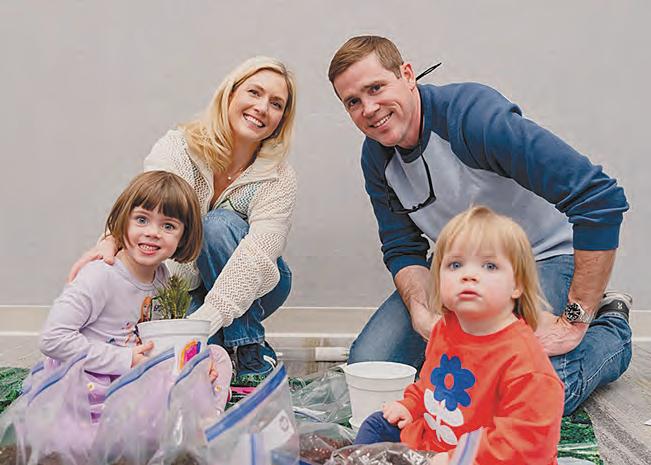
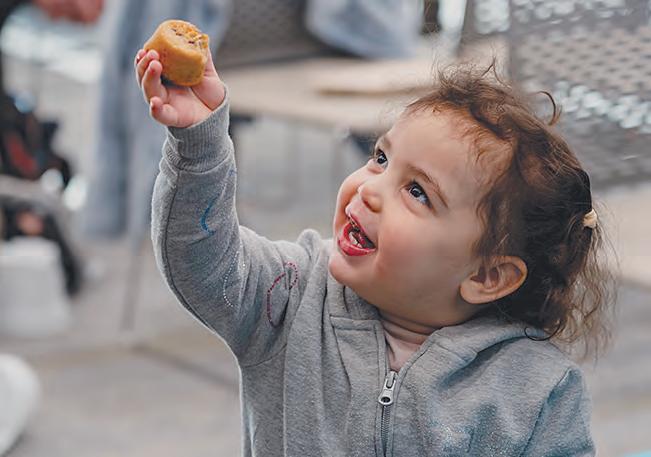
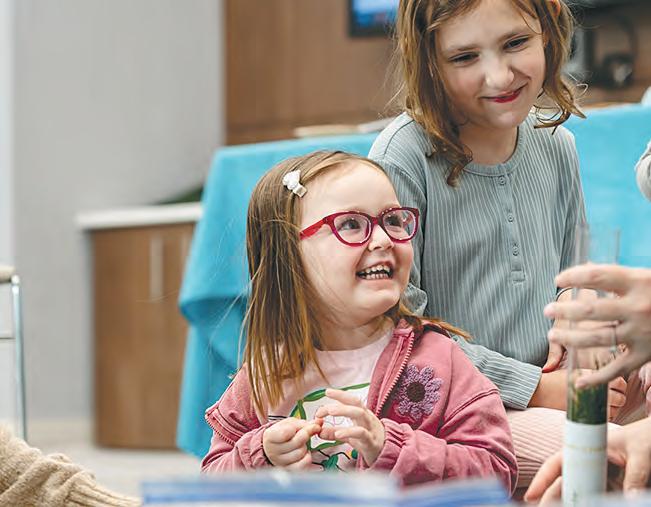
We had a blast learning about TuBishvat with Itay! Thanks to everyone who came, tried the fruits, and took home a baby
GENEROUSLY SUPPORTED BY
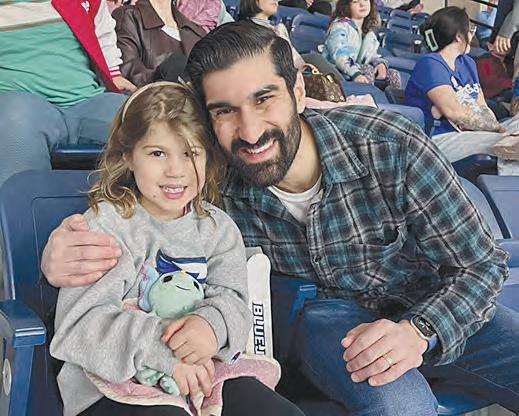
The Friedel family outing to the Creighton Women's Basketball game could not have been any more exciting, with a win in overtime! Thank you to Creighton University Athletics for the tickets!

MAGGIE CONTI
RBJH Director of Activities and Volunteer Services
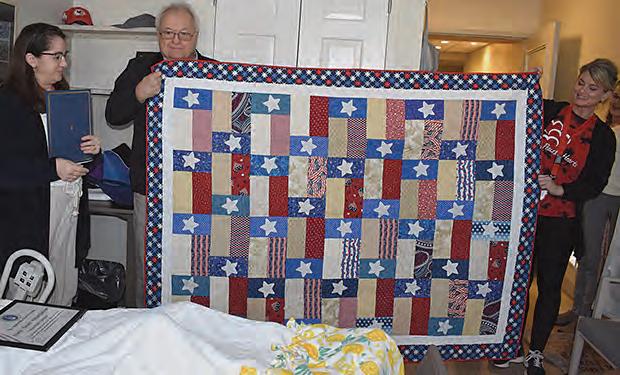
Throughout my many years at the Rose Blumkin Jewish Home, I have been fortunate to witness countless programs filled with meaning, compassion, and purpose. Yet some moments arrive unexpectedly and leave an indelible mark on the heart. Such a moment occurred through a beautiful program sponsored by one of our hospice providers, Peaceful Hearts Hospice.
They arranged a Quilts of Valor presenta-
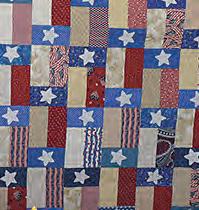
tion ceremony honoring one of our resident Veterans, Elwin “Dean” Hesselgesser, who proudly served in the United States Air Force during the Korean War. The mission of the Quilts of Valor Foundation is simple yet profound: to cover Service Members and Veterans touched by war with comforting and healing quilts, offered as visible expressions of gratitude for their sacrifice.
Each quilt is uniquely made and carefully labeled with the recipient’s name, symbolizing that it belongs solely to them. It stands as a tangible thank-you for the service and sacrifice they made on behalf of our nation.
Along with his quilt, Dean received a certificate that read, “Elwin Hesselgesser, United States Air Force, 1952 to 1956. The Quilts of Valor Foundation wishes to recognize you for your service to our nation. We consider it a privilege to honor you. Though we may never know the full extent of your sacrifice and
March 10: Professor Joel Kemp from Emory University will speak about “Vicarious Punishment and National Sins: Ezekiel 18, SFFA, and Racial Justice”
March 23: Professor Louis Newman from Carleton College will give a talk entitled The Narrative and the Normative in Jewish Ethics
April 16-17: The Harris Center and the Center for Digital Research in the Humanities will host this year's Digital Humanities Forum on the topic of Digital Holocaust Memory. The event will feature presentations by more than half a dozen international renowned scholars across two days. Professor Nils Roemer of the University of Texas—Dallas will deliver this year’s Henry and Gretl Wald Lecture as the keynote lecture of the forum.
April 23-25: The Harris Center is co-spon-
soring the annual international Czech and Slovak Studies Workshop, held at UNL this year, which will feature panels of faculty and graduate students on a wide variety of topics.
The event will begin in the evening on April 23 with a panel on “Bohemian Jewishness: From Poetics to Politics” featuring Jacques Rupnik and Veronika Tuckerova, followed by a keynote lecture on “Bohemia’s Jews and Their Nineteenth Century by Jinrich Toman from the University of Michigan. More information can be found here: https://judaic. unl.edu/czech-and-slovak-studies-workshop-2026/ April 28: Dr. Erica Brown from Yeshiva University will give our final lecture of the year on leadership and Jewish values.

service to protect and defend the United States of America, as an expression of our gratitude, we award you this Quilt of Valor.”
The ceremony itself was deeply moving. Peaceful Hearts Hospice went above and beyond to ensure the moment reflected the magnitude of Dean’s service. His clergy was present, another Veteran stood to salute him, and his wife was recognized with a heartfelt tribute of her own. Extended family members were able to share in the experience through Zoom, bridging distance with love and pride.
By becoming part of the past. This publication is available from ProQuest Information and Learning in one or more of the following ways:
• Online, via the ProQuest® information service
• Microform • CD-ROM
• Via database licensing
For more information, call 1-800-521-0600, ext. 2888 (US) or 01-734-761-4700 (International) www.il.proquest.com

There were few dry eyes in the room. It was a powerful reminder that honoring our Veter-
‘Write With Us,’ our small and intimate writing workshop (no need to be nervous) continues in the winter and early spring. Upcoming workshops are scheduled for the following Thursdays: Feb. 26, March 26 and April 30 from 5-7 p.m. in the Noshery at the Staenberg Omaha JCC. Register by contacting Jessi at jtaylor@jewishomaha.org or Annette at avandekamp@jewishomaha. org. There is no cost to attend, although donations are always welcome.
If you have wanted to write your family’s story, that great American novel, or you have always wanted to try your hand at poetry, join us! Maybe you are already an accomplished writer, but you would benefit from being in a room with other writers. Perhaps you have convinced yourself you can’t write
ans is not only about recognizing the past but also about acknowledging the lives they shaped and the families who stood beside them. This was more than a presentation. It was a moment of gratitude, remembrance, and shared humanity that will remain with all of us who were privileged to witness it.
at all, but would love to try. Everyone, from absolute beginner to professional, is welcome to attend. We will provide the kosher snacks and the writing prompts.
The award-winning B’NAI B’RITH BREADBREAKERS speaker program currently meets Wednesdays via Zoom from noon to 1 p.m. Please watch our email for specific information concerning its thoughtprovoking, informative list of speakers. To be placed on the email list, contact Breadbreakers chair at gary.javitch@gmail.com

We will be publishing our annual High School Graduation Class pages on May 22, 2026. To be included, fill out the form below or send us an email with the student’s name, parents names, high school they are attending, the college they will be attending and photo to: jpress@jewishomaha.org by May 12, 2026.



Star Deli dishes up (among other delights) overstuffed corn beef, pastrami and smoked turkey sandwiches, matzah ball soup, salad platters, Dr. Brown’s Assorted Sodas, plus toothsome desserts and sometime-specials like Prime Rib, Chicken Pot Pie, Smoked Brisket and Chili with Corn Bread. We also sell delectable glatt Kosher meats by the pound. The Deli welcomes everyone in the Jewish community and the larger Omaha area community to join us for lunch.
Friday February 20 from 11:30 a.m.-1 p.m.
Schnitzel
Friday March 6 from 11:30 a.m.-1 p.m.
Cabbage Rolls
Friday March 20 from 11:30 a.m.-1 p.m.
Shawarma
Friday April 3 from 11:30 a.m.-1 p.m.
Latke Reuben (Passover)
Friday April 17 from 11:30 a.m.-1 p.m.
Smoked Brisket
Friday May 1 from 11:30 a.m.-1 p.m.
Braised Chicken Quarters
Friday May 15 from 11:30 a.m.-1 p.m.
Beef and Broccoli Stir Fry
Friday June 4 from 11:30 a.m.-1 p.m.
Pulled Chicken BBQ Sliders
Friday June 19 from 11:30 a.m.-1 p.m.
Dairy Deli (TBA)
Friday July 17 from 11:30 a.m.-1 p.m.
Schnitzel
For more information about Star Catering or to preorder take-out from the Kosher Deli at the Rose Blumkin Jewish Home, please email Jennifer Addison at jaddison@rbjh.com
It is hard to believe that three years ago, the Samuel Bak Museum: The Learning Center opened to the public. Since opening, the Museum has welcomed over 20,500 visitors. This is because of the support you give daily to the Museum – by visiting each exhibition, participating in tours, attending exhibition lectures, engaging in events and activities, and financially supporting our work with donations. Thank you for your support!
As a newer addition to Omaha’s arts and culture landscape, the Museum’s education and outreach are central to the mission. Studies show that those who study genocide and the Holocaust are not only more empathetic and inclusive but also recognize the dangers of discrimination and the importance of standing up against intolerance. The Museum is a safe space for lectures, classes, and engagement activities that encourage students (both K-12 and UNO) and the greater Omaha community to ask essential questions, consider hard truths and remind us that working toward a more humane, just existence is an ongoing process. In addition, our exhibition related programming facilitates interdisciplinary conversation in the humanities. Samuel Bak’s paintings demand that viewers first have an emotional relationship to the work of art before exploring the histories and themes presented. His art encourages viewers to depart from their ini-
tial reaction to consider complex historical situations and question the “hows” and “whys” of history. Learning about history through art, while applying lessons learned through listening to others, is a unique and needed opportunity in today’s polarized environment.
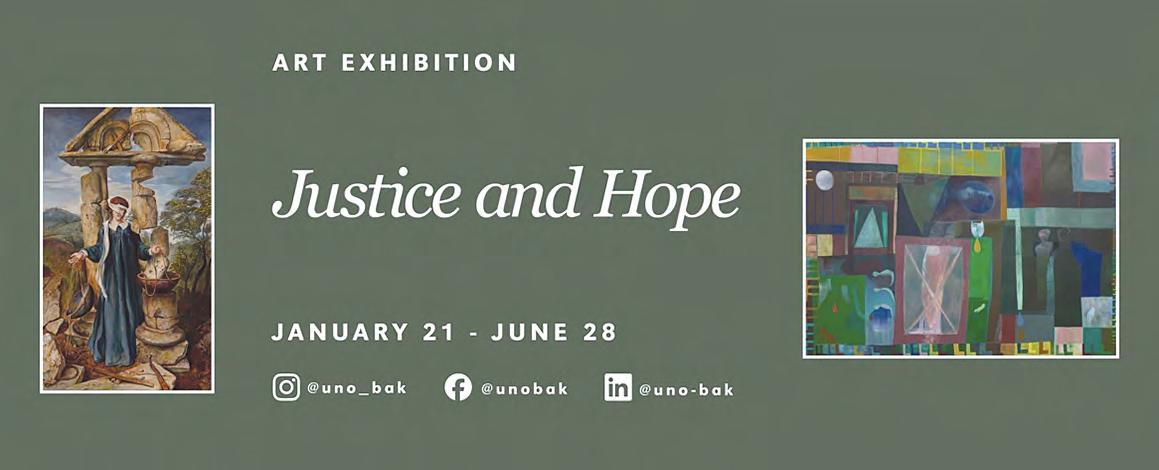
I hope you are able to visit our current exhibition, Justice and Hope, multiple times before it closes on June 28, 2026. The exhibition examines Samuel Bak’s painting series “Just-Is” along with a selection of works by four contemporary artists who use an intertwining personal narrative to discuss transitional justice and the hope for peace. Please look at our free programming and sign up for an event.
Samuel Bak Museum: The Learning Center is a space where art is the gateway to a conversation on human rights, Holocaust education, and genocide. The Spring 2026 exhibition, Justice and Hope, explores how artists Samuel Bak, Dinh Q. Lê, Mladen Miljanović, Serge Nitegeka, and Maja Ruznic use intertwining personal narrative and historical facts to commemorate conflicts and denounce humanity’s inability to forgo violence. The exhibition poses questions on reconciliation and how we might learn from history to build better futures. Thank you again for your support of the Museum’s important wor, over the past three years, and I look forward to a growing future!
NEW YORK
As Passover approaches, JBI Library is once again making it possible for people who are blind, have low vision, or have other print disabilities to fully participate in the holiday. This year’s Passover offerings include free accessible Haggadot in multiple formats, the expansion of braille options, and new customization features for large print materials. Ordering deadlines are March 4 for organizations; March 18 for individuals. Passover centers on shared storytelling, community, and ritual. For many people with print disabilities (which include physical disabilities such as MS and Parkinson’s, and reading disabilities such as dyslexia), barriers to accessing the Haggadah can disrupt that sense of connection at the seder table. JBI Library’s Passover resources are designed to remove those barriers and support meaningful participation for readers of all ages. JBI has also expanded its accessible Haggadah collection. The family-friendly Gateways Haggadah by Rebecca Redner is now available in braille, in addition to the original large print. The Gateways Haggadah is widely recognized for its inclusive
approach, welcoming families with children of all abilities and disabilities. JBI’s accessible Haggadot are available in large print, braille, and audio formats, with multiple editions representing a range of traditions, languages, and communal needs.
This year JBI is also offering expanded flexibility in JBI’s large print offerings. JBI’s standard large print format uses Tahoma font, with Hebrew text in size 30 and English text in size 22. Upon request, the text can be produced in even larger sizes or in reverse contrast, with white text on a black background, an option that can make reading easier and more comfortable for some individuals.
All Haggadot are provided free of charge to individuals and should be requested by March 18, 2026 to ensure delivery in time for Passover. For organizations planning to host communal seders and seeking larger quantities of accessible materials, requests should be submitted by March 4, 2026. To request a free accessible Haggadah or to learn more about JBI Library’s Passover offerings, visit www.jbilibrary.org, call 800.999.6476, or email haggadah@jbilibrary.org
ANNETTE VAN DE KAMP
Jewish Press editor.
Jerusalem was founded as the City of David in 869 B.C.E. (some sources say 1,100 B.C.E). but there’s evidence of settlements there going back all the way to 4500 B.C.E.
Jerusalem has been conquered more than 40 times including by the Persians, the Romans, the Ottoman Turks, and the British Empire.
The Talmud considers Jerusalem the most beautiful city on earth: Ten measures of beauty were given to the world. Nine were taken by Jerusalem, and one was distributed all over earth.
Yearly, more than a million notes are placed in the Kotel. Eventually, they are collected and burned.
“Jerusalem Syndrome” is a real thing. Between 1980 and 1993, 42 otherwise healthy people were diagnosed with it.
The city has over 2,000 active archeological sites.
Jerusalem’s Hadassah Hospital was the first to perform computer-guided hip replacement surgery.
The name Jerusalem is a combination of two Hebrew words, yireh (will see) and shalem (peace, wholeness).
Jerusalem Kugel originated in the city during the 19th century.
The city’s Kiryat Belz neighborhood is home to the world’s largest synagogue, with seating room for 10,000 congregants in its main sanctuary alone. It also has smaller sanctuaries for when it’s not quite as busy. In addition, it has the largest ark, with room for 70 scrolls.
Jerusalem’s signature dish, Me’orav Yerushalmi, is a sandwich made of leftover cuts of meat that restaurants couldn’t sell.
The animals in Jerusalem’s Biblical Zoo keep kosher for Passover. Yes, elephants and goats eat matzah.
The Mount of Olives cemetery in Jerusalem is 3,000 years old, and the oldest continually used cemetery.
(Sources: CJP.org, Chabad.org, Kveller.com)
JEWISH PRESS READERS
If you do business with any of our advertisers, please tell them you saw their ad in the Jewish Press. It really helps us!
(Founded in 1920)
David Finkelstein
President
Annette van de Kamp-Wright
Editor
Will Fischer
Creative Director
Claire Endelman
Sales Director
Lori Kooper-Schwarz
Assistant Editor
Sam Kricsfeld
Digital support
Mary Bachteler
Accounting
Jewish Press Advisory Board
David Finkelstein, President; Margie Gutnik, Ex-Officio; Joseph Abrahams, Helen Epstein, Andrea Erlich, Ally Freeman, Dana Gonzales, Mary Sue Grossman, Hailey Krueger, Chuck Lucoff, Sara Rips, Stewart Winograd and Bob Yaffe.
The mission of the Jewish Federation of Omaha is to build and sustain a strong and vibrant Omaha Jewish Community and to support Jews in Israel and around the world. Agencies of the JFO are: Institute for Holocaust Education, Jewish Community Relations Council, Jewish Community Center, Jewish Social Services, Nebraska Jewish Historical Society and the Jewish Press Guidelines and highlights of the Jewish Press, including front page stories and announcements, can be found online at: www.jewishomaha.org; click on ‘Jewish Press.’ Editorials express the view of the writer and are not necessarily representative of the views of the Jewish Press Board of Directors, the Jewish Federation of Omaha Board of Directors, or the Omaha Jewish community as a whole. The Jewish Press reserves the right to edit signed letters and articles for space and content. The Jewish Press is not responsible for the Kashrut of any product or establishment.
Editorial
The Jewish Press is an agency of the Jewish Federation of Omaha. Deadline for copy, ads and photos is: Thursday, 9 a.m., eight days prior to publication. E-mail editorial material and photos to: avandekamp@jewishomaha.org ; send ads (in TIF or PDF format) to: rbusse@jewishomaha.org
Letters to the Editor Guidelines
The Jewish Press welcomes Letters to the Editor. They may be sent via regular mail to: The Jewish Press, 333 So. 132 St., Omaha, NE 68154; via fax: 1.402.334.5422 or via e-mail to the Editor at: avandekamp@jewishomaha.org.
Letters should be no longer than 250 words and must be single-spaced typed, not hand-written. Published letters should be confined to opinions and comments on articles or events.
News items should not be submitted and printed as a “Letter to the Editor.”
The Editor may edit letters for content and space restrictions. Letters may be published without giving an opposing view. Information shall be verified before printing. All letters must be signed by the writer. The Jewish Press will not publish letters that appear to be part of an organized campaign, nor letters copied from the Internet. No letters should be published from candidates running for office, but others may write on their behalf.
Letters of thanks should be confined to commending an institution for a program, project or event, rather than personally thanking paid staff, unless the writer chooses to turn the “Letter to the Editor” into a paid personal ad or a news article about the event, project or program which the professional staff supervised. For information, contact Annette van de Kamp-Wright, Jewish Press Editor, 402.334.6450.
Postal The Jewish Press (USPS 275620) is published weekly (except for the first week of January and July) on Friday for $40 per calendar year U.S.; $80 foreign, by the Jewish Federation of Omaha. Phone: 402.334.6448; FAX: 402.334.5422.
Periodical postage paid at Omaha, NE. POSTMASTER: Send address changes to: The Jewish Press, 333 So. 132 St., Omaha, NE 68154-2198 or email to: jpress@jewishomaha.org
Editorials express the view of the writer and are not necessarily representative of the views of the Jewish Press Advisory Board, the Jewish Federation of Omaha Board of Directors, or the Omaha Jewish community as a whole.
ANNETTE VAN DE KAMP-WRIGHT
Jewish Press Editor
The news story that landed in my email had to do with the Brandeis Center filing an amicus brief in support of the University of Florida Law School, “urging the Court to reverse a trial judge and vacate a preliminary injunction that required the University of Florida to reinstate Preston Damsky, a law student who posted racist, anti-Semitic and violent rhetoric on social media.”
According to the trial judge, when the student posted “Jews should be abolished by any means necessary,” he was within his free speech rights. But: “As described in detail in the Brandeis Center’s amicus brief, which was filed on behalf of more than 130 Jewish students and professors at the school, Damsky’s threats came after more than a year of alarming conduct and speech, including writings arguing racial violence,” according to the Brandeis Center.
A quick online search reveals concerning information about Damsky.
“Early in 2025, Damsky posted statements on social media promoting white supremacist and antisemitic views. He described Jewish people as “parasitizing the West,” called Jews the “common enemy of humanity,” and supported their abolition “by any means necessary,” identifying himself as an antisemite. In one exchange, after a law professor asked if he would harm her and her family, he wrote that a genocide of all whites would be a greater outrage than a genocide of Jews.”
“In Spring 2024, Preston Damsky, a 29-year-old
law student at the University of Florida Levin College of Law, submitted a seminar paper titled “National Constitutionalism” arguing that “We the People” in the U.S. Constitution referred exclusively to white Americans. The paper proposed disenfranchising non-white citizens and included language advocating “shoot-to-kill orders” for non-white migrants.” (Source: Law-Duke.edu)
“Damsky concluded the paper by raising the specter of revolutionary action if the steps he recommended toward forging a white ethnostate were not taken.” (Source: Myron Moskovitz, dailyjournal.com)
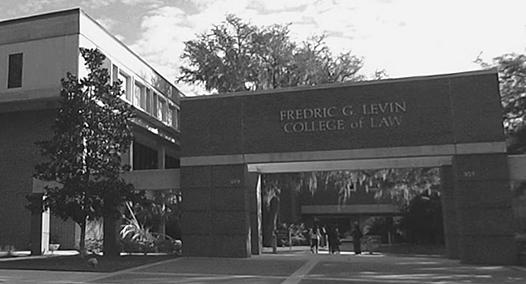
It seems obvious that Damsky should be on all sorts of watchlists and radars, and that no self-respecting university (or K-12 school, for that matter) would be comfortable with him on campus. Yet, some judge decided it was ok. I am guessing he or she has no kids at UF (the school’s full name is UF Levin College of Law, by the way-sit with that for a minute). And: Damsky won an award for writing that paper. That in and of itself is not news, the case has been making the rounds since news of his capstone paper came out.
But I am wondering: what does it take to expel a student from any university? How is it that someone can come right out and say Jews should be abolished “by any means necessary” and it takes all hands on deck to keep him off campus? Not to even mention, were he allowed to graduate, will he find employment? Where? And if one day he snaps and decides words are no longer enough, will his friends and family say they didn’t see it coming?
If you say or write something super antisemitic, racist and hateful in the public square, you should face the consequences. The notion there are people (in courtrooms!) who feel otherwise is mind-blowing. Perhaps this is how much our world has changed, and I’m just slow to catch on. And maybe, as long as we keep relying on non-Jews to tell us where the line is, that line will keep moving. Gaslighting is, after all, a very popular pastime these days.
And so, we need to continue to speak out and stand up. And yes, we’re all exhausted-but we can’t let that hold us back. Is the rest of the world tired of hearing from us? I bet they are. Maybe one of these days they figure out that if they just leave us alone, they, too, can have a much easier life. Because this much hate-those who spread it, in person, online, with words or through other means, they are not happy people. And until they understand what is really at the root of their hate, it won’t get any better.
MIMI KRAVETZ JTA
At a moment when op-eds and headlines raise alarms that American Jews — especially young Jews — are turning away from Israel, the data tell a different story.
Across national studies of American Jews conducted by the Jewish Federations of North America over the past several years, alongside those of many research and organizational partners, one finding has remained remarkably consistent: Jews of all ages continue to feel deeply connected to Israel and to Israelis. In fact, emotional connection to Israel across all age groups has increased since 2020.
In addition, nine out of 10 Jews strongly support Israel’s right to exist as a Jewish democratic state, with only a modest drop among young adults ages 18 to 34. Yet at the same time, just over a third of Jews positively identify as “Zionists,” with a similar number saying they are not sure or don’t identify with any of the options. Only a small minority — 14% among adults aged 18-34, and just 7% across the Jewish community — identify as anti-Zionist, and about 8% said they were “non-Zionist.”
What does this mean? At first glance, these findings appear irreconcilable. How can support for Israel as a Jewish democratic state remain so strong while identification with Zionism declines?
The answer lies in how Jews today understand what the term “Zionism” means.
When we asked Americans, both Jews and nonJews, what Zionism means, most correctly identified its core definition: the right of the Jewish people to have a Jewish state. That definition has been affirmed by virtually every major Jewish organization and is reflected in standard dictionary definitions.
But our data also revealed something important that gets at the heart of why so many are reluctant to use the term today. Only about a third of Jews believe that the definition of Zionism stops at Jewish self-determination. Many believe the term also means supporting the policies, decisions, and actions of the Israeli government, including actions they strongly disagree with. Others believe it entails claiming exclusive Jewish rights to the West Bank and/or Gaza, endorsing inequality between Jews and Palestinians, or embracing specific political ideologies.
The word Zionism has undergone what might be called “definition creep” over time, shaped by a mix of political agendas, public discourse, and broader social forces. It has come to be understood as encompassing ideas that go far beyond its once-standard meaning.
This helps explain why some Jews who feel deeply connected to Israel nevertheless resist or reject the Zionist label. They are not rejecting Israel’s existence or the idea of a Jewish state. They are reacting to an understanding of Zionism that includes policies, ideologies, and actions that they oppose, and do not want to be associated with.

North American Jews can be proud citizens of the United States and Canada while, at times, criticizing and even opposing their countries’ governments and policies. Similarly, we know that the overwhelming majority of American Jews can stand together in support of Israel and Israelis even as they wrestle with serious concerns that matter enormously to them and that Israelis themselves wrestle with as well.
This distinction matters enormously.
To be sure, the relatively small percentage of Jews who identify as anti-Zionist largely reject Israel’s right to exist as a Jewish state. That is something we must grapple with, but it would be a mistake to respond as though any individual who doesn’t identify as Zionist opposes the Jewish state.
If we misread the trend about “Zionism” to mean that large numbers of Jews, especially young Jews, are turning against the existence of Israel itself, we will draw the wrong conclusions and take the wrong actions. We risk responding with anger when the moment calls for steady leadership, pulling away when the moment calls for connection, and defensiveness when the moment calls for listening and understanding. We risk isolating a growing segment of our community, especially young adults, when this moment could instead open pathways for learning and belonging.
At the Jewish Federations of North America, and across most of the organized Jewish community, we continue to proudly call ourselves Zionists, in large part because we adhere to the historic definition. For us, Zionism means supporting the State of Israel and the Israeli people and uniting the Jewish people behind this shared commitment. It is clear from our research that this is what much of the Jewish community continues to believe today.
In recent years, we have seen this capacity for unity firsthand. Across differences in politics and ideology, Jews came together to advocate for the release of the hostages, support their families, and stand with Israelis in moments of profound grief and uncertainty. That shared commitment did not require uniformity or the suspension of concerns — only a willingness to act together around what people broadly agreed on: Israel’s future and care for its people.
As the ceasefire largely holds in Gaza, and the remains of the last hostage have been returned to his family for burial, we face a historic opportunity to strengthen Jewish unity once again. Taking full advantage of that opportunity requires listening carefully to one another — not only to the words people use, but with curiosity about the values they are trying to express when they use them.
We must be more intentional about initiating these conversations in our community and ensuring that people who want to engage more fully with the Jewish community feel welcome.
Hillel the Elder taught us to listen carefully to the other side, and even restate their position, before making the case for our own view. With respect to the language of Zionism in the American Jewish community today, this teaching has never been more important.
Mimi Kravetz is chief impact officer for Jewish Federations of North America.
The views and opinions expressed in this article are those of the author and do not necessarily reflect the views of JTA or its parent company, 70 Faces Media.
B’NAI ISRAEL SYNAGOGUE
618 Mynster Street Council Bluffs, IA 51503-0766
712.322.4705 www.cblhs.org
BETH EL SYNAGOGUE
Member of United Synagogues of Conservative Judaism 14506 California Street Omaha, NE 68154-1980
402.492.8550 bethel-omaha.org
BETH ISRAEL
SYNAGOGUE
Member of Union of Orthodox Jewish Congregations of America 12604 Pacific Street Omaha, NE. 68154
402.556.6288 BethIsrael@OrthodoxOmaha.org
CHABAD HOUSE
An Affiliate of Chabad-Lubavitch 1866 South 120 Street Omaha, NE 68144-1646
402.330.1800 OChabad.com email: chabad@aol.com
LINCOLN JEWISH COMMUNITY:
B’NAI JESHURUN
South Street Temple
Union for Reform Judaism
2061 South 20th Street Lincoln, NE 68502-2797
402.435.8004 www.southstreettemple.org
OFFUTT AIR
FORCE BASE
Capehart Chapel 2500 Capehart Road Offutt AFB, NE 68123
402.294.6244 email: oafbjsll@icloud.com
TEMPLE ISRAEL
Union for Reform Judaism (URJ) 13111 Sterling Ridge Drive Omaha, NE 68144-1206
402.556.6536 templeisraelomaha.com
LINCOLN JEWISH COMMUNITY:
TIFERETH ISRAEL
Member of United Synagogue of Conservative Judaism 3219 Sheridan Boulevard Lincoln, NE 68502-5236 402.423.8569 tiferethisraellincoln.org
Monthly Speaker Series Service, Friday, Mar. 13, 7:30 p.m. with our guest speaker. Our service leader is Larry Blass. Everyone is always welcome at B’nai Israel!
For information about our historic synagogue, please visit our website at www.cblhs.org or contact any of our other board members: David Alloy, Renee Corcoran, Rick Katelman, Gail Kenkel, Janie Kulakofsky, Howard Kutler, Ann Moshman, Mary-Beth Muskin, Debbie Salomon and Sissy Silber. Handicap Accessible.
Services conducted by Rabbi Steven Abraham and Hazzan Michael Krausman.
IN-PERSON AND ZOOM MINYAN SCHEDULE:
Mornings on Sundays, 9:30 a.m.; Mondays and Thursdays, 7 a.m.; Evenings on Sunday-Thursday, 5:30 p.m.
FRIDAY: Kabbalat Shabbat, 6 p.m. at Beth El and Live Stream.
SATURDAY: Shabbat Morning Services, 10 a.m.; Jr. Congregation (Grades K-12) 10 a.m.; Kiddush sponsored by Rabbi Steven Abraham & Pam Berkowitz, noon; Havdalah, 6:40 p.m. Zoom Only.
SUNDAY: BESTT (Grades K-7), 9:30 a.m.; Adult B’nai Mitzvah, 9:30 a.m. with Hazzan Krausman.
TUESDAY: Sefer HaMiddot, 10:30 a.m. with Rabbi Abraham.
WEDNESDAY: BESTT (Grades 3-7), 4 p.m.; Hebrew High (Grades 8-12), 6 p.m.
THURSDAY: Mincha/Ma’ariv, 5:30 p.m. Zoom Only.
FRIDAY-Feb. 27: Nebraska AIDS Project Lunch, 11:30 a.m.; Kabbalat Shabbat, 6 p.m. at Beth El and Live Stream.
SATURDAY-Feb. 28: Shabbat Morning Services, 10 a.m.; Jr. Congregation (Grades K-12) 10 a.m.; Kiddush sponsored by the Athertons following services; Havdalah, 6:50 p.m. Zoom Only. Please visit bethel-omaha.org for additional information and service links.
FRIDAY: Nach Yomi, 6:45 a.m.; Shacharit, 7 a.m.; Mincha/Kabbalat Shabbat/Candlelighting, 5:46 p.m.
SATURDAY: Shabbos Café, 8:30 a.m.; Shacharit 9
a.m.; Tot Shabbat, 10:30 a.m.; Youth Class, 10:45
a.m.; Mincha, 5:40 p.m.; Kids Activity/Laws of Shabbos 6:10 p.m.; Havdalah, 6:48 p.m.
SUNDAY: Shacharit, 9 a.m.; Mincha/Ma’ariv, 5:50
p.m.; Rabbi Geiger’s Pre-Purim Class, 6:45 p.m.
MONDAY: Nach Yomi, 6:45 a.m.; Shacharit, 7 a.m.; Monday Mind Builders/Hamantaschen Bake, 4 p.m.; Mincha/Ma’ariv 5:40 p.m.
TUESDAY: Nach Yomi, 6:45 a.m.; Shacharit, 7 a.m.; Mincha/Ma’ariv, 5:50 p.m.
WEDNESDAY: Nach Yomi, 6:30 a.m.; Shacharit, 6:45 a.m.; Mincha/Ma’ariv, 5:50 p.m.; Board of Directors Meeting, 6:30 p.m.
THURSDAY: Nach Yomi, 6:45 a.m.; Shacharit, 7
a.m.; Mincha/Ma’ariv 5:50 p.m.; Smichat Chaver Men’s Class, 7:30 p.m.
FRIDAY-Feb. 27: Nach Yomi, 6:45 a.m.; Shacharit, 7 a.m.; Mincha/Kabbalat Shabbat/Candlelighting, 5:55 p.m.
SATURDAY-Feb. 28: Shabbos Café, 8:30 a.m.; Shacharit 9 a.m.; Tot Shabbat 10:30 a.m.; Youth Class, 10:45 a.m.; Mincha, 5:40 p.m.; Kids Activity/ Laws of Shabbos 6:10 p.m.; Havdalah, 6:56 p.m. Please visit orthodoxomaha.org for additional information and Zoom service links.
Join classes via Zoom. Go to ochabad.com/academy. For more information or to request help, please visit www.ochabad.com or call the office at 402.330.1800.
FRIDAY: Shacharit, 8 a.m.; Lechayim, 5 p.m., go to ochabad.com/lechayim to join; Candlelighting, 5:46 p.m.
SATURDAY: Shacharit 10 a.m. followed by Kiddush and Cholent; Shabbat Ends, 6:47 p.m.
SUNDAY: Sunday Morning Wraps, 9 a.m.
MONDAY: Shacharit 8 a.m.; Personal Parsha 9:30 a.m. with Shani; Intermediate Biblical Hebrew Grammar, 10:30 a.m. with David Cohen; Parsha Reading, 6 p.m. with David Cohen; Translating Words of Prayer, 7 p.m. with David Cohen.
TUESDAY: Shacharit 8 a.m.; Aramaic Grammar, 10 a.m. with David Cohen; Intermediate Biblical Hebrew Grammar, 6 p.m. with David Cohen; Introductory Biblical Hebrew Grammar, 7 p.m. with David Cohen
WEDNESDAY: Shacharit, 8 a.m.; Introductory Biblical Hebrew Grammar, 10:30 a.m. with David Cohen; Parsha Reading, 11:30 a.m. with David Cohen.
THURSDAY: Shacharit, 8 a.m.; Introductory Biblical Hebrew Grammar, 10 a.m. with David Cohen; Advanced Biblical Hebrew Grammar, 11 a.m. with David Cohen; Talmud Study, noon; Introduction to Alphabet, Vowels & Reading Hebrew, 6 p.m. with David Cohen; Code of Jewish Law Class, 7 p.m.
FRIDAY-Feb. 27: Shacharit, 8 a.m.; Lechayim, 5 p.m., go to ochabad.com/lechayim to join; Candlelighting, 5:54 p.m.
SATURDAY-Feb. 28: Shacharit 10 a.m. followed by Kiddush and Cholent; Shabbat Ends, 6:55 p.m.
LINCOLN JEWISH COMMUNITY: B’NAI JESHURUN & TIFERETH ISRAEL
Services facilitated by Rabbi Alex Felch. All services offered in-person with live-stream or teleconferencing options.
FRIDAY: Shabbat Candlelighting, 5:49 p.m.; Kabbalat Shabbat Service, 6:30-7:30 p.m. led by Rabbi Alex at SST.
SATURDAY: Shabbat Morning Service, 9:30 a.m. led by Rabbi Alex at TI; Torah Study noon on Parashat Terumah via Zoom; Family Potluck and Game Night, 6 p.m. at SST. Bring a dish to share for the potluck beginning at 6 p.m. Games are available
PHILISSA CRAMER
JTA
Iran has erected a map showing Israeli targets for potential strikes in a prominent propaganda spot as another week dawned with uncertainty over whether it will face a U.S. attack.
The map went up over the weekend of February 7 and 8 in Tehran’s Palestine Square, a frequent site for billboards meant to broadcast the Islamic Republic’s bravado when it comes to Israel and the United States. It includes the words “You start, we finish!”
It came as President Donald Trump continued to weigh military intervention against Iran and as Israeli Prime Minister Benjamin Netanyahu planned to visit the White House to press for his demands in Trump’s negotiations with Iran.
“Prime Minister Benjamin Netanyahu was expected to meet with US President Donald Trump Wednesday February 11 in Washington, to discuss with him the negotiations with Iran,” Netanyahu’s office said in a statement on Saturday Feb. 7. “The Prime Minister believes any negotiations must include limitations on ballistic missiles and a halting of the support for the Iranian axis.”
A will-he-or-won’t-he air has pervaded for weeks
as Trump has considered different strategies for dealing with Iran, which has said it would view both U.S. and Israeli targets as legitimate if the United States strikes to curb its nuclear ambitions, less than a year after the last U.S. attack on Iranian sites, which came during a war between Iran and Israel.
On Friday Feb. 6, Jared Kushner, Trump’s son-in-law and Middle East advisor, and Steve Witkoff, his Middle East envoy, met directly with Iran’s foreign minister in Oman. The foreign minister, Abbas Araqchi, said the talks had gotten off to a “good start” but that Iran was willing to negotiate only about the nuclear program, not the missiles that concern Israel.
to play, but feel free to bring one of your favorites! Games begin at 7 p.m.; Havdalah, 6:50 p.m.
SUNDAY: LJCS Classes, 9:30 a.m.; Men’s Bike/Coffee Group, 10:30 a.m. at Rock 'N' Joe Coffee, 5025 Lindberg St, Lincoln. For more information or questions please email Al Weiss at albertw801@ gmail.com; Adult Ed: Understanding Worship Services: the Hows, Whys and Whens, noon at TI
WEDNESDAY: Ladies' Lunch, 12:30–1:30 p.m. at Ollie & Hobbes Craft Kitchen, 2940 Pine Lake Rd, Lincoln. Locations are decided upon at each lunch for the following month. For more information, please email Barbara Barron at oohhmmm.barb@gmail. com; LJCS Hebrew School, 4:30-6 p.m.
FRIDAY-Feb. 27: Shabbat Candlelighting, 5:57 p.m.; Kabbalat Shabbat Service, 6:30-7:30 p.m. led by Rabbi Alex at SST.
SATURDAY-Feb. 28: Shabbat Morning Service, 9:30 a.m. led by Rabbi Alex at TI; Torah Study, noon on Parashat Tetzaveh via Zoom; Havdalah, 6:58 p.m.
FRIDAYS: Virtual Shabbat Service, 7:30 p.m. every first and third of the month at Capehart Chapel. Contact TSgt Jason Rife at OAFBJSLL@icloud.com for more information.
In-person and virtual services conducted by Rabbi Benjamin Sharff, Rabbi Deana Sussman Berezin, and Cantor Joanna Alexander.
FRIDAY: Drop-In Mah Jongg, 9 a.m.; Tot Shabbat, 5:45 p.m. RSVP Required — In-Person; Shabbat b’Yachad Service, 6 p.m. In-Person & Zoom.
SATURDAY: Torah Study, 9:15 a.m. In-Person & Zoom; Shabbat Morning Service, 10:30 a.m. In-Person & Zoom.
SUNDAY: Grades PreK-7, 9:30 a.m. In-Person; Hamantaschen Baking, noon In-Person.
TUESDAY: Exploring Rabbi Lord Jonathan Sacks, 11 a.m. with Rabbi Bienstock — In-Person & Zoom; Mah Jongg Made Easy 1:30 p.m. In-Person.
WEDNESDAY: Yarn It, 9 a.m. In-Person; Grades 36, 4:30 p.m. In-Person; Hebrew CHAI: Grades 8-12, 6 p.m. In-Person; From Bagdah to Brooklyn: a Onew Women Show, 6:30 p.m. In-Person.
THURSDAY: The Zohar: Thursday Morning Class 11 a.m. with Rabbi Sharff — In-Person & Zoom.
FRIDAY-Feb. 27: Drop-In Mah Jongg, 9 a.m.; Shabbat Shira Service, 6 p.m. In-Person & Zoom.
SATURDAY-Feb. 28: Torah Study, 9:15 a.m. In-Person & Zoom; Shabbat Morning Service, 10:30 a.m. InPerson & Zoom. Please visit templeisraelomaha.com for additional information and Zoom service links.
would enable U.S. military action in the event that Trump decides it is needed. Netanyahu has moved up his planned White House visit — which will be his fourth since Trump retook office last year — to

Trump, too, told reporters that there had been “very good talks” that indicated that Iran was prepared to make more concessions than it had offered in the past. Still, he said, “They know that if they don’t make a deal the consequences are very steep.”
The next day, Kushner and Witkoff also visited a U.S. naval carrier that has been moved to the region as part of what Trump has called an “armada” that
advocate for Israel’s interests in the negotiations. It was at a previous visit, last April, that Trump disclosed for the first time that the United States had opened direct talks with Iran. Just over two months later, Trump joined Israel’s campaign against Iran with a bombing attack that came a day after he said he had not decided whether to strike.
JOAN KAIMAN
Joan Kaiman passed away on Jan. 24, 2026 at the age of 89. A private graveside service was held on Jan. 28, 2026 at Golden Hill Cemetery, followed by a memorial lunch at the Rose Blumkin Jewish Home.
She was preceded in death by her parents, Morris and Fay Wiseman and husband, Ben Kaiman.
She is survived by daughters, Michelle (Ron) Bucher and Debbie (Pat) Hale; grandchildren: Amanda (Colin) Belmont, Megan Bucher, Ben (Sara) Hale, and Noah Hale (fiancee, Erika Ward); great-grandchildren: Hudson and Harper Belmont, and Crew Hale; sister, Sandy Shkolnick, and many other relatives and friends.
She grew up in London, England and came to America the day before her 16th birthday. It took Joan five years to get her United States citizenship. Her first job was with Mutual of Omaha in the bookkeeping department; she later worked with her husband in the uniform business.
Known lovingly as Mom by her children, Gram by her grandchildren, and GiGi by her great grandchildren, she was the heart of her family. She was a cherished friend - thoughtful, generous,
and deeply caring. Her warmth, wisdom, and love leave a lasting legacy in the lives of her children, grandchildren and great grandchildren, and all who called her friend.
Joan will always be remembered for her warm smile, beautiful blue eyes and fashionable sense of style. She never met a stranger she didn’t like.
Joanie was involved in a variety of volunteer organizations and boards, including the Jewish Federation of Omaha, the Nebraska Humane Society, and the Douglas County Assessor’s Volunteer’s Assistance Senior Homestead Exemption Program. In 2005, she was recognized for her dedication to her community and honored by the Governor of Nebraska with the civic award of Admiral in the Great Navy of the State of Nebraska. Joan led a full and rich life. She will be deeply missed by all who knew and loved her.
The family would like to extend a special thank you to the caring staff at the Rose Blumkin Jewish Home and Peaceful Heart Hospice.
Memorials may be made to the Rose Blumkin Jewish Home or the Nebraska Humane Society.
RABBI BENJAMIN SHARFF
Temple Israel Senior Rabbi
This is the third installment of daily updates from Rabbi Sharff as he traveled to Israel in January 2026
If there is one consistent theme I have seen and heard since arriving, it is that Israel is not a monolith. We have heard from our Reform colleagues who are doing the sacred work of building communities, of which there are now 54, and expanding the opportunities for Israelis to have genuine Jewish, non-Orthodox encounters and experiences.
We have met with individuals who are fiercely against the war and advocating for better treatment of Israeli-Arabs and Palestinians alike, even amidst all the horrors and tragedies.
We heard from a proud Israeli-Bedouin who desperately wants his communities to be embraced by the larger Israeli society, and is so frustrated by the current government’s willful ignoring of rising Arab on Arab violence in their communities.
want to see an end to Israel. They just want to see a better Israel, one that can and should live up to its promise.
We have seen the Israeli national bird, construction cranes, all over the country, indicating how Israel is continuing to grow. We have heard that many are frustrated with the current situation and are both deeply optimistic and deeply pessimistic about what the future may bring.
I can say there is a lot of pain and trauma in the land that will take years to work through.
We heard stories of the rewriting of national history in order to shape a narrative that aligns with the stories the current government wishes to share.
So many of these conversations were deeply painful. Some even echoed language and terms that we hear all too often in the States. But the big difference here is that people are not only living with the choices of their language, but none
But I can also say that there are people here desperate for partnerships and relationships with us. Whatever your cause is, whatever your passion is, there are people here who align with you and want to hear from you and want to work with you.
Which brings me back to where I started, like the United States, Israel is more than just one government or one charismatic leader. It is deeply complex, nuanced, and at an inflection point.
I plan to share links to the organizations we met with over the past couple of days. In addition, I am still processing our time in Sederot, the Overlook Memorial, and the Nova Festival site. It was deeply painful to bear witness to the tragedies of Oct. 7. So those will be coming in the future.
In the meantime, I send my continued appreciation for granting me the time in Israel and allowing me to share some of my initial thoughts with you.
This article is reprinted from our Aug. 19, 1926 edition. Some of the lettering isn’t super clear, so we have some questions about the measurements.
SWEET PICKLES
Select small cucumbers. Wash well and pack in quart or half gallon jars. Prepare brine by mixing up 1 quart vinegar, 1/2 cup salt and 1 tablespoon dry mustard for every 2 quarts of cucumber. Pour this cold brine over cucumbers and seal. In winter when wanted for use, pour off brine and let cucumbers stand in cold water for about 10 minutes. Do not remove from jars. Make syrup of 1 cup sugar to one cup vinegar and boil. Let cool and pour over cucumbers after cold water has been drained off. Let stand 2 days and they are ready.
KOHL-RABI
To prepare, peel turnip-shaped globe and cut into small pieces. Boil until tender, about 30 minutes. Drain and season with salt, pepper and butter, or a white sauce may be used.
CHILI SAUCE WITH SPICE
ANNOUNCEMENT
CLASSIFIED ADVERTISING works! Place your 25 word ad into thousands of Nebraska homes for $225. Contact the Jewish Press or call 1-800-369-2850.
HELLO NEBRASKA! Introducing www.nepublicnotices.com, a new public notice website presented as a public service by all Nebraska newspapers. Free access, fully searchable – because democracy depends upon open government and your right to know.
BANKRUPTCY RELIEF! Help stop Creditor Harassment, Collection Calls, Repossession and Legal Actions! Speak to a Professional Attorney and Get the Help You NEED! Call NOW 844-215-3629
AFFORDABLE PRESS Release service. Send your message to 155 newspapers across Nebraska for one low price! Call 1-800369-2850 or www.nebpress.com for more details.
FOR SALE – CELL PHONE
SWITCH AND save up to $250/year on your talk, text and data. No contract and no hidden fees. Unlimited talk and text with flexible data plans. Premium nationwide coverage. 100% U.S. based customer service. For more information, call 1-877-768-5892
FOR SALE - MEDICAL
PORTABLE OXYGEN Concentrator? May be covered by Medicare! Reclaim independence and mobility with the compact design and long-lasting battery of Inogen One. Free information kit! Call 855-385-3580.
JEFFERSON COMMUNITY Health & Life, Fairbury, Neb., seeking full-time behavioral health therapist for growing program. Requires mental health therapist or family and marriage therapist; 2 years experience; Master's degree preferred. Competitive salary and benefits. Apply online at https://www.jchealthandlife.org/careers/ For more information contact Sandy Bauer, HR, at 402-729-6850.
40 large tomatoes
12 onions
6 red peppers
2 bunches celery
2 cups sugar
2.5 quarts vinegar
2 tablespoons salt
Scald and peel tomatoes. Run all other ingredients through food chopper. Add to tomatoes. Add salt, sugar, and vinegar. Boil slowly until thick. Can hot. If spices are wanted, add to suit self.
COLD RELISH
1 peck red tomatoes (peeled and chopped). Add 1 cup salt and let stand overnight. In the morning, drain and ad 2 cups chopped celery, 2 cups chopped onions, 6 cups red peppers, 1/2 cu mustard seed (this might be a misprint?), 2 cups sugar, 1 teaspoon cinnamon, 1 teaspoon cloves, and 1 quart vinegar. Stir well and seal air tight. This will keep as well as the cooked.
RADIOLOGIC TECHNOLOGIST for Jefferson Community Health & Life, Fairbury, Neb., inpatient and outpatient services. On call requires 30-minute response. Competitive salary, benefits. Apply online at https://www.jchealthandlife.org/careers/ For more information contact Sandy Bauer, HR, at 402-729-6850.
DOES YOUR basement or crawl space need some attention? Call Thrasher Foundation Repair! A permanent solution for waterproofing, failing foundations, sinking concrete and nasty crawl spaces. FREE Inspection & Same Day Estimate. $250 off ANY project with code GET250. Call 1-844-958-3431
THE BATHROOM of your dreams in as little as 1 day. Limited Time Offer - $1000 off or No Payments and No Interest for 18 months for customers who qualify. BCI Bath & Shower. Many options available. Quality materials & professional installation. Senior & Military Discounts Available. Call Today! 1-855-451-2244
WANTED TO BUY
WE BUY 8,000 cars a week. Sell your old, busted or junk car with no hoops, haggles or headaches. Sell your car to Peddle. Easy three step process. Instant offer. Free pickup. Fast payment. Call 1-855-910-0760