The Jewish Press


LYNN BATTEN
JFO Content Coordinator/Gallery Manager
As we prepare to open the new addition to the Rose Blumkin Jewish Home, we will be running a series of articles reflecting on our community’s history of senior care. To

ANNETTE VAN DE KAMPWRIGHT Jewish Press Editor Leaving home and eventually
coming back (even if it might be temporarily) is often accompanied by next-level relationship building. There is something exciting about meeting up with people you knew as kids, once they have grown to full adult-size, both in stature and in education. Such is the case with Benjamin Brodkey. Benjamin has plenty of Omaha memories, from Temple Israel, from the JCC Musical Theater, from growing up in this See Benjamin page 2
help us fully understand the significance of where we are today, this series will look back at the journey that brought us here and the previous generations who made this moment possible. Special thanks to the Nebraska Jewish Historical Society archives and Jewish See RBJH page 2
MARTY RICKS
NJHS Advisory Board Member
As a young man, Milton R. "Milt" Abrahams loved journalism and seriously considered making it his career. He wrote for Central High School's Register and, as a freshman at Creighton University, edited The Creightonian. Still torn between journalism and law, he paid a courtesy call on the editor of the Omaha World-Herald and asked for advice.
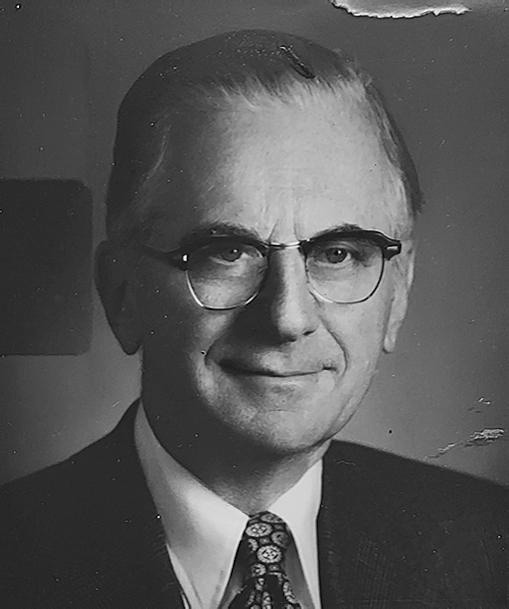
In a 1994 "Sun-Up Interview" with longtime World-Herald columnist Robert McMorris, Milt recalled that the editor showed him what the newspaper paid its reporters and then what it paid
its lawyers. "I decided to become a lawyer," Milt said. It was a practical decision that launched a distinguished legal career. Yet what ultimately defined Milt's life was not only the See Milton Abrahams page 3
Continued from page 1
Press archives for providing source materials for this article.
One hundred and twenty-six years. More than a span of time, it is a living thread connecting us to the people who came before us - their courage, their sacrifices, their hopes, and their unwavering belief that the future could be built with care. Across that time the world has changed in ways they could scarcely have imagined: inventions have transformed how we live, travel, and connect; wars and movements have tested and reshaped communities; science and medicine have extended life and expanded possibility. Yet beneath all that change, something timeless remains: the responsibility to care. With this responsibility comes the need to remember where we came from, the moments that shaped us, the people who carried us forward, and the legacy we are now called to honor and preserve.
Part I: 1900 - 1950
In the early 1900s the Associated Jewish Charities, (later to be known as the Jewish Welfare Federation before eventually becoming the Jewish Federation of Omaha) was formed to support the growing population of Jewish immigrants coming to America. Elder care relied heavily on multigenerational family homes, private charity, and public houses. There was no formal nursing home industry, Medicare, or Medicaid. Philanthropic and faith-based groups ran charitable homes for the “worthy poor” and often relied on visiting nurses to manage the health care of the elderly. Locally, several Jewish community organizations recognized that the care needed for its elders sometimes required assistance from outside the family. The Daughters of Israel Aid Society (an auxiliary of the synagogue Chevra B'nai Israel), members of the Jewish Free Loan Society, the Omaha Hebrew Club, and the Wise Memorial Hospital involved themselves in serving
the elderly, many of whom were also poverty-stricken and lonely.
At this same time Phillip Sher arrived in Omaha. The 28-year-old, an immigrant from Lithuania, had come to America to join his family. He entered Jefferson Medical School before transferring to Baltimore University Medical College and earning his degree in 1902. Upon his arrival to Omaha in 1903, Dr. Sher joined the staff of Wise Memorial Hospital, the Federation-supported institution that would later become the backbone of Jewish healthcare in Omaha. Dr. Sher also became involved in the Jewish Welfare Fund, the Jewish Free Loan Society, and the establishment of the Jewish Community Center.
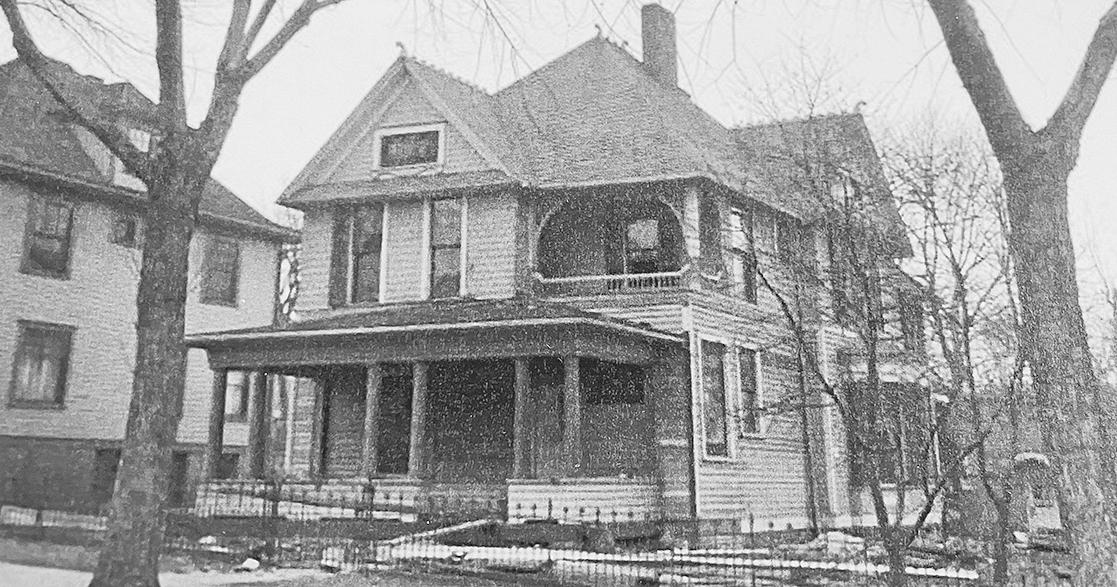
By 1912 the Daughters of Israel Aid Society began taking the first steps in establishing a community home for the aged, along with a mikvah / public bath house. For years the group held events to raise funds. Eventually, a property was purchased at 25th and Charles Street in Omaha. The mikvah opened in 1917 and the care home in January of 1918. It had 5 residents. It was a modest and humble beginning to our foundation of community elder care.
According to source materials from the Nebraska Jewish Historical Society, “The first floor of the care home had two bedrooms with a living room, dining room, kitchen, and a bathroom …. The upstairs housed the staff. There were two bathrooms and one room that was used as isolation for the ill. Residents at the home were known as ‘inmates’. Three basement rooms of the mikvah housed residents as well. These were not desirable rooms because of the cement floors and the heat from the nearby boiler. Three meals were offered each day. There was little structure at the home. Residents could stay up as late as they pleased and they could go and come at will. There was no recreational program.”
In 1917, just at the Daughters of Israel Aid Society were getting ready to open the
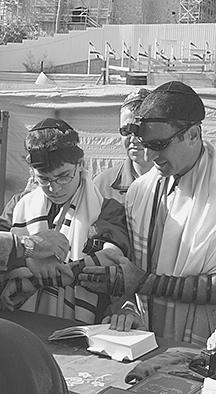
Continued from page 1 community. He is back, for a while, filling in for Temple Israel’s Cantor Joanna Alexander while she is on sabbatical. Benjamin is currently pursuing his cantorial ordination as well as a master’s degree in sacred music, and just finished a year at cantorial school in Jerusalem. First and foremost, he considers himself a Jewish educator-one who never stops learning.
“When I was in kindergarten,” he said, “I came home one afternoon, and tried to teach my entire family how to keep a steady beat. It failed. I always had that curiosity about music, and was interested in Jewish growth from an early age. Years later, I came home from Camp Sabra, and immediately made my family celebrate shabbat-including all the songs. It went about as well as when I tried to lead them in kindergarten.”
However, they did participate-and Benjamin never gave up on trying to teach. He grew up, played the guitar at his own Bar Mitzvah (his portion was Toldot) and Rabbi Emeritus Aryeh Azriel thought he would make a fine Rabbi someday. Cantor Wendy Shermet, of course, felt Benjamin should follow in her footsteps.
After high school, he studied at Drake University to become a music teacher in-
first community home for the aged, another significant event occurred. Rose Blumkin arrived in America. Born in Russia in 1893, Blumkin fled war torn Eastern Europe. She arrived three years after her husband, Isidore. After some time in Iowa, the family moved to Omaha in 1919.
The Daughters of Israel Aid Society supported and maintained their care home for years. In 1921 the home was invited to become a constituent member of the Jewish Welfare Federation. Representatives from the Jewish Federation and the Israel Aid Society were appointed to handle the executive affairs. By 1928, ten years since its opening, the home had served a total of 37 people. Maximum capacity was 11 and it cost about $1.50 per day to care for each resident.
A strong establishment of Jewish life in Omaha was starting to take hold. Dr. Sher had become president of the Jewish Federation in 1923, finishing the term of the late Morris Levy, and again in 1929.The International Order of the Aleph Zadik Aleph (AZA) was founded by the B’nai B’rith Organization as its auxiliary program for young men in 1924, and the Jewish Community Center had opened in 1926. Rose Blumkin and her family opened Nebraska Furniture Mart in 1937.
The care home at 25th and Charles continued. The creation of the national Social Security program in 1935 gave many seniors the means to live independently. This shift in ability spurred new community conversations on the creation of a new nursing home. The interest was great. A building fund was created but never reached its goal. World War II was imminent, and things were put on hold.
In 1944 The Jewish Federation of Omaha put backing to the unrealized dream. They allocated $10,000 for the construction of a new Home for the Aged. A building fund was once again established and a campaign was formed. Dr. Sher, who by this time was known and respected by all, was
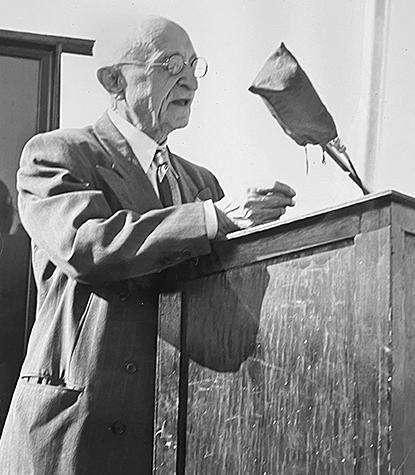
a diligent leader of the campaign who advanced the cause immeasurably. He was an adamant believer that everyone deserved care and dignity and that the strength of a community could be measured by how it cares for its elders.
Under Dr. Sher’s leadership, the community raised the $450,000 needed. A ten-acre site was purchased near at 52nd and Grand Avenue in Omaha. It was decided that the new facility would be named the Dr. Philip Sher Home for the Aged, not for the money he gave, but rather for the life he lived in service to the Jewish community.
Groundbreaking for the Dr. Sher Home for the Jewish Aged was held in 1946. The home was to be built as a colonial mansion, centered in a 10-acre tract of land. The building included a synagogue, auditorium, offices, dining room, living room, library, kitchen, utility room, hospital unit, and infirmary facilities. The project took 15 months to complete and opened in 1948. The facility cost $225,000 to build and was able to open debt free, thanks to the generosity of the Jewish community. When the doors opened 35 individuals were welcomed in. The expanded availability of safe and consistent care of community seniors was now a reality. The estimated cost for maintaining a resident was $4 a day.
stead. But even then, he knew he really wanted to go to Cantorial school.
“In 2020, the choir I was in was getting ready for a performance in Kansas City,” he said. “We were on a tour, and on the third night, the director called us together and broke the news: the final performance was canceled because of this new virus. We came home to a world that had shut down.”
The first months were hard; he managed to finish most of his classes and did some online teaching. “There was a lot of Zoom singing at the time” he said, “which brought at least some joy. I taught the Psalms of Hallel, an important part of the seder, and put the class on Facebook live. It made me realize: this is what I really want to do.”
He spoke about it with his grandmother Vicki Chesen, z”l, and she told him it would be okay.
“After moving to Des Moines, I was a music teacher at Beit Sefer Shalom religious school, and taught a wide variety of kids. Some came from an orthodox background, for others it was the only Jewish moment in their week.” He also taught seventh and eighth grade, including trope, then sixth grade. He finished his bachelor’s degree but chose not to finish
his student teaching. Around that time, a familiar person was heading the Jewish Federation of Greater Des Moines, Bob Goldberg, who brought Benjamin on full time.
“I worked in education as well as with the JCRC, which in Des Moines means building bridges to the wider community. Since Des Moines is in the same Partnership as Omaha, I gained a lot of experience with the Western Galilee Consortium as well.”
It was 2022, and the Covid pandemic was still affecting programming, so the P2G conference was online only. However, during the winter of 2022-23, Benjamin had the opportunity to spend time in Israel.
“I was there for about three weeks, including a birthright trip,” he said. “My third week was entirely spent with Partnership participants; I really welcomed the chance to get to know them from the perspective of a staff person. The Budapest delegation was there at the same time, and the time spent together really made me feel more connected to P2G. Back Home in Des Moines, we welcomed two delegations from the Western Galilee; one with educators, another with musicians.”
Benjamin and Bob were also thinking
about a summer program for the Des Moines Jewish community.
“We eventually decided to host a small film series,” Benjamin said, “and I selected six movies. The world had started opening back up, but there was still a lot of masking.”
Among the audience was Dr. Michael Stein, who split his time between Des Moines and Palm Springs. “He came up to me afterwards and told me he didn’t like the movies. Honestly, he was kind of right.” But then, Dr. Stein offered to take on the program going forward, with the help of his sons. “He told me I’d be on the committee, so I’d still be involved-but he would take it from there.” Today, the program continues as the Simma and Michael Stein Des Moines Jewish Film Series.
“We did end up doing some pretty cool things, like partnering with the local arts center, and hosting a film premiere around Tisha B’av.”
Today, Benjamin is home. For a while, at least.
“Home is where people are,” he said. “It is with the people you build relationships with; I feel comfortable in all synagogues and all the buildings, because it’s where the people are. Home is the place where you feel welcomed.”
Continued from page 1
law, but how he used his profession, relationships and leadership to serve Omaha's Jewish community and the city as a whole.
Unlike many Federation presidents profiled in this series, Milt's Omaha roots stretched back several generations. His great-grandparents and grandfather came to Omaha after the Civil War, and his father was born here. Milt graduated from Omaha Central High School in 1922 and earned his law degree from Creighton University in 1927, finishing first in his class.
Rather than accept an offer from an established firm, Milt opened his own practice. At a time when lawyers were not permitted to advertise, he built his business by joining organizations and, as he put it, "shaking a lot of hands." Those relationships soon led to leadership roles in Jewish and civic institutions.
"I've enjoyed a special relationship with clients, many of them for many years," he told McMorris. "I like the challenge of trying to achieve what's best for clients."
After 17 years as a sole practitioner, Milt combined his practice with Ben Kaslow's in 1944. Frederick Cassman later joined them, forming the firm that carried their names. Ben Kaslow's son Howard joined the firm in 1964 after graduating from Yale Law School.
Milt married Pauline Saltzstein of Sheboygan, Wisconsin, in 1934. They met while he was attending a conference there and she was teaching art in the public schools. They had two daughters, Joan Subrin and Phyllis MacAdam, and five grandchildren. Pauline became a portrait artist and devoted volunteer at Joslyn Art Museum, Temple Israel Sisterhood, Hadassah, the American Red Cross and Methodist Hospital. She died in July 1999; Milt died on Feb. 10, 2000.
For Milt, community service was not separate from professional life. It was one of its central purposes. In 1989, when he was named the Jewish Federation of Omaha's Humanitarian of the Year, then-Federation Public Relations Director Joanie Jacobson interviewed him for the Jewish Press:
"Service to my community originated at the Jewish Community Center in Omaha," he said.
He described Federation as an entry point into Jewish communal life: "The Jewish Federation offers an impressive opportunity for community service. It is an entry point, a focus of Jewish communal activities concentrated in one place. It's like a cafeteria. All you have to do is walk down the line of Federation agencies and select the community activity that you would enjoy."
That philosophy helped guide Milt to the presidency of the Jewish Federation of Omaha from 1965 to 1967. It was also rooted in his family's earliest years in Omaha.
"My great-grandfather came to Omaha after the Civil War with a handful of Jewish people from Tennessee," Milt said. "They organized Temple Israel. They tried to have a Jewish community life. Think about it. Here they were on the edge of nowhere, and their initial response to a new Jewish life was to organize a Jewish community. It's that kind of commitment that the rest of us must preserve."

Milt lived that commitment. He served as president of Temple Israel and B'nai B'rith Lodge 354 while taking on a remarkable range of civic responsibilities.
Perhaps no part of his public service left a more visible legacy than his work with the Omaha Public Library.
After graduating from Central High, Milt needed money for college and found a job in accounting at Union Pacific Railroad. There was only one problem: he knew nothing about accounting. Rather than expose his inexperience, he went to the Omaha Public Library. A patient librarian helped him find accounting books, and he taught himself what he needed to know.
Longtime Jewish Press editor Morris Maline later wrote that the experience stayed with Milt. It showed him what a public library could make possible for anyone willing to walk through its doors.
Milt served on the Omaha Public Library Board for 21 years beginning in 1957, including 12 years as board president. Those were years of significant growth, including the development of the W. Clarke Swanson, A.V. Sorensen and Florence branches and planning for the W. Dale Clark Library downtown.
The library system honored him by naming the branch at 5111 N. 90th St. the Milton R. Abrahams Branch. In 1978, he was one of five library trustees nationwide recognized for service to a local library. One can only imagine how pleased he would have been to see Omaha's new Central Library at 72nd and Dodge.
Milt's civic and professional involvement extended far beyond the library. He served on the boards of Joslyn Art Museum, the City Human Relations Board, the Omaha Board of Education, the Historical Society of Douglas County, the Nebraska State Bar Foundation and Nebraska Methodist Hospital. He was president of the Omaha Bar Association and United Community Services, now United Way of the Midlands, and served on the president's councils at Creighton University and Brandeis University.
His honors included the Brotherhood Award of the Midlands chapter of the National Conference of Christians and Jews, the State of Israel Heritage Award and the Anti-Defamation League's Torch of Liberty Award. I returned to Omaha in June 1998 to begin my career at the JFO Foundation. Milt died about 19 months later, and I regret that I never took the opportunity to meet him. Through two interviews preserved in the NJHS archives, however, I gained a glimpse of the man behind the list of accomplishments.
In one interview, conducted by Howard Marcus in Milt's law office, Milt said he believed people have two choices in life: they can avoid challenges and fail, or welcome challenges and succeed. He always chose to welcome them, saying that meeting challenges gave him a deep sense of pride and satisfaction.
He compared life to a game of golf: "You don't worry about the score on the last green. You think about, well, what can I do on the next one?"
An undated Omaha World-Herald "Getting Personal" column preserved in the NJHS archives offered a lighter

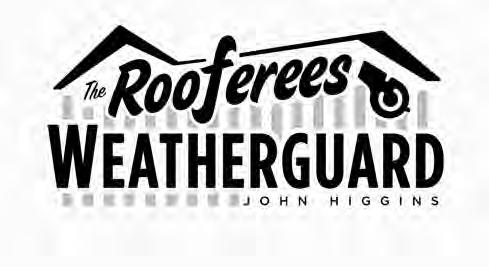
portrait. Milt's favorite evening activity was reading. He listed Silver Streak as his favorite recent movie, Meet the Press as his favorite television program, Omaha as his favorite place, and George F. Will and Art Buchwald as his favorite newspaper columnists.
His pet peeve was bureaucratic intrusion into daily life by officials "indifferent to the consequences of their actions and preoccupied with preserving their own status."
Asked what most needed to be done locally, statewide or nationally, his answer was characteristically civic-minded: "Renew our sense of common purpose as Americans. We have become fragmented and estranged. But if we commit ourselves to a common goal and work for it, we will be brought together again through mutual understanding and cooperation."
Howard Kaslow may have offered the best summation after Milt's death. In the Feb. 18, 2000, Jewish Press, he said:
"Milt Abrahams embodied a rare combination of great intelligence, sound judgment, common sense and concern for others. He was totally committed to his clients and to the many causes he so ably and generously served. As a professional and as a human being, he was a role model for the entire community."
Milton R. Abrahams understood that community is not inherited automatically; it must be built, served and preserved. In the law office, Federation meeting, synagogue, library boardroom and wider civic community, he helped strengthen institutions that would outlast him. Omaha continues to benefit from the commitments he made.
Series Note:
We thank the Nebraska Jewish Historical Society for preserving these stories and invite readers to share memories, photos or family connections that can help us rediscover the lives of those who built our community. Standing on their shoulders, we continue their work.
The Jewish Federation of Omaha past presidents series is a collaboration between the Nebraska Jewish Historical Society and the Jewish Press. For questions or more information about NJHS, please contact Executive Director Jane Rips at jrips@jewishomaha.org or visit nebraskajhs.com
B’NAI B’RITH BREADBREAKERS
The award-winning B’NAI B’RITH BREADBREAKERS speaker program currently meets Wednesdays via Zoom from noon to 1 p.m. Please watch our email for specific information concerning its thought-provoking, informative list of speakers. To be placed on the email list, contact Breadbreakers chair at gary.javitch@gmail.com

PHILISSA CRAMER
JTA
An unpublished novel has paved the way for the birth of a new Jewish fiction imprint, in the leading edge of a flurry of initiatives to combat antisemitism in the publishing industry by taking hold of the means of production.
Meg Keene had an enthusiastic agent with a long track record of sales when she submitted her novel, a romance with Israeli characters, to publishers in 2024. But she heard over and over that her book seemed too Jewish to publish at a time when the war in Gaza had turned anything that could be perceived as pro-Israel radioactive. As has happened to an untold number of Jewish authors in recent years, her book did not sell.
Now, Keene is the eponymous tastemaker at the helm of a new imprint within Wicked Son Press, a 5-year-old publisher that has released mostly nonfiction that leans right.
Meg Keene Books will release four to six novels over the next year that she and Wicked Son’s founders believe will elevate Jewish voices and reconstruct a bygone communal Jewish literary conversation. She’ll also edit a forthcoming literary magazine designed to shape the Jewish book-buying audience.
“My goal is to make Jewish publishing feel really cool,” Keene told the Jewish Telegraphic Agency.
“I’m planning to acquire books across genres — male authors, female authors, romance, thriller, literary fiction — you know, the works,” she added. “I also intend to put everything I have behind each book, and sort of ask the Jewish community to support these books and make the case for them.”
At the same time, she said, she has broad support from Wicked Son’s co-publishers to depart from the conservative and explicitly pro-Israel stance that has characterized most of their recent and forthcoming releases, which include the posthumous memoir of pro-Israel philanthropist and Republican megadonor Sheldon Adelson and a treatise on anti-Israel sentiment on U.S. college campuses by the activist and former professor Shai Davidai.
“I really dislike books that are where you can sort of hear the author tapping the mic to do an op-ed through fiction,” Keene said. She added, “Not only am I not going to publish quote-unquote conservative fiction, I’m not going to publish ideological fiction at all.”
David S. Bernstein, who runs Wicked Son alongside Adam Bellow, said he’s on board — though he notes the openness has limits.
“The one thing that we insist that our authors believe is that they’re Zionists,” he told JTA. But, he added, they also have to be good: “Are we going to do schlocky novels just because they have a Zionist message? Absolutely not.” Zionist authors — and those perceived, correctly or not, to be among their ranks — have faced a broad backlash in the literary world since Hamas’ Oct. 7, 2023, attack on Israel and the subsequent war in Gaza. Intense pro-Palestinian activism that left some Jewish writers feeling intimidated and unwelcome in 2023 and 2024 has resulted in “widening cultural isolation,” according to a recent report from PEN America, the free-speech organization, that cited dozens of Jewish industry professionals. Keene, who was mentioned in the report and later critiqued it as being inadequately focused on issues facing Jewish writers, says her research shows that the chill has translated into a declining number of Jewish book deals. Some efforts have sought to improve the situation within existing institutions, whose decades of cache and power to fill bookstore shelves remain an unassailable draw for many Jewish writers. The Jewish Book Council, for example, has advocated for Jewish authors to speak at industry conferences and launched grants meant to help writers promote themselves to potential agents and publishers. But an increasing number of initiatives are based on the premise that the situation in the literary world is so dire that Jews need their own publishing houses and distribution pathways. (“I am really tired of us begging for acceptance and it not working,” Keene said.) In addition to Meg Keene Books, there are at least two other imprints on the verge of announcing themselves, one supported by the pro-Israel philanthropist Scott Shay and the other operated by a British publisher and writer named Jacky Klein. Klein declined to comment about her initiative, which her biography on the website of the Jewish Literary Foundation, a British organization, says is “focused on
Jewish and Israeli voices, due to launch in late 2026.”
But Howard Lovy, the editor of the press that Shay is backing, said he planned to release at least one novel a month starting early next year, sourced from the vast number of manuscripts that writers have sent him following a handful of online callouts and from his own roster of freelance editing clients, whom he has found himself increasingly unable to steer toward publication.

“After I’m done editing their books, the next question is, OK, what now? I really don’t have much to tell them because things are so bad right now for Jewish authors,” said Lovy, who also freelances for 70 Faces Media, JTA’s parent company. “Even if they don’t write about the Middle East at all, agents and publishers are telling them that this is not the time for Jewish voices, and bookstores aren’t selling them.”
Lovy’s press has a name: Canary Publishing. “Jewish voices have long been the canary in the coal mine, the song that signals whether the air is still safe to breathe,” he told JTA in a follow-up email. “When we are silenced, everyone should worry.”
Naomi Firestone-Teeter, the Jewish Book Council’s CEO, said all of the new initiatives have a place at a challenging time. The council has received hundreds of messages to an email hotline launched in 2024 for people in the literary world to raise concerns about antisemitism and anti-Israel exclusion.
“A healthy Jewish literary culture includes many publishers, authors and viewpoints,” Firestone-Teeter said in a statement to JTA. The Jewish Book Council, she said, “welcomes efforts that support readers and authors and contribute to the long-term vitality of Jewish books.”
Shay’s investment is enabling advances to authors, though Lovy declined to share any dollar figures. Meg Keene Books, meanwhile, is following Wicked Son’s profit-sharing model: Rather than being paid upfront for their work, they’ll split any earnings with their publisher — starting with the first sale.
Keene says she herself has taken on the marquee role “not for any financial gains at the moment” but is hoping to rally new investments in Jewish publishing. “We are going to need Jewish donors and investors to stand up,” she said.
Keene is in some ways an unlikely leader for Wicked Son’s new imprint. She has a track record in print and digital publishing — but as the editor of a wedding-planning media company, not of fiction. There, her credentials come mainly from the fact that she has spoken openly, starting on social media, about a demoralizing experience that many aspiring authors prefer to keep quiet.
“It will destroy any remnants of my career that I have left in publishing. There’s really a code of silence,” Keene said this week from Jerusalem, where she traveled from her home in Northern California, of her fears about revealing that she had tried and failed to publish through the “Big Five” publishing houses.
A turning point came earlier this year when she appeared on a podcast produced by the Canadian Jewish News, where she revealed that she had been collecting data that she said showed a marked decline in Jewish fiction deals announced in an industry-standard publication since Oct. 7, 2023. Soon, she was collaborating with the Anti-Defamation League, writing op-eds in the Wall Street Journal and JTA, and fielding calls from Wicked Son.
“It was kind of an instant click across all three of us,” Bernstein recalled. “The immediate response was, ‘Oh well, this is the person we need to kick off our serious literature program.’”
He said her lack of experience in fiction publishing was no deterrent. “She built businesses. She’s a voracious reader. She absolutely understands what readers respond to, which was the main thing that we really loved
about her,” he said. “We’re 100% confident that she’s going to be successful in this role, more successful than somebody who has only worked within the structures of a large publishing company would be.”
Keene declined to share specifics about the books she’s already negotiating to publish, which she said would likely include previously unpublished novels as well as works that may have appeared abroad but not in the United States.
But she cited “The Adventures of Kavalier and Clay,” the 2000 novel by Michael Chabon about Jewish cousins in the golden age of comic books, as an example of the kind of thickly Jewish story she hopes to elevate. (Chabon is a staunch critic of Israel who has described Israel’s operations in Gaza as a “genocide.”)
“We have moved away from the days of ‘Kavalier and Clay,’ where every sentence on the page feels Jewish, and we’ve been in this moment where the best we’re allowed is representation,” Keene said. “Jewish fiction is incredibly cool, and I want to make us all proud and excited of our tradition.”
STACIE METZ
Beth El Engagement Coordinator
Looking for the perfect High Holiday hostess gift?
Hoping to discover one-of-a-kind artwork, handcrafted jewelry, homemade baked goods, or unique treasures you won't find anywhere else?
Plan to spend your Sunday morning at Beth El's Open Market on Sunday, Aug. 23, from 10 a.m. to 1 p.m., where talented Jewish makers of all ages from across the Omaha community will gather to showcase and sell their handcrafted creations.
The Open Market begins following minyan and the start of BESTT, making it the perfect opportunity to grab a specialty coffee from the coffee cart, reconnect with friends after the summer, and browse an incredible selection of handmade goods. Even after BESTT concludes, the market will remain open until 1:00 p.m., giving families and the entire community plenty of time to shop and explore.
Whether you're shopping for High Holiday hostess gifts, birthdays, special occasions, or simply treating yourself, you'll find an incredible variety of handcrafted items, including artwork, jewelry, pottery, woodworking, home décor, delicious baked goods, and much more.
The Open Market is more than a shopping event. It's a celebration of the creativity, talent, and entrepreneurial spirit found throughout our Jewish community while supporting local makers and Jewish education.
The inspiration behind the Open Market came from discovering the incredible talents within the Beth El community and the Open Market is an opportunity to bring those talents together in one place while inviting the community to shop, connect, and celebrate the creativity that surrounds us. Among the participating vendors is Ron Feldman, who will be showcasing his handcrafted cutting boards and mezuzot.
"It's a great way to see a variety of local talent and participate in a fun event," Feldman said.
Be sure to stop by the Beth El Kitchen booth, where you'll find Chef Mike’s delicious homemade favorites alongside the many handcrafted creations available throughout the market.
Admission is free, and everyone is welcome.
Rather than charging a vendor fee, participating makers will donate 10% of their proceeds to BESTT, helping support educational opportunities and programming for Beth El's students. Every purchase supports local Jewish makers while benefiting the next generation of our community.
For more information about the Open Market, or if you're a Jewish maker interested in participating, please contact Stacie Metz at smetz@bethel-oma ha.org or 402.492.8550.
Beth El Open Market, Sunday, Aug. 23, 10 a.m. to 1 p.m. following Minyan & the start of the first day of BESTT at Beth El Synagogue.
Coffee Cart • Beth El Kitchen Booth • Shop Local Jewish Makers • Support BESTT

Heidi Schneiderman
Ingredients:
3 lb. peeled sweet potatoes, cut in 2” pieces
1/2 stick butter, softened
3 tbsp. brown sugar
2 tsp. grated lemon peel
2 egg whites, beaten to form peaks
1/2 tsp. nutmeg
1/2 tsp. cinnamon
Juice of 1 lemon
Directions:
Preheat the oven 350 degrees. Cook peeled sweet potatoes in large pot until tender. Transfer to processor and puree. Return to the pot and add butter, sugar, lemon peel, lemon juice, cinnamon and nutmeg. Bring to room temperature and fold in beaten egg whites. Put in a greased dish and bake for 45 minutes. Top with parsley, lemon and nutmeg.
Deenie Meyerson
Ingredients:
2 cups all-purpose flour
1 tsp. cinnamon
2 tsp. baking soda
1/2 tsp. salt
4 large eggs
1/3 cups honey
3/4 C. brown sugar, packed
1 cup oil
1 cup walnuts, chopped
3 1/2 cups carrots, grated
Directions:
Filling/Frosting: 2 jars lemon curd 1 cup + 4 tbsp. cream cheese 1 tbsp. lemon juice
Preheat the oven to 350 degrees. Combine flour, cinnamon, baking soda and salt. Set aside. In a large bowl, combine eggs, sugar and honey. Beat until light. Gradually beat in oil. Using a mixer, add flour mixture, walnuts and carrots. Grease and flour two 8" cake pans. Divide the batter evenly between pans. Bake for 35-45 min. or until the toothpick comes out clean. Cool for 5 min. Loosen around edges. Reverse onto cooling racks. Cool completely. Put lemon curd and cream cheese into a mixing bowl. Whip and gradually add lemon juice. Spread 1/2 mixture between layers. Frost the cake and enjoy!

*This week’s Spotlight was designed in part by our summer intern, Zane Robinson. His position is made possible through the Chesed Fund.







GENEROUSLY SUPPORTED BY PHOTOS FROM RECENT JEWISH COMMUNITY EVENTS
SUBMIT A PHOTO: Have a photo of a recent Jewish Community event you would like to submit? Email the image and a suggested caption to: avandekamp@jewishomaha.org

















Discover Omaha senior living where you’re valued, welcomed, and celebrated for who you are. At Ovation Heartwood Preserve, we live by our core value: “a culture of respect, belonging, and celebration of diversity”
“I needed this oxygen of people. And I think I made the right choice because of the tremendous respect for individuality here and to who we are.” – Rabbi, Ovation Heartwood Preserve Resident














SETH SCHUCHMAN
The Israelites have just crossed the Red Sea. After generations of slavery, Miriam, the sister of Moses and Aaron, picks up a timbrel. The women follow her with tambourines and dancing.
For thousands of years, Jews have celebrated life's defining moments much the same way. We dance at weddings. We dance with the Torah on Simchat Torah. We dance to celebrate freedom, family and new beginnings.

That may be why I found myself watching Dancing with the Stars one evening with my daughter, Sadie.
She would laugh at the comparison. Sadie is the real fan in our house. She organizes watch parties with her friends, follows #DWTS on Instagram, and last Hanukkah one of her favorite gifts was tickets to see the “Dancing with the Stars Live” tour at Omaha's Orpheum Theatre with Amy.
I'm mostly the guy wandering through the family room asking who's winning. I still can't always tell the difference between a rumba and a cha-cha.
One evening, though, I stopped paying attention to the scores and started paying attention to the names. Chmerkovskiy; Bersten; Karagach: the same names kept appearing season after season. That sent me down a rabbit hole I never expected. What I found was a story about Jewish families.
Since premiering in 2005, Dancing with the Stars has become one of America's most successful reality competitions. Millions tune in each season to debate the judges' scores, cheer for favorite couples and follow the professional dancers with the same enthusiasm sports fans follow their teams.
Most viewers focus on the celebrities, but I became more interested in the professionals.
Where had they come from? Why did so many have roots in Jewish families from the former Soviet Union? The answer begins thousands of miles from Hollywood, in Odesa.
Long before the city became known to many Americans because of the war in Ukraine, Odesa was one of Eastern Europe's great Jewish centers. It was also one of the Soviet Union's leading centers for competitive ballroom dancing. To most Americans, ballroom dancing is something you might do at a wedding or take lessons in for fun. In the Soviet Union, it was treated more like elite gymnastics or figure skating. Children began young, training was demanding and competition was serious.
Ballroom dancing wasn't uniquely Jewish, but many Soviet Jewish families embraced it. Facing discrimination and barriers in education and many professions, parents often encouraged pursuits where talent, discipline and hard work could still create opportunity.
Every immigrant family carries something across the ocean. Some carry recipes, some carry language, and

some carry prayer books. The Chmerkovskiy family carried ballroom dancing.
In 1994, Aleksandr and Larisa Chmerkovskiy left Odesa and began a new life in Brooklyn with their two sons, Maks and Val. They were not looking for fame, they were looking for opportunity. Maks was 14, and Val was eight when they left behind familiar streets, schools, friends and language. Almost everything changed.
Dance did not. Inside the dance studio, the expectations were familiar. Precision mattered. Discipline mattered. Practice mattered. The dance floor spoke a language they already understood.
Years of competition followed. Championships accumulated. Within the ballroom world, Maks and Val Chmerkovskiy became stars long before most Americans had heard their names. Dancing with the Stars introduced America to dancers who had already earned places among the country's elite ballroom professionals. Maks and Val eventually became two of the show's most recognizable personalities, building careers that extended beyond television into touring, teaching and dance studios that introduced thousands of others to ballroom dancing.
As I finished researching this article, I found myself thinking about Miriam again. Her dance on the shore of the Red Sea wasn't a performance. There were no judges, scorecards or television audience. It was gratitude, freedom and hope. Thousands of years later, Jews still celebrate many of life's greatest moments through dance. We dance the hora at weddings. We dance with the Torah on Simchat Torah. Israeli folk dancing has connected generations of Jews around the world.
The music changes, the steps change, the setting changes, but the reason for dancing remains the same.
The next time Sadie asks me to watch Dancing with the Stars, I'll probably say yes.
Editor’s note: read the longer version of this story, including notes on Danielle Karagach and Alan Bersten, at our website: www.omahajewishpress.com










(Founded in 1920)
David Finkelstein
President
Annette van de Kamp-Wright
Editor
Will Fischer
Creative Director
Claire Endelman
Sales Director
Lori Kooper-Schwarz
Assistant Editor
Sam Kricsfeld
Digital support
Mary Bachteler
Accounting
Jewish Press Advisory Board
David Finkelstein, President; Margie Gutnik, Ex-Officio; Toby Dresdner, Andrea Erlich, Dana Gonzales, Mary Sue Grossman, Hailey Krueger, Avery Lubin, Sara Rips, Seth Schuchman, Stewart Winograd and Bob Yaffe.
The mission of the Jewish Federation of Omaha is to build and sustain a strong and vibrant Omaha Jewish Community and to support Jews in Israel and around the world.
Agencies of the JFO are:: Institute for Holocaust Education (IHE), Jewish Community Relations Council (JCRC), Nebraska Jewish Historical Society (NJHS), Jewish Press, Rose Blumkin Jewish Home (RBJH), Jewish Family Service (JFS), Staenberg Omaha Jewish Community Center (JCC).
Guidelines and highlights of the Jewish Press, including front page stories and announcements, can be found online at: www.jewishomaha.org; click on ‘Jewish Press.’
The Jewish Press is not responsible for the Kashrut of any product or establishment.
Editorial
E-mail editorial material and photos to: jpress@jewishomaha.org and avandekamp@jewishomaha.org ; send ads (in TIF or PDF format) to: wfischer@jewishomaha.org
Letters to the Editor Guidelines
The Jewish Press welcomes signed Letters to the Editor. They may be sent via regular mail to: The Jewish Press, 333 So. 132 St., Omaha, NE 68154; via fax: 1.402.334.5422 or via e-mail to the Editor at: avandekamp@jewishomaha.org.
Letters should be no longer than 250 words and must be single-spaced typed, not hand-written. Published letters should be confined to opinions and comments on articles or events.
News items should not be submitted and printed as a “Letter to the Editor.”
The Editor may edit letters for content and space restrictions. Letters may be published without giving an opposing view. Information shall be verified before printing. All letters must be signed by the writer. The Jewish Press will not publish letters that appear to be part of an organized campaign, nor letters copied from the Internet. No letters should be published from candidates running for office, but others may write on their behalf.
Letters of thanks should be confined to commending an institution for a program, project or event, rather than personally thanking paid staff, unless the writer chooses to turn the “Letter to the Editor” into a paid personal ad or a news article about the event, project or program which the professional staff supervised. For information, contact Annette van de Kamp-Wright, Jewish Press Editor, 402.334.6450.
Postal The Jewish Press (USPS 275620) is published weekly (except for the first week of January and July) on Friday for $40 per calendar year U.S.; $80 foreign, by the Jewish Federation of Omaha. Phone: 402.334.6448; FAX: 402.334.5422.
Periodical postage paid at Omaha, NE. POSTMASTER: Send address changes to: The Jewish Press, 333 So. 132 St., Omaha, NE 68154-2198 or email to: jpress@jewishomaha.org
Editorials express the view of the writer and are not necessarily representative of the views of the Jewish Press Advisory Board, the Jewish Federation of Omaha Board of Directors, or the Omaha Jewish community as a whole.
ANNETTE VAN DE KAMP-WRIGHT
Jewish Press Editor
So, British singer Boy George-he has been popping up on my Instagram feed for quite a while now, defending the Jews and taking it on the chin from the anti-Zionist keyboard warriors. Now he put his feelings to music with the aptly titled song We Will Dance Again. He even launched it with the hashtag ‘Shalom.’
“We Will Dance Again defends Israel’s military response in Gaza, criticizes musicians and activists who have publicly supported the Palestinian cause and declares, If you’re ever confused: I stand with the Jews.” (Kelly Hartog, JTA)
It’s official: we are in the bizarre timeline. Not that I oppose the artist; 1982’s Kissing to be Clever was one of the first vinyl albums I ever owned. When I was 12, I won a lip-sync contest at a birthday party, performing Do You really Want to Hurt Me? Those were exciting times.
One of the reasons given for Boy George sticking with us is that Culture Club’s drummer, Jon Moss, is Jewish-the two remain close friends. Perhaps, but there might be another reason: maybe he’s just paying attention. The thing is, I am pleased when I see artists publicly speaking out for us. I am also pleased when I see artists staying out of it, because being famous doesn’t require one to have an opinion about every single fakakte issue. At
the same time, I hate that I respond that way. Being Jewish is fabulous, it’s a privilege, and a reason for happiness, joy and pride. I love Judaism, I love learning more every day. I love our holidays, I love my family, I love my friends. I don’t know how I would feel without it, or who I would be without it. It’s my heart and soul, it’s the very essence of my being.
Do I really need the validation of famous artists I’ll never meet? The answer is more complex than I’d like it to be.
say nice things about Jews in the diaspora, as well as Israel, should work the same way.

Rationally speaking, no, we don’t need someone like Boy George to stand up for us. Yet, we live in this world where so many people (especially young people) are educated and influenced by what they hear their idols say. We can lament that, while simultaneously acknowledging it as a fact. When the Hulk says he hates Israel, people listen-because that Hulk is also on their lunch box. And when they hear that same message from a large enough number of people they like, watch or listen to, that message sticks. Repeat something often enough, it starts to feel true. So having people
JANE NESBIT
IHE Education Director
When I was accepted into the Power of Place European Summer Institute for Holocaust Educators, I wondered how I could use this opportunity to learn not only for myself, but to help educate others. While I was eager to deepen my own understanding of the Holocaust, I was equally focused on how I could bring my experiences back to the classroom. How would standing in the places I had spent years teaching about change the way I teach? How could I translate what I experienced into meaningful learning opportunities for those who may never visit these places themselves?
Over 12 days, our cohort of educators traveled through Lithuania, Poland, and the Netherlands, guided by author Alexandra Zapruder, whose book Salvages Pages: Young Writers’ Diaries of the Holocaust shaped our trip. Rather than following a traditional historical timeline, we walked in the footsteps of young diarists like Yitzhak Rudashevki, Minia Kuper, Abram Laski, Dawid Sierakowiak, Dawid Rubinowicz, Anne Frank and others. Walking their streets and seeing where their schools and neighborhoods once stood offered a space to reflect on how these young people’s lives were forever altered.
In Holocaust education, we emphasize personal narratives to help students build empathy and recognize the power of their own voices. History is best understood through these individual lived experiences. While six million murdered is beyond comprehension, but we can connect this history with individuals like Yitzahak, Minia, Abram, Dawid S., Dawid R., and Anne to our students. These young people wrote in their diaries about school, friends, and families; their deepest hopes, aspirations and fears while surrounded by a reality that was built to destroy them. Before they were targeted by the Third Reich and their collaborators, they were simply young
people navigating life, a reality today’s students can relate to. Their words preserve not only what happened to them, but who they were.
Following their footsteps across Europe transformed my understanding of the importance of place. Reading about the Ponar Forest or Auschwitz is not the same as standing there. The places themselves become teachers to me.

Through Lithuania, I wrestled with the striking contrast between the natural beauty and the dark history of the Holocaust. Dense forests, green fields, and quiet neighborhoods now cover landscapes where mass murder occurred. At the Ponar Forest, a loud oppressive silence hangs in the air, in which birds sing and wind rustles through tree branches, but people struggle to talk above a whisper. It is hauntingly beautiful, yet beneath that peaceful landscape lies one of the largest sites of mass murder in Lithuania. I couldn't stop thinking about the trees there as witnesses; witness to generations of history and would continue to do so long after our group left.
Other sites revealed a different kind of absence. At Lithuania's Lost Shtetl Museum, and later while visiting Jewish cemeteries where few remain to tend the graves, I am reminded that the Holocaust was not only the murder of individuals. Entire communities disappeared along with their schools, businesses, and generations of family history. Understanding what was lost means not only looking at the mur-
The only problem with that line of thinking is, we don’t really have that many examples. Most outspoken defenders are either Israeli or diaspora Jews themselves, and they speak within the echo chamber (sorry, Hen Mazzig). Maybe the real issue is that when a public persona speaks out in support, it creates a sense of relief. Relief, because of the rarity, and because it means we have one fewer voice to worry about.
I don’t know. I haven’t actually listened to the song yet. Maybe it sounds really bad and it will do more harm than good. Or maybe nobody will listen and it will just tank. It will undoubtedly be remixed endlessly by Israeli Deejays, and find a home in the club scene. That would be kind of nice.
At the end of the day, I am grateful I don’t have to feel too embarrassed about playing dress-up as Boy George when I was 12. At least, not for reasons of antisemitism. For other reasons, perhaps. At least nobody filmed it.
dered communities, but also to the vast richness of Jewish life that existed before.
One of the most powerful aspects of this program was that Alexandra Zapruder encouraged us to become diarists. Throughout the journey, we were asked to pause, describe, and reflect; forcing us to slow down and pay attention to the sounds around us, the weather, the silence, and our immediate questions. These moments of reflection reinforced an important lesson; history is not only something we study, it is something that we process and reflect on.
Our visit to Auschwitz brought this even sharper into focus. The extreme heatwave and lack of shade made this experience physically exhausting as well as emotionally overwhelming. I was continuously reminded that we can never walk in someone’s shoes, but we can stand where their shoes were. This was a thought that stayed with me throughout the trip. Whether standing in Anne Frank’s Secret Annex, stretching my arms out to understand the size of the rooms in which 8 people lived in hiding, or walking streets where Yitzhak Rudashevki once walked, being in these places can connect us to the past and bring their lived experiences to the present.
Our task then becomes not only to recall historical facts, but preserve individual stories, encourage thoughtful questions, and help students recognize the humanity behind every diary, photograph, and name. I aspire to connect students with this history with empathy and understanding; helping them recognize the consequences of indifference, that their voices matter, and that their remembrance is an active responsibility.
My students may never stand in the Ponar Forest, walk through Auschwitz, or visit Anne Frank’s Secret Annex. But because I have, I can invite them into those places through stories, reflection, and the voices of young people whose words survived when so much else was destroyed.
B’NAI ISRAEL SYNAGOGUE
618 Mynster Street Council Bluffs, IA 51503-0766
712.322.4705 www.cblhs.org
BETH EL SYNAGOGUE
Member of United Synagogues of Conservative Judaism 14506 California Street Omaha, NE 68154-1980
402.492.8550 bethel-omaha.org
BETH ISRAEL
SYNAGOGUE
Member of Union of Orthodox Jewish Congregations of America 12604 Pacific Street Omaha, NE. 68154
402.556.6288 BethIsrael@OrthodoxOmaha.org
CHABAD HOUSE
An Affiliate of Chabad-Lubavitch 1866 South 120 Street Omaha, NE 68144-1646
402.330.1800 OChabad.com email: chabad@aol.com
LINCOLN JEWISH COMMUNITY:
B’NAI JESHURUN
South Street Temple
Union for Reform Judaism
2061 South 20th Street Lincoln, NE 68502-2797
402.435.8004 www.southstreettemple.org
OFFUTT AIR
FORCE BASE
Capehart Chapel 2500 Capehart Road Offutt AFB, NE 68123
402.294.6244 email: oafbjsll@icloud.com
TEMPLE ISRAEL
Union for Reform Judaism (URJ) 13111 Sterling Ridge Drive Omaha, NE 68144-1206
402.556.6536 templeisraelomaha.com
LINCOLN JEWISH COMMUNITY:
TIFERETH ISRAEL
Member of United Synagogue of Conservative Judaism 3219 Sheridan Boulevard Lincoln, NE 68502-5236 402.423.8569 tiferethisraellincoln.org
SAVE THE DATE: Sunday, Aug. 9, 2026 will become a day to remember at B’nai Israel Living History Museum and Synagogue in Council Bluffs. from 1-3 p.m. at 617 Mynster St. The synagogue and grounds will be turned into a celebration honoring Council Bluffs Playland Park and Speedway. This event will take place rain or shine. Additional information at: www.cblhs.org
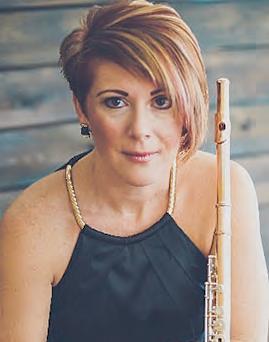
Monthly Speaker Series Service, Friday, Aug. 14, 7:30 p.m. with our guest, flutist, Dr. Christine Erlander Beard. Our service leader is Larry Blass. Everyone is always welcome at B’nai Israel!
For information about our historic synagogue, please visit our website at www.cblhs.org or contact any of our board members: David Alloy, Renee Corcoran, Rick Katelman, Gail Kenkel, Janie Kulakofsky, Howard Kutler, Ann Moshman, Mary-Beth Muskin, Debbie Salomon, Sissy Silber and Jenn Tompkins. Handicap Accessible.
Services conducted by Rabbi Steven Abraham and Cantor Gil Ezring.
FRIDAY: Kabbalat Shabbat, 6 p.m. at Beth El and Live Stream.
SATURDAY: Shabbat Morning Services and Bar Mitzvah of Dayton Abramson 10 a.m. at Beth El and Live Stream; Havdalah, 9:10 p.m. Zoom Only.
SUNDAY: Morning Minyan, 9 a.m. Zoom Only — Summer Schedule; Mincha/Ma'ariv 5:30 p.m. at Beth El and Zoom.
MONDAY: Shacharit, 7 a.m. at Beth El and Zoom; Mincha/Ma'ariv, 5:30 p.m. at Beth El and Zoom.
TUESDAY: Mincha/Ma’ariv, 5:30 p.m. at Beth El and Live Stream.
WEDNESDAY: Mincha/Ma’ariv, 5:30 p.m. at Beth El and Live Stream.
THURSDAY: Shacharit, 7 a.m. at Beth El and Zoom; Mincha/Ma’ariv, 5:30 p.m. at Beth El and Zoom.
FRIDAY-Aug. 14: Kabbalat Shabbat, 6 p.m. at Beth El and Live Stream.
SATURDAY-Aug. 15: Shabbat Morning Services, 10 a.m. at Beth El and Live Stream; Kiddush sponsored by The Henry & Dorothy Riekes Beth El Endowment Fund and Margo & Steve Riekes following services; Havdalah, 9 p.m. Zoom Only.
Please visit bethel-omaha.org for additional information and service links.
FRIDAY: Torah from Omaha, 6:45 a.m.; Shacharit, 7 a.m.; Calm in an Uncertain World, 7:35 a.m.; Likras Shabbat, 6:20 p.m.; Mincha/Kabbalat Shabbat, 7 p.m.; Candlelighting, 8:16 p.m.
SATURDAY: Shabbos Café, 8:30 a.m.; Shacharit, 9
a.m.; Tot Shabbat 10:30 a.m.; Youth Class 10:45 a.m.; Soulful Torah, 7:15 p.m.; Mincha, 8 p.m.; Kids Activity/Laws of Shabbos 8:30 p.m.; Havdalah, 9:19 p.m.
SUNDAY: Shacharit, 9 a.m.; Calm in an Uncertain World 9:35 a.m.; SEED Beth Israel Community BBQ 5:30 p.m.; Mincha/Ma’ariv, 8:20 p.m.
MONDAY: Torah from Omaha, 6:45 a.m.; Shacharit,
TERESA DRELICHARZ
Executive Director, Jewish Family Service
7 a.m.; Calm in an Uncertain World 7:45 a.m.; Mincha/Ma’ariv, 8:20 p.m.
TUESDAY: Torah from Omaha, 6:45 a.m.; Shacharit, 7 a.m.; Calm in an Uncertain World 7:35 a.m.; Smichat Chaver Men's Class, 7:20 p.m.; Mincha/ Ma’ariv 8:20 p.m.
WEDNESDAY: Torah from Omaha, 6:45 a.m.; Shacharit, 7 a.m.; Calm in an Uncertain World, 7:35 a.m.; Character Development 1:30 p.m.; Mincha/ Ma’ariv, 8:20 p.m.
THURSDAY: Torah from Omaha, 6:30 a.m.; Shacharit, 6:45 a.m.; Calm in an Uncertain World 7:45 a.m.; Mincha/Ma’ariv, 8:10 p.m.
FRIDAY-Aug. 14: Torah from Omaha, 6:30 a.m.; Shacharit, 6:45 a.m.; Calm in an Uncertain World 7:35 a.m.; Book of Remembrance Due, 5 p.m.; Mincha/Kabbalat Shabbat, 7 p.m.; Candlelighting, 8:07 p.m.
SATURDAY-Aug. 15: Shabbos Café, 8:30 a.m.; Shacharit 9 a.m.; Tot Shabbat 10:30 a.m.; Youth Class, 10:45 a.m.; Soulful Torah, 7:05 p.m.; Mincha, 7:50 p.m.; Kids Activity/Laws of Shabbos 8:20 p.m.; Havdalah, 9:09 p.m.
Please visit orthodoxomaha.org for additional information and Zoom service links.
Join classes via Zoom. Go to ochabad.com/academy. For more information or to request help, please visit www.ochabad.com or call the office at 402.330.1800.
FRIDAY: Shacharit 8 a.m.; Lechayim, 5:30 p.m. go to ochabad.com/lechayim to join; CYP First Friday Shabbat Dinner, 7 p.m., ochabad.com/ff; Candlelighting, 8:15 p.m.
SATURDAY: Shacharit, 10 a.m. followed by Kiddush and Cholent; Shabbat Ends, 9:18 p.m.
SUNDAY: Sunday Morning Wraps, 9 a.m.
MONDAY: Shacharit, 8 a.m.; Personal Parsha, 9:30 a.m. with Shani; Intermediate Biblical Hebrew Grammar, 10:30 a.m. with David Cohen; Parsha Reading, 6-8 p.m. with David Cohen.
TUESDAY: Shacharit 8 a.m.; Aramaic Grammar, 10 a.m. with David Cohen; Intermediate Biblical Hebrew Grammar, 6 p.m. with David Cohen; Introductory Biblical Hebrew Grammar, 7 p.m. with David Cohen.
WEDNESDAY: Shacharit, 8 a.m.; Introductory Biblical Hebrew Grammar, 10:30 a.m. with David Cohen; Parsha Reading, 11:30 a.m. with David Cohen.
THURSDAY: Shacharit, 8 a.m.; Introductory Biblical Hebrew Grammar, 10 a.m. with David Cohen; Advanced Biblical Hebrew Grammar, 11 a.m. with David Cohen; Talmud Study, noon; Introduction to Alphabet, Vowels & Reading Hebrew, 6 p.m. with David Cohen; Code of Jewish Law Class, 7 p.m.
FRIDAY-Aug. 14: Shacharit 8 a.m.; Lechayim, 5:30 p.m. go to ochabad.com/lechayim to join; Candlelighting, 8:06 p.m.
SATURDAY-Aug. 15: Shacharit 10 a.m. followed by Kiddush and Cholent; Shabbat Ends, 9:07 p.m.
LINCOLN JEWISH COMMUNITY: B’NAI JESHURUN & TIFERETH ISRAEL
Services led by Rabbi Benjamin Sendrow.
All services offered in-person with live-stream or teleconferencing options.
FRIDAY: Kabbalat Shabbat Service, 6:30-7:30 p.m. led by Rabbi Sendrow at SST followed by an Oneg; Shabbat Candlelighting, 8:17 p.m.
SATURDAY: Shabbat Morning Service, 9:30 a.m. at TI followed by a Kiddush Lunch; Torah Study 12:15 p.m. on Parashat Re’eh led by Rabbi Sendrow at TI; Havdalah, 9:19 p.m.
SUNDAY: Teacher Orientation, 9:30 a.m.–noon; Men's Bike and Coffee Club, 10:45 a.m. The Mill Coffee & Bistro at Nebraska Innovation Campus, 2021 Transformation Dr #1350, Lincoln. For more information or questions please email Al Weiss at alb ertw801@gmail.com; Teacher Orientation 9:30 a.m.-noon
WEDNESDAY: LJCS Committee Meeting, 7–8 p.m. via Zoom.
FRIDAY-Aug. 14: Kabbalat Shabbat Service, 6:307:30 p.m. led by Rabbi Sendrow at SST followed by an Oneg; Shabbat Candlelighting, 8:08 p.m.
SATURDAY-Aug. 15: Shabbat Morning Service, 9:30 a.m. at TI followed by a Kiddush Lunch; Torah Study, 12:15 p.m. on Parashat Shoftim led by Rabbi Sendrow at TI; Family Potluck and Game Night, 6 p.m. at SST. Bring a dish to share for the potluck beginning at 6 p.m. Games are available to play, but feel free to bring one of your favorites! Games begin at 7 p.m.; Havdalah, 9:09 p.m.
FRIDAYS: Virtual Shabbat Service, 7:30 p.m. every first and third of the month at Capehart Chapel. Contact TSgt Jason Rife at OAFBJSLL@icloud.com for more information.
In-person and virtual services conducted by Rabbi Benjamin Sharff, Rabbi Deana Sussman Berezin, and Cantor Joanna Alexander.
FRIDAY: Drop-In Mah Jongg, 9 a.m. In-Person; Village Walking Group, 9 a.m.; Shabbat B’yachad Service, 6 p.m. In-Person & Zoom.
SATURDAY: Torah Study, 9:15 a.m. In-Person & Zoom; Shabbat Morning Service, 10:30 a.m. In-Person & Zoom
SUNDAY: 2nd Sunday Breakfast Service, 9 a.m. at Stephen Center.
TUESDAY: Life and Philosophy of Abraham Joshua Heschel 11 a.m. with Rabbi Bienstock; Mah Jongg Made Easy, 1:30 p.m. In-Person.
WEDNESDAY: Yarn It, 9 a.m. In-Person; Holy Smokes, 7 p.m.
FRIDAY-Aug. 14: Drop-In Mah Jongg, 9 a.m. InPerson; Village Walking Group, 9 a.m.; Shabbat B’yachad Service, 6 p.m. In-Person & Zoom.
SATURDAY-Aug. 15: Torah Study, 9:15 a.m. In-Person & Zoom; Shabbat Morning Service, 10:30 a.m. InPerson & Zoom
Please visit templeisraelomaha.com for additional information and Zoom service links.
is widely recognized for his work advancing the rights, dignity, and well-being of older adults.
the wisdom, experience, and inherent dignity of every generation.
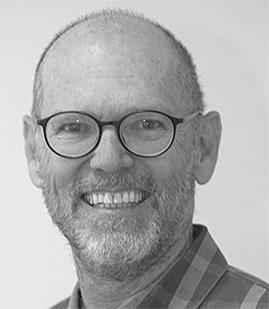
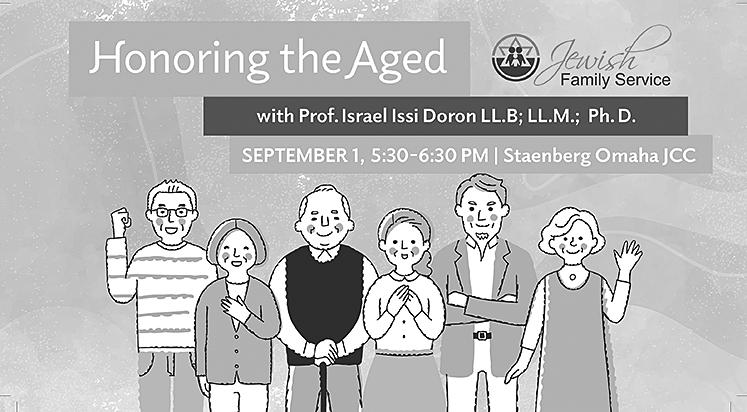
The Jewish Federation of Omaha (JFO) will welcome internationally recognized gerontologist and elder law scholar Prof. Israel (Issi) Doron for a presentation titled Honoring the Aged on Tuesday, Sept. 1, at 5:30 p.m. in the Goldstein Community Engagement Venue on the JFO campus.To register, please email tdrelicharz@jfsomaha.com
Professor Doron, a professor of gerontology at the University of Haifa and former dean of the Faculty of Social Welfare and Health Sciences,
A past president of the Israeli Gerontological Society, his research has helped shape conversations about aging, elder law, and social policy in Israel and internationally. His presentation will explore the enduring Jewish value of honoring older adults while examining contemporary issues surrounding aging, independence, and the role of families and communities in supporting later life.
As populations continue to age worldwide, Professor Doron's perspective offers timely insights into fostering communities that value
The presentation is made possible through a grant to Jewish Family Service from the Shirley & Leonard Goldstein Supporting Foundation.
BARBARA FRANK LASHINSKY
Barbara Frank Lashinsky passed away on July 29, 2026 in Omaha. A private family service was held.
She was preceded in death by parents, David and Minnie Frank and husband, Jay Lashinsky.
She is survived by daughters: Beth Goodwin, Debbie Winograd and Laura Goldstein; six grandchildren; and five greatgrandchildren.
EMILIA ROSE OKH
Lyndsi and Nathan Okh of San Diego, CA, announce the June 29, 2026 birth of their daughter, Emilia Rose.
Grandparents are Randi (Friedel) and Alan Jablin of Scottsdale, AZ; Stella and Roman Okh of Fremont, CA; Lisa and Dave Sherman of Chandler, AZ.
Great-grandparents are Phyllis and Leonard Friedel, of blessed memory.
RON KAMPEAS
JTA
A kosher restaurant in Montreal burned to the ground in a suspected arson as Canada continues to grapple with rising antisemitism.
The restaurant, Nöam, burned overnight Friday, July 31 while it was closed for Shabbat.
Canadian Public Safety Minister Gary Anandasangaree posted on X on Saturday that he was “Extremely concerned at what appears to be an arson attack on Nöam, a local kosher restaurant that serves as a hub for Montreal’s Jewish community.”
He continued, “Antisemitism has no place in our societies and we will keep working to root it out wherever it occurs.”
Cameras at a neighboring garage in the neighborhood of Côte-des-Neiges, which has a substantial Jewish population, caught a young man setting the fire, the owner of the adjacent garage told the Montreal Gazette Police told the Gazette it was too early to establish a motive, and the Jewish Telegraphic Agency has yet to receive a reply to its query about the attack.

You are the most powerful influence in your child’s daily life.
Kids who learn

Jewish organizations were careful not to draw conclusions. Nonetheless, they called on the government to do more to address a spate of attacks on Jewish institutions in Canadian cities.
“Governments have allowed a climate of intimidation, disorder and escalating threats to take hold around Jewish communities, leaving Jewish neighbourhoods, institutions and businesses increasingly exposed,” B’nai Brith Canada said on X.
“Targeting a restaurant in this way, regardless of the reason, is an unacceptable attack on our shared values,” the Center for Israel and Jewish Affairs said on the same platform. “This matter must be fully investigated, and we will be following it very closely.”
Last weekend in Toronto, a gunman fired at the windows of one branch of Kiva’s Bagel Bar, an hour after vandals shattered the glass front of another branch of the bagelry. B’nai Brith Canada reported in July that there were 27 antisemitic incidents during the first six months of 2026, compared to 10 in all of 2025.
Read more at www.omahajewishpress.com

u78ANNOUNCEMENT
CLASSIFIED ADVERTISING works! Place your 25 word ad into thousands of Nebraska homes for $225. Contact the Jewish Press or call 1-800-369-2850.
For more information call: 1-800-648-4444
http://www.prevlink.org

HELLO NEBRASKA! Introducing www.nepublicnotices.com, a new public notice website presented as a public service by all Nebraska newspapers. Free access, fully searchable – because democracy depends upon open government and your right to know.
BANKRUPTCY RELIEF! Help stop Creditor Harassment, Collection Calls, Repossession and Legal Actions! Speak to a Professional Attorney and Get the Help You NEED! Call NOW 844-215-3629
AFFORDABLE PRESS Release service. Send your message to over 120 newspapers across Nebraska for one low price! Call 1800-369-2850 or www.nebpress.com for more details.
OMAHA STEAKS Wines. 12 world class wines (and bonus gifts) for ONLY $79.99 (plus s/h.) Save $160! 12 new wine selections plus a FREE $25 Omaha Steaks E-reward card every three months. Cancel anytime. 100% guarantee! Call 1-877-358-2139 and mention code AGJF002 or visit www.GetOSWine.com/sip141
SWITCH AND save up to $250/year on your talk, text and data. No contract and no hidden fees. Unlimited talk and text with flexible data plans. Premium nationwide coverage. 100% U.S. based customer service. For more information, call 1-877-768-5892
FOR SALE – MEDICAL/HEARING
AUDIEN HEARING. The world’s first hearing aid with touchscreen controls. No tiny buttons, apps or prescriptions. 45-day risk free trial. Free shipping. Lifetime support. More than 1.5 million happy customers. Call Audien 1-855-357-0640
FOR SALE - INSURANCE
DENTAL INSURANCE from Physicians Mutual Insurance Company. Coverage for 350 plus procedures. Real dental insuranceNOT just a discount plan. Do not wait! Call now! Get your FREE Dental Information Kit with all the details! 1-855-490-4149 www.dental50plus.com/81 #6258
FOR SALE - SATELLITE
GET DISH Satellite TV + Internet! Free Install, Free HD-DVR Upgrade, 80,000 On-Demand Movies, Plus Limited Time Up To $600 In Gift Cards. Call Today! 1-877-688-4784
HOME SERVICES DOES YOUR basement or crawl space need some attention? Call Thrasher Foundation Repair! A permanent solution for water-
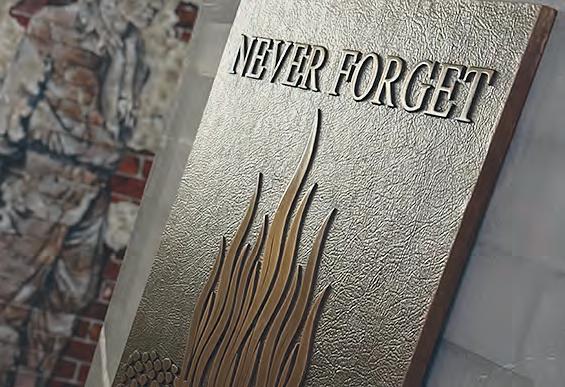
B’nai Israel Synagogue & Living History Museum will unveil a new installation at a special Second Friday Shabbat Service on Aug. 14. If you’ve been to the local shul, you are aware of their growth — renovating and restoring their historic building, continually adding exhibits and expanding their scope. This, their most recent addition, comes in the form of a Holocaust Memorial. A labor of love for designer Jim Fried and museum curator Mary-Beth Muskin, this piece has been years in the making.
While the exhibit has been the work of many dedicated hands at B’nai Israel, from vision through design and construction, it began with Jim. His parents were Holocaust Survivors who shaped their son’s life through the legacy of their engagement and generosity. A generosity of spirit, of time, and of their livelihoods. Jim recalls the years they spent “giving testimony all over the country, creating educational programs to study past (and prevent future) genocides and terrorism, and sponsoring the creation of sculptures and monuments.”
Their actions left an indelible mark on Jim’s spirit. A spirit now dedicated to keeping the memory of those who perished alive. “I remember, as a boy, wondering why I had so few cousins, aunts, uncles, and other rela-
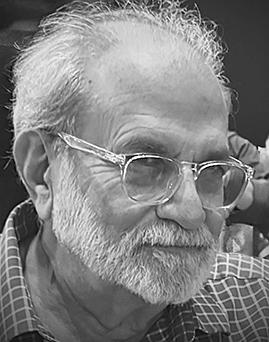
tives compared to my peers. When I first saw post liberation photos of emaciated corpses piled high by the crematoria, I began to understand why. My family lost over 50 relatives their first night in Auschwitz.”
Jim explains that B’nai Israel’s memorial is a postmodern deconstruction of a traditional memorial plaque.
“In addition to being a permanent fixture integrated into the building structure,” he adds, “it will also support ever-evolving multi-media learning tracks that can be customized for visitors, whether students, educators, or the general public. This will keep the exhibit interactive, current, and relevant for years to come.”
For this reason, the memorial’s reveal itself will be an equally nourishing event. Renowned international flutist, Dr. Christine Erlander Beard, will join the commemoration to present a deeply moving and powerful lecture-recital delving into the extraordinary and often haunting role of music during the Holocaust. "The Role of Music During the Holocaust" examines the repertoire banned by the SS Kultur Kammer and what type of music was performed in the camps and ghettos. Those in attendance will be taken through the heartbreaking stories of Jewish composers whose lives were extinguished by the Nazi regime as Dr. Beard exposes how the Nazis twisted music into a weapon of psycho-
logical cruelty, even as prisoners reclaimed it as a lifeline. In the darkest of circumstances, music became a fragile sanctuary: an act of courage, identity, and resistance against a world intent on erasing them.
Jim dedicates the memorial to all the family taken by the horrors of the Shoah. “Their ashes are scattered across the land and in the wind.” He poured his inspiration, his pain, his skill, and creativity into a bronze mold to take shape as something new: A deeply personal and intimate remembrance forged to honor “the millions for whom there are no graves, no headstones, no Yahrzeit plaques. Most of all, it is for my parents, who, through all their trials, are still my greatest heroes.”
B’nai Israel invites all to this special Second Friday Shabbat service on Aug. 14 at 7:30 p.m. for this special memorial dedication, Oneg, and presentation on the music of the Holocaust. For more information or to RSVP to this event, please visit www.cblhs.org/events.