Jewish OBSERVER

By BARBARA DAB
V
ita Rosenberg emigrated to Israel from Lithuania in the former Soviet Union as a small child. Years later she and her then husband were seeking an end to their 12-year marriage and as is the practice in Israel, their first stop was Israeli family court. There they agreed on an amicable settlement. But even though they had married outside of Israel in Cyprus, they were surprised to learn they would also need to obtain a religious divorce through the Chief Rabbinate. The result was an inquiry into Rosenberg’s Jewish identity, a complicated and lengthy process and something she flatly refused to tolerate.
Rosenberg sought help from a non-governmental Israeli organization called Israel Hofsheet (Freedom), headed
by Uri Keidar, the founder and executive director. The organization advocates for the separation of religion and state. Rosenberg’s case is one example of their work promoting the right to civil marriage outside of the rabbinate. “When the Nazis were after her grandparents, no one had questions to ask,” says Keidar.
Israel Hofsheet helped Rosenberg take her case all the way to the Supreme Court and after three years, the decision was made to grant the divorce without the inquiry. “It was powerful because the Supreme Court recognized that the rabbinical court has the authority to grant the divorce without going through the inquiry,” says Keidar. The case took a few more twists and turns but eventually, Rosenberg got what she wanted: a Jewish divorce without the need to clarify her Judaism.
Of note is that in Israel, Keidar says Jews are 80% of the population and of those about 45% are secular, and about another 20-25% who define themselves as traditional but not religious. And while Keidar believes many people are happy to marry in a traditional Jewish ceremony, when it comes to divorce, that is where the problem lies. “Rabbinical courts are courts. They can just decide that you’re not getting divorced. You need to figure it out maybe think about it again.”
In another case, the organization helped the family of a 10-year-old girl who plays basketball on a local team. The case centered around a by-law in the Israeli Basketball Association that says if a coed team is playing against a religious team, the girls must be benched. After a two-year legal bat-
tle, the by-laws were changed. “We are dealing with a lot of gender segregation around the idea that there needs to be an acceptance that ultra-orthodox men can’t share a public space with the opposite sex,” says Keidar.
These examples highlight a fact not known to many outside of Israel, which is that religious institutions are governmental agencies. Top among those is the Chief Rabbinate, but Keidar says it also includes other ministries. And the legal separations apply to all religions in the country, including Muslim Sharia courts, and 14 different Christian courts. “The same power structure isn’t specifically only relevant to Jews,” he says, “In Israel the religious institutions control your personal status.”
The bigger issue, says Keidar, is that
Continued on page 2
By BARBARA DAB
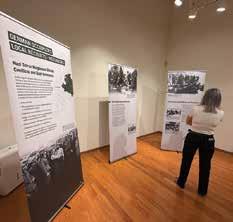
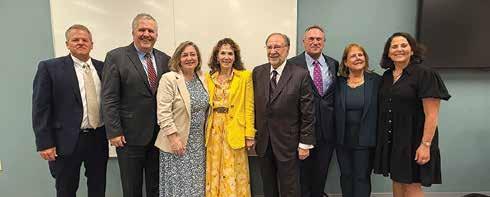
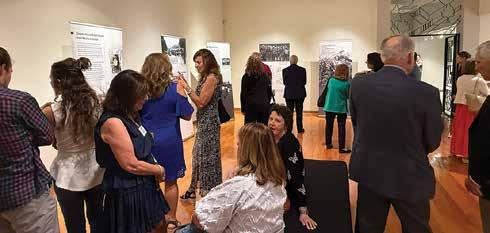
Thanks to the generosity of the Maria and Bernie Pargh Family Foundation, Belmont University premiered the special exhibit “Some were Neighbors.” The exhibit, which was created by the United States Holocaust Memorial Museum, aims to both clear up the misconception and explore the
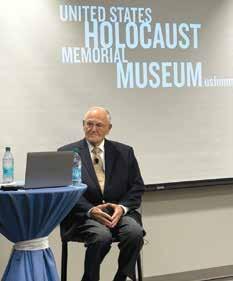
ways friends and neighbors displayed courage and complicity in the face of the unimaginable. Belmont is the first university nationwide to host the exhibit.
Bernie Pargh said, “Because of the over 100 Jewish students on campus, I felt it was a great thing that Belmont wanted to do, and Maria and I wanted to support it.” He was also pleased to provide the opportunity to share this with some people who might not otherwise see it. “We’re going to get 1,000 people through it who might not have ever seen anything in Washington or Yad Vashem, and it’s time to educate people as much as we can.”•

By JUDY ALPERIN
I
n Jewish tradition, Abraham’s tent is a symbol of radical hospitality. Open on all sides, it welcomed travelers from every direction, offering rest, nourishment, and connection. Similarly, the sukkah, though temporary and fragile, becomes a sacred space of gathering during Sukkot—a place where we welcome guests, share meals, and dwell in joy and reflection.
Both the tent of meeting and the sukkah have served as gathering places throughout the generations—spaces where stories are shared and meaningful conversations unfold. Throughout the millennia, Jews have grappled with the issues of the day and found ways to disagree without being disagreeable, even when mutual understanding was elusive.
Our world today presents us with plenty of issues to wrestle with, and I hope that your holiday and Shabbat
tables—and your sukkah—provide inclusive spaces for thoughtful dialogue. Community spaces also serve this purpose beautifully, and we are fortunate that our congregations, JCC, and Jewish Federation offer plentiful opportunities for engagement.
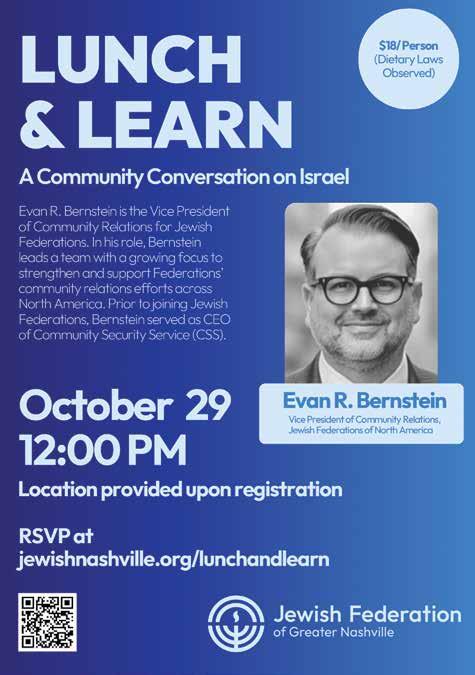
One such opportunity is coming up on October 29, when we welcome Evan Bernstein, Vice President of Community Relations at the Jewish Federations of North America, for a special Lunch &
Learn program. Evan will facilitate a community conversation on the topic of Israel—an issue that challenges and inspires us. We hope you’ll join us and share your perspective.
As we move through this season of reflection and renewal, I hope the High Holy Days were meaningful for you and that the year ahead brings many opportunities to gather in community. Our tent, our sukkah, our community is open to all. •
By JASON SPARKS, CHIEF DEVELOPMENT OFFICER, JEWISH FEDERATION
I
t was amazing seeing #JewishNashville come together in August for our Federation Campaign Celebration featuring Alison Lebovitz. It was a powerful moment where the community joined together to demonstrate the impact of the Federation’s Annual Campaign and to show the importance of communal giving, all while celebrating the diversity of our mishpachah (family). I was particularly struck by Alison’s commentary about being a Jew in the South. It truly is a unique experience unlike anywhere else in the country.
I was reminded about this again when a group of community members convened at the JCC to talk to NewsChannel 5’s investigative journalist Phil Williams as part of his Peabody Award-winning investigation into hate groups and antisemitism, “Confronting Hate.” Remembering all that our community has endured over the decades—from Judge Dan Eisenstein recalling bomb threats and the 1958 bombing of the Nashville JCC, to Fabian Bedne sharing the loss of his brother during Argentina’s fascist regime in the 1970s, to Felicia Anchor and Delilah
Cohn reflecting on life as children of Holocaust survivors, to parents describing the impact of white supremacist rallies through Nashville’s streets—made me realize how many unique perspectives shape Jewish life here. What matters most, though, is that we share this journey together, united even as we bring our own experiences to the table.
And just a week after that, our whole community was together again to participate in the return of our updated and retooled “Phone-a-thon” event. It was powerful to see the leaders of our partner agencies, like Jesse Feld of the JCC, Pam Kelner of JFS, Rabbi Saul of Congregation Sherith Israel, Rabba Daniella Pressner of Akiva School and more all working together with us to help support this community. People from across the generations were asking our community members for help, writing thank you notes and sharing fellowship together for a common cause. And as a result, we were able to raise over $70,000! It truly filled my cup and was a beautiful moment to witness.
As we enter the final quarter of our fiscal year and Annual Campaign, we’re focused on reaching our $3MM goal—a 20% increase over last year. Many gen-
C
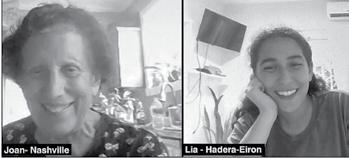
alling Educators: Help Israeli Students with English Fluency through Zoom Conversations. Applications are open for One2One, a Partnership2Gether program that connects educators with high school students in Hadera-Eiron, Nashville’s partnership region in Israel.
From January through March 2026, educators and students meet over a series of 10 Sundays for conversations, activities, and games to improve English fluency while building friendships. “No Hebrew is required, just a willingness to connect,” said Jessica Cohen Banish, Partnership2Gether Director in Nashville, “Students gain confidence in their English, while lasting friendships are built spanning cultures, generations, and oceans.”
Past Nashville participant Joan Mehlman shared, “I’ve really enjoyed using my skills to help someone else while also gaining a friendship and a new family in Israel.”
A stipend is provided upon comple-
tion. To learn more and to apply, contact Jessica Cohen Banish at 615-354-1650 or jessica@jewishnashville.org
Partnership2Gether (P2G) HaderaEiron, Southeast US, and Czech Republic Consortium is proudly funded by Jewish Federation of Greater Nashville and is powered by Jewish Agency for Israel. Through programs, exchanges, home hospitality opportunities, teen summer experiences, and community missions, P2G forges meaningful people-to-people relationships that deepen Jewish identity and strengthen global Jewish unity. •
erous community members have already helped us achieve record results, but the last three months are critical, as nearly half of our campaign typically comes in between October and December.
There will be many changes in the philanthropic space thanks to the passage of the One Big Beautiful Bill signed into law earlier this year. To help our community understand the bill’s impact on charitable giving, Norma Shirk, our Foundation’s Life and Legacy Coordinator, has worked with the Foundation’s Professional Advisory Council to create a special presentation scheduled for November 5th .
And speaking of Life and Legacy, one thing I was forced to confront years ago was the sudden death of my brother. At just 36 years old, he had no end-oflife planning in place, and that wasn’t an experience I would wish on anyone as the executor of his estate. But the truly tragic thing I have witnessed here in my time at Jewish Federation of Greater Nashville, is that his situation was not unique. For every member of our community who passes with a plan in place to fund our Life and Legacy program partners, there are generally six people who pass with no plan in place to fund the institutions they cared
Continued from page 1 a civil society bound by religious rules is not conducive to modern democracies. “The idea in general that the way our country holds these discussions just do not exist in Western democracies. They do not exist outside of theocracies like Iran, Saudia Arabia, Afghanistan, Pakistan, which isn’t a good group to be part of.”
In addition to addressing rules governing divorce, and gender equality, Israel Hofsheet advocates for equal mandatory military service, public transportation on Shabbat, and conducting civil wedding ceremonies, among other things. “As an organization we push for policy change,” says Keidar.
Israel Hofsheet is just one partner in an initiative through Jewish Federations of North America, called the Israel Religious Expression Platform, or iRep. The Jewish Federation of Greater Nashville is one of the 34 US Federation partners that supports the work of iRep to help support and promote respect for more diverse expressions of Judaism in Israel. According to Michal Becker, chief impact officer for the Jewish Federation, “It’s about giving Israelis access to alter-
about, and that is always heartbreaking. Worse yet, it puts their family members in the difficult position of having to make decisions that they would normally not have to make. While it isn’t a topic that most people want to even think about, it is one of the greatest gifts that you can give your family and community – the gift of planning your affairs in the event of your passing. And at least from the standpoint of Life and Legacy, it is so easy to set those plans up.
Already millions of dollars have been directed to synagogues and agencies that we support – it has been a blessing that will continue for many years. If you haven’t made the time to make these decisions, start this New Year off by addressing that. And if you aren’t sure if someone in your family has a plan in place, ask them. It’s so much better to know than to find out later that their wishes haven’t been honored. As always, we are here to assist, and you can help the community and your family while leaving a legacy that honors their life. I wish all of you a sweet and happy New Year, and look forward to closing our 2025 Annual Campaign together thanks to the overwhelming generosity of our community. •
natives religious services.” The goal is to help create a broader more inclusive society in Israel. “At the end of the day, people don’t have the freedom of choice to mark these very important times in their lives.”
Becker says the problems being addressed by iRep are not universally known to the Jewish communities outside of Israel. She says since social services in Israel are all publicly funded and administered, people are bound by religious views they may not hold. “If the government decides the only way to be Jewish is ‘religious,’ meaning orthodox, which it is, the pluralist ideas don’t have funding.” She adds that since Israelis do not have a culture of philanthropy, like in the US, it is dependent on Jewish communities outside of Israel to help. She says this is precisely why the Jewish Federation of Greater Nashville supports iRep through its grants program. The help is coming and Keidar and while he says Israel currently has the most religious government in its history, he is optimistic about the future. “It’s a seismic change,” he says, “At the moment what we’re seeing is the beginning of a long process in which we are setting the record straight, and how things should evolve.” •
Last month, a group of students at Hume Fogg Magnet School encouraged their fellow students to wear keffiyahs to school. The messaging for the event included the image of a keffiyah covering the entire map of Israel.
When Jewish Federation of Greater Nashville CEO Judy Alperin learned of the situation, she contacted multiple parties at Hume Fogg to determine as accurately as possible, how the situation unfolded and to learn more about who specifically was involved. The Jewish Federation’s top concern was the assurance that Jewish students would have spaces where they were safe and comfortable in the school and that no student felt pressured to participate.
Additionally, it was important to discuss opportunities for nuanced and accurate student conversations and education about Israel. We want to ensure that all our local schools are places where Jewish students are comfortable learning and that they can fully express their identities, including their support for the State of Israel. It is important that conversations about Israel and Zionism in our community’s schools are fact based, fair, and nuanced, allowing for critical thinking and understanding rather than indoctrination.
After the initial conversations, Judy, along with other Federation staff members, attended a meeting with the principal and other administrators of
Publisher Judy Alperin, CEO Jewish Federation of Greater Nashville
Editor Barbara Dab
Editorial Associate Emma Canter
Advertising Manager Carrie Mills
Layout and Production Tim Gregory
Editorial Board Frank Boehm (chair), Teena Cohen, Scott Rosenberg
Telephone 615/356-3242 E-mail barbaradab@jewishnashville.org
The Jewish OBSERVER (ISSN 23315334) is published monthly for $36 per year by the Jewish Federation of Greater Nashville, 801 Percy Warner Blvd., Nashville, TN 37205-4009.
Periodicals postage paid at Nashville, TN.
POSTMASTER: Send address changes to THE JEWISH OBSERVER, 801 Percy Warner Blvd., Nashville, TN 37205
This newspaper is made possible by funds raised in the Jewish Federation Annual Campaign.
The Jewish OBSERVER is a member of the American Jewish Press Association and the Jewish Telegraphic Agency.
While The Jewish OBSERVER makes every possible effort to accept only reputable advertisers of the highest quality, we cannot guarantee the Kashrut of their products.
The views and opinions expressed in The Jewish OBSERVER are not necessarily endorsed by Jewish Federation of Greater Nashville or its partners.
Hume Fogg, as well as members of Metro Nashville Public Schools administration. They engaged in a productive conversation to better understand what happened, and to identify areas for improvements to school policies and procedures.
And just a few days later, Judy met again with administrators at Hume Fogg, bringing with her members of the region’s Anti-Defamation League. The goal of this meeting was to educate further about antisemitism and to create a plan to ensure these types of situations do not happen in the future.
While there was a rapid outpouring of emails and phone calls by concerned community members, we are pleased to share that the administration at Hume Fogg and Metro Nashville Public Schools took immediate action to engage the Jewish Federation in working towards a resolution. Everyone involved is first and foremost focused on the well-being of our students and dedicated to moving forward in partnership together.
This situation served to highlight the consistent need for the Jewish community to build and maintain relationships with our partners and allies in the
The Jewish Observer is committed to making corrections and clarifications promptly. To request a correction or clarification, call Editor Barbara Dab at (615) 354-1653 or email her at barbaradab@jewishnashville.org
The Jewish Observer welcomes the submission of information, news items, feature stories and photos about events relevant to the Jewish community of Greater Nashville. Letters to the editor must be no longer than 250 words, and op-eds must be no longer than 750 words. We prefer e-mailed submissions, which should be sent as Word documents to Editor Barbara Dab at barbaradab@ jewishnashville.org. Photos must be high resolution (at least 300 dpi) and should be attached as jpegs to the e-mail with the related news item or story. For material that cannot be e-mailed, submissions should be sent to Barbara Dab, The Jewish Observer, 801 Percy Warner Blvd., Suite 102, Nashville TN 37205. Photos and copy sent by regular mail will not be returned unless prior arrangement is made. Publication is at the discretion of The Observer, which reserves the right to edit submissions.
To ensure publication, submissions must arrive by the 15th of the month prior to the intended month of publication.
For advertising deadlines, contact Carrie Mills, advertising manager, at 615-354-1699, or by email at carrie@nashvillejcc.org.
greater community. Judy Alperin met recently with Nashville Mayor Freddie O’Connell to discuss the events at Hume Fogg, and to continue to emphasize our community’s need to focus on security.
As we begin a new year, we are focused on our future and ensuring the needs of our local Jewish community are met, as well as supporting our Jewish family abroad and in Israel. An upcoming highlight will be a Lunch and Learn program with Evan Bernstein, the vice president for community relations for Jewish Federations of North America.
Prior to joining Jewish Federations, Bernstein served as CEO of Community Security Service (CSS). While there he developed formal partnership agreements across the Federation system. In his role, Bernstein leads a team with a growing focus to strengthen and support
Federations’ community relations efforts across North America.
Bernstein will be facilitating a community conversation about Israel and the current situation. He will be addressing some of the issues recently expressed by the Nashville Social Justice Round Table in the Jewish Observer’s September issue. It is our belief that communities thrive best with open and honest dialogue, providing an opportunity for members to listen with compassion and curiosity.
The Lunch & Learn is scheduled for Wednesday, October 29th at noon and is open to the entire community by RSVP. There is a cost of $18 per person for lunch. And the JCRC has many meaningful events planned in the coming year. For more information contact Judy Alperin, judy@jewishnashville.org. •
Ihave been a driver for Shalom Taxi for over 3 years. During that time, I have made numerous friends with my riders. These seniors have no other way to get to doctors’ appointments, shopping, and getting to social events at temples and the JCC. They all have expressed such disappointment that this wonderful and vital service has been terminated. This service has been provided for many, many years. It was so sad telling these wonderful seniors that they will
Iam writing in response to the opinion piece in the September 2025 Observer called “a path to peace in Gaza…an open conversation on the Jewish community”, since it invited discussion.
The authors of this piece miss several key facts in their effort to critique Israel in its war with Hamas.
1) Nowhere in the opinion piece do the authors demand Hamas release the hostages. Why is that not the focus? Rather the author’s focus on criticizing how Israel’s prosecution of its war with Hamas endangers peace, yet provide no specifics to what they find objectionable, nor any recommendations.
2) Criticizing the “current Israeli government” is by definition criticizing “all of Israel” since Israel currently has a unity government.
3) The International Holocaust Remembrance Alliance’s definition of antisemitism is “applying double standards by requiring of Israel a behavior not expected or demanded of any other democratic nation…” There are dozens of active wars in the world right now, but the authors are singularly focused on Israel being the perpetrator of the devastation in Gaza during its fight with Hamas - who are brutal terrorists and
not have this service any longer. Yes, they only pay $5.00 per ride, and it is a money losing operation, BUT sometimes it is worth the expense to provide such a worthwhile service.
I am putting this out there in the hope someone will see the benefit of this vital service and underwrite and support and continue to provide this service to our wonderful seniors.
Larry Ellis, Cherokee Park
murderers - to both Israelis as well as their own civilian population. Israel has provided tons of aid to Gaza – all while fighting an enemy which hides behind civilians, who steals aid from its own people, who lie about civilian deaths, and who brutally mistreats the Israeli hostages it has taken. Israel warns the population before making attacks to minimize civilian casualties. Israel is prosecuting the war in the most moral manner it is able. Making an emotional appeal to “Jewish Values” does not remove the double standard in the criticism.
4) Lastly, the authors misplace the audience for their requested conversation - it should be with Hamas who is holding 48 Israeli hostages and has the power at any minute to end the war - not their fellow Jews in Nashville.
The conversation needed is simple: Hamas must surrender and free the living hostages as well as return all bodies of murdered hostages to Israel. History has shown that defeating an enemy and having them surrender is how wars successfully end, and peace begins.
Respectfully,
Michael Hershey Lebanon TN
Learn more about the Jewish Federation of Greater Nashville at www.jewishnashville.org
By ZIV SHEMESH, COMMUNITY SHLICHA
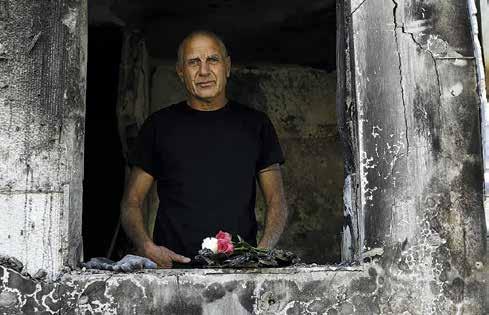
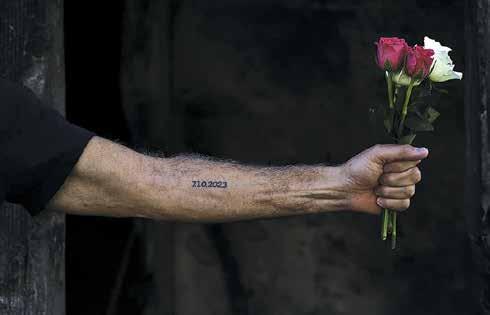
The events of October 7 shook the world to its core, leaving people everywhere with the sense that they could not remain silent — that they had to act. Out of this deep need to bear witness, photographer Erez Kaganovitz created a powerful exhibition that the Federation is bring to our community for a full year, traveling between our organizations as a living testimony and reminder.
The exhibition will open on October 5, marking two years since October 7, and will move from one organization to another throughout the year.
In Erez’s words:
Since the horrendous and devastating attack on Israel my world, like many
others in Israel and around the world stopped. It seems like not only Israel won’t be the same after this brutal attack but also the whole Jewish world.
Since the October 7th horrific attack, the incitement on the streets and social media fueled antisemitism and misconceptions about Israel and the Jewish people at large.
As an artist and a photojournalist, I feel it’s imperative to fight back against these misconceptions and rising antisemitism by showing the human side of Israel. From my experience, highlighting the human elements of Israel can provide a reminder of what Israeli society is all about and what we are fighting for.
To do so I’ve created the Humans of
October 7th exhibition
In the last two years, the horrific October 7th attack, combined with the northern front along the Lebanese border, has left a deep and lasting impact on Israeli society.
In the last two years, hundreds of thousands of Israelis were displaced, scattered across the country. Millions endured constant alarms, rocket attacks, and drone threats, all of which put their lives in great jeopardy. The trauma, anxiety, and loss of life Israelis have experienced over the past two years have taken a heavy toll.
Yet, in the face of this devastation, the resilience, strength, and hope of the Israeli people shine through. Despite the hardship, they are choosing life and
have begun the long process of rebuilding Israel.
As an artist and photojournalist, I feel a deep responsibility to honor the stories of hope, resilience, bravery, and heroism shown by countless Israelis who stood up against terror on and after October 7th. In my experience, highlighting these human stories offers a powerful and moving reflection of what Israeli society truly represents. This was one of the core motivations behind the creation of the Humans of October 7th project and exhibition.”
Ask your synagogue to let you know when the exhibition arrives.
To request the exhibition for your organization, feel free to reach out to me by email, ziv@jewishnashville.org. •












• • •
FO R SA LE BY TH E PARG H TE AM


SCAN TO VIEW OU R FE ATURED PROPERTI ES








By BARBARA DAB
F or the last four years, Nashville has been home to its very own Moishe House, a program that provides homebased Jewish experiences specifically aimed at young adults looking for community in a relaxed, fun atmosphere. The home is situated in the Cleveland Park area of East Nashville, and three people at a time live there, providing programs and maintaining the home atmosphere. MoHo, as it is locally known, recently welcomed three brand new residents: Mason Solomon, Hannah Fahn, and Emma Canter, who is joined by her partner Char Cooper.
The Jewish Observer asked each of the new residents to share something about themselves and their plans for Moishe House.
Mason Solomon:
Tell us a little about yourself. Where you’re from, education, etc:

I grew up in New York City, then I went to Bard College as a film production major before moving to Pittsburgh. After living in Pittsburgh for two years and teaching preschool at the JCC, I moved to Nashville in August of 2023 to further my career as a singer-songwriter.
What inspired you to join Moishe
House:
When I’m not teaching, filming, or playing music, I’m usually planning events. So being a to live in a house where I get to do that in a Jewish context really appealed to me.
What is your day job:
I’m a musician (see MASON.) and videographer who specializes in concert films/documentaries.
What are your goals for your time at Moishe House:
My goal is to continue to provide consistent, engaging programming to those that know MoHo while also trying to expand our reach into the Jewish side on the music scene in Nashville.
Any other fun information about yourself you want to share:
I love hooping at the JCC and if anyone ever needs a babysitter, feel free to get in touch!
Hannah Fahn:
1. Tell us a little about yourself. Where you’re from, education, etc.
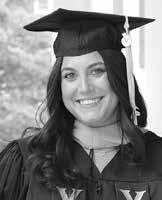
I was born and raised in Los Angeles, California in a very loving Jewish community. I studied Community and Applied Psychological Studies with a minor in Elementary Education at the University of Miami and graduated in 2022. I moved to Nashville in August of
2023 for my Master of Education in Community Development and Action from Vanderbilt Peabody College and graduated in May of 2025. I am extremely passionate about engaging with the Jewish community.
2. What inspired you to join Moishe House?
Throughout my masters program, especially after October 7, I found myself really missing a jewish community. I found Moishe House and it quickly became home away from home. It provided me with the community I needed in Nashville. I want to share this with other young people in Nashville, and hope to be that space for Jewish Nashville.
3. What is your day job?
I am currently looking for a job in the non-profit sector. I am working for two non-profits part time for outreach and engagement. The nonprofits are Aleph Institute and Team Protect.
4. What are your goals for your time at Moishe House?
I hope that Moishe house can be a place where people feel safe, supported, empowered, and inspired. I hope to help people connect with the Jewish Community, make new friends, and have fun while doing so!
5. Any other fun information about yourself you want to share?
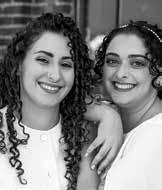
Fun fact: I am an identical twin!
Emma Canter:
1. Tell us a little about yourself. Where you’re from, education, etc.
By EMMA CANTER
NowGen is excited to present our new co-chairs for this year. These three volunteer leaders are stepping up to guide NowGen through 5786, and they are hitting the ground running. Please join me in welcoming Ellie Shafron, Sam Herb, and Haley Fried to NowGen’s long lineage of talented lay leaders.
Each of them brings unique talents, expertise, and passion that will continue to drive NowGen forward this year. Together, they represent the very best of NowGen. I can’t wait for you to get to know them in their own words!
Of course, no new beginning would be complete without thanking the outgoing co-chairs whose dedication shaped NowGen over the past year. Liran Federmann, our Rosh Graphic Design; Tali Izhaky, whose infectious energy inspires everyone around her to do their best (mazel tov on starting your first year of law school!); and Myles Hoffman, often found backstage at the coolest shows in Nashville or on a flight to the next adventure. Your creativity and leadership leave a lasting mark on our community and set a great foundation for next year’s programming.
If your organization is interested in partnering with NowGen or connecting more Nashville Jews in their 20s and 30s to your work, reach out to Ellie, Sam, Haley, or me. We’d love to make it happen!
Here’s to a year of new ideas, fresh energy, and new and old friendships.
Ellie Shafron
I’m from Cleveland, Ohio (Shaker Heights to be exact), and I am an elementary school teacher in MNPS. I got involved with NowGen through living in
I was born and raised in Chicago, and then attended Brandeis University, where I studied Psychology and Gender Studies before moving to Nashville.
2. What inspired you to join Moishe House? Moishe House took us in immediately when we moved to Nashville. After our first Shabbat dinner at the house, we couldn’t wait to go back for more. Moishe House is a home away from home for so many people, and I wanted to be a part of creating this warm and welcoming space.
3. What is your day job?
When I’m not planning events for Moishe House, you can probably find me planning events for the Jewish Federation of Greater Nashville! I work in Communications and Engagement on the Federation team, where I get to spend my days helping to build and support this community.
4. What are your goals for your time at Moishe House?
My goal is to continue the legacy of openness and inclusivity in our house, and to provide a space where young Jews can explore what it means to live Jewish lives in a Jewish home.
5. Any other fun information about yourself you want to share?
I have a bunny named Archie. •
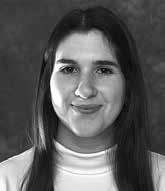
Nashville’s Moishe House for the last two years. Since the opportunity arose, I’ve always been a leader in my Jewish community from youth groups to Hillel, then Moishe House and now my local Federation. Jewish leadership has always been an important piece of my life. I am excited about experiencing more pockets within the young adult Jewish community of Nashville and branching out to new friends. As part of the NowGen board, my goal is to continue curating events to the community’s desires and bring more fun and new events for the coming year.
is to start an annual tradition for Jewish Nashville—something fresh that we haven’t done yet wink wink.
Haley Fried I’m an occupational therapist from New Orleans! I got involved with NowGen through-the one and only-Michelle Biesman and stayed involved because of the many, additional friends I made. I was involved with the New Orleans and southern regions for BBYO and NFTY, and I served as NFTY Southern programming VP and president. I was the president of my uni -
versity’s Chabad, and have been an active participant in Jewish communities in each city I have lived in.
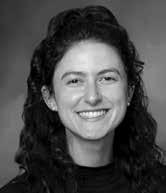
I am excited to be a part of fostering Jewish connections during a time when it can be hard to be Jewish. It is my goal to help others discover and be a part of the vibrant Jewish community we have in Nashville! •
By TONI JACOBSEN
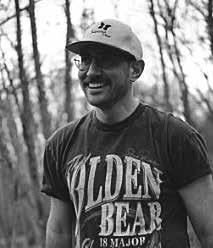
BSam Herb I’m from Jacksonville, Florida— DUUUUUVALLLLL— these days I do a little of this and a little of that, but mostly content strategy and songwriting. I first got involved with NowGen at a Hanukkah party at the 5 Spot in 2016 or 2017, and I’ve been rockin’ and rollin’ ever since. My Jewish leadership experience goes back to being a song leader in NFTY, serving as the NFTY advisor for Nashville at Congregation Micah, and more recently curating vibes at most Jewish events. This year, I’m excited to keep pushing forward in both my golf and career journey while also helping to build the Jewish community here in Nashville. One of my big goals
eads for Israel is an interactive experience where people come together as a group to create a strand of beads that represent their feelings, thoughts, hopes and dreams for Israel. This program was created after the October 7th massacre of Jews in Israel. We have a similar program called Beads of Courage that serves individuals who have lost a loved one.
ently, and not everyone likes to verbally process the event and related feelings. But just because someone does not want to talk, it doesn’t mean they are not processing in another way.
Talking about traumatic experiences can be difficult and Beads for Israel provides an opportunity for individuals to come together for a common cause, create a strand that holds a unique meaning for themselves and not have to openly talk about the trauma.
Everyone responds to trauma differ-
During the Beads for Israel group experiences, I have witnessed people who have been deeply affected by the October 7th attack come together and immediately express relief for the opportunity to be in the same room with each other. A tear, a clearing of the throat or even silence is understood. Each participant is in charge of what significance they assign to each bead and chooses whether to share and how much to share. The Beads for Israel experience is similar but different for everyone just like the act of processing is unique.
JFS strives to meet people where they are which can sometimes look like a play therapy session with a child Continued on page 8




•Forgetting re cent conversations or events?
•Struggling with ever yday tasks like cooking or cleaning?
•Feeling confused about time or environmen t?
To learn more, call 615-258- 6364 or visit ClarendaleAtBellevuePlace.com.





By SHERI ROSENBERG
F
ood brings people together…Holidays bring people together…combine them together to make a meaningful program!
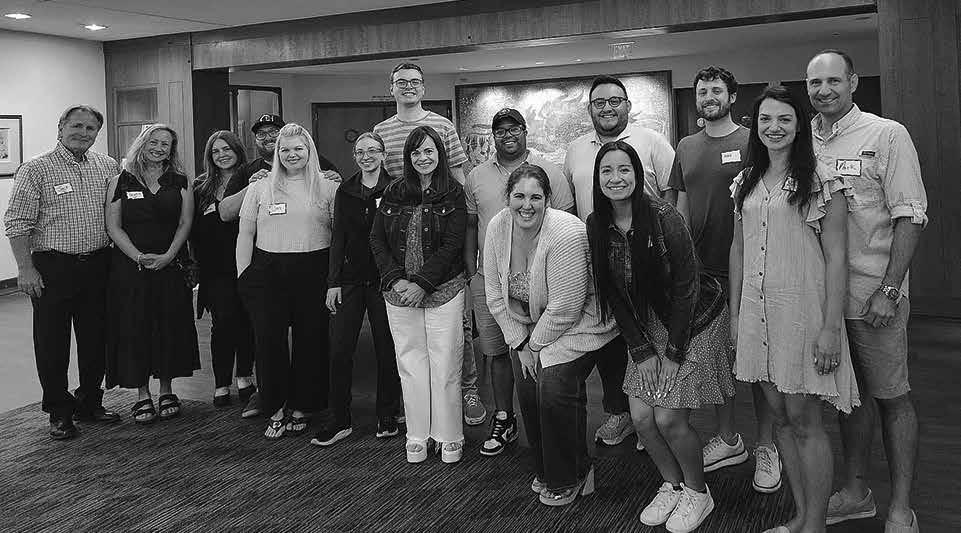
As a congregation, it is The Temple’s goal to create an inclusive and educational environment while also helping to create community. The Temple brings together interfaith couples to celebrate and discuss both Jewish and Christian holidays. Through this initiative, couples are given the chance to learn more about holiday traditions, as well as the opportunity to share their personal experiences and customs. Food being a connector and bringing people together, quality and deep conversation has further enhanced the atmosphere of the program.
Couples do not need to be Temple members to participate in this program. Married, engaged, and dating couples are able to join in on this meaningful experience. From Sukkot to Christmas
Continued from page 6 addressing an issue without using words, a support group for people who need to talk through their unique situation or a social media post containing helpful information for someone who wishes to remain anonymous.
If you or someone you know would like to participate in Beads for Israel or
to wedding planning conversations and panels, quality discussions and sharing about your own relationship is always on the menu. We end the year by baking challah together as a group and discussing the couple’s relationship with Israel as an interfaith couple.
Jodi Backalar shares, “Being a part of the interfaith cohort through The Temple is one of our favorite parts of our life in Nashville. The community has been very welcoming, and it is really meaningful to connect with other couples over similar experiences that are unique to interfaith relationships.”
This program has been occurring since 2021, with four cohorts that have completed the year of dinner programs. This coming month, there will be a meet up for the previous cohorts to meet and connect with one other.
Participant Andrew Grote says, “Being a part of this interfaith couples cohort has been a great experience. We have really enjoyed meeting others living a similar experience to us, which has
Beads of Courage (for grief), please contact me at tonijacobsen@jfsnashville. org or 615-354-1672 to let me know so I can send you an invitation to the next event.
Toni Jacobsen is the clinical director of Jewish Family Service of Nashville. She recently celebrated her 25th anniversary with JFS and was honored with this year’s Chesed Award.
helped create perspective. Sheri has also been remarkably welcoming since the beginning. We’re looking forward to the next time the group is together and highly recommend this program to all interfaith couples. ”
We are looking forward for our fifth
year with new and exciting elements to enhance the experience. If you are interested in being part of the 20252026 cohort of Conversations and Culinary Connections session, please reach out to Sheri Rosenberg (sheri@ templenashville.org). •
By ALYSSA HECKMAN
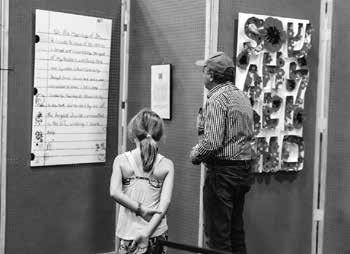
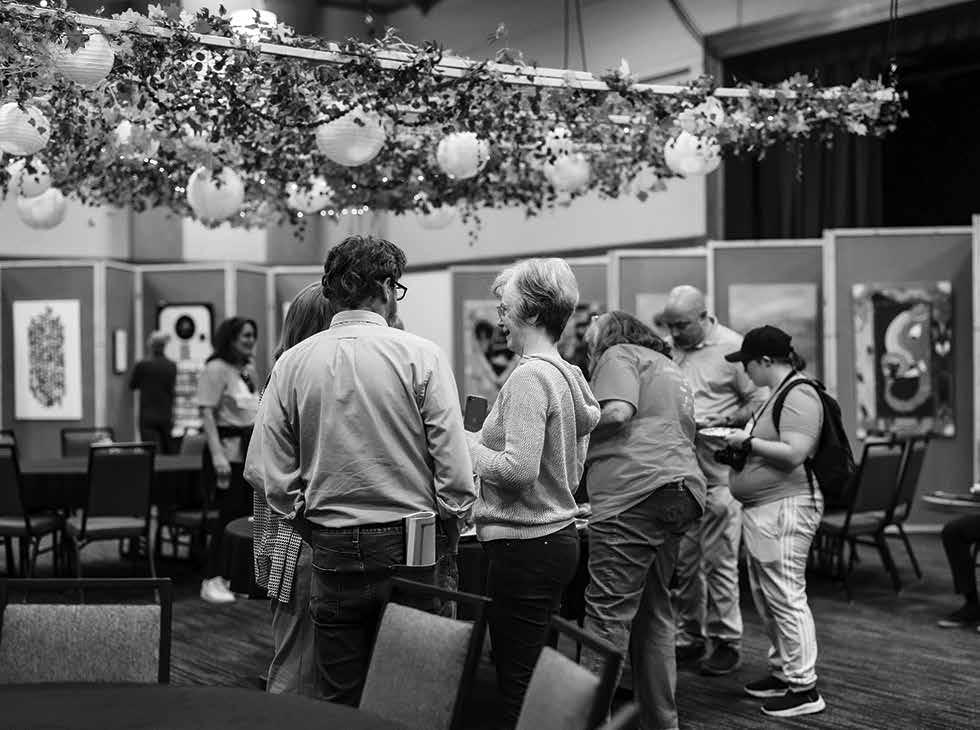
The Gordon Jewish Community Center is proud to once again host its annual Sukkot community art exhibit, Under One Roof, from October 7–12, 2025. This year’s theme, Kavod: Respect Makes a World of Difference, highlights the Jewish value of honoring the dignity of every individual and the role of respect in strengthening our communities.
For this exhibit, organizations across Nashville have collaborated to create original art panels that will be displayed under the Gordon JCC’s sukkah. Each piece reflects a unique perspective, yet together they tell a collective story of unity, compassion, and community. The sukkah itself becomes a gallery where visitors can experience how art builds bridges and sparks meaningful dialogue.
The community is warmly invited to Reception Night on Wednesday, October 8, beginning with the Monthly Artist Reception at 6:00 PM, followed by the Under One Roof Reception at 7:30 PM. Guests will hear directly from artists, community leaders, and participants as they share the inspiration
behind their work.
As part of the week’s programming, the J will also host special yoga classes under the sukkah, offering participants a unique way to combine movement, mindfulness, and art in one shared space. Classes will take place on Friday, October 10 at 9:00 AM and 10:15 AM, and on Sunday, October 12 at 2:00 PM. Members are welcome to bring a guest and enjoy the experience together.
The art exhibit is free and open to the public. All are welcome to celebrate Sukkot, explore the artwork, and reflect on the theme of respect as a guiding value in creating a more compassionate world. •
By RABBI MARK SCHIFTAN AND DR. FRANK BOEHM
Mark: Frank, as we once again approach Yom Kippur, the Day of Atonement, we are made aware yet again of the tenuous nature of each of our existence. In fact, the words of the Hebrew prayerbook ask that we acknowledge this fact of our mortality. Looking at the start of a New Year, the prayerbook offers this starting question for all of us to ponder: Who shall live, and who shall die? While none of us knows the answer to that question, one of the benefits of aging, I believe, is the comfort that comes through having lived a longer life than many have enjoyed in the generations that preceded us. In that sense, at least, getting older is a blessing.
Frank, what are your thoughts about this?
Frank: Mark, now that I am in my mid-eighties, I have become more aware of the fact that while there are certain disadvantages in growing old, such as illness and frailty of both body and mind, there clearly are quite positive aspects to the aging process, the most important of which is that of wisdom that comes with growing older.
There is a saying that good judgement comes from experience and experience comes from bad judgement. As we age, we learn much from the many mistakes we make in our youth and middle age and from this learning we become wiser. I am at a stage in my life where I make few mistakes. I am a wiser person for all that I have experienced over the decades of my life.
The fact that we become wiser as we age is also confirmed by the fact that our brain’s frontal lobe, the largest of the five lobes of the brain, does not fully mature until our mid to late twenties. The frontal lobe, among other functions, influences complex thought processes and personality and controls a wide range of higher-level functions that shape our interactions with the world, including judgment, abstract thought, and creativity. The wisdom that comes with aging, therefore, starts at an early age due to physiological maturation, and later in life due to a maturation process influenced by all we experience during our lives.
Mark: Frank, I agree, the greatest gifts of aging are the wisdom accrued by actual experience, the lessons learned after living through decades of life, and the perspective offered by reflecting back on both of those — the crucial wisdom obtained, combined with the valuable lessons learned— that put things in a broader understanding of the meaning of our days and the purpose of our time upon this earth. That accrual of wisdom, life’s lessons, and the perspective lens offered by both helps calm us and guide us to an understanding of the rhythm of life, and of each of our lives, in a manner in which, perhaps, we cannot account for nor comprehend in our younger years. In this sense, at least, there is comfort in our aging that eludes us in our youth.
This, I believe, is what the biblical author of Ecclesiastes meant, when he wrote of the rhythm of life, the flow of the seasons, and the passage of the years:
To everything there is a season, and a time for every purpose under Heaven.
A time to be born, and a time to die,
A time to plant, and a time to uproot what is planted;
A time to tear down, and a time to build up;
A time to weep, and a time to laugh,
A time to grieve and a time to dance;
A time to throw stones (in anger), and a time to gather stones (together once again);
A time to embrace and a time to let go;
A time to seek, and a time to surrender;
A time to keep, and a time to return back once again;
A time to tear (the garment in mourning), and a time to sew it up, once again;
A time to keep silent, and a time to speak (yet again).
These words of Ecclesiastes are often misunderstood, as a type of resignation or malaise. But the writer’s intention and purpose was the exact opposite, which only the mature-of-years can understand and appreciate.
Rather than expressing resignation at the inevitable passage of time and of our lifetimes, the author was offering his words as a message of comfort, as an affirmation that with the accrual of years comes the understanding that the universe has an order; that life, indeed, has a rhythm.
And with the benefit of that acquisition of wisdom, we might have a glimpse into our place and our role in that rhythm, that order, that flow. Therefore, we might derive tremendous solace in acknowledging our privilege in reaching this time in our lives.
Frank, as a rabbi, a husband, a father, that accrual of wisdom over the years has helped me frame things with more patience, more insight and more calm perspective in every arena of my life, both personal and professional. It has made me better: more understanding, more empathetic, more forgiving. Has that been a similar experience for you?
Frank: Mark, we totally share that experience. The wisdom that comes with aging is truly a wonderful benefit of growing old. It is my hope that those of us gifted with reaching later years of life will understand that despite the increase in frailty of mind and body, this blessing of wisdom that comes with growing older will be viewed as a uniquely beautiful aspect of the aging process. It is written in our Jewish prayer book that, “Birth is a beginning and death a destination.” It is my firm belief that this trip is made sacred and meaningful by the fuel of wisdom. •
Rabbi Mark Schiftan can be reached at mschiftan@aol.com
Dr. Frank Boehm can be reached at frank.boehm@vumc.org

…so that it’s not just a fairy tale.
Rabindranath Tagore (1861-1941) Poet-Writer-Composer-Philosopher
Warning: People, if you don’t start planning for your Happily Ever After NOW, you might end up adrift in the stormy seas of …, PROCRASTINATION!
By LORETTA SAFF
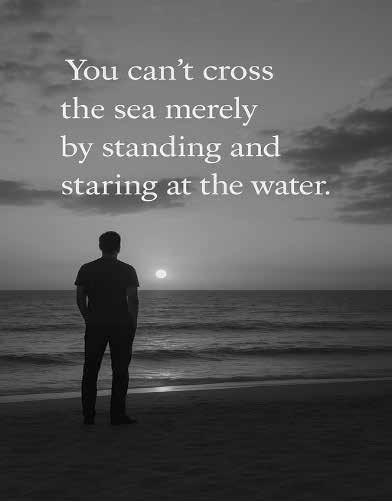
Be honest, raise your hand if you’ve ever waited until the last minute to do something. Now, imagine your last-minute attempt at crossing an ocean in a tiny rowboat… while wearing a blindfold!
Then, halfway along you realize you forgot the oars back on the dock! Yes, that’s procrastination in action.
When you put off planning your non-financial future, sometimes it can feel like you are in a Retirement Time Warp
Week 1 – Smooth Sailing
You’ve turned in your office keycard, hoisted the sails, and the breeze is perfect. You sleep in, brunch at your leisure, and binge your favorite shows. It’s all sunshine and calm waters.
Little do you know; indecision is just over the horizon.
Week 2 – Choppy Waters:
You straighten closets, organize the garage, and check expiration dates on the spice bottles and cans in the pantry…, but it’s only Wednesday.
Suddenly, you realize this “easy breezy not-working-anymore cruise” has sprung a leak. You are bored. You grab the life preserver labeled “Netflix” and cling to it for dear life.
Week 3 – The Fog of “Now What?”:
Forty years of dreaming about freedom, and here you are, staring at an endless ocean wondering, “What happened to happily-ever-after?”
That’s when the guilt sets in. You begin to realize you could have joined that perfect exercise class, set up volunteer connections, and even learned a new skill. But, no, you had to spend all that time polishing the deck of your procrastination dinghy.
Here’s a two-part Life Jacket for you to bring along to avoid wasting valuable time when you do get to shore:
1 - Chart Your Course (Self-Assessment):
Create a log of what you really value, things like adventure, new learning, gratitude and giving back. Use this as a compass to avoid getting lost at sea, or worse, caught in that whirlpool of indecision.
2 - Pack a Curious List:
List 10 things you’d like to try or learn — you won’t ‘have to’ or promise, just list them without any pressure. Keep this list in your captain’s log (that’s your desk!) and check it often.
That small nudge of curiosity will start your paddling (writing notes) and keep your boat smoothly moving toward your happily ever after. Check these out from the Osher Lifelong Learning Course Catalogue:
• How to Write a Memoir (of your crossing?)
• Beginner Ukulele (to play and sing as you sail?)
• Languages of the World (to be ready for the adventures!)
MORAL:
Embark on your ‘after full-time work’ journey standing at the dock ready to cross the sea. Grab the oars and start rowing! The sooner you start, the smoother the sail.
BON VOYAGE, Loretta loretta@coachingwithloretta.com
NEW ADDRESS: 4515 Harding Pike Suite #112 Nashville, TN 37205
Covenant Capital Group Building
www.bellemeadejewelry.net 615-269-3288
Book Your Appointment Today!
… because your memories matter 479 Myatt Drive, Madison, TN 37115-3024 615-712-9521 • rdschultz@schultzmonument.com
By ERIN WIDES
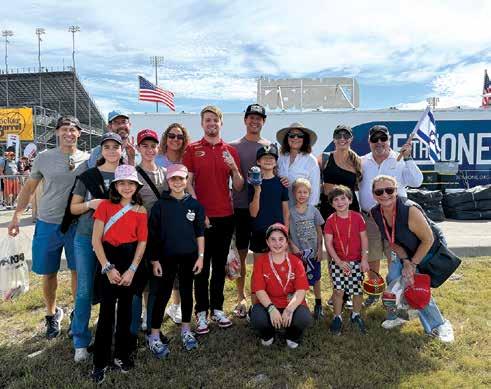
Engines revved, the track was tested, and a proclamation presentation took place ahead of the INDYCAR race in Nashville for the Borchetta Bourbon Music City Grand Prix.
Israeli-born Robert Shwartzman qualified for the Indy 500 and raced in the Borchetta Bourbon Music City Grand Prix, collecting 429 points, edging out Dale Coyne Racing by just one point. In the heart of Music City, Tennessee State Representative Scott Cepicky and
Senator Mark Pody presented Shwartzman with two proclamations on behalf of the Tennessee-Israel Legislative Caucus. The two acknowledged Shwartzman’s historic participation in this race, being the first Israeli driver to compete in IndyCar at the Nashville Superspeedway, stating that this symbolizes the ever-growing ties between Tennessee and Israel through sport and culture.
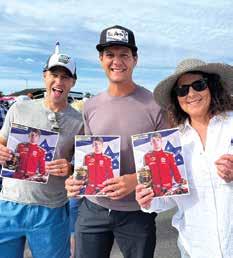
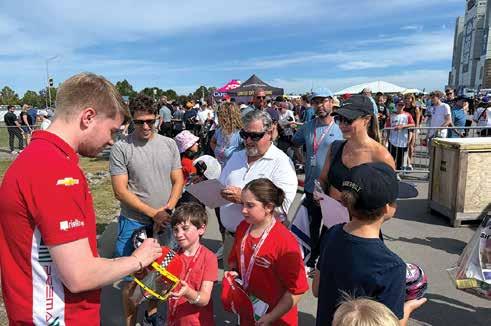
And just before race time, Shwartzman took time to sign autographs and pose for pictures with members of Nashville’s Jewish community. •








Here are the websites for all five Nashville Jewish congregations, with information on services, upcoming events and more:
Congregation Beit Tefilah Chabad, www.chabadnashville.com
Congregation Micah, www.congregationmicah.org
Congregation Sherith Israel, www.sherithisrael.com
The Temple – Congregation Ohabai Sholom, www.templenashville.org
West End Synagogue, www.westendsyn.org
The Observer provides congregational listings of events and services as a complimentary service to the community. If your congregation is not listed, it is because we did not receive the information in time to meet our publication deadline. Please give your rabbi, executive director, or synagogue volunteer a gentle nudge.
Discover the meaning of the holiest day of the year in a warm, welcoming environment that nourishes both soul and body.
On Yom Kippur, Jewish tradition teaches that the doors of heaven are open to all. This year, Chabad of Nashville is echoing that same spirit by opening its own doors wide, welcoming the entire community to join in prayer, reflection, and inspiration.
Yom Kippur, the holiest day on the Jewish calendar, is a time of forgiveness, renewal, and connection. Chabad’s services will weave together the timeless traditions of the High Holidays with uplifting stories and insights that speak to people of every background.
“Whether you’ve prayed all your life or are joining for the first time, you’ll feel at home here,” said Rabbi Yitzchok Tiechtel. “Yom Kippur is about connection — to G-d, to one another, and to the deepest parts of ourselves. Our services are warm, welcoming, and designed to uplift everyone.”
To ensure the experience is meaningful for families, Chabad will also offer a special supervised children’s program for ages 4–12. Young participants will enjoy engaging activities that make the holiday come alive, all in a space close to their parents.
The schedule begins with the solemn Kol Nidrei service on Wednesday evening, October 1 at 6:00 PM, followed by a full day of prayers on Thursday, October 2. Highlights include the Yizkor Memorial Service and sermon at 12:15 PM, the Ne’ilah closing service at 5:45 PM, and a heartfelt Havdalah service to close the holiday.
Immediately after the fast, all are invited to a lavish community Break the Fast meal, featuring a spread of bagels and lox, freshly baked rugelach, cakes, and an abundance of food to restore and uplift the body after 25 hours of fasting. There is no cost to attend, though RSVP is required at www.chabadnashville.com.
All services and the Break the Fast will take place at Congregation Beit Tefilah Chabad, 95 Bellevue Road in Bellevue. Services are conducted in both Hebrew and English, with explanations to ensure everyone can follow along. No membership or tickets are required, and all are warmly welcome.
For more information or to RSVP, visit www.chabadnashville.com or call 615-646-5750
Yom Kippur Schedule at Chabad of Nashville
• Congregation Beit Tefilah Chabad, 95 Bellevue Road Wednesday, October 1 — Yom Kippur Eve
• 6:00 PM — Kol Nidrei Service Thursday, October 2 — Yom Kippur Day
• 10:00 AM — Morning Service
• 11:30 AM — Children’s Program (ages 4–12)
• 12:15 PM — Yizkor Memorial Service & Rabbi’s Sermon
• 1:30 PM — Mussaf Service
• 4:30 PM — Mincha Service
• 5:45 PM — Ne’ilah Closing Service
• 7:07 PM — Havdalah Service & Community Break the Fast Break the Fast: A lavish meal of bagels, lox, rugelach, cakes, and more — free of charge, RSVP required at www.chabadnashville.com.
“Experience the Festival of Harvest with hearty soups, autumn produce, and the warmth of community”
Chabad of Nashville invites the community to celebrate the holiday of Sukkot with warmth, joy, and a taste of the fall harvest at the “Soups in the Sukkah” celebration, Monday, October 6, at 6:30 PM at the Chabad of Nashville Sukkah Plaza.
Sukkot, known as the Festival of Joy and the Festival of the Harvest, is a time
when Jewish tradition encourages eating festive meals in the sukkah — a temporary outdoor hut symbolizing faith, unity, and gratitude. The Sages even declared it a mitzvah to eat 14 meals in the sukkah over the course of the holiday.
In Tennessee, where autumn brings a bounty of local produce, Chabad will highlight the season’s abundance with a festive dinner featuring hearty homemade soups crafted from locally grown vegetables, accompanied by fresh breads and autumn fruits. Guests will enjoy a cozy and delicious way to embrace the season under the stars in the new sukkah.
“Sukkot is about joy, gratitude, and community,” said Rabbi Yitzchok Tiechtel. “What better way to celebrate than by coming together to share a warm meal, connect with friends and family, and give thanks for the blessings of the harvest.”
The evening will include a festive holiday dinner, holiday tunes, and plenty of warmth and camaraderie.
Event Details:
• What: Soups in the Sukkah – A festive holiday dinner under the stars
• When: Monday, October 6, 6:30 PM
• Where: Chabad of Nashville Sukkah Plaza, 95 Bellevue Road, Nashville
• Menu: A variety of hearty soups, breads, autumn fruits, and more, featuring produce from local farmers
• RSVP: Kindly register at www.chabadnashville.com
All are warmly invited to join for an evening of food, joy, and community spirit in celebration of Sukkot.
Chabad of Nashville invites the entire Jewish community to gather in unity and strength for a very special Simchat Torah celebration on Tuesday, October 14, at 7:00 PM in the Chabad courtyard
Two years ago, on Simchat Torah, the dancing stopped. The joy of the holiday was pierced with tragedy as terrorists crossed from Gaza into Israel and brutally murdered over 1,200 Jewish men, women, and children. The songs and circles of Simchat Torah were silenced.
This year, on the second yahrzeit, we will not allow the silence to continue. We will come together, with tears and with pride, to declare to the world: our people live, our Torah lives, and our joy will never be taken from us.
We will dance in their memory. We will dance for those who cannot. We will dance with Torah scrolls, with flags, with children, with families — with unshakable Jewish pride. The evening will feature:
• Hakafot dancing under the stars with Torah scrolls, flags, and song.
• A delicious holiday dinner and heartfelt “L’Chaim” to life and resilience.
• Children’s celebration — every child will meet our Torah mascot and receive their very own Simchat Torah flag to take home.
“Simchat Torah is the holiday of eternal Jewish joy,” said Rabbi Yitzchok Tiechtel. “Two years ago, our dancing was interrupted. This year, we will lift our voices, lift our feet, and dance stronger than ever — for our brothers and sisters in Israel, for those we lost, and for the unbreakable spirit of the Jewish people.”
This outdoor celebration will be a powerful conclusion to the High Holiday season — filled with faith, memory, and unstoppable joy.
All are warmly invited to join this unforgettable evening of unity and celebration. For more information or to RSVP, visit www.chabadnashville.com.
Start your Sunday morning with meaning, inspiration, and community.
Join Rabbi Levi Tiechtel every Sunday at 10:30 AM for a refreshing dose of Jewish wisdom drawn from the weekly Torah portion — timeless lessons that uplift, challenge, and empower.
From ancient truths to modern-day relevance, discover how the Parsha speaks to you, right now.
No RSVP, no pressure — just inspiration.
Zoom in from wherever you are.
Email chabadnashville@gmail.com for the link.
Presented by Chabad of Nashville:
Because your week deserves a deeper start.
There’s nothing like welcoming Shabbat surrounded by friends, joy, and delicious food—and that’s exactly what TGIS (Thank G-d It’s Shabbat) is all about!
Join us for a warm, all-inclusive Shabbat experience filled with traditional dishes, uplifting singing, a heartwarming Chassidic story, and the kind of community connection that makes Friday night feel truly special.
Mark your calendar for two beautiful evenings: Friday, October 10th in the Grand Sukkah at 6:30 PM, & Friday, October 24, Shabbat Noach, at 6:30 PM, at Chabad of Nashville.
Whether you come with friends or on your own, you’ll leave feeling full—in every sense of the word. There’s no cost to attend, but we’d love to know you’re coming!
Kindly RSVP by emailing: chabadnashville@gmail.com
There is a seat waiting for you at our Shabbat table!
Continued from page 14
Take a moment for yourself each Shabbat to nourish your soul, your mind—and your spirit.
Torah & Tea is a weekly women’s-only Torah study group that gathers every Shabbat afternoon following the sit-down lunch at Congregation Beit Tefilah Chabad, at 1:00 PM
Led by Rebbetzin Esther Tiechtel, these classes blend timeless Jewish wisdom with a fresh, engaging style—sprinkled with warmth, wit, and heartfelt connection. Together, we’ll explore meaningful topics that speak to the modern Jewish woman, drawn from the most enduring source of all: the Torah.
Join a beautiful circle of Nashville women for:
– Inspiring Torah study
– Warm camaraderie
– Hot tea & delicious refreshments
Come as you are, and leave uplifted.
No RSVP necessary—just bring an open heart.
What is it like to grow up as the daughter of a radical Jihadist whose mission in life was the destruction of Israel? What is it like to be raised on hatred — only to one day discover that your own roots are Jewish?
On Sunday, October 26 at 7:00 PM, Chabad of Nashville will host an extraordinary live Zoom event featuring Maya, a brave woman born into the heart of Jihad, raised to hate Jews, and taught that “From the River to the Sea” was the destiny of her people. Her father, a respected Muslim sheikh, instilled in her an ideology of extremism.
But Maya chose a different path.
In a dramatic and dangerous journey, Maya uncovered the truth of her family story, and with it, the shocking discovery of her Jewish identity. Today, she lives in an undisclosed location for her safety, and for the first time, she will share her journey with our community.
This is not just her story. It is a rare opportunity to see the world through the eyes of someone raised on the “other side” and to better understand what Israel and the Jewish people are truly facing. Yet it is also a story of hope, of how the Jewish spark can survive even in the most hostile of environments, and how one woman risked everything to embrace her heritage.
Maya will speak candidly about:
• Growing up in a home where hatred of Jews was the highest value.
• The questions that led her to challenge her father’s ideology.
• The shocking discovery of her Jewish roots.
• The courage it took to change her life and faith.
“This event will be unforgettable,” said Rabbi Yitzchok Tiechtel of Chabad of Nashville. “Maya’s story opens our eyes to the dangers of extremism but also inspires us with the miracle of Jewish survival and resilience.”
Event Details:
• What: Daughter of Jihad, Born to Hate, Now Tells Her Story
• When: Saturday, October 26 at 7:00 PM
• Where: Live Zoom Event Only (link provided upon registration)
• Cost: Free of charge, RSVP required Reserve your spot at ChabadNashville.com/BornToHate
Don’t miss this once-in-a-lifetime opportunity to hear a story of hatred transformed into hope, of danger turned into destiny, and of the unbreakable Jewish spirit.
Sukkot and Simchat Torah are know as the Festival of Joy. At Congregation Beit Tefilah Chabad there are a cornucopia of programs and events for people of all ages, to experience true inner joy as we celebrate the holiday of Sukkot, Shmini Atzeret and Simchat Torah, October 6 – October 15, 2025.
See below a schedule of Sukkot Services at Chabad.
Monday, October 6– The Eve of the Festival of Sukkot
Light holiday candles
6:06 PM
Erev Sukkot Service 6:30 PM
Sukkot Under The Stars Community Dinner 7:00 PM
Tuesday, October 7– First day of Sukkot
Morning Service 10:00 AM
Lulav Shake 11:00 AM
The Priestly Blessings 12:00 PM
Light holiday candles after 7:00 PM
Wednesday, October 8– Second day of Sukkot Morning Service 10:00 AM
Lulav Shake 11:00 AM
The Priestly Blessings 12:00 PM
Holiday ends
Friday,October 10 – Shabbat Sukkot
Light Shabbat candles
Kabalat Shabbat
6:59 PM
6:00 PM
6:30 PM
TGIS Celebration in the Sukkah 7:00 PM
Saturday, October 11, - Shabbat Sukkot
Morning Service 10:00 AM
Torah reading 11:00 AM
Lunch in the Sukkah 12:30 PM
Shabbat ends at 6:55 PM
Shmini Atzeret and Simchat Torah
Monday, October 13 – The Eve of Shmini Atzeret
Light Holiday candles 5:56 PM
Chassidic Hakafot 6:30 PM
Tuesday, October 14 – Shmini Atzeret Service
Morning Service 10:00 AM
Yizkor Memorial Service 11:30 AM
The Priestly Blessings 12:00 PM
Light candles after 6:51 PM
Simchat Torah Community Dinner and Hakafot 7:00 PM
Wednesday, October 15– Simchat Torah Service
Simchat Torah Morning Service 10:00 AM
The Priestly Blessings 10:45 AM
Conclude reading of the entire Torah 11:15 AM
Holiday ends 6:50 PM
All services will take place at Congregation Beit Tefilah Chabad, 95 Bellevue Road, in Bellevue.
To RSVP or for more information please contact us at 615-646-
Sanctuary Shabbat Services: Fridays at 6 PM
At Micah, we approach God in many ways: the inspiration of words, the beauty of sacred space, the authenticity of our intentions, and through the power of music and song. Join us in-person or virtually for services this month that will be as diverse as they are engaging, as moving as they are participatory. Come early and schmooze with us starting at 5:30 PM! Light refreshments are served.
Saturday Morning Torah Study: 9 AM on Zoom
Deep conversations about the text with thoughtful and caring people led by the clergy.
Mah Jongg: Tuesdays from 12:30 PM- 3:30 PM
Join our players for an afternoon of fun in the social hall! For more information, contact Paula: pgkwn@comcast.net.
Schmooze & Views: Thursdays from 10:30 AM- 11:30 AM
At Micah, we keep politics off the pulpit but not out of the building. Share your views in a round-table discussion on current events facilitated by Rabbi Flip and Dr. Bob Smith.
Micah-Nections Sukkah Brunch: Sunday, October 12, at 11 AM
Our social group for young adults in their 20s and 30s is back with their now annual tradition of hosting a brunch get together in our Sukkah.
Micah Reads: Monday, October 13 at 7 PM
Education Director Julie Greenberg leads the discussion on “On Democracies and Death Cults” by Douglas Murray.
Simchat Torah Shabbat: Friday, October 17 at 6 PM
Our clergy leads this celebratory Shabbat to mark the end of the Torah cycle.
Country Shabbat: Friday, October 24 at 6 PM
Back by popular demand! Put on your finest boots, jeans, and cowboy hats as we sing through the Shabbat liturgy to the tunes of the greatest classic country melodies.
A millennium ago, our most ancient ancestors heeded the call to live a life counterculture to the rest of the world. In search of a purpose greater than themselves, they sought to pass on their most meaningful insights and traditions to their descendants. In each age our progenitors mined our rituals and customs in search of wisdom, finding practical applications regarding the most poignant and relevant ideas of previous generations on how to live a fulfilling life. Like our ancestors, many of us here in Tennessee are living a life counterculture to the values of those that surround us. Be among like-minded folks in our sanctuary (or watch our livestream) as technology meets theology, for just as our spiritual practices have developed over time, so has our worship!
The start of the new year brings our annual chance to step out of our daily routines and recapture a sense of possibility. During the days in between, we do everything we can to ensure a true transformation. It is a time of making things right, asking for forgiveness, and giving charity. This year, as always, we will grapple with big questions, explore compelling ideas, and unpack textual wisdom. We will show our support for Israel, contend with the current situation, and mourn the loss of so many.
Continued from page 15
Come close to Torah in our state-of-the art sanctuary as we pioneer groundbreaking ways to tell our ancient tales with innovative interpretations that speak to the realities of today. Seize opportunities to connect with God, Torah, and each other at a moment in time when we need each other most. The Rabbis Rice, Cantor Josh Goldberg, Micah’s staff and leadership have all collaborated to create an experience that will transform you from the first blast of the shofar until the last dance of the hora on Simchat Torah...and we’ve got a special guest for that! Descriptions of services and programs follow below. Please check the website for the most updated information.
KOL NIDRE: Repenting
Wednesday, October 1st @ 7:30 PM
SHADE yourself from the outside world to focus on personal growth. Cleanse your soul and feel a strong sense of peoplehood during the turmoil of these especially turbulent times. Search for wisdom, divine guidance and how to live a life aligned with Jewish values. Sing, pray, learn, repent and fast!
YOM KIPPUR: Atoning
Thursday, October 2nd @ 10:00 AM
TRANSFORM your old life into something new. Seek forgiveness and atone for past missteps as we refrain from eating and drinking and engage in a morning of communal introspection. Be inspired by the music, the sermons, the community.
CONTEMPLATION: Meditating
1:00 PM & 2:00 PM
SIT in the sacred space of our sanctuary to the sounds of meditative music. Connect with your soul and consider your future.
BOOK TALK: Sharing
1:00 PM
DISCUSS the book: The Beauty of What Remains by Rabbi Steve Leder. Death can teach us how to live and love more deeply by showing us not only what is gone but also what remains? No, you don’t have to read the book in advance.
DRUM CIRCLE: Releasing
1:00 PM
FOSTER a sense of connection by playing a drum in this inclusive activity that welcomes everyone, regardless of musical experience. Release stress and enhance your rhythm skills in this community building spiritual exercise that connects people through the shared experience of drumming. Our facilitator is an expert.
CRITICAL CONVERSATION: Discussing Israel
2:00 PM
CONVERSE in a safe space. Express your feelings and convictions as we dive into a difficult discussion. Connect with others who feel similar as well as discover how to listen to, learn from, and respect the opinions of others. In the spirit of compassionate community, we remain steadfast in our commitments to justice, mercy, and humility.
SOUND BATH: Discovering
2:00 PM
RELAX and listen to the sounds of instruments that promote emotional and physical well-being. Enjoy an ancient therapy that uses vibrations to nurture the mind and body, as you reduce stress, release emotions, and achieve a deeper consciousness through this meditative experience.
FAMILY SERVICE: Praying 3:00 PM
REPENT with preschoolers and their families. Teach your children to apologize and model it for them. Integrate faith into your family and strengthen Jewish communal bonds through this shared uplifting spiritual experience.
SCHMOOZE & VIEWS: Talking
4:00 PM
BRING an open mind and a sense of humor as we keep our politics off the pulpit, but not out of the building. All opinions are welcomed at this lay-led political discussion.
HEALING SERVICE: Invoking 4:00 PM
EMOTE in an intimate circle with healing prayers and therapeutic exercises. The music and readings will afford you the chance to grieve and the inspiration to restore hope.
YIZKOR: Recalling
5:00 PM
SHARE space with others who mourn. Light candles. Hear beautiful music and personal testimonies as we come together in the ancient ritual of remembering our loved ones. There is almost never a dry eye in the house.
NEILAH: Calling it a Day!
Following Yizkor/Memorial Service
CLOSE the gates on the day that bridges heaven and earth with this short, home stretch service. Havdalah on the bimah and final, knock-your-socks-off blast of the shofar.
Sherith Israel Sukkah Dinner
Monday night, October 6th, Following Evening Services
$25 adults | $15 children (5-12) | $85 families
RSVP: 615-292-6614 www.sherithisrael.com
Simchat Torah Celebration
Davening, Hakafot, Dinner Tuesday night, October 14th, 6 pm. Everyone welcome
Exploring the Prayerbook
Every Friday from 5:00-5:40 PM before Shabbat Services
Start Shabbat with a little study each week. We will explore the prayers of our Shabbat Service and discuss, and discover how these ancient Jewish texts still speak to us today.
Join us in person or via zoom at https://www.templenashville.org/virtualprogramming.html
First Fridays with Alyssa
Join us on October 3rd for Nosh & Conversation with our Temple President, Alyssa at 5:00pm prior to Shabbat Services
Shabbat Schedule for October at The Temple
Our Shabbat Services will be held in person at The Temple. You can also watch via zoom from https://www.templenashville.org/virtual-programming.html
Friday, October 3rd -6:00 PM – Shabbat Service
Friday, October 10th- 6:00 PM- Family Shabbat Service with Birthday Blessings and Sukkot Celebration Friday, October 17th -6:00 PM- Shabbat Service and Simchat Torah Friday, October 24th-6:00 PM- Blue Jean Shabbat Service with Habitat for Humanity Friday, October 31st-6:00 PM- Blue Jean Shabbat Service
Sukkot Yizkor Memorial Service
Friday, October 17th at 5:00pm
You can join us in person at The Temple or via zoom from https://www.templenashville.org/virtual-programming.html
Chevrah Torah Study
9:30AM on Saturdays
Join us for our weekly Torah study on the portion of the week, led by the clergy. You can join us in person at The Temple or via zoom from https://www.templenashville.org/virtual-programming.html
Golden Lunch Bunch
Our Golden Lunch Bunch will meet at Temple from 11:30-1:00pm on October 7th – No Meeting
October 21st-Blair String Quartet-Classical
RSVP to Jewish Family Service at 615-354-1686 or via email at helpinghands@ jfsnashville.org
Women’s Torah Study
October 9th, 16th, 23rd, 30th
10:30 AM
Ongoing weekly women’s Torah study led by Patty Marks. Available in person at The Temple and via zoom through https://www.templenashville.org/virtualprogramming.html
Lunch with the Rabbi
October 9th, 16th, 23rd, 30th
Lunch at 11:30AM
Program12:00-1:00 PM
$15 per person for lunch
Engage with Rabbi Danziger and guests in a discussion of current and important issues from a Jewish perspective. RSVP on templenashville.org/virtual-programming. html or by calling the Temple at 615-352-7620 Available in person and via zoom at https://www.templenashville.org/virtual-programming.html
Continued on page 17
Continued from page 16
Monday Mah Jongg
Join us for MAH JONGG Mondays at The Temple!
October 6th, 20th, 27th
1:00pm
Drop in for Mah Jongg. We’ll have coffee and water. Bring your friends, a card, and a set and have some fun. Mah Jongg cards and sets are available for purchase in The Temple Gift Shop.
Murfreesboro Pride
Come see us at The Temple booth at ‘Boro Pride
October 4th
Noon to 6:00pm in the Tennessee Miller Coliseum in Murfreesboro
Intro to Judaism- Conversion Conversations Led by Rabbi Shana Mackler
Opening Session- October 5th at noon at The Temple Class Sessions on Wednesday October 15th and 29th at 7:00pm over zoom.
Join us for in-depth look at Jewish history, holidays, traditions, customs, and beliefs. Rabbi & Senior Scholar Shana Mackler leads these thought-provoking conversations about Judaism. There is no expectation of conversion upon completion of this class and syllabus, though many choose to do so. This is a great way to learn together and take the next steps towards living and leading a more meaningful Jewish life.
Sign up at http://www.templenashville.org/form/Intro-to-Judaism
It’s a Knitzvah Crafternoon!
Thursday, October 9th at 11:30 am
The Temple’s W.E.L.L (Women Engaged in Living & Learning) is joining with the Crafternoon crew and invites all knitters, crocheters, and anyone who just wants to learn how to knit a simple scarf to provide for the homeless women who are a part of the Room in the Inn during the cold winter. Or bring a craft project of your own. We will be in the Sukkah at The Temple to enjoy the company of women engaged in living & learning.
Lunch will be provided!
RSVP at templenashville.org/form/knitzvah
Family Pet Blessing at The Temple
Sunday, October 12th from 11:30-12:30 on the Patio (Rain or Shine)
All of God’s creatures are welcome!
Schedule:
11:30AM-12:00PM-Social Time and meet and greet with pets and pet parents
12:00PM- Blessing of the Pets by he clergy 12:15PM- Pet Contest
All pets must be leashed or crated at all times.
50s & 60s Social Club Joint Event with The Temple Chai Society (65+) International Wine and Cheese Experience October 17th at The Temple following Shabbat Services Cost $30 a person Register at templenashville.org/form/wineandcheese
Hike and Havdalah-Presented by The Temple’s Worship and Music Committee October 18th
Starting at the Edwin Warner Park Nature Center on HWY. 100 Meet at 2:45pm for a family friendly walk on a paved trail followed by Havdalah at 4:30pm
Network & Nosh
Join us for NOWGEN & Next Dor’s Network & Nosh for Young Professionals
The Temple October 22nd
6:30-8:30pm RSVP to Sheri at sheri@templenashville.org
Fall Shabbat Playground Playdate
A great time for parents & children to meet and connect! October 25th
9:00-10:30am Sevier Park (3021 Lealand Lane)
For more information or to access our services, visit templenashville.org
Service Time Date Notes
Yom Kippur Evening – 7:30 PM 10/1/25 Live and Streamed Kol Nidre
Tot Yom Kippur 8:45 AM 10/2/25
Yom Kippur Family Service 8:45 AM 10/2/25 Live and Streamed
Yom Kippur Morning 10:15 AM 10/2/25 Live and Streamed
Congregants’ Hour 12:30 PM 10/2/25 Live and Streamed
Afternoon Service 2:00 PM 10/2/25 Live and Streamed
Afternoon Experiences: 3:15 PM 10/2/25 Live Quiet Reflection with Music Guided Meditation with Deborah Oleshansky Study Session
Yizkor Memorial Service & 4:30PM 10/2/25 Live and Streamed Ne’ilah Concluding Service
Break the Fast 5:45 PM 10/2/25 RSVP by September 24th
Sukkot Shabbat Service 6:00 PM 10/10/25 Live and Streamed
Sukkot Yizkor Memorial 5:00 PM 10/17/25 Live and Streamed Service
Simchat Torah Service & 6:00 PM 10/17/25 Live and Streamed Oneg
Please see templenashville.org for updated schedule information
For links to the following online services or programs, please email office@westendsyn.org or visit our website calendar for more information https://westendsyn.shulcloud.com/calendar
Mincha followed by Kol Nidrei and the blessing of this year’s B’nai Mitzvah students. Rabbi Joshua’s sermon ~ 7:30 p.m.
Families With Young Children service - 10:00-11:00 a.m.
Children’s service 1st-4th grades - 11:15 a.m.-12:15 p.m.
Children’s service 5th-7th grades - 11:15 a.m.-12:15 p.m.
Rabbi Joshua’s sermon ~ 11:00 a.m. before the recitation of Yizkor Study Session led by Marc Jacobs - 4:00 p.m.
Mincha and Neila - 5:00 p.m.
Ark will be open for personal prayers.
The fast ends at 7:06 p.m.
Followed by Ma’ariv, Ramah style Havdalah, and the blowing of the shofar. Congregational Break the Fast
10/5 – Bagels & Mimosas- 10:30 a.m.
Join our Engagement and Program Director, Marc Jacobs for Bagels and Mimosas, on Sunday, October 5th, at 10:30 a.m. RSVP by emailing mjacobs@westendsyn.org.
10/5 - Canasta Lessons and Games – 10:30 a.m.
Come learn how to play canasta at WES! RSVP by emailing mjacobs@westendsyn.org.
10/6 – Pizza in the Hut 2025 – 6:00 p.m.
Join WES for a delicious pizza dinner in the Sukkah. $5.00 per person. RSVP at tinyurl.com/wespizzainthehut.
10/7 – Sukkot Services and Kiddush – 9:30 a.m.
Kiddush lunch in the Sukkah.
Families With Young Children Service (10:30-11:30am) led by Nili Liat; & special story time with Susan Pankowsky, our librarian RSVP to spaz@westendsyn.org.
10/8 - Sukkot Services and Kiddush – 9:30 a.m.
Kiddush lunch in the Sukkah.
10/9 – Men’s Torah Group (in person) – 12:00 p.m.
Join us for our Torah class for men followed by a pizza lunch. We are currently reading the Book of Nehemiah.
10/9 – Israeli Whiskey Tasting in the Sukkah with Ben Katz – 7:00 p.m.
Join us for our Israeli Whiskey Tasting in the Sukkah! RSVP at tinyurl.com/ weswhiskeytasting. Continued on page 18
Continued from page 15
10/10 – Potluck Shabbat in the Sukkah – 6:00 p.m.
Join us for Shabbat dinner in the Sukkah following Kabbalat Shabbat services (6:00-7:00 p.m.). Bring a dairy or pareve dish to share. RSVP to spaz@westendsyn.org.
10/11 – Kid-ish Club – 10:30 a.m.
Inviting all 2nd – 7th graders for Kid’ish Club Shabbat morning from 10:30-11:30 a.m. Kiddush lunch to follow.
10/11 – Young Professional S’Mores in the Sukkah – 7:30 - 9.m.
Join WES Young Professionals as we fulfil the Mitzvah of eating in the Sukkah. We will have a delicious S’mores bar and bonfire at the WES Sukkah! RSVP at tinyurl. com/wessmores.
10/12 - Sisterhood Opening Sukkot Potluck Program – 5:00 p.m..
We’re compiling a Sisterhood cookbook! Please bring your favorite recipe and a dairy or pareve dish to share. RSVP at bit.ly/MCSSukkot2025.
10/13 – Author Exploration Book Club –11:00 a.m.
We are exploring works by classical Jewish authors. We will next read short stories by S. Y. Agnon in the Sukkah at WES. Bring a pareve or dairy lunch and enjoy the shul’s sukkah one last time! RSVP at tinyurl.com/OctAuthorExploration.
10/14 - Shemini Atzeret Services, Yizkor and Kiddush – 9:30 a.m.
This service includes the recitation of Yizkor. Kiddush lunch to follow.


10/14 – Simchat Torah Dinner – 6:00 p.m.
Join us for a congregational dinner catered by the Jewish Cowboy and sponsored by Sisterhood followed by Simchat Torah services, Hakkafot (Dancing with the Torah), and we may even unroll the whole Torah scroll as we finish reading and start all over again. RSVP on ShulCloud.
10/15 – Simchat Torah Services and Kiddush – 9:30 a.m.
Kiddush lunch to follow.
10/17 – It’s Shabbat – 5:30 p.m.
Families with young children are invited to join us for Shabbos schmoozing, candle lighting, Kiddush blessing, HaMotzi, and Shabbat songs on Friday from 5:30-6:30 p.m. Email spaz@westendsyn.org to RSVP.
10/19 – “Holy Grounds” - 10:30 a.m.
All are welcome to join our Engagement and Program Director, Marc Jacobs at “Holy Grounds” our new onsite coffee lounge, after Beit Miriam drop off (around 9:00 a.m.). RSVP by emailing mjacobs@westend syn.org, or just drop by.
10/20 - Sisterhood Book Club – 7:00 p.m.
(via Zoom) We’ll be discussing The Hebrew Teacher by Maya Arad — a perfect opportunity for a cozy evening of conversation. RSVP at bit.ly/ MCSOctober2025BookClub
10/21 - WES Goes to the Movies with the NJFF – 7:00 p.m.
Join WES and the Greater Nashville Jewish Community for our night at the movies with the NJFF. We will be screening ART SPIEGELMAN: DISASTER IS MY MUSE.
10/22 – The Sandi Goldstein Learn & Lunch Program for ages 60+ – 11:00 a.m.
Reservations required, catered lunch following the presentation. Speaker: Rabbi Mark Shiftan and Dr. Frank Boehm Lunch catered by Goldie Shepard at 12:00 p.m. Cost: $5.00 RSVP 615-269-4592 ext. 11 or office@westendsyn.org.
10/26 – Sisterhood Torah Fund Event Brunch – 12:00 p.m.
Enjoy a special conversation with a rabbinic student and a delicious brunch at WES. Cost: $20. Further details to come.
10/26 – “Holy Grounds” - 10:30 a.m.
All are welcome to join our Engagement and Program Director, Marc Jacobs at “Holy Grounds” our new onsite coffee lounge, after Beit Miriam drop off (around 9:00 a.m.). RSVP by ema iling mjacobs@westendsyn.org, or just drop by.
10/29 - Women’s Torah Group (on Zoom) – 10:00 a.m.
Rabbi Joshua leads our Women’s study group. We are learning the book of Judges. This month, the class will be an hour earlier than usual!
Shacharit (in person)
Our minyanaires are always looking for more people to strengthen the only egalitarian minyan in town! Sunday services are at 9:00 a.m. and Monday-Friday at 7:00 a.m. Thursday minyan is followed by breakfast.
Talmud Class with Rabbi Joshua Tuesdays at 7:30 a.m.
Torah Study with Breakfast
Begins immediately after minyan on Thursdays, typically around 7:40 a.m.
NEW!!! Talmud for Young Professionals
In-person on Friday at 9:00 a.m.
Mincha (on Zoom)
Join us for daily Mincha at 6:00 p.m., Sunday-Thursday.
Kabbalat Shabbat (in person)
You are invited to join us every Friday for Kabbalat Shabbat at 6:00 p.m.
Shabbat Morning services (In person and on Zoom)
Please join us every Saturday morning at 9:30 a.m. Great davening, insightful learning of the Torah portion followed by a yummy (and nutritious!) kiddush lunch following services! •
By CARRIE MILLS
The other day, someone asked me how I am. I answered, “I’m fine, just don’t ask me how I’m doing.” They laughed. I laughed. That intercepted that conversation.
Speaking of conversations. There are way too many going on inside my head at all hours of the day and night. I try my best to intercept as many as possible as so not to go down a rabbit hole.
Speaking of rabbit holes, just turn on the news. Anyone else freaked out?
I always wondered why older people take naps all the time. I think I understand now. Trying to process the news at any given moment. Exhausting.
Speaking of naps.
I totally understand them now. I’m all in. Who knew? Infants and old folks knew all along, that’s who.
Apparently, in other cultures too, daytime snoozing is not just for older people. When I used to travel for my design job to Taiwan, the entire office would shut down after lunch. They’d shut the lights, and everyone would put their head down on their worktable and shloof away. I remember feeling mystified and intrigued at the same time coming from American culture where this was clearly not a work thing. However, I quickly learned that the reason they did this was because they were expected to work longer hours, into the early evening.
In European culture, entire cities shut down midafternoon for lunch and rest and the cities are alive until later in the evening. What a great idea.
However, back here in the good ol’ USA I’ve always resisted taking a mid-day nap. There’s not enough time in the day is what I’ve always told myself. Naps seemed like such a waste of time, and I have to say, a bit on the unsexy side.
I remember a while back I was visiting an older male friend I was “interested in” in NYC, and he basically kicked me out of his apt saying he had to take a nap. I remember feeling somewhat appalled. What do you mean you have to take a nap? “Yeah,” he said, “I took my dog out for a long walk earlier.” What?!!! I just walked across Central Park and twenty blocks on the Upper West Side to visit him, and he was tired from taking his dog out for a walk. Little did I understand he was onto something.
He may have had a dog to tucker him out. As for me, after experiencing the dark side of the daily news cycle lately I’ve come to see the light. I’ve decided napping is my new form of escapism and new form of exercise. Who needs a dog to walk or cross fit (is that even a thing anymore?) to justify closing my eyes to get a refresh on reality for 30 minutes.
It’s gotten to the point where all I have to do is just even glance at my couch, let alone sit on it and I’m done for. Instant snooze.
And just like muffins are glorified cake, and cars are just basically armchairs with wheels and steering, I’ve come to
Please support the businesses that advertise in the Observer and help support our community in all ways!
Make sure to let them know.. .you saw their ad here!
realize, couches are just glorified beds. I can fall asleep quicker on my couch than on my actual bed. Two seconds flat. And forget it if I pick up any section of the Sunday NY Times to read. Or even just glance at that stack of an overstuffed paper. That is a surefire way to fall asleep in one minute flat.
I remember when my son was a toddler, all I wanted was just ten minutes of down time from running after him for hours on end. So, I developed a tactic. I’d put him in his car seat and drive down the highway inducing him to take a nap. It seemed like the only thing that worked.
Now, he’s grown and I’m the one needing the nap. Driving myself down the highway is not the best idea in this case, and apparently not necessary as it turns out I can induce a daytime escape at the drop of a hat.
Only problem is, I’m up all night.
Apparently, just one more reason for a daytime snooze.
(Just don’t tell my boss.) •
October 2nd – Yom Kippur –Gordon JCC closed.
October 9th – Lunch in the Sukkah in the Auditorium w/ LAURIE SOSINO
Our very own TGIT attendee and accomplished musician and violinist, Laurie Sosino will be back to entertain us with her beautiful violin playing and engaging performance in our beautiful Sukkah surrounded by amazing artwork.
Lunch: Bagels, lox, cream cheese, Birthday cake and ice cream.
October 16th – Steven Womack – Death of a College The Watkins Institute story.
Writer Steven Womack will take us inside the story of the Watkins Institute and what transpired to end a revered college.
Lunch: Veggie Lasagna, salad, garlic bread, dessert.
October 23rd – Peter Hodes
In our ongoing series of keeping us all healthy, Peter Hodes returns with his calm and meditative practice of Tai Chi. Another healthy way to start of the New Year and every day!
Lunch - Salmon, salad, sides and dessert.
October 30th – Nashville Jewish Film Festival in the Auditorium
“The Blond Boy from the Casbah”Filmmaker Antoine Lisner travels to his birthplace, Algiers, with his young son who is the same age he was when his family was forced to flee during the fight to free Algiers from France, to present his new film: an account of his childhood in mid-20th century Algeria during the country’s civil war.
Lunch: Boxed lunch: Deli sandwiches

I
n a truly bashert (meant-to-be) fash-
ion, Nashville’s Holocaust Memorial, a sculpture garden on the grounds of the Gordon Jewish Community Center in Bellevue, is partnering with history students at Middle Tennessee State University to update its self-guided audio tour of the site.
MTSU Professor Ashley Valenzola had contacted the Memorial’s Docent Chair, Marsha Raimi, to arrange a tour of the Memorial for her class “Holocaust Justice and Memory”. At the same time, Raimi and Memorial Chair Felicia Anchor were searching for professional assistance to update the site’s audio tour. Professor Valenzola seized on the opportunity to make the project the core of the semester’s work.
Since 2022, the Memorial has added a sculptural tree and headstone in memory of the child victims of the Holocaust, a large welcome sign, additional seating, pavers to recognize donors, and six planter boxes housing live butterfly gardens. As a result, its pre-recorded self-guided tour had become outdated. The stanchions that housed the previous recordings were also outdated and damaged. The new audio tour will be housed on the Memorial’s website and accessible via QR code.
Professor Valenzola said of the collaboration, “I’m thrilled that the students are working with the Nashville Holocaust Memorial to update their self-guided tour. Through this partnership, the students will not only learn about the Holocaust and the way it’s remembered in their local community; they will also contribute to a project that will last long after their semester comes to an end.”
To cap the project, half the students
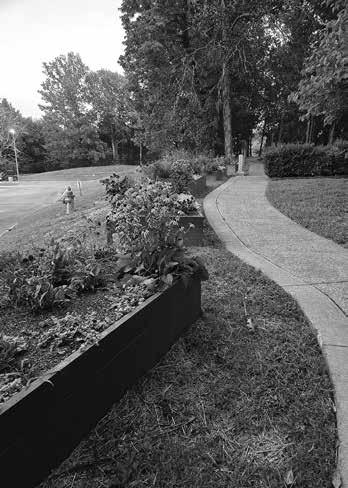
will present the new tour, while the other half will plan and promote the tour and a reception at the JCC. The public is invited on Sunday, December 7th at 11:00 am. Additional information will be available in November.
In conjunction with Belmont University hosting “Some Were Neighbors: Choice, Human Behavior, and The Holocaust,” a traveling exhibit on loan from the US Holocaust Memorial Museum (USHMM), the Memorial is offering guided tours highlighting issues raised by the exhibit.
The tour is open now and runs through December 8th. According to the event website (https://www.belmont. edu/faith-leadership/curb-special-ex -
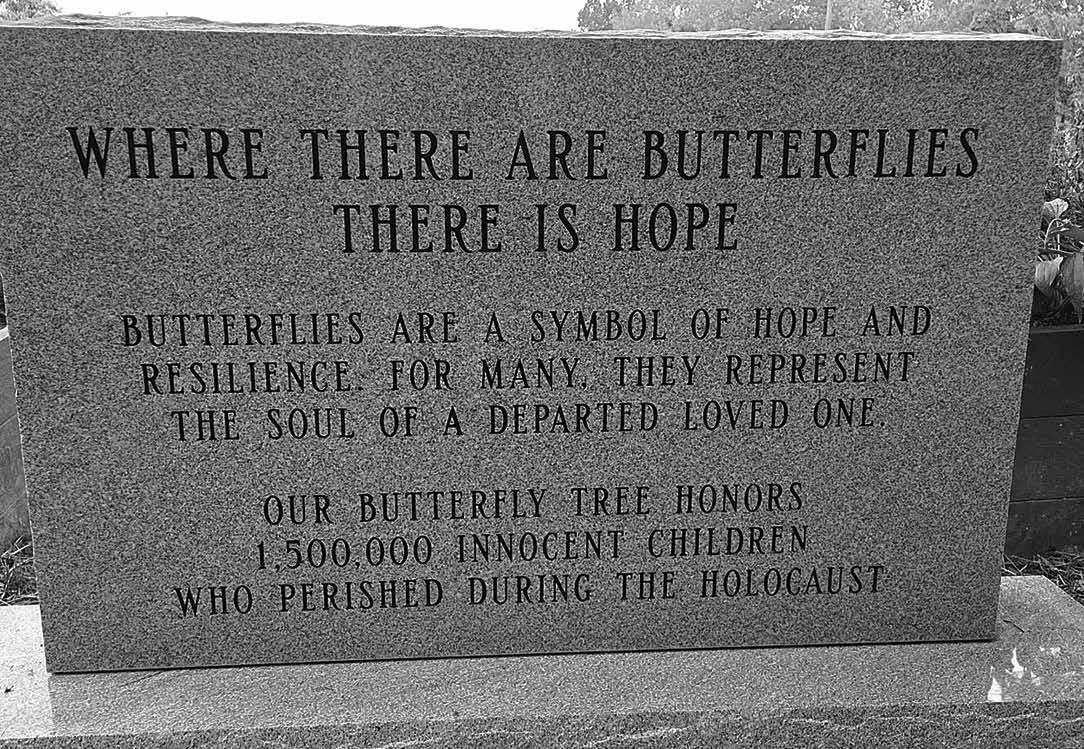
hibit.html), “This exhibit explores the vast difference in the ways ordinary people displayed great courage or willful complicity in the face of devastating violence during the rise of Hitler’s Germany. Neighbors made choices. Some acted with bold courage, while others stood idle as friends, neighbors, and colleagues were victimized.”
Docent-led tours of the Memorial are scheduled at the following dates and times:
Saturday, October 4, 1:00 pm
Thursday, October 9, 1:00 pm
Thursday, October 23, 1:00 pm
Thursday, November 13, 1:00 pm
Saturday, November 15, 1:00 pm
Monday, November 24, 10:00 am
Monday, December 1, 10:00 am
Saturday, December 6, 1:00 pm
Tuesday, December 9, 10:00 am
Additional dates can be arranged with two days’ notice. Saturday and Sunday tours are offered in the afternoons only. Email nashvilleholocaustmemorial@gmail.com to schedule a tour or join one of those listed above.
Anchor commented, “It is gratifying and meaningful to expand our educational outreach and opportunities with such significant partners in furthering Holocaust education. We welcome visitors and appreciate that both MTSU and Belmont are helping us enhance our role as a community resource. We look forward to continuing to work together.” •
By GUILHERME PASSOS
The Gordon Jewish Community Center is proud to announce a new partnership with Miss Anna’s Swim School. Through this collaboration, Miss Anna’s will provide all weekday swim lessons at the JCC, bringing their expertise and reputation to our community.
Since 1996, Miss Anna’s Swim School has taught more than 12,000 children to swim and is widely recognized as one of the premier programs in West Nashville. Under the leadership of Elizabeth and Steve Slattery since 2002, the school has continued to grow while maintaining its tradition of high-quality training. Earlier this year, Miss Anna’s transitioned its operations to the Gordon JCC pool where our shared values creat-
ed an enhanced experience for swimmers and families.
This partnership is about more than swim lessons; it is about building community. Families coming to the J for lessons will be welcomed into our broader community, where opportunities extend beyond aquatics into athletics, culture, and wellness. At the same time, the J will continue offering the Tigersharks Swim Team, weekend programs, and ECLC swim instruction, complementing Miss Anna’s weekday expertise.
Swim lessons are central to the J’s mission. They ensure water safety, build confidence, and open pathways for a life in aquatics. By joining forces with Miss Anna’s, we are strengthening our aquatics programming while welcoming new families into the heart of the J. •
Kippur Break Fast in East Nashville! This welcoming gathering is open to everyone—whether you’re a regular, new to the community, “Jew-ISH,” or simply enjoy being in the company of Jewish friends. Bring a dish to share or make a $5 contribution so we can make sure there is plenty of food. Plus, live Jewish music from local artists and craft activities for the kids and kids at heart! Learn more and RSVP at eastnashvillebreakfast2025.eventbrite.com. •
Visit The Jewish Observer’s website www.jewishobservernashville.org

By REBECCA MORIARITY
Nashville BBYO kicked off the fall semester with an event at Pins Mechanical Co. The event drew 65 teens, who enjoyed bowling, yard games, and slushies while socializing. The Nashville chapters welcomed 8th graders, who are eligible to join this semester. Libby Stepakoff, N’siah (president) of Music City BBG said, “Kickoff was such an amazing experience, and it was fulfilling to see the growth Nashville BBYO has had over the last two years.”
Throughout the semester, there will be a variety of events hosted by the Nashville chapters: Athens of the South AZA (boys) and Music City BBG (girls). Current plans include a brotherhood din-
ner and video game night, a big sis/lil sis challah baking event, and a fall bonfire with an Israeli flair, courtesy of Nashville shlicha, Ziv Shemesh.
BBYO membership is available to Jewish teens in grades 8-12 and is the world’s largest pluralistic Jewish teen organization. Membership is open to Jewish teens from all backgrounds and practices. Whether you keep Shabbat every week or are Jew-“ish”, you are welcome here! As BBYO teen leader Shira Binshtein said, “My favorite part of BBYO is the Jewish community I have found, especially the Jewish teen community”.
If you are interested in membership or want to know more, please contact Regional Director, Rebecca Moriarty. RMoriarty@BBYO.org •
Chabad of Nashville’s new six-week course, the Kabbalah of Meaning, draws on Jewish mysticism to offer a refreshing approach to finding the meaning in all parts of life
What gives life real meaning? Is it found in extraordinary moments, or is it woven into the fabric of our everyday lives? This fall, Chabad of Nashville invites the community to explore these timeless questions through a groundbreaking new course: The Kabbalah of Meaning.
Beginning Wednesday, November 5, 7:30 PM, for six Wednesdays. Rabbi Yitzchok Tiechtel will guide participants through a six-week journey that blends Jewish mysticism and practical wisdom. Classes are offered in person and via Zoom, making it easy for anyone to join.
“Some questions we answer once in a lifetime,” says Rabbi Tiechtel. “But questions of meaning are worth revisiting again and again. This course helps us uncover the depth and purpose hidden in every part of life.”
Developed by the internationally acclaimed Rohr Jewish Learning Institute (JLI), this course draws from classic kabbalistic sources to present a bold, refreshing approach to one of life’s most important pursuits. Participants will discover how every experience - work, relationships, spirituality, and even daily routines - can come together to form a cohesive, purposeful whole.
Each session combines the study of timeless texts with practical tools for

today’s challenges. The goal is simple yet powerful: to help students not only learn about meaning, but also to live with more meaning right away.
“Life is busy, and it’s easy to feel scattered,” Rabbi Tiechtel explains. “This course gives us the chance to step back, reconnect, and see how the different parts of our lives truly fit together.”
Whether you’re new to Jewish learning or deeply experienced, this course is open to all. The Kabbalah of Meaning is being offered in communities nationwide and may be eligible for continuing education credits for professionals, including doctors, psychologists, social workers, and therapists.
To register for this new course “The Kabbalah of Meaning”, go to myjli.com and select the city you are seeking to take this groundbreaking course. For mor information please call 615-646-5740 or visit chabadnashville.com
Course at a Glance
• Course: The Kabbalah of Meaning
• Instructor: Rabbi Yitzchok Tiechtel
• Start Date: Wednesday, November 5
• Format: Six sessions, in person or via Zoom
• Developed by: The Rohr Jewish Learning Institute (JLI), offered in 1,600 locations worldwide Registration
Sign up now at myjli.com (select Nashville as your location) or visit chabadnashville.com.
For more information, call 615-6465740. •
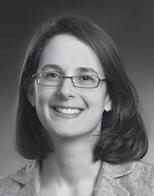
Jewish wisdom and modern science on living longer, healthier, and stronger Chabad of Nashville is presenting a new four-week course, “120 & Beyond: The Jewish Path to a Healthy Life,” blending cutting-edge medical insights, with timeless Jewish wisdom to help participants live longer, healthier, and more purposeful lives. The series begins Tuesday, October 28, at 7:00 PM (via Zoom) and continues for four consecutive Tuesdays.
Taught by Dr. Michael Zemel, Professor Emeritus of Medicine & Nutrition (University of Tennessee) and Chief Scientific Officer of NuSirt Biopharma and Kinexum, the course will explore practical tools to optimize health span - the years of life lived in good
health—through lifestyle strategies, evidence-based medicines and supplements, and a values-driven mindset.
“Judaism teaches that the body is a vessel for the soul,” said Rabbi Yitzchok Tiechtel of Chabad of Nashville. “From Maimonides to the Lubavitcher Rebbe, our tradition places caring for our bodies at the center of our spiritual mission. This class empowers everyone—at any age—to take that responsibility seriously and joyfully.”
Each session will pair current medical and scientific research with insights from classical Jewish texts, highlighting how physical and spiritual well-being reinforce one another. Participants will leave with actionable guidance for disease prevention and health optimization

our community is our mission. We’re grateful to the Nashville synagogues and Akiva School for trusting us with your security. We pride ourselves on delivering nothing less than exceptional service, guided by four core principles: Timeliness, Integrity, Quality, and Customer Service.
they can begin using immediately.
“Healthspan is not just about adding years - it’s about adding life to those years,” said Dr. Zemel. “We’ll translate the latest science into clear, practical steps that align beautifully with the Jewish perspective on caring for the body as a sacred trust.”
Course At-a-Glance
• Title: 120 & Beyond: The Jewish Path to a Healthy Life
• Format: Four-week series, Tuesdays at 7:00 PM, beginning October 28 (via Zoom)
• Instructor: Dr. Michael Zemel, Professor Emeritus of Medicine & Nutrition (UT), CSO of NuSirt Biopharma & Kinexum
• Focus: Lifestyle foundations, evi-
dence-based medicines & supplements, Jewish sources on the body–soul connection
• Who Should Attend: Adults of all ages seeking practical, ethical, and science-informed tools to live healthier, longer
Registration
Reserve your spot at chabadnashville. com/tolive or email Rabbi@ chabadnashville.com.
About Chabad of Nashville: Chabad of Nashville is a warm, welcoming center for Jewish life serving Middle Tennessee. Rooted in the belief that every person is infinitely valuable, Chabad offers educational programs, spiritual guidance, and community services that uplift body and soul — Judaism, Done Joyfully. •



At our practice, you’ll find a team of highly skilled dentists who share the same vision: protect your natural teeth while helping you love your smile. Alongside Dr. Steven Hecklin, we’re proud to highlight Dr. David Smiley and Dr. Abby DiLuzio— two accomplished dentists who showcase fresh energy, advanced training, and a passion for patient-centered care.
Dr. Smiley and Dr. DiLuzio believe that dentistry should be as conservative as possible. That means focusing on minimally invasive treatments designed to strengthen and enhance your teeth without unnecessary drilling or removal. One great example is prepless veneers—a cosmetic option that transforms your smile with little to no enamel reduction.
Together, Drs. Hecklin, Smiley and DiLuzio are committed to providing the highest quality service, built on integrity and trust. Every treatment plan is created with your long-term oral health in mind, so you can feel confident that your natural smile is being preserved with care and honesty.
Patients can feel the difference. One new patient recently shared:
“After 40 years with the same dentist, I have moved to this new group. Obviously I was nervous about change; however, my initial visit was fantastic and made me aware of what I had been missing. From beginning to end and including everyone: this place is amazing. They have it all, too: the latest technology, a great and soothing atmosphere, sincere hospitality, a wonderful energy and, best of all, accomplished professionals. After one visit I feel like I’ve been coming my entire life! Many thanks for taking me in and I can’t wait to see y’all in six months!”
We’d love to welcome you, too. Schedule your appointment today at www.drhecklin.com or call (615) 356-7500.

At Gordon Law Group, we know that life moves quickly, and planning for the future often gets pushed aside. But protecting your family, your business, and the legacy you’ve worked so hard to build shouldn’t be left to chance. The right plan brings clarity, security, and peace of mind.
We are an estate planning and business law firm based in Brentwood, Tennessee, proudly serving families and entrepreneurs across Nashville and surrounding communities, in addition to our offices in Greenville and Mt. Pleasant, South Carolina. Our goal is to guide you through every step of the process, keeping things clear and straightforward, so that your values and goals are protected well into the future.
“It has been a real honor to serve and represent families in the Nashville area,” shares Managing Partner Robin Gordon. “My parents were raised here, and after finishing my education I was fortunate to return to this community, now my home. Being able to give back in such a meaningful way has been one of the greatest joys of my career.”
Starting with the Discovery meeting with a member of our firm, we guide you through every step with care. Whether you are preparing for life’s unexpected turns, protecting your family’s future, or ensuring your business is built to thrive for generations, we are here to help.
The best time to plan is before you need it. To schedule a consultation, please call (615) 321-0220 or visit Home - Gordon Law Group.
Robin@gordonlawgroup.com
105 Westpark Dr., Suite 350, Brentwood, TN 37027
At Gluck Orthodontics, we are proud to serve Nashville’s Jewish community with a tradition of exceptional care spanning two generations. Led by Dr. Jono Gluck, our practice combines cutting-edge orthodontic treatment with a personalized approach, ensuring that every patient feels like part of our extended family. With a foundation built on trust, integrity, and Legendary Service, we’ve established a reputation for offering conservative and thoughtful treatment plans, prioritizing the well-being and comfort of our patients.
Whether you’re seeking early orthodontic evaluation for your child, exploring options for braces, or considering Invisalign, we have the expertise to create a customized plan that fits your lifestyle. Our office is equipped with the latest technology, including Digital Impressions and 3D X-Rays, allowing us to deliver exceptional care in a warm and welcoming environment.
At Gluck Orthodontics, we believe in giving back to the community that has supported us for so many years. Through our involvement in local events, charitable causes, and school partnerships, we are committed to making a positive impact in Nashville and
Continued on page 27

We look forward to continuing to serve our Jewish community with the same passion and dedication that has been our hallmark for decades. For more information, visit drgluck.com, and see why families have trusted us for beautiful, confident smiles.
Often, when an elderly person has no family nearby, a patient advocate can assist with medical appointments and then communicate with relatives who are concerned about their loved one’s care. That is a role Jane R. Snyder has stepped into frequently.
Handled with the utmost privacy and confidentiality, she works with medical practitioners, socialworkers, caregivers, and home health care agencies to guarantee that patient needs are fully satisfied.
For numerous estates, working with attorneys and other family advisers, Jane has supervised the emptying of residential and commercial properties prior to sale. This includes meeting with movers or appraisers, sorting contents, and supervising distribution of items to designated heirs, friends of the deceased, local charities, purchasers, and, if needed, for proper disposal.
Betty of Brentwood, who lost her husband several years ago, said, “I don’t know what I would do without Jane. Although we began working together long before my spouse died, she helped me plan his funeral, deal with settling his estate, and organizing a touching celebration of his life months later. She just seems to know exactly what’s needed!”
From Nashville to Franklin, Bellevue to Brentwood, Jane helps her clients address these and many other concerns. All new clients receive a 20% discount on their first 10 hours with a four-hour minimum. Ms. Snyder offers a FREE one-hour consultation to discuss your projects. For more information or to book an appointment, you can contact her at: calljane@comcast.net or 615-557-6277. Whatever you need, Jane has probably done it before!
Fesmire Dental Group has had the privilege of serving their patients for many decades, and its founding principles have never wavered. Their daily mission is to ensure that every patient receives compassionate care while addressing their dental concerns and needs. In addition to working diligently to provide patients with the best possible oral hygiene care, Fesmire Dental Group actively supports local, civic, and charitable events. Dr. Rob Fesmire and Dr. Zack Hutchens pride themselves, both
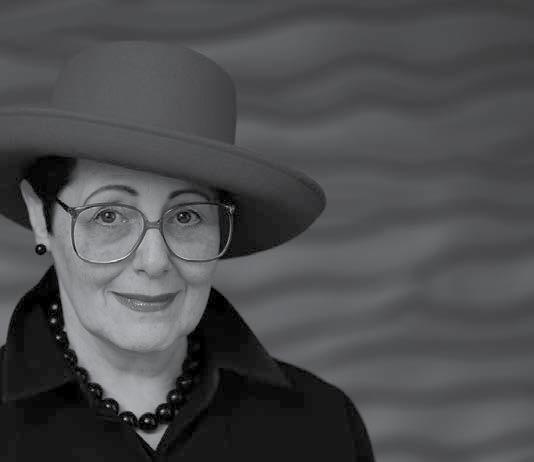
personally and professionally, on their caring approach with each individual patient. Fesmire Dental Group understands that treatment is sometimes much more than a physical challenge, it can be an emotional, social and often financial challenge, as well. They acknowledge the challenges that patients face and strive to put forth extra effort to help put their patients at ease. Dr. Fesmire and Dr. Hutchens truly have a passion for what they do and have been very fortunate to work with wonderful staff and serve an incredible community.
Fesmire Dental Group has been blessed with a growing practice and, in 2018, the practice expanded to a new state-of-the-art location in Belle Meade. The modern, rustic office was beautifully designed using natural wood elements and warm earth tones that provide a relaxing and welcoming atmosphere. Fesmire Dental Group would enjoy the opportunity to serve the dental needs of your entire family.
Continued on page 28
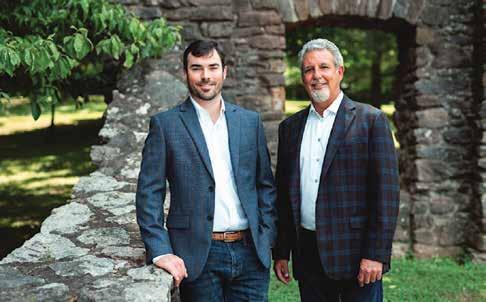




Continued from page 27
For years, Dr. Michele Sonsino split her practice in two locations: a trendy downtown Chicago optical, learning the art of boutique-style eyecare, and in the south side of Chicago, working with disadvantaged patients in the diagnosis and treatment of ocular diseases. Dr. Sonsino brought these varied experiences to Nashville and introduces a new concept in eyecare: Optique. At Optique they pride themselves on thorough patient care. They take the time to help their patients understand the details of their condition, allowing them to see their best! The award-winning eye care of Optique is matched with the largest selection of eyewear brands in Tennessee. They have a location in Nashville and Franklin.
Shalom Hospice of Nashville is a family - owned hospice and palliative care provider servicing the entire state of Nashville
Shalom Hospice of Nashville is a family-owned hospice and palliative care provider servicing the entire city of Nashville. Shalom Hospice offers a unique combination of
Facing a serious or terminal illness is stressful for most patients and their families. Hospice or palliative care may be necessary to provide your loved one with the best care. Professional care provided by a compassionate palliative or hospice care service enables your loved one to live comfortably and receive treatment for their chronic or terminal condition.
Shalom Hospice is certified by the National Institute of Jewish Hospice. Proudly serving Davidson, Rutherford and Williamson Counties. Our Mission is to ensure that no Jewish patient or family faces a life limiting illness alone or without care. Shalom Hospice helps to ensure access to r esources compatible with their own Jewish practices and beliefs.
Collaborative Approach
Our caregivers partner with all patients’ relatives, creating an environment of comfort and security for your loved ones.
Skilled Sta Each member of our hospice team is uniquely qualified to provide specialty level end-of-life care for all types of illnesses.
Wide-ranging Clinical Support
Our team of professionals helps relieve the physical symptoms of illness while addressing the patients’ emotional and spiritual needs.
On-Site Care
Our experienced caregivers provide the practical tools and education necessary to care for your loved one at home
www.shalomtn.com

5409 Maryland Ave Ste 212 • Brentwood, TN 37027-5068 Phone: (615) 623-8900 • info@shalomtn.com
hospice and residential services to allow for a seamless transition for your loved ones as their needs shift and change. Our professionally trained Nashville based staff, who live and work in your area, are there to help you and your family navigate the many care and service options available. Every patient is given an individualized plan to ensure their maximum level of care and comfort. Experience the next level care of our friendly and compassionate experts. Reach out now to speak to one of our friendly intake specialists.
All professionals need a portrait for their business resume and advertising needs. Why not reach out to a pro team that gets the job done with style. Carrie & Garrett Mills are a professional mother/son portrait team who can take care of all your business and professional headshots.
Carrie is a professional stylist and her son Garrett Mills is an award-winning photojournalist and fashion photographer.
Trust us to show you at your best.
For more than 50 years, Sperry’s has been a staple in Middle Tennessee dining, delivering the kind of quality, consistency, and hospitality that only a true local favorite can provide. Established in 1974, Sperry’s has grown from a neighborhood gem into a timeless destination, known for hand-cut steaks, fresh seafood, and a warm, inviting atmosphere that makes every guest feel like family.
Shopping and eating local means investing in the community and Sperry’s embodies that spirit. From sourcing fresh ingredients to providing careers for hundreds of team members over the decades, Sperry’s has deep roots in Nashville and Franklin. Hosting a private event at Sperry’s Cool Springs location is not only a chance to create unforgettable memories, it’s also a way to support a brand that has poured back into Middle Tennessee for generations. With private dining rooms accommodating 6 to 72 guests, A/V capabilities, and customized menu planning, Sperry’s makes it easy to keep your celebrations local while enjoying the elevated quality you expect.
Looking for the perfect gift? Sperry’s offers both physical and virtual gift cards, giving friends and family the chance to savor one of Nashville’s most celebrated dining experiences. It’s a thoughtful way to share the flavors of home and continue the tradition of supporting local businesses.
When you choose Sperry’s, you’re not just booking a meal, you’re honoring a legacy. Shop local, eat local, and celebrate life’s best moments with a true Tennessee original. •
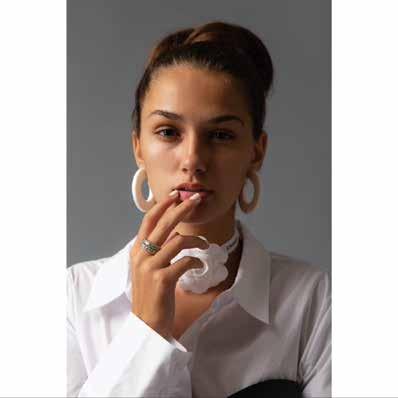

Please support the businesses that advertise in the Observer and help support our community in all ways!
Make sure to let them know... you saw their ad here!
Benjamin Alexander Yuster
Benjamin Alexander Yuster will become a Bar Mitzvah on Saturday, October 4, at 11 a.m. at The Temple.Benjamin was born on October 27, 2011, in San Jose, Calif.
His parents are Deborah and Josh Yuster. His grandparents are Alfonso Davidovits of California; Ana Luisa D-Evans of Idaho and Audrey and Richard Yuster of New York.
An eight grader at Brentwood Middle School, Benjamin enjoys sports cars, car shows, photography, basketball and football.
For his mitzvah project, Benjamin is using his incredible photography skills to volunteer his time as the team photographer for the Brentwood Middle School football team. .
Asher Jeremy Fremont
Asher Jeremy Fremont will become a Bar Mitzvah on Saturday, October 25, at 11 a.m. at The Temple.

Asher Fremont was born on June 18, 2012, in Nashville. His parents are Sarah and Richard Fremont. His grandparents are Kenneth Fremont of Knoxville, Tenn., and Jane and Mel Richards of Ithaca, N.Y.
A seventh grader at Harding Academy, he enjoys diving, tennis and piano.
For his mitzvah project, Asher is going to use his musical talent and play piano for local nursing homes.
Kevin Paul Duke
Condolences to the family of Kevin Paul Duke who died on July 24. He was the husband of Linda Duke; son-in-law of Jon and Elaine Levine; brother-in-law of Julie Levine, and Josh Levine (Ilana); uncle of Jonah, Morgan and Bella “Finn” Crowe, and Mia, Lucia and Julian Levine.
Tributes in Kevin’s memory may be made to the ALS Foundation, the Predators Foundation or Congregation Micah.
John H. Jivens
Condolences to the family of John H. Jivens who died on September 3. His son, John Jivens (Sheri Rosenberg) survives him.
Cindy Katzman
Condolences to the family of Cindy Katzman, who died on August 22. Cindy is survived by her sister and brother-in-law, Terry Katzman Rosenblum and Bernie Rosenblum; brother, Brooks Herschel Katzman; nieces, Jodie Rosenblum (Dylan Glynn), Laura Katzman and Sarah Katzman; great niece, Louisa Elke Glynn; and many cousins.
Bette Doris Siegel
Condolences to the family of Bette Doris Siegel who died on September 4. She was born on September 11, 1948. She was the heart of her family — a devoted mother, a proud grandmother, a caring sister, and a loyal friend.
She bravely survived multiple battles with cancer, heart disease, and mental health challenges, yet her spirit remained vibrant and full of life.
Bette’s life was filled with music, laughter, and the simple joys of fishing and antique hunting. Her courage, love and warmth will forever live on in the hearts of all who knew her.
She gave more than 30 years of service to the state of Tennessee, where she was admired for her friendly personality and dedication. But her proudest role was
always “Mom” and “Grandma.”
Bette is survived by her daughters, Jennifer (Andy) Kravetz and their children, Noah and Rebecca, and Stephanie (Kenneil) Scott and their daughter, Sasha. She also leaves behind her sisters, Sandra Edwards and Suzanne Sears, who loved her deeply. She was preceded in death by her parents, Ben and Esta Loventhal.
Owen Michael Taylor
Condolences to the family of Owen Michael Taylor, who died on September 7. He was the son of Karen Green (Bryan) and Jason Taylor (Tracey); brother of Jayden Taylor, Cylas Staudenmeier and Dalilah Green.
Tributes in Owen’s memory may be made to Tennessee Donor Services or Congregation Micah. •

The Janet Levine March Gallery will feature the work of Juli Lannelli. Iannelli is a Nashville-based abstract artist whose work emerges from intuition and emotion. Working in mixed media, she responds instinctively to bold colors, accidental shapes, and gestural lines that arise through her spontaneous process. Her paintings draw on both conscious and subconscious memory, evoking nostalgia, joy, and the playful freedom of childhood. Vibrant colors, expressive marks, and layered textures invite viewers into an unexpected and personal world. Trained as an art therapist, Lannelli worked for several years in Kansas City, Missouri, before relocating to Nashville, Tennessee. She has since returned to her own studio practice with renewed focus, embracing exploration, experimentation, and discovery as she continues to refine her artistic voice.
without disabilities to find courage and hope to create. This is her second exhibit at the J Galleries.
The JLMG2 Gallery will feature the work of Nashville based, Canadian born painter Colette Wise. Art, in its many forms, has always been central to her life. In addition to being a painter, Wise is a singer, songwriter, avid photographer, and gardener.
In 2005, her life took a complete turn when she founded the non-profit Free for Life International, helping to rescue over 1000 young women from sex slavery around the world.
In 2017, Wise began to lose her eyesight from a genetic disease. However, she drew strength from her love of art and began painting again, arranging images to create an intriguing visual poem. Her loss of sight has drawn her closer to Tonalism, as she sees in more muted values. Others have commented on her style, saying it has a dreamy old-world feel to it. Colette’s work inspires others with and
The Sig Held Gallery will feature the art of Hal Wright. The “Big Idea” behind Wright’s paintings is simple, yet powerful: we come alive through contrast. It’s those unexpected, out-of-the-ordinary moments that break through the monotony of daily life and make us feel truly present. Just as life becomes richer when it’s filled with variety—new experiences, changing scenery, fresh perspectives—art, too, has the power to awaken us when it brings together striking differences. In my work, you’ll find bold contrasts in shape, size, color, and texture—elements that clash, harmonize, and spark curiosity. Each piece invites you to explore, to compare, and to weave your own unique story from the dynamic tension and interplay within. This is art that doesn’t just hang on the wall—it stirs the soul.
For much of his life, Wright enjoyed a fulfilling career in market research helping companies tune into what their customers truly wanted. He found joy in making things better, whether it was a product, a service, or an experience. He loved the constant learning and variety, diving into the worlds of different industries and people.
In his 60s, Hal Wright swapped data and surveys for brushes and paint. Now in his 70s, Wright is still going strong, exploring a wide range of subjects, styles, and techniques. His creative journey has been anything but linear, and the paintings in this website offer a glimpse into that evolving exploration.
The Senior Lounge will feature the work of Pamela Dove.
The House gallery will feature the Under One Roof collaborative exhibit.
In its ninth year, Under One Roof, brings together local Nashville organizations to create artwork around a chosen theme to be exhibited in our sukkah during the Jewish holiday of Sukkot.
The “roof” will be the JCC’s community sukkah – a temporary structure constructed during the happy, week-long, festive Jewish fall harvest of Sukkot. The sukkah reminds us of the fragility and temporary nature of life and helps us focus on what is most important. This year we have more than 30 participating organizations which included, Friends

Life Community, Oz Arts, Nashville Dophins, and West End Synagogue. The theme for this year’s Under One Roof is Kavod. Kavod is a Hebrew word that means honor and respect. It is a word of great strength and important in the Hebrew language. Kavod helps us to understand the importance of respect and good citizenship. Kavod is a term with both social and moral implications, and stems from the root word for weight. It can mean glory, honor, respect, distinction, and importance.
KAVOD: RESPECT MAKES A WORLD OF DIFFERENCE
The Exhibition Dates are October 3 - 31st.
The Artist reception will be held on October 8th from 6-8 pm and the opening reception for the Community wide art exhibit, Under One Roof from 7:30 - 9 pm featuring music by DJ Joseph Harris and a pop-up jewelry sale by Cindy David and Henna by Seemi.
The exhibitions are free and open to the public. For more information, contact the GJCC at 615.354-1699, Curator Carrie Mills at carrie@nashvillejcc.org, or go to www.nashvillejcc.org. •
CATHY WERTHAN, CPA CBIZ 1221 Broadway, Suite 1925 Nashville, TN 37203 (615) 245-4070 • CBIZ.com

ELECTRONIC EXPRESS is a leader in top quality, brand-name electronics and appliances at exceptionally low prices. Stocking the latest items, Electronic Express takes pride in providing customers with products at prices to fit any budget. From televisions, appliances, smart devices and cameras to security systems, furniture and mattresses, Electronic Express has everything to take your home to the next level. Electronic Express offers special financing, delivery and installation options. We make it happen! Visit us at any of our 18 locations or online at www. electronicexpress.com
MARTIN SIR, ATTORNEY
Family Law / Personal Injury / Probate 3200 West End Avenue, Suite 500 Nashville, Tennessee 37203 615-256-5661 (phone) 615-256-5115 (fax) www.martinsirlaw.com
Custom senior care for active, healthy lifestyles. Affordable/no minimums. Meals, meds, transp., outings, dementia care & assist with hospital discharge. Professional trusted care partners. Locally owned. Call Moises for Free Assessment: 615-678-9223 www.curaforcare.com
Elite Caregiving Services
Compassionate Care In Your Home
We offer aftercare from surgical procedures, part-time assistance, and 24 hour elderly care. 615-881-6528 Hannah@EliteCaregivingServices.com EliteCaregivingServices.com
DR. BRADLEY KROCK D.C.
Discover relief with Dr. Krock, DCExpert chiropractic care for pain, wellness, and injury recovery. Book your appointment today! 615-723-0201 www.krockchiropractic.com
STEVEN R. HECKLIN, DMD
DAVID M. SMILEY, DMD
ABBY DILUZIO, DMD Cosmetic and Family Dentistry www.drhecklin.com 5606 Brookwood Place 615-356-7500

BILTMORE INSURANCE SERVICES
Greg Zagnoev, Agent 615-746-RISK (7475) Home, Auto, Business, and Life
JAMES A. ROTHBERG
ADAM ROTHBERG
James A. Rothberg & Associates Office: 615-997-1833 Fax: 615-665-1300
2000 Glen Echo, Suite 208 Nashville, TN 37215 Email: jrothberg@jarinsurance.com info@jarinsurance.com
ROBINS INSURANCE
Bruce Robins, CPCU, CIC, ARM; Van Robins, CIC Auto, Home, Life, Health, Business Insurance 11 Music Circle S Ph. 615-665-9200 • www.robinsins.com
ZANDER INSURANCE GROUP, INC.
Jeffrey J. Zander, CIC Auto, Home, Life, Health, Business, Long Term Care, Identity Theft Protection 6213 Charlotte Pike, Nashville, TN 37209 615-356-1700 www.zanderins.com
M JAFFA HEALTH INSURANCE
Marsha Ross Jaffa, CIC, LUTCF 615-482-3860 Medicare, Health, Dental, and Life
DR. MICHELE SONSINO Optique Franklin 436 Main Street, Franklin 615-591-4191
DR. JAMES W. KIRKCONNELL Bellevue Eyecare Center 7640 Hwy 70 S, Ste 102 Nashville 615-662-7588 www.bec2

Specialists in Orthodontics
Dr. Jonathan Gluck DDS, MSD
Dr. Joel Gluck DDS, MS 2002 Richard Jones Road A-200 615.269.5903 drgluck.com
GHERTNER & COMPANY
Homeowner Association and Condominium Management Full Service and Financial Management Property Management since 1968 615-255-8531 www.ghertner.com
IRA HELDERMAN, PhD, LPC Psychotherapy for Individuals, Adolescents, Couples and Families nashvillepsychotherapyandcounseling. com Please contact: 615-473-4815 or ira.p.helderman@vanderbilt.edu

FRANKLIN PARGH
615-351-7333
franklin.pargh@compass.com
LANA PARGH 615-504-2685
lana.pargh@compass.com www.pargh.com Instagram: @theparghteam
JESSICA AVERBUCH Broker/ Owner Zeitlin Sotheby’s International Realty 615-294-9880 jessica.averbuch@zeitlin.com
KAROL FARAGALLI 615-289-3359 karolfaragalli@gmail.com
LORNA M. GRAFF Broker, GRI, CRS, ABR 615-351-5343 lorna.graff@zeitlin.com www.lornagraff.com
SETH HOFFMAN Associate Broker 615-351-2150 seth@sethhoffmannashvillehomes.com
NAN SPELLER Broker, GRI, ABR 615-973-1117 nanspeller2014@gmail.com
Nashville: 615.383.0183 Franklin: 615.794.0833 zeitlin.com

JACOB KUPIN, REALTOR HAYLEY LEVY KUPIN, REALTOR 615-281-9035
Jacob@TheKupinGroup.com
Hayley@TheKupinGroup.com www.TheKupinGroup.com We’ve got your back! GREG ANSEL, REALTOR® Phone/Text: 615-815-6405 Email: GregAnsel@kw.com
“Let’s Get Moving!”

Jackie Roth Karr, REALTOR® ABR, CRS
JackieKarr@gmail.com
JackieKarr.com Mobile: 615-330-9779 Office: 615-463-3333

TEAM NASHVILLE Your Running/Walking Swimming Headquarters 3205 West End Ave. Nashville, TN 37203 615-383-0098
Expedia Cruise Ship Centers A Full Service Travel Agency Alan Cooper: Office: 615-454-6439 www.expediacruises.com/AlanCooper 7081 B Hwy 70 S / Kroger Shopping Ctr.
Preserving the Natural Beauty of Trees and Shrubs. Specializing in the care of shade and ornamental trees and shrubs for residential and commercial properties. Serving Nashville since 1978. 615-373-4342 www.druidtree.com