







MANDANA DAYANI
JONAH PLATT
FELICITY KENDAL
BRENDAN O’NEILL
ZO E BUCKMAN
FRIDA KAHLO







Purchase an apartment at the Milan project located approximately 300 meters from Gordon Beach, and receive millions of Matmid Points!

































78
48 26 98 36





Don’t you just love the cover? Mel Brooks, the King of Comedy, reaching 100 has to be celebrated. We only wish we could have thrown him a party with all the people sending their love on page 52.
I was thrilled to talk to Judd Apatow about his documentary The 99 Year Old Man. I’m hopeful our conversation leads to others –aperitifs with Adam Sandler or a drive around LA with Jerry Seinfeld. An editor can dream.
I want to thank the people inside: the fabulous Felicity Kendal, inspiring Mandana Dayani, courageous Brendan O'Neill, extraordinary IDF veteran Ron Weinreich and the force behind the decks, DJ Howard Kaye. This issue is packed with those who shape our story and at the heart of it are the charities that support our community, not just in times of crisis or in the summer months but every day of every year.
We also wish mazeltov to Raymond Simonson and the team at JW3 as they celebrate their barmitzvah year. Thirteen years on, JW3 is the hub of so much Jewish life.
Please make time for the Nova Exhibition (on until 5 July) or encourage someone who still struggles to understand what happened on October 7 to go. I’ve been handing Nova flyers to fellow Tube passengers, interrupting their scrolling long enough to spark a crucial conversation. Finally to the Last Word, where Giant star Elliot Levey curates a wonderful New York soundtrack exclusively for Life. Take a ‘listen’.
Thank you also to all our contributors, advertisers and readers. Most of all, please tell your friends and family about us. You wouldn’t want them to miss Life. Have a wonderful summer. Brigit Grant

Editor Brigit Grant brigit@jewishnews.co.uk
Art director Diane Spender
Jewish News co-publishers
Richard Ferrer & Justin Cohen
Features editor
Louisa Walters
Sub-editor Alex Galbinski
Creative consultant
Dermot Rushe
Contributors
Jenni Frazer, Etan Smallman, Candice Krieger, Hannah Litman , Howard Kaye, Anthea Gerrie, Beatrix Clark, Michelle Rosenberg, Lara Benjamin
Advertising sales
Beverley Sanford 020 8148 9709
sales@jewishnews.co.uk
Gabbie Greenberg
Cover illustration
Ignacio Ledesma





75 turnkey apartments
Full Natuzzi interior design & furnishing
Wellness center, pool & resident’s club
Private green rooftop 1200 sqm ecological garden




There has never been a harder time to find Israeli television and film or a more important one. While streamers and broadcasters back away, the country continues to produce daring, funny, emotional, watchable drama. Which is precisely why IZZY matters as a cultural lifeline and the home of Israeli content that viewers can’t find elsewhere. There are thrillers, documentaries, family dramas and comedies, but what makes the platform clever is its understanding

academy only to discover the idyllic campus holds a dangerous secret threatening the country itself.



If your kids loved Big Mouth but you didn’t, brace yourself for Mating Season from the same team who excel at making wildly Jewish inappropriate cartoons. Its creators include Andrew Goldberg and Nick Kroll, who also voices Ray the raccoon. Will it be as Jewish as Big Mouth? Hard to say, but word is it’s just as unhinged and showing on Netflix now.

Fancy a Yiddish August Bank Holiday? Then the Jewish Music Institute has you covered with its first Yiddish Culture Weekend – a four-day celebration of language, literature, history, music, klezmer jam sessions, dance, film screenings and family sessions for all ages and abilities. Phew! jmi.org.uk

that Israel’s story is not one story. It is young, old, religious, secular and political all at once. For families trying to keep teenagers connected to Israel beyond headlines and social media, IZZY is particularly valuable. They can watch The Greenhouse, a hugely successful teen drama adapted internationally by Netflix that is set in an elite boarding school for future leaders. A year after losing their mother in a spaceship disaster, a brother and sister arrive at the mysterious Greenhouse
For adult viewers, Commandments, starring Roy Nik (Kugel ), offers a side of Israeli life rarely explored outside the country since it is inspired by true stories of young Orthodox Jews who join the army despite being exempt from service. Torn between faith, family, friendship and the temptations of secular life, it is less a military drama and more a powerful exploration of identity in modern Israel ( pictured, above).
And there is Madrasa, Sayed Kashua and Guri Alfi’s comedy-drama, which is exactly the kind of sharp, layered storytelling Israeli television does so well.

Subscribing to IZZY is not about finding another streaming platform. It’s about access to the smartest television being made anywhere, that you don’t want to miss.
izzy.streamisrael.tv
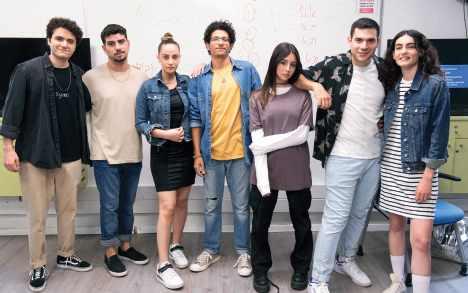
Name The Jewish Brand and you would say Rakusen’s or M&S - but it’s not.
It’s the creative hub founded during Covid lockdown 2021 by Mark Forstater, a producer of Monty Python and the Holy Grail and film-maker Nathan Neuman, both of whom noticed rising antisemitism and a growing disconnect alongside diminishing space for Jewish stories in mainstream media.
to bring writers, film-makers and artists together to produce work rooted in Jewish identity on their own terms without external approval.
Inspired by the late Jonathan Sacks and his belief in the power of cultural expression, they felt the answer was
October 7 brought urgency and they published The Jewish Revolt by Rachel Auerbach and A Book of Jewish Thoughts edited by Joseph Hertz. Next up is A Book of Contemporary Jewish Thoughts but, beyond books, there is performance. The first, in partnership with Yad Vashem UK Foundation, is Forbidden Voices of WW2, a concert of music by Jewish composers
Dare You Not to Believe in God is a provocative exploration of faith, logic and the enduring mystery of the Jewish people. Dr Benjamin Levy draws on history, science, philosophy and world events to build a case for the existence of the God of Israel. From the unlikely survival of the Jewish nation and the return to Zion to the persistence of antisemitism, each chapter asks readers to confront patterns that seem to defy coincidence. Written for skeptics and believers, it ultimately poses one question: can all of this really be chance? Available on Amazon
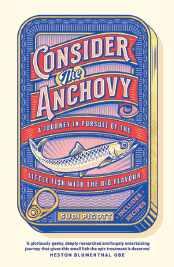

Sudi Pigott describes herself as “a nice Jewish girl with an anchovy obsession” – so much so she has written a book about the tiny fish. Her fascination began with childhood visits to her adventurous Great Aunt Lily. “My favourite treat was devilled eggs,” says Sudi, recalling yolks mashed with homemade mayo and finely chopped anchovies. She tasted fresh anchovies in the early 90s in Collioure, south-west France, and was hooked. Book research took her to Spain, France, Greece and Italy. In Rome, she discovered how Jewish cooking became linked to anchovies after Pope Paul IV forced Jews into the ghetto in 1545, limiting work largely to the fish trade.
Published by Headline Home.
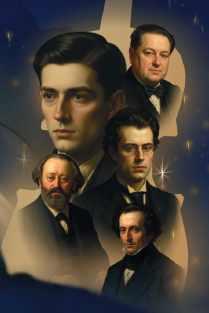
whose work was suppressed under Nazi rule. The evening of essential listening is on 21 June at Great Hall, City of London School. For tickets info@thejewishbrand.com
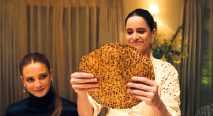
No water cooler moments to guide you, so we’re flagging Apple TV+’s Your Friends & Neighbors, with Jon Hamm as Cooper who, after losing his job, takes up theft within his own wealthy community. Already in its second season, in an episode called The Bread of Affliction a round matzah make its TV debut during a chaotic but accurate seder. Thanks for this are due to the series’ smart Jewish creator Jonathan Tropper, who surely cast Jewish actress Amanda Peet to play Coop’s Jewish ex-wife, who drinks more Palwin than she should during this unmissable Passover in an episode that would never be made here!
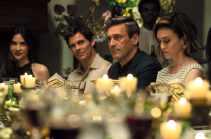
by Brigit Grant
Hourly runs to the shelters and nights of broken sleep – that was Israel in March and April. Waiting for the sirens was their life; checking in on friends and family was ours. With no end in sight, Ben Perry decided to change the script.
In Tel Aviv, the Israeli actor began posting musical videos of his family on Instagram. Filmed between alerts or during, if the alarm sounded mid-swim, Ben ran to safety in flippers.
Mid-shower or shave, he was in a towel and foam arriving at the mamad. And alongside him were his wife Vicky, a longtime performer with Mayumana dance troupe, and sons Eli, 14, and Gabriel, nine. Whether it was their interpretation of So Long, Farewell from The Sound of Music or a La La Land-style routine with neighbours, Ben’s films cut through the chaos of rockets with a defiant humour that turned fear into choreography and uncertainty into song.
“full of ideas” who ran Perry’s, a chain of bakeries in Golders Green, Hendon and Willesden Green. With a childhood that had Ben moving between London, Los Angeles and even – briefly – Brazil, he eventually returned to Israel aged 14, and from there on to the stage.
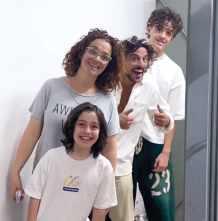
It didn’t take long for the videos to travel far beyond Tel Aviv. Within days they were being shared across social media and picked up by television networks.
Born in Israel but raised in London’s Hampstead Garden Suburb, Ben grew up with a father
Don’t forget Nova
When Lisa Marlowe heard the Nova exhibition was coming to London, her immediate response was simple: “Jake is coming home.”
Jake, her son with husband Michael, was murdered at the music festival on October 7. Now items from that terrible day –scorched cars, abandoned shoes, personal belongings – form part of the Nova exhibition in Shoreditch until 5 July.
“There are things there that Jake may have touched. I’ll never know,” Lisa told Life
“I dreamt of going to LAMDA, but was rejected, which was the worst thing at the time,” he says. But it proved decisive as he trained instead at Nissan Nativ in Tel Aviv and went on to co-found the theatre troupe Tziporela, which took him to New York. There, the breakout moment came with Odd Off-Broadway that ran for 120 performances and earned Perry a standout mention in The New York Times. “I dined out on that for weeks.” Next Stop was a romantic comedy about an Israeli chasing success in New York that had Ben commuting from Tel Aviv to Manhattan for several years. That show is still on in English at Habima, Israel’s National Theatre and, as he spoke to Life, Ben was heading back for his first post-ceasefire performance. “Like Covid, everything stopped but this time it came with a very different
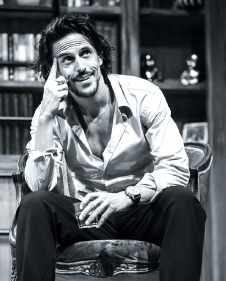
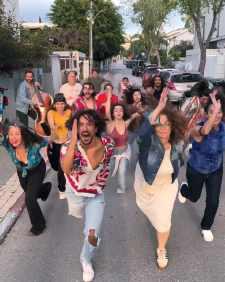

kind of uncertainty.” Making videos during repeated shelter trips kept his family upbeat and drew tens of thousands of views. Because for a few minutes on Instagram, Ben and his family offered a glimpse of Israel that wasn’t about conflict, but heart and hope.
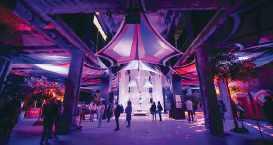
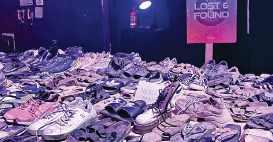
The immersive exhibition, which has moved audiences around the world, also documents the attack through survivor testimony and footage from the site itself.
For the Jewish community the exhibition is to bear witness but also to tell those who don’t know that it’s here. More importantly, tell those who don’t want to know. novaexhibition.com
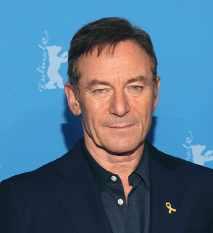
Twenty-five years after Harry Potter and the Philosopher's Stone first cast its spell on cinema audiences, it seems only right to highlight the film’s Jewish connections. Chief among them is producer David Heyman, whose paternal grandparents fled Nazi Germany, for he masterminded all eight films and is now executive producing the upcoming HBO Potter reboot. The first movie launched the career of Jewish star Daniel Radcliffe who will always be ‘our’ Harry, just as Jason Isaacs is forever the sexily sinister Lucius Malfoy. To mark the anniversary, Jason kindly agreed to share his favourite Potter memory. “It was the big scene in the courtyard, just before the Battle of Hogwarts, which took forever to film. Not just because every single character was there and Ralph was doing a one-man show as Voldemort, but because it kept raining – so entire days were lost. On different projects – American ones I suppose –everybody would have gone back to their trailers and waited, but being British actors and mostly trained in theatre, we all huddled round a gas heater in a large tent, drinking a tea urn dry, sharing boxes of Family Circle biccies and listening to Julie Walters tell hilarious stories about her pig farm. I wanted it to rain forever.”

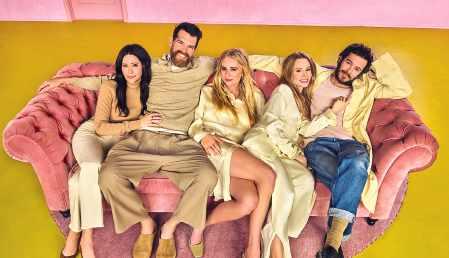

Finally after two seasons of will she, won’t she, season three of Nobody Wants This in the autumn looks set to turn Joanne Jewish. That’s hearsay not gospel – but maybe Torah because all signs point to a conversion class being the centre of the action.
Comedian Sarah Silverman is the rabbi showing Joanne (Kristen Bell) the Halachic way, with other converts played by Andrew Rannells as Joanne’s class nemesis and Keyla Monterroso Mejia as the singleton wanting a Jewish husband.
Even Erin Foster, writer of the series based on her own real-life conversion, appears in class, and Adam Sandler’s daughter Sadie is
How I Met Your Mother star Josh Radnor and Broadway favourite Noah Galvin make their London stage debuts in Jonathan Caren’s new play Hit Machine at Soho Theatre in July.
The dark comic drama follows two estranged brothers – one a hugely successful music executive, the other a struggling musician – forced back together to confront old wounds.
a psychic visited by Joanne’s sister Morgan (Justine Lupe).
Here at Life, we were hoping Rabbi Noah, (Adam Brody) might have realised Morgan was more fun than Joanne while some are holding out for his ex, Rachel, to return. Sorry Joanne.

The production features original songs by Grammy winner Ben Harper and fyi Noah married stage star Ben Platt last year. 8 July – 15 August, sohotheatre. com
original songs by Grammy winner

Real stories that show what The Fed does - when life is hard, when care is complex, and when crisis hits.
David’s story: mental health, illness - and not being left alone
When David’s mental health and physical health collapsed, loneliness threatened to swallow everything. The Fed stepped in with practical help and human connection - from weekly support to get food in, to getting him to hospital at dawn, to volunteers who turned up and stayed present. It’s the kind of quiet, life saving support that rarely makes headlines - but changes a life.

Sarine & Saul: four generations, one warm Jewish home at Heathlands Village
At Heathlands Village, outstanding care by dedicated staff and carers lifts the heavy burden from families - giving children, grandchildren and great-grandchildren something priceless: time together. Not as carers. Just as family. The film shows how love, continuity and Jewish life are protected every day, while professional teams take responsibility for day-to-day care, medical needs and support.


Heaton Park Synagogue: The Fed’s complex response in the aftermath of terror In the aftermath of the Heaton Park Synagogue terrorist attack, The Fed provided complex, intensive, emotional, practical and trauma-informed support to victims, survivors and families - stepping in immediately, remaining present long after the headlines faded, and supporting recovery with advocacy, dignity and sensitivity.




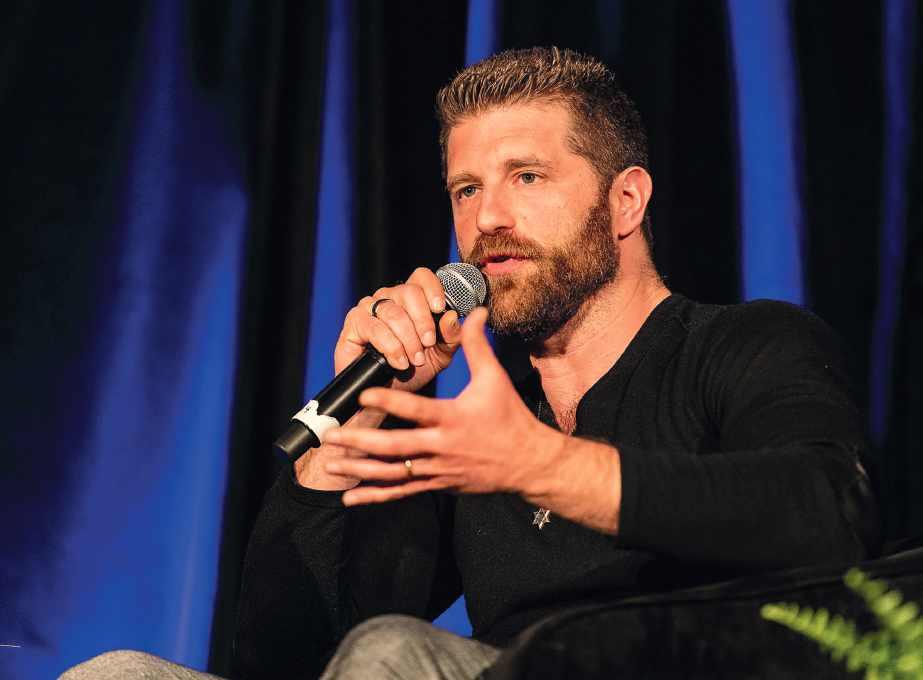
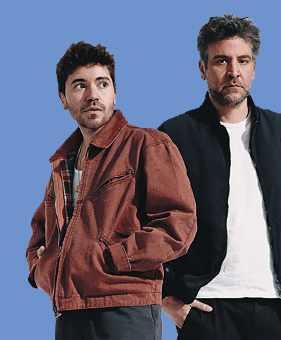
Jonah Platt didn’t set out to become a Jewish advocate – he just refused to be quiet. Now he has the number one Jewish podcast in America. By Hannah Litman
Every Friday evening, Jonah Platt gathers his family around the Shabbat table and places his hands on his children’s heads to say the blessing. The kids find it slightly a nnoying. He does it anyway –and has, without exception, since the day they were born.
“Since I was a little kid, I always said: ‘When I have kids, I’m blessing them every Shabbat,’” he says, laughing.
Growing up, the actor and singer would watch his second cousins receive the blessing and quietly take note – a thing he wanted, a thing he would do. They will understand when they’re older.
T hat is Jonah Platt: a man who pays attention, takes notes and shows up –especially when no one is making him.
Jonah is the second of five Platt children. Growing up in Los Angeles, he was the first in his family to be born there; his parents, aunts, uncles and cousins were scattered across A merican cities from Baltimore to Houston and Kansas to New York. The family came together for holidays, for summer camp and for Shabbat whenever geography allowed. What held it all together was less about ideology than habit that became identity.
“It was never talked about in a didactic way,” he explains. “We celebrated every holiday, kept kosher and were connected to family – it was just intrinsic to who we are.”
Jonah grew up in a Conservative Jewish household with American-born grandparents. His great-grandparents
made the crossing around the turn of the 20th century, so there is no family mythology of the old country because there was no one left alive to tell it.
“It was never a case of them telling us this is important to do,” he says. “They just did it, and then we saw that it was important. It was never ‘talk about it’. It was always ‘be about it’.”
A sk Jonah about October 7 and he resists the word “shift”. Nothing about who he is changed – just how he spends his time.
“The big shift was more on how I budget my energy and time and focus,” he says. “I went from being somebody who was spending all their day doing auditions and trying to be an actor to being a Jewish advocate.”
He had been doing some Jewish advocacy on social media since 2021, and a 2023 trip to Israel with the Tel Aviv Institute deepened that commitment. After October 7, there was no more part-time. He launched Being Jewish with Jonah Platt , the number one

Jewish podcast in America and across much of the world – a show built on deep, curious conversations with Jews of every background about identity, faith and what it means to live Jewishly today.
He enrolled in a master’s program in antisemitism studies at Gratz College, becoming part of what he describes as the first cohort of its kind. He started a Jewish travel programme, came on board as editor-at-large of Ora magazine, and is developing a Jewish apparel brand. He now tries not to use his phone on Shabbat, reads the weekly parsha , and hosts Shabbat lunches on Saturday afternoons as a New Year’s resolution for 2026.
“If you had told me before October 7 that my life would look like this – that I’d be spending all day, every day, thinking about, communicating with, innovating on behalf of and educating Jews – that’s not what my life looked like at all.” He pauses. “But now that I’m here, it actually makes complete sense. It feels like I’m doing exactly what I’m supposed to be doing, and that everything was leading to this.”
A sk Jonah Platt what sits at the top of his identity and he doesn’t hesitate. Being a dad. His wife Courtney converted a decade ago; theirs is a fully Jewish home, and he is deliberate about every corner of it. There is Hebrew art on the living room wall and books about the parsha by Jonathan Sacks on the bedside table.
He approaches Jewish parenting with almost evangelical intentionality –reading, learning and planning before his first child was born. Day school was a given. Shabbat, non-negotiable. Limiting screens, hosting lunches, making it feel “different from the rest of the week” – habits that evolved gradually and still are. His youngest daughter was born on Shavuot last year,
a holiday he had only recently begun to observe. “Instead of staying up all night studying, I’m staying up all night seeing her be born, which was even better.”
Crisscrossing the country as a speaker and emcee at Jewish events has made him newly aware of how unusual his upbringing was – not in its intensity, but in its ease. Many Jewish parents, he’s found, don’t actively think about it.“It’s very unnatural to me,” he says, not judgmentally, but with something close to bewilderment. “A lot of parents sort of think, ‘Well, if I just live my life in a way that’s important to me, my kids will
ABOVE: Jonah with his brothers Henry and Ben BELOW: Jonah and his wife Courtney with their children and dogs
‘It has to be a practice, or you’re out of practice’
get it.’ But basically what happens is they go, ‘It’s not that important.’ My parents never showed it was that important.”
Judaism, he believes, has to be something you are, not just something you do. “It has to be a practice, or you’re out of practice.” The same logic, it turns out, applies to friendship – and October 7 tested both. “Judaism has to be something you are, not just something you do.”
Friendships That Didn ’ t Survive
Jonah has thought carefully about how to respond when a non-Jewish friend posts something troubling – or says nothing at all. His approach is to lead not with argument, but with the friendship itself.
“It can’t be, ‘Your ideas are wrong and I’m going to change your mind,’” he explains. “It has to be, ‘You’re my friend,

and when you say or do this, I feel abandoned. Consider me as a friend before you post something. This is my life.’”
The goal isn’t to win, but to preserve the relationship and, where possible, be understood. In his experience, it works – not to shift beliefs, but to maintain connection. “It hasn’t changed anything materially in terms of their beliefs, but it has allowed us to maintain a relationship.”
Then there are the cases where that approach never gets the chance to work. Jonah had a friend – PalestinianAmerican, someone he considered broadly like-minded – who began posting support for Hamas in the days after October 7. He reached out.
“I get where your allegiance lies, and I don’t fault you for that,” he told her. “But they raped people, murdered babies, burned people alive. It’s kind of crazy that you would stand with this.” She never responded. That was the end of it. He still checks her Instagram occasionally. “She just hates Israel with every fibre of her being.”
He knows others have lost far more – friends of 30 or 40 years, something he finds hard to fathom. “It makes me question the foundation of the relationship to begin with.”
For him, it comes back to ideological capture. “You have to have been captured in your mind,” he says of those who have embraced antisemitic or anti-Zionist ideology. “They just cease to be an

individual in your mind. They become part of this group that you’ve been told is bad, and you just embrace that prejudice, and it supersedes...” He stops short.
“There are books about it written in the ’30s. You look at Nazi Germany. That’s how it happened.”
Still, he is not without optimism. “You can’t win them all. You’ve got to try to give them a chance, and if they don’t take it, you cut them out.” He pauses. “We’re going to be okay.
“You don’t need to hold on to every single person you’ve ever met. You’re better off without people who suck.”
He means it warmly – or as warmly as sentiment allows.
“Keep the door open for the future. For the day the brainwashing clears and they realise how foolish they've been.”
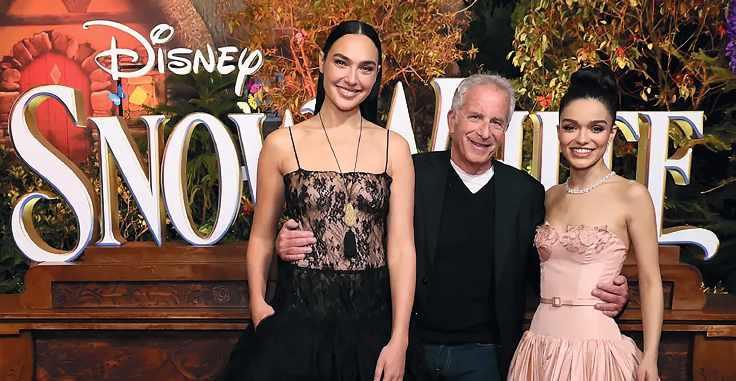
We talk about actress Rachel Zegler because we have to; Jonah’s father, Marc
LEFT: Jonah with his film producer father, Marc Platt BELOW: Marc, with Snow White stars Gal Gadot and Rachel Zegler
Platt, produced Disney’s Snow White, with Zegler in the title role and Gal Gadot as the Evil Queen – a film overtaken by the conversation around it.
On that front, he is measured and precise. “I literally feel I harbour no animosity whatsoever,” he says. His social media comment – the one that briefly made news – was not a political statement but a professional one: that redirecting a project’s spotlight towards unrelated controversy is a disservice to everyone who built it.
T he film itself? His children watch it at home. “It’s a fantastic Disney film,” he says. “She’s talented, her voice is incredible.” When his brother Ben took the stage with her at the Hollywood Bowl, Jonah was in the audience – and made a point of telling her so in person. “I told her how great she was.”
T hat’s not a contradiction. It’s someone who knows the difference between a disagreement and a verdict.
A nd when it comes to ending the interview with America’s number one Jewish podcaster, there’s only one way.
Matzah balls or noodles?
“Matzah balls.”
F loaters or sinkers?
“Sinkers” – without hesitation. Verdict delivered.

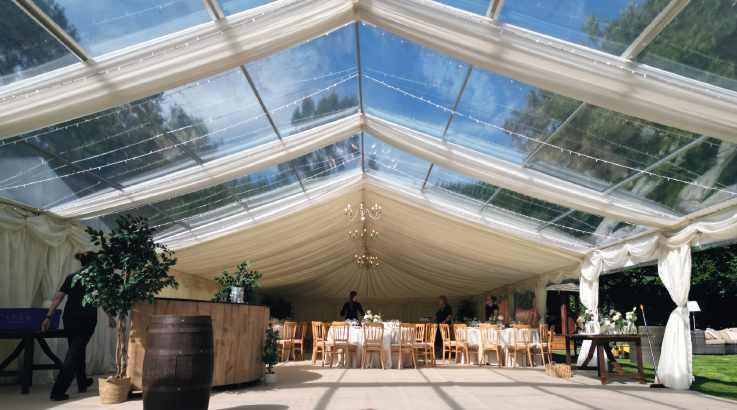

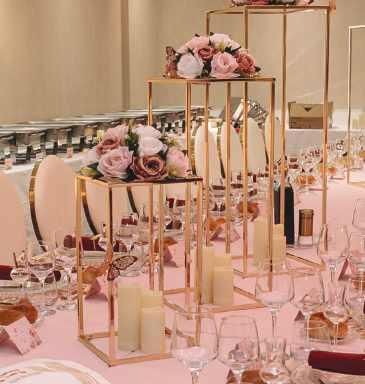
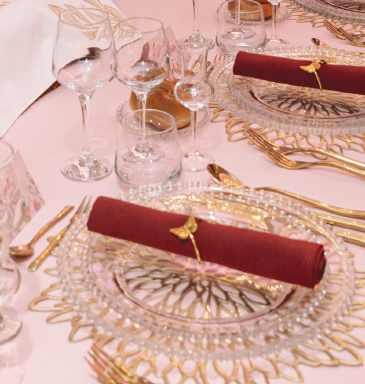
Most successful businesses can trace their origins to a carefully planned strategy. WA Carr & Son’s journey into the events industry began rather differently – with a collection of crockery that nobody came back to collect.
Fifty years ago, the Hertfordshire-based company was a traditional hardware and ironmongery business. When a customer failed to collect an order of crockery, someone suggested hiring it out instead. What seemed like a simple idea became the foundation of a business that now delivers everything from intimate family celebrations to major public events.
One hire became two. Crockery led to furniture and then furniture led to catering equipment and, eventually, to marquees, lighting, bars, catering equipment, power, production, décor, sta ng and event management services.
Today, WA Carr & Son is one of the region’s leading event suppliers, transforming gardens, fields and venues into weddings, corporate events and
large-scale productions. As the firm marks its 50th anniversary, Life hears how its business has evolved.
DID YOU IMAGINE THE COMPANY WOULD GROW TO THIS SCALE?
“Absolutely not. It has grown by listening to customers. Whenever someone asked if we could supply something else for their event, we looked at how we could help.”
That customer-led approach has resulted in a complete event solutions business. “Many clients come to us because they want one experienced company capable of handling everything rather than coordinating multiple suppliers.”
While marquees remain central to the business, they are often just the starting point. “Clients usually need much more than a structure,” the team says.
“They need furniture, lighting, power, catering equipment, bars, décor, staging and experienced people to bring everything together.”
Because so much is provided in-house, clients benefit from a single point of contact, one delivery schedule and one invoice. WA Carr & Son now works as a preferred supplier to well-known venues.
WEDDINGS CONTINUE TO BE A MAJOR PART OF THE BUSINESS
“Every wedding is unique. Some couples want a classic country garden celebration, others a luxury marquee reception, while some want a blank canvas. What we enjoy most is helping turn ideas into reality.”
From planning through to the final dance, the team manages logistics, infrastructure and styling, allowing couples to focus on enjoying the occasion.
Corporate events require a different approach. “Product launches, award ceremonies, conferences, and hospitality spaces all have specific objectives and tight schedules.”
The company works with local businesses to national brands, creating professional environments while ensuring everything runs smoothly behind the scenes.
Asked what sets WA Carr & Son apart, the answer is simple: “We genuinely care about the success of every event.”
Because the firm owns its equipment and employs experienced in-house teams, it can maintain quality and remain flexible when plans change. Many clients return year after year, trusting the team with everything from private garden parties to large-scale public events.
“Events often mark some of life’s most important moments – weddings, celebrations, company milestones and community gatherings. Being trusted to play a part in those occasions is something we’re incredibly proud of.”
Fifty years on from that unclaimed crockery order, the industry may have changed dramatically but WA Carr & Son philosophy remains the same: reliable service, creative solutions and helping clients create memorable events.
wacarrandson.co.uk


9–13TH NOVEMBER 2026




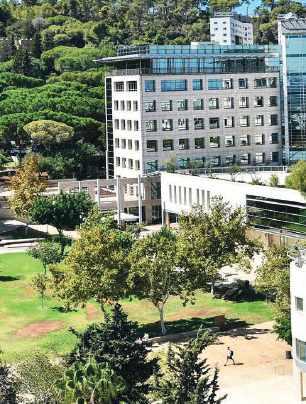



EXPERIENCE FIRST-HAND how Israel continues to thrive with extraordinary resilience, innovation, creativity, and determination in the face of recent challenges.
This unique journey offers an inspiring and moving opportunity to witness Israel’s pioneering achievements in technology, medicine, research, and entrepreneurship, while standing in solidarity with the people of Israel.

HIGHLIGHTS OF THE TRIP INCLUDE:
• Visits to exciting new destinations and places of exceptional historical and cultural significance.
• Exclusive meetings with innovative Israeli start-ups and entrepreneurs shaping the future.
• Briefings from distinguished high-profile speakers with unique insights into Israeli society and current affairs.
• An unforgettable evening of musical entertainment in a luxury villa setting.
• A meaningful visit to Mount Herzl and the Military Cemetery to honour and pray for Israel’s fallen soldiers.
• A visit to Atlit Detention Camp, the powerful and fascinating historical site established during the British Mandate period.

We will visit the Technion, Israel Institute of Technology, internationally recognised alongside Oxford, Cambridge, and Stanford as one of the world’s top 10 science and technology universities. Meet pioneering professors responsible for groundbreaking scientific advances that are changing lives globally and visit Rambam Health Care Campus, home to the Technion Medical School and the first in Israel to establish a fully operational fortified underground emergency hospital, a remarkable symbol of preparedness, innovation, and resilience.

Enjoy a special wine tasting experience while learning about the remarkable work supporting PTSD veterans through Vinotherapy, an innovative therapeutic approach developed by a pioneering Israeli winemaker. This unique programme is one of the only centres of its kind in the world and visit the underground tunnels of the new light railway.

Stand with Israel. Show your support. Be inspired.



Festivals are meant to be about freedom and belonging.
Howard Kaye asks why many young Jews no longer feel either
Festival season is almost here. The lineups are out, the tickets are selling, and somewhere in the country an 18-year-old Jewish child is wondering whether this is the summer they finally go.
I am incredibly lucky that I have only ever attended festivals as an artist. Every field, every stage, every crowd I have stood in front of has been as a DJ or musician. But after 20 years in this world, I find myself asking a question I never thought I would have to ask.
Is it safe to be visibly Jewish at a festival in this country?
Before that, let us acknowledge what’s worth celebrating. This summer, Jess Glynne will play festivals across the UK. Saul Milton, one half of Chase & Status,
remains one of Britain’s most successful electronic artists. Across the Atlantic, Noga Erez became the first Israeli artist to play Coachella, arriving from Tel Aviv during a war with Iran, navigating boycott threats and calls to cancel her set, then delivering one of the festival’s most talked-about performances. She even did it with a bloody nose and a toddler on stage. If you want a symbol of what Jewish and Israeli artists are made of right now, that is it.
So, yes, there are Jewish artists at festivals. There always have been – even if sometimes you have to look hard to find them.
Back home, though, the question feels more personal. I have worn a Star of

David around my neck since I was 13. I have walked into every gig, every set, every stage wearing it. It never occurred to me that it would become a decision. But over the past two years, it has.
I know this because I have already experienced what happens when Jewish identity becomes visible in the wrong place. I have been sworn at mid-set. I have had people try to force me to say things on camera while performing. I have filed multiple hate crime reports with the police. And when I wrote about Ye at the now-cancelled Wireless Festival – a piece that had nothing to do with Israel or the war – the online comments were full of hatred directed at the Star of David. My religion. My identity.
Music and politics have always been intertwined. Bob Dylan, Marvin Gaye, Public Enemy – protest runs through live music like a spine. But there is a difference between political conviction and performance activism. Between artists with a genuine connection to a cause and those making gestures because they know the crowd will cheer. There is also a growing asymmetry that is hard to ignore. Some identities feel celebrated on festival stages. Others feel like a risk.
If I walked onto a stage today with a flag bearing only a Star of David – not an Israeli flag, not a political statement, just the symbol of my religion – I am convinced I would receive hate.
The UJS Time for Change report found that many antisemitic incidents experienced by Jewish students did not happen in classrooms or lecture halls. They happened on nights out, at gigs and
in clubs – in the social spaces where people are supposed to feel free. One statistic has stayed with me: 13 percent of students surveyed did not consider a Star of David intersected with a swastika to be antisemitic.
I am in my 30s. I have spent more than a decade in this industry. I know what is coming and I know how to handle it. But I am not the person I worry about most.
I worry about the 18-year-old heading to their first festival this summer. Jewish, music-obsessed, excited and proud of who they are. People should be free to wave whatever flags they choose. Artists should be free to use their platforms however they see fit. But when you are young and Jewish in that crowd, and the atmosphere turns charged, the calculation you make is not political. It is whether being visibly Jewish is worth the risk of ruining your weekend. Or worse.
The fact that a young Jewish person has to make that calculation at all, at a music festival in Britain in 2026, is the thing I cannot get past.
Jess Glynne will be on those stages this summer. Chase & Status will too. Noga Erez made it to Coachella from a country at war to show what Jewish and Israeli artists are capable of. That matters.
But I would be lying if I said I was not worried about the kid buying their first festival ticket this summer, wondering whether to tuck their Star of David inside their shirt before they walk through the gates.
Nobody should have to wonder that. And the fact that they do tells you everything about where we are.
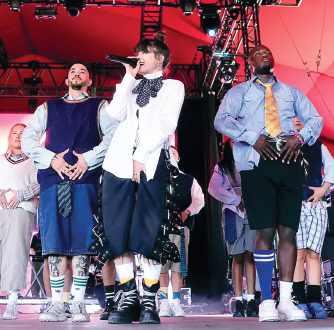
‘After 20 years, I’m now asking whether it’s safe to be visibly Jewish at a UK festival’
ABOVE






















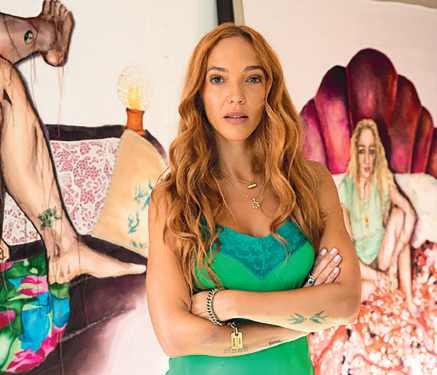

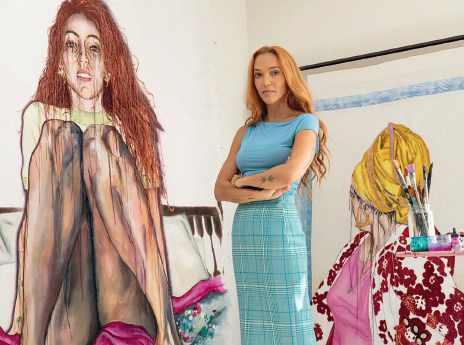
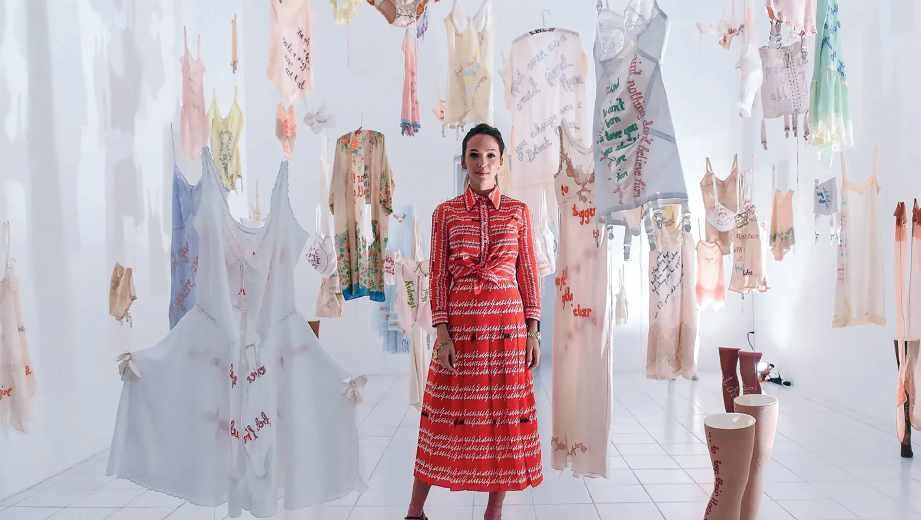
Resolute and unashamedly herself, Zoë Buckman says her Jewish identity is woven into her work. By Michelle Rosenberg
Hackney-born, Brooklyn-based Zoë Buckman is resolutely in a New York state of mind. The British Jewish multi-disciplinary 40-year-old artist has adopted the fiery, feminist armour of her adopted borough and doesn't shy away from tackling the tough questions. Her work has always been about her own personal experiences. Most of those, she says, are “connected to being a woman. Abortion, miscarriage, birth, certain griefs and break-ups, abandonments and domestic abuse”.
Zoë, the statuesque red-headed ex-wife of Friends actor David Schwimmer, with whom she shares a 15-year-old daughter, has “never made work about an issue that I can’t speak to from the first person perspective”, she says, adding: “And my Jewish identity has always been woven into my work because it’s such a big part of who I am, and especially a big part of my relationship with my mum.”
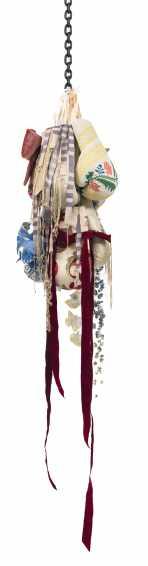
Her mother, acting coach Jennie Buckman, died on 4 January 2019 following a nine-year battle with breast cancer. It is impossible to underestimate the impact and importance of their closeness – it infuses every aspect of Zoe’s output, which spans sculpture, installation, textiles, lens-based media, ceramics and teacups, neon, painting, fragile lingerie and boxing mitts, the latter two perfectly reflecting the energy of an iron hand in a velvet glove.
“My mum and the maternal line have always been such a big thing in my work,” she says.
Zoë has had exhibitions at prestigious global venues, including The National Portrait Gallery in London, The Institute of Contemporary Art in Miami, The Jewish Museum in her adopted NYC and The Studio Museum in Harlem.
While in the past she admits her Jewish identity “would be much more kind of subtle, like Yiddish titles for some of my pieces or little bits of my mum’s writing that had Jewish slang in it”, after her mother
died, she “started to look for more Jewish community and spaces in New York”.
Before October 2023, she had started on a new series, depicting her family through painting and embroidery.
“I was,” she says, “showing all kinds of joy and resilience and softness and our complicated relationships through poems. But then, of course, after October 7, that work was viewed as highly controversial because it was depictions of Jewish people that led to cancellations and boycotts and a whole bunch of bullying, harassment and ostracism in the art world.”
In 2025, Zoë’s former London gallery “indefinitely” scrapped her show, named after Leonard Cohen’s song Who By Fire, an adaptation of a prayer, written after his concerts for the Israel Defense Forces during the Yom Kippur War, over fears its focus on Jewish identity, featuring antique and vintage kippot, as well as prayer shawls, might spark “potential hostility”.
She was told: “We don’t want to show this work until antisemitism has died down in London,” to which she retorted: “I don’t think that is a viable response to any form of bigotry. Hiding the artist is not an appropriate response to potential hate.”
While she defiantly debuted the work in a solo exhibition at Miami’s Mindy Solomon Gallery, Zoë still calls this her “huge lesson phase” – being distanced as a Jewish artist who dared to put her Jewishness in the forefront of her work.
“I don’t address things that I don’t have personal experience about. I wasn’t speaking about the conflict, I wasn’t speaking about Israel, because I don’t feel equipped to handle that. And that’s not really my art to make.”
Still, she felt “scapegoated as being the contemporary artist speaking out about antisemitism. I was getting appreciation from the Jewish community and the gallery was scooping up
50 percent of every artwork that sold.
“But then they decided I wasn’t allowed to have my planned solo show, and they also told me that they weren’t going share my work with British curators. At which point I was like, ‘Then we don’t have a relationship.’ Because if you’re not doing anything for me; if you’re not giving me a show, and you’re not making introductions of my work, I don’t need to be giving you my sales.”
After October 7, Zoë lost four of her best friends in London to anti-Israel and antisemitic rhetoric. These were significant relationships of two decades and the cut was deep.
“I’m the godmother of one of their daughters. They were at my wedding [to Schwimmer]. One of them performed at my mother’s funeral. They, in unison, unfollowed me on Instagram the week after October 7. I never heard from them again.”
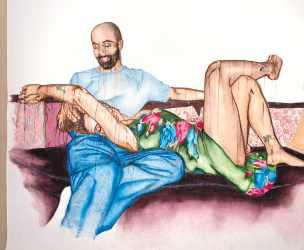


LEFT: Boxing gloves, vintage linen and chain BELOW: Before they became an outline, 2025 BOTTOM: Somewhere I swear I can hear the siren of a kettle boil, 2023 the week after October 7. I never heard
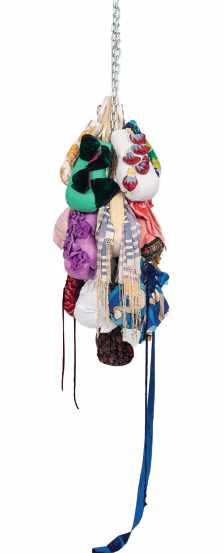
That very brutal personal response was replicated in the art world, where she experienced “lots of similar kind of acts of ostracism and distancing, and people who I had worked with trying to cancel me.”
It left her “not wanting to go to art openings, not wanting to show up at certain events, because I don’t feel comfortable,
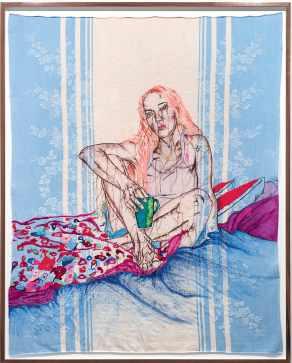
because I know there are people there who tried to ruin my career”, she says. “And then who knows what opportunities you might miss out on by essentially taking yourself out of the game in the New York art world?”
While there have been moments in the past almost three years where she’s “felt really distressed, 100 percent I know my mum would be proud. I also know that she just wants me to be happy and at peace. I’m almost certain she would have implored me to stop fighting the fight, because it’s affecting my mental health and my safety.”
Co-parenting with David, they have both “set a really good example about being impassioned but not reactive; learning when to speak up and when prioritise your own space and silence”.
When it comes to standing up in person or on socials for Israel and the wider Jewish community, David “will often run it by me before posting. We both share that same sense of urgency and wanting to do what we can”.
Zoë is acutely aware of the horrific surge in antisemitism in London, but recent events, coupled with the desertion and ghosting by her best friends, has made her “less compelled to get on a flight and spend the money and be there”, despite her family and “favourite people in the world” still being there.
“It’s an important time to be an artist, for folks to be doing what they can, to combat antisemitism. For some, that means being vocal; it means donating their time or expertise, their research, resources or their contacts. Everyone needs to be doing something, because there are no allies.”
Sending various images of her work to accompany this piece, together with a striking picture of her, tattooed and toned arms folded, wearing a gold Magen David necklace, with Raphaelite curls framing a heart-shaped face, she writes “thank you”, finally signing off with “Big Love!” in a very Zoë Buckman like-fashion.
Zoë Buckman will be honoured by BFAMI’s Women in Art lunch in London in June 2026, with all proceeds going towards art education, therapy and multicultural programmes run by the art museums of Israel. For lunch and raffle tickets, contact info@bfami.org







The Grove in summer that feels slightly unexpected. Set within 300 acres of Hertfordshire countryside, just beyond London, the five-star resort brings together country-house character and contemporary luxury. And at the heart of it all, the Walled Garden is the place where most days begin and end.
Set within the wider estate, it comes into its own in the warmer months. Ralph’s Beach brings a playful energy, with sand underfoot, luxury daybeds and the anticipation of a long afternoon stretching out. Families drift between the beach and Anouska’s indoor pool, while the outdoor pool and kiosk offering sushi and salads draws those looking to make the most of the sunshine. It strikes a balance between laid-back and lively, with a gentle buzz that carries through into the evening.
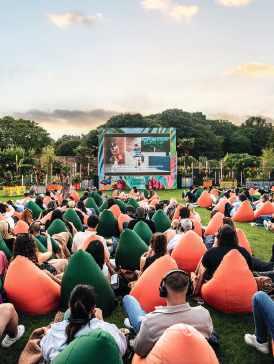
Everyman in the Garden returns from 22 July, with early screenings
that work for younger guests and later films for more grown-up evenings. With comfy beanbags, popcorn and drinks close at hand, this experience is about lingering outdoors for those long summer nights.
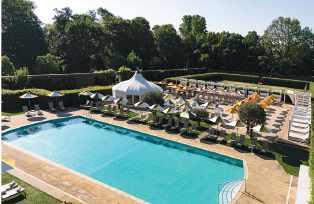
Food, too, centres closely around the garden itself at the newly refurbished Jemima’s Kitchen Garden.
A Plot-to-Plate experience bring guests closer to what’s being grown on-site with a focus on seasonal produce, open-fire cooking and a more considered way of eating in a truly unique setting.
Beyond the garden walls, there’s plenty to pull in guests. Some will gravitate towards the estate’s more active side – think air rifle shooting, archery and axe throwing – while others will happily spend hours moving between quieter corners.
Sequoia Spa remains a natural retreat when the pace slows, offering a
contrast to the garden’s lively energy. And this summer The Kingdom at The Grove arrives. TaylorMade Golf’s most premium custom fitting experience introduces a more technical, tailored approach to the game, alongside a newly designed short game area that gives players space to refine their skills.
But it’s the balance between all of these elements that gives a stay its momentum, with something for every age, mood and moment.
From poolside mornings to evenings that come alive outdoors, summer at The Grove feels effortlessly full of energy. thegrove.co.uk


As Tate Modern opens a major new Frida Kahlo exhibition, Anthea Gerrie explores the artist’s little-known Jewish connections and the global obsession with her image
In an era in which Jews are afraid to be visibly identifiable, it’s a shock to find an artist who proudly proclaimed her own Jewish identity when it was even more dangerous to do so than it is today.
It may be a matter for debate whether Frida Kahlo was indulging in wishful thinking, but the world’s most-revered female artist did marry a man who looked as Mexican as she did but fervently embraced his own Jewish ancestry, took at least two Jewish lovers and put her work in the hands of Jewish art dealers in New York.
Now Kahlo, whose personal style has inspired more merchandise than any other female painter – more than 100,000 objects imprinted with her face are on sale around the world – is having her resonance with today’s shopaholics as well as dozens of other artists analysed in a new London show at the Tate Modern entitled Frida: The Making of an Icon.
Was she as Jewish as she purported? “Frida Kahlo emphasised the fact that her father, Wilhelm, was a German-born Jew of Hungarian descent who came to Mexico as a young man,” says Gannit Ankori, a Kahlo scholar, in her essay The Immigrant’s Daughter.
Ankori cites a telling incident at a Detroit hotel from which Jews were barred. Kahlo and Rivera threatened to leave immediately on the grounds that they had Jewish blood themselves (Rivera, descended from conversos on his mother’s side, declared in 1935: “My Jewishness is the dominant element in my life.”). The management caved in and changed its policy.
In 2006, a couple of historians suggested Wilhelm was actually Lutheran Protestant, by
which time New York’s Jewish Museum had made one of her most iconic paintings the subject of an exhibition and Rabbi Edward Van Voolen, curator of the Jewish Museum in Amsterdam, had chosen the same painting for the cover of his book about Jewish art and culture.
Kahlo painted My Grandparents, My Parents and I in 1936, celebrating her own mixed heritage a year after the Nazis banned interracial marriage under the Nuremberg laws. She would soon take Hungarian Jew Miklos Mandl as her lover, and go on to dally with Leon Trotsky.
The family tree painting is not in the Tate show but can be seen this summer in New York at the Museum of Modern Art’s own exhibition, Frida and Diego: The Last Dream.
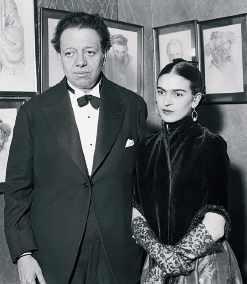
And there are more clues to Frida’s secret Jewish life at the Blue House in Mexico City, where she grew up and died, including her book of Yiddish poems by Isaac Berliner, a source of inspiration in the joy of nature they evoke, which made its way onto Kahlo’s canvasses. She also owned several volumes published by El Libro Libre, established during the Second World War by German-Jewish immigrants in Mexico. “That Kahlo was among the select circle which subscribed to this small and specialised publishing effort is significant,” says Ankori, who points out that Kahlo also treasured a volume of poetry by Yehuda Halevi. Some of her darker pictures portraying her tormented self – a terrible accident at the age of 18 left her disabled for life – were inspired by a book detailing how Jews in Mexico were tortured during the Inquisition.
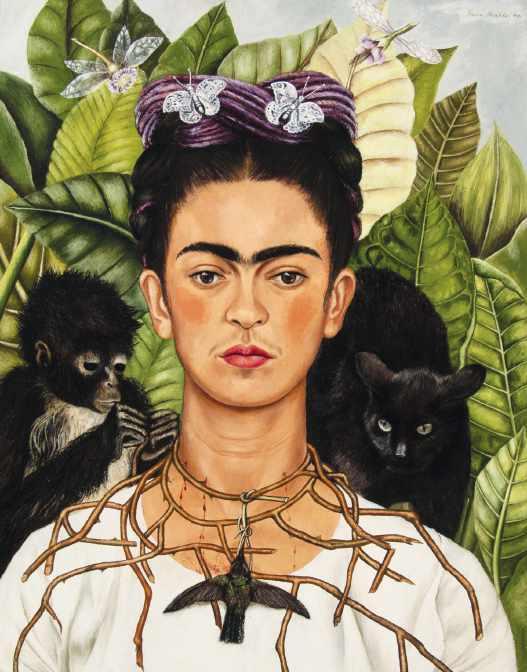
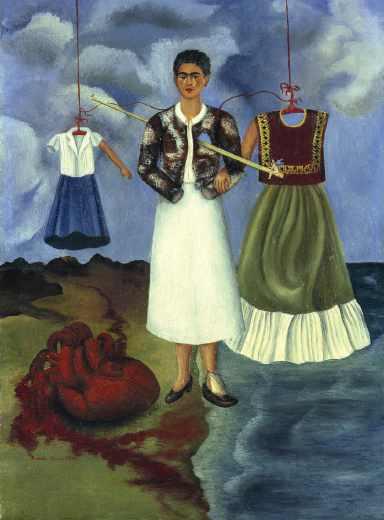
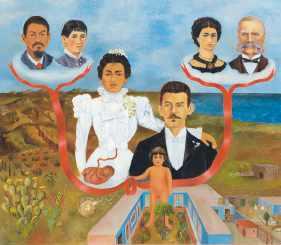
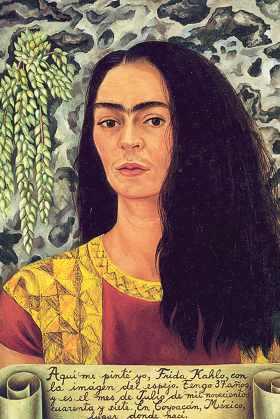
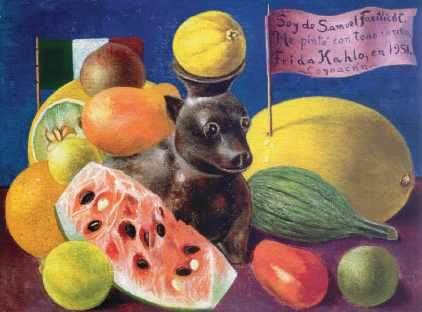
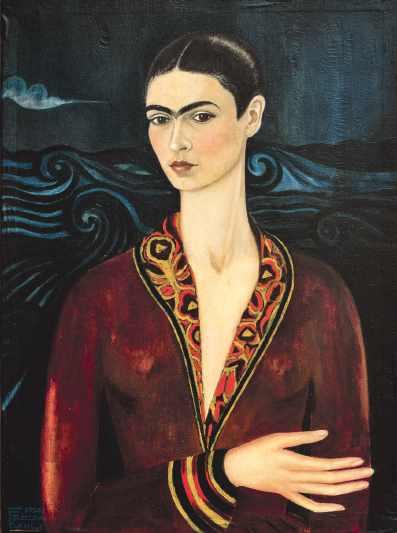
CLOCKWISE FROM TOP: Frida Kahlo, Untitled 1940. Nickolas Muray Collection of Mexican Art; My Grandparents, My Parents and I by Frida Kahlo, courtesy Museum of Modren Art, New York; Frida Kahlo, Self-Portrait with Loose Hair 1946 , Private Collection; Frida Kahlo, Still Life (I Belong to Samuel Fastlich) 1951; Frida Kahlo, Memory (The Heart) 1937 Collection
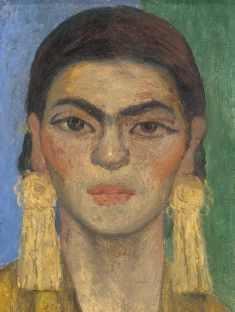
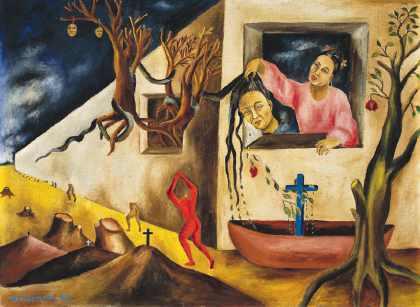
FROM
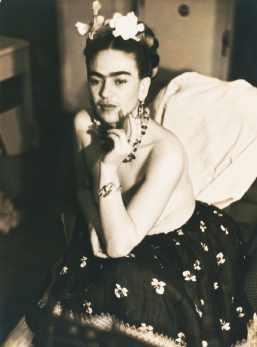
‘Frida emphasised the fact her father was a German-born Jew’
And political torture was uppermost in her mind as Hitler came to power; as she gained fame, she was also influenced by a book detailing what was going on in the concentration camps.
Rare self-portraits illustrating her torment will be on show at the Tate, including an iconic painting never before seen in the UK in which the artist depicts herself in a thorn necklace adorned with a hummingbird. There are several photographs of Kahlo by her art dealer friend, Julien Levy, in which she looks dressed to the hilt even with bare breasts, and more by her lover Mandl, who renamed himself Nickolas Muray. Another self-portrait in a tin butterfly frame could have come straight out of one of the many Mexican gift shops awash with Kahlo merchandise.
Given how her love of colourful costumes depicting the folkloric side of her Mexican heritage,
her jewellery and accessories contributed an explosion of retail items following her death, there is an appropriately-named Fridamania room in the Tate show, packed with the many kinds of merch she’s inspired, from tequila labels and T-shirts to bags, scent and even a Frida Barbie. For a woman with such a sense of her own style and the joy she took in clothes – which must have been so hard to climb into over the medical corsets and other underpinnings necessitated by her disabilities, including spina bifida and childhood polio – the fact her image became so universally embraced would surely feel like an even greater tribute than the art world’s appreciation of her talent as a painter.

Frida: The Making of an Icon runs at Tate Modern from 25 June 2026 to 3 January 2027

It seems so for Felicity Kendal who, at nearly 80, is starring in High Society, and yet she thinks it is the worst time ever.
By Brigit Grant


Is it still a
The downside of being raised on musicals is that I grew up believing I belonged in one. That one day I’d belt out a solo or fan-kick my way into Chicago. Since I realised that wasn’t happening, I’ve tried to stay to stay close to the roar of the greasepaint as much as my job allows.
And sometimes it allows a lot. Back in April, I was bounding up the stairs at the Jerwood Space in Southwark for High Society rehearsals. I could hear Cole Porter’s Let’s Misbehave as I reached the studio where director Rachel Kavanaugh was directing a cast of which I was not part. I was there to talk to one of her stars.
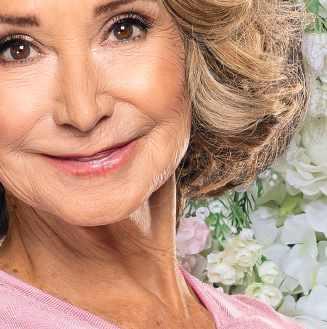
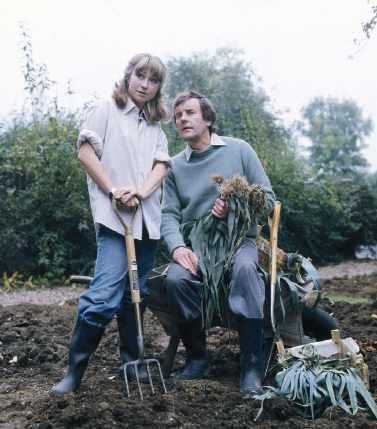
Waiting, I avoided standing beside any youthful lithe dancers as they make the old look older. But not Felicity Kendal. Petite, slim and smiling, hair slightly tousled, she had the vibe of someone young enough to be in the chorus. She was also wearing jeans and a shirt, as she did when she was Barbara Good starring opposite the late Richard Briers as husband Tom in The Good Life, which turned her into the nation’s darling and a poster girl for self-sufficiency in suburbia.
The wellies and the mud streak on her face were missing, but in every other respect, time appeared to have stood still.
Which makes the idea of Felicity being cast as Margaret Lord – mother to Helen George’s Tracy, immortalised on screen by Grace Kelly – feel faintly impossible. Felicity, however, is less interested in questions about age than in the joy of still being in the room.
“It’s wonderful seeing people who’ve spent hours and hours honing their craft,” she says of the young cast. “My craft isn’t singing and dancing, but being part of a musical is something I love.”
Her last musical was Anything Goes opposite Sutton Foster – a production that arrived just as audiences nervously began returning to theatres after Covid. “It was rather wonderful,” she recalls. “People were still in masks, and we looked out and thought, ‘They do want to be together.’ For a while, we honestly thought that it might be the end – that people would get out of the habit of going to the theatre. But the absolute opposite happened. As soon as the doors opened, they were there. It wasn’t true for cinema, but theatre is unifying. Human beings want to connect and have a shared experience.”
The High Society audience experience, according to Felicity, is “like having lots of really nice chocolates and champagne. It’s the fi zz and sweetness of escaping some of the life we’re living and it’s Cole Porter! One of the greats. You see I’m slightly old fashioned and believe that if it’s a classic, then it’s relevant because it’s a classic. Apart from adding a few songs, it’s true to the original.”
I tell her I’m not a fan of radical reinterpretations either and ask if she




has a favourite musical. “Not particularly,” she says, sheepishly. “I grew up much more with the theatre.”
Raised in India, Felicity’s actor parents, Geoffrey and Laura Kendal, ran the travelling theatre company Shakespeareana, later depicted in the Merchant Ivory film Shakespeare Wallah, in which Felicity appeared as a child alongside her late sister actress, Jennifer. I tell her I spent time working in India and love Bollywood, which she knows lots about. “Early Bollywood, proper Bollywood, was very much part of my life and the films were absolutely groundbreaking and very clever.” Jennifer famously married Indian acting legend Shashi Kapoor and the sisters appeared together in the film Heat and Dust
We chat about the fact that Bollywood’s earliest female stars were Jewish because at the time Hindu women weren’t allowed and it is a natural segue into another part of Felicity’s life: her Jewish faith, which she has never hidden – even at rehearsals she was wearing her Star of David on a chunky gold chain. That she is rarely seen without it was once part of a profile but, in the current climate, feels brave and defiant. “That’s why I wear it,” she says simply. “I feel it’s the least I can do.”
Felicity converted to Judaism and when I ask her when, she sighs. “Oh don’t – it’s 45 years. It makes me feel very old.”
She was married to acclaimed Jewish American theatre director Michael Rudman, who died in 2023, but when I ask why she converted in the first place, she can’t entirely separate the reason from the life that followed. “But never, ever in my life have I thought, ‘I’m not really,’ or ‘I wish I hadn’t,’” she says firmly. “Never, never, never.”
Listening to her, it’s crystal clear that she stopped feeling like a convert long ago as she only talks in terms of “we”.
And it as “we” and “us” that she is troubled by what is facing Jews now, particularly within the arts world.
“It’s pretty unpleasant if you’re Jewish and visible, and tricky because you feel you can’t start an argument or put across your point of view because it immediately becomes antagonistic. It is without doubt the worst time in a long time.”
Yet she refuses to be bitter and uses theatre and literature as a counterbalance. “There are so many Jewish books, plays, so many productions,” she says. “Arthur Miller again and again. These stories keep coming back because they remain relevant and, by continuing to be seen, they educate people.”
I ask whether art can also take audiences in the wrong direction. She pauses to think. “Well, that’s interpretation. Friends of mine who saw Mark Rosenblatt’s Giant about Roald Dahl were disturbed less by the play than by the audience reaction to it. But editing things ‘out’ isn’t right either. The thing is to have the plays performed, the books written, people talking. Hopefully they will then understand more about the past and cultural differences that are not actually that different. Most of the differences are invented.”
For Felicity, antisemitism entering the arts feels painful –“because our business embraces differences. Different cultures, different characters. That’s part of what we do. To have division within our world is doubly upsetting.”
But alongside the hurt and concern there is also pride –the key to why she wears her necklace so visibly. “Because of how brilliant we are. How fundamental we have always been to writing, to music, to directing. Don’t think you can do without it.”
Although she has no Holocaust family history herself, her late husband Michael, who died in 2023, came from a Russian Jewish family who fled pogroms before the Second World War. After more than four decades immersed in Jewish family life, Felicity has absorbed that history emotionally.
“If anything it makes me want to be stronger,” she says, but catches herself becoming too serious. “You just have to be positive.”
Being positive perhaps explains her career spanning more than six decades as she has moved between Coward, Shakespeare and Stoppard, starring in acclaimed productions of Amy’s View, The Vortex and Ivanov, alongside such television successes as Solo, Rosemary & Thyme and now High Society
Thanking me, she leaves to join the young dancers who impress her so much. Performers too young to have grown up watching The Good Life, so I wonder whether they fully appreciate the age-defying woman dancing with them, who turns 80 in September, and once had half the nation in love with her while wearing dungarees and tending vegetables in Surbiton.
High Society is at the Barbican until 11 July followed by a UK and Ireland tour. HighSocietyMusical.com
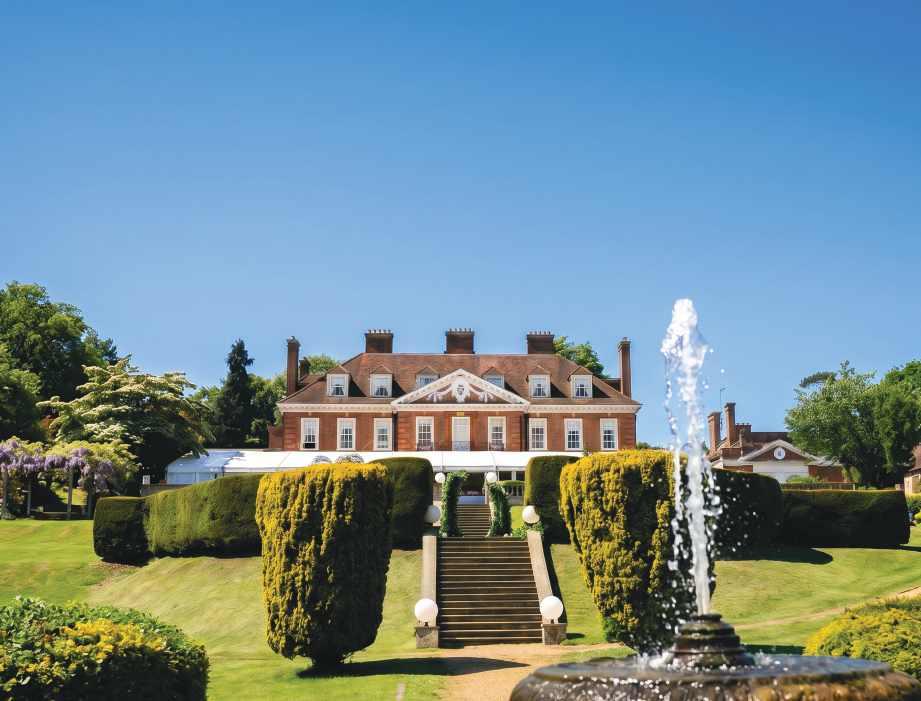
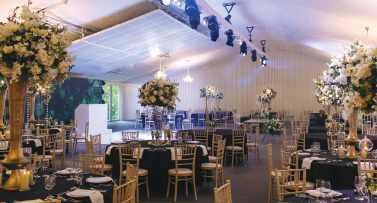
Hunton Park Hotel combines a stunning Queen Anne-style Georgian Mansion House, elegant event spaces and 22 acres of grounds to create unforgettable weddings, Bar & Bat Mitzvahs, gala dinners, conferences and celebrations.
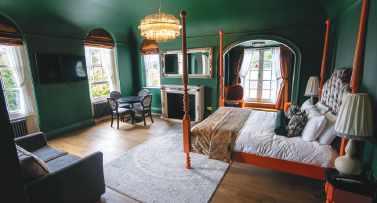
• Events for 50–500 guests
• 72 bedrooms for overnight stays
• Mansion House, Terrace Marquee & Garden Suite venues
• Beautiful landscaped grounds
• Ideal Hertfordshire location near Watford & North London
Park Hotel, Essex Lane, Watford, WD4 8PN
‘We
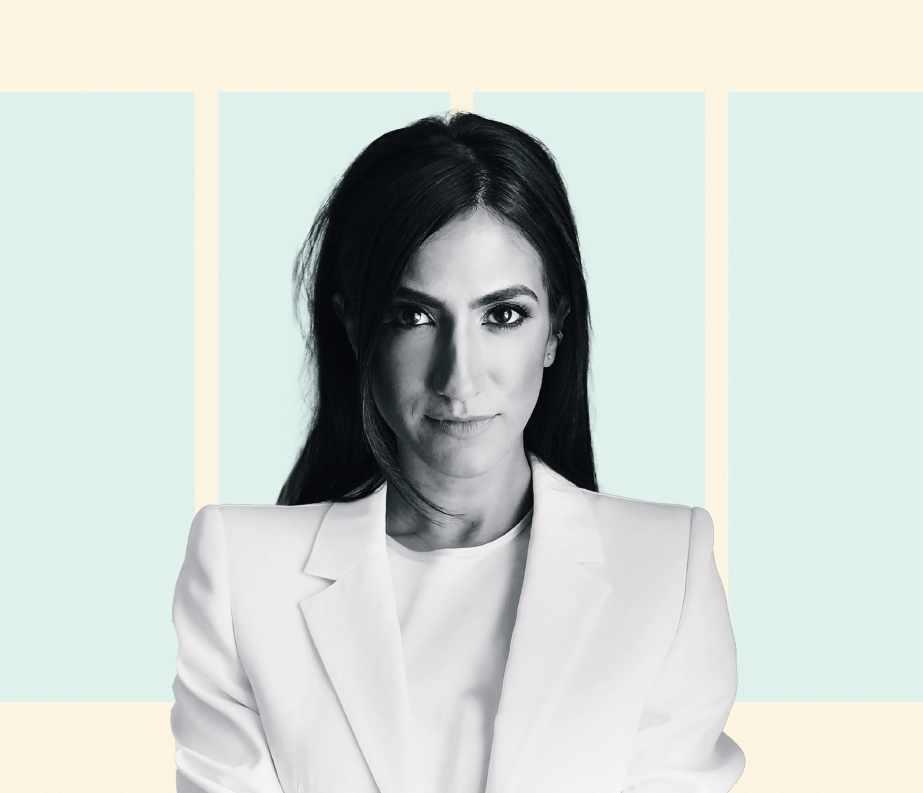
Once at the heart of Prince Harry and Meghan Markle’s inner circle, Iranian-born activist Mandana Dayani tells Etan Smallman how October 7 reshaped her world –and why her Jewish identity now defines it
When October 7 happened, turning countless worlds upside down, Mandana Dayani had a clarity of thought many might envy. “I was never unsure about who the bad guys were or what threat existed, because I had seen them,” says the multi-hyphenate corporate attorney and talent agentturned-entrepreneur and human rights activist.
“They had pointed a gun to my head when I was a kid – and it was the same bad guy,” she explains, referencing the Iranian regime and its proxies, including Hamas, “the same monster that I had nightmares about my whole childhood”.
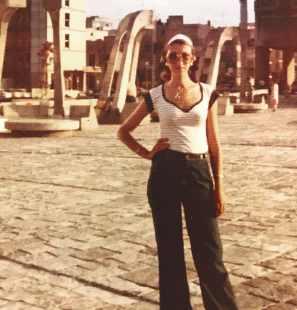
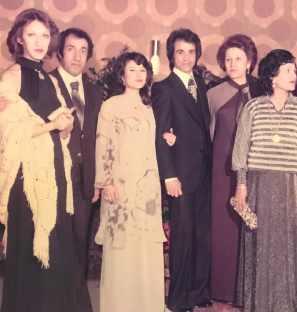
Mandana grew up in Tehran, the granddaughter of the rabbinical leader of the Jewish Kurds. “One of the things I remember so much was just seeing how afraid everybody looked – constantly seeing so much fear and panic in people who I loved.”
She recalls observing the intimidation meted out by armed morality police jumping out of trucks. Meanwhile, at her school: “I had to chant ‘Death to America. Death to Israel’.”
Aged five, she left with her engineer father – wounded by an explosion during the Iran-Iraq war – and her teacher mother. All their assets were seized the next day and, as religious refugees in America, her father worked as a shoe salesman on $4.25 an hour.
The 44-year-old has since built brands across fashion, technology and media, was president of Archewell, the production company founded by Prince Harry and Meghan,

‘Growing up, I saw so much fear and panic in people who I loved’
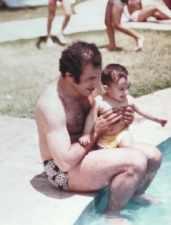
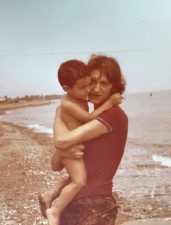
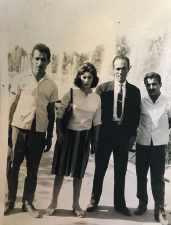
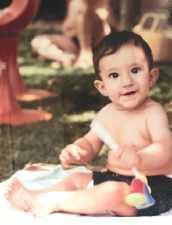
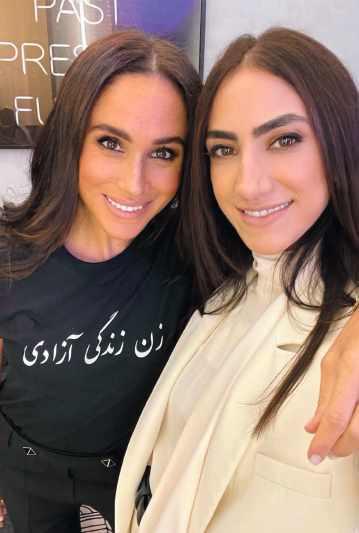
and co-founded I Am A Voter, a nonpartisan civic engagement organisation. Yet she stands out among many of her out-andproud peers by putting her identity right at the core of her public profile.
On her website, she describes “dedicating herself to advocating for the Jewish community” and how she “frequently addresses the global rise in antisemitism”.
There was never any hesitation about openly connecting her professional and personal lives, she says, on a video call from her Los Angeles home, where she starts her working day at 7am. “I mean, I’ve always believed all the good I’ve done was because of my Jewish values. It was so integral to how I showed up in the world.”
But the aftermath of the deadliest attack on Jews since the Shoah “truly took over my whole life, because it was so much bigger than me”, she says. “It was like, ‘Who am I to be nervous when look at what they’re dealing with?’”
As news filtered out, a friend phoned to say Mandana needed to look on social media to see how the online reaction was “going in the wrong direction”. She says: “I was so confused about what that even meant.”
When the penny dropped, Mandana posted a video that garnered more than 50 million views. Its directness is still startling. “I walked away from my entire career and have worked pro bono for five years because I saw the mistreatment of migrants at the border. You sit there and repost terrorist propaganda and somehow think that that makes you an activist,” she says incredulously. “And, no, you absolutely do not get to f***ing rebrand Hamas as something other than a terrorist organisation.”
It was all a rude awakening, she tells me, “seeing people I respected try to teach the historical context for what happened. I was like, ‘On what planet do you see a child being burned alive and want to give me a history lesson?’”
After taking a break for lunch, she came back to thousands of threats to her life, including such messages as “Go in the oven”. She also felt the fallout in real life. “I lost a lot of friends and
there are some invitations I don’t get anymore. To me, what I gained was so much bigger – it’s important for me to understand that what I thought was real wasn’t.”
Yet Mandana has not given up on building bridges. “This weekend I was having a conversation with someone who is Pakistani, and explaining why you can’t call us white colonisers – because clearly I’m not white. I come from that soil of Iran. My family has been there since Esther; we’ve been there for thousands of years.”
Her daughter has seen a swastika at school and removed her Star of David earrings. And she says “it is so heartbreaking” to learn from her British friends “how isolated they felt given how brazen the hate was” across the pond. Some, speaking of her US-based advocacy, told her: “We need so much help here.”
It is also possible that her campaigning has rubbed off on royalty. In 2022, Meghan wore a black T-shirt bearing the slogan “Women, Life, Freedom” in Farsi, to express her support for female Iranian protesters. Mandana says she “did that all on her own”, but adds: “We had obviously talked about what was happening, and she would ask a lot of questions.”
Did she get the chance to talk to the Sussexes about her Jewish identity? “Truly, all the time,” she says. “We spent so much time together, and being Jewish was the biggest part of my life.”
Through her work, Mandana is close friends with Will & Grace actress Debra Messing, who has become batmitzvah tutor to her 11-year-old daughter Andy. She also has an eight-year-old, Miller, with husband Peter Traugott, the TV producer behind A Small Light, the miniseries about the woman who hid Anne Frank.
Her network includes US-based exile Reza Pahlavi, the eldest son of the last Shah of Iran, too, and she has started “for the first time in my life” to contemplate not just “the head of the snake” of global terror being removed, but of taking her family to visit the vistas of her early childhood.
“We are in the falling of the regime, and whether it happens today or in a month or whenever, they will no longer exist because the world does not want them to exist. And the incredibly brave Iranians will do whatever they can to get rid of them.”
That same optimism shines through her Jewish activism.
In 2024, Mandana founded the Calanet Foundation, whose projects include One Mitzvah a Day (expressing gratitude to those who take a stand against antisemitism or the demonisation of Israel) and The OCU Chronicle (a newspaper for Jewish students who have found themselves doxxed, silenced or excluded from their campus media).
Rather like the poppies that flourished post-armistice in the First World War trenches, the charity is named after the Hebrew word for anemone, the national flower of Israel that blossomed in 2023 where families had been murdered and kidnapped.
“We are those beautiful flowers that grow in the cracks of the cement,” says Mandana.
“We’re not the candle visual,” the symbol of mourning she felt was too predominant on social media. “We are the flower. We are blooming.”
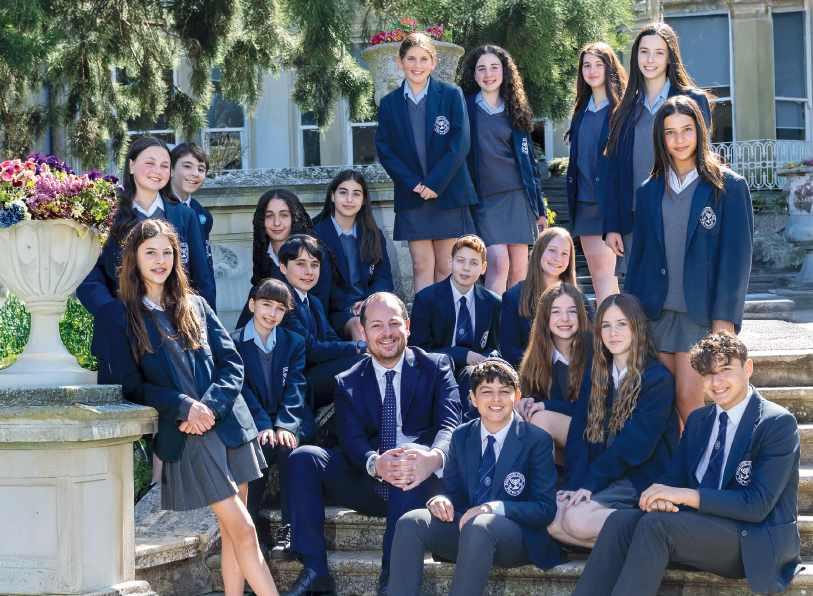
Top-Ranked Jewish School Parent Power Survey 2026 Exam Excellence in 2025
64% A*-A A-Level
88% A*-B A-Level
100% BTEC D*-D equivalent of A*-A
35% Grade 9 GCSE
73% Grades 9-7 inclusive GCSE
Join us at our Open Evening and be part of Immanuel College’s exciting next chapter.
At Immanuel College, we believe that personalised learning creates limitless potential. Our small classes, nurturing community, academic excellence and powerful Jewish education creates an environment where every student is happy, heard and encouraged to thrive. Belong and be known. Become the Jewish leaders of the future.
Register for our Open Evening and start your child’s journey with the Immanuel family
Jewish Blind & Disabled provides housing and support for adults with physical disabilities or vision impairments. Our services help individuals live independently, whether in one of our developments or in the community. With increasing demand, your support is vital to ensure we can help everyone who needs our support.

Donate now at jbd.org/donate or by calling on 020 8371 6611



Michelle Rosenberg shares the craic with an unapologetic Irish firebrand political pundit
‘
Burnt Oak’s most famous 51-year-old Irishman laughs at the suggestion that he sounds Australian. “My parents are from the west of Ireland; they migrated to Britain in 1970 so I’ve got a very Irish name. My blood is 96 percent Irish. I’m a thoroughbred Mick, but my accent is English.”
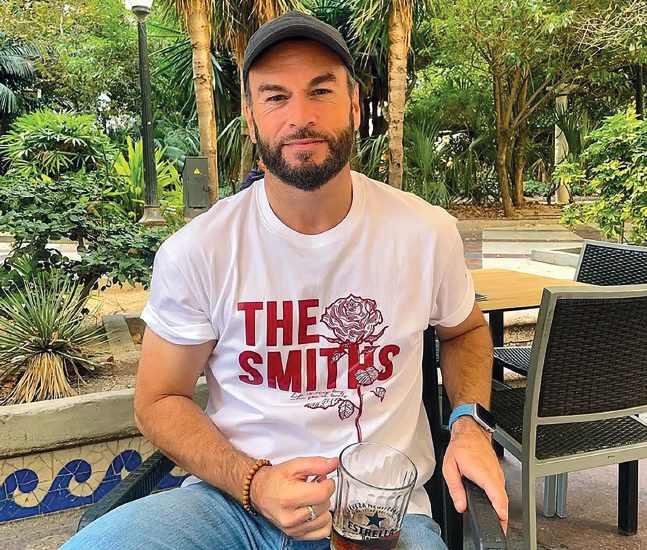
Since 7 October 2023, London-based author, Spiked ’s chief politics writer, The Smiths-T-shirt wearing, in-demand TV pundit and no-punches-pulled commentator Brendan O’Neill, aka @burntoakboy has become an irrevocably staunch ally of the
Jewish community.
He is utterly unafraid to call out the ugly swamp of hate, hypocrisy, ignorance, bias and bigotry that has engulfed the intellectual realm of political discourse he navigates so assuredly, with a healthy and lyrical dose of ‘f**k’s thrown in for good measure (at least four in this interview alone).
A self-confessed original “left wing person” and member of the Revolutionary Communist Party in his
earlier days, O’Neill has “never been a big fan of war”, recalling that he was a bit of a peacenik when he was younger.
“You know, hands off Iraq, hands off Kosovo. Whatever it was, I’d be on it, and I went on a couple of anti-Israel marches, because that’s what 21-yearolds do.
“Even though I was wet behind the ears, even I was able to clock that there was always something very different about anti-Israel demonstrations. They were always much more visceral. There was an ugly streak to them. They weren’t just calling for an end to war, but for the end to an entire country.”
Back then, O’Neill recalls, there would always be these kinds of young radical Muslims who “I was never very fond of, because they seemed to me very extreme and regressive. And I just found myself thinking, even back in my 20s, ‘This is a weird environment; I don’t like being here’, so I completely stopped going to anything that was related to opposing Israel.”
The experience made him think about why there is such a visceral reaction to Israel all the time. “Why is it the most hated state? You have this kind of unholy marriage of people who want to destroy the world’s only Jewish nation.”
Those are the questions “swirling” in his head and, when he got into journalism more than 20 years ago, it’s one of the topics he took on.
Defending Israel and the Jewish community became his literary calling card, alongside freedom of speech, the problem of woke-ness, the trans issue, and general British and Irish political affairs.
And then, O’Neill says, “7 October happens or, in my case, more pointedly, 8 of October, because that’s the day I knew that the West was f**ked. Excuse my language.”
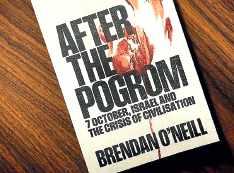
He channelled his anger into writing his book, After the Pogrom: 7 October, Israel and the Crisis of Civilisation , describing the failures of the West. It was published on the fi rst anniversary of the Hamas attacks and, from that time onwards, he says: “I became even more known as one of the people who writes about Israel.”
“Whenever there’s a Twitter storm involving me, and there have been a few over the years, and people threaten you, and you become the number one trending topic, it’s awful. I don’t see it all unless friends of mine do a screenshot of the worst tweets and say, ‘Look, this person wants to cut your throat.’”
In that way, he’s managed “to fi lter quite a lot of it out by only using Instagram, because Instagram is a nicer community.”
years ago because someone had hand-delivered a bag of excrement to my office, and inside the excrement was an article I’d written for The Daily Telegraph . I get messages on Instagram at least once a week, saying, ‘Keep an eye over your shoulder’. And you know it’s just an antisemite who hates the fact that this Gentile guy is daring to stand up for Jews.”
“The minute you say, ‘I’m going to stop writing all these articles’, or ‘I’m going to stop posting all these things’, or ‘I’m going to stop being friends with Jews’, then they’ve won.
“The hate gives me a sense that the stakes are even higher than I thought. And knowing the stakes are so high, not only for the future of Jewry in Britain, but for the future of Britain itself, pushes me to keep going.”
He describes his ancestral homeland as “f**ked”. “It really is. I’m glad you’re a person I can swear to. I love Ireland. I really do. I love its history. I love the fact I come from Ireland. I love my parents, who have a family home on the extreme west coast of Ireland, and it’s literally on the doorstep of the Atlantic Ocean. It’s beautiful. But Ireland’s in a mess, because it has fallen very hard indeed to the antisemitism bug in a really scary way.”
Sometimes he tries to comfort himself by saying, “Well, it’s just in Dublin
and maybe in Cork, but it’s not true. I was in the extreme west of Ireland, Connemara, where my parents were from, and I was cycling along in the middle of nowhere, and passed this field of sheep, and in the middle of the field there was a Palestine flag. And I was thinking, ‘God, here we go. Sheep for Palestine, which actually sums up the movement quite well when you think about it, in the middle of nowhere.”
In a confiding mood now, he says: “People often say to me, ‘Oh, you’re quite nice in real life’, because my writing is very acidic and quite cutting. I don’t pull my puff because I get very angry when I write. Everything just bubbles up and flows through my fingers, and I rage against the world and against individuals.
“I like a joke, and I spend whatever free time I have in the pub with friends or my brothers. And I think people would be surprised to discover that I’m a normal, nice bloke you can have a pint with.”

effort of either fi nding or figuring out few times. “I went to the police about 15
What gives him the genuine collywobbles is when “people go to the effort of either fi nding or figuring out your email address and sending you a message”. He says that has happened a few times. “I went to the police about 15












If that guy can be the coolest guy in the world, maybe a weirdo like me can do okay.”
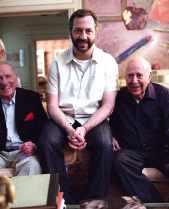
For Judd Apatow, now 58, discovering Mel Brooks as a child gave him tacit approval to become a funny, emotional, defiantly Jewish adult comfortable being himself.
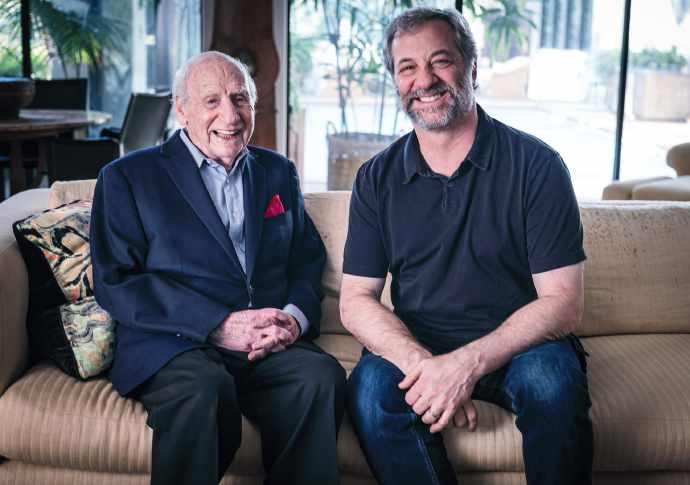
We were honestly wowed when Judd agreed to talk to LIFE about his two-part documentary Mel Brooks: The 99-Year-Old Man!, released ahead of Brooks’ 100th birthday on 28th June. The documentary is so joyous, rich and emotional that thanking Judd for making it felt the

By Brigit Grant
polite way to open the conversation. This is no ordinary documentary. It spans Mel’s triumphs and heartbreaks, includes access to never-before-seen family photographs and features an impressive roll call of Jewish entertainers paying tribute to the man himself.
It is obvious this project was more than just a conventional documentary for Judd. Not that he really does conventional.
The director behind The 40-Year-Old Virgin, Knocked Up and Funny People has built his career around emotionally messy, off beat comedy.
Alongside his feature films, he has


Comedy genius, friend, husband and still, at 100, the king of the punchline. Judd Apatow reveals how he made an intimate portrayal of Mel Brooks.

also preserved the comedy legends he grew up admiring, making acclaimed documentaries about George Carlin and his mentor Garry Shandling, with more projects about American comic greats in the works.
His portrait of Mel is a love letter from someone who grew up worshipping him and somehow ended up sitting in his living room having the sort of conversations usually reserved for close friends. Yet Judd doesn’t want to overstate the relationship, which began when he first visited Brooks as “an admiring young director”.

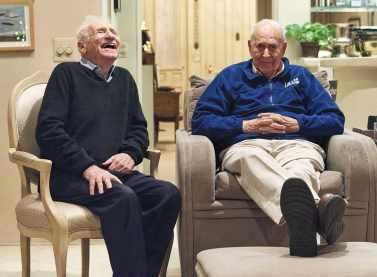
“He asked me to interview him at Q&As occasionally and I’ve also written forewords for his books and also did for Carl Reiner. But I don’t want to say I’m Mel’s friend,” says Judd carefully. “We have a warm relationship.”
Yet Mel still needed persuading to do the documentary. “It took many months to convince him,” the director admits. “Finally, I said, ‘Mel, if we don’t make this documentary, we don’t have a reason to hang out. If you do it, we can hang out all the time.’ And then he said, ‘Okay, I’ll do it.’”
The result is a film that goes beyond revisiting the milestones. It becomes a time-travelogue through Mel’s start in the Catskills, the writers’ room of Sid Caesar alongside Carl Reiner, Neil Simon and Woody Allen, and the films – The Producers, Blazing Saddles and Young Frankenstein – that changed comedy forever.
“It’s a big life,” notes Judd. “When someone’s 99 years old, there’s a lot of ground to cover. So he had all these wonderful anecdotes, but we were interested in how it felt to fight in World War Two, live through the Depression, and then make comedies targeting racism and authoritarianism. I wanted to know about his two marriages, his children and how you can be a parent when you have this gigantic career.”
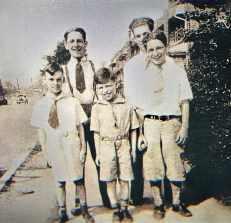
The one-time Melvin Kaminsky was the youngest of four brothers born in Brooklyn to Kitty Brookman and Max Kaminsky. After Max died when Brooks was two, Kitty raised the boys alone. Brooks recalls being “the comic conscience of the neighbourhood” while every one of the 22 apartments at 365 South Third Street seemed to send workers to New York’s Garment District – a future he feared might await him too.



But as Judd’s deep dive into the archives shows, Brooks had been trying his hand at comedy before and after serving in the US Army, which he joined aged just 17, going “from a provincial tenement in Brooklyn to wartime France”.
It’s not simply the scale of Brooks’ journey that impresses, but what that journey meant to generations of Jewish comedians. Judd, who listened to the 2000 Year Old Man albums “from the moment I was born”, remembers Brooks being presented on American television as “the Beyoncé of comedy”.
For comedians such as Sarah Silverman, Jerry Seinfeld and Adam Sandler, who also appear in the documentary, Brooks was the fearless Jewish comic hero who made them realise what they could become.
“I think when people talk about seeing people like themselves on television being important, that’s what it means to me,” says Judd. “It also encourages the next generation to get involved in telling their stories.”
Stewardship matters to Judd, who spoke movingly about Garry Shandling and how that shaped the way he works with younger performers and writers today. “Part of the trade-off is: I’m going to teach you everything I know, and you’re going to collaborate creatively on these projects. That’s how we make our comedy world flourish.”
The film became a true collaboration between Mel and Judd, who made huge efforts to tread carefully around the darker moments in Mel’s life. The result was that he persuaded him to speak for the first time about his marriage to Florence Baum, the glamorous Broadway dancer who was the mother of his children Nicky, Eddie and Stefanie.

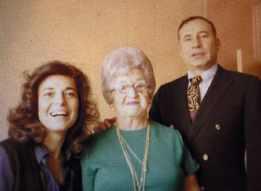
Previously unseen home movies reveal a side of Mel audiences seldom see, as he tells Judd: “The marriage suffered because I was very difficult to live with, because I was just disgusted at reaching a dead end to my creativity… I don’t blame her for divorcing me. It was just hell living with me.”
But the emotional heart of the film is Mel’s enduring love story with Anne Bancroft, who died in 2005 aged 73, and his unparalleled friendship with Reiner, who died in 2020 aged 98.
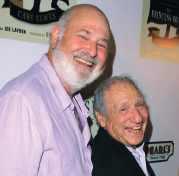
Adding to the poignancy is the appearance of Carl’s son, Rob Reiner, who was murdered alongside his wife Michele in December 2025.
“We interviewed Rob 10 months before finishing the film and had a lovely day with him. A lot of it was about how Mel and Carl grieved for their wives by spending almost every night eating dinner and watching old movies together.”
After Carl’s death, Brooks kept returning to his friend’s house.
“And I asked Mel about it. I said, ‘You feel like he’s there?’.And he said, yeah, that he wanted to be close to him.”
In his interview, Rob joked about prospective buyers of the Reiner home being told “they get Mel with the house”.
“When Rob died, we didn’t recut the documentary,” says Judd, “but it became much more powerful, because Rob is talking about how Mel dealt with grief, and we’re listening to it trying to use Rob’s wisdom to get over our grief about him. He was a wonderful, giving person.”
One observation from Rob also changed the way Judd understood the Mel/Carl friendship.
“I asked Rob why they were such close friends. And he said, ‘I think Mel looked at my dad as a father
figure.’ I had never thought about it in those terms.”
Judd later asked Mel directly. “And he said, ‘Yeah, of course. He’s tall, he’s kind, he’s wise. Who wouldn’t want Carl Reiner to be your dad?’”
Suddenly the 2000-Year-Old Man routines looked different to Judd. “Once you notice it, you can’t unsee it. Even when they were older and Carl was getting the AFI Award, Mel was like a little kid trying to make his dad laugh –that giddy enthusiasm of a child cracking up a parent. And that was the magic.”
Reflecting on Mel losing Carl after more than 70 years of friendship, Judd’s voice catches. “It’s almost unspeakable what it must feel like to lose it. When you live that long, you are the last man standing, and that must really be difficult.”
Their friendship also made Judd think about his own comedy pals, such as “Adam Sandler, who I lived with when we both finished college. We’ve had a long relationship. Those kinds of connections are very special.”
Laughing, he adds he would happily recreate the Mel-and-Carl supper ritual himself. “I’m willing to do it right now, even before anyone dies. I wish everyone wanted to watch more movies together and just eat food out of TV trays.”
That loss hangs over the documentary and is reinstated with every appearance of Anne Bancroft (pictured with Brooks above). Judd reveals he was cautious even asking about her.
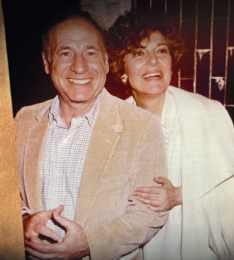
“I felt bad even entering into it, because he’s so sensitive about it. It’s just something that never fully heals. So I only asked a few questions about Anne, and everything Mel said was so profound and powerful.”
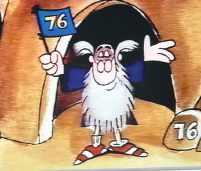
Finally, Judd asked one simple question: what do you miss most about Anne? “He looked at me and said, ‘There are no words that I could ever use that could make you understand.’ I thought that was going to be it,” Judd recalls. “And then he said: ‘I miss the way she would suddenly turn, when she decided what she was going to do.’ So there was no reason to ask another question. It was so beautiful and poetic.”
The connection between Judd and Mel is key to The 99-Year-Old Man. Underneath, the acclaimed director still sounds like the teenager interviewing comedians for his school radio station simply because he wanted to be near them and learn. And Brooks, turning 100, clearly feels that love.
“I think Mel really appreciates when

people acknowledge what he’s given to the world. He loves people, and it means so much to him to know that the work stands up and it still makes people happy.”
Judd believes Mel may now be “more popular than ever.” With Spaceballs 2 on the horizon, in which he reprises Yogurt, Brooks is still finding new fans nearly a century after he first started making people laugh.
After Rob’s death, Judd and director Michael Bonfiglio held a Los Angeles premiere for The 99 Year Old Man and were unsure whether Brooks, 99, would feel able to attend.
“I didn’t think he would come,” Judd nods. “They told me, ‘We’ll find out on the day if he feels up to it.’ But he came.” Judd smiles. “He was wonderful to everybody. He walked the press line – me and him did a little Q&A – and he was so funny. Someone asked whether he was planning to travel to London for the revival of The Producers and he said: ‘I can barely make it from the bed to the bathroom at night. The only way I could make it is if they let me sit in the toilet inside the jet for the entire flight.’”
Judd laughs. At 100, the king of comedy is still landing the punchline. Additional reporting by Jenni Frazer.
Mel Brooks: The 99-Year-Old Man! is available on HBO Max and Now TV. The Producers is at the Garrick Theatre.
oughts on my 100-year-old father, Mel, by Max Brooks
Was my father funny at home? He had his funny moments. He had his not-funny moments. But he’s a brilliant guy – one of the smartest men who has ever lived, completely self-taught and one of the greatest Americans. He came from nothing. He didn’t have a father, and grew up in dire poverty, then pulled himself up, fought in World War Two and built a career from absolutely nothing. Watching him work was an
education in itself. The greatest gift he ever gave me was teaching me that something which appears glamorous, like showbusiness, is still just a job at the end of the day. There’s no way around the hard work, the discipline, the patience and the resilience. Physically, he’s healthy, there’s nothing wrong with him, and he’s still as sharp as ever. He can sum up the world in a single soundbite. He’s not a man of his time — he’s a man for all time, and his humour is timeless.


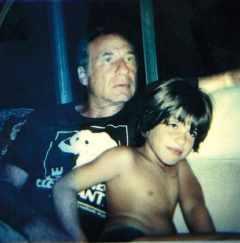





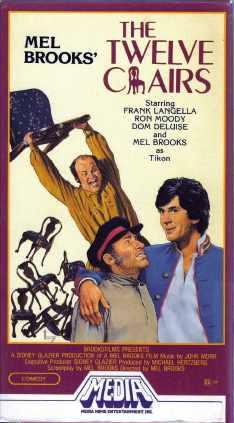




as
Dame Maureen Lipman
In the wake of antisemitism and how best to survive it, you are a tonic. Your memoir – as riotous as your films – reveals you don’t have a bad word to say about anyone. It also shows the depth of your love for your late wife, Anne Bancroft, who said: “When I hear his key in the door I know the party is going to start..”
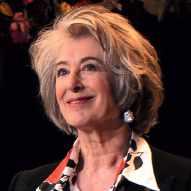
I met you on the Michael Aspel show, where we swapped memories of our Jewish mothers. You were charming, friendly and very funny. Years later, we met at the first night of The Producers in London, with Anne then unwell. I carry a strong visual memory of you leaning on the bathroom door, waiting for her to emerge. You were carrying the weight of the world on your shoulders. Your show had us crying tears of laughter. Your own tears were of real agony. The Jewish dilemma, the sweet adjacent to the sour. At 99 you had done it all but, still active and healthy and with your son Max at your side, you posted a pro-Biden, anti-Trump video. As you say in 2000 Year Old Man, the secret of longevity is: “Never run for a bus, there’ll always be another; never touch fried food; and eat a nectarine a day – half a peach, half a plum – even a rotten one is good.’’
Lesley Joseph
There are certain people in entertainment who feel larger than life long before you meet them. You were one of those people for me. So when I was cast as Frau Blücher in Young Frankenstein before meeting you, I could barely believe it. I’d done a workshop and taped scenes and songs, which were sent to you in America. I knew there were lots of other actresses being considered and assumed that unless you met me personally, I wouldn’t get the role. But you had seen the tape and that was enough.

Our first meeting at the Savoy was complete chaos. I was so nervous I’d had two champagne cocktails before you arrived, so when you walked in and asked me what I wanted to drink, I said: “Another champagne cocktail,” to which you said: “Oh, you’re killing me. They’re too expensive.” I told you not to worry, I’d pay for it myself, and you said: “The one thing I’ve got is money.”
I loved how collaborative you were to work with. There was no ego. You were so outrageously funny and incredibly kind to performers. You made people feel brave. And for somebody who had already changed comedy forever, that generosity felt even greater than the legend of you.


Leo Pearlman
There were only three options in our house: the Marx Brothers, Danny Kaye or, most often, you, Mel. My dad and grandpa treated them less like entertainment and more like curriculum. Other 10-year-olds were watching Top of the Pops; I was quoting Blazing Saddles and Young Frankenstein at school. You took everything that came before and turned it into comedy with teeth, defiance and joy. Thank you to my dad and grandpa for knowing this was more than just laughter. Handing you down to my kids is continuity and how we keep Jewish joy alive and, right now, that feels more important than ever. Thank you Mel for doing more for the Jewish people than a thousand politicians ever could.
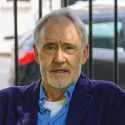
Nigel Planer
From an (almost) 100-year-old man (me), to the 2000 Year Old Man (you) – if the good Lord had meant men to live this long he wouldn’t have given them life insurance.
Zach Margs
My grandfather Gerry was a comedian and was huge fan of yours. He was the one who first showed me your work and that’s how my love of comedy started. Your ability to be bold, silly and fearless with humour has always stayed with me. You’re a huge legend – happy 100th!

Matt Lucas
Happy 100th Mel. You have one of the finest comic minds in the world. Your work is so audacious and absurd and timeless.


Steve Furst
At your zenith you were like a comedy Beatles; first releasing The Producers, then Blazing Saddles, Young Frankenstein, Silent Movie, High Anxiety and History of the World, Part I within 13 years of each other. As a writer and director, that is an astonishing feat, with all of those films exerting a huge influence on generations of comedians and creatives. There isn’t anyone else who comes close to you.
Bennett Arron
It’s so di cult to choose my favourite moments of yours. There are so many, but three stay with me – and I’ll tell you two as they made me want to pursue a career in comedy.

In Blazing Saddles, you appeared as the Yiddish-speaking Native American chief declaring: “Nayn, nayn, zeyt nisht meshugge” and “Abi gezunt.”
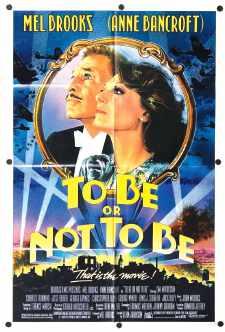
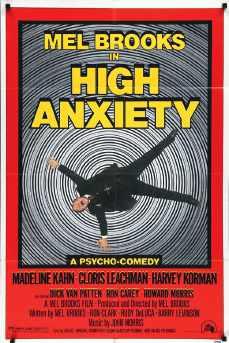

And in History of the World, Part I, it was when Moses returns from Mount Sinai announcing: “The Lord has given unto you these 15...” before dropping a tablet and correcting himself: “Ten Commandments.” Happy 100th, genius.
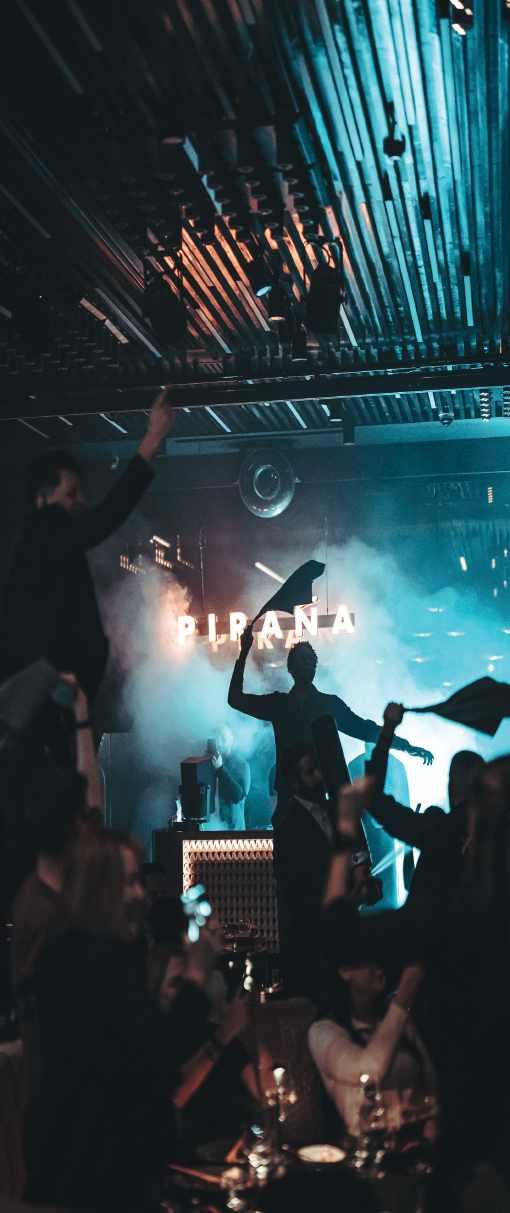
Asher Grant, who has venues in Mayfair and Mykonos, tells Candice Krieger why he wants to show people a good time
Buying Mahiki, one of London’s most famous celebrity nightclubs, during Covid when the industry was shut, might have raised a few eyebrows. For Asher Grant, international nightlife entrepreneur, it was an opportunity.
A few years on, that instinct has helped turn him into one of the driving forces behind London’s booming festive dining scene, where restaurants evolve into late-night destinations and experience is everything.
Today, Asher, 37, is behind a growing portfolio of venues spanning London and beyond – including Reign on Piccadilly, TABŪ in both London and Mykonos, Clubhouse and, most recently, PIRAÑA in Mayfair, which is emerging as his most successful concept yet.
Open for just over a year, PIRAÑA has become one of the capital’s most in-demand destinations and is regularly booked up months in advance.
Built around a Peruvian-Japanese menu, it pairs high-end dining with a late-night atmosphere that has struck a chord with London’s evolving nightlife crowd. It has also attracted a steady stream of celebrity guests, with names including Drake, Anthony Joshua, DJ Afrojack and the Liverpool football team among those to have passed through the doors of Asher’s venues.
The success of venues such as PIRAÑA reflects a wider shift in the hospitality industry, as traditional nightclubs give way to experience-led
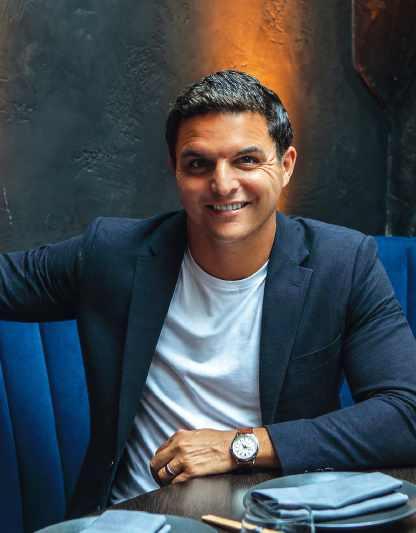
‘People are up, dancing, enjoying themselves ’
dining concepts that blur the line between restaurant and late-night playground. Often dubbed “clubstaurants”, these spaces combine high-end food with music, atmosphere and a gradual transition into dancing.
Asher, the founder of Strongarm Hospitality, says London is undergoing a significant transition, driven not just by increased competition but by changing consumer habits.
“There’s more pressure than ever in the luxury F&B [food and beverage] space,” says Asher, speaking from his office in Berkeley Street. “Restaurants and nightclubs have to do more than ever to compete and keep attracting clientele.”
He believes that shift is being shaped in part by a more health-conscious generation, with younger audiences drinking less and moving away from traditional late-night clubbing.
But Asher is not a fan of the “clubstaurant” label.
“I prefer ‘festive dining’ or ‘elevated dining’. For me, it’s always a restaurant first.
“For the first few hours it’s just a great place to eat. Then it builds into something more – people are up, dancing, enjoying themselves.”
The model is one he is taking global, with PIRAÑA sites opening in Dubai, Saint Tropez and Courchevel in 2027, alongside further expansion in London and a presence at Formula One’s Silverstone this year. But despite the success, Asher insists none of this was part of a master plan.
“I don’t think I was destined for this at all,” he
says. “It all happened accidentally.”
Growing up in a council house in Epsom, Surrey, Asher moved to London aged 16, determined to make his own way. “It made me fiercely independent. I remember getting a job in a clothes shop just to pay my rent.”
His entry into hospitality came soon after. “I started when I was 18 cleaning tables in a nightclub,” he recalls. “I just thought it was amazing that people would pay to go out like that.”
He worked his way up, moving from clearing tables to hosting and eventually waiting on customers, building relationships with a regular clientele along the way. Many of those he encountered were high-net-worth individuals and familiar faces from the worlds of sport, music and entertainment.
“They’re great places to meet people,” he says. “You break boundaries very quickly in that environment, and you build relationships naturally.” Those relationships would prove pivotal. By his mid-twenties, Asher began to consider striking out on his own.
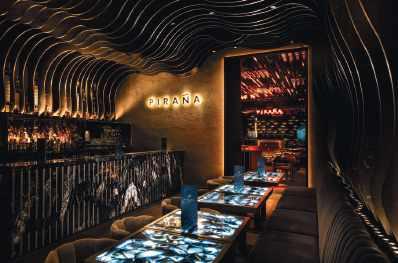

“I was 26 and thought – maybe somewhat naively – that I’d love to open my own nightclub. So I reached out to some of the clients I’d built relationships with and asked if they’d ever want to do something like that.”
To his surprise, they said yes. The result was Reign on Piccadilly, the venue he still describes as “my baby”, and the foundation of a career that would grow far beyond what he had initially imagined.
“I had absolutely no idea what I was doing,” he admits. “But that was probably my strength. I didn’t understand the size of the challenge. I just got on with it.”
That instinct would be tested again during the pandemic, when Asher acquired Mahiki – a former favourite haunt of Prince Harry and Prince William – at a time when much of the sector was effectively shut.
However his connection to hospitality – and food in particular - has much earlier roots.
“Growing up Jewish, food is everything,” he says. “It’s how you socialise. Friday night dinners, big family meals – it’s the centre of everything. Food is the lifeblood of the community.
“That’s probably where I became a foodie,” he adds. “`And now, for my wife and I, our love language is food. We travel, try different restaurants, and talk about what works and what doesn’t.”
W hile his own venues are not centred around Israeli cuisine, he is a strong admirer of its growing influence.
“The chef scene in Israel is incredible,” he says.
“You’ve got Israeli chefs all over the world doing really special things and that’s definitely being felt in London as well.”
That global influence is something Asher is watching closely, particularly in Tel Aviv, a city he describes as one of the most exciting dining markets in the world.
“There are restaurants there doing things at another level. They’re pushing boundaries with food and atmosphere in a way that’s really interesting.
“I’d love to open in Tel Aviv one day for sure.”
He says the UK market has undergone a significant shift over the past decade – both in how people go out and how venues operate.
“The biggest change has been around health and fitness,” he says. “We live in a much more wellness-focused society now.
“When I was younger, everyone went out on a Friday and Saturday night. That’s not really the case any more. People still want to go out, but they don’t necessarily want to be out drinking until four in the morning.”
At the same time, the business of hospitality has become increasingly challenging.
Margins, he says, have tightened dramatically. “Years ago, you might be making 20 to 25 per cent. You’re lucky if you’re making 10 per cent now.”
With around 450 staff across his London venues, the pressure is constant.
“PIRAÑA had our most successful first year, is booked up months in advance and a unicorn business but even then, there can be times when we are struggling to make payroll, pay VAT and NI contributions. “And if you don’t make payroll, people can’t pay their rent or their mortgages,” he says.
Despite the challenges, Asher has emerged as one of the defining figures of London’s evolving nightlife scene, helping to reshape it for a new generation. Now, his ambitions stretch far beyond the capital. “London will always be home,” he says. “But I’ll definitely be on a plane a lot more.” A nd, inevitably, with a few good meals along the way. piranalondon.com
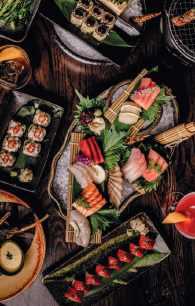






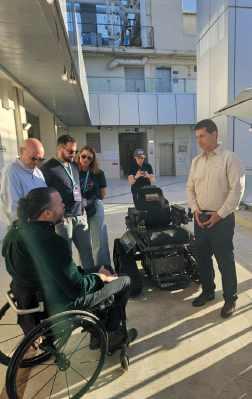

After losing the life he knew, Ron Weinreich is finding a way back to places and possibilities for himself and for others. By Jenni Frazer
Of the many, many heartbreaking consequences of physical disability, one is often overlooked: the simple joy of independence – of being able to access nature freely.
Those of us who are able-bodied rarely grasp the frustration of those in wheelchairs, unable to take a hiking trail or visit a beach.
Kfar Saba resident Ron Weinreich knows this all too well. Now in his 40s, he has been in a wheelchair since the age of 20, after being crushed by a collapsing building during the 2006 Second Lebanon War.
Born in Israel and raised in New York, he returned at 15, finished school, and wanted nothing more than to serve in the Israel Defense Forces (IDF). “I became a tank commander,” he says. “At the top of my game. It was the greatest privilege of my life – I loved every second. And then it all came to an abrupt halt.”
The collapse left him with severe spinal injuries. “I had to rebuild my entire identity,” he says. “I went from being a hot-shot tank commander to a squashed bug, with no ability to shower myself or much else.”
But he did not stay “squashed” for long. “I bounced back – and I would say I did so with a vengeance.” With rehabilitation support from Beit Halochem, Israel’s leading charity supporting disabled veterans, he began to reinvent himself. He went to business school and became a professional musician, later building a career as a sought-after consultant specialising in motivational coaching.
In pursuit of his music career, he moved to Los Angeles. There, a friend introduced him to a charity supporting American veterans injured in Iraq and Afghanistan. “We began raising money to provide things the government wasn’t giving them,” he says. In just two years,
Ron and his team raised a staggering $42 million (£31m).
But the philanthropy wasn’t enough. He saw first-hand the frustration of veterans living with catastrophic injuries, unable to return to the outdoor activities that had once defined their lives. “In the US, 22 veterans commit suicide every day,” he says. “They can’t deal with what has happened to them.”
Many of those veterans spoke to him about a “game-changing” all-terrain wheelchair – one that could take them back to rivers to fish, forests to hunt, beaches to be with their families.
Under Ron’s direction, 500 such chairs were purchased and distributed across the US. But the initiative fell short. “It was like jet-skis,” he says. “People used them for a couple of days, then they sat in garages. We were spending $22,000 per chair, and they were barely being used.”
He proposed a solution: a shared access model, allowing users to borrow, rather than own, the chairs. But at the time –long before rental schemes became widespread – the idea was rejected.
Ron returned to Israel during Covid, resuming his work in executive training and development. Then, in the wake of October 7 and the war in Gaza, he visited the Tel Aviv Beit Halochem centre that had been so central to his own recovery. He expected the familiar quiet gym, where he had once been among the youngest. Instead, he found it full –packed with newly-injured young men and women, most wounded in IDF service. This time, he was among the oldest. Today, Israel is estimated to have around 500,000 people and 24,000 IDF veterans living with mobility disabilities.
“It was an emotional slap,” he says. But on the journey home, something shifted. “I realised – this is what I’m meant to do.”
Through his company, Tevanua, Ron has revived and reimagined his
earlier idea. His plan is to create a nationwide network of shared all-terrain wheelchairs – robust, high-tech models capable of handling beaches, trails and rugged landscapes.
He has adapted the design – ironically, with caterpillar-style wheels not unlike a tank – and integrated GPS, safety systems and remote controls. Each chair is built for heavy, continuous public use.
The model is simple. Chairs will be housed in docking stations, maintained by local municipalities, and bookable via an app. Users will be able to pay for the time they need, while safely storing their own wheelchair and belongings in the unit. In high-demand areas, multiple stations could sit side by side.
Research by Tevanua suggests that as many as 17 per cent of Israelis with mobility issues rarely leave their homes. Ron wants to change that.
So far, municipalities have responded positively, as has Israel’s Nature and Parks Authority. Each unit – chair and docking station – costs around $36,000, with funding expected to come from philanthropic donations, matched by local authorities covering operating costs.
“I want Israel to be the first country in the world to run this system,” he says.
“With just 200 chairs, we could transform access to nature – to hiking trails, beaches – giving disabled people something close to what able-bodied people take for granted. And I want tourists to be able to use them too.”
Recently, using one of the test chairs on a Tel Aviv beach, Ron sat watching the familiar scene of sun, sea and crowds. Turning to a friend, he said quietly: “You know, I never got to do this. I missed out.”
Now, he is determined that others will not have to say the same.
Donations to the all-terrain wheelchair project can be made via causematch.com/ TEVANUA

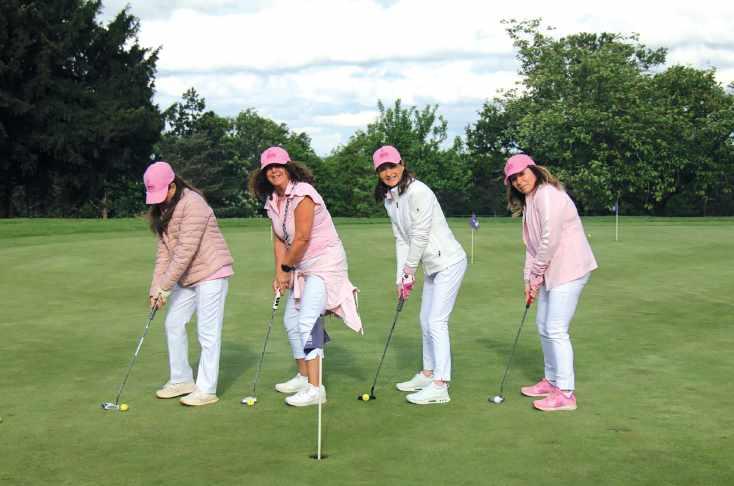
Debbie Collins meets the women driving golf’s appeal through friendship, fashion and fresh air

Despite the acronym myth that G.O.L.F. stands for ‘Gentlemen Only, Ladies Forbidden’, female participation in the game has experienced a notable surge in popularity in recent years. Statistically a male-dominated sport, shorter format options of nine holes, accessible driving ranges and flexible memberships has made golf far more appealing to time-poor women often left ‘holding the baby’.
When Covid-19 restrictions lifted, golf was among the first recreational activities to be green-lit after the initial 2020 lockdowns as it naturally allows for social distancing. It became the perfect way for women to reconnect with friends, have a yachna and get a round in. After all, in an era of female empowerment and equal opportunities, why should men have all the fun?
Hartsbourne Country Club in Bushey and Dyrham Park Country Club in Barnet are undoubtedly the most
well-known, even to non-golfers – the ‘Spurs-Arsenal’ equivalent of Jewish golf clubs, if you will. Both are members of the Association of Jewish Golf Clubs and Societies and, although open to all, are historically regarded as Jewish clubs owing to the profile of members and strong support of Jewish charities.
Everyone I spoke to mentioned time as one of the biggest barriers to taking up golf, particularly when juggling careers and family. Debbie Cohen, 70, grew up watching golf with her father but abandoned the game years ago, finding it too time-consuming. In 2018, she tried a few holes at Bushey Country Club before joining Hartsbourne. “Eight years later, I’m a full member and love watching it as much as playing. Golf changed my life and I’ve made some wonderful friends,” says Debbie (pictured, left).
Many women are encouraged onto the course by golf-loving husbands keen to share the hobby. Amelia Becker, 56, says both her father and great-uncle played, but she always found golf “a bit dull”.
That changed when husband Marc, a Hartsbourne member, asked for one thing for his 60th birthday: “Nothing would please him more than walking round a golf course together.” Amelia took lessons as part of his present and laughs: “We’re still happily married!” She is not yet ready for full membership, particularly with long summers spent in Spain, but says she’s excited to play more with the family. “I feel the golfing door is beginning to open for me.”
But the idea of a joint pursuit isn’t always met with enthusiasm. Della Bloom, 50, always sporty in her youth, says golf “wasn’t on the agenda”. Seven years ago, husband Andrew bought her a six-month membership at Hartsbourne for their anniversary. “At the time I was absolutely furious with him,” she laughs. “Now I tell him it was the best thing he ever did.” A former dental hygienist, Della jokes she “swapped scalers for golf clubs” once her children became more independent. Joining the ladies’ committee after Covid “cemented” her love of the club. “I felt part of a community,” she says. She now follows golf on TV and celebrated her 50th at the Masters Tournament.
For Sara Margolis, 50, Pilates and walking had

‘Nothing would please him more than walking round a golf course together’
been the extent of her sporting life until changing circumstances and encouragement from a relative led her to join Hartsbourne. A year later, she’s hooked. With a busy job and two school-aged sons, nine holes fits neatly into family life and she plays regularly with her sons and her father. “The thing I love the most is that golf requires etiquette, manners, respect. And proper attire. There’s no shouting, no devices, just fresh air. And a wonderful, shared interest with my sons. Golf came into my life at just the right time.”
Then there’s the fashion. Some women admitted that mastering a golf wardrobe felt as intimidating as mastering a swing, but many love having a dedicated golf section in their wardrobes, filled with brands such as Swing Out Sister and Daily Sport.
Sara Brett, 53, Lady Captain at Hartsbourne 2026, says, “We all adore the fashion – if one person has something, we all want it. Not like when you turn up


at a function in the same outfit as someone else – we all love matching!” Encouraged to join the Academy by her golfing dad, Sara describes being Lady Captain as a full-time job she adores, with the original WhatsApp Group ‘Golfriends’ still going strong. “We organise games, dinners, charity days – it’s an amazing group of women,” says Sara. With the appeal as much about camaraderie as competition. Hartsbourne’s 2025 Lady Captain Danielle Grant, 60, played a key role in changing the face of ladies’ golf at the club. A self-confessed ‘golf addict’, in common with others, Danielle says she didn’t play until “the kids were older, and a friend suggested going to the Academy and the rest is history”, adding: “I’m a very excitable, loud person, but those little white balls calmed me.”
As Lady Captain, Danielle’s time was marked by colour and creativity, her beloved VW Beetle even making an appearance for the ‘flower power’themed ladies’ day with more than 100 women dressed to celebrate.
For Dyrham member Nicola Gee, 44, having international table tennis player Jeff Ingber as her father instilled the importance of sport early on, and she nurtured this in her own very active family. Her husband was already a member at Dyrham and Nicola joined the Academy as the youngest in her group of 15, noting how few of her peers play. “I think our generation is used to a fast pace and golf requires patience, so that’s actually one of the things I’ve enjoyed most: slowing down.”
Bridging the gap between north and south is Benita Lawson, 89, at Whitefield Golf Club in Manchester. “When I married my (now late)
husband, we wanted a shared pursuit and even while working and having two kids, I served as Lady Captain in 1979-80.” After her husband’s passing, Benita moved to London, where she joined Hartsbourne, and was welcomed by the London ladies, even serving on the committee. Despite returning to Whitefield in 2016, those friendships endure and she still plays Words with Friends with many of them. At 89, Benita is showing no signs of slowing down. “I played 18 holes this week and walked the whole course,” she says, underlining golf’s health benefits.
Further south, Brighton resident Amanda Epstein, 69, has been a member of Dyke Golf Club since 1991. Set on the South Downs, with views

stretching to the Isle of Wight, the club became part of Amanda’s life after a school taster session sparked her interest. She later took lessons with her husband and, although working and raising three children left little time to play, she was determined to improve in what was then a heavily maledominated sport. Achieving the sub-30 handicap then required for women to join the club, she later became Lady Captain in 2005-6. Now retired and playing off an impressive 18.3 handicap, Amanda travels widely to play golf and says simply: “It has brought me so much joy.”
For the next generation of female golfers, look to Annabel Shulman, 17, who initially dismissed golf as “an old man’s game”. But while looking for a break from exam revision, she discovered it through her mother and, a year later, it has become a shared passion. She plays at The Shire in Barnet and is all over the fashion and the great outdoors. “I love a coloured cap,” she says. “I even play in the rain because my mum says practising in the winter is
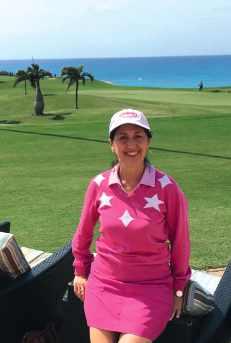
what makes summer golf.”
All that golf talk made me want to take a swing, but where does a newbie tee off ? Word has it
The Turnberry in Ayrshire is the place, as it’s where championship fairways meet five-star glamour on the Scottish coast. I don’t know my handicap yet,but maybe the owner will offer a few pointers.
Golf has long held a quiet place in Jewish life – and, in recent years, players such as America’s Max Homa, a multiple winner on the PGA Tour, and Daniel Berger, a victor at the prestigious AT&T Pebble Beach Pro-Am, have found success at the very top of the sport. But there was a time when Jews were not always welcome at golf clubs.

Tucked away in Solihull, Shirley Golf Club stands as a lasting response to that exclusion. In the 1950s, when doors were closed to Jewish players at local clubs, a group of determined friends led by solicitor Maurice Putsman decided to build something better in Birmingham. Spurred on by blunt refusals and “blackballing”, they set out to create a club rooted in the idea that sport should belong to all. With the discreet help of a non-Jewish ally, estate agent John Peutherer, land was secured – a former pony-racing track – and Shirley Golf Club was born and welcomed all, without prejudice.
More than 70 years on, that founding spirit still shapes the club and the Shirley is as much about community as it is about golf. It supports disabled young players, funds weekly free school meals, and raises money for children’s charities through member-led initiatives. For good reason it was named Club of the Year when it marked its 70th anniversary. Maurice Putsman, who went on to serve as club captain, died in 2022 aged 97. His vision – shared with those early founders – remains embedded on the Shirley fairway where, just as he hoped, success isn’t measured in handicaps, but in humanity.



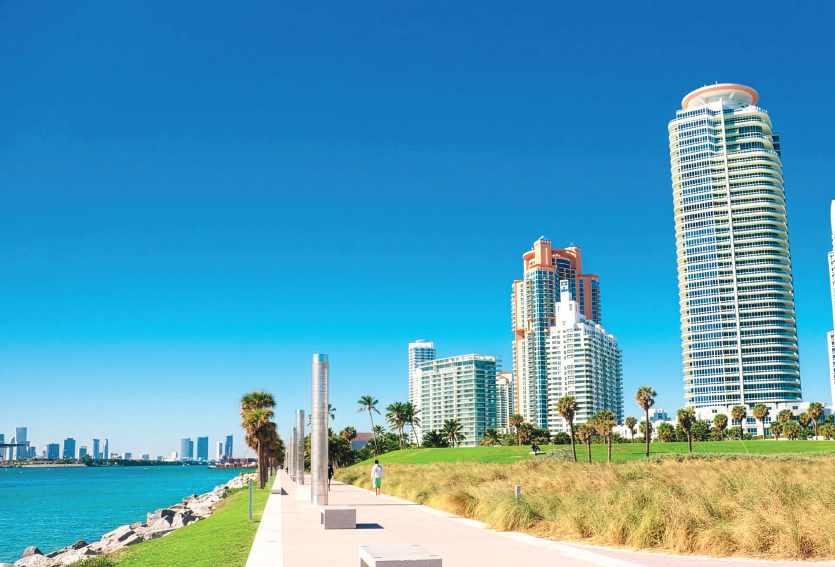
Is it time to buy into a new life in South Florida where being Jewish sets the tone? By Hannah Litman
On a Thursday evening in Surfside, the kosher restaurants along Harding Avenue are full. Hebrew is the loudest language heard in the Starbucks. The wait outside Harbour Grill spills onto the sidewalk. The Grove’s bakery counter is taking orders for tomorrow’s challah. This is what a weeknight looks like here.
Ruth Kaye, who moved her family from Manchester to Aventura in 2018, calls Harding Avenue the initiation into “the most Jewish city outside of Israel”. The framing precedes her move.
Devorah-Leah Andrusier, daughter of the late Rabbi Sholom Lipskar of The Shul of Bal Harbour, remembers the Lubavitcher Rebbe calling Miami the “Jerusalem of the diaspora”.
That’s the line British Jews keep hearing now from the relatives and old friends who left. It’s the line that’s reshaped property conversations in London, Manchester and Leeds since October 2023. And it is, with caveats, true.
South Florida isn’t what it was a decade ago. Surfside has gone from a small, low-key strip between Miami Beach and Bal Harbour into one of the most concentrated Jewish neighborhoods in the United States. The property press started calling the stretch the Billionaires’ Beach corridor. A teardown here now starts above a million dollars. The supermarkets and restaurants that once served retirees now serve global Jewish families who can afford to live anywhere and have chosen here.
South Florida is a privileged Jewish bubble. Those of us who live here know it. We also know that bubbles can burst. The arson attack at Chabad of Las Olas in Fort Lauderdale was one breach. The
February 2024 pro-Palestinian protest outside Temple Emanu-El, the city’s oldest Conservative congregation, where disruption of an event turned to assault, was another. But the bubble here reforms instantly and, for British Jews considering whether to leave a Britain that’s no longer the Britain they loved, it’s the calculation.
Dan Snyder, a north Manchester-born realtor who has worked the South Florida market for nearly two decades, has watched the shift in real time. “Five years ago, Surfside was a pass-through road from Miami Beach to Bal Harbour and beyond,” he says. “Now it’s out-priced the older residences. The kosher restaurants and supermarkets have all gone high-end.”
ABOVE: Surfside –a beachside town in Florida BELOW: Manchester-born
Ruth Kaye
BOTTOM: Realtor
Dan Snyder
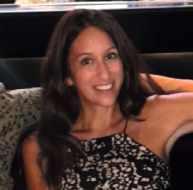
The texture of the place is what surprises British visitors. Many of the most popular restaurants are kosher or kosher-style (kosher meat without the full glatt certification) and the line between Jewish and
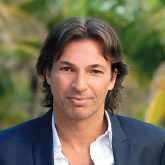


non-Jewish dining has blurred to the point that non-Jewish friends only realise mid-menu that they’re in a kosher restaurant.
Indeed, the elite kosher restaurants tell the story by neighbourhood, and Aventura has the deepest bench. Fuego is the headliner, and Asiatiko Robata Bar in Aventura’s Park Square is widely considered one of the most unparalleled kosher culinary experiences in the country. Soho Asian Bar & Grill, owned by the Faith family – three generations of whom relocated from London to South Florida — has been the kosher Asian fusion fixture in Aventura since 2010. In Surfside, The Harbour Grill is the glatt steakhouse on Harding Avenue, with Kosh, Rustiko and the new Josh’s Deli filling out the high street. In Hollywood, G7 Rooftop serves kosher Japanese fusion above the spectacle of the Seminole Hard Rock Hotel & Casino complex and its 450-foot Guitar Hotel. A little further north, Murta has just won the first Michelin star awarded to a kosher restaurant.
Michael Parnes (inset, right), a London-born realtor working this market, has watched the questions from buyers change. “Five years ago, the conversation might have been entirely about ocean views and finishes. Today, buyers ask where people walk on Shabbat and which buildings have multiple observant families.”

Meanwhile, Dan says he has never had a stretch like the past six months. “I’ve had more enquiries in the past six months from UK people expressing an interest in moving or buying just-in-case homes than I have in 18 years of living in Florida.”
“Just in case” is the phrase that defines the current moment. Michael hears it from his clients, too. “Many are buying what they privately describe as a ‘just-in-case’ property, somewhere they can transition to quickly if needed.”
Asked what he would tell his closest friend if she called from London tomorrow saying she was seriously considering it, Michael says something a realtor isn’t paid to say. “Don’t move because of fear alone. Move because the lifestyle genuinely fits who you are becoming.”
What South Florida offers that London doesn’t is the privilege of numbers. Jewish life isn’t tolerated or accommodated – it sets the tone. “It’s almost a competition of who can wear the largest Magen David, who can have the biggest Israeli flag


‘I would not want to be anywhere else in the world’
outside their house, and who can speak Hebrew the loudest,” Dan says. “You see more Hatzalah ambulances driving around Miami than regular ambulances.” Public schools across Miami-Dade, Broward and Palm Beach counties close for High Holy Days as a matter of calendar policy. In Aventura, public schools are majority Jewish – so much so you’re surprised when your child brings home a non-Jewish friend.
Michael puts the lived contrast with London more starkly. “In London, Jewish life can feel more enclosed and scheduled because of weather, density and pace,” he says. “In South Florida, especially around Surfside and Bal Harbour, Shabbat spills outdoors. People walk everywhere. Children are outside. Families move between homes, shuls, restaurants and the beach. It feels physically lighter [to be a Jew].”
The change South Florida produced in Ruth’s own family is one she still struggles to articulate. Her family isn’t religious. Her husband never went to synagogue in Manchester, but goes every week here. “I can’t fully explain why. Rather than it feeling like a duty, he genuinely started enjoying services and meeting new people.” Jewish life, she says, simply feels more open. In these neighbourhoods, Chanukah is more visible than Christmas.
However, it was difficult for the children at first. They left behind lifelong friendships and Ruth says the social adjustment weighed heavily in the early months. The best advice she received was to enroll them in the Jewish Community Centre (JCC), the moment they arrived. It gave them a Jewish peer group and opportunities to travel on programmes to Mexico City and Costa Rica. Years later, with both children now in college, she says they thrived once they were rooted in the Jewish community.
And every visitor from England tells Ruth the same thing: nothing prepares them for how welcoming South Florida is for Jews.
The shift in the UK has been atmospheric rather than violent for most people, and that’s its own kind of erosion. Ruth describes the slow change in
Manchester before she left: the demographic shift in the city centre, the sense of a place becoming someone else’s place. None of it was directed at her personally. But all of it changed where she wanted her children to build a life.
After October 7, her 2018 decision looked less like risk-taking and more like foresight. “The emails of support for Israel sent out by the Aventura government, the Mayor of Miami and the universities where my children attend, stood in stark contrast to the reactions we were seeing in England,” she says. “I would not want to be anywhere else in the world.”
Surfside is the headline, but isn’t the only option. Bal Harbour offers more luxury and privacy, but at a higher price point and different rhythm. Aventura is the manageable entry point with high-rise living and international neighbours. Hollywood, particularly Emerald Hills, is heavily Israeli with meaningfully more house for the money.
Boca has the suburban draw for families who want space, security and infrastructure for raising children – gated communities, country clubs and a calmer pace at prices no longer seen on the Miami coast. Surfside remains the one that combines the most without compromise. It’s walkable, dense with kosher options and oceanfront across the street.
As Michael puts it: “Surfside is the closest thing to a true luxury Jewish village in America. You can walk to shul, to the shops and the beach and still have ultra-prime real estate.”
But he cautions: “The trade-offs are real. Property taxes and association fees are alien to anyone used to UK running costs. Friendships form faster and looser, and the humour isn’t the same. Medical insurance and medical bills are an enormous expense for anyone arriving from the NHS.”
And Ruth warns: “Don’t be overly trusting of medical professionals. Medicine is big business here and there is always a sales pitch.” But she also says: “There’s never a good time to move, so stop waiting for one. England isn’t what it used to be. We are not getting any younger. Now is the time.”












































Our community charities work all year round to provide succour to as many people as possible.
By Louisa Walters
They say the sun shines on the righteous, so it has plenty of places to land this summer across our community, where charities continue with the business of helping others.
From Manchester to Tel Aviv, Finchley Road to Uganda, Jewish charities are supporting children, the elderly, veterans recovering from trauma or creating opportunities for people with disabilities. Whether they are strengthening our community through education, culture or friendship, what unites them is the commitment to ensuring everyone who needs help gets it – and not just in the summer, but throughout the year.
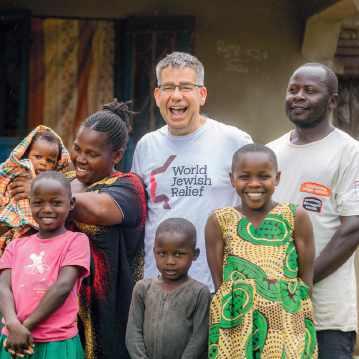
■ World Jewish Relief is spreading that same sense of hope internationally. In Uganda, members of the Abayudaya Jewish community are building sustainable livelihoods through farming programmes that provide long-term financial independence. At the same time, supporters in the UK are being encouraged to share messages of hope with children affected by conflict in Ukraine and Israel. The charity’s work combines practical support with emotional solidarity, reminding people facing hardship that they have not been forgotten.
■ The Fed continues to provide vital support across the Manchester Jewish community, ensuring people of all ages feel connected and cared for. From children's play schemes and day trips, which for many families provide their only summer
holiday opportunity, to welcoming spaces such as Chatty Café and community coffee stops, The Fed brings people together and helps reduce isolation. Activities including Walk ‘n’ Talk offer companionship, conversation and gentle exercise in a relaxed setting.

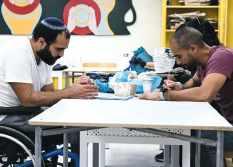
■ Thousands of miles away in Israel, Beit Halochem helps veterans living with the wounds of war. Since October 7, demand for psychological support has risen sharply and seven new post-traumatic stress disorder clinics at its Tel Aviv centre are providing specialist care, helping former soldiers rebuild confidence, process trauma and move forward with their lives. For many, these clinics represent a vital pathway from darkness towards hope.
■ WIZO continues to support Israel’s most vulnerable women, children and young people with shelters, schools, youth villages and daycare centres. Funding from WIZO UK has strengthened mental health services, supported domestic violence shelters and helped sustain programmes for at-risk teenagers. The charity’s professional networks and community groups also bring women together to support a shared mission of care.

■ Summer travel is a good way of reminding ourselves that wherever Jews finds themselves in the world, they are rarely alone. JLE is the prime example since becoming part of the global Olami network. A student who walks into JLE in London can find themselves welcomed around a Shabbat table in New York, Jerusalem, Johannesburg or Miami. Through hospitality, learning and shared experiences, JLE creates a sense of belonging that stretches far beyond geography.
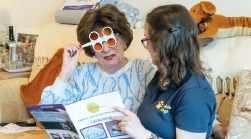
■ Enabling independence is at the heart of the work of Jewish Blind & Disabled. As demand grows, the charity is expanding services for people living with sight loss and physical disabilities. A new Occupational Therapy service provides expert advice on adaptations and equipment for people living in their own home with physical disabilities and there are regular support groups for those living with multiple sclerosis. The impact is practical but profound – enabling people to find confidence and live with dignity.
■ For JNF UK’s legacy arm, KKL Executor & Trustee offers guidance and companionship to people who may not have close family networks to rely upon. Its annual summer outing gives legacy clients an opportunity to learn, socialise and explore together. Beyond the UK, projects such as Sunflowers, support bereaved children, and Derech Eretz, help disadvantaged young Israelis develop skills through transformative gap-year programmes.


■ Thirteen is a milestone birthday in any Jewish family and so it is for JW3, which will mark the occasion with a giant communal B'Mitzvah celebration.
Founded on the vision of Dame Vivien Duffield, JW3 is now the ultimate host of British Jewish life and did the impossible when it brought the seaside to the Finchley Road. The much-loved beach returns on 28 June – complete with deckchairs, paddling pools and plenty of space to relax, play and enjoy the sunshine.
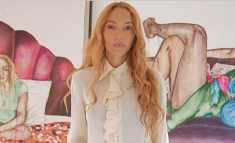
■ The British Friends of the Art Museums of Israel demonstrates how culture can heal. Supporting educational programmes in 16 Israeli museums, the charity has helped institutions develop creative responses to the recent challenges. Museums have become places of comfort and connection, offering family activities, support for displaced communities, interfaith initiatives and outreach programmes. Through its events and fundraising, BFAMI continues to strengthen the cultural bond between Britain and Israel. On 30 June, BFAMI’s annual Women in Art Lunch, chaired by Nicola Blake, will honour acclaimed British Jewish artist Zoë Buckman, whose work explores Jewish identity, heritage and fighting antisemitism.
■ Jewish Care’s Sugar & Ronson Campus opens this summer and CEO Daniel Carmel-Brown is looking forward to welcoming residents to the Sugar Family Care Home, which offers nursing, residential, dementia and end-of-life care, as well as respite and short-term stays. The Ronson Community Centre is a social hub, with a vibrant programme, flexible activity spaces and the area's only licensed kosher restaurant. Also on the site is The Dennis Centre for specialist support for people living with dementia alongside Jewish Care’s Social Work and Community Support team and Jami mental health services, Meals on Wheels and Jewish Care Explore, which provides support with technology.








Taking place this September at our dedicated children and family centre in NW London, this four-week parenting programme is designed to support parents and carers of neurodivergent children aged 11–18. Through friendly, supportive sessions, we’ll explore ways to build stronger relationships, encourage positive communication, and support your child’s self-esteem and independence.
We know the teenage years can bring big changes for young people and their families. This programme helps make that transition from childhood to adolescence a little smoother.
For more information please get in touch:
T: 020 8809 8809
E: families@norwood.org.uk TO




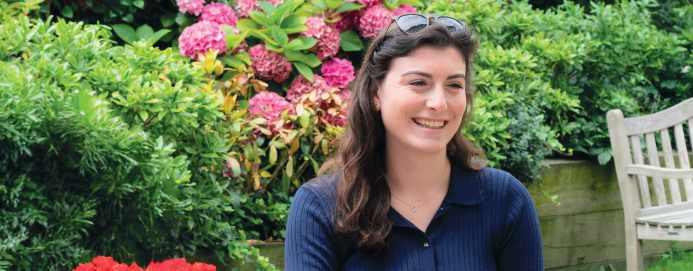











Too young for cancer. for Chai. Not too young Zoe
You never imagine being diagnosed with ovarian cancer at 27. Walking through the doors of Chai helped me regain a sense of control over what was happening to me. I didn’t chose to have cancer, but I could choose to seek the support I needed. And I chose Chai.
In the last ten years, the number of young people supported by Chai has risen by more than 200%.
For more information about Chai’s specialised services across the UK, please call our Freephone helpline on 0808 808 4567 or visit www.chaicancercare.org

Adolescence can be an anxious time, but Louisa Walters discovers programmes to help give young people a boost

Summer is upon us with the prospect of long golden days and time spent with our families. For many parents, the period that follows brings a mix of excitement and worry as young people move into new stages of life – the start of secondary school, GCSEs or further education. Alongside these changes can come new pressures, shifting friendships and a loss of familiar routines.
Without the right support, these transitions can affect a young person’s confidence and mental health. Early help, from people who understand both the pressures young people face and the importance of cultural context, can make a significant difference.
The Dangoor Children and Young Person’s Service by Jami supports those aged 11 to 25, helping them build confidence and develop strategies to manage everyday challenges. Through Jami’s Talking
Therapies, young people can also access a safe, non-judgemental space to talk openly, feel heard and begin to make sense of what they’re experiencing – giving them the tools and resilience to move forward with greater confidence.
The teenage years can be particularly challenging for neurodivergent young people and their families. Norwood’s Children and Family Services offer a range of programmes to help.
Talking Teens is a four-week parenting programme for parents and carers of neurodivergent children aged 11 - 18 teaching ways to build stronger relationships, encourage positive communication and support their child’s self-esteem and independence.
For 16 to 25-year-olds the Life Skills Club is a friendly, supportive space where they can build confidence, learn practical skills, and have fun together. It focuses on real-life activities that help young adults become more independent. The Unity programme offers Sunday and holiday

scheme short breaks for those aged five to 18 at The Hub in north-west London.
Coming of age programmes
Teenagers across the community are continuing to get involved with Chai Cancer Care through a range of inspiring and meaningful programmes. The upcoming Psychology Workshop for sixth-form students studying A-level psychology brings together students from a number of schools for talks and interactive sessions with Chai counsellors, therapists and staff, offering students valuable insights into their professional world.
Chai is launching its 2026 Bar and Bat Mitzvah Programme in September. Participants will take part in activities including music therapy, soup making and challah making. The programme gives young people the opportunity to volunteer, connect with others and learn more about Chai in Schools – Chai’s specialist service for children and teenagers affected by a cancer diagnosis.
Chai also delivers workshops and one-to-one support, ensuring children and young people feel understood and supported during challenging times. At the end of the programme, they can mark their bar or batmitzvah in a tangible way through volunteering and acts of chesed
When a child is seriously ill, the ripple effect trickles through the entire family. Whether they are the unwell child or a sibling, teenagers face a particular kind of isolation. Old enough to understand what’s happening, but young enough to not always know what to do with it, they often keep their heads down and hope someone notices.
Daniel Gillis, CEO of Camp Simcha, says: “Teenagers living with a serious illness or alongside it carry a weight that’s easy to miss. They don’t always shout about it, but that doesn’t mean they’re doing okay – and it doesn’t mean they don’t need us.”
Camp Simcha's teenage provision grew from exactly that belief. What began as therapeutic support – art sessions, animal-assisted therapy and counselling –
alongside a Big Brother/Big Sister programme pairing teenagers with volunteers for a few hours each week or simply some company and a chat, has evolved into something wider.
Camp Simcha’s Chevra Teens brings girls and boys together for experiences designed around peer support as much as the activity itself. Go-karting, outdoor challenges, pottery painting, Go Ape, water park trips – these are activities during which teenagers can simply be teenagers, alongside others who truly understand.
Habs Girls’ Sixth Form stands out as a place where teenage students feel supported and inspired to be their best in a warm, welcoming and inclusive environment. There is an impressive range of A-level subjects, taught by genuinely passionate teachers who make lessons engaging and approachable. Everyone is encouraged to aim high, but what makes it special is the atmosphere – it is ambitious without feeling pressured and students really support one another.
Societies are a huge part of sixth-form life, and students are encouraged not only to join but also to lead or even create their own. JSoc, in particular, is a meaningful part of the community, bringing together people through speakers, celebrations and shared prayer, and creating a strong sense of connection across year groups while celebrating and exploring Jewish life within the school.
The connection with Habs Boys truly offers the best of both worlds: the confidence and close-knit feel of a single-sex education, alongside the energy of a co-educational campus. Shared lessons, clubs and events mean new friendships and opportunities, while still keeping the identity of Habs Girls.
The Partnerships Programme and the Habs Diploma encourage students to look beyond the classroom and engage with the wider world.

The Technion, Israel Institute of Technology, is one of the driving forces behind Israel’s success as the “start-up nation” and offers the chance to study among some of the brightest minds in the world.
Almost all undergraduate degrees at the Technion can now be studied in English, as can a full range of postgraduate programmes. This opens the doors of one of the world’s leading science and technology institutions to talented international students.
Founded in 1912, the Technion has produced Nobel Prize winners, pioneering researchers, entrepreneurs and innovators, whose discoveries have changed lives worldwide. Around 70 percent of Israel’s high-tech founders and managers are Technion graduates, and many of Israel’s groundbreaking companies began with ideas developed on campus. Almost half of its students are women, reflecting the university’s commitment to encouraging the next generation of female leaders, scientists, engineers and entrepreneurs. Its researchers have developed life-saving medical technologies, including devices that can detect Covid-19 from exhaled breath, wearable health-monitoring systems, innovative cancer treatments and advanced medical imaging tools.
Technion scientists are developing systems that produce water from air in desert regions, wireless electric roads that charge vehicles as they drive, hydrogen energy solutions and emissions-free electric aircraft. Alumni have even played leading roles in projects such as Israel’s Beresheet spacecraft, the first privately-funded mission to the moon.
To study at the Technion means joining a culture that encourages creativity and ambition while contributing to the future of Israel and the wider world.

By Lara Benjamin @lara.thestylist
Jewellery as Living History
Israeli-born jewellery designer
Eli Halili has spent more than two decades creating pieces that feel as much like artefacts as they do adornments. Working from his Manhattan studio, Eli is known for raw gold designs set with ancient coins and gemstones – objects that carry history while remaining strikingly contemporary
The result is jewellery untouched by fleeting trends. Eli has described his work as something you could wear today, 3,000 years ago, or far into the future – and that idea runs through everything he makes.
From ancient jewellery to upcycled accessories, these designers are reshaping fashion through identity, community and craftsmanship


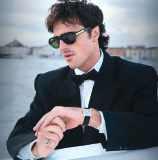
It’s a vision that has found an audience well beyond its original niche. His pieces are worn by Mark Zuckerberg, Madonna, Brad Pitt and Jake Gyllenhaal, while Jacob Elordi has become a regular ambassador, frequently appearing wearing the emerald ring.
But what makes Eli’s work resonate i
sn’t just who wears it, it’s what it represents. Having grown up in Israel and spent time in Jerusalem, he draws on a landscape layered with history, religion, and culture. His jewellery carries that sense of depth – each piece acting almost like a small, wearable fragment of a much bigger story.
wearing the emerald ring. But time he depth from
In an industry built on novelty, Eli’s impact comes from refusing it. His work reminds us that fashion, at its best, isn’t about what’s next – it’s about what endures.
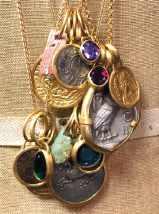
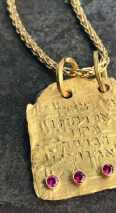



For Galit Levi, clothing has always been about more than just appearance. From her Tel Aviv atelier, she has spent decades creating eveningwear and bridal pieces that don’t just look beautiful – they say something. Galit’s work sits at the crossroads of fashion and storytelling. Some of her most memorable designs have carried clear cultural and symbolic references and she uses garments as a way to explore identity and connection. This is an approach that sets her apart in a space often focused
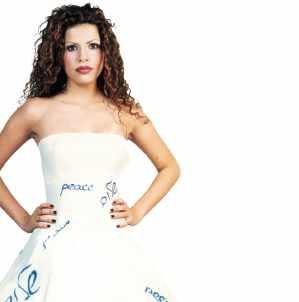
solely on aesthetics. becomes a form of expression. same of purpose still drives
Her designs have been worn by Israeli stars Gal Gadot, Bar Refaeli and Noa Tishby, but her influence goes beyond celebrity dressing. What she offers is a different way of thinking about fashion, where clothing
Galit started designing as a child, sewing clothes for dolls before going on to open her own fashion house in her early twenties. Decades later, that same sense of purpose still drives her work and, in a fast-moving industry, Levi’s designs stand out for their intention.

WAT The Brand offers a modern approach to fashion rooted in simplicity, functionality and real life. Founded by Sarah Ellis, Philippa Bloom and retail expert Nicky Green, the London-based label translates years of styling experience into carefully curated capsule collections designed for everyday wear.




Rather than producing large seasonal collections, WAT focuses on fewer, well-designed timeless staples that can be worn repeatedly and this approach challenges fashion’s reliance on constant newness, offering an alternative built on longevity and practicality.
Central to the brand’s success is its close relationship with its audience. WAT engages directly with its community of women, using their feedback to shape what gets made next. Production becomes a conversation, resulting in pieces that reflect how women actually want to dress, rather than what the industry dictates.
The aesthetic remains clean and understated: relaxed tailoring, crisp T-shirts and versatile separates that move seamlessly between settings.
In an industry often driven by excess, WAT The Brand demonstrates the power of doing less – but doing it better and creating clothing and a community that evolve together.
At first glance, Prettysac is about beautiful bags. Look closer, and it’s really about transformation.
The London-based brand founded by Sabine Smouha and Paulette Mizrahi takes vintage and designer silk scarves – pieces that might otherwise sit unused – and turns them into handbags and pouches. Each one is different, shaped by the colours, patterns and history of the original fabric. These pieces are further customised with interchangeable straps and handles.
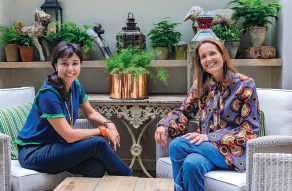
Upcycling is at the heart of the brand. Instead of producing new materials, Prettysac works with what already exists, offering a more thoughtful take on luxury. It’s not about volume or speed; it’s about individuality.
What makes the concept particularly compelling is the brand’s bespoke service. Customers can bring their own scarves, often items with personal meaning, and work with the team to create something entirely new. The result isn’t just a bag, it’s something that carries memory as well as function.

In a market saturated with mass-produced accessories, Prettysac feels refreshingly different, tapping into a growing desire for pieces that are stylish, personal and responsible. Its impact lies in showing that the most interesting designs are often the ones that already existed but were waiting to be reimagined.
the ones that already existed but were waiting to be reimagined.





By Lara Benjamin @lara.thestylist

As Miranda Priestly so famously said: “Florals? For spring? Groundbreaking.” But they make a return year after year for good reason and when it comes to summer… well there’s no holding back. This season, florals have moved beyond print and into texture, dimension and material – transforming the most casual accessories into pieces with styling power. Shoes lead that shift. Jelly slippers, once firmly in the poolside category, are now finished with oversized floral details that make them more polished, with a subtle nod to their 90s origins. Trainers are being reimagined with 3D floral embellishments, while flat sandals are updated with crochet flowers that sit across the foot like jewellery. What is particularly appealing is that these designs move casual styles into smarter territory.
Bags are evolving in the same way, but even more dramatically. This season, they are no longer the finishing touch; they are the starting point. Oversized printed totes anchor an entire outfit and statement clutches no longer defined by size or function are roomy enough to hold more than just a phone. Texture is key here too, from updated crochet and detailed appliqué to expressive prints that add depth and personality.
Here are my top tips and tricks to wear your florals with flare:
1. Start with one hero piece.
2. Ground bold florals with simple foundations such as crisp white, denim, soft neutrals or block colour.
3. Pick up one colour from your accessory in your outfit to make the look feel more cohesive.
4. Mix texture carefully. If you are wearing crochet flowers on a sandal or a heavily appliquéd bag, keep materials on your outfit cleaner so the overall look feels balanced.




1. ASOS Nigella oversized flower high heel sandals in olive and pink £35 2. Elegant 3D floral clutch bag £33.99, Etsy
3. Vendula Heritage – Regency Gardens Faye bag £92
4. RIXO red rafia sandal with rosette flower £195 5. Kate Spade Gemini floral pochette £219 6. Anya Hindmarch ra a cactus bag £590 7. Autry flower sneakers £290
8. KG Kurt Geiger Nina mesh flat £99 9. Zara flat sandals with flower £39.99 10. Coach Tabby shoulder bag 26 with floral applique £950 11. FARM Rio scarf medium floral satin tote bag £180 12. Prettysac To Die For bag £750
13. Steve Madden Brylie floral mesh £130








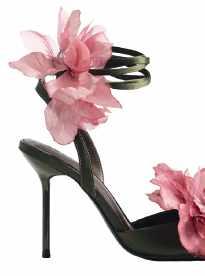





















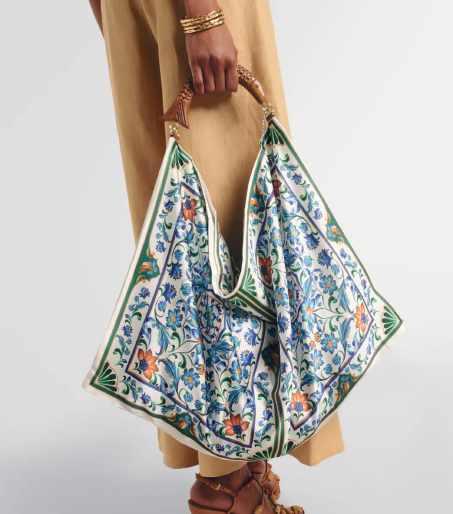
By Brigit Grant




Blame Sarah Jossel. The Sunday Times Style beauty director-at-large has become Britain’s best-known beauty journalist by mixing serious product knowledge with honesty about acne, ageing and cosmetic procedures. The women I work with love her because she simplifies unfathomable modern skincare and they have already bought her debut book Diary of a Beauty Editor, which deserves a mazeltov. For her, not them. Ms Jossel, 39, is inspiring and it felt right to channel some of her “real woman in the bathroom cabinet” tone in this summer round-up. After all, imitation is the sincerest form of flattery one can pay to greatness, although I was getting Botox when “injectables” were flu jabs and saw Bobbi Brown launch Essentials at Bergdorf Goodman in 1991.












Esther Fieldgrass, founder of EE Medispa, has some beauty mileage and is becoming a Life regular. That’s because she understands lasers, sculpting machines and collagen boosting, so when she recommends Dermastamp Exosome treatment before a holiday, you do it even if you’re staying here.


Spritz Switch



Summer calls for fragrance switching. A heavy winter scent is like wearing cashmere on the beach, so don’t be nervous about ditching your signature perfume as heat and the outdoors changes how fragrance sits on the skin and these smell very good.



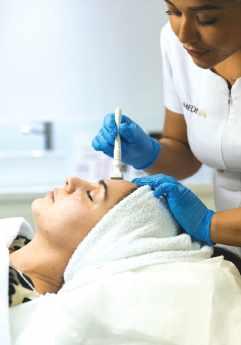
The treatment (from £299) combines microneedling with exosomes – tiny signalling particles designed to encourage skin’s natural repair process and stimulate collagen and elastin. In plain English? It makes your face look tighter and brighter by targeting fine lines, pigmentation and skin laxity, while calming inflammation and reclaiming the elusive glow. My therapist Joanna made the treatment relaxing and, once exosomes were applied, she put me under an LED lamp to doze. Ten minutes later, I emerged slightly pink but looking healthy and the pink faded fast. Importantly, I already have good skin but, since the treatment, it’s noticeably firmer, more even-toned and, best of all, my neck has gone from turkey to poussin. Smoother, tighter, younger. At 62, that is more than a perk-up – it’s a minor resurrection. efmedispa.com



You can’t drink the new range of SO…? Delish Body Mists (£4.99) but you’ll be tempted as the scents at Superdrug are inspired by bubble tea, matcha and iced latte. Hide it from your teenage daughter as she’ll want it.
Lumière du Jour Eau de Parfum (£76) is all Mediterranean light: fig leaf, jasmine and soft woods with just enough saltiness to stop it becoming too pretty-pretty. uk.moroccanoil.com

I’ve long maintained that Miller Harris produces some of the best fragrances in Britain. Lost in the City has been on my shelf for years and now there’s Tea Tonique Extrait de Parfum (£120) with bergamot, tea notes and soft peach blossom that smells crisp and expensive. People move closer when you’re wearing it. millerharris.com

Gen Z is moving away from traditional perfume and towards fragranced hair mists as they are more subtle and add shine. Lee Stafford London has launched Red Idol, Papaya Punch and Caramel Brûlée (£7.99) and, as the names suggest, your hair smells good enough to eat, and that lingers. leestafford.com and Boots

Genuinely useful summer discovery Naked Sundays mineral peptide sun stick with SPF50 can be reapplied over make-up without spoiling it. Born under the brutal Australian sun, the quirky brand knows women will wear SPF if it’s easy, glowy and handbag-friendly. I can confirm it is.

So to the new cream in my bathroom. Biossance Squalane + Growth Factor Firming Moisturiser (£52). It’s a “biohacking moisturiser”, which sounds illegal but means serious hydration with added firming technology. It’s got peptides and vegan collagen, with reviewers reporting firmer skin and fewer fine lines. A friend I asked to give it a go wants to keep it.




Do what I do if you have fair skin and frazzle in the sun – use The Fox Tan (£11.99). It kick-starts a tan in limited sun. But, be warned – it has zero protection, which is awful so I should not have mentioned it. lookfantastic.com



– Dr Dennis Gross Alpha
With Sarah Jossel for inspiration, here is one of her beauty holy grails Dr Dennis Gross Alpha Beta Peel Pads (£20) at Space NK. The pads exfoliate, brighten and leave skin looking as it should after proper sleep. More mature? Libi & Daughters’ No. 79 Peeling Solution has you covered, gently shedding skin to avoid becoming an overenthusiastic tomato. It’s pricey ( £190, gulp), but it lasts forever.














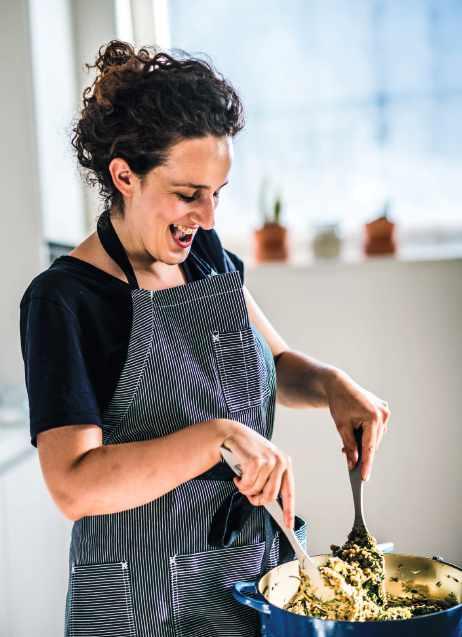
that celebrates vegetables in the same way and elevates them to ‘special occasion’ status.”
There’s a big difference between being a chef cooking dishes and actually writing them all down. Helen very much works on ‘feeling’ her way around a recipe, but “when I was testing, I would literally type out every single thing and my laptop was always covered in tahini”, she says.
There is a decidedly Middle Eastern bent to her recipes, but Helen was raised on Ashkenazi food – “a very beige habit”. Working at the Palomar (she joined in 2014) was her first experience of Middle Eastern cooking. “Discovering Sephardic cuisine was so exciting and really eye-opening to me – it’s such a vibrant palette.”
She then went on to work at The Barbary, Ottolenghi and The Good Egg and then she was burnt out and tired of unsociable hours. She posted on Facebook looking for a part-time job and Mark Summers, who was about to launch a vegetarian pop-up restaurant called Bubala, reached out. Helen joined the team and went on to become executive chef, developing many of the dishes that are still on the menu.
Helen is not vegetarian herself, but she doesn’t really cook with meat or fish, “apart from the odd can of tuna or anchovies”.
Helen Graham tells Louisa Walters why her new recipe book shines the spotlight on vegetables
Timing is everything. On the day Helen Graham moved into a new flat in Hackney she signed the deal on her recipe book, Centrepiece. On the day after she moved out she handed in the manuscript. “You could say that Centrepiece was bookended by the flat, which was the perfect place to do all the recipe testing because it had a huge island in the kitchen,” she tells me via Zoom from her new flat, which doesn’t have the same space.
Formerly executive chef at famed vegetarian restaurant Bubala, which opened in Spitalfields in 2019, Helen, 38, had always wanted to write a recipe book. “After Bubala, I felt there was a gap in the market for a vegetarian entertaining book. It’s easy when you’re making a dinner with chicken or the beef, because that’s the focus. I wanted to make a book
She says: “There needs to be more education around cooking vegetables, because there is such a wide range of them. It could be dressed up as a more adventurous way of cooking rather than a less adventurous way.” That said, when testing out the recipes she made a point of only shopping at major supermarkets “because if you can’t get hold of the ingredients, then what’s the point?”
Her favourite vegetable is kohlrabi. “I discovered it at the Palomar and I love its turnipy-pineapple flavour and its versatility. The book has a recipe for kohlrabi with a Nori and wasabi crème fraîche and a sumac pistachio mint salsa. I also really like courgettes. I fry some really hard so they’re nicely browned and then leave the rest raw – that’s a delicious way of eating them. And I love any kind of cabbage.”
Helen claims her Jewish heritage loud and clear in the foreword to the book. “My food is so much influenced by who I am and my background that I wanted to communicate that. Whatever people say about us, no one denies that Jews and food is a winning combination. Everyone loves bagels and babka! Food is my love language. I love to entertain and if I’m coming to you, I’ll bring you something I’ve made”.
I think I’ll invite her over her soon.
Centrepiece by Helen Graham is published by Hamlyn, £28
Both the tahini and fennel can be made ahead; just make sure they’re not fridge cold when you serve.
SERVES 6
INGREDIENTS
• 750g (1lb 10oz) courgettes, halved vertically, then halved horizontally
• ½ teaspoon fine sea salt
• 2 tablespoons olive oil
For the pickled fennel
• 1 fennel bulb – tops, tough outer leaves and core removed, finely chopped (about 200g/7oz)
• 2 tablespoons lime juice
• 6 lime leaves, roughly chopped
• 75ml (2½fl oz) olive oil
• 1 tablespoon pickled jalapeño brine
• 60g (2¼oz) pickled jalapeños, finely chopped
• ½ teaspoon fine sea salt
For the peanut tahini
• 1 tablespoon agave syrup
• 1½ teaspoons white miso
• 150g (5½oz) tahini
• ½ teaspoon fine sea salt
• 2½ tablespoons smooth peanut butter
• 2 tablespoons lime juice
• 75ml (2½fl oz) water
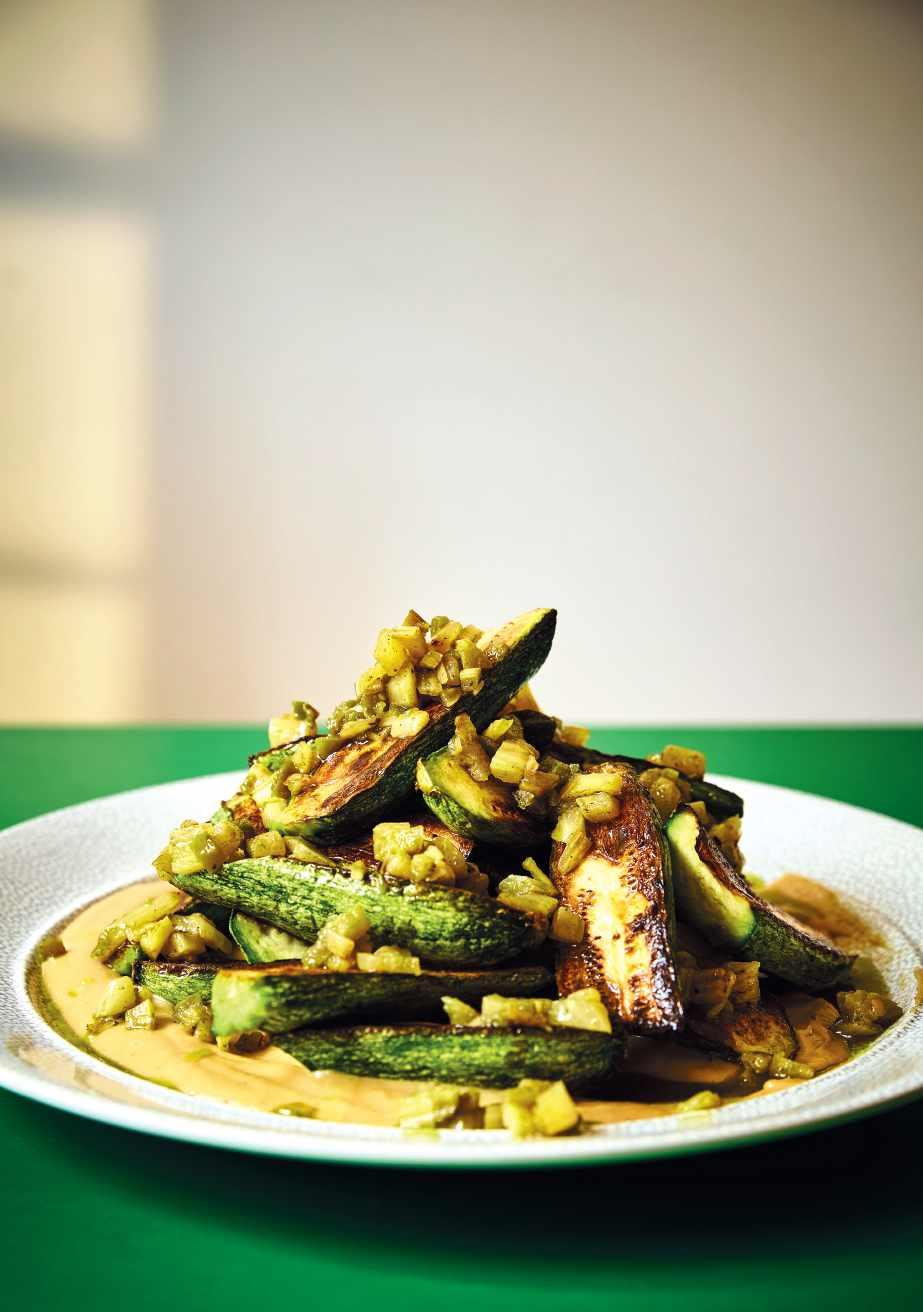
1. Set a nonstick saucepan over a high heat. Add the fennel and cook, without any oil, for four to five minutes until charred, tossing regularly to ensure it colours evenly. Add the lime juice and stir for a further 30 seconds until it’s all absorbed and the fennel is looking slightly sticky. Transfer to a bowl.
2. If you have a high-powered bullet blender, use it to blend the lime leaves and oil together until it feels hot to the touch (or reaches 85°C/185°F if you have a probe thermometer); this will take about three minutes. You can also do this in the small bowl of a regular blender: just blitz until the lime leaves are finely chopped and the colour of the oil has darkened a little to pale green.
3. Strain this into the fennel along with
the jalapeño brine, pickled jalapeños and salt, then set aside.
4. Put all the ingredients for the peanut tahini except the measured water in a small bowl and whisk to combine, then slowly add the water as you whisk until you have a sauce the consistency of thick pancake batter. You want it to be a bit thicker than regular tahini sauce, as the fennel mixture will cause it to thin a little when the dish is served.
5. To cook the courgettes, lay them cut side up and sprinkle with the salt. Leave for five minutes, then pat dry and heat the oil in a large nonstick frying pan over a high heat.
6. Place the courgettes in the pan cut sides down and fry for eight to 10 minutes until deeply browned. Flip over and cook for a further two minutes. This will give you quite an al dente courgette, but cook them further if you wish them to be softer.
7. Smooth the tahini over a serving plate, then top with the courgettes and fennel.
A non-traditional take on this Egyptian dish, usually served at breakfast.
• 2 × 400g (14oz) cans of fava beans
• 5 garlic cloves, finely chopped
• 1½ tablespoons ground cumin
• 5 tablespoons tahini paste
• 1 teaspoon fine sea salt
• 1 teaspoon sweet smoked paprika
• 300ml (½ pint) water
• 4 tablespoons lemon juice
• Olive oil, to serve (optional)
For the harissa roast tomatoes
• 500g (1lb 2oz) cherry or baby plum tomatoes
• 2 tablespoons olive oil
• ½ teaspoon fine sea salt
• 2 tablespoons harissa
For the pickled chilli salsa
• ½ red onion, finely chopped
• 4 tablespoons olive oil
• Finely grated zest of 1 unwaxed lemon, plus 2 tablespoons lemon juice
• 1 tablespoon chopped basil leaves
• 40g (1½oz) whole pickled chillies, finely chopped
• ½ teaspoon fine sea salt
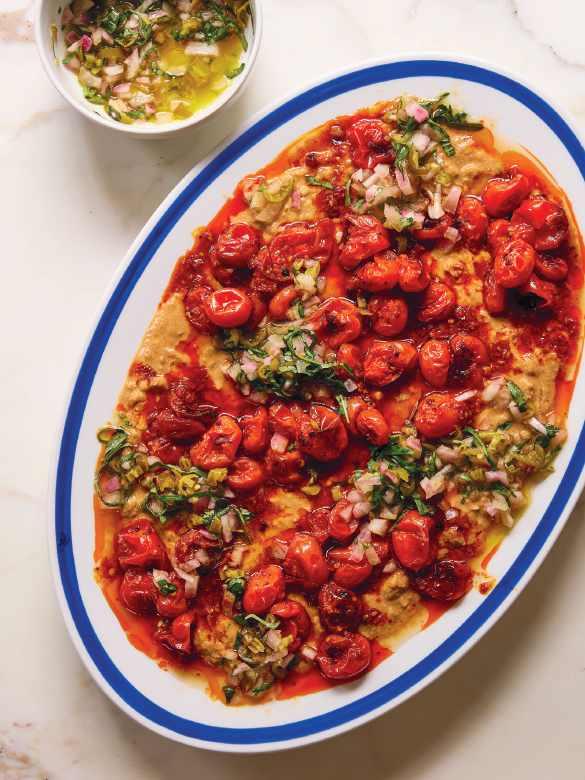
1. Preheat the oven to 180°C fan (400°F), Gas Mark 6.
2. Line a baking tray with nonstick baking paper.
3. For the roast tomatoes, toss the tomatoes together with the oil, salt and harissa in a bowl, then transfer to the lined tray. Roast for 25–30 minutes, tossing halfway through, until jammy and soft.
4. Put the fava beans and their liquid in a saucepan, along with the garlic, cumin, tahini, salt, paprika and measured water. Set over a medium heat, bring to a simmer and cook for
15 minutes, stirring occasionally. Use a potato masher to lightly crush some of the beans while they cook; this will help to thicken the sauce. The texture should have become much thicker but should also remain loose enough to spoon. Turn off the heat and stir in the lemon juice.
5. To make the salsa, combine all the ingredients in a small bowl and stir to combine.
6. To serve, spoon the warm ful medames into a serving dish and scatter the tomatoes and salsa on top, drizzling over olive oil, if you like.
You will need eight or nine 18cm (7 inch) wooden skewers.
MAKES 8–9
INGREDIENTS
• 1kg (2lb 4oz) leeks – tough green tops discarded, roots trimmed and cut into 2.5cm (1-inch) rounds
• Sea salt flakes
• Lime halves, to serve
For the miso & mango chutney marinade
• 3 garlic cloves, roughly chopped
• 50g (1¾oz) white miso
• 1 tablespoon agave syrup or maple syrup
• 100g (3½oz) mango chutney
• 1 tablespoon white wine vinegar
• 70ml (21/3fl oz) vegetable oil
• ½ teaspoon fine sea salt
• 1 teaspoon nigella seeds
METHOD
1. Place skewers in water to soak for at least 20 minutes before using. Soak leeks in cold water for 10 minutes to get rid of any grit.
2. Bring a large saucepan of lightly salted water to the boil.
3. Blanch leeks for three minutes, then drain and allow to cool for 15 minutes. Some of the leek pieces may come apart during the process. This is totally normal and you can still use these pieces; just thread them in between the whole coins of leek to ensure they don’t burn.
4. Thread the leeks on to the drained skewers, with the cut sides facing outwards, like a lollipop. You want about five rounds of leek for each skewer, depending on size, leaving 2.5cm (1 inch) empty at either end. Place them on a baking sheet lined with foil.

5. For the marinade, place all the ingredients except the nigella seeds in a small blender and blitz until fully combined and emulsified. Transfer to a small bowl and stir in the nigella seeds. Use a pastry brush to brush the marinade on to the skewers, ensuring they are all evenly covered.
6. Preheat grill to its hottest setting. Grill the skewers for 15 minutes, turning once halfway through, until both sides are blistered and golden. Place on a serving dish and sprinkle with a pinch of sea salt flakes, then serve with the lime halves on the side.
Za’atar and chocolate is definitely not a traditional pairing, but the herbal quality from the ground thyme and hyssop works so well with chocolate.
MAKES 8
INGREDIENTS
• 150g (5½oz) 70% cocoa solids chocolate, roughly chopped
• 50g (1¾oz) agave syrup or maple syrup
• 60g (2¼oz) unsalted butter/vegan alternative, chopped
• 1 tablespoon za’atar
• ¼ teaspoon sea salt flakes
• 100g (3½oz) glacé cherries, roughly chopped
• 80g (2¾oz) oat biscuits such as Hobnobs, crumbled into 2cm (¾-inch) pieces
• 50g (1¾oz) shelled unsalted pistachios, roughly chopped
1. Line a 450g (1lb) loaf tin with cling film, ensuring there is enough overhang to allow you to lift out the bars once they are set.
2. Put everything except the biscuits and pistachios in a heatproof bowl and set over a saucepan of simmering water, making sure the bowl does not touch the water.
3. Heat gently, stirring regularly, until everything is melted and fully combined. Remove from the heat and stir in the biscuit and pistachio pieces.
4. Transfer to the prepared tin and press the mixture down until compacted and evenly distributed. Cover with cling film and refrigerate for at least two hours until fully set.
All recipes extracted from Centrepiece by Helen Graham
5. Pull the set cherry-chocolate slab out of the tin, transfer to a chopping board and remove all the cling film. Cut into eight equal-sized bars to serve.
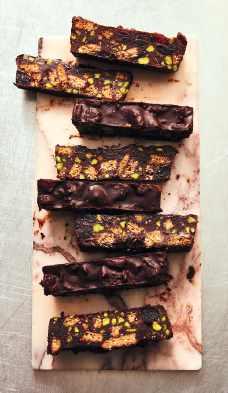



Fully-catered kosher stays in beautiful private villas and alpine chalets across Italy and select European destinations theitalianelixir.com/life
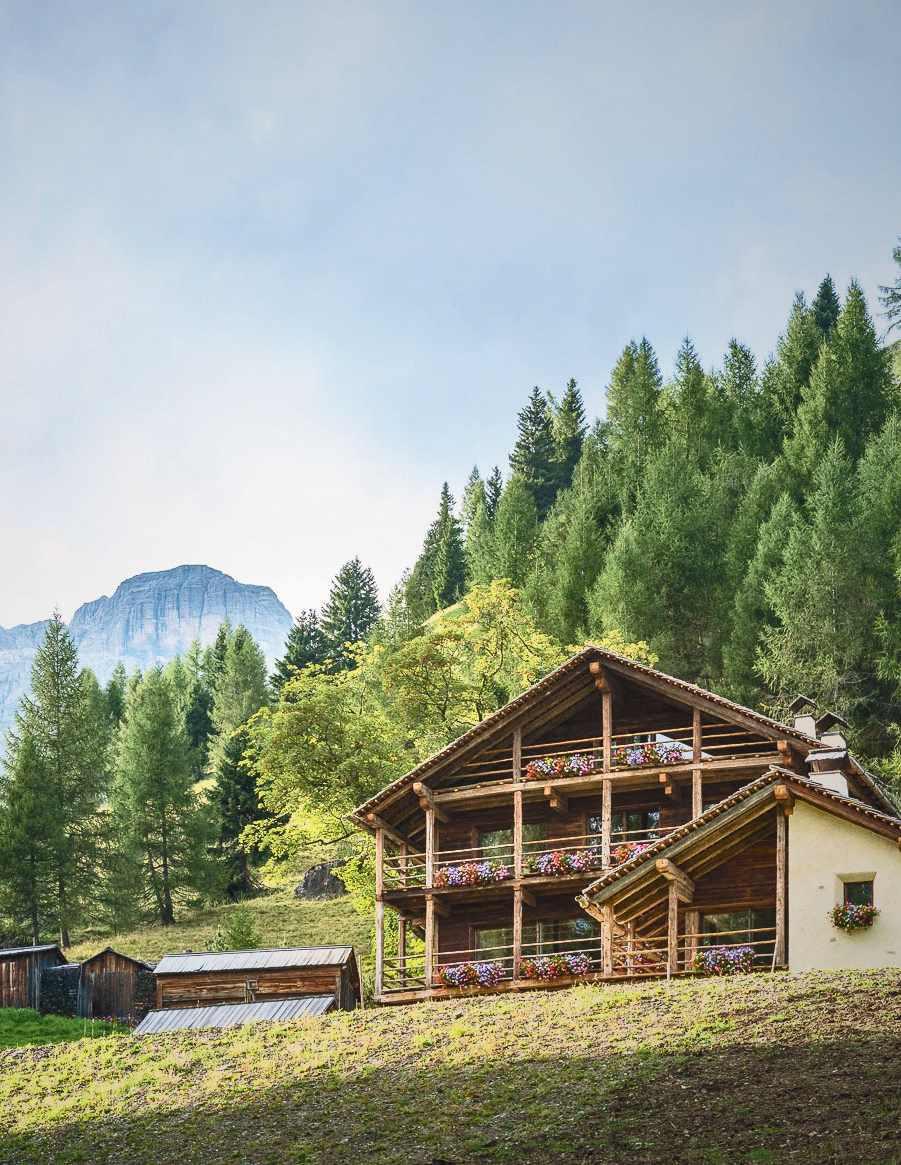



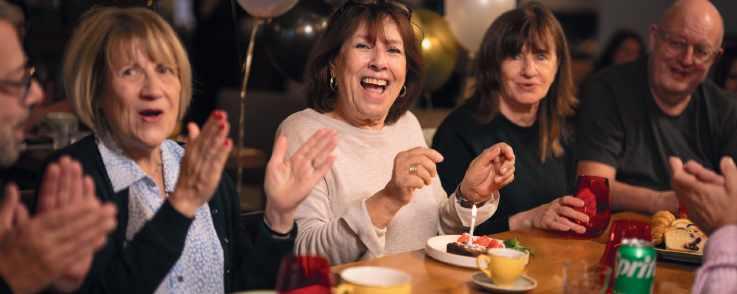
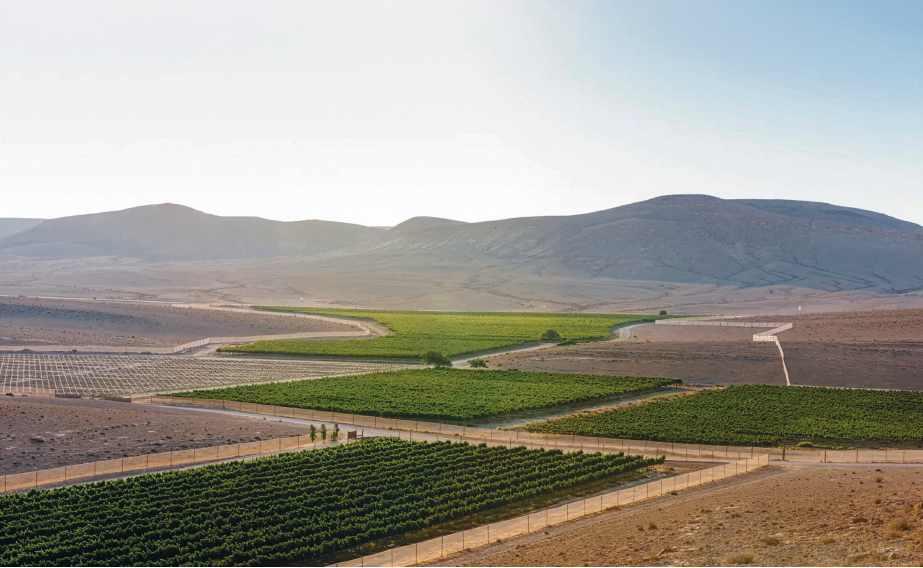
The Negev has been recognised for its wine. Tal Sunderland-Cohen explains why this is good for Israel
Let us begin with a fact that will cause any selfimportant Parisian sommelier to spill his Burgundy: at a time when the Burgundians were still arguing about which muddy patch of field deserved to be called a Grand Cru, the Nabataeans were already producing wine – in the middle of a desert.
The Nabataeans – traders, city-builders and camel enthusiasts who gave us the rose-red city of Petra – arrived in the Negev somewhere between the 3rd century BCE and the 4th century CE. And in a true display of chutzpah they looked at a landscape receiving roughly 100 millimetres of rain per year and thought: grapes.
With a feat of hydraulic engineering, they carved the hillsides of the Negev into elaborate terraced fields – limans – ringed with low stone walls that caught every last drop of rainfall, channelled it precisely where it was needed, and stored the surplus in rock-hewn cisterns carved by hand. Some 600,000 dunams of terraced agricultural land.
A round cities such as Oboda (Avdat), Mamshit, Shivta and Nitzana, entire vineyards flourished. Archaeologists have since unearthed wine presses and production facilities – storage vats, drainage systems, tennis-court sized pressing floors. Negev wine was shipped across the Roman and Byzantine world.
Under Byzantine rule, from the 4th to the 7th century, the enterprise continued to flourish but then came the ArabMuslim conquest of the 7th century and the vines made way for other priorities. The Negev retired from the wine business for approximately 1,300 years.
Fast forward to 1948. The State of Israel is established, and the Negev becomes National Project Number One – "to make the desert bloom", as David Ben-Gurion famously insisted, having moved himself to Kibbutz Sde Boker to prove the point.
Throughout the 1980s and 1990s, serious agricultural experiments with wine grapes began in the Negev –particularly in the highland areas around Ramat HaNegev and
Mitzpe Ramon, at elevations of 600 to 900 metres above sea level. And it gets interesting, because this is not your average scorched desert. These are cold desert highlands, with dramatic temperature swings between day and night that force the grapes to develop remarkable acidity and aromatic complexity.
In 1998, Yatir Winery was established – a partnership between Carmel Winery and local communities in the northern Negev, near the Yatir Forest. Carmey Avdat – named after the ancient Nabataean city of Oboda – went one better: a nearliteral reconstruction of a Nabataean vineyard on its original ancient site. Others followed: Ramat HaNegev Winery, Noa't Smadar, Anoush, Sipurei Eretz and more – a community of winemakers, some kibbutz-born, some immigrants.
So here we are in 2026, and the Negev has been internationally recognised with a protected Geographical Indication (GI), placing this remarkable region formally on the world wine map alongside Bordeaux, Tuscany and Napa Valley. A GI defines geographical boundaries, production rules and quality standards, and gives the wineries of the Negev the right to appear on a bottle with the name of a place that has genuine identity, genuine character, genuine pedigree.
W hen a sommelier in Tokyo, New York or Milan brings a bottle bearing the word “Negev” at the table, he is presenting 2,000 years of history: Nabataean hydraulic genius, a desert that bloomed, slept and bloomed again, and a handful of people who decided that what once was could be again – only this time with better equipment and internationallyrecognised credentials.

The Stables at The Grove is the perfect summer dining destination, where British classics meet relaxed countryside charm with beautiful views and a really laid-back atmosphere. Overlooking the scenic 18-hole championship golf course, it is ideal for long lunches, leisurely afternoons and goldenhour dinners outdoors on the spacious terrace. The menu, featuring ingredients grown in The Grove’s own Jemima’s Kitchen Garden, celebrates the freshness of the season, with dishes such as grilled Cornish seabass with citrus fennel, beetroot and goat’s cheese salad and British grass-fed 32-day-aged sirloin steak.
Kapara in Soho has opened a cute retroglam terrace inspired by the glamour of Palm Beach, with bold stripes, swaying palms, cacti (and heaters just in case!). For long lunches, evening cocktails and lots of rosé with chef Eran Tibi’s famed vibrant plates, such as rainbow beets with lime and sesame, butterflied bream with lemongrass and ginger, lamb with cauliflower purée and aubergine, plus pistachio and coffee tiramisu or Basque cheesecake for dessert, this might be where you’ll find me this summer.
TONY PAGE
Tony Page and Marylebone go together like elegance and refinement – and that’s exactly what is on offer at his restaurant (kosher). A beautifullydecorated hushed oasis that is flooded with natural light during the day, it turns into a place to luxuriate at night with a menu that is almost impossible to choose from. And so I went off-menu to two specials – a creamy decadent foie gras, which came with toast and a fig chutney, and then a Dover Sole, simply grilled, and I also ordered an heirloom tomato salad. After being so virtuous for the main course, I dived headlong into Tony’s signature lemon

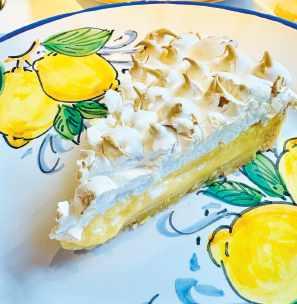
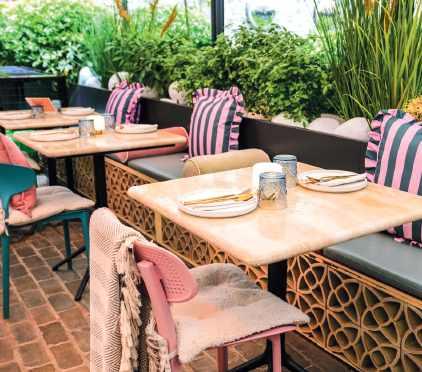
meringue pie, which manages to combine crisp pastry (no soggy bottom here m’lud), tart lemon curd and crunchy-chewy meringue on the prettiest plate that transports you straight to Sicily. Just perfection. I’ll be back – to make a decision between a cacophony of ceviches, tartares and carpaccios, and then perhaps a veal chop, a rack of lamb or a chicken Milanese. When the weather turns chilly again I’ll stick to retro home comforts – chicken soup, duck a l’orange or chicken vol-au vent and sticky toffee pudding.
Nothing says summer more than afternoon tea with dainty cakes served on delicate china – and The Beaumont Mayfair’s take blends British heritage with contemporary flair. Cucumber with dill cream cheese sandwiches, smoked salmon rillettes and truffled egg on brioche are forerunners to a vibrant pistachio and raspberry tart, a tropical layer cake with mango, coconut and passionfruit and a choux bun with hazelnut praline and chocolate mousse. Taking centre stage is a black sesame and strawberry mousse pastry shaped like one of the hotel’s suites, designed by artist Antony Gormley. Have your cake and stay in it! Quench your thirst with a selection of teas and add some well-deserved sparkle with a glass of Champagne or alcohol-free tea-based spritzes.
There’s a little café in Golders Green that truly dishes up a slice of sunny Tel Aviv. My daughter and I went to Beit Cafe (kosher) just before Shavuot, ostensibly for cheesecake but, once there, we were gently persuaded to try the Israeli breakfast. Creamy
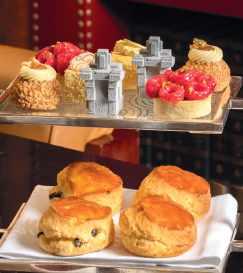
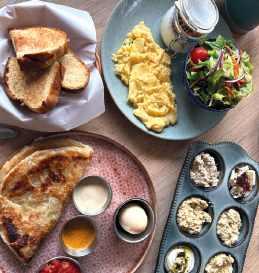
scrambled eggs, salad, a cacophony of dips and spreads and stunning toasted challah and malawach to dip with or spread on. Plus a delicious yogurt and granola pot. We ordered one Israeli breakfast and it was plenty for two so, at £19, that’s a bit of a bargain. Then we shared a slice of pistachio cheesecake that tasted every bit as pretty as it looked. The interior is rustic and cute and the staff are all delightful – warm, chatty and cooing over my grandson, which is the way to win me over these days. He loved it too. He and I will be back – maybe we’ll see you there too.

Santorini has come to Mill Hill with the opening of new Greek restaurant Ateno. Owned and run by the team from De Rada (a few doors down), they have clearly poured the same passion and energy that has made that a favourite into their new venture. It’s a beautiful fit-out with lovely Greek food, well-priced for the area, delightful staff really keen to please and a gorgeous ambiance. Plus doors that open onto the street to welcome in the sunshine. On my recent visit, we had beautiful large padron peppers, a spanakopita saganaki flatbread, beef short rib, lamb chops and a simple Greek salad. Everything is stylish and pretty, from the marble tables and the blue glasses to the huge olive tree and the central bar. I’ll be back to try the numerous fish dishes and the halloumi kataifi.
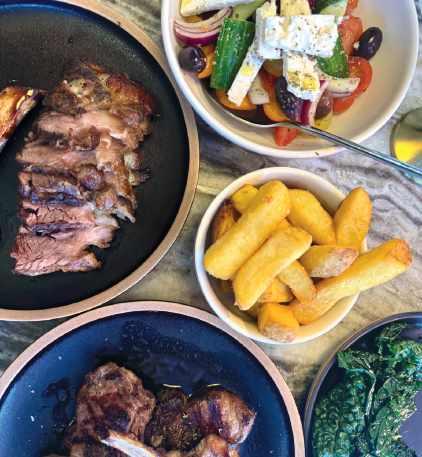

On 4 May, a ceremony honoured courageous dogs of the IDF's Oketz Unit who gave their lives protecting their owners. Thoughts for Bernie (above), killed after identifying terrorists, and Ziggy (below), who saved six soldiers from a building.
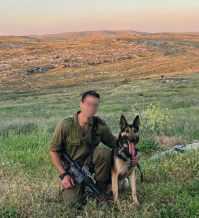
This is a space for pets of all kinds, regardless of their level of observance. So send stories and pics to pets@jewishnews.co.uk

That face belongs to Marlowe, a gorgeous yellow Labrador with a habit of sleeping with one paw dangling inside his water bowl. On 24 July he celebrates his first birthday – that’s after he gets his official naming certificate that confirms he is named in memory of Jake Marlowe, who was murdered at the Nova festival on October 7. Marlowe is one of the three puppies sponsored by Lisa and Michael Marlowe and the supporters who attended the weekly Friday hostage vigil. That support continues, and the Marlowes (pictured, right, with Olivia and Jono Ambrose), along with many other walkers, took part in the charity’s 78km in 30 days challenge marking Israel’s 78th birthday. A total of £20,200 was raised for future guide dogs, post-traumatic stress disorder (PTSD) support and emotional support dogs. But back to Marlowe, now living in Rehovot with his puppy raisers Adar Fromovicy and Shai Sabag, who reported that at six months he had already mastered basic commands,
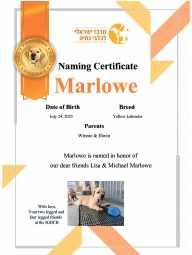
could open certain doors and had perfected a persuasive stare that makes resisting him impossible. Marlowe will stay there until he is 12 to 14 months old, after which he will be assessed to see if his future lies as a guide dog or in PTSD and emotional support work before starting specialist training. We’ll be watching him. israelguidedog.org.uk
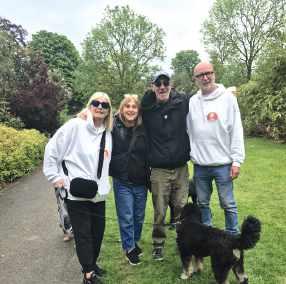
You meet nice people at a lunch held for dogs. At the food fundraiser for rescue centre Tiny Shelter (tinyshelter.org) in Portugal’s Algarve were Craig and Tami Schreiber, a Jewish couple from San Diego, who founded Adopt Pets Portugal, a nationwide platform transforming pet adoption
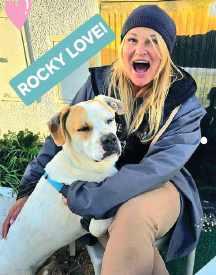
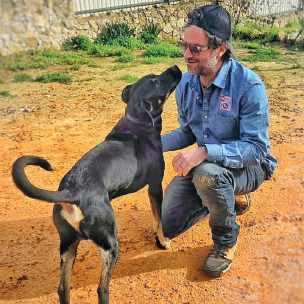
heading to the UK. Paws crossed. Like many countries, Portugal has thousands of rescue dogs and cats in shelters. Their idea was to bring together adoptable animals in one searchable place. Their site links rescue organisations and allows users to search by breed, age, temperament and location.
During two decades of animal rescue, the couple has transported to America dogs saved from Thailand’s meat trade
After years of bringing Jews together, love hit a wall in May with this message on the JDate site: “We’re no longer available in your area.” Then the follow-up : “We’ve made some tough calls about where we operate and your area didn’t make the cut...” There was a collective whimper from UK Jewish singletons (and their mothers), but panic not. Romance is going to the dogs. According to a new survey of 2,000 UK dog owners, one in five say their furry friend helped them meet their partner. And dogs under the age of two double your chances!
“Dogs increasingly act as wingmen,”
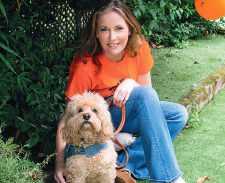
says dating expert Claire Rénier from the app Happn. For her, parks are the new singles bars and few know that better than Meet My Paws founder Martine Davis, who has taken her dog-walking community global. Designed to bring dog lovers together socially, Martine says around 10 percent of sign-ups tick the ‘romantic’ box.“It’s probably more,” says Rusty’s mum (pictured). “Sharing a love of dogs is a really easy way to find a compatible partner and I’m only ever confident to approach a man first if he has a dog.” meetmypaws.com

and from Peruvian streets. Now based in Portugal with Peru rescue Cusca and African Grey parrot Tita, they volunteer for Tiny Shelter, Carvoeiro Cat Charity and platform 24 rescue organisations. Their plan is to expand Adopt Pets Portugal across Europe and into the UK. If you spot a dog you love, the Schreibers will get it to you. So do look!
Let your dog get a taste of the high life at the annual Belgravia Dogs’ Cocktail Party, with champagne for owners, dog-friendly ice cream and dog competitions for best dancer, poshest, most like owner and best rescue. There’s even a ‘Best in Lead and Heels’ category. The canine social season has begun.
Belgravia Dogs' Cocktail Party Saturday, 27 June • 4pm – 8pm Tickets £11 - eventbrite.co.uk

Beatrix Clark visits Budapest, a city with two halves that make for one fascinating trip
Rachel Weisz, Jamie Lee Curtis, Paul Newman and Peter Falk (Columbo), Harry Houdini, Paul Simon and mogul Estée Lauder all have Hungarian Jewish heritage. This is just one of the things I learnt while visiting Budapest for a three-night mini break.
It’s a city of two halves – we’re staying at the excellent Kozmo Hotel and Spa in Pest, which lies to the East of the Danube and was merged in 1873 with Buda to the West. To kick off, I’ve booked a historical walking tour and, after three hours with the extremely knowledgeable Attila, we feel a little more au fait with the history, buildings and culture.
The whistle-stop tour touches on the
Jewish Quarter (District VII), where Attila points out a carving of Theodore Hertzl on a bicycle and Doheny Street Synagogue – the largest synagogue in Europe. We return later to admire the synagogue’s splendid interior and learn about its once-thriving community, tragically decimated in the Second World War.
In the synagogue compound we see the cemetery where more than 2,000 victims of the Budapest Ghetto were buried in mass graves, the Memorial Garden and a Ghetto exhibition, the content of which is hard to read. Equally sobering is the Shoes on the Danube Bank memorial, honouring thousands of people, including many Jews, who were shot at the edge of the water by Hungarian Nazis. These timely reminders of what antisemitism can lead to feel all too relevant.
The Budapest of today, however, radiates positivity and civic pride, not least owing to Viktor Orbán’s recent defeat after 16 years in power. For a city that suffered massive destruction by
German bombs, followed by a brutal communist regime intent on tearing down anything symbolising wealth, it has done a remarkable job of rebuilding itself. Particularly impressive are St Stephen’s Basilica (named after Stephen, the first king of Hungary), Matthias Church across the river and – most iconic of all – the Hungarian Parliament, which was inspired by our own Houses of Parliament but is in far better condition.
Budapest’s architectural highlights are best enjoyed from the river, and we cosy up under a blanket on the top deck of an evening sightseeing cruise to marvel at the illuminated Danube banks. It’s no surprise to learn this area is a Unesco World Heritage site.
For panoramic views by day we walk up Gellért Hill on the Buda side. At its peak is the Citadel fortress, built by the Hapsburgs in the 19th century to maintain control of the city after the 1848–1849 Hungarian Revolution, and the prominent Liberty Statue, originally erected to mark the liberation of Hungary by the Soviets in the Second World War and now
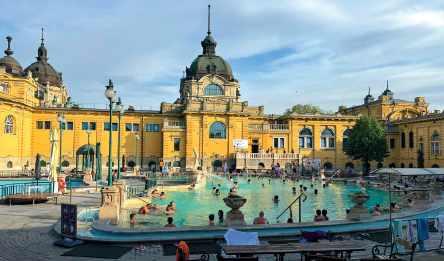
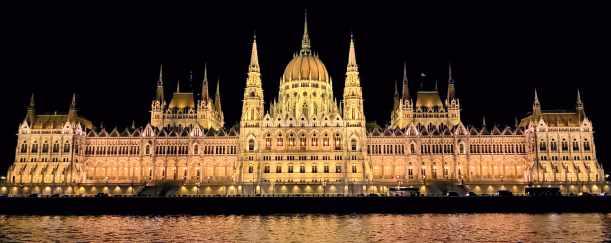
commemorating all who lost their lives for Hungary’s freedom.
A must-do is a wellness fix at one of the city’s 16 thermal baths. I’ve chosen the largest and most well-known, Széchenyi – a grand, neo-Baroque style structure named after the great nobleman István Széchenyi whose fortune funded many of Budapest’s public buildings and its Széchenyi chain bridge.
With an abundance of outdoor and indoor thermal pools, steam rooms and saunas, we’re spoilt for choice and emerge feeling relaxed and invigorated.
Mike has a wistful peek at the Beer Spa, where you can pull limitless pints while soaking in a hot tub infused with hops but, happily, decides to give it a miss.
No visit to a capital city would be complete without a dive into its food and drink. Mike is keen to go full tilt on typically Hungarian options; but I prefer something different. A stand-out dinner, preceded by an aperitif at Leo’s Rooftop bar by Széchenyi bridge, is at Stand 25 Bistro, where we partake of a delicious Zander fish dish.
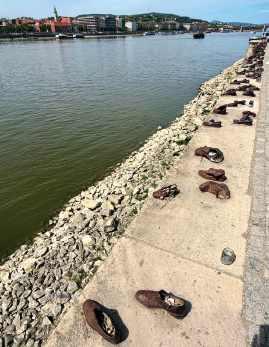
We’ve heard about Budapest’s ruin bars – abandoned buildings in the old Jewish quarter eclectically decked out and repurposed as party spots; a drink at the first and most famous of these, Szimpla Kert, followed by an Israeli meal at Mazel Tov proves to be another winning combination.
Also memorable is the historic Hungarian restaurant Gundel, whose plush interior, attentive service, traditional cuisine and signature pancakes attract customers from far and wide. On the wine front, we’re loving the white Riesling, red Kékfrankos, luscious dessert wine Tokaji, and a very quaffable local fizz. Menus, as you’d expect, are generally available in English – which is just as well, as the language, with its 44-letter alphabet, feels utterly unfathomable.
Sitting on a buzzy, sun-drenched terrace by the Danube on our last day, surrounded by people enjoying themselves, we reflect on all that we’ve seen and experienced. Hungary and its capital have come a long way and the next chapter is just beginning.
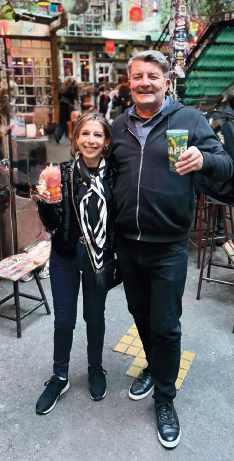

When You Are Part of the Traumatic Reality
Collective threat. Rising antisemitism. Ongoing crisis in Israel. The people and communities you support are living through a shared traumatic reality - and so are you. This conference brings NATAL's 28 years of clinical knowledge and expertise directly to UK practitioners, offering new frameworks for the complex, relational work you do every day.
Sunday 6 September 2026
Central London
CPD accreditation
www.ukfriendsofnatal.org/conference


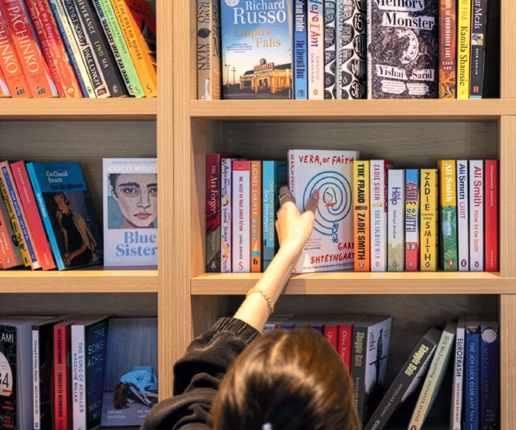
For as long as she can remember, Michal Goldschmidt has spent her Saturday mornings reading book reviews. “I’ve been a giant reader since I learnt to read, and it has always been a hobby to find the right books for people.” But it was never something that Michal, a former museum curator, wanted to do professionally. However, on 1 January 2026, in the heart of Tel Aviv, she opened Bookhaus, the city’s first English-only bookshop.
Its name is a nod to the White City’s history: the Bauhaus School trained German Jewish immigrant architects who moved to Tel Aviv in the 1930s and brought their distinctive design and style, which contributed to the modern character of the city. Her hope was that Bookhaus would also enrich the city. “I want this to be a hub for English speakers who are making Tel Aviv their home,” she explains via Zoom from the shop, which happens to be in a renovated Bauhaus building. “In the same way that the German Bauhaus exiles came together and made something uniquely Tel Aviv, I hope that the conversations, connections and events we hold will create a literary space where people can do something similar.”
Michael, 35, moved to Israel from London to join her now husband just two weeks before October 7. Although she had loved her career as a museum curator – she had worked at Tate Britain and the Barbican –she realised it was time to pivot. Establishing Bookhaus
The British owner of Tel Aviv’s first English-only bookshop tells Anne Joseph her story
has been an immense learning curve and there have been challenges to establishing a business in a country grappling with national trauma. She had a separate tab of books that she wanted the shop to sell but did not feel it was appropriate to do so if there were still hostages in Gaza. And, inevitably, the impact of the current war has been significant.
“During the war, people were only interested in walking to where was familiar and close to a shelter. So if we were not in their radius, they weren’t coming in.”
In response to the drop in foot traffic she altered the shop’s opening hours and introduced international gift cards for people with family and friends in Israel.
Despite the potential controversy, Michal chose to supply books by authors who support a cultural boycott of Israel and have refused to allow their work to be translated into Hebrew, such as Sally Rooney. “Strangely, Sally Rooney sells a lot but only to Israelis. I would rather us say: ‘We believe in the power of literature, in different perspectives and in engaging in all different sources and texts, and we hope that one day you too will be able to come to the table.’ To me, that’s a more powerful statement than saying: ‘We’re going to exclude you back.’”
Bookhaus also runs book clubs and author events, which, pre-war, included an evening with Wingate Literary Prize winner Amir Tibon (The Gates of Gaza), and is waiting for a licence to open an in-house café.
For many living in the diaspora, building a home in Israel is a dream. Yet managing the process from thousands of miles away can feel complex, fragmented and stressful. DROR was created to change that, providing a complete end-to-end service for families looking to establish
a home and a life in Israel. From property acquisition, planning, architecture and design to construction management, legal and financial coordination, plus ongoing maintenance, DROR brings every stage under one trusted roof. With deep local expertise and a highly personal approach,
DROR removes the uncertainty of navigating unfamiliar systems, multiple professionals and cultural differences. Families gain clarity, confidence and genuine peace of mind, knowing their project is being handled with transparency and care. droril.com
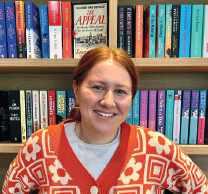


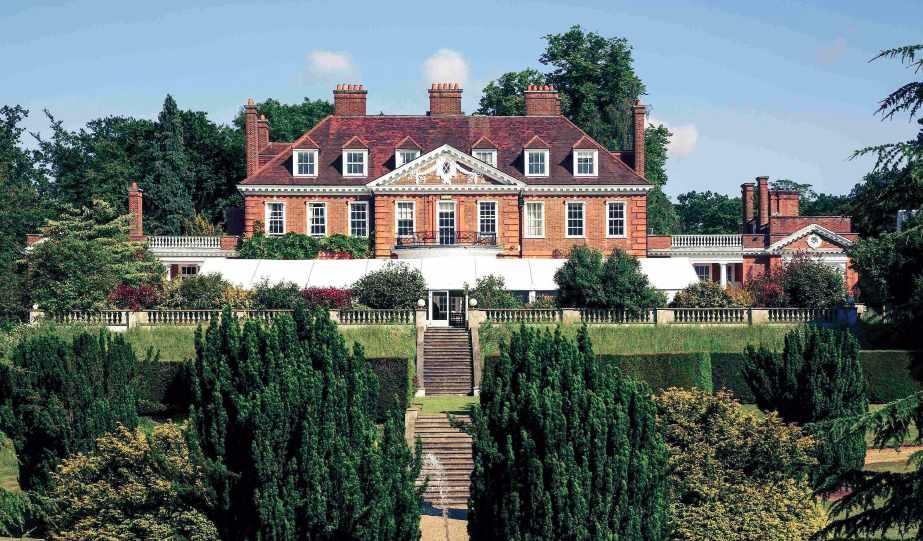
Having just had the warmest May on record, you may have been Googling ‘where can I go for a UK break?’ Stop scrolling, for Louisa Walters has the answers
Set within 22 acres of beautiful Hertfordshire grounds with landscaped gardens, Hunton Park Hotel (pictured above) combines the elegance of a Queen Anne-style Georgian mansion house with versatile modern event spaces, creating a unique setting for celebrations, conferences and social occasions. Far enough from north London to feel like a trip but close enough to host a simcha, there are 72 bedrooms alongside a variety of spaces suitable for everything from intimate gatherings to events for 500 guests. The Terrace Marquee and Garden Suite both provide striking backdrops for weddings and bar and batmitzvahs, but you can also hold smaller events in the elegant Mansion House, which blends period charm with contemporary comfort.
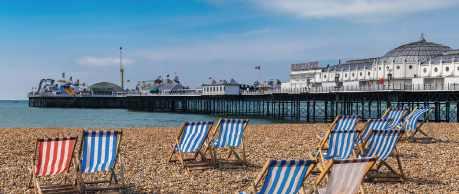
A little further away but still in Hertfordshire, Pendley Manor is a luxury country house hotel with 1,000 years of history. Grade II listed and gloriously grand, this is the kind of escape that makes you exhale the moment you arrive. Wander the beautifully landscaped and wooded parkland, take afternoon tea in the Peacock Lounge or linger over dinner at the award-winning Oak Restaurant, where every dish celebrates local ingredients. In summer, the grounds become a playground for families, the spa a restorative haven for wellness retreats and the rooms a tranquil escape for romantic lazy lie-ins. Plus the resident peacocks make for the most charming of companions.
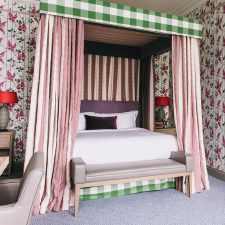
The beach, The Lanes and the open-air energy of a city that feels alive in summer make Brighton an ideal place for a break. BNJC, Brighton's Jewish hub, offers a collection of self-catered holiday homes just minutes from the seafront. Choose between light-filled two-bedroom apartments with private balconies, penthouses and five-bedroom townhouses with private gardens. Fully equipped kitchens, secure underground parking, Shabbat-friendly lifts and lighting, plus an on-site gym mean that kosher living is fully taken care of. Yofi, the new on-site kosher restaurant and deli, offers brunches, fresh seasonal dishes and Shabbat meal packages.

Meadows and woodlands on the edge of Ashbourne in Derbyshire surround Wildhive Callow Hall, a Victorian manor with stunning interiors that feels more like a family home than a hotel. Stay in a nature-inspired room in the house, some with freestanding baths, or an experiential boutique hive nestled among the trees with a private deck. Two self-catered treehouses have outdoor copper baths on a wraparound deck, kitchen/living space and two bedrooms with ensuites. The restaurant brings local, seasonally-led produce to the table, served beneath floor-to-ceiling glass windows overlooking the meadows. Wildhive Wellbeing offers a range of treatments plus yoga in the newly-refurbished Coach House. Beyond the gates you can visit Chatsworth House, Haddon Hall and the traffic-free Tissington Trail.
Happy Valley is more than just a TV drama – it actually exists in Tunbridge Wells and above it, on the lyrically-named Tea Garden Lane, is The Beacon, a charming boutique hotel. Built as an Arts & Crafts country house in the late 19th century, it blends historic character with relaxed modern luxury and a recent refurb has created some of the prettiest bedrooms I’ve ever seen. Surrounded by landscaped gardens, woodland and lakes, it offers sweeping views across the Kent countryside while being just minutes from the town centre with its cute boutiques and fabulous restaurants. In the restaurant and garden bar, which open onto the terrace, seasonal menus showcase locally-sourced Kent produce. During the Second World War, the building served as a refuge for Kindertransport children. They lived at this special house with staff and volunteers who provided food, education, supervision and emotional support.
Hop on a train to Scotland where, amidst woodland and sweeping estate grounds, Trump MacLeod House is a storied retreat within the magnificent Trump International, Scotland estate. A striking example of Scottish baronial architecture, the mansion, designed in 1835, is layered with history. In 2008 it was renamed MacLeod House to honour President Trump’s Scottish mother, Mary Anne MacLeod. A meticulous restoration followed, sensitively preserving the mansion’s architectural integrity while introducing refined contemporary luxury. Today, grand rooms are adorned with opulent furnishings, rich fabrics, period fireplaces and curated antiques. A stay here is a truly prestigious experience with timeless Scottish charm.
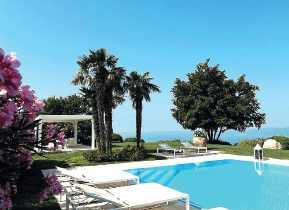



If you still want to jump on a plane, The Italian Elixir is a luxury chef-led kosher hospitality experience focused on luxury private villa and chalet stays in Italy and the French Riviera, with particular emphasis on family holidays and kosher Italian cuisine. As it is most cost-effective for groups of 10 or more, take the family or hook up with friends. Led by Chef Anthony, each experience is tailored around your group, combining kosher hospitality, daily service, concierge planning and chef-led Italian cuisine inspired by Jewish heritage and regional Italian traditions. If your summer is sorted and you’re looking ahead to the colder months, this unique experience is also available for winter ski chalet stays in the Dolomites.
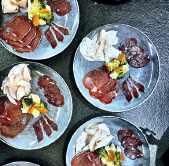


A SUMMER TO REMEMBER Sun-drenched days, alfresco dining, and activities for all the family. The kind of stay that stays with you, long after check-out.


www.thegrove.co.uk • @thegrovehotel
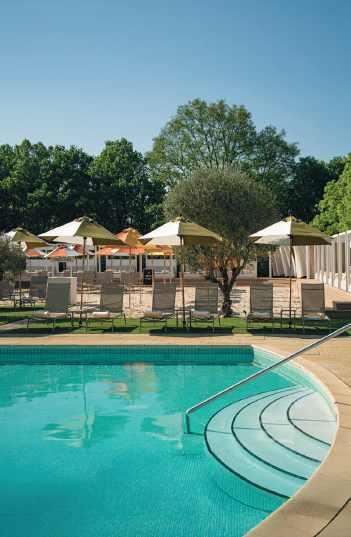




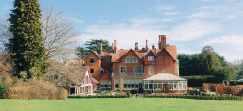
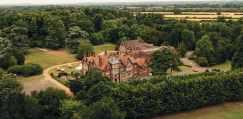


From the joy of a Bar or Bat Mitzvah to the romance of a wedding day, from an intimate anniversary dinner to a grand charity gala, Pendley Manor has been the backdrop to some of life’s most meaningful milestones. Set within 35 acres of stunning Hertfordshire countryside with beautiful roaming peacocks, this exquisitely preserved Tudor manor offers 84 bedrooms, flexible event spaces, dedicated coordinators, and the kind of gracious hospitality that makes every guest feel truly looked after. Kosher catering arrangements are warmly accommodated, and the hotel is fully equipped for dry hire events, with every occasion crafted with the care and personalisation it deserves.
When the occasion calls for somewhere truly special, Pendley Manor delivers.
By Elliot Levey
Okay. For this article to work, I’m going to need you to play along with me. I mean literally play along with me. I don’t know how you listen to music these days. Spotify? iTunes? YouTube? Record player? MiniDisc?! Whatever your source, dust it down, plug it in, log on and listen up.
I’ve been living in Manhattan since February. I’m in a show called Giant. It’s about Roald Dahl and his antisemitism and it gives me great pleasure to tell you that I’m not going to talk about it here at all.
With days full of reports of antisemitism back at home, and nights spent listening to some pretty toxic stuff on stage, I’ve had my fill. I’m done. I’m here to tell you about my break. My breather. My retreat from all the hate. What is this respite? Music. Where is this respite? My commute. It has become my detoxification time. A walking sanctuary.
Trouble is, I only live a few blocks from the theatre (sorry, theatre). But it’s enough. These streets are birthplace to some of the greatest music known to mankind. And the fact that some of it is Jewish and reminds me of Jews in happier, more confident times, may be part of its power to remedy my Broadway blues.
So the music begins before I step foot outside. I’m living on the site of the legendary Roseland Ballroom on 53rd Street, where Louis Armstrong and Glenn Miller held residencies. Count Basie wrote his Roseland Shuffle here, but that doesn’t make our playlist. I’m limiting myself to one song per street and this place is reserved for Ella Fitzgerald who, as a teenager in 1937, sang the most popular Yiddish song ever recorded, Bei Mir Bistu Shein, written by Shloyme Secunda and Jacob Jacobs. Erm… yes, they were Jewish. The band leader Chick Webb hired the young Ella to sing it at Roseland. Not bad for starters, right? A nd so I leave my building on 53rd and our next track begins: Judy Garland singing Cole Porter’s I Happen to Like New

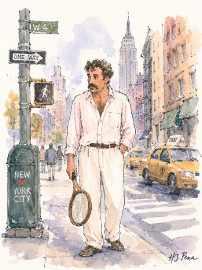


the show when he sings: “Wait till the warm-up’s underway…”
York , which started life nearby at the Broadway Theatre in his 1930 show
The New Yorkers. These are the words in my head as I head out for work:
I happen to like New York I happen to like this town I like the city air, I like to drink of it The more I know New York, the more I think of it…
Heady days.
T hen I turn left onto Eighth Avenue and the next track begins: Dizzy Gillespie’s version of Thelonious Monk’s 52nd Street Theme with its blistering, asymmetrical melody. Monk wrote it to celebrate the repeal of Prohibition and the explosion of jazz clubs on 52nd Street that followed. Charlie Parker ended sets with it for years. It became the unofficial “last orders” anthem of Manhattan jazz. Hear this and it’s either time to crash… or carry on.
I have a show to do. So onwards down Eighth. Next stop is the fire station on 48th. Known as The Pride of Midtown – revered for its catastrophic loss of life on 9/11 – but in the 1950s the young Tony Bennett lived above this place. So naturally he sings The Best Is Yet to Come, written by two Jewish kids from the Bronx, Seymour Kaufman and Carolyn Rosenthal, better known as Cy Coleman and Carolyn Leigh. A re there better opening lyrics to a song?
Out of the tree of life I just picked me a plum You came along and everything started to hum…
It’s as if Bennett knows I’m heading to do
A short wait indeed because I’ve now arrived on 45th Street at my theatre. The commute is over, but the music continues because this is the Music Box Theatre. Built by Israel Isidore Beilin – the king of the Great American Songbook, Irving Berlin. How do I choose from White Christmas, Cheek to Cheek, God Bless America, Puttin’ on the Ritz or Anything You Can Do? Given the reason I’m here, I plump for Ethel Merman belting There’s No Business Like Show Business, written by Berlin in an office upstairs at the theatre itself. Legend has it he had double doors installed, so he could quietly play piano during performances, and a hidden speakeasy concealed behind a fake wall during Prohibition. It’s apparently still there. If you’re passing by, tell Jonathan the house manager I sent you. I’ll warn him.
A nd so my respite is over. Time to get stuck into Giant. Time for the audience to get on Mark Rosenblatt’s rollercoaster ride and for me to be buffeted once again by the savagery of the arguments in the play. Again. Night after night.
But surely we need a song for the journey home?
My character Tom Maschler, challenged about his loyalties as a Jew, explodes: “I am English, English, English. I’m as English as you Roald, or Liccy… or the sodding policeman on the door.”
So here’s the final track.
I’m an alien, I’m a legal alien, I’m an Englishman in New York.
A nd if you’ve ever stood in Midtown when all the Broadway shows come down at once, thousands of people pouring onto the streets beneath the neon and above the steam, the line “A gentleman will walk but never run” suddenly takes on a rather special meaning.





You’re invited to JW3's






































































































Purchase an apartment in Tel Aviv and receive millions of Matmid Points equal to the apartment value *3096
A variety of apartments in selected projects
Starting from ₪3,550,000 = 3,550,000 Matmid Points