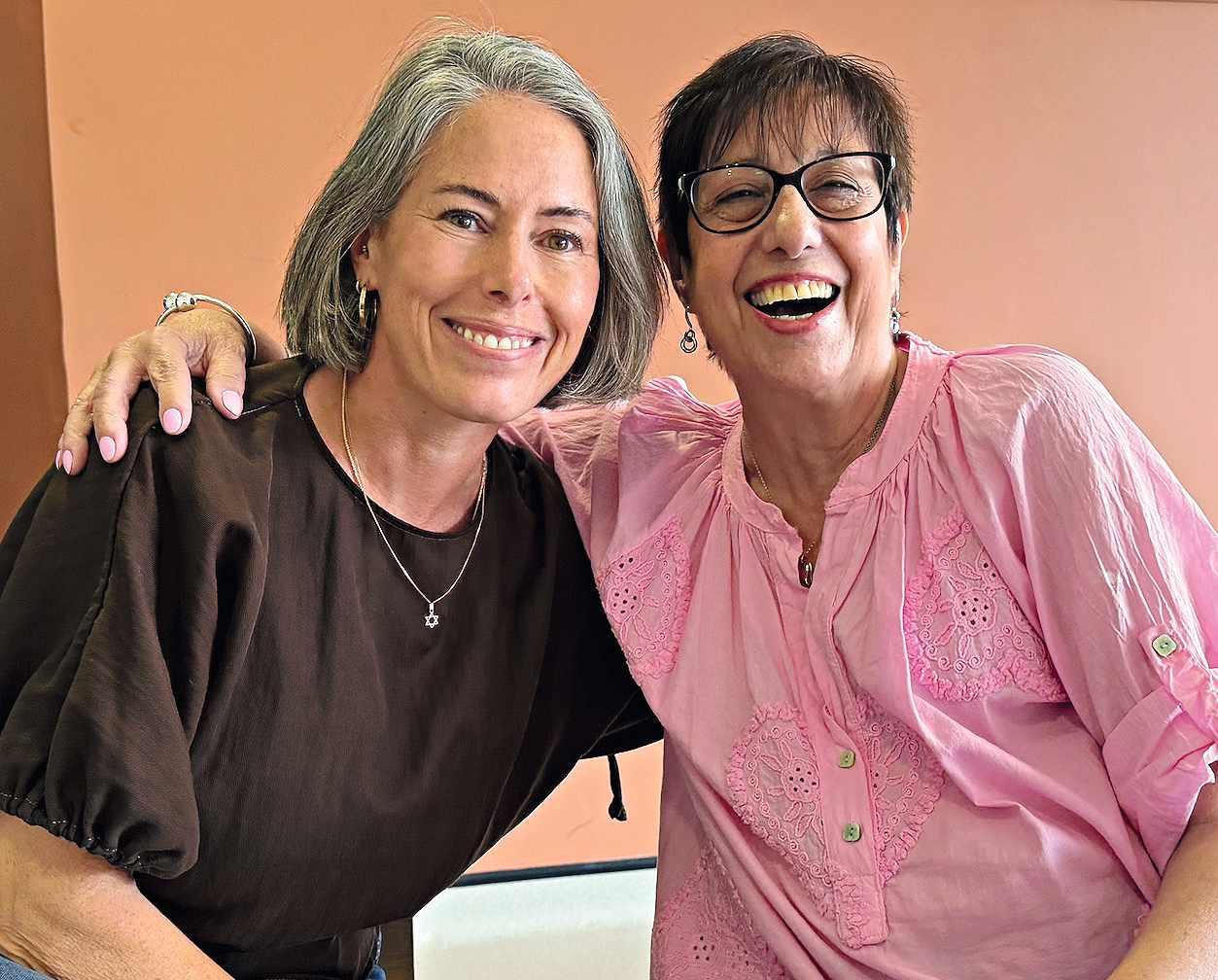
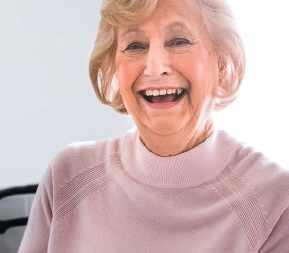
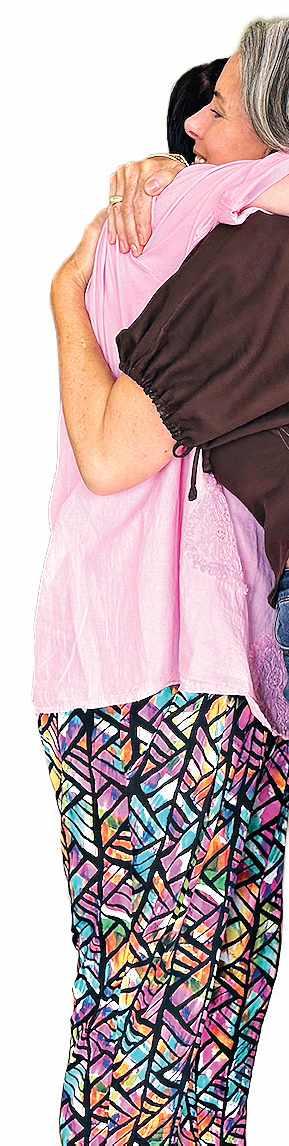
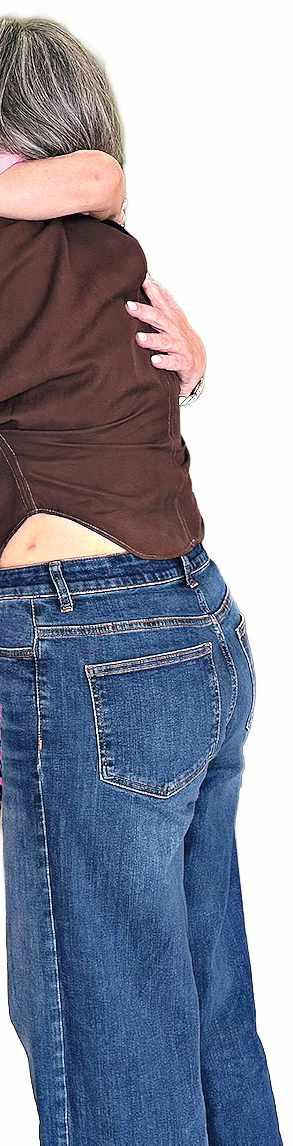
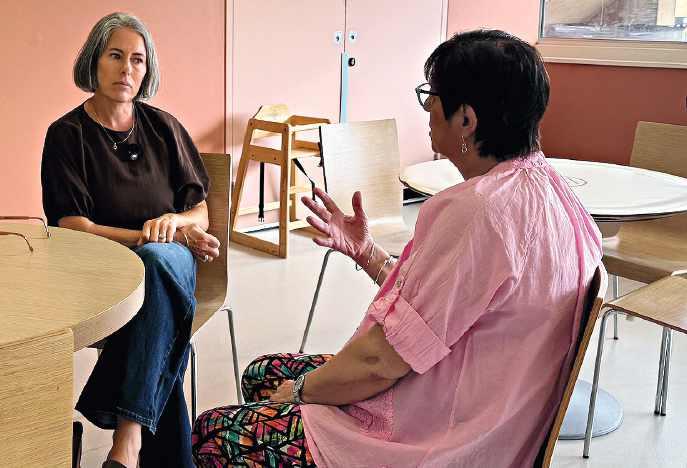
Ruth Adley (right) and kidney donor Clare meet at the Royal Free Hospital for the first time since their life-saving transplant operations
by Lee Harpin lee@jewishnews.co.uk
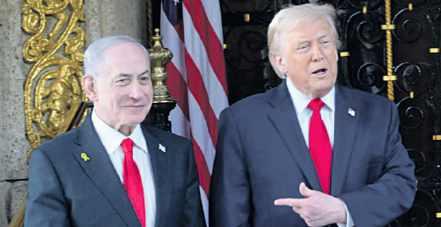
Donald Trump reportedly lashed out at Benjamin Netanyahu during a heated, expletive-laden phone call regarding Israel’s plans to escalate military action in Lebanon.
The US President allegedly told the Israeli Prime Minister: “You’re f**king crazy – you’d be in prison if it weren’t for me.”
Trump also told Netanyahu: “Everybody hates you now. Everybody hates Israel because of this.”
American news site Axios published detailed claims about the conversation, which it said had been confirmed by two US officials and a third source briefed on the call.
The call, which took place on Monday, reportedly halted Israel’s plan to launch fresh strikes on Beirut. During the conversation, Trump is said to have called Net-
anyahu “crazy” and accused him of ingratitude.
A US official summarised Trump’s remarks as: “You’re fucking crazy. You’d be in prison if it weren’t for me. I’m saving your ass. Everybody hates you now. Everybody hates Israel because of this.”
A second source briefed on the call told Axios that Trump was “pissed” and at one point shouted at Netanyahu: “What the f**k are you doing?”
Trump provided a more restrained account on Truth Social, writing: “I had a conversation with Bibi Netanyahu today asking him not to go into a major raid of Beirut, Lebanon. Thank you Bibi!”
Trump also claimed he had spoken with Hezbollah representatives, who, according to him, pledged to “stop shooting at Israel and its soldiers”.
“Likewise, Israel agreed to stop
shooting at them,” he claimed. Netanyahu, posting on X, wrote: “Tonight, I spoke with President Trump and told him that if Hezbollah does not cease attacking our cities and citizens – Israel will attack terror targets in Beirut.
“This stance of ours remains unchanged. In parallel, the IDF will

continue to operate as planned in southern Lebanon.”
American commentator Mark R. Levin, who is close to both Netanyahu and Trump, appeared to confirm the Axios report’s accuracy, posting on X: “THE LEAK IN AXIOS WAS A VIOLATION OF FEDERAL LAW AND PROVIDED
SUPPORT TO THE IRANIAN REGIME AND ITS HEZBOLLAH PROXY.”
He added: “Whoever leaked that story to Barak Ravid at Axios did a grave disservice to our country, to our president, to Israel and to Israel’s prime minister.
“The Iranian regime will benefit from that leak, viewing us as weak and desperate for a deal – even coming to Hezbollah’s defence. The Israeli people will also be furious.
“The missiles are aimed at them, not Washington. And for many other reasons, what was thought to be a devastating political hit on Netanyahu by the leakers about a private call between heads of state has done much damage to us and our military and our diplomatic strategy.”
Earlier on Monday, Iran had threatened to abandon the negotiations with the US over Israel’s actions in Lebanon.
Green Party leader Zack Polanski is among a group who signed a petition calling for British nationals who have served in the IDF since October 2023 to have their movements tracked.
Far-left publication Declassified UK and the International Centre of Justice for Palestinians launched what they describe as “a major cam-
paign to demand the end of impunity for British nationals who fought for Israel in Gaza”.
The petition states: “Nobody wants to live next to a war criminal –not least members of the Palestinian community in the UK who have family or friends who have been subjected to war crimes.”
Foreign Affairs Select Committee chair Emily Thornberry has claimed that the UK government is “failing the Palestinian people” by doing “too little, too late” to prevent Israeli settlement expansion.
Speaking in Westminster on Monday at an event organised by Medical Aid for Palestinians and the Council on Arab-British Understanding, the Labour MP argued that Keir Starmer’s government had “fallen well short” in taking strong action against Israel since recognising a Palestinian state last September.
“We should be banning the import of goods produced in illegal settlements,” Thornberry said. “We should be placing sanctions on those involved in the settlements, stopping the involvement of any British companies, and coming down hard on insurance networks.”
During her speech – met with loud applause – she also said: “Let’s act together to make settlement expansion so economically painful for Israel that it becomes untenable.”
Far-right Israeli finance minister Bezalel Smotrich and heritage minister Amichai Eliyahu were among a Knesset delegation to join New York’s annual pro-Israel parade.
The Jewish Community Relations Council said it had not been alerted to who from the Israeli government would be attending last Sunday’s parade.
It was also claimed that the Israeli consulate in New York had not included the names of either Smotrich or Eliyahu on its list of attendees.
A third member of the Knesset to join the delegation at the front of the march was minister Yitzhak Wasserlauf, from the far-right Otzma Yehudit Party.
Following the parade, Israel writer and Middle East analyst Eli Kowaz said: “Everyone spent the week furious that [New York City mayor Zohran] Mamdani skipped the parade. Then Israel sent Smotrich, Amichai Eliyahu and Yitzhak Wasserlauf to lead it.”
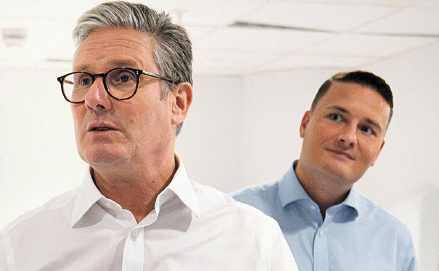
Wes Streeting was at the forefront of pressure on Keir Starmer to announce UK recognition of a Palestinian state – even as the prime minister was described as “not attracted to gestures”, newly released files relating to the Mandelson crisis reveal, writes Lee Harpin.
The documents confirm that the former health secretary sought help from disgraced former UK ambassador Lord Peter Mandelson to pressure the PM ahead of the eventual decision on recognition.
Streeting also circulated a video and a note to the entire cabinet as he urged the prime minister to recognise Palestine and impose further sanctions on Israel in response to the war in Gaza. But the files also show Mandelson’s private reaction to Streeting’s campaign.
After receiving a lengthy email
from Streeting about Israel, Mandelson messaged cabinet minister Pat McFadden, then secretary of state for work and pensions, describing Streeting’s message as a “long, hysterical message” and claiming it “reflects pretty badly on his maturity”. Mandelson wrote: “It is pathetic ... I think Wes is experiencing an early midlife crisis.”
McFadden replied to Mandelson regarding Streeting’s persistent advocacy on Israel-Palestine, saying, “He is very active on the MPs Whats App groups on this subject.”
The newly disclosed documents also shed light on government thinking in the months leading up to the eventual decision to recognise Palestine in September 2025.
McFadden, who had described the dire humanitarian crisis in Gaza, told Mandelson: “Keir not attracted to
gestures but he might have no alternative.” Mandelson, for his part, also dismissed recognition as a “gesture”.
Responding to Streeting’s email, he warned: “Such a gesture could blow a 2 SS [two-state solution] out of the water if Israel decided unilateral recognition justified further West Bank annexation which the US would be powerless to stop or reverse.”
Instead, Mandelson argued that “The PA with reform and new leadership” could move towards a peaceful resolution “with Arab/US/European support,” warning that the alternative was a “deadlocked death spiral.”
Streeting pushed back, stating: “Israel is doing it anyway.”
He acknowledged the e orts by Starmer and David Lammy, but
Marion Miliband – the mother of Labour politicians David and Ed, and wife to historian Ralph – has died aged 91, writes Lee Harpin.
Marion, who survived the Holocaust before going on to become a campaigner for justice, a devoted mother, teacher and respected author of studies into childcare, employment and other issues, passed away on 27 May in London.
David and Ed confirmed they were sad to announce the death of their mother, adding: “Her life was a remarkable trajectory, from the childhood trauma of the Holocaust in Poland to safety and joy in Britain. She became a teacher, campaigner and a passionate advocate for justice.
“Marion was a force field of life and a dearly beloved mother, grandmother and sister. We will deeply miss her but will carry her spirit and values with us always.”
Born Dobra Jenta Kozak in 1934 in Częstochowa, Poland, Marion Kozak exemplified the resilience of a generation of Jews that endured the unimaginable.
To her family and community, she was simply Marion – a Holocaust survivor whose early life was marked by profound loss and extraordinary courage, but who also went on to build a home rooted in the values of justice and learning.
Hailing from a prosperous Jewish family, Marion’s childhood was shattered by the Nazi invasion. Her father, Dawid, stayed behind to
care for his elderly parents, while Marion, her mother and sister went into hiding in 1939.
The Kozaks’ factory was commandeered and transformed into a munitions plant. In the town, an estimated 2,000 Jews were murdered by Germans on the spot and another 40,000 were transported to the gas chambers at Treblinka.
Marion’s survival hinged on acts of extraordinary bravery – a German factory manager who pulled her and other children from a line destined for execution, Polish nuns who sheltered the family and other righteous individuals who risked everything.
In 1947, 12-year-old Marion arrived in Britain through a Jewish organisation. Bright and determined, she excelled academically, eventually studying at the London School of Economics. She also gained a PhD in economic and social history from the University of Hull, where she submitted her thesis, “Women munition workers during the First World War with special reference to engineering”.
There, she met Ralph Miliband, the influential Marxist scholar and fellow Jewish refugee from Belgium. Together they raised two sons, David and Ed, who would both rise to become leading figures in the Labour Party. Marion was praised for instilling in them a fierce sense of social justice, the immigrant’s drive to contribute and the survivor’s understanding of fairness and human dignity.


insisted Israel was behaving like a “rogue state” and argued: “We need to lead, not follow.”
A WhatsApp message from July 2025, previously published by Streeting, shows the former health secretary discussing recognition of a Palestinian state while emphasising his longstanding support for Labour Friends of Israel. “I’ve never been a shrinking violet on Israel,” he said.
Streeting told Mandelson, “Morally and politically, I think we need to join France.
“Israel is committing war crimes. Their government talks the language of ethnic cleansing and I have met with our own medics out there who describe the most chilling and distressing scenes of calculated brutality.”
The Metropolitan Police are ‘reviewing footage’ that shows Dame Helen Mirren being called am “evil Zionist bitch” by a man in the street.
This week footage started circulating on social media showing the British actress walking along a street in Tower Hill in London with her husband, American film director Taylor Hackford.
The video, which was filmed last year, showed the 80-year-old smiling and greeting the man filming and asking if he was okay.
In the footage, the man said: “And there is Helen Mirren the avowed Zionist. You said Israel should last forever because of the Holocaust. And she was very happy the Palestinians’ houses were gone. You are an evil Zionist bitch.”
Hackford told the man to “f*** o ” and leave them alone.
The clip was first posted by an anonymous account called Anti-Fascist Action UK.
The Met have now said they are trying to get in contact with the actress to see if she wants to report the incident formally.
Helen Mirren was contacted for comment.







Continued from page one
In December 2024, Clare was simply a stranger reading Jewish News at home in Bristol.
The following morning, she sent an email. “Hi, I’m willing to be tested to see if I’m a match for a kidney for Ruth.”
That message changed both of their lives forever.
For Ruth, a grandmother from Barnet living with Crohn’s disease and polycystic kidney disease, the appeal in Jewish News had come at the end of one of the hardest periods of her life.
Her kidney function had fallen dangerously low. She was exhausted, frightened and running out of options.
Ruth first appealed for a donor through Jewish News in October 2023. Multiple people came forward, and one eventually became a donor match.
But after months of testing, the donor withdrew at the last minute because of personal circumstances.
“I literally remember getting a text saying she couldn’t do it,” Ruth recalls. “I just thought: ‘What am I going to do now?’”
By December 2024, with Ruth’s condition worsening, the family made a second appeal through Jewish News.
That was the article Clare read.
“The thing that hit me most wasn’t even the kidney,” Clare says. “It was the disappointment. Thinking something life-changing is finally going to happen, and then suddenly it doesn’t.”
By then, Ruth’s world had become consumed by hospital appointments, blood results and fear.
“I knew that once my kidney function went under 10 percent there would be dialysis,” she
THE IDEA OF HERITAGE AND ANCESTRY... IT MADE ME FEEL CONNECTED TO RUTH BEFORE WE MET
WHEN I FOUND OUT THERE WAS A MATCH, I JUST KNEW FROM THE WAY SHE WAS THAT SHE WOULDN’T LET ME DOWN
says. “And I was petrified.”
Her daughter Natasha refused to stop searching.
“She was on the case,” Ruth says. “She said: ‘Right, we’re going to do everything we can to find you a kidney.’”
Clare had never previously planned to become a living kidney donor, though helping medically vulnerable people was not entirely unfamiliar to her. She had regularly donated blood and platelets for years and says she had always believed strongly in doing practical things to help others where she could.
But donating a kidney still felt enormous.
“It just felt right,” she says simply. “At every stage, every time the tests matched, it felt right.”
For Clare, who, like Ruth, is Jewish, there was also something deeply emotional about the connection between two people who had never met.
“You’re reading it in the Jewish News , so there’s already that connection,” she says. “Then, when they explained the genetic matching, it completely blew my mind. That we didn’t know each other, but there was enough shared ancestry there for this to work.”
She pauses for a moment before continuing.
“That whole idea of heritage and ancestry really moved me. Stories from our families are probably similar somewhere down the line. It made me feel connected to Ruth before we’d even met.”
At a time when the Jewish community has often felt battered by rising antisemitism and division, Clare says the experience also felt like an act of hope.
Ruth remembers immediately sensing something different about her.
“When I found out there was a match, I just knew from the way she was that she wouldn’t let me down,”

she says. “She wasn’t doing it half-heartedly.”
The testing process took months. Blood tests.
The testing process took months. Blood tests. DNA matching. Scans. Psychological assessments. Endless appointments.
For Clare, the hardest part was waiting.
For Clare, the hardest part was waiting.
maybe this week, maybe that week. And you
“You start planning your life around dates,” she says. “You think: maybe summer would work best, maybe this week, maybe that week. And you just want to get on with it.”
donate a kidney to a stranger brought a
Telling her family she planned to donate a kidney to a stranger brought a mixture of reactions.
“My daughters were fine,” she washer, so the idea of giving
“My daughters were fine,” she says. “My son was a bit like… he wouldn’t even empty the dishwasher, so the idea of giving a kidney was way beyond his thinking.”
Her parents initially strug-
Her parents initially struggled more with the idea.
“They just didn’t really ence. But once you explain it,
“They just didn’t really understand it,” she says. “It wasn’t in their frame of reference. But once you explain it, once people hear about it more, it becomes less frightening.”
Her husband, she jokes, discovered during her recovery that nursing was “not his natural skill”.
Her husband, she jokes, disthat nursing was “not his natportive,” she adds quickly.
going while I was in the hos-
“But he was very supportive,” she adds quickly. “And my eldest daughter was amazing. She kept everything going while I was in the hospital.”
For Ruth’s family, the match felt almost impossible to believe.
match felt almost impos-
“They were over-
“They were overwhelmed,” Ruth says. “Absolutely overwhelmed.”
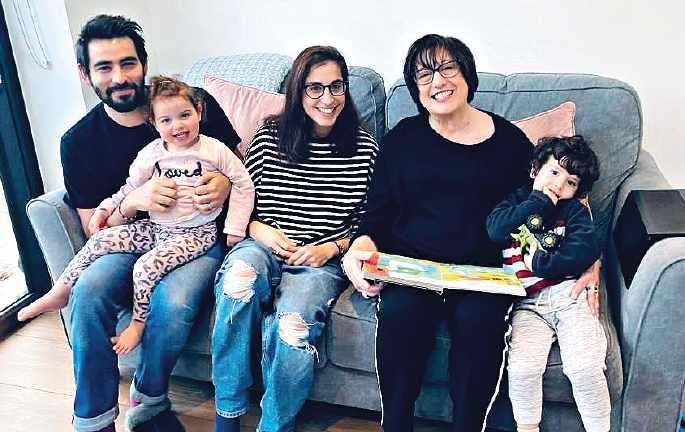
Sue, sitting nearby, smiles quietly as she listens to the two women speak.
Sue, sitting nearby, to the two women speak. Watching her sister become two years had been deeply
Watching her sister become more unwell over the past two years had been deeply painful, she later explains.
too young to fully understand
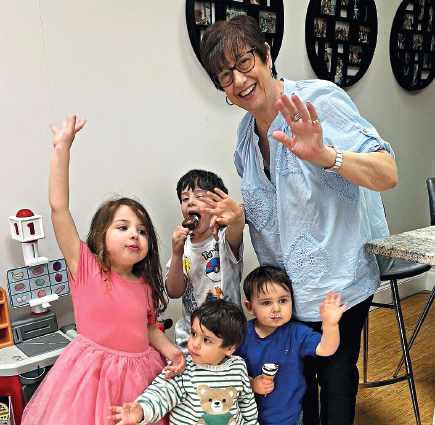
Ruth’s grandchildren were too young to fully understand the complexity of what was happening, though they knew “Gaga”, as they call her, kept disappearing into the hospital.
Because of the size of the cyst-covered kidneys caused by her condition, surgeons first had to remove one kidney before the transplant could even happen.
By the time she underwent dialysis, her kidney function had dropped to around six percent.
“The whole day disappeared,” Ruth says of dialysis treatment.
“Gaga”, as they call her, kept discyst-covered kidneys caused by to remove one kidney before the dialysis, her kidney function had Ruth says of dialysis treatment.
“You’d come home exhausted and just go straight to bed.”
For Clare, one fear overshadowed everything else.
“The biggest fear was waking up and being told it hadn’t worked,” she says. “That everybody had gone through all of this
“The biggest fear was waking body had gone through all of this

– and then the kidney had been wasted.”
Instead, the transplant was immediately suc-
cessful. 50 percent. for expected. after suddenly operation.
Ruth’s kidney function rapidly climbed to almost
But the ordeal was far from over.
Weeks later, Ruth was rushed back into the hospital for emergency surgery after developing severe complications linked to her Crohn’s disease.
By then, Clare had become emotionally invested in Ruth’s recovery in a way neither of them fully
“We were messaging after surgery,” Clare says.
“And then suddenly everything went quiet.”
Eventually, a message arrived from Ruth’s daughter explaining she was seriously unwell and might need another emergency
“It was horrible,” Clare says quietly.
“You feel completely helpless.”
Ruth ultimately underwent a third major surgery after developing a strangulated hernia, forcing surgeons to remove part of her intes-
“I was very lucky,” she says simply. For Clare, watching from afar was
“You’re doing so well, and then suddenly there’s this setback,” she says. “And because we’d gone through all of this together, you feel it emotionally too.”
Even now, recovery continues. Ruth still tires easily and recently celebrated her 70th birthday in hospital. She missed birthdays and family milestones with her grandchildren while recovering.
Now, for the first time in years, she can finally think about the future again.
geons to remove part of her intestine. frightening. so suddenly there’s this setback,” now, and recently celebrated her hospital. She missed grandchildren while in years, she can finally are
“The last few days are the first time I’ve started feeling properly better,” she says.



“You do need the time to recover,” she says. “You need support around you. There are moments when you think, ‘Why am I not recovering faster?’ But 10 weeks later, I’m basically back to normal.” Then she smiles.
“And every time I had a bad day recovering, I’d think: ‘Well, Ruth’s kidney is working.’ And somehow that makes it easier.”
Ruth says she would tell anybody currently waiting for a donor not to give up hope.
“You have to do everything you can,” she says. “Use social media. Tell your story. Put it everywhere. You just never know who might read it.”
For Ruth, the transplant has given her something even more precious than improved health.
“Use social media. Tell your story. Put it everywhere. never might something even more precious than improved health.
Time.
Time with her grandchildren. Time outside hospital
Time with her grandchildren. Time outside hospital wards. Time to finally start planning life again.
“Now I can start looking forward again.”
At one point during the reunion, Clare jokes that her main concern after surgery was whether “her” kidney was behaving properly inside Ruth.
“It’s a bit like when your children are staying at somebody else’s house,” she laughs.
“You just want to know they’re behaving.”
Ruth bursts out laughing beside her.
“Now I can start looking forward behaving properly inside Ruth. just behaving.” beside That ease between them and recipient and more like
That ease between them now feels less like a donor and recipient and more like old friends.
“My friends all say:
‘You’ve got a new best friend,’” Ruth smiles.
The experience has changed Clare too.
“You can feel quite helpless in life sometimes,” she says. “Like you’re not really making any difference. But this felt life-affirming.”
She now regularly messages strangers online who are searching for organ donors.
Asked what she would say to somebody considering becoming a donor, Clare pauses.
“Go and get tested,” she says. “You don’t know until you know.’”
She is careful not to pretend the process is easy.
YOU CAN FEEL QUITE HELPLESS IN LIFE - LIKE YOU’RE NOT MAKING A DIFFERENCE. BUT THIS FELT LIFE-AFFIRMING
Towards the end of the reunion, the conversation turns to gratitude.
Ruth pauses before adding: “I want to say thank you to all the amazing doctors, nursing and ICU staff. They all went above and beyond to reassure us and give us the most outstanding care.”
She specifically praises staff at the Royal Free Hospital, part of the Royal Free London NHS Foundation Trust, describing the treatment throughout the process as “absolutely fantastic.”
Clare immediately shakes off the praise being directed towards her.
“It does involve everybody,” she says. “Nobody really goes through something like this alone.”
It is impossible not to think about how easily none of this might have happened. One article unread. One email unsent. One stranger deciding it all sounded too frightening, too inconvenient or too impossible.
Instead, a 54-year-old woman in Bristol picked up a copy of Jewish News , read about another woman’s collapsing kidneys and decided that she wanted to try and help.
And now, because of that decision, Ruth Adley gets to go home and continue living her life.
Concerns are mounting over the rise of the Restore Britain political party as evidence of entrenched anti-Jewish hatred among its supporters continues to emerge, writes Lee Harpin.
A poll ahead of this month’s byelection in Makerfield, north-west England, suggests Restore Britain, founded by former Reform UK member and now independent MP Rupert Lowe, is in third place, behind Labour and Reform UK.
The party is expected to play a decisive role in the final outcome.
Restore Britain’s candidate is local businesswoman Rebecca Shepherd, campaigning on policies such as “tackling the gangs of foreign men who harass and intimidate local women and girls in Ashton, and elsewhere across the constituency and the Wigan Borough”.
She also backs holding parents responsible for unruly children in the community, and demanding “a full investigation into the explosion of vape shops and Turkish barbers for trading standards/immigration non-compliance.”
While Shepherd’s manifesto makes no reference to Britain’s Jewish community, open displays of antisemitism and Jew-hatred among other Restore Britain supporters are now easy to find.
This worrying development comes at the same time as a surge in open displays of antisemitism on the extreme right – with ban-
ners opposing “Zionist control” or “Zionist occupation” of Britain now commonplace on demonstrations such as the 16 May Unite the UK event in central London.
Jewish News was alerted to an online interview between Jewish podcaster Andrew Gold and Steve Laws, a self-confessed Restore Britain supporter with a lengthy history of far-right political activism.
Laws expressed his belief England “will thrive … we will get our country back”. When asked how he intends to restore England to its former glory, he replied: “People like you leaving …”
In February, after the launch of Restore Britain – which calls for a ban on both kosher and halal slaughter – Laws said: “It’s not enough to just join Restore. You need to get out and campaign.
“Leafleting, door-to-door canvassing, helping out with local and national elections, and everything in between. Take the online momentum to the streets. Restore has given us the vehicle. It’s on all of us to secure the victory.”
Laws is not alone in holding such extremist views within Restore Britain circles.
Chris Mitchell previously served as the East of England organiser for the antisemitic far-right group Patriotic Alternative (PA).
Mitchell has used his Facebook page to share the ideologies of hardline white power nationalists and

to call for an end to “Jewish control over our people”.
He openly urged his followers to support Restore Britain after its launch, and has since pushed for the party to adopt an increasingly hostile stance toward Israel, as well as toward Jews living in the UK.
In a recent online post, Mitchell wrote: “The Jews tell us in 2026 there’s no genocide against the Palestinians despite all the video evidence we have. So forgive me if I don’t for one single second believe six million died during the Holocaust when there’s very little evidence. Controversial? Perhaps, but it’s the truth.”
On 20 April, Searchlight magazine reported Mitchell had posted birthday greetings to Adolf Hitler on his Telegram channel, writing: “Happy 420 guys. Happy birthday Unc,” and ending with a prayerhands emoji.
Despite his extremist views, Mitchell posed for a selfie with Lowe at an outdoor conference held by Great Yarmouth First in midFebruary, and shared the image publicly on Facebook and Telegram.
Mitchell says when he asked Lowe whether his extreme nationalist views would be a problem, Lowe responded it was a matter of “free speech.”
A notorious far-left political commentator with troubling positions on both Hamas and Hezbollah has been banned from entering the UK, claiming the British government acted “at the behest of Israel”, writes Lee Harpin.
Hasan Piker, a far-left streamer, was due to appear at events in London this week with his similarly controversial uncle, Cenk Uygur. Both were invited to the South by Southwest (SXSW) London festival, which describes itself as a “global festival for the convergence of business, technology and creativity”. Piker had previously also been announced as a panellist for an event organised by UnHerd magazine.
Piker, who has millions of followers across social media platforms, has a long track record of highly incendiary comments.
He described allegations of extreme sexual violence against Israelis on 7 October as “rape fantasies”, going on to say “it doesn’t matter if rapes f***ing happened on 7 October, like that doesn’t change the dynamic for me … the Palestinian resistance is not perfect.”
He has described Hamas as “a thousand times better than Israel, a militant resistance comprised of orphaned soldiers born into a
Further concerns emerged after footage surfaced of Restore Britain activists campaigning in Makerfield ahead of the by-election spreading conspiracy theories about who controls the country and about public money spent “on foreign wars”.
Restore Britain was launched o cially as a pressure group on 30 June 2025 and as a political party on 13 February 2026.
The party backs large-scale deportation of people in the UK without legal status, including pursuing net-negative immigration.
It also calls for a referendum on reinstating the death penalty, withdrawing funding for the BBC, banning the burqa and niqab, legalising possessing pepper spray, expanding the definition of “reasonable force” in defence of the home and promises to stop “wokery”.
In April, The Times reported “prominent neo-fascist leaders” had backed the party.
Hope not Hate says Restore Britain has gained support from British neo-Nazis, including the leadership of Patriotic Alternative, former o cials from the British Democratic Party, the British National Party and For Britain.
In a survey of 3,029 adults in February, pollster Findoutnow reported seven percent of respondents would support Restore Britain in a general election. By April , support for Restore rose to nine percent, while Reform dropped to 21 percent.
millions of followers are exposed to regularly. His growing involvement in electoral politics and mainstream media amplifies these messages far beyond fringe spaces.”

77-year occupation” and has said he is “a lesser evil voter and therefore I would vote for Hamas over Israel every single time”.

America’s most prominent organisation against antisemitism, the ADL, has said: “Piker’s record of support for designated terrorist organizations and derogatory rhetoric about Jews represents a dangerous pattern that his
Piker has also described how he does not have a single issue with Hezbollah as “a form of militancy trying to incur penalties on the genocidal state of Israel”, and has praised Hezbollah’s flag as his favourite: “Look it up. I’m not even kidding. It’s actually a dope flag …It’s got an AK on it and a f***ing hand holding it up!”
Uygur claimed via social media he had been banned “for criticising Israel”, saying “It’s an honor to have made Israel’s enemies list. I’m very proud to have fought against their genocide. The mighty United Kingdom is afraid of speech that shows you who’s responsible for those war crimes. But no amount of censorship will get us to stop telling the truth.”
not even kidding. It’s actually a dope
Piker tweeted on Sunday that “the uk has revoked my visa as well. all at the behest of israel. the west is betraying ‘liberal values’ for a genocidal fascist foreign government. soon we will all become israel.”
The Times reported the reason to block Cenk Uygur, creator of The Young Turks media network, from the UK, was based on several grounds, including fears his presence would risk exacerbating antisemitism due to his rhetoric since the 7 October attacks in 2023, which included repeating classic antisemitic tropes.
UK Jewish groups and politicians had all called for Piker to be banned. Labour MP David Taylor said a visit was “not conducive to the public good” and urged the Home O ce to revoke his visa.
The festival had described him as “redefining what political commentary looks like in the digital age” and said his live streams reached more than 30,000 people every day.
Taylor said: “It’s shocking that SXSW would invite someone who has openly supported a proscribed terrorist organisation and spouted these kinds of vile antisemitic rants to speak at their festival.
“With the unacceptable rise in antisemitism on our streets leaving British Jews in a constant state of anxiety, Hasan Piker is clearly not conducive to the public good.”










A group of 16-year-old Orthodox
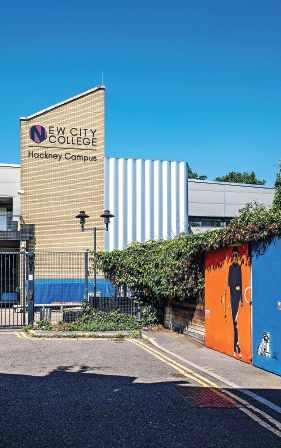
Jewish girls from Stamford Hill attending New City College in Hackney to sit A-level exams were targeted by antisemitic comments, leading to a second group of students subsequently attending the site to be chaperoned by staff, writes Daniel Sugarman
Due to an arrangement with NCC Hackney, Be’er Miriam seminary students were due to take exams at the college’s Clapton site.
According to reports, two separate incidents targetted Jewish girls who had come to sit their geography A-level. In the first, some girls were reportedly told, “We’re surprised people like you are allowed into here”. In the second, girls were followed by an NCC student, who repeatedly chanted “Jew, Jew, Jew”.
Staff at the college, which holds an ‘Outstanding’ designation from Ofsted, were informed, which led to the second group of girls attending the site for their A-level
English exam being chaperoned during their stay.
In a statement from Be’er Miriam, the seminary said: “We are aware of an incident in which students were subjected to antisemitic comments while attending exams at New City College. Any such incident is deeply concerning. We are, however, grateful to the college leadership team for the speed and seriousness with which the matter was addressed, and the steps taken to support and safeguard our students.
“We greatly value our longstanding relationship with New City College and appreciate the care and professionalism shown by staff throughout this matter. We remain confident the college will continue to provide a safe, respectful and supportive environment for all.”
A local community leader told Jewish News: “While the college should be commended for its swift response, the fundamental
Property, pensions, tax exemptions, offshore structuring, healthcare, inheritance tax, your aliyah benefits
Whether your plans are imminent or many years away, join this essential webinar on Aliyah, covering both practical and financial opportunities.
Tuesday 9 June 2026 | Zoom Webinar, 4pm GMT
Featuring: Our specialist Chartered Financial Advisers together with Dov Newmark, Aliyah adviser
For more information, call 020 8202 1944 or email us at GoldersGreen@RaymondJames.com
Visit our website at GoldersGreen.RaymondJames.uk.com or scan the QR code to register.
With investing, your capital is at risk. Tax treatments are subject to individual circumstances and are subject to change.
question is why Jewish students are being subjected to this sort of abuse in the first place. This wider societal challenge deserves serious attention from educational leaders, regulators and government.”
Jewish News asked New City College if it had identified students responsible and reported these incidents to the police. The college responded by sharing a message, ostensibly from Be’er Miriam, which said the seminary did “not wish to take this matter any further”, saying it was “disappointed it has been raised again through external parties”.
The NCC representative told Jewish News: “I hope this gives some reassurance and clarification, and that your enquiry need not be pursued any further – it could have a detrimental impact on the longstanding positive community cohesion outlined in Beer Miriam’s response.”
Levi Schapiro from the JCC
of Stamford Hill said: “This is an unacceptable situation. Orthodox Jewish girls should feel safe wherever they go in London without being harassed for being Jewish. We expect the college to provide a full report about the disciplinary action they took and how they will work hard to prevent this from happening again.”
In an official statement, an NCC Hackney representative said: “This behaviour goes against everything that we stand for at New City College. We pride ourselves as an inclusive environment, welcoming students from across our diverse community.
“When made aware of this incident, we immediately put in place additional measures, in agreement with our partner Jewish school, to provide reassurance to students and parents.
“At New City College we actively recognise and celebrate diversity. Abuse of any kind is not tolerated.”

The Jewish Museum London will reopen a public exhibition space this month for the first time since closing its Camden site, as it takes a significant step towards establishing a new permanent home, writes Annabel Sinclair.
The museum has announced the launch of Two Rooms by Jewish Museum London at JW3 in north London, an interim exhibition space hosting displays drawn from its collections while serving as a testing ground for its future direction.
Opening to the public on 18 June, the project forms part of the museum’s wider revival plans following several years of financial and organisational challenges that led to the closure of its former site in mid-2023.
Museum leaders say the new space represents an important milestone in rebuilding public engagement as they work towards opening a permanent museum by 2030.
The inaugural programme will feature two exhibitions. One explores the story of the Jewish family behind the J. Lyons empire, examining how German-Jewish immigrants built one of Britain’s most recognisable brands, from tea shops and ice cream to the pioneering LEO computer.
The second exhibition, Tree of Life: Stories
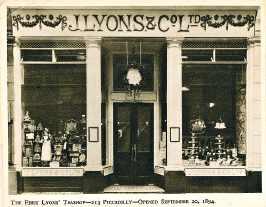
from Jewish Museum London’s Collection, will showcase highlights from the museum’s 35,000strong collection, tracing more than three centuries of Jewish life in Britain.
Charles Ross, the museum’s recently appointed chief executive, described the initiative as “a reset and a new beginning”.
He said: “While we have continued our programme of educational outreach, object loans and displays around the UK over the past few years, this new interim space is intended to further build public engagement, present thoughtprovoking exhibitions, display highlights from our collection and reconnect with communities
as we develop a broader national strategy.
“Current plans for our new permanent home are now being crystallised and will be shared in the coming months.”
Nick Viner, chair of the museum’s board, said the organisation had emerged from a di cult period with “renewed confidence, new leadership and a clear sense of purpose”.
Viner also stressed the museum’s importance at a time of rising antisemitism and growing public debates around identity and belonging.
“The British Jewish community is an integral part of the story of immigration and cultural identity in Britain, not a world apart,” he said. “Over the centuries, we have fostered peace, prosperity and progress across a wide range of fields, despite the various forms of prejudice we have faced and continue to face. The Jewish Museum London tells these stories. We aim to celebrate the Jewish contribution to this country and create greater understanding and connection both within the Jewish community and wider audiences.”
A private launch event will take place on 17 June, featuring a conversation between author Thomas Harding and Viner. The exhibitions will run until 18 October.
A father shot during last year’s deadly terror attack at a Manchester synagogue has completed the Great Manchester Run halfmarathon, fulfilling a promise he made during his recovery.
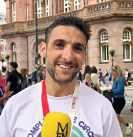
Yoni Finlay, who was injured while helping barricade the doors of Heaton Park Hebrew Congregation, told Manchester Evening News that completing the challenge marked an important personal milestone.
“Around seven months ago, I was shot outside the Heaton Park synagogue, on Yom Kippur”, he said.
“On that day, I promised myself that I would get back to a half-marathon. I did one two years ago; I promised myself that I would do it again.
“Seven months later, I’ve managed to do it. I’m slightly disappointed because I was five seconds slower than two years ago, but I’m really, really pleased that I did it. I got through it.”
Finlay used the event to raise money for The Friendship Circle, the Salford-based charity supporting Jewish children and adults with physical and learning disabilities.
He told the MEN that volunteering with the organisation had played a crucial role in helping him recover from the trauma of the attack.



























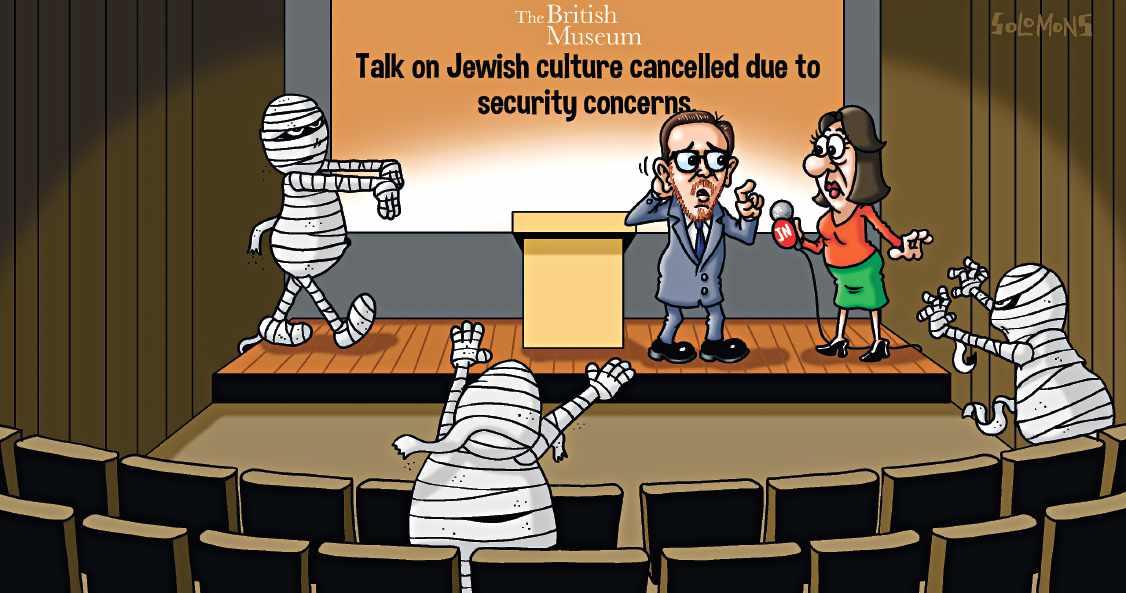
The British Museum was evacuated on Saturday after sta discovered a suspicious device in a visitor toilet and received what it described as “malicious communications”, just days after the institution faced criticism for postponing a Jewish Culture Month lecture on ancient Israel over security concerns, writes Adam Decker.
Police were called to the museum at around 2.50pm and between 12,000 and 16,000 visitors were evacuated as a precaution.
The Metropolitan Police later confirmed that the package was found to be non-suspicious and that there was no ongoing threat. The museum reopened shortly before 4pm.
In a statement, the museum said: “The British Museum was evacuated as a precaution after a suspicious device was discovered in a visitor toilet. At the same time, the museum received malicious communications, which were treated seriously and reported to the relevant authorities.”
The incident comes less than a week after the museum postponed a lecture on the kingdoms of ancient Israel and Judah, which had been scheduled as part of Jewish Culture Month.
The lecture, due to be delivered by Paul Collins, Keeper of the Department of the Middle East, was postponed after concerns that activists planned to disrupt the event. Museum officials said intelligence suggested a significant proportion of those registered to attend intended to prevent the lecture from proceeding.
The decision sparked widespread criticism, with politicians, historians and public figures accusing the museum of capitulating to threats of disruption.
Conservative leader Kemi Badenoch condemned the postponement, while broadcaster John Simpson described the decision as “pathetic”.
Historian Simon Schama labelled it “cowardice”, and Health Secretary

Wes Streeting said attempts to disrupt events connected to Jewish history and culture must be resisted.
Responding to the criticism, the museum’s director, Nicholas Cullinan, defended the decision, arguing that freedom of expression did not
require institutions to provide a platform for disruption.
“Speech requires listeners. Debate requires rules,” he said. “If disruption becomes an accepted means of determining which conversations are permitted, then the
Hadassah Hospital in Jerusalem is preparing for any surge in tensions.
result is not greater freedom but less of it.”
Jewish Culture Month organisers had previously warned that the event could be targeted.
The nationwide programme, launched on 16 May, includes more than 100 events celebrating Jewish history, heritage and culture at institutions including the British Museum, the Tate and the Victoria and Albert Museum.
Adam Ma’anit, director of campaigns and public a airs at the Board of Deputies, said that the controversy highlighted the security challenges facing Jewish-related events.
“I think organisations like Tate and the British Museum are accustomed to climate protests,” he said. “But there’s an extra element of threat that Jewish events face that they might not be conscious of.”
Police investigations into the malicious communications received by the museum remain ongoing.

To save lives, Hadassah is expanding its emergency capacity:
u 40 protected emergency beds
u 6 life-saving operating theatres
u Emergency reserves for treatment under fire
The space is ready.
The clinical teams are prepared.
But the equipment is missing.
PLEASE DONATE TODAY
Your

















Now under construction in Netanya, The Grand is built around a rare idea in today’s market: resort-level living with a price tag that is surprisingly reasonable. Live like you’re on vacation, surrounded by the amenities and standards of an international lifestyle tower.
The lifestyle complex reads like a private club: an outdoor pool with a separate toddler pool, shaded seating areas, landscaped gardens, a spa complex, a fully equipped gym, a stylish residents’ lounge, and a premium business lounge for meetings, remote work, or simply getting things done without leaving the building. In the words of interior designer Oshir Asaban, “I was given a free hand to translate the feeling of a luxury resort into every detail, with no shortcuts or compromises.”
Part of The Grand’s appeal is visual; the 35-floor tower’s striking architecture delivers an international look that feels current, iconic, and unmistakably upscale. From the 17th floor and up, open sea views take center stage and the residential concept becomes more elevated by design. Floors 17-28 feature mini-penthouses with 300 to 400sq. foot balconies that pull the Mediterranean right into your living space. From the 29th floor and up, The Grand introduces the Infinity Collection: large-scale apartments, expanded specification options, and balconies of at least 500 square feet, with magnificent sea views.
Luxury is only half the conversation. The other half is value, and The Grand is unusually direct about it. The project’s current promotion is presented as reflecting an approximately 20% lower price compared to apartment prices in towers in Ir Yamim, one of Netanya’s most established, prestigious neighborhoods. As one early buyer put it: “This is the dream combinationtrue luxury and real value-and you honestly don’t find it anywhere else.”
The tower sits between Agamim and Ir Yamim neighborhoods, next to the new Tidhar Lagoon business complex, envisioned as a hub for cafés, restaurants, and boutique shops. It’s also positioned for everyday mobility, with excellent access to Highway 2 (the Coastal Highway).

The Grand is being developed by Dar Nofarim, whose portfolio includes thousands of residential units across dozens of projects, with some 500 apartments currently under construction and thousands more in planning stages.

In the second week of our diabetes campaign, personal stories reveal the condition’s hidden toll, writes Annabel Sinclair
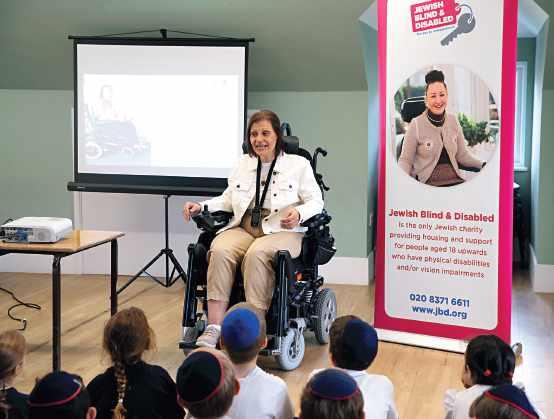
A Jewish grandfather who lost his leg after decades of smoking and diabetes, a woman left struggling after a diagnosis with “no advice and no medication”, and a father terrified he had pancreatic cancer after collapsing with dangerously high blood sugar are among those speaking out as part of Jewish News and Jewish Blind and Disabled’s diabetes awareness campaign.
The testimonies, gathered by JBD and shared with Jewish News, reveal the often hidden personal toll of type 2 diabetes within the Jewish community - from eyesight problems and amputations to fear, routine medical planning and family trauma.
Policy Research found around 17 percent of British Jews over the age of 65 are living with diabetes, compared with around 8 percent of the wider UK population.
The stories come after research commissioned by JBD from the Institute for Jewish



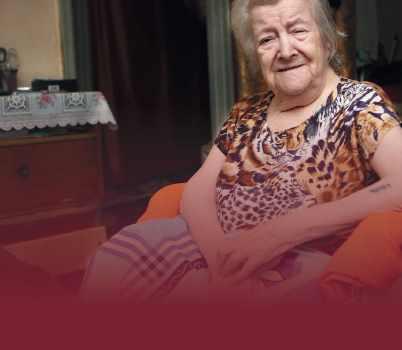
For Norman, now 82, the consequences were life-changing.
He was diagnosed with type 2 diabetes seven years ago after a routine blood test unexpectedly revealed the condition.
But he believes the disease, combined with years of smoking, ultimately led to the amputation of his leg.
“My amputation eight years ago was because of diabetes and smoking,” he said. “I smoked 20 a day for 50 years. They had to remove my leg because they said it was just full of tar from smoking.
“The doctor said that he could see I had been smoking and that was certainly three-

quarters of the reason that they had to remove my leg, the rest was diabetes.”
Norman now carefully manages his condition through diet monitoring, regular checks and daily insulin injections. Looking back, he believes education around sugar consumption is critical.
“When you are ten years old, and you are having a Coca-Cola, you’re not realising how much sugar you are putting into your body,” he said. “Over the years, by the time you’re a teenager, you’re heading in the right direction to having diabetes.
“It’s di cult to get kids to think about it, but education is the main thing.”
He added: “Not having diabetes is a very good thing because it leads to so many horrible diseases. It can a ect your eyes, and one symptom I am so scared of is going blind.”
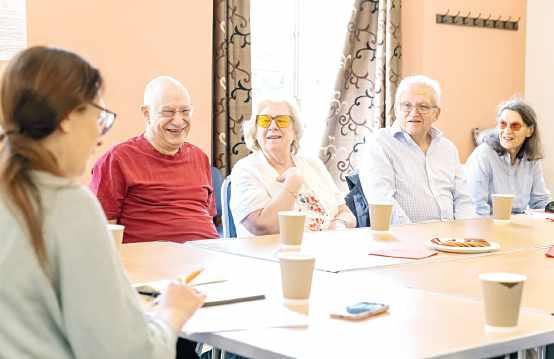
Debbie, another JBD tenant, said her diagnosis 18 years ago initially came as a shock after an optician urged her to see her GP following an eye test.
“When you are in your forties, you expect your eyesight to change,” she explained.
But Debbie says she was given little support after being diagnosed.
“My GP matter-of-factly informed me that I was diabetic,” she added, saying she was o ered “no advice and no medication.”
Over time, she found the biggest challenge was the level of structure diabetes management required.
“I’m very spontaneous, I hate making plans,” she said. “However, to look after yourself properly with diabetes, you must be organised, and none of that comes naturally to me.”
Debbie also criticised what she described as judgmental assumptions surrounding type 2 diabetes. Despite losing more than 10 percent of her body weight, she said her sugar levels remained unchanged.
“Many people, some medical practitioners included, are quite judgmental about it,” she said. “They say it’s your fault.”
She now advocated for healthier communal food habits and greater awareness around low-sugar choices.
“Why are we buying biscuits?” she said of communal spaces. “Get rice cakes, get oat cakes, get crackers, get fruit. Let’s get into that groove.”
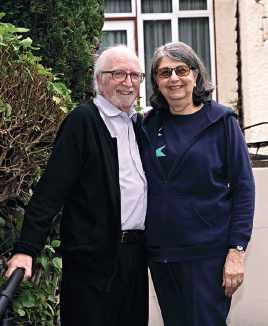
Meanwhile, 52-year-old Julian said he was left terrified after doctors discovered extremely high blood sugar levels earlier this year.
“The doctor called me and said, ‘you must come in this afternoon,’” he recalled. “It was really scary.”
One of his most alarming symptoms was deteriorating eyesight caused by swelling linked to high blood sugar.
“I was struggling to even read subtitles,” he said.
Julian has since dramatically changed his lifestyle, returning to exercise,
his diet, and using continuous glucose monitoring technology to track his condition.
“I’ve literally changed my diet 100 percent and I’m going back to doing sport,” he said.
He now believes greater awareness and education are urgently needed, particularly for people with family histories of diabetes who may underestimate their own risk.
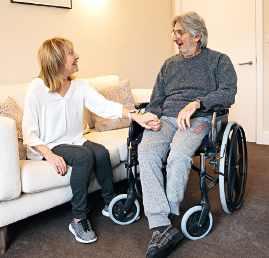
Dave, who is pre-diabetic and has a strong family history of type 2 diabetes, said watching his father suffer complications from the disease transformed his own attitude towards health.
“My dad died three years ago or so, not from type 2 diabetes, but he suffered a variety of different consequences of having diabetes,” he said. “Ultimately, he died of kidney failure, which is not unusual for diabetics.”
Dave credits regular medical testing, diet changes, reduced alcohol intake and weight training with helping prevent his condition from worsening.
“If people can, they should absolutely go for an annual medical - don’t leave it,” he said.
“The idea of ‘if I don’t go, I won’t find out the bad stuff’ is idiotic.”
As part of the campaign, Diabetes UK warned that some Jewish communities may face increased risks linked to a combination of age, diet, genetics and socioeconomic factors.
Silvia Sullivan, Engaging Communities
Officer at Diabetes UK, said: “Like the rest of the UK population, risk is shaped by a wide range of factors such as age, diet, genetics, and socioeconomic circumstances. Some Jewish communities may face a higher risk because of these factors, which highlights the importance of culturally appropriate prevention and support.
“For example, some traditional Ashkenazi food patterns are high in refined carbohydrates and saturated fats, which can increase insulin resistance and risk of type 2 diabetes.”
She added that lower levels of structured
physical activity had also been observed “in some ultra-Orthodox communities, particularly among men, though this is not uniform”. Jewish Blind and Disabled said the campaign aimed to increase awareness
around prevention, earlier diagnosis and long-term management of diabetes within the community.
◆ Editorial comment, page 18



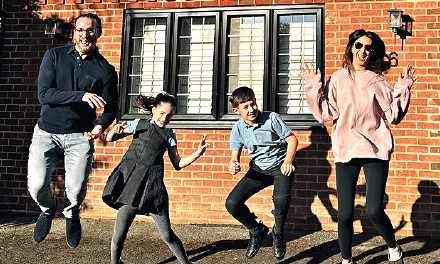
A Jewish family in Elstree have decided to move on from their £1.6m home – but instead of selling it via an estate agent they are offering people the chance to win it for £5 in a raffle, writes Adam Decker.
Daniel and Lauren Leigh, together with their children, decided to take an innovative approach to their house sale; an approach which Daniel says stemmed from him climbing Kilimanjaro last October, saying: “It was probably the greatest mental and physical challenge I’ve ever faced.
“Standing at the peak of the mountain really made me realise how much life there is still left to experience and how important it is to take bold opportunities when they come along.”
That led him to “want to take on as many challenges as possible”, he said.
At the same time, he had been noting the rise of house raffles in the UK, describing being “bombarded
by Omaze”, a company which has almost become synonymous with house raffles.
As described on the family’s website, “most of the houses you see in the raffle space are being raffled by large companies. So that got us thinking… what would it look like if the average person could raffle their home and give someone the chance to win it, mortgage free, all costs taken care of, for £5?”
Daniel and Lauren met at JFS
– they were actually in the same class – and he was fortunate enough to have her support for the idea –“the boss had to say yes, otherwise it wasn’t happening”. The Raffle is hosted and administered via Raffall. com, though the rest of the process is up to the Leighs themselves.
Their plan is to document the whole journey, via social media, particularly Instagram and TikTok.
While Lauren, who works as a life coach, has a social media presence, Daniel runs a recruitment busi-
ness and by his own admission, has “never really used social media much before”; he is learning as he goes. That use of social media is likely to be all-important, since, as Daniel notes, “the success of a raffle like this completely relies on public reach and engagement. Without visibility, people simply never discover it.
A debate over whether the President’s role at the Board of Deputies should be paid in some form, has promptedconflicting responses, Jewish News understands.
Traditionally, lay leaders are viewed as serving out of a genuine passion for the community, rather than financial self-interest.
Many argue that keeping the president’s position voluntary preserves the perception that the role is rooted in grassroots representation.
However, the president’s duties are extensive, including frequent meetings with government ministers, handling media relations, and attending a wide range of communal events. Balancing these demands with an outside career can be challenging.
Sources close to current President Phil Rosenberg deny any behind-the-scenes campaign to change the communal organisation’s consti-
tution to allow for a paid presidency, insisting he has no involvement in such efforts.
But other sources suggest Rosenberg has given the green-light to those arguing for the change.
They also note that Rosenberg is currently on twomonth paternity leave and is not participating in related discussions. The question was raised at a recent finance committee meeting.
• Shimon Cohen, page 21
A fire behind Kosher supermarket Kosher Kingdom in Golders Green last week is not being treated as suspicious, police confirmed.
Emergency services were called to Golders Green Road shortly before 7am last Wednesday after a blaze sent heavy smoke across the area and forced road closures and evacuations near the busy shopping parade.
The Metropolitan Police said officers worked alongside the London Fire Brigade throughout the morning while firefighters tackled the fire.
Police confirmed the blaze, which is likely to see the popular supermarket remain closed until 2028, is believed to have been caused by an electrical fault.
A police spokesperson said: “Police investigating
the cause of the fire at a warehouse in Golders Green have confirmed it is not being treated as suspicious.
“Following further enquiries alongside the LFB, the fire is not being treated as suspicious and is believed to have been caused by an electrical fault.
“We understand the concern this incident will have caused the local community.”
“That’s why such a huge focus for us is creating entertaining, authentic content and documenting the entire process online through video and social media.”
The reality of the amount of work involved in filming reaction videos for social media has already hit home.
“We’ve already had moments where the reality behind creating online content has been far harder than people probably imagine.
“You see brilliant 10-second clips online, but recently we spent nearly five hours filming on the streets trying to engage members of the public and received hundreds of rejections before getting anything usable.”
The raffle itself has now begun –3,000 tickets were sold in the first 24 hours – and the prize draw taking place in early December.
A portion of the ticket sale revenue will go to Solace Women’s Aid, which helps provide life-changing support to women and children experiencing domestic abuse and violence.
If someone wins the raffle but doesn’t want the house, they will be able to opt for a £1.2m cash prize.
“Hopefully by documenting the journey, the possibility of raffling a home will be open to everybody following the process,” says Daniel.

An Israeli and his Palestinian colleague have urged a London audience to “open the gates and build bridges” as part of their mission to achieve peace between their two nations, writes Jenni Frazer.
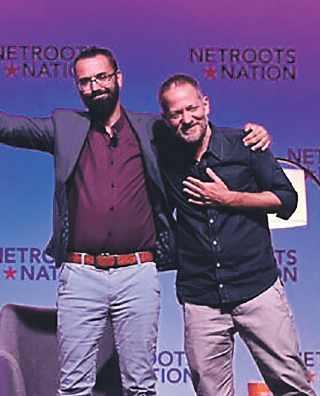
Speaking at a packed JW3, Maoz Inon and Abu Aziz Sarah launched a new book, The Future Is Peace, in which the pair outline possible initiatives to solve the apparently intractable conflict.
Both men have su ered bereavement at the hands of the other’s community. Inon lost both his parents in the Hamas attacks of October 2023, while Abu Sarah was just nine when his older brother died from internal injuries after being released from an Israeli jail.
In a discussion moderated by Gabrielle Ri ind, the two men, who had met briefly in 2014, spoke about their re-connection after 7 October, when Abu Sarah messaged Inon and sent his sympathy to him and others who had lost friends and family members in the attack.
The pair have worked together in the

long months since 7 October, travelling the world and spreading their message of achievable peace hurdles.
They met Pope Francis in Verona in 2024 during the Arena of Peace event, and subsequently have met Pope Leo. Both ponti s encouraged Inon and Abu Sarah in their mission.
Also in Verona in January this year, Sarah and Inon ran jointly with the Olympic torch, the first Israeli and Palestinian to do so, at the request of the mayor and bishop of the Italian city.
Neither man is naïve. Abu Sarah said although he had realised “vengeance is not the only path”, he knew it was important for both sides to talk to each other and understand “the real problems” Israelis and Palestinians faced.
Abu Sarah recalled that growing up “the only Israelis I knew were soldiers and settlers”, and noted “peacemaking can’t always be comfortable”.
He did not, however, go as far as Inon, who said he would be ready to have a closed
room for negotiation which would include people as far apart as “Hamas and [farright Israeli politician Itamar] Ben-Gvir.” Inon and Abu Sarah operate from a nonprofit organisation, InterAct, they have set up and were keen to emphasise the importance of working with other peace activists in a widespread coalition, a model which they encouraged British Jews to emulate. As an example, Abu Sarah spoke of Jerusalem Day, a yearly celebration of the 1967 unification of the city which, he said, “has become the worst day in the world to be a Palestinian”. But the peace group Standing Together had gradually been assembling volunteers to help protect East Jerusalem Arabs, and traders in the Old City, from the violence which had become the norm on this anniversary. This year, he said, more than 600 Israeli Jews had come to help. Inon said that there was now a sharing of resources among numbers of peace groups; he called for an alliance in Britain in combating anti-Muslim and anti-Jew hate together.

















Last month, we reported a striking statistic: 17 percent of Jewish people over 65 are living with diabetes. This week, we show what that statistic looks like in real life.
Research suggests diabetes rates among older British Jews are more than double those seen in the wider population. At the same time, Britain’s Jewish community has an older demographic profile than the country as a whole, making type 2 diabetes an increasingly urgent communal health concern.
That is why this awareness campaign, in partnership with Jewish Blind and Disabled, matters.
Over the coming weeks, we will continue to explore the realities of diabetes within the Jewish community through personal testimonies, expert medical advice, practical guidance and new research. We will examine prevention, early intervention, and the long-term consequences of unmanaged diabetes.
Too often, diabetes is spoken about only after serious complications emerge. Yet many of those complications can be delayed, reduced or even prevented.
One of the most striking themes to emerge is how isolating and overwhelming a diagnosis can feel. Some people described being given little information. Others spoke about the stigma that surrounds type 2 diabetes, including assumptions that it is simply the result of poor lifestyle choices.
The reality is far more complicated.
Age, genetics and family history all play a significant role. So does education. Across the UK, millions are now considered at increased risk of developing type 2 diabetes. Many remain unaware of symptoms until serious health problems begin to emerge.
The Jewish community has long understood the importance of collective responsibility when it comes to well-being.
This campaign is about encouraging people to ask questions, attend check-ups, recognise symptoms earlier and feel empowered to seek support.
THIS WEEKEND'S SHABBAT TIMES...
Shabbat comes in Friday night 8.32pm Shabbat goes out Saturday night 9.46pm Sedra: Bemidbar

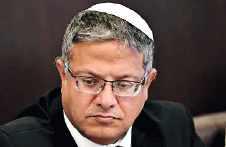
Is minister of national security Itamar Ben-Gvir the face of Israel? Yes and no.
On the one hand, around 90% of Israeli voters did not support his party - a fact often ignored by his progressive critics. On the other, there is nothing wrong with calling Ben-Gvir one of Israel’s many faces. Every democracy has multiple, often conflicting faces.
Only dictatorships present a single one. Russia, North Korea, and Iran have essentially only one face each. Israel, as an imperfect but genuine democracy, will always contain arguments and politicians that half the country dislikes.
Such is the very essence of democracy. I would not vote for his party. Yet I am less eager to denounce him than many of his loudest critics seem to be. His policy of wider firearm distribution to civilians has almost certainly saved
Of course some British Jews will conclude that emigration is the prudent response as the old contagion of Jew-hatred once again stalks polite society (“Former head of United Synagogue reveals he is leaving Britain, 25 May). Yet the very prominence given to Jeremy Jacobs’s remarks rather proves the opposite point: they remain the exception, not the rule.
Britain is home to 300,000 Jews, 500 synagogues, 140 schools, 30 care homes and a formidable network of charities and welfare groups. Ours is not a community of passengers but participants; not spectators but players; not takers but givers.
Jew-hatred itself is hardly novel. Jews have endured it for millennia. What matters is whether decent people confront it or accommodate it.
British Jews should, therefore, resist both despair and retreat. We should rediscover the grit and courage of earlier generations, stand firm against murderous hatred, defend truth and justice without apology, and continue working alongside all people of goodwill to build a Britain worthy of pride rather than surrender.
Shimon Cohen, N2
Thank you for helping to make Jewish News the leading source of news and opinion for the UK Jewish community. Unlike other Jewish media, we do not charge for content. That won’t change. Because we are charity-owned and free, we rely on advertising to cover our costs. This vital lifeline, which has dropped in recent years, has fallen further due to coronavirus.
Today we’re asking for your invaluable help to continue putting our community first in everything we do. For as little as £5 a month you can help sustain the vital work we do in celebrating and standing up for Jewish life in Britain.
Jewish News holds our community together and keeps us connected. Like a synagogue, it’s where people turn to feel part of something bigger. It also proudly shows the rest of Britain the vibrancy and rich culture of modern Jewish life.
You can make a quick and easy one-off or monthly contribution of £5, £10, £20 or any other sum you’re comfortable with. 100% of your donation will help us continue celebrating our community, in all its dynamic diversity.
Support Jewish News by visiting our donor page at jewishnews.co.uk
lives during terror attacks - a reality his critics may dislike but cannot erase.
Yes, he could have handled the latest of the series of those pro-Hamas “flotillas” more smoothly, avoiding humiliating spectacles.
However, the other side is rarely discussed: Israeli families who lost loved ones to terrorism watch convicted killers enjoying generous conditions including separate canteens, kitchens, TVs, all funded by Israeli taxpayers. Flotilla interceptions, like the recent 30-hour “Sumud” operation, also drain public resources. Netanyahu is right to limit the international damage from such incidents, yet we must never forget that democracy does not stop being democracy just because the electorate produces results that left-leaning intellectuals dislike.
David Frencel, Hackney
Your columnist Mohammed Ali Amla is right to condemn antisemitism and Islamophobia alike. However, his attempt to equate antisemitism, within sections of Britain’s Muslim community, with alleged Islamophobia within Britain’s Jewish community is detached from reality.
There is overwhelming evidence of the former; violent attacks on Jews, intimidation, radicalisation, extremist preaching, openly hostile marches and hate speech, and the normalisation of antisemitic rhetoric. Where is the equivalent within the Jewish community against Muslims? Where are the Jewish mobs, preachers, chants, or organised intimidation campaigns targeting Muslims in Britain?
If the two phenomena were truly comparable, a visibly Jewish person wearing a kippah would feel as safe in a predominantly Muslim area as a visibly Muslim person would in a predominantly Jewish one. How many Muslims would feel apprehensive walking through a Jewish area wearing a hijab, kufi or other visible Islamic attire?
Prejudice should always be challenged wherever it exists. But false equivalence does not build bridges. It undermines trust and obscures reality.
Eliot Hacohen, NW3



‘We are particularly concerned about disruption by an Egyptian contingent.’


eventually, but he wanted to see it first with me. So I went for him.
For two and a half years, the Nova exhibition has been travelling: New York. Los Angeles. Other cities I was in. I never went.
There was always a reason. Something on the calendar, something I had to be doing. I told myself I would catch it next time.
I don’t think that was true.
I also told myself I did not need to bear witness. I had been a witness. From 7 October onward I sat at a desk with every Hamas Telegram channel open. Islamic Jihad too. I downloaded what they uploaded. I edited and subtitled and posted. I prosecuted the case in public for two and a half years. I knew the footage. I knew the names. What more was there to see?
That was my way of being there. From a desk. With my hands moving.
It was useful. It was also a way of not feeling anything.
I went because my husband, Marc, wanted to go. He wants to take his mother
There is sand on the floor of the exhibition. Real sand, to match the ground at Re’im, where the festival became a killing field. You walk on it the way the people there walked on it.
The first part of the exhibition is the part nobody warns you about. It comes before any of the violence. Survivors describing what Nova was. The tribe. The friendships built over years of these gatherings. People who loved each other. People who were happy. A party that was supposed to end at dawn.
You sit through that. And then you walk through what came next.
I saw Shani Louk. I saw her smiling, before. And then I saw the footage of her body on the back of a truck, heading into Gaza, and the crowd cheering as it passed. I have seen that footage many times. I have never seen it standing on the sand.
The objects are what I was not ready for. The shoes left behind. The phones. The bags. The clothes. Burned cars brought from Re’im and reassembled in a warehouse in East London. I have spent enough time in



Holocaust museums to know what a room of objects taken from murdered people looks like. I did not expect to recognise that feeling from something that happened in my lifetime, to people my age, on a Saturday morning two and a half years ago.
I saw the video of Noa Argamani being taken. I have watched that footage more times than I can count. I know every frame of it. I have explained it on camera, written about it, posted it, argued about it with strangers online. I know Noa now. We’ve met. Seeing it yesterday, on a wall, on sand, knowing the woman in it as a person and not as a face on a screen; that was when I broke. I started weeping. Marc was crying next to me. We had to walk out together.
I did not cry on 7 October. I did not cry in the weeks after. I was working. I have not cried like that in a long time.
Before it opened, the London police asked the organisers to take the main sign down. They kept the location of the exhibition secret until the opening day.
Counterterrorism o cers worked with the production team to prepare for what might
come at the door.
The day I went, there were four police vans outside. I counted them.
The exhibition that tells the story of what happened to young people at a music festival needs four police vans at the door, in London, in 2026.
What I keep thinking about, hours later, is how unknown this still is. A massacre at a music festival. Young people murdered and raped on open ground.
Most 20-year-olds in the West don’t know what happened that morning. Nobody showed them. And the room built so they can see it has to be guarded.
I spent two and a half years making sure people would see it. I made it my job. The one room built for people to see it was the one room I could not walk into.
I walked into it yesterday with my husband. We walked out of it in tears.
I think I was finally grieving.
Go. If you are Jewish, take one person who is not. The vans will be there. Go anyway. One person at a time is the only way this gets known.
SHIMON COHEN CHAIRMAN, ROATH PR
The debate over whether the president of the Board of Deputies should be paid for his service goes to the heart of how our community wishes to govern itself.
This is not merely a question of salary. It is a question of constitutional balance, leadership, accountability and institutional purpose.
In 2024, the historian Andrew Johnston published The Bank of England and the “Prehistory” of Corporate Governance, a study examining the evolution of non-executive directors and chairmanship within British institutional life. The Board’s leadership would benefit from reading it. Johnston’s central insight is simple but profound: institutions function best when governance and management are clearly separated.
The Board of Deputies already employs a respected and experienced chief executive o cer on a salary exceeding £100,000. One assumes he was appointed because he possesses the skills, judgement and profes-
sional competence required to lead the organisation operationally. If so, he should be allowed to do precisely that.
The problem is that many organisations –charities especially – become unstable when the distinction between governance and executive management begins to blur.
The role of a CEO is well understood in modern British charitable governance. The CEO runs the organisation day to day. He manages sta , oversees operations, develops and implements strategy, supervises fundraising and finances, engages stakeholders, and acts as the principal public representative of the institution. According to Charity Commission guidance and accepted governance practice across the UK voluntary sector, the CEO is the operational leader of the organisation.
The president’s role is, or should be, fundamentally di erent.
Traditionally, the president of the Board of Deputies has been a non-executive figure: a volunteer leader who chairs proceedings, safeguards governance, protects institutional values and ensures accountability to the community. The president’s authority derives not from executive control, but from independ-
ence, judgment, and the ability to unify disparate constituencies. In successful organisations, the chair does not attempt to become the chief executive. Nor does the chief executive attempt to become the chair.
The president should lead plenary sessions; support and challenge the CEO where necessary; ensure that trustees and lay leadership function e ectively; and maintain focus on the Board’s long-term mission and communal responsibilities. That is an important role. Indeed, it is indispensable. But it is not the same role as running the organisation.
If the proposal now is to create an executive presidency, then important questions arise.
Where precisely will responsibility for operational leadership sit? Who will speak for the organisation publicly: the president or the CEO? Who will manage senior sta ? Who will set strategic priorities? And perhaps most importantly: who will hold whom accountable? At present, none of this appears remotely clear. That should concern everyone who cares about the e ectiveness of the Board. History – corporate, charitable and political alike – is littered with institutions damaged by confused leadership structures: chairmen desperate
to become chief executives, chief executives behaving like chairmen, and organisations paralysed by rivalry, duplication and blurred authority.
Good governance is not bureaucracy for its own sake. It exists to prevent precisely this sort of institutional confusion.
The real question, therefore, is not whether the president deserves payment for hard work. No serious observer doubts that the role demands enormous time and commitment. The question is whether the Board wishes to preserve the distinction between governance and executive management that underpins every well-run modern institution.
The Board already has a highly-paid CEO whose professional responsibility is to manage the organisation. He should be empowered to flourish in that role. Equally, the president should flourish in his own distinct role: providing leadership, communal legitimacy and strategic guidance without becoming an alternative executive centre of power.
When those two roles work in partnership – while respecting the boundaries between them – institutions succeed. When they do not, confusion is rarely far behind.





DANIEL SUGARMAN
DEPUTY EDITOR, JEWISH NEWS
On the morning of Thursday 21 May, the Green Party announced Chris Kennedy as its candidate for the Makerfield by-election. It described him as a “safeguarding nurse, battle-tested Green campaigner, [and] passionate grassroots visionary”. By Thursday evening he was gone.
It turned out that Kennedy had shared false flag conspiracy theories on social media after the firebombing of Hatzola ambulances in Golders Green two months ago. In the wake of this, I have eight key questions. Ultimately, I do not expect the Green Party to answer them. They are points I would encourage readers to think about for themselves.
1. Exactly what vetting did the Green Party do here?
I want to set aside the antisemitism momentarily. This is a by-election for a parliamentary seat. It is currently the focal point for English politics. And yet this individual – with his social media history – was selected.
During the local elections, there were revelations about a variety of Green party candidates with disturbing antisemitic social media posts. But in that instance the Greens could at least use the defence that they were fielding thousands of candidates and had limited resources to vet them with. That weak excuse no longer applies here, where the Greens had just one person to vet. Was there any vetting at all? If there was, who did it? If someone did it, did they see those posts and think there was nothing wrong with them?
2. Do the Greens understand what antisemitism is?
It’s unclear whether the Greens actually understand the issue with what Chris Kennedy shared, other than it makes them look bad.
This is an example of antisemitism because it suggests that Israel (aka. The Jewish State), carried out an attack on Jews in the UK, for some nefarious reason. That an attack on Jewish infrastructure was fake, concocted for some shadowy, insidious motive.
It’s no coincidence that one post Chris Kennedy shared on this subject was from a virulent far right ethnonationalist. This sort of charge has had its traditional home on the far right. Only in the last few decades has it migrated to the far left, via the medium of the Israeli-Palestinian conflict. It is perfectly possible to be pro-Palestinian without being antisemitic, but it is also true that left-wing antisemitism is largely an outgrowth stemming from poisoned positions on Israel. And it is clear that the Green party leadership currently finds it politically advantageous to deny this.
3. Does the Green Party understand that its leader being Jewish isn’t some magical get out of antisemitism free card?
The standard response from the Greens to
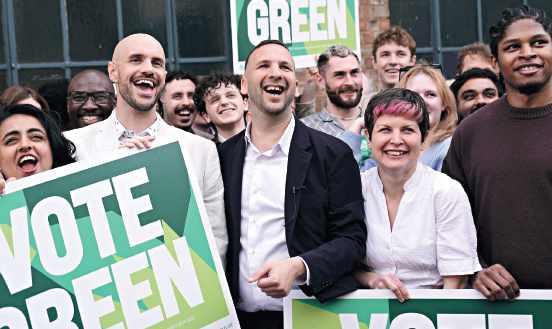
evidence of antisemitism from their candidates has been to point to Zack Polanski being Jewish. As myself and many others have pointed out, that’s farcical tokenism. The Conservatives having a black female leader does not mean they cannot have problems with anti-black racism or misogyny. Reform UK having a Muslim chairman and London mayoral candidate is not a defence against the charge that the party has a problem with Islamophobia. So why do Green Party members and supporters think their situation is di erent?
4. Why is this case di erent from that of the Green’s primary videographer?
In March, Jewish News wrote about social media posts shared by Jeremy Clancy, who has produced series of videos for the Greens, including party political broadcasts.
As we showed in the piece, Clancy – who has worked closely with Zack Polanski and Green deputy leader Mothin Ali – shared multiple posts about how the Hatzola ambulance firebombing was a false flag operation.
The party’s response was pure obfuscation, containing nothing about what Clancy did:
“Green Party representatives have been clear in standing in solidarity with Jewish communities as they face a heightened level of threats and violence, and our leaders have made public comments condemning antisemitism and expressing solidarity with the Jewish community over the Golders Green attack.”
You might think the Greens would perhaps quietly drop Clancy after our story. Not at all – this month they published a new video of his, featuring Zoe Garbett, a Green assembly member and the new mayor of Hackney.
So why is this case di erent? Is it because Clancy isn’t as high profile, so there was less chance national media would pick up the story?
5. Why did the Green Party’s initial response to Kennedy’s withdrawal cite “personal and family reasons”?
When news emerged that Kennedy was stepping back, the Green ’s o cial statement gave the above reason, saying “We wish Chris the
best and understand family has to come first.”
Except that it is now entirely clear that Kennedy stepped back after The Times approached him about his social media posts. Not only was this dishonest obfuscation from the Greens, it was also incredibly stupid, as they must have known the actual reason would emerge. Remarkably, however, PA and other outlets have specifically reported: “The Green Party said its earlier statement still stood on the withdrawal of Mr Kennedy.” So, having been caught out in a lie, they doubled down.
6. Why does Zack Polanski refuse to properly address his own party’s problem?
Polanski is extremely active on social media, but mysteriously had nothing to say about the case of his own candidate having to withdraw.
What he did share was a social media post from Alastair Campbell, about nasty comments from an account believed to have belonged to the Reform UK candidate in the by-election.
Campbell said: “Imagine if a candidate of any other party was found to have deleted an account with so many disgustingly o ensive posts. I suspect we will hear very little of this as the Double Standards Squad continue to ply their trade to the benefit of the 5 million pound man [by which Campbell means Nigel Farage]”. Well, we don’t have to imagine, do we, Zack? But mysteriously Polanski, so vocal on so many other cases, has nothing to say here.
It’s not just pathetic, it’s also terrible politics. Polanski could have said something like, “This is an example of the Greens taking antisemitism seriously. We found that he’d posted these things, and he was out!”
But he didn’t. Perhaps it is because he knows views shared by Kennedy are not just
popular among the Greens, but endemic (look at number 4, for example). Identifying what Kennedy did as antisemitism and showing the Greens take it seriously would leave the Greens having to deal with many members who have shared the same sentiments. And Polanski, I believe, is not prepared to do that.
Alternatively, there is the awkward point that there is nothing in the Green Party’s press statements to suggest they kicked Kennedy out. He stepped down himself. We don’t know if the Green party would have tried to brazen it out, had he elected to stay a candidate.
7. Is it not quite scary that a nurse who specialises in child safeguarding would have been found to have been sharing these views?
I have little more to say about this, other than I find it highly disturbing, but sadly not surprising. Jewish News has documented numerous examples of medical professionals engaging in grotesquely antisemitic behaviour.
8. Do the Greens not understand how this completely undercuts their claim to be an anti-racist bulwark against Reform UK?
I genuinely did not expect we would have to replay the latter part of the 2010s in the 2020s.
The antisemitism in Labour under Jeremy Corbyn completely undermined the party’s claims to hold any moral high ground. This was a factor which led to led to a situation in which a Conservative party which had stumbled its way into Brexit won an 80 seat majority.
This will happen to the Greens too. Ultimately, many will come to roll their eyes at the Green Party talking about racism from Reform UK when a steady stream of Green party candidates are found to have shared or expressed grotesque antisemitic sentiments.
It also provides Reform with a perfect counterattack. Various people on the far-left in the 2010s used to cite the glee with which right wing figures cited Labour antisemitism as evidence that it was a concocted issue. But it wasn’t – the reason Corbyn’s Labour was vulnerable to such criticism was precisely because they had a real problem. The Greens look to be following down the same path – it’s not a coincidence that so many of their new and vocal membership were previously Corbynites. You would think that people on the Left would remember Marx’s famous quote on history repeating itself.
As I said at the start, these are not questions I would expect the Green party to answer – partly because they appear to be in denial about many of the issues expressed. But I hope that you, the reader, will consider them – and that it might impact your views going forward.
I GENUINELY DID NOT EXPECT


Etgar brought 1,000 students from 28 Jewish primary schools across the UK and Europe together on Tuesday for the annual Etgar Challenge. The UK’s largest Jewish primary school quiz competition, now in its 14th year, is a much-anticipated fun day of general knowledge on Jewish history, culture and tradition, complete with singing, dancing and celebrating. Taking home the top prize for best performance overall was North West London Jewish Day School, with Menorah Foundation winning best performing student table.
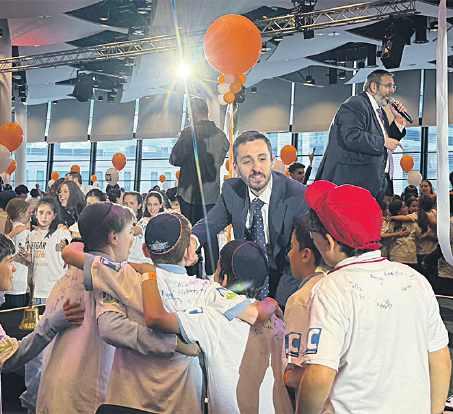


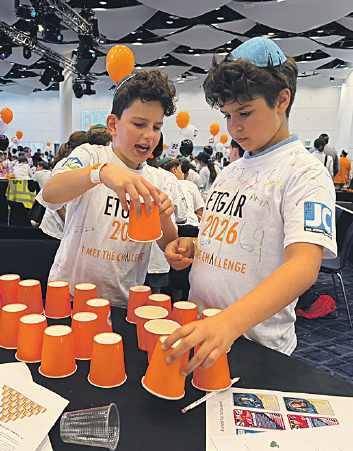

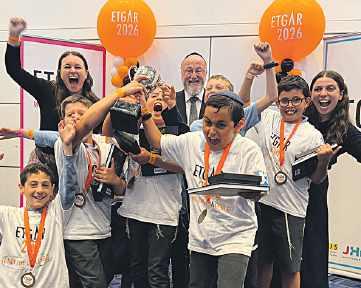

























ohay Sponder has a mantra: “Be you. Be Jew”. It makes you want to connect with him, but that isn’t easy. Not when he is at the start of his hectic Genesis world tour with a jammed schedule. Now everyone wants a word with Yohay, but he is playing in London this weekend, so obviously we had to talk.
Genesis is the name of his tour because it “celebrates the idea of ‘in the beginning’ ” and signals rebirth. “It’s an attempt to bring hope and renewal into our post-October 7 reality,” says the funny guy who doesn’t shy away from ‘the conflict’ on stage, instead improvising “you can just imagine it” conversations between the two sides .
Yohay says friends and family always considered him funny. “It’s something I bring from home. I was lucky to grow up in a happy, funny household which of course had a profound e ect on me. I wanted to become a standup as soon as I realised it’s a profession but, on my way there, I worked all sorts of odd jobs to support myself until I could do comedy as a full-time gig.”
Sponder, who has Polish roots, grew up in the Golan Heights and after serving in the army worked the stand-up circuit in Tel Aviv while holding down such interesting day jobs as “security guard for an Arab minister”. His stories are useful to weave into his shows and he does so with the una ected ease of a man who knows and wants to entertain his audience. “I think I learned how to manage my stress and nerves before a show, and now I channel that energy into excitement. I believe that the key is to be grateful. I truly appreciate each person who comes out to see me and this outlook allows me to have a calmer approach.”
Though audiences globally are not exactly welcoming Israeli-led comedy or much else for that matter, there are enough who appreciate the direct, blunt delivery they discovered while social media scrolling. It was having that other great Israeli comedian Modi Rosenfeld on my algorithim that led me to Yohay and I shared the heck out of his content. He is grateful for the exposure, though I don’t think I can take all the credit for him acquiring thousands more followers. “I’m lucky to be able to upload my comedy and bring joy to millions of people I would otherwise not be able to reach,” he says in the heavily-accented English that charms a Jewish crowd, but adds: “It’s not easy doing standup in a second language, but being Israeli helps because we don’t know that we don’t know things.” I understand him completely.
It’s a given that he has the support of the Jews who buy tickets to see him, but on a world tour, one never quite knows what to expect in new cities. Last year, in Amsterdam, Sponder’s show was cancelled due to security

concerns - but does this reaction embolden him to keep going? “Absolutely. First of all, if there is a security risk, perhaps they should deal with the risk or the threat and not the guy that’s just looking to make people laugh. I believe it’s the Jewish way, to succeed even when you’re pushed out or excluded.
“It’s always a nice surprise to see how many non-tribe members come to see my show. There was one time I’ll never forget – at a show in New York a group of eight pro-Palestinian activists came to my show looking to ruin it. They stayed until the end and met me afterwards to speak to me and they told me they loved the show and they’re optimistic about our common future.”
“It’s always a nice surprise to see how many There was one time I’ll never forget – at a show who
laugh every day. She’s so talented and awesome. She’s also the one who made
Moved by his moment of victory, I want to know: who makes Yohay laugh? “My wife – she’s a true comic in my eyes,” he says immediately. “She makes me laugh every day. She’s so talented and awesome. She’s also the one who made the answers to this interview.” Why am I not surprised?
When he’s not writing, working or touring, his choices for downtime aren’t surprising, considering his hectic schedule: “I love to spend time with my family, reading, playing chess, learning languages, eating good food and catching up on sleep. In reverse order.”
time aren’t surprising, considto spend time with my family, tive beard, Yohay is best
great pride and it doubles
Aside from the distinctive beard, Yohay is best known for his bold choice in necklaces. His favourite is the Magen David he wears to perform. “I wear it with great pride and it doubles as a self-defence weapon if needed.”
With his “Be Jew” mantra, the Yohay interview I challished for was as enjoyable as I’d hoped – and I’ve also ordered a bigger Star of David.
ordered a bigger Star of

Iranian-Israeli singer Rita says her London show will o er warmth, hope and connection. By Annabel Sinclair
Israeli singer Rita will return to London this month for an intimate one-night event blending music, memory and live conversation, o ering audiences what she describes as “a hug of love” during a period of global uncertainty and heightened anxiety for Jewish communities.
Originally scheduled for 23 March, the concert had to be postponed when the Iran war broke out.
Her songs takes place in north London on 29 June.
“I
reflects a wider desire for intimacy between performers and audiences.
“Nowadays, I believe that people sometimes want a more intimate connection with the artist,” she says. “I believe it will be something very warm and hugging.”
Rita adds that the live conversation element, rather than a monologue, was central to the event’s appeal.
“It’s more interesting that someone asks you questions than to come and give a lecture,” she says. “It can be fun for me too, to be exposed to new questions.”
Music will remain at the heart of the
Music will remain at the heart of the evening, woven through stories rather than presented as a standalone performance.
“This is the deepest thing of my life – music and the connection with people,” Rita says.



“I can’t wait to perform finally in London,” says Rita. “After some of the most di cult days in the history of Israel and the Jewish people, it’s more important than ever to find joy and I’m looking forward to bringing the Israeli and Jewish communities together through music.”

The concert departs from the scale and structure of a traditional concert. Instead, Rita will share personal reflections alongside live music in conversation with journalist Elad Simchayo , creating what she hopes will be a warm and inclusive evening.
“I will tell my story,” Rita says.


“The story of my life, my music, my connection to Israel and to the people of Iran. I was born in Iran. I was eight years old when I left Iran for Israel with my family.”


She says the decision to present the evening in a conversational format
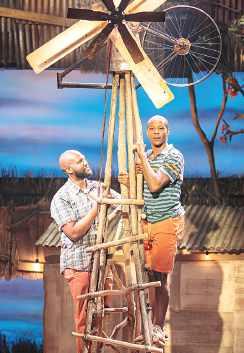
A new musical in Soho based on an extraordinary true story will blow you away. Literally.
The story of William Kamkwamba, the 13-year-old boy who saved his village in Malawi by building a windmill, is not obvious musical material. Yet under Lynette Linton’s direction, with Frankie Bradshaw’s evocative set and costumes and the music and lyrics of Richy Hughes and Tim Sutton, the audience is transported to William’s African village. There is a film of William’s story directed by Oscar-winning actor Chiwetel Ejiofor.
I’ve not seen it, but I assume a movie about Malawi, with the Chichewa language subtitled, presented fewer challenges than a stage adaptation. Yet the creative team solve them ingeniously, not least by personifying the
“It heals us, it unites us. It wraps our fears, pain, joy, and even uplifts us to another level of ourselves.”


Several songs are expected to feature during the evening, including Mehake, which Rita describes as having taken on new significance in recent months.
“It became like a prayer,” she says, explaining that she had been told hostages sang it to themselves while held captive, and that families and wounded soldiers have returned to it repeatedly since October 7.

“It heals us, it unites us. It wraps our the evening, including taken on new signifia prayer,” she says, been told hostages sang it to themselves while families and wounded soldiers have for her, having performed several and met very warm and great

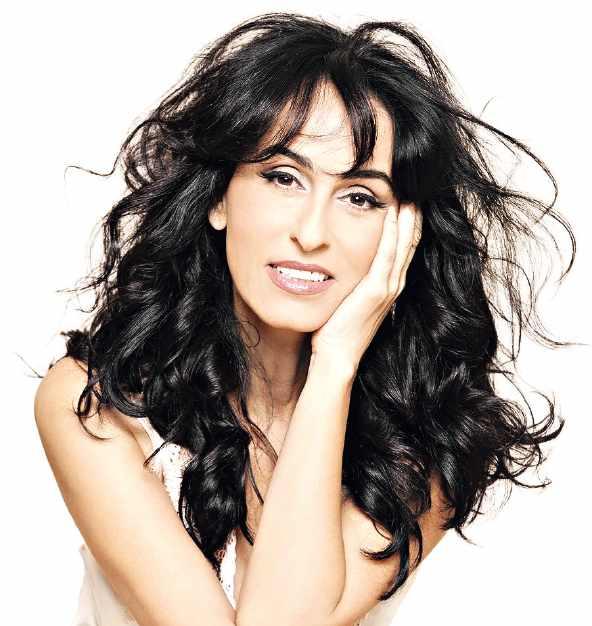
British Jewish community, and I believe
London, Rita adds, holds particular meaning for her, having performed in the city several times previously. “Every time I felt and met very warm and great people there,” she says. “I think we both need that. I need to be there with the British Jewish community, and I believe Israelis need to feel close to something Israeli that they miss in daily life.”
weather itself, with Choolwe Laina Mustanga a magnificent Wind.
The story unfolds against the devastating 2001-02 famine that swept through Malawi, turning crop failure into catastrophe. Alistair Nwachukwu is a compelling William, capturing the beguiling naivety of a child desperate to understand everything.
Idriss Kargbo brings energy and humour as his best friend and Gilbert and Sifiso Mazibuko and Madeline Appiah are deeply moving as William’s parents. Their duet, Show a Child the Sky, is one of several moments that requires tissues before the emotional flood of the finale. Harmonies frequently make the hairs stand up, and never more so than when Tsemaye BobEgbe, as William’s sister Annie, lets loose vocally.
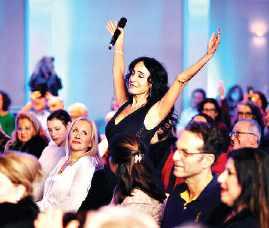
While the evening is likely to resonate strongly with Jewish and Israeli audiences, Rita says she hopes it will also attract nonJewish attendees. “I love people – whoever they are and wherever they are,” she says, adding that she believes she has a “role to connect people”.
She also speaks about the su ering of ordinary people in Iran, expressing anger at what she sees as global indi erence to violence and repression a ecting civilians. “They killed nearly 50,000 people. Innocent people. Where are the people who claim to defend human rights?”
The current climate, she acknowledges, gives the London appearance added weight. “Maybe it will be more emotionally loaded. But I think we have to hold our hands, hand in hand, and our hearts, and be connected everywhere in the world.”
Asked to describe the evening in a single phrase, Rita does not hesitate: “A hug of love.”
Her voice. Her stories. Her songs is on 29 June at a north London venue. For ticket details email tali@tzemach.com
It is Annie who prompted an unexpected thought. Malawi may be thousands of miles from Anatevka, but the parallels with Fiddler on the Roof are hard to ignore. Here too is a family facing political upheaval and threats to its survival. When Annie sings of leaving the home she loves, echoes of Far From the Home I Love are unmistakable.
William’s dog Khamba is a puppet so expertly crafted and so masterfully operated by Yana Penrose, he becomes totally real.
Realism is the production’s greatest achievement. The village feels lived in and the relationships so genuine that when bad things happen, you want to help. That William does is what makes his story so compelling.
The show is another inspired find from Six producer Kenny Wax who has an eye for spotting potential in unlikely propositions, and this story of family, resilience and survival feels remarkably close to home. Brigit Grant

Anthea Gerrie uncovers the story of a unique mother-daughter relationship that is the subject of a special film
It starts as a tribute to Israel’s most famous female architect, a feisty octogenarian who seems reluctant to be filmed. But ADA My Mother The Architect transforms into something else as it slowly unfolds – a psychodrama about the mother who left home in New York when her film-maker daughter was 14 to pursue professional opportunities in the land of her birth.
However, to Emmy-winning director Yael Melamede, no drama with mama is intended – she sees the tribute she filmed over several years from 2017 as a love letter to the mother who, at 89, she wishes could remain the workaholic she was for six decades. “I find people who are completely obsessed by their work and see all the world’s mysteries through that lens so interesting. My mother and I did get closer as we made the film through spending so much time together, but I didn’t make it to explore our relationship.”
Ada Karmi Melamede is Israeli architecture royalty. She is the daughter of Dov Karmi, who won the Israel Prize a generation before his daughter, who received it for her own design, with her brother Rami (already a recipient of the country’s highest honour) in the field of Jerusalem’s stunning Supreme Court.
Yet none of her astonishing buildings for Israel, which include the soaring central terminal of Ben Gurion Airport and the exquisite Ramat Hanadiv Visitor Centre in Zichron Ya’akov, might have come to be had she not been snubbed by Columbia University, where she taught for 14 years after moving from Israel to New York with her husband Amos in pursuit of furthering his career.
They had three children – Yael is the youngest – before, denied tenure after many years of influencing hundreds of architecture students, Ada felt compelled to find a professional future for herself elsewhere.
She headed home to Israel, leaving Yael in the care of a father
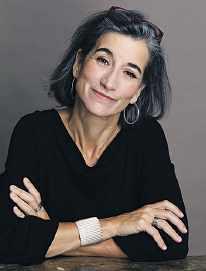
who was also frequently absent for work, though looking back, the 58-year-old says: “They left me to my own devices in a way I thought was pretty wonderful. And I always felt loved; my mother was back and forth a lot for the first couple of years, my brother and sister were already out of the house, and at 16 I left myself for college.”
This included a stint at London’s Architectural Association, where Ada also studied, following Yael’s architectural studies at Yale.
Things became more complicated when Ada and Rami entered a competition to design Israel’s Supreme Court in 1985. They won – on the promise that Ada would not leave Israel for more than a few weeks a year – and by the time the project, which took seven years
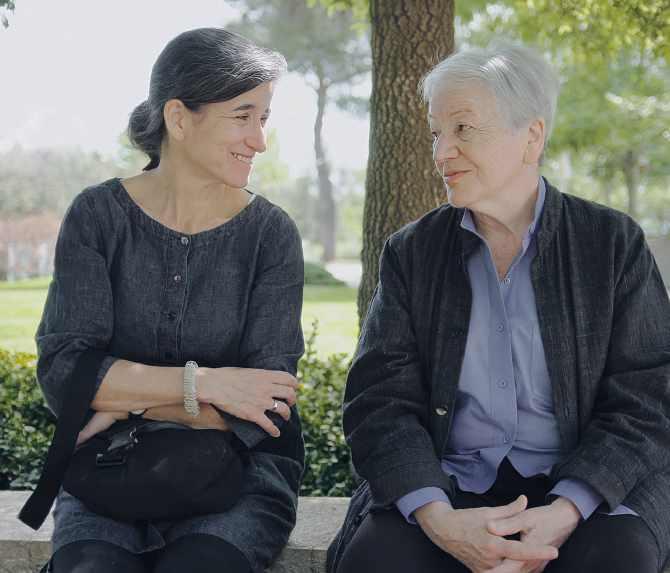
filled with conflict between the siblings to complete, was finished, the family had been split for nearly a decade.
Ada, who had not expected her career to take o to the extent it did, never went back to New York to live, and was not by the side of her beloved Amos when he died on his birthday. Poignantly, this was a few hours after the kind of dinner party they had enjoyed for so many years as a couple, with friends like renowned architect Moshe Safdie, who contributed to the film along with the late Frank Gehry, another of Ada’s starchitect admirers.
While viewers cannot help but feel sad for Yael – in a heartwrenching moment she produces the letters her mother decorated with cat illustrations which she has treasured until today – she accepted that her mother was not coming home and joined her in Tel Aviv, updating the apartment designed by Dov which had not
been touched in 50 years. “She felt it was too emotional to do herself, so asked me to do it, which was an amazing gift,” says Yael.
She also designed her mother’s Tel Aviv o ce – “she had been working in the basement of the rundown building where her father had worked, so there was lots of nostalgia, but it was time for her to move somewhere better” – before leaving architecture altogether a year later.
By that time the siren call of film-making which had first attracted Yael was insistently beckoning. “I did not intend to become an architect, but fell in love with photography before applying to both film and architecture school.
“I did not get into film school, but I’m very glad I got educated in architecture, although I eventually felt that film was much more my language.”
ADA, which won a cinematography prize at the Jerusalem Film
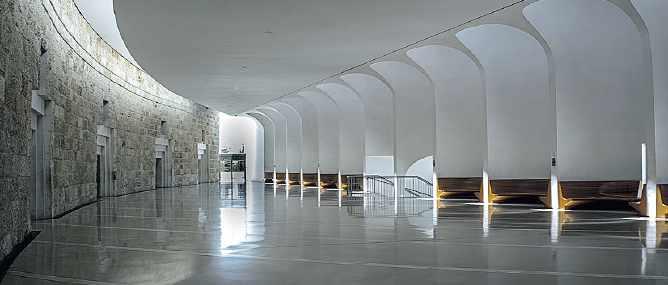
‘If
Festival, is a must-see for any lover of architecture with its extraordinary views of the interior of the Supreme Court, light moving across its walls as the sun changes direction in the way it shifts around the interior of the Pantheon in Rome, to Ada one of the most beautiful and important buildings in the world.
And when it comes to the years they spent apart, Yael insists: “We had a wonderful relationship before, and we have a wonderful relationship now. I never felt she wasn’t available to me, even though she was far away; it was more painful for her than for me. She was always very a ectionate and supportive towards the three of us; there were lots of dinners with lawyers and architects and business people, and we were always made to feel welcome.”
Ada, who is finally spending time back in the US with her children and six grandchildren now she is no longer able to work – “If she could work till her very last breath she would, and I wish she could,” says Yael – does not want to focus on love and loss when invited to talk about how she feels about being absent when Amos died, nor does their daughter. She says: “When it comes to the choices and sacrifices my mother made for her architecture I think the sacrifice was worth it 1,000 per cent.
“I would not want her to have done anything di erently. My only wish is that she would be more aware of what she sacrificed.”
◆ Ada, My Mother the Architect is on Amazon Prime and iTunes.
Jonathan Goldstein, co-founder of Cain and director of Chelsea FC, reflects on leadership, doing business in the Gulf and the values that have guided his career
any will know Jonathan Goldstein as the successful businessman behind Cain, the global investment firm with more than $14bn of assets under management. Others know him as former chair of the Jewish Leadership Council and one of British Jewry’s most influential communal figures. Football fans may be more familiar with Goldstein as a director of Chelsea. But despite a career that has taken him from the City to global real estate, hospitality and sport, Goldstein says one Jewish principle has guided him throughout.
M“I’ve always tried to remember to treat people the way I would want to be treated,” he tells Jewish News. It is a philosophy Goldstein traces back to his schooldays and his favourite novel, To Kill a Mockingbird. He still recalls the lesson at the heart of the book: “You cannot truly understand another person until you have walked in their shoes.”
Only later did he realise how closely that lesson aligned with the teachings of Pirkei Avot (Ethics of the Fathers), the collection of Jewish ethical teachings that has guided generations of Jewish life.
The idea of trying to understand another person’s perspective – of metaphorically walking a mile in their shoes before passing judgement – sits at the heart of Goldstein’s approach to business, leadership and philanthropy.
Looking back on a career that has led him to work with some of the world’s most successful business figures, Goldstein argues that intelligence alone is rarely what separates exceptional leaders from the rest.
“Smartness is only one of the assets you need to succeed,” he says. “You need the ability to create relationships, get on with people and for people to trust you.”
Whether discussing his business partner and Cain co-founder Todd Boehly, financier and philanthropist Michael Milken, former Goldman Sachs chief executive Lloyd Blankfein or his long-time mentor Sir Gerald Ronson, Goldstein repeatedly returns to the same theme: “The most successful leaders combine intellect with humanity. The ones who stand out are those who marry the insightful intelligence that a business person needs with a humanity, an empathy and an ability to create relationships.”



Few people have put those principles into practice more successfully. After becoming one of the youngest managing partners of a City law firm (Olswang), Goldstein moved into property and finance, serving in senior roles at Sir Gerald Ronson’s Heron International and Guggenheim Partners before co-founding Cain in 2014. Today Cain manages more than $14 billion in assets across real estate, sport entertainment and hospitality, including the landmark One Beverly Hills – featuring Aman Beverly Hills and The Beverly Hilton, Delano Miami Beach and Miami’s 830 Brickell tower, one of the city’s most successful o ce developments.
Goldstein says he left law not because he stopped enjoying it, but because he wanted to see whether he could “cut it in the Premier League” of business.
He spent seven years working at Heron with Sir Gerald Ronson, who he a ectionately calls a mentor and close friend. He serves as a trustee of the Gail & Gerald Ronson Foundation.
“The biggest thing I learned from Gerald was the art of

discipline. If Gerald saw a brick wall in front of him, he wouldn’t go round it. He’d go through it. He would just keep pushing until the wall fell down.”
If business became Goldstein’s Premier League, football now forms part of his professional life too.
He became a director of Chelsea
consortium. Boehly’s Eldridge
Football Club in 2022, as part of the Todd Boehly and Clearlake Capital consortium. Boehly’s Eldridge Industries is also a strategic partner in Cain.

required some adjustment for someone who grew up supporting Tottenham Hotspur.
Goldstein admits the role has porting Tottenham Hotspur.
mean that I wanted Spurs to be relegated. You can
“Of course I want Chelsea to do well… that doesn’t mean that I wanted Spurs to be relegated. You can hold two thoughts in your head at the same time.”
spent decades at the heart of British Jewish com-
Alongside his business career, Goldstein has spent decades at the heart of British Jewish communal life. A former chair of the Jewish Leadership Council, he has also chaired PaJeS, served as vicechair of Jewish Care and remains actively involved with a number of communal and charitable organisations, including Seed, Hatzola and Camp Simcha, where he is an honorary president.
chair of Jewish Care and remains actively involved sations, including Seed, Hatzola and Camp Simcha, without portfolio” – no longer leading major
Today, he jokes that he has become a “minister without portfolio” – no longer leading major organisations but still deeply engaged in the issues facing the community.
He believes British Jewry would benefit from a more coordinated public voice. Reflecting on the Jewish community’s response to antisemitism in the Labour Party during Jeremy Corbyn’s leadership, Goldstein says one of its strengths was the ability of di erent organisations to unite behind a common message.
“We didn’t try to merge organisations,” he says. “But we did try to merge messages.”
He believes British Jewry would benefit from the Jewish community’s response to antisemitism in the Labour Party during Jeremy one strengths was the ability of di erent organisasays. “But we did try to merge messages.”
That sense of responsibility has only deepened since October 7. Goldstein and his wife Sharon were in Israel on the day of the Hamas attacks, an experience he says brought home the profound impact the events would have on Jewish communities around the world.
Goldstein was instrumental in bringing the Nova Music Festival exhibition to London – it is based in one of Cain’s properties. The exhibition, which tells the stories of those a ected by the October 7 attacks, has become of the most powerful public memorials to the victims outside Israel.

one of Cain’s properties. The exhibition, which tells has become of the most powerful public memorials to the victims outside Israel.
responsibility to help explain what the
He says the project reflected a broader responsibility to help explain what the Jewish community has experienced since October 7.
“We have an obligation,” he welcomed us. One of the things we tive in our own country. We need to explain what the community is
“We have an obligation,” he says. “We’ve been very blessed to grow up in a country which has welcomed us. One of the things we can help influence is the narrative in our own country. We need to explain what the community is going through.”
Through Cain’s growing pres-
Through Cain’s growing presence in the Gulf, including an o ce in Abu Dhabi, Goldstein spends significant time in the UAE and Saudi
nificant time in the UAE and Saudi
Arabia and speaks enthusiastically about the relationships he has built across the region.
“I enjoy doing business there. I enjoy the people,” he says. “The UAE is an amazing place.”
Goldstein says he openly discusses Jewish issues and the Middle East with those he meets. “The vast majority of people in this world want peace. They want settled lives. The only way you overcome conflict is through conversations, through talking to people, through hearing their issues.”
One of his most memorable experiences was spending Shabbat at Abu Dhabi’s Abrahamic Family House, home to a synagogue, mosque and church. “It’s the most uplifting experience to sing Lecha Dodi in the middle of Abu Dhabi and know you’re being welcomed into that environment.”
The Abraham Accords, he believes, are proof that progress is possible when people are prepared to listen to one another.
Goldstein and his wife Sharon have four children and one

grandchild. One of his daughters now works alongside him at Cain. He says suggestions that the community is struggling to produce the next generation of future leaders and philanthropists are misplaced.
“I heard it said about my generation and I’ve heard it said about the generations after me,” he says. “I remember the late Chief Rabbi Lord Sacks said: ‘communities do not su er from a lack of leaders, but a lack of followers… I don’t worry about the next generation.”

As for his own future, there are no plans to hang up his boots any time soon. “I still feel like I’ve got more to give and more to achieve.”
What would he like his legacy to be? “I’ve never been interested in scores on a scorecard. I’m much more interested in the reputation, the life that you lead and what people think about you. That’s the legacy that I’d like to leave behind. Someone who people respected and regarded, and who knew how to treat people well.”

Chana
Are you an allied healthcare professional looking for a
Chana is seeking a dynamic and intellectually curious individual to support our in-house Scientific Advisor within a mission driven Jewish charity.
This is a unique opportunity
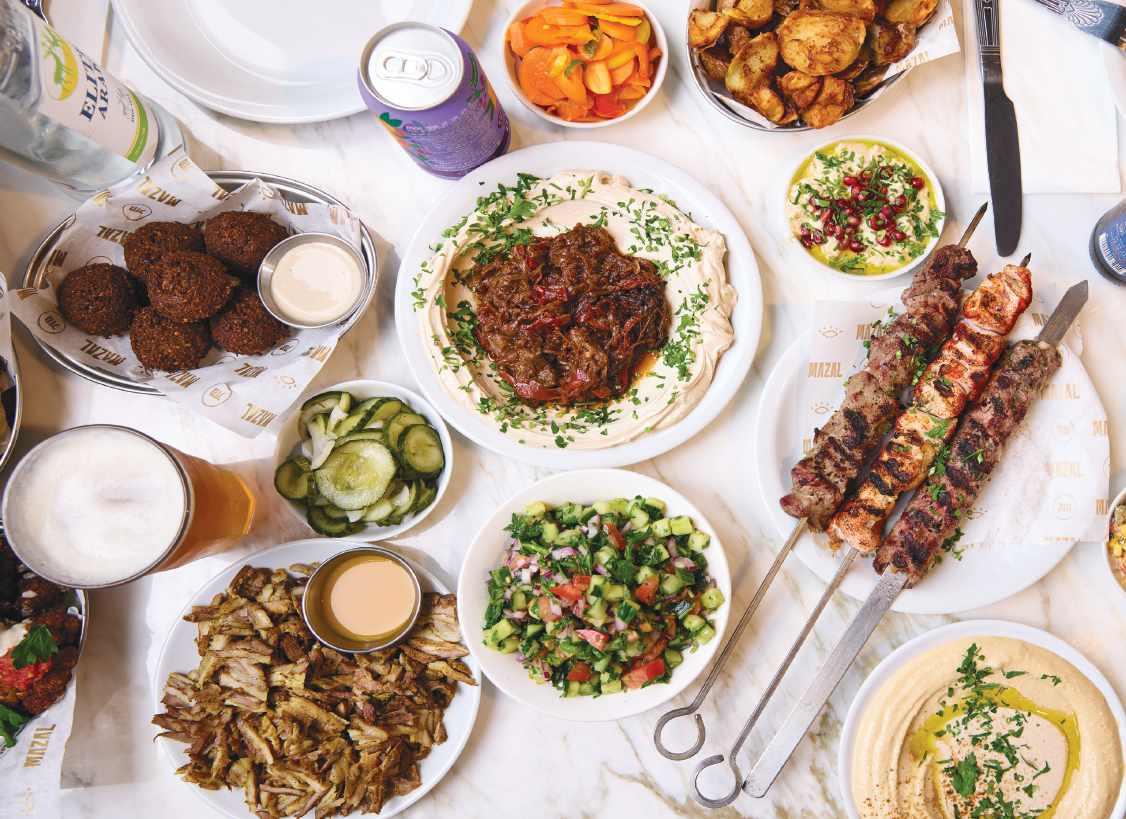
RABBI TOBY WEINIGER
HADLEY WOOD JEWISH COMMUNITY
young people need guidance, encouragement and opportunities
The rise of the NEET crisis – young people who are not in education, employment or training – is clearly an economic challenge, yet it also raises a deeper question: what happens when a generation feels excluded from contributing to society and denied opportunities to do so?
At first glance, the Torah appears to present a contradiction. One verse states that a Levi begins his service at the age of 25, while another places the starting age at 30.
The Rambam resolves this discrepancy by explaining that the five years between 25 and 30 were devoted to training and preparation.
Yet elsewhere, the Rambam writes that a Levi may serve once he has “become a man”, implying that adulthood alone is su cient,
and a Levi doesn’t need to wait until turning 30. How can both be true?
The Kesef Mishneh – Rabbi Yosef Karo’s foundational 16th century commentary on the Rambam – o ers three solutions. First, the age of 30 may have applied only to the Temple choir, while other duties could be performed earlier.
SENIOR LEADERSHIP ROLE AVAILABLE
Second, a younger Levi may have been permitted to serve temporarily, receiving a permanent appointment only at 30. Third, the age requirement may have applied specifically in the wilderness, when the Levites carried the Mishkan, whereas in the Temple in Jerusalem adulthood alone was su cient.
Despite their di erences, all three explanations share a common theme: the Torah never
envisages a period of idleness. Even before assuming full responsibility, the Levi was learning, training, assisting or participating in communal service. There was a pathway towards meaningful contribution.
The Torah also recognises that growth takes time. A healthy society is not one in which everyone immediately reaches their role, but one in which every individual is actively progressing towards it through learning.
In my previous role at St John’s Wood Synagogue, one of the initiatives of which I am most proud was founding a summer camp. What began with just 20 children grew to welcome more 100 by the time I moved to Hadley Wood.
Jewish life. That remains one of the great strengths of our community.
Summer camps, youth movements, children’s services and countless other opportunities for engagement give young people the chance to discover that they have something valuable to o er.


SENIOR LEADERSHIP ROLE AVAILABLE
Perth, Western Australia
Community Security Group (CSG) WA is seeking a highly capable Chief Executive Officer to guide the Perth Jewish Community's critical security organisation. This full-time role offers senior strategic leadership responsibility and the opportunity to make a meaningful and lasting community impact. For further information, contact info@csgwa.org.au

Perth, Western Australia opportunity to make a meaningful and lasting community impact.
The camp was about creating an environment in which young people could develop responsibility and a lasting connection to
The lesson of the Levites is that people flourish when they are given opportunities to grow into responsibility. Our task as a community is to ensure that, from the earliest possible stage, young people are given the guidance, encouragement and opportunities they need to develop into active contributors and future leaders.




RABBI LEA MÜHLSTEIN THE ARK SYNAGOGUE
‘Zachor’: Why everyone should visit the Nova exhibition
I first met Rachel Goldberg-Polin on 27 February 2024, 143 days after the massacre of 7 October. Her son Hersh had been abducted after fleeing the Nova music festival.
Describing the months since his kidnapping, Rachel spoke of feeling as though she had been hit by a truck and the truck had come to a standstill on her chest.
Yet what struck me most was not her grief but her determination. Again and again, she brought the conversation back to the people behind the headlines: the young men and women who had gone out to dance and whose lives had been shattered in an instant.
In doing so, Rachel reminded the world of a truth the rabbis understood long ago: every human being is an entire world. That is why the Nova Exhibition – currently running
in Shoreditch – matters, and why everyone should see it.
When Rachel spoke about Hersh, I found myself thinking back to my own first encounter with Nova. In December 2023, I travelled to the site of the massacre and visited the exhibition in Tel Aviv. Since then, I have returned five times with groups from abroad.
Despite the changing memorials at the site, some created by organisations, some by artists, most by the families and friends of those who died, one thing remained constant: the feeling that we have a shared responsibility to remember.
The part of the exhibition that touched me the most was the lost property. Among the belongings recovered from the festival grounds were heaps of abandoned flip-flops. Looking at them, I found myself thinking how
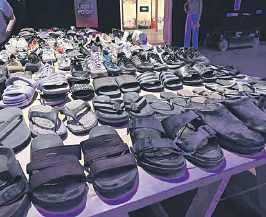
di cult it is to run in flip-flops. Had I been there, I would probably have kicked mine o too and run barefoot. In that moment, the victims ceased to be names in a news report. They became young people making splitsecond decisions as they fled for their lives.
In Judaism, we are commanded to remember – zachor. The act of remembering is about more than dwelling in the past. It is
A stimulating series where our progressive rabbis consider Judaism in the face of 21stcentury issues
a refusal to allow human beings to disappear.
For me, the Nova exhibition is, at its heart, an act of zachor
There are those who feel uncomfortable visiting the exhibition or the site of the massacre. Some worry that it risks becoming a form of disaster tourism or advancing a political narrative. I understand those concerns. Yet my experience has been the opposite.
The exhibition resists simplification. It confronts visitors with the brutality of Hamas, but also with the failure of the Israeli state and military to protect its citizens. Above all, it insists on the humanity of those caught up in the tragedy.
The young people at Nova were not targeted because of their political views. They were victims of indiscriminate brutality. Through her tireless advocacy, Rachel Goldberg-Polin has refused to allow Hersh to become a statistic. The Nova exhibition asks us to do the same for all those whose lives were forever changed on 7 October 2023. That is why everyone should see it.




10 Golders Green Road London NW11 8LL Opposite Cafe Nero






ANTIQUES
Antique – Reproduction – Retro Furniture (any condition)
Epstein, Archie Shine, Hille, G Plan, etc.
Dining Suites, Lounges Suites, Bookcases, Desks, Cabinets, Mirrors, Lights, etc.
House clearances
Single items to complete homes
MARYLEBONE ANTIQUES - 8 CHURCH STREET NW8 8ED 07866 614 744 (ANYTIME) 0207 723 7415 (SHOP)
closed Sunday & Monday
STUART SHUSTER - e-mail - info@maryleboneantiques.co.uk
MAKE SURE YOU CONTACT US BEFORE SELLING


big or too small! Rubbish cleared as part of a full clearance. We have a waste licence. We buy items including furniture bric a brac.
For a free quote please phone Dave on 07913405315 any time.


Confidential Bereavement Counselling for adults and children individually. Support Groups available. We offer in person, online and telephone counselling. Contact Jewish Bereavement Counselling Service in confidence. 0208 951 3881 enquiries@jbcs.org.uk | www.jbcs.org.uk
our Legacy Team on