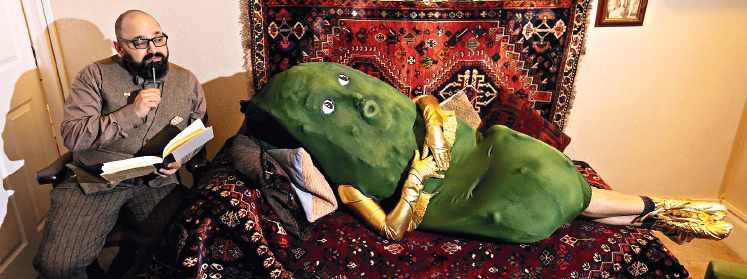
Jewish Culture Month opens at Freud Museum, p28
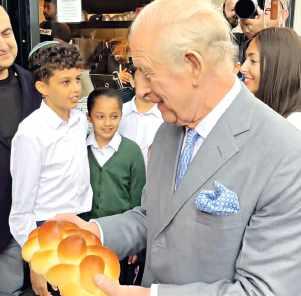
Charles cheers up Golders Green – see pages 4, 5 & 18
Jewish Culture Month opens at Freud Museum, p28
Charles cheers up Golders Green – see pages 4, 5 & 18
Jewish News and JBD launch campaign as study reveals threat far higher than wider population
by Annabel Sinclair
Jewish News and Jewish Blind and Disabled (JBD) this week launched a month-long diabetes type 2 awareness campaign, following research suggesting one in six British Jews over the age of 65 live with the condition.

According to research commissioned by JBD from the Institute for Jewish Policy Research (JPR), around 17 percent of Jewish people over the age of 65 reported through
GP Patient Survey data in 2020 that they are living with diabetes, compared with around eight percent of the wider population.
The campaign aims to raise awareness of diabetes prevention, symptoms, lived experiences and




long-term health risks, amid concerns over the growing impact of type 2 diabetes within Britain’s comparatively older Jewish population.
Across the UK, nearly 4.4 million people are living with diabetes.
Continued on page 10






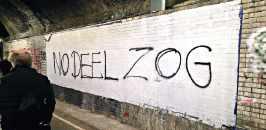
Antisemitic gra ti referencing Arsenal’s new Israeli co-founded shirt sponsor has appeared near the Emirates Stadium on Monday night, following the club’s 1-0 Premier League victory over Burnley.
Images shared online showed The words “NO DEEL ZOG” were spray-painted inside a pedestrian railway tunnel near Benwell Road, close to the north London stadium.
The gra ti appeared days after Arsenal confirmed that global payroll company Deel would become the club’s o cial shirt sleeve sponsor from the 2026/27 season.
Deel was co-founded in 2019 by FrenchIsraeli entrepreneur Alex Bouaziz and Chinese-born entrepreneur Shuo Wang.
Bouaziz, who grew up between Paris and Tel Aviv and is now based in Israel, has become one of the most prominent Israeli figures in global tech following the company’s rapid expansion.
The term stands for “Zionist Occupied Government”, an antisemitic conspiracy theory.
Barnet Labour Group has retained control of the council as a minority administration, with Cllr Barry Rawlings confirmed again as leader, writes Lee Harpin.
Labour was returned to Barnet Council’s administration following a close vote by councillors at Tuesday’s Annual Meeting at Hendon Town Hall.
Mayor Danny Rich began the meeting reflecting on the recent series of antisemitic attacks in the borough – and praising the impact of King Charles visit to Golders Green following the stabbings there.
As the meeting progressed, the Conservative nomination for Council Leader fell by 32 votes to 31. In the nomination for a Labour Council Leader, the Conservatives abstained to allow the appointment of Cllr Rawlings by 31 votes to one.
Under the minority Labour administration, the Leader of Barnet Conservatives, Cllr Peter Zinkin, will attend the Leader’s Cabinet meetings as a non-executive member to allow Opposition input into discussions. With advice from the council’s chief executive Cath Shaw councillor Rawlings and the Conservative leader reached a co-operation agreement.

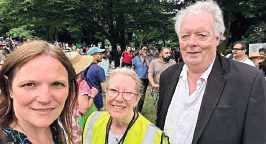
Outgoing Labour mayor and West Finchley councillor Danny Rich held a casting vote, but it was agreed the first vote should be whether to appoint Conservative councillor Zinkin as leader. Green councillor Charli Thompson voted against Zikin becoming leader and then also voted against Labour.
She later accused Rawlings and Zinkin of a deal which appeared “to have been agreed by the major parties behind closed doors”.
But councillor Rawlings then said that he and councillor Zinkin had accepted they had to work together to ensure council business continued, and with the Greens holding the council to ransom.
Both Labour and Conservative Groups had said they could not go into coaltion with the
Greens, with one reason being their openly anti-Israel stance.
At the local elections held on 7 May, Labour and Conservatives tied on winning 31 seats each, with one seat won by the Green Party.
Jewish News understands that any decision involving issues around the Jewish community and security will be taken with consent from both main parties.
Councillors also approved enhanced arrangements to allow the Opposition more meaningful opportunities to scrutinise decisions before they are taken.
The new arrangements include Conservative chairs for most Overview & Scrutiny sub-committees, with the addition of two new sub-committees to scrutinise Finance & Growth and Environment matters.
Rawlings said:“I am honoured to be reappointed to serve as Leader of the Council, and to take forward our ambitious agenda for Barnet. We will work constructively with the Opposition to govern.”
A teenager accused of saying Jewish people would be beheaded in a video posted to social media has denied committing a hate crime.
Rachid is accused of “playing to the camera”, saying: “You Jews, you are gonna get beheaded one by one, you dirty Jews.”




Muhammed Rachid, 18, is accused of racially aggravated harassment with comments made to the camera outside the East London Mosque in Whitechapel.
Thames Magistrates’ Court heard Rachid is accused of aiming a string of comments at Israel and Jewish people, shouting “free Palestine” and the words: “From the river to the sea.”
Prosecutor Deborah Kol told the court the video had come to police attention after it went viral on X on 15 May. “The footage shows the defendant playing to the camera, shouting very hateful comments,” she said.
Rachid, a sports college student and part-time warehouse worker from Limehouse, east London, was arrested on Monday and held
in custody for 28 hours. He pleaded not guilty on Tuesday afternoon to a charge of causing racially aggravated harassment, alarm or distress with threatening or abusive words or behaviour, and elected to stand trial in front of a jury.
Rachid was set free on bail until a hearing at Snaresbrook Crown Court on 16 June. Under the terms of his bail, he must sleep each night at his home address, he is banned from posting on social media, and he must not go to the Stamford Hill area.
GREENS FAIL TO CLARIFY ‘NO KIND ZIONISTS’
The Green Party has yet to respond to requests for clarification over whether one of its newly elected councillors, an NHS doctor who claimed “I’ve yet to see a Zionist act in kindness or with love and compassion”, remains a member.
Dr Rebecca Jones was one of 39 Greens to win a council seat in Lewisham. The party won almost three quarters of
seats in the borough, taking control from Labour. The Greens also won the local mayoral election. Currently working as a registered GP in the borough, Dr Jones secured her seat with 1,890 votes – 12% of the ballot – on 7 May.
Online investigator GnasherJew recently found she had shared posts that claimed Israel is “using infectious diseases to
help their genocidal onslaught” and stating, “They’re burning babies again.”
When approached for comment, Dr Jones told Jewish News: “As a GMCregistered doctor, my professional and ethical obligations are clear: I do not discriminate on the basis of any protected characteristic, least of all political belief.”
Israel is expected to become home to most of the world’s Jews within the next decade, according to a major new report examining what Jewish life could look like 100 years from now, writes Annabel Sinclair.
Israel is expected to become home to most of the world’s Jews within the next decade, according to a major new report examining what Jewish life could look like 100 years from now.
The study, published by the Institute for Jewish Policy Research (JPR), explores how the Jews may change by 2126 as communities face rising antisemitism, assimilation, migration pressures and major demographic shifts.
Written by renowned demographer Professor Sergio DellaPergola, the report does not try to make exact predictions. Instead, it looks at the long-term trends that have shaped Jewish history for generations – and are likely to continue shaping it in the future.
Among its most striking findings is the prediction that Israel could pass the symbolic milestone of becoming home to more than 50 percent of the global Jewish population as early as 2035.
The report says this would fundamentally change the balance of Jewish life worldwide, shifting cultural and political influence increasingly towards Israel.
At the same time, many Diaspora communities are expected to continue shrinking because of ageing populations, lower birth rates and high levels of intermarriage.
The study also points to the rapid growth
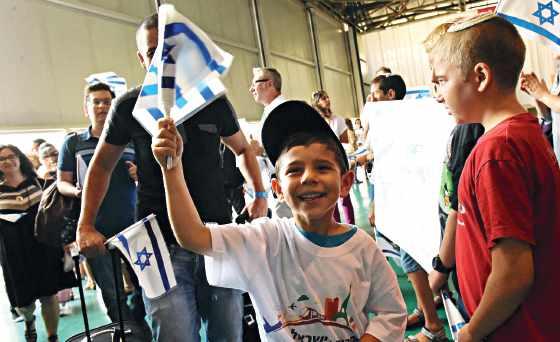
of Haredi communities, particularly in Israel, where birth rates remain significantly higher than among secular Jews.
The report also argues that antisemitism is likely to remain a defining challenge for Jewish communities worldwide. It says anti-Jewish hostility is increasingly expressed not only through violence, but through social exclusion, intimidation and attempts to undermine Jewish identity and ties to Israel.
Today, Jews make up less than two people
UK Jewish groups have called for the government to ban the entry of a notorious far-left US political commentator with troubling positions on Hamas and Hezbollah, who has also described Orthodox Jews as “inbred” and has likened Zionism to Nazism.
Hasan Piker, a far-left podcaster, was due to appear at an event in June for UnHerd magazine, in conversation with far left economist Yanis Varoufakis and a former associate editor of the Financial Times, Wolfgang Munchau. The magazine described this as “a special live recording of the Econoclasts podcast” in which Varoufakis and Munchau would “challenge Piker on what the ascendency of the online Left means for America and the world.
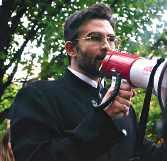
terrorist organisations and derogatory rhetoric about Jews represents a dangerous pattern that his millions of followers are exposed to regularly”.
He has described how he believes that “any kind of fuc**** Zionist tendency should be treated in the same way as being a f***ing rabid neo-Nazi” and has described Zionism as “a mental illness”.
Both Hamas and Hezbollah are proscribed as terrorist organisations in the UK; the majority of Jews – both in the UK and worldwide, are Zionists.
A spokesperson for CST said: “The UK should not be a platform for individuals who spread hatred or legitimise extremism.”
Wes Streeting has con demned those who “globalise the intifada in deeds, not just words” as he launched a campaign to oust the prime minister.
In his first speech since resigning as health secretary, the Ilford North MP took aim at both Reform UK and the Green Party, denouncing “the forces of racism, discrimination, and hatred.”
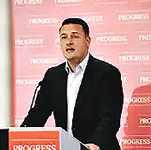
He highlighted the impact on the Jewish community, saying, “We’ve also seen Jewish people murdered and attacked on their shores and on our streets, kids in my constituency trying to hide their school uniforms and Stars of David because they fear being abused or attacked just for being Jews.”
While focusing much of his criticism on the rise of Nigel Farage’s party – warning that Reform UK could win the next general election unless Labour changes direction – Streeting also accused the Green Party of ignoring antisemitism within its ranks.
Piker has a record of highly incendiary comments. He described the allegations of extreme sexual violence carried out against Israelis on 7 October as “rape fantasies”, subsequently going on to say that “it doesn’t matter if rapes f***ing happened on 7 October, like that doesn’t change the dynamic for me… the Palestinian resistance is not perfect”.
The American Defence League has described how “Piker’s record of support for designated
In a similar vein, a spokesperson for the JLC said: “In a climate where Jews are being stabbed on the streets of London, this rhetoric is dangerous. This is not conducive to the public good and the government should ban him.”
The American Jewish Congress has compared what it has described as “Piker‘s extreme far-left antisemitism” with “the far-right antisemitism of white-supremacist influencer Nick Fuentes”.
per 1,000 globally, the report notes, despite the disproportionate attention and hostility often directed towards Jewish communities.
JPR executive director Dr Jonathan Boyd said: “This paper doesn’t offer predictions in a simple sense. It offers something more valuable: a framework for understanding the forces that will shape the Jewish world over time.”
Despite the warnings, DellaPergola says: “If there is still a world in 2126, there will be a Jewish people.”
He said:”When it comes to antisemitism on the left, the Green Party choose to look the other way, because their party is now riddled with those whom we expelled.”
Turning to Reform UK, he said: “Racism on the march – shocking, shameful, and a stain on this nation’s reputation. Nigel Farage and Reform seek to exploit division and hatred to benefit from it at the ballot box. This has always been Labour’s fight— not just to confront the forces of racism but to build a path to a brighter future.”
Yvette Cooper wrote an article justifying the proscription of Palestine Action despite being warned by the Crown Prosecution Service that it might risk prejudicing the criminal trial of activists from the group.
Earlier this month, jurors found Charlotte Head, Samuel Corner, Leona Kamio and Fatema Rajwani guilty of causing criminal damage during a raid on August 6 2024 on the Elbit Systems factory in Bristol.
Lawyers representing the defendants attempted to stop the trial taking place, arguing that a column written by the then-home secretary had “deprived” their clients of “the presumption of innocence”.
In the article, Ms Cooper claimed that counterterrorism intelligence showed the organisation passed the tests to be proscribed under the 2000 Terrorism Act with “disturbing information” about future attacks.
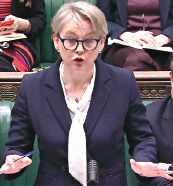
A previously unreportable pre-trial ruling reveals that the Crown Prosecution Service (CPS) had advised Ms Cooper that going ahead with the article might prejudice proceedings – but she “went ahead anyway”.
The column, published in The Observer last August, saw Ms Cooper claim that Palestine Action had carried out an “escalating campaign” involving “intimidation, violence, weapons, and serious injuries to individuals” as well
as criminal damage. She wrote: “Some may think it is a regular protest group known for occasional stunts. But that is not the extent of its past activities.”
In a pre-trial ruling, made last November, Mr Justice Johnson set out how CPS was made aware of the particle and “advised about the risk of prejudice”. He wrote: “It is to be taken that the (then) Home Secretary was specifically advised that going ahead with the article might prejudice these proceedings, and that she went ahead anyway”.
Ms Cooper was said to have made the public statement “in the knowledge that these proceedings were extant and that there might well be a question as to the impact of her conduct and her statements on these proceedings”, the ruling adds. The judge ruled that it had not been shown that the defendants would not receive a fair trial.
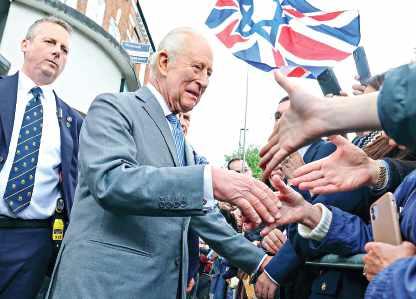
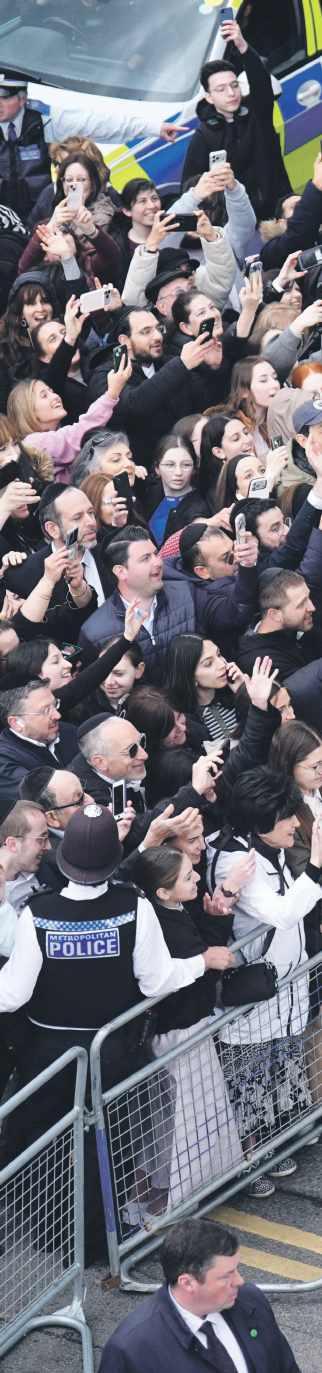
King Charles met the two victims of last month’s Golders Green stabbing attack during a solidarity visit with the Jewish community, writes Daniel Ben-David.
Hosted by Jewish Care at its Maurice and Vivienne Wohl Campus, the visit also saw the King meet senior religious and civic leaders from across the Jewish community before departing with a freshly baked challah from a local Jewish bakery.
The visit to Golders Green came two weeks after two Jewish people were stabbed in the area — the latest antisemitic incident amid a surge in hate crimes targeting Jewish people, sites and synagogues in recent weeks.
The King spent several minutes speaking with each victim and their partners. Holding the hand of one of the victims, 76-year-old Michael (Moshe) Shine, throughout their conversation, and with his other hand placed on his heart, the King expressed his “heartfelt condolences”.
Afterwards, Shine said the King “genuinely cared about how I was getting on and my recovery. He wouldn’t let go of my hand. It was so special he came today,” he said.
Accompanied by Chief Rabbi Sir Ephraim Mirvis, the King also met emergency first responders from Hatzola — the Jewish community’s volunteer ambulance service — including volunteer responder and chairman Laurence Blitz, dispatcher Etty Hager, volunteer responders Stuart Richman and Avrumi Weisenfeld, and clinical lead Kevin Cuddon.
The King asked the Hatzola volunteers about their training, backgrounds and operational jurisdiction, including whether they were all trained paramedics. “The demand unfortunately never stops” for emergency responders, the King remarked, as he thanked them for their “extraordinary service”.
Four Hatzola ambulances were targeted
in an arson attack in late March, an incident followed by a series of escalating attacks throughout April, including attempted synagogue firebombings and vandalism.
His Majesty also met members of Shomrim, the Jewish community’s volunteer security organisation operating in north London. Representing Shomrim were CEO Gary Ost and volunteer trustees Sheldon Bodner and Steven Bak. Also present to meet the King were the two emergency response volunteers who first responded to the Golders Green stabbing, Yonathan Elkouby and Yitzi Lipszyc. The King asked about their training, the equipment they wear while on duty, and whether they are trained to “disarm” adversaries.
The King also met leaders of CST, including deputy chair Sir Lloyd Dorfman, chair Sir Gerald Ronson and CEO Mark Gardner. In March, CST announced that King Charles had become the organisation’s first-ever royal patron.
His Majesty also met senior representatives of the Jewish community, including Board of Deputies president Phil Rosenberg; and Jewish Leadership Council chair Keith Black; and Jewish Care CEO Daniel CarmelBrown, chairman Marcus Sperber and life president Lord Levy.
Rosenberg, holding a “Jewish Culture Month” tote bag, explained to the King that the initiative aimed to bring about “more joy and less oy”.
Also present were Union of Jewish Students president Louis Danker and sabbatical officers Samantha Cass and Naomi Bernstein.
Danker told the King about the work of UJS, which supports around 10,000 Jewish students across the country. The King asked about antisemitism on campus, to which Danker replied that it had become “unfortunately normalised”. They also discussed
the role of social media in sowing division and spreading hate, before the King thanked them for their “marvellous work”.
Chief Rabbi Mirvis told the King that Jewish students in Britain had maintained an “amazing community”, through which the Jewish community “has fantastic future leaders”.
Alongside senior civic and religious figures from the Jewish community, the King also met local MP Sarah Sackman, Metropolitan Police Commissioner Sir Mark Rowley, Mayor of Barnet Danny Rich and local council leaders.
Speaking with the King, Rowley said the Jewish community was facing threats from multiple fronts, including Iranian-backed state-sponsored terrorism.
Deputy Assistant Commissioner Ben Russell told the King that Jewish police officers, while small in number, play a “crucial” role within the force and that it is important for the Metropolitan Police to include officers familiar with Jewish neighbourhoods and the wider community.
Also present were Progressive Judaism co-leads Rabbis Josh Levy and Charley Baginsky, and Masorti senior rabbi Jonathan Wittenberg. Chief Rabbi Mirvis told the King that the entire Jewish community “enormously appreciated” his solidarity visit to Golders Green.
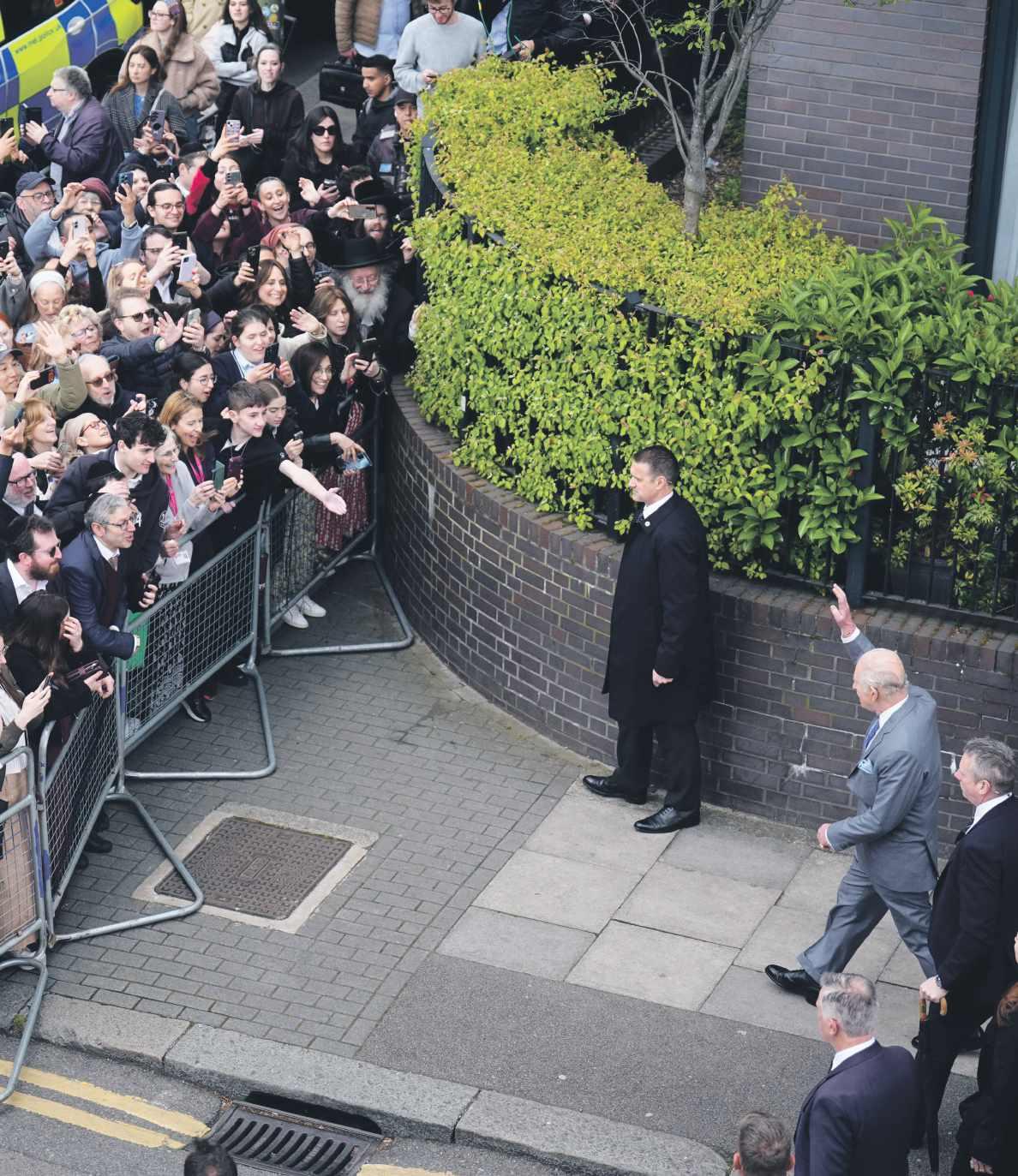
Following his visit to Jewish Care, King Charles stepped outside to greet members of the public before entering Grodz kosher bakery on Golders Green road, where he met the owner and was presented with a freshly baked challah.
Upon stepping outside, he was greeted with rapturous applause from Golders Green residents lining the streets, alongside shouts of “long live the King” and renditions of the national anthem.
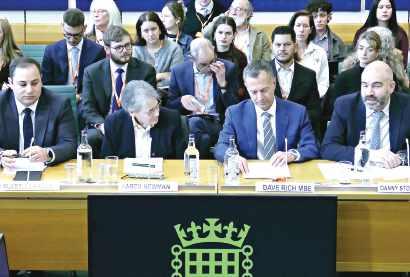
Amid a major rise in antisemitism, British Jews are increasingly withdrawing from public life and concealing their identities, Westminster’s Home A airs Select Committee has heard.
Addressing a committee hearing on the UK’s responses to antisemitism, Dave Rich, director of communications at the Community Security Trust, cited articles written by Jewish News editor Richard Ferrer.
He noted Ferrer had been contacted by members of the community asking for stories referencing their Jewish identity to be deleted so as not to a ect their prospects at job interviews.
Rich told MPs: “If we are in a situation... where ordinary Jewish people are feeling and experiencing that being known to be Jewish is a professional and social impediment, that’s not just about the status and future of the community, that’s about the health of our liberal democracy… a sign our society is falling apart due to antisemitic pressures.”
He added that Jews face “an unprecedented situation right now” in regards to hate crimes and terrorism directed at them.
“I’ve worked at CST for 32 years, and we have never, ever had a period like this in all that time,”
said Rich, although he stressed that Jewish life is carrying on.
Asked if he felt the situation in the UK was di erent to that in other countries, he replied, “It’s actually the opposite. This is a global phenomenon.
“If we look at other countries with significant Jewish communities, especially liberal democracies... you see the same patterns; a huge surge in antisemitism after the 7 October attack, the same kind of spikes in relation to events in the Middle East.
“You even see the same language being used, the same slogans, the same catchphrases in the articulation of antisemitism and the same methods.
“Since 7 October, synagogues
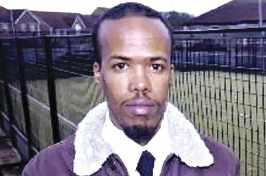
The alleged Golders Green attacker has appeared at the Old Bailey, accused of stabbing two Jewish men as well as injuring a friend.
Essa Suleiman, 45, allegedly targeted Shloime Rand, 34, and Norman Shine, 76, during a knife rampage in north London on Wednesday 29 April.
Appearing in court via video-link from HMP Belmarsh, Suleiman confirmed his name and date of birth. His trial date was set for 1 March 2027.
Mr Rand was stabbed in the chest as he left a synagogue, while Mr Shine was allegedly stabbed in the neck at a bus stop as he adjusted the traditional Jewish kippah on his head.
A member of the public tried to intervene before the suspect was tasered by police.
Mr Rand and Mr Shine were taken to the hospital and treated for their injuries.
Hours before the Golders Green incident, the defendant allegedly attacked his friend of 20 years, Ishmail Hussein, at his home in Southwark, south London.
have been firebombed on five di erent continents, and there’s been an attack in Sydney... Every Jewish community is facing the same challenges.”
Representing the Jewish Leadership Council, Russell Langer said: “I don’t think enough of the British public really recognise what Jewish life is like in lots of countries, including in the UK, and a lot of the immediate response is rightly about security and protecting the Jewish community. That is obviously vital.”
He added, “For too long we’ve focused just on security. This is a problem we can’t fix with fences; we need to move beyond that.”
Board of Deputies vice-president Karen Newman also spoke
of the impact hatred has had on the everyday lives of British Jews.
She said people are left asking: “Does this person know I’m Jewish? Probably not. Is this the moment for me to say I’m Jewish? Or do you know I’m Jewish and assume I’m completely backing the State of Israel?”
Newman added that within the community, “there are people who harbour a great love for Israel while at the same time recognising that they’re critical of some actions of some governments at some moments. And you can hold those thoughts at the same time.”
Danny Stone, director of the Antisemitism Policy Trust, sounded a warning that successive governments had failed to tackle rising antisemitic hate within far-left, far-right and Islamist circles.
He criticised tech platforms like Reddit and TikTok, saying: “They could suspend the accounts (sharing Holocaust denial material) under their terms of service, and haven’t done.”
He added: “The tech platforms are laughing at us, Reddit and TikTok in response to our last reports, essentially attacked our methodology.
“They don’t understand antisemitism properly, and they don’t capture it as it should be captured.”
It is alleged Suleiman tried to stab Mr Hussein in his upper body, but his friend fended him o . Suleiman is then said to have travelled to Brent Cross Underground station.
The Somalia-born defendant, of Camberwell, south London, is charged with three counts of attempted murder and possessing a black handled knife in a public place.
A plea and trial preparation hearing has been scheduled for 25 September.
Business and Trade Secretary Peter Kyle has convened a high-level meeting bringing together major business groups and Jewish community organisations to address the growing issue of antisemitism across the UK, particularly in workplaces.
The meeting brought together representatives from leading business associations and Jewish community leaders, including figures from UK Hospitality, the Institute of Directors, CBI, Creative UK and Make UK, alongside representatives from the Board of Deputies, Jewish Leadership Council and CST.
Those attending agreed that tackling antiJewish hatred in workplaces is essential to eradicating it from society overall.
Participants highlighted the need for clear guidance and resources to help employers show leadership at a time of mounting antisemitic incidents. There was consensus on the importance of fostering inclusive workplace cultures and providing robust support for a ected sta .
Kyle, reflecting on the meeting, said: “The rise of anti-Jewish hatred in society needs tackling urgently, and workplaces are no exception.
“We discussed practical actions to make sure Jewish people both are and feel safe at work, from mobilising the voice of industry to better training. This is the start of a joint programme of work because, for too long, tackling this has been put in the ‘too hard’ box.”
A follow-up meeting is planned to monitor progress and ensure that the joint e orts result in meaningful change across UK workplaces.
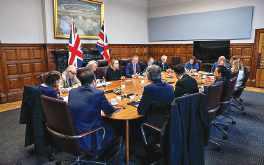
Scottish Labour leader Anas Sarwar has defended a newly elected MSP after reports emerged that he called for Israel to su er a “crushing defeat” during a speech delivered months after the 7 October Hamas attacks.
Irshad Ahmed, who represents the Edinburgh and Lothians East region in the Scottish Parliament, made the remarks during an Urdulanguage speech at a Pakistani cultural centre on 7 January, 2024.
According to a translation published by the Daily Telegraph, Ahmed told the audience: “Friends, there are a few things linked to the year 2023 that has passed which we need to remember, especially those
matters which have taken place in Palestine, we all condemn it as Muslims.
“And since 2024 has come, I ask all of you to pray that Allah gives freedom to Palestine and may Allah free the Muslims of Palestine who are victims of oppression, and may Israel get a crushing defeat.”
The speech was delivered around three months after Hamas terrorists killed around 1,200 people in southern Israel and abducted hundreds more during the 7 October attacks.
Timothy Lovat, chairman of the Jewish Council of Scotland, told The Telegraph: “This is entirely unacceptable from anyone, but from someone pur-
porting to be in a position of power is inexcusable”.
Scottish Conservative chief whip Tim Eagle also criticised the remarks, saying they were “absolutely beyond the pale” and calling on Scottish Labour to take action.
Ahmed later issued a statement saying: “All lives should be valued equally and I want people in both Israel and Palestine to be able to live in peace and security. I want to see stability in the region and a twostate solution that provides lasting peace.”
Scottish Labour currently holds 17 seats at Holyrood, tied with Reform UK as the joint second-largest opposition party in the Scottish Parliament.






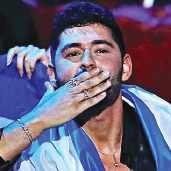
The head of Israel’s Eurovision delegation felt a sense of relief that Noam Bettan’s entry was pipped to the post last weekend, amid an increasingly hostile atmosphere in the hall, writes Florit Shoihet.
“At that moment when we led and it wasn’t clear if Bulgaria would overtake us, the booing from the crowd was immense, and I am not ashamed to say – it turned into violent booing toward the Israeli delegation,” Yoav Tsafir told Channel 12. “I don’t know what would have happened if we had won.”
The director noted that until the announcement of the results, the atmosphere towards the Israeli delegation was better compared with the two previous contests. “There was a positive change, with no huge expressions of hate,” he claimed, adding that behind the scenes “there was a huge appreciation” towards Noam Bettan and his song Michelle, pointing out that even the juries awarded him with 123 points, placing him eighth.
Bulgaria’s Dara won her country’s first Eurovision title with the song Bangaranga, securing a total of 516 points, while Bettan finished second with 343 points.
“Noam is a true professional, a strong guy with positive energy, a bit spiritual, and it all
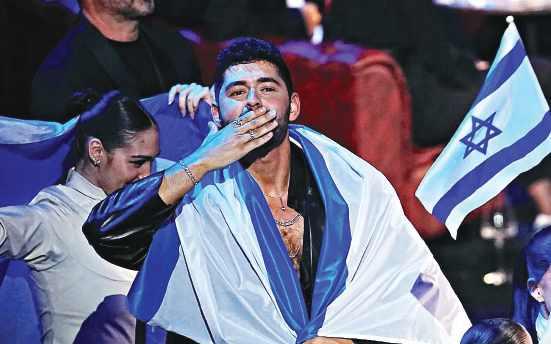
together leads to a perfect performance. We are very proud to bring joy to Israel in these days,” Tsafir said, adding that Bulgaria did a “terrific job”.
Dara stood out as one of the only Eurovi-
sion artists who publicly supported Bettan’s performance, by liking his rehearsal clip on social media and refusing to take it down despite intense pressure.
During the finals, the Bulgarian delegation
Property, pensions, tax exemptions, offshore structuring, healthcare, inheritance tax, your aliyah benefits
Whether your plans are imminent or many years away, join this essential webinar on Aliyah, covering both practical and financial opportunities.
Tuesday 9 June 2026 | Zoom Webinar, 4pm GMT
Featuring: Our specialist Chartered Financial Advisers together with Dov Newmark, Aliyah adviser
For more information, call 020 8202 1944 or email us at GoldersGreen@RaymondJames.com
Visit our website at GoldersGreen.RaymondJames.uk.com or scan the QR code to register.
With investing, your capital is at risk. Tax treatments are subject to individual circumstances and are subject to change.
even asked Israeli commentators to highlight her support for him during the broadcast.
“Logically, second place is best, but in your heart you always want to win,” Tsafir admitted.
Tsafir also expressed concerns regarding Israel’s ability to host the Eurovision and provide security and the future of the contest, as five countries boycotted it due to Israel’s participation.
“The booing in the hall was so immense, and it symbolises something…. We must ask why it happens? We must tell Israel’s story better to the world,” he added.
Ynet reported that despite reports that Bulgaria may struggle to host the contest next year, Israeli officials said they do not expect the European Broadcasting Union (EBU) to offer Israel the role.
“The EBU can do whatever it wants, and it is not obligated to offer hosting to Israel,” one official told Ynet. “Everyone knows that at this time, hosting Eurovision in Israel would be very complicated.
“No one will want to get into that movie. If five countries boycotted just because of our participation, one can imagine what hosting in Israel would do.”

Tributes were paid this week to beloved Holocaust survivor Harry Spiro, who has died aged 96, writes Michelle Rosenberg.
Born in Piotrków Trybunalski, Poland, in 1929, Harry was 10 years old when the Nazis invaded and his family were sent to Piotrków Trybunalski, the first Jewish ghetto established by the Nazis, where he was forced to work at the glass factory.
After the horrors of Buchenwald, Rehmsdorf and the death march to Theresienstadt, Harry was liberated in 1945 at the age of 15, the only member of his family to survive the Shoah.
Of the 700 children survivors brought to the UK, Spiro was one of the 300 (including girls) known as the Boys, brought to Windermere’s Calgarth Estate to rebuild their lives. Many of them, including the late Sir Ben Helfgott and Harry Olmer, went on to establish the 45 Aid Society.
Spiro went on to work for many years as a tailor before opening his own shop and dedicating himself to Holocaust education.
Writing in tribute, The Lakes School in Windermere said: “Harry’s story is one of unimaginable loss and remarkable resilience. Harry came to Windermere and began rebuilding his life on the Calgarth Estate,

where The Lakes School now stands. Here, after everything he had endured, he found safety, care and hope for the future.
“Through sharing his experiences, he ensured that young people understood not only the horrors of the Holocaust but also the importance of kindness, tolerance and standing against hatred.
“At The Lakes School, we recognise the enormous impact survivors like Harry have had in keeping history alive for future generations. His courage in continuing to tell his story, despite the pain it carried, was an extraordinary act of humanity and service to others. We extend our deepest condolences to Harry’s family, friends and all who were touched by his life and legacy. Thank you, Harry.”
Maurice Helfgott, chair of World Jewish Relief and writing on behalf of the Helfgott family said: “We were so very sad to receive the news that Harry passed away and at the very same time so grateful for the life and love of a true legend. Harry’s kindness, loyalty, and calm humility was always wrapped in that cheeky smile and piercing blue eyes.
“Truly a mensch. One of the Boys. Born just one day before Ben Helfgott in 1929, they both shared the same Polish home town, Piotrkow
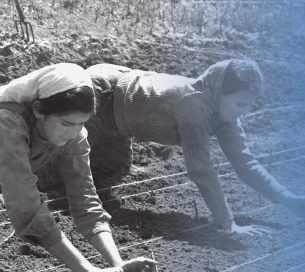

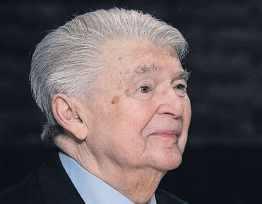
and were brought to Windermere by World Jewish Relief on RAF planes having survived the Shoah in 1945. Ben and Harry enjoyed a very deep and cherished friendship.
“Harry was key to the establishment and enduring success of the 45 Aid Society UK Holocaust Survivors and always advocated for World Jewish Relief . His memory will be a blessing to his wonderful family and to all of us.”
Angie Cohen, chair of the 45 Aid Society, told Jewish News: “We were deeply saddened to receive the news that Harry Spiro has passed away, and at the very same time profoundly grateful for the life, love and example of a truly remarkable man.”
Karen Pollock, chief executive of the Holocaust Educational Trust, said: “Despite all that he endured, you could not have met a more gentle person full of warmth and kindness.”


Jewish and Muslim faith leaders behind the Drumlanrig Accords jointly condemned the alleged arson attack on a Muslim prayer room in Blackburn, describing it as an act that would leave communities across Britain feeling fearful and unsafe.
The statement, released by signatories to the landmark interfaith agreement, came days after masked men were allegedly caught on CCTV throwing incendiary devices into Café Raha’s Muslim prayer room in Roe Lee Park, Blackburn. Lancashire Police are continuing to investigate the incident.
Unlike previous responses issued separately by communal organisations, the new statement was signed collectively under the banner of the Drumlanrig Accords – the agreement reached in 2025 between senior Jewish and Muslim leaders aimed at strengthening interfaith cooperation and resisting hatred.
The signatories said they were “horrified” by reports of the attack.
For over 120 years JNF UK has worked tirelessly to develop the Land of Israel.
Much of our work has only been possible thanks to the generosity of our legacy donors like Sheila and John, who had a deep commitment to how the country had shaped their

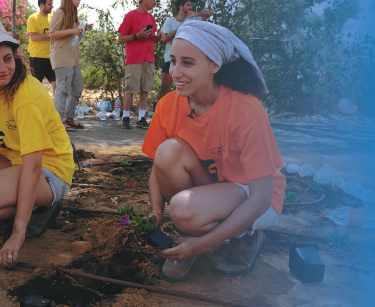
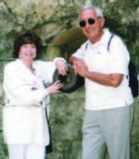
Leaving a gift in your Will, no matter how small or large, is one of the most valuable ways you can forge an everlasting bond with Israel.


Our expert and caring Legacy Team offer a range of professional services and first-rate pastoral care.
Continued from page one
Millions more are considered at increased risk of developing the condition or may be living undiagnosed with type 2 diabetes.
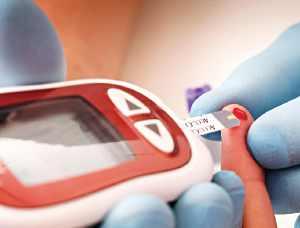
Diabetes can lead to serious complications, including sight loss, amputations, kidney disease, cardiovascular problems and reduced mobility. Around 160 amputations take place every week in the UK because of diabetes-related complications.
Lisa Wimborne, chief executive at JBD, said: “Type 2 diabetes is one of the most serious and growing health challenges of our time.
“In the UK alone, nearly one in 15 people are living with diabetes, with millions more at increased risk or living with prediabetes. The impact can be devastating – from sight loss to mobility issues.
type 2 diabetes rises sharply with age.
That means more people living with complex, long-term health conditions.
“Many people attending our sight loss groups are living with diabetes and, over the last few years, we have noticed an increase in the number of people coming to us in need of housing following diabetes-related amputations.
“Within the Jewish community, this issue is particularly pressing. Our population has an older age profile, and we know that the prevalence of
“At Jewish Blind and Disabled, we see firsthand how diabetes can change lives. This campaign is about raising awareness, encouraging earlier action and ensuring that people at increased risk, or already living with type 2 diabetes, receive the information and support they need.”
JBD launched a community consultation last month aimed at gathering views on how individuals and organisations could better support diabetes education, prevention and management within the Jewish community.
The charity is also planning two free information evenings in June focused on diabetes aware-
More people are living with complex, long-term health conditions
ness and long-term health management. Community members do not need to have diabetes to take part in the survey or attend the events.
This article forms part of Jewish News and JBD’s ongoing awareness campaign, which will run over the coming weeks, exploring prevention, lived experiences and practical health advice within the Jewish community.
u Lisa Wimborne, page 20


BY RUTH KANDER CONSULTANT DIETITIAN
Type 2 diabetes is one of the most common long-term health conditions worldwide. Many people live with it for years before it is diagnosed. The good news is that early recognition and lifestyle changes can make a major di erence. In many cases, type 2 can be delayed or even prevented, and people already diagnosed can successfully manage their condition and reduce the risk of complications.
Type 2 develops when the body becomes resistant to insulin or does not produce enough insulin to keep blood glucose levels within a healthy range. Insulin is the hormone that helps glucose move from the bloodstream into the body’s cells to provide energy. When this process does not work e ectively, blood sugar levels rise.
The symptoms of type 2 diabetes can develop gradually and may be easy to overlook. Some people feel perfectly well and only discover they have diabetes during a routine blood test. However, recognising the warning signs early is important.
Common symptoms include:
• Feeling unusually thirsty
• Passing urine more often, especially at night
• Tiredness and low energy
• Blurred vision
• Unexplained weight loss
• Frequent infections such as thrush or urinary infections
• Cuts or wounds that heal slowly
• Increased hunger
• Tingling or numbness in the hands and feet.
Some people may also notice darker patches of skin around the neck or armpits, which can be linked to insulin resistance.
If any of these symptoms are present, it is important to seek medical advice and ask for a blood glucose test.
Who is at higher risk?
Anyone can develop type 2, but certain factors increase the risk. These include:
• Being overweight, particularly carrying weight around the waist
• Having a family history of diabetes
• Being over the age of 40
• Having high blood pressure or high cholesterol
• Physical inactivity
• A history of gestational diabetes during pregnancy
• Certain ethnic backgrounds, including South Asian, Black African, African-Caribbean and Middle Eastern populations.
Understanding personal risk factors can help motivate early action.
Practical lifestyle steps to prevent type 2 diabetes
Small, sustainable lifestyle changes are often more e ective than strict diets or unrealistic exercise plans. Prevention focuses on improving insulin sensitivity and maintaining a healthy body weight.
1. Eat regular, balanced meals
Aim for meals that include:
• High-fibre carbohydrates such as wholegrains, quinoa, bulgur wheat, buckwheat, oats, barley, brown rice and wholegrain bread such as multiseed or granary
• Lean proteins including fish, eggs, beans, lentils and poultry
• Plenty of vegetables and salad
• Healthy fats such as olive oil, nuts and seeds
Balanced meals help stabilise blood glucose levels and reduce hunger between meals.
2. Reduce sugary foods and drinks
Sugary drinks can rapidly increase blood glucose levels and contribute to weight gain. Try replacing:
• Fizzy drinks with water or sugar-free alternatives
• Sweetened tea or co ee with reducedsugar options
• Cakes, biscuits and sweets with fruit or yoghurt
Reading food labels can help identify hidden sugars in packaged foods.
3. Increase physical activity Regular movement improves the
Websites https://www.diabetes.org.uk/ Excellent website packed with reliable information about looking after a person with diabetes. https://www.nhs.uk/ conditions/diabetes/ https://healthieryou.org.uk/ https://carbsandcals.com/ Excellent platform with great dietary advice
Useful apps https://carbsandcals.com/app/ free-trial/
The Food Scanner app is a great resource to help you make informed decisions while doing your food shop. It gives you a breakdown of the calories, salt and fat in your choices and offers you a healthier alternative if you want to make a swap. Get it at https://www.nhs.uk/ healthier-families/food-facts/ nhs-food-scanner-app/
The Active 10 Walking Tracker app helps you reach your activity goals. The NHS recommends 10 minutes of brisk walking a day. The app tracks every minute you walk at a brisk pace. See how many times you can get it to 10 in a day, every minute counts!
body’s response to insulin. Exercise does not need to involve a gym membership.
4. Manage weight gradually
Losing even a small amount of weight can significantly improve blood glucose control. A weight loss of 5–10% of body weight can reduce diabetes risk and improve overall health. Avoid crash diets. Slow, realistic changes are more likely to be maintained long term.
5. Prioritise sleep and stress management
Poor sleep and ongoing stress can a ect blood sugar levels and increase cravings for high-sugar foods.
6. Stop smoking and limit alcohol
Smoking increases the risk of diabetes complications, including heart disease and poor circulation. Excess alcohol can also a ect blood glucose control and contribute to weight gain.
Managing after diagnosis
Regular health checks are important to monitor blood pressure, cholesterol, kidney function, eye health and foot health. These checks help identify complications early when they are most treatable. Building healthy habits one step at a time is often the most successful approach.
Final thoughts
Type 2 diabetes is a serious but manageable condition. Recognising the early symptoms and taking preventative lifestyle steps can reduce the risk of developing diabetes and improve overall wellbeing. The key is not perfec-
Get it at https://www.nhs.uk/ better-health/get-active/
The Weight Loss Plan app is for adults who are actively trying to lose weight. It offers support on diet and exercise to help you track your progress and lose some extra pounds. This app is internded for over 18’s only.
Get it at https://www.nhs.uk/ better-health/lose-weight/
The Couch to 5k app is for those that want to improve their level of fitness and add running into their activities. The app coaches you from little or no exercise to being able to run 5k (just over 3 miles) in 9 weeks. The app features guided coaching sessions and can also access your music so you can run to your own tunes.
Get it at https://www.nhs. uk/live-well/exercise/getrunning-with-couch-to-5k/
Books
Diabetes UK information booklets and books https://shop.diabetes.org.uk/
Transport for London (TFL) has confirmed it will keep the 310 bus route, which connects Golders Green and Stamford Hill, beyond its trial period with some changes.
The decision follows a campaign by local groups and the area’s London Assembly member and a subsequent consultation.
Following a consultation the service will now operate on a route via Holloway Nag’s Head from Finsbury Park rather than its present route via Stroud Green Road following feedback from passengers on its proposals.
The 310 bus route was o cially launched in Golders Green in the summer of 2024 to improve transport connectivity and safety for the local Jewish community.
While the bus is intended to serve all Londoners and improve transport across north London, campaigners—including the London Jewish Forum and the Board of Deputies—emphasised the route’s particular importance for linking Jewish communities in north-west London and providing safer travel between major community hubs.
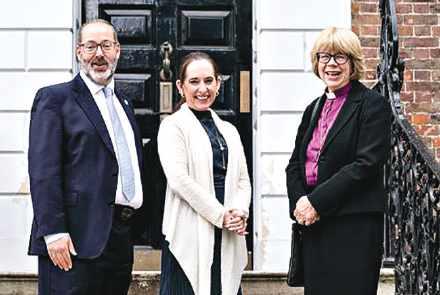
The Archbishop of Canterbury visited Finchley’s Sternberg Centre for Judaism, in a public show of solidarity with Britain’s Jewish community following the recent antisemitic attacks in north London, writes Annabel Sinclair.
During the visit, the Most Revd Dame Sarah Mullally met Progressive Judaism co-leaders Rabbi Charley Baginsky and Rabbi Josh Levy, as well as sta , students and community leaders based at the centre.
The visit came weeks after a series of antisemitic incidents in Golders Green and Finchley, including an attempted arson attack at Finchley Reform Synagogue, just over a mile away.
Rabbi Eleanor Davis of Finchley Reform Synagogue was among those the Archbishop met during her time at the centre.
In a post shared on X, Dame Sarah said it had been “impossible to ignore the distressing truth about Jewish life in Britain today”.
“No parent should have to fear for their child’s safety at school or worship,” she wrote.
“Antisemitism must be opposed without hesitation or qualification. We all share responsibility for challenging hatred wherever we encounter it.”
Hosted by Rabbi Baginsky and Rabbi Levy, the Archbishop toured the Sternberg Centre campus, including visits to Akiva School and Leo Baeck College, where discussions focused on interfaith cooperation, education and the impact of rising antisemitism on Jewish life.
The rabbis said the visit carried particular significance at a time of growing anxiety within the community.
“To have the Archbishop of Canterbury with us at such a moment was a powerful act of solidarity and care,” they said in a joint statement.
“Her presence meant a great deal at a time of rising antisemitism, and we are grateful for her clear support and willingness to stand with our community.” They added: “We are living through a time when loud voices are trying to deepen divisions between communities, and especially between faith communities.
“Her visit pointed to a better vision of public life, one in which faith communities and minorities recognise one another’s dignity, stand alongside each other, and work together for the common good.”
According to Progressive Judaism, the visit also marked the eve of the UK’s first Jewish Culture Month, which began this week.
by Jenni Frazer jenni@jewishnews.co.uk
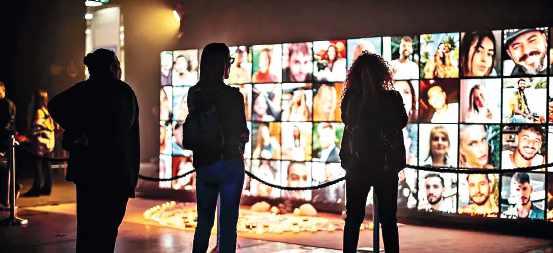
The first thing that hits you when you enter the Nova Festival exhibition in London is a soundscape of anguished cries, as the people targeted by Hamas terrorists run for their lives.
You don’t need to speak Hebrew to get a sense of what was happening. You are pitched from a film of warm and fuzzy, peace and love, trance music, early on the morning of 7 October 2023, as the golden sun rises, when suddenly the music stops and the organisers tell the disbelieving crowd: “Red Alert!”
And pandemonium ensues. All around the exhibit are screens, some of which feature testimony from the survivors, which you watch in shocked disbelief, as you walk on sanded floors, circling around shot-up cars rescued from the Nova Festival site. Three hundred and seventy eight people were murdered at Nova and many more wounded.
There are cubicles that represent the concrete shelters on Route 232 away from the festival site by Kibbutz Re’em, into which dozens of festival-goers crammed themselves in a desperate attempt to escape the terrorists. In one
of these, Aner Shapira, a British-Israeli soldier aged just 22, tried to stave o the Hamas attackers by throwing out the grenades they were lobbing into the shelter. A wall poster tells us: “There were 40 of us in there and only seven came out alive. We couldn’t move. We were all covered by corpses.”
It is truly heartbreaking to read comments from survivors, such as this from Adir Ben Zikri: “I realised that they were shooting at every vehicle that approached and then they burned it. I ran between burnt bodies, body parts strewn all over the road and rivers of blood. We reached a rescue point. The guy next to me was mumbling: ‘They shot at us in the car. They turned my brother into a sieve, they left nothing of him. I have nothing to bury… nothing to bury…’”
Another annexe room holds a screen with an interview with one of the Zaka volunteers, Shneor Gol, who speaks of the unspeakable, of the mutilated bodies.
He says that Zaka volunteers are “thought of as the tough guys, the people who didn’t cry. But I cry every day.”
He is not alone. It is almost impossible to view this exhibition without shedding tears,

and indeed dozens of hardened journalists at the press preview were doing just that.
Forty-four of the Nova Festival participants were among the 251 hostages held by Hamas in Gaza. Among them was Elkana Bohbot, one of the organisers of the 2023 festival, whose two business partners were killed by Hamas. He was one of the last hostages to be released — in October 2025 — and has spent his time since in writing a book about his experience. The book, 738 Days in Hamas Captivity, is due out in English shortly.
Bohbot told Jewish News that though he found the recreation of the Nova massacre “very painful”, he felt it was his “mission” to talk about
what happened. Though the exhibition has travelled to six sites in America, to Buenos Aires, Toronto and Berlin, this was his first time to see it – “as I was in Gaza”, he says, gently.
He has one message for the non-Jewish world: “Please come to see it. Even if you only come for a minute.”
Deeply aware of the comparisons with the Holocaust, he said: “Now the survivors are dying and it’s too easy to deny what happened. But we, the survivors of 7 October, we are here and we must tell the story.”
u The Nova Festival exhibition runs in London from 20 May to 5 July









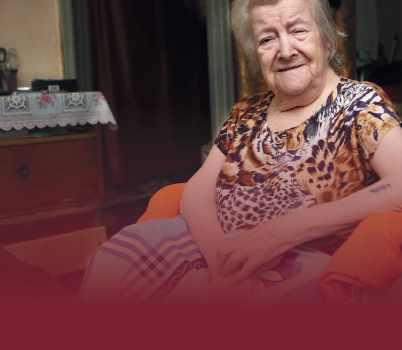








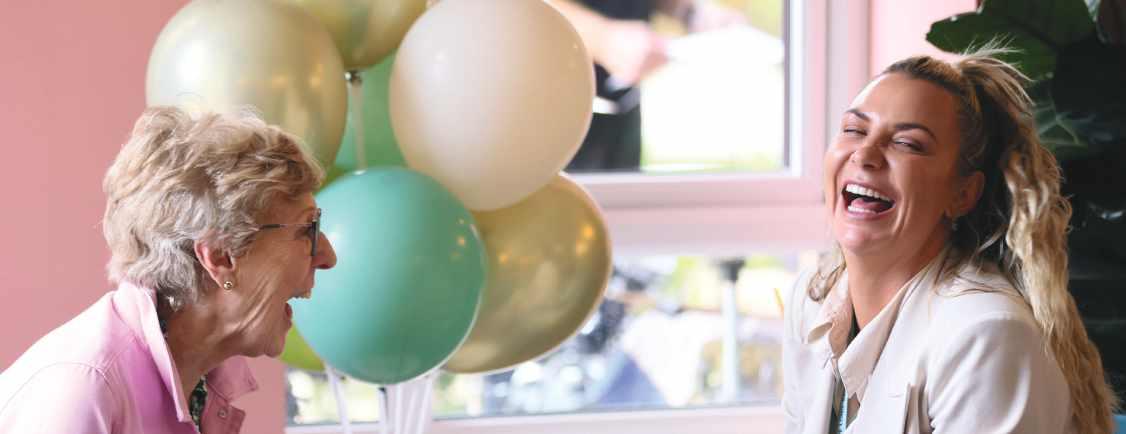





There comes a moment when managing your house starts to feel like more e ort than ease. At Birchgrove, you rent your own apartment and live entirely on your terms, with support on hand if you want it. No exit fees, no pressure to buy, no hidden charges. Just a calm, flexible way to move forward – where life feels lighter, and you feel more like yourself again.


Retirement apartments to rent in Mill Hill





Most of us spend decades managing things. A home we maintain. A family we hold together. A life that needs constant running. For a long time, that ‘busyness’ shapes our days, our weeks, our years – our lives, providing structure and purpose. It is, in many ways, a part of who we are.
So when our house starts to feel less like a home and more like a responsibility, it is not just tiring. It can add to that feeling of loss. Things that once gave shape to the day now seem to take from it. Energy. Time. The small joys that used to fill the gaps between everything else.
This is something many people in later life describe, often with more honesty in hindsight than they could manage at the time. When they look back, they can see they were holding on. Not to the house
itself, but to a version of themselves that felt familiar and safe. The home had become more than bricks and mortar. It was proof of a life well-lived; a self well-managed. No wonder letting go felt so hard. What nobody tells you is that loss aversion, that very human instinct to protect what we have, can blind us to what we might gain. The fear of the move is almost always bigger than the actual move itself. What astounds people who move to Birchgrove is not how different life feels. It is how much more like themselves they feel. The residents who describe it best do not talk about what they gave up. They talk about what came back. The pleasure of a morning that belongs entirely to them. Neighbours who become friends. Conversation that arrives naturally rather than having to be sought out. The quiet but profound difference between an evening
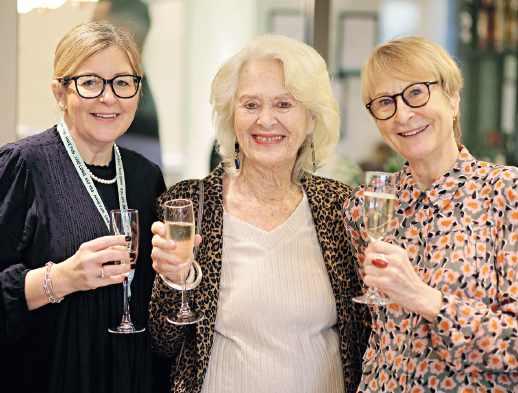
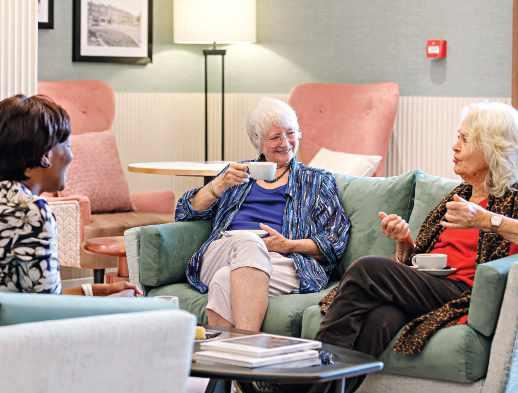
chosen in solitude and one spent alone because there is no other option. People talk about community as if it is a luxury.
For many of our residents, it turned out to be the thing that changed everything.
One resident put it simply. “I got more of my independence back, not less.” Another said her only regret was not having done it sooner. These are not exceptional stories. In our experience, they are the rule.
Birchgrove is simply a different way of living. You have your own self-contained apartment, your own front door, your independence entirely intact. Support is there when you want it, invisible when you don’t.
Everything that tends to drain the day – utilities, housekeeping, broadband, 24/7 staff presence, is taken care of. No exit fees. No hidden charges. Just room to breathe, and room to be yourself.
Later life should not be about diminishment. Sadly, for some people it becomes exactly that, not through any failing of their own, but simply through circumstance and the slow weight of managing alone.
It does not have to be that way. At its best, this chapter is the one where life finally becomes more about you. Doing what you love. Spending time with who you want to spend it with. Making new connections you never expected to make. Old friendships deepened. New ones begun.
Life does not stop here. For a great many of our residents, it quietly, unexpectedly, gets better.
There comes a moment when starts to feel like more e ort you rent your own apartment terms, with support on hand fees, no pressure to buy, no hidden a calm, flexible way to move forward feels lighter, and you feel more
For more information about Birchgrove visit www.birchgrove. life or speak to our lovely team on 020 3929 5599.
A nurse faces being struck o the nursing order after “deeply unpleasant” remarks about Jewish patients being tight with money, a tribunal ruled, writes Joy Falk.
Helen Oluyemisi Balogun was also found to have said to a Jewish colleague words to the e ect of “Jews don’t believe in Jesus”, a Nursing and Midwifery Council (NMC) tribunal ruling said.
The nurse, who the tribunal heard is from Nigeria, showed a “consistent theme and pattern” of trying to “minimise” her “antisemitic comments”, the NMC wrote.
Ms Balogun became a nurse in April 2009 and was employed by the Priory Group from November of that year, the tribunal heard.
The tribunal in London heard from three colleagues in relation to an alleged remark made by Ms Balogun in 2023 and the panel found that she referred to a Jewish patient as being “tight with money” and that this “correlated with him being Jewish”.
On a second occasion, Ms Balogun allegedly made a similar remark about another Jewish patient, the tribunal heard.

The tribunal panel noted that during her oral evidence, Ms Balogun accepted that she had said “don’t like to spend money… Jew”.
It wrote that the two comments “can only reasonably be interpreted as demonstrating a discriminatory attitude towards patients based on the grounds of race and/ or religion.”
The panel added that her conduct “was very serious, deeply unpleasant and went far beyond what the public would expect from a registered nurse”.
Ms Balogun was found to have told a Jewish colleague words to the e ect of “Jews don’t believe in Jesus” or “Jews not
accepting Jesus”, despite claiming she had not, the panel said.
The colleague said in her witness statement: “Helen had made some similar comments in the past, including some half-joking comments about Jews not accepting Jesus.
“I think she was half-joking but her comments did hit home for me. I do not think that a belief system is something people should joke about.”
The panel wrote: “There appears to be a consistent theme and pattern of behaviour regarding your behaviour towards your antisemitic comments which you try to minimise, where you believe that you are not doing anything wrong.”
Alice Byron, representing Ms Balogun, said that she has “outlined sincere remorse” and demonstrated “introspective thinking” and “insight into perspectives” beyond her own.
Ms Balogun was handed an interim suspension order and will be permanently struck o from the nursing register unless she successfully appeals the decision.
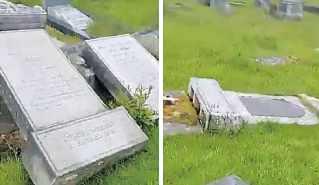
after
claims that a
cemetery in the city had been vandalised were found to be false.
Footage shared online appeared to show dozens of headstones lying flat at the Glasgow (Garnethill) Hebrew Congregational Burial Ground within the Western Necropolis.
One widely circulated post claimed that “up to 50 headstones” had been “pushed to the ground” in what it described as an “antisemitic attack”.
The post, which tagged several national media outlets, prompted concern online amid continuing fears over rising antisemitism nationwide.
But Glasgow City Council quickly issued a public response rejecting the claims and clarifying that the site was undergoing planned maintenance work.
The council said: “This is not vandalism. Older headstones have been laid flat for safety reasons. Some are flat by design. Some have been laid down for repairs.”

insurance expert, I’m here to find the right policy for you, and help recommend the providers who offer the best cover at the most competitive premiums. Our FREE advice service covers individual, family and company policies. Whether you have an existing policy or not, let’s have a chat.



















SJOSH GLANCY ASSOCIATE EDITOR, SUNDAY TIMES
ometimes you see a picture and immediately feel a shudder of history, knowing that the snap of a photographer’s shutter has captured a moment that will outlive the camera, and quite likely the photographer.
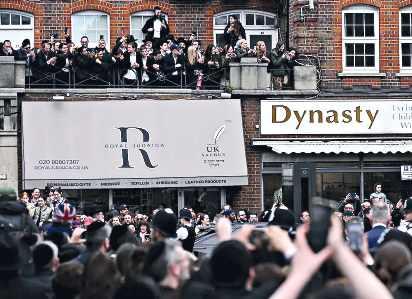
So it was for me with a photo of King Charles’s impromptu visit to Golders Green last week. For obvious security reasons, the good burghers of north London were not given advanced warning of his majesty’s visit to the site of the recent terror attack. Yet within minutes, as the royal journalist Robert Hardman posted online, hundreds of onlookers had rushed to the scene, bringing tra c to a standstill.
The picture that Hardman posted of the King surrounded by a crowd, tells the story of this moment better than I ever could. The gnawing fear and anxiety, replaced for just a moment by admiration and excitement and gratitude. It should go straight into the annals of Anglo-Jewish history.
There is a timelessness to the backdrop of this picture: Gross Butchers, Leon’s fruit shop, the red brick flats of Russell Parade. It could have been taken on Brick Lane in the 1930s; petty bourgeois merchants and their customers pouring out of shops to glimpse their king. On balconies above the shops, frum schoolgirls line up two or three deep. One young boy hangs eagerly from a lamppost, another from a silver birch. The tableau is dotted by black velvet kipot and sheitels, thrusting iPhones and admiring grins.
In the bottom right, Charles Rex makes his progress, his hair receding, his body tired from its long struggle with cancer, his willingness to walk unguarded through a large and excitable crowd a testament to his determination to be there and also the a ection with which he knew he would be received. Charles’s mother Elizabeth famously said


that a monarch must be seen to be believed. Here the king was not only seen by his subjects but touched, snapped, filmed, a tangible and very human presence in their midst.
There are two similar flags visible, each freighted with symbolism. On a lamppost is a small Union Jack, an outgrowth of the Raise the Colours campaign. The couple responsible for raising these flags on Golders Green High Street were interviewed on television after the recent stabbing, explaining their patriotism and their unease at how Britain has “changed”. The flag on the lamppost embodies that unease, making an unsettling statement about immigration and ethnic change and what that has done to alter and threaten the Jewish place in British society.
Directly above Charles is another, larger, flag, a Union Jack/Magen David hybrid that seeks to bind Britain and its Jews in symbolic unity. I don’t know how long that flag has been around; I only started noticing it cropping up regularly at events post October 7.
This flag makes its own statement, in a way
reminiscent of another famous Anglo-Jewish photo, taken outside the o ces of The Jewish Chronicle in 1914. That picture showed a recruiting poster that sought to rally Jews to sign up for the First World War. “England”, it said, “has been all she could to the Jews. The Jews will be all they can to England.” This hybrid flag seeks to say something similar: we are you, you are us, we fight together. Implicitly, because it looks like an Israel flag too, to me at least this new hybrid
flag also suggests another, subtler story: the Israelification of British Jewish life since October 7, as the struggles of the Jewish state come to define and dominate the diaspora; as men come to stab us on our high streets and in our shuls because they cannot or do not want to distinguish between diasporic Jewish peoplehood and the actions of the IDF in Gaza. It is a relationship that grows ever more complex.
Recent attacks in places like Heaton Park and Golders Green have been compared to pogroms of Tsarist Russia. This is hyperbole, but you can see why people are drawing the analogy. The list of atrocities grows longer.
Of the many di erences between then and now, however, one leaps out from this picture. The pogroms of the 1880s, which led so many Jews to leave Russia and end up in places such as Golders Green, were at least partially state sponsored. In 1882, Tsar Alexander III introduced the May Laws that banned Jews from living in the countryside and barred them from certain occupations.
Today, in response to a series of smaller attacks on Jews, our British monarch has just taken on a role as patron of the Community Security Trust. He has visited this site of an attempted massacre to shake hands with a traumatised and fearful Jewish community. He has, in short, behaved like a mensch. His visit tells a di erent story about how British institutions and leaders relate to this country’s Jewish community.
During every Shabbat service in the United Synagogue, we ask that God puts a spirit of wisdom and understanding into the heart of our ruling monarch, so that he may advance the welfare of the nation and deal kindly and justly with the Jewish people. On Thursday 14 May, 2026, Charles III did just that.
In that same prayer, we also ask that the supreme King of kings preserve Charles in life and deliver him from all trouble and sorrow.
To which I say, Amen.
Thank you for helping to make Jewish News the leading source of news and opinion for the UK Jewish community. Unlike other Jewish media, we do not charge for content. That won’t change. Because we are charity-owned and free, we rely on advertising to cover our costs. This vital lifeline, which has dropped in recent years, has fallen further due to coronavirus.
Today we’re asking for your invaluable help to continue putting our community first in everything we do. For as little as £5 a month you can help sustain the vital work we do in celebrating and standing up for Jewish life in Britain.
Jewish News holds our community together and keeps us connected. Like a synagogue, it’s where people turn to feel part of something bigger. It also proudly shows the rest of Britain the vibrancy and rich culture of modern Jewish life.
You can make a quick and easy one-off or monthly contribution of £5, £10, £20 or any other sum you’re comfortable with. 100% of your donation will help us continue celebrating our community, in all its dynamic diversity.
Support Jewish News by visiting our donor page at jewishnews.co.uk


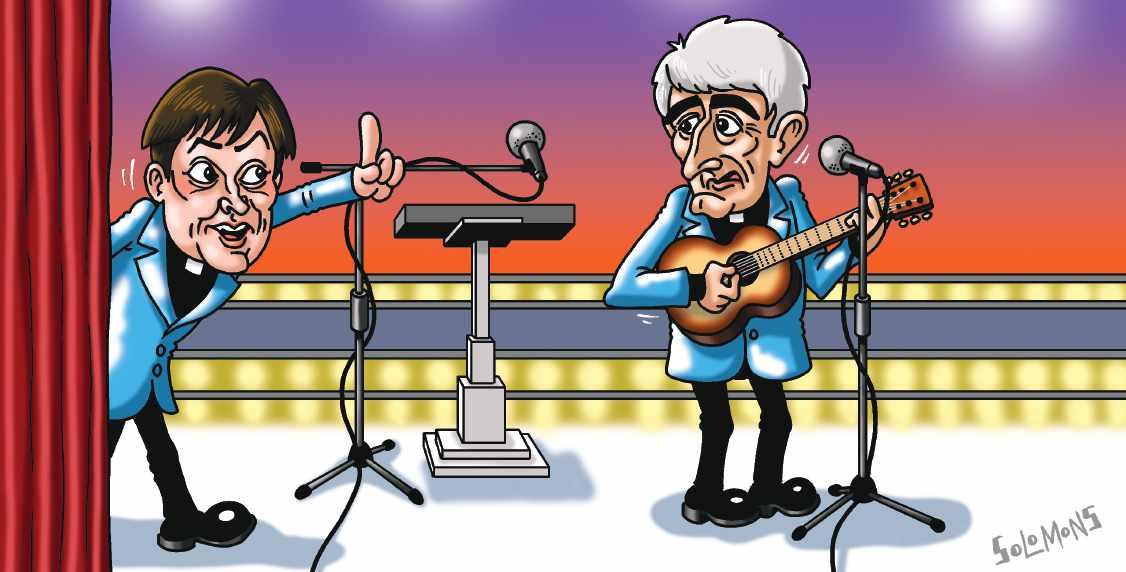
‘Change of plan, Ted. The UK have a worse song than ‘My Lovely Horse’, so we’ll just boycott and blame Israel!’





Chana is the leading UK fertility support organisation for the Jewish community and supports couples with the emotional, medical, practical, halachic and financial challenges of infertility, baby loss, miscarriage and any reproductive health issue.






LISA WIMBORNE CHIEF EXECUTIVE, JBD
For almost 60 years, Jewish Blind & Disabled’s work has centred around helping Jewish people live well with sight loss and physical disability. But we are increasingly concerned about something that sits earlier in the story: rising levels of type 2 diabetes.
Unmanaged type 2 diabetes is, quite simply, a ticking timebomb, and can be a gateway to life-changing complications. We see, first-hand, the human cost when sometimes preventable health issues become permanent impairment. That is why, as a charity, we feel we have a duty to raise awareness and educate. Our campaign with Jewish News, launched this week, focuses solely on type 2 diabetes because, unlike type 1, it can often be prevented or better managed through early detection, regular health checks and lifestyle changes.
The scale of the issue is sobering. In
England alone, National Diabetes Audit
figures show the number of people living with type 2 diabetes (and other non-type 1 diabetes) increased by around 13% in the four years between 2017-18 and 2021-22. Diabetes UK estimates that more than 5.8 million people in the UK have diabetes, including almost 4.6 million with a diagnosis – and around 90% of diagnoses are type 2. It also estimates that 1.3 million are living with type 2 diabetes who are yet to be diagnosed.
This matters because earlier diagnosis means a better chance of avoiding the complications that can steal independence.
For Jewish readers, this is not an abstract national trend. Applying Diabetes UK’s national figures to the Jewish population of England and Wales (287,360), suggests that around 25,000 Jewish people may be living with diabetes, the majority with type 2. Furthermore, in 2021, as part of our work to better understand patterns of health and disability in Jewish communities, JBD commissioned Jewish Policy Research (JPR) to analyse the data. The stand-out finding was diabetes: 17% of Jewish people aged 65+



reported diabetes, compared with 8% of the general population.
This figure is shocking. While it could be in part attributed to our community’s older age profile, let’s be frank - our Jewish lifestyle probably has had an impact on these figures.
We are a community that likes to celebrate with a big meal, another doughnut or latke and challahs and bagels by the dozen.
Whilst gym culture might have become a defining feature of Gen Z, if I were to generalise, I would argue that exercise hasn’t traditionally been something that our community has been known for.
I am aware of the need not to fall into simplistic labels or blame. Type 2 diabetes is influenced by various risk factors including age, weight and ethnicity – and it is also surrounded by misconceptions. But we also need to be honest about the realities of modern Jewish life: long working hours, stress, too little movement, and diets that can be heavy in refined carbohydrates and sugar. Food is central to our culture, and many of our traditional dishes were originally shaped by the cheap ingredients that were available
to our parents and grandparents.
Today, with knowledge and support, we can keep the joy of those traditions whilst making healthier choices.
Over the coming weeks, JBD will be bringing this conversation into the heart of the community. I encourage you to attend one of our free diabetes awareness events and to take part in our Jewish community diabetes survey. Alongside educating and raising awareness, we want to listen.
We want to understand what support Jewish people who are at risk of or are living with type 2 diabetes may need. We want to identify how, working together, we can reduce the rapid increase of type 2 diabetes and support people living with this condition to manage it as best they can.
While we remain 100% committed to providing housing and support for Jewish people living with sight loss and physical disability, if there is anything we can do to prevent people having to turn to us for support, we will. Not because we don’t want to provide the support, but because we know prevention is always better than a cure.
LONDON - 25th, 26th & 27th MAY

ALEX BRUMMER CITY EDITOR, THE DAILY MAIL
As the trauma of the last several weeks has unfolded for British Jews, broadcasters and others constantly refer to the small size of a community besieged by antisemitism. Certainly, in relation to the burgeoning Islamic minority, which was forecast to vacuum up a record number of seats in the May 7 local elections, the assaults endured by Jews and their institutions have increased tenfold.
There has been feigned surprise that so many members of the Jewish community interviewed, posting on social media or writing about their experiences, talk about leaving the UK and moving to Israel.
People cannot understand why Jews would want to leave for a land that is so often at war. Leaving for a homeland was a choice not available in the 1930s as fascism and anti-Semitism erupted in Germany, Hungary (from where my father escaped) and other countries.


Watching and listening to some of the media coverage one might think that British Jews were an odd minority, mostly living in Golders Green and north Manchester, wearing kippot and garbed in black coats and hats. There is precious little understanding of what our community, back in Britain since the 17th century, has contributed and still contributes to our society. If we were to flee it would blow a huge hole in Britain’s cultural, media, academic and scientific life.
As a financial and economic commentator for several decades, I live in constant wonder at the Jewish contribution to commerce and the companies in the FTSE 100, whose ups and downs are reported on news bulletins each day.
On my way home from the Daily Mail’s o ces in Kensington, I drive past a blue plaque opposite Olympia celebrating the life of Sir Joseph Lyons (a family relative) who helped to keep Britons supplied in the decades in the mid-20th century. The firm bearing his name, J Lyons & Co, was the first in Britain to embrace computer technology. There is some shyness in the Jewish community about referring to business success.




People fear that it feeds into the Corbynite narrative, inherited by Zac Polanski’s Greens, that Jews are vampire squids sucking resources out of the economy.
There is another very di erent way of looking at this. Imagine what life would be like for consumers, the nation’s workforce, energy suppliers and many other economic players were it not for the Jewish gift to enterprise in Britain. It goes without saying that Sir John Cohen’s Tesco, the country’s biggest supermarket chain with some 30pc market share, o ers consumers the keenest prices.
The list of retail concerns with Jewish heritage is almost too long to repeat here. But among the biggest stars are Next, Marks & Spencer, JD Sports, Burberry, online shopping pioneer Ocado, Curry’s (the former Dixons) and fashion chains such as River Island. But it is Tesco’s innovation with the introduction of supermarkets, computerised stock systems just in time delivery, among other things, which dominates all UK’s retail culture.
The list of retail concerns with Jewish heritage is almost too long to repeat here. But among the biggest stars are Next, Marks
& Spencer, JD Sports, Burberry, online shopping pioneer Ocado, Curry’s (the former Dixons) and fashion chains such as River Island. The modern City of London, generating 8pc and upwards of the nation’s output, is housed in developments such as Broadgate and Canary Wharf, brought to fruition by Jewish real estate visionaries.
Surprising as it may seem, Shell, currently Britain’s most valuable stock market company, owes its origins to Lord Bearsted, the former Marcus Samuel.
In an age of conflict, when defence is so critical to the nation, we can be grateful to the legacy of the late Lord Weinstock and GEC. When his company was broken up after his departure, the defence arm, including submarine platform Vickers and defence electronics group Marconi were sold to Bae Systems, one of the world’s leading makers of aircraft, missiles and advanced avionics.
Across the board in electronics, pharma, AI and finance, Britain’s Jewish community inspires and creates. Its contribution to the common weal and the nation’s prosperity should be celebrated, not demonised.








































MOHAMMED ALI AMLA
SOLUTIONS NOT SIDES
Britain is becoming increasingly comfortable with hatred, and we should all be deeply concerned. Antisemitism and Islamophobia are rising rapidly, normalised and mainstreamed.
Public discourse is becoming harsher, more polarised, more performative, and less human. What once would have been recognised as unacceptable is now too often excused or rationalised. We are no longer just witnessing disagreement in society; we are witnessing the normalisation of dehumanisation itself.
Communities are increasingly pushed into defensive corners, encouraged to compete over su ering rather than confront the deeper crisis unfolding before us. Muslim and Jewish pain is instrumentalised. Empathy and solidarity becomes conditional and transactional. In that process, we lose the ability to recognise one another as
human beings. This is not simply a Jewish problem or a Muslim problem – it is a British problem requiring British solutions rooted in equality, fairness, and a renewed commitment to shared humanity.
Jewish and Muslim communities do not need a hierarchy of hate. We do not need to debate whose fear is more legitimate, whose trauma is more significant, or whose vulnerability deserves greater recognition. Antisemitism and Islamophobia are both real. Both are dangerous. Both corrode the social fabric of this country. And both thrive when societies are taught to see entire communities not as neighbours and citizens, but as problems to be managed.
The parallels are di cult to ignore.Jewish communities are targeted through conspiracies about power, loyalty, and hidden influence. Muslims are framed as threats to national identity, security, or social cohesion.
Jewish people are often made collectively responsible for the actions of a state. Muslims are collectively blamed for the actions of extremists. In both cases, complexity is stripped away. Human beings are reduced into symbols of suspicion and fear.
That is how hatred operates. It does not
begin with violence. It begins with language, repetition, caricature, and the steady normalisation of contempt. And once hatred becomes socially acceptable against one group, no community remains truly safe.
I write as a Muslim who has spent much of my life building bridges with Jewish communities and standing alongside colleagues, friends, and partners in confronting antisemitism. I do so not because it is easy or convenient, but because it is necessary. Antisemitism is real, persistent, and dangerous. It mutates across political, ideological, and social spaces, and it must be challenged wherever it arises.
It is also important to be honest that antisemitism can and does exist within Muslim communities. That reality should not be denied. But neither should it be distorted. We must also be willing to say clearly that Islamophobia exists within Jewish spaces. This is not about assigning collective blame – it is about collective responsibility. No community committed to justice can demand that its own experiences of hatred be taken seriously while refusing to confront prejudice within its own environments.
Yet too often, allyship becomes selective. Both positions undermine moral credibility. Both reinforce the dangerous idea that some communities are more deserving of protection than others. Allyship must be principled.
Real solidarity requires discipline, not exaggeration, which is why interfaith work cannot remain at the level of symbolism.
Jewish and Muslim communities in Britain now face a choice. We can allow ourselves to be divided by those who benefit from our mutual suspicion, or we can recognise that antisemitism and Islamophobia, while not identical, are deeply interconnected. And perhaps that is where real allyship begins.
NICOLE LAMPERT
Yes, we are living in a new age of insanity. The ‘ongoing genocide’ that isn’t. The calls for war on ‘peace marches’. The mainstreaming of antisemitism in the ‘anti racist’ Greens, and the ‘false flag’ claims every time Jews are hurt.
But sometimes, even now, something is alleged that truly takes your breath away. Training dogs to rape.
This latest conspiracy emerged via a Geneva-based, Hamas-adjacent NGO called Euro-Med Human Rights Monitor, which first published a report alleging that dogs were being used to sexually assault prisoners and detainees in Israeli facilities.
The conspiracy was fanned by fringes of the far left – with Owen Jones writing on his Substack last month, “there is overwhelming evidence that the Israeli ministry is raping Palestinian detainees with dogs.”
But now it is in the New York Times, once considered a paper of record. In a comment piece titled “The Silence that Meets the Rape of Palestinians”, two-time Pulitzer Prize winner Nicholas Kristof wrote that a Palestinian journalist he interviewed described
being mounted by a dog, saying that “he tried to dislodge the dog...but it penetrated him”.
The article went on to say other Palestinian prisoners had cited similar reports of police dogs being “coached to rape prisoners.”
This isn’t the only problem with the article: Former Israeli Prime Minister Ehud Olmert said he had been misquoted when it appeared he had agreed with some of the most egregious claims in the article, saying: “The positioning of my quotes after pages of such allegations misrepresents my views.”
Numerous experts have come out and said it is technically impossible to train dogs to rape men. I now know more than I could have ever wished about the private parts and mating habits of dogs. Such is being a Jew in 2026.
The New York Times has refused to take the piece down.
In 1945 George Orwell wrote an essay about antisemitism; as relevant today as 81 years ago.
Quoting people from varied walks of life, who all had issues with the Jews while insisting they weren’t antisemitic, he concluded: “Antisemitism is an irrational thing. The Jews are accused of specific o ences which the person speaking feels strongly about, but it is obvious that these accusations rationalise some deep-rooted prejudice. To attempt to counter them with facts and statistics is useless, and may sometimes be worse than useless. People can remain antisemitic while being fully aware that their outlook is indefensible.”
He was inspired partly by a tragedy in 1942 when more than 100 people were crushed at Bethnal Green tube station amid a rush to hide from bombs. He recalls: ‘The same day it was repeated all over London that ‘the Jews were responsible.’’
He posits the idea that while Brits were fighting Hitler, it was socially unacceptable to be antisemitic. So people had to find ways more palatable reasons to hate them.
Orwell asserts: “One of the marks of antisemitism is an ability to believe stories that could not possibly be true.”
Thus, it is not bad enough that Palestinian prisoners are likely to be treated brutally in Israeli prisons, as is probable under Ben Gvir. But this brutality has to have a demonic monstrousness to it. It can’t just be bad. It has
to be the worst imaginable.
To quote Owen Jones, this behaviour shows: “A level of depravity which is beyond the imagination of any decent person – you will wonder to yourself, what level of evil could come up with such crimes.”
Both Jews and now the Jew among the nations – Israel – can’t just be bad. They have to be presented as beyond evil. Genuine devils.
If I could take myself out of my body, out of my here and now, I would say that on a psychological level this is fascinating.
Just as people 800 years were willing to believe that Jews really did want to kill Christian children and use their blood for our matzah, and just as 120 years ago they believed in a worldwide Jewish conspiracy to take over the world, and 100 years ago they blamed Jews for the defeat of Germany in World War I, and in the Soviet era communism failed only because of a supposed ‘Zionist conspiracy’, today we are seeing new conspiracies take shape and form, even though no one writing today could claim ignorance about the danger this could lead to.
Already we are targeted as apparent apartheid-loving baby-killing genocide deniers and now dog rapists: if this wasn’t all quite so concerning, so frightening, I would demand to know, what will they come up with next?



Prime central location with easy access to Jerusalem, Tel Aviv & Be’er Sheva
Kiryat Malachi’s fast-growing Anglo community
200+ new apartments already sold or rented to Anglo families & Olim





Join 900+ established families in a warm, dynamic neighborhood
Excellent schools & vibrant community life

Four new high-spec apartment buildings now available

Boulevard





















































The Jewish Family Centre in Golders Green, initially a recreational space, has become a lifeline for families needing support in many aspects of their lives
As a mum with a large family, Sandy Weinbaum wanted somewhere her kids could go to play, where she would also feel comfortable. She founded the Jewish Family Centre in Golders Green in 2000 as an activity hub where mums and their children could hang out.
She noticed that there were women who were coming in to the Centre as the doors opened and staying until they closed. Some of them were begging for food from other visitors to give their kids at lunchtime. “I realised there are people who are literally falling through the cracks because there’s nobody for them to turn to,” says Sandy.
The centre now focuses on all aspects of social care, supporting Jewish families, particularly the most vulnerable, with low-cost or free therapy and advocacy services.
“With 80 percent of our resources now being channeled towards social care we provide social workers who will advocate for you with schools, with the police, with the local authority, if you have got involved with social services for any reason,” says Sandy.
The Jewish Family Centre o ers:
1. Enriching family activities and programmes that foster connection, confidence and community, especially in the early years of childhood and parenting.
2. Navigating complex systems to help families access services, advocate for their needs, and manage challenges across legal, safeguarding, health and educational systems.
3. Direct support, from therapy and parenting guidance to contact visits and practical life skills.
“We’re there when families need us most,” says Sandy.
Baby yoga, sensory play, arts & crafts, baby clinics, pre-school developmental programmes, educational courses for parents and family activities mean that the Jewish Family Centre is a culturally appropriate and safe place for families to enjoy themselves. But it is also so much more. A dedicated Family Support Team provides social workers, family support workers, legal advocates,
counsellors and adult and child therapists. The Centre is highly regarded by Barnet Social Services, judges in the Family Court, and IRO (Independent Reviewing O cers) in the case of child protection.
In this safe and non-judgemental space everyone is treated with care and respect, discreetly getting the support they need.
Jewish Family Centre 2a St George’s Road, London NW11 0LR 0208 209 1117
info@jewishfamilycentre.org.uk jewishfamilycentre.org.uk
The Jewish Family Centre is holding its annual Charity Extra Matched-fundraising campaign on 31 May -1 June. When families struggle in silence, your support helps us listen and find the support they need, before quiet struggles become lasting ones. Go to www.charityextra.com/jfc to show your support.
Chana, the UK’s largest Jewish fertility charity, has returned from its most successful car rally to date. Held 11-13 May on Spain’s Costa del Sol, 120 Jewish men aged 20-80 from around the world took part. Chair of trustees Benny Groszman said: “This year’s rally exceeded every expectation. What made it truly special was not only the scale of the event, but the extraordinary sense of unity and purpose felt throughout the three days. Seeing people from across the Jewish world come together so passionately in support of couples facing infertility was incredibly moving.”
Almost 1,100 children and families attended Norwood’s Carnival on 17 May at Edgware Primary School as part of the charity’s mission to support neurodivergent children, their families, and people with learning challenges. The event was supported by volunteers from Tzofim (Israeli Scouts) Europe, Radlett Reform Synagogue and Project Impact. A concert stage showcased performances from Hertsmere Jewish Primary School, Kisharon Noe School Choir, Alma Primary and Showstoppers academy, dance act Vanessa School of Dance and icandance, a creative therapeutic community which empowers disabled children and young people.
A north London Jewish primary school raised more than £575,000 in a 36-hour matched funding campaign on 10–11 May, attracting more than 600 donors. The funds raised will support the expansion of Kerem’s bursary programme, launch of Little Grapes Nursery, and continued investment in facilities, resources and educational provision. Chair of the fundraising campaign Avi Gelley said: “This was a powerful statement of confidence in Kerem’s future and in the values the school represents: 600 donors in 36 hours tells you everything about how this community feels about Jewish education.”
Members of Edgware and Hendon Reform Synagogue together raised more than £9,500 for community care support and cancer charity Chai. Families, friends, dogs, and supporters of all ages took part, walking either one or five miles together. The event was created by EHRS member Donna, who, after losing her mother Judy and then facing her own bowel cancer diagnosis, was supported by both EHRS and Chai Cancer Care.

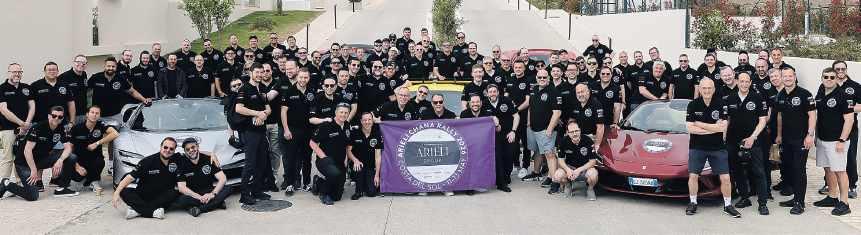
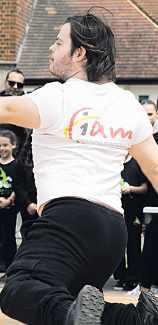
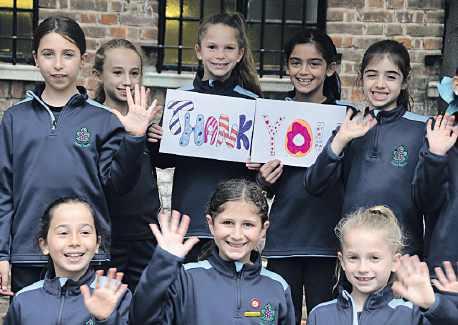
In place of an annual dinner, last week Jewish Blind & Disabled welcomed supporters to a series of special lunch and evening events in their new building, Ephraim Court, located in Mill Hill East. The opening marked a step forward in providing much needed new housing for some of the 140 households on the current waiting list. Chief executive Lisa Wimborne said: “Ephraim Court is something we are enormously proud of. It’s a beautiful building, but more importantly, it’s a building designed with real lives and the needs of
with disability or
ment at its core.


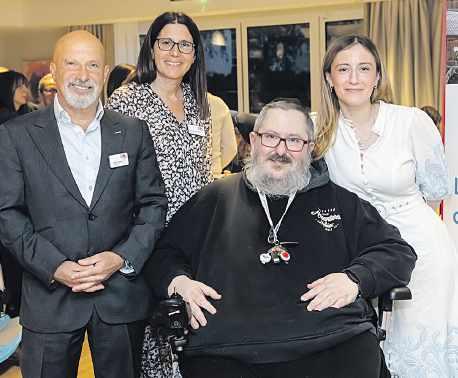

Jewish Culture Month; Vanessa Feltz; Phillip Leigh
A
new
musical about Nigella Lawson lands in Highgate next month. Jenni Frazer meets the team behind it
Three London Jewish creative women are set to wow foodies and lovers of odd pronunciations alike, in the intriguingly titled How to Make a Mess: A Totally Unauthorised Love Letter to Nigella Lawson.
It’s a kitchen-set wistful comedy musical, written by Emily Rose Simons and starring Tanya Truman as Nigella, to whom she bears a disturbing resemblance, and Natasha Karp as Anna.
The Anna character is trying to process her feelings for her estranged mother, who has just died, and she does so through her conjuring up of Britain’s Domestic Goddess, Nigella Lawson.
We meet when Anna, brought up as a secular Jew and unfamiliar with post-death funeral customs – particularly that of shiva – chooses a di erent route to mark her bereavement.
The seed for this ambitious show was planted in a casual conversation seven years ago between Simons and Truman, when they were both involved in an event at a cinema in Hampstead.
Truman says: “It was a very loose suggestion: we were brainstorming and talking about musical theatre, and I was doing impressions of Nigella. I told Emily she should write a musical about
Nigella – and I could play her”. Simons laughed, but the thought developed. It took some time, and the idea went through various workshop sessions, including one in Oxford and an abbreviated version at Manchester’s Jewish Museum. But the now full-length show will run at Highgate’s Upstairs at the Gatehouse Theatre for most of June – and Simons, Truman and Karp are hopeful it might even transfer to a bigger theatre and a wider audience.
I was fascinated to know what Nigella herself thinks of the idea, but the three aren’t yet aware. They have made a point of keeping Nigella’s “people” up to speed with their plans for the show, and would be thrilled if the food writer and presenter herself would turn up on one night of their run – but at the moment they have not heard directly from her. “She is always welcome,” says Simons.
Besides the basic narrative, there are Broadway-diva-style songs and several cooking setpieces on stage – though, disappointingly, the audience will be encouraged to eat before the show, as food safety regulations won’t permit Nigella’s creations to be served en masse in the theatre.
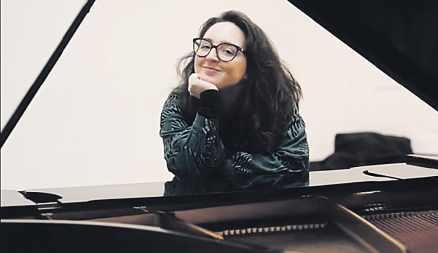
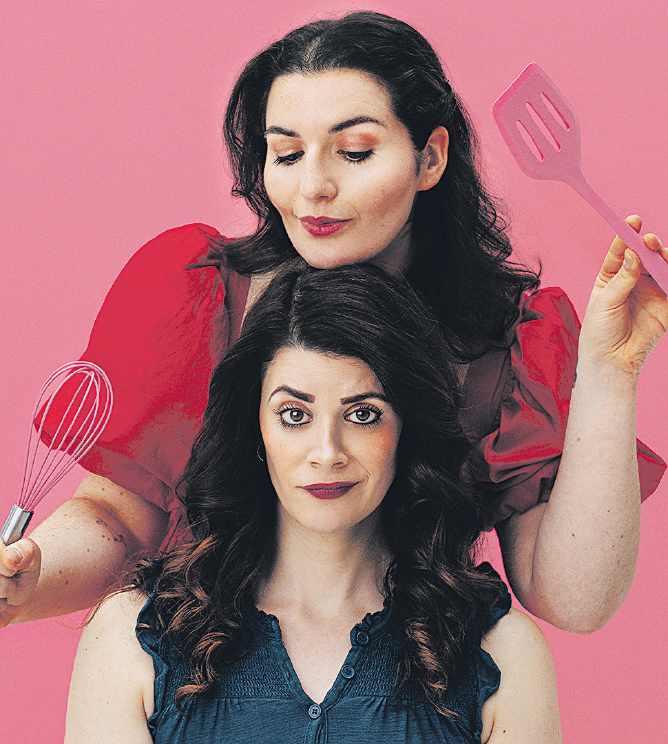

However, Truman said that negotiations were taking place with the Gate’s bar to serve a special Nigella cocktail so that people can get into the spirit of the evening.
Simons has had a tough job balancing Nigella’s well-known love of bacon against her own desire to write about recipes with a kosher flavour for the stage.
“I didn’t want Jewish actresses to be in contact with bacon,” she says, “but I had to refer to it, because that woman does love bacon.”
Karp, playing Anna, says her role looks at the issues of “finding oneself through food, love and forgiveness”, and says that as a Jewish woman she is keen to
celebrate her community on stage.
All three women say that working on a show about Nigella has inspired them to be much more “experimental” in their own kitchens.
Given Nigella’s often peculiar pronunciations — the most recent almost got its own social media account with her version of “meecro-waa-vay” (microwave) – I am fascinated to know if anything similar has been incorporated in this show. All three women o er broad grins. So that’s a yes – probably. Since timing is everything, How to Make a Mess has struck publicity gold with the real-life announce-
ment that Nigella is to take over from Prue Leith as a judge on The Great British Bake O – a reveal made only weeks before the Gatehouse show was announced.
“We didn’t know about it”, says Simons, “and there aren’t any references to Bake O in the show. We are focused mainly on the Nigella who wrote How to Eat. And we are happy to present a positive Jewish British show.”
◆ How To Make A Mess: A Totally Unauthorised Love Letter to Nigella Lawson is at Upstairs at the Gatehouse in Highgate from 4–28 June
The inaugural Jewish Culture Month was launched last weekend at the Freud Museum in Hampstead in front of 150 guests, including Communities Secretary Steve Reed, broadcaster Vanessa Feltz, the new director-general of the BBC Matt Brittin, representatives from participating cultural institutions, members of the Jewish community, and a giant pickle mascot.
Organised by the Board of Deputies and curated by Liat Rosenthal, the Board’s Director of Culture, Education and Communities, the festival aims to “change the narrative of what it means to be a Jew in the UK”, said Board of Deputies chief executive Michael Wegier.
More than 100 events are planned across the country, including food, music, comedy, workshops and historical walking tours.
Guests at the launch were invited to explore Freud’s study and view works by surrealist artist Leonora Carrington. An analyst and artist also welcomed visitors onto a couch to share their dreams, with guests receiving artistic interpretations of their dreamscapes to take home. Attendees had the opportunity to hear brief talks on themes related to Freud and Jewish culture.
Board of Deputies acting president Adrian Cohen explained: “We’re calling for less oy and more joy. This is about opening doors, inviting people in, and celebrating culture – not as something fragile, but something living, confident, and shared.”
Liat Rosenthal said: “Jewish Culture Month shines a light on the remarkable organisations
that are already sustaining and shaping Jewish cultural life across the UK – JW3, UK Jewish Film, Jewish Literary Foundation, Manchester Jewish Museum, among many others.”
Steve Reed, Secretary of State for housing, communities and local government, spoke movingly about the historical contributions of the Jewish community to Britain, including its impact on politics, literature, business, science, education, and the arts. “Jewish experience cannot just be about defending against fear; it also has to be an expression of hope and joy and freedom,” he said.
National institutions spotlighting their Jewish collections and stories include the British Museum, British Library, Tate Britain, Tate Modern, Victoria and Albert Museum, Museum of the Home, Science Museum, The Whitworth, Manchester Museum, Museum of Liverpool, The Story Museum and the BBC.
Vanessa Feltz then took to the stage with warm, witty musings on the absurdity of kosher culture.
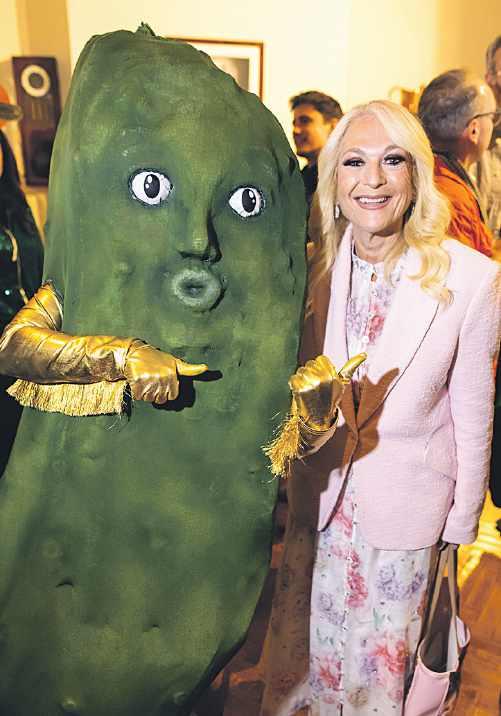
VANESSA
FELTZ
TELEVISION
PRESENTER

J ewish Culture Month launched last weekend at the Freud Museum in Hampstead. I did spend a little while wrapped in my late father’s tallis throwing fish balls at a life-sized model of my late mother constructed entirely of egg and onion, wondering why on earth we need a museum dedicated to Sigmund Freud when every Jewish family spends its every waking and, of course, sleeping – perchance even dreaming – moment proving his theories were grossly understated.
In order to unleash the appropriate chorus of Simun Tov and Mazle Tov in celebration of the first-ever Jewish Culture Month, we must first answer a question that would frankly stump even the Rambam: what do we think is
the encapsulation, the apotheosis of British Jewish culture?
Could the glistening latke of British culture be Howard Jacobson schmearing a bagel (or as Maimonides would correctly say, a beigel) with hummus and passing it to Rabbi Mirvis in the theatre stalls as Simon Lipkin (Jewish) as Fagin (Jewish) sings “You’ve got to pick a pocket or two” in Lionel Bart’s (Jewish) musical Oliver ? (Don’t mention Charles Dickens – alas, Gentile but it wasn’t his fault.)
Or could it be David Baddiel, with a mouthful of shakshuka at Ottolenghi spraying Maureen Lipman with masticated egg whites en route to delivering two hours of stand-up about overhearing his late mother and father enjoying each other in a Shabbos mitzvah in what we Jews call the rabbinical position?
Could it be Stephen Fry, Gerald Ronson, Zac Polanski and Lord Finkelstein toyvelling a treif-adjacent spoon before tucking into parev chocolate ice cream, and saying: “You know what this could do with? Just a few chopped nuts on the top – that would be really nice.”
Could it maybe be Tony Page serving a silhouette of Emily Maitlis in salmon mousse to Judge Rinder at Ali G’s daughter’s bat mitzvah, while Claudia Winkelman declares Robert Peston a traitor, before Lord Sugar says: “You’re fired”?
Or could it be yet another simcha where we shamelessly copy – and we’ve all done this – the choreography from the 1971 film version of Fiddler on the Roof, because although Topol, a wonderful man, God rest his soul, sang Tradition, Tradition, we were too busy in Plotz, heating the water to stop the mikvah freezing over, to dance about with bottles of Palwin no 10 on our heads.
Or is it any one of us gazing at that portrait of Whistler’s mother, which is currently on loan to the Tate, and asking if it would have killed him to pick up the phone occasionally and give her a call? Or maybe possibly it is our culturally stratospheric, lyrical, musical act The Milly Band, starring Ed on strings and Dave on drums.
The tagline of Jewish Culture Month is “Less oy, more joy,” and I am vastly in favour of having a wonderful time, so to that end,
let’s learn to say joy gevalt, joy veis meir, joy a broch and – my personal favourite – joy a klug. Let us not be subsumed by gloom in these dark and di cult times. We Jews excel at finding beauty and humour in the most unpromising places. This revivifying month of Jewish culture will bring balm to our souls, smiles to our faces and much-needed stimulation to our beleaguered brains. Let us celebrate 150 stellar events in 20 British cities. Let us luxuriate in our mesmerising interpretation of art, architecture of fashion, of music and of comedy. Let us bring our very special brand of vivacity and tenacity to the British Museum and to the V&A. Let us unleash ourselves upon the British Library, the Tate and the Science Museum.
Let us praise him with timbrel and dancing, praise him with the clash of cymbals, and with the strings and pipe. I wish you all a most sensational first-ever Jewish Culture Month.
◆ Jewish Culture Month runs nationwide until 16 June.
jewishculturemonth.org.uk
The beautiful new Carmay HaNadiv neighbourhood o ers families an a ordable option for making Aliyah with newly built, part-furnished apartments and a years’ worth of support from Shivat Zion
The rising cost of real estate in Israel, combined with an unfavourable exchange rate, makes it di cult for many Olim from the UK to find a ordable housing while maintaining their desired standard of living. They often initially feel disconnected and overwhelmed by Israeli bureaucracy.
Shivat Zion addresses these challenges by providing clear guidance, practical support and personalised assistance throughout the Aliyah journey.
Why is Carmey HaNadiv a good option for families coming from the UK?
Carmey HaNadiv is a warm and welcoming Israeli-Anglo community which celebrates holidays together and organises regular events.
It o ers strong value for money with new modern buildings, parks, a relatively low cost of living, and significant potential for future growth and development.
Each family is paired with a ‘buddy family’ that helps welcome them into the community and supports them during their transition. There are also Torah classes and community activities in English led by a local English-speaking Rabbi.
What type of properties are on o er?
The development includes two, three, four and five-bedroom apartments, all with balconies (some with Succah balconies). Those buying oplan are able to make certain choices

and adaptations to suit their needs.
Flexible payment terms are available with no interest or construction index costs.
Part-furnished rental properties are available through the Shivat Zion
programme, which o ers an a ordable way for families to settle in the area.
What support is Shivat Zion o ering?
We assess the family’s needs and assist with housing, school registration, special needs and navigating the Aliyah process. We continue providing guidance and support throughout the first year, helping families navigate challenges and settle successfully into Israeli life.
As more Anglo families move into the city, the infrastructure and support systems for English-speaking residents will continue to grow and develop.
To learn more visit shivat-zion. com/come-home/

Phillip Leigh, who advised Tottenham players for 15 years and worked with clients from Bobby Moore to Lord Sugar, says Britain has become a rent-first society
rom cup-winning captain Bobby Moore and TV presenter Bradley Walsh to Lord Sugar and his family, property veteran Phillip Leigh has spent more than six decades advising high-profile clients on where to buy, and more recently what to rent.
FAs the founder of Phillip Leigh & Partners and now an independent property adviser, Leigh has built a reputation for his deep knowledge and long-standing relationships across Essex, East London and beyond. That reputation led to a long-standing role advising Tottenham Hotspur on residential property for its players.
“About 20 years ago, Daniel Levy [former club chairman] approached me,” Leigh tells Jewish News. “I became an adviser to the club for around 15 years.”
During that time, Leigh worked closely with players and sta , helping them find homes, often in Essex, close to the club’s then training ground. Leigh’s association with football stretches back even further. His first high-profile client was Bobby Moore, who approached him in 1966 shortly after England’s World Cup victory.
“He came to me to help him buy a piece of land,” Leigh recalls. “I told him I supported Wolves. He joked that he wasn’t going to do business with me!”
The deal marked the start of a career that would see Leigh work with several high-profile people – it also saw Leigh switch allegiance to West
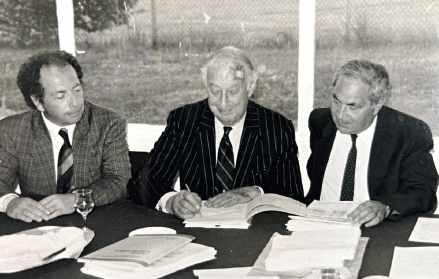
Ham, the club Moore captained.
Among those Leigh has since sold properties to are TV personalities
Mark Wright and Joey Essex and members of boyband East 17. Leigh also formed close business relationships with Daniel Levy and Lord Alan Sugar, who he counts as good friends. His career has also brought encounters with Tony Blair, golfer Greg Norman, Boris Johnson and Leigh’s “personal favourite”, Joan Collins.
But one person left the deepest impression. “The most perfect association I have had in my lifetime was with the emeritus Chief Rabbi, Lord Jonathan Sacks,” says Leigh. “He was, to me and so many others, the greatest mentor and treated me, as ridiculous as it may seem, as his mentor during the period I advised him.”
Leigh describes the late Lord Sacks as “the greatest person” he met on a close, one-to-one basis.
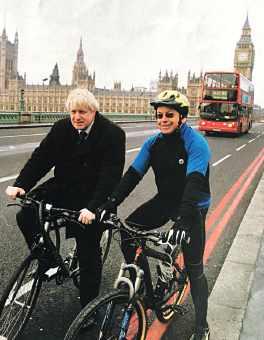
“I try, and would love, to emulate him in many ways in my present volunteering work,” he says. “I now mentor young people and those not so young, usually between the ages of 16 and 56,” he says. “I get much satisfaction from basking in their reflected glory.”
A former black cab driver, Leigh’s journey into property wasn’t conventional. “It was 1963 and I had a very posh accountant in Portland Place, very unusual for a taxi driver.
He saw something in me that I hadn’t seen in myself and suggested I consider a career in property.”
At the time, Leigh was exploring the idea of
back. It used to be about gazumping, now it’s gazundering – people chipping prices o just before contract.
“I see a prolonged period of stagnation ahead. It could be five, 10, maybe 15 years before we see a real boom again, if we ever do.
In some parts of the market, particularly new-build developments, the slowdown is already evident.
launching horse-drawn transport tours around London. “I went back to my wife and said: ‘What should I do, drive a horse and carriage or become an estate agent? She said estate agent.”

In 1966, in his late twenties, he opened a small o ce in Gants Hill, paying £9 and 10 shillings a week in rent. “I knew less about property than the people I was dealing with,” he admits. “I used to get the Ilford Recorder on a Thursday, look up all the private property ads and call them – and that’s how it began.”
Leigh’s early career coincided with a defining period for Essex’s Jewish community, as areas such as Gants Hill became hubs for upwardly mobile families. “In those days, people earned money through graft – market traders, jewellers, hairdressers. They enjoyed buying lovely homes and showing their success. This is not the case today with so few little aspirational purchases.”
At the same time, he recalls, prejudice was never far from the surface. “There were houses I would go to value, and people would say, ‘You can have the instruction, but no Jews, no Blacks’,” he says.
Despite this, much of his business came from Jewish clientele. As the decades passed and that community moved further out into areas such as Chigwell, Loughton and Buckhurst Hill, Leigh moved with it, building the relationships and local expertise that would define his career.
Few have witnessed as many property cycles as Leigh and he is clear that today’s market marks a stark shift from the past, noting that the “boom days of 2003, where residential property prices were rising 20 percent a year are never coming
“In central London, we’ve probably seen a down valuation of around 17% on new-build property,” he says. “A lot of those flats are standing empty – there are very few buyers.”
Home hunters, he adds, are increasingly turning to the rental market as a result. “The balance has shifted. Today, only about 45 percent of people own property, compared to 70 percent in the Thatcher years. We’ve become a rental-orientated society.”
His message to sellers is straightforward: realism matters. “This is a market you can’t challenge. You have to listen to a good, experienced agent when they tell you the true value of your property.”
Too often, he believes, properties are overvalued at the outset. “Agents are frightened of losing instructions, so they overvalue and that’s wrong.”
Beyond property, Leigh, a father of one and grandfather of two, is deeply embedded in the Jewish community that helped shape much of his early career. He is life president of Jewish Care’s Redbridge Jewish Community Centre, which is set to reopen following a major redevelopment. Leigh, alongside the late Frank Cass and the late Ellis Birk, was instrumental in the merger of the old Sinclair House with Jewish Care.
Leigh is also life president of the Loughton and Chigwell District Synagogue. He serves as a trustee of the Holocaust Educational Trust, as chairman of Essex Jewish Youth and the Essex Jewish News and as a trustee of Abridge Golf & Country Club.
His comments come as sweeping new rental reforms recently came the biggest changes to the sector in decades. Under the Renters’ Rights have been abolished, fixed-term tenyear – measures designed to give ten-
His comments come as sweeping new rental reforms recently came into force on 1 May, marking one of the biggest changes to the sector in decades. Under the Renters’ Rights Act, so-called “no-fault” evictions have been abolished, fixed-term tenancies replaced with rolling contracts, and rent increases limited to once a year – measures designed to give tenants greater security and flexibility.
“There are still people who have done well who are putting their hands in their pockets and supporting the community,” he says. “I was delighted to see Sir Gerald Ronson, Lord Sugar and the late Cyril Dennis’ family fund a major part of the new Redbridge Community Centre campus. And that’s vital, because those are the things that
“This was rushed through without much though and communication with property professionals,” he says, adding: “If you asked me what I’d tell my nearest and dearest, I’d say rent. There’s always time to buy. Renting gives you flexibility, especially with work. If you’re tied to a house, that’s not always the case.”
“This was rushed through without much though and communication property adding: “If you asked me what I’d tell gives you flexibility, especially with
He also points out that many ship; maintenance, repairs and an independent adviser, Leigh partnering with local agents to nity Centre campus. And that’s vital, because those are the things that really matter.”

He also points out that many of the hidden costs of ownership; maintenance, repairs and management, are often underestimated. Now working as an independent adviser, Leigh continues to guide clients, often partnering with local agents to o er strategic advice.




BY RABBI HERSHI VOGEL
There is something grounding about the festival of Shavuot. There are no dramatic rituals, just cheesecake, latenight learning, flowers adorning the shul, and the hush that spreads around the shul as we rise to hear the Aseret Hadibros, the Ten Commandments. At its heart lies a quiet but powerful idea that thousands of years ago, an entire nation stood together at Mount Sinai and heard the message that would shape Jewish life forever.
Perhaps that simplicity is exactly why Shavuot feels so relevant today.
We live in a world of constant notifications, endless headlines and emotional overload. Every scroll through our phones brings another crisis, another opinion, another
reason to feel anxious or distracted. Attention spans are shrinking while uncertainty seems to grow. Yet into this noise, Shavuot arrives with a surprisingly modern message: slow down, reconnect and remember what truly matters.
Shavuot reminds us that Judaism is not only about rituals or traditions, but about relationships, our relationship with God, with one another and even within ourselves.
Before receiving the Torah, the Jewish people journeyed through hardship, instability and fear after leaving Egypt. They were not a perfect people – they were vulnerable, uncertain, and still finding their identity as a nation. Yet it was precisely in that state, raw and unfinished, that they were able to receive something sacred.
There is a profound lesson. Many of us think inspiration comes when life is perfectly organised and spiritually polished. The Torah teaches otherwise. Sometimes the greatest moments of growth happen in the middle of

confusion. Sometimes clarity emerges only after struggle.
One of the beautiful customs of Shavuot is staying awake to learn Torah through the night. On the surface it seems unusual –sacrificing sleep to study ancient texts. But perhaps the deeper message is that Torah is not simply information; it is illumination. It gives perspective. It grounds us. In a world that encourages reaction and outrage, Torah encourages reflection and wisdom.
And maybe now more than ever, people are searching for that sense of grounding.
Another striking feature of Shavuot is the
reading of Megillat Rut, the story of Ruth. Rut was an outsider who chose commitment, kindness, and faith despite uncertainty about her future. Her story is not one of power or fame but of quiet resilience. She teaches us that greatness is often through small acts of loyalty, compassion and courage, one decision at a time.
Di cult moments have also revealed remarkable unity.
Perhaps this is the real gift of Shavuot. The Torah describes the Jewish people standing at Sinai: “K’ish echad b’lev echad” (like one person with one heart). In a fractured world, this idea alone feels revolutionary.
Shavuot celebrates not only the giving of the Torah long ago, but the reminder that every generation can receive it anew. Every person can reconnect. Every act of kindness, every moment of learning, every quiet expression of faith adds another link to the golden chain of our people.
In a noisy and uncertain world, Shavuot quietly reminds us that we do not need to have everything figured out to move forward. Sometimes all we need is to stand together, open our hearts, and listen again for the voice from Sinai.
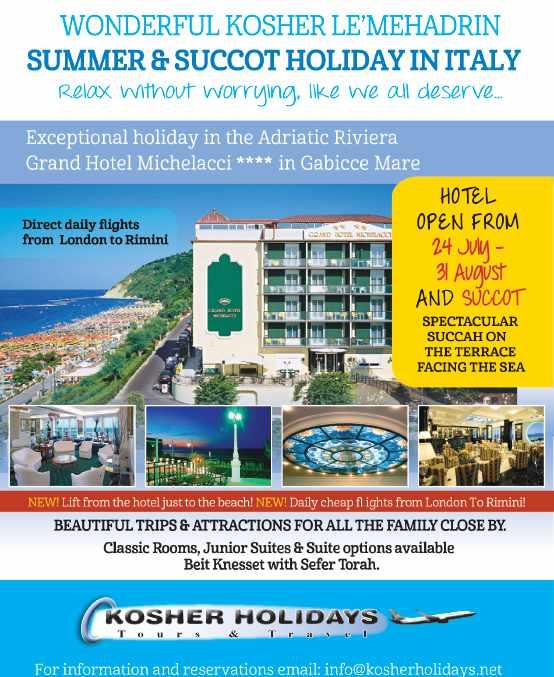
BY RABBI CHARLEY BAGINSKY CO-LEAD, MOVEMENT FOR PROGRESSIVE JUDAISM
Shavuot offers us another possibility
Last week I sat in a cinema watching trailer after trailer and realised I already knew every story waiting for me. Another Star Wars film. Another return to The Hunger Games. Another sequel to something that was already a sequel.
I do not even mean that critically. Some of them I will probably go and see. But sitting there in the dark I found myself wondering how much contemporary culture now depends on familiarity. We seem less willing to imagine genuinely new worlds. We return instead to inherited ones because at least we already know how they work.
Maybe imagination feels harder than it used to. I have been thinking about that as Shavuot approaches.
Shavuot is the moment the Israelites arrive at Sinai. We often tell it as though a nation suddenly appears fully formed at the
foot of the mountain. But the Torah itself paints something messier and more human than that. These are still frightened people carrying the habits of slavery with them. They complain. They panic. They look backwards constantly. They are bound together by shared vulnerability more than shared certainty.
But from that fractured group comes covenant. This year that feels painfully relevant. British Jews are tired. There is an exhaustion running through Jewish life that is di cult to describe to people outside it. The low-level calculations before sending children to walk the dog wearing something Jewish. The constant scanning of crowds and slogans. The feeling that every conversation eventually circles back to October 7, Gaza, antisemitism or fear.
It would be easy for a community under pressure to become smaller in spirit. To narrow. To trust fewer people. To decide that safety can only ever come from retreating behind higher walls. Some voices in public life actively encourage that instinct now. They o er Jews solidarity wrapped inside a wider
politics of anger and exclusion. But Jews should always be wary when fear becomes somebody else’s recruitment strategy.
Shavuot offers another possibility. The rabbis imagined revelation at Sinai happening in 70 languages simultaneously. Not one voice flattening everybody into agreement, but many people hearing something sacred in ways they could each receive. Judaism never really imagined unity as sameness. The argument begins almost immediately after revelation and never really stops.
A stimulating series where our progressive rabbis consider Judaism in the face of 21stcentury issues

too to abandon the values that Judaism asks of us in the process.
That matters now because Jewish unity cannot mean pretending we all think identically about Israel, protest, security or politics. We do not. Nor should we. But there still has to be something deeper that binds us together. A refusal to normalise antisemitism. A refusal to allow Jewish fear to be dismissed. A refusal
Hadassah Hospital in Jerusalem is preparing for any surge in tensions.
The Israelites arrive at Sinai as a crowd of anxious former slaves. They leave with the beginnings of responsibility for one another. This year this is what Shavuot asks from us. Not certainty nor unanimity. Just the dicult work of remaining a people even when the world keeps trying to pull everyone into smaller and smaller camps.

To save lives, Hadassah is expanding its emergency capacity:
u 40 protected emergency beds
u 6 life-saving operating theatres
u Emergency reserves for treatment under fire
The space is ready.
The
But
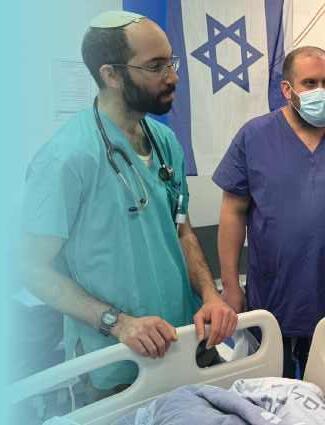
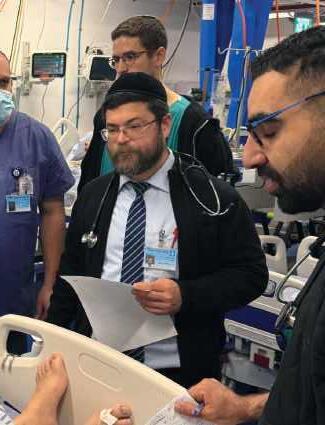




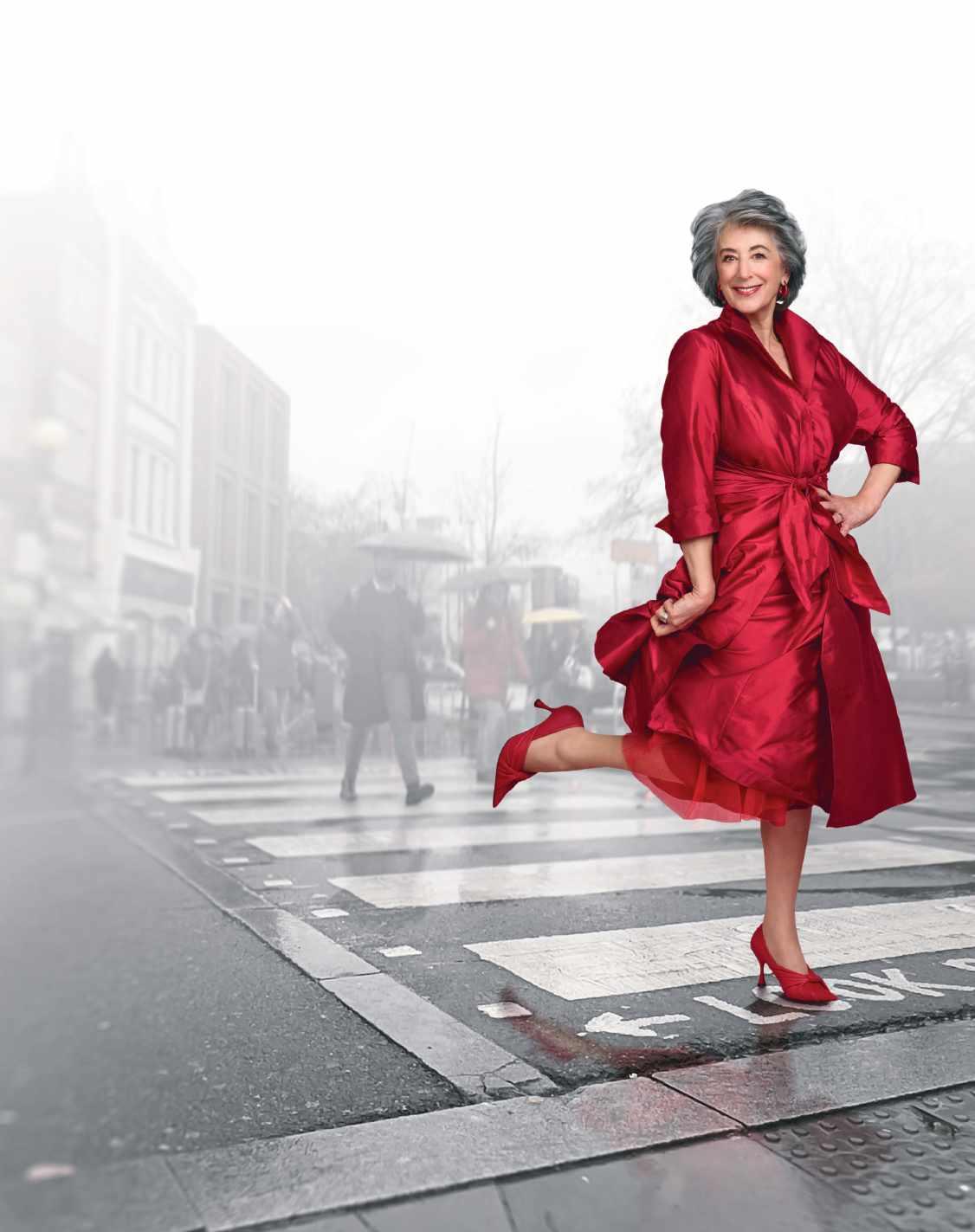


Suits from £79.50
Overcoats from £79.50
SUITS NOW FROM £69
Trouser Bargains £25
OVERCOATS FROM £49.50
TROUSERS £20 EACH, 2 PAIR FOR £30, 28-48 INCH WAIST
SPORTS JACKETS AND BLAZERS FROM £39.50
CASUAL JACKETS FROM £29.50
KNITWEAR FROM £10
SHIRTS FROM £10
SHOES FROM £10
Open everyday & Sundays til 5:00pm
Raincoats from £49.50 We accept Large Sizes a speciality








ANTIQUES
Antique – Reproduction – Retro Furniture (any condition)
Epstein, Archie Shine, Hille, G Plan, etc.
Dining Suites, Lounges Suites, Bookcases, Desks, Cabinets, Mirrors, Lights, etc.
House clearances
Single items to complete homes
MARYLEBONE ANTIQUES - 8 CHURCH STREET NW8 8ED 07866 614 744 (ANYTIME) 0207 723 7415 (SHOP)
closed Sunday & Monday
STUART SHUSTER - e-mail - info@maryleboneantiques.co.uk
MAKE SURE YOU CONTACT US BEFORE SELLING


big or too small! Rubbish cleared as part of a full clearance. We have a waste licence. We buy items including furniture bric a brac.
For a free quote please phone Dave on 07913405315 any time.


Confidential Bereavement Counselling for adults and children individually. Support Groups available. We offer in person, online and telephone counselling. Contact Jewish Bereavement Counselling Service in confidence. 0208 951 3881 enquiries@jbcs.org.uk | www.jbcs.org.uk
Call our Legacy Team on 020








Your Legacy