Meet the stars of this year’s Jewish Book Week Preview, page 29
The Festival Of Spoken Hebrew P25
Meet the stars of this year’s Jewish Book Week Preview, page 29
The Festival Of Spoken Hebrew P25
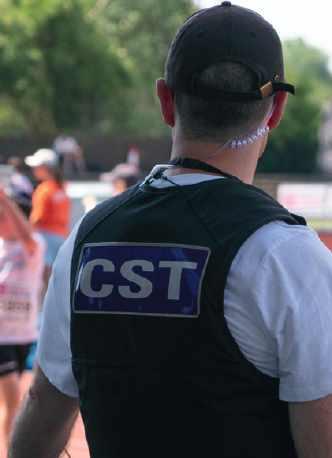
The Community Security Trust (CST) has recorded its second-highest total for antisemitic incidents in a single year, with the number of instances of Jew hate in 2025 rising by four percent from the 2024 figure, writes Daniel Sugarman.
CST’s annual report, published on Wednesday, shows that 3,700 anti-Jewish hate incidents took place across the country last year. The only year in which figures have been higher was 2023, when antisemitism spiralled in the immediate aftermath of the 7 October terror attack by Hamas.
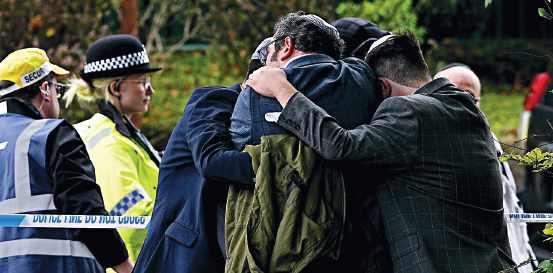
Among the key antisemitic incidents in 2025 was the Heaton Park terror attack on Yom Kippur in October which resulted in the deaths of Adrian
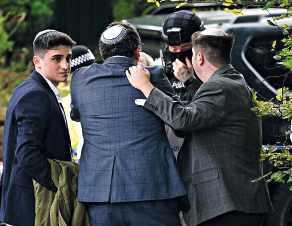
Daulby and Melvin Cravitz – the first fatal antisemitic terror attack since CST began recording incidents, more than 40 years ago. Hate spiked following the murders, with 40 incidents recorded on the day and a further 40 the day after. Last year also marked the first in which every calendar month saw more than 200 incidents. Prior to October 2023, CST had only logged five months in 40 years with more than 200 antisemitic incidents.
October 2023 also showed that a direct terror attack against Jews was more likely to lead to a surge in antisemitic incidents. In the immediate aftermath of the Hamas attack, antisemitic incidents spiked in the UK, prior to a response by Israel. Similarly in 2025, CST logged 40 antisemitic incidents on the day of the Heaton Park Synagogue attack, with a further 40 the following day, of which more than half either directly referenced or celebrated the attack the day before.
CST documented a similar, though smaller spike in December in the immediate aftermath of the terror attack against Jews celebrating Chanukah on Australia’s Bondi Beach.
London and Manchester accounted for 61 percent of all antisemitic incidents logged in 2025, although incidents of Jew hate were recorded in every mainland police region. Other areas with a large number of incidents included Leeds (89) Borehamwood and Elstree (61) and Birmingham (58).
Continued on page 3
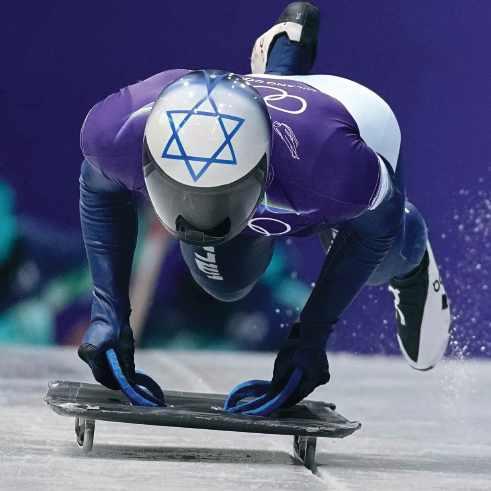
Israel’s Jared Firestone competing this week in the men’s skeleton at the 2026 Winter Olympics in Italy. The country has sent 10 athletes to the Games.
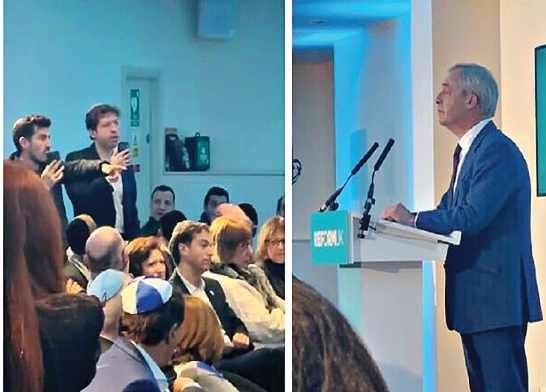
Jewish activists interrupted party leader Nigel Farage’s speech at the launch of a communal organisation linked to Reform UK on Tuesday, writes Lee Harpin.
As Farage began his address at the event in central London, a man and two women stood up and began to raise objections.
Security guards inside the venue at the inaugural meeting of the Reform Jewish Alliance ushered the three protesters out of the hall to cries of “shame” from the gathering of around 300 people in the room.
Protesters shouted: “The Torah says to love the stranger for we were once strangers in Egypt” and “My mother didn’t fight at Cable Street for this.”
Also speaking at the event was Reform UK deputy leader Richard Tice, along with recent Conservative Party defectors Suella Braverman and Robert Jenrick.
Earlier, meeting chair Alan Mendoza defended Farage over what he said was a “smear campaign” over his past, saying: “There is not an antisemitic bone in Nigel’s body.” RJA head Gary Mond also spoke.
Around 50 Jewish protesters had assembled outside the venue, a synagogue, ahead of the meeting. Security precautions appeared tight on the door, rasing concerns about how activists made it into the room.
As he continued his speech, Farage praised the organisation behind the RJA but suggested in an ideal world a separate Jewish group would not be necessary.
Addressing the audience of around 200 mainly Jewish party supporters, he added: “We shouldn’t even need to think about forming a Jewish alliance in this party.
He went on to explain he had been inspired to initiate the organisation after
meeting the family of freed British hostage Emily Damari and feeling there was no effective campaign calling for her release.
The Reform UK leader said: “I thought, with Emily Damari, if we are not prepared to stand up and fight, we’re not asking for special rights for Jewish people, but to be able to live civilly in the country as everybody else should be able to do.”
Farage also claimed “senior intelligence sources” had told him the Muslim Brotherhood, not proscribed in this country, had “been allowed to dig themselves very, very deep into the British structure”
Farage was introduced at Monday’s event by Jewish Westminster councillor and Henry Jackson Society executive director Alan Mandoza, who defected from the Conservatives to become his global affairs adviser.
Mendoza spoke of the challenges Britain faces with regard to integration, suggesting “more recent immigrants have not taken on the lesson of British values, and try to import their values into the UK”.
He said the Reform Jewish Alliance was here to act as a challenge to this development and offered both a “home” and a
Morgan McSweeney’s pivotal role in tackling antisemitism within the Labour Party has been widely recognised by communal figures and parliamentarians in the aftermath of his resignation as the prime minister’s chief of staff, writes Lee Harpin.
Leading communal philanthropist Sir Trevor Chinn told Jewish News: “Morgan was a great supporter of the Jewish community” as he reflected on the senior Labour aide’s achievements in the role.
The Irishman, who as a teenager went to live on a kibbutz, announced on Sunday he would step away from his role as Keir Starmer’s chief aide, taking “full responsibility” for advising the prime minister to appoint Lord Mandelson to the
ambassadorial role from which he was sacked last year.
Mandelson – who resigned from the House of Lords last week – is under police investigation over allegations he sent government information to the late paedophile financier and friend Jeffrey Epstein at the height of the financial crash.
In his statement, McSweeney said: “After careful reflection, I have decided to resign from the Government. The decision to appoint Peter Mandelson was wrong. He has damaged our party, our country and trust in politics itself.
“When asked, I advised the Prime Minister to make that appointment, and I take full responsibility. In public life, responsibility must be owned
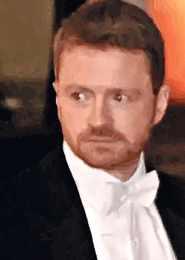
when it matters most, not just when it is most convenient. In the circumstances, the only honourable course is to step aside.”
His decision heaped further
pressure on Starmer as critics on the left of the party lined up to question his future as PM.
But many communal figures also said it was right to recognise McSweeney’s ruthless purge of antisemitism from Labour as he successfully led Starmer to the leadership following the “dark times” under Jeremy Corbyn.
Progressive Britain/Progress organisation executive director Adam Lengleben said McSweeney had literally been responsible for “exorcising” Labour of antisemitism.
“No one did more to drag the Labour Party out of the darkest moment in its history than Morgan McSweeney,” he told Jewish News
“The Jewish community owes him a debt of gratitude.”
“voice” to British Jews in Reform.
“It’s actually Nigel Farage who came up with this idea of the RJA,” Mendoza added, saying the leader had wanted to “articulate policies” to the community and also “have a special place for a community he feels is significant within this country”.
Mendoza then turned to historic allegations that Farage had engaged in antisemitic chants while at school in Dulwich.
“You all know there is an absolute smear campaign against this man in the press,” Mendoza said. “I can tell you, and all of you know this … There is not an antisemtic bone in this man’s body.
“I mean this man is the best friend of the Jewish community in this country … he is going to chase the antisemites out of this country and make sure British values return.”
As well as those inside, protesters also gathered outside to picket the launch and protest against the use of Jewish religious spaces to host it.
Accusing the venue of providing a platform for racism, xenophobia and antisemitism, the protesters held signs highlighting high-profile controversial quotes by Reform UK-affiliated politicians – including several referencing antisemitic remarks allegedly made by Farage during his time at Dulwich.
Max Hammer, a spokesperson for the Jewish Bloc for Palestine organisation, said: “It’s not surprising to see disgraced rightwing provocateurs and former spokespeople for Israel’s genocidal government make overtures to Farage’s Reform. Farage and his ilk are dangerous to Jews, dangerous to Muslims and dangerous to all minority groups in the UK. No one in our community should let him forget that.”
Wes Streeting accused Israel of “committing war crimes before our eyes” in the Gaza conflict and the Netanyahu government of talking “the language of ethnic cleansing” in messages to disgraced former British ambassador to the US Peter Mandelson, it has emerged.
The health secretary also predicted he would be “toast” at the next election if the government did not change its stance on Gaza and become tougher on Israel. Streeting wrote: “I fear we are in big trouble here – and I am toast at the next election.
“We just lost our safest ward in Redbridge (51 percent Muslim, Ilford South) to a Gaza independent. At this rate, I don’t think we’ll hold either of the two Ilford seats.”
The messages were an apparent effort by Streeting to be transparent about his friendship with the expeer, as he sought to win over support from Labour MPs for a possible leadership bid.
Three Labour MPs who had attended a meeting of the parliamentary Labour Party in Westminster on Monday night confirmed the messages had sparked anger among some Jewish party members after they were made public.
Continued from page 1
There were a number of antisemitic incidents in the period around the decision by West Midlands police to ban Maccabi Tel Aviv supporters from attending a match in Birmingham against Aston Villa in November 2025.
As well as the 3,700 incidents determined to be antisemitic, CST also determined a further 3,001 reports of potential incidents did not meet the threshold for classification as antisemitic. However, these still required assessment, follow-up and, in many cases, security or police engagement.
CST chief executive Mark Gardner said:
“Two years of intense anti-Jewish hatred culminated in a Jihadi terror attack at a synagogue on the holiest day of the Jewish calendar. The terror attack then triggered even more antisemitism, showing the depths of extremism faced by Jews and all our British society. All of this makes CST even more determined to keep protecting our community, giving it strength and dignity so it can lead the life of its choice.”
Responding to the 2025 figures, home secretary Shabana Mahmood said: “Behind these shocking numbers are ordinary Jews
suffering because of hate. The murders of Melvin Cravitz and Adrian Daulby at Heaton Park Hebrew Congregation, on the holiest day of the Jewish calendar, remain in our memories. This government stands against the scourge of antisemitism.”
The home secretary went on to say the government was “providing record funding for
Britain’s most senior lawyer has warned of the “unacceptable reality that there are very few places on this planet in which Jewish life exists without physical risk” in a speech delivered at the Great Synagogue in Sydney, Australia.
Attorney general Richard Hermer addressed the congregation last Friday night, stating he was speaking on behalf of Keir Starmer’s government to express the UK’s outrage at the terrorist attack at Bondi Beach and the deadly Heaton Park Synagogue massacre in Manchester.
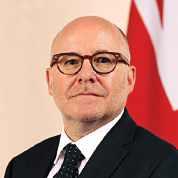
where Jewish life exists without physical risk – it demonstrates the reach of modern antisemitism, which undermines our ability to live openly as Jews, to worship without fear, and to belong wherever we live in the world – north, south, east, or west,” he continued.
In a speech delivered in front of the shul’s Rabbi Elton and Rabbi Feldman, Hermer spoke of the determination of his government and those across the globe to tackle the scourge of rising Jew-hatred.
security at synagogues, Jewish schools and community centres”, and she would be going further “to strengthen police powers so they can crack down on intimidating protests.”
Shadow home secretary Chris Philp said: “Anyone espousing extremist views or who expresses support for terrorism, or racial or religious hatred of any kind, including

antisemitism, who is not a British citizen, should be removed from this country.”
“We can’t have hatred and extremism pouring out on our streets. It is morally wrong that Jewish residents here in the UK no longer feel safe. Words are not enough. Action is needed.”
The barrister noted the two incidents occurred on opposite sides of the globe just weeks apart, reflecting “the unacceptable reality that there are very few places on this planet
Hermer also reflected on words written by the late Rabbi Sacks, who cited Aristotle, Kierkegaard, and Robert Louis Stevenson, before concluding: “In Judaism, joy is the supreme religious emotion.”
One-third of American Jews reported being the target of an antisemitic incident in 2025, according to a new survey published by the American Jewish Committee.
The finding marked no change over the previous year, suggesting American Jews could be settling into a distressing new normal in the aftermath of 7 October 2023.
“Things aren’t getting markedly better,” said AJC chief executive Ted Deutch. “I don’t think that we can a ord to accept it as a baseline. We can’t accept that, and America shouldn’t accept that.”
Surveying 1,222 American Jewish adults from 26 September-9 October, the AJC found a plateau in several indicators of sentiment.
Overall, 55 percent of American Jews reported avoiding specific behaviours in 2025 due to fear of antisemitism, including steering clear of certain events and refraining from wearing or posting things online that would identify them as Jewish.
This year’s respondents were also asked if they felt “less safe” as a result of several high-profile recent antisemitic attacks, including the arson attack on Democrat Pennsylvania governor Josh Shapiro’s home in April, the deadly shooting of two Israeli embassy staff in Washington DC in May and the firebombing of a demonstration in Boulder, Colorado, in June held to show support for the Israeli hostages.


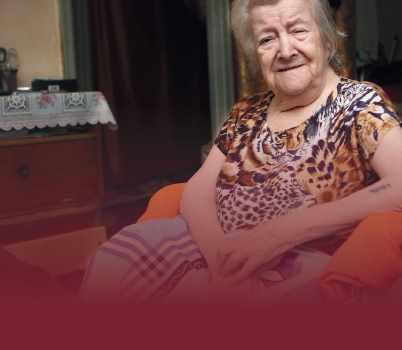

An employee of Iranian state television who celebrated the 7 October mass-terror attacks against Israel and talks regularly about “Jewish supremacy” in the UK was arrested by West Midlands Police on her way to address the “Anti-Zionist Movement” (AZM), writes Daniel Sugarman.
Latifa Abouchakra, who works as a “reporter” for Press TV, was due to address the launch meeting of the organisation in Birmingham. The original venue, The Old Print Works, cancelled the booking last week after widespread outcry due to the nature of the group and those associated.
Apart from Abouchakra, they include David Miller, who was sacked by the University of Bristol in 2021 and now produces a show for Iranian state TV, and Rahmeh Aladwan, a doctor who was suspended by a medical tribunal in December for 15 months while the General Medical Council undertakes a full review of her conduct.
Following the withdrawal of The Old Print Works, the movement posted on social media, saying: “Catch us if you can. Venue will ONLY be announced to ticket holders on the day.”
West Midlands Police said it had arrested a woman from London on suspicion of inciting racial hatred, as part of a policing response to a planned gathering in Birmingham.
The statement noted the

woman was wanted by the Met on suspicion of a Public Order Act offence as part of an investigation by the London force into speeches and social media posts between May and October last year in the capital and Birmingham.
The West Midlands force said its officers were continuing to work “to understand the plans of the organisers of the Birmingham event” and “we continue to liaise with key stakeholders, including the local Jewish community”.
Abouchakra has previously described herself online as “a 35-year-old Palestinian refugee”.
On 7 October 2023, she posted a picture of herself beaming while saying: “Nothing will ever be able to take back this moment, this
moment of triumph.”
She went on to describe the Hamas attack as: “This moment of resistance, this moment of surprise, this moment of humiliation on behalf of the Zionist entity. Nothing (can take back this moment). Ever.”
The Charity Commission also confirmed to Jewish News last week it was investigating the charity which owns The Old Print Works.
A spokesperson said: “Following significant concerns raised about an event organised by a campaign group at a venue owned by the charity Make It Sustainable Ltd, we immediately opened a regulatory compliance case to thoroughly assess this matter and contacted the charity’s trustees for more information.

The West Midlands Police statement confirmed it had opened a criminal case into language used by the AZM connected to the launch event after group members described themselves as being “unapologetically anti-Zionist, pro armed resistance, upholds the thawabet [and] campaigns against Jewish supremacy.” Another post supported “Zio eradication”.
An NHS doctor who shared videos claiming “Zionists” were responsible for 9/11 and both world wars has been suspended for two months by a medical tribunal in a decision branded a “profoundly pathetic slap on the wrist”.
The hearing into the conduct of Dr Najmiah Ahmad, was set to investigate an allegation she “reposted two comments on social media, one of which included an image, which were objectively antisemitic, seriously offensive and motivated by racial or religious hostility and/or prejudice against Jews.”
One post shared by Ahmad, a consultant working for the NHS’s Frimley Health foundation trust, said: “9/11 was an

inside job, The Zionist ownedand-controlled US government was complicit.”
Other posts on the ‘GnasherJew’ social media account shared by Ahmad included a video referring to America in late 2023, saying that “in the exact same way as Zionists lit a fire in Germany to get the German Jews to go to Palestine, the Zionists are doing the exact same thing in the United
States right now … the whole goal of World War I and World War II was to create Israel and to destroy strong sovereign nations ... and create a oneworld government.”
Campaign Against Antisemitism said of the ruling: “Once again, another profoundly pathetic slap on the wrist. The NHS has a deeprooted problem.
“According to the hearing, ‘insufficient evidence’ was found to suggest that her actions were motivated by religious or racial hostility and/or prejudice, and the doctor has reportedly since undergone social media mentoring and training. If that is the punishment, then no wonder we keep hearing reports like these.”
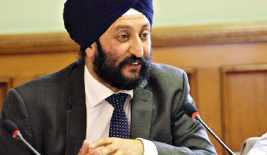
A senior Labour MP has vowed never to allow “antisemites and revolutionary communists” back into the party, as he responded to leftwing MPs’ calls for Keir Starmer to broaden Labour’s ideological reach.
“In line with our policy on evidence of potential criminal activity, we reported our concerns to the police.
“While the charity has now cancelled the booking, we continue to engage with its trustees, which will include a review of its policies on external events and speakers.”
The AZM event is understood to have subsequently taken place in a function room above a Yemeni restaurant next to The Old Print Works building.
A post from the group showing the event’s promoted speakers –minus Abouchakra – stated: “The Zionist lobby mobilised British media and police to intimidate us.
“They failed. Their playbook is old and has been studied.”
Speaking at a packed meeting of the parliamentary Labour Party (PLP) on Monday where the prime minister sought to reassert his authority amid the Peter Mandelson crisis, National Executive Committee member Gurinder Singh Josan was addressing comments made by colleagues Barry Gardiner and Andy Macdonald.
“I also believe in a broad church Labour Party,” Josan told MPs in Westminster. “But not the 2015 broad church that allowed antisemites and revolutionary communists in the party.”
Justice minister and Finchley and Golders Green MP Sarah Sackman commended Josan for his “strong stance on antisemitism”.
Earlier, Gardiner and Macdonald had argued that Labour under Starmer had become too ideologically narrow.
Jewish News spoke to MPs and peers after the PLP meeting, at which Starmer reportedly received repeated applause.
Veteran Jewish peer Lord Levy praised the prime minister, saying he had “won hands down without even a negative murmur” from critics.
Starmer told Labour MPs and peers: “I have won every fight I’ve ever been in”, including “fighting to change the Labour Party to allow us to win an election again”.
The Police Federation has strongly rebuked Green Party leader Zack Polanski after he posted a celebratory message about the acquittal of Palestine Action protesters who broke into Elbit Systems UK – while failing to acknowledge a police officer’s spine was fractured with a sledgehammer during the incident.
The association warned Polanski his comments “risk sending a message that injury to police officers is an acceptable consequence”.
The letter added: “When an officer is seriously injured, basic human decency would suggest this fact warrants acknowledgement, whatever one’s views on the wider political cause.”
The federation reminded Polanski “police officers are not responsible for foreign policy or defence contracts”.
Confirming the letter, the federation said: “While political debate and differing views on protest are entirely legitimate, the serious injury of a police officer during these events went unacknowledged. That omission matters.”
After a jury at Woolwich
failed to reach a verdict on the charge of grievous bodily harm against the policewoman as well as on charges of criminal damage against all six defendants, Polanski said he was “pleased” with the decision. He also retweeted a post by former British ambassador Craig Murray, which said it was a “lie” a policewoman had been attacked, although the assault was not disputed during the trial. Outside the court, supporters and families of the defendants gathered with about 100 people to celebrate the acquittals. The group, who told the court they had no intention to be violent, face a retrial on the unresolved charges.


From ‘Am Yisrael Chai’ shoes to handwritten letters of support, a British-led initiative is delivering hundreds of acts of care in wake of the Gaza conflict, writes Annabel Sinclair
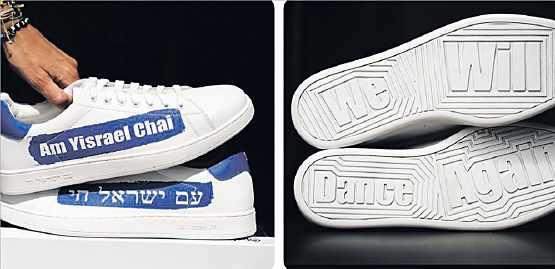
White trainers stacked neatly in a London home may not look like a frontline response to trauma. But for released hostages, bereaved families and injured soldiers in Israel, they have become something else entirely: a message of solidarity that can be worn, carried and felt.
The trainers – emblazoned with the words Am Yisrael Chai – are part of a much wider grassroots effort that has quietly grown into hundreds of what its organisers call “missions”: targeted acts of care delivered to people living through the aftermath of 7 October and the war that followed.
“They’re walking Am Yisrael Chai,” said the project’s founder, who wishes to remain anonymous, describing the shoes that have been given to released hostages.
These include Sasha Trufanov and Sapir Cohen. Cohen later told organisers she loved the shoes, with hopes she may even wear them at her wedding.
Since 7 October, the network has carried out close to 300 individual missions. Each one is focused on a specific person or family, whether a wounded soldier recovering in hospital, a widow navigating life after loss or a hostage returning home.
The missions are numbered, logged and carefully tracked, not as a measure of scale alone but as a reminder each one represents a human story.
“Every mission has a name,” the founder said. “It’s someone.”
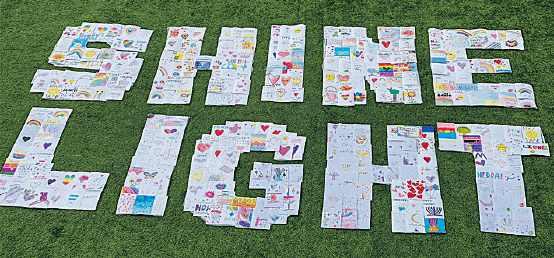
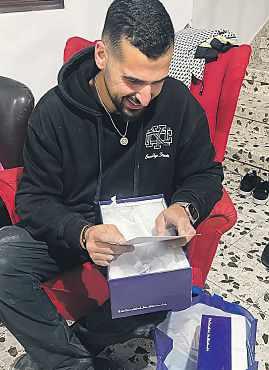
Some missions involve gifts such as the trainers, often sponsored by supporters in the UK or overseas. Many more centre on handwritten letters and cards of care, which have become the backbone of the operation.
Written by schoolchildren, families and volunteers, the cards are deliberately simple – and, crucially, accessible.
“The cards are free,” the founder said. “Kindness doesn’t cost a thing.”
Their simplicity has also made them effective. Cards can be produced quickly, sometimes within 24-48 hours, when organisers learn a family from Israel is arriving in the UK, a soldier has been injured or a widow is facing her first festival alone.
In several cases, hundreds of messages have been gathered at speed, coordinated across countries and communities.
For families facing devastating loss, the cards are sometimes bound into books and read aloud, before being given to relatives as a lasting record of care. One of the earliest moments that shaped the initiative came during the Covid pandemic, when letters were gathered for Rabbi Lord Jonathan Sacks shortly before his death. Messages from across the Jewish world were compiled
into a book and read to him while he was ill, before being given to his family. The experience, she said, reinforced her belief in the power of written words to offer comfort at moments of profound vulnerability.
“We just knew we had to do something,” the founder remembers.
The responses to the cards, she added, are often immediate and deeply personal. Thankyou messages arrive from families, soldiers and survivors who had not expected to hear from strangers, let alone children or elderly writers abroad. Some say the cards were read again and again; others say they were kept by hospital beds or taken home from shiva as something tangible to hold on to.
Among those who have written cards are Holocaust survivors, whose messages have been sent to released hostages and bereaved families. For organisers, the letters carry particular resonance – survivors of one Jewish trauma reaching out to those living another.
The letters are not framed as comparisons, she stresses, but as gestures of continuity – a way of saying Jewish suffering has been met
before, and that survival, care and responsibility did not end with one generation.
The emotional impact has not been onedirectional. When Nova music festival survivor Omri Aloni received his shoes, he sent a message of gratitude that organisers say lifted them in return.
“He was in a really dark place,” the founder said. “And he lifted our hearts and souls.”
That sense of mutual strength – what she describes as a “shared smile” – has become a defining feature of the work, particularly with survivors of the Nova attack, many of whom continue to struggle long after the headlines have moved on.
Much of the card-writing effort has been driven not by institutions but by young people themselves. At one UK school, pupils independently organised the creation of 120 cards for injured soldiers after hearing about the project. Every card was scanned to ensure it reached its intended recipient.
“The children ran it,” the founder said. “And I think that’s even better.”
She believes the card-writing should be treated as an educational exercise, not as an optional extra – a way of teaching children how to articulate empathy, responsibility and care at a time when many struggle to put such emotions into words.
“This is actually a classroom activity,” she said. “Learning how to write to someone who’s lost a loved one – that’s a life lesson.”
That belief is rooted in the founder’s longstanding involvement in a values-based education programme called The Loving Classroom developed years before 7 October and built around eight core values, including respect, compassion, kindness and care, taught through practical classroom exercises.
One exercise asks pupils to consider how many people are involved in something as simple as a glass of water, from those who built the roads to those who cleaned them – an idea that later shaped the card-writing initiative by helping people understand connection and collective responsibility in moments of crisis.
“Everybody has a role,” the founder said, adding: “This is a gift of love.”
As the network continues to grow, its founder remains adamant the focus should never rest on the individual, but on the collective effort behind every mission – from Holocaust survivors picking up pens to children writing their first letters to families who take the time to send messages of thanks.
“It’s not about one person. It’s about what happens when people choose to care.”
Latest updates on Cards of Care and the Am Yisrael Chai shoes are shared on Instagram















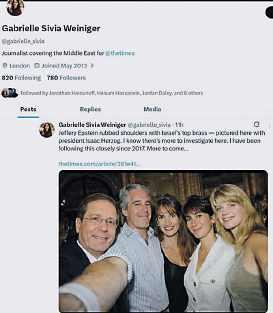
A UK media watchdog has called for The Times to act against a journalist who posted on Twitter/X a doctored picture of paedophile Jeffrey Epstein with Israel President Isaac Herzog – after writing an article for the paper discussing Epstein’s supposed connections to Mossad – citing “evidence” of a notorious Holocaust denier, writes Adam Decker.
The Campaign for Media Standards said it was “unacceptable” behaviour by Gabrielle Weiniger, a Tel Aviv-based journalist covering the Middle East for The Times
The photograph included Epstein’s accomplice Ghislaine Maxwell and three other people including Herzog. Accompanying the picture, Weiniger wrote: “Jeffrey Epstein rubbed shoulders with Israel’s top brass – pictured here with president Isaac Herzog ... more to come.”
It emerged the picture was tampered with to



add Herzog, who was not present. After being told, Weiniger posted: “Just to clarify: the photograph was an AI fake. I can only apologise for the grave error in judgement for reposting the photo, and to the president for any harm caused.”
The Times on Monday published an article by Weiniger headed “Was Epstein a Mossad Agent? New files deepen mystery over Israel links”.
This included the paragraph: “The files include claims from a confidential informant to the FBI that, far from disliking Israel, Epstein was in fact employed by its spy agency, Mossad.”
The article brought an immediate response from Ben Smith, editor-in-chief of the Semafor investigative news outlet, who posted information from a Semafor newsletter which directly addressed The Times piece. This read: “The Epstein files are a trove of unconfirmed claims from questionable sources. One of the particu-

larly incendiary threads comes from a serioussounding “confidential source” recorded in a formal FBI document claiming that Donald Trump was “compromised by Israel” and that the Chabad Lubavitch network was “seeking to co-opt the Trump presidency”. Smith added: “A Times of London article suggesting Epstein worked for Mossad relied on the same material.”
Smith noted the source offers no evidence, and their name is redacted in the document but thanks to the “sloppy” redactions the same case number can be found in a related document.
This, Smith said, revealed the source as “Charles C Johnson, a famous troll and occasional Holocaust denier recently found liable in a fraud scheme that involved impersonating an intelligence agent”.
Jewish News has approached both Weiniger and The Times for comment.

















Stamford Hill Rabbi Elyakim Schlesinger, who died aged 104, has been described at his eulogy as “a towering leader who was universally respected”.
The head of Yeshivas Harama in North London, Rabbi Schlesinger was seen as one of the last remaining links to both pre-war and early-post war Torah sages, many of whom he corresponded or studied with.
He was born in 1921 in Vienna into a respected Rabbinic family. A decade later, his parents emigrated to the British Mandate, moving to Tel Aviv and thus avoiding the horrors shortlyto beset Europe.
After the war, he was encouraged by the Rabbi of the Brisk Yeshiva, a major institution of Jewish learning, to move to Europe to help strengthen Torah learning there and spent several years in Belgium before moving
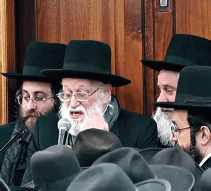
to London in 1961, where he established the yeshiva which he would lead for more than six decades.
Rabbi Schlesinger was eulogised in Yiddish by a number of speakers at Yeshivas Harama before burial at Adath Yisroel cemetery in Enfield.
The Jewish Community Council (JCC) of London said in a statement:
“We mourn the shocking and tragic passing of Rabbi Elyokim Schlesinger.
“Our community has lost a towering leader who was universally respected as a talmid chacham of extraordinary stature, a man of integrity, humility, vision, wisdom, and depth. Rabbi Schlesinger exemplified Kiddush Hashem in all of his interactions with the broader world.
“He leaves behind an extraordinary legacy of Torah, leadership, and accomplishment, as well as hundreds of grandchildren who carry his values forward. The loss ... is incalculable.
“Rabbi Schlesinger consistently sought to promote achdus - unity - throughout the Jewish world, touching countless lives ... may Hashem comfort the Schlesinger family, his many students, followers, and the multitudes of people whose lives he impacted so profoundly.”












Benjamin Ellis has been named the incoming chair of trustees for Limmud, following on from Carolyn Bogush, who has held the role since 2020.
A consultant rheumatologist, Ellis, as a lay leader, is a founding trustee and former chair of KeshetUK, the Jewish LGBT+ education and training charity, as well as being a trustee of the Phoenix Cinema Trust in East Finchley and a faculty member of the senior faith leadership programme based at Windsor Castle.
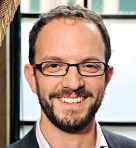
Ellis
lenge facing Jewish communities today – how to come together in the context of deep communal divisions”.
He added that in
“over 25 years of participating in its events, Limmud helped me to find and create a place for myself in Jewish life and, ultimately, led to me generating space for others to do the same.”
He was awarded an MBE in 2024 for services to healthcare, inclusion and the Jewish community.
He said: “I’m excited by the next steps Limmud is taking in its own journey.
“Limmud sees a major role for itself in tackling the greatest chal-
Bogush, who was recently appointed new chair of trustees for the Union of Jewish Students, said:
“While I’m sad to step aside from this fantastic communal role, I’m delighted to leave Limmud in such capable hands.
“Benjamin has a fantastic track record and is an experienced, thoughtful and inclusive leader.”
Relations between Britain and Israel and the people at the forefront of enhancing them will be celebrated at Magen David Adom UK’s Bridge to Israel Awards, media partnered by Jewish News
The inaugural ceremony in London on 27 April will see awards presented in 13 categories including corporate impact, community organising, culture and the arts and philanthropy, plus, recognising MDA’s role in the Red Cross movement, a Red Shield award recognising humanitarian services.
The first of this year’s honours –announced at MDA UK’s campaign dinner last November – was presented to UK Hostage Families Forum lead Nivi Feldman, recognising her efforts in raising the plight of Israel’s captives over the past two years.

The judging panel, chaired by former criminal barrister and TV personality Robert Rinder, will include MDA UK chair Russell Jacobs, Prism the Gift charitable
fund co-founder Anna Josse, former BICOM chair and businessman Edward Misrahi and philanthropist Elizabeth Wigoder.
There will also be a public vote open for the MDA UK social media influencer award.
MDA UK chief executive Daniel Burger said: “Through its life-saving mission and workforce, MDA is an extraordinary example of bridge building between Jewish, Christian, Muslim and Druze communities in Israel.
“Reflecting this, the MDA UK Bridge to Israel Awards will celebrate those building bridges between the UK and Israel – not least through the amazing work of MDA itself and the generosity of its supporters in the UK.”
“It is through new initiatives such as these Awards that we can best honour the vital humanitarian work of MDA, support its stations
in Israel and its first responders to save lives each day and continue to showcase MDA as the very best of Israel.”
Readers of Jewish News, the event’s media partner, will be able to send in their own nominations for the Community Organiser category.
Nominations are now open open for UK grassroots activists who have stood up to be counted, helped to fight Israel’s corner since 7 October and worked to build strong relationships between the two countries.
Nominate for the Community Organiser category at mdauk.org/bridgetoisrael


























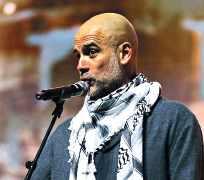
Manchester City manager Pep Guardiola has been urged to be “more careful with his future language” by representatives of the city’s Jewish community after he spoke out about Israel’s attacks on Gaza.
It comes after Guardiola gave a speech at a charity event in his home city of Barcelona in support of Palestinian children and at a press conference later told journalists how the su ering of innocent people caught up in conflict, including the one in the Middle East, “hurts” him, and leaves him feeling compelled to speak out.
However, he has now been advised to “focus on football” by the Jewish Representative Council of Greater Manchester & Region, who fear such comments fuel antisemitic acts.
The group also accused him of a “total failure” to display solidarity with Manchester’s Jewish community in the wake of October’s attack










on the Heaton Park Synagogue, in which two people were killed.
“We have repeatedly asked for prominent individuals to be mindful about the words they use given how Jewish people have had to endure attacks across the globe,” a statement posted on X read.
“Pep Guardiola is a football manager. Whilst his humanitarian reflections may be well-intentioned, he
should focus on football. Manchester City is being let down by him repeatedly straying into commentary on international a airs.
“This is the second time in a week he has decided to o er his controversial views on the Middle East conflict.
“It’s especially galling given his total failure to use his significant platform to display any solidarity with the Jewish community subjected to a terrorist attack a few miles from the Etihad Stadium or the Barcelona community reeling from antisemitic violence close to where he once engaged in remarks we believe to be provocative.”
Guardiola insisted he will not be swayed, however, telling media: “Why should I not express what I feel, just because I am a manager?”
Guardiola’s bosses at Manchester City have been contacted for comment regarding the JRC statement.

A man who scrawled “kill jews” on a cell wall with crayons after he was arrested for stu ng pages from the Koran down a hospital toilet has been convicted of hate crimes, the Crown Prosecution Service (CPS) has said.
Ibrahim Iqbal, 36, from Leeds, was found guilty by Leeds magistrates of two counts of religiously aggravated criminal damage and another count of criminal damage. He will be sentenced on Monday (16 February).
The CPS said the conviction comes as prosecutors deal with a record number of hate crime referrals.
A spokesman said Iqbal smashed a framed Islamic scripture before defacing multiple Korans in a multifaith room at a Leeds hospital last year.
He tore out pages, setting them alight and using them to block the sink and toilet. He then returned to the hospital two weeks later and deliberately stu ed items down the drains to cause
a blockage, the spokesman said. Iqbal was detained by hospital security sta when he returned the following day and tried to access the multi-faith room again but found it locked.
After he was arrested, he asked for crayons and used them to write “kill Jews” on his cell wall.
CPS Yorkshire and Humberside senior crown prosecutor Luke Hopkinson said: “Ibrahim Iqbal carried out a deliberate and sustained campaign of hatred, targeting both Muslim and Jewish communities with his actions.
“I hope today’s conviction demonstrates the CPS’s commitment to tackling religiously aggravated hate crime, and reiterate how we will always seek to prosecute those who target others because of their faith where their conduct strays into criminality.”
The CPS received 4,358 cases last July-September which have been flagged as having a hate crime element.
The sirens came first; howling their early warnings, as they have done for four years. And then the explosions began. Ballistic Missiles. Cruise Missiles. Hundreds of attack drones.That was Monday night in Kyiv. Now. In February 2026.
For those of us sitting in the UK, it is sometimes easy to forget that there is a full-blown war being fought on the continent. Ukraine, once the lead item on every news broadcast in the Western hemisphere, has fallen out of the headlines.
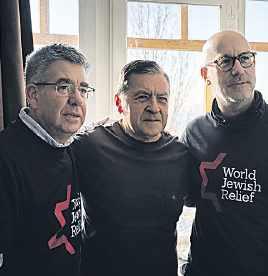
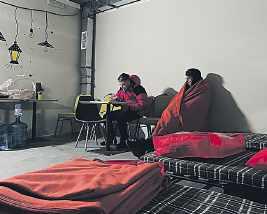
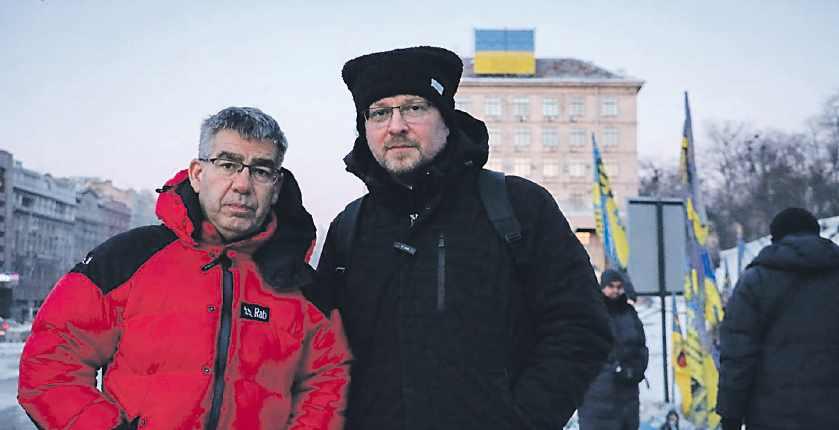
But for World Jewish Relief, the UK Jewish community’s humanitarian agency, Ukraine continues to be a key crisis point. Which is why WJR’s chief executive, Paul Anticoni, spent seven hours in a bomb shelter last week – and by ‘bomb shelter’, we’re talking about the basement car park of the hotel, which has some seats and a few beds in it.
“Despite the regularity of my visits, I’ve never got used to the noise of air-raid sirens on my phone or in the streets, or trying to sleep in a shelter”, he tells Jewish News
“It was made harder, because while we were trying to sleep we could also hear the boom of explosions and of Ukrainian air defence systems.”
As Anticoni points out: “We all have family and friends who spent the last couple of years in Israeli bomb shelters”. But Israel, through terrible necessity over decades, developed one of the most sophisticated air defence systems in the world –and Ukraine defence systems have to cover an area hundreds of times the size. Only around half the missiles fired by Russia were intercepted.
Another factor compounding the difficulty is the cold – to simply call it ‘freezing’ would be a laughable understatement.
“It’s lower than minus 20 in Kyiv at the moment”, says Anticoni, describing it as “a cold which I’ve hardly experienced in my 40 years of working in disaster zones.
“A cold where if you breathe in, it gives you a shock. You don’t breathe in through your nose because your nostrils freeze. You don’t touch metal because you’ll stick to it.”
More than any other nation, Russia knows how to use winter as a weapon. Putin has targeted Ukraine’s power plants. Apart from the obvious result – lack of heating, the secondary effect is that the pipes freeze, meaning a lack of water.
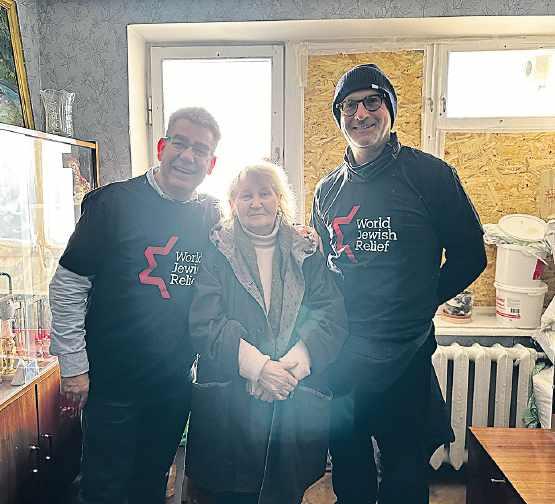
“I have probably some of the best winter kit I could have prepared myself with”, Anticoni says, “but when I’m meeting some of our elderly Jewish clients, ladies in their
mid-80s, wearing all their clothes, but it’s just not enough. No heating, windows that barely keep out a draft. It’s unbelievable how they’re surviving.”
WJR’s chief executive has been to Ukraine around a dozen times since the full-scale invasion by Russia in 2022, with other members of staff going even more regularly. The charity works via a network of trusted Ukrainian partner organisations, which Anticoni praised for doing “all the heavy lifting, all the work, often in frontline areas.” Yesterday he met one of the team members working for a WJR partner organisation, a psychologist “who was hit by a Russian explosion in August” and spent months in hospital recovering.
“It brought home to me that the teams of the partner organisations we work with are taking immense risks.”
Given the current situation, one of the key elements of WJR’s work in Ukraine is home repairs.
“We’ve repaired over 400 homes over the last 12 months”, says Anticoni.
“I estimate that there’s another 2000 ahead of us, and I think sadly, Putin is hitting their houses quicker than we are able to repair them. We’ve got a very, very long waiting list. Given the scale of need, we only have resources at the moment to be supporting clients within the [Jewish] community. We would love to be able to do more beyond.”
There are buildings that suffer direct strikes, but the damage to homes in the general vicinity of any blast is something which can be hard for those who do not live in warzones to consider. For example, the WJR chief describes how, when “drones hit the neighbourhood, every pane of glass for maybe a kilometre surrounding is abso -
lutely shattered. You could just about get away with that in August, September here, because it’s really hot. But from October, November, temperatures start to drop. In November, we saw temperatures go below freezing. You really don’t want to have no glass in your windows at the moment.”
He praises the response of the charity’s home affairs response teams, describing how they “are able to be on the spot pretty quick, put ply boards up and do some immediate repairs within hours.
Then they’ve got to measure up and get specialist windows fitted – meaning their clients may have to be out of the flat only for a few days, as opposed to permanently out of the flat.”
Often these clients are elderly Jewish people, who may be living alone on the fourth or fifth floors of apartment blocks, and who “would not themselves, sadly, on the pensions they’re on, be able to afford to have those those homes repaired.”
Anticoni describes “The resilience and bravery of these older ladies” – a typical account goes as follows: “I was fast asleep, the bomb hit, the glass shattered all over me, I dusted it off, and was around until the emergency services came. I phoned the World Jewish Relief home repairs
team. And within a week, I was in the flat and it’s back to normal.”
Of course, the WJR chief says, “We ask ourselves, ‘is it worth repairing the homes if they might get shattered again with another attack?’ Well, the choice is obvious, because there’s nowhere else for these individuals to go. They can’t leave the homes. They don’t want to be living in hotels or either winter accommodation that would be far too expensive. They want to be back home.”
But he describes “worry, fear and weariness in the faces of everyone I meet…the
abnormal has been normalised here.”
WJR’s chief executive praises both the response of British Jews and Britain in general, under successive government, to the ongoing crisis in Ukraine.
“Of course, in recent years, our community has focused and been worried on events in Israel”, he says.
“I think that has understandably meant that other priorities have come to the fore. It’s entirely normal that the longer the conflict goes on, the less it is a news headline, and the less people are aware of the scale of humanitarian suffering.
“Our focus, of course, is only on the level of need and what we can do. So I worry that the longer this war goes on, attention focuses elsewhere.”
Speaking down the line from Kyiv, he says that “part of my reason in coming here now was first to understand what it’s like to live in this context and how you can survive. Second, it was to find a way to both acknowledge the support that our community has provided through World Jewish relief and other organizations working in Ukraine, and to highlight the ongoing plight of those that need our assistance.
“I think it is the single most significant Jewish community which faces the most insecure future anywhere in the world, and we have a responsibility to try and find a way to keep that community safe, healthy, warm, alive, and knowing that there is another [Jewish] community elsewhere that cares for it and is worried about it.”
But while there is desperation, there is
also determination, and positivity.
“World Jewish Relief focuses on an older part of the community here and repairing their homes, but we’re also working with a younger part of the community, many of whom have been fighting, and who lost their homes, jobs, or sources of income,”
Anticoni says.
“World Jewish Relief is known all over the world for its Back to Work program. These Jewish clients, having lost every-
thing and almost given up a sense of hope, are given the confidence to become job ready, and then we were able to find them a vacancy because of our relationship with many, many different employers.
“There is nothing better than one of these individuals saying to me, ‘I do not need World Jewish Relief help anymore. Not only am I now self-sufficient, I’ve got an income, I’ve employed somebody else from the community, and they also don’t
need your help’.
“Obviously, we want to help people help themselves, but when you see it in action in the midst of a conflict, it’s really inspiring.”
For donors and would be donors, Anticoni says: “There are a lot of less good news stories in the charity world, and times when you think ‘is my money making a difference?’ On this one, it’s very, very measurable.”
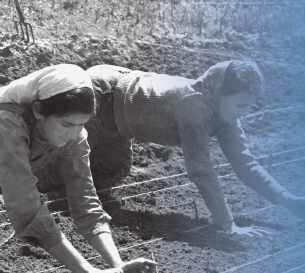


For over 120 years JNF UK has worked tirelessly to develop the Land of Israel.
Much of our work has only been possible thanks to the generosity of our legacy donors like Sheila and John, who had a deep commitment to how the country had shaped their lives.

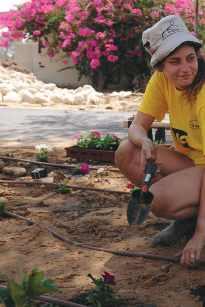
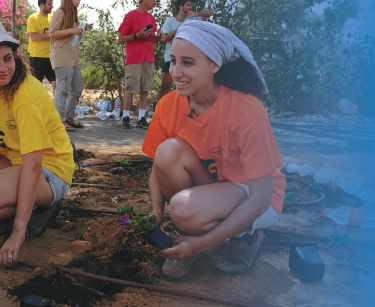
Leaving a gift in your Will, no matter how small or large, is one of the most valuable ways you can forge an everlasting bond with Israel.


Our expert and caring Legacy Team offer a range of professional services and first-rate pastoral care.
Eight families of British hostages seized by Hamas on 7 October have written to Keir Starmer seeking “urgent clarity” on when he will honour a pledge to sanction Hamas o cials, writes Joy Falk.
The PM said last September, just before announcing he was recognising Palestine, that sanctions on people linked to Hamas would be imposed within weeks. After five months, no measures have been announced.
The Times reported o cials have admitted privately there is no imminent sign of new penalties due to concern it could upset ongoing peace discussions involving Israel and Hamas.
The families’ letter to the PM, seen by Jewish News, expresses “frustration with the lack of progress on sanctions, despite your clear commitment”.
It adds: “By not pushing ahead with enhanced sanctions, your government is saying that it is the right thing to do but the wrong time to do it. This seems to us to be unprincipled. We cannot see how more aggressively sanctioning Hamas and its supporters and similar organisations and people will impact negatively on the ceasefire agreement, nor can
we see how sanctioning Hamasa liated individuals in the UK could do so.”
Signatories include Adam Ma’anit, cousin of murdered hostage Tsachi Idan; Steve Brisley, whose sister and two nieces were
BBC claims: ‘There are other holocausts’
The BBC has responded to a complaint it used a lowercase ‘h’ for Holocaust by insisting: “There have been other holocausts”, writes Adam Decker.
In a website report on Jewish survivors of Nazi atrocities meeting the King and Queen, the BBC wrote: “Mala Tribich became the first holocaust survivor to address the cabinet.”
The report added Tribich had asked: “How, 81 years after the holocaust, can these people once again be targeted in this way?”
A reader who registered the complaint was told in an email, apparently written by an experienced BBC broadcast journalist who we have agreed not to name: “Historically there have been other examples of holocausts elsewhere.”
Contacted by Jewish News the corporation backtracked, added a footnote to the online article and said its initial email to a reader had been “sent in error”.
A BBC spokesperson said: “This response was sent in error. All references to the Holocaust in this article should have been capitalised and we have now updated it accordingly and added a note of correction. We will be writing again to the original correspondent.”
In its initial response the BBC had said its style was to refer to “Holocaust survivors” and “Holocaust Memorial Day” but had rejected the request to change its reference to Mala Tribich, who was imprisoned in BergenBelsen, as a “holocaust survivor” while not explaining why.
A spokesperson for Campaign Against Antisemitism accused the BBC of “peddling
soft-core Holocaust denial” by refusing to acknowledge the uniqueness of the Shoah, adding: “Why is the BBC e ectively joining far-right, far-left and Islamist propagandists and conspiracists in trying to downplay or deny the horror of the Holocaust?
“This is yet further evidence of an institutionalised dismissal or even hatred of Jews that permeates the BBC’s increasingly agenda-driven reporting. The Nazi slaughter of the Jews was so extensive that the word genocide had to be invented to describe it.
“While that word has since been applied to other attempts to wipe out whole peoples, the older word ‘holocaust’ was newly adapted to this event, with which it is uniquely associated. ”
The incident comes days after the BBC was forced to issue an apology after some of its coverage of Holocaust Memorial Day on 27 January failed to mention Jews, with broadcasts saying only that “six million people” had been murdered by the Nazi regime.
murdered on 7 October; and released British hostage Emily Damaris’ mother Mandy.
Adam Wagner KC, one of the lawyers, said: “The families feel extremely frustrated and let down. These are bereaved and traumatised people whose lives have been ruined by Hamas.
“They sat in Downing Street and were told by the prime minister that the UK would get on with imposing new sanctions, a commitment he repeated publicly a few days later.
“Five months later nothing has happened, even though there are other authorities taking strong action like the US. So the families feel very let down.”
The Foreign O ce said: “The UK has taken strong action against Hamas. We proscribed the terrorist organisation in its entirety in November 2021, making it a criminal o ence to be a member of or support the organisation.”
A former Winnipeg rabbi charged with multiple historic sexual offences and believed by police to have fled Canada has been reported as being in Greater Manchester, prompting a report to UK police.
The man, Yacov Simmonds, was recognised in the Prestwich area last month by a member of the local Jewish community, who later submitted an online report to police after confirming his identity through publicly available reporting.
Simmonds, now in his 50s, is the subject of an outstanding Canadian arrest warrant issued in October 2017. According to Winnipeg Police, he faces three counts of sexual assault, three counts of sexual interference and two counts of invitation to sexual touching, with alleged incidents involving three complainants said to have occurred between 1993 and 1999. Canadian police said Simmonds was aware of the warrant and was “actively evading police”.
The individual who reported the sighting, who has asked to remain anonymous, told Jewish News they noticed the man while he was walking locally with a child.
After making inquiries within the community and reviewing earlier media coverage, they became concerned it was the same individual named in Canadian reports and alerted police.

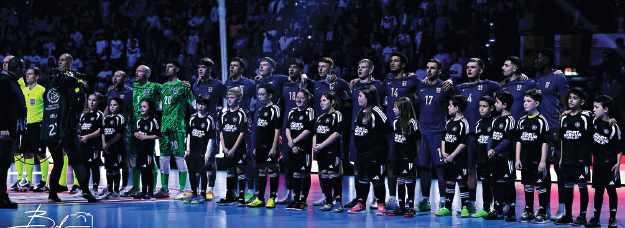
A Yavneh College teacher has captained the England futsal team in Germany at a high-profile international friendly in Stuttgart, writes Annabel Sinclair.
The match, played at the soldout Porsche Arena in front of 6,000 spectators, ended in a 3-1 victory for Germany.
England had been invited as special guests by the German FA (DFB), having been Germany’s first international opponents when the two sides met in October 2016.
Russell Goldstein, a teacher at Yavneh College, led England in what many within the Jewish community viewed as a powerful and symbolic moment: a Jewish educator captaining an England team on German soil.
Speaking about the experience of playing in front of a packed European arena, Goldstein described the occasion as emotionally charged.
“Playing in an international stadium from so many people

just gives you that opportunity to shine,” he said. “It gives you the opportunity to really show all the sacrifices that you’ve made.”
Despite the defeat, Goldstein said the experience of representing England on such a stage remained deeply meaningful.
“I get emotional even talking about it, to be honest with you,” he said. “It’s just like a dream come true.”
The fixture also marked a major milestone for several of the England players who were making their international debuts, with Goldstein praising
the significance of the moment for those involved. “For those people who made their debut, they did themselves proud, they did their family proud,” he said. Germany’s win followed their previous 5-3 victory over England in Hamburg in their inaugural international match a decade ago. Friday’s game formed part of England’s preparations for upcoming qualification fixtures later this year.
The UK’s television watchdog is understood to be reviewing whether an online TV station’s owner should retain its broadcasting licence following evidence of antisemitic output.
Ofcom has previously declined to take action against the parent company of LuaLua TV because the o ending content, including social media posts, was on the internet, but it is now reviewing that decision.
A licence was issued to LuaLua’s parent company in 2011, subject to the operators being deemed fit to broadcast.
LuaLua praised, glorified and invited support for proscribed terror groups and their leaders in dozens of posts between 2020 and 2025 in apparent contravention of the Terrorism Act.
The channel, which is run by the antimonarchy Bahraini opposition in London, is a subsidiary of Shells for Media Productions, a UK company. The parent company is a liated to the Iranian Revolutionary Guard Corps, which has played a role in the violent suppression of the recent uprising, and which the UK is intending to proscribe.
LuaLua’s content shows support for Hamas, Hezbollah and Palestinian Islamic Jihad, which are already proscribed in the UK. LuaLua TV was contacted for comment.
King’s College London has become the first university to host a screening of graphic footage from the 7 October Hamas massacre, after an earlier attempt was abandoned on security grounds.


Bearing Witness to the October 7th Massacre includes raw footage captured from body cameras worn by terrorists.
The film was initially shown to a group of international journalists in November 2023.
King’s College is the first university campus in the world to show the film. The screening for around 20 students and five sta members was hosted by the campus Israeli Society in collaboration with Stop the Hate on Campus.
It forms part of an ongoing initiative led by Israeli campaigner Yael Di Castro.
Di Castro said: “Reactions were deeply
emotional and varied. Many found the footage extremely di cult but important to witness, and some attendees chose to leave the room during the screening due to the distressing nature of the material. The audience included people from a wide range of faiths, backgrounds and professional communities.”
She stressed universities “have a responsibility to engage with complex realities through factual and unfiltered evidence”.
She said: “Bringing this footage into the academic sphere is not about politics.
“It is about bearing witness, accountability and the role of higher education in shaping informed discourse.
“The screening forms part of a broader commitment to responsible academic engagement, historical testimony and constructive dialogue.”
Britain’s only dedicated Holocaust museum has announced director Marc Cave is to step down from the Nottinghamshire-based education centre at the end of March, following six years of leadership.
The National Holocaust Museum, originally called Beth Shalom, the House of Peace, was founded by non-Jewish brothers James and Stephen Smith, along with their mother, Marina Smith, in 1995 following a visit to Yad Vashem in Israel.
Cave served as a trustee at the museum
for four years before being appointed interim chief executive in 2019. He has since led the museum through the challenges of the pandemic, lockdowns, the cost of living crisis and the impact of events following 7 October 2023.
With a new chair and governance structure now in place, and major £5m site innovations at the museum completed, a spokesperson said Cave “decided that this is the right time to move on”.
“He does so knowing that the museum is in a strong and confident position.”

Raymond James Golders Green, together with The Jewish Agency, invites you to explore the Aliyah process, including incentives, tax savings and financial opportunities.
Tuesday 24th February 2026 | Zoom Webinar, 4pm GMT
Including special guest speakers:
Avichai Kahana Director General of the Ministry of Aliyah & Integration
Simon Benarroch Chartered Wealth Manager & Branch Principal
Visit our website at GoldersGreen.RaymondJames.uk.com or scan the QR code to register.
For more information, call 020 8202 1944 or email us at GoldersGreen@RaymondJames.com
With investing, your capital is at risk. Tax treatments are subject to individual circumstances and are subject to change.

Kisharon Langdon’s fundraising dinner welcomed more than 750 guests to Grosvenor House, raising an extraordinary £1.7 million to support its life-changing services for people with learning disabilities and autism, writes Michelle Rosenberg.
The charity, formed in 2023 following the merger of the London-based Kisharon with Langdon College in Manchester, featured 17 of the people it supports in various roles as a part of the evening, ranging from helping at reception, assisting with production and MCing on stage.
The theme of the evening was “This my Life”, and the event included a performance from Britain’s Got Talent finalists, Electric Umbrella, who performed a bespoke song, Tikkun Olam (Repair the World), written in collaboration with pupils from the Wohl Campus, Kisharon Noé School, a Loftus Learning Centre.
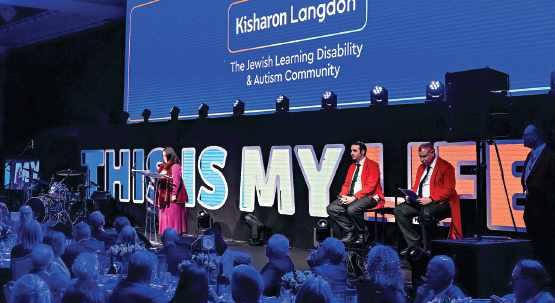
Addressing the packed room, Kisharon Langdon chief executive Richard Franklin said: “Your presence here tonight is more than support. It is a statement. A statement that people with learning disabilities and autistic people deserve to thrive. Because of supporters like you, our services continue to grow and evolve, even in the most challenging times.”

generosity shown in this room tonight is vital to ensuring we can continue delivering safe, high-quality, transformative support.”
The chair of the Kisharon Langdon fundraising dinner, Nicole Ronson Allalouf, praised the event for platforming “community, connection, and celebrating lives lived with purpose and possibility”.
Tributes were paid this week to “extraordinary” property veteran and philanthropist Nigel Henry, after he passed away peacefully on Shabbat, aged 61, writes Candice Krieger.
The former Langdon trustee was the chair and co-founder of Fusion Group, a privately owned living sector specialist. He co-founded Fusion in 2007 with Warren Rosenberg, subsequently launching the Fusion Students brand and creating the Fusion Group. Nigel also played an active role in Tri7, a partner business to Fusion, focusing on strategic acquisitions across various asset classes.
With over 40 years experience in the property industry, Nigel was also a business mentor to younger companies. His Fusion Group recently sponsored the Jewish News’ Property 40 under 40 list, for which Nigel was a judge.
But it was his love of community and the way he gave his time, contacts and energy to others that were the focus of heartfelt tributes, including at his funeral which was attended by around 1000 mourners on Sunday.
Nigel was a trustee of several charities including Kisharon Langdon, serving as chairman of Langdon from 2018 to 2023, as well as Bright Futures. For 18 years, he supported victims of terror in the Middle East through The 1000 Club.
Kisharon Langdon co-chairs Nick Doffman and Philip Goldberg said: “Nigel was a deeply respected trustee of Kisharon Langdon and former chair of Langdon and was profoundly loved and valued. He had time for everyone and gave years of dedicated service with extraordinary wisdom, integrity and humility. Instrumental in the merger of Kisharon Langdon, he
Citing some of the achievements made cross the organisation, Franklin shared that the Wohl Employment Programme has supported 72 people into employment or work equivalence and its Friday Night Dinners have quadrupled in size, now being attended by more than 70 people.
leaves an unmatched legacy that will continue to shape and strengthen lives of people with learning disabilities and autistic people for generations to come. We will miss Nigel enormously, and may his memory be for a blessing.”
Close friend Ray Kelvin, the founder of Ted Baker, said: “As one gets older it’s not often you make a great new best friend. My friend Nigel was that man. He was a unique human –kind, special, positive and so brave, so unusual in today’s throw away society.
“I recited the first line of the Shema (prayer) over the speaker phone with him listening, as his last hours of life drew near. He found strength to respond with the Baruch Sham Covod and told me he loved me. I stopped my car and walked aimlessly, in a total blur of sadness. We will all miss Nigel. In his own written epitaph, he said: ‘I will see you all soon, not too soon I hope.’ We must never forget his kindness , loyalty, strength and positivity. And his lousy second serve. Love you Nigel.”
Around 1,000 people attended his funeral which took place at
Old Cemetery on Sunday, led by
“These achievements show what we can do when we work together,” he added. “But sustaining and growing these services isn’t easy. This year alone, we need to raise £4.6 million to meet rising costs and increasing demand. The
Kisharon Langdon’s co-chairs, Nick Doffman and Philip Goldberg, told the audience how the merger “has created an organisation with deeper expertise, broader reach, and a more unified vision.”


One Ashbourne is proud to have been specially selected by American Express for the Platinum Card Global Dining Credit – a prestigious programme featuring a carefully curated list of world-class restaurants.
Platinum Card Members can receive up to £200 per year in statement credits when dining with us - £100 available for dining from January–June, plus an additional £100 from July–December. (Terms & conditions apply).
Experience One Ashbourne’s celebrated modern European cuisine with Middle Eastern influence, refined technique and warm hospitality - now officially recognised on a global stage. Theonlykosherrestaurantincludedintheprogramme.

your table
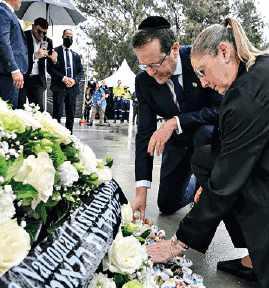
Israel president Isaac Herzog was in Australia this week in the wake of the December terror attack against Jews at Bondi Beach to place a wreath at the site of the atrocity, writes Daniel Sugarman.
Herzog, alongside his wife Michal, placed stones on the memorial outside Bondi Pavilion, describing how the Jewish tradition of placing stones at gravesites represents “the endurance of memory, the weight of loss and the unbreakable bond between the living and those we have lost”.
The president went on to say the stones would “remain here at Bondi for eternity in sacred memory of the victims and as a reminder that the bonds between good
people of all faiths and all nations will continue to hold strong in the face of terror, violence and hatred.”
During his visit, Herzog went on to meet family members of those killed during the terror attack, with video footage showing him embracing groups of Australian Jews who thanked him for coming.
In a speech at the scene of the shooting at one of Australia’s best-known leisure attractions, Herzog described how “15 innocent souls who gathered to celebrate Chanukah, the festival of light, were massacred in cold blood by two Islamist terrorists”.
He continued: “The world’s only Jewish state, the State of Israel and the nation of
Israel, stood together with the Australian people. We stood with Australian Jews, for we are one big family – and when one Jew is hurt, all Jews feel their pain.
“That is why I am here today, to embrace and console the bereaved families.”
Executive Council of Australian Jewry (ECAJ) co-chief executive Alex Ryvchin said Herzog’s visit would “lift the spirits of a pained community and, we hope, it will lead to a much-needed recalibration of bilateral relations between two historic allies”.
The president was also due to visit Melbourne and Canberra during his visit after being invited by Australian prime minister Anthony Albanese after the mass shooting.
The invitation was not without controversy (see below), with incidents including protesters against the visit, including MPs from Albanese’s own Labour Party and representatives of the country’s far-left Green Party, demonstrating at Sydney town hall.
An open letter organised by the antiZionist group Jewish Council of Australia opposing Israel president Isaac Herzog’s visit and published in some of Australia’s leading papers includes the names of notorious Holocaust kapos, a Hebrew name which translated means “a**e licker” and
a self-described Australian Jew who believed “Hitler’s only mistake was stopping too soon”.
The council, founded in 2024, was intended to challenge longstanding representative organisations within the Australian Jewish community, such as the Execu-
tive Council of Australian Jewry (ECAJ), which are Zionist.
The JCA said it opposed the Herzog visit and in a social media message told backers: “Thanks to your support, our full-page ad is in today’s Sydney Morning Herald and The Age. Over 1,000 Jews and thou-
sands of allies have signed our open letter to say that Israeli President Isaac Herzog is not welcome here.”
Unfortunately for the group, those perusing signatories soon found the name Milkek Tachat, Hebrew slang for “a**e licker” along with several other obvious anomalies.
Labour Against Antisemitism director Alex Hearn said: “This list of people using a Jewish identity to support destroying the Jewish state has been exposed as a sham. It appears to include a Hitler supporter who targets Jews for racist abuse, as well as Nazi kapos. Another name is a joke.”




by Annabel Sinclair annabel@jewishnews.co.uk
A top South African private school is facing antisemitism accusations after a leaked recording appeared to show a sports fixture cancelled because pupils did not want to play a Jewish team.
The recording, reported by The Common Sense media group, captures a conversation between senior sta at Roedean, an elite Anglican girls’ school in Johannesburg, and King David Linksfield, a prominent Jewish day school.
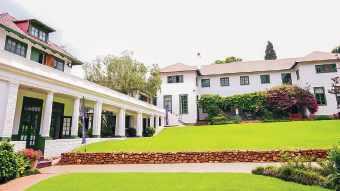
The audio is said to suggest the cancellation was driven by pressure from the Roedean community rather than scheduling constraints.
In the recording, a Roedean representative refers to parental pressure unrelated to school sport, saying: “We’re finding increased pressure on us from our communities for something that has nothing to do with schools.”
The Roedean voice appears to link this to political views on Israel, stating: “They’re basically saying because of the stance that the government took, we’re supposed to support that.”
At another point, the speaker stresses the school’s refusal to take a political position, saying they had to remind parents that “school
[is] apolitical, first and foremost, particularly in South Africa,” otherwise “we’re basically going to be an island with school sport.”
That account contradicts Roedean’s explanation. In a message to parents, the school said it was unable to field a team due to prior academic commitments, including compulsory workshops, and had requested either a postponement or cancellation of the match.
Following the cancellation, a member of sta at King David alleged antisemitism was the underlying reason.
Later in the recording, a King David representative raises safeguarding concerns, saying: “I’m not willing to place any student at risk”
and, referring to fears of hostility from the sidelines, adds: “These are children we’re speaking about … I’m not prepared to allow my kids to be exposed to that.”
In response, the King David Schools Foundation said it was treating the matter with “the seriousness it deserves” and would act in every instance to protect its pupils “against antisemitism and all forms of discrimination”.
The South African Jewish Board of Deputies condemned what it described as “blatant prejudice” by Roedean.
In a publicly released letter, Roedean said it “strongly refutes” allegations of antisemitism, saying it was engaging directly with King David Linksfield and the Independent Schools Association of South Africa.
The revelations have revived scrutiny of a 2023 controversy when Roedean sought to appoint an external organisation to provide what it described as “holistic Islamic enrichment” for pupils. That proposal later drew criticism from counter-extremism experts over alleged antisemitic content linked to the group. Radicalisation analyst Benji Shulman said the latest allegations were particularly serious as they appeared to involve an institutional decision rather than isolated behaviour.
As we move through 2026, the UK jobs market remains one of the most challenging in recent years. With unemployment at the highest level since early 2021, competition for roles is fierce, and many talented individuals are struggling to gain a foothold. In times like these, support and guidance are not luxuries, they are essential. At Resource, we see how practical, focused advice makes a real difference in helping people navigate their careers, and getting people’s lives back on track. Without a job, many people will lose selfesteem and confidence, that can lead to depression, financial difficulties and hardship. A CV opens the door to an interview, and the interview secures the job. Helping our clients to articulate their experience clearly, build professional networks, and approach interviews with confidence are all critical steps. Small details, from structuring answers to managing nerves, often make the difference between a missed chance
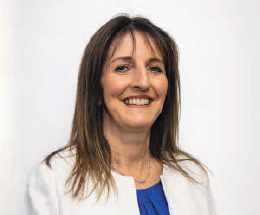
Victoria Sterman, CEO Resource
Israeli fighter jets escorted a Wizz Air flight from London into Ben Gurion Airport on Sunday after a reported security concern onboard which was later found to be unfounded.

The Israeli Air Force was scrambled to accompany Wizz Air flight W95301 from London Luton Airport after what o cials described as suspicious conduct during the journey.
An Israel Airports Authority spokesperson said that “due to suspicious conduct on the aircraft, security forces acted in accordance with the procedures for such a case”.
The aircraft landed safely at Ben Gurion, where passengers and their belongings were checked as a precaution, including inspections by bomb-sni ng dogs. Authorities later confirmed no threat was identified.
“The aircraft landed, and it was found that there was no real incident,” the airport spokesperson added.
Reports in Israeli media said the alert was triggered after a passenger received what was initially believed to be a threatening message on a mobile phone. Further checks indicated the concern stemmed from a wi-fi hotspot name that had been changed to an Arabic word meaning “terrorist”, prompting fears of a possible attack.

and a new opportunity. As work continues to evolve, staying relevant requires adapting to new tools and technologies. Social media, AI and digital skills are no longer optional; they are part of the toolkit for anyone seeking to thrive in today’s job market. Resource provides free expert guidance, delivered with the utmost patience and sensitivity. Book a free appointment at resource-centre.org or call a member of the team on 020 8346 4000.
toolkit for anyone seeking to thrive



DANIEL SUGARMAN DEPUTY EDITOR, JEWISH NEWS
On Sunday, television viewers in America were able to watch $15 million dollars put in a blender, followed by someone pressing the “on” button.
I exaggerate, obviously – but not by that much. $15 million dollars – far more than most of us will make in our lifetimes – was spent by one person, for one minute. Why? Because we’re not talking about an ordinary person, or an ordinary minute.
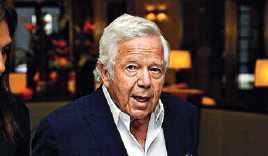
Robert Kraft is a Jewish multibillionaire, and the minute was an ad during the Superbowl, watched by more than 120 million people. The New England Patriots, owned by Kraft, played the Seattle Seahawks.
The ad runs as follows:
A nerdy-looking kid is walking down a school corridor, when a passing student bumps into him. He continues on his way, aware that others are looking at him, whispering and laughing. When he reaches his locker and takes his bag off his back, he finds that a yellow post-it note saying “Dirty Jew” has been placed on his bag. Suddenly, a blue post-it note is placed on top of it. “Do not listen to that”, says a tall African American student. “I know how it feels”, he says, placing another blue post-it note on his chest. The words “2 in 3 Jewish teens have experienced antisemitism” appear on screen, as heart-warming piano keys


contend with a sobbing cello. Watchers are then encouraged to share a hashtag with a blue square to “show you care”.
The Jewish student moves forward, presumably towards those who put the note on his bag, only for his new friend to hold his arm and tell him that “they’re not worth it, bro.” The Jewish kid responds, “yeah, you’re right, I was trippin” (no, I’m not joking, he really says that) as they walk off. We find out that the Jewish kid is called David. The African American kid? Bilal.
The most charitable thing I can say about this ad is that if it encourages even a few people to stand up for Jews, then it’s perhaps not a total waste of money. But the reaction of Jews to the ad in online spaces was almost uniformly negative; it’s not hard to see why.
The script is more wooden than your average shul bimah. The concept of using hashtags to advance social justice campaigns should be left in the 2010s where it belongs. The idea of a Jewish guy and black Muslim
guy teaming up to counter the (white) racist bullies feels absurdly hackneyed in an era where black Muslim Youtubers can team up with far right Hispanic white supremacists to perform Nazi salutes as they sing a song called “Heil Hitler”, released by one of the most successful African American music artists of the 21st century.
amount of money I do have that no one under the age of 35 was a major part of the process which led to this ad’s production. And I’m pretty sure I’d win.
The painful thing behind this ad is that the motive is obviously a good one. A wealthy Jewish person wants to fight antisemitism. And I’ve spent more than half this piece criticising the ad – the obvious riposte to that is that it’s easy to just condemn something without offering an alternative.
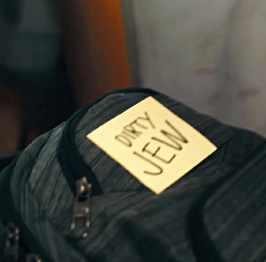
Plenty of Jewish viewers are also smarting at the not-particularly-subtle message in the ad that they should simply walk away from antisemitic bigotry, rather than standing up to it. Jews in school are not, on the whole, having someone stick a note to their bags. They’re getting assaulted by people screaming at them that they’re ‘baby-killers’.
I do not have $15 million. But I’d be willing to bet a little bit of the small
Thank you for helping to make Jewish News the leading source of news and opinion for the UK Jewish community. Unlike other Jewish media, we do not charge for content. That won’t change. Because we are charity-owned and free, we rely on advertising to cover our costs. This vital lifeline, which has dropped in recent years, has fallen further due to coronavirus.
Today we’re asking for your invaluable help to continue putting our community first in everything we do. For as little as £5 a month you can help sustain the vital work we do in celebrating and standing up for Jewish life in Britain.
Jewish News holds our community together and keeps us connected. Like a synagogue, it’s where people turn to feel part of something bigger. It also proudly shows the rest of Britain the vibrancy and rich culture of modern Jewish life.
You can make a quick and easy one-off or monthly contribution of £5, £10, £20 or any other sum you’re comfortable with. 100% of your donation will help us continue celebrating our community, in all its dynamic diversity.
Support Jewish News by visiting our donor page at jewishnews.co.uk

Without wanting to go full Tevye, if I had that kind of money and wanted to fight antisemitism, what would I do? I’d engage directly with Gen Z and Gen Alpha. I’d announce a $15 million annual initiative to fund the best ideas from our younger generations on how to tackle antisemitism. God knows our community is full of young, bright, ambitious people with ideas – why not give them the chance to make those ideas a reality? Make it like Dragons’ Den ( Shark Tank , for American readers) and invite people to come in and present their full and detailed plans on how to combat Jew-hatred. Many of those ideas won’t be good ones. Some will be. And a few could be game-changers.
Instead of funnelling money into ads, or into legacy Jewish organisations in America which have, regrettably, dropped the ball in so many different ways – empower those who know how young people think because they are young themselves.
This is not the first Superbowl ad that Kraft’s Blue Square Alliance Against Hate has run, but it really should be the last. It’s time to stop offering late 20th-century solutions to 21st-century problems. And commiserations on the Superbowl defeat, Robert.


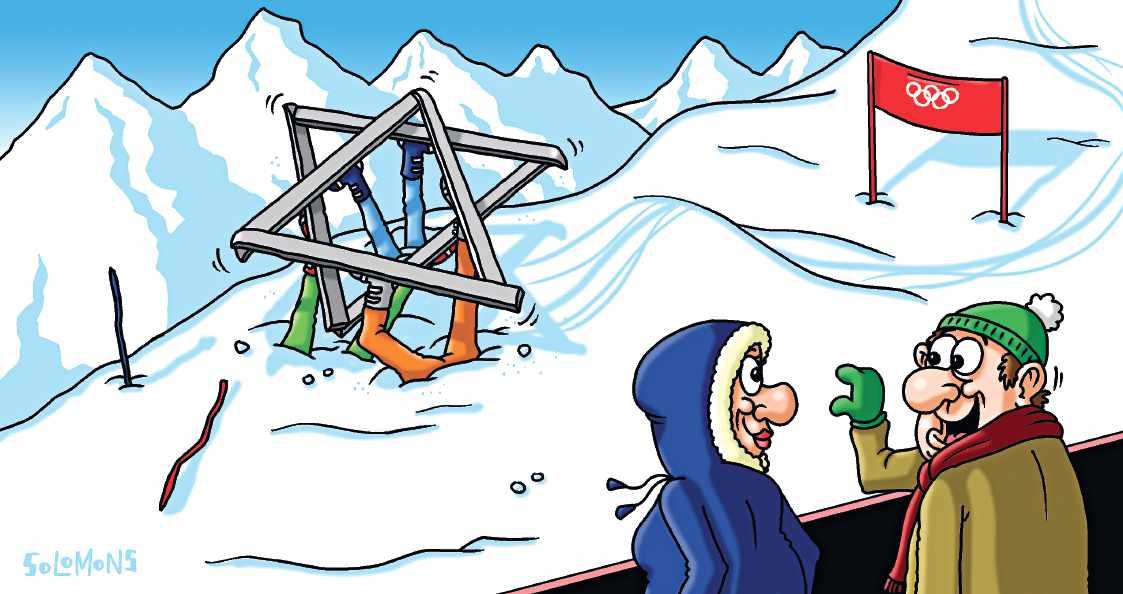







DAVE RICH DIRECTOR OF POLICY, CST
CST recorded 3,700 cases of antiJewish hate last year, detailed in its Antisemitic Incidents Report 2025
This constitutes a four percent rise from the annual total logged in 2024. A higher figure was recorded only in 2023.
The levels of reported antisemitism have remained substantially higher than those usually witnessed before 7 October 2023. In 2025, more than 200 incidents were logged in every calendar month for the first time ever, and the monthly average total of 308 incidents is exactly double the average recorded in the year preceding Hamas’ attack on Israel.
More than half the incidents reported to CST contained references to Israel, Gaza, Hamas or the wider Middle East conflict. Nearly half the incidents showed explicit evidence of anti-Zionist ideology alongside anti-Jewish language or targeting.
Hostility towards Israel all too often slips into hostility towards Jews, and this
phenomenon has been the biggest reason for the previously unprecedented volume of antisemitism observed in the UK.
It is important, however, that we do not lose sight of the people behind these statistics. Every incident recorded by CST has a perpetrator, but also a person, a family, a community that felt motivated to report hate and, in doing so, showed they will not stand for it.
This resilience has sadly been especially necessary in a year that saw the first fatal antisemitic terror attack on British soil since CST began recording incidents in 1984.
On Yom Kippur, a terrorist attacked Heaton Park Synagogue, resulting in the deaths of Melvin Cravitz and Adrian Daulby and serious injury to three others. To target a place of worship and its congregants on the holiest day in the Jewish calendar shows this was not merely a brutal act of Islamist violence, but an assault on Jewish life itself.
There were ripple e ects beyond the immediate trauma and devastation. There were 40 antisemitic incidents recorded on the day of the attack and 40 on the day after: the two worst


days for anti-Jewish hate in 2025. Most of them were reactions to the attack on Heaton Park, celebrating it, dismissing it, weaving conspiracy theories about it.


October’s tally of 463 incidents was the highest monthly figure logged in 2025 and the fifth highest in CST’s records, a rise of 63 percent from September’s total. A smaller – though clear – spike was also noted in the immediate aftermath of the terrorist attack targeting a public Chanukah even on Bondi Beach. When Jewish people and communities are perceived to be vulnerable, when they are

processing their grief for the tragic loss of innocent Jewish lives, antisemites use the occasion to rush in with their hatred. And yet, Jewish life proudly continues. We still go to synagogue, we still observe our holidays and we are not cowed by the prejudice and intimidation others wish to enact upon us.
This resilience is resounding, defiant and further inspiration for CST to secure, support and fortify Jewish life so that it may thrive, whatever the challenges that face us.
If you see or experience antisemitism, report it. Visit www.cst.org.uk. In an emergency, call the police and then CST’s 24-hour emergency number: 0800 032 3263



In the closing months of his first presidential term, Donald Trump pushed hard for an Israel/Palestine deal. Although well-intentioned, it was widely disparaged – perhaps unfairly – as unworkable, and there remained little opportunity to refine the terms before he left o ce. But he now has plenty of time to impose a sensible settlement. His rollercoaster approach to international relations may not be to everyone’s taste. Yet flagellation and flattery, bombast and bribery and hard-cop-soft-cop may be just what is needed here.
The Hashemite Kingdom of Jordan would be a key player in any such deal. For almost its whole lifetime, the “Palestine” Mandate included Transjordania, the region east of the River Jordan. The British had initially earmarked the whole territory of the Mandate for the Jewish national homeland, but, to the despair of the Zionists, from
the Mandate’s very inception they instead devolved autonomous control of Transjordania to the Hashemite Emir Abdullah. In April 1946, the Emirate was finally severed from the Mandate when the old League of Nations, at its last meeting, recognised the new Kingdom (“Transjordan” until 1949, when it took control of the West Bank)
That was the real partition. Jordan was the Mandate’s Arab legacy state. Britain’s Labour government then washed its hands of the problem of the Mandate’s western remnant and dumped it on the United Nations, which, in Resolution 181 of November 29, 1947, voted to sub-partition it. However, by an ironic twist of fate, Israel nonetheless attained sovereignty over the whole remnant. This was through the default operation of a longestablished principle of customary international law known as uti possidetis juris.
The rule was triggered automatically by the failure of the Arab community’s leadership to declare a state of their own in the areas allocated under 181.
They knew doing so alongside Israel would signal implicit agreement with the
resolution, and they wanted the lot. But the decision had consequences. It left a sovereignty vacuum in two-thirds of the Mandate’s remnant territory, and as Israel was the only state which came into being on the critical date of the Mandate’s expiry – 14 May 1948 – its sovereignty automatically filled out the vacuum to absorb the whole remnant.
By the end of the 1948 war, Israel could probably have taken control of the Gaza Strip and the West Bank salient with comparative ease. But it preferred to concede their occupation, respectively, by Egypt and Jordan under the terms of the 1949 Rhodes Armistice, retaining sovereignty in absentia. Although it seized them in 1967, its statesmen have usually been reticent about making express claims of sovereignty for fear of alienating friendly powers.
Yet decades ago, US policy had been more indulgent of Israel’s sovereignty rights over at least some of the West Bank. In 1982, echoing the sentiments of Britain’s Lord Caradon at the UN in 1967, President Reagan movingly declared he would never ask the bulk of Israel’s population ever again to live in a territory
barely ten miles wide at its narrowest point, within artillery range of hostile Arab armies.
For 18 years, Arabs of the West Bank thrived under Jordanian rule. Trump can restore those days, referencing the 1987 agreement signed by foreign minister Shimon Peres and King Hussein (but sadly vetoed by Yitzhak Shamir).
He should lean on Israel and Jordan to agree to a transfer to Jordan of the densest areas of Arab habitation within a boundary line carefully woven round a single contiguous segment. Far better to be Jordanian than citizens of a nominally independent landlocked enclave misnamed “Palestine”.
Why misnamed? “Palestine” comes from the Philistines, who settled in the coastal region around Gaza and harassed the Israelites. After crushing the Bar Kokhba revolt in CE 135, the Romans renamed the former province of Judea Palestina as a symbol of their triumph. Now destined for an era of post-Hamas reconstruction under the Board of Peace, Gaza could become an eminently viable conurbation-state named, with historical aptness – yes – Palestine.


















ALEX BRUMMER CITY EDITOR, DAILY MAIL
Among economic aficionados, the choice of a new chairman for the US Federal Reserve (Fed) is the equal of the Ballon d’Or in football. Arguably Donald Trump’s selection of Kevin Warsh to the post will be the most important appointment he will make, stretching well into the presidency of his successor in the White House and beyond.
Similarly to several of his distinguished predecessors to hold the hugely influential job of Fed chairman, Warsh is Jewish.
Given the controversy about so much Trump does and says, the selection of Warsh, a fellow in Economics at the free-market Hoover Institution at Stanford in California provided a market soothing event. The president’s quarrels with the current incumbent Fed chairman, Jerome Powell, whom he has described as a ‘moron’, are legion.
Trump’s assaults on the Fed put the dollar under pressure on the foreign exchange markets and helped to send the price of gold

ADAM LEIGH NOVELIST
Tand silver (as safe havens) soaring. Powell’s travails at the hands of Trump elicited support from central bankers across the G7, including Bank of England governor Andrew Bailey.
The selection of Warsh saw the dollar regain value, gold fall and then the price of US government bonds climb.
Educated at Stanford and Harvard Law School, Warsh picked up his economics expertise along the way. He has served in several key economic roles as a special assistant to President George W Bush and a former governor of the Federal Reserve in the Great Financial Crisis (GFC) of 2008.
Warsh’s family connections reach deep into the Jewish community. In 2002, he married Jane Lauder, the daughter of Ronald Lauder, who holds a key role as a global brands president in the Estee Lauder cosmetics empire. He is also the billionaire president and dominant force at the World Jewish Congress.
Warsh, who previously has worked at blueblooded investment banker Morgan Stanley, has relationships that reach into the highest realms of American commerce.
The choice of Warsh is also something of a
riposte to those who accuse Trump and some of those around him in the MAGA movement of antisemitism. It will certainly provide fuel, given the Lauder family connection, to conspiratorial haters who embrace the canard that Jewish bankers control the world.
The truth is the American Jewish community has had a profound positive influence on economics and public policy. One example is Paul Samuelson, widely regarded as the founder of modern economics and known to students across the world for his authorship of the standard textbook.
He turned the Massachusetts Institute of Technology (MIT) into the powerhouse of economic training after he failed to gain tenure at Harvard because of quotas on Jewish professors.
Among the most distinguished of MIT’s alumni is Ben Bernanke who served two terms as Fed chairman, spanning the George W Bush and Barack Obama administrations. This included stewardship of the US banking system in the financial crisis.
The lives and careers of Bernanke and the Warsh came together in the GFC, where Warsh was serving as a governor at the Amer-
ican central bank. Bernanke, a global expert on the Great Depression which followed the 1929 crash, is widely credited with having saved the global economy from a similar disaster in 2008. Bernanke took charge of the monetary aspects, and it was Warsh’s job to reach out to Wall Street.
It is extraordinary to think that in the late 20th and early 21st centuries, the world’s most important central bank – protector of the dollar, settler of global interest rates – has been largely in the hands of brilliant American-Jewish economists.
The incumbents have included the legendary Alan Greemspan, renowned for his unrivalled reading of the economic runes.
He was followed by Bernanke, whose successor was Brooklyn-born Jewish economist Janet Yellen – the first woman to hold the post and the wife of Nobel Prize winner for economics George Akerlof.
Yellen’s term was not renewed by Trump in his first presidency.
Thus we come to Warsh, married into US business royalty, who now stands ready to assume the most powerful and prestigious job in global finance.
his weekend is Valentine’s Day, so please make sure you buy your partner decent roses, not some wilted spray carnations from the garage at the end of the road. Even though I have been married for nearly 35 years, I will be making a series of grand gestures –serenading my wife with show tunes over breakfast, declaiming sonnets over lunch, followed by a candlelit falafel in one of Hendon’s finest restaurants.
To my mind, we Jews are spectacularly romantic as a consequence of our own fragility. Indeed, our idealisation of the perfect spiritual union has never been more important, given that we are confronted daily by a world finding new ways to hate us.
Perhaps that is why we have always, as a people, preserved our sanity by clinging to the emotional irrationality of falling in love.
The concept of romance itself is decidedly un-Jewish in its origins. Derived from a 12th-century French word, it refers to the narratives declaimed by travelling troubadours concerning chivalric knights pursuing the favour of unattainable maidens locked up
in faraway castles. Let’s be honest: jousting is not a very haimische pastime.
How ironic, therefore, that hundreds of years later crooners belted out the Great American Songbook. Arguably some of the greatest love songs of all time, the overwhelming majority were penned by the sons of immigrant Jews like Jerome Kern, Irving Berlin and the Gershwin brothers.
In the 60s, the Brill Building was filled with Jewish composers asking existential questions like Will you still love me tomorrow?
Indeed, the cultural expression of contemporary romance has unquestionably been moulded by a Jewish sensibility. Hollywood was built by Jews trying desperately to assimilate into American life by creating wholesome, gentle and gentile love stories. The great romcoms of the past 30 years have been created by a disproportionate cohort of Jewish writers.
Jewish scripture is filled with some of the greatest love stories ever written, from Adam and Eve to Ruth and Boaz. Look at Jacob’s pursuit of romantic happiness. Falling in love with Rachel until his wicked uncle tricks him, he marries the wrong sister, Leah, waits seven years, and finally marries his true love. Imagine material like that in the hands of Nora Ephron.
On Purim, we read the story of Esther, which is basically a dramatic and violent love story
that does not mention God once. A few weeks later, at Pesach, we try to make sense of the enigmatic Song of Songs, decoding the analogy of our love for Hashem with the sensual and idealised romance between man and woman described by King Solomon.
The Talmud, however, does not define love as an ephemeral feeling but as a duty. The rabbis outline a husband’s obligations to his wife: food, clothing and physical intimacy. Sex is not optional but an intrinsic component of a relationship, with a clear set of responsibilities. “One who withholds intimacy is considered as causing su ering,” we are told in Ketubot — you may want to keep this edict up your sleeve for whenever it might come in handy.
At its core, Judaism is a religion that romanticises the quest to bring two people together. We celebrate the concept of beshert, our destiny to find a soulmate. The Talmud tells us that since the work of Creation was finished, God has been engaged in matchmaking and that “it is as di cult to match a couple together as was the splitting of the Red Sea”.
The sanctity of relationships, and the guidance on how they should be nurtured, is a beautiful bedrock on which to build happiness in a world of turmoil. But it acts only as a partial explanation of the Jewish romantic sensibility. It is perhaps appropriate, therefore, to return
to Valentine’s Day, which has its roots not in an entrepreneurial greetings-card tycoon spotting a gap in the market but in Saint Valentine, a third-century Roman martyr. Some traditions claim he secretly married couples against imperial orders; others that he was executed for defying the emperor. In other words, romance was born out of su ering, and the world champions of unhappiness are surely the Jews.
Our recent history, fraught with unbearable persecution, has required us to celebrate the illogical optimism of falling in love. We are romantic because, quite frankly, dancing cheek-to-cheek is much more fun than trying to escape people trying to cause us physical harm.
At some point in the mid-19th century, says the academic Naomi Seidman, “Jews fell in love with love”. Enlightenment thinking and literature began a process of more autonomous behaviour and personal choice. Think of a beautiful Chagall painting where the couple float serenely above the challenges of shtetl life.
So, this Valentine’s Day, I suggest you celebrate the wonders and irrationality of relationships and the infinite possibilities they provide for happiness and joy. Don’t bother with an overpriced meal. Cuddle up to someone you love and watch a film. We Jews may be rubbish at competitive sport, but we know a thing or two about what makes a good romcom.
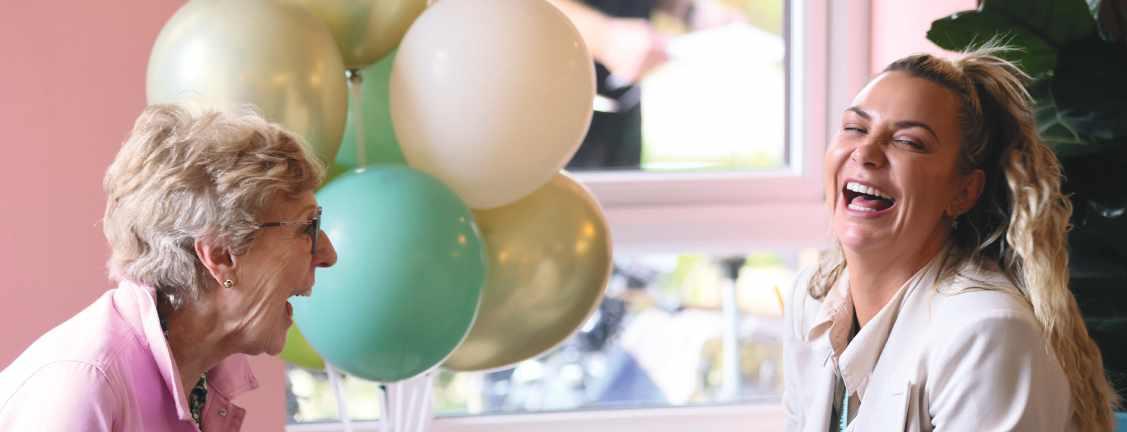






There comes a moment when managing your house starts to feel like more e ort than ease. At Birchgrove, you rent your own apartment and live entirely on your terms, with support on hand if you want it. No exit fees, no pressure to buy, no hidden charges. Just a calm, flexible way to move forward – where life feels lighter, and you feel more like yourself again.


Retirement apartments to rent in Mill Hill





More than 50 people from the Jewish and wider communities gathered as Edinburgh Hebrew Congregation unveiled its new orchard to coincide with Tu BiShvat. EHC member Lesley Danzig said: “In our garden we already have an olive and fig tree but today we are celebrating the planting of a new fruit tree orchard beginning with the planting of dessert apple trees, a cooking apple tree and a pear tree. We hope to make good use of the fruit in the EHC kitchen, also distributing to members and the wider community.” Three of the trees were dedicated in memory of loved ones. EHC’s Biblical Garden has been cultivated to include species that are mentioned in the Hebrew Bible and attracts visitors of all different faiths.
Bark-rubbing, bug-spotting, wiggling worms and sprouting shoots were all featured in Menorah Synagogue’s Tu BiShvat nature walk through Fletcher Moss Park in Didsbury, south Manchester. More than 50 people from across the generations – from babies in buggies to grinning grandparents – joined in. After an introduction explaining the origins of the festival, participants were split into three teams and given a series of challenges. Rabbi Kath Vardi, who led the event, said: “It was lovely to see so many people of different ages taking part in activities and enjoying the outdoors.”
Athlete extraordinaire Emma Bord completed a thrilling challenge on Friday 6 February, taking part in the Dead Sea Marathon and then excitedly messaging Jewish News: “Job done! 56km complete, in a race that should have been 50km, but runners were misdirected (Israeli style!)”. Joining runners from around the world, Bord completed the fifth annual extreme run against the stunning backdrop of the lowest point on Earth, describing it as “the hardest, most mentally challenging race but equally the most stunning, magical and breathtaking run I have ever done. It really was so special to be running in Israel and absolutely a bucket list item ticked off for me.”
Around 30 people, including volunteers, members of the public, Cllr Jake Rubin and Cllr Neil Nerva, joined the House of Life at Willesden Jewish Cemetery to celebrate Tu BiShvat, the Jewish New Year for Trees. The event marked the launch of a new project to create accessible planting troughs for schools and the wider community, supporting sustainability, education and community connection, l’dor v’dor, from generation to generation. The team at Willesden are also developing plans to create a sensory planter to support inclusive engagement for visitors with different access and sensory needs. The troughs are now ready for spring planting, and schools and community groups are invited to get in touch to access free planting sessions. Head of heritage Miriam Marson said: “This project is about creating meaningful, handson ways for people of all ages and backgrounds to connect with nature, heritage and community, while caring for the environment for future generations.”
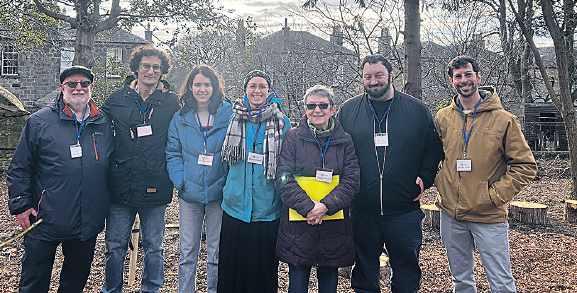
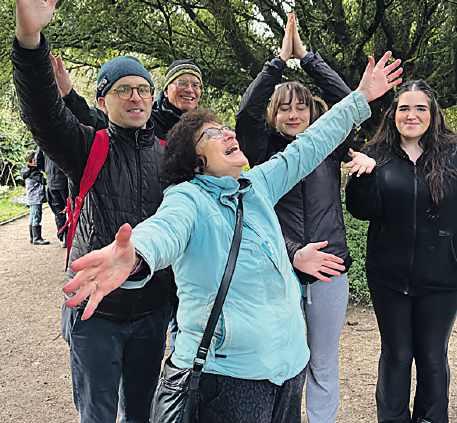


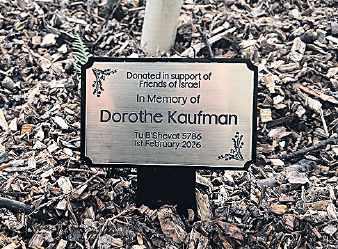


The eighth Festival of Spoken Ivrit has been taking place across London this month, reaching 39 schools, nurseries and community centres in Hebrew and English with guest speaker Miriam Perez.
Five productions are being staged for audiences ranging from nursery pupils to adults, all linked by this year’s theme: “Love your neighbour as yourself”. The festival aimed to strengthen spoken Hebrew while reinforcing values already taught through the national curriculum, including kindness, empathy and respect for others.
Israeli theatre company Hashaa is performing 61 shows; 500 pupils from JFS saw the play. Teachers praised the productions for keeping

pupils fully engaged while striking what they described as the right balance between Ivrit and English. One teacher said children “gained so much from the shows, learning important lessons in a fun and memorable way”, while another described performances of The Tortoise and the Hare and The Heart as “absolutely amazing”.
WZO’s Matan Bar Noy said: “At a time of growing challenges for Diaspora Jewry, this festival stands as powerful Zionist education and celebrates the core of the Israeli and Jewish story.”
The festival opened with a gala evening in London and included a family celebration at JW3, featuring children’s performances.







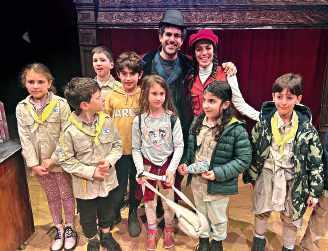






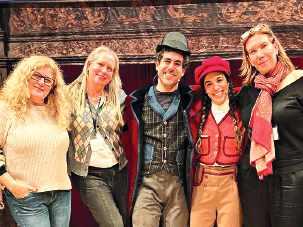







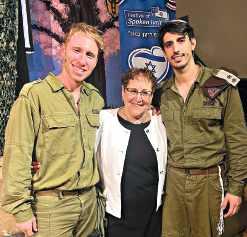

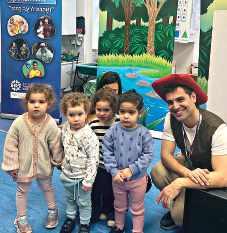



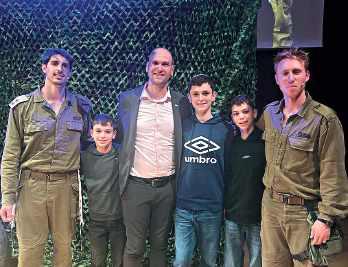










































Drawings of Lucian Freud’s family members are on show in new retrospective. But what was he like as a father, asks Anthea Gerrie
If there is one thing Lucian Freud had in common with conventional Jewish fathers, it was pride in his family. The greatest Anglo-Jewish artist of our times painted 10 of his children (that may be less than half of those he is rumoured to have fathered, but it’s the majority of the 14 he acknowledged), the mother with whom he reconnected after a broigus lasting decades, a stepson and at least two infant grandchildren, despite his dislike of children too small to be interesting.
Many of these family portraits will be on show at the National Portrait Gallery this spring in a fabulous retrospective which also includes charming childhood drawings that gave no indication young Lucian would grow up to be a louche, serially unfaithful, cad of a dad.
They include Bella Freud in the Pluto T-shirt that came from his fashion-designer daughter asking her dad for help creating a logo. Ever the indulgent father, he also designed the book jacket for Hideous Kinky, the book Bella’s sister Esther based on their childhood in exotic but impoverished surroundings with an absent father.
“My first vivid memory is when he came to visit when I was seven, driving a big, expensive car,” Esther told me about the beginning of her relationship with Lucian after the girls returned to England from Morocco, where their mother, Bernadine Coverley, had taken them to live during very early childhood. They settled at a Sussex school where Bernadine, who Lucian had avoided since the girls were born, was a dinner lady.
“He was glamorous, elegant and from a different world,” she remembers of the increasingly present and generous father who gave her a £100 in cash for her 18th birthday: “It was more money than I had ever seen.”
By 2011, the year he died, they were close enough to be seeing each other three times a week. “We
children formed a roster to make sure someone visited him every day, bringing in food he liked when he wasn’t well enough to go out, and playing records.”
His Ashkenazi parents, Ernst and Lucie Freud, fled Germany in 1933 with their three sons after a cousin was murdered outside a Berlin cafe by Nazis. “There wouldn’t be tons of things in the fridge, but there would be one thing that you liked, and the fact he remembered that thing was always exciting,” Bella recounted to National Portrait Gallery curator Sarah Howgate of her early days posing for her father.
“It just came from the local shop, but it was really delicious,” she says of the liver pate, the Lapsang Souchong tea and other delicacies previously unknown to girls raised on baked beans. “It was exciting sharing the things he had been brought up on, which were different from our things.”
Aged 17 when first summoned to the studio, Bella recalls an early taste of heady London nightlife following her modelling duties. “Quite often we’d work to midnight and then we’d go to a club. Back then there was a place called the Zanzibar… so exciting. I’d never been anywhere like that.”
Even meeting celebrities almost too drunk to speak – in this case, the late actor John Hurt – was thrilling to her. She said: “As I got older I was more keen to go home to bed, but in the early days it was fun.”
Bella, who left home at 16, would take Esther up on the train to see their father, and he painted them together as well as separately.
Particularly precious to Esther is a 1992 depiction of her breastfeeding one of her three children. Esther and Albie – “it’s mainly breast, arm and baby!” she says of a picture she had forgotten about for 30 years until it was shown for the first time in public at the National Gallery’s own Lucian Freud retrospective. “Like most of his pictures, it vanished into a private collection via my father’s dealer, because he always needed money.”
None of Lucian’s portraits of Esther are in the NPG exhibition, but apart from Bella, three other daughters are included: poet Annie Freud, her sister Annabel and halfsister to all of them, Isabel Boyt.
Although closer to his girls, Freud also painted his son Ali Boyt, stepson Kai Boyt, son Frank Paul and their mothers, Suzy Boyt and Celia Paul respectively, persuading six daughters and one son to pose naked for their dad’s interrogative gaze.
First wife Kitty Garman, the daughter of Jacob Epstein, the most famous Jewish artist of his own generation, and second wife Caroline Blackwood, also feature in portraits.
Depicted with more tenderness than the partners he subjected to dispassionate scrutiny was Lucian’s mother, from whom he distanced himself for decades as impossibly overbearing. He found her lifelong devotion to him “suffocating”, he confessed to artist friend Frank Auerbach, but after she fell into long-term depression and they reconciled, she became one of his most regular models. Even after her death, he drew the greatest fan of his work in her hospital bed.
Like a typical Jewish mother, Lucie Freud saved her son’s childhood drawings and entered them into an exhibition of children’s art; many now live in the National Portrait Gallery archive.
Freud’s love of the animals and plants he first depicted in crayon never left him, and he often added little drawings to his love letters later in life.
For a man who was rarely around for his children as they grew up and could be brutally callous towards their mothers, he was also capable of a tenderness, charm and playfulness which made the boy from Berlin a conundrum who morphed into a national treasure in his adopted Britain.
Lucian Freud: Drawing Into Painting is at the National Portrait Gallery until 4 May
When Darren Richman’s friend Matt Greene wrote a dystopian novel about memory loss, his number one question was... why?
Matt Greene is like a brother to me. That’s probably why we are arguing within a minute of the commencement of the interview. I am instantly transported back to my 20s, when we would spend our days collaborating on scripts.
Oscar Wilde said of writing: “I was working on the proof of one of my poems all the morning and took out a comma. In the afternoon I put it back again.”
Lucky old Oscar should have tried writing with a partner. Most of the day would have been spent bickering over who got to sit at the typewriter and the thorny comma issue wouldn’t even have been broached.
Greene’s first novel, Ostrich , was published in 2013, followed by a memoir, Jew(ish) , in 2020. Now The Definitions has arrived, a timely novel about a group of individuals relearning how to navigate the world and language after an illness strips
them of their memories. This might be bracketed under the dystopia banner, yet it has more to say about our haunted present than any number of history books.
Greene’s novel explores ideas about the limits of language and the importance of human connection – the stu of life that has somehow become acceptable to outsource.
When I eventually hit upon a question he is happy to answer, the author explains how The Definitions came to be: “The motivation is never to write a certain type of thing.
“It’s always to mine down into a feeling and see if you can articulate something about it and to present that to people as a question to see if they feel that way, too.”
Both the personal and the political inspired a novel that was published on Yom Kippur.
Greene is lapsed enough to have emigrated to Crystal Palace and only became aware it was the Day of Atonement when

news of the Manchester attack filtered through. The Definitions is not didactic but the insidious threat of AI and the inarguable rise of fascism are never far from the surface.
Perhaps less obviously, another major impetus for Greene writing the book was seeing his son start school. “Watching the e ect of even a benign institutionalisation was a driving force… You see the way they are able to assimilate or not assimilate to a set of rules that are not articulated to them… You recognise how much that determines their lives through an institution.”
He feels this paradigm is true of most institutions and perhaps the defining one of his childhood was Judaism, something that struck him as “confusing” since his family were “always on the lookout for loopholes”.
“You can’t write the word ‘God’ but you can write ‘G-d’ so it’s like he was winking up at you from the page, a co-conspirator in the trick you’d just pulled. We weren’t allowed meat in takeaways unless we ate it in the garden because, presumably, God can’t see your garden.”
This all struck Greene as hypocritical but, with age, he grew to understand the
“communal element of religion. It can reach backwards and sideways as much as it needs to reach up”.
While Jew(ish) was more explicitly,
well, Jewish, the author believes his background is also integral to understanding the narrator of The Definitions.
“What I get from Jewishness is a sense of assimilation and the degree to which I’m assimilating and being assimilated… That semi-observational perspective is adopted by the narrator of this book and encourages them to try and make sense of the institution.”
It is easy to see why interviewer and interviewee struggled to fit in on FZY Israel tour in the summer of 2001 and sniped from the sidelines as our peers merrily regaled strangers with chants of “Tour 3, how fit are we?”
Humour was as integral to Greene then as it is now and thus The Definitions is a dark novel with comic undertones throughout. He believes “humour is almost as automatically a culturally Jewish process as breathing – it’s completely essential”.
He is 500 pages into a new book on the contemporary Jewish experience and “the degree to which it is defined by the legacy of the Holocaust”. When he heard the news from Manchester on the day of publication, Greene felt like promoting a book was the last thing he wanted to be doing.
Greene felt like promoting a book was the last to minority is that you don’t get to control the to the fore and will supplant everything
“One of the things about belonging to a minority is that you don’t get to control the times when that identity is brought roaringly to the fore and will supplant everything else that’s going on in your life.
The Definitions isn’t an explicitly Jewish-themed book but my Jewishness does inform it to some degree because my Jewishness informs everything I write and everything that I think.”
Jewish-themed book but my Jewishness does inform it to some informs everything I write and personal to you than the thing of years”.
The attacks seemed the starkest example yet of “the way in which something external can feel more personal to you than the thing that you worked on for a number
That Jewishness is a fundamental
That Jewishness is a fundamental part of my friend, however far he ventures from home. That desire to think and argue and make jokes will never leave Greene. The interview ends when we both have to set o to pick up our sons from school, the boys fast approaching the age we were when we met at the end of
think and argue and make jokes will when we both have to set o to pick up our the the last century. I had wondered whether Greene would
I had wondered whether Greene would put on a show when we began recording but the man who has written a novel about the very concept of sel ood was absolutely himself throughout the conversation.
but the man who has written a novel about himself throughout the conversation. In his words: “I wish I could be
In his words: “I wish I could be that spiky in every interview.”
• The Definitions is published by Dead Ink Books, £10.99
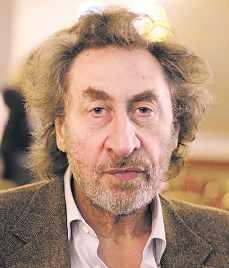
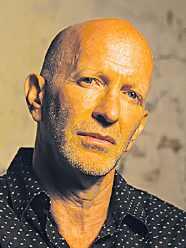
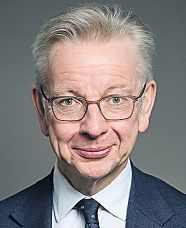
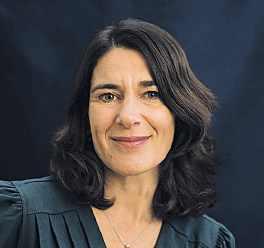



As Jewish Book Week opens, Jenni Frazer celebrates this long-running festival and highlights what to look out for
We are not called the “People of the Book” for nothing. As wintry weather slowly fades, what better way to welcome the advent of spring than with Jewish Book Week, this year celebrating its 75th edition — with its biggest programme yet.
The festival, which is not just London’s longest-running literary event, but also said to be its best, is this year holding a landmark jamboree of events, ranging from familiar faces to unexpected delights. As planning for the 2026 events began almost as soon as doors closed on the 2025 Jewish Book Week, there are treats in store (and of course, books to buy).
Based at the state-of-the-art Kings Place in King’s Cross, Jewish Book Week is also o ering pop-up events this year, with venues including the British Museum, the British Library and the Bridge Theatre.
This year’s stellar line-up – with over 160 speakers – includes Booker Prize and Olivier -winners, former MPs, Oscar nominees and international bestsellers, including David Grossman, Janet Suzman, Simon Schama, Esther Freud, Michael Gove, Cassidy Janson and Claudia Roden.
The programme organisers, the Jewish Literary Foundation, say there is something for everyone in this year’s festival, which runs from 28 February to 8 March.
There will be the largest free fringe o ering yet, £5 tickets for under-30s and free online sessions.
Highlight features include the Genesis Emerging Writers sector and the inaugural Jewish Playwrights Programme.
This year’s festival opens with internationally renowned pianist Margaret Fingerhut, MBE and violinist Bradley Creswick, Leader Emeritus of Royal Northern Sinfonia, performing works by composers including George Gershwin, Fanny Mendelssohn, Felix Mendelssohn and Ernest Bloch. Following this will be a panel featuring festival favourites Howard Jacobson, Claudia Roden, Simon Schama and Hugo Ri ind, paving the way for nine days of events covering everything from the crisis of the BBC, the case for assisted dying, to Israel behind the headlines, the polarisation of the Culture Wars and an appreciation of Carole King in words and music.
Tying the entire festival together will be an exploration of the breadth of Jewish culture in the UK and beyond. With sessions ranging from Mamdani: A New New York and Jewish Stories in the Square Mile to The Lines we Draw: A Jewish Journalist’s Search for Identity and Across the Divide: Jewish and Arab Israeli Women, the festival will confront head on the diversity of Jewish experience in an ever-changing world.
Jewish Book Week director Claudia Rubenstein says: “Jewish Book Week has always been a meeting place for writers across continents and years, and what better way to celebrate this than with our 75th edition, which promises to be more ambitious, eclectic, and challenging than everbefore. We hope this programme honours what has made Jewish Book Week so special, while looking to the future and ensuring that Jewish writing and ideas continue to thrive for generations to come.”
1. Mel Brooks, The Almost-100 Year Old Man, is the hot-ticket closing event on 8 March at 8.15 pm, celebrating the undisputed king of comedy. On stage will be Maureen Lipman, with special guests Andy Nyman and Marc Antolin from the current London cast of The Producers, alongside Allan Corduner and Rob Rinder, saluting the Emmy, Grammy, Oscar and Tony winner.
2. The formidable actress Dame Janet Suzman, South African-born but long British based, talks through her stellar career with broadcaster Francine Stock. 1 March, 12.30 pm
3. Are we sitting comfortably? David Aaronovitch, Vernon Bogdanor and former Labour minister Margaret Hodge look at whether Britain is still a Goldene Medinah for its Jewish community. 1 March, 6.30 pm.
4. Britain has long been proud of its action in taking in 10,000 unaccompanied children on the Kindertransport in 1938 and 1939. But as Leon Duval and Trudy Gold will discuss, there were dark sides to the Kindertransport story. 1 March, 5 pm
5. The Dean of the London School of Jewish Studies, Rabbi Dr Raphael Zarum, will lead a fascinating tour of the British Museum to show o its treasures relating to Purim and Persia. 2 March, 12-2.30 pm
6. Staying with Purim, join renowned cookery writer Silvia Nacamulli at JW3 for two demonstrations on how to make an
Italian Purim. 3 March, 12-2pm or 6.308.30 pm
7. Music to our ears: Carole King’s landmark album Tapestry, now a staggering 55 years old, is celebrated in words and music with Olivier-award winner Cassidy Janson and the former editor of The Forward, Jane Eisner. 5 March, 7.30-8.45 pm
8. Spectator editor and former Cabinet minister Michael Gove talks liberal democracy and its future, with a glittering panel chaired by the Sunday Times’s Camilla Long. 7 March, 7.45 pm
9. A deep dive into what we might think of the BBC, with pundits Natasha Hausdor , Robin Lustig, Anthony Seldon, under the watchful eye of The Sunday Times’s and Jewish News’s Josh Glancy. 8 March, 11 am
10. And finally, a chance to learn about Israel behind the headlines with expert observers Matti Friedman and Anshel Pfe er. 8 March, 12.30 pm
u Tickets are on sale now via the Kings Place box office and online at kingsplace.co.uk For the full programme, go to jewishliteraryfoundation.co.uk/jewish-book-week In-person events are held at Kings Place, 90 York Way, King’s Cross, London N1 9AG, in addition to select events across London. All online events are free to attend on Zoom

London
entrepreneur Evan Shapiro has raised investment for his AI startup Dataline Labs, which helps organisations turn fragmented business data into instant insight
ondon entrepreneur Evan Shapiro has raised $1m in investment for his AI startup Dataline Labs, which helps organisations turn fragmented business data into instant, usable insight without needing large technical teams.
LShapiro, who grew up in Bushey, Hertfordshire, was part of the first year of students at Yavneh and before moving to JFS for sixth form.
As co-founder and CEO of the company, he has led Dataline Labs from a bootstrapped idea to government-backed defence work in under three years, securing backing from Haatch Ventures, the British Business Bank and angel investors.
The startup has also been selected for the Ministry of Defence’s Digital Supply Chain Hub Defence Testbed Accelerator, a programme supporting technology firms working on critical UK defence infrastructure.
Founded in 2023 by Shapiro and CTO Chris Lawson – both first-time founders – Dataline Labs tackles a problem both founders encountered throughout their careers: that essential business data was spread across disconnected systems, spreadsheets and legacy software.
In many organisations, extracting usable insights still requires months of engineering work and specialist expertise.

Dataline Labs addresses this by transforming fragmented data sources into clean, AI-ready datasets within minutes rather than months – and crucially, providing AI with the business context needed to inter-
Help us shape meaningful conversations and change
Norwood is the Jewish community’s oldest charity and a leading provider of support for neurodivergent children, young people and adults, individuals with neurodevelopmental disabilities and their families.
We are establishing an independent Expert Advisory Panel to help shape the future development of our services, ensuring they remain evidence-led, aligned with best practice, and responsive to lived experience.
We are seeking expertise in:
• Developmental paediatrics, psychiatry, psychology
• Speech and language therapy
• Autism, ADHD and neurodivergence research
• Social care and systemic family practice
• Public health and commissioning
• Education and disability law
• Positive Behaviour Support (PBS)
• Lived experience (parents, carers, neurodivergent adults)
Contribution
Panel members will provide strategic advice on research, policy developments, innovation and service design across both children’s and adult services.
Commitment
This is a voluntary role involving 2 to 3 virtual meetings per year, with occasional additional input as needed. Membership is for an initial three-year term.
How to apply
Please send your CV and a one-page cover letter to: obinna.chijioke@norwood.org.uk
Closing date 24 February
pret that data accurately. Shapiro, a member of Bushey United Synagogue growing up, says: “We spent years watching companies drown in their own data. The information was there, but getting to it meant waiting on overloaded engineering or data teams, with dozens of tasks ahead of yours!”
Shapiro adds: “We started Dataline Labs because we believed there had to be a faster way – and now we’re proving it with a vote of confidence from investors and the Minstry of Defence.”
DataLabs transforms fragmented data sources into clean, AI-ready datasets within minutes. Alongside the funding announcement, the company is launching MIRA AI, a platform where non-technical teams can ask questions in plain English and receive usable answers, instead of relying on engineers or analysts.
The company believes this approach could significantly improve productivity in sectors
where data remains difficult to access.
Haatch Ventures said Shapiro’s leadership and the company’s early momentum were key reasons for its investment.
“Evan and Chris have built something genuinely impressive in a short space of time,” said Sophie Weavers-Wright, Head of Platform & Portfolio at Haatch Ventures.
“Two first-time founders going from zero to Ministry of Defence selection so quickly tells you everything about the quality of the technology and the team.”
Shapiro studied Aerospace Engineering at the University of Liverpool before completing a Masters in Finance at the London School of Economics.
To date, Dataline Labs has delivered projects across sectors including manufacturing, smart buildings, asset management and ESG reporting.
With the new funding, Shapiro plans to expand the team, roll out MIRA AI to enterprise clients, and deliver on the company’s Ministry of Defence work.
Beyond defence, the company is targeting industries where data fragmentation remains endemic, including retail, marketing, property, private equity and professional sports.
• datalinelabs.com
RABBI YONI GOLKER MAGEN AVOT UNITED SYNAGOGUE
them to absorb a simple but powerful message of honesty and integrity.
On a quiet weekday morning in Connecticut, a rabbi dismantling a second-hand o ce desk made an astonishing discovery. Hidden behind a set of drawers was a plastic bag containing nearly $100,000 in cash. The desk itself had cost just $150 on Craigslist. The money was clearly not his. By the very next day, Rabbi Noah Muro (who, incidentally, I studied with in yeshiva), together with his wife and four children, returned every dollar to its rightful owner.
When asked why he involved his children, he explained that he wanted
Stories like this feel striking precisely because they cut against the grain of modern life. Yet for Jews, this is not extraordinary behaviour. It is the natural outgrowth of a legal and moral system that has spent millennia training us how to live with integrity. This week’s paired Torah readings, parshat Mishpatim and parshat Shekalim, o er a timeless framework for understanding what ethical living truly demands of us and why human dignity sits at the core of Jewish law.
Parshat Mishpatim is one of the most densely packed portions in the Torah, containing 53 mitzvot, nearly one tenth of all the commandments. What is most striking is not the quantity but the focus. The majority of
these laws deal not with ritual but with relationships. Returning lost property, honesty in business, financial responsibility, damages, loans, and protections for the vulnerable all feature prominently. The Torah moves swiftly from the thunder of Sinai into the texture of everyday life, teaching that holiness is not found only in sacred moments but in ordinary human interactions.
At the heart of these laws lies the concept of kavod habriyot - respect for human dignity. The Torah insists that every person is created b’tzelem Elokim (in the image of God), as stated in Bereishit. The Talmud pushes this idea to its moral limits. In Kiddushin, the sages teach that if a person owns only one pillow, they must give it to their servant rather than keep it for themselves. Even where power and
hierarchy exist, dignity must never be compromised.
This ethical vision flows naturally into parshat Shekalim. When God commands Moshe to count the Jewish people, it is not done through a headcount but through a donation. Each person gives a half shekel, rich and poor alike, as described in Shemot. No one gives more and no one gives less. The message is clear. Human value is not measured by wealth, status or influence.
The Midrash records that Moshe struggled to understand this instruction until God showed him a vision of the half shekel. Moshe could not grasp why a holy people should be counted through something as material as money. God’s response reframes the entire idea of giving. It is not the coin that gives a person value. Rather, it is





the willingness to give that makes a person count. Our worth is revealed not by what we hold on to but by what we are prepared to part with.
Money, the Torah reminds us, is only a tool. It reflects what we value. Parshat Shekalim teaches that generosity is not limited to finances. We give through time, attention, patience, emotional presence and moral courage. Ultimately, these parshiyot ask a single enduring question. Not how much do we have, but how do we give?
That is what truly makes us count.



BY RABBI LEV SAUL KINGSTON LIBERAL SYNAGOGUE

Many ways of loving as Jews
I’ve never really got Valentine’s Day. What’s love got to do with buying gaudy chocolates on the feast of the Christian saint of syphilis? The commercial festival feels like everything love is not: loud, superficial, insincere.
Much better is the Jewish equivalent: Tu B’Av. Like love, it marks a gentle reprieve from the challenges of the world during the sadness of Av. Like love, it has few rules, but is unique to each relationship. And like love, it doesn’t get the attention it deserves.
Nearly three years ago, my husband and I proposed to each other on Tu B’Av on a walk in Epping Forest. I felt very conscious that being able to marry another man as a religious Jew was a privilege unknown to previous generations. It was a gift from Progressive pioneers that enabled us to love and live fully.
I marvel that, for the children in my life now, they have no idea that opposite-sex marriage used to be the only option. They’ve been able to attend weddings of every di erent gender configuration, and all they know is that it’s supposed to be between people who love each other.
Tu B’Av marks the day when the tribes of Israel were allowed to inter-marry; it celebrates love between people who would have been separated.
For a long time, Jews were not able to have religious celebrations with their non-Jewish partners. It didn’t stop them loving each other, of course, but it did alienate them from their communities. Last year, I gave a wonderful, committed couple their first relationship blessing on the bimah, 40 years after they had married in the registry o ce.
Today, one of the great joys of Progressive life is bringing non-Jews under the chuppah with their Jewish spouses. I’ve been honoured to preside over marriages that truly bring together a couple’s cultures.
Mixed weddings bring up wonderful
opportunities to talk about what customs and symbols really matter in a relationship. One of my greatest memories is of performing a Ghanean-Jewish wedding under a chuppah made of Kente cloth.
This has helped us provide better weddings for Jewish couples too. No longer do we assume that every service will follow an identical script, but each chuppah showcases what is special in a relationship.
I know some will read this article in horror at how far Progressive Judaism has pushed the bounds of tradition. We’re starting to do blessings for polyamorous people too. That means celebrations of love can include more than two partners.
We’ve scrapped the abusive practice of agunot, refuse to judge children’s status based on their parents’ relationships, and fully embrace the diversity of humanity. It is a joy to be part of a movement celebrating every form of relationship. It feels so much better than any sickly chocolate heart. It feels like real love: defiant and unstoppable.
A stimulating series where our progressive rabbis consider Judaism in the face of 21stcentury challenges
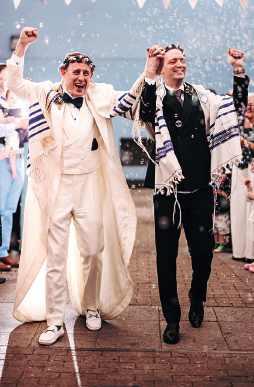

Suits from £79.50
Overcoats from £79.50
Trouser Bargains £25
Raincoats from £49.50
FROM £10
SHIRTS FROM £10
SHOES FROM £15
Open everyday & Sundays til 5:00pm


10 Golders Green Road London NW11 8LL Opposite Cafe Nero











SEAFOS RESORT & SPA NAFPLIO, GREECE
31 March - Sunday 12 April

PAY FOR 10 NIGHTS, STAY 12 NIGHTS !!!


Exclusive Resort & Spa: Indoor/outdoor pools, beachfront location, expansive grounds, and spacious public areas.
Boutique Atmosphere: Only 115 rooms Sea View, Mini Suites, Private Pools, program capped at 300 guests, entire hotel exclusively for Kosher Travelers
Culinary Excellence: Elegant dining, gourmet meals, lavish Kiddush, and all day refreshments & snack bar. Kashrut: Glatt Mehadrin, Non-Gebrochts, No Kitniyot.
Private, family, & communal Seder options. Uplifting Davening and Engaging Shiurim
Inspiring Program: Engaging presentations by R’ James & Vicky Kennard and David & Bonny Weinberg
Entertainment & Activities: Live music, entertainment for all ages, kids and teens sports/activities, wellness centre & spa.
Prime Location & Access: Athens or Kalamata airports, free Wi-Fi and parking, local attractions, optional day tours and transfers.
Charming Nafplio: Complimentary transfers 20 min to Greece’s most beautiful and historic city.

SCHOLARS, GUEST SPEAKERS & ENTERTAINERS:
Rabbi James & Vicky Kennard, David & Bonny Weinberg, Chai Parnes, Musical Maestro Yossi Shwartz, Daniel Harel, & more!





ANTIQUES
Antique – Reproduction – Retro Furniture (any condition)
Epstein, Archie Shine, Hille, G Plan, etc.
Dining Suites, Lounges Suites, Bookcases, Desks, Cabinets, Mirrors, Lights, etc.
House clearances
Single items to complete homes
MARYLEBONE ANTIQUES - 8 CHURCH STREET NW8 8ED 07866 614 744 (ANYTIME) 0207 723 7415 (SHOP)
closed Sunday & Monday
STUART SHUSTER - e-mail - info@maryleboneantiques.co.uk
MAKE SURE YOU CONTACT US BEFORE SELLING


big or too small! Rubbish cleared as part of a full clearance. We have a waste licence. We buy items including furniture bric a brac.
For a free quote please phone Dave on 07913405315 any time.


Confidential Bereavement Counselling for adults and children individually. Support Groups available. We offer in person, online and telephone counselling. Contact Jewish Bereavement Counselling Service in confidence. 0208 951 3881 enquiries@jbcs.org.uk | www.jbcs.org.uk
our Legacy Team on 020