












It’s the first week of August, but when you ask people how their summer is, many answer that it’s almost over.
It’s not almost over, but this summer went (is going!) by unusually fast because of how the yomim tovim fall out this year. By the time our next issue goes to print, most boys will be home from camp, gearing up for the Elul zman. Whoa! That was fast.
But it’s not over yet. There are still a few days to enjoy the slower pace that summer naturally lends to our calendar. But we don’t have to gobble up mounds of ice cream or spend hours in the sun to make sure to soak up the summer atmosphere. Summer is about more relaxed movements, a break from the normal routine, a recess from many duties that are mandatory throughout the year.
Talk to women about suppers during the summer, and they’ll laugh. With less people at home and more access to the grill, dinnertime is more about grilled chicken and roasted vegetables than a three-course meal starting with an appetizer and soup. And of course, whatever you try to serve to your young ones, you’ll inevitably be asked for pasta or cereal and milk at least every other day.
Bedtimes end up being later, because the sun beckons outside, luring us to spend more time in its golden rays. It’s hard to put an end to a glorious, delicious, warm day. But even if the kids go to sleep later, their sleep time is hardly affected – they’re up and ready for another day at camp, swimsuit in hand, as the bus rounds the corner.
Summer has a way of simplifying things. We need less to make everyone happy. A sprinkler in the backyard can feel like a water park. An evening barbecue becomes dinner and entertainment. A family walk after dark turns into quality time without anyone having to plan it.
That, perhaps, is the secret of the season – it reminds us that sometimes the best moments are the least complicated ones. We don’t need an elaborate itinerary or an expensive outing to create memories that our children will carry with them long after summer ends. Blowing bubbles or coloring with chalk becomes a whole afternoon adventure. Watching the bunnies and the birds in the backyard or the fireflies that only come out on special days…that’s what summer is made of.
Before the calendar fills again with carpools, homework, meetings, and the whirlwind of Elul and yom tov preparations, take advantage of these remaining days. Take another walk on the boardwalk, collect a few more seashells on the beach, sip one more iced coffee (OK, lots more), and watch the sun sink below the horizon…listen and feel the sounds of summer.
Summer may feel shorter this year, but it still has something to offer if we’re willing to slow down long enough to appreciate it. And when the busy season inevitably returns, perhaps we can carry a little of that summer serenity and stillness with us into the months ahead.
Wishing you a wonderful week, Shoshana

Yitzy Halpern, PUBLISHER publisher@fivetownsjewishhome.com
Yosef Feinerman, MANAGING EDITOR ads@fivetownsjewishhome.com
Shoshana Soroka, EDITOR editor@fivetownsjewishhome.com
Nate Davis Editorial Assistant
Nechama Wein Copy Editor
Rachel Bergida Shana Brecher
Lani White Design & Production
Gabe Solomon Distribution & Logistics
P.O. BOX 266
Lawrence, NY 11559
Phone | 516-734-0858
Fax | 516-734-0857
Classified Deadline: Monday 5:00PM classifieds@fivetownsjewishhome.com text 443-929-4003
PAYMENT VIA CREDIT CARD MUST BE SUBMITTED ALONG WITH CLASSIFIED ADS
The Jewish Home is an independent weekly magazine. Opinions expressed by writers are not necessarily the opinions of the publisher or editor. The Jewish Home is not responsible for typographical errors, or for the kashrus of any product or business advertised within. The Jewish Home contains words of Torah. Please treat accordingly.





Dear Editor,
Recently, a podcast clip was forwarded throughout social media channels where the person says that he not only sees no value in different types of Jews interacting, he thinks that boundaries are needed to prevent just that possibility. Approximately seven years ago, on a Shabbos walk in Woodmere, I met Doug Segan MD, JD who is currently running for Nassau County Legislator. Doug was the president of the local Reform Temple at the time. Since that meeting, Doug has experienced his first Shalom Zachor, has started putting on tefillin regularly, received an Aliyah in shul on Shabbos and read the brachos in Hebrew, and he is about to attend his first Sheva Brachos!
We call ourselves “The Bridge Builders.” That’s how we bring Moshiach!
Esther Miller Woodmere, NY
Dear Editor,
As a resident of the Five Towns for several decades, and a member of several local shuls, I’ve seen norms evolve over the years. Some for the better and some not. As we thankfully have an eiruv, I have noticed many individuals, on Shabbos morning, attend shul, carrying their tallis and cup of Java. Others make their coffee when they arrive at shul. During davening, these individuals openly drink coffee during Pesukei D’zimra and beyond. This behavior or tradition has even been adapted by children, as they emulate the behavior of a parent.
I do not seek to address the halachic ramifications of such conduct but rather

the spiritual and ethical practice of such behavior. Interestingly, I am unaware of any local rav addressing this issue, that is so readily observable. I believe that such behavior in a makom tefillah creates an atmosphere that is contrary to the basic core of davening to your Creator. It runs contrary to central principles of reverence, respect, individual humility, and gratitude as we daven to Him. Growing up as a child and young adult, who observed someone sipping a coffee during davening? A shul is not your patio, kitchen, or office. Seeing a baal tefillah standing at the amud or a gabbai at the bima, in open view, with their cup of coffee, diminishes the sanctity of the pervading tone or mood that a shul should capture and possess.
I sincerely hope that individuals reevaluate their conduct so we elevate the sanctity of our overall and collective tefillah at our shuls.
Respectfully, MML
Five Towns
Dear Editor,
I was one of the seminary girls (Machon Gold, 1974-1975) who was loved, and still am, by “Imma Fay” Sladowsky. In fact, Esther and Rayla, the two older daughters, were both in seminary along with me. Besides all the adventures we enjoyed during that year in Israel, I knew I was always welcome in the apartment on HaRav Berlin Street.
Shabbat was a joyful experience with a whirl of people popping in to say Shabbat Shalom and enjoy a bite of kiddush. Continued on page 12


They included me in their busy family life without formality or fuss. My year in Israel, as part of a generation without WhatsApp, cell phones, FaceTime, or frequent NY visitors, was filled with a warm, nurturing presence because I had Imma Fay. She hugged me when I was sad or homesick, advised me when I needed guidance, and enveloped me with genuine love. I never felt alone because of Imma Fay and the Sladowsky family.
To this day, and after all these many years, these true friends of my heart stayed connected. I credit my Ahavat Yisrael to my year in seminary and particularly to Imma Fay for smoothing over the bumps. It is often said, “Where we love is home.” During the year 1974-1975 in Jerusalem, I was home in an apartment on HaRav Berlin Street with Imma Fay Sladowsky.
Soshi Feder (Isseroff)
West Hempstead, NY
Dear Editor,
In ArtScroll’s Tehillim with the Teachings of the Talmud, Radak’s commentary on Tehillim 144 explains that no matter how many enemies Dovid HaMelech faced he knew that Hashem was with him. It is said that Dovid HaMelech composed this kapitel while at war with the Pilishtim. The reality of the enemy he faced was far outweighed by his Ally, “He Who guides my hands in battle, my fingers in combat.” (144:1).
With this in mind, why should we be afraid of our mortal enemies? As a New York City resident, people ask me: “Aren’t you afraid to live in New York with Mamdani as mayor?” The reality of a politician who hates Jews, seeks to deny our right to exist and excludes us from judicial decision-making is nothing compared to the reality that Hashem is our King. People thought they have nothing to worry about because Trump is on our team or because they are so liberal that the socialist Mayor would endear himself to him; the reality is that Hashem was, is and forever will be. No man can protect
us or the opposite thing.
Rav BenTzion Kokis, a mashgiach in Beis Medrash Govoha, rabbi and author of Earning Eretz Yisroel, shared with me the Gemara in Sanhedrin (97b), which says that we can either do teshuva willingly or by through a king whose decrees are as bad as Haman. “Hashem is pushing us to teshuva,” he said.
Let us approach Ellul with love; we shouldn’t need reproach. Re’eh: see the good in yourself and others. In this way, we can truly earn Eretz Yisroel.
I am not afraid. I wear my yarmulka proudly. And I proudly serve my people as a lawyer, writer, counselor for special needs children, and prince in the King’s palace. Our enemies are fleeting like shadows, Dovid Hamelech explains. Ashrei ha’am shekacha lo.
Chaim Yehuda Meyer
Dear Editor,
I went into our local Trader Joe’s today, paid with cash, and was thankful that I did so, as I got change back of three coins that I didn’t recognize at all immediately.
Ends up, they were the new minted quarters made special for America’s 250th birthday. I’ll certainly be saving them, as they are historic.
These unique quarters come in the following designs:
-Mayflower Compact – what I got
-Revolutionary War
-Declaration of Independence
-U.S. Constitution
-Gettysburg Address
The Mint also released a very limited run of 250,000 Declaration of Independence quarters with a special “July 4” privy mark, randomly mixed into circulation, making them especially desirable to collectors. Even the cashier told me to consider taking them to a bank, to see if they have any value. In any case, owning a unique piece of history is always interesting.
A Reader



NASA astronaut Chris Williams and two Russian cosmonauts are back on Earth after spending eight months aboard the International Space Station, marking another milestone in the rare area of continued cooperation between the United States and Russia despite ongoing geopolitical tensions.
The three-man crew landed safely on July 26 in Kazakhstan after their Soyuz MS-28 spacecraft parachuted into the steppes southeast of the city of Dzhezkazgan. The mission lasted 241 days in orbit and was the first spaceflight for Williams and cosmonaut Sergei Mikaev, while commander Sergei Kud-Sverchkov completed his second mission.
Following the landing, recovery crews helped the astronauts descend from the capsule before transporting them by helicopter to the city of Karaganda. From there, Williams was scheduled to return to NASA’s Johnson Space Center in Houston, while his Russian crewmates headed back to Star City, Russia, for post-flight rehabilitation.
During their 241 days aboard the orbiting laboratory, the crew circled Earth 3,856 times, traveled more than 102 million miles, and conducted a variety of scientific experiments designed to advance research benefiting life on Earth while preparing for future missions to the Moon and Mars. Williams also participated in two spacewalks during the expedition.
Before departing the station, Kud-Sverchkov officially handed command of the ISS to NASA astronaut Jessica Meir, marking the transition from Expedition 74 to Expedition 75.
The returning crew had already been replaced earlier this month by NASA astronaut Anil Menon and Russian cos-
monauts Pyotr Dubrov and Anna Kikina, who arrived at the ISS on July 14 for their own eight-month mission. They joined astronauts from NASA, the European Space Agency, and Roscosmos already living aboard the station.
Although relations between Washington and Moscow remain strained over the war in Ukraine, the International Space Station continues to serve as one of the few major examples of sustained U.S.-Russian cooperation. NASA and Roscosmos still rely on one another to operate the orbiting laboratory, with astronauts and cosmonauts regularly flying aboard both American and Russian spacecraft.

According to the Henley Passport Index, which ranks countries by the number of destinations their passports give free access to, the United States has dropped to 10th place. The U.S.’s ranking has gradually fallen since 2016, when it was at 4th place, dropping from 5th in 2017, to 7th in 2020, to 9th in 2025. In first place was Singapore, giving access to holders to 192 countries. Japan, South Korea, and the United Arab Emirates were tied for second place, with access to 188 countries. Sweden was ranked third. Fourth place – access to 186 countries – was a tie between 11 nations: Belgium, Denmark, Finland, France, Germany, Ireland, Italy, Luxembourg, the Netherlands, Norway, and Spain. In fifth place were Austria, Greece, Malta, Portugal, and Switzerland, while Hungary, Poland, and the United Kingdom were ranked sixth. Eight countries were tied for seventh place: Australia, Canada, Czechia, Latvia, Malaysia, New Zealand, Slovakia, and Slovenia. Croatia and Estonia were tied for eighth place, while Liechtenstein and Lithuania were at ninth. Finally, Iceland and the United States tied for 10th place.
The United States has fallen in the index because other countries have been aggressively strengthening their passports in recent years. Still, the U.S. has

one of the strongest passports in the world, with Americans having visa-free access to 180 destinations.
A country’s passport reflects its relationship with other nations, according to immigration attorney Richard T. Herman.
“The larger message is that global influence cannot be taken for granted,” Herman said. “A country that wants its citizens welcomed around the world must keep investing in diplomacy, alliances, and mutual openness.”

On Friday, FIFA President Gianni Infantino announced that the organization will not go through with a controversial proposal to sell a stake in future matches to private investors.
“Having listened carefully to all the views, it has become clear that the project has created divisions of a nature that, regardless of the level of support, are no longer in the interest of the objective set out in the first place,” Infantino stated. “Our purpose has always been – and will always be – to unite and improve. As a result, this proposal will not proceed.”
He added that he intends to “bring all interested parties back together in the coming days and weeks in the spirit of shared interest in our game, and with the objective to continue growing football everywhere, particularly in those countries that mostly need our support.”
Infantino’s announcement follows boycotts and a resignation by his senior advisor, Carlos Cordeiro, who called the proposal “a bad deal for football” that has no “compelling justification.”
At an emergency meeting last Thursday, the 55 members of UEFA, Europe’s football governing body, voted to boycott the World Cup if FIFA implements the plan. That afternoon, members of CONCACAF, which organizes North American football (soccer), met and said they would reject the proposal, as well.
“As a result of today’s discussion, no UEFA national teams will participate in any FIFA competition for so long as these

proposals remain alive, unless this proposal has been abandoned in its entirety and binding assurances have been given that FIFA will never again open its governance or competitions to private ownership,” UEFA stated, adding that “the World Cup is not for sale.”
FIFA denied the assertion that it entertained “selling football,” blaming “erroneous reporting” for the misunderstanding.

Despite strict laws forbidding the practice, Iran has built one of the world’s largest illegal online gambling networks.
A major investigation reveals that the Islamic Revolutionary Guard Corps (IRGC) hijacked over 2,000 betting websites to bypass international sanctions, successfully moving roughly $4 billion through a cryptocurrency operation based in the United Arab Emirates, even during wartime.
At the center of this financial web is Shelbit, an unlicensed crypto exchange that has operated since May 2024. Hidden behind the front of a Deira watch shop called “Velorix Watches Trading LLC,” the exchange is run by Siavash Kayvanpour, an Iranian expatriate. Shelbit serves as a bridge between sanctioned entities, the Central Bank of Iran, and global cryptocurrency markets. Blockchain analysts have traced massive sums moving through this pipeline, including $125 million directly from Iran’s central bank, $20 million from state-sanctioned Iranian Bitcoin mining operations, and over $676 million flowing to major exchanges like Binance.
To drive traffic to this network, the regime recruited high-profile social media influencers, notably Sasha Sobhani — the estranged son of a former Iranian diplomat — and Pooyan Mokhtari. Flaunting lavish lifestyles, they lured millions of Iranians to place bets on sites seamlessly connected to Iran’s tightly controlled domestic payment infrastructure. Interestingly, Mokhtari, Sobhani, and Kayvanpour were already convicted in absentia by Iranian courts in 2023 for
illegal gambling, which briefly led to Interpol red notices and their detention in Spain. Both influencers have denied any knowledge of IRGC involvement or money laundering, framing their operations as independent.
However, the digital casino is now facing a severe international crackdown. Dubai’s Virtual Assets Regulatory Authority (VARA) recently ordered Shelbit to cease all operations for flagrant violations of anti-money laundering and terrorism financing laws. Meanwhile, Mokhtari — who had been living in the UAE under the assumed identity of a Vanuatu citizen named “Patrick Philippe” — was arrested in Dubai earlier this year on terrorism financing charges. Mokhtari claims he was detained merely for sending $150,000 to friends in Iran. Ultimately, he was stripped of his assets, including his $5 million home, and expelled.
Following his expulsion, Mokhtari spent two months in a Hong Kong luxury hotel, taking to social media to reinvent his public image into a reformed, righteous figure. In July 2026, he announced his intention to return to Tehran to attend the funeral of Iran’s recently assassinated Supreme Leader. On July 8, Mokhtari posted a final selfie as he boarded an Iran-bound flight from Bangkok, leaving behind his lavish international lifestyle as global regulators close in on the IRGC’s crypto-laundering machine.

Around 69,000 migrants from Morocco flooded the Spanish territory of Ceuta’s borders on Thursday, triggering a massive humanitarian crisis in the city, which itself only has some 84,000 residents and barely spans 19 square kilometers. On Friday, tens of thousands of the migrants, many of whom swam miles and survived border patrols to reach Spain, voluntarily returned to Morocco. The official death toll from the surge on the Spanish side of the border stands at 72, with 11 deaths on the Moroccan side.

Moroccan migrants also tried entering Melilla, another Spanish territory in North Africa, and fought with police.
Spain’s Ceuta and Melilla sit on Morocco’s Mediterranean coast and periodically face attempted crossings by migrants seeking to reach Europe.
On Friday, Spanish Prime Minister Pedro Sanchez blasted the border breach as a “violation of Spain’s territorial integrity,” blaming the crisis on deceptive human smugglers.
Ursula von der Leyen, the president of the European Commission, declared the situation “unacceptable.”
“We cannot allow anyone to come to our Union without abiding by our rules,” she declared on Friday. “Dangerous crossings must stop immediately. Smuggling networks must be dismantled. And returns must be swift, as our rules allow.”
According to Sanchez, migrant smugglers might have misinterpreted a recent ruling by the Spanish Supreme Court, which bars migrants who came by sea from deportation.
Critics of the president, however, have blamed Sanchez’s socialist, pro-immigration policies for the crisis. A few months ago, Spain’s government expanded residency and working rights to hundreds of thousands of illegal immigrants,
with Sanchez claiming that the move could boost the economy.
The United States said the migration crisis constituted an “egregious violation of [the people of Spain’s] sovereignty and human rights,” with the State Department blaming “the Spanish Government’s deliberate efforts to enable and facilitate mass illegal migration into Europe.”
Sanchez’s government has denied that his policies led to the surge.
Following the crisis, Italy temporarily closed its open-border agreement with Spain, and France strengthened border checks.
Dozens of migrants died while attempting to reach Ceuta, with some drowning and others dying in a stampede.
Saudi Aramco reported a sharp increase in profits during the second quarter of the year, benefiting from soaring global oil prices despite significant disruptions caused by the conflict with Iran.
The state-owned oil giant posted a
profit of about $33 billion, roughly onethird higher than the same period last year. Although the company produced and sold fewer barrels of oil, the steep rise in crude prices more than offset the decline in exports.
Aramco said it would maintain its base dividend of approximately $21.9 billion, providing a financial boost to Saudi Arabia, which owns the vast majority of the company.

The kingdom also saw a significant increase in government oil revenue during the quarter. According to Saudi Arabia’s Finance Ministry, oil income rose 22%, generating nearly $50 billion between April and June. Combined with growing tax revenue from the country’s expanding non-oil economy, the increase helped reduce Saudi Arabia’s budget deficit to $9.1 billion, its smallest quarterly shortfall in nearly two years.
The improved finances come after
several difficult years marked by lower oil prices and heavy government spending, including ambitious projects such as the futuristic city of Neom. Before the war, Saudi officials had already begun scaling back portions of the multitrillion-dollar development.
During the quarter, Aramco sold crude oil for an average price of about $108 per barrel, up more than 60% from roughly $67 a year earlier. However, total hydrocarbon production—including crude oil, natural gas, and natural gas liquids—fell by about 25%.
One reason Aramco was able to continue exporting oil despite the conflict was its use of the kingdom’s East-West pipeline, which carries crude from eastern oil fields to the Red Sea port of Yanbu. The route allowed the company to bypass the Strait of Hormuz, where shipping was severely disrupted during the war.
From Yanbu, oil was transported either through the Suez Canal to Europe or south through the Bab al-Mandeb Strait toward Asian markets.
Aramco President and CEO Amin H. Nasser said the conflict removed more than 2.6 billion barrels of oil from the global supply, though emergency reserves and alternative shipping routes reduced the overall impact.



The company also acknowledged recent attacks by Iran-backed Houthi militants on facilities in Jizan and Yanbu but said the incidents caused no material damage to its operations, production, or cash flow. Despite the security threats, Aramco said its major projects and domestic fuel supplies continue to operate normally.
South Korean President Lee Jae Myung has called the country’s record-breaking heatwave a national disaster, ordering officials to expand protections for vulnerable residents after at least 19 people died from heat-related causes.
Speaking at a cabinet meeting on Tuesday, Lee instructed government agencies to increase support for those affected by the extreme weather and ensure the nation’s power grid can handle soaring electricity demand as air conditioner use climbs.
“An even greater concern is that abnormal weather conditions make it highly likely that extreme weather will con-
tinue for a considerable period,” Lee said, adding that South Korea must overhaul its disaster response system to better cope with increasingly severe climate events.
The Korea Meteorological Administration reported that the southeastern city of Yangsan reached 42.5 degrees Celsius (108.5 degrees Fahrenheit) on Sunday, the highest temperature recorded in the country’s 122 years of modern weather observations.

For the first time ever, weather officials also issued a severe heatwave warning for Seoul and surrounding Gyeonggi Province. The warning was expanded to Tuesday to cover the entire capital, where residents were urged to avoid outdoor activities, including farming, construction work, and sports.
The oppressive conditions have been especially difficult for people living in jjokbang villages—neighborhoods of tiny, low-cost single-room homes often occupied by elderly and low-income residents.
“I have never felt heat like this so far here,” said Cho Sang-yeon, who has lived in one such community in western Seoul for nearly two decades.
Some residents have been relocated to temporary government housing equipped with air conditioning, but many homeless individuals remain exposed to the dangerous temperatures.
Local firefighters and emergency workers have been spraying water onto roads to reduce surface temperatures while checking on elderly and at-risk residents for signs of heat-related illness.
According to the Korea Disease Control and Prevention Agency, 13 of the 19 people who have died during the heatwave were 80 years old or older. Since May 15, more than 2,000 people have been treated nationwide for heat-related illnesses.
The extreme weather has also disrupted sporting events, with two Korean Baseball Organization games scheduled for Tuesday in Seoul and Gwangju canceled because of the dangerous conditions.
Officials warned that the heatwave could continue, urging residents to stay

hydrated, remain indoors during the hottest parts of the day, and check on elderly neighbors and family members.

On Monday, Iran executed two men convicted of spying for Israel, the judiciary said, the latest in a wave of hangings over alleged espionage.
Since the start of the war with Israel and the United States in February, Tehran has ramped up executions, with many of the convicts accused of spying for Israeli intelligence.
“Omid Behzad and Pouria Safvat were hanged this morning for transmitting the coordinates of sensitive military and security sites to Mossad agents,” said Mizan, the media outlet for Iran’s judiciary, referring to Israel’s foreign intelligence service.
It added that they were convicted of “espionage and collaboration with the Zionist regime.”
“They helped the intelligence services achieve their objectives by providing them with information on military and security centers during the war,” Mizan added.
One of the executed individuals was accused of passing coordinates to the administrator of a Telegram channel that the IRGC charges was linked to Israel’s Mossad spy agency, according to Mizan.
The second person, described by Mizan as “one of [Israeli Prime Minister Benjamin] Netanyahu’s soldiers,” was said to have sent information to the Mossad as well as to Iran International, a leading news outlet for dissidents in exile that Tehran accuses of also being an intelligence front.
Iran is the world’s second-most prolific executioner after China, according to rights groups including Amnesty International.
Tehran executed at least 1,639 people last year, a record high since 1989, according to Iran Human Rights, an NGO based in Norway, and Together Against the Death Penalty (ECPM), which is headquartered in Paris.
Last Tuesday, Amnesty denounced what it said was the “escalation” in executions after Iran announced the hanging of two men found guilty of taking part in anti-government protests during the winter.

President Volodymyr Zelenskiy dismissed Ukraine’s ambassador to the United States, Olha Stefanishyna, in a decree published on Monday.
Stefanishyna had been in her job for nearly a year. Her departure had been expected for several weeks.
Her dismissal coincides with a shakeup in recent weeks of top officials, including the replacement of the prime minister and defense minister. A reshuffle of Ukraine’s diplomatic and ambassadorial appointments is also expected.
Stefanishyna said on Facebook that the decision to leave her post was “my own decision, driven by personal circumstances ... “ and said she had accomplished much during her time in the post.
“We boosted the supply of American weapons and maintained support right when the political climate in Washington was changing and not in our favor,” she wrote.
Ukraine’s Suspilne public broadcaster quoted Stefanishyna last week as telling reporters in Washington that Zelenskiy had not sought her resignation.
Ukrainian media outlets said she had informed the president of her intention to leave her post last month. The reports referred to long-running investigations into alleged irregularities in her asset declaration.
central Moscow on Saturday evening, authorities said.
The explosion occurred just before 8:00 p.m. close to an Italian restaurant located in one of Moscow’s seven Stalin-era skyscrapers at Kudrinskaya Ploshchad.

Russia’s National Anti-Terrorism Committee (NAK) said the woman carrying an improvised explosive device had tried to get into the restaurant but had been stopped by a security guard.
The woman, the guard and a customer at the Balzi Rossi Italian restaurant had been killed instantly in the blast that followed.
REN TV cited a source on Sunday as saying that two people who had been taken to the hospital had later died of their wounds, bringing the death toll to five, though there was no official confirmation. REN TV said six people remained in a serious condition.
Moscow Mayor Sergei Sobyanin on Sunday offered his condolences to the families of those killed and said those responsible would be punished. “A brutal terrorist attack was carried out in Moscow yesterday,” he said in a statement.
Russian war bloggers, without citing any evidence, were quick to blame Ukraine for the attack. Kyiv did not immediately comment.
The Kommersant daily suggested that the woman carrying the bomb may not have known about it, and that it had been set off remotely by someone else.
the Board of Peace and Hamas negotiators. However, Israel has objected to the deal, declaring that it doesn’t satisfy the Jewish state’s demand that Hamas fully disarms. Still, Trump touted the agreement as “a critical step toward Gaza finally being governed by a new Palestinian government that will work closely with the Board of Peace to help the Palestinian people. At the same time, Israel will have the security it deserves, with Gaza no longer used as a base for terror attacks.”
This is a major milestone in the implementation of the Trump 20-Point Plan. The agreement will be carried out in carefully structured phases. As disarmament is completed, Israeli forces will withdraw, and the International Stabilization Force will work with a new Palestinian police force to take responsibility for Gaza being safe for its residents and its neighbors,” he declared, adding that Gaza will no longer pose a threat to Israel and that the new Palestinian government would serve its people.

An Israeli official responded to Trump’s announcement by noting that the deal falls short of Jerusalem’s demands and that the IDF will not withdraw until “Hamas is disarmed and the Strip is fully demilitarized.”
According to the deal, Hamas would gradually surrender its weapons to the Board of Peace’s National Committee for the Administration of Gaza (NCAG) over eight months.
According to an Arab diplomat, Hamas agreed to the deal in order to “put the ball in Israel’s court,” knowing that the current Israeli government would likely reject the proposal, as it would force the IDF to withdraw from the Yellow Line immediately.
On Thursday, U.S. President Donald Trump said that the Board of Peace secured a deal to disarm Hamas and other armed groups in Gaza.
The 15-point agreement, mediated by Egypt, Qatar, and Turkey, was signed by
Former Mossad chief David Barnea is joining Ondas Defense Ltd. as its global president and chairman, the NASDAQ-traded company announced on Monday.
The defense technology company said that Barnea will focus on “the Middle


East, Europe and Asia, where governments are accelerating investment in autonomous defense, counter-UAS, intelligence, surveillance and reconnaissance, resilient communications, precision-strike and ground robotic systems.”
Barnea, 61, said in the statement that “the nature of warfare is changing rapidly, as demonstrated by the conflicts in the Middle East and Ukraine.”
He added that “operational advan-
tage increasingly depends on the ability to combine intelligence, artificial intelligence, resilient communications, autonomous platforms and precision capabilities into one coordinated operational environment.”
Ondas says that its company mission is to provide “autonomous systems, robotics, and mission-critical technologies” to “government, defense, and commercial customers.”
campaigns against Iran.
He was credited with major operational successes in the 2½ years since the Hamas massacre, including the exploding-beeper operation against Hezbollah in Lebanon, the assassination of Hamas leader Ismail Haniyeh in Tehran, and operations during the 12-day war against Iran’s nuclear and ballistic missile programs. He also played a major role in years of talks to release the hostages being held in Gaza.

Before assuming the position of Mossad chief, Barnea served in the spy agency for 25 years, including as a deputy to then-director Yossi Cohen from 2019 to 2021.
He served as a combat soldier in the elite Sayeret Matkal commando unit and later received a bachelor’s degree in business administration from the New York Institute of Technology and an MBA in finance from Pace University. He worked in investment banking until 1995, when he left the private sector to join the Mossad.



In its press release announcing Barnea’s hire, Ondas stressed that the former Mossad chief “will not use or disclose classified, confidential or otherwise restricted government information” in his new role.
Barnea served as Mossad chief from 2021 to 2026, including during the October 7, 2023, Hamas invasion, the subsequent wars against Hamas and Hezbollah, and the multiple Israeli bombing
According to a Tel Aviv University report, nearly 50,000 Israelis emigrated from Israel in 2025. The study considers an Israeli citizen to have emigrated if they leave for over 12 months.
The years 2023 and 2024 each saw around 49,000 Israelis leave, with the trend continuing into 2025. The report attributes record emigration to Israel’s military and political situations, with opposition leaders blaming Prime Minister Benjamin Netanyahu’s government.
The 2025 figures include people who left in 2024 and are unofficial until 2027, when



When immigration and emigration numbers are considered for 2024 and 2025 together, there were 50,000 more emigrants than immigrants. Many attribute their decision to leave to political qualms.
“In 2025, we continue to see deeply concerning numbers of Israelis leaving the country for a significant period of time, adding to the exodus seen in 2023 and 2024,” lead study author Itai Ater said. “These figures on their own do not yet pose a threat to Israel’s resilience. However, looking ahead — and if there is no change — there is growing concern that emigration will escalate in a manner that endangers Israel’s security and economy.”
The issue doesn’t pose an immediate threat to the country but may be problematic in the future.
“Additional negative shocks — political, economic, or security-related — could trigger feedback loops that lead to a further surge in emigration,” the report added. “Once migration exceeds a certain threshold, reversing the trend will be extremely difficult and carry severe macroeconomic consequences.”

Defense Minister Israel Katz sought to defuse a growing public dispute with the military on Monday, saying that IDF Central Command chief Maj. Gen. Avi Bluth “is performing his duties well” and has not been dismissed, a day after suggesting on live television that the general would be replaced.
Katz’s clarification came after his comments during a televised interview sparked confusion and drew a swift response from the Israel Defense Forces, which stated on Sunday night that Bluth would remain in his position. Under Israeli law, the defense minister cannot unilaterally remove a senior military commander.
“The minister emphasized that the IDF is acting in accordance with government policy, that Central Command chief Maj. Gen. Avi Bluth has not been dismissed, and that he supports and backs
all IDF commanders and soldiers,” Katz’s office said following a meeting with leaders in Judea and Samaria.
Katz also insisted there was “no disagreement” between him and Bluth.
The controversy began after Katz criticized Bluth for reportedly seeking to renew an administrative restraining order against a settler accused of involvement in a violent attack on a Palestinian village earlier this year. During a televised interview on Channel 14, Katz initially rejected a suggestion that Bluth should be fired but later appeared to announce that Maj. Gen. Dado Bar Kalifa, head of the IDF Personnel Directorate, would become the next Central Command chief.
The IDF quickly pushed back, saying no such appointment process had taken place.
According to Israeli media reports, Prime Minister Benjamin Netanyahu was angered by Katz’s handling of the matter and demanded an explanation, with one report describing the prime minister as calling the episode “obscene behavior.” Both Katz’s office and the Prime Minister’s Office denied that such a conversation took place.
IDF Chief of Staff Lt. Gen. Eyal Zamir also publicly backed Bluth, reportedly telling him during a General Staff meeting, “You have my full support. You’re not going anywhere.”
Bluth has commanded the IDF’s Central Command, which oversees military operations in Judea and Samaria, since July 2024. His tenure has drawn criticism from both ends of Israel’s political spectrum.
Despite the political storm, leaders of the Yesha Council, which represents Israeli settlements in the area, publicly praised Bluth’s leadership, calling him one of the most effective Central Command chiefs in recent years and crediting him with improving security in the region.
Katz has maintained that his remarks merely reflected his intention to eventually advance Bar Kalifa’s candidacy through the proper procedures, while the military continues to insist that no formal process to replace Bluth has been initiated.
Yesh Atid MK Yoav Segalovitz is reportedly planning to run in the upcoming election on the electoral slate of Mansour Abbas’s Ra’am, becoming the party’s first Jewish candidate for Knesset.

The move would mark a landmark shift for Ra’am, which has historically been an Arab Islamist party but has been pivoting recently to separate from its religious roots.

Segalovitz’s switch will also impact the ongoing debate over whether the bloc of Zionist parties opposed to Prime Minister Benjamin Netanyahu should partner with Arab-led factions in its bid to oust the premier. Ra’am made history in 2021 when it joined an ideologically diverse coalition to briefly unseat Netanyahu, but some opposition politicians have ruled out including Arab parties in their coalition in the October 27 election.
Supposedly Segalovitz intends to take the No. 2 spot on Ra’am’s electoral list. That would make him very likely to return to the Knesset, given that the party consistently polls around five seats. He will also be the party’s preferred candidate to
become the next national security minister should Ra’am join a governing coalition.
Earlier this year, Abbas announced that his Islamist party would become a broad-based party open to Jewish candidates, and this week told Haaretz that it was completing its process of separating from the religious council to which it is linked and establishing its own institutions.
The major shifts appear to be aimed at distancing the party from hardline Muslim organizations to boost its legitimacy among Zionist Israeli parties ahead of the October 27 election.
Segalovitz established the police Lahav 433 unit to fight serious crime and is a former commander of the police’s Investigations and Intelligence Division.
As a Yesh Atid legislator, he served as deputy public security minister in the government that unseated Netanyahu from 2021-22. He won popularity among Israeli Arabs for his stewardship of a focused government task force that reduced violence in the community during his tenure.
Yesh Atid, Segalovitz’s current centrist party, has joined under the leadership of former prime minister Naftali Bennett to form the center-right “Together” slate.

Bennett has rejected Ra’am as a potential coalition partner, despite having led the 2021-2022 government that included it. He has said his next government would include only Zionist parties and that, following the Hamas-led October 7, 2023, invasion and massacre, Israel’s coalition should not depend on a non-Zionist party.
Former IDF chief of staff Gadi Eisenkot, who polls show is Netanyahu’s chief competitor in the upcoming election, has said he would partner with any party that accepts three principles: Israel remaining a Jewish and democratic country, accepting the values of the Declaration of Independence, and supporting universal mandatory conscription or national service.

The Israeli military blew up a Hezbollah tunnel system beneath the Beaufort Ridge in southern Lebanon last week, using 700 tons of explosives to destroy the underground facility.
The demolition was planned for an earlier date but had been postponed due to the framework deal reached in June. Prime Minister Benjamin Netanyahu and Defense Minister Israel Katz said the destruction of the tunnel system was in response to Hezbollah’s “blatant” violation of the ceasefire agreement on Wednesday, when it targeted an unmanned bulldozer with an explosive drone.
The tunnel, which journalists toured earlier this month, served as a “central part of the Hezbollah terror organization’s invasion plan against the Galilee communities,” the statement said.
“The State of Israel will not accept any violation of the ceasefire agreement. Any attempt by Hezbollah to harm IDF troops or Israeli civilians will be met with a severe and powerful response that will exact a heavy price from the terrorist organization,” Netanyahu and Katz said, adding that the IDF “will remain in the security zone in southern Lebanon and will continue to destroy all terror infrastructure to prevent any attempt by Hez-
bollah to restore its capabilities.”
The IDF in its own statement said it demolished “several key underground routes in the Beaufort Ridge area.”
“Over the past several weeks, IDF troops completed securing the Beaufort Ridge area, while taking control of and clearing the underground infrastructure and preparing it for destruction,” the military said.
The military had already demolished a tunnel on July 13 that was part of the Beaufort Ridge area underground system. With the latest demolition, most of the tunnel network in the area has been destroyed.
The IDF is also still monitoring a massive Hezbollah tunnel system beneath the Ali Taher ridge, near Nabatieh, where dozens of terrorists are still believed to be holed up. However, because of the ceasefire agreement, the IDF has been prevented from capturing the underground passages beneath the ridge, though it has continued to operate in other parts of south Lebanon.
The June deal called for the Lebanese military to deploy in areas in southern Lebanon where Hezbollah had previously held a military presence and influence, paving the way for Israel to withdraw from the buffer zone it holds in the south. Technical teams from each side will meet from August 4 to 6 to focus on advancing the implementation of the framework agreement meant to lead to an eventual peace deal between Israel and Lebanon.

Two people in Michigan have died after contracting cyclospora, marking the first confirmed U.S. deaths associated with the ongoing outbreak of the intestinal parasite, state health officials announced on Monday.
The Michigan Department of Health and Human Services said both individuals had underlying medical conditions

that may have been worsened by the illness and the severe dehydration it can cause. Officials did not release any additional information about the victims.
Cyclospora is a microscopic parasite that infects the intestines and causes an illness known as cyclosporiasis. According to the Centers for Disease Control and Prevention (CDC), symptoms typically include prolonged watery diarrhea, frequent bowel movements, stomach cramps, nausea, fatigue, and weight loss. While the illness can be serious, especially for vulnerable individuals, deaths are considered extremely rare.
The parasite spreads through food or water contaminated with human feces. In past outbreaks, infections have often been traced to fresh fruits and vegetables irrigated with contaminated water. Cases are most common during the late spring and summer months.
The current outbreak has become one of the largest on record. Since May 1, the CDC has received reports of more than 4,100 confirmed cases and is investigating over 7,400 additional probable cases across 41 states. Health officials believe the true number of infections is likely much higher because many cases go unreported.
Investigators have linked nearly
2,000 illnesses to lettuce imported from Mexico and served at Taco Bell restaurants in nine states. As of late July, 1,947 cases had been connected to the contaminated lettuce, with at least 98 people requiring hospitalization.
The CDC cautioned that the investigation remains ongoing and that additional restaurants, retailers, food brands, or distribution channels could also be connected to the outbreak.
Although cyclosporiasis is less common than foodborne illnesses such as salmonella or E. coli, reported cases have increased significantly over the past decade. The previous record came in 2019, when approximately 4,700 cases were reported nationwide.
Health officials advise anyone experiencing persistent diarrhea lasting more than a few days to seek medical attention, particularly older adults and those with weakened immune systems or other underlying health conditions. Properly washing fresh produce and practicing good food safety can help reduce the risk of infection, though contaminated produce may not always be identifiable by appearance or taste.

New York is accusing Kalshi of running an illegal gambling operation, becoming the latest state to file a lawsuit against the prediction market.
According to its website, Kalshi is a federally regulated financial exchange that lets people trade on the outcomes of real-world future events
The complaint seeks to halt Kalshi’s operations in New York, force it to pay restitution to consumers who made bets on the platform, forfeit its profits, and pay fines equal to three times the amount it has generated through its operations in the state.
In announcing the lawsuit, the office of New York Attorney General Letitia James said Kalshi exposes state residents to financial and personal risk. The company, which is based in New York
City, also allows people who are younger than the state’s legal gambling age of 21 to use its services, the suit notes.
“New York’s gambling laws protect children from underage betting and help combat gambling addiction,” James said in a statement. “No matter what they call themselves, prediction markets like Kalshi are gambling platforms, plain and simple.”
New York Governor Kathy Hochul also weighed in, accusing Kalshi in a statement of ignoring the state’s gaming laws.
According to the lawsuit, the prediction market platform is not licensed with the New York State Gaming Commission “in any capacity.” The commission last fall ordered Kalshi to shut down what it called an “unlicensed mobile sports wagering platform” in the state.
Kalshi responded by suing the commission and its members in a legal action that remains pending.
In April, New York filed a similar lawsuit against prediction markets and cryptocurrency platforms Coinbase and Gemini, alleging that they facilitate illegal gambling.
The popularity of prediction markets has exploded since the 2024 U.S. presidential election. The combined monthly global trading volume on Kalshi and



Polymarket has soared from less than $5 billion in September 2025 to about $24 billion as of April 2026, according to the Pew Research Center.
By comparison, Americans bet an average of $14 billion per month on legal sports betting sites.
Prediction markets say they differ from gambling operations because platform users trade against other consumers, similar to how stock markets work.
Prices are based on trading, and platforms only take a fee from the trading, prediction markets say.
A Kalshi representative said that the company was recently in talks with New York officials about ways it could partner with the state.
“It’s sad to see this type of political theater from the leadership in our own state,” Kalshi spokeswoman Elisabeth Diana said in a statement. “States can’t just
ities said, triggering a large emergency response.
The crash occurred at Marine Corps Air Station Miramar and involved a F-35B Lightning II fighter jet, 1st Lt. Blake Starbuck, a spokesperson for the air base, said.

The pilot ejected from the aircraft and was later recovered, Starbuck said, adding that the pilot was “en route to a medical facility.” Later, the base said in a statement that the pilot was in stable condition and was being evaluated and treated for non-life-threatening injuries.
Starbuck described the crash as a “mishap” and said more information will be released when available.
Videos from local television stations show plumes of smoke emanating from the jet as emergency responders arrived at the scene.
The F-35 is considered the most advanced warplane in the world. The Pentagon purchased jets in three styles: F-35A for the Air Force, F-35B for the Marines and F-35C for the Navy. The F-35B can take off and land vertically, similar to how a helicopter takes off and lands.
The crash was the latest involving an F-35 jet. In March, a U.S. Air Force F-35A crashed in Nevada; the pilot ejected safely and sustained only minor injuries. In July 2025, a pilot ejected after an F-35 crashed near Naval Air Station Lemoore in central California.
shut down a federally licensed exchange. This would also hurt New Yorkers, who would be driven offshore. We love New York, we love New Yorkers, and New Yorkers love our product.”
An F-35 fighter jet crashed at a military base in San Diego on July 31, author-
The F-35, manufactured by defense contractor Lockheed Martin, is the most expensive weapons system in the U.S. military arsenal. The Pentagon is projected to spend $1.7 trillion on nearly 2,500 F-35s, according to a Government Accountability Office report released in 2023. The program has been plagued by maintenance issues, delays and high costs.
On July 14, the Democratic Socialists of America unveiled a platform called “Workers Deserve More,” which includes economic policy proposals and a vision

“You have no debt. You don’t need health insurance,” the DSA website reads, listing proposals that include free healthcare and pre-K. “You don’t pay a mortgage or have a landlord, because comfortable housing is a human right.”
The platform has three parts: Thriving Working-Class Communities, Working-Class Foreign Policy, and Working-Class Democracy.

The third section, Working-Class Democracy, proposes voting rights for non-citizens (permanent residents) and convicted criminals. It also calls for statehood for Washington, D.C., and self-determination for U.S. territories, including Puerto Rico and Guam.
According to the platform’s vision, large corporations would become public, workers would be empowered to unionize, and “aggressive wealth taxes” would be implemented. Additionally, the platform proposes the abolition of the U.S. Senate, the expansion of the House of Representatives, and a transition from a two-party to “multi-party” system.
The DSA also says it wants to eliminate the Electoral College, give Congress the power to elect the president and Supreme Court, make all elections rankedchoice voting, and crack down on lobbyists and Super PACs.
The DSA, whose members include New York Rep. Alexandria Ocasio-Cortez, New York City Mayor Zohran Mamdani,
and Michigan Rep. Rashida Tlaib, has been slammed by members of the GOP as “communists” and crazies, with Republican Speaker of the House Mike Johnson referring to them as “barbarians.”
Roughly one-third of Democrats identify as democratic socialists.

Washington state is facing an oppressive wildfire season, which was triggered by extreme heat and drought. Hundreds of buildings have been destroyed, and 60,000 people have been forced to leave their homes.
According to the state’s Department of Natural Resources head, David Upthegrove, 15 major wildfires are raging across Washington.
“It’s not a normal season,” he said. “A confluence of weather conditions, a confluence of fires throughout the west, are stretching our resources and challenging the individuals in this response.”
The northeastern city of Spokane has been hit by three fires – the Old Trails Fire, the Autumn Lane Fire, and the Fairview Fire – which triggered mass evacuations and rescue efforts, as 600 or more structures and more than 10,000 acres burned.
Aaron F. Farinacci, 37, was arrested on Monday afternoon in connection with the Old Trails Fire and is being held

on a $1 million bond, Spokane County Sheriff John Nowels said. He was first seen by a witness on Saturday, kneeling near the site where the fire started, the sheriff said. Moments later, the witness saw smoke coming from the area and notified sheriff’s deputies. At the time of his arrest, he was found to be in possession of waterproof matches and a butane lighter.
Last week, the National Weather Service declared a “particularly dangerous situation” red-flag alert for eastern Washington.
On Saturday, Washington Governor Bob Ferguson declared a state of emergency and requested assistance from the federal government. He also banned most burning in the state until the end of September.
“Our firefighters are already stretched thin across the state, and with more heat and wind expected this weekend and for the rest of the summer, any new spark on our tinder-dry landscapes can lead to another devastating wildfire,” Upthegrove said on Saturday.
This is Washington’s fourth consecutive statewide drought, according to Ferguson.

Amid growing public concern over lettuce safety, farmers in California are skipping harvest, plowing some 300,000 pounds of the vegetable back into the ground or destroying the crops.
While lettuce is generally safe, the public has begun shying away from the crop, as cyclospora outbreaks pop up. One outbreak was linked to lettuce served at Taco Bell, leading the chain’s U.S. sales to fall by 25% late last month, according to Consumer Edge’s data. In late June to mid-July, fresh lettuce sales fell 8.7% in the U.S., which is a difference of over 7.6 million pounds, NielsenIQ reported.
One cyclospora outbreak stemmed from Taylor Farms’ iceberg lettuce from Central Mexico, according to the U.S. Food and Drug Administration.
Usually, food-safety scares end within a few months. But some more serious cases, including the 2006 E. coli outbreak in spinach, could lower demand for years.
“The public health benefits of a diet grounded in fruits and vegetables are indisputable,” said Viraj Puri, the founder and chairman of the Brooklyn-based Gotham Greens. “I really hope consumers can get back to trusting the fruits and vegetables they buy in stores, because they generally are safe.”
The lower demand for lettuce has also led to farm worker layoffs.

President Donald Trump is reportedly weighing whether to remove Jeanine Pirro as U.S. attorney for the District of Columbia after her office reversed course on a high-profile vandalism case involving the Lincoln Memorial Reflecting Pool.
According to multiple reports, Trump has privately expressed anger over his office’s decision to dismiss charges against former Olympic canoeist David Hearn, who had been accused of damaging the recently renovated pool. Trump also publicly criticized Pirro during remarks in the Oval Office on Monday.
“Jeanine Pirro made a mistake. It was vandalism,” Trump asserted. “I was disappointed with Jeanine Pirro… She folded like an umbrella. And people get away with things. It’s a disgrace.”
Trump reportedly told advisers he felt betrayed after Pirro’s office filed court documents on Friday stating that newly uncovered evidence showed the damage to the pool was caused by a faulty installation, not vandalism.
According to the filing, an inspection found damage throughout the reflecting pool, including areas that would have been difficult for a vandal to reach.
“Given all of this newly discovered information, it is difficult to attribute the widespread damage to the Reflecting Pool to vandalism,” prosecutors wrote.
The reflecting pool had been resurfaced as part of a $16 million renovation

36 completed ahead of America’s 250th anniversary celebrations. Soon after reopening, however, the new coating began peeling and algae blooms discolored the water, prompting questions about the quality of the work.
Trump has maintained for months that vandals were responsible for the damage, while acknowledging on Monday that he was “not 100% thrilled with the contractor,” who rushed to finish the project before July 4 festivities.
Pirro’s office had initially alleged there was “a violent effort to rip up the sealant from the bottom of the pool” and secured a felony indictment against Hearn, which carried a potential 10-year prison sentence. Three additional individuals were charged with misdemeanor offenses in connection with the case.
Following the new evidence, prosecutors dismissed all four cases.
Pirro, a former judge and longtime Fox News host, has been one of Trump’s most loyal public allies for years. After serving as acting U.S. attorney, she was confirmed by the Senate and has overseen the nation’s largest U.S. attorney’s office.

At the newly opened In-N-Out Burger in Twin Falls, Idaho, last Saturday afternoon, a 24-year-old man named Chad Williams entered with a gun in his hand and began shooting, killing three people and wounding seven others before killing himself. The assailant acted alone, according to the city’s police chief, Matthew Hicks.
A civilian and an off-duty state trooper worked to neutralize the attacker, returning fire. The civilian was identified as 35-yearold healthcare worker Jordan Salinas.
About them, Twin Falls County Sheriff Jack Johnson said, “These people are true heroes in our community, and their actions diverted the shooter and no doubt saved many lives.”
Salinas, a reported “healthcare worker, the full-time caregiver of his wheelchair-bound brother,” said that he took up gun training after a 2021 shooting –never even aiming a gun at an animal –
saying he was able to “observe,” “orient” and “decide” that “OK, this is the guy,” he said before being resolute to “act.”
The gunman, he said, was shocked by the armed response.
“He did not like it when bullets started firing both ways,” said Salinas, whose girlfriend at the restaurant was stuck in Williams’ fire, adding he felt “no fear.”
“There’s a task that needs to be done, and we’re the ones who need to do it,” he added, only standing down when he said police took over the scene, thinking, “OK, my part is done.”
The United States has seen 277 mass shootings this year, the Gun Violence Archive estimates. The archive considers an attack where four or more victims are shot to be a mass shooting.
One of the victims was Ashley Garibay, a 23-year-old In-N-Out employee, whose family launched a GoFundMe page to raise money for “laying her to rest in the most beautiful way.”
“Ashley was an amazing, beautiful soul who loved living life. She was adventurous, outgoing, smart and driven, never letting obstacles get in her way,” her family said. “We are grateful for the In-N-Out Associates, first responders and those nearby who rushed to Ashley’s aid to comfort her in her final moments on earth.”
The names of the other victims have yet to be released “out of respect for their families,” local police said.
The assailant’s motives are unclear as of now, though investigators are reviewing evidence and working to determine the full picture. He was found dead of a self-inflicted gunshot.

For some people, enjoying an alcoholic drink is part of social gatherings, celebrations, or winding down after a long day. But scientists say alcohol’s effects on the brain extend far beyond the temporary buzz, although the good news is that many of those changes may be reversible.
Researchers say alcohol alters the brain’s chemistry by triggering the re -
lease of endorphins, which activate the brain’s reward system and create feelings of pleasure. At the same time, it slows brain activity, helping reduce stress and anxiety in the short term.
However, those effects don’t last.
“When the alcohol wears off, those stress systems come back with a vengeance,” noted George Koob, director of the National Institute on Alcohol Abuse and Alcoholism.
Over time, repeated drinking can change both the structure and function of the brain. As tolerance develops, people often need more alcohol to achieve the same effect, while the brain’s reward system becomes less responsive.
“People stop drinking as much to feel good and start drinking more to feel less bad,” explained James MacKillop, an addiction researcher at McMaster University.
Studies have found that heavy alcohol use is associated with a loss of gray matter in regions responsible for memory, decision-making, emotions, and self-control. In severe, long-term cases, excessive drinking can contribute to alcohol-related dementia and permanent cognitive impairment.
Even moderate drinking appears to have an effect. Research involving more than 25,000 participants found that people consuming seven or more drinks per week tended to have smaller overall brain volume than lighter drinkers.
Fortunately, researchers say the brain has a remarkable ability to heal.
“The remarkable thing about the brain is that it is an incredibly plastic organ,” MacKillop said. “The brain is changed by alcohol, but it also can recover.”
A 2024 review found that people with alcohol use disorder who abstained from drinking experienced improvements in attention, memory, and executive functioning within six to 12 months. Brain imaging studies also showed increases in gray matter, with many of the most significant improvements occurring during the first month of sobriety.
Even cutting back—without eliminating alcohol entirely—has been linked to improvements in brain volume and overall cognitive health.
hiker ended up with a trekking pole driven through his body — and still managed to hike roughly 10 miles back to safety.
The 32-year-old wound care nurse was climbing Granite Peak with friends Jesse Ross and Brad Reich when he slipped on a rock about two to three miles from the 12,800-foot summit. At first, he thought he had simply lost one of his trekking poles.
“Then I rolled over,” Cifaldi recalled. “Oh. This thing is sticking out of me.”
The pole had pierced his left latissimus dorsi muscle beneath his armpit and exited through his back. Remarkably, he felt little pain, saw almost no bleeding, and was able to breathe normally.

Drawing on his medical training, Cifaldi quickly assessed the injury. One friend sent an SOS signal using a GPS communicator while the other photographed the wound so he could determine whether the pole had struck his lungs.
“I was pretty confident it was not in my chest or lung,” the intrepid hiker said.
Believing he could avoid a costly helicopter rescue, Cifaldi decided to hike out the mountain with his friends. Searchand-rescue crews remained on standby as the trio carefully descended the peak over the next six hours, navigating boulder fields and snow-covered sections of trail.
Despite the frightening situation, humor helped keep spirits high.
“When we stopped halfway down for a snack, they started making shish kebab jokes,” Cifaldi said with a laugh. “By the end, they were calling me ‘Bob’ on the way out.”
By the time he reached medical care, the trekking pole had remained lodged inside him for about seven hours. After being transferred from a small local hospital to the Billings hospital where he works, doctors removed the pole under conscious sedation after imaging confirmed the extent of the injury.
“When I came back to, that was the first time I had pain,” he said.
David Cifaldi set out before dawn on July 20 hoping to conquer Montana’s tallest peak. Instead, the experienced
Doctors ordered him to rest for a week before returning to work. Looking back, Cifaldi said the accident could easily have been fatal.
“Three centimeters further in and

I’d be dead, or at least in grave peril,” he said.
His biggest lesson for fellow hikers is simple: always carry a reliable emergency communication device.
“I’m not an amateur hiker,” he said. “It was just a freak accident. Having a way to reach out to a search-and-rescue team made all the difference in the world.”
And make sure to walk softly and carry a big stick.

A British couple renovating their centuries-old home got the surprise of a lifetime when a rusty paint can hidden beneath their cellar stairs turned out to contain more than £1,000 in cash.
Luisa and her husband, Dan, live in a home dating back to before 1900. While exploring their cellar, they discovered a bricked-up wall beneath the stairs and decided to investigate what might be hidden behind it.
Among piles of old coal and debris sat a corroded paint can that remained untouched for months because of its strong ammonia-like odor.
“We were nervous about opening it as it smelled like ammonia,” Luisa shared.
When the couple finally worked up the courage to pry the can open, they recorded the moment on TikTok. Instead of old paint or garbage, they found stacks of British banknotes dating back
to the 1970s. The cash totaled more than £1,000 (about $1,300).
“None of us were expecting money inside,” Luisa said. “It was such a fantastic memory for the kids. They will remember it forever.”
The unexpected windfall came at the perfect time. Luisa, who was out of work, said the money helped the family catch up on bills and treat their children.
“It was nice to treat the kids a bit and catch up on any bills,” she said. “It took some stress off us for a few weeks.”
The TikTok video has attracted nearly 200,000 views, with viewers marveling at the discovery. Some joked that their own home renovations had uncovered far less exciting finds.
“And all we found in our new cellar were rat and squirrel skulls,” one commenter wrote.
Others pointed out that even older British banknotes featuring Queen Elizabeth II can often still be exchanged through the Bank of England, while some rare notes may be worth more than their face value to collectors.
The discovery is just the latest example of hidden treasures turning up in old homes. In another recent viral story, a woman searching the attic of her newly purchased house uncovered a carefully preserved vintage wedding dress. Unable to locate its original owner, she said she hopes to repurpose it as a reception dress or bridal robe for her own wedding.
You know what they say: one man’s trash is another one’s treasure.
Move over, K-9 officers, there’s a new four-legged hero in town.
A Southern California sheepdog is

being celebrated as an honorary first responder after drone footage captured the hardworking pup helping police and firefighters during an emergency helicopter response in Laguna Beach.
The Laguna Beach Police Department shared video on Friday showing emergency crews preparing a landing zone in the city’s foothills. While officers and firefighters handled the rescue operation, one unexpected volunteer decided to join the team: a fluffy white sheepdog with a clear sense of duty.

As a herd of goats wandered near the landing area, the sheepdog sprang into action, guiding the animals away from the helicopter’s path and up the hillside.
The drone footage shows the determined canine weaving behind the goats as they slowly moved to safety. Once the mission was complete, the pup trotted across the hillside with its tail wagging — looking every bit like a professional who had just finished a successful shift.
“The sheepdog stepped up and helped guide a group of goats out of the way so the units could work,” the Laguna Beach Police Department wrote on social media. “That’s a good boy.”
Officials did not release details about the emergency that required the helicopter response, but the sheepdog’s surprise contribution quickly became the highlight of the operation.
Social media users were quick to give the furry helper a promotion, jokingly naming him “Sgt. Sheepdog” and praising his calm handling of the situation.
Others pointed out that the pup had clearly been training for this moment all its life. After all, when the call came in, there was no hesitation — just a wagging tail, a herd to move, and a job to do.
The Laguna Beach Police Department seemed to agree with the internet’s verdict, offering the ultimate canine commendation: “That’s a good boy.”
Sometimes the best backup comes with four paws, a fluffy coat, and an instinct for keeping everyone moving in the right direction.
He’s clearly the top dog.

Speaking of top dogs, these canines can really ride the waves.
On Saturday, dozens of dogs competed at the annual World Dog Surfing Championships as hundreds of spectators cheered – and barked – from the Northern California beach.
From small spaniels to large labs, the canine competitors were judged on factors including how long they could stay on their board, the size of the wave, and their confidence. In its 10th year, the contest in Pacifica, about 14 miles south of San Francisco, includes a pet adoption event and fundraising for local animal charities.
The dogs, sporting their colorful life vests, stood ready on their surfboards and were assisted by human participants, who spotted the best wave to carry the board to the beach.
Sophia Sadlowski first put her Miniature Pinscher, Rusty, on her surfboard to capture fun photos when he was just a puppy.
“And then ... he didn’t want to get off,” said Sadlowski, of Huntington Beach, California. “I walk over to the beach, and I put him on a wave, and he surfed it.”
Small-, medium- and large- sized dogs competed in heats and then the highest scoring dogs in each heat faced off for the top prize. The day also included tandem contests, where multiple dogs, as well as dogs and humans, shared the surfboard.
In first place for the small dog category was Bradley Cooper, who won a towel robe, a medal, and a placard. Iza won the medium category, while Rippin Rosie took home first place in the large and extra-large category.
The championship was cut short due to rough surfing conditions, with organizers deciding not to have the final “surf-off” round where winners of the size categories compete on the waves to win the ultimate, overall prize.
Nevertheless, the competition was “the most iconic event on the planet,” said U.S. Rep. Sam Liccardo, D-San Jose. “Fur” real.




Ohel Family Services made history on Monday, July 27, becoming the first Jewish organization ever to host a golf tournament at the legendary Bethpage Black Course. The annual Ohel Rosemil Healthcare Golf Tournament welcomed 144 golfers from across the United States to one of the most iconic and challenging golf courses in the world; all in support of Ohel’s critical work providing mental health care, residential and community-based services, and support for children, adults, and families facing life’s greatest challenges.
Home to the 2019 PGA Championship and the 2025 Ryder Cup, Bethpage Black is widely regarded as one of America’s toughest public golf courses. Stretching 7,468 yards and famously requiring players to walk the course without carts, the venue presented a challenge worthy of its reputation. Yet neither mid-summer heat nor an afternoon of rain and thunder could dampen the enthusiasm of participants.
The tournament was chaired by Jeff Landy of The Addison Group, whose leadership helped make the event a tremendous success. He was joined by a dedicated committee that included Yitzi Safier, Ari Kreisman, Yitzi Berman, Yossie Eisenberger, and Yaakov Zachter, whose hard work and commitment ensured an unforgettable experience for every participant. The event was made possible in large part through the generous support of the tournament’s presenting sponsor, Rosemil Healthcare, whose steadfast commitment to Ohel and its mission has been invaluable.
One of the day’s most memorable moments belonged to Brendan Gallagher, Northeast Regional President of Gallagher and a longtime friend of Ohel, who achieved the rare feat of making a holein-one. In recognition of the accomplishment, his name will be displayed at the Heritage Club in Bethpage State Park—a fitting honor on one of golf’s most celebrated courses.
Throughout the course, golfers en-
joyed an outstanding variety of food and refreshments generously provided by the event’s sponsors. Participants stopped along the way to enjoy favorites from Doma, Atlantic Beach Wine & Whiskey Boutique, Smash House, Holy Schnitzel, Carlos & Gabby’s, Chimichurri Charcoal Chicken, Rita’s Italian Ice of Lawrence, Muscat Catering, Sushi Tokyo, and Sunflower Cafe.
Among the distinguished guests was the Honorable David Silvers, former member of the Florida House of Representatives. Having traveled from Florida to participate in the tournament, Silvers reflected on Ohel’s impact, remarking, “I’ve worked with Ohel for several years when I was in the House of Representatives. I’ve seen firsthand the incredible support they provide to children, adults, and families through their mental health services and compassionate care. That’s why I flew here today, because I wanted to support an organization that’s making such a meaningful difference in the South Florida community.” Currently a
candidate for Florida Senate District 26, Silvers also shared his commitment to helping expand awareness of Ohel’s services so that more families can benefit from the organization’s support.
Addressing participants, Ohel Chief Executive Officer David Mandel thanked the golfers, sponsors, committee members, volunteers, and supporters whose generosity made the day possible. He emphasized that every foursome, sponsorship, and contribution helps Ohel continue providing compassionate care and essential services to thousands of individuals and families each year.
By becoming the first Jewish organization to host a tournament at the famed Bethpage Black Course, Ohel added another milestone to its more than 50-year history of serving individuals and families with compassion and innovation. As another successful golf tournament came to a close, the day stood as a testament to what can be accomplished when generosity, friendship, and purpose come together—one swing at a time.






What an absolutely fantabulous week we had at SDC! Between trips to Area 53, Luna Park, Urban Air and our 2-day overnight to





Dorney Park and Dave & Busters, who had time to breathe?! But breathe we did, through amazing lunch challenges, raising money for Chai Lifeline, Talent Show,





40’s and 50’s late-nights and tons of free swim and swim instruction in our huge, heated pool, not to mention the heated baseball leagues and the jaw-dropping
basketball games in our air conditioned gym! What a week! Join us next week as we dance our way to the Hachnosas Sefer Torah donated by the Keilson Family!




Week 5 kept the excitement going at Hillel Day Camp with another incredible lineup of activities, special programs, and unforgettable memories!
Our week kicked off with campers exploring, climbing, and challenging themselves during trips to Empire Adventure Park, while others blasted off into Space Club, where imagination and hands-on discovery took center stage.
Midweek brought one of the most
anticipated events of the summer—Purim in July and a Bubble Party! Campers danced, laughed, and celebrated together with bubbles, music, and endless excitement. It was a joyful reminder that at Hillel, every celebration is an opportunity to create lasting memories.
The fun continued with trips to Pump It Up, where campers bounced, climbed, and played alongside their friends, while our older campers enjoyed an exciting evening together during Late Night, cre -


ating even more memories outside the regular camp day.
The week wrapped up with one of our favorite summer traditions—our annual Foam Party! Campers laughed their way through mountains of foam, cooling off while enjoying one of the most exciting events of the season.
In between all the special events, campers stayed busy throughout camp enjoying sports on the field, creative art projects, swim, STEM challenges, group
Two 5 Towns residents and recent graduates of the DRS Yeshiva High School for Boys, Sam Swedarsky (Class of 2026) and Joe Aaron (Class of 2025), recently returned from the 2026 Maccabiah Games in Israel with gold medals, representing Team USA in baseball and basketball, respectively.
Often referred to as the “Jewish Olympics,” the Maccabiah Games are widely recognized as the third-largest international multi-sport event in the world by athlete participation, bringing together thousands of Jewish athletes from more than 50 countries. The Games feature many NCAA Division I, professional, and Olympic-caliber athletes, making the level of competition exceptionally high.
As Orthodox Jewish student-athletes,
Sam and Joe are among a relatively small number of observant athletes competing at this elite international level. Their accomplishments demonstrate that it is possible to excel athletically while remaining deeply committed to their faith, education, and community. They serve as inspiring role models for younger athletes who aspire to pursue high-level sports without compromising their Jewish values.
For Sam, this gold medal represents the latest chapter in an impressive Maccabi journey. He first represented the Long Island/Boston delegation at the 2023 JCC Maccabi Games in South Florida before winning another gold medal with the Long Island delegation at the 2024 JCC Maccabi Games in Houston. His selection to Team USA for the inter-
national Maccabiah Games was the culmination of years of dedication and hard work. Throughout the tournament, he displayed tremendous resilience as both a pitcher and a standout defensive third baseman. His exceptional play earned praise from teammates, coaches, and even opposing fans, who affectionately nicknamed him “The Wall” since nothing would pass him.
Joe’s success on the basketball court was equally inspiring, helping Team USA capture the gold medal against outstanding international competition and earning the title of MVP
Adding to the significance of their accomplishments, both Sam and Joe come from families with a proud history of participation in the Maccabi and Maccabiah Games, both domestically and
games, board games, building activities, and plenty of time with friends. Whether perfecting a painting, constructing colorful creations, making discoveries through hands-on experiments, or simply sharing laughs with their bunkmates, every day offered something new.
As always, the smiles, friendships, and enthusiasm of our campers made Week 5 one to remember.
internationally. They are continuing a meaningful family legacy while inspiring the next generation of Jewish athletes.
Both young men also plan to continue their athletic careers at the collegiate level, making this achievement an important milestone as they begin the next chapter of their academic and athletic journeys.
Beyond the medals, their story is one of perseverance, leadership, faith, and community pride. Their achievements reflect not only individual excellence but also the strength of the local Orthodox Jewish community and DRS, which has produced two international gold medalists from consecutive graduating classes.


This summer marked the successful completion of Camp Shepsala’s second summer, continuing its mission of providing a unique summer experience for high school boys who are looking for a smaller, updated, and more personal camp environment.
With an emphasis on genuine relationships, exciting adventure, and meaningful growth, Camp Shepsala offers an experience where every camper is known as an individual. The camp, which is under the auspices of Yeshiva Nishmas HaTorah, was comprised of campers who attend Nishmas HaTorah as well as a number of other local yeshivos. At Camp Shepsela, every camper is wanted and needed; each camper is what makes our program shine. Throughout the summer, campers travel across Utah, Nevada, and Arizona, exploring national parks, hiking breathtaking trails, rafting, boating, horseback riding, and more while taking part in countless experiences that create lifelong memories and lasting friendships.
Beyond the adventures, Camp Shep -
sala is built around the idea that the greatest part of camp is the people. Whether it’s sharing a late-night conversation, sitting on the porch appreciating the sunrise, or simply enjoying those everyday moments together, the goal is to create an atmosphere where campers feel connected, supported, and inspired. The close-knit setting allows each camper to develop meaningful relationships with staff and friends while growing in confidence, character, and their connection to Torah and Yiddishkeit.
Perhaps one of the best descriptions of Camp Shepsala came from 10th grader Aryeh Rand, who said, “I was told this camp was going to be different, and it was!” His words reflect what so many campers discovered this summer—that sometimes the most meaningful experiences come from a camp that offers something a little different from the mainstream.
As Camp Shepsala concludes its second successful summer, heartfelt appreciation is extended to the dedicated counselors and staff Ohad Damari,


Ephraim Brandsdorfer, Shmuel Osina led by Gedalia Usher with his endless energy and care for campers alongside the Rav and Rebbetzin Shuly Ostreicher, whose hard work, care, and enthusiasm made the program possible. The camp was founded by Shlomo Weis and Yehuda Mezei.
We can’t wait to do it all again next summer.
See you next year!

Three Five Towns teenagers who train at Warren Levi Championship Martial Arts in Cedarhurst represented the United States at the 22nd Maccabiah Games in Israel this summer, and all three came home with medals.
Raphael Levi, Gabriella Vernov, and Hudi Kanarfogel competed in karate at the Games, the international competition most people know as the Jewish Olympics. Held in Israel every four years, the Maccabiah ranks by number of athletes as the second largest sporting event in the world behind only the Olympics,
drawing roughly 10,000 competitors from dozens of countries. The opening ceremony was held at Teddy Stadium in Jerusalem, and events ran across the country for about two weeks. Karate has been part of the program since 1977.
Between them, the three won five medals. Levi took silver in kumite (sparring) and bronze in kata (forms). Kanarfogel earned bronze in both kumite and kata, and Vernov earned bronze in kata.
Levi, 16, is a junior at George W. Hewlett High School who began karate at age three and now also teaches at the dojo.
Vernov, 16, is a sophomore at Hewlett, and Kanarfogel, 16, attends HAFTR. The three earned their places through Maccabi USA, the organization that fields the American team and selects its athletes through an application and evaluation process.
“Representing the United States in Israel is not something any of us took for granted,” Levi said. “We put in the hours at the dojo, and coming home with medals for our Five Towns community means a lot.”


Back-to-school season can be hectic, but your child’s health doesn’t have to be. A little preparation before the first day of school can help ensure your child is healthy, confident, and ready to learn. Annual checkups, healthy routines, and guidance from your pediatrician can set your family up for a successful school year.
According to Cynthia Criss, DO, Chair of the Department of Pediatrics at Episcopal Health Services, back-toschool preparation isn’t just about buying notebooks and backpacks. “It’s about making sure children are physically and emotionally ready to succeed. Consistent sleep schedules, nutritious meals and annual checkups all play an important role in helping children concentrate, manage stress, and perform their best both inside and outside the classroom.”
To help prepare parents for back-toschool, Dr. Criss shares healthy habits for the new year:
Schedule an Annual Well-Child Visit: Annual physical exams help ensure children are growing and developing appropriately. Make sure to complete medical
forms before the school year begins.
Stay Up to Date on Vaccinations: Before school starts, make sure your child is current on all recommended immunizations, including the annual flu vaccine.
The Center for Disease Control and Prevention (CDC) recommends that children 6 months of age and older receive a flu shot each year. Influenza is a contagious respiratory illness that can lead to serious complications, particularly in young children. Flu season typically begins in the fall and peaks between December and February.
• Prioritize Healthy Sleep: A consistent sleep schedule helps children stay focused, improves learning, supports emotional well-being, and strengthens the immune system. Begin adjusting bedtimes one to two weeks before school starts, and limit screens for at least one hour before bedtime.
• Start the Day with a Healthy Breakfast: Busy mornings can make breakfast easy to skip. Giving your child a balanced breakfast with protein, whole grains, fruits, and vegetables provides them with the energy to stay focused and en-
gaged throughout the school day.
• Practice Backpack Safety: An overloaded backpack with heavy books and sports equipment can lead to neck, shoulder, and back pain. According to The American Academy of Pediatrics (AAP), a child’s backpack should weigh no more than 5% to 10% of their total body weight. To prevent pain, a backpack should also be worn using both shoulder straps and fit snug against the back without hanging too low.
• Support Your Child’s Emotional Well-Being: Starting a new school year can bring both excitement and anxiety. Talk with your child about what to expect, encourage them to share any concerns, and watch for signs of stress, anxiety, or depression. According to the National Institute of Mental Health, an estimated 31.9% of adolescents experience an anxiety disorder in their lifetime. Early conversations can help children feel more confident and supported during the transition.
Episcopal Health Services Inc., (EHS) is a health system located on the Rockaway Peninsula in Queens, New York.

The system provides emergency and ambulatory care to the densely populated and culturally and economically diverse Rockaways and Five Towns’ populations. The system provides people of all faiths with comprehensive preventive, diagnostic treatment, and rehabilitative services, regardless of their ability to pay.
To schedule an appointment with a pediatrician, visit ehs.org/or call 718-EHSDOCS.
The Lev Miriam Organization, founded by Sarah Yagudaev and Rivka Meirov, has launched a heartfelt community initiative titled “49 Days of Ahavat Chinam” in loving memory of Charlotte Herzberg, a”h, an 8-yearold girl whose life was tragically cut short after being struck by a vehicle.
The campaign spans the 49 days of Elul leading up to Rosh Hashana, encouraging individuals, families, schools,
and communities to strengthen unity through simple yet meaningful acts of gratitude.
Each day, participants are invited to:
* Thank one person who has made a difference in their lives.
* Share a specific act of kindness they experienced.
* Reflect on how that kindness made them feel.
* Email their gratitude message to
Ahava4Charlotte@gmail.com.
At the end of the 49-day campaign, every submitted message will be compiled into a keepsake book and presented to Charlotte’s family as a lasting tribute to the impact her life continues to have on others.
According to the Lev Miriam Organization, the initiative is rooted in the belief that gratitude has the power to unite people across all backgrounds and create a ripple effect of kindness throughout the Jewish community.
We often underestimate how much a simple expression of appreciation can mean. “Our hope is that every message shared in Charlotte’s memory inspires greater ahavat chinam and reminds us that every act of kindness leaves a lasting imprint.”
Community members are encouraged to participate daily and to share the campaign with friends, family, schools,
synagogues, and on social media in an effort to spread the movement as widely as possible.
About Lev Miriam Lev Miriam is a nonprofit organization dedicated to bringing people together through music, compassion, education, emotional wellness, and acts of kindness. Through concerts, educational programs, community initiatives, and outreach projects, Lev Miriam strives to strengthen unity, inspire hope, and foster meaningful human connection rooted in Jewish values.
For more information or to participate in the campaign, email: Ahava4Charlotte@gmail.com.
To get information regarding Lev Miriam events, please email Lev32Miriam@ gmail.com.




Avnet Country Day School’s second session began with the same energy and excitement that have carried the summer so far. As campers said goodbye to some friends from the first month, they also warmly welcomed

new bunkmates into the Avnet family.
One of the week’s biggest highlights was Avnet’s annual Jack Tarzik Crazy Hat Day, a beloved tradition that brought the entire camp together in a colorful celebration of creativity and camp spirit.



Each bunk selected a theme and then got to work crafting hats to wear on a musical march around the gym.
“Crazy Hat Day is always one of the highlights of the Avnet experience,” said Camp Director Daniel Stroock. “We dedicate it in memory of our previous director, Jack Tarzik, a”h, because it was his favorite day and he exemplified fun and spread so much joy.”
Besides Crazy Hat Day, the Tipot enjoyed an action-packed week with trips to Once Upon a Treetop, Casa de Spin and Planet Play, where campers climbed, explored and played together. Back at camp, they continued developing their swimming skills, decorated heart-shaped cookies in Country Cooking and created a special Tefilat HaDerech project in Arts & Crafts.
The Ma’ayanot Girls stayed active with gymnastics and an exciting trip to Billy Beez. The Ma’ayanot Boys also enjoyed Billy Beez before returning to camp for spirited sports leagues and hands-on STEM and Fine Art activities that encour-


aged teamwork and creativity.
The Agamim Girls kicked off the second session with renewed excitement as Net Leagues were still in play. Younger campers enjoyed a bowling trip, while the older girls traveled to Manhattan to see The Lion King on Broadway!! The week concluded with a spirited Oneg filled with singing, dancing and Shabbos atmosphere.
Over at the DRS Campus, the G’vaot and Harim boys headed to three distinct adventures. The B3s went to Laser Bounce, while the B4s and B5s were challenged at Hapik ropes and climbing course. Not to be outdone, the B6-B8s took to the sea on a fishing trip. A lively Oneg capped off another memorable week for the boys as well.















By Aviva Engel
The Jewish community has no shortage of talented young women eager to make a difference. What has often been missing is a clear pathway for those pursuing careers outside formal Jewish education to remain deeply engaged in communal leadership.
A chance conversation between Suzanne Rabinovitch, director of 4G NCSY, the Orthodox Union’s premier leadership program for Jewish teenage girls, and one of the program’s advisors inspired a new initiative.
“Our college-age 4G advisors serve as critical role models for our high schoolers,” Rabinovitch explains. “One advisor, deeply committed to chinuch and informal education, lamented that her involvement would end when her time at 4G was over. It struck me that, other than becoming a professional educator, there isn’t always an obvious path for women to remain involved in Torah-based education and communal life. Yet communities could truly benefit from their involvement, and they, in turn, could benefit from developing the skills and
confidence to continue giving back.”
That conversation became the catalyst for the TORCH Fellowship, a joint program of 4G NCSY and the OU Women’s Initiative that equips women through Torah learning, leadership development, and community engagement to take on meaningful communal leadership roles alongside their careers, whether as kallah teachers, shiur presenters, chaburah leaders, or organizers of chesed initiatives, for example.
Thirty-three women from communities across California, Florida, Illinois, New Jersey, New York, Ontario, and Pennsylvania have been selected for the inaugural cohort and will receive mentorship, education, and informal leadership opportunities to prepare them for a lifetime of service.
Local girls participating in the fellowship include Sarah Pillemer of Cedarhurst; Tali Schimmel of West Hempstead; and Meira Berkowitz, Racheli Kirschner, Yael Shtern, and Liora Kupchik of Woodmere.
For OU Women’s Initiative Founding Director Rebbetzin Dr. Adina Shmidman, the partnership was a natural fit.
“We saw a clear need to invest in talented young women at a formative stage of leadership development and to help create meaningful spaces for them within Jewish communal life,” she says. “The TORCH Fellowship reflects our commitment to elevating emerging leaders by providing mentorship, guidance, and opportunities for their talents, perspectives, and strengths to come to the fore. It is especially exciting to partner with 4G NCSY, a space dedicated to furthering young women’s connection to, and engagement with, Yiddishkeit.”
Beginning in October, fellows will participate in monthly Zoom sessions led by master educators covering informal chinuch, relationship building, public speaking, and adult education, culminating in a closing summit in New York City.
Each fellow will be paired with a mentor and complete a capstone project focused on one of four areas: community education, institutional involvement, chesed, or community programming.
“The goal is for fellows to see how these skills translate into real-world impact,” says Women’s Initiative Community Programs Coordinator Rebbetz-
in Emma Katz. “Whether it’s running a chaburah, planning a chesed initiative, or becoming involved in community programming, we want them to take ownership of what they learn and immediately put it into practice. The fellowship gives them the tools and confidence to step into meaningful leadership roles while also benefiting from the mentorship, connections, and opportunities the program provides.” Beyond developing individual leaders, Rebbetzin Katz hopes the fellowship will spark a broader communal conversation.
“We all want to benefit from Torah learning, mentorship, and community programming, but are we doing enough to cultivate the people who will provide those things in the future?” she asks.
“Are we creating enough pathways for younger women to become involved in communal leadership? If the fellowship inspires communities to create more opportunities for these women to contribute, it will make a lasting impact on Klal Yisrael.”















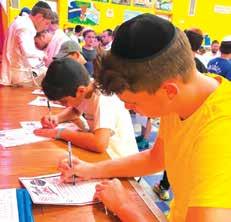
Campers write plenty of letters during the summer. (Or at least, their counselors encourage them to!)
But the letters written at Camp Dora Golding last week were not filled with requests for more snacks, bunk updates or assurances that, yes, socks were being changed. These letters were headed all the way to Israel.
As part of its 2026 Maccabee Games, CDG welcomed Gavy Friedson, an active United Hatzalah medic, for a powerful presentation on bravery, resilience and lifesaving responsibility.
Through firsthand stories, video and live demonstrations of CPR and the Heimlich maneuver, campers saw what it means to respond when another person needs help. They learned about volunteers who leave their homes, families and routines the instant an emergency call arrives.
At CDG, inspiration is not meant to end when a presentation does.

The camp was then divided into four teams, each representing a different location in Israel. Each division launched a campaign to sponsor a fully equipped medic’s bag and oxygen tank. Families were invited to participate, and campers were shown that even a summer-camp experience can become an opportunity to make a real difference, which is especially meaningful during the nine days.
Then CDG took the lesson one step further.
Every camper sat down to write a thank-you letter to United Hatzalah’s volunteer medics. The letters were collected and carried back to Israel by Gavy, the visiting medic.
For the volunteers receiving them, they will be a reminder that their work is seen and appreciated. But for CDG campers, the message of gratitude and solidarity from an entire camp community may be the most important message sent home.


Chai Lifeline welcomed New York State Assemblyman J. Gary Pretlow, Chairman of the Assembly Ways and Means Committee, Assemblyman Sam Berger, and Phil Fields, Secretary of the New York State Assembly Ways and Means Committee, to Camp Simcha on Monday, July 20, for a visit that gave state leaders an inside look at the positive life-changing impact the camp has on children living with serious illness.
The visit gave the delegation an opportunity to meet campers and counselors, tour the camp’s medical and recreational facilities, and see how Camp Simcha creates a place where children can simply be kids while receiving the specialized medical care and emotional support they need.
“We are grateful to Chairman Pretlow, Assemblyman Berger, and Phil Fields for taking the time to visit Camp Simcha,” said Rabbi Simcha Scholar, CEO of Chai Lifeline. “When leaders experience Camp Simcha in person, they see that this is far more than a summer camp. They see children reclaiming their childhood, families finding hope, and a community built around compassionate care. We appreciate their commitment to learning about the challenges these families face and the difference programs like Camp Simcha make every day.”
During the visit, Chairman Pretlow
and Secretary Fields, the committee’s senior budget staff member, joined Assemblyman Berger in meeting with campers, families, volunteers, and staff, to learn how Chai Lifeline provides comprehensive support throughout every stage of a family’s medical journey.
The visit reflects Chai Lifeline’s ongoing relationship with New York State leaders. Last summer, the organization welcomed Assembly Speaker Carl Heastie, among others, to Camp Simcha, offering state leaders a firsthand look at the hope, resilience, and joy that define the camp experience.
For children facing serious illness, Camp Simcha is far more than a summer camp. With a fully equipped medical center staffed around the clock by doctors, nurses, and specialists, campers safely take part in sports, swimming, music, arts, boating, and adventure programming, building friendships and creating memories that last a lifetime.
Operated by Chai Lifeline, Camp Simcha offers a medically supervised overnight camp experience for children with cancer, blood disorders, and other chronic illnesses, at no cost to families. Year-round, Chai Lifeline provides a wide range of programs and services delivering emotional, social, financial, and practical support to thousands of children and families facing serious illness, crisis, and loss.




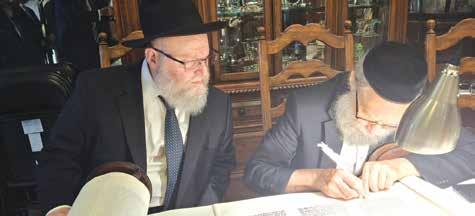


“What should we publish next?” always has a way of turning into lively debate in ArtScroll. In last week’s issue, we described how, after the Five Megillos and Sefer Bereishis, we turned to translating the Siddur. But the question of what should come first — the Siddur or the Rosh Hashanah and Yom Kippur Machzorim — was anything but simple.
The Siddur seemed obvious. It is used every day of the year, while the Machzorim are opened for only three days a year. Ultimately, that reasoning led us to publish the Siddur first.
But looking back, the debate was more nuanced.
The Siddur is constant, but the Machzor is intense. Many people do not have the time necessary to properly study the weekday and Shabbos davening in depth. But when the Yamim Noraim arrive, everyone feels the weight of the tefillos. Everyone wants to understand what he is saying and enter those days with clarity, feeling, and connection.
And the Machzor needed that clarity. The Yamim Noraim tefillos are among the most difficult in our liturgy. The authors of the piyutim were not only towering Torah scholars but also holy poets, weaving into their words allusions to Tanach, Gemara, Midrash, and halachah. A single phrase may contain a pasuk in Yeshayah, a sugya in Shas, or a Midrash unfamiliar to most people. Even those who can usually follow Hebrew davening find themselves lost.
Another debate remains: Who gained
more? The serious davener who understood the Siddur but had long struggled with the unfamiliar tefillos of the Yamim Noraim? Or the Jew who visited his local synagogue only on Rosh Hashanah and Yom Kippur, yet, for the first time, felt comfortable, able to follow and truly pray?
The answer may be both. For some, the Machzor deepened a lifelong avodah. For others, it made shul feel less foreign and more inviting, often triggering the start of something much more — there are enough stories of people whose journey to Torah life began with that newfound Yamim Noraim connection to fill a book of its own.
Ultimately, translating the Rosh Hashanah and Yom Kippur Machzorim became Rabbi Scherman’s next great undertaking after the Siddur. It required not only explaining the words, but preserving the power and beauty of the original language. Rabbi Zlotowitz’s comments and Rabbi Sheah Brander’s design were, as usual, essential.
Like the Siddur, producing the Machzorim was a team effort. The great R’ Hersh Goldwurm wrote the concise Halachah section at the end of each volume. R’ Avie Gold wrote the invaluable instructions that help people follow the tefillos: when to stand or sit, when the congregation follows or precedes the chazzan, and where many congregations skip certain passages, and he made important suggestions as he reviewed the text. Mrs. Faigie Weinbaum was a

brilliant proofreader and grammarian. When she was reading page 632, she could remember that a word had been translated or explained differently on page 176.
When R’ Gold was tapped to be the author of the Pesach, Shavuos, and Succos Machzorim, it led to a dispute between ArtScroll and R’ Avie. Rabbis Zlotowitz and Scherman wanted to list him as the author by writing on the title page simply “by Rabbi Avie Gold.” But he refused, saying that he could not be called the author because much of the material was simply taken from the Siddur and Machzor. Dissention! Unheard of in ArtScroll! Finally, a solution was found. The title page says, “Composed by Rabbi Avie Gold,” making it clearer that he arranged and crafted the volume, without insinuating original authorship. If all disputes were as honest and as easily resolved as this one, Klal Yisrael and the world would look a lot healthier!
We had published the Siddur first,
believing that 362 days must outweigh 3; the machzor taught us that there are days so towering that they cannot be measured by numbers alone, but by the awe they awaken.
UP NEXT: Rav Yaakov’s Question — Really? Yes, Really


Derech Tzlacha offers clear, practical guidance for today’s Jewish traveler
What happens when a person begins a fast in one country and lands several hours later in a place where the fast has already ended?
Is it better to daven with a minyan before the proper zman, or to wait and daven later on the plane without a minyan?
Where should one light Shabbos candles in a hotel that prohibits open flames?
May a tourist enter a building that was once used for avodah zarah?
Modern travel has made it possible to cross continents and time zones with remarkable ease. At the same time, it has created a wide range of halachic questions, many of which travelers may not even realize require clarification.
Derech Tzlacha, a new sefer by Rabbi Gidon Yaakov Katz, is a comprehen-
sive and highly practical guide to the halachos encountered by passengers on planes and ships, as well as those staying in hotels, resorts, and short-term rentals, including Airbnbs.
The sefer addresses questions involving Shabbos, kashrus, amirah l’akum, tefillah, fast days, Yom Tov Sheini, and the technological systems travelers encounter in hotels and other unfamiliar settings. Electronic locks, automatic doors, sensors, and other automated systems have introduced she’eilos that were largely unknown in previous generations.
A talmid of Yeshivas Kol Torah, Rabbi Katz has been delivering shiurim on the halachos of travel for decades. An experienced world traveler himself, he writes with firsthand knowledge of the situations travelers actually face. Each halachah is presented clearly and accompanied by its sources, making the sefer
Oaccessible to the general reader while also enabling the serious learner to examine the reasoning of the poskim.
The author carefully researched the rulings of earlier and contemporary authorities and discussed the practical questions with renowned morei hora’ah, including Harav Amram Fried, a wellknown posek in Bnei Brak, and Harav Avraham Tzvi Hakohen, a prominent talmid of the Shevet Halevi, zt”l. He primarily follows the rulings of Hagaon Harav Shlomo Zalman Auerbach and Hagaon Harav Moshe Feinstein, while also citing Sephardic rulings and differing opinions where relevant.

The sefer bears haskamos from Harav Ahron Lopiansky, Rosh Yeshivah of the Yeshiva of Greater Washington–Tiferes Gedaliah, and Harav Moshe Yehudah Schlesinger, Rosh Yeshivas Kol Torah, who praise its clarity and practical approach.
Derech Tzlacha is an invaluable resource for frequent travelers, rabbanim, and anyone seeking to navigate modern travel in full accordance with halachah.
nce, in the early 1980s, Rabbis Zlotowitz and Scherman were speaking to the Rosh Yeshivah, HaRav Yaakov Kamenetsky, zt”l. R’ Scherman recalls the conversation, which left a vivid impression on him and R’ Meir:
“During the conversation, the Rosh Yeshivah asked, ‘And when will you do the Shas?’ We were shocked. Shas!? Surely, he didn’t think we were worthy or capable enough for such a mammoth undertaking. But he was serious. I will never forget what he said, word for word: ‘Ihr kent doss tohn, un ihr darft doss tohn, un ihr vet doss tohn. Oib der Aibershter vet mir shenken yohren vell ich eich gebben a brif.’ (‘You can do it, and you should do it, and you will do it. And if the One Above grants me the years, I will give you a letter.’)”
It took several years before it became possible to carry out what the Rosh Yeshivah had foretold, but the memory, the mission and the unexpected vote of confidence remained as a challenge and inspiration. When the Shas project began, R’ Yaakov was no longer with us, however his son, the Philadelphia Rosh Yeshivah,
Rav Shmuel, shlit”a, echoed his father’s feelings in his own warm michtav berachah for the Shas.”
It is important to understand why the Rosh Yeshivah’s encouragement was so meaningful.
R’ Yaakov, who was known as an uncompromising “ish emes,” never lent his name to anything that might be dubious. It was quite understandable, therefore, that when we first started ArtScroll, he was slow to give our works his enthusiastic support. First, he had to be sure that it comported with his high standards of presenting the Torah correctly and accurately, both in content and hashkafah. He knew and trusted Rabbis Zlotowitz and Scherman personally, but what about this venture of presenting the Torah in English? To answer such questions, the Rosh Yeshivah enlisted R’ Yosef Elias to review our work and report to him. It was only when he was convinced that he began writing ArtScroll warm letters of approbation, starting with a haskamah on the Rabbi Elias Haggadah, followed a year later with a haskamah on the Yad Avrohom Mishnah Series.
Why the delay in beginning to work
on the Shas, and what finally made it possible? Such a huge undertaking requires huge funding, and ArtScroll didn’t have it. In an earlier column we told how Joel Fleishman created the Mesorah Heritage Foundation, which enabled people to make tax-deductible contributions – large and small – to fund the important scholarly works which ArtScroll/Mesorah has been publishing in increasing numbers for so many years. Therefore, although very strenuous, fundraising was and continues to be necessary, and the Foundation was the vehicle that made it possible.
Once it was decided that Mesorah Heritage Foundation could, and therefore would, begin to carry out the Rosh Yeshivah’s charge, the next question was how to create the manuscript. At first, we thought that we should simply transcribe an outstanding Daf Yomi shiur and merely have it edited. Looking back, we wonder how we could have been so naïve. We learned soon enough that several layers of uniquely qualified people of the highest caliber would be required to produce each of the 73 volumes and that the writing and editing of a volume would cost an
average of nearly $300,000 each. One would think that with the amazing growth of yeshivos and outstanding talmidei chachamim in America, it would be easy to assemble a staff, but that, too, would be naïve. Why? What was the job description? And how should the forthcoming ArtScroll Shas present the Gemara? In other words, what kind of shiur should “Rabbi ArtScroll” say and on what level?
Next week, the tale will be told.
UP NEXT: The Talmud Takes Shape



1. Which national park is home to the Grand Canyon? (It’s the summer; we want to start you off light.)
a. Bryce Canyon
b. Canyonlands
c. Grand Canyon National Park
d. Scottsdale National Park
2. Which was the first national park in the United States?
a. Yosemite National Park
b. Yellowstone National Park
c. Grand Canyon National Park
d. Glacier National Park
3. Rising nearly a mile above the valley floor, Half Dome is one of the most famous rock formations in the world. In which U.S. national park can you find it?
a. Yosemite
b. Sequoia
c. Zion
d. Joshua Tree
4. Which national park receives the most visitors each year (approximately 12 million visitors per year)?
a. Yellowstone
b. Great Smoky Mountains
c. Grand Canyon
d. Yosemite
5. How many U.S. National Parks are there in the U.S.?
a. 14
b. 38
c. 63
d. 217
6. The world’s tallest tree, Hyperion, stands nearly 380 feet tall. In which U.S. national park can it be found?

a. Redwood National Park
b. Sequoia National Park
c. Great Smoky Mountains National Park
d. Yellowstone National Park
7. El Capitan rises nearly 3,000 feet above Yosemite Valley, making it one of the tallest sheer granite cliffs in the world. Why did Alex Honnold make history when he climbed it in 2017?
a. He climbed it barefoot.
b. He became the first person to climb it without ropes or a safety harness.
c. He climbed it at night.
d. He climbed it in under three hours.
Wrangell–St. Elias National Park in Alaska is the largest national park in the United States. Approximately how large is it?
a. 520 thousand acres
b. 5 million acres
8 million acres
13 million acres
Answers:
Wisdom Key:
7-8 correct: You are the only frum person who actually has a moose’s head on your dining room wall. (Those poor dead eyes wishing it could attack the cholent!)
3-6 correct: Not exactly a park ranger, but not bad.
0-2 correct: You probably have never even been to Cedarhurst National Park.

You judge traffic by how many bison are holding it up.
You wave at every park ranger like they’re family.
You think Wi-Fi is overrated but waterfalls aren’t.
You call a 10-mile hike “stretching your legs.”
You won’t stay anywhere with fewer than four stars...in the sky.
You refer to squirrels as “the little guys.”
You stop your car every time you see an interesting rock.
When you ask Waze for directions to a national park, it responds: “Seriously...again?”
Your camera has 3,000 photos… and somehow, they’re all trees.
You check for bears before taking out the garbage.
You refer to a 500-foot climb as “mostly flat.”
You think “crowded” means seeing six people on a trail.
You judge people’s hiking boots before saying hello.
You wonder why your neighborhood doesn’t have a visitor center.
You start referring to home as “base camp.”
What did the dad say after dropping his son off at Yellowstone National Park?


Answer to riddle: Bison!
I booked a trip to visit the Cherokee in Oklahoma this summer, but am having second thoughts...I’m having a reservation reservation reservation.



Ihave always been fascinated by how different people view the same situation. Lately, however, I have been struggling with something that, after speaking with other parents, I realize I am far from alone in feeling.
To be clear, this is not meant as a complaint. I am genuinely trying to understand why things are structured the way they are.
Like many families today, my wife and I both work full-time—often more than 40 hours a week—not to fund lavish vacations or major home renovations but simply to keep up with the cost of living. We work through the summer as well. Yet increasingly, it feels as though our children are hardly ever in school, and we are constantly scrambling to find coverage, rearrange schedules, or take time off from work.
What I struggle to understand is how school calendars continue to operate as though most households have a stay-athome parent available. We pay substantial tuition—often between $15,000 and $30,000 per child annually—yet there seem to be endless days off, early dismissals, and irregular schedules that create
real challenges for working families.
The situation becomes even more difficult at the end of the school year. During June, older students often have exam schedules that leave them attending school for only brief periods each day, creating an environment that is neither particularly productive nor conducive to serious studying. At the same time, younger siblings are frequently dismissed for the summer weeks before camps begin.
Why does a three-year-old need to finish school in the middle of June?
If camps do not start for another two weeks, what are working parents expected to do during that gap?
The challenges do not end there. September, particularly in years when the Yamim Tovim fall early, can be just as difficult. Families are paying full tuition for a month that is often fragmented by holidays, shortened schedules, and frequent days off. This coming year, many working parents are already looking ahead and wondering how they will manage. While the importance of yom tov is unquestionable, employers generally do not structure their schedules
around the Jewish calendar, leaving parents to once again juggle childcare, vacation days, and work obligations with little practical support.
I also question the registration system that many schools use. Families are often required to pay large registration fees months in advance. If the goal is simply to ensure that parents remain committed to returning the following year, why not apply those funds toward the final tuition payment of the current year, similar to how a security deposit is handled for a home or apartment? Such an approach would provide families with some much-needed breathing room during an already expensive time of year.
I recognize that schools face financial realities and operational challenges. However, I believe it is fair to ask whether the current system adequately reflects the realities facing today’s working families. If both parents are expected to work in order to afford tuition and household expenses, should school schedules not take those realities into greater consideration?
One reason these conversations rarely happen openly is that many parents
are reluctant to raise them. In closeknit school communities, there is often a concern that asking difficult questions may lead to being viewed as complainers or problem parents. Whether that concern is warranted or not, the result is the same: many families quietly share these frustrations among themselves but hesitate to voice them publicly.
That is unfortunate, because respectful questions should not be mistaken for criticism. Parents and schools ultimately want the same thing: a strong educational environment for our children. Open discussion about the practical challenges facing working families should be welcomed as part of that partnership, not avoided because of fear of how it might be perceived.
I do not claim to have all the answers. I am simply asking a question that many parents seem to be asking: How can schools better support working families while maintaining their educational and religious priorities? Is there a better way?
Please feel free to email me at fivetownercomment@gmail.com.
Stripping away all the details that oftentimes clutter our lives, we can agree that the type of life that we live is pretty much dependent upon the choices that we make throughout our lifetimes. Often, these choices were made when we were yet young and immature. Nevertheless, we are forced to live by those choices and decisions, that we may, with greater life experience under our belts, regret.
Personal choices, professional and career choices, lifestyle choices all combine to make up our individual life stories. This week’s Torah reading highlights the importance and consequences of choices that we make. Many times, we make serious choices when we are not in a serious mood. Many important choices are made flippantly, on the spur of the moment, or under the influence of others. Peer pressure is a fact of life, especially for the young, and often, when we allow others to make choices for us, at the end they are very detrimental to our well-being.

By Rabbi Berel Wein z”l

It is simply peer pressure that causes young people to take on unhealthy life habits – smoking is a prime example of this – and once the habit is ingrained, it is very difficult to break, and escape from its consequences.
The Torah, in this week’s reading, presents us with the most basic choice that we can make – the stark choice between eternal life and death itself. At first glance, this choice is a relatively simple one to make. The life instinct
Choices are the highest form of human opportunity, as well as being the most dangerous and perilous of human traits.
Life inflicts upon us daily the necessity of making decisions. What choices we do make become expressions of free will that the L-rd has endowed us with. Choices are the highest form of human opportunity, as well as being the most dangerous and perilous of human traits.
within us, as human beings, is always present. However, we are witness to the fact that many times human beings make choices that are anti-life. Since there are many distractions that exist in this world, many illusory ideas and false prophets that somehow combine
to dissuade us from choosing life, the Torah encourages us and even warns us to choose life.
We acknowledge in our daily prayers that the L-rd implanted within us an eternal soul which can sustain eternal life. We should not fritter away this most precious gift. When we consider choices that exist before us regarding our behavior and attitudes, we should always judge the matter through the prism of a life and death choice. This makes even the most simple and apparent decision that we make in life of great consequence and lasting importance.
In effect, there are no small choices, for they all have consequences and later effects that are unknown to us when we make the choice. Seeing these decisions that way may grant us life. It will enable us to choose wisely and carefully and to allow our good instincts and fundamental human intelligence to control our emotions and desires and help us make correct life choices.
Shabbat shalom.
We hope and pray that Hashem will soon cause His presence to become apparent in the world through the long-awaited rebuilding of the Beis Hamikdash. The search for the Beis Hamikdash is one of the central points in this week’s parsha. Without specifically identifying its location, the pasuk (Devarim 12:5) says, “The place Hashem your G-d will choose from all of your tribes to affix His name there, you shall seek Him there at His dwelling and come there.” The Torah is telling us that an integral part of the building of the Beis Hamikdash is that we must “seek Him there…”
The Location of the Beis Hamikdash
Instead of specifying the place where the Beis Hamikdash would be built, the Torah repeatedly says that the Beis Hamikdash shall be in “the place Hashem your G-d will choose.” This phrase is used no less than sixteen times in this week’s parsha alone. According to our Sages, this is why the Beis Hamikdash is called “Beis Habechira, The House of Choice.”
But why is the location of the Beis Hamikdash treated by the Torah as such a mystery? Why must the Torah repeatedly say that it is in “the place Hashem your G-d will choose”? It is clear from Chazal that Hashem designated the future location of the Beis Hamikdash from the beginning of time, even carving out the site of the altar and canals for the wine libations at the time of the six days of Creation (Sukkah 49a). The Rambam (Beis Habechira 2:2) teaches: There is a tradition maintained by everyone that the place where Dovid and Shlomo built the altar is the same

By Rav Moshe Weinberger
Adapted for publication by
Binyomin Wolf

place where Avraham built an altar and bound Yitzchak, the same place where Noach built [an altar] when he left the ark. It is the [location of] the altar on which Kayin and Hevel offered sacrifices, and on which Adam sacrificed an offering when he was created, and Adam was created from that place. The sages say, “Man was formed from the place of his atonement.”
It is clear that we have known from the time of Creation that the Beis Hamikdash would be built on a certain mountain in Yerushalayim. According to the Midrash (Pirkei D’Rebbe Eliezer 28), Avraham circumcised himself at the future location of the Beis Hamikdash and his blood flowed into the earth that would eventually fill the altar. If this was known long before Hashem gave us the Torah, why does He conceal the location? Rav Shlomo Hakohein Rabinowicz of Radomsk, zt”l, the “Tiferes Shlomo,” expressed the question clear -
ly: Why did the pasuk not explicitly say, “the place that Hashem will choose, the holy mountain in Yerushalayim”? It would have been much clearer. Why the mystery?
The answer to our question lies in the very same pasuk we started with. In order to find the location of the Beis Hamikdash, “you shall seek Him there at His dwelling.” We must seek it out. As the Midrash (Sifri) says, commenting on the pasuk, “Seek and you shall find it. And afterward, the prophet will tell you [that it is the correct spot].” Expanding on the Ramban, zt”l, on the same pasuk, the Malbim, zt”l, says: “This teaches them that Hashem will not reveal the chosen place through His prophets until they make an effort and seek it out. Then, [Hashem] will pour a spirit from above upon them after the appropriate preparation…” Along these lines, the Chasam Sofer, zt”l (Resp. Yoreh Deah 234), teaches that the location of the
Beis Hamikdash was “hidden until [Hashem] illuminated their eyes in the days of Dovid Hamelech.”
In other words, Hashem is telling us that it is not enough that He chose the location of the Beis Hamikdash. We must choose it, seek it out, long for it, and do everything we can to find it. And who finally revealed Hashem’s choice as the actual location of the Beis Hamikdash? The man who felt more “unchosen” than anyone else in the world: Dovid Hamelech.
Dovid wrote about himself (Tehillim 118:22), “The stone despised by the builders became the cornerstone.” It became the very foundation of the entire Beis Hamikdash. Even after Shmuel Hanavi told Yishai that one of his sons would be the next anointed king and excluded all of Dovid’s other brothers, it still never even occurred to his father and brothers that Dovid could possibly be the anointed one (Shmuel I 16:6-11). Yet Dovid, the “stone despised by the builders,” became the cornerstone, the beginning of a new dynasty to which Moshiach himself would eventually trace his lineage.
Dovid said (Tehillim 42:8), “All of Your breakers and waves passed over me.” He went through so much suffering. Chazal even discuss (see Yevamos 77a-b) whether Dovid was allowed to marry into the Jewish people! Dovid certainly knew what it meant to feel “unchosen” and what it means to seek, work, long, pray, and toil until he found his place in the Jewish people. Hashem therefore chose him to clearly reveal the location of the Beis Hamikdash and build its foundation. Dovid Hamelech represented the pinnacle of choice, the highest fulfillment of our obligation to
“seek Him there at His dwelling and come there.”
In verses that Chazal say refer to Dovid, Shlomo Hamelech described this attribute of his father as follows (Shir Hashirim 3:1-2): “In my bed at night I sought that which my soul loves; I sought but I did not find. I will arise and walk around the city, in the marketplaces and city squares. I will seek that which my soul loves. I sought but I did not find.” What was it that he sought out so deeply? What was it that robbed him of sleep? Dovid wrote in Tehillim (132:1, 3-5), “A song of ascents: Remember, Hashem, Dovid, all of his affliction [in his toil to find a place for Hashem’s presence to rest – Rashi]… I shall not come into the tent of my house, I shall not go upon the bed that was prepared for me. Nor shall I give sleep to my eyes or slumber to my pupils until I find a place for Hashem, dwelling-places for the Mighty One of Yaakov.”
All Dovid Hamelech sought was the place where Hashem’s presence could be felt on a permanent basis in this world. He conducted his investigation by indefatigably searching through the streets and markets of Yerushalayim, looking for clues, comparing each location to maps and pesukim, trying to find the exact location of the altar and the Holy of Holies. That is why Hashem answered his prayers and rewarded his search with success. Hashem chose the place where we chose Him (ibid. at 13-14), “For Hashem has chosen Zion, He desired it for a dwelling-place. This is My resting place forever, here I shall dwell, for I desired it.”
It is the same now. We may know the location of the Beis Hamikdash, but strangers defile it every single day and we cannot rebuild. Vile terrorists fire rockets at Yerushalayim and Jews all over Eretz Yisroel. So we continue to daven for the Beis Hamikdash, to seek it out. As the Tiferes Shlomo says, “Even if we know this place, that it is in Yerushalayim, and that no other place will be chosen, nevertheless, it is still impossible to build [the Beis Hamikdash] there until Hashem chooses our prayers and desires ‘from all of your tribes,’ that they are worthy that it should be built for them and that Hashem should cause His presence to dwell among them.”
We may know where the Beis Hamikdash will be rebuilt, but there is so much impurity standing in the way and the right time has not yet arrived. In fulfillment of the pasuk, “you shall seek Him there at His dwelling,” we
must daven and hope for the rebuilding of the Beis Hamikdash constantly.
Just like one must seek out Hashem, the One without Whom we are incomplete, we also seek out a marriage partner, the one with whom we will build a home that serves as a microcosm of the Beis Hamikdash.
Why is there so much searching involved in finding one’s mate? We know Chazal say (Sota 2a), “Forty days before a fetus is formed, a Heavenly Voice goes out and says, ‘The daughter of so-andso to so-and-so!’” If the right person is predetermined, why is it so hard to find one’s destined soulmate?
First, one cannot find his mate without first feeling a profound sense of loneliness. One must feel he is missing an essential part of himself, that “it is not good for man to be alone” (Bereishis 2:18). One must first experience that existential loneliness before he is reunited with his other half and can say (ibid. at 23), “This time it is bone of my bone and flesh of my flesh.”
The pasuk which personifies the connection between marriage and our loving relationship with Hashem is (Shir Hashirim 6:3), “Ani l’dodi v’dodi li, I am my beloved’s and my beloved is mine.”
We know that Chazal teach that the first letters of those words spell “Elul,” the month in the Hebrew calendar which marks the beginning of the teshuva process. This pasuk shows that we must first seek out our beloved. Only when “I am my beloved’s,” when I search out the one I love, will I merit to attain the level called “And my beloved is mine.” Anyone in a successful relationship knows this to be true. It is so sad to have a wife and to give up searching for her, to have a child and to no longer seek him out.
This two-stage process is also reflected in the double meaning of the Hebrew word for “betrothed, mekudeshes.”
The chosson says to his bride, “Harei at mekudeshes li , Behold you are betrothed to me.” On one hand, the word implies that she is forbidden to every other man in the world. Betrothed here is a word signifying exclusion. This meaning of the word is related to the word “hekdeish , sanctified to the Beis Hamikdash,” i.e., forbidden to everyone such that no one may use the sanctified object for anything other than its designated purpose. So too, the bride and groom agree, through their betrothal, not to look anywhere else in the world. But the word “betrothed, mekudeshes,”
also means that the two are dedicated to one another. This usage implies inclusion, a positive, proactive dedication to one another. They are saying that they only have eyes for one another. These two aspects of the relationship between a husband and wife are also apparent in our relationship with Hashem, as hinted at in the pasuk (Tehillim 100:3), “He made us, and we are His.” The word for “His,” however is read one way and written another way. It is written as if says “no/not” – with an aleph. According to this reading, the pasuk says, “He made us and not us,” i.e., we did not make ourselves. We must know that our relationship with Hashem must exclude the perception that we take credit for any aspect of attainments, skills, or accomplishments. It is a word of exclusion. But the word is also read as if it says “Lo, His” – with a vav. According to this reading, the pasuk says, “He made us, and we are His.” It is not enough to look to Hashem alone and not give ourselves credit for anything we have. We must also realize that we are His, we have a unique and special relationship with Him. In fact, if we put the two ways of reading that word to -
gether, it contains the same letters as the month of Elul.
Whether it is an intimate human relationship, our relationship with Hashem, or meriting the fulfillment of Hashem’s dwelling place on earth, where the intimacy of the relationship between the Jewish nation and G-d is most revealed, there is always a dual nature. On one hand, there is the exclusion of all else which is personified by searching and longing. And there is the dedication to one another, the intimacy personified by Hashem’s revelation of the location of the Beis Hamikdash after our search and by the way a husband and wife find each other.
May Hashem put all of our difficulties behind us, may He reveal the way forward toward the rebuilding of the Beis Hamikdash soon in our days, and may every husband and wife merit finding one another and never looking at anyone else but their beloved.
Rav Moshe Weinberger, shlita, is the founding Morah d’Asrah of Congreagation Aish Kodesh in Woodmere, NY, and serves as leader of the new mechina Emek HaMelech.

By Rabbi Avrohom Sebrow

In Maseches Chullin (95a), the Gemara transitions into a discussion regarding the prohibition against nichush (forbidden divination). The Gemara questions whether the Amora Rav engaged in an illicit form of divination when he suggested that an upcoming day would be auspicious simply because a ferry was immediately ready to transport him as soon as he reached the riverbank.
To clarify the boundaries of the prohibition, the Gemara identifies two classic Biblical archetypes of nichush:
-Eliezer, the servant of Avraham, when seeking a wife for Yitzchak. Eliezer declared that the girl chosen by Hashem would be the one who, when asked for water, would respond, “Drink, and I will also draw water for your camels.”
-Yonasan, son of King Shaul, when deciding whether to confront a Philistine outpost accompanied only by his armor-bearer (Shmuel I, Ch. 14). Yonasan declared that if the Philistines said, “Wait until we reach you,” they would stay put; but if they said, “Come up to us,” he would take it as a
divine sign to initiate the attack.
The Problem in the Pesukim
Tosfos raises an obvious question: If the Gemara classifies these two incidents as classic examples of forbidden divination, how could tzaddikim like Eliezer and Yonasan have relied on them?
Regarding Yonasan, Tosfos answers that Yonasan intended to attack regardless of the outcome. He established the sign solely to bolster the courage and confidence of his hesitant armor-bearer.
Regarding Eliezer, Tosfos initial explanation is that Eliezer was a Ben Noach, and non-Jews were not commanded against nichush. However, Tosfos notes an opinion in Sanhedrin maintaining that Bnei Noach are indeed prohibited from practicing divination. Therefore, Tosfos concludes that Eliezer could not have relied on the test as the sole determining factor in selecting Yitzchak’s bride.
Yet, this resolution seems to run counter to the plain text of the Torah. The pesukim state that Eliezer gave Rivka ex-
pensive bracelets before even inquiring about her lineage. How could he bestow these gifts without first verifying her family background, unless he relied entirely on his divination?
Tosfos answers that, in truth, Eliezer did ask Rivka who she was first to confirm her identity, giving her the bracelets only afterward. The Torah presents the events out of sequence due to the principle of ein mukdam u’meuchar baTorah (the Torah does not always relate events in strict chronological order).
This approach is directly supported later in the narrative: when Eliezer retells the story to Besuel and Lavan, he explicitly states that he asked for her identity before handing over the jewelry.
Rashi in Chumash, however, takes a different path. He maintains that the events occurred exactly in the literal sequence written: Eliezer gave Rivka the bracelets immediately after she passed
the water test. The only reason Eliezer altered the order when speaking to Lavan and Besuel was out of diplomacy; he knew they would find it unbelievable that a stranger would bestow such valuable gifts before even asking for her family name.
While Rashi’s view does not necessarily contradict Tosfos, since Rashi may follow the opinion that Bnei Noach are permitted to practice nichush, it raises a powerful challenge articulated by the Gur Aryeh: Even if Eliezer was halachically permitted to rely on the sign, why didn’t he just ask Rivka who she was first to be entirely certain? Why hand over the bracelets immediately, only to be forced to change his story later to her family?
The Gur Aryeh explains that the bracelets carried deep spiritual symbolism (remez). Their total weight of ten shekels alluded to the Aseres Hadibros, and the two bracelets represented the two Luchos. Bestowing this gift was Eliezer’s personal tefillah that Rivka’s future descendants would merit receiving the Torah at Har Sinai.
At that moment, Eliezer was experiencing an extraordinary burst of spiritual elevation after witnessing clear hashgacha pratis. The Gur Aryeh reveals that Eliezer refused to pause and ask Rivka for her name because he did not want to disrupt that intense moment of inspiration. He wanted his tefillah and symbolic act to be executed while his spiritual clarity was at its absolute peak.
Reflecting on this, HaGaon HaRav Henoch Leibowitz, zt”l, observed how fleeting inspiration can be. Every passing moment carries the risk that enthusiasm will cool. Eliezer refused to wait even a few seconds, recognizing the imperative to strike while the spiritual iron was hot.
Preserving the Flame:
Lessons from Palti ben Layish
This poses a practical question for us: What should a person do if they cannot act upon a moment of inspiration immediately? How can spiritual enthusiasm be preserved over time?
A profound answer is found in Maseches Sanhedrin (19b–20a) in the story of Michal, daughter of Shaul HaMelech, and Palti ben Layish.
King Shaul had initially promised his daughter Michal to Dovid HaMelech in
exchange for defeating the Philistines.
After Dovid fulfilled the condition, Shaul rescinded the offer due to an ongoing political and halachic dispute, giving Michal instead to Palti ben Layish. Although Shaul held that the marriage to Dovid was invalid, the halacha ultimately follows Dovid, meaning Michal remained Dovid’s lawful wife throughout.
Palti ben Layish found himself in an agonizing position. The king, who was
the utmost respect, warmth, and dignity expected of a husband, while maintaining absolute self-control regarding intimacy.
How did Palti sustain such heroic resolve day after day, year after year, without letting his initial conviction fade?
The Gemara reveals his secret: On the very first night Michal entered his home, Palti placed a sword between them to maintain a “partition,” declaring that
Every passing moment carries the risk that enthusiasm will cool.
also the gadol hador, insisted that Michal was Palti’s rightful wife and mandated that they dwell together in the same house. Yet, deep down, Palti knew she was halachically bound to Dovid.
For years, Palti had to maintain his moral conviction against immense pressure, authority, and internal temptation.
As the Maharsha notes, Palti did not resolve the tension by treating Michal with coldness or disdain; he treated her with

anyone who violated the sacred boundaries of marriage should be pierced by that blade.
By creating a clear, physical, and daily visual reminder of his initial boundary, Palti anchored his commitment. That tangible sign sustained his spiritual integrity through more than seven long years, until Michal was safely returned to Dovid and Palti’s righteousness was universally acclaimed.
The lessons of Eliezer and Palti ben Layish provide a dual roadmap for spiritual growth.
Act Immediately: When a spark of inspiration strikes, whether a desire to learn more Torah, give tzedakah, or improve a character trait, harness Eliezer’s agility and take an immediate concrete step before the feeling fades.
Anchor the Moment : When longterm endurance is required, follow Palti ben Layish’s strategy. When making a kabbalah during an elevated moment, set up a physical or structural reminder, a note on your desk, a daily phone alarm, or a visual signpost.
By anchoring our elevated moments into physical reality, we ensure that a single moment of inspiration can transform into a lifelong commitment.
Rabbi Avrohom Sebrow is a rebbe at Yeshiva Ateres Shimon in Far Rockaway. In addition, Rabbi Sebrow leads a daf yomi chaburah at Eitz Chayim of Dogwood Park in West Hempstead, NY. He can be contacted at ASebrow@gmail.com.

by Rabbi Yair Hoffman

Some time ago, a young lady in high school posed the following question: My mother doesn’t want me to crack my knuckles. I certainly won’t do it front of her, but I am somewhat addicted to it. Is it a violation of kibbud av v’aim to crack them when she isn’t around?
Recently, a young man in high school did not pose the following question: My parents don’t want me to smoke. I certainly won’t do it in front of them, but I am addicted to it somewhat. Is it a violation of kibbud av v’aim to smoke when they are not around?
The Shulchan Aruch (YD 240:25) cites a fascinating ruling of the Maharik (Shoresh 166). The question the Maharik deals with concerns shidduchim. What happens when a young man wishes to marry a young lady of whom his father disapproves? Must the son listen to his father by virtue of the concept of kibbud av v’aim, honoring one’s parents?
The Maharik gives a three-fold response. Firstly, he states that regarding the mitzvah of kibbud av v’aim, the obligation lies only with the father’s monetary funds, not with his own funds. Certainly, here, where there is great personal pain where the son would have to marry someone else that he does not desire to marry as much as the first, there would be no obligation.
Secondly, the Maharik points out that there is a prohibition in the Talmud (Kiddushin 41a) of becoming engaged to a woman whom one has not actually seen yet. The reason is that the Sages ordained that a person only marry someone that he desires and finds grace in his eyes. Through listening to the father in this case, one may be in violation of this halacha.
Finally, the Maharik explains that the parameters of kibbud and moreh apply to matters that pertain directly to the father
or mother. Thus, in regard to his father’s sustenance and personal needs, kibbud does apply. In regard to his personal honor, moreh, the issue of not sitting in his father’s seat does apply.
It would seem, at first glance, from this Maharik that both the high school girl’s question and the high school boy’s question are answered. Neither would be forced to listen to their parents’ view when they are not in front of them. There may be a separate prohibition in regard to the smoking issue as can be seen from the Talmudic passages that forbid engaging in dangerous activities – see Shabbos 129b. Rav Moshe Feinstein, zt”l, once wrote that smoking was technically permitted. His son Rav Dovid Feinstein, zt”l, later ruled that his father’s leniency no longer exists. For those who think that there is
an exemption for smoking, the responsa of Rav Chaim Ozer Grodzinsky (Achiezer Vol. I #23) discusses the parameters of the concept of “shomer p’sa’im Hashem, Hashem watches over fools.” He writes that this concept only permits dangerous things when the danger is not uncommon. Since a little over half a million people die in this country every year from smoking and its related illnesses that means that, roughly, there is a 1 in 600 chance of dying each year from smoking. Over a thirty-year period, the mathematical formula is 1-(599/600)*30th power. This means that there is a five percent chance of smoking actually killing a person. The halachic position of the Achiezer would certainly apply. The Tzitz Eliezer Vol. 15 #39 also forbids smoking as does Rav Moshe Shternbuch in teshuvos v’hanhagos Vol. III #354.
Rav Yaakov Bender, shlita, once related that Rav Shmuel Birnbaum, zt”l,
used to smoke, but as soon as the Surgeon General issued his report about how dangerous smoking is, he stopped cold-turkey.
Our issue in this column, however, deals with the aspects of kibbud av v’aim, not other prohibitions.
For many years, it was rumored that cracking knuckles causes arthritis. Thus far, however, there is no evidence that cracking knuckles causes any damage to the knuckle-cracker even over a protracted period of time. A study published in 2011 compared the hands of some 215 people between the ages of 50 to 90, and there was no indication whatsoever of any damage (Journal of the American Board of Family Medicine 24 (2): 169-174).
The Sefer Hamikneh
Rav Pinchas HaLevi Horowitz, author of the Sefer HaMikneh, states (Kiddushin 31b) that even in matters that do not apply to the father directly, there is still a concept of moreh – that one is not permitted to contradict his father. The
Sefer HaMikneh understands the Maharik as only applying when it is such a serious issue as marriage, but regarding other matters, it would be prohibited. He cites further proof to this idea from the fact that the Maharik gave three separate arguments to make his point.
According to the Sefer HaMikneh, it would be forbidden for both the smok-
inform the father. In other words, if the father would find out about it, it would be forbidden. This opinion is cited in the Sefer Hiddur Panim by Rav Refoel Dinner (page 104) in the section of Kitzur Hilchos Kivud Aviv v’Imo. Even then, Rav Elyashiv only permits it for the son if it will cause him great stress if he were to cease smoking. Rav Elyashiv
He writes that this concept only permits dangerous things when the danger is not uncommon.
er and the knuckle-cracker to proceed, even if his father is unaware of it.
Rav Elyashiv’s View
Rav Elyashiv zt”l’s view on the matter was that if it bothered the father, the son was not permitted to smoke in front of him or in front of someone that might

further qualified it by saying that if the father has some further reason why he does not want his son smoking, it is still forbidden. In other words, if the father’s reasoning is that the son has an additional risk factor, then the son may not smoke even not in front of him.
Taking this view back to the knuck-
le-cracker, it would seem that Rav Elyashiv would hold that, ideally, she should not crack her knuckles even not in front of her mother. However, if this would cause her difficulty, then she may crack her knuckles.
As an interesting aside, many poskim have specifically said that one should not tell his son not to smoke because, very often, these young men have no willpower and it is placing an additional stumbling block upon them of violating kibbud av v’aim. Just as the Talmud forbids punishing an older child physically, lest he hit his father back, it is likewise forbidden to cause the son to violate kibbud av v’aim by stating directly that he is violating his parents’ will by smoking.
May Hashem enable all such children to make correct decisions by themselves.
This article should be viewed as a halachic discussion and not practical advice. The author can be reached at yairhoffman2@gmail.com.

Mazal tov Ariela and Yoel! There is something about Ariela that always makes you smile. Just like Maria in the timeless musical, The Sound of Music, our granddaughter Ariela is beautiful, filled with spirit and light, talented, mischievous and golden-hearted.
I still remember the day that Ariela was born; it was 23 years ago during a brutally hot July day. Bob and I were spending our customary summer break with our Israeli family. We were tasked with babysitting Penina, Ariela’s not much older sister. We pushed the stroller through the steamy streets of Jerusalem, trying to stay cool and calm, as we awaited news of the baby’s arrival.
To escape the heat, we popped into the Inbal Hotel to browse in the lobby stores. That is where we got the call with the wonderful news of a baby sister for Penina. In my mind’s eye, I can still capture that happy moment which lives in the forefront of my memories.
Ariela came into this world blessed with an adorable smile and a patch of very dark, stick-straight, unruly hair; her hair was (there have been many color iterations since then) exactly the opposite color of her very blonde sister Penina. Ariela was soon followed by an even blonder (would be taller) Tova and soon came Elisheva, the fourth sister. She sports a strawberry-brown mass of thick, gorgeous hair that she straightens (?).
A blonde and a dark-haired brother joined the family not much later.
Their mother Rachel had enviable naturally flowing stick-straight, dark hair. I don’t remember Rachel ever using a blow dryer as an unmarried. Now wearing an “it’s a Tova” shaitel, I am reminded of how her “real” hair once looked.
Ariela had a complicated relationship with school; she was resourceful and resilient until she wasn’t. As a student, she stumbled when taking tests. One day while in fourth grade, she figured that her older sister Penina, in the yard at recess,

By Barbara Deutsch

could help her with a math test that was giving her grief. Ariela, secreting the test in her hands, ran down the stairs to the yard to get sister Penina’s help. To Ariela’s dismay, her good-goody sister said no.
Not to be deterred, she turned to Penina’s best friend Rena who was happy to accommodate a now-desperate Ariela.
When Ariela was evaluated for high school in eighth grade, the person testing her predicted that she would be very successful in life; Ariela just needed to survive school.
Ariela is a premier makeup artist. She has golden fingers and a keen eye for what looks good. During her training in Israel, she was taught a heavy-handed approach from her Israeli master teacher.
The “look” did not meet Ariela’s beauty standards, so she worked hard to modify
her technique to reflect a more professional lighter hand.
Ariela uses only top of the line products; no dupes for her. 972-54-986-4210 – book early.
In Ariela’s charedi dating world, in a family of sisters, there is a rotation from oldest to youngest as each of them step to the plate to date. It’s a brutal world, and I am no fan. Somehow, it works but only after a lot of hishtadlus and focus on the goal.
In the “learning world,” there are many types of eligible boys/young men: full-time, most of the time, half-time and sometimes learners. Depending on the arrangements made with the parents on both sides concerning support, the couple needs to figure out the “learning time”
and how they will have parnassa
The long-short story of how Israeli Ariela and American Yoel met is a complicated one. It may be hard to keep all of the people, the facts, and the coincidences straight, but that’s okay.
At the end of May, Ruksy of the story of the toothless chosson advised Rachel that a boy from Barry Klein’s chabura, a local Jerusalem school with mostly Americans, would work for Ariela. The chabura includes boys who want to remain in Israel. Rachel called Rachael Klein, Barry’s rebbetzin who I coincidentally knew from childhood when we spent time together in camp; I knew her as May.
Rachel described Ariela and shared what she was looking for in a partner – a unicorn who wants to live in Israel. Rachael/May said that Ariela sounded like a great girl and that she would keep her in mind.
Motzei Shabbos , Dovid, Ariela’s younger brother, went to visit his best friend’s mother, Merissa, who was staying at Rachel’s dear friend Vanessa’s home. Merissa is the “biggest” shadchan in Jerusalem. Dovid had a shidduch for Merissa’s son who is learning in kollel.
That shidduch did not happen.
That’s when Vanessa brought up Ariela’s name, asking Merissa, the shadchan if she had a suggestion for Ariela. Merissa responded, “How about Chaim (not his real name)?”
On Monday, one of the Shapiro girls’ friends, a “nail artist” (the sister of brother Dovid’s other best friend), had an appointment with Ariela to get her makeup done for a wedding. In conversation, they both learned that Ariela and “nail artist” had the same possible boys suggested for each of them. Ariela dropped Merissa’s (the shadchan) suggestion of “Chaim’s” name and asked “nail artist” if she had ever heard of him.
“Nail artist” got very quiet and visibly uncomfortable. She said, “I think he is younger than you are” and then quickly changed the subject. My daughter Rachel,
quietly following the conversation, told the “nail artist” that she was told that boys from Barry Klein’s chabura may work for Ariela.
“Nail artist” responded, “I know a guy from Barry Klein’s chabura who wants to live in Israel.” “Nail artist” also happened to have a picture of this boy which she pulled up on her phone; she didn’t know his name. This boy had been suggested to her but was not a match. She then sent the picture to Ariela to see.
When Ariela saw “mystery” (no one knew his name) boy’s picture, she got “that” feeling; this was the unicorn she had been looking for.
As “nail artist” was leaving, Ariela asked her about Chaim again; she shrugged and admitted, “I think I’m supposed to go out with him.”
Rachel forwarded the picture to Rachael (May) Klein who told her the mystery boy’s name: Yoel. She offered to find out if he would live in Israel. When Rachel (May) followed up with a phone call and his resume (boys have them, too), she cautioned Rachel that Yoel was about to leave yeshiva for America.
Coincidentally, Ariela would also be in America at that same time.
From Yoel’s resume, Ariela learned
that he was one year, year months and a day younger than she is; this is OK with her – seems like there are many couples who fit that description.
Confused yet? Well, there is more.
As it happens, Yoel was initially supposed to leave Israel the prior week. His parents, lovely people whose family I know from my bucolic childhood spent
month, chapter 13 of Tehillim is recited 13 times for 13 days. On the 13th day of the Sivan round , Yoel said yes to Ariela; they had their first date that Sunday. This Tehillim group was arranged by Elisheva Grobman, who is 18 years old (Karen 2.0. Iykuk). Don’t even try to figure it out.
Rachel and her sister-in-law, “Big
The long-short story of how Israeli Ariela and American Yoel met is a complicated one.
in Tanzman’s Bungalow Colony, a dump we loved, convinced him to stay learning for an additional week because his job at camp was not set to start yet. Because of his extended week in Israel, Ariela and Yoel connected.
What does hishtadlus look like? My son-in-law Josh opened a group for learning the laws of lashon hara; it spanned 110 days. Yoel and Ariela’s first date took place on the last day, day 110.
There is a segula that on the 13th of a

Elisheva,” said 40 days of Nishmas; Elisheva did it for Ariela to find her shidduch and Rachel did it for Noa, Elisheva’s daughter, to get into high school (it’s a big deal here).
Noa got into high school, and Ariela got engaged within those 40 days.
On the 17 of Tammuz, Ariela left for America. Erev Tisha B’av, Yoel secretly followed her back to Israel; the next day, Yoel asked Ariela to be his wife.
I hope you were able to follow. No
matter, the wedding is after the chagim, which comes early this year.
The engagement party was on the 13 th of Menachem Av; the next morning the Tehillim group started another round of thirteen days. The party was celebrated in my apartment. The last time there was so much food in my place was for Bob’s shiva; this event served as the Chavaya Mitakenet.
Even though Grandpa could not make it to the party, his warm spirit was present.
In keeping with Tu B’Av, a day of romance and hope, “nail artist” and Chaim are still going strong; we wish them a forever ending.
The sound of Unicorn Yoel’s voice mixed with the magnificent Ariela’s laughter filled the apartment and the Jerusalem hills with joy.
There is nobody like Ariela!
Barbara Deutsch is the former associate principal at HANC, middle school principal at Kushner, and Dean of Students at Yeshiva of Flatbush. A not-retired educator, she is still trying to figure out life in Israel.



It took me less than two weeks after the death of my wife, Keren, to find a rhythm to my waking hours. I hadn’t so much structured my days as filled them: I cleaned the apartment, kept the refrigerator stocked, arranged and paid for a headstone, and spoke to my children – often several times a day. My intention was clear: I did not want to wallow in my sadness. And yet, every one of those tasks triggered it. Still, I persisted.
I returned to the classroom, where I have spent my entire working life. Although I had officially retired three years earlier, I went back almost immediately –I simply couldn’t stay away. The pleasure I derive from standing before a group of rowdy boys remains one of life’s great joys. Disciplined or not, I have always found my happy place at school.
The problem was that Keren had died at the end of May. It was now early June, and only a few weeks remained of the school year.
So I began adding to my list of things to do. Since I was eighteen, leather-craft has been my hobby. The process of taking raw materials and transforming them into bags, purses, and cases is painstaking but deeply satisfying.
I began with a project I had postponed for years: a pair of tefillin cases for my son-in-law. I spent days cutting, dyeing, lettering, gluing, stitching, and buffing.
At one point, I stabbed myself with a sharp needle. While waiting for the bleeding to stop, I propped my feet on the desk and began leafing through family albums. In one photograph, Keren and I are squeezed onto a bench between our three sons in Kfar Tikva, the northern village where they live.
I decided I wanted to drive up and see them but recoiled at the memory of my last visit; on the way home, my car had overheated. I ended up stranded on the side of the highway for hours. I decided to make an appointment at the garage.
While waiting in line, I found myself staring at a gentleman reading in the chair
By Rafi Sackville

opposite me. He looked familiar, though I couldn’t place him. He smiled at me.
It’s in my nature to speak to strangers. Keren often complained that walking down a busy street with me was full of surprises – and occasional annoyance –because of the number of people I stopped to talk to. I didn’t hesitate.
“What’s your name?” I asked.
“Yedidya,” he replied.
The name rang no bells, and yet there was something about his face that would not let me go. After a while, I interrupted him again.
“I’m sorry, but I have to ask. What’s your surname?”
“I’m Yedidya Meir.”
The moment he answered, his teenage face came rushing back through my memory with all the brightness of a spring day.
“Yedidya! Of course, I remember you. I was your teacher in the late eighties and early nineties.”
His eyes widened.
“Of course,” he said. “You’re Rafi Sackville, the English teacher, aren’t you?”
We fell into easy conversation that lasted only a minute or two. Before we
parted, he made a remark that struck me as oddly out of step with the reality of my new life without Keren.
“You’re exactly the same,” he said. “I remember you as always being happy.”
I wasn’t far from home, and during the walk back, I couldn’t get his comment out of my head.
Always happy? Was that really how the world saw me? My wife’s grave had only been freshly filled, and yet people kept telling me I was doing well, that I seemed in good spirits. Had I somehow bottled and hardened my emotions into marble, or were they still only a breath away from the surface of my loss? What made me so resilient?
Since getting up from shiva , I had even gone so far as to gently correct a friend whose usually cheerful face crumpled with sadness when she saw me on the street.
“No,” I told her. “I expect you to be happy when you see me. I don’t want you looking sad every time we meet.”
Despite the dark moments that occasionally cloud my sunny skies like dishwater-grey clouds, I had to admit that Yedidya’s observation was largely
correct. By nature, I am a happy and positive person.
I was not always that way. Or perhaps I should qualify that statement. My happiness is a trait I have spent the better part of my life cultivating with diligence and, at times, near fanaticism. Or perhaps I am fooling myself.
I have worked on being happy for so long that I can no longer say with certainty whether I was born with this disposition and merely lost touch with it during the depression-filled years of my adolescence, only to rediscover it once I became a father, or whether happiness emerged later, forged by the very struggles and burdens of family life that at times seemed almost unbearable. Why do I not break into tears whenever I remember Keren? After all, we shared forty-one extraordinarily happy years together. She was the central figure in my life. If I loved her throughout the early years of our life together, then over the last few years, that power of love was squared to infinity. The sicker she became, the more I loved her.
I would have been lost without her in my life. Ironically, now that I am living life without her, I have discovered, almost guiltily, that I am doing fine.
I need to come to terms with this aspect of myself because it is tinged with this sense of guilt. I want to explore the roots of my nature and how my relationship with Keren helped mold me, partly in the hope of understanding myself better and partly by sharing something of my own experience. Perhaps someone will read this and find encouragement. Perhaps I might even succeed in putting a smile on a reader’s face.
If I can do that, then this exercise in self-examination will have been worth the effort.
Part three of a series explaining Israel’s political system before Israelis go to the polls.
Imagine this headline after an American presidential election: “Candidate Wins the Most Votes—but Doesn’t Become President.”
Americans would immediately assume something had gone terribly wrong.
In Israel, however, that outcome is entirely possible. In fact, it has happened more than once. That is because Israelis do not directly elect their prime minister. Instead, they elect a 120-member Knesset. Only after those election results are known does the process of forming a government begin.
Here’s how it works.
Once the election results are certified, Israel’s president meets with representatives of every political party that won seats in the Knesset. Each party recommends the member of the Knesset it believes has the best chance of assembling a governing coalition.
Notice the key phrase: the best chance.
By Stephen M. Flatow

The president is not required to ask the leader of the largest party to form the government. Rather, the president gives the first opportunity to the person most likely to assemble a coalition commanding the support of at least 61 members of the Knesset.
That number—61—is the most important number in Israeli politics.
Since the Knesset has 120 members, any government must enjoy the support of a majority. One party almost never wins an outright majority. Instead, several parties negotiate with one another to create a coalition government. That negotiation can take days or even weeks. Parties bargain over cabinet positions, committee chairmanships and policy priorities. Coalition agreements spell out how the government will operate and what legislation the parties agree to pursue.
This is where many Americans become confused.
Suppose Party A wins 30 seats, Party B wins 28, and several smaller parties divide the remaining seats. An American instinctively concludes that Party A has won the election.
Not necessarily.
If Party A cannot persuade enough other parties to join it, while Party B succeeds in assembling a coalition of 61 or more members, the leader of Party B may become prime minister despite finishing second.
The election determines the arithmetic.
The coalition determines the government.
That also explains why relatively small parties often receive so much media attention.
A party with six or seven seats may seem insignificant to an American observer. In Congress, such a small bloc would rarely determine who occupies the White House. In Israel, those same six or seven seats may provide the votes needed to reach 61. As a result, smaller parties often wield influence far beyond their size.
Critics sometimes complain that these parties have “too much power.”
Supporters respond that coalition government ensures broader representation by requiring larger parties to work
with smaller ones.
Reasonable people can disagree about which system is better.
The important point is that Israel’s system was designed differently. It seeks to build governing coalitions that reflect the country’s political diversity rather than producing a winner-take-all result.
Once a coalition agreement is completed, the proposed government is presented to the Knesset for approval. If it wins the confidence of at least 61 members, the new government takes office. Only then does Israel officially have a prime minister.
As you follow this election, don’t focus only on which party finishes first.
Instead, ask a different question: Who can get to 61?
That question, more than any other, will determine who governs Israel after the votes are counted.
Stephen M. Flatow is an attorney, author and longtime writer on Israel and Jewish affairs who divides his time between Jerusalem and New Jersey.
The Jewish Agency’s claim that “pluralistic Judaism” was a founding pillar of Zionism fails every test — historical, religious, and institutional.
By Rabbi Pesach Lerner

At its recent Board of Governors gathering (June 2026), the Jewish Agency for Israel issued a statement declaring that “a diverse, pluralistic and tolerant Judaism has been and remains one of the cornerstones of Zionism.”
It is a pleasing sentiment. It is also untrue — provably so, from the movement’s own founding documents. The cornerstone of Zionism was never a theology. It was peoplehood. Theodor Herzl built the movement on a single premise, stated plainly in Der Judenstaat: “We are a people — one people.”
Precisely because the Jews of 1897 could not agree on Judaism, Herzl’s achievement was to set religion aside as the basis of the enterprise. Would the Jewish state be a theocracy? “No, indeed... We shall keep our priests within the confines of their temples in the same way as we shall keep our professional army within the confines of their bar -
racks.” Religion — in every form — was to be respected and contained, not enthroned as a founding value.
Herzl’s oft-quoted promise that “every man will be as free and undisturbed in his faith or his disbelief, as he is in his nationality” was a pledge of civic liberty extended to all future citizens, Jew and non-Jew alike. It was freedom of conscience — not a declaration that competing denominations constitute Zionism’s foundation. To read it otherwise is to confuse a civil right with a religious ideology.
History is even less kind to the Agency’s formulation. The movements that today carry the banner of “pluralistic Judaism” were not Zionism’s cornerstone; they were among its most determined opponents.
The Reform movement’s Pittsburgh Platform of 1885 declared: “We consider ourselves no longer a nation, but a religious community, and therefore expect neither a return to Palestine...”
In July 1897 — weeks before the First Zionist Congress convened in Basel — the Central Conference of American Rabbis resolved its total disapproval of any attempt to establish a Jewish state. In 1942, Reform rabbis founded the American Council for Judaism for the express purpose of fighting Zionism.
The Reform movement entered the World Zionist Organization only in the late 1970s and fully reconciled with Zionism only in its 1997 Miami Platform. A cornerstone cannot be laid one hundred years after the foundation — least of all by those who opposed the construction.
The Conservative movement fares a little better, in this history — yet its record, too, refutes the Agency’s claim.
Solomon Schechter, the architect of American Conservative Judaism, endorsed Zionism in 1906 — but as a bulwark against assimilation and an ally of traditional Judaism, not as a war -
rant for pluralism. He did so over the public objections of his own seminary’s patrons, and his successor at the Jewish Theological Seminary, Cyrus Adler, remained a committed non-Zionist. Institutionally, the movement joined the World Zionist Organization only with the founding of Mercaz in 1976. Where early Conservative Zionism existed, it was an argument from peoplehood and tradition — which is precisely our point.
The Jewish Agency’s statement also invoked the Kotel, the Western Wall. For the sake of historical integrity and honesty, we refer readers to the Memorandum on the Western Wall, submitted in 1930 to the Special Commission of the League of Nations on behalf of the Jewish Agency for Palestine — the direct precursor of today’s Jewish Agency for Israel, written by the same Cyrus Adler, Ph.D., D.H.L., then president of the Conservative movement’s Jewish Theological Seminary in New York. In the
section titled “Action Requested,” Adler wrote: “We now come to the request that we will make to your honorable body on behalf of the Jewish Agency: That you give recognition to the immemorial claim that the Kotel Maaravi is a Holy Place to the Jews; that they should have the right of access to it for prayers to be conducted in accordance with their ritual in a decent and dignified manner; that the regulation of such services shall be under the direction of the Rabbinate in Jerusalem, who shall assume responsibility therefor.”
Such is all that is requested now — that which the president of the Conservative movement’s own seminary, writing for the Jewish Agency itself, requested then.
What, then, was the movement’s actual founding arrangement on religion? The Basel Program of 1897 contains not a single word of religious law. When
Congress in which Mizrachi and Poalei Zion (a movement of Marxist Zionist Jewish workers) sat together did not thereby declare all Judaisms equally valid; it declared the Jewish people indivisible. Herzl’s Altneuland preached civic tolerance — its villain is the demagogue who would deny others a share in the commonwealth — but tolerance among citizens is not “pluralistic Judaism” as a creed. Both partners to the founding compact, the secular majority and the religious Zionists, would have rejected such a creed. It would have shattered the coalition from either side.
Why does this matter? Because the Jewish Agency is a national institution, entrusted with the heritage of the entire Jewish people.
The Jewish Agency is the largest Jewish non-profit organization in the world, serving as the primary link between the State of Israel and Jewish
That foundation is broad enough for every Jew who ever prayed, in any accent, “Next year in Jerusalem.”
the question arose, the Second Zionist Congress in 1898 resolved that Zionism would undertake nothing contrary to the precepts of the Jewish religion — a pledge of deference to traditional Judaism, offered to keep Orthodox Jewry within the tent.
The paper trail settles the matter. Language about “mutual respect for the multi-faceted Jewish people” entered the movement’s platform only in the 2004 Jerusalem Program. It appears nowhere in 1897, and nowhere in the 1951 revision. The Zionist movement’s own constitutional documents date the concept — and refute the words “has been.” And, let us be brutally honest, a politically (and financially) motivated phrase added to the World Zionist Organization Jerusalem Program, by a small group of delegates, does not redefine Zionism.
Some will object that Zionism was always a big tent, and that is true: the World Zionist Organization has housed secular, religious, socialist, and Revisionist factions for well over a century. But coalition politics is not theology. A
communities globally. It is responsible for facilitating Aliyah, managing global shlichut programs, and strengthening Jewish identity. The organization is funded by global philanthropic efforts, including the Jewish Federations of North America, KKL/JNF, Keren HaYesod, and the Israeli government.
When it converts a contested contemporary agenda into a founding principle, it does not honor history — it rewrites it. Religious pluralism is a position some hold; but they cannot smuggle it into Basel.
Zionism’s cornerstone was, and remains, Klal Yisrael — the unity of one people. That foundation is broad enough for every Jew who ever prayed, in any accent, “Next year in Jerusalem.” It requires no retroactive renovation.
Rabbi Pesach Lerner is Chairman of Eretz HaKodesh, a slate representing Torah Jewry in the World Zionist Congress/ Organization, and serves on the Board of Governors of the Jewish Agency for Israel.


By Eliyahu RosEnBERg
ome time ago, Rebbetzin Libbi Kakon met with a donor while fundraising for the yeshiva she and her husband run.
“I’ll give you a donation,” the man said, “if you tell me something I never
heard before.”
Rebbetzin Kakon nodded and said the first thing that came to her mind.
“You know, when my husband started the yeshiva, he had one very big opponent,” she shared.
a boy who comes in is accepted for who he is, and when he goes out into the world, he’s able to fly.”
years later, i realized, ‘This isn’t about them. This is about me.’ stop looking outward at what everybody else is doing.”
To daven in a minyan where all the boys don’t hear — you can’t put a price on that.”
i always had a strong relationship, a good relationship with hashem. But i’m going to make a full confession here, and i tell this to my students: i didn’t like davening. it was hard for me. you know, i always had a connection to hashem. i would talk to him. But formal davening i had a very hard time with. But now, at this point, i feel like i can’t live without it.
“Who was that?” the man asked. Rebbetzin Kakon chuckled.
“His wife,” she said.
Well, needless to say, she got the donation.
“Yeshivas Nefesh Dovid in Toronto is the only yeshiva in the world for bachurim who don’t hear,” Rebbetzin Kakon shares. “The only requirement is that they have hearing loss and want to grow. The yeshiva has been around for 25 years, and the boys that have come to the yeshiva over the years are absolutely remarkable. We have boys from all across the spectrum of Jewish life, from Sephardi to Ashkenazi, from Chassidish to Litvish, Modern, Lubavitch, everything. But not only is it a yeshiva that has helped boys with hearing loss — it’s a yeshiva that changed me.”
When the rebbetzin’s husband, Rabbi Chaim Tzvi Kakon, told her that he wanted to scrap his law school dreams and open a yeshiva for deaf bachurim , she protested. She didn’t like the idea for several reasons. She didn’t want to be a rebbetzin. Both she and her husband are deaf, but she felt that opening a yeshiva would be too ambitious, too much work, and too far from the comfortable, ordinary life she imagined she’d have once her husband finished kollel and became a lawyer. But she trusted her husband, so she pushed her concerns aside and supported his efforts.
“My husband is a very unusual person. He’s probably one of the greatest Jews in the world,” Rebbetzin Kakon
says. “So, we picked up and moved to Toronto with five children — our daughter Devorie was born a year later — and we went to look at a house that could be a dorm. One of the askanim saw me and said, ‘Aren’t you supposed to have all the money first before starting something?’ And I said, ‘You don’t know my husband. He does it his own way.’ And I have to say, sure enough, the yeshiva has floated on miracles all these years.
“What is unusual about the yeshiva is that there’s no agenda, there’s no politics. A boy who comes in is accepted for who he is, and when he goes out into the world, he’s able to fly,” she declares. Rebbetzin Kakon isn’t a fan of fundraising, to say the least. One summer day, she felt particularly frustrated about her meaningful but grueling job, lamenting about how she never signed up to become a fundraiser. But as she walked upstairs and stepped into the yeshiva’s empty Beis Medrash, everything paused for a moment. The sun was shining. In front of her stood beautiful, handmade bookshelves filled with sefarim. And as she stood there, her frustrations faded.
“There was something. You could feel it — there was something special in the air. There are people who come in, and they start shaking. To daven in a minyan where all the boys don’t hear — you can’t put a price on that,” the rebbetzin declares. “So, I hate fundraising, but every donor who gives to the yeshiva, to me, he or she is priceless. We
wouldn’t be able to do it without them. We wouldn’t be here without them. And they understand this — they’re literally building eternity.”
When she’s not fundraising for the yeshiva or taking care of her family, Rebbetzin Libbi Kakon teaches sixth grade English. On her first day of class, she didn’t mention her hearing loss, saving her explanation for the following day.
“Listen, this is the way it’s going to be. I lip-read,” Rebbetzin Kakon told her class, explaining her hearing aid and speech. “There are times when I’m going to mispronounce something, I’m going to say something that doesn’t come out right, I’m going to have to repeat myself. And not only that, but you’re going to have to speak more clearly, and you’re going to learn the first big vocabulary word of the year…”
She went to the whiteboard and wrote the word, “Articulation.”
As Rebbetzin Kakon explains, communication is about clarity, not volume. Talking louder won’t make it easier for others to understand you; speaking clearly, enunciating every word rather than mumbling, will. While it was an adjustment for her students at first, by the end of the year, it became second nature. “Parents noticed towards the middle of the year, and they tell me, ‘My daughter is speaking more clearly. She’s not mumbling anymore,’” she shares. “Even the shy kids come out of their shells. My students are fabulous.”
At the beginning of the year, one concerned mother called Rebbetzin Kakon.

“I heard you’re so strict. My daughter is terrified!” she told the rebbetzin.
“Call me after Chanukah, and we’ll talk then,” the teacher replied.
Sure enough, after Chanukah, her phone rang again: this time, the same voice, but a different tone.
“My daughter loves you,” the mother exclaimed. “You’re her favorite teacher!”
something I would have chosen, but looking back, I know that it did something for me,” Rebbetzin Kakon shares. “I thought I had compassion, and I used to think, ‘Libbi, you’ve hit it. You’re good. You really are accomplished.’ But it wasn’t enough. Hashem needed more from me.”
Though it was a challenging time, Rebbetzin Kakon emerged from it with more emunah than ever before.
tremendous.”
But it wasn’t easy.
One Friday night, some 23 years ago, Rebbetzin Kakon gave birth to her sixth child, Devorie. But in what should’ve been a joyous moment came a complicated surprise. In addition to breathing issues and a heart condition, the little girl had Down’s syndrome (and later, they’d discover, severe autism, too).
She was heartbroken. Once brimming with optimism and passion, Rebbetzin Kakon lost her zest for life for some time after Devorie’s birth. As she lay in the hospital bed and as the couple returned home, leaving their daughter at the hospital for two weeks, she felt confused more than anything. We might interpret the things that happen to us as messages from Hashem. Challenges demand excellence and perseverance and are moments for growth. But as she thought about her daughter, who would soon need heart surgery, the rebbetzin’s mind went blank. She couldn’t imagine what G-d wanted from her, and she didn’t have the strength to contemplate it. Shabbos, a day she cherished, became painful, as Devorie was born on a Friday night. For a year, she, in her words, “lost my taste for everything.” She didn’t want to leave her room or come down for the meals.
“That was very difficult. It’s not
“I always had a strong relationship, a good relationship with Hashem. But I’m going to make a full confession here, and I tell this to my students: I didn’t like davening,” Rebbetzin Kakon admits. “It was hard for me. You know, I always had a connection to Hashem. I would talk to him. But formal davening I had a very hard time with. But now, at this point, I feel like I can’t live without it.”
As Rebbetzin Kakon says, it’s okay to be angry. It’s okay to cry. In fact, when tragedy strikes, you have to grieve, or else you can’t move on. That’s just a part of being human.
Growing up in a chassidish family in Brooklyn in the 1970s, Libbi Kakon had little exposure to other people with hearing loss. Ironically, her husband was one of the first deaf people she ever met.
At the time, there was an awful stigma attached to having kids with disabilities; many families hid their children from the world, living in shame and secrecy. But not Libbi’s. Her parents were, in her words, “pioneers” in shattering the taboo.
“My mother said, ‘Not my child. I’m not putting her away. I’m going to do whatever it takes.’ My mother’s a fighter, and she wouldn’t give in,” she shares. “If they told her to do something this way, she went the other way. And that was
For years, Rebbetzin Kakon resented the challenges that come with hearing loss. During speeches at simchas, she needs to sit in the front and lip-read in order to understand anything. As she’d focus intently on the speaker’s every word, she’d notice others barely paying attention, looking at their phones, talking, looking away, and she’d feel, in her words, “this sense of righteous indignation.” There she was, struggling, listening to every word even though she couldn’t hear, while they could easily listen but take their hearing for granted.
“But years later, I realized, ‘This isn’t about them. This is about me.’ Stop looking outward at what everybody else is doing,” Rebbetzin Kakon declares. “It’s easier said than done, but when you turn inward, when you look inward, and you focus on yourself, and you’re real about yourself and you’re humble, it makes things a lot easier.”
Once, a woman, facing a challenging situation, cried to Rebbetzin Kakon, explaining her problem.
“It’s okay,” Rebbetzin Kakon told her.
“What’s okay?” the woman replied.
“It’s okay to be in this situation,” the rebbetzin declared.
“And she said, ‘I never thought about it like that,’” Rebbetzin Libbi Kakon recalls. “Yes, it’s tough. But there’s nothing wrong with it. And when you realize it’s okay, that it’s nothing to be ashamed of, and when we’re honest with ourselves — it doesn’t mean the problem is going to go away, but somehow, we’ve created a space where we’re able to be honest with ourselves.
“And that already makes all the difference.”
Moderated by Jennifer Mann, LCSW of The Navidaters

Thanks so much for your thought-provoking column! My husband and I love reading it!
I’m really writing to make sense of a friend of mine. She is in her 30s and is a great catch. She’s beautiful, has a good job, and very often goes on nice vacations and seems to be really enjoying life. To me, though, it seems she’s constantly complaining about being single on social media. She says how badly she wants to get married, but when I have ideas for her, half the time she’s traveling with friends and simply doesn’t have time to meet the guys I work hard to try for her. I see her posts, about how she’s waiting for the right one to find her, and yet I’ve sent her countless suggestions she either ignored or said she will circle back to “when she has time” and never has.
To be honest, it’s a real waste of my time and energy to try ideas for someone like this. Do I continue trying to help her? Or is it okay if I just give up for now? (I’m leaning towards the latter.)
Thanks!
Tamar*
Dear Readers,
We want to offer YOU an opportunity to be part of the discussion! Please email us at MichelleMondShadchan@gmail.com, subject line “reader’s response,” if you would like to participate in the new “A Reader’s Response” columnist spot. We will send you a question and publish your answer in an upcoming Navidaters edition.
If you have a question you would like the Navidaters to answer, please reach out to this email as well.
Looking forward!
Michelle, the “Shadchan”
Rebbetzin Faigie Horowitz, M.S.
Tblank) and you want to know what she is trying to communicate.
It may very well be that she is sounding off, and you will want to tell her that she sounds ____ (fill in the blank). She may not intend to give a certain impression and might want to edit her posts more carefully.
I think the main thing is to aim for a respectful conversation where you both are heard and reflect back what the other is saying so that you are clear with one another. Close with a warm comment and a hug.
You cannot want someone’s future more than they do.
ple up is a huge mitzvah. I’m sorry that your friend is unresponsive and ignores your thoughtful suggestions. This can easily make you jaded and resentful, leaving a bad taste in your mouth about making shidduchim in general.
Michelle Mond
It’s fine to also say that you want to hear directly from her as her social media posts seem shrill or ___ (fill in the
amar, I believe it is smart to give yourself a break from making suggestions until you can sit down and have a calm conversation with your friend, say after the chagim. Bring up that you want to help her, but you need a little guidance and input from her. Clearly say you don’t want to waste her time on people who are inappropriate but lately it feels like your suggestions didn’t go anywhere for whatever reason.

You’re an amazing friend, Tamar! The fact that you are actively setting peo -
In regard to your friend, we all know people whose lives in person look completely different from how they portray them on social media. It sounds like your friend may be one of those people. It is possible that family members and friends are pushing her toward the goal of marriage when that’s really not something she’s interested in right now. It seems she

may have found a solution. To either get people off her back or mislead those closest to her, she puts public posts out about how much she wants to get married. She posts on social media in a way that makes it seem like she’s actively looking when she actually may not be very interested. This can lead her followers to sympathize with her rather than question why she isn’t dating. It could also be that this part of her social media presence gets attention, and that attention somehow validates or fulfills her.
The bottom line I would like to make clear for our readers is this: Always remember that what you see on social media is not real life. As we can see from this one small example, reality can be drastically different from what people choose to put out into the world.
As for how you should move forward, please continue setting people up. The world needs people like you who are devoted to helping others. However, never try harder for someone than they are trying for themselves. Put your
time and energy into helping people who truly want to get married and are putting in the effort to make it happen.
Hashem should reward you for all of your efforts!
Dr. Jeffrey Galler
We all know people who talk endlessly about losing weight, learning a language, or cleaning out the garage. They sincerely want those things. Yet months, and sometimes years, go by without any meaningful progress.
Their words are genuine. Their actions simply tell a different story.
Your friend may genuinely want to get married. I don’t doubt that for a moment. But right now, her calendar seems to be speaking louder than her
The Navidaters
Dating and Relationship Coaches and Therapists
Dear Tamar,
Your letter made me smile because I know so many people have found themselves in your shoes.
Can I ask you a few questions?
If your friend stopped posting about wanting to get married altogether, would you still see her as someone who was actively looking? Or would you conclude that she’s simply enjoying a very full life?
When someone says they want something, but repeatedly doesn’t have time to pursue it, which do you believe: their words or their behavior?
And perhaps the hardest question:
social media posts. My advice? Don’t work harder to find her a husband than she’s willing to work herself.
If she reaches out and specifically asks for your help, gladly offer it. But until then, don’t invest hours searching for suggestions that she has repeatedly shown she isn’t prepared to pursue.
You cannot want someone’s future more than they do.
Reuven Sokol
A humble single
Hi Tamar
You’re being a great friend for always trying to set her up.
I don’t think that setting someone up should be a draining process.
If you have an idea that you think is good, the best thing to do is send her a text and say, “Here’s an idea. Here’s a few reasons why I think this would be good idea for you. Look it over and if you would like to hear more, call and I’d love to tell you more.”
That text takes less than a minute to
Reality can be drastically different from what people choose to put out into the world.
write and should not drain your energy.
If she connects to the idea, she’ll reach out. And if not, she may say, “Thank you, but not for me,” or she may not respond at all.
The important thing is that you should not take it personally when she doesn’t go with your ideas.
You’re doing a big chessed and if you can continue doing so, with a smile on your face, that’s amazing.
If you don’t like the feeling of rejection, it’s totally fine to not spend so much time sending her ideas.
If she is hurt that you are sending less ideas, you will need to have an honest conversation with her about how you feel when she doesn’t respond.
Hatzlacha rabba.
Maybe she’s simply not as ready as she believes she is.
Or maybe none of those are true.
The point is, we don’t know.
are you try- ing harder to find her a husband than she is?
I don’t ask that critically. I ask it because it’s something I see all the time, not just in dating.
People can genuinely want something and still not be in a place where they’re willing to organize their life around it.
Maybe she’s scared.
Maybe she truly believes the right person will somehow find her.
Maybe she has built a life that she absolutely loves and isn’t yet willing to make the space that dating often requires.
What we do know is that people tell us what matters to them in two ways: with their words and with their calendar.
I would also encourage you to notice what’s happening inside of you. Are you beginning to feel resentful? Unappreciated? Like your energy is being spent in a place where it isn’t being received? Those feelings matter, too.
Friendship isn’t measured by how many introductions you make.
I’d probably stop working harder than she is.
That doesn’t mean you stop caring. It doesn’t mean you never send another
suggestion. It simply means I’d wait until she reaches for your help rather than continuing to pull her toward something she doesn’t seem to be making room for.
One last thought.
Sometimes, we assume people have one goal because they say they do. But human beings are wonderfully complex. We can long for partnership and love the freedom of our current life. We can ache for children and be terrified of what marriage asks of us. We can want change while protecting the very life we’ve created.
Those contradictions don’t make someone insincere.
They make them human.
Sincerely, Jennifer


By Aliza Beer MS, RD, CDN
In recent years, GLP-1 medications have become one of the biggest topics in health and nutrition. These medications have helped many people lose weight, improve blood sugar control, and reduce their risk of chronic disease. For individuals with obesity or type 2 diabetes, they can be an excellent treatment option when prescribed by a healthcare provider.
However, not everyone is interested in taking injections. Some people don’t qualify for these medications, others experience side effects, and many simply prefer to focus on natural lifestyle changes whenever possible.
The good news is that your body already produces GLP-1 naturally. While food and lifestyle changes cannot replicate the powerful effects of GLP-1 medications, they can support your body’s own GLP-1 production and improve fullness, blood sugar regulation, and overall metabolic health. By making intentional choices throughout the day, you can work with your body’s natural systems instead of against them.
What is GLP-1?
GLP-1, short for glucagon-like peptide-1, is a hormone that your body naturally produces in the intestines after you eat. Think of it as one of your body’s natural “fullness messengers.” Once released, GLP-1 helps you feel satisfied by slowing the rate at which food leaves your stomach, allowing you to stay full longer. It also plays an important role in blood sugar regulation by stimulating the release of insulin when blood sugar levels rise and reducing the release of glucagon, a hormone that raises blood sugar. In addition, GLP-1 sends signals to the brain that help regulate appetite and reduce hunger. Although your body releases GLP-1

every time you eat, the amount produced is influenced by what, and even how, you eat, making your food choices an important part of supporting your body’s natural appetite regulation.
One of the strongest stimulators of natural GLP-1 release is protein. Many people begin the day with a bagel, cereal, toast, or a muffin. While these foods may provide quick energy, they digest rapidly and often leave you hungry again within a short time. Adding protein at every meal helps your body release more GLP-1 while also preserving muscle mass and keeping you fuller longer.
Excellent sources of protein include eggs, Greek yogurt, cottage cheese, chicken, turkey, fish, lean cuts of beef, beans, lentils, and tofu.
Fiber: Protein’s Partner
Fiber works hand-in-hand with GLP1. As fiber reaches the large intestine,
beneficial gut bacteria ferment certain types of fiber into compounds called short-chain fatty acids. These compounds appear to stimulate GLP-1 secretion and support a healthier gut environment. Fiber also slows digestion, helping prevent rapid blood sugar spikes and crashes.
Excellent sources of fiber include vegetables, fruits, beans, lentils, chickpeas, oats, barley, nuts, and seeds. Rather than relying on fiber supplements, focus on incorporating naturally fiber-rich foods into your daily meals. For example, start your morning with Greek yogurt topped with berries, chia seeds, and walnuts. At lunch, enjoy grilled chicken over a large salad filled with colorful vegetables and chickpeas. For dinner, try baked salmon served with roasted broccoli and quinoa. By pairing protein with fiber at each meal, you can naturally support your body’s GLP-1 response while staying fuller and more satisfied throughout the day. Healthy Fats
Healthy fats also play an important
role by slowing digestion and helping meals feel more satisfying. The key is choosing quality fats in reasonable portions. Good sources include avocados, olive oil, nuts, seeds, natural nut butters, and fatty fish such as salmon. Instead of eating fat by itself, combine it with protein and fiber to create a more balanced meal or snack. For example, try an apple with peanut butter, Greek yogurt topped with walnuts, salmon served with roasted vegetables, or a salad dressed with olive oil. These balanced combinations help keep hunger under control much longer than carbohydrates alone.
One simple habit can make a surprising difference: eat more slowly. GLP-1 isn’t released instantly; it takes time for your digestive system to send fullness signals to your brain. If you finish a meal in just five minutes, it’s easy to eat far more than your body actually needs before those signals have a chance to catch up. To help slow your pace, try putting your fork down between bites, taking smaller bites, take a drink of water for every bite of food, avoid eating while scrolling on your phone, and sitting at a table whenever possible. Aim to make your meals last at least 20 minutes. Many people find that they feel comfortably full with less food simply by slowing down and giving their body enough time to recognize satiety.
Some people skip breakfast or go many hours without eating, only to become extremely hungry later in the day. When we’re overly hungry, we tend to eat quickly and reach for foods high in refined carbohydrates because our brains are craving immediate energy. Eating
balanced meals throughout the day can help maintain steadier hunger signals and reduce the likelihood of overeating later. A well-balanced meal generally includes a source of protein, fiber-rich carbohydrates, healthy fats, and plenty of vegetables. This combination helps promote greater satiety, provides steady energy, and supports your body’s natural appetite-regulating hormones.
Rather than focusing on individual foods, think about how to build balanced meals. For example, instead of eating a bowl of pasta by itself, pair a moderate portion of whole grain pasta with grilled chicken, roasted vegetables, and a drizzle of olive oil. Rather than having a plain bagel, try half of a whole grain bagel topped with eggs, avocado, and tomato. Even simple snacks can be more satisfying when they’re balanced. For instance, pair crackers with tuna salad, cottage cheese with berries, or hummus along with sliced vegetables. Building meals and snacks with a combination of protein, fiber-rich carbohydrates, healthy fats, and vegetables helps promote steadier energy levels, greater fullness, and fewer cravings throughout the day.
Your gut bacteria play an important role in supporting your body’s natural GLP-1 production. The trillions of beneficial bacteria that live in your digestive tract thrive on fiber-rich plant foods. As they break down certain types of fiber, they produce beneficial compounds that help support intestinal health and may encourage the release of GLP-1. This is one of the many reasons why eating a wide variety of plant foods is so important. Aim to include a colorful assortment of plant foods throughout the week, such as leafy greens, cruciferous vegetables like broccoli and cauliflower, berries, apples, citrus fruits, beans, lentils, fresh herbs, nuts, and seeds. The greater the variety of plant foods you eat, the more diverse and resilient your gut microbiome becomes, supporting not only digestive health but also healthy appetite regulation and overall well-being.
Nutrition is only one piece of the puzzle. Regular physical activity improves insulin sensitivity, supports weight management, and helps regulate appetite, making it an important part of overall metabolic health. The good news is
that you don’t have to spend hours at the gym to experience the benefits. Simple habits such as taking a walk after meals, strength training two to three times per week, taking the stairs instead of the elevator, gardening, dancing, or swimming can all make a meaningful difference. Even a 10–15 minute walk after a meal has been shown to help improve blood sugar control while contributing to better overall health.
claims are often exaggerated. No single food, tea, spice, supplement, or drink has been proven to produce effects anywhere close to prescription GLP-1 medications.
Instead of searching for one “magic” ingredient, focus on consistent habits:
• Eat adequate protein.
• Fill half your plate with vegetables.
• Include fiber at every meal.
• Add healthy fats in moderation.
• Eat slowly.
Many people find that they feel comfortably full with less food simply by slowing down and giving their body enough time to recognize satiety.
Poor sleep disrupts many hunger hormones, making it harder to recognize fullness and easier to crave high-calorie foods. Adults should aim for approximately 7-9 hours of sleep most nights. Creating a regular bedtime routine, limiting caffeine late in the day, and reducing screen time before bed can all help improve sleep quality.
Chronic stress can increase emotional eating, cravings, and the desire for highly processed, comfort foods. While stress itself doesn’t stop your body from producing GLP-1, it can override your natural hunger and fullness signals, making it more difficult to make mindful food choices. Finding healthy ways to manage stress can help you stay more in tune with your body’s appetite cues and support healthier eating habits over time. Simple stress-management techniques include taking a walk outdoors, praying or meditating, practicing deep breathing, reading, spending time with family and friends, or engaging in hobbies you enjoy. Even a few minutes each day devoted to stress relief can have a positive impact on both your physical and emotional well-being.
“Natural Ozempic”
Many products are advertised online as “natural Ozempic” or “GLP-1 boosting supplements.” Unfortunately, these
GLP-1 medications have transformed the treatment of obesity and diabetes, and for many people, they are an appropriate and effective medical therapy. But whether or not someone chooses to use these medications, everyone can benefit from eating in a way that supports the body’s own natural GLP-1 response.
Although nutrition cannot reproduce the dramatic effects of injectable medications, a diet rich in protein, fiber, healthy fats, and minimally processed foods, combined with regular movement, quality sleep, and stress management, can improve fullness, stabilize blood sugar, and support long-term health.
There is no quick fix. Sustainable health comes from consistent daily habits. Every balanced meal is another opportunity to nourish your body, support your natural hunger signals, and move one step closer to better health.
• Stay active.
• Sleep well.
• Manage stress. These habits work together to support your body’s natural appetite-regulating systems.
Aliza Beer is a registered dietitian with a master’s degree in nutrition. She has a private practice in Cedarhurst, NY. Patients’ success has been featured on the Dr. Oz show. Aliza can be reached at alizabeer@gmail.com, and you can follow her on Instagram at @alizabeer

By Rivka Kramer, PMHNP-BC

Every so often, someone asks me the same question: “Why mental health and psychiatry?”
Out of everything I could have chosen to write about, why did I decide to dedicate my column to conversations about anxiety, depression, ADHD, medication, therapy, and emotional wellbeing?
The answer has never really changed, although I think I’ve become better at putting it into words over the years.
The truth is that I never started writing because I wanted to write about psychiatry. I started writing because I wanted to write about people.
Long before my first article appeared in The Jewish Home , I spent my days sitting across from patients whose stories were often very different but whose fears sounded remarkably alike. Again and again, I met kind, intelligent, accomplished people who weren’t just struggling with anxiety or depression. They were struggling with what they believed those diagnoses said about them. They had somehow come to believe that needing help meant they weren’t trying hard enough, that considering medication meant they had failed, or that if they simply had more willpower, more faith, or more resilience, they wouldn’t be sitting
in my office in the first place.
That was the part that stayed with me.
The shame.
I realized very quickly that the illness itself was often only half the battle. The other half was convincing people that there was nothing shameful about being sick.
When someone develops diabetes, they rarely apologize for needing insulin. When someone is diagnosed with asthma, they don’t whisper that they use an inhaler. If a person has high blood pressure, no one questions whether they should simply try harder before taking medication. We understand that sometimes the body needs help, and we don’t attach someone’s worth to the treatment they receive.
Somehow, though, we have treated the brain differently.
Somewhere along the way we created a completely different standard for mental health, one that quietly tells people they should be able to overcome depression through determination, anxiety through positive thinking, or obsessive thoughts through sheer willpower. I have never understood why we ask that of the brain when we would never ask it of the heart, the lungs, or the kidneys.
The Conversation We Were Not Having
That disconnect became the reason I started writing.
I realized that if we wanted to reduce stigma, we couldn’t wait until someone finally made an appointment with a psychiatrist. By then, many people had already spent years convincing themselves not to seek help. The conversation had to begin much earlier. It had to happen around the Shabbos table, in conversations between parents and children, between spouses, between friends, and within our community. If reading one article could make someone think differently about mental health, perhaps it would also make it easier for them to ask for help when they needed it.
That has always been my hope.
One of the biggest misconceptions I have tried to address over the years is the belief that psychiatrists want to medicate every difficult emotion. It is about the approach. One of the first things I explain to patients is that sadness is part of life. Worry is part of life. Grief, disappointment, uncertainty, heartbreak, and stress
are all part of the human experience. If we eliminated those emotions completely, we would lose part of what makes us human.
The real question has never been whether you feel sad or anxious. The real question is whether those emotions have become so overwhelming that they begin interfering with your ability to live the life you want to live.
That distinction is one of the most important messages I hope readers take away from my writing because it changes the entire conversation. Psychiatry is not about creating happiness or eliminating every uncomfortable feeling. None of us should expect to move through life without sadness, disappointment, or worry.
What we are trying to restore is something much more meaningful.
We are trying to help people get back to living their lives. We are trying to help them wake up with energy, enjoy their families, succeed at work, laugh naturally, pursue goals, and experience life instead of simply surviving it.
When I meet with patients, I am not asking whether they have ever been sad.
I am asking whether they are able to function and have a quality of life.
One of the first questions many patients ask me is whether medication is going to change who they are. I understand that fear because psychiatric medication has carried a stigma for decades that simply doesn’t exist with most other areas of medicine.
Ironically, after someone finds the right treatment, one sentence comes up again and again.
“I finally feel like myself again.”
To me, that says everything. Medication is not intended to change your personality. It is meant to quiet the anxiety, depression, intrusive thoughts, or mood symptoms that have been preventing your personality from shining through.
Of course, medication is never the entire story, and I have tried to emphasize that in nearly every article I have written. Therapy matters. Sleep matters. Healthy relationships matter. Exercise matters. Faith matters. Community
matters. Purpose matters.
Good psychiatric care has never been about writing a prescription. It is about understanding the whole person and creating a treatment plan that allows them to thrive. For some people that includes medication. For others, it does not. Every story is different, and treatment should always reflect that.
therapists, physicians, and educators are working together in ways that continue to strengthen our understanding of emotional wellbeing.
We have come a long way.
But we still have work to do.
I still meet people who apologize for needing help. I still meet parents carrying unnecessary guilt because their child
It is about understanding the whole person and creating a treatment plan that allows them to thrive.
Over the years I have watched our community become far more willing to talk about mental health, and that gives me tremendous hope. Conversations that once happened only behind closed doors now take place in schools, homes, shuls, and around Shabbos tables. Parents are asking thoughtful questions. Teachers are becoming more informed. Rabbis,

treatment should never be driven by fear or stigma. It should be guided by thoughtful medical care, by functionality, and by quality of life.
If there is one message I hope has carried through every article I have written, it is this: taking care of your mental health is no different than taking care of your physical health. Needing treatment does not make you weak. Accepting help does not make you less capable. It simply means you value your health enough to care for it.
If these articles have encouraged even one person to seek help a little sooner, helped one family replace judgment with understanding, or reminded one reader that they are not alone, then every article has been worth writing.
I cannot think of a better reason to keep the conversation going.
needs treatment. I still meet adults who have spent years suffering because they believed medication somehow reflected a lack of strength.
That is why I continue writing. Not because I think everyone needs medication. Quite the opposite. I write because I want people to understand that
Rivka Kramer is a Board Certified Psychiatric Nurse Practitioner. She has a psychiatric private practice based in Cedarhurst, NY. She serves as a member of the board of JANPPA, the Jewish American Nurse Practitioner Psychiatric Association. She can be reached at 917-905-3995.

A simple strategy and 5 simple phrases that will help your child communicate during moments of frustration
By Shira Richman, MA, BCBA, LBA

Does Your Child:
• Have strong reactions to small frustrations?
• Do better at home, but struggle in less predictable settings like stores or playgrounds?
• Escalate quickly when something doesn’t go as expected?
If so, you’re not alone.
Many children experience big feelings but may not yet have the tools to express those feelings in a way that works for them and the people around them.
Jonah was a bright, curious child who enjoyed playing, exploring, and being around others. But when things didn’t go his way, even in small moments, his reactions were big.
If a toy broke, Jonah might yell or throw it. If something didn’t go his way, he might cry or drop to the floor. If a routine changed, he might become overwhelmed very quickly.
When he was feeling heightened, Jonah used his body and his voice to express that he wanted something to change, but it wasn’t always clear what he needed or how to help.
Was he frustrated? Did he need help? Was he overwhelmed?
Think: What other ways could Jonah communicate these needs?
Functional Communication
Functional communication is when a person communicates a need, want, or feeling in a way that is understood by others.
This can include:
• words
• gestures
• sounds
• visuals
• short phrases
The goal of functional communication is to help the child communicate in a way that works .
Functional Communication Training (FCT) is a strategy that teaches children how to replace challenging behaviors with more effective ways of communicating.
Instead of focusing only on stopping a behavior, ask:
What is the child trying to communicate? How can we give them a better
way to say it?
This focus is especially effective for children with neurodivergent profiles, including ADHD and autism, because it meets them where they are. Here’s why it works:
1. It explores the “why” behind behavior. Behavior is communication. FCT helps identify what the child is trying to express.
2. It gives an immediate alternative. Instead of removing a behavior without a replacement, FCT provides a clear, usable option.
3. It reduces frustration. When children can express themselves more clearly, frustration often decreases.
4. It builds independence. Children begin to advocate for their needs in ways that others can understand and respond to.
5. It works in real-life situations. FCT strategies can be used at home, in school, and in the community.
Why “Use Your Words” Isn’t Enough
Many of us have said, “Use your
words.” But if those words aren’t easily accessible at the moment, that reminder can become frustrating for both the child and the adult. When emotions are high, language is often harder to access, not easier. That’s why FCT focuses on teaching simple, usable phrases that match the moment.
Simple Strategy: Model Strong, Appropriate Reactions
Many approaches encourage calm, polite phrases like “Can I please…” or “Help me.” These are important skills. But real life includes moments of frustration, and even adults don’t always respond with calm, perfect language. Communication becomes more effective when we teach children that it’s okay to have a strong reaction, as long as it’s expressed in a socially appropriate way. Instead of eliminating strong reactions, we can shape them.
5 Simple Phrases
You Can Start Using Today
You can begin by modeling short,
expressive phrases during everyday moments. Practice saying this phrase out loud, with an exclamation. Repeat it in frustrating situations.
FCT examples: Frustrating Situations:
• “Oh oh!” * There is a spill
• “Oh no!” * An item is lost
• “Whoa!” * Something doesn’t go as planned
• “Seriously?” * Something breaks
• “Oh man!” * A device stops working
These phrases are easy to say, natural in everyday life, and expressive without being inappropriate. You can also come up with your own phrase that suits your family and can be appropriately used by your child in school and in your community.
To build this skill:
• Model the phrases yourself during everyday situations
• Use them consistently.
• Pause and give your child a chance to try.
• Reinforce when they use the phrase
For example: If something spills, you might say, “Uh oh!” Then pause and look expectantly. Over time, your child may begin to use the phrase independently.
Exaggerated but appropriate reactions give children a ready-to-use substitute for more intense behaviors.
Instead of yelling, throwing, or shutting down, a child now has a clear and practiced way to respond.
Over time, you will start to see that these phrases will replace less effective behaviors, become automatic and help others understand what the child is experiencing
Functional communication is not about making children sound perfect. It’s about helping them express what they need in a way that works.
One important thing to remember is that learning functional communication takes practice long before a child needs it. Just as we wouldn’t expect a child to learn to swim after falling into a pool, we can’t expect them to use a new communication strategy for the first time during a meltdown. The best time to teach these phrases is when your child is
calm, engaged, and able to learn. Look for everyday opportunities to practice together. If you accidentally drop a spoon while cooking, say, “Oh no!” If a tower of blocks falls over, try, “Whoa!” If your favorite pen stops working, model, “Seriously?”
These small moments become low-pressure opportunities for your child to hear, imitate, and eventually use these phrases independently. Remember that every successful attempt, even if it needs prompting, is progress. Some children may begin using these phrases quickly, while others will need many opportunities before they become part of their natural communication.
That’s perfectly okay. The goal isn’t perfection or memorizing a specific list of words. The goal is helping your child discover that communication is effective – that expressing frustration appropriately can get their needs understood, help them receive support, and often change the outcome more successfully than yelling, crying, or shutting down. As these communication skills grow, children often become more confident because they experience the power of having their voice understood, even during life’s frustrating moments.
Functional communication is not about making children sound perfect. It’s about helping them express what they need in a way that works.
By giving children simple, natural phrases that match real-life situations, we help them move from escalation to communication.
Shira Richman, MA, BCBA, LBA is the proud owner of 5 Minute ABA and developer of 5MinuteABA/ MadgeBadge Parenting App. She has spent over 20 years consulting with Directors of Special Education across New York, providing support and training to teachers, psychologists and principals regarding Behavior Plan and IEP Goal development, establishing aide-fading protocols, and increasing mainstreaming and inclusion opportunities. She conducts district-wide and individualized staff and parent trainings, and is the author of Raising a Child with Autism: A Guide to Applied Behavior Analysis for Parents and Encouraging Appropriate Behavior for Children on the Autism Spectrum: Frequently Asked Questions. For more parenting strategies and neurodiversity tips, or to contact Shira Richman, download mobile iOS App: 5MinuteABA/MadgeBadge Parenting App

By Sara Rayvych, MSEd
There are times when I can tell that someone is talking about my kids as if they’re numbers. I started replying that this is my second/ third/whatever-number-he/she-is kid, but my only one of him/her. It doesn’t matter where in the birth order (or only child in the family) a child is – they’re uniquely themselves and irreplaceable.
Each child is a tremendous bracha and a unique individual with their own strengths, weaknesses and destiny in this world. They have a tafkid all their own – one that only they can accomplish.
Each child’s uniqueness means they have a personality all their own. They are special and talented in a way no one else is. Along with that means they each have subtle differences in what they need from their parents and the adults around them. It’s a running joke that children should come with instruction manuals. While general parenting could benefit from instructions, each individual child needs a different, additional pamphlet to accompany them.
There are many ways children can be different from each other, and no article can ever delineate every one of those unique markers. Sometimes, it’s obvious, but at other times, it can be more subtle. Knowing when to recognize some of these differences can help parents meet their unique child’s specific needs.
Someone gave us an adorable pair of overalls for my toddler. It was bright, like many little clothing items are. My brown-haired child looked great in it. My next was a bright red-haired child that clashed with it. I quickly had to retire the outfit.
The first, most noticeable difference is that kids differ in appearance. This really feels too obvious to mention, yet it can still be surprising how often it’s not taken into account. We put on the passeddown outfit, or the one that we like, disregarding how the child looks in it. We style their hair the same, regardless of if

their hair is fine or thick. The same shirt will look very different on a slender versus huskier child, taller versus shorter. Often, these differences won’t matter, but parents should be mindful of the times they do. Children do not require custom made clothing, but an occasional adjustment may be necessary.
Beyond a person’s physical appearance, we each have our own preferences. Part of how we express ourselves to others is by choosing the clothing, hairstyle and shoes that match us. Even the choice of eyeglasses we wear or backpack we carry can be to make a statement. Some people prefer bright colors while others remain more conservative. Some people prefer to wash and go, while others like to spend extra time on the details.
While respecting the halachos of tzinius, we should try to allow children to express themselves through their appearance. It may not always be what we want for them, but they should get some choices for how they dress.
While we give estimates for when children are expected to reach each milestone, those numbers always need
to be adjusted for individual children. It’s also one reason for why those ages are generally given in ranges and not absolutes. For example, the average age for first walking steps is 15 months, but the age range is given as 9-18 months.
Each child will reach any given milestone at their own pace. Comparing children can result in unfair expectations. Yes, a neighbor’s child may have potty trained at two, but that doesn’t mean we should be critical of a happy, diaper-wearing two-and-a-half-yearold. Children need a supportive environment that allows them to go at their own pace and respects their needs.
Comparisons can be useful if there is a legitimate reason to believe a child is struggling or unable to meet milestones. In these situations, the comparison isn’t intended to criticize the child but to cue the parent into the need to consult with a professional who can best decide if the child would benefit from outside assistance. In this case, the comparison isn’t to judge or disrespect the child’s needs but to provide extra support in helping the child reach that stage.
immediately tell you how unique their personality is from others. It was amazing as parents of an infant to realize in how many fascinating ways each newborn differed from one another. You would think that newborns are all kind of similar – after all, they eat, sleep and need to be changed on the same continuous repeat – but they are each their own person. One baby wanted an immediate diaper change so they would always be clean, and the other baby just didn’t want to be bothered. Some babies like to be held on their stomachs while others insist on being upright or over the shoulder. Things that we may think of as meaningless are actually ways that the newest of humans begin to show their personal preferences and personality quirks.
This knowledge comes up in many areas. For example, when being mechanech a child some children require a softer approach while some benefit from a sterner one. Both approaches can be firm and loving, but the exact ways they’re given over needs to be adjusted. A continuous awareness of our child’s unique personality can help guide us in many of the decisions we will need to make throughout their lives.
It’s overwhelming when we think of the responsibility that comes with raising a child unlike any other. Along with this comes the joy and nachas of knowing we have the zechus of bringing up a unique eved Hashem. Enjoy this gift you’ve been given because nobody else has received it.
Sara Rayvych, MSEd, holds a master’s degree in general and special education. She has been homeschooling for over 15 years. Sara provides personalized parent mentoring services, addressing a variety of general and specific parenting concerns. She can be contacted at Sara.Rayvych@gmail.com with comments, questions or for private consultations.


By Mordechai Schmutter

If you’re looking for a place to vacation, but you’re like, “I don’t want to travel that far, and then figure out food and davening…”, why not go to Monsey?
And you’re like, “Because Monsey’s right here.”
Oh, so then it’s close. Is the travel time part of the appeal?
And it’s not close to everybody. Do you ever go on vacation and think, “There are people living here. Where do they go on vacation?” For example, the people who live near beaches or mountains. Do they just go to other beaches or mountains? (“Wow, this one’s so different! The sunset is on the other side!”) Or let’s say the people who live where there’s nice weather. Do they go somewhere miserable?
Yes. They go to where you live. You didn’t realize you live in a vacation destination, did you?
Very few people think of the place they live as a vacation destination. Even people who live in a vacation destination. They just think that at certain times of the year, there’s way too much traffic.
Why do I bring this up?
Well, my wife’s family goes on these vacations every couple of years, in which her parents pay for a huge house for us all to stay in, and it still somehow comes out more expensive for each of us than if we all just did our own thing.
And they try to do this in a place that’s not super inconvenient to get to, because half of them live in Massachusetts and half of them live in Maryland, so most of their vacations end up somewhere in between, which, incidentally, is near where we live.
We did that on purpose.
So last year, they were trying to figure out a location with a big enough house, and my wife and I weren’t sure if we were coming at all because of scheduling conflicts, such as all the doctors I had to go to for this foot-based medical issue, which, to leave out the gory details that I already wrote about in numerous humor articles last year, had my feet wrapped in two miles of gauze that couldn’t fit into anything but crocs. So we told them we could maybe join them for the Shabbos portion of the trip, if it was close enough.
And then someone suggested, “Why don’t we go to Monsey? There are big rental houses there!”
See, we need a house with a lot of bedrooms, because every couple needs their own room, and also some couples say, “Not a single one of our kids can sleep in the same room as another one of our kids. And they all go to bed when it’s still light outside, so that they can be up running back and forth and shrieking at five in the morning. Yet we have not noticed a connection.”
And even a lot of the non-Jewishowned houses that are big enough technically, the bedroom situation isn’t right. The listing says, “This house sleeps 35 people! In three bunkrooms.”
So then they said, “Hey, you know who has a lot of bedrooms that work for frum people? Frum people!” And there are a lot of those in Monsey.
And then someone said, “Oh, we have to ask the Schmutters if that’s okay.” They need our permission for this. Like it’s our territory, and if we say that we’d rather have them all squish into our smallish house in Passaic for this vacation we
weren’t really going to be a part of, they would change their plans.
I didn’t realize that I would be such a huge part of the planning, though. Which makes sense. Not only is Monsey a halfhour from where we live, it’s also the town I grew up in. So everyone asked me, “What’s there to do near Monsey?” and I thought back to my childhood, spending every Chol Hamoed arguing about where to go, and I said, “Oh. Nothing, actually.”
So I came up with all the places that I’ve been to a thousand times. Like, “Why don’t you go to Palisades Mall? And Bear Mountain? And West Maple Farms?” And that’s all I could think of.
Where my in-laws live in Massachusetts, there’s relatively little Jewish infrastructure. When we visit them, we drive four hours to a town with zero kosher eateries and three shuls, all of which are somehow a half-hour walk from their home. Where my in-laws live, the way you buy chicken is you wait until the non-Jewish supermarket gets some in, and then someone says, “They have chicken!” and all the Jews swarm the store un-
til it’s gone. And they pay for the chicken what people in town pay for meat.
So I said, “Forget the activities for a minute. That’s not why you come to Monsey. Why not take in the food and the general infrastructure? If you thought Passaic had a lot…”
My wife’s family was all focused on, “What are the activities?”
Don’t focus so much on what we should do; where should we eat?
They were moments away from starting the regular discussion, “But who should bring what foods?” Yes, who should buy which overpriced foods out in the middle of nowhere so they can make it at home and freeze it and schlep it and reheat it in an unfamiliar kitchen in a town that is literally brimming with kosher food? Why don’t we just go out for supper every night? Like the non-Jews do on their vacations! Why does a vacation have to be about eating tuna in a strange city if the city is in town? Maybe this one time, instead of the vacation being about fun activities and meh food, it can be about fun food and meh activities!
And they said, “We’re going to bring breakfast, at least.”
And I said, “You don’t have to!”
And they said, “Our kids wake up at five in the morning. What’s open?”
“Okay, bring cereal.”
I mean, Monsey has some great food. Show your kids what pizza’s supposed to taste like!
They ended up getting supper from two different pizza shops one night.
They did go a little nuts. They went out to three different stores for Shabbos food on Thursday night. This was the Thursday night activity for the adults. Half the adults stayed home with the kids while the other half went for food, and then they came home and the first half said, “That’s it?” and then they went out while the second group stayed home.
And they weren’t wrong. They gave the little kids some food before Shabbos, and some adults did toameha, and the food they put out was gone. And someone said, “That was all the food from the first shopping trip.”
But it was an adventure. We got to try noodle salad from three different stores! I live in-town (depending on who you ask), and I don’t ever get to do that. My wife and I buy noodle salad once in a while, and we’re like, “Is this better or worse than the one we bought two years ago?”
“I don’t remember. We’ll have to buy that first one again in two years.”
And it wasn’t just about foods. There was one night when all the women went
out to buy clothing in tzinius stores. And meanwhile, the men were like, “Look at the choice of shuls!” The house was in a new corner of Monsey, so it actually didn’t have as many shuls in walking distance as some other parts. And the ones it did have were a walk – all the way up a mountain, on a winding road with no sidewalks. I may sound spoiled, but I had to do it bandages and crocs, and apparently when you’re walking up a cliff in the heat, bandages have zero traction.
And then I showed up to shul, and people looked at my crocs, and I said, “We’re from out of town!”
“Aren’t you Mordechai Schmutter?”
To give you an idea of how the out-oftown mentality works, we were trying to figure out what to do about Maariv Motzei Shabbos. Everyone was saying, “We have to walk all the way to Maariv? On a winding hilly road with no lights?” And I wasn’t crazy about hiking up there again either, sliding out of my crocs.
So I said, “We don’t have to do this. There are nine of us over bar mitzvah. We need one more person. Someone needs to go look for a mezuzah…”
And they said, “I don’t know, it’s awkward; what do we say?”
So I found somebody myself. And everyone said, “Wow! How’d you do it?”
Here’s how I did it: I walked out of our driveway, and before I got to the road, I saw two people coming out of a driveaway across the street, and I said, “Maariv?” and they said, “What time?”
I was everyone’s hero. And I was like, “I don’t… That’s just how it works.” I was kind of annoyed that I had to go find the minyan myself, all the way to the end of the driveway, almost.
Though this might explain why there are no house minyanim where they live. This idea is so foreign to them. “But we built a shul; what do you mean?”
You know how you go somewhere on vacation, and you say, “This place is great! We should live here!” Part of me was hoping that’s what they were gonna do. “We should live in town!”
“No, no, this is a vacation spot. No one actually lives here.”
So for now, we’re still everyone’s halfway house. But overall, it was a very nice vacation. I’d definitely recommend it. Next time, I’m going to try to convince them to go to Brooklyn.
Mordechai Schmutter is a freelance writer and a humor columnist for Hamodia and other magazines. He has also published eight books and does stand-up comedy. He can be contacted at mschmutter@gmail.com.


By DA n IE ll E R E nOv
Easy to prepare, packed with flavor and can be served so many different ways. Think tacos, sliced over salads, added to rice bowls...mmmm.
Serves 6-8
• 1 kilo (2.2 lb.) skirt steak
• 1 Tbsp white vinegar
• 3 Tbsp olive oil
• 2 tsp salt
• 1 tsp pepper
• 1 tsp smoked paprika
• 2 tsp granulated onion
• 2 tsp granulated garlic
• 1 tsp crushed chili flakes
• 1 cup fresh parsley leaves, packed
• ½ cup cilantro leaves (or more parsley if you’re a purist)
• 3 cloves garlic
• 1 small shallot or 1/4 red onion
• ½ cup olive oil
• ¼ cup red wine vinegar
• ½ lemon, juiced
• ½ tsp salt
• ¼ tsp pepper
• ¼ tsp crushed chili flakes
Place the skirt steak in a bowl and add cold water and vinegar to cover. Set aside for 30 minutes.
Drain and pat the steak completely dry. This is the key to that crust.
Place steak in a zip top bag. Add olive oil and all the spices. Marinate at room temperature for 15-20 minutes, or in the refrigerator overnight.
Meanwhile, make the chimichurri.
Add all chimichurri ingredients to a food processor.
Pulse until everything is finely chopped but not puréed, you still want little flecks of herbs. It should taste a little stronger than you think you want. It mellows once it hits the warm steak.
Place the oven rack about 12-15 cm (5-6 inches) from the heat source and set the oven to high broil.
Place the steak on a foil-lined baking sheet and broil for 3–4 minutes per side for medium-rare, longer if the steak is thicker. If you want the steak more well done, move the oven rack lower and broil for a few extra minutes per side.
Transfer the steak to a plate, tent loosely with foil, and let rest for 5–10 minutes. Slice thinly against the grain.
Spoon chimichurri over the top or serve it on the side for dipping (or pouring, let’s be honest). Add roasted potatoes and/or grilled veggies and that’s a 10/10 dinner.
Grill option: Preheat a grill or grill pan over high heat. Cook the steak for 4 minutes per side until charred outside and still juicy inside. If you prefer it well done, preheat the pan over medium-high heat and cook for about 6-8 minutes per side.

Reprinted from Micro Peas - Quick Cooking Meat by Danielle Renov, with permission from the copyright holder, ArtScroll Mesorah Publications.



By Naomi Nachman
I’m currently working on a River Boat cruise in the Netherlands and Belgium, and this is a fun fact that I learned. French fries aren’t actually French. The story goes that during World War I, American soldiers stationed in Belgium watched local soldiers frying up crispy potato sticks and enjoying them. Since the Belgian soldiers were speaking French (in the French-speaking regions of Belgium), the Americans assumed the dish was French too — and the name stuck, even though the real birthplace of this beloved fry is Belgium, where twice-frying potatoes has been a culinary tradition since the late 1600s.
• 5 pounds Russet potatoes
• Vegetable or peanut oil for frying
• Sea salt
In a nutshell, here it is: Soak potatoes, dry potatoes, fry potatoes, drain potatoes, then fry again!
Peel and rinse the potatoes, then cut them into sticks by cutting the potato in four or five vertical pieces, then cutting each piece into sticks. Place them in a large bowl and cover with cold water, then allow them to soak for two or three hours. (You can

also stick them in the fridge and let them soak for several hours or overnight.) When you’re ready to make the fries, drain off the water and lay them on two baking sheets lined with paper towels. Blot them with paper towels to dry them.
Heat a few inches of oil in a heavy pot to 300°F.
In 3 or 4 batches, cook the potatoes for about 4 to 5 minutes per batch, or until the potatoes are soft. They should not be brown at all at this point! You just want to start the cooking process.
Remove each batch and drain them on new/dry paper towels.
Once all the potatoes have been fried, turn up the heat until the oil reaches 400°F. When the oil’s hot, start frying the potatoes in batches again, cooking until the fries are golden and crisp. Remove from the oil and drain on paper towels
Sprinkle with sea salt before serving.
website, www.theaussiegourmet.com or at (516) 295-9669.


What happens is when governments start making mistakes and doing things that people don’t like and that hurt people’s prospects for getting ahead, upsetting society, they blame it on capitalism. They blame it on free markets. So they help wreck free markets and then say, “The victim is the cause of it.”
- Steve Forbes, Fox News
One thing that the left has learned is that you try to occupy the high moral ground. Even if you wreck people’s lives, kill millions of people under socialism, communism, your intentions were good.
- ibid.
Iran has avoided striking Israel during the most recent 10 days of combat as it fears the response of the Israeli Defense Forces. That is deterrence restored. The Iranian Revolutionary Guard is afraid to strike the Jewish State.
- Hugh Hewitt, Fox News
The economy of Iran is in a shambles with the exchange rate of Iranian rials for U.S. dollars approaching 2 million to one. - ibid.
I wasn’t going to let go of that kid. He was going to drown, and I wasn’t going to let that happen.
- 16-year-old rookie lifeguard Ryder Williams, who heroically fought off wild Pacific Ocean waves to save a drowning 10-yearold, talking about his heroic actions after being invited

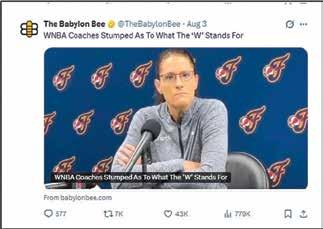





Press is going wild with me.
- An entry from Dr. Anthony Fauci’s March 2020 diaries, reflecting on his newfound fame upon being the face of the U.S.’s covid response
Very flattering. The situation with my national and international fame is explosive and really unimaginable. It is not hyoperbole [sic] to say that today I am the most famous and talked about person in the country and one of the most recognizable peson [sic] in the world.
- ibid.
Countless profiles on me in multiple media. I cannot even read all the things that are written abuyt [sic] me since I am so busy….seriously. POTUS seems to be enamored of me even though I am taking the spotlight away from him. We are developing a very unique and interesting relationship.
- ibid.
- What Dr. Fauci said 111 times last week when he finally appeared at Congressional Hearing about the fact that Covid originated in a Wuhan lab that his department funded, refusing to answer any questions even though he was already given a full pardon by Joe Biden in 2020
- Elon Musk in an interview with The Economist
What do you want money for? You want money for goods and services, right? You want money for obviously food, housing, transport, entertainment. Well, if that is so abundant that the robots and AI are providing more goods and services than any human could possibly consume, what do you need money for?
- ibid.
I’m not voting for anyone who thinks the wrong side won the Cold War or cheers for the Intifada like it’s the World Cup. It’s so ironic, from the people who obsess about colonization. You know what’s being colonized now? The Democratic Party.
- Bill Maher declaring that for the first time ever he may vote for a Republican because of the communists taking over the Democrat Party
We did not start any war; there is no aggression on the part of Russia. We are responding to the actions of Ukraine, which has unleashed hostilities with the support of the West.
- Russian Pres. Vladimir Putin at a recent Kremlin meeting
I’ve been doxed. I don’t know if you’ve heard, but Mayor Mamdani has decided to release a list of the 950,000 residences with addresses and names that might be eligible for his pied-à-terre tax.
- Left-wing political commentator and professor at NYU Scott Galloway on his podcast
He’s taken a legitimate source of tax revenue, and he’s turning it into a wanted poster.
- ibid.
The question I would have is, other than trying to identify and imply these people have done something wrong — and then, 18 months after a healthcare CEO was executed in the street, published the list — what is the upside here? Why is he doing this?
- ibid.
You say genocide, I say war. When you’re attacked, it’s what the army’s for. Does it get ugly? You bet it does. When I know you wanna kill, every last one of us.
- Opening lyrics of a new pro-Israel song released by British pop icon Boy George, titled “We will Dance Again”
But if you’re ever confused, I stand with the Jews. I don’t feel brave I just need to behave like a human.
- ibid.
Now, people say, “Well, you’re Christian and you’re conservative,” and I’m, like, “So what?” I don’t preach it on stage. I don’t spend ten minutes talking about it. We have our respective parties [Republicans and Democrats] out there in the audience, and they’re singing “Don’t Stop Believin’.”
- Jonathan Cain, keyboardist for Journey, on a recent podcast
And, Bruce [ Springsteen], I mean, what the heck? I used to like him, and now he’s just annoying. He’s an annoying, bitter old man.
- ibid.
I don’t know why I’m living so long. I’m just trying to take care of myself.
- 108-year-old Susan Young Browne of Delaware who still drives every day, in a recent interview





My congratulations to the President of the Government of Spain, Pedro Sánchez, for his profound commitment to welcoming immigration and “human diversity.” As someone who demonstrates great concern for Hamas and the residents of Gaza, I call on you to translate words into actions: open the doors of Spain and grant refuge to the residents of Gaza who seek to emigrate. This is an excellent opportunity to contribute a little more to Spain’s “human diversity.”
- Tweet by Israeli National Security Minister Itamar Ben-Gvir, sarcastically congratulating the Jewhating Spanish president whose country is being overrun by illegal immigrants
Would be easy to say the New York mayor is just an ignorant bigot, but he is not dumb. He’s an evil antisemite who deliberately lies about serious things like “genocide” to stoke Jew hate. If anyone should be arrested, it’s the Mayor of NY for incitement. NYC should be ashamed.
– U.S. Ambassador to Israel Mike Huckabee responding to Mamdani calling for Prime Minister Netanyahu’s arrest
We have Special Forces around. I served for five years. Let’s give them a new task.
- Prime Minister Netanyahu, who served in special forces IDF unit, responding to Sean Hannity asking if he is concerned about ending up in a country that would arrest him because of the sham International Criminal Court arrest warrant against him



After the Iranian regime’s ballistic missile attack on U.S. troops in Jordan, the time has come for President Donald Trump to take a good, hard look at the advice he is getting on Iran – what has worked, what has failed and who is responsible for those successes and failures.
Here’s what has worked: His military chain of command, led by Defense Secretary Pete Hegseth and Central Command head Adm. Brad Cooper, has delivered stunning success on the battlefield – entombing Iran’s nuclear material, destroying more than 85 percent of its defense industrial base, sinking its navy, grounding its air force, decimating its ballistic missile capability, annihilating its conventional military forces and imposing a crippling blockade on its ports.
The Treasury Department, led by Secretary Scott Bessent, has turned the screws on Tehran with Operation Economic Fury, a campaign of economic warfare aimed at the regime’s financial survival. The CIA, under the leadership of Director John Ratcliffe, has provided exquisite intelligence on Iran’s military targets, nuclear program and the decision-making cycle of its leaders. The State Department under Secretary Marco Rubio has skillfully managed complicated regional diplomacy.
And, of course, there is Trump himself, who looked at a regime that has been waging war on America for 47 years and decided that he would be the first president to fight back. He has dramatically set back Iran’s nuclear program, something no other commander in chief has had the courage to do.
What has failed? The ceasefire and memorandum of understanding negotiated by Vice President JD Vance – which have driven Trump into a strategic culde-sac of negotiations, Iranian violations and U.S. retaliatory strikes, followed by
By Marc A. Thiessen

more negotiations. Case in point: Last weekend, as Trump was on the verge of ordering a resumption of major combat, he was told that the Iranians were desperate for a deal. So he paused to give peace a chance. Result? Iran fired five ballistic missiles at a U.S. military base in Jordan.
This cycle has repeated for months. Like Lucy and the football, Trump keeps getting told that this time the Iranians are finally ready to make a deal – only to be set up for failure yet again. Indeed, by elevating a deal as the definition of victory, Vance has given Iran a veto over America’s ability to declare victory. All it has to do is refuse to agree – which it is doing.
Worse, Vance continues to publicly contradict the president’s positions. In a recent interview, he suggested that Trump might simply walk away, declaring, “If [the Iranians] don’t comply with the deal, the straits are still open, we’ve still done incredible damage to their nuclear program, and we can get on with our lives as a country.” That is not Trump’s position. His position is: They’ll comply or they will get blown up. In an interview with podcaster Joe Rogan, Vance warned that if Trump resumed major combat,
there would be “94 million desperate people flooding into Europe, flooding into the United States.” Really? Large numbers of Iranians are going to get across Trump’s secure border? Ninety-four million people is the entire population of Iran.
Trump has never taken a resumption of major combat off the table. Why was Vance publicly warning of the dire consequences of the policy option (which Trump in fact nearly ordered just a few days ago)? The vice president doesn’t get his own foreign policy.
As Vance publicly undermines the president, he is trying to dissuade Trump from resuming major combat with strawman arguments. On Rogan’s podcast, he declared that those who advocate military action want to “send 150,000 ground troops in order to accomplish a change in a regime” and are being manipulated by Israel to “keep the war going on indefinitely ... not toward any objective, but just indefinitely.”
No serious person is proposing to send 150,000 troops into Iran, and no one is advocating indefinite war. What many are advocating is completing the military plan that was paused in April
when the ceasefire took effect – executing the final few weeks of the campaign the U.S.-Israeli combined force was carrying out. That campaign has very clear, defined objectives: eliminate remaining leadership figures; further entomb Iran’s nuclear sites; take out Iran’s remaining ballistic missile sites; destroy the economic and energy infrastructure that provides the Islamic Revolutionary Guard Corps with a financial lifeline, as well as key highways, railroads, airports and seaports by which the regime gets financial assistance from bordering countries; and demolish Iran’s remaining defense industrial base so it cannot rebuild its destroyed capabilities. That’s it. Once these targets have been struck, the president should announce an end to major combat, keep the blockade in place, open the Strait of Hormuz and then provide covert support to the Iranian people to help them undermine and eventually bring down the regime – just as the United States provided covert support to freedom movements across the world during the Cold War that liberated 400 million people without U.S. boots on the ground.
Vance is lashing out at those with the temerity to point out that his memorandum of understanding has failed to change Iran’s behavior or produce a deal to end the war. His failure has made a resumption of major combat inevitable. Because Trump has two clear nonnegotiable conditions for Iran: The regime must dismantle its nuclear program and open the Strait of Hormuz. And over the past several months, the regime has made clear, by its actions, that it has no intention of meeting those demands.
Perhaps it’s time for the president to take the advice of those who have delivered him success in Iran – not those like Vance who have failed him.
During his campaign last year, New York Mayor Zohran Mamdani promised that, if elected, he would arrest Israeli Prime Minister Benjamin Netanyahu on a warrant from the International Criminal Court (ICC) when he arrived for the U.N. General Assembly. Now, after an “active conversation” with his legal department, Mamdani says he does not have the authority to follow through on his pledge.
With good reason: If Mamdani tried it, he would be the one going to jail, not Netanyahu.
The United States is not a party to the ICC and does not recognize its authority. On the contrary, in 2002 Congress passed the bipartisan American Servicemembers’ Protection Act, which prohibits cooperation with an arrest warrant from the rogue international court. If Mamdani had tried to arrest Netanyahu, he would have been violating 22 U.S.C. § 7423, “Prohibition on cooperation with the International Criminal Court,” which declares that “no agency or entity of any State or local government … may cooperate with the International Criminal Court in response to a request for cooperation submitted by [the court].” While this is not a criminal statute, the Trump administration could have gotten an injunction from a federal judge to stop the arrest; if Mamdani had violated it, a judge could have held him in contempt and jailed him.
Mamdani could also have been prosecuted for violating 18 U.S.C. § 112, the Protection of Foreign Officials and Official Guests Act. This is a criminal statute and states: “Whoever assaults, strikes, wounds, imprisons, or offers violence to a foreign official, official guest, or internationally protected person” – Netanyahu is all three – “shall be fined under this title or imprisoned not more than three years, or both” (emphasis added). The law further states that whoever “uses a
By Marc A. Thiessen

deadly or dangerous weapon” in violating this law – presumably any police officers Mamdani sent to arrest Netanyahu would have been armed – “shall be fined under this title or imprisoned not more than ten years, or both.”
Furthermore, this act authorizes the U.S. attorney general to “request assistance from any Federal, State, or local agency, including the Army, Navy, and Air Force” to assist in enforcing the law notwithstanding “any statute, rule, or regulation to the contrary” (such as the Posse Comitatus Act, which prohibits the use of federal military personnel to execute domestic civilian laws). And the American Servicemembers’ Protection Act authorizes the president “to use all means necessary and appropriate to bring about the release of any person … who is being detained or imprisoned by, on behalf of, or at the request of the International Criminal Court.” In other words, the only one ever facing arrest here was Mamdani. But it actually gets worse for hizzoner. He may have already broken the law by threatening to take Netanyahu into cus-
tody. The Protection of Foreign Officials and Official Guests Act states that whoever “intimidates, coerces, threatens, or harasses a foreign official or an official guest or obstructs a foreign official in the performance of his duties” or “attempts to intimidate, coerce, threaten, or harass a foreign official or an official guest or obstruct a foreign official in the performance of his duties ... shall be fined under this title or imprisoned not more than six months, or both.” This means that if a court found that Mamdani’s threat was intended to prevent Netanyahu from coming to New York to carry out his official duties, the mayor could face six months in prison.
It’s good that Mamdani’s legal advisers can read the U.S. Code. But the mayor’s reversal doesn’t wipe away what has been revealed by this foolish episode –something sadly unsurprising given rampant antisemitism on the left but shocking nonetheless.
Of course, Mamdani’s message last Tuesday about war crimes made no mention of the mass murder, [assault] and abduction carried out by Hamas terrorists
on Oct. 7, 2023, the atrocity that forced Netanyahu to go to war in Gaza in the first place. Of course, the ICC never indicted and Mamdani never threatened to arrest the leaders of regimes like Iran, which massacred tens of thousands of unarmed protesters in January; China, which is committing genocide against the Uyghurs; or North Korea, which is engaged in the extermination, murder and mass starvation of its citizens in a political prison camp system, among other regimes that attend the U.N. General Assembly each fall. The ICC targeted the leader of the world’s only Jewish state, which is defending itself against radical Islamic terrorists seeking its destruction.
This is yet another reason why Secretary of State Marco Rubio announced that the Trump administration would disassemble the ICC. As Rubio explained, despite the fact that the U.S. never ratified the Rome Statute creating the ICC, the court claims the power to “override the courts and constitutions of the U.S. and other sovereign states – and to prosecute and arrest our citizens.” The ICC has not only targeted Netanyahu (though Israel also does not recognize the court) but has also launched an investigation into what the court’s chief prosecutor described as “war crimes by members of the United States armed forces” in Afghanistan –prompting the U.S. to impose sanctions on the court’s top officials. Rubio declared that the U.S. will not tolerate an illegitimate court targeting the U.S. and allies like Israel. “We will dismantle the ICC –brick by brick, if necessary,” he said.
He’s right. The ICC has no authority to prosecute Netanyahu, and the mayor of New York has no authority to arrest him. Mayor Mamdani should be grateful his lawyers stopped him before the law did.
© 2026, Washington Post Writers Group

We’ve watched some horror shows in the Oval Office over the past 18 months, but last Tuesday’s visit by Lebanese President Joseph Aoun was a moment to celebrate. Aoun came away with a pledge of support from President Donald Trump that could help rescue his country from a half-century of chaos.
Trump’s foreign policy decisions often draw brickbats from commentators, and he deserves much of the criticism. But on Lebanon, he has been rock-solid. He pushed Aoun to embrace a plan to disarm Hezbollah, despite fears in Beirut that it might trigger civil war. And he pressured Israel to begin a troop withdrawal that could allow Aoun and the Lebanese Armed Forces to reclaim the country’s sovereignty at last.
For once, Trump wasn’t the biggest guy in the room. Aoun is a bald-headed bull of a man, who looks like the gentle giant people root for in a professional wrestling match. Trump obviously likes and trusts him. Lebanon needs support from two strong presidents to survive – one in Beirut and one in Washington. For the moment, it has both.
Trump often portrays himself as a victim of unfair attacks, and on Tuesday, he seemed to identify personally with Lebanon’s plight. “It has been a very badly treated place and country, and we’re going to have it … treated with the respect it deserves,” Trump said. “We’re going to solve a lot of problems.”
The U.S. commitment is likely to mean more money and weapons for the LAF, as the army is known, and financial support for Lebanese reconstruction. But the hardest part will be standing up to Israel, which has grown accustomed over five decades to bomb -
By David Ignatius

ing or invading its northern neighbor at will. If Trump doesn’t restrain future Israeli operations, Aoun’s domestic support will collapse.
as a state within a state. “The LAF is ready,” he promised at a small gathering at the Lebanese embassy Monday. In theory, there will be a “mechanism”
Lebanon needs support from two strong presidents to survive – one in Beirut and one in Washington.
The hard question for Aoun is whether he can keep his army and nation together during the gradual process of disarming Hezbollah – regaining a monopoly of force over the Iranian-backed militia that has operated
through which Israel will alert Lebanon to Hezbollah operations – and Aoun will intervene. If the LAF can’t stop Hezbollah’s rockets, we’re back to square one.
I’ve watched as Aoun gained confidence and popular support over the
past two years. We met in Beirut in December 2024, when he was the LAF commander and Israel was still waging all-out war against Hezbollah. A few weeks later, with American support, the Lebanese parliament elected him president. He got off to a slow start in curbing Hezbollah, but he has gathered momentum.
Saving Lebanon is not a project for the fainthearted. President Ronald Reagan tried it in 1982, sending U.S. Marines to bolster security after an ill-managed Israeli invasion to drive out the Palestine Liberation Organization. But when Iranian-backed terrorists struck the U.S. Embassy and Marine barracks the next year, Reagan quickly pulled out – and the era of Hezbollah domination began. The LAF mostly stayed in its barracks over the next several decades.
“Give us the tools, and we will finish the job,” Aoun said at the embassy event, echoing Winston Churchill’s plea for American support against Nazi Germany. Aoun should now have more of the tools he needs. He’s a tough leader, but he’s fighting in an arena that could suddenly become a firepit. This time, America won’t send in troops. It will be on Aoun.
People who, like me, have dreamed that Lebanon can somehow regain its sovereignty want to believe that Aoun is truly ready for this battle. But we won’t know for sure until Lebanese troops are in their first firefight with Hezbollah. Wrestling this battered country back from ruin won’t be easy, but I’m rooting for the Lebanese bull.

By Li Yuan
Halfway through a short speech he was giving at the German Bundestag, Zhang Yabo began to choke back tears.
Zhang had served for nine years as a police officer in Xinjiang, an enforcer in China’s campaign to surveil, detain and indoctrinate that region’s Uyghur population. At the campaign’s height, an estimated 1 million Uyghurs and other Muslim minorities were held in internment camps.
Tens of thousands of police officers carried out China’s state oppression in Xinjiang, but Zhang is a rare voice speaking out about it. Standing before German lawmakers and human rights activists in June, Zhang described Xinjiang as a giant prison enclosed by an “ironclad wall.”
“That wall imprisoned not only countless innocent Uyghurs,” he said, “but also the souls of those ordered to enforce it.”
He related the pressure of participating in China’s security apparatus: endless shifts, sleeping in the office and constant fear of punishment. After he requested asylum in Germany last summer, Chinese authorities froze his bank accounts, he said, branded him a traitor and harassed his family.
By the end of the speech, he was sobbing “like a child,” he later told me. He hurried from the room and did not return.
“All the pressure, all the fear, all the emotions that he had carried with him” seemed to break loose, said Adrian Zenz, a Xinjiang expert who attended Zhang’s speech, “like a huge dam holding back a huge amount of water.”
Zhang’s account of his time in Xinjiang corroborates what has long been documented about the Chinese Communist Party’s brutal repression of the Uyghurs while adding detail and an inside perspective to that record. It also reveals what an ordinary man pursuing upward mobility could gain, and lose, by helping
to carry out those repressive policies. Zhang provided extensive documentation of his service history, including copies of his police identification and pay and social security records, as well as photos of him at interrogations and political propaganda sessions. But I could not corroborate exactly what he did or did not do in Xinjiang; I relied on his telling of the story, and there may have been things he did not share.
The Chinese government denies committing human rights abuses in Xinjiang, describing the camps as vocational training centers created to combat terrorism and religious extremism. It says the centers were closed in 2019.
With China’s record of retaliating against citizens in exile, Zhang has shown considerable courage in coming forward as a witness to injustice. But he is asking for something more than praise; he wants to be recognized as a victim himself — a victim of the apparatus he participated in for nearly a decade.
For Zhang, moving to Xinjiang, and later joining its police force, offered a way to move up in the world. Born in 1986 into a poor rural Han Chinese family, Zhang lived in a village in central Henan province that did not have electricity until he was 8. He moved to Xinjiang for college in 2006 and stayed to teach mathematics at a rural primary school. He married a woman from his home province, and they had a son in 2011.
In late 2014, he left teaching for better pay as a guard at a detention center in the Hotan region, where about 90% of the population was Uyghur. His monthly wages rose to about $650, from $400 as a teacher.
For nearly two years, he said, his duties included monitoring surveillance footage, distributing food and medicine, and gathering incriminating information
from detainees, most of them Uyghurs. He heard screams from the interrogation rooms and saw detainees beaten up and deprived of sleep. He sometimes found broken batons when picking up the detainees. At the time, he said, he accepted the government’s claims that the men being interrogated were terrorists and separatists.
Seeking even higher pay and greater social status, Zhang took the civil service exam and formally joined the police force in late 2016 just as Beijing was about to intensify its mass detention campaign in Xinjiang. He was proud of his uniform, he said, and his monthly pay rose to about $900.
In early 2017, Chen Quanguo, the new Communist Party secretary of Xinjiang, called for a “smashing, obliterating offensive,” including, according to leaked government documents, the detention of anyone who displayed “symptoms” of religious radicalism or anti-government views. Those symptoms could be the wearing of long beards, studying Arabic and praying.
Zhang took part in nighttime raids on Uyghur homes to confiscate Qurans and other religious items. “I was usually the first to charge in,” he recalled. “I believed they were bad people. That was what had been drilled into us at the time, that they were all bad people.”
For much of 2017, Zhang traveled in bus convoys transporting hundreds, and sometimes thousands, of Uyghur detainees to prisons across Xinjiang, which is nearly four times the size of California. The detainees were handcuffed, hooded and ordered to use plastic buckets as toilets during the journey. Zhang distributed bread and water.
“My job was serving the passengers on the bus,” he said.
In late 2018, when he was assigned to a police station, he began to grow despondent. His colleagues brought in Uyghur

prisoners at all hours, he said, and he was responsible for searching them and helping determine where they would be sent. His sleep was constantly interrupted, and his superiors were short-tempered.
He was pleased to be briefly reassigned to supervise about 3,000 Uyghur laborers who had been sent to pick cotton for Han-Chinese farmers. They rose at 5 a.m., traveled for hours to the cotton fields and were not returned to their dormitories until late at night.
For Zhang, it was a nice break. His main task was to make sure no one ran away or prayed.
He learned of the international criticism of forced labor in Xinjiang through statements by China’s foreign ministry and accepted the government’s claim that the accusations were false and intended to vilify China.
“I didn’t think much about it,” he said. “I never paused to consider whether it was true or not.”
For years, Zhang had largely accepted the orders he was given. But during the pandemic, governmental coercion began to feel personal. He said he was once confined for about 10 days inside a village
police post and, after a work trip, quarantined for nearly a month in an abandoned police station. “The pandemic was more painful because it involved me personally,” he said.
In August 2021, he was assigned to Yurushikai, a village of about 1,700 Uyghurs. About 40% of the adults in the village had spent time in internment camps, and some 100 were still serving time in jail, which meant that some households consisted of only children and grandparents. It was Zhang’s job, with the help of two Uyghur assistants, to investigate reports of people praying at home or missing the weekly national flag-raising ceremony or even jogging or exercising. The government’s surveillance system generated automatic alerts for “abnormal” activity. If a household’s electricity use rose, he said, the officers would visit and ask what had kept the family awake.
Police work brought Zhang money, status and privileges: expedited treatment at hospitals, free parking. By 2023, his monthly take-home pay had risen to about $1,250.
But within the police hierarchy, he said, he was disposable. Superiors routinely insulted officers, calling them donkeys that needed to be whipped to work, Zhang said. After he missed a walkie-talkie call in December of his first year in the village, a superior punished him with 72 hours of continuous duty at a road checkpoint in freezing conditions without adequate clothing.
The overtime was relentless, and he was separated from his family for long periods. He had not celebrated Lunar New Year with his parents since 2017 and was denied leave for his sister’s wedding. On average, he could visit his wife and his son once a month.
There were also quotas to meet. Starting in 2023, he was required to produce one lead a week that could be used to justify a detention. Zhang said he frequently failed to hit the quota and had to submit self-criticism reports and work 24-hour shifts as punishment. Working closely with the villagers began to challenge the stereotypes he had absorbed about Uyghurs. He became increasingly reluctant to enter their homes or search their private communications, even as he continued to carry out the surveillance his job required.
By September 2023, Zhang left his post.
He moved to Guangzhou in southern China to study English, hoping eventually
to study abroad. He began using a VPN to get around China’s internet firewall. The first subjects he searched were “Xinjiang” and “Chen Quanguo,” the name of the region’s hard-line former party secretary. He could not believe, he said, that the facilities where he had worked, known to him as “reeducation centers” and “vocational training centers,” were described online as concentration camps. Until then, he had encountered the term only in movies about World War II.
“What I found gave me terrible headaches: One side of my head said one thing, and the other said something completely different,” he said. “The conflicting accounts battled in my mind, and I couldn’t sleep at night.”
cution of Uyghurs was carried out.
“Of the millions of Chinese police officers, he is the only one who has come forward to speak the truth,” said Haiyuer Kuerban, an official at the World Uyghur Congress who has been helping Zhang settle in Germany. He said his organization initially viewed Zhang with deep skepticism, but that its doubts had begun to ease after reviewing his documents.
Zenz, the Xinjiang expert who is director of China studies at the Victims of Communism Memorial Foundation, a nonprofit organization in Washington, said Zhang supplied “the ground-level reality of what we had mostly inferred” from government documents, state media reports and survivor testimony.
It was Zhang’s job, with the help of two Uyghur assistants, to investigate reports of people praying at home or missing the weekly national flag-raising ceremony or even jogging or exercising.
After officially resigning in early 2024, feeling wounded and in need of solace and strength, he turned to faith. He had found peace in a book about Bible stories that he had read to his son at bedtime, and in April 2025, Zhang was baptized as a Catholic in Guangzhou. Four months later, he joined a European tour with his 14-year-old son. He had already decided that if he could get away from the group, he would seek asylum.
As their tour group entered Neuschwanstein Castle, the Bavarian palace that inspired Disney’s Sleeping Beauty Castle, Zhang and his son sneaked away. They traveled to Munich and went to the headquarters of the World Uyghur Congress, an advocacy group whose name Zhang had heard many times in Xinjiang, told it was a separatist terrorist organization. He has applied for asylum and lives in a shelter in southern Germany, where his son is staying at a foster facility not far away. Over a dinner of pasta, the 15-year-old told me he missed Xinjiang’s spicy stir-fried rice noodles. Zhang’s wife remains in Xinjiang, and the couple have filed for divorce.
Zhang now spends his time speaking with academics, journalists and human rights groups to document how the perse -
they could leave the police or Xinjiang. They were not subject to arbitrary detention, forced labor or torture. They would not be considered potential terrorists for playing basketball or doing push-ups.
“No matter how much you suffer at work, you can still go home, eat a good meal, and imagine a future,” said Kuerban, the Uyghur activist. “You do not live with the constant, paralyzing fear that something you said 10 years ago will make you disappear tomorrow.”
Still, Zhang’s experience showed how inhumanely the system treated its own operatives, Alpermann said. And for Zhang, leaving China and speaking publicly was itself a way of confronting the system.
Zhang insisted that he had never personally tortured or mistreated any Uyghurs. He described himself as a small cog in the state machinery who filled out forms, guarded facilities and handled logistics. Responsibility lay with senior officials and with the Uyghur police assistants who, he said, carried out many of the most direct and abusive tasks. Low-level Han-Chinese police officers like him, he insisted, were innocent.
Björn Alpermann, a China scholar at the University of Würzburg who has interviewed Zhang extensively, said his account offered unusually granular evidence of how repression continued after the height of the mass-internment campaign and became “routinized” in village life.
But people who have worked with Zhang in Germany told me that we knew only what he wanted us to know and he probably knew more than he shared.
He remembers the forms he filled out, the orders he followed, and the humiliations he endured in vivid detail, but is fuzzier on the worst abuses. He described hearing screams and seeing detainees after interrogations but offered fewer details about death, [certain] violence and torture in detention facilities. He insisted he had been honest and forthcoming.
He also wants the world to recognize what he endured.
“My suffering was equal to, or in some respects greater than, that of the Uyghurs,” he told me repeatedly. “Why don’t you journalists write about me? Why do you only focus on the Uyghurs?”
Han Chinese officers, of course, were not forced to abandon their language or culture and, however difficult it might be,
It is unclear whether Zhang’s self-exoneration is a form of self-protection, an inability to bear what a fuller recognition would mean or simply a habit of mind formed by years inside the system. Kuerban said he did not believe the blindness was deliberate. After repeatedly pressing Zhang, I had come to a similar conclusion: He seemed genuinely unable to see his role in the wider context of the immense injustice inflicted on the Uyghurs.
His struggle also reflected the country he came from, where the state has suppressed public memory of the Great Famine, the Cultural Revolution and the 1989 Tiananmen crackdown. Unlike in Germany, where there has been decades of reckoning with Nazi complicity, China provides little space for sustained debate about complicity, guilt and responsibility.
Working inside an abusive system did not automatically make someone a monster, Kuerban said. But neither did performing a minor function, or not personally carrying out the worst abuses, eliminate responsibility.
Zhang said that his faith had taught him that his responsibility now was to speak out.
“If you stay silent,” he said at the end of his Bundestag speech, “you’re part of the problem.”
By Avi Heiligman



While many of the pivotal battles during the Revolutionary War took place in the colonies, there were other military campaigns that were waged outside the thirteen colonies. Clashes with the British and Native Americans stretched to the Gulf Coast as well as through Tennessee, Mississippi, and further west. Most of these skirmishes were fought by frontiersmen trying to defend their homes and towns. However, the conflict also saw an official military expedition into the Northwest Territories to secure key strongholds from the British. The commanding officer of this daring western campaign was the older brother of William Clark, who, alongside Meriwether Lewis, would become famous on their historic journey across the continent that began in 1804.
The Clarks were a deeply patriotic family from Virginia with five of the six boys serving as officers in the Revolutionary War. William was too young to serve in the conflict but later joined the Kentucky and Louisiana militias as well as the regular army, eventually becoming the most famous of the brothers. The oldest in the family, Colonel Jonathan Clark, served with distinction during the revolution. However, it was the second-oldest brother, George Rogers Clark, who looked westward during the war and saw that British dominance outside of the colonies needed to be broken.
George Rogers Clark went to Kentucky in 1775, which at that point consisted of
only a few scattered frontier settlements. The British were using their Native American allies to attack the settlers, and in 1776, Clark was sent back to Virginia to convince Governor Patrick Henry to provide ammunition and support for self-defense. A year later, these raids escalated. The frontiersmen sent two spies to scout the British forts, and they reported that the garrisons at Kaskaskia and Vincennes in the Illinois Country could easily be taken. Clark knew that Washington could not spare any soldiers for the defense of Kentucky, so he decided to take action himself. With the permission of Governor Henry, Clark was given the tasks of defending Kentucky and to raise a unit to attack the enemy forts.
By the spring of 1778, Lieutenant Colonel Clark was only able to put together a force of about 150 men. They set out down the Ohio River from their staging area in Pennsylvania and reached Corn Island, near modern day Louisville, where Clark told his men of the upcoming mission. On June 24, they experienced a total solar eclipse as they continued down the Ohio River. They then undertook a grueling 120mile overland trek to reach the abandoned French post of Fort Massac in Illinois. This fort would later be rebuilt in 1794 and was used as a stopping point by the Lewis and Clark Expedition in late 1803.
George Rogers Clark had about 175 men when he marched on Kaskaskia. On July 4 –exactly two years after the signing of the Declaration of Independence – Clark’s men
captured the outpost in the dark without firing a single shot. The next day, Captain Joseph Bowman, Clark’s second-in-command, captured the fort at Cahokia without opposition. The local French population sided with the Americans upon learning of the new Franco-American alliance. Several other towns in the vicinity surrendered to Clark, including the garrison at Vincennes. Clark spent much of the remainder of the year negotiating peace agreements with local Native American tribes.
The British were not content with Clark capturing the area without a fight. In December 1778, Lieutenant Governor Henry Hamilton led a combined force of British regulars, Canadian volunteers, and Native American allies to retake Fort Sackville at Vincennes. Hamilton intended to launch a spring campaign to recapture the remaining outposts, but Clark preempted the plan.
In February 1779, Clark led his men on an arduous winter march back to Vincennes and caught the British garrison by surprise. Instead of a direct assault, Clark besieged Fort Sackville until Hamilton surrendered on February 25. Hamilton’s capture provided a major boost to American morale and secured military control over the Northwest Territory that was formally recognized in the 1783 Treaty of Paris.
Clark had other military successes during the Revolutionary War, including taking command of a local Virginia militia to fight against a detachment from turncoat Benedict Arnold’s force.
The success of Clark’s expedition hinged on getting resupplied and being financed throughout his journey. Bernard and Michael Gratz, two Jewish brothers from Philadelphia, had trading posts along the Ohio River and were vital in replenishing Clark with supplies, ammunition, and goods. Oliver Pollock, who was not Jewish, bankrolled Clark’s expedition and during this time was credited with inventing the U.S. dollar sign ($).The story goes that while using Spanish pesos to finance the American war effort, he abbreviated “pesos” as “ps.” As he wrote quickly, he ran the letters together, placing the “s” over the “p” until the loops of the “p” merged into a single vertical stroke. His ledgers were shared with top financial officials like Robert Morris, and the symbol eventually became an official part of American currency.
While the main story of the Revolutionary War and its battles is well known, the smaller conflicts and the men who fought and supported them have been relegated to the back pages of history books. Clark’s expedition opened the Midwest for American expansion and was vital in driving the British out of the region. These Forgotten Heroes paved the way for future states to join the United States, leaving behind a legacy that deserves to be remembered.
Avi Heiligman is a weekly contributor to The Jewish Home. He welcomes your comments and suggestions for future columns and can be reached at aviheiligman@gmail.com.
• text 443-929-4003
FREELANCE BOOKKEEPER
with years of experience in QBO online (and Excel). Many references. Call Zev: 646-907-5163 or E-mail: 4135998@gmail
DU N DURT
Power & Soft Washing
We clean siding, stucco, decks, driveways, concrete, pool patios, pavers & sidewalks. Say goodbye to grime, mold & allergens!
Call/WhatsApp: 718-688-2964 Email: dundurtny01@gmail.com
THE LEATHER SHOPPE
The spot for all your custom leather Judaica. Tallis/tefillin bags, lulav and esrog bags, havdallah sets, challah covers, shtenders, pesach sets, matzah/afikomen bags. WhatsApp: (732) 523-0007 or email: theleathershoppe732@gmail.com for a full catalog. We ship.
PEACEFUL PRESENCE STUDIO
Men’s private yoga, Licensed Massage & Holistic Health Guidance 436 Central Ave, Cedarhurst Info. & free video training www.peacefulpresence.com 516-371-3715
HAIR COURSE: Learn how to wash & style hair & wigs. Hair and wig cutting, wedding styling Private lessons or in a group Call Chaya 718-715-9009
GERBER MOVING Full Service Moving Packing Moving Supplies
Local Long Distance. Licensed Insured 1000’S Of Happy Customers Call Shalom 347-276-7422
HANDYMAN AVAILABLE
For big or small jobs, Sheetrock, carpentry, painting, electrical, plumbing, install & repair appliances Call Ephraim at 347-593-4691
MANAGEMENT STAFF WILL ASSIST you with: * Obtaining Medicaid and Pooled Income Trust
* In-home Assessments, Individual and Family Counseling
* Securing reliable home care assistance
* Case and Care Management services
Dr. S. Sasson, DSW, LCSW (718) 544- 0870 or (646) 284-6242
ZEVIZZ WOODTURNING JUDAICA
Challah knifes, batei mezuzah, besamim holder, kiddish cups, havdalah candle holders, yad for sefer torah, pens, stenders, bowls and more 952-356-2228
MY MOTTO IS DON’T WAIT TO buy real estate Buy real estate and wait Your realtor for life 516-784-0856 Alexandra at Realty Connect USA
Don’t Get Stuck With a Two Story House Ya Know, It’s One Story Before You Buy It But a Second Story After You Own It!
Call Dov Herman For An Accurate Unbiased Home Inspection InfraredTermite Inspection Full Report All Included NYC 718-INSPECT Long Island 516-INSPECT www.nyinspect.com
Semi-Detached 2-Family House Far Rockaway, NY
Owner’s apartment 5 B/R; Tenant’s 1 B/R $1.1M, non-negotiable Inquiries by email only 604Seagirt@gmail.com
REAL ESTATE MANAGEMENT
Services – Do Not Manage Your Properties Alone!
Contact Aliyah Suites for all your real estate management needs and affordable office space near you! (516) 366-1049
Management@aliyahsuites.com
Marc Jeret (MJ) Team Leader & Licensed Real Estate Agent






















CEDARHURST
Prime Restaurant Location For Lease. For more information: Call/Text/WhatsApp Owner: (516) 206-1100
5 TOWNS - SHOWROOM/ Warehouse For Lease 4000 + 1000 SF
Can divide - Parking included Next to LIRR - No broker fee Call/text/Whatsapp: 516-206-1100
N. WOODMERE
Big renovated, spacious 4br, 2fbh, W&D, Driveway, garage, deck, huge backyard, SD#14, tons of storage, huge master, jacuzzi, shower, available immediately WhatsApp only owner, 347-517-3552
EXCEPTIONAL OPPORTUNITY
In prime Lawrence
6 spacious bdrs, 5.5 bath plus add 2 bdrs in low level
Low taxes, desirable cul de sac Walk to shopping, houses of worship, parks, LIRR 516-784-0856 Alexandra at Exp
A multi-tasker needed for general office work. The ideal candidate is someone who is detail-oriented, responsible, and can take ownership. Looking for someone who is eager to learn, and expand his/her skill set while possessing the ability to work independently and as part of a team. Experience with Excel required. Five Towns location. In-office position only, not remote. Please send resume to 5tpart.timecareer@gmail.com
A Five Towns Real Estate Company is seeking a full-time Bookkeeper. The right candidate must be proficient with QuickBooks and Excel. They must also be self-motivated, organized, detail oriented, reliable, and able to work independently or as a team player. Warm, frum office environment with excellent salary & benefits. Please email resume to HR@capsprop.com







REGENTS EXPERT
Tutoring regents in Algebra and Geometry A Darchei Torah instructor. Guaranteed results Text 347-491-8045 WhatsApp 347-767-1755
For current school year, starting from end of January: Seeking assistant teacher for General Studies. Candidate should have skills to take over for teachers if needed. Far Rockaway area boys’ school, M-Th, PM hours, strong support. Excellent salary. Possibility to continue for next year. Send resume to teachersearch11@gmail.com
Remote (requires in-person home visits in NY)
Support families facing serious medical or emotional challenges. Provide guidance, advocacy, and resource coordination from home or on-site. Training provided. BA or 2 years Care Management required Apply online: www. chailifeline.org/careers or email hr@chailifeline.org
Or have a passion to be?
Come join our great referral group and get access to a vast new clientele through Medicaid. JUST CALL 347-668-7886






















YESHIVA OF GREAT NECK
Boys Yeshiva High School. seeking qualified Algebra instructor to provide small group tutoring for two separate student groups. Position involves two afternoon periods daily, in a structured environment. Exceptional Compensation. E-mail recruitment@yeshivaofgreatneck.org
5 Towns area Nursing Home management office seeking a Regional/Corporate level MDS Nurse to work in our office.
Must be an RN. Regional experience preferred. 2-3 years MDS experience with good computer skills required. Position is Full Time but Part Time can be considered. Great Shomer Shabbos environment with some remote options as well. Email: officejob2019@gmail.com
Boys Yeshiva High School. seeking
qualified high school science teacher
to instruct three periods of core sciences, in supportive and structured
environment. Hours begin after 3:00 pm. Strong content knowledge and teacher experience required.
Competitive Compensation. E-mail recruitment@ yeshivaofgreatneck.org
READING SPECIALIST
IVDU Upper Boys School and Boys Middle School in Flatbush is seeking a certified literacy/reading specialist for this school year.
The ideal candidate will have training in the explicit instruction of reading and will have experience with individualized instruction in both one-on-one and small-group settings. We offer a competitive salary, a supportive work environment, and strong opportunities for professional development.
To apply, please send your resume to Dassa at GutwirthD@ou.org.
SPEECH THERAPIST
IVDU Upper Boys School and Boys Middle School in Flatbush is seeking a Speech Therapist for a special education school. This position offers a supportive work environment and competitive pay. Interested candidates should please send their resume to Gutwirthd@ou.org
TEACHER
IVDU Upper Boys School and Boys Middle School in Flatbush is seeking a financial literacy and computer literacy teachers’ teacher for the upcoming school year.
We offer a competitive salary and benefits, along with a supportive work environment and strong opportunities for professional development.
To apply, please send your resume to: Gutwirthd@ou.org
MENTAL HEALTH PROFESSIONAL
IVDU Upper Boys School and Boys Middle School in Flatbush is seeking a driven mental health professional to join our expanding school clinical team.
Responsibilities include school-based counseling (CBT, autism-related work), coordinating services, and supporting classroom behavior. Excellent clinical, communication, and follow-through skills required. Weekly training in autism provided. Positive work environment and excellent salary. Please email Gutwirthd@ou.org to apply.
ASSOCIATE TEACHER
IVDU Upper Boys School and Boys Middle School in Flatbush is seeking full time associate teachers.
This is an excellent opportunity for individuals pursuing a degree in Special Education, Mental Health, or Applied Behavior Analysis (ABA) to gain hands-on experience and grow professionally. We offer a competitive salary and benefits, along with a supportive work environment and strong opportunities for professional development.
To apply, please send your resume to: Gutwirthd@ou.org.


Discover incredible space, comfort, and convenience in this beautifully situated home featuring:
✨ 6 spacious bedrooms
✨ 2 additional lower-level rooms
✨ 5.5 bathrooms
✨ Beautiful private backyard
✨ Low property taxes
✨ Desirable cul-de-sac location
Conveniently located within walking distance of shopping, houses of worship, parks, and the LIRR.
A rare Lawrence opportunity you don’t want to miss!
For more information ora private showing: Alexandra Mikhaylova | eXp Realty 516-784-0856

UPSCALE EVENING & Ready-to-Wear Boutique opening on Central Ave seeks fashion-forward, friendly sales associates with retail experience. Full-time & Part-time. Text/WhatsApp 718-310-8550.
JOIN THE ZAREINU TEAM!
Our small, special education classes are in yeshivas and Bais Yaakov’s in Far Rockaway and the Five Towns. For the 2026-2027 school year, Zareinu is seeking:
PM Special Education Secular Studies
Teachers for middle school boys class
AM Rebbe Assistants for boys classes
P/T or F/T Assistants for boys and girls classes
Highly competitive salary and caring, supportive administration.
Send resume to info@zareinu.org/ or call Rabbi Lepolstat at 516-993-2142 for further information.
HALASHON
Text 516-303-3868 with a time slot of your choice to be careful on lashon hara. Be a part of the 1,000 people for klal yisroel!
HAMEDRASH CONG.
Chasdei Uvois Oshpitzin
Talmidei chachomim are willing to learn mishnayos, say kaddish and be the shliach tzibbur to daven for the umid on the yartzeit yom hashanah of your parents or close relatives or loved ones To arrange please call Rabbi Miller 917-445-6220



Ilove the way G-d made us with nails. So much of the time they are better than most utensils or instruments.
There I am this morning, using my handy-dandy nails to peel some wax that leaked from a candle off a new plastic-coated tablecloth and thinking how well it works.
Why am I impressed?
Beause last night I tried to take off the wax with the boiling water trick, maneuvering it with a plastic knife, and rubbing the spots with a hot paper towel. And admittedly, after these three approaches, there was some movement. But it was still very “there” this morning. Standing as proof of a havdalah candle with a wide enough girth to miss the large plate under it to catch leaks and obviously constructed with a very drippy quality.
But today, I just woke up, and I tried a few focused scrapes with my fingernail, and it simply finished the job.
And there I am thinking – because I know as you would – that if I don’t clean it fully, someone will put it away with the remaining wax spots. They may be thinking – no big deal! – what’s a little wax?!
By Rivki D. Rosenwald Esq., LMFT, CLC, SDS

Of course, to them, they didn’t buy it or they will not have the need to replace it.
So, I try scratching it and it works, and I think, yay, no need to try holding an ice cube there, or run around the house looking for some pointy instrument that won’t rip the tablecloth or won’t be unlocatable anyway, just to get the job done completely.
What a relief.
I just went with a focused scrape with the fingernails, and the wax is gone.
And then that moment of appreciation hits me: wow, what super planning!
Adding those extra details and features was a real gift to us.
These nails do so much.
They give you a great vehicle to scratch with, for your various unwanted itches, and an unreachable back or at least parts of it. Definitely, they’re there to help relieve your torturous bug bites. But, mostly they’re helpful to give others a good back scratching or for them to help you itch those hard-to-reach places down your spine.
And at the best of times, they add to your beauty, or give you an opportuni-
ty to bond with your little girls. What a treat when you take them to get their nails done!
And I’m certain there are many uses I haven’t even touched on.
But the amazing insight is how well wired and thought-out we are.
That epiphany and appreciation just popped up for me. And so, I decided to share it with you. Because I figured you most probably bought a better havdalah candle and maybe didn’t get the opportunity for this insight this week.
What a great thing when we do get those moments of appreciating, what we call, the little things.
Yet, honestly, they are only little till we need them. And then suddenly, they are big!
For instance, when I bought my son’s toolsets, when they were younger, as gifts for Chanukah. One told me years later he thought, why did you bother buying me that? I wanted something more high-tech.
Yet, when he bought himself exercise equipment and a bench, he realized it had to be put together. And suddenly he was
staring at his toolset and saying, wow – what a great gift I had sitting in my closet all this time and I just didn’t realize what good uses there were for it.
Nails, tools, whatever it is – having it there before we even know we need it is the true gift to appreciate.
Like Modeh Ani – can we extrapolate and think: I woke up, I see the sun. I have lips to smile with! And when I smile, the muscles in my face send signals to my brain that help relax anxiety through releasing positive emotions. And I have fingernails to scratch with, and many, many other tools that I sometimes forget about…
Today and every day, I am blessed.
Rivki Rosenwald is a Licensed Marriage & Family Therapist working with both couples and individuals and is a certifie d relationship counselor. Rivki is a co-founder and creator of an effective Parent Management of Adolescent Years Program. She can be contacted at 917-705-2004 or at rivkirosenwald@gmail.com.