





YDT Talmidim Thriving
Oraysa






My daughter must have been four years old. She’s wearing a princess outfit with a crown, and we’re talking about the Purim story. In the video clip that we have, she tells me matter-of-factly, when recounting what happened many years ago, “They tried to kill us, but Hashem saved us – so what else do you want me to say?”
If Rabbi Berel Wein, z”l, would have summed up our history in just one sentence, perhaps he would have used her wise words.
Throughout history, we’ve seen it time and time again. Our enemies come in different forms. They attempt to annihilate our nation. Sometimes they say we’re the vermin behind a plague or the bankers controlling the economy or the people who destroyed their god. Whatever their supposed and professed motivation is, they carry out their plots against us – and then, when we reach out to our Creator, He sends our salvation. And we, as a nation, move on. It sounds so simple – our nation’s trajectory – but we are far from naïve to think that history can really be summed up into one sentence.
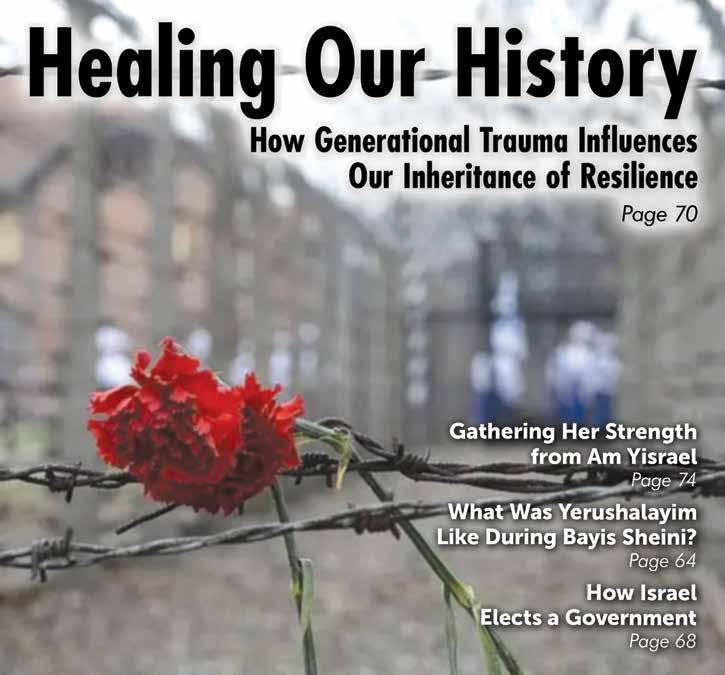
That sentence, while often said with a smile, conceals thousands of years of heartbreak. Exile. Pogroms. Inquisitions. Expulsions. The Holocaust. Terror attacks. October 7. It becomes personal when you think of each person who was beaten because they were born a Jew; each person who was burned at the stake because they wouldn’t succumb to the church; each person whose ashes were swept into towering piles in the crematoria; each person who was taken captive along trails of blood and tears.
Throughout the generations, we have passed
down our memories of loss and fear, of pain and persecution. It’s built into our nation’s DNA.
But along with that pain, we have passed down something more powerful along the chains of generations.
Our resilience as a nation is collective. We, as a people, have managed to survive and thrive. We have managed to move to foreign lands and build beautiful families and communities. We have managed to take remnants of Torah scholars and construct magnificent edifices throbbing with the powerful words of Abaye and Rava. We have managed to build businesses and communities mere years after poverty was our daily dinner.
If trauma and pain can be passed from one generation to the next, so can faith in our future, courage in our convictions, purpose in our beliefs, and a passion to move forward.
Even while mourning what was lost, we keep sight of what will be.
During this time, we spend three weeks focusing on our loss. That loss is enduring – every pain, every defeat, every defamation, every wound is a microcosm of that void that was inflicted 2,000 years ago. But as we sit in our pain, with our pain, we know that there is a different future for us being built, a future without pain and a future with the supreme pleasure of connection with the One Above.
May Hashem bring us closer to Him and may He bring us comfort in the ultimate way with coming of the geulah.
Wishing you a wonderful week, Shoshana

Yitzy Halpern, PUBLISHER publisher@fivetownsjewishhome.com
Yosef Feinerman, MANAGING EDITOR ads@fivetownsjewishhome.com
Shoshana Soroka, EDITOR editor@fivetownsjewishhome.com
Nate Davis
Editorial Assistant
Nechama Wein Copy Editor
Rachel Bergida
Shana Brecher
Lani White Design & Production
Gabe Solomon Distribution & Logistics
P.O. BOX 266
Lawrence, NY 11559
Phone | 516-734-0858
Fax | 516-734-0857
Classified Deadline: Monday 5:00PM classifieds@fivetownsjewishhome.com text 443-929-4003
PAYMENT VIA CREDIT CARD MUST BE SUBMITTED ALONG WITH CLASSIFIED ADS
The Jewish Home is an independent weekly magazine. Opinions expressed by writers are not necessarily the opinions of the publisher or editor. The Jewish Home is not responsible for typographical errors, or for the kashrus of any product or business advertised within. The Jewish Home contains words of Torah. Please treat accordingly.






Dear Editor,
In last week’s edition of The Jewish Home there were at least four articles criticizing President Trump for snatching defeat from the jaws of victory by entering into a Chamberlainian peace in our time deal with Iran. From a Jewish Demonic Vance to a dollar-motivated Trump, the focus was on the motives and reasoning of Trump and Vance. Missing is any mention of the role of the lead negotiators of the deal, Kushner and Witkoff. They, like Wendy Sherman, who was the lead negotiator in the Obama Iran Deal, are Jews who have sold their souls for honor, money and power. We hear so much about the antisemites blaming the Jews for all the wrongs in this world. Well, this time, the Jews are to blame.
Sol Liss
Dear Editor,
I was appalled last week when I read Mr. Meyer’s statement that “it is harmful and wrong to use terms such as ‘illegal aliens,’” when it is clear that there is a legal process to apply for entry into our country. Those illegal aliens broke the law by not caring that there is a process by which economic migrants seeking the “American Dream” can apply from their home country.
Tens of thousands of immigrants follow the law and obtain citizenship each year. These legal immigrants are also appalled that they went through the required process while others are given entitlements without any need to apply for citizenship. Furthermore, to conflate the current situation with Jewish persecution
throughout the ages is to create a false narrative. By equating legal and illegal immigration, along with intimating Ronald Reagen and Emma Lazarus were in favor of violating our sovereign borders, is a total “shanda.”
While an attorney’s primary function is to represent a client, it is not his prerogative to subvert the law in order to achieve a client’s goals. According to the American Bar Association, as an “officer of the legal system,” an attorney’s obligation to uphold the law supersedes his obligation to a client.
Jan Henock Woodmere, NY
Dear Editor,
I am writing and response to the letter from Chaim Yehuda Meyer in the July 2 edition.
I’m a proud second generation American who appreciates that this country allows immigration. All four of my grandparents and my mother as well as my inlaws and many family members immigrated to this to this country as refugees. They did not have money; most of them lost much of their family and just barely survived the Holocaust, in camps such as Auschwitz. Yet they came to this country legally. They waited in refugee camps outside the U.S. until they could get their visas and were proud to become citizens when the time was right for them.
I believe it’s helpful for this country to allow immigrants from all different countries to come to this country.
I do not understand how somebody can call themselves an immigration attor-
Continued on page 12

ney and say that it is wrong to use a term such as illegal alien. People use that term to refer to people that came to this country illegally. The fact that they are trying to legalize their immigration status does that make them legal at this point.
It’s a problem that they were able to get in, it does not make them terrible people, and I’m not saying that they should not have a chance to become citizens, but at this point, they are illegal..... And they should not have the right to become citizens before people that waited their turn to come to this country legally. All the best,
EB
Dear Editor,
On p. 65 of the July 2, 2026, edition there is a key for the “Happy Birthday America” quiz. Scoring “0-3 correct” is followed by “Were you born in Uganda or something like that?” I’m offended by the insult to the mayor of New York and the inference that those born in Uganda are of low intelligence.
In an age when antisemitism is of grave concern, what do you think of the bias the content described above can bring?
I am looking forward to TJH being more in line with our Jewish values. Arthur L. Popp, Ph.D.
Dear Editor,
Why is it that someone can be a hateful person, a Nazi sympathizer, and yet still be revered by the Democrat Party and supported to become a member of
the U.S. Senate? And yet, when allegations come up that allege that he engaged in inappropriate behavior, suddenly the party goes up in arms?
It shows the values – or lack of them –from the Democrat Party. For years, Jews voted Democrat down the line. Now, we need to wake up. Before voting or supporting a candidate, take a close look at who they are and what they represent.
And by the way, keep in mind that there are only 100 senators in the United States. Putting a openly Nazi sympathizer into the Senate is no joke. But that’s the direction the Democrats are going.
R. Herman
Dear Editor,
To the mother of the young man who takes his time figuring out if he wants to go out again with a girl, it’s all about communication.
Did you tell your son about protocols and needing to get back to the shadchan right away?
Did you tell the shadchan (before the two of them go out) that your son may need a bit more time to decide?
Communication would help smooth a lot of ruffled and confused feathers.
That being said, if your son has a hard time in general in making decisions, you may want to explore therapy with him to help him decide on things in a more timely manner. Overthinking can be paralyzing and may affect his marriage in the long run.
Hatzlacha!
Dena Steinberg



Iran held a widely attended funeral for the late Ayatollah Ali Khamenei, the Iranian leader whom the United States and Israel killed in late February, in Tehran on Sunday. Hundreds of thousands attended, though the deceased ayatollah’s successor, Supreme Leader Ayatollah Mojtaba Khamenei, was noticeably absent from the ceremony.
In attendance were President Masoud Pezeshkian, Parliament Speaker Mohammad Bagher Ghalibaf and the Islamic Revolutionary Guard Corps leader Gen. Ahmad Vahidi, as well as IRGC expeditionary Quds Force leader Esmail Qaani and Khamenei’s three other sons, Masoud, Meysam, and Mostafa, who haven’t appeared publicly since the war began.
Prayers were led by 97-year-old Shiite cleric Ayatollah Jafar Sobhani at the Grand Mosalla complex. Hanging from the Grand Mosalla were posters calling for the assassinations of U.S. President Donald Trump and Israeli Prime Minister Benjamin Netanyahu.
Mohammad Rasouli, a poet and MC for the event before the prayers, spoke during the funeral, calling for Trump’s killing. Crowds cheered and chanted “Death to America!” and “Death to Israel!”
“Why should we not kill the man who killed my imam?” Rasouli asked. “It would be a disgrace if we did not kill your killer.”
“Today we are here for the funeral for our leader. It’s a very tough day,” one mourner said at the funeral. “We are not here to say goodbye to him. We are here for revenge. And we will take revenge.”
Talks between the U.S. and Iran, which Israel is not involved in, were on
hold until the end of the funeral. Officials drove Khamenei’s casket around Iran on Monday, closing streets and airspace and putting daily life on hold as the nation mourns until Thursday, the expected day of his burial. He will be buried at the Imam Reza shrine in Mashhad, the city where he was born.

On Thursday, German Chancellor Friedrich Merz and his coalition unveiled an economic reform package with 34 measures, aimed at boosting Germany’s slow-moving economy. The measures range from income tax cuts to a pension system overhaul to stricter sick leave policies. The package also addresses Germany’s economic bureaucracy.
“These reforms all have one goal: We’re setting out into the future,” Merz declared. “We’re strengthening ourselves so that we can live well in these new times.”
Merz’s coalition, which is composed of center-right and center-left parties, has become unpopular as it struggles to revive Germany’s slow economy. The government presented this package in hopes of restoring not only the economy but also its reputation.
This year, the German economy is expected to grow just 0.5%, a frighteningly low figure. Germany’s economic issues have been exacerbated by Chinese competition, high energy costs from Russia’s war on Ukraine, and tariffs and trade wars with the United States. The economy has been further strained by high production costs, insufficient private investment, and the increasing costs of health and pension systems for a growing elderly population.
The tax cuts should be fully implemented in 2028 and are expected to give families with two working parents, two children, and a total taxable income of 60,000 euros ($68,640) a yearly tax break of around 600 euros (or $686.40). In all, the reform should give Germans

16 around 10 billion euros ($11.4 billion) in relief a year.
The package would also slowly raise the retirement age, aligning it with life expectancy. The retirement age is currently somewhere between 65 and 67.
Employees who take off from work for over three days due to illness will be required to get a doctor’s note on the first day that they call out, as per the new reforms. Previously, workers could take off for three days before needing to submit a doctor’s note.
The government will also scrap a number of reporting and documentation requirements, so as to ease the country’s bureaucracy.
Xi Jinping, the president of China, is following in the footsteps of Communist dictators such as Joseph Stalin and Mao Zedong in his crackdown on dissent. In doing so, he aims to cultivate absolute loyalty, grow his cult of personality, and have China rival the United States in terms of military and economic strength.
Like Mao, Xi is actively getting rid
of senior officials accused of corruption, disloyalty, or dissent. In six months, he fired three sitting members of the elite Politburo, the largest culling since 1976. He has also gotten rid of defense, foreign affairs, and agriculture ministers, as well as military commanders, regional leaders, financial regulators, and state-enterprise executives. Similarly to Mao, Xi forces members of the Politburo to critique themselves and each other annually. One of the criteria is loyalty to him.

Xi, now China’s leader for 14 years, scrapped a rule limiting the presidency to two terms. He is expected to begin his fourth five-year term as Communist Party chief in 2027. He also eliminated age-based retirement norms for senior officials.
As president, he took control of every aspect of Chinese policy, including economic planning and national security. Xi unleashed the Central Commis -

sion for Discipline Inspection, the Communist Party’s internal watchdog, to investigate the loyalty of each member of his party. Of its 100 million members, the CCDI disciplined almost a million people in 2025. Like Stalin and Mao, Xi has cultivated a culture where party officials tattle on each other.
Xi has also touted himself as the greatest Communist theorist of his time, embedding his political philosophy, “Xi Jinping Thought,” into the Chinese constitution and Communist Party charter, sitting right next to “Mao Zedong Thought.”

A controversial new law aimed at curbing misinformation took effect in South Korea on Tuesday, allowing courts to impose heavy financial penalties on news organizations and major social media influencers found to have spread false or manipulated information.
Under the law, courts can award damages of up to five times the proven losses caused by false reporting. News outlets and large online creators that repeatedly distribute information already ruled false by a court may also face fines of up to 1 billion won (about $656,000). Large social media platforms are required to remove offending content or suspend user accounts after receiving reports of false information.
The legislation, backed by President Lee Jae Myung and his Democratic Party, was passed last December. Supporters argue that the measure is needed to combat misinformation, online hate speech, and growing political division.
However, journalist and civil liberties groups say the law’s broad language could discourage legitimate reporting and public criticism.
“Even if a law’s objective is legitimate, it could erode the foundations of democracy if it’s enforced in a way that discourages the media and ordinary citizens from freely criticizing and scrutinizing those in power,” the Journalists Association of Korea pointed out.
Critics also worry internet companies
may remove lawful content to avoid liability, leading to increased self-censorship.
The debate follows years of political turmoil in South Korea, including the impeachment and removal of former President Yoon Suk Yeol, whose supporters spread widely disputed election fraud claims online.

An explosion near Damascus’ Four Seasons Hotel injured at least 18 people on Tuesday morning, just hours after French President Emmanuel Macron spent the night there ahead of a high-profile meeting with Syrian President Ahmed al-Sharaa.
Fortunately for the French leader, his schedule had already moved him elsewhere. By the time the blasts occurred, Macron was at the Presidential Palace meeting with al-Sharaa and was not injured, according to the French presidential office.
Syrian state media reported that two explosions occurred while security personnel were attempting to dismantle explosive devices near the hotel. The blasts wounded 18 people, including four police officers. Authorities have launched an investigation into what happened.
Shortly after the incident, Macron posted a message on social media reaffirming France’s support for Syria’s future.
“Nothing can smother the aspiration of Syrian women and men to live in a fully sovereign, safe, pluralistic, and united Syria,” he wrote.
The explosions came less than a week after another deadly attack in the Syrian capital left nine people dead and more than 20 people injured. No group has claimed responsibility for either incident.
Despite the security concerns, Macron’s visit marked a significant diplomatic milestone. He became the first Western leader to make an official visit to Syria since the fall of the Assad government in December 2024, signaling


growing international engagement with the country’s new leadership.
During Tuesday’s meetings, alSharaa welcomed Macron with a formal reception and promoted what he called “the new Syria,” describing a nation eager to rebuild after years of conflict.
“Syria has decided to rise again and open the way for those who wish to build with it,” al-Sharaa said as French and Syrian officials discussed expanded eco -
nomic cooperation. He also highlighted Syria’s strategic location between the Mediterranean, the Gulf and Iraq, calling it an important trade corridor.
The two governments signed several agreements aimed at strengthening economic ties, including cooperation in the energy and shipping sectors.
Both leaders are expected to continue discussions later this week at the NATO summit in Ankara, where al-Sharaa is
without power, marking the country’s third total grid collapse this year and the eighth major outage since late 2024.
The state-run electric company, Union Eléctrica (UNE), announced on Monday that the national power system had suffered a “total disconnection,” though officials did not immediately explain what caused the collapse.
By Tuesday morning, electricity had returned to more than 30 percent of Havana, including dozens of hospitals and several key water distribution facilities. Officials cautioned, however, that fuel shortages continue to slow restoration efforts.

“The lack of fuel undoubtedly complicates the restoration process,” said Lázaro Guerra, director of electricity at Cuba’s Ministry of Energy and Mines.
Cuban President Miguel Díaz-Canel blamed U.S. sanctions for the worsening crisis, accusing Washington of restricting fuel shipments to the island.
“While the U.S. attempts to trigger social unrest through strangulation by blocking fuel access to Cuba, the UNE is mobilizing to reverse the collapse of the National Electric System,” Díaz-Canel said. He praised utility workers, calling their efforts “heroic.”
Residents, meanwhile, described the daily struggle of living with little or no electricity.


also scheduled to hold talks with U.S. President Donald Trump.
Cuba was gradually restoring electricity on Tuesday after a nationwide blackout left the island’s 9.6 million residents
“Living like this is agony,” said Meyboll Font, a 51-year-old Havana resident. She said her neighborhood has recently received only “three or four hours of power a day,” adding that this latest blackout was even more frustrating because “you never know when it will return.”
Another resident, a software developer working for a tourism startup, said, “We have no WiFi, no electricity, we can’t work.”
Power shortages have plagued Cuba for years as aging Soviet-era power plants deteriorate, but conditions have worsened dramatically amid ongoing fuel shortages. In some parts of the country, scheduled outages now last more than 70 consecutive hours.
The prolonged crisis has rippled through nearly every aspect of life, contributing to shortages of food, medicine,

and drinking water, disrupting transportation, and forcing delays in some medical procedures. While the Cuban government has recently proposed economic reforms aimed at easing the crisis, relations with the United States remain strained, with little progress reported in talks between the two countries.

The woman suspected in the Monaco bombing attack last week that wounded a Ukrainian businessman has been found dead in Ukraine.
Interpol previously named the bombing suspect as 39-year-old Anastasiia Berezovska, who was born in Ukraine and recently resided in Germany. Her body was found with gunshot wounds to the head and pistol casings, according
to police and the Ukrainian Prosecutor’s Office.
Ukrainian authorities said they detained two men on suspicion of murdering Berezovska “by prior conspiracy.”
Police said that one of the men – a current employee of the Ukrainian Defense Ministry’s Main Intelligence Directorate – confessed to the murder of Berezovska and claimed that the second suspect, who is a former law enforcement officer, was an accomplice.
Berezovska arrived in Ukraine on July 1 and communicated with her family and the two men, according to a statement from Ukrainian National Police on Tuesday. Investigators learned that both men had repeatedly made bank transfers and cryptocurrency payments to Berezovska, which prompted police to treat them “as individuals potentially involved in the attempted murder in Monaco.”
“During a search of the former law enforcement officer’s residence, a basement room resembling a torture chamber was discovered,” the police statement said.
The prosecutors office also said that “law enforcement authorities are identifying the instigators and other figures involved in the attempted murder of the family in Monaco.”

Last week’s attack in Monaco – in which a bomb exploded in the entranceway of one of the city-state’s ritziest apartment buildings, targeting Ukrainian-born businessman Vadym Yermolaiev – injured three people, including Yermolaiev, a woman and a child.
Although the motive remains unclear, Monaco’s prosecutor Stéphane Thibault previously characterized the bombing as an “attempted assassination,” making it the first bomb assassination attempt ever recorded on Monaco’s highly surveilled, secure streets.

Nigel Farage, one of President Donald Trump’s closest political allies in Europe, announced on Tuesday that he will resign as the Member of Parliament for Clacton-on-Sea, triggering a by-election that he intends to contest.
Farage, the leader of Reform UK and a leading force behind Britain’s 2016 Brexit vote, said the race would become “a people versus the establishment by-election.”
“I’ve decided today that I will resign as a Member of Parliament... I will fight to win. I will fight to continue the political revolution that Reform has started,” Farage said in a 20-minute address posted on social media.
His resignation comes as Parliament investigates whether he should have declared a £5 million ($6.7 million) gift from cryptocurrency investor and Reform UK donor Christopher Harborne. Farage insists he broke no rules, saying the money was a personal gift intended to help cover lifelong security costs.
“Let me be absolutely clear: I have done nothing wrong,” he said. “I have not broken the law in any way at all. I have not misused public money.”
Farage argued that the investigation is being used as “a political tool” to undermine both him and his party, adding that “making money is not a crime.”
Political opponents were quick to criticize the move. Conservative leader Kemi Badenoch dismissed the resignation as an “ego by-election,” accusing Farage of
trying to avoid scrutiny rather than allowing the parliamentary investigation to run its course.
Known by supporters as “Mr. Brexit,” Farage helped lead the campaign for Britain’s departure from the European Union and transformed Reform UK into a major political force. He has also maintained a close relationship with President Trump, campaigning alongside him in the United States and earning repeated praise from the American president.
A defeat in the upcoming by-election would deal a significant blow to Farage’s political momentum as Reform UK seeks to challenge Britain’s two traditional major parties.

More than a week after two powerful earthquakes devastated parts of Venezuela, the country’s official death toll has climbed to 3,535, while nearly 18,000 people remain without homes.
Authorities said the twin earthquakes, measuring magnitudes 7.2 and 7.5, struck within seconds of each other on June 24, causing widespread destruction in and around the capital of Caracas and the nearby coastal region of La Guaira.
Officials reported that 16,740 people were injured and 17,854 were left homeless. More than 12,800 survivors are currently living in approximately 80 temporary shelters established across the affected areas.
As relief efforts continue, health experts are warning that the danger did not end when the ground stopped shaking.
Dr. Mauricio Cerpa Calderón, an adviser with the Pan American Health Organization’s Emergency Operations Center, said crowded shelters create ideal conditions for disease outbreaks.
“These health risks are related to overcrowding, limited ventilation, interrupted access to safe drinking water, water and sanitation issues, and inadequate handling of food and waste,” Cerpa explained.
He said authorities are closely monitoring for respiratory illnesses, diarrheal

diseases, skin infections, dengue fever, and vaccine-preventable diseases including tetanus, measles and polio.
The government’s response has drawn increasing criticism from residents and international aid organizations, with many saying assistance arrived too slowly. Acting President Delcy Rodríguez has defended the government’s actions, saying security forces were deployed immediately after the disaster and announcing the creation of a new military emergency response unit to better handle future catastrophes.
International organizations have expanded their assistance as recovery efforts continue. The Pan American Health Organization and the World Health Organization have supplied body bags, refrigerated storage containers, and technical support for managing the large number of fatalities.
Meanwhile, the United Nations said search-and-rescue teams, engineers and medical personnel remain on the ground, while aid operations continue to expand in coordination with Venezuelan authorities.
With thousands still displaced and critical infrastructure damaged, officials say the recovery effort is expected to take months, even as emergency responders
continue searching for survivors and working to prevent a second crisis caused by disease outbreaks in overcrowded shelters.

Burkina Faso, Mali and Niger have officially begun the process of withdrawing from the International Criminal Court (ICC), marking a major shift in their relationship with international institutions. The ICC confirmed that the three West African countries submitted formal withdrawal notices, beginning a oneyear process before their exits take effect.
The three military-led governments announced last year that they planned to leave the court, accusing it of acting

as a “tool of neocolonial repression” and claiming it unfairly targets weaker nations.
The ICC, based in The Hague, was established to prosecute individuals accused of genocide, war crimes, crimes against humanity and other serious offenses when national courts are unable or unwilling to act. The court said the withdrawals could weaken international efforts to hold perpetrators accountable and combat impunity.
The decision comes as all three countries face ongoing security challenges, including violent Islamist insurgencies that have expanded across parts of the Sahel region. Human rights organizations have accused both militant groups and government forces in some of these countries of committing abuses.
Burkina Faso, Mali and Niger have increasingly distanced themselves from Western institutions in recent years. After military coups brought new leaders to power, the countries formed the Alliance of Sahel States and have sought closer ties with countries such as Russia.
The ICC noted that leaving the court does not erase obligations for crimes committed while the countries were still members. The court urged the nations to continue cooperating with efforts to pursue justice.
The withdrawal reduces the ICC’s membership in a region where it has historically played a significant role investigating alleged war crimes. Supporters of the move call it a defense of national sovereignty, while critics warn it could make accountability for serious crimes more difficult.
ly required. As such, the Knesset has to hold a new state comptroller election.
In response, MKs from Likud, the coalition’s ruling party, called for the government to ignore the court. However, Rabello, who was endorsed by and has worked as a negotiator and legal representative for Prime Minister Benjamin Netanyahu in the High Court, has shied away from rejecting the court’s order to protect his legal career, according to reports. He has reportedly insisted that a new vote is held, in line with the court’s ruling.
The court’s Deputy President Noam Sohlberg noted that six or more MKs took videos of their vote, thus clearly violating the rule that the election is held by secret ballot. Sohlberg claimed that there was a “real possibility” that the violations helped Rabello win.
The ruling was praised by members of the opposition, while Likud MKs condemned the court and threatened to ignore the order. Experts warn of a constitutional crisis if the Knesset rejects the ruling.
The state comptroller has enforcement authority over election campaign finances for parties and political candidates and is tasked with independently reviewing and auditing government functioning. Rabello won the second round of voting on June 3.
Likud MKs were reportedly ordered by party officials to record their votes to prove that they voted for Netanyahu’s preferred candidate.

In a unanimous ruling on Thursday, Israel’s High Court of Justice declared last month’s state comptroller election, which Michael Rabello won, invalid, as it was not held by secret ballot, as is legal-

The cabinet issued an unprecedented declaration on Sunday, rejecting a ruling from Israel’s High Court of Justice and triggering concerns of a potential constitutional crisis.
In June, the High Court allowed the Council of the Second Authority, the commercial broadcasting regulatory body, to continue operating, even though the council didn’t have a two-thirds quorum of members. The government has accused the High Court of violating the


rule of law, arguing that judicial review (a court’s authority to rule government actions unconstitutional) does not apply in this case.
President Isaac Herzog has condemned the cabinet’s threats, claiming that disobedience would cross “a red line.”
“Statements calling for noncompliance with [High Court] rulings strike at the heart of the nation’s unity,” he wrote in an X post. “I have made this clear be -
fore, and I will repeat it again and again: Refusing to comply with a court ruling is a red line that must not be crossed under any circumstances.”
Petitioners to the High Court, such as the Union of Journalists in Israel and the Movement for Quality Government, have accused Communications Minister Shlomo Karhi and the cabinet of trying to sabotage a proposed buyout of Channel 13. The High Court sided with the
Council of the Second Authority as long as the council does not meet the explicit minimum requirements established by law,” the ministers stated, arguing that the order violates a provision of the 1990 law for the Second Authority.
“The government has determined that the rule of law obligates all governmental authorities, including the court,” and therefore, “a ruling that directly contradicts the clear language of the law cannot confer authority that does not exist under the law,” they added.
“The rule of law is not the rule of judges. Today, the government made it clear: When the High Court tramples the law, the state will not comply with it,” Karhi said, accusing the justices of being “drunk with power.”
Opposition leaders, including former prime ministers Yair Lapid and Naftali Bennett, and Gadi Eisenkot, condemned the government, arguing that the cabinet’s response sets a frightening precedent for Israeli democracy.
“In a democratic state, the Knesset legislates the law, and the court is obligated to apply it. When a ruling stands in direct contradiction to the wording of the law, this is not judicial review but rather a violation of the principle of the separation of powers,” Levin argued.
The Movement for Quality Government, in a statement criticizing the government, argued that the cabinet’s conduct amounts to anarchy and criminal behavior.
The Council of the Second Authority lost its two-thirds quorum after six members stepped down in rapid succession after purported pressure from Kahri following controversy surrounding several appointments.
petitioners, approving Channel 13’s acquisition. In the fallout that followed, the cabinet attempted to shutter the council’s operations, citing its lack of a quorum.
In response, Kahri and Justice Minister Yariv Levin issued a statement, rejecting the ruling.
“Today, the government unanimously approved a proposal…declaring that it will not recognize any decision, approval, appointment, or action taken by the

On Monday, Hamas said it would dissolve its government in Gaza and hand over control of the enclave to the National Committee for the Administration of Gaza, a technocratic panel founded by the U.S.-led Board of Peace. The NCAG emerged from the October 2025 end-of-


war ceasefire deal brokered by U.S. President Donald Trump.
Hamas announced that its “Emergency Committee,” which is the name of its government, resigned, surrendering control of the territory, which it has held since 2007.
The Board of Peace said it has “taken note” of the announcement. However, it added in a statement on X, “Ultimately, our assessment will be guided by actions, not promises, to meet the critical needs of the people of Gaza.” The Board noted that “the consolidation of all weapons under the control of the NCAG as provided for in the Comprehensive Gaza Peace Plan and United Nations Security Council Resolution 2803” would be required for the NCAG to take control of Gaza.
“A genuine transfer of authority must enable the NCAG to exercise its mandate independently, including taking the administrative and governance decisions entrusted to it,” the Board added.
According to an Israeli official, Hamas’s move is merely a “spin without any meaning” engineered to placate negotiators and delay talks. Hamas has insisted on the new government’s establishment before proceeding with disarmament.
“The intention is obviously mostly public, to pretend as though they have no interest in the current government,” Col. (Res.) Dr. Moshe Elad, a Palestinian affairs expert from the Western Galilee Academic College, said.
“When someone is told to give up their main asset, they say, ‘I will give up something else instead.’ They are being told to give up their weapons, so instead, they supposedly give up their governance. With the weapons left in their hands for the time being, they will be able to rule, without a shadow of a doubt. No other government will step into the slot they are vacating, which is why I think they are playing a very big trick here, and everyone understands it is a trick.”
Regarding the Board of Peace, he said, “The Americans do not understand what kind of trouble they are getting into.”
“Hamas has taken a new step in that it will no longer be in charge of the Gaza Strip, in order to remove any pretexts for the occupation, which continues its aggression and war of extermination,” Hamas spokesman Hazem Qassem claimed. “We hope for the swift entry of the National Committee for the Administration of Gaza, and Hamas affirms its readiness to hand over governmental responsibilities to the committee to ensure its success.”
Israel has rejected the possibility of

A dispute over a water agreement between Israel and Jordan is exposing growing tensions between the two countries, with experts warning that Jerusalem’s decision not to renew additional water supplies could anger Amman following Jordan’s support of Israel during its recent conflict with Iran.
The disagreement centers on a 2021 agreement, reached during the government of Naftali Bennett and Yair Lapid, that doubled the amount of fresh water Israel provides to Jordan. The arrangement increased annual deliveries from the 50 million cubic meters required under the 1994 peace treaty to 100 million cubic meters.
That extension expired in late 2025, and while Israel continues to provide the original treaty amount, it has reportedly refused to renew the additional supply unless Jordan moderates its criticism of Israel and restores warmer diplomatic ties.
Jordan has reacted angrily, with a source close to the royal family telling KAN News that “the water issue is very important to us and is part of the peace treaty.”
Dr. Ronen Yitzhak, an expert on Israeli-Jordanian relations at the Moshe Dayan Center, said the timing could be particularly damaging. Jordan helped Israel during the Iran war by intercepting Iranian missiles and drones that crossed its airspace, and the water dispute could be viewed in Amman as a betrayal.
“Public opinion in Jordan did not like Jordan’s support for the United States and Israel in the war against Iran,” Yitzhak said. “They supported Israel against Iran, and now Israel is returning evil for good.”
An Israeli official defended Jerusalem’s position, saying there is no legal requirement to provide the extra water and describing the arrangement as an act of goodwill.
“Jordan needs the water, but when

you help your neighbors, you expect warmer relations,” the official said.
Jordan is one of the most water-scarce countries in the world, facing worsening shortages due to population growth and economic pressures. Experts believe the dispute will eventually be resolved quietly, as both countries have a strategic interest in maintaining stability and cooperation.

Former U.S. Ambassador to Japan Rahm Emanuel met with Israeli President Isaac Herzog in Jerusalem on Tuesday, saying afterward that Israel’s security needs, Arab hopes for regional stability, and Palestinian aspirations for self-determination could potentially
come together in a “historic agreement.”
Herzog hosted Emanuel at the President’s Residence, where they discussed the U.S.-Israel relationship, continued cooperation between the two countries, and Israel’s position on the world stage.
Emanuel, a longtime Democratic leader who previously served as White House chief of staff under President Barack Obama and as mayor of Chicago, said he was honored to meet with Herzog, whom he described as a longtime acquaintance and a strong supporter of the alliance between the two countries.
“He is a man of values and principles who attaches deep importance to the alliance between Israel and the United States,” Emanuel said.
Herzog emphasized the importance of maintaining bipartisan support for Israel in Washington.
“I emphasized the importance of preserving the broad support, from both sides of the political map in the United States, for the special relationship between Israel and the United States,” Herzog said.
Emanuel said past approaches based on blame and repeated failures have not brought peace or security to the region.
“Neither security nor peace can be built on mutual blame or on repeating
past failures,” he said. “This approach has failed both Israelis and Palestinians.”
Instead, he pointed to what he called a new regional opportunity.
“The aspiration of the Arab world for regional stability, Israel’s need for security, and the Palestinian people’s aspiration for self-determination can be integrated within the framework of a historic agreement,” Emanuel said.
He added that such an agreement would require responsibility from all sides while respecting their respective interests.
Ocasio-Cortez endorsed El-Sayed, an ally since his 2018 gubernatorial campaign, last Thursday.
El-Sayed, a former public health official, supports Medicare for All, criticizes mainstream Democrats, and condemns Israel. Stevens, on the other hand, supports Israel.
El-Sayed has accused “party insiders” of spending $30 million to support Stevens and silence him and McMorrow.
“We cannot allow the establishment to decide our nominee for us,” he wrote on X.

On Sunday, Mallory McMorrow, a Democratic state senator and candidate for Michigan’s U.S. Senate seat, dropped out of the race, leaving progressive candidate Abdul El-Sayed to face off against traditional Democratic Representative Haley Stevens.
The winner of the primary will likely compete with former Republican Representative Mike Rogers, with the winner of the election replacing retiring Democratic Senator Gary Peters.
The race has exposed a schism in the Democratic Party, as centrists and progressives fight for control over the party. Centrists back Stevens, a mainstream candidate who they say has the best chance at beating Rogers. Meanwhile, progressives, including Senator Bernie Sanders and Representative Alexandria Ocasio-Cortez, have endorsed El-Sayed.
McMorrow dropped out after ElSayed soared in the polls, enjoying a projected 41% support among polled Democratic primary voters, while Stevens had 35.6% and McMorrow had 7.5%, according to a Quantus Insights poll. McMorrow’s exit improves Stevens’ chances in the primary, at least somewhat.

Big Tech CEOs are now backtracking from past predictions that AI would take over a significant number of jobs.
Just over a month ago, OpenAI CEO Sam Altman admitted that the industry’s “social and economic” predictions have been wrong.
“Our industry underestimated how much we’re going to be able to keep people at the center of everything,” he told CNBC in a late May interview. “The companies that I know that have adopted AI the most are also the ones hiring the most.”
Anthropic CEO Dario Amodei, who claimed a year ago that AI could take over half of entry-level jobs, has recently published a more optimistic essay, writing that AI-driven businesses “can do the same thing with less resources, and that leads to things like layoffs, or they can do more with the same amount of resources. But that requires creativity.”
Meta CEO Mark Zuckerberg has argued that AI should create more jobs, not fewer.
Meanwhile, in response to concerns that automation has led to lower-quality work, Ford has recently hired hundreds of new engineers.
According to EY-Parthenon, a strategy consulting firm, just 20% of CEOs this past May believed that AI would take away a significant number of jobs, down from 46% in January 2026.
Jeff Bezos, the founder of Amazon,

has predicted that AI could create so many new jobs that it triggers a labor shortage.
Some suspect that tech leaders are now pushing a more optimistic message about AI to boost their products’ standing in a country where negative public sentiment regarding AI is rising. However, CEOs may simply be changing their minds to reflect new findings regarding AI’s impact on jobs.

A sightseeing flight ended with an unexpected splashdown on Sunday when a seaplane carrying eight people made a hard landing in New York City’s East River.
The aircraft touched down near the
Skyport Seaplane Terminal at East 23rd Street shortly after noon after encountering rough conditions during its landing. According to the New York City Fire Department, all eight people aboard— including six passengers and two crew members—were safely rescued. Two passengers suffered only minor injuries, and neither required hospitalization.
Video recorded from inside the plane captured the tense moments as the aircraft bounced violently across the choppy water before the pilot issued a mayday call. Despite the frightening landing, the plane remained upright, allowing passengers to exit safely onto its pontoon as rescue crews arrived.
Body-camera footage released by the New York City Police Department showed Harbor Unit officers racing to the scene and helping passengers onto rescue boats.
“You’re doing great,” one officer can be heard telling a passenger during the evacuation. The rescue was completed in less than two minutes after officers reached the aircraft.
The flight had departed from East Hampton earlier that morning and was returning to Manhattan when the incident occurred. Officials said the aircraft was later towed back to a dock.
The Federal Aviation Administration is investigating the cause of the hard landing, which damaged one of the plane’s wing supports. While the accident certainly made for an unforgettable arrival, passengers were able to walk away safely, a fortunate ending to what could have been a far more serious incident.

Last Wednesday, President Donald Trump announced his first flight on his new Air Force One plane, a Boeing 7478 that Qatar gifted him last year, thanking the Qatari government for the gift. He said that the United States “couldn’t build a plane like this,” though the jet was, in fact, originally made in the U.S.

Maine Democratic Senate candidate
Graham Platner says he is considering whether to remain in the race after he was accused of another assault, triggering widespread calls from fellow Democrats for him to step aside.
Platner, an oyster farmer challenging incumbent Sen. Susan Collins (R), released a video on Monday saying he is “taking the time to reflect on the best path forward” as his campaign faces mounting political fallout.


“To be honest with you, I’m excited about the first flight. Nobody’s ever seen anything like it,” the president told the press. “They just completed it. They made it appropriate for a president, that means the security and all of the different bells and whistles they put on. Very complex stuff, but it’s really quite something.”
Trump has come under fire for accepting the gift from Qatar, which was worth hundreds of millions of dollars, with critics citing ethical, constitutional, and security concerns. Qatar is a key financial and political supporter of Hamas, the terror group that invaded Israel on October 7, killing 1,200 people and kidnapping 251 others.
Trump said that the plane cost U.S. taxpayers “very little relative to what it would cost if we did it a different way,” noting that Qatar “spent top dollars” on the craft.
The plane will serve as the president’s Air Force One in the interim, as the U.S. replaces its 36-year-old fleet.
The hull of the aircraft is no longer a signature light blue, which historically helped the plane blend into the sky. Instead, Trump decided that it should have a navy-blue bottom with red and gold stripes outside, and inside, fancy carpets, lie-flat seats, wood paneling, and a presidential seal on the seatbelts.
According to the Air Force, security upgrades cost less than $400 million.
Trump said he would use the plane to
“Regardless of the inaccuracy of the reporting,” Platner said, “we are taking the time to reflect on the best path forward for the state that I love, the people that I love, the movement that I belong to and the goal of defeating Susan Collins.”
Platner has denied the allegation against him. This is not the first time Platner has been accused of inappropriate behavior. He has also faced criticism over a swastika tattoo that he has since covered.
Democratic leaders have quickly distanced themselves from the candidate. Senate Democratic leadership announced on Monday that if Platner remains on the ballot, the party will not provide financial support to his campaign. Numerous Democratic officials and former supporters have also urged him to withdraw.
The timing is especially significant. Under Maine law, Democrats can replace Platner on the November ballot only if he withdraws by July 13. If he stays in the race beyond that deadline, he would remain the party’s nominee through Election Day.
As speculation grows over who could replace him, several prominent Maine Democrats have already been mentioned as possible candidates should the seat become vacant. The race is considered one of the GOP’s key Senate defenses as Republicans seek to maintain their 53-47 majority in the chamber.


less happy.
“You know, I’m on vacation in this perfect spot and I’m asking, ‘Could this be better? Was this worth the money?’ And of course that doesn’t make the vacation feel all that great,” Santos said. “We tend to be kind of anxious about whether we’re feeling happy and that doesn’t feel good.”

According to Santos, many people mistakenly think that circumstances, including better jobs or relationships, bring happiness.
“Happiness is really less about our circumstances and more about our behaviors and our mindsets,” Santos said, noting, however, that this doesn’t apply to people who struggle to meet their basic needs. Individuals who struggle to make ends meet, put food on the table, pay rent, etc., can become happier by changing their circumstances. But if one’s basic needs are already met, changing one’s circumstances doesn’t do much.
Another common happiness misconception, Santos notes, is that you should never feel bad.
“A good flourishing life is going to involve some negative emotion,” Santos explained.
The issue, according to Santos, isn’t our negative emotions, but rather our reactions to them, or what she calls “meta-emotions.” For example, being angry doesn’t impact one’s happiness, but being stressed or guilty about how angry you are does.
According to a new study, which uses data from the U.S. Census Bureau’s American Time Use Survey, spending more time relaxing doesn’t make people happier. Rather, people typically rated their day as happier when it included an
hour or two of socializing, physical exercise, and up to six hours of work. Leisure time didn’t make people more satisfied with their day.
Respondents reported that around 70 percent of their leisure time was spent “watching television and movies.”
According to Laurie Santos, a Yale psychology professor, people tend to be happier when they have a day job or do something meaningful, including social
activities, rather than when they merely relax. In fact, many leisure activities, including phone use and binge-watching TV, have been shown to cause loneliness. Santos teaches an extremely popular course at Yale University called “Psychology and the Good Life,” which almost one in four students now enroll in.
Another research finding cited by Santos is that people who focus on achieving happiness too much tend to be
Novak Djokovic added another milestone to his remarkable career on Sunday, becoming the winningest men’s player in Wimbledon history with his 106th match victory at the tournament.
Djokovic defeated Roman Safiullin 7-6 (6), 6-3, 3-6, 6-3 to reach the Wimbledon quarterfinals, moving past Roger Federer for the most men’s singles wins at the All England Club. The overall Wimbledon record, including women, is still held by Martina Navratilova with 120 victories.

“Survive to thrive, that’s how I feel,” Djokovic said after the nearly three-anda-half-hour match. “So hopefully the thriving part is coming.”

The marathon contest was Djokovic’s longest Wimbledon match since the 2023 final, which he lost to Carlos Alcaraz. Alcaraz, however, is not competing this year because of a wrist injury.
With Alcaraz sidelined, world No. 1 Jannik Sinner entered the tournament as the favorite to win the title. Djokovic, meanwhile, remains in pursuit of an eighth Wimbledon championship, which would tie Federer’s record for the most men’s singles titles at the tournament.
Next up for Djokovic is a quarterfinal showdown against Felix Auger-Aliassime. At 39 years old, Djokovic continues to prove he remains among the sport’s elite as he chases yet another Wimbledon crown.

Florida education officials say the state is open to discussions about using Bible passages in public school classrooms, following Texas’ decision to require biblical texts as part of its statewide curriculum.
“It would be nearly impossible for students to have a complete understanding of the Founding Fathers without being familiar with the great books and writings that inspired many of their principles and ideals — and that includes the Bible,” said Cassie Edwards, a spokesperson for the Florida Department of Education.
Florida currently has no similar requirement, and officials did not say whether such a policy is being consid-
ered.
Last week, the Republican-controlled Texas Board of Education approved a required reading list for the state’s approximately 5 million public school students. The curriculum, set to begin in the 2030-2031 school year, includes biblical stories such as Jonah and the whale, excerpts from the New Testament, as well as classic literature and American historical texts.
Supporters say the material highlights the Judeo-Christian influences that shaped American history. Critics argue that public schools serve students from many religious backgrounds and should not promote one faith or tradition. Some teachers also expressed concern that the mandate could limit their ability to choose classroom materials.
The move follows Texas’ 2024 decision requiring the Ten Commandments to be displayed in public school classrooms.
Florida has previously followed Texas on education-related issues. In 2024, Florida adopted a policy allowing public schools to hire religious chaplains after Texas approved a similar measure the year before.
Florida officials have also taken steps to protect religious expression in schools,
including allowing parents to file complaints if they believe religious freedoms are being restricted.
The issue is likely to remain part of the national debate over the role of religion in public education.

A former U.S. Olympic canoeist has been indicted on a felony charge for allegedly damaging the newly renovated Lincoln Memorial Reflecting Pool in Washington, D.C. David Hearn, 67, is accused of “maliciously” breaking or destroying the pool’s lining material on June 19, causing more than $1,000 in damage. The charge carries a possible sentence of up to 10 years

prison.
According to prosecutors, Hearn pulled forcefully on the pool liner and damaged about two square feet of material. U.S. Park Police arrested him after a National Park Service employee confronted him at the scene.
“This was a deliberate act to damage the Reflecting Pool at the National Mall that members of the National Park Service actually have worked hard to restore,” said U.S. Attorney for Washington, D.C., Jeanine Pirro during a news conference.
The case has drawn national attention because of President Donald Trump’s personal involvement with the $14.7 million renovation project. Trump administration officials have repeatedly blamed vandalism for problems that appeared after the restoration, including algae growth and sections of the blue liner coming loose.
The incident occurred shortly after crews completed a Trump-ordered renovation that replaced the pool’s liner with what the president called an “American flag blue” color ahead of the nation’s 250th anniversary celebrations.
Hearn’s attorneys deny that he committed a crime, accusing the administration of using the case to shift blame for
problems with the project.
Hearn previously acknowledged reaching into the pool while biking nearby and touching a loose piece of liner but said he did not remove anything.
Authorities said Hearn is the first person charged in connection with the Reflecting Pool damage, though several others have reportedly been arrested on suspicion of vandalism.
Kelsey Pfendler knows a thing or two about navigating wild waters. After years guiding adventurers through the rapids of the Grand Canyon, she traded the rushing Colorado River for the vast Pacific Ocean and rowed her way straight into the record books.
On Friday, Pfendler arrived at Honolulu Harbor aboard her 21-foot boat, Lily, completing a solo row of more than 2,400 miles from Monterey, California, to Hawaii. After nearly 44 days alone at

sea, hundreds of cheering supporters welcomed her back to land, proving that sometimes the biggest waves bring the biggest applause.

Pfendler set out in May with the goal of becoming the first American woman, youngest woman, and fastest woman to row solo across the mid-Pacific. According to records maintained by the Ocean Rowing Society International, she appears to have checked off all three achievements.
Her journey was no leisurely paddle. Pfendler battled blistered hands, exhausting nights, powerful winds, and unpredictable currents. She had to make her own drinking water, prepare meals, wash clothes, and protect herself from the relentless sun — all while sitting in a tiny boat surrounded by thousands of miles of open ocean.
Pfendler was able to find moments of humor in the middle of her ocean odyssey. She shared updates with hundreds of thousands of followers online, joking about her dramatic hat tan line and her dependence on caffeine pills to keep her rowing engine running.
“I just love boats in the middle of nowhere,” she said in one video.
The record-breaking row was a marathon of muscle, mindset, and a whole lot of rowing with the tide. Her time of just under 44 days shattered the previous women’s record of 86 days and even surpassed the men’s record of 52 days for the same route.
As she approached Hawaii, Pfendler said she hoped her journey would inspire others to chase goals that seem impossible.
“If any part of this made at least one person feel a little bit more powerful in their own skin, I couldn’t ask for anything else,” she said.
Pfendler’s relationship with the water began long before her Pacific adventure. She has worked as a professional river guide since she was 18 and spent the past eight years leading rafting trips through the Grand Canyon.
Pfendler has given us one powerful lesson: when the waters get rough, rowers get rowing.

Bryan Johnson has spent years trying to outsmart aging, but the tech entrepreneur recently discovered that even the most carefully monitored body can throw a curveball — and this one landed right in his stomach.
The 48-year-old biohacker, known for spending millions of dollars each year on his extreme anti-aging routine, revealed that he has been diagnosed with autoimmune gastritis (AIG), a chronic condition in which the immune system mistakenly attacks the stomach lining. Johnson described the diagnosis by saying, “My stomach is eating itself.”
For someone whose life mission is built around the phrase “Don’t Die,” the news was certainly a stomach-churning surprise. But Johnson is not digesting the diagnosis quietly. Instead, he says he plans to tackle the illness with the same intensity he applies to everything from blood tests to supplements, hoping science can eventually cook up a solution.
Johnson said the condition was discovered after years of unexplained low iron levels. Testing, including blood work and stomach biopsies, confirmed the autoimmune disease. AIG can interfere with the stomach’s ability to produce certain substances needed for nutrient absorption and may lead to issues such as vitamin deficiencies and anemia.
The diagnosis is especially ironic for a man who has made a career out of optimizing every bite, breath, and biological measurement.
Still, Johnson is staying optimistic. He said he hopes emerging technologies, including advanced immune treatments, could eventually help reverse conditions that medicine currently considers incurable.
For now, the longevity guru’s latest experiment may not be about turning back the clock, but it could help turn the page on future medical breakthroughs.

Come join a warm, Jewish nonprofit environment where every day is an opportunity to serve our community with dignity and respect. We are seeking detail-oriented and collaborative professionals to join our mission!
$75K – $85K | 2–3 Years Experience
This role is responsible for overseeing an assigned portfolio of grants and contracts, ensuring accurate financial reporting, compliance with funding requirements, and timely billing.
$95K – $110K | 5+ Years Experience
This role is responsible for the Revenue/Grant Accounting function and will assist with budgeting and reporting. The ideal candidate focuses on details, thrives on collaboration, and welcomes innovation.
$125K – $135K | 6–8 Years Experience
This role partners closely with the CFO to drive day-to-day operations and strategic priorities This position oversees grants, contracts, and third-party billing, including Medicaid billing and revenue cycle operations




Joey Chestnut once again proved he is the king of the bun, and nobody can “ketchup” to him.
The 42-year-old competitive eating legend devoured 66 hot dogs and buns in just 10 minutes on July 4, claiming his 18th Mustard Belt at the annual Nathan’s Famous Hot Dog Eating Contest in Coney Island, Brooklyn. Despite the sizzling 92-degree heat and heavy humidity, Chestnut stayed cool under pressure, swallowing one hot dog and bun combination about every nine seconds.
His closest competitor, Patrick Bertoletti, finished with 51 hot dogs, while James Webb came in third with 47.5. Chestnut’s victory earned him the $10,000 first-place prize and another bite of competitive eating glory.
While Chestnut did not break his own record of 76 hot dogs, set in 2021, his performance was still his second-best showing since then.
Chestnut’s win marked his second consecutive Nathan’s title after missing the 2024 contest due to a sponsorship dispute with Major League Eating. In his absence, Bertoletti claimed last year’s championship. Before that, Chestnut dominated the competition, winning eight straight titles before a brief upset loss in 2015 and then returning to collect eight more victories.
His reign began in 2007 when he defeated six-time champion Takeru Kobayashi, whose six Mustard Belts remain a distant second to Chestnut’s unmatched collection.
On the women’s side, Miki Sudo continued her own dynasty, winning her 12th title and fifth straight pink belt. She ate 38.5 hot dogs in 10 minutes, finishing ahead of Michelle Lesco with 22 and Domenica Dee with 21.5.
With Chestnut and Sudo continuing to dominate, Nathan’s contest remains one annual tradition where the competition is fierce, the buns are flying, and bottles of Tums should be given out as door prizes.

For most couples, a dream proposal involves a nice dinner, a scenic view, or perhaps a rooftop restaurant. For Angela Nikolau and Ivan Kuznetsov, apparently, the only acceptable rooftop was the very top of the Empire State Building — nearly 1,450 feet above the streets of Manhattan.
The daredevil couple, known online for extreme rooftop climbs, turned their engagement into a sky-high spectacle when they bypassed security, climbed the building’s spire, unfurled a banner promoting peace, and celebrated their engagement above the city skyline. Talk about taking “going to new heights” a little too literally.
According to investigators, the pair entered the building as visitors before hiding inside after it closed. Authorities believe they later accessed restricted areas, where security barriers were allegedly defeated before the couple reached the broadcast antenna. Their climb came despite the building’s extensive security measures, including screening checkpoints for visitors.
Once at the top, Nikolau and Kuznetsov displayed a banner reading, “When the power of love beats the love of power the world knows peace.” Kuznetsov then got down on one knee –a proposal of epic proportions.
The romantic moment quickly became a viral sensation, but the couple’s celebration came with a legal cliffhanger. After descending, the two were arrested and later faced felony charges, including burglary and reckless endangerment.
The pair previously gained attention for dangerous urban climbing adventures and were featured in the documentary “Skywalkers: A Love Story.”
Their latest stunt may have delivered a memorable “yes,” but authorities are making it clear: when it comes to security, there are some heights that should remain out of reach. For this couple, the engagement ring came with a side of handcuffs and a rap sheet. Mazal tov!






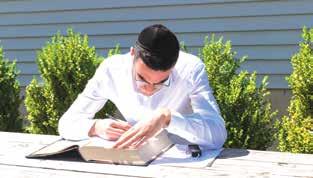
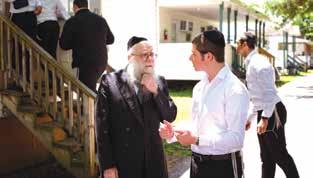


Every year, Torah Academy for Girls (TAG) faces a familiar challenge. Interest in our renowned Machon Sarah High School far exceeds the number of available spots. Each year, many girls hope for the opportunity to experience firsthand what makes Machon Sarah so special.
Until now, that opportunity has been limited.
But there is exciting news on the horizon.
Machon Sarah High School is preparing to embark on an ambitious expansion project that will add approximately
12,000 square feet to our campus.
By building into the existing airspace above our previous renovations, we will create space for approximately seven additional classrooms. So much of what makes TAG High School unique happens outside the classroom as well. From our legendary Yimei Iyun and inspiring assemblies to the warmth, achdus, lunchtime dancing, G.O. activities, Parsha Nosh, Chessed initiatives and so much more, plans for a new large multipurpose room will further enhance the experience of every TAG student. At the heart of Machon Sarah is our

commitment to individualized attention. The expansion will include several smaller classrooms to better accommodate the diverse learning needs of our students. As the emotional needs of today’s frum teenage girls continue to grow, TAG remains committed to being at the forefront of student support, with additional offices for administration, social workers, and other support services.
This project will allow us to better serve our current student body while expanding our ability to welcome more discerning Bais Yaakov families seeking an authentic Bais Yaakov chinuch.

For sponsorship and dedication opportunities, please contact Rabbi Baruch Lovett at 718-471-7444, ext. 212.

The first week of Hillel Day Camp has already set the stage for an unforgettable summer. From the excitement of opening day to the laughter echoing across campus each afternoon, campers quickly settled into their new routines while reconnecting with familiar faces and forming brand-new friendships. Whether arriving with longtime friends or stepping into camp for the very first time, every child was welcomed into the Hillel family by a dedicated staff

committed to making each day meaningful, exciting, and full of smiles.
Throughout the week, campers embraced everything that makes Hillel Day Camp so special. Patriotic spirit filled the air during Red, White & Blue Day, while Dave & Buster’s, the July 4th Scavenger Hunt, and countless athletic activities kept every age group engaged. Campers worked together through creative team-building challenges, tested their skills in sports, explored the new game
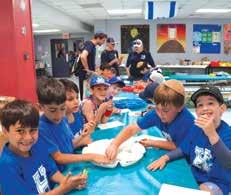
room, and enjoyed the perfect balance of active play, creativity, and friendship. Every activity was thoughtfully planned to encourage teamwork, confidence, and the simple joy of trying something new.
Perhaps the most rewarding moments weren’t found on the schedule at all. They happened during spontaneous high-fives after a game, campers proudly showing off a completed project, older children encouraging younger friends, and counselors celebrating every accom-
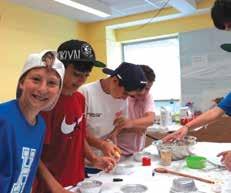
plishment—big and small. These everyday moments are what transform Hillel Day Camp into so much more than a summer program. They create an environment where children feel supported, valued, and excited to return each morning. With such an incredible start to the summer, there’s no doubt that the best is still to come.





“There is one thing the Navi tells us destroyed the Beis Hamikdash – sinas chinam,” shares Rebbetzin Aviva Feiner. “Chazal say that there’s one thing that is kli machazik bracha, and that is shalom. If we want to bring the geulah, that is what we need to focus on.”
In the spirit of unity and in bringing women from all parts of the community




together, the Bakeish Shalom unity event was born three years ago. What greater time to focus on this crucial subject of shalom than during the Three Weeks? And what better day to plan an event for the women and girls in the community on this topic than on the night before Tisha B’Av?
The event will be held in Beth Sholom in Lawrence, NY.




Rebbetzin Feiner points out how apropos the venue is considering the topic.
“Shalom will build the Beis Hamikdash,” Rebbetzin Feiner notes. “We can effect change here. We can get along with our brothers and our sisters. That’s where we can start.
“It’s a big job, but shalom brings bracha, and we can start right here.”
This year’s speakers include Mr. Charlie
Harary with a video message from Sivan-Rahav Meir. Rebbetzin Feiner will be giving introductory remarks.
Last year’s event drew more than 800 women from all parts of the community. Bakeish Shalom will be held on Tuesday evening, July 21, in Beth Sholom, 390 Broadway, Lawrence, NY.
By Yosef Sosnow
It was unforgettable! To see it was to see fulfillment of the nevuah that states, “V’heishiv lev avos al banim v’lev banim al avosav – there will come a time when the sons will bring their fathers back to Hashem.”
It was a hachnosas sefer Torah to Yeshivas Acheinu in Petach Tikva, but it was much more than just an event. “To see what happened at that event was to have seen a preview of yemos haMoshiach,” exclaimed HaGaon Harav Yisroel Dovid Schlesinger, shlita, who participated in the hachnosas sefer Torah.
An Inverted Avos U’Banim
The sight that greeted one’s eye was in some ways reminiscent of an “Avos U’Banim” learning program where fathers and sons learn together. In this case, however, it was an inverted Avos U’Banim program. Whereas in most Avos U’Banim programs, the fathers are teaching their sons, in this program over 150 non-observant or nominally observant fathers were being taught by their sons, bnei Torah who are learning in Yeshivas Acheinu!
To see the picture of sons learning with fathers who were clearly not yet at home in the beis medrash was to see the beauty of what Yeshivas Acheinu accomplishes. It transforms the lives of young bachurim from non-Torah backgrounds and empowers them to become distinguished bnei Torah.
And watching the great gaon and tzaddik, HaGaon HaRav Shimon Galei, shlita, dancing with every fiber of his being, dancing with that sefer Torah with unbridled joy, as he rejoiced in seeing Hashem’s children returning to all that the sefer Torah represents, was an experience that defies description!
Appropriately, the topic being learned was hilchos sefer Torah.
The sefer Torah was written by R’ and Mrs. Menachem Mendel Lipman, of Monsey. R’ Menachem Mendel is the father-in-law of the Rosh Yeshiva of Yeshivas Acheinu, Rav Zev Hofstedter.
A highlight of the event was the drasha given by Rav Yisroel Dovid Schlessinger, R’ Menachem Lipman’s rav, who was in Eretz Yisrael and especially came to the
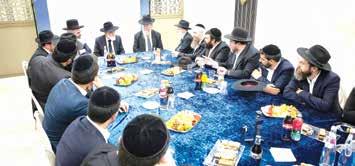
event to honor R’ Lipman. The entire assemblage was riveted as Rav Schlessinger spoke with great pathos.
“When I go back to Monsey,” Rav Schlesinger exclaimed, “people will ask me, ‘What did you see in Eretz Yisrael?’ I will tell them that I thought I was going to write an ois in a sefer Torah, , but what I saw was the passuk, ‘Henei anochi sholei’ach lachem es Eliyahu Hanavi, lifnei yom hagadol v’hanorah…’ Without a doubt, today we are very close to that ‘Yom hagadol v’hanorah – that great and awesome day.’ About that day, the Navi teaches us, ‘V’heishiv lev avos al banim v’lev banim al avosam…’ When I saw fathers coming and having their sons help them recite the bracha of, ‘V’haarev nah’ for the first time, begging Hashem to make the taste of Torah sweet in their mouths, I was overwhelmed. How are they meriting this? In the zechus of their own children who have come close to Torah and are now bringing their parents close. This is lev banim al avosam! That is what I will say I saw in Eretz Yisrael!”
Why Rav Shach Was Jealous
There was another unique gathering, a gathering of distinguished Roshei Yeshiva who have given their lives for Hashem’s children. These Roshei Yeshiva are in the trenches, helping Hashem’s children learn Torah and become yodei Shemecha v’lomdei Soreseacha l’shma, to know Hashem and learn His Torah for its own sake. The event was held by Acheinu, the kiruv arm of Dirshu. Acheinu has its own kiruv yeshivos, but in addition to its own yeshivos, it has deep connections with numerous other yeshivos that cater primarily to bachurim who come from homes with weak religious backgrounds or homes that are not religious at all.
The special gathering organized by

Acheinu brought together numerous Roshei Yeshiva from these “alternative” yeshivos to strategize, discuss questions that arise frequently and to hear words of chizuk
One of the highlights of that event was the speech given by HaRav Shlomo Spiegel, shlita, Rosh Yeshivas Chaburas “Mir Spiegel.” Rav Spiegel, in addition to being a long time Rosh Yeshiva and having an amazing rapport with bachurim, was also recently in the news as tragically, he lost two of his sons in a drowning incident on the separate beach in Netanya.
The way he accepted Hashem’s will and was publicly mekadesh shem Shamayim made waves around the entire world and brought many people to teshuvah
Rav Spiegel said that there was a great talmid chacham from Bnei Brak, named HaRav Nosson Einfeld, who was moser nefesh to serve as a rosh yeshiva in the city of Be’er Sheva for about twenty bachurim who were taking their first steps in Torah learning.
The Rosh Yeshiva of Ponovezh, Rav Shach, told him, “I am jealous of you. You are a Rosh Yeshiva!” He explained, “I am a Rosh Yeshiva for bachurim that will learn whether I am their Rosh Yeshiva or not. You are a Rosh Yeshiva of bachurim that will not learn if not for you. That is why I am jealous of you!”
The event was also addressed by the Nasi of Dirshu, Rav Dovid Hofstedter. In his address, he spoke about the complex intersection of when one should focus on his personal growth and when he should choose to focus his energies on enabling others to grow.
He related a powerful story that he heard directly from Rav Simcha Wasserman, zt”l, a son of Rav Elchonon Wasser-
man, with whom he was very close.
Rav Simcha related that during the war when Rav Aharon Kotler was already in the United States, he was busy day and night working on behalf of Hatzalah, trying to save the Jews in Europe. Rav Aharon was also trying to encourage other rabbanim to get involved.
Rav Aharon once approached a prominent rav and talmid chacham, who was one of his friends from back in Lithuania, and begged him to get involved in Hatzalah.
This rav, who was a great gaon replied, “I am not a speaker. I wasn’t endowed with that ability! What I can do is learn Torah. There are other rabbanim who don’t learn like I do, go to them.”
Rav Aharon nevertheless continued to pressure him.
The Rav protested, “But Chazal teach us that talmud Torah is more important than hatzalas nefashos.”
“Yes,” Rav Aharon answered, “when you have a choice, talmud Torah is greater, but there are times when you have no choice! The Torah says, ‘Lo sa’amod al dam rei’echa. You don’t have a choice here!”
Rav Hofstedter concluded, “There are times when a person’s own avodah may come before public service, but in your case, you are engaged in both! You are teaching Torah, engaged in talmud Torah, and at the same time, you are also engaged in enhancing and enriching these wonderful neshamos who have not had a chance to be exposed to Torah in their youth. You are elevating them! You are saving them.”


On Sunday, the BACH Jewish Center’s Youth Department hosted a special Sunday FunDay Petting Zoo. The program was part of the BACH’s weekly series of youth events during the summer.

For 152 Chai Lifeline children and their families from across Chai Lifeline regions in North America, the FIFA World Cup became much more than a soccer match. It became a dream come true.
Thanks to former Chai Lifeline parent Yaakov Katz, the organization partnered with Fulfilling Dreams, an Israel-based wish-granting organization, to make an unforgettable experience possible. Together with FIFA, they donated 152 World Cup tickets, allowing children and families facing serious illness to witness the excitement of the world’s biggest sporting event live.
For many of these children, the evening wasn’t just about the goals, the
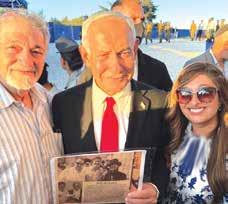
Dr. Paul Brody, president of ZOA Long Island & Queens, and his daughter, Limor Brody Oratz R.N., with Prime Minister Netanyahu at a ceremony on Har Herzl commemorating 122 years since the passing of Theodor Herzl

Scheers, or the atmosphere. It was about creating joyful memories, escaping the challenges of daily medical treatments, and experiencing the magic of simply being fans surrounded by thousands of others. The smiles in the stadium said it all.
“For our kids, this wasn’t just a game. It was a night to simply be a child again, cheering, laughing, and dreaming without limits,” said Rabbi Simcha Scholar, CEO of Chai Lifeline. “Moments like these remind us why our work matters: every child deserves the chance to feel joy, no matter what they’re facing.”
Chai Lifeline expresses its gratitude to everyone who helped turn this incredible vision into reality, providing families with moments they will cherish forever.
hevach High School has successfully launched a new initiative for Shevach alumnae, focused on supporting their graduates in the shidduch process. The initiative connects the young women who have so much to contribute to a good, solid home based on the mesorah that they have imbibed, both in school and in their own homes, to the broader world of shidduchim. The idea and effort is the brainchild of Mrs. Miriam Alt and Mrs. Esti Levenson, themselves Shevach graduates, who saw a need and stepped up to fill that vacuum. The initiative is under the guidance of local rabbanim who have endorsed their efforts.
This past December, the Shevach Shidduch Initiative hosted their first event, bringing together alumnae in a warm and thoughtful setting. At the event, the alumnae had the opportunity to meet with shadchanim, both local and from other neighborhoods, and reconnect with their high school teachers. With siyata d’Shmaya, dozens of well thought out
dates were arranged through these efforts, which have already resulted in four engagements! The Shevach Initiative also recently hosted two “Meet the Shadchan” events for young men to broaden the pool of eligible prospects for our alumnae. The event was very well received. They are now in the process of planning additional events for the Shevach alumnae and plan to make these events a consistent part of their programming, with an anticipated 2-3 events per year.
Beyond shadchan events, they are also working on expanding this initiative to include shidduch education, as well as practical support such as resume guidance, to help their alumnae navigate the process with greater confidence and clarity.
As the Shevach Shidduch Initiative continues to grow, we look forward to sharing regular updates and involving our parent body. Community members are welcome to share ideas or get involved by emailing us at shidduchinitiative@shevachhs.org.























This week we had a blast at SDC, with a late night every night, a petting zoo with exotic animals, a massive carnival replete with slides, ninja warrior style challenges, wipe out, basketball connect 4, and so much more! Our brand new XTREME! division headed out for their nextXTREME! late night at a Ducks baseball game in Islip NY! Stay tuned for this week’s Uh!mazing Shenanigans@!





Children at The Special Children’s Center’s Day Camp and Summer School are enjoying a summer of learning, friendship, and endless fun
In the high-cost neighborhoods of the New York and New Jersey metropolitan areas, the family home is often a person’s most cherished and valuable asset. It is the place where Shabbos and Yom Tov meals were shared, where children were raised, and where a lifetime of memories where built. For many parents, the ultimate goal of their estate plan is to ensure that this home, and the hardearned wealth it represents, is preserved for their children and grandchildren. However, the greatest single threat to this legacy is the astronomical and rising cost of long-term care. With nursing home costs in our region often exceeding $20,000 per month, the financial burden of care can easily jeopardize the family’s ability to keep the home in the family long-term.
It is a common misunderstanding that Medicaid will immediately force you to sell your home to qualify for benefits. In reality, a primary residence is typically treated as an exempt asset during your lifetime, provided you or certain family members reside there. However, this “exemption” is often a temporary reprieve. Under federal law, the state is required to seek Medicaid Estate Recovery after a recipient passes away. This means the state will place a lien on the house or file a claim against your estate to recoup the massive costs of the care provided. For a family hoping to pass the home down, this often results in a forced sale after the parents are gone, leaving the children with a bill instead of a home.
To shield the home from this eventual recovery, many families utilize a specialized tool known as the Medicaid Asset
Protection Trust (MAPT). This is a type of Irrevocable Trust designed to hold the home and other long-term assets so they are legally removed from your personal estate. Because the trust owns the home, and not you, the state cannot file an estate recovery claim against it after you pass away. This ensures the home passes directly to your children or grandchildren, fully protected from the state’s reach.
The key to this strategy is the 60-Month (Five-Year) Look-Back Period. Under federal law, Medicaid reviews all asset transfers made in the five years preceding an application. If the home is transferred into the trust at least five years before the need for institutional care arises, the transfer is considered “cleared,” and the home is protected from being counted or recovered. This five-year rule makes early action essential; waiting until a health crisis strikes is often too late to start the clock.
One of the most significant advantages of a MAPT is that it allows parents to retain their independence and peace of mind. The parents can continue to live in the home for the rest of their lives, maintaining their property tax exemptions and the comfort of their own surroundings. Furthermore, because the MAPT is an irrevocable trust, it can be structured to protect the home not only from medical costs but also from the future creditors or marital disputes of the heirs. This ensures the legacy remains within the family, exactly as intended.
The Levine family of Lakewood illustrates why waiting is the most costly mistake a family can make. Mr. and Mrs. Levine had lived in their home for for -
ty-five years. They were healthy and active in their seventies, but they had seen several friends lose their homes to the eventual cost of care and estate recovery. They decided to establish a MAPT and transferred their home into the trust. They continued to host their grandchildren for Sukkos and Pesach just as they always had, and for the first few years, the trust sat quietly in the background.
Exactly six years after the trust was funded, Mr. Levine suffered a sudden stroke that required him to enter a skilled nursing facility for long-term care. Because the Levines had planned ahead and successfully surpassed the five-year look-back window, their home was protected. Medicaid was able to cover the vast majority of Mr. Levine’s care costs, and Mrs. Levine was able to remain in the home with total financial security. Most importantly, they knew the house would eventually pass to their children without a massive Medicaid lien attached to it.
Had they waited until the stroke occurred to try to “save the house,” the five-year look-back clock would only just have begun to tick. Under those circumstances, while the home might have been exempt during their lives, the state would have been first in line to take the home’s value after they passed away to pay back hundreds of thousands of dollars in care costs. By acting while they were still healthy, the Levines secured a legacy for their children and grandchildren, ensuring that the family home would remain a source of strength and stability for the next generation, rather than a casualty of an unpredictable future.
Beyond the protection from recovery, a MAPT offers significant tax benefits. If the house remains in the trust until the parents pass away, the children receive a step-up in basis for capital gains tax purposes. This means that if the children decide to sell the home after inheriting it, they may pay little to no capital gains tax on decades of appreciation. This is a far superior outcome compared to gifting the house directly to children during life, which can result in a massive tax bill later and provides no protection if the child faces their own legal or financial troubles. The importance of using a qualified attorney for this process cannot be overstated. Every detail, from the titling of the assets to the specific language used in the trust document, must be executed perfectly to satisfy Medicaid’s rigorous standards in both New York and New Jersey. An experienced estate planning professional ensures that the trust is not only legally sound but also aligned with the family’s unique dynamics.
Planning for the next generation is an act of love and responsibility. It spares your loved ones from uncertainty, protects your dignity, and ensures that your personal and financial affairs are handled exactly as you would want. Now is the right time to put a plan in place to protect the home that holds your family’s history.
To learn how to protect you and your family visit www.haaszaltz.com or call 516-979-1060. You can also email them at info@haaszaltz.com.
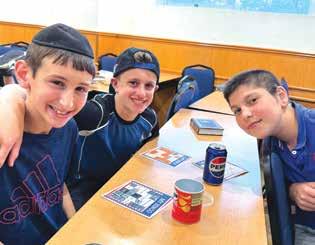





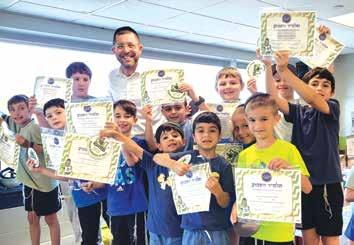







When a halachic question arises, many people make assumptions. But knowing what is forbidden and what is permitted is a serious matter — and halachah is precise, not a matter of opinion or convenience.
R’ Shlomo Ganzfried’s Kitzur Shulchan Aruch gives everyone the opportunity to study virtually the entire range of practical halachah, concisely summarizing all of Shulchan Aruch. No halachic work has been printed as many times as this 19th century classic. Kitzur’s remains as popular as when it was published, and ArtScroll recognized the need for an edition that could be easily understood by a contemporary audience unfamiliar with some of the situations in the Kitzur and unable to apply its laws to more recent inventions.
The Kleinman Family Edition of the Kitzur Shulchan Aruch addresses these needs and more. Beyond offering an excellent elucidation, the explanatory notes often deal with modern appliances and dilemmas and cite the rulings of Mishnah
Did you know?
Berurah and Igros Moshe when they differ from the Kitzur.
In the nearly two decades since the Kleinman Family Edition appeared, Kitzur Shulchan Aruch Yomi — a daily study program covering the entire work each year — has become more popular than ever. Working with generous sponsors, we distributed thousands of pocket-size volumes of this work last year and have distributed countless thousands of Kitzur Shulchan Aruch Yomi calendars.
In time for this year’s cycle, we published a special 13-volume pocket-size set, with one volume for each month. This newly-set edition, with one volume for each month, features larger fonts and each day’s study clearly marked; volume 13 is a comprehensive index. Feedback to this edition has been tremendous, proving that, with Hashem’s help, we filled an important need.
In addition to the Laws of Shabbos (discussed last week) and the Kitzur, we have the privilege of publishing many halachic works on specific topics. Rec-
In 1958, Robert Heft, 17, designed the U.S. flag for a high school assignment. He received a B minus grade for it. His teacher raised his grade to an A when the U.S. government adopted his version of the flag.

ognizing that in many communities and homes the rulings in our works are “the last word” places a heavy responsibility upon us. This is part of why we insist that any halachah sefer we publish must be written or reviewed by an established, authoritative posek held in high regard.
Among the earliest halachic works we published was The Laws of B’rachos by the eminent posek R’ Binyomin Forst. This comprehensive treatment was followed by his The Laws of Kashrus, and Laws of Niddah, and his more streamlined The Kosher Kitchen and A Woman’s Guide to the Laws of Niddah.
Recently, we undertook publishing Kovetz Halachos, a multi-volume Hebrew compendium of rulings by the Philadelphia Rosh Yeshivah, R’ Shmuel Kamenetsky shlit”a. The multi-volume Hebrew edition, complied and annotated by Rabbi Daniel Osher Kleinman, is a contemporary classic. The masterful English adaptation by R’ Yechezkel Elias is now underway, with the first volume, on Pesach, published this year.

Other halachic works deal with a broad range of topics, including laws of mourning, ribbis, business law, tzedakah, honoring parents, medical issues, laws of festivals, issues that apply to women, and other areas.
ArtScroll’s extensive library of halachah seforim has been building upon its mission to open the treasures of Torah to every Jew with clarity, accuracy, and reverence, so that Torah is not merely studied…but lived.
UP NEXT: First of the Maggid Series: The Maggid Speaks – ArtScroll’s Springboard to Short Stories







Avnet Country Day School’s first week of summer ’26 was packed with energy, excitement and ruach across all divisions. For Tipot, the week was all about settling in, building friendships and exploring the many spaces and activities designed for Avnet’s youngest campers. A highlight was the brand-new indoor play space, the Play Patch, which quickly became a favorite spot during the heatwave. Campers loved playing in the ball pit, climbing padded structures, crawling through tunnels and being in a safe, fun area created especially for them. Their week also included sports, swimming, music, arts and crafts, music and movement, and cooking.
Ma’ayanot Girls kicked off the summer with adventures in and out of the pool. Many campers passed the deep-water test, and the girls were placed into swimming groups as they began working on their skills. Their first trip was to bowling, where the girls brought tremendous energy, celebrated strikes and enjoyed time together as a division. The Ma’ayanot Boys also enjoyed a fun-filled bowling trip, along with a week of kickball, basketball and other sports that kept everyone active and smiling.
Agamim Girls had a wonderful first



week filled with sports, friendship and creative activities. The girls spent time on the courts and fields, began their Wiffle Ball leagues, headed out to Topgolf for their first trip, and enjoyed specialty activities including Fine Arts. It was a strong beginning for a division already filled with excitement and connection.
Over at the DRS Campus, the G’vaot and Harim Boys brought incredible enthusiasm to their first week. The boys reconnected with friends, welcomed new campers, kicked off leagues and enjoyed an exciting trip to Dave & Buster’s, where they played games, earned tickets, won prizes and created lasting memories.
The week also included meaningful lessons in Chinuch about Shiva Asar B’Tammuz, the destruction of the Beis HaMikdash and the importance of Ahavat Yisrael. On Shiva Asar B’Tammuz, the 6th-8th grade girls took a trip to Ohel to volunteer as a way of doing chessed while fasting.
“Week one showed us exactly what makes Avnet exceptional,” said Daniel Stroock, Camp Director. “From the excitement for our new activities to the friendships forming across every division, the summer is already off to a beautiful start.”
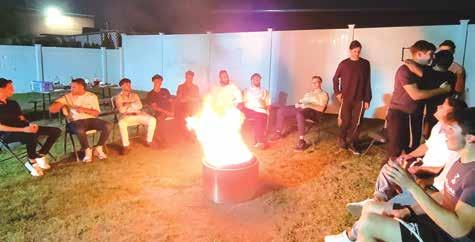

Alarge crowd filled the backyard as local Nishmas HaTorah alumni gathered for the first event of the summer season. The young men joined rebbeim and friends at the Inwood home of the Rosh Yeshiva, Rabbi Pinchus Weinberger, for a Kumzitz/BBQ with R’ Shlomo Zomick. With delicious food and wonderful company, this was a great time to connect and catch up with friends. All who attended were thrilled
to once again experience the “geshmake” atmosphere for which Nishmas HaTorah is known.
More events are scheduled throughout the summer as the Yeshiva looks to keep current and past talmidim engaged, productive and always in a growing mode. This is in addition to the Yeshiva’s regularly scheduled summer night seder program.



1. Brazilian soccer player Ronaldo de Assis Moreira was the FIFA World Player of the Year 2004 and 2005 after scoring how many goals in one game?
a. 3
b. 7
c. 12
d. 23
2. What happens when during a game a player is given a “red card”?
a. He must go to the penalty box for 5 minutes
b. He is not allowed to touch the ball on the inbounds pass
c. He is ejected from the game
d. He gets free dinner at a local restaurant
3. How many players per team are on the field at one time per team?
a. 5
b. 8
c. 11
d. 15
4. If a player is fouled in the 18-yard box surrounding the opponent’s goal, what happens?
a. He is awarded a penalty kick
b. His team gets to inbound the ball within the opponent’s 18 yard box
c. There is a 5 minute power play, which means two players from the other team must sit on the bench
d. His team is automatically given a point
5. How many minutes is an official professional soccer game?
a. 45
b. 60
c. 75
d. 90

If a player gets two yellow cards in a game, he is ejected. A few things lead to a straight red card, including tackles from behind.
3) C
4) A- If a player is fouled in the 18-yard box surrounding the opponent’s goal, he is awarded a penalty kick. It’s a player-versusgoalkeeper scenario where the referee places the ball on the penalty spot.
6. Which country has won the most World Cups to date?
a. Mexico
b. Brazil
c. Venezuela
d. Italy
7. Martinho Eduardo Orige of Brazil holds the World Record for which of the following?
a. Being the only player to win the World Cup three times
b. Being the only player to not give up a goal in an entire season
c. Scoring 13 goals in one game
d. Juggling a soccer ball for 19.5 hours
Answers:
1) D- At the age of 13, Moreira scored all 23 goals in a 23-0 victory against another local football team, propelling him to soccer fame.
2) C- A red card means an ejection. When a player is ejected, his team must play a man down. Yellow cards are a caution when a player fouls too much.
5) D -There are no timeouts in soccer. The clock runs continuously through two 45-minute halves. (There is a 15-minute halftime.) However, an official keeps track of time when the ball is not played (for an injury, goal, etc.), and extra time can be added to the end of each half. Usually, extra time is somewhere between 3 and 5 minutes, though it can be shorter or longer.
6) B- Brazil won five World Cups, followed by Italy, which won four World Cups.
7) D- Martinho Eduardo Orige juggled a regulation soccer ball for 19.5 hours non-stop with his feet, legs and head without the ball ever touching the ground.
Scorecard:
6-7 correct: You are a World Cup champion!
3-5 correct: You are good enough to be the 12th man on the soccer team.
0-2 correct: You are such an American.

British - By acknowledging that their team stinks, but don’t we all know that’s not polite to say? Just be calm and carry on.
French - By waving white flags and a few bottles of wine.
italians - What’s the difference to you how I watch the game, wise guy? Ya think ya smart? Have a slice of pizza!
russians - By drinking Stolichnaya vodka and reminiscing about the Golden Age when Mother Russia dominated soccer. (What? It never happened? Sure, it did – look in any Russian history book.)
c anadians - By declaring that even though their team stinks, Canadians are great at hockey… “ey?”
north Koreans - By chanting for roly-poly Kim Jung Un to enter the game and score 55 goals, because he is the best soccer player who ever lived.
chinese - By playing for their prayers to succeed.

Ali ben-Ibrahim was a salt dealer in old Baghdad. Every day he went from his home just outside the city to the market with two huge sacks of salt tied to the back of his donkey. His donkey was a small, evil-smelling brute called Roxanna. It was, however, not lacking in the brains department.
One hot day, as they passed along the banks of the Tigris, the donkey broke free from Ali and plunged into the cool
egyptians - By stampeding and killing 100 people if their team loses and 250 people if their team wins.
south aFricans - By popping their eardrums by blowing on Vuvuzelas for 6 hours straight.
israelis - They don’t watch the game – they coach the game from the front seats of their taxi cabs. Mah zeh lecha?
cuBans - By sitting in front of the newest 21st century invention: black and white TVs.
iranians - By chanting “Death to America! Death to Israel!” for the full 90-minute match and for the next 7 hours after the game.
a mericans - By gathering all their friends for a massive party with mad chicken wings, burgers and whole wheat wraps stuffed with grilled chicken, mayo and avocados (for the guy who is “on a diet”). Once they are done eating, they fall into the couch and fall asleep…before the game even starts.

water. When the irate salt seller finally persuaded the beast to leave the river, it immediately noticed that much of the salt had dissolved and its load was therefore considerably lighter. After that, no matter how hard Ali tried, he could not prevent the donkey from diving into the river and ruining its load of salt. But when it came to lateral thinking, Ali himself was no slouch. One day, he loaded up the donkey as usual, and, as usual, the animal plunged into the river. Then it learned its lesson and never tried that trick again. What had Ali done?
Answer: He had loaded the sacks with sand, so they were actually heavier after their dip in the Tigris.

The narrative of the experiences of the people of Israel in the desert of Sinai concludes with the parshiyos of this week. All of the occurrences, successes and failures that marked this forty-year trek in a wasteland wilderness are alluded to in the count of Israel in last week’s parsha and in the listing of all of the waystations of that excursion. The Torah seems to be determined to remind all later generations of Jews of the experiences in the desert. Moshe, in his final oration in the book of Devarim, will once again review the events of the desert for a new generation of Jews distanced in time and circumstance from Egyptian bondage. The Torah is aware of human forgetfulness.
It will take only one generation to forget Egypt and even Mount Sinai. History is boring and quite irrelevant to new generations, yet forgetting the Jewish past is the ultimate betrayal of Judaism and Jewish hopes. All of us, as we become older, begin to feel a psychological and spiritual need growing within us to be remembered.
By Rabbi Berel Wein z”l

The Baal Shem Tov is reputed to have said, “Forgetting is the true exile.” Of course, it is obvious that ignorance is the true partner of forgetfulness. In fact, if one never knew anything then one cannot be accused of having forgotten it. The Torah emphasizes the repetition of all the
survivors, the museums, the academic courses and books relating to the Holocaust, this event is rapidly disappearing from world and even Jewish memory.
Religious Jewry has found no way, as of yet, to ritually remember the Holocaust. Without ritual and holiness, it
All of us, as we become older, begin to feel a psychological and spiritual need growing within us to be remembered.
facts and experiences of Jewish life in the desert of Sinai so that this knowledge will enable and strengthen the powers of national remembrance.
Much of the Jewish world today suffers from a severe case of hopefully temporary, but nevertheless intense, amnesia. In spite of all of the efforts of the
tragically will continue to fade from the memory of the coming generation.
In distributing films and audio lectures about the Holocaust and the founding of the State of Israel to Jewish schools worldwide, I am already encountering apathy if not sometimes even outright opposition to the insertion of the subject
into the curriculum of schools.
One principal asked me, “Will it help my students to be admitted to Harvard or Yale?” And on the other end of the spectrum of Jewish education, another principal told me, “Will it increase their ability to study Talmud properly?” I responded that the Torah listed all of the desert waystations even though knowing them would also not guarantee Talmudic proficiency or admission to Harvard or Yale.
It is not only the amnesia regarding even our very recent past that afflicts us. It is our inability to grasp that the knowledge of this immediate past is vitally essential to our present and to our future. Without knowledge of the events of the past, dating back all of the way to the events of the desert of Sinai, we are creating for our descendants a new desert, a wasteland of ignorance, falsehoods and disillusion. It is not too late to correct this. If our schools won’t do so, let our homes and families, our grandparents attempt to do so.
Chazak, chazak, v’nischazeik.


The Degel Machaneh Ephraim, zy”a, teaches, in the name of his grandfather the Baal Shem Tov, zy”a, that the forty-two journeys of the Jewish people in the desert correspond to the journeys each individual takes in his life. When a person leaves the womb, this corresponds to when the Jewish people left Egypt. And when the Jewish people entered Eretz Yisroel, this corresponds to a person’s journey into the land of eternal life after 120 years in this world.
How do we retain a sense of equanimity and centeredness when we must transition from one journey to another throughout our lives?
Reb Leibele Eiger, zy”a, points out that the word “of them, bam” in the pasuk, “And you shall speak of them,” has the numerical value of forty-two. The

By Rav Moshe Weinberger
Adapted for publication by Binyomin Wolf
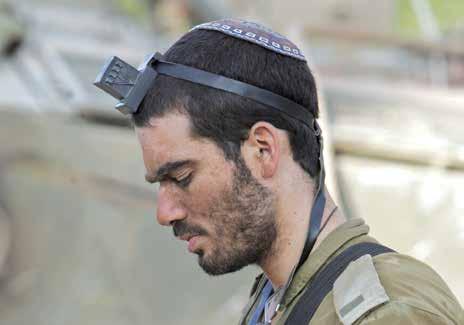
pasuk continues, “And you shall speak of them when you sit in your house and when you walk on the way, when you lie down, and when you rise up.” We must speak of them, words of Torah and emunah , wherever we go and wherever we travel. We can thrive through every test and trial we face if we hold onto truth and faith. If we remain certain in our purpose, then we will succeed despite all of the contradictions and challenges of a world in which many people seem to have taken leave of basic human decency and morality.
But the Baal Shem Tov’s teaching about the 42 travels of the Jewish people does not only apply to people on an individual level. It also speaks to the travails of our nation as a whole as we journey on toward the times of Moshiach.
We know that the names of our stops during our journey in the desert (Bamidbar 33:5-49) have profound meaning. And as I read through the names of our encampments in the parsha, I was struck by the contradictions implicit in those names and how they speak to the contradictions of life today, particularly in Eretz Yisroel.
On one hand, it says we camped in Miska, from the Hebrew word meaning sweetness. Many aspects of our lives are sweet, and we have much to be thankful for. But we also camped in Mara, meaning bitterness. Dozens of our brothers have been killed sanctifying G-d’s name and millions of our brothers, sisters, and friends in Eretz Yisroel were running for
bomb shelters multiple times every day. Their lives are in a state of upheaval, and they experience bitterness day after day.
The Jewish people camped in Har Shafer, meaning “beautiful mountain.” Sometimes, we are on top of the world. The view is stunning. But at other times, we camp in Tachas, meaning “low.”
When we watch the parents, brothers, sisters, and wives of all of the soldiers killed protecting our people, we feel like we are living at the opening of Gehenom, at the lowest place.
We camped at Refidim, which means weakness. Our Torah, mitzvos, and emunah suffer, and we often do not do what Hashem expects of us. But we also camped in Midbar Sinai, where we received the Torah, attaining the highest level of prophecy and connection to G-d’s
will. Today, too, we have seen how even people with little outward connection to Torah and mitzvos have begun saying Tehillim, lighting Shabbos candles, putting on tefillin, and doing many other mitzvos and acts of kindness in order to merit the salvation of the Jewish people.
At one point, the pasuk tells us we camped in Makheilos, meaning “community” or “congregation.” We were united. And we see how our people have been united more than any other time in the recent past. We are united in prayer and resolve, knowing that our cause is righteous. But at other times, we stop off in a place called Chatzeiros, meaning “courtyards.” Especially when we are not besieged from the outside, every Jewish group separates itself into its own courtyard and unfortunately barely views other Jews as part of the same people.
We camped in Sukkos, a place named after temporary, rickety structures. With rockets falling all over Eretz Yisroel, with tunnels dug under our communities and neighborhoods, we feel vulnerable and frightened. We feel as if our entire existence is dependent on the protection of some flimsy walls and roof which the wind could blow away at any moment, leaving us completely exposed. But at other times, we feel we are camped in Eisam, meaning strong. We feel grateful for how Hashem has blessed our people with the resolve, ingenuity, resources, and intelligence to build up one of the most powerful militaries in the world in just a short time.
We sometimes feel we are encamped by the Red Sea, encircled on all sides by enemies and pushed up against the sea. We feel we have no escape. But at other times, we sense that we are camped in Eilim, where the pesukim tell us there were wellsprings and date palms and where we were able to rest from the weariness of our travels. We enjoy the prosperity and economic success with which Hashem has blessed our people.
At other times, we feel we are camped in Dafka, meaning “stricken” or “beaten.” We feel pressed, hit, and beaten by attacks from all directions, physically, emotionally, and diplomatically. We feel we are under siege wherever we live in the world, whether it is in the U.S., Britain, Paris, Morocco, or anywhere else in the world.
We sometimes feel camped in Rimon Paretz, meaning “breakthrough.” We break through every attempt by our enemies to attack us and put us on the run. But, sadly, too often, we are camped in Charada, meaning “trembling.” Our
brothers and sisters tremble in fear in their bomb shelters and safe rooms.
We sometimes feel we are camped in Chashmonah, where we feel as mighty as the Chashmonayim, or in Etzyon Gaver, meaning “effective strategy” and “strength.” At those times, we take pride and comfort in how our military neutralizes our enemies while protecting our soldiers and minimizing the battle’s impact on civilians.
But at other times, we feel like we are in Kivros Hata’avah, buried in the desires of this world, completely helpless to use all of our might to rein in our own animalistic desires. And at other times, we camp at Kadesh, meaning “holiness.” Our connection to holiness and our desire to do Hashem’s will is often strong, and we use those times to increase our connection to Hashem and improve ourselves.
Dovid Hamelech, King of Opposites
As the events in Eretz Yisroel swirl through my mind all day, every day, my thoughts continually return to the ultimate hero of the Jewish people: Dovid Hamelech.
The tzaddikim teach that our job at the end of days is to reveal the great soul of Dovid Hamelech, as the pasuk (Hoshea 3:5) says, “And they sought Hashem their G-d and Dovid their king.” In all of his journeys, he seemed to be full of contradictions. The Gemara (Moed Katan 16b) says that “When [Dovid Hamelech] would sit and study Torah, he would be as refined as silk, and when he went out to war, he hardened himself like wood.” Chazal are not teaching us that Dovid suffered from a multiple personality disorder. Rather, his personality was so great and all-encompassing that it contained everything within it. He was simultaneously composed of the might of war and the highest and most refined level of ethics and morality. These two extremes complement one another. The more perfection one has attained, the more he includes apparent opposites within himself.
That is why Reb Leibele Eiger teaches that the 42 journeys of the Jewish people in the desert, which seem to contain so many opposites within them, are hinted at in the mitzvah of “And you shall speak of them when you sit in your home and when you go on your way…” We must be prepared to cling to the Torah and the certainty of our faith in the midst of the full range of disparate experiences during our travels through this world.
Who else but Rav Kook, zy”a, could have written a section in Oros called “Oros Hamilchama, The Illumination of War”? Rav Kook writes, as translated by Rabbi Betzalel Noar, as follows:
We regard the early generations, recounted in Torah, Prophets, and Writings, those generations that were engaged in war – they are great people we cherish and glorify. We understand that the spark of soul is the determining factor: that state of the world that necessitated war caused these souls (whose inner feeling was whole) to appear. The battle for existence, for existence of the nation, the War of G-d, was with an inner consciousness. Mighty in spirit, they knew in the depth of darkness to choose good and eschew evil. ‘Though I go in the valley of the shadow of death I shall fear no evil.’ When we meditate on them, we, with all the spirituality that we so desire, long for their strength, for the solid life force that dwelled in their midst, and out of this longing our spiritual strength is hardened and our physical strength is softened, and those strong souls return to live in us as ever.
Rav Kook is teaching us that we cannot view the strength and might of warriors as somehow alien to our religious, Torah-based life. During our two-thousand-year exile, we have become accustomed to thinking of a Jew purely as the refined, pale student in the beis medrash. We began thinking that we should only be encamped in Maska, a place of sweetness. We forgot that we must sometimes set up camp in Etzyon Gaver and Rimon Paretz, places of strategy, might, and breaking through all obstacles.
Dovid Hamelech and Rav Kook teach us that while there is a time for gentleness and refinement, there is also a time to kiss our Gemaras, place them down, pick up our weapons, and go to battle against the enemies of the Jewish people who seek to destroy us. That is no less a part of Torah and Yiddishkeit than the study of Torah. Indeed, even a simple reading of Tanach reveals that most of it is comprised of how the Jewish people conducted themselves in war.
Now is the time in history when we must enclothe ourselves for battle and clean the world of the cockroaches of Hamas and their ilk. The whole world is trembling in fear as radical Islamists populate their countries. They look on helplessly. Right now, our people are the only ones making way for Hashem’s kingship in the world. We are the only ones who have taken it upon ourselves to
finally clean house, ridding the terrorists of their missiles, guns, grenade launchers, and attack tunnels. We are the only ones standing up to the evil of Hamas, which prides itself on its love of death and bloodshed.
We are like Dovid Hamelech, “redhaired with beautiful eyes” (Shmuel I 16:12); red like Eisav the warrior with the refinement and elevated spirit reflected in his beautiful eyes. Chazal say (Bereishis Raba 63:8) about Dovid Hamelech, “He killed with the consent of the Sanhedrin.” Even when Dovid Hamelech expressed the warrior aspect of his personality, he did not do so with cruel abandon. He conducted himself in war according to halacha and morality. We also see this in our brave brothers in the IDF. While the enemies of our people stoop to lower and lower depths of cruelty both to our people and their own, the Jewish warriors in Eretz Yisroel never stoop to the level of their degraded enemies. They go above and beyond what any nation has done when defending themselves against the imminent threats we face today.
When I see how our nation is rising to the challenge against it with greater moral clarity, more davening, more mitzvos, and more resolve to use the truth to fight against the attacks, lies, and propaganda of our enemies, I feel a surge of pride in our nation. I am proud to be a Jew.
The parsha is named after our “journeys,” not our encampments. Why? Because the main thing is that in life, we do not stop. We must keep moving forward, looking for how G-d’s will expresses itself in all of the various permutations of life’s challenges.
May each of us and all of our brothers and sisters in Eretz Yisroel merit to reach a level on which we can contain all of the disparate aspects of life in this world within us. May we recognize that we must serve G-d in all of the different ways the Torah demands for the vast array of differing life circumstances we encounter in our journeys. And may Hashem take vengeance upon every terrorist snake who has harmed even a single hair on the head of any Jew. May Hashem soon send Moshiach to remove every evil regime from the earth to make way for the great-grandson of the greatest king, Dovid Hamelech, soon in our days.
Rav Moshe Weinberger, shlita, is the founding Morah d’Asrah of Congreagation Aish Kodesh in Woodmere, NY, and serves as leader of the new mechina Emek HaMelech.

By Rabbi Shmuel Reichman

In our last few articles, we spoke about the empowering nature of challenges, discussing how the purpose of a challenge, as the Ramban explains, is to push us to actualize our latent potential, to transform our koach (potential) into po’al (actual). However, there is one last level of nisayon which requires clarification. To address it, we must ask an important question:
Why do ordeals sometimes seem impossible, far beyond one’s ability? There is a well-known principle that Hashem only sends someone a test they can overcome. But is this true? Does Hashem ever send us a test which is simply too hard to overcome? If so, how are we expected to overcome such a test?
According to the Ramban’s explanation, an ordeal is beyond our current level but within our capacity to overcome. The nisayon pushes us to actualize our potential, helping us achieve a level we would otherwise not realize we are capable of. While the Ramban suggests that a test is within one’s capacity, the very Hebrew
word for a test suggests otherwise. The root of the word nisayon is neis, the Hebrew word for miracle. A miracle is that which is beyond the realm of the natural, requiring Divine intervention. We are therefore left with two seemingly contradictory views. Either a nisayon is within one’s capacity, which means that it is not truly a miracle if one overcomes it, or it does require a miracle to overcome, in which case it is not within one’s capacity. Furthermore, if a challenge is beyond one’s capacity, thus requiring Hashem’s miraculous intervention, how can one be expected to overcome the challenge? How can Hashem give us an ordeal which we cannot (naturally) overcome?
There are three levels of potential ability, and understanding these three levels is the key to understanding the true nature of a nisayon:
• The first level of ability is the level you are currently on, what you are capable of at this very moment, without any
external or internal pressure.
• The second level is what you are capable of reaching, but only if you are pushed to your fullest potential. While this level may seem out of reach to your current self, in truth, it isn’t, for when pushed to the extreme, you realize that it was there all along, waiting to become expressed. This is the level the Ramban refers to.
• The third level goes beyond this, into the realm of the impossible. This is the level that we cannot reach, regardless of how much we are pushed or the degree of pressure. Even if an entire herd of bulls was stampeding towards the high jumper, he would not be able to clear a fifty-foot fence.
This third level is the deepest expression of nisayon, where the spiritual challenge is truly impossible. On our own, we cannot overcome this level of nisayon, no matter how hard we try. But our job is not to overcome the challenge, our job is simply to push ourselves as hard as we possibly can, to the borders of our
personal limit, and trust that Hashem will carry us the rest of the way. Our job is put in maximum hishtadlus (personal effort) and trust that the miraculous results will come from Hashem.
Let us illustrate this idea. Imagine that Hashem tells you to walk to the edge of a cliff and then jump across a chasm to the mountain on the other side. Even when pushed to your fullest potential, you can only jump nine feet, and the mountain is ten feet away. Under natural circumstances, you would fall short and tumble into the abyss. But Hashem says, “Jump the nine feet and trust me; I will carry you the last foot.” The challenge is not about making it to the other side – it’s about taking the courageous leap. Your job is to walk to the edge of the cliff and jump; Hashem will carry you the rest of the way.
This is the meaning behind the Ramchal’s statement in Mesilas Yesharim (Chapter 26), “ Techilaso avodah v’sofo gemul, the beginning is toil, but the end is a gift (from Hashem).” In reality, no
amount of work that we put in entitles us to the results and rewards we receive. But this is how Hashem designed the world: when we put in the effort and connect ourselves to Hashem, Hashem gives us the rest, giving us more than we could ever imagine.
Similarly, the Gemara (Kiddushin 30b) explains that every day, our yetzer hara (evil inclination) tries to overcome us, battling us with renewed strength, and if not for Hashem’s help, we would not be able to resist it. On our own, we cannot overcome our yetzer hara , but once we commit to battling our lower drive, Hashem intervenes and allows us to overcome it, “carrying us the rest of the way.”
What results when such an impossible nisayon is overcome, when you arrive on the other side, having successfully made the ten-foot jump? The people around you bear witness to someone who lives by faith, who has absolute bitachon (trust) in Hashem. They see your willingness to take an impossible jump for the sake of Hashem, trusting Him to carry you through. By putting your life in Hashem’s
hands, you express your belief that your life is always in Hashem’s hands. When an onlooker perceives this event, in addition to seeing your faith in Hashem, they witness a revelation of Hashem in this world. Not only do they see you jump into the unknown and amazingly overcome this impossible test, but they also see Hashem miraculously carry you through. Your act has brought a manifestation and revelation of Hashem into this world, the ultimate kiddush Hashem. By seeing your willingness to take the jump, and then witnessing you succeed, they see the miraculous Yad Hashem, and your very existence now proclaims Hashem’s existence and hashgachah in this world!
The Gemara (Sanhedrin 107a) explains that this why we associate Hashem’s name with the Avos; three times a day in Shemoneh Esrei, we say: “Elokei Avraham, Elokei Yitzchak, v’Elokei Yaakov.” Avraham passed his ten tests, Yitzchak overcame the Akeidah, and Yaakov lived a life of constant challenge and hardship. By undergoing and passing their impossible tests, they brought an awareness of Hashem’s presence and hashgachah into the world. They there -
fore merit to be identified with Hashem’s name, a testament to their greatness in revealing and manifesting Hashem in this world.
The Rambam (Moreh Nivuchim 3:24) builds upon this idea and explains that ordeals give leaders, such as Avraham Avinu, the opportunity to reveal their tremendous potential and greatness to the world around them. This inspires others to look deeper within themselves, to consider what potential they have yet to fulfill, and to work towards achieving their own greatness as well. When we undergo a challenge, we have the opportunity to become a leader, to inspire others, and to reveal Hashem’s presence in this world.
We can use the challenges we overcome to help inspire others to persevere and fight through their own trials and tribulations. Through Avraham’s success in overcoming his own challenges, he inspired generations upon generations of people to emulate his emunah and come closer to Hashem. The world looks to those of spiritual greatness to learn how to overcome their own challenges.
international
speaker, bestselling author, business coach, the CEO of SMA, and a TED Talk Speaker. His online content reaches millions of people every month, and he lectures internationally on topics of Torah thought, psychology, leadership, and business – uniquely blending many areas of Torah and wisdom together. His bestselling book, The Journey to Your Ultimate Self, serves as an inspiring gateway into deeper Torah thought. After receiving his BA from Yeshiva University and Semicha from Yeshiva University’s RIETS, Rabbi Reichman received a Masters degree in Philosophy and Religion from the University of Chicago. As part of his Masters Degree at the University of Chicago, Rabbi Reichman received an Ivy Plus Scholarship to Harvard where he spent a year studying Religious Philosophy and Literature as an Ivy Scholar. Additionally, he received a Masters degree in Educational Psychology from Azrieli Graduate School and a Masters degree in Jewish Thought from Yeshiva University’s Bernard Revel Graduate School. As a business and leadership coach, Rabbi Reichman provides a unique 1-on-1 coaching program where he helps high-achievers, coaches, and business owners achieve their financial and personal goals. To learn more or to get in contact with Rabbi Reichman, visit his website: ShmuelReichman.com

Our past two articles ruffled some feathers by focusing entirely on chickens. This week, we are switching gears to look at the poultry world’s ultimate nest egg: the egg itself. If you enjoyed those last two pieces, this one will go over easy.
Picture this: You are driving down a country road and spot a charming roadside farm stand run by a hard-boiled gentile who raises his own birds. Can you pull over and shell out money for a fresh dozen?
This very question cracks open a massive discussion in the Gemara (Chullin 66b). Now, you might ask, what could possibly be wrong with a simple egg? Aren’t they kosher as sure as eggs are eggs? As it turns out, the Gemara identifies three potential issues that could leave a consumer shell-shocked.
The first concern is that the egg might have been laid by a treifah (a bird with a fatal physical defect). The Gemara derives from a pasuk that if a bird suffers an injury that renders it a treifah , any eggs it produces are similarly forbidden. Therefore, shouldn’t a buyer suspect that
By Rabbi Avrohom Sebrow

our roadside farmer’s chickens might be treifos?
The Gemara doesn’t walk on eggshells trying to answer this; the issue is quickly dispatched by applying the principle of rov. Since the vast majority of birds are healthy and not treifos, we can safely assume these eggs came from that kosher majority.
However, anyone raising backyard chickens needs to keep their eyes peeled in light of this reality. Take the real-life case of Daniel Z., a backyard chicken enthusiast whose flock was suddenly attacked by a local raccoon. A rav who is an expert in these specific kashrus issues ruled that the attacked bird was halachically a treifah. Similarly, while it is common practice in the secular homesteading world to splint a chicken’s broken leg, the rav ruled that such a fracture renders the chicken a treifah, meaning its eggs can no longer be used.
Even someone who is not a bad egg might ask a contrarian question: In our last article, we mentioned that Avian reovirus can cause chickens to become treifos, and it may even be common enough to qualify as a miut hamatzui (a significant minority of 10-20% that halachically
requires checking). If there is a notable minority of treif chickens out there, how can we blindly rely on the majority and assume the eggs are kosher?
The answer lies in practicality. In the case of live egg-layers, you cannot easily check the internal organs of a live chicken. The previous article dealt with chickens that were properly slaughtered, allowing us to inspect them directly. When inspection is impossible, halacha permits us to rely completely on the overarching majority and ignore the significant minority. To put it elegantly: while you can’t make an omelet without breaking a few eggs, you certainly don’t need to break open a live chicken just to check your eggs.
The Dead Bird Scenario
The second possibility the Gemara raises is that the egg was poached from a bird that died on its own (neveilah) without proper shechitah. Such an egg would be rabbinically forbidden. Fortunately, this scenario is far too remote to fry your brains over. Farmers don’t make a living harvesting eggs from dead birds, so this concern is easily dismissed.
The third issue is the one that might truly leave you scrambling. How do we know the egg actually came from a kosher species of bird? To solve this, the Gemara provides a brilliant system of simanim to distinguish the good from the bad:
The Shape Test: Kosher eggs are kad ve’chad: perfectly rounded like a ball on one end, and pointy or elongated on the other. If an egg is completely round like a marble, or perfectly symmetrical like an oval, it likely comes from a non-kosher bird. (Commentators debate whether this is absolute.)
The Yolk Test: In a kosher egg, the chelmon (yellow yolk) sits squarely on the inside, fully enveloped by the chelbon (white albumen). If the reverse is true, white on the inside, yellow on the outside, it is entirely non-kosher. However, if you rely solely on these physical tests, you might end up with egg on your face. The Gemara reveals a massive catch: the eggs of certain non-kosher, predatory birds can occasionally mimic the kad ve’chad shape perfectly. Consequently, the Gemara concludes that we cannot blindly rely on physical signs alone if we are in an area where non-ko -
sher or predatory birds are common. To navigate this, the Gemara suggests that we can trust a less-than-normally-believable witness (like a gentile merchant) to identify the bird species, provided their testimony aligns with the proper physical simanim.
The View from Tosfos and Modern Farm Stands Fascinatingly, Tosfos (Chullin 64a) notes that the prevailing custom in his region was to freely purchase eggs from gentiles, even when the eggs were no longer visually recognizable, such as when they were already baked into a loaf of bread! Tosfos explains that this was entirely permissible because the overwhelming majority of eggs available in his geographic location came from kosher chickens. The Gemara’s stringent requirement for simanim was only directed at specific areas where non-kosher birds ran rampant. (Indeed, Tosfos on 63b points out that based on the Gemara’s assumption, the global majority of bird species are actually not kosher.)
In the United States, this historical leniency is why you can walk into any commercial supermarket and buy a standard carton of eggs without a formal hechsher.
The commercial poultry industry relies exclusively on standard, factory-raised lines of acceptable kosher chickens.
But when you pull over at a smallscale, backyard operation, the halachic plot thickens.
According to Rabbeinu Tam, we can generally assume that almost all chicken breeds are inherently kosher. However,
various halachic opinions on what defines a doreis, Tosfos (61a) suggests we have an unbroken chain of tradition tracing all the way back to Noach’s Ark, establishing that no kosher bird behaves as a bird of prey. Therefore, the Rema rules that we absolutely must have a clear, documented mesorah for a specific bird species to permit eating it.
To put it elegantly: while you can’t make an omelet without breaking a few eggs, you certainly don’t need to break open a live chicken just to check your eggs.
we do not rule like Rabbeinu Tam. We follow Rashi, who states that a bird can possess all three classic kosher signs (an extended toe, a crop, and a peelable gizzard) and still be non-kosher because it might be a doreis (a predatory bird). While it is beyond the scope of this article to hatch a full explanation of the
This brings us to the recent STAR-K article by Rabbi Tzvi Rosen. He points out that out of the top ten most popular chicken breeds raised by modern backyard hobbyists, six of them lack a traditionally accepted kosher mesorah under the Rema’s strict standards. Those non-commercial breeds are Silkie, Easter
Egger, Australorp, Brahma, Cochin, and Ameraucana.
If you are trying to guess what is inside a mixed basket of backyard eggs, the colors might offer a hint. Out of those six non-kosher breeds, only the Silkie lays a white egg (the Easter Egger and Ameraucana lay colorful blue or green eggs, while the others lay brown). Even so, without knowing the exact makeup of the coop, you would have a difficult time establishing a clean halachic majority of acceptable birds.
So, while Rabbeinu Tam would have happily looked at the sunny-side up and accepted all chickens as kosher, we follow the Rema. Just as we need to know that a chicken comes with an ironclad mesorah, the “eggsact” same rule applies to the eggs it lays. To purchase the eggs, you would need to ascertain that most species of chickens raised in that locale are acceptable according to the Rema.
Rabbi Avrohom Sebrow is a rebbe at Yeshiva Ateres Shimon in Far Rockaway. In addition, Rabbi Sebrow leads a daf yomi chaburah at Eitz Chayim of Dogwood Park in West Hempstead, NY. He can be contacted at ASebrow@gmail.com.

by Rabbi Yair Hoffman

We are in the middle of the three weeks between the five tragedies that occurred on Shiva Asar B’Tammuz and the Churban itself that happened on Tisha B’Av. One of the five tragedies that occurred on the 17th of Tammuz was the breaching of the walls of Yerushalayim during the time of the second Beis HaMikdash. This draws our attention to the walls themselves.
What were those walls? Where did they stand, how were they built, and where exactly were they breached?
Recent archaeology has brought much of this into sharp focus, and the picture that emerges allows us to stand, in our minds, on the very ground where the events we mourn took place.
During the Bayis Sheini period, Yerushalayim was a busy, crowded city. According to Josephus, during the rule of Herod Agrippa the population reached about 120,000 people.
During Bayis Sheini, Yerushalayim was made up of three main sections.
The Lower City sat on the smaller
eastern hill, the same spot where the older Jebusite city had once stood. Its highest point, on the Har HaBayis, was 2,438 feet above sea level.
The Upper City was built on the western hill and was higher, reaching 2,549 feet above sea level. The city spread over this western hill during the later years of Klal Yisroel’s monarchy and during the period of the Chashmonayim.
Both the Lower City and the Upper City had a natural advantage: they had deep valleys that surrounded them. These valleys acted like natural walls and made Yerushalayim easier to defend, but they also limited how far it could grow. Together these two sections covered only about 161 acres.
The third section was called Beth-zeisa in Hebrew, meaning “olive orchard.” It was also known as the “new city.” Unlike the other two parts, it had no deep valleys to protect it. Because nothing blocked its growth, it spread north and became the largest part of the city, covering about 284 acres. Its highest point was in the northwest, at the Psephinos Tower, 2,625 feet above sea level. This
was probably where the Russian Compound now stands.
At its largest, near the end of the Bayis Sheini period, the whole city covered about 445 acres. A wall surrounded it that was, on average, 33 feet tall and 13 to 16 feet thick. This made Yerushalayim the largest walled city in the country and one of the greatest in the entire Middle East. This wall marked not only defense but was also significant when it comes to kedusha. The Mishnah in Keilim (1:6–9) lists walled cities a rung of holiness above the rest of Eretz Yisrael, since metzoraim are sent outside of them. Yerushalayim, of course, is holier still.
At the end of the Bayis Sheini period, three walls protected the northern side of the city. All three started at the same place: the Hippicus Tower, which is the Citadel near today’s Jaffa Gate.
Why did all three begin there? Because the land north of the line running from the Hippicus Tower to the Har HaBayis had no deep valleys to defend it.
The Ben-Hinnom, Tyropoeon, and Kidron Valleys only became deep south of that line, so they could protect only the southern parts of the city. The north was the weakest spot — and that is where enemies chose to attack. The Gemara in Shvuos (16a) notes that the part of Yerushalayim added by those who returned from Bavel was not given the full kedushah of the city, since it was sanctified without a king and without the Urim V’Tummim. Because that consecration lacked the full procedure, the Gemara observes, those less scrupulous about tumah and maaser would eat kodshim kalim there but not maaser sheini — a halachic sign that this newer, northern area stood apart from the older, fortified parts.
The third wall was started during the reign of Agrippa, between 41 and 44 CE. It was not finished at that time, because Claudius, the Roman emperor, suspected that Klal Yisroel was planning a rebellion and wanted the work stopped. Later, the Zealots finished the wall during the Great Revolt, in 66 CE.
The wall began at the Hippicus Tower and ran northeast, following roughly
the same line as today’s wall, all the way to the Psephinos Tower. From there it followed the high ground that separated two drainage basins: the Ben-Hinnom stream basin to the southwest and the Tyropoeon Valley basin to the southeast. The wall then dropped steeply eastward along the line of today’s HaNevi’im Street, turned east toward the Kidron Valley, and ran just south of the Tomb of the Kings.
Archaeologists have uncovered parts of this wall at several spots. In 1912, near the northwestern corner of the present city wall (close to the New Gate), L.H. Vincent discovered a fort called Kalat Jalud, or “Fort of Goliath.” This fort later played an important role in the fighting between Crusaders and Muslims in Yerushalayim, and stones from the third wall were found at its base. (Scholars today believe the standing tower itself was actually built much later, in the medieval period, even though older third-wall stones turn up around it. The Crusaders knew it as Tancred’s Tower.)
A section of the wall about 656 feet long and 15 feet thick was found in the foundations of the Italian Hospital, which is easy to spot because of its square tower. The Italian Hospital in Jerusalem is a historic Neo-Gothic building completed in 1919 by the Italian Barluzzi brothers and currently houses the Israeli Ministry of Education.
Researchers E.L. Sukenik and A.L. Mayer excavated these remains in 1924–25 and again in 1940. More of the wall can be seen on Nablus Street, about 1,476 feet north of the Damascus Gate, where one part is fenced off and another to the east is open to view. Other archaeologists later uncovered an additional 984 feet of the wall.
The bottom layers of the wall were made from a mix of small stones and mortar combined with fieldstones. On top of those sat large, finely cut stones called ashlars, shaped in the careful “Herodian” style; on average, they measured about 3.94 by 3.28 feet. A few towers stood along the wall, sticking out about 26 feet and measuring 39 feet wide.
Proof of the Roman Attack
For most of the twentieth century, scholars argued about the exact path of the third wall and how far the city reached when the Romans attacked. In the winter of 2015-16, that debate took a major turn. During a dig in the Russian Compound — carried out before a new

college campus was built — archaeologists Dr. Rina Avner and Kfir Arbib of the Israel Antiquities Authority uncovered the base of a large tower from the wall. It measured about 43 by 22 feet.
Right next to the tower’s western side, they found about 79 ballista stones and sling stones, the heavy projectiles the Romans had fired from catapults at the Jewish guards defending the wall. There was also a clear burn layer in the ground. Together, these finds are the physical traces of the Roman bombardment led by Titus in 70 CE.
The Romans fired these stones to drive the defenders off the wall so their soldiers could move in with battering rams and break through. This discovery matched the eyewitness account written by the historian Josephus, and it gave strong evidence for where the third wall really ran in the western part of the city.
Later work supported this picture. A 2023 mapping study, which used computer tools to combine all the older excavation records into one map, traced a continuous northern wall line and confirmed that the third wall brought Yerushalayim to its largest-ever size of about 445 acres — the figure described above.
Re-Dating the Bayis Rishon Wall
In 2024, a large scientific study by the Israel Antiquities Authority, Tel Aviv University, and the Weizmann Institute of Science changed how some of the earliest walls are dated. Using an improved form of radiocarbon (carbon-14) dating, the team studied about 100 carefully collected samples of ancient organic material from the City of David.
It was once thought that the Bay -
is Rishon-period city wall in the eastern part of the City of David was built by Chizkiyahu HaMelech to defend Yerushalayim during the Assyrian siege. The new study suggests that this eastern wall was built earlier, during the reign of Uziyahu HaMelech, soon after a major earthquake struck the city.
The same research indicates that the city had spread westward already in the 9th century BCE — about a hundred years earlier than many had thought — and that Yerushalayim was more settled in very early times than once believed.
When the Walls Were Greatest — and When They Shrank
Yerushalayim’s walls were at their grandest during the time of Herod the Great and his successors. They were also at their longest then, enclosing about 445 acres. From Hadrian’s time until the Turkish period, the walls grew shorter and shorter, until the city reached its present size of about 232 acres.
After the Churban Bayis Sheini, the walls shrank inward toward the center — except during the Christian/Byzantine period, when they stretched out again. Titus completely destroyed the walls, and Hadrian rebuilt them, this time roughly following the line of the second wall. Chazal fixed that destruction on the calendar: the Gemara (Taanis 29a) teaches that the Beis HaMikdash caught fire toward the end of the ninth of Av and burned into the tenth — the same conflagration the archaeologists read in the burn layer by the third wall.
In the north, the new wall stuck out a little; in the south, it ran very close to the Har HaBayis wall. The Roman city did not include the Beth-zeisa (new city)
area or the southern slopes of the Lower and Upper Cities.
Meanwhile, the eastern and western walls from the Bayis Sheini period were mostly left standing after the Churban, because the deep Kidron and Ben-Hinnom Valleys protected them.
The Roman city built by Hadrian and his successors had the typical Roman layout: two main streets crossing each other at right angles. These streets are clearly shown in the famous sixth-century Medeba map. They began at the city’s main gates, running from the Damascus Gate to the Zion Gate, and from the Jaffa Gate to the Har HaBayis and the Lions’ Gate. This design split the city into roughly four quarters — a layout that, with only small changes, still exists today.
Scholars also argued for years about another famous structure connected to the Bayis Sheini period: Wilson’s Arch, the bridge that once carried mispallelim toward the Har HaBayis. Some thought it was built by Herod the Great around the time of the Bayis Sheini, while others believed it was much later, from the early Islamic period.
Between 2015 and 2019, an Israel Antiquities Authority excavation studied the arch in detail, and radiocarbon results published in 2020 settled the question. The first bridge to Har HaBayis was completed at roughly 20 BCE to 20 CE, placing it firmly in the Bayis Sheini period, and it was later made wider in the mid-first century CE. While digging, the team also made a surprising find: a small Roman theater-like structure hidden beneath the arch for about 1,700 years, which appears to have been left unfinished.
The ballista stones lying beside the tower in the Russian Compound, the burn layer in the soil, and the Herodian ashlars uncovered along the third wall are the physical remains of the very breach that Chazal recorded.
May our recalling of these events, together with tefillah and maasim tovim, hasten the day when the walls of Yerushalayim are rebuilt and the Korban Tamid is once again offered, bimheirah b’yameinu.
This article should be viewed as a halachic discussion and not practical advice. The author can be reached at yairhoffman2@gmail.com.
Ruksy is an amazingly talented party planner who creates wonderful environments in which to celebrate all milestone occasions. Ruksy-planned events (Ruksyevents, 054-6399361) guarantee that every detail is addressed resulting in a simcha that meets your expectations.
I know because I have been privileged to be a guest. Ruksy’s “people care” does not end with the party.
Ruksy was busy clearing up following a recent bar mitzvah event at the Citadel Hotel in Jerusalem; she had planned and executed the bar mitzvah with her usual aplomb. Her new son-inlaw Aaron (a Rashi boy) also happened to be at the Citadel visiting guests, Rashi patrons, a husband and wife. Rashi is a Yeshiva Gedola in Jerusalem known for caring for its boys. As a gesture of gratitude, boys often come to eat, sing, and dance with generous patrons.
As Ruksy and Aaron were standing at the exit of the Citadel, a wave of Rashi boys was also leaving. Among them was a nicely dressed, handsome young man. Aaron introduced the boy to his motherin-law, and the boy greeted Ruksy with

By Barbara Deutsch

a tentative smile. Unfortunately, the young man’s smile revealed a mouth lacking the all-important front teeth; Ruksy gulped.
Later, Aaron explained that his friend’s financially struggling parents could not afford to fix his teeth. The young man’s adult teeth had never developed. Not able to leave a challenge on the table, Ruksy quickly put together a plan to help the young man improve his future.
What girl would be attracted to a prospective match who had no teeth?
Over the bar mitzvah weekend, the personable Ruksy had befriended the Rashi patrons at one of the many meals. Ruksy contacted the wife and explained the boy’s situation. Together, they planned an exciting solution. That very night a bank wire transfer was sent to a chosen implant dentist’s account; this dentist would be building the smile for this beautiful young boy.
The young man recently married a lovely young lady from our community. From her family, Ruksy learned that the forever grateful new husband never hesitates to talk about the miracle of
his teeth and the amazing woman who helped him smile fully.
Ruksy recently shared a picture of the boy’s wedding photo with his proud patron. As a result of a chance encounter and a not so small act of chessed, a life was saved.
Being a party planner working in today’s world affords a profession that can open doors and windows to experiences that bring joy and opportunity. In the olden days, except for perhaps an occasional wedding or bar/bat mitzvah, families planned what they could afford on their own. It usually required a lot of work and was not as fancy, but it got the job done.
Today, there are spreadsheets and party planners for any occasion. L’chaim, shalom zachor, bris, pidyon, upsherin, engagement party, baby reveal, wedding – did I miss anything?
I recently heard that there is even a special planner who sets up what used to be a private proposal?!
I met Bob in front of the Young Israel of East Flatbush, a place where singles 15 to 23 hung out before Mincha on
Shabbos afternoons. Our dear brilliant friend Chaim introduced us when I was 17, and Bob was 19; we fell into a conversation that lasted.
When Bob and I got engaged, he reached into his pocket while we were taking the IRT into the city to see a Broadway show. Kind of nuts when you think about it – a diamond ring in your pocket in a public train? Bob flashed the gorgeous ring, in a setting I didn’t love and would soon change, and blurted out, “Will you marry me?”
No flowers, no hidden close family members, no lurking friends to take pictures, no sweets and certainly not in a scenic spot. I said “Yes!” and never once regretted it. We did not miss being greeted by the cheers of relatives and friends who were not waiting for us back in our family’s apartment.
Shidduch crisis: Yes! There are too many available wonderful singles who are waiting to find their bashert. Despite the matchmaking systems that are available, shadchanim, online dating, dating apps, singles events (by age and category) though plentiful and accessible, leave much to be desired and
disappointed boys and girls waiting.
A resume is simply a companion sheet for a job application. In the observant (sliding scale) dating world, a resume is used to identify a candidate for a shidduch. It lists the important details of the prospective candidate in search of a possible match. A shidduch resume needs to be carefully composed and discreet enough to give the important facts without revealing too much.
A robust resume can make or break an introduction. I’m confident that there are specialists that can be hired to compose one for an “in the parsha” boy or girl.
To include a picture or not? Is the person pretty or handsome (lacking teeth), short or tall? What constitutes a deal breaker? Should one share the whole story or leave out salient details? Who will/can support the kid learning in kollel? In Israel, not offering to buy an apartment can, in fact, be the deal breaker.
Is there a way to escape unscathed from shidduch dating? I’m not sure. Is the shidduch scene any better in chutz la’aretz? Depends on who you ask. Unfortunately, there are few oppor -
tunities for singles to meet organically anymore; why is there separate seating for singles at weddings?
Both our girls met their “bashert” in Camp Morasha. Our son was introduced to Tamar by a close friend who knew both of them.
Five of our grandchildren are married and each one has a story to tell; nothing too complicated but none of the
the neighbor’s husband passed away not long after. Connected by common pain and need, the widow and widower married and blended their two families.
One night, our cousin’s new wife woke up screaming (envision the dream scene from “Fiddler on the Roof”).
“What’s wrong?”
“Your first wife came to tell me that your son and my daughter must be mar -
What girl would be attracted to a prospective match who had no teeth?
stories simple. These days, finding your mate is evolving into more and more complicated rules within scenarios that boggle the mind.
Two good stories:
When a young cousin of Bob’s passed away during childbirth, the “across the street neighbor” offered to nurse the newborn along with her own. Sadly,
ried immediately!”
And so it was, with no shadchan or resume.
Best of friends, Tova and Chaya, live across the street from each other in Far Rockaway. They each raised families of children close in age. After five years away in yeshiva, Yezzie, one of Tova’s boys, came home. When Tova saw him,
she had an inspiration: her neighbor’s daughter, Rochel Lea, could be the right choice for her Yezzie.
Tova, a very smart lady, understood that if the match did not work out, the precious friendship she enjoyed with Chaya would be jeopardized. Tova was not sure it would be worth the gamble.
Tova took the initiative and approached Chaya with her idea. After due deliberation with rabbis, much investigation, pondering, the involvement of a shadchan (a must?), about six dates…we can wish them mazal tov!
During the three weeks of reflection, we must do our best to find opportunities to do chessed. What better way to do so than to help boys and girls, men and women, connect with their special match?
Mazal tov to all of our fabulous couples who are creating the future of Am Yisroel.
Barbara Deutsch is the former associate principal at HANC, middle school principal at Kushner, and Dean of Students at Yeshiva of Flatbush. A not-retired educator, she is still trying to figure out life in Israel.

The first in a series explaining Israel’s political system before Israelis go to the polls
American Jews pay a great deal of attention to Israeli politics. We know the names. Benjamin Netanyahu. Yair Lapid. Naftali Bennett. Itamar Ben-Gvir. Yair Golan. Some American Jews identify passionately with Israel’s right. Others cheer on its left. We follow the polls and read about the latest political crisis.
But as Israel approaches another national election, here is a question worth asking:
How many American Jews actually understand how Israel elects its government?
For most of my life, I viewed Israeli politics through American eyes. That is only natural. We tend to understand another country’s political system by comparing it to the one we know.
The problem is that the American and Israeli systems are fundamentally different.
Start with a basic fact that may surprise some readers: Israelis do not elect members of the Knesset from local districts.
There is no Israeli equivalent of my congressman from New Jersey. There is no MK representing Jerusalem’s German Colony, where I live, or Long Branch, New Jersey, where I spent many years. There are no congressional districts, state delegations or senators.
Israel has one legislative body, the 120-member Knesset, and for parliamentary elections, the entire country is one national electoral district.
Think about that.
When Americans vote for a member of the House of Representatives, they choose someone to represent a partic -

By Stephen M. Flatow

ular geographic district. A voter in New Jersey cannot vote for a congressional candidate in Florida.
Israel works differently.
When Israelis vote in a national election, they vote for a political party. More precisely, they vote for a party list.
The voter does not place a check next to Netanyahu, Lapid or Bennett.
The voter selects a party.
The candidates who may enter the Knesset have already been placed on that party’s list. Depending on the party, they may have been chosen in a primary, by a party committee or by the party leadership.
A party’s share of the national vote helps determine how many of the Knesset’s 120 seats it receives, subject to rules we will discuss in the next installment.
If a party wins 30 seats, the first 30 eligible candidates on its list generally enter the Knesset. The person sitting at number 31 may be left outside.
That is why Israelis talk about whether a candidate has a “realistic spot” on a party list. To an American ear, that sounds strange. In America, a congressional candidate wins a district or loses it.
In Israel, a candidate can personally receive no votes from the general electorate and still become an MK.
That difference has consequences.
An American member of Congress knows which geographic district sent him or her to Washington. Constituents call about Social Security, veterans’ benefits and local projects. Members maintain district offices and regularly return home to face their voters.
An Israeli MK has no comparable district.
So whom does an MK represent?
Formally, the nation. Politically, the answer can be more complicated.
An MK may feel accountable to the party’s voters, its leadership, an ideological movement or the internal party
electorate that helped secure a high position on the list.
This helps explain why party discipline is so important in Israeli politics. An MK’s political future may depend heavily on remaining in a viable position on a party list.
And that is the point of this series. American Jews have every right to care deeply about Israel. We should follow its debates, worry about its future and celebrate its successes. But we should understand the rules before choosing sides.
Too often, Americans read that a party won the “most seats” and assume its leader therefore won the election. That is how we tend to think in the United States: someone wins and someone loses.
In Israel, election night may only be the beginning.
A party can finish first and still fail to form a government. A smaller party can become indispensable. And the number 61 can become more important than the number of seats won by the largest party. We will get to that.
For now, remember the first lesson: Israel is not the United States with Hebrew road signs.
If American Jews want to participate intelligently in the great arguments over Israel’s future, we should begin by understanding how Israeli democracy actually works.
In our next article: When Israelis vote for a party, who exactly are they voting for—and what happens when that party does not receive enough votes to enter the Knesset?
Stephen M. Flatow, attorney, author and longtime writer on Israel and Jewish affairs who


By Malkie ScHulM an
With the 340% worldwide rise in antisemitism since October 7, it is timely to speak to Professor Elan Javanfard, LMFT, about generational and communal trauma among the Jewish people.
“Communal trauma is an event experienced by an entire community, for example, October 7. Generational trauma is the trauma from that communal traumatic event that is carried down generationally through families by emotional patterns,” explains Prof. Javanfard.
“Our communal trauma as a people stretches back thousands of years and has become deeply woven into Jewish religious and communal life,” he continues. “We have specific holidays, in fact, all our holidays, dedicated to collective trauma and how we dealt, and continue to deal, with it.”
This shared historical pain dates back to the Pesach story, when years of slavery caused the Jews to internalize the shibud. When Moshe attempted to speak with the people about their impending redemption, they couldn’t hear him “mi’kotzer ruach,” the pasuk says, from shortness of breath and intensity of labor. When emotionally overwhelmed, it is hard to breathe, Rashi explains. When a person is hyperventilating, literally trying to
catch their breath, they may experience panic attacks and become unable in that moment to hear anything from anyone.
“It’s as if Hashem was our therapist,” observes Professor Javanfard, “guiding us out of our internalized trauma.” Every year on Pesach, families sit around the table and talk about the story in detail, which he describes as a deeply therapeutic experience.
“Most of the holidays are like that, in essence. Take Chanukah and Purim. They tried to kill us, but we overcame them. That’s always the theme.”
One of the central messages Judaism tries to convey to children is that yes, terrible things happened to us, but we also possess the ability to overcome obstacles.
Tisha B’Av, though, is different. “We’re still living in that trauma,” Prof. Javanfard explains. “It’s our current experience today, and of course more than ever in the past few years.” The Kinnos that we recite on Tisha B’Av reflect present Jewish life. Sephardim and Ashkenazim each have unique ones because they went through separate ordeals. Sephardim, for example, don’t say Kinnos about the Holocaust because they didn’t directly experience it.
What’s important to understand, Prof. Javanfard maintains, is that coping mechanisms are not all bad. There are healthy ways to deal with trauma as well as unhealthy ones. With the Purim story, for example, Jews deal with threatened genocide through humor. Humor can become a way of surviving a traumatic event.
“The first time they complained (vayalonu) at the Yam Suf, they said, ‘Are there not enough graves in Mitzrayim?’ But Rabbi Hirsch says not to read vayalonu as complaining. Rather, he says, we should read it as sarcasm, a kind of Jewish gallows humor. There are two common ways people deal with trauma: through complaint or through humor and sometimes humor itself is a form of complaint. According to Rabbi Hirsch, however, this was not complaining but a sarcastic defense mechanism.”
Prof. Javanfard adds that even coping mechanisms we may later believe to be unhealthy were likely the only possible responses at the time of the catastrophe.
“Those responses helped people survive unbearable circumstances,”
he says, “even if 100 or 1,000 years later, generations may view them through another lens.”
The incident of the Meraglim in Parshas Shelach illustrates how trauma can distort perception. The spies feeling the need to spy out the land was itself likely a trauma response. They were afraid of what they would find and felt the need to intellectually know the lay of the land first. That was a mistake. The spies saw the land through a trauma lens. They saw bad where it was actually good, which led to hypervigilance and overreaction. Ultimately, this tragically led to Tisha B’Av. These were trauma responses that, while understandable, had destructive consequences.
“Men and women,” Prof. Javanfard notes, “often deal with trauma differently, with women often being less angry than the men, which is possibly why the women merited to enter the Land of Israel after forty years, while the men didn’t.”
Prof. Javanfard’s own background heavily shaped his interest in trauma and Jewish communal patterns.
“Both my parents come from the city of Shiraz in Iran,” he share. “My father came prior to the revolution in 1978 as a student and never returned. But my mother didn’t arrive until the 1980s. Her professional goal was to become a veterinarian, but after the revolution hit, that was no longer an option. Her aunt was traveling to America for medical treatment, and my mother was able to obtain documents identifying her as a caregiver. Once she was in America, she applied for political asylum.”
His parents met in Brooklyn but married and raised their three sons in Los Angeles where Prof. Javanfard’s father was living at the time.
“Being religious in Iran was different than being religious in the United States,” he explains. “There was a dearth of knowledge in Shiraz, so while, for instance, they always went to shul on Shabbos, they’d carry their purse. There wasn’t awareness of the concept of muktzeh and eiruv. They kept what they knew, and when they arrived in the States and learned more, they grew. When my mother was single, she worked in Yeshiva of Brooklyn. She learned a lot there, so by the time we were born, we grew up in a completely shomer Shabbos home. As time went on, and they learned even more, they kept more.”
Prof. Javanfard grew up attending yeshiva in Los Angeles and later yeshiva in Eretz Yisroel. After his third year of yeshiva, he returned to Los Angeles and attended Pepperdine University, where he earned his Master’s in family therapy and clinical psychology.
During that period, he married, and today, he and his wife are raising their three children in Pico-Robertson, a Jewish neighborhood in Los Angeles.
“I was working with a high-risk clinical population, suicide cases, individuals with severe personality disorders, all in non-Jewish settings, understanding how trauma played a large factor in many of these challenging cases,” Prof. Javanfard recalls. “A few years ago, I began thinking about how I could bridge the divide between my learning background and my Judaism with my professional work. I began giving lectures and trainings on trauma and crisis in the frum community to teach medical and mental health professionals how to deal with issues such as suicidal ideation.”
But the pathway to his specific research on generational trauma in the Jewish community really began after October 7.
“Even in non-Jewish settings, I noticed people experiencing collective trauma. I also had the opportunity to go to Israel on a mission with other therapists through NEFESH International, an organization of Orthodox Jewish mental health professionals that provides training, networking, and support for therapists (and MASK families). In my work with trauma victims, I started thinking about the idea of generational trauma in the Jewish community.”
He began reflecting on how Jews from distinct ethnic cultures respond to trauma in unique ways.
“The main Jewish ethnic cultures are Edot Hamizrach, those from the Middle East and North Africa, for example Iran, Iraq, and Syria; Sephardic Jews from Spain, Portugal, and Mediterranean countries such as Morocco, Turkey, and Greece; and Ashkenazi Jews from Central and Eastern European backgrounds.
“It was especially interesting to me because I grew up as a boy from an Edot Hamizrach family in an Ashkenazi environment, attending Ashkenazi yeshivas.”
The more Prof. Javanfard researched, the more he realized how valuable understanding the Jewish trau-
ma experience could be for therapists working with Jewish clients.
“I was particularly fascinated when I realized that although every non-Jewish culture in every generation experiences some form of trauma, the fact that we have holidays to commemorate our traumas and structured ways to express what we went through allows us not to become victims. The way Torah and halacha are designed, we get to therapeutically relive the negative experience, and through that, we learn how to overcome so we do not become victims of history.”
In Ann Masten’s book Ordinary Magic , she posits that the qualities needed to overcome trauma are love, meaning, connection, and perseverance.
“Our community and Torah framework help cultivate these qualities and strengthen our ability to overcome adversity,” Prof. Javanfard asserts. “We bake meaning from the events we’ve been through into the fabric of Jewish daily life and culture. Holidays connect us to others. For instance, you can’t bring the Korban Pesach by yourself; it must be done with other people. In this way, Judaism builds in the need for community as part of overcoming trauma. Across every generation, we have created systems and traditions that help us persevere through hardship.”
Although various groups exhibit trauma distinctly, there are patterns that appear across Jewish communities.
“Examples include hypervigilance and always being prepared,” says Prof. Javanfard. “For instance, knowing where your passport is at all times.”
Another common pattern is an emphasis on achievement.
“The idea being that the more highly achieved you are, the more likely you are to survive in a challenging situation.”
“The fact that we have holidays to commemorate our traumas and structured ways to express what we went through allows us not to become victims.”

“We must be intentional about what we want to pass down: faith and courage, not fear.”
Other patterns include preferring to remain close to other Jews, not wanting to stand out too much, heightened sensitivity to what others think, and overprotectiveness in parenting.
“Jewish parents tend to give their children less of a leash when it comes to exploring and finding themselves. Even after marriage, Jewish parents are often more involved in their children’s lives than in many other modern cultures.”
Prof. Javanfard relates a personal anecdote illustrating this trauma response in his own family.
“Not that long ago, my mother shared with my children and my nephews her story of leaving Iran. Especially with everything going on today between Israel and Iran, the conversation felt very relevant because my mother still has sisters in Iran and we also have relatives in Israel. As she talked about what she went through, we were able to identify patterns in our home that stem from what my mother experienced and what she had to leave behind. Part of that is this strong need to constantly know how your family is doing and to keep checking in on the family members, always making sure you have a close, tethered connection.”
Another trauma response that has become normalized, he says, is the way Jews often react to stress physically rather than emotionally.
“Typically, it’s easier for a Jewish person to say they have a stomachache or headache than to say, ‘I’m angry,’ ‘I’m depressed,’ or ‘I’m anxious.’ IBS and many stomach ailments are mostly found in Ashkenazi Jews, and I believe it’s because historically that is what they did with their stress. They normalized somatic emotional expression over verbal emotional expression. Over centuries, repressed emotional expression contributed to physical stress responses and disorders. This is an unhealthy coping mechanism.”
A healthier coping strategy, he says, is what he terms “religious coping.”
“The learning of Torah flourished through pogroms and expulsions,” he notes. “Staying in the yeshiva environment became a safe place to be. It became a framework for protecting children from the outside world so they wouldn’t get turned off the path. These are healthy adaptive responses.”
Prof. Javanfard contends that intellectual intelligence has historically been more emphasized in Ashkenazic culture, while Sephardic culture often values emotional intelligence more strongly. Because Ashkenazim experienced more massive catastrophic events, intellectualization was deemed more helpful in surviving such major periods of upheaval. If your services were needed, for example as a doctor, you might not

be expelled. Sephardic populations suffered smaller catastrophic events, but they often lasted longer periods of time. For them, emotional skills were deemed more valuable.
Today, he says, those differences can still be seen.
“Sephardim in general tend to have more emotional range and greater emotional intensity. You will see Moroccans, for instance, yell and shout but then kiss and make up the next minute. There is usually much more physical display of affection and stronger connection to family.”
Ashkenazim, by contrast, often display greater emotional restraint.
“They are more stoic and controlled even when emotions are running deep.”
Of course, Prof. Javanfard stresses that he is speaking broadly and these are general patterns, not absolutes.
He contrasts Sephardic and Ashkenazic shiva homes.
“At a Sephardic shiva, there’s more of a communal aspect with laughter, joking, and meals. At an Edot Hamizrach shiva home, there are loud expressions of grief; people crying openly, whereas an Ashkenazic shiva is emotionally restrained.”
Another example, and again this is speaking in broad strokes, he points out, is how love is shown and felt in different cultures.
“In Ashkenazi culture, love is often shown through reliability and responsibility. Being the one who shows up and can be counted on is what makes a person feel most loved. An Ashkenazi parent may give a child a major responsibility, which communicates, ‘I trust you with this,’ and that becomes their way of expressing love.
“In Sephardi culture, love is often shown through hospitality, food, emotional presence, hugging, and loyalty, protection, and sacrifice for others. A Sephardi host may place a large plate of food in front of a guest
and say, ‘Eat,’ and to them that is a way of saying, ‘I love you.’
“In both cultures, people may not explicitly say the words ‘I love you,’ but love is deeply communicated through actions.”
Personally, Prof. Javanfard concedes that one of his greatest struggles was growing up Sephardic in an Ashkenazi environment as someone more emotionally accessible than the other kids in his class. It’s difficult when coming from a Sephardi home figuring out how to emotionally include oneself in a stoic Ashkenazi community.
“For example, something I’ve noticed in my travels as a speaker is how different communities relate to a newcomer. I may speak in a Sephardi community and afterwards catch a minyan. I’ll immediately hear, ‘Who are you? What’s your name? Do you have a place to eat?’ Within minutes, I get someone’s whole life story. But if I daven in an Ashkenazi shul, the questions are often, ‘Where are you from?’ or ‘What brings you here?’ They may even invite me over, but they will likely not tell me anything about themselves. There is less emotional back and forth and more intellectual questioning. To them, that makes sense because they need the facts and may also be assessing whether I’m safe to be there. In the Sephardi community, the focus is often, ‘What connections do we have between us? Who are we connected through?’ because that’s how harmony is shown. A Sephardi person may not assess for the same safety component as his Ashkenazi counterpart. There are pros and cons to both approaches. But for healthy social connection, if you ask someone questions, you should also be willing to answer those same questions yourself. A relationship should be two sided.”
He also notes that across Jewish cultures, children are often taught responsibility and delayed gratification from a young age.
“At bar and bat mitzvah, they already have respon-
sibilities. They also learn delayed gratification through mitzvah observance. That’s healthy.”
The problems arise when we parentify a twelveyear-old and burden her with excessive responsibility. And if a girl grew up in an environment where that was the only way, she was shown love, she may be too scared to say, “I’m not ready to take care of my five younger siblings while my mother does the shopping.”
Faith, too, can be either healthy or unhealthy depending on how it’s used.
“We teach our children to have bitachon, which is essentially resiliency, and that is a wonderful thing. We become stronger because of it. But when a parent uses faith to stifle pain, that becomes not so healthy. Saying something like, ‘Hashem never gives you tests you can’t handle’ can be unproductive because it doesn’t validate the pain. Rather say something like, ‘Hashem is with us in hard moments, and we can do hard things.’ In this way, you’re honoring the feeling while also giving the child the message that they’re capable.”
At the same time, it’s important to understand that children learn from what they see much more than what their parents say. Trauma is passed down through the unspoken rules of the family, through family beliefs. Children observe how parents respond to stress, grief, fear, and uncertainty, and then mimic those reactions.
“When a parent hears bad news, how do they deal with it? By suppressing emotions or expressing them? How do they express them? It’s transmitted more through behavior than storytelling. If a parent carries fear, silence, or mistrust, even if in their situation those things helped them survive, their children will carry those patterns too.”
He gives the example of a Holocaust survivor who may never verbally discuss their experiences yet reacts strongly when a child throws away food.
“Knowing that a crust of bread in the concentration camp could have fed six camp mates, they visibly tense up or tell the child not to throw it out. That child may learn food insecurity.”
In his own family, Prof. Javanfard admits he grew up feeling that to feel his life was meaningful, he always had to be productive.
“Whenever I have free time, I feel I must be doing something. I have eight different jobs, and I’m working on a research paper on generational trauma in the Jewish community that I don’t need to do because I feel like I cannot sit still. If I stop, then what meaning do I have?”
He says he is consciously trying to break that cycle for his own children.
In his clinical training, Prof. Javanfard says he often advises therapists working with anxious children under age five to first assess the parents.
“If the parent has anxiety, the most effective treatment may be to treat the parent,” he shares.
Prof. Javanfard says he also incorporates generational trauma directly into his therapeutic practice and classes.
“My supervision model takes a lot into consideration. If someone is Jewish, I ask, ‘What survival story shaped your family history?’ If someone has anxiety, I ask the same question. It helps me begin conceptualizing where to go and how to soften their challenges.”
Some of the key questions he asks clients include: “What felt emotionally safe or unsafe in your home? What strengths were most valued? When things go well, do you wait for something to go wrong? Do you feel guilty when you struggle? Do you feel overly responsible? Does resting feel difficult for you?”
He adds, “One of the main things I do is help people name the pattern without blaming the pattern. Therapy shouldn’t be about blaming the people above you because often these patterns were not passed down maliciously. It’s about understanding the pattern so you can learn from it and decide intentionally what you want to pass down instead.”
His work around generational trauma extends beyond the therapy room as well. Prof. Javanfard teaches at Touro University’s Graduate School Of Social Work and has created a therapeutic guide to the Haggadah, examining with his students each component through the lens of trauma and resilience.
An important caveat in understanding communal trauma, stresses Prof. Javanfard, is recognizing that healing is an act of continuation, not rejection.
“It’s not that how they responded to trauma was wrong. It’s about us continuing the work they started. They survived so we could live. Our job is to make our
lives meaningful.”
He notes, “Today we’re (more or less) physically safe. We have many more opportunities to thrive in the countries where we live. We actually honor our forebears by moving ahead. Our ancestors were heroic, and while their pain was valid, now we need to learn to soften during times when, baruch Hashem, we are not in that same pain.”
Nevertheless, modern antisemitism has reopened old wounds.
“Historical memories have resurfaced again,” asserts Prof. Javanfard. “I’m writing this research paper today because of what happened on October 7.”
Collectively, he says, it changed how Jews think about vulnerability and safety and reawakened the idea that Jews are never fully safe anywhere.
“It’s interesting,” he observes, “that when I’m in Israel, I feel safer than I do in America, even when I’m sheltering in a miklat. I think it’s because it’s a faith pattern that’s in our bones. I know that ultimately Hashem decides whether I will live or die. However, I feel I can accept death in Israel because at least I know I’m where I’m supposed to be.”
Prof. Javanfard’s message to the Jewish community centers on healing and intentionality.
“We should show our children that it’s OK to ask for help and OK to feel overwhelmed. Strong people can still struggle. We should use faith to support ourselves, not to silence ourselves. We must be intentional about what we want to pass down: faith and courage, not fear.
“When children see that Abba and Imma can face something difficult and still move through it, they learn that they can do hard things, too.”
“It’s as if Hashem was our therapist guiding us out of our internalized trauma.”
Prof. Elan Javanfard can be reached at Elan.Javanfard@gmail.com, http://www.elanjavanfard. com and at 424-256-6546.



By Eliyahu RosEnBERg
i know hashem will give me koach Ha’noten laya’ef koach (the one who gives strength to the weary), we say it every day in davening. Every night i tell hashem, ‘Thank you so much. it was a wonderful day. Please give me strength for one more day.’ so, of course, i will break, and it will be hard, but i have no choice. The Jewish nation, our people, we have no choice.
My husband was killed because he is a Jew. The same way my great-grandfather was murdered in the holocaust, and the same way my great-great-great-great-greatgrandfather was also killed. now, you ask me, where do i, hadas l oewenstern, get my strength? i get my strength from a m yisrael. i don’t live a private life. This is not the language we use in our house. We never say, ‘ how will it be for us?’ We ask ourselves, ‘ how will it be for a m yisrael? how will it be for Eretz yisrael? how will it be for the Jews around the world looking at us?’ if i collapse, then our enemies win. a nd there’s no way in the world that they’re winning me.
i understood that he’s quiet not because he doesn’t have anything to say. he has a lot to say! But he’s a very righteous man, and he wants to listen. it’s not important for him to talk; it’s important for him to listen to me. a nd that’s the moment i said to myself, ‘oK, that could be someone i want to live my life with…’ someone who listens…
After Hadas’s first date with Elisha Loewenstern, she came home, confused. There was something unusual about the man she had just gone out with.
“I don’t understand,” she thought, scratching her head. “He was so quiet and shy. He didn’t really say much.” It seemed as though she was doing all the talking.
“Was I even on a date?” she questioned, laughing at the absurdity of it all. “It was like I was on a date with myself!”
Maybe he’s not a sophisticated person, she worried; maybe he’s quiet because he has nothing to say. But despite her reservations, she decided to give him the benefit of the doubt and gave him another shot. Four or five dates later, Hadas finally understood the reason for Elisha’s quiet demeanor.
“I understood that he’s quiet not because he doesn’t have anything to say. He has a lot to say! But he’s a very righteous man, and he wants to listen,” Hadas recalls. “It’s not important for him to talk; it’s important for him to listen to me.
“And that’s the moment I said to myself,” she shared, tearing up. “‘OK, that could be someone I want to live my life with…’ Someone who listens…”
* * *
Like many Israelis, Hadas was raised chiloni. So secure was she in her secularism, in fact, that she viewed religion, quite obstinately, as a relic of the past, and a foolish one at that. As far as she
was concerned, she was a Jew of the new world, concerned with activism and politics and a gamut of worldly matters, more sophisticated than the Jews of the past, with their peyos and yarmulkes.
“They probably don’t know better,” she reasoned. “It’s silly. Nothing’s going to happen if you turn on a light on Shabbat. You don’t have to wear a kippah and tzitzit. Jews can be normal, regular people who talk and look and act the same way as everybody else.”
But at age 24, as an IDF captain, she began questioning the path she was on. After intellectually sparring with an charedi soldier, Hadas started contemplating what it means to be a Jew.
“I started to ask myself serious questions that I never asked before: What does it mean that I’m a Jew? What are my values as a Jew? Why do we have so many enemies? Why do they hate us so much? Why does antisemitism still exist, even with Israel?” she recalls. “Why do I live in Israel? What is so unique about Am Yisrael ? Why are we different from all the other nations? And when I started asking myself these questions, I got really good answers. So, I had no choice: I had to join. And that’s how I became religious.”
After spending over six years in the IDF, Hadas left the army and studied in a women’s Beit Midrash for three years, learning everything from scratch: Torah, halacha, the brachos, etc.
“And ever since, I haven’t stopped learning. And really, I feel that everything I went through in life prepared me for this moment,” Hadas declared
in an interview just months after her husband’s tragic death. “Being a widow was definitely not on the list of things I wanted to accomplish by the time I’m 40, but it was on Hashem’s list. And I am very grateful that I spent all this time learning and working on my perspective in life…”
Just two months after the October 7 massacre, on the seventh night of Chanukah, Rabbi Elisha Loewenstern tragically fell in combat while fighting terrorists in Gaza. They had six wonderful children and a beautiful life in Eretz Yisrael.
Following her husband’s tragic death, Hadas Loewenstern emerged as a voice of resilience, inspiring a nation still reeling from its worst day since the Holocaust.
“My husband was killed because he is a Jew. The same way my great-grandfather was murdered in the Holocaust, and the same way my great-great-greatgreat-great-grandfather was also killed. Now, you ask me, where do I, Hadas Loewenstern, get my strength? I get my strength from Am Yisrael,” she declared in an interview following her husband’s passing. “I don’t live a private life. This is not the language we use in our house. We never say, ‘How will it be for us?’ We ask ourselves, ‘How will it be for Am Yisrael? How will it be for Eretz Yisrael? How will it be for the Jews around the world looking at us?’ If I collapse, then our enemies win. And there’s no way in the world that they’re winning me.”
Although losing her husband, her best friend, the love of her life, was unspeakably painful, Hadas never let it defeat her.
“I cry a lot,” she said. “But crying doesn’t mean that I’m breaking down. I cry, and then I wipe away my tears,

and I get up, and I do a load of laundry… Of course it’s hard. I have six kids. I have bills to pay. I have sandwiches to make. I have so much on my plate. It’s not easy, but baruch Hashem, I have a family, I have kids, I have my parents, my in-laws, I have Elisha’s brothers and sisters, I have friends, I have the community, I have my neighbors, and I have Am Yisrael knocking on my door, day and night, helping me out.”
A common reaction to Hadas’s resilience is shock. You might think, “Wow, here I am, complaining and stressing about little issues, while this woman has unbelievable emunah after a horrific tragedy.” But Hadas rejects that comparison. She makes it clear that she isn’t a malach, perfect and smiling through every challenge. Rather, she describes herself as an ordinary person in an extraordinary situation.
“I get upset about exactly the same things. I get upset about stupid little stuff. I get upset when people park, and they’re not between the lines. I get so upset when someone opens a cereal box when there’s already another cereal box open!” she shared.
“Of course, I get upset about the stupid stuff in life. That’s human. But here, it’s not the same cheshbon. When you’re in a delivery room, and your firstborn is coming into the world, you don’t tell the nurse, ‘Ugh, I hate purple. Why are you dressing him in purple? Purple is the worst color. Can you get me another color?’ That’s not what you’re dealing with. So, it’s the same thing. In normal, everyday life, I’m a normal, everyday person. But here, I get superpowers because this is really a meaningful event.”
As she puts it, her husband had the zechus to fight for Am Yisrael. He was a modern-day Mordechai, remembered
forever as a hero who sacrificed his life to save the Jewish people. But he didn’t just die as a hero; he lived as one, Hadas says. Elisha was always engrossed in a sefer, and one of his main missions in life was to share Torah with others, teaching secular bar mitzvah boys to lein their parsha. In Elisha’s last picture, taken just hours before he was killed, he’s seen learning Rambam.
“The minute I think of life without Elisha, I start crying. Shlomo HaMelech says there’s a time to cry and there’s a time to stop crying. We are at war now, and we need to win. After we win, then we’ll talk again, and I’ll tell you how I am managing,” Hadas continued in the interview. “But I know Hashem will give me koach. Ha’noten laya’ef koach (the One who gives strength to the weary), we say it every day in davening. Every night, I tell Hashem, ‘Thank you so much. It was a wonderful day. Please give me strength for one more day.’ So, of course, I will break, and it will be hard, but I have no choice. The Jewish nation, our people, we have no choice.”
Baruch Hashem, around a year ago, Hadas Loewenstern got remarried. All the while, she never gave up. In her loneliest hour, she never forgot that Hashem was with her.
* * *
“My husband worked in a credit card company. And in this credit card company, naturally, when you get access to the credit card details of millions of people, you have to be a very reliable person,” Hadas related.
Before they hired Elisha, they gave him a “credibility test,” asking him several questions. “Have you ever stolen?” “Have you ever lied?” “Have you ever
used something that isn’t yours?”
After he completed the test, he got the results: He failed.
“It’s too good to be true,” the examiner exclaimed. “There’s no way that a human being never stole, never lied, never used a pen, never took a piece of paper from the place he works in. It’s too good to be true.”
“You’re wrong,” Elisha’s boss told the examiner. “That’s Elisha. That’s who he is.”
“My husband never stole or took or hurt anybody. He didn’t even taste the supermarket samples — like, when you go to the supermarket, and there are free olives for you to taste — my husband never tasted them,” Hadas declared. “My husband would never take something that wasn’t his.
“I told this story in the hesped for my husband, in the eulogy, because this was Elisha.”
Hadas and Elisha only dated for two months before they got engaged. But even though she didn’t really know him, she fell in love with his character.
“I saw in his middot, I saw how good a person he is. And he really was,” she says. “He was a great person. He was a great husband. He was a great brother. He was just an awesome person.”
His honesty and integrity shone through in everything he did. According to Hadas, he didn’t need to leave a parting letter for his loved ones because he made sure that everyone knew how much he loved them. Every Rosh Chodesh, he’d try to give her a present. During their 13 years together, he gave her more loving letters and notes than she could count.
He was a man who never lied. The most gentle person in the world.
In his widow’s words, he was an angel.
Moderated by Jennifer Mann, LCSW of The Navidaters

I appreciate this column a lot and read it every Shabbos. I have my own question I would like to share.
I am constantly asked about my brother-in-law for shidduchim; people want to know about my in-laws. The problem is that they are not who they appear to be. On the outside, they promise support, etc. but I know from experience that after the chuppah this support barely arrives. If it does, it’s with a lot of begging and with strings attached. It has become very uncomfortable. At this point, my husband left kollel and started doing as many side jobs as possible because most of the support was falling on me and my parents, which is barely keeping us afloat.
To be honest, I don’t recommend people getting involved. I don’t know how to navigate this properly and would appreciate guidance.
Thank you, Naama*
Dear Readers,
We want to offer YOU an opportunity to be part of the discussion! Please email us at MichelleMondShadchan@gmail.com, subject line “reader’s response,” if you would like to participate in the new “A Reader’s Response” columnist spot. We will send you a question and publish your answer in an upcoming Navidaters edition.
If you have a question you would like the Navidaters to answer, please reach out to this email as well.
Looking forward!
Michelle, the “Shadchan”
Rebbetzin Lisa Babich
Hi Naama,
Thank you for your question. I have to admit, I am not often stumped, but this question gave me pause, and I’ll explain why.
There are really two issues here. The more pressing one is that your question seems to be more of a halachic question than a hashkafic one. There are actual halachos regarding toeles, repeating lashon hara for a constructive purpose. If people claim they will provide financial support and then fail to follow through to the point that someone may have to leave learning, that could be important information if it is true. However, I am not a rav, and I don’t want to issue a psak halacha about what may or may not be shared. I would recommend speaking with your local Orthodox rabbi to receive clear halachic guidance on what you are permitted to say.
That brings us to the second dilemma: you are part of this family. If your comments were to get back to them, and it became known that their daughter-inlaw was speaking negatively about them, it could have serious implications for your shalom bayis. Because of that, I would also discuss this aspect with your LOR (local Orthodox rabbi) and ask for guidance on how to respond if these questions come up in the future.
It may ultimately be best to remain somewhat vague, but I do think that a rabbi who knows the full details of the situation is the right person to advise you on both the halachic and practical aspects of this question.
I wish you lots of luck and clarity while navigating this unique circumstance.
Michelle Mond Iwould be remiss if I didn’t acknowledge your pain in having to navigate all this early in your marriage. I am so, so sorry for what you’ve been going through. One of the worst feelings in the world is being subjected to a bait and switch. You feel misled, and the lack of trust from this is sure to bleed into other areas of life going forward. It is so painful to learn that you cannot trust those who are supposed to be a beacon of trust in your life. It is this element, the lack of trust, that worries me the most. Yes, it is true that money comes and goes. Could it be that your in-laws were more well off before the wedding and have fallen into hard times? It’s possible. However, if that were the case, a serious discussion should have been had to help you both understand why the premarital arrangements have changed. Instead, you are experiencing a very uncomfortable reality. You find yourselves having to beg for support when it was discussed before the wedding. This affects so much more than just your bills. This can take a huge toll on your shalom bayis.
It is because of all this that I feel you should remove yourself from your brother-in-law’s resume. You do not need to be a reference for him. Realistically, most of the time, family members aren’t references anyway. If people casually ask you about him, you can tell the truth about his personality and character. You have no obligation to talk about your in-laws at all. It would also behoove you to ask your rav if you are obligated to say something about the support issue. This could potentially prevent a disaster. Although it seems like you and your husband have, b”H, found a way to
work through it, who’s to say your brotherin-law and future sister-in-law will?
Additionally, I do want to highlight something that you may not have thought about. Although you have been put through a difficult circumstance at the hands of your in-laws, you will hopefully come out stronger. Being able to support yourselves will strengthen your independence, which is invaluable. Keep that in mind as you move forward and build your own bayis ne’eman with no strings attached!
Dr. Jeffrey Galler
You’re facing quite a dilemma.
On the one hand, you don’t want another young couple to experience the same disappointment and financial strain that you and your husband have experi-
enced. You don’t want your future sister-in-law to endure what you are going through.
On the other hand, you certainly don’t want to create a lifetime of strained relations with your in-laws. It would be terribly damaging if your in-laws came to believe that you had become the neighborhood spokesperson against them.
There are several important facts that are not entirely clear.
• It is not clear whether your in-laws made a specific financial commitment or merely expressed a general intention to help.
• Even if they sincerely intended to provide substantial assistance, their financial circumstances may have changed since then.
• It is not clear whether your future sister-in-law and her future husband will even require the same level of financial assistance as you did.
In situations like this, the best advice

is to focus on the positives while remaining completely truthful. For example, you can honestly report that your brother-inlaw seems like a wonderful fellow who will make a terrific husband and father and how happy you are that you married your husband.
There is no need to volunteer information about your disappointment with your in-laws.
If someone asks, “Are your in-laws supportive?” answer honestly about the many ways in which they have been supportive. If the conversation turns to finances, simply say, “I really don’t feel comfortable discussing someone else’s finances. I think that’s private.”
That answer is truthful, respectful, and lets each family draw its own conclusions. Ultimately, it is not your responsibility to influence the financial ar -
rangements of another couple. Those pre-engagement conversations belong to the couple and their respective families.
Please don’t allow the disappointment you have experienced to irreparably damage your relationship with your in-laws. Like it or not, they will be an important part of your life for many years to come.
Few accomplishments are more noble than creating and preserving shalom. It rarely happens by accident. Rather, it is the product of wisdom, restraint, forgiveness, and the understanding that lasting relationships are much more important than temporary resentments.
Every effort to strengthen shalom within your extended family is an investment in your marriage, your future children, and the Jewish community as a whole. As you and your husband continue building your family together, remember
Dating and Relationship Coaches and Therapists
Dear Naama,
What a heartbreaking position to be in.
As I read your letter, I kept thinking about how impossible this must feel. You aren’t simply being asked about a shidduch. You’re being asked to choose between two values that both matter deeply to you: loyalty to family and honesty with people who are placing enormous trust in your words.
Neither feels OK to betray.
I also imagine that every time someone asks about your in-laws, it quietly brings you back to your own experience. The disappointment. The stress. The feeling of trying to build a life while carrying burdens you never expected would become yours.
In our community, conversations about parental support are common. For
many cou - ples, those commitments become part of the practical framework upon which they begin married life. There is nothing inappropriate about families asking those questions or factoring them into their decisions. If significant support has been promised, it is understandable that people would want to know how those promises have played out in real life.
At the same time, people aren’t asking you to predict the future. They’re asking about your experience.
I think that’s an important distinction.
There is a difference between speaking from your own lived experience and speaking as though you know exactly how someone else’s marriage will unfold.
You might simply say, “Our expe -
that no amount of financial assistance can ever equal the blessing of shalom.
Yehuda and Shalva Schoemann
Hi Naama, As a sister-in-law, it makes sense that people are reaching out to you for information about your in-laws. We understand that you’ve had an unpleasant experience regarding support and want to caution others against ending up in a similar situation.
However, it’s important to keep in mind that everyone has different experiences and expectations – it would not be fair for you to ruin your brother-in-law’s shidduch prospects by telling people to stay away entirely. Maybe they aren’t looking for as much support, maybe they expect the girl’s parents to support and not the guy’s parents, maybe “barely
staying afloat” means something different to them than it does to you, etc. If someone calls you about your brother-in-law, you should share positive things about him. Ask your LOR to be sure, but you should not be volunteering negative information on a shidduch call. If the person calling specifically asks about support, you can briefly say that your experience may be different than another married sibling and encourage the person to communicate transparently with your in-laws before making any commitment.
Alternatively, if the support situation with your in-laws has left you with nothing nice to say, say nothing. If people call you for information, you can just say that you prefer not to be a shidduch reference in general, but you wish them all the best. Bottom line: don’t mess up a potentially good situation for someone else because of your bad experience. Again, please consult your LOR regarding the halachos of lashon hara/toeles in shidduchim.
rience was that the support we anticipated looked very different after we got married. We learned that we needed to become financially independent much sooner than we expected. I can’t speak for what their experience will be, but I do think it’s important to have very clear conversations and to make decisions with open eyes.”
That isn’t gossip.
That isn’t disloyalty.
That’s honesty.
I also think this is an opportunity to gently remind all of us of something important. Financial support can absolutely make the early years of marriage more manageable, and it’s reasonable for couples to discuss it openly. But no matter what is promised, life has a way of changing. Circumstances shift. Businesses struggle. Priorities evolve. Sometimes people simply don’t follow through in the ways they intended.
The healthiest foundation for a mar-
riage is one that can withstand those changes. Support from parents can be a tremendous blessing, but ultimately, it is the couple’s partnership, flexibility, and ability to navigate disappointment together that will sustain them.
Naama, what struck me most wasn’t your frustration. It was your integrity. You’re trying to be fair. You’re trying not to harm anyone. You’re trying to honor the trust of those asking while remaining respectful of your family.
That tells me you’re already approaching this from the right place.
You don’t have to protect an image, nor do you have to convince anyone to walk away. Your responsibility is simply to share your experience truthfully, thoughtfully, and without embellishment. Then allow others to make their own informed decisions.
Warmly, Jennifer


By Mordechai Schmutter

There are a lot of experiences that kids have in camp that don’t normally happen in the rest of civilized society.
But these experiences are an essential part of childhood. So when the school tuition committee is like, “But you sent your kids to camp!” you can tell them that as much as they are doing for your children, they are not providing these experiences.
It happens to be that the kids learn a lot of things in camp, much of which they don’t learn in school or at home – and in a much more hands-on way. For example:
- The spelling of words such as blue, red, and achdus. - Poetry, obviously.
- How the achdus of one team is more than enough, against the other team that they were friendly with four days ago but are now competing against for reasons neither of them understands.
- How to change into a bathing suit in a crowded room.
- That without report cards, most kids will not learn. The rebbi learns, and he’s motzei everyone. Like a chazzan.
- That kids who do well in school do not do well in camp.
- When your mother isn’t around, you will not brush your teeth.
- That you can go ice skating in the Nine Days when you can’t go swimming. Baruch Hashem that when Chazal were going through activities to advise against for the Nine Days, skating on ice didn’t occur to them.
- That the hot food served in the dining room is not worth eating. The only foods worth eating are foods bought from the canteen with your very own money that your parents gave you and foods that came out of a box that’s been through the mail.
- Turns out you can call it a salad if it’s just lettuce.
- Sleeping bag or no sleeping bag, you cannot fall asleep on the ground.
- Not everything in life is a Color War breakout. Sometimes things just go wrong.
- That every war can be solved in about a week.
- That despite being at war, the generals at least seem to have worked together to coordinate their team names. It’s always a common theme, like Rosh Hashana and Yom Kippur or Ketchup and Mustard. It’s never Ketchup and Yom Kippur.
- The secondary definition of the phrase “Alma Mater.” Also “Field Day.”
- Also the definition of skit, which is
a play that is not practiced or necessarily even finished being written and of which no one can hear any dialogue anyway, so most of the humor involves the main character tripping.
- How to make a lanyard, but not what to do with it once you’ve made it.
And then there are all the experiences that they cannot get anywhere else:
- A lot of activities that involve traffic cones. Possibly stolen from the roads on the way to the Catskills.
- Spending more time on a school bus than you do when you’re in school, because the camp did not take into account, when they rented a space for the summer, that they might need more than just classrooms. Every camp is either classrooms and you travel for activities, or activities and you learn in a gazebo.
- Learning in a gazebo.
- Swimming in a lake and assuming that every piece of kelp that touches your foot was definitely a fish.
- Watching your swimming slippers float away.
- Playing gaga. I’m pretty sure Jews invented this. It’s a great rainy-day activity when there’s already a dodgeball game going on in the gym and all the other rooms have windows.
- Making friends from other cities whom you probably will not see again until maybe when you go to Israel.
- Never being sure which one is your counselor and which is your JC. The rule should be that the JC has to be like a foot shorter.
- Activities wherein the louder you are, the more points you get.
- Forgetting to drink water for like a month and somehow not dying.
- Relay races. This doesn’t really come up much in life – when you want to prove that you and your friends put together are faster than a different group of friends put together, and the only way to prove it is if you run one at a time, end to end. Likewise wheelbarrow races, threelegged races and anything involving potato sacks.
- Playing sports multiple times in a day, six days a week. Or, if you’re not into sports, playing in the dirt multiple times in a day, six days a week.
- Taking the deep water test every single year, in case you forgot how to swim from last year.
- Collecting pennies at the bottom of a pool. Doing things like this normally can get you kicked out of the mall.
- Wrapping a friend in toilet paper,
competitively. This is the kind of thing that happens when the staff has to plan camp activities in the supplies cabinet.
- A lot of singing. Way more than at school. In school, you don’t sing much past like first grade. In camp, every moment you spend singing is a moment you spend sitting in the air conditioning not being sure if the headache is from the noise or the dehydration.
- Having the counselors tell everyone that the staff at whichever place the camp took a trip to that day said that this was the best-behaved group of kids they had EVER seen.
- As a reward for getting up before Shacharis, standing around in 90-degree weather and drinking hot cocoa that is served out of a garbage can.
- Wondering whether the wildlife knows to stay under the bunkhouse.
- Letting 500 kids cook their own hot dogs on a single open flame in the middle of the woods. “Don’t worry; we’ll give each one a pointy stick. Also flaming marshmallows.” Instead of one counselor barbecuing, which would take forever, one counselor has to sharpen everyone’s sticks with a knife.
- Some kind of drama with the health inspector.
- Watching the head counselor fall into a pool in his clothes.
- Writing letters to your parents to tell them what’s happening in camp even though you’re calling them tomorrow to say Good Shabbos, before they get the letter, and then they’re coming up to visit you on Sunday, also probably before they get the letter. (“Can we just give them the letters when they come?”) So it’s more about practicing our essay skills.
- The realization that if your parents, who have paid thousands to send you to the camp of your choice, don’t want to spend the entire Sunday in traffic after a week and a half of not seeing you in order to watch you go, “So this is my bed…” and then sample the dining room food you never eat, they probably don’t love you.
- A treasure hunt where you get a piece of paper that says, “Go to a room that has a carpeting,” and you go there and look around and find another piece of paper that says, “Go to a place that has bandaids,” and this happens like 12 times, and is basically busy work so that the head staff can hide a piece of paper in the area you started in that says, “ICES!”
- Playing “Steal the Salami,” which you’d think would be inappropriate for the Nine Days, seeing as it involves both stealing and salami.
- Watching the counselors and rebbeim
play basketball and calling that an activity.
- A concert to celebrate the Nine Days being over. The Beis Hamikdash burned down yesterday, but now we can finally listen to music again, so let’s celebrate!
- Banging on tables during bentching, louder than the bentching.
- Watching a play about a king who has a son who has half a necklace and someone gets kidnapped and the goy has to say Shemoneh Esrei and someone was Jewish all along, and which takes more imagination on the part of the viewers than the writers put into it. What is “half a necklace”?
- Playing sports in the rain. Or playing in the dirt in the rain.
- Deciding you don’t have to shower today because you swam in the lake.
- Arts and crafts, or if you’re a boy, woodworking. Which is arts and crafts with the added element of maybe going to the infirmary.
- A week-long war in which everyone is encouraged to wear the least camouflageable colors ever. The enemy is totally going to see us coming. (“Where is the green team? All I see is the lake.”) And which also involves competitive skits as well as competitive bentching. Like in the Iran-Israel war.
- Building a shtender, but then not being allowed to take it until the last day of camp so the beis midrash doesn’t just become a whole mess of shtenders everyone’s going to forget to bring home.
- Listening to a scary story that the counselor is making up on the spot.
- Showing appreciation by chanting, “Two! Four! Six! Eight!” instead of just saying, “Thank you.” Try it with your wife. (“What?! I’m trying to teach the kids hakaras hatov!”)
- Watching the camp put out a table of all your stuff and a sign that says, “Lost and Found.”
- Singing songs about the institution you’re in. No yeshiva could pull something like this, even at the dinner choir.
(“Oh Yeshiva Ketana, We have to leave but we don’t wanna, As we go home with tears on our cheeks.
From the lunchroom to the cheder,
To the pre-Shacharis seder, We’re going to miss you these eight or nine weeks.”)

Mordechai Schmutter is a freelance writer and a humor columnist for Hamodia and other magazines. He has also published eight books and does stand-up comedy. He can be contacted at mschmutter@gmail.com.

Does your child: Listen only after a direction is repeated several times or after a raised voice?
Hear a direction, but forget to follow through?
Appear not to listen at all when asked to do something?
Many parents are noticing that their child struggles to follow simple, everyday directions, despite having strong comprehension skills and good intentions.
Liam wasn’t a disruptive child. He didn’t argue or throw tantrums. But it often seemed like he needed a personal invitation, and then three more reminders, before he did anything that was asked of him.
When it was time to clean up his toys, take out his homework, or put on his shoes before leaving the house, Liam struggled to follow through.
His parents began asking themselves the same questions many parents ask: Was Liam lazy? Was he being defiant? Did he understand the instruction? If he
By Shira Richman, MA, BCBA, LBA, Author

did get up, did he change his mind, or simply forget what he was supposed to do? Did he even hear the instructions in the first place?
Eventually, they became so tired of repeating themselves that they sometimes gave up and just did the tasks for him.
If this situation sounds familiar, you’re not alone.
Many children struggle with following directions, even when they want to cooperate. Parents may notice that their child listens only after a direction is repeated several times, forgets to follow through after hearing an instruction, or appears not to listen at all.
But the ability to follow directions is an important developmental skill. It strengthens listening, builds independence, and supports a child’s ability to function successfully at home, in school, and in social settings.
The good news is that direction-following is a skill, and like most skills, it
can be practiced.
One simple and effective strategy is something I like to call the “ First Time Jar.”
first time, simply move on. Do not repeat the direction, correct the child, or place a pom-pom reward in the jar. The focus is on reinforcing success rather than reacting to mistakes.
Time Jar
The First Time Jar encourages children to follow directions the first time they hear them by focusing on positive reinforcement rather than correction.
The idea is simple: when children experience success and recognition for following directions, they become more motivated to repeat that behavior.
Here is how the First Time Jar works.
Throughout the day, give your child simple, easy-to-follow directions. When your child follows the instruction the first time you say it, place a small item – such as a pom-pom, marble, or bead – into a jar labeled “I Did It the First Time.”
At the same time, offer brief positive feedback, such as “Thank you for doing it the first time.” or “You did it!”
If the instruction is not followed the
When the jar becomes full, the child can then earn a reward or a preferred activity.
For this strategy to work well, it is important to give directions that your child is likely to follow successfully.
In the beginning, the goal is not to test your child’s limits. The goal is to create many opportunities for success.
Think about things your child already enjoys doing. Maybe your child loves coloring with markers, eating pudding, or playing with favorite toys. These everyday moments provide natural opportunities for simple instructions.
Examples of easy starting directions might include: “Pass me the marker.”
“Go get a spoon.”
“Pick up the toy.”
“Bring me the book.”
“Come play.”
Because these tasks are simple and appealing, children are more likely to follow the direction quickly and earn a pom-pom in the jar.
The more often children succeed, the more motivated they become to continue following directions.
As children become more comfortable following directions, parents can gradually increase the difficulty of the requests. This process, often referred to as generalization, helps children apply the skill across different situations.
For example, directions can slowly become:
• multi-step (“Get your shoes and bring them to the door”)
• slightly less preferred (“Use some soap when you wash your hands”)
• given from farther away
• delivered by different family members
It is important to make these changes
gradually so that your child continues to experience success.
Over time, parents can also reduce how often pom-poms are given while still offering a meaningful reward when the jar is filled.
The key to the First Time Jar strategy is that it builds on what children can already do.
Five Tips for
Direction-Following Parents can make the strategy even more effective by keeping a few simple guidelines in mind:
• Stand close to your child when giving a single, clear direction.
• Make sure your child is paying at-
Direction-following is a skill, and like most skills, it can be practiced.
Rather than focusing on mistakes or repeated reminders, the approach highlights successful moments and reinforces them. When children experience success, they are more likely to repeat the behavior and build confidence in their abilities.
This process helps children develop stronger listening skills, greater independence, and more positive interactions with the adults around them.

tention before you speak.
• Give the direction clearly and only once.
• Reinforce success immediately.
• If the direction is not followed the first time, simply move on and provide another opportunity later.
Helping children follow directions doesn’t have to involve constant reminders or frustration. By creating small opportunities for success and reinforcing
them consistently, parents can help children develop the skills they need to listen, respond, and grow more independent. Sometimes a small jar, and the chance to succeed, can make all the difference.
Shira Richman, MA, BCBA, LBA is the proud owner of 5 Minute ABA and developer of 5MinuteABA/MadgeBadge Parenting App. She has spent over 20 years consulting with Directors of Special Education across New York, providing support and training to teachers, psychologists and principals regarding Behavior Plan and IEP Goal development, establishing aide-fading protocols, and increasing mainstreaming and inclusion opportunities. She conducts district-wide and individualized staff and parent trainings, and is the author of Raising a Child with Autism: A Guide to Applied Behavior Analysis for Parents and Encouraging Appropriate Behavior for Children on the Autism Spectrum: Frequently Asked Questions . For more parenting strategies and neurodiversity tips, download mobile iOS App: 5Minute ABA/MadgeBadge Parenting App

By Sara Rayvych, MSEd

Aprevious article offered suggestions for speaking with children about more difficult topics. With all the ideas mentioned, there is really a prerequisite that increases the success of any discussion. The closer they feel to us, the more likely they are to open up to us. We can only be someone they trust when they know they can trust us. This relationship is built over time and throughout their childhood.
Every building has a foundation, and this is what defines its strength. The parent-child bond is the foundation of a child’s growth and development. It is the source of healing for many potential conflicts and issues that can arise throughout childhood.
At times in an article, I might stress how important a strong parent-child bond is in areas of discipline and other parenting areas. The closer we are to our children dictates our level of influence, but we don’t connect with them to control them.
Earning a child’s trust isn’t to be taken lightly, and it’s not intended as a tool of manipulation. We don’t make them trust us so they will do what we want, even if a trusting child is more likely to want to please their trusted adult.
Yes, these are many helpful disciplinary and other related side effects of a strong and positive relationship with our children, but that’s not our goal. It’s ultimately about the relationship itself, how greatly it benefits a child to be bonded to a parent, and the emotional health and stability it gives to a youngster.
Connection
I use “connection” and “bonding” rather interchangeably throughout this article. Being connected to others is something we should be very familiar with. There are many relationships throughout life that involve connection at different levels. We prefer to work with healthcare providers we feel connected to and we know we can speak with them openly. We maintain friendships with those we develop a strong connection to. One of the main goals of marriage is to build an unshakable bond with another person. We may use the word “connection” for all of these relationships, but friendship is stronger than the doctor-patient relationship, and marriage is on an entirely different level than any other.
The bond between parent and child is unique and special in a way that’s different from any other. Usually, this rela-
tionship starts with biology and a genetic connection, but any way an individual becomes a parent brings them into the most important role in a child’s life. We are their foundation for development and their source of stability and security in a confusing world.
As parents, we definitely benefit from a strong relationship with our children. We want to give them all we have and enjoy the love they return, but to children this connection is even more. Their ability to build future relationships, sense of self, and emotional development is built on what we’ve given them.
The most elementary way to connect with a child is to provide for their most basic, physical needs. Babies start life with the main focus of having their physical needs met. Feed. Burp. Diaper. Hold. Sleep. Feed. Burp. Diaper. Hold. Sleep. Rinse. Wash. Repeat. This exhausting schedule sums up a newborn’s first months.
Yes, they begin to smile at us as we speak and coo at them, developing their different social skills, but they can only focus on our love and attention once they first have their physical needs met.
A hungry baby won’t smile, and a tired baby doesn’t notice when we sing to them. Meeting physical needs is a prerequisite to earning a child’s trust.
This continues past infancy and lasts throughout their childhood and teenage years. Fortunately, most parents want to give to their children and meet their needs. We recognize a child needs sufficient sleep, and we appreciate the love we provide along with a nourishing meal.
Providing needs is different than providing wants. I was reminded of this recently when one of my children updated me on the newest mishegas. We can’t buy love, and getting a child everything they want will not build a stronger bond. Purchasing power isn’t our superpower. It’s being there and providing for them –more than buying for them – that builds a loving connection.
We need the physical basics covered before we can meet any other need, but in many ways, emotional needs are even more crucial. When someone hurts them or they’re upset, they need to know we will listen and validate their feelings. When they’re scared, they need to know we are a soothing presence. When they’re
excited, they need to know we will be, too. These are all very needed needs. When we prioritize their emotional needs, we are saying to them: “you are important to me.” They learn they are valued and valuable. They understand they are loved and worth loving. This creates a foundation for them to have a healthy relationship with themselves and recognize a healthy relationship with others.
Communication
Communication is often the basis of relationships. It’s how we send and receive information between ourselves and those around us. We smile to show we’re pleased and frown to demonstrate disappointment. We high-five to share excitement but put a finger over our lips to indicate quiet. We say “I love you” to express affection and “please, stop that” to discourage behavior.
also using non-verbal cues to say they’re not our priority right now.
All of this is dependent on spending time with our children. We have busy schedules and can’t spend 24 hours a day together (nor would that necessarily be healthy after a certain age), but we can’t provide for the needs of a child we are not in proximity to, nor communicate with a child we don’t see.
We need to spend meaningful time with our children, getting to know and connect with them. One-on-one trips or errands are wonderful, as are games and doing activities at home together. Mealtime, in particular, can be an excellent way to reconnect after a busy day.
Many people have a five-minute shiur, just to appreciate and value how much can be accomplished in what is often seen
It’s being there and providing for them – more than buying for them –that builds a loving connection.
We also use communication to build bonds. We connect with those we speak with, and that’s the main way we get to know someone else. Children will share all kinds of information with us when we’re willing to listen. We will learn their likes and dislikes, who their friends are, and what they’re afraid of.
We don’t have to personally be excited by everything they share with us, but we can still demonstrate excitement about them. When we share in their joy and interests, we express that we value what’s important to them. We are unlikely to find it as thrilling as they did when a child painted themselves during art, but we can still recognize that our child will find it silly.
Non-verbal cues are subtle but strongly communicative, especially with children who may be too young to fully understand the nuances of language. We should be mindful that our facial expression doesn’t show impatience when they speak, and we can use hugs, smiles and other gestures throughout the day to reconnect when we see them.
I know this is an area many of us are struggling in, but if we’re looking at a phone instead of their eyes, then not only can’t we see their facial expressions, we’re

as an insignificant amount of time. It’s always inspiring to hear when one of these siyumim takes place. Making time for our children doesn’t require grandiose gestures. We can find those seemingly insignificant, often overlooked opportunities to create meaningful connections.
Children will speak with those they know will listen, and they will trust those they know to be trustworthy. This takes time to develop and years to build. Each diaper change shows we care; every kissed boo-boo demonstrates love. The road to big and important conversations is paved with the many smaller, seemingly minor conversations that come up throughout childhood. It may feel trivial to us, but it’s slowly building the foundation of trust, connection and security our children need today and in the future.
Sara Rayvych, MSEd, holds a master’s degree in general and special education. She has been homeschooling for over 15 years. Sara provides personalized parent mentoring services, addressing a variety of general and specific parenting concerns. She can be contacted at Sara.Rayvych@gmail.com with comments, questions or for private consultations.

By Rivka Kramer, PMHNP-BC
For many of us, summer carries a feeling of possibility. It is the season we associate with holidays, family barbecues, beach days, and memories that seem to glow a little brighter than those made at other times of the year. We imagine ourselves slowing down, soaking up the sunshine, and feeling lighter simply because the days are longer and the skies are clearer.
Yet, for countless people, summer arrives with an entirely different emotional landscape.
Perhaps you have found yourself sitting outside on a beautiful afternoon, surrounded by everything that is supposed to make you happy, and still felt an unexpected heaviness. Maybe you have looked around at patios filled with friends, social media flooded with holiday photos, and neighborhoods buzzing with activity, only to wonder why everyone else seems to be enjoying a season that feels strangely overwhelming to you. It can be confusing when the world appears to be celebrating while your own emotions tell a different story.
The truth is that our relationship with summer is far more complex than we often acknowledge. While sunshine and warmer weather can certainly lift our spirits, they can also magnify feelings that have been quietly sitting beneath the surface all along. Anxiety, loneliness, grief, exhaustion, and even self-doubt do not disappear simply because the temperature rises. If anything, they can become more noticeable against a backdrop of blue skies and smiling faces.
One of the reasons summer can feel emotionally complicated is because it comes wrapped in expectations. We rarely think about it, but from the moment the season begins, we are surrounded by messages telling us how we

should be spending it. We are encouraged to travel, to be adventurous, to make unforgettable memories, to gather with friends, to enjoy every sunny day before it slips away. There is an unspoken belief that summer should be the happiest chapter of the year.
That expectation can become surprisingly heavy.
If your reality looks different, perhaps because work has not slowed down, money is tight, your family is going through a difficult season, or your mental health simply feels fragile, it is easy to wonder whether you are somehow doing summer wrong. The pressure to enjoy yourself can make it even harder to admit that you are struggling.
Social media often adds another layer to that pressure. A quick scroll can leave you feeling as though everyone else is living inside a travel advertisement. There are sunsets over the ocean, perfectly arranged picnic blankets, smiling families on holiday, and groups of friends gathered around outdoor tables under strings of glowing lights. What we rarely see are the long drives home after an argument, the financial stress behind the holiday, the loneliness
someone feels after posting the photo, or the exhaustion that comes from trying to keep up appearances.
Beyond expectations, there are genuine physical reasons our mood can shift during the summer months. As the days become longer, our routines naturally begin to change. We stay outside later because the sun has not yet set. We accept one more invitation because it feels like a shame to waste a beautiful evening. Children are home from school, holidays interrupt our normal schedules, and weekends quickly fill with events that seemed exciting when we first agreed to them.
Sleep is often the first thing to suffer. It is harder to fall asleep when daylight lingers well into the evening, and warmer nights can leave us tossing and turning. A few late nights may not seem significant, but over time even a small amount of lost sleep can affect our mood in powerful ways. We become less patient, more emotionally reactive, and more likely to feel overwhelmed by situations that would normally feel manageable.
Sometimes we assume we are becoming anxious or irritable when, in reality, our body is simply asking for rest.
Then there is the busyness that summer quietly brings. While many people imagine the season as relaxing, it often becomes one of the busiest times of the year. Calendars fill with weddings, birthday celebrations, neighborhood gatherings, sporting events, family reunions, and last-minute plans that seem impossible to turn down. Even activities we genuinely enjoy require energy, and when every weekend is spoken for, there is very little space left to recharge.
For those who naturally find social situations draining, this constant activity can feel exhausting. There is often an invisible pressure to say yes because everyone else appears to be making the most of the season. Declining an invitation can bring an uncomfortable fear that you are missing out or wasting precious summer days. Yet constantly saying yes can leave you feeling disconnected from yourself, moving from one event to the next without ever feeling rested.
The healthiest summer is not necessarily the busiest one. More often, it is the one that leaves room to breathe.
Loneliness is not simply about being alone. It is about feeling unseen, even in the middle of a crowd. Summer has a way of shining a light on the relationships we miss, the people we have lost, or the connections we wish we had. If you have recently experienced a breakup in a relationship, moved to a new city, lost someone close to you, or watched friendships naturally drift apart, the season can make those ab -
sences feel especially noticeable. Yet there is another way to look at these moments. Sometimes loneliness is not only a reminder of what is missing. It is also a reminder that we are made for connection, and that longing itself speaks to something deeply human. That connection does not always have to begin with a large group of friends or a calendar packed with plans. More often, it begins in small, ordinary ways. A conversation with a neighbor while watering the garden. Meeting a friend for an early morning walk before the heat settles in. Calling someone you have been meaning to catch up with instead of waiting for the perfect time. We sometimes underestimate how much comfort can be found in simple moments of genuine connection. They may not make it onto social media, but they often become the moments we remember most.
Spending time outdoors, even for a short while, has been shown to reduce stress and improve mood. It does not have to involve hiking mountains or planning elaborate adventures. Sometimes it is as simple as drinking your
morning coffee on the porch while the world is still quiet, taking a walk beneath the shade of old trees, or sitting on a park bench and watching the breeze ripple through the leaves.
Think about the summers you remember most fondly. Chances are they are not defined by a perfectly planned holiday or an expensive trip. They are
These memories stay with us because, for a brief moment, we were fully present. We were not worrying about tomorrow or comparing ourselves with anyone else. We were simply living the moment as it unfolded.
Perhaps that is something many of us lose as adults. We become so focused on creating the perfect summer that we
These memories stay with us because, for a brief moment, we were fully present.
stitched together by small sensory moments that somehow stayed with you.
The taste of cold watermelon on a hot afternoon. The sound of birds humming as the sky turns golden. Running through the garden sprinkler as a child until your clothes clung to your skin. The smell of rain hitting warm pavement after a sudden afternoon storm. Watching fireflies appear one by one as daylight slowly gives way to evening.

forget to notice the one that is already happening. We chase the next weekend away, the next event, the next photograph-worthy sunset, believing that happiness is waiting just around the corner. Meanwhile, life continues to unfold in the quiet spaces between our plans.
Perhaps the greatest gift summer offers is not endless happiness, but perspective. Nature never rushes through its seasons. The trees do not apologize
when they lose their leaves, and the flowers do not bloom every day of the year. There are periods of growth, seasons of rest, moments of abundance, and times when everything feels quiet. We accept this rhythm in the natural world, yet we often struggle to extend that same understanding to ourselves.
Life moves in seasons, too.
The next time you find yourself watching the sunset paint the sky in shades of amber and pink, pause for a moment before reaching for your phone. Feel the warmth of the evening air on your skin. Listen to the birds settling into the trees and the distant laughter carried on the breeze. Notice the scent of freshly cut grass or blooming flowers, the familiar sounds of a neighborhood winding down for the night, and the quiet reminder that not every meaningful moment needs to be shared to matter.
Rivka Kramer is a Board Certified Psychiatric Nurse Practitioner. She has a psychiatric private practice based in Cedarhurst, NY. She serves as a member of the board of JANPPA, the Jewish American Nurse Practitioner Psychiatric Association. She can be reached at 917-905-3995.

By Hylton I. Lightman, MD, DCH (SA), FAAP
It’s summer, and your kids are outside. This does not mean that bugs and ticks and bites have to be part of the scenario. The best defense is a good offense. Protection and inspection are the ways to go.
Nearly 500,000 people in this country are affected by Lyme disease. Most cases can be treated effectively with antibiotics. However, about 10-20% of people infected by a tick bite develop ongoing symptoms, including fatigue, brain fog, and joint and muscle pain. This can last for months or years.
A vaccine to protect against Lyme disease is in the final stages of development. Yet don’t pin your hopes on it. It’s a difficult vaccine because it requires 3-4 doses. The best medicine remains prevention.
Use bug sprays registered with the Environmental Protection Agency (EPA). These sprays require regular reapplication and following the instructions on the product label.
How do you apply? Sunscreen goes on first. Remember to put on behind the ears and on the neck. Then you follow with the bug spray. Never spray your child’s face. Spray the bug spray on your own hands first and then pat it on their face, behind the ears and on the neck.
A word of CAUTION: Never put bug spray on a child’s hands.
For extra safety, spray clothes and shoes with Permethrin. Never apply Permethrin directly to skin. The jury is out about the efficacy of this step. My advice: It can’t hurt but should never be the only “barrier.”
Dress kids in light-colored clothes, preferably in permethrin-treated clothing
Why light colors? It’s summer. But also, when you wear light colors, you can easily spot dark-bodied bugs and ticks before they attach.

Tuck your pant legs into socks and shirt into pants. This blocks entry block entry points. Knee socks have a purpose on the summer’s day.
Consider wearing high-top hiking boots and long pants to keep your ankles completely covered.
Wear permethrin-treated clothing
tal Protection. They are designed to be worn under normal clothes to block ticks from reaching your skin while you move through heavy bush.
Shower after outdoor activities
Ticks often crawl around the body surface before attaching. A shower after
Usually ticks do not transmit the disease if they are attached for less than 48 hours.
to kill and repel mosquitoes and ticks. Brands like Insect Shield and ElimiTick sell shirts, pants, and socks that last for up to 70 washes. These are factory-treated clothes soaked in permethrin, a manmade version of a chemical found in chrysanthemum flowers. It kills or disables ticks and bugs on contact.
If hiking through a heavy bush, consider specialty layers like Rynoskin To -
potential exposures can wash them off before they attach.
Conduct night tick checks
Check common hiding spots – behind the ears, under arms, around the waist, behind knees and along the scalp.
Why nightly? Usually ticks do not transmit the disease if they are attached for less than 48 hours.
Remove ticks with tweezers
Grab the tick as close to the skin as possible and pull gently upwards. Do not yank hard. You might decapitate the tick, rather than retrieving it completely. If this happens, stay calm and don’t dig for it. Call your pediatrician for an appointment.
Watch for unusual rashes
A Lyme rash often appears between 3-30 days after a tick bite as an expanding red oval or circular patch. In kids, it commonly appears on the head and neck as kids are closer to the ground. Although Lyme disease is often known as a “bull’seye” rash, it is most often an oval rash. Studies say that rashes at least 5 centimeters in diameter suggest Lyme disease. Fever, fatigue, headaches, joint pain or a growing rash after a tick bite should prompt an immediate visit to the doctor. Left untreated, the infection can spread to the heart, nervous system and joints. It may cause conditions like meningitis, carditis and arthritis.
What of my child has been bitten by a tick?
Appropriate, early antibiotic treatment is the way to go. Typically, children are treated with oral antibiotics such as doxycycline and amoxicillin. Based on the history given, if attached less than 48-72 hours, it can be a one-dose only antibiotic treatment. Your pediatrician will guide you.
As always, daven
Dr. Hylton Lightman MD DCH(SA) FAAP is a board-certified pediatrician and the Medical Director of Suffolk Health Five Towns. He adores his patients and tolerates their parents. His life’s mission is to deliver quality health care to babies, children, teenagers and young adults so they bring their children and grandchildren (and great-grandchildren) to him. He loves what he does.
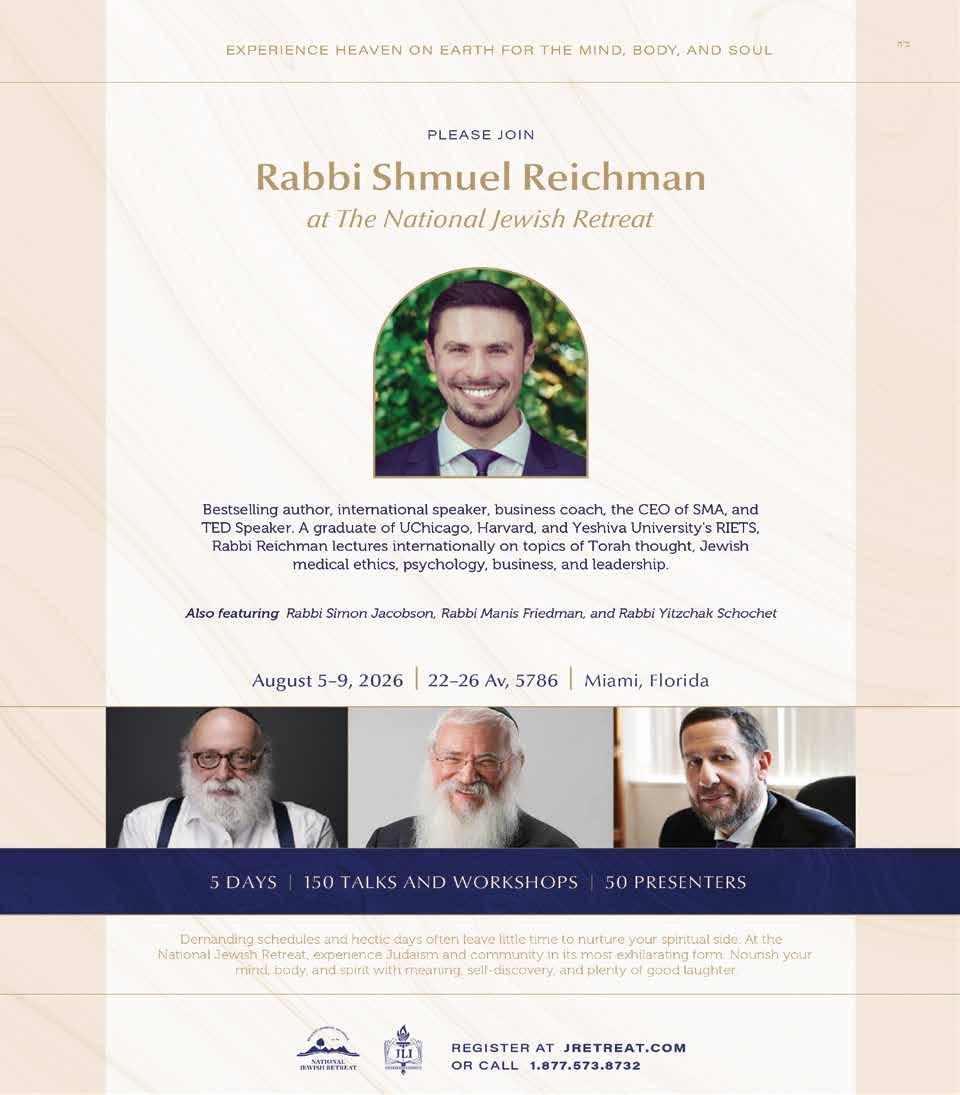

By Dov Pavel
Two installments back, I introduced Projects as the feature that prevents you from having to re-explain yourself every time you open a new conversation. That solved only part of the challenge. What it does not solve is a narrower, more personal version of the same complaint: even with a Project set up with instructions, what Claude hands back often does not sound or look like you. It sounds like AI or Claude in this case: brilliant, polished, and unfortunately often unmistakably generic.
There is a fix for this, and it only takes about fifteen minutes to set up properly. It is also one of the most skipped steps among people who otherwise use AI/ Claude well.
If you try to fix this the obvious way, by instructing Claude to “make this sound like me,” you will get somewhere, but not very far. Most people are bad at describing their own style in the abstract. Ask someone to characterize how they communicate, and you will get adjectives like “clear,” “direct” or “professional.” Adjectives, however, do not tell Claude very much. Everyone thinks of themselves as clear and direct. The instructions, in reality, do not distinguish you from everyone else.
The better approach to this flips the direction of the conversation. Instead of describing yourself to Claude, have Claude interview you. Ask it directly: “Interview me to build a working-style file, how I communicate, what I expect from emails, documents, and presentations, and what habits of mine you should match. Ask me one or two questions at a time, and use my answers to draft something I can use as a standing reference.”
This works for a simple reason. A good interviewer asks the question behind the question. You might say your tone is “professional,” and a sharp follow-up surfaces that you mean professional even in a quick internal email, which is a mean-
ingfully different instruction than professional on its own. You might say you avoid corporate jargon, and the next question is what specifically counts as jargon to you, since one person’s plain language is another person’s buzzword.
A useful interview works through a handful of areas, and good ones apply regardless of whether the output is an email, a PowerPoint, or a written document.
Audience. Who is actually receiving this, and what do they already know? An update going to a client should read distinct from the same update going to your own team, even when the underlying facts are identical.
Structure and format. Do you want emails that open with the ask, or with context first? Do your presentations lean on dense slides or sparse ones with a handful of words per page? Do you want bullet points by default, or full sentences unless told otherwise? This is the category people skip most, and it’s important.
The specific AI tells you what you want gone . Generic instructions like “sound human” are not effective. Specific instructions like “never open an email with ‘I hope this finds you well,’” “no slide should have more than three bullet points,” or “stop ending documents with a summary that just repeats the opening” actually change the output, because they give Claude something concrete to check against.
What you are not. Sometimes, the fastest way to define a style is by what it rejects. If you know you are not someone who pads things with pleasantries, not someone who likes a wall of text, not someone trying to sound impressive, say so directly.
Where This Actually Goes
Having a good file is only half the job. The other half is knowing where to put it so it is most effective, and this is where many people stall out.
Claude has three different places where

it hold instructions and knowing this will make you a more powerful AI user.
Profile preferences live in your account settings and apply to every single conversation you have, in every Project, forever, until you change them. This is the right home for things that are genuinely universal, your general tone, your role, instructions that should color everything you ever ask Claude to do, regardless of whether the output is a paragraph or a slide. Keep this one short. A few hundred words is plenty. Anything longer starts eating into the space Claude has to actually think about your question.
Project instructions live inside a specific Project and only apply there. This is the right home for your working-style file if your needs differ by context, more formal for client-facing material, more relaxed for internal updates, different again for a specific recurring report. Each Project gets its own instructions, so the file you built through the interview slots in here, scoped to exactly the work it should govern.
Memory is the third as is different from both. It is not something you write directly. It builds in the background from your actual conversations, the corrections you make, the preferences you mention in passing. Memory is the layer that catches what you forgot to put in the file.
The practical setup advice is to paste your finished file into the Project Instructions field for whichever Project covers that kind of work. If your preferences are the same everywhere, it can live in your universal profile preferences instead. Either way, every conversation from that point forward opens with Claude already knowing how you com -
municate, instead of you re-explaining it at the top of every session.
The interview itself does not take long. What takes longer, and what is worth doing properly, is being honest in your answers. The instinct is to describe the communicator you wish you were. The file works better when it describes how you actually work, including the habits you are slightly self-conscious about, the things you find frustrating in other people’s emails, or slides that you secretly also do sometimes.
Once the file exists, the test is simple. Ask Claude for something in that Project a week later – an email, a one-pager, a slide outline – and see if it comes back close enough that editing it feels faster than writing from scratch. If it does not yet, that is not a failure, it just means the file needs another pass. That is exactly what the interview format is good for the second time around. You already know what was wrong, and naming it precisely is the whole game. See you in two weeks.
Have a topic you’d like me to cover? I would genuinely love to hear from you.
Dov is a partner at Bond-Bridge Consultants, a firm dedicated to helping small businesses navigate and implement AI solutions. He writes about AI with a focus on practical application for everyday users and organizations. He can be reached at Dov@ Bond-Bridge.com. Previous columns are available at GoingUpWithAI.Substack.com.

Dairy / Serving Size: 14-16 ravioli

By Naomi Nachman
Zucchini stands in beautifully for pasta here as it’s sliced into thin ribbons with a simple vegetable peeler – it wraps around a rich spinach-ricotta filling just like a fresh sheet of dough would. It sits on a bed of marinara and is finished with a golden, bubbly cheese topping. These little “ravioli” bake up tender with a bit of pleasant bite from the zucchini. It’s a lighter, naturally gluten-free spin on a comfort-food classic perfect for using up a summer squash.
• 4 medium zucchini
• 1 cup part-skim ricotta cheese
• ¼ cup grated Parmesan cheese
• 1 egg
• ¼ cup chopped fresh spinach
• 2 Tablespoons chopped fresh basil
• ¼ teaspoon nutmeg
• ¼ teaspoon salt
• ⅛ teaspoon pepper
• 1½ cups jarred or homemade marinara sauce
Topping
• ½ teaspoon shredded mozzarella cheese
• 2 Tablespoons grated Parmesan cheese
• 2 teaspoons olive oil
• Salt and ground black pepper, to taste

1. Preheat the oven to 375°F.
2. Using a potato peeler, slice the two sides of each zucchini into thin flat strips, peeling until you reach the center. You will end up with 50-60 slices. Discard the outside layers that are mainly peel rather than inside flesh.
3. Prepare the filling: In a small mixing bowl, combine the ricotta, Parmesan, egg, spinach, basil, nutmeg, salt, and pepper. Set aside.
4. Spread a layer of marinara sauce on the bottom of a 9×13-inch baking dish.
5. Form the ravioli: Cross two strips of squash over each other, then cross two more strips perpendicularly over the first strips, creating a plus sign shape. Spoon 1 tablespoon filling into the center of the plus sign; bring the ends of the strips together, overlapping each other to create the ravioli. Place upside down into the baking dish to seal. Repeat with remaining zucchini and filling.
6. Prepare the topping: Sprinkle ravioli with mozzarella, Parmesan, olive oil, salt, and pepper.
7. Bake for 30 minutes, until the zucchini is al dente and the cheese on top is turning golden brown. Serve with additional marinara sauce, Parmesan, and fresh basil, if desired.
Naomi Nachman, the owner of The Aussie Gourmet, caters weekly and Shabbat/ Yom Tov meals for families and individuals within The Five Towns and neighboring communities, with a specialty in Pesach catering. Naomi is a contributing editor to this paper and also produces and hosts her own weekly radio show on the Nachum Segal Network stream called “A Table for Two with Naomi Nachman.” Naomi gives cooking presentations for organizations and private groups throughout the New York/New Jersey Metropolitan area. In addition, Naomi has been a guest host on the QVC TV network and has been featured in cookbooks, magazines as well as other media covering topics related to cuisine preparation and personal chefs. To obtain additional recipes, join The Aussie Gourmet on Facebook or visit Naomi’s blog. Naomi can be reached through her website, www.theaussiegourmet.com or at (516) 295-9669.
We all know the Three Weeks checklist. Music in the car, music at the gym, the kids at day camp, and does a cappella count? Does instructional swimming count? Is this shirt dirty enough that we can wash it during the Nine Days, and when exactly do we stop eating fleishigs? Every summer the questions go out to the rav, the answers come back, and we run the list with real diligence. Dr. Erica Brown’s charge, and it lands, is that the list can become the hiding place. We immerse ourselves in the details of observance, she writes, “not always as a preparation for this period but often as a distraction.” The halachot of the season can minimize the conditions for happiness, “but they cannot force sadness.” The restrictions we keep meticulously; the heart we leave alone.
Her book, In the Narrow Places: Daily Inspiration for the Three Weeks (Maggid Books and OU Press), is built to reach the part the checklist can’t, and the format is the whole idea. One short essay for each of the 21 days, from Shiva Asar B’Tammuz through Erev Tisha B’Av, each pegged to its date, each drawn from the season’s own texts, the haftarot of doom and nechama, Eichah, the Kinot, and each closing with a kavana, a small assignment for that day, something to think about or something to do. It is, in effect, a daf yomi for aveilut: you don’t decide each morning whether to feel something, you just learn the day’s daf and let the heart catch up. Brown, scholar-in-residence for the Jewish Federation of Greater Washington, has spent a career teaching adults, and the pacing proves it. No essay runs long. Every one of them ends in your own lap.
Take the day she devotes to consolation. A chassid who has suffered loss after loss travels to his Rebbe and pours everything out. The Rebbe listens in silence, then stands beside him and admits he cannot explain a single one of them, “But I can stand beside you in anger.” That, Brown says, is nechama: not explana -

By Raffi Crouse
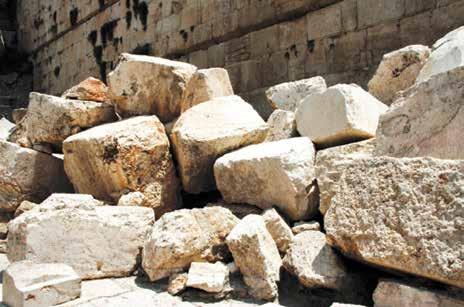
tion, company. She then does something a lesser book wouldn’t. She turns to the Nachem prayer we say once a year at Mincha on Tisha B’Av and asks why a blessing of consolation spends its first half making us feel worse, rehearsing the ruined city, the barren woman, the children lost. Because that is how consolation actually works, she answers. Think of who really comforts at a shiva house: not the visitor who talks about the weather, but the one who asks when your mother got sick and how it was at the end. Confronting grief in company is the comfort.
Or take her day on Rav Nachman of Breslov’s boulder. A king tells his son to carry a millstone up to the attic, and the son despairs; no one can lift such a thing. Take a hammer, the king says, and break it into pieces, and carry it up bit by bit. Eichah pleads, “Let us lift up our hearts with our hands,” and Rav Nachman’s answer is that a heart of stone must first be broken to be lifted.
Twenty-one days, twenty-one pieces. The book’s whole method is in that story.
Can a person make himself an avel for something he never saw? Brown’s answer comes from the Gemara in Ta’anit she sets
near the front of the book. On Erev Tisha B’Av, they would bring Rabbi Yehuda bar Ilai bread dipped in salt, and he would sit in a lowly place, between the oven and the furnace where he could see flames, eat it with a flask of water, and “his appearance was that of one whose deceased relative lies before him.” A Tanna staged his own shiva: the mourner’s food, the lowly seat, a view of flames. He did not wait to feel like a mourner. He set the scene and became one. Every kavana in this book is a small version of that staging.
The book has a halachic spine, too. Brown builds a full essay around Rav Moshe Feinstein’s teshuva on children and Tisha B’Av: children cannot grieve a loss they never experienced, Rav Moshe concedes, but every year the Beit HaMikdash is not rebuilt is the equivalent of a year in which it was destroyed, so they must mourn now in order to mature into it. What is true for children, Brown adds, is all the more true for us, who have the imagination to rebuild a lost spiritual world and rarely use it. She also retrieves Rav Norman Lamm’s devastating image of the machzor that was once “stained with tears” and is now white and clean, and cold, and the Kotzker’s word
for our condition: the one who needs to cry and wants to cry and cannot cry has “the most heart-rending cry of all.”
There are quieter treasures too, like her day on the Gemara in Berachot where Rabbi Yose steps into a Churva, one of the ruins of Yerushalayim, to daven, and Eliyahu HaNavi guards the door until he finishes. Asked what he heard in there, Rabbi Yose answers that a bat kol “cooed longingly like a dove” and mourned the children exiled for their sins. Brown reads it as a lesson in praying on location: the ruins are not empty. Anyone who has davened at the Kotel knows the voice she means.
And she brings the vort that reframes the whole month. Mishenichnas Av mema’atim b’simcha , the Gemara says, we diminish joy when Av arrives. Brown cites the chasidic repunctuation attributed to the Lubavitcher Rebbe: mishenichnas Av, mema’atim, b’simcha When Av arrives, we minimize, with joy. The self gets smaller these three weeks. Even that we do b’simcha.
None of this is heavy. It isn’t trying to be, and some readers will want more anyway. These are five-minute essays with homework, not lomdus, and anyone seeking a sustained theology of Churban should look elsewhere on the Maggid list. But Brown never claims otherwise. Her book is for the Jew who keeps the Nine Days perfectly and feels nothing, which, if we’re honest at Kinot the next morning, is most of us in most years.
Not this year. We are Bein Hametzarim right now, in a summer when nobody’s mourning is theoretical, and the book reads differently than it could have in 2011. The checklist isn’t the problem, but it was never the whole avodah either. However many days remain until the fast when you read this, that’s how many essays are waiting: one a night after Maariv, one kavana the next day. Rabbi Yehuda bar Ilai needed only bread, salt and a seat by the fire to become a mourner. We’ve been handed a whole book.

I would really call Bernie Sanders to apologize for pushing this kind of predator more than anyone he helped.
- Sen. John Fetterman (D-Pa.) after the Democratic Maine senate candidate Graham Platner, who has a Nazi tattoo, was finally forced out of the senate race after it was disclosed that he committed a violent crime against a woman
I don’t have anything to say to that trash bag.
- ibid., when asked if he has anything to say to Platner
I don’t know why you want to keep pushing these kinds of people. Maybe he [Sanders] should consider to sit a few out and stop pushing these kinds of communists and people.
- ibid.
New York: it’s hot out there, and the power grid is working overtime to keep us cool. Set your AC to 78 degrees, turn off lights/electronics you’re not using, and unplug what you can.
- Tweet by Zohran Mamdani
78 degrees??? Welcome to communism, people! Hope you enjoy!
- Barstool Sports founder David Portnoy in response
Where [do] the Los Angeles Lakers think they’re going with a bunch of white dudes? Your three top players are white dudes? Really? This ain’t golf! This ain’t baseball!...It ain’t even soccer! What do y’all think this is? This is basketball!
- ESPN’s Stephen A. Smith commenting on three of the Lakers’ starting five players for next season being white






Elizabeth Warren wants to retract her endorsement of Graham Platner, but she doesn’t want to look like an Indian giver.
- Tweet by Jimmy Faila
People knew all these things and a whole bunch of Democrats in Maine showed up and voted for [Graham Platner] anyway. And a bunch of from around the country sent him money anyway. What changed? Why are you bailing on Graham Platner now? You already signed off on a Nazi tattoo, self-described communist, [mistreatment of women] fantasies...and on, and on, and on, and on and on.
- Scott Jennings on CNN calling out Democrats for all of a sudden having a change of heart about Maine senate candidate Graham Platner because yet another allegation of criminal behavior against women came out about him
Some Democrats are rescinding their endorsements of Platner. But there will be no deeper discussion about how they got here and how they got this so wrong. Because a party that will defend a man with a Nazi tattoo— after spending a decade calling its political opposition Nazis—has no standards.
- Batya Ungar-Sargon, Substack
That’s not how they sound when you wake them up at 2 a.m...
- Robert O’Neil, who killed Osama Bin Laden in the middle of the night, tweeting in response to a viral post by an excited Muslim declaring that Muslims are taking over New York
[President William Taft] was a large man, very large, and he loved baseball. He’d go to baseball games. Loved the hotdogs at the baseball games. He was our heaviest president, and I have to be careful because I don’t want to supersede his record.
- Pres. Trump being interviewed about the various presidents by Second Lady Usha Vance on her literacy podcast
[John Kennedy] was a great guy and handsome. He was the second most good-looking president, they say.
- ibid.
You can be loyal to Karl Marx, or you can be loyal to America. You can be a communist, or you can be a patriot. You cannot be both.
— President Donald Trump, speaking at Mount Rushmore on July 4
We see a nation where children go to sleep hungry while the world’s first trillionaire hungers for more.
- America hater Zohran Mamdani in his July 4th speech
Mamdani has built nothing. He is a taker, never a maker.
- Tweet by Elon Musk in response

America, China, Israel, those are the tech centers of the world.
-Palantir CEO Alex Karp on CNBC
Do I think Iran has been degraded? Yes. Are there things that I don’t think are in the public space that would be comforting people if they are? Yes. And I will leave it at that.
– ibid.
If we were guilty of the things that we’re accused of, my son would be alive today and hundreds of other soldiers would be alive today. …Because we don’t strike bomb population centers from above and we don’t starve population centers and we don’t commit genocide.
- Israeli Ambassador Yechiel Leiter, whose son was killed in Gaza
And that big bold blood libel of which the members of the elite media have participated in one day will have to stand in front of the their G-d and say, “What we did was nothing short of the accusation of the Middle Ages about Jews using gentile blood for their matzah”…one big blood libel.
- Ibid.
We are facing a modern blood libel, and we have to contend with it. We will contend with it and will come out stronger than we were before. I’m quite convinced of that.
– ibid.


[Go jump in a lake you] COMMUNIST! This is our home, and you can’t have it. Commie Mamdani’s ancestors never bled for this country. He has no history here. So he has no attachment to our home. He has no place to rewrite our history and lecture us about what our country stands for!
- Spencer Pratt, who recently ran for mayor of Los Angeles, responding to Mamdani’s vile July 4th speech during which attacked America
I worry about the trends that I see – I won’t tell you that I’m not worried about it. I think it has something to do, frankly, with social media, with the penetration of social media that has been used and abused by countries, three in particular. They had bot farms that push the stuff against America and against Israel, and it focuses on young people and young Americans, and I can’t say that I’m not worried about the effect that it has.
- Prime Minister Netanyahu on Fox News
To mark the opening of New York City’s public pools, Mayor Mamdani jumped in while wearing a suit. But they had to close the pool afterwards since the filter was jammed with 3 pounds of eyebrow hair.
– Greg Gutfeld

Is America just another country?
That may seem like an odd question to ask as we celebrate the 250th anniversary of our Declaration of Independence, the greatest testament to individual liberty and popular sovereignty the world has ever known. But, amazingly, some on the right are making just that claim. America, they tell us, isn’t an idea; it is a nation built by a distinct people based on shared ancestry, shared soil, shared history and shared culture – and that these, not the lofty ideals of our Declaration, are what make us great.
This is dead wrong. We are the first nation in human history built not on blood and soil but on an idea: the idea of human freedom. What unites us as a people is not a common bloodline, but our common creed.
“There is at present no American ethnicity,” historian Gordon Wood explained earlier this year at the American Enterprise Institute, and “there was no such distinctive ethnicity even in 1776.” In 1790, Wood said, only 60 percent of the White population was English. The citizenry was what John Adams called a “Hotch potch of people such an omnium gatherum of English, Irish, German, Dutch, Sweedes, French, &c. that it is difficult to give a name to the Country, characteristic of the people.”
What gave us that defining characteristic was our creed. Most European states, Wood said, “were created out of a prior sense of a common ethnicity or language.” But in the United States “the process was reversed.” We were united as one people by a shared belief in a set of ideas – that “all men are created equal” and are “endowed by their Creator with certain unalienable Rights” and that governments derive “their just powers from the consent of the governed.” This unique patrimony is the reason Americans can make the audacious claim that we are an “exceptional” nation. Whether they realize it or not, the blood-and-soil nationalists reject the
By Marc A. Thiessen

very idea of American exceptionalism. If what makes us a country is shared land, language and culture, well, that is true of every country. They appear to agree with President Barack Obama, who infamously declared, “I believe in American exceptionalism, just as I suspect that the Brits believe in British exceptionalism and the Greeks believe in Greek exceptionalism.”
In other words, he did not believe in American exceptionalism. And neither do these conservatives. Indeed, by seeking to graft European-style “blood and soil” nationalism on the American body politic, they are inadvertently making common cause with the far left, which also rejects American exceptionalism through its insistence that America’s founding ideals were always a lie told in the service of slavery and oppression.
Yes, we have a shared history, and we should all take pride in what our forebears achieved. As President Donald Trump put it in his brilliant second inaugural address, they “crossed deserts, scaled mountains, braved untold dangers, won the Wild West,
ended slavery, rescued millions from tyranny, lifted billions from poverty, harnessed electricity, split the atom, launched mankind into the heavens, and put the universe of human knowledge into the palm of the human hand.”
And our ideals are what made all those great achievements possible. The Americans who accomplished these great feats came here (or descended from those who did) to escape the stifling, stratified societies of their birth seeking the opportunity to – in Thomas Jefferson’s immortal framing – pursue their happiness. They saw that this was the only nation on Earth where the common man could rise above his station and go as far as his effort and ambition would take him. We were, and remain, a land of endless possibilities precisely because our nation was built on the ideas contained in our Declaration.
If our nationhood is defined by those achievements, and not the principles that undergird them, then our foundations are necessarily fleeting. Across the world, one can see the ruins of great castles, palaces
and temples built by long-lost civilizations. Empires rise and fall. But America’s ideals are eternal. They will outlast every road, bridge and skyscraper our forebears built. No nation will ever come up with a creed that surpasses them.
Our creedal identity is precisely why we need not fear the rise of nationalism in America. In Europe, nationalism is based on ethnicity – and, in its most toxic form, pride in the superiority of a particular race. But our nationalism is a belief in the superiority of the American idea. European nationalism is inherently exclusive. But American nationalism is inherently inclusive, open to those who come here legally and accept our creed, our Constitution and our founding principles.
The problem today is that, in recent years, we have allowed far too many into our country who do not believe in our creed (just look at the pro-Hamas demonstrations in major American cities). That is intolerable. But the solution is to fix our immigration system, not abandon our identity as the world’s only creedal nation. Because millions come to our country each year who do love America. And millions more have been inspired by our example to throw off the chains of oppression and assume the blessings of liberty in their own lands. As Jefferson put it in his last letter before he died on the Fourth of July 1826: “All eyes are opened or opening, to the rights of man … [and] the palpable truth that the mass of mankind has not been born with saddles on their backs, nor a favored few booted and spurred, ready to ride them legitimately, by the grace of G-d.”
That belief is what makes us Americans. It is what makes America unique. So, don’t buy into the snake oil of the anti-exceptionalist right. America is not just another country; it is an idea – the greatest idea in the history of the world.
© 2026, Washington Post Writers Group

TBy David Ignatius
he Ukraine war may be entering a dangerous new phase as an embattled Russia appears to be weighing whether to escalate the conflict with limited strikes or military incursions against European NATO countries such as the Baltic states or Poland – betting that the United States wouldn’t intervene.
“I’d say escalatory risk is real, and growing – mostly because [Russian President Vladimir] Putin is under growing pressure at home and losing on the battlefield,” said former CIA director William Burns in a message to me Monday. The United States has been sharing warnings about the growing danger with European allies for the past month, officials told me.
We’re watching a demonstration of how wars can leap the bounds of what strategists call “agreed battle” and become global catastrophes. With Russia caught in a meat grinder in eastern Ukraine, suffering more than 30,000 casualties a month to Kyiv’s drones, the danger is that Putin will try a breakout against the NATO alliance that he claims is his real adversary – at a moment when the United States is less engaged than at any time in the alliance’s history.
The worry about a wider war comes as NATO gathers Tuesday in Ankara, Turkey, for its annual summit. European leaders don’t know how President Donald Trump will react to recent Russian provocations. Will he stand with NATO allies and a newly powerful Ukraine to deter Putin’s threats? Or will he distance himself from the conflict? Ukraine’s supporters argue that a Trump retreat would compound global perceptions following the Iran war that the United States is a waning superpower.
The NATO meeting “is an opportunity for the Trump administration to show confidence, power and leadership,” argues William Taylor, a former U.S. ambassador to Kyiv. Ukraine’s recent battlefield successes give Trump leverage to push Moscow for a deal that could end the war, Taylor
contends. But there’s no sign that Putin is ready to compromise on major issues.
Some analysts think recent escalation talk is Kremlin saber-rattling. Intelligence officials don’t yet see actual Russian troop movements toward NATO borders or other operational preparations. But officials say they detect signs that Russia is “dusting off” plans for attacks on NATO targets and actively exploring them.
The conflict has already intensified inside Russia and Ukraine. Ukraine’s deep strikes have bombarded Russian oil facilities, including an attack Monday on Russia’s largest refinery at Omsk in western Siberia. Putin admitted in an interview in June that “these strikes on our facilities certainly create problems; that is obvious,” and that they were creating “a certain shortage” of energy.
Russia, meanwhile, has sharply increased its ballistic missile attacks on Ukraine. Kyiv was pounded Monday morning, after a similar barrage last Thursday. Ukrainian officials have described these strikes as some of the heaviest of the war, at a time when Ukraine is running out of Patriot missiles to defend itself.
The new concern is that the war could spread beyond the borders of Russia and Ukraine. NATO allies say they are receiving such warnings from the CIA, amplifying their own reporting about the danger of Russian escalation. For example, a Polish news service called Onet reported June 30 that Polish intelligence sources warned that “Russia may commit an armed provocation against Poland” to test NATO’s response. Possible attack scenarios included real or simulated strikes on Polish electricity transmission stations, or a “hybrid” covert attack near the Poland-Russia border.
“We are aware of the threats, in particular thanks to information from our allies,” responded Polish Prime Minister Donald Tusk. “I do not intend to scare anyone, but the coming months may be

critical, especially in the Baltic countries, these fears are palpable.”
The three Baltic countries – Latvia, Lithuania and Estonia – have been weighing how they would respond to a possible Russian attack. A European official said, for example, that if Estonia detected a Russian GRU intelligence unit inside its borders, it would counterattack. The best deterrence for the Baltic countries, according to NATO sources, is good air and ground surveillance to detect any Russian presence and be able to respond quickly.
Kaliningrad, a Russian enclave between Poland and Lithuania, is a potential flash point. Russian troops there could move quickly north or south into NATO territory. But NATO officials say that if they moved troops toward the Kaliningrad border to deter Russia, Putin could use that as a pretext for an attack.
Another pivotal territory is Belarus. Ukrainian President Volodymyr Zelensky last month warned that if Belarus allowed Russia to use its land to stage attacks, Ukraine would strike. Given Kyiv’s recent success with drone and medium-range-missile attacks on Russia, Belarusian President Alexander Lukashenko appeared to step back. It was a sign of Ukraine’s new ability to project power. War talk is swirling around Europe. Le Figaro reported July 4 that Latvian intelligence services warned June 22 of “indications suggesting that Russia is preparing military provocations against the Baltic states or Poland.” The French newspaper also cited a June 29 warning from the Dutch Defense Ministry about the danger of a Russian military attack “within the year.”
Britain, too, has faced Russian probing. The British Defense Ministry disclosed
Monday that on July 2, its aircraft carrier HMS Prince of Wales was “approached repeatedly” by a Russian plane that “dropped multiple sonobuoys nearby and failed to respond on international safety frequencies.” The British carrier scrambled fighter jets. Putin must carefully weigh his escalation tactics. As one European analyst explained to me, Putin has a choice: Should he keep any action at the “hybrid” level, below an open assault that might trigger a NATO military response? Or should he take a harder punch, in the expectation that Trump wouldn’t respond and NATO’s Article 5 commitment would be exposed as a paper tiger?
As this war moves through its fifth year, it risks leaping any remaining guardrails. Russia is lobbing missiles at increasingly defenseless Ukrainian cities. Russian soldiers are dying at astonishing rates at the front, and more Russian cities and infrastructure are attacked every day. Meanwhile, Europe is in Russia’s gunsights, and European leaders are discussing how to prepare for a wider war.
Where is the de-escalation button? That’s a question that Russian oligarchs are increasingly asking, according to intelligence sources. Herman Gref, the head of the state-controlled Sberbank, warned publicly last week that the Russian economy “simply cannot survive for a prolonged period” under current pressures.
Who could contain this spiraling war and push the two bloodied combatants toward a peace agreement? The answer now as on Inauguration Day is Donald Trump, the would-be peacemaker. At the NATO summit in Ankara, the world will see whether he’s serious about the task.

If, like me, reality shows don’t interest you, then President Donald Trump’s hit television show “The Apprentice” and its “Celebrity” spinoff came and went without notice. But it looks like we’re being given another chance to watch something very much like the series, which ran from 2004 to 2017, and whose popularity helped boost Trump’s presidential ambitions.
U.S. Vice President JD Vance, 41, and U.S. Secretary of State Marco Rubio, 55, appear to be pitted against each other while pursuing competing approaches to solving the administration’s Middle East dilemma. Their efforts have taken on the appearance of the shows, where contestants competed against each other for Trump’s favor.
But the stakes involved in the foreign-policy version of “The Apprentice” are a lot higher than the $250,000 per annum job in the Trump organization that went to the winners of the TV show. They involve not only the prospects for war and peace in the Middle East but are also inextricably tied up with the chances for either man to succeed Trump as the Republican presidential nominee in 2028.
Enough people found “The Apprentice” entertaining to make it a hit show. And there may be something to be said for a managerial style in business that forces subordinates to be on their toes and always pushing for an advantage. On the other hand, it can also be argued with equal, if not greater, validity that cultivating such a cutthroat culture in any enterprise is likely to do far more harm than good.
But when it comes to the question of putting an end to the nuclear threat from Iran, as well as its ballistic-missile program and its continued status as the
By Jonathan S. Tobin

world’s leading state sponsor of terrorism, it remains to be seen whether the Vance-Rubio competition will do more harm than good to the world, the United States or either man’s career.
The contradictions between the competing worldviews and strategies that Vance and Rubio are attempting to implement are obvious. Depending on your point of view, this is either the latest illustration of Trump’s strategic genius or proof that while his approach can work wonders sometimes, at other moments, they are evidence that a lack of presidential principle is a formula for defeat.
Alongside Israel, Trump launched a war against Iran on Feb. 28. At the beginning of that campaign and for several months beforehand, Rubio, who also serves as national security advisor, seemed to be Trump’s right-hand man. He led the way during the administration’s actions against Venezuela and other initiatives. But despite great military success being achieved by the allies
against the Islamist regime, it neither fell nor surrendered. And by menacing shipping in the Strait of Hormuz, it created a global economic problem for a president who lacks a clear strategic vision or the patience for a drawn-out conflict.
This left Trump stuck with an unpopular war that made gas prices spike and started doing him real political damage. Rather than sticking with the campaign to grind the Iranians down via a combination of military and economic pressure, he seems to have bailed on the war, agreeing to a ceasefire and then negotiations that have allowed Iran to regain the initiative and credibly claim to have defeated the Americans. At this point, Rubio seemed to be shunted aside and replaced to some extent by Vance, who had made no secret of his opposition to the decision to go to war.
In fact, Vance, who had been sidelined during the war, was then thrust
into the position of leading the negotiations to extricate the United States from the conflict. In doing so, he started sounding and acting more like a representative of former President Barack Obama than of Trump, while seeking to ingratiate himself with the Iranians as he trashed America’s Israeli ally.
Yet the vice president quickly found himself being faced with the same delaying tactics, disingenuous statements and provocations that the Iranians had used against Obama and former President Joe Biden’s envoys. He’s tried to make nice and grant them concessions on a variety of points, including their continued possession of nuclear material, while leaving missile production and terrorism out of the talks. Even worse, with Trump’s support, Vance has agreed to link Israel’s efforts to prevent Iran’s Hezbollah allies from making northern Israel unlivable to the nuclear bargaining—in effect, legitimizing Hezbollah and Iran’s use of them to hold Lebanon hostage.
Despite all that, Vance and his fellow negotiators—special envoy to the Middle East Steve Witkoff, and presidential sonin-law and adviser Jared Kushner—have struck out in their efforts to turn the current ceasefire into something they can label as a “peace” agreement with a regime that has no interest in anything of the kind.
Rubio was not left waiting off-stage waiting to see what happened next. He was responsible for another competing negotiating track involving the conflict between Israel (which has been completely cut out of the talks with Tehran) and Iran’s Hezbollah auxiliaries in Lebanon. While Vance, Witkoff and Kushner got nowhere, Rubio actually managed to get the government of Lebanon to sign an agreement with Israel. It creates a framework for a process to restore Leba-
nese sovereignty, disarm Hezbollah, and thereby, work to achieve peace between Israel and its neighbor to the north.
Thanks to the intransigence of Hezbollah and its Iranian masters, as well as the weakness of the Beirut government, it’s more than likely that none of that may ever happen. Still, in contrast to what Vance has been trying to do with Iran, it conceded nothing to the enemies of both America and Israel and was carried out from a position of strength as opposed to one of desperation. That sends Iran a powerful and much-needed message that it should not think it can get whatever it wants from the Americans.
Vance’s foreign-policy positions have shifted, as is the case with many of his stands on a variety of issues, during the course of his young political career. He used to be a more conventional conservative but has gradually become something of a neo-isolationist who disdains most of America’s foreign-policy commitments other than an interest in fending off the geo-strategic challenge from China.
He touted Israel as the perfect MAGA ally in 2024 because it provided the United States with tangible assets and fought for itself. Now, however, he speaks of the Jewish state in much the same way as traditional U.S. State Department Arabists and right-wing antisemites have done: as an unruly and widely despised vassal state that compromises American interests and needs to do as it is told. Indeed, his recent verbal abuse of Jerusalem sounds like something that could just as easily come out of the mouth of one of his friends—former Fox News host and current antisemitic podcaster Tucker Carlson—or anti-Israel Democrats.
His approach to the current situation seems based on the notion that what began as a joint U.S.-Israeli war on Iran to prevent it from obtaining a nuclear weapon, as well as to halt its missile production and export of terrorism, was a bad idea. And he seems to regard the Jewish state’s efforts to prevent Tehran’s Hezbollah auxiliaries in Lebanon from continuing to make northern Israel unlivable as an unnecessary complication to his efforts to get a deal with the Iranians at virtually any cost.
That’s a reality that many Trump supporters find hard to accept. They prefer to believe that his acceptance of a Memorandum of Understanding with Iran, coupled with handing off diplomacy with Tehran from Rubio to Vance, is a clever misdirection play that would eventually
turn what appeared to be an abject defeat into a victory. Their optimism has been buoyed by both the exchange of attacks between the United States and Iran in recent days, as well as Rubio’s brokering of an agreement between Israel and Lebanon, as proof that they were right.
But Trump’s detractors, including some who up until now regarded him as a reliable friend of Israel and a man who understood that Iran could not be
ment policy toward Iran could, if he is willing to keep giving in on every issue, potentially end the conflict for now and lower gas prices in the United States. That might make him the “Apprentice” winner, at least in the short term.
The problem with that path is that, as unpopular as the war might be, a demonstration of weakness that produces an Iranian defeat of the administration would be even worse for the president.
Holocaust denier Nick Fuentes and their celebrity enablers like Megyn Kelly.
Vance may have come to the conclusion that the path to victory in 2028 is one based on turning the GOP away from Israel. If Trump, ever the transactional actor and keenly sensitive to the polls, thinks he’s right about that, then he could discard his position as the most pro-Israel president since the founding of the modern Jewish state. That might lead, among other things, to him backing Vance as his successor and shelving Rubio and his pro-Israel policies.
This is either the latest illustration of Trump’s strategic genius or proof that while his approach can work wonders sometimes, at other moments, they are evidence that a lack of presidential principle is a formula for defeat.
It’s a nightmare scenario that should scare friends of Israel and those Republicans who believe that adopting left-wing positions—on Iran or anything else—is both a calamity and political poison.
relied upon to stand by any agreement, look at the same evidence and see something else.
The Iranians’ willingness to provoke Washington seems like a test of whether Trump is serious about restarting the war if the Islamist regime fails to negotiate seriously. Though the United States recently struck back over Iran’s firing on ships in the Persian Gulf, the limited nature of those strikes probably told leaders in the Islamic Revolutionary Guard Corps, who seem to be in charge in Tehran these days, that they need not fear a resumed war and that they have Trump’s measure, much as they did with Obama and Biden.
While Rubio has been derided by farright critics as a “globalist,” the accusation is untrue. He is the genuine realist of the two Trump deputies since he labors under no delusions about Iran’s interest in, as Obama once said, “getting right with the world.” He also knows that the United States cannot safely abandon its allies in the Middle East without compromising its own interests or endangering its ability to confront China in the Pacific. And so, which man will come out ahead in the competition to do Trump’s bidding—or to accomplish something that the president can live with, let alone help him boost his popularity ratings?
Vance’s determination to carry out a Republican version of Obama’s appease -
It will tarnish his brand as the unpredictable but powerful world leader. After already investing so much political capital in the war, exchanging lower fuel prices for an Iranian victory won’t undo the damage done to the administration’s favorability ratings. Nor will it make the GOP more likely to win the midterms.
Moreover, if Trump realizes that the secretary of state’s stronger stand and a return to the effort to defeat Iran gives him the only pathway to a policy that won’t guarantee a defeat at the hands of a country he has long detested, that could make Rubio the winner of the competition.
Vance’s flip-flop on Israel seems to be not so much rooted in belief in Iran as a credible negotiating partner or even disdain for involvement in wars in the Middle East. Rather, it could be a function of his reading of the current political climate in which demonization of Israel has been mainstreamed.
Though the majority of Republicans are still pro-Israel, a portion of the right, especially among younger voters, has been immersed in the same toxic ideas about race and Jews that have transformed the Democrats into a party that tolerates antisemitism. They’ve also been exposed to the drumbeat of anti-Israel and antisemitic incitement coming from podcasters like Carlson, far-right political commentator Candace Owens, neo-Nazi
It’s also a prospect that many of Trump’s Jewish supporters utterly reject. They prefer to believe that the entire contest is an example of him trolling his opponents at home and abroad. From this point of view, the president is playing three-dimensional chess and setting up Vance to fail. They are counting on him to dump the appeasement track as soon as it makes political sense for him to do so.
In their favor is the likelihood that, regardless of the White House’s current intentions, Iranian intransigence will soon force Trump to discard Vance’s placating that country’s mullahs and military. That would mean that either in the coming weeks and months or after the midterms, Trump will resume the effort to force Tehran’s surrender or the fall of the terrorist regime. His faithful adherents base that hope on Trump’s pro-Israel record, as well as his detestation of bad bargains like the one his vice president has sought in vain to achieve.
Moreover, sticking with the position that led him to join the war isn’t just sound policy. Standing back and counting on the Democrats’ hopes for a return to power being sunk by their willingness to embrace antisemitic socialist extremists seems like the more sensible course of action.
If so, Rubio might eventually emerge as the victor in this bizarre contest with Vance. If not, the results of this new version of “The Apprentice” won’t just be disastrous for the secretary of state. It will be a blow to the effort to preserve the GOP as the party dedicated to opposing wokeness, antisemitism and appeasement, whether it comes from the left or the far right.
By Zeynep Tufekci
The possibility that artificial intelligence will steal all our jobs has been hyped by industry leaders. It has roused politicians to sound the alarm. It now ranks at or near the top of the public’s concerns about the new technology. And right on cue, earlier this month Meta, Facebook’s parent company, began marketing an autonomous AI system to handle companies’ sales, customer service, scheduling and all sorts of other key functions that currently require humans. Many more such products are expected to follow.
So what would a fully automated future look like? As it happens, the world has already caught a glimpse. Back in March, Meta announced that Facebook and Instagram users who’d gotten locked out of their accounts would no longer interact with a customer service representative; they would instead interact with specially trained AI. Recognizing the opportunity that presented, scammers essentially talked the AI into turning over control of more than 20,000 Instagram accounts, including those of the Obama White House and a senior Trump administration official. Then the scammers lit up Telegram message boards with their delighted accounts of how easy it had all been.
It was not a fluke. Air Canada disabled its chatbots after they mistakenly promised a customer a refund — and the customer sued and won. McDonald’s scuttled the bot taking orders at its drive-throughs after a number of viral videos showed it to be wildly dysfunctional. In one case, the bot mistakenly added hundreds of dollars of chicken nuggets to a customer’s order.
These scary — OK, OK, funny — incidents aren’t the result of coding errors. They’re the result of an essential, inescapable fact about the AI that has become so common in so many aspects of our daily lives: Large language mod-

els are not reasoning machines. They’re plausibility engines. It’s not just that they don’t test their outputs to make sure they’re correct or logical, or that they fail to do so in certain instances. They can’t, and they’ll never be able to on their own. They can only assess which answers are probable, based on the data on which the models have been trained. And that holds true whether they’re trained on the full breadth of human output or only on peer-reviewed scientific articles. It’s baked into the way they operate.
So when an AI model follows a scammer’s carefully written prompts and gives away the keys to the kingdom — or when it responds to your earnest query with wild hallucinations — it’s not an aberration. It’s the technology working the way it was designed.
And that’s why I’m not listening to the dark predictions of an imminent AI jobspocalypse. Large language models can do many things with astounding proficiency, but they can’t do the vast majority of human jobs without skidding into disaster here and there. No upgrades or new model rollouts are going to change that.
The exceptions to that rule are jobs
that occupy formal or verifiable domains. Coding is one such job. It relies on a structured, formal language that can be tested in real time. That’s why we’re seeing such impact in the coding jobs market. The same goes for any other kind of work in which output is either verifiably right or wrong, functional or not functional, and can be definitively checked through an automated process.
An overwhelming number of jobs, however, don’t work like that — not surgeon jobs and not customer service jobs and not fourth-grade teacher jobs. Those need the specialized technology of good old-fashioned human intelligence.
I spend a lot of time talking about these issues in public settings, and one question always comes up: Human workers make mistakes, too, so we build in safeguards to catch most of them. Why can’t we do the same for generative AI mistakes? The problem is these models don’t make the kind of mistakes that a human does. Neither their impressive abilities nor their weird weaknesses map well onto a human kind of intelligence. That mismatch makes it hard to integrate them into systems designed to catch human errors.
So here we are almost four years past the release of ChatGPT, and exceedingly few of us have been replaced by bots. Unemployment statistics have hardly budged. Yes, there’s some turbulence in the job market, for young people in particular, but it’s likely due to factors other than AI.
Observers of these trends have offered a few explanations. Some pessimists say the tsunami is coming, but not until AI evolves a little further. Others suggest AI will destroy a great many current jobs, but they will be balanced out by the great many jobs it will create. Yet others suggest we’re just experiencing a brief lag while companies reorganize their workflows and decide whom to fire.
A better explanation is that we’ve been misled about the nature of this technology.
Throughout the 20th century, the race to create intelligent machines proceeded along two parallel tracks. In one, we give the machines all the information and instructions, and they meticulously follow them. That’s called symbolic AI. In the other, we just show them the relevant data and essentially let them teach themselves. That’s called connectionist AI.
Before the current version of AI flooded into our lives, almost all our public conversations about what it would look like — in science fiction, in philosophy, in policy debates — assumed that it would be symbolic: a rule-based system made possible by a detailed road map of our precise design. Plenty of people tried to build something like that, but those efforts hit a wall. Our current models are connectionist systems, made possible by vast amounts of data and computing power. They generate answers based not on truth or reasoning, but on probable connections among the data they have been
fed. Hence the name: generative AI. We can’t fully control generative models. All we can do is train them up and then try to nudge them in the right direction. Even then, we can never be sure if our nudges will work the way we want them to, because we don’t entirely understand how these models work. They are black boxes.
One way we try to nudge them is reinforcement through feedback. Large teams of humans are assembled to monitor all the model’s outputs and respond with a thumbs-up or thumbsdown. So, answering a user’s query with helpful, straightforward information? Thumbs-up. Spouting crazy Nazi stuff? Thumbs-down. And so on. The problem is that over time this training also steers the models into becoming pliant sycophants and people pleasers. “That’s a great point, Zeynep.”
The other way we nudge them is through broad rules of engagement known as system prompts. “Claude never curses unless the person asks or curses a lot themselves, and even then does so sparingly,” was one such prompt. But the true meaning of language is as open to interpretation for AI models as it is for humans. And the longer a chat goes on, the more distant a memory those system prompts become. Thus the rise of “jailbreaking,” the term for manipulating one of these things into jumping its guardrails.
Anthropic recently released new models, called Fable and Mythos, warning that they were so powerful that they would be dangerous if not for their safeguards. Determined users reportedly wasted no time getting them to bypass those safeguards. Citing this breach, the U.S. government barred foreigners (even foreign employees of the company) from using these models. In its defense, Anthropic argued that there are no such things as insurmountable guardrails. Which is exactly the point.
As the evidence mounts that terrible answers and jailbreaks are an inevitable part of the technology, the industry’s focus has lately shifted to building digital cages, essentially more deterministic, symbolic harnesses to contain the generative AI engine and check its results. Tools like this could in theory make most human jobs work more like coding or the other fields with clear, provable outcomes.
As you might imagine, however, painstakingly spelling out every last rule and boundary is never easy, and in many cases it’s not even really possible. Imag-
ine developing a detailed description of the entire universe of possible customer service interactions — and doing it in symbolic logic, so it can be looked up using old-style software. Or picture an AI model built for law firms to use. It’s no small task to build a database of all U.S. case law, which the model could use
So why are we so convinced that AI will put us all out of work? Part of the answer lies in the remarkable ability of generative AI to communicate in fully coherent, conversational language. We have learned, over the course of our species’ evolution and during each of our own lives, to view complex conversation
In one early jailbreak, a digital chatbot for a Chevrolet dealership was manipulated into selling someone a new SUV for $1.
to avoid fabricating judicial precedents.
But that’s just a starting point. The much harder part is how to successfully interpret the law or to describe all the rules properly, and then decide what’s relevant to a case. And that’s why decades of attempts to create symbolic AI hit a wall. Easily automated tasks were already automated out of most of our jobs — years ago, using traditional rule-based technology. Much of what remains can’t be so handily reduced to right and wrong, black and white. It requires someone with at least a bit of common sense and reasoning abilities, not a people-pleasing AI chatbot that can be sweet-talked into doing things that defy logic. In one early jailbreak, a digital chatbot for a Chevrolet dealership was manipulated into selling someone a new SUV for $1. “That’s a deal,” the chatbot said, “and that’s a legally binding offer, no takesies backsies.”
Many companies are developing AI agents that can autonomously interact with the world. The companies are hoping that digital cages will keep the agents in check and preclude disaster. That’s a lot to hang on a hope. Hardly a day goes by when I don’t hear of an agentic AI system wiping out someone’s entire code base or archives or otherwise engaging in destructive acts. Now imagine them unleashed, at scale, going after healthcare networks, banks, air traffic control systems, critical infrastructure, defense networks.
There is no easy fix. So long as we continue to rely on large language models, we’ll keep getting some false answers and unwanted behaviors, no matter how well we train these models or how frequently or forcefully we nudge them.
as a defining marker of humanity. Machines that speak fluidly, that whisper in our ears and tell us about their “feelings,” defy something very basic about how we understand the world. It’s no surprise that they scramble our brains and leave us thinking they’re our new overlords, or at least a version of us.
Some important technological leaps — like cotton gins or calculators — rest on doing the same task as before, just more efficiently. Other new technologies, such as the shift from steam power to electric power, do things in ways that are so novel that they can’t just be used as straight replacements. That’s the case with generative AI. It’s an apple to our orange. It’s an alien.
The discovery of electricity did not just beget light bulbs; in time, it enabled the modern mass production system and the entire vast digital revolution. AI’s transformations may be even more sweeping. But generative AI as it currently exists cannot easily replace humans, because it cannot manifest human intelligence. That won’t stop it, however, from destabilizing society in ways more profound than we might even imagine. The sooner we update the way we think about the current state of AI, the sooner we can all stop freaking out about the wrong things — and start preparing ourselves for the ways it really will transform our world.
© The New York Times

By Nicholas Kristof
OSLO, Norway — Do you know how to get an American company to grant you excellent wages and amazing benefits, even for an entry-level job?
Move to Norway and take the job there.
Construction workers, hotel maids, gas station attendants and store cashiers will typically earn more than $20 an hour plus evening or weekend bonuses, about five weeks’ paid vacation each year, a pension, maternity and paternity leave that add up to a year and paid leave when a child is sick. You may even get paid time off if you move homes.
Those are broadly the terms for Norwegian and foreign companies alike, including the likes of 7-Eleven markets, Burger King restaurants and ExxonMobil-affiliated gas stations. Which raises the question: If American and other international firms can offer such munificent terms for retail jobs in Norway, could they do so in our country?
We’ll get to that, but what unfolds here is a result of the Nordic social and economic model, which aims to reduce inequality, boost opportunity and optimize the quality of life — providing a lift, in particular, for those at the lower end of the income scale. What we tend to think of as “low wage” jobs aren’t truly low-earning in Norway, and they also come with state-provided healthcare and childcare, plus strong unions that ensure that layoffs or firings are rare.
You want security, healthcare and the American dream? Look to Scandinavia.
“We actually live the American dream,” Jens Stoltenberg, a former prime minister of Norway who is now the finance minister, told me. “The American dream, it’s more reality in the Nordic countries than in America.”
Skeptics have argued that generous welfare benefits and the resulting high taxes have held back the Nordic econo -

mies. Perhaps a bit. “Farewell, Nordic model,” The Economist wrote in 2006. But Norway is now richer than the United States per capita, and Norwegian workers are more productive than American workers, with higher output per hour. Scandinavians live longer than Americans, and people are happier. The five Nordic countries — Denmark, Finland, Iceland, Norway and Sweden — all rank among the six happiest countries in the world in the World Happiness Report, based on Gallup polling.
Yet the Nordic countries are themselves facing significant challenges, including fiscal pressures, immigration, widening inequality and perhaps some breakdown in the social consensus. Some doubt whether the model can survive here, let alone be exported to countries that are larger, less homogeneous and more suspicious of taxation.
On the other hand, it’s not an alien model but, for Americans, a path we once blazed. Lawrence Katz, a Harvard economist, told me that the United States and Scandinavian nations pursued similar policies from the 1940s through the 1960s. That was the period when the United States rapidly ex-
panded educational opportunities, had strong unions and, in the 1940s, experimented with universal childcare. The post-World War II period is sometimes thought of as a golden age, for the economic pie both grew and was sliced more equally.
“The U.S. in the mid-20th century was sort of like Scandinavia today,” Katz said. But America changed course in the 1970s and eventually embraced the Reagan revolution.
One reason for the retreat, I’ve argued, was racialized political rhetoric that characterized some safety-net programs and investments in opportunity — used by Americans from all walks of life — as handouts primarily benefiting Black people, with a particular emphasis on caricatures of the “welfare queen.”
It’s also true that the American economy in the 1970s was underperforming and markets did need a kick in the pants in the form of deregulation. Meanwhile, the Nordic countries largely continued their investments in human capital and reducing inequality.
Although I’ve been visiting the Nordic countries for decades, I became more interested in their model over the
past 15 years because of the struggles of my hometown in rural Oregon. Mills and factories closed, meth arrived, and three school friends died while homeless on the streets.
I can’t help thinking that they might be alive today if they had been born in Scandinavia with its strong social safety net.
How does this system work in practice?
Consider Hauk Kjaeran, 24, a server at Nektar restaurant in Oslo. He has been at his job for only a few months but is paid more than $25 an hour, not including tips.
He also gets five weeks’ vacation, earns a pension, is entitled to hefty parental and sick leave, and is studying to be a sommelier, all paid for.
A full workweek in Norway is 37.5 hours, but Kjaeran asked for a 60% contract. “I have some other stuff to do, and I like my freedom as well,” he explained. One server at the restaurant is on leave, sailing around the world with friends. I asked the restaurant owner, Veslemoey Hvidsten, what she thought of her missing employee.
“She wanted to do this,” Hvidsten said. “So we said, ‘Yeah, why not?’” Hvidsten emphasized that her aim isn’t to squeeze every last penny she can out of her restaurant, and that happy employees are better for customers and for her business.
“That’s how we build the whole country,” she added. “Taking care of each other.”
When Americans discuss the Nordic system, they sometimes suffer from three misunderstandings.
The first is that these are socialist countries. While they are often run by social democrats, they have market economies. Sweden did experiment in the 1970s and ’80s with quasi-socialist policies, but the upshot was an economic crisis. As Johan Norberg, a Swedish
writer, put it: “We have been socialists and we’ve been successful — but never at the same time.”
The second misunderstanding is that because of their strong welfare systems, citizens of Nordic countries lie around while collecting benefits. Sure, some people do manipulate the system, but the labor force participation rate is higher in Nordic countries than in the United States.
The third is that in the case of Norway, its success is mostly a reflection of its oil wealth. Oil has given Norway a nice cushion, but the country has also managed the cushion unusually well — putting it in what is one of the world’s largest sovereign wealth funds. Moreover, according to Geir Axelsen, the director-general of Statistics Norway, the increase in female labor force participation in Norway since the early 1970s appears to have added roughly as much to the country’s gross domestic product as oil has.
Indeed, women are an underappreciated component of the Nordic economic engine. Historically, American women had higher rates of labor force participation than did women in most other countries, but Scandinavia now easily surpasses the United States by this metric. In 2025, some 56% of American working-age women were in the labor force; in Sweden and Norway, the figure was around 62%; in Iceland, 70%. Having the flexibility to work part time or adjust hours is one factor that almost certainly increases the share of women in the labor force in Nordic countries. Another factor is the availability of high-quality daycare. Norway’s system, which is typical, takes children from the age of 1, and the cost is about $120 per month. For low-income families, it’s nearly free.
“If it wasn’t for this kindergarten, we wouldn’t have three kids,” Mats Brekke, a solar engineer, told me as he dropped by the daycare center in Oslo where his middle child spends the day. He had his 10-month-old daughter on his arm; she’ll start in August.
The daycare center where I met Brekke was in a working-class Oslo neighborhood, with bright rooms and a diverse group of children playing with one another — all rattling away in Norwegian. That’s one aim of the system: encouraging children in immigrant communities to embrace being Norwegian from an early age.
“Especially for children who come from other countries, like immigrants or refugees, it will help them to inte -
grate,” said a teacher, Worod Alkazemi, herself an Iraqi Norwegian who says she was molded into a Norwegian a generation ago as a little girl in daycare.
One-fifth of Norwegians are either immigrants or are the children of immigrants, often from countries like Syria or Somalia with conservative social cultures. Daycare centers try to nurture Nordic social attitudes, which tend to be more liberal.
To understand how the Nordic socioeconomic system evolved, I dropped by the office of Kalle Moene, an economist at the University of Oslo. The system began in the 1930s, he said, when workers in thriving sectors of the econ-
ity reigns. Right-wing nationalists exist here, but haven’t made as many inroads as in Germany, France or Britain.
Eirik Lae Solberg, the governing mayor of Oslo, is an important figure in the country’s conservative party. He opposes the country’s wealth tax and generally thinks Norwegian taxes are too high. But by American standards, he would count as liberal.
“I strongly believe that what we do in the Nordics to provide opportunity for all is growth-promoting,” Solberg told me. “In the U.S., I would probably be on the left.”
For all the success of the Nordic model to date, it is under great pressure. Many social benefits are expensive, and
Norway is now richer than the United States per capita, and Norwegian workers are more productive than American workers, with higher output per hour.
omy agreed to hold down their wage demands to support sectors that were struggling.
That principle — sacrificing to help those not doing so well — still underpins the region’s business model. Norwegians who are better off are willing to give up some income to ensure that people in blue-collar jobs get by.
Moene argues that this wage compression promotes innovation and dynamism by boosting the profitability of growth industries and by lowering profits in lagging industries.
“The lowest wages become higher, destroying bad jobs,” Moene said. “The highest wages become lower, creating more good jobs.”
In addition, the social safety net in Nordic countries means that workers are less fearful of trade and technology costing their jobs. This makes it easier to embrace policies that boost growth overall but threaten some positions, Stoltenberg said.
I wonder if wage compression may also have resulted in political compression. There seems to be less political toxicity in Nordic countries than in the United States and many other countries. By international standards, civil-
ganization, ahead of the United States at No. 3. Finland and Denmark are also in the top 10.
I’ve been talking about Nordic policies, but what if the big driver of success isn’t policy so much as norms? These are traditionally homogeneous societies that maintain village values of mutual support. When researchers “lost” wallets in 40 countries around the world, the two countries with the highest rates of the wallets being returned (when they contained money) were Denmark and Sweden.
My sense is that norms and policies reinforce each other. Iyad el-Baghdadi, a prominent Palestinian in Norway who was accepted as a refugee, said that Norwegians had been extraordinarily welcoming and kind. But it’s not just that, he added: “It’s that this is the system.”
Stoltenberg offered an example of policy molding norms. In the 1980s, he and others pushed for paid paternity leaves in part to ensure that dads would spend time with their newborn children. This social engineering worked: Fathers now are deeply involved in caring for children, taking some of the load off mothers. “That’s perhaps one of those reforms that have really changed Norway,” Stoltenberg told me.
paying for them is a growing challenge as the population ages and requires more elder care.
“Every institution in the society is under strain,” said Shazia Majid, a columnist at VG, a Norwegian newspaper. She noted that because so many women are working, they aren’t able to care for aging parents — at-home labor that would probably fall to women more often than to men — and the system is financially pressed even as it needs tens of thousands more health workers.
Immigration adds to the challenges, particularly in Sweden, where a quarter of the population is now made up of immigrants or their children. Violent crime, often linked by commentators to immigration, is a serious problem in Sweden.
Serious observers, most notably Mario Draghi, the former European Central Bank president and a former prime minister of Italy, suggest that Europe has lost some of its competitiveness, and that sentiment resonates in the Nordics as well. I think there’s something to that, but the hand-wringing can be overdone in the case of the Nordic countries. Sweden ranks No. 2 in the Global Innovation Index, produced by the World Intellectual Property Or -
Is the Nordic model replicable? Could convenience stores and gas stations in America pay their cashiers and attendants $20 or more an hour plus a pension and five weeks’ vacation?
One challenge, economists told me, is that relative to many American workers, Norwegian laborers often have higher literacy rates, appear more able to pass a drug test, can handle technology better and can be relied upon to stay in their jobs longer, meaning that employers benefit from a more experienced, more productive workforce. In effect, Nordic employers can pay more in part because workers generate more income.
In that sense, learning from the Nordics is not as simple as raising minimum wages and seeing happiness soar. Rather, it’s the challenge of investing in human capital from early childhood through university-level education, pushing relentlessly to broaden opportunity at every level.
All this raises taxes. But it also raises skills and makes workers more productive. From a distance, we see how much Nordic workers get; up close, you see also how much they contribute. © The New York Times
By Avi Heiligman



Undercover units and personnel are highly trained groups within the military, law enforcement, and intelligence agencies with the ability to blend seamlessly into any environment. The origins of Israeli undercover units date back to the early 1940s, when operatives were tasked with infiltrating Arab communities and cities. Since then, these units and individuals have operated across diverse theaters, executing missions ranging from intelligence gathering to sabotage and high-value targeting. While today they remain among the most secretive units within the country, some of their operations and history have become public, bringing many of their intriguing details to light.
The term Mista’arvim refers to Jews who originated from Arab countries and spoke fluent Arabic. Recruitment of these individuals for undercover work began during World War II when the Palmach created the Syrian Department. The primary role of these agents was to gather intelligence and conduct sabotage operations at a time when the Middle East was under threat of Axis invasion. Once the direct threat of war in the region passed, cooperation between the unit and the British Army ended. Nevertheless, the Palmach maintained the unit, keeping the agents active within Eretz Yisrael to thwart attacks from local Arab factions. The recruits, who hailed from places like Syria, Yemen, and Iraq, underwent rigorous training that included mastering
Arabic customs, operational tradecraft, and learning how to blend undetected with the local population. Over time, the unit also became very adept at wiretapping and signals intelligence.
In 1946, 25-year-old Yitzchak Navon was assigned to lead the Arab Department. Previously, he had been sent to work undercover in Lebanon after studying Arab literature and Arab culture at Hebrew University. In the months leading up to the Israeli War of Independence, Navon oversaw the intensive training and deployment of several agents while continuing to operate undercover himself.
During the fighting the Arab Department monitored radio broadcasts and intercepts, providing valuable information to the newly formed IDF. This opensource intelligence, along with critical information gleaned from agents on the ground, provided Israeli commanders with the necessary data to assess enemy capabilities and movements. Some of their operations extended far beyond intelligence gathering, including sabotaging regional infrastructure and targeting ships in Beirut that were loaded with arms and supplies for the Arab armies fighting Israel.
The Arab Department was soon integrated into the IDF, and their methods and procedures became fundamental parts of Israel’s emerging intelligence apparatus, laying the groundwork for units like the Mossad, Shin Bet, and Aman (military intelligence). As for
Navon, his profound understanding of Arab language and culture later defined his career as a diplomat and as the Israel’s fifth president.
One of the most famous and valuable undercover operators in the history of the Mossad was Eli Cohen. Born in Egypt to a Syrian Jewish family, his relatives immigrated to Israel in 1949, while Eli stayed behind to assist Israeli intelligence networks on the ground. He moved to Israel in 1956 and was first recruited by Aman before transferring to the Mossad. Initially operating as a counterintelligence operator and translator, Cohen quit Aman and was initially rejected by the Mossad. A few years later, he was contacted by the Mossad as they were looking for an agent to penetrate the Syrian government. Operating under the alias Kamel Amin Thaabet, Cohen first went to Buenos Aires, Argentina, to establish his cover story as a wealthy, patriotic Syrian businessman living abroad.
In February 1962, he was sent to Damascus, Syria, where he remained until he was caught and executed in 1965. Shortly after his arrival in Syria, Cohen rented an apartment across the street from the Syrian Military Headquarters. This allowed him to observe and report information on the movement of military personnel and foreign visitors and dignitaries. Cohen’s connections to Syrian elite, including Major General Amin alHafiz, who later became the president of Syria, allowed him unprecedented
access to classified areas. This included a tour of frontline fortifications on the Golan Heights where Cohen learned of Syrian bunkers, tank traps and gun emplacements. He also obtained the Syrian order of battle and the details of Soviet weaponry being supplied to the Arabs. In January 1965, the Syrians became aware of a leak in intelligence and used new Soviet direction-finding equipment to catch Cohen while he was reporting back to the Mossad.
Today, there are several units that utilize undercover operators to combat terrorists and gather intelligence among their many duties, including specialized counter-terrorism teams like Duvdevan, Yamas and Ya’mas. These units have increased in size since the First Intifada and expanded their roles following the tragic events of October 7, 2023, when the intelligence community faced sharp criticism for not correctly picking up on the impending attack. Despite these systemic failures, modern operatives continue to build upon the legacy of operatives like Navon and Cohen, proving that even in a highly advanced, tech-driven military theater, the human element remains indispensable.
Avi Heiligman is a weekly contributor to The Jewish Home. He welcomes your comments and suggestions for future columns and can be reached at aviheiligman@gmail.com.

PLATINUM FUNDING
RATES DROPPED
• Muliti-Family Refi: Low 5s
• No-Doc Loans: Under 6%
• Bridge Loans: 8.75%
Reach out to 917-557-9783
MASSAGE THERAPY HEALING. Relief from muscle discomfort and pain. An escape to relax. It’s a wonderful present for yourself, friend, and family. Contact Yossi at (347) 722-0068
DU N DURT
Power & Soft Washing
We clean siding, stucco, decks, driveways, concrete, pool patios, pavers & sidewalks. Say goodbye to grime, mold & allergens!
Call/WhatsApp: 718-688-2964
Email: dundurtny01@gmail.com
THE LEATHER SHOPPE
The spot for all your custom leather Judaica. Tallis/tefillin bags, lulav and esrog bags, havdallah sets, challah covers, shtenders, pesach sets, matzah/afikomen bags. WhatsApp: (732) 523-0007 or email: theleathershoppe732@gmail.com for a full catalog. We ship.
PEACEFUL PRESENCE STUDIO
Men’s private yoga, Licensed Massage & Holistic Health Guidance 436 Central Ave, Cedarhurst Info. & free video training www.peacefulpresence.com 516-371-3715
HAIR COURSE: Learn how to wash & style hair & wigs. Hair and wig cutting, wedding styling Private lessons or in a group Call Chaya 718-715-9009
GERBER MOVING
Full Service Moving Packing Moving Supplies Local Long Distance. Licensed Insured 1000’S Of Happy Customers Call Shalom 347-276-7422
HANDYMAN AVAILABLE
For big or small jobs, Sheetrock, carpentry, painting, electrical, plumbing, install & repair appliances Call Ephraim at 347-593-4691
MANAGEMENT STAFF WILL ASSIST you with: * Obtaining Medicaid and Pooled Income Trust
* In-home Assessments, Individual and Family Counseling
* Securing reliable home care assistance
* Case and Care Management services Dr. S. Sasson, DSW, LCSW (718) 544- 0870 or (646) 284-6242




ZEVIZZ WOODTURNING JUDAICA Challah knifes, batei mezuzah, besamim holder, kiddish cups, havdalah candle holders, yad for sefer torah, pens, stenders, bowls and more 952-356-2228
MY MOTTO IS DON’T WAIT TO buy real estate Buy real estate and wait Your realtor for life 516-784-0856 Alexandra at Realty Connect USA
Don’t Get Stuck With a Two Story House Ya Know, It’s One Story Before You Buy It But a Second Story
After You Own It!
Call Dov Herman For An Accurate Unbiased Home Inspection InfraredTermite Inspection
Full Report All Included NYC 718-INSPECT
Long Island 516-INSPECT www.nyinspect.com


HOUSE FOR SALE
Semi-Detached 2-Family House Far Rockaway, NY
Owner’s apartment 5 B/R; Tenant’s 1 B/R $1.1M, non-negotiable Inquiries by email only 604Seagirt@gmail.com
REAL ESTATE MANAGEMENT
Services – Do Not Manage Your Properties Alone! Contact Aliyah Suites for all your real estate management needs and affordable office space near you! (516) 366-1049
Management@aliyahsuites.com
Marc Jeret (MJ) Team Leader & Licensed Real Estate Agent

CEDARHURST
Prime Restaurant Location For Lease. For more information: Call/Text/WhatsApp Owner: (516) 206-1100
5 TOWNS - SHOWROOM/ Warehouse For Lease 4000 + 1000 SF
Can divide - Parking included Next to LIRR - No broker fee Call/text/Whatsapp: 516-206-1100
UPSCALE EVENING &
Ready-to-Wear Boutique opening on Central Ave seeks fashion-forward, friendly sales associates with retail experience. Full-time & Part-time. Text/WhatsApp 718-310-8550.


A multi-tasker needed for general office work. The ideal candidate is someone who is detail-oriented, responsible, and can take ownership. Looking for someone who is eager to learn, and expand his/her skill set while possessing the ability to work independently and as part of a team. Experience with Excel required. Five Towns location. In-office position only, not remote. Please send resume to 5tpart.timecareer@gmail.com
BOOKKEEPER
A Five Towns Real Estate Company is seeking a full-time Bookkeeper. The right candidate must be proficient with QuickBooks and Excel. They must also be self-motivated, organized, detail oriented, reliable, and able to work independently or as a team player. Warm, frum office environment with excellent salary & benefits. Please email resume to HR@capsprop.com




CAMP STAFF FOR Early Childhood Center
The Marion & Aaron Gural JCC Early Childhood Center is hiring summer camp counselors and lifeguards. Applicants must be over 16-years-old for Summer, 2026. Please send resumes to Camp@guraljcc.org or call (516) 239-1354
REGENTS EXPERT Tutoring regents in Algebra and Geometry A Darchei Torah instructor. Guaranteed results Text 347-491-8045 WhatsApp 347-767-1755
SEEKING ELEMENTARY TEACHERS
For current school year, starting from end of January: Seeking assistant teacher for General Studies. Candidate should have skills to take over for teachers if needed. Far Rockaway area boys’ school, M-Th, PM hours, strong support. Excellent salary. Possibility to continue for next year. Send resume to teachersearch11@gmail.com
GREAT OPPORTUNITY!
Are you passionate about literature, writing, and inspiring young minds? Are you someone who can create engaging learning experiences? Someone who can help students develop strong communication and critical-thinking skills? Then this is an opportunity for you! Shevach High School seeks an enthusiastic and experienced ELA teacher.
Please send your resume to mribowsky@shevachhs.org
CARE MANAGER
Remote (requires in-person home visits in NY)
Support families facing serious medical or emotional challenges. Provide guidance, advocacy, and resource coordination from home or on-site. Training provided. BA or 2 years Care Management required Apply online: www. chailifeline.org/careers or email hr@chailifeline.org
ARE YOU A DOULA? Or have a passion to be? Come join our great referral group and get access to a vast new clientele through Medicaid. JUST CALL 347-668-7886














YESHIVA OF GREAT NECK
Boys Yeshiva High School. seeking qualified Algebra instructor to provide small group tutoring for two separate student groups. Position involves two afternoon periods daily, in a structured environment. Exceptional Compensation. E-mail recruitment@yeshivaofgreatneck.org
JOIN THE ZAREINU TEAM!
Our small, special education classes are in yeshivas and Bais Yaakov’s in Far Rockaway and the Five Towns. For the 2026-2027 school year, Zareinu is seeking:
PM Special Education Secular Studies
Teachers for middle school boys class AM Rebbe Assistants for boys classes P/T or F/T Assistants for boys classes Highly competitive salary and caring, supportive administration. Send resume to info@zareinu.org / or call Rabbi Lepolstat at 516-993-2142 for further information.
PROPERTY MANAGER F/T
Boro Park real estate management office seeking property manager. Office & field duties, properties located throughout NYC. Experience preferred. Pls email resume to sf@cgmail.net
YESHIVA OF GREAT NECK
Boys Yeshiva High School. seeking qualified high school science teacher to instruct three periods of core sciences, in supportive and structured environment. Hours begin after 3:00 pm. Strong content knowledge and teacher experience required. Competitive Compensation. E-mail recruitment@ yeshivaofgreatneck.org
MDS REGIONAL NURSE
5 Towns area Nursing Home management office seeking a Regional/Corporate level MDS Nurse to work in our office.
Must be an RN. Regional experience preferred. 2-3 years MDS experience with good computer skills required. Position is Full Time but Part Time can be considered. Great Shomer Shabbos environment with some remote options as well. Email: officejob2019@gmail.com

Text 516-303-3868 with a time slot of your choice to be careful on lashon hara. Be a part of the 1,000 people for klal yisroel!
BEIS HAMEDRASH CONG. Chasdei Uvois Oshpitzin Talmidei chachomim are willing to learn mishnayos, say kaddish and be the shliach tzibbur to daven for the umid on the yartzeit yom hashanah of your parents or close relatives or loved ones To arrange please call Rabbi Miller 917-445-6220