















I’m finding it hard to do homework with the kids at night. With two weeks left to school, their minds are on other things than arithmetic. They would rather be running outside and playing with friends than filling out their homework sheets. I understand. I was in school at one time, too.
My older kids, though, are heading towards a marathon. With finals and regents on the very close horizon, every night is an opportunity to cram all that knowledge into their heads. It’s really hard to be disciplined and study for hours on end. I understand. I was in school at one time, too.
But I keep telling them to look towards that finish line. Yes, these next two weeks will be busy; they’ll be hard; they’ll be tiring. But in a few weeks, they’ll be able to look back on this year and see all that they have accomplished. It was a year filled with growth and achievement.
Teachers, too, are heading towards that finish line. They’re trying to cram in all the lessons that they need to include in the school year curriculum. With New York State still offering regents, teachers in those classes are feeling the burden of ensuring that their students are well prepared for the state exams ahead. After a long school year, those teachers are really looking forward to a summer to relax and recharge.
Still, with all that still needs to be accomplished, June is also filled with extracurriculars. I have one child heading out on a boat this week, another going ice skating, another going to a waterpark, and another having a store scavenger hunt. I’m finding it hard to keep track –truthfully, the kids are better at keeping track
of their trips than I am.
In between all the end-of-the-year stuff, we’re stuffing in camp shopping and packing. With Rosh Hashana so early this year, camp comes way too soon. That means that there are only a few days between “no more teachers, no more books” and the tearful goodbyes at the camp bus stop. It’s like a mini marathon before the relaxation of summer.
There’s something about June that feels almost contradictory. Everyone is exhausted from the long months behind them, yet the calendar somehow becomes busier than ever. Between class parties, awards ceremonies, graduation events, siyumim, and performances, there seems to be something penciled into every available square on the family calendar. Just when we think we’ve reached the finish line, another event pops up to remind us that the race isn’t quite over.
At the same time, these final weeks carry a certain sweetness. The routines that felt endless back in January are soon coming to an end. Teachers and students alike are taking stock of friendships formed, lessons learned, and milestones reached. There’s a sense of anticipation for what comes next, but also an appreciation for the year that was. After all, every finish line is also the starting point for something new.
For now, we’ll keep checking off the to-do lists, cheering our children across their finish lines, and stocking up on camp essentials.
Summer is almost here.
Wishing you a wonderful week, Shoshana FRIDAY SUNDAY TUESDAY


Yitzy Halpern, PUBLISHER publisher@fivetownsjewishhome.com
Yosef Feinerman, MANAGING EDITOR ads@fivetownsjewishhome.com
Shoshana Soroka, EDITOR editor@fivetownsjewishhome.com
Nate Davis
Editorial Assistant
Nechama Wein
Copy Editor
Rachel Bergida
Shana Brecher
Lani White
Design & Production
Gabe Solomon
Distribution & Logistics
P.O. BOX 266
Lawrence, NY 11559
Phone | 516-734-0858
Fax | 516-734-0857
Classified Deadline: Monday 5:00PM classifieds@fivetownsjewishhome.com text 443-929-4003
PAYMENT VIA CREDIT CARD MUST BE SUBMITTED ALONG WITH CLASSIFIED ADS
The Jewish Home is an independent weekly magazine. Opinions expressed by writers are not necessarily the opinions of the publisher or editor. The Jewish Home is not responsible for typographical errors, or for the kashrus of any product or business advertised within. The Jewish Home contains words of Torah. Please treat accordingly.




Dear Editor,
Thank you to Ambassador Mike Huckabee for giving the Commencement Speech at the Yeshiva University graduation this year. YU is a shining example of students doing their best personally and professionally, strengthening their communities and the Jewish people as a whole, as YU President Rabbi Dr. Ari Berman stated. In his remarks, Ambassador Huckabee praised YU for “producing graduates whose education is both broad and rigorous, anchored in moral clarity and a commitment to eternal values.” Students are prepared to bring what they learn to better their communities and foster a deeper connection to the State of Israel. Notably, the Ambassador jokingly equated his last name, Huckabee, with Maccabee. (Notably, the YU basketball team is called the “Maccabees”).
This play on words was first expressed to Mike Huckabee by local dermatologist and activist Dr. Paul Brody, who brought him several times on missions to Israel, together with Dr. Joe Frager, as they sat for a morning press conference in the King David Hotel in Yerushalayim. At the time, Huckabee was on the short list to be Sen. John McCain’s vice presidential pick in the 2008 elections. Dr. Brody quipped to then-Governor Huckabee: “You know, if McCain chooses you, it will be the Mc-Cabee [Maccabee] ticket!”
As the Guest Speaker at the 2010 Chanukah Dinner for the American Friends of Bet El Yeshiva, Huckabee related the “Maccabee” story, crediting Dr. Brody’s

sense of humor, insisting that he stand up for an ovation from the overflowing crowd.
U.S. Ambassador to Israel Mike Huckabee shares the vision of the Five Towns Jewish Home readership for a safe and secure Israel. In an interview with Rabbi Efrem Goldberg, Huckabee noted the resiliency of the people of Israel and how they live life to the fullest. Huckabee is someone who does not fear what the critics think; he brings a strong sense of resolve, a sense of commitment and leadership to the table (or bimah). I thank him for his continued support for American Jews, Israel and the Jewish nation and large. And thank you, Ambassador Huckabee, for your taste in humor!
Chaim Yehuda Meyer, Esq.
Dear Editor,
The misguided mayor of NYC refused to attend the annual “Salute to Israel” Parade. While making this statement to the press, standing by his side, and posed the same question, Jessica Tisch, “the first Jewish Woman Police Commissioner of the New York City Police Department, declared: “It is my decision to march proudly.”
The first thought that came to my mind was when the Jewish leader, Mordechai, refused to bow to the Persian minister and antisemite Haman, where others would not dare to refuse. “All the royal officials at the king’s gate knelt down and paid honor to Haman, for the king had commanded. But Mordecai
Continued on page 14

would not kneel down or pay him honor.” (Esther 3, 2.)
Standing on the principle of right overcoming wrong, and proudly wearing the Magen David, the Commissioner truly has earned her place as a champion of the Jewish Community.
May G-d bless Commissioner Tisch to continue successfully for the benefit of the NYPD, the City of New York, and all of its citizens.
Sincerely,
Rabbi Tzvi Berkowitz Chaplain
National Conference of Shomrim Societies
Dear Editor,
Just weeks after Sen. Raphael Warnock voted to cut off some U.S. weapons to Israel, he is scheduled to speak at one of New York City’s most prominent Reform synagogues, Temple Emanu-El.
Sen. Warnock’s vote against Israel on April 15 was not a one-time occurrence. He also voted in November 2024 and July 2025 to prevent the sale of some weapons to Israel.
Now Sen. Warnock (D-Georgia) is scheduled to speak at Temple Emanu-El’s
Streicker Center on June 7, where he will offer “Reflections on the Moral Meaning of America.” The publicity for the event hails him as a “transformational voice in Congress.”
Sadly, Sen. Warnock is helping to transform the U.S. Senate into a place where some consider it “moral” to deprive Israel of its ability to defend itself.
Lebanon still bristles with Hezbollah rockets. Thousands of Hamas terrorists remain in Gaza. Iran still has ballistic missiles aimed at Jerusalem and Tel Aviv. How, exactly, does Sen. Warnock think Israel should protect the lives of its citizens from those imminent threats?
The Warnock invitation raises an interesting question: Is there nothing that a public figure can do, that would disqualify him or her from being honored with a synagogue speaking invitation?
Is there any reason Temple Emanu-El should not invite Graham Platner, the Senate candidate in Maine, to explain why he got that Nazi tattoo, or why he applauded that video of Hamas kidnapping and murdering Jews?
Perhaps Maureen Galindo, the recent congressional candidate in Texas, can come to shul to share her thoughts

on why American Zionists should be put in detention camps.
While they’re at it, Temple Emanu-El could invite Congresswoman Ilhan Omar to elaborate, from the bimah, on her theory about Jews bribing members of Congress with “Benjamins.”
Or Rep. Rashida Tlaib could help the congregants at Emanu-El understand why her use of the battle cry “From the river to the sea” doesn’t really mean eliminating the Jewish state that sits between that river and that sea.
In short—should a synagogue provide a platform to literally anyone, no matter hostile they are to Israel? Should there be no limits?
Dr. Rafael Medoff
Dear Editor,
When I was in elementary school, they weren’t pro participation in the Israeli Day parade, either as a spectator, marcher, or both, nor were they against it. They were neutral about it.
In the past, I was on a float with One Israel Fund with my parents, as well as the OU and Jewish Community Relations Council Long Island a bunch of times. We were spectators when we were younger, almost every year. My parents taught me to go to the parade growing up, and as an adult, when I’m able to, I go when I can without even thinking about it.
I’m one of the most unapologetically, pro-Israel Diaspora Jews you’ll ever meet. If there is someone who takes this a level more than I do, I’d like to know about it.
Unfortunately, Sunday work constraints make it harder for me to attend. Regardless, in my honest opinion, each and every single Yid in the NYC metropolitan area, unless they’re unhealthy, currently in Israel, or need to work, should be attending.
This is irrespective of one’s hashkafa, religious belief, how they daven, what they wear, or even if they are for, or against, the State of Israel.
Participating in the parade, especially as a marcher, in my honest opinion, should be an obligation as proud Jews who believe in the Land of Eretz given by Hashem.
Furthermore, as antisemitism continues to soar, and with NYC having an extremely antisemitic, disgusting mayor, it is even more imperative to show up and participate in this parade. It should not be an event where unaffiliated and modern Jews only go to, but all go to, including chareidim or any other label one
wants to use.
B”H, thousands marched this year, with some additional people watching. Hopefully, in future years, even more will proudly participate – including a mayor who, at the ultimate least, is able to be neutral about Israel, keep his/her mouth shut about our homeland, and walk down 5th Avenue to get some exercise on a warm spring day. I’ll even exempt him/ her from waving an Israeli flag.
Am Yisrael Chai, A Reader
Dear Editor,
I have noticed that lately in the right of center frum world, Shabbos scooters have become prevalent, not only with kids but with adults, even black hats with talis kattan out. What has changed in the frum world that something that most definitely is not in the spirit of Shabbos has become an acceptable form of transportation? Does it not as well have the same going on as a bicycle that it can break and you would attempt to fix it?
I’m not getting it as to where are the rabbanim who are allowing this.
I’m not judging as I’m commenting as an observer how Orthodoxy has changed significantly, as what was not permitted or even entertained to be permitted is now b’farhesia.
Reuven Guttman
Lawrence, NY
Dear Editor,
The French government banned Israeli Minister Ben Gvir from entering France. The excuse is that Ben Gvir released a video of flotilla members being arrested for their antisemitic crimes of assisting terrorists and invading Israeli waters. Apparently, the French government wants antisemitic terrorism to be covered up, not revealed. When crimes are revealed, there is more prevention and accountability.
Hypocritically, the French government hosted and protected the evil Iranian Khomeini for many years. They also hosted Arafat and provided him with medical care. They allow in communist leaders and murderous dictators but not the Jewish Ben Gvir.
Sincerely,
Rabbi Eli Reit
Lakewood, NJ



More than 200 people were injured and one person died in Paris following Paris Saint-Germain’s second consecutive Champions League win.
A day after PSG beat Arsenal in a nail-biting Budapest penalty shootout, cementing their place on the throne of European football, fans turned out to the Champ de Mars open space near the Eiffel Tower in the French capital for a victory parade on Sunday afternoon.
But, like last year, the celebrations were partly overshadowed by hefty street violence in the night after the game in which 57 police were injured in Paris and over 400 people were taken into custody.
Some storefronts in Paris were destroyed while rioters also torched cars and stands of rental bikes.
One young man died following a motorcycle accident amid the unrest, the Paris public prosecutor’s office said.
Politicians from the far-right National Rally, leading in opinion polls ahead of next year’s presidential election, seized on the occasion to reiterate calls for firmer law-and-order policies.
“Only in France does a victory of a football club trigger riots,” said Marine Le Pen, the movement’s leader.
Last year, chaotic celebrations following PSG’s first Champions League title led to two deaths.
A massive explosion at a building storing explosives in central Myanmar left at least 45 people dead and dozens more injured, turning a quiet community into a scene of devastation and chaos last week.
The blast occurred on Friday in the town of Pakokku, located in Myanmar’s
Magway Region, when a facility reportedly used to store explosives detonated with tremendous force. Witnesses described hearing a deafening boom that could be felt miles away as homes, businesses, and vehicles were ripped apart by the shockwave.
“It felt like an earthquake,” one resident told local media. “The whole house shook, and then the windows shattered.”
The explosion was so powerful that roofs were blown off buildings, walls collapsed, and debris rained down across neighboring communities. Photos from the scene showed mangled metal, flattened structures, and streets covered in rubble.

Rescue workers spent hours searching through the wreckage for survivors. Local hospitals quickly became overwhelmed as injured residents poured in with burns, cuts, and other trauma-related injuries.
Authorities said more than 45 people were confirmed dead, though the toll could rise as recovery efforts continue. Several victims remained trapped beneath collapsed buildings in the immediate aftermath of the blast.
The cause of the explosion remains under investigation, but reports indicate that the building was being used to store explosives connected to Myanmar’s ongoing civil conflict. Since the military seized power in a 2021 coup, fighting between junta forces and resistance groups has spread across large parts of the country, leading to increased weapons production and storage in contested areas.
Residents said the destruction extended far beyond the blast site itself. Homes located hundreds of yards away suffered extensive damage, while some families found themselves suddenly homeless.
“One moment everything was normal,” one person said. “The next, people were screaming and running through clouds of dust.”
As investigators work to determine exactly what triggered the explosion, families across the region are mourning loved ones lost in one of the deadliest accidental blasts Myanmar has seen in recent years. For many residents, the destruction left behind is difficult to comprehend. What stood as a neighborhood just hours earlier had been reduced to rubble, grief, and unanswered questions.


Mette Frederiksen has done it again.
After a bruising post-election period in which negotiations dragged on for longer than ever before, Frederiksen, Denmark’s veteran prime minister, formed a new government on Monday night. That put her on a path to be Denmark’s longest-serving leader since World War II.
Frederiksen presented the news to King Frederik X, who was waiting for her on the deck of the royal yacht. The king then announced, shortly after sunset, that under her leadership a new left-of-center government would come into office, supported by a majority in Parliament.
Frederiksen has become a well-recognized figure on the world stage by standing up to President Donald Trump’s threats to seize Greenland, which has
been part of the Danish kingdom for more than 300 years.
But at home, she has struggled. In the most recent elections, which were held in March, her center-left party, the Social Democrats, delivered its worst performance in a century, winning only 22% of the vote. Her personal popularity is clearly sinking. Many voters have said they’re getting tired of her and find her arrogant.
“Mette Frederiksen is not becoming prime minister because voters are enthusiastic about her, nor is it because of any grand political project,” said Niels Thulesen Dahl, a political analyst at the Danish newspaper Jyllands-Posten. “She is becoming prime minister because of a fragmented and directionless opposition.”
More than a dozen parties won seats in the elections, leading to an impasse in forming a new government that lasted for more than two months. It was only after thorny negotiations between Frederiksen’s party, other left-leaning parties, and moderates that a viable government emerged on Monday night.
Frederiksen, 48, swept into office in 2019 as Denmark’s youngest prime minister. If she completes this term, her third, she will etch herself into Danish history as one of the most powerful stalwarts of

contemporary Scandinavian politics.
She has followed the script of many Western European governments, supporting high taxes, a strong social safety net, and a commitment to combating climate change. But she has been especially hawkish on defense.
During her tenure, Denmark became an important player in the NATO alliance against Russia, playing an outsize role in supplying weapons to Ukraine.
The population of Denmark is only 6 million. (© The New York Times)

According to recent reports, the United Arab Emirates launched dozens of retaliatory airstrikes on Iran in the days after the war began until a ceasefire was reached in April.
The Gulf state, relying on U.S. and Israeli intelligence, struck targets on Qeshm and Abu Musa islands in the Strait of Hormuz, as well as the Asaluyeh petrochemical complex — a controversial attack conducted with Israel, which led to U.S. criticism — and Bandar Abbas, an oil refinery on the Persian Gulf’s Lavan island. The attacks on Iranian energy facilities were in retaliation for Tehran’s attacks on the UAE’s oil and gas infrastructure.
Iran fired over 2,800 missiles and drones at the UAE, which was more than it launched at Israel and any other country.
The UAE’s strikes, while largely symbolic, further distanced the country from its Gulf neighbors, particularly Saudi Arabia, which criticized Abu Dhabi for the attacks. In April, the UAE left OPEC, an intergovernmental group led by Saudi Arabia.
Simultaneously, Abu Dhabi has targeted Iran’s financial interests, shuttering Iran-linked schools and clubs in Dubai, and withholding visas and transit rights to Iranian nationals.
Meanwhile, the UAE has grown closer to the United States and Israel. During the war, Israeli Prime Minister Benjamin Netanyahu, the heads of the Mossad and Shin Bet, and Israel’s chief of staff sup-
posedly visited the UAE in secret to coordinate strikes. Additionally, Israel sent Iron Dome batteries and Israeli soldiers to help the UAE.

Iran has dug out 50 of its 69 underground entrances at 18 missile facilities, according to a Sunday report by CNN, with Tehran actively restoring its military capabilities as negotiations continue with the United States.
According to the report, the Islamic Republic is “poised to fire far more longrange missiles at Israel and other Middle Eastern nations after rapidly digging out its buried arsenals.” Iran reportedly has around 1,000 ballistic missiles at its disposal, the majority of which are in those 18 facilities.
According to a Channel 12 report released recently, Iran has additionally begun producing ballistic missiles, now at a faster rate than anticipated. The regime’s drone capabilities can be restored in just months, and its ballistic missile production may be majorly ramped up in around a year or less, according to Israeli defense officials.
As ceasefire negotiations continue, Iranian officials have called the U.S.’s trustworthiness into question. Iran’s chief negotiator, Mohammad Bagher Ghalibaf, declared on Sunday that Tehran shouldn’t trust the U.S., adding that a deal must only be approved if it fully guarantees the rights of the Iranian people.
Foreign Minister Abbas Araghchi, meanwhile, said that negotiations continue but cautioned the public against speculating at this time.
While U.S. President Donald Trump claims that Iran has agreed to not build nuclear weapons, the Islamic Republic has previously denied the U.S.’s reports about the negotiations’ progress. Iran has conditioned nuclear talks on the release of $12 billion in frozen assets.
While Iran, which has vowed to destroy Israel, asserts that it isn’t building

nuclear weapons, the regime has enriched uranium to levels that have no peaceful application. According to experts, Iran has enough material to make 11 nuclear bombs.

The government of Kenya, in partnership with the United States, is establishing a quarantine and treatment facility for Americans potentially exposed to Ebola in the Democratic Republic of Congo (DRC).
The DRC, which is 1,500 miles away from Kenya, is the epicenter of an ongoing outbreak, which was declared on May 15 and has taken the lives of at least 238 people. Thus far, Kenya hasn’t seen any cases of the rare Bundibugyo strain, which doesn’t have an approved vaccine
or treatment yet. One person has died of the disease in Uganda, and seven have been infected.
The move to establish the facility for Americans was temporarily blocked by Kenya’s high court. It was also criticized by Kenyan medical professionals and officials at the U.S.’s Centers for Disease Control and Prevention (CDC). Some claim that the move risks bringing Ebola into Kenya, accusing the U.S., which is afraid of bringing the disease into its own borders, of having a double standard.
Last Thursday, High Court Judge Patricia Nyaundi blocked Kenya from going forward with the plans, barring the country from allowing those infected with Ebola from entering.
Officials from the Trump administration said the facility would be “state-ofthe-art” and “designed to provide access to high-quality care for Americans who would need to quickly get out of DRC and quarantine without the risks of a lengthy transport back to the U.S.” The quarantine facility would have 50 beds.
“The U.S. Public Health Service Commissioned Corps is deploying a team of highly trained officers to Kenya to support the care, monitoring, and quarantine of American citizens departing the Democratic Republic of the Congo as part
of a coordinated interagency effort with the State Department and Department of War,” a U.S. Health and Human Services Department spokesperson said on Thursday, adding that the “deployed team includes physicians, nurses, laboratory technologists, mental health professionals, and engineers, including officers with previous Ebola response experience in Liberia during the 2014-2015 outbreak.”

On Sunday night, Colombia held its first round of voting in its presidential election, which concluded with no candidate winning a majority, thus necessitating a runoff in June.
Iván Cepeda, a supporter of outgoing leftist President Gustavo Petro, faced off
against Aberaldo de la Espriella, a proTrump, tough-on-crime candidate. In a surprise win for the right-wing candidate, de la Espriella secured 44% of the vote, while Cepeda won 41%. Cepeda and Petro have refused to accept the results, promoting false claims of voter fraud and collusion.
While Cepeda, a progressive senator, has proposed peace pacts as the solution for Colombia’s organized crime problem, de la Espriella has vowed to crack down on guerrillas and criminal gangs. Cepeda’s odds of winning the runoff aren’t looking good, as de la Espriella is expected to win support from the voters of another conservative candidate, who was eliminated after the first round.
“Let the United States of America and democratic parties monitor this runoff election. I will lead this battle; I will be Colombia’s best warrior,” de la Espriella, whose nickname is “The Tiger,” declared while speaking on Sunday night.
The results have been interpreted as a show of public disapproval of Petro’s policies, as gang violence wrecks Colombia. Last June, Miguel Uribe Turbay, a 39-year-old politician and candidate for the presidency, was shot dead at a rally. Recently, criminal gangs have targeted Colombia with drone strikes and armed




The Hague’s Permanent Court of Arbitration, an international court, has sided with the United Kingdom in its legal battle with Rwanda, which started when the African country sued the U.K. for over 100 million pounds for backing out of a deal that the two had agreed to.
During Rishi Sunak’s term as prime minister, the then-Conservative U.K. government signed a deal with Rwanda, whereby the United Kingdom would pay the African country to accept its illegal asylum seekers. When Sunak’s Conservative government lost to Keir Starmer’s
Labour Party in 2024, the U.K. immediately backed out of the deal, triggering an international legal dispute between the two countries.
Before the court, the U.K. argued that it was no longer subject to the deal, as it was “entirely logical” that the plan would fall apart under a new government. Simultaneously, Rwandan Justice Minister Emmanuel Ugirashebuja said that Rwanda had incurred “significant costs” while preparing for the partnership and that the U.K. didn’t even inform Rwanda of the deal’s collapse in advance. Ultimately, the court sided with the U.K., and Rwanda’s government accepted the ruling.
However, a spokesperson for Rwanda stated, “We note that the dissenting and separate opinion by Professor Mohamed Abdel Wahab shows that the issues before the tribunal were complex and open to different legal conclusions, including that the November 2024 exchanges relied on by the UK did not validly change the financial arrangements between the two countries.”
Under the deal’s terms, asylum seekers who enter the U.K. unlawfully would be sent to Rwanda, where they could process their claim and stay. The plan was challenged numerous times, including by the European Court of Human Rights,
which forced a flight with asylum seekers to be grounded in 2022. Later, in 2024, the plan transitioned to a voluntary removal system, though only four illegal asylum seekers were voluntarily deported to Rwanda.

On May 20, eight men went into a central Laos cave, looking for gold. However, soon after they entered the cave, heavy rain began to fall and the cave’s exit collapsed, stranding the men. Days later, four of the men managed to escape, and one was rescued. Now, two remain, as officials ramp up rescue operations.
At certain points, rescuers heard knocking in the cave, though it’s unclear if the noises came from the men or from a non-human source, such as bats or winds.
Meanwhile, officials recently found a new vertical shaft that they hoped would allow rescuers to enter the cave safely and find the men. Unfortunately, the shaft was “completely full of rockfall and landslide,” thus blocking rescuers from descending into the cave, said Australian diver Josh Richards. Currently, rescuers are waiting for the arrival of advanced scanning equipment to aid with operations, but their next steps are otherwise unclear.
The survivors helped rescuers by drawing a map of the cave.
Part of the challenge is entering the cave during monsoon season, when spontaneous floods could strike.
“To go down into these holes, to go down inside the cave, if suddenly it rains, dumping down some water, it’s like pouring water into a straw,” Thai specialist cave diver Kengkard Bongkawong said. “Instantly, the straw will be filled up. You can’t get in. You can’t get out. That’s something we need to be mindful about, and it’s the biggest risk.”
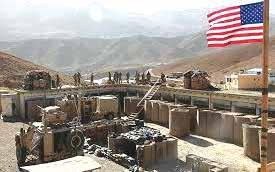
One American soldier and one British soldier died during a training exercise in Iraq.
The deaths occurred on Sunday at an air base in Irbil in the semi-autonomous Kurdish region of northern Iraq, where the U.S. has retained a presence, the U.S. Army said in a post on X. The soldier was not identified.
The U.K.’s Ministry of Defense said in a separate post that the family of the British soldier has been notified and requested a “period of grace” before more details are released.
The U.S. has been reducing the number of troops countering the Islamic State group in Iraq. But American forces have retained a presence in the Kurdish region as the U.S. seeks to strengthen ties with the Kurds.
The U.S. inaugurated a large, new consulate compound in December in Irbil, the capital of the Kurdish region. The deaths occurred nearly a month after two American soldiers fell off a cliff and died during an off-duty recreational hike in Morocco. They were reported missing on May 2 after participating in African Lion, an annual multinational military exercise.

The United Kingdom’s Home Office revoked the travel permits and Electronic Travel Authorization (ETA) on Monday for Hasan Piker, a 34-year-old pro-Palestinian American streamer, and his uncle, Cenk Uygur, a Turkish attorney and the

founder of the progressive online news show, The Young Turks, barring the two from entering the country ahead of their planned speech at the Oxford Union.
U.K. officials attributed the bans to concerns that the visit would “risk exacerbating antisemitism,” the Times reported.
Both Piker and Uygur slammed the U.K. for the move, claiming that it threatens free speech.
U.K. liberties, such as free expression and due process, “are falling by the wayside at the behest of a foreign apartheid state and its expansionist interests in the Middle East,” wrote Piker in a statement on Monday. “This is a real crisis of democracy.”
“I’ve been banned for criticizing Israel. Are we free anymore? This is oppression of Western citizens by our own governments on behalf of a different country!” Uygur posted on X.
“Are there any other countries you’re not allowed to criticize, or just Israel? If their point was to show that Israel does not get any special privileges in Western countries, they have found a deeply ironic way to deliver that message,” Uygur said in a statement.
Piker has around 6.4 million followers on X, Instagram, and Twitch, and is viewed by over 30,000 people a day, his
SXSW profile purports.
The two have accused Israel of committing genocide in Gaza and have heavily criticized the Jewish state. However, Piker and Uygur deny accusations of antisemitism, claiming that they are merely “anti-Zionists.” In April, Piker declared during a podcast that Hamas is less evil than Israel. In 2019, he claimed that “America deserved 9/11,” an assertion he later lightly apologized for.

Two Syrian officers accused of torture and war crimes went on trial in Vienna on Monday after hiding in plain sight in Europe for over a decade, the culmination of a years-long search by investigators and a groundbreaking case for Austria.
One of the officers, former brigadier

general Khaled al-Halabi, is the highest-ranking official of President Bashar Assad’s government to appear in a European court on charges of war crimes. He eluded investigators for years with help from members of the Israeli and Austrian intelligence services, according to prosecutors, until his detention in 2024.
Al-Halabi, 63, a member of the Druze minority in Syria, served in the Syrian intelligence service while also working as a double agent for Israeli intelligence, prosecutors said. Last year, he was charged with helping suppress protests from 2011-13, while serving as head of State Security in Raqqa, Syria.
Also charged was Musab Abu Rukbah, 54, a former lieutenant colonel who had served as the head of investigations in the local criminal police department and later led the Political Security office, an intelligence agency within the Interior Ministry, in Raqqa.
Both were granted asylum in Austria and have been living there since 2015.
The case is Austria’s first against officials from the Assad regime and comes as countries like Germany and Sweden have prosecuted other Syrians in the absence of an international tribunal for the widespread atrocities committed during Syria’s civil war.
Both face charges of aggravated coercion and inflicting bodily harm, with the purpose of suppressing the Syrian civil protest movement through force, according to an indictment prepared by the Vienna Public Prosecutor’s Office. In addition, the prosecutor said al-Halabi was charged with torture over events in early 2013 that involved two witnesses.
The two men both pleaded not guilty.
Abu Rukbah’s lawyer, Philipp Wolm, said there was little evidence against his client and that the accusations were weak because of possible misidentification.
In the afternoon, al-Halabi took the stand. He denied using violence or witnessing torture or any violence by his employees in his office against protesters during the period from 2011 to 2013.
(© The New York Times)
Most tourists visiting Notre Dame Cathedral spend their time looking up, admiring the cathedral’s towering architecture, stained-glass windows, and famous gargoyles.
Just a few feet away, however, archaeologists are looking in the opposite direction.
Beneath the busy square in front of the newly restored cathedral, a team of researchers is excavating what French media have dubbed the “dig of the century,” uncovering layers of Parisian history stretching back nearly 2,000 years.

The excavation began as part of a city project to transform the cathedral’s forecourt into a greener, cooler public space. Before workers could plant trees and redesign the square, archaeologists were called in to investigate what might be buried beneath the surface.
What they found was far more than anyone expected.
“This is a rare opportunity for us to work on something that’s tangibly going to make a difference to the history of Paris,” said archaeologist Lucie Altenburg.
Just 20 inches below ground, the first traces of earlier civilizations began to emerge. Four meters deeper, researchers are still uncovering evidence of centuries of life on the Île de la Cité, the island in the Seine River where Paris was born.
Among the discoveries are medieval household items, complete ceramic jugs and cups, ancient grain pits, and a fourth-century coin bearing the image of Roman Emperor Constantine.
Some of the most puzzling finds are fragments of medieval pottery marked with faint reddish writing on the inside. Archaeologists have yet to decipher the mysterious symbols.
“It’s rare to find complete ceramics,” said archaeologist Valentine Breloux, explaining that centuries of soft waste in medieval refuse pits helped preserve them intact.
The dig reveals how generations literally built Paris on top of itself. Medieval homes once crowded the square where visitors now gather, while beneath those structures lie remains from the Roman city of Lutetia, the settlement that eventually evolved into modern Paris.
“Here you can see the layers — medieval Paris, Roman Paris, maybe even before that,” said archaeology student Yasmine Benali. “It makes the city feel less like a postcard and more like something still being discovered.”
The excavation is expected to continue as the city prepares a redesigned public square featuring 160 new trees and

cooling water features to combat increasingly hot summers.
“The hope is that we are able to go back in time even further than we’ve ever been before,” Altenburg said.

An Israeli military doctor was killed and seven other soldiers were wounded on Monday when a Hezbollah explosive drone struck an IDF armored vehicle in southern Lebanon, underscoring the growing threat posed by the terror group’s increasingly sophisticated drone attacks.
The fallen soldier was identified as Capt. Dr. Ori Yosef Silvester, 30, of Tel Aviv, who served as the battalion physician for the Givati Brigade’s Shaked Battalion.
According to an IDF investigation, two explosive-laden first-person-view (FPV) drones launched by Hezbollah targeted an armored vehicle near the town of Zawtar al-Sharqiyah shortly after noon. The drones struck directly, killing Silvester and injuring seven other troops.
Among the wounded were two officers and a soldier who sustained serious injuries. Another soldier was moderately wounded, while three others, including the Shaked Battalion commander, suffered light injuries. The battalion commander is expected to return to duty in the coming days.
Silvester became the 14th Israeli soldier killed in clashes with Hezbollah since a U.S.-brokered ceasefire took effect in April. His death came less than 24 hours after another Israeli soldier, Staff Sgt. Adam Tzarfati, was killed in a separate Hezbollah drone attack.
Tzarfati, 20, of the Commando Brigade’s Maglan Unit, was from Rosh Ha’ayin.
At around 1 a.m. early Monday morning, an explosive-laden first-person-view

drone launched by Hezbollah struck a site in the southern Lebanon town of Yohmor, near the Beaufort Castle, where Israeli troops were operating. The blast killed Tzarfati and seriously wounded another soldier. Two other troops were lightly hurt in the attack.
The strike against Silvester occurred as U.S. President Donald Trump announced that Israel and Hezbollah had agreed to a renewed truce, though Israeli officials had not immediately confirmed the claim.
Despite repeated ceasefire efforts, hostilities along the northern front have continued. Hezbollah launched additional rockets and drones all through the day on Monday, targeting communities near the border, including Kiryat Shmona and military positions in southern Lebanon.
In one evening attack, an explosive drone struck an Israeli military post near Rosh Hanikra. Earlier, Israeli air defenses intercepted a rocket aimed at the Kiryat Shmona area, while two additional rockets landed near Israeli forces operating inside Lebanon. No injuries were reported in those incidents.
The IDF has struggled to counter Hezbollah’s FPV drones, which are often resistant to traditional electronic jamming systems. Military officials say the group has increasingly relied on these drones to target both troops and civilian areas.
Meanwhile, Israel continued its offensive against Hezbollah infrastructure. The IDF announced that an airstrike on Sunday killed Mohammed Mousa Mteirek, a Hezbollah missile commander responsible for directing hundreds of rocket and drone attacks against Israeli civilians and soldiers.

Israel’s defense industry reached a new milestone in 2025, with military exports climbing to a record-breaking $19.2 billion, the fifth consecutive year in which defense sales have set a new high.
Figures released by Israel’s Defense Ministry showed exports rose approximately 11% over the previous year, continuing a remarkable growth streak
fueled by global demand for advanced Israeli military technology amid rising international security concerns.
Defense Minister Israel Katz hailed the achievement as both an economic and strategic success.
“Israel’s defense industries have once again proven their technological superiority and operational excellence,” Katz said. “The world recognizes the quality of Israeli systems, many of which have been tested and refined under real combat conditions.”
Air defense systems accounted for a significant portion of the sales. Demand for missile-defense technologies surged following conflicts in Europe and the Middle East, with countries seeking protection against drones, rockets, and ballistic missiles.
Among the most sought-after products were systems developed by Israel Aerospace Industries, Rafael Advanced Defense Systems, and Elbit Systems. These firms manufacture some of Israel’s best-known defense technologies, including missile interceptors, surveillance equipment, precision-guided weapons, and advanced drone systems.
European nations remained the largest customers, accounting for more than half of all Israeli defense exports. The ongoing war in Ukraine and broader concerns about regional security have prompted many governments to expand military spending and modernize aging arsenals.
The Defense Ministry noted that unmanned aerial systems, intelligence technologies, cyber capabilities, and missile-defense platforms were among the fastest-growing export categories.
Officials also pointed to the impact of the 2020 Abraham Accords, which have opened new defense markets in the Middle East. Security cooperation between Israel and several Arab nations has expanded significantly in recent years, contributing to increased export opportunities.
Industry leaders say the record-setting figures reflect years of investment in research and development, as well as the growing reputation of Israeli technology worldwide.
The latest numbers reinforce Israel’s position as one of the world’s leading arms exporters. While the defense sector represents a relatively small portion of the country’s workforce, it remains one of Israel’s most influential industries, generating billions of dollars annually and strengthening diplomatic ties with dozens of countries around the globe.


State Comptroller Matanyahu Englman’s office released a report this week on the financial obligations and states of Israel’s political parties in 2024.
The ombudsman will penalize the Likud party and the Labor party by deducting funds that would otherwise have come to them as regular state funding given to Knesset factions.
Likud was docked NIS 150,000 ($53,000) for receiving party dues that didn’t meet the legal requirements and for failing to provide proof of payment for extra payments and bonuses given to various administrative officials based on unwritten agreements.
The report found that there was insufficient oversight over membership fees in a way that failed to guarantee the
authentication of each member’s identity and payment method. Over 40 percent of credit cards and bank accounts used to pay these dues — around 16,000 credit cards and 13,000 bank accounts — were each used for the membership fees of more than one person, and in about a quarter of these cases, the members had different family names and apparently weren’t from the same household.
Apparently, this raised the suspicion that membership fees are routinely paid for by others, a situation it characterized as “grave” since it could skew the electoral slate picked in the Likud primaries.
The report said Likud had pledged to fix both issues.
Meanwhile, Labor — a party that is set to be folded into the new Democrats party ahead of the upcoming election — was fined NIS 75,000 ($27,000) for receiving a prohibited loan from a corporation using a party-owned enterprise, violating the law stipulating that parties can only receive loans from the state treasury or from a banking corporation to acquire rights in real estate.
No irregularities were found in the financial reports of the other parties. No party was found to have illegally expended money.
The report also found that 10 factions

— most of the factions currently represented in the parliament — have accumulated deficits with a combined total of NIS 81.2 million ($29 million), a figure described as “worrying.” The report found that seven parties that aren’t currently represented in the Knesset — including Balad, Jewish Home and Meretz — are still in debt after previously taking loans and receiving advance payments from the state. These parties owe a combined sum of NIS 43.8 million ($15.5 million). The largest sums are owed by Meretz — another party set to be included in the new Democrats alliance — and by Tzalash, a long-defunct faction used by Naftali Bennett as the structural basis for his New Right and Yamina parties. Two other defunct parties — Kulanu and Telem — ended their Knesset terms in 2021 with surplus funds totaling NIS 3.7 million ($1.3 million) that haven’t been returned to the state treasury as required, the report noted.
Englman said in a statement that the parties’ failure to pay their debts “doesn’t reconcile” with their public duties.
“I call on the Knesset to pay attention to this matter, to ensure the debt is paid to the state treasury and to prevent such cases from occurring in the future,” he said.
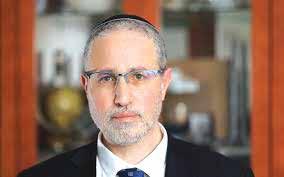
This week, Prime Minister Benjamin Netanyahu announced the appointment of Shmuel Ben Ezra as Israel’s next national security adviser and head of the National Security Council, a key body that shapes Israeli security policies.
Ben Ezra “brings with him over 30 years of experience in the defense of the country’s security,” the Prime Minister’s Office said in a statement. “He stood as the head of the development of the Arrow 3 missile interceptor project and won the Israel Defense Prize.”
Ben Ezra also spent four years as head of the Shin Beit security agency’s operational technology and cyber division. The statement noted that he has many years of experience working with U.S. government bodies and other international entities.
Ben Ezra will take over from Gil Reich, who has served as acting national security adviser since Tzachi Hanegbi was ousted from the role in October amid reported disagreements with the premier over policies during the war in Gaza. The position of national security adviser is considered a “position of trust” – if Netanyahu is ousted in the next elections, Ben Ezra would be forced to leave the position. Israel is set to hold elections no later than October 2026.
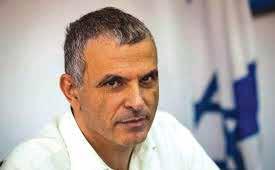
On Sunday, Moshe Kahlon, a former finance minister, was convicted on securities-reporting offenses in a plea deal.
In 2022, while he was chairman of Unet Credit, Kahlon was notified of “substantive irregularities” in the company’s Nazareth branch, and he was later indicted at the Tel Aviv District Court for not acting to “fully inform the company’s board of directors of all the information as required by the securities law,” according to the State Attorney’s Office. Five months after learning about the issues he notified the board, after which the company informed the public and Kahlon resigned.
A joint petition for a suspended sentence will be filed by the defense and prosecution, requesting a fine of NIS 180,000 ($64,000) and an 18-month restriction on serving as an officer in a public company.
For 10 years, Kahlon was a Knesset Likud member and minister, during which he was responsible for deregulating the cellphone industry. Later, he started the Kulanu party. From 2015 to 2020, he served as finance minister. As per the terms of the plea deal, he is allowed to return to politics.
Until the scandal led to the company’s shares getting frozen, Unet was traded on the Tel Aviv Stock Exchange.
Kahlon and the company’s compliance officer, Yoav Tsabar, are said to have intentionally withheld pertinent information from the board.


On Sunday, the IDF seized control of southern Lebanon’s Beaufort Castle, a historic and strategic site that Israeli forces captured in 1982 during the First Lebanon War and held until their withdrawal in 2000.
“Forty-four years after the heroic Bat-
tle of the Beaufort, and on the memorial day for the Peace for the Galilee War, including the Golani soldiers who fell in the Battle of the Beaufort, IDF soldiers, led by the Golani Brigade, returned to the summit of Beaufort and once again raised the Israeli flag and the Golani flag there,” Defense Minister Israel Katz shared. Katz declared at a memorial ceremony for soldiers who fell in the First Lebanon War that Israel would keep the castle “as part of the security zone in Lebanon,”
The IDF expanded its campaign into the Beaufort Ridge and Wadi Saluki stream area to “destroy [Hezbollah] infrastructure and eliminate terrorists, as part of strengthening operational control in southern Lebanon and removing the direct threat to the Galilee Panhandle and Metula,” and to “expand the forward defense line,” the Israeli military said.

Although a ceasefire between Israel and Hezbollah is still technically in effect, several truce violations have compelled Israel to expand its ground offensive, the army said.
During the castle takeover, a nearby Hezbollah attack killed Staff Sgt. Michael Tyukin, a 21-year-old fighter of the Givati Brigade’s Reconnaissance Unit, and injured four others. Tyukin was an only child who moved from Ukraine to Israel in 2020 with his mother. He lived in Ashkelon.

adding that “the capture of the Beaufort and the expansion of the [ground] maneuver constitute a clear message to our enemies: Whoever threatens the citizens of Israel will lose their strategic assets one after another.”
Israel and Lebanon have fought several wars. The latest round of hostilities began on March 2, when Hezbollah retaliated against Israel for its role in attacking Iran and killing Supreme Leader Ayatollah Ali Khamenei.
A former CIA official is facing federal charges after investigators allegedly discovered in his possession a treasure trove worthy of a Hollywood heist movie — more than $40 million in gold bars, millions in cash, and dozens of luxury watches hidden inside his Virginia home. David Rush was arrested last week following what authorities described as a sprawling investigation into suspected fraud, theft of government property, and years of alleged deception about his education and military credentials.
According to court records, Rush is


currently being held in custody while prosecutors and defense attorneys gather additional information ahead of a detention hearing scheduled for June 5.
In a rare joint statement, the FBI and CIA said Rush’s arrest stemmed from a CIA referral after an internal investigation uncovered “potential violations of law.” Both agencies said the investigation remains ongoing.
Federal prosecutors charged Rush with one count of stealing public money. However, the criminal complaint paints a far broader picture, alleging that he fraudulently obtained government funds, received an inflated salary, improperly claimed military leave benefits, and repeatedly misrepresented his background.
Investigators say that between November 2025 and March 2026, Rush requested large quantities of foreign currency and tens of millions of dollars in gold bars for purported work-related expenses. His employer at the time — identified by sources as the CIA — later could not account for the gold or determine what it had been used for.
When FBI agents searched Rush’s home on May 18, they allegedly found approximately 303 gold bars valued at more than $40 million. Agents also recovered roughly $2 million in cash and 35 luxury watches.
The FBI claims Rush built much of his professional career on fabricated credentials. According to the complaint, he supplied false records indicating he had earned a degree from Clemson University, helping him secure a commission in the U.S. Navy Reserve. Authorities say he later cited degrees from Clemson University, Rensselaer Polytechnic Institute, and the Naval Postgraduate School in federal job applications and security clearance paperwork.
Investigators further allege that Rush falsely claimed to be a graduate of the Air Force Test Pilot School and exaggerated his military experience.
“The FBI’s investigation has revealed that Rush’s applications contained false information about his education background and work with the United States military,” the complaint states.
Prosecutors also accuse Rush of falsely claiming continued Navy Reserve service after his discharge, allowing him to collect tens of thousands of dollars in military leave compensation.
For now, the mystery surrounding the gold remains unresolved, but federal authorities appear determined to find out where it came from and why it ended up in Rush’s basement instead of a government vault.

Florida has become the first state in the nation to file a lawsuit against OpenAI, alleging that the company knowingly released an unsafe product and failed to adequately protect users — particularly children — from potential harm.
The lawsuit, filed on Monday by Florida Attorney General James Uthmeier, names both OpenAI and its CEO, Sam Altman, as defendants. State officials accuse the company of prioritizing rapid growth and profits over safety measures, despite warnings about potential risks associated with its popular chatbot, ChatGPT.
“Today, we announced the first-inthe-nation state-led lawsuit against OpenAI and its CEO, Sam Altman,” Uthmeier said. “OpenAI and Altman ignored internal and external safety warnings, put children at great risk, and allowed a dangerous product to reach millions of Floridians.”
The 83-page complaint alleges that ChatGPT has contributed to a range of harms, including encouraging self-destructive behavior, fostering unhealthy dependency among minors, and providing information that could be used to facilitate violent crimes. The lawsuit also claims OpenAI marketed ChatGPT as safe and reliable while failing to adequately disclose its potential risks.
Among the incidents cited is the 2025 mass shooting at Florida State University. Florida officials contend that the alleged shooter consulted ChatGPT before carrying out the attack, though OpenAI has previously rejected claims that the chatbot was responsible.
The state is seeking financial penalties as well as court-ordered changes to how OpenAI develops and deploys its technology. The lawsuit also seeks to hold Altman personally accountable, an unusual move in a case involving a major technology company.
OpenAI has defended its safety practices, saying its systems are designed to reject requests that promote violence and that the company works with experts to address mental health and safety concerns. The company has not yet formally


responded to Florida’s lawsuit.
As artificial intelligence becomes increasingly woven into everyday life, the case is expected to be closely watched as a potential test of how far companies can be held responsible for the actions of users who interact with AI tools.
A federal judge has ordered President Donald Trump’s name removed from the John F. Kennedy Center for the Performing Arts, ruling that the venue cannot be officially renamed without congressional approval.
The ruling requires the Trump administration and the Kennedy Center to remove signage bearing Trump’s name and eliminate references to the “Trump-Kennedy Center” from official materials.
The legal challenge was brought by Rep. Joyce Beatty (D-Ohio), who serves as an ex officio member of the board. Beatty praised the decision, calling it a victory for the rule of law.
“Today’s ruling rightly affirms that this administration’s efforts to rename and close the Center have no basis in law,” she said. “The Kennedy Center is an institution that belongs to the American people, not to Donald Trump.”

Trump, however, blasted the decision in a lengthy social media post, accusing Judge Cooper and Democrats of obstructing efforts to revive the struggling arts institution.
“I took great pride in taking over a losing Institution and looked forward to making it into a Great and Prestigious WINNER,” Trump wrote. He argued that political opponents would “rather see it DIE” than allow him to restore it.
The dispute comes amid broader efforts by Trump to reshape the Kennedy Center. In February 2025, he became chairman of the board after removing 18 trustees appointed by former President Joe Biden. The board later voted unanimously to add Trump’s name to the venue.
The venue has also been at the center of controversy over a planned two-year closure for renovations. Trump secured $257 million in congressional funding to address what supporters describe as years of deferred maintenance and structural deterioration.
In a decision issued on Friday, U.S. District Judge Christopher Cooper determined that the Kennedy Center’s board exceeded its legal authority when it voted last year to rename the landmark the “Trump-Kennedy Center.”
“The Kennedy Center’s organic statute makes crystal clear that the Center is to be named for President Kennedy,” Cooper wrote. “Congress gave the Kennedy Center its name, and only Congress can change it.”
Kennedy Center Vice President of Public Relations Roma Daravi said the board intends to appeal the ruling.
“With $257 million secured by President Trump and approved by Congress, the resources are in place,” Daravi said. “We remain committed to pursuing every lawful avenue to ensure the Center is restored as a national cultural landmark.”
For now, however, the famous performing arts venue will remain what Congress originally named it more than five decades ago: the John F. Kennedy Center for the Performing Arts.


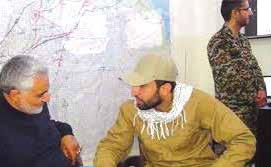
An Iraqi national accused of helping orchestrate a wave of terror attacks across Europe and plotting strikes against Jewish and American targets in North America pleaded not guilty on Monday in a Manhattan federal courtroom, where he described himself as a “prisoner of war” and denied being a criminal.
Mohammad Baqer Saad Dawood Al-Saadi faces multiple federal terrorism-related charges stemming from what prosecutors say was a coordinated campaign of violence carried out on behalf of Iran-backed militant groups. Authorities allege he helped plan or direct at least 18 attacks in Europe and encouraged additional assaults in the United States and Canada.
The courtroom hearing briefly turned tense when Al-Saadi remained standing
after entering his plea and addressed the judge through an Arabic interpreter.
“I’m not guilty in a war situation,” he said. “I’m a prisoner of war. I’m not a threat. Children and women are being killed by your rockets.”
Judge Colleen McMahon instructed him to sit down after his outburst.
Federal prosecutors allege Al-Saadi served as a commander in Kata’ib Hizballah, an Iran-backed Iraqi militia designated by the United States as a foreign terrorist organization. He is also accused of conspiring to support Iran’s Islamic Revolutionary Guard Corps.
According to court documents, Al-Saadi allegedly played a role in attacks that included the firebombing of a bank in Amsterdam, the stabbing of Jewish men in London, a synagogue attack in Canada, and a shooting at the U.S. consulate in Toronto. Prosecutors further claim he sought to target a New York City synagogue and provided maps and photographs of Jewish centers in Los Angeles and Scottsdale, Arizona, to an undercover operative.
Authorities say he used Snapchat, Telegram, and phone calls to discuss attacks and recruit participants, often communicating with an FBI informant.
Al-Saadi’s attorney, Andrew Dalack,
argued that his client worked for the Iraqi government and has been held in isolation since being transferred to the United States from Turkey. He has previously claimed Al-Saadi is being persecuted because of his relationship with the late Iranian commander Qasem Soleimani.
If convicted, Al-Saadi could face life in prison.

More than 1,100 math and science professors across the University of California system are calling for the return of standardized college entrance exams, arguing that growing academic deficiencies among incoming students are making it increasingly difficult to maintain rigorous STEM programs.
In a letter sent last week to the Uni-
versity of California Board of Regents, faculty members warned that many students are arriving on campus without the mathematical foundation necessary for college-level coursework. The professors said the problem has become especially evident in science, technology, engineering, and mathematics (STEM) fields.
At UC Berkeley, nearly one-third of students enrolled in first-semester calculus were found to have “severe preparation deficits,” according to the letter.
“We now observe preparation gaps so severe that instructors must reteach middle-school mathematics while simultaneously teaching the material students need for sciences, engineering, economics, and other quantitatively demanding fields,” the professors wrote. “UC has finite resources and can help only so many students.”
The concerns echo findings from a 2025 faculty report at UC San Diego, which showed a dramatic increase in the number of students requiring remedial math instruction before they could even begin pre-calculus. The percentage of students placed into courses reviewing elementary and middle school math rose from just 0.5% in 2020 to 8.5% in 2025.
The University of California eliminated SAT and ACT requirements in 2020,


40 joining a national movement away from standardized testing. Critics of the exams have long argued that they disadvantage students from low-income backgrounds and underrepresented minority groups.
However, some universities have begun reversing course.
The Massachusetts Institute of Technology reinstated SAT requirements in 2022, arguing that test scores provide valuable information about students’ readiness for demanding coursework. Dartmouth College followed in 2024, and Yale University recently announced that applicants must once again submit standardized test scores.
Supporters of testing say the exams help identify students who may have strong academic potential despite attending under-resourced schools. They also argue that grade inflation at many high schools has made it harder for colleges to evaluate applicants fairly.
The UC professors warned that the consequences of declining preparation extend beyond the classroom.
“We are already seeing the warning signs: longer pathways through prerequisite material, reduced readiness for advanced coursework, and growing pressure to dilute quantitative rigor,” the faculty wrote.
If the trend continues, they cautioned, California could face lower graduation rates, longer times to complete degrees, and a shrinking pipeline of STEM graduates needed to support the state’s technology-driven economy.
UC Academic Senate Chair Ahmet Palazoglu said university leaders are currently reviewing admissions policies and requirements, though no decision has been announced.

The death toll of a major chemical disaster in Washington state rose to 11 on Saturday after officials recovered the bodies of nine victims previously presumed dead.
Disaster struck early last Tuesday when a 900,000-gallon chemical tank failed at the Nippon Dynawave Packaging Co. in Longview, emitting tens of thousands of gallons of a corrosive chemical called white liquor. Nine people were hospitalized with injuries, two of whom passed away soon thereafter.
“We’re bracing ourselves for this being the deadliest industrial tragedy in modern Washington state history,” Gov. Bob Ferguson stated last Wednesday. “I want to extend my deepest condolences to those who have been directly impacted by the loss of a loved one during this extraordinarily challenging time.”
On Wednesday, officials restarted their search for the remains of the nine victims after briefly pausing due to safety concerns. On Saturday, the search concluded after the victims’ remains were recovered.
“As individuals are recovered from the site, they’ll undergo decontamination before being transported to the Cowlitz County Coroner’s office for identification

and family notification,” Longview Fire Battalion Chief Matt Amos explained. He said the process would be slow as responders treated “every victim with the greatest dignity, care and respect as possible.”
Among the victims was Gilbert Bernal, a 52-year-old instrument technician who was employed by Nippon Dynawave for over a decade.
In Southwest Washington, last Tuesday night, hundreds gathered for a vigil at a park in Longview to honor the victims.
Officials have declared local drinking water safe, despite the chemical disaster.

Most teenagers spend their senior year worrying about pimples, driver’s licenses, and whether they remembered to submit their homework.
Jimmy Chilimigras spent his worrying about law school.

Harry Heasman isn’t just winging it.
The 98-year-old recently landed himself in the Guinness World Records as the oldest person to perform a wing walk.
He completed the daring challenge at Duxford Airfield in Cambridgeshire.
Heasman called it “the most incredible experience” of his life and said he would do it “all over again” if he could –perhaps next year?
The nonagenarian decided to take on the wing walk to raise money for charity, after admitting it was something he had dreamed of doing since he was a young child.
He was strapped to the top of a 1940’s Boeing Stearman plane for the adventure. Heasman stood on the aircraft for nine minutes as it soared high above the ground.
During the wing walk, the plane climbed more than 3,280 feet in the air.
After landing, Heasman enthused, “I feel 1,000 times different and 100 times better than I ever have.”
He added, “To finally live that dream at 98 years old, and to be a Guinness World Record holder, is beyond anything I could have ever imagined.”
You’re never too old for a new adventure.
The 18-year-old Mississippi native has officially become the youngest person in Louisiana history to earn a law degree, proving once and for all that some people are simply playing a different game than the rest of us.
While most kids celebrate turning 15 by getting a learner’s permit, Jimmy started law school. By the time many of his peers were learning algebra, he had already graduated high school. At age 15, he had earned both bachelor’s and master’s degrees in accounting and became what is believed to be the world’s youngest Certified Public Accountant. Apparently, regular childhood accomplishments weren’t challenging enough.
Now, three years later, Jimmy has graduated summa cum laude from Loyola University New Orleans College of Law. Not only did he finish in the top two percent of his class, but he also earned the highest grade in more than 40 percent of his courses. Some students are thrilled to pass Constitutional Law. Jimmy practically adopted it.
His achievements didn’t stop there. He completed five separate concentration certificates—more than any student in the law school’s history—including taxation law, immigration law, international legal studies, social justice, and technology law. At this point, his résumé probably needs a table of contents.
Despite the mountain of accomplishments, Jimmy insists his success comes down to hard work and perseverance. It’s a refreshingly simple explanation from someone whose academic journey sounds more like a speedrun than a school career. And before anyone asks whether he’s finally taking a break, think again. His next stop is pursuing an advanced law degree in taxation at Northwestern University.
This kid’s education is certainly not brief.


Haven’t gotten the hang of how to spell “favorite” or “niece”? You’re not alone.
An analysis of Google search data from the first five months of the year revealed the “most misspelled” words in America.
Website Unscramblerer.com conducted an analysis of Google search data from January 1 through May 18. The researchers used search data from Google Trends for “How do you spell” and “How to spell” and then used platforms to find the number of searches for each inquiry.
The analysis found the most-searched word was “bougie,” followed by “favorite,” “through,” “business,” “tomorrow,” “because,” “definitely,” “beautiful,” “niece” and “separate.”
The researchers also looked at the
most misspelled word for each individual state, and discovered some of the words did not make the overall top 10.
For example, the word “school” seems to be hard for those living in Florida. Coloradans have trouble with “color,” people in Georgia can’t spell “Chihuahua,” and “restaurant” is difficult for those in Louisiana. In North Carolina and Virginia, the word “spaghetti” isn’t easy. Minnesota struggles with “ukulele,” “diamond” doesn’t sparkle for those in Oregon, and “recycle” gives those in Texas a run for their money.
The research was released ahead of the National Spelling Bee, which was held on May 26-28.
“Studies show that reliance on autocorrect and AI deteriorates the authors spelling ability over time,” an Unscramblerer.com spokesperson said. “To combat this digital amnesia, we encourage everybody to search for the correct spelling of the word when a feeling of doubt arises. This becomes an educational moment. As the saying goes, use it or lose it.”
Wee kan’t agree moor with u.

Some people take a vacation to relax. Others take a vacation to sightsee. Keshia Smith took a vacation and came home with a diamond.
The Pennsylvania woman struck literal gold—or rather, something much better—when she unearthed a rare 3.09-carat white diamond at Arkansas’ Crater of Diamonds State Park. The find came after what can only be described as an extraordinarily difficult year. Smith had lost her son in October and buried her father just days before embarking on the trip.
The road trip to Arkansas had been planned for months, and despite her grief, Smith decided to go. Good thing she did. Sometimes, life gives you lemons. And sometimes, it gives you a three-carat diamond buried in the dirt.
On her second day of digging, Smith noticed something shiny in her shovel after following advice from fellow treasure hunters. At first glance, she thought it was just another interesting rock. That’s a mistake most people would love to make.
When park officials examined the stone, they confirmed it was a colorless 3.09-carat diamond—one of only a handful of diamonds over three carats found there in the past decade. The gem was roughly the size of a bead, proving once again that big surprises can come in small packages.
Smith named her discovery the “Za’Novia Liberty Diamond” in honor of her grandchildren and as a tribute to the nation’s 250th anniversary.
The find is especially remarkable because diamonds of that size are rare even at Crater of Diamonds State Park, the only place in the world where visitors can search for diamonds in their original volcanic source and keep whatever they find. More than 37,000 diamonds have been discovered there since it became a state park in 1972.
For Smith, the trip was meant to provide comfort after heartbreak. Instead, it delivered a reminder that sometimes, if you dig deep enough, you’ll find a sparkling gem in the darkness around you.

Community Marches in Celebrate Israel Parade on 5th Avenue



Orthodox Union






Community Marches in Celebrate Israel Parade on 5th Avenue














Community Marches in Celebrate Israel Parade on 5th Avenue








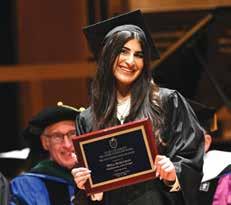
More than 500 Touro University graduates were honored during the university’s 52nd annual commencement exercises held on May 31 at Alice Tully Hall at Lincoln Center. Graduating students, family members, faculty, and administrators gathered to recognize academic achievement and mark the beginning of a new chapter in the graduates’ personal and professional lives.
Touro University President Dr. Alan Kadish congratulated the graduates while acknowledging the rapidly changing world they are entering. He pointed to advances in artificial intelligence, rising antisemitism, and geopolitical uncertainty as examples of challenges they will face throughout their careers.
“Resilience and flexibility are the two most important things that you need to take forward into the future,” he said. “Use the skills and talent you have built at Touro to deal with the challenges, deal

with them flexibly, deal with them with resilience, and you’ll succeed,” he said.
In closing, he advised the graduates to “anchor your approach to the world through Torah values.”
“Of course, everyone and everything is under G-d’s control, but to earn His benefit, to earn His providence, requires our effort to interact with it, to learn Torah, to view it in our lives,” he said. “You can depend on Hashem’s beneficence, but you have to use the skills that you’ve learned throughout your life and at Touro to live in a way which leads Him to recognize each of us as being important, as people who can deal with the challenges of the world.”
Following Dr. Kadish’s remarks, an honorary doctorate was conferred upon Shlomo Yehuda Rechnitz, an entrepreneur, philanthropist, community leader, and musical composer.
“In quiet ways, he has reshaped the standards of generosity for an entire community, inspiring others simply by the


way he lives,” said Rabbi Moshe Krupka, executive vice president of Touro University. “He is in the deepest sense a builder of Torah through a steadfast support of yeshivas, kollelim, and institutions, and he has literally helped sustain the infrastructure of Torah learning for this generation.”
In accepting the honor and delivering the commencement address, Rechnitz reflected on the opportunities awaiting graduates as they begin making their own decisions about careers, families, and personal values. He also addressed growing antisemitism and encouraged graduates to respond not with fear or anger, but with achievement and character.
“Your response to darkness cannot simply be outrage, it must be excellence,” Rechnitz said. He urged graduates to pursue success while remaining committed to their Jewish identity and values.
“Dream big, work hard, build beautiful lives, take risks, become successful, help people, stand up for truth, and never apologize for being proud of being Jewish,” he said, drawing applause from the audience.
One of the evening’s most memorable moments came following Rechnitz’s address, when Rabbi Krupka announced a surprise musical tribute recognizing Rechnitz’s work as a composer. Joined by members of the Shira Choir and Yussi Sonnenblick, a 1995 graduate of Touro’s Graduate School of Jewish Studies and current Touro professor, Rechnitz participated in a performance of his song “V’Hareinu.” Audience members joined in the singing and recorded the unexpected concert on their cell phones, or used the flashlight settings on their phones to illuminate the hall, their arms swaying in the air, transforming the commencement


ceremony into a communal celebration. Recognizing Achievement
The evening included special recognition for Vice President Dr. Stanley Boylan, who is transitioning to a new role as Vice President for University Affairs after five decades of service to Touro. Dr. Kadish praised Dr. Boylan’s longstanding contributions to the university and his role in helping shape the institution’s growth and success.
The ceremony also honored students for academic excellence and achievement across the Lander Colleges, with 15 graduates receiving special recognition for their accomplishments. Four valedictorians addressed the graduating class: Joseph Levy and Batya Zitron, of the men’s and women’s divisions of Touro’s Lander College of Arts & Sciences, Moshe Tzvi Ostreicher of Touro’s Lander College for Men, and Touro Lander College for Women’s Mina Schulman. In his address, Ostreicher reflected on the relationships formed during students’ college years and the close-knit educational environment that shaped their experience.
“Class of 2026, we are ready to move forward in the journey of life,” he said. “But continue to carry Touro University with you. Carry the people, the arguments, the afternoons that became something more than you expected. Carry the relationships that made us who we are, standing here today.”

Ezra Academy proudly hosted its annual Awards Night and Night of the Arts, an evening dedicated to celebrating the remarkable talents, achievements, character, and contributions of its students. The event brought together students, parents, faculty, and family for a memorable night that showcased the very best of Ezra Academy.
The evening began with a dinner and reception, providing parents and award recipients the opportunity to mingle with
Tfaculty and administrators in a warm and relaxed setting. Throughout the evening, teachers and school leaders shared stories and reflections highlighting the accomplishments, growth, and positive impact of students across all grade levels.
The informal atmosphere allowed families to hear firsthand the many ways their children have contributed to the Ezra community.
A highlight of the evening was the presentation of student awards recogniz-
he Pre-1A students at BY5T have been writing letters to our pen pals in the Pre-A of Bais Yaakov of Queens. This week, they finally came to visit us in BY5T! We exchanged fun gifts that we’d made for each other, played games, and had a pizza picnic lunch.


ing excellence in a wide range of areas. Students were honored for scholastic achievement, exemplary middot, school spirit, commitment to personal growth, leadership, perseverance, and service to the school community. Together, the awards reflected Ezra Academy’s commitment to developing not only academic excellence but also strong character and meaningful engagement.
Guests were also invited to explore a stunning museum-style exhibition of student artwork curated by Ezra Academy Art Director Mr. Lavi Friedman. The exhibit transformed the space into a professional gallery, showcasing the creativity, technical skill, and artistic growth of Ezra students. Families enjoyed walking through the display and appreciating the diverse talents represented in the collection. The exhibition stood as a testament both to the dedication of the student artists and to Mr. Friedman’s ongoing efforts to cultivate a vibrant and thriving arts program.
One of the evening’s most meaningful moments was a special tribute rec-

ognizing Rabbi Moshe Friedler upon his completion of Shas. Students and faculty joined together to honor this extraordinary achievement, reflecting the school’s deep appreciation for dedication to Torah learning and lifelong growth. The recognition served as an inspiring reminder of the values that guide the Ezra Academy community.
As the evening concluded, attendees left with a renewed sense of pride in the accomplishments of Ezra Academy students. Awards Night and Night of the Arts once again demonstrated that excellence at Ezra takes many forms: dedication to Torah learning, academic achievement, artistic expression, strong character, leadership, commitment, and the pursuit of personal and communal growth.


This past week, Rambam participated in CIJE Innovation Day, an event that brings together over 1,000 high school students from dozens of schools across nine states, including New Jersey, New York, Florida, Texas, Maryland, and Washington. For Innovation Day, teams were tasked to develop an invention that could make a real impact and then present their projects at Innovation Day, which took place at American Dream.
Throughout the day, teams had five minutes to pitch their invention to a room filled with fellow students and judges. After presenting, judges asked questions to each team about their project and about
the development process. At the end of the day, there was an award ceremony in which Rambam ultimately won first place for Best Pitch, with a project centered around a milk cap designed to detect whether milk is spoiled. The team was led by David Rabinow and Effie Neuman who worked for months developing the cap. As part of the development process, David flew out to Chicago to meet with a professor from the University of Chicago and discuss different testing methods that could help determine whether milk had gone bad.
The project was developed over several months through designing, coding, testing, and refining the cap. The
Another outstanding week of 5TLL action is in the books, and this one featured dramatic walk-offs, towering grand slams, game-ending double plays, and some incredible individual performances. As the season rolls on, the level of play continues to improve every single week.
Seasons defeated Marciano PD 2–0 in a tightly contested defensive battle. Both teams showed tremendous growth, and it has been amazing to watch the boys improve and gain confidence with every passing week.
SR Whee edged Mr. Softee 7–6 in a thriller. The hero was Yonatan Waller, who delivered a walk-off hit to seal the victory. Throughout the doubleheader, Yoyo Eichhorn was on fire, driving in runs
and making several spectacular plays in the field. Posh Home & Bath defeated Tikva Fire 8–7 in another nail-biter. With the game hanging in the balance, Sol Berman ripped a bases-clearing triple that proved to be the difference.
2nd
SD Shades defeated Teller Life Insurance 15–10 behind a monster day from Akiva Yormark, who launched a grand slam on his very first swing of the game and never looked back. 5T Restoration edged 5T Batting Range 14–13 in a high-scoring affair. Shua Badian played an outstanding all-around game, contributing both offensively and defensively.
3rd Grade Baseball
One of the moments of the season belonged to Meir Hikind. With his team trailing late, Meir stepped to the plate and launched a walk-off grand slam, giving

cap works by measuring changes in the milk’s electrochemical properties, specifically shifts in ionic conductivity caused by microbial activity. As milk spoils, bacteria metabolize components in the milk, producing acidic byproducts and other charged particles that alter the milk’s conductivity. The cap takes an initial baseline reading and then compares future readings to tested thresholds of ionic activity. Once the readings pass certain levels, the cap can help determine whether or not the milk is spoiled.

The team hopes to continue refining the project and eventually make an appearance at CIJE Tank. To check us out go to: https://biocap.davidrabinow.com/

Nate Builders a dramatic 13–12 win over Demo & Cleanouts. In Game 2 of the doubleheader, Smash House got the better of Nate Builders, thanks in large part to Reuven Cooper, whose momentum-shifting double play completely changed the game.
Goldstar Mechanical came through with outstanding defense, turning a game-ending double play when it mattered most to secure the victory. VMM Legal Eagles defeated Altbanq 6–5 in dramatic fashion. With the game on the line, Asher Newman crushed a game-winning grand slam to cap off an unforgettable comeback.
The Vision Board defeated Smash House 7–3 behind excellent play from Ari Feldman, who controlled the game from behind the plate and helped guide
his team to victory. BlueBird Insurance defeated CG Flooring 6–4 thanks to a tremendous pitching performance from Shalom Kopelowitz, who consistently worked out of trouble and kept the opposition off balance.
Elegant Landscape delivered one of the most dramatic finishes of the week. With the game tied late, Dovid Goldman launched a deep walk-off home run, sending his teammates into celebration and securing the win.
7th/8th
Tribe Gym and Sperling Productions battled to a 5–5 tie in a game that showcased fundamentally sound baseball on both sides. Strong defense, smart baserunning, and timely pitching kept this one competitive throughout.

Mrs. Lang’s fourth grade class at YOSS has been learning all about the presidents of the United States through a fun and exciting biography project. Each boy randomly selected the name of a president out of a bowl and began researching and learning about that specific president’s life and accomplishments. This activity gave every student the opportunity to explore a different leader in American history while practicing important research and organization skills.
Throughout the project, the boys learned how to create timelines and place important events in chronological order. They researched their president’s early
life, fun facts, famous quotes, and what he was most known for during his presidency. They also discovered how many terms each president served and the impact he had on the country during his time in office.
The students worked hard completing research packets and then transferring all of their information onto colorful trifold presentation boards. Each board includes facts, timelines, and a picture of their president. Once completed, the boys will proudly present their projects to the class, sharing everything they have learned about their chosen president. This project has been a wonderful way for students to build confidence,
strengthen research skills, and deepen their understanding of American history.
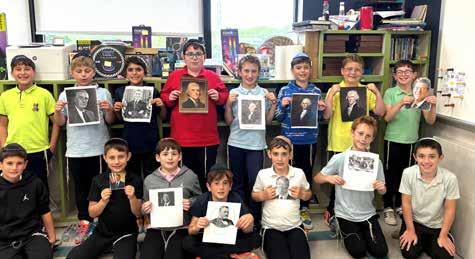
The reviews are in, and the verdict is unanimous: BYAM Junior High School’s latest theatrical production was an extraordinary triumph!
On the evening of June 1, the talented junior high school girls captivated audiences with a breathtaking performance of The Matriarch’s Heart, a powerful and inspiring production that brought the timeless story of Rus and Naami to life with remarkable artistry and heart.
From the very first scene, audience members were spellbound by the cast’s exceptional acting, the choir’s beautiful and moving vocals, and the vibrant, meticulously choreographed dances that filled the stage with energy and emotion.
Every element of the production reflected dedication, creativity, and professionalism far beyond the performers’ years.
The stunning costumes, magnificent backdrops, and impressive attention to detail transformed the stage into a captivating world, leaving spectators amazed that such young performers could deliver entertainment of such outstanding quality and profound meaning.
This groundbreaking production was the visionary initiative of Ateres Miriam Principal Mrs. Sarah Rudomin, whose commitment to enriching student experiences helped bring this ambitious project to life. Working alongside her was the extraordinarily talented producer Miss
Shira Bookson, whose creativity, leadership, and dedication were instrumental in crafting this unforgettable theatrical experience.
The entire school community has every reason to be proud. The girls poured countless hours of effort, passion, and perseverance into this spectacular production, and their achievement was evident in every moment on stage.
Congratulations to the cast, choir, production team, and everyone involved in making The Matriarch’s Heart a resounding success and a truly unforgettable evening of inspiration, talent, and excellence.

The Village of Lawrence is pleased to announce that Liberty Water will begin a series of water main replacement projects in the coming weeks as part of its ongoing efforts to improve water service reliability, water quality, and system performance throughout the community.
The project will include the replacement of aging water mains on the following streets:
Lord Avenue (between Central Avenue and Broadway) – approximately 1,000 feet of pipe
Rand Place – approximately 725
feet of pipe
Lismore Road – approximately 450 feet of pipe
Wentworth Place – approximately 515 feet of pipe
Stevens Place – approximately 300 feet of pipe
Wildacre Place – approximately 725 feet of pipe
According to Liberty Water, infrastructure upgrades are selected after a comprehensive review of the age and condition of existing water mains, repair history, and customer service data, including water pressure concerns and
service complaints.
Construction is expected to begin within the next several weeks and continue throughout the month of June.
These improvements are designed to address water pressure deficiencies, accommodate increased demand on the system, and enhance overall water quality for residents.
Following the completion of the water main replacement work, the Village of Lawrence will repave the affected roadways to ensure streets are fully restored and improved for residents.
“Our administration has made infra-
structure improvements a top priority, and this project is another important step forward,” said Mayor Samuel Nahmias. “Replacing aging water mains before they become larger problems is a smart investment that will improve service for residents today and strengthen our community for years to come. We are proud to partner with Liberty Water on this initiative and will ensure that the affected streets are fully repaved once the work is complete.”





With hearts full of pride and joy, we celebrate the incredible third graders of Ateres Miriam, who marked their completion of learning Shemoneh Esrei with a beautiful and meaningful performance. Through heartfelt narration, uplifting singing, and lively dancing, the girls brought the tefillah to life in a way that was both inspiring and unforgettable.
Every part of the performance reflected the hard work, dedication, and enthusiasm they invested in reaching this milestone. The girls performed with remarkable confidence and professionalism, leaving the mothers in attendance
deeply moved and incredibly proud as they watched their daughters shine with such grace, spirit, and sincerity.
Adding to the beauty of the occasion, each girl created a personalized bookmark featuring her name together with the pasuk connected to it, a precious keepsake to hold onto and use each day.
We are immensely proud of each and every one of these wonderful girls. Their achievement brought tremendous nachas to their families, teachers, and the entire Ateres Miriam community. It was truly a day filled with inspiration, pride, and heartfelt celebration.




Last week, Rambam Mesivta welcomed mothers and sons for its Second Annual Mother & Son Trivia Night, an evening filled with friendly competition, laughter, and community spirit.
The school’s lunchroom was transformed into a vibrant trivia-night venue, complete with string lights, themed decorations, and an atmosphere that set the stage for an exciting evening of family fun. Participants teamed up to test their knowledge through three engaging rounds of trivia, with a lively game of Panoply providing entertainment and energy between rounds.
Adding a special touch to the evening, Rambam faculty members served as celebrity captains, joining teams during different rounds of play. Their partici-
pation brought extra excitement to the competition and gave families a unique opportunity to interact with faculty members outside the classroom. The faculty’s enthusiasm and willingness to join in the fun helped make the evening especially memorable.
Each mother received a special Rambam Mom baseball hat as a keepsake from the event, while guests enjoyed pizza, snacks, and ice cream throughout the night.
As the competition heated up, teams eagerly vied for top honors. Winning teams were recognized with commemorative plaques and received a family game to take home, ensuring that the fun and togetherness would continue long after the event ended. But perhaps the greatest reward of the evening was the

nachas shared by mothers and sons as they worked together, laughed together, and created lasting memories.
The event highlighted Rambam Mesivta’s commitment to fostering meaningful connections between students,
families, and faculty while strengthening the sense of community that makes the school so special. Following the success of this year’s gathering, families are already looking forward to next year’s Mother & Son Trivia Night.
In recognition of Men’s Health Awareness Month, Episcopal Health Services (EHS) is encouraging men throughout the Rockaway Peninsula, Five Towns and surrounding communities to take a proactive approach to their health by scheduling a primary care visit. At EHS, our primary care physicians help you manage all facets of healthcare, including preventive screenings, routine medical care, and healthy lifestyle choices.
According to the Centers for Disease Control and Prevention (CDC) men are more than half as likely as women to visit their doctor and 2.1% of men report they have never seen a doctor versus only 0.9% of women. Additionally, on average
women tend to outlive men by five years. Research from the CDC also shows that the life expectancy for men is approximately 76, while women live to 81.
“Many of the most serious health conditions affecting men today — including heart disease, diabetes, hypertension, and prostate cancer — are far more manageable when identified early,” said Ravi Gupta, MD, FACP, Chair and Residency Director of the Department of Medicine at EHS. “Routine screenings, regular primary care visits, and paying attention to changes in your health can make a significant difference in both quality of life and long-term outcomes. Preventive care is one of the most important steps men can take to protect their health.”
Schedule annual physical exams and preventive screenings and pay attention to changes in your health to help identify conditions before they become more serious.
Monitor blood pressure, cholesterol, and blood sugar levels regularly, as heart disease, hypertension, and diabetes are the most common health conditions affecting men.
Prioritize mental health and speak with a healthcare provider about stress, anxiety, depression, or emotional well-being.
Maintain a healthy diet rich in
fruits, vegetables, lean proteins, and whole grains to support long-term overall health.
Engage in regular physical activity, maintain a healthy weight, prioritize sleep, and manage stress to help reduce the risk of chronic disease.
Avoid smoking and limit alcohol consumption to support cardiovascular, respiratory, and overall health.
To learn more about Primary Care services available through Episcopal Health Services or to schedule an appointment, call 718-EHS-DOCS (347-3627) or visit ehs.org/primarycare



Students from the Stella K. Abraham High School for Girls demonstrated their ingenuity, creativity, and commitment to innovation at this year’s CIJE Innovation Day, earning top honors for their work.
Representing SKA’s vibrant STEM program, Ellie Koffsky and Hadassah Herskovic were awarded Best in Room for Engineering, while Yael Rabinowitz, Lizzy Stern, and Temima Steiner earned the distinction of Best in Room for their outstanding project presentations and innovative thinking.
CIJE Innovation Day provides students with the opportunity to apply STEM concepts to real-world challenges through hands-on engineering, design, and problem-solving. The event celebrates creativity, collaboration, and critical thinking. These are skills that are increasingly essential in today’s rapidly evolving world.
At SKA, learning comes to life through immersive opportunities that foster intellectual growth, personal development, and the confidence to pursue ambitious goals.
Through programs such as STEM research, engineering challenges, innovation competitions, and experiential learning initiatives, SKA empowers young women to discover their passions,

think creatively, tackle complex problems, and bring their ideas to life.
As the fields of science, technology, engineering, and mathematics continue to shape the future, SKA remains dedicated to preparing students to become thoughtful leaders, innovative thinkers, and active contributors to their communities. The accomplishments at CIJE Innovation Day are another example of how SKA encourages students to learn beyond the classroom and embrace new challenges with creativity, determination, and enthusiasm.
The SKA community congratulates these talented students on their achievements and looks forward to seeing the continued impact of their innovation and leadership in the years ahead.




HALB’s fifth grade girls put together a beautiful and informative Jewish History Fair spanning from creation until modern day
Israel and October 7th. The girls learned a lot and shared their knowledge with parents who came to visit the display.


Morah Leah from Lev Chana brought her sister-in-law Sigal Miller and mother-in-law Mrs. Yardena Miller to visit the kindergarten children. They spoke about awareness

and sensitivity towards disabled individuals. The children learned a lot and had the opportunity to ask questions. It was an incredible experience for the children and morot.


TBy Chaya Feldstein
ime has a way of running by so fast. Wasn’t it just Pesach, the yom tov that specializes in Kol Dichfin, with a focus to extend ourselves in a s-t-r-e-t-c-h to ensure that although our tables may be crowded, someone who is generally alone should feel a sense of belonging on Seder night. It’s currently hard to believe that we already finished that full Pesach season culminating with Kabbalas HaTorah, commemorating the time of k’ish echad b’lev echad, each person felt fully included and embraced as we said in unison those precious words that made us a nation, “Na’aseh v’nishma.”
After seven weeks of Sefiras Ha’omer, hopefully those messages of togetherness have made its indelible impression on each of us.
Whether at a community event or shopping in the grocery, people stop and ask, “How is Be My Guest, your organization, going?” My typical response to someone who most often is a host, “Well, you tell me. Are you hosting more? Are you noticing others more…those who you may not have realized before this education that would appreciate an invitation?” And to the guests, I respond, “Are you being invited and feel embraced more?”
Be My Guest’s purpose is in its movement to educate and create shifts in how each of us, host or guest, do a little more for one another. So, if I’m a general host and I cannot invite guests right now due to some reason or another, I can find a different avenue to let my guest know that I care about them. For example, if a host typically has a certain neighbor as a guest and they go away for a holiday or vacation, phoning that guest and having a conversation to let them know their whereabouts is a super warm, inclusive and friendly vibe. Similarly, if a host has a full table that week and one of their “regulars” calls to join, consider discreetly making another connection by calling one of the guest’s friends or the host’s friend who can host that guest. This leaves your guest upbeat rather than downtrodden and more alone. The guest already went through the process of inviting him/herself and to be told a flat out “no room at the table” is extremely painful for most. As we gear up for summer, let us make a commitment to each other, to our community, neighbors and friends that no one should ever feel invisible or alone. To sign up for timely flyers of reminders (based on the chag/vacation), occasional snippets of inspiration and poems, or to inquire more, please email bemyguestforShabbos@gmail.com




This past Shabbos was a particularly meaningful and uplifting one for the talmidim of Mesivta Ateres Yaakov, as they participated in the Immanuel Warshawsky, A”H, Annual Shabbaton on the beautiful campus of Camp Romimu in Monticello, NY. From beginning to end, the Shabbaton was a resounding success, filled with remarkable growth in ruchniyus, achdus, ahavas Hashem, and ahavas Torah.
The days surrounding Shabbos—Friday and Sunday—were packed with outdoor sports and recreational activities. Softball, basketball, pickleball, and tennis topped the list, while the lake and heated pool also saw enthusiastic use. Talmidim were well cared for, enjoying delicious meals provided by Camp Romimu, along with snack boxes for each bunk and hundreds of bottles of water generously supplied by the MAY Student Government.
On Erev Shabbos, the 12th grade led a heartfelt kumzits. Before Kabbolas Shabbos, the Rosh HaYeshiva, Rabbi Mordechai Yaffe, set the tone with a heartfelt address highlighting the koach of Shabbos. He encouraged the talmidim to open both their minds and hearts to the spiritual opportunities the Shabbaton had to offer. A spirited Kabbolas Shabbos, filled with passionate singing and dancing, beautifully ushered in a truly memorable Shabbos.
The Mesivta was honored to welcome back renowned speaker, Rabbi Benzion Klatzko, as the guest speaker. Rabbi Klatzko spoke several times over the course of Shabbos, inspiring the talmidim with his incredible experiences,

trademark warmth, positivity, and insightful messages of growth and personal development.
In keeping with MAY tradition, Shabbos kibbudim were auctioned off in exchange for hours of voluntary learning throughout the extended weekend. This meaningful program, dedicated l’ilui nishmas Immanuel Warshawsky, A”H, an esteemed alumnus of the Yeshiva. Over 300 hours of independent learning was committed to being learnt in his zechus. The tremendous amount of both formal and informal Torah study was a powerful reflection of the talmidim’s growth this z’man.
This year, the Mesivta introduced several incentive programs, greatly enhancing the davening, learning and overall ruach on the Shabbaton. These programs culminated in a raffle of over a thousand dollars in prizes on Motzei Shabbos at the lively Melave Malka BBQ, which followed the annual varsity vs. junior varsity softball game.
Mesivta Ateres Yaakov extends its sincere gratitude to Rabbi Shlomo Drebin for organizing the Shabbaton and to Rabbi Shlomo Pfeiffer and Camp Romimu for once again graciously hosting this unforgettable experience.



The children of Gan Chamesh have been exploring colors through hands-on color mixing activities and creative art experiences. They love seeing how new colors and shades can be formed mixing primary colors!
Nearly 100 students, alumni, and faculty gathered at Touro University’s Cross River campus in Times Square for the Fourth Annual Touro Finance Alumni Network event, an evening devoted to networking and professional development for students and graduates pursuing careers in accounting, finance, banking, and real estate.
The Touro Finance Alumni Network connects alumni from Lander College for Men (LCM), Lander College for Women (LCW), and Lander College of Arts & Sciences (LAS) who are working across the financial sector in areas ranging from investment banking and accounting to insurance and real estate at top firms and companies, including PwC, Deloitte, Forvis Mazars, Citi, Mercer, S&P Global, Aon, KKR, Prudential and many others. What began as a small gathering has grown into a thriving professional community for alumni to develop a finance and accounting network. At the same time, it helps current seniors make connections, gain career advice, and build relationships that can benefit them long after graduation.
“This network was built to bring alumni together to grow with, learn from, and support one another,” said Jodi Smolen, director of career services at LCM and the network’s founder and organizer.


graduate and member of the Touro Finance Alumni Network Executive Committee, the greatest value of the event lies in the relationships it helps foster.
Lehmann, who works in real estate and recently launched a business focused on converting warehouses into self-storage facilities, said networking should be approached with patience and generosity.
“It’s not about the quick result,” he said. “It’s about knowing people and developing those relationships over the years.”
He added that students should not approach networking by immediately asking for a job, but rather by seeking advice from professionals whose careers they admire.
“Don’t view it as, ‘What’s in it for me?’” Lehmann said. “For one thing, you can’t measure the value of networking. But it’s also important to be part of something that makes it worthwhile for everyone else.”
For current students, the event offered a chance to meet accomplished alumni in a more relaxed setting than a traditional job fair.
“The main thing is the connections,” said Yonatan Blumenstrauch, a senior accounting major at LCM. “It feels like a family that comes together to help each other out.”
Blumenstrauch said he had already connected with several professionals, exchanged contact information, and re-
The Nursery class at Shulamith ECC enjoyed a

ceived advice about entering the accounting field.
Cindy Gros, a 1999 LAS graduate and Senior Vice President and Client Service Executive at BNY Mellon, attended to share lessons from nearly 27 years in financial services, though she wouldn’t necessarily recommend students follow her career path.
“Go to a firm, learn as much as you can, stay for five-to-eight years, then go somewhere else,” she said. “Don’t stay anywhere for too long, because when you move around you have more opportunities to learn and adapt to different workplace cultures.”
The evening also featured a panel discussion on artificial intelligence and its growing impact on business, moderated by Touro alumna Sandi Gerstein, Business Transformation & Data Analytics Group Manager at Citi Wealth.
Panelists included Touro alum Jonathan Rhine, who leads AI strategy and implementation at PwC, and Scott Weitz,
co-founder and CEO of Driver Studios, who discussed how emerging technologies are reshaping the workplace.
In his closing comments, Rhine offered a succinct takeaway from the panel: “AI raises the floor. Humans raise the ceiling.”
Following the panel, attendees broke into smaller networking groups focused on tax, accounting, real estate, and investment management, giving students and alumni the opportunity to connect directly with professionals in their areas of interest.
For Blumenstrauch, the breakout sessions demonstrated the strength of the Touro community and the willingness of alumni to support those who are just getting started.
“This is an incredible community, and it’s just in its infancy,” he said. “As more students get involved, the more of us will come back after we graduate, and I’m excited to be that person coming back here and sharing what I know.”

The Shulamith Sharks 6th Grade Basketball Team made school history on Monday night, capturing their first-ever championship title with an exciting victory over RYNJ. The championship win capped off an extraordinary undefeated season, as the Sharks finished the year without a single loss.
From the very first game to the final buzzer, the Sharks demonstrated determination, teamwork, sportsmanship, and outstanding skill on the court. Throughout the season, the girls worked hard, supported one another, and consistently displayed excellent middot, making this championship run even more meaningful.
Mazal tov to our outstanding players: Gabriella Begun, Leora Braun, Sari Goldstein, Tobi Khunovich, Shayna Kirschner, Sarah Langer, Eliana Mazurek, Atara Sod, Abby Twersky, Rachel Wolfson, Avi-
va Wolhendler, and Dani Herrmann.
A special thank you goes to the team’s incredible managers, Aylete Sider and Chaya Hoffman, whose support and enthusiasm helped make the season such a success. We would also like to thank our amazing coach, Leeya Feldberg, for her leadership, encouragement, and dedication throughout the year.
The championship game against RYNJ was the perfect ending to an unforgettable season. The Sharks played with heart, determination, and confidence, earning a well-deserved victory and securing their place in Shulamith history.
Mazal tov once again to the Shulamith Sharks on an incredible undefeated season and championship win! We are so proud of all that you have accomplished and look forward to cheering you on in the years to come.
Go Sharks!

DRS students achieved impressive success this past week at the annual CIJE Innovation Day held at the American Dream Mall, where over 1,000 students from Jewish high schools across the country gathered to showcase engineering and STEAM projects developed throughout the year.
Juniors Aiden Camarda and Josh Yakubov earned 2nd Place in Engineering for Transportation nationally for their innovative project and presentation.
In addition, Juniors Binyamin
pman and Henry Madnick received the prestigious “Best Engineering Award” for their outstanding design and engineering work.
CIJE (The Center for Initiatives in Jewish Education) partners with more than 200 Jewish schools nationwide, providing hands-on STEAM education, mentorship, and innovation opportunities for students.
We are proud of the hard work of all DRS students who participated in the competition with amazing projects.


a recent


Last Friday, the HALB Lions Basketball team played the most exciting and fun game of the year

One day in 1988, someone came to our cramped little building on Coney Island Avenue and said he would like to “meet the principals.” He was tall, lanky, and with a Southern accent like few New Yorkers have ever heard. His name was Joel Fleishman, and he was the First Senior Vice President of Duke University, one of the top people in one of the country’s leading institutions of higher learning. He was in New York as part of his additional responsibility as head of a $250 million fundraising campaign for Duke. No slouch, he.
He was an Orthodox Jew from North Carolina, and he came to say thank you, because he was learning the ArtScroll Yad Avraham Mishnah Series and found it profoundingly enriching. He was not only a high official at Duke, but a professor and one of America’s leading authorities on philanthropic foundations. He remarked about the Yad Avraham ArtScroll Mishnah that a college textbook of comparable scholarship would cost about $100, and he wondered how we could produce such a volume for only $20. We told him it was done with long hours and occasional loans.
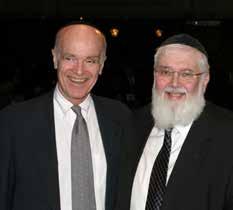
– against their rebbeim. With the boys from all other grades cheering them on, everyone had a great time!

Prof. Fleishman was shocked. He said, “I’ve been at Yale and now I’m at Duke. I know how university presses operate. You can’t produce such high-quality work without a not-for-profit foundation.” In other words, such scholarly sefarim must be subsidized, which means that patrons must be able to make tax-deductible contributions to pay for the scholars. Joel was not only a man of words; he was a man of action, and he offered to set up a not-for-profit foundation. To help him do so, he drafted Duke’s tax attorney, and, pro bono, they created the Mesorah Heritage Foundation, which was approved by the IRS.
To refine the fine points of the Foundation’s charter and its arm’s length relationship with ArtScroll/Mesorah, Prof. Fleishman enlisted Bob Boisture, one of America’s leading not-for-profit lawyers. So distinguished was Mr. Boisture, that when Congress was working on legislation to regulate such foundations, they engaged Mr. Boisture to draft the law.
Briefly, contributions to the Foundation are used exclusively to fund the
scholarship and technical work to produce the manuscripts, but the Foundation does not sell the books. Nor does the Foundation fund non-scholarly works, such as cookbooks. ArtScroll/Mesorah turns the manuscript into a book and makes it available to the public at an affordable price. The Foundation’s finances are separate and audited, and its activities are supervised by a hands-on Board of Trustees with impeccable credentials who also audit the relationship with ArtScroll/Mesorah. It was first chaired by Prof. Fleishman, who was succeeded by Joseph Shenker, Chairman of Sullivan and Cromwell, one of the country’s largest and most prestigious law firms.
Only thanks to Mesorah Heritage Foundation, have we been able to engage superior talmidei chachamim and editors, and fund such ambitious and expensive projects as the Talmud, Midrash, Mishnah Elucidated, and the many other projects that enable everyone to study Torah at a high level.
The existence of the Mesorah Heritage Foundation enables even people of modest means to be partners in changing Jewish history. Rabbis Zlotowitz and Scherman once visited an elderly couple that wished to become Talmud Associates. Surprisingly, they lived in a very modest home, and both were still working. It turned out that they wanted to use their savings to share in our harbatzas haTorah, and the tax advantage provided by the Foundation helped make it affordable for them to do so. Thanks to Joel Fleishman, and most of all, thanks to Hashem.
UP NEXT: The Yad Avraham Mishnah – The Next Stage

Achoshuve and extravagant seudah was enjoyed by the boys in grades 5-8 of Yeshiva Ketana of Long Island, celebrating completing all 4 weeks of our incredible Kimu V’Kiblu Chazarah program. Rabbi Yehoshua Hartman spoke about the beauty of limud Torah and the importance of chazara. The menu was delicious, and the program ended with many amazing raffle prizes! We are very proud of all our misayemim!

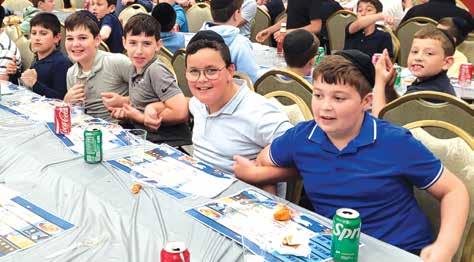
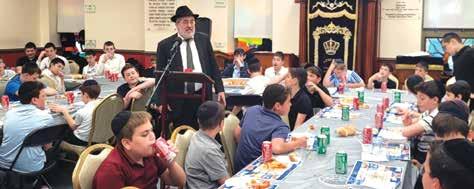


By Rabbi Shimon Finkelman and Rabbi Zecharia Wallerstein
One is obligated to rise for his father (Yoreh Deah 240:7) However, a father (or mother) may be mochel (forgo) the honor due them (Yoreh Deah 240:19).
Of course, one must also rise for his mother.
The consensus among commentators is that one must rise to his full height.
According to Beis Yosef, whose psak is always followed by Sefardic Jewry, one must rise every time a parent enters the room. However, Ashkenazic Jewry follows the opinion of Rema that one must rise once in the morning and once in the evening.
It is common custom for parents to be mochel regarding their children’s obligation to rise in their honor. In Chut Shani, Rav Nissim Karelitz writes that to rise for parents is an important aspect of kibbud av va’eim and should not be totally ignored. At the same time, he states that
parents should not demand this of their children. Instead, they should learn with their children the halachos of kibbud av va’eim so that the children will realize on their own that this is what they should be doing. He also suggests that yeshivos teach this halacha to their students from the age when the talmidim learn Gemara (approximately 10 years old).
When Rav Shmuel Kamenetsky was asked regarding this halachah he responded:
It is definitely a beautiful hanhagah for children to stand up for their parents when they enter a room. However, since the accepted practice is for parents to be mochel, it is very difficult to recommend that parents be mechanech their children to do so, as the children will not be able to fully appreciate the motivation behind this chinuch and may misunderstand it as a reflection of some sort of selfish desire. My father, zt”l ,was not mechanech us to stand up for him — and his children did not stand up for him when he entered the room — and we were not mechanech our children to do so either.

That said, if a child wants to fulfill this halacha, tavo alav berachah, it is a beautiful thing. I do feel it would be worthwhile for rebbeim and mechanchos to teach their talmidim about the halacha of standing for parents — this can have a positive impact on the children and can be conveyed without the concerns we have mentioned.
Rabbi Yosef Viener related:
One of my daughters expressed a desire to stand up for me when I enter the room. I told her that common custom is to be mochel but that she will get a mitzvah if she does it. I added that a benefit of standing up for one’s parents on a daily basis is that this automatically makes the child more focused on kibbud av va’eim.
My daughter was respectful and helpful before she began rising in our honor, but I have seen that since she began this practice, her kibbud av va’eim has gotten even better.




By Rabbi Keevy Fried
Afew weeks ago, I sent a voice note to someone I hadn’t really spoken to in about 25 years.
We had been warm acquaintances in high school, and then, like happens with so many people, life moved on. Careers, families, children, responsibilities, entirely different worlds. We saw each other briefly at a high school reunion, caught up for a few minutes, and that was basically the extent of it.
Then sometime afterward, I met a candidate through Aim Hire; I’ll call him Steve, an experienced and responsible professional, warm and sweet in a way that immediately told you what kind of attitude and service he would bring to whoever was lucky enough to hire him. He was looking for work in a field connected to this person’s industry.
I remember sitting there going through my own internal rolodex, trying to think who I knew in the industry, who might be willing to take a conversation or at least look at a résumé, and suddenly this person popped into my head.
And truthfully, I hesitated. Twenty-five years is a long time.
There’s something uncomfortable about reaching out to somebody from another chapter of life, especially when there’s an ask involved. Part of me thought maybe it would feel awkward. Maybe intrusive. Maybe he wouldn’t really remember me all that well. But another part of me thought: what’s the worst thing that’s going to happen? He won’t answer? He’ll politely say no?
So I sent the voice note.
A little while later, he responded warmly and simply said, “Send me the résumé. Let me see what I can do.”
Ten days later, Steve had a job.
I kept thinking not only about the fact that somebody found employment but about how small the actual moment had been. Just a voice note, a conversation, somebody deciding to pause for a

few minutes in the middle of a busy life and trying to help another person move something forward.
Yet on the other side of that small interaction sat somebody whose life had just changed completely.
Merari carried the planks and the sockets. No single family carried everything. But the Mishkan only moved, and the camp only advanced, because each person accepted the specific piece that was theirs to carry.
There’s something uncomfortable about reaching out to somebody from another chapter of life, especially when there’s an ask involved.
Reading the beginning of Sefer Bamidbar recently, the Torah describes how the Mishkan was carried through the desert and, in assigning each of the Levite families their role, uses a phrase that I think is worth thinking about: Ish, ish al avodaso v’al masa’o, each individual to his work and to his burden.
Bnei Kehas carried the holiest vessels.
Bnei Gershon carried the coverings. Bnei
And maybe that is true in our own communities as well.
We sometimes convince ourselves that if we cannot solve a problem entirely, our smaller acts don’t really matter all that much. But most meaningful things in life rarely happen all at once. They usually begin much more quietly than that, with one person deciding to make a call, send a résumé, open a small door, or simply
step slightly forward on behalf of somebody else.
Through the work we do at Aim Hire, I’ve seen how unemployment creates a kind of invisible shrinking. Even deeply capable and accomplished people begin to hesitate. They stop reaching out. They start feeling like they are bothering others. They convince themselves that the people who once knew them have moved on, or are too busy, or would not really want to be bothered.
Meanwhile, the old classmates, former colleagues, neighbors, and parents standing next to them at pickup are often far more willing to help than anyone realizes. They may just not know there is someone in front of them who needs the door opened.
Not everybody can offer someone a job. Not everybody controls hiring decisions. But almost everybody knows somebody. Almost everybody has some hallway, some relationship, some conversation, some small opening through which another person might be able to move forward.
Sometimes, the first thing that restores hope is not even the opportunity itself. It’s simply the feeling that somebody still sees them, still believes they matter, and is willing to help them keep moving forward.
And sometimes, that is all a person needs. Not somebody to solve everything; just somebody willing to help carry one small piece of the camp forward.
Rabbi Keevy Fried is the executive director of Aim Hire, a nonprofit that supports experienced professionals, particularly those over 40, as they navigate unemployment and work to return to meaningful employment with dignity. If you would like to help open doors for someone in transition, please visit Aim-Hire.org or email info@aim-hire.org.


1. The Belmont Stakes, which is on June 6 this year, is the third leg of what famous horse racing series?
a. Breeders’ Cup
b. Triple Turf Challenge
c. Triple Crown
d. Grand Slam of Racing
2. In which year did the first Belmont Stakes race take place?
a. 1867
b. 1922
c. 1965
d. 1981
3. How long is the traditional Belmont Stakes race?
a. 1½ miles
b. 2½ miles
c. 3 miles
d. 4½ miles

4. The iconic racehorse Secretariat won the 1973 Belmont Stakes by 31 lengths. Approximately how many football fields was his margin of victory?
a. 1
b. 2
c. 4
d. 6
5. Before the Belmont Stakes, the horses are led onto the track to a famous song. What is the name of that song?
a. “Sidewalks of New York” b. “New York, New York”
c. “The Stars and Stripes Forever” d. “New York State of Mind”
6. Approximately how fast can a Thoroughbred racehorse run during a race?
Me This
You’re on a horse and being chased by a lion.
You look to your right and you see a giraffe.
a. 25 mph
b. 35 mph
c. 45 mph
d. 60 mph
Racing to the Finish Line:
Wisdom Key:
5-6 Correct: The rest of the field is eating hay while you’re already in the winner’s circle!
3-4 Correct: You are not Secretariat, but you can compete in the Belmont Stakes.
0-2 Correct: You couldn’t pick Secretariat out of a lineup of zebras.

To your left, you see a zebra. What should you do? Answer: Stop drinking and get off the carousel.

You refer to your morning commute as “heading to the starting gate.”
You describe coworkers as “high-strung thoroughbreds.”
You’ve seriously considered naming your Wi-Fi “Stable Connection.”
You secretly think horses have better personalities than most people.
You know more horse names than human names.
You describe your children as “spirited but trainable.”
You consider a horse trailer a luxury vehicle.
You refer to your morning coffee as “fuel for the stretch run.”
You can identify six horse breeds but not six state capitals.
You measure distance in “about two furlongs.”
You know exactly what a farrier is but have no idea how WhatsApp works.
When someone says “stable income,” you picture a barn.
You describe your kids leaving for school as “breaking from the gate.”
You have memorized more Triple Crown winners than U.S. Presidents.
You’ve yelled “AND DOWN THE STRETCH THEY GO!” when your kids are running to catch the bus.


A farmer sold an old horse to a neighbor but warned the buyer that she didn’t look too good.
The buyer insisted she looked well enough and bought her. A few days later, the buyer came back, complaining that the horse kept bumping into things.
“The old mare’s completely blind!” shouted the buyer.
The seller replied, “Well, I told you she didn’t look too good.”



By Rabbi Berel Wein z”l

The association of Aharon, and of all later High Priests of Israel, with the task of the daily lighting of the menorah in the Temple is significant. In our current technologically advanced era, turning on the lights in a home or a room is hardly considered to be a difficult or especially meaningful event. The flick of a switch floods the area with light and illumination. However, when light is sourced from candles, wicks and oil, it is a more complicated matter. To produce this type of light requires a modicum of motor skills, patience and great attention to detail. Many problems, even fatalities, may be caused by improperly lighting the candelabra such as the one in the Temple, with its imposing size and dimension.
Because of the care and attention that was needed to light the candelabra in the Temple, and to emphasize the holy nature of the task and of the candelabra itself, caring for it and kindling it was assigned to the highest priest of Israel, Aharon. He and his successors
symbolized light. They represented hope, optimism, holiness, purpose and peace. This physical representation of Aharon’s general role in Jewish society served to remind all of the purpose of
the Torah – its study and its observance – becomes the source of light itself for all generations of Jews. It became the personal task of each and every High Priest of Israel to see to it that this
The radiance emanating from the menorah inspired him to be the constant disseminator of light, Torah, social justice and tranquility within Jewish society.
the Temple, its laws and rituals and infused the G-dly spirit into Jewish society generally.
The Torah characterizes itself as light and radiance. The commandments are the candles and the kindling, and
light was kept eternally burning and refreshed daily.
It is interesting to note that the light of the menorah was not seen generally by the public, as not everyone had access to the area of the Temple where
the menorah stood. But it was seen daily by the High Priest himself, and the radiance emanating from the menorah inspired him to be the constant disseminator of light, Torah, social justice and tranquility within Jewish society.
This essential societal task naturally entailed the same type of precision, persistence and attention to detail, coupled with loving care and innate skills that was present when the High Priest serviced the physical lighting of the menorah in the Temple daily. The Talmud teaches us that the clothing of the High Priest was not to be soiled when he appeared in public view. Lighting the menorah can be a dirty job if one is not careful, as can any societal activity, no matter how well intentioned it may have been at the outset.
The process and commandment of lighting the menorah served as a constant reminder to the High Priest of the important role that he was to always play in the furtherance of Torah and holiness in Jewish society.
Shabbat shalom.
This is a sad parsha. All of our dreams for greatness, all of our idealism, began to unravel in this week’s parsha. We spent almost a year encamped beside Har Sinai. We were poised to march into Eretz Yisroel to claim the great destiny that Hashem promised to Avraham, Yitzchak, and Yaakov. But then something happened. Moshe begged his father-in-law Yisro to remain with the Jewish people and “make aliyah.” Although he did not know it at the time, not only would Yisro not make aliyah, but Moshe Rabbeinu himself would die in the desert, never to step foot in Eretz Yisroel because of the problems to come. In preparation for the great journey to Yerushalayim, Moshe Rabbeinu said (Bamidbar 10:35), “Arise Hashem and disperse Your enemies and those who hate You will flee

By Rav Moshe Weinberger
Adapted for publication by Binyomin Wolf

from before you!” But when he said that, Moshe never imagined that the enemies of Hashem would not come from Canaan, the land they would conquer, but from within the Jewish people!
Immediately after we read of Moshe’s prayer for our success in conquering Eretz Yisroel, the descent begins. When all is said and done, the parents would die in the desert and the children would wander for decades. What was the central reason for our downfall? What was the common denominator in all of the myriad of failures and foibles during our time in the desert, ultimately leading to the decree that an entire generation would never step foot in the promised land? The easy answer is that it was the sin of the Golden Calf. But Chazal explain that this was a circumscribed fault, a terrible miscalculation and mistake,
but it was not an all-encompassing fault.
In this parsha, and in those that follow, the Jewish people crave meat and complain to Moshe about it, Miriam complains about Moshe, the spies complain about Eretz Yisroel, Korach and his cohorts stage a rebellion against Moshe, complaining that he was consolidating all of the honor, glory, and power to himself, and the list goes on and on. What was the common denominator in the failings of the desert which continue until this day? Complaining. Yet we do not find that one of the 365 prohibitions in the Torah is “Thou shalt not complain.” But this pattern of complaints repeats itself again and again as the central downfall of our people in the generation of the desert.
The Torah teaches us several things about the essence of complainers. First,
the pasuk (Bamidbar 11:1) starts by saying, “And it was that the nation was complaining, which was evil in the ears of G-d, and G-d heard and was angry.”
Yet the Torah never tells us what they were complaining about! What do we learn from this? That the complainers’ problem was not the topic about which they are complaining. That has nothing to do with it! The complainers’ problem was their nature as complainers. In halacha, we often make a distinction between a cheftza , an object, and a gavra, a person. One might have thought that a complainer’s problem is in the cheftza , the object of his complaint. One could mistakenly think that if we resolve the complainer’s complaint, he will be happy. Indeed, if someone who is not generally a complainer complains about something,
this is, in fact, the case. If we resolve the object of his complaint, he will be satisfied. But this is not the case for those people classified as complainers. The moment we resolve one complaint, he has something new to complain about. It never ends. This is because his complaints are not about the cheftza of his complaint. The object of his complaints is simply the most readily available outlet for his nature as a complainer. The problem is with the gavra. The person is a complainer, so he will complain regardless of his external circumstances. His worldview is negative. He looks at the world through a jaundiced, critical lens. His mind is twisted by nature, so he seeks out the bad in everything. He is predisposed to feeling that everyone else harbors ill-will toward him and that the world is filled with incompetent people whose lives are devoted to making him miserable.
We all know such people. These are the people who gleefully pounce on the person reading the Torah whenever he makes a mistake. Such a person goes into a state of mourning if the reader manages to read the Torah perfectly. These are the people who whisper to the person who is about to lead the davening, “You won’t extend the davening an extra minute if you know what’s good for you.” It does not matter whether it is the temperature in shul, the chazzan, the rav, the fellow next to him, or anything else. He will find something to complain about because that is his nature.
We learn several other things about complainers from the parsha. The Torah (Bamidbar 11:4-6) says: “And the mixed multitude among [the Jewish people] caused themselves to have a craving and the Jewish people also cried again and they said, ‘Who will feed us meat? We remember the fish which we ate in Egypt for free… Now our souls are dry. There is nothing before our eyes except this manna!’” The complainers began complaining and brought everyone else into their misery with them. The Torah teaches us two additional aspects of complainers here. The first is that they try to rope others in and spread their toxic outlook as widely as they can. A person can be completely content with how things are going, but after ten minutes with a complainer, suddenly everything looks dark, dismal, and bleak. The second thing we learn about complainers from these pesukim is their trademark opening line: “I’ve spoken to a lot of people, and they all feel this way.” They feel that “everyone” agrees
with them. “It’s not just me who feels this way. A lot of people agree with me. They just don’t want to come forward.”
The complainers are the only brave souls who care enough to come forward with their criticism.
Finally, a complainer sees only the bad in the present and feels sure that the future will be even worse. The only thing in which the complainer sees anything good in is the past – no matter how much historical revisionism is necessary to see it in such a light. These people looked back longingly at the free food they received in Egypt. First, of course it was free. They were slaves! And never mind the genocide committed against the Jewish children. Never mind the back-breaking labor. Think of
your eyes!” Moshe essentially said, “Gd, if you love me, just kill me now.” Why did Moshe react this way? Is this the same man who heroically came to our rescue when we built and worshiped the Golden Calf shortly after receiving the Torah at Sinai? Why was Moshe our fearless advocate after that terrible sin, but when we complain, which was not even one of the 613 mitzvos, Moshe immediately threw up his hands, gave up all hope, and begged G-d to just take his life? Why was this?
We see from Moshe’s reaction that when it comes to complainers, you can never win. The moment you resolve one complaint, they have another. It is an all-encompassing fault. As bad as the sin of the Golden Calf was, it was a cir -
The complainers’ problem was their nature as complainers.
the free food! But when it comes to the present, everything is dark and black. They said about the manna, which fell as a gift from Hashem every day, “our souls are dry. There is nothing before our eyes except this manna!” Nevertheless, Hashem fulfilled the wishes of the complainers by giving them more meat than they could possibly eat. But of course, they hated that, too. Hashem therefore points out that the problem was never with the object of the complainers’ complaints. It is with Hashem Himself. They are ingrates. Hashem explains this as follows (Bamidbar 11:20), “Because you have hated Hashem who is among you and cried before Him to say, ‘Why did we ever leave Egypt?’” Complainers do not lack anything with respect to the object of their complaints. The problem is with their nature, outlook, and personality. The complainers in the desert even convinced themselves (Bamidbar 16:13) that Egypt was “a land flowing with milk and honey!”
Complainers Can Only Destroy, Never Build
And what was Moshe’s response to the people’s complaints? How did the greatest leader in our history respond? He begged Hashem (ibid. at 11:15), “Please kill me if I have found favor in
ever for her recovery (ibid. at 12:13): “Gd, please heal her!” That was the extent of his prayer. Why did he not pray at length, as he surely wanted to do? Rashi explains that it was “so that the Jewish people should not say, ‘For his sister he prays at length, but for us he does not pray at length!’” Notwithstanding all of Moshe’s sacrifice and lengthy prayer for the sake of the Jewish people, he knew that the complainers would forget all of that and simply complain if Moshe uttered more than a few words of prayer for his sister’s recovery. With complainers, one simply cannot win.
Building Eretz Yisroel, or anything worthwhile, requires the attitude described in the pasuk (Tehillim 34:12), “Who is the man who desires life, who loves days to see good.” Builders, creators, and idealists love life. They see good. This is the prerequisite for a person who wants to build and create. It is the opposite of the quality exhibited by complainers, those who look at the world through the lens of a crooked mind which sees only negativity and incompetence around him.
cumscribed mistake, a tragic miscalculation. Moshe knew that he could work with that and help the people rectify their mistake. But again, the problem with complainers has nothing to do with the particular subject of their complaints. The trait of being a complainer is ingrained and cannot be resolved by addressing the complaint itself. Dealing with complainers is a never-ending, life-sucking, toxic enterprise. Moshe therefore gave up and said, “Just kill me now. I cannot work with these people.”
And when the Jewish people complained after the report of the spies, Hashem Himself said that there was no hope for that generation. He decreed that they die in the desert. Eretz Yisroel cannot be built by complainers. They only know how to destroy, to criticize, to negate. They are incapable of building anything.
It is the same thing in any organization, institution, or shul. The idealists build and create while the complainers find faults with everything the builders and creators do. “Look at this! There’s a loose tile in the social hall! What kind of shoddy work is this!” as if they would have ever built anything themselves.
We see Moshe’s awareness of the difficulty in dealing with complainers reflected later in the parsha as well. When Miriam is afflicted with tzara’as, a skin disease, Moshe offers the shortest prayer
One year, my wife told me that one of the women in the shul made a resolution before Rosh Hashana not to complain during the upcoming year. Although this woman is not a complainer by nature, due to the pressures of making a living and raising her large family, she found herself complaining more often than before, and it was bothering her. She therefore resolved not to complain. She wanted to see the good and be grateful for all of Hashem’s blessings in her life. Such a resolution is extremely powerful and has the power to change the quality of one’s life for the good in an immense way.
While I have no doubt that complainers will simply complain about what I have said here, I encourage everyone reading what I have said to discuss this issue with his or her family and friends. Think about whether and to what extent you have been a builder or a complainer. With Hashem’s help, may we merit to see the ultimate good and the fulfillment of everything we have been working toward building throughout the long years of exile with the coming of Moshiach and the rebuilding of the Beis Hamikdash, may we see it soon in our days.
Rav Moshe Weinberger, shlita, is the founding Morah d’Asrah of Congreagation Aish Kodesh in Woodmere, NY, and serves as leader of the new mechina Emek HaMelech.
By Rabbi Avrohom Sebrow
There are many endearing names a person can call their father: Dad, Daddy, Tatty, Ta, Papa, Pop, or Abba. But a fascinating question arises: Can a child use the endearing nickname “Abba” if his father’s actual, given name is Abba? Does using the nickname cross the line into the prohibition of calling one’s father by his first name?
The Gemara records that the great Babylonian Amora Shmuel frequently referred to his colleague and contemporary, Rav, as “Abba.” This linguistic choice ignites a fundamental debate among the Rishonim:
Rashi’s View: Rashi explains that Shmuel did not mean to use a proper name. Rather, Shmuel was using “Abba” as an honorific title, an endearing term meaning “father” or “elder master,” meant to show deference to a contemporary scholar who was older and greater than him.
Tosafos’s Critique: Tosafos strongly disagrees, proving textually that Rav’s literal birth name was, in fact, Abba (Abba Arikha). Tosafos cites several instances where sages called Rav “Abba” in contexts completely devoid of honor. Therefore, Tosafos opines that Shmuel simply used Rav’s given name because they were peers and such familiarity was permitted.
However, Tosafos’ explanation runs into issues. The Gemara notes that even Rav’s premier students, like Rav Kahana and Rav Hamnuna, referred to their master as “Abba.” Yet, the Gemara in Sanhedrin 100b explicitly states that Gehazi was severely punished because he called his master, the prophet Elisha, by his first name!
While Tosafos suggests that Rav Kahana may have become great enough to be considered a colleague of Rav, they admit they cannot explain why Rav Hamnuna would call his teacher by his first name. Tosafos concludes that on this specific point, Rashi’s explanation, that “Abba”

was simply a title of honor, perfectly resolves the students’ behavior.
Shmuel’s Father and the Halacha of Rare Names
The plot thickens when we look at Shmuel’s own lineage: Shmuel’s father’s name was also Abba.
The Shulchan Aruch (Yoreh Deah 240:2) rules that if a person’s father has an uncommon or rare name, that person should not call a friend who shares that same name by their first name in the father’s presence. The Vilna Gaon traces the source of this halacha to the Aruch, who explains the origins of the famous Amora Abaye.
According to the Aruch, Abaye’s birth name was actually Nachmani (named after his grandfather). However, because Abaye was raised by his uncle, the great sage Rabbah bar Nachmani, Rabbah could not bring himself to constantly call out his own father’s name (Nachmani).
To avoid this disrespect, Rabbah lovingly nicknamed his star pupil Abaye, to hint that he has the same name as his father.
Using this backdrop, the Aruch L’ner addresses our dynamic between Rav and Shmuel. He notes that the name “Abba” was relatively rare. If “Abba” was Rav’s actual first name, Shmuel would have entirely refrained from using it out of respect for his own father, Abba bar Abba! Even if the name wasn’t rare, why wouldn’t Shmuel simply call him “Rav” like the rest of the world?
The Aruch L’ner uses this proof to explain Rashi. Shmuel chose the word Abba specifically because it was not a proper name in that context; it was a pure honorific title for a spiritual father of the generation.
Practical Halacha
Can these two views be reconciled to solve our original riddle? The Chida steps in with a brilliant synthesis, pro -
posing that even Rashi could agree that Rav’s given name was biologically Abba. The Chida suggests that when a specific name falls into total disuse, its halachic status changes. Because nearly the entire world referred to Abba Arikha simply as “Rav,” his biological first name (“Abba”) became completely dormant. Once a first name is no longer actively used to identify a person, it loses its casual identity. Therefore, when a student or colleague used the word “Abba,” it was universally understood to mean “honored master,” not a familiar first name. From this, one might think a child could call his father “Abba” even if the father’s given name is Abba, tracking the idea that it is being used strictly as an endearing title.
However, the Shem HaGedolim immediately cautions against running to follow this leniency. There is a sharp distinction between the two scenarios: Rav was a public figure whose first name was entirely eclipsed by his title.
A private individual named Abba is known to his friends, family, and colleagues as “Abba.” Because it is his commonly used first name, a son calling him “Abba” sounds identical to using his first name, which constitutes a distinct breach of kibbud av.
If a father’s given name is “Abba,” using the word “Abba” as a casual nickname can inadvertently mirror calling him by his first name. For practical guidance on how to navigate this familial knot without compromising halacha, it is best to ask a Rav or your Abba.
Rabbi Avrohom Sebrow is a rebbe at Yeshiva Ateres Shimon in Far Rockaway. In addition, Rabbi Sebrow leads a daf yomi chaburah at Eitz Chayim of Dogwood Park in West Hempstead, NY. He can be contacted at ASebrow@gmail.com.

by Rabbi Yair Hoffman

Iam formed of two parts. My first part is known as the Mishnah. It is comprised of three elements: teachings handed down orally from the time of Moshe Rabbeinu; takkanos , enactments instituted by the Torah leaders of each generation; and debates around the first two elements. This part of me preserves the teachings of the great Rabbinic figures known as the Taanaim, holy and learned men. My six sedarim are subdivided into tractates and units called Mishnayos. Rabbi Akiva organized and arranged its contents. My final form was assembled by Rabbi Yehudah haNasi at about the year 220 CE. This section of me was then studied by Torah scholars in both Eretz Yisrael and in Bavel. The products of that study are known as the Gemara, and these discussions form my second half. The conversations were the fruit of the study houses – the Batei Midrashim and the yeshivos of the great Amoraim. For generations, a question would be posed by one called the makshan, the asker, and an answer offered by one called the tartzan , the answerer; at times, they were one and the same. At times, the
tartzan will impute an answer for the Amorah to answer for him. The semi-final editing was performed by Rav Ashi and later by Ravina. The text was then settled by the Rabbanan Savurai, somewhere between the years 450 and 550 CE, who continued to refine and tweak my wording.
I testify to this in Bava Metzia (86a), where I record that Rav Ashi and Ravina are the end of hora’ah, the close of an era of authoritative teaching. I need no modern theory to say how I came to be. I say it about myself, in my own words.
The Gaonim and the Rishonim received me with reverence and guarded my integrity. These were among the greatest leaders post-Temple Jewish history has known: Rav Saadyah Gaon and Rav Sherira Gaon, whose famous Iggeres set down the very chronology of how I was formed. Rashi elucidated me; the Rambam compiled my halachos; the Baalei HaTosfos all reconciled my apparent contradictions. Rav Yosef Karo and Rav Moshe Isserles decided which view contained within me must be followed, and the Vilna Gaon identified where within me these halachos were to
be found. Where they found difficulty, they assumed the difficulty lay in their own understanding, but never, never in me, being, well, gobbledygook.
But in the past fifty years or so, a different approach took hold among a certain school of academic readers. They came convinced they understood me better than the Taanaim who taught me and the Amoraim who debated me. They invented new categories and new actors – anonymous “redactors,” late “editors,” a hidden class of composers – Stammaim.
One of them writes: “Found no way to explain it other than to say that those who supplied the forced explanations lacked the complete version of all the relevant sources, or lacked the correct version of the text they were explaining, or lacked the requisite knowledge for understanding the text.”
They made the wildest of assumptions: In their minds, the Amoraim composed material and attributed it to the Taanaim. They assumed the students of the great yeshivos misunderstood their own tradition, and that only now, after so many centuries, has the
misunderstanding been corrected. They did not come empty-handed. They arrived with a set of tools, and it is worth naming the tools, for that is how the murder was carried out.
The first weapon in their murderous arsenal lay in their declaration about anonymous passages – the give-andtake that carries no name attached – are reassigned away from the named Amoraim and from the tradition behind them and handed instead to a hypothesized later class of nameless framers.
The weapon mistakes the absence of a signature for the presence of a forger.
The shakla v’tarya – the back-andforth of question and answer that is the very pulse of Torah Sheba’al Peh – is recast as a literary device composed after the fact, rather than as the record of real argument in real study halls.
To claim that what reads as argument was never argument is an extraordinary claim, and extraordinary claims require more than literary intuition.
The third weapon is source criticism turned against transmission. Where the same sugya appears in more than one
place with variation, this is read as evidence of clumsy stitching by later hands.
The fourth weapon is the charge of pseudepigraphy – the assumption that baraisos and teachings attributed to the Taanaim were in truth composed later and assigned to earlier names. This is the gravest charge of all, for it accuses the transmitters not of error but of fabrication. It converts the chain of mesorah into a chain of invention. And it rests on the prior assumption that the tradition cannot be trusted to say truthfully who said what – which is precisely the question at issue, smuggled in as a premise.
Each of these tools begins by assuming that our own mesorah’s account of itself is unreliable and then reads all the evidence through that assumption. The anonymity of a passage becomes forgery; the attribution of a teaching becomes a lie. In each case, the same facts that the Rishonim explained with reverence are explained instead with suspicion. The method does not discover that I was assembled by late anonymous hands. It assumes it at the outset and then arranges evidence to fit.
This is the autopsy performed upon a living patient. The practitioner stands over me with instruments drawn, certain that what lies before him is a corpse to be dissected into its supposed layers and sources.
It is worth setting down, plainly, how recent the attempted murder of me really is and how slowly it was assembled. It was done by a study partner of Professor Saul Lieberman, who unbeknownst to him had secretly adopted his young study partner. The first stabbing occurred in 1969; volume after volume emerged over the decades that began to lay the charge against that which has been studied without pause for fifteen hundred years.
In their eyes, they make determinations based upon their own random observations. From this observation, a whole history is built: that my anonymous layer was produced by a later class of men, and that these men were reconstructing a give-and-take that had been lost to them, badly, from fragments. That is the indictment.
The explanation is not a second piece of evidence. It is a story invented to fit the first. There is no manuscript that catches them at the work, no outside witness to the two stages at all. The theory is built backward from the very thing it claims to explain.
Press further, on the hinge of the
whole argument: the claim that my giveand-take was never transmitted – that the professional memorizers preserved only the terse conclusions and that the argument itself had to be rebuilt later from scraps. This is asserted; it is not shown. And the opposite is at least as reasonable. Terseness is simply how
Last, the alleged “forced explanation.”
What reads as forced is not a fixed fact of the page. It is a judgment of a particular reader, in a particular century, about what counts as a smooth fit. For the Rishonim, the very same difficulty was not a corpse to be explained away but a door to be opened – and they opened it, resolv-
They came convinced they understood me better than the Taanaim who taught me and the Amoraim who debated me.
memorized tradition travels – conclusions and reasoning alike are compressed for the memory to carry. Remove that one unproven premise and the late reconstructors have nothing left to reconstruct.
Their favorite illustration is the United States Constitution – debated and quarreled over for a whole summer in Philadelphia, while posterity, they say, received only the finished document and not the transcripts of the arguing. The analogy is meant to show how a tradition can keep the conclusion while losing the debate. But press on it, and it collapses in their hands. We possess the debates of that Convention. We have Madison’s notes, the ratification arguments, the Federalist papers – a documented record of formation. We know how that document was made precisely because the making left external evidence behind. And that external evidence is the very thing the case against me does not have and must invent.
The analogy does not support the theory.
It quietly exposes what the theory is missing. Where we can check a process of formation, we check it against outside records; here there are no outside records, only a process imagined to fit the text and then read back into it.
And there is, of course, the real authoritative teaching in Bava Metzia that Rav Ashi and Ravina are the end of hora’ah , the close of authoritative teaching. One writer even dares to call this line in the Gemara a “tyranny.” The sheer chutzpah.
ing difficulty after difficulty without ever needing to suggest a group of late forgers. To take the modern reader’s sense of awkwardness and convert it into a date stamp – to say that because this fits roughly to me, it must have been assembled late by men who misunderstood – is to make one’s own ear the measure of fifteen centuries of study.
Here is the irony that no theory can edit away. The schools of reconstruction revise themselves within a generation. One scholar’s confident layering is the next scholar’s discarded hypothesis. The “assured results” of one decade are quietly retired in the next.
For more than fifteen hundred years, I have been studied without interruption – the same daf, learned today the very same way in thousands of batei midrashim across the world, by men and boys who have never heard of stammaim. Their methodology declared me dead. The beis medrash , every single day, declares their verdict false. They came to bury me, armed with their tools and their certainties. But I am still here, and I am still being learned properly. That is my pulse.
Let the reader open a Gemara and feel it.
This article should be viewed as a halachic discussion and not practical advice. The author can be reached at yairhoffman2@gmail.com.

Making aliyah forces you to make choices that jolt you out of a safe same old, same old headspace. As anyone who considers moving to Israel finds out soon enough, Israel is a complicated bureaucratic country, and you, no matter the age, have to come prepared with patience and flexibility. In Hebrew they call it zoreim, go with the flow.
I am not zoreim, but I am better at it than I used to be.
Before you make any or a big move, you have to pack; that happens to be a lot more than you realize. This is way more than throwing a few things into a suitcase for a weekend getaway and taking too many “just in case” outfits and shoes. Packing a lifetime means loading into duffels, suitcases, crates and whatever the memories and objects that constructed the pieces, sometimes fragments, of your life.
Over the course of your tenure in any particular home, you accumulated stuff – more and more stuff. How many serving dishes do we store in our kitchen cabinets that rarely come out for air in our more limited post-Covid entertaining?

By Barbara Deutsch

What about the sports trophies that were acquired with unbridled joy but now sit neglected on a shelf collecting dust? Even our athletic married kids did not bring them to their new homes. The trophies were left behind in the museums that used to be their rooms.
How many of us have a baker’s dozen of black skirts/pants, shirts, t-shirts and more black?
No matter what you tell yourself, you will not need that gorgeous faux or real fur coat, yummy, heavy sweater or furlined boots, etc., when moving to a mild climate.
There was a time when we needed it all!
Before our aliyah, Bob and I grew up and lived in New York’s seasonal, changing, crazy climate. I loved the weather changes that mandated shopping for new fall clothes for me and the kids for school. Even before it was considered “stylish,” I always dressed in, sometimes considered eccentric, multiple layers. Those layers translated into my “needing” a lot of stuff.
For the past several years, there has been a proliferation of influencers who
blast tips and thoughts about organizing, minimizing and curating our lives and wardrobes. One famous one is Marie Kondo, whose name is eponymous for her methods.
Before you keep something ask yourself:
• “Does this spark joy?” is the core question for deciding what to keep.
• Keep only what speaks to your heart and discard the rest.
On decluttering and letting go:
• Attachment to the past or fear for the future are the main reasons we struggle to discard items.
• Focus on what to keep, not just what to discard.
• Your space should reflect who you are becoming, not who you were.
Bob and I (Bob not so much as he had less than a third of what I had and was not sentimental except for his books) acknowledged that our work wardrobe, especially my professional one, would not accommodate my new “retired” life.
I understood that with “sweater weather” having a short run in the Jerusalem climate, I no longer needed all those coats and blazers that filled my
closets. When the kids left, I expanded my personal space.
We accepted the hard truth that our precious, antique, well-loved but now not workable-in-Israel furniture would not fit with the vibe or into the space of our modern, new and so much smaller Israeli apartment.
We began the distribution with our very different children and grandchildren; all had opinions and needs specific to themselves. Our son only wanted my mother in law’s antique and wellused Mah Jong set. Our Israeli youngest daughter offered to take the family silver but on the condition that she could sell it. We knew how to sell, too.
Married grandchildren took some of our Judaica art, all purchased in Israel. The watercolor print we got in a Sefad Art Gallery of “Jacob’s Ladder,” my personal favorite, hangs proudly in Jakob and Nomi’s home.
When I walked into the Levys’ Toronto house this solo trip, I was jolted back to fond memories of the time that Bob and I spent raising our now grown children in Cedarhurst.
I had forgotten – didn’t remember – that the Levys had recreated a microcosm of our Cedarhurst home from what they acquired when we made aliyah.
Meredith, our middle daughter, requested our valuable (?) Noah’s Ark “chachka” collection. She also moved to Toronto – at moderate expense – the living room chairs, couches and throw pillows, our large and very comfortable dining room chairs, table, multiple hutches and Bob’s parents’ refurbished, Art Deco, 75-year-old bedroom set. The set is still modern looking and stately after all these years.
With four rambunctious hockey-playing boys living a healthy, growing up life, their old furniture had given all that it could and was ready to move on. Additionally, different from most observant families who mostly settle in the place where they grew up, the young Levys started out in Montreal (Meredith used the time before starting med school to work on a Masters in Bible), White Plains (Meredith’s first medical school), unpacked for the two weeks they lived there, repacked and moved back to Montreal (McGill’s reputation and cost made it make more sense) to a
small apartment in a part of town where people were welcoming.
The Levys then moved two more times again to a slightly bigger than the former bigger apartments in Montreal. This time, they moved into a modest house (there were now three kids) and
dering what things make the cut this time? While I was there, I heard talk of a big hockey sale on the front lawn. There is a market for used skates and goalie equipment.
A broken water pipe over chag did help with throwing out things that you
Even when everything goes as planned, there will be hiccups and regrets –some fixable, others not so much.
then to a big house in Toronto, an opportunity for her husband Jonathan. They are now packing for a rental, until they figure it out, in Kemp Mill, Maryland – opportunity for Jonathan has knocked again.
Each move, they purged. With a growing family and sports-, ice hockey-obsessed boys, they somehow collect and accumulate; it adds up. I am won-
may have loved but can no longer use.
Will our furniture find its former life back in the USA? I’m confident that the Levys will be okay; you take yourself wherever you go and they have been “going” a lot.
I do miss some of the sweaters that I discarded as “not for Israel.” It does get cold in Jerusalem. I love pretty and in-
teresting “things,” and so I have always shopped too much. Online shopping does have downsides for buying without needing or even wanting. My Israeli wardrobe (still eccentric) consists of Israeli designers and quirky things that are only available there. I like that.
As I go through the things I left and wore in Toronto when we visited, I am holding onto things that are similar to what I donated and ultimately missed in Israel. After all, I did have multiples of the same color items, therefore it was not hard to locate my backups left for use when in Toronto.
Aliyah for most people represents opportunity and new beginnings. Even when everything goes as planned, there will be hiccups and regrets – some fixable, others not so much. Marie Kondo, I have a question. How do I know that what didn’t speak to me in my former life won’t be calling to me later?
Barbara Deutsch is the former associate principal at HANC, middle school principal at Kushner, and Dean of Students at Yeshiva of Flatbush. A not-retired educator, she is still trying to figure out life in Israel.
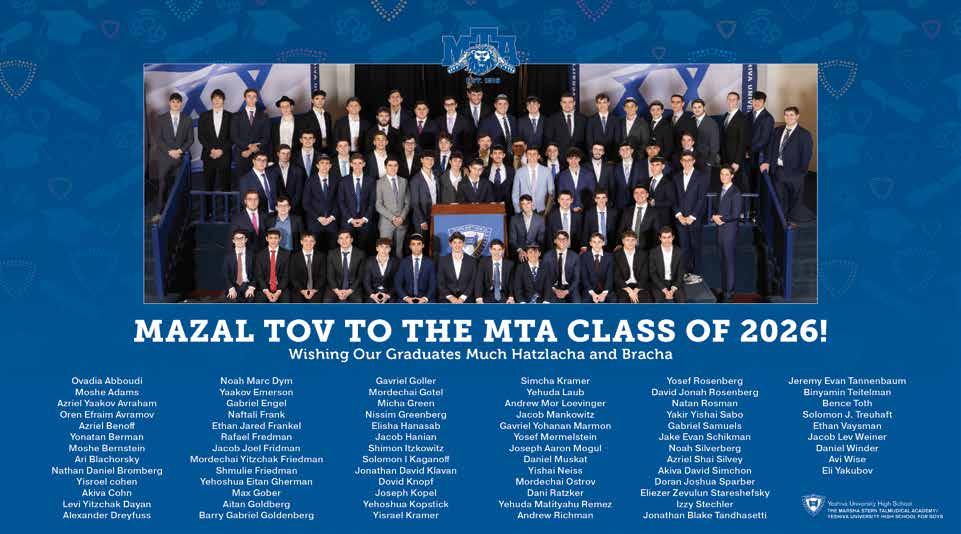

When we moved to Boro Park, I was six and a half years old and had already gone for one year to the Tzehlemer Yeshiva in Williamsburg. My parents registered me for the second grade at Yeshiva Toras Emes which was located on 43rd Street off 13th Avenue. This was the only yeshiva that had a grade for me. I remember the two adjoining buildings and the playing yard between them. The structures are still there but are operating as a different school. I went there only for the second and third grades. I have only vague memories of those years. The yeshiva’s principal was Rabbi Elias Schwartz, whom I still can visualize standing in the yard and blowing his whistle for the morning lineup. I encountered him thirty years later when I brought a ten-year-old boy, a recent arrival from the U.S.S.R., to get him registered in the school. Twenty years later, Rabbi Schwartz joined a trip that I organized for the Vaad L’Hatzolas Nidchei Yisroel to visit our yeshiva in Kishinev, Moldova. I also recall Rabbi Auerbach, my second grade rebbi, as a very gentle person with lots of patience. On the other hand, my third grade rebbi was very strict and used the rod as a tool of punishment when he thought it necessary. Our secular subjects were taught by women, and I am almost sure that Mrs. Honigman was the name of


By Hershel Lieber
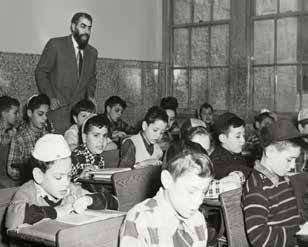


one of them. I do not remember what we studied, who my classmates were, or anything else. The only thing that comes to mind was the store on the corner of 43rd Street and 13th Avenue that sold Charlotte Russe (a layer of sponge cake topped with whipped cream and a cherry, set in a round paper cup) and jelly or caramel apples on a stick. Whenever I had enough allowance money, I, as many of the other boys, treated ourselves to these confections.
My father always wanted me to go to a more chassidishe school, but the only
together with some other children. I can still picture the statue of Ulysses S. Grant on a horse that was across from the yeshiva building. My rebbi was Rabbi Fuchs, and we had a corner classroom which gave us a great view of that monument and of the U.S. Armory on the next block. Everything else about that yeshiva I forgot! By the time I was ready to enter fifth grade, I was nearly ten years old. The Bobover Rebbe, Rav Shloma Halberstam, zt”l, had just moved his yeshiva from Brownsville to Crown Heights. My parents want-
When the last boy was hit, his yarmulka flew out of the window, and full pandemonium broke out.
one in Boro Park at that time was Be’er Shmuel, which had just recently opened and offered only a kindergarten and pre1A class. My brother Yossi did wind up going there for a number of years. By the time I reached fourth grade, I joined my cousins Moshe Yakov and Beinish a”h Scharf in registering at the Lubavitcher Yeshiva, which was located on the corner of Bedford Avenue and Dean Street in Crown Heights. A small van took us there
ed me to go to his yeshiva since they had a unique relationship with the Rebbe. First of all, my paternal grandfather learned by the Rebbe’s grandfather in Poland. But more important was the relationship that began in the town of Bochnia during the War. Both my parents and the Rebbe were confined to that Ghetto, where conditions were horrible, and they were subject to occasional Aktzias, where the Nazis randomly went on shooting sprees
killing countless of Jews. To make a very long story short, by copying my mother’s Czechoslovakian birth certificate and its seal, the Rebbe and some of his family members were able to leave the Ghetto and make their way to Budapest, which afforded them temporary safety. My parents also fled there. My parents and the Rebbe became very close in Budapest and after the war, he asked them to come to Bucharest to make Pesach for him, since his Rebbetzin was murdered during the war. This relationship continued during the Rebbe’s early years in the West Side section of New York. My parents visited him often, and the Rebbe never forgot how his hatzalah came about through my mother. Though the Bobover Yeshiva was still in its infant stage and did not have a fifth grade, my father decided that I would repeat the fourth grade. To me, it didn’t seem to matter. There was a van that brought the dozen or so boys who lived in Boro Park to Crown Heights daily. In later years, our numbers grew, and we were given a large yellow school bus. The yeshiva was located at 174 Brooklyn Avenue on the corner of Prospect Place, and the Rebbe’s home was right next door. I remember well both buildings. The yeshiva building originally housed two attached houses. Upon entering on the left side there were offices with a nearby staircase


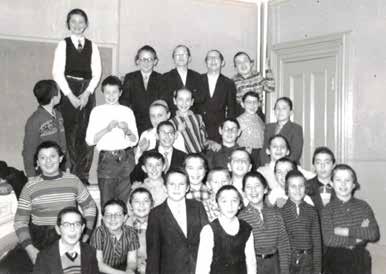
leading to the upper floors. When entering on the right side, there was a large dining room with a similar staircase. I think the kitchen was in the rear. The second and, later on, the third floors accommodated the classrooms. The Rebbe’s house consisted of the Rebbe’s reception room in the front with a nearby small adjoining room, where people had their kvitlech written while waiting to see the Rebbe. The next room was the tish room, which held a maximum of one hundred people during a tish. The second floor was the Rebbe’s family’s apartment, and in the basement, there was the mikvah. In the rear of both buildings was a large, paved playing yard. Behind the playing yard, a rectangular white stucco building was subsequently built which contained the Bais Medrash and was later used for tishen as well. It had a section which served as the ezras nashim and was annually converted into the sukkah.

The memories that I have from my Bobover Yeshiva days are many, but it is difficult to place them into specific years. I went there for seven years – from when I was nine and a half until I was sixteen and a half, from the fourth through the tenth grade. The first four years I had the same classmates as we all advanced from grade to grade. We all had the same rebbi, Rav Simcha Yosef Walter. He was a very good teacher. The yeshiva’s principal, Rabbi Yosef Shmiel Landau, a very authoritative figure, would come by to sometimes bring

order into the classroom. His method involved an actual stick rather than the proverbial carrot. We learned Gemara in the morning and Chumash with Rashi in the early afternoon. I still attribute my present knowledge of Chumash and Rashi to Rav Walter.
One incident that still remains in my mind dates back to almost seventy years ago. In the sixth or seventh grade, we moved from sitting at individual desks to sitting around a long table, while Rav Walter had a desk at the head of the table.
Once there was some disruptive behavior in the classroom, and our rebbi circled the room and lightly struck every single boy on the back of their heads which caused many yarmulkas to fall off their heads. When the last boy was hit, his yarmulka flew out of the window, and full pandemonium broke out.
From three o’clock until five thirty, we studied secular subjects. Our English principal was Mr. Levowitz, also quite a commanding figure who was very strict. I only remember two teachers: Mr. Lazarowitz in the eighth grade, whom we gave a “run for his money” and Mr. Neuman in the tenth grade. Our subjects included math, English, geography, science and history, a program similar to the public school system. Before the high school was established, a group of mothers, including my mother, requested an audience with the Bobover Rebbe. They asked him to continue to provide the students with a full academic high school curriculum. He said he understood the need and would comply with their request. And true to his promise, our ninth and tenth grades included
science, literature and other subjects comparable to what was taught in public high schools. By the eleventh grade, the more zealous chassidim prevailed on the Rebbe to limit secular subjects both in scope and in the time allotted to them. When that new approach was announced, dozens of talmidim, included me, left Bobov for other yeshivos, mainly to Torah Vodaas. Let me get back to elementary school. I mentioned our playing yard before. The most popular game the boys played was punchball. The boys chose teams, and I
was constantly left out. I was never good at sports, and being that I was on the chubby side, my participation would be a burden for each team! Instead, I found a few other boys who were also not interested in sports, and we formed a club and occupied ourselves with odd things to do during recess. I will skip describing the various pranks and unconventional behavior that we were involved with during these times. Suffice it to say, I was the unofficial head of this club, and though we got into trouble, we had a ball!

Lunch in the yeshiva was quite boring. Our cook was Mr. Kissner, a Hungarian refugee, and he tried to best to make our food interesting, but children have different ideas about which foods are appealing. I remember the daily soup and rye bread, the occasional noodles and cheese, the sweet vanilla pudding, the obligatory glass of milk, and not much more. There was a grocery store on the corner of Kingston Avenue and Park Place that we went to during recess to stock up on the treats that really attracted us. I remember the black and white cookies, eclairs, apple tarts, napoleons and chocolate-covered whipped cream in the shape of a bell. Healthy no way, but definitely much more appealing!
During the late ‘50s, the Bobover Yeshiva built a new building on Park Place, just around the corner of its main building. I went there for my secular classes from 1959-1962. I will share an interesting story about that building, an incident that I clearly remember.
My mother, a”h, who was a noted artist, had painted a full-size portrait of the Rebbe, which the president of the Bobover Yeshiva, Dr. Friedman, ordered to be hung in the lobby of the new building. When it came to the Chanukas Habayis of
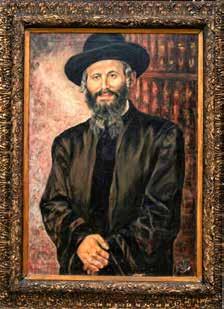
the building, the Rebbe’s close chassidim could not fathom the idea that a portrait of their Rebbe would hang in the lobby. Thus, the painting remained with our family, and we treasured it dearly. When my father, a”h, was sick in 1959, he had a serious operation. When the Rebbe came to be mevaker choleh my father, my mother asked one of the gabbaim if she could show the painting to the Rebbe.

He dismissed her request with the words “es past nisht.” As the Rebbe was leaving, my mother courageously approached him and told him the following, “The Rebbe surely knows that I have made a portrait of him. Would the Rebbe be interested in seeing it?” The Rebbe responded, “Avade, sure.” He went back into the living room, put on his glasses, admired the painting and complimented my mother’s talent. He also asked if any of her children possessed artistic talent. The painting remained in our family and hangs prominently in our dining room.
When I was in the eighth grade, my rebbi was Rav Shmiel Kremenitzer. I really liked him, and he instilled in me an appreciation for learning Gemara. The following year, our class moved into the Beth Medrash building. While in the ninth grade, Rav Shmiel Horowitz, one of the Rebbe’s beloved gabbaim, was our rebbi, and we learned Meseches Pesachim. During that year, Rav Eliezer Horowitz, the rav of Agudas Yisroel of Boro Park, was my chavrusa. The following year, I remember learning Meseches Beitza, and Rav Yakov Horowitz, the Rosh Yeshiva of Bais Meir and the rav of the Telzer minyan, was my chavrusa.
I always joke when I meet them about how they went on to become rabbanim and roshei yeshivos and why I was left out of this honor!

I kept up my connection with Rav Shmiel Horowitz almost until his recent passing. He was the one who wrote my kvitlech when I went to see all the Bobover Rebbes, and whenever we met, we felt a close bond.
Although during the final three years that I went to the Bobover Yeshiva the top grade in limudei kodesh was divided into separate classes, all my classmates were together during secular studies. I still have a good feeling when I meet my Bobover contemporaries, and they instill within me fond nostalgic memories.
In the summer of 1957, the Bobover Rebbe started one of first summer camps for boys, Camp Shalva in Ferndale, NY. I went there for a number of years before
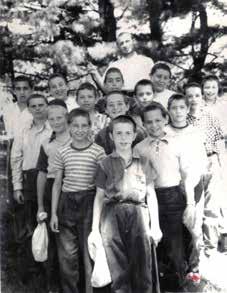
and after my bar mitzvah. Rabbi Yosef Shmiel Landau was the camp director, and his wife Leichu was the camp mother. The head counselor was Shimon Weissfeld, and my counselor was Rav Moshe Kessler with whom I still have an ongoing friendship. I studied my pshetel with Rav Itche Meir Cywiak, who was my summer rebbi. I have memories of the learning groups: two hours in the morning and one hour in the late afternoon. The dining room and the kitchen managed by Leichu together with Mr. Kisner the cook brings back mixed emotions. Yes, the kokosh cake was delicious and so were some of the other concoctions, but some of the fare was simply awful! Our best treats were reserved for Leichu’s Shabbos afternoon’s “Yoizen” (Hungarian for snacks). During that era, we sang all types of songs in camp, not just Bobover niggunim. I specifically recall singing the tunes of Shlomo Carlebach’s early recordings. I was not at all interested in sports, and even swimming did not attract me. My forte was acting and being part of the plays was my passion. I remember the competition between my performances and that of my classmate, Mendel Nompkin. To be honest, he was funnier than me. We went on hikes, participated in night activities, competed during flag day and color war, and went on occasional trips to local attractions. Camp was truly a fun experience for me, and it is where some of my current friendships were nurtured and developed.
Hershel Lieber has been involved in kiruv activities for over 30 years. As a founding member of the Vaad L’Hatzolas Nidchei Yisroel he has traveled with his wife, Pesi, to the Soviet Union during the harsh years of the Communist regimes to advance Yiddishkeit. He has spearheaded a yeshiva in the city of Kishinev that had 12 successful years with many students making Torah their way of life. In Poland, he lectured in the summers at the Ronald S. Lauder Foundation camp for nearly 30 years. He still travels to Warsaw every year – since 1979 – to be the chazzan for Rosh Hashana and Yom Kippur for the Jews there. Together with Pesi, he organized and led trips to Europe on behalf of Gateways and Aish Hatorah for college students finding their paths to Jewish identity. His passion for travel has taken them to many interesting places and afforded them unique experiences. Their open home gave them opportunities to meet and develop relationships with a variety of people. Hershel’s column will appear in The Jewish Home on a bi-weekly basis.

By SuSan Schwamm

If there’s one person to chat with about Israeli innovation and education, it’s Fleur Hassan-Nahoum. After years in Israeli politics, including half a decade as Jerusalem’s deputy mayor, Fleur co-founded Campus Israel, an organization that helps Jewish students from the U.S. and elsewhere study in Israel’s top universities. An outspoken supporter of the Jewish state, Fleur also serves as Israel’s Special Envoy for Trade and Innovation, an ambassadorial position in which she combats antisemitism and advocates for her country. Recently, TJH sat down with Fleur to discuss, among several topics, Campus Israel, the future of the Middle East, her years in Israeli politics, and Israel’s war on misinformation.
Fleur, can you tell us about Campus Israel –why you founded it and what is its mission?
Fleur Hassan-Nahoum: We’ve been working on it for about a year and a half. We believe that colleges around the world — not just in America — are letting down Jewish students. Fees are exorbitant, and what are you getting? Many times, it’s a hostile environment for Jews or anybody who believes in or is associated with Israel.
At the same time, there is an academic environment in Israel that is amongst the best in the world: when you look at prizes, grant money, unicorns, innovation — it’s all coming out of Israeli academia. But the message hasn’t gotten to global Jewry, to American Jewry, that college in Israel is an option. It’s much more affordable, it’s three years instead of four, and you come out with a top-notch, top-class degree. There’s a critical mass of students right now who, because of what’s going on everywhere else, would be a very good fit for a college in Israel. And so, although we didn’t invent college in Israel for
international students, we built the missing layer, which is essentially how to make it easy to find out what the options are. Up until we built this platform, there was not one place — even ChatGPT couldn’t do it! — with a comprehensive list of what’s available. So, we’ve gathered what’s available, we’ve made it very user-friendly, and we’ve even made it a little bit gamified in the sense that if you don’t know what you want to study, you can take a quiz and explore what’s available, what you’re good at, what you like, etc.
More importantly, we help through the application process, we help through the moving process, we ensure a smooth landing, and we’re there for the student every step of the way.
Let’s say the student needs to get health insurance and, for some reason, the college didn’t help. We’re there to help them. If the student needs a place for Shabbos, we’ll connect them to the right people. The student wants an internship? We’ll organize it. The student’s negotiating a rental contract? When you have Campus Israel, we’re your advocate for everything. We’ve got lawyers
on call, psychologists — we’ve got anything you need on call in order to make your experience incredibly positive. The other thing that we do is we also keep in touch with the parents. A lot of the time, we find that it’s challenging to send your kid to the other side of the world. But once you have people that you can speak to, it’s easier.
Who’s your target demographic? Is this specifically for students doing their gap year, or is this for students who are still in high school or just graduated?
Everyone. We’ll be targeting all students, from the juniors who are thinking about college to seniors who want to apply to students who are in seminaries, yeshivas, and gap programs in Israel. Many times, halfway through the year, students during their gap year are like, “We’re staying. We love it here.” They love it there — you can be Jewish out loud, you can be Jewish with no issue. When you go to the real world of college, all of a sudden,
it’s not so fun to wear a kippah and see people look at you the wrong way. And that’s what’s happening right now, unfortunately.
Is that the argument that you’re giving for students to attend college in Israel? That it’s easier to be Jewish?
No. The best argument is that Israel presents an incredible opportunity academically and lifestyle-wise. When you look at the future, Israel, with its tech innovation, is actually really well-poised to deal with future careers. Nobody knows what’s going to happen with this AI revolution, but the point is that Israel’s got the highest concentration of AI talent in the world. We’ve got NVIDIA, building a base with 15,000 jobs. We’ve got the top Fortune 500 companies with R&D facilities in Israel. Why? Why do they come to Israel? Because universities in Israel don’t teach you what to think. They teach you how to think. And, increasingly, academia around the world is losing its critical thinking. I think that we’ve all seen that in the last few years, and I think after October 7, it’s clear that something is very rotten.
What do you think is special about Israel that it’s at the forefront of innovation?
I think that necessity is the mother of invention, . Problem-solving has become very much part of the Israeli DNA. It is Jewish DNA. I always say that Jews don’t see the world as it is; Jews see the world as it should be. That is the basis of innovation — because we think about how things could look and be better. Also, we live in a country where we can’t physically export things to our neighbors because we don’t have neighbors who wanted to live side-by-side with us. So what did we invent? An invisible export: technology. Twenty percent of Israel’s exports are technological — and that’s unheard of in terms of world economies. It’s among the highest in the world.
That is so true. When did you come up with the idea of Campus Israel?
I came up with it a long time ago. Actually, the Abraham Accords, in a way, kicked off this thinking in my head. I’m the co-founder of the U.A.E.-Israel Business Council and the Gulf-Israel Women’s Forum. At the time, I was Deputy Mayor of Jerusalem, so I felt that we could do more to connect the cities. I used to travel to Dubai a lot, and I realized that in the U.A.E., most of their young people study abroad. I myself studied abroad. I’m from Gibraltar, which is a little British territory in southern Spain, so I f went to London for university.
And then, when I was Deputy Mayor, I kept thinking: We’re the Start-Up Nation. We’re the best place to learn innovation. So, why aren’t Israel’s international schools more popular? I kept thinking about that, and I kept seeing how bad things were in universities around the time — this was way before October 7. I always felt hostility. I used to go speak around the world, and every time I spoke on college campuses, I needed security. But why does the Deputy Mayor of Jerusalem need security to speak at a college campus? So, it was already not
good. I kept thinking: Why aren’t more people studying in Israel? Maybe there aren’t enough English language opportunities? But then I looked around, and I saw that there were.
Reichmann is a university in Herzliya that has really capitalized on their international standing. We have Ivy League-standard universities. The Technion is on MIT level. The best medical innovation is coming out of Weizmann. You’ve got Tel Aviv University and Hebrew University, which are among the top 100 global universities. So, why aren’t more Jews taking this opportunity? I kept thinking, and then I realized that most Jews don’t even know that there is an opportunity to get an internationally recognized degree in Israel in English. So that’s when I started, alongside my co-founder,
will be a different world without them. The people of Iran deserve to be free. In a free Iran coalition, with Israel, Saudi Arabia, and India, this is pretty valuable stuff. Who is the leading technological superpower in the Middle East? Who is selling the best ideas in the world? Israel. Where are those ideas coming from? The universities. Where do we want the next generation of Jewish leaders to train? Where they’re told to shut up for being a Zionist? Or where they can thrive? So, that’s the way I see it.
There are about 70,000, maybe 100,000, Jewish students going to college in America every year. If 5% come to Israel, we’ve changed the face of Israel, we’ve changed the face of the diaspora, and we’ve changed the face of the relationship.
Where do most of the students that Campus Israel services come from? Yeshivas? Public schools?
“We need a narrative warfare Centcom, and we don’t have that.”
building that missing layer of information and awareness, facilitating the process and landing, and the like.
After October 7 — when I saw what happened on college campuses, when I saw that all the hate was coming out of universities, when I realized that it’s going to take years to clean out the indoctrination and radicalization — I thought, “Hashem has put me here for this moment. If I don’t build this now, when are we going to build it?” And that’s when I got into proper action.
Have you had any resistance from parents who are concerned about sending their children to Israel during a war? Do you think the war with Iran will be over soon?
This is why we chose to start the launch now. Now, we’re looking at a new era. I’m a very optimistic person, and I look at a post-war world, which is what we’re going into — a free Iran world, which is what’s going to happen. It’s not if; it’s when. The Middle East is going to become an incredible environment. There are going to be new global coalitions. There’s going to be a trade corridor built connecting India, the Middle East, and Europe. I’m very excited for the future, because in that world, where innovation is going to be the most valuable currency, we are uniquely placed.
As for the war with Iran, it’s not over yet, but it will be. I don’t know if it’s going to be half a year or a year, but I think the regime is pretty cooked. I don’t see them recovering from this, and I pray they don’t, because it
Everywhere. Obviously, the low-hanging fruit are always the more Jewishly-connected kids, but we also understand that 20% of kids in college in the U.S. experience financial insecurity. Why should you have to take a loan for a million dollars to have a career? What it costs you for a year in America is the cost of a full degree in Israel. A degree costs from $3,000 to $15,000 a year in Israel. And, at the same time, I’m raising a scholarship fund or an interest-free loan fund for the kids who can’t even afford that.
In addition to targeting Jewish schools, we also go to public schools with high Jewish populations, and we reach out to college counselors there, too. They’re very receptive.
We also work to connect our students to their Jewish roots. We believe that if they’re already going to be in Israel for three years, it is incumbent on us to show them where they come from and who their people are. And so, we’re creating a whole layer of getting to know the country, including fun trips, getting to know Israelis, affinity groups with Israelis. Whatever experience you’re looking for, we’ll have.
Many of these universities in Israel are religious or majority religious. My son goes to Ariel University, and on Shabbat, it’s like you’re in a yeshiva.
What’s the biggest obstacle you’ve encountered so far?
I think the biggest obstacle, first of all, is that people don’t know. So, it’s not an obstacle. It’s just that you have to do an awareness campaign. You have to show people the benefits, you have to show people that it’s possible, you have to show people the value. But the other thing is that some parents don’t want to send their kids to the other side of the world I get that. I left my house when I was 18 years old, and I studied in London. It was the most natural thing in the world for us, because we knew that when you’re 18, you leave for college, you leave for another country. But I think in America, you want your kid to be a couple of hours away or even live at home during college. But then there are other risks. Unless you go to YU, your kid is going to be in an environment that might not be pleasant for Jews.
Tell me about your stint as Deputy Mayor. You were in politics for quite a while, right?
So, I was a City Council member for eight years, and I was Deputy Mayor of Jerusalem for almost five.
Jerusalem is the most complicated and fascinating city in the world. Jerusalem — talking about student campuses — also has the most colleges in Israel. There are tons of colleges. You have Hebrew University, which is one of the world’s top colleges. You’ve got one of the top art schools in the world, which is Bezalel Academy. You have Machon Lev, Israel College of Engineering, and so many different colleges. So, yes, Jerusalem is a fascinating city. I truly believe that m’Tzion tetzei Torah, whatever methodology you find to fix something, if it comes out of Jerusalem, it’ll resonate.
We’ve got a 30% Chareidi population and 40% Arab population in Jerusalem. It’s the most diverse city in the country, and socio-economically, it’s the most challenging because of the Chareidim and Arabs having a lower socio-economic level because of under-representation in the workplace. But we’ve found so many solutions. Necessity is the mother of invention; you have these huge challenges, you find creative ways to solve these issues.
As Deputy Mayor, I focused on tourism, foreign affairs, and economic development. I did a lot of workforce development for Chareidim and for Arabs. And when I got involved with the Abraham Accords, I tried to connect the Arab population to the whole ecosystem with what was going on in the Abraham Accords.
Jerusalem is a very unique place, because it’s so diverse and people work together. Even Jerusalem City Hall — it has 11,000 employees. Thousands of them are Arabs and thousands of them are Chareidim. When you have people working next to each other, that’s when barriers break down. That’s when you realize that the person next to you is human too, with their own issues, with their own problems.
What do you say to people who claim that Israel’s an apartheid state that doesn’t care about the Arab population?
If you say that, it’s because you’ve never been to Israel. You don’t know. You’re reading antisemitic slogans that people are throwing around on social media. Speak to the average Arab who’s an Israeli citizen and ask them where they’d rather be. Nowhere. The only place where Arabs can vote in the Middle East is Israel. There’s no real democracy in any other country.

the line? Well, I’m going to give you a formula. It’s called the three D’s, which were proposed by Natan Sharansky.
The first is “delegitimization.” If you say, “Israel doesn’t have the right to exist,” that makes you an antisemite because you’re saying that everybody else has got the right to exist in their own country except for
to me, is what the Jewish people need right now.
Many people say that, in addition to Israel’s wars on various fronts, it’s also fighting a information war that we’ve lost. What do you think about that?
Yes, we’ve lost. Because the Israeli government thinks that narrative warfare is a “nice to have” and not a “need to have.” They’re not doing anything about it. And I scream at my own politicians — I’m with Likud on the center-right — from the rooftops about this. Some people say that the Third World War has started, and it’s on the media front. And I tend to kind of believe that.
And this didn’t happen without a very deliberate, concerted campaign by the other side that they’ve been investing in for years. We’re not even in the arena. So, please G-d, one day when I go back to politics, it’ll be to fix this. My plan would be to depoliticize the narrative warfare response. At the moment, it’s too political. In other words, it sits in the Prime Minister’s Office, and it’s also very deconstructed. It’s in the Foreign Ministry. It’s in the Diaspora Ministry. It’s in the Prime Minister’s Office. No – you don’t fight and win a war when there’s no central command, Centcom. We need a narrative warfare Centcom, and we don’t have that!
What is your position as Special Envoy?
What about people who are saying these things, but they claim they’re not antisemitic — they’re just anti-Zionist, they just don’t think that the State of Israel should exist? What do you say to those people?
It’s like saying, “I like Norwegians, but I don’t believe they should have their own country.” What does that mean? You like Jews, but they should be the only people on Earth who can’t self-determine? What does that make you?
People ask, “Is there a way to criticize Israel without being antisemitic?” And I say, “Of course.” So where’s
“Jews don’t see the world as it is; Jews see the world as it should be.”
Jews. If you “demonize” Jews, you’re an antisemite. You know how many times a day I get called baby-killer online? Does anybody call Putin a baby-killer? No. Just Bibi. It’s not criticism; it’s demonization. “You kill babies” is a thousand years of antisemitic tropes. And the third D is “double standard.” Thousands of people were killed in Iran — was it on the news? Two people get killed in Gaza in a war that we didn’t start, and it’s on the 24-hour news cycle.
Do you miss politics?
No. Well, I loved politics. I’ll go back sometime, but I feel like this project is very important to build for the Jewish people right now. This is where I’m needed right now. I’m only interested in going back into politics if I have real influence. When the moment comes when I have the opportunity to serve my people in a more influential way, I’ll go back. But for the moment, this,
I’m a Special Envoy for Trade and Innovation. Basically, I am a roving ambassador tasked with building bridges in trade with the region and the world. I was appointed two weeks before October 7. And so, on October 7, my position, out of necessity, changed to advocating for Israel. If you Google me, you’ll see a million interviews. I’m trying to build a better future for Jews of the next generation.
What weapons can we give American Jewry to combat the anti-Israel sentiment that we’re all feeling and experiencing?
Well, first of all, the most important thing is helping Jews understand their own history, their own background, their own connection, their own indigeneity to the Land of Israel. Once you understand that this is where you’re from — the Jews are from Judea — and the history, not just biblically but the modern history of Israel, then you have the tools to be able to understand that everything else is hateful propaganda against Jews. When you understand that what we see today as anti-Zionism is simply a more politically correct evolution of antisemitism, when you see things clearly, you’re going to be much more resilient to it. Just understand where you come from. Be proud of who you are. Look at how much we’ve achieved as a little people that shouldn’t even exist anymore. What is it that we have? We’re like walking dinosaurs when everybody else has gone extinct: the Romans, the Babylonians, the Ottomans — where are they all now? We’re still here. And not just still here. We’re now a technological superpower with the best universities in the world. I just want to make sure that the Jews know that they’ve got somewhere to go where they will be appreciated and they will be loved and taken care of.



By Eliyahu RosEnBERg
hen they took me out of the tunnel for the first and last time, I started to cry. I heard the sound of the street. I breathed a new air. And that’s the moment that I realized…it’s done. It’s over. I’m going home,” Eliya Cohen recounts. “It felt like the last second of a nightmare.”
Before October 7, Eliya Cohen and Ziv
Abud had a beautiful life together in Tel Aviv. They were planning to get married. They were best friends. They traveled together, enjoying every day side by side.
But then, rockets started falling. The Nova music festival descended into chaos. Terrorists began flooding the border, slaughtering the couple’s friends. Running for their lives, hordes of people headed for
if you have the opportunity to spend more time with your family, hug them and kiss them, because you really don’t know what will be tomorrow. it’s so important, and your family is really all you have in your life.
if i had the opportunity to tell myself something on october 7, i would say, ‘Eliya, trust in g-d. g-d is with you. stay strong, stay brave. Do everything you can to survive, keep praying to g-d, keep believing that you are going home, and everything is going to be okay
— i promise you.’
We have a mission now: to build achdut around the world, all the Jewish communities and all the Jews around the world. We share our story around the world and in israel to accomplish that.
i always believed in g-d before, and now, of course. But i think the first moment that i actually saw g-d was in that shelter. When i needed him the most, he was there.
bomb shelters, where they thought they’d be safe — but they were not. The terrorists hurled grenade after grenade at the shelter until the door swung open. Some people were grabbed and dragged away to the Gaza Strip. Others were murdered as the terrorists sprayed the shelter with bullets.
The last thing Ziv remembers before losing consciousness is screaming, “Eliya, you’re going to be okay!”
“The next thing I remember is 11:00 a.m. — the attack had started at 8:00 — and I was alone. Eliya was no longer beside me. I was in a pile of bodies,” Ziv recalls. “I stayed with those bodies for seven more hours until somebody rescued me from the shelter. I was one of only seven survivors from the 29 people in the shelter…
“When I got to the hospital, I got a thousand messages, including from my parents, friends, everyone. But half of the messages had a picture. When I opened the picture, it was the Telegram channel ‘Gaza Now,’ the news of the Palestinians. And it was a picture of Eliya, terrified, full of blood. Under that, the headline read, ‘One Israeli kidnapped to Gaza.’ And that’s the moment that I realized… Eliya was kidnapped.”
* * *
The last thing that Eliya saw before his captors dragged him out of the safe room was another terrorist going back into the shelter and shooting bullets in every direction — just to make sure that no one survived. He was sure that he had lost everyone, even Ziv.
“When we arrived in Gaza, hundreds of civilians and terrorists surrounded our car, and everyone there tried to hurt us. They threw stones at us, they beat us, they spat on us,” recalls Eliya. “But I will tell you something: Inside, I felt so grateful. And I’ll tell you why. Because less than an hour before, we were in that shelter. The terror-
ists arrived. They threw grenades and shot RPGs. And all that I asked from G-d in that moment was just to stay alive. So, I was on that truck, and the terrorists beat me, but I didn’t feel a thing. The only thing that was on my mind was to say, ‘G-d, thank You. I love You. I’m alive.’”
Eliya says he saw many miracles in Gaza — countless times when he could have easily been killed, but G-d protected him. He saw the hand of G-d constantly. And little did he know that Ziv wasn’t only alive — but that she was fighting for his return, every single day.
“Every day was difficult. I don’t remember one day that I was happy. But I never gave up,” Ziv declares. “Every day, when I went to sleep, Eliya was on my mind. And when I woke up every morning, I asked myself, ‘What am I going to do today to bring Eliya home?’ I was like a robot. I had a mission, and I was disconnected from everything. Until Eliya’s home, I’m not going to give up. Never.”
Of the 505 days that Eliya spent in captivity, every day was grueling for Ziv, but the hardest moment was 491 days in, when Eli Sharabi and Or Levy, two other hostages, were released. She heard that Eliya was in the same tunnels as them, and she saw how emaciated the two were, how they looked like Holocaust survivors. Their legs had been chained. They’d been tortured and starved, left in darkness for hundreds of days. And that’s when Ziv realized that Eliya had been going through the same unspeakable ordeal.
“They also told me that Eliya didn’t know that I was alive. I was so happy that he was alive, but nobody promised me what would happen five minutes later. And also, nobody knew what was on his mind. Did he still love me? Is he waiting for me?” Ziv recalls painfully. “I think that was the hardest
day, not just during the time that Eliya was in captivity, but in my entire life.”
* * *
When Eliya emerged from the Gaza tunnel — when he realized that he was free at last after 505 days of brutal captivity — he cried tears of joy. Standing alongside him at the exit of the tunnel were his fellow hostages, Omer Wenkert and Omer Shem Tov.
“We stood outside the tunnel for the last time — and we knew that it would be the last time. And we were blindfolded, just waiting for the car that was supposed to take us to the stage. I felt so nervous because I knew that that would be the moment when I’d go to meet my destiny — to find out how many people I knew perished on October 7,” Eliya remembers. “And it just came to me: I started to sing Shir Hama’alot because I wanted G-d to be with me. So, I started to sing, and then Omer and Omer joined me, and we were singing together. And the terrorists tried to tell us, ‘Be quiet!’ but we just sang louder and louder. And it was so powerful because we felt so Jewish in this terrible place, and it gave us so much strength to continue.”
Soon thereafter, Eliya was back on Israeli soil, greeted enthusiastically by IDF soldiers.
“Eliya, your parents are waiting for you in Kibbutz Re’im!” a soldier told him. “And Ziv is waiting for you there, too.” Eliya stared at the soldier in shock. He didn’t believe it. Ziv couldn’t possibly be alive!
“I think you’re confused. It doesn’t make sense,” a baffled Eliya told the soldier. “I saw the terrorists return to the shelter, they shot a lot of bullets in all directions, and it doesn’t make sense. They killed everyone.”
“Eliya, I don’t know how to tell you this,” the soldier replied, “but she survived under all the bodies. And she fought for you for 505 days. She did so many things for you. And she’s waiting for you in Kibbutz Re’im.”

was reunited with Ziv — his best friend, the girl he wanted to spend his life with — he was overwhelmed with joy. Hashem had answered all his prayers and more. And to Ziv, it felt just as surreal. “Wow, wow, wow. I was shocked,” Ziv recalls. “I didn’t want to leave his side. I couldn’t believe it. It was a miracle, and I think that we will always appreciate what we have now.”
Before October 7, Eliya purchased an engagement ring and planned to ask Ziv to marry him. When the last hostage release deal was reached — when the final hostages were freed — Eliya decided to pop the question.
“It was so special to do that, because it was our victory,” Eliya shares. “It felt like a real victory because we did it on the land where our enemies tried to occupy us, tried to kill us, kidnap us — on the land where all of our friends were murdered. We did it there, and it felt so powerful to do that. This is our victory: to get married and build a family.”
“To do that on the same land where they wanted to break us,” Ziv adds.
Eliya and Ziv’s advice to couples is as follows: Don’t only be a husband or wife to your spouse — be best friends with them. “And appreciate everything you have,” Ziv adds.
“One of our conclusions from this experience is that your family is the most important thing in your life, and only when you lose them do you understand how much they mean,” Eliya declares. “If you have the opportunity to spend more time with your family, hug them and kiss them, because you really don’t know what will be tomorrow. It’s so important, and your family is really all you have in your life.”
other befell Eliya, and he couldn’t understand why. So, he turned to G-d. “Why G-d? Why are You doing this to me?” he asked.
After terrorists dragged him to Gaza, Eliya asked the same question as he lay on the ground. Why did he, of all people, have to get abducted? And 505 days later, when he was finally home, he had a similar but fundamentally different question: There were 33 hostages remaining. Why did he get released before they did?
“When I was released, I asked my mother, ‘Mom, why me? Why me from 33 hostages?’ She took out a page and showed it to me,” Eliya recalls. “And on the page, it read that I had had an epileptic attack a few years before. And she told me, ‘Eliya, because you had an epileptic attack two years before October 7, you were on the humanitarian list.’ I didn’t realize why G-d did it to me — why I got an epileptic attack — but that situation released me from the worst moment of my life — from remaining in Gaza as a hostage. G-d has a reason for everything.”
So much has happened in Eliya and Ziv’s lives — and in the world — since October 7. In the shadows of that horrific day, the couple found G-d, discovering a sense of faith and purpose that they never knew before. Though they always believed in G-d through their largely secular lives, their emunah has grown in leaps and bounds since October 7.
Indeed, while in captivity, Eliya would discuss Hashem with one of his fellow hostages.
“How can you believe in G-d after what happened to us on October 7?” the other hostage asked Eliya.
But Eliya didn’t understand the question.
what will be with my family?” he asked himself. “They’ll be heartbroken.”
So, as always, Eliya turned to G-d.
“Hashem, I know You are here. But please, give me a sign,” he pleaded. “Give me something that proves You are with me. That’s all I need.”
Ten minutes later, the terrorist’s radio suddenly started playing Radio Darom, an Israeli channel. Eliya listened closely. He heard Omer Shem Tov’s mother speaking about her son. And then, he heard former minister Benny Gantz talking about the war, about the October 7 massacre, about the 1,200 people we lost, and the 250 hostages that they were working to bring home. “It was a huge sign for me,” Eliya recalls. “And I told myself, ‘Okay, this is the sign that I looked for. I have to be more patient. G-d is with me. Eliya, everything is going to be okay.’
When Eliya
Two years before the massacre, Eliya found himself facing challenge after challenge. After experiencing a major epileptic attack for the first time in his life, he wound up in the hospital. When he was released, he and Ziv got into an accident. And then, before he knew it, his grandfather passed away. One setback, one heartache, after an-
“How can you not believe in G-d after what happened to us on October 7?” he replied. “We’re alive! We still have the chance to go home to our families!”
One night, Eliya considered attempting an escape. He gazed over at his terrorist captor, lying nearby — a gun sat between them. But then, he paused. “If something were to happen to me while I try to escape,
“If I had the opportunity to tell myself something on October 7, I would say, ‘Eliya, trust in G-d. G-d is with you. Stay strong, stay brave. Do everything you can to survive, keep praying to G-d, keep believing that you are going home, and everything is going to be okay — I promise you.’ And this is what I did there in the tunnels,” Eliya shares. “I told myself that everything will be okay; that I should just trust in G-d. Every day, I went to the corner of the room, I imagined myself putting on tefillin — because this is what I used to do before October 7, and I really missed that. At first, I said Shema Yisrael, after I said Shir Hama’alot, and then, I was quiet for around 20 seconds, and I told myself, ‘Eliya, trust in G-d. G-d is with you. Thank Him for everything you have in life. Thank Him for everything you went through, are going through, and will go through in the future. Everything is going to be okay, Eliya.’”
Likewise, if Ziv could give her past self some words of encouragement — the self that didn’t know if Eliya would be okay — she’d say the following: “You have no idea how strong you are and how much power you have,” Ziv declares. “And one day, you will be married to Eliya.
“You just have to believe.”
Moderated by Jennifer Mann, LCSW of The Navidaters

I was hoping you could help me. I’m 32 years old and have been dating for about ten years. In general, I’m more of an introvert who enjoys my alone time (this might be important as to some details I will explain later in my question).
About five years ago, I met the most amazing girl, and we dated seriously. (For this letter, I’ll call her Miriam.) The problem is when I was in it, I didn’t see what I see now. All I saw were any flaws and small issues. They bothered me. When I wasn’t with her, I didn’t particularly miss her or want to spend all my time with her. I still really enjoyed my alone time. I didn’t have a push to want to spend more time with her. Ultimately, I ended it with Miriam... She was devastated, and I thought I made the right decision. She actually got engaged and married about a year later to someone else.
Over the course of the past few years, whenever I’m dating someone seriously, I compare them to her. They’re never as good and as amazing as Miriam was, so I end it. How could I possibly marry someone when I know I have experienced being with someone better? I feel like I passed up my bashert, and there is just nothing I could do.
I’m dating an incredible girl now who has a lot of great qualities (let’s call her Sara), and I find myself in a similar situation. I don’t feel particularly compelled to spend a lot of time with her. How can I marry someone like that? At the same time, I look back at when I was with Miriam and I felt the same thing. Except this time, I am also comparing Sara to Miriam, telling myself all the ways Miriam was better.
I really need help with this and was hoping you guys can help me sort this out. Do I have to wait until I meet someone better than Miriam was? Is it a problem to marry someone I don’t want to spend all my extra time with and still really enjoy being alone?
Please advise, Shimi*
Dear Readers,
We want to offer YOU an opportunity to be part of the discussion! Please email us at MichelleMondShadchan@gmail.com, subject line “reader’s response,” if you would like to participate in the new “A Reader’s Response” columnist spot. We will send you a question and publish your answer in an upcoming Navidaters edition.
If you have a question you would like the Navidaters to answer, please reach out to this email as well.
Looking forward!
Michelle, the “Shadchan”
Rebbetzin Faigie Horowitz, M.S.
Shimi, although you have been dating for ten years, you haven’t realized something. Married people need to spend time alone, not just with their partners. Every person does, whether or not she or he is an introvert. No one person, as charming as they are, is going to cause you to want to spend a majority of time with her. Wanting to spend your available time with someone is not the only indicator of compatibility. What happens when novelty wears off? What do you have to offer? Sharing interests and opening up your own interests to a broader range will help.
So will a therapist who can help you accept and expand yourself.
I think that until you sort yourself out, you will not get over Miriam in a healthy way.
Michelle Mond
Shimi, you start off your letter stating you hope we can help you. My first reaction might be the most important. We can only help you if you truly are ready to be and want to be helped, which, judging by your letter, I am not so sure you are. You see, you illustrated to our readers a romanticized story about the perfect girl, Miriam, whom you consider The Girl Who Got Away. Every relationship you have had since Miriam is compared to the damsel, the main character, in this dramatized story of your life. You explain, “How could I possibly marry
someone when I know I have experienced being with someone better?”
I will respond to this question with another question. How do you expect anyone to answer this preposterous question other than saying, “Okay, Shimi, you’re right. Wait for someone who makes you feel better than Miriam did!” After all, nobody wants to give you advice that will ultimately make you unhappy. Congratulations, Shimi. You have found the perfect excuse not to settle down. A get-out-of-jail-free card.
I have seen this type of scenario play out time and time again with men and women whom I’ve helped. It always starts with a story like yours, of the Man or a Woman Who Got Away. I like to describe this as similar to those perfectly healthy patients who walk into an urgent care, trying to convince the doctor they need a disabled parking permit. Once these patients receive the parking permit, whether or not they are actually disabled, they don’t have to do the hard work anymore. No more circling around the parking lot for a spot, no more long walks from the end of the lot to their destination. It’s easy. and it’s permanent.
This girl (now married lady with probably many children) named Miriam is your disabled parking permit. When you get to ten dates and abruptly end the relationship, you have a forever excuse. “She’s not as good as this girl Miriam was.” Now tell me, Shimi, who’s going to argue with that? You no longer need to walk from the other end of the long parking lot when there are no spots. You no longer have to face your fears of decision making. You no longer have to work through your anxieties and fears of marriage and giving yourself to someone fully as a husband. You no longer have to wonder if this girl will be able to put up with your own faults or shortcomings. All you have to do is show your disability per-
mit a.k.a., The Story Of Miriam Who Got Away. As soon as the relationship becomes serious and you need to proverbially walk from the back of the parking lot, you have the perfect excuse.
So Shimi, If your goal is to smoothly sail through dating with your perfect excuse stored in your back pocket for the moment things get serious, you have found it. But if you are really looking to settle down and get married you need to trash the permit, get rid of the story of Miriam and walk from the back of the parking lot.
Do the work. Recognize that everyone (including you) has flaws. When you were with Miriam, you couldn’t commit to her either, until she was gone and unavailable to you. It was only when she was unavailable to you that she became your pedestal of the perfect person. That is why you need to recognize it as what it is: a fictional fairy tale that you have to stop replaying in order to live your life.
Find a girl who is a great girl in her own merit, not compared to anyone. You actively have to choose to make someone your bashert, not wait for the perfect person to magically drop into your life. There will always be someone nicer, better, prettier, etc. to compare to. Your active choice to make a girl your bashert is what’s going to make her perfect for you. And of course, it goes without saying that she will ultimately do the same for you. (I mean, do you really think you’re the perfect guy?)
As for the aspect that you are an introvert and enjoy your alone time, that is completely normal. You do not have to want to spend all your time with the one you will ultimately marry. It is normal to still feel like you are enjoying your time alone, when you are not on a date with her. This is the nature of an introvert, and nothing you can do will change this. When you recognize that this is your nature, you will no longer look at this as a chisaron in your relationships.
Dr. Jeffrey Galler
There is good news and some not-sogood news here.
The good news is that you are extremely self-aware and recognize that you have
some important issues that need to be dealt with. The not-so-good news is that a 500-word newspaper column may be inadequate to fully address these issues. You likely would benefit from visiting a psychologist who specializes in Cognitive Behavioral Therapy.
Let’s discuss two problems that are affecting your ability to enjoy a high quality of life.
Constantly making comparisons, as we go through life, is neither useful, nor helpful, nor healthy.
This is true when you buy a car and can’t enjoy it because your work colleague’s car is nicer, or if you have a comfortable home and can’t enjoy it because your neighbor’s house is fancier. It’s true when you can’t enjoy a relationship with a new girlfriend because you can’t stop comparing her to someone you knew five years ago, or when you are happily married but constantly fret that your friend’s wife is somehow better.
My advice may sound overly simplistic, but you need to adopt a mindset that is able to get beyond that behavior. Comparing your new girlfriend to your old one is not fair to her and is not fair to you. It keeps you trapped in a perpetually unsettled state of mind and prevents you from fully appreciating the relationship right in front of you.
If this girlfriend is as amazing as you describe, then you need to accept that at this time and place of your life, she might be the right person with whom to build a happy life.
Please do not allow yourself to go through life fretting over what could have, would have, or should have happened five years ago.
Every individual has different needs. For some, being alone is a horrifying prospect, and they need and enjoy constant companionship. For others, having sufficient “alone” time is crucial to their psychological well-being.
Accordingly, when thinking of getting married, prospective partners learn to understand and respect their mate’s needs and decide whether or not their needs are compatible.
There is absolutely nothing inherently wrong with your need to enjoy considerable “alone” time. You can still love someone unconditionally, while not necessarily spending all of your time together.
The key, of course, is to discuss your needs with your girlfriend, and to understand and accept her particular predilections, before getting married.
For many emotionally healthy people, love coexists quite comfortably with independence, work, hobbies, and private time.
At some point, an emotionally healthy person learns that happiness in life does not come from endlessly searching for someone, or something, better. It comes from recognizing, appreciating, and enjoying the satisfactions that are right there before us.
Rabbi Jack Abramowitz, Local Author
Hi Shimi! Thanks for your question. You have two things going on here, and I’d like to address them separately.
First, when you weren’t with Miriam, you didn’t particularly miss her or want to spend all of your time with her. Similarly with Sara, you don’t feel particularly compelled to spend a lot of time with her. You know the saying “It’s not you, it’s me”? Well, this is you. You’re a self-described introvert. You probably have an idea of romance from TV and movies, so you’re expecting fireworks that never come. That’s not necessarily a flaw in your relationships; it might just be the way you’re wired. And you know what? That’s perfectly okay. It’s just important to make sure that any girl you get serious with is on the same page, emotionally speaking. After all, it would be unfair to pair up with a woman who needs a lot more emotionally than you’re prepared to give.
The second thing is that you’re comparing Sara (and others) to Miriam. That’s perfectly normal. Lots of people compare potential mates to “the one that got away.”
But that doesn’t mean it’s healthy! Every
The Navidaters
Dating and Relationship Coaches and Therapists
Dear Shimi,
As I was reading your letter, I found myself wondering if Miriam is actually the issue, or if the issue is what happens inside of you when a relationship starts becoming real.
One thing that struck me was that you described having similar feelings with both Miriam and Sara. You enjoyed being with them, saw their wonderful qualities, but didn’t particularly miss them when they weren’t around. You didn’t feel compelled to spend every free moment with them. And that left you wondering whether something was missing.
But what if that’s not the right question?
person is a unique individual, multi-layered and multi-faceted. We don’t really compare one to another. Really, what you’re doing is idealizing Miriam, whose flaws were all you could see when you were with her. Well, now you’re doing the same thing to Sara by comparing her to Miriam. Judge Sara by Sara, not by Miriam.
What you should probably do is work on straightening out: (a) your expectations of what you should be feeling vs. what you actually feel; and (b) your tendency to romanticize Miriam and use her as the standard by which you judge all others. That may take some time and effort, but it should be achievable with some professional guidance and a little personal introspection.
Finally, I’d like to address the concept of missing out on your bashert. According to the Rambam, in his letter to Ovadya the Ger, a bashert isn’t a one-to-one match. Rather, it’s just one of a number of potential compatible mates. (I can’t get into how he reaches that conclusion here, but I have an article on the Jew in the City website on this topic, keyword: soulmate.)
I believe the woman for you is out there – and who knows? It may even be
This girl (now married lady with probably many children) named Miriam is your disabled parking permit.
Sara! – but you have to be fair to her. You have to make sure you’re compatible emotionally, so verify that she’s someone who appreciates solitude as you do, and you absolutely cannot spend your life comparing her to someone you’ve retroactively placed on a pedestal.
Work on yourself (with the assistance of a professional), and I’m confident that you will find that basherts are out there!
You de - scribe yourself as an introvert.
Not everyone experiences love as an over - whelming need to be together all the time. Some people genuinely need more space and solitude than others. Wanting alone time isn’t necessarily a sign that something is wrong.
What I find more interesting is what happened after Miriam was gone.
When we’re dating someone seriously, our nervous system isn’t just responding to the person in front of us. It’s responding to vulnerability. To commitment. To the possibility of making the wrong
choice. To the reality that this person could become very important to us.
For some people, that creates anxiety.
And anxiety has a funny way of disguising itself. Sometimes, it shows up as doubt. Sometimes, it shows up as focusing on flaws. Sometimes, it shows up as a nagging feeling that maybe someone better is out there.
Then the relationship ends. And suddenly there’s nothing left to decide. The vulnerability disappears. The pressure lifts. The risk is gone.
And from that safer distance, we can finally appreciate all the things we couldn’t fully see when we were in the middle of it.
I wonder whether part of what happened with Miriam is that once she was
no longer available, your nervous system relaxed. The relationship stopped feeling risky and started feeling safe. And from that place, you could finally see her clearly. If that’s true, then finding someone “better than Miriam” won’t solve the problem. Because eventually Sara, or the next woman, may end up becoming another Miriam.
The question I would encourage you to explore is not, “Did I lose my bashert?” It’s, “What happens inside of me when a relationship starts becoming real?”
That question may hold far more answers than comparing one woman to another.
Sincerely, Jennifer

Bloating is something that is commonly experienced. Whether it happens after a large meal or after eating certain foods, the uncomfortable feeling of fullness and pressure in the stomach can make people feel sluggish and out of sorts throughout the day. For some individuals, bloating only happens occasionally, while for others it becomes a regular issue that affects daily life, eating habits, and overall comfort.
From a nutrition perspective, bloating is closely connected to digestion and the foods people eat. While it is usually harmless, understanding why it happens can help people better manage it and improve their digestive health.
Bloating is the feeling of fullness, tightness, or swelling in the stomach area. Sometimes, the stomach may actually appear larger or distended, while

By Aliza Beer MS, RD, CDN

other times, the discomfort is felt more internally. People often describe bloating as feeling “too full,” even if they did not eat a very large meal.
Bloating is commonly accompanied by symptoms such as excess gas, burping, abdominal pressure, cramping or discomfort, gurgling sounds in the stomach, and a heavy or swollen feeling.
To understand bloating, it helps to first understand how digestion works. After eating, food travels through the stomach and intestines where it is broken down by stomach acid, digestive enzymes, and healthy gut bacteria. Some foods, especially certain carbohydrates and fibers, are fermented by bacteria in the intestines. This fermentation naturally produces gas. Normally, gas moves
through the digestive tract and leaves the body without much discomfort. However, when too much gas is produced, or when gas gets trapped in the intestines, bloating can occur. Bloating may also happen when food moves too slowly through the digestive system. When digestion slows down, food and gas stay in the intestines longer, creating more pressure and discomfort.
Bloating can happen for many different reasons, and in many cases, it is connected to digestion, eating habits, and lifestyle factors. One of the most common causes is simply eating too much at one time. Large meals can stretch the stomach and place extra stress on the digestive system, which may leave people feeling overly full, uncomfortable, or swollen
after eating. Heavy meals also tend to take longer to digest, which can increase pressure and slow down the movement of food through the digestive tract. Foods high in fat take especially long to digest, which may prolong feelings of fullness and bloating for several hours. The way people eat can also contribute to bloating. Many individuals eat quickly without realizing it, especially during busy days or while distracted. Eating too fast often leads to swallowing extra air, which can become trapped in the digestive tract and contribute to gas and bloating. In addition, not chewing food thoroughly may make it harder for the body to properly break food down, placing more work on the digestive system.
Digestive issues may also play a role in bloating. Constipation, for example, is a common contributor and may leave
people feeling uncomfortable, heavy, or swollen in the abdomen. Some people may also experience bloating because of food intolerances or sensitivities. Lactose intolerance is one common example. When lactose is not properly digested, it can ferment in the intestines and produce gas and bloating. Similarly, carbohydrates that are harder to digest may also lead to such effects. This is why some people may experience bloating after eating certain carbohydrate-rich foods.
In some cases, bloating may also be related to water retention. Highly processed foods that are high in sodium can cause the body to hold onto extra water, leading to a swollen or puffy feeling in the abdomen. Dehydration may sometimes worsen this issue because the body may retain more fluid when water intake is too low.
Lifestyle habits may also play a role in digestive health and bloating. Poor sleep and ongoing stress can slow down digestion and may worsen digestive symptoms in some people. Some individuals may also tend to swallow air when they are anxious or nervous. In these cases, reducing stress and practicing relaxation techniques may help improve symptoms.
Not every person reacts to food the same way. A food that causes bloating for one person may not bother someone else at all. However, there are certain foods that are more commonly associated with bloating because they are more difficult to digest or produce more gas during fermentation.
• Lentils and beans contain indigestible sugars, which are broken down by bacteria, resulting in the production of gas.
• Fruits and vegetables like carrots, cabbage, Brussels sprouts, broccoli, cauliflower, prunes, and apricots are packed with nutrients, but some people may notice bloating after eating them due to their sulfur compounds and fermentable fibers. Cooking the vegetables instead of eating them raw may make them easier to digest for some people.
• Artificial sweeteners like sorbitol found in sugar-free gum, candy, and diet products are not fully digested by the body and may ferment in the intestines.
• Dairy products such as milk, ice cream, and some soft cheeses can cause bloating in individuals who are lactose intolerant since lactase cannot be properly digested.
• Carbonated beverages such as soda and seltzer introduce extra gas into the
digestive system, which may increase bloating.
• Foods high in fat tend to slow digestion because fat takes longer to leave the stomach. This can leave people feeling overly full and uncomfortable.
• Wheat contains gluten, which may cause bloating in individuals with celiac disease or non-celiac gluten sensitivity. It is important to note that gluten is often mistakenly blamed for bloating in the general population, when in many cases other components in wheat-based foods
while drinking enough water can help the digestive system adjust more comfortably.
Staying hydrated throughout the day is especially important because dehydration may contribute to constipation, which is a common cause of bloating and abdominal discomfort. However, fluid timing around meals can vary from person to person. Some individuals may notice that drinking large amounts of fluids during or immediately after meals worsens bloating, so spacing beverages between meals may be helpful for those individuals.
Large meals can stretch the stomach and place extra stress on the digestive system
(such as fermentable carbohydrates) or overall eating patterns may be the actual contributors.
Once bloating has been diagnosed, treatment depends on the cause. For functional bloating, management is usually supportive and focuses on finding and reducing personal triggers. Keeping a food and symptom diary can help identify patterns, and foods that consistently cause bloating may be limited or removed based on individual tolerance. One of the main contributors to bloating is eating habits, so improving how and when food is eaten is often an important first step.
Avoiding overeating can help reduce pressure on the digestive system. Instead of three large meals, some people may do better with four to seven smaller meals throughout the day. Foods that are high in fat and simple carbohydrates may also worsen bloating because they take longer to digest and can increase feelings of fullness. A low FODMAP diet may also help some individuals, especially those sensitive to certain fermentable carbohydrates. How food is eaten is also important. Try to avoid eating too quickly by chewing food well and slowly. To reduce swallowed air, it may also help to avoid chewing gum, drinking through straws, drinking carbonated drinks, and eating hard candy.
Fiber is another important part of digestive health, but increasing fiber intake too quickly may temporarily cause bloating. Gradually adding fiber-rich foods
port digestive health. These foods help introduce beneficial bacteria to the gut, which may support a more balanced gut microbiome over time and improve how some people digest food.
Some other foods may not directly reduce bloating but can still support digestion and overall gut comfort. Chamomile tea may help relax the digestive system and can be especially helpful when bloating is linked with stress or tension. Fruits such as papaya and pineapple contain natural enzymes that may support the breakdown of food, particularly protein-rich meals, and can contribute to smoother digestion in some individuals. Hydrating foods like cucumbers, celery, and watermelon may also support digestion by contributing to overall fluid intake, which can help maintain regular bowel function and reduce constipation-related bloating in some individuals. Certain herbs like cumin, dill, parsley, and basil may help support digestion and reduce gas in some individuals.
Stress management techniques and regular physical activity may be helpful in reducing bloating symptoms in some individuals. Relaxation practices and even light movement such as deep breathing, yoga, or short walks can support digestive comfort and may help reduce symptom severity.
Overall, the most effective management approach depends on the person, their habits, and their specific triggers, with strategies tailored to individual needs.
While bloating can be triggered by many different factors, certain foods and beverages may help support digestion and ease symptoms in some individuals. These effects are not the same for everyone, but some options are commonly used because they may help the digestive system function more comfortably.
Peppermint tea is one of the most well-known natural options for digestive discomfort. It may help relax the muscles of the gastrointestinal tract, which can reduce cramping, gas buildup, and feelings of pressure in the abdomen. Many people find it especially helpful after meals.
Ginger is another commonly used remedy for digestive support. It may help promote stomach emptying and support smoother digestion, which can reduce feelings of fullness and mild bloating. Ginger tea is often used for this purpose and is well tolerated by many people.
Probiotic-rich foods such as yogurt with live cultures or kefir may also sup -
Occasional bloating is usually normal, but persistent or severe bloating should not be ignored. If bloating occurs regularly or is accompanied by symptoms such as severe pain, unexplained weight loss, vomiting, or changes in bowel habits, medical evaluation is important. Conditions such as irritable bowel syndrome (IBS), celiac disease, food intolerances, or other gastrointestinal disorders may be involved. In these cases, seeking guidance from a physician and/ or a registered dietitian can be helpful in identifying the underlying cause and developing an appropriate plan to manage symptoms.
Bloating is a common digestive issue influenced by food choices, eating habits, stress, and overall gut health. While it is usually harmless, it can still be uncomfortable and disruptive. Understanding personal triggers and making simple dietary and lifestyle adjustments can go a long way in improving symptoms and supporting overall digestive comfort.
Aliza Beer is a registered dietitian with a master’s degree in nutrition. She has a private practice in Cedarhurst, NY. Patients’ success has been featured on the Dr. Oz show. Aliza can be reached at alizabeer@gmail.com, and you can follow her on Instagram at @alizabeer
By Sara Weissman
If you ask an endurance athlete what comes to mind when they hear “recovery,” it won’t be crutches and ice packs. Instead, it might be Gatorade, pasta, sleep, or perhaps a jog. For endurance athletes, recovery is a constant consideration. Hard workouts damage the body, causing microscopic tears in muscles and depleting energy stores. Recovery is where the magic happens. If the body can sufficiently recover, it will repair and become even stronger. However, if the body does not properly recover, the workout won’t lead to positive adaptations and can even leave you wrecked. Once you’ve done the hard part of actually working out, it’s silly to leave gains on the table by improperly recovering. Recovery is integral, and there are many different ways that athletes try to optimize their recovery. Some are glorified bubbe meises; some have inconclusive evidence; and some are proven to be effective.
“More pain, more gain,” right? How good could your workout have been if you aren’t hobbling around for the next few days?
Many take soreness as the certificate of achievement from their workout, but it is a myth that you need to feel sore to get stronger. Beginners often feel sore due to Delayed Onset Muscle Soreness (DOMS), a soreness you feel one to three days after a workout. DOMS is most prevalent in beginners and is more reflective of unfamiliar stress than meaningful adaptation. As your body becomes accustomed to specific movements, you will likely stop feeling this soreness after intense workouts, and that’s okay. As long as you are doing the right workouts, you will still get gains, even if you don’t feel the pain. In fact, professionals typically build their entire regimen around avoiding soreness. They seek to recover quickly and be able to attack their workouts as soon as possible, feeling as fresh as possible.
On the other side of the “no pain no gain” spectrum, some people believe that recovery equals total rest. You do not need to be in a comatose state to recover. Your body will recover even if you do light ac-

tivities like walking. You can enjoy yourself and move around without living in a state of fear that you are interfering with your recovery.
Some athletes practice “active recovery,” where they exercise at a low intensity while recovering to increase blood flow to the muscles that are being repaired. Runners might do a light jog or cross-train the day after a hard workout. While the theory seems sound, the science is mixed on the effectiveness of recovery runs, and its effects depend on the individual. If you are well conditioned and have built up your volume, a short, slow run can add miles while still allowing your body to recover. However, they are unlikely to make you recover faster.
There are some more creative strategies that people use to speed up their recovery, such as massages, cold plunges, foam rollers, and compression garments. Of those, the only one that shows any promise in the scientific literature is compression garments, and even that is weak.
The primary energy source during a hard workout is carbohydrates, usually in the form of glucose. During high-intensity workouts, the body prefers carbohydrates
over fats because carbohydrates are broken down quickly, which is crucial for meeting the high short-term energy demand. Muscles store glucose in long chains called glycogen and break it down when needed. After a workout, your muscles are depleted of glycogen, and it is imperative that it gets replaced. If it doesn’t, muscle repair will be impeded, and you will likely feel sluggish and perform worse in your next workout. Studies show that the best time to refill your glycogen tank is immediately after your workout, specifically within the first two hours. This is when your muscles are most receptive to incoming glucose and can efficiently replace lost glycogen. If you tend to lose your appetite after a workout, refueling with carbohydrates can be a challenge. Remind yourself that you’ve done the hard part (the workout) – don’t skimp on the easy part (eating those delicious carbs). You will feel better and perform better if you make sure to eat carbohydrates within the crucial two-hour window. Eating protein is also important and has been shown to positively affect recovery by aiding in the repair of microtears in the muscle. Eating protein immediately after a workout is less important than carbohydrates, so don’t fret over the two-hour window.
Don’t forget to wash that food down with plenty of water and ideally some
electrolytes (salts). During a hot and intense workout, athletes can lose more than two liters of sweat per hour. After you sweat buckets, you need to replace the lost fluid. Along with water, you lose salt (mostly sodium) when you sweat. Sodium helps your body retain fluid, and too little can lead to low blood pressure post-workout. Low sodium can also lead to headaches, nausea, and fatigue. Therefore, along with drinking plenty of water after a workout, consider increasing your salt intake.
Plenty of people wake up extremely early or go to bed ludicrously late to fit their workout in. Sleep is often first on the chopping block when time is tight. However, cutting corners with sleep can impede recovery. Studies show that athletes need more sleep than non-athletes, and sleep deprivation harms performance. While you are asleep, your body is repairing itself, flushing away stress hormones (namely cortisol), and producing essential hormones. Skipping sleep leaves gains on the table and increases injury risk. Sleep isn’t a design flaw that wastes our precious time. Over one third of American adults do not get the recommended 7-8 hours of sleep. If you are an athlete, don’t make that mistake.
How you refuel, rehydrate, rest, and even move after a workout can make the difference between gains and setbacks. As athletes, we push ourselves to our limits chasing gains. Once the hard part of actually working out is over, locking in those gains is far more pleasant: a bagel, eggs, a dash of salt, a glass of water, and a good night’s sleep.
Sara Weissman is a high school psychology teacher, biochemistry researcher, former adjunct professor of biology, and distance runner. Follow her running adventures on Strava @Sari Weissman. If you have feedback or suggestions for future articles, contact Sara at sara.lifshitz18@gmail.com.
By Hylton I. Lightman, MD, DCH (SA), FAAP
It’s June. School is winding down, which means it’s the countdown to summer. Here are some tips to prepare for summer and to keep you and your family healthy and safe, whether you’re sending your kids to camp, staying home, or traveling.
An ounce of prevention is worth a lifetime of cure.
Occurrence of skin cancer, including melanoma, is rising, and young people are not exempt from this trend. All children need protection from the sun’s rays. Babies six months and younger should be out of the sun completely. Do not apply sunscreen as their young skin does not have the ability to metabolize and excrete chemicals often found in sunscreen. Dress the baby in lightweight, sun-protective clothing that breathes and covers the arms and legs. Put a wide-brimmed hat on the baby to protect his head, face, ears and neck. I can hear it now – “But Dr. Lightman, my baby does not like a hat.” That’s okay. He’s young, and he will get used to it.
Use stroller shades and umbrellas. Use removable mesh window shields to keep direct sunlight from coming in through the windows of the car. You can also purchase a UV window film which can screen nearly 100% of ultraviolet radiation without reducing visibility.
After 6 months of age, it’s okay to apply sunscreen to babies. Choose a sunscreen designated for infant’s skin and one that will not sting the eyes. Sunscreen is needed in addition to all the above-outlined measures.
Apply a broad-spectrum sunscreen with a minimum SPF of 30 with UVA/ UVB protection. Choose a product that is hypoallergenic and fragrance-free. Pay particular attention to areas left uncovered such as the baby’s hands. It’s possible that your baby may experience an allergic reaction to the sunscreen. Therefore, test a product first by applying a small amount to a limited area of skin.

Sunscreen must be applied 30 minutes before going outside. It should be reapplied every 2 hours or after swimming or excessive sweating.
Protecting toddlers and pre-school age children requires a little more of a “plan.” Here’s the plan.
your outdoor play areas have this. Toddlers should be covered in cotton clothing that is cool and comfortable while also protective. And it’s cool to wear hats and sunglasses.
Children under age 10 are at a high risk for skin and eye damage from UVR.
Put a wide-brimmed hat on the baby to protect his head, face, ears and neck.
Educate your child, caregivers, camp counselors and others about why skin protection is important. Use all the protection methods outlined above in addition to applying sunscreen.
Your child should have adequate shade between 10 am and 4 pm. Assure
The skin on their eyelids and around their eyes is more delicate and vulnerable than adult skin. Until about age 10, the lens of a child’s eye is clear, allowing greater solar penetration and thus greater UVR-induced ocular changes.
Retinal exposure to UVR is associat-
ed with cataracts and macular degeneration. Both cause vision impairment. UVR damage builds over time. The sooner you start protecting your children’s eyes from the sun, the lower their risk will be of ever developing future eye problems.
Fortunately, good sunglasses protect both the skin around the eye and the eye itself. While children under 6 months old should never be exposed to the sun, once they reach 6 months, they should wear sunglasses outside.
It may seem that I am “sun bashing.” This is neither true nor my intention. Some sunlight exposure is good for a person. It’s needed for bone health. It has been suggested by some Vitamin D researchers that approximately 5 to 30 minutes at least twice weekly of sun exposure to the face, arms, legs and back without sunscreen can usually lead to sufficient Vitamin D. There are good sources of Vitamin D in the diet. Some people take a supplement to achieve recommended levels of intake.
Most of these recommendations apply to teenagers, young adults and adults.
It’s unfortunate that many choose to ignore the above recommendations for themselves or even patronize tanning salons. I believe that people like this have been soaking up untrue messages about sunscreen in social media. It would be a good idea to exercise better judgement.
Habits started young and maintained bode well for the future. Following sun safety guidelines now.
As always, daven.
Dr. Hylton Lightman MD DCH(SA) FAAP is a board-certified pediatrician and the Medical Director of Suffolk Health Five Towns. He adores his patients and tolerates their parents. His life’s mission is to deliver quality health care to babies, children, teenagers and young adults so they bring their children and grandchildren (and great-grandchildren) to him. He loves what he does.
By Etti Siegel

Q:Dear Etti,
What is the secret? Why are certain kids in school more popular than other kids? If I knew that, maybe I could help my child be more popular!
- Wondering
A:Dear Wondering, I love that you asked this question because I think almost every parent wonders the same thing. We watch certain children seem to move easily through social situations while others struggle to connect, and we think: what exactly are those children doing differently?
After many years in classrooms, lunchrooms, hallways, recess yards, camps, and school trips, I can tell you something important: truly well-liked children are usually not the loudest, fanciest, prettiest, funniest, or most talented children in the room. And they are often not the children parents assume are the “popular” ones either.
I checked to be sure, and the research agrees: What children are drawn to most are other children who make them feel comfortable (Psychology Today; developmental peer studies).
That starts very young. Children naturally gravitate toward peers who smile at them, make room for them, listen to them, and make them feel included. A child who says, “Come sit here,” “Want to play with us?” or “That was funny!” builds social connection constantly without even realizing it.
I have also noticed over the years that children who are genuinely interested in other people tend to do better socially. Some children walk into a room thinking, “Will people like me?” while others walk in thinking, “Who
can I talk to?” Those are two very different energies, and children feel that difference immediately.
Many socially successful children are also flexible. They know how to go along sometimes, compromise, recover from small disappointments, and not make every interaction emotionally intense. That matters tremendously in friendships. Children enjoy being around peers who feel emotionally safe and predictable.
What children are drawn to most are other children who make them feel comfortable.
Another huge piece is confidence, but not the loud or showy kind adults sometimes mistake for confidence. I mean the quiet kind. The child who can laugh at a mistake. The child who does not completely fall apart if something awkward happens. The child who can survive not winning a game without spiraling emotionally. Children are very drawn to peers who seem comfortable in their own skin.
And yes, social awareness matters too (often called Theory of Mind skills). Some children naturally read facial expressions, tone of voice, and group dynamics more easily than others. They notice when someone wants a turn to speak. They notice when a joke went too far. They notice when someone looks left out. Those children often become socially successful because they make other people feel seen.
The good news is that many of these skills can absolutely be taught.
Children learn social skills the same way they learn reading or riding a bike: through modeling, practice, mistakes, coaching, and repetition. That means parents can help tremendously.
Talk to your child about noticing others. Practice
conversations in the car. Teach them how to enter a group instead of taking over a group. Help them learn how to lose graciously, apologize sincerely, and recover from awkward moments instead of shutting down. Encourage them to invite others over, especially children who may also need a friend. And one more thing: try not to make “being popular” the goal. Children can feel that pressure. The goal is not for every child to become the center of attention. The goal is for your child to build the kinds of qualities that help them form healthy, lasting relationships over time.
Some children have large friend groups. Others have one or two close friends and are perfectly happy. The number matters much less than the quality of the relationships.
I also think children absorb more from home than we realize. Children who grow up watching parents greet guests warmly, speak kindly about others, show interest in people, include neighbors, and maintain friendships often carry those same behaviors into school naturally. And finally, it helps to remember that childhood social dynamics change constantly. The child who struggles socially in fourth grade may blossom in seventh. The “popular” child everyone wants to be around at age ten is not always the child people admire most at age twenty-five. So no, I don’t think there is an actual secret formula. But there are skills, habits, warmth, and emotional awareness that help children build friendships successfully. And those things can absolutely be nurtured over time.
Hatzlacha,
Etti
-

When I wrote last week’s article, I felt frustrated knowing I was missing something. While I had spent some time discussing ways to address sibling rivalry and the subsequent fighting, I didn’t have the opportunity to focus on ways to encourage sibling connection and bonding.
While avoiding fights and friction is important, building a loving bond between siblings is even more crucial. We can avoid tension, but that only gets us so far. What truly lessens the fighting in the long-term is being connected and caring for each other.
“Forever friends” is more than “not current enemies.” It’s two people who care about each other and know they can count on one another. It’s pleasant interactions and playing together. It’s laughter and support.
We want our children to see each other as playmates and friends, someone they can count on into adulthood. This feeling of connection needs to be actively cultivated. As parents, there is much we can do to foster friendship and love, and our role is crucial in creating this attitude.
By Sara Rayvych, MSEd

I will make the disclaimer that not all competition is bad, but when it comes to families it’s rarely appropriate. We don’t want to put kids against each other, nor do we want to encourage a feeling of needing to beat the other.
Children certainly shouldn’t be compared or forced to compete for their parents’ affection or praise.
When we give children enjoyable activities to do together, we encourage cooperation and companionship. They also begin to associate each other with fun and laughter. It’s easier to bond when you are working together towards a mutual goal and have something to occupy the group.
With a little forethought, we can add activities that encourage cooperation. Children can be given enjoyable tasks to do together, and there are many group activities that kids can do without getting in each other’s way. For example, they can decorate the house for yom tov, a birthday party or any special activity.
Kids can do classes together, learn b’chavrusa or do any number of activ-
ities together. This not only encourages teamwork; it also creates a shared experience that can unite disparate personalities. When kids can focus on something they share together, it helps bridge the gaps that divide them.
Even chores and other less fun tasks can be assigned so the kids have to work together. We need to be careful to only give jobs we know can be done without fighting. Add a little music or whatever is needed to make the atmosphere fun and relaxed.
Many toys are designed for multiple players. For example, jigsaw puzzles allow multiple children to work on different parts while contributing to the whole, and many arts and crafts projects can be done together.
Cooperative games are an underappreciated option. Rather than trying to beat each other, in cooperative games, the players work together to reach a certain goal. They may win or lose, but they do it together. The more they work together, the better they do at the game. It can be a mental adjustment for kids to move from the traditional competitive games into cooperative ones, but it’s
worthwhile and far more enjoyable of an experience. It’s been my personal anecdotal experience that children enjoy cooperative games more than competitive ones. I found that even when they lost those games, they were motivated to try again rather than become frustrated and ready to give up.
Sports are fun for kids and healthy for their bodies. But sports can be tricky because while they can be played together with mutual enjoyment, they can also create strong competition. Keep it light and playful, and choose the sport carefully.
Knowing your children is important when choosing activities, sports or games. Even if parents keep it light and fun, some children have an inherent competitive streak. The child who is calm while playing a boardgame may be vicious during soccer. The playful baseball player may become pushy while sharing a puzzle. Remembering their personalities, wisely choosing activities and providing some initial supervision can help maintain the fun camaraderie we are seeking. When parents are able to join in and play with children it creates
more fun for everyone while providing guidance and a cooperative spirit.
Family life shouldn’t be “me vs. them.” We want it to be a “we” feeling. We work together. We communicate. We support. Some of this is unrealistic to expect from the youngest family members, but it’s a feeling we want to nurture. We want the overall attitude in the home to be one of companionship and love. We set the tone, and we establish the attitude. Our family is one that works together, cares for each other and takes responsibility for one another.
Parents can help model positive communication. The most important way we do this is by personal example. Kids often talk how their adults do. They are little sponges and absorb what they see. We can also model healthy communication for children when they need it, providing a “script” or words they can use to express themselves with each other. What seems obvious to us isn’t natural to them. Kids will instinctively lash out physically, but they don’t inherently know how to communicate effectively. We also want to discourage
insults and encourage praise. We want to promote compliments and other positive reinforcement between siblings. Kids can cheer each other on during games and other activities at home. Children can even attend each other’s sports, competitions, plays, graduations and other events to cheer each other on and show support.
who is being asked to help so it’s somewhat fairly divided and choosing jobs that the “helper” doesn’t mind too much.
Kids need to work together – easy to say but harder to do. Taking turns and sharing what we have is something that needs to be actively taught and not pre -
As parents, there is much we can do to foster friendship and love.
Children can help each other. Older kids can tie the younger one’s shoes. Younger children can carry something to their older siblings. Helping each other is part of what a family does. This requires balance because we don’t want to build resentment which can develop when kids feel forced to continually do things for their siblings. It helps to keep track of
sumed to be natural since kids are born taking and not sharing. This is definitely an area we need to assist in.
There are some items that parents know will become especially popular. Sometimes – especially with younger children – it can be easier to purchase one per child rather than expect sharing. This also applies to toys that are in-
herently harder to share, either because they are specifically for one child at a time or because kids each require their own to play with the group.
Kids are happy to take their turns but are generally opposed to finishing and passing on the item. Using timers or other external methods to track each child’s turn can be helpful. This lets each child know they will get their fair turn and encourages the patience needed for sharing.
We daven for shalom bayis and the love we want within our homes. Building love and friendship between children goes a long way towards shalom and creating an environment where we all flourish.
Sara Rayvych, MSEd, holds a master’s degree in general and special education. She has been homeschooling for over 15 years. Sara provides personalized parent mentoring services, addressing a variety of general and specific parenting concerns. She can be contacted at Sara.Rayvych@gmail.com with comments, questions or for private consultations.

Considering that the medical industry is technologically advanced in so many ways, they sure hang onto some really old technology. They have things like body scanners and laser surgery and 3D-printed organs, but every time you come, they have to take your weight on the oldest scale you’ve ever seen. It looks like they got this thing from a medieval grain market.
I’ve heard people say, “The new ones might not be as accurate.”
Yeah, that’s how technology works. Things get less accurate.
No, we have to weigh you with the first scale ever invented. They have one of these in the Torah, in the pasuk where we’re warned against dishonesty in weights and measures. It’s got weights and measures and an abacus at the top, and you move the beads back and forth with the end of a pen – that’s going to be more accurate than thousands of years of scale technology.
I want a nowadays scale, where I get on and I look down and the nurse looks down over my shoulder, and I hold in my stomach so we can see the numbers.
It’s not a very time efficient scale either. It doesn’t automatically tell you how heavy you are. You get on, and the thing tilts, and the beads go sliding around, and then the nurse estimates where the beads should go.
“Let’s start it off…there.” And they always way overestimate.
The nurse looks at you and says,

By Mordechai Schmutter

“Yeah, you’re probably 300 pounds,” and moves the weights WAY to the right. And then she quietly goes, “Huh,” which is medical speak for, “I was WAY off!” and you have to pretend you’re not offended as she taps the beads back to the left, millimeters at a time, because she’s thinking, “But at least you’re 295, right? 293?”
Yeah, I want to be doing this for longer. Let’s go down one pound at a time and then slowly wait for it to balance. We both know you have my chart; you can’t start it at the number it was last time and go from there?
“No, I’m going to start off estimating that you gained 60 pounds since the last time.”
And the whole time you’re thinking, “Wait, my socks are on. And my car keys. And I need to get a haircut. I forgot that they’d be weighing me. Why do I come here during Sefirah?”
They say they’re subtracting weight for your clothes and for what’s in your pockets, but you don’t know if they actually are. And even if they are, it’s an estimate, by the same person who just estimated wrong on how much you weighed. And if they’re estimating the car keys, then they don’t really need pinpoint accuracy, so why are they weighing you on this scale, again?
I’m not even sure the MRI machine is new; it makes so much noise that it sounds like it was built in the ‘80s.
We’re living in an age of computers,
but the first thing they do when you come into the office is give you a clipboard with a pen chained to it so you can fill out a form on your lap as messy as possible that you then have to wait for the receptionist to decipher so she can do data entry on her computer while you sit there with the old magazines and the toys that were popular when your parents were little. You’re like, “I’m up to filling out page 2. Do you want me to come give you page 1 so you can get started?”
“No, this isn’t about efficiency. We’re testing your memory.”
If it was about efficiency, they wouldn’t keep asking you 500 times if your address has changed. The doctor’s office is so paranoid that people are going to change their address and not tell them. I check in at the front desk, and they ask, “Is your address still the same?”
“Yes. I’m here every three weeks; do you think I’m going to change my address in between? Seventeen times a year I’m moving?”
Then I get called in for the blood test, and the phlebotomist looks at the form I hand her and asks, “Is your address still the same?”
“Do you think I moved between when he asked and when you asked?”
Like they cannot believe that my address is still the same.
Maybe this is also a holdover from how they did things hundreds of years ago, when people moved several times a
year without warning, for seasonal migration or the Crusades, and the doctor needed to be able to find you to make house calls, lugging his little medical bag.
“Do you guys have a scale? I couldn’t fit mine in the bag.”
“We have a small one that we use for grain, but the weights are dishonest.”
The way I figure, chances are that if my address changes, I’d be going to a different doctor’s office. I’m not going to say, “Yeah, I moved to California, but I still go to the doctor in New Jersey. I enjoy the constant paranoia.”
And they don’t just ask in person. About a week before the appointment, they send you an email that says, “Confirm your appointment. And your address.” And then they send you another email two days beforehand that says, “Start checking in already. Like let us know if your address has changed.”
My address hasn’t changed. I’m not going to click a link and wait for things to load and try to hope the computer remembers my password, or else I have to reset my password again, but it can’t be the same as my previous four passwords just to make zero changes to my address form and click “Save changes.” And then I’m going to show up at the office, and they’re still going to ask me!
It’s not like checking in early lets me bypass the waiting area entirely and march right into the exam room.
“Alright, it’s 10:30; I got the room. Put your shoes back on. Let’s go; how do
we change the parchment paper?”
They have you on parchment paper, I guess so you don’t stick to the table.
Stethoscope technology hasn’t improved either in the past few hundred years, has it? You still have to do half the work yourself:
“Take deep breaths... Now shallow breaths... Now deep breaths again… Now breathe normally.”
And the whole time you’re second guessing yourself: “I forgot how I normally breathe. Is this it?”
Maybe this is what they’re trying to see – if you can go back to breathing normally. If you can’t, you’re in medical trouble.
And don’t get me started on that flashlight they use to look into your ears. What are they expecting to find in there? What can they even see? They can’t see around corners. Are they trying to see if they can get the light to shine out the other ear?
I guarantee you won’t like what you see in there.
And then the doctor takes the ear flashlight, and he looks into your mouth, using the stick from some popsicle he finished over the weekend. Is this why they say that the place you’re most likely
to pick up germs is at the doctor’s office? They also haven’t updated blood pressure tests.
I mean society has. My doctor told me to buy a home blood pressure kit so I can stress about my blood pressure when I’m not at the doctor. For $25, I got a kit that has a screen and one button. You push the button, and it turns on
scope against your arm. They’re listening to your arm. They can’t hear you breathe unless you take deep breaths, but they can hear your arm.
Meanwhile you’re wearing a watch that already knows your blood pressure.
And do you know how I know that the old blood pressure cuff is less accurate? Because they have to do it twice.
I forgot that they’d be weighing me. Why do I come here during Sefirah?
and starts pumping and also takes your pulse and memorizes all the numbers, and then you push that same button again and it turns off. $25.
Meanwhile, you go to the doctor’s office, they have a blood pressure cuff that has wheels and gears and a speedometer and a shaky needle that they have to see at just the right moment, and they’re inflating a balloon with a bike pump… And while they’re checking your blood pressure, they push the stetho -

On me, anyway. The nurse does it before the doctor comes in, and then the doctor does it again. Did the nurse do it wrong, or does it just change minute to minute, like my address is supposed to?
One time I said to the doctor, “You know, the nurse just took my blood pressure.”
And he said, “I know.”
And I said, “I don’t want to get involved in your politics with Natalie, but does Natalie do a bad job on blood pres -
sure? Does she not really know how to do it, and you’re just humoring her? Because I notice you’re not reweighing me.”
I mean, we trust Natalie’s ability to estimate how heavy my car keys are. Sight unseen.
And he’s like, “No, when someone has high blood pressure, I double check.”
That’s not an answer. So what he’s saying is, the doctor read what the nurse wrote and said, “It’s that high? You must have taken it wrong. People aren’t that high.”
Who’s to say that your number is right either? Maybe I’m more stressed when I’m at the doctor’s office.
I actually said that once, right before the doctor advised me to get a cuff for the house.
Maybe I should have gotten an oldtimey cuff and a stethoscope, since that’s more accurate. And some extra hands. That way I just have to take my blood pressure twice and then figure out the average.
Mordechai Schmutter is a freelance writer and a humor columnist for Hamodia and other magazines. He has also published eight books and does stand-up comedy. He can be contacted at mschmutter@gmail.com.


By Raffi Crouse
Edited by Shira Weiss
The Library of the Jewish People / Koren Publishers Jerusalem
Maimonides taught that the gate to eternal life is the intellect. A soul is saved, on his account, by what it manages to know, and the highest human achievement is the perfected mind. It is a magnificent idea, and a cold one, and it leaves most Jews standing outside the gate. Joseph Albo spent the better part of a very long book throwing that gate open.
A preacher by trade, Albo wrote in the worst years Spanish Jewry had known, a generation after the massacres of 1391, in the shadow of the conversions that followed. He had stood through the Disputation of Tortosa, 69 sessions across nearly two years, where a Jewish convert argued the Church’s case before an antipope and the rabbis were made to answer for their faith without giving offense. But the book that grew out of those years, Sefer ha’Ikkarim, the Book of Principles, is not a defense. It is a complete account of Jewish belief, and an unusually readable one, and its great argument is about how an ordinary person reaches G-d.
That book is the heart of this collection, a companion to the series’ earlier volume of Hasdai Crescas, who was Albo’s teacher and whose fingerprints are on every page. It reaches English readers in Joseph Albo: Collected Writings, edited by Shira Weiss and published by the Library of the Jewish People, an imprint of Koren Publishers Jerusalem, which reprints Isaac Husik’s classic translation, adds a new introduction,
and brings Albo’s only surviving responsum into English for the first time.
Crescas had broken with Maimonides on exactly this point. Where Maimonides made knowledge the path to immortality, Crescas put the love of G-d in its place. Albo took that conviction and built on it across hundreds of pages. What perfects a soul, he argues, is faith, devotion, and the doing of the commandments. “Faith stands higher than speculation,” he writes, and he reads the miracles of the Bible as gifts to men of faith rather than to the learned. Eternal life, on his account, is open to any Jew who trusts and serves. To Jews who had seen their teachers humiliated in public disputation and their neighbors baptized under pressure, many no longer certain what they believed, that was no abstraction. Albo was telling them that a plain and faithful life was enough to reach G-d, and for a battered people that came close to a rescue. He reduced the principles of the faith to three, where Maimonides had counted 13: the existence of G-d, revelation, and reward and punishment. The reduction can look like subtraction, but it is closer to clarification. These are the roots, the few truths a divine law cannot stand without, and everything else a Jew believes grows from them. Albo even hears them in the prayer book, in the three central blessings of the New Year service. The faith has a small, load-bearing center and around it room to breathe.

What is most striking, read today, is how much of the book is about the inner life. Albo insists that the highest form of divine service is performed from love rather than fear, and that even the commandments the mind resists should be done with joy, the way a person digs gladly through hard ground for a buried treasure. He wanted a faith a Jew could live inside, not merely assent to. He writes about fear and joy and love as states a person actually moves through, with the attention of a preacher who knew the people on the bench in front of him. And he was unflinching about the thing that tests such a faith most, which is suffering. The longest of the work’s four books circles again and again around the oldest question, why the righteous suffer while the wicked prosper. Albo refuses to make it easy. His answer is that pain can refine rather than punish, clearing away a good person’s few faults so that the soul arrives whole, and that it is better by far to fall into the hand of G-d than into the hand of man. “Righteous men are called living even after death,” he writes, quoting the Rabbis, “wicked men are spoken of as dead even while they are alive.”
A reviewer should be as honest as the book. Husik, whose translation this is, calls Albo a compiler, and it is fair. Albo borrowed whole discussions from Crescas, from his contemporary Simeon ben Zemah Duran, and from Aristotle, and he named his sources unevenly at best. The originality of the Ikkarim is
not in its parts. It is in the order he gave them and in the plain, preacher’s voice that brought hard ideas within reach of people who needed them. That voice is the reason the book outlived its century, printed in edition after edition and studied, in time, even by the Christian theologians it had argued against.
The mercy in the book is not only theoretical. The single responsum that closes the volume answers a real and painful case. A woman had been widowed twice, one of her husbands killed in the 1391 massacre at Valencia, and by the letter of the Talmud she was forbidden to marry a third time, her own fate blamed for the deaths. Albo set her free. A death decreed upon a whole community, he ruled, is not the verdict of one woman’s fate. The decree had fallen on the people, not on her. He had learned the ruling, he notes, from his teacher Crescas. The same instinct that refused to make the intellect the price of admission to heaven refused, here, to make a grieving woman carry the weight of a national catastrophe.
That is the Albo this volume recovers. Not the debater who stood up to a pope, though he did, and not the polemicist who took apart the Christian creed, though he did that, too. The Albo worth meeting is the one who spent a lifetime arguing that the door to G-d is wide, that an ordinary faith, faithfully lived, is enough, and that the soul a person builds through love and devotion is the part of him that does not die.


By Nati Burnside
There are certain milestones you don’t really think about until they happen.
For example, when I first started writing this column, I never imagined that more than 90 restaurant entries later, I still would not have featured a single restaurant from Staten Island. Not because there weren’t kosher restaurants there, but because for many years, Staten Island simply was not part of the larger conversation surrounding the evolution of kosher dining. That has clearly changed.
The growth of the Staten Island community over the past several years has been remarkable, and with that growth has come something else: restaurants that are no longer just serving a local need but are actually trying to compete with the broader kosher dining scene throughout the Tri-State area – restaurants that care about presentation, atmosphere, and creating dishes that feel thoughtful rather than simply functional.
Which brings me to Silk Spoon.
Silk Spoon is the kind of restaurant that feels intentionally designed for where kosher dining is today. The space itself has a polished, contemporary atmosphere without becoming overly formal. It works equally well for a casual night out, a date, or a family dinner where people actually want to linger a little rather than rush through pizza and leave.
When I was invited to Silk Spoon, I started off by ordering the Polenta Fusion. Polenta is simply not something you see often in kosher restaurants. Silk Spoon’s version leans into both comfort and texture. The polenta itself had a subtle sweetness that worked particularly well against the savory components surrounding it. The sautéed spinach and mushrooms added an earthy depth that kept the dish grounded, while the fried mozzarella bites brought a crispy contrast that completely changed the experience of each bite. That interplay between creamy, crispy, sweet, and savory made the dish far more dynamic than I expected going in.
And honestly, that theme continued throughout much of the meal. Silk Spoon seems particularly aware of texture in a way many restaurants overlook.
Take the Risotto, for example. The version here actually understands restraint. The rice maintains the proper consistency without becoming heavy or gluey, while the leek and truffle introduce layers of flavor that gradually build rather than overwhelm the dish immediately.
But what really elevated the plate were the pieces of fried white fish incorporated throughout.
Cutting through the crispy fish alongside the softer risotto created an unexpectedly satisfying contrast. Every bite felt slightly different. Sometimes, you got more of the earthiness from the truffle; sometimes, more sweetness from the leek; sometimes, the crunch from the fried fish. It transformed what could have been a fairly standard upscale dairy entrée into something considerably more memorable.
The Portabella Salad also deserves mention, though honestly, the menu undersells one of its best components: the fried goat cheese.
Now, fried goat cheese has become increasingly popular in non-kosher restaurants over the past several years because it works unbelievably well in salads. The warmth and crispiness of the exterior combined with the creamy tanginess inside creates a richness that balances beautifully against fresh greens and vegetables. Yet somehow, it’s still something rarely seen in kosher establishments. At Silk Spoon, it was probably the single best element on the plate.
Combined with the deep, earthy flavor of the portabella mushrooms, the salad managed to feel substantial enough to stand on its own rather than simply serving as the obligatory “healthy option” on the menu.
The Sweet Potato and Cheese Ravioli continued Silk Spoon’s ability to balance richness carefully.


Sweet potato ravioli can sometimes become overwhelmingly sweet, especially when paired with heavier dairy sauces. Here, however, the sweetness remained controlled and balanced nicely against the cheese filling. The dish felt comforting without becoming excessive, which is honestly harder to achieve than many people realize.
Still, as strong as several of the dairy dishes were, the real stars of the evening were unquestionably the fish entrées.
And interestingly, the Tuna Raw and Fire and Seabass Amora succeed for almost opposite reasons.
The Tuna Raw and Fire barely feels like a traditional fish entrée at all. The tuna itself has an almost steak-like quality— substantial, rich, and meaty enough that even diners who usually gravitate toward meat restaurants would likely find themselves completely satisfied ordering it. Surrounding the tuna were sautéed spinach and mushrooms that added an earthy savory component without distracting from the fish itself, while the roasted potatoes grounded the dish with a simple, hearty element that tied everything together.
Meanwhile, the Seabass Amora leans much more into what seafood lovers typically want from fish. Sea bass naturally has a more delicate texture and fuller ocean flavor profile compared to tuna, and Silk Spoon wisely allows those qualities to remain the centerpiece rather than burying the fish under excessive sauces. The mashed potatoes underneath added a creamy, comforting base, while the vege -



tables—zucchini, carrots, mushrooms, and onions—brought freshness, sweetness, and texture to the plate.
Really, choosing between the tuna and sea bass comes down entirely to personal preference.
If you want something heartier, richer, and almost steak-like, the tuna is probably the move. If you prefer a more classic seafood experience with cleaner fish flavor and lighter texture, the sea bass absolutely delivers.
Either way, the fish is where Silk Spoon truly distinguishes itself.
And perhaps that’s what impressed me most overall. Silk Spoon doesn’t feel like a restaurant trying to imitate trends from Brooklyn or Five Towns dining scenes. Instead, it feels like Staten Island’s kosher community beginning to establish its own dining identity.
Dairy - Waiter Service
460 Bradley Avenue, Staten Island, NY 10314
(718) 494-7455 | SilkSpoonSI.com
Tarnopol Kashrus

By Naomi Nachman
required — just press, steam, and serve.
• 1 pound ground chicken (½ light meat, ½ dark meat)
• 6 scallions, finely sliced
• 3 frozen ginger cubes
• 4 garlic cloves, finely minced
• 2 tablespoons soy sauce
• 1 tablespoons rice vinegar
• 2 teaspoons maple syrup
• 1 tablespoons sesame oil
• 1 tablespoons chili crisp
• 1/2 teaspoon black pepper
• 1 package wonton wrappers
• 1 tablespoon avocado oil
• 1/2 cup water (for steaming)
Topping choices
• 2 scallions
• 1 tablespoon sesame seeds
• 1 tablespoon chili crisp
• Fresh cilantro

Mix the filling: In a bowl, combine 1 pound ground chicken, 6 scallions, finely sliced, 3 frozen ginger cubes, 4 garlic cloves, finely minced, 2 tablespoons soy sauce, 1 tablespoons rice vinegar, 2 teaspoons maple syrup, 1 tablespoons sesame oil, 1 tablespoons chili crisp, and 0.5 teaspoons black pepper. Mix well until everything is evenly incorporated.
Heat the pan: Heat a large sauté pan over medium-low heat with avocado oil. Add the chicken mounds: Place about 1 tablespoon portions of the chicken mixture directly into the pan, spacing them apart. Work in batches if needed to avoid crowding the pan.
Brown the bottoms: Cook undisturbed for 2-3 minutes until the bottoms are lightly golden.
Top with wonton wrappers: Place a wonton wrapper over each mound and gently press it around the sides. Lower the heat to low.
Steam: Pour about ¼ cup water around the dumplings, cover, and let steam for 4 minutes. Repeat with another ¼ cup if needed until fully cooked — internal temperature should read 165°F.
Crisp the bottoms: Remove the lid and let any remaining moisture cook off, allowing the bottoms to crisp up.
Place wontons on a platter and add your favorite choice of toppings.
Naomi Nachman, the owner of The Aussie Gourmet, caters weekly and Shabbat/ Yom Tov meals for families and individuals within The Five Towns and neighboring communities, with a specialty in Pesach catering. Naomi is a contributing editor to this paper and also produces and hosts her own weekly radio show on the Nachum Segal Network stream called “A Table for Two with Naomi Nachman.” Naomi gives cooking presentations for organizations and private groups throughout the New York/New Jersey Metropolitan area. In addition, Naomi has been a guest host on the QVC TV network and has been featured in cookbooks, magazines as well as other media covering topics related to cuisine preparation and personal chefs. To obtain additional recipes, join The Aussie Gourmet on Facebook or visit Naomi’s blog. Naomi can be reached through her website, www.theaussiegourmet.com or at (516) 295-9669.


I’d ask him to name the starting lineup of the 1993 Championship team and see how he does.
- NY Gov. Kathy Hochul when asked by a reporter, “What do you say to President Trump saying he’s a lifelong Knicks fan?” (the Knicks last won the championship in 1973)
I have dreamed of doing this since I was a young child and to finally live that dream at 98 years old and to be a Guinness World Records title holder is beyond anything I could have ever imagined.
- 98-year-old British World War II veteran Harry Heasman, who officially became the world’s oldest wing walker when he stood atop a flying plane in England for more than 9 minutes
Two hundred and fifty years. It’s not anything to do with politics. I don’t know why they’re turning it into politics.
- Rapper Vanilla Ice responding to criticism that he will be performing at the official 250th birthday celebration for America
Megyn Kelly Tells Listeners They Can Save 20% On Brooklyn Bedding With Promo Code ‘ALLAHUAKBAR’
- Babylon Bee Headline
For those who do not want there to be a Jewish state, oftentimes they will predicate their views on this notion that being grounded in a religion and being a democracy can’t coexist. I think it’s important to point out the hypocrisy of that view: when there are 46 majority Muslim nations, 23 of which have Islam as their official religion either because of statute or their constitution, and only one has Judaism as their official religion, and yet we’re focused just on the Jewish state.
- Pennsylvania Gov. Josh Shapiro (D) on CNN
I’m there to tell you—the mission of your generation is to destroy AI. AI is just going to make mediocre people dumber. Have you heard how dumb people brag about how they use AI? They are always like, “Hey, do you know that AI can read my email, summarize it, and draft a response?” You know who else can do that? Me… You need Artificial Intelligence just to match me? I am [dumb person] who couldn’t even get into Harvard.
- Comedian Ronny Chieng speaking at the Harvard graduation
In the 3,000-year history of the Jewish people, those who have prospered the most have been those who have leaned into the fight [against Jew hatred].
- Rep. Randy Fine (R-FL) at the Jerusalem Post Conference
There is a new kind of Jew — the one who is not afraid, the one who is willing to fight.
- ibid.
If I had small kids today, I would rather have them smoking than allowing them to stay on their own on social media.
– Denmark Prime Minister Mette Frederiksen
Sen. Minority Leader Chuck Schumer (D-NY) at a press conference when asked about the Democrat frontrunner in Maine who is a Nazi supporter:
REPORTER: On Graham Platner. Are you satisfied with the explanations he’s given for the controversies his campaign has faced right now? Are you concerned about what we’ve heard?
SCHUMER: I met with Graham Platner today. We’re going to beat Susan Collins and take back the Senate.
REPORTER: You’re standing behind Graham Platner to clear him?
SCHUMER: We’re going to beat Susan Collins.
REPORTER: With Graham Platner?
SCHUMER: and take back the Senate.
REPORTER: Do Democrats stand behind Graham Platner? Does that hurt their credibility…?
SCHUMER: We’re going to take back – we’re going to beat Susan Collins and take back the Senate. Any other subject you got? Any other subject?
Secretary of War Pete Hegseth-central casting; he loves war.
- Pres. Trump at a cabinet meeting





If you tell me the price of gasoline on Labor Day, I’m pretty confident I can tell you about the election. If the president can get gasoline down somewhere in the $3 range and people begin to feel like it’s going to continue to come down, the Republicans will win the largest off-year election in modern times.
- Former House Speaker Newt Gingrich on “Pod Force One”
Treating stupid is really hard — and it becomes a real problem.
- Centers for Medicare and Medicaid Services administrator Dr. Mehmet Oz when asked at a White House briefing if he knows of a treatment for Trump Derangement Syndrome
So for three weeks, violent nut bags clashed with police at an ICE facility in Newark, New Jersey. New Jersey governor Mike Sherrill blames the violence on outside agitators. It’s the people from outside her state that are creating the chaos, and she wants them gone. But hold on, lady. Are you saying that people from outside your state aren’t welcome? What happened to your concept of sanctuary? Because now you just adopted the same logic that we have about illegal felons.
– Greg Gutfeld
[Democrats] hope that one or two of [the rioters] die. That’s the goal. People that have nothing to live for become martyrs for mayhem.
- ibid.
It’s basically a war between our Republic and an insane asylum. - ibid.
It has to be refereed by a man, because it’s a very demanding crowd and you need a lot of strength to go against the crowd.
- Paraguayan tennis player Daniel Vallejo after he lost in the French Open, blaming the female ref for not silencing the audience
I was frightened, because I had never ever seen Joe like that before or since. Never. I don’t know what happened. As I watched it, I thought, “Oh, my G-d, he’s having a stroke.” And it scared me to death.
- Former first lady Jill Biden in a “Sunday on CBS” interview talking about her husband’s dreadful 2024 debate performance which resulted in him dropping out of the race
It scared you to death or were you just relieved that Joe still had enough life in him to have a stroke?
- Greg Gutfeld
Your hubby is having a stroke, but you didn’t bother to call a doctor? You didn’t even call yourself!
- ibid.
That same night, she brought him straight to a Waffle House. Nothing better for a person in mid-stroke than a stack of fried dough with a half a fried chicken and maple syrup on it.
- ibid.
We really need to do a thorough purging of the United States. We need a deMAGAfication— and, I’m not going over the top—that’s similar to deNazification that was performed successfully after World War II in Germany.
- Former New York Times columnist Paul Krugman



By Bret Stephens
To: Our greatest president
From: Your greatest fans
We are writing to let you know, sir, that we are as outraged as you are that some liberal judge has ordered that your name be stripped from the Donald J. Trump and the John F. Kennedy Memorial Center for the Performing Arts. Not only is the decision wrong, it’s also backward. You’ve survived three assassination attempts, and yet the building will keep his name?
On a related subject, sir, we hope those knuckleheads in Congress won’t let some old law stand in the way of putting your face on a $250 bill. After all, nothing advertises the strength of a country’s economy like high-denomination bank notes. And since restaurant meals now often run to about $250 (minus drinks and dessert) for a party of four, making a bank note with your mug shot on it will be triply convenient: faster payment; a reminder of how affordable things have become under your presidency; and proof that, in the land of the free, you can get away with just about anything.
We’re also big supporters of your plan for your triumphal arch for Washington soaring a proud 250 feet, nearly as tall as the Capitol itself. Hopefully it will include large, gold-plated statues of the greatest American leaders, such as Abraham Lincoln and yourself. People are calling it the “Arc de Trump,” like the Arc de Triomphe in Paris. That one was commissioned by Napoleon Bonaparte, just before such strokes of military genius as the Peninsular War, the invasion of Russia, and the Hundred Days campaign of 1815.
Do you know they named a bridge and a train station in London in honor of the battle that ended that last excursion?
At any rate, leaders who build gargantuan triumphal arches always go on to greater military glory. Maybe yours will be for the liberation of Hormuz, though that may have to await the deployment of the new “Trump class” battleships after the first one commissions sometime around 2036.
We fear, however, that you may be missing significant opportunities to enhance

your and your family’s visibility.
We were tempted to suggest, for example, that you consider renaming the Statue of Liberty the “Melania Knauss Trump Statue of Liberty,” in honor of the first immigrant — a legal immigrant, of course — to become first lady. But Lady Liberty isn’t exactly a “10,” except maybe in her dress size, and the poem about “the wretched refuse of your teeming shore” is not on-brand when it comes to the Trump name.
For now, we have shelved the idea. But have you considered building a svelter “Statue of Melania,” 250 feet tall (not including the base), on nearby Governors Island? The inscription could read: “Give me your Central European catalog models and anyone willing to write a $25 million check.”
Future generations will find it inspirational.
We also believe you were too modest when you chose to rename the Gulf of Mexico after America rather than after yourself, as you had thought to do at first. But why settle for a mere gulf? The Atlantic Ocean is named for Atlas, a figure from Greek mythology, which makes little sense, since Greece is nowhere near the Atlantic. And the Pacific Ocean, which is much larger
than the Atlantic, was named after a brand of Mexican beer, Pacifico, which makes no sense at all.
You know what does make sense? Trump Oceans. Plural. It simplifies geography while amplifying your name.
And we cannot stop there.
You mustn’t be shy about putting your name to the new White House ballroom. And though we understand that adding your face to Mount Rushmore (for which there’s already a bill in Congress) may, alas, be a geological impossibility, why not, while it’s being repaired and redone, add the name TRUMP in huge gold-tiled letters to the floor of the Reflecting Pool in the National Mall? Ideally, these should be lit up at night in a way that can be visible from 30,000 feet, if not from space. Speaking of space, aren’t we going back to the moon under your presidency? That’s got to mean naming rights in addition to bragging rights. At a minimum, our first lunar base must be named for you. (The second one can be named for Elon, or maybe Jeff, whoever is first, provided you’re still on good terms with either of them.) But why do we even call our planet’s moon “the Moon,” as if a generic noun should be a proper noun, too? That needs to change.
Get ready for it: Trump Moon.
Mr. President, there are so many ways to honor your priceless achievements and legacy, but we’ve already taken too much of your time. And time being the most valuable thing of all, it reminds us, finally, of a poem:
I met a traveler from an antique land
Who said: Two vast and trunkless legs of stone
Stand in the desert.
Near them, on the sand,
Half sunk, a shattered visage lies, whose frown,
And wrinkled lip, and sneer of cold command,
Tell that its sculptor well those passions read
Which yet survive, stamped on these lifeless things,
The hand that mocked them and the heart that fed:
And on the pedestal these words appear:
“My name is Ozymandias, king of kings:
Look on my works, ye Mighty, and despair!”
Nothing beside remains. Round the decay
Of that colossal wreck, boundless and bare
The lone and level sands far away.
Yours sincerely, Percy, Bysshe and Shelley
© The New York Times

Let’s be clear: Even if President Donald Trump does not succeed in forcing Iran to capitulate at the negotiating table, the world is safer today because of his decision to strike the regime. The question is whether the massive military setbacks Iran has suffered will be temporary or permanent.
Today, thanks to 38 days of relentless bombing, the Iranian regime is a shell of its former self – its leadership, command and control, military stockpiles, defense production capacity and ability to project military power have all been devastated. Adm. Brad Cooper, head of U.S. Central Command, told Congress this month that the more than 13,500 U.S. airstrikes demolished more than 85 percent of Iran’s military industrial base, taking out the factories and degrading the technical workforce that produced the regime’s missiles, drones and ships. They destroyed or buried Iran’s stockpile of ballistic missiles, launch vehicles and long-range attack drones; knocked out 82 percent of its air defense missile systems, radar and command architecture; destroyed or rendered inoperable most of its airfields, hangars, fuel storage and munitions stockpiles; sank 161 naval vessels; and smashed more than 90 percent of its inventory of naval mines.
According to an assessment by an Israeli research group, the Israel Defense Forces struck over 8,500 additional targets, including at least 1,500 Iranian missiles that were in the production process, as well as over 700 missiles in storage facilities. In addition, Israel destroyed the Iranian Space Research Center, which served as a central platform for the development of advanced propulsion technologies for ICBMs intended to reach Europe and the United States. As the failed attempt to strike U.S. forces at Diego Garcia – some 2,000 miles away –
By Marc A. Thiessen

showed, Iran was much further along in these efforts than previously reported.
Iran was racing to build an arsenal of 8,000 ballistic missiles by 2027 – enough to overwhelm U.S. and Israeli defenses, which would have made it far harder to strike the country again and stop its pursuit of nuclear weapons and the means to deliver them. That effort has been decisively disrupted.
Instead, Cooper declared, the remnants of the Iranian regime now possess only a “nuisance capability” to carry out “harassment, low-end drone and rocket attacks.” Its supply chain to regional proxies has been “broken,” its “air and air defense forces are functionally and operationally irrelevant,” and Tehran is incapable of carrying out “major regional operations.”
Those military achievements, Cooper testified, have created an “opportunity for a generational shift in the regional balance of power.”
The question is: Will the U.S. seize that historic opportunity or squander it?
Right now, Trump is pursuing a negotiated end to the conflict. He has set a firm demand: Iran must irrevocably give up its pursuit of nuclear weapons. I am
told that the U.S. is insisting that Iran hand over not just its 60 percent highly enriched uranium (what Trump calls the nuclear “dust”) but all of its enriched uranium and centrifuges. He will not give Iran any frozen assets, sanctions relief or respite from the blockade that is strangling its economy until it does so.
Trump is also smartly using the reluctance of America’s Gulf allies to resume combat operations as leverage to get them to normalize relations with Israel, going so far as to say that he might not make a deal with Iran if the Arab states don’t join the Abraham Accords. “I think they owe it to us,” he said. If he can get Iran to hand over its nuclear materials, and get more of the Arab world to join the Abraham Accords, that would be a significant achievement.
But even if Iran agrees to Trump’s terms, such a deal would come at a major cost. Iran’s regime would survive. The U.S. and Israeli air campaign killed dozens of Iranian leaders – including its supreme leader, commander of the Islamic Revolutionary Guard Corps, chief of staff of the armed forces, minister of defense, minister of intelligence, secretary of the Defense Council, secretary of the Supreme
National Security Council, the heads of Iran’s paramilitary Basij force, Basij intelligence and Iranian police intelligence (the instruments of internal repression), and many other high officials. That has left the regime weakened and vulnerable.
A deal – even a good one – would let it off the mat, giving it a financial lifeline, and thus a pathway to ultimately reconstitute what Trump has destroyed. Because while Iran may comply with any agreement it makes while Trump is in office, it will begin cheating the second he is replaced by a weak American president. Everything Trump has achieved with Operation Epic Fury would be reversible. Moreover, the regime now knows that any time it doesn’t want to comply with its agreements, it can simply close the Strait of Hormuz. So, even if Iran gives up, for the moment, its path to a nuclear weapon, it will have acquired a new weapon – the strait – that it can use to take the global economy hostage.
Trump would be better off destroying Iran’s remaining military capabilities, opening the Strait of Hormuz by force, keeping the U.S. blockade in place to strangle the remnants of the regime economically, and then directing the CIA to launch a covert operation to arm and train the Iranian opposition so it can liberate its country. A free Iran will hand over its nuclear program and make permanent peace with America and Israel.
Perhaps Iran’s leaders will miscalculate. The regime senses that Trump does not want to resume military combat, which may make Tehran think it has more leverage than it does. That would be a mistake. Trump is not President Barack Obama. He is not desperate for a deal. I don’t believe he will agree to a bad one. The risk is that he will cut a deal that secures a temporary victory rather than a permanent one.
© 2026, Washington Post Writers Group
By Larry Domnitch
It was a magnificent operation by the Israeli Air Force defying all odds. On June 7, 1981, eight F16 jets neutralized the Iraqi Osirak nuclear reactor. The reactor was located twelve miles Southeast of Baghdad.
Iraqi dictator Saddam Hussein was an avowed enemy of Israel who had harbored a deep hatred towards the Jewish State. He had often spoken of his desire to wage war against Israel and had aided Palestinian terrorist groups. Hussein was on a path towards nuclear capability; his regime would become a nuclear armed power. Hussein was on record after the outbreak of the Iran-Iraq war following Iran’s failed attempt to destroy Iraq’s nuclear reactor on September 30, 1980, stating that its reactor was for the “Zionist entity” and not Iran. He had given speeches where he hinted at the aim of the Iraqi nuclear program. In one address on August 19, 1980, Hussein had stated, “In connection with the Zionist entity’s campaign against the use of nuclear technology: The rich and glorious past of Iraq will only be appreciated when it spills its wrath upon the Zionist entity and when such technology is harnessed for the cause of the Arab nations. Iraq will use it for the freeing of Palestine and no other purpose.”
In February 1980, the reactor was activated. The International Atomic Energy Agency and others claimed it was not being used for military purposes since the IAEA had oversight of the reactor, being that Iraq was a signatory to the nuclear non-proliferation treaty in 1972. But Israeli intelligence believed the reactor was on the verge of becoming weaponized. Exhaustive diplomatic pressure by Israel failed. Covert actions by the Israelis delayed but did not stop the program. Time was limited. The Israelis knew the
reactor would be active by the summer or fall of 1981, making an attack far more destructive, potentially causing fall-out over nearby Baghdad.
The decision was made. On June 7, ten jets took off from the Etzion base in Sinai, with two of the jets, F15s, acting as support. It was decided to bomb the reactor on Sunday since it was a day off from work for foreign workers in order to minimize casualties. The operation, code-named Opera, had begun.
Iraq’s ally, Jordan’s King Hussein of Jordan, while on vacation on his royal yacht in the Gulf of Aqaba, saw Israeli jets flying low to avoid radar detection, racing just above in the sky. Suspecting their intended target was the Osirak reactor, he attempted to contact his government with instructions to warn Iraq, but due to a communication failure, the message was not received. As they approached their target, air defense gunners near the reactor were in a nearby cafeteria eating supper. The radar systems were shut down.
Just before sunset, at 6:30 p.m. on June 7, which was the beginning of the Shavuot holiday, the planes dropped their loads. Within eighty seconds, the mission objective was accomplished: the Osirak reactor was obliterated.
All the Israeli planes returned safely. The entire operation lasted slightly over three hours. One of the pilots later stated, regarding the mission’s success, that it was “too good to be true.”
World reaction to the Israeli mission was furious. Condemnations poured in from the United Nations, individual nations, and by most of the international media. The U.N. Security Council passed Resolution 487 of condemnation on June 19, 1981, calling the action “a clear violation of the Charter of the United Nations

and the norms of international conduct.” Secretary General of the United Nations, Kurt Waldheim, called it “a clear contravention of international law.” According to The New York Times , it was an “act of inexcusable and short-sighted aggression.” The Los Angeles Times went so far to call it “state sponsored terrorism.”
The United States administration, along with participating in UN condemnations, delayed a shipment of F-16 fighter jets for a few months as a punitive measure.
But Israel had seen a significant threat and preferred the wrath of world leaders to the consequences of a continued Iraqi nuclear program. In Jerusalem, there was great relief.
One can only imagine the dangers Israel and the world could have faced had Israel not acted.
Over time, it became apparent from various intelligence sources and defectors that there was indeed a nuclear weapons program in Iraq, and eventually, there was some expressed appreciation for the attack. In 1991, then-U.S. Secretary of Defense Dick Cheney stated that the Israeli attack succeeded in “making our job much easier in (Operation) Desert Storm” following the Iraqi incursion into Kuwait in 1990. Pennsylvania Senator Arlen Specter, speaking in support of repealing the U.N. security resolution condemning Israel for the strike, stated, “There is a strong possibility that Saddam Hussein would have
had nuclear weapons in hand.” Specter stated that the attack “may have saved the lives of millions of people, including thousands of servicemen and women deployed in the Persian Gulf region after Iraq’s invasion of Kuwait in 1990.”
Just before the Gulf War broke out in January 1991, Hussein, who had used chemical weapons in the past against the Kurds and Iranian troops during the Iran-Iraq war, threatened to incinerate half of Israel. As Israelis were sealing their safe rooms and receiving gas masks, there wasn’t the peril of Hussein possessing nuclear weapons.
The doctrine established by then-Israeli Prime Minister Menachem Begin was that any regime in the region that is hostile towards Israel would be prevented from acquiring weapons of mass destruction or nuclear weapons.
Israeli Prime Minister Menachem Begin, who had courageously ordered this daring mission, later sent a statement to U.S. Ambassador to Israel Samuel Lewis in which he affirmed, “Our action was an act of salvation, an act of national self-defense in the most lofty sense of the concept. We saved the lives of hundreds of thousands of civilians, including tens of thousands of children.”
The danger was averted.
Larry Domnitch is the author of The Impact of World War One on the Jewish People, by Urim Publications. He lives in Efrat.
By Jenny Gross

WALHAIN, Belgium — A thousand tons of potatoes were stacked 15 feet high in a warehouse on Kris D’haeyere’s farm for months. Even though he offered to sell them for just a couple of euros per ton, no one wanted to buy them.
So D’haeyere did the unthinkable: This month, he dumped the crop back into his fields in eastern Belgium, the cheapest way to dispose of enough potatoes to make 200 million French fries.
Other farmers are doing the same, as Europe faces a surplus of 5 million metric tons of the type of potato used for fries.
For months, the price of a metric ton of potatoes on the spot market in Belgium, the world’s biggest exporter of frozen fries, has languished at precisely zero. It was nearly 600 euros ($690) three years ago.
The great potato glut of 2026 is the result of several factors, some meteoro -
logical and others geopolitical.
Good weather produced the biggest European potato harvest in eight years, just as farmers were struggling to sell their crops because the Trump administration’s tariffs hit their exports and new competitors from Asia took market share. More recently, the war in Iran has pushed up prices for energy and fertilizer and made consumers cut back, shrinking profit margins that were already as thin as a shoestring fry.
“Of course it’s bad,” D’haeyere, 58, said, “but that’s life.” His unsold potatoes had started to sprout, making them impossible to offload. It hit him with a loss of 160,000 euros on soil, seedlings, fertilizer, labor and other costs and forced him to dip into his savings, he said.
D’haeyere planted 17 acres of potatoes for next season, a fraction of the 170 acres he usually plants on his 370-acre farm in Hermalle-sous-Huy, Belgium.
In Germany, another major potato producer, a farmer with 4,000 tons of unwanted potatoes arranged a series of giveaways in Berlin, which locals refer to as the “Kartoffel-Flut,” or potato flood.
But nowhere has a mismatch in potato supply and demand been more acutely felt than in Belgium, the world’s biggest exporter of frozen fries.
Frites are a national symbol, and friteries — what French-speaking Belgians call the stands that sell cardboard cones stuffed with fries — are ubiquitous in public squares across the country. Belgians smother their frites in a variety of elaborate sauces, including andalouse, a mayonnaise blend with tomato paste and bell peppers, and dallas, which has fried onion, tomato and herbs.
Belgium exported $3.3 billion of cooked, frozen potatoes in 2025, nearly triple the amount a decade earlier, according to the European Union’s statistics agency.
Maintaining that pace of growth will be difficult.
The war in Iran is the latest source of strain on the supply chain for frozen fries, said Christophe Vermeulen, the CEO of Belgapom, Belgium’s potato processing association. Higher energy costs make refrigeration and transport more expensive. Skyrocketing fertilizer costs also make farming more expensive, with ships carrying fertilizer ingredients unable to exit the Persian Gulf because of a blockade on the Strait of Hormuz.
The blockade has also made it harder to export fries to countries including Qatar, the United Arab Emirates and Saudi Arabia, all major French fry consumers. Persian Gulf countries are likely to need fewer fries anyway, with fewer tourists staying at resorts and eating at restaurants, Vermeulen said.
Closer to home, rising inflation has forced many Europeans to think twice about going out to restaurants, where
most fries are consumed, said Niels van der Boom, an analyst at DCA Market Intelligence, which specializes in commodity markets.
These challenges come as U.S. tariffs on imports have made European fries more expensive in the United States, their second-largest market after Britain. Exports of frozen fries from the European Union to the United States were down 8% over the 12 months ending Feb. 28, according to World Potato Markets, a magazine. Sales to Saudi Arabia, the third-largest market for European fries, were down 11% in that same period, and they have probably fallen further since the start of the Iran war.
Imports of European fries in the Middle East as a whole have been tracking toward a double-digit percentage drop since the war began, estimated Cedric Porter, the editor of World Potato Markets.
“It hurts us,” Vermeulen said, “especially in a sector that has small margins.” Margins are modest in part because farmers in Europe, compared with producers in other regions, adhere to much stricter regulations, said Jean-Pierre Van Puymbrouck, a farmer in Walhain,
Belgium. Agricultural chemicals long banned in Europe for more than a decade are still authorized in some other countries, he said.
“That clearly complicates fair competition,” said Van Puymbrouck, 52, who is also a vice president of Belpotato, a trade group. “When exporting to
in the future for him, too.
The potato industry is also grappling with what could be a longer-term issue: Consumers are choosing healthier snacks over fries.
In the United States, 1 in 8 adults said they were taking GLP-1 weightloss medications like Ozempic and We -
A farmer with 4,000 tons of unwanted potatoes arranged a series of giveaways in Berlin, which locals refer to as the “Kartoffel-Flut,” or potato flood.
another country that doesn’t have the same constraints as us, we’re not on the same level.” While he said he was insulated from the recent fall in potato prices because he locked in prices on multi-year contracts in advance, the glut may ultimately mean lower prices

govy. These medicines often lead people to significantly cut back not just their caloric intake but also their desire for processed and fried foods, like potato chips and fries.
Global demand for frozen fries is still growing, but at a recent rate of 2.5%
a year, compared with 5% growth five years ago, Porter said.
European potato producers are also facing competition from China, India and Egypt, which have recently begun selling frozen fries at much cheaper prices. The volume of frozen French fries exported from China and India is less than 10% of what Europe exports, but it doubled last year from the previous year.
But can potatoes from these upstart exporters compete on taste? Porter sampled fries from Europe, China and India last year and said there was not a clear winner. “If you’ve got a restaurant where your margins are tight and you want fries,” he said, “you’ll be looking for the best-value ones.”
Van Puymbrouck took over his farm from his parents, and one day plans to pass it on to his 20-year-old daughter. “She is the one continuing,” he said, “so it has to be good.”
D’haeyere, however, did not share his optimism. “I think the good years are over,” he said.
© The New York
Times

by Abdi Latif Dahir and Aaron Boxerman
BEIRUT — Early this year, Lebanon’s leaders seemed to be edging toward one of their most elusive goals: disarming Hezbollah, the powerful Iranbacked militia that has long operated as a state within a state.
That effort — tentative and incremental from the start — has now stalled.
After more than a year of largely holding its fire, despite Israeli strikes from across the border, Hezbollah reemerged as a major combatant. In March, after the
United States and Israel began the war with Iran, Hezbollah began cross-border attacks on Israel in solidarity with its patron, and it has killed several Israeli soldiers.
Now, Lebanon is trapped in a familiar position. Israel has intensified its military campaign against Hezbollah, making the group even less likely to disarm. And Lebanon’s government, wary of Hezbollah’s enduring strength and haunted by memories of civil war, has recoiled from the idea of forcibly seizing its arsenal, despite


Western pressure to do so.
On Monday, the Israeli government announced plans to bombard the southern outskirts of Beirut, and Hezbollah claimed new attacks against Israeli soldiers and communities — reflecting how a ceasefire declared by the Trump administration in April increasingly exists only on paper.
With hundreds of thousands displaced by the fighting and Israel occupying parts of southern Lebanon, many Lebanese worry that any strife between the government and Hezbollah would deepen the country’s turmoil and reopen old wounds.
“Any coercive or confrontational process from the army will be complicated because it would require a nonconsensual decision, which is very much against the grain of Lebanese politics,” said Heiko Wimmen, the project director for Lebanon at the International Crisis Group, a research organization.
Another obstacle is Iran itself.
Though battered by two wars with Israel and the United States in less than a year, Iran’s authoritarian clerical rulers remain firmly in charge. Analysts say Hezbollah is unlikely to relinquish its weapons unless Iran’s regional influence and ability to project power are meaningfully curtailed by the war.
“Lebanon will have to wait for change in Tehran before it can turn a page regarding Hezbollah’s defiance of the Lebanese national interest,” said Lina Khatib, a visiting scholar with the Harvard Kennedy School’s Middle East Initiative.
A series of Middle East wars that began with the Hamas-led Oct. 7, 2023, attack on Israel left Iran’s regional allies
— including Hezbollah, the most powerful — all weakened.
Over the past three years, Israel and Hezbollah have fought two wars. When a U.S.-backed ceasefire in late 2024 paused the first one, Western and Middle Eastern governments, including Lebanon’s, saw a rare opening to pursue, finally, a disarmament of Hezbollah.
The truce agreement envisioned that the group would gradually surrender its weapons — particularly south of the Litani River, near Israel — in exchange for an end to Israeli military operations in Lebanon.
The idea seemed to gain momentum after a new president and prime minister took office in Lebanon in early 2025, pledging to prioritize Hezbollah’s disarmament. Last August, Prime Minister Nawaf Salam’s Cabinet directed the military to draft a plan for dismantling Hezbollah’s arsenal by the end of the year.
As the Cabinet was reviewing that plan in September, ministers aligned with Hezbollah walked out, echoing the group’s often-made claim that disarming it would leave Lebanon vulnerable to Israel.
Still, the process moved ahead.
Israeli and Lebanese officials regularly held talks at a United Nations base in southern Lebanon, facilitated by the United States, to discuss progress on disarmament. In October, U.S. Central Command said the Lebanese military had removed nearly 10,000 rockets and about 400 missiles from the south over the preceding year. In January, the army said it had completed the first phase of clearing Hezbollah’s weapons from the area between the Litani and the Israeli border. Israel called it “an encouraging beginning” but “far from sufficient.”
All of that progress came to a stop on February 28, when Israel and the United States attacked Iran.
Within days, Hezbollah fired on Israel in response, demonstrating that it still had a substantial arsenal of rockets and anti-tank missiles. Its fighters seemed increasingly agile, attacking Israeli troops with new explosive drones that were harder to intercept.
Israel responded with an offensive that has devastated southern Lebanon, killed civilians and brought Lebanese territory under its control. But it has done little to weaken the resolve of Hezbollah, which insists it will not surrender its weapons.
“The Israelis were surprised. The Americans were surprised. And the whole world was surprised by the resistance’s capabilities,” a Hezbollah spokesperson, Hajj Youssef al-Zein, told reporters in May.
The standoff has left Lebanon’s government in a bind. It barred Hezbollah in March from engaging in military activity, an order that proved toothless, and now faces mounting pressure to rein it in more effectively.
Founded in 1982, Hezbollah has cast it-
self as Lebanon’s foremost defender against Israel, entrenching itself along the southern border.
Its leaders have long argued that its weapons are essential to defending the country and preserving the political influence of Shiite Muslims, one of Lebanon’s three main religious groups and the bedrock of Hezbollah’s support.
Over time, Hezbollah emerged as Lebanon’s dominant political and military force, widely seen as stronger than the country’s own armed forces. But many Lebanese people have come to resent being pulled into one ruinous war after another by the group.
“Hezbollah has been monopolizing the political voice of the Shiite community and is packaging criticism of the militia in sectarian terms,” Khatib said. “This makes it difficult for the Lebanese state to confront Hezbollah even after the Lebanese government ruled that Hezbollah’s military actions are illegal,” she added.
Before the current war began, Lebanon’s military had been reluctant to raid private homes and other buildings in the south where it suspected that Hezbollah weapons were hidden, according to Israeli leaders and a U.N. official who spoke on the condition of anonymity to discuss sensitive matters.

Experts say that such raids could raise tensions by evoking memories of Lebanon’s traumatic 15-year civil war.
Salam has repeatedly pointed to the Taif Accords of 1989, which ended the war and called for the country’s many militias to be disarmed. “So we are over 30 years late” on disarming groups like Hezbollah, he said in a recent interview.
Another obstacle to disarmament is Lebanon’s hope of tying it to Israeli withdrawal from the south.
“The Lebanese government, if they are actually going to take real steps, they are going to want to be able to demonstrate something to the population, that they are getting something in return,” said David Schenker, a former senior State Department official.
“A Moment of Truth”
Hezbollah’s disarmament is at the center of the U.S.-mediated talks between Israel and Lebanon — a rare diplomatic process that both Hezbollah and Iran have denounced.
Arab and Western officials, along with regional analysts, have floated various plans. These include proposals for an independent international commission, modeled on the reconciliation process in North-
ern Ireland, to oversee full disarmament.
In April, Secretary of State Marco Rubio said the United States was working to get “vetted units” within the Lebanese army to target Hezbollah “so Israel doesn’t have to do it.” Others have suggested using foreign funding as leverage to push Lebanon’s government to pursue disarmament.
Taking on Hezbollah would seem to require a major overhaul of the Lebanese military, which lacks sufficient personnel, equipment and training, and it is unclear who would pay for that. Persian Gulf states that might back such a project have been strained by the regional war, and Lebanon has not made fiscal reforms that would be required to gain access to international financial assistance.
In May, the United States imposed sanctions on nine people — including members of the Lebanese military and intelligence services — accusing them, among other things, of impeding Hezbollah’s disarmament.
“Lebanon is facing a moment of truth,” Wimmen said. “Whether it will defer or delay resolving the question of disarmament, or how it will deal with it, will define what’s to come next for the country.”
© The New York Times


By Jonathan S. Tobin

In the end, despite worries about disruptions, the possibility of official indifference to security considerations and the unprecedented absence of the mayor of New York City, Gotham’s annual Israel Day Parade went off without a hitch. More than 50,000 people marched up Fifth Avenue on May 31 to the cheers of spectators of all ages and backgrounds.
Yet the key question to be asked about the parade is not why one man absented himself from it. Rather, it is whether, as some on the Jewish left claim, that an expression of support for Israel’s ongoing and successful struggle to survive and thrive in a hostile world is no longer a cause that brings together most Jews. That is the conceit of commentary in publications like The Forward. It was also reflected in the results of a poll published by a group run by those connected to the Democratic Party.
The issue at the heart of this controversy is not about whether or not it’s ac -
ceptable for a mayor of the largest Jewish city outside of Israel to boycott the most important Jewish event of the year. It’s whether the project to normalize anti-Zionism—a belief that is indistinguishable from antisemitism, and behind efforts to target American Jews for intimidation and violence, and Israelis for genocide— is succeeding.
The parade is far from the largest ethnic or religious one held every year in Manhattan. Processions celebrating St. Patrick’s Day, Puerto Rico and the Dominican Republic, let alone the Macy’s Thanksgiving Day televised marketing extravaganza, are far larger. But the fact that this annual celebration of the Jewish state requires far more extensive security than those popular events speaks volumes about the surge of antisemitism that American Jews are currently experiencing.
There was a lot of criticism of Mamdani’s decision to be the first mayor to boycott the parade since its inception in 1965—and understandably so.
The event is the single citywide affair that honors the heritage and interests of one of the area’s largest ethnic and religious groups. Slightly less than 1 million of the Big Apple’s nearly 9 million residents are Jewish. Every previous mayor and most other major elected officials on the municipal and state level have felt it obligatory to show up for it. The sight of politicians elbowing their way to the front rank of the parade is as familiar at Israel’s day in the sun as at the other ones devoted to other constituencies.
But this year, the city’s mayor was only present in the form of humorous cardboard cutouts of him and his wife, Rama Duwaji, carried by some wags in the crowd, in which they were depicted as waving Israeli flags. Some social-media accounts used AI to produce images
of the pair as if they were Thanksgiving Day balloons, in which they were similarly shown as holding the blue-andwhite emblem of the Jewish state.
Nevertheless, the 34-year-old chief executive of the nation’s largest city was right to stay away.
Say what you will about a demagogic politician dedicated to reviving Marxism—one of history’s bloodiest and costliest failures—as if the catastrophic events and slaughter brought on by it never happened. But on this issue, at least he wasn’t a hypocrite. Having centered his entire career as an activist and elected official primarily on his devotion to the cause of eliminating the one Jewish state on the planet, Mamdani’s presence on Fifth Avenue would have made little sense. More than that, it would have been offensive.
Those, like the mayor, who support international efforts to deprive Jews of rights they wouldn’t think of denying
to any other group, have no place in a demonstration that celebrates Jewish life and the achievements of the Jewish state.
Mamdani also wisely chose not to interfere with the parade. Instead, Police Commissioner Jessica Tisch, the parade’s honorary grand marshal, ensured that the New York City Police Department did what it does best. Tisch, who at times seems to be acting as the antisemitic mayor’s ambassador to the Jewish community, allowed Mamdani to stay away without being accused of undermining the event.
While the mass turnout produced the usual feel-good vibe, it’s also true that Jewish New York, which turned out in far larger numbers in 1967 (when a reported quarter-million people attended just weeks before the Six-Day War, when many believed that a second Holocaust was in the offing), 1977 (when a reported 300,000 people marched and attended) or even in 2002 (when a reported 1 million turned out months after the 9/11 attacks), no longer exists.
The vast majority of American Jews still support Israel. But many liberal and left-wing Jews have largely internalized and/or accepted the barrage of smears aimed at it. Others even believe the blood libels about it committing “genocide” in Gaza or being an “apartheid” state— false accusations that have been mainstreamed by corporate media outlets like The New York Times.
The Jewish world of 2026 can still mobilize many members of Jewish organizations, as well as schools and synagogues, to show up for the parade. But after the events of the last 32 months since the Hamas-led Palestinian Arab terror attacks on Israel on Oct. 7, 2023, it’s not surprising that many individuals are probably afraid to turn up at a pro-Israel gathering. They know the statistics that show that antisemitic attacks have become commonplace in New York and other cities across America. And they are aware of the fact that the mayor has egged on mobs that have besieged synagogues where pro-Israel events have been held, as well as supporting those who have turned college campuses into hostile environments for Jews.
Yet what is deeply concerning is the effort to treat Mamdani’s views and their acceptance by the anti-Israel movement that has seemingly captured the base of the Democratic Party as being distinct from Jew-hatred. When pundits in left-wing publications disingenuous -
ly claim that opposition to Israel’s existence as a Jewish state isn’t antisemitism, they aren’t merely making an indefensible argument. They know that Jewish security in a Middle Eastern state where Jews couldn’t defend themselves is an invitation to the genocide that Palestinian supporters of Hamas and other terror groups dream about.
And they also recognize the purpose of efforts to demonize Israel and to distract from and/or deny the mass atrocities committed by its foes, such as The New York Times’ blood libel about Israelis training dogs to [assault] Palestinian foes. It is part of the drive to strip the Jewish state of support and render it
duced some troubling results that underline worries about the acceptance of anti-Zionism. Its questions were largely worded to produce results that demonstrate opposition to President Donald Trump and the current Israeli government. And its sample was disproportionately made up of people with only tenuous claims to being members of the community, with only 76% of respondents saying they considered themselves Jewish by religion. It also bears noting that nearly half (49%) said they got their news from The New York Times. With such a skewed sample, it probably isn’t surprising that it reported that a quarter of all of the people claiming to be
Having centered his entire career as an activist and elected official primarily on his devotion to the cause of eliminating the one Jewish state on the planet, Mamdani’s presence on Fifth Avenue would have made little sense.
vulnerable to the mass murder for which Oct. 7 was only the trailer.
Just as troubling is the question of whether a growing number of Jews support this insidious campaign.
A CNN exit poll claimed that Mamdani got 32% of the Jewish vote last November. A subsequent—and more accurate—poll claimed that the figure was only 26% and that most of those who did cast their ballots for him did so despite his anti-Zionism, not because of it. Given that many Jews are dyed-in-the-wool partisans who will always vote for the Democratic candidate and that many considered the alternatives unacceptable, particularly the disgraced former Gov. Andrew Cuomo, that explanation makes sense. But even the CNN poll acknowledged that the overwhelming majority of Jews in one of the deepest-blue enclaves in the nation voted against Mamdani.
Are Younger Jews Anti-Zionist?
However, a new poll produced by the Jewish Voters Resource Center, a leftwing outfit associated with the Jewish Democratic Council of America, pro -
policy actions to combating Jew-hatred, is an antisemite. There are reasonable critiques to be made of the president, his administration and its policies, including those related to Israel.
Still, the accusations against him in this case aren’t rational or based on anything but a fashionable belief that “anyone I don’t like is Hitler.” This is a function of the hyper-partisan spirit of the times, when politics has replaced the role that religion used to play in most people’s lives. It also speaks to how those who only get their information about Israel or any other topic from the Times and other mainstream liberal outlets are among the least informed people in the world.
Jews that it polled supported the replacement of Israel with the chimerical notion of a “binational” state in which Jews there would be left defenseless. A stunning 51% of those polled under the age of 35 supported that idea. A majority also said they opposed the war against Hamas. But the result that probably gratified the partisan funders of the survey most was the one that said that 52% of those polled claimed that Trump was antisemitic.
A poll that was worded in a less partisan manner—and in which those who had no real ties to the Jewish community and didn’t practice Judaism were not over-represented—would have produced different results. Suffice it to say that anyone—let alone anyone Jewish who has any sympathy or sense of connection with, or knowledge of, what Israelis think—would not support the destruction of Israel or stand against the war to degrade Hamas, Hezbollah and their Iranian sponsors.
It’s undoubtedly true that some Jews believe that a man with Jewish grandchildren, who is also the most pro-Israel president in history, as well as the one who has devoted the most resources and
Whatever we think about the poll and the biased actors promoting it, the notion that such attitudes constitute a justification for Mamdani’s anti-Zionism is risible. Suffice it to say that Democratic partisans who have consistently sought to overturn the decisions of the democratically elected government of Israel and the will of the overwhelming majority of the voters that put it into office to empower Palestinians who cheered for Oct. 7 are in no position to judge what is in Israel’s best interests. Those who rationalize or apologize for Mamdani’s bigotry cannot claim to have even a modicum of concern about the safety of Jews. The absence of the antisemitic mayor from a parade for Israel wasn’t an insult to the Jews of New York. His presence and that of his wife, who cheered online posts about the largest mass slaughter of Jews since the Holocaust, would have been.
Instead, the outrage of those who actually care about the unprecedented surge of Jew-hatred that is confronting American Jews should be focused elsewhere. They should be concerned primarily with the way left-wing ideologues in academia, journalism and politics, as well as right-wing podcasters, are normalizing Mamdani’s belief in the destruction of Israel and the slaughter that would entail. The spillover of this campaign of hate into portions of the Jewish community that are ignorant of the truth about the war on the Jewish state and the consequences that would follow the adoption of anti-Zionist solutions is deplorable. It’s also a much greater problem than which politicians show up for a parade.
Jonathan S. Tobin is editor-in-chief of JNS (Jewish News Syndicate).
By Avi Heiligman


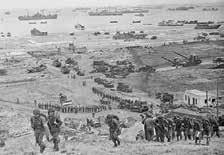
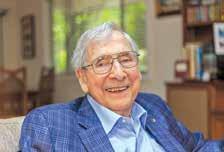
Shortly after midnight on June 6, 1944, the coastline of Normandy, France, lit up with an extensive naval and aerial barrage. From the predawn hours and through the rest of the day, 24,000 paratroopers and glider-borne soldiers came down from the sky to secure vital positions for the amphibious invasion. The first troops began disembarking from landing craft shortly after 6 in the morning. The invasion was on, but along parts of the coastline, the situation was very grim. Brutal fire mowed down troops on Omaha Beach, but subsequent waves of soldiers began clearing the Nazis from the beaches. By the end of the day, the Allies held onto the landing zones. While the maps showed where progress had been made on the battlefield, the real heroes of the invasion belong to the soldiers and service members who stormed the beaches and contributed in many other ways on that historic day.
The 1st and 29th Infantry Divisions were assigned to invade the heavily defended Omaha Beach. Gerald “Jerry” Silver was a Jewish soldier from Brooklyn who was assigned to 16th Infantry Regiment, 1 st Infantry Division, known as the Big Red One. The regiment came ashore on sectors “Easy Red” and “Fox Green” and suffered heavy casualties – particularly in the first wave. Silver was in that initial assault and managed to survive despite being wounded by shrapnel in his leg and arm. He crawled through the surf to the relative protection of the seawall. Once there, he selflessly braved continued fire, crawling back out to help other wounded soldiers get to the seawall and out of immediate danger. Close to half of his company was
killed on D-Day – the number would have been higher if soldiers like Silver hadn’t performed incredible acts of bravery. For his valor, Silver received a letter of commendation along with the Purple Heart for his wounds.
Many other Jewish soldiers came in on Omaha Beach on D-Day itself. Private First Class Sanford Rosen of New York of the 16th Regiment had been in every battle with them since the North African Campaign. When not fighting, Rosen was the saxophone player in the regimental band but on D-Day was in the first wave of soldiers to assault Bloody Omaha. Attached
proved critical for the men who made it to the seawall. Private First Class Rosen was awarded the Distinguished Service Cross for his actions on D-Day.
Jewish soldier Morton Waitzman was a communications specialist with the 115th Regiment, 29th Division and landed with the regiment on Omaha Beach approximately 30 minutes after the first wave. The soldiers climbed down cargo nets and loaded into landing craft in rough weather, causing seasickness among many of the men. The weight of their gear and incoming fire caused many casualties as the troops made their way to the beach. After
with the French resistance who were assisting the Allies with vital intelligence on Nazi troop strength and movements. Waitzman participated in the liberation of Paris and fought across the battlefields of Western Europe before liberating slave labor and concentration camps.
Despite his painful injury – his right arm had been shot off by the elbow – Rosen dragged the drum the rest of the way under heavy German fire.
Hours before the seaborne infantry struck the beaches, two American airborne divisions –the 82nd “All American” and the 101st “Screaming Eagles” – parachuted behind enemy lines. Private First Class Morton Wolk, assigned to the intelligence section (G2) of the 82nd Airborne Division’s headquarters, flew in the lead plane with the assistant division commander, General James Gavin. Their C-47A Skytrain dropped the paratroopers four hours before the amphibious landings began, making Private First Class Wolk one of the first Jewish soldiers to invade Nazi-occupied Europe.
to Headquarters Company, Rosen’s landing craft was targeted by heavy artillery fire while the soldiers were disembarking. Lugging a heavy drum of wire, Rosen and his buddy started towards the shore. A burst of fire killed the other soldier while they were in shoulder-deep surf. Rosen picked up the drum of wire and began the trek himself when he was hit by artillery fire. Despite his painful injury – his right arm had been shot off by the elbow – Rosen dragged the drum the rest of the way under heavy German fire. Much of the equipment from the first wave had been lost in the water so this drum of wire
witnessing heavy casualties among the deadly crossfire, Waitzman successfully crossed the fortified beach with the help of combat engineers who were clearing paths through the obstacles and mines. He later described the fighting once they got off the beach: “ We knocked out the German pillboxes the hard way – Bangalore torpedoes and flame throwers. The Bangalore torpedoes blew holes in the concrete fortifications, then we rushed through the gaps with flame throwers leading the way, but we still engaged in hand-to-hand combat; that was pretty intense.”
Later, he set up communication links
Casualties were heavy for the Allies on D-Day – over 4,400 people killed and thousands more wounded. The fighting on the beaches, especially Omaha, was fierce, and the service members who made the assault are rarely individually recognized. At the end of D-Day, the Allies had a foothold in Western Europe. The fighting there would continue until May1945. As Morton Waitzman said, “That represented the beginning of the end of the fight to defeat state Nazism.”
Avi Heiligman is a weekly contributor to The Jewish Home. He welcomes your comments and suggestions for future columns and can be reached at aviheiligman@gmail.com.
MASSAGE THERAPY HEALING. Relief from muscle discomfort and pain. An escape to relax. It’s a wonderful present for yourself, friend, and family. Contact Yossi at (347) 722-0068
DU N DURT
Power & Soft Washing
We clean siding, stucco, decks, driveways, concrete, pool patios, pavers & sidewalks. Say goodbye to grime, mold & allergens!
Call/WhatsApp: 718-688-2964
Email: dundurtny01@gmail.com
THE LEATHER SHOPPE
The spot for all your custom leather Judaica. Tallis/tefillin bags, lulav and esrog bags, havdallah sets, challah covers, shtenders, pesach sets, matzah/afikomen bags. WhatsApp: (732) 523-0007 or email: theleathershoppe732@gmail.com for a full catalog. We ship.
PEACEFUL PRESENCE STUDIO
Men’s private yoga, Licensed Massage & Holistic Health Guidance 436 Central Ave, Cedarhurst Info. & free video training www.peacefulpresence.com 516-371-3715
HAIR COURSE:
Learn how to wash & style hair & wigs. Hair and wig cutting, wedding styling Private lessons or in a group Call Chaya 718-715-9009
GERBER MOVING
Full Service Moving Packing Moving Supplies
Local Long Distance. Licensed Insured 1000’S Of Happy Customers Call Shalom 347-276-7422
HANDYMAN AVAILABLE
For big or small jobs, Sheetrock, carpentry, painting, electrical, plumbing, install & repair appliances Call Ephraim at 347-593-4691
MANAGEMENT STAFF WILL ASSIST you with: * Obtaining Medicaid and Pooled Income Trust
* In-home Assessments, Individual and Family Counseling
* Securing reliable home care assistance
* Case and Care Management services
Dr. S. Sasson, DSW, LCSW (718) 544- 0870 or (646) 284-6242
ZEVIZZ WOODTURNING JUDAICA
Challah knifes, batei mezuzah, besamim holder, kiddish cups, havdalah candle holders, yad for sefer torah, pens, stenders, bowls and more 952-356-2228
COMING SOON
Legal 2 family plus additional Apt. in North Lawrence Prime location, original owner, brick beautiful house, 5 bdrs, 4 full bath, 3 kitchens, above ground pool, low taxes , 3842 sg footage, tons of potential call Alexandra at EXP (516) 784-0856
MY MOTTO IS DON’T WAIT TO buy real estate
Buy real estate and wait Your realtor for life
516-784-0856 Alexandra at Realty Connect USA
REAL ESTATE MANAGEMENT Services – Do Not Manage Your Properties Alone!
Contact Aliyah Suites for all your real estate management needs and affordable office space near you! (516) 366-1049
Management@aliyahsuites.com
Marc Jeret (MJ) Team Leader & Licensed Real Estate Agent
UP-AND-COMING
Jewish community in Inwood, NY!
Multiple apartments available at 385 Bayview Ave, Inwood, NY. For more information, please text: 347-606-9342
Don’t Get Stuck With a Two Story House Ya Know, It’s One Story Before You Buy It But a Second Story After You Own It! Call Dov Herman For An Accurate Unbiased Home Inspection InfraredTermite Inspection Full Report All Included NYC 718-INSPECT Long Island 516-INSPECT www.nyinspect.com


























Prime Restaurant Location For Lease.
For more information: Call/Text/WhatsApp Owner: (516) 206-1100
A multi-tasker needed for general office work. The ideal candidate is someone who is detail-oriented, responsible, and can take ownership. Looking for someone who is eager to learn, and expand his/her skill set while possessing the ability to work independently and as part of a team. Experience with Excel required. Five Towns location. In-office position only, not remote. Please send resume to 5tpart.timecareer@gmail.com
Ready-to-Wear Boutique opening on Central Ave seeks fashion-forward, friendly sales associates with retail experience. Full-time & Part-time. Text/WhatsApp 718-310-8550.
REGENTS EXPERT
Tutoring regents in Algebra and Geometry A Darchei Torah instructor. Guaranteed results Text 347-491-8045 WhatsApp 347-767-1755
ARE YOU A DOULA? Or have a passion to be? Come join our great referral group and get access to a vast new clientele through Medicaid. JUST CALL 347-668-7886
BOOKKEEPER
A Five Towns Real Estate Company is seeking a full-time Bookkeeper. The right candidate must be proficient with QuickBooks and Excel. They must also be self-motivated, organized, detail oriented, reliable, and able to work independently or as a team player. Warm, frum office environment with excellent salary & benefits. Please email resume to HR@capsprop.com
SEEKING ELEMENTARY TEACHERS For current school year, starting from end of January: Seeking assistant teacher for General Studies. Candidate should have skills to take over for teachers if needed. Far Rockaway area boys’ school, M-Th, PM hours, strong support. Excellent salary. Possibility to continue for next year. Send resume to teachersearch11@gmail.com












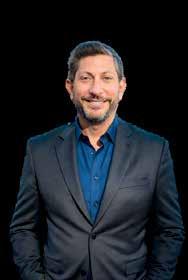











SHEVACH HIGH SCHOOL
Is seeking experienced teachers for the following positions:
• ELA • First Aid
Please send your resume to mribowsky@shevachhs.org
JEWISH CENTER SEEKS
Administrative Assistant with strong office/computer skills and experience working with toddlers & preschoolers ages 1–4. Responsibilities include office administration, social media/ PR, program support, substitute coverage/aftercare in preschool classrooms, and event setup. Knowledge of Jewish traditions is a plus. Full-time, Mon–Fri with occasional evenings/Sundays. Send resume to admin@jewishelc.org
JEWISH PRESCHOOL IN Merrick seeks warm, loving, experienced toddler teachers for 2-year-olds, preschool teachers, and assistant teachers for children ages 18 months–4 years for the 2026–2027 school year. Mon–Thu 9–3, Fri 9–2. Email admissions@jewishelc.org or call 516-833-3057 ext. 110.
JOIN THE ZAREINU TEAM
Our small, special education classes are in yeshivas and Bais Yaakov’s in Far Rockaway and the Five Towns. For the 2026-2027 school year, Zareinu is seeking:
- AM Rebbe for a boys 4th -5th class - P/T, (AM and PM positions) Morah for middle school girls classes
- PM Special Education Secular Studies Teacher for middle school boys class
- P/T or F/T Assistants for both boys classes and girls classes
Highly competitive salary and caring, supportive administration. Send resume to info@zareinu.org / or call (718) 406-8343, Ext. 229 for further information.
NOW HIRING:
Jewish Center in Merrick is looking to fill the following positions:
1. Administrative Assistant. Must have strong office and computer skills.
2. Preschool Teachers
3. Preschool Assistants
4. Hebrew School Teachers
Great opportunity to join a warm and welcoming Jewish educational environment.
Please send resumes to: admin@jewishelc.org or call 516-833-3057 ext 103
Remote (requires in-person home visits in NY)
Support families facing serious medical or emotional challenges. Provide guidance, advocacy, and resource coordination from home or on-site. Training provided. BA or 2 years Care Management required Apply online: www. chailifeline.org/careers or email hr@chailifeline.org
LOOKING FOR BT
Monday-Thursday 4-6 or 7 Friday afternoon after 1 and Sunday after 12. Please contact Malky 855-316-2700 ext 123 Or email malkak@supportiveaba.com
STAFF FOR EARLY CHILDHOOD
Center The Marion & Aaron Gural JCC Early Childhood Center is hiring Assistant Teachers and Substitute Teachers for the 2026-2027 school year.
Please send resumes to JCC.Nursery@guraljcc.org or call (516) 239-1354
MDS REGIONAL NURSE
5 Towns area Nursing Home management office seeking a Regional/Corporate level MDS Nurse to work in our office.
Must be an RN. Regional experience preferred. 2-3 years MDS experience with good computer skills required. Position is Full Time but Part Time can be considered. Great Shomer Shabbos environment with some remote options as well. Email: officejob2019@gmail.com
SHMIRAS HALASHON
Text 516-303-3868 with a time slot of your choice to be careful on lashon hara. Be a part of the 1,000 people for klal yisroel!
BEIS HAMEDRASH CONG. Chasdei Uvois Oshpitzin Talmidei chachomim are willing to learn mishnayos, say kaddish and be the shliach tzibbur to daven for the umid on the yartzeit yom hashanah of your parents or close relatives or loved ones To arrange please call Rabbi Miller 917-445-6220


Up to 5 lines and/or 25 words
Email ads to: classifieds@fivetownsjewishhome.com
Include valid credit card info and zip code
Deadline Monday 5:00pm


Does parenting ever end?
Ask a 97-year-old grandmother/grandfather/ great-grandparent if she/he stopped caring for and worrying about their kids yet.
Kids, even in their 60s, are still figuring out why they are behaving the way they are based on who raised them. This is at the same time as they are trying to figure out the behaviors of their own kids – single and married! – and while their married kids are trying to figure out their kids.
Sure, you think once they move out, or grow up, or get married, your job is done. Supposedly, vacation, here I come! But it doesn’t seem to actually play out that way.
They still find you! Need you! And at times, even blame you!
You still feel responsible, pulled, and concerned.
Parents always ask: aren’t they grown-ups? Why are they still looking to me for the support?
Well, the reality is being a parent is a job we often get fired from. But not for long!
By Rivki D. Rosenwald Esq., LMFT, CLC, SDS

When kids are little, it can be for minutes. But as they get older, it can be for months.
Yet, they never seem to completely hand you the pink slip. They return.
Once a parent, always a parent.
We brought them into this world, and we will always be that person to
asking, “Did anyone see my girls?”
Everyone became quite concerned because she seemed so worried. Half an hour later, reunited, we all returned to shopping for clothing together, in and out of all the stores that she had spread panic in. The merchants looked up at my mom, coming in with four grown wom-
As independent as they become, you may continuously be called back in for reserve duty.
them. And they are always those children to us.
Their challenges concern us right from the start. Their pains course through us. And the fulfillment of their hopes and dreams are our greatest desires.
My mother was once running through the streets in and out of stores
en, and said, “What happened? Did you find your little girls?” And she happily smiled and said, “These are them.”
To her, we were always her little girls to care for and look after.
She was the ultimate parent. She knew she brought us to this point and destination in life and still felt it was
a lifetime duty to be involved with our journey.
Every parent has their philosophical approach, their ideas of what their responsibilities are to their children and when they may change or end somewhat.
However, the job title never goes away. A parent remains a parent. There is always that memory of caring for your children, of raising them, of being responsible for them. And they are always cognizant that you brought them here, so you have some liability.
Therefore, as you grow and they grow, don’t be surprised – as independent as they become, you may continuously be called back in for reserve duty.
Once a parent, always a parent.
Rivki Rosenwald is a Licensed Marriage & Family Therapist working with both couples and individuals and is a certified relationship counselor. Rivki is a co-founder and creator of an effective Parent Management of Adolescent Years Program. She can be contacted at 917-705-2004 or at rivkirosenwald@gmail.com.