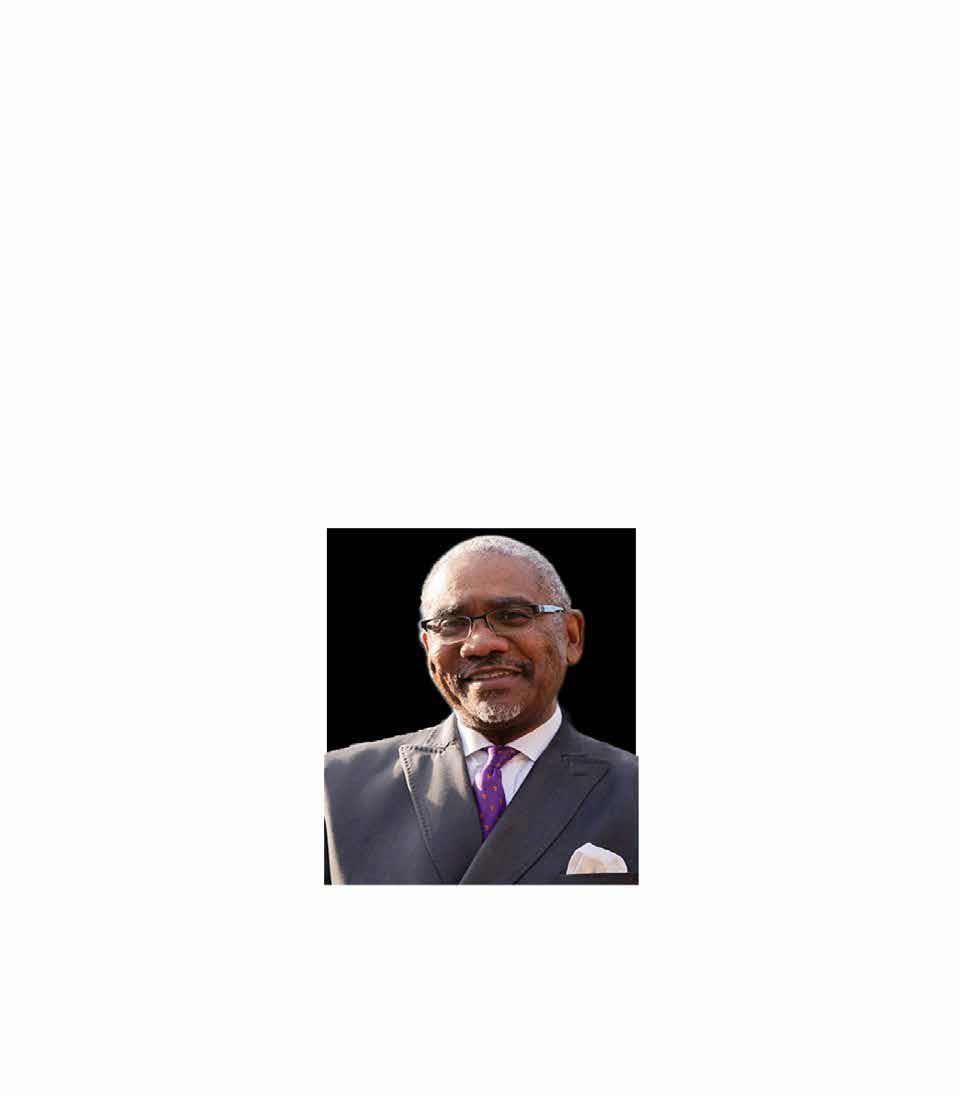



Darchei Wins First Place at Robotics Match—Twice











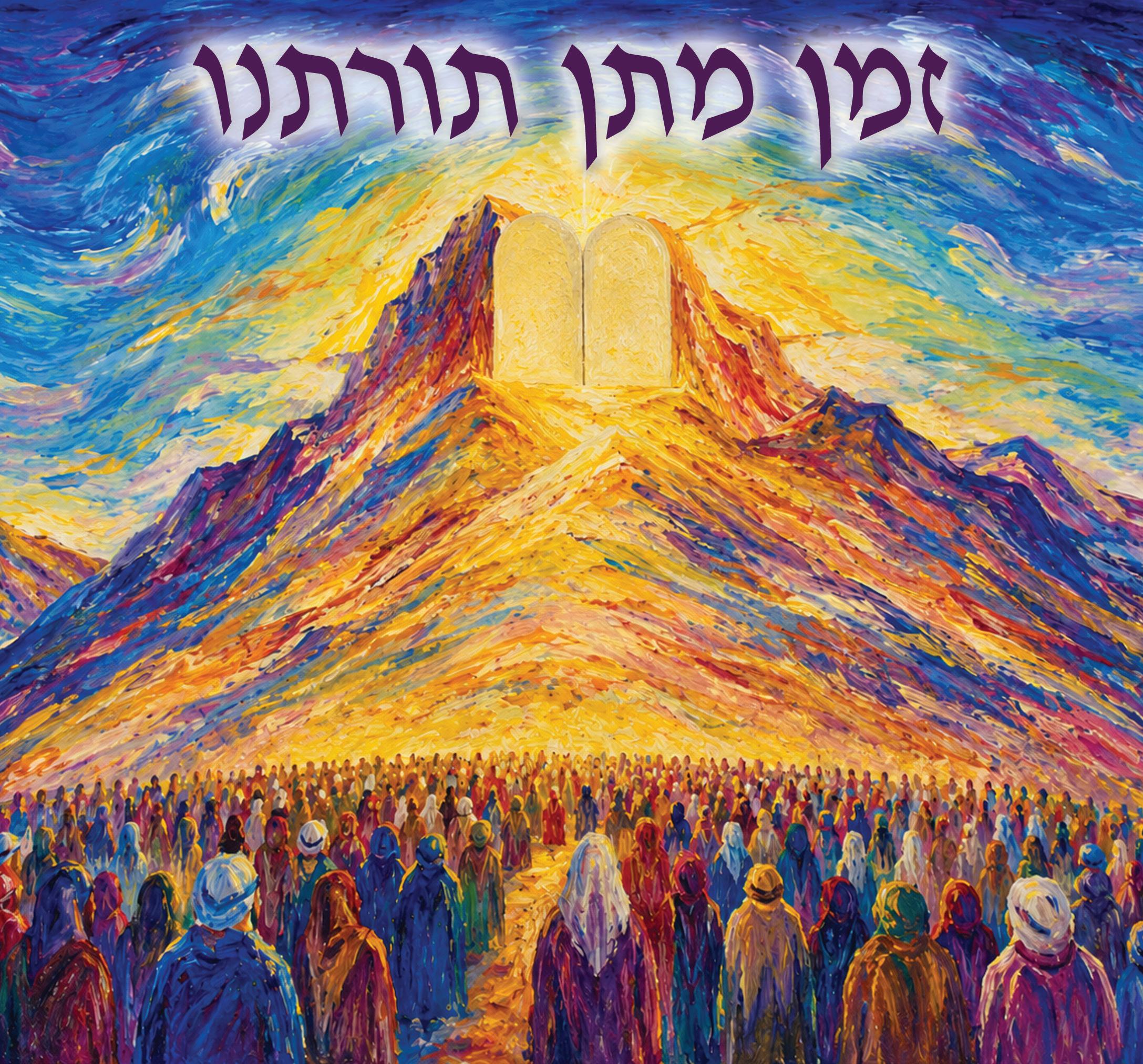
Matan Torah was not simply an event in time — it was the moment when we become a nation, when we became a people. At Har Sinai, men, women, and children stood together and experienced the unimaginable: the Creator of the world speaking directly to each person. More than a religion, a book of laws, was given that day. A truth was revealed, and a mission was entrusted to people who vowed, “We will do and we will hear.”
As we celebrate Shavuos once again, we are reminded that the Torah is not merely an ancient document or a collection of customs passed down through generations. The Torah is eternal. It is timeless truth in a world increasingly uncomfortable with the very concept of truth.
We live in an age where facts are debated, morality is fluid, and values shift with trends, headlines, and public opinion. Right and wrong are often treated as matters of preference rather than principle. Society praises “my truth” and “your truth,” as though truth itself can be reshaped to fit convenience or culture. In such a world, certainty becomes elusive, and confusion becomes the norm. It’s in this world where Hamas becomes the victim, where people march in the streets declaring freedom for the perpetrators of a massacre, where wearing a yarmulke can be a target for hatred and jealousy simmering just below the surface.
But the Torah does not bend with the winds of the times. Truth remains truth whether we are standing in the desert thousands of years ago or standing in Times Square today amid the noise and chaos of modern life.
The Torah’s values endure because they come from a Source beyond human trends and
limitations. While society reinvents itself every few years, the words we received at Har Sinai continue to guide, anchor, and illuminate.
Perhaps this is part of what it means to be an ohr la’goyim, a light unto the nations. Light does not scream. It does not force. It simply shines, making clarity possible where there was darkness before. The Jewish people have carried that light throughout history, often under impossible circumstances. Through exile, persecution, and instability, the Torah remained our compass, preserving not only our identity but our understanding of purpose, mission, and morality.
Today, being a light unto the nations may mean something quieter and perhaps even more powerful. It means living with integrity in a cynical world. It means valuing truth when falsehood is easier. It means raising children with eternal values in a culture obsessed with the temporary. It means understanding that holiness is not outdated and that morality is not negotiable.
On Shavuos, we do not merely commemorate the giving of the Torah. We recommit ourselves to receiving it anew. We stand again at Har Sinai and recognize the extraordinary gift we possess: a Divine blueprint that remains relevant, steady, and true no matter how much the world changes around us.
May this Yom Tov inspire us to strengthen our connection to Torah, deepen our appreciation for its eternal wisdom, and continue shining its light brightly for ourselves, our families, and the world around us.
Wishing you a beautiful yom tov, Shoshana

Yitzy Halpern, PUBLISHER publisher@fivetownsjewishhome.com
Yosef Feinerman, MANAGING EDITOR ads@fivetownsjewishhome.com
Shoshana Soroka, EDITOR editor@fivetownsjewishhome.com
Nate Davis Editorial Assistant
Nechama Wein Copy Editor
Rachel Bergida Shana Brecher
Lani White Design & Production
Gabe Solomon Distribution & Logistics
P.O. BOX 266
Lawrence, NY 11559
Phone | 516-734-0858
Fax | 516-734-0857
Classified Deadline: Monday 5:00PM classifieds@fivetownsjewishhome.com text 443-929-4003
PAYMENT VIA CREDIT CARD MUST BE SUBMITTED ALONG WITH CLASSIFIED ADS
The Jewish Home is an independent weekly magazine. Opinions expressed by writers are not necessarily the opinions of the publisher or editor. The Jewish Home is not responsible for typographical errors, or for the kashrus of any product or business advertised within. The Jewish Home contains words of Torah. Please treat accordingly.
Thursday, May 21
Candle Lighting: 7:52 pm
Friday, May 22
Candle Lighting: 7:53 pm
Shabbos Ends: 9:01 pm
Rabbeinu Tam: 9:25 pm






Dear Editor,
When my close friends from Israel visit Manhattan, I’m often their tour guide.
This letter serves as a PSA to the most common mistakes I see with the smartest and not so smart tourists.
Without futher ado, here are the most common scenarios I see over and over again:
1. Don’t stand in the middle of the street to take a picture. It’s mind-boggling to see how many tourists do this –nearly all of them. Yes, the Empire State Building and Times Square look nice. (Although, in all my years of visiting Times Square, it’s sadly not as exciting these days as it once was.)
Aside from being rude by blocking traffic, do they seriously want to risk getting hit by a car? Don’t be stupid, and stay on the sidewalk. You’ll look better with a photo of yourself with only part of the Empire State Building than in a body cast.
2. Use reputable, licensed services. I warned my Israeli friends about this, but I understand this can be a common mistake, due to not just the language barrier, but more so, unfamiliarity with the American culture, especially in Manhattan. They were offered a deal on bike rides through Central Park by a random guy on the street. I could have given them a pass if they purchased, say, hats, or even caricature from such an individual, but I wasn’t letting them take their chances in this case. Something about it seemed shady, so I started speaking to the guy.
If it weren’t for me asking questions, starting with if he had a license for such sales, they probably would have been scammed. I saved the day for them, which they later thanked me for.
3. Compare prices online, when possible. It’s not so hard to do a basic Google search these days for items and activities
you want to purchase. Which leads me to my next topic:
4. B & H is NOT always the go-to destination for electronics. I see Israelis all the time flocking to B & H, often saying the electronics cost more in Israel, due to taxes. Don’t get me wrong: they’re indeed a good store, and the customer service is amongst the best you can find these days. Yet, they think they have everything they need, only look there, ready to purchase on the spot, and often come unprepared and disappointed, when they don’t have what they’re looking for. They don’t. They were out of stock of certain cameras, and don’t even sell the smartphones and tablets my friend wanted to buy. Don’t put all your eggs there. Check other stores as well.
5. Buy online, pickup in store. This is a no-brainer, including with B & H. Most websites can now be translated.
6. Speak to family and friends there regarding deals. Some, like myself, can get them museum passes from the library, as well as offering additional tips to save them money. This is generally not available to tourists. Better yet, tour with them, if possible. A trip to Manhattan can easily cost hundreds of dollars per day for a tourist, if they’re not careful enough. Take their commute yesterday, for example: They shocked me when they said they spent $10 per person, each way, for the ferry between NJ and Midtown Manhattan.
I certainly wouldn’t have done that, even as a tourist, if I knew my options. I explained to them they could have parked their rental car in Hoboken and take the PATH to the last stop at 33rd St for just $3, or the Staten Island Ferry for free, where they also get a nice view during the ride. Alternatively, if they were craving a
Continued on page 20


20 Continued from page 16 sightseeing boat ride so desperately, the NYC ferry could have pretty much done the same job for much less money.
As a born and raised New Yorker familiar with the way of living here, in particular with mass transit, I’ve been happily helping my Israeli friends visiting Manhattan, Brooklyn, and in rare cases, certain areas of NJ, since 2012. Not much has changed with these frequent mistakes.
In fact, most of them had tight budgets, and they were completely happy seeing the downtown skyline while riding the Staten Island Ferry while saving money.
If anyone has any other tips, please feel free to share.
Sincerely,
Manhattan tour guide from the 5 Towns
Dear Editor,
I greatly appreciated Sarah Ravych’s recent article, “Some Praise for Praise,” because it highlighted something many parents know deep down but often forget in the rush of daily life: words matter. The way we speak to our children can shape not only their confidence, but also the atmosphere of the entire home.
What stood out most to me was the article’s emphasis on sincerity and specificity. Children are remarkably perceptive. They can tell the difference between a distracted “good job” tossed over a shoulder and a genuine compliment that reflects real attention and appreciation. A parent who notices the little things — effort, improvement, kindness, responsibility — gives a child far more than encouragement. They give them the feeling of being seen.
I also appreciated the reminder that praise is not about exaggeration or empty flattery. In a world overflowing with noise and criticism, heartfelt words have become surprisingly rare. Yet those simple statements — “I’m proud of you,” “I noticed how hard you worked,” or “I missed you” — can stay with a child for years. Long after toys are forgotten and report cards are tucked away, children remember how their parents made them feel.
The article wisely pointed out that praise extends beyond accomplishments. Sometimes the greatest gift we can offer our children is emotional connection. A warm smile, eye contact, an encouraging note in a lunch bag, or a thoughtful comment at the right moment can build trust and security in ways we may never fully realize.
Perhaps most importantly, the article reminds us that positive words strength-
en relationships not only with children, but with spouses, friends, students, and coworkers as well. Appreciation costs nothing, yet its impact can be immeasurable.
In a culture where criticism often comes easily, this article was a refreshing reminder that kindness, encouragement, and thoughtful praise remain some of the most powerful parenting tools we possess.
Sincerely,
Rachelli Hertz Cedarhurst, NY
Dear Editor,
Why, as Pirkei Avot (6:6) delineates, are there 48 ways to acquire the Torah, when we just counted 49 days to prepare for the giving of the Torah, and 49 represents the highest level of purity?
It may be said that we must put in our necessary effort, and then G-d will bring us over the line. Someone captured this idea by saying, “There’s an obligation to try, not to succeed.” This is manifest in the number of the Mishnah as being 6:6: we put in our effort during the week and then merge with the Divine, who helps in raising our kedushah, though we infuse kedushah into Shabbos as well.
Steven Genack
Dear Editor,
I really sympathize with the young woman who wrote in about dating two boys at once. After dating for three years with very few opportunities, it makes perfect sense that she feels hesitant to close a door too quickly. Shidduchim can be emotionally exhausting, and when possibilities finally appear, the fear of “what if” is very real.
That said, I believe the respectful thing to do is focus on one person at a time. She already went out with Shua, enjoyed the date, and is waiting to see where it goes. Beginning another relationship simultaneously may create confusion, comparison, and unnecessary emotional complications for everyone involved.
The shadchan also should not pressure her or make her feel guilty. She did nothing wrong. Avromi took over a week to respond, and life naturally moved forward. Still, just because she can technically pursue both doesn’t mean it is the wisest choice.
Dating works best when people are emotionally present and giving each relationship a fair chance. If things with Shua do not progress after another date or two, Avromi may still be an option.
Sincerely, Kayla
T.
Dear Editor,
I think many readers will judge “Danielle” too quickly without appreciating the reality of modern shidduchim. She is 23 years old, has been dating for three years, and clearly does not receive endless suggestions. Suddenly, two promising opportunities appear almost at once. Why should she feel guilty for wanting to explore both carefully?
The truth is that no commitments have been made. She went on one date with Shua, not five. They are still complete strangers learning basic information about each other. At such an early stage, I do not believe it is dishonest or inappropriate to meet another person simultaneously, especially when the second shidduch was already in discussion beforehand.
What concerns me more is the pressure from the shadchan. The young woman did not mishandle the situation. She waited over a week for an answer from Avromi and reasonably assumed he was not interested. Shadchanim do incredible work, but sometimes singles are made to feel they must manage every situation perfectly while carrying enormous emotional pressure already.
People giving advice often forget how different dating feels when one does not have many opportunities. It is easy to preach “one at a time” when suggestions constantly come in. For someone who rarely hears a promising yes, passing up a potentially excellent match could lead to lasting regret.
She should proceed respectfully and thoughtfully, but she should not feel ashamed for wanting to keep both options open until one relationship becomes more serious. Danielle, you got this!
Sincerely,
A Reader
Dear Editor,
Every spring, the trucks return: tanks, hoses, leaf blowers. A fine mist settles across swing sets, patio furniture, vegetable gardens, children’s hands and faces. We breathe it in. We feel safer.
The U.S. EPA classifies permethrin as “likely to be carcinogenic to humans.” Other common pyrethroids, including bifenthrin and deltamethrin, are classified as possible human carcinogens. The EPA’s own assessments identify toddlers as especially vulnerable because pyrethroids have been associated with neurotoxic and developmental effects in early childhood.
We all know someone whose child wasn’t speaking at three. Someone struggling with infertility. Someone diagnosed
with cancer at forty-two who ate carefully, never smoked, never drank. We shake our heads. We say Tehillim. We say it’s everywhere now. And we call the truck back in May.
Yes, the world is toxic. But that is an argument for reducing the harms we can control, not surrendering to the ones we cannot. When chemicals are blown through your windows and settle on your children’s toys, that is not abstract. It is a choice — one we are making on a subscription basis, six months a year.
And what makes this worse: it barely works. Studies show these sprays reduce mosquito populations only temporarily, while neighboring untreated yards quickly replenish them.
This is also not a targeted treatment. The chemicals are dispersed by blowers across entire properties, and aerosol drift does not stop at property lines. Neighbors who never consented are exposed anyway. Bifenthrin’s environmental halflife can approach eight months. Companies cannot simultaneously promise three weeks of effectiveness and insist the chemicals disappear harmlessly once dry.
For cat owners, the danger is acute. Cats lack the liver enzyme needed to metabolize pyrethroids. Exposure can cause tremors, seizures, and death. Veterinarians know this well. Consumers often do not.
As Orthodox Jews, we scrutinize what enters our homes and bodies. The Torah commands: v’nishmartem me’od l’nafshoseichem — You shall very greatly guard yourselves. The Rambam codifies the obligation to avoid physical harm. The Rambam codifies this as law: a person must distance himself from things that harm the body.
Some will respond: everything causes cancer. But this is not emunah — it is avoidance. Hishtadlus cuts both ways. Hashem runs the world through teva, and we are obligated to act through natural means to protect ourselves from harm. If we repeatedly choose to broadcast known neurotoxins across our homes for six months a year, we cannot then stand dumbfounded at rising rates of cancer, infertility, and developmental disorders in our community.
The worker who comes to spray your yard wears gloves and a mask. Our children wear nothing.
V’nishmartem me’od l’nafshoseichem Guard yourselves. Guard your families. And consider that your subscription is not only yours to pay. Rivkah Cohen







Five Italian divers died while exploring a deep underwater cave off the Maldives last week. Now, their families are searching for answers.
Carlo Sommacal lost his wife, Monica Montefalcone, 52, and his daughter, Giorgia Sommacal, 20, in the tragedy. Monica was an associate ecology professor at the University of Genoa.
Carlo said, “My only certainty is that my wife is one of the best scuba divers on the face of the earth. Something must have happened.”
The other victims included marine biologist Federico Gualtieri; researcher Muriel Oddenino; and diving instructor Gianluca Benedetti.
Gianluca Benedetti was found dead near the cave entrance shortly after the group disappeared. Authorities believe the bodies of the four remaining divers are trapped deep inside a cave system about 160 feet underwater near Vaavu Atoll.
The cause of the deaths remains under investigation.
The divers were in an underwater cave near Alimathaa, a dive site, in Vaavu Atoll. Vaavu Atoll is a chain of islands in the central Maldives, located southwest of Sri Lanka and India.
Authorities were alerted after the divers failed to surface by midday Thursday, when weather conditions were rough.
Maldivian presidential spokesperson Mohamed Hussain Shareef said that the cave was exceptionally dangerous.
“The cave is so deep that divers even with the best equipment do not try to approach,” he said.
Local officials described the tragedy as the Maldives’ worst single diving accident. Many are surmising that there was something wrong with the tanks.
Five divers dying during the same dive event suggests “not so much a depth problem, but rather [an issue with] what they breathed,” Claudio Micheletto, director of pulmonology at the University Hospital of Verona, said. “It is likely that something did not work in the tanks.”
He added, “The people using them could not have noticed: Checks are the responsibility of those who produce and manage the equipment.”
The search for the bodies of the divers was halted on Saturday after a military diver died during the mission. Mohamed Mahdi, a member of the Maldivian National Defense Force, died from decompression sickness during the dangerous mission.

A drone strike near the United Arab Emirates’ Barakah Nuclear Power Plant sparked a fire on Sunday, intensifying concerns over the shaky ceasefire between the United States and Iran and underscoring the vulnerability of critical infrastructure across the Gulf region.
Officials said the blaze was quickly contained and that there were no injuries or signs of elevated radiation levels. According to Emirati authorities and United Nations experts, the fire broke out in an electrical generator located outside the plant’s inner perimeter.
The Barakah facility, the Arab world’s first nuclear power plant, is located near Al Dhannah in western Abu Dhabi and supplies roughly a quarter of the UAE’s electricity. Emergency diesel generators were activated to maintain power to one reactor unit after the fire erupted.
“All units are operating normally, and the blaze did not impact safety or radiation levels at the site,” Abu Dhabi’s media office said in a statement.
While Emirati officials stopped short of directly accusing Iran, the attack comes amid mounting regional tensions despite a ceasefire brokered in early April between Washington and Tehran. The conflict erupted after U.S. and Israeli strikes on Iran in late February, eliciting



28 retaliatory attacks by Iran against U.S. allies and Israel.
The UAE has faced repeated missile and drone threats throughout the conflict. According to government figures, Emirati defenses have intercepted 572 missiles and more than 2,200 drones since the war began.
The incident also renewed fears about the dangers posed by military activity near nuclear facilities. Rafael Grossi, head of the International Atomic Energy Agency, warned that attacks near nuclear plants could “jeopardize the safety of the facilities and trigger a nuclear accident.”
Similar fears have surfaced during the war in Ukraine, where the Russian-controlled Zaporizhzhia Nuclear Power Plant has repeatedly lost outside power connections and where a drone recently damaged the protective shelter over the abandoned Chernobyl Nuclear Power Plant.
Meanwhile, diplomatic efforts between Washington and Tehran remain uncertain. Donald Trump said Saturday he would consider a peace agreement allowing Iran to suspend nuclear development for 20 years rather than permanently dismantle its program.
Tensions also remain high in the strategically vital Strait of Hormuz, where Iran has restricted shipping traffic since
March. Tehran has reportedly begun imposing tolls on vessels passing through the waterway, a move condemned by the United States and international shipping organizations.
Iran continues to insist its nuclear program is intended for peaceful purposes, though Western powers maintain concern over Tehran’s uranium enrichment activities, which have approached weapons-grade levels.

An international response is intensifying as health officials race to contain a growing Ebola outbreak in the Democratic Republic of the Congo and neighboring Uganda that has already infected hundreds of people and caused dozens of suspected deaths.
On Sunday, the World Health Orga-

nization declared the outbreak a “public health emergency of international concern,” warning that the rapidly rising number of infections could signal a much larger crisis than currently known.
More than 100 suspected deaths have been linked to the outbreak in Congo, according to Jean Kaseya, head of the Africa Centres for Disease Control and Prevention. The U.S. Centers for Disease Control and Prevention said there are currently 10 confirmed cases and more than 330 suspected cases in the country, primarily in the remote northeastern Ituri province.
In Uganda, two confirmed cases — including one death — have been reported in the capital city of Kampala.
Health officials say the outbreak is being driven by the rare Bundibugyo strain of Ebola, for which there are currently no approved vaccines or treatments. The strain carries a fatality rate estimated between 25% and 40%, according to Médecins Sans Frontières.
Ebola symptoms include fever, muscle pain, rash and, in severe cases, bleeding. The virus spreads through direct contact with bodily fluids or contaminated materials.
The U.S. government said it is working to relocate “a small number” of Americans believed to have been directly affected by the outbreak. Reports indicated several Americans in Congo may have been exposed to the virus, though officials have not confirmed whether any U.S. citizens have tested positive.
“We are actively assessing the situation on the ground,” said Dr. Satish Pillai during a CDC briefing.
The U.S. State Department has issued a new advisory warning Americans against travel to Congo, while the U.S. Embassy in Kampala temporarily suspended visa services because of the outbreak.
Meanwhile, international aid efforts are ramping up. Nearly seven metric tons of emergency medical supplies, including protective gear, hospital beds and tents, were delivered to the city of Bunia over the weekend. Congo’s health ministry also announced the opening of three new treatment centers in the affected region.
Health experts warn the outbreak is especially dangerous because it is unfolding amid an ongoing humanitarian crisis in eastern Congo, where conflict and mass displacement have severely weakened the healthcare system.
“This raises serious concerns about gaps in infection prevention and control,” said Dr. Matt Mason after reports that four healthcare workers were among the suspected deaths.
The current outbreak marks Congo’s 17th Ebola epidemic since the virus was first identified there in 1976.
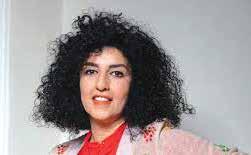
Iranian Nobel Peace Prize winner Narges Mohammadi has been discharged from a cardiac care unit and sent home, weeks after being transferred from prison to the hospital following a suspected heart attack.
Mohammadi, 54, won the Nobel Peace Prize in 2023 while in prison for her campaign to advance women’s rights and abolish the death penalty in Iran. She was sentenced to a new prison term earlier this year in the build-up to the U.S. and Israeli war against Iran.
Mohammadi suffered a suspected heart attack in late March and was transferred to the hospital a month later, first in the northwest city of Zanjan then, after a temporary suspension of her sentence on heavy bail, to Tehran’s Pars Hospital.
“Her recovery demands strict medical supervision outside prison walls. Returning her to detention is a death sentence,” Mohammadi’s daughter, Kiana Rahmani, said.
Mohammadi, whose detentions have attracted worldwide attention, was arrested in December after denouncing the death of a lawyer, Khosrow Alikordi. A prosecutor told reporters that she had made provocative remarks at Alikordi’s memorial ceremony.


30 turned the country from a pearl-diving backwater into one of the world’s wealthiest nations.
Qatar spent three decades building supply lines, shipping tens of billions of dollars of liquefied natural gas each year through the Strait of Hormuz to ports across Asia and Europe.
The state, which derives more than 60% of its revenue from gas and gas-related exports, used that money to transform the peninsula into a gleaming metropolis.
Gas wealth funded a metro system linking the capital, Doha, to Lusail, a northern city that is home to a Parisian-style mall and a theme park with artificial snow. The riches were also funneled into the world’s most expensive World Cup and a $600 billion sovereign wealth fund.
Then, in February, Qatar’s door to the world slammed shut.
The closure of the Strait of Hormuz means virtually no gas has left Qatar’s shore for more than two months. The nation is also cut off from the sea routes through which it imports everything from vehicles to produce. Fears of regional instability have hurt tourism and eroded business sentiment.
Ras Laffan, Qatar’s industrial cen-
ter for gas production, is shuttered, and roads are blocked. In this vast port north of Doha, loading cranes stand paralyzed. Hotels and boutiques sit in noticeable silence. Qatar’s growth forecasts have been slashed amid the cessation of LNG trade.
For Qatar, gas shipments “are nothing short of foundational,” Ahmed Helal, a managing director at the Asia Group, a strategic advisory firm, said in an interview in Doha recently. “Nothing you see here would have been possible without the wealth of energy,” he added. “That is why Qatar is quickly falling into a very challenging fiscal situation.”
Unlike its neighbors, Saudi Arabia and the United Arab Emirates, which have pipelines that can bypass the Strait of Hormuz, Qatar is geographically trapped behind the waterway.
Within 24 hours of the Iranian blockade, QatarEnergy, the state-owned energy giant, announced it couldn’t fulfill its contracts. Two weeks later, Iranian missiles and drones struck Qatar’s Ras Laffan plant, damaging critical equipment and causing a 17% reduction in Qatar’s production capacity.
The damage means that even if the strait were to open tomorrow, it would take years to return to prewar output.
The International Monetary Fund
expects Qatar’s economy to shrink 8.6% this year before rebounding in 2027. (©
The New York Times)

On Friday, President Donald Trump said that U.S. and Nigerian forces had killed one of the Islamic State group’s highest-ranking leaders in an operation in Africa. The United States has been targeting Islamic militants who are killing Christians in Nigeria.
In a social media post, Trump said the terror leader, Abu-Bilal al-Mainuki, had been killed Friday night in a “very complex mission” carried out at his direction by U.S. forces and the Nigerian military.
Al-Mainuki was designated a terrorist and one of the Islamic State group’s lead-
ers by the State Department in 2023. He was a Nigerian citizen, according to the Treasury Department’s Office of Foreign Assets Control, which had sanctioned him.
Three U.S. officials said on Saturday that al-Mainuki was killed in a helicopter-borne assault carried out by about two dozen Nigerian and U.S. commandos, which included members of the Navy’s SEAL Team 6. The commandos attacked him and about three dozen fighters on two small islands in Lake Chad.
Heavy fighting ensued over a nearly three-hour battle. Although the U.S. military sought to capture al-Mainuki, when it became clear he would not surrender, the Americans killed him with an airstrike rather than risk letting him escape.
No U.S. or Nigerian military casualties were reported.
Military analysts are now poring through the cellphones, laptop computers and other electronic records recovered for information on the recruiting, operational and financial activities of the Islamic State branches in Africa and elsewhere in the world, according to U.S. officials said.
Al-Mainuki was the second-most-senior leader in the Islamic State group. He oversaw the group’s global operations,


32 media, recruitment and finances and was directly involved in plots including the kidnapping of an American missionary pilot in Niger last fall.
Nigeria’s Foreign Ministry said al-Mainuki had been responsible for recent attacks on the military in the country’s northeast.

The driver of a freight train involved in a fatal collision with a public bus in Bangkok, Thailand, has tested positive for drugs and has been charged with reckless driving, authorities say.
The collision occurred at the AsokeDin Daeng railway crossing on Saturday
afternoon when a train crashed into a public bus that had come to a stop on the railway tracks. The bus burst into flames, killing eight people and injuring dozens of others. Initial reports suggest the bus had become stuck on the tracks due to heavy traffic, which prevented the crossing barriers from lowering properly.
The Asoke-Din Daeng railway crossing is notoriously hectic and leads to one of the busiest intersections in Bangkok.
Both the bus driver and the guard responsible for lowering the barrier –which is done manually – have also been charged by police.
Authorities have ordered mandatory drug and alcohol tests for all train drivers and railway staff before their shifts, said Pichet Kunadhamraks, director-general of Thailand’s rail transport department.
Preliminary findings from the train’s black box showed its emergency braking system was only activated about 330 feet away from the bus, which was not enough to avoid collision.
More than 100,000 road vehicles pass through the Asoke-Din Daeng railway crossing every day – above the safety threshold for such crossings.


According to rights groups, Iran has been escalating executions since the ceasefire. Four prisoners were killed this week on charges that include espionage and terrorism, according to Iranian news media.
Iran has long been one of the world’s most frequent users of capital punishment. The pace of sentencing and hangings appears to have surged over the last two months, amid the war with the United States and Israel, according to several Iran-focused rights groups.
In most of those cases, the groups say, the executed prisoners did not receive due process.
“Many of these executions follow extremely rapid judicial proceedings in which defendants have little or no access to legal counsel, face fundamentally unfair trials, and are often convicted using forced confessions extracted under torture,” said Omid Memarian, a senior analyst at DAWN, a Washington-based think tank focused on human rights.
According to Memarian, the recent spike in executions reflects growing anxiety in the government over deep-seated public grievances.
In January, security forces crushed nationwide anti-government protests with deadly force, killing thousands of people. The discontent has only deepened since Israel and the United States attacked in late February, battering the country’s infrastructure and plunging its already severe economic crisis to new lows.
The rate of executions appears to have risen rapidly since April, when a ceasefire was reached.
“Officials fear that any spark could trigger another wave of unrest.” Memarian said. “The government is trying to project that it remains fully in control and willing to impose the harshest punishments on anyone seen as challenging the state.”
In early May, state media announced three executions in one day, all of whom were men arrested in relation to the January protests.
On Wednesday, Iranian state media reported that Mohammad Abbasi, who was arrested along with his daughter on charges of killing a police officer during the January protests, had been executed.

Saudi Arabia and the United Arab Emirates separately carried out strikes on Iran in retaliation for attacks conducted against them during the war in the Middle East, two current and one former senior U.S. officials said.
It is the first known time that the two countries have directly attacked Iran. The strikes, which were unannounced, underscored how both monarchies were becoming more assertive in defending their territory against the Islamic Republic, the officials said.
All three spoke on condition of anonymity. They declined describing the targets that were struck by the Gulf Arab nations or the exact dates of the attacks.
Neither the Saudi nor the Emirati government has acknowledged carrying out the attacks. Both countries host U.S. military installations but have maintained publicly that they are bystanders to the war, engaged only in defensive actions. The strikes would instead appear to make them direct combatants.
The Saudi government’s Center for International Communication, which handles media inquiries, did not respond to a request for comment, nor did the Emirati Foreign Ministry.
Saudi Arabia and the UAE both have deep military relationships with the United States and have traditionally relied on the United States to defend them against Iran.
Since the United States and Israel attacked Iran on February 28 — against the advice of officials in several Gulf countries — that assumption has partially unraveled. Iran has launched thousands of retaliatory missile and drone attacks at Gulf Arab nations that host U.S. military installations, causing widespread damage to energy infrastructure, airports, seaports and hotels. The attacks have killed at least 19 civilians across the Gulf coun-
tries and shaken their economic models as safe havens for business and tourism in a turbulent region.
Those attacks prompted Saudi Arabia and the UAE to take direct retaliatory action of their own, the officials said. It is not clear whether either government coordinated its response with the United States. (© The New York Times)
erations against Iran, according to a report published Sunday by The New York Times. The report said an Iraqi soldier and a civilian were killed in incidents tied to the secret installations.
The revelations expand on an earlier report from The Wall Street Journal, which disclosed that Israel had built a covert base in Iraq’s western desert during the recent U.S.-Israeli conflict with Iran that erupted in late February.
Satellite imagery later appeared to show a makeshift airstrip carved into a dry lakebed roughly 180 kilometers southwest of the Iraqi city of Karbala.
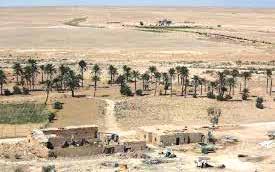
Israel reportedly operated two covert military bases inside Iraq to support op-
According to Iraqi officials cited by the Times, Israel actually maintained two bases in the area. One of the facilities had reportedly been operating since late 2024 and was used during both the June 2025 conflict with Iran and the latest round of fighting this year. The report said the United States was aware of the operation, though the base is no longer active.
The installations allegedly served multiple purposes for the Israeli military, including reducing flight time for strikes on Iran, supporting logistics operations, housing medical facilities, and stationing special forces and rescue teams in case Israeli pilots were shot down.
The Israel Defense Forces has not
publicly commented on the reports. Iraq and Israel do not maintain diplomatic relations.
The Times reported that Bedouin residents in Iraq’s remote western desert repeatedly alerted local authorities to suspicious activity in the area. Iraqi forces reportedly monitored the situation from afar and sought information from the United States, which allegedly declined to provide details.
According to the report, Washington also urged Iraq to disable radar systems to avoid interfering with U.S. aircraft operations.
The situation turned deadly on March 3, when a Bedouin shepherd identified as Awad al-Shammari reportedly discovered one of the bases while traveling to buy groceries. Said that al-Shammari managed to alert Iraqi authorities before he was allegedly killed by an Israeli helicopter. His family later recovered his body after speaking with witnesses.
Iraqi forces later sent a reconnaissance team to investigate the site, but the mission ended after one Iraqi soldier was killed and two others were wounded by what officials believed was Israeli fire.
Senior Iraqi officials reportedly chose to minimize public discussion of the incident, though Baghdad filed a complaint
and briefed members of parliament.

On Sunday, Israel’s government approved plans to establish a new defense complex that will include an IDF museum, enlistment office, and an office for the defense minister at the site of UNRWA’s former headquarters near Ammunition Hill in East Jerusalem.
According to a joint statement from the Defense Ministry and the Jerusalem municipality, the new complex will be built on a roughly 36-dunam (9-acre) site and is intended to strengthen the defense establishment’s presence in Israel’s capital.



Defense Minister Israel Katz said the move is “a decision of sovereignty, Zionism and security,” arguing there is “nothing more symbolic or just” than establishing defense institutions “on the ruins of the UNRWA compound.”
He noted, “In a place where an organization operated that became part of the machinery of terror and incitement against Israel, institutions will now be established that strengthen Jerusalem, the IDF, and the State of Israel,” Katz
said, adding, “This is a clear message to all our enemies: we will continue to build, strengthen, and deepen our hold on Jerusalem, the eternal capital of Israel, from a position of strength.”
Israel began demolishing UNRWA’s East Jerusalem headquarters in January, following years of legislative measures against the UN agency, which Israel has long accused of colluding with Hamas and participating in terror activities, including the October 7, 2023, massacre.
October 7 massacre, when Hamas-led terrorists invaded southern Israel, killing more than 1,200 people and taking another 251 as hostages.
Israel has also alleged that more than 10 percent of UNRWA’s staff in Gaza have ties to terrorist factions and that educational facilities under the organization’s auspices consistently incite hatred of Israel and glorify terror.
In February 2024, the IDF revealed the existence of an underground Hamas data center directly beneath UNRWA’s Gaza Strip headquarters. The IDF has also repeatedly targeted Hamas command centers and gunmen hiding out in UNRWA schools.
A number of freed hostages have also testified after returning to Israel that they were held in captivity in UNRWA schools and facilities.
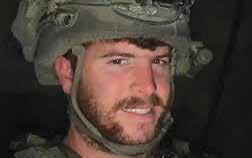
An IDF officer was killed in a Hezbollah explosive drone attack in southern Lebanon on Friday. The slain officer was named as Cpt. Maoz Israel Recanati, 24, a platoon commander in the Golani Brigade’s 12th Battalion, from Itamar.
Recanati was set to marry his fiancée, Rani, in a month, according to a statement from Prime Minister Benjamin Netanyahu. “We all embrace her and his loved ones during this difficult time,” the statement read.
Recanati was the seventh IDF soldier to be killed in southern Lebanon since the start of the ceasefire, and the 20th since hostilities escalated amid the Iran war. A civilian contractor has also been killed in southern Lebanon.
The Defense Ministry signed an agreement with the Jerusalem municipality in December to establish new defense headquarters in the capital and relocate the military’s colleges to the city, among other moves.
UNRWA had not used the building since the start of last year after Israel ordered it to vacate all its premises and cease its operations.
Israel has provided evidence that UNRWA employees had participated in the
The IDF said on Saturday that it shot down several Hezbollah drones that were flying in areas of southern Lebanon where Israeli troops are operating. The drones triggered sirens in several border communities in the Western Galilee.
Additionally, Hezbollah launched several rockets and mortars at troops in southern Lebanon. The IDF said the projectiles struck near the forces but did not cause any injuries. In retaliation, the

38 IDF struck some 100 Hezbollah targets in southern Lebanon over the weekend. According to the military, the targets included surveillance posts, weapon depots, and other infrastructure used by the terror group to advance attacks.
The latest strikes come after envoys from Israel and Lebanon held negotiations in Washington, following the first direct talks in decades last month between the two countries, which do not have diplomatic relations. They agreed to extend the ceasefire for 45 days, the U.S. announced on Friday.
Hezbollah opposes the negotiations, saying on Saturday that the Lebanese government is offering a “series of free concessions” to “the enemy.”
On Saturday, the IDF announced that it killed Hamas military chief Izz al-Din al-Haddad, the terror group’s leader in Gaza, on Friday in a “precise strike” on Gaza City in the Strip’s north.
The military said Haddad had recently “acted to rebuild the capabilities of the terrorist organization’s military wing and
to plan numerous terror attacks against Israeli civilians and IDF troops,” despite a U.S.-brokered ceasefire agreement in October.
The IDF said that it also killed two other Hamas terrorists who invaded Israel during the October 7 massacre in recent strikes in the Strip. Khamer Iyad Muhammad Al-Matouq and Khaled Muhammad Salem Jouda were killed in separate strikes in northern Gaza in the past two weeks.

The pair had recently attempted to carry out attacks on troops in Gaza and had “posed an immediate threat to the forces.”
Another strike in central Gaza last Wednesday killed Abdel Rahman Mahmoud Jumaa Shafi, a member of Hamas’s Bureij Battalion, who the military said had advanced attacks on troops in Gaza.
The terror group had not officially commented on the killing of Haddad as
of Saturday afternoon, even as witnesses said Gaza mosques announced his “martyrdom,” and Palestinian media published footage of a funeral procession and “martyr poster” for him in the Strip.
Nicknamed “The Ghost,” Haddad had survived multiple assassination attempts by Israel, according to Hamas sources.
Haddad, whom the IDF called “one of the architects of the brutal October 7 massacre,” took over his roles after the May 2025 killing of Mohammed Sinwar, the brother and successor of Yahya Sinwar, who led the terror group in the 2023 onslaught that sparked the war in Gaza.
“Throughout the war, Haddad was involved in holding many Israeli hostages in Hamas captivity. Haddad managed Hamas’s hostage captivity system and surrounded himself with hostages in an attempt to prevent his elimination,” the IDF said.
Haddad led Hamas’s Gaza City Brigade during the October 7 massacre and was one of the last remaining senior commanders “who directed the planning and execution of the October 7 massacre and the management of combat operations against IDF troops,” the IDF said.
IDF Chief of Staff Lt. Gen. Eyal Zamir hailed his killing as a “significant operational success by the IDF led by the
Southern Command, the Intelligence Directorate, the Air Force and the Shin Bet.” Zamir said that “the name of the arch-terrorist” Haddad “came up again and again” in his conversations with former hostages, according to remarks published by the IDF.
“Today, we succeeded in eliminating him,” Zamir said. “The IDF will continue to pursue our enemies, strike, and settle accounts with everyone who took part in the October 7 massacre.”
Since October 7, when more than 1,200 people were killed and 251 people were taken hostage, Israel has worked to eliminate senior Hamas officials including the Sinwar brothers, Hamas politburo head Ismail Haniyeh, and longtime military chief Muhammad Deif.
Preliminary results from the elections for Fatah’s Central Committee, the small leadership body of around 20 members that runs the movement currently controlling the Palestinian Authority, showed that PA President Mahmoud Abbas was elected to the panel, Palestinian media










ered close to Abbas, was also reelected, as was Mahmoud al-Aloul, Abbas’s deputy in Fatah.
According to the reports, Leila Ghannam, the governor of the Ramallah district, who is also considered close to Abbas, was elected as a new member of the Central Committee.
Among the newcomers was Zakaria Zubeidi, 50, a former commander of the Al-Aqsa Martyrs Brigades terror group — Fatah’s armed wing — in the Jenin refugee camp, who was freed from Israeli prison last year under a prisoner exchange deal with Hamas amid the war triggered by the Palestinian terror group’s October 7, 2023, invasion of southern Israel. Zubeidi organized dozens of terror attacks during the Second Intifada and was one of six prisoners who briefly escaped from Gilboa prison in 2021, before being recaptured.

The three-day congress, held simultaneously across Ramallah, Gaza, Cairo, and Beirut, drew 2,507 voters — a turnout of 94.64 percent, organizers said.
The PA was set up as an interim administration under the 1990s Oslo Accords between Israel and the Palestine Liberation Organization, an umbrella group still internationally recognized as the representative of the Palestinian people. The powerful Fatah party dominates both the PA and the PLO.
For sponsorship & dedication opportunities, please call Rabbi Weitman at 718-471-8444 ext 217
outlets reported on Sunday.
Fatah, like the PA, is headed by the elder Abbas, whose son Yasser Abbas is seen as his possible successor.
The younger Abbas, 64, a millionaire businessman who spends most of his time in Canada, secured a place on the central committee after being appointed around five years ago as his father’s “special representative” — a role that marked his emergence on the political scene.
Yasser Abbas, who has never held an
official role within Fatah or the PA, runs tobacco and contracting firms in the parts of the West Bank where the PA exercises limited self-rule. Critics have long alleged that he and his brother Tarek have used public funds to help their businesses. Both men reject those allegations.
Marwan Barghouti, seen by many Palestinians as a potential successor to Abbas, topped the preliminary results, retaining his seat on the committee with the highest number of votes. Barghouti
has since 2002 been serving five cumulative life terms plus 40 years in prison for helping plan terror attacks during the Second Intifada that killed five civilians.
Jibril Rajoub was reelected as the secretary-general of the committee, keeping the seat he has held since 2017, while Palestinian Authority Vice President Hussein Al-Sheikh was also reelected.
Majed Faraj, head of the Palestinian General Intelligence Service, one of the PA’s security bodies, who is also consid-
In recent decades, Fatah’s popularity and influence have dwindled amid internal divisions and growing public frustration. The sense of disappointment led to a surge in support for rival Hamas, which won the last legislative elections held in 2006, before going on to expel Fatah from the Gaza Strip in a bloody coup.
Prime Minister Benjamin Netanyahu revealed last Wednesday that he secretly visited the United Arab Emirates during the recent U.S.-Israeli war with Iran and met with Emirati President Mohammed bin Zayed Al Nahyan — a claim swiftly denied by Abu Dhabi.
According to a statement from Netanyahu’s office, the covert meeting produced a “historic breakthrough” in relations between the two countries amid the

regional conflict. A source familiar with the matter said the leaders met for several hours on March 26 in the oasis city of Al Ain near the Oman border.
Despite the report, the UAE Foreign Ministry pushed back strongly, calling Netanyahu’s account “entirely unfounded.”

“The UAE reaffirms that its relations with Israel are public and conducted within the framework of the well-known and officially declared Abraham Accords,” the ministry said in a statement, adding that claims regarding undisclosed visits or unofficial arrangements were false unless announced by Emirati authorities.
Netanyahu’s former spokesman, Ziv Agmon, publicly insisted the visit took place.
“As someone who accompanied the prime minister on the historic trip that has been top secret until today, I can say
that the prime minister was received in Abu Dhabi with the honor of kings,” Agmon wrote on social media.
He claimed Sheikh Mohammed personally greeted Netanyahu and even drove him from the plane to the palace in his own vehicle.
“The things the prime minister concluded during this amazing visit will be talked about for generations to come,” Agmon wrote. “A great success!”
Iranian officials also reacted sharply to the reports. Iranian Foreign Minister Abbas Araghchi warned the UAE against cooperating with Israel.
“Enmity with the Great People of Iran is a foolish gamble,” Araghchi wrote online. “Those colluding with Israel to sow division will be held to account.”
The reports highlighted the deepening cooperation between Israel and the UAE during the war with Iran. Earlier Wednesday, reports indicated that David Barnea, head of Israel’s Mossad intelligence agency, made multiple secret visits to the Gulf state during the conflict to coordinate military operations and intelligence sharing.
Meanwhile, David Zini, chief of Israel’s Shin Bet security agency, was also reportedly sent to strengthen coordination between the countries’ security services.

U.S. officials additionally confirmed recent reports that Israel deployed an Iron Dome battery to the UAE, along with Israeli personnel to operate it.
The UAE has faced heavy Iranian missile and drone attacks throughout the conflict. According to Emirati officials, Iran launched roughly 550 missiles and more than 2,200 drones at the country, making it one of the hardest-hit nations in the region during the war.
The reported meeting would mark Netanyahu’s first known visit to the UAE since the signing of the Abraham Accords in 2020.
ly-motivated employee” to leak confidential financial records belonging to Trump, his family, and the Trump Organization to outlets including The New York Times and ProPublica.
“President Trump continues to hold those who wrong America and Americans accountable,” the statement said.
Court filings earlier this spring showed both sides requesting additional time to pursue settlement discussions and avoid prolonged litigation.
Monday’s filing included a footnote from Trump’s attorneys arguing the dismissal does not require approval from U.S. District Judge Kathleen M. Williams, who had been overseeing the case in Florida.
“No judicial analysis is appropriate,” Trump’s lawyers wrote.

President Donald Trump and the Justice Department have reached a settlement in Trump’s $10 billion lawsuit against the Internal Revenue Service and Treasury Department over the leak of his tax records, according to court documents filed on Monday.
The lawsuit, filed in January in federal court in Miami, accused the agencies of improperly allowing a government contractor to disclose Trump’s tax returns, along with those of his sons and the Trump Organization, to several media outlets in 2020. Trump sued in his personal capacity, while Eric Trump, Donald Trump Jr., and the Trump Organization were also named as plaintiffs.
Neither the Justice Department nor Trump’s attorneys immediately commented on the terms of the agreement.
Last week, reports emerged that the case could be dismissed in exchange for the creation of a fund worth more than $1.7 billion to compensate Trump allies who claim they were unfairly targeted during the Biden administration. The reported arrangement has not been independently confirmed.
Following those reports, Trump’s legal team issued a statement accusing the IRS of permitting “a rogue, political-
Judge Williams had previously raised constitutional concerns about whether Trump, as sitting president, could sue agencies that ultimately fall under his own administration’s authority.
“Although President Trump avers that he is bringing this lawsuit in his personal capacity, he is the sitting president and his named adversaries are entities whose decisions are subject to his direction,” Williams wrote in a prior order.
Meanwhile, 93 Democratic members of Congress filed paperwork on Monday seeking to intervene in the case, arguing that any settlement could improperly direct taxpayer money “into the pockets of the President, his family, and his allies.”
The settlement may also intersect with separate claims Trump filed last year seeking roughly $230 million in damages tied to federal investigations conducted during both his first term and the Biden administration, though it remains unclear whether those claims are included in the agreement.

NextEra Energy, one of the largest power companies in the United States, on Monday announced plans to acquire Dominion Energy in an all-stock deal that could transform the power industry as it races to supply electricity needed to fuel


the booming growth of artificial intelligence.
Technology giants are vigorously building data centers to provide the computing power for AI. Peak electricity demand in the coming summers and winters is expected to jump more than 20% nationwide through 2035, due in part to data centers.
NextEra, whose shares have climbed 15% this year, has been looking to capitalize on what CEO John Ketchum has
called “America’s golden age of power demand.” Last year, it struck deals with Google in Iowa and Meta in New Mexico.
According to the terms of the deal, NextEra, which is based in Florida and has market value of about $194 billion, would exchange about eight-tenths of a share of its stock for each outstanding share of Dominion, which has a market value of $54 billion. NextEra shareholders would ultimately own about 75% of the combined company, and Dominion
and South Carolina. It serves the largest cluster of data centers in the world, known as Data Center Alley, in Virginia.
The companies said they are proposing offering $2.25 billion in bill credits to Dominion Energy’s customers in Virginia, North Carolina and South Carolina over two years after the deal closes. That would work out to around $562 in total for each of Dominion’s roughly 4 million customers.
The combined company would serve roughly 10 million utility customers across Florida, Virginia, North Carolina and South Carolina. Ketchum of NextEra would serve as chair and CEO of the new company, while Robert Blue, CEO of Dominion, would serve as CEO of the company’s regulated utilities and be a director on the company’s board.
The acquisition could help reduce corporate and other costs such as management of the two companies’ nuclear power plants. (© The New York Times)

Two military jets collided midair on Sunday afternoon during an air show at the Mountain Home Air Force Base in Idaho. The four crew members managed to safely eject from the EA-18G Growlers.
A video on social media showed the jets spinning toward the ground. The four crew members deployed their parachutes and ejected from the planes, which then exploded into balls of fire.
“They crashed in an unpopulated area off base,” said a witness, Lindsay Dressler. She said a brush fire broke out after the crash.
shareholders would get a $360 million cash payment when the deal closes. Including debt, the deal values Dominion at more than $120 billion.
The agreement with Dominion would need approval from federal regulators.
The deal also requires local approvals, including in Virginia, whose governor, Abigail Spanberger, has pledged to lower energy bills and make data centers pay more for electricity. Dominion operates retail utilities in Virginia, North Carolina
The “aircraft incident” took place 2 miles northwest of the base. The base is home to the Air Force’s 366th Fighter Wing, also known as the Gunfighters. The base, in southwestern Idaho about 50 miles south of Boise, the state capital, was locked down on Sunday afternoon.
The EA-18G Growler is part of the Navy’s “first line of defense in hostile environments,” according to its website. It is used by the VAQ-130 squadron, the oldest electronic warfare squadron in the

Navy, known as the Zappers.
The base is home to about 8,600 people, including service members and their families.
After the incident, the show was canceled.

According to a U.S. Department of Justice official last week, the United States plans to indict Cuba’s Raul Castro. The timing of the potential indictment, which would need to be approved by a grand jury, was not immediately clear, but the official said it sounds imminent.
The potential indictment of the 94-year-old former president of Cuba and brother of Fidel Castro is expected to focus on the downing of aircraft in 1996, the
official said on condition of anonymity.
The development comes amid heightened tensions between Washington and Havana. The Trump administration has described Cuba’s current communist-run government as corrupt and incompetent and is pushing for a regime change.
President Donald Trump has applied pressure on the island, effectively imposing a blockade by threatening sanctions on countries supplying it with fuel, igniting power outages and delivering blows to its economy.
Officials from both countries acknowledged earlier this year that they were in talks, but the negotiations appeared to flounder amid the ongoing U.S. fuel blockade.
On Thursday, the Cuban government confirmed it had met with CIA chief John Ratcliffe. Ratcliffe told intelligence officials in Cuba that the U.S. was prepared to engage on economic security issues if Cuba makes “fundamental changes,” a CIA official said.
Since the 1959 Cuban Revolution led by Fidel Castro, U.S.-Cuba relations have been defined by U.S. sanctions, diplomatic isolation, and moments of crisis such as the Cuban Missile Crisis. In recent years, the two countries briefly moved toward normalization under President Barack

Obama, but relations later cooled again amid renewed sanctions, political disagreements, and ongoing disputes over human rights, migration, and trade.
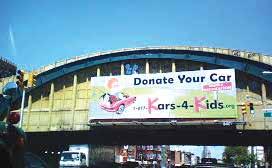
A California judge has ordered Kars4Kids to stop airing its well-known advertising jingle in the state unless the charity clearly discloses that its donations primarily fund Orthodox Jewish programs in New York, New Jersey, and Israel.
The ruling, issued last week by California Superior Court Judge Gassia Apkarian, found that the car-donation charity violated the state’s false advertising and unfair competition laws by failing to fully explain where donated funds were being directed.
The case stemmed from a lawsuit filed by California resident Bruce Puterbaugh, who argued that he would not have donated his vehicle had he known the proceeds were supporting “a Jewish organization in New York.”
According to court filings, Kars4Kids Chief Operating Officer Esti Landau testified that the organization serves as the main fundraising arm for Oorah, an Orthodox Jewish outreach nonprofit that operates programs including a summer camp in upstate New York.
Landau said Oorah’s activities also include matchmaking services for young adults and Israel gap-year trips for 17and 18-year-olds. Court documents noted that the organization does not run active programs in California.
“The failure to disclose that funds benefit adults and families — and that this support is contingent upon a specific religious affiliation — is a material omission,” Judge Apkarian wrote in her decision. “A reasonable consumer donating to a ‘kids’ charity would attach importance to the fact that their donation is actually supporting adult matchmaking and general family subsidies.”
Under the ruling, Kars4Kids has 30 days to stop airing advertisements in California that do not disclose the charity’s
religious affiliation, the geographic
tion of beneficiaries, and the ages of those receiving assistance.
Kars4Kids said it plans to appeal the ruling.
“We believe this decision is deeply flawed, ignores the facts, and misapplies the law,” said Wendy Kirman, the organization’s communications director. “It’s well known that we are a Jewish organization and our website makes it abundantly clear.”

U.S. officials are investigating a series of cyber intrusions into fuel monitoring systems at gas stations across multiple states, with suspicion increasingly falling on hackers tied to Iran, according to sources familiar with the probe.
The attacks targeted automatic tank gauge systems, known as ATGs, which monitor fuel levels in underground storage tanks. Investigators said many of the systems were connected to the internet without password protection, making them an easy opening for hackers.
While the intrusions did not alter actual fuel levels or cause physical damage, officials said the breaches raised serious safety concerns. Experts warn that access to ATGs could theoretically allow hackers to hide a fuel leak or interfere with safety monitoring systems.
Officials cautioned that attributing the attacks directly to Iran may prove difficult because the hackers left behind limited forensic evidence. Still, Iran’s long history of probing vulnerable oil, gas, and water infrastructure in the United States has made it a leading suspect.
The incidents come amid heightened tensions during the recent U.S.-Israeli conflict with Iran. Analysts say Tehran increasingly views cyber-attacks as a way to pressure the United States without using traditional military force.
Cyber-security researchers have warned for years about unsecured ATG systems. In 2015, security company Trend Micro created fake online tank systems to study hacker behavior and quickly attracted attention from a pro-Iranian group. A

later report cited internal Iranian documents that reportedly identified gas station systems as possible cyber targets.
Experts say Iranian cyber operations have grown more aggressive and sophisticated in recent months. Since the war began earlier this year, Iran-linked hackers have allegedly disrupted oil and gas facilities, targeted water utilities, delayed shipments at medical device manufacturer Stryker, and leaked private emails belonging to FBI Director Kash Patel.
Yossi Karadi, head of Israel’s National Cyber Directorate, said Iran’s cyber activity has shown “a significant increase in the scale, speed, and integration between cyber operations and psychological campaigns.”
Cybersecurity analyst Allison Wikoff of PwC said Iranian hackers are also becoming faster at developing destructive malware and coordinating “hack-andleak” operations targeting media outlets and civilian infrastructure.
Honda Motor reported its first annual loss since going public in 1957, blaming weak electric vehicle demand and costly
restructuring tied to shifting market conditions and U.S. policy changes.
The automaker posted a $2.7 billion loss for the fiscal year ending in March, while warning that expenses linked to its electric vehicle strategy could eventually total nearly $16 billion.
In a statement, Honda said demand for EVs had “declined considerably” because of changing environmental policies in the United States and other global factors. The company also pointed to the impact of President Donald Trump’s “Made in America” policies, which have reshaped parts of the automotive market.

Honda CEO Toshihiro Mibe announced that the company is abandoning its previous goal of having electric vehicle sales account for 20% of profits by 2030. Honda had also earlier pledged to transition entirely to electric or fuel-cell vehicles by 2040.
The shift comes as the Trump administration rolls back several electric vehicle incentives introduced under former President Joe Biden. Those changes include eliminating federal EV tax credits and challenging California’s stricter electric vehicle mandates.
Despite its struggles in the EV market, Honda managed to soften the financial blow through strong motorcycle sales. The company sold roughly 20 million motorcycles worldwide during the fiscal year, helping generate about $138 billion in annual revenue.
Honda remains one of the dominant motorcycle manufacturers in countries such as India, where demand for twowheeled transportation remains high.
Vehicle sales, however, slipped overall. Honda sold 3.4 million automobiles globally during the fiscal year, down from 3.7 million the previous year. The company manufactures popular models including the Honda Accord and the Honda Pilot.
Even with the historic loss, Honda said it expects to return to profitability, forecasting a $1.7 billion profit for the fiscal year ending in March 2027.
“We will continue our research to develop future technologies including electric vehicle batteries,” Mibe said. “We will
get back on a growth track.”
At the same time, he acknowledged that Honda would continue investing not only in EV technology, but also in hybrid and traditional gasoline-powered vehicles as consumer demand evolves.

The leader of U.S. Border Patrol, the agency that secures entry points at the nation’s border and has played a central role in President Donald Trump’s immigration crackdown, announced on Thursday that he was resigning.
“It’s just time,” Michael Banks, who worked for Border Patrol for over 20 years, said in an interview with Fox News. “I feel like I got the ship back on course,” he added, referring to immigration enforcement at the southern border. “It’s

50 time to enjoy the family and life.”
Banks is the latest high-profile official to leave a post in the Department of Homeland Security, the agency responsible for carrying out Trump’s deportation campaign.
His exit comes less than a month after Todd Lyons, the acting director of Immigration and Customs Enforcement, said he would leave the agency May 31. On Tuesday, the Trump administration tapped David Venturella, a former career ICE official, to serve as the agency’s next acting leader. Trump fired Kristi Noem as homeland security secretary in March after a string of controversies.
Rodney Scott, the commissioner of U.S. Customs and Border Protection, which oversees Border Patrol, said in a statement, “We thank U.S. Border Patrol Chief Michael Banks for his decades of service to this country and congratulate him on his second retirement after returning to serve during one of the most challenging periods for border security.”
Banks previously retired from Border Patrol in 2023 and was appointed to be the first Texas “border czar” by Gov. Greg Abbott, who called for more aggressive immigration enforcement during the Biden administration.
monkey exhibit. His friend, a 27-year-old singer, filmed the incident.
The men did not come close to the animals and were quickly apprehended by zoo officials. The two men face charges of forcible obstruction of business, which they refute.
The enclosure is home to Punch, a baby macaque that became an internet star this year after the zoo posted photos of the young monkey clutching an IKEA plush orangutan for comfort after being rejected by his mother.
Punch was raised in an artificial environment after being born in July and began training to rejoin his troop earlier this year. Punch’s predicament sparked huge interest online, spawning a devoted fanbase who went bananas for him under the hashtag #HangInTherePunch.
These two Americans just went a bit too far with their monkey business.


Two Americans were arrested in Japan this week after a stunt involving a monkey that had made international headlines this year.
One man, a 24-year-old college student wearing a costume, climbed over the fence at the Ichikawa City Zoo and dropped into the moat surrounding the
Did you know?
A renowned Nepali mountain guide has broken his own world record for the most summits of Mount Everest, after scaling the world’s tallest peak for the 32nd time.
Kami Rita Sherpa, 56, known as the “Everest Man,” was leading clients up the 29,032-foot peak on Sunday when he set the new record.
On the same day, Lhakpa Sherpa, 52, known as the “Mountain Queen,” also broke her own record for the most ascents by a female climber, after her 11th Everest summit.
This climbing season has been especially busy, with a record number of permits issued to Everest aspirants and delays in opening the route to the peak Almost 500 foreign climbers have been granted permits to scale Mount Everest this year. Most attempt the ascent with at least one Nepali guide, who do not re-
An ostrich’s eye is larger than its entire brain.
quire permits.
Nepal’s tourism department has congratulated both climbers for the “historic achievement.” So did Nepali Prime Minister Balendra Shah, who said that the climbers had “once again written history.”
“Such historic success can only be achieved through unwavering courage, rigorous self-discipline, and honest dedication to one’s work,” he wrote on X.
Kami Rita Sherpa first summited Everest in 1994 and has made it to the peak almost every year since. Some years, he’s even scaled it twice.
He was born in the Solukhumbu region of Nepal to a family of climbers. In 2018, he became the first person to climb Mount Everest 22 times, breaking the 21time record he previously held with two other Nepali Sherpa mountaineers, who then retired.
The peak of success.

A New York high school’s graduating class boasts a record-breaking 21 valedictorians among its approximately 300 students.
Jericho High School in Nassau County, Long Island, bases valedictory status on unweighted letter grades, rather than percentages, meaning each valedictorian has gotten straight A+ report cards through their academic career but may not have achieved 100% in every course.
“It gives all of the students some equity and opportunity,” district superintendent Robert Kravitz explained. “So if you have that student who’s not taking advanced placement classes, they can also become a scholar.”
Co-Principal Brian Cummings said each A+ represents a score of at least 97%.
“It shows a lot of success,” Cummings added. “Historically, this is the way we’ve done it with letter grades. The difference between a 99.8 and a 99.83 is insignificant so letter grades really capture what we represent.”
The school said the 21 valedictorians is a new record, with the second-largest being a class with 15 valedictorians.
Not all 21 valedictorians will be able to
give speeches at graduation.
“We’re going to put them at the front of the procession,” Cummings said. “We’re [also] creating a video that we’re going to share with the community about their accomplishments.”
We’re all winners here.

Someone paid more than $9 million to have lunch with basketball player Stephen Curry and Warren Buffett. The auction on eBay was intended to revive an event that Buffett hosted for more than two decades that raised $53 million for the GLIDE Foundation homeless charity in San Francisco. This year’s auction that wrapped up Thursday night also raised month for Curry’s Eat.Learn. Play. Foundation that he established with his wife, Ayesha.
The legendary investor also promised to match the winning bid so both their favorite charities will benefit.
The anonymous winner paid $9,000,100 to win a private lunch with Buffett and the Currys in the 95-year-old investor’s hometown of Omaha, Nebraska, next month.
The Buffett auctions started in 2000 and continued every year until the pandemic forced them to take a few years off. Starting in 2008, every winning bid for lunch with the investing giant topped $1 million. Buffett discontinued the event after someone paid $19 million for a lunch in 2022.
A follow-up auction in 2024 raised $1.5 million for a lunch with software titan Marc Benioff, but that version of the event didn’t last.
Buffett stepped down as CEO of Berkshire Hathaway in January after six decades of leading the conglomerate. He remains chairman, but just sat through his first annual shareholder meeting — sitting in the audience instead of leading the event from stage.
Buffett reached out to the Currys earlier this year to ask them to join the lunch auction with him.
Sounds like that was a slam-dunk strategy.

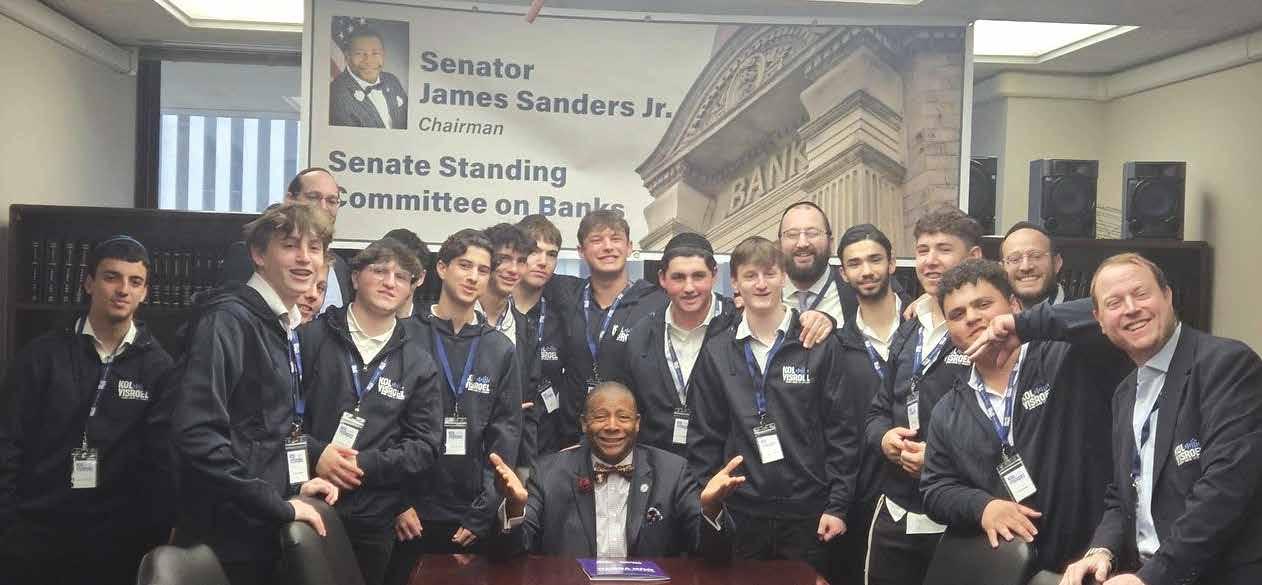
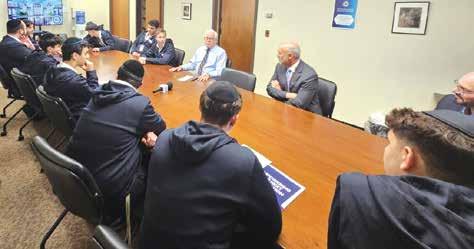
Last week, the eleventh and twelfth grade bochurim from Yeshiva Nishmas Hatorah had an incredible and unique opportunity. The boys and their rebbeim rose at the crack of dawn and traveled the great distance to the NY State Capitol building in Albany, NY. There, they joined R’ Shmuel Hartstein, founder of Kol Yisroel, a non-profit
organization dedicated to the political advocacy, safety and support of religious Jews in New York State .
The purpose of this trip was to learn how government operates, meet with state senators, assembly members and other government officials. The boys observed the process of lobbying for a bill while voicing opinions on other import-
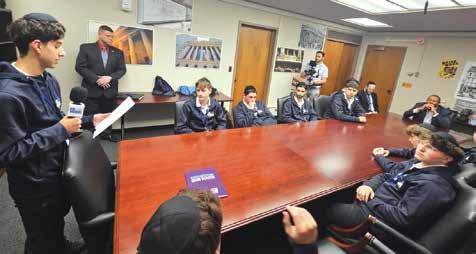
ant matters.
The boys of Nishmas made a tremendous kiddush Hashem, engaging passionately and advocating respectfully with officials of all different religions and ethnic backgrounds. The boys delivered messages at a meeting with State Senator James Sanders and their presence in Albany was clearly appreciated by every-
one they encountered. The highlight and finale of the day was the public recognition the entire group received from Senator Sanders on the Senate Floor where he praised their critical thinking and impressive desire for change. The trip was an enlightening view of public service and a wonderful experience for all who attended.







On Thursday, March 14, Episcopal Health Services (EHS) hosted its 2nd Annual Women’s Health Fair in recognition of National Women’s Health Week. The event took place outside of the Walsh Ambulatory Pavilion located at 19-20 Brookhaven Avenue in
Far Rockaway. The fair was attended by 38 vendors, including EHS teams and community partners, and provided free health screenings, wellness information, on-spot appointment scheduling and other fun activities to over 120 attendees.
For the past several years, there has been a growing interest in girls volleyball both within YHT and throughout the Queens yeshiva community. With the help of YHT student Sophia Lebovich, word began to spread that Coach Brian Miller was working to establish a school-based league for local yeshiva girls. Coach Miller reached out to athletic directors across Queens, Long Island, and Brooklyn, and after many conversations, it became clear that building a successful league would require dedicated leadership, referees, structured rules, and, most importantly, committed schools.
Coach Miller sat down with league commissioner Judah Rhine, and together they developed the league’s first official rules and guidelines. Soon after, several schools — including YCQ, NSHA, and QHA — enthusiastically joined the initiative. Once all the schools were on board, the league officially launched with the goal of giving students an opportunity to compete, grow, and further develop their passion for the sport.
Each team participated in both home and away games, allowing for a full and
exciting inaugural season. NSHA and YCQ finished with the top records and will compete in the championship game in the coming weeks!
The mission has always been to create meaningful opportunities for students. Alongside Head Coach Lauren Miller and Assistant Coach Sara Schilowitz, Coach Miller was amazed not only by the talent displayed on the court, but also by the sportsmanship, teamwork, and enthusiasm the girls demonstrated throughout this historic first season.
Looking ahead, there are hopes to continue expanding the league next year by adding more teams and creating an even fuller schedule.
In addition, for middle school and high school athletes seeking further development, Coach Lauren Miller and Coach Brian Miller will be offering future volleyball clinics designed to strengthen players’ skills and fundamentals. The Miller Junior Sports League (MJSL) will proudly introduce a volleyball clinic next school year for yeshiva students eager to learn, improve, and continue growing their love for the game.

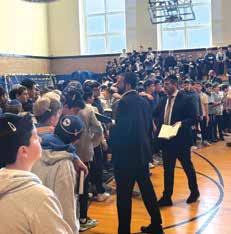

The seventh grade at Bais Yaakov Ateres Miriam is enthusiastically embracing an exciting new addition to the Biology curriculum as part of their health unit. In addition to learning about nutrition and the health benefits that different foods provide, students are gaining a deeper understanding of the importance of healthy living and wellness.
Bringing these lessons to life, their very own Morah Devorah Schreiber, a certified nutritionist and personal train-
er, is leading weekly personal training and aerobics classes that fill the students’ learning experience with energy, movement, and enthusiasm. Through these engaging sessions, students have the opportunity to actively apply what they are learning in class in a fun and meaningful way.
Filled with upbeat music, positive energy, and plenty of excitement, the classes have quickly become a highlight of the students’ week.
By Monet Binder, Esq.
Life is messy, and when the unthinkable happens, the legal system is often too slow to help. A recent Michigan case, Sartor v. Johnson, proved that even if you have sole custody, your child’s future can still end up in a judge’s hands the moment you’re gone. A basic will simply isn’t enough to stop the chaos. Why a Will Isn’t Enough
In the Michigan case, a father’s death triggered a custody battle with an absent mother. While relatives eventually won,
it took a gruelling court process. Without your specific “why” documented, a judge who doesn’t know your family is left to make the most important decision of your child’s life.
The Critical First 24 Hours
If you were in an accident today (chas v’shalom), who could legally pick up your kids or talk to their doctor? Most parents are shocked to learn that without immediate legal paperwork, even a grandparent can be turned away. This “gap” is how children end up in the care of strangers or protective services while the courts
scramble to catch up. If you name your “short-term” guardians in your trust; they can act the second an emergency happens.
Ensuring Your Voice is Heard
If there’s someone you absolutely wouldn’t want to raise your child, you can’t just hope for the best. Through a confidential exclusion affidavit, we can document exactly why certain people aren’t the right fit. It keeps your concerns private but ensures the court understands your perspective if they ever have to decide on your behalf.
Call today:
Monet Binder, Esq., has a practice in Lakewood, Queens, and Brooklyn areas, dedicated to protecting families, their legacies and values. All halachic documents are approved by the Bais Havaad Halacha Center in Lakewood, under the direction of Rabbi Dovid Grossman and the guidance of Harav Shmuel Kaminetsky, shlita, as well as other leading halachic authorities.
Every girl learns differently. Some girls thrive in a small, warm environment with hands-on experience which allows them to develop their strengths and reach their potential. What if there was a school built around them instead?
New England Academy of Torah (NEAT), a girls’ high school in Providence, Rhode Island, will be offering an innovative solution for students who thrive in a more personalized, handson learning environment. By combining their Limudei Kodesh and Chol programs with career-focused tracks such as bookkeeping, makeup artistry, graphic design, and other arts, NEAT will create an academic experience that becomes tailored to each girl’s strengths.
NEAT is now enrolling for the 2026-
2027 school year for girls who would benefit from smaller class sizes and individualized guidance. NEAT’s hands-on learning model allows every girl to engage meaningfully with what is being taught in and even out of the classroom.
Designed with the future in mind, NEAT’s curriculum will give students opportunities to explore a practical career path early on, helping them turn their interests into real-world skills while gaining a head start toward their next job, seminary, higher education, or other future endeavors. NEAT’s career-forward courses will bring experienced professors to teach girls skills that they are passionate about, exposing students to advanced learning within a supportive high school setting.
For girls living beyond the Providence area, NEAT will offer a unique boarding
option, in which small groups of girls will live in carefully selected host homes with families in the community who reflect the school’s hashkafah. These warm, supervised settings allow students the space they need while feeling supported and valued within a close-knit community.
Under the guidance of Rabbi Peretz Scheinerman, Rabbi Shmuel Gluck, and Menaheles Mrs. Tzippy Hollander, NEAT brings decades of experience in girls’ Chinuch to every aspect of school life, empowering girls to discover their strengths, build confidence, and prepare for a meaningful future beyond the classroom.
For the girl who is looking for something unique, a fitting high school experience is finally possible!
The New England Academy of Torah (NEAT) is a Rhode Island-based girls’

high school offering an alternative, student-centered education and is accredited by the Rhode Island Department of Education. For inquiries, visit NeatHS. org, call (401) 331-5327, or contact Mrs. Tzippy Hollander, Menaheles, at (917) 981-1407.
Estate planning is often viewed as a task reserved for the wealthy or the elderly. However, the true purpose of a Will or trust is not just to transfer large amounts of wealth; it is to assert your personal autonomy and protect your loved ones from chaos and court intervention. When an individual passes away without a legally valid Will, they are said to have died intestate.
A common misconception is that if you die without a Will, the state government takes all your property. While this can happen in the rare event that you have absolutely no living relatives, a process called escheatment, the reality is that the state does something far more disruptive to your family’s harmony: It writes a Will for you.
Every state has a detailed set of statutes known as intestacy laws that dictate who inherits your property when you fail to leave instructions. These are one-sizefits-all laws based on biological and marital relationships. They are impersonal, inflexible, and rarely align with the complexities of modern family dynamics, leading to significant legal, financial, and emotional costs that a simple document could have prevented.
The Problem of the Unintended Heir
State intestacy laws follow a strict, often archaic, hierarchy of relationships. The distribution is calculated based on who survives you, leading to several major areas of unintended consequences.
First, the surviving spouse does not
inherit everything. This is arguably the most shocking consequence for many families. If you are married and die intestate, your surviving spouse may not automatically inherit your entire estate, especially if you have children or even living parents. In many states, if you have a spouse and children, your spouse may receive only the first portion of your estate plus a fractional share of the remaining assets. Your children would inherit the rest. If you have a spouse but no children, some states may mandate that your surviving parents or siblings receive a portion of your estate. A surviving spouse may suddenly find themselves co-owning the marital home and bank accounts with their adult children or even their in-laws, creating immediate financial and logistical problems.
Second, blended families and non-traditional relationships are disregarded. Intestacy laws are particularly poor tools for blended families. If you die intestate, your stepchildren will inherit nothing from you, regardless of how long you raised them, unless they were legally adopted.
Third, unsuitable or minor heirs may inherit outright. The laws of intestacy make no judgment about the suitability of an heir. Assets pass to beneficiaries based purely on their biological relationship to you. This means money could pass outright to a financially irresponsible adult child who is incapable of managing a lump sum inheritance. Worse, it could pass to a beneficiary receiving

government benefits like Medicaid or Supplemental Security Income (SSI). An outright inheritance would immediately disqualify them from those critical programs, forcing them to spend down their entire inheritance on care the government would have otherwise covered.
Beyond the distribution of assets, dying intestate forces the court to make critical decisions that you should have controlled.
Without a valid Will, the court must appoint a Guardian for minor children if both parents pass away. The court will appoint someone based on their own assessment of “the best interests of the child,” often leading to painful custody battles among loving relatives. Without your choice outlined in a Will, you lose your voice in this most important decision.
Additionally, the court must appoint an Administrator, the equivalent of an Executor, to manage and settle the estate. This process is complex, requiring potential administrators to petition the court and post a bond, all while being subject to court oversight. The court’s appointee may not be the family member you would have entrusted with the administrative and financial duties, potentially leading to resentment and delayed administration.
Finally, if your children are minors and inherit property under intestacy, the law states that they cannot own or man-
age significant assets until they turn 18. This forces the court to appoint a Conservator or Custodian to manage the funds until the child reaches the age of majority. This court oversight is public, expensive (fees are paid from the inheritance), and ends abruptly: at age 18, the child receives a single, lump-sum check. Few 18-year-olds have the maturity or financial savvy to responsibly manage a substantial inheritance, often leading to rapid depletion of the funds.
The Simple Solution
A properly drafted Will or Trust can override the state’s default intestacy laws. An estate plan is your voice after you are gone, allowing you to specify your heirs, appoint your Executor, name a Guardian, and provide for minor children by directing assets to be held in a trust until they reach a more mature age. The cost of an estate plan is minimal compared to the enormous financial, emotional, and legal costs that an intestate death imposes on your family. Estate planning is not about death; it’s about providing clarity, stability, and peace of mind to the people you love the most. By taking control now, you ensure your legacy brings harmony, not hardship.
To learn how to protect you and your family, visit www.haaszaltz.com or call 516-979-1060. You can also email them at info@haaszaltz.com.
The Village of Cedarhurst and the Cedarhurst BID invite families and residents to enjoy a special evening under the stars at a Free Family Movie Night on Saturday, May 24, at 7:45 PM in Andrew J. Parise Park. The featured film will be the beloved comedy-drama A League of Their Own. Based on the real-life All-American Girls Professional Baseball League formed during World War II, the film tells an inspiring story of determination, teamwork, and breaking barriers while
helping lift American spirits during a challenging time in history.
This uplifting community event is sponsored by the Village of Cedarhurst and the Cedarhurst BID as a thank you to residents for shopping locally and supporting neighborhood businesses throughout the year.
Families are encouraged to bring lawn chairs, blankets, and friends for an enjoyable evening of entertainment and community spirit.



The atmosphere in the crowded room was electric, a mix of whirring gears, clacking metal, and intense chatter. Sixty robots, engineered by talented teams from ten different yeshivas across the tri-state area, had converged for the ultimate showdown: the CIJE Robotics tournament. Among the competitors were four teams of seventhand eighth-graders from Yeshiva Darchei Torah. (CIJE is the Center for Initiatives in Jewish Education.)
In an incredible feat, three of the four Yeshiva Darchei Torah robots finished in the top 20. In an extraordinary final round, both top-contending robots were from Darchei, resulting in the school effectively competing against itself and securing a tie for first place overall. Furthermore, Yeshiva Darchei Torah currently holds the league’s highest single-round score of the year, commanding 280 points in just a minute and a half.
Yet, the trophies only tell half the story. While the competitive results were extremely impressive, the success was rooted in months of rigorous preparation. Long before the tournament, the students dedicated countless hours to advanced problem solving, teamwork, and practical applications within their math and science classes.
Beyond their technical achievements, the students made a profound impression on spectators and organizers alike at the competition, which took place in Passaic, New Jersey. Observers noted their derech eretz and middos tovos. And during tournament downtime, instead of just schmoozing or relaxing, the boys each pulled out a sefer. The Yeshiva Darchei Torah boys demonstrated exceptional dedication and menschlichkeit throughout the entire process, representing the yeshiva with tremendous dignity and creating a true kiddush Hashem

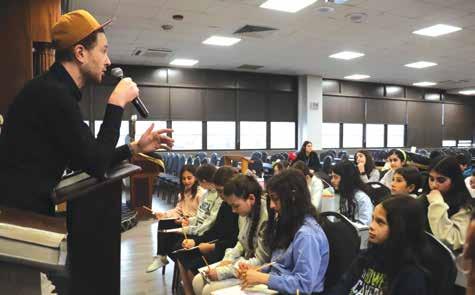
YCQ fifth graders had the exciting opportunity to step into the world of storytelling during a special visit with Isaac Rudansky, an Orthodox Jewish entrepreneur and author whose debut middle-grade novel, Georgie Summers and the Scribes of Scatterplot, recently landed a major three-book deal with Sourcebooks, a Penguin Random House imprint.
In preparation for the program, students read Chapter 1 in advance and came ready to listen, learn, and ask thoughtful questions. The book follows 12-year-old Georgie Summers on a fantastical adventure into Scatterplot, a world where Scribes record the memories of everyone on Earth. Inspired by Jewish ideas and imagination, the story includes elements such as the Scribes, the Altercockers, and themes of light and shadow drawn from
Kabbalistic concepts.
Throughout the program on Thursday, May 14, students learned about Isaac’s writing process, the years of early-morning dedication that helped bring the book to life, and the persistence it takes to turn an idea into a published story.
A highlight of the visit was a handson writing workshop, where students had the chance to think creatively, develop their own ideas, and explore the craft of storytelling. The program gave students a meaningful opportunity to see how reading, writing, Jewish creativity, and imagination can come together in powerful ways.
Thank you to Isaac, Clara Rockwell, Mrs. Etta Anton, YCQ Librarian, and Mrs. Francine Kozlin, Assistant Librarian, for organizing such a special visit!

HALB Lower school students who participated in the Screen Free to be Me program consistently all year got to enjoy an incredible car-
nival after school. Not only are students benefitting from taking a break from devices, they also get to enjoy special perks and prizes!

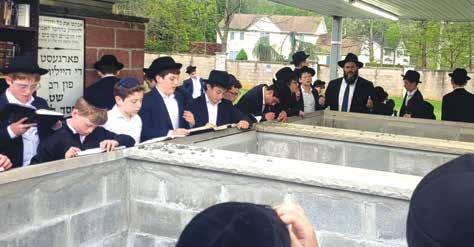
The seventh graders of Yeshiva Ketana of Long Island had the zechus of visiting Skver with our Manhig Ruchani, Rabbi Eliezer Feuer. The boys had a private meeting with the
Skverer Rebbe, receiving divrei Torah and brachos, davened at kivrei tzaddikim, and had a delicious pizza lunch – a truly uplifting and amazing day!


For many children, summer camp is a defining part of childhood. For children facing serious illness, it often feels out of reach. While their peers head off to camp, many are left navigating treatments, hospital stays, and the
isolating reality of illness, missing out on the simple joy of just being kids.
For decades, Camp Simcha and Camp Simcha Special, Chai Lifeline’s flagship medically supervised summer programs, have given children facing serious illness

a place where they can experience freedom, friendship, and unforgettable moments.
Camp Simcha Without Borders takes it a step further.
Returning for its sixth year, Camp Simcha Without Borders, sponsored by The Ann & David Kupperman Foundation, brings the spirit and energy of Camp Simcha directly to local communities across the country, ensuring that every child, regardless of medical circumstance, has the chance to experience the magic of summer. Originally launched to serve children unable to travel to overnight camp during COVID, Camp Simcha Without Borders has grown into a vital extension of Camp Simcha’s mission, now reaching hundreds of children each year in communities nationwide.
“Every child deserves a summer to remember,” said Rabbi Simcha Scholar, CEO of Chai Lifeline. “Camp Simcha Without Borders ensures that even in the midst of illness, children can experience
joy, friendship, and the ability to just be kids.”
Across Chai Lifeline regions in Baltimore, Chicago, Lakewood, Los Angeles, and South Florida, children take part in days filled with music, sports, creative programming, and the kind of pure, unfiltered fun that illness so often interrupts. More than just activities, these programs create something deeper: connection, confidence, and a powerful sense of belonging.
“Camp Simcha isn’t just a place. It’s a feeling of joy and freedom,” said Eli Braun, LMSW, Director of Camp Simcha Without Borders. “We’re bringing that feeling directly to children wherever they are. For one week, they get a piece of their childhood back, and that can be life-changing.”
For families navigating the uncertainty of illness, those moments are more than just a break from routine. They are a reminder that childhood is still possible and that they are not alone.
Last Wednesday night, something special happened.
The first-ever N’shei Niggun Chabura brought together women of all ages for an evening of soulful music, deep Torah, emotional connection, and powerful inspiration. From the moment the program began, the room carried an energy that was hard to describe — voices singing together, women fully present, hearts open, and a feeling that something real was taking place.
The event featured an all-female lineup of musicians and singers whose original and emotionally charged music elevated the evening far beyond a typical concert. The crowd sang passionately, many visibly moved throughout the program as the themes of emunah, struggle, hope, and redemption unfolded through both music and words.
Reb Yirmi Ginsberg opened the evening by sharing the vision behind Niggun Chabura before turning the program over to his wife, Penina Ginsberg, a teacher at Yeshivah of Flatbush, who guided the
night with warmth, depth, and authenticity while he respectfully stepped out.
The theme of the evening centered on a woman’s journey toward Matan Torah through the story of Naami in Megillas Rus. Rather than viewing the story from the outside, the Divrei Torah invited the audience into Naami’s inner world — the pain of losing her husband and two sons, the loneliness and emptiness she carried, and the challenge of holding onto emunah while feeling shattered by life.
At the same time, the program explored the incredible chessed and loyalty of Rus, whose devotion to her motherin-law became a model of quiet greatness and unwavering faith. Together, Naami and Rus journeyed back to Eretz Yisrael and through courage, sacrifice, and Divine guidance ultimately became the foundation of Malchus Beis Dovid.
Naami marries Rus to the tzaddik Boaz who gives birth to Oved, the grandfather of Dovid HaMelech, and ultimately the roots of the Moshiach for which the Jewish people continue to hope and pray.
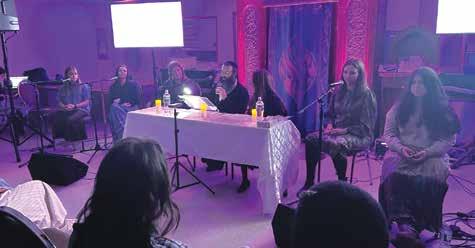
The music throughout the evening gave emotional expression to these themes in a deeply moving way. The program featured the talents of Shaindy Zafir, Ayala, Leeba Teichman, Rosie Wechter, and Bella Tovshteyn, whose heartfelt performances created an atmosphere of unity, yearning, and spiritual elevation. By the end of the night, it was clear to everyone present that this was more than just an event. N’shei Niggun Chabu-
ra opened the door to something meaningful, a space for women to connect through Torah, niggun, emotion, and authentic avodas Hashem, and many attendees left already looking forward to the next gathering.
Follow NC on Insta - www.instagram. com/theniggunchabura or NiggunChabura.com.

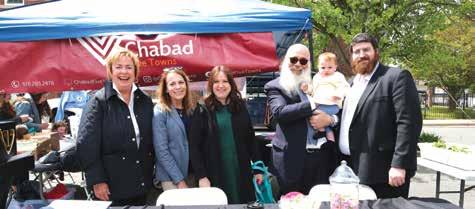
Hempstead Town Clerk Kate Murray (left) and Receiver of Taxes
Jeanine Driscoll (2nd left) attended the Arts Below Sunrise Music and S.T.E.A.M. Festival on May 3 in Woodmere. Also attending were Rabbi Zalman and Chanie Wolowik of the Chabad of Five Towns, and Moshe Gordon of Cedarhurst; and Rabbi Mendel Gordon of the Chabad of Hewlett Neck and Old Woodmere.
HAFTR Middle School recently welcomed Rav Yosef Zvi Rimon for a deeply moving and inspirational visit that left a lasting impact on students and faculty alike. A renowned Torah scholar, educator, and leader of the World Mizrachi movement, Rav Rimon shared powerful reflections on chesed, emunah, unity, and the responsibility each person carries within Am Yisrael.
Throughout his address, Rav Rimon challenged students to think beyond themselves and recognize the greatness that can come from a life dedicated to giving. He shared moving stories of soldiers who embodied extraordinary selflessness, including one who, after receiving a gifted iPhone, immediately chose to give it to a fellow soldier instead. Even amid physical hardship and personal limitation, these soldiers searched for opportunities to help others, teaching students that true strength is measured not only by courage but by generosity of spirit.
Rav Rimon emphasized that chesed must become part of who we are. He spoke passionately about the eagerness to perform a mitzvah. Drawing from the story of Nachshon ben Aminadav, Rav Rimon encouraged students to “take the first step” in their own lives with courage and faith. Just as Nachshon entered

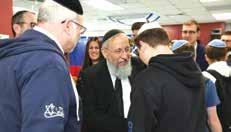
Rthe sea before it split, students were reminded to believe in themselves, trust in the strength Hashem has given them, and understand that growth often begins with one act of conviction.
He urged students to recognize the blessings within themselves: simchat lev, life, the ability to learn, to grow in middot, and to discover the unique mission
Hashem has given each person. Above all, he emphasized the importance of loving every fellow Jew and strengthening unity within Am Yisrael.
The program resonated deeply throughout the HAFTR community. Students and faculty listened intently, absorbing Rav Rimon’s words with admiration and reflection. Many students gathered around him afterward, seeking brachot and continuing conversations inspired by his message.
The visit served as a powerful reminder that strength is truly found in acts of kindness, faith, perseverance, and responsibility to one another.
HAFTR is profoundly grateful for the opportunity to welcome Rav Rimon and for the inspiration he brought to our students, helping guide them toward lives rooted in Torah, purpose, and love for Am Yisrael. Thank you to all who helped make this visit possible.
By Yosef Harris
ambam held its last Book Chat of the year on May 13. But despite the bittersweet undertones, it was a meeting filled with epic discussion and insight. Featuring two short stories, Herbert Goldstone’s “Virtuoso” and Ray Bradbury’s “The Pedestrian,” the group got comfortable in Room 213 with hot chicken poppers, cholent, kugel, and assorted pastries.
In examining the first story, Dr. Goldman began by playing a short composition on his laptop. “Sounds good?” he asked. The members nodded. “That was AI.” That set the tone for the discussion about the short story which centered around a robot who performs Beethoven’s Appassionata without ever hearing it, with such beauty that he brings his master, the “Maestro,” to tears. This raised the question: what is the meaning of music, and will AI eventually take over music itself?
With that on the table, the room went around exchanging ideas in tandem with the story’s deeper meaning.
A particularly interesting point of discussion focused on the meaning of “Virtuoso” and “Maestro.” As the group came to understand it, a virtuoso is someone with immense technical musical skill, while a maestro is someone with a deep emotional understanding of music, often expressed through conducting and interpretation. In the story, the “Virtuoso,” and thus the title character, is the robot itself, a being with flawless technique but no soul. In a stunning juxtaposition, the piece the robot performs is the Appassionata, literally meaning “deeply emotional.” So the question became: is the emotion genuine, or is it simply a formula capable of imitating emotion?
The room buzzed with discussion. Someone pointed out that composers often have identifiable styles of chords, motifs, chromatics, and scales, and that even in the late 80s and early 90s, there were computer programs capable of reproducing compositions in a composer’s style by following patterns and attributes.
Another member brought up the International Chopin Competition, perhaps the most prestigious piano competition in the world, where every pianist performs the same compositions and technically plays them perfectly. So what are the judges actually grading? Emotion, interpretation, and individuality. Perhaps, as the group concluded, AI may be able to follow formulas and create beautiful music, but there will always be a difference in the emotion brought forth from a human soul.
Moving on to the second story, “The Pedestrian,” the narrator follows a man in the year 2053 walking alone on the street at night when he is approached by a robotic cop, who asks him what business he has being outside so late. When he responds that he is “just walking,” the cop questions why he does not stay inside watching his viewing screens and ultimately declares him insane. The final glimpse we get of him is as he is shipped off to a mental institution. The story was connected to a concept involving “the death of the front porch” in modern America. In earlier generations, people would sit outside, talk to neighbors, observe the world around them, and simply exist within their communities. In Bradbury’s future, however, everyone is sealed inside, hypnotized by screens and detached from the outside world. The pedestrian is considered insane not because he is dangerous, but because he still desires reflection, wandering, and human connection with the world around him. What do you do? The robot asks, “I’m a writer.” “Okay, unemployed”. The story becomes less about technology itself and more about the slow disappearance of quiet observation and authentic living. Following the discussion, the members felt satisfied and grateful for the meaningful insights they had gained that day and especially throughout the year. Book Chat is an amazing opportunity to reflect deeply on literature and grow from it in unique ways. Thank you to Dr. Goldman for running the Book Chat and for making every meeting something exciting, thoughtful, and creative.

Another incredible week of 5TLL action by FM Home Loans is in the books, featuring clutch walkoffs, monster home runs, game-saving defensive plays, and huge performances all across the league. The competition keeps heating up as teams continue battling it out every Sunday.
Marciano PD defeated Sunflower Cafe, led by outstanding performances from Dovi Furst and Shlomo Singer, who both played excellent all-around games and helped control the pace from start to finish.
Myda Capital edged Mr. Softee behind a huge game from Pinny Neuman, who capped off his performance with a clutch bases-clearing triple to give his team the edge late in the game.
Teller Life Insurance defeated Wieder Orthodontics 20–10, powered by the aggressive baserunning of Zechariah Willig, who crossed the plate 4 times. Defensively, Nechemia Oratz put on a clinic at first base, turning an unassisted double
play and recording several key putouts throughout the game. Luxe Auto defeated SR Whee behind a monster outing from Yehuda Aryeh, who launched 2 three-run home runs and ended the game with a spectacular diving catch.
Elegant Lawns defeated Demo & Cleanouts, with Shua Steinman having a phenomenal day at the plate. 5 Towns Restoration and TNB Architecture battled to an exciting 10–10 tie. Eliyahu Zauderer starred offensively, while Gavriel Casper anchored the defense at first base with multiple excellent plays. Nate Builders walked off Newman Dental 7–6 in dramatic fashion. With the game on the line, Moshe Loeb came through with the clutch game-winning hit. In another slugfest, Smash House defeated BATTR 16–12 behind a massive game-winning 3-run homer from Mordechai Dovid Olshan.
Wieder Orthodontics narrowly edged Nestora OT 13–12 behind an unbelievable performance from Yisrael Katz, who went 4-for-4 with 5 RBIs. Zlotowitz Law

earned a big win over Altbanq, led by Yitzchok Schattner, who blasted a grand slam and added a triple. 5 Towns Landscaping defeated Extreme Vents 9–6, with Simcha Rostker making multiple key defensive plays in the field.
The Vision Board defeated Maidenbaum 8–4 behind an excellent all-around performance from Shua Basch, who contributed pitching, hitting, and strong defense. Goldstar Mechanical and BlueBird Insurance battled to a 7–7 tie. Late in the game, Avi Gelnick and Dovid Feigenbaum stranded the bases loaded with clutch pitching to preserve the draw. CG Flooring won a thrilling 10–9 game that came down to the final play. With the tying run charging home, Teddy Schwartz made a huge defensive play at the plate to preserve the victory.
Twillory edged Tribe Gym 12–11 in one of the craziest finishes of the week. Protecting a 1-run lead, Avrumi Stein turned a game-ending double play to seal it. Elegant Landscaping defeated BATTR 5–2 behind a dominant all-around effort from Shua Greenberg, who pitched a gem

and delivered the go-ahead RBI single. 7th/8th Grade Baseball
Down by two runs late, Yehuda Werzberger delivered the biggest swing of the game — a huge 3-run homer — to lift Smash House past Sperling Productions 12–11.
Men’s Basketball
Town Appliance defeated SR Whee behind massive offensive performances from Shelby Rosenberg, 34 points, and Ashie Schreier, 20 points. Maidenbaum came from behind to defeat Kol Ve’or 57–51 in a complete team effort, with four starters scoring in double figures. Emporio got back on track in a big win over Smash House, led by Yoni Oratz, 22 points, and Yitzy Wieder, 33 points Wieder was unconscious from deep, knocking down an unbelievable 9 three-pointers.

The seventh grade girls at Shulamith recently brought Navi to life in the most exciting and memorable way when they hosted their very own sheep shearing party! As part of their learning in Sefer Shmuel Bet, the students explored the famous sheep shearing celebration hosted by Avshalom for his brothers. While the event in the Navi carried a hidden agenda, the Shulamith girls focused on the unique experience of sheep shearing and the lessons that could be learned from it.
The program gave the students an opportunity to reenact the pesukim they learned in class, helping them connect more deeply to the story and truly experience the world of the Navi. The event also

tied beautifully into the girls’ studies of the Lamed-Tes Melachos, specifically the melacha of gozez, shearing wool.
The girls enjoyed an afternoon filled with hands-on learning, fun activities, delicious food, and of course, the highlight of the event — cutting wool from the sheep! Excitement and laughter filled the room as the students experienced firsthand what sheep shearing may have looked like in the times of the Navi.
The seventh graders at Shulamith never imagined that learning Navi could be this much fun. Through this incredible program, the pesukim came alive, turning ancient lessons into an unforgettable reality.


By Avi Lax
Last week, Rambam sent a delegation to join NORPAC on their annual Mission to Washington. The group had the extraordinary opportunity to meet with multiple members of Congress to discuss important issues relating to antisemitism, Israel, and current global affairs.
Among those they met were Congresswoman Nicole Malliotakis, Congressman Jeff Hurd, and Sophia Seid, Chief of Staff to Congresswoman Ashley Hinson. Some delegates also had the op -
portunity to hear from Senator Ted Cruz. By the end of the day, NORPAC had met with hundreds of members of Congress and made a significant impact in raising awareness about antisemitism, support for Israel, and the conflict involving Iran.
Thank you to Rabbi and Rebbetzin Friedman, Tzviki Gaerman, Ephraim Ganchrow, and Avi Lax for taking the time to participate and make a difference.
A special thank you as well to Mr. Josh Justic for leading the group and capturing the experience through photos.




The countdown to the last days of school is on at the Yeshiva University High School for Girls (Central), and students are already looking to the next chapter. The last AP exams took place this week, leadership signups for next year’s clubs and organizations are underway, and the Class of 2026 is out of the building, experiencing a rite of passage for YUHSG seniors in their last weeks as Wildcats: senior internships. Now in its third year, the internship program is an extension of the school’s
longstanding Senior Seminar program, and one that provides valuable work experience and on-the-ground training for soon-to-be graduates. Wildcats are interning in a variety of fields, including education, video game design, physical therapy, nonprofits, state legislative offices, and retail of all stripes.
Senior Talia Butbul has been serving as a speech therapy intern at Shell Bank Middle School. “I learned how speech therapists use activities like videos and coloring to help build language and com-

prehension skills,” she said. Senior Shirel Shaool has been working as a jewelry appraisal intern at Saidian Vintage Jewels. “I learned that the value of jewelry depends on so many little details, like the composition of medals and the clarity of the diamond,” she said. “If it is a vintage piece, it could be worth a lot, depending on its history.” And Hailey Aspir has been immersed in a machine learning engineering internship at Cantor Fitzgerald. “I made progress on developing AI skills that turn LLMs into experts for specific tasks,” she said. And the positive reviews are coming in! Wildcats are receiving rave reviews and nachas notes wherever they work. Seniors will present their experiences at an internship expo on the YUHSG campus on Friday, May 29.
On Friday, May 15, YUHSG celebrated Yom Yerushalayim. The high-spirited festivities reminded everyone of the crucial significance of the day, marking the 1967 reunification of Israel. This year’s event was planned by Director of Israel and Religious Guidance, Senior Grade Dean, and Judaic Studies faculty member, Mrs. Yael Axelrod, and the YUHSG G.O., and it served as the G.O. ‘s finale event of the year, marking a year that has been filled with dynamic, meaningful programming. To celebrate the day,

YUHSG hosted its own Jerusalem Marathon, complete with a 5K run, as well as a pickleball tournament. The day was capped off with a sweet treat from Rita’s Ice Cream Truck. The event raised money for HaOgen LiMiluim, an organization that lends support to the families of IDF reservists who are serving away from home. We’re halfway through a month of fun, bonding, and learning before June brings finals and the beginning of the summer break. Coming up: Shavuot celebrations next week, with schoolwide and grade-wide trips the following week, including YUHSG’s first annual Boat Bash, which will find the school community celebrating spring by sailing around New York City, and the junior class trip to Hershey Park. The annual senior trip, which will take the class of 2026 to South Jersey, will take place the first week of June.

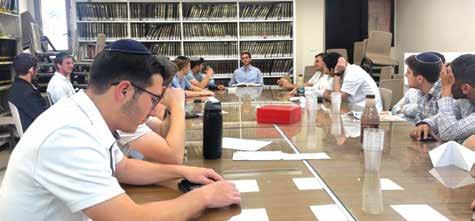
DRS alumnus and current IDF soldier Murray Silver spent a recent day off in a truly inspiring way — traveling to Yeshivat Hakotel to celebrate a siyum on Maseches Rosh Hashana. In the midst of his service in the IDF, Murray continues to demonstrate an extraordinary commitment to Torah learning and growth. Mi k’amcha Yisroel!

The halls of Shulamith were filled with excitement, pride, and love for Yerushalayim as the students celebrated a meaningful and action-packed Yom Yerushalayim on Friday, May 15.
The girls in fourth and fifth grade spent months preparing for this special day through their incredible efforts collecting money for the important organization Boots for Israel. On Yom Yerushalayim, the students rolled up their sleeves and packed numerous duffel bags filled with boots for chayalim in Israel. The girls felt proud knowing they were able to contribute in a meaningful way to those protecting Eretz Yisrael. A special thank you goes to Yakir Wachstock for all he does for this unbelievable organization and for helping connect our students to the heroes of Am Yisrael.
The inspiration continued as the girls in grades 6–8 had the unique privilege of hearing from the legendary Rebbetzin Mrs. Rookie Billet, the previous Shulamith Middle School principal. Mrs. Billet captivated the students with her
This past week at IVDU 5T, the students were busy preparing for the upcoming yom tov of Shavous. Classes made beautiful floral centerpieces for their yom tov tables and created dairy cookbooks filled with delicious recipes and treats for the holiday. A highlight of our week was baking delicious cheesecakes to enjoy! The students learned and sang upbeat songs about our very special gift, “The Torah.” We discussed how Dovid Hamelech was both born and passed away on Shavous and how he descended from Rus, whose story we read about on this special holiday.


firsthand experiences and powerful stories from the Six-Day War. It was incredibly special and emotional to welcome Mrs. Billet back into the Shulamith building once again, where her words brought history, emunah, and love of Yerushalayim to life.
Meanwhile, girls in grades 1–5 participated in an interactive Yom Yerushalayim experience led by the fifth grade students. Through engaging presentations and hands-on activities, the younger girls learned about the many shaarim — the gates leading into Yerushalayim — and gained a deeper appreciation for the beauty and significance of the holy city.
From acts of chesed and support for chayalim, to inspiring stories of Yerushalayim’s history, the day was filled with meaningful learning and celebration. Iy”H, next year we should all dance and celebrate together in the streets of Yerushalayim!

HAFTR proudly welcomed several IDF soldiers to campus last Friday as part of the Peace of Mind Initiative, creating a deeply meaningful and uplifting Yom Yerushalayim celebration across every division of the school.
The day began in the High School, where students gathered with the soldiers for a special breakfast filled with conversation, connection, and inspiration. HAFTR High School Mashgiach Ruchani Rabbi Blinder spoke to students about the enduring meaning of Yerushalayim to the Jewish people and the deep spiritual connection Jews around the world share with the holy city. Students also heard from one of the soldiers, who reflected on the powerful relationship between Israelis and Jews in the Diaspora, sharing how meaningful it is for chayalim to feel the unwavering support of Jewish communities abroad while they dedicate themselves to protecting Am Yisrael.
The soldiers were then welcomed into HAFTR’s Early Childhood Center, where students and teachers lined the hallways with excitement, high-fives, hugs, and heartfelt appreciation. The warmth and joy continued throughout the Middle School, where students greeted the soldiers enthusiastically and took the opportunity to express their gratitude

personally.
The visit culminated in the Lower School’s Yom Yerushalayim ceremony and celebration. Students from each grade performed songs highlighting the beauty, history, and significance of Jerusalem, filling the room with ruach, pride, and emotion. The soldiers were visibly moved by the students’ performances and the overwhelming sense of love and appreciation shown throughout the day.
The visit served as a powerful reminder of the deep connection between HAFTR students and Medinat Yisrael. Through meaningful interactions, heartfelt celebration, and expressions of gratitude, students were able to honor those who dedicate themselves to protecting the Jewish people and the State of Israel.
HAFTR is proud to continue fostering a strong connection to Israel and unwavering support for the chayalim who serve and protect our homeland. Thank you to everyone who made this day a success.

The yeladim at HANC EC learned all about the flag and created their own for Memorial Day
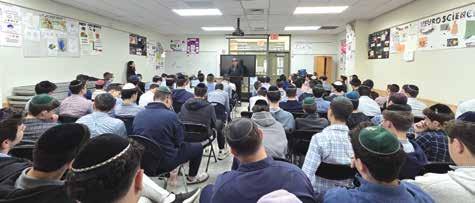
Last week, DRS welcomed Uri Edell to speak with the sophomore and junior grades about the dangers of gambling addiction and the very real impact it can have on a person’s life. In a powerful and deeply honest presentation, Uri shared his personal journey with gambling addiction, speaking candidly about how something that began casually at a young age slowly developed into a destructive cycle that affected every aspect of his life.
Uri described the emotional highs and lows of gambling, the secrecy and loss of control that often accompany addiction, and the unique challenges presented by today’s world of legalized sports betting and mobile gambling apps, where access is constant and temptation is always within reach. More importantly, he spoke about the process of seeking help, rebuilding trust, and taking life one day at a time.
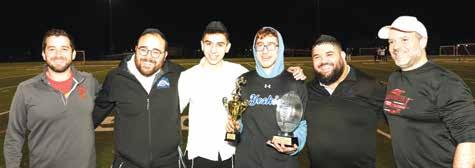
The MTA Flag Football team capped off an incredible season with a dominant championship victory over TABC, winning by a final score of 25-6.
The Lions came ready to play, bringing energy, confidence, and determination from the opening whistle. Behind

strong teamwork on both sides of the ball, MTA rose to the moment and secured an unforgettable championship win. Mazal tov to the entire team on an amazing accomplishment, and a special congratulations to Andi Richman on being named Championship Game MVP.





The children at Gan Chamesh enjoyed an exciting Trike-a-Thon in honor of Lag B’Omer. With their personalized drivers’ licenses, they scooted on scooters and pedaled on tricycles around a racetrack. Every child was a winner and received a gold medal and refreshing ices. The children’s smiles rivaled the shining bright sun. A fun time was had by all celebrating Lag B’Omer at Gan Chamesh!
It was a celebration of foresight and leadership on May 11, as friends, supporters, alumni, and talmidim gathered to honor Rabbi Mordechi Yaffe, shlit”a, at Mesivta Ateres Yaakov’s annual dinner at The Sands Atlantic Beach. The evening’s theme, A Vision Realized, paid homage to Rabbi Yaffe, a master mechanech who has impacted the lives of hundreds of talmidim over the past 25 years with his passion for chinuch and his forward-thinking approach to educating talmidim in an ever-changing world.
The program opened with Tehillim led by the Mesivta’s mashgiach, Rabbi Yehuda Horowitz, followed by an acapella rendition of Acheinu, performed by a quintet of the Mesivta’s talmidim. Mesivta president Meir Krengel emceed the dinner, welcoming those in attendance, including respected Rabbonim, Roshei Yeshiva and community leaders, and sharing official greetings from elected officials including State Senator Patricia Canzoneri-Fitzpatrick, Lawrence Mayor Shlomo Nahmias, Cedarhurst Mayor Benjamin Weinstock and New York State Assemblyman Sam Berger. A special citation from County Executive and gubernatorial candidate Bruce Blakeman was delivered by his community liaison, Mesivta Ateres Yaakov alumnus Chaim Krengel, Meir’s son. After thanking dinner and journal chairmen Motty Jacobowitz, Nate Rosen-
berg, Shmuel Klahr and Eddie Silver, Mr. Krengel introduced the evening’s guest speaker, HaRav Chaim Aryeh Zev Ginzberg, shlit”a, mara d’asra of Chofetz Chaim Torah Center of Cedarhurst and a highly regarded lecturer. Taking inspiration from the upcoming yom tov of Shavuos, Rabbi Ginzberg spoke about the importance of learning from Boaz rather than Ploni Almoni and seizing opportunities as they present themselves, lauding Rabbi Yaffe for taking on a leadership role at Mesivta Ateres Yaakov and catapulting the Mesivta, and its talmidim, to unprecedented heights.
As is the Mesivta’s custom, the dinner highlighted its alumni who graduated from Mesivta Ateres Yaakov a decade earlier, the class of 2016. Mr. Krengel recognized one member of that class, New York State Assemblyman Sam Berger, the Assembly’s youngest member, and thanked him for his dedicated efforts representing District 27, which includes many members of the Torah community. A video honoring the class of 2016 highlighted its unique blend of diversity and camaraderie, characteristics that remain its hallmark as its members have begun making their mark in the world. Addressing the alumni, Rabbi Mordechai Yaffe discussed the special connection he shares with them, having been privileged to teach them as ninth graders, recalling the genuine Adar simcha they generated with their senior Purim shtick when they
filled the Mesivta’s atrium with 12,000 balloons, a moment shared with attendees in a short video clip.
Alumnus of the year Yonatan Arshadnia was hailed as a selfless, loyal friend by his former classmates in a recorded tribute, with one recalling how he and his co-G.O. head spearheaded a drive to buy a boat for the Lawrence-Cedarhurst Fire Department in the wake of Hurricane Sandy. Echoing those thoughts, Rabbi and Rebbetzin Yaffe shared how he had been a ben bayis in their home, seeing for themselves his innate goodness and his inborn sense of responsibility.
After discussing the yeshiva’s groundbreaking technology program that has been widely adopted by Mesivta Ateres Yaakov’s talmidim, Mr. Krengel praised the Mesivta’s Rabbeim and its general studies staff for their heartfelt efforts and significant accomplishments, and credited Executive Director Rabbi Yirmi Lasker and Director of Development Rabbi Josh Zern for their tireless work. Mr. Krengel went on to laud the Mesivta’s parents of the year, Mr. and Mrs. Dovid and Miriam Solomon, as true role models, highlighting their dedication to the community and beyond in myriad ways. Having had two sons in Mesivta Ateres Yaakov – son Ari is currently an 11th grader, while their eldest Menachem graduated the Mesivta three years ago – Dovid Solomon praised the Mesivta for its lifelong commitment to its talmidim, helping each one maximize
his potential. Rabbi Yaffe praised the Solomons as the quintessential klal people and exemplars of dedicated parents.
A video highlighting how Rabbi Yaffe’s incomparable vision paved the way for Mesivta Ateres Yaakov to become the thriving epicenter of Torah that is today had the room erupting in thunderous applause. Clearly moved by the spontaneous show of appreciation, Rabbi Yaffe spoke warmly about the many individuals who partnered with him in guiding Mesivta Ateres Yaakov on its current trajectory over the past 25 years, noting how privileged he feels to have graduated over 1,000 talmidim, some of whom who are now yeshiva parents. The Rosh HaYeshiva grew emotional as he waxed eloquent about his aishes chayil’s consistent support and seemingly endless dedication, calling on their children to present her with a bouquet of flowers in recognition of her unfaltering commitment.
Rabbi Yaffe, whose newly released sefer, Yaffe Dibarta, Observations of an Observant Jew, was distributed to dinner attendees, spoke enthusiastically of the shefa bracha that Mesivta Ateres Yaakov has seen over the years. Concluding the program, the Rosh HaYeshiva counseled listeners to pursue their dreams relentlessly, and to put their trust in Hashem, noting “if you do this, you can truly change the world!”

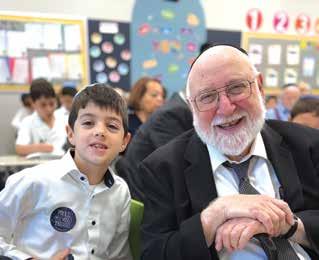
There is something truly special about the bond between grandparents and grandchildren. This past Sunday, the halls of Yeshiva of South Shore were overflowing with love, laughter, and so much nachas during a beautiful Grandparents Day celebration attended by over 600 guests. Grandparents had the special opportunity to experience a
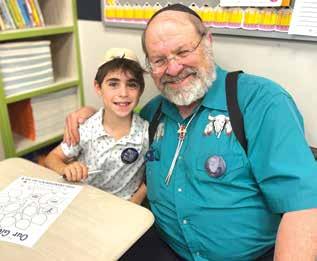
“day in the life” of their grandchildren and witness firsthand the many ways they shine both inside and outside the classroom walls.
In Mrs. Mayer’s third grade class, students explored the meaningful ways grandparents and grandchildren give to one another — not only through physical gifts but through love, guidance, sup-

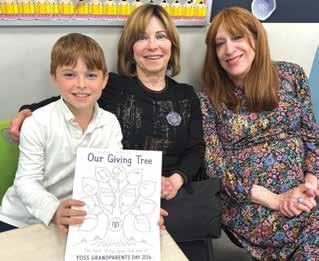
port, and time spent together. Following a heartfelt discussion, the class read The Giving Tree by Shel Silverstein and created their own Giving Trees alongside their grandparents, reflecting on all the ways they help each other grow. The activity was both meaningful and memorable for students and grandparents alike.
The beautiful day concluded with the
entire school joining together in song, creating a heartwarming ending to a celebration filled with connection, gratitude, and treasured memories. At Yeshiva of South Shore, the roots we plant together today continue to help our students grow and shine for years to come.

The MTA dorm had an incredible final Dorm Shabbaton, giving talmidim one more meaningful Shabbos together on campus.
The Shabbaton highlighted everything that makes the dorm program such a special part of the MTA experience. From delicious meals and a lively tisch to shiurim, chaburahs, games, open Beis Medrash, and late-night bonding, the Shabbos gave talmidim the chance to connect with each other, Yeshiva rebbeim, RAs, and the broader yeshiva community.
Throughout the year, the dorm pro -
gram creates a warm and vibrant home for talmidim beyond the classroom. The dorm is not only a place to sleep, but a place where friendships are built, Torah is learned, memories are made, and students experience the full energy of yeshiva life.
The final Shabbaton was a powerful reminder of the achdus, ruach, and growth that define the MTA dorm experience. Mazal tov to the entire dorm staff, RAs, and talmidim on an amazing year of programming, connection, and meaningful Shabbosim together.




Moshe Ostreicher, Future Doctor, Named 2026 Touro University
MValedictorian
oshe Ostreicher, of Cedarhurst, has been named the 2026 valedictorian of Touro University’s Lander College for Men (LCM). An honors biology major, Moshe has long been drawn to both science and helping others, a combination that has shaped his academic journey and future goals.
“For as long as I can remember, I’ve wanted to be a physician,” he said. “Over time, that childhood aspiration has only grown stronger.”
That sense of direction was reinforced through hands-on experiences, including his work as a volunteer emergency medical technician (EMT), a role he has held for more than two years with the Woodmere Fire Department. Responding to emergencies and caring for patients in critical moments deepened his commitment to medicine and gave him a clearer understanding of the responsibility that comes with it. His work with the Woodmere Fire Department earned him its 2025 EMS Provider of the Year award.
Finding the Right Environment
Moshe chose LCM for its unique combination of academic opportunity and a supportive, values-based environment.
“I chose Touro for the academic pathways it offered, the Jewish environment, and, perhaps most importantly, the small class sizes,” he said. “That personal connection is invaluable.”
At LCM, those small classes translated into meaningful relationships with faculty and peers. Moshe credits members of the faculty and administration with playing a significant role in his development, both academically and personally.
“Moshe Ostreicher is a great example of the academic values we seek to inculcate in our students,” said Dr. Henry Abramson, dean of Touro’s Lander College for Men. “Not only did he earn a perfect score of 528 on his MCAT—an achievement that is met by only .01 to .02
percent of students who take this rigorous standardized test for admission to medical school—he also volunteered many hours of his own time to tutoring his peers in organized study groups, bringing the rest of the class closer to its potential. He’s a remarkable young man, and we are proud to honor him as our valedictorian.”
From the Field to the Lab
Moshe’s academic curiosity led him to pursue several research projects with Northwell Health and the Feinstein Institutes for Medical Research. His work has included analyzing CT scan usage in emergency medicine, studying how cardiac arrest cases are reviewed, and conducting laboratory research related to mitochondrial function and recovery after cardiac arrest. One of his projects earned him an invitation to present his findings at the American College of Emergency Physicians’ 2025 Scientific Convention in Salt Lake City.
His experiences with direct patient care and scientific inquiry helped shape his understanding of medicine as both a human and intellectual pursuit. Whether responding to emergency calls or exploring complex medical questions, Moshe has consistently sought to deepen his knowledge and skills.
Rooted in Learning and Growth
Moshe’s path to LCM included studies at Yeshiva Darchei Torah in high school, followed by time learning in Israel at Toras Moshe in Israel and Sh’or Yoshuv. He credits that background with helping him develop the discipline and perspective needed to balance rigorous academics with personal growth.
“I love all forms of learning,” he said, noting interests that range from medical science to coding, which he taught himself and has applied in research settings.
Moshe plans to apply to medical school in the upcoming cycle, with the goal of beginning his training in the near future. During his upcoming gap year, Moshe will continue his work as an EMT and return to the Feinstein Institutes to
continue research involving mitochondrial transplantation and critical care physiology. While expanding his research experience, attending med school, and beyond, he plans to continue building on the foundation he developed at LCM.
“My goal is to have a career that combines scientific knowledge with meaningful patient care and makes a real difference in people’s lives.”
Lander College for Women
Valedictorian Heads to PwC
Nini Schulman is the 2026 valedictorian for Touro’s Lander College for Women (LCW). An accounting major, Nini has built a remarkable record of academic achievement, leadership, and professional experience. At LCW, Nini began as an associate on the Honors Board before ultimately becoming its chair, organizing events that exposed students to professionals and leaders from a wide range of industries.
Nini’s resume also includes internships at EisnerAmper, Deloitte, and PwC, where she will begin working full-time after graduation as a tax associate. Nini plans to become a CPA before eventually attending law school.
“My ultimate goal is to work at the intersection of business and law. I want to build a career that allows me to bridge those two disciplines.”
Lander College of Arts & Sciences
Women’s Division Valedictorian
Batya Zitron was named 2026 valedictorian of Touro’s Lander College of Arts & Sciences (LAS)! A psychology honors major, Batya’s research experience and clinical work while at LAS will be instrumental to fulfilling her long-term goal of becoming a neuropsychologist. Batya currently works at the Albert Einstein College of Medicine as a clinical interviewer in the neurology department. She also serves as a research assistant at the Arts and Development Lab at Brooklyn College.
Alongside her scientific and clinical pursuits, Batya is also deeply involved in music. She studies musical composition through the American Composers
Orchestra and plays both piano and violin. Batya plans to continue developing her academic and creative pursuits and intends to apply to clinical psychology Ph.D. programs this coming cycle.
“My career goal is to become a neuropsychologist. I’ve always been fascinated by science and particularly interested in understanding the brain and how it shapes our sense of self and the way we experience the world. My hope is to combine my passion for science with the opportunity to work closely with people and make a positive impact in their lives.”
Lander College of Arts & Sciences
Men’s Division Valedictorian Joseph Levy was named 2026 valedictorian of Touro’s Lander College of Arts & Sciences (LAS)! An honors biology and psychology major on the pre-med track, Joseph immersed himself in research and scientific writing during his years at LAS. He also participated in Memorial Sloan Kettering’s Clinical Oncology Open Learning program, where he observed oncologists across specialties and gained deeper exposure to patient care, physician-patient communication, and clinical decision-making.
Over the course of his studies, he rose from associate editor to executive editor of the Science Journal of the Lander College of Arts and Sciences, an experience that sharpened his scientific rigor, strengthened his leadership abilities, and deepened his passion for writing and research.
As if that wasn’t enough, Joseph remained committed to community service through work at a local food pantry, and served as a tutor in organic chemistry, biochemistry, anatomy and physiology, and general biology. Those experiences reinforced his belief that good patient care requires not only technical skill, but also empathy, communication, and personal connection.
“My ultimate goal is to become a physician who combines strong clinical knowledge with humility, compassion, and a commitment to lifelong learning.”


Our BY5T annual second and thirrd grade Country Fair was a true testament to teamwork and creativity. The girls worked incredibly well in groups, collaborating seamlessly to craft beautiful tri-boards. They dove deep into research, highlighting key facts, and laying out their findings with care. It was absolutely magical how they brought
their countries to life-serving traditional foods, dressing in cultural attire, and immersing everyone in the sights, smells, and traditions of each place.
Our BY5T fair wasn’t just an event – it was a vibrant celebration of global learning, sparking curiosity, confidence, and connection in every student.
By Rabbi Shimon Finkelman
His Incredible Love of Eretz Yisrael
Rav Moshe Wolfson had an intense love for the Land before ever having visited it. It was not until 5730 (1970) that he merited to go to Eretz Yisrael, and for the rest of his life, his neshamah was inextricably bound to the Holy Land in a way that even gedolei Yisrael found unusual and inspiring.
R’ Chaim Zitter heard from gedolei Yerushalayim that the Mashgiach was a one in a generation in his appreciation for kedushas haAretz, and that his love and appreciation for Eretz Yisrael inspired whomever he came in contact with.
One year on Purim, R’ Leibel Wulliger visited the Mashgiach at his home in Williamsburg. The Mashgiach told him, “Leibel, I have a special mishloach manos for you,” and he handed him a snuff box. Before he could open the box, which R’ Leibel thought contained a bit of snuff, the Mashgiach said, “I brought this box to Eretz Yisrael and opened it there. It absorbed some of the air of Eretz Yisrael, so you now have a box with avira d’Ara d’Yisrael.”
Rav Wolfson would often quote Sefer Yetzirah that there are parallels in makom, place; nefesh, soul; and zman, time. Eretz Yisrael is in makom what Shabbos is in zman. This might explain the Mashgiach’s deep attachment to both Shabbos and Eretz Yisrael.

On a flight to Eretz Yisrael, it was announced that they would be landing in Tel Aviv in just half an hour. The Mashgiach opened his siddur and began to say Kabbalas Shabbos. Before entering his apartment in the Old City, he would first immerse in a mikveh as one does on Erev Shabbos. Upon his arrival in Eretz Yisrael, talmidim heard him whispering, “Hareini mekabel al atzmi kedushas Eretz Yisrael (I accept upon myself the kedushah of Eretz Yisrael),” similar to the declaration one makes when he wants to accept upon himself the kedushah of Shabbos or Yom Tov before the required time.
He said many times that he felt it proper to recite the Shehecheyanu blessing upon arriving in Eretz Yisrael, as one does before performing any mitzvah that he does only from time to time. But since this is not the custom, he did not do so.
At the end of one summer, R’ Shloime Lezer drove the Mashgiach home from Kennedy Airport. “I don’t understand,” said the Mashgiach, “why Chazal were not mesakein to make Havdalah after returning to chutz laAretz from Eretz Yisrael!”
He was always excited to visit a place in Eretz Yisrael that he had never been to before. This has to do with a teaching in Sefer Arvei Nachal that every piece of land in Eretz Yisrael corresponds to a different part of the Torah, and every city corresponds to a different mitzvah.
Rav Wolfson related that whenever R’ Yosef Chaim Sonnenfeld walked from
one place to another in Eretz Yisrael, he went a different way than he had gone previously. He explained that every spot in Eretz Yisrael corresponds to a different portion of the Torah, so walking down a path for the first time connects the person to that portion.
The Mashgiach added that when holy eyes gaze upon the panorama of Eretz Yisrael, they see it as a veritable Torah library with all the volumes open and accessible.
Nevertheless, he told bachurim who went there to learn that during the zman, they should be in yeshivah learning with hasmadah and should not be traveling around to holy sites. He told them to daven at the Kosel once a week and to go to Kever Rochel only once in a while.
In 5741 (1981), Rav Wolfson retired as manhig ruchani of Camp Torah Vodaath so that he could spend ten weeks in Yerushalayim. It seemed that with each summer he spent there, his love for the Land intensified.
On his first Friday night in the Old City, after he had made Kiddush, the Mashgiach was ecstatic. He had just merited to fulfill this mitzvah in the very place where, in the time of the Beis HaMikdash, Jews had eaten korbanos and maaser sheini! He also spoke of the great zechus of immersing in a mikveh in the Old City. He cited the teaching that on Yom Kippur, the Kohen Gadol had to immerse in a mikveh that was in the Temple complex. This shows that the location of a mikveh
affects the degree of kedushah that the immersion brings about. Surely, then, immersing in the Old City is something very special.
Rav Wolfson related: R’ Shloimke of Zvhil would daven at the Kosel every single day. One day, he went to Meron and Tzfas with his chassidim, and that day they davened at many kivrei tzaddikim When they returned to Yerushalayim, the Rebbe prepared to head to the Kosel. A chassid asked, “If we davened at so many holy places today, do we have to go to the Kosel as well?”
R’ Shloimke replied, “There are many ‘post offices’ to Shamayim, but the ‘central post office’ is the Kosel!”
Reprinted from Rav Moshe Wolfson by Rabbi Shimon Finkelman, with permission from the copyright holder, ArtScroll Mesorah Publications.


The late Laurence Tisch, chairman of Loews Corp, was one of the titans of the business community and of Jewish philanthropy. Yale Ungar, a talmid chacham from Denver, managed one of Mr. Tisch’s pension funds. Larry never had the benefit of a Jewish education, and he became curious about Orthodox observance and the Torah in general. He asked Mr. Ungar if he could recommend someone who could spend a few sessions to provide background on the subject. Mr. Ungar heard about R’ Scherman and called to ask if he would undertake the mission. He accepted, and thus began a relationship that blossomed into a close friendship with the Tisch family that exists to this day.
For over 25 years, Rabbi Scherman came to Loews’ Manhattan headquarters every week or two for study and discussion with Larry and his sons, usually James and Tom. Those were the days when purchasing supplies and meeting payrolls were often difficult for us, and Mr. Tisch graciously made occasional loans, no
questions asked.
Then came a major challenge. Our original premises on Coney Island Avenue became impossibly cramped and inadequate. A building on Second Avenue in Brooklyn was being foreclosed by the City for non-payment of taxes. There was an opportunity to purchase it for $930,000, payable within thirty days! It was a bargain and a lifesaver that would provide us with the space we so desperately needed.
But we barely had $930 in the bank –$930 thousand in thirty days was an impossibility. Fearfully, R’ Scherman asked Mr. Tisch if he could help with a loan. The next day, a check in the full amount arrived. No IOU, just a friend who believed in us and wanted to help us grow. Baruch Hashem, we had a new home.
The building was an outdated, abandoned shell, big but totally unusable without extensive construction. It wasn’t easy, but the work was completed successfully, in great measure thanks to a very dear friend, Nachum Silberman, who was one of New

York City’s most respected and well-connected architects. Nachum had the trust of the City’s many departments and was able to navigate the city’s notorious bureaucracies to get plans properly filled and approved.
For over thirty years, 4401 Second Avenue became our home. For the first time, we were able to have our editorial department, sales offices, bindery and warehouse all under one roof, which increased efficiency to an enormous degree.
The Tisch connection continues to pay dividends: in the upcoming column, we’ll speak about the founding of the Mesorah Heritage Foundation, and how it enabled us to bring our service to Klal Yisrael to an
entirely new level. It was vitally important for our Board of Trustees to have wellknown and respected trustees. R’ Scherman asked James to become a member of the board. He made only one request. “Can you promise me that I won’t be embarrassed?” The answer was an enthusiastic yes, and James is still a member of our Board of Trustees. Not only is he not embarrassed – he is immensely proud. Hashgachah at work. Yale Ungar, Laurence Tisch, R’ Nosson Scherman, a meeting that turned into a lasting friendship – all coming together to spread Torah.

Students from Yeshiva of South Shore’s Abraham and Sara Silber Middle School showcased impressive technological skills at the Annual CIJE Robotics Competition, held in New Jersey. Our students demonstrated both skills in engineering and coding, and although the competition was intense, the YOSS Robotics team performed admira-

bly, winning the silver medal and finishing with four teams in the top 20!
A special Yasher Koach to Middle School Principal Mr. Daniel Winkler, Stem Coordinator, Mrs. Elisheva Pinsky, and Yehuda Jacobs for all their hard work preparing the students for the competition!



1. How much milk does it take to make one pound of cheese?
a. 8 ounces
b. 1 pound
c. 2 pounds
d. 5 pounds
2. Which state in the U.S. produces the most cheese?
a. California
b. Wisconsin
c. New York
d. Ohio
3. Why are cheeses such as Asiago, Brie, Camembert, Gouda, Gruyere and Parmesan capitalized and other cheeses, such as cheddar, feta, fontina, mozzarella and provolone, are not capitalized?
a. Only cheeses that were created before the 19th century are capitalized
b. Only cheeses that foment for 90 days or more are capitalized
c. Only cheeses that are named after cities are capitalized
d. Any cheese that is primarily produced outside of the U.S. is capitalized
4. Bitto Storico cheese, which is made in the Lombardy region of
northern Italy, is aged for how long?
a. 18 years
b. 27 years
c. 41 years
d. 149 years
5. Philadelphia cream cheese took the U.S. by storm in 1880 and quickly began outselling its competitors 10 to 1. Where was Philadelphia cream cheese manufactured?
a. Upstate NY
b. Philadelphia, IA
c. Philadelphia, MI
d. Philadelphia, PA
6. What is the biggest-selling cheese variety in the U.S.?
a. Cheddar
b. Mozzarella
c. Swiss
d. Parmesan
7. The largest cheesecake ever was made last year at the ninth annual Cream Cheese Festival in
Lowville, N.Y. How much did the cheesecake weigh?
a. 350 pounds
b. 700 pounds
c. 1,400 pounds
d. 6,900 pounds
Answers:
7-D
Wisdom key:
6-7 Correct: You are a certified cheesehead!
3-5 Correct: Not bad –you’re WHEY better than some other people!

0-2 Correct: Lactose is intolerant of you!
There’s no better feeling in the world than a warm pizza box on your lap. - Kevin James
You better cut the pizza in four pieces because I’m not hungry enough to eat six.
- Yogi Berra
Unless you are a pizza, the answer is yes, I can live without you. - Bill Murray
Any pizza can be a personal one if you cry while you eat it.
- Aparna Nancherla


Anyone who says that money cannot buy happiness has clearly never spent their money on pizza. - Andrew W.K.
Ideas are like pizza dough – made to be tossed around. - Anna Quindlen
I’d rather have leftover pizza than leftover feelings. - Sarah Burgess
I love pizza, meaning: even when I’m in the middle of eating pizza, I wish I were eating pizza. - Jandy Nelson
Magic is like pizza: even when it’s bad, it’s pretty good. - Neil Patrick Harris
A man wakes up and finds himself isolated in a hospital room. He has no recollection of how he got there. Suddenly, the phone rings, and a doctor on the other end identifies himself.
He tells the man: “I have really bad news. You’re very sick. After your collapse yesterday, we ordered several tests and got the results back this morning. I’m afraid you have Avian flu, Ebola, Swine flu and mumps.”
Stunned, the man asks “Well, what’s next!? What are you going to do?”
The doctor replies: “Well, for starters, we’re putting you on a strict diet of only pizza.”
The patient asks: “Will that really help me, doctor?”
“No,” the doctor responds. “But it’s all we can fit under the door.”
1. What kind of cheese is made backwards?
2. What do you call cheese that isn’t yours?
3. Why didn’t the cheese get a medal at the Olympics?

fell at the final curdle. Well Said!
backwards spells what?); 2. Nacho Cheese; 3. Because it
Answer: 1. Edam cheese (Just in case you don’t get it—Edam
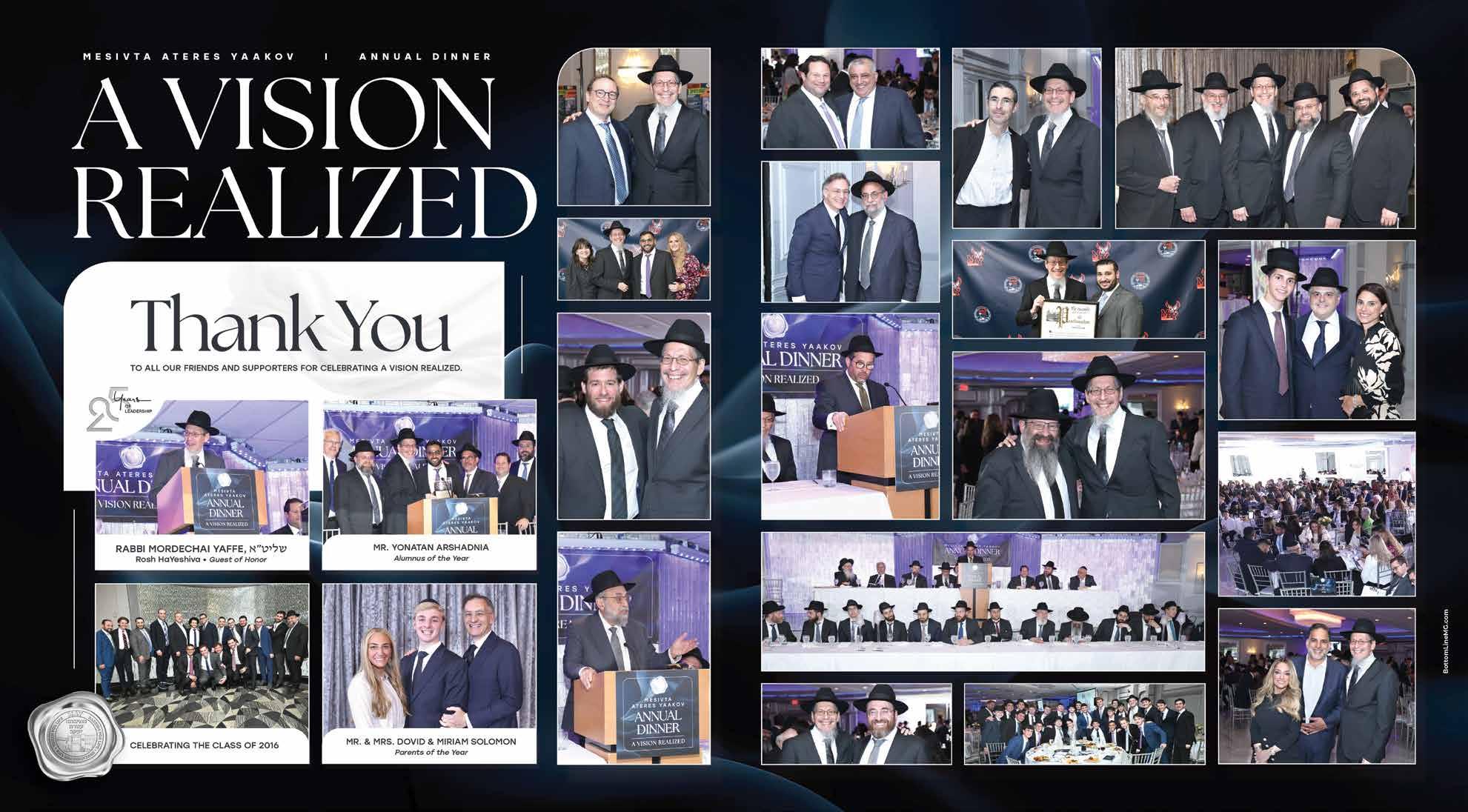

By Rabbi Berel Wein z”l
Every biblical narrative has at its heart a main character, a hero or heroine. Even though the book and the scroll of Ruth is named for her, the true main character and heroine of the story is Naomi. This is confirmed in the book itself when the prophet Samuel, the author of the book, relates that when Ruth gave birth to Oved, the women of Bethlehem declared, “A male child has been born to Naomi.”
It is obvious that they did not mean this literally, for Naomi was widowed and no longer of child-bearing age. Nevertheless, the wise women of the town recognized that if it were not for Naomi, Ruth
would never have met Boaz in a matrimonial relationship. It was Naomi who planned the entire series of events that would lead to the birth of this child and the beginning of the dynastic monarchy of the Jewish people.
The book instructs us not to view things in a superficial manner but rather to analyze and understand the causes and circumstances that eventually lead to the details of the narrative. The whole linchpin of the story is the steadfast commitment of Naomi and her determination not to be crushed by the tragedies that engulfed her. Because of her, there can be a Ruth, a Boaz, and eventually, a King David.


Life is oftentimes very difficult, and its burdens can be crushing. For many of us, we are passing through such a time currently. Everything that was familiar, and, in fact, taken for granted, has been struck from our daily lives. Our future is certainly murky and mysterious. Because of this, strength of character and an iron will to persevere and overcome is vitally necessary.
her worldly positions, became her strongest asset. Her commitment was complete and boundless. Her determination not to abandon Naomi, and the faith and tradition of Naomi, became the turning point in her life and brought her to unimagined glory and success. Sometimes in life forsaking everything becomes the key to acquiring greater things. Judaism teaches that we are measured not
One has to be willing to humble oneself and to sit amongst the gleaners of fallen grain to become, eventually, the matriarch of Jewish eternal monarchy.
Naomi is the symbol of these strengths that we desire for ourselves and our community. It is her resourcefulness and true understanding of human nature that will stand us in good stead in our hour of difficulty and adjustment that is upon us. The challenge is how to summon up these characteristics and apply them to our own lives.
In this we can also be instructed by Ruth herself. Her selfless devotion to Naomi even though it meant the forsaking of everything she had known, and of
by what we take and acquire but by what we give, donate, and forsake. This is a difficult lesson to put into practice since it runs counter to much of our innate nature, but both Naomi and Ruth rise to greatness on the basis of what they were willing to give up for a higher and nobler goal in life. One has to be willing to humble oneself and to sit amongst the gleaners of fallen grain to become, eventually, the matriarch of Jewish eternal monarchy. Chag sameach.

What is the difference between life before Hashem gave us the Torah and life after receiving the Torah?
Chazal (Yuma 28b) say that “in all of our forefathers’ days, they never ceased studying Torah.” Whatever it means that we were able to study Torah even before it was given at Sinai, we see that Avraham, Yitzchak, Yaakov, and Yaakov’s twelve sons achieved a very high level without actually receiving the Torah from Moshe. So what changed on Shavuos? What is the difference?
Some explain that the difference is that before we received the Torah, we had the status of those who do mitzvos without being commanded to do so, whose reward is less than those who are commanded to do so (Bava Kama 87a).
But others explain that the key difference between the pre-Torah and post-Torah periods is not merely quantitative – how much reward do we receive for performing the mitzvos. Rather, the Sinai experience created a qualitative difference in who we are. That is what Rav Yosef meant when he said (Pesachim 68b), “Were it not for that which was caused by this day [Shavuos], there would be many Yosefs in the marketplace.” Rav Yosef said that he would have been just another “average Joe” had it not been for Torah’s effect on him. Rashi explains that Rav Yosef was saying, “I studied, and I became elevated.” He was saying that Shavuos means more than just more reward for doing mitzvos. It created a qualitative change in the meaning of our lives. But Rav Yosef was on a very high level. What does the post-Sinai life mean for regular people like us?
There is another question. While some maintain that we dedicate some Yomim Tovim entirely to the service of G-d and do not have festive meals, “everyone agrees that on Shavuos, we also require ‘for you’”

By Rav Moshe Weinberger
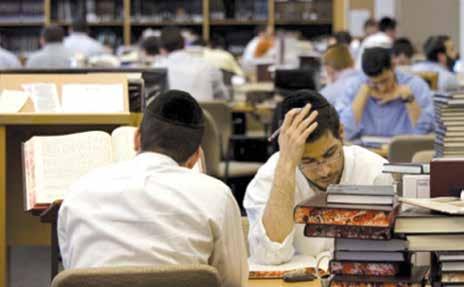
(ibid.). Even those who say that we need not have festive meals on other holidays agree that they are necessary on Shavuos. But why? All of the commentaries struggle to explain why Hashem requires us to physically enjoy ourselves more on Shavuos than on other holidays when ostensibly it should be the opposite!
Perhaps we can understand the above in light of a song which later became a pasuk. When I was in yeshiva, during the period between Pesach and Shavuos, my Rebbe Reb Dovid Lifshitz, zt”l, would always ask the fellows who attended his shiur, “Nu, sing that song!” He was referring to the song based on the pasuk (Tehillim 119:92), “Were it not for your Torah, which is my delight, I would be lost in my suffering.”
I have gone through many difficult times in my life when I have been heartbroken. I have been overcome by worry about so many different types of concerns. But no matter what I was going through, when I picked up a Gemara or any other sefer and began to work to understand it, the pain and anxiety would melt away. It does not
matter whether the sefer addressed anything even remotely related to what I was going through. It did not have to explain my experience, nor did learning it remove or resolve the difficulty. It did not change anything on a practical level. It simply lifted me up and saved me.
It does not matter how broken a Jew is. Learning Torah is an open miracle. Anyone who invests himself in the study of Torah even when he is going through the hardest of times knows what I am referring to. When a person dives into the study of Torah, even if he feels dead, the Torah gives him life. But why is that? Do Chazal not say that Torah weakens a person physically (Sanhedrin 26b)?
Every year over Shavuos I review the fourth Sha’ar of the sefer Nefesh Hachaim by Rav Chaim Volozhiner, zt”l, which explains the profound meaning, depth, and importance of studying Torah. Rav Chaim teaches us something about Torah which is pure poetry and which can address the foregoing questions (Nefesh hachaim 4:6, 14):
Even now, when a person is involved
in [Torah study] with every word, the writing is literally hewn with fire at that time from Hashem’s mouth, as it were. It is considered as if he is receiving it from Sinai from His mouth right now. Chazal therefore often say [when one sage hears a teaching that is particularly precious to him], “These words give me as much joy as when they were given at Sinai…” At the same moment a person engages in Torah study below, the words that he pronounces are the exact same words which emanate, as it were, from Hashem’s mouth at that exact same moment… And Hashem and His speech is one… Dovid Hamelech therefore said (Tehillim 119:72), “To me, the Torah of Your mouth is good.” He [Dovid Hamelech] said: My hearts rejoices in my toiling in the holy Torah with great happiness when I remind myself that it is the Torah of Your mouth, that literally with every word of Torah in which I involve myself right now, it all emanated, and even now goes out, from Your blessed mouth.
Torah lifts a person up above whatever he is going through while he is learning because he is literally connecting to Hashem’s speech with every word of Torah he says. And, as the Nefesh Hachaim explains, Hashem’s speech and His essence are one. So we have the opportunity to bind ourselves to the essence of the Infinite One with every word of Torah. This is the true meaning of “He kisses me with the kisses of His mouth” (Shir Hashirim 1:2). Hashem repeats every word of Torah we speak simultaneously with us. This is the new reality of Torah which only began when we received it on Mt. Sinai. That is why “My hearts rejoices in my toiling in the holy Torah with great happiness when I remind myself that it is the Torah of Your mouth.”
We rejoice in the fact that “I studied and I became elevated.”
One might think that studying Torah is akin to receiving it directly from Hashem’s mouth only for exceptional individuals but not regular people. But this is not the case. The pasuk (Tehillim 68:19) says, “You [Moshe] ascended above and took a captive; you took gifts to be with man; even rebellious ones can be with G-d.” The Beis Halevi, zt”l, asks in Parshas Yisro: If the Torah is a gift, why does the pasuk say it was “taken captive”? He explains that Hashem gave the Torah in a desert, an ownerless place, so that the Torah should be like an ownerless object which is free for anyone to take.
Even if a person is not technically worthy of the great holiness of the Torah, Hashem gave it in such a way that even a rebellious person can “forcibly” claim a connection to the Torah. That is the meaning of the pasuk in Eishes Chayil, “he will not lack booty” (Mishlei 31:11). Even one who is not worthy can claim the Torah as if it were the spoils of war. Just like the Torah was given in such a way that “even rebellious ones can be with G-d,” so too any of us can invest ourselves in the study of Torah and receive the Torah directly from G-d’s mouth as if we were personally standing on Mt. Sinai. Our right to receive the Torah is not dependent on our talents, skills, or even on our righteousness. There are no limitations or preconditions.
Now we can understand why “everyone agrees that on Shavuos, we also require ‘For you.’” Because every Jew has the ability to claim a direct connection with G-d through the study of Torah, the Torah is “for you.” That is why, after we study the Torah, it is called ours (Kiddushin 32a).
The Chofetz Chaim, zt”l, in the Sefer Shem Olam explains this concept at length. He says that every Jew has his own specific portion of the Torah which belongs to him and to which he is particularly connected. But this connection to the Torah does not happen automatically. That is why, if one says, “‘I toiled but I did not find [my portion in the Torah],’ do not believe him” (Megillah 6b). One will only find his portion in the Torah if he looks and searches for it. He must want to find it.
Hashem sent us on a “treasure hunt” to find our own personal portion in the Torah. That is why we daven, based on Pirkei Avos (5:20), “Give us our portion in Your Torah.” The Chofetz Chaim therefore explains: “This portion is like a treasure which Hashem hides for a person in His Torah… One must search for it very well and exert himself, because he will surely find the treasure Hashem has hidden for him.”
My father and his brother Yitzchak, Itzik, were the only two members of their family to survive the War. I once heard the following story about Itzik: After he retired, Uncle Itzik and my aunt would spend the winters in Miami Beach. One year, during his grandchildren’s visit with them in Florida, Uncle Itzik took them to the beach early one the morning to look for seashells. The children searched for a long time but only succeeded in finding ugly, broken shells. Finally, at one point, Uncle Itzik pointed to a certain spot and said, “Why don’t you try looking here?” The children dug in that spot, and lo and behold, they found a large, beautiful seashell!
They were overjoyed and resumed the search. But again, they could not find any nice-looking shells. A few minutes later, Uncle Itzik pointed to another spot on the beach and suggested that the children try looking there. They did, and once again, found a beautiful, giant shell. This went on for several minutes and in the end, the children found a number of beautiful seashells. They were convinced that their Zayde was some sort of prophet. When they returned to the apartment, they ran to their Bubbe, my aunt, to recount the amazing story of Zayde’s prophetic abilities. But Bubbe blurted out, “What kind of prophet!? We went out yesterday to the grocery store and bought those shells for your Zayde to hide for you!” Apparently, Uncle Itzik had gone out early in the morning, before Shacharis, to hide the shells for his grandchildren, noting the location of each treasure he hid for them. The grandchildren still have those shells today.
Hashem did the same thing for us. He hid our own custom-made portion of the Torah somewhere on the beautiful beach of His Torah. It is up to us to search for it, but He loves us and wants us to find our treasure. So we will find it if we keep looking.
Before Hashem gave His people the Torah, only people like Avraham, Yitzchak, Yaakov, and Yaakov’s twelve sons had access to the Torah. But now that He gave the Torah to His entire nation, every one of us has a treasure waiting for us if only we will claim it.
May we all strengthen our dedication to investing ourselves more into the Torah and thereby claim our delight, our portion in the Torah which Hashem hid there just for us.

By Rav Yaakov Feitman

We all know that one of the most important aspects of Shavuos and Matan Torah is that we all said na’aseh – we will do – before we said nishmah – we will listen (Shabbos 88a). But when we think about it, this is hard to understand. What is the greatness of committing to something when we don’t know what we’re getting into? In fact, the halacha is that we are not allowed to answer amen when we don’t know to which bracha we are responding. In other words, an intelligent response requires knowledge. Secondly, that same Gemara tells us that we received two crowns, one for na’aseh and one for nishma. However, when we sinned and made the Golden Calf, both were removed. It seems that we didn’t even remain with one crown since it was the prioritization of na’aseh before nishmah which earned us a great reward. Wouldn’t nishmah followed by na’aseh be worth at least one crown?
The answer, of course, is that anyone
can consider doing something based upon his own understanding and decision-making process. Klal Yisrael’s reward was that we were willing to take a chance. But is that a wise way of doing things? In fact, we learn from the halachos of geirus, conversion to Judaism, that the potential convert must be aware of the basic laws of Judaism. Klal Yisrael at Har Sinai also went through a kind of geirus process wherein we completed our journey to become Knesses Yisrael, the full-fledged nation of Israel. So why did we have to make a commitment apparently without knowing what we were getting ourselves into?
One interesting answer was offered by Rav Sholom Meir Wallach based upon a true story which happened to a family struggling with their attitude toward Judaism. Two of the children went their separate ways in this quest. The girl unfortunately became enamored of a cult led by a charismatic guru. Alice drifted ever further than
ever from Torah and legitimate Judaism. Her brother, Joseph, on the other hand, attended an Arachim Seminar and was turned onto his ancient faith. After he had settled into daily tefillin, learning Torah and keeping Shabbos, upon consultation with his new rebbi, he tried to bring his sister back as well.
The young man saved up money, bought tickets and convinced his sister to take a “Jewish Heritage Journey.” He figured that he could “kill two birds with one stone” by removing her from the toxic influence of the guru for at least a short time and hopefully get her to attend an Arachim Seminar. In fact, he made the trip contingent upon her attendance at this lecture. She reluctantly agreed, but Joseph was worried that it might become a one-time non-life-changing experience. Indeed, the worst happened. The originally scheduled speaker, an inspiring and equally charismatic kiruv professional,
had called in sick at the last minute, leaving the Arachim organizer alone to make a presentation. He apologized but confessed that he was not a speaker yet would relate what he had learned in Kollel that day. He did indeed review a page of Gemara in Bava Metziah about returning a lost object if the true owner could name some recognizable simanim which would prove his rights of possession.
The now-frum brother was crestfallen to hear that his sister was thoroughly bored by the speech and was unmoved yet claimed that she had fulfilled her part of the bargain and wished to move on to more interesting things. Alice went to attend some archeological tours, and Joseph went back deeply disappointed to his yeshiva. A few days later, he was called away from his Gemara by an urgent message that someone needed to see him outside. Rushing to the door, he saw that his agitated sister was waiting to see him.
“Alice, is everything all right?” he asked with concern.
To his shock, she responded, “Joey, could you find me a school for women seeking to study Torah?”
“What happened to you?” the confused young man demanded. “d id something traumatic occur?”
She smilingly replied, “No, but I learned a profound lesson. We went on a nature hike with the guru, when he discovered a wallet full of cash on the floor. Opening it in front of everyone, they noticed that there was a driver’s license and other I.d. in the wallet including a great deal of money. He promptly put the wallet in his pocket and continued his lecture about the universe, with obviously no intention to return the wallet.” Alice had heard many lectures from this religious leader about human beings, trees, Zen and other theories. Here
why was it once limited to the malachim? Rav Chaim of Volozhin (Nefesh Hachaim 4:12) reveals that just as when we learn Torah we are capable of chiddushei Torah, coming up with novel explanations and understandings of verses and words of our sages, the greatest chiddushim in the universe are when the Creator recreates all the worlds constantly (see Yeshayahu 66:22). This means that each and every one of us can change, improve and become someone totally new at any time. This is one of the secrets of na’aseh v’nishmah even without making a move at any given time, we can become better, different, loftier and holier just by making a commitment. That may be what the angels do. They don’t really perform any actions or even mitzvos. But their proximity to Hashem and His constant recreations shows them how important commitments and personal
Klal Yisrael’s reward was that we were willing to take a chance.
was an opportunity to help someone who may have lost everything and was probably so disappointed, yet all of his philosophy and theology had nothing to do with his personal ethics and morals. Then the sister remembered that she had heard the simple Arachim “substitute” casually teaching what he had learned that very day. “Finding something,” he had said matter-of-factly, “means that you owe someone the courtesy and decency of returning that which is rightfully his.”
She concluded by saying, “Joey, I’m in.” “In other words,” taught Rabbi Wallach, “if there is no prior na’aseh, then even the crown of nishmah is taken away. When there is no commitment to action, to obeying even when it is difficult or illogical, the nishma is worthless.”
He went on to quote the Mishnah (Avos 3:22), “Anyone whose wisdom exceeds his good deeds is likened to a tree whose branches are numerous but whose roots are few. Then the wind comes and uproots it and turns it upside down.” In other words, all philosophy is ephemeral unless there is a prior commitment to listen and follow. Very good, but we must dig a bit deeper.
The same Gemara tells us that when Klal Yisrael said na’aseh v’nishma, a voice rang out from heaven demanding, “Who has revealed this secret to my children, something of which only the angels are aware?” What exactly is this secret, and
assurances can be. perhaps this, too, is why Matan Torah was so much like a marriage, with the mountain up in the air above us like a chuppah and lights flashing all over like the havdalah candles carried by the parents as they walk their children to the moment of Kiddushin. That is a na’aseh v’nishmah moment.
The story is told of Rav Aryeh Levin, when he entered the yichud room as a chosson with his new kallah. He told his wife that he had a deal to make with her. “If we ever have a disagreement,” he promised, “you will always win and I will yield,” he intoned. Some of their daughters were Rav Aharon Kotler’s rebbetzin and Rav eliezer platchinsky’s rebbetzin, wives of two great gedolei hador. Reb Leizer lived in his inlaw’s meager apartment for eleven years with only a thin curtain between their “rooms.” He later testified that in all those years, he never heard either of his in-laws raise their voices. The na’aseh came before the nishma so there was nothing further to discuss or consider.
We, too, can make na’aseh v’nishma a part of our lives, perhaps even the most major commitment that we will ever make. That is a living reenactment of Kabbolas HaTorah.


by Rabbi Daniel Glatstein
On Shavuos, there is a widespread minhag to eat dairy products. This is codified in the Shulchan Aruch, and the Rema provides an interesting explanation. In the times the Beis HaMikdash stood, there was a special offering called the Shtei HaLechem, the Two Breads, which was brought on Shavuos. When one eats a meal that begins with dairy and is then followed by meat, he must have two loaves of bread — one for the dairy and one for the meat. These two breads parallel the Shtei HaLechem. Additionally, we are taught (Menachos 97a) that the table on which one eats is analogous to the Mizbei’ach. We eat dairy, says the Rema, to ensure that two loaves are placed upon our table — a virtual Mizbei’ach — an appropriate commemoration of the Shtei HaLechem brought before the Mizbei’ach on Shavuos.
Numerous other explanations for this minhag are provided. The Magen Avraham writes: “There are many reasons [for this minhag] … and the custom of our fathers has the status of Torah.”
That said, continuing to elaborate on the theme of the Jewish people being children of Hashem, we will present yet another explanation in this vein.
In Parshas Vayeira, we find the account of Avraham tending to his three guests, whom Rashi identifies as angels. The Midrash teaches that this experience enabled Moshe Rabbeinu to receive the Torah. When Moshe arrived in the Heavens to receive the Torah, the angels wished to confront him. Hashem then changed Moshe’s visage to appear like that of Avraham. “Are you not embarrassed before him? Was this not the one in whose home you ate?” Hashem asked.
The Midrash Shocher Tov further explains how Avraham’s encounter with the malachim facilitated

Moshe’s receiving of the Torah. The pasuk tells us that Avraham served them “cream and milk and the calf that he had prepared” (Bereishis 18:8). Many years later, after the sin of the Golden Calf, Moshe ascended Har Sinai a second time and the angels protested, “How can you give them the Torah since they transgressed the commandment, Lo yehiyeh lecha elohim acheirim al panai, You shall not recognize the gods of others in My presence (Shemos 20:3)?” To this, Hashem responded, “Did you not eat milk and meat when you descended to Avraham? When a young child returns from school, they bring him milk … He then washes his hands, and then they bring him meat!”
That is, aside from the bread and butter the angels ate, the pasuk in Vayeira states that Avraham served them meat as well. Their eating milk and meat was a transgression of the Torah’s command (Shemos 23:19), “Lo sivashel g’di b’chaleiv imo, You shall not cook a kid in the milk of its mother” (which is expounded to in-
clude a prohibition against eating, and even deriving pleasure from, milk and meat together). Since the angels transgressed the command not to eat milk with meat, they were deemed unworthy to claim a right to the Torah.
The Steipler Gaon, in his Bircas Peretz, is troubled by this dialogue. Biblically, the prohibition against eating milk and meat together takes effect only when they are cooked together. That is, it is prohibited to eat a dish of meat cooked with dairy. But if they are not cooked together, from a Biblical perspective the two products may be eaten — even together. It was the Chachamim, our Sages, many years after Avraham Avinu lived, who prohibited even uncooked milk and meat together. That being the case, what was the angels’ error?
The Steipler Gaon provides two answers. The first is that angels are entirely fire. The moment they placed the food into their mouths, it became immediately cooked, thus rendering it forbidden even on a Biblical level.
The second answer, he suggests, is that the angels did not in fact violate a Biblical command. However, by not washing their hands between the milk and meat, they violated a Rabbinic ordinance. Although the rabbis instituted this decree only centuries later, nevertheless, our ancestors were still scrupulous in observing these laws. This explanation, says the Steipler, is implied by the words of the Midrash, “Did you not eat milk and meat when you descended to Avraham? When a young child returns from school, they bring him milk, and he eats. He then washes his hands, and then they bring him meat!”
It seems clear from the parable that the infraction of the malachim was the transgression of the Rabbinic requirement to wash one’s hands between milk and meat.
Many of the sefarim authored by our great sages throughout the ages use this Midrash to explain the minhag of eating dairy on Shavuos. Interestingly,
the commentators ranging from our time to as early as the early seventeenth century offer the same approach. They include R’ Moshe Shternbuch in Moadim U’Zemanim; the Beis HaLevi (published 1884); the Bnei Yissaschar (published 1850); R’ Shimshon Ostropoli (who passed away in 1648); and the Toras Chaim (published 1624); it is even codified in the sefer Ba’er Heitev.
They offer as follows: The angels’ failure to properly separate milk from meat allowed us to triumph over their claim to the Torah. We adhere to these laws with more diligence than they do — thus, the Torah is rightfully ours. Our eating dairy on Shavuos while keeping it separate from meat demonstrates our conscientiousness in observing these laws — thereby reaffirming our right to the Torah.
Thus, we learn that we eat dairy on Shavuos to commemorate that we received the Torah because of our observance of the prohibition against eating milk and meat together. However, the question we must ask is: Why specifically this mitzvah? As Matan Torah was the most momentous occasion in the history of the world,
there must be great significance as to why the prohibition against milk and meat, rather than any of the other 612 mitzvos, played such a central role in the process.
We can offer an explanation based on the words of the Zohar in Parshas Mishpatim. The Zohar, in
By not eating milk and meat together, we establish ourselves definitively as Hashem’s children.
describing why the Jewish people cannot eat milk and meat together, cites several pesukim, including Banim atem l’Hashem Elokeichem, You are children of Hashem, your God (Devarim 14:1). Indeed, R’ Chaim Palagi writes clearly, “One who does not eat milk with meat is called a ben, child.”
With this teaching that there is a direct correla-
tion between not eating milk with meat and our being Hashem’s children, we can present a novel explanation for the minhag to eat dairy on Shavuos. In the previous chapter, we discussed that the angels sought to claim their right to the Torah through the principle of dina d’bar metzra, the law of the neighbor. Since they exist in the Upper Worlds, where the Torah was located, they should have the right of first refusal. The response to this claim was that the rule of dina d’bar metzra does not apply in the face of a child wishing to gain ownership of his father’s property. In line with this concept, we can understand why it was specifically the command of not eating milk and meat together that allowed us, rather than the angels, to receive the Torah. As R’ Chaim Palagi wrote, “One who does not eat milk with meat is called a ben.” By not eating milk and meat together, we establish ourselves definitively as Hashem’s children, able to claim a right to the Torah and overpower the angels’ claim of dina d’bar metzra.
Therefore, on Shavuos, when we celebrate the receiving of the Torah, we eat dairy, which we take precautions not to mix with meat. We thus establish our status as Hashem’s children, the very basis for our receiving the Torah.
This article was excerpted from Rabbi Meir Baal Haness and the Eternal Children of Hashem by Rabbi Daniel Glatstein, published by ArtScroll Publications. Rabbi Daniel Glatstein is the Mara D’asra of Kehilas Tiferes Mordechai in Cedarhurst, NY, and author of numerous seforim in Lashon Hakodesh and in English for ArtScroll. He is an international lecturer and maggid shiur. His thousands of recorded shiurim are available on Torahanytime.com, podcast, his website rabbidg.com, and other venues.


By Rabbi Benny Berlin

Afew years ago, a baal teshuva in Kansas City made a small party on the forty-ninth night of Sefiras HaOmer. He invited his children. He set out coffee and cake. He had counted every single night of Sefirah for the first time in his life, and he wanted to mark it. He had not yet arrived at Shavuos. He was celebrating that he was about to.
That man understood something about the Omer that most of us have never thought about.
There is a puzzle the Baal HaMaor raises at the end of his commentary on Maseches Sukkah. Why, he asks, do we not recite Shehecheyanu when we begin counting Sefiras HaOmer? We say Shehecheyanu on the first night of Chanukah, on Purim, at a Pidyon HaBen. These are mitzvahs that come once a year, and the first time we perform them we acknowledge the blessing of having reached that moment. Sefiras HaOmer is also a mitzvah that comes once a year. What makes it different?
The Baal HaMaor’s answer reframes the Omer entirely. We say Shehecheyanu only when there is genuine simcha in the
mitzvah, a felt joy at having arrived at this time. Sefiras HaOmer does not carry that joy. It carries agmas nefesh, a kind of sadness, because the mitzvah itself is a zecher, a remembrance of what we no longer have. Every night we count, we remember that we no longer have the Beis HaMikdash, where the Korban Omer was brought on the sixteenth of Nissan and the Shtei HaLechem were offered on Shavuos as expressions of our connection to Hashem. The prayer many add after counting, asking that the Temple be rebuilt, is a quiet acknowledgment of that absence. We do not say that prayer after shofar or after taking the lulav. We say it after the Omer because the Omer most pointedly names what is missing. You cannot say Shehcheyanu about something bound up with mourning. But this only deepens the question. If the Sefirah cannot generate its own Shehecheyanu, where does that blessing belong? The Avudraham and the Maharil point toward an answer that reframes not just the Omer but the holiday it leads to.
The Avudraham observes that Sefiras HaOmer does not stand alone. The Torah’s own account of the counting ends not with
the counting itself but with what comes after, the bringing of the Shtei HaLechem, the two loaves offered in the Beis HaMikdash on the first day of Shavuos. That korban is the destination toward which all forty-nine nights of counting are pointed. The Maharil makes the point even more directly. Sefiras HaOmer is in essence a hechsher mitzvah, a preparatory act. Its entire purpose is to bring us to Shavuos. The Shehecheyanu, therefore, belongs not to the beginning of the Sefirah but to its culmination. When we recite Shehecheyanu in Kiddush on Shavuos night, we are saying it, in part, on behalf of the entire seven weeks we have just completed.
Rav Soloveitchik puts the spiritual dimension of this into words. The purpose of the counting, he writes, is the anticipation of Matan Torah. We count the way someone counts down the days to an event they cannot wait to reach. There is a longing built into every night of the Omer, a feeling that we are almost there but have not yet arrived. And that longing is precisely why there can be no Shehecheyanu during the counting. You do not say Shehecheyanu –we have arrived at this moment – when
you are still on the road. You say it when you get there.
On Shavuos night, we get there.
The man in Kansas City, on the forty-ninth night, could feel the finish line. He had held on for seven weeks, one count at a time, and now he brought his children together to celebrate that arrival was hours away. The Shehecheyanu he would say the next evening in Kiddush had been earned, night by night, in a way that is easy to miss when the counting becomes routine.
This Shavuos, when you lift the Kiddush cup and reach the words “Shehecheyanu v’kiyemanu v’higiyanu la’zman hazeh,” let those words carry their full weight. They are not merely the standard blessing that marks every yom tov. They are the culmination of seven weeks. They are the answer to forty-nine nights of not yet. They are the moment we say: finally, we counted, we waited, we longed, and we made it.
We are here.

By Rabbi Avrohom Sebrow
A bochur sat down for his festive Yom Tov night meal in the sukkah. He enjoyed a hearty seudah, sang some zemiros, and then bensched. Immediately afterward, he spoke with his rebbi. At the end of their conversation, his rebbi said, “Time to make havdalah!”
“Havdalah?!” the bochur asked, thoroughly perplexed. “I practically just recited kiddush!”
The rebbi was insistent. “Of course, the kiddush you made was 100% proper; everything was l’chatchila, and it wasn’t made on any mistaken assumptions. However, now you must recite havdalah.”
This sounds perplexing, but the next riddle may shed some light on the first one.
A couple sits down to eat a festive Yom Tov meal. The husband recites kiddush. They enjoy the Yom Tov seudah together, singing and discussing divrei Torah As the wife serves the main course, she comments, “It’s getting dark in here,” and proceeds to turn on the dining room light. The husband, who is a prominent talmid chacham, simply says, “Thanks,” and they continue their meal.
After the meal, they recite bensching, and they both insert Ya’aleh V’Yavo. Then, the wife proceeds to plug in the vacuum and clean the floor! The husband again says, “Thanks! A clean house really increases my simchas Yom Tov.”
What in the world is happening here?
The Precedent:
The Story of Rebbe Zaira
To understand these riddles, we must look at the story of Rebbe Zaira (Chullin
18b). Rebbe Zaira longed to learn in Eretz Yisrael. He deeply desired to master the Eretz Yisrael style of Torah learning, and the Gemara tells us that he fasted one hundred fasts so he would be able to fully acclimate to their radically different style of study, leaving his Babylonian methodology behind. Meanwhile, he had to actively evade his beloved rebbe, Rav Yehuda, who didn’t want him to go.
Rebbe Zaira eventually made aliyah. Soon after his arrival, local scholars noticed that he was eating meat that was kosher according to exact Israeli standards but was considered non-kosher according to strict Babylonian standards (specifically, mugremes, meat from an animal where the slaughtering knife was slightly diverted).
The rabbinical students were astonished. They asked him, “Aren’t you from Bavel? Rav and Shmuel, the greatest of Babylonian sages, ruled that such a slaughter is completely invalid! Shouldn’t you follow the strict halachic rulings of your hometown?”
Rebbe Zaira declared that he didn’t accept that Rav and Shmuel ever issued such a ruling. Nevertheless, the Gemara proceeds to ask: But still, it is the custom in Bavel not to eat such meat, even if Rav and Shmuel never issued such a ruling! (The Rashba understands the Gemara in this way.)
Rav Ashi explained that since Rebbe Zaira decided to permanently live in Eretz Yisrael, he was obligated to keep the customs of his new home. This applies whether those customs involve chumros or kulos.
The Halachic Application: Yom Tov Sheni
One of the most practical applications of this halacha involves keeping one or two days of Yom Tov. In Eretz Yisrael, only one

day of Yom Tov is observed (besides Rosh Hashana). In Chutz La’aretz, every Yom Tov has a second day. If a Jew from the diaspora makes aliyah and decides to settle permanently in Eretz Yisrael, he keeps only one day.
The Solutions
Solving Riddle 1:
In a somewhat surprising ruling, the Chazon Ish ruled that even if an American made kiddush in Israel on Yom Tov Sheini (the second day of Yom Tov), the moment he decides to live in Eretz Yisrael permanently, he immediately becomes a resident. If this happened during Simchas Torah, he would recite havdalah and proceed to put on tefillin!
This is the solution to the first riddle. The bochur finished his meal and told the rabbi that he had made up his mind and planned to live there permanently. Because of this immediate status change, he had to immediately recite havdalah. (Note: The Minchas Elazar disputes this, maintaining that one must finish Yom Tov Sheini once he has started it.)
Solving Riddle 2:
The second riddle is based on a ruling by Rav Moshe Feinstein, zt”l. An American man married a woman from Eretz Yisrael, and they are living there temporarily. Since the American man plans on returning home, he must keep two days of Yom Tov like an American.
However, Rav Moshe ruled that the woman from Eretz Yisrael is still considered a resident of Eretz Yisrael. The fact that she plans on leaving does not
instantly make her an American. Any Israeli who decides to move to America does not automatically adopt American halachic status until they actually relocate. Therefore, until she actually moves to America, she retains the status of a bas Eretz Yisrael and only keeps one day. This sequence of events unfolded during Yom Tov Sheini. Despite maintaining her bas Eretz Yisrael standing, she properly inserted Ya’aleh V’Yavo because it is still Chol Hamoed for her. Consequently, she was fully permitted to adjust the lighting and utilize the vacuum, even as her husband continued his strict observance of the second day of Yom Tov!
With the second day of Shavuos coinciding with Shabbos this year, a unique situation arises for American bochurim learning in Eretz Yisrael. While they will certainly find no shortage of invitations for a festive Yom Tov Sheni seudah, a significant halachic detail must be addressed regarding their evening meal. Their Israeli hosts, who are only observing Shabbos, will naturally recite a standard Shabbos kiddush. However, because these students still retain their status as residents of Chutz La’aretz, they are obligated to recite their own kiddush that explicitly incorporates both the sanctity of Shabbos and the celebration of Yom Tov.
Rabbi Avrohom Sebrow is a rebbe at Yeshiva Ateres Shimon in Far Rockaway. In addition, Rabbi Sebrow leads a daf yomi chaburah at Eitz Chayim of Dogwood Park in West Hempstead, NY. He can be contacted at ASebrow@gmail.com.

by Rabbi Yair Hoffman
Shavuos in the Beis HaMikdash was unlike any other day of the year.
On this single yom tov, something happened on the Mizbe’ach that was forbidden every other day of the year — chametz, leavened bread, was brought as a korban. These were the Shtei HaLechem, the Twin Loaves, baked from the new wheat harvest. Together with two special lambs, they formed the heart of the day’s avodah. What follows is the order of the service, step by step.
The whole process began in the fields. Kohanim went out and brought back freshly harvested wheat stalks from the new crop — three se’ah of grain, which is about 24 liters. This wheat was special. Until the Shtei HaLechem was offered on Shavuos, the new year’s wheat could not be used for any menachos in the Beis HaMikdash. The Shtei HaLechem opened the door for the new harvest.
Ordinary wheat in the world is processed by threshing and winnowing. The wheat for the Shtei HaLechem and for all menachos was treated differently. The Rambam in Hilchos Issurei Mizbe’ach 7:5 spells out the procedure exactly: “All the wheat of the Menachos must be rubbed 300 times and beaten 500 times. He must rub once, beat twice, rub twice and beat three times — and then repeat this process 100 times. This assures the removal of the husk. The grains are then ground and sifted very well.”
There is a small discussion among the meforshim about how the beating was done. The Rambam in his Peirush HaMishnayos on Menachos 6:5 explains that the beating was done with the foot, not with the hand. Either way, the goal was the same: to clean the wheat to a level of purity that no ordinary grain ever received.

The cleaned wheat was then brought to the Chamber of the Bakers of the Lechem HaPanim. This chamber sat in the southeast corner of the Lishkas HaMoked, the Chamber of the Hearth, and it had a special oven that served both the Lechem HaPanim and the Shtei HaLechem. The Rambam in Temidin UMusafin 8:7 rules that these loaves had to be baked “inside” — meaning inside the holy area of the Azarah itself.
In the chamber, a kohen poured the coarse flour into a large grinder, and the flour was milled very, very fine. Only the finest flour was used. After grinding, the flour was passed through twelve different sifters, one after the other. Each sifter had a finer mesh than the one before. The whole process produced exactly two esronim of flour — one for each loaf. Each isaron is about 2.5 liters (Menachos 6:7).
This is where the Shtei HaLechem became different from every other grain offering in the Beis HaMikdash. Every other minchah in the Mikdash was matzah. The Shtei HaLechem was chametz. Leaven was added to the dough on purpose, so that the loaves would rise.
Each of the two loaves was kneaded separately, and each one was baked separately in the special oven. The kohanim who handled the baking shaped each loaf into the exact same form: a rectangle seven tefachim long, four tefachim wide, and four fingers thick. According to Rashi, the corners of the loaves were raised, like little horns. When the loaves came out of the oven, they were placed in special trays (Menachos 11:1).
Step Five: Carrying the Loaves and the Lambs to the Azarah
When everything was ready, the avodah moved into the Azarah. The Rambam in Hilchos Kelei HaMikdash 3:2 through 3:6 lays out the schedule for the day. Two kohanim carried the Twin Loaves into the Azarah. Right behind them, two more kohanim brought the two Atzeres lambs that would be waved and slaughtered. The lambs were handed over to the kohen who would lead the avodah. He stood east of the Mizbe’ach and received both the loaves and the lambs.
Step Six: The First Waving — Waving the Lambs
The first tenufah was done while the lambs were still alive. The Rambam in Temidin UMusafin 8:11 writes: “How are the Twin Loaves waved with the two
lambs? He brings the two lambs and waves them while they are still alive.”
Some commentaries learn from these words that the lambs were waved together with the Twin Loaves at this stage. Others find this very hard to picture. Two living lambs plus the two large loaves could weigh a hundred kilograms or more — far more than any one kohen could realistically lift and wave the way the halacha describes. For this reason, many pictures of the avodah follow the simpler reading: the kohen waved the lambs by themselves at this point. He could even wave each lamb separately, one at a time, and the obligation was still fulfilled.
Step Seven: The Slaughter, the Wine, and the Music Now came the moment that drew everything together: the slaughter of the lambs, the wine libation, and the song of the Levi’im.
As the lambs were being slaughtered, a kohen poured the wine for the nesachim into a silver cup and then onto the corner of the Mizbe’ach. Other kohanim began blowing the silver chatzotzros — the trumpets. They stood on one of the special tables west of the ramp that led up to the Mizbe’ach.
The Levi’im now took their place. They were not only singers. The Levi’im of the Beis HaMikdash were poets, musicians, flutists, and trumpeters all at once. Shavuos is one of the twelve days each year on which flutes joined the singing of the Levi’im, and on Shavuos, this was true even if it fell on Shabbos.
The kohen leading the singing stood on top of the corner of the Mizbe’ach and waved a white cloth. This was the signal for the Levi’im to begin the Shir Shel Yom. From this moment, three sounds rose together: the chant of the Levi’im, the blast of the trumpets, and the music of the instruments — with the flutes heard the loudest of all (Tamid 7:3; Rambam, Temidin UMusafin 6:6 through 6:8).
Step
Once the lambs were slaughtered, the loaves were waved a second time, but now with parts of the lambs’ meat. The Rambam in Temidin UMusafin 8:11 describes it clearly: “[A kohen] takes the breast and the thigh from each [of the slaughtered lambs] and places them aside the two loaves. He then places both of his hands below them and waves them all as one, in the eastern side of the Temple Courtyard.”
The Mishnah in Menachos 61a teaches that this second tenufah is the plain meaning of the pasuk: “The kohen shall wave them [the breast and thigh] on the bikkurim bread” (Vayikra 23:20). The Rambam adds an important point: even if the kohen waved the meat and the bread separately rather than together, the mitzvah was still fulfilled.
this reason, the kohanim were allowed to “sit and eat like kings” while they partook of the meal.
Each kohen received only a small portion of the bread and the meat. So that the seudah would still feel like a proper meal, the kohanim were permitted to eat their portion together with other foods (Temura 23a). This way the meal stayed honorable, dignified, and filling — the way an avodahmeal should feel.
The meforshim explain that this seudah took place not in the open Azarah but in the Lishkas HaMoked, the Chamber of the Hearth. Two kohanim are pictured entering from the Azarah carrying the bread, since the bread still had kedushah and had to stay in a sanctified place. The Lishkas HaMoked faced the Azarah and was halachically fit for eating kodshei kodashim. The reason for choosing this chamber was both halachic and practical.
The kohanim sat down at last like kings to eat the new wheat of Eretz Yisrael inside the chambers of the Mikdash.
The Rambam and the other Rishonim do not name a specific utensil that held the meat and the loaves during this waving. Still, it stands to reason that some kind of wide tray was used, especially if the lambs and the loaves were to be moved together. The kohen placed his hands beneath the tray and moved it in the way of every tenufah: forward and back, up and down (Menachos 62a).
Step Nine: The Kohanim Eat the Loaves
After the tenufos were done, the Twin Loaves and the meat of the communal shalmei tzibbur were given to the kohanim of all the mishmaros to eat. This eating was itself part of the avodah, not just a meal afterward. Because the loaves had the status of kodshei kodashim, they had to be eaten inside the Azarah (Temidin UMusafin 8:11). This created an unusual situation. Normally, no one was allowed to sit inside the Azarah. The only exception was a king from the Davidic dynasty, who alone had the right to sit in that sacred space. But the eating of the Shtei HaLechem was different. The Tosafos in Yoma 25a and in Zevachim 91a teach that the consumption of these loaves counted as part of the Temple service and as an honor for the korban. For
On Shavuos, the rest of the Azarah was filled with olei regel — pilgrims who had come up to Yerushalayim from every corner of Eretz Yisrael — and the kohanim needed a quiet, sanctified space in which to eat the seudah properly.
A Day of Music, Bread, and Joy
What we see is a portrait of a yom tov that combined the most serious avodah with the deepest joy. The wheat was rubbed, beaten, ground, and sifted with extraordinary care. The dough alone was allowed to rise, a privilege given to no other grain offering in the Mikdash. The lambs were waved alive and then waved again together with the bread. The wine was poured, the trumpets sounded, the flutes rose above the singing of the Levi’im, and the kohanim sat down at last like kings to eat the new wheat of Eretz Yisrael inside the chambers of the Mikdash. Of all the days of the year, only one day brought chametz onto the Mizbe’ach, and it was the very day on which Klal Yisrael received the Torah.

Long before there was a State of Israel, there was Tevye. Not a thinker or a politician. Just a poor and lovable milkman trying to hold his family together as the world around him was crumbling.
Tevye was created by Shalom Aleichem, the pen name of Sholem Rabinovich, a Jewish writer who lived in the Russian Empire (today Ukraine) and wrote primarily in Yiddish.
Shalom Aleichem didn’t write about ideology. He wrote about life as it was lived, with sharp, self-aware humor. Tevye appears in a collection of stories, and as he
By Gedaliah Borvick
tries to make sense of an uncooperative world, he captures the voice, humor, and struggles of everyday Jewish life. Tevye’s humor is how Jews coped with poverty, uncertainty, and a world that no longer looked familiar. These stories later became the basis for Fiddler on the Roof. The world of the shtetl had endured for generations, but by the late 19th century it was unraveling. Economic hardship was constant. Younger Jews drifted from tradition. New ideas – socialism, secularism, nationalism – pulled people in different directions. The old frameworks

were weakening. And yet one constant remained: antisemitism – in the worst cases backed, and in the best cases tolerated, by the authorities.
Tevye feels that tension in his own home. His daughters make choices that challenge everything he assumed would continue unchanged. He struggles to hold on, but the ground beneath him is shifting. And then comes the final blow. The Jews of his village are forced to leave – reflecting the broader reality of pogroms, restrictions, and expulsions that made Jewish life in the Russian Empire increasingly untenable. At that point, Tevye’s story stops being about how to live in the shtetl and becomes a recognition that this life cannot continue there.
And today, Shalom Aleichem’s name appears on a street in Talbieh, Jerusalem. Nearby streets are named for Leon Pinsker and Chovevei Zion, which represent the other side of the story: the response to Tevye’s reality that had become unsustainable.
future. The Jews needed a homeland.
That idea led to the creation of the Chovevei Zion movement, in which Pinsker was a founder and later chairman. The movement quickly grew to thousands of members across Eastern Europe. They began establishing early agricultural communities in Eretz Yisrael, including Rishon LeZion and Zikhron Ya’akov. These small beginnings marked a shift: For the first time, the response to Jewish vulnerability was not adaptation or acceptance but relocation.
Pinsker was born in 1821 in Russian-controlled Poland. He initially believed that integration could solve the Jewish problem. He studied law and then medicine, and became a leading figure encouraging Jews to adopt Russian culture in the hope of acceptance.
But Russia’s state-sponsored pogroms of 1881 changed that. Pinsker came to see antisemitism not as a passing problem, but as a permanent reality. Jews, he realized, were viewed as outsiders everywhere – never fully accepted, always vulnerable. In 1882, he published Auto-Emancipation, arguing that Jews could not rely on others for acceptance. They needed to take control of their own
Seen together, these names tell a single story. Shalom Aleichem shows what life looked like as it began to unravel. Pinsker explains why the status quo in Europe could not continue. Chovevei Zion marks the first attempt to build something different.
People often assume the story of modern Israel began with Theodor Herzl. But by the time he appeared over a decade later, the conclusion had already been reached, and the wheels of change were in motion. For millions of Jews, life in Europe was no longer viable.
These streets in Talbieh represent a breaking point – and a new beginning. Today, nearly 150 years later, many Jews again sense shifts in the global climate that leave them feeling exposed and vulnerable. However, the existence of Israel ensures that Jews will never again be entirely at the mercy of others. This time, we have a home.
Gedaliah Borvick is the founder of My Israel Home (www.myisraelhome.com), a boutique agency that guides overseas buyers through the complexities of purchasing and selling homes in Israel. To receive his monthly market updates, contact him at gborvick@gmail.com.

When our kids were little, we would spend wonderful summers in the East Pond Bungalow Colony. It was the place where I learned how to play mahjong.
For two blessed months, we lived in small bungalows which were stripped of any unnecessary amenities – a bedroom, kitchen, maybe a bigger play area that could hold an extra bed, and a bathroom. The fancy people or those with seniority in the colony hierarchy had two bedrooms; no bungalow had more than one bathroom.
The friends we made those summers in East Pond are lifelong. Even our kids continue to maintain bonds with each other.
With our husbands gone working all week, we spent daylight hours outdoors gossiping, needlepointing or knitting. World problems were solved. Our kids spent the day in day camp or riding their Big Wheels down the hill – there was just one hill in East Pond. Lunch was peanut butter or grilled cheese, and dinner, a different version of pasta.
When the kids went to sleep, we played endless games of mahjong inside a rotation of bungalows. The food was incidental.
Mostly, we laughed and laughed.

By Barbara Deutsch

My mother-in-law, Edith, played mahjong with the same group of survivor women every Saturday night.
When it was her turn to host, my mother-in-law would babysit for our kids who would sit on her lap as she played. Mahjong has once again become a thing – everyone from very young to old now
darhurst’s Lulu’s storefront and at the Carlyle Condo; both games were populated by a diverse group of eager learners. Though I held my own during my bungalow colony youth, the years have rusted my skills, and I am reacquainting myself with the game.
Playing in a storefront guided by a
The past that holds fond memories of lazy bungalow days and mahjong helps to inform my current path.
plays. There are mahjong games everywhere, in homes, clubs and even bars. I play in Israel; I bought a card table, a mahjong set, the 2026 cards, and a special mat so that I could host. I even purchased a traveling set; I don’t know why.
We have a mahjong chat to facilitate where and what time we can schedule a game.
While in the States, I played in Ce -
qualified (not me) teacher with beginner players in a unique warm and friendly environment was fun. Part of the enjoyment was seeing the double take on people’s faces when they realized what was happening. I recommend that you sign up with Lulu on Instagram to secure a spot at her storefront table.
My granddaughter Michal’s grandmother and my good friend Judi always spoke of her Shabbos Circle of long-
time friends. I got to meet them when we played mahjong in the Carlyle’s card room. The teacher in me kicked in as these newbies to mahjong learned how to play. I liked encouraging and guiding one of the more hesitant players who evolved from a wobbly newbie to calling her first mahjong when she won in a closed hand.
I went to see our house on Oakwood Ave in Cedarhurst. In the Five Towns, the old houses are being “upgraded” or torn down. Ours is no exception. The magnificent tree that had once shaded our home with its glorious branches is no more. The tree had narrowly survived Hurricane Sandy but not the builder’s hatchet. They have taken it down and as a cruel result exposed the ugly grey stucco of our home’s exterior. What had been a beautiful setting for our beloved former home was no more. It makes me and anyone who enjoyed good times in the house with us sad. Once again, I am eating my way through town: Upper Crust, Patis, Capri, Traditions, Barbacoa, Gotta Get a Bagel, Very Juice (first time). There are multiple options on the horizon. Not a single eatery in this town comes close to the variety and flavors of the restaurants we enjoy in Israel. No one wants
to cook, and eating out with friends is the best way to close the gaps created by distance.
It is overwhelmingly wonderful to reunite with longtime friends and colleagues who still value my friendship and company.
I’m feeling less numb, better even, than I have on my previous trips. I continue to walk the streets trying to find my former happier self. Healing takes time, and time sometimes passes slowly and at other times too fast. I am beginning to feel more up to the challenge.
I have fallen back into my old routines of early morning walks with Autumn. Somehow, the flat city streets don’t satisfy in the same way that the Jerusalem hills and views invigorate and engage.
I search for sightings of Bob as I walk; it continues to elude. In Israel, I find him in the blue of cloudless skies. I talk to him, looking for answers to the questions and situations that trouble me. Remarkably, sometimes when I listen closely, I can detect a faint response.
I bump into many of my and Bob’s former students. There is nothing that gives a teacher greater pleasure than
being greeted by random students, especially the tough ones. Seeing their grown-up selves with spouses and children gives me great joy. Who would have guessed that the kid who showed you no respect or mercy would come back to ask for “mechila”?
A great lady and teacher left this world this week, Audrey Wagner. She raised a great family and left a significant and magnificent educational legacy. The following story will give you a glimpse into her teaching life.
Mrs. Wagner taught English at HILI and Hillel high schools. Her lesson plans and tests were the same for both schools. Before the proliferation of cell phones, students in one school would often ask Mrs. Wagner to deliver written messages to their friends in the other school; Mrs. Wagner was always happy to oblige.
One day, the girls from HILI asked her to deliver a sealed envelope to Hillel. It was suspiciously taped up and exuded an impression of containing military secrets. Curious, Mrs. Wagner held it up to the light and learned that it was indeed a copy of the test that she had just given to her HILI class. Mrs. Wagner was

planning to administer that same test again to her students at Hillel the very next day.
Mrs. Wagner delivered the envelope to its intended recipients.
Unbeknownst to her students, Mrs. Wagner created a new version of the test which she administered to the clueless Hillel class. An audible gasp could be heard throughout the room when the students realized that they were being outsmarted.
The test incident was never mentioned to her nefarious students by Mrs. Wagner. When she would repeat the story to family and close friends, Mrs. Wagner would often reflect that though she appreciated and understood “kid shtick” – that kids will always try to take shortcuts to success – for her to become the conduit for cheating, on her own test, was taking it too far.
That was Audrey Wagner: kind and understanding but no fool. May she rest in peace knowing that she made a huge positive impact on so many young lives.
I love that story.
For me, “coming back” triggers reflection and learning. Israel is my
home. The past that holds fond memories of lazy bungalow days and mahjong helps to inform my current path. I have worked to stay connected with my “golden” and longtime school, neighborhood, bungalow, and colleague friends; their love and loyalty have helped buffer and enhance my stay in the States.
Similar to learning long-lost mahjong skills, I am getting better at navigating my days without my beloved partner. I am tentatively stepping out of my safe self.
Playing mahjong in a storefront on Central Ave. is a baby step on this new and complicated adventure.
The bungalow days, so long ago, still make me smile with the memory of sunkissed carefree days and good times. I miss them.
Barbara Deutsch is the former associate principal at HANC, middle school principal at Kushner, and Dean of Students at Yeshiva of Flatbush. A not-retired educator, she is still trying to figure out life in Israel.



By Hershel Lieber
e lived at 1324 - 49th Street, just off the neighborhood’s main shopping artery, 13th Avenue. During the 1950s and 1960s, the avenue was a mixture of upscale stores and mom-and-pop shops. Almost all of them were open on Shabbos and closed on Sundays. The exceptions were a few shops that were owned by Shomer Shabbos Yidden. Writing this article prompted me to take a memory stroll up and down 13th Avenue while trying to recall many of the stores that were part of our lives during those years. I will start my walk from the corner of 49th street and head toward the lower streets.
Between 49th and 48th Street
Beginning on the odd side, on the corner of 49th Street, was our family drug store – I forgot its name. In the middle of the block was Yossi’s and my favorite store, Linick’s Toy Shop. We mostly window-shopped there but on occasion were treated to an actual toy or game. On top of that store was the Boro Park Bikur Cholim headquarters. My father was involved in that organization, and I remember him going to meetings there. Further down on the block was the kosher bagel shop where lines formed on Motzei Shabbos for their steaming hot delights. On the next corner was a Luncheonette/Candy store, which was a staple feature on almost every block along the avenue. I went to this one often, where I ordered a Coca Cola mixed with cherry syrup. The most popular drink, though, was the egg cream (a mixture of milk, chocolate syrup and seltzer), which I actually hated. Across the street was Famous, a fine kosher dairy restaurant. For many years, the establishment was open seven days a week, but it eventually closed on Shabbos and went under strict rabbinical supervision. Nearby was Dave’s Fruit Store where we shopped for our fruits and vegetables. The store had better quality produce than other locations and made home deliveries.

Between 48th and 47th Streets
On the corner of 48th Street was
Lane’s Pharmacy, which had an extensive cosmetic section that my mother patronized. Next door was the renowned Bunnyland, an upscale children’s clothing store which had gorgeous window displays for their fine merchandise. We hardly ever bought clothing there, as their prices were quite high. I do recall how beautifully they wrapped the items with tissue paper in shiny white boxes tied with ribbons. Next door was Bay Lighting, a store that sold small furniture items, e.g.; coffee tables, end tables, hanging and standing lamps, upholstered chairs, paintings, wall hangings and an assortment of decorative knick-knacks. Across the street was the Bay Ridge Savings Bank where Yossi and I started our personal savings accounts with passbooks. We went there monthly to record our interest earnings, which were mostly under a dollar. Next door was Perlman’s Appliance store where television sets dominated the show windows. The store sold refrigerators, stoves, washing machines and dryers, but television sets were their main attraction.
When color TVs became more common in the 1960s, they were promoted by having many TV sets running simultaneously in their show windows. As a young boy, I remember going with friends from the Stuchiner Shul on Shabbos during leining to watch the baseball games, especially during the World Series.
Between 47th and 46th Streets

On the odd side corner of 47th Street was the Chase Manhattan Bank, where I started my checking account when I was about 20 years old. In the middle of that block, there was Barton’s Bonbonniere, the famous chocolate shop that at one time had between sixty and seventy retail shops all over New York City and beyond. The factory, which was located in downtown Brooklyn, as well as all the franchise shops, were closed on Shabbos, and all their products were certified kosher. Their chocolate products were delicious, beautifully boxed but relatively expensive. We bought them mainly to give as presents when visiting other people, rarely for ourselves.
Between
and 45th Streets
On the next block on the even side was Adelman’s Restaurant, a “kosher” establishment that was open on Shabbos and sold Hebrew National products. As tempting as the aroma was, that place was off limits to us. I remember the super large jars of pickles and pickled tomatoes that adorned their windows. Next door was another Luncheonette/ Candy store. On the corner was a Joyce Leslie ladies shop. Occasionally my mother found something wearable there. The prices were great, and their return
policy was even better, but most styles did not suit her tzinius requirements. Across the street on the odd side was Nature Walk, a children’s shoe store. On the 45th Street corner was Vims, another appliance store that specialized in smaller appliances like vacuum cleaners. I remember them promoting the first remote TV sets produced by Zenith.
On the even side of the next block was the shoe center of Boro Park. On that block alone, there were at least five shoe stores that catered to the entire family. I remember shopping for shoes at either Father and Son, Florsheim’s, or at Miles Shoes. In middle of the block was the Irving Trust Company.
Between 44th and 39th Streets
We didn’t visit the stores on these lower streets often. Between 44 th and 43 rd Street was a giant Woolworth’s 5 & 10 cent store where we went from time to time. The store had almost anything one could wish for, but though the prices were cheap you could not buy much for a nickel or a dime. On occasion, we bought boys’ clothing at Wallach’s, Mandel’s or Marcy’s, which were all on the odd side of 13th Avenue. On rare occasions, we peeked into the 13th Avenue

can’t say that we never bought anything there, but the cost of being labeled “poor” was a consequence we rigorously wanted to avoid. Across the Poor People’s Market was a live chicken slaughterhouse with a resident Shochet.
I remember the trolley, one of the city’s last lines, that ran from the corner of 13th Avenue and 39th Street up Church Avenue to East Flatbush. It ran under a tunnel at Ocean Parkway before the Prospect Expressway fed its traffic

onto the parkway. I remember riding the trolley with my parents to visit my mother’s uncle, Chaskel Lesser, at his seforim store in that neighborhood.
I will now return to my starting point at 13th Avenue and 49th Street to continue my walk up memory lane to the higher street numbers.
This block I remember most because it was just around the corner of our home. On the odd side corner was the Manufacturers Hanover Bank, which is currently the Chase Bank. I recall many elderly people sitting on the façade’s ledges, shmoozing, eating ,smoking and occasionally panhandling. On this corner, every Monday evening, a missionary group would put up an American flag and play musical instruments while singing Christian hymns. They even sang Haveinu Shalom Aleichem to attract the Jewish residents. An evangelist would preach to the passersby while his staff gave out pamphlets. On occasion, although I was only ten or eleven years old, I would protest their activities by throwing the pamphlets into the wastebasket in front of their eyes. I really don’t think it made a difference; they continued their activities unhampered.
Next to the bank was a branch of Ebinger’s Bakery. Not kosher, it had a tempting assortment of cakes, pies, cookies and other pastries that were displayed in their show window. Many times, the products and the decorative displays were tied to a holiday or seasonal theme, e.g. July 4th, Thanksgiving, Halloween, Easter, Xmas, etc. We could not help being fascinated

by their displays. One or two stores down was the Tel Aviv Delicatessen owned by Mr. Jaroslowitz. I have very fond memories of that restaurant.
On Monday nights, my mother sent Yossi and me to the Tel Aviv Deli for supper. We viewed the franks warming on a heated grill in the window, entered and made our usual order: two franks, French fries and a bottle of Coca Cola. Mr. Jaroslawitz smeared mustard on the steaming franks and topped them off with a heap of hot sauerkraut. Extra mustard was available, individually hand wrapped in wax paper cones. The French fries were crispy on the outside and mushy on the inside. Our entire dinner cost fifty cents each! (Two frankfurters, 15 cents each, fries, 10 cents, and a glass bottle of Coca Cola, 10 cents.) My mother got away with dinner for just one dollar.
Our entire dinner cost fifty cents each!
Next door was John’s Bargain Store, where there was an assortment of household items, clothing, toys, and just about anything that was a good buy. I remember getting a winter-themed snow globe that imitated falling snow when shaken. On the corner of 50th Street was our fish store. They had a large pool with live fish which were scooped up in a net. The fishmonger would then bang the fish with a wooden club to kill it. The fish squirmed a while before breathing its last, and then he cut it open and removed its innards and threw it out. The store had separate knives and grinders for their kosher customers.
Across the street on the even side corner was another Luncheonette/Candy store. A few doors down was the entrance to Schick’s Restaurant which was located on the second floor. This popular fleishig eatery offered onsite prepaid Shabbos meals. In the next building was Weiss’ Hardware Store. I remember the porcelain dishes with different floral patterns stacked on the wooden floor. In the middle of the block, there was a Met Food Store where we occasionally ran to for a missing food item. Next door was Smilowitz’s Restaurant, kosher but not Shomer Shabbos. Following that, there was a corset and pocketbook shop, a stationery store and Simpson’s Jewelry.
The corner shop was Miller’s Appetizing Store, a community landmark. The products were kosher, though the store was opened on Shabbos. I remember the aroma of lox, nova scotia, sable and whole
golden whitefish. Herring was available only as pickled, schmaltz, matjes or in cream sauce. There were assorted bagels and bialys, rye bread with kimmel, pumpernickel and Russian Black bread stacked in wicker baskets. Other delicacies included olives, pickles, sour tomatoes, halva, assorted nuts, dried fruits, chocolate, etc. The waft of odors that saturated the surrounding block was utterly irresistible.
Going back to the odd side, on the 50th street corner was another Luncheonette/Candy store. Next door was Blatt’s Department Store which occupied two buildings. The store had everything – dishes, pots, glassware, household items, school supplies, simple tools and much more. The owner, William Blatt, was an acquaintance of my father. Two doors away was Shloma Weiss’ Bakery, a very popular establishment which we frequented often. Their challos and babkas were heavenly, and they had a great assortment of Shabbos cakes, cookies and Danishes as well. I loved many of those pastries, and they were a source of my overweight status for decades. Some of my favorites were the Napoleons, eclairs, and poppyseed or prune hamantaschen. Next door was the iconic Semel’s Grocery Store which was our main food store. I still remember when they were a miniscule store on 50 th Street between 13th and 14th Avenues before they moved to 13th Avenue. I well remember the proprietors Mr. and Mrs. Semel and their sons Dovid and Moshe, as we davened together for years by the Stuchiner Rebbe. When one walked in on the right side of the store, there was a bakery counter followed by an aisle with open refrigerators. There was also a middle and left aisle and only one checkout counter. I remember when we occasionally needed some extra products on yom tov, they would open the store’s door after davening and let us take what we needed, with the understanding that we would pay after yom tov.
Next door was a store that was split in half. The left side was Art Flower, which exists to this very day. On the right side, my parents had a children’s clothing store called 13th Avenue Children’s Bargain Center. My father started this business on 50th Street off 13th Avenue, towards 12th Avenue. He did very well there, but when the city put in a new sewer line on 50th Street, the thoroughfare was closed to vehicles, which greatly affected pedestrian traffic. My father’s store depended a lot on customers who picked up items when coming home from the 50th Street train station. He struggled with the situation for a while and in the end failed to keep
the store running. When the 13th Avenue location was suggested, he felt that he could not undertake the higher rent alone, so he took in a partner, Mr. Horowitz. The business did not take off as expected, and they closed it after two or three years. My mother was very involved on a daily basis, and I, too, remember coming there often. I was especially fascinated watching the window dresser replace merchandise and update the themes in the show window. On the corner of 50th Street was another grocery. On the 51st Street block between 13th and 14th Avenues, there was a small candy store which was the source of my paradise. I was there every morning while waiting for the school bus that took me to the Bobover Yeshiva in Crown Heights. When Yossy joined me in going to Bobov, he accompanied me to the candy store as well. Let’s not speak about kashrus, as anything at that time that did not contain gelatin or plain shortening was considered “Kosher Mehadrin min Hamehadrin.” The candies were displayed in a glass case with separate boxes for each type. The varieties were monumental, at least in our eyes. And most prices ranged from one to two cents per item. The ones that I still remember most are the Tootsie Rolls, Bonomo Turkish Taffee, Candy Buttons, Bazooka Gum, Wax Lips, Rock Candy, Candy Cigarettes, Red Hots, Boston Baked Beans, Licorice Sticks and Nougats. There were also packaged candies which cost a nickel or a dime at most, which I splurged on from time to time. Some of the ones that I recall are the M & M’s, Milky Ways, Snickers, Sugar Daddies, Chunky, Life Savers, 3 Musketeers, Baby Ruth, Peter & Paul Mounds, Almond Joy, Cella’s chocolate covered cherries, Wrigley’s gums, Hershey Bars, Pom Poms, Hershey Kisses, Good & Plenty, Chuckles, Raisinets, Milk Duds, Junior Mints, Dots, Wise Potato Chips and Cracker Jacks. I also recall the four small wax bottles with different colored liquids but forgot what they were called. What we really loved was Drake’s variety of cakes. Amongst them was Yankee Doodles, Yodels, Ring Dings and Devil Dogs. Hostess offered similar products, but they used plain shortening and gelatin which was definitely not kosher. I’m sure I forgot some other nosh items, but who really cares.
the first full-time yeshiva in Boro Park. At its peak in the 1950s, it had over six hundred students with both a Hebrew and secular curriculum. The student body consisted of both boys from both Orthodox and secular homes. Zionist ideals played a significant role, and I remember the raising of both the American and Israeli flags every morning while students sang the national hymns. The stately building with its large playing yard took up the entire avenue block and protruded partially into the side streets.

Across the street on 13th Avenue between 50th and 51st Street was Yeshiva Etz Chaim, which was founded in 1916 as
major import, I do remember watching how the barber shaved men’s faces using Razol, a depilatory powder which weakens hair at the skin line. It was a common way for those who objected to using an electric shaver. Boro Park’s first mikveh was also on the block. My father went there often, and I accompanied him from time to time, especially before Yom Tov. The mikveh for new utensils was also on that site, as houseware stores did not offer this service yet.
I rarely frequented the next few blocks. On the even side corner of 13th Avenue and 53rd Street was the famous Boro Park Shul, Shomrei Shabbos. During the ‘50s and early ‘60s, I davened there only a number of times. On the odd side corner of 54th Street there was a large fruit store with fairly decent prices where we shopped from time to time. At the junction of 13th and New Utrecht Avenues, there were two Luncheonette/Candy stores facing each other across the streets. Between 56th and 57th Street was the Blythebourne branch of the post office. Blythebourne was the area’s original name before “Borough Park” became official.
Continuing on 13th Avenue’s odd side there was Heyman’s Pharmacy on the 51st Street corner. That was our backup pharmacy. In the middle of the block, sometime in the late 1950s, Boro Park’s first pizza shop opened up. The price for a slice was fifteen cents. There was no place to sit, as the shop consisted only of an oven and a counter. I remember the long line that formed down the block, especially on Motzei Shabbos. We liked the unaccustomed taste of pizza, but it was not sufficient to make the wait worthwhile. On the next corner – you guessed it – was another Luncheonette/Candy store. Across the street on the even side at the corner of 51st Street was a church which eventually closed down and was replaced with Waldbaum’s Supermarket. Further up the block was the original Boro Park branch of the Brooklyn Public Library in the space of a single store. There were two more places on 52nd Street between 13th and New Utrecht Avenues where I went from time to time. My barber was on that block, and while that is not of any

On the odd side corner was Hochberg’s grocery where we occasionally bought some items that Semel’s was out of. Two doors down was Perlman’s Shoe store which was owned by R’ Naftule Perlman, the brother-in-law of the Bobover Rebbe. A few doors further was a small appliance shop owned by Reb Chaskele Wagshal, my father’s close friend. Next door was our Italian shoemaker. Across the street was a fancy fruit store and another Luncheonette/Candy shop. The next store was one of my favorites. I don’t recall its name, but it was a shop that sold used books and magazines. That was not the reason that I was so fond of this store. What attracted me was the old and newly minted stamps from around the world that they sold. I was a stamp collector, and I loved to buy envelopes that contained anywhere between 100 and 500 stamps. They were not expensive, and they contained mostly used stamps from many countries and from the colonies of major European nations. Occasionally, I splurged on mint stamps. I also ordered stamps from mail order companies that offered free stamps with the hope that one would buy their expensive stamps that were sent along on approval. Most of the time, I would only keep the free ones and return the others.

Of the places that I remember most on New Utrecht Avenue are G & Sons Department store where one could shop for almost any item except clothing. The store took up half a block running from 47th to 48th Streets on the even side. It was a wonderful place for school supplies and household goods. We also bought garlands, tinsels and ornaments as well as colorful blinking lights, which we converted into sukkah decorations. There were two movie theaters on New Utrecht Avenue” Loewe’s 46th Street and the Boro Park Theatre. Yes, at that time, going to a movie, while not encouraged, was tolerated. I remember during the mid-sixties when a Yiddish Theatre took over the Boro Park Theatre presenting Yiddish plays and films. It had a very short lifespan especially after it introduced Shabbos performances. I remember joining a demonstration on a Friday night in front of the theater, protesting against this desecration of community values.
There are probably more establishments and anecdotes that I could share with my readers, but this article honestly can’t go on forever.
Hershel Lieber has been involved in kiruv activities for over 30 years. As a founding member of the Vaad L’Hatzolas Nidchei Yisroel he has traveled with his wife, Pesi, to the Soviet Union during the harsh years of the Communist regimes to advance Yiddishkeit. He has spearheaded a yeshiva in the city of Kishinev that had 12 successful years with many students making Torah their way of life. In Poland, he lectured in the summers at the Ronald S. Lauder Foundation camp for nearly 30 years. He still travels to Warsaw every year – since 1979 – to be the chazzan for Rosh Hashana and Yom Kippur for the Jews there. Together with Pesi, he organized and led trips to Europe on behalf of Gateways and Aish Hatorah for college students finding their paths to Jewish identity. His passion for travel has taken them to many interesting places and afforded them unique experiences. Their open home gave them opportunities to meet and develop relationships with a variety of people. Hershel’s column will appear in The Jewish Home on a bi-weekly basis.

By Malkie sChUlMan
Until the age of nine, motivational speaker and best-selling author Sarah Pachter grew up in Atlanta, Georgia, in a close, traditional family of five.
“All I knew was Friday night kiddush and challah,” says Sarah. “I didn’t even know that Shabbos included Saturday.”
The family’s journey to Orthodox Judaism began when Sarah’s sister became friendly with her Observant co-counselor at a summer camp where she worked.
“My sister told my parents she wanted to go to an Orthodox school, but my parents were not into it. Schooling was important to them, and they thought attending a yeshiva would compromise their daughter’s education,” Sarah recalls.
Baruch Hashem, in the end, Sarah’s sister managed to convince them.
Around that time, the principal of the day school, who was also the rabbi of a local shul, invited Sarah’s family to spend Shabbos with his family.
Sarah shares, “My father wasn’t interested, but my mother was. My father worked very hard, seven days a week, and my mother, who was very spiritual, always wanted Shabbat to be a day of rest for our family. For years, she’d been praying that we would one day keep Shabbat together. So, when the invitation came to spend Shabbat at the rabbi’s home, she was excited to try it out.”
The experience turned out to be wonderful and transformative for Sarah’s family, including for her dad.
After that Shabbos, her parents called a family
meeting and asked their children if they wanted to begin keeping Shabbos.
“I loved it, but I wanted to take it slow. ‘How about we just don’t watch TV on Shabbat?’ I suggested. But my parents were ready to fully commit. So, we went all the way.”
The family bought a house in a religious neighborhood, and from then on, they became Shabbos-observant.
Today, all of her mother’s children and grandchildren are shomer Shabbos . It took ten years of her mother’s heartfelt prayers, but eventually they were answered.
The pivotal moment that led to Sarah’s career as a motivational speaker and author can be traced back to her seminary years in Israel over twenty years ago.
“Even though I’d been religious since I was ten, after a year in Sharfmans, I decided to remain in Israel and study at Neve Yerushalayim, a school for young women seeking to reconnect to their roots. I knew I wanted to be active in kiruv by then, so I decided to go through all the levels in Neve, from Mechina through Moreshet. I wanted to learn from the best teachers and understand how they taught Judaism.”
When she returned to Atlanta, Sarah saw that there was nothing going on for women for Shavuos.
“I figured I’d start something. Even though, who was I? Just a kid out of seminary – I did it. I made sushi, invited any woman I thought might be interested and said, ‘Let’s see what happens.’” Fifty women
showed up. “I gave the class, and then we split up to learn b’chavrusa. That’s when a spark lit up inside me, and I knew this was something I wanted to do.”
Even though she was quite young, Sarah began giving lectures in people’s homes. Later, after relocating to New York to attend Stern College, where she ultimately met and married her husband, Adiv, then going for smicha at Yeshiva University, today a successful real estate developer, she continued speaking at shuls and schools.
“I had a repertoire of a total of four topics,” Sarah recalls with a smile. “One topic I loved to speak about was the power of ‘Amein’.”
At that time, all the talks Sarah gave were done on a volunteer basis.
Sarah and Adiv lived in New York for four years, where they began building their life together; for the past sixteen years, they have lived in Los Angeles. They have been married for twenty years and have five children, ranging in ages from 19 to five. “Our oldest child is our son and the younger four are daughters,” relates Sarah.
A major turning point in Sarah’s future career came when one of the JEC’s (Jewish Enrichment Center, a Manhattan kiruv organization today known as Olami) lecturers had a last-minute emergency and had to cancel. Sarah’s friend recommended her for the job.
“They were ready to hire me,” Sarah says, “but when they found out I was only twenty-one, the administration said, forget it.” Lucky for Sarah, there was no one else available, so in the end, they agreed to take the gamble and allowed her to teach the class.
After her talk, the feedback was so good that the JEC hired her to lead their women’s trip to Israel and to give weekly classes, which she did for four and a half years.

“The JEC became my life,” Sarah says. “I traveled from the Five Towns, where my husband and I lived, to Manhattan twice a week. I was the only female teacher, and I also taught kallah classes to all the JEC kallahs.”
Sarah shares a key element of her success as both a speaker and a writer.
“I’m not the type to whip out classes just like that. I don’t like wasting people’s time. I could invest 100 hours preparing a single talk.” Therefore, when the JEC asked Sarah to teach a class every week, she had no idea how she’d do it. “I only had in my arsenal the few lectures that I always gave. How would I be able to come up with all that new material?”
Nevertheless, Sarah said yes.
Sarah with her family
“I believe that when you jump before you’re totally ready, that’s the transformative and pivotal moment. I had to work really hard, but baruch Hashem, I was able to make it happen.”
When Sarah began writing, she explains, it was a similar experience.
“I was saying no to a lot of speaking engagements because I wanted to prioritize time with my children as they were growing up. I wanted to be home at night to put them to bed.”
She still wanted to contribute in a meaningful way though, so she joined a writing group and began submitting articles to local Jewish publications.
“I remember the first time an editor called me. I was standing in front of my dishwasher, loading the dishes, when the editor of The Jewish Home of Los Angeles called. He told me he enjoyed my submission very much and asked if I’d be interested in writing a column twice a month. At that point, it took me a month and a half to write one article, so I couldn’t figure out how I could do two in less time than that, but once again, I heard myself saying yes.”
Today, Sarah’s lectures, writings, and speaking engagements span a wide range of subjects that encompass close to 200 different topics, including forgiveness, resilience, happiness, Shabbos, kosher, and Rosh Chodesh, among many others that she has developed over time. She is also the author of three books, including Is It Ever Enough?, Small Choices, Big Impact, and her latest , Just Say Yes!: Choosing a Life of Kindness, Clarity, and Connection. She observes that if you look at the overall pattern and the underlying message, relationships remain at the center of everything she teaches, speaks, and writes about.
Balancing her work with family life is something Sarah describes as very difficult. Still, as long as she keeps her husband and children as top priority, she stresses, everything else falls into place.
“When I keep that boundary, I see the right opportunities opening up.”
Naturally, this often means saying no. She shares that when she was pregnant or nursing, she’d turn down as much as 90% of speaking engagements.
“But then that was a good time for me to focus more
“I believe that when you jump before you’re totally ready, that’s the transformative and pivotal moment.”
on my writing because I could do that at home, even in my pajamas.”
Nevertheless, Sarah maintains that none of her successes would be possible without her husband’s 100% backing.
“Every time, I have a win, he’s right there with me. When people ask him how it feels to have a wife who is so out there, he’s genuinely surprised by the question. He’s like, ‘What do you mean?’ He doesn’t even understand what they’re asking. He’s just really proud of me.”
She describes their relationship as a true partnership. “We’re a team. He’s my biggest fan.” She adds that it’s been like that from the very beginning. “When we were engaged, Adiv came to one of my classes. After I delivered the shiur, he turned to me and said, ‘Wow, Sarah, you have to do this. You have to teach Torah.
I’ll do everything to support you.’ So, I really feel like it’s both of our missions.”
She adds, “He’s also a huge and humble talmid chochom. Many of the Torah ideas I speak and write about come from him.”
As Sarah describes it, they both have a mutual goal of spreading Torah. In this context, it’s just her job to be the mouthpiece.
The impact of Sarah’s work both through her books and lectures is something she often gets to witness. In one situation, after reading her book Is It Ever Enough?, a non-religious woman reached out to inform her that because of Sarah’s book, she ended an abusive relationship.
“It’s not like I even had a chapter about abusive relationships but obviously there was something in there that gave her the courage to take the step she knew she had to take. Knowing that the book inspired someone to do the right thing, even though it was so difficult, to me, that’s everything.”
In her most recent book, Just Say Yes!, Sarah explains that a healthy life depends on nurturing three relationships: with yourself, with Hashem, and with others, and finding balance between all three. She describes that balance as the “secret sauce” to success in life.
She relates that after Pesach, someone who had been going through a difficult divorce reached out to her to thank her for helping his child. Apparently, over yom tov, the child had read Just Say Yes! and had drawn tremendous chizuk from it. “I was very gratified that it’s message was helpful to him in this trying time.”
On one occasion, Sarah was speaking to an audience about keeping kosher. The only problem, she relates, “was that the kiruv director did not tell the totally secular crowd that I would be speaking about kashrus because he wanted them to show up to the event! In fact, he told me that some of the attendees had broken up with a partner because their partner wanted to keep kosher. ‘So, basically, you want them to hate me,’ I said to him.”
As it turned out, they loved the lecture and the director even overheard them talking to each other about their plans to go to Las Vegas afterwards, “Let’s try to keep kosher on this trip. It’s not that hard, we can do it,” they told each other.
She also notes that when teaching family purity, kallahs who are not interested at first often end up becoming more into the mitzvah than their husbands.
“The Torah sells itself. It’s not about me. The Torah is so deep. The way I look at it is, I have the privilege to share that wisdom. It’s very rewarding seeing families observe taharat hamishpacha because of what I’ve taught them.”
Sarah recalls giving a shiur on lashon hara which was posted on Torah Anytime in which she invited students to learn the sefer A Lesson A Day and sug-

gested they jot down each time they stop themselves from speaking lashon hara. One high school student later showed her that she had reached the one hundred mark. She’d stopped herself from speaking negatively 100 times! In another case, a principal in Maryland, shared Sarah’s Torah Anytime class with some of the students, and as a result, three girls began learning A Lesson a Day together.
“People appreciate the energy I put in,” she says, noting that many of the most meaningful lessons she teaches are ones she herself is constantly working on.
At home, her message has become part of family life. When her children want her to allow them to do something, they will jokingly tell her to “just say yes,” and her husband will sometimes say to the kids, “Is it ever enough?” She adds that the point of her messages is not about achieving perfection but recognizing that we are all trying our best and working on ourselves.
Sarah has come a long way from a 20-year-old volunteering to speak at a local shul. Last year, she was invited to give a TEDx talk on how to get along with your mother-in-law. The talk went viral.
“It’s a crazy hashgacha pratis story how it happened,” she relates. “Being a TEDx speaker has been on my vision board for four years. But it all began when I said yes to speak at a Passover program in San Diego.”
In addition to her regular speaking engagements, Sarah is often asked to participate in Pesach and Sukkos programs around the world, attending them with her family.
“A few years ago, I was speaking at a Pesach program in Arizona, and the director asked me if I’d join her the following year in San Diego. I said, ‘Sure.’ The next day, however, I received a call from the director of another program who said, ‘Hi Sarah, name your price. We want you at our Pesach event next year. Whatever it takes, let me know.’ I said, ‘Thank you so much, I’m very flattered, but I’ve already given my yes to someone else. I don’t think it would be right to take this any further.’ And that was that.”
Or so she thought.
convenes a congress in Israel to set policy, allocate budgets, and elect leadership.
Recently, Orthodox organizations in the United States began joining the congress in large numbers. Because of this, in the past year or so, many Orthodox groups, including Aish Hatorah, have been vying for a spot at their Israel event. “The challenge,” Sarah notes, “was that there were 5,000 people trying to get accepted as delegates to the congress but only 180 available spots. Within Aish alone, there were 250 candidates competing to be selected to attend the convention, most of them (social media) influencers.” Interestingly, despite not being on social media at all, Sarah was the Aish candidate who received the most votes.
Aish was hoping to send as many delegates as possible in order to secure significant funding for their programs. That spring, when Sarah attended the San Diego Pesach program she had committed to the previous year, she suggested to Aish that on Chol Hamoed they set up a table at the event. “It was a widely attended program, and I felt that with the amount of foot traffic, people would stop, learn about Aish’s mission, and be encouraged to vote for more Aish delegates to attend the WZO convention.” Aish was into it, even though
“Letting go and letting G-d is the only way to stay sane.”
Sarah made it clear that she wouldn’t be able to man the table because she would be busy giving speeches and also needed to be available for her children.
at the San Diego Pesach program. Had I gone with the other program director, I wouldn’t even have known the bracha Hashem had in store for me.”
She explains, “TEDx San Diego alone gets 80,000 applications to speak, and they approached me. Another potential TEDx speaker told me, ‘I’m so nervous, I’m falling apart from the auditions.’ I said, ‘Auditions?’ She said, ‘Yeah, I had to go three times.’ I didn’t have to do that, either. My talk was selected by TEDx global media for their promotion purposes, something they typically don’t do. At this point, it’s very saturated. The way it works today is you must be nominated, and then you still have to go through the process.
“Ultimately, I learned from this that it’s about trusting Hashem and letting Him take you where you need to go.”
Moments like these reinforce for Sarah the principles she tries to live by and teach to others. She offers two simple, practical steps for growth.
One is consistency, committing to something small, like writing for ten minutes a day. Over time, that consistency builds skill and mastery.
A second step is to verbalize what you want and daven for it, while letting Hashem decide how and when it will happen.
She also emphasizes finding ways to give every day, whether to your family or others, noting that giving is transformative, especially in relationships.
Sarah admits that she has more than one core message that she attempts to convey to her audiences. One message that is dear to her heart is about small choices, the idea that the very smallest acts are what transform your life. The tiny positive choices that we barely give credence to are the decisions that ultimately shape the biggest outcomes in our lives. She illustrates this with a story she heard from Rebbetzin Heller Gottlieb about a Jewish family that begged a gentile to hide them during the Holocaust. The gentile had seconds to decide, but in truth, the decision to hide the family was not made at that moment. It was a decision he had made long before, through every small act of kindness he had performed over the years.

The second part of the hashgacha pratis story involves an organization called the World Zionist Organization (WZO), a global non-governmental body that strengthens connections between the Jewish Diaspora and Israel and supports Jewish education and identity through funding, programming, and strategic initiatives. Every four to five years, it
“No problem,” Aish said. “We’ll give you the name of one of the other Aish candidates. Call her, and see if she’ll man the table.” “And this is where it all comes together,” explains Sarah.
The particular candidate they asked her to call also “happened” to be the head of TEDx San Diego.
“When she got on the Zoom call with me, we got to talking. She wanted to know how I made it to the top of the list of candidates. As she was an Aish candidate herself, she was able to see the back end of the voting process. She saw that I’d received the most votes. Then she said to me, ‘I’d love you to speak for TEDx San Diego.’ I was obviously thrilled at her offer and immediately sent her the videos she requested, and she got me on.
“What’s amazing and the real hashgocha in this story,” continues Sarah, “is that had I gone with the second guy’s Passover program, I would never have gotten to speak to the head of TEDx San Diego and subsequently, given the TEDx talk, something that had been on my vision board for a while already. I only met this woman because I stuck to my word to speak
Every time he bit his tongue and did not retort back to someone that he might have wanted to, every time he stood up for an elderly person, those choices made him big enough to do the kindness of hiding a stranger. He was, in a sense, flexing his kindness muscles all those years. When a journalist later asked the gentile how he had the strength to do what he did, he was baffled by the question and responded, “Isn’t that what everyone would do?”
In speaking about the challenges facing the Jewish people today, Sarah says that remembering that everything comes from Hashem is what comforts her.
“We’re here forever. We’re Am Hanetzach . It’s a true privilege to be part of a nation that will be around for all eternity.”
Although she concedes she doesn’t know the details of how it’s all going to work, “I just know that Hashem will follow His plan and that letting go and letting G-d is the only way to stay sane.”

By Malkie SchulMan

Growing up in a traditional Chabad family in Crown Heights, Rabbi Mendel Zarchi, co-founder with his wife, Rachel Zarchi, and spiritual leader of Chabad of Puerto Rico, admits that from his youth, he already knew he would one day go on shlichus. He understood his path would take him to a far-flung corner of the world, bringing Yiddishkeit to those not yet aware of the beauty of their heritage.
“From the age of two, my father would take me to the Rebbe’s fabrengens and his Rosh Hashana and Yom Kippur davening,” he recalls. “The Rebbe’s vision was ingrained in me from the cradle.”
Like many Chabad families, Rabbi Zarchi’s story is rooted in Eastern Europe.
“My grandparents,” he shares, “were from Russia and Ukraine. Their towns were wiped out by the Nazis during World War II. After the Holocaust, they couldn’t remain in war-torn Europe and began searching for ways to leave. Baruch Hashem, there was a short window in 1945 when Chabad chassidim in Russia were able to leave by registering as Polish citizens, often under assumed aliases, as part of the repatriation of Polish nationals. Through this process, groups of families were included in official transports heading west, which is how my grandparents got out.
“The same was true for my mother-in-law’s parents, who also managed to leave via that route. My father was born in a DP camp in Pocking, Germany, where he spent the first years of his life before his family eventually em-
igrated to America. Some Lubavitch families had been able to escape to places like Tashkent, which was considered safer from the Nazis, and then after the war leave from there to America or Palestine. My mother’s family, however, took a different path, escaping to France, where she was born shortly after the war.”
Not all his relatives were so lucky. Rabbi Zarchi shares a memoir written by his mother’s first cousin who was twenty years old when the Nazis invaded her town of Haditch in Ukraine in 1942. She recounts how her father was shot to death by the Nazis as soon as they entered the town. She describes her grandfather, Rav Menachem Mendel Hill, who lived with her family, being torn from the home, his beard cut off in front of mocking and jeering German soldiers. The Nazis then rushed back into the house, burned all the sefarim, and killed him, all in front of this young woman’s eyes.
“I am named after her grandfather, my great-grandfather,” Rabbi Zarchi relates. “My cousin was the only survivor of the town. When the Nazis rounded everyone up, they told them they were being relocated. My cousin was convinced that their intention was to murder them. After attempting and failing to get her sister to join her, she ran away by herself to the forest, enduring starvation and disease and terror until the Red Army liberated her at the end of the war.”
It wasn’t until 1950 that Rabbi Zarchi’s grandparents’ families arrived in Crown Heights where the Chabad community as well as other Chassidic communities had settled. By the time he was born decades later, Crown Heights was a well established Lubavitch stronghold.
Originally, Rabbi Zarchi and his future wife were looking to do shlichus in California.
“But as hashgacha had it, my chavrusa in kollel, where I was learning, had just come back from a summer shlichus visit to Puerto Rico. The Rebbe would send out bachurim to different isolated communities during bein hazmanim every year. My friend gave me a full report of life there, which sparked my interest.”
Rabbi Zarchi and Rachel began seriously looking into it and made their first trip to San Juan as a married couple in July 1998.
Puerto Rico is an interesting place altogether, an exotic island off the coast of Florida, situated in the Caribbean Sea with the Atlantic Ocean on one side. It belongs to the United States but is not a state. Although people born there are U.S. citizens, the territory has its own local government and constitution, and residents cannot vote for U.S. president unless they move to a state in the U.S.
“There’s no federal income tax here, which is a plus to taxpayers and is one of the draws to the island,” Rabbi Zarchi notes. “But Puerto Rico didn’t always belong to the United States. Originally, it belonged to Spain. In 1898, after the Spanish-American War, it became American.”
According to Rabbi Zarchi, this shift was beneficial to the few Jews living there at the time.
“Historically, Spain was not very nice to the Jewish people,” he explains. The Alhambra Decree was a 1492 order by King Ferdinand II and Queen Isabella I of Spain forcing Jews to convert or leave the country, leading to a
mass expulsion. There were those who chose to convert outwardly in order to remain in Spain, while secretly maintaining their Jewish identity, and they came to be known as conversos.
From the late 1400s through the 1600s, some conversos made their way to the Caribbean, including Puerto Rico, hoping to live more freely, though they still faced risk from the Inquisition. Over time, a more openly Jewish presence appeared especially in the midto late-19th century, when Sephardic Jews from places like Curaçao, another Carribean island near Venezuela, settled there, followed by European Jews in the late 1800s and early 1900s.
“What’s fascinating and sad at the same time,” Rabbi Zarchi observes, “is that I’m meeting people who share with me their interesting traditions that have been passed down in their families over the centuries – traditions like not lighting a fire on the seventh day of the week (Shabbat), salting meat before eating it and going down to the basement to light candles Friday evening. They are Catholic families today, but their traditions indicate they originally came from families of conversos.
“For example,” he continues, “during Covid, the island was shut down so my family and I spent a lot of time walking around the island. Every day, we’d see the same man. Although he wore a cross around his neck, I couldn’t help noticing his strong Jewish features. Finally, after meeting him for maybe the fifth time, I approached him and introduced myself. I told him that I couldn’t help noticing his Jewish-looking features. He answered, ‘You’re not the first one to tell me that. My family does descend from Jews.’ Even his name, Raphael Medina, was a Jewish name. However, with the passage of time and intermarrying his family is now Catholic.”
On the up side, many Puerto Rican non-Jews have embraced the Jewish religion and converted. There are a significant number of converts in his community.
“I’ve met Puerto Rican converts all over the U.S. in places like Texas and Minnesota. In Yerushalayim, I even met someone from Puerto Rico who is today a ger tzedek.”
In the San Juan Chabad community, there are couples of Puerto Rican descent who converted together. The husband of one of the couples is the mashgiach of the local kosher restaurant.
“Our office director,” Rabbi Zarchi shares, “converted with her husband in mid-life to Judaism. For many years, her husband would open the shul each morning.”
arrived, there was no Orthodox infrastructure on the island.
Twenty-seven years ago, when the Zarchis first came to the island, there was one religious Jew, Mr. Henry Orlinsky, from Teaneck, New Jersey, who would frequently travel back and forth for business.
“It was on our second trip to check the island out that we started looking for a siman that this was the right move for us,” says Rabbi Zarchi. “That’s when we received a call from Rabbi Moshe Kotlarsky, z”l, Vice Chairman of Merkos L’Inyonei Chinuch (the educational arm of ChabadLubavitch) and Director of the International Conference of Chabad-Lubavitch Emissaries (Kinus Hashluchim).” He told them that he had received a message from a Mr. Orlinsky about six months earlier inquiring whether they would consider sending a shaliach to Puerto Rico.
“So that was our siman,” says Rabbi Zarchi.
“We then found a property, agreed on a price, and used that $10,000 to secure the land for the mikvah.”
They had a few months to figure out how to come up with the rest of the roughly half-million dollars needed to complete the purchase.
In January 1999, a year and a half after their marriage, they arrived in San Juan, capital of Puerto Rico, with their six-month-old son.
“From the beginning, Mr. Orlinsky was instrumental in helping to set us up. He was our pillar and our bedrock.
“We started simply. Our first minyanim for Rosh Hashana and Yom Kippur were held in a hotel. But from the beginning, we were looking for something more permanent. Not long after, we met David Efron, a generous Jew who owned a property and, just like that, handed us the keys, telling us, ‘Rabbi, you have your first Chabad shul in Puerto Rico.’ We were there for about three years.”
As the community began to grow, the Zarchis realized
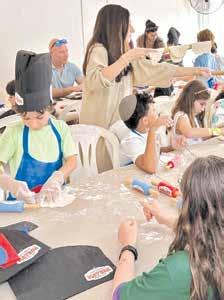
But it was the Jewish military presence during World War II, Rabbi Zarchi maintains, that planted the seeds for present day Jewish life on the island. U.S. Jewish soldiers stationed in Puerto Rico held religious services, helped establish communal institutions, and brought in siddurim, kosher food, and ritual materials. However, that wartime Jewish community did not continue, and by the time Rabbi Zarchi and his wife
At a matzah bake for the children in the community
“The challenge is to present Yiddishkeit to whoever we encounter in a way that resonates with them so they can see how it’s relevant to them.”
they needed to build a mikvah and create a larger-scale center, so they started looking for land. Around that time, they met a family that had lived in Puerto Rico in the 1970s and owned a factory there. This family made the first commitment toward the mikvah, giving $10,000 as a down payment.
“Hashem was looking out for us,” Rabbi Zarchi maintains, because just at that time, a company called IDT Corporation that had an office in Puerto Rico offered the first significant funds that helped move them forward. Concurrently, a local Jewish banking family also stepped in. Although they were not religiously involved otherwise, one of the brothers had a strong Jewish heart and secured a grant between him and his two siblings totaling $50,000.
Baruch Hashem, today there are over 200 families affiliated with Chabad Puerto Rico. The community is a diverse mix. Because it’s an island, people often come and go, though families with children are more likely to put down roots there, building their routines around family life. Many of the older families have second homes and go back and forth, while others have local businesses and are more tied down here. With the world changing, people are more open to new experiences and quieter, more relaxed environments, and the San Juan Chabad community includes many families who are transplants that have moved over the years.
“The majority of the community, however,” says Rabbi Zarchi, “lives here full-time.”
Over the decades, the Zarchis have met many inspiring individuals who’ve taken the leap to become observant.
“There was a young woman from a South American country with no family connections here. She wasn’t well-anchored, and we invited her many times over the years for Pesach, for the High Holidays and for Shabbat. Many times, she wouldn’t come; sometimes, she did. This went on for about seven years with absolutely no commitment on her part.
“One day, I was clearing out my emails, and I saw an email from her. She had actually sent it about a year before, but I only saw it then. I picked up the phone and called her and told her I was returning her message. I remember she laughed and said, ‘That email was from a year ago!’ ‘Better late than never,’ I answered. She then told me she was so grateful that I called. After that, she started coming regularly for Shabbos and began to help out in the community center. Today, she is frum, married with a family, and living in Colombia.”
This was a powerful lesson to Rabbi Zarchi.
“I learned to always extend your hand. We never know when, or even if, it will have an effect. Maybe if I had called her back when she first sent the email, she wouldn’t have responded the way she did then. Always leave space for the other person. You don’t know when something you say or do can be that transformative moment in a person’s life.”
He shares another moving story.
“Recently, I received an email from a young man thanking me and my family. He wrote, ‘In the beginning, I was skeptical about religion. I didn’t believe you could move me. I’m a shy person, and since I was so quiet during the classes, you probably thought I wasn’t affected, but I was. In the beginning, I had no interest in marrying a Jewish woman. But through the support of the friends I’ve met in the community, and the conversations during Shabbat dinner with your family and the wonderful people I met, I began to seriously contemplate marrying Jewish.’ Today, this young man is married to a Jewish woman and is leading a beautiful observant life with his new family.”
Another newly observant young man recently approached Rabbi Zarchi. He said, “Most of my family married out – my mother, my grandmother, my siblings. It’s up to me to make sure that there is a continuation to my family.” He’s incredibly involved in his spiritual growth. He bought himself a pair of tefillin, and he’s looking to marry a nice Jewish girl, inspired by the realization that he is the future progenitor of his family.
Rabbi Zarchi and his wife also work with young adults (and older adults) that grew up in a religious environment but for one reason or another threw it off.
“There was one young woman,” he shares, “who came from a totally frum background, the whole nine yards, but was totally disengaged for years. She dated non-Jewish men and had no interest in anything religious. Ultimately, she, baruch Hashem, married a Jewish man but was still totally disconnected. Recently, however, she called my wife and expressed interest in coming with her husband for Shabbat dinner.” Rabbi Zarchi admits he was shocked when he heard she called. She had never expressed the slightest interest in Yiddishkeit.
whatever reason, kids from frum families, for example, have a difficult time fitting into their home settings. They come here and don’t feel judged. In this environment, they’re sometimes able to dig deep within and reconnect with their true essence.”
Ahavas Yisroel is the foundation, insists Rabbi Zarchi. What doesn’t work is when people feel judged, when they don’t feel accepted for who they are.
“My work is not only about making people Torah observant, but also about embracing fellow Jews through kindness, helping them feel connected. Every human being desires genuine human connection. We all want to feel welcome, embraced and cared for,” he explains. “That’s a healthy need.
“Another healthy need of every human is to want to live life. For a Jew, there’s an additional need, to feel connected to our roots and our heritage. Unfortunately, not everyone knows how to express this deep need and sometimes may even express it in ways that are antithetical to Torah. But the idea is we need to understand that this is
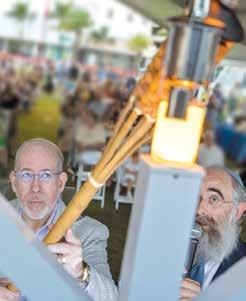
A public menorah lighting for the community
“My work is not only about making people Torah observant, but also about embracing fellow Jews through kindness, helping them feel connected.”
nates with their soul. There were twelve tribes, and there are shiv’im panim laTorah, seventy ways to understand Torah. People make themselves observant. We don’t make them anything. I’m here to be a support, a teacher, a shaliach, to provide each person what they need spiritually to live their lives, and naturally they will become what they become. No one is a project.”
Rabbi Zarchi leaves us with a broader message about our responsibility toward the non-Jewish world as well as to Klal Yisroel. He speaks about the community’s role among their non-Jewish neighbors. The Chabad community in Puerto Rico partners with local organizations that service underprivileged communities. He explains the importance of exhibiting kindness and empathy so that others can appreciate the Jewish people, creating a true kiddush Hashem.
“We have a mandate to be an ohr la’goyim, a light unto the nations, and a way to engage another human is by showing you care.”
As a community, they sponsor summer camps and provide sports equipment for underprivileged children. The children wear shirts with the name of their league that read “Chabad of Puerto Rico.” This creates opportunities to interact and share the seven mitzvos of Noach, which are critical to yishuv haolam.
He adds that this approach magnifies that the Jewish people are kind people, G-d-fearing people, and that includes helping others, who in turn will reciprocate in their own homes. In Puerto Rico, he notes, there is generally a warm and friendly environment toward the Jewish community, and they show hakaras hatov in return. He connects this to Moshe Rabbeinu, who showed gratitude even to the earth that shielded him and to the water that hid him as a baby, underscoring the importance of responding with gratitude in all relationships.
Speaking about Klal Yisroel, he reflects on what has inspired him most over the years.
“The inspiration that I receive from us as a nation over the years is our unifying factor. We have so much more in common than any differences. We daven and celebrate and mourn together.”
He points to how the island responded beautifully in times of crisis, reflecting that deeper unity.
“Two off-the-derech kids were on a trip to Puerto Rico last Sukkos. One of their mothers called me and begged me to reach out to them to invite them. I had a hard time convincing them to stop by for even one meal. In the end, they stayed for all the meals. After yom tov, the mother called and told us the best part of her child’s trip was their warm and friendly experience at the Chabad House.”
“Although we are committed to our Yiddishkeit, we never impose anything on anyone else. We’re not judgmental and come with kindness only. Sometimes, for
where their behavior is stemming from. The challenge is to present Yiddishkeit to whoever we encounter in a way that resonates with them so they can see how it’s relevant to them.”
Sometimes, individuals who’ve gone through a difficult divorce will end up in Chabad Puerto Rico. They come there because it feels safe to them. They don’t feel they have to justify themselves to anyone. “Often, it’s hard to start fresh when you’re around people that know you and your history,” explains Rabbi Zarchi. “They come to our vibrant community and feel like they belong.”
Rabbi Zarchi contends that many of those who come through their doors do not necessarily become Chabad.
“Everyone has their journey. We don’t look to change anyone or mold anyone.” He insists they are simply here to share and to enlighten. In the end, everyone makes their own choices and finds their own paths.
“We have guys here who like to joke that they’re Chabad Sephardi,” he says with a laugh. “But there is no agenda. When you visit the shul, you see all kinds of Jews. Everyone is here to serve Hashem in the way that reso -
“Our lens, looking out upon the larger global reality of Klal Yisroel, is that we are one family, one people. People in a family may have different customs and different interests, but they still share the same values, ideals and aspirations. Bringing holiness to the world, revealing Hashem’s presence, leading to the ultimate goal of bringing Moshiach are shared values.”
He emphasizes that when we look at another Jewish person, the difference shouldn’t be what’s registered but the uniformity we share together.
“Like when you go on a trip to another country and meet a Yid. You get excited and say, ‘Ah, there’s a Yid.’ When we have so many Jews around us all the time, we tend to lose appreciation of each other. Each Jew must be appreciated as a yahalom (a diamond). Every Jew is a child of Hashem, and as we love Hashem, we love who He loves. You can’t say, ‘I love You, Hashem, but not love those that You love.’ Ahavas Yisroel is the gateway to ahavas Hashem. You can’t have one without the other. You can’t say to someone, ‘I love you, but not your kids.’ ‘If you love Me, you have to love My kids,’ says Hashem.”

By Eliyahu RosEnBERg
ne afternoon, five-year-old Yaakov came home to his house in Częstochowa, Poland, and told his mother what he’d learned in preschool that day.
“Mom, tomorrow we cannot eat meat,” the little boy reported. “We’re going to church, and the priest is going to pour ashes over our heads!”
The child’s mother stared at him in astonishment.
“Kuba, sit down. I have to tell you something,” she said softly, using her son’s Polish name. “If you don’t want to eat meat tomorrow, no problem. But you will not go to church.”
The boy looked puzzled.
“Why not, Mom?”
“Because…” she whispered. “Because you are Jewish.”
He nodded, though he didn’t quite understand. Growing up in the early 1990s, Yaakov had never heard of the word “Jew,” and he certainly didn’t know what it meant to be one. All he knew was that his Jewish identity should be hidden. His mother implored him not to reveal it to anyone.
But the little boy figured it wouldn’t hurt to spill the beans — tell his best friend his exciting, new secret. So, he told his classmate, and almost instantly, he regretted it. The next morning, every kid in his public school class knew that he was a Jew. And just like that, the bullying — the “dirty Jew” name-calling — began.
When it came to frumkeit, Yaakov Wasilewicz’s hometown was like a bar -
Don’t give up. Do all you can, even if there are obstacles. Because, there’s hashem. you’re not alone. he will help you.
something inside was telling me, ‘ i want to know what it means to be Jewish.’
i always say: hashem is the Writer. he wrote the story for every one of us. i just lived by his script.
ren wasteland. There were no Jewish schools for him to attend. He had no Jewish friends in the vicinity. There were no local rabbis, except at the Lauder camp that Yaakov attended for winter and summer vacation. His only source for Jewish knowledge was his mother, the daughter of traditional Holocaust survivors. His father, a traveling musician, was sadly out of the picture.
But despite the shortage of local Yiddishkeit, Yaakov was thirsty for Jewish knowledge. “Something inside was telling me, ‘I want to know what it means to be Jewish,’” he shares.
Riding the wave of Yaakov’s newfound enthusiasm for Judaism, his mother set out to make her son a bar mitzvah. When the boy was 12, she began preparing for the event and called Rabbi Michael Shudrich, the now-chief rabbi of Poland, asking him for help.
“Can you prepare my son for his bar mitzvah?” she asked the rabbi.
“Sure,” the rabbi replied. “But does he have a bris? ”
“No, he doesn’t,” she said, explaining that there were no local mohels.
“OK, so I’ll prepare him for his bar mitzvah. But first, he needs a bris,” Rabbi Shudrich said.
Rabbi Shudrich arranged for a mohel to fly to Warsaw to give 12-year-old Yaakov a bris. A few weeks later, the boy and his mother hopped on a train and, after a three-hour journey, reached the country’s capital. While heading for the Nozyk Synagogue, Warsaw’s main shul, the mother and son stopped by the Yiddish Theater to grab a bite.
“My mother saw her friend there. She knew that we weren’t from Warsaw, so she was surprised to see us there. She asked, ‘What are you doing here?’” Yaakov recalls. “And my mother told her, ‘My son is going to have a bris.’ Suddenly, the woman pulls me aside and says, ‘Don’t do it. Why would you do that to yourself?’ She tried to scare me, but I said, ‘I’m a Jewish boy, and if a Jewish boy has to have a bris , then I want to have a bris.’”
Yaakov and his mother departed from the theater and entered the shul, where they were greeted by Rabbi Shudrich and the mohel.
“That moment, chassidim, out of nowhere, entered the shul. And they saw there was something happening in the room. They saw it’s a bris, but not for a baby. One of the chassidim saw that my father wasn’t there, and he asked if he could be the sandek ,” Yaakov recounts. “So, he held my head. I had my bris. And I don’t know how I did it, but after my bris, I danced with the chassidim in a circle! Afterwards, the sandek, Rabbi Neuschloss, who was from Monsey, New York, said he wanted to keep in touch. He took my address and my phone number. And that was it. They went back to America, and we went back to Częstochowa.”
After the bar mitzvah, Rabbi Shudrich arranged for the boy and his mother to move to Warsaw, where Yaakov could, for the first time in his life, attend a Jewish school. He remembers his first day clearly. That morning, he took a yarmulke out of his pocket and
put it on his head, much to his mother’s surprise.
“What are you doing?” she asked her son. “You don’t have to wear that.”
“I know,” the boy replied. “But I want to.”
As Yaakov explains, he didn’t just want to be Jewish. He wanted to do something about it. It started with him wearing a yarmulke. By the end of eighth grade, he had already begun keeping Shabbos and kashrus.
After spending Pesach in the United States with Rabbi Neuschloss, his sandek, Yaakov visited Rabbi Hershel Lieber, a rabbi he knew from the Lauder camp, and expressed concern about his academic future.
“Rabbi Lieber, there are no Jewish high schools in Poland,” the young teenager explained. “And now that I’m religious, I don’t want to go to a public high school, because then I’ll have to take my yarmulke off, it won’t be easy to continue being religious, and I want to continue learning.”
“I’ll try to help you,” Rabbi Lieber replied. “I’ll try to find you a yeshiva, maybe in Israel, England, or America.”
Yaakov thanked the rabbi, went home, and spoke to his mother about the rabbi’s idea.
“When I got back home, I told my mother that I may be able to go to yeshiva,” Yaakov recalls. “‘Can I go?’ I asked. And my mother wouldn’t answer. And I kept on asking, ‘Mom, can I go? Can I go? Can I go?’ I knew that it wasn’t easy for her, because I was her only child. But eventually, she said, ‘If you want to go, go.’
“A few weeks before the summer, I got a phone call again from Rabbi Shudrich, saying that he spoke to Rabbi Lieber, and he sent me a ticket to come

to America and go to a yeshiva. And that’s what I did.
“I came to America,” he continues. “It wasn’t easy for my mother, and it wasn’t easy for me. But she knew that it would be good for me. It was something that she couldn’t give me, because she didn’t know much. She knew that me going to yeshiva in America – even though she’ll be all alone in Poland — would be good for me. She was happy about it, but it wasn’t easy.”
* * *
It took some trial and error before Yaakov found the right yeshiva for him.
After experimenting at a Bobov Yeshiva in Borough Park for a month, he visited the Talmudical Academy of Baltimore (TA) for an interview, during which the principal asked him the most elementary Tanach questions you could think of:
“Do you know who Avraham Avinu was? Sarah Imeinu? Yitzchak? Yaakov?” The boy shook his head. During the year that he attended a Jewish school in Warsaw, he learned about Jewish culture, history, and Hebrew. But he’d never studied Torah before.
So, the principal had an idea: He put Yaakov, a 15-year-old, in second grade, so he could learn Chumash. If not for his zest for learning, sitting in a class of eight-year-olds might have been too embarrassing for the teenager.
After half a year in second grade, Yaakov skipped to fourth grade, where he learned Mishnayos for the first time. Then, he hopped to sixth grade and then to eighth, before jumping to 10th and then to 12th. In just four years, Yaakov graduated from elementary school, middle school, and high school. From there, he studied at Sh’or Yoshuv.
“My mother came to my graduation,
and I spoke during the graduation. I actually asked for mechila. I said, ‘I’m sorry to everyone here, but I would like to first speak in Polish to my mother, because she doesn’t know English.’ I decided to thank my mother for what she did — for sending me away to learn Torah,” Yaakov shares. “I said, ‘Thank you, Mom.’ And then I translated it into English, so everyone could understand what I said. And everyone was crying, of course, and so was my mother.”
A few summers later, Yaakov, a musician like his father, composed an emotional song from the words of Akeidas Yitzchak. In 2017, when his mother suddenly passed away at age 70, he decided to record the song in her honor.
“I recorded it in her memory, because what my mother did can be compared to an Akeida — the sacrifices she made for me, her son. Even though she’d be all alone in Poland, she knew
this would be good for me,” Yaakov says. “She was happy about it.”
Shortly after his mother’s passing, Yaakov married and had two young daughters. The oldest — five-year-old Chayala — is named after his mother. “She brings us nachas,” he says proudly. “And I hope to my mother, as well. She sees from above.”
Throughout his journey, Yaakov faced obstacle after obstacle. And it was only through his unrelenting passion for Yiddishkeit — and support from mentors and, most of all, from G-d — that he was able to overcome his challenges and become the fulfilled, frum Jew he is today.
His advice to those struggling is as follows:
“Don’t give up. Do all you can, even if there are obstacles,” Yaakov declares. “Because, there’s Hashem. You’re not alone. He will help you.”

Moderated by Jennifer Mann, LCSW of The Navidaters

I’ve been struggling with shidduchim since I entered it, with minimal, vague constructive feedback.
I strongly believe that one clear attribute making it hard for me is that I work a SundayThursday schedule, and my job ends in the evening. I also generally am mandated to work on federal holidays.
Despite my schedule not aligning up to the classic American work week, I strive to make it work for dating, such as dating after work, leaving work earlier, or going out on Motzei Shabbos in the winter when Shabbos ends earlier.
While I should obviously avoid taking off from work, I do it when necessary to best accommodate a girl’s schedule.
Around two years ago, I met a girl I liked on a singles program who still talks to me every now and then. However, she repeatedly claims that I don’t want to date her or be with her longer on events, as I need to head back to work.
I said it to her exactly how it was: I offered to date her after work, on Fridays when she also does not work that day, but refused to take the offer, pre-arranging dates with her when she canceled it off in the end, and even taking off from work. I respectfully explained to her that I worked hard to accommodating, giving her multiple options, but she needs to do her part and be open as well.
I have since moved on; it seems like she doesn’t want to take me seriously and continues to make excuses.
Does this girl really not want to date me? Is there anything I can do to improve myself with shidduchim as a whole?
Thanks.
Jake*
Disclaimer: This column is not intended to diagnose or otherwise conclude resolutions to any questions. Our intention is not to offer any definitive conclusions to any particular question, rather offer areas of exploration for the author and reader. Due to the nature of the column receiving only a short snapshot of an issue, without the benefit of an actual discussion, the panel’s role is to offer a range of possibilities. We hope to open up meaningful dialogue and individual exploration.
Dear Readers,
We want to offer YOU an opportunity to be part of the discussion! Please email us at MichelleMondShadchan@gmail.com, subject line “reader’s response,” if you would like to participate in the new “A Reader’s Response” columnist spot. We will send you a question and publish your answer in an upcoming Navidaters edition.
If you have a question you would like the Navidaters to answer, please reach out to this email as well.
Looking forward!
Michelle, the “Shadchan”
Rebbetzin Faigie Horowitz, M.S.
Jake, this girl doesn’t want to date you but wants to keep you as a possibility. You may call it friendship but someone who cancels and then blames you for your work schedule is capitalizing on your vulnerability.
Yes, you could use some help with building up your self-esteem and other possible blockages. Go into therapy with a qualified seasoned professional and figure yourself out.
Michelle Mond
Jake, you definitely seem to have a busy work week, but honestly, the way you balance it with dating sounds very normal and reasonable to me. Leaving work early when needed, dating in the evenings, going out on Motzei Shabbos, and even taking off from work sometimes to accommodate a girl all sound like real effort. A girl who genuinely wants to date you seriously will notice that.
Truthfully, I don’t think your schedule is the reason you are still single. I think you got stuck on this one particular girl who keeps using your work schedule as the excuse, while still keeping you emotionally invested enough not to fully walk away. It leaves you constantly feeling like, “Maybe if I just make it work
better, things will finally fall into place.”
But from what you described, it sounds like you already have tried a LOT. At a certain point, dating cannot be one person bending over backwards while the other person keeps finding reasons why it still doesn’t work. A mature girl who is truly excited about you will appreciate the effort you are making and will work with your schedule. Life is not always a perfect Sunday through Thursday, 9 to 5 setup.
I think you may be focusing too much energy on someone who is giving you mixed signals and making you question yourself in the process. That is what I am most concerned about for you. Are you self-aware enough to know when a relationship is healthy?
My advice is to move on fully and stop trying to prove yourself to this girl. There is no reason you should be made to feel like your schedule makes you undate-able when you are clearly trying hard to make time for someone. I think once you meet someone who genuinely values you, your schedule will feel completely doable with dating.
Dr. Jeffrey Galler
Sorry you are having a rough time. May I suggest that there are two issues that need to be addressed here.
Problem #1 – The girl who won’t say “yes”
There is a big difference between how
a girl responds when she genuinely wants to date you and how she responds when she does not.
When a guy asks a girl out and suggests an inconvenient day and time, if she is interested in dating him, she will say something like, “Sorry, I can’t make it on Tuesday night, but I would love to go out with you. Can we please schedule it for Thursday, instead?”
By contrast, if a girl who is polite and considerate but simply does not wish to date you, she will say something like, “I am flattered. But I decline. Thank you anyway.”
In your situation, you come across as an intelligent guy with a responsible job. That is why I am very surprised that you do not understand that this girl that you met two years ago is definitely not at all interested in dating you.
Furthermore, she is leading you on and acting with great cruelty toward you. Perhaps she is building up her own fragile ego by doing so, but, please, please drop this “friend” and permanently delete her name from your smartphone contacts.
Remember the poem (1637), “Why so pale and wan, fair lover”: If of herself she will not love, Nothing can make her; The devil take her!
Problem #2 – The boy who is struggling with shidduchim
I simply don’t know enough about you to understand why you are having a rough time with dating.
Your unusual work schedule may create some logistical challenges. But, if a suitable girl is interested in you, she will consider these scheduling obstacles as solvable problems. She will go out of her way to be flexible and accommodating. Perhaps you are too obsessed with that dud that you met at that singles event. Perhaps you should reevaluate how you present yourself: Dressing appropriately, paying attention to personal hygiene, keeping the date enjoyable without dominating the conversation, showing that you are genuinely interested in what your date says…are all very important.
It might be worthwhile to aggressively request feedback from the shadchanim
Interest shows up in behavior, not just in words.
you have dealt with and try to uncover any problems that you might be unaware of. It might be worthwhile to consult with a professional dating coach.
There are so many single women looking for a decent, sincere guy with a good job. Good luck connecting.
Rachel Shteierman
A Waterbury Shadchan
Dear Jake, I’m sorry that shidduchim have been so difficult for you, especially when the feedback you’ve received has been vague and not very constructive. That can be extremely frustrating, because when someone is trying to grow and improve, unclear feedback does not give him much to work with.
From what you describe, it does not sound like your work schedule automatically makes you “undate-able” or unable to build a relationship. Many people have schedules that do not line up perfectly with the classic Sunday-off/ American workweek model. The real question is not whether your schedule is ideal. The question is whether you are willing to be flexible, communicative, and make real space for dating and, eventually, marriage.
And it sounds like you are trying to do that.
You mentioned dating after work, dating on Fridays, going out on Motzei Shabbos in the winter, leaving work early when needed, and even taking off when necessary. Those are all signs that you understand dating requires effort and accommodation. Of course, a work schedule can be a challenge, and it is something you may need to communicate clearly early on. But a challenge is
not the same thing as a character flaw. Regarding this particular girl, it is hard to know from the outside what she truly wants. But there is one important principle: interest shows up in behavior, not just in words. If someone says she feels you are not making time, but then does not accept reasonable options, cancels plans, and does not make an effort to meet you halfway, that may not really be about your work schedule. It may be a sign that she is unsure, not ready, not interested enough, or for whatever reason unable to show up in a serious way. You can clarify it once, calmly and directly, either yourself or through a shadchan, depending on how the situation is being handled. Something like: “I am open to seeing if
there is something here, and I am willing to work with my schedule to make dating possible. But I need to know if you are actually interested in pursuing this seriously. If yes, let’s choose a time that works. If not, I respect that. “
After that, I would not keep trying to prove yourself. Dating requires two people. You can be flexible, but you cannot carry the entire effort alone.
As far as improving yourself in shidduchim as a whole, it is hard to give a full answer based on one piece of the picture. Still, there are a few practical things to consider.
First, present your schedule clearly, but not apologetically. You do not need to sound defensive. You can say, “My
Dear Jake,
I actually think there are a few different truths living here at the same time.
The first is that dating someone with a non-traditional schedule can genuinely be hard. Most people naturally imagine marriage fitting into a certain rhythm. Friday availability, Sunday outings, long weekends, chol hamoed trips, federal holidays together. So when someone hears “Sunday to Thursday evenings plus holidays,” they may immediately start imagining the lifestyle and wondering whether it works for them emotionally, practically, or relationally. That doesn’t make you wrong. And it doesn’t make them shallow. It just means people are trying to picture real life.
At the same time, I also hear a man who was trying.
You offered alternatives. You dated
after work. You took off when you could. You suggested Fridays. You tried to meet her halfway. That matters. Relationships are not built on perfect convenience. They are built on willingness, flexibility, care, and effort from both people.
So I wonder if the deeper question here is not simply, “Does she want to date me?” but rather: “What kind of relationship dynamic was developing between us?”
Because sometimes when someone repeatedly tells us, “You don’t want me enough,” despite visible effort, it can leave us stuck in a cycle where we are constantly trying to prove our love instead of both people collaboratively solving a problem together.
And to be fair to her, she may have
schedule is Sunday through Thursday and I often finish in the evening, but I make dating a priority and I’m flexible when needed.” That is clear, mature, and solution focused.
Second, when feedback is vague, try to ask a trusted rebbi, mentor, married friend, or shadchan for specific, honest feedback. Not “What’s wrong with me?” but “Is there anything in how I come across, communicate, or handle dating that I should be aware of?” Sometimes there is something helpful to learn, and sometimes the issue is simply that the right person has not come along yet.
Third, invest your energy in girls who are showing up with sincerity. A girl does not need to have a perfect schedule either. But she does need to be open, respectful, and willing to work together.
So does this girl really not want to date you? I cannot know for sure. But if there is no clear willingness from her to actually schedule and follow through,
genuinely experienced your schedule as emotionally disappointing. She may have wanted more spontaneous time, more availability, or simply a partner whose lifestyle naturally aligned with hers. That is valid, too. Compatibility is not just about chemistry. Timing, schedules, emotional needs, and lifestyle matter.
But there is an important distinction between: “This schedule may not work for me” and “If you really cared, you would sacrifice more and more and more.”
One is honesty. The other can become a moving target.
The truth is, when two people deeply want to build something together, they usually begin moving toward each other. Not perfectly. Not effortlessly. But mutually.
From your letter, it sounds like you were moving toward her and often felt she was standing still while questioning your intentions.
As for shidduchim as a whole, I would
Dating cannot be one person bending over backwards while the other person keeps finding reasons why it still doesn’t work.
then practically speaking, she is not giving you something real to pursue. You are allowed to move on without bitterness. You can keep the lesson, let go of the confusion, and focus on finding someone who appreciates your effort and is ready to build something together.
encourage you not to over-personalize vague feedback. The system often reduces deeply nuanced human dynamics into oversimplified explanations. Sometimes, “schedule” is truly the issue. Sometimes, it is chemistry. Sometimes, lifestyle compatibility. Sometimes, emotional readiness. Sometimes, things people themselves cannot fully articulate.
I would focus less on trying to become universally appealing and more on finding someone whose vision of partnership actually fits the life you are building.
The right person may still find your schedule difficult at times. But she will sound more like: “How do we make this work together?” than: “Convince me you care enough.”
Wishing you clarity and the kind of relationship where effort flows both ways.
Sincerely, Jennifer


By Aliza Beer MS, RD, CDN

When most people think of Shavuos, one of the first things that comes to mind is dairy. Beautiful dairy meals, blintzes, pasta, and an endless assortment of cheesecakes have become a big part of the chag. While these foods are part of what makes Shavuos so enjoyable, they can also leave many people feeling overly full and uncomfortable. The good news is that celebrating Shavuos does not require sacrificing health goals or feeling like every meal needs to be a cheat day. With thoughtful planning and balanced choices, it is possible to enjoy some of the dairy favorites while still prioritizing nutrition.
When planning a dairy meal, it helps to think beyond pasta, pizza, and cheesecake. While those foods are certainly part of the Shavuos experience, they are often the richest items on the table. A more
balanced approach is to build the meal around lighter foods that provide protein, fiber, and volume, and then enjoy smaller portions of the heavier dishes.
Starting the meal with a light soup is an excellent strategy. Vegetable soup, zucchini soup, mushroom soup, or onion soup can be satisfying without adding excessive calories. Soup naturally slows down eating and helps take the edge off hunger before the rest of the meal is served.
Fish should then take center stage as the main course. Salmon is an especially good choice because it provides high-quality protein and heart-healthy omega-3 fats. Protein helps promote fullness and can reduce the temptation to overeat heavier side dishes.
For side dishes, focus on fresh salads and cooked vegetables to keep the meal light and filling. Spring greens, arugula with strawberries, cucumber salad, roasted asparagus, grilled zucchini, cauliflow-
er rice, and colorful vegetable platters provide fiber, vitamins, and antioxidants while adding freshness to the meal.
By focusing the meal on these lighter foods, much of the hunger is satisfied before the richer foods even reach the plate. This makes it far easier to approach heavier dishes such as lasagna, baked ziti, blintzes, and pizza with more control. Instead of focusing on these foods while hungry and piling large portions onto the plate, there is already a sense of fullness and satisfaction. As a result, these dishes can be enjoyed in moderation rather than becoming the main focus of the meal. The goal is not to avoid these foods, but to enjoy them in a balanced way. When the body is nourished with protein, fiber, and nutrient-dense foods first, there is less temptation to overeat the heavier options, and the meal remains both festive and satisfying without leaving that uncomfortable, overly stuffed feeling afterward.
Many classic Shavuos dishes can be modified to be lighter and more nutrient-dense.
• Cauliflower Pizza: A cauliflower-based crust can be used in place of traditional dough to reduce refined carbohydrates while increasing vegetable intake.
• Cauliflower Mac and Cheese:Replacing some or all of the pasta with cauliflower creates a lower-carbohydrate version of this comfort food.
• Zucchini Noodles: Zucchini noodles can replace part of the pasta in baked dishes to reduce calories and increase vegetables.
• Crustless Quiche: Removing the crust and adding vegetables creates a lighter version.
• Light Blintzes: Fill blintzes with low-fat cottage cheese and top with fresh berries.
• Greek Yogurt Cheesecake: Substituting Greek yogurt and light cream cheese significantly reduces calories and saturated fat.
Spring Salad Ideas for Shavuos
Shavuos falls during the spring, making it a perfect time to incorporate fresh seasonal produce.
Some excellent options include:
• Mixed greens with strawberries, toasted almonds, and balsamic vinaigrette
• Arugula with pears, walnuts, and cheese
• Israeli salad with cucumber, tomato, and fresh herbs
• Spinach salad with blueberries and pecans
• Citrus salad
• Cucumber and dill salad
The Cheesecake Reality: How High the Calories Can Go
Cheesecake is one of the most anticipated Shavuos desserts, but it is also one of the most calorie-dense foods typically served. The biggest factor is not just the recipe itself, but the portion size. A bakery-style slice is often much larger than a standard homemade serving, which can significantly change the calorie impact.
A lighter option, such as a Greek yogurt-based cheesecake or a reduced-fat homemade version, is generally the most moderate choice. These can range roughly around 100 to 150 calories per smaller slice, especially when the crust is thin or omitted and sugar is reduced.
A classic cheesecake made with fullfat cream cheese, sugar, eggs, and a graham cracker crust typically falls in the range of about 300 to 500 calories per slice, depending on thickness and portion size. Even this “standard” version can add up quickly if the slice is large or if multiple desserts are sampled.
The more indulgent versions, however, are where calories rise dramatically. Cheesecakes such as Oreo, Lotus Biscoff, dulce de leche, and chocolate peanut butter varieties often include multiple layers of added sugar, cookie crusts, spreads, ganache, caramel, and candy toppings. These additions significantly increase both fat and sugar content. A single slice of these specialty cheesecakes can easily range from 500 to 800 calories, and in many bakery or restaurant portions— especially when cut generously—it is not uncommon for a slice to reach 900 to 1,000 calories or even more.
The reality is that these numbers add
up quickly, especially after a full dairy meal. Two slices or a slice paired with other rich desserts can easily equal or exceed a full day’s worth of added calories in one sitting.
This does not mean cheesecake needs to be avoided. Instead, it high -
these foods may be tempting, especially after a long evening, it is easy to consume hundreds of extra calories without even realizing it.
The best strategy is to arrive well-nourished after the meal and continue to hydrate throughout the night.
Choosing a smaller slice, sharing a dessert, or opting for a lighter homemade version allows for enjoyment without the same level of heaviness.
lights the importance of portion awareness. Choosing a smaller slice, sharing a dessert, or opting for a lighter homemade version allows for enjoyment without the same level of heaviness. The goal is not restriction, but awareness—so cheesecake remains a treat that enhances Shavuos, rather than one that leaves you feeling overly full and uncomfortable afterward.
Healthy eating on Yom Tov is often about mindful habits rather than strict rules.
• Do not arrive at the meal starving.
• Start with soup, salad, and fish.
• Fill half the plate with vegetables.
• Keep portions of carby and cheesy dishes modest.
• Choose one dessert instead of sampling several.
• If planning to indulge in cheesecake, consider enjoying it earlier in the day, such as at breakfast or lunch, rather than late at night after a large meal.
• Eat slowly and savor the meal.
• Drink water throughout the day.
• Take advantage of the beautiful spring weather by going for a walk. Even a 20- to 30-minute walk can help with digestion, increase energy, and compensate for some of the extra calories consumed over Yom Tov.
• Remember that leftovers will still be there later.
One of the highlights of Shavuos is staying up late learning. Many shuls provide refreshments throughout the night, often including cakes, cookies, and other high-calorie snacks. While
Water, seltzer, or unsweetened tea can help maintain energy and alertness without unnecessary calories. Coffee can also be helpful in moderation, particularly when consumed without excessive sugar or cream.
If a snack is needed, it is best to
choose lighter options such as fruit, cut vegetables, or a small handful of nuts rather than continuously grazing on cakes and pastries. Sometimes, fatigue is mistaken for hunger, so drinking water and taking a short walk around the shul can be enough to restore alertness.
Shavuos is an enjoyable chag that does not have to revolve around oversized portions of heavy dairy dishes and multiple slices of cheesecake. By focusing on fish, soups, salads, and vegetables, incorporating lighter versions of favorite dishes, and being mindful with portions, it is possible to enjoy the meals while still feeling healthy and energized. Wishing all of my readers a wonderful yom tov,and chag sameach!
Aliza Beer is a registered dietitian with a master’s degree in nutrition. She has a private practice in Cedarhurst, NY. Patients’ success has been featured on the Dr. Oz show. Aliza can be reached at alizabeer@gmail.com, and you can follow her on Instagram at @alizabeer
(By Elky Friedman)
I NGR e DI e NTS Cake
• 1 sleeve low-fat graham crackers
• 1 (16-ounce) container low-fat cottage cheese
• 1/2 cup sugar substitute
• 2 eggs
• 2 teaspoons lemon juice
• 2 teaspoons vanilla extract
• 2 tablespoons cornstarch
• 1 (5.5-ounce) container plain nonfat Greek yogurt
Garnish
• Shavings of bittersweet chocolate (deeBest premium chocolate in caramel flavor)
1. Preheat oven to 350°F. Spray a 9-inch disposable or springform round pan with nonstick cooking spray.
2. In the bowl of your food processor, blend graham crackers until finely ground and press into the pan.
3. In the food processor (or in your blender), blend cottage cheese and sugar for a few minutes, until very smooth. Add eggs, vanilla, cornstarch, and Greek yogurt, and blend again until well combined. Pour over graham cracker crumbs.
4. Bake for 38 minutes. Turn off oven. Leave cheesecake in oven for approximately 2 hours to set.
By Etti Siegel
Q:Dear Etti,
My teenage son has stopped davening regularly and seems angry all the time. I’m heartbroken and afraid he’s drifting away. We’ve tried talking, but he either shuts down or gets defensive. He is still going to school, so I am grateful, but feel like it is only a matter of time. What can we do?
- Hurting Parent
A:Dear Hurting, With Shavuos approaching, struggles around ruchniyus can feel especially painful for parents.
Watching a child pull away from Torah observance can feel like the floor is shifting beneath your feet. But before you panic, it’s important to reframe what’s happening. Your son’s distance may not be a religious problem at all. It may be an emotional one.
That insight comes directly from Rabbi Shmuel Gluck, founder of Areivim, in his thoughtful article “Looking from a Different Angle.” He writes that when teens struggle, adults often rush to define the problem in religious terms: “He’s not frum enough,” “She’s rebelling,” “They’ve lost respect for Torah.” But often, those behaviors are signs of something deeper going on emotionally: low self-esteem, confusion, hurt, or feeling lost.
As Rabbi Gluck puts it, “A teenager’s lack of self-esteem is not a religious issue.” The way we interpret a child’s behavior affects how we respond and whether the child feels safe enough to reconnect.
Rabbi Gluck explains that a child’s self-image is shaped in large part by how the adults around him see him. When a parent, rebbe, or teacher looks at a struggling teen and still sees goodness and potential, the child slowly begins to believe that, too. But when a child constantly feels disappointment, panic, or fear coming from the adults around him, he may begin to see himself as a failure. Eventually, children often start acting in ways that match how they believe others see them.
He writes that some adults look at a struggling child and see defiance, while others see pain. Those two approaches usually lead in very different directions. One shuts a child down. The other keeps the relationship open.
This isn’t easy, especially when a child seems angry or rejecting. But anger is often covering something much more vulnerable underneath. Many teens push away the people they most want reassurance from.
In my work with both teachers and parents, I often say that shock and awe don’t work, not for younger students, and certainly not for teenagers. Harshness and rigidity

usually just confirm a struggling teen’s worst fears: “I already disappointed everyone anyway.”
Teenagers need the opposite. They need to feel that the adults around them still see their goodness underneath the frustration and poor choices. They need to know their worth has not disappeared because they are struggling.
When a teacher tells me, “I just want to prepare them for the real world. Life isn’t fair,” I gently push back. It’s not our job to make life harder to prove a point. Our job is to help children build enough confidence and stability so that they can eventually handle a difficult world. The same is true at home.
Your son does not need constant lectures or threats right now. He needs to know you still love him, still believe in him, and are not giving up on him. He needs a home where he feels safe enough to struggle honestly.
Here are some practical ways to strengthen the connection:
1. See the child behind the behavior. Instead of reacting immediately to what he’s doing, stop and wonder what may be going on underneath it. Is this defiance? Discouragement? Anxiety? Feeling overwhelmed? Sometimes asking that question changes the whole interaction.
2. Shift from correction to conversation. Try calmer, open-ended language: “You seem really frustrated lately. What’s been hard?” “I miss spending time with you. What do you think would help us feel closer again?”
3. Even if he shrugs or gives very little back, he still feels the difference between criticism and genuine concern.
4. Notice effort, not just outcomes. If he davens once, acknowledge it warmly. If he opens up for five minutes, notice that too. Small moments matter. Children build confidence from repeated experiences of feeling seen, not from constant reminders about where they’re falling short.
5. Keep finding neutral ways to connect. Sit together during supper, drive somewhere together, run errands
together. Teenagers often talk sideways. Sometimes the best conversations happen when nobody is forcing them. Consistency quietly says, “I’m here.”
Rabbi Gluck’s message is both humbling and hopeful. Sometimes, the biggest change begins when adults stop looking only at the behavior and start paying attention to the pain underneath it. A struggling teen needs to feel that the people around him still see him as worthy, capable, and deeply loved.
Right now, the relationship matters more than winning arguments. Children come back through connection much more than through pressure.
One of the most powerful lines in Rabbi Gluck’s article is: “The way people view a struggling child determines what the child will become.”
So try to look at your son with softness and hope, even while you’re worried. Try to remember that struggling teenagers are often overwhelmed, confused, and hurting much more than they know how to express. When children feel compassion instead of panic coming from the adults around them, it becomes much easier for them to believe they are still good inside, even while struggling.
This stage does not necessarily last forever. Many parents describe the heartbreak of watching a child pull away, only to later see that same child reconnect in a deeper and more meaningful way. The warmth and steadiness you show now matters enormously, even if you cannot yet see the results.
Maybe that’s something important to think about before Shavuos. Relationships come before lectures. Children absorb Torah best from people who make them feel seen and loved.
So keep loving him. Keep believing in him. Don’t give up on his neshama. Hashem doesn’t give up on His children, and neither should we.
Good yom tov,
- Etti
Mrs. Etti Siegel holds a MS in Teaching and Learning/Educational Leadership and brings sound teaching advice to her audiences culled from her over 35 years of teaching and administrative experience. Etti is an Adjunct at the College of Mount Saint Vincent/Sara Shenirer. She is a coach and educational consultant for Catapult Learning, FACTS Education Solutions, Brienza Academic Advantage, Yeled V’Yalda; is a sought-after mentor and workshop presenter around the country; and a popular presenter for Sayan (a teacher-mentoring program), Hidden Sparks, and the Consortium of Jewish Day Schools. She is a frequent contributor to Hamechanech magazine and The Journal for Jewish Day School Leaders and has a weekly column in The Jewish Home She can be contacted for questions and comments at ettisiegel@gmail.com.

By Sara Rayvych, MSEd
We’re finally reaching the end of the countdown. For seven weeks we’ve excitedly marked each day (and week). It almost feels like a personal challenge to make it through every night.
Beyond the personal accomplishment that comes with counting sefirah, all these moments have been leading up to the day of receiving the Torah. While we are often called “the people of The Book,” it’s a misnomer to refer to the Torah as a mere “book” to us. I’ve read many fantastic novels, but I’ve never changed my life’s direction based on any of them. More than nice reading material, the Torah is our guide for life and our source of existence.
Words will never define the role the Torah has played in the past, present and future of the Jewish nation. Its teachings define us and unite us. The Daf Yomi is a prime example of how the Jewish people are united throughout the world. It was inspiring to see Jews on every continent (Antarctica being a possible exception) celebrating the completion of the Talmud together. While it seems like we only recently celebrated the last siyum, the next one is coming up in a year.
While trying to decide on a topic for this week’s article, I asked others for ideas. One child helpfully suggested “cheesecake.”While not negating the importance of cheesecake, I didn’t feel it was something I could really write a parenting article about. We all have our limitations, and I guess this is one of mine.
My husband suggested the theme of “k’ish echad b’lev echad.” Rashi (Exodus 19:2) describes the Jewish nation as standing by Matan Torah as one man with one heart. Considering the danger that comes from a nation divided, this definitely seemed like a more appropriate theme for an article. In order to respect all shitos, I advise reading this article with a piece of cheesecake nearby.
Many have noted the miracle of the Jewish people, a nation that has defied the odds and still maintained continuity
from generation to generation. The demise of Torah Judaism was frequently predicted throughout history, many considering ancient teachings inapplicable to modern society. As our readers prepare for Shavuos, enjoying this publication geared to the Jewish Torah observant community, I think we can safely say those doomsayers were wrong.
We didn’t get here by forgetting who we are. We follow generations that continued to pass on these ancient teachings, applying them successfully to modern challenges. Parents teaching children, each continuing the mesorah one generation further. This formula of parent-to-child has served us well for thousands of years.
As the parents of the current generation, we are tasked with the holy role of passing on the Torah’s teachings, ensuring the continuity will carry over to the next. We can’t sit back assuming the mesorah passes via osmosis. It needs to come from us. It needs to be living and breathing teachings. Our children have to taste its sweetness and depths.
It’s only natural to want to do what we enjoy. We are programmed to increase that which gives us pleasure and decrease what causes pain. Keeping Torah delightful is a crucial factor in ensuring our children will want to keep it. When they see its beauty, they can’t help but want it for themselves.
This does not require being overly permissive – the Torah does include “thou shalt not”s. Even “no”s can be given with love, lacking any excessive sting or bitterness. It’s hard to be told we can’t do something, but we’ve all felt the difference between receiving a loving vs. notso-loving denial.
More Than the Sum of Parts
We are a nation of united individuals – but we are more than our divided parts. There is a strength that comes from unity and a blessing that comes from recognizing we are a part of something bigger than ourselves.
The recent events in Eretz Yisroel have brought out clearly that we are one nation, with one heart. Throughout the
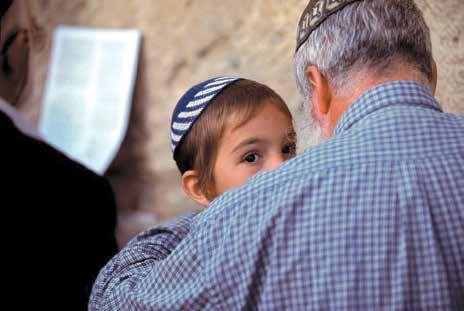
world, we all feel what happens to any of our brethren. We are Am Yisroel, and what affects one affects all.
Children can see themselves as part of our nation and take pride in who they are. They can feel connected to their community and family throughout the world. We want to foster feelings of achdus and solidarity. One simple way is to daven for each other and keep all of Klal Yisroel in our tefillos.
Balance is important in life, and this is one area which we can’t ignore it. We live in a world that is overwhelmed with information, and we are exposed to anything that happens throughout the world. One would think this is great for fostering achdus. What could be more connecting than knowing of any tragedy befalling another Jew? Shouldn’t we encourage our children to be nosei ol chaveiro and daven each time someone else is in need?
As children, today’s adults had more limited exposure to painful events. We received national and world news only through what was in the newspaper or provided in specific news programs on the tv or radio. Information was slow, and updates weren’t to the minute. The newspapers and evening news shows weren’t that exciting, and most of us kids never bothered paying much attention. Any pictures were poorly pixelated, and graphics were minimal. When major events occurred, we often knew “something” was going on, but the details were few. Minor events barely crossed our radar.
Today, we are experiencing an overflow of information. News is available at
all times with “up-to-the-minute” updates and graphic videos. Kids view too much but understand very little of it. All they see are terrifying images and no context to place them into.
Children are sensitive and unable to process all the information they are exposed to. They shouldn’t hear of every tragedy, attack or other event. This overexposure makes the world seem like a scary place. While they do need to be taught personal safety, they shouldn’t view the world as overall dangerous or terrifying. Parents should limit their child’s exposure, filter what kids are shown and present to them necessary information in a way that is informative but emotionally and developmentally appropriate. They can understand to daven for another without needing to hear all the gory details. With a healthy balance, they can empathize with their brethren while maintaining their own personal emotional strength.
May we once again join together as a nation to receive the Torah as one nation with one heart, appreciating our unique privilege in passing on this eternal gift to the next generation.
Have a wonderful yom tov!
Sara Rayvych, MSEd, holds a master’s degree in general and special education. She has been homeschooling for over 15 years. Sara provides personalized parent mentoring services, addressing a variety of general and specific parenting concerns. She can be contacted at Sara.Rayvych@gmail.com with comments, questions or for private consultations.


By Mordechai Schmutter
There are two kinds of people in this world, and I am one of them. There are early birds, and there are night owls.
Early birds are the kind of people who wake up at 5 A.M. without an alarm. They just know. They’re very into morning jogs and newspapers and oatmeal. And then at the end of the day, they have a strict bedtime. Well, not at the end of the day, actually. It’s like maybe an hour after they put their little kids to bed. Sometimes they’re not tired at this bedtime, so they have a chamomile tea, which they drink with the string hanging out of the cup.
Night owls, meanwhile, do not go to bed if they’re not tired. Why would they give up this quiet time? In exchange for noisy time tomorrow morning?
I’m a night owl.
We’re not so into breakfast. We often skip breakfast, because it’s late already, so let’s just grab a coffee and we’ll eat at lunchtime. And our alarm clock is the neighbor mowing his lawn, or the early risers knocking on our bedroom door to innocently ask us, “Oh, did I wake you up?”
Night owls spend most of the morning trying to wake up. You can’t talk to us until we’ve had our coffee.
Early risers don’t need coffee to function. They drink coffee as a hobby, to pass the time until the rest of the world gets out of bed. They say things like, “If you drink your coffee with milk and sugar, you don’t really like coffee.”
Fine, I don’t really like coffee. I’m not offended by this. It’s like saying, “If you drink your Tylenol with water, you don’t really like Tylenol.”
Early risers have lines that they like repeating over and over.
But then at some point, they’ve had enough of the day, and they stop functioning. If there’s a late yom tov seudah, they sit there like zombies, waiting for

the sweet release of bentching.
And you’re like, “Maybe now is when you should have your coffee.”
“What?! I’ll be up for hours!”
“Okay, so we’ll keep you company.”
They are the reason there’s coffee at weddings.
But these are also the people who make it to every bris. Before the father, even. No matter how far the drive was. Four hours to Baltimore!
“Yeah, I woke up at 2.”
I wasn’t even asleep yet at 2.
And they always get sandukaos, because the father knows they won’t drop the baby.
The late crowd tries to be respectful. We come in at night and we’re trying not to make any noise, we close the door gently, we stop the microwave before it hits zero…
And then in the morning, the early crowd is slamming things open, turning on lights, looking for things they dropped in the closet, talking to themselves to explain their actions, calling across the house to each other…
If we accidentally wake them up,
they’re like, “You woke us up! Now we can’t fall back asleep!”
“Yes, you can. You have all night!”
But if they wake us up, they say, “Maybe you should be up already. It’s 9:00.”
Excuse you. Should I try saying that at night? (“Maybe you should still be up. It’s 9:00.”)
It’s totally acceptable for them to be annoying about it. When we finally get up, they can be all like, “Baruch mechayeh meisim! Look at all the stuff we accomplished before you got out of bed!” Should we, when they’re on their way to bed, be like, “Baruch dayan haemes! Look at all the stuff we’re going to accomplish after you go to bed!”
I feel like night owls are definitely nicer people. Or are we? Because I find that when the early birds wake up, they’re eagerly waiting for the night owls to wake up already, whereas when the early birds go to sleep, the night owls say, “Uch, finally!” So who’s really nicer?
My in-laws are early risers. This year, they came to us for Pesach a day early, and I stay up very late to cook for
yom tov, because I had extra cooking to do because we had guests who’d showed up a day early. And just as I was thinking about going to bed, my father-in-law got up, came downstairs, and said, “Oh, you stayed up the whole night?” And I said, “No, I stayed up your whole night. And now I’m going to go to bed, and you’re going to stay up my whole night.” Then I slept for a grand total of three hours while the guests did zero cooking.
The early crowd is always saying, “Early to bed and early to rise makes a man healthy, wealthy, and wise!” That’s one of their lines.
Well, I’m glad that works for you . I have deadlines. The way my day works is that I try to think of an idea for an article, and it’s not coming, and I think, “Maybe I can’t think of one because of all the other stuff on my to-do list.” So I do all the stuff, and then the idea comes, after the sun goes down. And then I have to keep it going. I don’t go to bed when I want; I go to bed when I weigh the benefits: I can continue my creative train of thought now, at night, while I’m still thinking about it, or I can continue tomorrow morning, right after I get up and daven and eat and maybe learn a little bit and also let out the chickens and by this point the house is no longer quiet.
I definitely get more work-time this way. I figure I can work at night until I’m tired, but I can’t wake up early when I’m tired and start working. I won’t become less tired as the day goes on.
Though maybe that’s how these people are built – that they do become less tired as the day goes on. Maybe that’s why they have to go to sleep by a certain time, and why they get so annoyed if you wake them up after that time. Their bodies are like, “I guess that was it. Time to get exponentially more awake by the minute!”
I don’t know. To be honest, a lot of
what I say about the early birds is guesswork. I can’t ask them directly, because there’s not a lot of time in the day when we’re both awake enough to have this conversation. All the hours we have in common we’re working. I can have one of those conversations where I email them a question one night, and then they email me in the morning, and then I wake up and email them, but they’re at work already, so they email me the next morning, and so on.
Or I guess I can do this thing where I write an article, at night, and then morning people wake up early and read it in the paper, over coffee, and then by the time I wake up, they’ve already written in to complain about it.
My question is, what happens on Shavuos?
Night owls have a hard enough time Shavuos night. We’re fine most of the night, but as the night goes on, we get more and more tired, until we’re sitting there in a trance at Shacharis, thinking, “What are people saying? Is that Korbanos?! Do people say Korbanos every day, or just on Shavuos?”
But the first half of the night we’re
okay, at least. There are a lot of nights that I’m okay until 4 in the morning, and that’s around when Shacharis starts on Shavuos. What I don’t think about is that the finish line of the night is not the beginning of davening. It’s the end of davening. Shacharis starts, and you have like three hours to go. The entire stretch before Shacharis was about four hours. Late risers do not like watching the
entire night and then wake up at 4 and say brachos for everyone, and everyone’s all impressed about how they can wake up in the dark with no alarm on a yom tov, and they’re thinking, “I get up this time every night!”
The truth is that some of them don’t stay up. You look around during Shacharis and think, “Where did all these people come from? The shul wasn’t this
They are the reason there’s coffee at weddings.
sun come up. We didn’t realize that “all night” includes the morning prayers. We forgot from the last year.
But my question has always been: how do these early risers make it through even the first half of the night?
These same people who, only one hour earlier, couldn’t handle the night seudah. Are they the people who sleep the

packed the rest of the night.” These are the morning people.
Meanwhile, they’re looking around, thinking, “Oh, suddenly everyone comes to our vasikin minyan? Where are they the rest of the year? Hey, maybe stay up until your Shacharis; see if you can handle that Your night’s not over. OUR night is over.”
But some of them definitely stay up. So now I’m thinking that maybe the way it works is they’re tired at the beginning of the night – perhaps during the night seudah – and then they power past that part and then suddenly they’re becoming more and more awake as the night progresses. And at some point in middle of the night, the two groups pass each other.
It takes all types to make a world. And it turns out we need both. We keep passing the torch back and forth. The night people keep it going most of the night, and then the morning people keep Shacharis going. One of them is the chazzan, one is the baal koreh, and one is selling aliyos that only the other morning people are bidding on because everyone else is grabbing a quick shluff... But that’s okay, because according to them, they’re more wealthy – and wise.
Mordechai Schmutter is a freelance writer and a humor columnist for Hamodia and other magazines. He has also published eight books and does stand-up comedy. He can be contacted at mschmutter@gmail.com.



By Nati Burnside
I’m always happy to step inside a kosher restaurant that has something specific going on. And that’s especially true when that something is different than most other places in the kosher restaurant world.
Enter Klio. Dedicated to being a fish-centric upscale Mediterranean dairy restaurant, Klio has the look and the vibe to really stand out. The location includes a well-appointed dining room, a bar area, an entry lounge, and a private room…all of which look inviting. Everything from the lighting to the linens show that somebody took the time to make the space feel like a luxurious setting somewhere on the coast of the sea.
Open late, this spot is perfect for special occasions and loud gatherings as the atmosphere and vibes are consistent with a good time for all who enter. Don’t be surprised if people are singing happy birthday or dancing in the aisles to celebrate a sheva brachos.
When I was invited to Klio, I was interested to see sushi on the menu. But not only has sushi grown in popularity in kosher restaurants, it has made similar progress in modern Mediterranean spaces where they have amazing access to fresh fish. With that in mind, I tried to figure out where to start.
A handful of interesting signature rolls and even some raw fish apps could all have found their way into this space on their own merits, but there was a clear frontrunner that separated itself from the competition. The Truffle Silk Toro Roll consists of bluefin tuna, sautéed wild mushrooms, and avocado on the inside with toro tuna, chives, and a truffle oil drizzle on the outside. To say that this melted in my mouth would be an understatement. Not only are the two types of tuna and avocado a nice combination, but the mushrooms made this offering unique and special. The umami punch achieved by the earthy duo of the mushrooms and truffle oil made this truly stand out – one
of my favorite rolls in a while.
The other appetizer that I need to give a shoutout to is the Arancini. Yes, we’ve all had arancini before, but that doesn’t mean that we should overlook them. The reason we’ve all had arancini is because they are generally a reliable choice, but I was told that the ones at Klio were a must-order item, and so I did. They had a great cheese pull on the inside, but the outside was more noteworthy as the crispy crust was combined with a harissa aioli and a slice of hot pepper. I’ve had spicy arancini before, but that’s usually more of an arrabiata thing. Here, the chef cleverly uses the heat of the pepper and the harissa to oppose the aspect of creaminess found in the cheese and aioli. The result is a well-balanced appetizer that you’d love to eat more of, but that just isn’t how all this works.
Next up was the Klio Salad. This eponymous entry is bold enough to make my list because it uses not only blue cheese but also a blue cheese vinaigrette. Those are components much more common in non-kosher establishments than in our usual eateries. The inclusion of both pears and grapes to the bowl brings a sweetness that counteracts some of the richness of the blue cheese. The walnuts not only provide a crunch but also an earthy flavor that helps balance everything so that neither the fruit nor the cheese can claim victory in dominating the salad. If you’re a fan of blue cheese, or maybe just looking to expand your salad horizons, this is a great choice.
Speaking of dishes that are more common in non-kosher eateries, the Limoncello Rosso is a bowl of bold, lemon-flavored pasta that might seem a little odd to the average kosher consumer but is a staple of upscale Italian restaurants these days. Using the classic combination of a lemon butter sauce, parsley, breadcrumbs, and parmesan, this dish has a stronger lemon flavor than you might be used to, even if you’ve had some kind of


lemon pasta before. That said, the parsley and parm give you a herbaceous, nutty base, while the breadcrumbs add a crunchy texture that is a nice complement to the mostly creamy texture from the sauce and house-made pasta. It may be a bold choice, but Klio is a bold restaurant with bold flavors.
As you may recall from elementary school geography, the Mediterranean is a sea. As a dairy Mediterranean restaurant, this makes Klio primarily a fish place. If you’re looking for something that might be a little on the familiar side, try the Moroccan Taboon-Baked Whole Fish. Your waiter will provide you with a list of what fishes they have in stock to choose from. Then you’ll be asked if you’d like to debone it yourself or if you’d like them to do it for you. Then sit back and wait until the aromatic taboon shows up. It’ll provide that pungent smell of tomato, garlic, and fresh herbs and spices. If you’ve never had Moroccan fish, there’s nothing like scooping up some of the tomato base with a piece of fish and letting that warm tomato sauce take over your taste buds as you savor the fish.


And yet, my top recommendation is actually for a different fish. The Risotto Fungi Rich with Sea Bass is absolutely the way to go. You could choose another fish, but I don’t recommend that. The sea bass is going to be a little bit on the fattier side which allows for the oil from the fish to seep into the risotto below. Did I mention that this risotto is amazing? Not only do we have a classic dairy risotto (none of this pareve stuff that comes close but never really hits the right spot), but the wild mushroom mixture shakes up the texture just enough while also bringing an umami flavor to the dish that really helps it stand on its own as one of the best risottos I’ve ever had. Even if you think it might be a bit too rich for your blood, maybe just propose splitting this with somebody else at your table so that you can at least get a bite of greatness.

By Danielle Renov

How many ways can I say that I love Chinese food? American, New York, Jewish-style Chinese food, to be exact. And scallion pancakes are a staple – because they’re fried, they’re crunchy, and they’re delicious. So serve them on their own, or top them with the most delicious kani salad ever (which, incidentally, can also be served over sushi rice for a more grown-up version of a sushi salad), and you’ve got yourself a delicious bite of food!
“Crab” Salad
i ngR eDient S
* 1 package mock crab sticks
* 5 cucumbers, julienned (drain strips on paper towels for 20–30 minutes to dry out)
* 4–5 large scallions, chopped
* 2 Tbsp soy sauce
* 2 Tbsp mayonnaise
* 1–2 Tbsp sriracha (I used 2)
* 1 Tbsp rice wine vinegar
* 1 tsp sesame oil
* Black sesame seeds, for garnish
DiR eC tionS
1. Separate sticks of mock crab into strings.
2. In a large bowl, combine mock crab with julienned cucumbers and scallions.
3. Mix well (it’s easier to mix with your hands).
4. Add remaining ingredients and mix thoroughly.
5. Refrigerate for up to 4–5 days.
Scallion Pancakes
i ngR eDient S
* 1 cup flour
* 2 tsp kosher salt
* ½ cup hot water
* 1 cup chopped scallions
* 6 Tbsp oil + 4 tsp sesame oil, mixed together
* Oil, for frying
DiR eC tionS
1. In a bowl, combine flour, salt, and hot water. Mix with a spoon for 3–4 minutes, until a dough forms. Cover dough directly with plastic wrap; cover bowl with a kitchen towel. Allow dough to rest for at least 35 minutes.
2. Divide dough into 5 balls.
3. On a well-floured surface, roll 1 ball of dough into a very thin round (it’s okay if it tears a little). Spread 1 tablespoon of the oil mixture onto the dough and sprinkle with a handful of scallions. Roll dough into a long rope. Coil rope around itself into a spiral. Roll the spiral into a round pancake. (This process helps make the fried dough crunchy and flaky.)
4. Repeat with remaining dough balls.
5. Pour oil about ¼ inch up the side of a large pan
and set over high heat. Place pancake in the pan; fry for 1½–2 minutes on the first side. Flip and cook for 45 seconds more.
6. Transfer to a wire rack to cool slightly. Repeat with remaining pancakes. Cut into any shape you’d like.
note
To reheat, place pancakes in a pan in a single layer and heat uncovered until warmed through.
For a more sophisticated presentation, make mini scallion pancakes (as pictured) so you don’t need to cut the very large ones. It’s a bit more tedious — and I personally love the rustic look of cutting up a large pancake — but there’s a time and place for everything!
va R iation
Replace the scallions with 1 cup chopped kimchi for the most flavor-bomb scallion pancakes ever. The dough becomes slightly trickier to work with once you add the kimchi, but I have faith in you!

The king queen of all soups.
i ngR eDient S
* 6½ lb (3 kg) yellow onions (about 14 medium onions)
* 2 Tbsp unsalted butter
* 1 Tbsp olive oil
* 1 Tbsp kosher salt
* 2 cups boiling water
* 16 grams dehydrated mushrooms (½ cup)
* 1 sprig thyme
* 3 Tbsp soy sauce
* 1 Tbsp Worcestershire sauce
* 1/3 cup red wine
* 12 cups vegetable stock
* 1 baguette, cut into ½ inch thick slices, very slightly toasted
* 6 slices gruyere cheese (or Swiss, or whatever cheese you like)
DiR eC tionS
1. Add butter and olive oil to a large pot over low heat. Add onions and a pinch of salt.
2. Cover the pot; cook onions over the lowest heat for about 15 minutes until they just begin to break down. Remove the cover; stir.
3. Cook over low heat for 4-5 hours, stirring every 45 minutes. Raise heat to medium; cook for 30-35 minutes, stirring frequently, until onions are deeply golden and “melty.”
4. In a bowl, combine boiling water and dehydrated mushrooms; cover with plastic wrap and steep for 15 minutes. Strain the liquid into a second bowl; discard mushrooms and reserve the liquid.
5. Raise heat to high; to the pot, add thyme, soy sauce, Worcestershire, and wine. Cook for 2 minutes then add reserved mushroom liquid, stock, and salt.
6. Bring soup to a boil; lower heat to medium low, cover the pot, and simmer for 30 minutes.
7. During last 10 minutes of simmering, make your cheese “croutons.” Preheat oven to 400°F / 200°C; line a baking sheet with parchment paper. Lay baguette slices on baking sheet; top each with a slice of cheese.
8. Bake for 4-6 minutes, until cheese is melty and golden.
9. Ladle soup into bowls and serve with cheese “croutons.”

I love a nutty dressing. Combine it with the freshness of herbs, the crunch from the nuts, and the heat from
chilies, and I am one happy customer. My favorite part of this dish is that the longer it sits, the better it gets. So be sure to sneak some away and hide it in a small container in your fridge so that you have a secret stash for lunch the next day!
i ngR eDient S
* 6 cloves garlic
* 1 large scallion (greens + whites), roughly chopped
* 2 red Thai chili peppers (use 1 if you don’t want the heat)
* ½ cup peanut butter
* ½ cup tahini paste
* 1 Tbsp sesame oil
* 1 Tbsp honey (if you like it sweeter, add another tbsp)
* 3 Tbsp soy sauce
* 2 Tbsp fresh lime juice (from 2–3 limes)
* ½ tsp kosher salt
* 2/3 cup cold water
DiR eC tionS
1. Place garlic, scallion, and chili peppers into a food processor fitted with the “S” blade.
2. Process until minced.
3. Add remaining dressing ingredients and process until smooth and well blended.
4. Transfer to a jar or container; store in the fridge until 30 minutes before using.
i ngR eDient S
* 6 zucchini, spiralized (or peeled with a julienne peeler)
* 4 carrots, julienned
* 2 cups shredded purple cabbage
* 2 cups precooked edamame beans (optional)
* 1 cup chopped scallions
* ½ cup cilantro leaves
* ½ cup salted roasted peanuts, pink skins removed and lightly crushed
* 2 Tbsp sesame seeds, lightly toasted
* 1 red Thai chili pepper, thinly sliced on an angle
DiR eC tionS
1. Lay zucchini spirals on a kitchen towel to dry out for 20–30 minutes.
2. Heat a large pan over medium-high heat.
3. Add 1 teaspoon olive oil to the pan, along with a layer of zucchini and a small pinch of kosher salt. (You can fill the pan, but keep the zucchini in a single layer so it’s easy to toss.)
4. Toss constantly for 1 minute.
5. Remove zucchini from the pan (even if it doesn’t seem ready — it will continue to cook) and place into a bowl.
6. Repeat with remaining zucchini in batches.
7. Allow zucchini to cool for 15 minutes (or refrigerate until ready to assemble).
8. Toss zucchini together with carrots and cabbage.
9. Transfer mixture to a platter and top with dressing. Scatter edamame, scallions, cilantro, crushed peanuts, sesame seeds, and chili pepper over the dish. Serve family-style and enjoy.
t iPS + tR iCk S
• Dressing will stay fresh in the fridge for up to 10 days.
• Toasted sesame seeds can be stored in the freezer for up to 1 month.
• Crushed peanuts will stay fresh for 2 weeks in an airtight container in a cool, dark cabinet.
• Spiralized and sautéed zucchini can be prepared up to 24 hours ahead. (I actually prefer them cold!)
FoR
Marinate 6 thin chicken cutlets in:
• 3 Tbsp soy sauce
• 1 tsp sesame oil
• 2 cloves garlic, minced
• 1 tsp sriracha
Let marinate for 5 minutes. Heat a grill or grill pan and grill cutlets for 2 minutes per side. Slice and add to the salad. Discard any remaining marinade.
va R iation
Swap the zucchini for 1 pound of soba noodles, rice noodles, or spaghetti. Cook according to package directions, then simply replace the zucchini with the cooked noodles in the recipe.

My father inherited his love of cannoli from his mother, my Grandma Lila, and like any good father, he kindly passed that love on to me. Now really, I love nothing more than being in my kitchen patchking away, making the wine-infused, light, crisp, air-bubble-speckled dough that the luxurious cream traditionally sits in. But… life. So instead, I took the traditional cream filling — which,
in my opinion, is the best cream ever — and trifled it with store-bought cookies to make things easier! Feel free to change up the cookies or the fruit any way you’d like.
Crumb Layer
i ngR eDient S
* 32 Lotus cookies (from 1 [250 g] package)
* ¼ cup unsalted butter, melted
* ¼ tsp kosher salt
DiR eC tionS
1. Place cookies into a food processor fitted with the “S” blade.
2. Pulse until cookies turn into very fine crumbs. (They should not be coarse, but more like fine sand.) Transfer crumbs to a bowl and add butter and salt. Mix with a spoon to combine.
3. Add a layer of crumbs to 8 (6 oz) jars. (Alternatively, you can use one large trifle bowl.)
4. Use a spoon or the top of a long-necked bottle to press down the crumbs. Set aside.
Cannoli Cream
i ngR eDient S
* 2 cups heavy cream
* ¼ tsp kosher salt
* 1 tsp pure vanilla extract
* 1 cup ricotta cheese
* ½ cup powdered sugar
DiR eC tionS
5. In the bowl of an electric mixer fitted with the whisk attachment, whip cream with salt and vanilla until stiff peaks form. Add ricotta cheese and powdered sugar. Mix again on low speed until just combined. (Do not overmix or you will lose all the air whipped into the cream!)
6. Transfer cream mixture to a large piping bag or ziptop bag. (This simply makes filling the jars much neater and easier.)
i ngR eDient S
* 3 cups fresh blueberries (or any fruit you like)
DiR eC tionS
1. Pipe the cream over the packed Lotus crumb mixture until it reaches just under the halfway point of the jars or trifle bowl.
2. Add an even layer of blueberries.
3. Top with a final layer of cannoli cream.
4. At this point, you can close the jars and refrigerate until serving, or garnish and serve immediately. I like to garnish each jar with two Lotus cookies (because who needs spoons when you can have a cookie?) and a few blueberries. Serve cold and enjoy!


By Naomi Nachman
These Biscoff Cookie Butter Bars are the ultimate treat for anyone who loves the rich, spiced flavor of Lotus Biscoff. With a soft, crumbly base and a thick, gooey layer of cookie butter in the center, every bite is indulgent and comforting. The crushed biscuits on top add the perfect bit of crunch, making these bars as satisfying in texture as they are in flavor. They’re simple to make, crowdpleasing, and ideal for everything from casual gatherings to a sweet finish for a festive meal.
Ingredients
• 3 cups all-purpose flour
• 1 cup sugar
• 1 cup canola oil
• 1 large egg
• 1 tsp vanilla extract
• 2 cups (1 jar) crunchy Lotus Biscoff Butter
• 10 Lotus biscuits, crushed
Preparation
Combine the flour, sugar, oil, egg and vanilla in a medium bowl. The dough should be a little crumbly.
Spread and pat down about ¾ of the dough into a greased 9x13 pan, saving the

remaining dough for the topping. The dough should be ¼ inch thick once it’s pressed in and the dough is firm.
Place 1 jar of Biscoff Cookie Butter in a microwave safe bowl and microwave for 30 seconds to help soften the butter.
Spread all the cookie butter over the dough, then sprinkle the remaining crumbled dough and crushed Lotus biscuits all over the dough.
Bake at 350°F for 30 minutes.
Once the bars have cooled slightly, cut them into squares.
Recipe reprinted from Perfect Flavors by Naomi Nachman, published by ArtScroll.
Naomi Nachman, the owner of The Aussie Gourmet, caters weekly and Shabbat/ Yom Tov meals for families and individuals within The Five Towns and neighboring communities, with a specialty in Pesach catering. Naomi is a contributing editor to this paper and also produces and hosts her own weekly radio show on the Nachum Segal Network stream called “A Table for Two with Naomi Nachman.” Naomi gives cooking presentations for organizations and private groups throughout the New York/New Jersey Metropolitan area. In addition, Naomi has been a guest host on the QVC TV network and has been featured in cookbooks, magazines as well as other media covering topics related to cuisine preparation and personal chefs. To obtain additional recipes, join The Aussie Gourmet on Facebook or visit Naomi’s blog. Naomi can be reached through her website, www.theaussiegourmet.com or at (516) 295-9669.
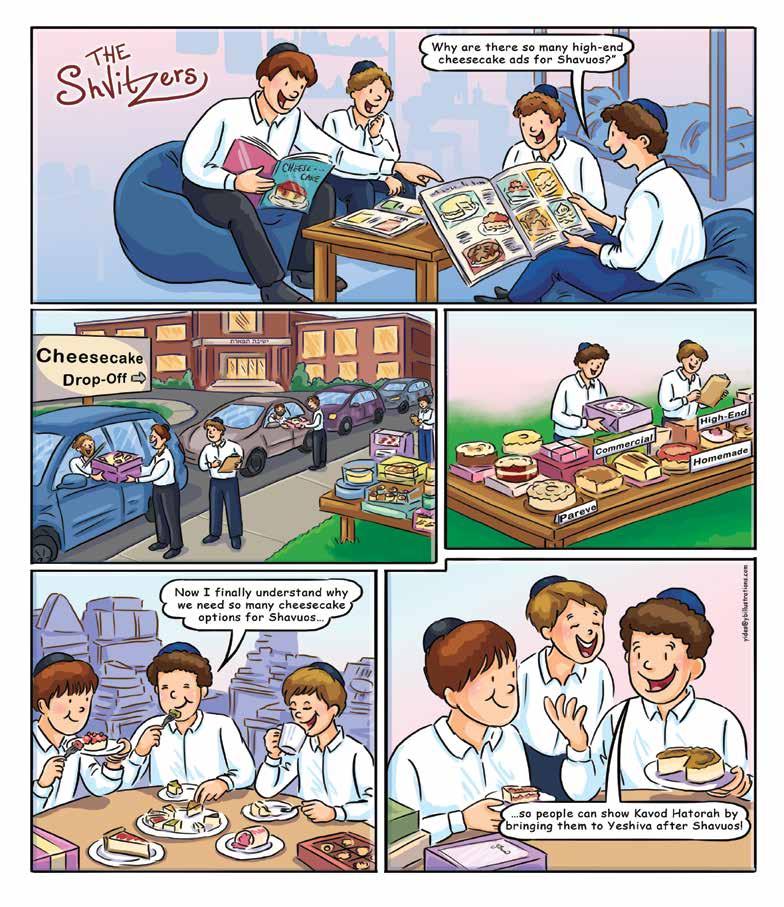

By Baruch Landa
Reviewing: The Sacrificial Service: Gestures of Flesh and Spirit
by Jonathan Grossman,
translated by Sara
Daniel
Maggid Books / Koren Publishers Jerusalem. 630 pp.
Every year, around the second or third week of Vayikra, the same thing happens in shiurim across the Orthodox world. The rebbe slows down. The pace grows careful and deliberate. The learning is serious, but something is missing: that quality of felt urgency that makes a sugya feel like it matters. We are reading laws about the height of the kevesh, about which fats belong to Hashem and which to the kohen, about the precise location of the shechita. We are reading, in other words, as if from the outside. The korbanot are a closed system, and most of us have made a quiet peace with treating them as such.
Jonathan Grossman’s The Sacrificial Service: Gestures of Flesh and Spirit, translated by Sara Daniel and published by Maggid Books, is a direct argument against that peace.
Grossman is a professor of Bible at Bar-Ilan University and senior faculty at Herzog College in Alon Shvut. He is the author of major studies on the Avraham narratives, on Megillat Ruth, and on the stories of Bereshit. This volume, which grew out of courses Grossman taught at both institutions and appears here in English for the first time, covers the first ten chapters of Vayikra. It is, at 630 pages, not a casual read. But it is the kind of book that changes how you sit with a parsha.
The place Grossman starts is a single verb. “Hiktir ” appears at the conclusion of almost every sacrificial description in the Torah, at the moment the offering reaches the mizbeach, and most translations render it as “burn.” Grossman, following his teacher Rabbi Ezra Bick, shows that is wrong. The word is not related to fire at all. It comes from “kitor,” smoke. The
mizbeach does not burn the offering. It transforms it. Flesh becomes smoke, smoke rises, and what was material is now something else entirely. Once you see that, you cannot unsee it.
That distinction reorganizes every offering it touches. The “olah,” the burnt offering, in which nothing is returned to the worshiper and nothing retained by the kohanim, is the Torah’s grammar for absolute self-giving. The worshiper gives everything. No transaction. The “shelamim,” the peace offering, in which the animal is divided among the mizbeach, the kohanim, and the worshiper who eats at
through an observation the Sages made but rarely developed: prayer is the verbal replacement for sacrifice. If prayer is verbal, then sacrifice was the non-verbal mode: gesture, convention, meaning carried not in words but in physical acts whose grammar every member of the community understood. When the Egyptians burned offerings, their priests recited elaborate verbal formulas specifying what each act meant. The Torah contains almost none of that. Grossman argues this is not an omission. It is a deliberate silence. The Torah strips out those formulas to make sacrifice something purer and
It is the kind of book that changes how you sit with a parsha.
his own table, is the idiom of covenant, a shared meal with Hashem, the language of friendship. The “chatat,” the purification offering, stands apart: where most offerings conclude with the formula “an isheh, a fire offering to Hashem,” the chatat does not, a distinction Grossman draws out carefully. Where the olah and shelamim feed the mizbeach’s transforming fire, the chatat purifies it, clearing from the sanctuary the contamination that sin and impurity deposit there. Three offerings. Three distinct gestures of approach.
The korbanot, Grossman writes, are “a wordless expression of religious experience, a gesture never articulated in precise verbal form.” He arrives at this
mizbeach, the reader begins to feel that the technicalities are not incidental to the theology. They are the theology. The specific details are the sentences. You cannot read around them.
The most striking reading in the sefer is of Nadav and Avihu, and Grossman is careful to note it builds on Rashbam. Aharon’s two sons had been among the small group granted a direct vision of the divine glory at Sinai (Moshe, Aharon and 70 zekeinim), and they carried that experience into the eighth day of the Mishkan’s consecration. When the fire of Hashem descended upon the mizbeach, they rushed out with burning firepans of incense not out of recklessness but out of conviction: this level of revelation was not for the people to see. They were guarding the fire for the kehuna. They died because on that day, Hashem’s intention was the opposite. He wanted to be seen by all of Israel, without a screen.
more demanding: a language in which what you do says what you mean.
For anyone who learns these parshiyot every year and has always felt the korbanot sitting just outside reach, this book does something rare: it reads the sacrificial laws in genuine dialogue with the Rishonim (Rambam, Ramban, Ibn Ezra) and with the major modern scholars of the literature, and extracts from the legal precision something that feels like meaning. When Grossman explains why most offerings must be male while the individual’s purification offering must be female, or why offerings from the herd associate with the Ohel Moed while offerings from the flock face the
It is a fitting end to a sefer about what it means to stand before Hashem. The question the korbanot raise, in Grossman’s telling, is not merely ritual: it is the question of who gets to approach and on what terms. Nadav and Avihu answered it wrong. The Torah spends nine chapters before that episode offering a different answer: an open invitation, addressed to every Israelite, to come near, to approach, to draw close.
The book stops at chapter ten. The tumah and tahara laws, the avodah of Yom Kippur, Kedoshim – none of it is here. What Grossman gives us is the first ten chapters of Vayikra read as if they were written to be understood. It turns out they were.


I’m a huge admirer of the innovation coming out of Israel. I think, objectively, that Israel punches far above its weight for its population. I’d say that, in terms of innovation per capita, Israel must be number one in the world by far.
- Elon Musk speaking remotely at a technology convention in Israel
U.S. and Nigerian forces teamed up to kill an ISIS leader hiding in Africa. The U.S. supplied Navy Seals, spy satellites and predator drones, while Nigeria offered a letter from a prince offering to share forty million dollars.
– Greg Gutfeld
They’ve got serious Trump Derangement Syndrome, which is actually a disease. I’m hearing it is actually a disease. It’s an honor. But I have a new way out. I’m going to propose something the opposite of what I want, and we will have massive amounts of legislation. I’m going the opposite— that whatever is bad, I’m going to go for it, and they’ll approve what’s good, finally.
– Pres. Trump talking about the Democrats
A California judge has banned a Kars4Kids jingle after ruling that the charity misleads donors. True, our investigative reporter found out that people that donate a car did, in fact, not get a kid.
- Greg Gutfeld
My show [“Seinfeld”] came on in ‘89, ‘90. “Friends” came on a few years later. I think NBC was watching my show and went, “Hey, this is working pretty well. Why don’t we try the same thing with good-looking people?” And that was a pretty good idea. I think that kind of worked.
- Jerry Seinfeld at a recent event


It gives all of the students some equity and opportunity. So if you have that student who’s not taking advanced placement classes, they can also become a scholar.
- Jericho District superintendent Robert Kravitz explaining why Jericho High School has 21 valedictorians in this year’s graduating class




In a city of 50,000, only 2,000 survived. You [do] the math – that’s 96 percent extermination.
- Pfizer CEO Dr. Albert Bourla during a talk at the Museum of Jewish Heritage talking about his parents who were Holocaust survivors
The most important thing for me was that my parents spoke to me about that. But they never spoke to me about revenge. They never told us that you should hate those that did that to us. The way that their stories were always ending was a celebration of life: “Look at us, we’re alive. We were almost dead, and we’re alive. Life is wonderful.”
- ibid.
It would be consistent with my public image if I told you that I spent the summer catching flies so we could pull the wings off the flies.
- Justice Samuel Alito at a recent conference
The story plays out the same way virtually every time. Democrats, egged on by the increasingly powerful progressive base, push some obviously unconstitutional scheme that they contended is needed to preserve “democracy.” The courts inevitably knock down the ploy…. Frustrated, Democrats ratchet up the anger, promising to “reform” the judiciary that stands in their way [by packing the Supreme Court]…. Of course, we all know that if President Donald Trump packed the court, progressives would shriek “fascism” until they had a mass stroke.
- David Harsanyi, New York Post
One of the things you learn as president is government is terrible at keeping secrets. This idea of conspiracy theories – if there were aliens or spaceships under the control of the U.S. government that we knew about, seen, photographed, I promise you some guy guarding the installation would have taken a selfie with one of the aliens.
- Barack Obama in a recent interview
Deal with it. Like I said, it’s a tool.
- Scott Borchetta, CEO of Big Machine Records, upon being booed at the Middle Tennessee State University commencement address when he mentioned AI
It’s everyone’s right in a free country to be antisemitic, but enough with hiding behind Israel or Zionism or Netanyahu. If you think, as so many do now, that when it comes to human rights, Israel is the monster country of all time, you either don’t read or you don’t care about your own hypocrisy. Because there are so many worse places. But that’s where we are these days. No Jews, no news. Ha-ha. But China, Russia, Sudan, Iran, Myanmar, Haiti, the Congo, North Korea – all way worse. And that’s how you know it’s antisemitism. It’s the inconsistency.
- Bill Maher, HBO
Democrats, where are you? If any other minority group was being talked about this way, you’d break out the kente cloth and have ten benefit concerts. But because you see that so many of your brainwashed-byTikTok constituents now have an unfavorable view of Israel, you indulge them when you should be correcting them. You don’t tell your woke idiots Israel isn’t a colonizer or an apartheid state or committing genocide, and that if you brats had to spend a week anywhere in the Middle East other than Israel, you would understand what liberalism is not. - ibid.
My house burned down. I lost everything. I can’t rebuild. As a 42-year-old man with two kids, I’ve had to move into my parents’ house, and I’m getting attacked for that?
- Surging Los Angeles mayoral candidate Spencer Pratt responding to a California journalist who wrote on X that he is not qualified to be mayor of Los Angeles since he now lives in Santa Barbara
This is journalism? This is why no decent people ever get into politics. This is why you only have goblins running everything. - ibid.
We closed down 800 fraudulent hospice centers. Think about this. If you’re running a business and the federal government closes down your main source of revenue, do you write a letter?
– Vice Pres. J.D. Vance talking about uncovering a massive fraud scheme involving hundreds of California hospices
Do you make a phone call? Seven hundred eighty of those that we’ve closed down, we haven’t even heard a single thing from anybody. That’s how bad the fraud is.
- ibid.
They can’t even make an argument that they weren’t engaged in fraud. So, to the point that when we shut them down, they wouldn’t even pick up the phone and try to turn those services back on. We’ve just looked where nobody else has been looking, whether it’s Gavin Newsom or anybody else.
- ibid.

Well, he made a mistake; it was a big mistake.
- Pres. Trump ribbing Mark Cuban at the White House when a reporter pointed out that he endorsed Kamala Harris
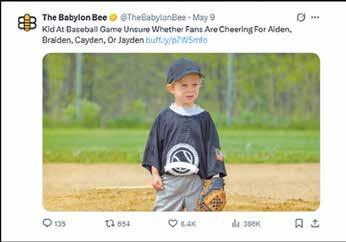


Ask yourself a question: Why are Democrats so opposed to deporting the millions of illegal migrants who flooded into the country during the Biden administration? They know that illegal immigration propelled Donald Trump to the presidency in 2016. They saw how, after winning back the White House in 2020, Joe Biden’s catastrophic open border policies paved the way for Trump’s return in 2024. And they surely must see the polls showing that Americans overwhelmingly support securing the border and deporting illegal migrants – particularly those with criminal records – even if they disapprove of the way Trump has carried out those policies.
Having lost two elections to Trump on illegal immigration, one would think that even the slowest learners would see that a more moderate course is the smart move politically. But instead, Democrats have doubled down. Why?
One possible answer: redistricting.
Right now, Democrats are losing the redistricting battle. Republicans are set to net as many as 14 GOP-leaning congressional seats across multiple states this year. With the Virginia Supreme Court decision invalidating Democrats’ effort to redraw the state’s congressional map in their favor, the party’s only major victory was the addition of five seats in California, giving the GOP a larger gain so far. And after the U.S. Supreme Court decision declaring racially segregated districts unconstitutional, Louisiana, Alabama, Mississippi, Tennessee and South Carolina all moved ahead with redistricting efforts that will add even more seats for the GOP.
And after the midterms, things are about to get worse for Democrats. Thanks to a substantial population shift from sclerotic, high-tax blue states to
By Marc A. Thiessen

more dynamic red ones, the party will suffer a huge loss of both congressional seats and electoral college votes after the 2030 Census. Several projections show that, based on Census Bureau population estimates, Texas will probably gain four seats; Florida could also gain four; and Arizona, Idaho, Utah, Georgia and North Carolina could each add one. Meanwhile, California is on pace to lose four seats; New York and Illinois could each lose two; and Oregon, Wisconsin, Michigan, Minnesota, Rhode Island and Pennsylvania could each lose one.
The impact on the electoral college will be profound: Because each state casts electoral votes based on the size of its congressional delegation, blue states are projected to lose 10 electoral votes. That means Republicans would no longer have to overcome the Democrats’ vaunted “blue wall” in the battleground states of Michigan, Pennsylvania and Wisconsin (as Trump narrowly did in 2024) to win the presidency. Republicans would only need to win all the solidly red states plus Arizona, Georgia and North Carolina to take the White House.
In other words, catastrophic bluestate governance is driving Americans to red states and thus ushering in electoral Armageddon for Democrats.
The countervailing factor for many of these states is a massive influx of illegal migrants who came into the country during the Biden administration. Illegal migrants can’t legally vote in federal elections, but they do count in the census, which means their presence affects the reapportionment of congressional seats and electoral votes.
Blue states and cities are often magnets for illegal migrants because of their sanctuary policies. In addition, during the border crisis, red-state governors such as Greg Abbott (Texas) and Ron DeSantis (Florida) sent illegal migrants by bus and plane to blue states such as New York, Illinois and California to force them to share the burden of Biden’s policies. As a result, their migrant populations skyrocketed during Biden’s border crisis.
New York City saw an influx of at least 220,000 illegal migrants between 2022 and 2024 and has an estimated
868,000 illegal migrants living in the state, according to the Center for Immigration Studies. California has some 3 million illegal migrants, more than any other state. As of 2023, Illinois had an estimated 530,000, Minnesota had 130,000, and Oregon had 143,000. Democrats need these unlawful foreign residents to offset the departure of Americans fleeing to less oppressive red-state governance. But Trump’s border policies have halted the flood of illegal migrants that Biden unleashed, while his deportation policies seek to remove them.
Democrats may hope that blue-state resistance to deportations – combined with the enthusiastic cooperation of red states – will tilt the electoral math in their favor. For example, Texas and Florida have the second- and third-largest populations of illegal migrants but also lead the nation in Immigration and Customs Enforcement arrests. Meanwhile, New York, Illinois, Oregon, Wisconsin, Michigan, Minnesota, Rhode Island and Pennsylvania are among the lowest. If red states help Trump deport illegal migrants, while blue states provide them sanctuary, that could help mitigate the impact of legal residents fleeing their jurisdictions.
Because the fact is, conventional politics alone doesn’t explain why Democrats are running headlong into public opinion by fighting Trump’s efforts to deploy ICE agents to their states and seeking to defund ICE on Capitol Hill. But add in the inescapable census math, and a method starts to emerge from the madness. For the Democratic Party, open borders are existential.


There are few things that better illustrate the hyper-partisanship currently prevailing in the American public square than the way many on the left are reacting to the planned celebrations of the 250th anniversary of the Declaration of Independence.
The fact that the person who will be presiding over the semiquincentennial festivities is President Donald Trump has cast a pall over everything being done to commemorate the birth of the American republic. Or at least it has for the many Americans who don’t merely oppose Trump but regard him with such detestation to the point at which they are prepared to oppose just about anything he does or is associated with.
And that goes double for liberal Jews who are particularly annoyed that Trump has gone out of his way to include their community in the national shindig.
Rather than merely acknowledge the annual recognition of May as Jewish Heritage Month—along with the countless other such months highlighting a myriad of groups, faiths, ethnicities and special interests—the president added on something else. He called on “Americans to celebrate their faith and freedom throughout this year, during this month, and especially on Shabbat to celebrate our 250th year.”
That announcement gave birth to “Shabbat 250”—to be held on the second Sabbath of May from sundown on the evening of Friday, May 15 until sundown on Saturday, May 16, during which Jews and non-Jews can not only take their weekly break from everyday life, but also contemplate the blessings of American liberty.
But rather than embracing this unprecedented recognition of the cornerstone of Jewish faith and its incorpo -
By Jonathan S. Tobin

ration into the fabric of the national celebration, some Jews are, predictably, deeply troubled by it.
The left-wing Jewish Council on Public Affairs, the network of Jewish community relations councils that was once associated with federations but now is an independent partisan outfit, was outraged. Amy Spitalnick, its CEO, sputtered her indignation about the alleged violation of the separation of church and state. The Forward’s coverage of the event focused primarily on the fact that “Shabbat 250” preceded by a day “Rededicate 250,” a May 17 event that will celebrate the country’s history of faith and its importance in the founding. The very notion of acknowledging the Christian faith of the founders and the role it played in establishing the nation and its traditions of liberty is odious to those who are as disturbed by the presence of believers in the public square as they are by Trump.
Indeed, as EJewish Philanthropy reported, while many Jewish groups were scrambling to put together programming
for the national Shabbat, particularly in the Orthodox community, others were distinctly nonplussed. Some, including rabbis, expressed concerns that the president’s honoring the Jewish day of rest in this manner would somehow erode religious freedom.
That is counterintuitive, but it makes sense to political liberals who have long held that Jewish security lies in erasing expressions of faith from the American public square. Indeed, many Jews seem to believe that if religion is treated as central to our national culture and identity, the fact that the majority of Americans are Christian inevitably means that Jews will suffer discrimination or be deprived of their rights.
That stance made sense in the context of the European countries of origin for the Jewish immigrants who arrived in the United States in the late 19th and early 20th centuries. In such countries where religions were enmeshed in government and law, Jews were not merely persecuted; they were considered inherently alien.
But when transplanted to America, those fears confused a rational concern about being treated as a minority whose tenuous security depended on toleration with the reality of life in the United States. While the majority culture here was undoubtedly Christian, with no sect or denomination having the privileged position as the established religion, a tradition of equality for all faiths was the rule rather than the exception.
And though antisemitism was far from unknown throughout American history, it was not a matter of law or state policy, and the few exceptions to that rule (such as Gen. Ulysses S. Grant’s infamous 1862 Order No. 11 expelling Jews from Tennessee, Mississippi and Kentucky) were quickly rescinded as illegal and unconstitutional.
Nevertheless, in the 20th century, liberal Jews were in the forefront of an effort to raise the “wall of separation” so high as to essentially relegate religion to a subordinate status within the nation’s civic culture. But while the most significant of these efforts, such as the banning of prayer from schools, eliminated situations in which religious minorities were made to feel uncomfortable, the notion that such measures made Jews safer was highly dubious, at best.
What it led to was the expectation— primarily among mostly secular Jews— that they ought never to be confronted with the faith of the majority, even in the most friendly and unthreatening circumstances. But there were two problems with this mindset that promoted a wall of separation so high as to marginalize or ostracize faith.
One was that it was naturally resented by the majority of Americans, who saw nothing wrong, let alone an expression of hostility to minorities, in the country acknowledging their faith. The
other was that such notions of a purely secular republic—in thought as well as deed—was as ahistorical as it was inimical to Jewish safety.
The founders of the American republic were at pains not to repeat the religious wars that had characterized so much of the history of modern Europe— including in England to which most of them looked for inspiration and tradition—and thus made sure not to establish any of the Christian sects to which they belonged as the official religion of the new nation. But they were far from hostile to faith.
To the contrary, the nation’s founding document, the Declaration of Independence, looks directly to faith as the wellspring of American liberty. Thomas Jefferson’s text speaks of a new nation rooted in “The Laws of Nature” and “Nature’s G-d.” Above all, it says that the rights of citizens are not the gift of any monarch or government, but rather derive from G-d. Americans are, it said, “endowed by their Creator with certain unalienable rights.”
And while the Constitution didn’t mention G-d or faith, the First Amendment that was added to it, ensured that “Congress shall make no law respecting the establishment of religion or prohibiting the free exercise thereof.”
As John Adams —who was not only a driving force behind the Declaration but became the nation’s first vice president and second president —made it clear, the edifice the founders had created was not only not inimical to faith; it depended on it. He wrote in 1798, “Our Constitution was made only for a moral and religious people. It is wholly inadequate to the government of any other.”
Yet this strong strain of reliance on faith is resisted in some quarters by those, including many Jews, who see any acknowledgement of these obvious truths to be a cause for alarm.
Indeed, something as innocuous as the notion that President George Washington prayed, is still controversial.
Just this week, The New York Times took time out from its antisemitic campaign against Israel to take a shot at one element of the America 250 celebrations by claiming that the ubiquity of the 1976 painting of Arnold Friberg, “Prayer at Valley Forge,” is an ominous sign of the rise of “Christian nationalism.”
The painting is based on something
in the popular Washington hagiography by Parson Mason Locke Weems, who helped popularize an array of myths about the first president, including the apocryphal story about his chopping down a cherry tree as a boy. It may be that there is no documentation for a specific incident in which the commander of the Continental Army dropped to his knees in the snow at Valley Forge during the darkest days of the American Revolution as the painting depicts. But by the same token, it is utterly implausible to assert that the general never prayed while trying to keep his army of starving and shivering patriots together in the winter of 1777-78. He was, after all, a religious person and an active member
Trump’s efforts to fight Jew-hatred on college campuses and threats to defund elite universities that tolerate and encourage the targeting of Jews were vital to Jewish security. But they were met with opposition from some of the same liberals who are angry about his honoring Sabbath observance. They are so immersed in partisan hatred for him that they’d rather preserve the reign of woke diversity, equity and inclusion (DEI) on campuses that grants a permission slip to antisemitism than give him credit for seeking to end it.
That is a reminder that the absence of faith in the public square is a far greater problem for Jews in 21st-century Ameri-
By including Jews and Shabbat in the celebration, Trump is, as he has done throughout his two terms in the White House, making it clear that Jews are not isolated or alone in this difficult time.
of the Anglican Church, rather than an irreligious Deist as some claim.
Yet those who are determined to preserve a dubious freedom from religion rather than the freedom of religion that the founders deeply believed in are offended by the use of the painting in the government’s America 250 celebrations.
Trump’s special attention to Jewish heritage can also trace its origins back to Washington’s 1790 letter to the Hebrew Congregation of Newport, Rhode Island. In it he promised the small community of Jews then living in the United States that the American republic “gives to bigotry no sanction, to persecution no assistance,” and expressed the hope: “May the children of the stock of Abraham who dwell in this land continue to merit and enjoy the good will of the other inhabitants—while every one shall sit in safety under his own vine and fig tree and there shall be none to make him afraid.”
That Trump should honor Shabbat in this manner is also not merely in keeping with American traditions, but an important contribution to the fight against the surge of antisemitism that has made itself felt since the Hamas-led Palestinian-Arab terror attacks on Israel on Oct. 7, 2023.
dren are Jewish. By including Jews and Shabbat in the celebration, Trump is, as he has done throughout his two terms in the White House, making it clear that Jews are not isolated or alone in this difficult time.
By acknowledging that “the contributions of Jewish Americans have shaped our past, have strengthened our communities and will continue to inspire American greatness for generations to come,” Trump is doing more to fight antisemitism than any effort to erase Christianity from national forums.
ca than any lowering of the metaphorical wall of separation. It is the aggressive secularism and hostility to faith of leftists whose toxic ideologies are the engine of contemporary antisemitism that threatens Jews today far more than an acknowledgment that Christianity is an important element of the American political tradition. While the neo-Marxist left that encourages mobs to chant for Jewish genocide (“From the river to the sea”) and terrorism against Jews everywhere (“Globalize the intifada”), it is evangelical Christians who are the greatest defenders of Israel and Jewish rights.
It is true that there is a growing hostility to Jews, Judaism and Israel among a minority on the American right, and given expression by antisemitic podcasters like Tucker Carlson, Candace Owens and the neo-Nazi groyper Nick Fuentes. They might well be termed “Christian nationalists” who are determined to discriminate against Jews. But what better riposte to their hateful messages could there be than Trump’s embrace of Shabbat as part of “America 250?”
It is not just that his daughter, Ivanka, son-in-law, Jared Kushner, and their chil-
Jews need not be frightened by honoring America’s religious heritage. To the contrary, by shining a spotlight on Shabbat, Trump is honoring the growing interest in the day of rest among Christians as well as Jews. Even as Carlson, Owens and Fuentes, abetted by Megyn Kelly, stoke the fires of hatred against Jews, others, such as the late Charlie Kirk, espoused an affinity for Judaism and for Shabbat observance —the subject of his last book, Stop, in the Name of G-d: Why Honoring the Sabbath Will Transform Your Life, which was published posthumously. Observant Jews have long understood that, as the writer Ahad Ha’am (Asher Ginzburg) wrote, “More than the Jews have kept the Sabbath, the Sabbath has kept the Jews.” Many Christians are now realizing that it can help them, too, and that is something that Jews of all denominations and beliefs should welcome.
Trump’s narcissism and love of grandiose gestures make it hard for his political opponents to make their peace with the fact that the Declaration’s anniversary will be celebrated on his watch. But instead of opposing “Shabbat 250,” the Jewish community should recognize and be grateful for this timely rebuke of the antisemitism growing on the left and on the far-right.
Just as faith has always been an important element of the American experiment, the same is true of the Jewish contribution to the nation. Some would prefer to ignore or deprecate the flag-waving patriotism of the republic’s 250th birthday party out of spite against Trump or devotion to an ahistorical and destructive secularism as well as separationism. But anyone who cares about America’s civil religion of liberty should join with Trump in celebrating Shabbat and honoring the role of faith in preserving a republic dedicated to freedom.
Jonathan S. Tobin is editor-in-chief of JNS (Jewish News Syndicate).
By Avi Heiligman


Memorial Day is observed on last Monday in May as a somber federal holiday to honor those who died while serving in the U.S. Armed Forces. Parades and services take place across the country in traditions that date back to the Civil War. At cemeteries, flags are placed by the graves of those killed while in uniform. However, the specific stories of Jewish servicemembers who made the ultimate sacrifice are often overlooked. It is vital that we learn about these fallen heroes.
The first Jewish person to die during the Revolutionary War was a militiaman named Francis Salvador. Born in London, Salvador was a Sephardic Jew who moved to South Carolina and, in 1774, became the first elected Jewish official in the colonies when he served in the South Carolina Provincial Congress. Known as the “Southern Paul Revere,” he rode 30 miles to warn colonists of imminent danger from Cherokee warriors. Salvador then joined 300 militiamen under Major Andrew Williamson to repel an attack from Loyalists and their allies. On August 1, 1776, Salvador was caught in an ambush, shot three times, and fell wounded from his horse. The enemy reached him before his unit could, mortally wounding the 29-year-old. Major Williamson found him 45 minutes later. Salvador was barely conscious when he was told that the enemy had been beaten. His dying words
reportedly were “I’m glad of it.”
Of the roughly 10,000 Jewish soldiers who served on both sides of the American Civil War, an estimated 500 to 600 perished. Leopold Newman was a New York attorney who joined others in forming the 31st New York Regiment. In 1862, he was home on leave when he was promoted to lieutenant colonel and returned to the front to fight under General Sedgwick during the Chancellorsville campaign. On Sedgwick’s orders, and with the regiment’s banner in one hand and a sword in the other, he charged up Marye’s Heights. Newman was struck by a shell that shattered his foot and leg. Gangrene set in, and he was evacuated to Washington in the hope he could recover. However, he took a turn for the worse and was lying on his deathbed when President Lincoln reportedly visited him. The story goes that the commander-in-chief promoted him to brigadier general, although there is no official record of the commission. Newman was buried in Brooklyn, New York, with full military honors.
Approximately 11,000 Jewish service men and women died in the line of duty during World War II. Alfred B. Weiner of New York fell mortally wounded while his unit, the 109 th Infantry Regiment, 28th Infantry Division, was fighting for France in 1944. On August 6, his company was stopped by enemy machine gun fire that poured deadly rounds into one
of the unit’s flanks. Wiener, who was on the opposite flank, volunteered to take his machine gun and clear out the enemy. German soldiers shot and missed him as he placed his gun into position and began firing. The Jewish soldier successfully eliminated four Nazis manning the weapon while two others surrendered. Another enemy machine gun unit then tried to set up to fire at the Americans, but Weiner took them out as well. The Americans then began advancing when two more enemy soldiers came rushing at him. This time, however, his machine gun jammed so he picked up a carbine and killed the Nazis. Later that day, he fell mortally wounded. Private First Class Weiner was posthumously awarded the Distinguished Service Cross for his actions during the battle.
Combat in the 21 st century has seen American service members stationed across the globe fighting a variety of enemies. Their targets are often funded by terrorist organizations or drug cartels. Since 9/11, Al Qaeda and other terrorist groups have been the primary enemies of American operations. Coast Guardsman Nathan Bruckenthal of Stony Brook, New York, was killed in a waterborne suicide attack in the Persian Gulf during the Iraq War. On April 24, 2004, a dhow (a sailing vessel) approached an oil terminal, and Bruckenthal and six Americans boarded a small boat to intercept the enemy ves-
sel. The terrorist boat exploded, killing Bruckenthal, PO1 Michael J. Pernaselli, 27, of Monroe, N.Y., and PO2 Christopher E. Watts, 28, of Knoxville, Tennessee, and wounding three sailors and another coast guardsman. Al Qaeda claimed responsibility for the attack. Bruckenthal, the first Coast Guardsman since the Vietnam War killed in action, was posthumously awarded the Bronze Star for his role in preventing another attack. He is buried at Arlington National Cemetery, and the Sentential Class Cutter, USCGC Nathan Bruckenthal, was named in his honor.
As the United States prepares to celebrate its 250th birthday, it is important to remember the sacrifice of those who gave their lives in the service of their country. From Francis Salvador in the 18 th century and Leopold Newman in the 19th century to Alfred Weiner in the 20th century and Nathan Bruckenthal in the 21 st century, these service members represent a lineage of Jewish patriotism in service of the United States that spans four centuries. By recounting their stories, we ensure that these fallen heroes are never forgotten.
Avi Heiligman is a weekly contributor to The Jewish Home. He welcomes your comments and suggestions for future columns and can be reached at aviheiligman@gmail.com.
DU N DURT
Power & Soft Washing
We clean siding, stucco, decks, driveways, concrete, pool patios, pavers & sidewalks. Say goodbye to grime, mold & allergens!
Call/WhatsApp: 718-688-2964
Email: dundurtny01@gmail.com
THE LEATHER SHOPPE
The spot for all your custom leather Judaica. Tallis/tefillin bags, lulav and esrog bags, havdallah sets, challah covers, shtenders, pesach sets, matzah/afikomen bags. WhatsApp: (732) 523-0007 or email: theleathershoppe732@gmail.com for a full catalog. We ship.
PEACEFUL PRESENCE STUDIO
Men’s private yoga, Licensed Massage & Holistic Health Guidance 436 Central Ave, Cedarhurst Info. & free video training www.peacefulpresence.com 516-371-3715
HAIR COURSE:
Learn how to wash & style hair & wigs. Hair and wig cutting, wedding styling Private lessons or in a group Call Chaya 718-715-9009
GERBER MOVING
Full Service Moving Packing Moving Supplies
Local Long Distance. Licensed Insured 1000’S Of Happy Customers Call Shalom 347-276-7422
HANDYMAN AVAILABLE
For big or small jobs, Sheetrock, carpentry, painting, electrical, plumbing, install & repair appliances Call Ephraim at 347-593-4691
MANAGEMENT STAFF WILL ASSIST you with: * Obtaining Medicaid and Pooled Income Trust
* In-home Assessments, Individual and Family Counseling
* Securing reliable home care assistance
* Case and Care Management services
Dr. S. Sasson, DSW, LCSW (718) 544- 0870 or (646) 284-6242
ZEVIZZ WOODTURNING JUDAICA
Challah knifes, batei mezuzah, besamim holder, kiddish cups, havdalah candle holders, yad for sefer torah, pens, stenders, bowls and more 952-356-2228
MY MOTTO IS DON’T WAIT TO buy real estate Buy real estate and wait Your realtor for life 516-784-0856 Alexandra at Realty Connect USA
Massage Therapy Healing. Relief from muscle discomfort and pain. An escape to relax. It’s a wonderful present for yourself, friend, and family. Contact Yossi at (347) 722-0068
UP-AND-COMING
Jewish community in Inwood, NY! Multiple apartments available at 385 Bayview Ave, Inwood, NY. For more information, please text: 347-606-9342
REAL ESTATE MANAGEMENT Services – Do Not Manage Your Properties Alone! Contact Aliyah Suites for all your real estate management needs and affordable office space near you! (516) 366-1049
Management@aliyahsuites.com Marc Jeret (MJ) Team Leader & Licensed Real Estate Agent
























Prime Restaurant Location For Lease.
For more information: Call/Text/WhatsApp Owner: (516) 206-1100
A multi-tasker needed for general office work. The ideal candidate is someone who is detail-oriented, responsible, and can take ownership. Looking for someone who is eager to learn, and expand his/her skill set while possessing the ability to work independently and as part of a team. Experience with Excel required. Five Towns location. In-office position only, not remote. Please send resume to 5tpart.timecareer@gmail.com
UPSCALE EVENING & Ready-to-Wear Boutique opening on Central Ave seeks fashion-forward, friendly sales associates with retail experience. Full-time & Part-time. Text/WhatsApp 718-310-8550.
ARE YOU A DOULA? Or have a passion to be? Come join our great referral group and get access to a vast new clientele through Medicaid. JUST CALL 347-668-7886
A Five Towns Real Estate Company is seeking a full-time Bookkeeper. The right candidate must be proficient with QuickBooks and Excel. They must also be self-motivated, organized, detail oriented, reliable, and able to work independently or as a team player. Warm, frum office environment with excellent salary & benefits. Please email resume to HR@capsprop.com
SEEKING ELEMENTARY TEACHERS
For current school year, starting from end of January: Seeking assistant teacher for General Studies. Candidate should have skills to take over for teachers if needed. Far Rockaway area boys’ school, M-Th, PM hours, strong support. Excellent salary. Possibility to continue for next year. Send resume to teachersearch11@gmail.com





















SHEVACH HIGH SCHOOL
Is seeking experienced teachers for the following positions:
• ELA • First Aid Please send your resume to mribowsky@shevachhs.org
JEWISH CENTER SEEKS
Administrative Assistant with strong office/computer skills and experience working with toddlers & preschoolers ages 1–4. Responsibilities include office administration, social media/ PR, program support, substitute coverage/aftercare in preschool classrooms, and event setup. Knowledge of Jewish traditions is a plus. Full-time, Mon–Fri with occasional evenings/Sundays. Send resume to admin@jewishelc.org.
JEWISH PRESCHOOL IN Merrick seeks warm, loving, experienced toddler teachers for 2-year-olds, preschool teachers, and assistant teachers for children ages 18 months–4 years for the 2026–2027 school year. Mon–Thu 9–3, Fri 9–2. Email admissions@jewishelc.org or call 516-833-3057 ext. 110.
JOIN THE ZAREINU TEAM
Our small, special education classes are in yeshivas and Bais Yaakov’s in Far Rockaway and the Five Towns. For the 2026-2027 school year, Zareinu is seeking:
- AM Rebbe for a boys 4th -5th class - P/T, (AM and PM positions) Morah for middle school girls classes
- PM Special Education Secular Studies Teacher for middle school boys class - P/T or F/T Assistants for both boys classes and girls classes
Highly competitive salary and caring, supportive administration. Send resume to info@zareinu.org / or call (718) 406-8343, Ext. 229 for further information.
CARE MANAGER
Remote (requires in-person home visits in NY)
Support families facing serious medical or emotional challenges. Provide guidance, advocacy, and resource coordination from home or on-site. Training provided. BA or 2 years Care Management required Apply online: www. chailifeline.org/careers or email hr@chailifeline.org
LOOKING FOR BT
Monday-Thursday 4-6 or 7
Friday afternoon after 1 and Sunday after 12
Please contact Malky 855-316-2700 ext 123 Or email malkak@supportiveaba.com
STAFF FOR EARLY CHILDHOOD
Center The Marion & Aaron Gural JCC Early Childhood Center is hiring Assistant Teachers and Substitute Teachers for the 2026-2027 school year.
Please send resumes to JCC.Nursery@guraljcc.org or call (516) 239-1354
REGENTS EXPERT
Tutoring regents in Algebra and Geometry A Darchei Torah instructor. Guaranteed results Text 347-491-8045
WhatsApp 347-767-1755
MDS REGIONAL NURSE
5 Towns area Nursing Home management office seeking a Regional/Corporate level MDS Nurse to work in our office.
Must be an RN. Regional experience preferred. 2-3 years MDS experience with good computer skills required. Position is Full Time but Part Time can be considered. Great Shomer Shabbos environment with some remote options as well. Email: officejob2019@gmail.com

Text 516-303-3868 with a time slot of your choice to be careful on lashon hara. Be a part of the 1,000 people for klal yisroel!
BEIS HAMEDRASH CONG. Chasdei Uvois Oshpitzin
Talmidei chachomim are willing to learn mishnayos, say kaddish and be the shliach tzibbur to daven for the umid on the yartzeit yom hashanah of your parents or close relatives or loved ones To arrange please call Rabbi Miller 917-445-6220
Five Towns non-profit seeks an organized experienced hourly (25-30 hrs/week) office staffer to execute/manage tasks such as:
Billing/Receivables/CollectionsVendor Payments/Payroll Bank Management - Customer Relations & Records Management
Must be proficient using Excel and other PC tools, and be comfortable interacting with customers & vendors. Will be trained to use our proprietary software tools. Email a current resume and references to FIVETOWNJOB@GMAIL.COM









Did you ever notice that the word truth has the word Ruth in it? Yup, there it is, front and center. And as it implies, there are hidden truths in the Book of Ruth.
In fact, the Hebrew pronunciation for Ruth is “Root.” Which also makes one think that the root of truth could be Ruth.
So what truths are hidden in this very short but powerful story we read on Shavuos?
Well, once upon a time, there was a Moabite princess who opted out of palace, power, and prestige and all the trimmings! She opted instead for plow, parcel, and planter. Which ultimately gave her a lot more prestige and blessing…
Yes, this wealthy Moabite woman emulated our great patriarch. She left her father’s land, her home, and her birthplace – has a familiar ring, yes? And did all that, without G-d’s urging. And she didn’t even have a crowd accompanying her, either.
You’ve got to be impressed.
And if that doesn’t do it. How about
By Rivki D. Rosenwald Esq., LMFT, CLC, SDS

this? She left, clinging not to her mother but to her mother-in-law! You’ve got to admit that’s admirable.
Ruth somehow saw past the superficial state of things to something deeper.
She embraced Judaism when there was no particular incentive in her sit-
dren through 10 years of marriage, and yet she knew she was meant to be part of the Jewish nation.
So, what is this hidden truth?
There’s more happening behind the scenes than we recognize. We “react” but what we really need to do is go back and
What looked “impossible” became “I’m possible.”
uation one could see inspiring her. No handsome prince on a steed. No pot of gold luring her. Not even a college-based kiruv program winning her over.
It seems she possessed a deeper wisdom, some inner ability, to see the beauty in the religion even through all her suffering. She lost her husband and had no chil-
“re-act.” That is what Ruth did. Then she could see what looked “impossible” became “I’m possible.”
Ruth moved forward. She realized her first husband’s destiny, his “history,” was “his story” but was not, in fact, “her story”. And she, thus, wrote her own. She expressed her best qualities and wound
up the great-grandmother of King David and the eventful Messiah
We all have the opportunity to shine. Let’s learn from Ruth not just to “picket” against what we don’t want. But also, to make active choices and identify a path we do want and “pick it!” And then the hidden secret that emerges is that G-d will kick in and complete what needs to get done.
There may very well be a “savior” like David in all of us. At least you’ll elevate or “save your” soul trying to find out.
Have an inspired Shavous!
Rivki Rosenwald is a Licensed Marriage & Family Therapist working with both couples and individuals and is a certified relationship counselor. Rivki is a co-founder and creator of an effective Parent Management of Adolescent Years Program. She can be contacted at 917-705-2004 or at rivkirosenwald@gmail.com.