
PADDLE UP
Valley of the Sun Jewish Community Center expands women’s open pickleball
Arizona House affirms Israel's sovereignty over West Bank
Valley of the Sun Jewish Community Center expands women’s open pickleball
Arizona House affirms Israel's sovereignty over West Bank
MALA BLOMQUIST | MANAGING EDITOR
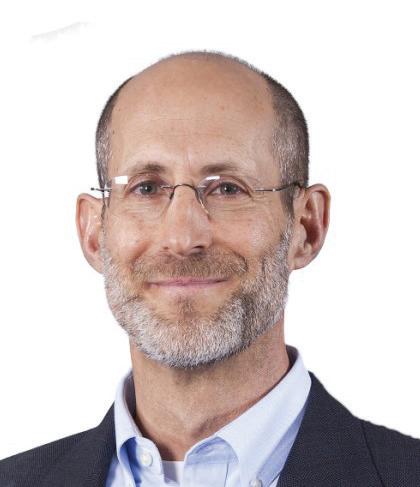
Having spent more than 30 years as a rabbi and over two decades at the helm of Congregation Beth Israel (CBI) in Scottsdale, Rabbi Stephen Kahn has personally shaped the lives of generations of congregants, both within CBI’s walls and beneath the towering pines at Camp Daisy and Harry Stein.
Ordained in 1995 at Hebrew Union College–Jewish Institute of Religion in New York, Kahn arrived in Scottsdale in July 2003 as a young rabbi with big ideas and deep roots in the Reform camp movement. Over 23 years, he has become synonymous with the congregation’s commitment to youth engagement, Israel advocacy, historic stewardship and community leadership.
“In some ways, I thought they were kind of nuts to hire me,” joked Kahn. “Even though I’d been out of school for eight years and was associate rabbi in San Francisco and Denver, I thought they were crazy, but I saw huge potential because it’s a historic synagogue with deep roots. I did get pushback on certain things, but they were also really open.”
One of the first things Kahn did that drew pushback was to move Friday night services earlier, so more families and young adults could attend.
More than 700 Jewish leaders, activists, students and non-Jewish community partners converged in solidarity at the Omni Tempe Hotel at Arizona State University (ASU) on Feb. 27 for the second annual Rising Above Together: Conference on Antisemitism and Hate, hosted in partnership by the Anti-Defamation League (ADL) Desert Region and ASU.

“We are not here just because there’s a problem. We are here because we refuse to be a bystander to it,” said Jolie Brislin, ADL Desert regional director. Antisemitism is a warning sign, and when it rises, other forms of hate rise with it. This is not a Jewish issue. It’s a community issue.”
Brislin announced the launch of ADL’s one-of-a-kind AI assistant for K-12 educators, built with decades of research and expertise to help classroom leaders navigate antisemitism and Holocaust education with confidence. She also laid out ADL’s plan to advocate for comprehensive hate crimes legislation this session.
“Strong legislation protects communities, equips law enforcement and sends a clear message about who we are,” Brislin said. “That is why we are working to pass comprehensive hate crimes legislation and save worship zones this session, so every person can pray and live freely.”
SEE ADL, PAGE 3
But when he wanted to build a mikvah, the response was positive. He explained they used to have to fly converts to Los Angeles because there were no nonOrthodox mikvahs in the Valley.
SEE KAHN, PAGE 2
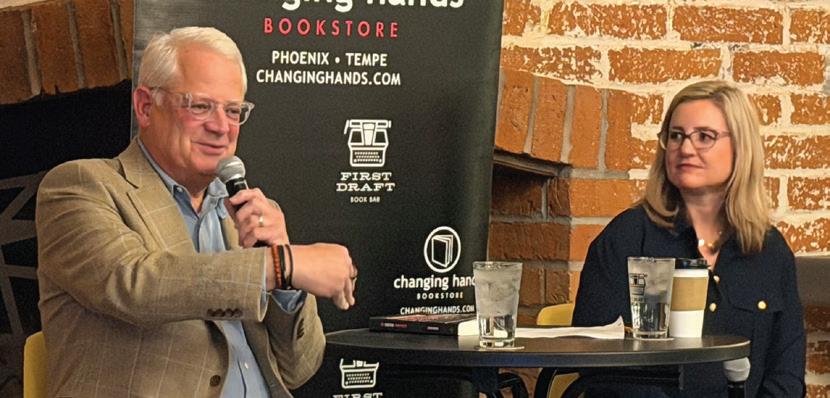
Steve Israel, a former U.S. representative from New York, visited the Changing Hands Bookstore on Feb. 16, for a sit-down discussion with Phoenix Mayor Kate Gallego regarding his newest book. See page 13.


about her Judaism with her fellow council members and speaking out for her rights
Or, during the summer, they would go to Lake Saguaro, which Kahn said was a “little sketchy because there was no real place to go into the water besides jumping off a pier.”
CBI also owns and operates Camp Daisy and Harry Stein (formerly Camp Charles Pearlstein) in Prescott, the only Jewish overnight camp in Arizona. For Kahn, who grew up in the Reform camp system, camp is not optional programming; it is foundational.
He remembered an early board meeting where there were some fires in Prescott, and the members were asking if they should even be in the camp business.
January 6
“I remember giving this pep talk about why we should absolutely be in the camp business and that we’re not selling or closing camp,” said Kahn.
January 20
January 6
February 3
January 20
February 17
August 25
September 1
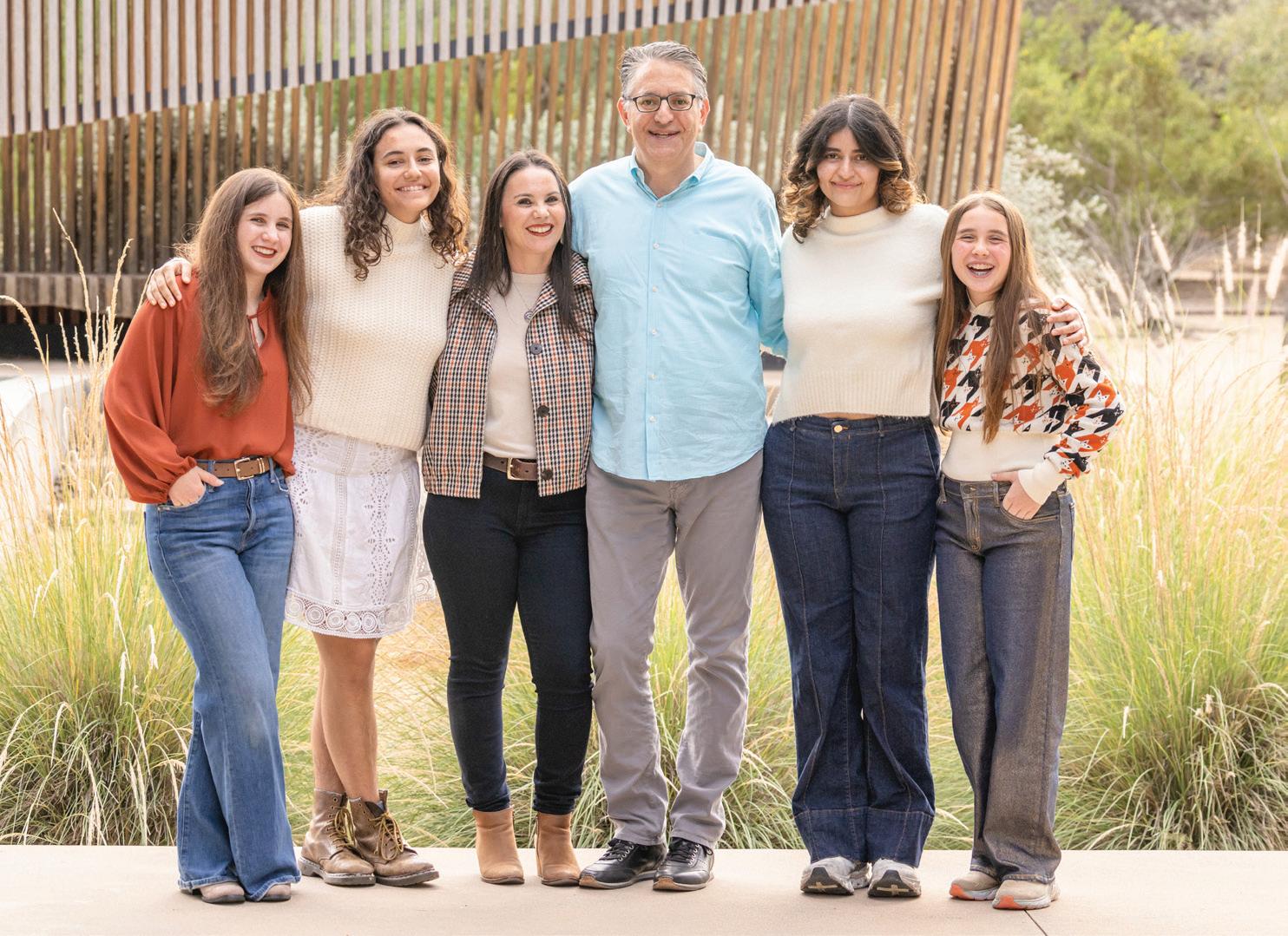
she earned her position, Meyers said.
had to apply and demonstrate that she had something valuable to contribute, he said.
August 25
September 8
September 1
September 15
the camp’s land after an act of Congress allowed CBI to acquire it from the Prescott National Forest.
March 10
February 3
February 17
March 24
March 10
March 31
March 24
April 7
March 31
April 21
April 7
May 5
October 6
“If you talk to Rabbi Kahn, he will tell you that Jewish summer camp is the key contributor to having a strong, engaged Jewish adult,” said Wendy Carriere, president of CBI and a board member for more than a decade. Her children attended Camp Stein, and she admitted that camp was the connector that brought her back into the Jewish community.
October 13**
October 20
November 3
When COVID forced the camp to close and deposits were refunded while expenses continued, some again questioned the financial wisdom of maintaining such a large commitment.
April 21
May 19
June 9
May 5
May 19
July 14
June 9
August 4
July 14
August 18*
August 4
August 18*
November 10
November 17
September 8 September 15 October 6 October 13** October 20 November 3 November 10
December 1
“We made a collective decision to be in the camp business,” said Marc Lerner, past president and former camp director. “If you don’t have the support of clergy and a congregational board, it doesn’t work. He’s been a driver and a major proponent. He’s a camp guy.”
November 17
December 15
December 1
December 15
of
During Lerner’s presidency, he, Kahn and immediate past president Steve Bandler helped finalize the purchase of
“She’s on the council because she deserves to be on the council,” he said.
To become a council member, Stern had to apply and demonstrate that she had something valuable to contribute, he said.
Stern is creating a life and career as a member of her community, which makes her a great addition.
Beyond infrastructure, the long-term impact is visible in the sanctuary. “I’ve seen those kids gather on the bimah with their little Torahs,” said Steve Chanen, a fourth-generation member and past president, “and I’ve seen them grow up, lead services, get married and become part of our temple.”
Chanen believes Kahn understood the importance of being able to relate to children from the very beginning. “Of the many things a senior rabbi needs to be good at, being able to relate to kids is the most important,” he said. “And the kids absolutely love him.”
about her Judaism with her fellow council members and speaking out for her rights
She already has some practice at
“One time, I was in class and someone called me the R-word and I told him not to. The teacher was in the hallway and another student repeated the word,” she said. Rather than letting the situation go, she told her theater teacher, who was able
She already has some practice at
“One time, I was in class and someone called me the R-word and I told him not to. The teacher was in the hallway and another student repeated the word,” she said. Rather than letting the situation go, she told her theater teacher, who was able
“If someone has a disability, saying the R-word is like saying the F-word,”
“If someone has a disability, saying the R-word is like saying the F-word,”
While performing in the musical “Hairspray,” she had another occasion to tangle with the offensive word, which
While performing in the musical “Hairspray,” she had another occasion to tangle with the offensive word, which
“That’s really bad and my friend said it on stage. I was not OK with that, so I went to the director and told her it was a bad word for people with disabilities, but she wouldn’t take it out,” Stern said.
old enough?” she said. “They’re camp kids marrying camp kids.”
“She’s on the council because she deserves to be on the council,” he said. Stern is creating a life and career as a member of her community, which makes her a great addition.
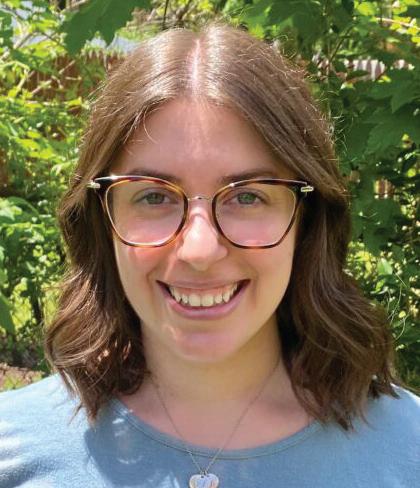
Stern graduated from McClintock High School in Tempe last year and now attends Glendale Community College, with a focus on dance. She is a regular performer at Detour Company Theatre, a Scottsdale theatre company for adults with intellectual, developmental and physical disabilities.
Stern graduated from McClintock High School in Tempe last year and now attends Glendale Community College, with a focus on dance. She is a regular performer at Detour Company Theatre, a Scottsdale theatre company for adults with intellectual, developmental and physical disabilities.
“That’s really bad and my friend said it on stage. I was not OK with that, so I went to the director and told her it was a bad word for people with disabilities, but she wouldn’t take it out,” Stern said.
Kahn’s focus on engaging younger members continues into adulthood. Maddie Burke, who grew up at CBI, went to Camp Stein and had her bat mitzvah with Kahn, now runs ATID AZ, the congregation’s young professionals’ group for ages 22 to 36.
She let her mother know about the conflict and they were able to convince the director of the need to remove the word from the script.
She let her mother know about the conflict and they were able to convince the director of the need to remove the word from the script.
“My friend Al was next to me when I told the director and he gave me the biggest hug ever and said that he loved me so much,” Stern said. Sadly, Al died in a car crash on Oct. 24, 2021.
“Our relationship really grew when he supported me in wanting to start ATID,” Burke said. “He immediately cleared his schedule. We had a standing appointment once a month. He helped us get members, plan it out and provided all the support we needed.”
In fact, when Stern attended her first council meeting in January, she couldn’t wait to tell people of her involvement with Detour and share information about its upcoming shows.
That generational continuity is beginning to bear fruit. Carriere said she is delighted when she scrolls social media and sees former campers getting married. “I’m like, oh my gosh, are they
In fact, when Stern attended her first council meeting in January, she couldn’t wait to tell people of her involvement with Detour and share information about its upcoming shows.
“There’s no question that she is going to thrive,” Meyers said. “She’s very gregarious and passionate about the things that matter to her.”


Heart Can’t Even Believe It: A Story of Science, Love and Down Syndrome,” Silverman’s book about her daughter. When Gesher’s speakers’ bureau, Damon Brooks & Associates, was asked to find a speaker about Down syndrome for an event this spring, Hummell first asked Silverman to speak, thinking Stern might be too young.
Heart Can’t Even Believe It: A Story of Science, Love and Down Syndrome,” Silverman’s book about her daughter. When Gesher’s speakers’ bureau, Damon Brooks & Associates, was asked to find a speaker about Down syndrome for an event this spring, Hummell first asked Silverman to speak, thinking Stern might be too young.
They decided instead that Stern should tell her own story; it’s a real bonus that she is not afraid of public speaking.
“That was hard; it’s very hard to get emotions out and I was very, very upset,” she said.
“My friend Al was next to me when I told the director and he gave me the biggest hug ever and said that he loved me so much,” Stern said. Sadly, Al died in a car crash on Oct. 24, 2021.
“That was hard; it’s very hard to get emotions out and I was very, very upset,” she said.
On the recent anniversary of his death, Stern made a cake and took it to the crash site.
On the recent anniversary of his death, Stern made a cake and took it to the crash site.
“I don’t know how I did it without crying. I’m so proud of myself,” she said.
ATID — which means “future” in Hebrew, a name Kahn helped choose — fills what Burke calls the post-college “gap” in Jewish life. “We didn’t want it to be, ‘Come back when you have kids,’” she said. “We wanted people to continue on and find connection.”
“There’s no question that she is going to thrive,” Meyers said. “She’s very gregarious and passionate about the things that matter to her.”
Stern looks forward to sharing insights
Stern looks forward to sharing insights
Amy Hummell, executive director of Gesher Disability Resources, agreed that Stern is a good fit for ADDPC because of her ability to self-advocate.
“I don’t know how I did it without crying. I’m so proud of myself,” she said.
Amy Hummell, executive director of Gesher Disability Resources, agreed that Stern is a good fit for ADDPC because of her ability to self-advocate.
Hummell co-hosted a book event with Meyers a few years ago for “My
Hummell co-hosted a book event with Meyers a few years ago for “My
12701 N. Scottsdale Road, Suite 201, Scottsdale, AZ 85254 Phone: 602.870.9470 | Fax: 602.870.0426 | editor@jewishaz.com | advertising@jewishaz.com subscriptions@jewishaz.com | www.jewishaz.com
Phone: 602.870.9470 | editor@jewishaz.com | advertising@jewishaz.com subscriptions@jewishaz.com | www.jewishaz.com
PUBLISHER
PUBLISHER Jewish Community Foundation of Greater Phoenix
12701 N. Scottsdale Road, Suite 201, Scottsdale, AZ 85254 Phone: 602.870.9470 | Fax: 602.870.0426 | editor@jewishaz.com | advertising@jewishaz.com subscriptions@jewishaz.com | www.jewishaz.com
Jewish Community Foundation of Greater Phoenix
PUBLISHER
ADVERTISING SALES CONSULTANT
SENIOR ACCOUNT EXECUTIVE Jodi Lipson | 602.639.5866 jlipson@jewishaz.com
Jodi Lipson | 602.639.5866 jlipson@jewishaz.com
SUBSCRIPTIONS
Jewish Community Foundation of Greater Phoenix
GENERAL MANAGER Rich Solomon | 602.639.5861 rsolomon@jewishaz.com
GENERAL MANAGER
ASSOCIATE PUBLISHER Rich Solomon | 602.639.5861 rsolomon@jewishaz.com
Rich Solomon | 602.639.5861 rsolomon@jewishaz.com
MANAGING EDITOR Mala Blomquist | 602.639.5855 mblomquist@jewishaz.com
MANAGING EDITOR Mala Blomquist | 602.639.5855 mblomquist@jewishaz.com
STAFF WRITER Josh Bootzin | 602.639.7066 jbootzin@jewishaz.com
MANAGING EDITOR Mala Blomquist | 602.639.5855 mblomquist@jewishaz.com
STAFF WRITER Shannon Levitt | 602.639.5854 slevitt@jewishaz.com
STAFF WRITER
Shannon Levitt | 602.639.5854 slevitt@jewishaz.com
ADVERTISING SALES CONSULTANT Jodi Lipson | 602.639.5866 jlipson@jewishaz.com
ACCOUNT EXECUTIVE Emily Stoddard | 602.639.7036 estoddard@jewishaz.com
602.870.9470 x 1 subscriptions@jewishaz.com
SUBSCRIPTIONS 602.870.9470 x 1 subscriptions@jewishaz.com
SUBSCRIPTIONS 602.870.9470 x 1 subscriptions@jewishaz.com
GRAPHIC DESIGNER Ebony Brown | 410.902.2333 ads_phoenixjn@midatlanticmedia.com
GRAPHIC DESIGNER Ebony Brown | 410.902.2333 ads_phoenixjn@midatlanticmedia.com
GRAPHIC DESIGNER Ricki Urban | 602.870.9470 x 2 advertising@jewishaz.com
They decided instead that Stern should tell her own story; it’s a real bonus that she is not afraid of public speaking.
“It’s not the same when someone tries to tell a person’s story for them,” Hummell said.
“It’s not the same when someone tries to tell a person’s story for them,” Hummell said.
Additionally, helping people with disabilities find jobs was one of the reasons for acquiring the bureau. Unemployment in the disability community is upwards of 75% and of that percentage, 75% are ready, willing and able to work — but haven’t been given the opportunity, Hummell said.
Additionally, helping people with disabilities find jobs was one of the reasons for acquiring the bureau. Unemployment in the disability community is upwards of 75% and of that percentage, 75% are ready, willing and able to work — but haven’t been given the opportunity, Hummell said.
“People have it in them to speak up but don’t know how, and often they’re not cheered on. Sophie has family support
“People have it in them to speak up but don’t know how, and often they’re not cheered on. Sophie has family support
Eckstein, Publisher | 1981-2013 Cecil Newmark, Publisher | 1961-1981 Pearl Newmark, Editor | 1961-1981 M.B. Goldman, Jr., Founder | 1948-1961 PROUD MEMBER OF


“We remain in a pivotal moment here in our state’s, and our nation’s, history,” said Arizona Gov. Katie Hobbs, who recently formed a Jewish advisory council to help inform her leadership against targeted hate crimes. “Let us recommit ourselves to speaking up, defending our neighbors from hatred and antisemitism and working to end it once and for all.”
Following the governor’s opening remarks, the event transitioned into a discussion on why large language models (LLM) struggle with antisemitic bias, led by Morgan Clark, ADL associate director of research, policy and advocacy, and Seth Rachlin, ASU assistant teaching professor, School of Social and Behavioral Sciences.
Clark explained how the many different AI tools and chatbots can be used to spread antisemitic or anti-Zionist ideals, and she identified how ADL is working to not only correct inaccurate search results, but also help the AI tools evolve to inform users how to avoid asking antisemitic questions in the first place.
She explored how AI tools react to and generate antisemitic survey questions, open-ended questions, document summarizations, image interpretations and multi-step conversations in a quickly evolving industry. The next step is to work with video, audio and image generators to continue ensuring that AI models cannot spread false, antisemitic notions that lead to radical ideals.
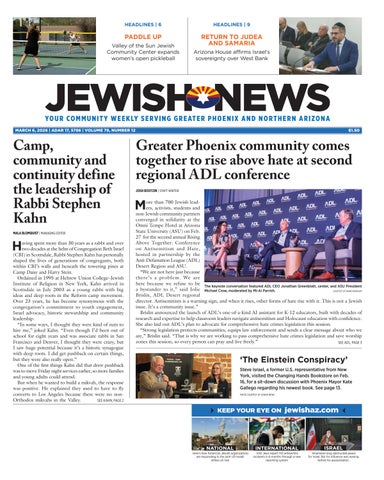
The keynote event at Friday’s conference
Alongside social programming, Kahn teaches Torah to the group after Shabbat dinners. “He really wants young adults to have that Jewish identity,” said Burke.
Israel is the other unwavering pillar of Kahn’s leadership. After Oct. 7, when many questioned whether teens should continue traveling to Israel, Carriere remembered Kahn’s response: “‘Of course we’re going. The minute the skies are open, we’re going.’”
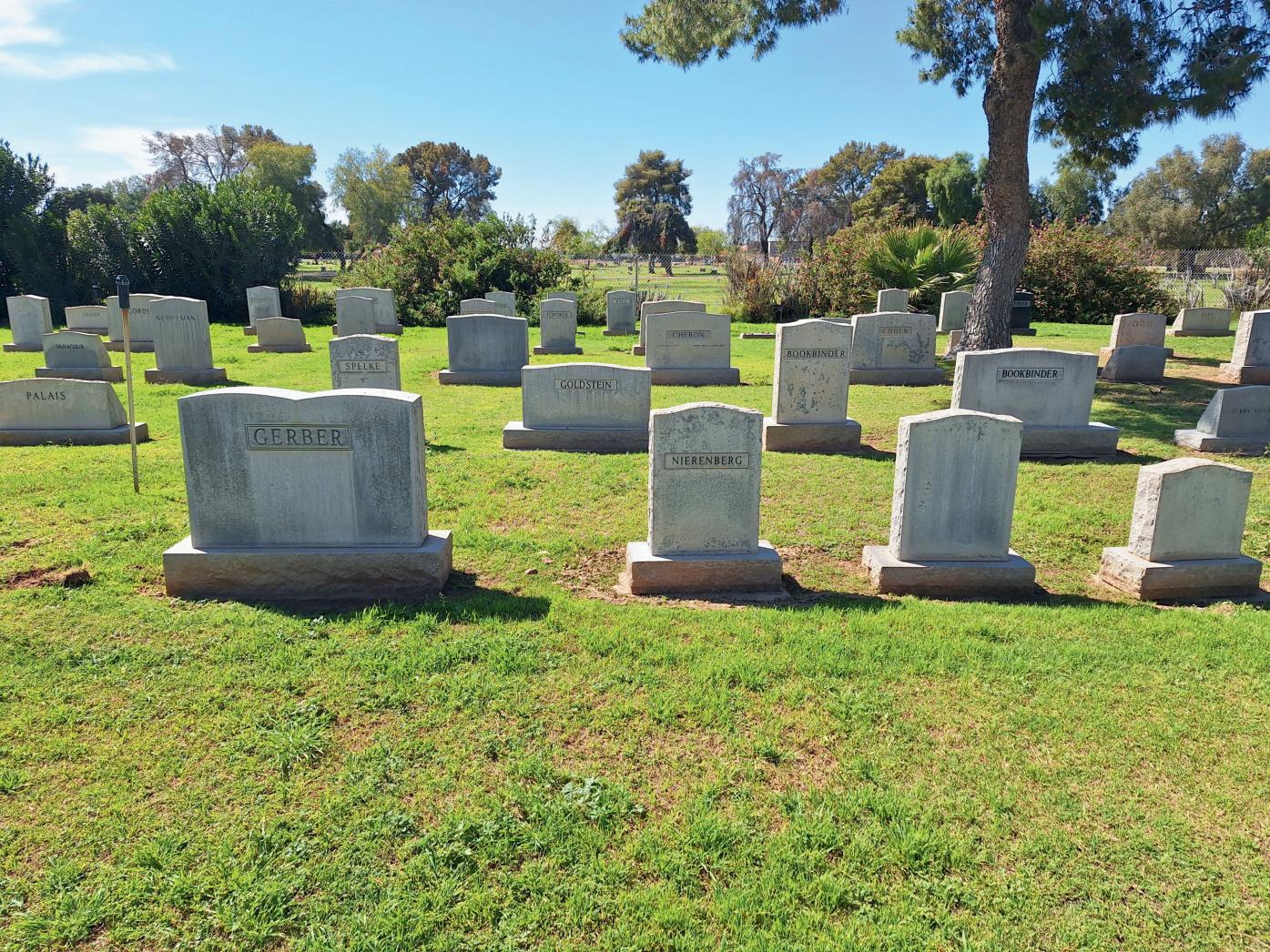
For Carriere, that clarity mattered. “He is such a huge, unflinching supporter of Israel,” she said. “And the minute we could get a group together, we sent adults and high school kids back to Israel; there was no question of ‘are we going to do another trip,’ it was when.” Kahn’s leadership extends beyond youth and Israel. Alison Betts, a board member, describes CBI as an “end-to-end lifecycle Jewish organization,” adding that CBI is also home to a preschool, owner of the original Jewish cemetery at 35th Avenue and Van Buren Street in Phoenix and the steward of all the sections of the cemetery from congregations that have long disappeared.
“He can make the sanctuary space in the pine trees at camp feel like the most sacred space in the world,” Betts said. “He can bring Sunday school kids to the cemetery
and explain why it’s sacred. I don’t know many rabbis who can find meaning across all those components of the Jewish lifecycle and make them feel significant.”
Betts calls him “a steward of storytelling,” someone who takes the congregation’s 100-plus-year history seriously and the responsibility of preserving it for the next generation.
For Bandler, who has known Kahn through baby namings, funerals and countless board meetings, the rabbi’s effectiveness lies in both intellect and humanity.
“His intelligence and his knowledge of Judaism and ability to explain it are fantastic,” Bandler said. “He’s at his best when he’s speaking extemporaneously. He’s just impressive.”
Bandler also values their candid partnership. “If there was a difficult decision,” he said, “I’d tell him, ‘Sleep on it.’ And even now he’ll joke, ‘This is one Steve Bandler would say we need to sleep on.’”
In the end, what emerges from those who know him best is not a portrait of a rabbi chasing acclaim, but one who sees his role as belonging to his community.
“I think down to his core, he really believes that he belongs to his community,” Betts said. “He gives himself in that way.
And he never makes anybody feel like they’re a burden.”
“I have no idea why they’re honoring me, and I’m incredibly humbled and grateful. I have the best job in the world,” said Kahn. He explained that he was very close to Rabbi Albert Plotkin, who served as the spiritual leader of CBI from 1955 until the early 1990s, and then he became rabbi emeritus, so the two of them have served CBI for a large part of its 100-plusyear history.
He admitted he relies on Rabbi Sara Mason-Barkin because he can’t “be in three places at once.” In addition to her many tasks, she has taken over supervising Camp Stein.
And since he’s a “camp guy,” he referred to the basic tenet of leaving the campground better and nicer than how you found it. “I still have time on the clock, but that’s always been my thing to leave it in better shape than it was when I got here, and it was in pretty good shape when I arrived.” JN
CBI is honoring Rabbi Stephen Kahn’s “30 Years of Rabbinic Leadership” with a celebration on March 28. For more information, visit cbiaz.shulcloud. com/kahn-gala.
Jaime Roberts was publisher of Jewish News from 2013 to 2016.


took the form of a sit-down conversation with ADL CEO Jonathan Greenblatt and ASU President Michael Crow, moderated by Mi-Ai Parrish, managing director and professor of practice, ASU Media Enterprise.
Greenblatt argued that antisemitism has been able to grow the way it has due to a lack of coordinated leadership against the “bad actors” who try to divide groups and encourage hate.
“Having public leaders who slink back in the face of prejudice, who dismiss it, deny it and don’t do something about it, is a large part of why this is happening,” Greenblatt said. “There’s no question that the explosion of antisemitism has benefited like a virus, thriving on ignorance.”
Crow spoke at length about how to combat antisemitism on campuses, especially one as large and diverse as ASU, and it starts with being intentional in creating a welcoming environment for all.
“If you’re going to attend this university, you’re going to be respectful of other people, you’re going to learn how to understand other faiths, other groups, other cultures, other ways of thinking,” Crow said. “We don’t allow you to project violence or threaten other people for any reason.”
ADL developed a campus report card in 2023 to evaluate institutions based on their handling of antisemitism and acts of prejudice, taking into account 21 different criteria, which has since grown to 30. Many reputable universities failed the first year, and Greenblatt said nearly 80% reached out to ADL to work together on improvements.
After one year, 50% of universities within ADL’s scope improved their grades, with 10% jumping multiple grades.
ASU is one of 11 universities in the United States to receive an A grade from ADL’s campus report card and a green score from the Foundation for Individual Rights and Expression (FIRE).
“They are hitting their marks, and they’ve done things that demonstrate how seriously they take these issues. I wish more institutions and more leaders followed the lead of ASU and president Crow,” Greenblatt said.
Following the keynote conversation, all participants split into four breakout rooms, each with a different focus on rising above hate.
One session examined the present legal landscape in the United States and strategies for protecting the legal rights of Jews and other minorities. In another session, Project Shema’s senior facilitator,
“LET US RECOMMIT OURSELVES TO SPEAKING UP, DEFENDING OUR NEIGHBORS FROM HATRED AND ANTISEMITISM AND WORKING TO END IT ONCE AND FOR ALL.”
GOV. KATIE HOBBS
Ariel Amaru, explored why anti-Jewish harm can be difficult to recognize due to implicit biases.
The third breakout session, led by Seth Schlussel, ADL Central Pacific Region deputy director, equipped attendees with practical tools to navigate difficult conversations regarding antisemitism in a variety of settings. Rachel Pepper, ADL West Division program director, led the fourth session on rising above hate through education.
Other speakers throughout the day included Stanley Mirvis, chair of Jewish Studies at ASU, Phoenix Police Chief Matt Giordano and Sikh community representative Rana Sodhi.
Phoenix is currently the largest U.S. city to be led by a Jewish mayor, and Mayor Kate Gallego’s office continues the fight against antisemitism every day. Having faced antisemitic attacks during her own mayoral campaign, Gallego shared that of all reported hate crimes in Phoenix in 2024, less than 4% were related to antisemitism.
“The goal is absolutely zero, but when you have progress, you need to recognize that,” Gallego said, highlighting the leadership of the ADL, Crow, community stalwart Steve Hilton and Richard Kasper, CEO of the Center for Jewish Philanthropy of Greater Phoenix.
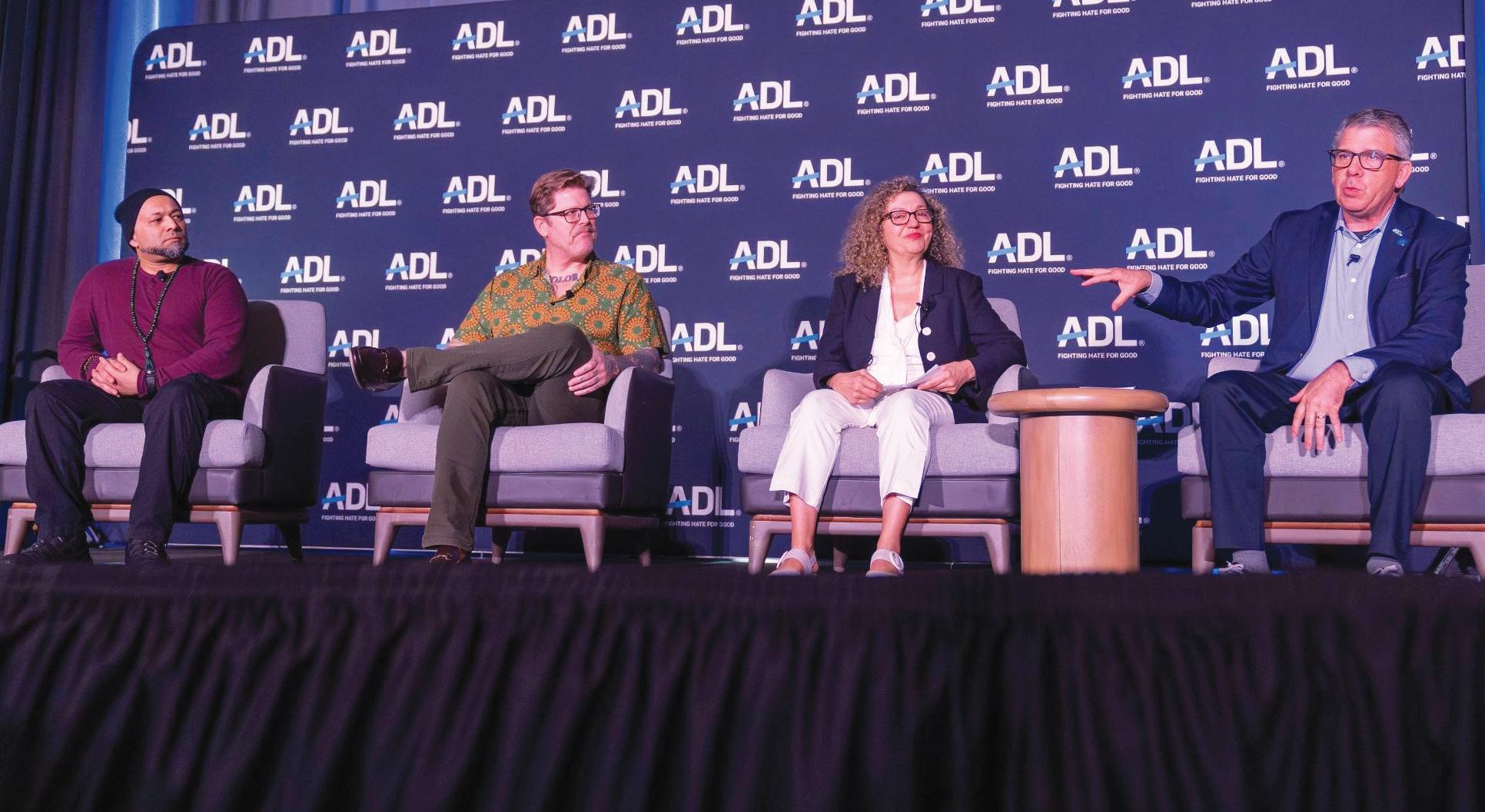
After lunch, attendees had the opportunity to hear from former extremists Arno Michaelis and Mubin Shaikh, as well as Parents for Peace Executive Director Myrieme Nadri-Churchill, on how radicalization draws people in, how to recognize the warning signs and how to prevent destructive behaviors.
Michaelis, a former white nationalist and self-proclaimed “hate addict,” shared how he used to direct hate speech at a variety of minority groups.
“The life of an addict is a life of exhaustion,” Michaelis said. “I was exhausted because I knew it was wrong. I had to cut myself off from the rest of society. What was most exhausting was when people I claimed to hate treated me with kindness … when I least deserved it, but when I needed it the most.”
Shaikh, a Canadian and member of the Sikh community, told of how he was sent to Pakistan as punishment for dishonoring his family’s culture. He sought belonging, so he joined the Taliban when it took over in 1995, considering its victory as validation for
its messaging.
He continued to escalate his extremism, but after marrying in 1998, and experiencing kindness on a visit to Israel, his interest waned. He moved to Syria, then back to Canada, and was recruited to work undercover for the Canadian Security Intelligence Service. Shaikh eventually had a hand in the arrests of 18 would-be terrorists that were planning an attack similar to 9/11 in Canada.
Michaelis and Shaikh both now work as exit peer specialists for Parents for Peace, traveling the world to share their stories and working personally with many people, mostly teenagers, who fall victim to the false promises of groups intent on spreading hate and violence.
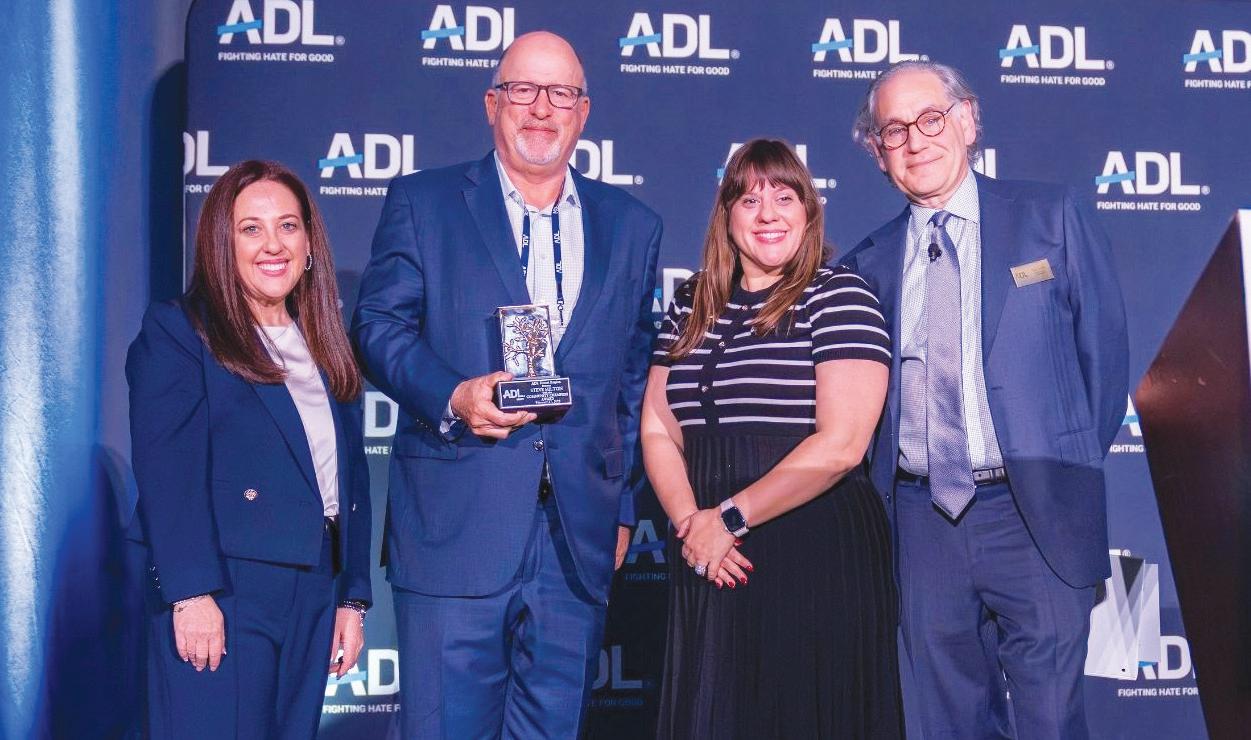
Two awards were presented at the event, highlighting local leaders making a difference in stopping the spread of hate. First, Steve Hilton received the ADL Desert Community Champion Award for his leadership in educating the community and the forthcoming Hilton Family Holocaust Education Center (HFHEC).
Many of Hilton’s family members were murdered in Warsaw, Poland, and his father, Sam Hilton, survived five different camps during the Holocaust before being liberated in the spring of 1945.
Hilton has advocated for legislation mandating Holocaust education in schools, and the new HFHEC is designed “so all these kids come away with a strong understanding of how to stand up to hate, how to be an upstander, not a bystander, and how to fight antisemitism and bigotry in our world.”
And receiving the ADL Desert Campus Champion Award was Rabbi Shmuel Tiechtel of Chabad at ASU.
“I want to thank the entire ASU leadership, which is truly a leader at showing that every student should feel safe, comfortable and belonging where they are,” Tiechtel said. “As the rabbi of this campus for over 20 years, I will tell you, ASU is a place where Jewish students feel safe.”
“To take care of each other, we must protect life; our own and one another’s,” said Rabbi Dr. Shmuly Yanklowitz, president and dean of Valley Beit Midrash in Scottsdale. “We must resist the lie that says caring for someone else diminishes us, and we must reject the fear that whispers there isn’t enough safety, enough empathy to go around.” JN
For more information, visit adl.org


Members
in pursuit of improving lives in our communities through
Valley Beit Midrash wishes everyone a shana tovah, a happy new year filled with joy and love. We invite you to join
March 18th, 2026 | 7:00 - 8:30 pm PST A hybrid event presentation (in-person and virtual) by Rabbi Ed Feinstein
learning and action. Here’s how you can plug into our work this year: with us at our upcoming classes. We have multiple pluralistic o erings each week and options for both virtual or in-person learning. with us and volunteer with Arizona Jews for Justice to help uplift the most vulnerable members of our community.
Reach out if you are looking for internship or fellowship opportunities for teens and young adults. We would be thrilled to tell you more about our leadership development programs.
Become a Legacy donor. By joining the Jewish Education Legacy Society of Valley Beit Midrash you will ensure VBM has the ability to provide engaging learning opportunities and save lives in our communities for many years to come.
We hope this year will be a time of renewal and growth and that we will experience many joyful moments together in the year ahead.
Valley Beit Midrash wishes everyone a shana tovah, a happy new year filled with joy and love. We invite you to join us in pursuit of improving lives in our communities through transformative learning and action. Here’s how you can plug into our work this year: with us at our upcoming classes. We have multiple pluralistic o erings each week and options for both virtual or in-person learning. with us and volunteer with Arizona Jews for Justice to help uplift the most vulnerable internship or fellowship opportunities for teens and young adults. We would be thrilled to tell you more about our leadership development programs. Become a Legacy donor. By joining the Jewish Education Legacy Society of Valley Beit Midrash you will ensure VBM has the ability to provide engaging learning opportunities and save lives in our communities for many years to come. We hope this year will be a time of renewal and growth and that we will experience many joyful
Valley Beit Midrash wishes everyone a shana tovah, a happy new year filled with joy and love. We invite you to join us in pursuit of improving lives in our communities through transformative learning and action. Here’s how you can plug into our work this year: with us at our upcoming classes. We have multiple pluralistic o erings each week and options for both virtual or in-person learning. with us and volunteer with Arizona Jews for Justice to help uplift the most vulnerable
Beit Midrash wishes everyone a shana tovah, a happy new year filled with joy and love. We invite you to join us in pursuit of improving lives in our communities through transformative learning and action. Here’s how you can plug into our work this year: with us at our upcoming classes. We have multiple pluralistic o erings each week and options for both virtual or in-person learning. with us and volunteer with Arizona Jews for Justice to help uplift the most vulnerable members of our community.
ABOUT THE SPEAKER:
Valley Beit Midrash wishes everyone a shana tovah, a happy new year filled with joy and love. We invite you to join us in pursuit of improving lives in our communities through transformative learning and action. Here’s how you can plug into our work this year: with us at our upcoming classes. We have multiple pluralistic o erings each week and options for both virtual or in-person learning. with us and volunteer with Arizona Jews for Justice to help uplift the most vulnerable members of our community.
Each year we recite the story — with Pharaoh and Moses, frogs here frogs there, and the splitting sea. It is our story — the foundation of our faith and vision of history. Buried in the story, beneath the songs and symbols of the holiday, is a message about the human condition and our mission in the world. Join us as we discover that message and its meaning for our generation.
Valley Beit Midrash wishes everyone a shana tovah, a happy new year filled with joy and love. We invite you to join us in pursuit of improving lives in our communities through transformative learning and action. Here’s how you can plug into our work this year: with us at our upcoming classes. We have multiple pluralistic o erings each week and options for both virtual or in-person learning. with us and volunteer with Arizona Jews for Justice to help uplift the most vulnerable members of our community.
Here’s you can plug into our work this year: with us at our upcoming classes. We have multiple pluralistic o erings each week and options for both virtual or in-person learning. with us and volunteer with Arizona Jews for Justice to help uplift the most vulnerable members of our community.
everyone a shana tovah, a happy new year filled with joy and love. We invite you to join us in pursuit of improving lives in our communities through transformative learning and action. Here’s how you can plug into our work this year: with us at our upcoming classes. We have multiple pluralistic o erings each week and options for both virtual or in-person learning. with us and volunteer with Arizona Jews for Justice to help uplift the most vulnerable members of our community. Reach out if you are looking for internship or fellowship opportunities for teens and young adults. We would be thrilled to tell you more about our leadership development programs. Become a Legacy donor. By joining the Jewish Education Legacy Society of Valley Beit Midrash you will ensure VBM has the ability to provide engaging learning opportunities and save lives in our communities for many years to come.
Beit Midrash wishes everyone a shana tovah, a happy new year filled with joy and love. We invite you to join us in pursuit of improving lives in our communities through transformative learning and action.
Valley Beit Midrash wishes everyone shana tovah, a happy year filled with joy and love. We invite you to join us in pursuit of improving lives in our communities through transformative learning and action. Here’s how you can plug into our work this year: with us at our upcoming classes. We have multiple pluralistic o erings each week and options for both virtual or in-person learning. with us and volunteer with Arizona Jews for Justice to help uplift the most vulnerable members of our community.
Reach out if you are looking for internship or fellowship opportunities for teens and young adults. We would be thrilled to tell you more about our leadership development programs. Become a Legacy donor. By joining the Jewish Education Legacy Society of Valley Beit Midrash you will ensure VBM has the ability to provide engaging learning opportunities and save lives in our communities for many years to come.
Valley Beit Midrash wishes everyone a shana tovah, a happy new year filled with joy and love. We invite you to join us in pursuit of improving lives in our communities through transformative learning and action. Here’s how you can plug into our work this year: with us at our upcoming classes. We have multiple pluralistic o erings each week and options for both virtual or in-person learning. with us and volunteer with Arizona Jews for Justice to help uplift the most vulnerable members of our community.
Reach out if you are looking for internship or fellowship opportunities for teens and young adults. We would be thrilled to tell you more about our leadership development programs. Become a Legacy donor. By joining the Jewish Education Legacy Society of Valley Beit Midrash you will ensure VBM has the ability to provide engaging learning opportunities and save lives in our communities for many years to come.
Reach out if you are looking for internship or fellowship opportunities for teens and young adults. We would be thrilled to tell you more about our leadership development programs.
Valley Beit Midrash wishes everyone a shana tovah, a happy new year filled with joy and love. We invite you to join us in pursuit of improving lives in our communities through transformative learning and action. Here’s how you can plug into our work this year: with us at our upcoming classes. We have multiple pluralistic o erings each week and options for both virtual or in-person learning. with us and volunteer with Arizona Jews for Justice to help uplift the most vulnerable members of our community. Reach out if you are looking for internship or fellowship opportunities for teens and young adults. We would be thrilled to tell you more about our leadership development programs. Become a Legacy donor. By joining the Jewish Education Legacy Society of Valley Beit Midrash you will ensure VBM has the ability to provide engaging learning opportunities and save lives in our communities for many years to come.
Valley Beit Midrash wishes everyone a shana tovah, a happy new year filled with joy and love. We invite you to join us in pursuit of improving lives in our communities through transformative learning and action. Here’s how you can plug into our work this year: with us at our upcoming classes. We have multiple pluralistic o erings each week and options for both virtual or in-person learning. with us and volunteer with Arizona Jews for Justice to help uplift the most vulnerable members of our community.
Reach out if you are looking for internship or fellowship opportunities for teens and young adults. We would be thrilled to tell you more about our leadership development programs. Become a Legacy donor. By joining the Jewish Education Legacy Society of Valley Beit Midrash you will ensure VBM has the ability to provide engaging learning opportunities and save lives in our communities for many years to come.
We hope this year will be a time of renewal and growth and that we will experience many joyful moments together in the year ahead. Board Members Staff Members
Reach out if you are looking for internship or fellowship opportunities for teens and young adults. We would be thrilled to tell you more about our leadership development programs. Become a Legacy donor. By joining the Jewish Education Legacy Society of Valley Beit Midrash you will ensure VBM has the ability to provide engaging learning opportunities and save lives in our communities for many years to come.
Reach out if you are looking for internship or fellowship opportunities for teens and young adults. We would be thrilled to tell you more about our leadership development programs.
Become a Legacy donor. By joining the Jewish Education Legacy Society of Valley Beit Midrash you will ensure VBM has the ability to provide engaging learning opportunities and save lives in our communities for many years to come.
Become a Legacy donor. By joining the Jewish Education Legacy Society of Valley Beit Midrash you will ensure VBM has the ability to provide engaging learning opportunities and save lives in our communities for many years to come.
We hope this year will be a time of renewal and growth and that we will experience many joyful moments together in the year ahead.
We hope this year will be a time of renewal and growth and that we will experience many joyful moments together in the year ahead.
We hope this year will be a time of renewal and growth and that we will experience many joyful moments together in the year ahead.
We hope this year will be a time of renewal and growth and that we will experience many joyful moments together in the year ahead.
We hope this year will be a time of renewal and growth and that we will experience many joyful moments together in the year ahead.
Reach out if you are looking for internship or fellowship opportunities for teens and young adults. We would be thrilled to tell you more about our leadership development programs. Become a Legacy donor. By joining the Jewish Education Legacy Society of Valley Beit Midrash you will ensure VBM has the ability to provide engaging learning opportunities and save lives in our communities for many years to come. We hope this year will be a time of renewal and growth and that we will experience many joyful moments together in the year ahead.
Reach out if you are looking for internship or fellowship opportunities for teens and young adults. We would be thrilled to tell you more about our leadership development programs. Become a Legacy donor. By joining the Jewish Education Legacy Society of Valley Beit Midrash you will ensure VBM has the ability to provide engaging learning opportunities and save lives in our communities for many years to come.
We hope this year will be a time of renewal growth and that we will experience many joyful moments together in the year ahead.
We hope this year will be a time of renewal and growth and that we will experience many joyful moments together in the year ahead.
We hope this year will be a time of renewal and growth and that we will experience many joyful moments together in the year ahead.
Rabbi Feinstein serves the Valley Beth Shalom community as a teacher, pastor and visionary leader. He also serves on the faculty of the Ziegler Rabbinical School of the American Jewish University, the Wexner Heritage Program, the Shalom Hartman Institute in Jerusalem and lectures widely across the United States. He is the author of several books, including: Tough Questions Jews Ask – A Young Adult’s Guide to Building a Jewish Life, (Jewish Lights, 2003), Jews and Judaism in the Twenty-First Century: Human Responsibility, the Presence of God and the Future of the Covenant (Jewish Lights, 2007), Capturing the Moon (Behrman House, 2008) and most recently, Chutzpah Imperative! - Empowering Today’s Jews for a Life that Matters (Jewish Lights, 2014).
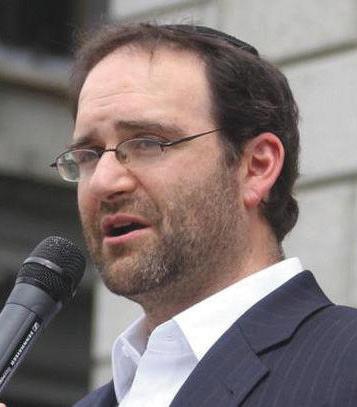

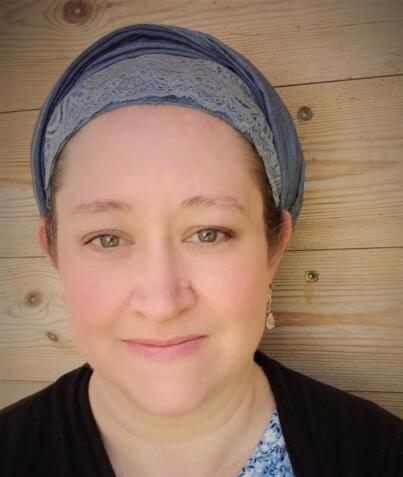
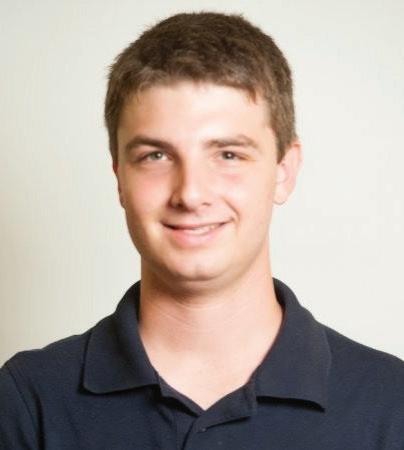
Rabbi Feinstein was raised in the back of his parents’ bakery on the frontiers of the West San Fernando Valley. He graduated with honors from the University of California at Santa Cruz, the University of Judaism, Columbia University Teachers College, and the Jewish Theological Seminary of America, where he was ordained a rabbi in 1981. Most recently, he received his Doctorate in Education from the Jewish Theological Seminary (JTS) at Park Avenue Synagogue in New York for his dissertation: Rabbi Harold Schulweis and the Reinvention of the American Rabbinate
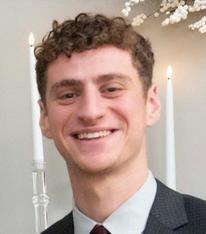




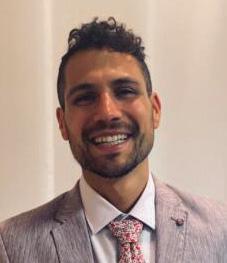
An engaging lecturer and storyteller, Rabbi Feinstein unites the ancient Jewish love of ideas with the warmth of Jewish humor.
Location: Congregation Or Tzion Cost: $18/Free for Members Register: www.valleybeitmidrash.org/class/








JOSH BOOTZIN | STAFF WRITER
Pickleball remains one of the most popular activities at the Valley of the Sun Jewish Community Center (VOSJ). In addition to a free clinic for members and structured lessons for beginners, intermediates and advanced players, the VOSJ hosts leagues for everyone from juniors to legends (55+).
Most popular is the open play period each morning, during which anyone can show up and compete, regardless of age, gender or experience level.
“What’s great about the Valley of the Sun JCC pickleball is everybody is social,” said sports coordinator Clint Floyd. “They come here to have fun, they come here to meet people and, most importantly, just play a good game.”
Liz Horstman, a retired accountant and regular participant at open play, noticed that some of the other female participants were becoming discouraged by the wide discrepancy in skill levels.
“It’s really fun, but some friends and I realized that males and females play a little bit differently. It can get tiring or challenging for females to play with males who tend to be more assertive and hit the ball harder,” Horstman said.
Though anyone can participate in open play, Horstman saw players being selective about their partners and opponents, excluding others of different skill levels.
To create a more inclusive environment for herself and her friends, Horstman reserved a court on Tuesday afternoons for a couple of hours, explicitly for female players.
They started spreading the word to other women they’d played with, and what started with four friends grew into a community of over 20 women with similar skillsets.
“It’s a very casual thing, but it’s really great, because it’s a great group of people,” Horstman said. “Everybody really enjoys it and plays well together. It’s nice to play with a group of women you really like.”
Horstman kept a list of those who showed up, and created a text group chat to keep everyone informed.
One day, nearly the whole group showed up at once, which was too many for just two courts, so Horstman reached out to VOSJ Sports Director Daniel Barelli to reserve a second afternoon.
After a quick conversation, Barelli agreed to reserve two courts for open women’s play from 4 to 6 p.m. on Tuesdays and Thursdays.

“Daniel has been so great, letting us have the space to come out here and play,” Horstman said. “I really appreciate him for reserving the courts for us.”
Open women’s play accepts female pickleball players of all ages and skill levels. Horstman said most of the regulars are retirees, but they’ve had a variety of players participate.
“It’s not that we want to exclude men. They just play so differently, and this gives women an opportunity to improve and get better,” Horstman said. “I really think that women get better more quickly when they’re just playing with other women.”
Since text group chats are limited to
20 people, Horstman recently moved the group to WhatsApp, and it’s nearing 25 members.
“It’s a really great way to meet a lot of different women,” she said. “It’s very social. Very community oriented. We all take turns, and it’s not competitive. We just want to go, have fun and play good games.”
Any woman who wants to play can just show up and join the rotations. If they want to join the group chat to find out when others are playing, all they need to do is “ask for Liz.” JN
For more information, visit valleyofthesunj.org/ sports-leagues/pickleball.

JOSH BOOTZIN | STAFF WRITER
Evan Kessler, a seventh-grade student at Cocopah Middle School, is spreading kindness to underprivileged men and women in Phoenix by offering them a homemade meal and the chance to share in a fulfilling family tradition.
Evan’s bar mitzvah is right around the corner, scheduled for March 21 at Beth El Phoenix.
He’s been preparing like any other upcoming bar mitzvah, learning his Torah portion and preparing to lead the service, but Evan has simplified one of the most daunting tasks — choosing the right mitzvah project — by ignoring all suggestions and coming up with an idea of his own.
“I tried thinking of something that relates to my life that I can give back to the community,” he said. “My grandpa always used to make these eggs in a special way, and I just thought that if I made them too, then I could share the joy with other people.”
Evan and his brother Aidan grew up enjoying their grandfather’s special eggs, nicknamed “abba eggy.” After the passing of their grandfather, Ed Schlar, known as “Abba Eddie” to his grandchildren, Evan took up the mantle, scrambling eggs for himself and his family for years.
For his bar mitzvah project, with the help of family and friends, Evan is honoring his grandfather by putting together 54 (three times chai) insulated bags with an abba eggy sandwich and other snacks and distributing them to the homeless around Phoenix.
Two of Evan’s friends helped him pack these Chai Kits, operating similar to an assembly line, each with their own job.
Each bag provided its recipient with a visor to block out the sun, sunscreen packets, a water bottle, a granola bar, chips, an apple and cookies, in addition to one of Evan’s own egg sandwiches.
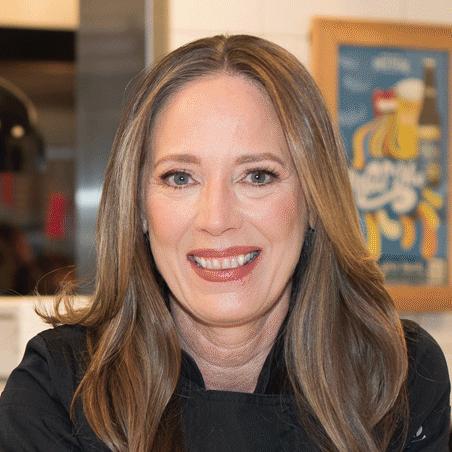
One of his friends’ moms is a chef, and she hosted the group on Sunday morning, Feb. 15, making the sandwiches before adding them to the bags and heading out to distribute them. Each sandwich featured seasoning and cheese on toasted ciabatta bread, and the insulated bag helped keep it warm throughout the day.
Another friend offered for each bag to have a sticker on it with the message: “You are loved.”
Many of the materials for this project were donated by community businesses, including insulated bags from PJ Library, a program of the Center for Jewish Philanthropy of Greater Phoenix.
Noble Bread in Phoenix donated close to 60 ciabatta rolls for the sandwiches, with the eggs donated by Costco.

Arizona Friends of Homeless, a nonprofit which serves the homeless through daily outreach, provided 60 water bottles, and other contributors include Trader Joe’s at Tatum and Shea Boulevards and friends and family from across the country.
“It’s really sweet how our neighbors — Jewish, not Jewish, it doesn’t matter — they’ve just really come out to show support,” said Anna Kessler, Evan’s mother.
“He came up with this whole thing himself.”
Evan and his helpers distributed the bags near Burton Barr Central Library and various parks around the Downtown Phoenix area on Feb. 15.
When he’s not making eggs or attending school, Evan plays the piano, is involved in choir and parkour, and he made his middle school soccer team.
He also made the Principal’s List this year, and his favorite subject is math. JN
Jewish News is published by the Jewish Community Foundation of Greater Phoenix, a component of the Center for Jewish Philanthropy of Greater Phoenix.
For 7-year-old male neutered rescue cat. He’s very affectionate and responds well to kindness.
We would like someone to take him into their home when we are on vacation. We provide all of his necessities. Salary is negotiable. If interested, please call 602-550-8181.


MICHAEL MURRA | CONTRIBUTING WRITER
Derek Glasser insists it’s not hyperbole when he discusses how much he enjoyed his time as a member of the Arizona State University (ASU) Men’s Basketball Program between 2006 and 2010.
“I don’t know if there’s anyone in the history of college sports that had a better four years than I had at Arizona State,” Glasser said. “It ended up being the perfect school for me. I met friends who would later be in my wedding. I played in the NCAA Tournament and played for conference championships. I played against future NBA players such as Jrue Holiday, Russell Westbrook and Aaron Brooks. It exceeded where everyone thought I’d take the game of basketball.”

Pasternack, who is also Jewish. Pasternack previously coached on the University of Arizona men’s basketball staff from 20112017. Glasser and Pasternack talk about their shared faith and heritage sometimes.
Since Glasser’s been in Santa Barbara, the Gauchos have played twice at the Mortgage Matchup Center (home of the Phoenix Suns). In 2023, they reached the NCAA Division I Tournament for just the seventh time in program history.

The Los Angeles County native became the first ASU player with 1,000 points and 500 assists. A three-time team captain, he led the Sun Devils to the second round of the 2009 NCAA Tournament.


Glasser, now a 38-year-old assistant basketball coach at University of California, Santa Barbara (UCSB), said one of his few regrets in Tempe was that he wasn’t more involved in the Jewish community. Glasser, who recently became a father, said he attended High Holy Days at Chabad at ASU a couple of times.
“I think my Judaism is a special thing,” Glasser said. “Being Jewish is something I hold near and dear to my heart. As a child, I attended Hebrew school and observed the High Holy Days. With everything going on in the world, Judaism gives you a greater perspective and makes you appreciate your heritage and where you come from even more.”
After college, Glasser played professionally in Israel for Maccabi Haifa, before a career-ending injury drew him back to California.
“It was my only time going to Israel,” Glasser said. “I had a chance to see Jerusalem and the Dead Sea. I plan on going back when my children are older. While playing professionally in Israel, we traveled to road games and visited cities that weren’t destination spots. So, I really got to see all of Israel while riding buses to games.”
Glasser, in his fourth year at UCSB, was hired by Gauchos head coach Joe
“One of Joe’s greatest assets is his ability to fundraise,” Glasser said. “You learn a lot by watching him interact with boosters and potential boosters. It’s all about relationships — you bring them in as part of the family. When you’re in the coaching business, it’s all about stability and having a chance to win. We have a chance to compete for a championship every season. Exciting to know you’re competing for a championship.”
Glasser’s basketball career will forever be linked with 11-time NBA All-Star and future Basketball Hall of Famer James Harden.
The dynamic duo met in the summer of 2003 at Artesia High School in Lakewood, California where Glasser was a sophomore and Harden was a freshman.
“I used to say in interviews that Harden could be an all-star type of player,” Glasser said. “I didn’t know he’d be arguably the greatest scorer and arguably the best shooting guard in the history of the NBA. He surpassed what everyone thought he could do, but it doesn’t shock me. He was able to do so much and able to do it efficiently. I don’t think he took more than 12 or 13 shots per game. His ability to play the team game is what makes him awesome.”
In the spring of 2006, they won the California Interscholastic Federation (CIF) Basketball Championship in Glasser’s senior year.
“At any level, if you can win your last game, it’s special,” Glasser said. “We won a banner, and it will hang in Artesia forever. We were one of the best teams in the history of California.”
Glasser flipped his commitment from USC to Arizona State, and with his high school coach, Scott Pera, joined the staff at ASU.
"WITH EVERYTHING GOING ON IN THE WORLD, JUDAISM GIVES YOU A GREATER PERSPECTIVE AND MAKES YOU APPRECIATE YOUR HERITAGE AND WHERE YOU COME FROM EVEN MORE."

A year later, Harden graduated and joined Glasser and Pera in Tempe.
The Sun Devils reached the 2009 NCAA Tournament, defeating Temple but losing to Syracuse. ASU has only been back to the “Big Dance” four times since that 2009 appearance.
“There’s nothing like playing in the NCAA Tournament,” Glasser said. “It’s a life-changing experience. When you make the NCAA Tournament, it’s not by luck — you’ve earned it.”
After a brief professional career, Glasser worked in a family clothing business and then as a sports agent where he represented Georges Niang (now with the Utah Jazz) and others.
He realized being an agent wasn’t for him, so he connected with Pera, who was the head coach at Rice University in Houston, Texas. Pera hired Glasser as the Owls video coordinator.
The Lakewood trifecta was reunited as Harden was starring just down the street for the Houston Rockets.
“There aren’t very many kids who have an experience with a coach like I’ve had with Coach Pera,” Glasser said. “Twelve of my first 14 years were with Coach Pera. We have a special bond, we see the game in a similar way, and we are an extension of each other. He’s had a big impact on me, on my personal and professional lives.” JN Michael Murra is a freelance writer based in Texas.
JOSH BOOTZIN | STAFF WRITER
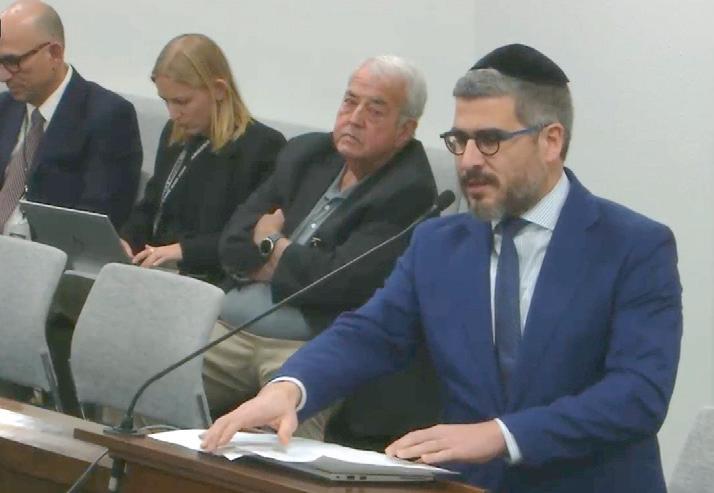
With the approval of House Resolution (HR) 2002 and House Concurrent Resolution (HCR) 2047 on Feb. 23, the Arizona House of Representatives has reaffirmed Israel’s sovereignty over the land widely referred to as the “West Bank” for over 75 years and returned the state-recognized names for the territories to their original, biblical names: Judea and Samaria.
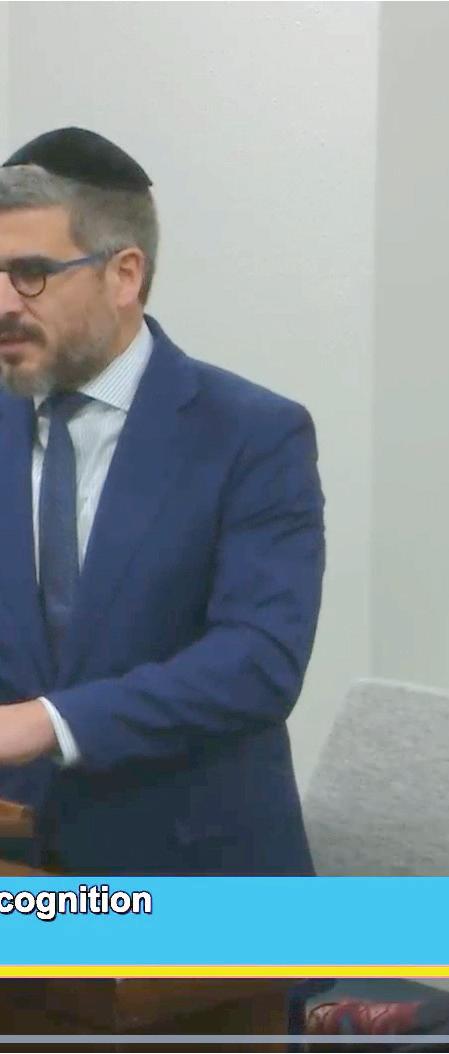
“Today, the Arizona House chose accuracy over politics,” said Representative David Livingston, sponsor for both bills. “Judea and Samaria are not invented terms and they are not negotiable facts. They are central to Jewish history, faith and national identity, and Arizona will not participate in language meant to deny that truth.”
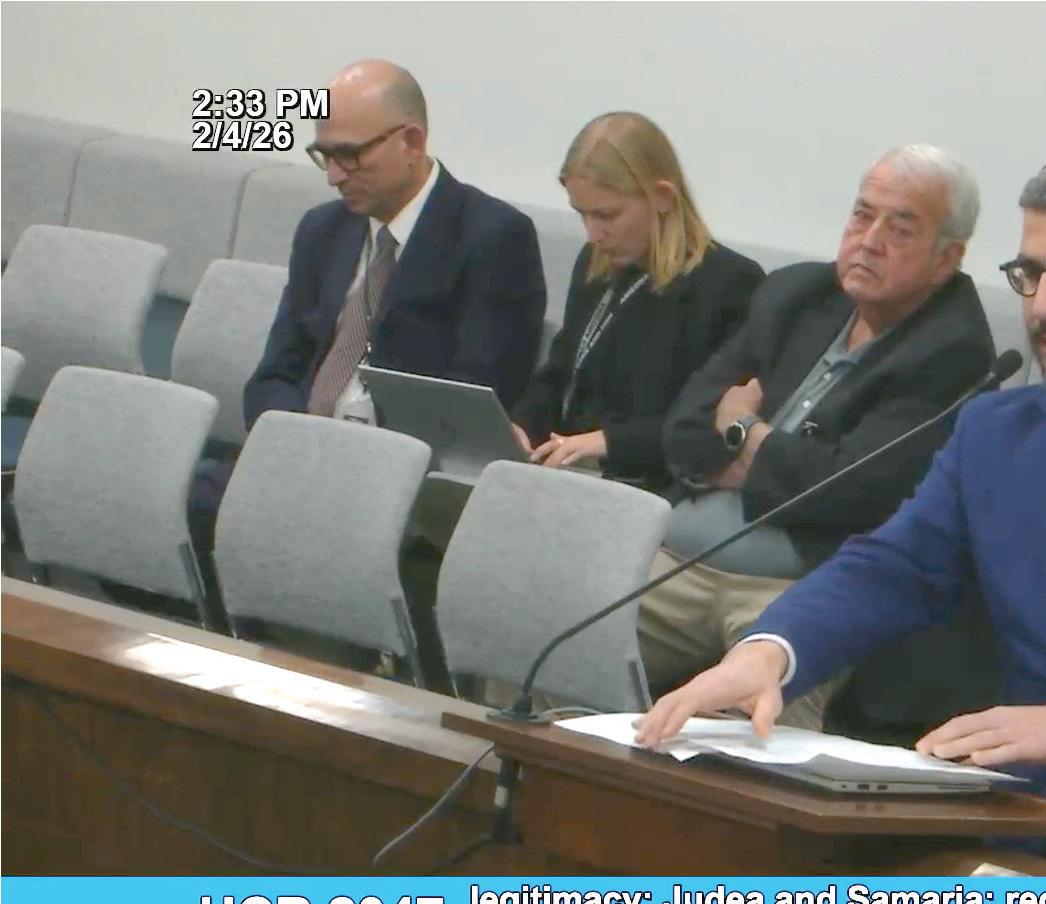
As introduced to the House Appropriations Committee by a City of Phoenix staff member at the onset of the committee’s Feb. 4 meeting, “HCR 2047 and HR 2002 recognize the historical, biblical and legal legitimacy of the regions of Judea and Samaria, promote the use of those terms in all official state communications, documents and references, and reject the term ‘West Bank’ as a modern political construct.”
Before the Appropriations Committee voted 10-6 in favor of HR 2002 and 11-6 in favor of HCR 2047, sending the bills to the House at large, Livingston noted that he usually places his sponsored bills at the end of each meeting’s agenda, but “I think it’s important to put these bills up front because … I wanted as many people here as possible to hear it.”
Livingston recalled a recent visit to Israel over Thanksgiving, during which he had the opportunity to tour these areas.
“The people there, the culture there, the history there … I was moved, and I thought it was important that I run a bill like this, even if it’s outside my normal comfort zone,” he said. “This is personal.”
Four members of the public addressed the committee on Feb. 4, beginning with Jeff Schwartz, who stressed the importance of maintaining historical facts over modern political language and personal theologies that might purport to rewrite what was previously known.
“Supporting the use of Judea and Samaria is not about diminishing or disrespecting anyone. It’s about intellectual honesty and historical accuracy,” Schwartz said. “We need to be cautious
not to allow present-day narratives, political, ideological or theological, to override documented history.”
“Preserving accurate terminology does not prevent dialogue, compromise or peaceful disagreement,” Schwartz continued. “It simply shows that history is not erased through language. This resolution does not impose belief or doctrine; it affirms that facts matter, history matters and precision of language matters.”
Jake Bennett, regional director and associate director of policy for StandWithUs Desert States, argued that the renaming of the region in the mid-20th century to the ‘West Bank’ was mainly to distract from Jordan’s attempts to create a territory without Jews.
“Jordan only controlled this area after they forcibly expelled 40,000 Jews from Jerusalem, Judea and Samaria,” Bennett said. “Not only is Judea and Samaria the right name for historical reasons and truth reasons, but the name ‘West Bank’ should be rejected as we reject discrimination and ethnic cleansing.”
Rabbi Pinchas Allouche of Congregation Beth Tefillah in Scottsdale agreed with Bennett, stating, “The term ‘West Bank’ is not ancient, it’s not neutral, and it’s not historically accurate. It was coined in 1950 by the Kingdom of Jordan after its illegal occupation of a country. Its purpose was clear: to replace the authentic names of this land, Judea and Samaria, with a political label designed to erase Jewish history and Jewish identity.”
During his introduction of both bills, Livingston also pointed out that across the Old and the New Testaments, Judea is mentioned about 50 times, and Samaria

about 125 times.
Allouche provided a few examples of these mentions, including the story of the Jewish King Omri, who purchased a hill from a man named Shemer nearly 3,000 years ago, built a city on that hill and named it Samaria after its previous owner. This can be found in 1 Kings 16:24.
Joshua 24:32 states that Joseph was buried in Shechem, within the mountains of Samaria, and the battle between David and Goliath, one of the Bible’s most famous stories, was said to have taken place in the Valley of Elah, located within the territory of Judea.
“This is not theology, it is textual, biblical and historical record,” Allouche said.







“Language matters, because when you erase names, you erase history; when you erase history, you erase truth; when you erase the truth, you delegitimize people; and when you delegitimize people, peace becomes impossible.”
Jason Morris, representing the Israel Arizona Coalition and Mission — a local, privately-funded group that has brought more than 100 Arizona business leaders to Israel — argued the importance in business transactions, especially between nations, of meeting a counterpart on
their terms.
“When you are doing business, as Arizona does with the State of Israel, it is important to understand the nomenclature, the history and the legalities,” Morris said. “When businesses from Israel transact in Arizona, they use the proper terminology, they don’t choose to use terminology made up by others … the same should be true with Arizonans conducting business and transacting in Israel.”
Before voting, the appropriations committee opened the floor for any speakers opposed to the bills, but none came forward.
Support Israel & Bring Meaning to Your Passover Table! This Passover, turn your matzah into a mitzvah!

Yedidya Harush is a matzah maker from Shlomit (Gaza region). Right now, Yedidya is serving in the IDF, while his factory (employing 55 people) and community remain at risk.
Choose this matzah for your Seder table and stand with Israel in a tangible way.
Matzah will be sold at The JCC March 23-29, or reserve your box(es) now by going to the https://forms.gle/AB9FA2j6CSbjjqNa7 and pick yours up at The JCC March 23-29.
Thank you for your support this holiday season!


“I want to thank our guests who attended and shared their perspective from a business point of view, from a historical point of view and from a moral point of view,” said vice chairman Matt Gress. “Words do matter, and definitions matter. I’m proud to be on record supporting (this bill) and standing for truth.”
So far, Arkansas and Florida are the only two states to officially legitimize the names Judea and Samaria.
“I think we need to realize in Arizona that we’re just one part of 50 states, but then we also need to realize that we’re just one part of the world, and the world needs this,” Livingston concluded.
The state has already caught the attention of others in the Southwest region.
Israel Bachar, Consulate of Israel in Los Angeles, released a statement praising Livingston’s efforts and the Arizona


House for enhancing the United StatesIsrael relationship:
“In formally rejecting the term ‘West Bank,’ labeling it a modern political construct and opting instead to use the indigenous terms ‘Judea and Samaria,’ in all official state communications, documents and references, the Arizona House of Representatives attests: the indigeneity of Judea and Samaria and their rightful place in the history of the Holy Land and modern-day Israel are eternal and undebatable.”
Arizona is closing in on becoming the third state to pass legislation legitimizing Judea and Samaria. HR 2002 was adopted upon passage by the House on Feb. 23, and HCR 2047 now goes to the Arizona Senate for adoption. JN
For more information, visit azleg.gov.








DAVID BRYFMAN | JTA
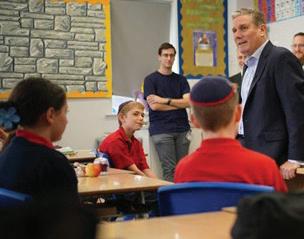
Ihave spent much of my life living in, traveling to, and learning about Israel. Like many who care deeply about the Jewish state, I hold strong views on the political, social and geopolitical forces that shape its present and future. And yet, as a Jewish educator, I rarely voice those opinions publicly. Not because I lack conviction, but because conviction alone is not my lane.
My contribution — where I can add value in an already crowded and polarized discourse — is education.
That is why I write now, knowing full well that what follows may unsettle some who read it. The pedagogical implications of the war against Iran — particularly for educators who pose questions and facilitate discussion about preemptive strikes — may be labeled by some as unwarranted or even disloyal to the Jewish establishment (an establishment of which I am proudly a part). But education has never been about comfort. It has always been about courage. Let me be unequivocally clear at the outset: My heart is with the people of Israel. Like many of you, I have friends, colleagues and family members who are living under direct threat — running to shelters, enduring fear, exhaustion and trauma. I am also deeply concerned for the lives of innocent Iranians and others across the Middle East whose lives have been brutalized by dictators for decades and who now find themselves at grave risk once again. And I hold profound respect and gratitude for the Israeli and American air forces, and for the military and intelligence professionals working — hopefully — to bring this conflict to a swift end and restore peace.
I refuse the false choice that demands
only one of these hopes. Moral maturity allows us to hold several at once.
And precisely because this moment is so fraught, so emotional, and so consequential, educators — especially Jewish educators — have a responsibility that goes beyond slogans and statements. We must teach.
Regardless of our personal views, we must engage our students — youth and adults alike — in serious learning about the moral, ethical, religious and legal implications of preemptive military action.
For those of us raised on the story of Israel’s preemptive strike in 1967 — the heroic opening move that made the SixDay War a decisive victory — this may feel almost sacrilegious. To question preemption can sound, to some, like betrayal. But education demands that we ask the hard questions: Were the recent preemptive strikes by Israel and the United States lawful? Were they ethical? Under what frameworks — Jewish, international, moral — can they be justified, and where are those justifications contested?
To my Israeli friends, many of whom overwhelmingly support these strikes even knowing they would place their own lives in direct danger of retaliation: I hear you. I honor your courage and your resolve. And still, as educators, we must bring the debate itself into the classroom — not as provocation, but as preparation.
Because if we do not create thoughtful, guided and humane spaces for grappling with these tensions, our students will encounter them anyway — on social media, in hallways, and on college campuses — where the discourse will be louder, harsher and far less forgiving.
Many communal leaders have already issued firm, unequivocal statements. That is
their role. Education is different. Education acknowledges that this is a matter of genuine disagreement and rigorous debate. It recognizes that adults have had decades of learning and lived experience to arrive at their conclusions — and that students deserve the same opportunity.
To deny disagreement where it exists is naïve. To avoid teaching it is worse. It is mis-educative.
So I implore my fellow educators: Embrace the challenge. Present diverse perspectives with intellectual honesty and moral seriousness. Model respect. Invite disagreement — not to fracture community, but to deepen understanding. Disagreement, when handled well, is not a threat to education; it is one of its most powerful tools.
Be brave. Do not fear that your students may arrive at conclusions different from your own. That fear has haunted educators for millennia. But the purpose of education is not replication. It is formation. We are not here to create replicas of ourselves, but to help learners become who they are meant to become.
And be better than the adult world that so often surrounds our students. Do not allow name-calling, othering or moral absolutism to replace inquiry and empathy. The sanctity of education depends on this — and so does our hope for a better future.
To communal leaders, funders and supporters of Jewish education: I beg you to set aside partisan instincts for the sake of educational integrity. If one of our core responsibilities is to prepare young people for the world they inhabit, then we must do so precisely when the stakes are highest. And they could not be higher than they are now.
There are serious, credible arguments on multiple sides of the question of whether preemptive strikes against Iran were warranted, legal and ethical. To shut down debate by insinuating that dissent renders someone unfit for communal life or institutional belonging is not an educational posture. It echoes, uncomfortably, the very authoritarian impulses we claim to oppose. Education is inherently political. It can never be partisan.
As Jewish educators, we have a profound responsibility to stand with the Jewish people and with the State of Israel. But to truly support our youth and young adults in this moment, we must teach them how to encounter complexity, not hide from it. We must teach them “the other side” — whatever form that takes in this painful and unfolding chapter — even when it is uncomfortable.
Especially when it is uncomfortable. Am Yisrael Chai. JN
The views and opinions expressed in this article are those of the author and do not necessarily reflect the views of JTA or its parent company, 70 Faces Media.
RABBI JACOB BLUMENTHAL, RABBI RICK JACOBS | JTA
D
uring the recent Conference of Presidents of Major Jewish Organizations’ mission to Israel, Prime Minister Benjamin Netanyahu demanded that Jews around the world stand strong and unified in support of Israel and against antisemitism. “Fight, fight, fight,” he told us, celebrating Jewish strength and unity in the face of existential challenge. Indeed, since Oct. 7, Israel has waged a multifront war to defend itself against terrorists and their sponsors. Despite navigating a wide array of views among
We are a diverse community. The
Members of his coalition are pushing legislation in the Knesset that would prohibit any religious services or activities at the Kotel that do not meet the approval
PRAYING, PAGE 12
our own members about how Israel should execute the war, Diaspora communities have stood by Israel while facing resurgent and lethal antisemitism. Yet now, forces in Israel’s own government are threatening a war on another front — against the Jewish people itself. And it is the prime minister who is silent.
maximum of 200 words. They may be edited for space and clarity. Unsigned letters will not be published. Letters and op-ed submissions should be sent to editor@jewishaz.com
be
RABBI SHOLOM TWERSKI
KI TISA:
PARSHAH
EXODUS 30:11-34:35
One of the most disastrous of our national episodes during our desert sojourn occurs in this week’s Torah portion. After the revelation and the giving of the Ten Commandments at Mt. Sinai, Moses had ascended to heaven to receive the rest of the Torah. He was supposed to return after 40 days, and the nation waited anxiously for their beloved leader.
It was late afternoon When, based on their calculations, 40 days had passed and Moses had still not appeared, they feared that he would never return. Panicking, they decided that they must create a new leader for themselves. They would create a molten image that would not die, a leader that would always remain with them. Without consulting Aaron or any of the sages, they acted impulsivelygathering gold and forming a Golden Calf. It would fill the void of their beloved
PRAYING
CONTINUED FROM PAGE 11
of the Haredi (ultra-Orthodox) chief rabbinate. Under the bill, anyone who publicly leads or engages in prayer contrary to the Rabbinate’s directive would face up to seven years in jail.
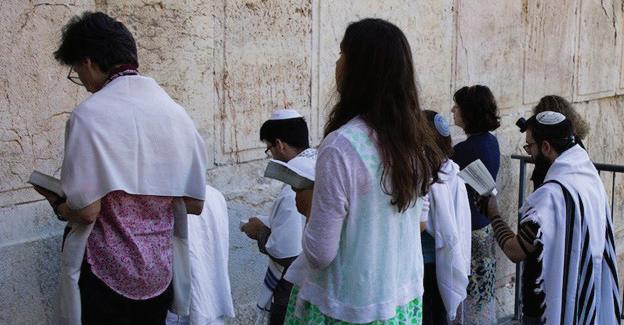
As leaders of two of the largest global Jewish movements, which together represent more than three million Jews, we know too well what would happen if this became law. Egalitarian, non-Orthodox approaches, such as mixed seating, would be banned. Women would have no space to read Torah or lead prayer. Birthright Israel and many others would no longer have a place to gather as a mixed group at Judaism’s holiest site.
Think of thousands of families from places such as Florida, New Jersey, Buenos Aires, Tel Aviv and beyond who want to celebrate their daughter’s bat mitzvah in an intergenerational moment of Jewish pride at our holiest site in our holiest city — only to face seven years in prison.
And the prime minister is silent. This legislation is just the latest challenge in our movements’ years-long efforts to secure religious pluralism at the Kotel. We know that touching the stones and feeling closer to the ancient Holy of Holies can offer deep spiritual and religious connections. That’s why the Kotel should be a strong symbol of Jewish resilience, unity and spirit. It should reflect the diversity of our people and our approaches to prayer and Jewish life.
leader, Moses. But with that decision, they strayed from God’s direct command not to create a graven image. It was a trespass born of impatience.
Truthfully, this was a fringe element of the nation. God, though, was angered by their actions to the extent that He threatened to destroy the nation entirely.
Even after Moses interceded with prayer (with God Himself subtly encouraging him to do so), the punishment was severe.
The effects of the sin echo through history. Every time we are punished, there is a small amount that can be attributed to the sin of the Golden Calf. This would indicate that the sin was not limited to the few who participated directly but was one that was shared by the core nation as well.
Earlier, when the Jews were still enslaved in Egypt, Moses was instructed to go inform them that God had seen their afflictions and was going to redeem them. Moses faithfully delivers the message, but his words were not well received. The verse tells us that they did not listen to Moses because of their shortness of breath and their hard labor.
Simply, this would mean that they were too distracted, too weary, too spent
In 2016, a previous Netanyahu-led government approved a compromise to establish a new section of the Kotel for egalitarian prayer to recognize that pluralism. In that area, located south of the more established space run according to Haredi tradition, families and groups may gather without a mechitza, or separation by gender. Liberal Jews can pray and celebrate according to our traditions and practices.
Yet, after a lengthy and challenging negotiation process in which all parties made painful compromises, Netanyahu immediately set the agreement aside, and successive governments have never fully implemented the plan.
In practice, the southern egalitarian prayer section is a vibrant space, with thousands coming daily for prayer and to celebrate b’nai mitzvah and other happy occasions. However, even as the Israeli government provides millions of shekels annually for upkeep of the northern section of the Kotel, it has refused to provide equal or adequate funding for security and upkeep to the southern section. Our space lacks full access for those with physical disabilities, its flooring is rotting, and visitors have not been able to touch the actual wall since a stone fell there seven years ago.
Last week, the Israeli Supreme Court took an important step to push the government to fulfill its 2016 commitment by directing it to stop dragging its feet and finally meet its obligations. In response, MK Avi Maoz, with the support of Justice Minister Yariv Levin and others within the
to invest themselves in his message. However, my great-uncle, Rabbi Michel Twerski of Milwaukee, Wisconsin, suggests an alternate reading.
Moses did not come with a popular message. When he came around with his message of redemption, it was not one of unrestrained freedom and ease. Yes, it would be liberation from Pharoah, but it would be a life of servitude to God, instead. There would be advantages. Instead of working for a human in matters of futility, they would be working to acquire spiritual riches and supreme fulfillment. But the Torah lifestyle is not one of leisure. It is a lifetime of working and refining oneself, of learning mastery over one’s drives and passions. It promises great rewards, but the path to them is one of dedication, commitment, introspection and toil.
The reason they didn’t listen was because they wanted an easy out. They were finished with working hard. They wanted to hear about a life of ease and comfort, here and now. Hard work with eventual dividends was not appealing to them. They didn’t have the patience for that.
When God punishes us for the sin of the Golden Calf through history, it’s because the origin of the sin persists through history. It is true now as it was true then. We must cultivate within ourselves the patience and the commitment to work hard and slowly. We must explore ourselves — the good and the bad — and understand our work. We must take the time to develop a relationship with God. With the twin engines of time and work, we will see a richness in our lives, a deeper sense of self and enhanced relationships with God and others! JN
Rabbi Sholom Twerski is the assistant rabbi of Beth Joseph Congregation and the rabbinic administrator at the Greater Phoenix Vaad Hakashrus.
current governing coalition, has sponsored the bill demanding that the entire Kotel, including the area of pluralistic Jewish expression, be brought under the chief rabbinate’s control.
By aligning with only the 15% of Jews worldwide who are Haredi, Maoz is declaring war against the vast majority of the Jewish people. Despite the dream articulated in “Hatikvah” to be “a people living freely in their Land,” there will be no freedom of religion at Israel’s holiest site. Extremism and coercion will be the law of the land.
Maoz and his allies see the vitality of nonharedi religious expression as something to be controlled and repressed — not just at the Kotel, but throughout the State of Israel and beyond.
In contrast, we believe in religious plural-
ism and Jewish unity, without seeking to tell others how to “do Jewish.” We see it as a sign of strength and vibrancy and know that true Jewish unity does not require uniformity of practice or approaches to prayer. That stance should start with the prime minister.
Our Diaspora communities have “fought, fought, fought” for Jewish strength and Israel for generations, and especially since Oct. 7. It’s time for the prime minister to “fight, fight, fight” for the unity and strength of the Jewish people, demand that members of his coalition reject this bill and respect Jewish pluralism. JN
The views and opinions expressed in this article are those of the author and do not necessarily reflect the views of JTA or its parent company, 70 Faces Media.
JOSH BOOTZIN | STAFF WRITER
Steve Israel, a former U.S. representative from New York, visited the Changing Hands Bookstore in Phoenix on Monday evening, Feb. 16, for a sit-down discussion with Phoenix Mayor Kate Gallego regarding his newest book “The Einstein Conspiracy.”
Leaders in the local Jewish community were also in attendance, as the book explores true events that affected American Jews in the 1930s, in addition to political leaders that included Maricopa County Democratic Party Chair Patti O’Neil and the inaugural Phoenix Mayor’s Office Official Historian Steve Schumacher.
Gallego previously visited Changing Hands to read a proclamation on April 1, 2024, celebrating the 50th anniversary of one of Arizona’s oldest private bookstores.
“Changing Hands is such an important institution,” Gallego said. “I think we are all united as book lovers and so lucky to have a great independent bookstore. There’s just nothing better than coming together in person when you can talk about great books at this unusual moment in time, and we’re so lucky to have Congressman Steve Israel to provide insight both on our democracy and on his book.”
Israel served in Congress from 2001 to 2017, including four years as chairman of the Democratic Congressional Campaign Committee. Having served through 9/11, the 2008 economic recession and the volatile political climate around 2016, Israel said he dedicated himself to writing as a means of escaping from the stresses of


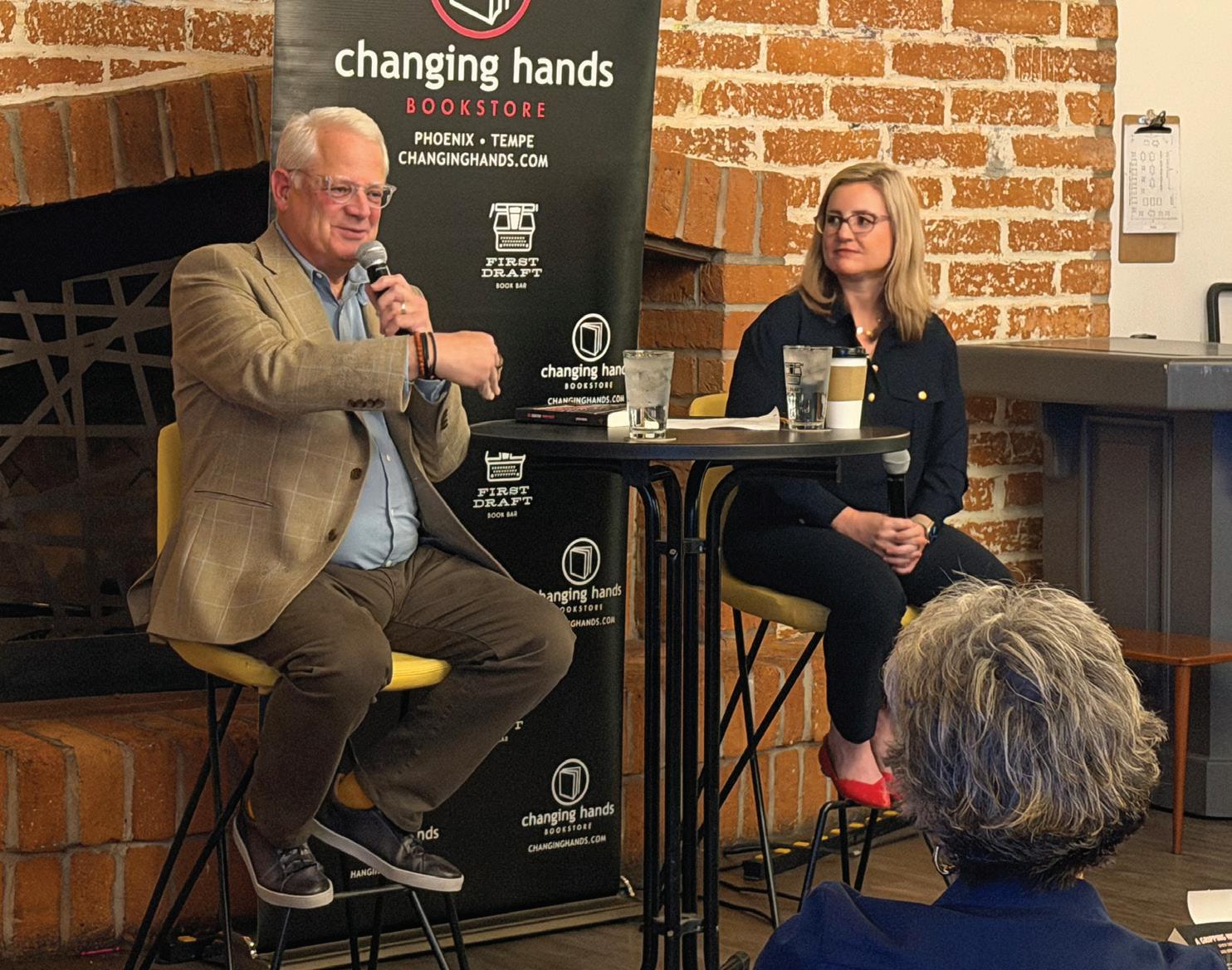
politics and public service.
“We all need sanctuaries, particularly now, with so much chaos in the world,” he said. “We all need safe places to go to where we can relieve ourselves of tension and controversy. My safe place, for 17 years in Congress, was a bookstore.”
Israel wrote two political satires during his time in Congress: “Big Guns” and “The
Global War on Morris.” He described satire as fast-paced and reliant on punchlines, while a historical spy thriller needs to keep things moving and multidimensional. He chose not to run for reelection to pursue other passions, which included opening Theodore’s Books in his hometown, Oyster Bay, New York.
When it comes to senior living costs, no one wants surprises. That's why Clarendale Arcadia provides complete pricing transparency. You'll always know exactly what you pay for –with no hidden fees or unexpected costs – so you and your family can feel confident in your decisions about the future.



“I will confess that I became beleaguered with politics, just like so many others, and began wanting to write a good, oldfashioned, historic spy thriller,” Israel said. “I love my history, so I wanted to write something that brought in history but was, at its fundamental level, just a spy thriller. Not to make a point, but to keep people reading.”
Israel said one of his greatest difficulties was keeping his fictional story from becoming a nonfiction retelling of historical events.
“You have a bargain with the reader,” he explained. “You are going to pay me money as an author for a book, and I’m going to keep you turning the pages with enough sprinkling of historical accuracy so that it is plausible, without burdening you with a nonfiction book. That’s not easy to do.”
Israel gained inspiration from reading Ken Follett, John le Carré and Frederick Forsyth in his youth.
“I learned that the Nazis had tried several attempts to assassinate Albert Einstein,” he said. “I learned that Einstein was trying to warn President Roosevelt that Adolf Hitler was developing an atom bomb and would have one before us. I learned that the FBI was overwhelmed in 1939 by a Nazi spy ring operating across
the country.”
Israel also visited Einstein’s cottage on the North Fork of Long Island, and he imagined what a great spy thriller he could write while tying in all of those true events.
“I fell in love with Albert Einstein for four years,” he said. “I read everything I could. I read stuff that Albert Einstein wrote and understood none of it. I learned that he was a very complicated, very complex individual.”
Israel learned that Einstein was struggling in the late 1930s after the loss of his wife, Elsa. He felt vulnerable, and his work hit a wall. Einstein realized that the only way to remain influential was to play the part of the absent-minded genius professor.
“He plays up that caricature, not because he wanted to be famous, but because by then, the only thing in the world that he was truly passionate about, that kept him up at night, was Adolf Hitler, and what was going to happen to the population of Germany. So he used his fame in order to advocate for refugees, and to be able to call a member of Congress and advocate on their behalf.”
Israel tracked down many original sources, including the diaries of Dr. Leo Szilard, a Hungarian American and former student of Einstein’s.
Szilard’s diaries prove Einstein’s


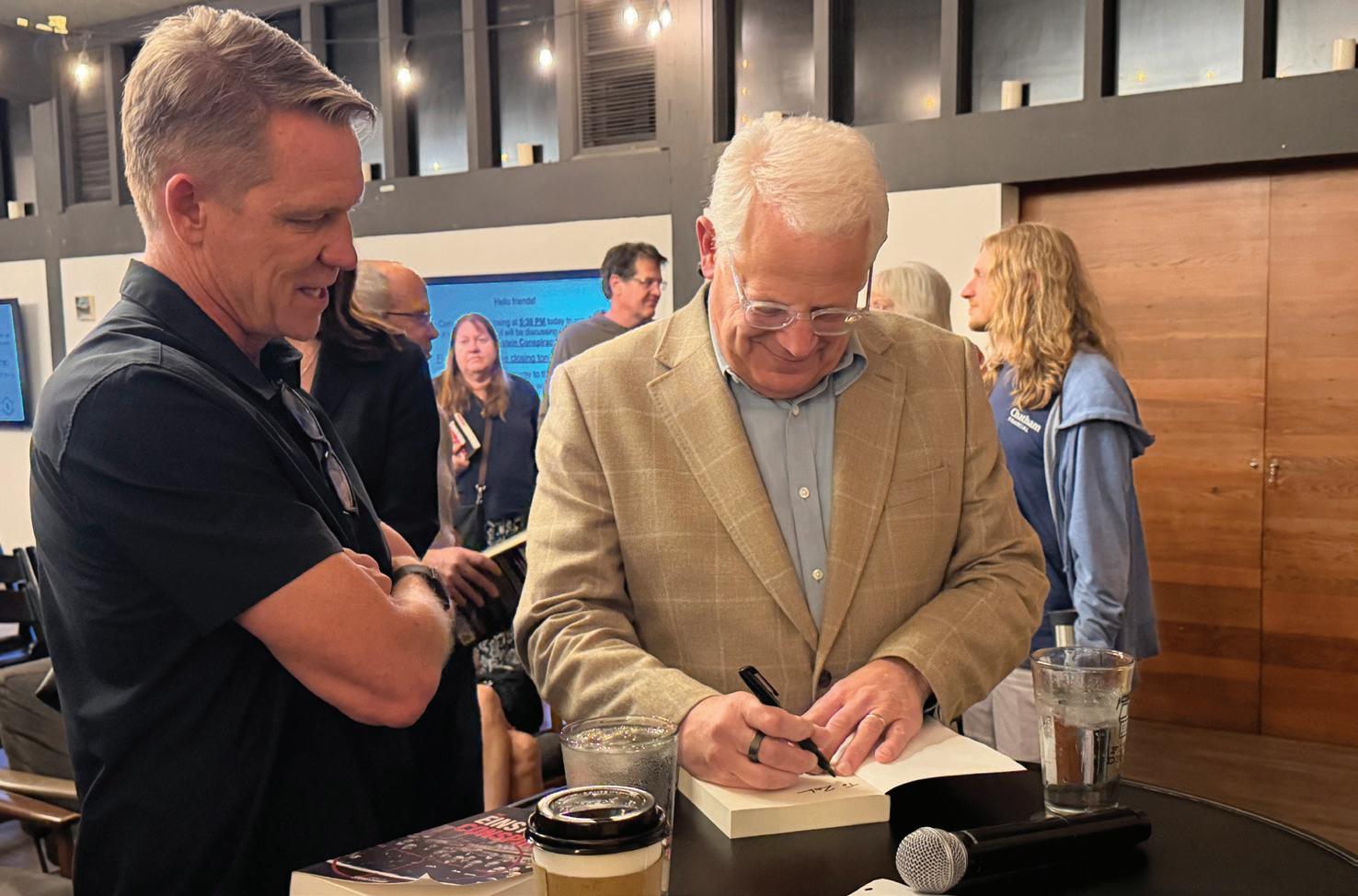
pacifism and how morally difficult he found it to encourage President Franklin Roosevelt to build a bomb, even despite the knowledge that Hitler was also closing in on a weapon of his own.
Szilard also writes of how Einstein rejected the possibility of creating an atom bomb at all, believing the energy created by splitting an atom would barely power a dim flashlight.
In response, Szilard figured out how to split an atom, traveled to Einstein’s home and showed him the proof. They then wrote the Einstein-Szilard letter to FDR, warning him of the bomb’s possibility and urging him to build it before Hitler could.
Despite their scientific genius, Einstein and Szilard proved to be naive politicians, taking months to find the right way to have their letter delivered. Once it was finally read to Roosevelt in his office in October 1939, a network of scientists came together, beginning what would become known as the Manhattan Project.
The two protagonists in “The Einstein Conspiracy” are FBI agents named Harry Weiss and James Amos, tasked with protecting Einstein from Nazi assassins. Amos was based on a real person — the “manservant” and best friend of Theodore Roosevelt, the only president also from Israel’s hometown.
The real Amos was originally hired to care for Roosevelt’s children, but then became his assistant, bodyguard and personal confidant. Amos was the last person to hear Roosevelt’s voice before his death, and went on to become the FBI’s second Black special agent, taking down Nazi spy rings and Jewish mobs.
When Israel requested information on Amos from the FBI, they could only provide half of a page. “I decided I have to give this guy life,” Israel said.
The antagonist was based on a collection of notorious German spies known to be operating in New York and traveling freely between the U.S. and Germany at the time.
One of Israel’s most chilling realizations he made during his research process was how open and normalized Nazism was in America in 1939.
He wrote about a rally at Madison Square Garden in New York City in February 1939, attended by 20,000 people, with swastikas on the walls and copies of “Mein Kampf” available at concession stands. He also learned about pro-Nazi camps spread across America that taught thousands to annihilate Jews and African Americans.
“I didn’t want the book to be preachy. I wanted the book to be entertaining, but I did want to make at least a point that we have to be very careful,” Israel said. “We have a history in this country where we’re willing to tolerate intolerance, and I wanted to remind the American people just how dark it had become in our own neighborhoods.”
Aside from his lifelong fandom of the genre, Israel said he chose to write a historic spy thriller partly because that’s what’s selling right now.
“Trying to make a point in nonfiction is hard to do because there’s a limited universe of people who are interested,” he explained. “Most people are seeking an escape. They get hit over the head with social media, bombarded by politics. In my own experience at Theodore’s, people are looking for something that’s not particularly political, which means that if you want to convey a message, do it in a way that is accessible to readers.”
“It is a fabulous read and a real page turner,” Gallego said. “(Israel) really got into the details of incredible moments in history.”
Israel dedicated this novel to his wife, Carol, and he relished the opportunity to speak about it in Phoenix, where many members of his family currently reside. JN
“The Einstein Conspiracy” is available at Changing Hands Bookstore or on Amazon.
JOSH BOOTZIN | STAFF WRITER
Many participants in Zoe
Bellinghausen’s online exercise classes had been attending for years, familiar with their classmates only by the names on their Zoom feeds. That is, until a recent in-person meetup, where peers who had been exercising miles apart got to know one another in real life for the first time.
Bellinghausen had been teaching exercise, movement and nutrition classes for Jewish Family & Children’s Service (JFCS) at least twice a week in person at The Palazzo in Central Phoenix, but those were canceled in 2020 due to the COVID-19 pandemic.
“In 2020, when the pandemic forced the JFCS Center for Senior Enrichment (CSE) to close its doors, we knew it was critical to continue providing opportunities for seniors to stay active and connected,” shared Jennifer Brauner, director of CSE and Creative Aging program.
Brauner reached out to Bellinghausen with the hope of continuing classes, and they worked together to find a way to reach their clientele through Zoom.
“One of our first priorities was offering exercise classes online — something many of our participants relied on for both physical and emotional well-being,” Brauner said. “Zoe was eager to return to doing what she loves most: supporting seniors’ health through movement. We began with just a few weekly classes — chair yoga, light weights and stretching — but as participation grew, so did requests for more.”
Setting up a Zoom account and attending regular meetings posed a challenge for many participants, especially those living alone, so Brauner offered to have one-on-one conversations to walk them through the technology.
Before long, Bellinghausen was leading daily classes. For many participants, these classes were their only source of movement during the day, and they provided a muchneeded opportunity for social connection, encouragement and routine.
“(Bellinghausen) is such an incredible instructor, and the participants, whether they were with her from the beginning or came to know her over time, asked for more and more of her classes, because they just love her approach and her personality. It’s worked out very well,” Brauner said.
In the waning months of the pandemic, many of the classes CSE provided returned to an in-person model. Though Bellinghausen’s classes remained online,
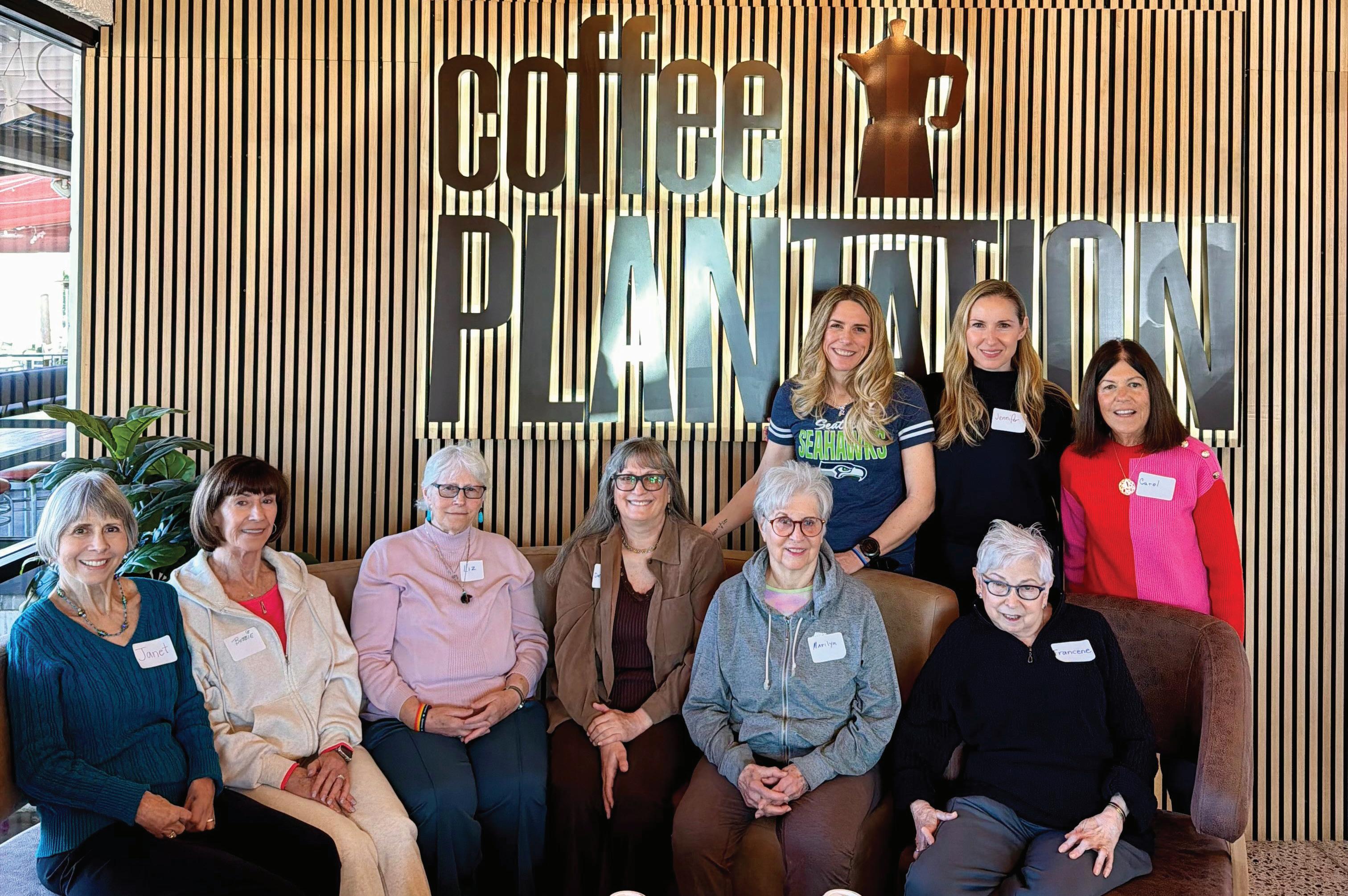
the majority of her clientele decided to continue anyway.
Last year, Janet Reed, one of the participants, approached Brauner and Bellinghausen with the idea of scheduling an in-person meeting for the members of the class who had been exercising together for years but had never met face to face.
Reed orchestrated the event for Sunday, Jan. 25, chose the location (Coffee Plantation in Scottsdale) and everyone met for a few hours of coffee and conversation.
“It was such a loving, welcoming environment,” Brauner said. “Everyone was hugging and putting faces to names, taking the opportunity to have that faceto-face interaction.”
There isn’t much time to connect during the classes because Bellinghausen is mainly leading the exercises, and many of the participants had never met their instructor or Brauner in person.
“Watching individuals who had exercised together for years — yet never met face to face — connect in person was incredibly moving,” Brauner shared. “It was a powerful reminder of how virtual programs can foster real community and meaningful relationships, especially for older adults.”
Brauner said many of the attendees
reached out to express their gratitude for the meetup and asked to do it again. In response, Brauner is planning another event in a few months with the hope that the group continues to grow.
CSE offers many different programs for seniors throughout the community, including exercise classes, lectures and virtual tours.
Most of the classes are free, while some suggest a donation to cover the facilitator’s fees.
Through the Creative Aging program,
Brauner also offers everything from acting classes to writers’ workshops, chorus groups and art classes, in addition to one-time classes and events at senior living communities and synagogues across the Greater Phoenix area.
Upcoming programs include a spring series on creative color art, line dancing classes, character acting classes and a book club with Arizona State University Professor Duane Roen. JN
For more information, visit jfcsclasses.org.
BOB ROTH | COLUMNIST
If you’ve ever stared at a screen thinking, I’m not stupid… so why does this feel impossible? you are not alone.
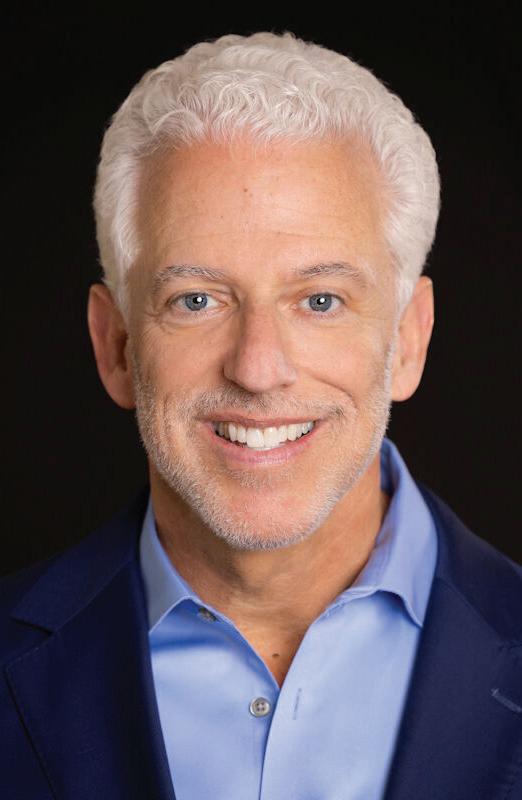
I hear this from older adults all the time.
Smart, capable people who raised families,
passwords and screens. Systems built for speed assume constant adaptation. For someone whose eyesight, hearing or dexterity has changed, the effort required to keep up can feel overwhelming. What gets labeled as resistance is often fatigue.
And just as many people felt they were finally catching up, generative artificial intelligence arrived.

part isn’t the diagnosis. It’s everything that follows.
I think about my father in his 80s, always chasing the newest technology. It didn’t come easily, and it certainly frustrated him, but he never stopped trying. He learned to Zelle money to family, managed all his banking online and sent holiday and birthday cards digitally because staying connected mattered to him. For him, learning new tools wasn’t just practical. It was a mental exercise. It kept him sharp, engaged and proud of his ability to keep pace with the world.
And that matters.
We understand the importance of exercising our bodies as we age — walking, stretching, strength training — because movement helps preserve balance, mobility and independence. The same principle applies to the brain. Cognitive health doesn’t remain strong by accident.

Research shows that older adults who regularly engage in mentally stimulating activities can reduce their risk of cognitive decline by 30% to 40%. Lifelong learning also helps build cognitive reserve, the brain’s ability to adapt and compensate as we age. Learning something new forces the brain to form new connections. Effort matters more than perfection.
What changes with age is the environment. When technology, or now AI, is introduced without patience, context or support, curiosity can quickly turn into discouragement. And discouragement often leads to withdrawal.
That’s compounded by a quiet fear I hear often: “I don’t want to be a burden.”
Alongside it sits another fear: “If I ask for help, I’ll lose control.”
So, people wait. They push through.
They tell themselves they’ll figure it out tomorrow. And tomorrow keeps coming faster.
Judaism offers us a different lens. Our tradition values interdependence, not rugged independence. “Kol Yisrael arevim zeh bazeh,” we are responsible for one another. Dignity is not defined by doing everything yourself. It’s defined by being supported, respected and included.
Asking for help is not weakness. It is wisdom. And help exists.
Sometimes help looks simple, like the Genius Bar at the Apple Store or the Best Buy Geek Squad. Or professionals like The Smarter Service or Silver Aide: Technology Support for Seniors, who help older adults navigate technology and today’s increasingly complex digital world. These resources aren’t about taking over, they’re about empowering people to stay confident, capable and engaged.
Accepting support isn’t giving up control. It’s protecting it.
If you’re reading this and thinking, “I just can’t keep up anymore,” please hear this clearly: you are not failing. You are not behind. You are living in a world that is moving faster than it ever has before. You do not have to figure everything out on your own.
The world may continue to speed up. But we still get to decide how we move through it, together.
And when we slow down for one another, aging doesn’t have to feel like falling behind.
It can feel like learning, adapting and being supported, exactly as it should. JN


















































SUNDAY, MARCH 8
Jewish Heritage Suns Game with Pardes:
6 p.m. Mortgage Matchup Center, 201 E. Jefferson St., Phoenix. Join Pardes Jewish Day School for its first ever Jewish Heritage Day with the Phoenix Suns. Every ticket comes with an exclusive jersey. For more information, visit jewishphoenix.com/go/jewish-heritage-suns-game-with-pardes.
FRIDAY, MARCH 6
Rummage Sale: 7 a.m.-3 p.m. Temple Beth Shalom of the West Valley, 12202 N. 101st Ave, Sun City. TBSWV will have a wide range of adult and children’s items for sale, including jewelry, furniture, clothes, books, toys, dishes, glasses, decorations, garden tools, games and more. Proceeds will benefit TBSWV. For more information, visit tbsaz.org.
Shabbat Experience with Nefesh Mountain: 6-7 p.m. Congregation Or Tzion, 16415 N. 90th St., Scottsdale. Join Or Tzion and the Jewish bluegrass group Nefesh Mountain for Shabbat. For more information, visit congregationortzion.org.
SATURDAY, MARCH 7
Pardes 2026 Black & White Gala: 7:30-10:30 p.m. Pardes Jewish Day School, 12707 N. Scottsdale Road, Scottsdale. Join Pardes for its annual gala honoring Sheila Schwartz in recognition of her lifelong support of Jewish education. For more information, visit e.givesmart.com/ events/McG.
SUNDAY, MARCH 8
Women’s Brunch: 10 a.m. Beth Joseph Congregation, 515 E. Bethany Home Road, Phoenix. Join Beth Joseph and Rebbitzen Dr. Adina Shmidman to celebrate the completion of the Nach Yomi cycle with women in Arizona who have set aside time to prioritize Torah learning. For more information, visit ouwomen.org/ siyum26/phoenix26.
Omer Karavani: 4:30 p.m. Ina Levine Jewish Community Campus, 12701 N. Scottsdale Road, Scottsdale. Join Israeli emissary Omer Karavani for a presentation of “The History of the Jews Under Islamic Rule.” Part of the Bureau of Jewish Education of Greater Phoenix’s Passages series. Cost: $25/$36. For more information, visit bjephoenix.org/programs/passages.
MONDAY, MARCH 9
Eckstein Scholar-in-Residence Programs: 11 a.m. at University Club, 425 E. University Drive, Tempe and 7 p.m. at Valley of the Sun Jewish Community Center, 12701 N. Scottsdale Road, Scottsdale. Join Arizona State University Jewish Studies for “Columbia and the Jews: An Early 20th Century Encounter that Transformed American Higher Education” at 11 a.m. and “Credit to the Nation: East European Jewish Bankers and American Finance” at 7 p.m. For more information, jewishstudies.asu.edu/ PublicPrograms.
SUNDAY, MARCH 15
Annual Maj Jongg Tournament: 9 a.m.-3:30 p.m. Beth Emeth Congregation of the West Valley, 13702 W. Meeker Blvd., Sun City West. Join Beth Emeth for five rounds of play run by Johanna Rocconova with awards and prizes. Registration deadline March 7 at 12 p.m. For more information, visit bethemethaz.org.
JWV Post 619 Annual Installation Luncheon: 11:30 a.m. Oakwood Country Club, Ballroom, 24218 S. Oakwood Blvd., Sun Lakes. Join Jewish War Veterans Copper State Post 619 for a presentation by Meir Jolovitz on the “Two-State
Solution: An Illusion That is Very Much a Delusion.” For more information, contact Arthur Uram at 702-884-4175 or uramarthur@gmail.com.
Café Europa: 1 p.m. Congregation Beth Israel, 10460 N. 56th St., Scottsdale. Join the Phoenix Holocaust Association for an afternoon of socializing for Holocaust survivors, their families and friends. For more information, visit phxha. com/events-2.
Swing Memories Big Band Live Performance: 4-6 p.m. Valley of the Sun Jewish Community Center, 12701 N. Scottsdale Road, Scottsdale. Join the Valley of the Sun Jewish Community Center for a Glenn Miller-style 16-piece band live performance. For more information, visit valleyofthesunj.org.
MONDAY, MARCH 16
Yiddish-Kite Club: 10 a,m. East Valley Jewish Community Center, 908 N. Alma School Road, Chandler. Join the EVJCC for a morning of Yiddish presented by Yiddish maven Sandra Bernoff. Cost: Free; registration required. For more information, visit evjcc.org/yiddish.
WEDNESDAY, MARCH 18
Rosh Chodesh Women’s Event: 7-9 p,m. Location provided after registration. Join the East Valley Jewish Community Center for a women’s only evening including light refreshments, learning session and making your own Kiddush cup. Cost: $18. For more information, visit evjcc. org/rosh-chodesh.
THURSDAY, MARCH 19
An Evening with Mimi Nichter: 7 p.m. Changing Hands Bookstore, 6428 S. McClintock Drive, Tempe. Join Changing Hands for a presentation by Mimi Nichter, author of “Hostage: A Memoir of Terrorism, Trauma, and Resilience.” Nichter explores her experience as a hostage in 1970, when TWA flight 741 from Tel Aviv to New York was hijacked. Cost: Free. For more information, visit changinghands.com/event/march2026/ mimi-nichter-hostage.
SUNDAYS
Chassidus Class: 9 a.m. Online. Learn about the Chasidic movement with Rabbi Yossi Friedman. Use this link: ChabadAZ.com/LiveClass. Cost: Free. For more information, visit chabadaz.com.
Jewish War Veterans Post 210: 10 a.m. the first Sunday of the month in Central Phoenix. Any veterans, friends of veterans or if you just want to meet a vet, all are welcome. For more information, contact Michael at c365michael@ yahoo.com.
MONDAYS
Modern Zionism and Israel Today: 10-11:30 a.m. March 2, 9 and 23. Temple Beth Shalom of the West Valley, 12202 N. 101st Ave., Sun City. Join TBSWV Rabbi Dana Evan Kaplan for a historical overview with guided discussion. Cost: $20 for members; $35 for nonmembers. Registration deadline is Feb. 25. For more information, visit tbsaz.org.


Mahjong: 1:30-3:30 p.m. East Valley Jewish Community Center, 908 N. Alma School Road, Chandler. Come play mahjong each week. For all levels. Cost: Free; registration required at evjcc.org/mahjong.
Single Parent Zoom: 8 p.m. First and third Monday of every month. Join The Bureau of Jewish Education’s Family University single parents’ group for those looking to form friendships and build their support system with like-minded people. For more information or to register, visit bjephoenix.org/family-university.
TUESDAYS
Grief Support Group: 4 p.m. Beth Emeth Congregation of the West Valley, 13702 W. Meeker Blvd., Sun City West. All are welcome to this support group for anyone experiencing grief or any kind of loss. Cost: Free. For more information, call 623-584-7210 weekdays 9 a.m. to 12 p.m.
WEDNESDAYS
My Baby and Me: 9-10 a.m. Temple Chai Early Childhood Center, 4645 E. Marilyn Road, Phoenix. Join Temple Chai ECC for a weekly gathering for families with babies up to 12 months. Cost: Free. For more information, visit tcaz. shulcloud.com/event/my-baby-and-me-playgroup.html.
Grief Support Group: 5-6 p.m. Online via Zoom. Therapist Susan Charney MSW, LCSW, leads a grief support group every first and third Wednesday of the month virtually for individuals experiencing the loss of an adult child or sibling. In lieu of any fees for these sessions, donations to Temple Solel are appreciated. For more information, contact susancharneycounseling@gmail.com.
THURSDAYS
American Judaism through Film: 10-11:30 a.m.
March 5, 12 and 19. Temple Beth Shalom of the West Valley, 12202 N. 101st Ave., Sun City. Join TBSWV Rabbi Dana Evan Kaplan for this interfaith series. Participants will be asked to watch one film each week in advance. Class sessions will include guided discussion, close analysis and selected clips that highlight key moments and themes. Cost: $20 for members; $35 for nonmembers. Registration deadline is March 2. For more information, visit tbsaz.org.
Weekly Mahjong: 1-3 p.m. Temple Solel, 6805 E. McDonald Drive, Paradise Valley. Join Temple Solel each Thursday afternoon for mahjong. Lessons available for beginners. Cost: Free. RSVP via email to dottiebefore@gmail.com so they know how many tables to set up.
FRIDAYS
Tot Shabbat: 9:30 a.m. Ina Levine Jewish Community Campus, 12701 N. Scottsdale Road, Scottsdale. Join the Bureau of Jewish Education of Greater Phoenix monthly for music, parachute play, crafts and a family Shabbat experience. For more information, visit bjephoenix.org.
Welcome Shabbat: 11-11:30 a.m. Online. Celebrate Shabbat with the JFCS Virtual Center for


Senior Enrichment. Each week a different guest host will lead the program with song and celebration. Cost: Free. For more information, visit jfcsaz.org/cse.
Shabbat at Beth El: 5:45 p.m. on Zoom; 9:30 a.m. at Beth El Phoenix, 1118 W. Glendale. Ave., Phoenix or livestreaming at tinyurl.com/beclivestream. Celebrate Shabbat with songs, blessings and teachings with Rabbi Stein-Kokin and Cantor Sarah Bollt. For more information or to join, visit bethelphoenix.com.
Erev Shabbat Service: 5:30 p.m. Online. Rabbi Alicia Magal will lead a service livestreamed for members of the Jewish Community of Sedona and the Verde Valley. Cost: Free. For more information and to obtain the Zoom link, visit jcsvv. org/contact.
Shabbat Service: 5:30-6:30 p.m.; Oneg at 5 p.m. Temple B’rith Shalom, 2077 Brohner Way, Prescott. Join Temple B’rith Shalom for a musical and spiritual Shabbat service. For more information, visit brithshalom-az.org.
Shabbat Services: 5:30 p.m. nosh, 6:15 p.m. service; morning service has varying dates and times. Temple Chai, 4645 E. Marilyn Road, Phoenix. For more information, contact Joan Neer at jneer@templechai.com.
Pre-Shabbat Kiddush Club: 6 p.m. Online. Say Kiddush with Rabbi Mendy Levertov. Cost: Free. Use this link: ourjewishcenter.com/virtual. For more information, visit chabadaz.com.
Shabbat Services: 6 p.m.; 9:30 a.m.; followed by a light Kiddush lunch. Beth Emeth Congregation of the West Valley, 13702 W. Meeker Blvd., Sun City West. For more information call 623-584-7210 or visit bethemethaz.org.
Shabbat Services: 6 p.m.; 9:30 a.m. Congregation Or Tzion, 16415 N. 90th St., Scottsdale. Services are also live streamed at otaz.org/ livestream. For more information about services, events and membership, visit congregationortzion.org or call 480-342-8858.
First Friday Shabbat Services: 6:15 p.m.; Oneg at 7:15 p.m. Valley Unitarian Universalist, 6400 W. Del Rio St., Chandler. Join Congregation NefeshSoul for Friday night services the first Friday of each month in the sanctuary building of Valley Unitarian Universalist. For more information, contact Jim Hoffman at 480-329-3316.
Shabbat Services: 6:15 p.m.; 10 a.m. Congregation Beth Israel, 10460 N. 56th St., Scottsdale. Services held in the Goldsmith Sanctuary. Participants must pre-register by Thursday at 5 p.m. Priority will be given to members first and then guests. If there are more requests than available seats a lottery system will be used. For more information or to make a reservation, visit cbiaz.org/shabbat-services.
Kabbalat Shabbat and/or Shabbat morning service: 6:30 p.m.; 10 a.m.; dates vary. Congregation Kehillah, 5858 E. Dynamite Blvd., Cave Creek. Join Rabbi Bonnie Sharfman and cantorial soloists Erica Erman and Scott Leader either in person or via Zoom. For safety reasons, please register ahead of time. For dates, visit
congregationkehillah.org/event/. Register by emailing info@congregationkehillah.org.
Shabbat Services: 7 p.m. Temple Beth Shalom of the West Valley, 12202 N. 101st Ave., Sun City. Services are followed by an Oneg. Services are live-streamed on YouTube. For more information and to get the YouTube link, visit tbsaz.org or call 623-977-3240.
Shabbat Services in Sun Lakes: 7-9 p.m. Sun Lakes Chapel, 9240 E. Sun Lakes Blvd. North, Sun Lakes. Sun Lakes Jewish Congregation conducts Reform Shabbat services on the second Friday of each month. New members welcome. For more information, call 480-612-4413 or 480-580-1592.
Shabbat Services with Beth Ami Temple: 7 p.m. Services held at Unitarian Universalist Congregation of Phoenix, 4027 E. Lincoln Dr., Paradise Valley. Join Beth Ami Temple Rabbi Alison Lawton and Cantorial Soloist Michael Robbins as they lead Shabbat services twice a month. For more information, visit bethamitemple.org.
Third Friday Shabbat: 7-9 p.m. Group meets at a North Scottsdale location. The Desert Foothills Jewish Community Association hosts a Shabbat service followed by a program. Contact 602-487-5718 for more information. JN
Please text
310 403-9339 if interested.
Judith (Judy) Winkelman Seplow of Scottsdale died on Feb. 18, 2026. She was 88. Judy was born in Pontiac, Michigan. She was a member of Temple Beth Jacob in Michigan and Temple Solel.
Judy is survived by her daughter, Sara Winkelman (Hyim Shafner); sons Lee Winkelman (Wendey Stanzler), Stephen Winkelman (Audrey Wolff) and Adam Winkelman (Dana Rubin-Winkelman); her sisters Kim Dickstein and Cindy Dickstein; and 14 grandchildren. Judy was preceded in death by her husbands Henry Winkelman and Richard Seplow; and her brothers Kenneth Dickstein and Sidney Dickstein.
Services were held on Feb. 19, 2026, at Green Acres Cemetery, officiated by Rabbi Hyim Shafner.
Donations may be made in Judy’s honor to Temple Solel or to the Herman and Bea Dickstein Memorial Fund at Temple Beth El in Bloomfield Hills, Michigan. JN
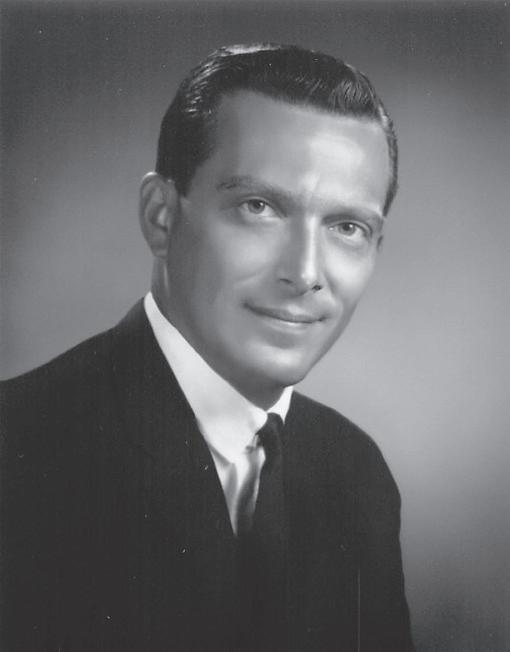
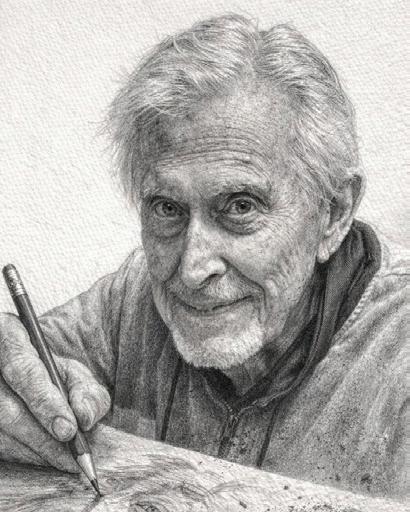
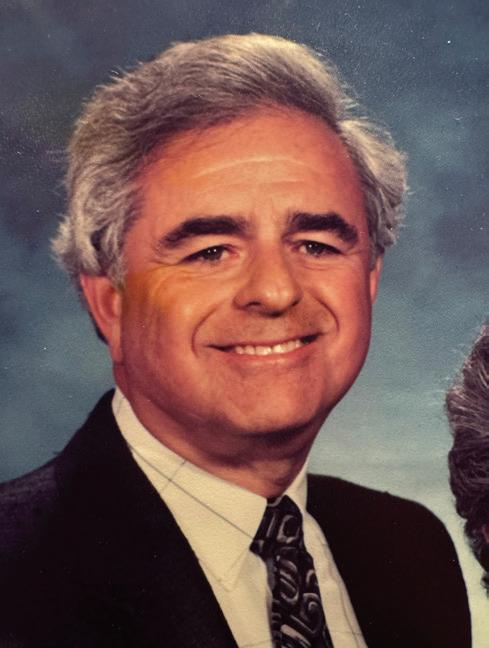
Gerald (Jerry) Olgin lived a life defined by family, friends and hard work.
On Feb. 20, 2026, he passed away at the age of 93, one month shy of his 94th birthday, leaving behind a family who will forever carry his stories, lessons and love.
He was born on March 20, 1932, in Erie, Pennsylvania, to Morris Olgin and Sarah Kaufman Olgin, Eastern European immigrants. He graduated from Academy High School in June of 1950 and went on to serve his country during the Korean War, completing basic training in Fort Dix, New Jersey, then stationed in Japan. He built a career as an entrepreneurial businessman in the scrap metal recycling industry starting in Erie, expanding to Phoenix and several other locations in North America.
On March 9, 1958, he married Marilyn Etta Adler, beginning a partnership that lasted two weeks shy of 68 years. Together they built a life in Erie. Above all, he was a devoted father to Marc, Steven, Jeffrey and Lisa.
He is survived by his wife, Marilyn Olgin; their children, Marc Olgin (Melissa), Steven Olgin (Elise), Jeff Olgin (Kris Madsen) and Lisa Blair (Stuart); their 13 grandchildren Jena Olgin, Chad Olgin (Michele), Sarah Saltzman (Jeff), Adam Olgin (Neiha Lasharie), Joel Olgin, Alexandra Olgin (Andrew Lane), Danielle Olgin, Sabrina Olgin, Ella Olgin, Max Olgin, Cameron Blair, Logan Blair and Sloan Blair; and six great-grandchildren Hudson Saltzman, Alhan Olgin-Lasharie, Isabel and Cecelia Olgin Lane, Oliver and Noah Olgin. He is also survived by his oldest sister, Betty Kramer, and predeceased by his sisters Florence (Fagi) Sheptow and Esther Silver.
Funeral services were held on Monday, Feb. 23, at 11:30 a.m. at Mt. Sinai Cemetery, 24210 N. 68th St, Phoenix. In lieu of flowers, donations may be made to Hospice of the Valley, The Sagewood Residents’ Foundation or Temple Kol Ami.
His life was a gift to those who knew him, and his legacy will live on in the family he loved and the values he instilled.
Julian J. Blum was a true visionary who will be deeply missed by all who knew him. He became an Arizona resident in 1953, after his discharge from the United States Navy in his hometown of Baltimore. He attended Arizona State University, completing accredited coursework in commercial real estate development. In 1954, he became a licensed real estate broker and went on to work in virtually every phase of commercial real estate, including land development, single- and multi-family housing, mobile home subdivisions, commercial construction, and sales, as well as mortgage financing.
In the 1950s, Julian served as president of Maricopa Mortgage Company, originating loans for private investors. After selling the company, he focused his efforts on commercial real estate development.
During the 1960s, Julian acquired the last remaining 100 acres of residentially zoned property in Youngtown, where he completed the construction and sale of homes and apartments within the retirement community. In the early 1970s, he acquired, subdivided and sold the 700-acre Bellair community to American Continental Homes.
Throughout the 1980s, he formed multiple limited and general partnerships focused on property along North Central Avenue and downtown Phoenix, including a 14-acre assemblage at Montecito and Central Avenues and the Square One Block at Central Avenue and Adams Street. He also collaborated closely with his friend Paul Staman on the Staman Condominium Project in the Biltmore Estates.
In the 1990s, Julian became the designated broker for the Capital Mall
Association, overseeing the purchase and sale of the first homes in Phoenix’s historic redevelopment district. In 1995, he handled the brokerage of the first 60 homes in the Westward Home subdivision for Lutheran Social Ministries of the Southwest.
In 1998, he formed INFILL Development and Realty Services, LLC and developed Lorna Park View Estates, a condominium project located across from Hance Park between Third and Fifth Avenues.
Julian married Fleeta Compton, his sweetheart since 1990. He was proud of his stepchildren Steve, Gary and Jill; and all his grandchildren, who loved their Julene, Bailey, Jasmine, Tyler, Delaney, Collin and Jay. He is also survived by his son, Randall E. Blum, and grandchildren Madisson and Sterling Blum.
Julian was deeply committed to civic and human service organizations. He served as vice president of the Phoenix Jaycees, president of Jewish Family & Children’s Service, and as an original board member, treasurer, secretary and vice president of Central Arizona Shelter Services. He was also the founder of the New Day Center, the state’s largest transitional homeless shelter, now operated by United Methodist Outreach Ministries.
On February 16, 2026, Julian peacefully passed away at home with his loving partner, Hazel Davis Conley, and his devoted caregiver, Mary, by his side. He will be remembered for his vision, leadership, generosity and unwavering commitment to community.
A Celebration of Life will be held on March 1, 2026, at 11 a.m. at Optima Sonoran Village in the President’s Club Room, located at 6895 E. Camelback Road, Scottsdale. A catered lunch will follow.
In lieu of flowers, donations may be made in Julian’s memory to UMOM New Day Centers, Attn: Philanthropy Department, 3333 E. Van Buren St., Phoenix, AZ 85008, or by calling 602-857-8855.
Julian’s legacy lives on in the communities he helped build and the lives he uplifted.
Individuals will be recognized for influencing the future of the Greater Phoenix area through their professional and personal achievements. Nominees must be 18 to 50 years of age and reside in the Valley. Judges will consider: a nominee’s professional success; community involvement; and commitment to the Jewish community. Nominees must identify as Jewish.
Make a nomination today for the 2026 class of 18 Under 50 award! Nomination deadline: 11:59 p.m. on Sunday, March 15, 2026.